
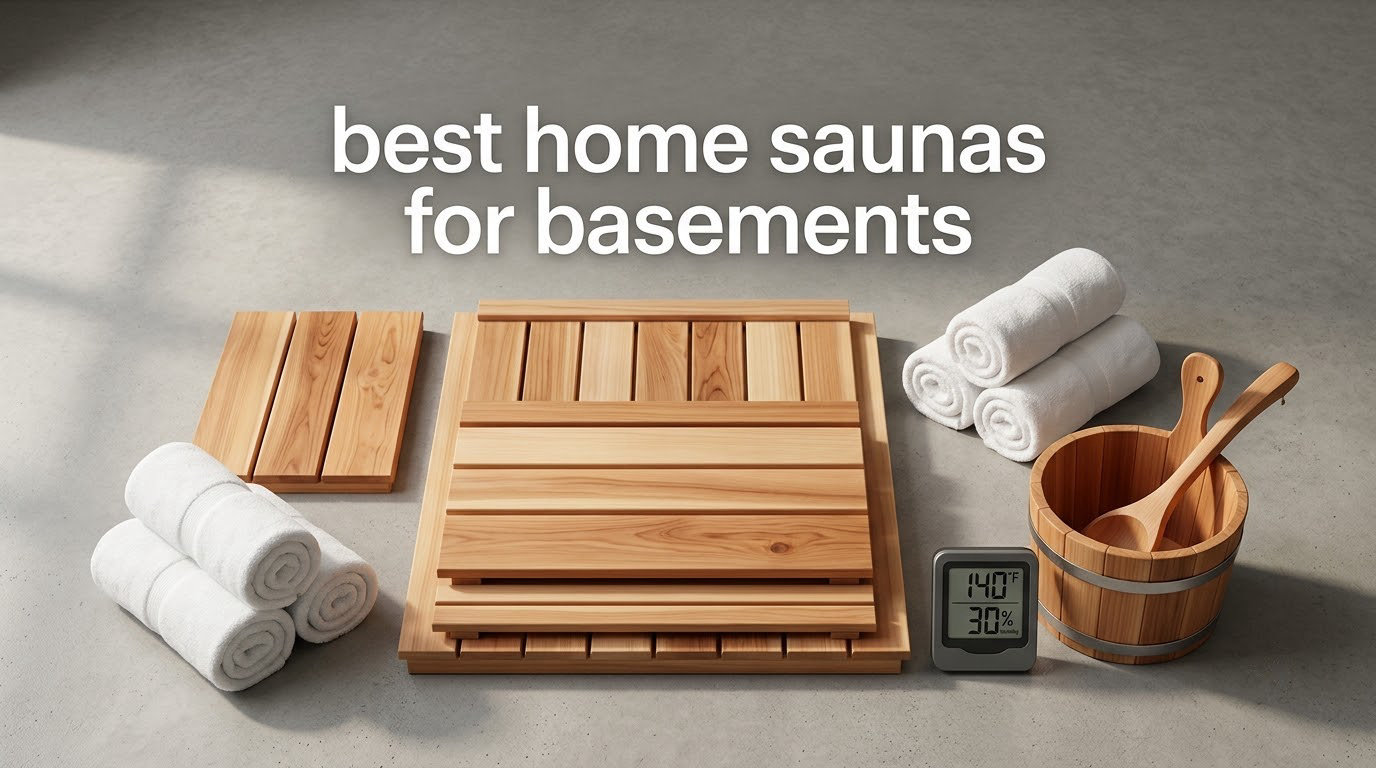
Is it okay to put a sauna in your basement? Yes, and for many homeowners it is the best room in the house to put one. A below-grade space gives you a concrete floor that tolerates water, a nearby electrical panel, and cool ambient air to cool down in between rounds. It also imposes three constraints that upstairs rooms do not: you need 7 ft 6 in of existing ceiling to drop to a 7 ft insulated ceiling, you need to stand the sauna box 5 to 6 inches off the foundation wall, and you need an exhaust route to an exterior wall or window well. Solve those three and the rest is ordinary. This guide covers the best home saunas for basements, scored on exactly those criteria rather than on star ratings alone.
We spent weeks reading specifications, review counts, and rating distributions for twelve units, then sorted them by the questions that actually decide a basement install: will it clear my ceiling, what does it do to my electrical load, how much moisture does it dump into the room, and will I be able to get it down the stairs on delivery day. Everything below reflects what the manufacturers and buyers in the review data actually say. Where a number matters, it comes from the product data. Where we have no measured result, we say so rather than inventing one.
One thing to settle before you read further: how your basement handles water has a bigger effect on the sauna than which sauna you pick. If you have standing water, efflorescence on the foundation wall, or a musty smell that shows up after rain, fix that first. A [dehumidifier for your basement](https://austineubanks.com/best-dehumidifiers-for-basements/) is the right starting point, and a [sump pump](https://austineubanks.com/best-sump-pumps-for-basements/) is the right answer to water arriving at the base of the wall. Building a sauna over damp is how you end up tearing the whole room out later.
Table of Contents
Top 3 Best Home Saunas for Basements in 2026

Dynamic Saunas Elite 1-Person
- 35 x 28 x 65 in footprint
- 4 low-EMF carbon panels
- 118-132F
- 120V

Quick Comparison of the Best Home Saunas for Basements in October
All twelve units are listed below with the basement-relevant specs. The table is ordered to match the reviews that follow, so the top three rows match the picks above.
1. Dynamic Saunas Elite 1-Person – Best Overall Basement Fit
DYNAMIC SAUNAS Elite 1-Person Infrared Sauna with Red Light Therapy
35 x 28 x 65 in
4 carbon panels
118-132F, up to 140F
Pacific clear cedar
120V
Pros
- Compact 35 x 28 in footprint clears a 7 ft finished ceiling with room to spare
- Four low-EMF carbon panels
- Clasp-together assembly with no heavy tools
- 4.6 stars across 702 reviews
Cons
- Single-person only
- Can feel confined for larger users
- Warranty is indoor use only
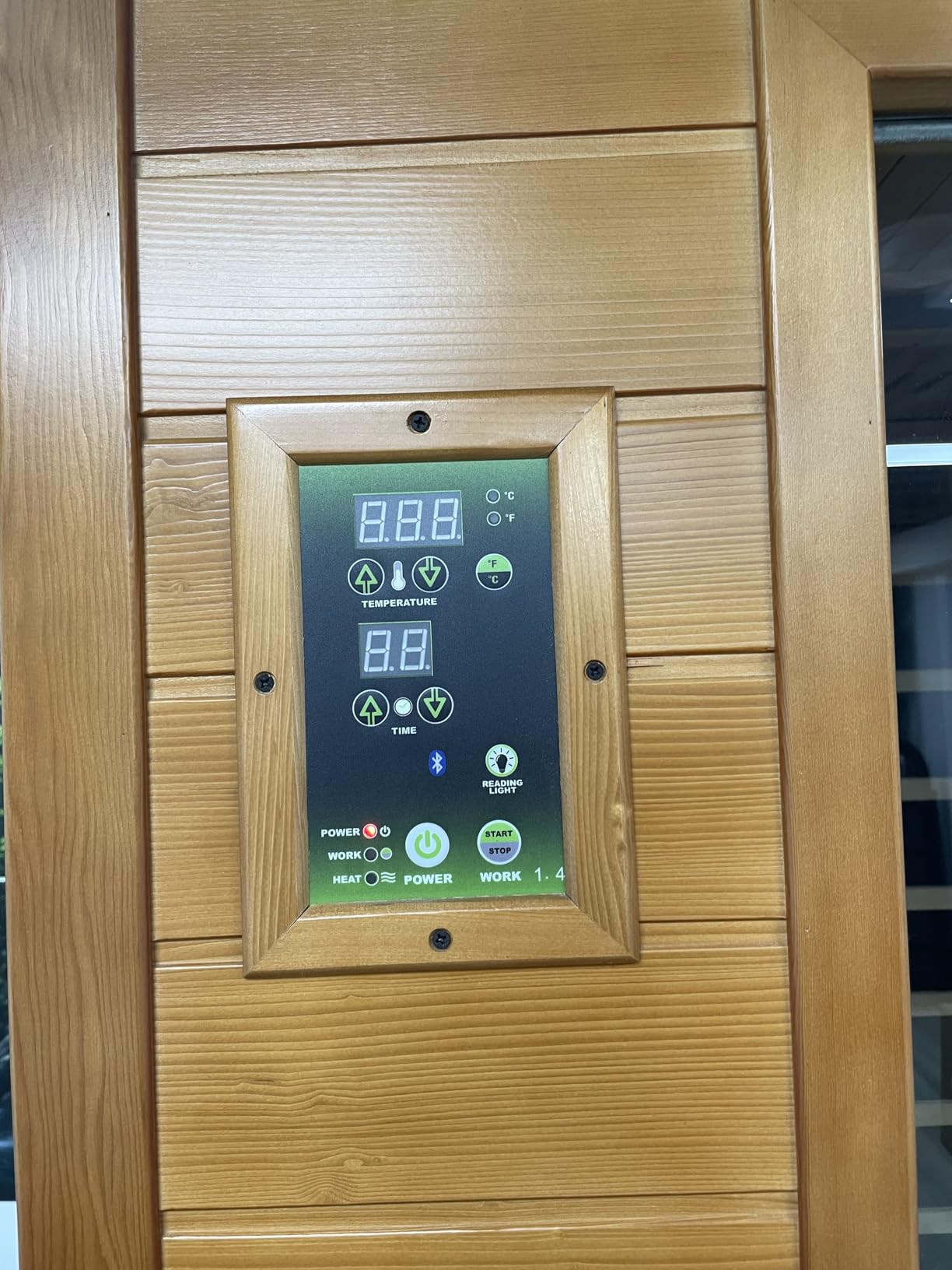
The Elite is the unit we keep coming back to for this particular job. At 35 x 28 x 65 inches it is one of the few full wooden cabins in this roundup that clears a 7 ft finished ceiling without you losing bench headroom, which is exactly the constraint that kills most basement sauna plans before the first purchase order. Four Carbon PureTech panels run it to a listed 118-132F with a capability of 140F, and the clasp-together panel build means two people can assemble it in an afternoon on a basement slab.
The rating distribution is the part that convinced us. 81% of the 702 reviews are five star, and the 10% four-star share usually reflects the same thing: a small cabin. Buyers consistently point at the footprint, the simple build, and the combination of far infrared heat with the built-in speaker and chromotherapy lighting. That is a satisfaction pattern tied to a physical attribute, not to marketing, which is what we want to see in a room you cannot enlarge.
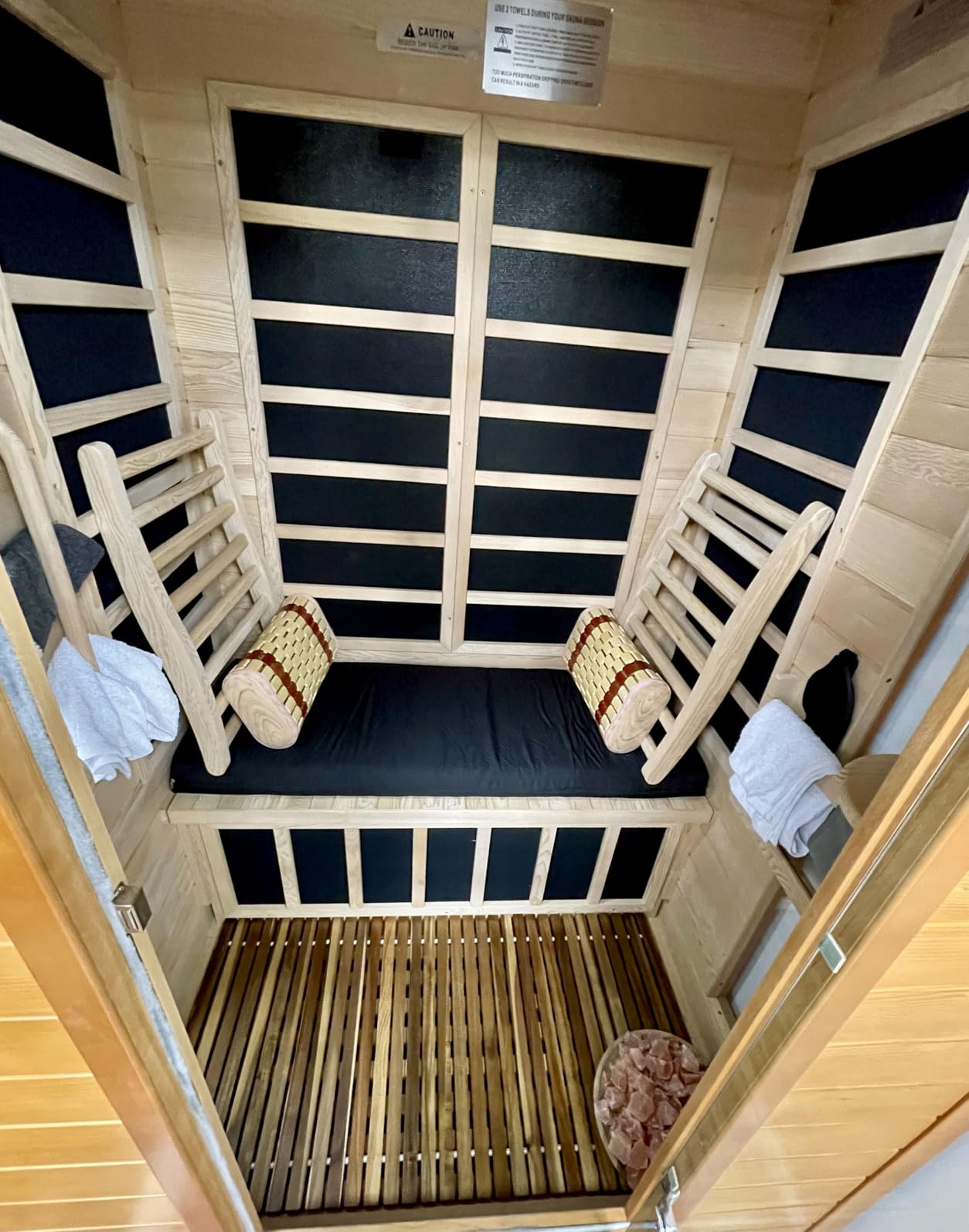
Two things to know before you commit. The door is clear tempered glass in Pacific clear cedar, so you are looking at a 1-person interior, and a reviewer at six foot three has plenty of room but a larger frame will find it snug. Second, the warranty is a 5-year limited manufacturer warranty for indoor use only, which is fine indoors but rules the unit out of a garage conversion that sweats in summer.
For a basement, this is a low-moisture choice. Far infrared panels heat surfaces rather than boiling the air, so the room outside the cabin stays close to ambient temperature. If you are storing furniture, boxes, or a treadmill ten feet away, that matters more than any feature on the spec sheet.
Who this fits best
Solo daily use in a finished basement with 7 ft ceilings, where one person wants heat in the morning without waiting through a 40-minute warm-up for a cabin that will only hold one body anyway. The listed 4.6 rating on 702 reviews is the strongest rating-and-volume pairing in this group, which is why it is the one we point people toward first.
Where it falls short
Two-person households. Nobody buys this to share, and if your basement gym is the social centre of the house you will be queueing for it. If sharing is the goal, jump to the Manastin pod later in this guide or plan for a larger cabin and a lower ceiling bench.
2. LifePro BioRemedy Infrared Sauna Blanket – Best for No Installation

LifePro BioRemedy Infrared Sauna Blanket for Home Relaxation Detox
71 x 31 in blanket
7.7 lb
86-158F across 4 zones
20-60 min timer
Storage bag
Pros
- No wiring
- no venting
- no permit
- 7.7 lb and folds into the included bag
- Four targeted heat zones
- Controller
- wraps and bag included
Cons
- Lying down rather than seated
- Sweat runs off onto towels and wraps
This is the renter’s sauna and the no-permit sauna. At 7.7 pounds and 71 x 31 inches, the BioRemedy folds into its storage bag and works on a bed, a floor, or a couch, which means it needs no ceiling height, no exhaust route, no foundation-wall standoff, and no electrician. For a basement with 6 ft 8 in joists that has never been finished, that is the entire problem solved.
The dual-layer carbon fiber far infrared element runs four targeted heat zones from 86F to 158F on a 6-button controller with a 20 to 60 minute timer. Zippered arm holes let you lie there hands-free. In a basement that is genuinely useful, because you are not building anything you will have to undo if the space gets reconfigured.
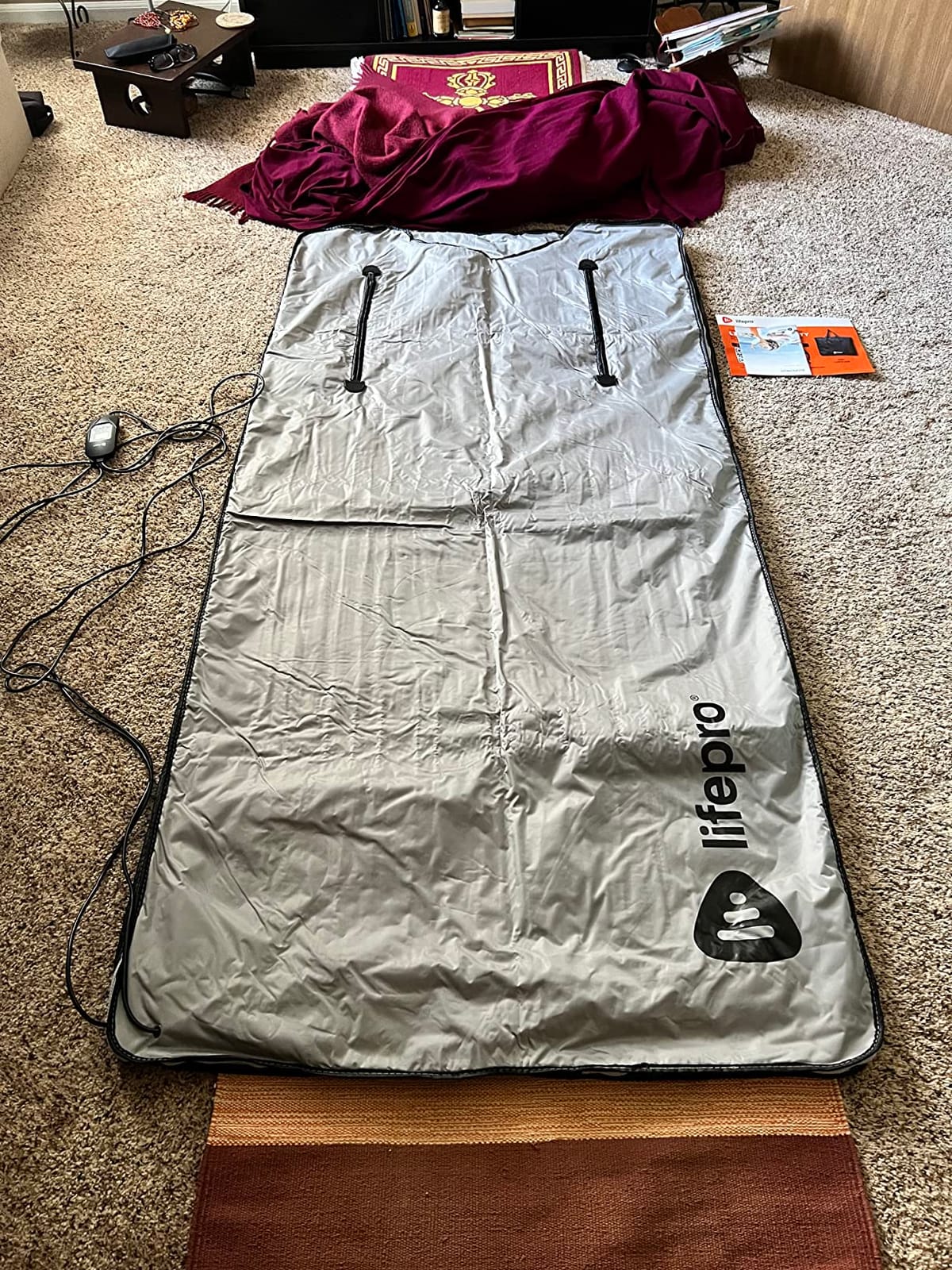
The 4.2 average across 2364 reviews is the second-largest review base here, and the reason it is not higher is worth stating plainly. A blanket sauna is a different experience from a cabin. You lie on your back in a bag of heat rather than sitting on a bench in a wood-lined room, and the 9% one-star share in the data reflects both heat intensity and sweat management. Wraps are included, and you will use them.
None of that makes it a compromise if the goal is a hot ten minutes after a workout. It does mean you should not buy it expecting a day-spa room you can sit in with two friends. The max interior circumference is 60 inches, and the material is Oxford fabric with a gray finish, so moisture sits on the surface and needs a towel underneath.

Who this fits best
Anyone in an unfinished or low-ceiling basement, a renter, or a household that wants a sauna this week rather than this season. It is also the easiest way to test whether you actually use a sauna daily before committing to a room, which is a real risk given how many home saunas go unused after the first year.
Where it falls short
It is not a social sauna and it is not a room. Reviewers consistently describe the lying-down format as the limiting factor, and the 4.2 average is a notch below the wooden cabins. If you want a bench, a temperature you sit in, and a place to recover with a cold shower next door, keep reading.
3. Lifepro RejuvaWrap Infrared Sauna Blanket – Best Full Body Coverage

Lifepro RejuvaWrap Infrared Sauna Blanket with Low EMF and 9 Temp Levels
71 x 36 in
14.7 lb
95-176F, 9 levels
Low EMF carbon
Auto shut-off
Pros
- Wider 71 x 36 in coverage than the BioRemedy
- Nine heat levels for fine control
- Wipe-clean PU and PVC surface
- Includes towel
- wraps
- controller and bag
Cons
- Heavier at 14.7 lb
- 10-15 minutes to full operating temperature
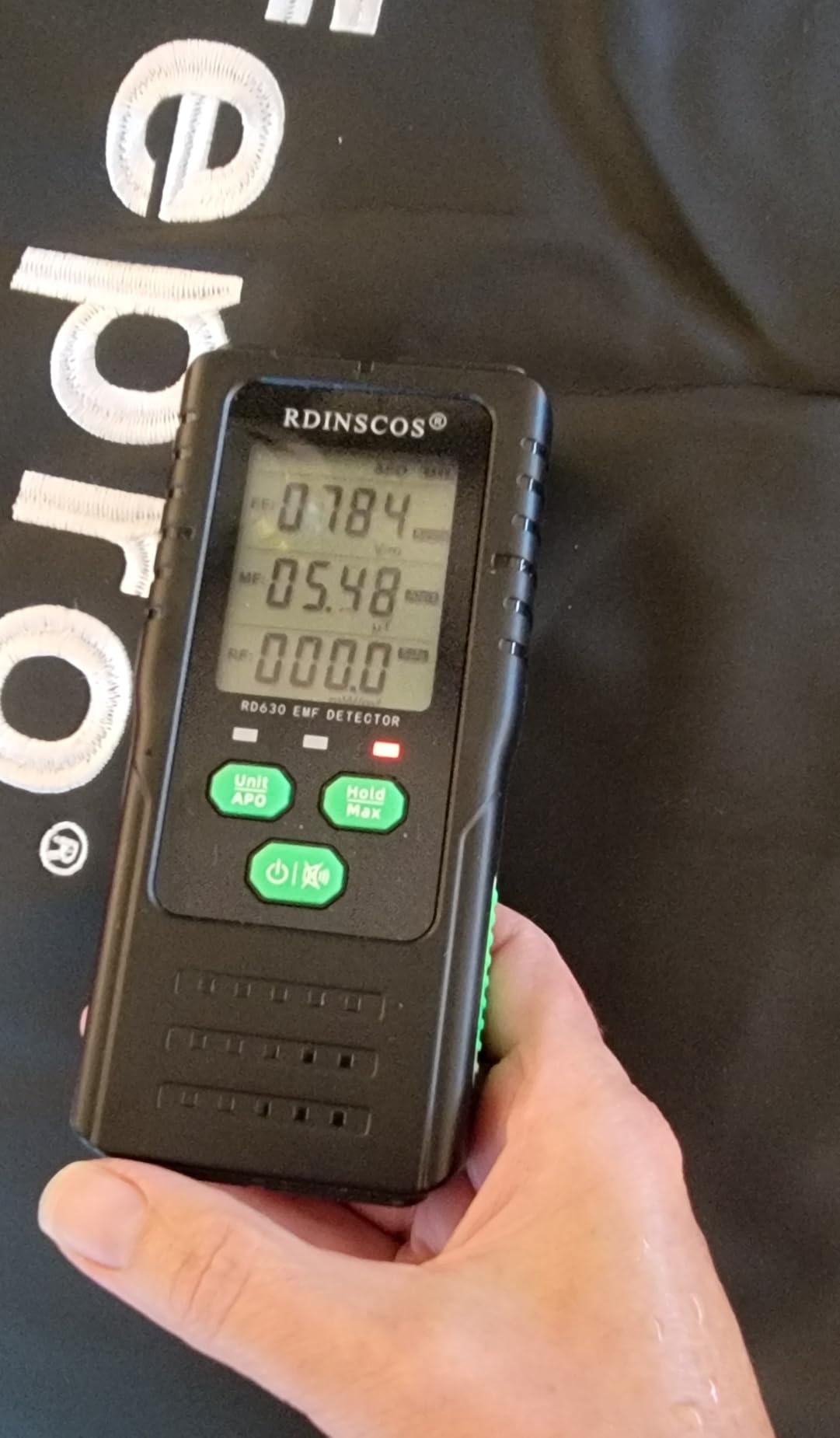
The RejuvaWrap is the one to pick over the BioRemedy if you are tall. The surround is 71 x 36 inches, which is five inches wider in every direction than the other Lifepro blanket in this roundup, and that width is the difference between your shoulders being inside the heated zone and outside it. The carbon fiber fill is low EMF, and the PU and PVC layers are waterproof and non-toxic.
Nine heat levels from 95F to 176F give you far more control than a single dial. The auto shut-off with an adjustable 5 to 60 minute timer is the feature that matters most in a basement, where you may be leaving a room you are not in for long stretches while a dehumidifier handles the general damp.
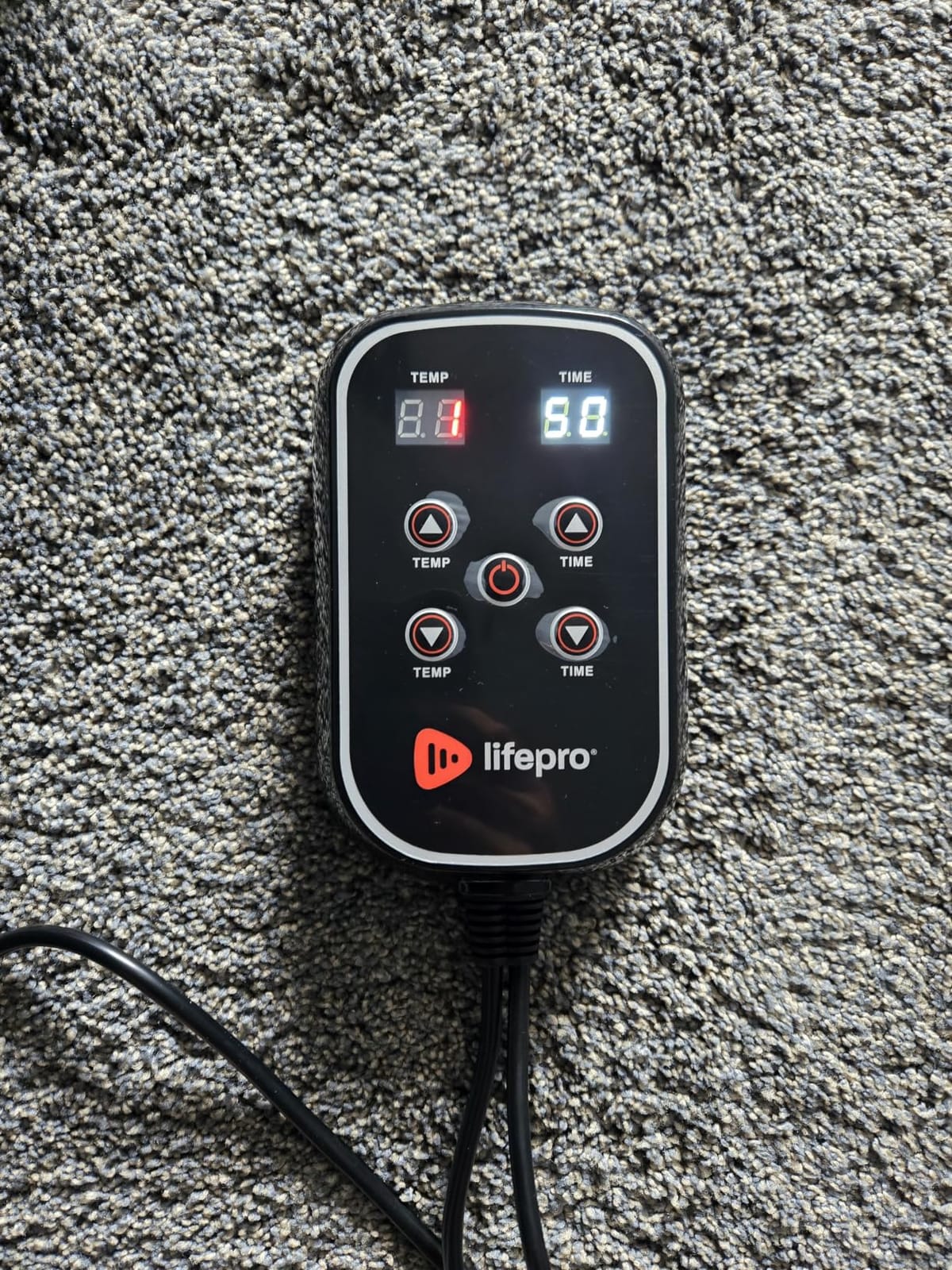
Warm-up is the honest drawback. The listed ramp is 5 to 10 minutes to start and 10 to 15 minutes to reach full operating temperature, so plan for a 20-minute lead before you lie down. At 14.7 pounds it is twice the weight of the BioRemedy, which is still a one-hand carry but no longer a grab-and-go item.
Cleaning is easy, which is a real advantage below grade. Wipe the surface down after each session, no machine washing, and five disposable thermal wraps are in the box. The 4.4 average sits across 1436 reviews with 70% five star, and the minority complaints in the review data cluster around warm-up time rather than build quality.
Who this fits best
Solo recovery after strength training in a basement gym, especially for someone over six feet who found the narrower blanket cramped. The nine-level control also makes it the better blanket for a cool basement, since you can hold a lower setting for a longer session rather than pushing the maximum.
Where it falls short
It is still a blanket, with all the same limits, and the extra weight and longer warm-up make it slightly less convenient for a spontaneous session. Anyone wanting a seated cabin should treat these two Lifepro models as the entry rung rather than the destination.
4. X-Vcak Portable Steam Sauna – Budget Steam With Real Output

X-Vcak Upgraded Portable Sauna for Home,Relaxation, Steam Sauna for Home with Steamer, Remote Control, Folding Chair, 9 Levels
29 x 9.6 x 11.4 in
15.17 lb
9 heat levels
Steam generator with remote
Folding chair
Pros
- Assembles in 10-20 minutes with no special tools
- Ranks number one in its category
- Folds flat for storage
- Strong steam for the size
Cons
- 12% one-star share includes heater failure reports
- Small low folding chair
- Lightweight frame and fabric feel non-durable
This is a steam sauna, not an infrared one, and that single distinction drives everything about how it behaves in a basement. Water goes into the generator, the generator makes steam, and that steam leaves the tent when you open it. A far infrared cabin adds moisture to the air inside its own walls; this adds humidity to the room. If your basement already has a damp problem, a steam tent makes that problem your problem.
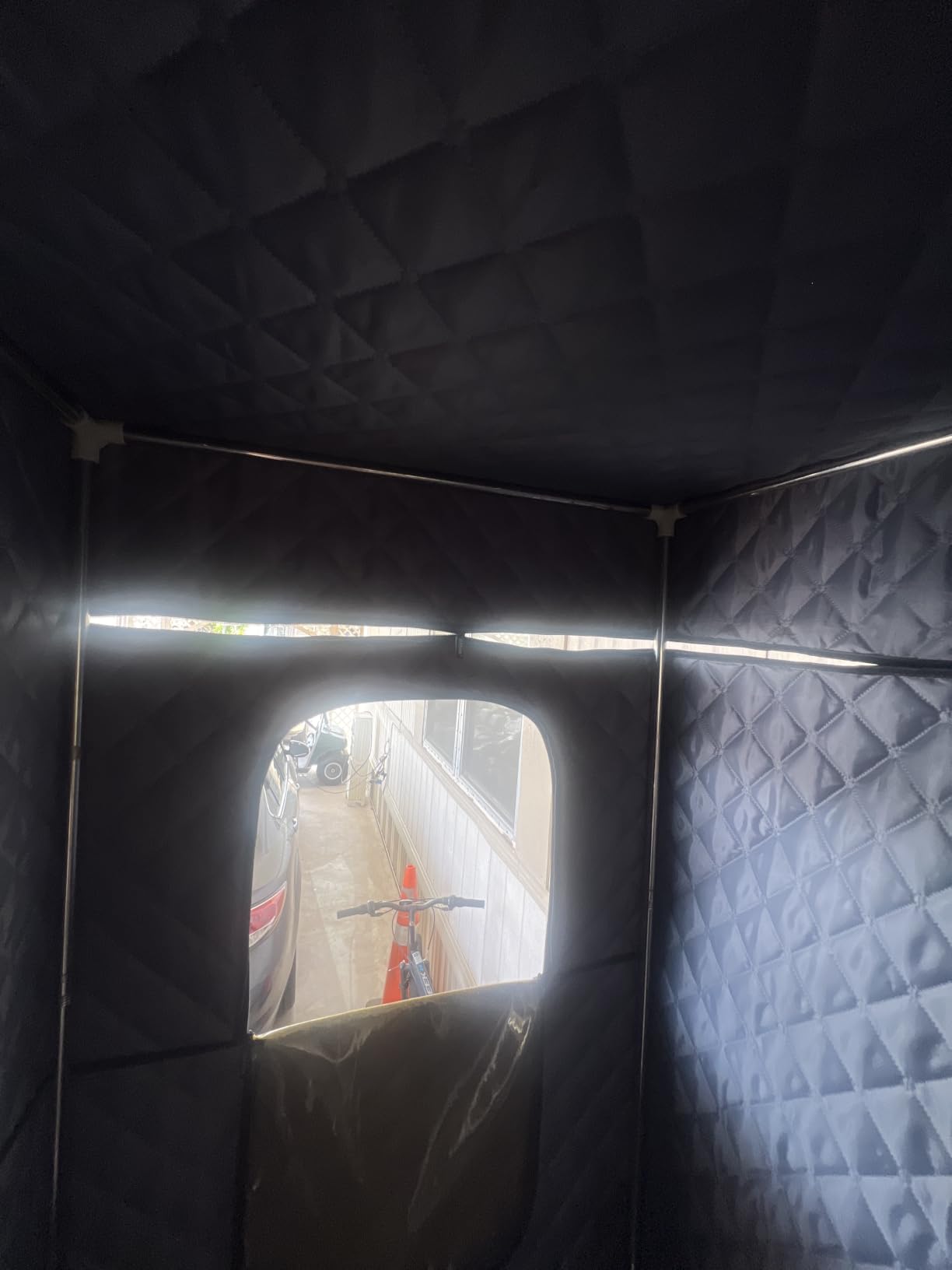
Set that aside and the unit is well liked. It carries the number one sales rank in its category, with 1703 reviews at a 4.1 average and 67% five star. The high-power steamer comes with a remote control, nine heat and temperature levels, dry burning and leakage protection, a waterproof folding chair, an interior phone pocket, and a zippered transparent window for fresh air. Setup is genuinely quick at 10 to 20 minutes.
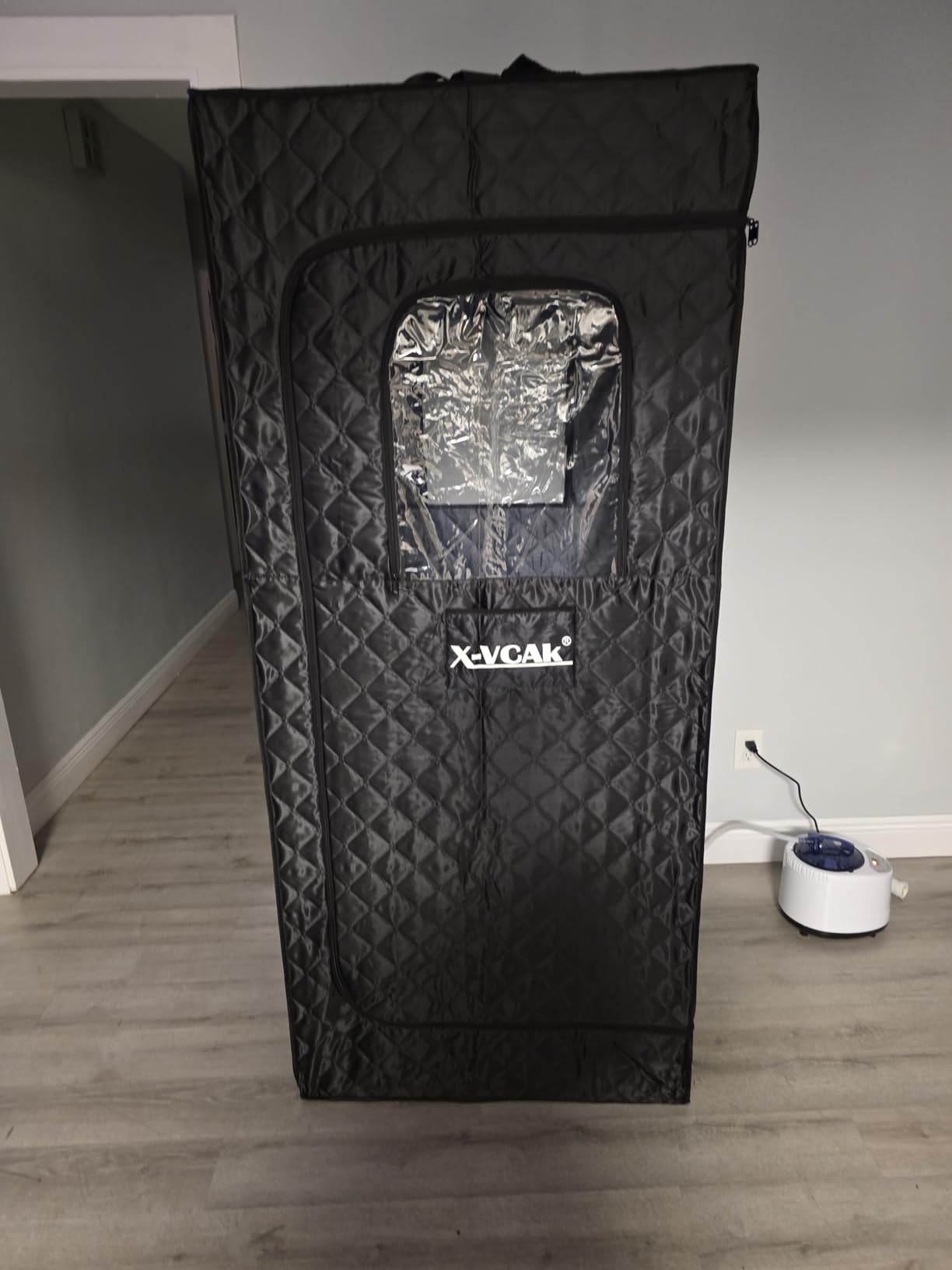
The durability picture is the reason this sits below the wooden cabins. The 12% one-star share in the review data includes reports of the steam heater cracking after a few weeks, a cheap plastic smell on some units, and units that did not heat. The included chair is small and low to the ground, and the 29 x 9.6 x 11.4 inch packed dimensions mean the frame folds but the tent is sized for one person sitting.
Weight is 15.17 pounds, so moving it between the basement gym and a bedroom is easy. Just plan on running a [dehumidifier](https://austineubanks.com/best-dehumidifiers-for-basements/) for an hour after every session, or ventilate the room properly while it runs.
Who this fits best
A single user in a basement who wants löyly-style steam on a tight budget, has no construction budget at all, and can put up with a tent rather than a cabin. The 9 levels and the remote make it a good fit for someone who likes tuning a session rather than setting a dial once.
Where it falls short
It is the highest-risk build in this roundup, with heater failure and material complaints making up a fifth of the reviews. It is also the wrong shape for a basement with any humidity sensitivity, because the moisture output is the point rather than a side effect.
5. Heat Wave Coronado 2-Person Hemlock – Best Solid Wood Build

Heat Wave Coronado 2-Person Hemlock Deluxe Infrared Sauna for Home Use
47.75 x 39.25 x 75 in exterior
69 in interior height
329 lb
6 carbon heaters
7-year warranty
Pros
- Solid Canadian hemlock with a 7-year warranty
- Two-person interior with six carbon heaters
- Chromotherapy lighting
- ionizer and AUX sound
- 8mm bronze tempered glass door
Cons
- 329 lb makes stairs and relocation a real job
- Large footprint for a two-person cabin
The Coronado is the most built-to-last unit here, and it is the one we would own if the basement were finished properly. Solid Canadian hemlock is the correct wood choice for an indoor below-grade space: it is a resinous softwood that handles repeated heat cycling without the aromatic oils that make western red cedar a better outdoor choice. Six precisely positioned carbon heaters deliver infrared warmth up to 140F through intuitive controls.
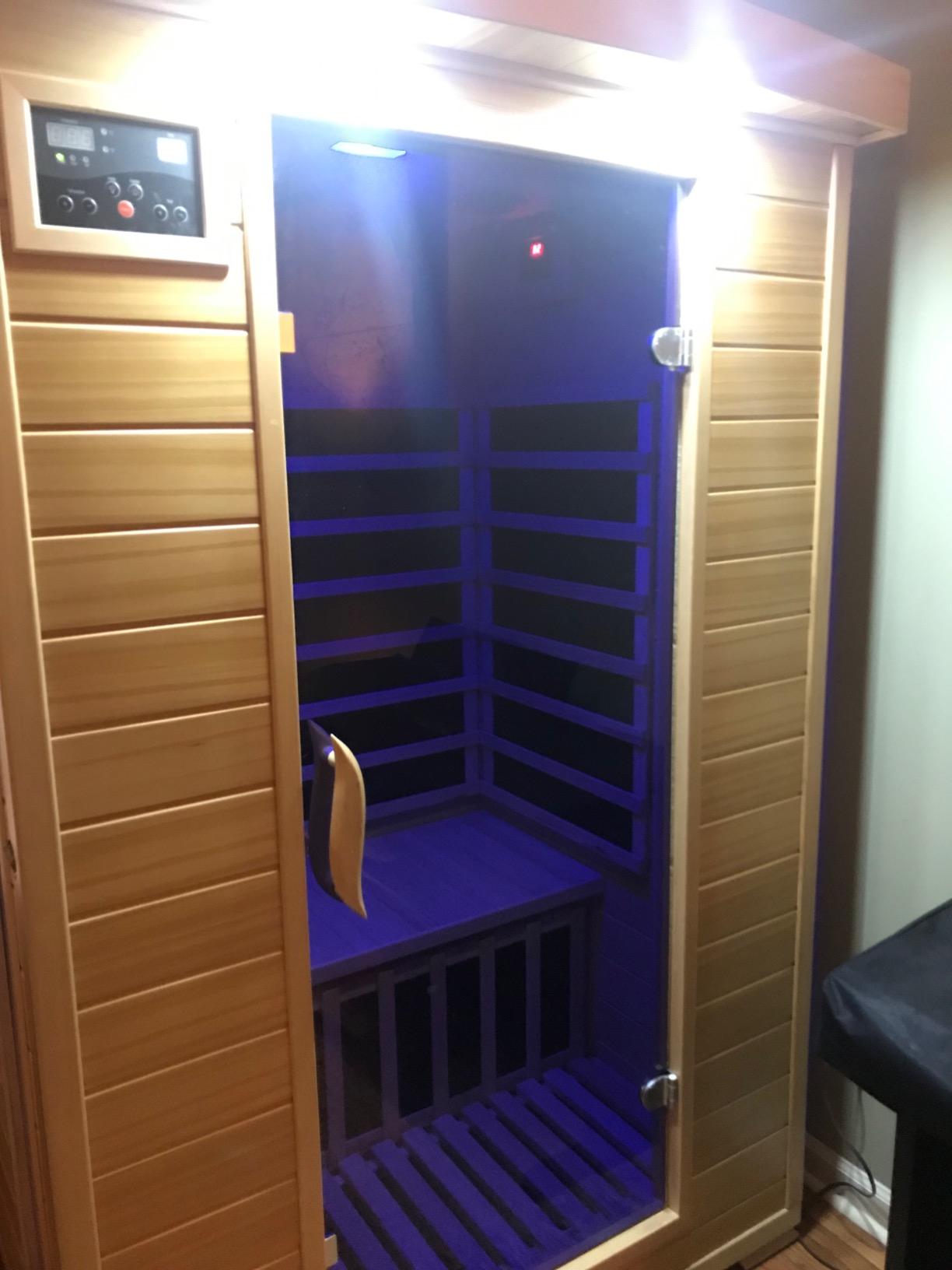
Exterior dimensions are 47.75 inches wide by 39.25 inches deep by 75 inches tall, giving a 44.5 by 35 inch interior with 69 inches of interior height. That interior height is the number to check against your finished ceiling. At 69 inches, it needs roughly 7 ft 6 in of existing ceiling to drop to a 7 ft insulated ceiling, which is exactly the scenario most basements are actually in.
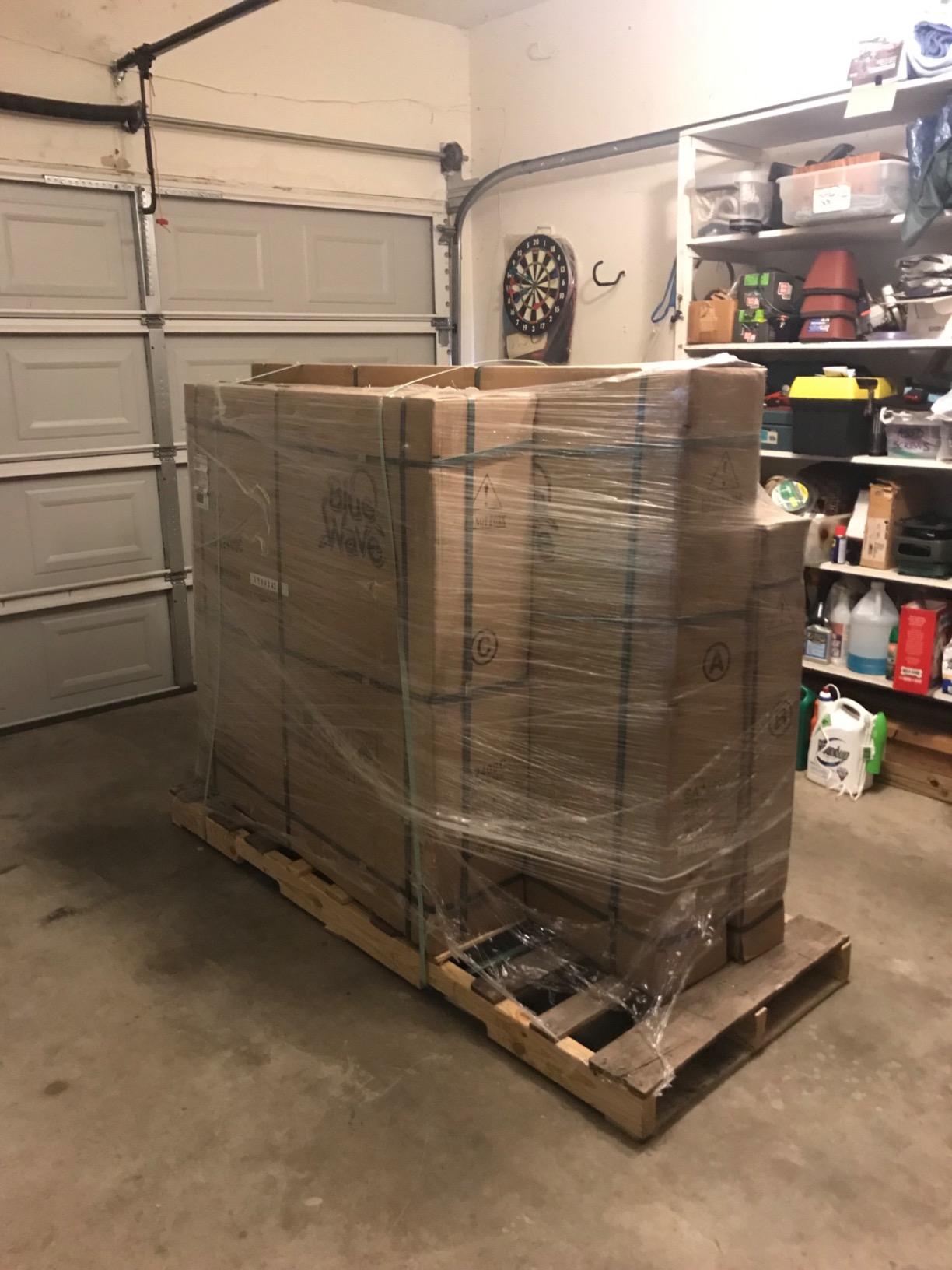
Weight is the real constraint, and it is the constraint nobody puts in a product photo. This cabin is 329 pounds. Getting it down basement stairs and through a 32-inch door is a two-person job with a planned uncrating area upstairs, not a surprise at the door. Add that to your delivery-day planning before you fall in love with the feature list.
The feature package is generous for the money: chromotherapy lighting, an oxygen ionizer, an AUX-input sound system, a bronze-tinted 8mm tempered glass door, and simple buckle connectors instead of complex hardware. Reviewers cite the hemlock construction, the features, and the warranty, with weight and floor space as the recurring practical complaints across 318 reviews at 4.4 and 75% five star.
Who this fits best
A couple who wants a permanent wood-lined room, has a finished basement with real floor space, and plans ahead for delivery. The 7-year manufacturer warranty is the longest in this roundup, and hemlock is the wood we would specify for any indoor sauna regardless of basement.
Where it falls short
Any basement where the stairs are narrow, the door is under 32 inches, or nobody strong is available on delivery day. At 329 pounds and a 47.75 inch width, it is the least forgiving unit here on access. It also runs warm enough to need a real exhaust plan, not a window.
6. Homsido 1-Person 900W Hemlock – Best for a Tight Basement Corner
1-Person Low EMF Far Infrared Sauna for Home Use, 900W Canadian Hemlock Wood Sauna with Bluetooth Music & Led Read Light, Easy Assembly for Bedroom, Gym, or Basement(57.9 * 27 * 32IN)
32 x 27 x 57.9 in
900W
5 low EMF panels
Side-opening door
3-year warranty
Pros
- Built for small spaces including basements
- Side-opening door reduces required floor space
- Tool-free clasp-together panels
- Reaches working temperature in 20-30 minutes
Cons
- Cramped interior for larger users
- Slower in uninsulated basements
- Unfinished interior wood wants towels
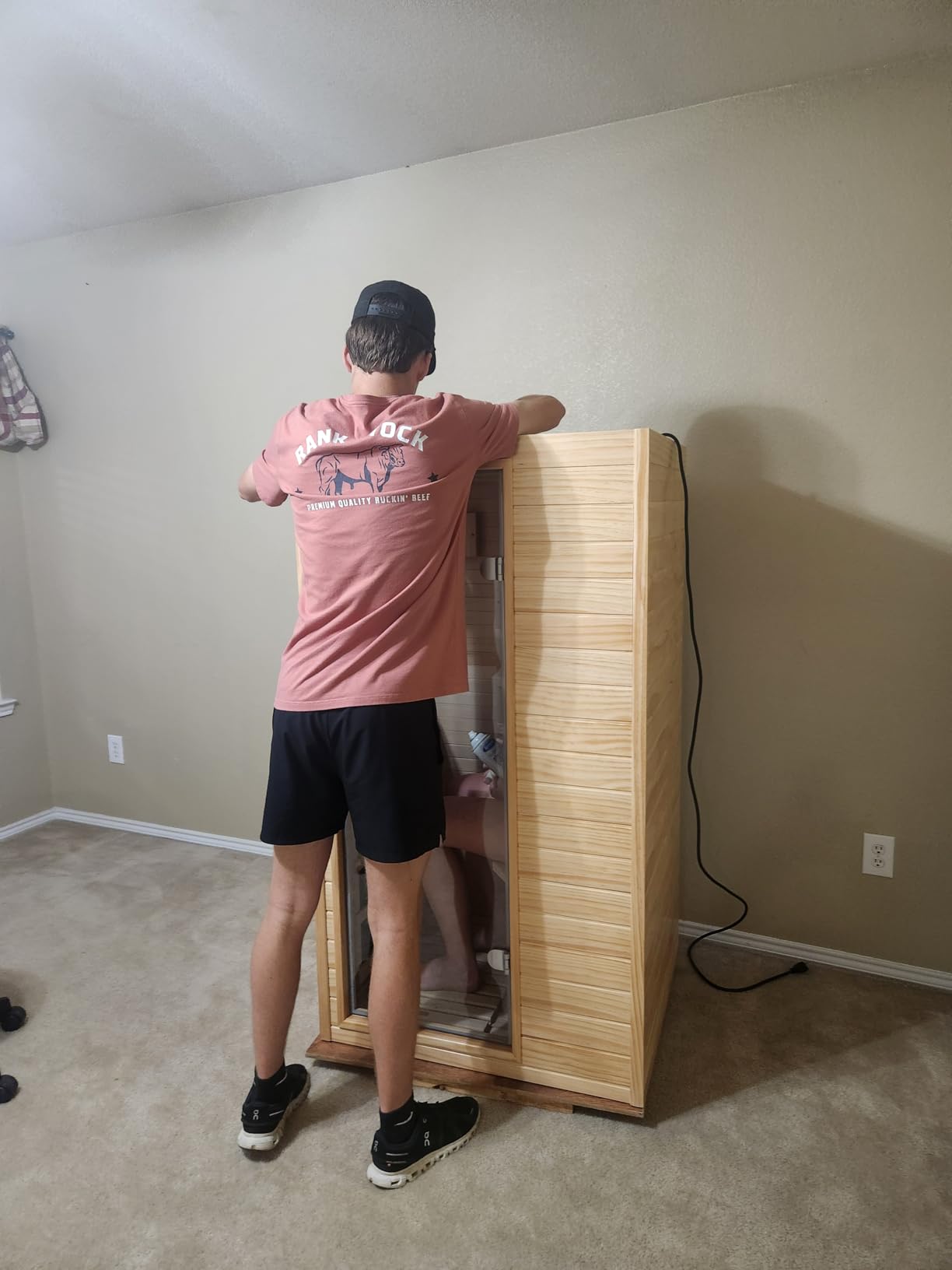
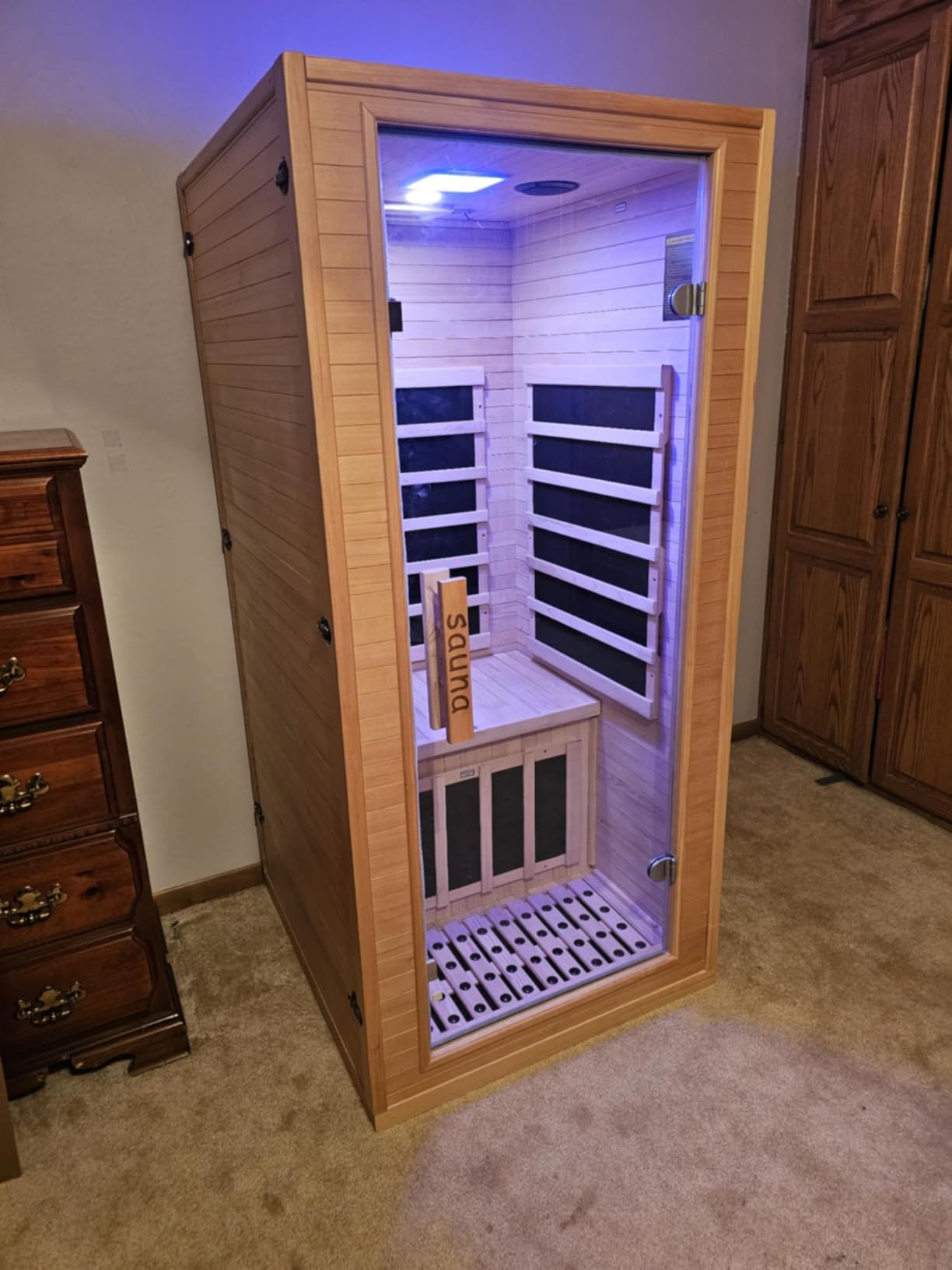
At 32 inches wide by 27 inches deep by 57.9 inches tall, this is the smallest full wooden cabin in the roundup, and the side-opening door is the reason it fits where a front-loading cabin will not. A door that swings out the side rather than forward lets you place the unit against a wall in a corner and still open it, which matters enormously in a basement where ducts and beams already dictate the layout.
The heater is 900W driving five low EMF carbon panels, the lowest electrical load of any wooden cabin here. Canadian hemlock with clasp-together modular panels means no tools, and there is built-in Bluetooth audio, an interior reading light, and a digital controller. Owners reach working temperature in roughly 20 to 30 minutes.
Read the warm-up figure carefully for a basement. 20 to 30 minutes is a generous-room number, and buyers note longer heat-up times in uninsulated basements and garages. A basement that sits near 60F will be slower still, so start it before you finish your workout rather than after.
The interior wood is unfinished, which is why the recommendation in the review data is to put towels on the bench and floor. That is a small quality trade for a 3-year warranty and an easy build. Customer service is cited as a genuine strength when parts arrive damaged, which is worth knowing before a delivery day goes sideways.
Who this fits best
A solo user in a small or awkward basement where a front-loading cabin will not fit, on a standard household circuit, with an appetite for a 25-minute warm-up. At 900W the running cost is also the lowest of any wooden cabin in this list, which matters if you plan to use it most days.
Where it falls short
Taller and larger users, and anyone who wants the cabin hot within fifteen minutes. The cramped interior is the most common note in the reviews, and the shorter 3-year warranty is the thinnest among the wooden cabins here.
7. OUTEXER 1200W 120V Infrared Sauna – Best Value Full Cabin

OUTEXER Infrared Sauna Home Sauna Spa Room Chilean Pine Wood 1200W 120v
27 x 35.02 x 60.98 in
145 lb
1200W on 120V
68-149F
Foot-heating plate
Pros
- Runs on a single 110V outlet
- Heats to 145-149F in 15-30 minutes
- Corner-friendly footprint
- Two speakers and 7-color light therapy
Cons
- Back panel runs hot
- tight for taller users
- Some larger variants need about an hour to 130F
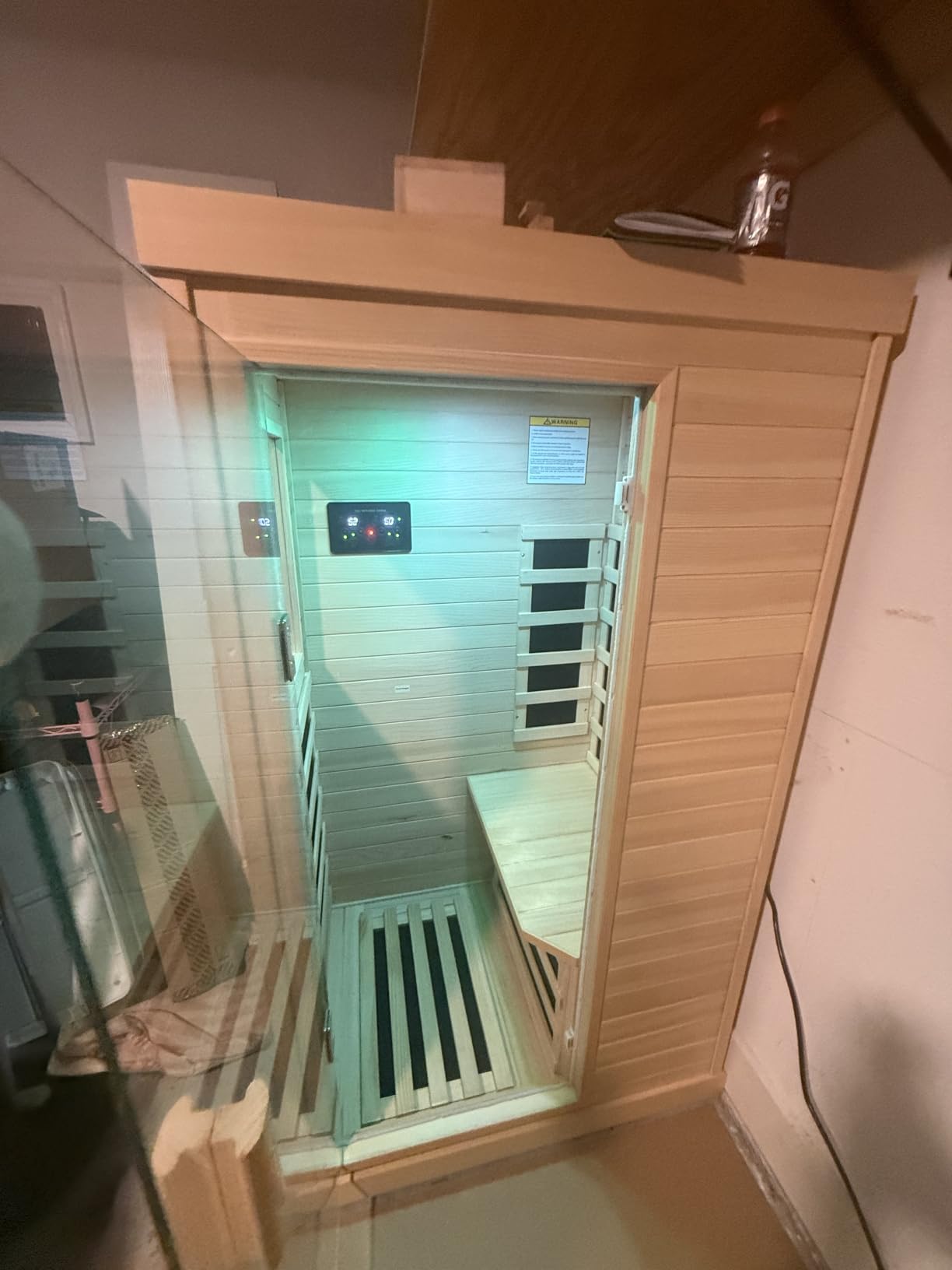
This is the cabin we would put in a basement that already has 7 ft finished ceilings and a 15-amp outlet. 1200W on 120V is a 10-amp draw, which means no electrician, no permit, and no panel capacity conversation. That single fact is why we rate it the best value in the group for basement use specifically, even though several units here cost less as a bare object.
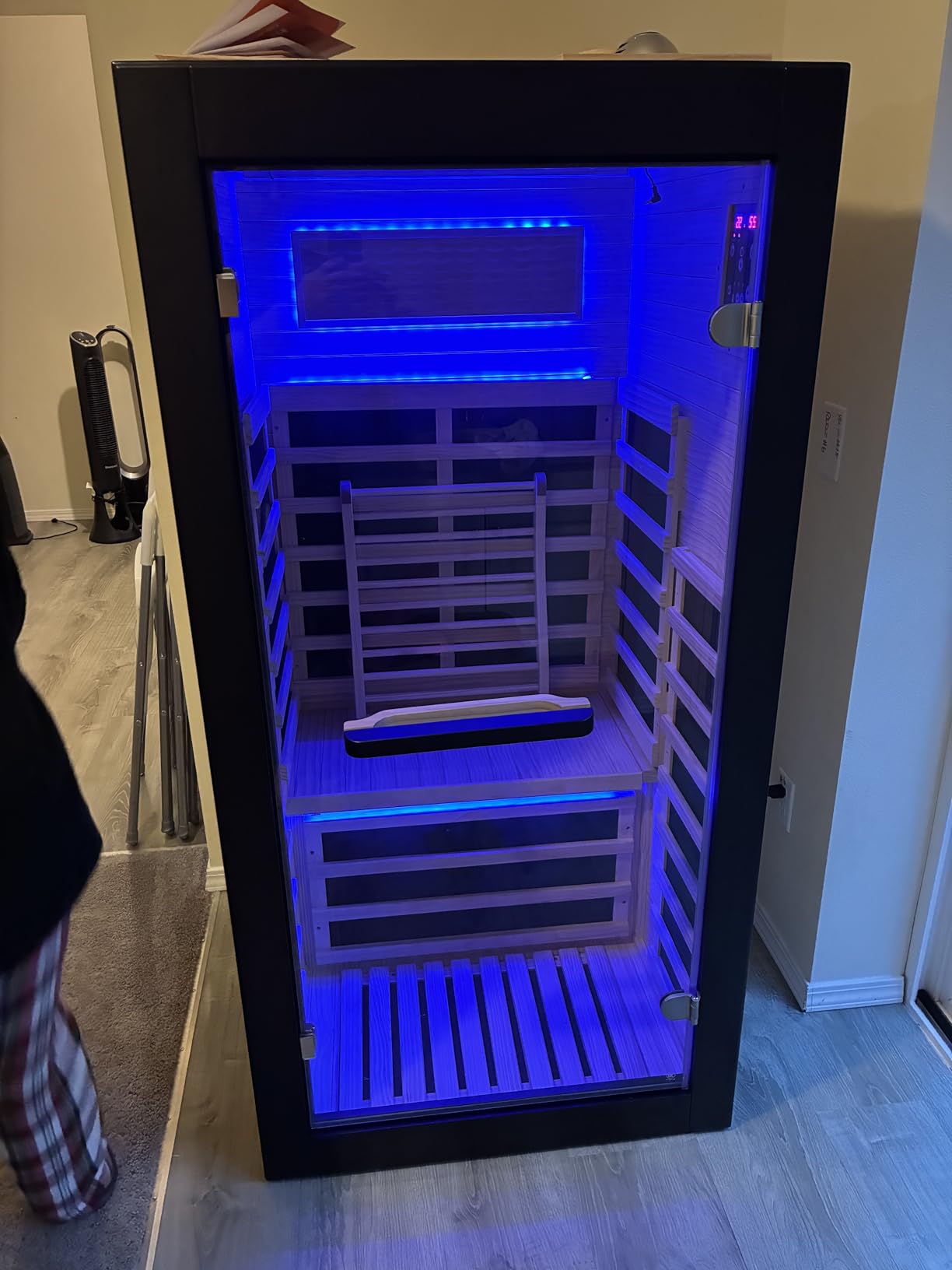
Six low EMF carbon panels plus an independently controlled bottom foot-heating plate, adjustable from 68F to 149F with automatic temperature control. Owners report reaching 145 to 149F in roughly 15 to 30 minutes and holding that temperature without fluctuation, which is a real quality signal from a 4.6 average across 578 reviews with 81% five star.
Two things to plan around. The back panel can run hot enough that many owners add a backrest for comfort and to protect the panel, so budget for that accessory. And the interior is genuinely small at 27 by 35 inches, which is tight for taller users. The review data also notes that the larger variants in this line take closer to an hour to reach 130F, so read the warm-up figure for the size you are actually buying.
Everything else is well made. Chilean pine with tempered glass, two speakers, 7-color light therapy, an automatic timer with system and hardware protection, and a 7-year after-sales service window. Weight is 145 pounds, which is manageable down basement stairs with two people. Builders commonly note minimal glue or plastic in the construction.
Who this fits best
A finished-basement owner who wants a real wood cabin with the fastest path from delivery to first session. On the no-electrician requirement alone, it is the strongest basement fit per unit of effort. It also barely raises the room temperature, which protects stored items and the drywall around it.
Where it falls short
Taller users, and anyone who wants the ceiling of the session as high as 150F quickly. The back panel heat and the tight interior are the two consistent gripes, and the small footprint means one person only.
8. Manastin 2-Person Portable Steam Sauna – Best for Two People
Manastin 2 Person Portable Steam Sauna for Home, 1 or 2 Person Full Body Home Spa with 2 Foldable Chairs,9 Levels of Sauna Tent with Remote Control, (Black, Large)
37.01 x 71 x 48.5 in
26.9 lb
Dual steam generators
About 130F in 10 min
Two outlets needed
Pros
- Only unit here with true two-adult standing room
- Dual generators reach about 130F in 10 minutes
- Retains heat in cold spaces
- Lightweight 26.9 lb frame
Cons
- Included chairs are small
- Steam units under the chairs get hot
- Needs two separate outlets
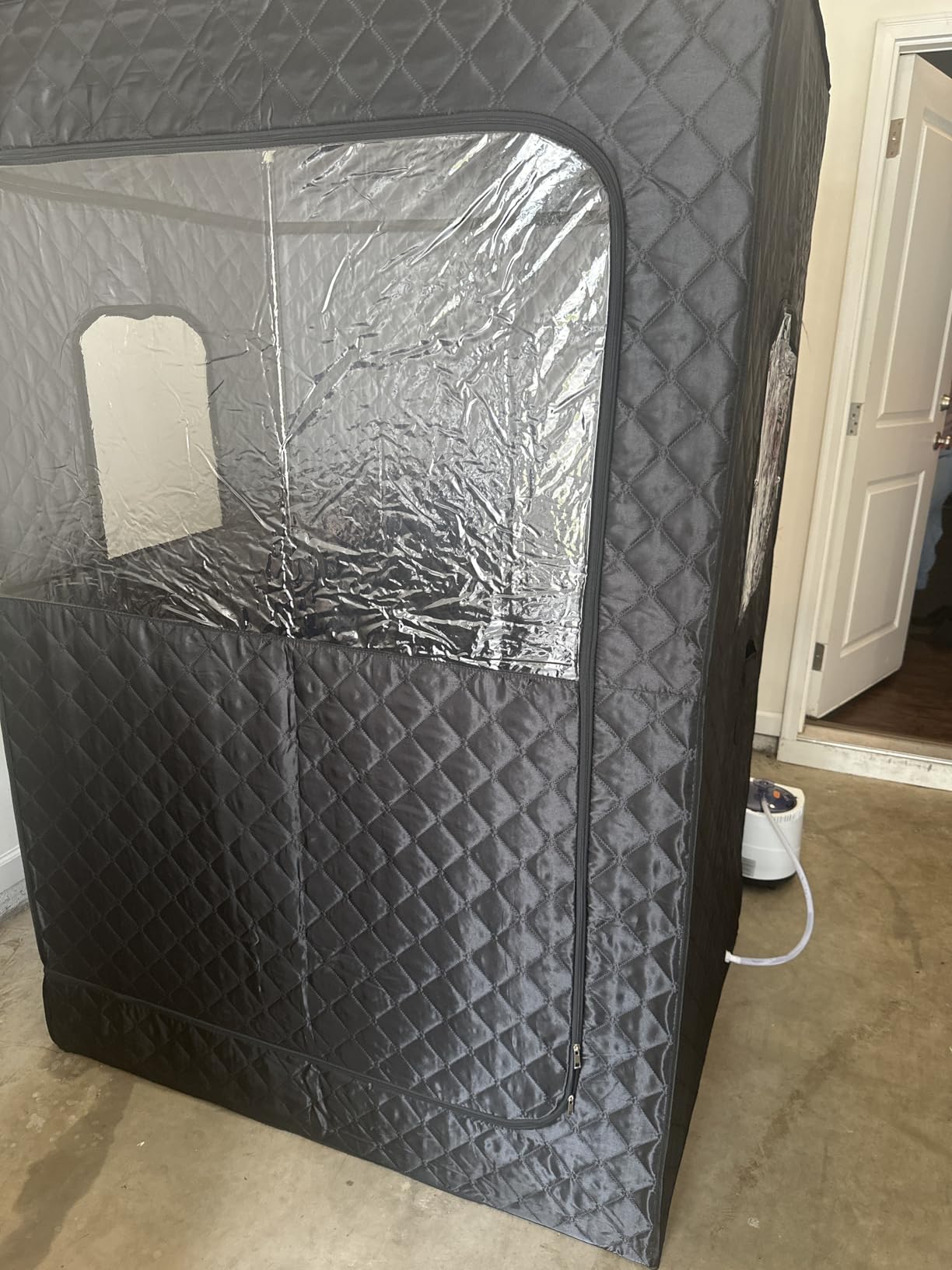
Everything else in this roundup holds one person. The Manastin holds two adults with enough headroom to stand, at 37.01 by 71 by 48.5 inches, and it does it without a permanent room, a wall cut, or a dedicated circuit. For a couple finishing a basement gym together, that changes the economics entirely, because two people can share the same 15 minutes instead of taking turns.
The heat comes from dual high-powered steam generators with individual remotes, reaching approximately 130F in about 10 minutes. The 3-layer satin cotton construction is genuinely good at heat retention and water resistance, and reviewers specifically note that it holds heat in cold spaces such as an unheated porch, which is an encouraging signal for a cool basement.
Three practical notes. The included foldable chairs are small and most owners replace them, and the steam units sitting under the chairs can get uncomfortably hot, so plan the seating layout around that. It also requires two separate electrical circuits or outlets, one per generator, which is more wall demand than any other unit here except a traditional heater.
The 3-step setup is straightforward: assemble the frame, drape the cover, fill the generators. At 26.9 pounds the frame sets up and tears down in about 30 minutes. Reviewers do flag that the pod is tight for two large adults despite the label, and that the floor runs colder in a basement, so a mat underneath pays for itself.
Who this fits best
A couple or two training partners who want to recover together in a basement with no construction budget and no ceiling to worry about. The 71% five-star share across 516 reviews reflects genuine enthusiasm for the steam output and the true two-person room.
Where it falls short
It is a steam pod, so it dumps humidity into the basement air, and it needs two outlets rather than one. Anyone sensitive to damp, or anyone who finds the small chairs uncomfortable, should look at the OUTEXER cabin instead.
9. Kanlanth 1-Person 950W Far Infrared Sauna – Best for the Lowest Power Draw

Kanlanth 1 Person Far Infrared Sauna, Low EMF Indoor Dry Home Sauna, 950W
36.6 x 29.3 x 63 in
950W on 120V/15A
5 panels to 140F
Solid spruce
2.2 m cord
Pros
- 950W on a standard 120V/15A outlet
- Solid spruce with good heat retention
- Built-in ventilation port
- Bluetooth speakers and LED reading light
Cons
- Small interior limits comfort
- Smaller review base at 116
- 8% one-star durability notes
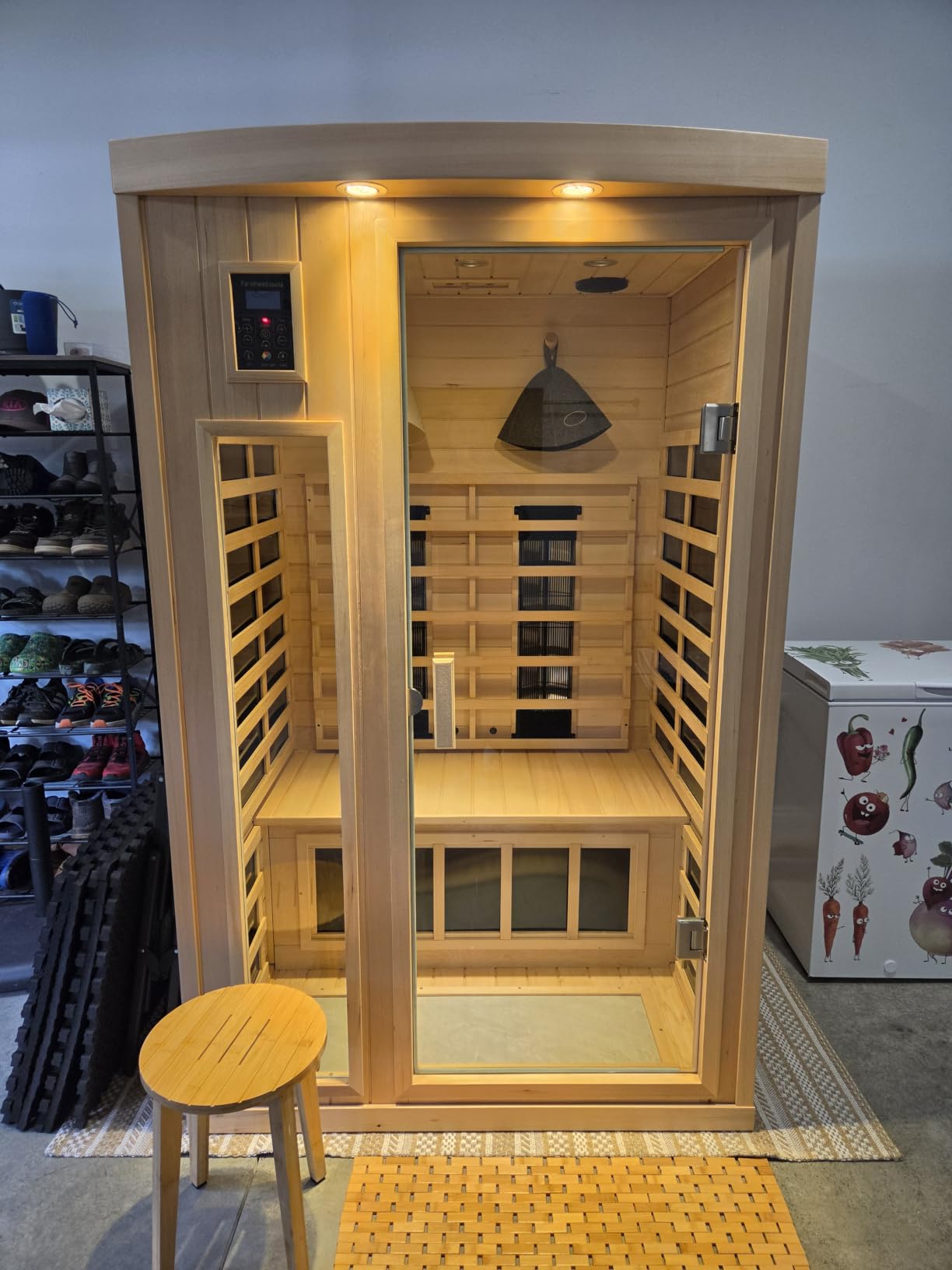
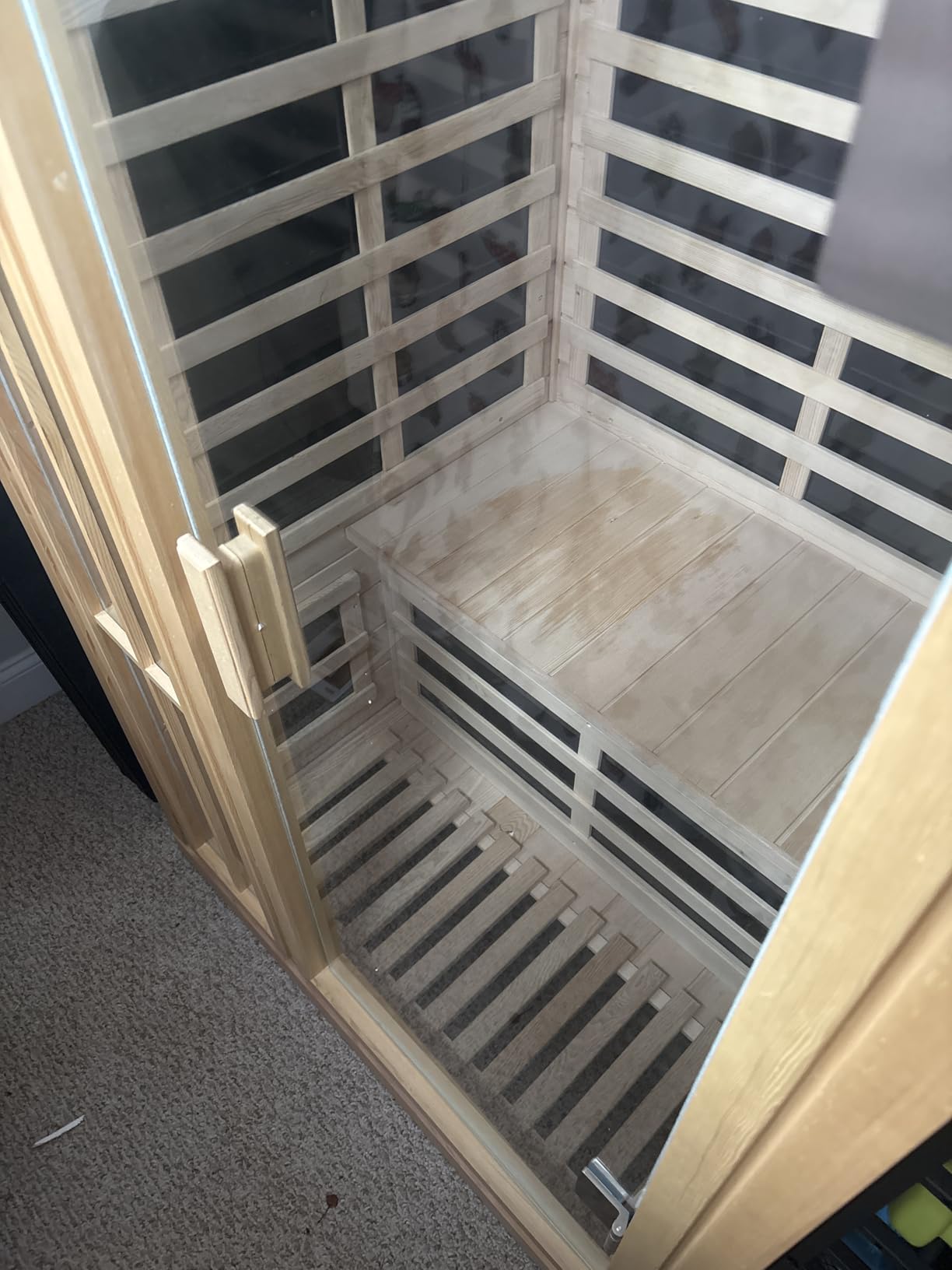
At 950W this is the second-lowest draw in the roundup, and it is the only wooden cabin here with a documented built-in ventilation port, which is exactly the item we tell basement builders to insist on. A vertical footprint of 36.6 by 29.3 by 63 inches works in a tight room where a square cabin will not, and the standard 110-120V US plug with a 2.2 meter cord means no electrician.
Five far infrared epoxy panels reach up to 140F on solid spruce wood, controlled by a simple button panel for time and temperature, with Bluetooth speakers and an integrated LED reading light. The overheat protection sensor runs to 110C. Spruce is a slightly harder, less aromatic wood than hemlock, and it is a defensible choice indoors.
The honest limitation here is the review base. 116 reviews at a 4.5 average with 79% five star and zero two-star ratings is a good signal from a thin pool, and we weight it below units with thousands of reviews for that reason. The 8% one-star share in the data includes some early durability complaints, which is a pattern you see more in newer listings.
The interior is small, and that is the most common note. It suits one person who is not large, and the feature set is deliberately modest rather than loaded. Nothing about it requires a second room, a drain, or a vent plan, which is a virtue in a basement.
Who this fits best
A solo user who cares most about the electricity side. On a 15-amp circuit this is about as close to free-running as a wooden cabin gets, and the built-in vent is a genuine basement advantage. It also suits a guest room or bathroom conversion where vertical space is the constraint.
Where it falls short
Larger users, and anyone who wants to judge a brand by its track record. With 116 reviews you have less information than the 2364-review blanket has, and the durability notes are worth factoring in if the unit will be hard to replace.
10. Albott 1-Person 110V Infrared Sauna – Best for the Tightest Footprint

Albott 1 Person Infrared Sauna, Infrared Sauna for Home & Gym, Low EMF 110V
6 sq ft footprint
107 lb
149F max
110V, 15 amp
Roof vent
Pros
- Only 6 sq ft of floor space
- Assembles solo in about 20-40 minutes
- 110V and 15 amps
- Reaches 120F in 15-20 minutes
Cons
- Full 149F can take 40-60 minutes
- Have to duck entering the door
- Thermostat cycles off and drops
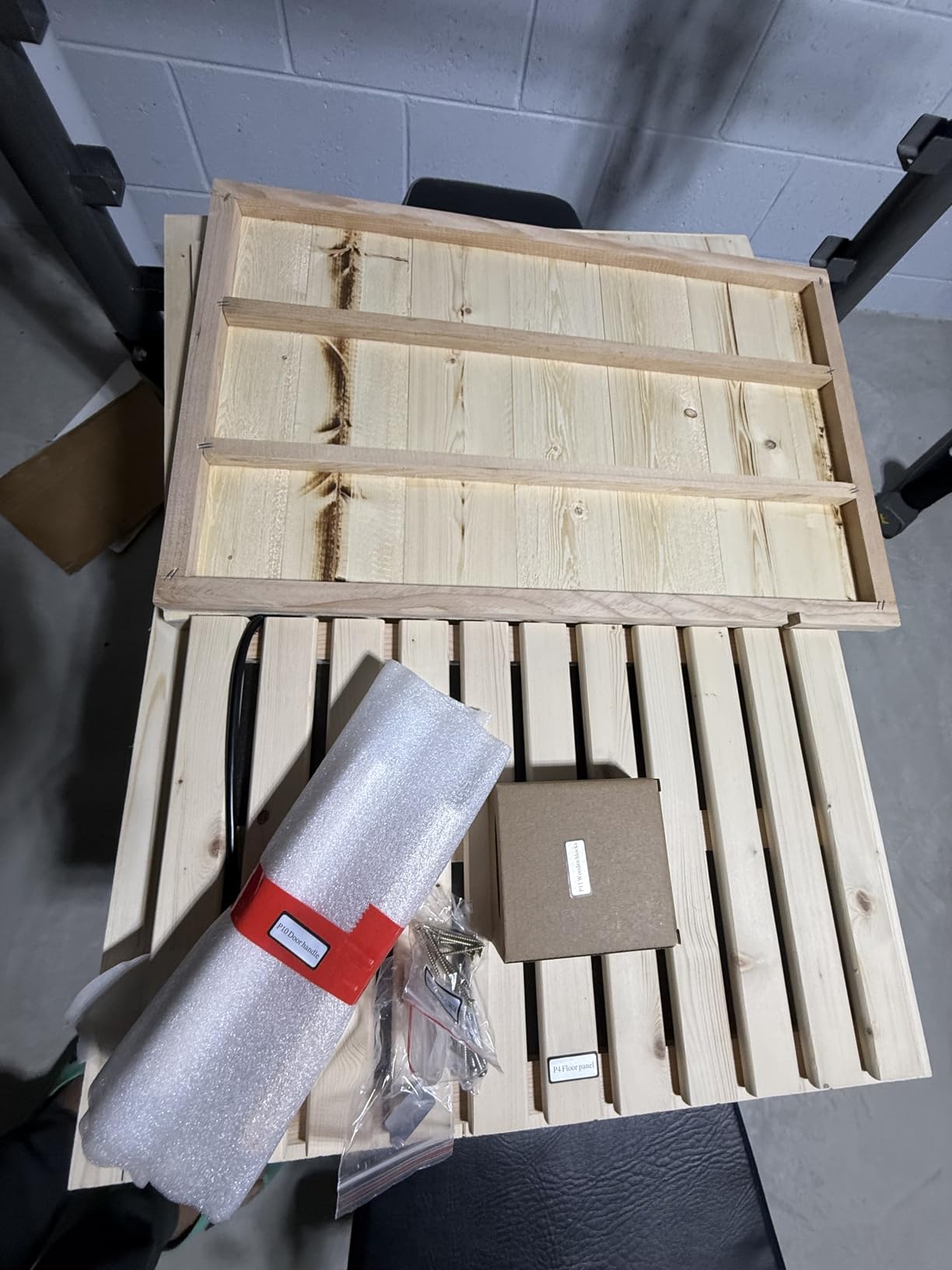
Six square feet is the smallest genuine floor footprint in this roundup, at 31.8 by 27.2 by 60.2 inches, and in a basement with ducts, beams, and a furnace taking the usable corners, six square feet is the difference between a sauna and an idea. The 107-pound total weight is light enough for one person to assemble solo, and the modular panel build takes about 20 to 40 minutes with basic tools.
Four carbon infrared panels plus a dedicated foot heating zone and a roof vent, in premium Finnish spruce with safety-tempered glass and a door seal strip, reaching a maximum of 149F on 110V and 15 amps. A reviewer at six foot three reports no fit issues, which is unusual in a cabin this size.
Two things to expect. Reaching the full 149F can take 40 to 60 minutes, though 120F arrives in about 15 to 20, so plan your warm-up around the temperature you actually want. And the thermostat cycles off and drops several degrees before reheating, which is a comfort quirk in a small sealed box rather than a fault.
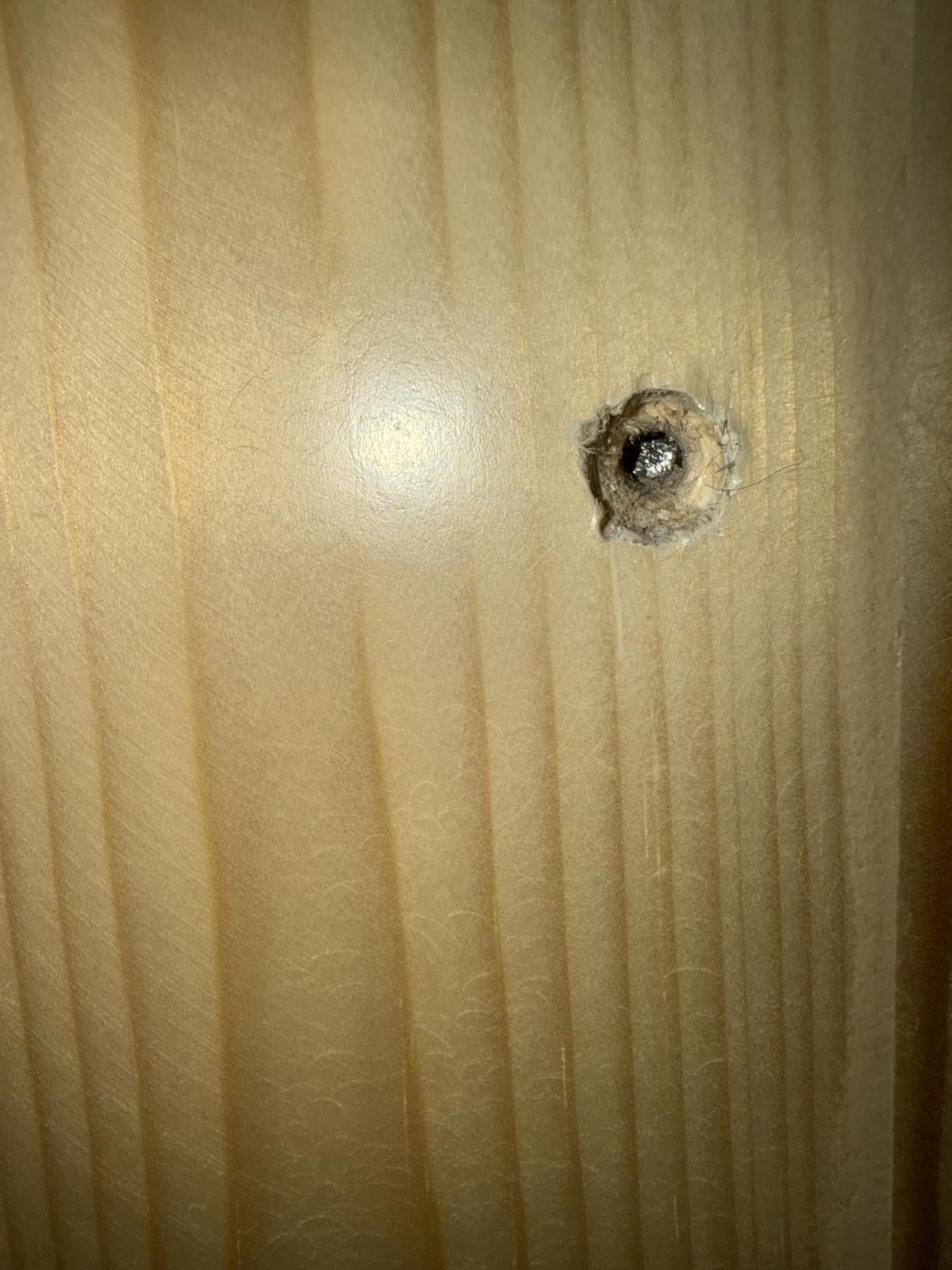
You also duck your head entering the door, and some owners had to re-drill screw holes during assembly. The 119 reviews at 4.4 with 74% five star are a decent signal on a smaller base, and the recurring theme is small footprint, single-person setup, and standard-outlet power.
Who this fits best
A single user in a genuinely tight basement corner who wants a 15-minute warm-up to a workable 120F rather than a slow climb to maximum. The roof vent also means it is one of the few small cabins here with a designed air path.
Where it falls short
Anyone chasing a 150F session on short notice, and anyone who does not want to duck through a 60-inch door. The thermostat cycling is also more noticeable in a one-person cabin than in a larger one.
11. ZONEMEL Full Size Portable Steam Sauna – Best Full Size Steam Output

ZONEMEL Full Size Portable Steam Sauna Kit, Personal Full Body Home Spa for Detox, Relaxation, 4 Liters 1500 Watt Steamer, Remote Control, Timer, Foldable Chair (L31.5 x W31.5 x H55.1, 3 Windows)
33.8 x 33.8 x 65.7 in
23.6 lb
4L steamer, 1500W
130F in about 8 min
3 windows
Pros
- True full body size
- 4 liter tank runs up to 99 minutes
- Heats the tent in about 8-15 minutes
- Three windows reduce claustrophobia
Cons
- Steam diffuser cup gets very hot
- Some steamer units stop heating water
- Cracked window panels reported
- Leaves heavy humidity in the room
If you want steam and you want to actually fit in it, this is the one. At 33.8 by 33.8 by 65.7 inches it is a genuine full-body cube rather than a sit-in tent, and reviewers who are tall or heavy specifically call out that it fits comfortably. The 360-degree steam box design heats the enclosure in about 8 minutes with 16 heat settings up to 130F.
The 4 liter steamer is generous, running up to 99 minutes of continuous operation on a fill, and the 1500W output is the highest in the roundup. Three transparent openable windows and a double-headed zipper keep it from feeling like a plastic bag, and tool-free assembly folds flat for storage with a carry bag included. At 23.6 pounds it moves easily between rooms.
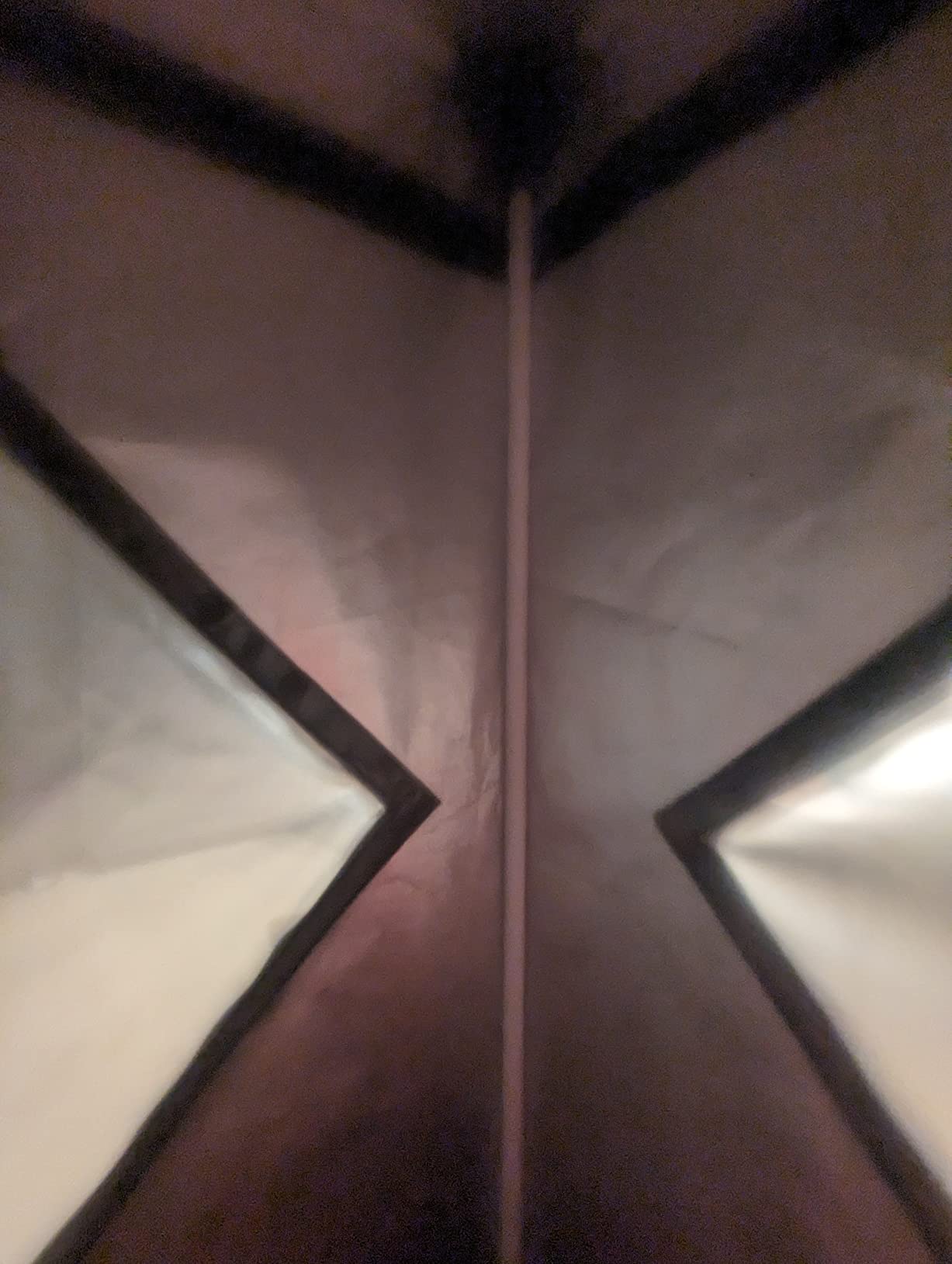
The basement caveat is written into the review data: it leaves heavy humidity in the room, requiring ventilation or a dehumidifier. On a below-grade floor with concrete and stored belongings nearby, that is a real operating cost, and it is the single strongest argument for an infrared cabin in this room.
Durability notes are worth reading too. The steam diffuser cup inside the tent gets very hot to the touch, some users report the steamer stopping to heat the water, and the plastic window panels can arrive cracked at the fold lines. Buyers also report arthritis and sleep improvements, and praise the chair as sturdier than expected, even while noting it is small.

Who this fits best
A larger solo user who wants a real steam session in a basement they can also vent, and who values the eight-minute warm-up. The 4.5 average across 293 reviews with 76% five star shows the size is genuinely delivering.
Where it falls short
Any basement with a humidity problem, and anyone with a dog who will investigate a hot plastic cup. The window cracking and steamer shutdown reports are the two durability flags to weigh.
12. KASUE Infrared Sauna Tent with 3L Steamer – Best for Renters

KASUE Infrared Sauna Tent with 3L Steamer, for Home
30 x 30 x 70 in
15 lb
3L steamer
9 levels, 99-min timer
5-layer fabric
Pros
- Lightest full-size option at 15 lb
- Folds for compact storage
- Hand openings and remote for uninterrupted sessions
- 5-layer insulated fabric holds heat
Cons
- Steam generator gets hot enough to burn if seated close
- Zippers wear with repeated setup
- Instructions unclear
At 30 by 30 by 70 inches and 15 pounds, the KASUE is the tallest and lightest full-body unit in the group, and at 70 inches it clears a 7 ft ceiling without being a floor-standing cabin. That combination makes it the one to consider if you rent, or if you might move homes in a few years. It folds for storage and needs no wiring beyond a wall outlet.
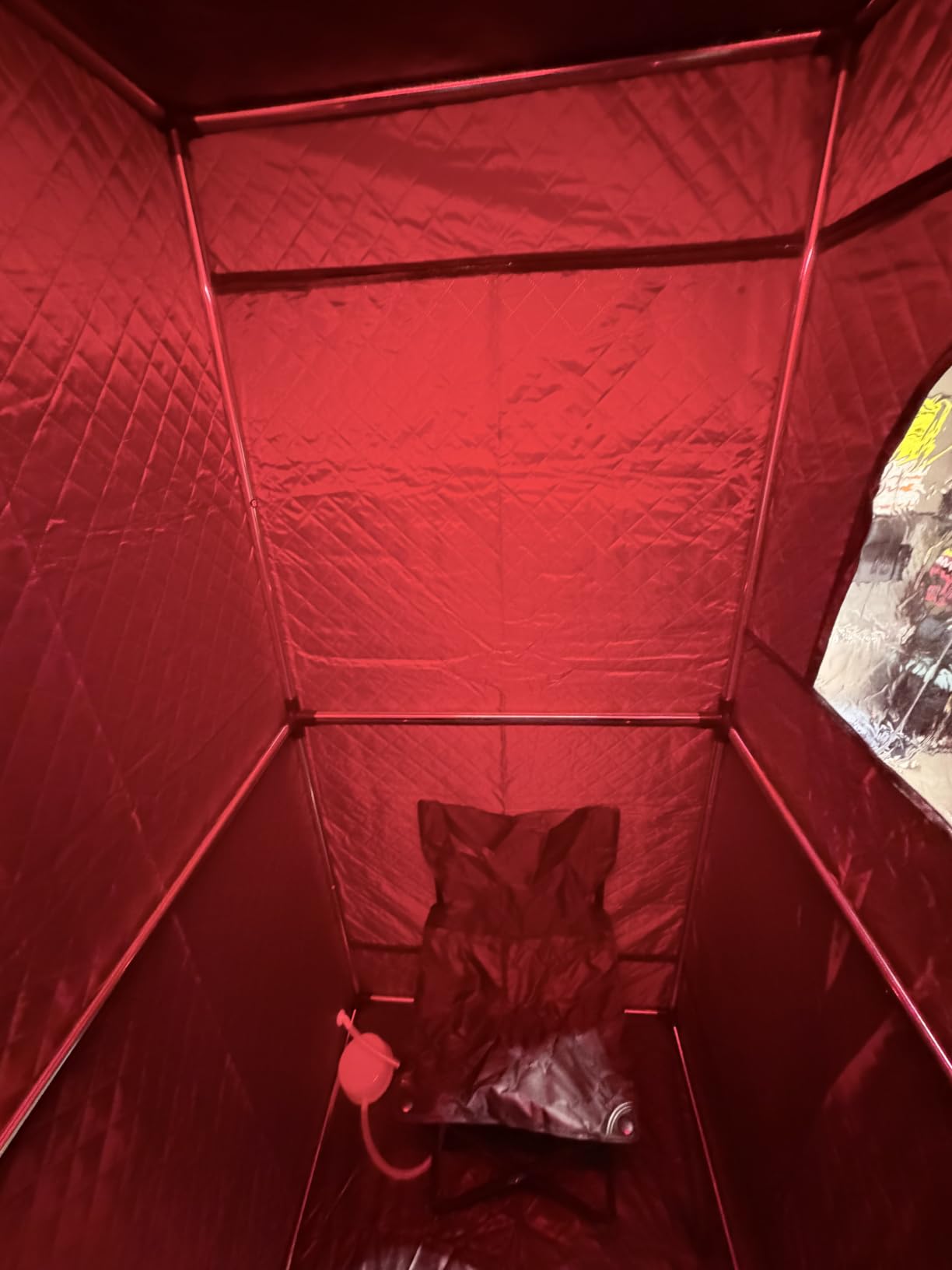
The 3L steam generator has nine adjustable temperature levels and a 99-minute timer with remote adjustment, so you can run a session without opening the tent. Five-layer waterproof insulated fabric holds heat and wipes clean. A folding chair is included, and hand openings let you adjust settings without breaking the seal.
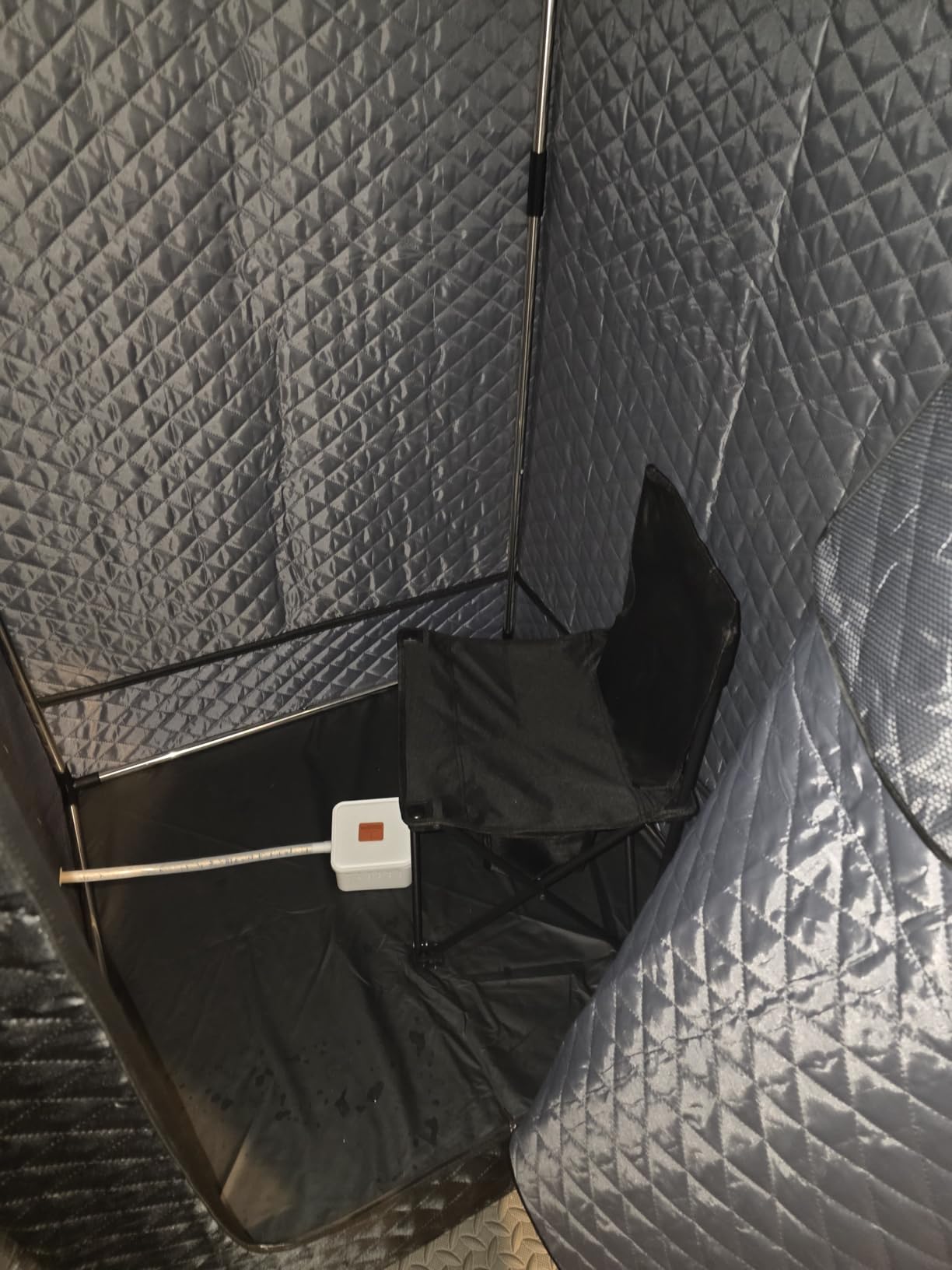
The engineering is uneven, and the review data is specific about where. The steam generator itself runs hot enough that a larger person sitting close can burn skin. The zippers around the frame bars are tight and wear with frequent setup and takedown. One detailed review describes reworking the vent hole and cutting the steam tubing to make the unit perform as advertised, which is a fair warning that it may need modification.
Instructions are also unclear, and the red light therapy feature is never explained, which is a small example of the marketing language on these tents outrunning the documentation. The 4.3 average across 159 reviews still reflects regular use several times a week, with 40 to 45 minute sessions, so it works for people willing to work with it.
Who this fits best
A renter, a student, or anyone testing a sauna habit without committing to a room. The fold-flat design and 15-pound weight mean it moves between a bedroom, a basement corner, and a storage closet in a single trip.
Where it falls short
Anyone who does not want to modify a product on day one, and larger people who will sit near the generator. It is also a steam tent, so it carries the same basement humidity caveat as the other non-infrared units here.
How to Choose a Sauna That Actually Fits Your Basement
Product specs only matter once you know your three numbers: existing ceiling height, distance to the electrical panel, and where your nearest exterior wall is. Here is the order we would work through it, in the same sequence we would give an electrician and a contractor.
Measure the ceiling first, and be honest about the number
Measure from the bare subfloor to the underside of the joists or ducts, in several places, and take the lowest. Then subtract. A 7 ft 6 in existing ceiling lets you drop to a 7 ft insulated ceiling. A 7 ft 0 in to 7 ft 6 in existing ceiling means finishing at 6 ft 8 in to 6 ft 10 in, which works with lowered benches and a lower door opening. Under 7 ft 0 in is genuinely difficult, and most buyers regret forcing a full-height cabin into that space.
The reason for the drop is not style. Every inch you remove from the ceiling is a cubic foot of volume you no longer have to heat, and the standard rule of thumb is 1 kW of heater per 45 cubic feet. Build the ceiling high and you will either add heater capacity, add a second heater, or sit in a room that never gets hot enough to feel worth the walk down the stairs.
Choose infrared unless you have a specific reason not to
Infrared suits basements better than traditional, and the reason is the basement itself. Traditional heaters boil water onto stones and fill a room with steam, which in a below-grade space means moisture moving into drywall, into stored belongings, and against a foundation wall. Infrared heats bodies and surfaces at a listed 118 to 149F with the surrounding air close to ambient, so the room outside the cabin stays workable.
Traditional earns its place only if you want löyly and are building a proper insulated room with a real vent and a floor drain. It also means a dedicated 240V circuit at 30 to 60 amps, which is the single biggest cost surprise in a basement project. Hybrid cabins split the difference but still carry the traditional heater and its circuit.
Ventilation: decide the route before you frame a wall
Four steps, in this order. Put the mechanical intake low on the wall nearest the heater so fresh air is drawn across the heat source. Put the exhaust vent on the opposite wall, preferably higher, on an adjustable restrictor so you can open it more for traditional heat and less for infrared. Duct the exhaust through the ceiling void to an exterior wall or a window well, which is the ideal basement route. If neither is possible, fall back to an existing mechanical extract path, and only as a last resort discharge into the room with a running dehumidifier.
Two symptoms tell you it is wrong. Stuffy, drowsy air means the intake is blocked. Condensation streaking down the inside of the glass means the exhaust is undersized or closed. A [radiator heater](https://austineubanks.com/best-oil-filled-radiator-heaters-for-basements/) for the recovery corner will not fix either, but proper air will noticeably improve the session.
Electrical: check the panel before you choose the sauna
Most of the wooden cabins in this roundup run on 120V at 900W to 1200W, which fits an existing 15-amp household outlet and needs nothing from an electrician. That covers the Dynamic Elite, the OUTEXER, the Homsido, the Kanlanth, and the Albott. Every steam tent here also runs on standard outlets, though the Manastin needs two of them.
Traditional and hybrid heaters are a different conversation: a dedicated 240V circuit at 30 to 60 amps with GFCI protection, installed by a licensed electrician under an electrical permit, and frequently a service panel upgrade. Bring three questions to that electrician: what spare capacity does my panel have, what is the run distance from panel to sauna, and what does local code require for GFCI and the disconnect. Ask for the panel capacity answer first, because it is the one that changes your plan.
Plan delivery day before you order
Measure your stair width, the tightest turn, and the clear door opening. A 32-inch clear opening is the practical minimum for a prefab cabin. Get the crate weight in writing, and plan to uncrate upstairs and carry panels down in pieces rather than wrestling a fully assembled box down a staircase. Budget a second pair of hands for anything over 200 pounds. Portable options like the [portable saunas we cover separately](https://austineubanks.com/best-portable-saunas-for-home-use/) sidestep this entirely, which is a real advantage in a tight stairwell.
What not to buy for a basement
Do not buy an outdoor barrel or a weatherproof shell designed for an open deck. Cedar is the right wood outdoors, not against a foundation wall below grade. Do not buy a five or six person cabin for a room with a 7 ft ceiling, because the bench geometry that seats six needs headroom you will not have. Do not buy a high-moisture traditional setup for a low-ceiling or damp basement, and do not build against an uninsulated foundation wall, which acts as a heat sink and invites condensation inside the wall itself. Leave a 5 to 6 inch standoff between the sauna box and the foundation. And do not buy before you have looked at your panel, your ceiling, and your vent route, in that order.
Frequently Asked Questions
Is it okay to put a sauna in your basement?
Yes. A basement is often the best room in a house for a sauna because the concrete floor tolerates water, the electrical panel is usually nearby, and cool ambient air gives you somewhere to recover. The three conditions are 7 ft 6 in of existing ceiling so you can drop to a 7 ft insulated ceiling, a freestanding insulated box standing 5 to 6 inches off the foundation wall, and an exhaust vent routed to an exterior wall or window well. Fix any existing damp or efflorescence before you build over it.
How high should the ceiling be in a sauna?
Plan on 7 ft finished. That requires about 7 ft 6 in of existing ceiling to allow for an insulated dropped ceiling. With 7 ft 0 in to 7 ft 6 in existing, you can finish at 6 ft 8 in to 6 ft 10 in using lowered benches. Under 7 ft 0 in is difficult for a full cabin, and a portable tent or 1-person unit is the better answer. Height matters because the standard sizing rule is 1 kW of heater per 45 cubic feet, and every inch of lost headroom is volume you must heat.
What size circuit breaker do I need for a sauna heater?
It depends entirely on the heater. Infrared cabins and steam tents in this roundup run on 120V between 900W and 1500W, so an existing 15-amp household outlet covers them. Traditional and hybrid heaters need a dedicated 240V circuit at 30 to 60 amps with GFCI protection, installed by a licensed electrician under permit. Ask your electrician about panel capacity, run distance from panel to sauna, and local GFCI and disconnect requirements before you order.
What is the best way to ventilate a sauna?
Use a mechanical intake low on the wall nearest the heater, an adjustable exhaust vent on the opposite wall higher up, and duct the exhaust through the ceiling void to an exterior wall or window well. Open the restrictor more for traditional heat and less for infrared. If you have no exterior wall, fall back to an existing mechanical extract path, and only as a last resort discharge into the room with a running dehumidifier. Stuffy or drowsy air means the intake is blocked; condensation streaking inside the glass means the exhaust is undersized.
Do saunas have mold issues?
Not when they are built correctly. The three failure modes are building against an uninsulated foundation wall, a botched vapour barrier on the warm side of the assembly, and no real exhaust route. Build the sauna as a freestanding insulated box with a 5 to 6 inch standoff, seal the vapour barrier properly, and vent outdoors, and the risk is low. Dry infrared heat that does not raise room humidity further reduces it, which is one reason infrared suits basements well.
What is the 200 rule for saunas?
The 200 rule is a sizing rule of thumb for traditional saunas: the combined volume of the room, minus the heater and stones, should be about 200 cubic feet per ton of sauna capacity. In practice most home buyers use the simpler 1 kW per 45 cubic feet guideline, which gets you to a usable temperature in a normal session.
Which Basement Sauna Should You Pick
Start with your ceiling and your panel, not with a brand. If you have 7 ft 6 in of existing height, a standard 15-amp outlet, and one person using the sauna most days, the Dynamic Saunas Elite is the pick: the best rating-and-review pairing in this group, a footprint that clears a 7 ft finished ceiling, and no electrical work. If you want the fastest path from delivery to a hot session on a standard outlet, take the OUTEXER. If two people need to use it together with no construction at all, the Manastin pod is the only honest option here.
If your ceiling is under 7 ft, if you rent, or if you want to find out whether you will actually use a sauna daily before building a room, the two Lifepro blankets cover you with no wiring, no venting, and no permit. If you have a finished basement with real floor space and a wide stair, the Heat Wave Coronado gives you the best wood and the longest warranty, provided you plan for 329 pounds on delivery day. And if your basement has any damp at all, fix that before you buy anything.
One last thing, said plainly: sauna sweat is mostly water, and the detox claims attached to this category are the least supported. What you are buying is heat, a quiet room, and a habit. Those are still worth it. Check the current price for the unit that fits your three numbers, and go heat up your basement.