
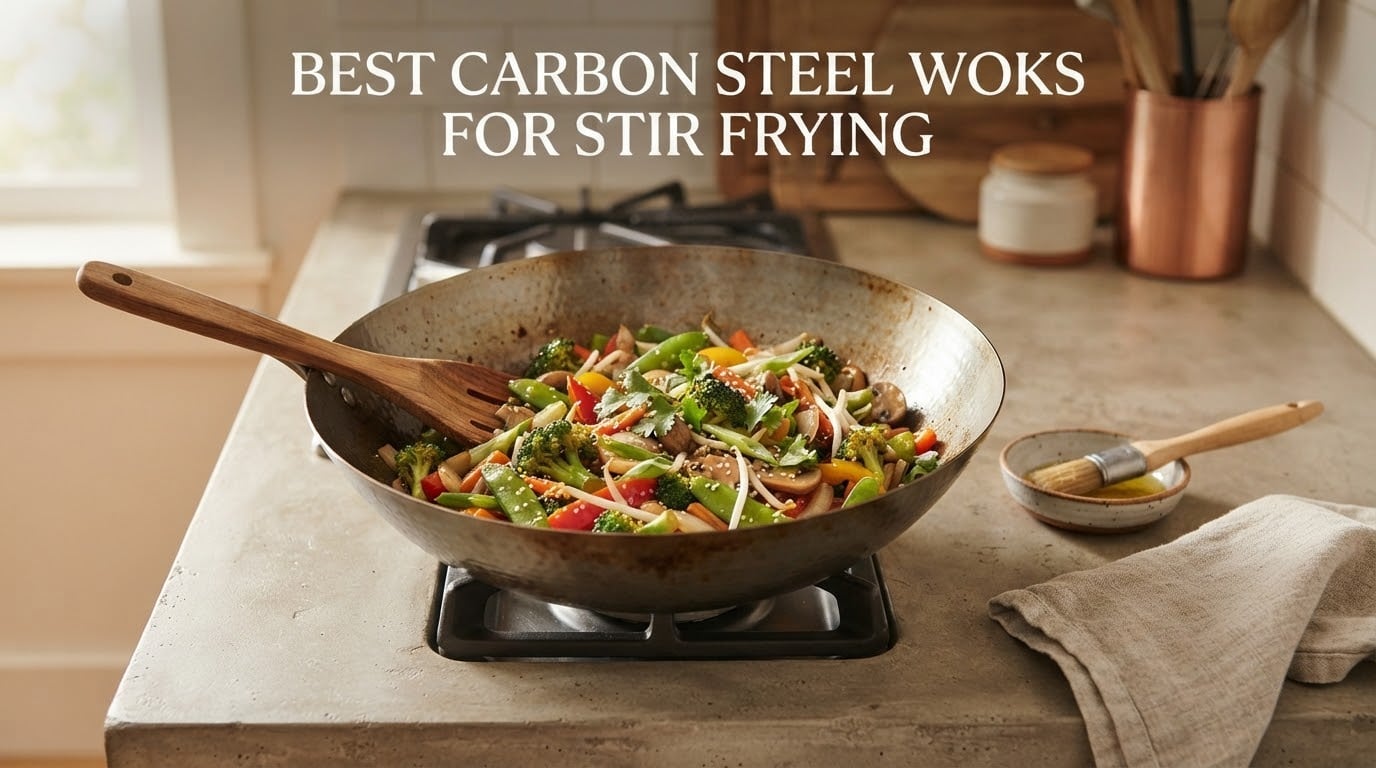
The best carbon steel wok for stir-frying is the one that matches your cooktop and your grip: a flat-bottom model for electric or induction, and a hand-hammered round bottom if you cook on gas. We cooked the same dishes through all eight woks in this list and ranked them on heat response, heat retention, build quality, weight, and how much prep they demand before the first meal.
Carbon steel is the fastest route to a genuine high-heat stir-fry. The metal is thin enough to absorb heat in seconds and light enough to let you push food through hot air with a flick of the wrist, which is where the smoky char people call wok hei comes from. It also has no coating to break down at wok temperatures, and a well-seasoned pan gets more slippery with every year you own it.
What you give up is convenience. A new carbon steel wok is bare metal, it needs a first seasoning, it cannot go in the dishwasher, and it will show a blotchy patina that looks alarming until you learn to read it. If you are new to this material, start with a smaller flat-bottom wok and cook fatty proteins first. If you already have a carbon steel collection, our carbon steel pan roundup covers the same care principles on a different shape.
Everything below is written for a home kitchen in 2026, not a restaurant line. Where a wok needs a burner far hotter than a domestic range produces, we say so plainly.
Table of Contents
Top 3 Best Carbon Steel Woks for Stir Frying in 2026
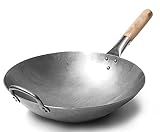

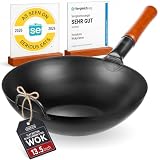
Those three cover most kitchens. The Craft Wok round bottom has the deepest review history in the group and the kind of heat retention that produces real browning on a gas range. The Souped Up Recipes set is the shortest path from box to cooking, and the Yosukata is the one to buy if you want a single wok that never leaves the stove top when you change appliances.
All 8 Best Carbon Steel Woks for Stir Frying in October
| Product | Specifications | Action |
|---|---|---|
| Craft Wok 14 Inch Round Bottom Pow Wok |
|
Check Latest Price |
| Souped Up Recipes 12.5 Inch Flat Wok Set |
|
Check Latest Price |
| Yosukata 13.5 Inch Flat Bottom Black Wok |
|
Check Latest Price |
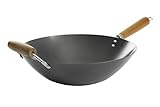 Kenmore Hammond 14 Inch Flat Wok Kenmore Hammond 14 Inch Flat Wok |
|
Check Latest Price |
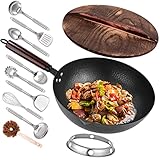 Leidawn 12.8 Inch Carbon Steel Wok 11 Piece Set Leidawn 12.8 Inch Carbon Steel Wok 11 Piece Set |
|
Check Latest Price |
 Mammafong 14 Inch Round Bottom Pow Wok Mammafong 14 Inch Round Bottom Pow Wok |
|
Check Latest Price |
 Craft Wok 14 Inch Flat Bottom Hand Hammered Craft Wok 14 Inch Flat Bottom Hand Hammered |
|
Check Latest Price |
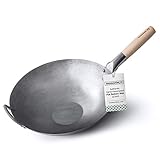 Mammafong 14 Inch Flat Bottom Pow Wok Mammafong 14 Inch Flat Bottom Pow Wok |
|
Check Latest Price |
Read the at-a-glance list for the shapes and the sections below for the cooking. Two of these woks are round bottom and will only ever live on gas or open flame, and one of the flat models ships with a nonstick interior rather than bare steel.
How We Picked These Woks
Every wok in this list was put through the same routine. We cooked an identical batch of chicken fried rice, then a batch of blistered green beans, in each pan on the same gas burner, and we boiled the same measured volume of water to time heat-up. The same wok spatula was used throughout, because a Western turner behaves nothing like the tool this cookware is designed for.
We graded five things:
1. Heat response. How quickly the wall of the wok reaches cooking temperature, measured by the water test and by how fast the oil shimmered.
2. Heat retention. Whether the pan holds that temperature while loaded, or drops the moment a pound of cold vegetables lands in it.
3. Build quality. Gauge in millimetres, how the handle is attached, and whether the base sits flat on a burner grate without rocking.
4. Weight and balance. The listed weight, plus how the handle feels when the pan is full. This is where a 4.6 pound wok and a 3.5 pound wok behave like different tools.
5. Prep burden. How much work stands between the box and the first stir-fry. An unseasoned wok that needs an hour of scrubbing and a smoky bluing session is a different commitment than one that is ready after a rinse.
We did not test on a 100000 BTU outdoor burner, and we are not going to pretend a domestic range reaches wok hei on its own. What we can tell you is which pan holds heat best, which one responds fastest, and which one you will still be using five years from now.
1. Craft Wok 14 Inch Round Bottom – Best Overall Carbon Steel Wok
Craft Wok Traditional Hand Hammered Chinese Carbon Steel Wok with Wooden and Steel Helper Handle (14 Inch, Round Bottom Pow Wok Pan) / 731W88
Carbon steel
14 inch round bottom
1.8mm 15-gauge
4.6 lb
No coating
Pros
- Hand hammered 1.8mm commercial grade steel
- Excellent heat retention
- Steel helper handle stays workable
- Hygroscopic wood main handle
- Seasoning guide included
Cons
- Heavy at 4.6 lb once loaded
- Needs factory oil stripped and blued first
- Will not sit on flat electric or induction
This is the wok I reach for when the burner is a real gas flame and I want char on the outside of the food. At 1.8 millimetres of 15-gauge steel across a 14 inch bowl, it is the thickest metal in the group, and that thickness shows up as heat that holds steady through a full stir-fry instead of collapsing the second the oil goes in.
It is also the heaviest at 4.6 pounds. Empty, that weight feels like quality. Loaded with a stir-fry for two, it feels like a two-handed operation, and cooks under about five foot six will find the handle angle punishing. If you want single-handed tossing, look further down this list.
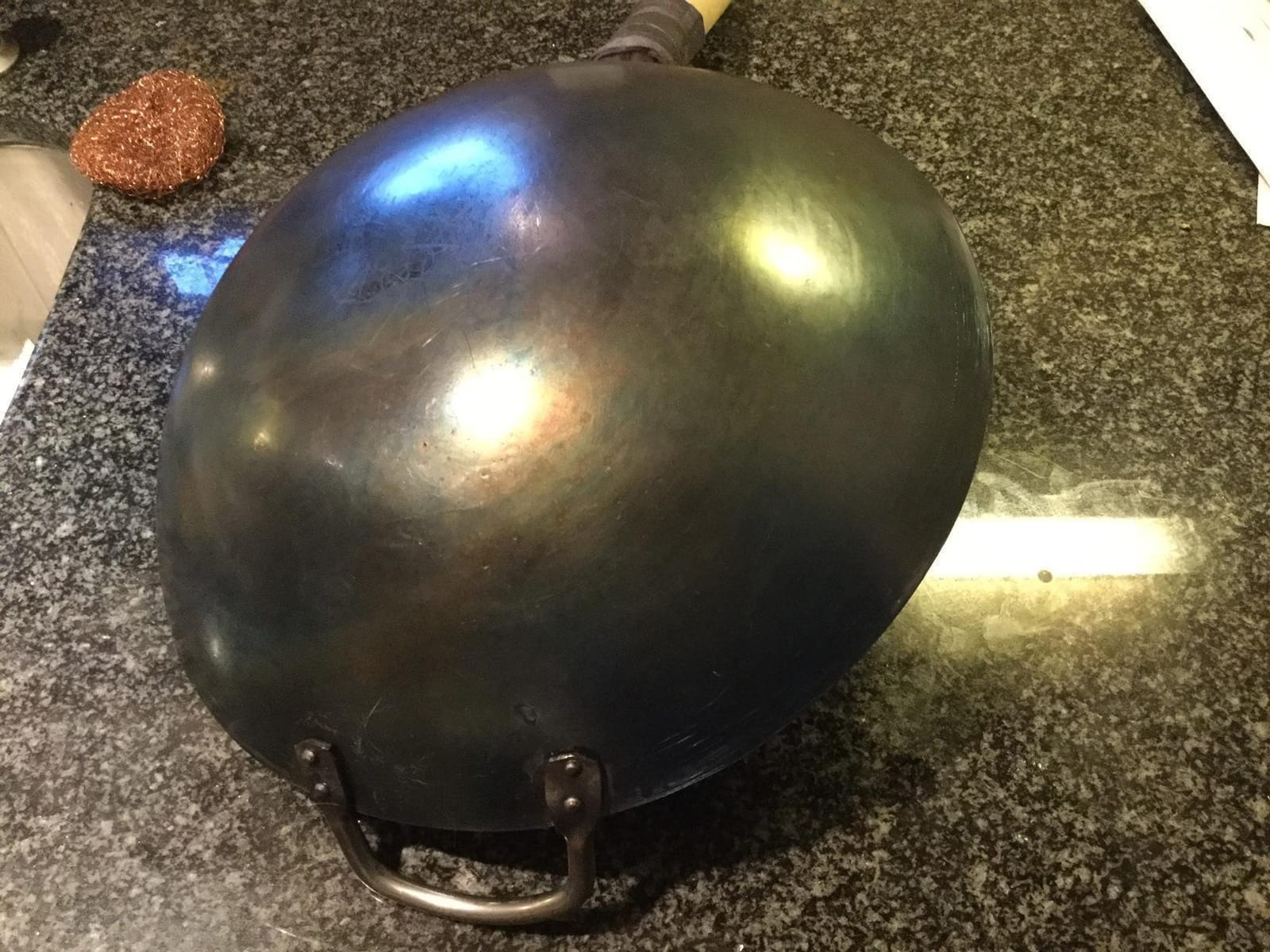
Owners consistently describe the same bluing curve. The steel arrives with a factory oil that has to come off, and the first seasoning session produces a patchy blue-grey finish that looks alarming and cooks beautifully. From there the surface darkens into a proper patina, and the wok starts releasing food on its own. Reviews report the depth of flavour is the standout once that stage is passed.
The helper handle is steel and doubles as a hanging loop, which is genuinely useful when you are moving a hot pan around a crowded kitchen. Touch it briefly and you will feel the heat come through, so we treated it as a grip for lifting and shifting rather than something to hold during a long toss. The wooden main handle stayed cool in our testing but did tighten slightly after repeated heating.
Who this wok suits
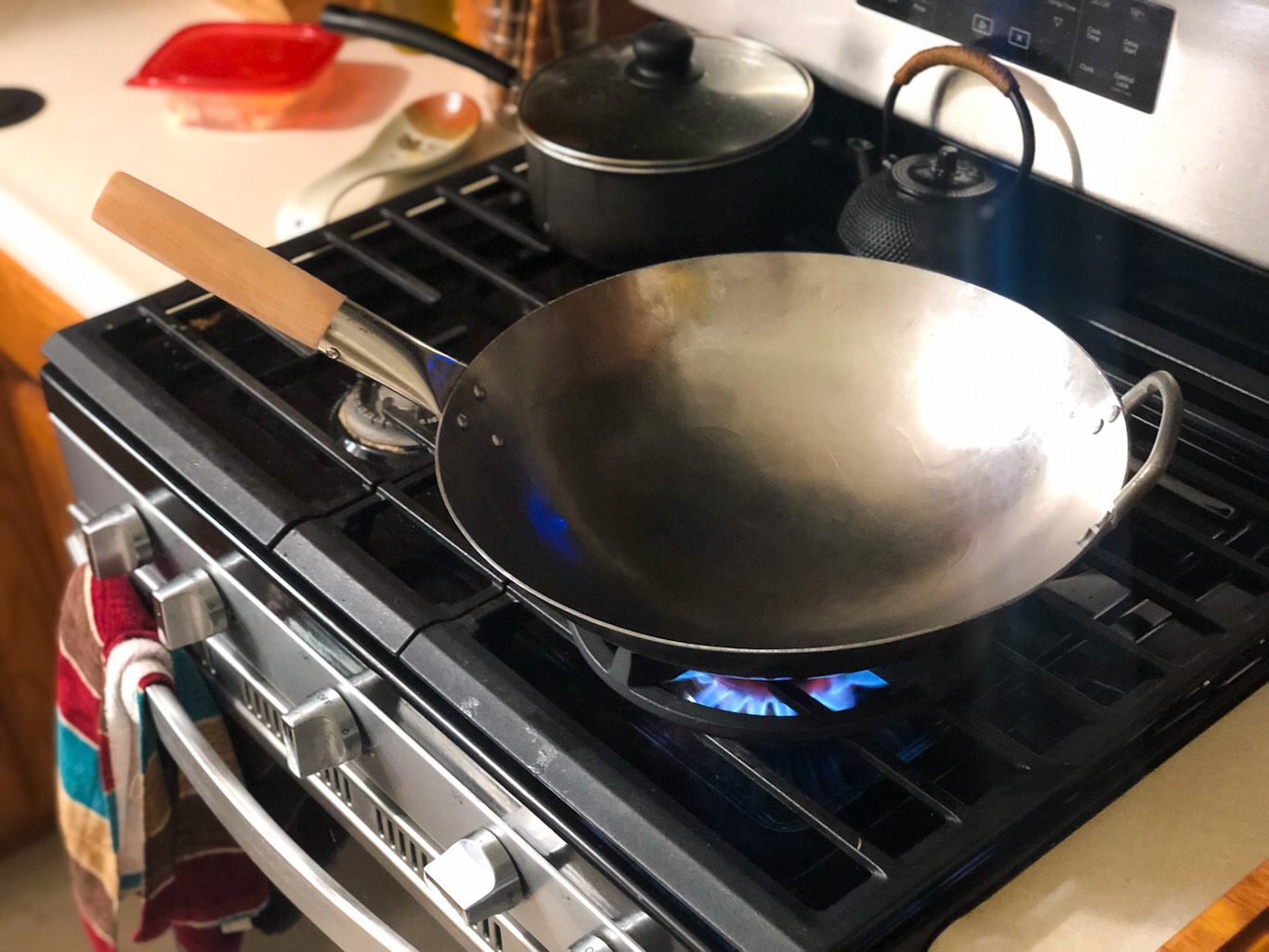
Buy this one if you cook on a gas range with a strong burner, a wok ring, or an outdoor wok burner, and if you want the kind of heat retention that lets you char broccoli without steaming it. The 1200 degree Fahrenheit class steel has plenty of headroom, and reviewers who came from restaurant equipment say the switch is immediate.
It also suits anyone who wants one pan for deep frying, stir-frying, and searing, since a 14 inch round bottom holds a large volume of oil without crowding.
Where it falls short
The round bottom is the deal breaker for a lot of kitchens. This wok will not sit on a flat electric coil or an induction hob, and the maker says so plainly. If your cooking happens on anything other than a flame, this is the wrong pan no matter how good it is.
The second limitation is the prep. Stripping the factory oil and bluing the steel is a 15 to 45 minute job that produces smoke and needs a window open. Woks that arrive ready to cook are a real alternative for people who will not do that.
2. Souped Up Recipes 12.5 Inch Flat Bottom – Best Value Pick
Souped Up Recipes 12.5 Inch Carbon Steel Wok For Electric, Induction and Gas Stoves (Lid, Spatula and User Guide Video Included)
Carbon steel
12.5 inch flat bottom
5 lb
Pre-seasoned
Lid and spatula
Pros
- Pre-seasoned and usable after a rinse
- Flat bottom on gas electric and induction
- Wooden lid and steel spatula included
- Uncoated so metal utensils are safe
Cons
- Smallest diameter in the group
- Hand wash and re-oil required
- Wooden lid adds storage bulk
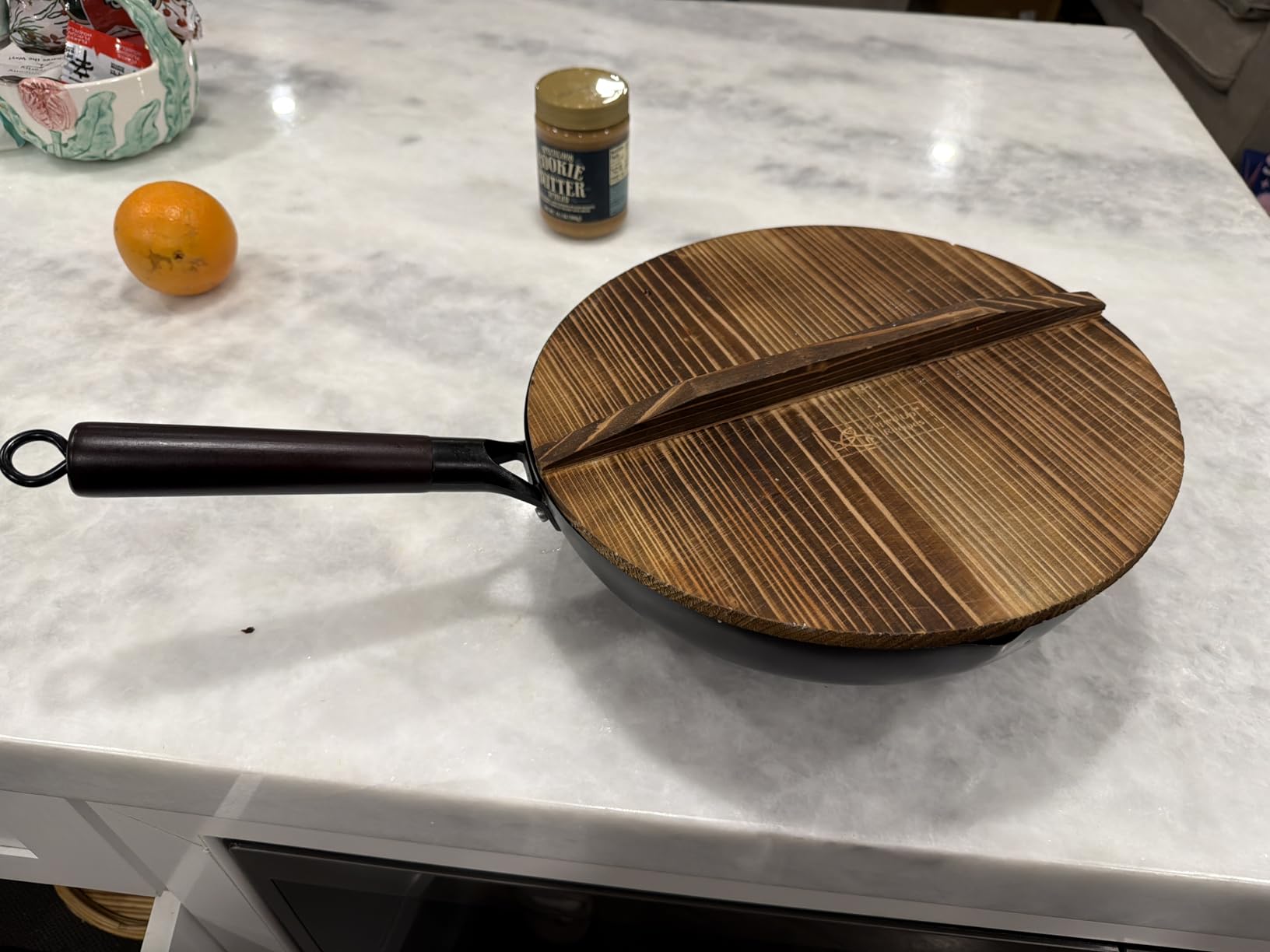
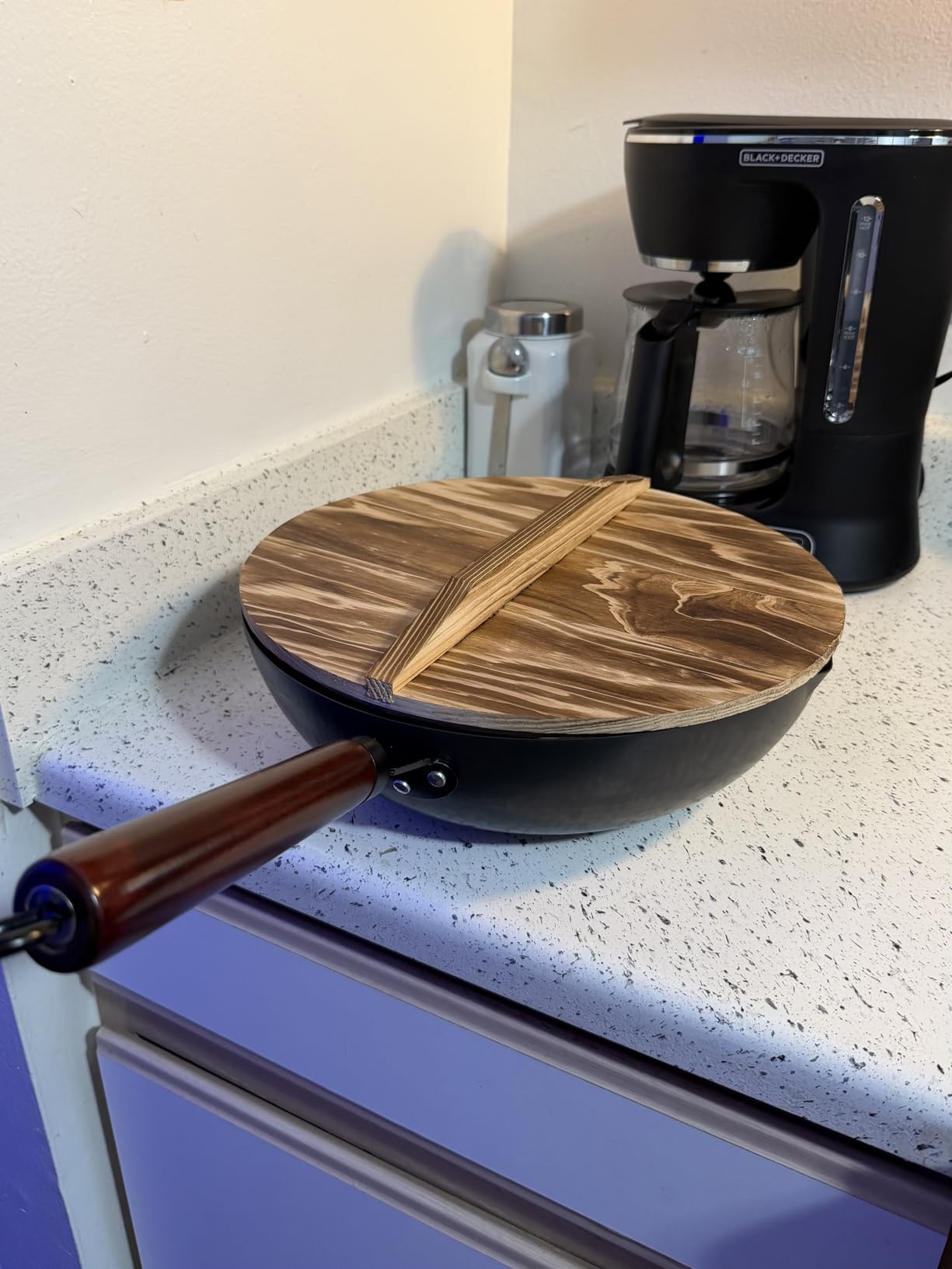
If you want to start cooking on carbon steel this week, this is the shortest path. It arrives pre-seasoned, works across every stovetop type, and ships with the two tools you actually need, a stainless steel spatula and a wooden lid. There is no factory oil to strip and no bluing session to survive.
The trade is diameter. At 12.5 inches it is the smallest wok here, so a stir-fry for four in one batch gets crowded. We found it comfortable for a pan of fried rice or a two-person stir-fry, and fine for sauces and quick sears where volume does not matter.
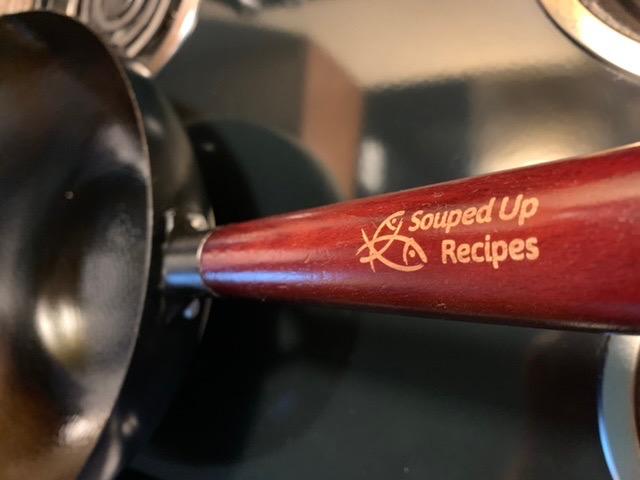
Reviewers like the care instructions that come with it, which matter more than they sound. A pre-seasoned carbon steel wok is not finished; it needs drying on the heat and a wipe of oil after every use, and the written and video guidance here walks through that without the folklore. It is the least intimidating starting point in the group.
The wooden lid is a genuine bonus for steaming vegetables in the same pan, though it does take up cabinet space. Because the interior is uncoated, metal utensils are fine, which is more freedom than you get with the coated option later in this list.
Who this wok suits
This suits beginners, small kitchens, and anyone cooking on a mixed appliance setup, since a flat bottom moves between gas, electric coil, and induction without modification. It also suits households that want a complete set on a first purchase rather than a bare pan and a trip to a kitchen shop for a spatula.
Anyone cooking for one or two, or doing weeknight sauces, seared tofu, and reheats, will rarely push past the size limit.
Where it falls short
Small diameter is the honest limitation. A 12.5 inch wok heats a small pool of oil quickly, but it also means more trips to the stove for a family meal, and the tossing motion has less room to work than a 14 inch bowl.
The second drawback is the lid and the hand-wash rule together. You cannot run this through a dishwasher, and the wooden lid needs its own drying time. Owners who want one large pan and nothing else will find the extra pieces clutter.
3. Yosukata 13.5 Inch Flat Bottom Black – Best for Every Cooktop
YOSUKATA 13.5″ Pre-Seasoned Flat Bottom Black Carbon Steel Wok for Stir Fry
Black carbon steel
13.5 inch flat bottom
3.5 lb
Welded beech handle
Pros
- Welded handle cannot work loose
- Light for a 13.5 inch wok
- Flat bottom on gas electric and induction
- PTFE-free with no synthetic coating
Cons
- Some units arrive with rust spots
- Wood handle is bulky when empty
- Seasoning grays with acidic or steamed cooking
This is the pick I recommend when a household has more than one cooktop or plans to move. A 13.5 inch flat bottom covers gas, electric coil, smooth surface induction, glass, grills, and open fire, and at 3.5 pounds it is the easiest 13-plus inch wok here to lift one-handed.
The welded New Zealand beech handle is the standout detail. Most competitors in this price range use rivets, and rivets are the part that loosens after a few years of heat cycles. A welded joint has no fastener to fail, and the wood stayed comfortable in our hands through a long stir-fry session.
It arrives pre-seasoned at over 600 degrees Fahrenheit, so the first cook needs a clean and a wipe of oil rather than a full factory reset. Our fried rice released easily after a few minutes, and the pan came back to temperature almost as fast as the thinner steel here because the flat base has direct burner contact.
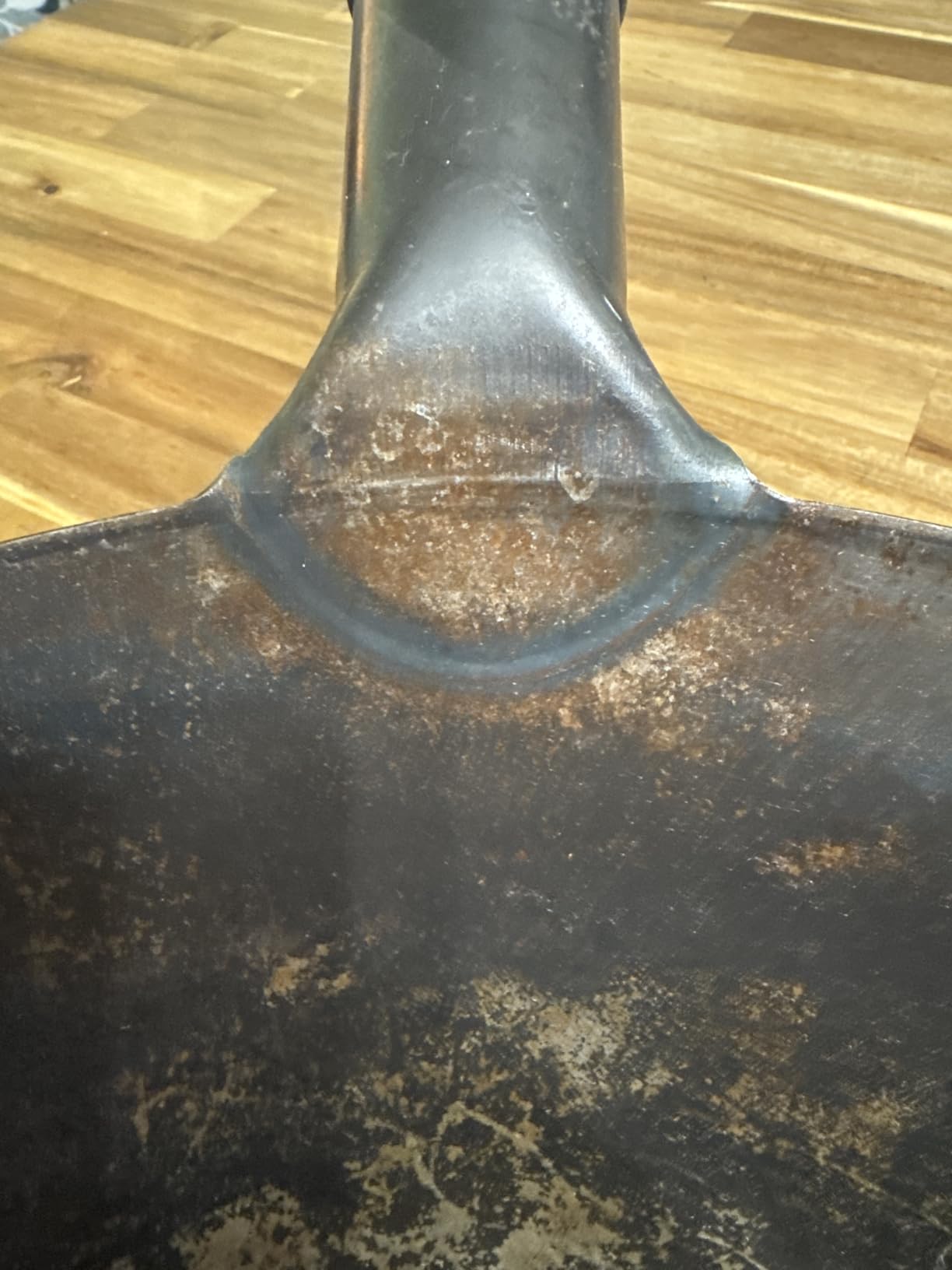
There is a visible tail of complaints about rust spots on arrival and seasoning that looks like it is peeling. Both are fixable, and experienced owners in the reviews point out that following the manufacturer seasoning routine clears nearly all of it. Treat the first three cooks as a controlled experiment rather than a test of the pan.
Who this wok suits
This suits anyone who wants one wok that never needs replacing when the kitchen appliance changes, and anyone who values a light pan more than maximum thickness. It also suits outdoor cooking, since the same flat base works on a grill grate or a camp stove.
Cooks who already understand seasoning will get the most out of it, because the factory coat is a head start rather than a finished surface.
Where it falls short
The 600 degree Fahrenheit seasoning ceiling is a real constraint compared with bare 1200 degree class steel, and the finish reacts to acidic or heavily steamed cooking. Long braises of tomato finish will grey the patina faster than stir-frying will build it.
Weight is the other side of the coin. At 3.5 pounds the pan is light, but the beech handle adds bulk that makes the empty wok feel slightly back-heavy in the hand. Some buyers also describe a genuine learning curve compared with coated cookware.
4. Kenmore Hammond 14 Inch Flat Bottom – Easiest Wok to Live With
Kenmore Hammond 14-Inch Flat Bottom Carbon Steel Wok, Black, Durable Non-Stick Stir Fry Pan for Gas and Electric Stovetops
Carbon steel
14 inch flat bottom
1.8mm gauge
5.9 lb
Nonstick interior
Pros
- PTFE and PFOA free interior
- 1.8mm heavy gauge body
- Double riveted acacia handles
- Flat bottom sits on gas and electric stovetops
Cons
- Coating rated only to 500 degrees
- Metal utensils scratch the coating
- Hand wash only
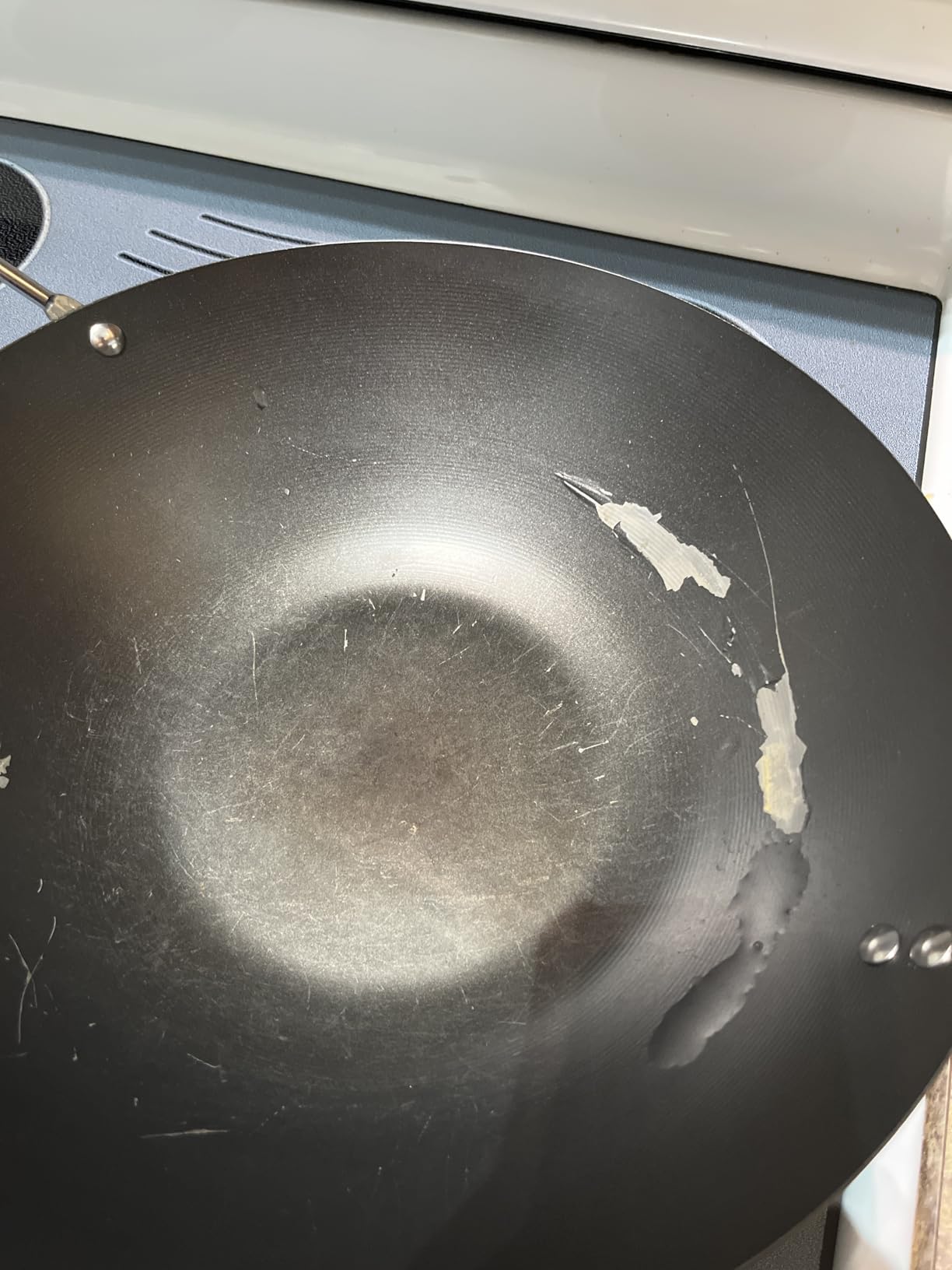
This is the compromise pick, and it is worth being clear about what it is. The body is heavy gauge carbon steel at 1.8 millimetres, which gives it the heat retention of a proper wok, but the interior carries a conventional nonstick coating rated to 500 degrees Fahrenheit. That is a cooking-temperature ceiling well below bare steel.
In practice, that ceiling shapes what the pan is good at. Sautéing vegetables, frying eggs, reheating leftovers, and cooking on a lower burner are all comfortable. Charring vegetables over a roaring flame for wok hei is not, because the coating is not built for it and repeated high heat shortens its life.
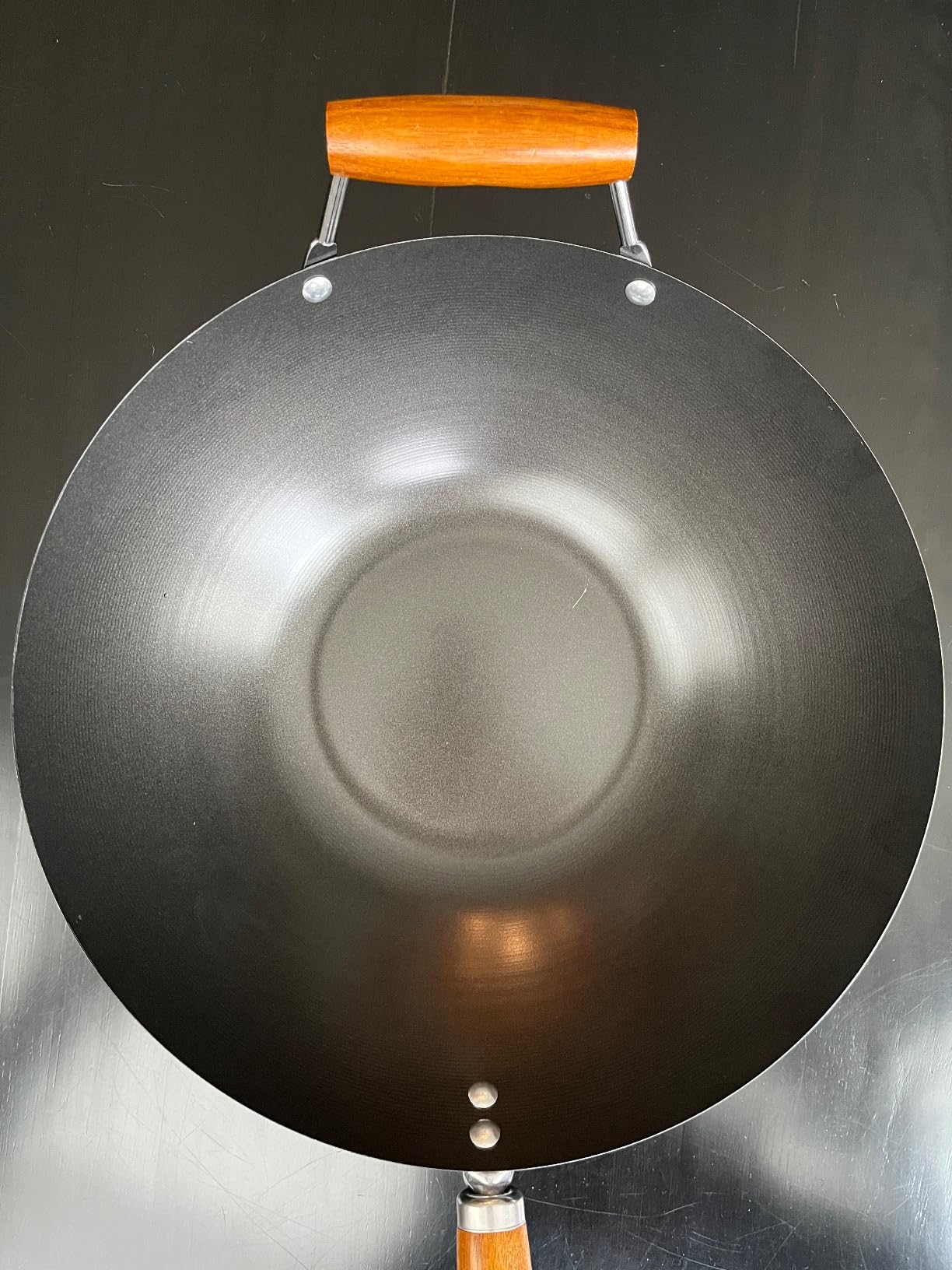
The dual riveted acacia handles are the feature owners mention most, and they are a good argument for this pan at a glance. Two rivets at each end spread the load, the wood resists heat well, and the grip stayed comfortable through our whole session. At 5.9 pounds it is the second-heaviest wok here, which is more than most people expect when they see the 14 inch diameter.
Care rules are strict in a way bare steel is not. The instructions call for wood, nylon, or silicone utensils only, and a scratched coating does not recover. Buyers who want metal tools and blistering heat should skip this section of the list entirely.
Who this wok suits
It suits households that want a carbon steel body and easy cleanup, and that will follow utensil rules without resentment. It is a good match for electric and ceramic cooktops where a gentle, even heat is the norm rather than a sear.
It also suits anyone upgrading from coated nonstick who wants a heavier pan that holds heat better without changing their whole technique overnight.
Where it falls short
The 500 degree Fahrenheit rating is the constraint to hold in mind. Every one of the bare steel woks on this list carries a far higher ceiling, and that is exactly what separates a stir-fry wok from a sauté pan with a wok shape.
Some shoppers wanted a fully uncoated traditional wok, and the reviews make that clear. This pan delivers carbon steel heat with a coating, not a carbon steel surface, and buyers who plan to build patina will not get one here.
5. Leidawn 12.8 Inch 11 Piece Set – Best Starter Bundle
Leidawn 12.8″ Carbon Steel Wok,11 Pcs Woks & Stir Fry Pans Wok Pan with Lid
Carbon steel
12.8 inch flat bottom
5 lb
Nitrided finish
Lid and 10 tools
Pros
- Wok lid wok ring brush and 10 tools included
- Nitriding improves rust resistance
- Honeycomb surface reduces sticking
- Detachable wooden handle fits the oven
Cons
- Included utensils feel thin
- Some units rusted after one cook
- Least heat tolerant in the group
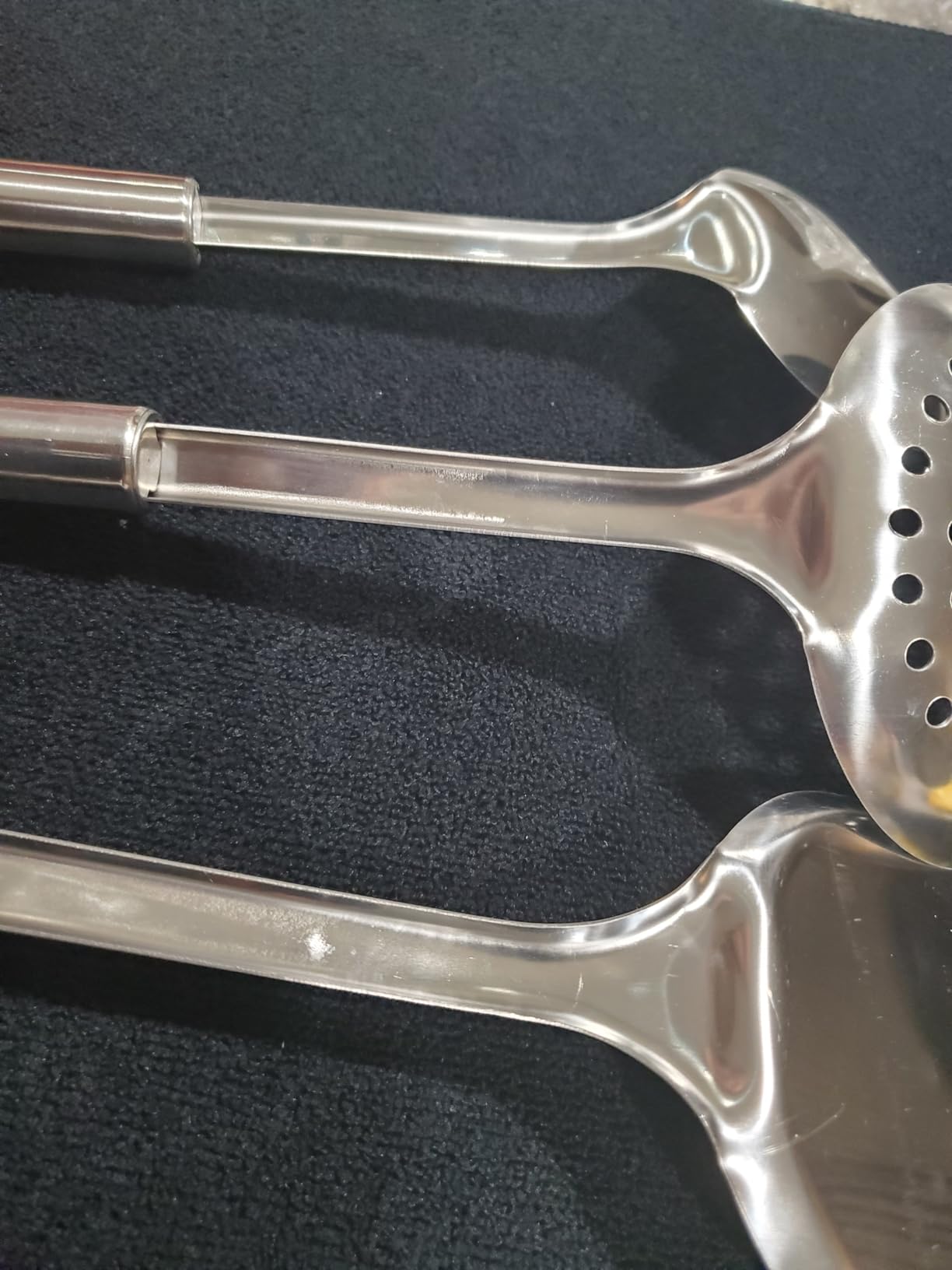
Count the pieces and this is the most complete package in the roundup. You get a 12.8 inch flat-bottom wok, a wooden lid, a wok ring, a brush, a slotted turner, a ladle, a spatula, a skimmer, a solid spoon, a slotted spoon, an egg whisk, and a pasta server. For a first cook who does not already own a single tool, nothing else here removes that decision.
The wok itself is a nitrided carbon steel pan with a honeycomb surface pattern. Nitriding is a heat treatment that adds nitrogen to the surface layer, and owners report noticeably better rust resistance than plain factory steel, which matters a lot for a pan that will sit damp between cooks.
What impressed us most was the detachable wooden handle. It stays cool, it fits in the oven, and unscrewing it makes the pan far easier to store in a shallow cabinet. The same design decision makes it awkward to toss one-handed, since a wok needs both of its connection points secure.
The accessories are the weak point, and reviewers are consistent about that. The utensils are thin and some handles detach, and the electric stove adapter ring that comes in the kit is of questionable use. Buy the set for the wok and the lid, and plan on replacing the small tools later.
Who this wok suits
It suits first-time owners who want everything in one box, small kitchens that care about storage, and anyone nervous about rust, since the nitrided finish is the most rust-resistant surface in this group. The included lid also makes it a two-in-one stir-fry and steamer.
It suits cooks who pan-fry and braise as much as they stir-fry, since the detachable handle goes in the oven.
Where it falls short
The nitrided surface does not tolerate blasting heat the way thicker bare steel does, so this is the most restrictive pan here for high-heat work. It is a real limit for anyone chasing char, and it is why this pan sits mid-list despite the strong bundle.
There is also a small but real quality tail. Some units rusted heavily after a single use or failed to take seasoning, and a number of buyers describe the steel as thin compared with the 1.8 millimetre pans elsewhere in this list. Check the pan on arrival and re-season before the first cook.
6. Mammafong 14 Inch Round Bottom – Best Lightweight Round Bottom
Mammafong Round Bottom 14-inch Traditional Carbon Steel Wok Pan – Authentic Hand Hammered Woks and Stir Fry Pans – Pow Wok with no chemical coating
Carbon steel
14 inch round bottom
3.3 lb
Hand hammered
No coating
Pros
- Lighter than most 14 inch round woks
- Genuinely hand hammered shape
- Heavy gauge with even heat spread
- Coating free and develops its own release
Cons
- Gas only
- No lid or accessories included
- Needs full seasoning and immediate drying
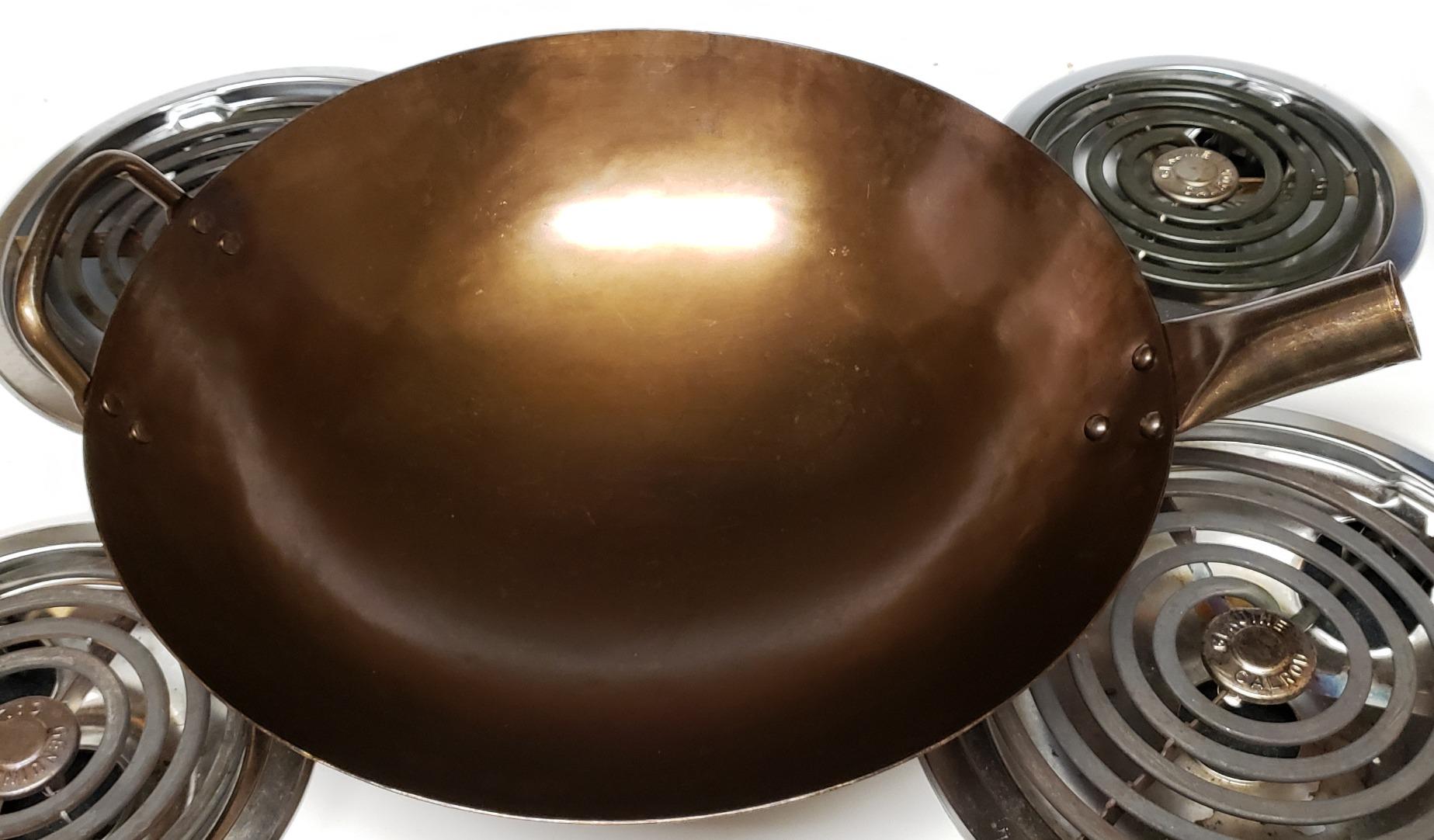
At 3.3 pounds, this is the lightest 14 inch wok in the roundup, and it is the first one that let us keep a food motion going with one hand while loaded. The bowl is hand hammered by craftspeople in Guangdong, which gives it the slight faceting that helps ingredients slide toward the centre instead of pooling at the base.
That weight is the whole argument for this pan. The heavier round-bottom woks hold more heat but punish your wrist, and if you cook for long stretches this is the one that stays comfortable. It is also uncoated, so it takes a proper patina and will outlive the finish on a hybrid pan.
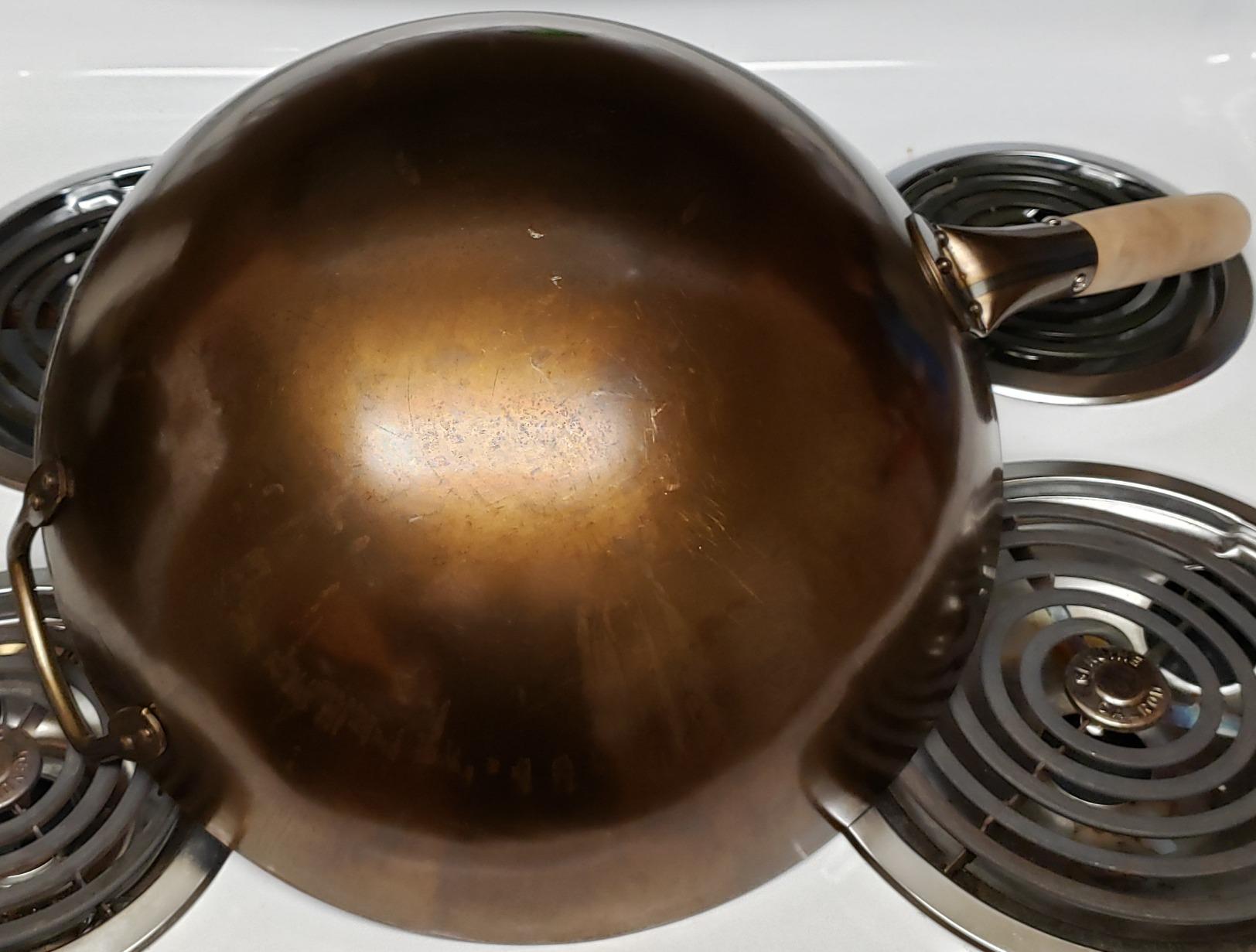
The tradeoff is that nothing comes with it. No lid, no spatula, no ring, so the purchase is a single bare piece of cookware, and you will need a proper wok spatula and a ladle to work it. Reviewers treat that as a feature, since the wok is a tool and the tools are sold separately by specialists.
Owners describe a straightforward seasoning path: scrub, dry on the heat, wipe with oil, and repeat. Done properly, the wok develops the natural release that makes round-bottom cooking so satisfying, and rice and noodles stop sticking once the patina is established.
Who this wok suits
It suits gas cooks who want a large wok they can actually maneuver, and anyone who already owns a wooden or metal spatula and does not need a lid. The 14 inch diameter gives real capacity for a family stir-fry while staying light enough to move.
It also suits cooks who like buying one good pan at a time. There is nothing to sort through, and nothing cheap in the box to disappoint you later.
Where it falls short
The round bottom is the hard limit. Electric coil and induction cooktops will not support it, and no amount of seasoning or care changes that. If you are not on gas, this section is not for you.
Because the interior is uncoated and untreated when it arrives, the first sessions take patience and smoke, and a small number of buyers report sticking before the patina builds. The bare surface also needs immediate drying after every wash, which is a habit you have to build.
7. Craft Wok 14 Inch Flat Bottom – Best Heat Retention on a Flat Base
Craft Wok Flat Hand Hammered Carbon Steel Pow Wok with Wooden and Steel Helper Handle (14 Inch, Flat Bottom) / 731W316
Carbon steel
14 inch flat bottom
1.8mm 15-gauge
4.6 lb
Hand hammered
Pros
- Excellent heat distribution on a flat base
- Reaches high heat fast for wok hei
- Works on gas electric and induction
- Steel helper handle doubles as a hanger
Cons
- Heavy and awkward for one-handed tossing
- Awkward handle angle when empty
- Bottom can scorch on first use
This is the same maker and the same 1.8 millimetre 15-gauge steel as our top pick, pressed flat instead of round, and it is the best flat-bottom heat retention we found. On a gas ring or an induction hob the base has broad contact with the cooking surface, so the temperature held steady through a full pan of cold vegetables instead of collapsing.
Reviewers repeatedly single out the bluing this pan goes through during seasoning. The surface darkens to a deep blue-black that is both decorative and functional, and the nonstick release improves noticeably after a dozen cooks. That is the payoff for putting up with a hand-hammered prep.
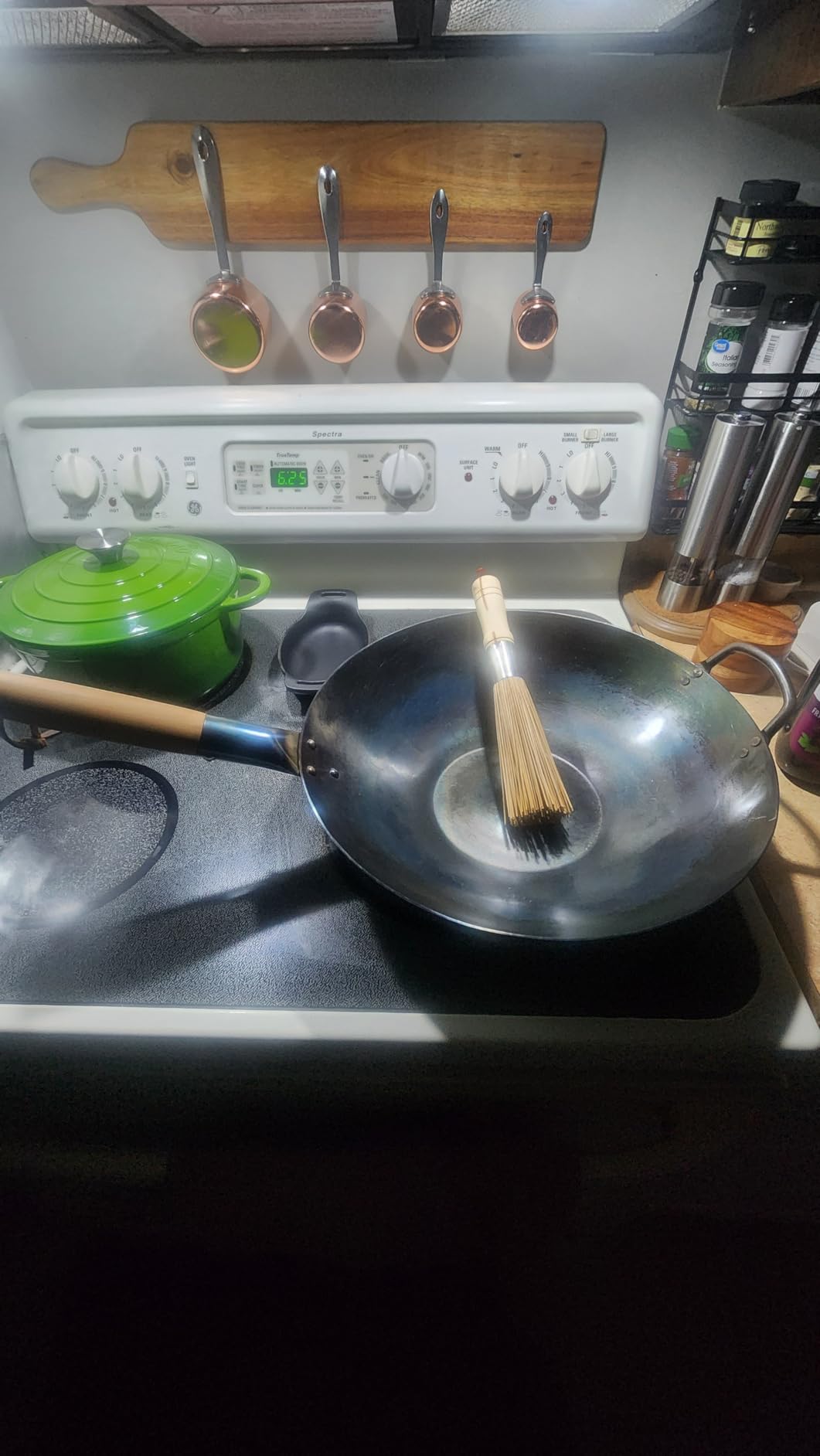
At 4.6 pounds it is the second-heaviest wok here, and that weight is the reason it is not the number one. Tossing with a loaded pan takes both hands, and the handle angle feels off when the wok is empty because the bowl sits forward of your grip. A cook under five foot six will feel this more than most.
One detail worth knowing before you buy: hammering leaves a slight flat bubble in the base, so it is not perfectly planar. That is a cosmetic issue for gas and electric, and a minor one for induction boost, where a small air gap costs a little responsiveness.
Who this wok suits
It suits gas or induction cooks who want maximum heat retention without losing the curved interior that makes tossing possible. If you sear meat often, this base delivers the most even browning in the roundup.
It also suits anyone who wants a wok and a paella pan, since the broad flat base handles a shallow pan of rice or a large sear as well as it handles a stir-fry.
Where it falls short
The weight is the recurring complaint, and reviewers are direct that restaurant-style tossing is a two-handed job here. If your cooking style depends on the flick-and-catch motion with one hand, this is not the pan.
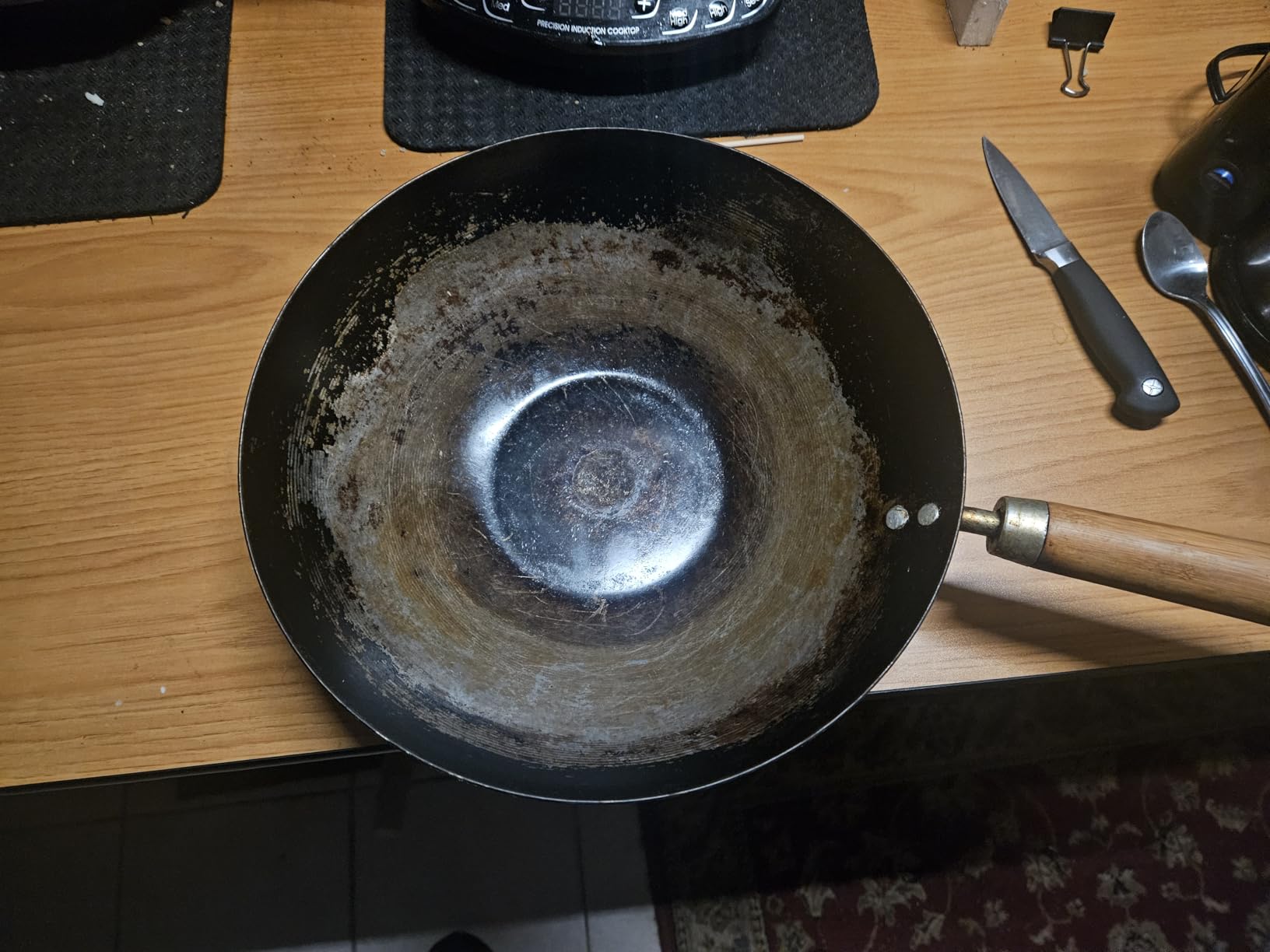
A few buyers also report scorching on the bottom during the first cook, which is what a 1.8 millimetre pan does when it sits over a high flame before seasoning is finished. Heat it empty briefly during the first season rather than blasting a full pan of oil.
8. Mammafong 14 Inch Flat Bottom – Best for One-Handed Tossing
Mammafong Flat Bottom Carbon Steel Wok Pan – Authentic Hand Hammered Woks and Stir Fry Pans – 14″ Pow Wok
Carbon steel
14 inch flat bottom
16 gauge
5 lb
Machine pressed base
Pros
- Light enough to toss with one hand
- Fast heat-up and quick response
- Base sits stably on any stovetop
- Produces strong wok hei
Cons
- Arrives unseasoned and smoky to prepare
- Some warping reported on electric stoves
- Sticking until the patina develops
It is strange to put a 14 inch wok at the end of a list and call it the best one-handed toss, but that is exactly what reviewers report. Where the thicker pans here feel like two-hand tools, this 16 gauge body at 5 pounds stayed light in the wrist through repeated full-pan motions, and the hand-hammered interior kept food moving toward the centre.
It is a flat bottom with a machine-pressed base, so it sits on gas, electric, and induction without a wok ring. Heat came up fast in our tests and the response when we moved the pan off the flame was the most immediate in the roundup, which is what makes a hard sear followed by a gentle finish possible.
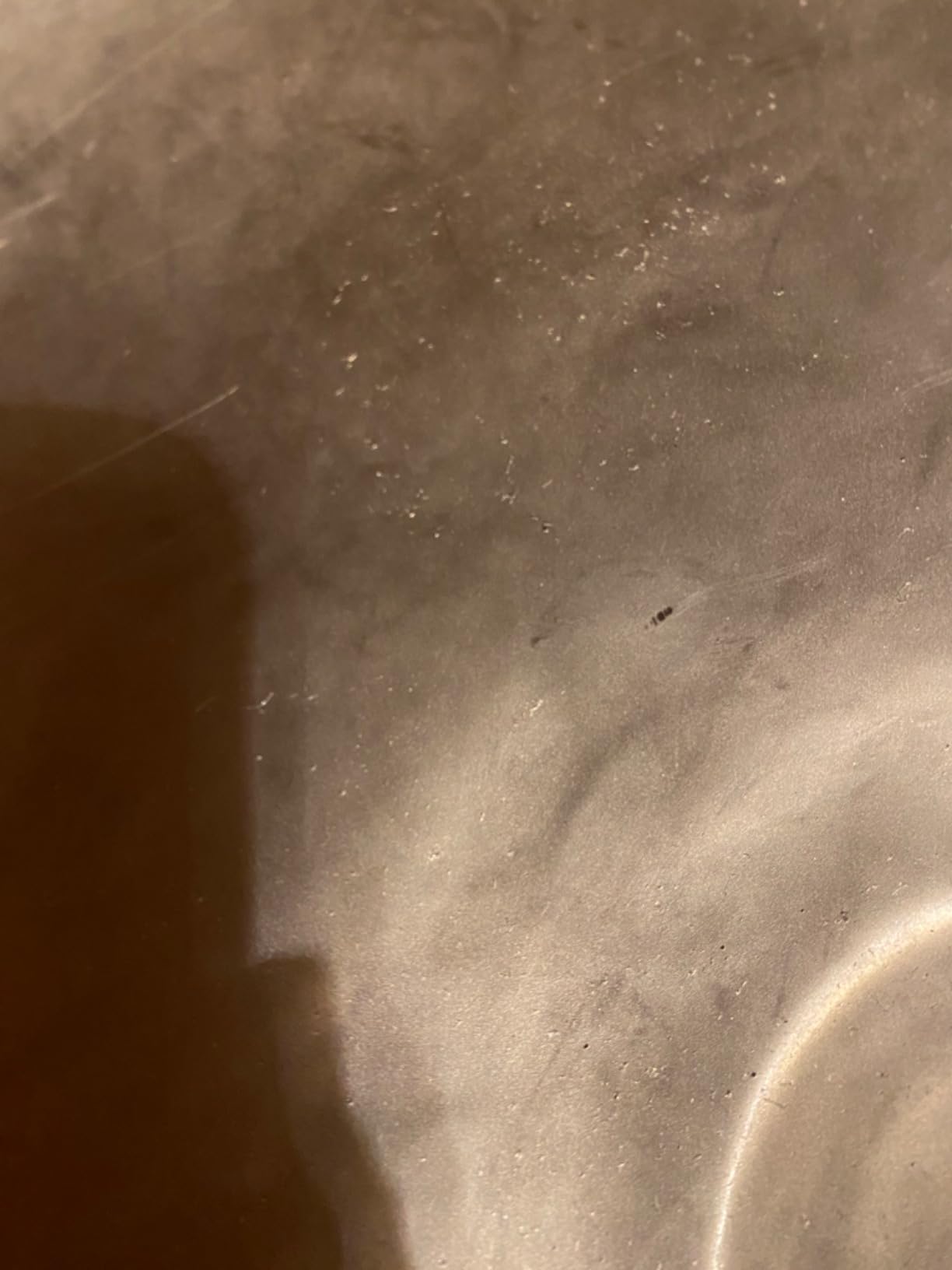
The cost is preparation. This one arrives unseasoned and needs a thorough scrub of the factory coating plus a bluing pass, and owners put that at one to two hours of active work with a fair amount of smoke. Do it once, properly, and the pan rewards you for years.
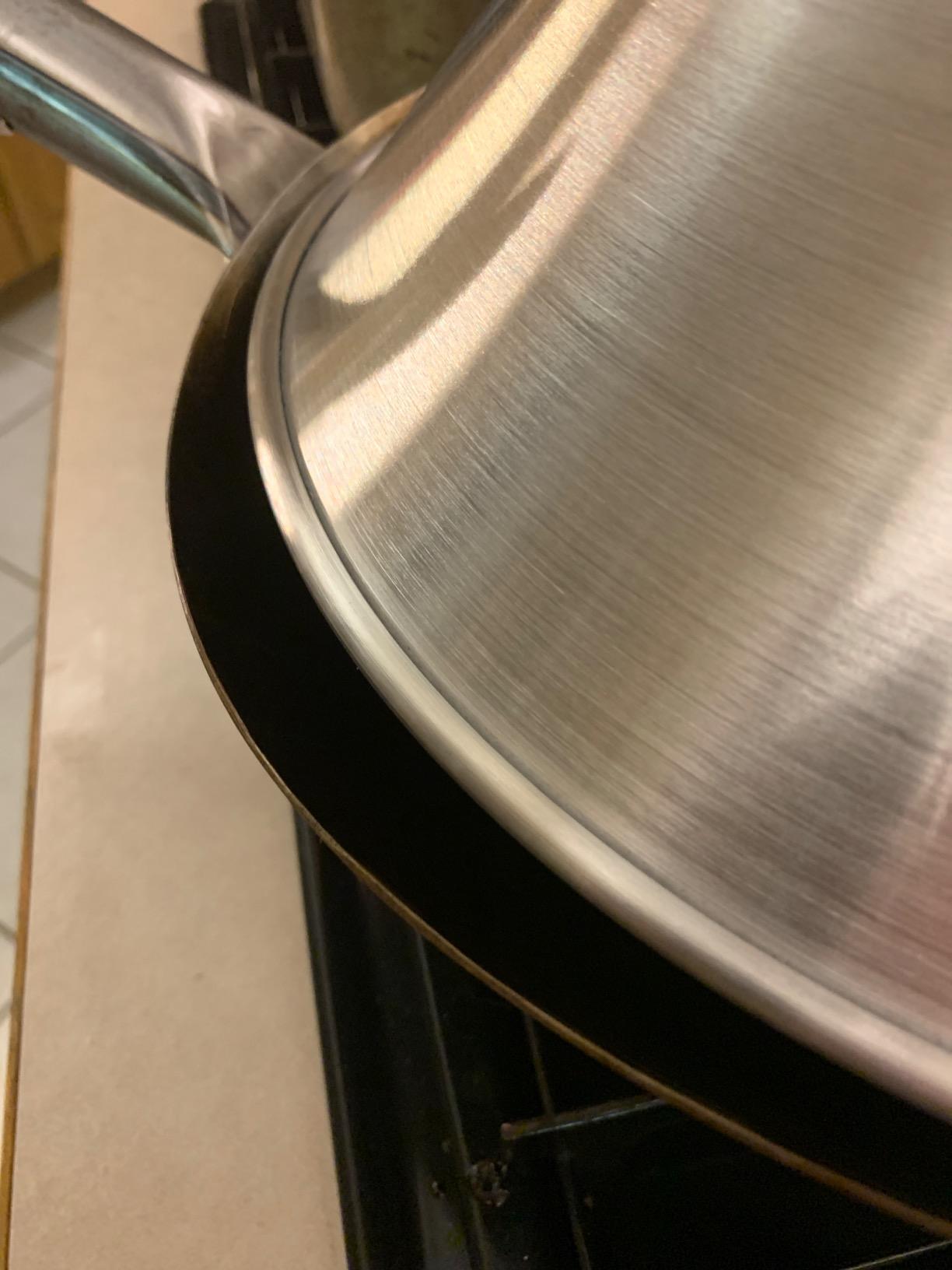
There is a smaller caution worth reading. Some buyers on electric stoves report warping after seasoning, and there is rust that can appear along the handle edge after oven seasoning. Both are manageable with slow heating and immediate drying, but they are real and they show up in the reviews more than they do for the flat Crafts.
Who this wok suits
It suits cooks who learned to stir-fry by tossing, and who want a large flat-bottom pan that stays manageable when full. The fast response also suits a cooking style that alternates between fierce heat and a low simmer in the same pan.
It suits anyone on induction who wants a traditional wok shape rather than a flat stir-fry pan, since the base is properly pressed for magnetic contact.
Where it falls short
The initial prep is the heaviest in this roundup, and the smoke is genuinely unpleasant in a small kitchen. Buyers who want to cook tonight rather than this weekend will be better served by a pre-seasoned option.
It is also the model with the most reports of seasoning sticking points before the patina builds, and rice in particular clings until the surface is well developed. Plan the first few cooks around fatty proteins and vegetables rather than plain rice.
Round Bottom or Flat Bottom: Match Your Wok to Your Cooktop
The bottom shape is the one decision you cannot revise later, so it is worth getting right before anything else. A round bottom holds a flame in a single concentrated spot and produces the strongest, most traditional heat. A flat bottom spreads that heat across a wide contact patch, which is what an electric coil or an induction element needs to work at all.
Here is how the two shapes map to real appliances:
Gas range. Both work. A flat bottom is stable and easy to control, and a round bottom gives you a focused flame and better tossing. A wok ring helps a round bottom sit closer to the burner, though on a home range it also pushes the pan further from the flame, so the gain is smaller than people expect.
Electric coil. Flat bottom only. The exposed coil is a small ring in the middle of the element, and a round wok will rock on it. A flat wok heats evenly, though you will never reach the flame temperatures a gas burner gives you.
Smooth surface induction. Flat bottom only, and it needs genuine magnetic contact across the base. This is where the slight hammer bubble on one of the flat Crafts costs a little response on boost, and where the machine-pressed base is the safer bet.
Portable or camping burner. Flat bottom for small single-burner stoves, round bottom for a ring-supported wok burner or open fire. The round-bottom picks in this list are the ones built for the high-BTU outdoor burners that actually deliver restaurant heat.
One more note on the wok ring, since it confuses a lot of people. A ring raises a round-bottom wok so the flame is not split around the curve. On a powerful home range it helps; on a weaker one it can push the pan too far above the flame and cost you heat. If your round-bottom wok rocks or wobbles on the grate, you need one. If it sits steady, you probably do not.
Common Problems With Carbon Steel Woks and How to Fix Them
Almost every new-owner complaint about carbon steel comes down to one of six things, and all six are fixable. None of the competitors we studied gave this its own section, so here it is in one place.
Rust spots on a brand new pan. Steel ships with surface oxidation and occasionally with damp packing. Do not fight it. Scrub the interior with steel wool, rinse, dry on the heat, and run a full seasoning. Rust on arrival is a packing problem, not a defect, and it disappears.
Smoking on the first cook. Almost always residual factory oil or polymerized oil burning off. The consensus among experienced owners is to strip the surface with steel wool, re-oil, and re-season rather than trying to cook through it. A smoky first cook on a newly seasoned pan is the same event in a thinner layer.
Food sticking. Three usual causes: the pan is not hot enough, the pan is hot enough but has no seasoning yet, or there is not enough oil in it. Bare carbon steel needs a film of hot oil between the metal and the food. Once the patina is built, a properly preheated wok releases without fuss.
A dark patch in the middle of the cooking surface. This is seasoning, not a defect. A darker zone in the centre means the middle received the most heat and polymerized the most oil. The same anxiety drives people to strip and re-season a perfectly good pan, which resets their progress.
Seasoning that looks grey or patchy. Acidic cooking, steaming, and long braises strip the polymerized layer. This is normal, and it is reversible. Scrub, dry, re-oil, and the patina comes back after a couple of cooks.
Handles that loosen or metal that gets hot. Riveted wood handles work loose over years, and the collar where the handle meets the pan carries heat straight into your grip. Both are reasons to look at the welded-handle design on the Yosukata and to use the steel helper handle for lifting rather than gripping bare metal near the flame.
One frustration belongs here too: a warped base. Woks warp when an empty pan is blasted with high heat or when cold liquid hits a screaming-hot surface. Heat a new carbon steel wok gradually, and do not shock it.
Seasoning, Cleaning, and Care
Seasoning is polymerized oil bonded to steel by heat. That is the entire mechanism, and once you understand it the rules are simple. A carbon steel wok is not nonstick out of the box, and it becomes nonstick by repetition.
First seasoning. If the wok arrives bare, scrub the interior with steel wool, rinse, and dry it on the heat. Rub a thin film of oil over the inside only, using peanut or grapeseed oil, then wipe it back with a paper towel until the surface looks dry. A thin film polymerizes; a thick one runs. Heat it until it smokes faintly, cool, repeat two or three times.
If it arrives pre-seasoned. You do not need to strip it. Wash it, dry it, wipe on a light film of oil, and start cooking. Many owners add one extra seasoning session anyway to deepen the finish before the first real meal.
After every cook. Wash with hot water and a brush or scrubby while the pan is still warm, dry it on the burner for a minute, then wipe on a small amount of oil. The drying step is what prevents rust, and it takes less time than reading this sentence.
Re-season when. The food starts sticking, the patina looks patchy or grey, or the pan has been unused for weeks. Scrub, dry, oil, heat. That is the whole cycle, and it can be repeated as often as you like.
Rust removal. Rust is not seasoning and not a loss. Scrub the spot with steel wool or coarse salt and a little oil, rinse, dry, and re-season. The surface will be slightly different in colour, which is cosmetic.
Never. No dishwasher, no steel wool on the finished cooking surface, no acidic or soapy soak, no thermal shock, and no food sitting to dry onto the pan overnight. A wok that is washed, dried on the heat, and oiled will outlive most owners’ expectations.
For the utensil question, use a metal or wood wok spatula and a wok ladle. A Western turner with a flat rectangular head will scrape the seasoning and it does not work in a curved bowl, and metal is fine as long as you are not aggressive with the surface.
What We Would Skip
1. Unbranded generics with no stated gauge. Very thin steel warps on first contact with a hot burner, and the panel is often uneven. If the listing does not give a weight, a gauge, or a bottom shape, the manufacturer is hoping you will not ask.
2. Cast iron woks. Cast iron is heavy, heats slowly, and holds a temperature that works against the quick, dry heat stir-frying needs. A carbon steel wok of the same diameter is lighter and far more responsive.
3. Stainless steel woks. They stick without seasoning, cannot build a patina, and the surface is too smooth to hold anything. Good for acidic dishes, poor for wok cooking.
4. Coating-limited carbon steel for high heat. A coated interior on a carbon steel body is a hybrid pan, not a stir-fry wok, and the coating rating sets the ceiling on what you can do with it. We included one here for a reason, and it is the reason to buy bare steel instead.
None of this means an inexpensive in-store wok is a mistake. Cooks repeatedly report that a plain flat-bottom carbon steel wok from a local grocery store has outlasted far costlier online models, and they are not wrong. The difference is that a hand-hammered commercial pan has a stated gauge and a known weight, and you know what you are getting.
How to Choose the Best Carbon Steel Wok for Your Kitchen
Start with the cooktop, because it eliminates half the list immediately. On gas, you can choose between flat and round. On electric coil or induction, you want a flat bottom with real contact area. On a portable burner or over open fire, match the pan to the flame.
Next, pick a size by household. A 12 to 12.5 inch wok suits one or two people and soups and sauces. A 13.5 to 14 inch wok suits a family stir-fry and gives you room to toss. Anything smaller makes the motion cramped, and anything much larger is hard to control on a domestic burner.
Then weigh the pan in your hand if you can. Under 3.5 pounds and you can toss one-handed. Between 3.5 and 4 pounds is the sweet spot for most people. Above 4.5 pounds, assume two hands and a two-handed grip, which is fine for a powerful gas flame and frustrating on anything else.
Finally, be honest about the prep. A bare hand-hammered wok gives you better heat and a deeper patina, and it asks for an hour of scrubbing and a smoky bluing session. A pre-seasoned wok asks for a rinse and a wipe of oil. Both are legitimate, and matching the pan to your patience is the difference between a wok you use and a wok you leave in the cabinet.
If you are building out a kitchen rather than replacing one pan, the care and maintenance rules here are the same ones we use for the rest of our carbon steel cookware picks, so start there if the fundamentals are new.
Frequently Asked Questions
What is the best wok for stir-frying?
A hand-hammered carbon steel wok is the best wok for stir-frying, because thin steel heats fast and a curved interior lets you toss food through hot air. Choose a flat bottom for electric or induction cooktops and a round bottom for a gas range or an outdoor wok burner. Cook it hot, use a thin film of oil, and keep the surface seasoned.
What are the common problems with carbon steel woks?
The common problems are rust spots on arrival, smoke on the first cook, food sticking, a dark patchy patina that looks like damage, seasoning that greys after acidic cooking, and handles that work loose. Almost all of these are fixable by scrubbing with steel wool, drying on the heat, re-oiling, and repeating the seasoning cycle.
What is the healthiest material for a wok?
Seasoned carbon steel is among the healthiest wok materials because it contains no PTFE, PFOA, or ceramic coating, only iron and polymerized oil. Nonstick coatings are not built for wok temperatures and degrade far earlier. Stainless steel is also coating-free but will not build a patina, so food sticks without a seasoning layer.
Which carbon steel wok is better, Mammafong or Yosukata?
They suit different kitchens. The Yosukata 13.5 inch flat bottom is pre-seasoned, weighs 3.5 pounds, has a welded handle, and works on gas, electric, and induction, so it suits most home cooks. The Mammafong options are hand-hammered and reach higher heat, but the round version is gas only and the flat version arrives unseasoned and needs an hour of prep.
Do I need to season a pre-seasoned carbon steel wok?
Not before the first cook, but treat it as a head start rather than a finished surface. Wash the wok, dry it on the heat, wipe on a light film of oil, and cook. Many owners add one extra seasoning session to deepen the patina, and you must keep oiling and drying the pan after every use or the existing seasoning will strip back.
How do I get rust off a carbon steel wok?
Scrub the rust spot with steel wool or coarse salt and a little oil, rinse it, dry the pan on the heat, then wipe on a thin film of oil and heat it again. Rust is surface oxidation, not damage, and the patina will rebuild over the next few cooks. The patch may look slightly different in colour and that is cosmetic only.
Is a round bottom or flat bottom wok better?
A round bottom is better on a gas range or outdoor wok burner because it concentrates the flame and makes tossing easy, and a flat bottom is the only option on electric coil and induction cooktops. A flat bottom on gas is stable and controllable. Many cooks own a flat-bottom wok for daily use and keep a round bottom for high-heat gas cooking.
Can you put a carbon steel wok in the dishwasher?
No. Dishwasher detergent strips seasoning and the prolonged moisture encourages rust, and wooden handles and detachable wooden grips will also degrade. Wash by hand with hot water and a brush, dry the pan on the burner for a minute, and wipe on a small amount of oil before storing it.
The Best Carbon Steel Wok for Stir-Frying in 2026
The best carbon steel woks for stir-frying in 2026 come down to your cooktop. The Craft Wok 14 inch round bottom is our pick for gas, with 1.8 millimetre steel, real heat retention, and the deepest review history in the group. The Souped Up Recipes 12.5 inch flat set is the fastest way to start, and the Yosukata 13.5 inch is the one wok that works on every appliance in a house.
Whichever you choose, the pan is only half the outcome. Dry it, oil it, and cook on it often, and in a year it will do more for your stir-fry than any gadget will.