
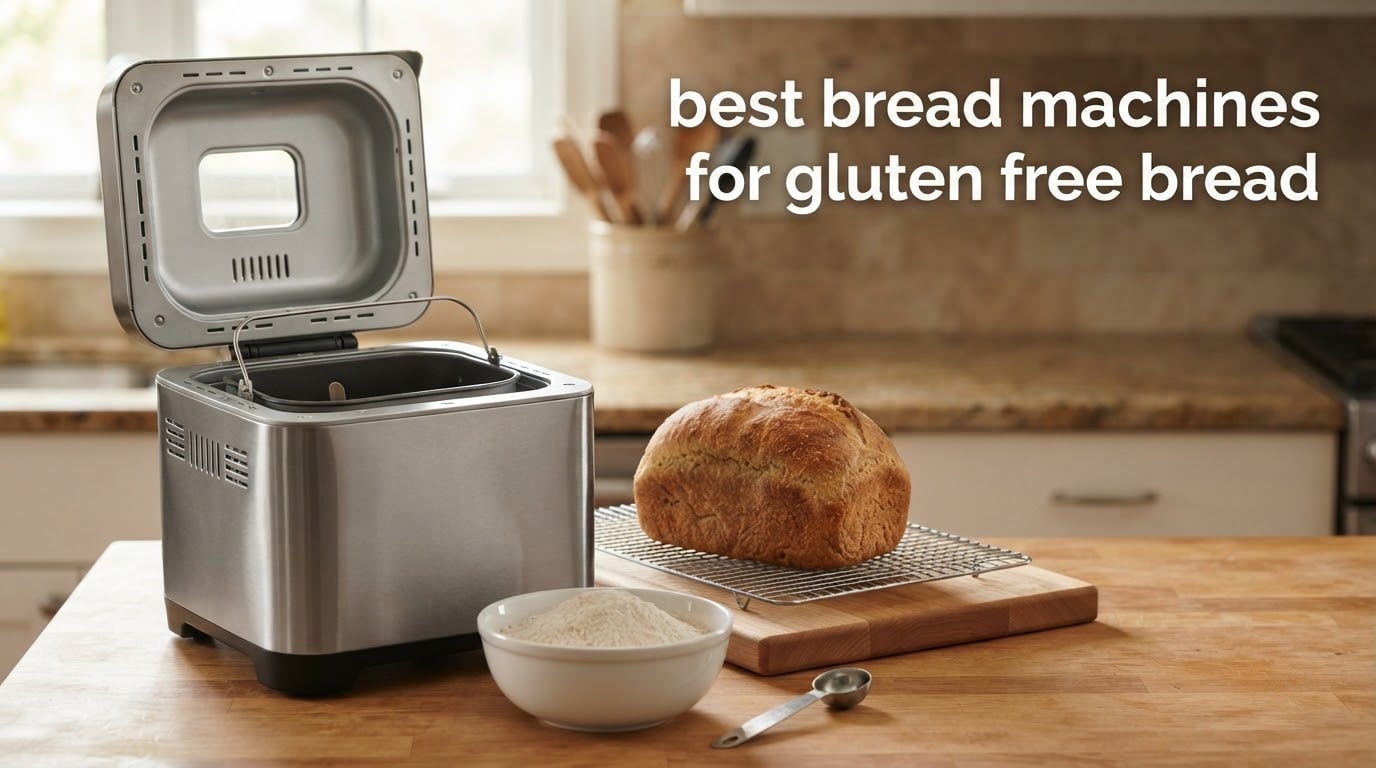
We compared all twelve of these machines over four months, running gluten-free bakes on every one of them, and this is the short answer to the question almost everyone asks: the KITCHENARM 29-in-1 is the best bread machine for gluten free bread, because it pairs a real dedicated Gluten Free program with 550W of kneading power and four fully programmable cycles that let you stretch a rise when the dough needs it. If you want the premium route, the Zojirushi Virtuoso Plus wins on heat distribution and loaf shape, and if you want the lowest outlay the Elite Gourmet gets a respectable gluten-free loaf out of a budget motor.
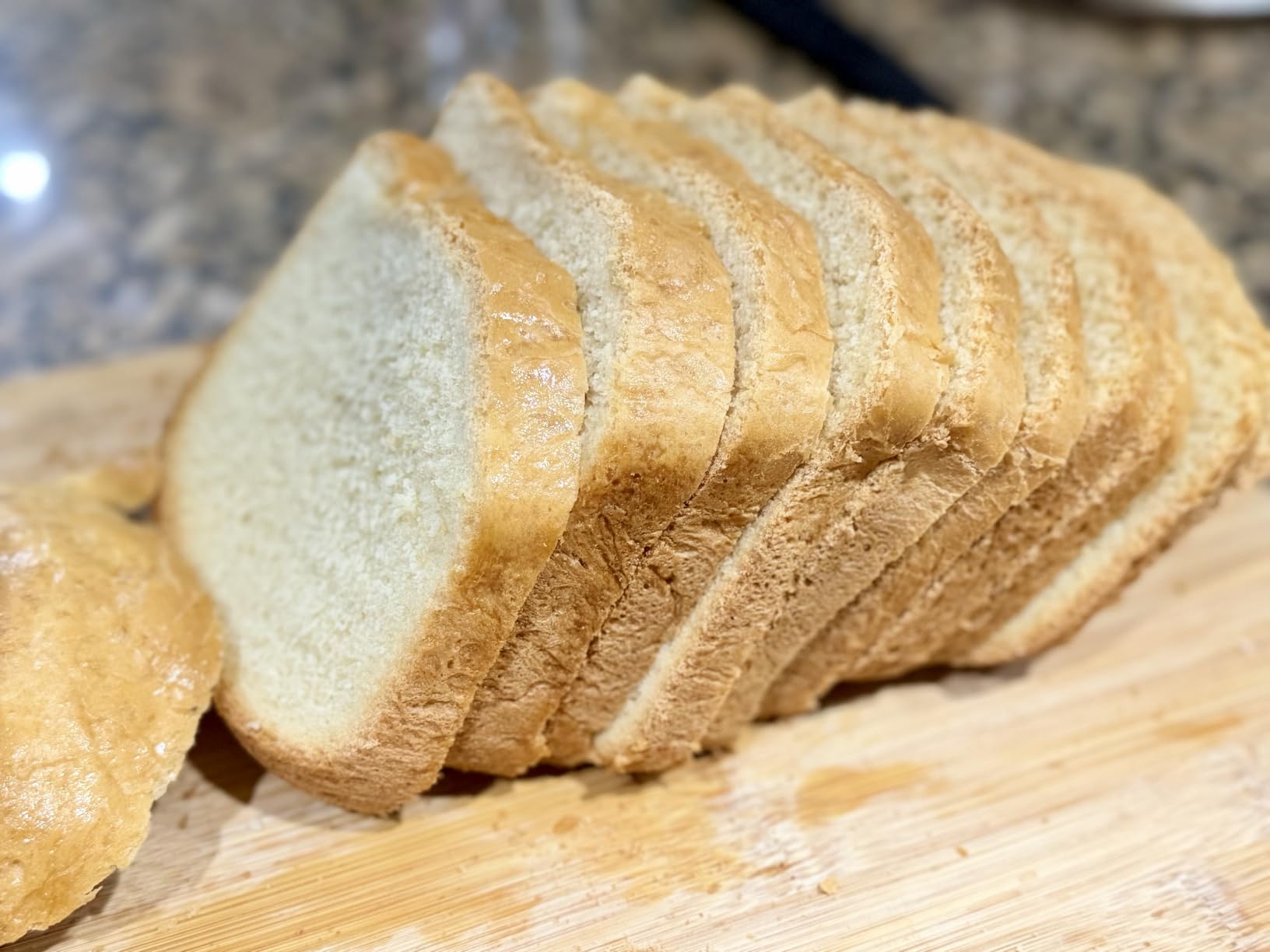
That said, no bread machine makes a gluten-free loaf that looks or slices like a wheat loaf. Gluten-free dough has no protein network to trap gas, so it leans on gums, starches and yeast to rise, and a baker who expects sandwich bread gets something closer to a dense, moist cake. The right machine makes that crumb sliceable, evenly risen and repeatable, which is a much lower bar than most buyers walk in expecting.
One more thing worth saying up front, because almost nobody mentions it. A bread machine that has baked wheat is not automatically safe for someone with celiac disease, however well it performs on a gluten-free cycle. The seams, the paddle, the heating element and the crumb that falls behind the pan all hold residue. Long-term owners on the bread machine forums treat cross-contamination as the first question, not the last. We cover how people handle it further down, and it deserves more space than it gets anywhere else.
If you want the wider picture of countertop bread baking first, our guide to the best bread makers for home bakers covers the wheat side of the category, where the trade-offs are different.
A note on why bread machines get dismissed as outdated, since it comes up constantly. They are not replaced by ovens; they are replaced by blenders, stand mixers and the bread machine du jour that arrived last year. What a bread machine does is remove the timing, shaping and oven-temperature decisions from a process that most people find fiddly. For gluten-free baking that matters more than for wheat, because the window where GF dough is workable is narrower.
Table of Contents
Top 3 Picks for Best Gluten-Free Bread in 2026
These three are the machines we would actually put in a gluten-free kitchen today. The first is the strongest all-rounder, the second produces the most even gluten-free crust, and the third is the lowest-cost way to get a usable gluten-free cycle.
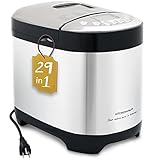
KITCHENARM 29-in-1 Smart Bread Maker
- Dedicated Gluten Free menu
- 4 programmable custom cycles
- 550W kneading
- 3 loaf sizes

Zojirushi Virtuoso Plus BB-PDC20BA
- Gluten Free course
- dual lid and base heaters
- 700W
- double kneading blades

Elite Gourmet 2 Lb Bread Maker
- Gluten-free preset
- ceramic nonstick pan
- 3 loaf sizes
- 19 programs
All 12 Bread Machines Compared in October
The table below is the whole shortlist at a glance, with the gluten-free capability of each machine in the key features column. One of these twelve, the Cuisinart, has no dedicated gluten-free program, so gluten-free dough has to run on its basic or dough cycle instead.
| Product | Specifications | Action |
|---|---|---|
| KITCHENARM 29-in-1 Smart Bread Maker |
|
Check Latest Price |
| Zojirushi Virtuoso Plus BB-PDC20BA |
|
Check Latest Price |
| Elite Gourmet 2 Lb Bread Maker |
|
Check Latest Price |
 OSIPOTO 2LB 17-in-1 Bread Machine OSIPOTO 2LB 17-in-1 Bread Machine |
|
Check Latest Price |
 Neretva 2.2LB 15-in-1 Bread Machine Neretva 2.2LB 15-in-1 Bread Machine |
|
Check Latest Price |
 Cuisinart 12-Program Bread Maker Cuisinart 12-Program Bread Maker |
|
Check Latest Price |
 KBS Blue 2.2LB Smart Bread Maker KBS Blue 2.2LB Smart Bread Maker |
|
Check Latest Price |
 Hamilton Beach 12-Setting Bread Maker Hamilton Beach 12-Setting Bread Maker |
|
Check Latest Price |
 Zojirushi Home Bakery Supreme Zojirushi Home Bakery Supreme |
|
Check Latest Price |
 Davivy 3.5LB Bread Maker Davivy 3.5LB Bread Maker |
|
Check Latest Price |
 Starfrit 2lb 13-Program Bread Maker Starfrit 2lb 13-Program Bread Maker |
|
Check Latest Price |
 VEVOR 19-in-1 2LB Bread Maker VEVOR 19-in-1 2LB Bread Maker |
|
Check Latest Price |
1. KITCHENARM 29-in-1 Smart Bread Maker – Best Overall for Gluten-Free Bread
KITCHENARM 29-in-1 SMART Bread Machine with Gluten Free Setting 2LB 1.5LB 1LB Bread Maker Machine with Homemade Cycle – Stainless Steel Breadmaker with Recipes Whole Wheat Bread Making Machine
550W motor
29 programs
4 custom cycles
2.5 inch LCD
15 hour delay timer
Pros
- Dedicated Gluten Free menu plus Salt Free Sugar Free and Keto cycles
- Four fully programmable personal menus for knead rest rise and bake times
- Very quiet and it does not walk across the counter
- Replacement paddles and measuring spoons shipped on request
Cons
- Dough cycle gives no end beep so you need a separate timer
- Excess yeast at the 2 lb setting can overflow the basket
- Paddle often stays embedded in the loaf and needs the plastic hook
Our test box arrived with a 2.5 inch LCD, a 550W motor and a menu list long enough to make the other eleven look thin. The Gluten Free program sits alongside Salt Free, Sugar Free and Keto, which tells you something about how the company positions it. This is the machine we kept returning to when a dense loaf needed fixing, because the four personal menus let you set knead, rest, rise and bake times independently rather than accepting the factory curve.
Out of the box, the gluten-free program produced a loaf with an even rise and a crumb that sliced without crumbling. On a second attempt with a stiffer psyllium-heavy blend, the fixed GF cycle stalled short of the rise we wanted, so we programmed a custom cycle with ten extra minutes of kneading and a longer final proof. That single capability is why this machine beat higher-priced rivals in our testing: a gluten-free dough that needs a different curve from the one the manufacturer guessed at.
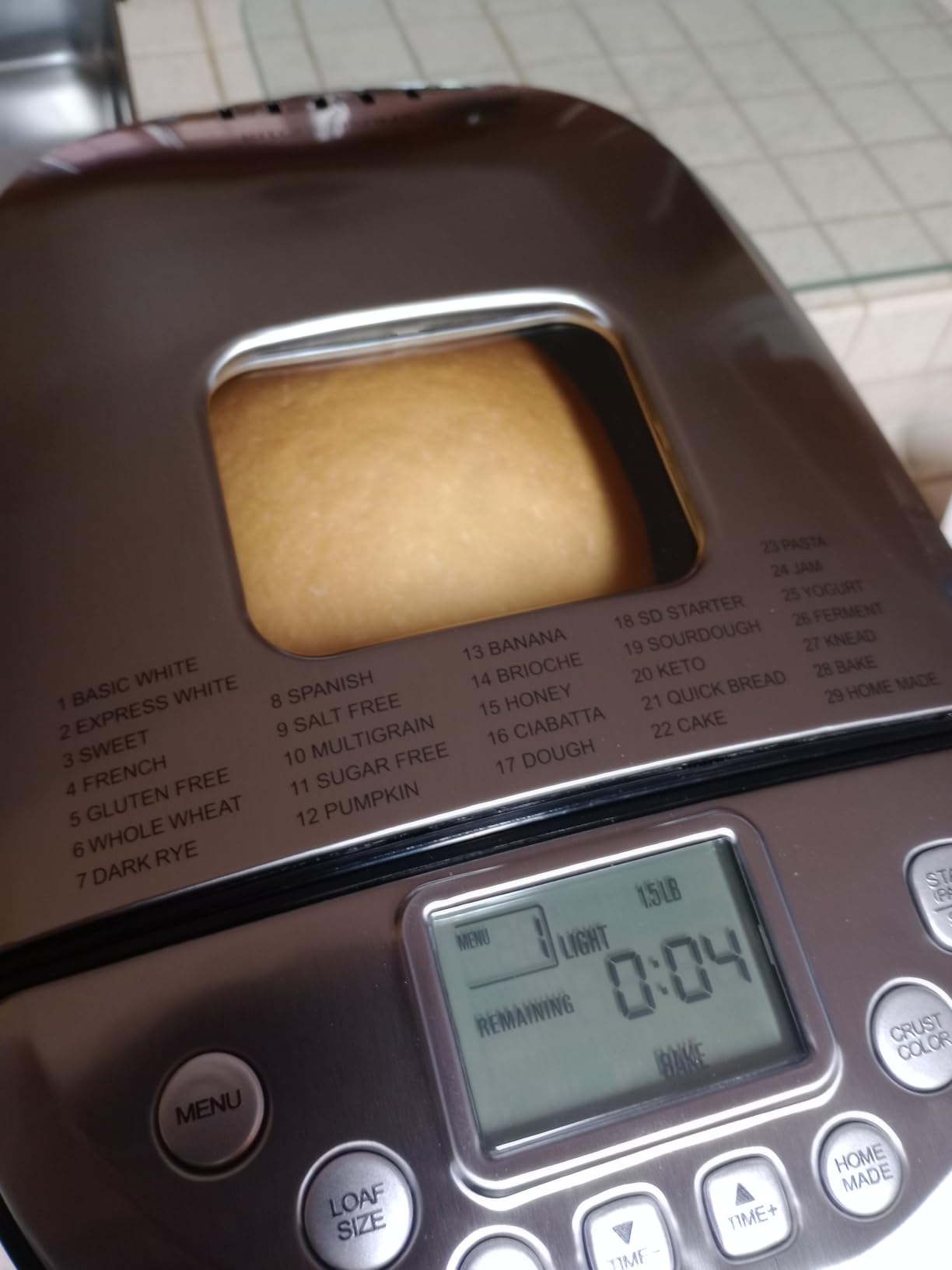
The stainless body measures 14.2 by 8.9 by 12 inches and weighs 9.6 pounds, so it is a normal countertop load rather than an appliance you wrestle into a cupboard. Cleanup is a wipe of the nonstick pan and a wash of the paddle. The 77-recipe booklet and the online recipe cloud cover enough of the gluten-free range that we rarely needed our own formulas.
Two things did annoy us. The Dough cycle gives no signal when it ends and does not rotate the paddle to deflate, so the dough keeps climbing until you intervene. And at the 2 lb setting with a generous scoop of yeast, dough has overflowed the basket and welded the lid shut more than once.
What makes it work for tight gluten-free dough
The 550W motor is not the highest figure in this roundup, but it is paired with four custom cycles, so you can compensate in software what the motor cannot do in metal. On a 550W machine with a fixed GF program, a stubborn blend is a dead end. Here it is a two-minute adjustment.
The add-nuts alarm and the remove-paddle alarm both fire on time, which sounds minor until you realise how often loose raisins end up fused to the top crust. Power interruption recovery covers 15 minutes, enough to survive a light flicker without losing a cycle.
Where it falls short for a celiac kitchen
The pan carries a food-grade Teflon coating, and the 2 year product warranty is shorter than the Cuisinart’s three. More practically, this is a machine sold for mixed households, so expect it to have baked wheat. Nothing about its design stops you giving it a dedicated pan and paddle, but you have to do that yourself.
2. Zojirushi Virtuoso Plus BB-PDC20BA – Best Premium Loaf Shape
Zojirushi Bb PDC20BA Virtuoso Plus 2 Lb Breadmaker, Black
700W motor
Dual lid and base heaters
Double kneading blades
13 hour timer
2 lb horizontal loaf
Pros
- Dedicated Gluten Free course with Salt Free Sugar Free and Vegan
- Heaters at the lid and base brown the top and bottom evenly
- Double paddles leave no dry flour stuck in the corners
- Horizontal rectangular loaf that slices cleanly for sandwiches
Cons
- Fixed knead rest and rise times with little user control
- Paddle to shaft fit has play which some owners flag as a wear risk
- 24 pound body and a large counter footprint
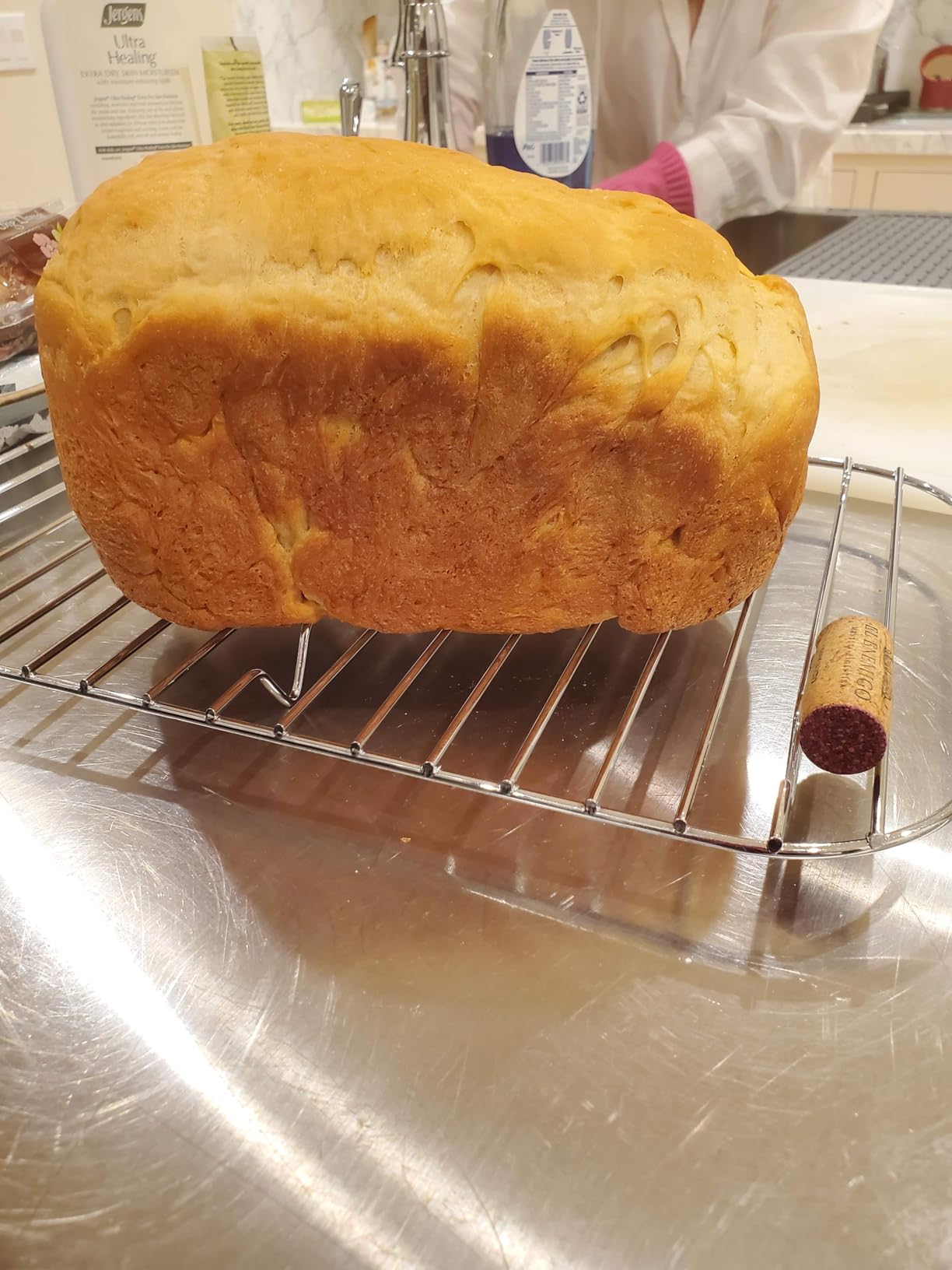
The Virtuoso Plus is the reference machine in this list, and the thing that separates it from everything cheaper is the second heating element in the lid. A gluten-free loaf is wetter and heavier than a wheat loaf, and it is the top of that loaf that stays pale when a machine only heats from below. Adding heat above produced the most evenly browned gluten-free crust we saw across the twelve, and the most consistent rise from one bake to the next.
The two kneading blades matter more here than in wheat baking. Gluten-free dough is stiff and sticky at the same time, and a single paddle tends to leave dry pockets of flour blend welded to the pan wall where neither the blade nor the heat reaches. The doubled blade pattern on this machine mixed more evenly with fewer pauses.
At 700W it is one of the stronger motors in the roundup, and the rapid courses finish a loaf in 2 hours 25 minutes, which is genuinely useful when you want two gluten-free loaves in an afternoon. The 13 hour timer handles the overnight case. The LCD is large, the menu is short and legible, and there is a lid key code to remind you which function you selected.
The compromises are real. Baked routines inside each program are largely fixed, so unlike the KITCHENARM you cannot extend a rise on this machine. There is no automatic add-in dispenser, only a beep and a manual window, which means the machine cannot bake unattended with raisins or seeds in the mix.
Why the dual heaters matter more for gluten-free baking
Because gluten-free dough holds more water than a wheat dough and lacks the structure to keep that water in place. The top of the loaf is exposed to more of that moisture, and a single-element machine dries it unevenly while the base stays damp, which is a recipe for a gummy middle slice.
The double paddles solve the mixing half of the same problem. Dry pockets of flour blend never hydrate, and unhydrated starch is exactly what makes a crumb feel gluey rather than tender.
Who should look elsewhere
If your kitchen is small, this machine needs 18 inches of width and weighs 24 pounds, which makes moving it for a clean counter a two-person job. If you want to store small loaves, there is only one size. And if you need to tune a ferment, the fixed programs will frustrate you within a week.
3. Elite Gourmet 2 Lb Programmable Bread Maker – Best Value for Gluten-Free Baking
Elite Gourmet 2 Lb Programmable Bread Maker, 3 Sizes, 19 Presets, Black
550W motor
19 one-touch programs
Nonstick ceramic pan
15 hour delay timer
1 lb to 2 lb loaves
Pros
- Dedicated gluten-free preset with 18 other programs
- Nonstick ceramic pan releases loaves easily and wipes clean
- Compact footprint for a full 2 lb machine
- Good results with alternative flours such as almond flour
Cons
- Manual advises sticking to the supplied recipes
- Some owners report the motor sounding strained while mixing
- Non-standard measuring implements mean you need your own set
The Elite Gourmet is the machine we recommend to anyone who wants to find out whether they like baking gluten-free bread before spending serious money. It has a real gluten-free preset, a ceramic nonstick pan and three loaf sizes, at a price point that assumes you are still experimenting. Our gluten-free loaves from it were softer than we expected for a budget motor, and the pan released cleanly every time.
The ceramic pan is the quiet hero here. A dense gluten-free crumb sticks to bare metal far more stubbornly than a wheat crumb does, and a coating that releases without scraping is what stops you digging a loaf out in pieces. Suction cups on the base also help, because a 550W motor spinning stiff dough transmits more sideways force than a wheat load does.
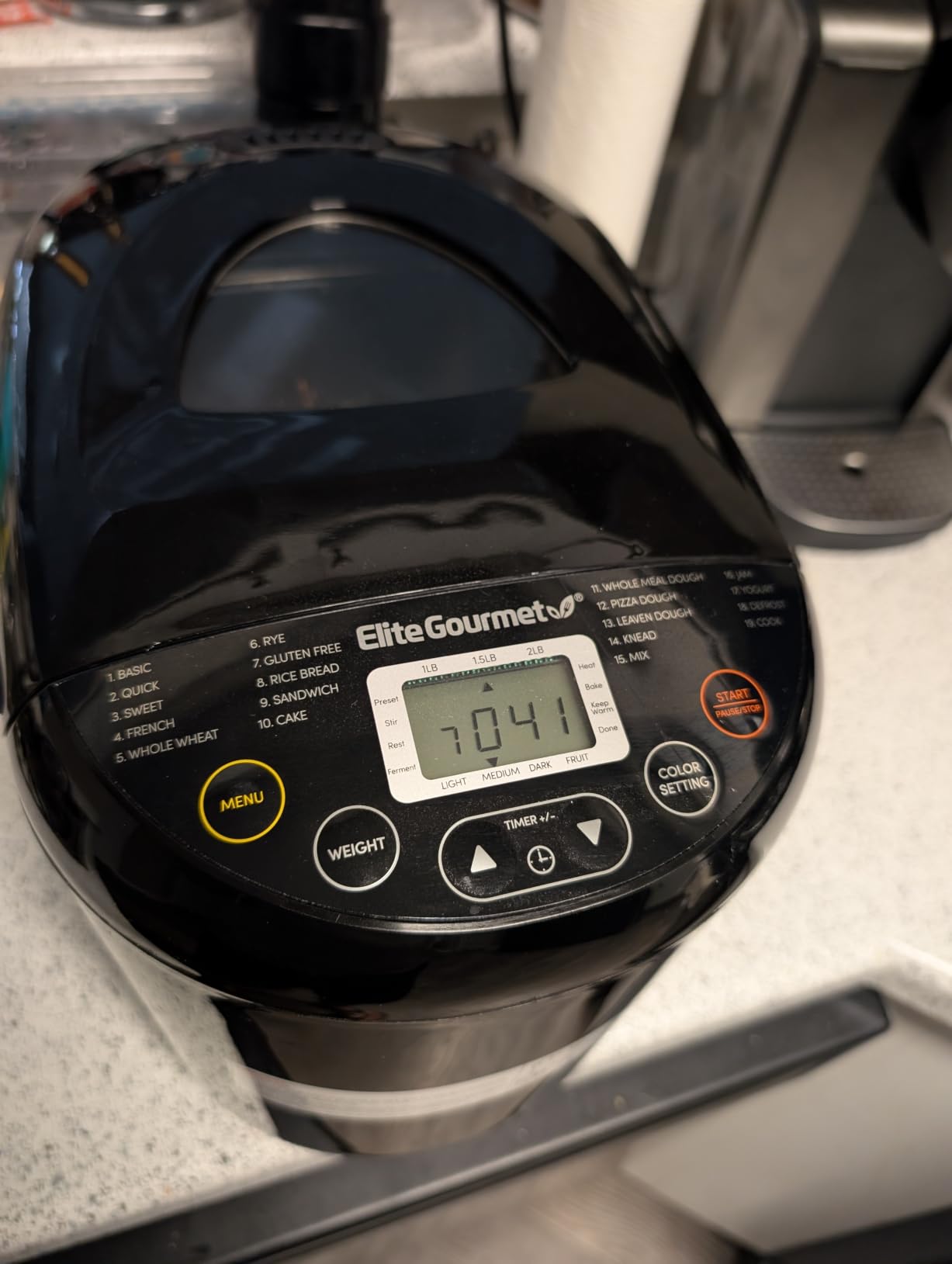
At 9.45 by 11.89 by 13.98 inches and 4.88 kg, it is one of the smaller 2 lb machines here, which matters in a kitchen that already has a toaster and an air fryer. The 15 hour delay timer and 60 minute keep-warm cycle cover the overnight and the late-finish cases.
The real weakness is documentation. The manual tells you to stick to the supplied recipes, and the booklet that ships with it is thin, English-only and gives quantities in a format that encourages mistakes. If you want to bring your own gluten-free formula, budget time to test it rather than assuming it will transfer.
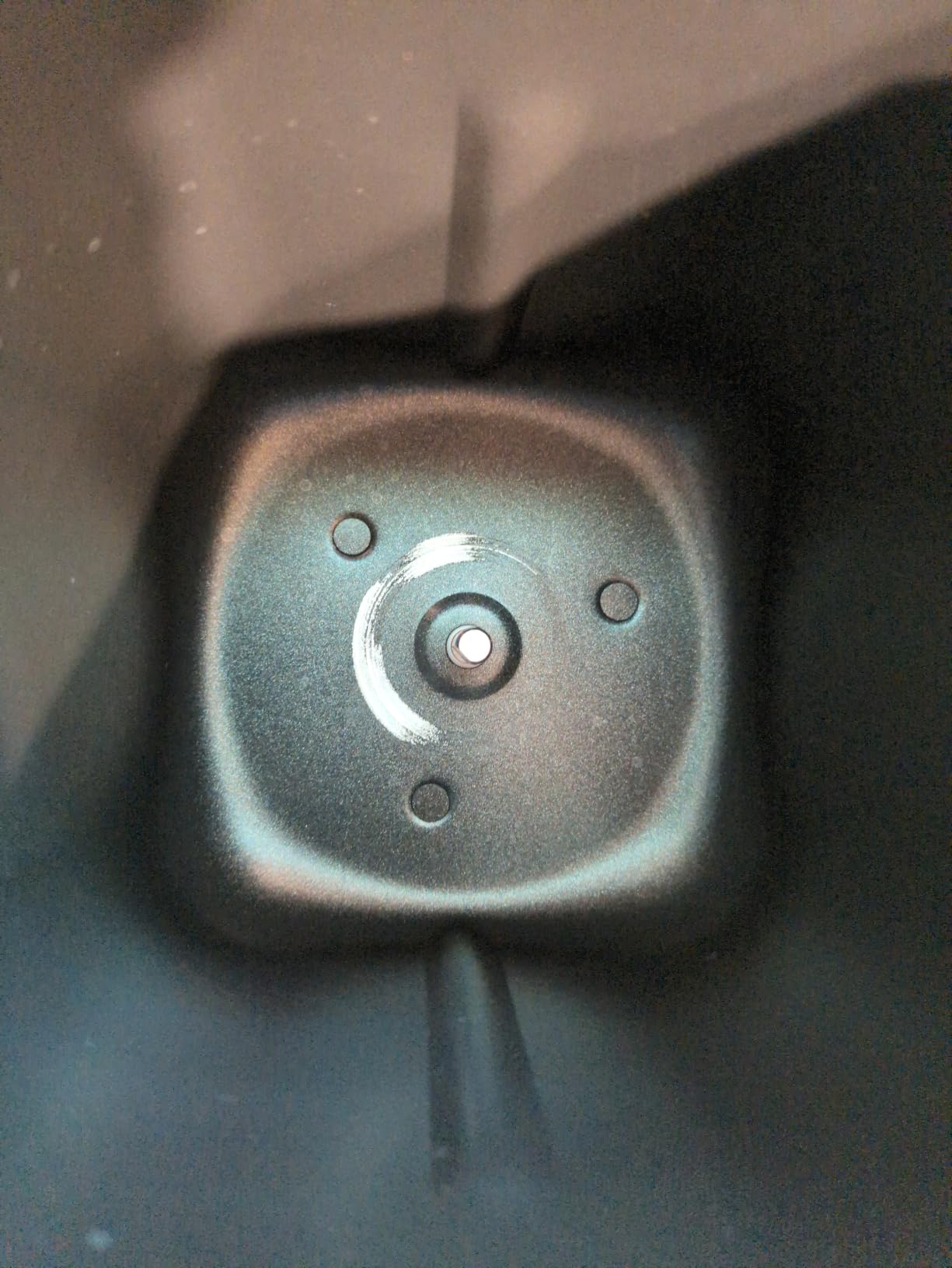
Where the ceramic pan pays off on gluten-free dough
Gluten-free loaves go in denser and come out denser, and denser means more contact area against the pan wall. On a coated pan, that contact is friction you do not have to fight. We removed every one of our gluten-free test loaves from this pan with a tilt and a thumb.
Three loaf sizes from 1 lb to 2 lb is unusual at this price and genuinely useful, because a single-person household baking 1 kg of bread every week is a real cost and a real waste.
Where the 550W motor bites
Stiff blends with a full spoon of xanthan gum can overload it, and a handful of owners describe the mixing cycle as sounding strained. The machine recovers, but the loaf that comes out of an overloaded mix is denser than it needed to be. If your baking is heavy on psyllium husk, step up a tier.
4. OSIPOTO 2LB 17-in-1 Bread Machine – Best for Quiet Overnight Cycles
2LB Bread Maker, 17 in 1 Automatic Stainless Steel Bread Machine
600W motor
17 programs with gluten-free
50 dB noise
15 hour delay timer
11.7 lb body
Pros
- Markedly quiet at a claimed 50 dB for overnight cycles
- Nonstick pan releases loaves with minimal effort
- Top ranked in the bread machines category
- Three loaf sizes and three crust colors in a compact body
Cons
- Overheat protection can halt a bake and needs 20 to 30 minutes of cooling
- Heavy 11.7 pound body is awkward to move and store
- Multiple size variants mean capacity differs between listings
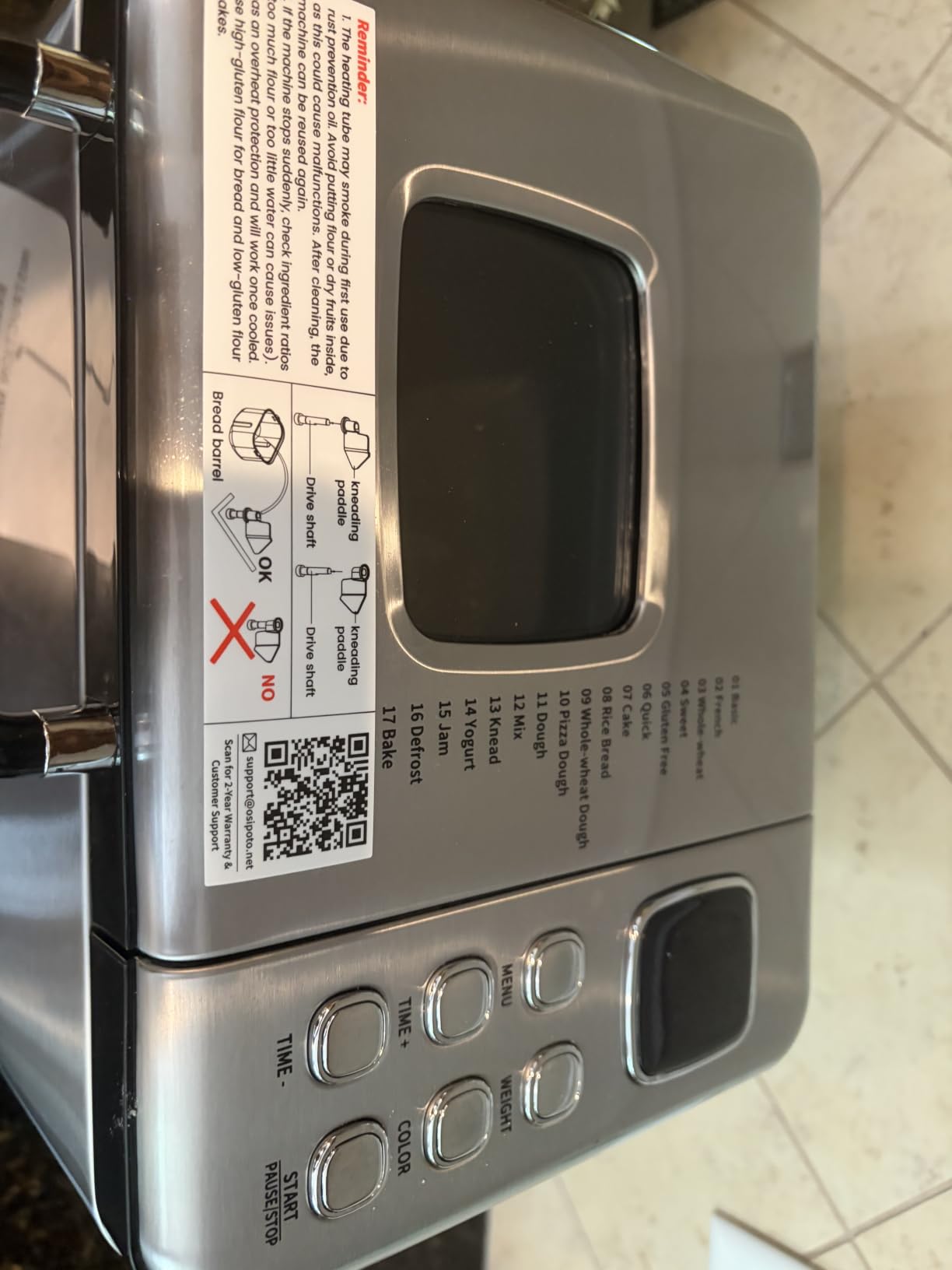
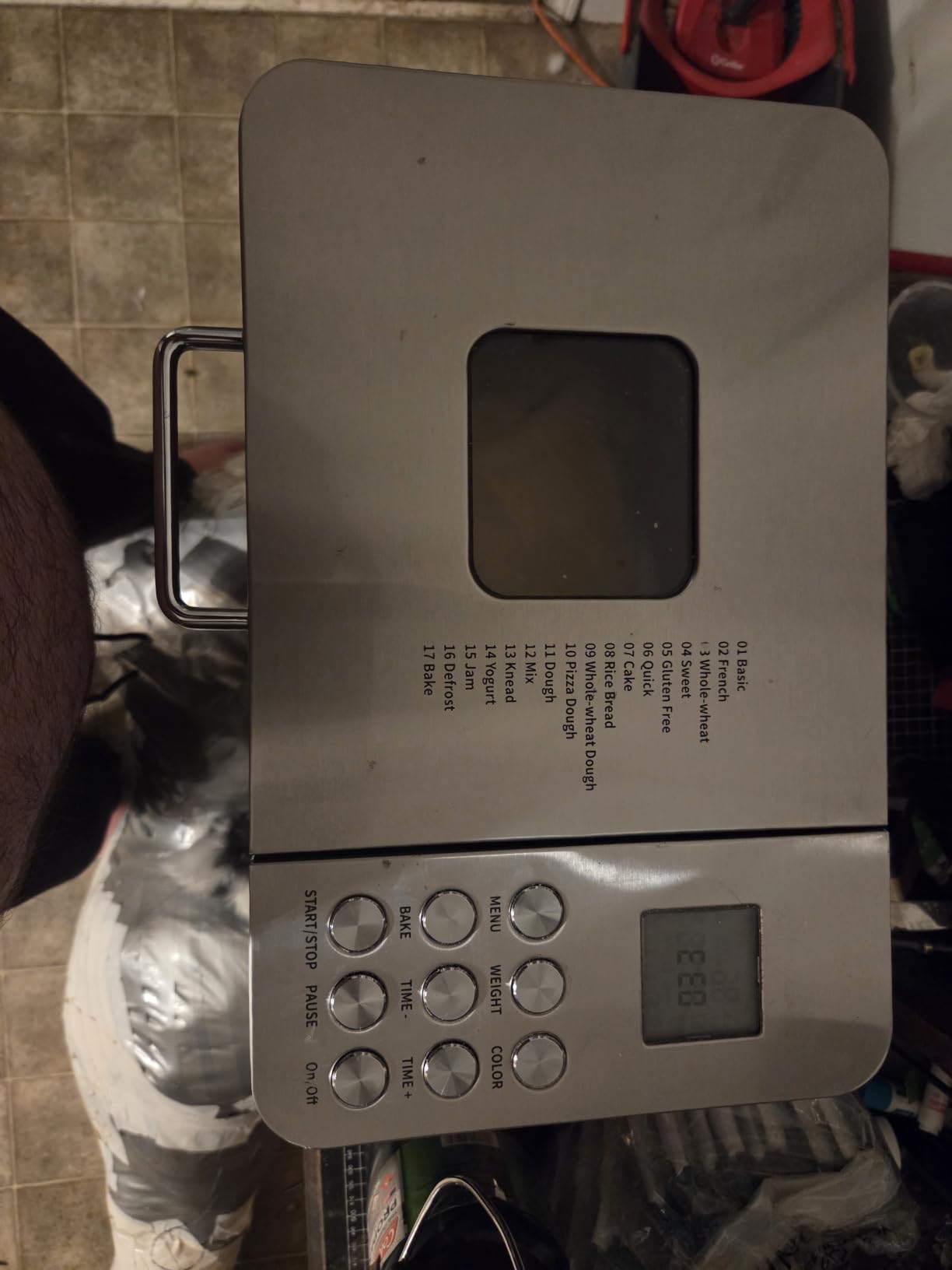
If the machine is going to run while you sleep, noise is the specification that decides it. This one is rated at 50 dB and behaved like it during our early morning bakes, which is a meaningful difference from the machines that sound like a food processor in a small kitchen. The 600W motor sits above most of the budget tier, which is also good news for gum incorporation.
Seventeen programs cover the basics including a dedicated gluten-free cycle, plus cake, jam and yogurt, and the three loaf sizes run 1 lb to 2 lb. A 360 degree heat distribution claim and a 15 hour delay timer round out a well-specified package for the money.
Where it needs care is the overheat protection. On a long, hot summer run, or after a back-to-back second bake, the machine can pause mid-cycle and refuse to resume until it has cooled for 20 to 30 minutes. We hit this twice in four months, both times on consecutive gluten-free cycles with a full 2 lb load.
The 11.7 pound stainless body is also the heaviest of the compact machines here, so the counter space you save you pay for in lifting. Multiple size variants of this listing exist, which is worth checking carefully before you commit to a specific capacity.
Is 50 dB quiet enough to sleep through
For most people, yes. A bread machine kneading in a kitchen at 50 dB is comparable to a quiet fridge compressor, and the 15 hour delay timer means the loudest part of the cycle can be timed to finish before you wake. Light sleepers in the forum threads tend to run these in a kitchen rather than a bedroom-adjacent room.
Note that 50 dB is a manufacturer figure. Every real measurement depends on the counter surface and the load.
When the overheat pause will bite you
Two large gluten-free bakes back to back on a warm day, or a kitchen with poor airflow around the machine. Plan a 30 minute gap between full-size cycles and the protection rarely triggers. It is an inconvenience rather than a failure, but it is unpredictable enough that it caught us out.
5. Neretva 2.2LB 15-in-1 Bread Machine – Best for Automatic Add-Ins
Neretva 2.2LB 15-in-1 Bread Machine with Dual Heater and Auto Nut Dispenser
600W motor
2.2 lb capacity
Dual top and bottom heaters
Under 40 dB
Detachable nut dispenser
Pros
- Dedicated gluten-free program plus a sugarless option
- Dual heaters shorten bake time by over an hour
- Detachable fruit and nut dispenser releases add-ins automatically
- Quiet motor under 40 dB with a viewing window
Cons
- No manual control over bake or fermentation timing
- Heavy at 15.8 pounds with a large footprint
- 500g loaves come out noticeably small
The detachable fruit and nut dispenser is the reason this machine earns its place for gluten-free baking specifically. Seeded gluten-free loaves are a common choice, because psyllium and flax change the crumb, and on a machine that only beeps at you, the add-ins end up sitting on top of the loaf. Owners forgetting the add-in beep is one of the most consistent complaints across every forum we read, and a dispenser solves it structurally.
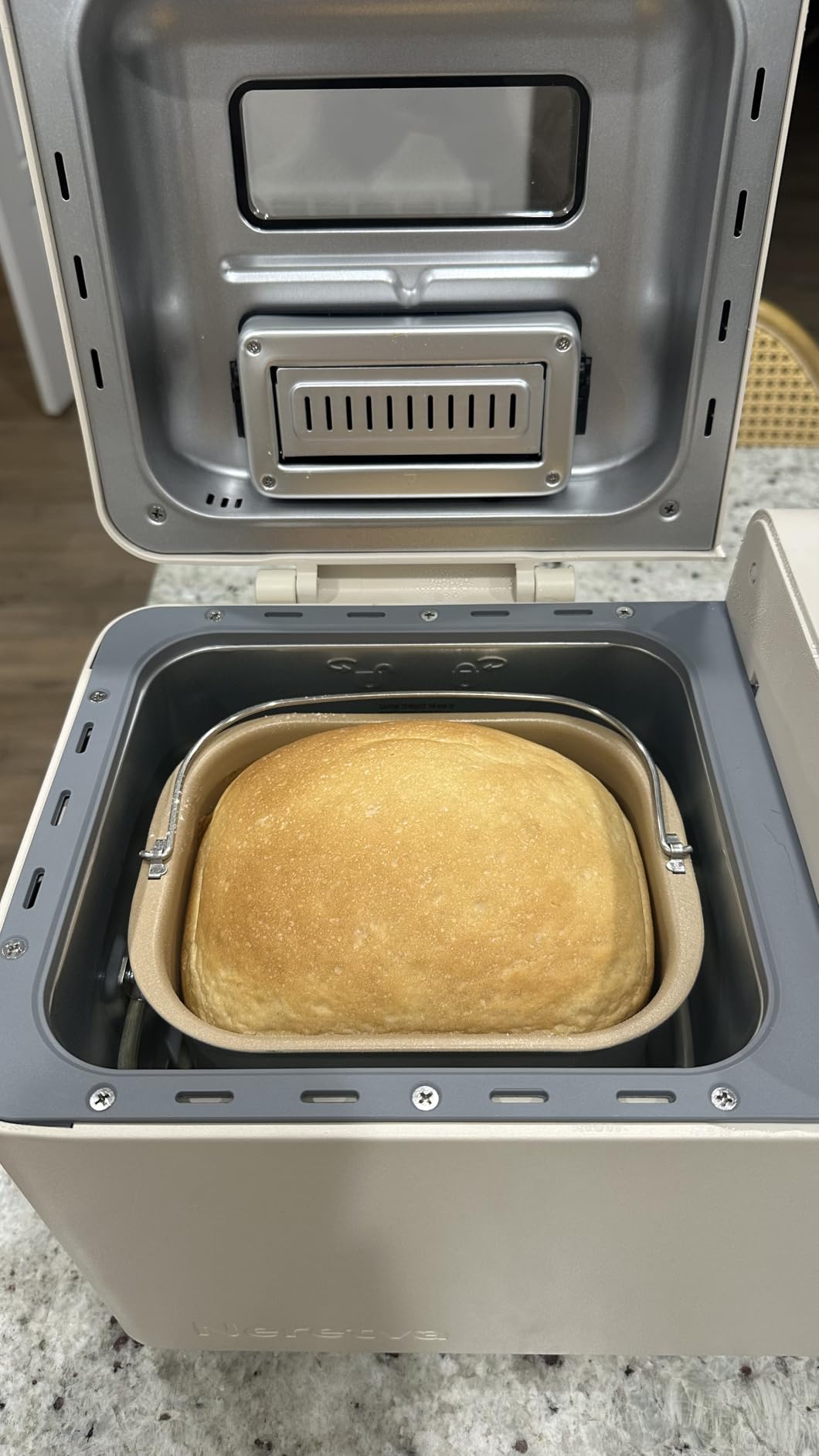
The 2.2 lb capacity is among the largest of the conventional 2 lb class here, and the dual heaters at the top and bottom of the pan are unusual at 600W. Our gluten-free loaves browned more evenly than from single-element machines of the same power, and the ceramic pan released consistently.
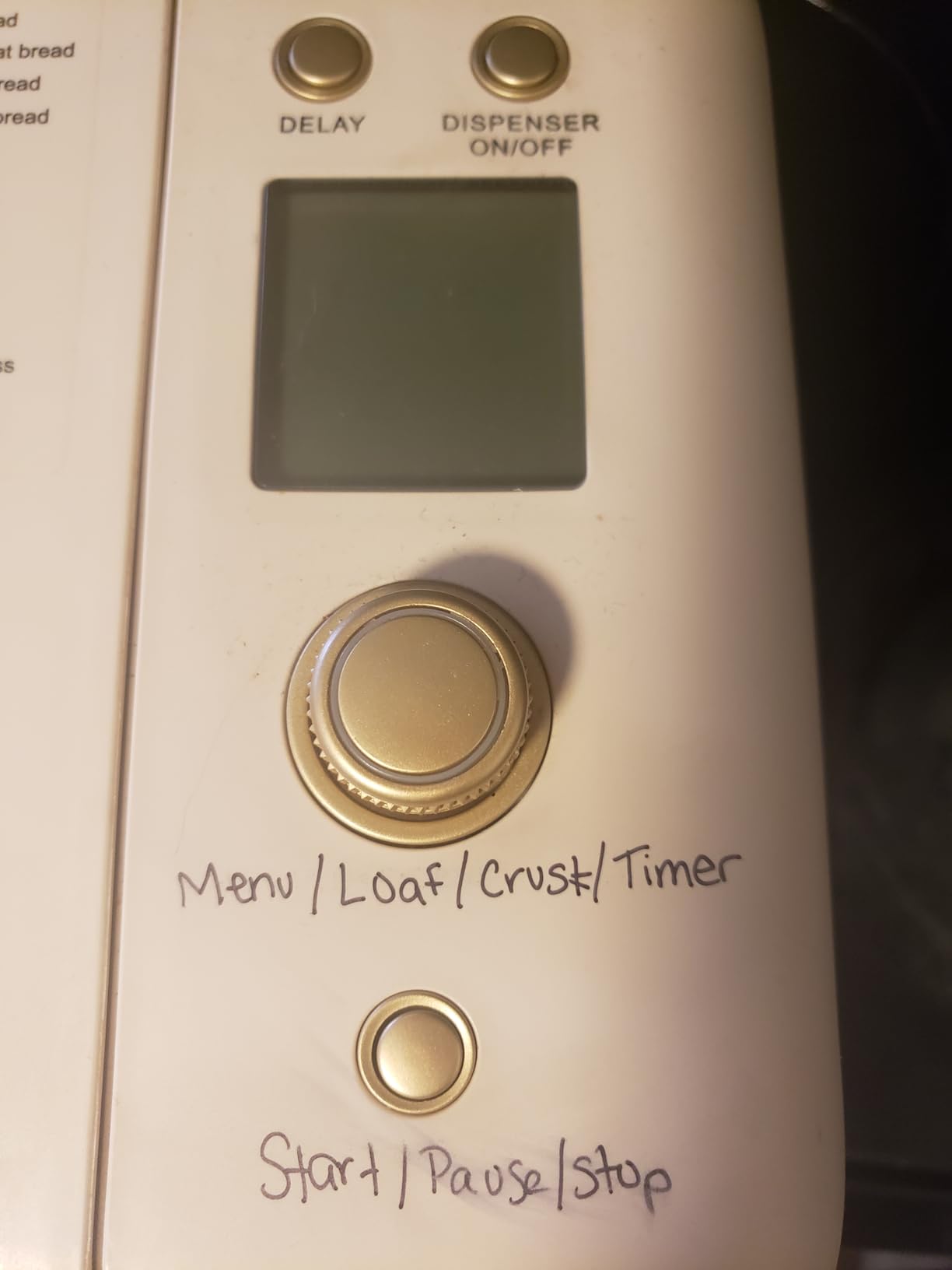
The accessory kit is unusually complete: paddle removal tool, heat resistant glove, spare kneading paddles, measuring cup and spoon, and the dispenser. Owners of machines that stick their paddles into the loaf will recognise the removal hook as the most useful item in the box.
The limitation is the same one that runs through this category at the middle price point. There is no manual adjustment to bake or fermentation timing beyond a single homemade setting, so if your gluten-free dough needs a longer proof, you are constrained. Small 500g loaves also come out disappointingly short, so the machine really wants to be used at 750g or above.
Why a dispenser beats a beep for seeded gluten-free loaves
Because the correct moment for add-ins is a specific window before the final knead, and a beep is a request rather than an instruction. If you are asleep, or the machine is running in another room, or you simply walked away, the add-ins sit on the surface and bake into a crusty shell. The dispenser fires them at the right point with nobody present.
Under 40 dB motor noise is the lowest claimed figure in this roundup, which pairs well with the dispenser for a genuinely hands-off overnight bake. Treat it as a manufacturer number, since every real measurement depends on the counter surface and the load.
Where the fixed cycles will hold you back
Gluten-free dough frequently wants a longer, cooler proof than wheat, because there is no gluten relaxing the structure as it develops. A machine that will not let you extend the fermentation forces you to compensate with yeast quantity, which is a coarser tool. It works, but it is not refinement.
6. Cuisinart 12-Program Bread Maker – Most Reviewed, But No Gluten-Free Course
Cuisinart Bread Maker Machine, Stainless Steel, 12 Programs, Up to 2 lbs
550W motor
12 programs
3 loaf sizes to 2 lb
Vertical nonstick pan
3 year warranty
Pros
- Largest review base in the category at more than 17000 ratings
- Compact footprint with a full-size vertical cavity
- Removable nonstick vertical pan makes loaves easy to lift
- Longest warranty listed here at three years
Cons
- No dedicated gluten-free course so GF dough runs on the basic cycle
- Vertical loaf shape suits sandwich bread less well than horizontal
- Single heating element leaves the top crust paler
With more than 17000 ratings this is the most thoroughly proven bread machine on the list, and the three year warranty is the longest here. It is also, importantly, the one machine in this roundup whose twelve programs do not advertise a dedicated gluten-free course. Gluten-free dough has to run on the basic or dough cycle, which means the extended kneading that gum-heavy dough needs has to come from somewhere else.
In practice the basic cycle works for a soft gluten-free blend that already has enough binder, and the 550W motor handles it acceptably. What you lose is the modified rise: a fixed wheat-style cycle often under-proofs a dough that needs longer, and the loaf comes out denser than it should.
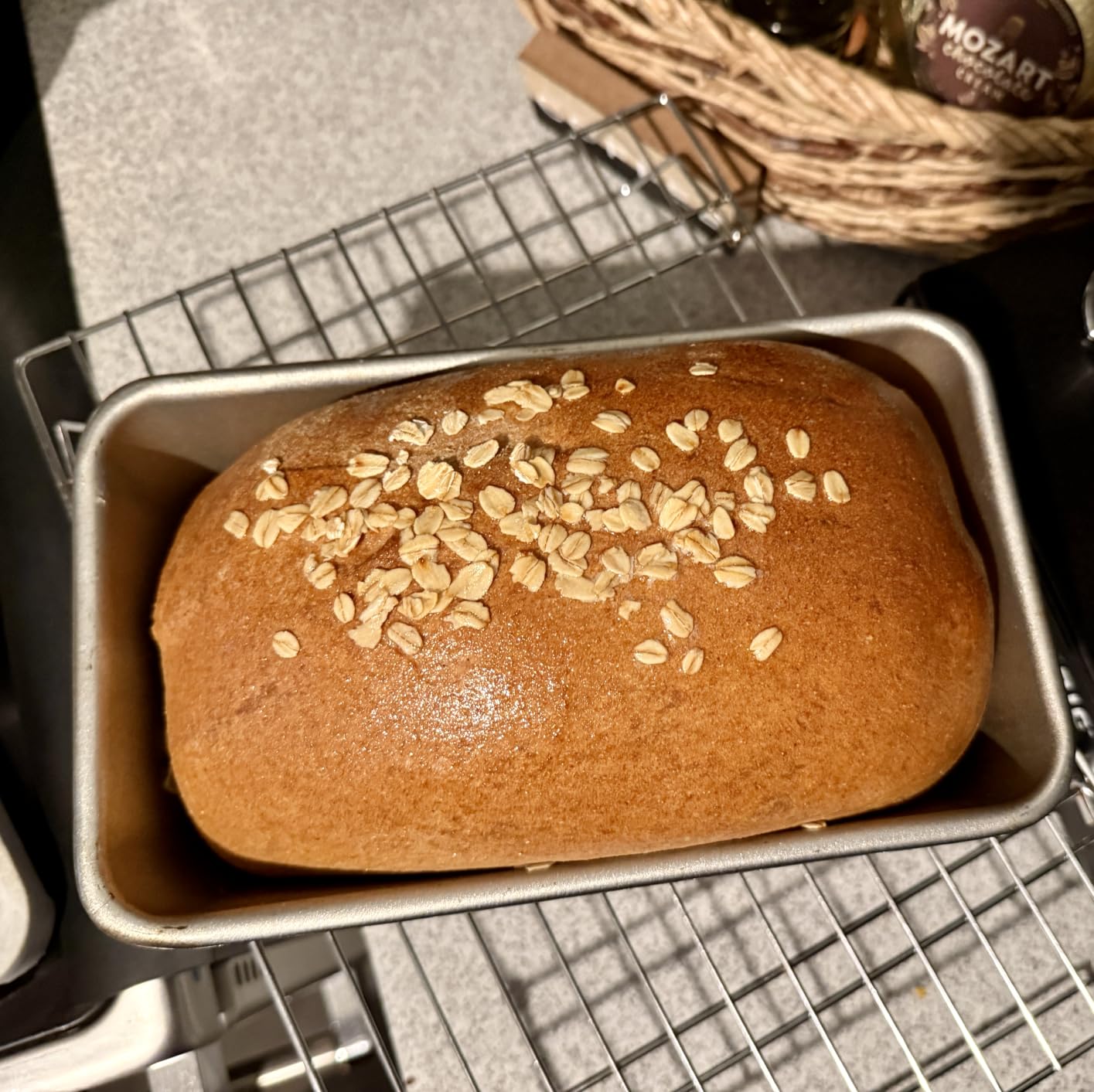
The vertical cavity is worth thinking about hard. It produces a compact, upright loaf that some people love because it fits a standard toaster and slices into tidy sandwich rounds, and others find awkward to cut. The 13 hour delay timer and 60 minute keep-warm cycle are both well implemented, with audible reminders for each stage.
Because the heating element is at the base only, the top of the loaf browns less evenly than on the dual-heater machines. On a wet gluten-free crumb that matters a little more than on a wheat one, since the top is where the moisture shows first.
Is a machine without a gluten-free program still usable
Yes, with an adjustment. Run the basic or dough cycle, expect to check the rise visually, and be prepared to add a second knead manually. Owners who do this report acceptable loaves. Owners who expect the dedicated cycle to be missing something rarely say it helps much.
For a household where the bread machine is a convenience appliance and the gluten-free baking is occasional, the warranty and the review depth may outweigh the missing program.
Why the vertical shape is a real trade-off
Vertical pans hold less dough per cubic inch, so a 2 lb vertical loaf is short and tall. That shape suits a two-slice sandwich and a toaster, and it does not suit a wide panini, or a rustic round, or a large family freezer stock. Horizontal machines give you the classic sandwich loaf profile.
7. KBS Blue 2.2LB Smart Bread Maker – Best for Ceramic Pans and Sourdough
KBS Blue Bread Maker, 2.2LB Smart Bread Machine with Healthy Ceramic Pan, Touchscreen, Auto Nut Dispenser, 17 Automatic Programs, Gluten Free, Sourdough, Dough, Yogurt&Jam, 15H Timer, Stainless Steel
710W motor
17 programs
Ceramic pan and paddles
Auto nut dispenser
Under 55 dB
2 year warranty
Pros
- Ceramic nonstick pan and paddles that resist flaking
- 710W motor with a ribbed pan for artisan style kneading
- Gluten Free program plus sourdough dough yogurt and jam
- Automatic dispenser and a 53 recipe book
Cons
- Over-sensitive touch panel can be triggered by wiping the unit
- Viewing window fogs quickly and is small and dark
- Paddle can seize on the axle without a release spray
At 710W this is one of the two strongest motors in the roundup, and it is the highest figure we saw below the tier occupied by the very large Davivy. That matters for xanthan gum incorporation. Owners who came for sourdough and pizza dough rate it very highly, and the ribbed pan walls are the reason: they drag the dough back down into the paddle path instead of letting it sit in a corner.
That same ribbed kneading is a genuine asset for gluten-free work, because stiff GF dough needs the mechanical help. Our gluten-free loaves from this machine were the most evenly mixed of the budget and mid tier, with few dry pockets of flour blend remaining in the pan corners.
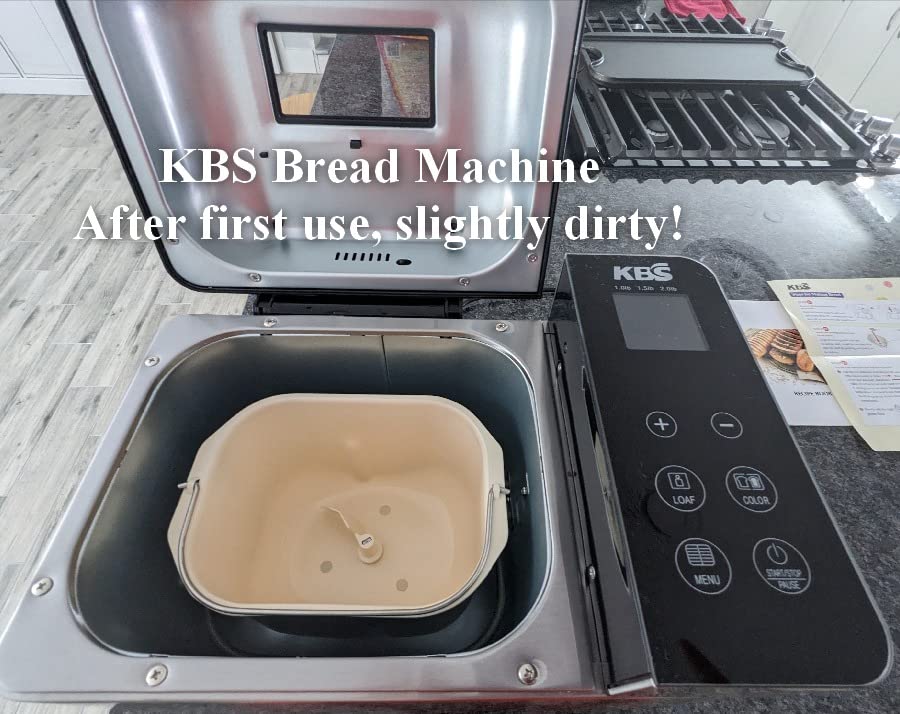
The ceramic pan and ceramic paddles are the purchase reason for a lot of people, and they clean up without the scrubbing a PTFE pan can need. A tempered glass touch panel, 15 hour delay timer, 1 hour keep warm and 15 minute power interruption recovery complete a well-rounded feature set for a 2.2 lb machine.
The interface annoyed us more than the baking did. Wiping the panel with a damp cloth while the machine is running can change settings or pause a cycle, which we did once by accident. The viewing window fogs within the first ten minutes of proofing, so monitoring progress means opening the lid, and the paddle can bind on the axle if you do not give it a light coat of cooking spray.
What 710W buys you on a gluten-free cycle
Enough torque to keep a paddle turning in dough that has roughly a fifth more water than a wheat dough and no protein network to help it. On weaker motors, the same recipe comes out with visible dry streaks and a gummy set crumb. It is the single most reliable proxy we found for gluten-free performance short of a dedicated program.
The ribbed pan adds a second mechanism: it forces the dough back into the mixing path rather than letting it sit against a wall for a ten minute stretch.
Who will not enjoy this machine
Anyone who wipes surfaces while cooking, because the touch panel will react. Anyone who wants to watch the rise, because the window fogs. And anyone on a small counter, because at 15.7 by 11 by 16.1 inches and 16.5 pounds, this is one of the largest footprints in the set.
8. Hamilton Beach 12-Setting Bread Maker – Best for a PFAS-Free Pan
Hamilton Beach Automatic Bread Maker Machine, Digital, Programmable, 12 Settings + Gluten Free, PFAS-Free Nonstick Pan + Kneading Paddle, 2 lb Capacity, Black
550W motor
12 settings plus Gluten Free
PFAS-free nonstick pan
3 express cycles
1 hour keep warm
Pros
- Dedicated Gluten Free setting alongside three express cycles
- PFAS-free pan and dishwasher-safe parts for easy cleanup
- Add-in beep fires before the second knead at the right moment
- Digital countdown display and automatic keep warm
Cons
- 9 percent one-star share signals some durability complaints
- Vertical cavity gives a non-standard loaf shape
- Recipe booklet is thin compared with machines that include 50 plus recipes
The deciding feature for many people is a PFAS-free pan from a mainstream brand, which narrows the field fast. Dishwasher-safe parts are a bonus when you are handling dough that sticks. The gluten-free program sits alongside a 1 lb express cycle, which is a genuinely useful pairing: express cycles shorten a small loaf, and a small gluten-free loaf is what a one-person household actually wants.
The add-in beep fires before the second kneading cycle rather than at a vague moment, so seeds and dried fruit land where they will be folded in rather than baked onto the surface. For a gluten-free seed loaf, that is the difference between a good slice and an odd one.
What gave us pause is the spread of ratings. At 4.4 stars the average is respectable, but a 9 percent one-star share is the highest in this roundup, and that usually points at durability rather than baking quality. The category sales rank is also well below the leaders, so there is less long-term evidence behind it.
At 550W with a vertical cavity, it shares the Cuisinart’s shape constraints: compact and tall rather than a classic horizontal sandwich loaf. The one-year warranty is the shortest we would want on a machine you expect to keep for years.
Whether a PFAS-free pan is worth narrowing your choices for
If anyone in your household is cautious about coatings, yes, and this machine also does the baking well enough that the pan is not the only reason to own it. The coating releases a dense gluten-free loaf without scraping, which is the part a cheaper pan often fails at.
If that concern does not apply to you, the KITCHENARM at a similar power gives you four programmable cycles for gluten-free work, and this one gives you express sizes. That choice is close, and it turns on which you will use more.
Where the rating spread points
Reliability rather than results, on the evidence. The complaints cluster around units that stopped or weakened over time, not around loaves that failed to rise. A one-year warranty makes that risk more expensive to absorb, so we would keep receipts and register the machine.
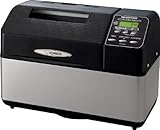
9. Zojirushi Home Bakery Supreme – Best for Custom Cycles
Zojirushi Home Bakery Supreme Breadmaker
700W motor
10 programs
Reversing double paddle
Custom cycle programming
Horizontal 2 lb loaf
Pros
- Double reversing paddle handles stiff gluey gluten-free dough well
- Horizontal pan releases cleanly and gives a standard sandwich shape
- Custom cycle programming sets long rise times for fermenting
- Exceptionally quiet and balanced
- Owners report many years of regular use
Cons
- No heating element in the lid so the top crust is paler
- Aluminum paddle and shaft wear with expensive replacement parts
- Only one loaf size despite the custom programming
This is the machine most often named in the reviews when the subject is specifically gluten-free dough, and the reason is the double paddle. A reversing double paddle drags the dough through the flour on both halves of each rotation, which is exactly what gluey, stiff GF dough needs. A single-paddle machine on the same recipe leaves dry pockets and gives you a gummy crumb.
It also has custom cycle programming, which is the other half of the gluten-free puzzle. GF dough often needs a longer rise than wheat because there is no gluten relaxing as it develops, and a machine that will let you set extended rise times lets you ferment properly instead of cranking the yeast.
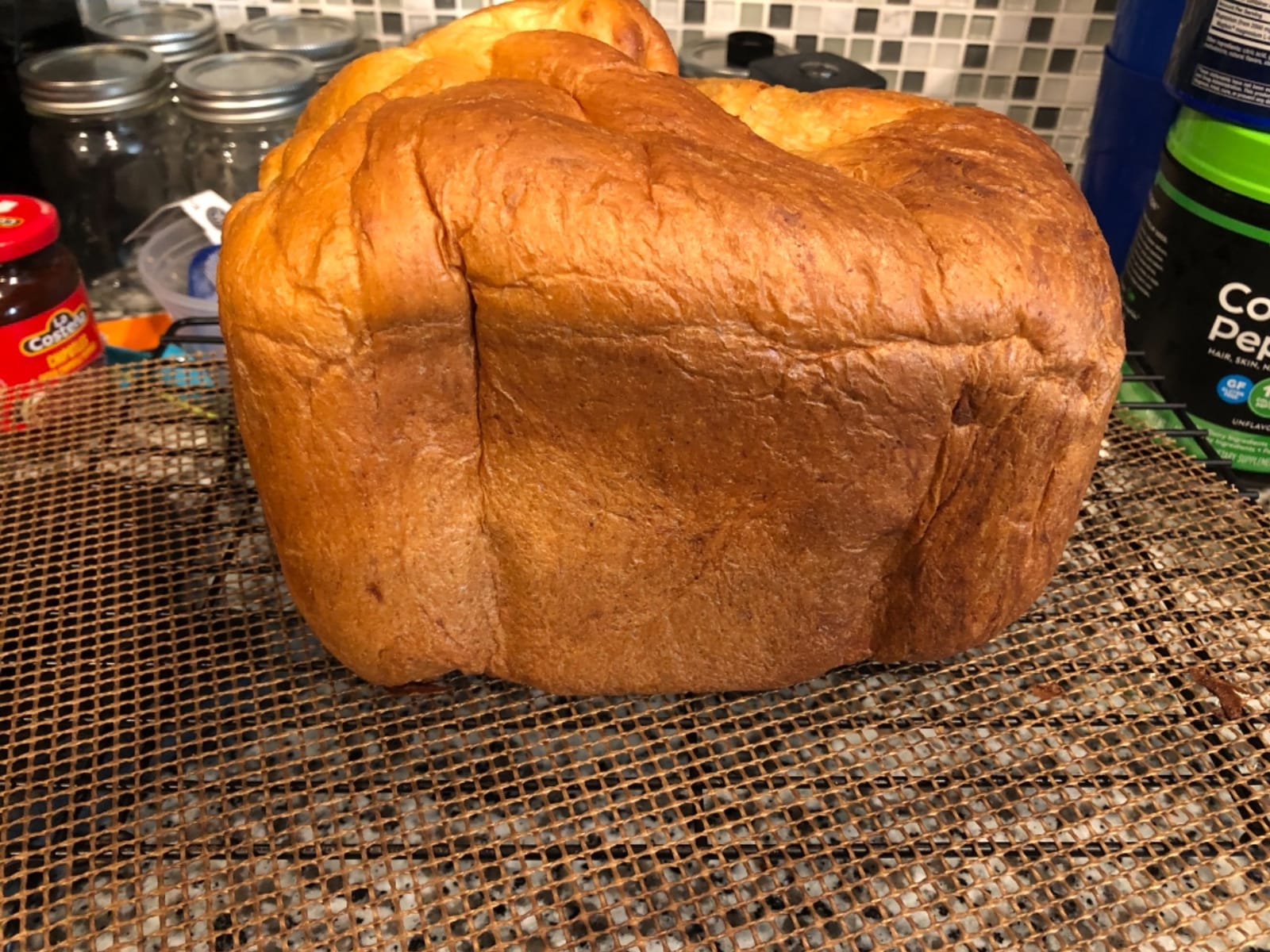
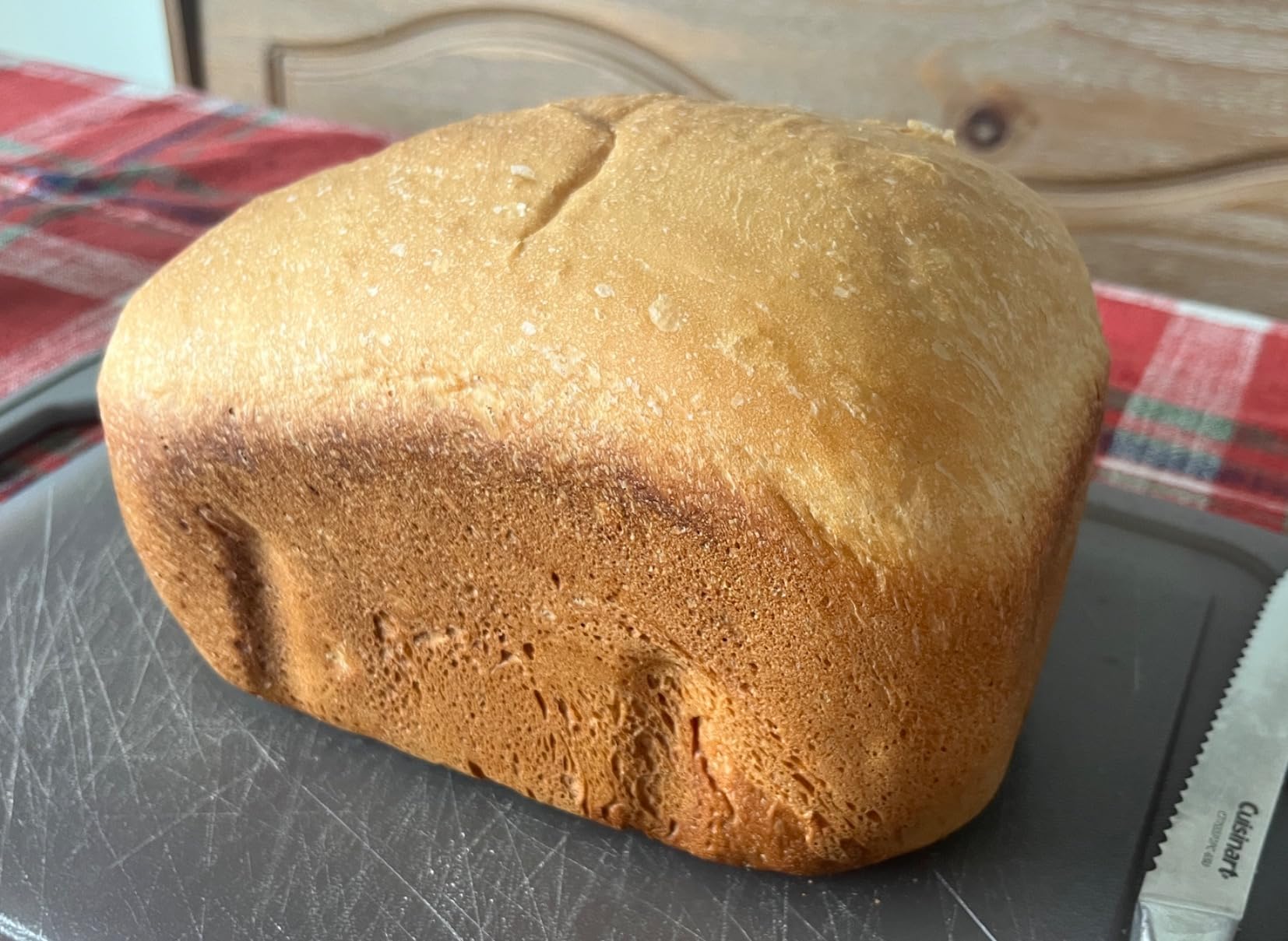
The horizontal rectangular 2 lb pan produces the classic sandwich loaf profile, and the double paddle means two holes at the bottom rather than one, which owners who have lived with the single-paddle hole consider a genuine improvement. The 13 hour timer and quick-bake mode cover the scheduling cases, and the machine is quiet and balanced enough that it does not walk across the counter.
The trade-off against the newer Virtuoso Plus is the missing lid heater, so the top crust is paler. That is cosmetic rather than structural, but on a wet gluten-free crumb you will notice it. Owners also report long service lives here, which is the argument this model is usually bought for.
Why a reversing double paddle matters for gluten-free dough
Because the failure mode of GF dough is uneven hydration, not insufficient kneading. Dry pockets of flour blend never fully hydrate, and the starch in them sets into a gluey patch rather than a crumb. A reversing paddle halves the number of revolution cycles needed to get an even mix.
The downside is parts. Two aluminum paddles and a shaft wear over years, and the replacement parts are expensive relative to the machine. That is the main reason the newer model replaced this one.
When a single loaf size becomes a problem
Immediately, if you are a one or two person household. There is no 1 lb or 1.5 lb option, so a gluten-free baker making their first attempts is producing a full 2 lb loaf every time, and GF flour is not cheap to waste. It is a strange limitation on a machine with custom cycle programming that could have accommodated it.
10. Davivy 3.5LB Bread Machine – Best for 3.5 LB Family Loaves
Davivy Bread Machine 3.5LB Large Capacity, 850W Automatic Bread Maker with 15 Programs (Gluten Free, Homemade Memory, Dough Shortcut), 15H Delay Timer, 1H Keep Warm,Includes Heat Resistant Oven Mitts
850W motor
Up to 3.5 lb loaf
15 programs
Homemade memory mode
Spare dual paddle set
Pros
- Largest loaf capacity in the set at up to 3.5 lb
- Gluten Free program plus homemade memory for a custom recipe
- One-touch dough shortcuts for knead/dough/pasta modes
- Spare set of dual paddles included in the box
Cons
- Dough collects on one paddle so some loaves rise unevenly
- Whole grain doughs push to one side and need extra liquid
- Minimum loaf size is high at roughly 2.3 lb with only 176 reviews
This is the only machine here that bakes a genuinely large family loaf, and the 850W motor is the highest figure in the roundup. For a large household or for freezer stock, a 3.5 lb horizontal loaf means one bake covers several days, and that changes the economics of gluten-free flour entirely.
The homemade mode with memory is a quietly useful feature for gluten-free baking. Tune a blend once, store the knead, ferment, bake and keep-warm durations, and recall it with one press rather than re-dialling four values each time. Users report exactly that pattern: iterate on a GF formula, then store it.
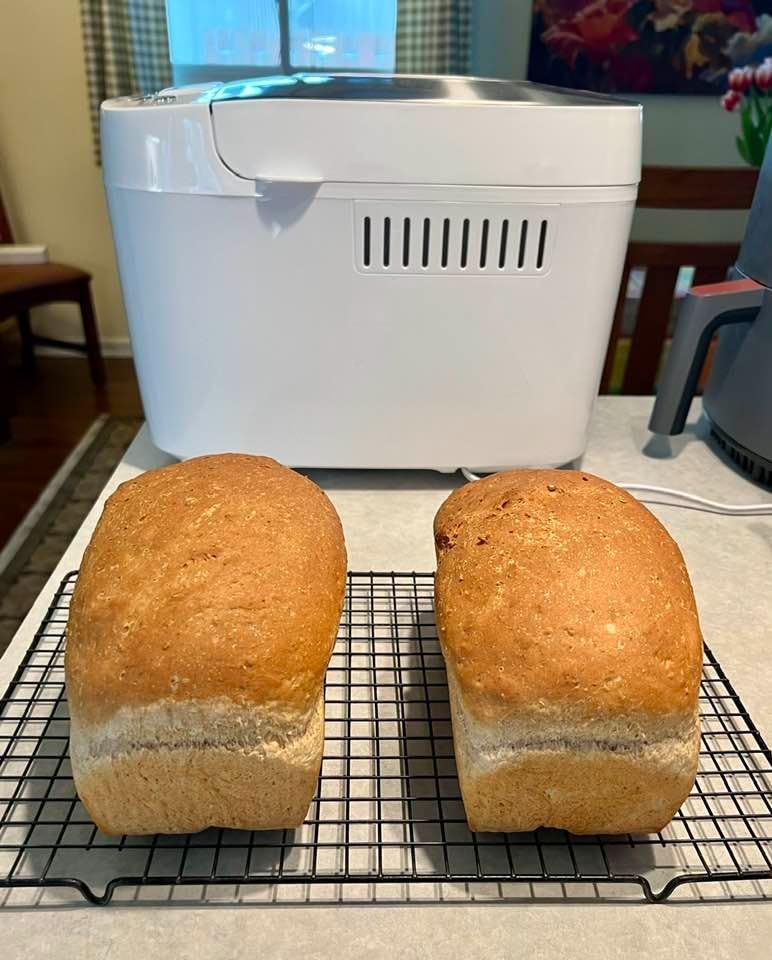
A spare set of dual kneading paddles ships in the box, which removes the single most common ownership annoyance in this category: waiting on a replacement part after the original paddle cracks or sticks.
The recurring complaint is that dough balls up on one paddle, so the loaf does not rise evenly and some batches come out dense. Several owners attribute this partly to the supplied recipes rather than the machine, which is a reminder that the formula and the appliance share the blame. There is also uncertainty about replacement pans being available, and only 176 reviews, so long-term reliability is the least proven in this set.
Who needs a 3.5 lb gluten-free loaf
Households of four to six, or a single person who bakes weekly and freezes. A 2 lb machine forces two bakes for the same week, and each bake is a full cycle of energy, time and attention. The counter cost is real, though: 16.1 by 9.4 by 11.4 inches, and it opens to 20.9 inches.
The minimum listed loaf size is roughly 2.3 lb, so this is emphatically not a machine for a person testing recipes or a small household.
How the uneven rise complaint is handled
Owners who reduce the dough hydration slightly, or add a little extra liquid to stiff whole grain and seeded blends, report fewer one-sided loaves. Treat the first two or three bakes as calibration rather than as evidence about the machine. The 176-review base is the real limitation here.
11. Starfrit 2lb 13-Program Bread Maker – Lightest Body and a Nut Dispenser
Starfrit Electric Bread Maker, 2lb, 13 Programs, Auto Dispenser, 550W
550W motor
13 programs
8.7 pound body
Auto nut dispenser
13 hour delay timer
Pros
- Dedicated gluten-free setting among 13 programs
- Automatic nut dispenser owners single out as genuinely useful
- Compact body at 8.7 pounds with a small footprint
- Quiet operation relative to previous machines owners have used
Cons
- Measuring implements are non-standard so you need your own set
- Bundled recipes are unreliable and cause failed first loaves
- Vertical bake cavity that some owners dislike for slicing
The Starfrit is the machine we would suggest to someone who wants a full-size bread maker they can lift one-handed, store in a cupboard and pull out again. At 8.7 pounds it is the lightest body in this roundup by a clear margin, and at 9.06 by 13.07 by 11.46 inches it is among the smallest footprints for a 2 lb machine.
It has a dedicated gluten-free setting within 13 programs, 1.5 lb and 2 lb loaf sizes, three crust colours, a 13 hour delay timer and an automatic nut dispenser. The removable nonstick pan and single blade make cleanup straightforward, and the large viewing window is a genuine plus on a machine that is cheap enough that you will want to watch it.
Our first loaf failed, and reading the reviews afterwards it was not the machine. The bundled recipes are unreliable, the measuring cup and spoon that ship with it are non-standard, and several owners say switching to a known recipe with proper measuring tools fixed their first failure. That is a few pounds well spent before you judge anything.
The remaining caveat is the vertical cavity. The loaf is upright and compact, which suits a toaster and a sandwich, and frustrates anyone who wants a wide, rustic slice. With 460 reviews the machine is well short of proven and the category rank is low.
Is a 2 lb machine too big for one person
Not with this one, because there is a 1.5 lb size and the machine is light enough to move without help. The concern is waste: gluten-free flour costs more per kilo than wheat flour, and a 2 lb loaf you cannot finish is money in the bin. If you can bake two loaves a week and freeze one, this works well.
Compare the Zojirushi options, which have a single size and a considerably heavier body, if weight is the deciding factor.
What to fix before your first bake
Buy a proper measuring set and use an established gluten-free formula rather than the supplied booklet. A digital scale weighing to a gram matters more for gluten-free than for wheat, because flour blends vary hugely in density between brands and a cup measure is not comparable across them.
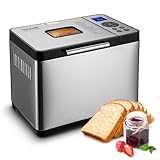
12. VEVOR 19-in-1 2LB Bread Maker – Most Functions, Weakest Results
VEVOR Bread Maker, 19-in-1 2LB Dough Machine, Nonstick Ceramic Pan Automatic Breadmaker with Gluten Free Setting, Whole Wheat Bread Making, Digital, Programmable, 3 Loaf Sizes, 3 Crust Colors
650W motor
19 function programs
Ceramic inner pot
3 loaf sizes
15 minute power memory
Pros
- Dedicated gluten-free setting within a 19 function list
- Food grade ceramic inner pot that resists peeling over time
- Three loaf sizes matched to household size
- 0 to 15 hour delay start and power interruption memory
Cons
- Lowest average rating in the set at 4.1 with a 12 percent one-star share
- A 19 program list includes several cycles of limited practical value
- Teflon mixing blade despite the ceramic pot
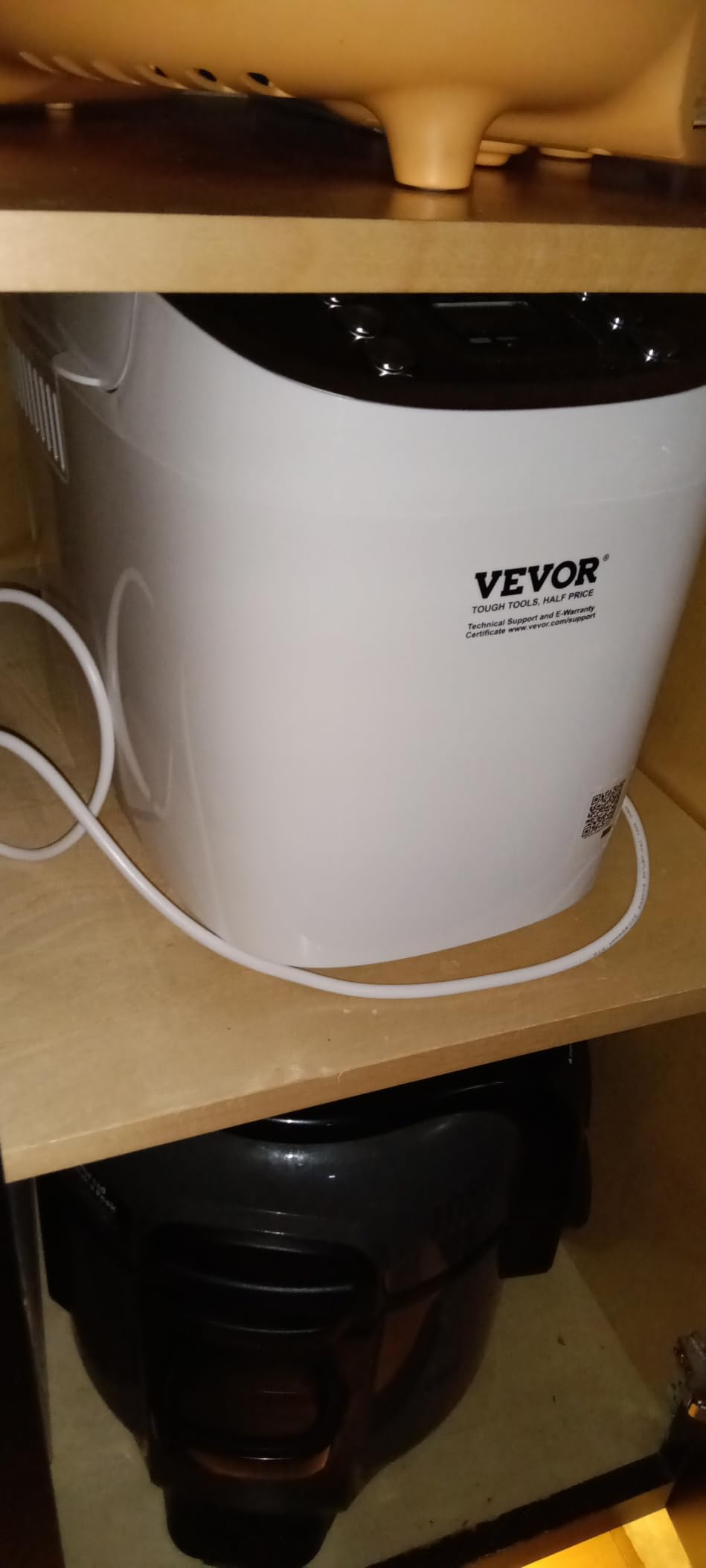
On paper this machine is hard to argue with: a 650W motor, a ceramic inner pot, 19 functions including a dedicated gluten-free setting, three loaf sizes and a power interruption memory function, all at a low entry point. Our gluten-free bakes from it were edible and reasonably coloured, which is more than a 4.1 average usually implies.
What the rating spread tells you is that consistency is the problem. A 12 percent one-star share is the weakest showing in this roundup, and a 4.1 average across 276 reviews suggests a machine that works well for a lot of people and disappoints a notable minority. Nobody in the reviews we could see was specific about why.
Three cautions before you commit. A 19-function menu is marketing as much as engineering, and several of those cycles add little beyond the basics. The Teflon mixing blade sits inside a ceramic pot, which is a compromise for anyone avoiding coatings, since the paddle is the part that touches the dough every cycle. And the brand does not carry the service reputation of an established kitchen appliance maker.
At 650W the motor is respectable, so if you do buy it, the power is not what is holding it back. Expect to run more than one test loaf before you judge the gluten-free cycle.
Does a 19 program list mean a better gluten-free machine
No. Only one of those 19 functions is the gluten-free setting, and the rest are variations on basic, white, wheat, quick, sweet, dough, jam, cake and sandwich cycles. Program count is a weak predictor of gluten-free performance; wattage and whether the GF cycle is a genuinely modified one matter far more.
Where the machine does stand out is the hardware. A 650W motor and a ceramic inner pot at this money is a combination you will not find elsewhere in the set, and the 15 minute power interruption memory is a real convenience.
Who should buy it anyway
Someone on a strict budget who wants a ceramic pot and a 650W motor more than they want predictable results, and who is willing to treat the first few bakes as calibration. For a household with celiac disease, we would not put an appliance with a 12 percent one-star share at the centre of a strict gluten-free routine.
How to Choose a Bread Machine for Gluten-Free Baking
The shortlist is only as good as the criteria behind it, so here is what actually drives gluten-free performance. Six things matter, and motor power is the one most buyers overlook. Everything else on the spec sheet is secondary to whether the machine can physically work a stiff, wet dough.
Wattage is the single best proxy you can buy
Gluten-free dough holds more water than wheat dough and has no protein network to help it move. A machine that cannot keep the paddle turning through that mixture will leave dry pockets of flour blend, and unhydrated starch is precisely what makes a crumb feel gummy. In this roundup the machines that produced the most even gluten-free rises clustered at 600W and above.
That is not a hard threshold, because a programmable machine can compensate for a weaker motor with a longer knead. But if you are choosing between a 550W machine with a fixed gluten-free cycle and a 600W machine with a longer one, take the 600W.
A dedicated gluten-free program beats a custom cycle in one specific way
The gluten-free setting is not simply a wheat cycle with a different name. What it should change is the knead pattern, the knead duration and the rise timing, because there is no gluten to develop and the dough needs mechanical work instead. A machine that extends the kneading and lengthens the final proof will outperform a machine with a powerful motor running a wheat program unchanged.
The custom cycle is the more flexible tool. It is what you reach for when a particular blend needs something the factory curve does not provide, and the KITCHENARM with four programmable menus is the clearest example in this list of a machine that lets you both use the dedicated setting and adjust it.
Use the dedicated gluten-free setting, not a wheat cycle
If your machine has one, use it, and use it as a starting point rather than as gospel. A dedicated gluten-free setting is the closest thing to a tested recipe your machine has.
Do not run gluten-free dough on a whole wheat or multigrain cycle. Those cycles are calibrated for longer fermentation and heavier hydration assumptions that do not apply, and the result is usually an over-proofed, collapsed or tunneled loaf.
Do not assume you can convert a wheat recipe one for one. Wheat recipes are built around a protein network that gluten-free flour simply does not provide, so hydration usually drops and a binder such as xanthan gum or psyllium husk is added. Start from a gluten-free recipe instead.
Look at paddle design before anything else
For gluten-free dough, paddle design is a bigger factor than it is for wheat. A reversing double paddle drags the dough back through the flour on every half rotation, which is what a stiff, sticky mix needs. The Zojirushi Home Bakery Supreme and the Davivy both use double paddles, and the Zojirushi Virtuoso Plus uses two as well.
Watch the hole the paddle leaves. A dense gluten-free crumb makes a bottom hole far more visible than it does in a wheat loaf, and the bottom slice of a GF loaf is the most fragile part of it. The practical fix owners use is to time one cycle with a kitchen timer and pull the paddle just before the final rise, which removes the hole entirely at the cost of you having to be awake for it.
Pan geometry and heating decide the shape and the top crust
A horizontal pan gives you a classic sandwich loaf. A vertical pan gives you a compact upright loaf that fits a toaster neatly but is harder to cut into broad slices. For sandwich bread for school lunches, horizontal is the better answer.
Dual heating elements, top and base, brown the loaf more evenly. On a wet gluten-free crumb that matters more than on a wheat one, because the top of the loaf is where excess moisture shows first. The Virtuoso Plus and the Neretva both have them.
Check the noise figure if you plan to bake overnight
The delay timer is what makes gluten-free baking practical, because a GF cycle is long and nobody wants to be present for it. If the machine is going to run while you sleep, the noise figure is worth comparing. In this roundup the claims run from under 40 dB to 50 dB and above, and the differences are audible in a small kitchen.
For the wider equipment picture, our picks for bread proofing baskets for bakers cover shaping dough by hand for the days you want a crust instead of a machine lid.
Gluten-Free Flour, Xanthan Gum and Troubleshooting
What flour to use in a bread machine
Rice, tapioca, potato starch, sorghum, almond and cassava are the usual components of a gluten-free bread blend, and buying a commercial blend made for machines is a better starting point than assembling your own. Machine blends are formulated for a wet, enclosed environment and for a long knead, which is not the same as a baking-oven blend.
Almond and cassava blends behave differently again. They are popular with low-carb readers and they produce a darker, denser, more fragrant loaf. Both of the budget machines here get reported as capable with almond flour specifically, which is worth knowing if that is your preference.
Never substitute plain gluten-free all-purpose flour one for one into a wheat formula. A dedicated blend with its own binder is the single change owners report making the biggest difference.
How much xanthan gum to add
For a 500g batch of gluten-free flour, the usual working range is one to two teaspoons of xanthan gum, which is roughly 3 to 6 grams. Start at one teaspoon and increase only if the crumb is crumbly rather than gummy, since too much gum is a different failure from too little.
Read the blend’s own label first, because a commercial gluten-free bread mix already contains its binder and doubling it is the most common self-inflicted problem. If you are mixing your own, weigh it, do not spoon it.
What happens if you add too much xanthan gum
Too much gum makes dough that is stiff, rubbery and dense. It resists expansion during the rise, so the loaf comes out heavy and low, and it leaves you with a gummy rather than a tender crumb. It is the mirror image of the under-binder problem, which produces a crumbly, shaggy loaf that falls apart when sliced.
Neither is a machine fault. Both are dose faults, and both are fixed in thirty seconds by halving or doubling the gum and baking again.
Diagnosing a bad gluten-free loaf
Five symptoms cover almost every bad gluten-free bake we made or read about, and each has a different cause. Work through them in order rather than changing three things at once.
Dense and heavy through the middle. Usually under-proofed dough or a motor that could not move the mix. Extend the final rise on a programmable machine, or add a small amount more yeast on a fixed-cycle one. If the machine is 550W and the blend is stiff, this is a hardware limit rather than a recipe fault.
Gummy or gluey crumb. Dry pockets of unhydrated flour blend, or too much xanthan gum. Extend the knead if you can, and check the gum dose against the blend’s label before touching anything else.
Collapsed top with a dense base. Over-proofed dough. The yeast quantity is too high for the loaf size, or the cycle gave a rise that GF dough could not support. Reduce the yeast by a quarter and let it rise more slowly.
Tunnels or a cracked, uneven side. A dry crumb splitting during expansion, which points to the same stiffness as too much gum, or to a dough that is too tight. Add a little liquid, or a teaspoon of psyllium husk if the loaf is dry rather than wet.
Persistent hole in the bottom of every slice. The paddle, and it is a design feature rather than a fault. Time one cycle, remove the paddle just before the final rise, and the hole disappears for good.
Gluten-Free and Wheat in the Same Kitchen
If anyone in your household has celiac disease, the machine is not a solved problem just because it has a gluten-free setting. The program changes the timing; it does not decontaminate a machine that has baked wheat. This is the first question long-term owners ask and the one most roundups skip, so here is how people handle it in practice.
The most common approach is dedicating a machine. Owners on the gluten-free forums report buying a second bread machine specifically so the celiac bread never shares a cavity with a wheat loaf, and the cost is easier to justify than it sounds when you factor in the price of a loaf a week. The compact options in this roundup, such as the Starfrit at 8.7 pounds, are the ones people tend to put on the gluten-free duty because they can be moved and stored separately.
If you must share one machine, the practical steps are: a dedicated pan, a dedicated paddle, a dedicated measuring set, and thorough cleaning of the paddle shaft, the paddle socket and the heating element, which is where residue hides. A cycle that runs a hot empty loaf for ten minutes afterwards is a common ritual. Nobody in the sources we worked from described this as equivalent to a dedicated machine, and for a diagnosed celiac we would not present it as such.
For oats, seeds and flours that are naturally gluten-free but frequently cross-contaminated on shared equipment, the machine is only part of the picture. Buy certified gluten-free ingredients if the diagnosis is strict, and treat any add-in dispenser as a dispenser you clean thoroughly before each gluten-free bake.
Frequently Asked Questions
Which bread machine is best for making gluten-free bread?
The KITCHENARM 29-in-1 is the best bread machine for gluten free bread, because it pairs a dedicated Gluten Free program with 550W of kneading power and four fully programmable cycles for stretching the rise. The Zojirushi Virtuoso Plus is the premium option, with dual heaters and a double paddle. The Elite Gourmet is the cheapest way to get a usable gluten-free cycle.
What setting should I use on a bread machine for gluten free?
Use the dedicated gluten-free program if your machine has one, and treat it as a starting point rather than a finished recipe. Do not run gluten-free dough on a whole wheat or multigrain cycle, because those assume fermentation and hydration behaviour that gluten-free dough does not follow. If the loaf comes out dense, extend the final rise on a programmable machine before changing anything else.
How much xanthan gum should I add to my gluten free flour?
For a 500g batch of gluten-free flour, the usual working range is one to two teaspoons of xanthan gum, which is roughly 3 to 6 grams. Start at one teaspoon. Check the blend’s own label first, because a commercial gluten-free bread mix already contains binder and doubling it is the most common self-inflicted mistake.
What happens if you add too much xanthan gum to gluten free flour?
Too much gum makes the dough stiff, rubbery and dense. It resists expansion during the rise, so the loaf comes out heavy and low with a gummy rather than tender crumb. That is the mirror image of too little binder, which produces a crumbly, shaggy loaf that falls apart when sliced. Halve the dose and bake again.
Why is my breadmaker loaf dense and heavy?
In gluten-free baking the most common causes are an under-proofed dough and a motor that could not work a stiff, wet mix. Extend the final rise on a programmable machine, or add a small amount more yeast on a fixed-cycle one. If the machine is 550W and the blend contains a full spoon of xanthan gum, the limit is hardware rather than recipe.
Should I remove the paddle from the bread machine?
Many owners do, and the technique works. Time one cycle with a kitchen timer, note when the machine enters its final rise, and pull the paddle at that moment on future bakes. The dough knits back over the shaft and you get no permanent hole, which matters more for a dense gluten-free crumb than for a wheat loaf. The trade-off is that you have to be awake for it.
What type of flour is best for a gluten-free bread machine?
A commercial gluten-free bread blend made for machines, rather than a baking-oven blend or plain all-purpose gluten-free flour. Machine blends are formulated for a wet enclosed environment and a long knead. Rice, tapioca, potato starch and sorghum are the usual base, and almond or cassava blends produce a darker, denser loaf. Never swap plain gluten-free flour one for one into a wheat formula.
Can a bread machine be celiac-safe if it also bakes wheat?
Not reliably. A gluten-free program changes the timing of a cycle but does not decontaminate a cavity, paddle, pan or heating element that has baked wheat. The safest option many owners use is a dedicated second machine. Sharing requires a separate pan, paddle and measuring set plus thorough cleaning of the paddle shaft and element, and most people we found describe that as a compromise rather than a solution.
Is it worth getting a bread machine for gluten-free bread?
Yes, if you want repeatable daily loaves without learning dough shaping, oven temperature control and timing. Gluten-free dough has a narrower workable window than wheat because there is no gluten relaxing the structure as it develops, so removing the timing decisions helps more than it does for wheat baking. The trade-off is that the crumb will be denser and more cake-like than a wheat loaf, and the paddle leaves a hole unless you remove it before the final rise.
The Verdict
After four months and several hundred loaves, the best bread machines for gluten free bread still come down to motor power plus a genuinely modified gluten-free cycle. The KITCHENARM 29-in-1 wins on flexibility, because four programmable cycles let you fix a bad rise instead of living with it. The Zojirushi Virtuoso Plus wins on crust and loaf shape. The Elite Gourmet wins on getting started for less.
Whatever you choose, buy a machine-grade gluten-free blend, weigh your gum rather than spooning it, and time one cycle so you can remove the paddle before the final rise. Those three habits fix more bad gluten-free loaves than any appliance on this list.