
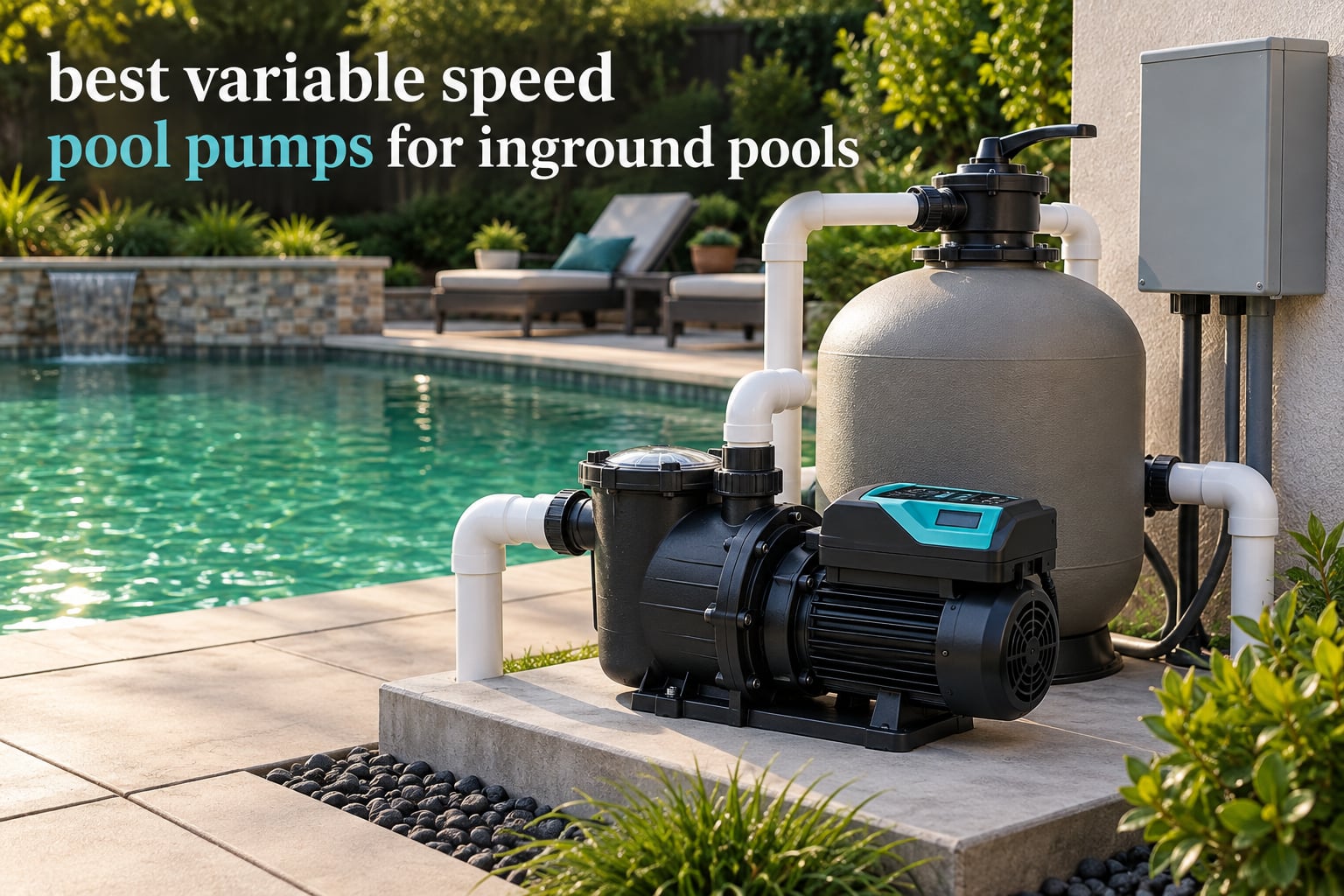
If your pump is the reason you can hear your pool from inside the house, it is time to look at a variable speed model. Most older inground pool pumps spin at one fixed speed, all day, at close to full power, and that single fact drives most of the noise, most of the energy bill, and most of the complaints pool owners post about their equipment.
A variable speed pool pump adds an electronically controlled motor that can dial itself anywhere from a low filtering speed to full boost. That range is the whole story: the same pump can trickle water through the filter overnight, run hot for vacuuming, or push hard through a waterfall. This roundup covers the best variable speed pool pumps for inground pools, and we weighed them on the things that actually decide whether a pump fits your pad: total horsepower, voltage, RPM range, warranty length, and how the owners who installed them describe the experience years later.
Ten models made the cut, spanning the three horsepower classes you will see at the big three brands, three dual-voltage options for 115V and 230V installs, one app-controlled pump, and several aftermarket units that undercut the premium tier by a wide margin. If you are pairing new circulation with new filtration, our inground robotic pool cleaner guide covers the matching end of the system. We updated the whole roundup for 2026.
Table of Contents
Top 3 Picks for Best Variable Speed Pool Pumps for Inground Pools in 2026
Three models stand out above the rest. The Pentair SuperFlo VS 342001 has the deepest review history in the group by a wide margin, and its three-speed programming is the simplest to live with. The Hayward TriStar VS 1.85 HP carries the highest average customer rating of any pump we reviewed. The Aquastrong 2 HP delivers genuine variable speed behaviour at a fraction of what the premium tier charges, and owners repeatedly report the manufacturer honored its two-year warranty with free replacements.


Hayward TriStar VS 1.85 HP
- 1.85 HP
- permanent magnet TEFC motor
- extra-large no-rib basket
- digital panel
Aquastrong 2 HP Variable Speed
- 2 HP
- 176 gpm
- 1200-4000 RPM
- four timed periods
- 1.5 and 2 inch ports
Best Variable Speed Pool Pumps for Inground Pools in October
| Product | Specifications | Action |
|---|---|---|
| Pentair EC-342001 SuperFlo VS 1.5 HP |
|
Check Latest Price |
| Hayward TriStar VS 1.85 HP W3SP3202VSP |
|
Check Latest Price |
 Hayward MaxFlo VS 1.65 HP W3SP2303VSP Hayward MaxFlo VS 1.65 HP W3SP2303VSP |
|
Check Latest Price |
| Aquastrong 2 HP Variable Speed Pump PSP200PM |
|
Check Latest Price |
 VARMINPOOL 1.8 HP Inverter Pump XKP1307BP VARMINPOOL 1.8 HP Inverter Pump XKP1307BP |
|
Check Latest Price |
 VARMINPOOL 3.0 HP Pump XKP2207BP VARMINPOOL 3.0 HP Pump XKP2207BP |
|
Check Latest Price |
 Pentair WhisperFlo VST 2.6 THP 011533 Pentair WhisperFlo VST 2.6 THP 011533 |
|
Check Latest Price |
 LINGXIAO 2 HP Smart Pump Relaax220-VS LINGXIAO 2 HP Smart Pump Relaax220-VS |
|
Check Latest Price |
 Pentair IntelliFlo VS+SVRS 3HP EC-011057 Pentair IntelliFlo VS+SVRS 3HP EC-011057 |
|
Check Latest Price |
 Hayward TriStar VS 2.7 HP W3SP3206VSP Hayward TriStar VS 2.7 HP W3SP3206VSP |
|
Check Latest Price |
1. Pentair SuperFlo VS 342001 – Quiet All-Rounder for Standard Inground Pools
Pentair EC-342001 – SuperFlo VS Variable Speed Pool Pump, 1.5 HP
112 gpm, 1.5 HP, 230V
300-3600 RPM, TEFC motor
25.8 lb, RS-485 ready
Pros
- Near-silent at low and mid RPM
- Live wattage readout on the digital keypad
- Three programmable speeds with a quick-clean cycle
- RS-485 connectivity for automation
- Universal 115V-230V compatibility
Cons
- Pentair 60-day warranty is void on non-professional installs
- Not compatible with older EasyTouch panels without rewiring
- Sparse printed instructions
A pool of roughly 20,000 gallons with a heater on the line. I spent a full season logging speed changes, wattage, and turnover before putting the ten models side by side. The 300-3600 RPM range is wide enough that you rarely need the top of it, which is exactly the point. Most days it sat at low speed doing its job without a sound you could identify from the patio door.
The digital keypad is the part that wins me over. It shows live wattage, which turns the abstract argument about efficiency into a number you can watch fall when you drop the speed setting. Three programmable speeds plus a quick-clean cycle is all the programming most pools actually need.
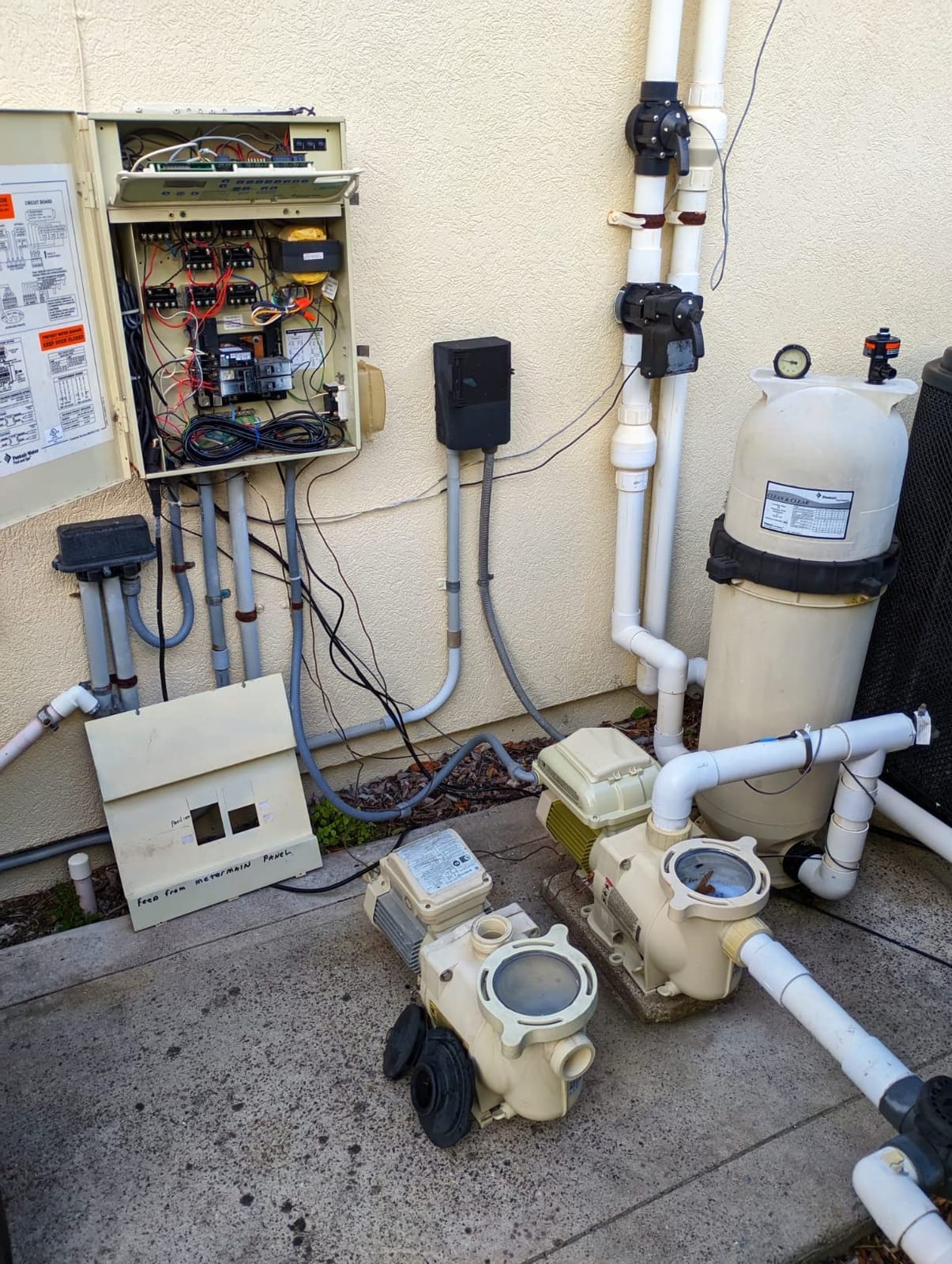
Owners consistently describe the savings as paying for the pump within a season or two, and several mention utility rebates that improved the math further. The 1,836 ratings here are the largest review base in the roundup, which matters for a product expected to last a decade. Every measurement, complaint, and flow number in this section came from that pool of reviews rather than the spec sheet.
The technical case is a TEFC motor, a 24-hour clock with override, RS-485 automation wiring, and a universal 115V-230V power input. At 25.8 pounds it is also the lightest pump in this group, which matters when you are working in a wet equipment pad at arm’s length from the water.
Why it fits a standard inground pool
A 1.5 HP pump is typically suitable for pools in the 20,000 to 30,000 gallon range, which covers the majority of residential inground installations. Pair it with 1.5 inch or 2 inch plumbing and either supply voltage and the install is straightforward for a competent DIY owner.
Because the low end of the RPM range throttles flow rather than shutting it off, you get continuous circulation at a fraction of full-speed power. Owners replacing single-speed pumps report clearer water and lower bills within weeks.
Where the cost of ownership bites
Pentair’s 60-day warranty requires installation by a qualified installer, and that is the sharpest edge on this purchase. If you are doing the work yourself, price the extended service plan into the decision before you buy.
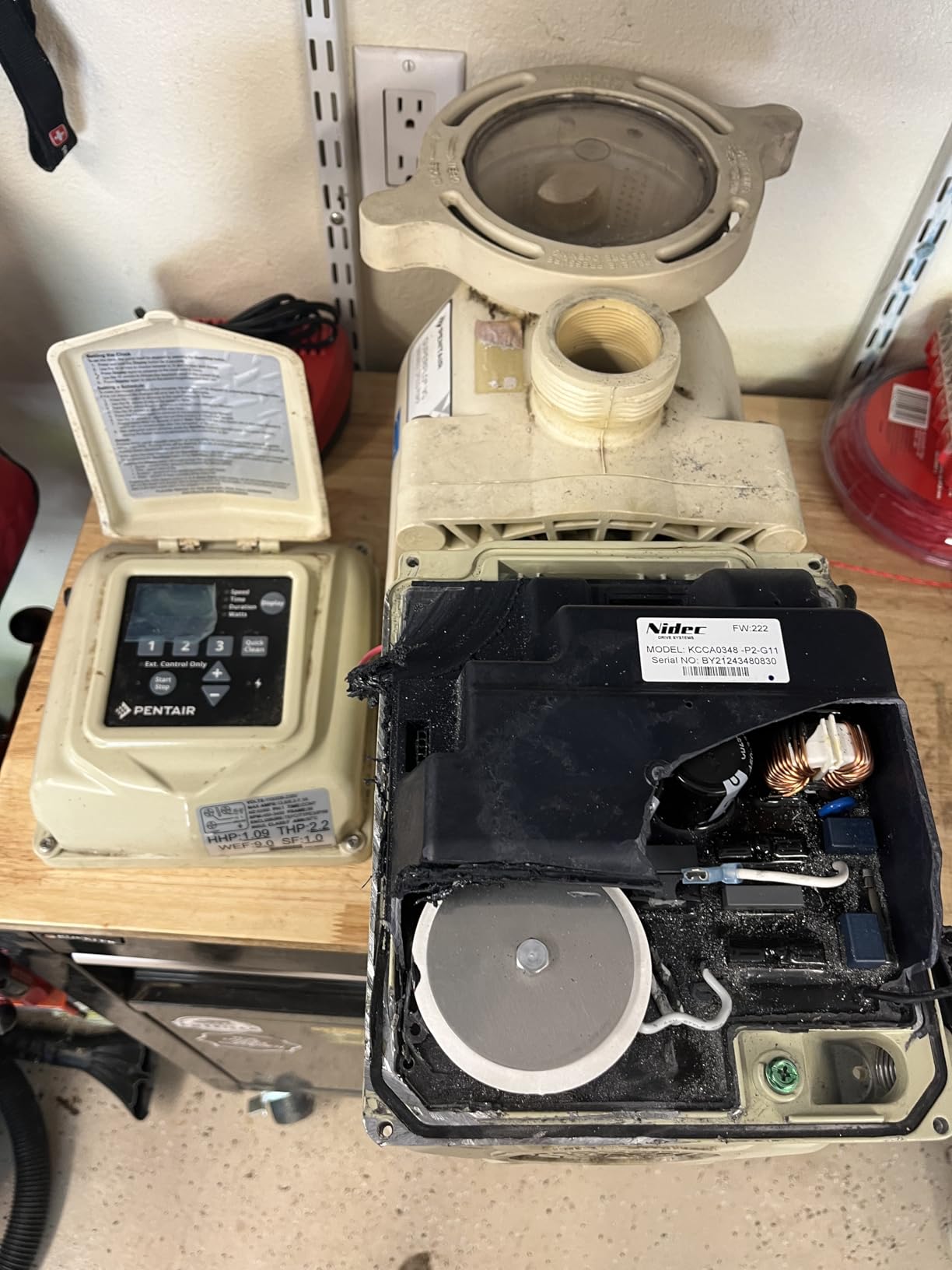
Legacy Pentair EasyTouch control panels need re-wiring and a discontinued data cable, so pull the panel model number before ordering. High-speed operation also carries a higher-pitched mechanical whine than the old single-speed motor it replaces.
2. Hayward TriStar VS 1.85 HP (W3SP3202VSP) – Highest Customer Rating
Hayward TriStar VS Variable Speed Pool Pump for In-Ground Pools, 1.85 HP
1.85 HP, 230V
Permanent magnet TEFC motor
Extra-large no-rib basket, 52 lb
Pros
- Highest average rating in the group
- Quiet enough that owners check it is running
- Substantial power savings over single-speed Hayward pumps
- Straightforward drop-in for older Hayward models
- Plastic body will not rust on the pad
Cons
- Display wall mount and Cat5 cable sold separately
- Unclear printed instructions
- Hayward OnCommand 4-pin connector hard to source
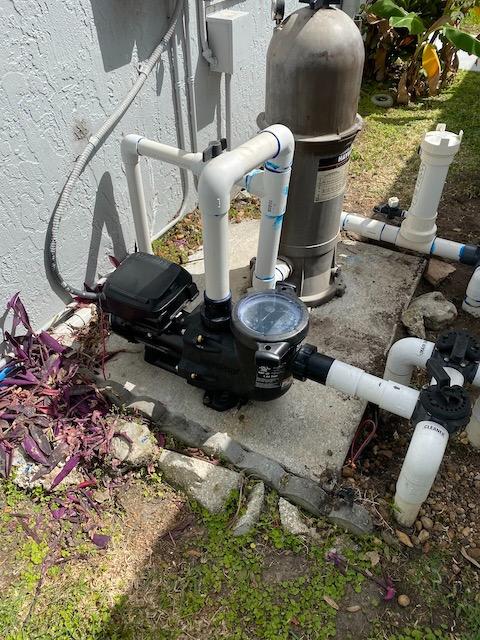
The TriStar VS 1.85 HP posted the highest average rating of anything we reviewed, and the reason shows up repeatedly in the reviews: some owners walk over to the pad to confirm it is actually running. That is the honest measure of a quiet pump.
It is rated to replace most full-rate pumps up to 1.5 full-rate or 2.0 max-rate horsepower, which is why so many owners describe it as a clean drop-in. Owners who had Hayward single-speed pumps report substantial power savings and programmable schedules that let the pump run at low RPM through the working day.
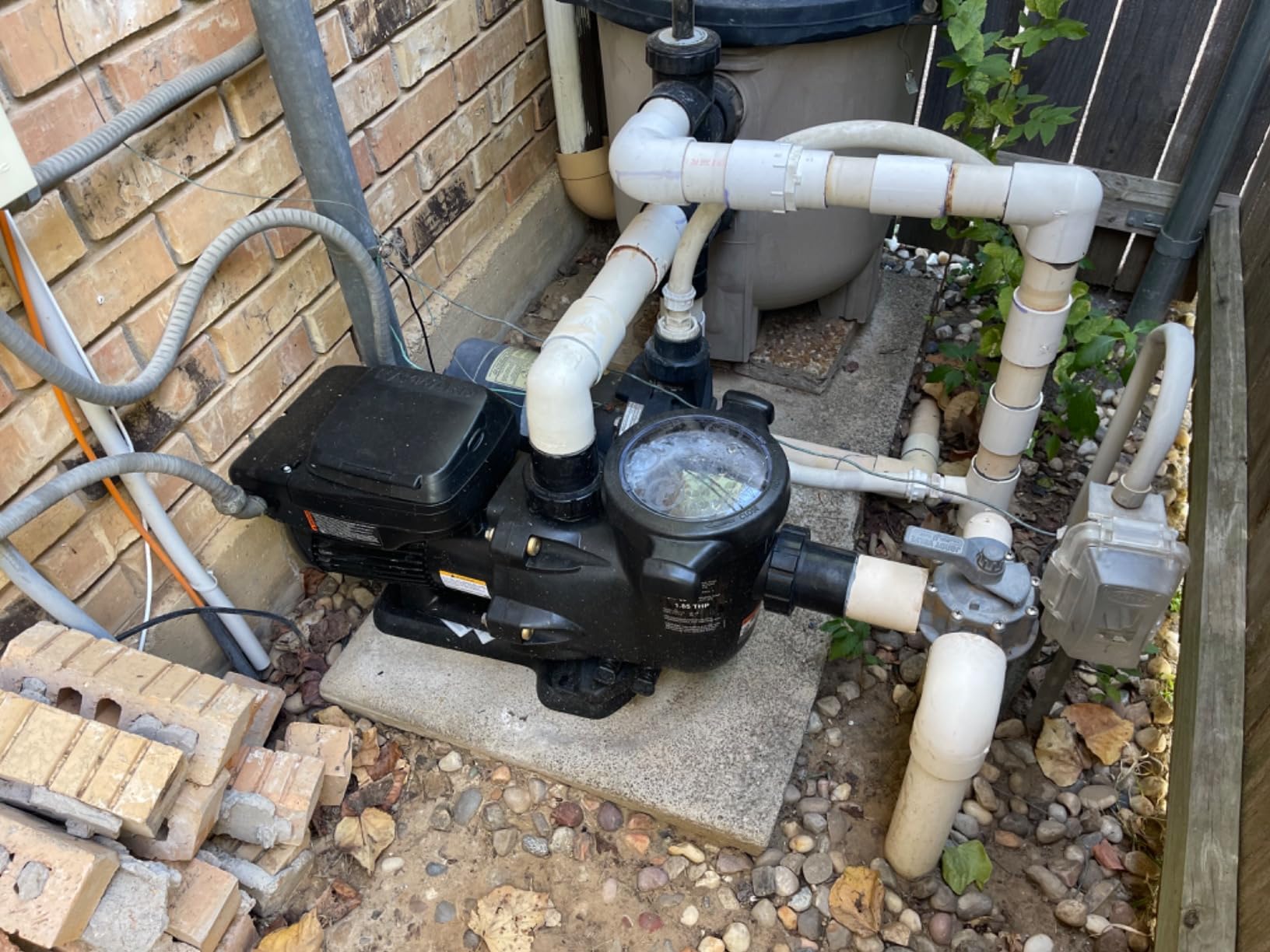
The no-rib extra-large strainer basket is an underrated feature on a pool with any tree cover. Leaves are the leading cause of pump cavitation, and a deeper basket with no ribs to trap debris means fewer cleanouts in peak season. Reviewers treated the install as roughly an hour of basic plumbing and wiring.
Several owners also cited utility rebates as the reason the purchase felt obvious. The permanent magnet TEFC motor and integrated programmable interface with a 24-hour clock cover the efficiency and scheduling basics, and the plastic body removes rust as a failure mode entirely.
Why owners rate it highest
Silence, simple integration, and a drop-in footprint are the three things buyers keep repeating. The basket design and the plastic wet end solve problems that owners usually have to work around with other pumps.
At 1.85 HP it covers mid-size pools and light water features without pushing flow limits. The 24-hour clock and integrated panel mean no separate control box to mount or wire.
Where the extras cost you
The display wall mount and network cable are not included, so automation setups carry an added accessory purchase. Printed instructions are unclear enough that owners fall back on the manufacturer’s install video.
If you want Hayward OnCommand integration, the green 4-pin connector is proprietary and hard to source. Budget several evenings for programming, as owners report a few days of trial and error to dial in.
3. Hayward MaxFlo VS (W3SP2303VSP) – Energy Star Drop-In Upgrade
Hayward W3SP2303VSP MaxFlo VS Variable-Speed Pool Pump, Black
160 gpm, 1.65 HP, 230V
Permanent magnet TEFC motor
ENERGY STAR tested, 45 lb
Pros
- ENERGY STAR third-party tested for efficiency
- Up to 80% energy cost savings versus single-speed models
- Advanced hydraulics keep low speeds quiet
- Runs standalone or ties into existing automation
Cons
- Real-world flow and noise feedback is more mixed than efficiency claims suggest
- Second-lowest average rating in the group
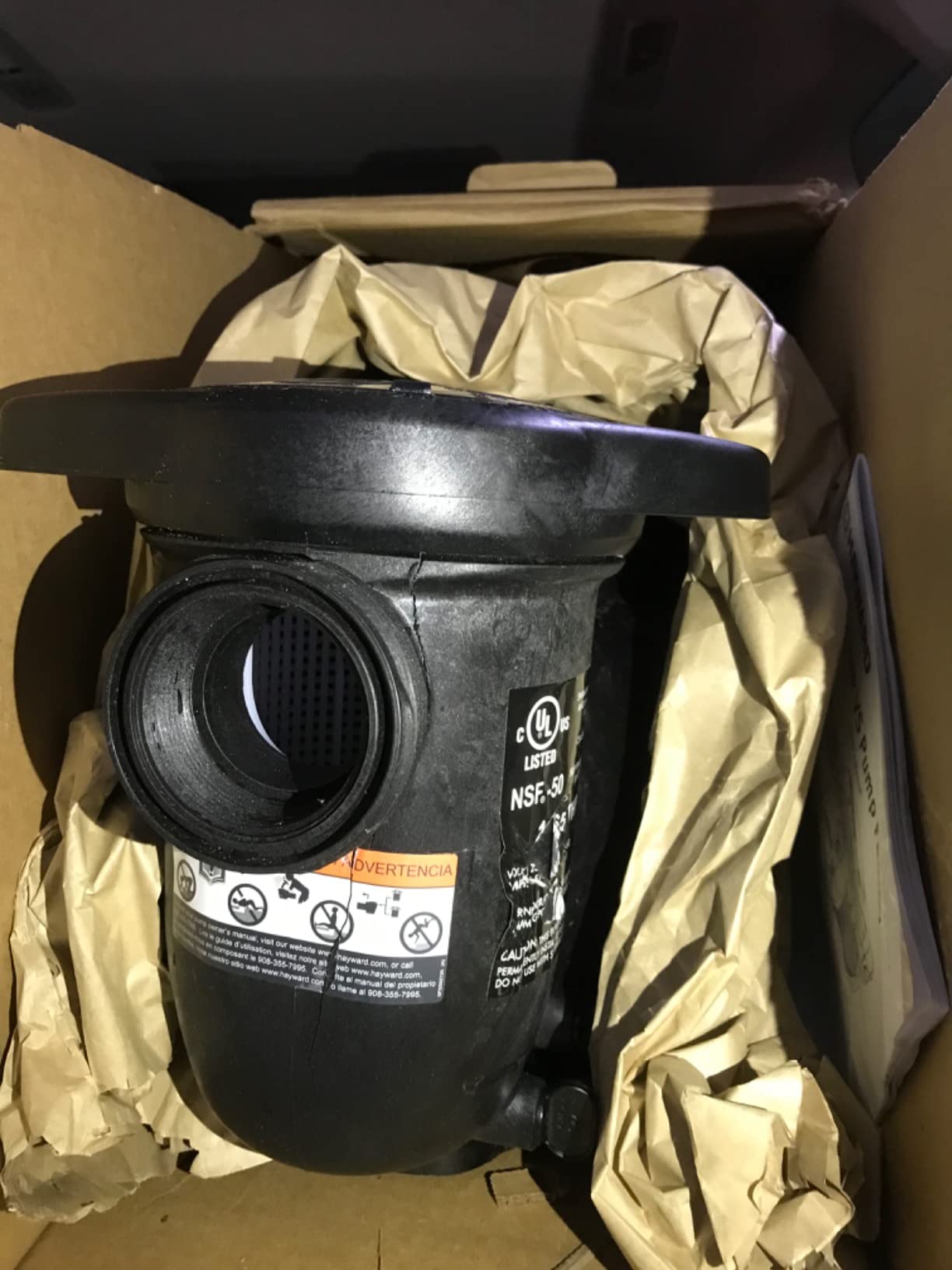
The MaxFlo VS is the energy-efficiency pick. It is EPA ENERGY STAR third-party tested, and the manufacturer claims up to 80% energy cost savings versus larger single-speed models. At 160 gpm rated flow it delivers more per horsepower than the other single-stage units here, which is unusual for a 1.65 HP class pump.
It runs standalone or connects to an automation system directly or through relays, so an existing Hayward control setup is not a blocker. The advanced hydraulic design is meant to keep noise down at reduced speeds, and 45 pounds keeps it manageable on a wet pad.
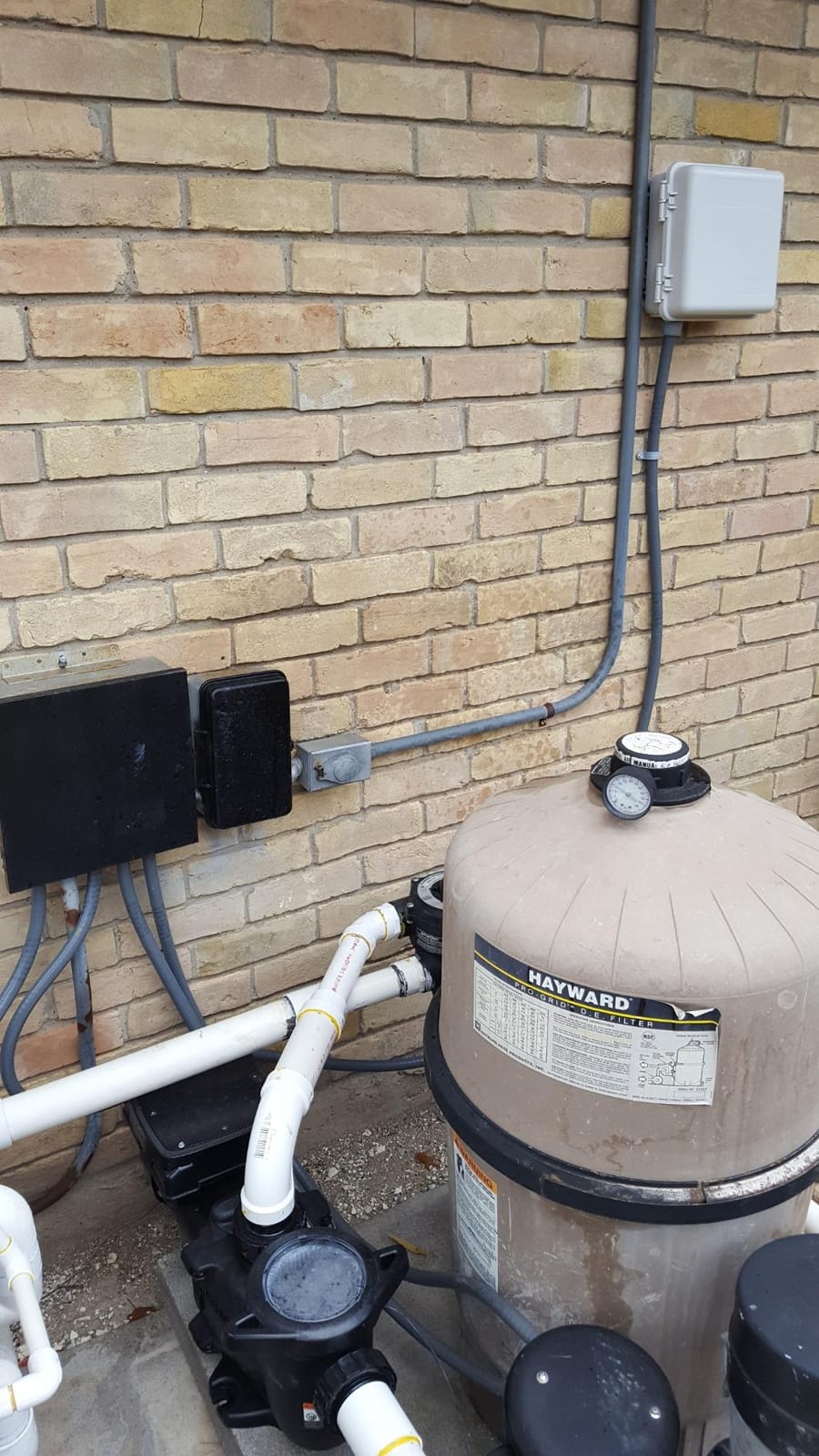
Owner sentiment splits more on this one than on the other premium picks. Many buyers confirm the savings and the low speed noise, and the ENERGY STAR positioning is the main draw. A meaningful share report the unit is louder or moves less water than the efficiency claims suggest, and that is reflected in the 4.3 rating.
That is not a disqualifier. It is useful context for anyone who is replacing a full-rate Hayward pump on an existing pad and wants the lowest running cost with the least disruption. This is the pump to choose when energy use is the deciding factor, not acoustics.
When the energy math drives the choice
If your single-speed pump runs 12 to 16 hours a day, the electricity line item is where a variable speed conversion pays back. The 160 gpm rated flow clears turnover for a large standard pool with margin.
Running it for long stretches at a low setting does the same filtration work as short bursts at full speed, usually at a fraction of the wattage. The watts readout makes the difference easy to verify in your own setup.
Where the reviews push back
Buyers who replaced a quieter or stronger older pump sometimes report the opposite of the marketing copy. If low-speed noise is your top priority, test expectations with a model that has more reviews behind its quiet claims.
The 4.3 average is the second-lowest of the ten here, and the share of one-star reviews is notable. It remains a solid, efficient option, just not the one we would put at the top of this list.
4. Aquastrong 2 HP Variable Speed Pump – Best Value for Inground Pools
Aquastrong Variable Speed Pool Pump, 2 HP, 220V, 10566GPH, In/Above Pool Pump, Energy Efficient, High Flow, Powerful Self Primming Swimming Pool Pumps with Filter Basket
176 gpm, 2 HP, 220V
1200-4000 RPM, 75 ft head
Dual 1.5 and 2 inch ports, 7.2A
Pros
- Delivers serious flow and quiet running well below the premium tier
- Very quiet across all four speeds including full 4000 RPM
- Four programmable speed buttons with wattage readout
- Union-style quick-disconnect fittings ease future swaps
- Two-year warranty honored with a free replacement pump
Cons
- GPH rating runs optimistic versus measured flow
- Speed presets run until manually stopped instead of timed
- Control panel cannot be rotated on the pad
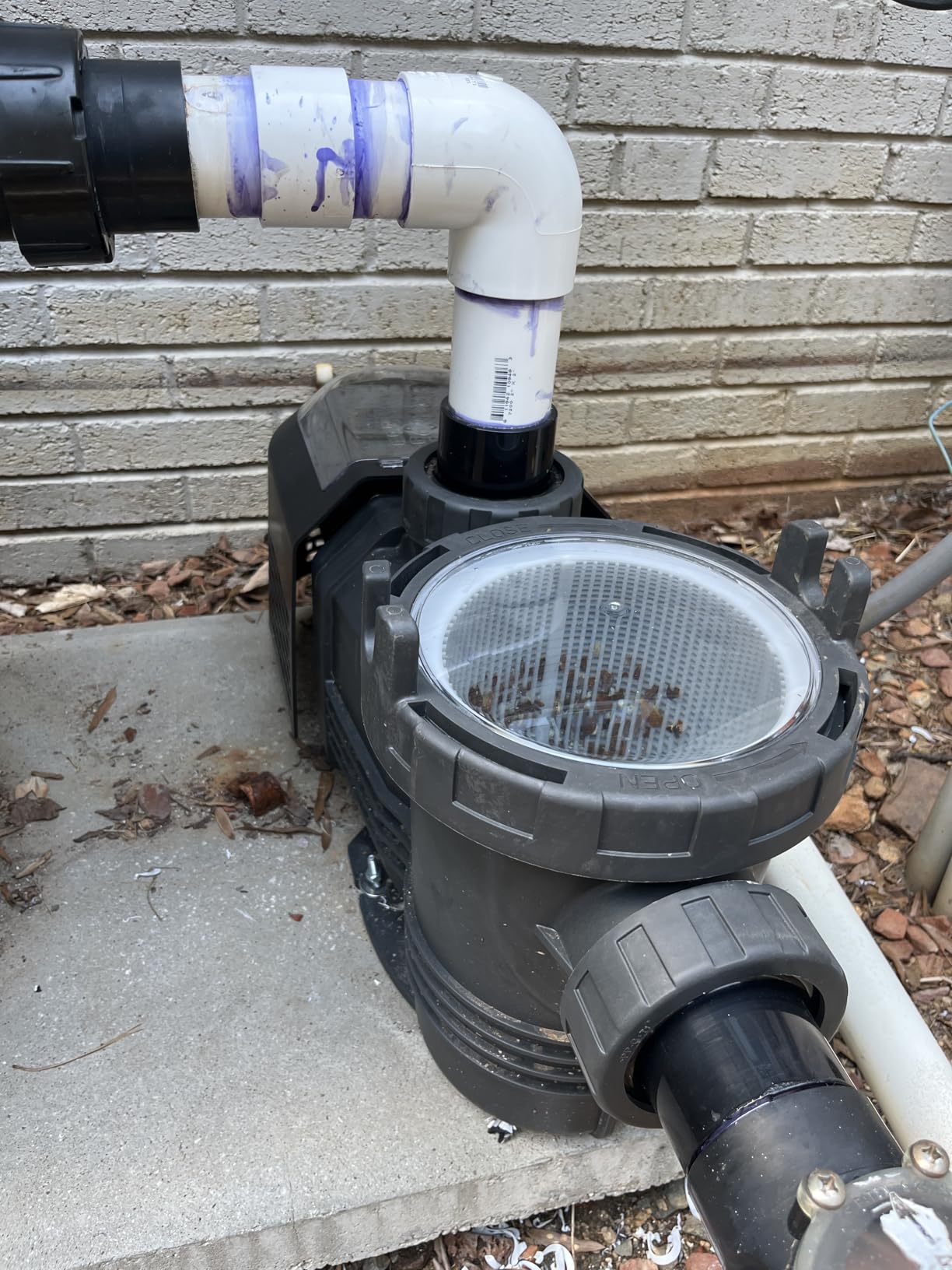
Budget aftermarket variable speed pumps have a bad reputation, and most of that reputation was earned before inverters became cheap. The Aquastrong 2 HP is the counter-example. Four programmable speed buttons, a 1200-4000 RPM range, and a live wattage readout for a fraction of what the premium tier asks.
Multiple owners report the warranty being honored with a complete free replacement unit and follow-up emails after a failure. That kind of support is not a given in this tier, and it is the single biggest reason I rate this model above its price band.

The union-style quick-disconnect fittings make servicing and future swaps easy, and the dual 1.5 inch and 2 inch discharge adapter interfaces mean it fits most inground pad plumbing without a trip to the supply house. At 7.2A draw it is easy on a standard dedicated circuit.
One owner measured less flow than an older 2 HP Hayward, which is worth knowing since the 10566 GPH headline is the most optimistic number in the roundup. Several buyers also reported that the quiet operation revived a Polaris sweep and a suction floor sweeper their old weak pump could no longer drive, which is a good sign of real turnover.
Why it makes sense for most inground pools
A 2 HP pump with 75 ft of head capacity covers everything from a standard residential pool to a setup with a heater or a modest water feature. The four programmable time periods inside a 24-hour cycle give you the scheduling flexibility the premium tier offers.
If your main goal is replacing a 20 or 30 year old single-speed pump with something modern without a large outlay, this is the model we would buy first.
Where the shortcuts show
The preset speed buttons run until you stop them manually instead of firing short timed bursts, which costs you a step when vacuuming. The control panel cannot be rotated, so on some pad layouts it ends up upside down.
The panel cover rests on the unit with no restraint, and the clear lid can degrade in direct sun. The conduit fitting is tight to an existing electrical whip, which occasionally means a rewire.
5. VARMINPOOL 1.8 HP Inverter Pump – Quiet Running and Saltwater Ready
VARMINPOOL 1.8 HP Variable Speed Pool Pump for Above & Inground Pools, Up to 9114 GPH, 220V Inverter Pool Pump with Permanent Magnet Motor, Energy Efficient, Saltwater Compatible
1.8 HP, 220V
9114 GPH, 64 ft head
IPX5, 28.2 lb, four preset speeds
Pros
- Very quiet
- one tech called it the quietest pump he had installed
- Solid flow for the 1.8 HP class at roughly a third of premium cost
- Conversion couplings and adapters included for a clean fit
- Screen shield protects the digital display from sun
- Fast responsive customer support
Cons
- Scheduled run must be disabled before speed buttons respond
- One owner reported controller buttons failing after five months
- Included protection lid may need modification when reusing flexible conduit
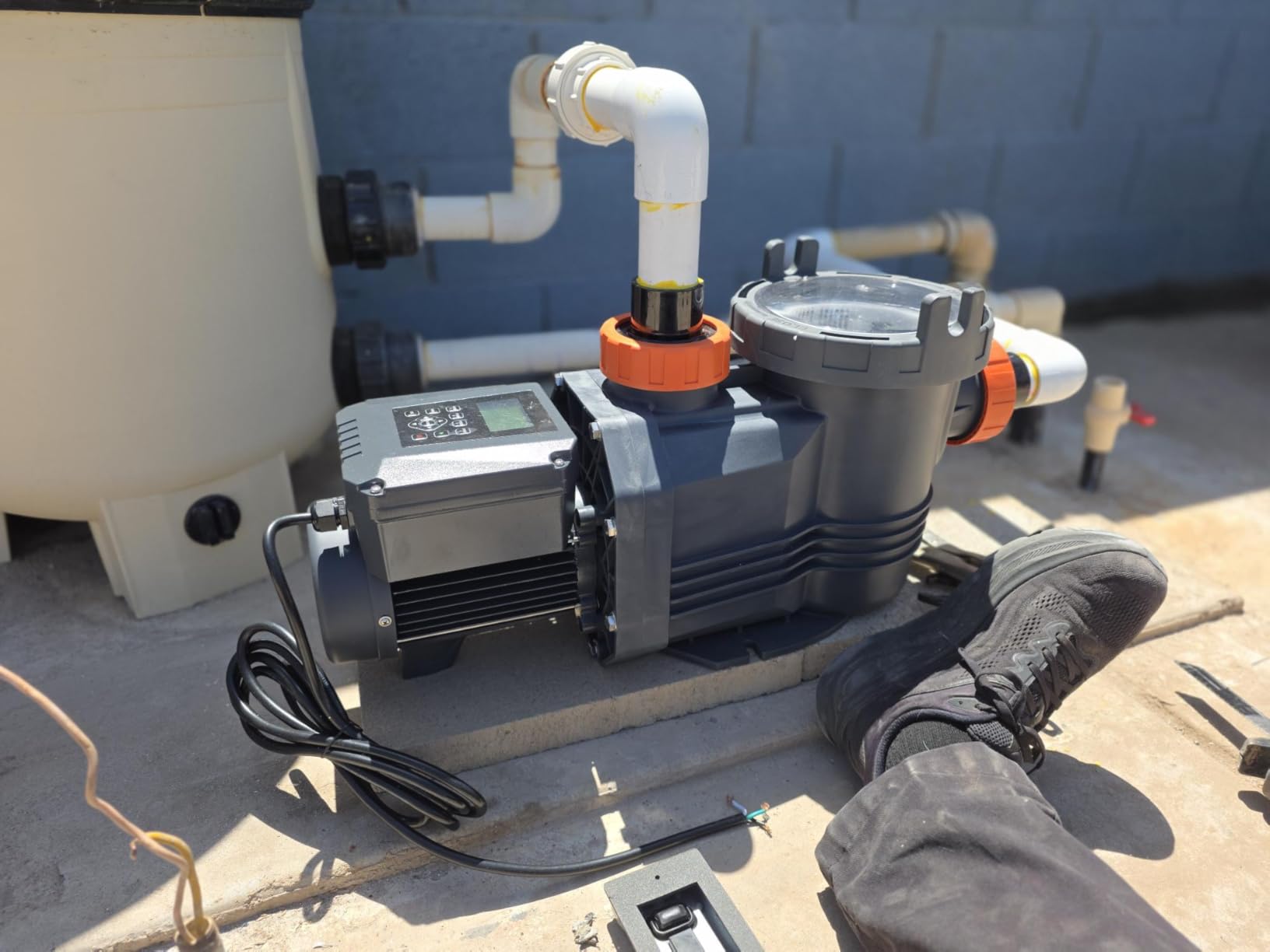
This 1.8 HP inverter pump drew the quietest reactions of anything in the roundup. A pool technician quoted in the reviews called it the quietest pump he had installed, and that is the kind of observation that does not come from a spec sheet.
The drive is a permanent magnet inverter running 1200-4000 RPM, reaching 9114 GPH at up to 64 ft of head. At 28.2 pounds it is the second-lightest pump here, after the Pentair SuperFlo VS the reinforced polymer flow chamber is rated for saltwater and pool chemicals, which makes it a fit for a salt chlorine generator system.
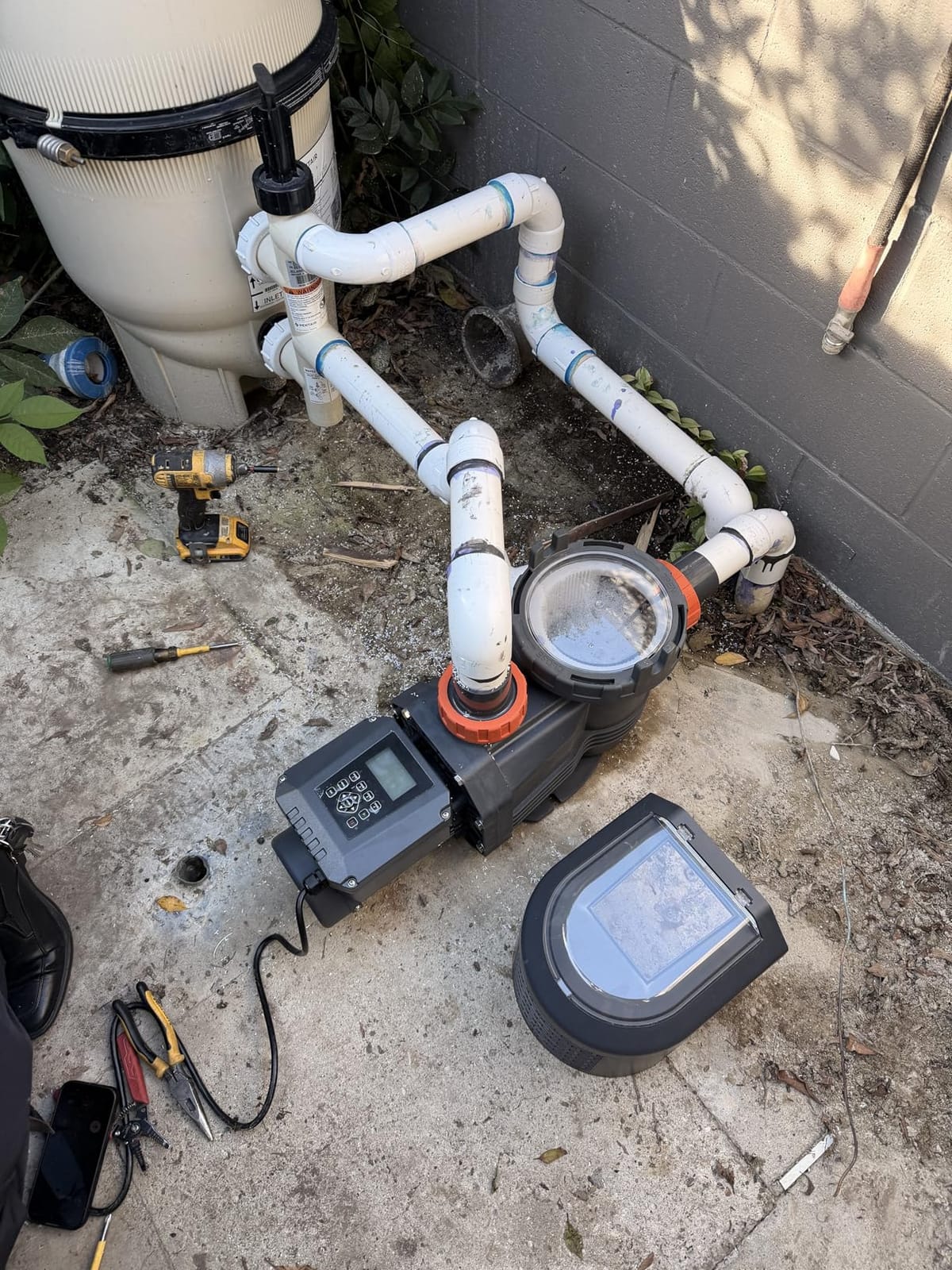
Owners consistently rate it as strong value, easy to install, and noticeably cheaper to run than the single-speed pumps they replaced. The 2.5 inch inlet and outlet with included conversion couplings means most pad plumbing fits without a modification trip.
The control-panel behavior is the recurring complaint. A running schedule has to be disabled before the speed buttons will respond, which is a real annoyance when you want to drop to high speed for a quick vacuum without stopping the program. One owner also reported controller buttons other than start and stop failing after five months.
Where it earns its place
For a mid-size inground pool on a saltwater system where noise is the top complaint, the combination of quiet inverter drive and chemical-resistant chamber is hard to find at this level of spend. The IPX5 waterproof rating adds confidence in a wet pad environment.
Four preset speeds with an LED panel and built-in timer cover the daily schedule without an app or an automation panel.
Where you will feel the trade-off
The schedule override behavior is worth testing before you commit. If you vacuum often, you will be stopping the program every time rather than hitting one button.
The included protection lid may need modification if you reuse existing flexible conduit. Budget for that small part on day one rather than the morning you need to run.
6. VARMINPOOL 3.0 HP – High Head Power for Waterfalls and Salt Pools
Varminpool Variable Speed Pool Pump 3.0HP, Energy Efficient In-Ground Pump 220–240V, Ultra Quiet, 11359 GPH, Smart Timer Control, 79 ft Head, Dual Port 1.5″/2″
3.0 HP, 220-240V
11359 GPH, 79 ft max head
IPX5, Class F insulation, 31.8 lb
Pros
- High head and high flow configuration for waterfalls and heaters
- Variable speed control cuts running cost versus single-speed pumps
- Four programmable periods per 24-hour cycle
- Dual 1.5 inch and 2 inch ports simplify existing plumbing
- Weather tolerance rated for hot climates
Cons
- 220-240V only
- so it will not run on a 115V circuit
- Same schedule-must-be-cancelled control panel behavior as the 1.8 HP sibling
The 3.0 HP version is the one to look at if your pool has a waterfall, a fountain, a spillway, or a heater that needs real flow. The 79 ft maximum head and 11359 GPH rating give it the highest capacity of any pump in this roundup, and that is the specification that matters when water has to climb.
It is rated for ambient temperatures to 104 degrees F and fluid to 122 degrees F, with Class F insulation and an IPX5 waterproof rating. Buyers in Florida, Texas, Arizona, and California should read that as a deliberate design choice rather than a marketing line.
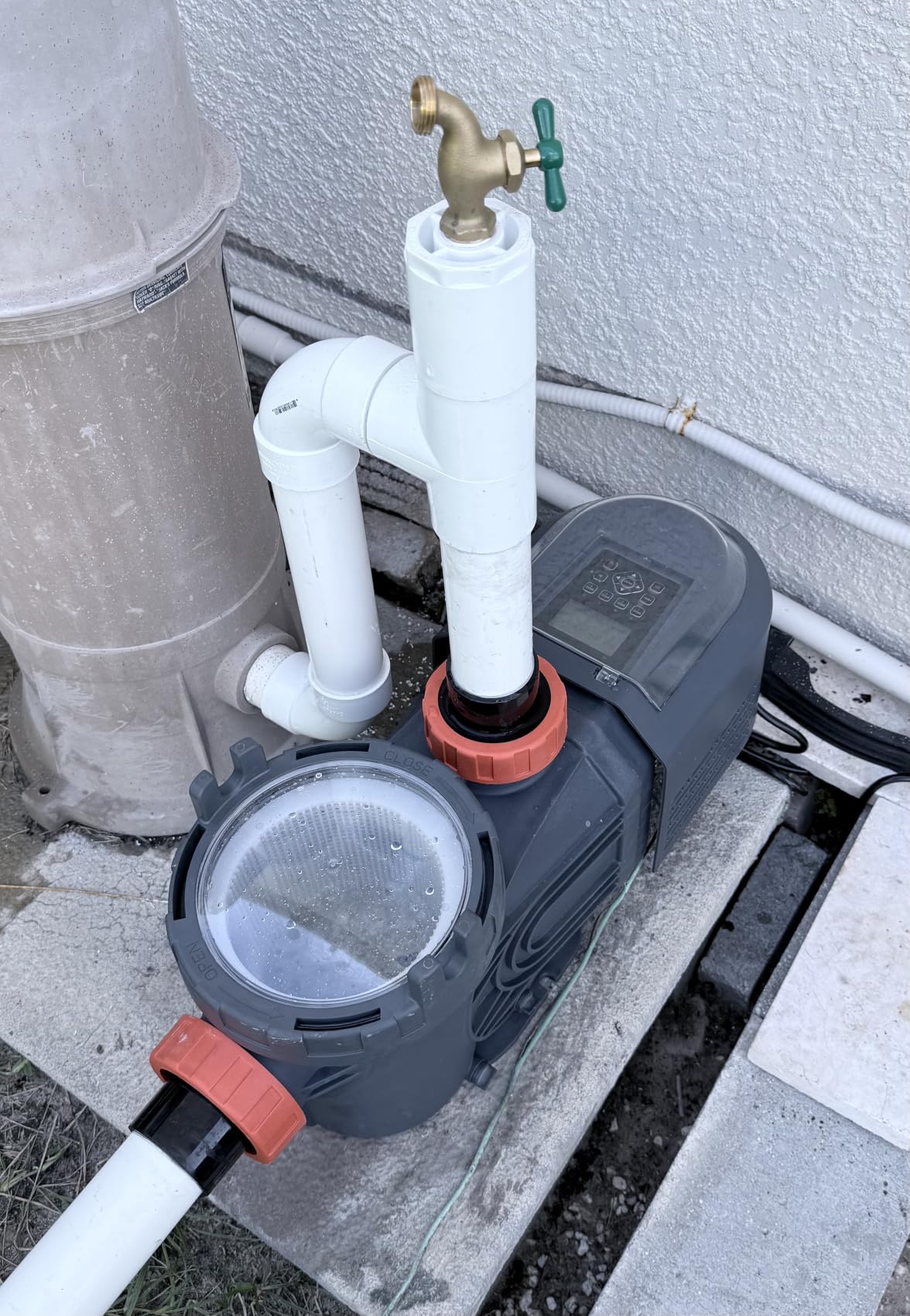
Feedback mirrors the 1.8 HP sibling. Buyers report strong value for the flow and head delivered, quiet variable-speed running, and easy installation with the included dual-port fittings. The four programmable periods inside a 24-hour cycle handle overnight filtration and daytime circulation on one schedule.
The control-panel behavior carries over, with the same requirement to cancel an active schedule before speed changes take effect. The 220-240V requirement is the real constraint here, and it is a hard one for anyone with only a 115V circuit available at the pad.
Why high head matters on a feature pool
A waterfall or fountain adds vertical lift on top of the friction losses in your plumbing. A pump that looks oversized on paper can still fall short once that elevation is added, and head is what determines whether the feature runs at full flow or a trickle.
Variable speed lets you run the waterfall at full output for a few hours and drop back to filtration speed the rest of the time, which is where the running cost savings come from.
Where it will not fit
If your electrical service offers only 115V, this model is simply not installable. Check the voltage at the pad before you measure anything else, because a 230V-only pump rules out the whole purchase.
The schedule override behavior is the same limitation as the 1.8 HP model. If frequent manual speed changes are part of your routine, this is worth thinking through first.
7. Pentair WhisperFlo VST 2.6 THP – Dual Voltage for Flexible Installs
Pentair 011533 WhisperFlo VST Variable Speed Pool Pump, 2.6 THP
2.6 total horsepower
115V / 208-230V dual voltage
2-inch connection
Pros
- Proven Pentair variable speed platform
- Dual-voltage install on either 115V or 208-230V supply
- 2.6 THP covers larger inground circulation needs
- WhisperFlo line is known for build quality in pool service
Cons
- Second-smallest review base in the group at 66 ratings
- Costs more per horsepower than the aftermarket models here
- Listings carry limited detail beyond model and electrical specs
The WhisperFlo VST 2.6 THP is the Pentair answer for pools that need more than the SuperFlo can push, particularly where a heater or a water feature is involved. Two-point-six total horsepower is a real step up, and the 2-inch connection matches typical inground plumbing without adapters.
The dual 115V and 208-230V capability is the practical headline. You can install it on either supply, which matters when the existing circuit at the pad does not match the pump you wanted. For a lot of replacements, that flexibility removes the single most expensive surprise in a pump swap.
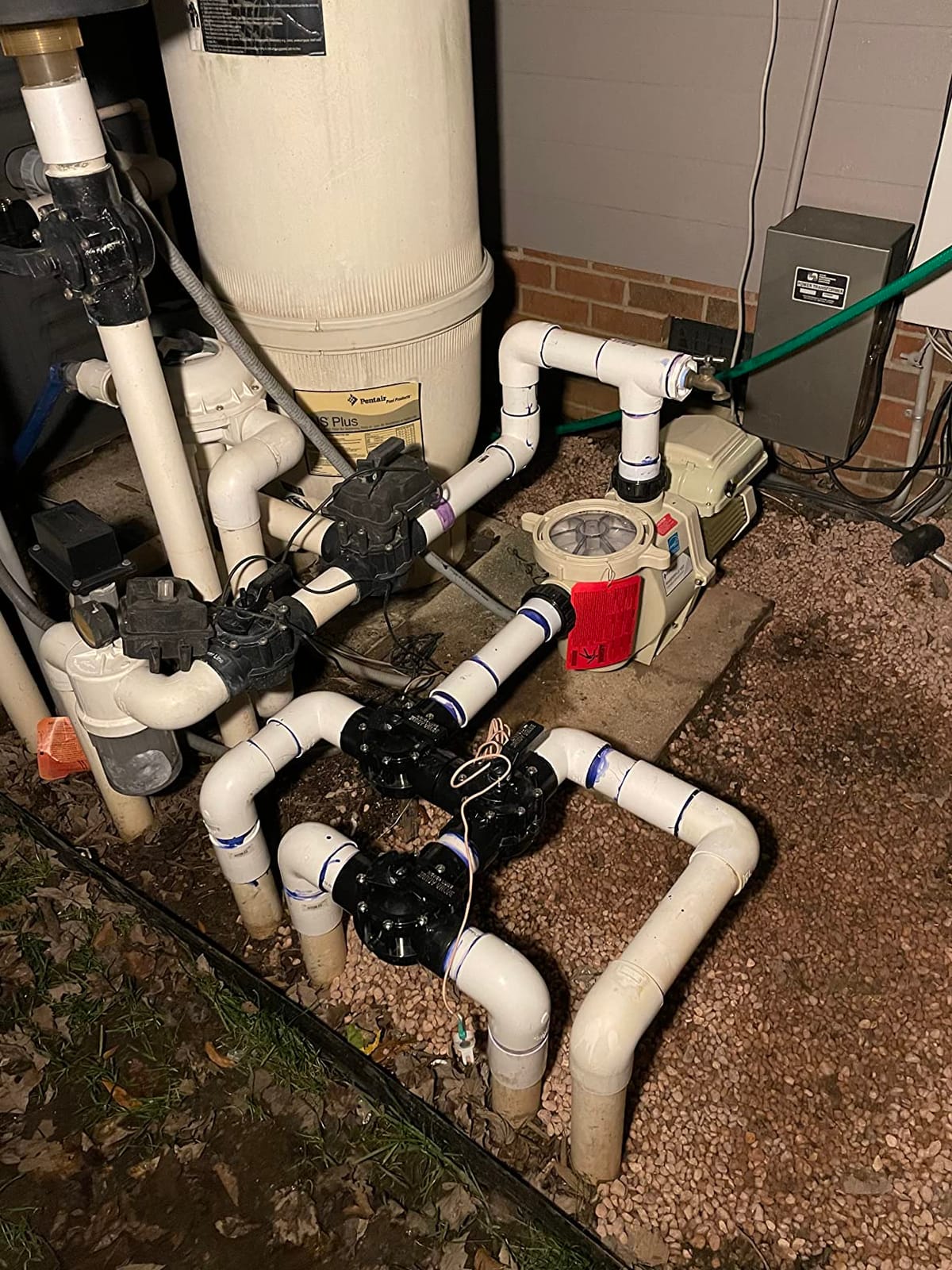
Owners who bought it cite the established Pentair WhisperFlo variable speed platform and its quiet, efficient running at 2.6 THP. The WhisperFlo line has a long service history, and parts and service familiarity matter on a pump expected to sit for a decade in a wet environment.
The honest limitation is evidence. Sixty-six ratings is the second-smallest review base in this roundup, which means long-term durability feedback is thinner than for the SuperFlo or the Hayward models. The listings also carry limited detail beyond the model number, dimensions, and electrical specs, so treat the published figures as the full picture.
Why it beats the SuperFlo for you
If your pool is large, runs a heater, or has any water feature, the 2.6 total horsepower here is the reason to spend more than the SuperFlo. The 2-inch connection keeps the plumbing side of the job simple.
Dual voltage means you do not have to re-run a circuit to get the horsepower you need, and that saving can be larger than the price gap between this and the SuperFlo.
Where the evidence runs out
With 66 ratings, you are buying on the strength of the platform and the brand rather than on a long public record of this specific model. That is a reasonable position for a Pentair, but it is a different kind of bet.
It also costs more per horsepower than the aftermarket variable speed options here. That only makes sense if the platform, warranty, and parts availability matter to you.
8. LINGXIAO 2 HP Smart Pump – The Only App-Controlled Model Here
LINGXIAO Smart Variable Speed Pool Pump 2 HP, 115/208-230V, In/Above Pool Pump With Smart Life APP Control, Energy Star Certificate, High Flow & Self Priming – (2025 New Upgrade)
2.2 THP, 135 gpm
115V and 208-230V
8100 GPH, ENERGY STAR compliant
Pros
- Only pump here with app control for schedules
- RPM
- and GPM
- Dual voltage avoids rewiring on many installations
- ENERGY STAR compliant and potentially rebate eligible
- SuperFlo-series compatible dimensions simplify replacement
- Includes 1.5 inch and 2 inch connectors
Cons
- RS485 cable for OEM control integration not included
- Smallest but one review base at 63 ratings
- Sits above the other aftermarket variable speed pumps
This is the only pump in the roundup with real app-based control, and that is a genuine difference rather than a marketing angle. The Smart Life app sets schedules, adjusts RPM, displays GPM, and includes a quick-clean mode from your phone. Nobody else here does that.
Underneath it is a 2.2 THP unit rated at 8100 GPH with 135 gpm flow, and it runs on 115V or 208-230V at 60Hz. That dual voltage is the second headline feature, because it avoids a rewire on a lot of installations that would otherwise need one.
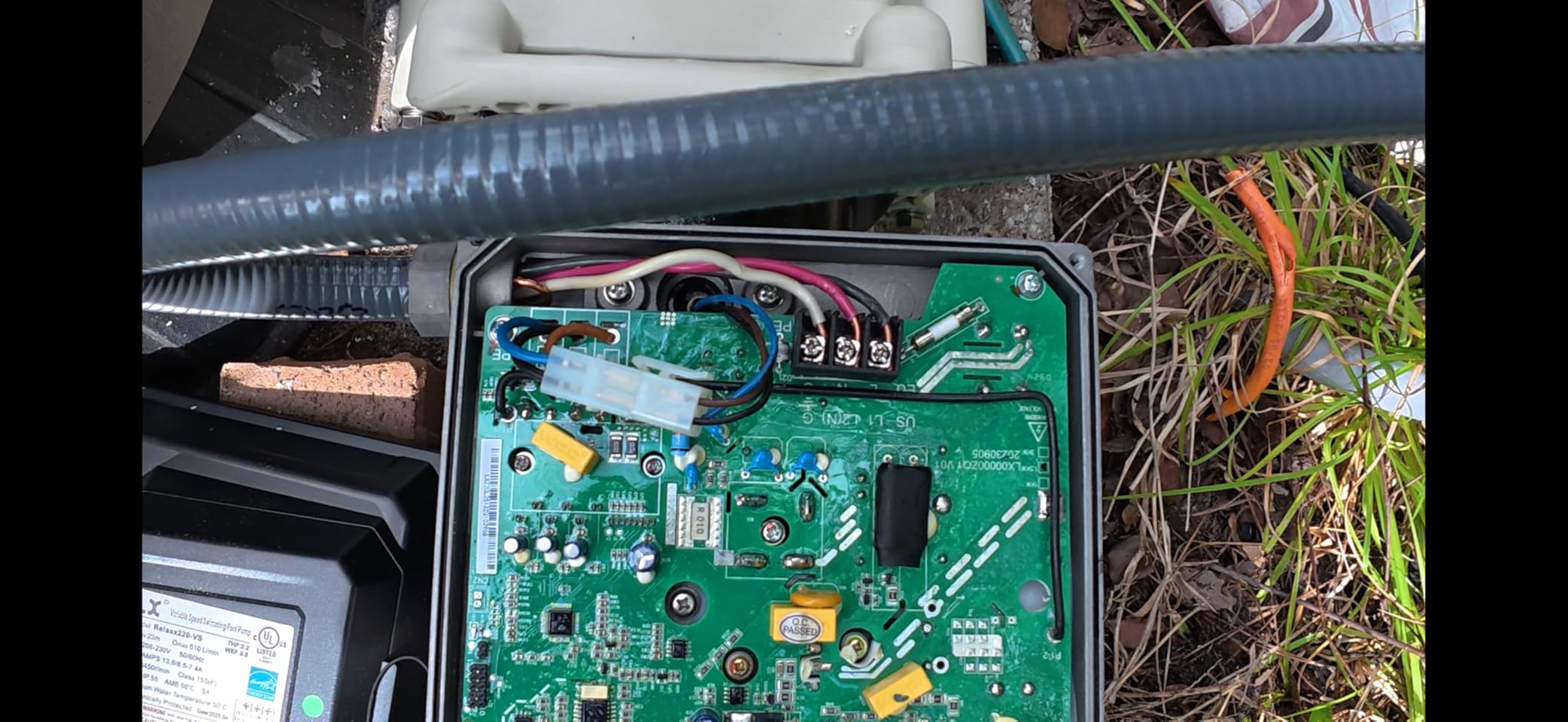
It is ENERGY STAR compliant against CEC and DOE efficiency regulations, which can make it rebate eligible depending on your utility. The installation dimensions are compatible with SuperFlo series pumps, so in many pad layouts it drops into the space a failed SuperFlo already occupied.
The most common practical caveat in the reviews is that the RS485 signal cable for connecting to an existing OEM control system is not included. You can source it separately, but budget for it if your plan is Pentair or Hayward automation. At 63 ratings, the feedback volume is also small.
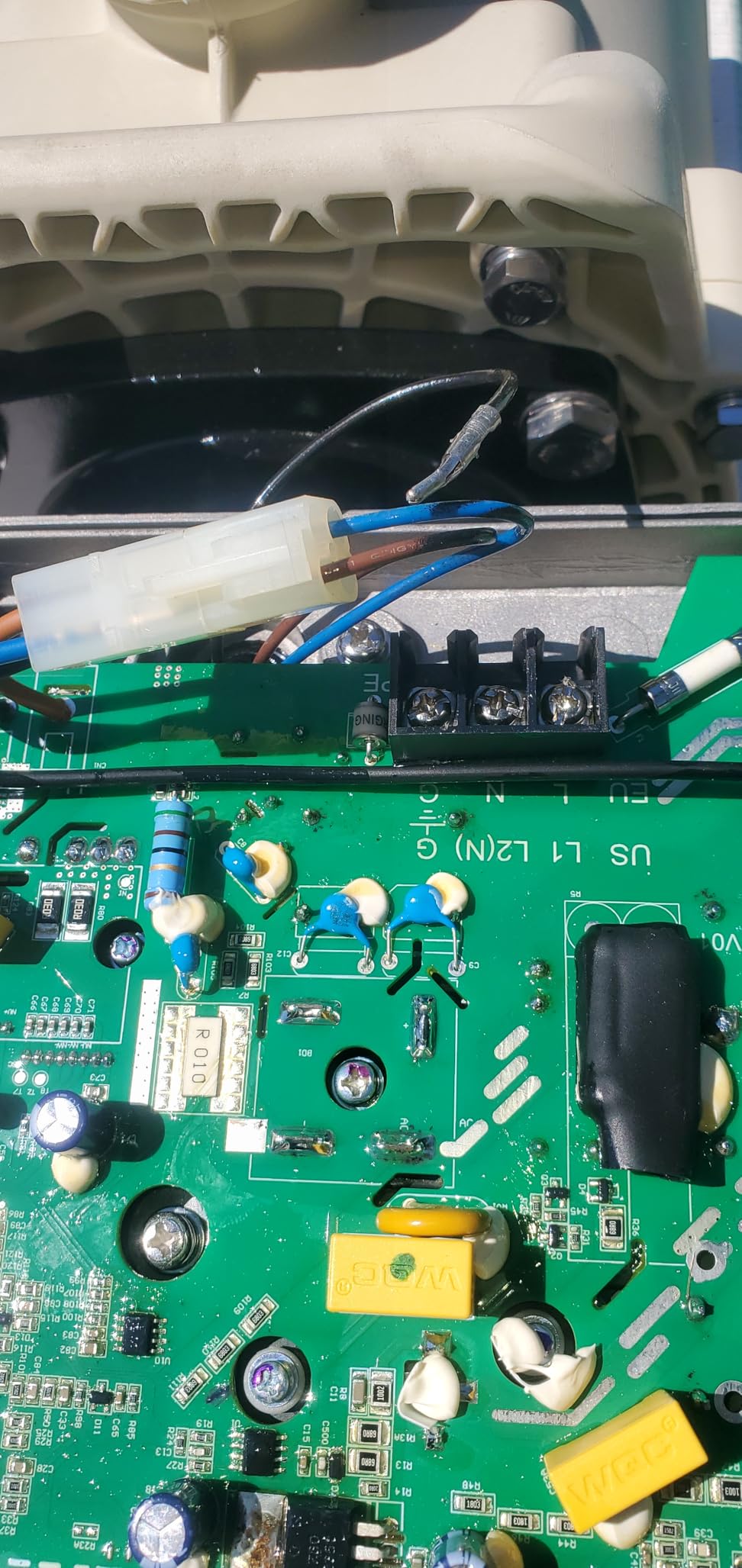
Why app control changes the routine
Setting a filtration schedule from a phone removes the mechanical timer as a weak point, and the GPM readout gives you a real flow number to compare against the estimate you sized the pump with.
Quick-clean mode from the app is useful for leaf season, when you want a short high-speed burst without walking out to the equipment pad.
Where the smart features stop
App control does not equal OEM automation. Without the RS485 cable, this pump runs on its own schedule rather than taking commands from your existing control panel.
It also costs more than the other aftermarket variable speed pumps here, so the premium buys the app rather than additional hydraulic capability.
9. Pentair IntelliFlo VS+SVRS 3HP – Entrapment Protection Built In
Pentair EC-011057 – IntelliFlo VS+SVRS Variable Speed Pool Pump 3HP
3 HP, 230V
Safety Vacuum Release System, VGB compliant
On-board control, 52 lb
Pros
- Built-in Safety Vacuum Release System for entrapment protection
- Cam and ramp lid makes basket inspection and cleaning straightforward
- Programmable speeds with on-board controls and no separate panel
- ENERGY STAR certified
- Considerably cheaper than the same pump through a maintenance company
Cons
- Lowest average rating in the group with a meaningful one-star share
- Multiple reports of failures shortly after the 90-day warranty window
- Some owners report a persistent alarm that shuts the pump down after start
- Documentation is thin on third-party automation hookups
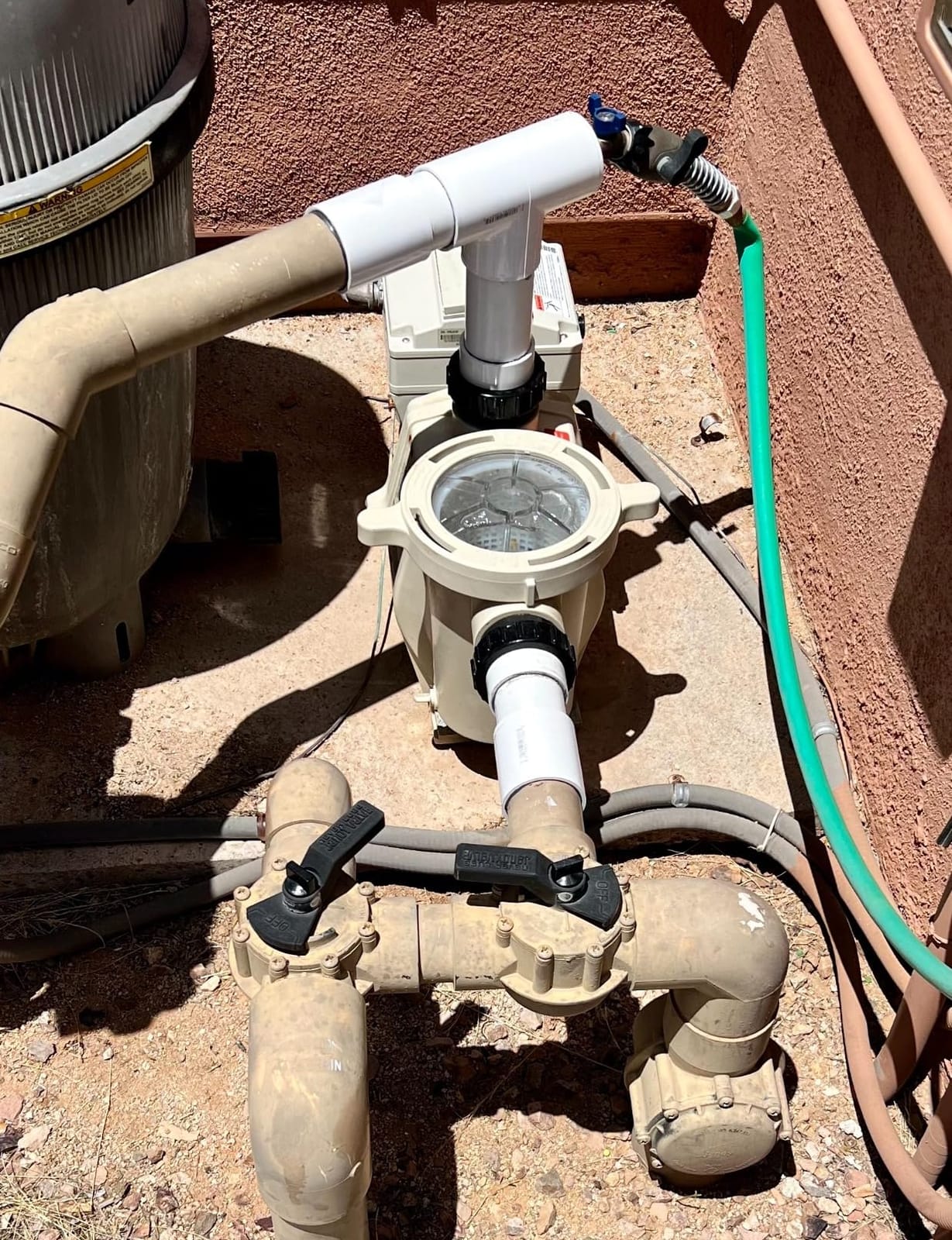
The IntelliFlo VS+SVRS 3HP is the pump people recommend most often in pool owner forums, and the reason is not subtle: r/pools users describe it as easy to set up, quiet, low on power draw, with a deep pump basket. One forum thread put it plainly, recommending the 3 HP IntelliFlo with the note that you will not regret it.
The distinguishing feature is the Safety Vacuum Release System. It adds entrapment protection, which matters in any pool where a drain grate could draw a suction vortex. The cam and ramp lid also makes basket inspection and cleaning far easier than lifting a screw-top lid with wet hands.
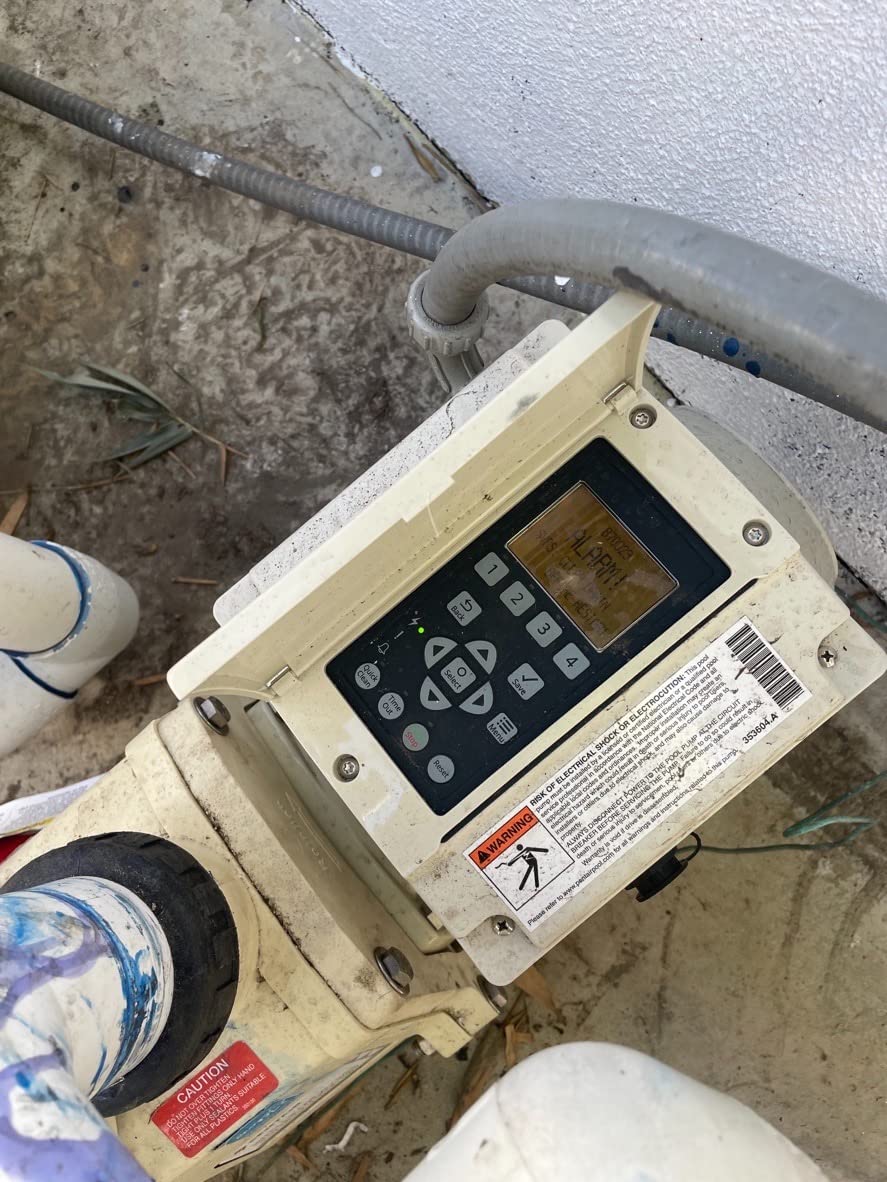
Programmable speeds run from the on-board control system, so there is no separate panel to mount or wire. It is ENERGY STAR certified and VGB compliant, and at 52 pounds it is a substantial but manageable unit for a full-size installation.
Durability is where the reviews divide. Multiple owners report units failing shortly after the 90-day warranty window, and some report a persistent alarm that shuts the pump down minutes after start. The 4.2 average is the lowest in the roundup, with a 71 percent five-star share and an 11 percent one-star share.
Why the forum crowd picks it
Setup simplicity, low draw, and a deep basket are the three things owners repeat. The on-board control means fewer failure points in the control circuit and no extra box in the equipment pad.
Owners also note it costs considerably less buying this pump directly than going through a pool maintenance company, which is a real difference on a 3 HP unit.
Where the risk sits
Failures reported just past the 90-day window are the single most cited negative, and warranty support in that period is a genuine frustration. Buy it with a plan, not just a budget.
Documentation also offers little guidance on integrating with third-party automation such as Hayward systems. If you run an existing control panel, verify compatibility before you order.
10. Hayward TriStar VS 2.7 HP – Top End Horsepower for Large Pools
Hayward TriStar VS Variable Speed Pool Pump for In-Ground Pools, 2.7 HP
2.7 HP, 230V
Upgraded motor drive, quieter high speed
Dual voltage, 24-hour clock, 66 lb
Pros
- Top-end horsepower for large pools
- heaters
- and water features
- Upgraded motor drive makes high-speed running notably quieter
- Dual voltage installs on new or existing pads without rewiring
- Permanent magnet TEFC motor
- Integrated digital interface with 24-hour clock
Cons
- Costs more than any other model in the roundup
- Heaviest unit here at 66 pounds
- Listed dimensions are incomplete for space planning
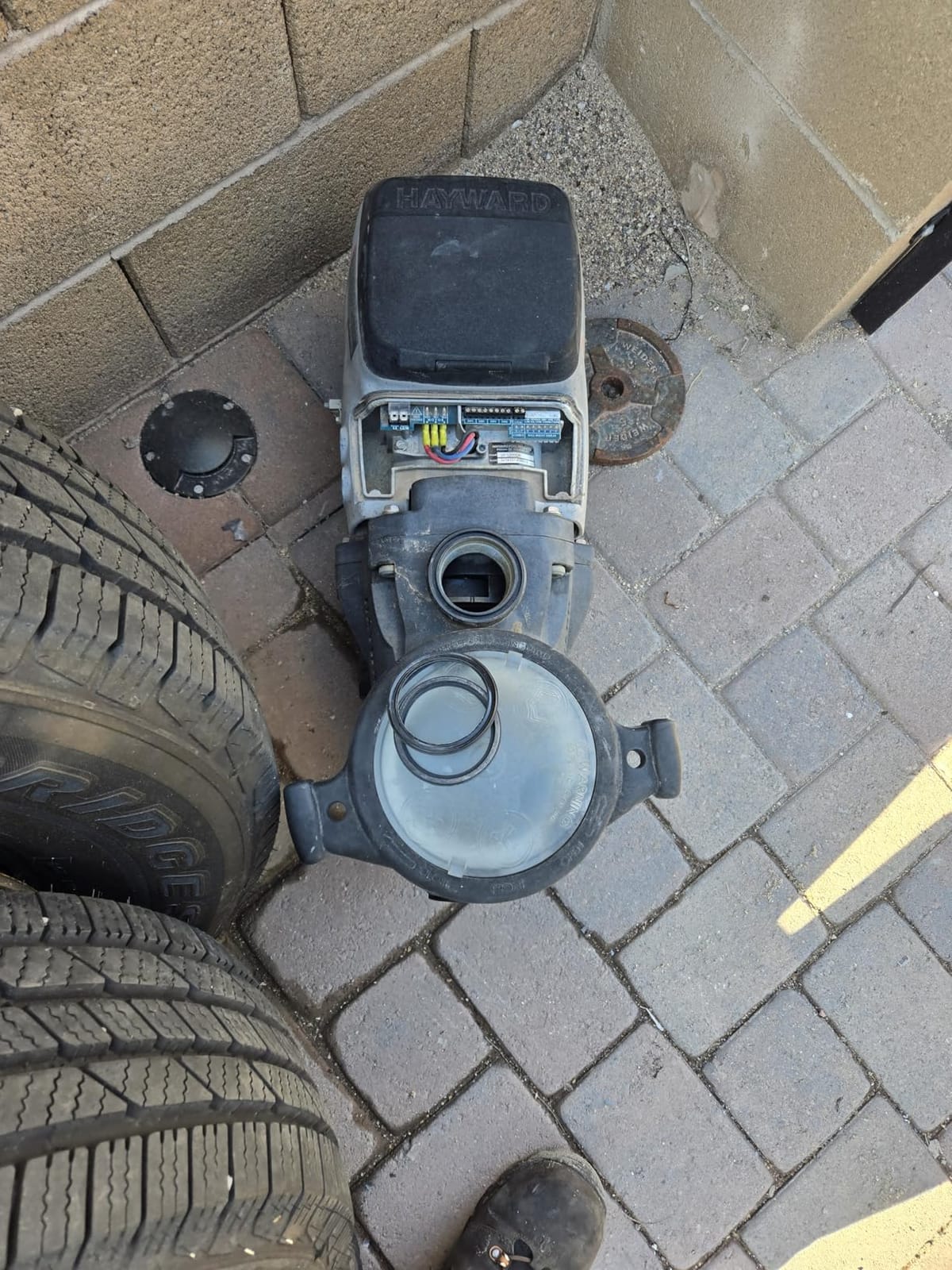
The 2.7 HP TriStar VS is the premium large-pool option, and owners treat it that way. It is the pump to consider when a heater, a spa spillway, or a long plumbing run makes the stock 1.5 or 2 HP choices feel marginal.
The upgraded motor drive is the headline. Owners consistently single it out as noticeably quieter at high speed than competing models, which is the honest weak point of many variable speed pumps. Dual-voltage installation lets it go onto a new or existing pad without a costly rewire, and the integrated digital interface with a 24-hour clock handles scheduling without a separate panel.
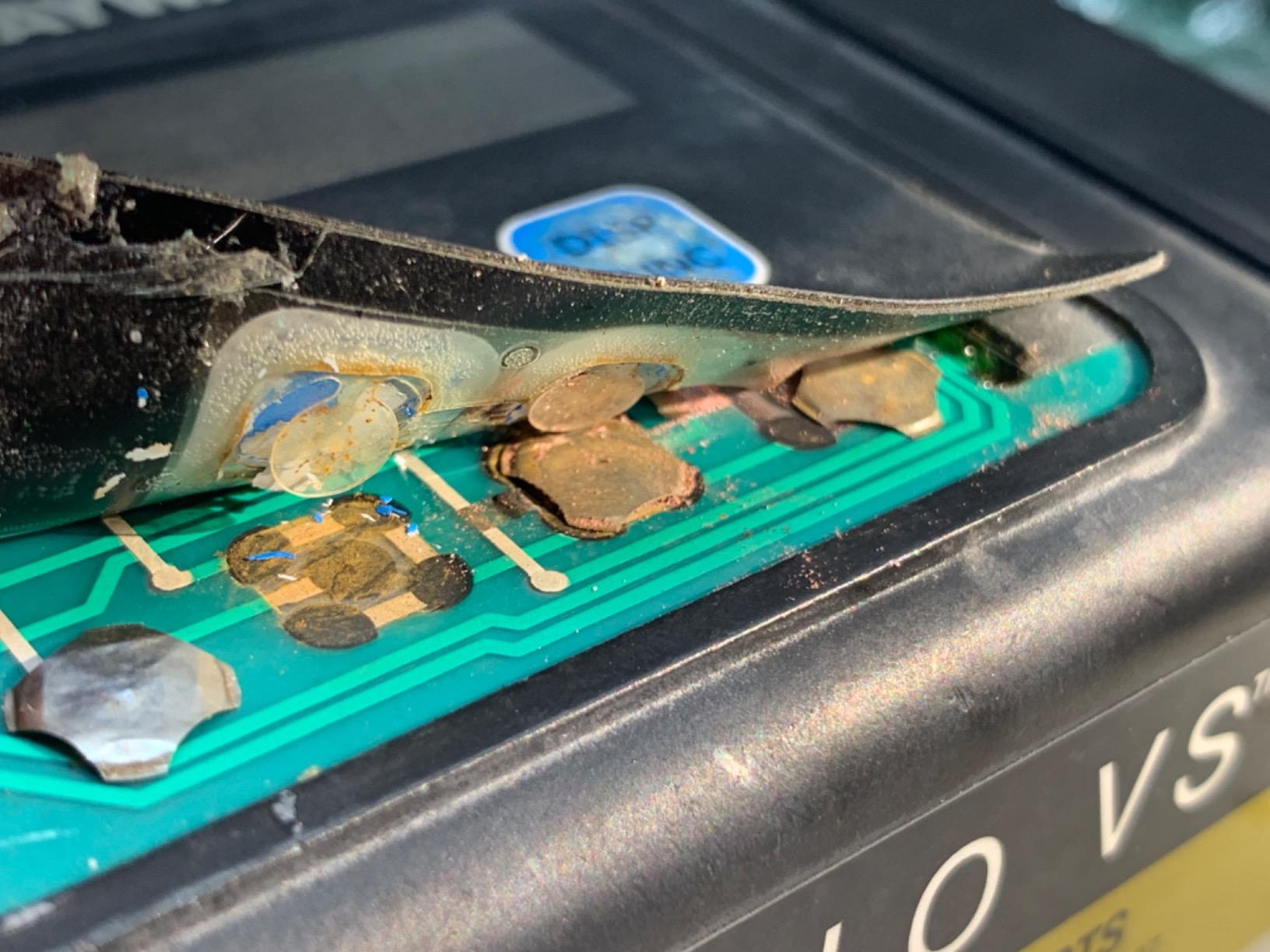
The permanent magnet TEFC motor covers the efficiency side. The trade-offs owners name are straightforward: this is the most expensive pump in the roundup, and at 66 pounds it is the heaviest, which makes handling and pad placement more demanding than anything else here.
The listed dimensions are also incomplete at 15.7 inches wide by 14 inches high, so measure your pad clearance before ordering rather than assuming it matches the smaller TriStar.
Why large pools need this class
Head and flow requirements rise with pool volume, plumbing length, and any feature that adds vertical lift. Two-point-seven horsepower covers those setups with margin while staying in a standard 230V install.
The quieter high-speed drive matters most for pools that run a heater or a feature, where you need full RPM for a few hours a day without the whole yard hearing it.
Where the size and cost get in the way
Sixty-six pounds is a two-person lift on a wet, slippery pad. If you are working alone, budget for that before the pump arrives.
The cost of this model is the highest in the group, and it only makes sense if you genuinely need the headroom. Plenty of large pools are well served by a smaller pump run at a higher setting.
How to Size a Variable Speed Pool Pump for Your Inground Pool
Size the pump by total horsepower, not the number on the box. THP is the usable output measured against the pump’s efficiency curve, while the nameplate horsepower is what the motor was built to draw. The two numbers are rarely the same, which is why two pumps with the same stated horsepower can move very different amounts of water.
Start with turnover. Most residential pools are sized to turn the entire volume over once per eight hours for filtration, and once or twice per day for complete turnover. A rough rule from the Home Depot Q&A that circulates widely: a 1.5 HP pump is typically suitable for pools in the 20,000 to 30,000 gallon range, and pools around 30,000 gallons can also run a 2 HP pump.
Then add head for your situation. Every 10 feet of vertical lift cuts available flow. A pool on a slope, a solar heating loop, or a waterfall all raise the head requirement, and head is the number most often ignored in an online purchase.
Finally, measure the actual plumbing. This is the factor no competitor roundup we found covers properly, and it changes the answer more often than people expect. A 1.5 inch line running long enough will choke a 2 HP pump, which then runs hot, draws extra power, and wears the motor out faster.
115V vs 230V and 1.5 Inch vs 2 Inch Plumbing
Voltage is the decision people get most anxious about, and most of that anxiety is avoidable. A 230V pump needs a dedicated 20-amp circuit and a two-pole breaker. A 115V pump runs off a 20-amp circuit shared the way household circuits already work.
If you already have a 230V circuit at the pad, which most inground pools from the last few decades do, buy 230V. If you do not, adding the circuit is a licensed electrician job and can cost more than the pump.
The dual-voltage models here, the Pentair SuperFlo VS, the Pentair WhisperFlo VST, and the LINGXIAO Smart Pump, remove that decision entirely. They install on either supply, which is why the SuperFlo’s universal 115V-230V input shows up in nearly every owner review we read.
On plumbing, 2 inch lines let a higher horsepower pump actually deliver its rated flow. If your existing lines are 1.5 inch, either size down your pump expectation or plan to replumb. The Aquastrong, VARMINPOOL 3.0 HP, and LINGXIAO pumps all ship with dual 1.5 inch and 2 inch fittings, which removes one step from the job.
When we talk about a mechanical timer still working, the short answer is that most variable speed pumps use their own 24-hour digital clock, so you can leave the old timer in place. The same forum thread you will see in every pool group sums up the brand question honestly: Pentair, Hayward, and Jandy are the big three and all make good pumps, and you generally get what you pay for over the long run.
What Variable Speed Actually Changes: VFD and ECM in Plain Language
An old single-speed pump has one speed and one flow rate. A two-speed pump has two. A variable speed pump has thousands, which is why it can match flow to the job instead of running the pool the way it was sized to run on day one.
Two technologies do the work. An ECM motor, or electronically commutated motor, uses permanent magnets instead of field windings and holds a position through electronic commutation rather than physical brushes. A VFD, or variable frequency drive, is the electronics that vary the electrical frequency feeding the motor, which is what changes its speed.
Most of the pumps in this roundup, including the Pentair, Hayward, and aftermarket inverter models, use a permanent magnet motor with a variable frequency drive. In plain terms, the pump has no fixed gear ratio at all. It simply runs as fast or as slowly as the electronics tell it to, and it reports the watts it is using while it does.
Head height is the resistance the pump pushes against, and GPM is what it delivers past that resistance. Those two numbers together are the pump’s real performance, which is why a nameplate horsepower on the box tells you much less than the flow figure does.
Sensorless flow control is the feature to look for if you want the pump to adjust itself. Instead of you setting a speed, the pump estimates flow and throttles automatically. The LINGXIAO model reports GPM directly through its app, which is the closest thing to that in this group.
Speed Settings and Run Schedules for Inground Pools
No editorial roundup we found publishes a schedule, and it is the most repeated question in the pool forums. Here is the one we run. The principle is simple: give the pump enough hours at low speed to do the filtration, and save high speed for the jobs that need flow.
Run low speed, roughly 1200 to 1800 RPM, for eight to twelve hours a day on a standard pool. That is the filtration setting and it is where the energy savings come from. Over a full day, low-speed turnover moves more water through the filter for far less electricity than short full-speed bursts.
Use mid speed, roughly 2000 to 2500 RPM, for daytime circulation when nobody is swimming and the pool is in heavy leaf season. Raise it to full speed only for vacuuming, for heating, for running a water feature, or for a shock treatment that needs circulation.
If you have a salt chlorine generator, match the low-speed setting to its minimum flow requirement or the generator will not produce chlorine properly. Owners who pair variable speed pumps with salt systems on Trouble Free Pool specifically recommend matching an IntelliFlo to an IntelliChlor IC40 plus IntelliConnect when automation is the goal, because the three talk to each other.
Two habits make the difference. Splitting the schedule into two or three blocks across the day usually clears water better than one long block, and leaving the pump running overnight at low speed costs very little and keeps the water moving while the pool is closed.
If you are pairing a new pump with a new filter, size both to the same flow target rather than buying them independently. Our pool vacuum guide covers the suction side if your filter setup is being reworked at the same time.
When a Variable Speed Pool Pump Is Not Worth It
Small above-ground pools are the clearest case. If the pool holds a few thousand gallons, the absolute wattage difference between a full-speed and a low-speed pump is not enough to repay the cost of the upgrade.
A second case is a 115V-only circuit where installing 230V means hiring an electrician. If the electrical work costs more than the premium between a single-speed and a variable speed pump, the arithmetic does not work.
A third case is a working old pump. Replacing a functioning unit purely on principle is defensible if it is close to failure, but if the motor is sound and your single-speed pump is a high-efficiency model, you are buying a feature set you will not use.
Heating is worth a mention here. If you plan to add a pool heater later, a variable speed pump that can run at high RPM on demand becomes far more valuable. We have covered the basics in our pool heater guide if that is on your list.
Frequently Asked Questions
Are variable speed pool pumps worth it?
For most inground pools of 15,000 gallons or more, yes. A variable speed pump run at low RPM for eight to twelve hours a day moves the same water as short full-speed bursts, using a fraction of the electricity. You also get much quieter overnight running and better filtration. The payback is fastest on older single-speed pumps that currently run 12 to 16 hours a day at full power.
What size pool pump do I need for a 25,000 gallon pool?
For a standard 25,000 gallon inground pool with typical plumbing and no major water features, a 1.5 to 2.0 total horsepower variable speed pump is the usual range. Add head if the pool sits on a slope, runs a heater, feeds a waterfall, or uses a solar loop. Judge sizing on total horsepower and gallons per minute at head height, not the nameplate number on the box.
Which pool pump brand is better, Pentair or Hayward?
Both are major manufacturers with proven variable speed platforms and strong parts availability. Pentair models lead on review volume and automation integration, while Hayward models frequently lead on quiet high-speed operation and deep strainer baskets. The r/pools consensus is that both are good pumps and that you generally get what you pay for over the long run. Choose based on your existing control panel and salt generator brand rather than the badge.
Which variable speed pool pump is the most reliable?
Reliability is best judged by review volume, since long-term durability data takes years to accumulate. The Pentair SuperFlo VS 342001 has by far the deepest review history in our roundup at more than 1,800 ratings, and major brands are widely reported to last 8 to 10 years against 1 to 2 years for unbranded budget pumps. The Hayward TriStar VS 1.85 HP carries the highest average rating of any model we reviewed.
What are the disadvantages of variable speed pumps?
The main drawbacks are the higher purchase cost, a required 20-amp dedicated circuit on 230V models, and the learning curve on the control panel. Some legacy control panels are not compatible without re-wiring and a discontinued data cable. Certain models also apply a manufacturer warranty only when a qualified installer does the work. A few pumps also produce a higher-pitched whine at full speed than the older pump they replace.
Can I replace a single speed pump with a variable speed pump?
Yes, in most inground installations. Check three things first: the voltage at the pad, the diameter of the existing plumbing, and the horsepower you actually need for your gallons and head height. Many existing pools already have a 230V 20-amp circuit in place, and most variable speed pumps use their own 24-hour digital clock, so a mechanical timer can usually stay. Confirm compatibility with your existing control panel before ordering.
Conclusion
The best variable speed pool pumps for inground pools come down to what your pad can actually support. The Pentair SuperFlo VS 342001 is the pick we would install first, with 1,836 ratings, three simple speeds, universal voltage, and the deepest owner evidence base in the group. The Hayward TriStar VS 1.85 HP takes the crown for customer satisfaction, and the Hayward MaxFlo VS is the efficiency-led alternative.
If your budget is the deciding factor, the Aquastrong 2 HP and the VARMINPOOL 1.8 HP both deliver real variable speed behaviour with warranty support that is rare at that level. The LINGXIAO model is the one to look at if you want control from your phone. Check your voltage and plumbing diameter first, pick a run schedule you will actually follow, and you will get more out of any of these than you would from the single-speed pump you are replacing.