
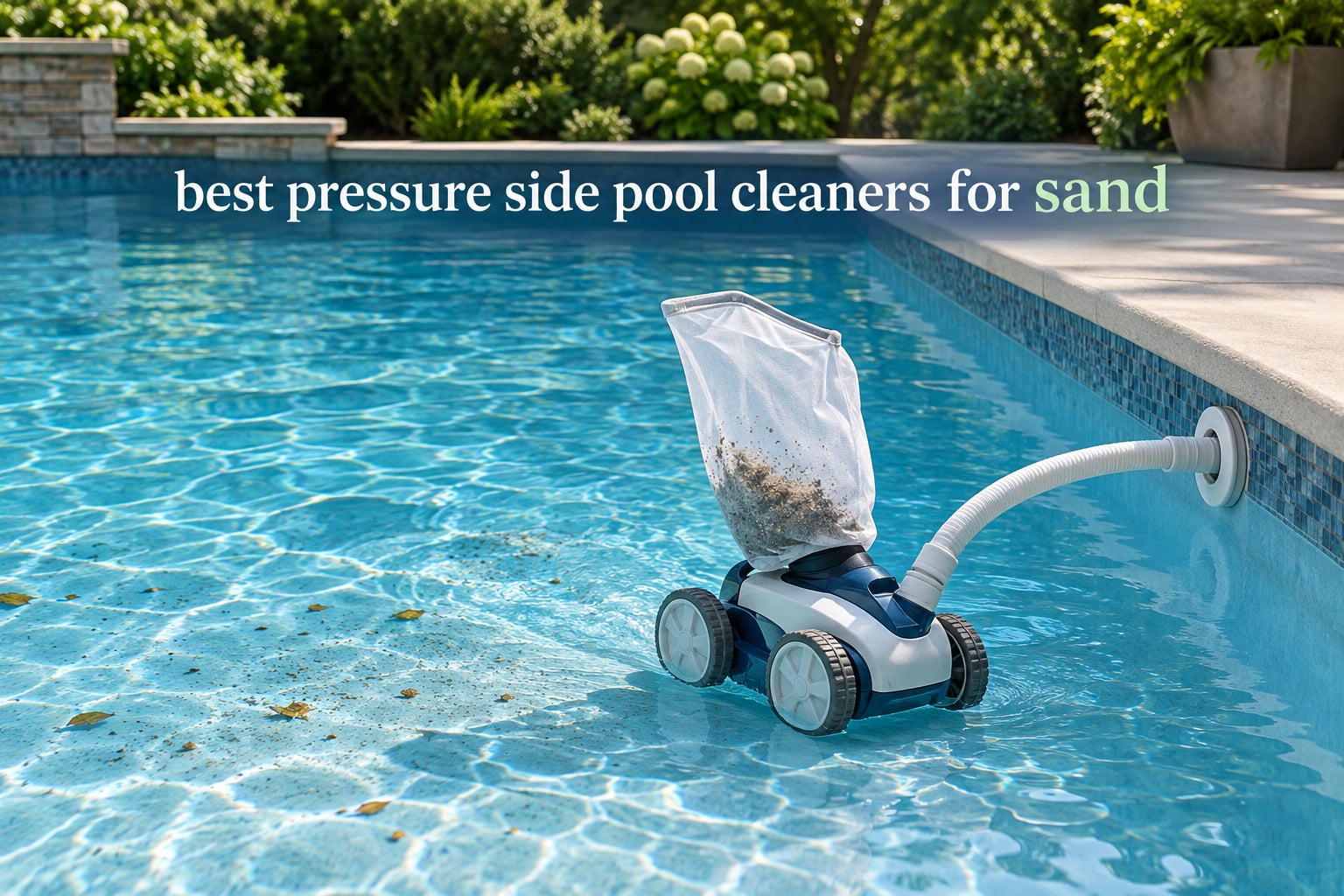
Pressure side pool cleaners handle leaves, grit and coarse debris well. They are not, by default, good at sand. A standard debris bag is woven from roughly 100 to 180 micron material, and most pool sand falls straight through that mesh and back into the water you just cleaned. The model you pick, and what you fit inside the bag, decide whether the sand stays in the bag or recirculates for another week.
That is why the best pressure side pool cleaners for sand are not simply the highest rated units on the shelf. We looked at six in-ground cleaners that are actually available now, and we ranked them against the one job that matters here: how much sand physically ends up in the bag on a dirty-bottom pool. We also flagged the honest weak spots, including the two units in this group that were never really built for the job.
This guide is updated for 2026. We read the manufacturer specifications, the specification sheets and the owner review patterns for each cleaner, then cross-checked them against what people report on r/pools and TroubleFreePool, where model-level advice is far more specific than anything you will find on a retail listing. Prices change constantly, so we have left them out and pointed every pick at a current price check instead. If you are still deciding between a robot and a pressure-side unit, read our robotic pool cleaner roundup for in-ground pools first, because the honest answer changes once you have sand in the water.
Table of Contents
Top 3 Best Pressure Side Pool Cleaners for Sand Pools in October

Polaris Vac-Sweep 280
- Dual venturi jets
- 2.25 inch inlet
- Single-chamber bag
- Needs booster pump

MAKHOON Pressure Side Sweeper
- Four-wheel chassis
- Adjustable jet direction
- 1.5 inch booster inlet
- 4 bar pressure
Best Pressure Side Pool Cleaners for Sand Pools in 2026
The table below ranks every cleaner we covered. Read the bag column first, because on a sand pool the bag decides the outcome more than the jet count does.
| Product | Specifications | Action |
|---|---|---|
| Polaris Vac-Sweep 280 |
|
Check Latest Price |
 Polaris Vac-Sweep 380 Polaris Vac-Sweep 380 |
|
Check Latest Price |
 Pentair Kreepy Krauly Kruiser Pentair Kreepy Krauly Kruiser |
|
Check Latest Price |
| MAKHOON Pressure Side Sweeper |
|
Check Latest Price |
 Polaris Vac-Sweep P39 Polaris Vac-Sweep P39 |
|
Check Latest Price |
 Pentair Kreepy Krauly Platinum Pentair Kreepy Krauly Platinum |
|
Check Latest Price |
1. Polaris Vac-Sweep 280 Pressure-Side In-ground Pool Cleaner – The Proven All-Rounder
Polaris Vac-Sweep 280 Pressure-Side In-ground Pool Cleaner
Dual venturi jets
2.25 inch inlet
Single-chamber bag
6.2 pounds
Pros
- Highest review count in the category at 5452 ratings
- Proven 3-hour or faster coverage on in-ground pools
- Large 2.25 inch inlet lifts big debris as well as grit
- Works on vinyl fiberglass gunite pebble and tile
- 31 foot feed hose included
Cons
- Booster pump sold separately
- Single-chamber bag fills fast on sand-heavy pools
- Occasionally needs repositioning in tight corners
This is the unit most people end up owning, and for a sand pool that is not a bad place to start. At 5452 ratings and a 4.3 average it has by far the largest review base of anything we covered, which means the failure modes are well documented and the parts are easy to find. Owners consistently report cleaning a typical in-ground pool in three hours or less once the booster pump is running.
The two venturi jets and a 2.25 inch inlet do the work. That inlet is worth pausing on, because grit clumps and small gravel that would stop a finer throat still get drawn in. The machine weighs 6.2 pounds and measures 23 by 20 by 10 inches, so it is genuinely portable between a storage rack and the pool deck.
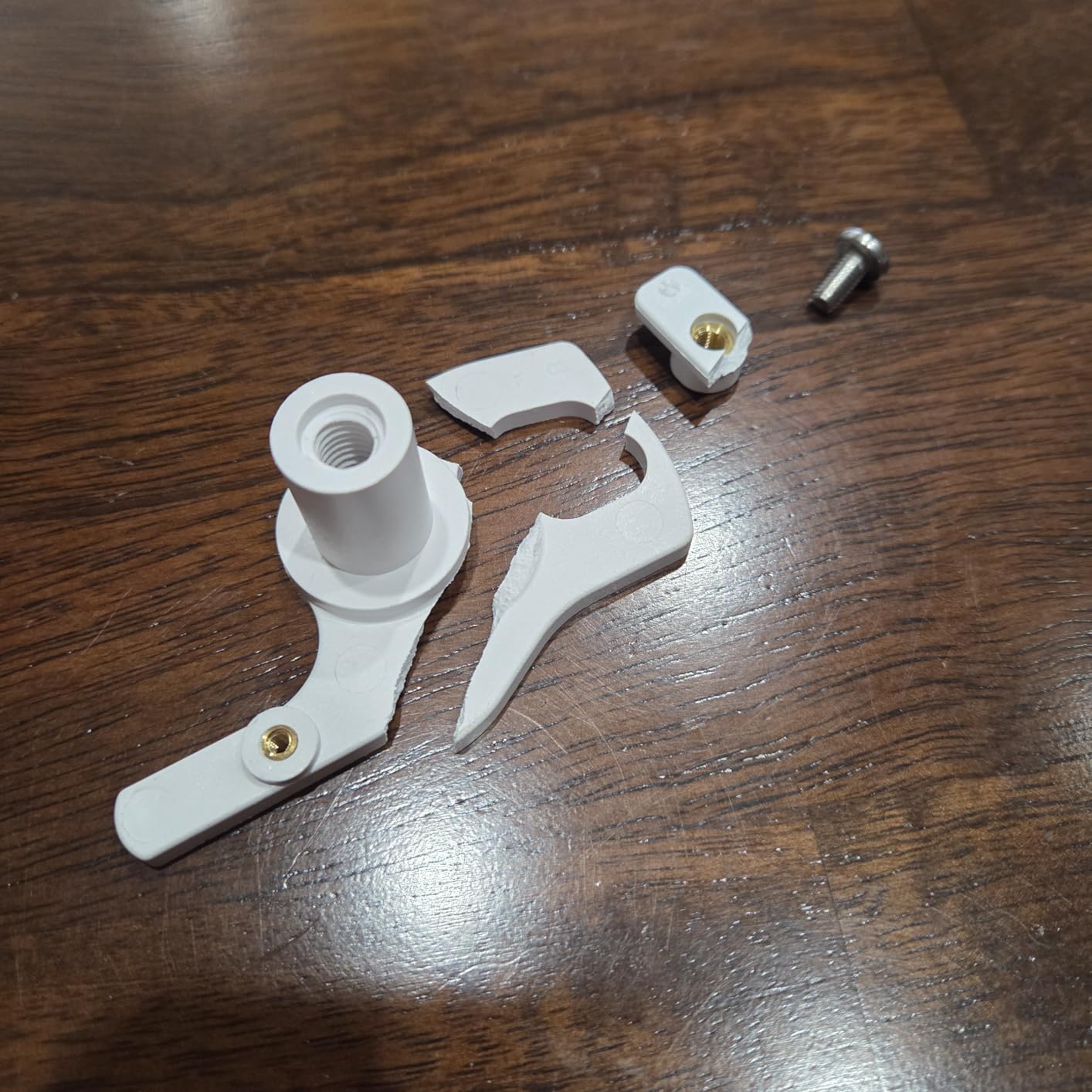
On sand specifically, the 280’s limitation is the bag, not the suction. It comes with a single-chamber filter bag that the manufacturer rates for small and large debris, leaves, acorns and pebbles. Fine sand still needs the sand and silt bag, and the knee-high liner trick works if you want more. Because it is a single chamber, it fills faster than the dual-chamber designs, so plan on more than one empty per clean on a windblown yard.
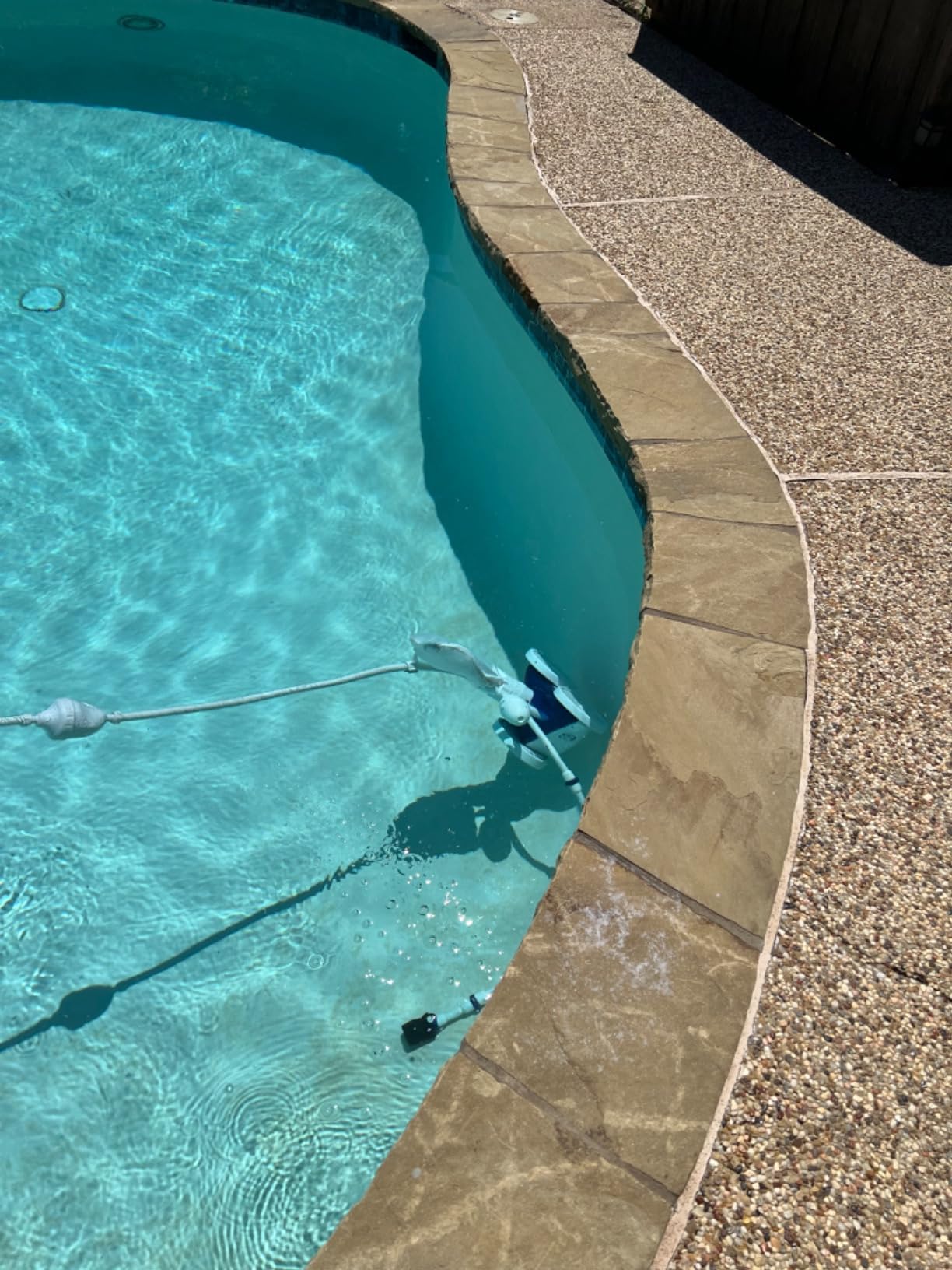
Forum consensus adds a second caution. Owners on r/pools report the 280 tangling frequently enough to shorten cycles and force retrieval, and one owner with a well-set-up 280 described needing circulation more than debris pickup. That is a coverage problem, not a sand problem, but it changes how you should schedule the unit.
Where the 280 works well on a sand pool
It is the safest choice when the sand is coarse grit rather than powder. A dirt-heavy yard, a construction-adjacent property, or a pool that collects windblown soil after every dry week is exactly the workload the 2.25 inch inlet and venturi throat were sized for. The single moving part simplicity and the 31 foot hose also make it the easiest unit to service repeatedly, which matters when you are emptying the bag twice a day.
It also suits anyone who already has booster plumbing and just needs a dependable body to put on it. Nothing in the design is fragile, and the low unit weight means you are not wrestling it out of a deep end by hand.
Where the 280 disappoints
It will not rescue fine silt with the bag it comes with. Expect a pool that looks dirty again in a day or two if you skip the fine-weave bag, because the sand simply cycles back into the water. The single-chamber capacity also makes it the wrong pick for pools with heavy tree cover, where bag changes interrupt the cycle.
If your priority is an unattended run without tangles, this is the model people most often complain about on that front, and the two-trip-a-day style coverage you get from a robot is the alternative worth weighing.
2. Polaris Vac-Sweep 380 Pressure Side Pool Cleaner – More Jets, Same Bag Idea
Polaris Vac-Sweep 380 Pressure Side Pool Cleaner, Triple Jet Powered
Triple venturi jets
2.25 inch inlet
Single-chamber bag
31 foot hose
Pros
- Triple venturi jets give noticeably stronger pickup than the 280
- Self-propelled movement handles floor to wall transitions smoothly
- Works across vinyl fiberglass gunite pebble and tile
- User-installed setup with hose included
Cons
- Booster pump sold separately
- 13 percent of ratings are one-star with stalling reports
- Single-chamber capacity is modest next to dual-bag models
The 380 is the 280 with a third venturi jet, and on a sand pool that extra flow is the entire argument. Owners credit it with exceptional vacuum power and floor-to-wall coverage in three hours or less, and the self-propelled movement changes direction more smoothly than the two-jet model. If the sand is heavier, wetter, or clumped, the extra flow is the difference between a grit film that lifts and one that stays.
It measures 9.75 by 20 by 22.5 inches, carries a 31 foot feed hose, and is described as user installed, so the extra plumbing is on you either way. Like the 280, the inlet is 2.25 inches and the surface list covers vinyl, fiberglass, gunite, pebble and tile.
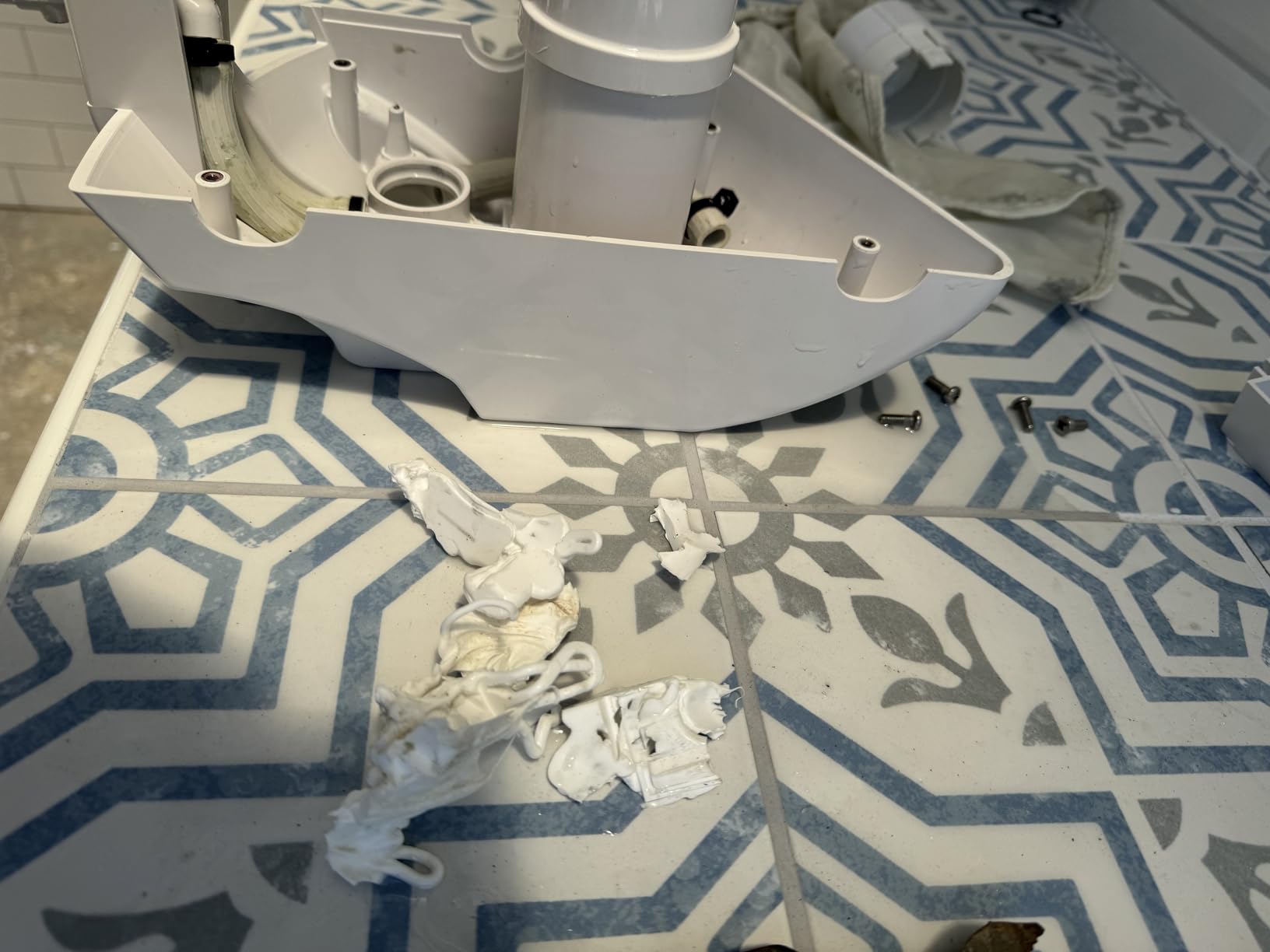
Where it loses ground against the 280 is the review profile. At a 4.1 average across 1069 ratings, 13 percent of reviews are one star, and the recurring complaint is units stalling or needing a manual nudge to change direction. A 66 percent five-star share is still solid, but the tail is thicker than the 280’s.
The bag situation is the same story as the 280: single chamber, sized for leaves, acorns and pebbles, and needing the sand and silt replacement for powder. Since the flow is stronger, it also pulls more debris into that same modest capacity, so on a sand-heavy bottom you can exhaust it sooner.
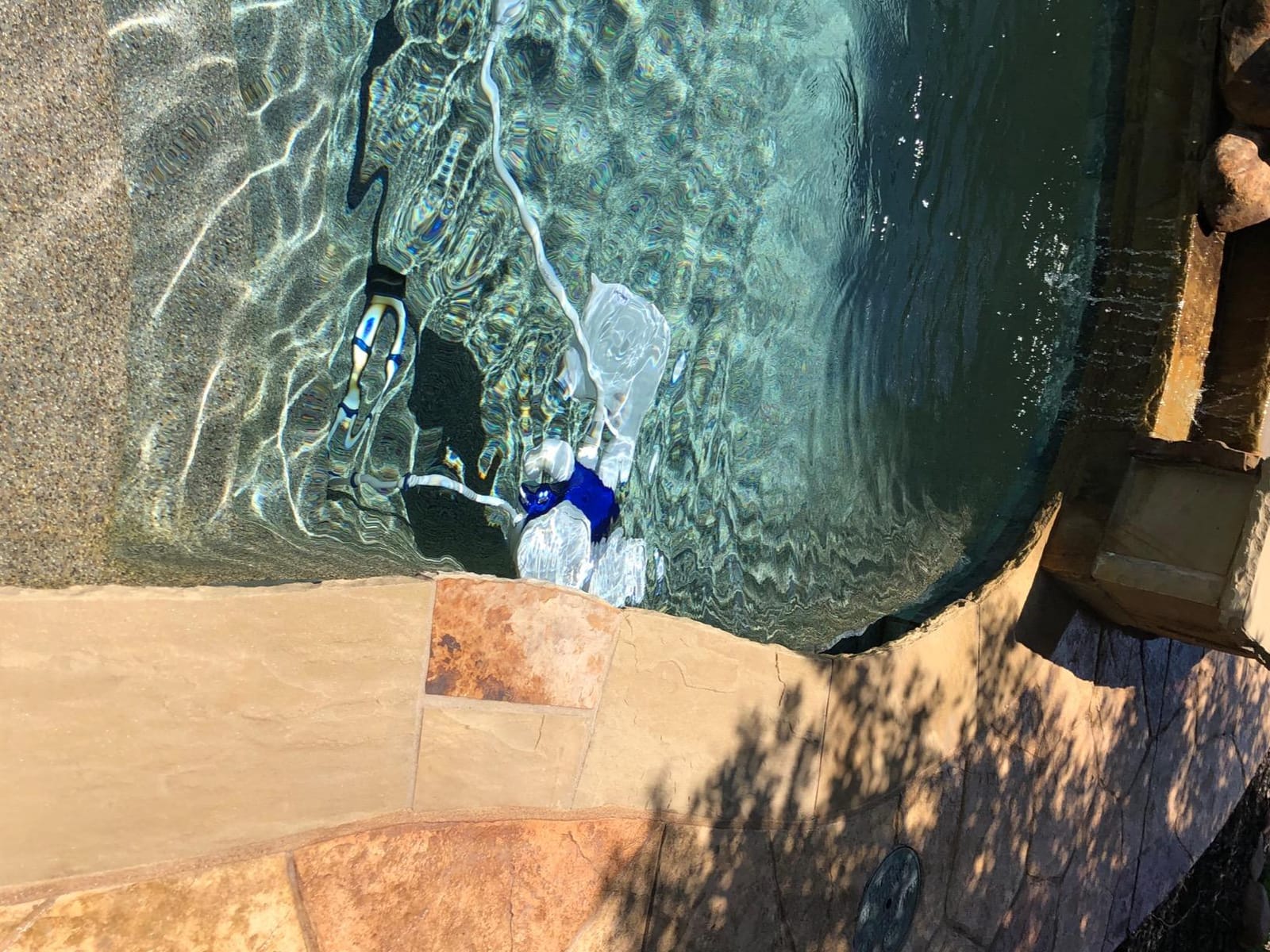
What the extra jet actually buys you
Higher return pressure through the venturi throat, and that translates directly into pickup of settled material. If your sand is fine but constantly stirred and re-suspended, or if the bottom is a hard-packed gunite surface where grit sits in the transitions and steps, the third jet gives you more margin. It also tends to hold wall position better, which raises the amount of floor-to-wall scrubbing per cycle.
For a pool where the water is clear but the bottom keeps silting up, this is a reasonable step up from the 280 without changing your bag strategy.
Where the 380 falls short
It is the same single-chamber bag problem with a bigger appetite. And the stalling reports are worth taking seriously, because a cleaner that stops mid-cycle on a sand pool leaves a clean stripe and a dirty stripe, which is more confusing than either alone.
Buying the 380 over the 280 mainly buys suction. If your complaint is that the pool stays brown and fine, spend the money on the sand and silt bag instead and keep the 280.
3. Pentair K60430 Kreepy Krauly Kruiser – The Honest Suction-Side Outlier
Pentair K60430 Kreepy Krauly Kruiser Automatic Inground Pool Cleaner
Suction side unit
Wide mouth intake
32 foot hose
18 pounds
Pros
- Wide mouth intake takes both large and small debris
- Only one moving part to replace over several years
- Very quiet compared with older Kreepy Krauly models
- Vacuum seal and foot pad wear slowly in concrete pools
Cons
- Suction side
- not pressure side
- so it needs a working skimmer vacuum port
- Can stick on the main drain or in shallow steps
- Some owners find it parks in the deep end
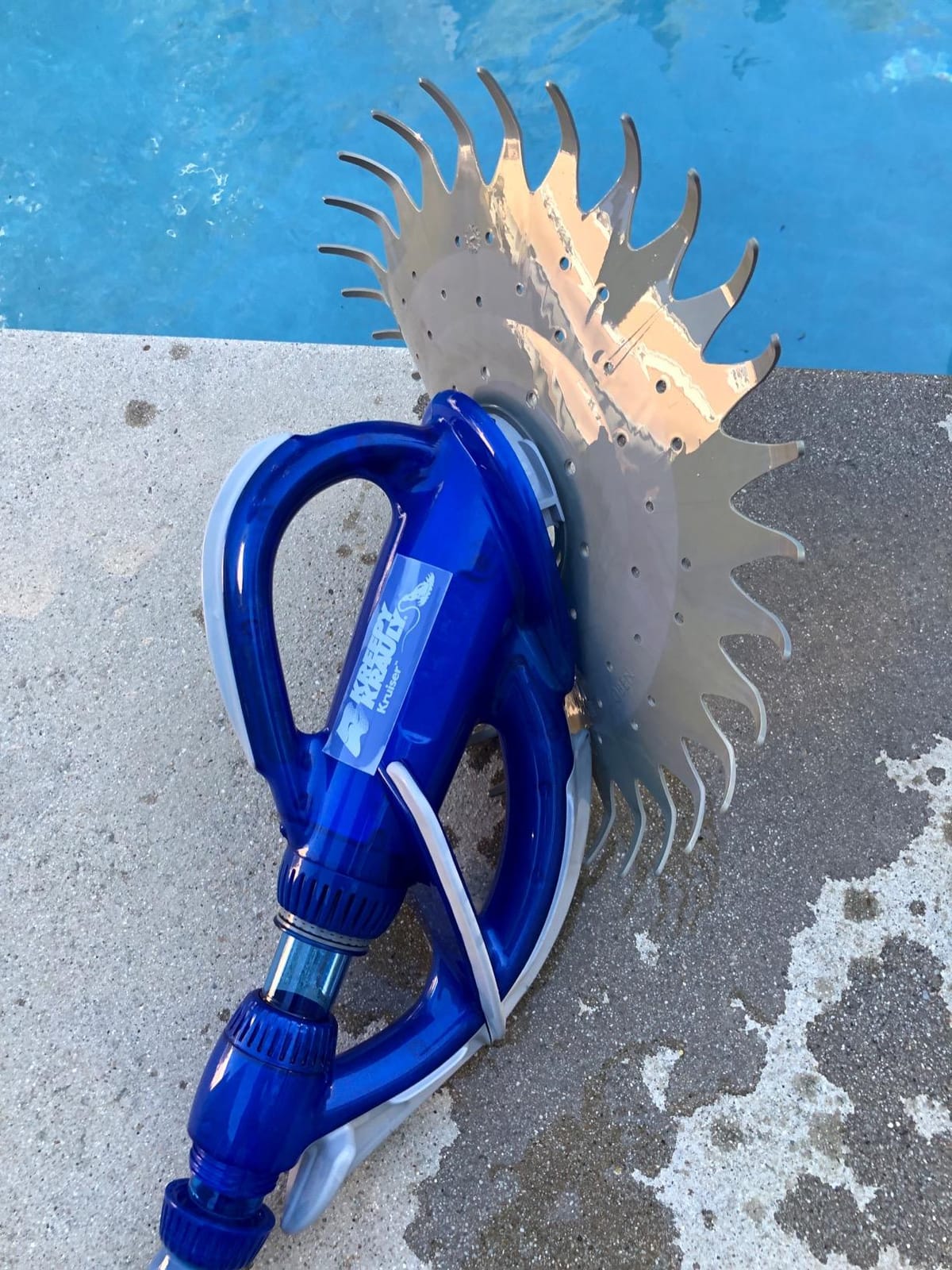
First, the honest disclosure. The Kruiser is a suction-side cleaner, not a pressure-side one. It connects to your skimmer vacuum port and gets its suction from the pool’s circulation pump pulling through the hose. It is in this roundup because for fine sand and silt, suction generated by a running pump is a genuinely different tool from return-line pressure, and owners chasing powdery debris do report better results with it.
What it brings to sand is a wide mouth intake that pulls in both large and small debris, and a design the manufacturer describes as having one moving part. Long-term owners say the vacuum seal and foot pad show very little wear even in concrete pools, and the operating noise is markedly lower than older Kreepy Krauly models.
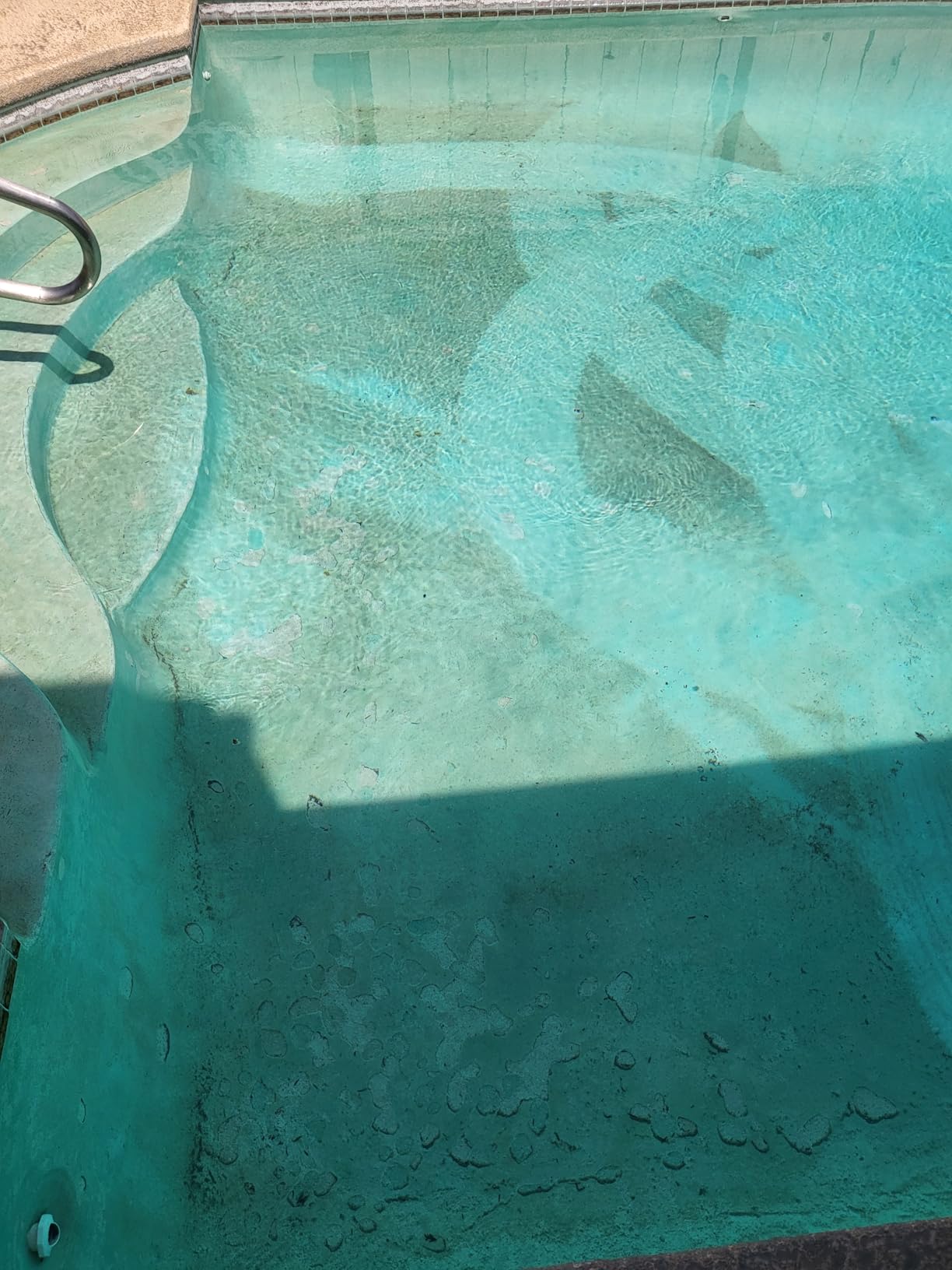
The trade-off is dependence. Suction-side performance is set by your pump flow rate, not by a booster, so if circulation is weak the cleaner suffers immediately. Hose length is 32 feet, installation uses a round skimmer disk and vacuum hose, and the unit is described as needing minimal setup. It weighs 18 pounds and the design is an older generation, so expect conventional mechanics rather than a modern retrofit.
On a sand pool the practical routine is: set the multiport valve to waste, let the cleaner pull sand straight to the drain, and switch back to filtration for normal cycles. That is the single biggest advantage this configuration has over every pressure-side unit in the list for silt.
When this is the right answer for sand
When the debris is fine and the pump is strong. A pool on a sand filter with a healthy pump, where sand is settling as a thin layer rather than arriving as grit, gives the wide mouth intake something it can actually move. The low noise also makes it easier to leave running while the pool is in use, and the single-moving-part design is attractive if you do not want to service gear trains.
It is also the only unit here that does not need a booster pump, a dedicated circuit, or any new plumbing, which for many owners is the deciding factor.
When it is the wrong answer
It gets stuck. Owners report it parking in the deep end, sticking on the main drain, and snagging in shallow steps, and each of those needs a hand. It also has no way to climb as deliberately as a jet-driven unit, so wall coverage is more of a bonus than a feature.
If your pool surface is smooth plaster and you have marginal pump flow, the whole unit underperforms, and no bag change will fix that. Tune the flow before you blame the cleaner.
4. MAKHOON Upgrade Pool Pressure Side Sweeper – The Budget Four-Wheel
MAKHOON Upgrade Pool Pressure Side Sweeper: Professional Solution for Cleaning Your Swimming Pool (Four Wheels are Better Than Three) Need 1.5″ Female Thread Pool Booster Pump Inlet, 4 Bar Pressure
Four-wheel chassis
Adjustable jet direction
1.5 inch booster inlet
4 bar pressure
Pros
- Four-wheel body tracks the pool floor more evenly than three-wheel designs
- Adjustable jet power direction handles unusual pool shapes
- Upgraded plastics on the hose and machine parts
- Extra float balls help control hose tangling
Cons
- Needs a booster pump with a 1.5 inch female thread inlet at 4 bar
- Shipped hose can arrive coiled and need straightening
- 19 percent of ratings are one-star with missing parts reported
This is the entry point for an owner who already has booster plumbing and wants a pressure side sweeper without a brand badge. The four-wheel chassis is the selling point: owners report it tracks the pool floor more evenly than three-wheel designs, and it works longer and covers more ground per cycle than basic sweepers.
The technical requirement is specific and non-negotiable. It needs a booster pump with a 1.5 inch female thread inlet delivering 4 bar of water pressure. If your plumbing is not already there, the installation becomes the expensive part of this purchase, not the sweeper. The manufacturer part number is MPC2.
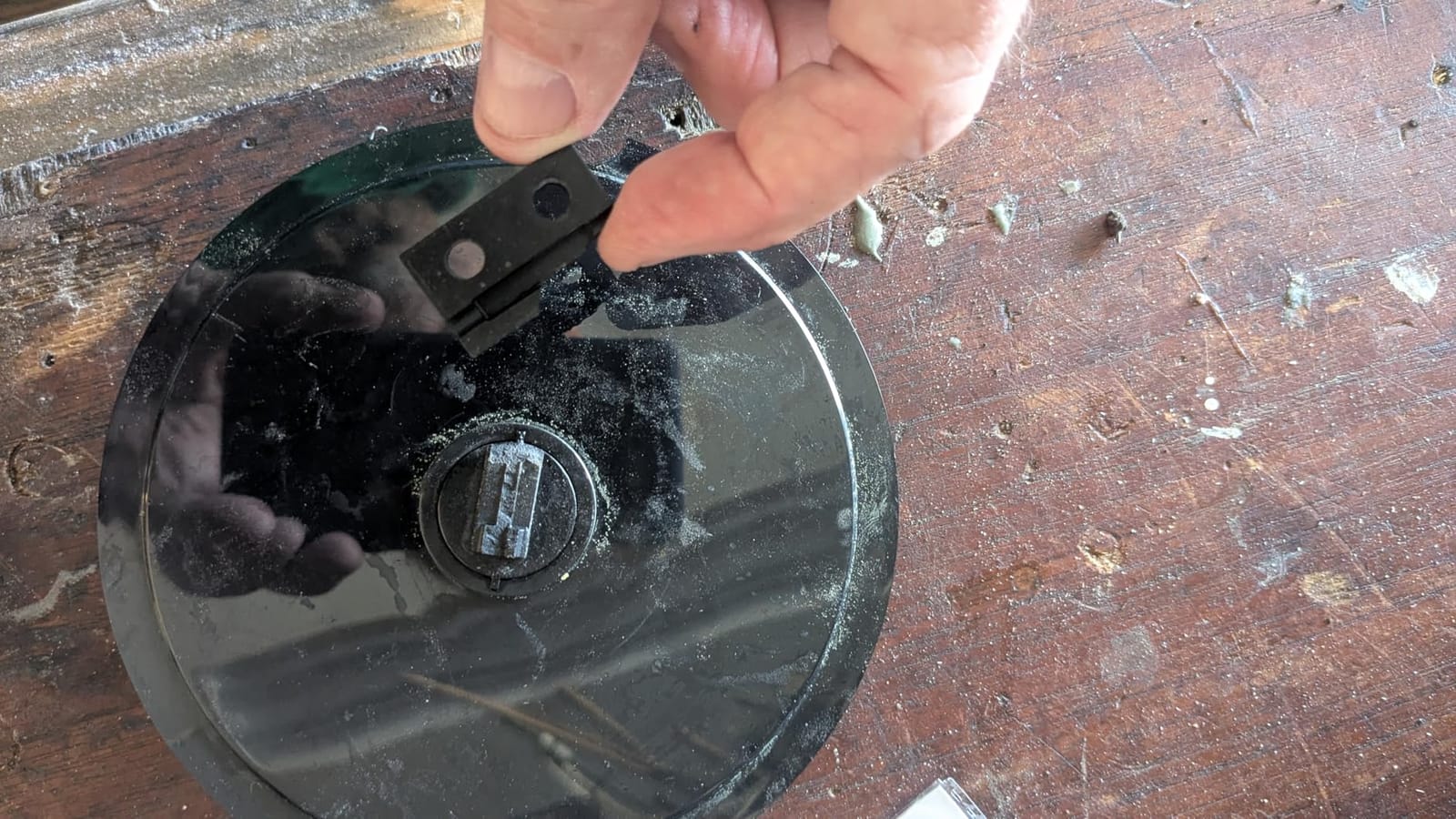
Adjustable jet power direction lets you tune it to an unusual pool shape, which is genuinely useful in freeform and geo pools. The listing also notes that backup valve orientation affects hose tangling, and that the extra float balls included help manage the hose. Owners who get that configuration right tend to have a much better experience than those who do not.
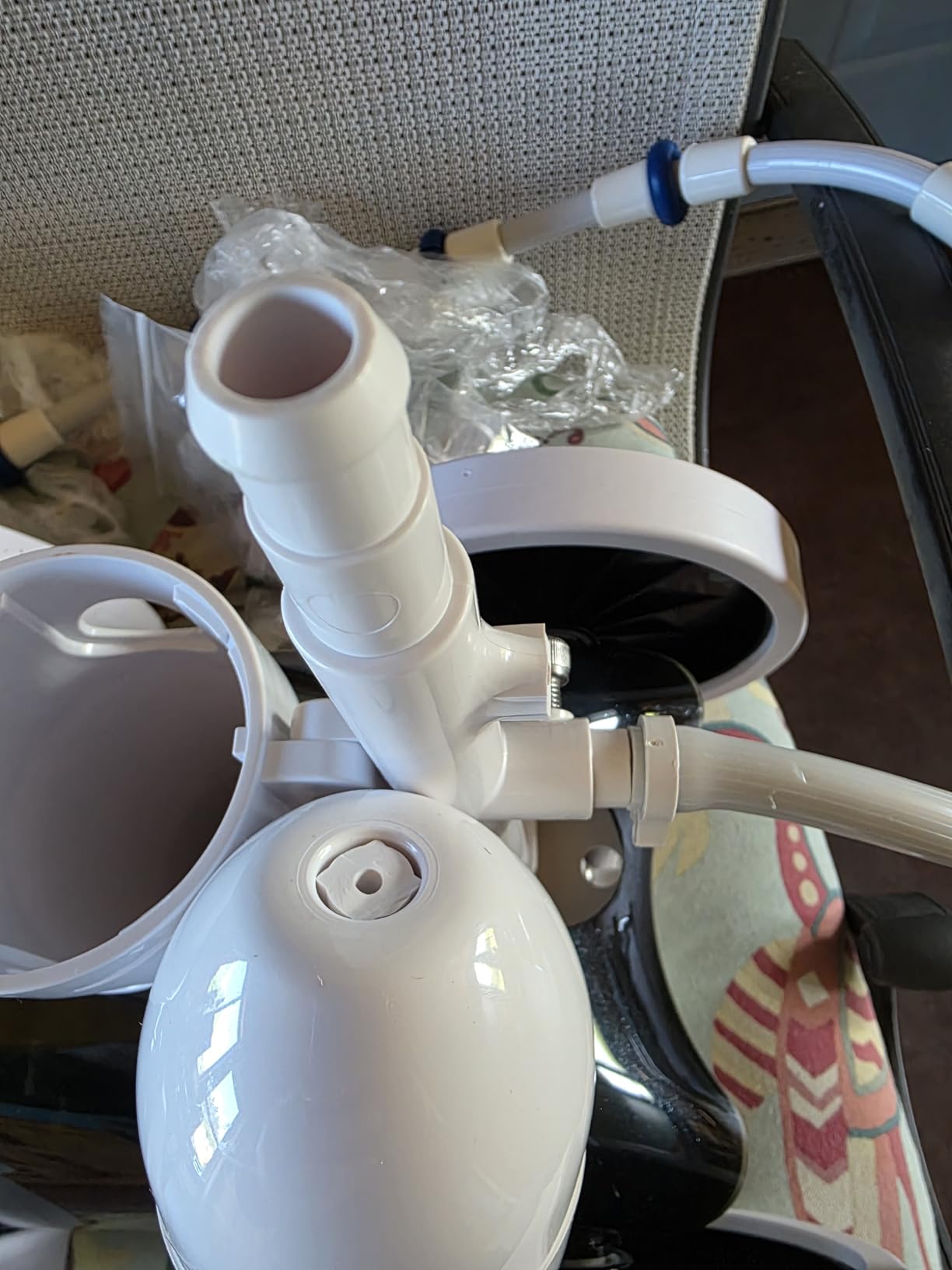
The weak point is build consistency. At a 3.9 average across 394 ratings, 19 percent of reviews are one star, with reports of missing parts, quality issues and hose tangling. A 62 percent five-star share means most people are satisfied, but the dissatisfaction is concentrated and mechanical.
Where the budget sweeper earns its place
It suits a rectangular in-ground pool with existing booster plumbing, where you want floor coverage and floor agitation rather than delicate fine-particle capture. The adjustable jets make it a reasonable fit for pools with steps, ledges and unusual transitions, and the four-wheel layout resists tipping where three-wheel bodies catch.
For a pool with a lot of coarse grit and sand mixed in, the wide sweep and adjustable direction do more good than a finer but weaker throat.
Where it will frustrate you
Fine sand is not this unit’s strength. Expect to fit a fine-weave bag and still vacuum to waste for heavy deposits. The 4 bar and 1.5 inch female thread requirement rules out a lot of older installations, and if you need that plumbed, this stops being the economical choice.
There is also the coil problem: the hose can arrive tightly coiled and needs straightening, often with a day or two in the sun before it holds a usable shape.
5. Polaris Vac-Sweep P39 Pressure Inground Pool Cleaner – The Biggest Bag, The Weakest Score
Polaris Vac-Sweep P39 Pressure Inground Pool Cleaner, Triple Jet Powered
All-wheel PosiDrive
2.5 inch inlet
5 liter dual-chamber SuperBag
TailSweep PRO
Pros
- Triple venturi jets with all-wheel PosiDrive for strong pickup
- Extra-large 2.5 inch inlet handles big debris
- 5 liter dual-chamber SuperBag holds far more than the 280 and 380 bags
- TailSweep PRO stops the cleaner spraying windows and walkways
Cons
- 25 percent of ratings are one-star
- the weakest score here
- Recurring reports of gears slipping jamming or stalling mid-cycle
- Requires a separate booster pump and dedicated equipment connection
On paper this is the most sand-capable machine in the group. The 5 liter dual-chamber SuperBag holds far more material than the single-chamber bags on the 280 and 380, and dual-chamber design means a full outer chamber does not choke the intake the way a single bag does. That is exactly the configuration you want when the debris is sand that keeps coming.
The drive is triple venturi jets plus all-wheel PosiDrive, and the inlet is an extra-large 2.5 inches, the widest of any unit here. It also ships with a TailSweep PRO accessory, which redirects the swept water so it stops blasting windows and walkways, a real issue for plaster and tile pools with tight deck edges.
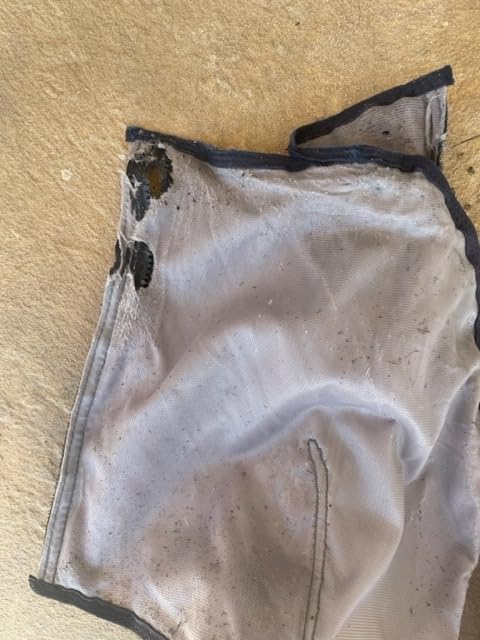
Then there is the review profile, and it is the reason this is fifth and not first. A 3.5 average across just 73 ratings, with 25 percent one-star, is the weakest score in the roundup. The complaints are consistent and mechanical: gears slipping, the gear train jamming, or the unit stalling partway through a cycle and needing manual intervention.
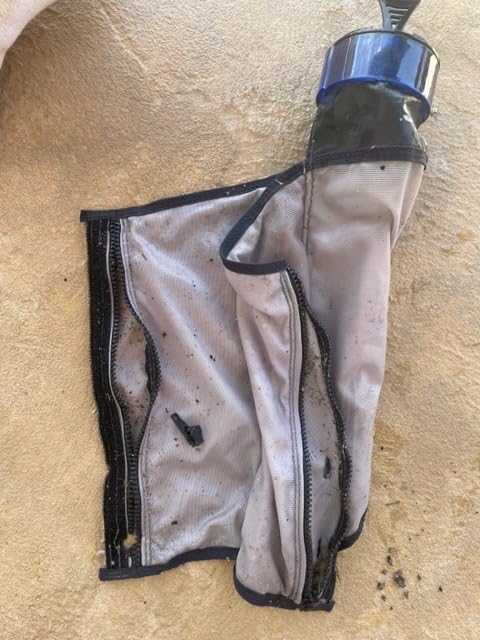
That failure mode is expensive on a sand pool specifically. A unit that stops halfway leaves you with a half-cleaned bottom and a bag full of sand, and you are pulling a heavier machine out of the water each time. The 31 foot feed hose is included, and it is described as requiring connection to separate equipment.
Why the bag design still matters to us
If your sand arrives in volume rather than as a film, the dual-chamber bag is the single most useful feature on this page. Fewer bag changes means fewer interruptions to the cycle, and on a sand pool the bag is the thing that fills first. The wide 2.5 inch inlet also keeps larger clumped grit from bridging the throat.
If your pool is heavily shaded or under trees, this is the pressure-side unit whose capacity is matched to the job, provided the gears hold.
Why we cannot recommend it as a first buy
Seventy-three ratings is a thin basis, and a quarter of them are one star. The mechanical complaints are not a small minority complaint, they are a quarter of all feedback. We would not hand this to an owner whose pool is already marginal on reliability.
One more caveat on this model specifically: the same model number shows a wide spread of scores across different sellers, so treat any single rating figure with suspicion and read recent reviews rather than the headline number.
6. Pentair LL505PM Kreepy Krauly Platinum Pressure-Side Inground Pool Cleaner
Pentair LL505PM Kreepy Krauly Platinum Pressure-Side Inground Automatic Pool Cleaner, White/Gray
Four-wheel chassis
Adjustable jets
33 foot hose
Fiberglass body
Pros
- Four-wheel chassis with adjustable jets climbs walls including Baja shelves
- Cleans floors and walls in 1 to 3 hours
- Works on concrete gunite vinyl-lined and fiberglass surfaces
- Easy to attach to and detach from the pool outlet
Cons
- Only 10 customer reviews
- the thinnest base here
- 29 percent of ratings are three-star
- one owner reported gear slippage and failure within months
This is the wall-climbing specialist. The four-wheel chassis with adjustable water jets is reported by owners to handle walls well, including Baja shelves and sun shelves where most cleaners stall at the transition. On a sand pool with a raised shelf, that translates into coverage of the surfaces where grit collects and is hardest to reach with a vacuum head.
It is a fiberglass-bodied unit with a 33 foot hose, it works on concrete and gunite, vinyl-lined and fiberglass surfaces, and the manufacturer states a 1 to 3 hour cleaning time. Owners like that it attaches to and detaches from the pool outlet easily, which pairs well with the habit of emptying the bag without pulling the cleaner out.
Here is the problem with recommending it. There are 10 customer ratings, and 29 percent of them are three stars, which points to uneven experience across units rather than a settled verdict. One owner reported the gears slipping badly and failing within a few months of normal use, and that is the same failure mode as the P39 above.
When the Platinum is the right fit
When the pool has a Baja shelf, sun shelf or raised step that other cleaners cannot get onto, and when you want a fiberglass body in a gunite or plaster pool without worrying about finish. The adjustable jets let you tune the pattern to the pool rather than the other way round.
The 1 to 3 hour runtime is genuinely quicker than most of the group on larger pools, which matters if you are scheduling around pool use.
When it is not
With ten ratings, you are buying with almost no data. A 29 percent three-star block and a reported gear failure inside a year are the wrong signals for a machine you will run unattended, which is the whole premise of an automatic cleaner.
Also be clear-eyed about the bag. There is no mention of a sand-specific bag for this unit in the specification data we reviewed, so confirm the bag part number and the availability of a fine-weave replacement before you buy it for a sand pool.
Pressure Side vs Suction Side vs Robotic for Sand
This is the comparison that decides the purchase, and it is worth being blunt: for fine powdery sand, a pressure-side cleaner is the weakest of the three options. The reason is mechanical. A pressure-side unit creates its suction from a venturi throat fed by return-line flow, which is a fraction of the suction a running pump can produce through a suction hose.
Pressure side: best on leaves, grit, pebbles and coarse sand. Onboard bag keeps debris out of a DE or cartridge filter. No submerged electrics, no cable, low energy draw. Weak on powder, and dependent on a booster pump or a dedicated third port. Tangling is the common complaint.
Suction side: far stronger pickup on fine material because suction comes from the circulation pump. Only one moving part on most designs. No booster needed. Requires a working skimmer vacuum port, and getting the flow right is the installer’s real job.
Robotic: best filtration of the three by a wide margin, because the units filter through fine pleated cartridges or fine mesh bags and many run on low voltage or battery. Weakness is cost and the need to retrieve the unit when the bag fills, which happens often on sand.
Our read for a sand pool specifically: if the debris is coarse grit and you already have booster plumbing, a pressure-side unit is the right and cheap answer. If it is fine silt, a suction-side unit with vacuum to waste will clear it faster, and a robot with fine filtration is the option that stops it returning. Our robotic pool cleaner guide for in-ground pools covers that comparison in detail.
Troubleshooting: Your Cleaner Stopped Picking Up Debris
When a pressure-side cleaner that used to work goes quiet, work outside in. This is the sequence that gets reported as working in practice, and the first three steps resolve most cases.
Empty the debris bag. On a sand pool this is the answer far more often than people expect. A bag can look clean from the top while holding a dense layer of grit at the bottom.
Clean the filter screen in the quick disconnect. The quick-disconnect body has a screen that catches coins, hairpins and grit. A partly blocked screen cuts return pressure, and the cleaner’s suction drops before the bag is anywhere near full.
Check the skimmer basket and the pump basket. A leaf-loaded skimmer basket on the return path is the most common cause of a weak pressure-side cleaner that simply will not move.
Check the feed hose for kinks and a collapsed section across the pool. A single sharp bend can cut flow dramatically.
Verify the booster pump is running and delivering flow. A booster that is turning but starved of water still underperforms. Listen for the hum and feel for flow at the discharge.
Replace the booster pump capacitor. A failed or weak capacitor is the classic cheap fix, and owners report it resolving a booster that hums but will not start.
Check the circuit breaker and the timer settings. If the cleaner moves only when the filter pump is off and running, the flow through the system is too low, and the booster needs to be plumbed in properly rather than teed in casually.
If the unit moves, has flow, and still will not collect, the remaining suspect is the bag. Fit the fine-weave version and reassess before replacing the machine.
Booster Pump or Single Line: Do You Need the Extra Plumbing?
Most pressure-side cleaners in this roundup need a booster pump, and it is not included with any of them. A booster pump is a second, dedicated pump, usually in the range of one-half to three-quarters horsepower, plumbed to a third port in the plumbing pad and wired to its own circuit. It pushes the return pressure high enough for a venturi throat to do useful work.
Single-line pressure-side units are the alternative. They draw from the existing return line with no additional plumbing, which is a big saving if you are on a budget. The trade-off is that their performance is entirely dependent on how much pressure your existing pump and plumbing can deliver, and on a long or restrictive return run they are weak. A single-line unit is a reasonable pick for a small, well-plumbed in-ground pool, and a poor choice for anything large or on a marginal pump.
On the electrical side, a booster pump is a permanently installed motor, which puts it under NEC Article 680 for pool installations and typically requires GFCI protection and its own circuit. In many jurisdictions that means a permit and an electrician. Owners weighing a new booster against a switch to a robot usually find the electrical work, not the pump, is what decides it.
One forum point worth repeating from TroubleFreePool owners: when a booster pump fails on an older Polaris 280, the recommended move is to replace the 280 with a later model rather than rebuild the pump, because owners report the later models capture very fine particles including grains of sand. That is owner experience rather than a laboratory result, but it is consistent across several independent posts.
How to Choose a Pressure Side Pool Cleaner for Sand
Work through these in order, and the answer usually arrives before you start reading spec sheets.
1. Diagnose the source of the sand. If it is coming from damaged filter laterals, no cleaner fixes it. Get the laterals replaced first or you will be buying a new bag every month for nothing.
2. Decide pressure side or suction side. Coarse grit and leaves point to pressure side. Fine silt and powder point to suction side, or to vacuum to waste. This decision matters more than any brand.
3. Check your plumbing honestly. Is there a third port and a booster pump already? A dedicated circuit? If not, price the electrical and plumbing work into the total before choosing a booster model. If there is no way to add it, a single-line or suction-side unit is your realistic shortlist.
4. Size the bag for the debris volume, not the pool. Dual-chamber bags such as the P39 SuperBag hold materially more and tolerate a full outer chamber without choking the intake. Single-chamber bags, as on the 280 and 380, need more frequent emptying. On a sand pool that is the difference between one bag change and three per clean.
5. Check the micron rating of the fine-weave bag for your model. This is the purchase decision nobody makes and everybody needs. Confirm the bag part number for your specific model and that a sand and silt replacement exists for it. If it does not, plan on the knee-high liner modification from day one.
6. Match surface and pool shape. All the units here cover vinyl, fiberglass, gunite, plaster, pebble and tile, so surface is rarely the deciding factor. Shape is not: raised shelves, steps and Baja ledges favour adjustable jets and a four-wheel chassis, and freeform pools favour a unit whose jet direction you can tune.
7. Weigh the tangle factor. Owners rank reliability and tangle rate over a full season above peak suction. Frequent tangles mean manual retrieval several times a week, which quickly stops feeling automatic. Review the share of one-star ratings, not just the average.
8. Set up a recovery plan. For a heavy deposit, open the multiport valve to waste and make slow passes. A cleaner is a maintenance tool. Recovery is a technique problem, and the two together are what actually clear a sanded pool.
Frequently Asked Questions
Do pool vacuums pick up sand?
It depends on the cleaner type and the bag. A pressure-side cleaner with a standard 100 to 180 micron bag often lets fine sand pass straight through and back into the pool. A suction-side cleaner or a robot with fine filtration captures substantially more. Fitting the sand and silt bag for your model, or lining the bag with a knee-high hose, makes a large difference even on a pressure-side unit.
What size debris bag do I need for fine sand?
For fine sand, buy the largest dual-chamber bag your model supports, because fine material fills capacity quickly. Single-chamber bags are acceptable for grit but need several empties per clean on a sand-heavy pool. More important than size is weave: choose the manufacturer sand and silt replacement for your model, or line the standard bag with a knee-high hose to trap particles at the mesh.
Do I need a booster pump for a pressure side pool cleaner?
Most booster-equipped pressure-side cleaners require one and it is never included. A booster pump is a dedicated pump, usually one-half to three-quarters horsepower, plumbed to a third port and usually wired to its own circuit under NEC Article 680. Single-line pressure-side cleaners avoid that entirely but depend on how much flow your existing return line already delivers.
Is a pressure side pool cleaner better than a robot for sand?
No. Pressure-side cleaners are built for leaves, grit and coarse debris, and a standard bag lets fine sand recirculate. A robot with fine pleated or fine mesh filtration captures far more powdery material, though it costs more and must be retrieved when the bag fills. For coarse grit with existing booster plumbing, a pressure-side unit remains the economical choice.
Should sand come out when backwashing?
A healthy sand filter should discharge clear water for several minutes at the start of a backwash. Sand appearing early, or a steady grey plume through the whole cycle, points to damaged laterals or a failed spreader rather than dirt in the pool. Sand that keeps returning in a mound under one specific return is the strongest clue. That is a filter repair, not a cleaner purchase.
Final Verdict: Which Pressure Side Pool Cleaner to Buy for Sand in 2026
The Polaris Vac-Sweep 280 is the pick for most sand pools. It has the largest review base in the category, proven coverage, a wide 2.25 inch inlet for grit, and enough serviceability to handle twice-a-day bag changes. Pair it with the sand and silt bag and it does its job.
Move to the Vac-Sweep 380 when your sand is heavier or your bottom is hard-packed and you want the extra venturi jet. Move to the MAKHOON four-wheel sweeper only if you already have a 1.5 inch female thread booster line at 4 bar. Look at the P39 only if you need dual-chamber bag capacity badly enough to accept a quarter of its ratings being one star.
And if the sand in your pool is fine powder rather than grit, the honest answer is that you want a suction-side unit or a robot, not a pressure-side cleaner. Start with the diagnostic above, fix the source if it is the filter, and you will not be buying any of these machines twice.