
Moisture is the quiet problem behind most compressed air failures. Water in your lines corrodes pipe and receivers, freezes in outdoor runs, ruins paint with fisheyes, pits plasma cuts, and wears out actuators long before their rated service life. The fix is a dedicated air dryer, and picking the best air dryers for compressed air systems comes down to two questions: how much flow do you actually need, and how dry does your application have to be.
Here is the short version before the details. A refrigerant dryer chills air below its dew point so water condenses and drains, landing pressure dew point around 37-50F (3-10C) at the cost of electricity. A desiccant dryer pushes air through silica gel or activated alumina towers and reaches much lower dew points, but it burns purge air to regenerate the media. A membrane dryer sits between the two, hitting roughly -40F pressure dew point with no regeneration air at all. Every unit below is an inline canister, filter-regulator, or multi-stage combo you can actually buy and plumb into a small shop line today.
We spent weeks reading spec sheets, review patterns, and shop-floor discussion on sizing, drains, and dew point, then organized the field into the 10 choices worth your time in 2026. If you are still picking the compressor itself, our guide to the best air compressors for framing covers the upstream end of the same system.
Table of Contents
Top 3 Picks for Best Air Dryers for Compressed Air Systems in October
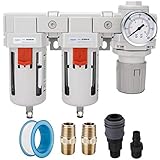
NANPU DFR-03 Double Filter Regulator
- 70 SCFM at 90 PSI
- Double 5 micron brass element
- Semi-auto drain
- Kit of fittings and gauge
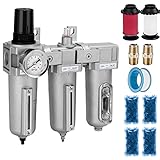
NANPU 3/4 Inch Three-Stage
- 141 CFM flow
- 0.01 micron coalescer
- Drainless desiccant stage
- Spares and desiccant included

LE LEMATEC Inline Desiccant
- 22 CFM inline canister
- Color-changing beads
- Refillable in under a minute
- Zinc housing
Quick Overview Every Air Dryer in This Roundup in 2026
All ten products below are point-of-use and inline compressed air treatment devices rather than full plant desiccant towers. Flow ratings are quoted exactly as the manufacturers state them, at the pressure each maker specifies, because comparing a CFM figure at 90 PSI against one at 125 PSI is how people end up with a dryer that chokes the line.
| Product | Specifications | Action |
|---|---|---|
| NANPU DFR-03 Double Filter Regulator |
|
Check Latest Price |
| NANPU 3/4 Inch Three-Stage System |
|
Check Latest Price |
| LE LEMATEC Inline Desiccant Dryer |
|
Check Latest Price |
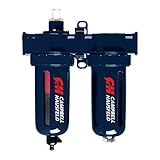 Campbell Hausfeld PA208503AV Campbell Hausfeld PA208503AV |
|
Check Latest Price |
 EDGE Industrial 3-Stage Combo EDGE Industrial 3-Stage Combo |
|
Check Latest Price |
 ALL Tool Depot 1/2 Inch Three-Stage ALL Tool Depot 1/2 Inch Three-Stage |
|
Check Latest Price |
 THB Inline Desiccant Dryer THB Inline Desiccant Dryer |
|
Check Latest Price |
 AIRZOE AC3110-03 Double Filter Regulator AIRZOE AC3110-03 Double Filter Regulator |
|
Check Latest Price |
 PneumaticPlus PPC3C-N02G PneumaticPlus PPC3C-N02G |
|
Check Latest Price |
 BLCH AF2000-02 Coalescing Dryer BLCH AF2000-02 Coalescing Dryer |
|
Check Latest Price |
Refrigerated vs. Desiccant vs. Membrane: Which Type You Actually Need
For most shops, a refrigerant dryer is the right answer. It lands at 37-50F (3-10C) pressure dew point, costs almost nothing to run compared with purge-based systems, and has no consumable media to replace. Its one hard limit is ambient temperature: shop owners on Practical Machinist report repeatedly that these units freeze up in unheated buildings, so treat roughly 50F (10C) as the floor and move to a different type in a cold garage or an outdoor line.
Reach for a desiccant dryer when water vapor itself is the problem, not just liquid water. Instrument air, pharmaceutical and food lines, and outdoor pneumatic runs in winter all need the low dew points a desiccant tower provides. The trade is airflow: regeneration air consumption typically runs 15-25 percent of throughput, and heatless designs can cost more in lost compressed air than a refrigerant unit ever would in electricity. That is why forum consensus across shop communities keeps landing on the same answer: refrigerate the whole system, then add a small desiccant stage only in front of the expensive equipment.
Membrane dryers are the option most buying guides skip. They separate water through a selective hollow-fiber membrane and deliver roughly -40F pressure dew point without consuming regeneration air, which makes them attractive when you need desiccant-level dryness on a small line without the purge cost. The catch is that membranes want cool, dry inlet air and they do not tolerate liquid water, so they always sit behind a good filter and separator.
The units in this roundup are all inline canister and filter-regulator designs, which sit closer to the desiccant and membrane end of that spectrum than the refrigerant end. They are cheap, they mount on a wall or a bench, and they treat a branch line rather than a whole plant header.
1. NANPU DFR-03 Double Filter Regulator Combo – The Most Reviewed Unit Here
NANPU DFR-03 3/8″ NPT Air Drying System – Double Air Filters, Air Pressure Regulator Combo – Semi-Auto Drain, Poly Bowl
70 SCFM at 90 PSI
Double 5 micron brass element
Operating range 0-125 PSI
Semi-auto drain, 2.64 lb
Pros
- Most reviews of any unit here at 2524
- Modules are interchangeable
- Includes gauge bracket coupler and fittings
- Handles 70 SCFM at 90 PSI
Cons
- Some semi-auto drains fail to seat and leak slowly
- Polycarbonate bowls fill fast in humid shops
- Instructions are brief and poorly translated
Our pick for most shops is the NANPU DFR-03, and the reason is simple: nobody else in this group has 2,524 reviews behind it. That is a decade of people discovering leaks at assembly, reporting back, and buyers reading those reports before ordering. When a category has thin ratings, a large review base is the closest thing to a safety net.
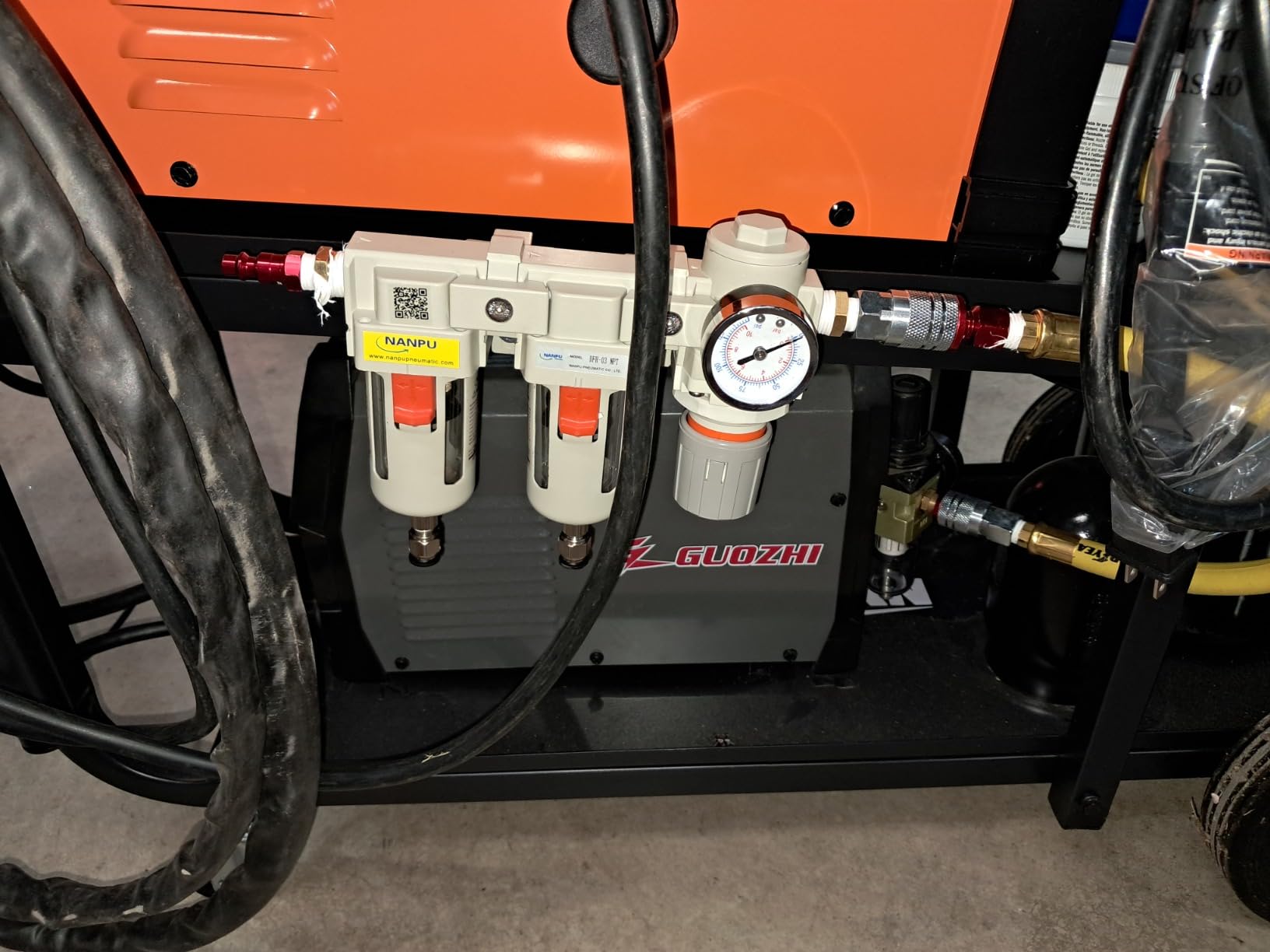
The unit itself is a 3/8 inch NPT piggyback filter-regulator with two 5 micron brass elements in series. Brass elements last considerably longer than cheap paper media, and running two in parallel stages roughly doubles the time before the first one needs attention. Rated flow is 70 SCFM at 90 PSI, which covers a typical small shop compressor without throttling.
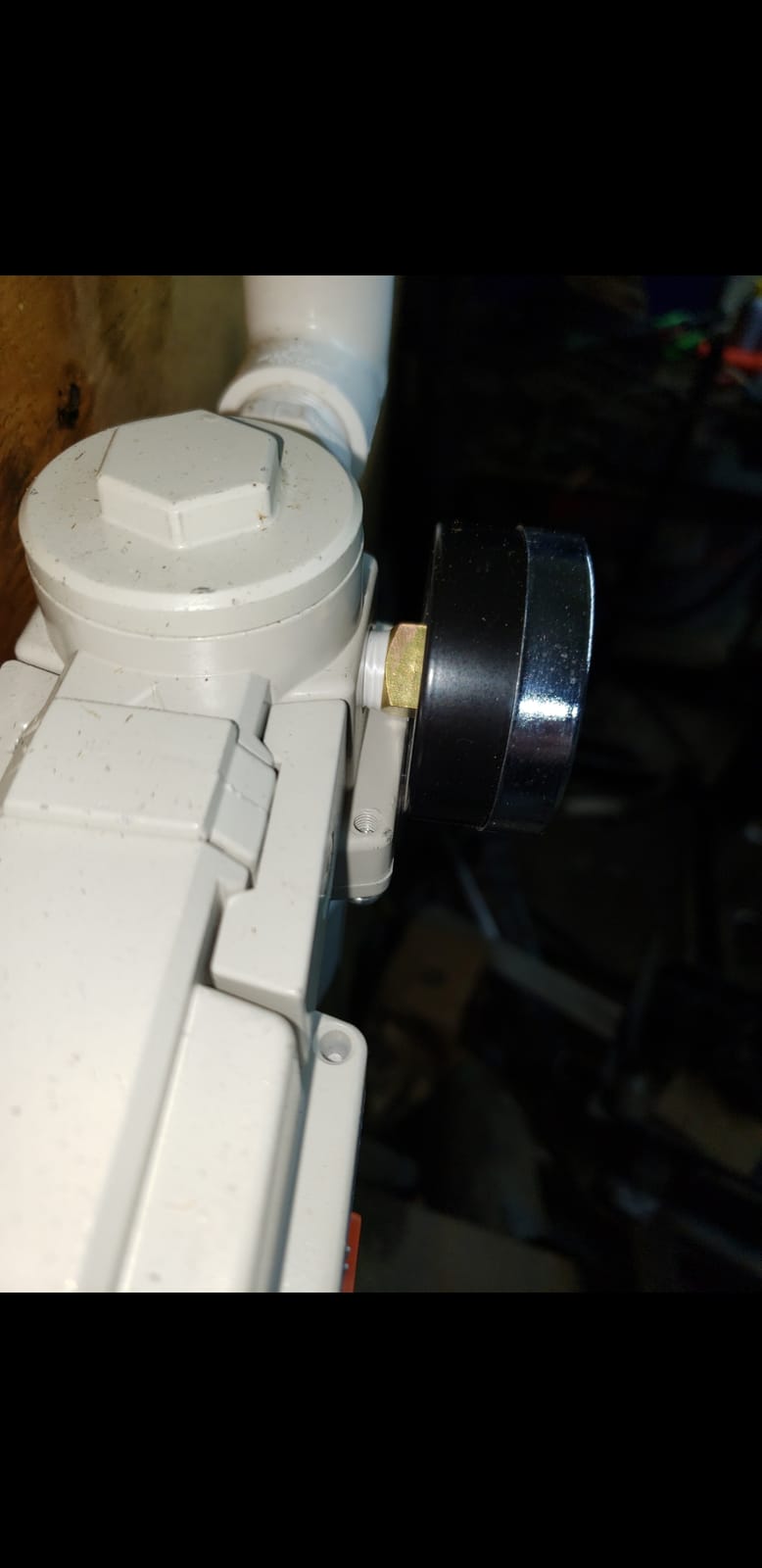
What stands out is what arrives in the box. You get a 0-150 PSI gauge, a mounting bracket, a metal air coupler and plug kit, 3/8 inch NPT fittings, and thread seal tape. That is the entire parts list most people end up buying separately after a bare unit arrives, and it is a genuine saving in both time and money.
Two hardware issues come up often enough to check at assembly. On some pieces the gauge port is tapped but not drilled through, so the needle sits at zero until you clear it. On others the semi-auto drain does not seat fully and bleeds air slowly, which is the most-reported complaint across reviews. Fit the tape properly and check both points before you pressurize the line.
What it is good for
This is the right call for a garage or small shop running a compressor in the 20-30 CFM range where you want stable regulated pressure and clean dry air at a single station. Two filter stages plus a semi-auto drain handles the bulk water and particulate that cause most tool wear, and the included gauge means you can see pressure at the point of use instead of guessing.
If your shop already has a compressor, comparing the options in our air compressor roundup is the logical first step, since the dryer’s flow rating has to be at or above the compressor’s rated output.
What it is bad for
It stops at 5 micron coalescing, so water vapor and fine oil aerosol pass straight through. That is fine for pneumatic tools and general shop air, but it will not protect a paint booth, a plasma cutter, or instrumentation. Pair it with a desiccant canister downstream if you spray finishes.
The polycarbonate bowls are also small. Owners in humid conditions report draining them several times a shift, and a metal-bowl unit such as the EDGE Industrial in entry five is a better answer if air is consistently wet. This is a regulation and bulk-water device, not a dryer for a process that needs -40F.
2. NANPU 3/4 Inch Three-Stage System – Full Treatment in One Box
NANPU 3/4″ NPT Industrial Air Compressor Filter Dryer Regulator, 175 PSI
141 CFM flow
Stage 1 regulator 30-175 PSI
Stage 2 0.01 micron coalescer
Stage 3 drainless desiccant
Pros
- Most complete treatment in one footprint
- Only desiccant stage here with no liquid drain
- Includes spare elements and four desiccant bags
- Highest five-star share of the multi-stage units
Cons
- Heaviest unit here at 7.39 lb
- Needs wall space
- Desiccant beads still need periodic refilling
For a body shop, a collision repair booth, or a fabrication bay that sprays and cuts daily, the NANPU three-stage system is the most capable treatment stack in this group. It attacks water, oil aerosol, and water vapor in three passes, and it is the only unit here where the desiccant stage needs no liquid drain at all.
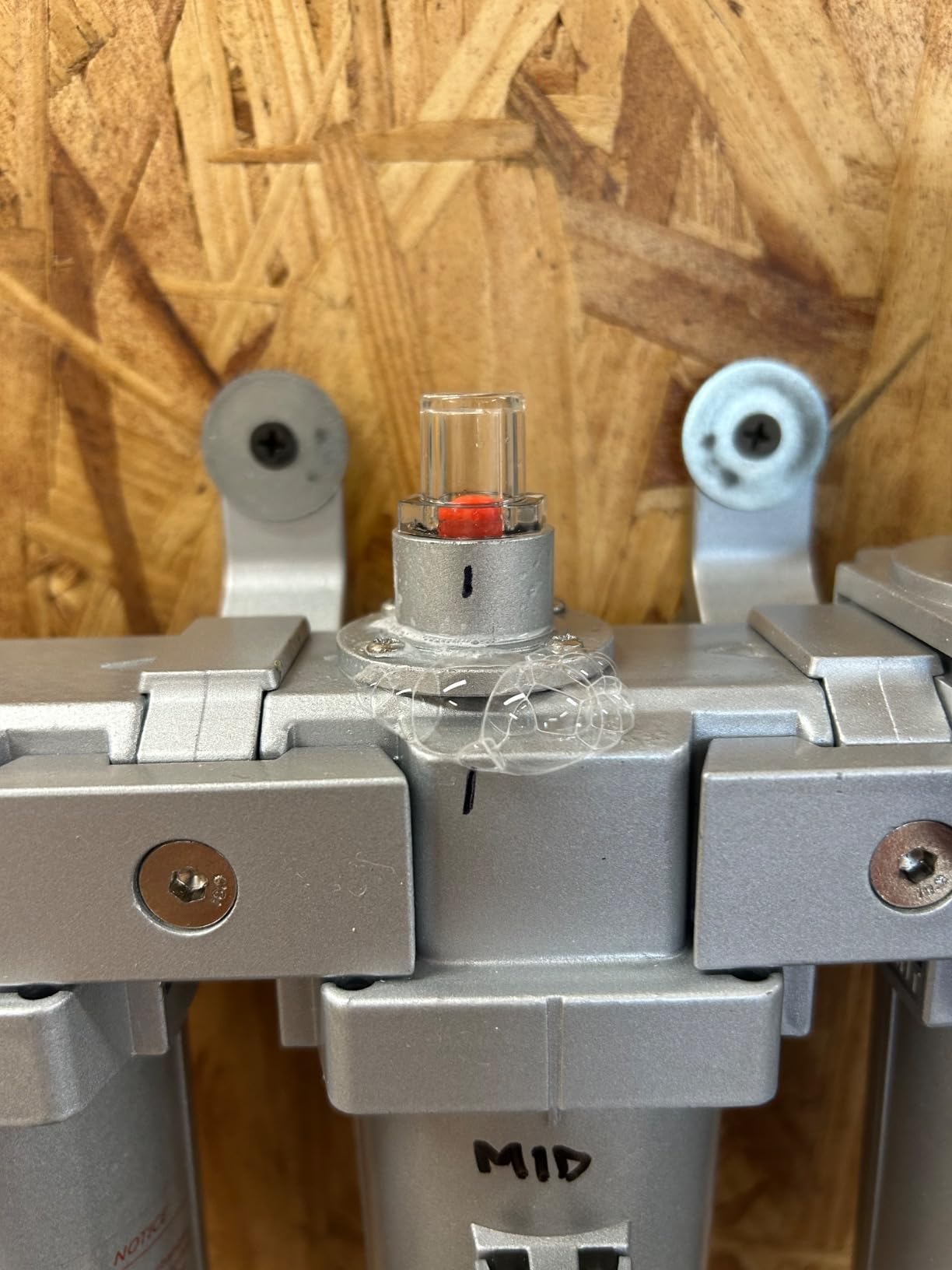
Stage one is a 5 micron filter and regulator rated 30-175 PSI with a pressure gauge. Stage two is the differentiator: a 0.01 micron coalescing element that captures 99.998 percent of oil aerosols, with a pop-up indicator that rises when the element is spent. That is the stage that prevents paint fisheyes and pitted plasma cuts, and it is the reason body shop operators layer it into their system.
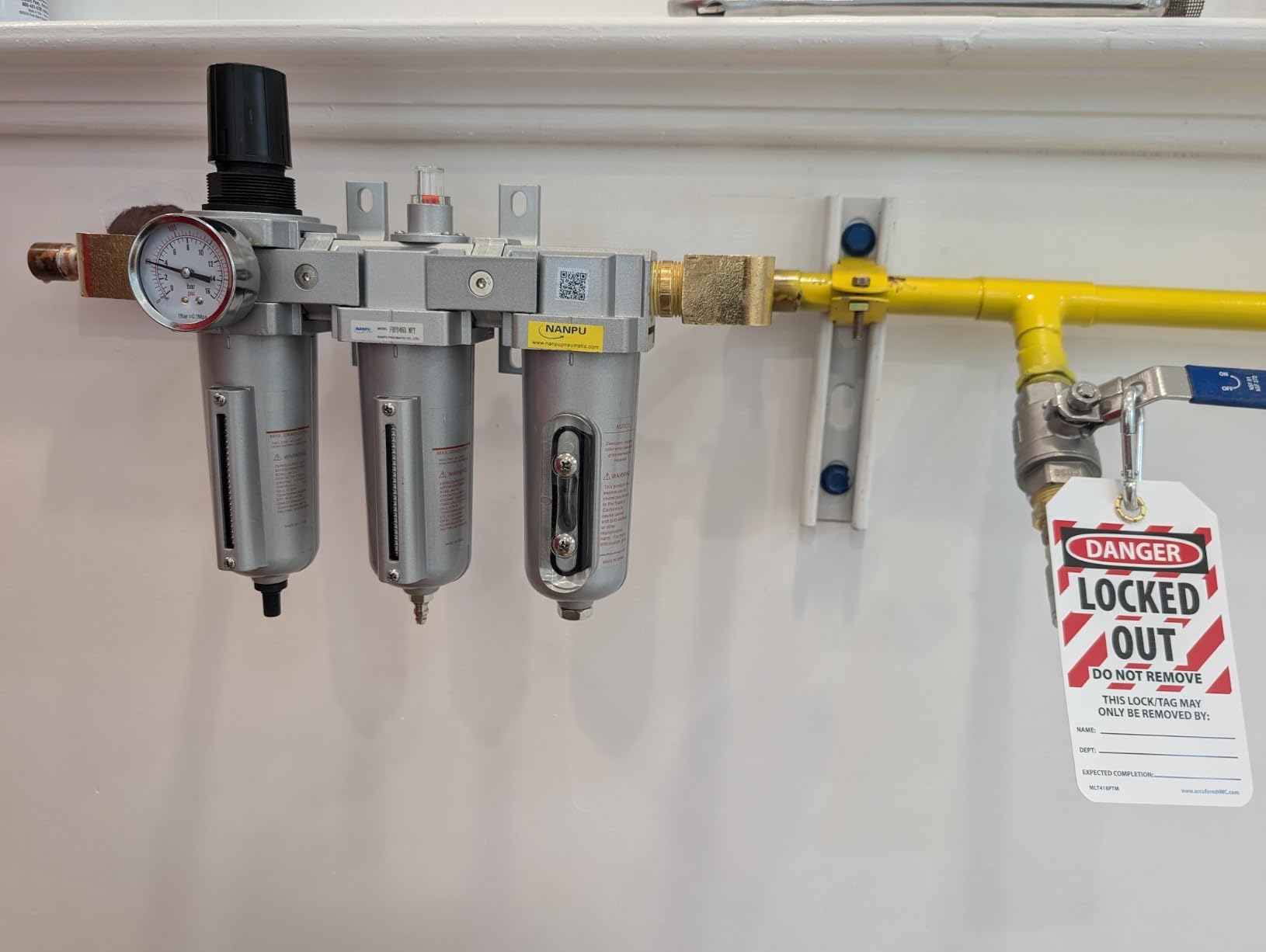
Stage three is a drainless desiccant chamber filled with color-indicating beads that run blue to pink. Because there is no water bowl, there is nothing to empty and nothing to freeze, which matters in an unheated shop. The trade is that beads still need refilling on a schedule rather than regenerating on their own.
Flow capacity is 141 CFM (4000 L/min) at up to 175 PSI on 3/4 inch NPT ports, so it covers a busy two-stage compressor with headroom. The heavy metal bowls have sight glasses, which makes condition checks a glance instead of a guess, and the wall bracket is included.
What it is good for
Any process where a droplet of oil or a trace of vapor ruins the work. That means HVLP spray guns, plasma and oxy-fuel cutting, sandblasting, and pneumatic instrumentation. It also handles higher flow than anything else here, so a shop running a large compressor will not be fighting the dryer for capacity.
It carries a 4.5 average across its review base, and reviewers single out the completeness of the consumable package. You get spare 5 micron and 0.01 micron elements, four 100 g desiccant bags, 3/4 inch NPT fittings, and thread seal tape, so the first year of service is covered out of the box.
What it is bad for
At 7.39 pounds and 13.82 inches long in the package, it is the largest and heaviest unit here. That is a real problem in a shop already fighting for wall space, and it is overkill for a single bench-mounted tool station.
It is also a point-of-use treatment block rather than a header-mounted dryer, so a plant-scale system still needs a central unit upstream. If your air is cold and you only need decent dryness, a refrigerant dryer plus a small desiccant canister will cost less to run and take less room.
3. LE LEMATEC Inline Desiccant Dryer – Refillable Point-of-Use Canister
LE LEMATEC Compressed Air Dryer, Inline Desiccant Moisture Filter 3/8″
22 CFM inline flow
Working pressure 1-150 PSI
3/8 inch NPT ports
Zinc housing, 6.3 oz
Pros
- Refills in under a minute
- Color-changing beads show service state at a glance
- Zinc housing tolerates shop abuse
- Small and light enough for a bench
Cons
- Small charge saturates quickly
- Not a substitute for upstream filtration
- Clear housing is fragile if cracked
The LE LEMATEC ZN312E-3 is one of the most affordable desiccant dryers in this roundup, and the design is the reason it works. The housing is solid zinc rather than plastic, it holds a refillable charge of color-changing beads, and the top comes off so you can pour in bulk desiccant in under a minute.
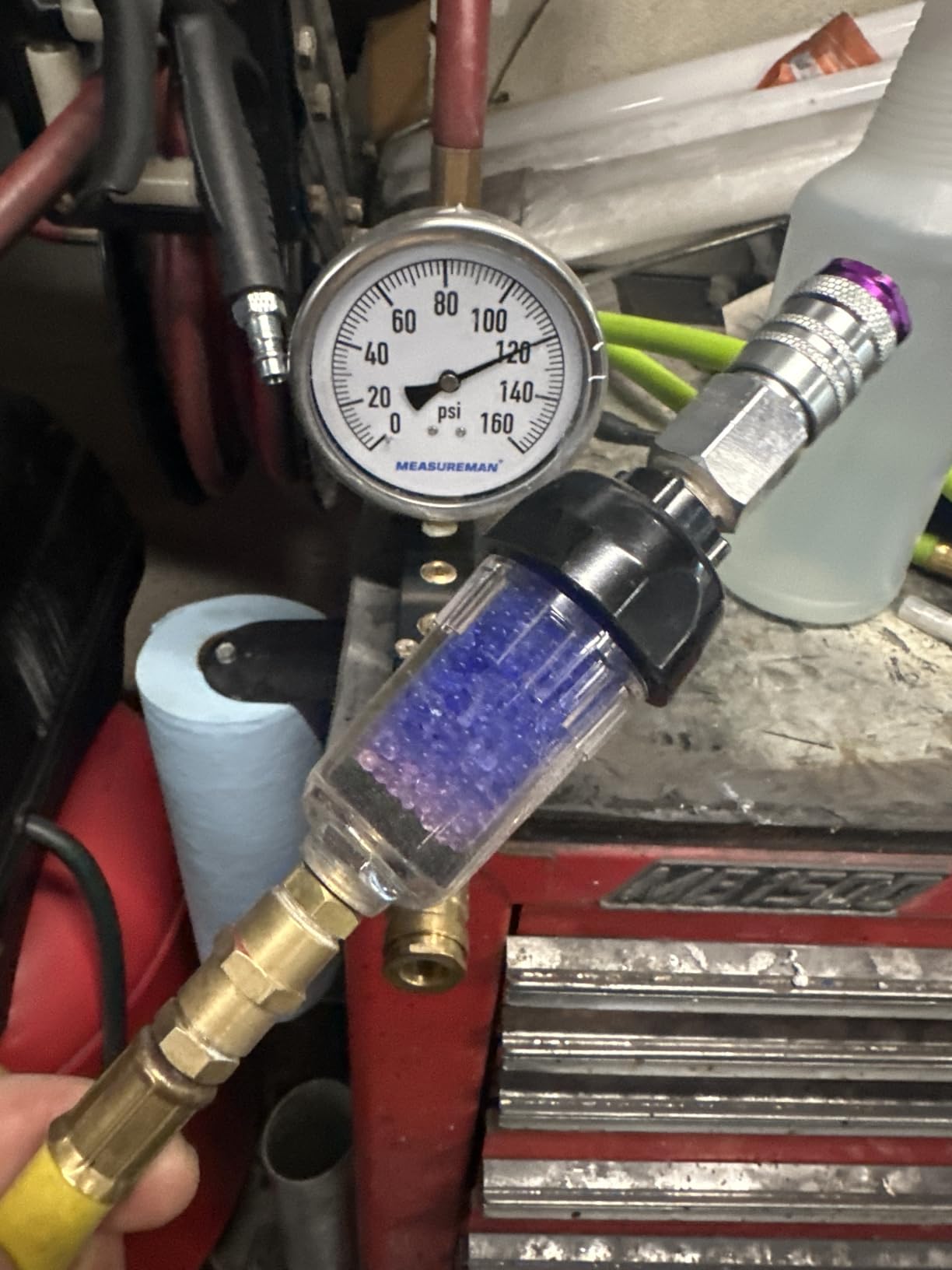
Those beads are the point. They run blue when they have capacity and turn pink when saturated, so you are never guessing whether the dryer is still doing anything. That visual signal replaces a dew point meter for most point-of-use jobs, and it is a genuinely useful design choice at this level of hardware.
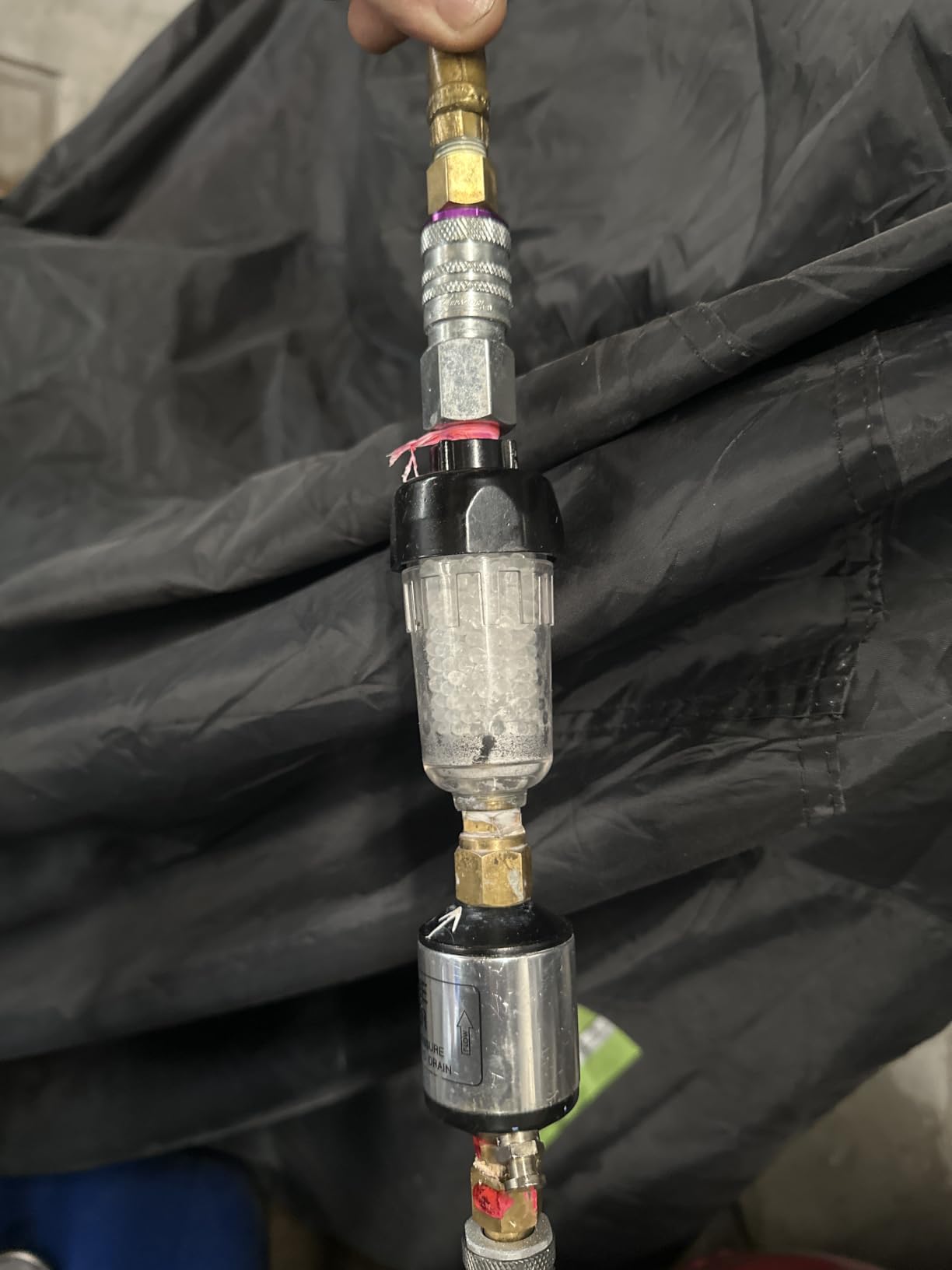
Flow is rated at 22 CFM with a working pressure range of 1-150 PSI on 3/8 inch NPT ports, and the body is only 1.57 by 1.57 by 3.94 inches. Buyers mount it directly at a spray gun, plasma cutter, or air tool and report that it does not restrict airflow in practice.
Owners like that there is nothing to drain, nothing to regenerate with electricity, and nothing that can freeze. For a bench setup, that simplicity is worth more than throughput.
What it is good for
It is built for the end of the line. A single HVLP gun, a plasma cutter, or a precision air tool that needs vapor-free air but pulls only a few CFM is exactly this dryer’s job. It is also a sensible finishing stage downstream of a bigger multi-stage unit, since it costs little and adds a second layer of protection right where the air is consumed.
Owners also appreciate that beads can be refreshed in seconds rather than replaced as a sealed cartridge, which keeps the long-run cost low compared with proprietary media.
What it is bad for
The charge is small, and that is the limitation that shows up in reviews. Several users report beads turning pink within a single tool session. In a humid shop or a high-duty cycle, you will be refilling constantly, and that changes the economics quickly.
It is also not a primary line dryer. Without upstream filtration it has no way to keep liquid water off the bead bed, and liquid water will exhaust desiccant far faster than vapor will. Put a separator ahead of it. If you need sustained high flow, the THB in entry seven pushes considerably more air through a similar idea.
4. Campbell Hausfeld PA208503AV – Oil Cleaner and Desiccant Dryer in One
Campbell Hausfeld Oil-Removal Air Cleaner and Desiccant Dryer, PA208503AV
99.9 percent oil aerosol removal
Rechargeable desiccant packs
Metal body with guarded bowl
1 year warranty
Pros
- Only unit here with 99.9 percent oil aerosol separation
- Color-change recharge indicator
- Metal body and guarded bowl
- Long production history with warranty
Cons
- Desiccant packs are proprietary
- 12 inch vertical footprint
- No regulator stage
Campbell Hausfeld built this one specifically for spray finishing, and the oil separation is what separates it from the generic bead canisters. It is rated at 99.9 percent oil aerosol removal, and it combines that with a desiccant drying stage using recharge packs that have a color-change indicator.
The outlet is protected by a screen that keeps desiccant particles out of the airstream, and metal guards protect the quick-release bowl from shop impacts. A quarter-turn drain handles routine moisture removal. The whole point-of-use assembly is intended to hang at the booth and condition air right where you spray.
There is real history behind this model. It has been in production since the mid-2000s and carries a one-year limited warranty, which is more assurance than most imports in this category offer. Buyers who have run one for years describe it as the unit they trust for finish work.
What it is good for
It belongs at the end of a paint line, mounted close to the gun so the last few feet of hose cannot reintroduce contamination. The oil separation stage is what makes the difference for a quality finish, because atomized oil is what causes fisheyes and orange peel no matter how good the paint is.
If your booth air is already filtered at the header, this is a clean way to add a final safeguard without plumbing a whole system change.
What it is bad for
The desiccant packs are proprietary, so you are locked into genuine PA2086 media for every recharge. That recurring consumable cost adds up over years in a way that generic bead dryers do not, and it is the main reason to consider a refillable canister instead.
It is also tall. At 12.1 inches in height it wants wall space, and it is not a regulator, so pressure control has to come from somewhere else in the line. For anyone who wants one box to do pressure and drying together, a filter-regulator combo is the better shape.
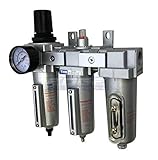
5. EDGE Industrial 3-Stage Combo – Coalescing Where It Counts
3 STAGE, HEAVY DUTY INDUSTRIAL GRADE FILTER REGULATOR COALESCING DESICCANT DRYER SYSTEM FOR COMPRESSED AIR LINES, METAL BOWLS, GREAT FOR PAINT SPRAY AND PLASMA CUTTER (3/4″ NPT, AUTO DRAIN)
100 CFM air flow
0.01 micron coalescing element
175 PSI max input
Metal bowls, float auto drain
Pros
- Three stages in one wall-mounted body
- Metal bowls with sight glasses
- Internal float auto drain on stage one
- Responsive seller support on O-ring issues
Cons
- O-rings between stages leak on some pieces
- Desiccant chamber can seize over time
- Regulator adjustment is fiddly
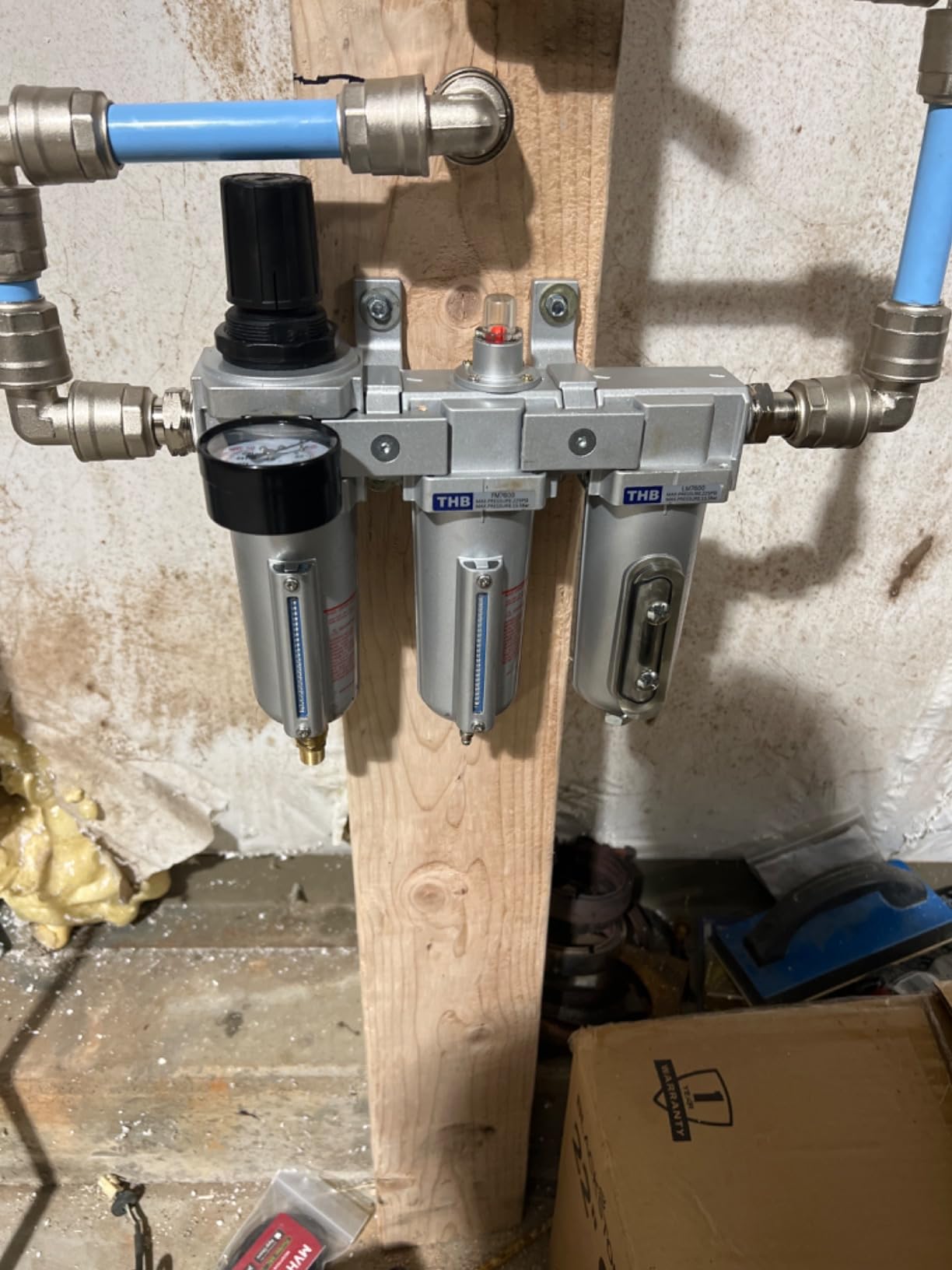
The EDGE Industrial three-stage system is the value route into real coalescing. Stage one is a 5 micron water trap and regulator adjustable from 7 to 175 PSI, stage two is a 0.01 micron coalescer with a red change indicator, and stage three is a desiccant chamber holding 5 oz of color-changing beads with two refill bags included.
That 0.01 micron stage is the same class of filtration as the much larger NANPU in entry two, and it is what separates this from a simple piggyback combo. For plasma cutting and spray work, it is the stage that stops oil aerosols and fine mist from reaching the nozzle or the gun.
The aluminum construction is another point in its favor. Metal bowls resist impact and solvent exposure far better than polycarbonate, and the sight glasses let you check level and condition without opening anything. A float auto drain on stage one reduces the manual emptying that bothers owners of smaller units.
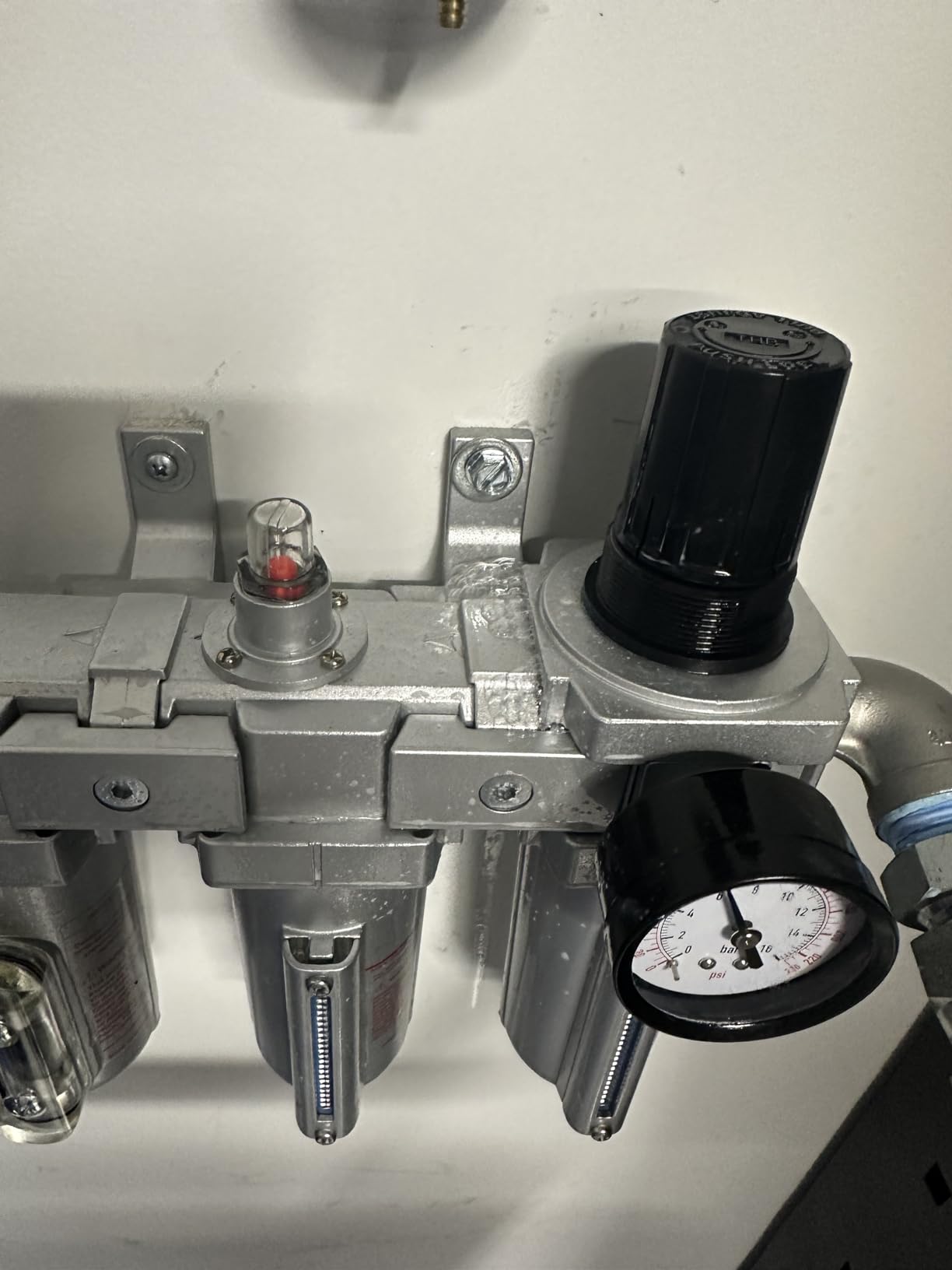
Flow capacity is 100 CFM on 3/4 inch NPT ports with 175 PSI maximum input, so it covers a solid mid-size shop compressor. A wall mounting bracket is included, which matters because a unit this size does not belong on a bench.
Be aware that quality control is inconsistent across production. Leaking O-rings at the stage interfaces are the most common complaint, sometimes on arrival and sometimes after a few months, and the gauges can weep over time. The desiccant chamber can also seize in service if it sits unused, so drain it before storage.
What it is good for
It suits mid-size shops that spray regularly, cut with plasma, or run pneumatic equipment that cannot tolerate oil mist, and it does so without a large cabinet of equipment. The auto drain means less routine attention than a manual-drain system of the same size.
Owners who have had sealing problems report that the seller shipped replacement O-rings quickly, which matters more than it sounds when a leak stops a booth for a day.
What it is bad for
This is the lowest-rated unit in the group at 4.0 stars, and the cause is sealing rather than design. Leaks at the stage interfaces are frequent enough that you should pressure test each joint at installation and re-check after a few months of running.
The desiccant chamber sealing and bead degradation is a real serviceability concern on long storage cycles, and the regulator is described by owners as fiddly to adjust. If you need dependable low flow, the PneumaticPlus in entry nine is a better-made two-stage option, and if you need full treatment with fewer seals, the NANPU three-stage has more to go wrong and less to fix.
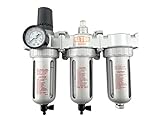
6. ALL Tool Depot 1/2 Inch Three-Stage System – Modules You Can Reverse
1/2″ NPT MID FLOW Filter Regulator Coalescing Desiccant Dryer System For Compressed Air Lines, Poly Bowls, Great For Paint Spray And Plasma Cutter (MANUAL DRAIN)
105 CFM air flow
1/2 inch NPT ports
150 PSI max input
5 oz poly bowls, sight glasses
Pros
- Reversible modules for tight installations
- 105 CFM handles a larger home shop
- Stable output pressure reported across ranges
- Everything needed in the box
Cons
- Leaks at regulator cap or drain valve
- No printed instructions for module removal
- Bead bags run smaller than expected
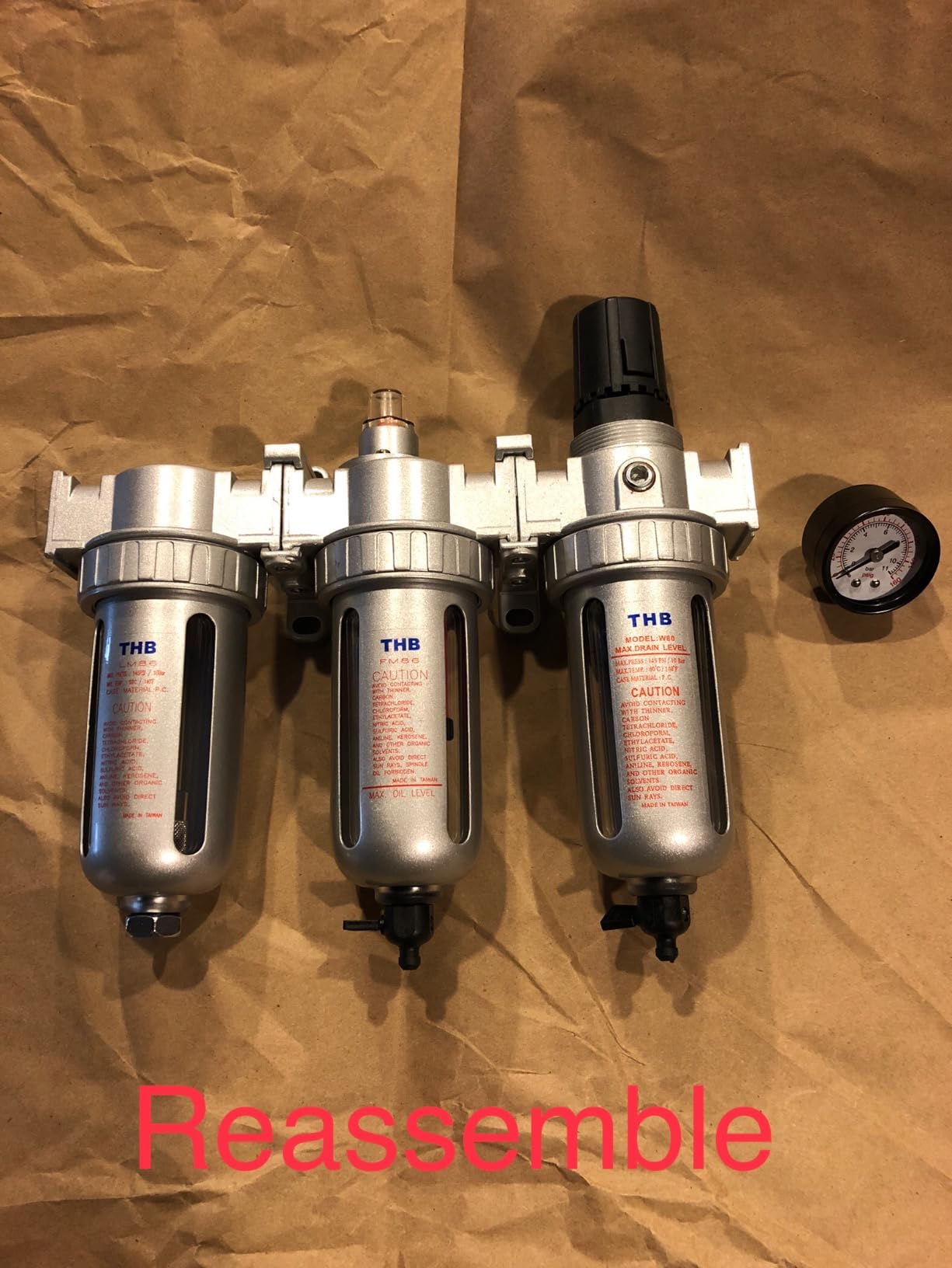
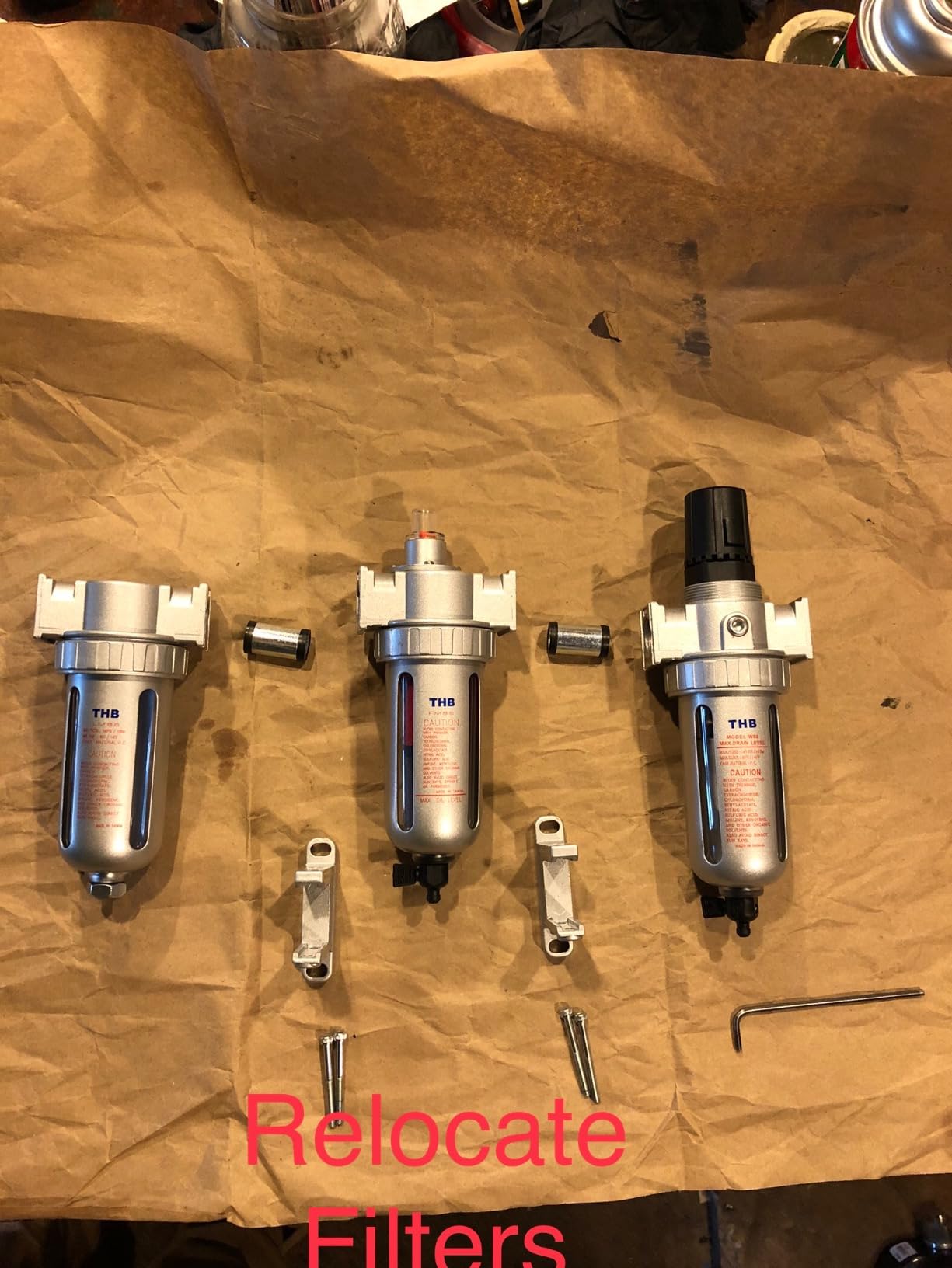
The ALL Tool Depot mid-flow system is the one to buy when wall space is the problem. Each of the three stages is a self-contained module that rotates 180 degrees, so you can reverse the airflow direction and mount the unit in whichever orientation actually fits your layout.
Configuration is the standard progression: a 5 micron water trap and regulator with a 5 oz poly bowl, a 0.01 micron coalescing stage with a red change indicator, and a desiccant stage holding 5 oz of blue-to-pink beads with two refill bags in the box. Sight glasses on all three bowls make monitoring straightforward.
At 105 CFM on 1/2 inch NPT ports with 150 PSI maximum input, it covers a solid home shop compressor. Owners report steady output pressure at both 170 PSI feed and 40-60 PSI working ranges, and several have reconfigured the module order entirely for a ceiling-mounted install.
Build quality is the standout. Multiple owners describe the construction as excellent and the box contents as complete, which is not a given in this category. It has been on the market for several years, so there is a real installed base and pattern of long-term reports behind it.
Two things to plan for. There are no printed instructions for removing or reversing the modules, so figure out the orientation before you thread anything into the wall. And the supplied bead bags run smaller than most buyers expect, so keep a spare bag of bulk desiccant on the shelf.
What it is good for
It is the best fit for a home shop or garage where a fixed multi-stage unit has to share a wall with other equipment. The reversible modules solve an installation problem that rigid three-stage designs create, and 105 CFM is more flow than most single-canister setups in this roundup deliver.
It is also a sensible second stage for a shop already running a refrigerant dryer on the header. Refrigerate centrally, then polish the air here where paint and precision tools draw from it.
What it is bad for
Leaks at the regulator cap and the bottom plastic drain valve are the two most-reported failures. These are not design faults so much as sealing weak points, but they need checking after the first week of operation and periodically after that.
The manual drain on stage one needs routine emptying, and differential pressure across the whole unit can exceed 20 PSI in a closed-loop setup. If your system runs tight on pressure, split the treatment across two points of use instead of stacking all three stages in one body. Poly bowls also degrade with solvent exposure, so use metal equipment for lacquer and thinner work.
7. THB Inline Desiccant Dryer – 88 CFM Through a Small Body
In LINE Desiccant AIR Dryer for Compressed AIR Great for Pneumatic Tools Spray Booth Plasma Cutter, with Desiccant beads (3/8″ NPT)
88 CFM rated air flow
215 PSI maximum working pressure
3/8 inch NPT in and out
Manual twist drain
Pros
- High flow rating for its size
- Clear bowl shows moisture at a glance
- Simple manual twist drain
- Compact 6.5 inch cube footprint
Cons
- No regeneration guidance for the beads
- Polycarbonate bowl cracks under impact or heat
- Not a regulator
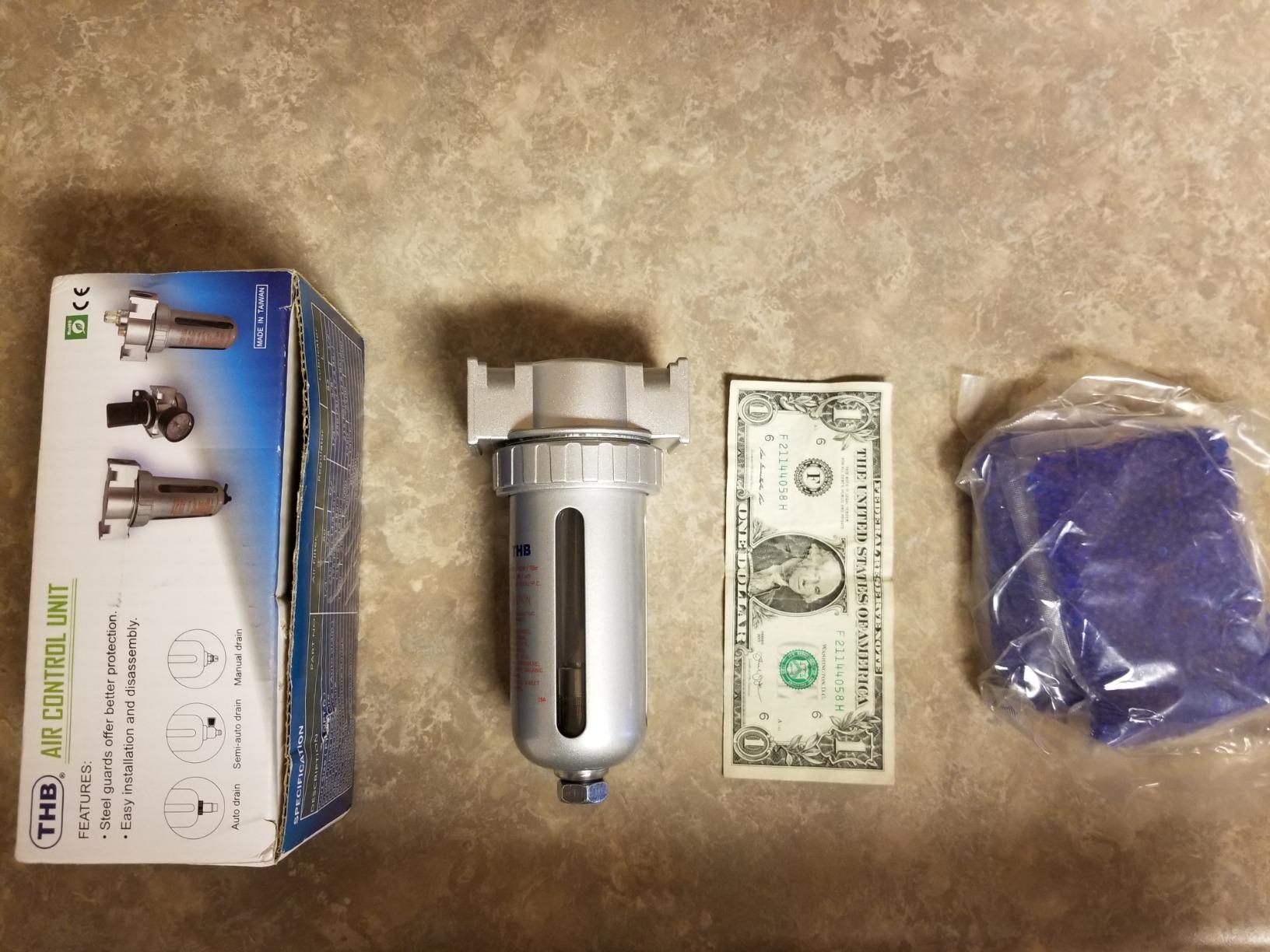
The THB inline desiccant dryer solves a specific sizing problem: it moves considerably more air than a typical small canister while staying roughly the size of one. The rated capacity is 88 CFM, which is four times what the LE LEMATEC handles, and the maximum working pressure of 215 PSI is high for this style of unit.
Everything else about it is deliberately simple. A clear polycarbonate bowl shows you the moisture level and the bead bed condition without opening anything, and a manual twist drain at the base releases collected liquid and debris on a schedule you set. There is no electronics and no regeneration cycle to run.
It mounts on 3/8 inch NPT in and out, and the same design is also offered in 1/4 inch and 1/2 inch NPT if your line size differs. At 6.5 inches square and under two pounds, it is easy to place at a workstation.
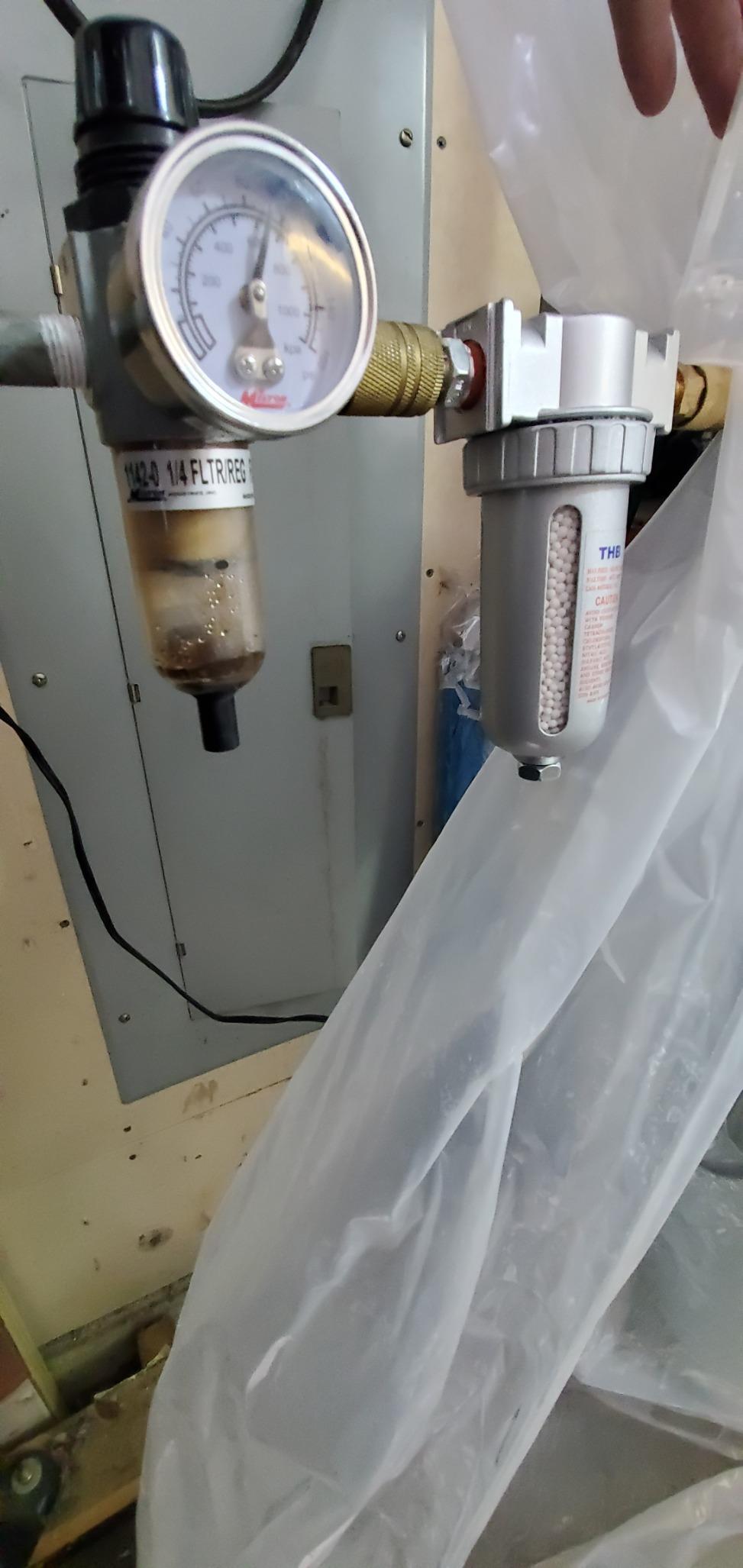
Owners use it at plasma cutters, pneumatic tools, and spray booth supply lines, and reviews describe the see-through bowl as the feature they notice most after installation. It simply removes moisture from the line, and the visual confirmation makes that easy to verify.
The weakness is bead maintenance. There is no regeneration path and no guidance on change interval, so this is a consumable-cost design rather than a set-and-forget one. Plan on a replacement rhythm based on how fast the beads discolor, and keep a bag of bulk media on hand.
What it is good for
It is the right pick when your branch line needs desiccant drying but the LE LEMATEC capacity feels marginal, and you do not want a full multi-stage cabinet. A 20 CFM compressor feeding a plasma table and a couple of air tools is squarely in this dryer’s range.
It also suits higher working pressures than most canisters tolerate, which makes it useful on lines fed directly from a high-pressure header rather than a regulated outlet.
What it is bad for
It is not a regulator and it has no coalescing stage, so liquid water and oil aerosol will exhaust the bead bed. Treat it as a downstream polishing stage, never as the first thing the compressed air hits.
The polycarbonate bowl is the fragile point. It cracks under impact or sustained heat, and a replacement bowl is not a standard part. If solvents are present in your shop, choose a metal-bowl unit instead, such as the NANPU three-stage or the EDGE Industrial combo.
8. AIRZOE AC3110-03 – The Most Complete Accessory Kit
AIRZOE 3/8″ NPT Air Dryer for Compressor-Air Compressor Water Separator AC3110-03,Double Air Compressor Filter,Air Pressure Regulator Combo,5 Micron Brass Element,Semi-Auto Drain,0-145 psi Gauge
2000 L/min flow
5 micron brass elements
Working pressure 0-145 PSI
Aluminum alloy shell, 2.92 lb
Pros
- Ships with gauge bracket couplers fittings and tape
- Aluminum alloy shell resists solvents and heat
- Double brass element architecture
Cons
- Coalescing only
- so vapor and fine oil pass through
- Polycarbonate cup degrades with solvents and heat
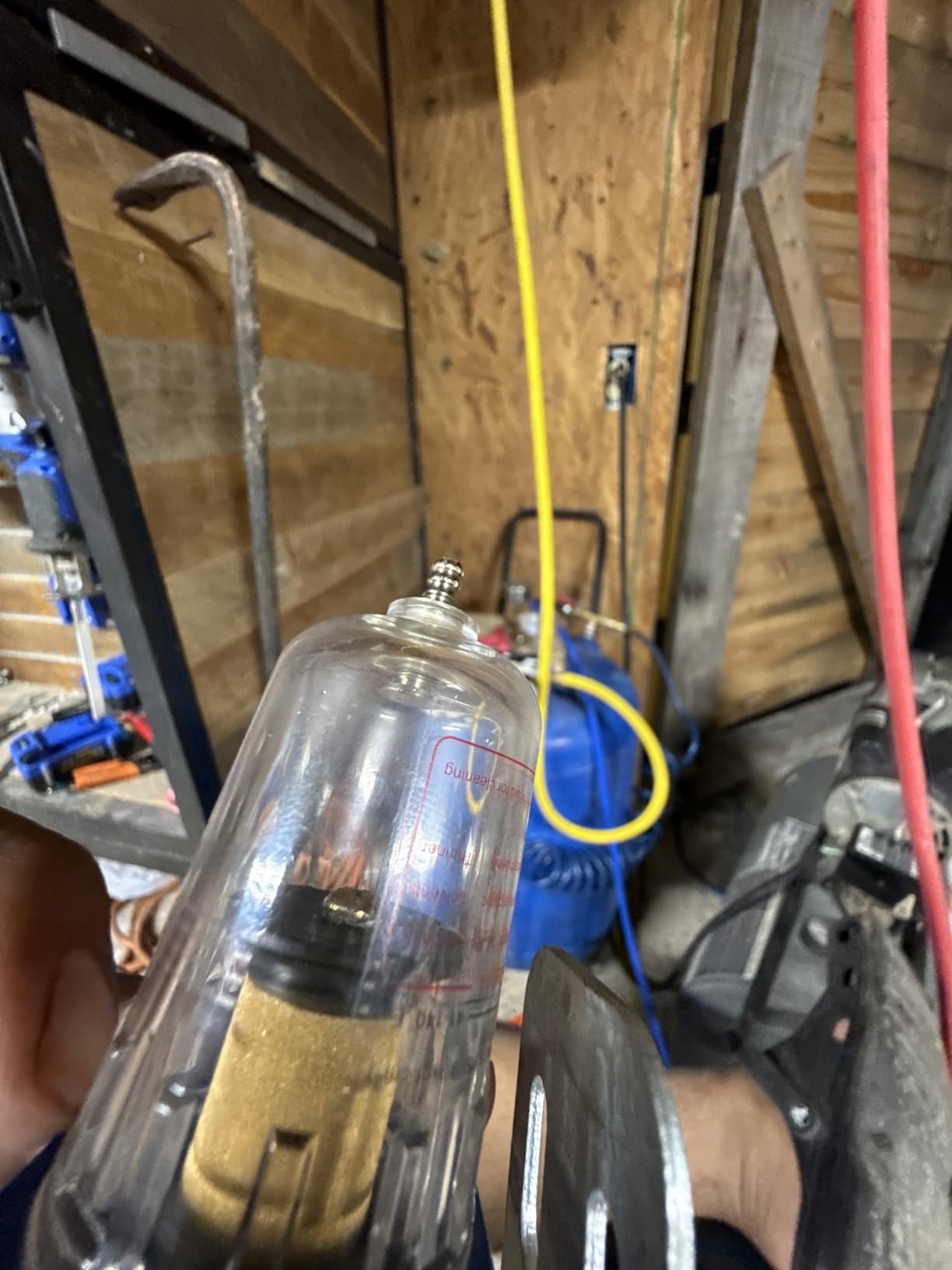
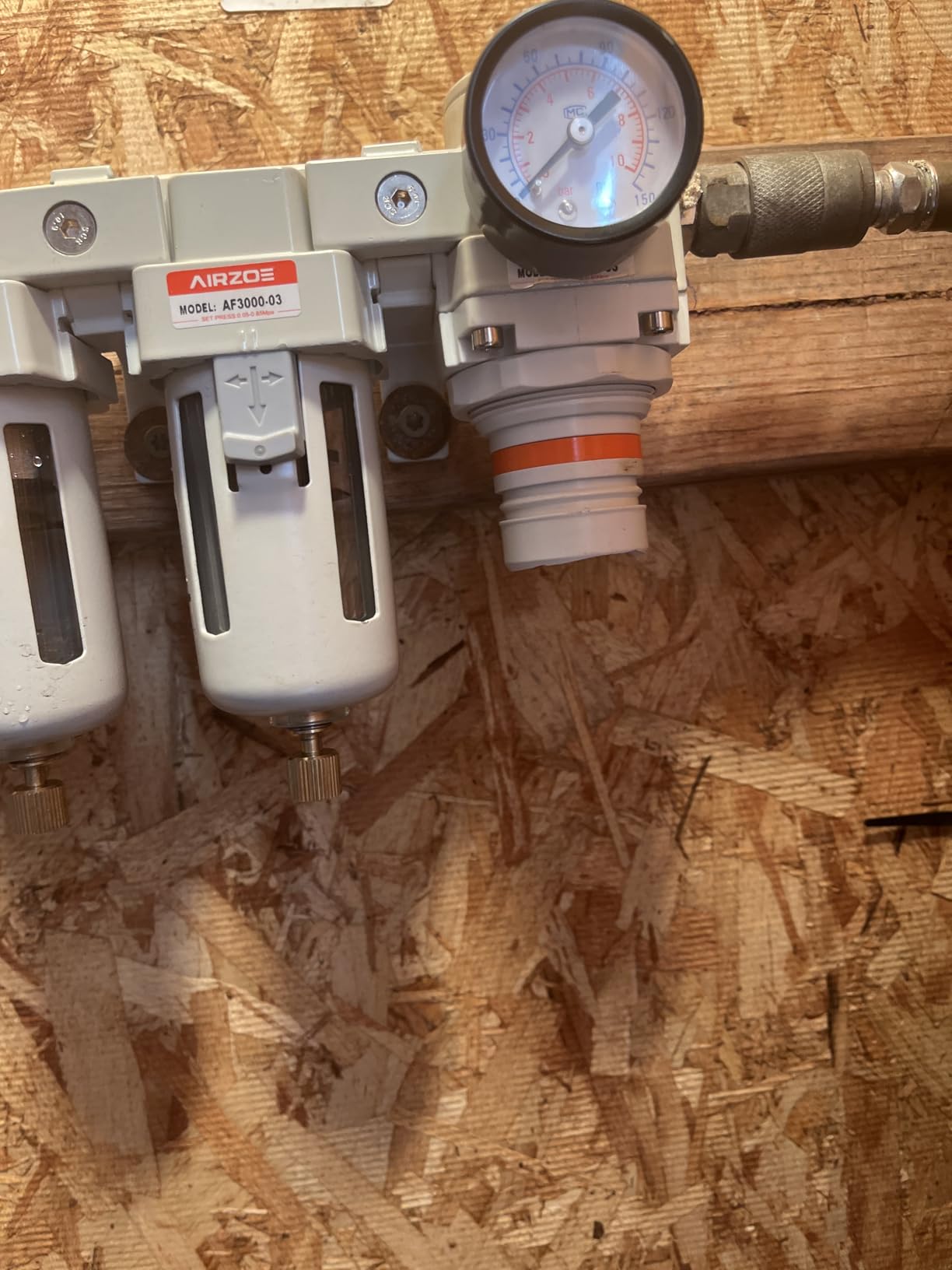
The AIRZOE AC3110-03 is worth noting for one reason above all: the kit. It arrives with a 0-150 PSI gauge, a mounting bracket, a metal air coupler and plug kit, two 3/8 inch NPT fittings, two push-to-connect fittings, and thread seal tape. You will not be making a second trip to the hardware store, which is exactly the complaint forum users raise about bare-cast dryers.
The build leans on aluminum alloy for the outer shell with 5 micron brass elements inside, and buyers tend to see that as sturdier than the all-plastic alternatives. Working pressure is 0-145 PSI with a recommended adjustment range of 0-120 PSI, and flow is 2000 L/min. A semi-auto drain handles the bowl so you are not emptying it on every shift.
It fits 3/8 inch NPT lines and covers the common uses well: paint spraying, air cylinders, and air motors. For a bench or a single station that needs regulated clean air, the package is hard to beat on completeness.
Where it stops is at 5 micron coalescing. Oil aerosols and water vapor pass through, so it is a conditioning and pressure device rather than a true dryer. If your process needs dryness, this belongs upstream of a desiccant canister rather than instead of one.
It is also one of the newest designs here, so the review base is thinner than the older units. That is not a defect signal by itself, but it does mean you are buying on specification rather than on accumulated owner reports.
What it is good for
It suits a single-station setup that needs regulated pressure and clean air in one body without a separate gauge purchase. The included push-to-connect fittings speed up installation, and the semi-auto drain lowers routine maintenance compared with a manual-drain unit of the same size.
Anyone who has been caught out by missing hardware after a delivery will appreciate that the box is genuinely complete.
What it is bad for
It is a coalescing filter only. That is fine for general shop air and air motors, but it will not protect a paint finish or a plasma cut on its own, and it will not hold a low dew point in a cold line.
The transparent cup is polycarbonate and will degrade with solvent exposure and heat, so keep it away from thinner storage and do not use it as a service station for lacquer work. If the line runs hot, choose a metal-bowl design instead.
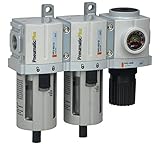
9. PneumaticPlus PPC3C-N02G – Built for 250 PSI Headers
PneumaticPlus PPC3C-N02G Compressed Air Drying System- Particulate Air Filter, Coalescing Filter & Air Pressure Regulator Combo 1/4″ NPT (High Flow), Poly Bowl with Guard, Manual Drain
250 PSI max supply pressure
16 SCFM at 90 PSI
1/4 inch NPT ports
5 micron and 0.3 micron elements
Pros
- Highest supply pressure rating in the group
- Manufactured in Korea with tighter QC
- Guarded poly bowl with manual drain
- Embedded pressure gauge
Cons
- No desiccant stage so vapor passes through
- 16 SCFM limits it to smaller compressors
- 0.3 micron element is coarser than 0.01 micron
The PneumaticPlus PPC3C-N02G is the pick when your header pressure is high. Its 250 PSI maximum supply rating is the highest of any unit in this roundup, and max operating pressure is 140 PSI. If your system runs at 150 PSI or above, most of the units here are outside their comfort zone and this one is not.
It is a two-stage assembly: a 5 micron particulate filter followed by a 0.3 micron coalescing element, combined with a pressure regulator in one body. The embedded 0-140 PSI gauge saves a separate purchase, and the poly bowl is guarded and drains manually. The unit is manufactured in Korea, and owners consistently note the tighter quality control compared with imported filter combos.
Flow is 16 SCFM at 90 PSI on 1/4 inch NPT ports, which is the honest limit of this design. That covers a smaller compressor or a single branch, and it is the reason this is a point-of-use device rather than a header unit.
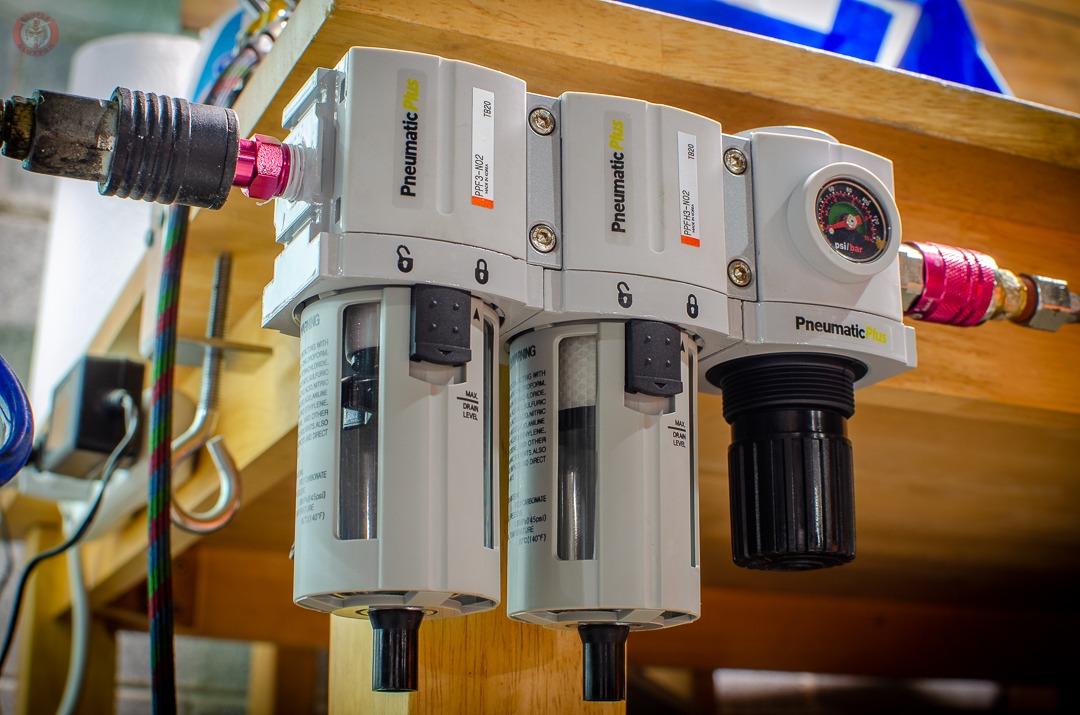
There is no desiccant stage, so water vapor passes through untouched. In a plant header at high pressure, that is exactly the water you do not want downstream, and it means this unit works best as the first stage ahead of a desiccant canister.
The 0.3 micron coalescing element is also meaningfully coarser than the 0.01 micron elements in the three-stage systems here. If you are doing finish work, that difference shows up as more oil mist reaching the gun.
What it is good for
It fits high-pressure applications where other units would be operating outside their rating, and the guarded bowl survives the kind of handling a shop floor delivers. The embedded gauge and integrated regulator make it a clean single-point install.
For a facility feeding pneumatic controls or moderate-flow equipment off a high-pressure header, it is a well-made piece of hardware with a very low failure rate in owner reports.
What it is bad for
At 16 SCFM it is undersized for anything above a small compressor, and there is no desiccant stage, so it is a conditioner rather than a dryer. Those two facts together make it a component in a chain rather than a solution on its own.
It also carries the lowest average rating in this group at 4.2 stars, with a meaningful share of one-star reviews. The poly bowl is unsuitable for solvent-heavy environments above 150 PSI, and the manufacturer itself recommends a metal bowl in that situation.
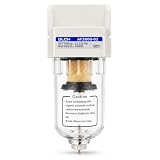
10. BLCH AF2000-02 Coalescing Dryer – Smallest Footprint
BLCH 1/4″ NPT Air Line Dryer – Air Dryer for Compressor,Compressed Air Dryer Air Drying System AF2000-02Z Manual Drain Poly Bowl 0-160 PSI 5μm
27 CFM (750 L/min) flow
5 micron brass element
145 PSI max pressure
1/4 inch NPT, 5.6 oz
Pros
- Compact and light at under 6 ounces
- Easy-to-service manual drain
- 5 micron brass element for long life
- Mounting bracket included
Cons
- Coalescing filter only
- no vapor removal
- Polycarbonate bowl vulnerable to solvents
The BLCH AF2000-02 is the smallest and lightest unit here, and it pairs a 5 micron brass element with a manual drain in a body that weighs under six ounces. If you are conditioning a single tool line, a small compressor, or a 1/4 inch branch, this is the least intrusive way to remove bulk water.
Brass elements are worth calling out. They resist corrosion and last considerably longer than paper media, and at 27 CFM (750 L/min) with 145 PSI maximum pressure you get genuine capacity for a small system. Operating temperature range is 41-140F, and a mounting bracket is included for wall or panel mounting.
The manual drain and polycarbonate bowl make servicing simple, which is the practical appeal at this size. Related models in the same range cover larger port sizes if you need more flow later without changing approach.
What it is good for
It is the right starter device for a hobby shop, a garage compressor, or a single pneumatic tool line where water in the line causes corrosion or inconsistent tool performance. At 27 CFM it has real capacity for a small compressor, and it will not steal noticeable pressure from the line.
It also works well as a pre-filter ahead of a desiccant canister, keeping bulk liquid out of the bead bed so the desiccant lasts longer. That pairing is the most cost-effective way to build dryness out of inexpensive components.
What it is bad for
It is a coalescing filter only, so oil aerosols and water vapor pass through. It does not lower a dew point, and it should never be sold to you as a dryer for a process that needs one.
The manual drain needs regular attention, and the polycarbonate bowl is vulnerable to solvents and impact. Above 145 PSI it is out of its range entirely, so for a high-pressure header this is the wrong tool. If you need the same simplicity with real drying, the LE LEMATEC canister adds vapor removal for very little more.
How to Size an Air Dryer in SCFM
The most common sizing mistake is treating a dryer’s CFM number as interchangeable across products, and it is not. A rating quoted at 90 PSI and a rating quoted at 125 PSI are different measurements of different conditions, so always read the reference pressure next to the flow figure before you compare anything.
Here is the sequence we use. First, find your compressor’s rated output CFM at its rated pressure from the nameplate. Second, convert to standard cubic feet per minute if you want a directly comparable number, keeping the pressure reference attached to the figure. Third, compare that number against the dryer’s rated flow at the same pressure. Fourth, add 20 percent headroom so the dryer is not running at its ceiling every time a tool cycles.
A worked example on a 5 HP compressor rated at about 18 CFM: multiply by 1.2 for headroom and you need roughly 22 CFM of dryer capacity. The LE LEMATEC at 22 CFM and the BLCH at 27 CFM both clear that bar, while the PneumaticPlus at 16 SCFM does not. Add a second tool and you are in the range of the THB at 88 CFM or the three-stage systems at 100 CFM and above.
Other drying hardware solves a different problem. If the material in your workshop, not your air, is what needs conditioning, our guide to the best filament dryers for 3D printing covers that side of the shop.
The same logic scales up. A 100 HP plant compressor in the 600-700 CFM range needs a dryer rated well above that number, and at that point you are looking at a central refrigerant dryer rather than any inline device in this roundup. Nothing in this list is designed for a plant header, and sizing an inline canister to a 100 HP compressor is how people end up with an air line that cannot deliver what the compressor produces.
One more practical check. Reviewers on shop forums warn repeatedly that undersized dryers are the main complaint in this category, and that a dryer working at its rated limit will show it as shortened media life, elevated pressure drop, or a dew point that drifts above spec. When two products both fit on paper, take the larger one.
Where the Dryer Goes in the System
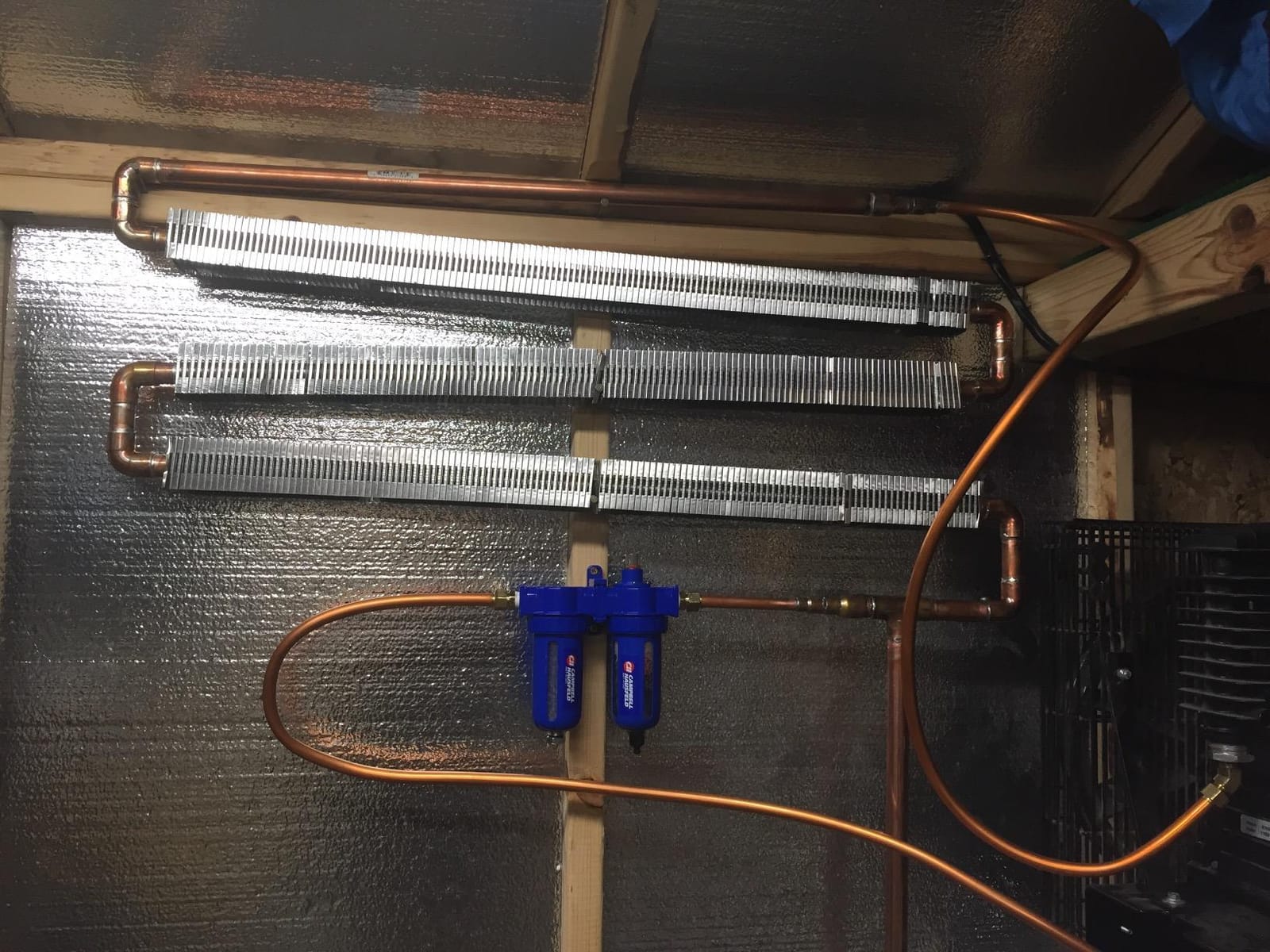
Order matters more than most buyers expect. The correct sequence is compressor, aftercooler, separator, dryer, particulate filter, receiver, then points of use. Each stage removes something the next one cannot handle efficiently, and putting the dryer first means it is fighting liquid water and compressor oil instead of clean vapor.
The aftercooler drops the air temperature first, which knocks out the bulk of the free water as liquid. The separator catches that liquid plus any oil the compressor carried over. Only then should air reach the dryer, because a desiccant bed or membrane exposed to liquid water saturates orders of magnitude faster than one fed dry vapor.
Downstream, a particulate filter protects the dryer media and any sensitive downstream device from whatever the dryer sheds. The receiver then buffers pressure so tools do not cycle the compressor constantly. If your setup runs air outdoors or through unheated space, the dryer placement and the dew point rating both matter more than usual, and a desiccant or membrane type beats a refrigerated one in a cold environment.
Condensate is worth a paragraph of its own. Water-only condensate from a separator after an aftercooler can usually go to a floor drain. Oil-bearing condensate is a different matter: in many jurisdictions it is regulated as used oil and must not be discharged to a storm drain or a regular sink. Check your local rules before you plumb a drain, and use a separator rated for the volume your system produces.
Drain type is the last detail people regret. Float-operated drains are cheap and passive but collect debris and stick open, which leaks air quietly and continuously. Electric timer drains cost more and need a power source, and owners on Practical Machinist consistently report them as the more reliable choice over the long term. Whichever you pick, put it somewhere you can actually see.
Dew Point Explained and How Dry Is Too Dry
Pressure dew point is the temperature at which moisture would start condensing out of your air at line pressure, and it is the single number that determines what an application needs. General shop air and pneumatic tools are comfortable around 37-50F (3-10C). Paint and coating work wants 35F (2C) or lower. Instrumentation, food, pharmaceutical, and electronics lines push toward -40F (-40C) and below, which is desiccant and membrane territory.
Refrigerated dryers deliver roughly a 39F (4C) compressed-air dew point, which converts to about -50F free-air dew point. That is genuinely dry for most trades work and it costs very little to run. Desiccant systems reach -40F to -70F (-40C to -55C) pressure dew point, and membrane dryers sit around -40F without regeneration air.
Now the part most ranking guides skip: drier is not automatically better. Very low dew point air can carry a static charge, and shop owners on machining and fabrication forums report real static problems when dry air is routed through long runs at excessive flow. Extended-adsorption desiccant can also shed fine particles into the airstream if it is over-dried or if the media breaks down, which is why a properly sized unit and a post-dryer particulate filter matter more than an extreme dew point figure on a spec sheet.
Match the dew point to the job and stop there. Buying -100F capability for a shop that sprays enamel wastes money on the equipment and on the electricity to run it, and it introduces a static hazard you did not have before. Instrument air needs the extremes; a body shop does not.
One related rule worth keeping: a refrigerated dryer in an unheated space will freeze. Treat roughly 50F (10C) ambient as the practical floor, and if the shop sits below that in winter, choose a desiccant or membrane type that has no water to freeze in the first place.
Frequently Asked Questions
What type of air dryer is best for use with a compressor?
For most shops, a refrigerant dryer is the right choice. It holds pressure dew point around 37-50F (3-10C), uses no consumable media, and costs very little to run. Choose a desiccant dryer when water vapor itself is the problem, such as instrumentation, food, pharmaceutical, or outdoor lines in winter. Choose a membrane dryer when you need roughly -40F dew point without spending regeneration air. Inline canisters like those in this roundup suit branch lines rather than a whole system.
What is the difference between a desiccant dryer and a refrigerant dryer?
A refrigerated dryer chills air below its dew point so water condenses out and drains away, landing around 37-50F pressure dew point while drawing electricity. A desiccant dryer pushes air through silica gel or activated alumina to adsorb water vapor, reaching -40F to -70F, but it consumes regeneration air and needs media service over time. Refrigerant is cheaper to run; desiccant is drier and works in cold ambient temperatures.
What size air dryer do I need for my compressor?
Find the compressor rated output CFM on its nameplate, then choose a dryer rated at least 20 percent above that number at the same reference pressure. A 5 HP compressor at about 18 CFM calls for roughly 22 CFM of dryer capacity. Always compare flow ratings quoted at the same pressure, because a CFM figure at 90 PSI and one at 125 PSI are not interchangeable. Undersized dryers are the most common complaint in this category.
Is 4 SCFM at 90 PSI good?
Four SCFM is enough for a single small pneumatic tool, an air brush, or a plasma cutter on a small compressor, and it is fine as a point-of-use device. It is not enough for a whole shop, a paint booth supply line, or anything feeding a header that serves several stations. If your compressor produces more than about 6 CFM and you want air at more than one point of use, size for the full compressor output plus 20 percent headroom instead.
Do I need an air dryer for my compressor?
You need one if you spray finishes, run air outdoors or through unheated lines, feed instrumentation or food and beverage equipment, or operate a compressor above roughly 10-15 CFM. Moisture corrodes pipe and receivers, freezes in cold runs, ruins paint with fisheyes and orange peel, and shortens actuator life. A small compressor feeding only hand tools in a dry climate can often get by with a filter-regulator and a moisture separator.
What are the downsides of using a desiccant dryer?
The main cost is regeneration air, which typically runs 15-25 percent of throughput and is compressed air you paid for and are venting. Desiccant also needs periodic replacement or service, and very low dew point output can carry a static charge or shed fine particles if the unit is over-dried. A desiccant dryer also has far more to fail than a refrigerant unit, which has no moving parts and no consumable media.
How long do desiccant air dryers last?
It depends on duty cycle, inlet moisture, and whether air is filtered and separated before it reaches the media. Color-changing beads or cartridges give you a service signal rather than a date, and in humid conditions with frequent tool use that signal can come within weeks. Liquid water reaching the bed exhausts desiccant far faster than vapor, which is why a separator and filter upstream of the dryer is not optional.
Which Air Dryer Should You Buy?
Start with the NANPU DFR-03 if you want one dependable unit for a small shop. It has the largest review base in this roundup, a 70 SCFM rating that covers most hobby and garage compressors, and a box that already contains the gauge, bracket, fittings, and coupler kit that other options leave out.
If your work involves spraying or cutting, step up to the NANPU three-stage system at 141 CFM, where the 0.01 micron coalescer and drainless desiccant stage do the heavy lifting. For cold shops or single-tool points of use, a refillable desiccant canister like the LE LEMATEC is the cheapest way to add real vapor drying. And for a high-pressure header, the PneumaticPlus holds ratings nothing else in this group matches.
Whichever you choose, get the flow rating right, put a separator ahead of it, and match the dew point to the job rather than to the biggest number on the box. That is how the best air dryers for compressed air systems actually earn their place in a shop: by removing the moisture you have, not every molecule you could.