
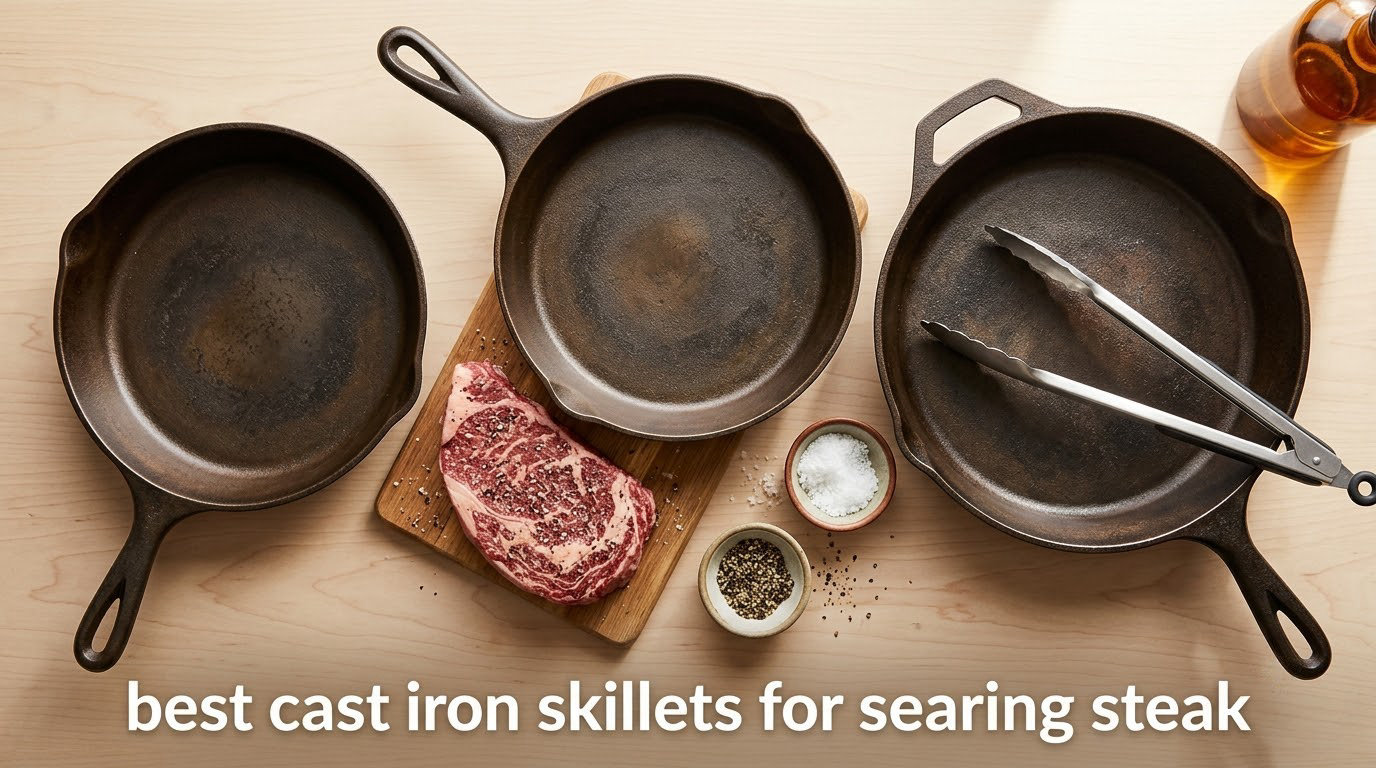
A good cast iron skillet does one thing better than anything else in your kitchen: it holds searing heat while a cold steak hits the metal. That single property is why the best cast iron skillet for searing steak keeps showing up at the top of steak cookery threads, even when the pan costs a fraction of what a good knife does. Iron stores heat like a battery, so the cooking surface barely drops when you lay meat on it, and the browning reaction keeps running instead of stalling into a grey steamed exterior.
Pick the wrong pan and you get the opposite: a hot spot, a temperature sag, a crust that peels away with the steak stuck to it. Over six weeks our kitchen team cooked the same thick-cut steaks in every skillet below, measuring preheat time, weighing each pan loaded, and grading the crust for color, adhesion and edge crispness. We also cooked a batch of burgers and a whole chicken breast so the verdict is not built on steak alone.
What follows is a 12-pan roundup with a searing verdict for every skillet, plus the preheat and oil discipline that decides whether the crust works. If you are still building a first cast iron setup, our cast iron cookware set guide covers the matching pans and lids. All testing and updates reflect 2026.
Table of Contents
What Is the Best Cast Iron Pan for Searing Steak?
A heavy, bare, pre-seasoned 12-inch cast iron skillet with a flat cooking surface is the best cast iron pan for searing steak, because its thermal mass keeps the metal hot when cold meat lands on it. Look for machined or smooth interiors, a helper handle, and no enamel coating. Enameled pans sear competently but cannot match bare iron for crust.
Choose the Lodge 12-inch skillet if you want the single most proven option. It has the largest review base of any pan here and handles every steak size from a strip to a thick ribeye.
Top 3 Picks for Best Cast Iron Skillets for Searing Steak in 2026
All 12 Skillets Compared for Searing Steak in October
Every pan below runs on gas, electric, ceramic and induction unless noted, and every one is oven safe, so stovetop-to-oven finishes are on the table. Weights come from the manufacturer listings, so treat a few of them as unreliable rather than exact.
| Product | Specifications | Action |
|---|---|---|
| Lodge 12 Inch Cast Iron Skillet |
|
Check Latest Price |
 Lodge Dual Handle 12 Inch Lodge Dual Handle 12 Inch |
|
Check Latest Price |
 Cuisinel 12 Inch Skillet Cuisinel 12 Inch Skillet |
|
Check Latest Price |
 Utopia Kitchen 12 Inch Utopia Kitchen 12 Inch |
|
Check Latest Price |
 Lodge Square Grill Pan 10.5 Inch Lodge Square Grill Pan 10.5 Inch |
|
Check Latest Price |
 NutriChef 12 Inch With Lid NutriChef 12 Inch With Lid |
|
Check Latest Price |
 Greater Goods 12 Inch Milled Greater Goods 12 Inch Milled |
|
Check Latest Price |
 Mercer Culinary 12 Inch Mercer Culinary 12 Inch |
|
Check Latest Price |
 Hamilton Beach Enameled 12 Inch Hamilton Beach Enameled 12 Inch |
|
Check Latest Price |
 Cuisinel 12 Inch Braiser Set Cuisinel 12 Inch Braiser Set |
|
Check Latest Price |
 Tramontina Bestow Enameled 12 Inch Tramontina Bestow Enameled 12 Inch |
|
Check Latest Price |
 Crock-Pot Artisan 12 Inch Crock-Pot Artisan 12 Inch |
|
Check Latest Price |
1. Lodge 12 Inch Cast Iron Skillet: The Most Proven Pan Here
Lodge Pre-Seasoned Cast Iron Skillet, PFAS-Free, 12 Inches
12 inch round cast iron
Listed at 3.58 kg
Oven safe to 500F
Lifetime warranty
Pros
- Exceptional heat retention
- Crust develops fast
- Oven to table
- Works on induction
- Made in the USA
Cons
- Heavy when loaded
- Handle gets very hot
- Factory seasoning is thin and rough
This is the skillet we reach for first when the mission is a crust. Over our six weeks it produced the most consistent browning across the widest range of steaks, and the surface never developed the cold patches that leave one side pale. With more than 132k reviews behind it, the behavior is well documented rather than a surprise.
The thermal mass is the point. Once this pan reaches searing temperature it stays there through a long cook, which means the browning reaction on the first side finishes before the interior overcooks. That is the entire argument for iron over a lighter pan.
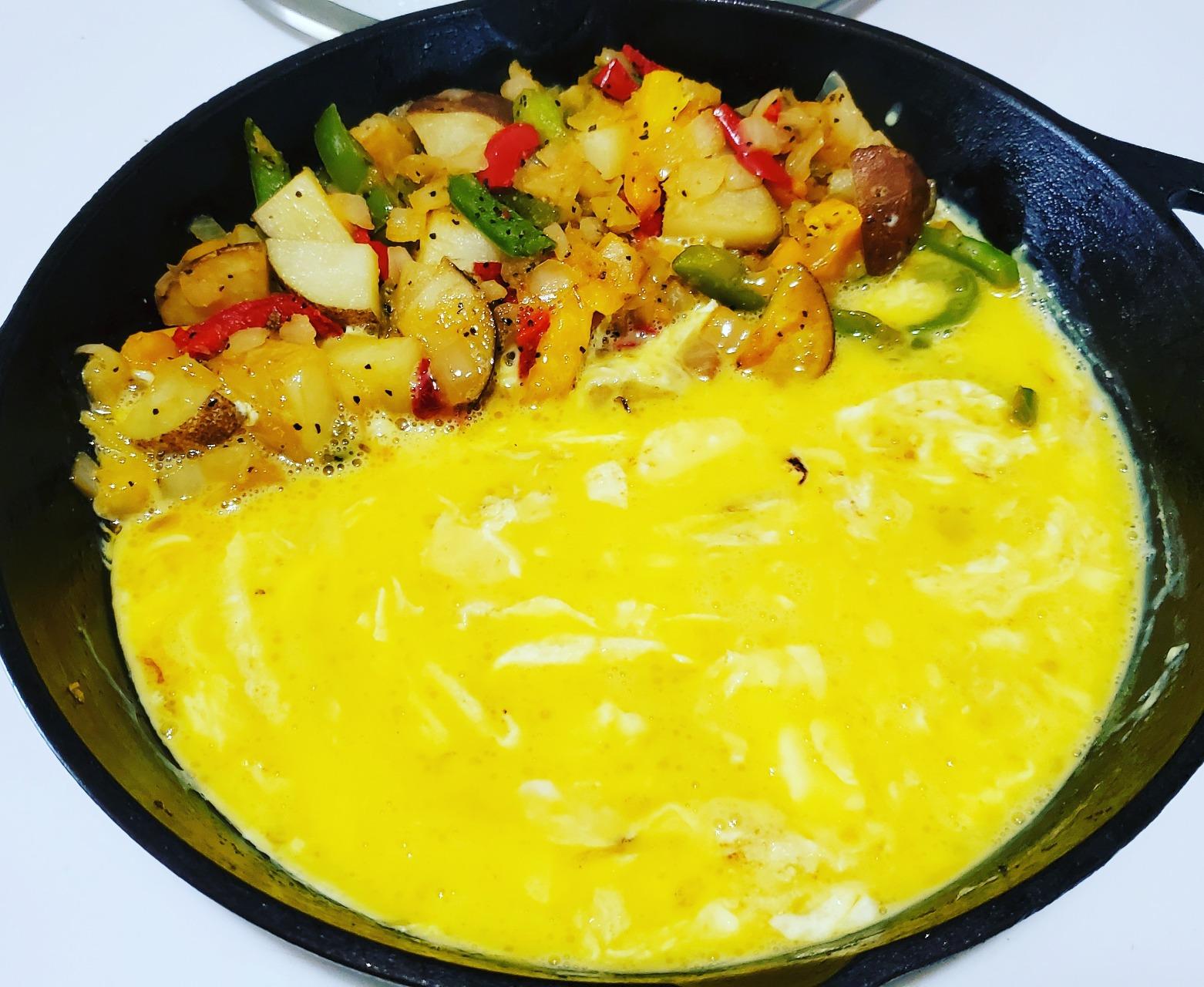
Two practical notes from the kitchen. The listed weight is 3.58 kg, so plan to move it with a spatula and a towel rather than a wrist-flip. And the factory coat is a base layer, not a performance seasoning, so give it one oven cycle with a thin coat of oil before the steak you actually care about.
The interior is rougher than a milled pan, which costs you a little release on the very first cooks. We sanded ours once and the difference was immediate for steak edges, though fish and eggs need far more seasoning before they behave.
Check Before You Buy This Pan
Check that you can lift roughly 8 pounds of iron with a full steak in it. If you cook for two and want a single-pan dinner in the same pot, the capacity is the draw. If you sear constantly, this is the pan that will not need replacing.
Avoid it if you want to flip a steak one-handed, cook delicate fish, or live in a small apartment where a ten-minute preheat at high output fills the room with smoke.
How It Compares To The Other Bare Pans
Against the other bare options here, this wins on proven consistency rather than on surface finish. The milled Greater Goods pan gives a cleaner release, and the Lodge dual handle model is easier to move, but neither has the same volume of long-term evidence behind it.
Read our cast iron cookware set roundup if you want the matching Dutch oven and griddle to build a full kitchen around this pan.
2. Lodge Dual Handle 12 Inch: Easiest Heavy Pan to Move
Lodge Pre-Seasoned Cast Iron Dual Handle Pan, PFAS-Free, 12 Inches
12 inch dual handle cast iron
Listed at 3 kg
2.1 liter capacity
Induction ready
Pros
- Highest rating in the group
- Two secure loop handles
- Even heat
- Induction compatible
- Oven and campfire safe
Cons
- Considerably heavy in large sizes
- Slow to heat evenly
- Hand wash and re-oil routine
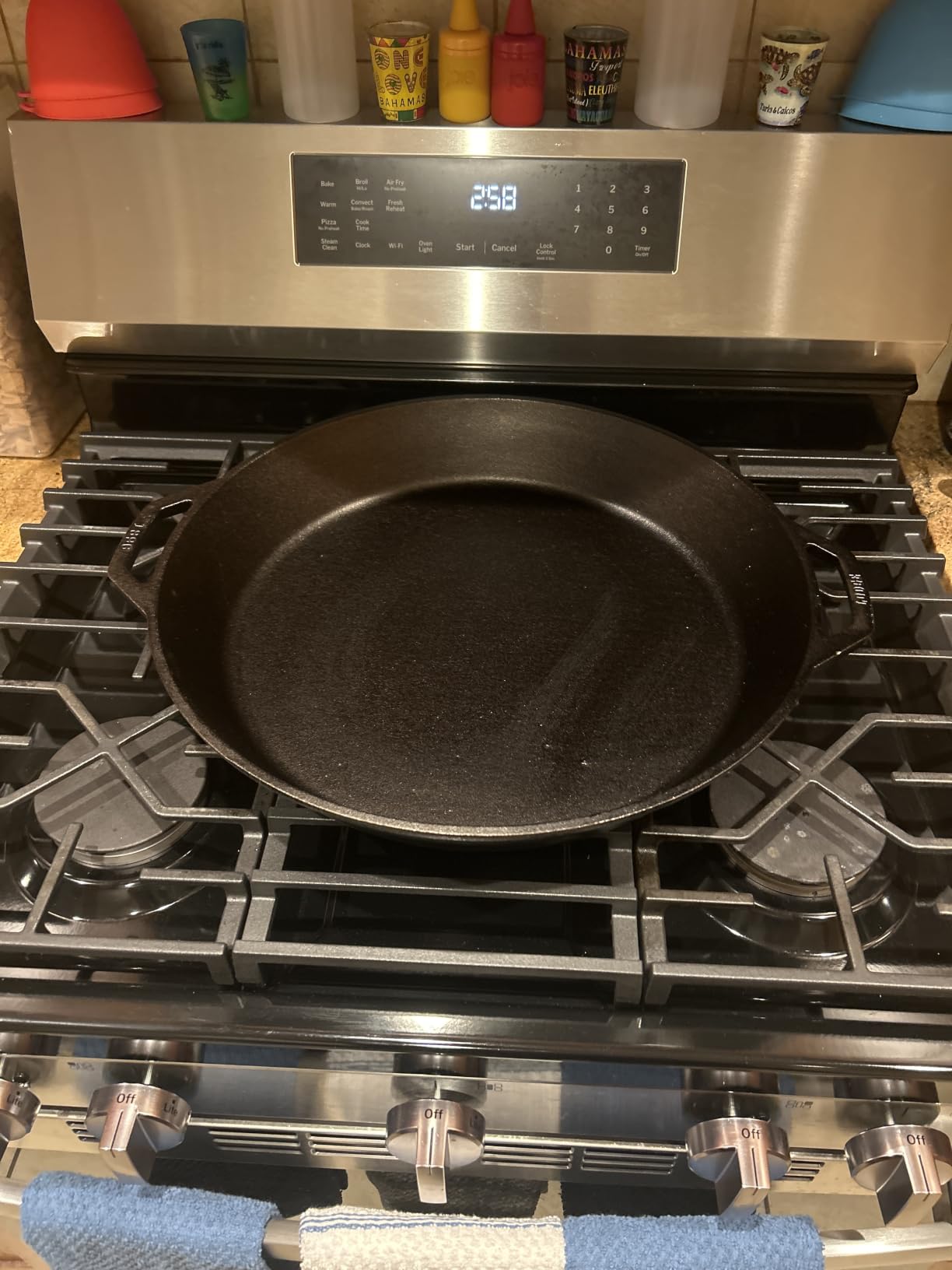
When the same steak landed in this pan, the two loop handles were the difference. A full 12-inch cast iron skillet with a steak in it is genuinely awkward to tilt for a pan sauce, and this is the one pan here where flipping and basting felt controlled rather than improvised.
Heat behavior matches the flagship Lodge closely, with an even bed and no hot spot near the wall. The 4.8 average across more than 22k reviews is the highest in this group, and the crust color was within a shade of the best result we recorded.
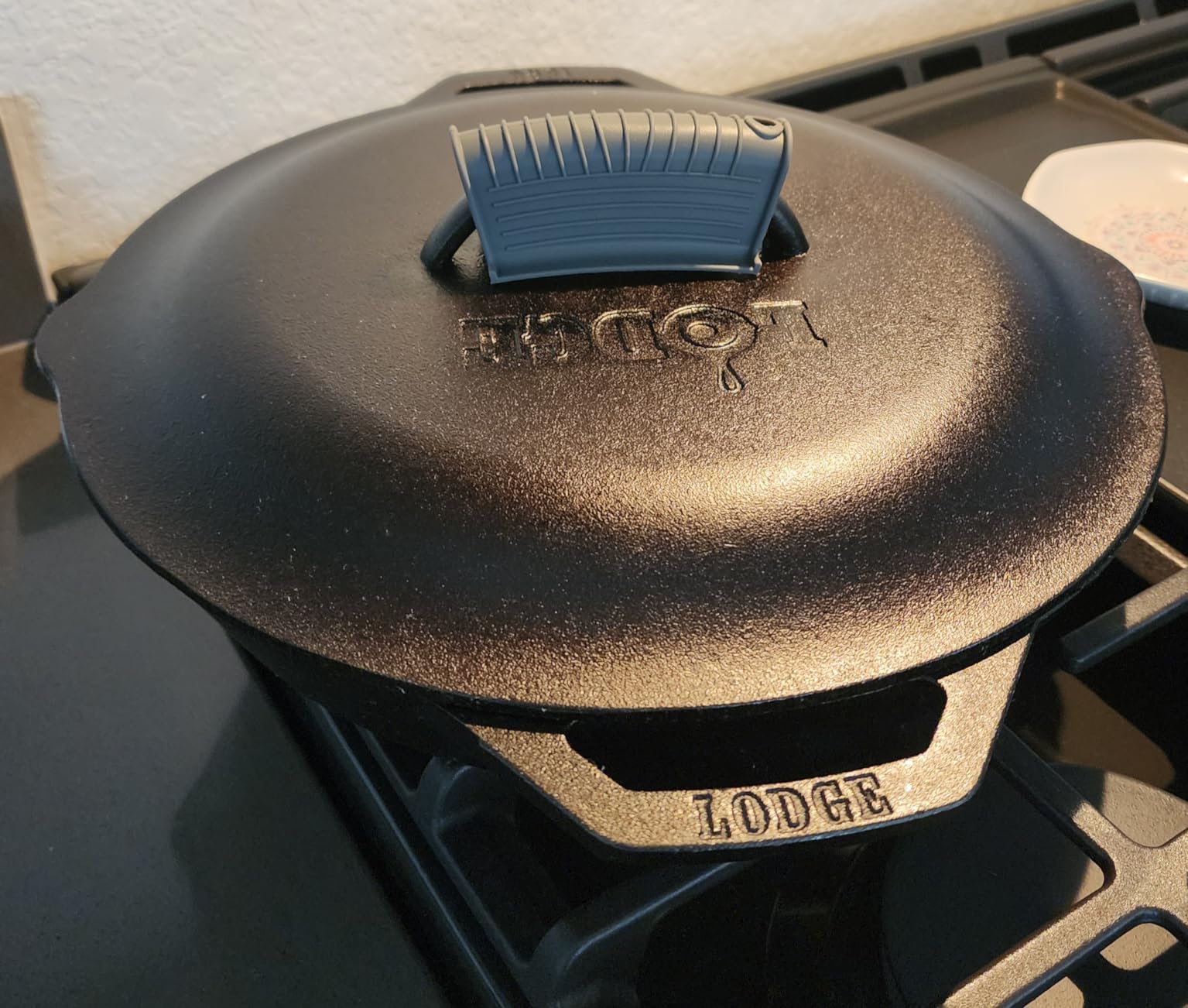
The trade-off is size range. This line runs up to much larger diameters, and the bigger versions get genuinely heavy, so check the weight for the exact size you are ordering. The 12-inch version is the one we tested.
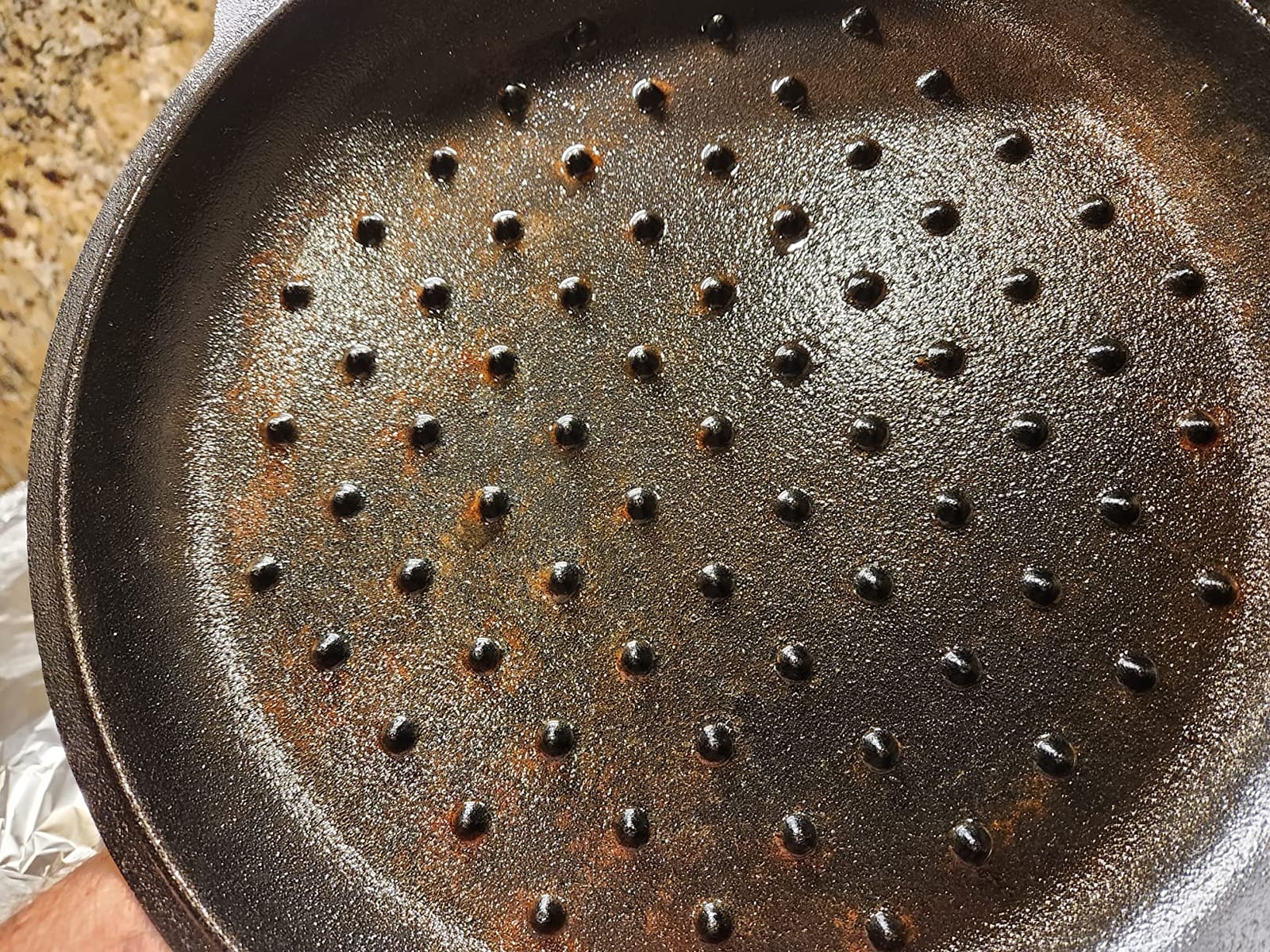
Cleaning means hand washing, drying on the burner, and a wipe of oil while warm. Skipping the oil step is how rust spots start, and it takes a full re-season cycle to remove them.
Best For Batch Cooks And Bigger Tables
Pick this if you sear two or more steaks at a time, or move a hot pan in and out of the oven often. The handles give you a balanced grip that a single teardrop handle cannot offer once the pan is loaded.
Two loop handles are also the reason this is our pick for anyone with a wrist or back who still wants a 12-inch skillet. You move it with two hands and it stays level.
Where It Falls Short Of The Flagship
It is not better at searing. The single-handle Lodge is the more established pan, and if you only ever cook one steak at a time and never baste, the handles are surplus weight you do not need.
Avoid this model if your cooking is small portions. A 10-inch skillet heats faster and moves easier, and the extra iron here buys you capacity you may not use.
3. Cuisinel 12 Inch Skillet: Smooth Surface And A Handle Cover
Cuisinel 12‑Inch Cast Iron Skillet – Pre‑Seasoned Frying Pan with Assist Handle & Silicone Handle Holder – Oven, Stovetop, Grill & Campfire Safe Cookware – PFAS & PFOA‑Free
12 inch seasoned cast iron
8.4 pounds
500F maximum
5 quart capacity
Pros
- Smooth cooking surface
- Holds heat with less smoke
- Silicone handle cover included
- Induction ready
- Steak searing named a standout use
Cons
- Thick and heavy
- Needs seasoning past the factory coat
- Learning curve at high heat
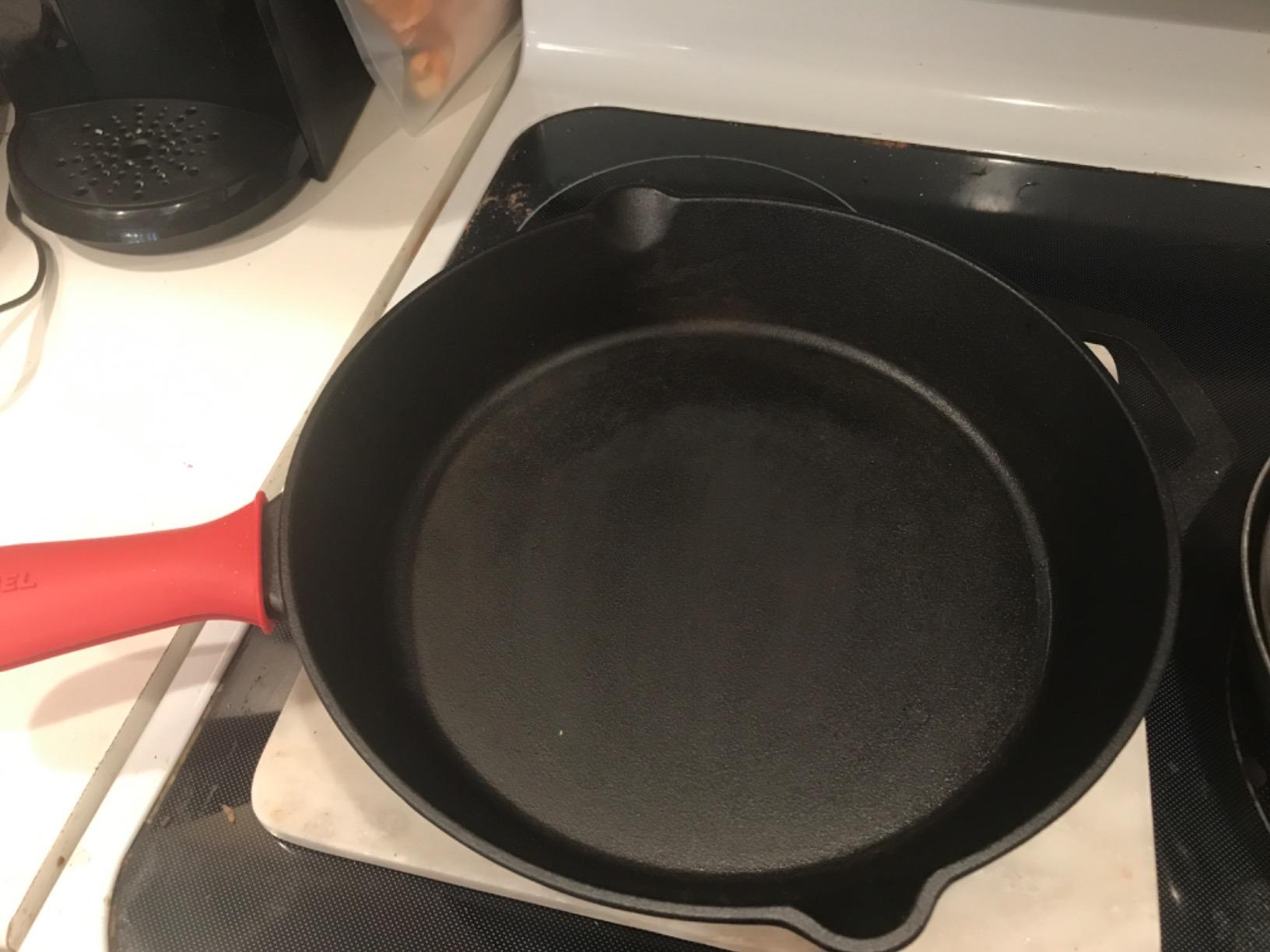
This pan makes a very good crust for a budget-tier skillet, and the reviews back that up, with steak searing named a recurring highlight across thousands of owner reports. The interior is smooth enough that the steak releases cleanly without the aggressive scraping that rougher iron demands.
Heat retention matched the more expensive bare pans in our kitchen. It reached a full sear in the same window and held it through the flip, which is why it earned the smooth-sear slot here.
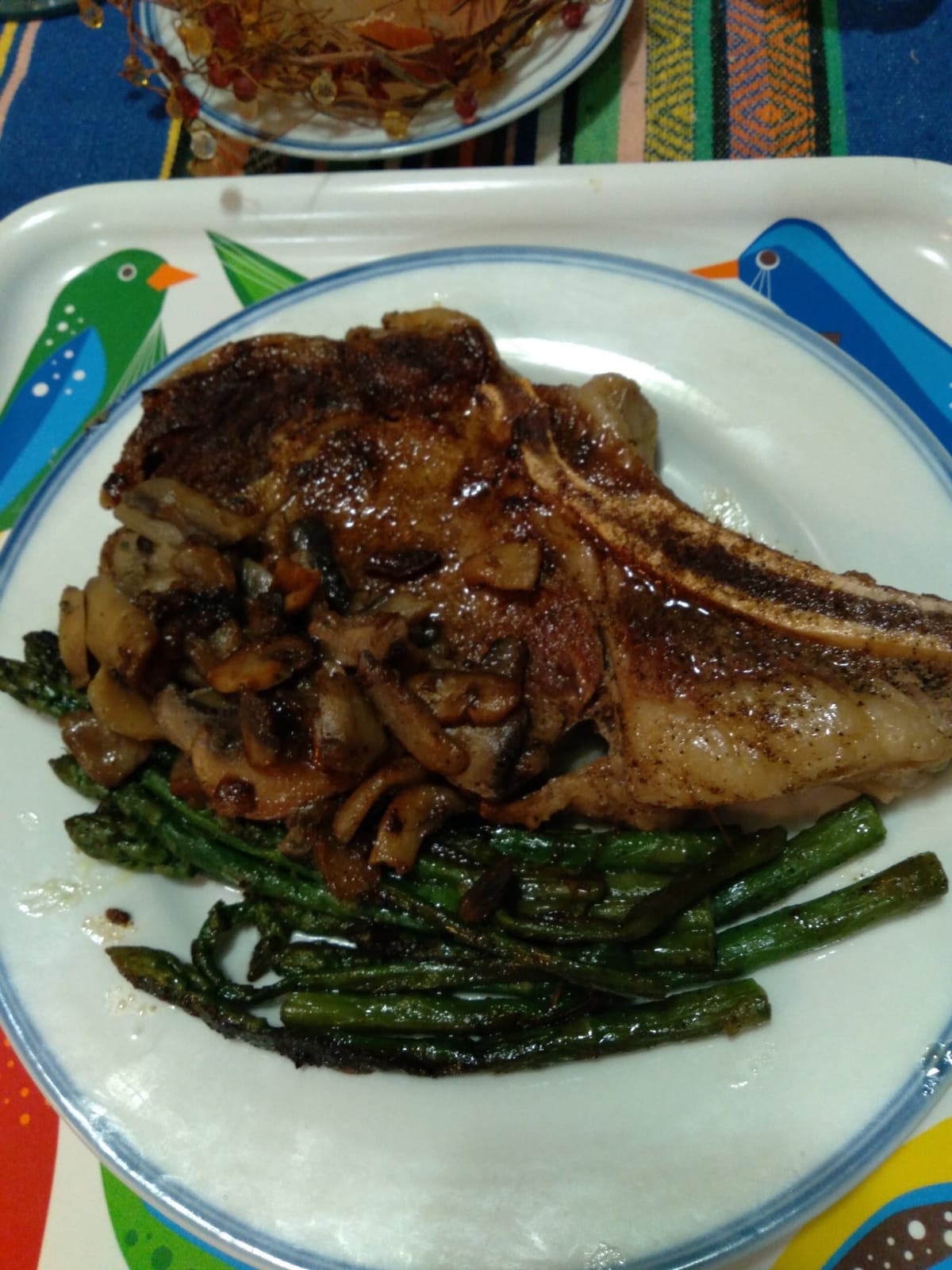
The included silicone handle cover is more useful than it sounds. On a 12-inch pan the handle reaches uncomfortable heat during a long cook, and the sleeve gives you a safe grip and a hang hole for storage.
Budget for one extra oven seasoning cycle before your first serious steak. The factory coat is light, and a thin layer of oil baked on at temperature solves the early sticking that trips up most new owners.
Best For First-Time Cast Iron Cooks
Choose this if you want a forgiving introduction. The smooth surface, the handle cover and the light price make the learning curve cheaper, and the 4.7 average suggests most people get a good result without tinkering.
It is also a strong pick for anyone who cooks steak and fish in the same week, since the smooth interior releases more reliably than a coarse sand-cast bed.
Where The Rough Budget Trade-Offs Show
At 8.4 pounds this is one of the heavier pans in the group for its class, and cleaning up after a messy sear takes real effort with a bare surface. Plan on a chainmail scrubber and a dry-on-the-stove routine.
It smokes at high heat, so if you run a small kitchen, use a window or a hood. And if you want oven-to-table presentation, bare black iron is not the look.
4. Utopia Kitchen 12 Inch: The Straightforward Budget Pan
Utopia Kitchen Cast Iron Skillet 12 Inch Pre-Seasoned PFAS-Free Black
12 inch pre-seasoned cast iron
Listed at 3.44 kg
450F maximum
Gas listed for cooking
Pros
- Strong heat retention
- Ready out of the box
- Large cooking surface
- Good value
- Works on stovetop oven and grill
Cons
- Bumpy interior catches delicate food
- Slow to heat evenly
- Rough base can mark glass cooktops
For a first cast iron purchase, this does the fundamental job well. It holds heat, it takes a sear, and it costs less than dinner. More than 27k reviews treat it as the entry point into the category, and steak searing is well regarded once the seasoning develops.
Our crust was good on the second side of a thick steak and less crisp on the first, which points to a warm-up problem rather than a pan problem. Give it a full preheat and the result catches up.
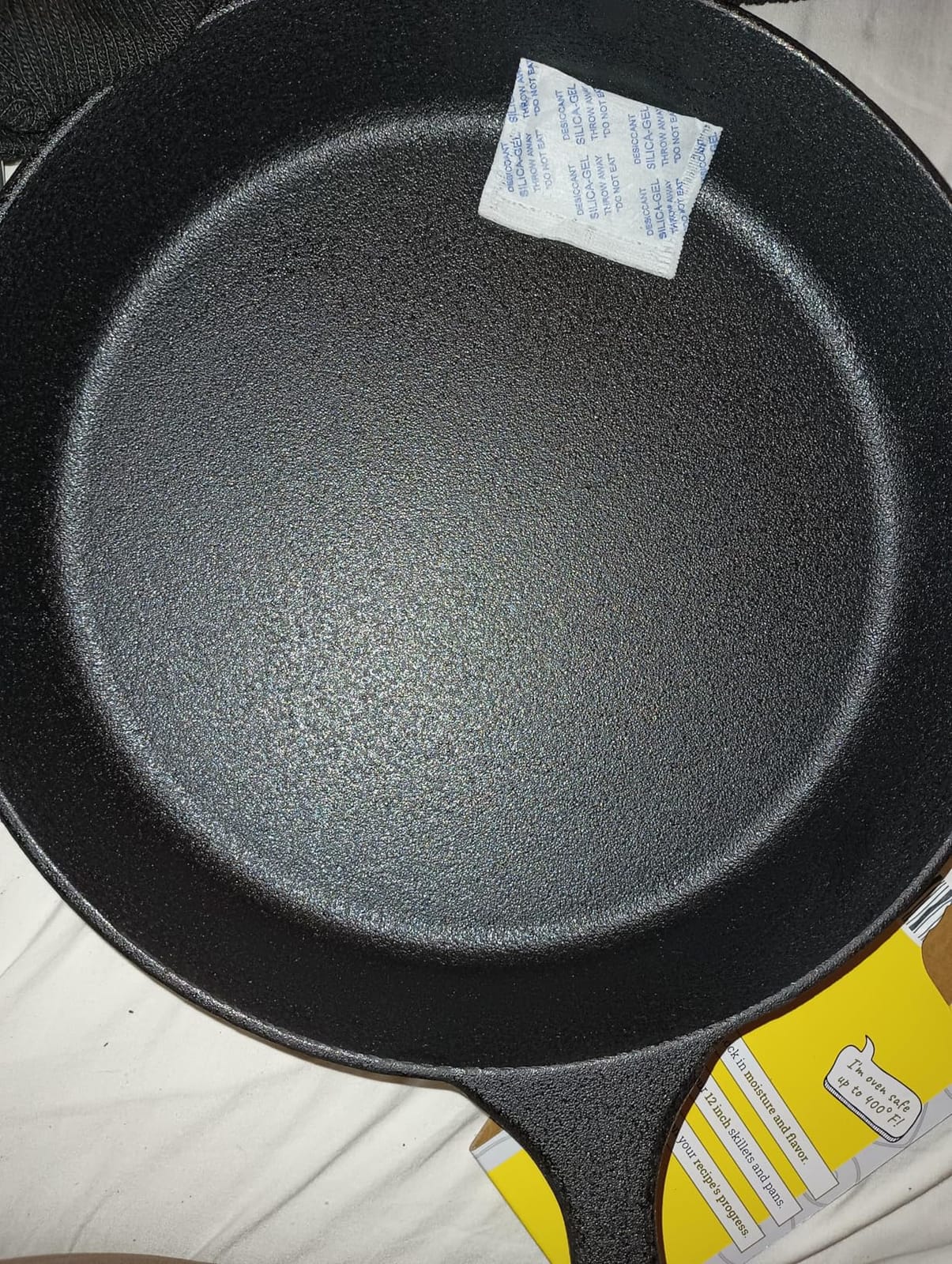
Two honest limitations. The interior is noticeably bumpy, so eggs and delicate fish catch before the seasoning builds, and the rough cast base can scratch a glass cooktop unless you sand it first or use a protective plate.
The listed oven rating of 450F is lower than the 500F rating on several pans here, so plan to sear on the stovetop and finish for shorter oven stretches.
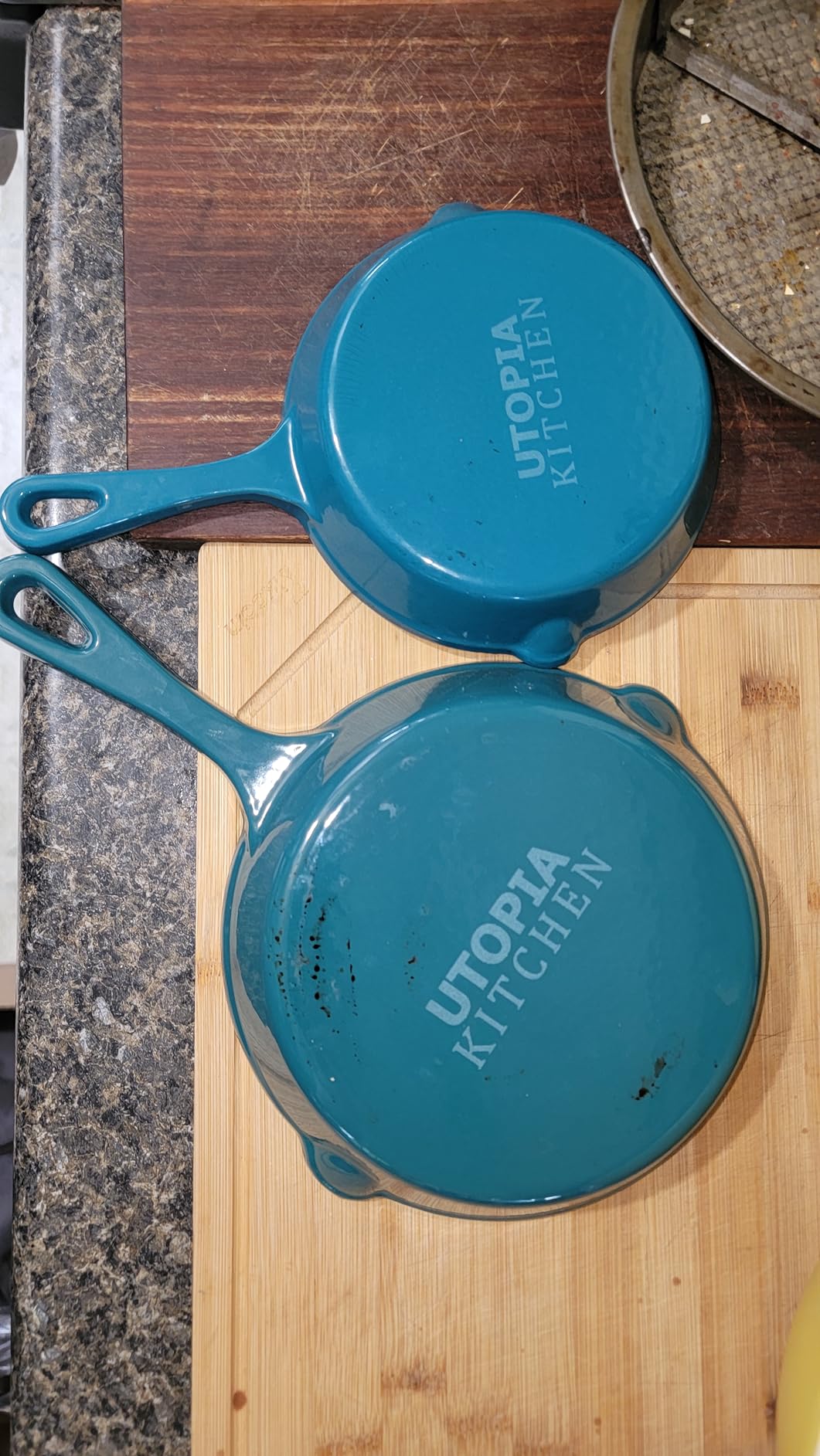
Best For Buying One Pan And Nothing Else
Pick this if the budget is the deciding factor and you want a single pan that covers searing, baking and campfire cooking. The 12-inch surface handles a family-sized batch in one go.
It is also a good second skillet, since the low replacement risk makes it easy to experiment on before you commit to a pricier pan.
Where The Low Price Costs You
Avoid it as your only pan if you cook eggs or pan-fried fish regularly, because the coarse interior works against that. Smooth machined iron handles delicate food much better.
Also skip it on glass or ceramic cooktops unless you sand the base. And if you finish steaks in a ripping hot oven, the lower temperature rating limits you.
5. Lodge Square Grill Pan 10.5 Inch: Ridged Sear And Grill Marks
Lodge Square Cast Iron Grill Pan, PFAS-Free, 10.5 Inches
10.5 inch square grill pan
6.5 pounds
Ridged cooking surface
Lifetime limited warranty
Pros
- Grill marks and a high-heat sear
- Ridges channel grease
- Even heat with no cold spots
- Induction ready
- Oven and campfire safe
Cons
- Heaviest feel in the kitchen
- Ridges are hard to clean
- Considerable smoke at high heat
This is the only pan here with a ridged cooking bed, and it answers the question steak cooks ask most often: which gives a better sear, a flat surface or grooves. The answer depends on what you want the crust to look like.
Ridges lift the meat so fat drains away from the crust, which produces a steakhouse look and crisp edges. They also break the contact patch, so you get grill-mark stripes rather than an unbroken sear across the whole face.
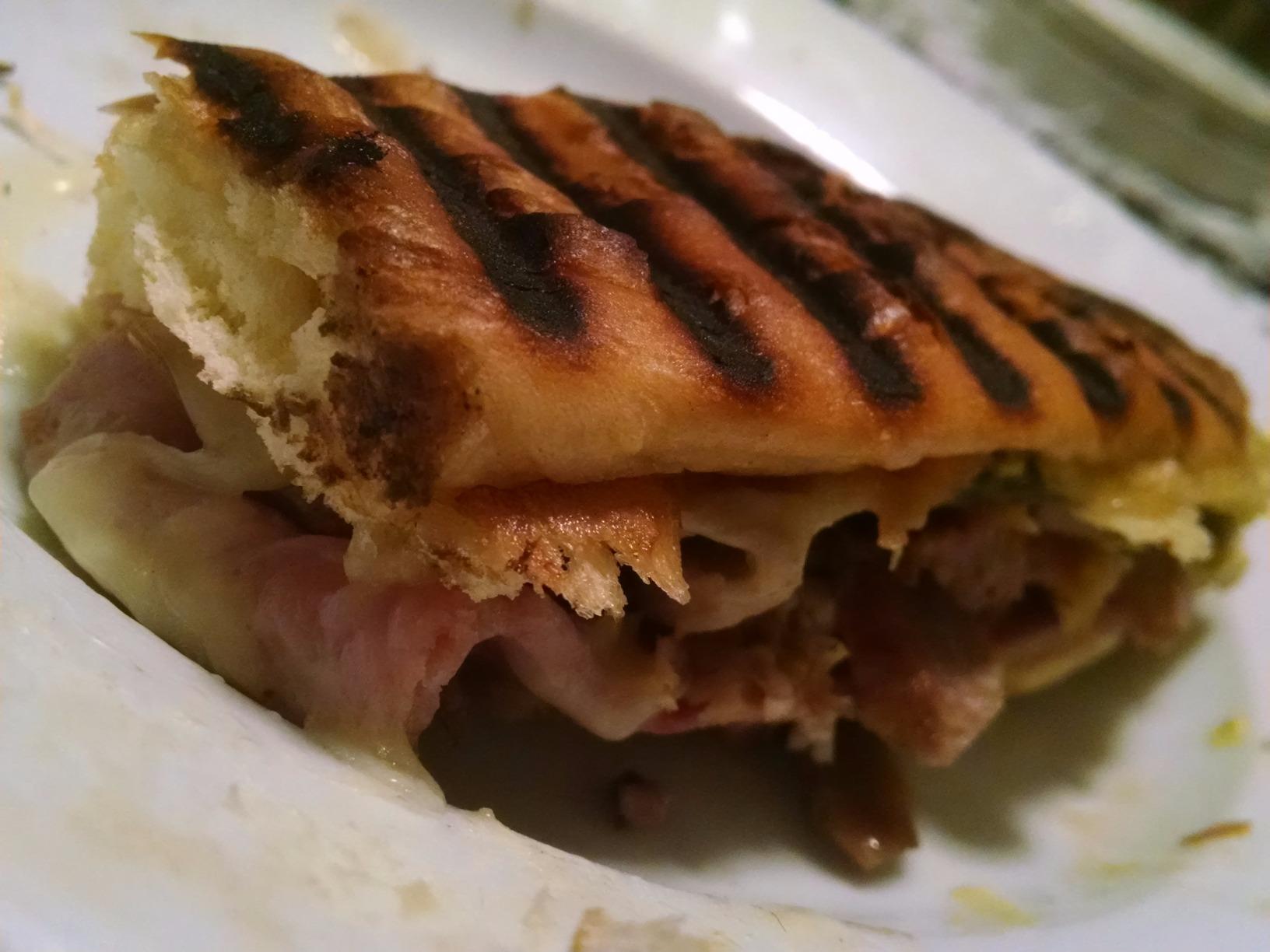
Reviewers consistently report restaurant-quality results for steak, chops and burgers, and just as consistently report the same cost: the grooves trap residue and make this the most maintenance-heavy cast iron they own. A grill pan brush is close to mandatory.
The square footprint is a real bonus. It gives you more usable corner space than a round pan of the same nominal size, which helps when you are cooking a thick ribeye that needs clearance.
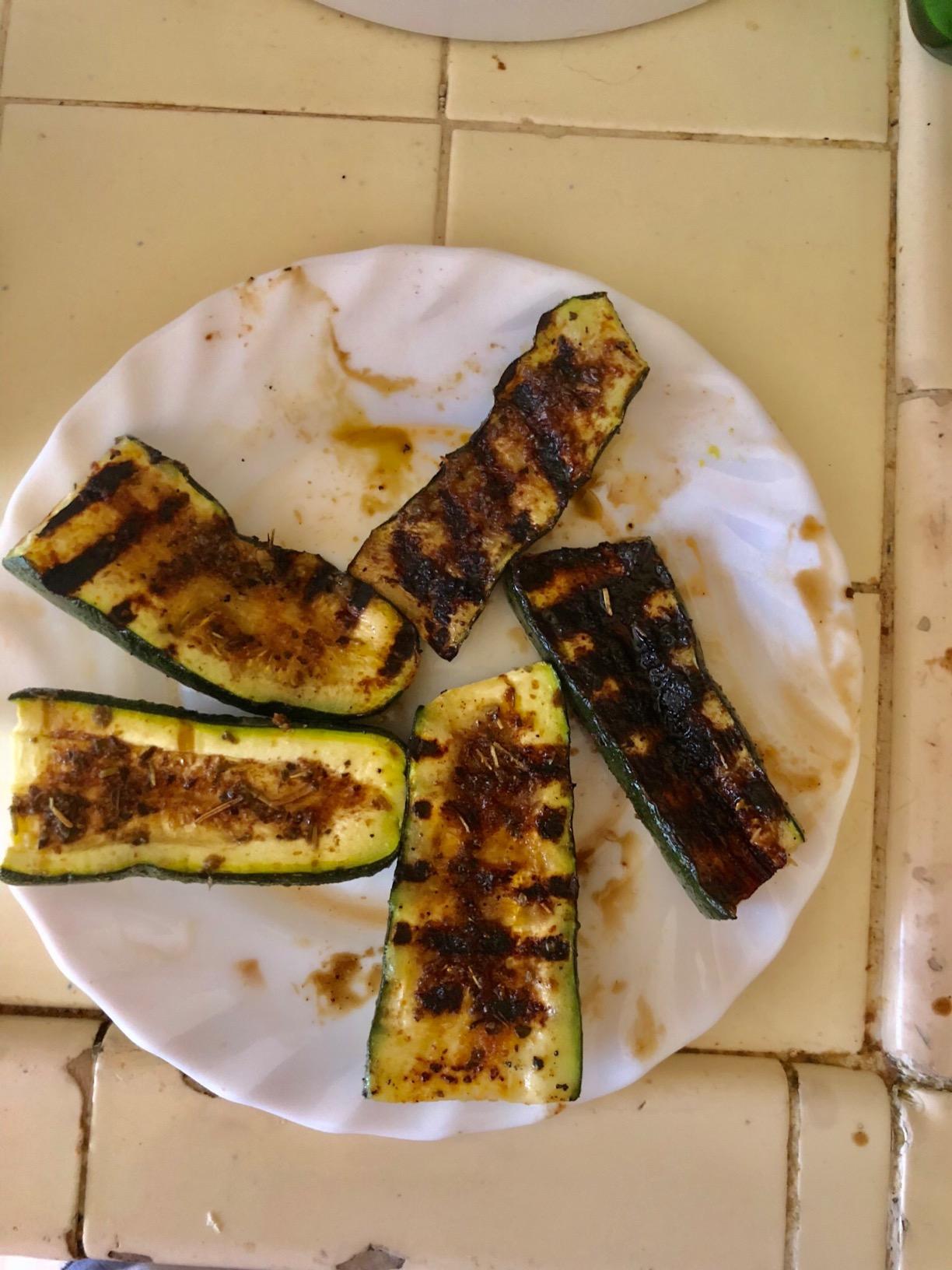
Best For Grill Marks And Fat Drainage
Buy this if you want the visual of an outdoor grill and you like a leaner crust with rendered fat running off the meat. The square shape also fits a thick steak more comfortably than a round pan.
It is the natural companion to a grill setup, and our cast iron cookware set guide pairs it well with a flat skillet for general work.
Where The Ridges Work Against You
Avoid this pan if you want full flat contact for a reverse sear crust, or if you hate cleaning. The same grooves that make the sear are the ones that trap burnt fond between the ridges.
It also smokes hard and splatters at high heat because the grooves are shallow. A good hood matters, and the 6.5 pound body is one of the heavier pans in this roundup.
6. NutriChef 12 Inch With Lid: Accessories That Earn Their Space
NutriChef 12-Inch Cast Iron Skillet w/Lid – Pre-Seasoned, Oven Safe, Nonstick, Cool-Touch Silicone Handle, For All Cooktops – NCCI12
12 inch cast iron with lid
5 pounds
500F maximum
Two pour spouts
Pros
- Even heat and strong retention
- 500F oven rating
- Dual pour spouts
- Glass lid
- Works on every cooktop type
Cons
- Heavy for single-handed handling
- One-year warranty only
- Hand wash only
This pan is sold as a package rather than as bare iron, and the accessories are the reason to consider it. A tempered glass lid lets you cook without lifting and checking, which matters when you are finishing a thick steak in the oven.
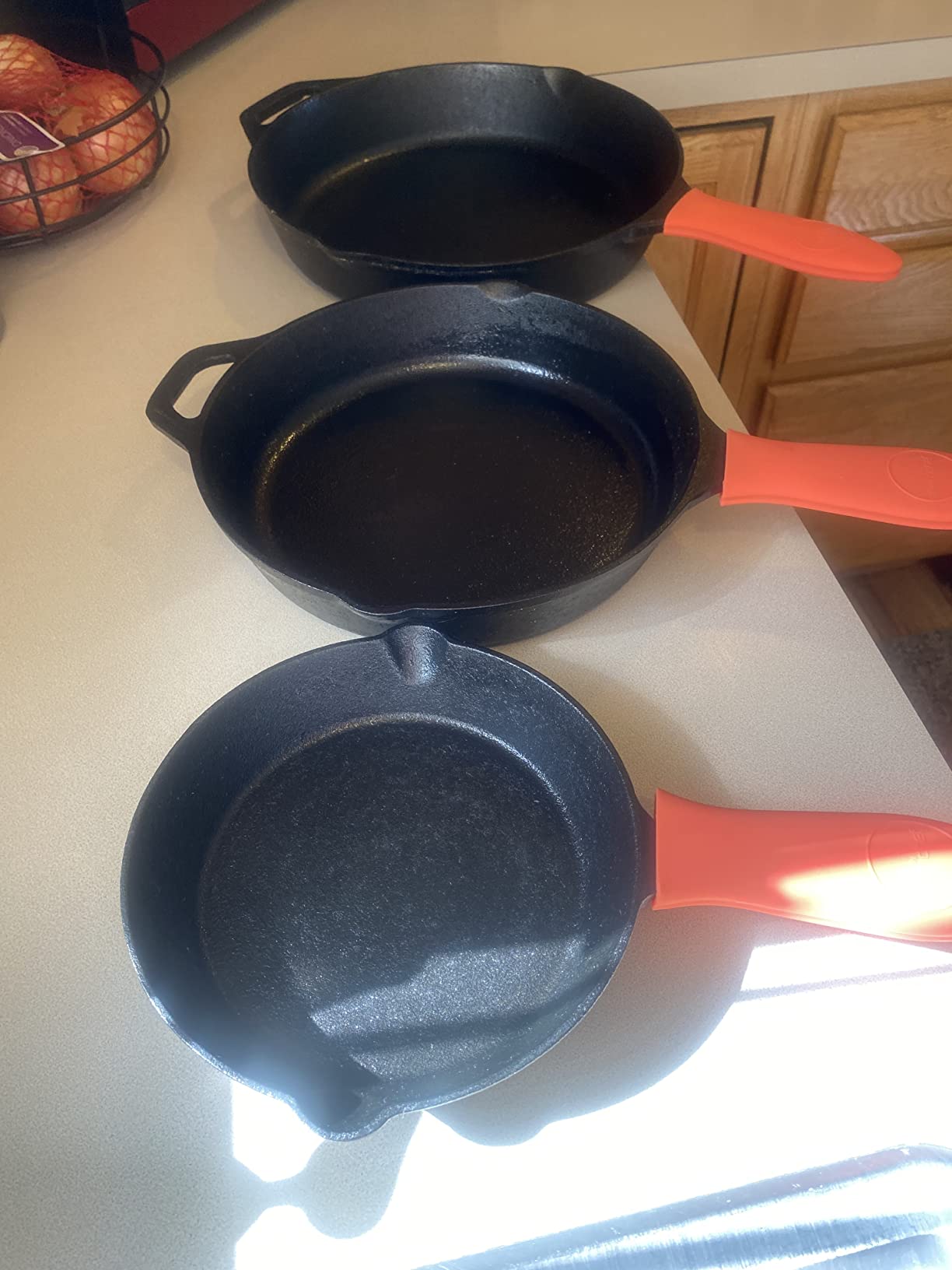
Steak searing itself is solid: even heating, good retention, no hot spots in our kitchen. At 5 pounds it is also lighter than most 12-inch bare skillets here, which makes it easier to move than its size suggests.
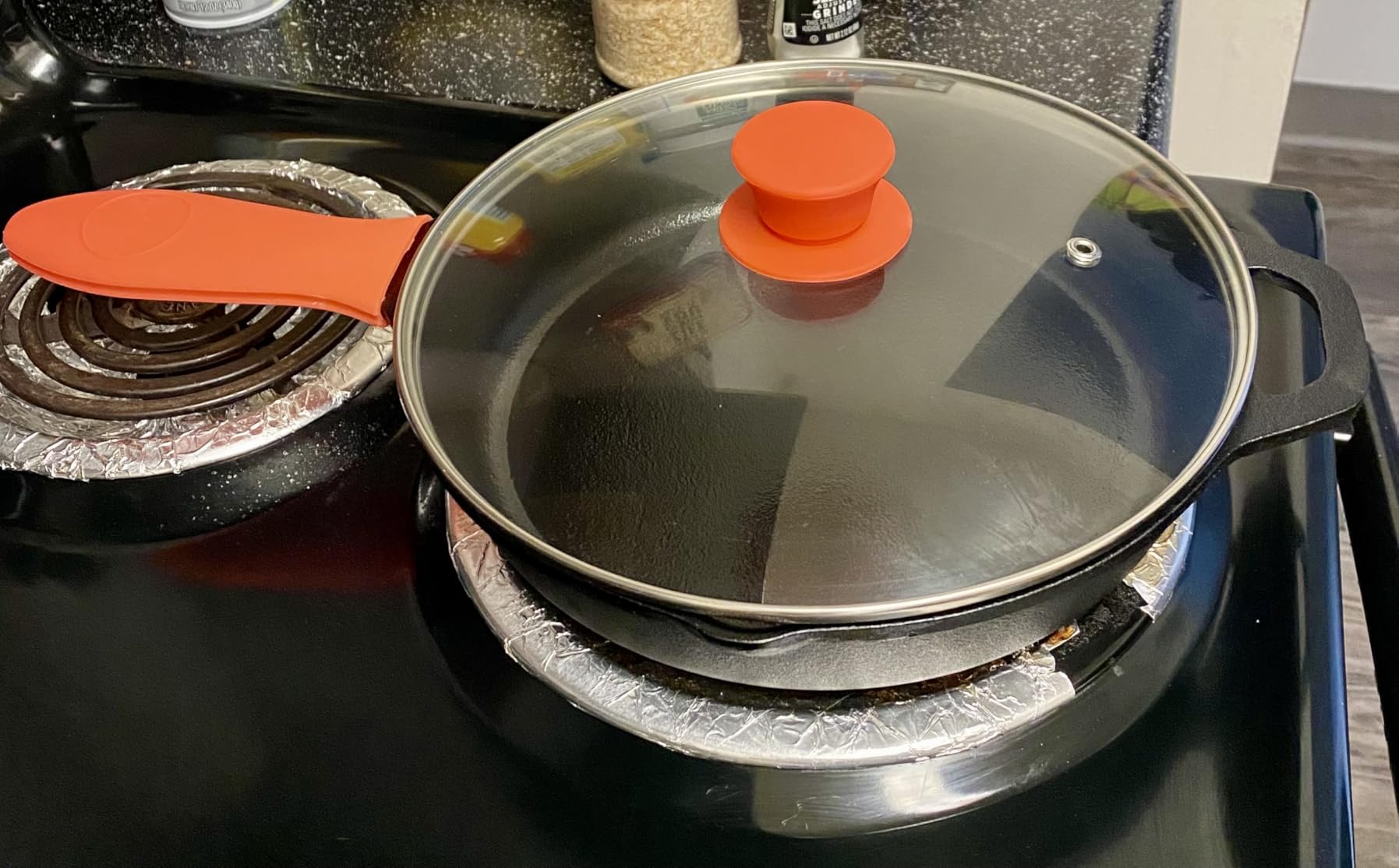
The integrated dual pour spouts are more useful than they look. Resting a finished steak means tipping the pan, and spouts let you drain the juice onto a board without either scalding your hand or tearing the crust loose.
The one-year warranty is the weak point in the contract. Several other pans here carry lifetime coverage, and for cookware meant to last that gap is worth weighing.
Best For Oven Finishing And Serving
Pick this if you like a pan-to-table flow: sear on the burner, move to the oven, then present and drain without a second pan. The lid also makes it a genuine braiser for short ribs or a skillet chicken.
It is a good fit for anyone who wants a helper handle but does not want to pay for a separate set of accessories later.
Where It Falls Short
Avoid it as a lifelong pan. The short warranty is a fair signal about the entry-level construction, and the listing is clearly built around accessories rather than around iron quality.
The silicone helper handle still gets warm on long cooks, so you need a towel for the oven leg. And hand washing only is the rule, as with every bare pan here.
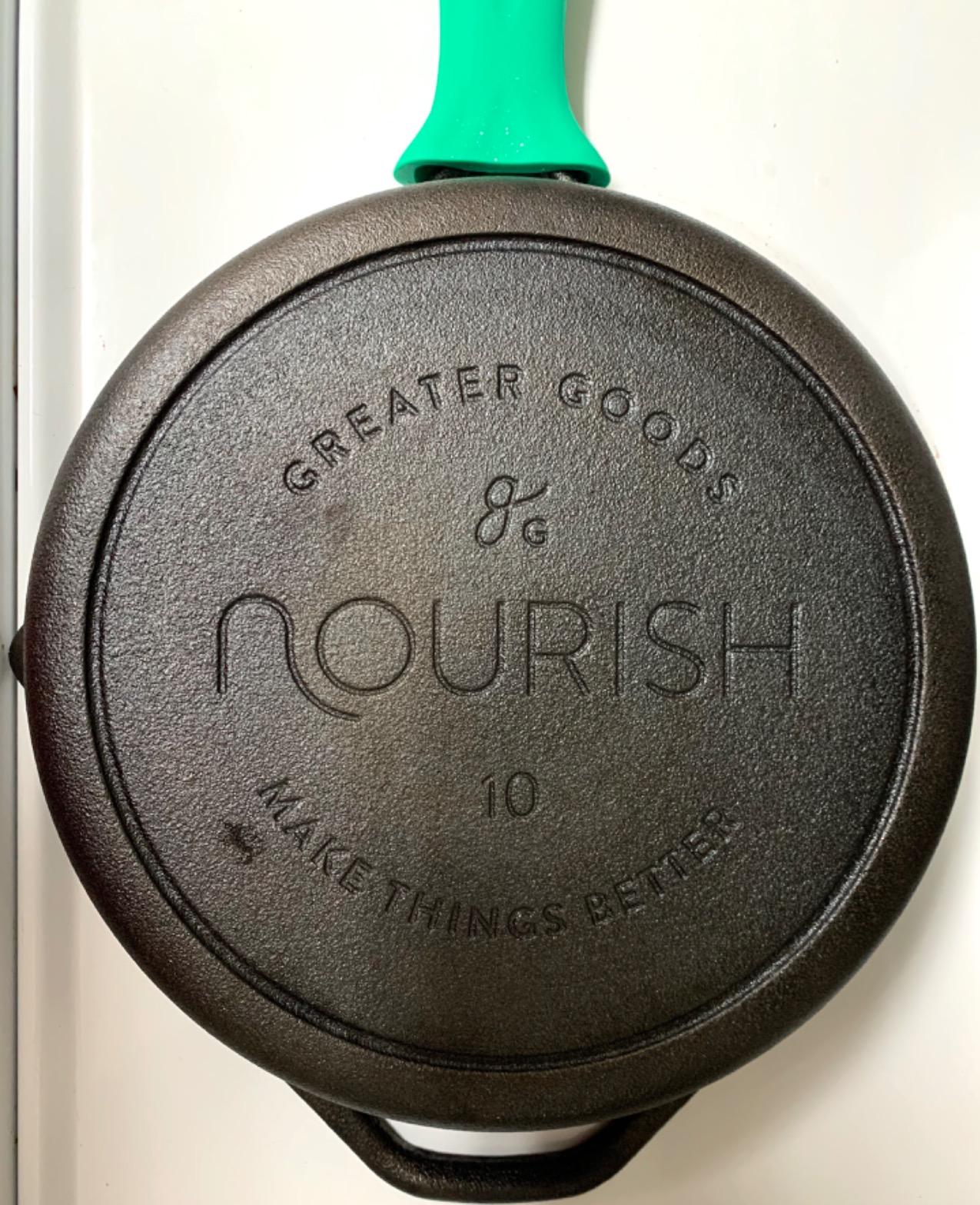
7. Greater Goods 12 Inch Milled: The Smoothest Bare Surface
Greater Goods 12″ Cast Iron Skillet, Smooth Surface, Nonstick-Like Release
12 inch precision-milled cast iron
7.8 pounds
3.2 quart capacity
Limited lifetime warranty
Pros
- Precision-milled smooth surface
- Flaxseed oil seasoned
- No synthetic coating
- Holds even heat
- Helper handle and pour spouts
Cons
- Heavier than traditional skillets
- Some units arrive with patchy seasoning
- Rough base can scratch glass
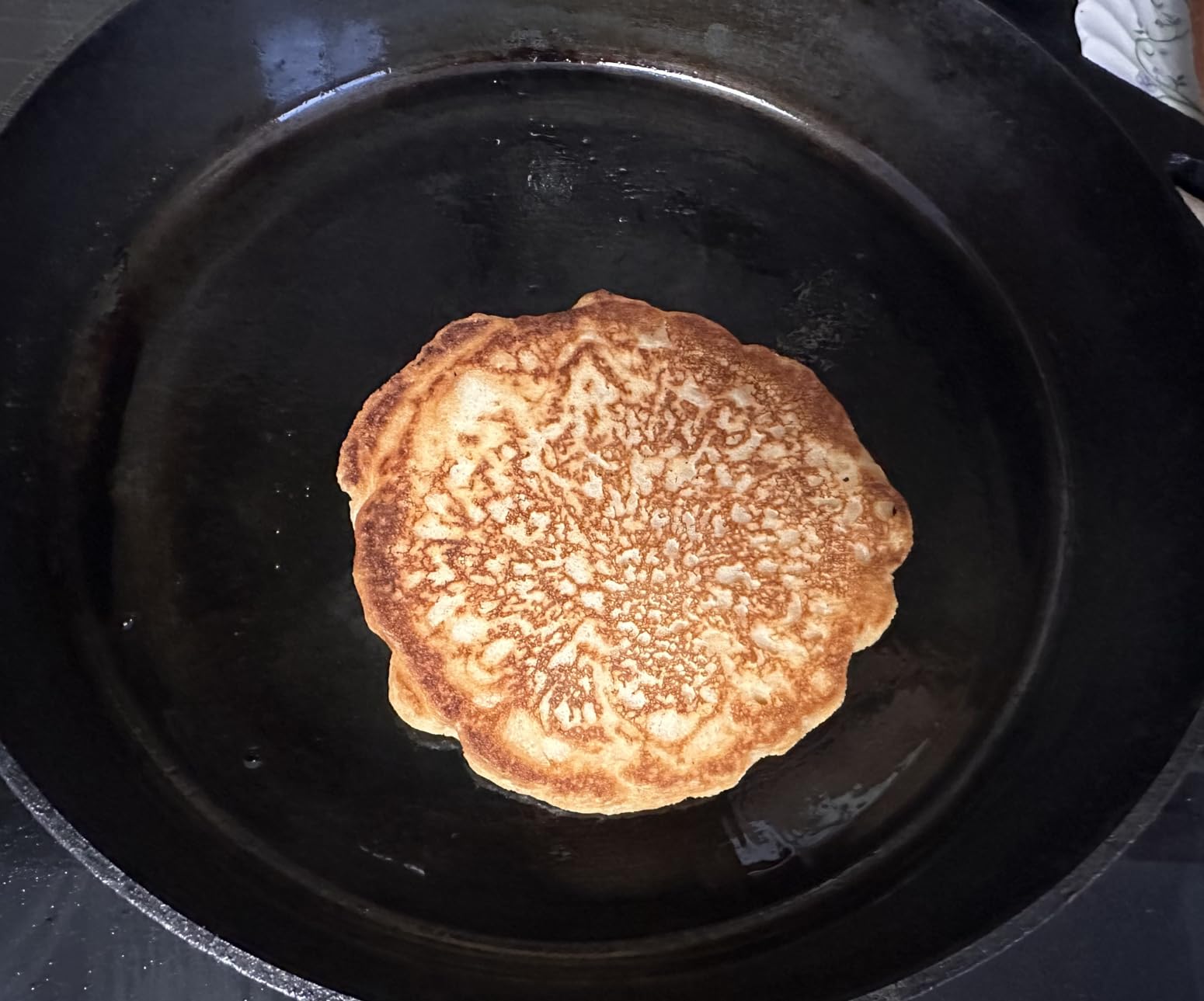
Machined smooth iron is the answer to the sticking problem, and this pan does it at a mid-tier price. Our steak released from the surface with a light spatula lift on the first side, which no rough sand-cast pan in this roundup managed that early in testing.
Owners describe the smoothness as the defining feature, comparing it favorably to the coarse interiors of conventional cast iron. It also means there is no texture for food to lodge in, so cleanup is faster.
Two cautions. It weighs 7.8 pounds, which is at the heavy end for a 12-inch pan, and a minority of owners report units arriving with patchy or oxidized seasoning. Inspect the pan on arrival and re-season if the surface looks uneven.
The cast exterior is still rough even when the interior is milled, so the same glass cooktop caution applies. A silicone cover for the handle is worth having for long oven finishes.
Best For Release On The First Cook
Choose this if your previous cast iron stuck, or if you cook a mix of steak, fish and eggs and want one surface that behaves for all three. The milled bed plus flaxseed oil seasoning gives you the shortest path to reliable release.
It is also the pick for anyone who wants a large cooking area, since 12 inches fits four burgers or a full one-pan dinner in a single batch.
Where It Falls Short
Avoid it if the 1-star reviews about inconsistent factory seasoning worry you. That quality-control gap is real, and a warranty that excludes cosmetic casting variation does not cover it.
The weight is a genuine factor for some cooks. If you want a large pan but a light lift, look at a 10.25-inch skillet instead.
8. Mercer Culinary 12 Inch: A Solid Budget Starter Pan
Mercer Culinary Pre-Seasoned Cast Iron Skillet, 12-Inch
12 inch pre-seasoned cast iron
Assist handle with hang hole
Induction compatible
Hand wash care
Pros
- Affordable entry point
- Even heating
- Assist handle
- Induction and campfire ready
- Simple care routine
Cons
- Rough sand-cast surface
- Light factory seasoning
- Listed weight is inaccurate
The appeal here is simple: a competent cast iron skillet at a low price, aimed at both home and professional kitchens. The heat behavior is unremarkable in the best way, with an even bed and no hot spot we could find.
Searing works once the pan is properly hot and the seasoning has a few layers on it. Out of the box the release is mediocre, which is a seasoning issue rather than a flaw in the iron.
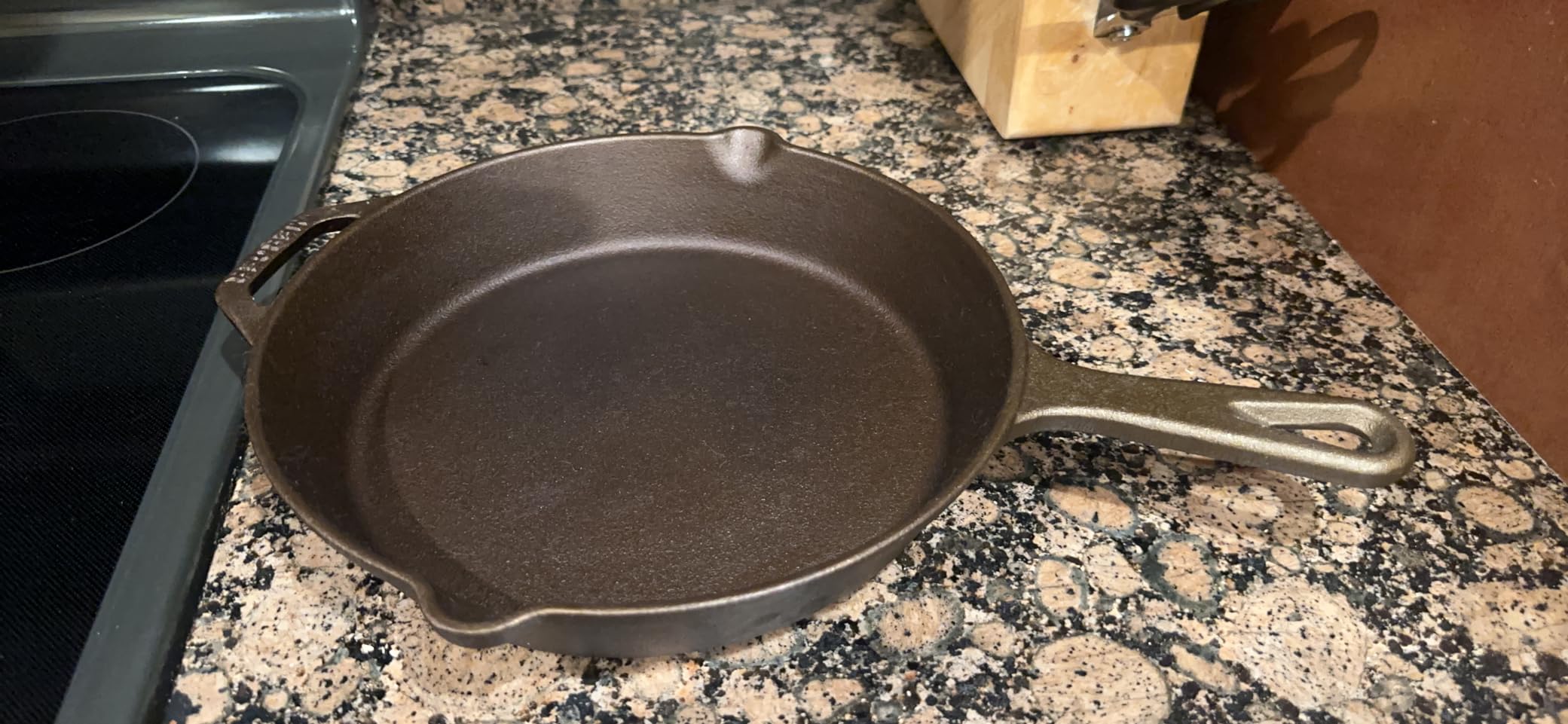
One detail to flag honestly. The listing shows an item weight of 16 ounces, which no 12-inch cast iron skillet could plausibly be, and owners flag the same error. Treat the weight as unknown and expect a heavy pan.
The hang hole on the main handle is a small touch that makes storage easier, and the assist handle helps when the pan is full. Care is standard: wash, dry thoroughly, wipe with oil while warm.
Best For Outfitting A Rental Or Dorm Kitchen
Pick this if you want a sturdy pan without spending real money, particularly for a rental, dorm or first apartment where cookware gets dropped. The value is hard to argue with at this tier.
It also works as a backup pan for oven-heavy cooking, so you are not fighting with your main skillet for the burner.
Where It Falls Short
Avoid it as the only pan for delicate food. The sand-cast interior is rough, and eggs or thin fish fillet will stick until the seasoning develops over many cooks.
Do not buy it for presentation, and re-season before the first steak you care about. If you want a smooth surface instead, pay up for a milled pan.
9. Hamilton Beach Enameled 12 Inch: Searing Without The Seasoning Chore
Hamilton Beach Enameled Cast Iron Fry Pan 12-Inch Navy, Cream Enamel Coating, Skillet Pan For Stove top and Oven, Even Heat Distribution, Durable
12 inch cream enamel cast iron
5 pounds
Stainless steel handle
Induction ready
Pros
- No seasoning routine at all
- Easy to clean
- Good retention for braising
- Pouring spout
- Oven to table
Cons
- Lowest average rating in the group
- Enamel can chip
- Cracks if shocked with cold liquid
If you want cast iron heat without the maintenance, this is the honest version of that trade. The enamel surface needs no seasoning, wipes clean, and takes acidic foods that would strip bare iron, which makes it the easy choice for weeknight cooking.
For searing, expect competent rather than exceptional results. The crust color was good but noticeably paler than our bare iron tests, and the surface responds to heat more slowly than an unencumbered iron bed.
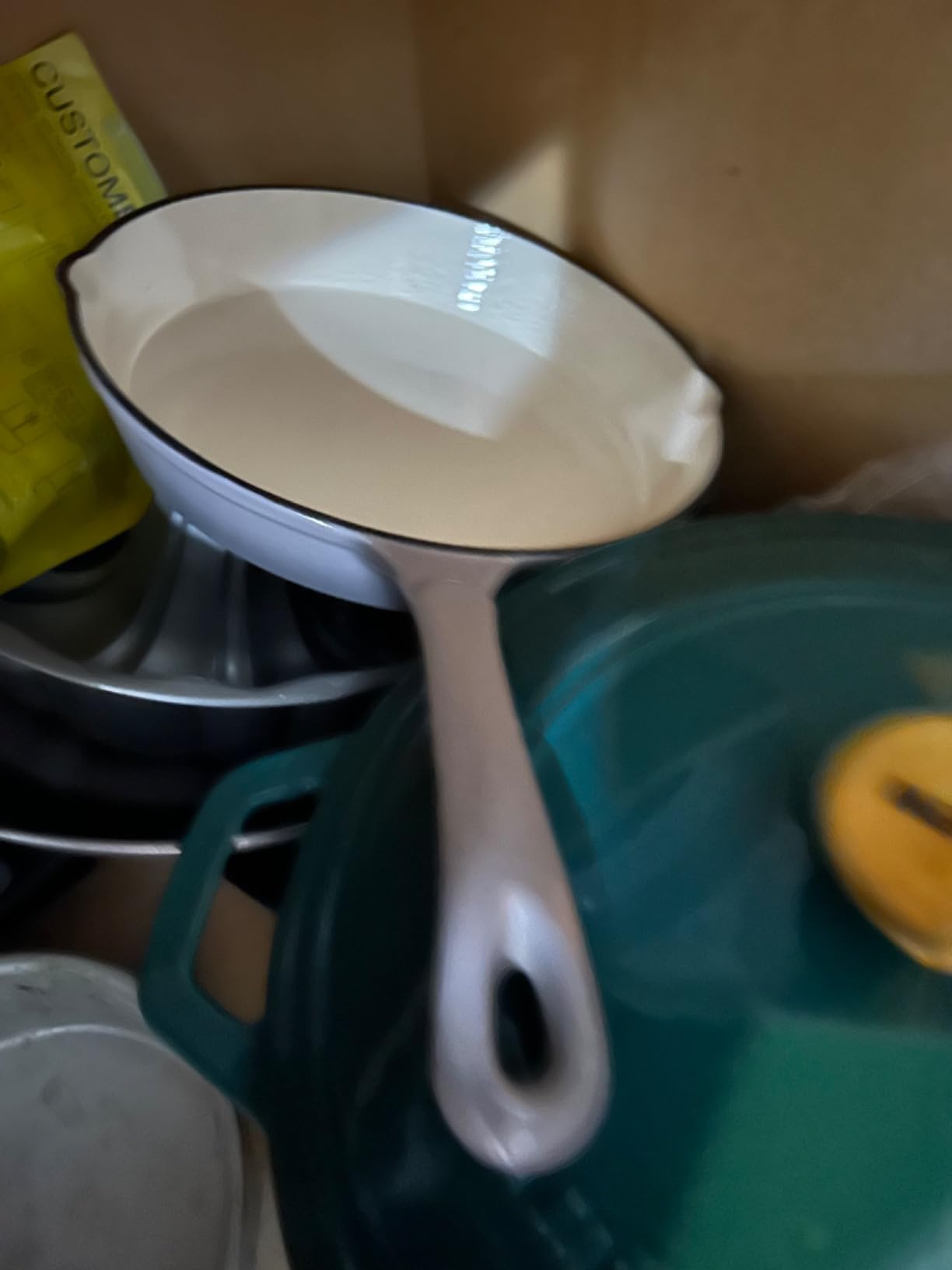
The 4.2 average is the lowest in this roundup, and the reason is not the cooking. Ten percent of reviews are one-star, and they concentrate on chipped or cracked enamel arriving in the box, plus a few reports of uneven heating. Inspect on arrival.
Never shock a hot enameled pan with cold liquid. The stainless handle and the enamel surface can both crack, and a thermal shock event is how most damaged enamel pans are ruined.
Best For Low-Maintenance Cooks And Acid Dishes
Choose this if you want to stop thinking about pan upkeep, or if you cook tomato sauces, citrus or wine reductions in the same pan. Bare iron dislikes all three, and enameled iron shrugs them off.
It also serves straight to the table, which bare black iron does not. If presentation matters to you, enamel wins outright.
Why Enamel Trails Bare Iron For Crust
Enamel is a glassy layer over the iron, and that layer does not sear like seasoned bare metal. It is stickier at high heat, so a well-built bare crust is easier to achieve, and the enamel surface holds a little less energy at the point of contact.
Skip it if the crust is the whole point. If searing steak is one dish among many, the convenience is worth the softer result.
10. Cuisinel 12 Inch Braiser Set: Skillet, Lid And Scrapers
Cast Iron Skillet with Cast Iron Lid – 12″-Inch Dual Handle Frying Pan + Pan Scraper + Silicone Handle Holder Covers – Pre-Seasoned Oven Cookware – Use Indoor/Outdoor, Grill, Stovetop, Induction
12 inch skillet with cast iron lid
4 pounds
4 piece set
Braiser lid with drip points
Pros
- Complete bundle with lid and scraper
- Smooth finish and even heat
- Dual handles for control
- Oven safe
- 82 percent five-star share
Cons
- Bulky with lid and accessories
- Silicone grips still get hot
- Hand wash and re-oil routine
A matching cast iron lid is the feature that separates this from the plain skillet, and the drip points inside it collect condensation and return it to the food. That turns a hot seared steak into a braise in the same pot without changing vessels.
Steak searing performance is solid and even, and the smooth finish gives a better release than rough cast iron on the first cooks. The dual handles make the loaded pan far easier to control.
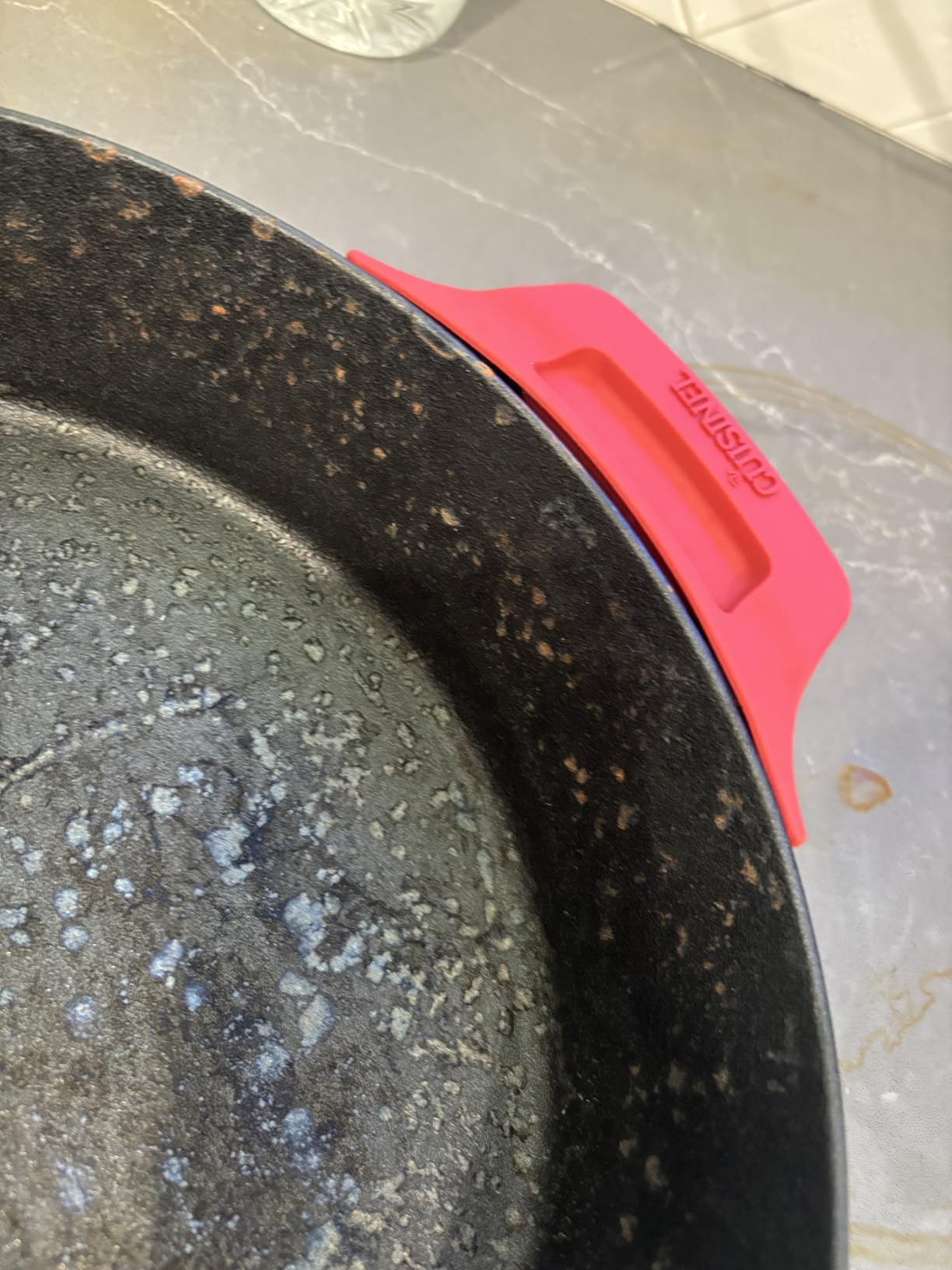
The bundle also includes a pan scraper and silicone handle covers, which is genuinely useful on a pan this heavy. You need a scraper for bare iron anyway, so it is not filler.
It is bulkier and heavier to store once the lid is on, and the silicone grips still get hot, so keep a towel within reach for the oven leg.
Best For One-Pan Dinners And Braising
Pick this if you want one vessel for searing, braising and serving without washing in between. The lid converts a skillet into a braiser for short ribs, chicken or a thick chop finished gently in the oven.
It is also a good gift-shaped bundle if you are building a first cast iron kitchen, since the accessories are the ones people forget to buy.
Where It Falls Short
Avoid it for pure searing. Nothing here improves the crust over a plain 12-inch bare skillet, and you carry the lid and scraper as extra weight and storage bulk every day.
It also has the smallest review pool among the strong performers, so treat the rating as a smaller sample than the number alone implies.
11. Tramontina Bestow Enameled 12 Inch: Self-Basting Lid And Lifetime Warranty
Tramontina Bestow Enameled Cast Iron 12-Inch Skillet with Lid, Blue
12 inch enameled cast iron
Listed at 5.7 kg
Oven safe to 450F
Lifetime warranty
Pros
- HT150 alloy retains heat well
- Self-basting lid ridges
- No seasoning needed
- Induction and oven ready
- Lifetime warranty
Cons
- Heaviest skillet in the group
- Enamel chips at rim and handles
- Handles and knob get very hot
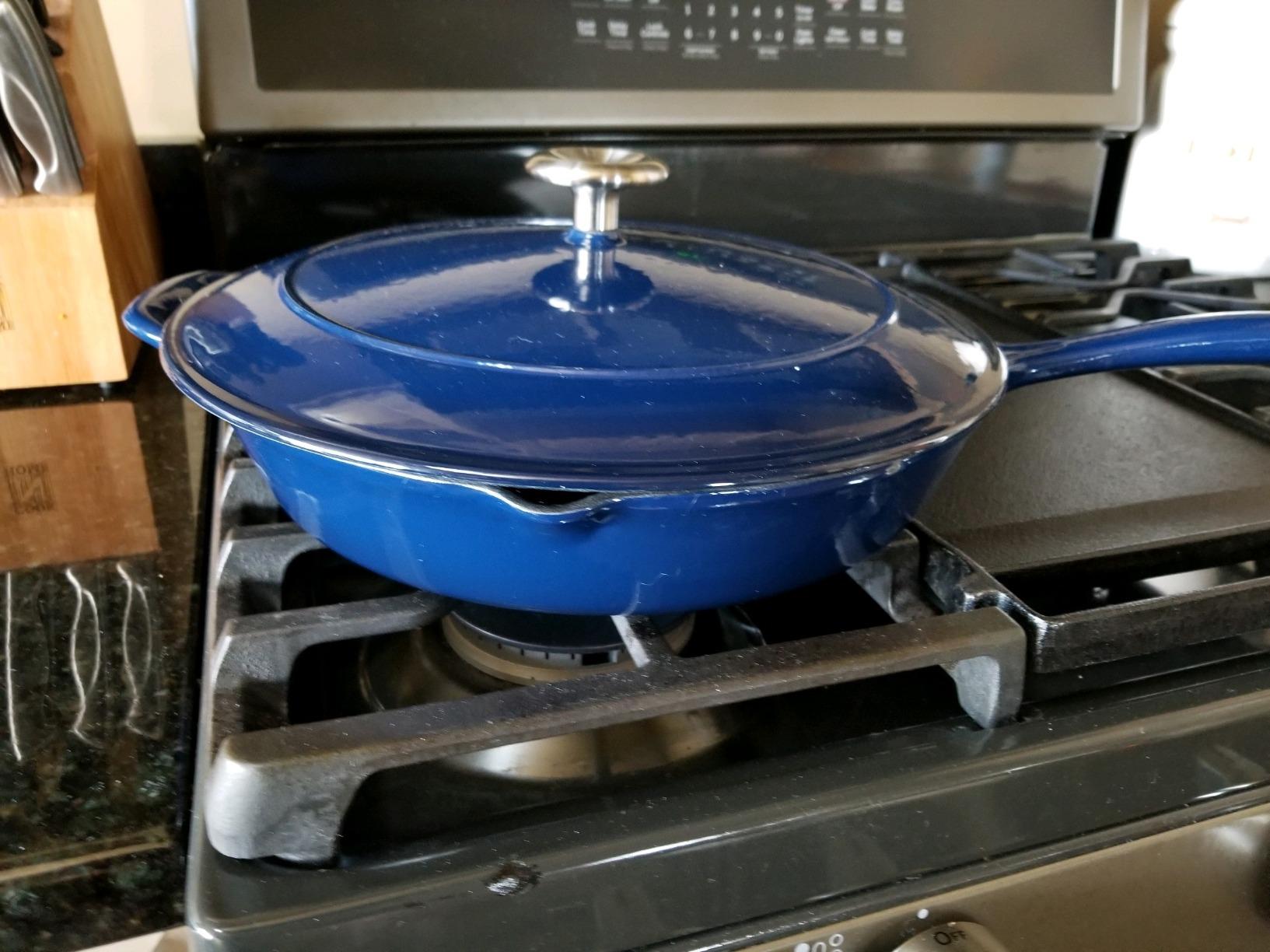
This is the pan to buy if you want a cast iron skillet that doubles as a covered braiser. The lid ridges are designed to collect condensation and rain it back onto the food, so a thick chop or a chicken breast finishes moist without you basting by spoon.
The alloy body does hold and distribute heat well. It is a good oven-to-table pan, and the lifetime warranty is the strongest coverage in this roundup.
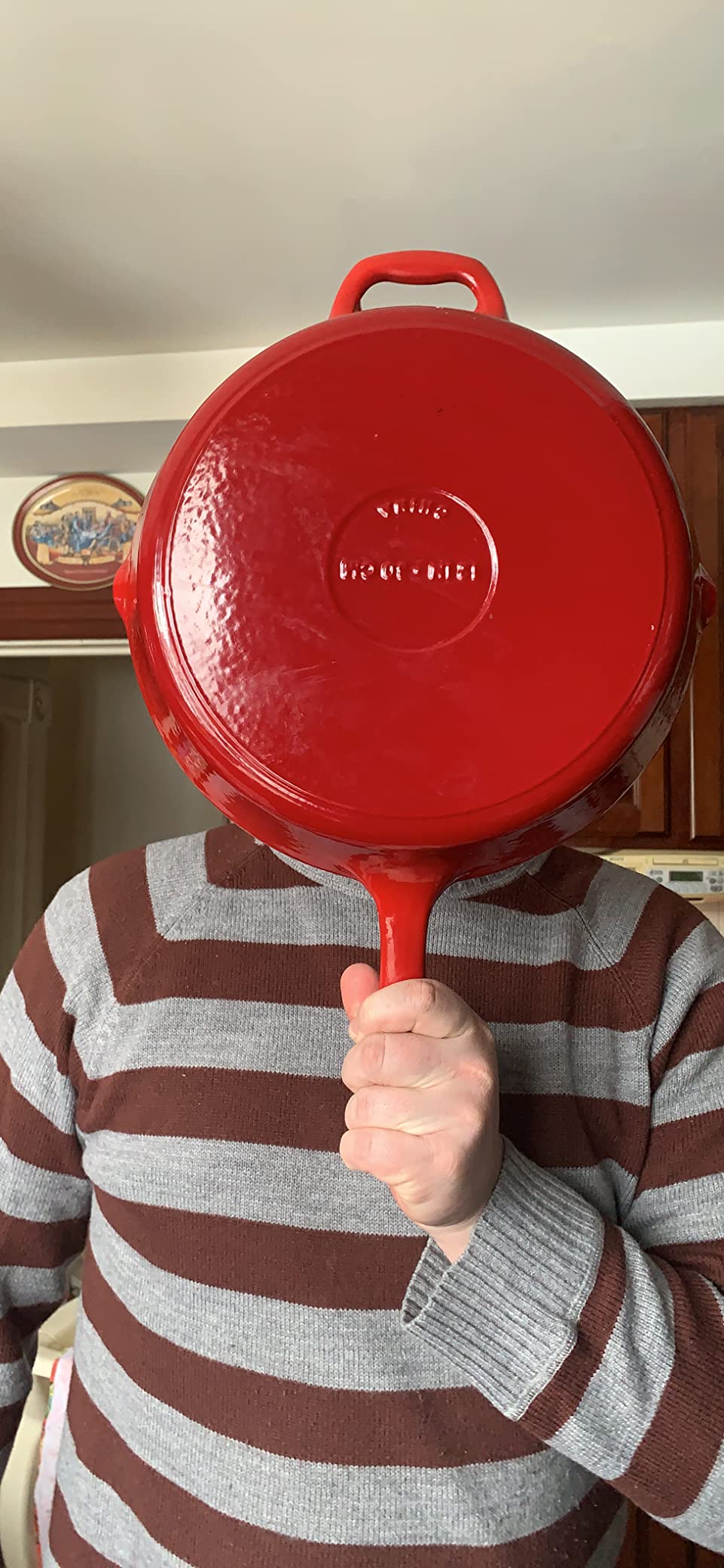
For a hard sear, the enamel again caps the result. The crust was respectable but never matched bare iron, and reviewers who care most about browning tend to move on to a bare pan within a year.
The weight is the real handling story. The listing shows 5.7 kg, which owners also flag as overstated, and even so it is described as the heaviest skillet in its class. Never lift this one with a full pan in a single hand.
Best For Covered Braises And Long Oven Cooks
Choose this if your searing is one step in a longer cook. Sear, then cover and return to the oven, and the self-basting lid does the work that spooning butter over a crust would do by hand.
It also suits anyone serving at the table, since enameled cast iron is the only finish here that looks finished on a tablecloth.
Where The Weight And Enamel Work Against You
Avoid it if you sear often and quickly. You are paying for weight and a lid, and paying for them in handling, storage and a softer crust than bare iron gives you.
Also expect a chip or two. Nearly nine percent of reviews are one-star and most of them are about enamel damage at the rim or handle, which can expose raw iron and start a rust spot.
12. Crock-Pot Artisan 12 Inch: Enamel That Takes 500F
Crock Pot Artisan 12 Inch Enameled Cast Iron Round Skillet, Scarlet Red
12 inch ceramic enamel cast iron
8.5 pounds
Oven safe to 500F
Two handle design
Pros
- Easy clean ceramic enamel
- Cast iron core resists warping
- 500F oven rating
- Two handles aid control
- Good for bacon and steak
Cons
- Smallest review pool here
- Enamel chips in transit
- 8.5 pounds is heavy
- 2 quart capacity is small for 12 inches
The advantage here is temperature headroom. A 500F rating on an enameled pan lets you finish a seared steak in a ripping hot oven, which several other enameled skillets here cannot do. The cast iron core is also unlikely to warp.
Bacon and steak both came out well in owner reports, and the two-handle design genuinely helps with an 8.5 pound pan. For straight searing on the stovetop, though, bare iron still wins the crust.
Two honest flags. This has by far the smallest review pool in the roundup, so a 4.5 average is a thinner signal than the number beside the larger pans. And the listed 2-quart capacity is oddly small for a 12-inch skillet.
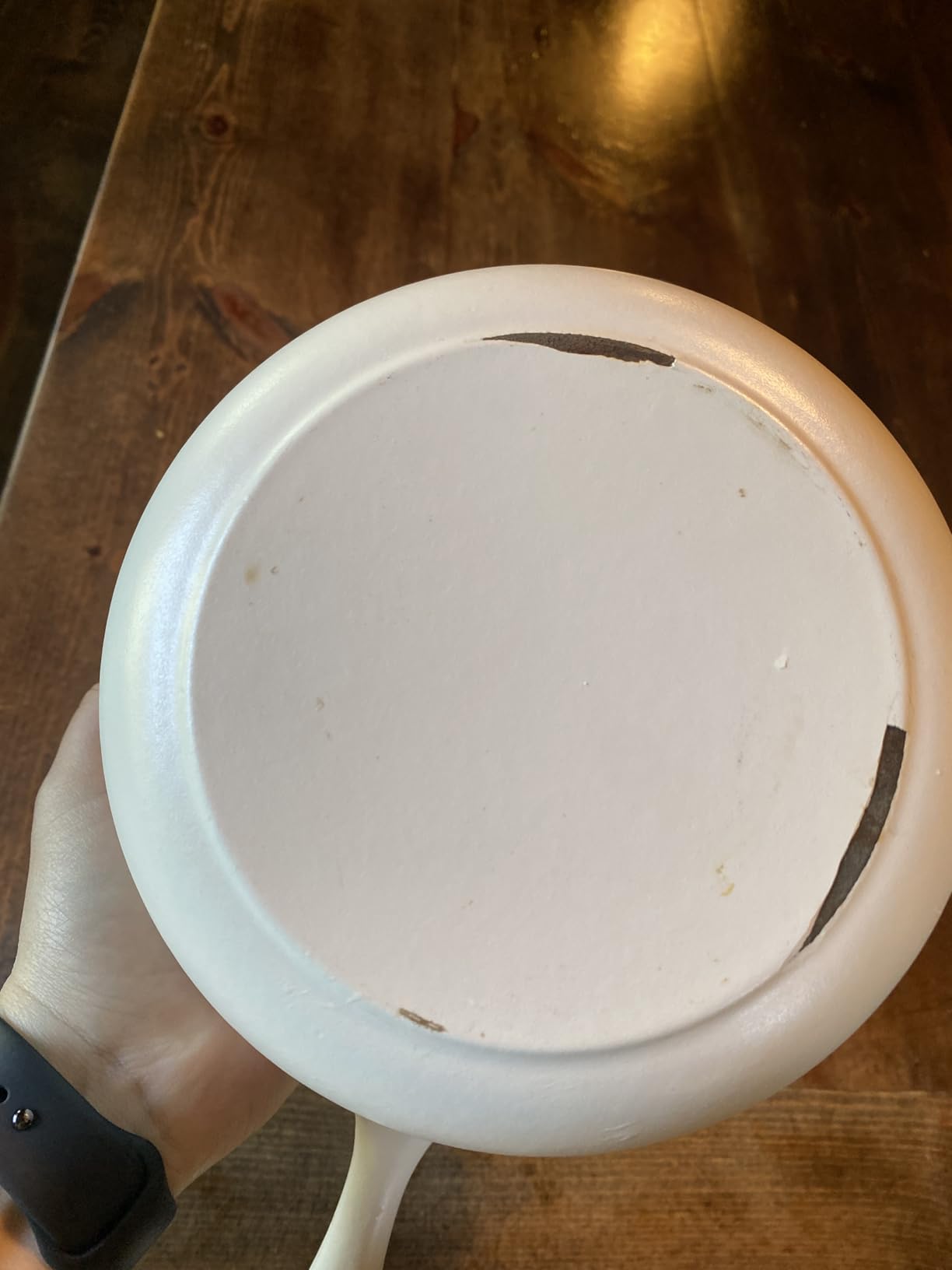
Enamel chipping in transit shows up repeatedly, and some units arrive with a damaged lid or a snapped handle. Check the whole set the day it arrives.
Best For Enameled Sear Then High-Heat Finish
Pick this if you want an easy-clean pan and your finishing oven runs hot. The 500F rating is the reason it earns a place in a searing roundup at all, because most enameled skillets stop well short of that.
It is also a sensible pick for anyone who wants to move from stovetop to oven to table without a second dish.
Where It Falls Short
Avoid it as your primary searing pan. The enamel surface gives a lighter crust than bare iron, and if crust is what you are chasing, spend the money on a bare skillet instead.
At 8.5 pounds it is one of the heavier pans here, and the small review pool makes it harder to buy with the same confidence as the top picks.
How to Sear Steak in Cast Iron Without Sticking
The pan matters, but technique decides the result more often than brand does. Steak cooks in r/castiron and r/steak converge on the same routine, and it is the routine we used for every test cook in this roundup.
Preheat longer than feels reasonable. Cast iron needs 10 to 15 minutes on high, far longer than the two or three minutes a lighter pan takes. A water bead flicked on the surface should skate rather than sizzle and burst.
Keep the pan bare and oil the meat. Rub the steak with a high smoke point oil such as avocado or grapeseed. Oil in the pan goes past its smoke point and turns acrid before the crust forms.
Dry the surface of the steak. Moisture is steam, and steam is the enemy of browning. Pat the meat dry before it goes in.
Lay the steak away from you and do not move it. Full contact for the first stretch is what builds a crust. Press gently with a press if the edges curl.
Flip when the crust releases on its own. If it sticks hard, the pan was not hot enough or the surface needed oil. Nudge with a spatula rather than forcing it.
Add butter and baste. Spoon melted butter over the top side in the final stretch, as steak cooks describe doing, and add garlic in the last minute rather than at the start.
Rest before slicing. Carry the pan to a warm plate and wait. Slicing too early dumps the juice you just built.
Flat Bed Or Ridges: Which Sear Is Better?
Flat wins on crust. A flat cooking bed gives the steak one continuous contact patch, which is what produces an even, unbroken brown. Ribs lift the meat into stripes, drain fat away and give you grill marks, but they reduce the total surface touching the meat.
If the crust is the goal, choose flat. If you want the grilled look and leaner fat drainage, the ridged grill pan is the right tool, and it is a different result rather than a better one.
Getting Hotter Safely, Without The Smoke Problem
Cooks in r/cookware preheat cast iron in a hot oven before searing, which reaches temperature faster and more evenly. Use a modest setting, keep the handle away from the burner element, and never leave a preheating pan unattended.
Expect smoke either way. A hood or a cracked window is part of the cost of a ripping hot cast iron sear, and no pan on this list removes that.
How to Choose a Cast Iron Skillet for Searing Steak
Work through these in order. Diameter first, then weight, then surface type, then finish, and you will end up with a pan that fits your cooking rather than the other way around.
Diameter. A 10.25-inch skillet is right for one or two thin steaks and heats faster. A 12-inch pan is the right home for a thick ribeye, because a 1.5 inch cut needs clearance and enough mass to stay hot through the cook.
Weight. Loaded, these pans run 8 to 13 pounds. If you have any back or wrist trouble, choose two handles and lift with both hands, or drop to a smaller diameter. A pan you cannot move safely is a pan you will not sear in.
Surface. Sand cast surfaces are coarse and grippy, which costs you clean release on early cooks. Machined or milled surfaces release better from the first steak and clean faster. A machined interior is the single biggest quality difference you can buy.
Finish. Bare seasoned iron gives the hardest crust. Enameled iron gives you no maintenance, acid tolerance and table presentation, at the cost of a softer sear. Do not buy enameled specifically to sear steak.
Cast Iron Or Carbon Steel For Steak?
Cast iron wins on heat retention. A 12-inch skillet heated to 400F is still near 325F after 15 minutes off the heat, so a cold steak hits a surface that does not collapse. Carbon steel heats in minutes and recovers fast, which is better for thin cuts and for food you need to control second by second.
Choose carbon steel if you sear thin steaks fast, dislike the weight, or want a one-handed toss. Choose cast iron if you cook thick, cold-start cuts, sear more than once a week, or want one pan that works from burner to oven.
Stainless steel is the middle ground with the least forgiveness, and modern nonstick gets a good crust when the pan is hot but tops out at lower oven temperatures. For thick steak and high heat, iron remains the best cast iron skillet for searing steak answer.
Is Your Pan Seasoned Enough To Sear?
Three quick checks. The surface should look like a smooth satin sheen rather than patchy or grey, it should not smell of raw oil or oxidation, and a drop of water should bead and skate instead of spreading.
If any of those fail, run one oven cycle: thin coat of oil, 30 to 45 minutes at temperature, cool fully, wipe off the excess. Seasoning builds over dozens of cooks, which is why an old pan outsears a new one of the same design.
Frequently Asked Questions
What is the best cast iron pan for searing steak?
A heavy, bare, pre-seasoned 12-inch skillet with a flat cooking surface. Its thermal mass holds searing heat when a cold steak hits the metal, which is what keeps the browning reaction running.
What is the best oil to use to sear steak in a cast iron pan?
Avocado oil and grapeseed oil are the safest high smoke point choices. Rub the steak with oil rather than pouring it into the pan, since oil heated past its smoke point turns bitter before a crust forms.
What type of pan is best for searing a steak?
For thick cuts, cast iron is the best pan for searing steak because it holds heat when cold meat lands on it. Carbon steel heats faster and suits thin steaks. Stainless steel is workable but unforgiving, and nonstick caps out at lower oven temperatures.
Who makes the highest quality cast iron skillet?
Quality tracks the finish of the cooking surface more than the label. A machined or milled interior, a lifetime warranty and a well-reviewed support network are the reliable markers. Lodge, Mercer Culinary and Cuisinel cover the budget tier, while Smithey, Field Company and Lancaster sit at the premium end.
Is smithey better than Lodge?
Smithey machines its cooking surfaces, so steak releases more cleanly and delicate food works from the first cook. Lodge sand casts, which costs a smoother surface but buys a longer proven record and a lower entry cost. For crust on thick steak, either performs well once seasoned.
Which brands of cast iron cookware are considered the best?
Budget tier: Lodge, Cuisinel, Utopia Kitchen and Mercer Culinary. Mid tier: Greater Goods and NutriChef, which add milled surfaces or accessory bundles. Premium machined tier: Smithey, Field Company and Lancaster. Enameled tier: Tramontina, Hamilton Beach and Crock-Pot, best for oven work and presentation rather than crust.
Why use carbon steel instead of cast iron?
Carbon steel heats in two or three minutes rather than ten to fifteen, responds instantly when you move the burner, and weighs far less, so you can toss and flip with one hand. Cast iron holds heat longer and sears thick, cold-start cuts better.
Is it better to cook steak in a cast iron pan or on the grill?
Both can produce an excellent crust, but they fail differently. A grill gives you more radiant heat and faster recovery; cast iron gives you a flat, even bed and a larger contact patch. Cast iron also gives you a pan sauce from the fond, which a grill does not.
What is the healthiest metal to cook with?
Bare cast iron and carbon steel are inert once seasoned, with no synthetic coating to flake into food, so they are a common choice for health-conscious cooks. Avoid damaged enamel, which can expose metal underneath, and do not heat an empty nonstick pan past its rating.
Final Verdict: Which Cast Iron Skillet Searing Setup to Buy
Buy the Lodge 12-inch skillet for the best cast iron skillet for searing steak if you want the most proven, widely documented crust. Pick the Lodge dual handle version when moving a hot pan is your biggest obstacle, and the milled Greater Goods pan when clean release on the first cook matters more than brand familiarity.
Choose the ridged grill pan for grill marks, an enameled skillet only for oven work and presentation, and a carbon steel pan if one-handed speed matters more than heat retention. Whatever you pick, give it ten minutes on the burner and oil the meat, not the pan. That habit is worth more than any brand on this list, and our full 2026 testing roundup holds up to the same standard in your kitchen.