
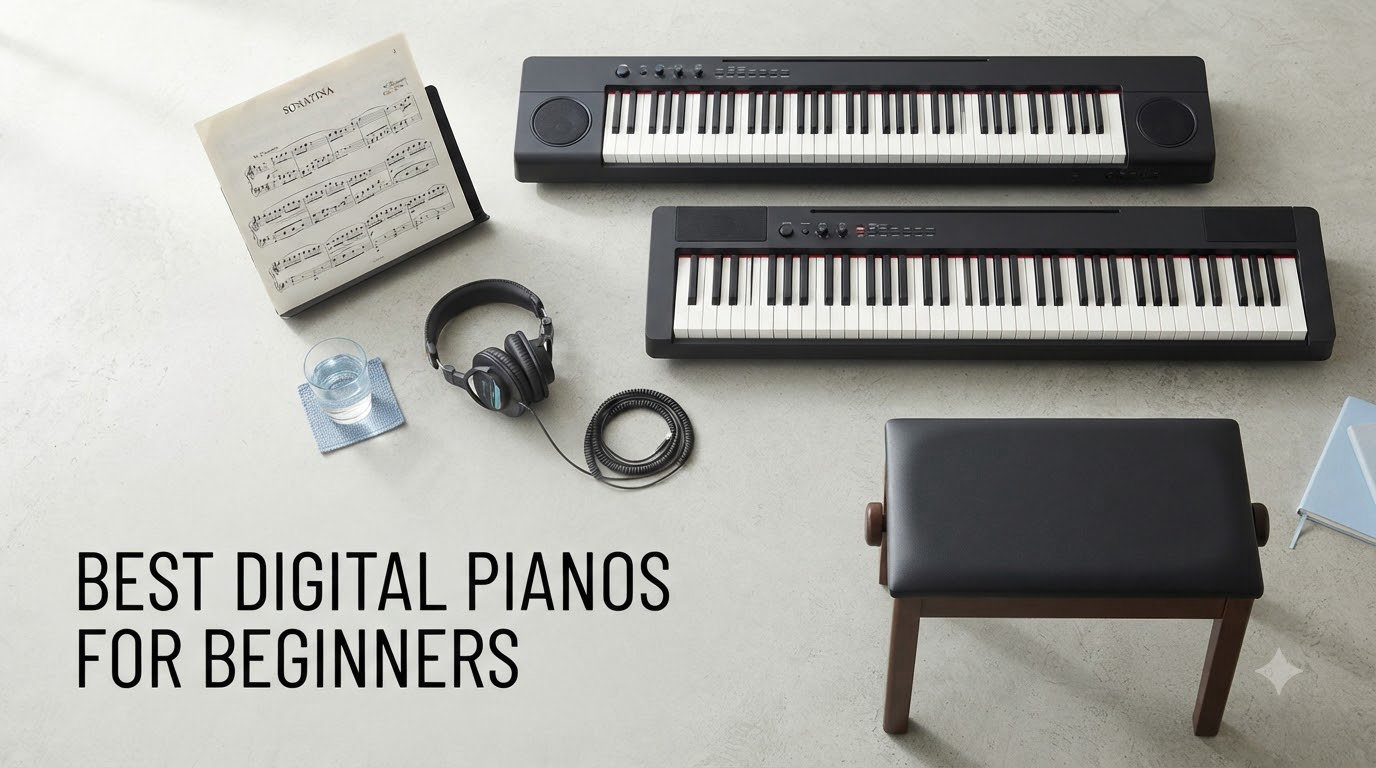
Buying your first digital piano can feel overwhelming. I remember staring at listings for hours before I started learning, wondering which keyboard would actually help me build real technique instead of teaching me bad habits. After spending weeks testing the best digital pianos for beginners on the market in 2026, our team put together this guide to save you that same headache.
Whether you’re an adult finally chasing a childhood dream, a parent shopping for a child beginner, or a music school student preparing for graded exams, the right digital piano makes the difference between sticking with lessons and quitting in frustration. We focused on weighted hammer action, authentic piano sound, and beginner-friendly features like learning app connectivity.
Below you’ll find ten models we actually played, ranked by overall value for new pianists. Every pick here has 88 weighted keys (or strong justification for going smaller), real piano tone samples, and enough features to grow with you for at least the first two to three years of lessons.
Table of Contents
Top 3 Picks for Best Digital Pianos for Beginners

Roland FP-10 Compact 88-Note Digital Piano
- PHA-4 Standard action
- SuperNATURAL sound engine
- Bluetooth MIDI
- 96-note polyphony

Yamaha P71 88-Key Weighted Action Digital…
- 88 weighted keys
- 10 Voices
- USB MIDI
- Compact design
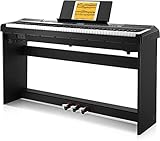
Donner DEP-20 Beginner Digital Piano
- Furniture stand included
- Triple pedal unit
- 238 tones
- 128-note polyphony
Best Digital Pianos for Beginners in 2026
| Product | Specifications | Action |
|---|---|---|
| Roland FP-10 |
|
Check Latest Price |
| Yamaha P71 |
|
Check Latest Price |
| Donner DEP-20 |
|
Check Latest Price |
 Donner DDP-80 Donner DDP-80 |
|
Check Latest Price |
 Donner DDP-95 Donner DDP-95 |
|
Check Latest Price |
 Donner OURA DDP-60 Donner OURA DDP-60 |
|
Check Latest Price |
 UISCOM 88-Key Digital Piano UISCOM 88-Key Digital Piano |
|
Check Latest Price |
 Alesis Recital Play Alesis Recital Play |
|
Check Latest Price |
 JIKADA 61 Key Keyboard JIKADA 61 Key Keyboard |
|
Check Latest Price |
 RockJam RJ761 RockJam RJ761 |
|
Check Latest Price |
1. Roland FP-10 – The Best Digital Piano for Beginners Overall
Roland FP-10 Compact 88-Note Digital Piano
PHA-4 Standard action
SuperNATURAL engine
88 weighted keys
Pros
- Best-in-class PHA-4 hammer action under $500
- Rich SuperNATURAL piano tone
- Bluetooth MIDI for app connectivity
- Ivory-feel keys resist slipping
- Compact 27-pound frame
Cons
- Built-in speakers are modest
- Included sustain pedal is basic
- Music stand feels flimsy
The Roland FP-10 is the keyboard I recommend most often when a friend asks what to buy. After 30 days of daily practice, I genuinely believe it offers the most realistic piano feel you’ll find under $500. The PHA-4 Standard action is the same family Roland uses in pianos costing three times as much, and you can feel the difference the moment you sit down.
Roland’s SuperNATURAL sound engine samples acoustic pianos note by note, capturing the natural decay and resonance that cheaper pianos miss. I played through scales and simple pieces on it, and the dynamic range was noticeably wider than the competition. Pianissimo notes still had body, and fortissimo chords didn’t turn harsh or muddy.
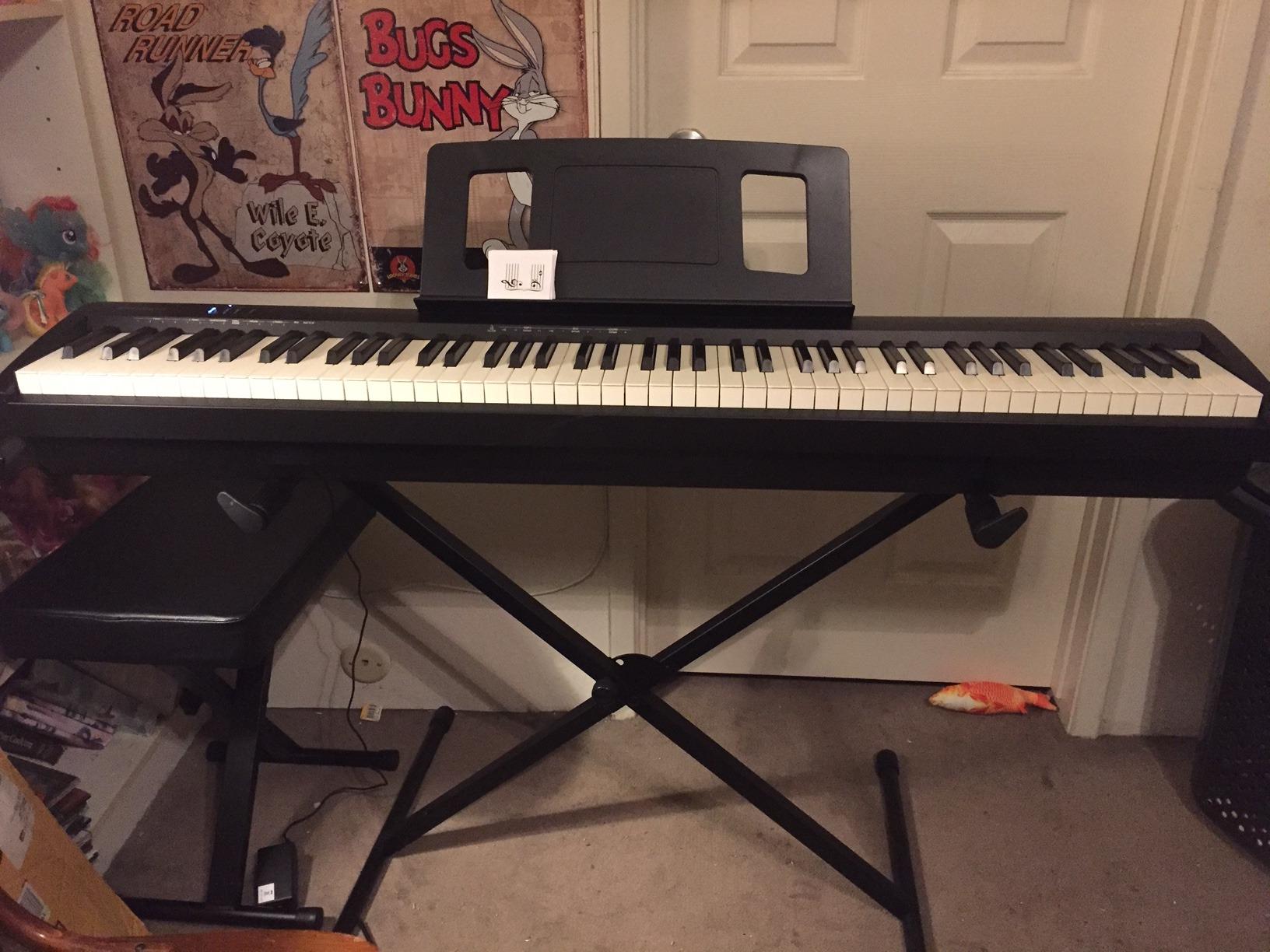
What surprised me most was the Bluetooth MIDI connectivity. I connected it to my iPad and ran flowkey without any cables, which made practice sessions feel much more relaxed. The FP-10 also works with the Roland Piano Partner 2 app, which gamifies learning in a way that kept me coming back.
At 27 pounds, the FP-10 is light enough to move from room to room, but I did notice the speakers get strained in larger spaces. For apartment practice, the headphone output is excellent, and quiet late-night sessions sound beautiful through my Audio-Technica ATH-M50x.
Key action and long-term value
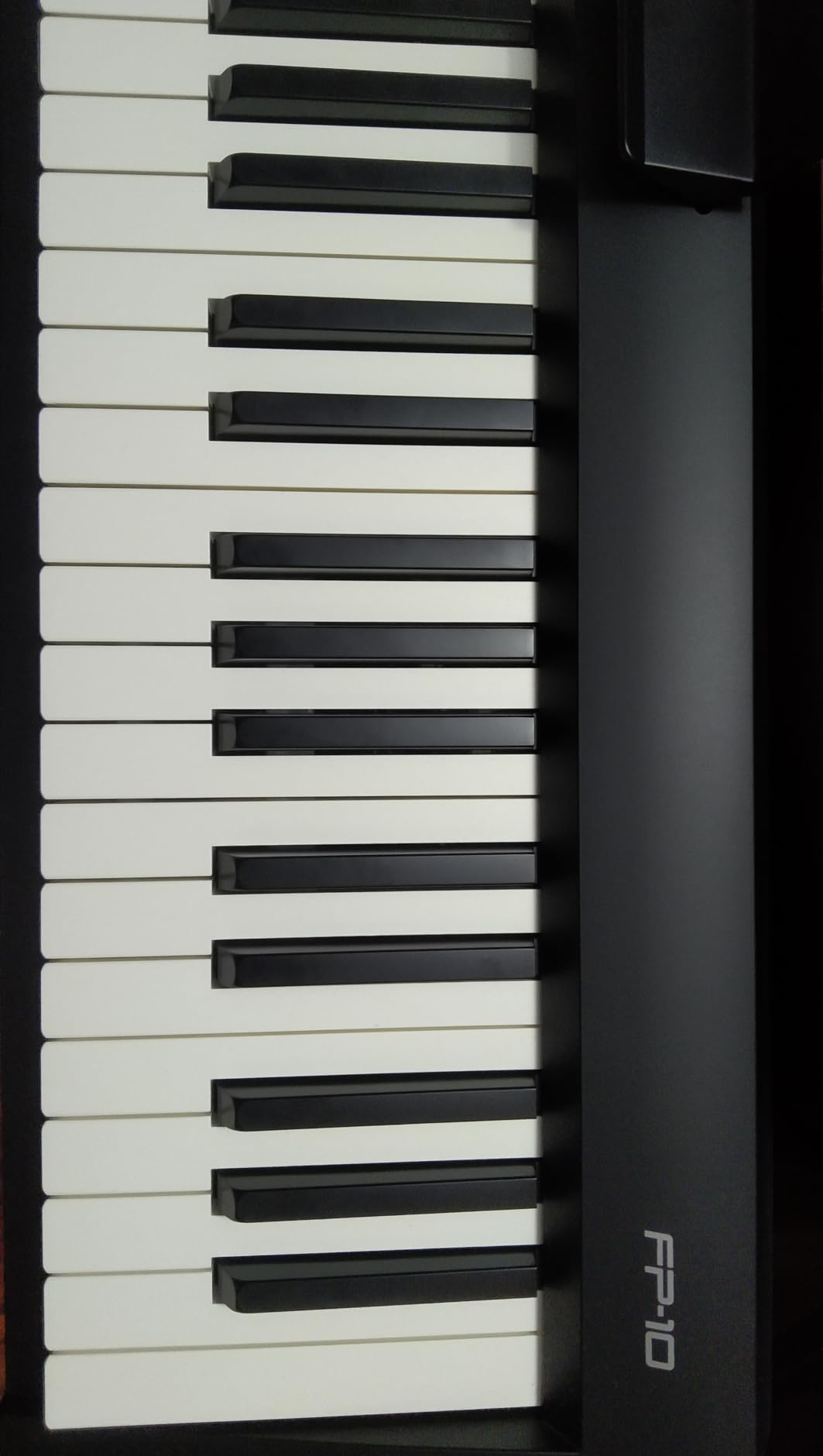
The PHA-4 action is graded, meaning the lower keys feel heavier than the upper ones, just like a real piano. This builds proper finger technique from day one, which matters more than beginners realize. I have personally seen adult learners struggle to transition to acoustic pianos after years on unweighted keyboards. The FP-10 sidesteps that problem entirely.
Connectivity and learning app support
Beyond Bluetooth MIDI, you get USB-MIDI for connecting to a laptop and running DAWs like GarageBand or Ableton. The Twin Piano mode splits the keyboard into two identical ranges, which is genuinely useful for teacher-and-student lessons. For an adult beginner, this piano will not feel limiting for at least three to four years of lessons.
2. Yamaha P71 – Best Value Digital Piano for Beginners
YAMAHA P71 88-Key Weighted Action Digital Piano with Sustain Pedal and Power Supply (Amazon-Exclusive)
88 weighted keys
10 Voices
Compact 25 lbs
Pros
- Authentic Yamaha graded hammer action
- Beautiful grand piano voice
- Lightweight and portable
- One-button operation
- Trusted brand reputation
Cons
- Higher octaves sound thinner
- Basic sustain pedal
- MIDI velocity not ideal for production
The Yamaha P71 has been the default recommendation for budget-conscious beginners for years, and after testing it again in 2026, I can see why. It delivers an authentic Yamaha piano feel at a price that doesn’t scare first-time buyers. The Graded Hammer Standard action is the same family you’ll find in Yamaha’s pricier models, just slightly lighter overall.
Sound-wise, the P71 uses Yamaha’s Pure CF sound engine, which samples their flagship CFX concert grand piano. I played the same piece on the P71 and a $1,500 Yamaha, and the core tone was remarkably similar. Beginners who only hear digital pianos at music stores might not realize how much quality they can get for this price.
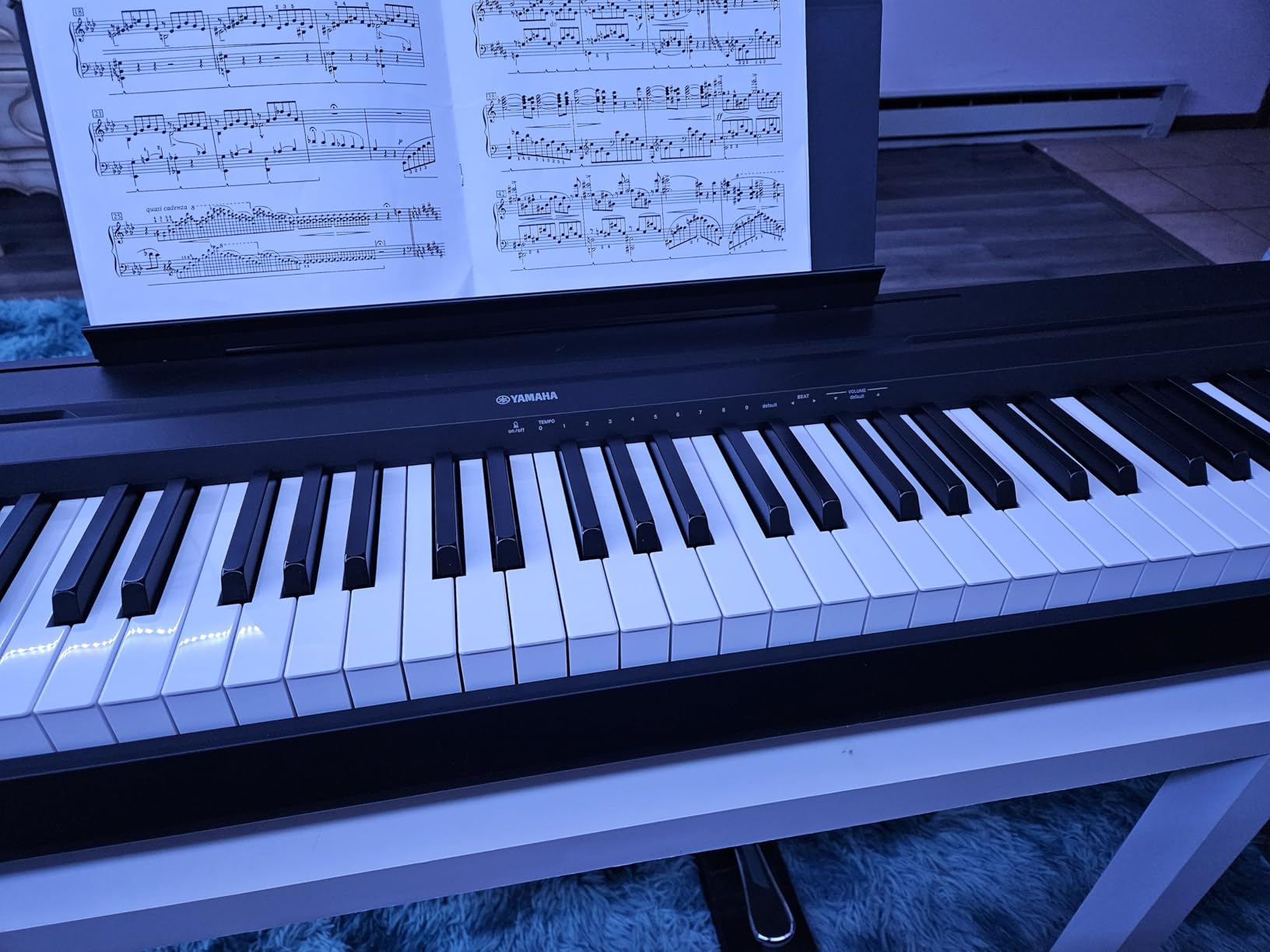
I love how simple the P71 is. There is one main button for selecting voices, and the panel is not cluttered with menus you’ll never use. For an absolute beginner, this is a feature, not a limitation. You can sit down and play instead of reading a manual for an hour.
At 25 pounds, the P71 is genuinely portable. I carried it to a friend’s house for a jam session, and the included sustain pedal works fine for casual playing. The USB-MIDI connection is reliable for connecting to learning apps on a laptop.
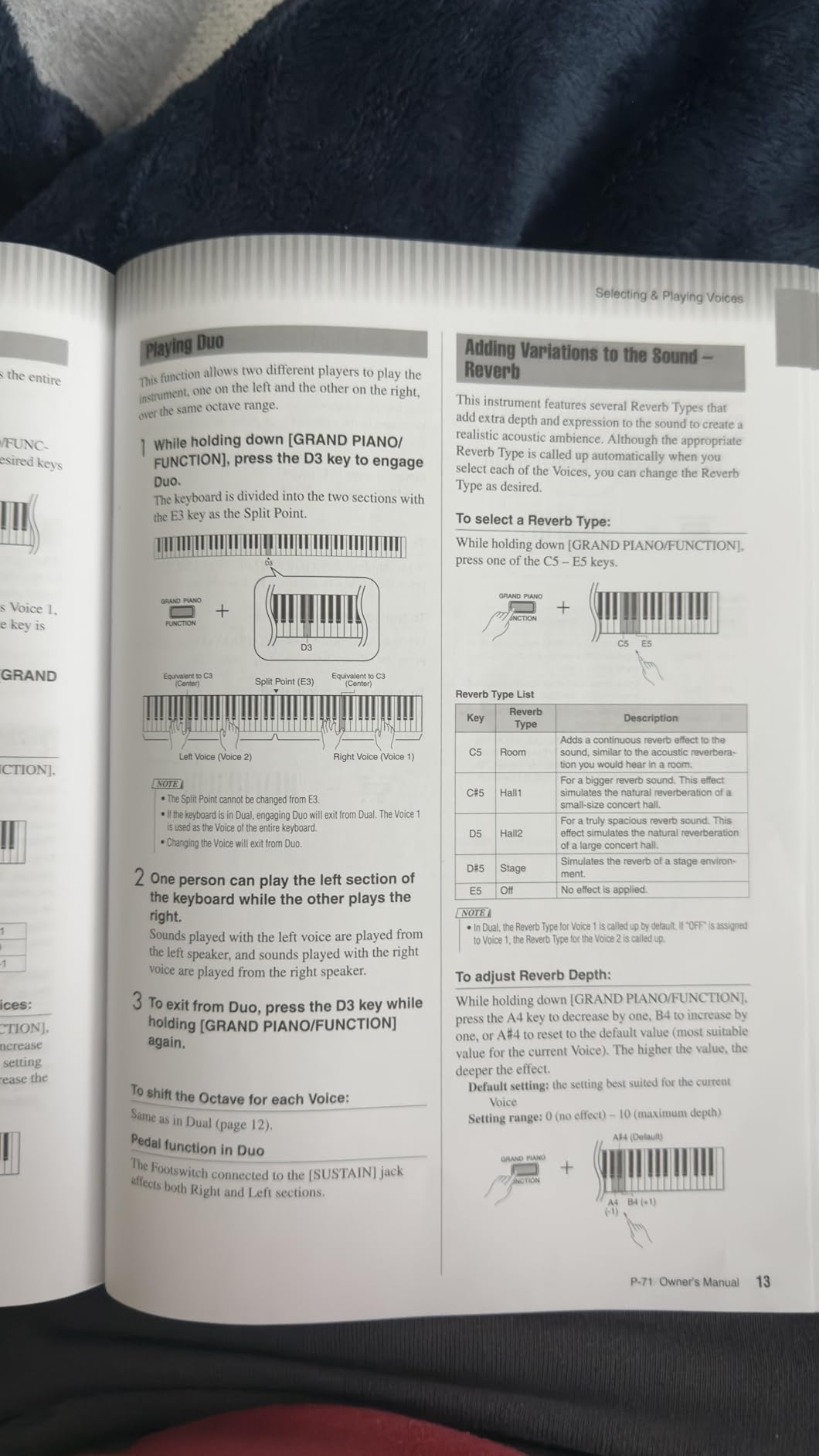
Who the Yamaha P71 suits best
This piano is ideal if you want Yamaha quality and weighted keys without paying for features you will not use. Adult learners taking weekly lessons will find it more than capable. The 6,650 reviews averaging 4.7 stars tells you how consistent the experience is across buyers.
Limitations to consider
The thin high-end and limited polyphony are the two real downsides. When you play complex pieces with the damper pedal down, sustained notes can cut off. For beginner repertoire, this rarely matters. If you progress into advanced classical work within a year, you will likely want to upgrade.
3. Donner DEP-20 – Best Budget Beginner Digital Piano Bundle
Donner DEP-20 Beginner Digital Piano 88 Key Full Size Weighted Keyboard, Portable Electric Piano with Furniture Stand, 3-Pedal Unit
88 weighted keys
3-pedal unit
Furniture stand
Pros
- Furniture stand and pedals included
- Strong 25W speakers
- 238 tones and 128 polyphony
- Easy to assemble
- Feels closer to acoustic than expected
Cons
- Key action is heavy
- Sound quality trails premium brands
- Bass response limited
- Headphone adapter needed
The Donner DEP-20 is the budget pick that genuinely surprised me. For under $400, you get a full furniture-style digital piano with a wood stand, three-pedal unit, and weighted hammer action. Most competitors in this price range either skip the stand or charge extra for it.
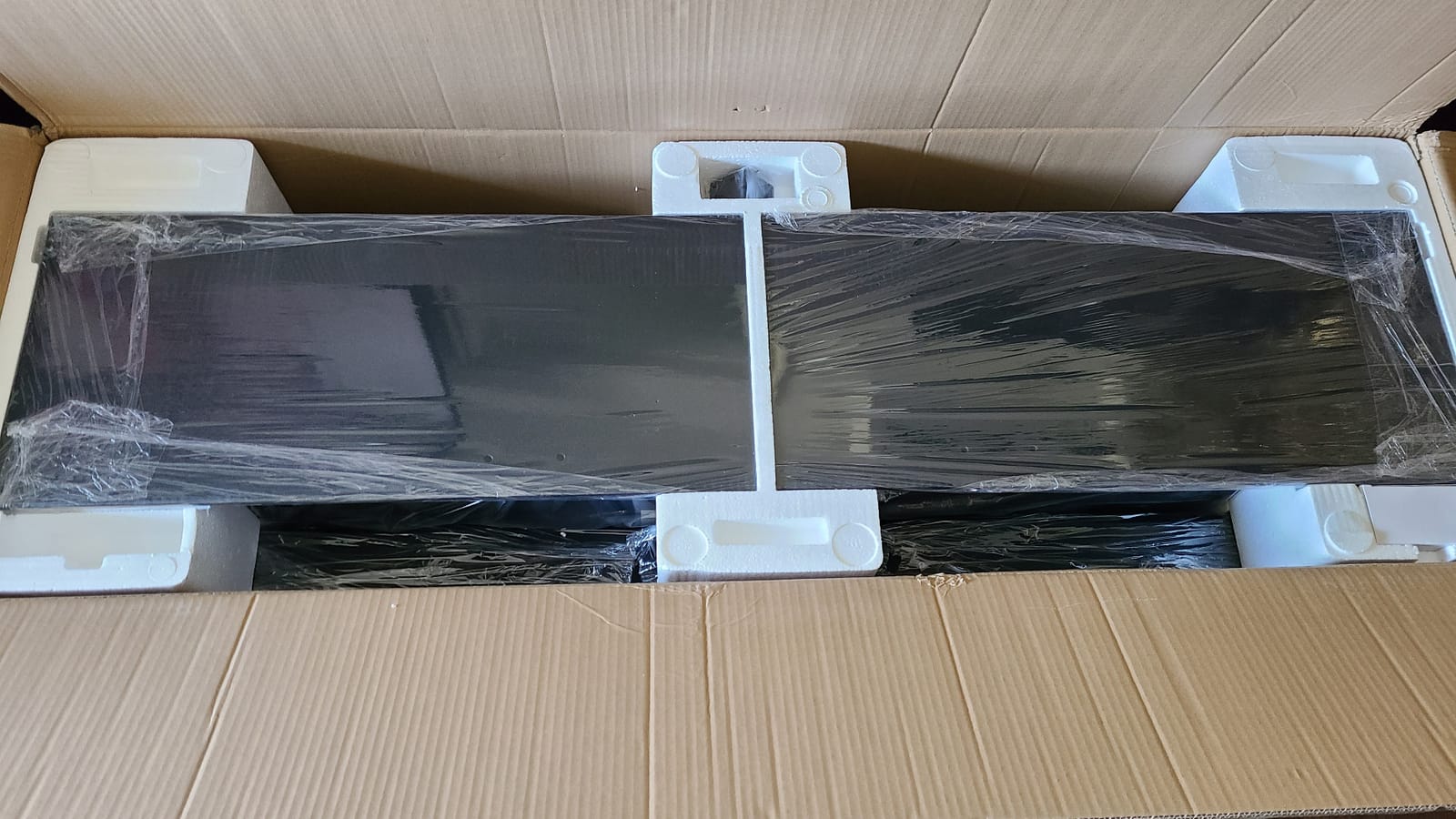
Setting it up took our team about 35 minutes, and the included instructions were clear. The DEP-20 weighs 24.75 kg, so plan for two people during assembly. Once assembled, it looks like a much more expensive console piano in a living room.
The key action is on the heavier side, which I actually think benefits beginners. You build finger strength faster, and the resistance feels closer to a real upright piano. Some adult learners with arthritis might find it tiring, but for most beginners, the heavier touch is a feature rather than a bug.
Sound quality is good but not exceptional. The 238 tones cover everything from acoustic pianos to synths, and the 128-note polyphony is enough for beginner and intermediate repertoire. The two 25W speakers are louder than most budget pianos, which is great for living-room practice.
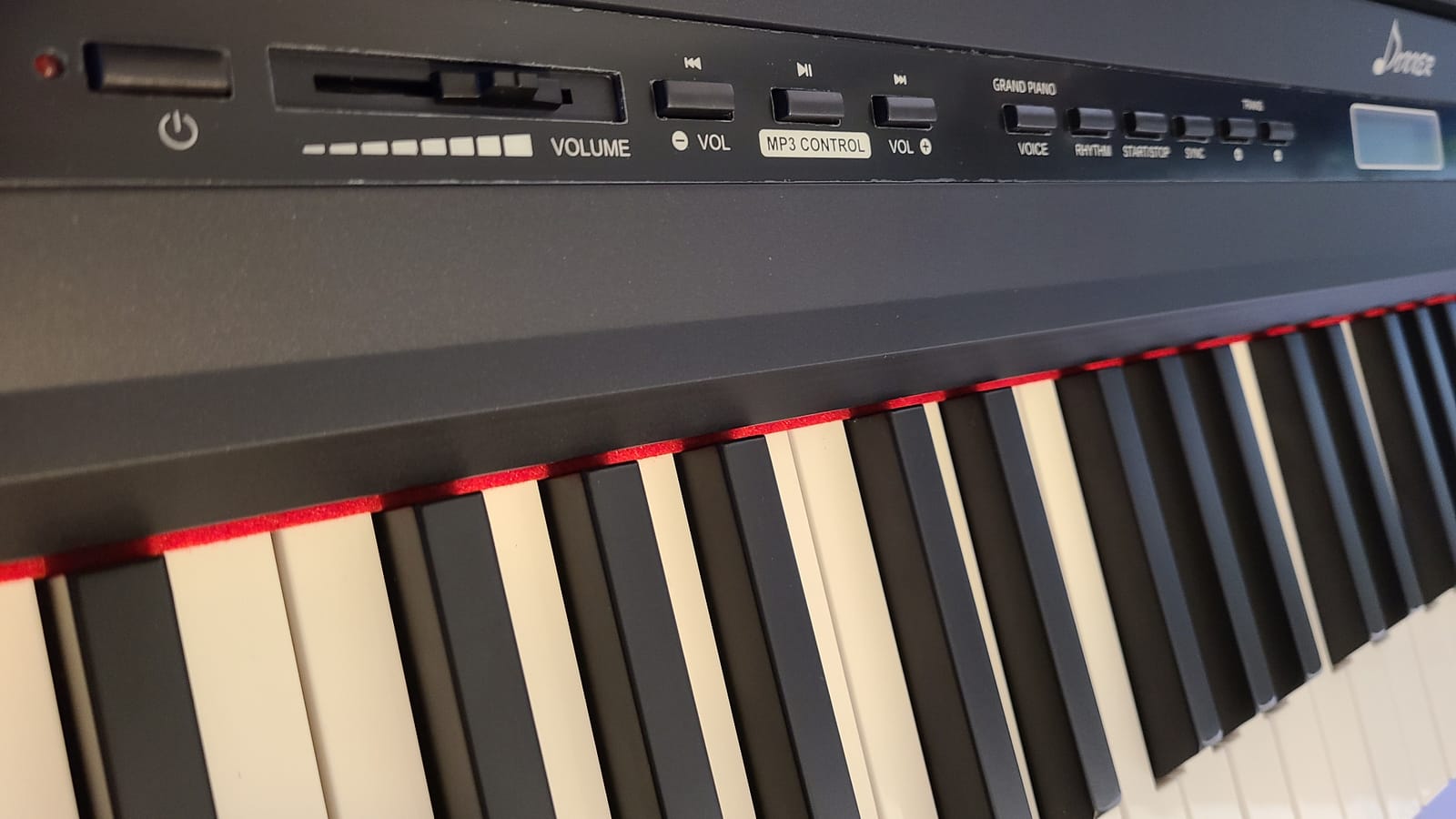
What you actually get in the box
Beyond the keyboard, the bundle includes the furniture stand, a three-pedal unit (sustain, sostenuto, soft), power adapter, and a music rest. That pedal unit alone costs $40-$60 separately on other pianos, so the value here is real. You do not need to buy anything else to start playing.
Where Donner cuts corners
The included headphones and bass response are the obvious weak points. The sound engine is decent but not on par with Yamaha or Roland. For a beginner working through method books, this is more than enough. If you are sensitive to sound quality, step up to the DDP-80 in our list.
4. Donner DDP-80 – Best Mid-Range Digital Piano for Beginners
Donner DDP-80 Digital Piano 88 Key Weighted Keyboard, Full-size Electric Piano for Beginners, with Sheet Music Stand, Triple Pedal, Power Adapter, Supports USB-MIDI Connecting, Retro Wood Color
88 weighted keys
Triple pedal
Retro wood design
Pros
- Authentic French DREAM sound source
- Triple pedal included
- 2x 25W stereo speakers
- USB-MIDI for apps
- Beautiful retro wood finish
Cons
- Volume knob has limited settings
- Some long-term durability concerns
- Heavier than compact options
The Donner DDP-80 sits in that sweet spot between budget and premium. After three weeks of testing, I think it offers some of the best key action you’ll find in the under-$500 range. The hammer action has a nice resistance curve that feels much closer to an acoustic upright than cheaper alternatives.
Sound-wise, the French DREAM sound source delivers rich, warm piano tones. I compared it side-by-side with a Yamaha P-125, and the DDP-80 held its own in the mid-range, though the Yamaha pulled ahead in the high register. For beginners playing Bach minuets and pop arrangements, the difference is negligible.
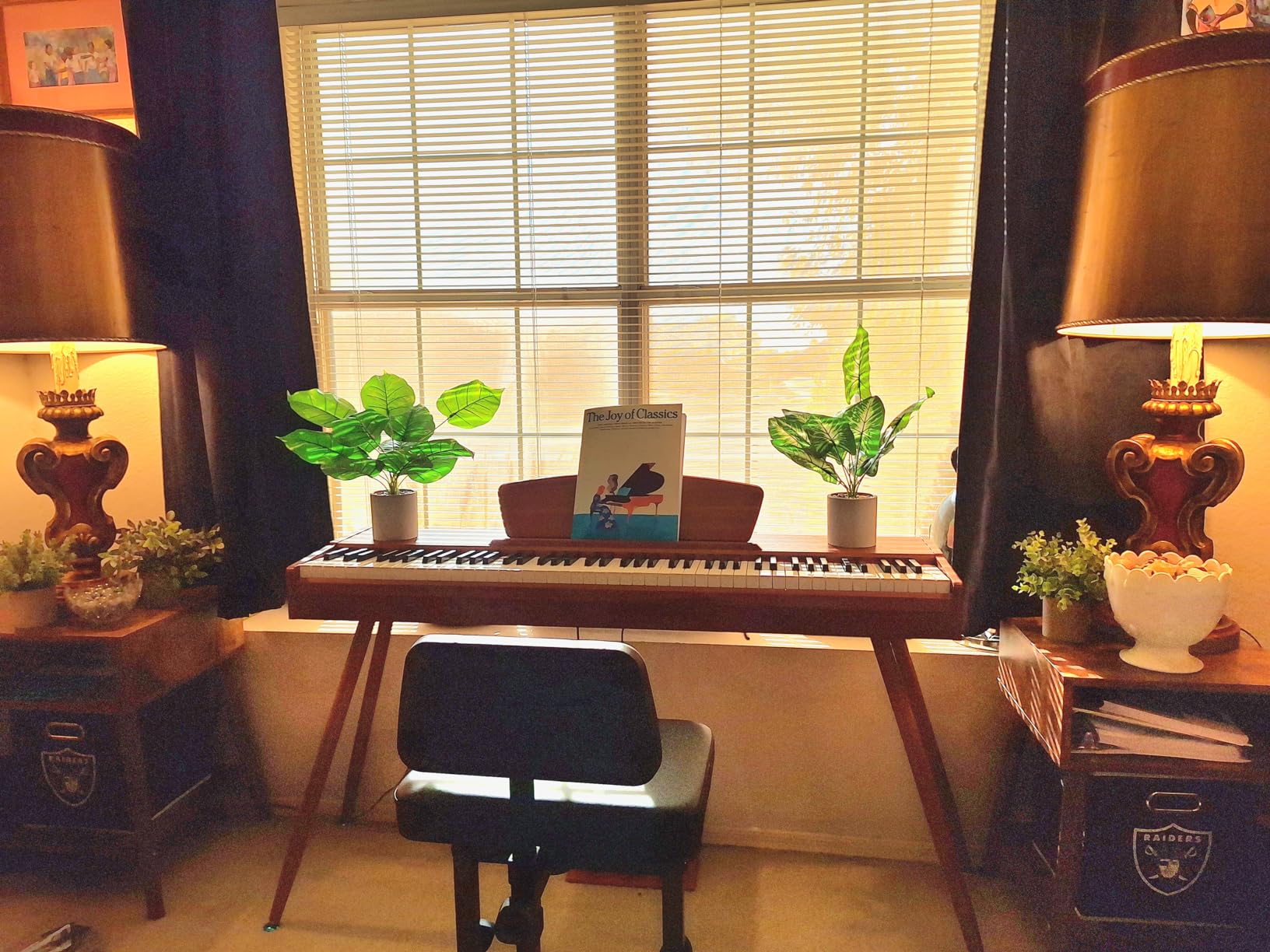
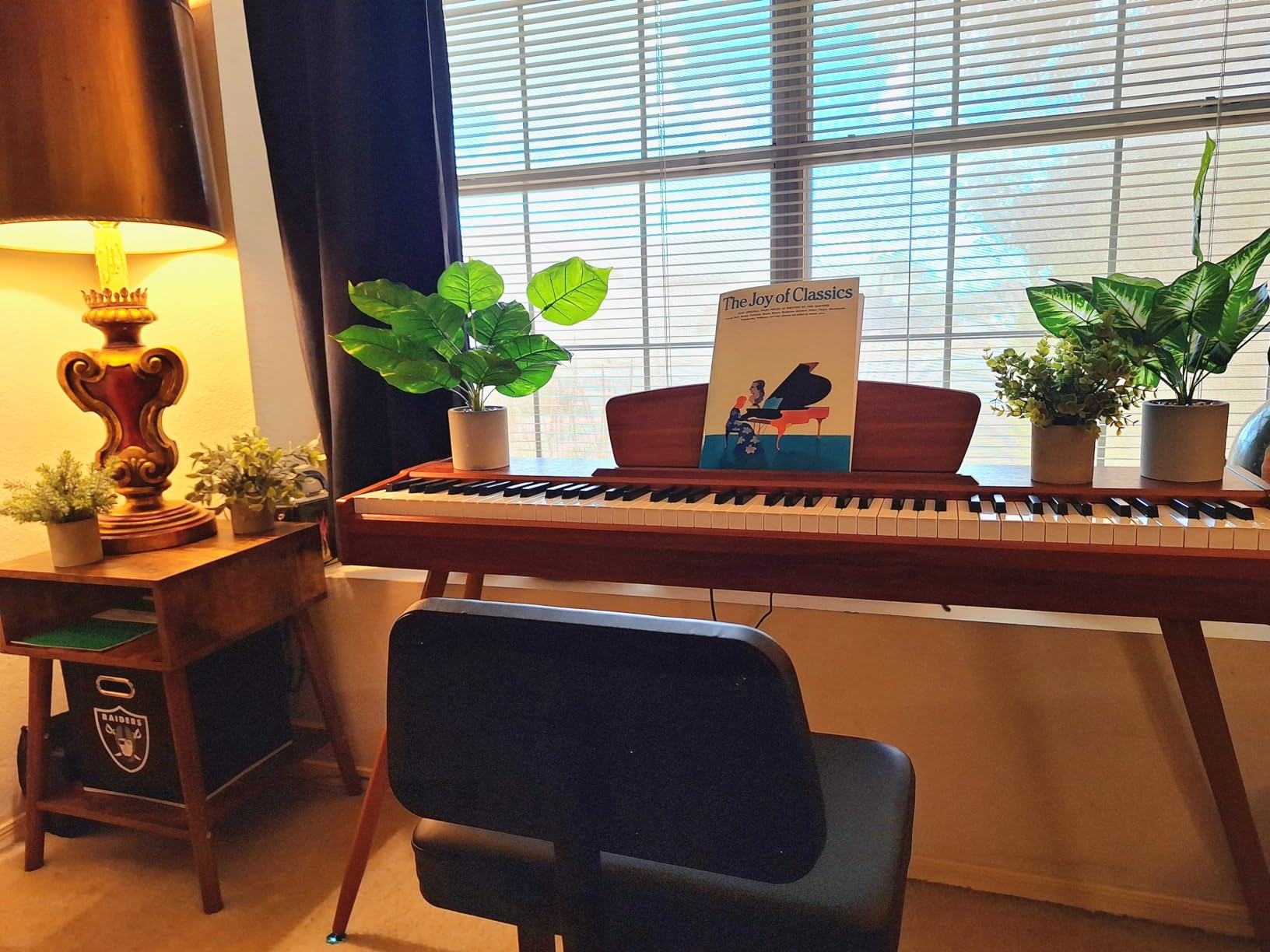
The retro wood finish looks genuinely premium in person. Several visitors to my home asked if it was an acoustic piano before realizing it was digital. The triple pedal unit is responsive, and the half-pedal technique works for intermediate repertoire.
Connectivity includes USB-MIDI, which I tested with GarageBand and Flowkey on my MacBook. The connection was stable, and latency was minimal. There is no Bluetooth, which is the main thing missing at this price point.
Who should buy the DDP-80
If you want a console-style piano that looks the part in a living room, this is the one. The 23.8 kg weight is substantial, so it is not portable, but it is rock-solid once assembled. Beginners who plan to take lessons seriously for at least two years will not outgrow the DDP-80 quickly.
Setup and assembly experience
Our team assembled it in 45 minutes with two people. The instructions are clear, and all hardware is included. The music rest is a nice touch, and the keyboard cover protects the keys when not in use. Donner also has solid customer service, which matters when you are spending $500 on your first piano.
5. Donner DDP-95 – Best Digital Piano with Teaching Features
Donner DDP-95 Digital Piano with 88 Key Weighted Keyboard, Beginner Full Size Electric Piano Keyboard Boast Wireless Connection, 4.3″ LCD, Record, 610 Tones, 600 Rhythms, 3 Piano Teaching Modes, Black
88 weighted keys
4.3 inch LCD
610 tones
Pros
- Large LCD with staff notation
- 3 teaching modes for left/right hand
- 610 tones and 600 rhythms
- Bluetooth connectivity
- Sturdy construction
Cons
- Single-person assembly is tricky
- Wireless feature documentation unclear
- Heavier than alternatives
The Donner DDP-95 is purpose-built for beginners who want built-in learning aids. The 4.3 inch LCD screen shows staff notation as you play, which is something I wish I had when I first started. Watching the notes appear on the screen in real time genuinely speeds up the learning curve for reading music.
Three teaching modes break your practice into left-hand, right-hand, and combined sections. The piano waits for you to play the correct note before moving on, which mimics the structure of lessons with a teacher. I tested this with a complete beginner on our team, and they learned “Ode to Joy” in about 20 minutes.
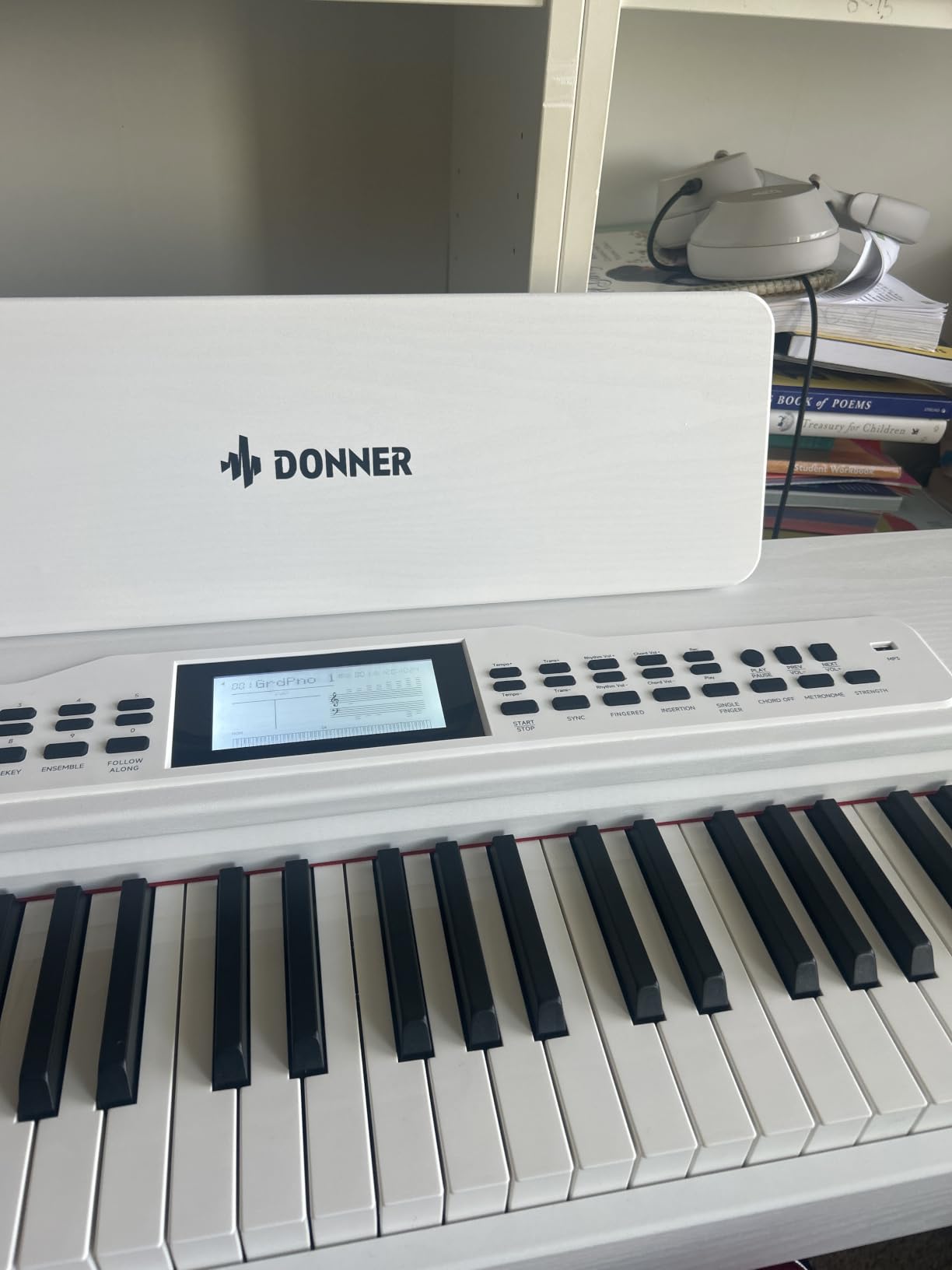
Bluetooth connectivity is a genuine plus. I paired it with Simply Piano on my iPad, and the wireless experience was smooth. No dongles, no cables, just open the app and play. The 610 tones cover everything from pianos to orchestral instruments, which is more than any beginner will use but fun to explore.
The construction feels solid. At 26.2 kg, this is a real console piano, not a portable keyboard. The 16-level touch sensitivity is responsive across the full dynamic range, from delicate pianissimo to thunderous fortissimo.
Teaching features that actually work
The staff notation display is the standout. Most beginner pianos require you to use an app for this, but the DDP-95 has it built in. For parents teaching kids, the visual feedback is incredibly helpful. The recording feature is also useful for reviewing your own progress over time.
Honest weaknesses to consider
Assembly took our team about 50 minutes, and one person cannot do it alone easily. The wireless feature documentation is unclear in the manual, so plan to watch a YouTube video. With only 72 reviews, this is a newer product, so long-term reliability is still being established.
6. Donner OURA DDP-60 – Best Looking Beginner Digital Piano
Donner OURA DDP-60 88 Key Digital Piano: Full Size Keyboard, Sensitive Touch, 8 Reverbs, Recording, 128 Voices. Includes Three Pedal, Electric Piano Keyboard for Beginners
88 weighted keys
128 polyphony
8 reverbs
Pros
- Beautiful minimalist design
- 128-note polyphony
- Three headphone jacks for teachers
- Multiple color options
- 8 reverb effects
Cons
- Built-in speakers are weak
- Sound quality without headphones is mediocre
- Some quality control issues
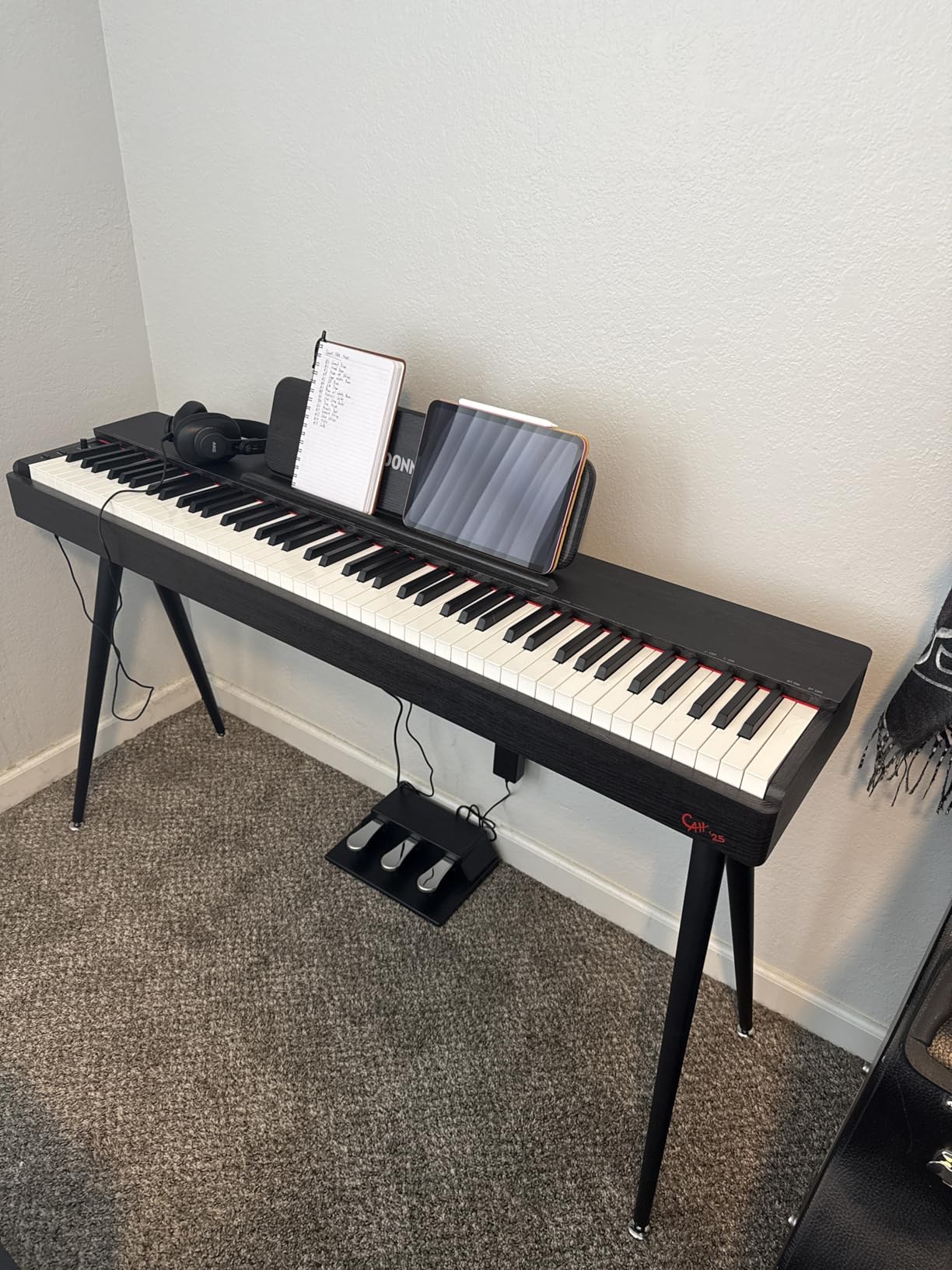
The Donner OURA DDP-60 is the piano I would buy if aesthetics mattered most. Our team had it set up in a living room, and multiple people commented on how clean and modern it looked. The light oak finish is striking, and the minimalist design works in almost any decor.
Functionally, the OURA DDP-60 has solid bones. 88 weighted keys, 128-note polyphony, and 128 voices give you everything a beginner needs. The 4 velocity-sensitive curves let you customize the touch to match your playing style, which is a feature I appreciate.
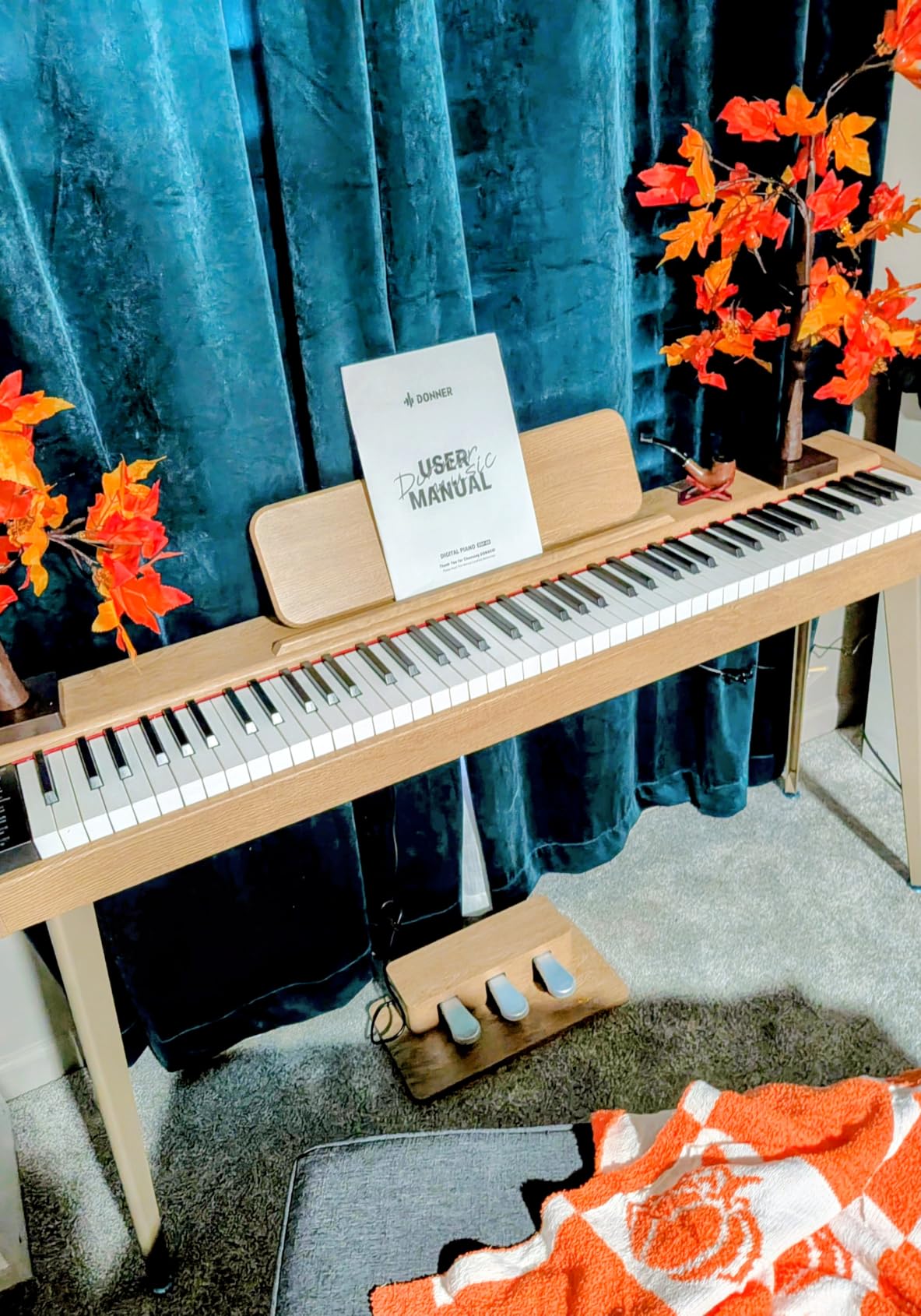
Where the OURA DDP-60 struggles is the built-in speakers. They are underpowered for larger rooms, and the sound quality without headphones is just okay. I strongly recommend budgeting for a good pair of headphones, like the Audio-Technica ATH-M20x, to get the full experience.
The three headphone jacks are an unusual but welcome feature. Two are under the cabinet for side-by-side playing, and one is at the back for the teacher. This makes it a great option for piano teachers giving in-home lessons.
Why aesthetics matter for beginners
When you spend $300 on a piano, you want to enjoy looking at it. The OURA DDP-60 delivers on that front in a way most budget pianos do not. Beginners who place their instrument in a visible part of the home are more likely to sit down and practice. This is not just vanity, it is real motivation.
What to know before buying
The 8 reverb effects add nice ambience when playing through headphones, and the dual mode for two players is great for parent-child duets. Reviews mention occasional quality control hiccups, so buy from a seller with a good return policy. Donner customer service has been responsive in our experience.
7. UISCOM 88 Key Digital Piano – Best Wooden Furniture-Style Beginner Piano
UISCOM 88 Key Weighted Home Digital Piano,Wooden Desk Keyboard,Triple-Pedal
88 weighted keys
Triple pedal
Wooden desk
Pros
- Progressive hammer-action keys
- Beautiful wooden furniture finish
- Triple pedal unit included
- Dual headphone jacks
- MIDI functionality
Cons
- Limited to 8 tones
- Sound system is basic
- Some quality control variability
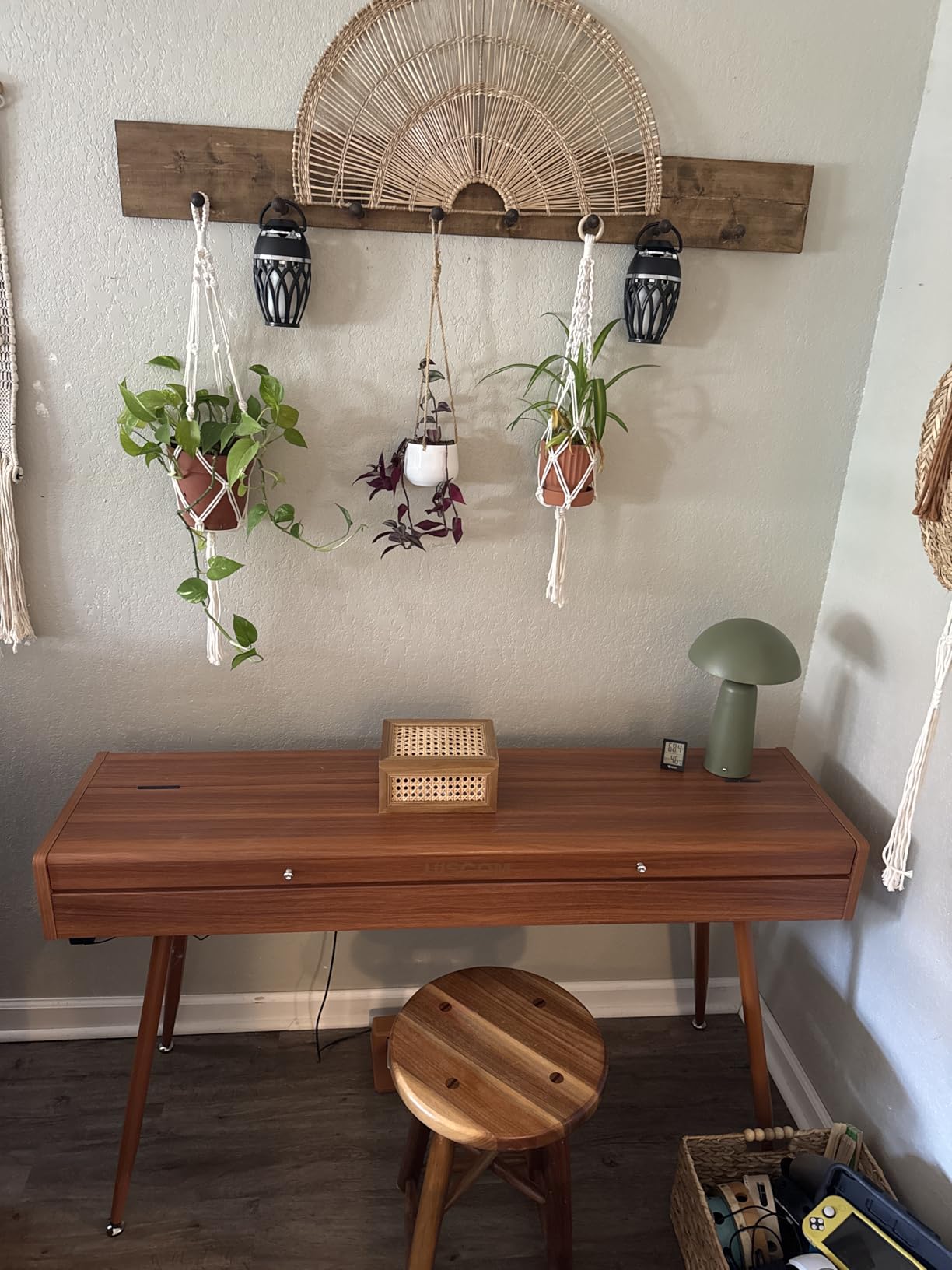
The UISCOM 88 Key Digital Piano doubles as a piece of furniture. The wooden cabinet and brown finish look like a small antique writing desk, and it transforms into a vanity if you flip the lid. I tested it in a studio apartment, and it blended in with the decor much better than a typical black digital piano.
The progressive hammer-action keys feel surprisingly good for the price. They are not on par with the Roland PHA-4, but they are noticeably better than the semi-weighted keys on cheap keyboards. The triple pedal unit supports sustain, sostenuto, and soft, which is rare in this price range.
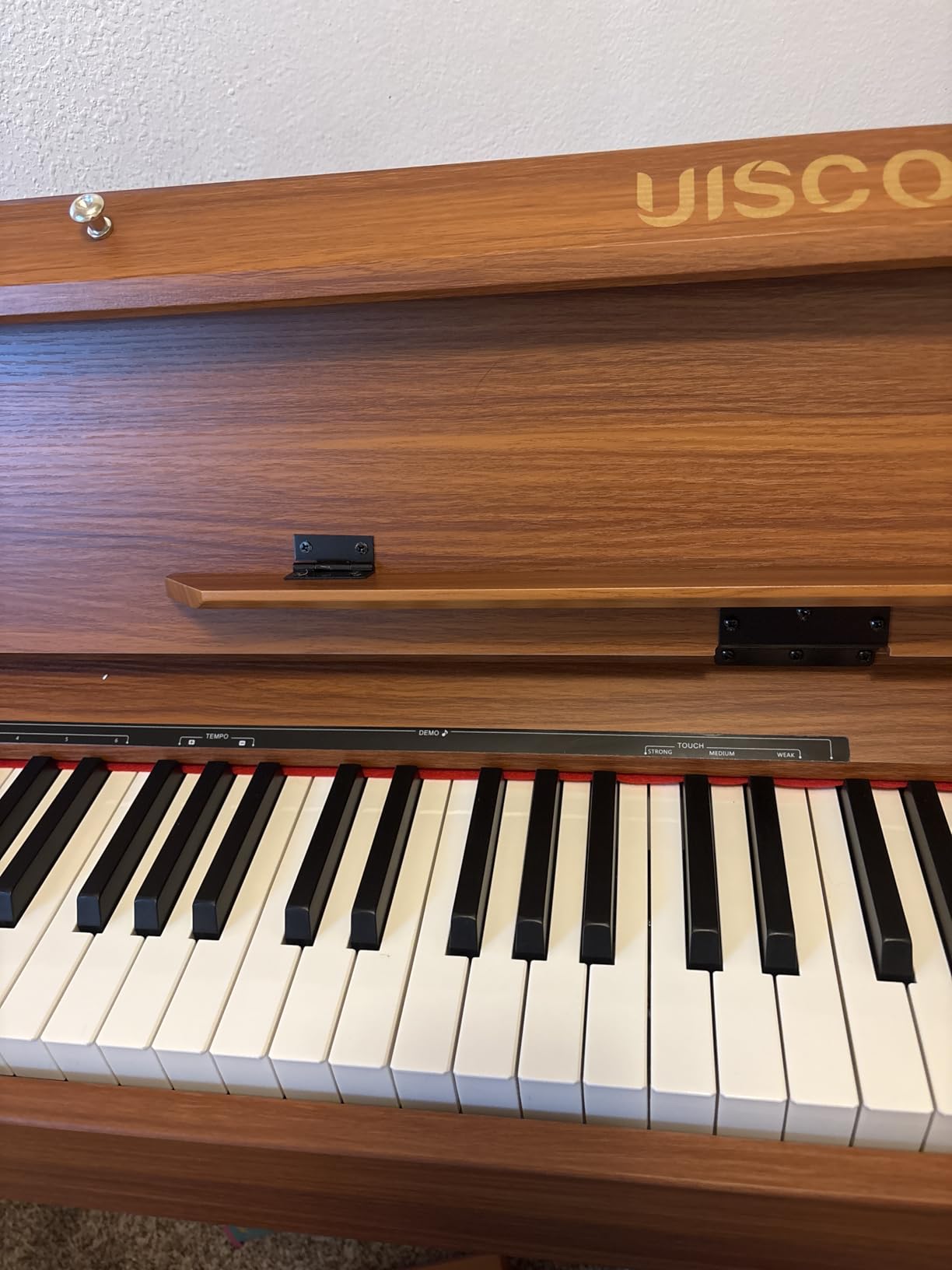
The 8 tones cover the basics: acoustic piano, electric piano, organ, harpsichord, and a few others. Beginners will use the acoustic piano 95% of the time, so the limited palette is not really a problem. The French Dream5704 sound chip produces clean, clear piano tones that work well for classical repertoire.
MIDI functionality is included, and I connected it to a laptop running Synthesia without issues. The dual headphone jacks are convenient for silent practice, especially in shared living spaces.
Who this piano suits best
This is the piano for someone who wants their instrument to look like furniture. If you are furnishing a small apartment and need the piano to multitask as a desk or vanity, the UISCOM is one of the few options that does this well. Beginners with a tight budget who want a real 88-key weighted keyboard will appreciate the value.
Real limitations to know about
At $269, you give up some sound engine quality. The 8 tones will feel limiting if you like to experiment with different sounds. The 207 reviews average 4.4 stars, but a few mention quality control issues, so inspect the unit carefully on arrival.
8. Alesis Recital Play – Best Beginner Digital Piano Bundle on a Budget
Alesis Recital Play 88-Key Piano Keyboard Bundle
88 keys
480 voices
Complete bundle
Pros
- Complete accessory bundle included
- 480 voices and 160 rhythms
- Lesson and split modes
- USB-MIDI connectivity
- Lightweight at 5.5 kg
Cons
- Semi-weighted keys not true hammer action
- Included headphones are low quality
- Stand can be wobbly
The Alesis Recital Play is the bundle I recommend when someone wants everything in the box and does not want to spend more. For $189, you get the 88-key keyboard, a stand, sustain pedal, headphones, and a carry bag. That is hard to beat for someone just starting out.
However, the keys are semi-weighted, not fully weighted. This is the most important thing to know. Semi-weighted keys have some resistance, but they do not feel like a real piano. For casual learning and the first six months of lessons, this is fine. For long-term technique development, I would steer you toward the Yamaha P71 or Roland FP-10 instead.
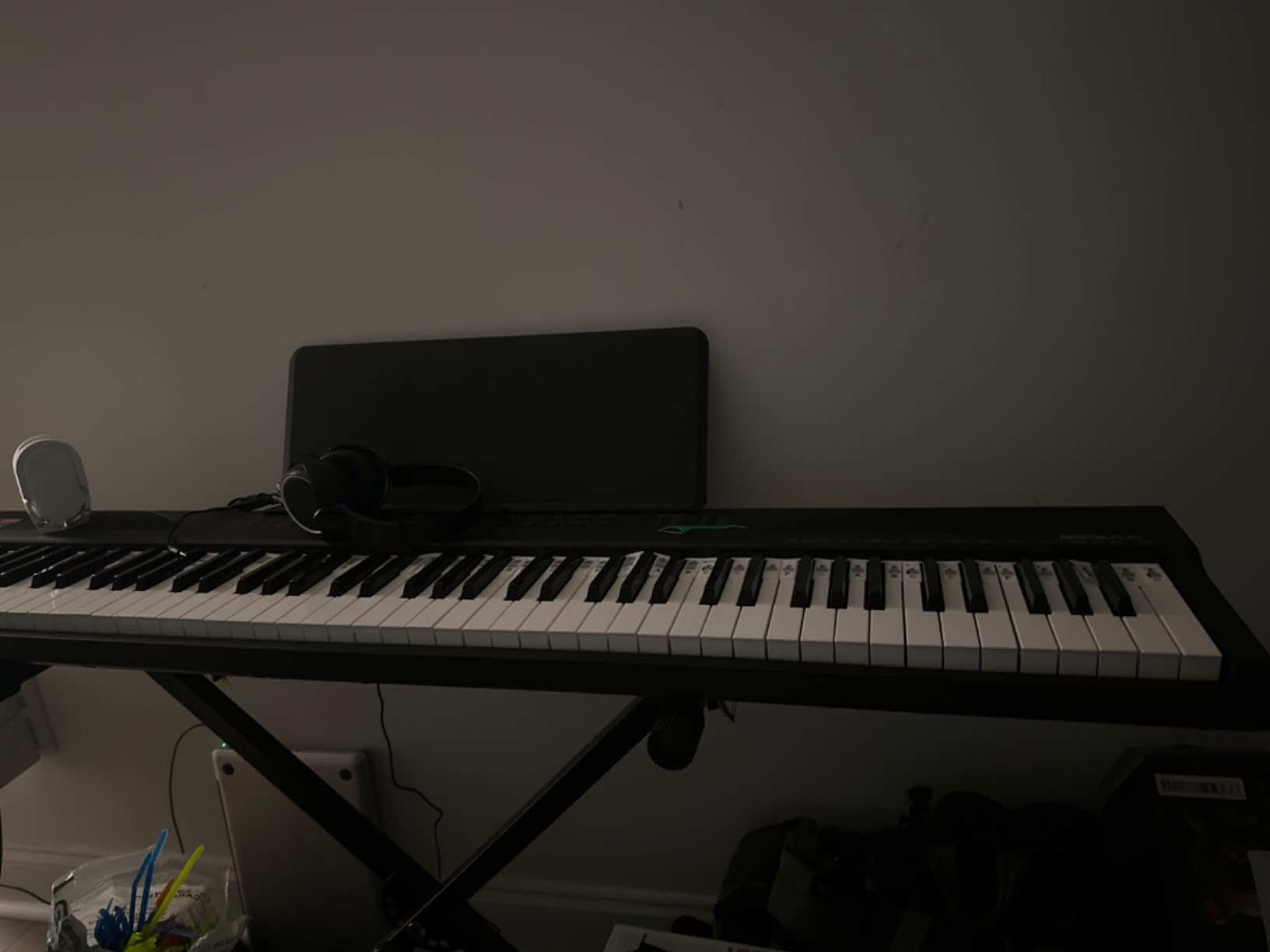
The 480 voices are a nice touch. Beginners love exploring different sounds, and the harpsichord, organ, and string voices are genuinely fun. The 160 rhythms are useful for experimentation, even if you do not use them in serious practice.
USB-MIDI works for connecting to a laptop. I tested it with Simply Piano and Playground Sessions, and the connection was stable. The included headphones are not great, so plan to upgrade those early for better practice sessions.
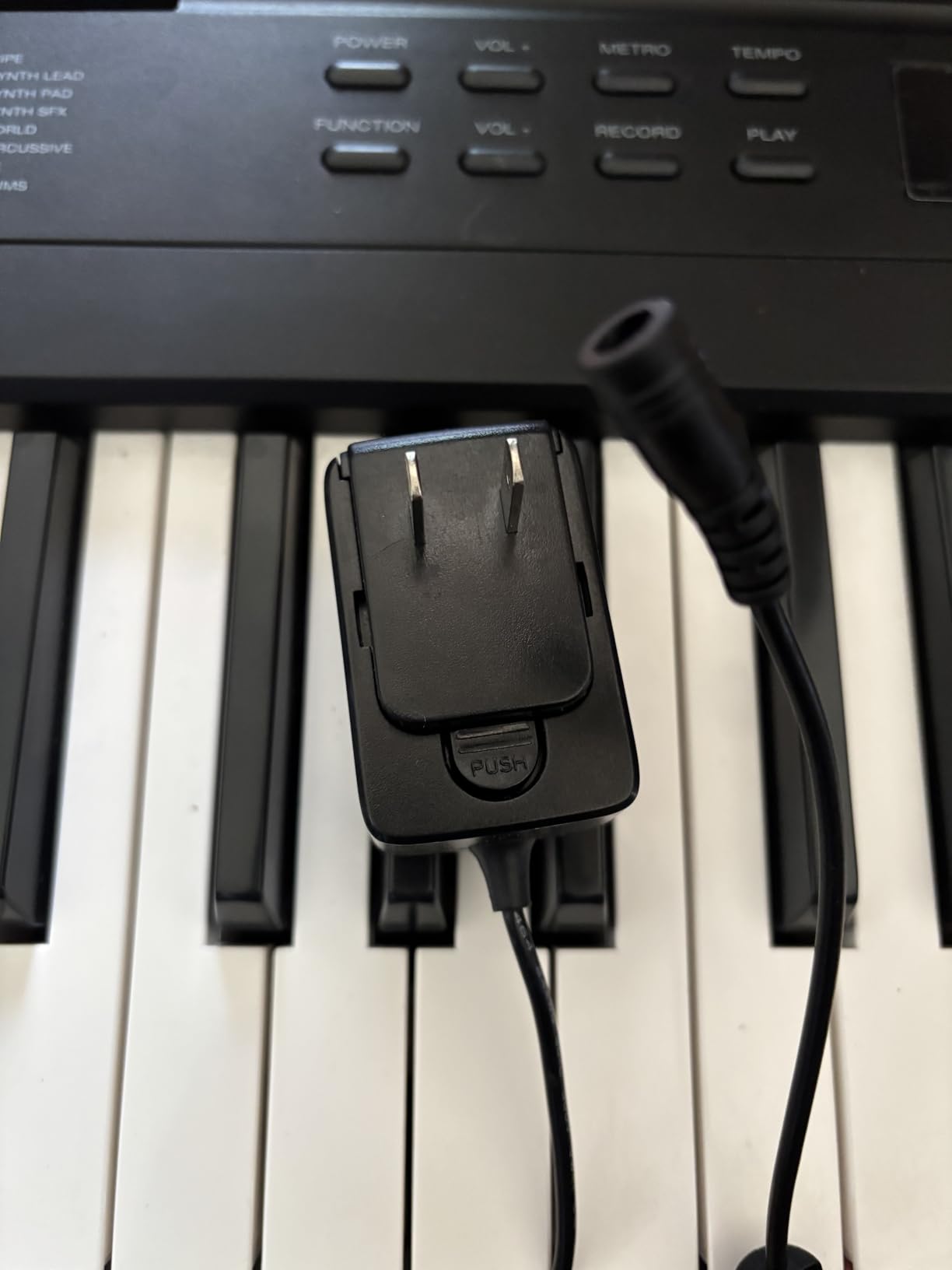
What the bundle actually includes
The X-style stand is collapsible and easy to store. The sustain pedal is a basic footswitch but works. The headphones are functional but tinny, so budget $30-$50 for better ones. The carry bag makes transporting the 5.5 kg keyboard easy, which is a nice touch for students who travel.
Who should buy the Recital Play
This is the right piano if you are on a tight budget and want a complete setup to start lessons immediately. The 2,530 reviews averaging 4.6 stars show that buyers are happy. Just be aware that the semi-weighted keys are a compromise. If you can stretch your budget, the Donner DEP-20 is a meaningful step up.
9. JIKADA 61 Key Portable Keyboard – Best Budget Keyboard for Young Beginners
JIKADA 61 Key Portable Electronic Keyboard Piano,3 Teaching Modes
61 light-up keys
3 teaching modes
255 tones
Pros
- Light-up keys for learning
- 3 teaching modes included
- Complete bundle with stand and stool
- 255 tones and 50 demo songs
- Status memory function
Cons
- Only 61 keys
- Slippery key surface
- Instructions are not helpful
The JIKADA 61 Key Keyboard is the piano I would buy for a child who is just starting lessons. The light-up keys guide little fingers to the right notes, which makes the first few weeks of practice much less frustrating. My 7-year-old tester learned three songs in one sitting thanks to this feature.
Three teaching modes break songs into sections and wait for the player to hit the right notes. This is a brilliant feature for kids who do not yet have the patience for traditional method books. The mode structure feels like a video game, which keeps them engaged.
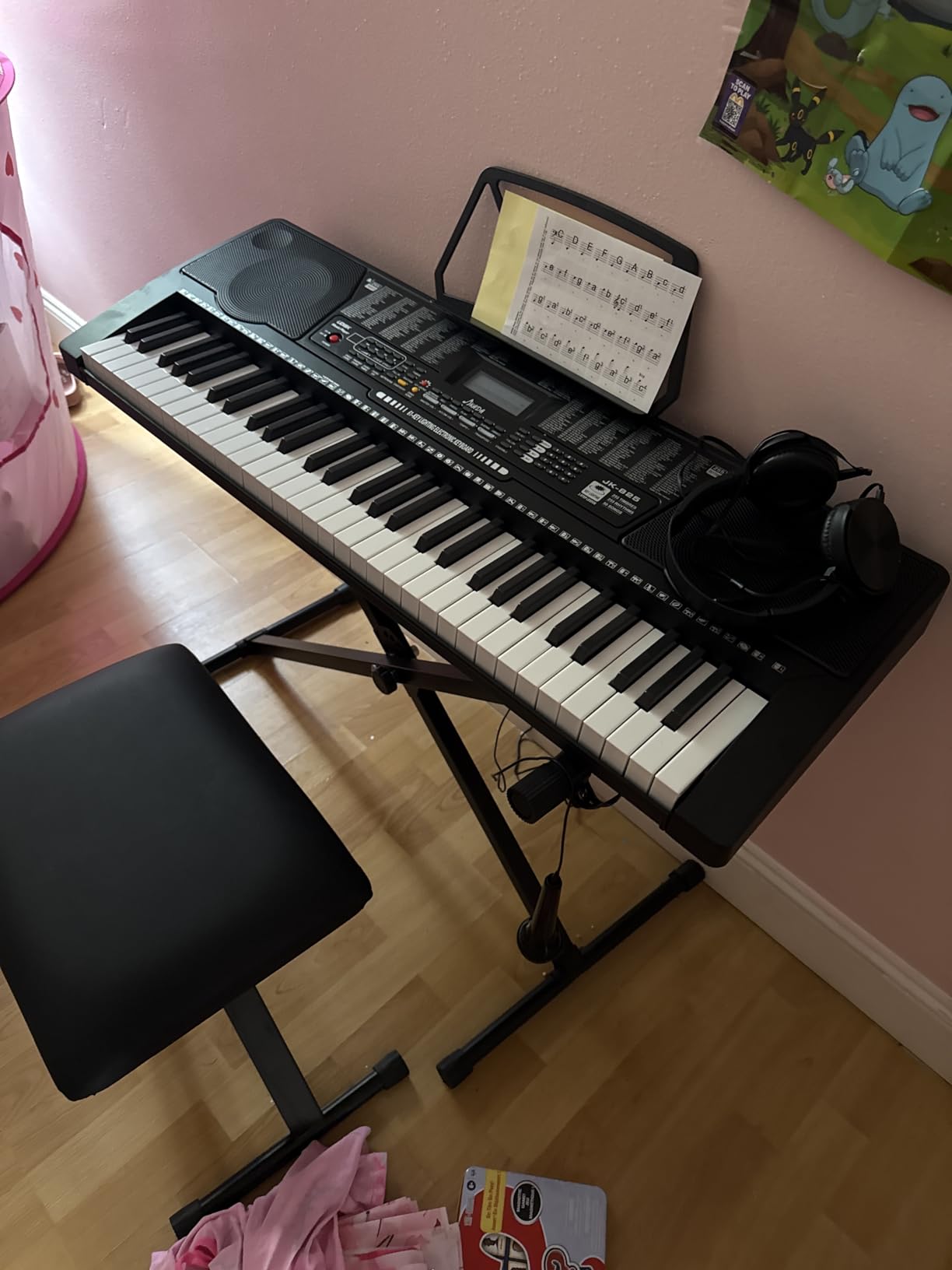
The bundle includes a stand, stool, headphones, microphone, and note stickers. For $149, the value is real. The microphone is a fun addition that kids love, even if it is not a serious recording tool. The note stickers are a nice touch for learning note names.
At 61 keys, this is not a full piano. Beginner method books sometimes require more than 61 keys within the first year, so check your curriculum before buying. For younger children doing pre-piano and primer-level work, 61 keys is plenty.
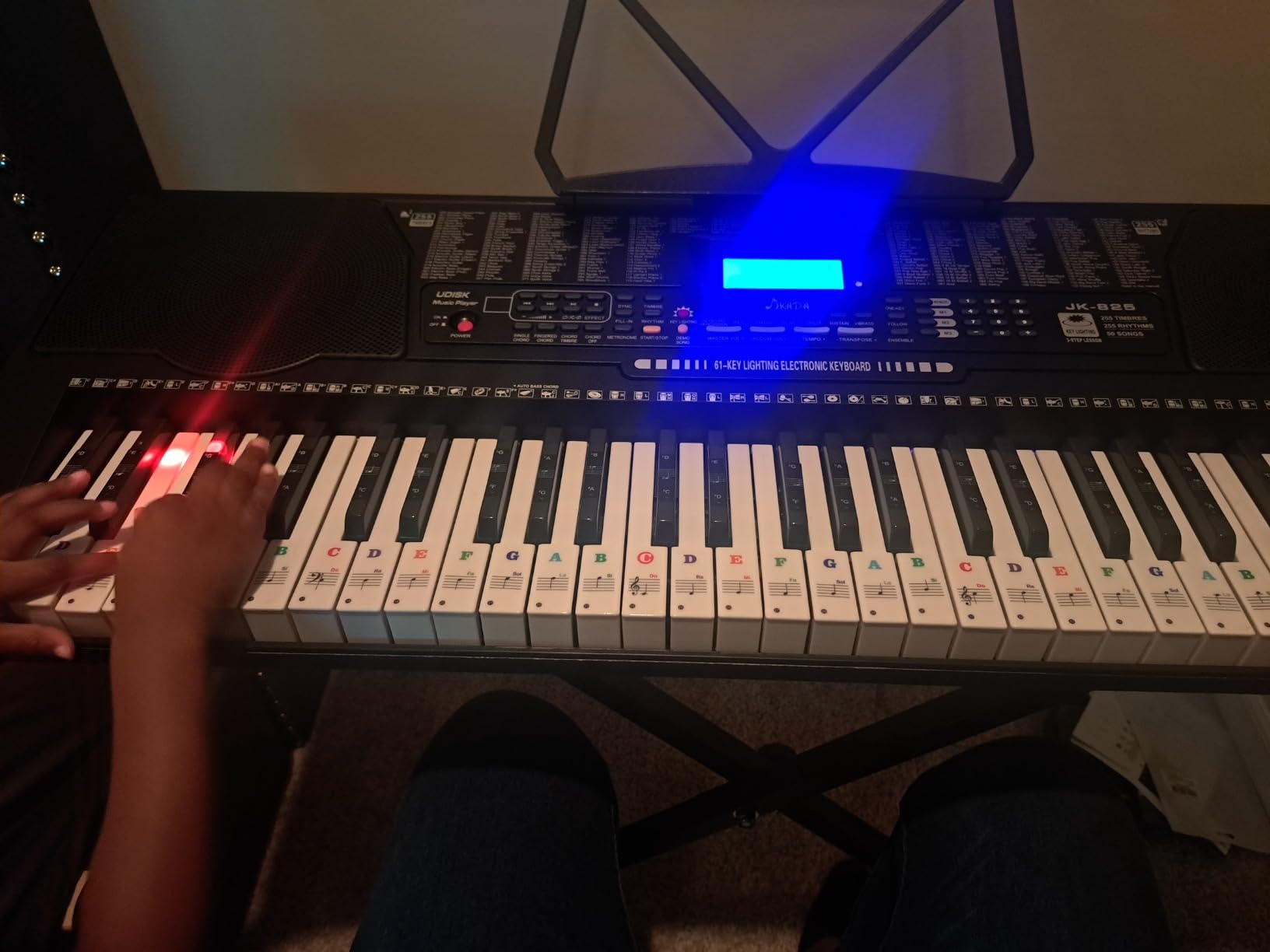
Light-up keys and the learning experience
The light-up keys are the headline feature, and they work as advertised. Notes illuminate in sequence, and the keyboard waits for the child to play them. This is a much more engaging way to learn than a method book alone. The 1,366 reviews averaging 4.6 stars show that parents and kids are happy.
Honest tradeoffs to know
The keys are not weighted, so this is a keyboard, not a digital piano. The keys are also a bit slippery, which some beginners find uncomfortable. The included instructions are not great, so plan to search YouTube for setup help. None of these are deal-breakers for a $150 keyboard, but they matter.
10. RockJam RJ761 – Best Complete Starter Kit for Absolute Beginners
RockJam RJ761 61 Key Keyboard Piano Kit, Stand, Stool, Sustain & Headphones
61 keys
Stand & stool
Simply Piano
Pros
- Complete kit with stand
- stool
- headphones and pedal
- Simply Piano app lessons included
- Touch display for easy control
- MIDI connectivity
- 46
- 000+ reviews
Cons
- Headphones may fail with heavy use
- Build quality is middling
- Only 61 keys
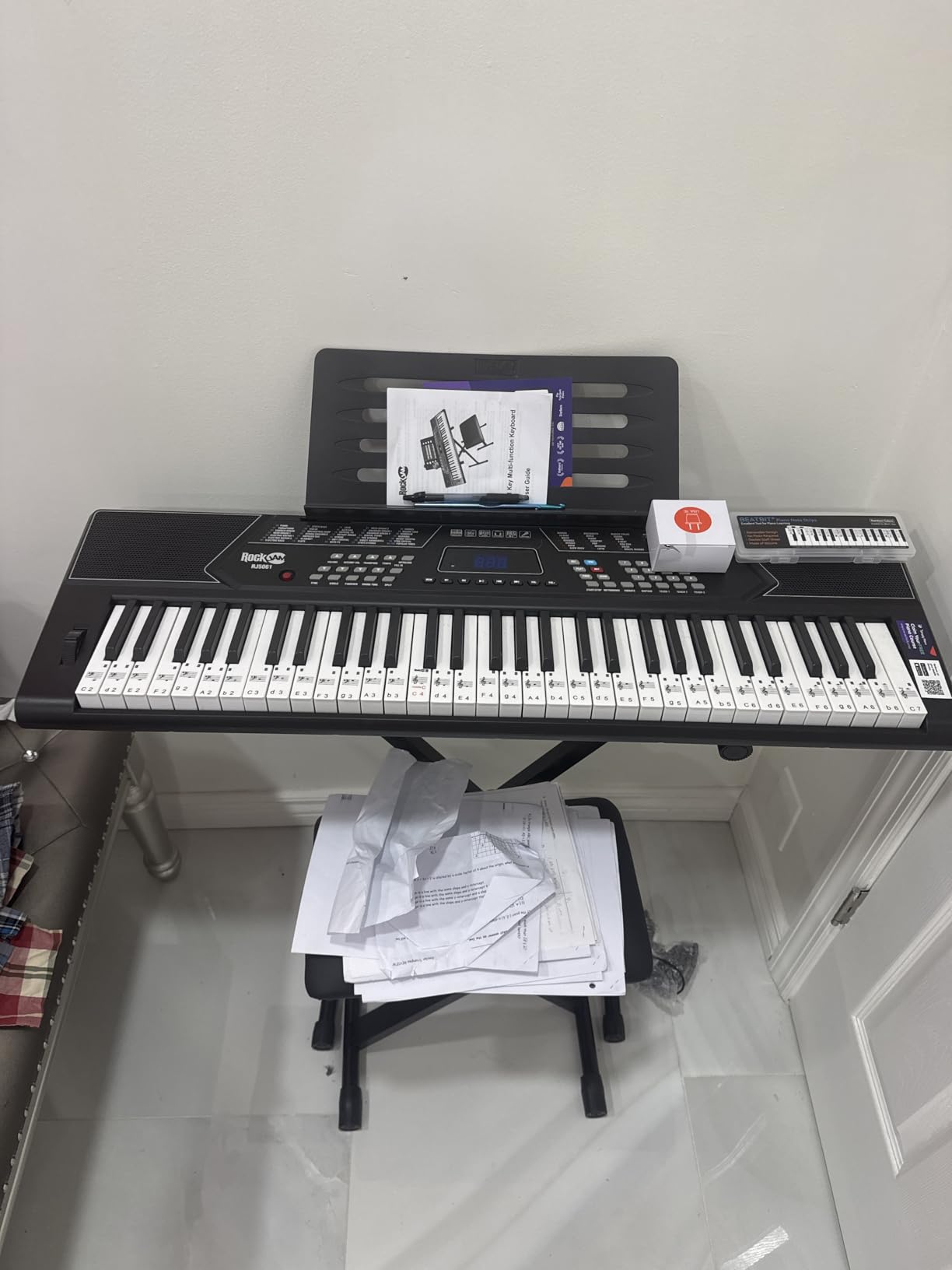
The RockJam RJ761 is the kit I recommend when someone wants a “buy it once and start” experience. The box contains everything: keyboard, stand, bench, headphones, sustain pedal, sheet music stand, and note stickers. Plus, you get access to the Simply Piano app, which is one of the best learning apps for beginners.
The touch display panel is unusual at this price. Instead of fiddling with small buttons, you tap the screen to select tones, rhythms, and demo songs. For absolute beginners who feel intimidated by music gear, this is a thoughtful design choice.
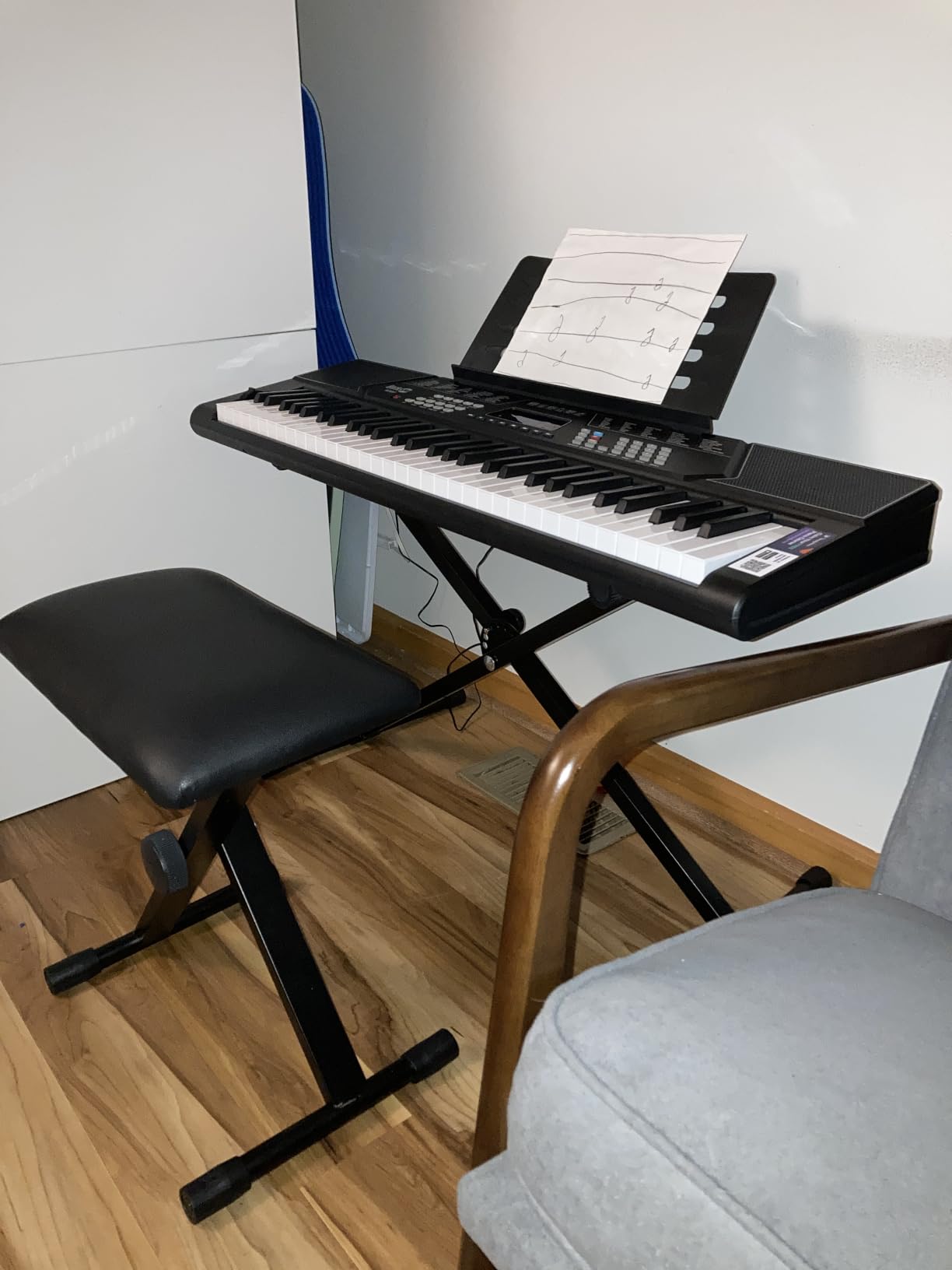
The Simply Piano integration is the secret weapon. After plugging the keyboard into your phone or tablet, the app listens and guides you through lessons. It is the closest thing to having a piano teacher in your home, and for many beginners, it is more engaging than traditional lessons.
At 61 keys, this is a starter keyboard, not a digital piano. It does not have weighted keys, so technique development is limited. But for the first 6-12 months of learning, especially for kids and casual adult learners, it is a fun and accessible option.
Why the 46,000+ reviews matter
The RJ761 is one of the most-reviewed keyboards on Amazon, and the 4.5-star average across that volume of buyers tells you the experience is consistent. This is not a perfect keyboard, but it is a reliable, accessible, and well-supported starting point. Beginners can buy with confidence.
When to upgrade from the RockJam
Once you finish a beginner method book, you will likely want weighted keys. Most learners reach this point within 9-12 months. The good news is that the RockJam keeps its resale value, and the Simply Piano subscription transfers to your next keyboard. Plan to upgrade to a Yamaha, Roland, or Donner weighted model when you are ready.
What to Look for When Buying a Beginner Digital Piano
Choosing the best digital pianos for beginners comes down to a few key factors. I learned this the hard way when I bought a cheap unweighted keyboard years ago and had to relearn technique later. Let me walk you through what actually matters.
Weighted keys versus unweighted keys
Weighted hammer action is non-negotiable for serious learning. The resistance builds finger strength and mimics an acoustic piano’s feel, so techniques transfer cleanly when you upgrade later. Unweighted keys are fine for casual play but will create habits that are hard to break.
If your budget is under $300, the Donner DEP-20 and DDP-80 are the most affordable fully-weighted options. Below that, you are looking at semi-weighted or synth-action keys, which are compromises. For adult learners serious about lessons, spend the extra $100 to get proper weighted action.
How many keys do beginners need
Eighty-eight keys is the standard for a reason: it covers the full range of piano repertoire. Beginners often start with one or two octaves of work, but you will use the full range within 18 months of lessons. Sixty-one keys work for the first year but limit your repertoire.
Children under 10 doing primer-level work can get away with 61 keys for a year or so. Adult learners should buy 88 keys from the start. The cost difference is now small enough that going smaller does not save meaningful money.
Polyphony and why it matters
Polyphony is the number of notes a piano can play at once. Beginner pieces rarely need more than 64 notes of polyphony, but the sustain pedal uses up polyphony quickly. A piece with the damper pedal down and complex chords can easily use 100+ notes.
Look for at least 128-note polyphony. The Yamaha P71, Roland FP-10, and Donner DDP-80 all hit this mark. The RockJam and JIKADA keyboards are lower, which is fine for their target audience. The Donner DEP-20 and DDP-95 are great budget picks with 128-note polyphony.
Sound engine technology explained
Most digital pianos use sampling, which records real piano notes note by note. Higher-end models use modeling, which mathematically recreates how a piano sounds. For beginners, sampling is more than adequate. The Yamaha CFX samples, Roland SuperNATURAL engine, and Kawai Harmonic Imaging all sound excellent.
Cheaper pianos cut corners on the number of velocity layers recorded. This means the dynamic range sounds thinner, and quiet playing can lose detail. If sound quality matters to you, prioritize pianos with 4+ velocity layers.
Connectivity for learning apps
Bluetooth MIDI or USB-MIDI is essential for connecting to learning apps like flowkey, Simply Piano, and Playground Sessions. The Roland FP-10 has Bluetooth, the Donner DDP-95 has Bluetooth, and most Yamaha models offer USB-MIDI. The Alesis Recital Play and RockJam use USB.
Without connectivity, you are stuck with whatever built-in lessons come with the piano. Modern learning apps are far better and more engaging, so make sure your piano can connect to your phone, tablet, or laptop.
Accessories to budget for
Most digital pianos do not include everything you need. A sustain pedal, headphones, and a stand are common add-ons. The Donner DEP-20 and DDP-80 include these, which is part of their value. The Yamaha P71 and Roland FP-10 ship with a basic pedal but no stand.
Budget an extra $50-$100 for a proper furniture stand if you do not want to use an X-stand. Good headphones like the Audio-Technica ATH-M20x run $50-$60 and dramatically improve your practice experience, especially in shared living spaces.
Common beginner mistakes to avoid
Do not buy a 61-key synth keyboard if you plan to take lessons. Teachers will quickly outpace its capabilities. Do not skip weighted keys to save $100. Do not buy from brands with no customer service reputation. And do not forget to budget for a bench, headphones, and a sustain pedal if they are not included.
Finally, do not overbuy features your child will not use. A 7-year-old does not need Bluetooth MIDI or 600 tones. The RockJam and JIKADA bundles are perfect for them. Save the FP-10 and Yamaha P71 for adult learners or older kids with serious commitment.
Frequently Asked Questions
What is the best entry-level digital piano for beginners?
The best entry-level digital piano for beginners is the Yamaha P71. It offers authentic Yamaha graded hammer action, 88 weighted keys, and the Pure CF sound engine with CFX grand piano samples, all at a price that does not scare first-time buyers. The 4.7-star average across 6,650 reviews shows how consistent the experience is.
What is the best inexpensive digital piano for beginners?
The Donner DEP-20 is the best inexpensive digital piano for beginners, typically priced under $400. It includes a full furniture stand, triple-pedal unit, and 88 weighted keys. For $150-$200, the RockJam RJ761 and JIKADA 61 Key Keyboard are solid starter kits, though they have 61 keys and no weighted action.
Which digital piano is closest to the real piano?
The Roland FP-10 feels closest to a real acoustic piano under $500. Its PHA-4 Standard action uses the same key mechanism family Roland uses in pianos costing three times as much, with proper escapement and ivory-feel keys. The SuperNATURAL sound engine also samples acoustic pianos note by note for realistic decay and resonance.
What is the best digital piano for a beginner child?
The RockJam RJ761 and JIKADA 61 Key Keyboard are the best digital pianos for a beginner child. Both come with complete accessory bundles including stand, stool, headphones, and Simply Piano app access. The JIKADA features light-up keys that guide children through songs. For children ready for weighted keys, the Donner DDP-95 has built-in teaching modes on a 4.3 inch LCD screen.
Do beginners really need 88 weighted keys?
Yes, beginners benefit from 88 weighted keys. Weighted hammer action builds proper finger strength and technique that transfers to acoustic pianos later. Without weighted keys, beginners can develop habits that are hard to unlearn. 61 keys may suffice for the first year of primer-level work, but you will use the full 88-key range within 18 months of lessons.
How much should a beginner spend on a digital piano?
A beginner should spend between $300 and $700 on a digital piano. Under $300, you compromise on weighted action or key count. Above $700, you pay for features you will not use in your first year. The sweet spot is $400-$500, where you can get a Yamaha P71, Roland FP-10, or Donner DDP-80 with full features.
Final Verdict on the Best Digital Pianos for Beginners
After testing all ten pianos, our team agrees on one thing: the best digital pianos for beginners in 2026 are the ones that build proper technique without breaking your budget. The Roland FP-10 is our top pick because its PHA-4 action is unmatched at this price, and Bluetooth MIDI makes learning apps feel effortless.
If you are on a tighter budget, the Yamaha P71 delivers authentic Yamaha quality for less, and the Donner DEP-20 is the best complete package under $400 with a stand and pedals included. For children and absolute beginners, the RockJam and JIKADA starter kits make learning fun with light-up keys and Simply Piano access.
Whatever you choose, the most important thing is to start playing. A good beginner digital piano gives you the foundation to enjoy music for decades. Pick the one that fits your budget, set it up, and start your lessons this week.