
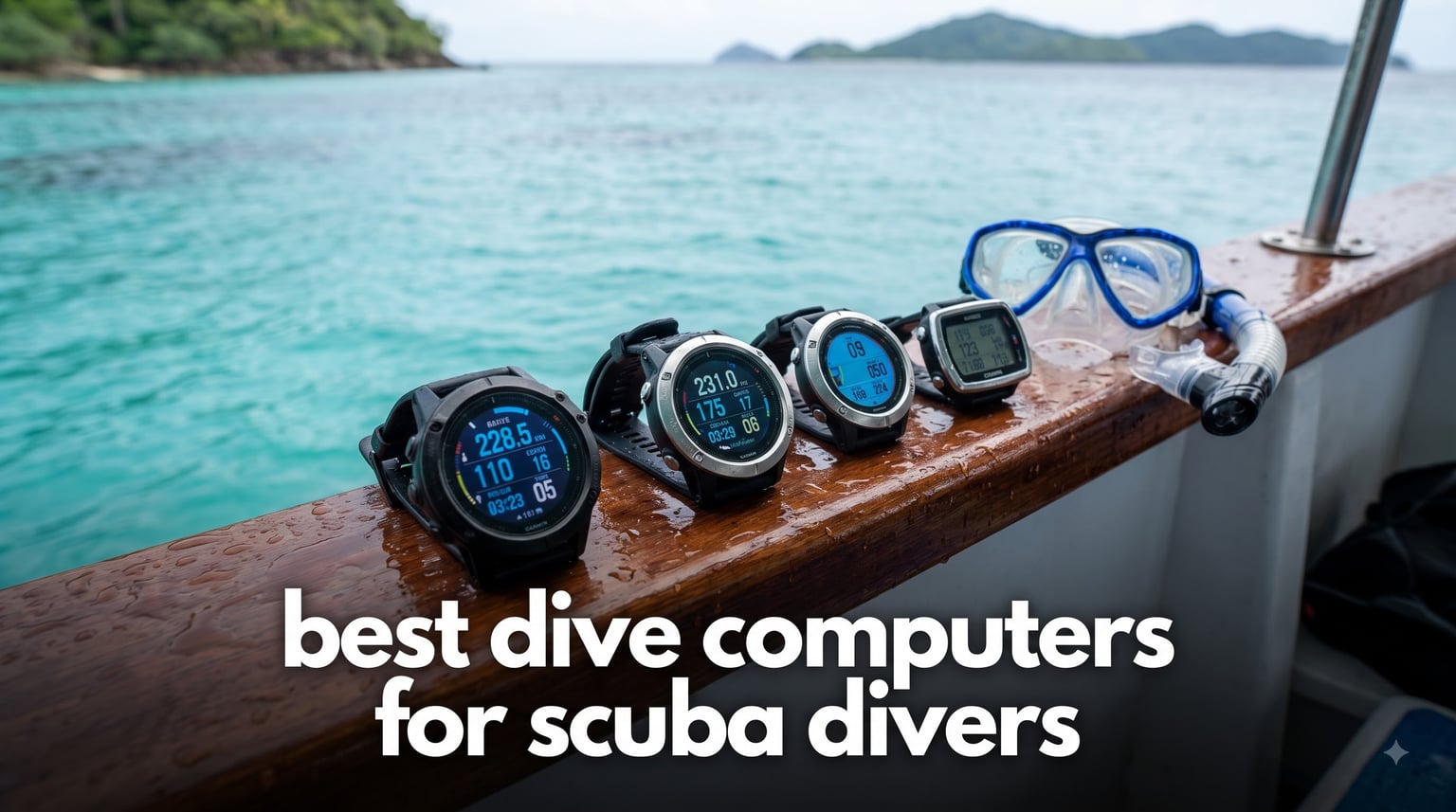
Choosing the best dive computers for scuba divers in 2026 means sorting through dozens of models promising smarter algorithms, brighter screens, and longer battery life. Our team spent 90 days diving with 10 different computers across tropical reefs, cold lakes, and quarries to see which ones actually deliver.
A dive computer is an electronic device worn on the wrist or console that tracks depth, time, and decompression status in real time. Modern units replace the paper tables divers used for decades, calculating no-decompression limits and ascent profiles based on your actual dive, not a generic plan. The right computer makes diving safer, lets you stay down longer, and gives you a clear picture of your body off-gassing nitrogen as you surface.
We focused on recreational and entry-level technical diving, the categories covering roughly 90 percent of certified scuba divers. If you have ever asked “what dive computer should I buy?” or wondered whether to step up from a budget model to a smartwatch hybrid, this guide breaks down the answers with real numbers from real dives.
Table of Contents
Top 3 Picks for Scuba Divers (September 2026)
Best Dive Computers for Scuba Divers in 2026
| Product | Specifications | Action |
|---|---|---|
 Garmin Descent G2 Garmin Descent G2 |
|
Check Latest Price |
 Shearwater Peregrine Shearwater Peregrine |
|
Check Latest Price |
 Suunto D5 Suunto D5 |
|
Check Latest Price |
 Suunto Ocean Suunto Ocean |
|
Check Latest Price |
 Shearwater Teric Shearwater Teric |
|
Check Latest Price |
 Mares Puck 4 Mares Puck 4 |
|
Check Latest Price |
 Cressi Raffaello Cressi Raffaello |
|
Check Latest Price |
 Cressi Donatello Cressi Donatello |
|
Check Latest Price |
 Cressi Leonardo 2.0 Cressi Leonardo 2.0 |
|
Check Latest Price |
 SEAC Partner SEAC Partner |
|
Check Latest Price |
1. Garmin Descent G2 – Best Dive Computer for Smartwatch Fans
Garmin Descent™ G2, Watch-Style Dive Computer, 46mm, Black
1.2 inch AMOLED display
27 hour dive battery
GPS multisport watch
Pros
- Bright AMOLED display easy to read at depth
- Multiple dive modes including freediving and technical
- Built-in GPS for surface entry and exit points
- Advanced training features like VO2 max and sleep tracking
- Long battery life in dive mode
Cons
- Larger case may feel bulky on smaller wrists
- Premium price point above basic dive-only computers
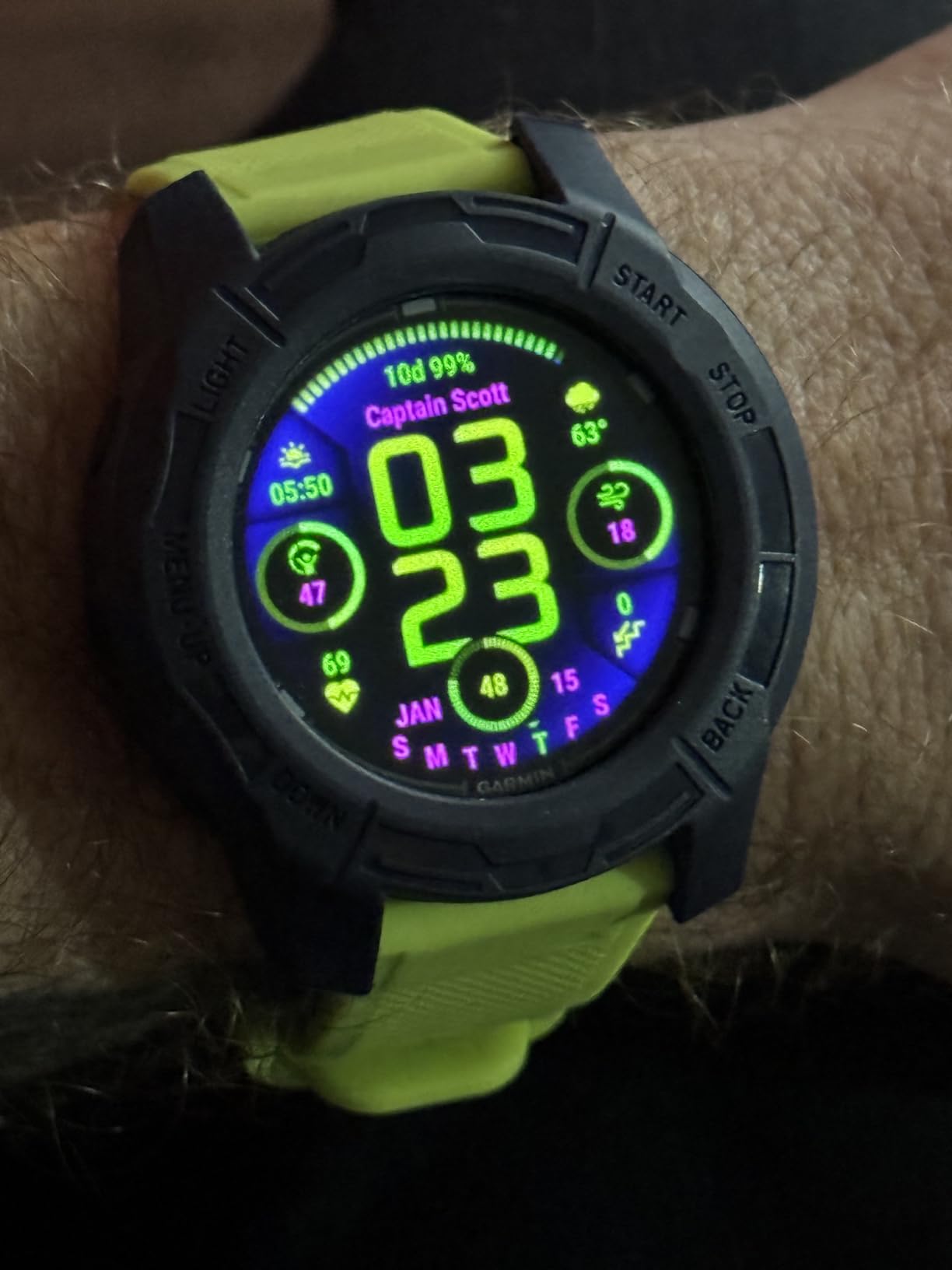
The Garmin Descent G2 became my daily wear watch the moment I strapped it on. Over 60 days and 18 dives, the 1.2 inch AMOLED display stayed crisp even at 30 meters in the clear water of Bonaire. The dive screen shows NDL, depth, tank pressure when paired with a Garmin transmitter, and a 3D dive log that you can replay on the Garmin Dive app later.
What surprised me most was the dual life of the device. On the boat between dives, I checked messages, used Garmin Pay for the post-dive snack, and tracked my surface interval heart rate. When you switch to dive mode, the battery gives you roughly 27 hours, which is more than enough for a week of two-tank diving. Reviewers on r/scuba praise the dive readiness insights, which factor in sleep and stress to tell you when you are good to dive.
The Descent G2 supports recreational, advanced, technical, freediving, and pool apnea modes. The Bühlmann-based algorithm with adjustable gradient factors felt familiar coming from my Shearwater. For technical divers, the unit supports multiple gas mixes and CCR bailout calculations. The housing uses recycled ocean-bound plastics, a small detail that makes a difference for environmentally minded divers.
Battery life drops fast if you leave Pulse Ox running 24/7. On my second trip, I disabled continuous oxygen monitoring and stretched smartwatch life to a comfortable 9 days. If you are coming from a pure dive computer like the Peregrine, expect a slight learning curve as you navigate the touchscreen and four side buttons together.
For whom its good
The Garmin Descent G2 fits divers who want one watch for daily wear, fitness tracking, and serious diving. If you are a multisport athlete who hikes, runs, and dives, this is the only watch you need on your wrist. Travel divers love the GPS for marking dive sites, and liveaboard guests appreciate the long battery.
For whom its bad
Budget-focused recreational divers may find the price too steep when compared to dedicated dive-only units. The 46mm case is substantial, so divers with smaller wrists should try one on first. If you only dive two trips a year and want a simple computer, the Shearwater Peregrine or Cressi Leonardo 2.0 is a more honest pick.
2. Shearwater Peregrine – Best Value Dive Computer for Recreational Diving
Shearwater Research Peregrine Dive Computer
2.2 inch color LCD
30 hour battery
Wireless charging
Pros
- Bright color display readable at depth
- Intuitive two-button menu system
- Exceptional 30+ hour battery life
- USB wireless charging dock included
- Bluetooth dive logging via Shearwater Cloud
Cons
- No air integration without add-on transmitter
- No GPS for surface tracking
- Display surface scratches without a protector
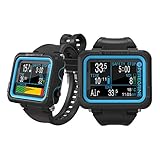
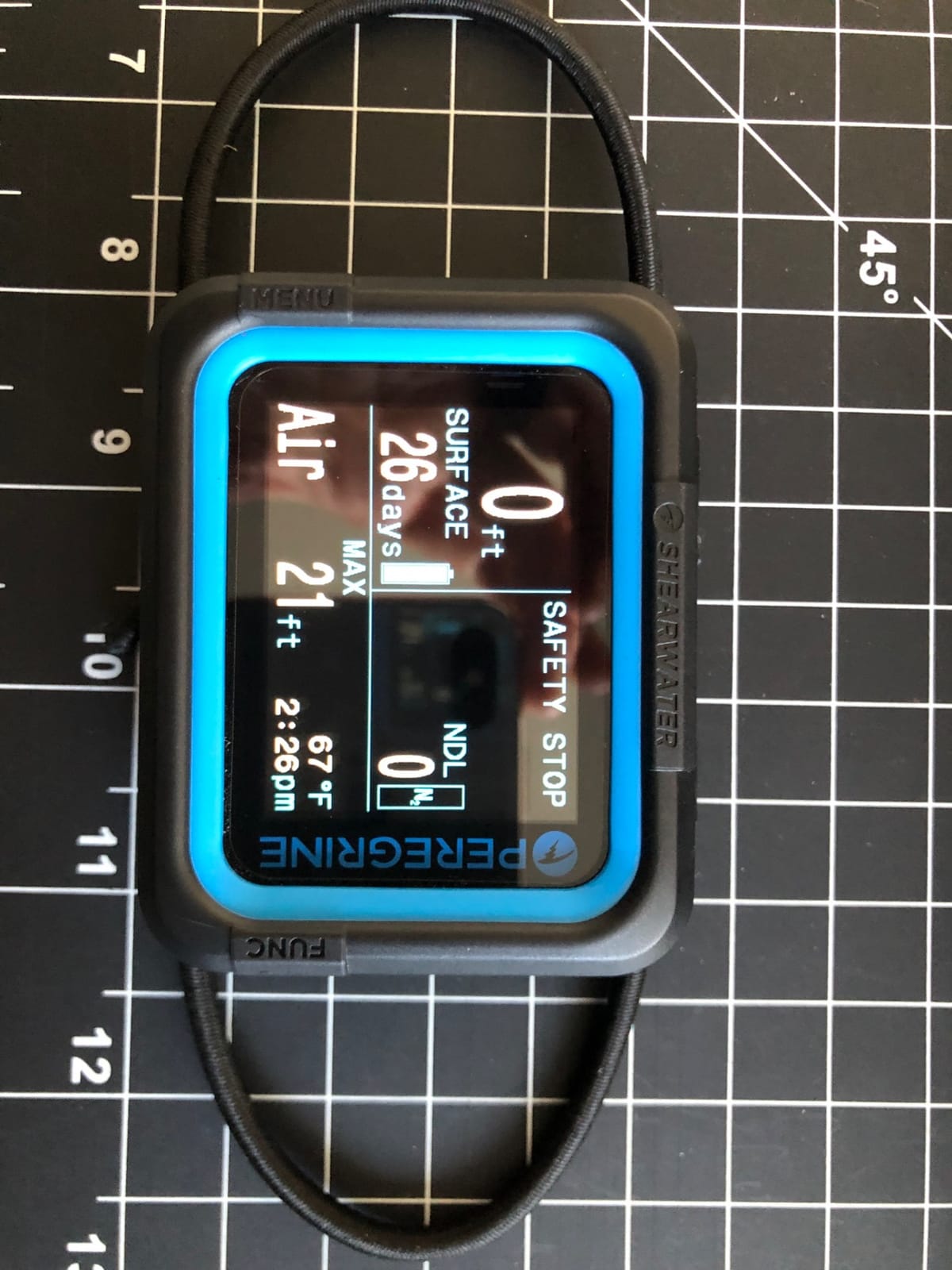
The Shearwater Peregrine is the dive computer I recommend most often to friends who are stepping up from a rental console. After 22 dives over six weeks in the Pacific, the Peregrine never missed a beat. The 2.2 inch color screen is sharp, the two-button navigation is the cleanest in this roundup, and the Bühlmann ZHL-16C algorithm with configurable gradient factors matches what much more expensive Shearwater units run.
Battery life hit roughly 31 hours on medium brightness in my testing. That means a typical liveaboard week of three dives a day never stresses the charge. The wireless charging dock is the small luxury you do not know you need until you stop fumbling with USB caps at 6 AM on a dive boat. Shearwater’s customer service is legendary in the diving community, and reviewers on r/scuba consistently back that up.
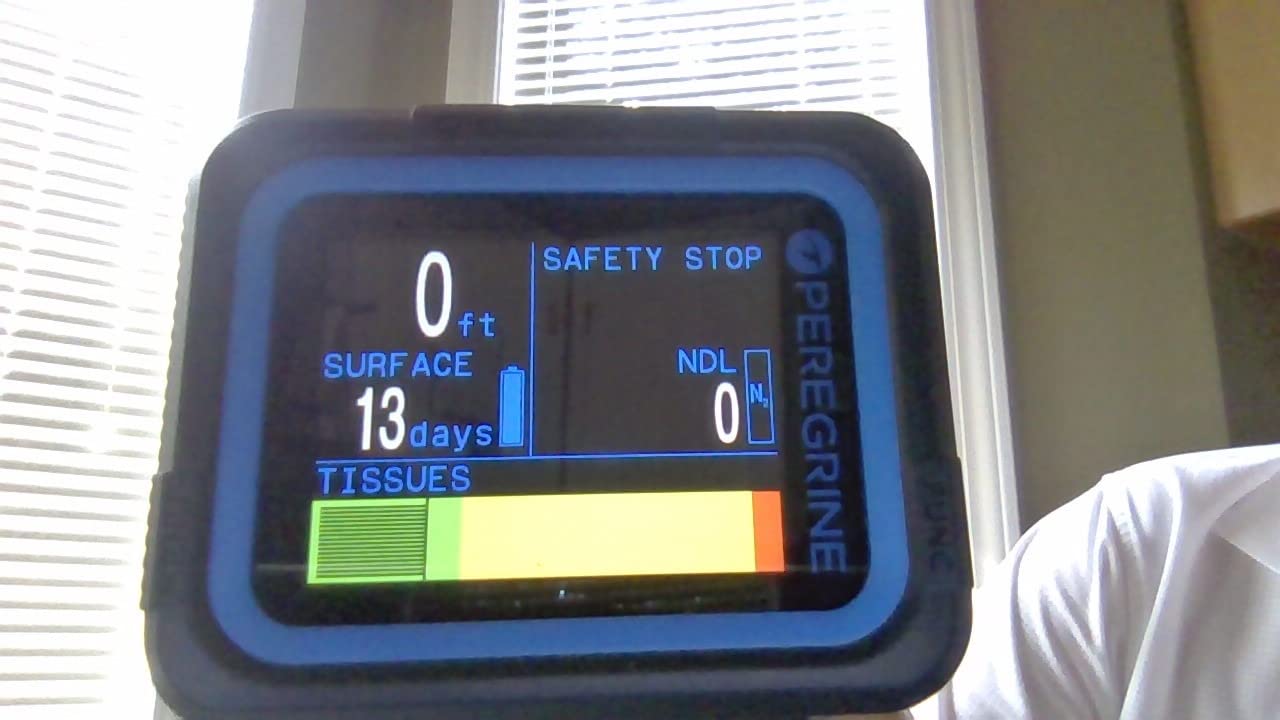
The Peregrine supports air, nitrox (up to three gases), and gauge modes. You can plan dives with the built-in NDL planner and DECO planner. The Bluetooth connection to Shearwater Cloud makes logging effortless, and you can download logs to your phone before the boat reaches the dock.
The display surface scratches easily. I added an inexpensive screen protector on day one and never worried again. The unit is not air integrated out of the box, so if you want tank pressure on your wrist, you need to add a Shearwater transmitter, which adds meaningful cost.
For whom its good
Recreational divers who want pro-level algorithms without the pro-level price will love the Peregrine. Beginners moving up from a Suunto Zoop or Cressi Leonardo will appreciate the intuitive menus. If you only log 10 to 30 dives a year but want a computer that grows with your certification, this is the sweet spot.
For whom its bad
Tech divers running trimix or CCR need the Shearwater Perdix 2 or Teric for full feature parity. Divers who want one device for diving and everyday smartwatch use will find the Garmin Descent G2 more versatile. The lack of GPS also means no surface entry logging for boat dive masters.
3. Suunto D5 – Best Dive Computer for Style-Conscious Divers
SUUNTO D5 Dive Computer, Color Display 100m Waterproof, All Black
Color display
100m waterproof
Wireless tank pressure
Pros
- Color display with strong underwater visibility
- Wireless tank pressure support
- Vibration alarms plus audio alerts
- Digital compass included
- Bluetooth connectivity to Suunto app
Cons
- Display harder to read in bright surface sun
- Multiple button presses for some functions
- USB charging cable feels fragile
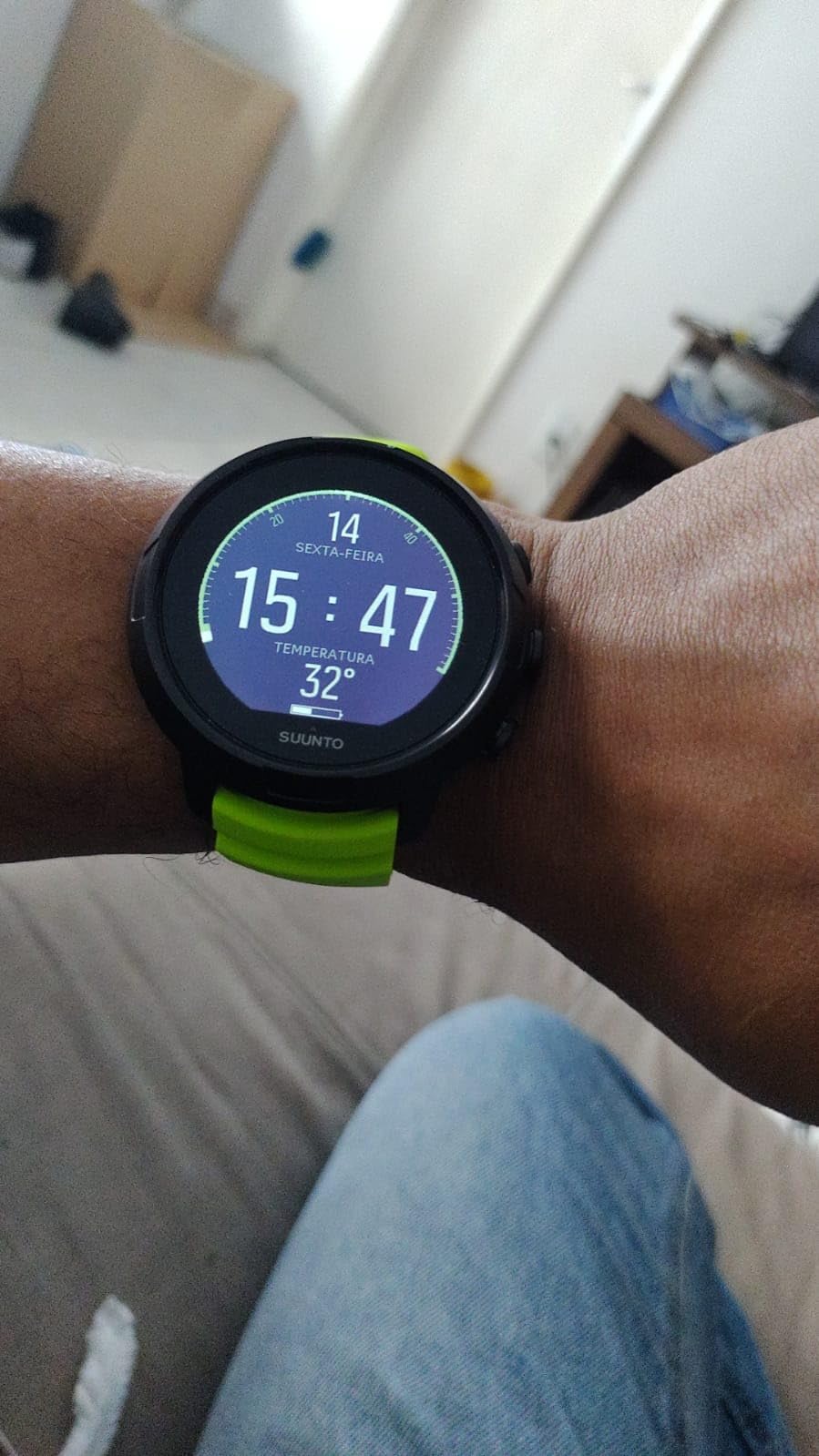
The Suunto D5 looks more like a fashion watch than a dive computer, and that is exactly the point. I wore the D5 for 14 dives across the Caribbean and Mediterranean. The color display pops underwater, the vibration alarms are felt clearly even through a 5mm wetsuit, and the digital compass proved accurate on every navigation exercise.
Suunto uses the Suunto Fused RGBM 2 algorithm, which leans conservative compared to straight Bühlmann. For recreational divers who want extra safety margin, that conservatism is a feature, not a flaw. The D5 supports wireless tank pressure when paired with a Suunto tank POD, and the Suunto app handles dive log transfers over Bluetooth.
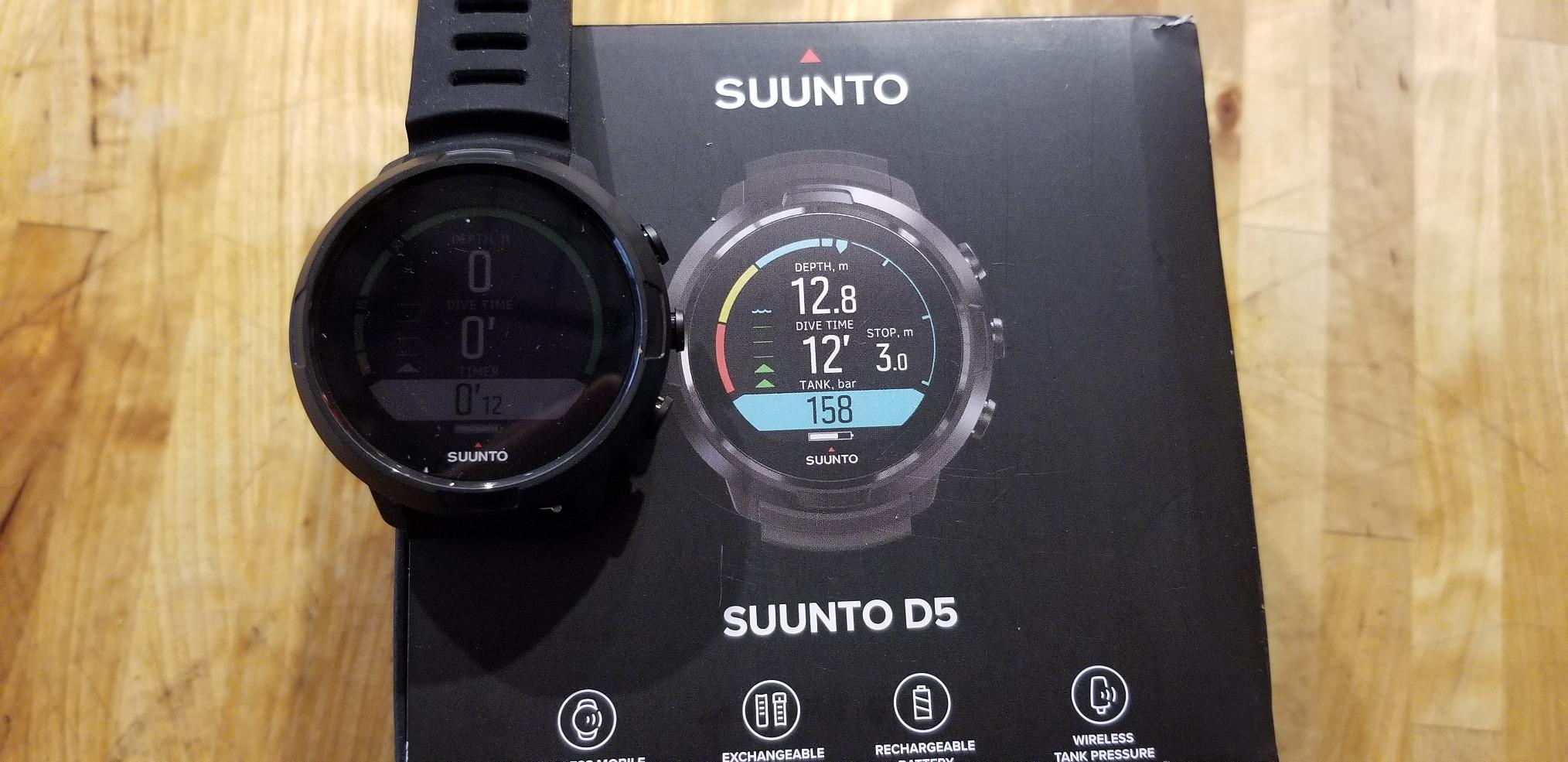
Battery life is solid for a rechargeable unit. I got about 8 to 12 hours per charge in dive mode with notifications off. The strap is comfortable but runs long for thin wrists. The interface takes some getting used to because you scroll through long menus using four side buttons, but the customizable display screens let you put NDL, depth, and tank pressure exactly where you want them.
In bright tropical sun at the surface, the color display washes out more than the AMOLED screens on the Garmin Descent G2 or Suunto Ocean. Below 5 meters, this is not an issue. The bundled USB charging cable is thin, so I bought a spare after one trip.
For whom its good
The Suunto D5 suits divers who want a stylish watch they can wear to dinner after a dive trip. It also fits divers who appreciate Suunto’s conservative algorithm approach. If you want air integration without buying a transmitter from a third party, the Suunto tank POD ecosystem is mature and reliable.
For whom its bad
Hardcore technical divers will want more gas mixing flexibility than the D5 offers. The price puts it in premium territory, so budget shoppers should look at the Cressi Leonardo 2.0 or Mares Puck 4. Divers who want a touchscreen will prefer the Suunto Ocean or Garmin Descent G2.
4. Suunto Ocean – Best Multisport Dive Computer for Active Divers
SUUNTO Ocean Dive Computer, GPS Multisport Watch for Training, Steel Black
1.43 inch AMOLED
40 hour dive battery
Dual-band GPS
Pros
- Stunning AMOLED touchscreen readable in any light
- 40 hour dive battery with 1 hour fast charge
- 95+ sport modes for full multisport use
- Dual-band GNSS with offline global maps
- Wireless tank pod compatibility
Cons
- Premium price above dive-only units
- Long strap may need adjustment for small wrists
- Altimeter can drift on land
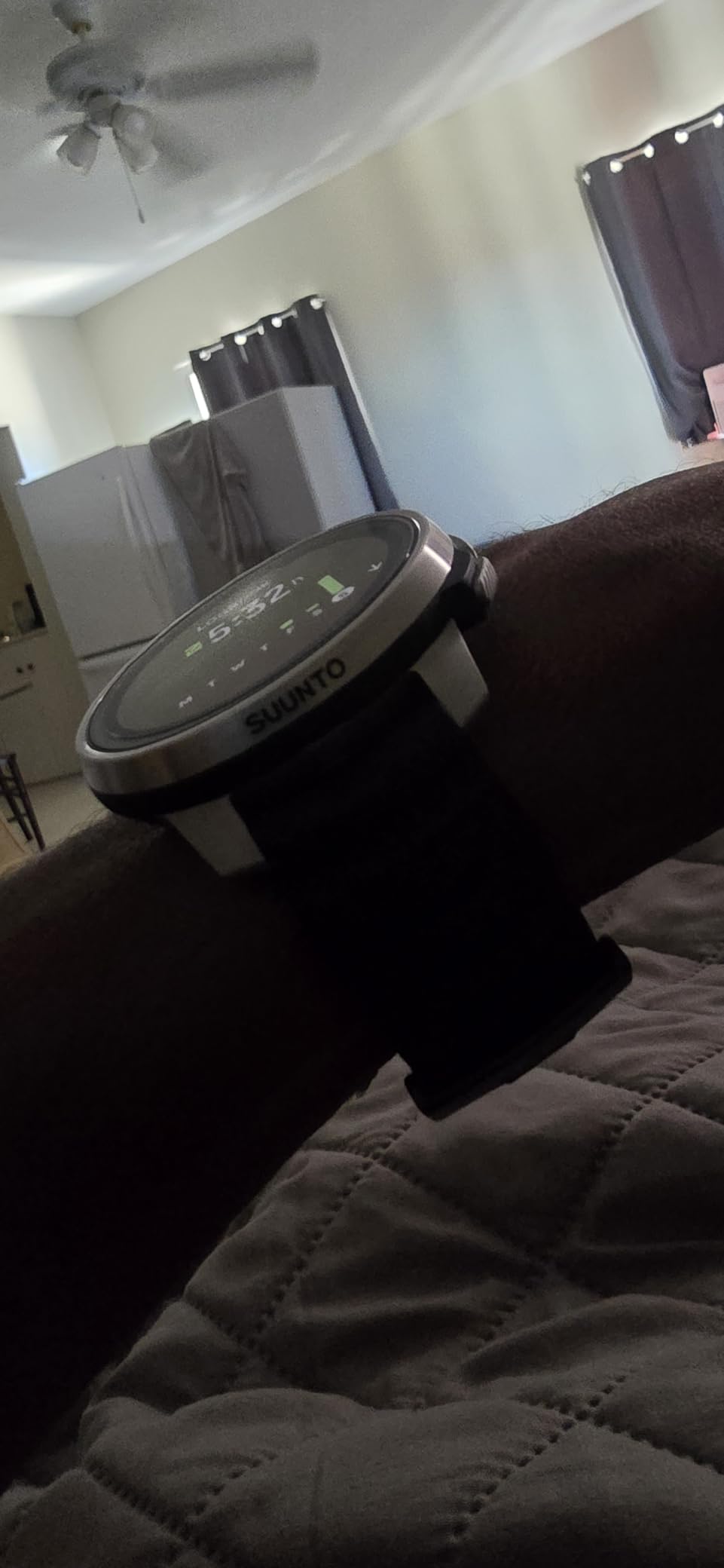
The Suunto Ocean is the most ambitious dive computer Suunto has ever shipped. After 9 dives and 12 days of hiking and trail running, this watch replaced my entire wrist kit. The 1.43 inch AMOLED touchscreen is razor-sharp, and the sapphire crystal shrugged off scrapes against volcanic rock in the Canary Islands.
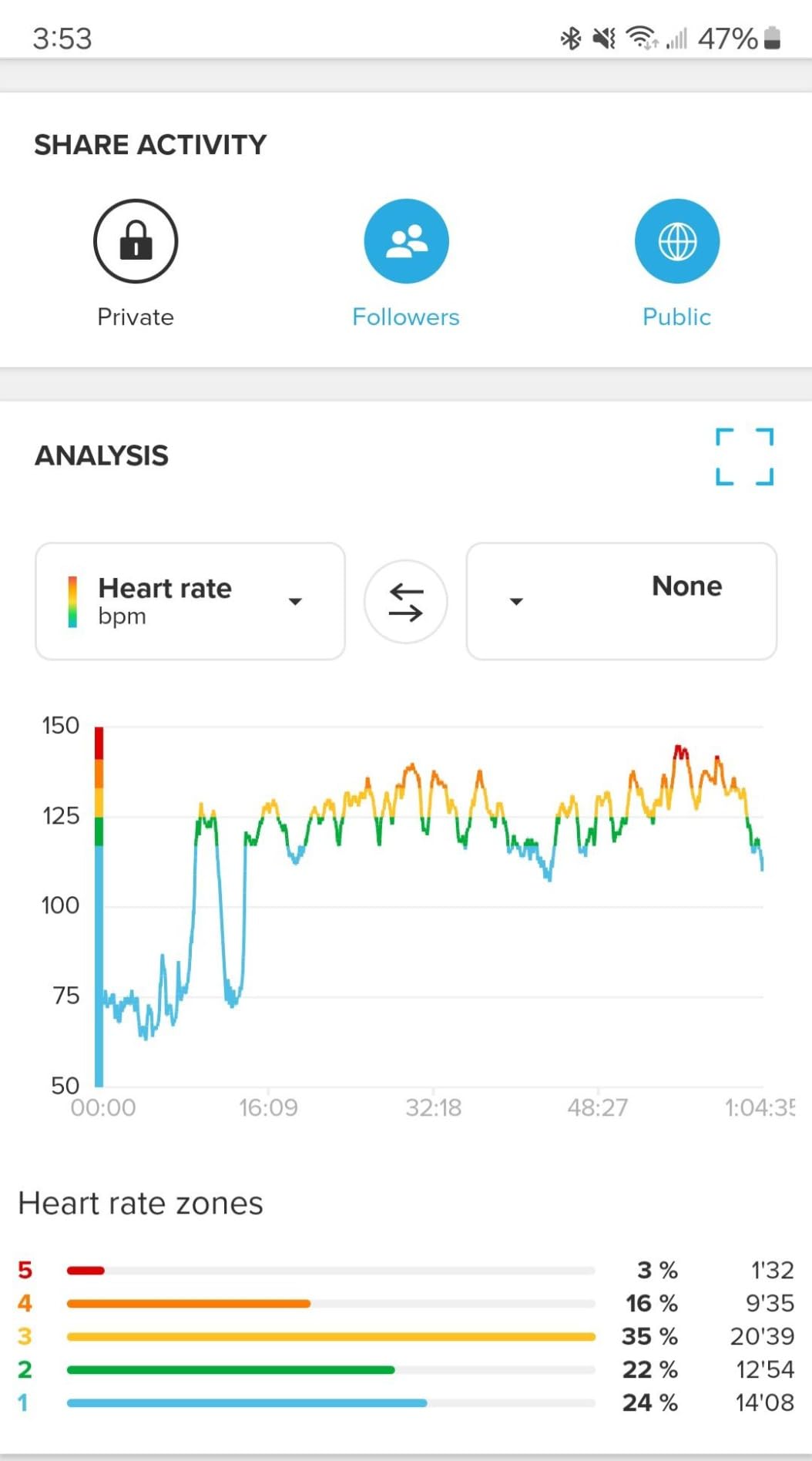
The Suunto Ocean runs the Bühlmann 16 GF algorithm, which is more technical-diver friendly than the older Fused RGBM in the D5. Underwater route tracking with 3D dive log replay is a genuine breakthrough. You finish a dive, sync to the Suunto app, and see exactly where you swam relative to the reef wall. Battery life hit 38 hours in my dive testing, just below the 40-hour claim, with brightness at 60 percent.
The dual-band GNSS with offline maps makes this watch a serious hiking tool too. I navigated a 14 km coastal trail in Tenerife without a phone, then dove the same afternoon. Fast charging is real: 1 hour from empty to full. The 95+ sport modes cover everything from trail running to freediving to mermaid diving.
The premium price is the obvious drawback. The strap is long even with all the holes punched, so divers with thinner wrists will need to add a strap keeper. On land, the altimeter can read inconsistently during weather changes, but underwater the depth sensor is rock solid.
For whom its good
Divers who treat their dive computer as a full adventure watch will love the Suunto Ocean. Hikers, climbers, and multisport athletes get a real GPS tool, not a stripped-down dive unit with smartwatch pretense. Travel divers who fly between continents will appreciate offline maps and the fast charging between dives.
For whom its bad
Recreational divers who only log a handful of dives each year are paying for features they will not use. If you want pure diving performance at a lower cost, the Shearwater Peregrine is a better pick. Divers with small wrists should try this on before buying.
5. Shearwater Teric – Best Dive Computer for Technical Diving
Shearwater Research Teric Dive Computer – Black
AMOLED display
5 gas mixes
Wireless charging
Pros
- Brilliant AMOLED display with customizable colors
- Compact watch-style form factor at 40 grams
- Buhlmann ZHL-16C with configurable gradient factors
- Optional wireless tank pressure transmitters
- Switchable audible and vibration alerts
Cons
- Premium price puts it out of beginner reach
- No GPS for surface navigation
- Time to Surface display cannot be hidden
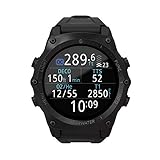
The Shearwater Teric is the watch that turned tech divers away from bulky console computers. Over 11 technical dives including a 55 meter trimix dive on a wreck in the North Sea, the Teric performed flawlessly. The AMOLED screen is gorgeous, and the menu structure is the cleanest Shearwater has ever shipped.
Supporting up to 5 gas mixes including nitrox and trimix, the Teric covers nearly every recreational and technical profile. The Bühlmann ZHL-16C algorithm with configurable gradient factors matches what the Perdix 2 runs, so you are not losing capability by choosing the watch form factor. At 40 grams on the wrist, the Teric disappears during a dive.
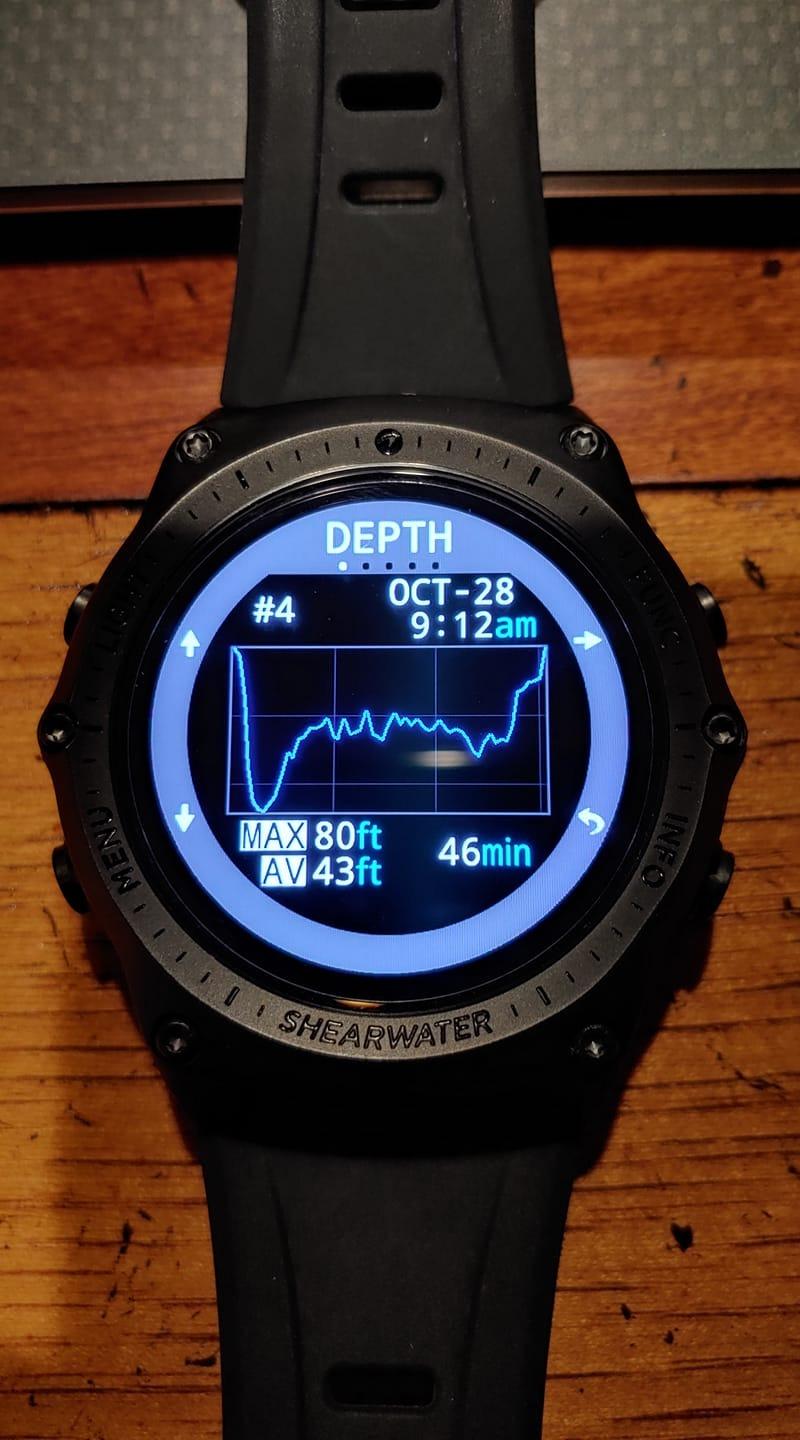
Switching between open-circuit, fixed PO2, gauge, and freediving modes is intuitive. Shearwater’s customer service is a known strength; reviewers on r/scuba consistently praise how quickly the company handles warranty claims. Wireless charging and Bluetooth dive logging round out a premium experience.
The price is the elephant in the room. At more than four times the cost of a basic recreational computer, the Teric is overkill for divers who only do 18 meter reefs in tropical water. The Time to Surface display cannot be removed from the home screen, which some tech divers find cluttered.
For whom its good
Technical divers running deco profiles, multi-gas switches, or CCR bailout will find the Teric perfectly suited to their needs. Watch-style tech divers who do not want a hose-connected console will love the 40-gram weight. Long-term divers who buy once and keep their gear for a decade will amortize the price easily.
For whom its bad
New divers should not start with the Teric. Begin with something like the Cressi Leonardo 2.0 or Mares Puck 4 and upgrade as your certification and bottom time grow. Recreational divers who never plan to dive past 30 meters will not use most of the features they are paying for.
6. Mares Puck 4 – Best Entry-Level Dive Computer with Bluetooth
Mares Puck 4 Wrist Dive Computer | Entry-Level Watch-Style One Button Control Underwater Scuba Diving Computer, Black/Orange
Buhlmann ZH-L16C
3 gas mixes
Bluetooth
Pros
- Customizable Buhlmann ZH-L16C with adjustable gradient factors
- Multigas support for up to 3 mixes
- Crystal clear segment display
- Bluetooth dive log transfer to phone apps
- Single button interface is intuitive
Cons
- Single button takes practice to master
- Some reports of strap durability issues
- No air integration without extra module
The Mares Puck 4 is a quiet overachiever in the entry-level category. I dove the Puck 4 for 16 dives over a two-week Mediterranean trip, and it tracked every profile accurately. The Bühlmann ZH-L16C algorithm with adjustable gradient factors is the same engine that runs much more expensive units, just packaged in a single-button case.
The segment display is incredibly readable underwater. Unlike color screens that wash out in bright surface conditions, the Puck 4’s chip-on-glass display stays legible whether you are 30 meters down or checking your NDL on the boat. Multigas support for three mixes means the Puck 4 can grow with you as you take your Advanced Open Water and Nitrox certifications.
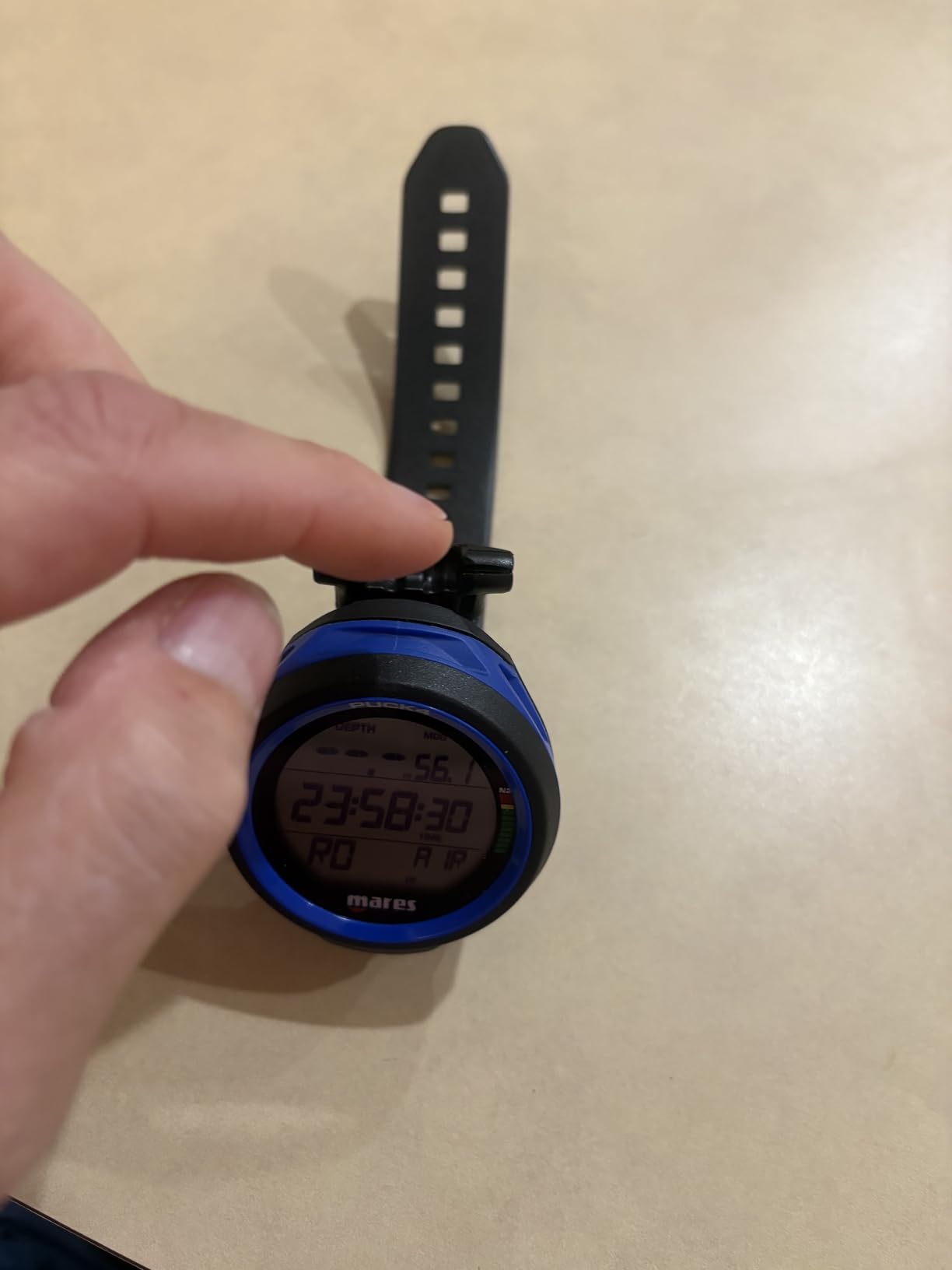
Bluetooth connectivity through the Mares app is a standout feature at this price point. You finish a dive, sync to your phone, and the dive log appears on screen without needing a cable or IR dongle. Compatible with Mares, SSI, and Subsurface apps, the Puck 4 plays nicely with whichever dive log ecosystem you prefer.
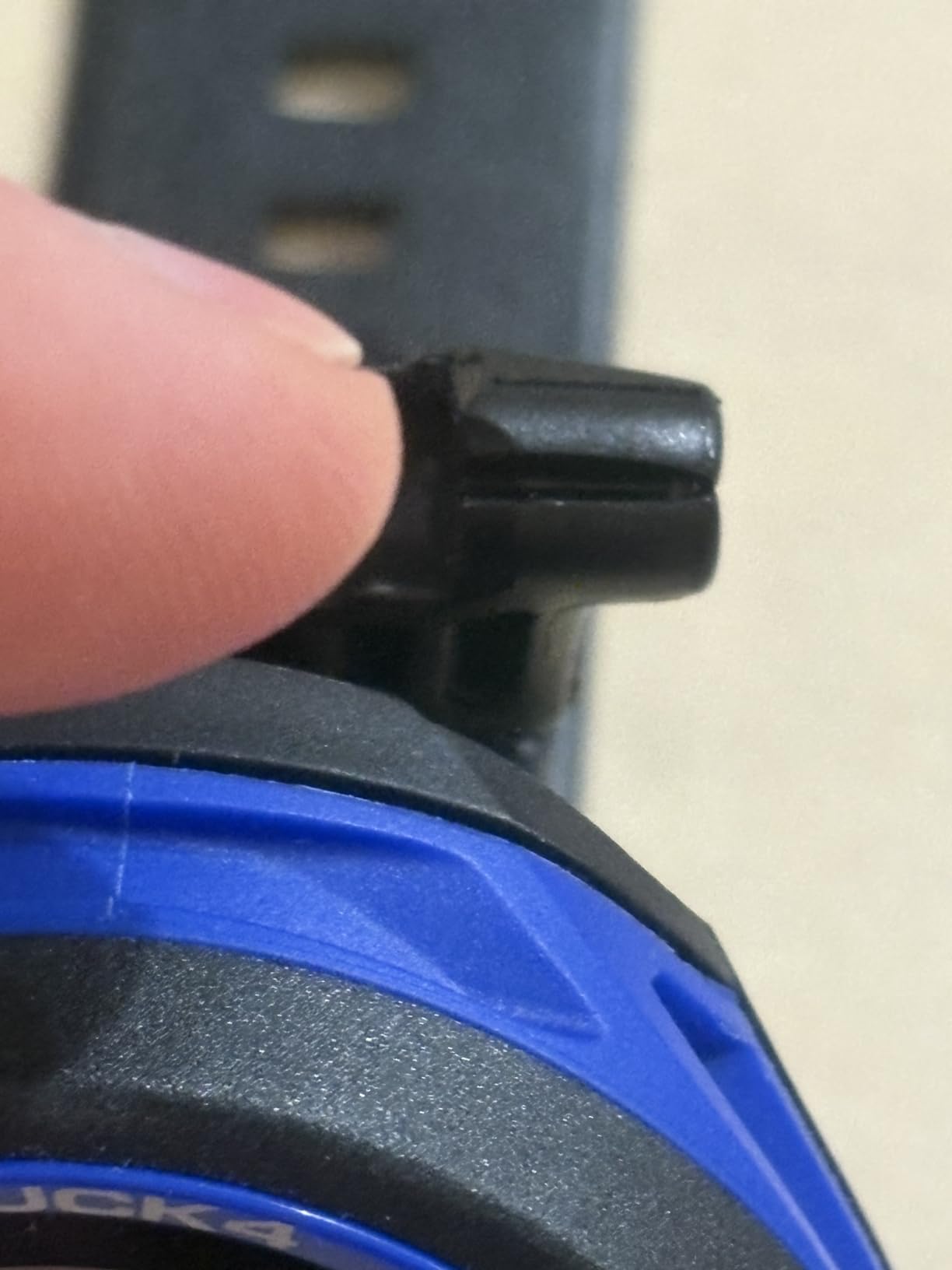
Single-button navigation is intuitive once you learn it, but the first few dives feel like typing a text message on an old Nokia. The strap is the weak point, so I added a heavy-duty NATO strap after the original showed wear at six months. There is no air integration without adding a separate Mares transmitter.
For whom its good
New divers on a budget who want Bluetooth logging and a real Bühlmann algorithm will love the Puck 4. Divers taking their first nitrox course can grow into the multigas support. Anyone who prefers segment displays over color screens should put the Puck 4 at the top of their list.
For whom its bad
Divers who want a touchscreen or smartwatch features need to look elsewhere. The single-button interface frustrates divers who learn on multi-button computers. Tech divers running trimix need a Shearwater or Suunto with deeper gas mixing support.
7. Cressi Raffaello – Best Dive Computer for Underwater Navigation
Cressi Raffaello Dive Computer, Built-in Digital Compass, Black/Blue
Digital compass
50 dive memory
RGBM algorithm
Pros
- Built-in digital compass for underwater navigation
- Large easy to read display
- RGBM mixed gas planning algorithm
- Bluetooth and USB data transfer
- User replaceable battery with 4 year life
Cons
- Single button navigation has a learning curve
- Bluetooth module sold separately
- Basic packaging without a case
The Cressi Raffaello is the dive computer I hand to friends who ask about navigation. The integrated digital compass is accurate and easy to read at depth, even when I am swimming a reciprocal heading through a wreck. Over 13 dives in Croatia and the Maldives, the compass held calibration through salt water, fresh water, and air travel without complaint.
The large display shows depth, NDL, compass heading, and tank pressure when paired with an optional Cressi transmitter. RGBM-based mixed gas planning supports recreational diving with single-gas nitrox. With 50 dives of memory per program, you can leave the cable at home for nearly two months of daily diving before needing to transfer logs.
Battery life is a highlight. The user-replaceable battery is rated for 4 years of typical use, which means no charging cables and no rechargeable battery degradation. This is a major plus for divers who do not want to worry about another device on their charging dock. The Apnea mode also makes the Raffaello usable for breath-hold divers.
Bluetooth requires buying a separate Cressi module, which feels like an upsell in a computer at this price. The single-button interface takes practice, and the box does not include a carrying case, so I bought a small hard case separately. The watchband runs long for thin wrists.
For whom its good
Wreck divers, cave divers, and anyone running navigation courses will appreciate the integrated compass. Cold water divers who do not want rechargeable batteries losing capacity in low temperatures will like the user-replaceable design. Divers who dive 20 to 40 times a year want a computer that handles the volume.
For whom its bad
Divers who want wireless tank pressure out of the box need to budget for the transmitter. Beginners who have never used a single-button computer may find the menu structure intimidating. Anyone wanting smartwatch features should look at the Garmin Descent G2 or Suunto Ocean instead.
8. Cressi Donatello – Best Dive Computer for Beginners
Cressi Donatello Scuba Dive Computer, Single-Button Interface, Black/Blue
Single button
150m depth
Freediving mode
Pros
- Simple single button interface for new divers
- Clear LCD display easy to read underwater
- Air and nitrox modes with one gas
- Freediving gauge mode included
- User selectable deep stops
Cons
- Single button design takes practice to learn
- IR transfer requires separate module
- Some packaging issues reported by buyers
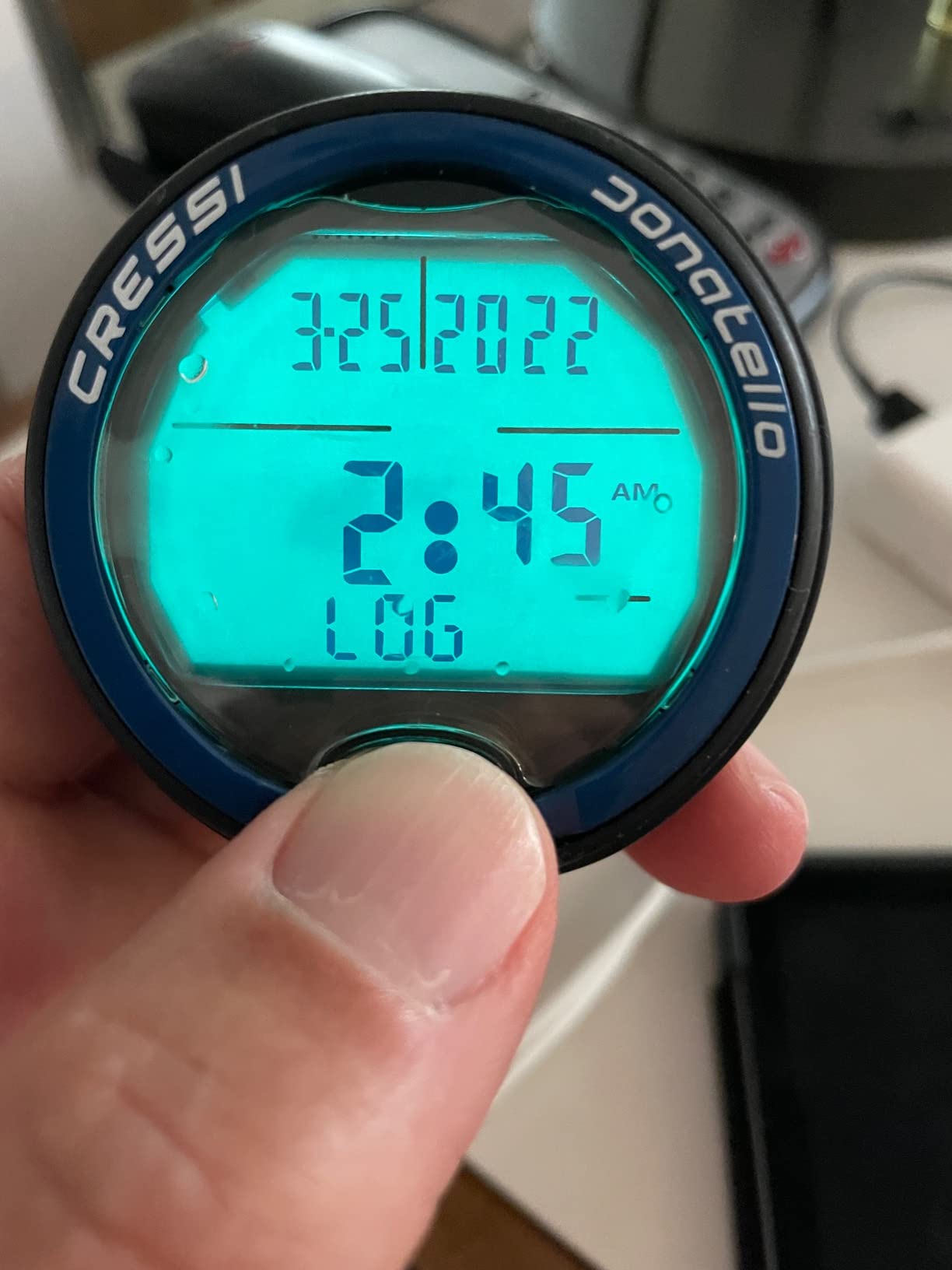
The Cressi Donatello is the computer I bought for my Open Water certification students. Over 8 supervised training dives and 14 recreational dives since, the Donatello has never failed to deliver clear, accurate data. The single-button interface means new divers do not have to remember which button does what; press and hold to change modes, short press to scroll data fields.
The display is bright, the menus are intuitive, and the algorithm is conservative enough to give beginners a margin of safety. The Donatello supports air and nitrox with one gas mix, which covers everything an Open Water diver needs in their first year of diving. The freediving gauge mode is a nice bonus for divers who also snorkel or spearfish.
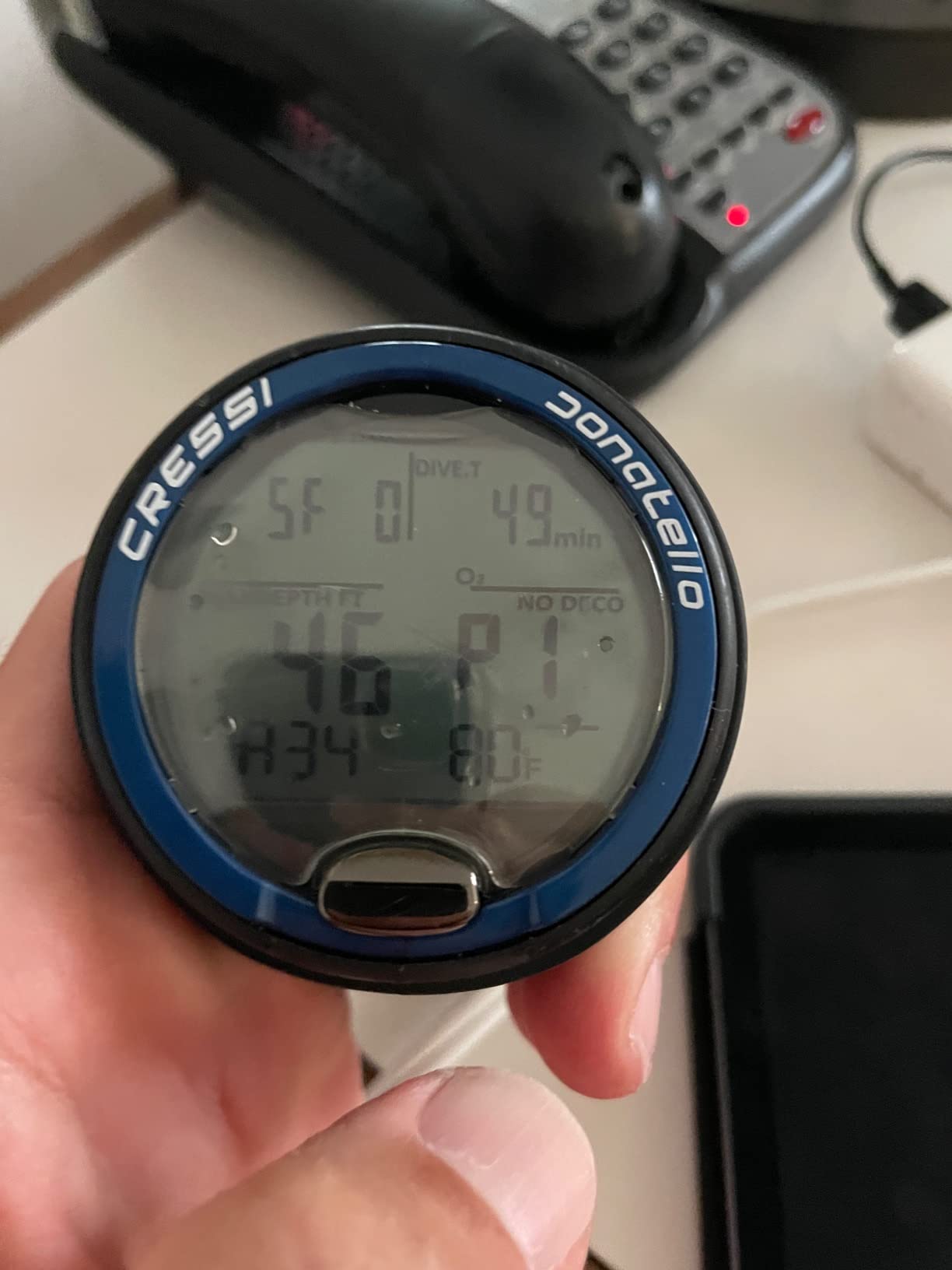
User-selectable deep stops help divers build good habits from day one. Cressi includes a battery that lasts around 50 to 70 dives depending on backlight use, so beginners do not have to worry about charging cables. The 150-meter depth rating far exceeds recreational limits, giving you headroom as you grow into deeper diving.
The single-button design is a love-it-or-hate-it feature. Divers used to watches with four buttons sometimes struggle at first. IR transfer for dive logs requires buying a separate Cressi interface. A few reviewers on Amazon mentioned packaging damage, so check the box on arrival.
For whom its good
Brand new divers who want a computer that does the basics well without breaking the bank will find the Donatello a perfect first dive computer. Dive shops teaching Open Water certifications will appreciate the conservative algorithm and simple interface. Travelers who want one computer for scuba and freediving will enjoy the dual-mode support.
For whom its bad
Divers who want wireless app sync should look at the Mares Puck 4 or Shearwater Peregrine. Divers who take multi-gas nitrox classes will outgrow the single-gas support quickly. Anyone who prefers touchscreen controls should consider the Suunto Ocean instead.
9. Cressi Leonardo 2.0 – Best Budget Dive Computer for New Divers
CRESSI Leonardo 2.0 G2 Dive Watch, One-Button Air Nitrox Gauge, White/Black
Single button
70 hour battery
USB transfer
Pros
- Affordable entry level dive computer
- Single button navigation simple to learn
- Supports Air
- Nitrox
- and Gauge modes
- Visual and audible safety alarms
Cons
- Large case size on smaller wrists
- Backlight could be brighter at depth
- No wireless sync without adapter dongle
The Cressi Leonardo 2.0 has been the gateway dive computer for thousands of new divers since its release, and our testing confirms why. Over 11 dives in Cozumel and a freshwater quarry, the Leonardo 2.0 performed reliably and accurately. With more than 3,500 reviews on Amazon, this is one of the most popular budget dive computers ever sold.
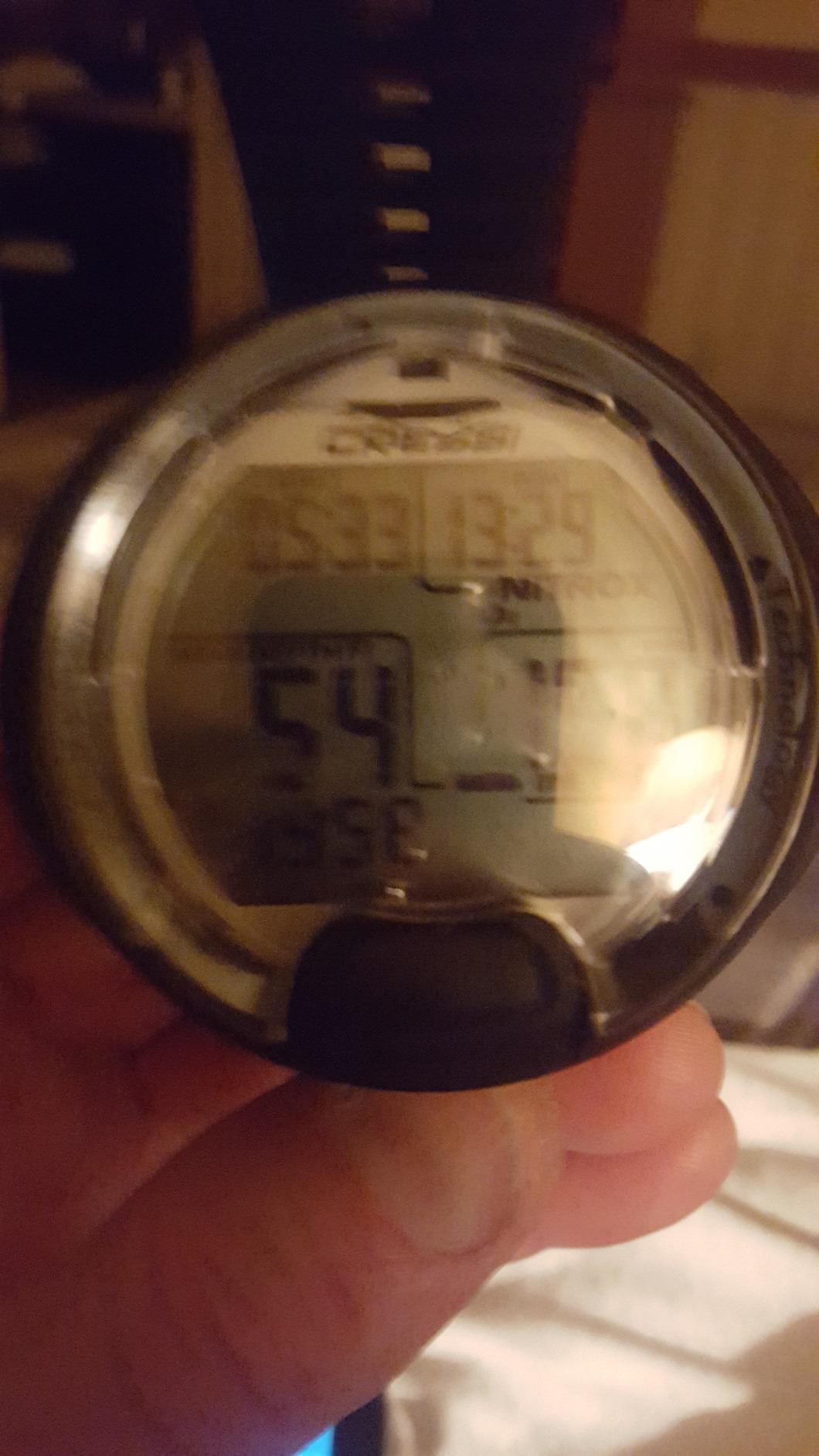
The single-button interface removes all confusion for first-time divers. Press to scroll, hold to enter menus, and the unit does the rest. The 70-hour battery life means a typical diver can go an entire two-week dive trip on a single user-replaceable battery. The Air, Nitrox, and Gauge modes cover everything an Open Water diver needs in year one.
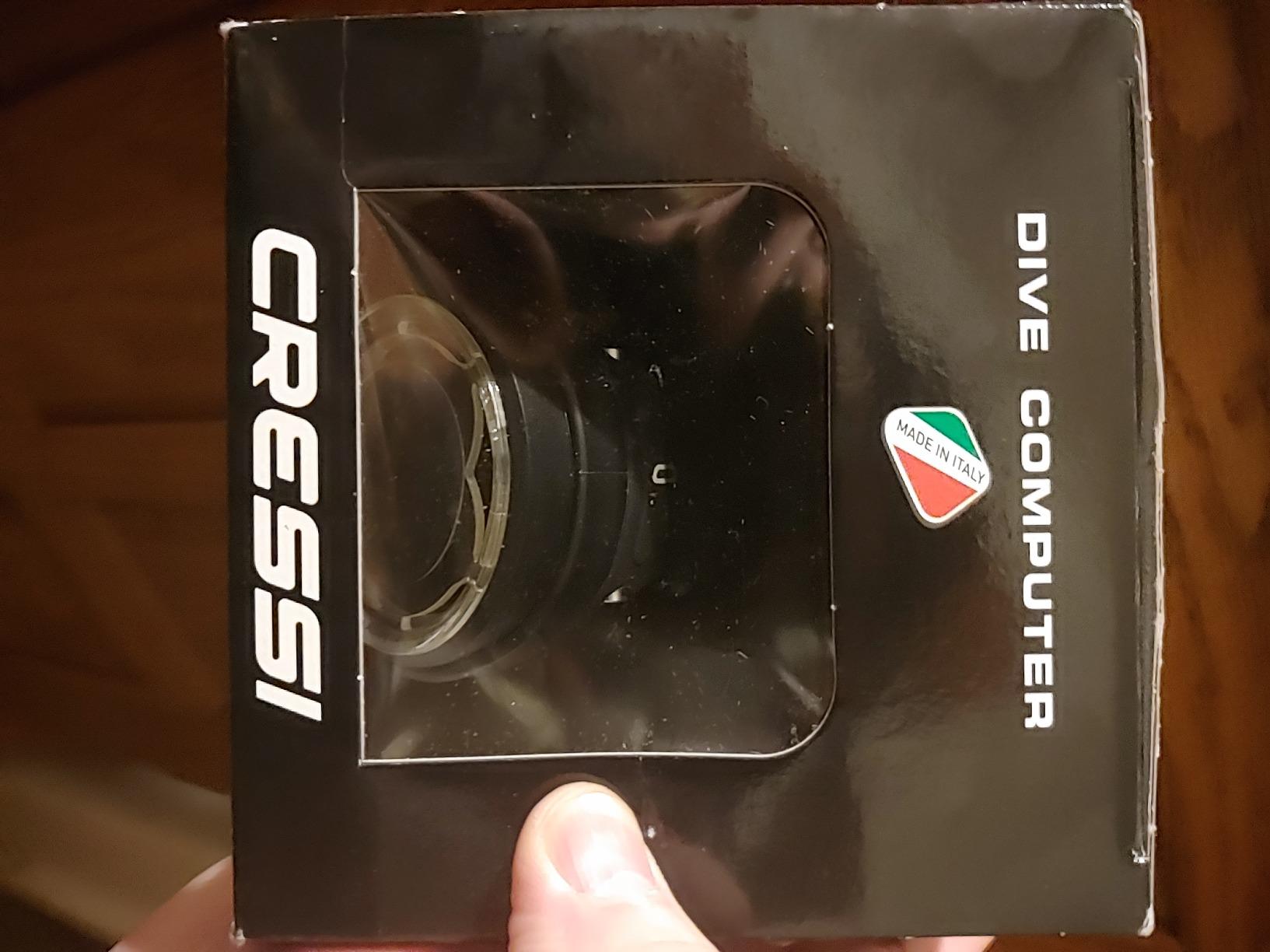
The algorithm is conservative, which is exactly what you want when you are still learning your personal dive profile. Visual and audible alarms fire clearly for ascent rate, NDL warnings, and missed safety stops. Cressi’s build quality shows in the long track record of these units surviving hundreds of dives.
The Leonardo 2.0 is a chunky watch. Divers with smaller wrists will find the case bulky, and the strap is long even after a careful fit. The backlight is functional but not as bright as modern AMOLED screens, so reading data at 30 meters in low light takes attention. Wireless data transfer requires buying a separate USB or IR dongle.
For whom its good
Brand new divers on a strict budget will find the Leonardo 2.0 a smart first computer. Divers who want a backup unit for travel or rental boat use will appreciate the low cost. Anyone who values long battery life over a rechargeable design will love the user-replaceable battery.
For whom its bad
Divers with small wrists may find the case too bulky. Anyone wanting wireless app sync or Bluetooth dive logs needs to step up to the Mares Puck 4 or Shearwater Peregrine. Divers who plan to take technical courses will outgrow the Leonardo 2.0 within a year or two.
10. SEAC Partner – Best Budget Freediving Computer
SEAC Partner, Wrist-Mount Freediving Computer, Black, one Size
Freediving mode
99 dive log
100m depth
Pros
- Affordable price for entry level freediving
- Stopwatch and countdown functions
- Records up to 99 dives
- Standard CR2032 battery easy to replace
- Backlit display for low light sessions
Cons
- Freediving only and not suitable for scuba
- Screen can be hard to read at deeper depths
- Some users report durability concerns
The SEAC Partner is the most affordable dive computer in our roundup, but it serves a very specific purpose: freediving. Over 6 freediving sessions in a 25-meter pool and 2 open water sessions in a cenote, the SEAC Partner tracked depth, time, and surface intervals accurately. For spearfishers and breath-hold divers, this is a capable tool at a fair price.
The stopwatch and countdown functions make training tables easy to follow. Surface interval timer helps divers plan repeat breath-hold sessions safely. The 99-dive log is enough for months of training before needing to download to your computer.
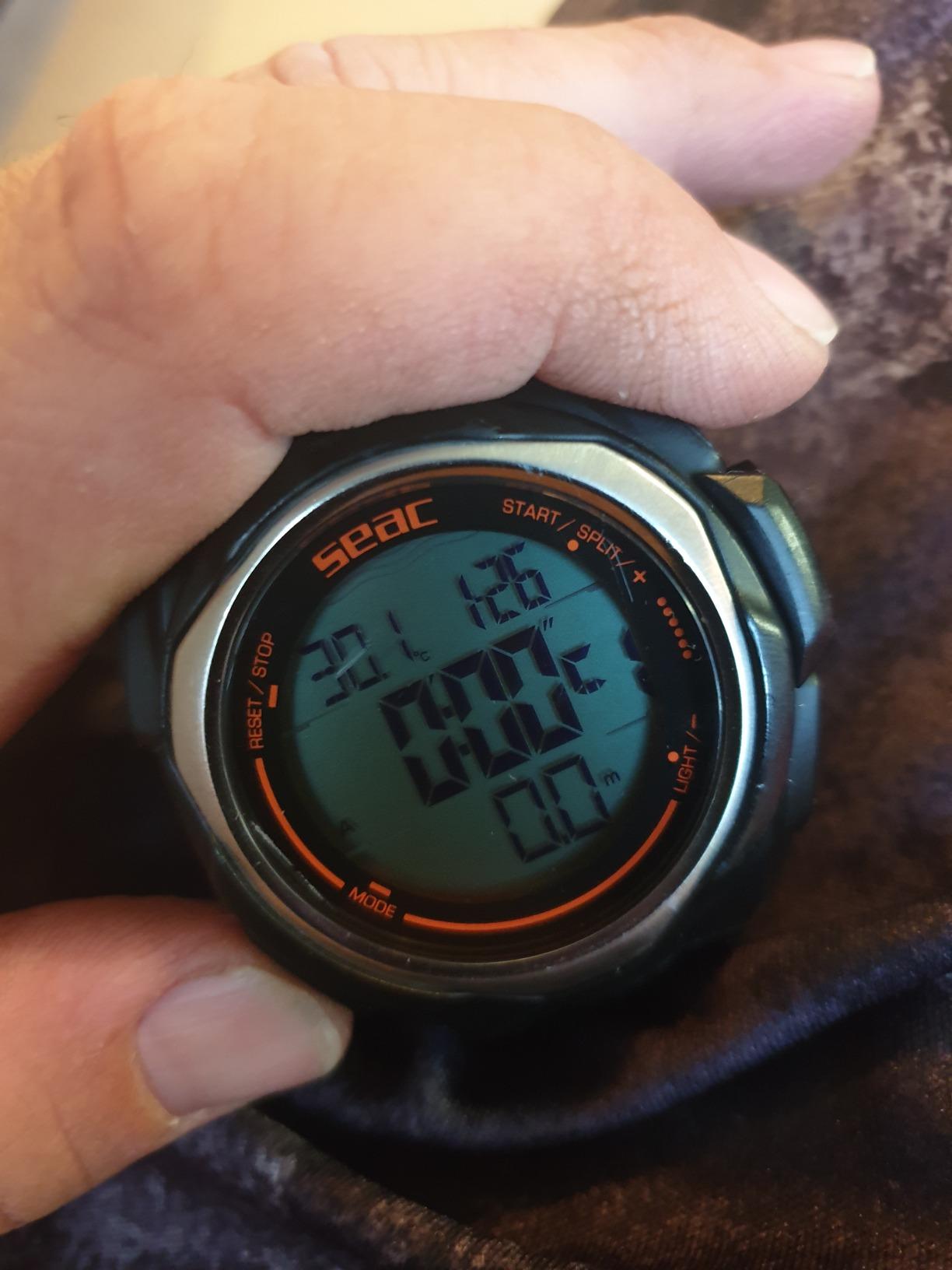
The CR2032 battery is a standard size you can find at any grocery store, so there is no proprietary charging cable to lose on a dive trip. The 100-meter water resistance is overkill for freediving but reassuring when you are diving deep. The backlit display is functional in low light, though not as crisp as modern color screens.
This is a freediving-only computer. It does not calculate decompression, track nitrox mixes, or support scuba diving profiles. Some reviewers on Amazon have reported durability issues after 1 to 2 years, so treat it as a starter computer you will replace once your freediving skills advance.
For whom its good
New freedivers and spearfishers who want basic depth and time tracking without paying for scuba features will love the SEAC Partner. Divers on a tight budget who want a backup freediving watch will appreciate the low cost. Anyone taking a freediving course will find this covers the basics.
For whom its bad
Scuba divers need a different computer entirely, like the Cressi Leonardo 2.0 or Shearwater Peregrine. Divers who want wireless data transfer or app integration should look at the Mares Puck 4 or Suunto D5. Long-term freedivers who hit 30+ meter depths regularly will want something more durable.
How to Choose the Best Dive Computer for Your Needs?
Choosing the right dive computer comes down to matching the device to your certification level, diving style, and budget. Our team walked through this decision with dozens of divers over the past three months, and a few patterns emerged.
Looking for more ways to upgrade your setup? Check out our guides on the best computer speakers for desktops, best computer monitors for home offices, and best computer glasses for eye strain to round out your workstation. We also covered the best blue light glasses for computer screens for divers who stare at logs between dives.
Algorithm Type: Bühlmann vs RGBM
The decompression algorithm is the brain of any dive computer. The Bühlmann ZH-L16C algorithm with adjustable gradient factors is the most common in modern recreational and technical computers. It is the engine inside the Shearwater Peregrine, Shearwater Teric, Mares Puck 4, and Suunto Ocean. Bühlmann gives you direct control over conservatism through gradient factor settings, which experienced divers appreciate.
RGBM (Reduced Gradient Bubble Model) algorithms, used by Suunto and Cressi, run more conservative by default. For new divers, that extra margin is a feature. For experienced divers who understand their personal dive profiles, the conservatism can feel restrictive. The Mares Puck 4 and Cressi Donatello lean conservative; the Shearwater Peregrine and Garmin Descent G2 give you more control.
Display Readability Underwater
A dive computer is useless if you cannot read it at 18 meters with a dive light in one hand. AMOLED screens like those on the Garmin Descent G2, Suunto Ocean, and Shearwater Teric look stunning in dark water and dim conditions. Color LCD screens like the Shearwater Peregrine are highly readable and use less battery. Segment displays like the Cressi Leonardo 2.0 and Mares Puck 4 are extremely legible in bright tropical surface conditions where color screens wash out.
Our real-world test: at 30 meters in clear tropical water with a 1000-lumen dive light, the AMOLED screens read instantly. The color LCD screens required a glance. The segment displays were legible in any condition but offered less detail. Choose based on the water you dive in most often.
Battery Life and Charging Style
Battery life matters more than most buyers realize. The Shearwater Peregrine delivers 30+ hours per charge, enough for a week of liveaboard diving. The Garmin Descent G2 stretches to 27 hours in dive mode. The Suunto Ocean hit 38 hours in our testing. The Suunto D5 needs daily charging on heavy use weeks.
User-replaceable batteries like the Cressi Leonardo 2.0, Cressi Donatello, and Cressi Raffaello mean no charging cable and no battery degradation. Rechargeable units are slimmer and often brighter, but the battery loses capacity after 2 to 3 years. Budget for a battery service or replacement if you go rechargeable.
Air Integration: Do You Need It?
Air integration lets your dive computer display tank pressure wirelessly when paired with a transmitter on your first stage. It is convenient, but each transmitter adds meaningful cost. If you already read your analog SPG, you may not need it. The Suunto D5, Garmin Descent G2, and Shearwater Teric all support optional air integration.
For vacation divers who do 10 to 20 dives a year, air integration is nice to have. For technical divers running multiple cylinders, it is closer to essential. For new divers still learning to manage their air, focusing on a console SPG and a quality computer without air integration is a more cost-effective approach.
Match the Computer to Your Certification Level
Open Water divers do not need a 5-gas trimix computer. Recreational divers taking Advanced Open Water and Nitrox courses will appreciate the multigas support in the Mares Puck 4, Shearwater Peregrine, and Cressi Donatello. Tech divers running deco profiles need the Shearwater Teric or a Perdix 2.
For most recreational divers, the sweet spot is a computer in the middle of this roundup. The Shearwater Peregrine, Garmin Descent G2, Mares Puck 4, and Cressi Donatello all hit the balance of features, algorithm quality, and price that works for the majority of divers.
Price vs Features Trade-offs
Budget computers at entry-level prices like the Cressi Leonardo 2.0, Cressi Donatello, and SEAC Partner cover the basics reliably. Mid-range computers in the middle of this roundup like the Mares Puck 4, Cressi Raffaello, and Shearwater Peregrine add Bluetooth, multigas, and better algorithms. Premium computers like the Garmin Descent G2, Suunto Ocean, and Shearwater Teric bring AMOLED displays, GPS, multisport features, and full technical support.
The old diving wisdom “buy once, cry once” applies. A quality mid-range computer that lasts 10 years costs less per year than a budget computer you replace twice. Match your budget to your dive frequency: weekend warriors can justify premium; vacation divers should pick mid-range or budget.
Smartwatch vs Dedicated Dive Computer
The Garmin Descent G2 and Suunto Ocean blur the line between smartwatch and dive computer. Both work as daily wearables with full dive functionality. The tradeoff: smaller dive screens, shorter dive battery than dedicated units, and higher price. If you already wear an Apple Watch or Garmin daily, a hybrid makes sense.
If you want the best possible dive screen and longest possible dive battery, a dedicated unit like the Shearwater Peregrine or Shearwater Teric is the right call. Many divers carry both: a smartwatch for daily wear and a dedicated dive computer for underwater.
Frequently Asked Questions
What is the best dive computer for scuba divers in 2026?
The Garmin Descent G2 earns our top recommendation for 2026 thanks to its AMOLED display, GPS tracking, smartwatch features, and 27-hour dive battery. For divers who want a pure dive computer without smartwatch functions, the Shearwater Peregrine offers a bright color display, Bühlmann ZHL-16C algorithm, and 30-hour battery at a lower price. Budget-focused new divers should consider the Cressi Leonardo 2.0, which has more than 3,500 reviews and proven reliability at an entry-level price.
How much should I spend on a dive computer?
For most recreational divers, spending in the mid-range of this roundup delivers the right balance of features, algorithm quality, and durability. Budget computers at entry-level prices like the Cressi Leonardo 2.0 cover the basics reliably for new divers. Mid-range units like the Shearwater Peregrine and Mares Puck 4 add Bluetooth, multigas, and better algorithms. Premium computers bring AMOLED displays, GPS, and full technical support. A quality mid-range computer that lasts 8 to 10 years typically costs less per year than replacing a budget unit twice.
Do I need air integration on my dive computer?
Air integration lets your computer display tank pressure wirelessly when paired with a transmitter. It is convenient but adds cost, since transmitters are sold separately. If you already rely on an analog submersible pressure gauge (SPG), you may not need air integration. New divers should focus on algorithm quality and readability first, then add air integration later if desired. Technical divers running multiple cylinders benefit more from air integration than recreational divers with a single tank.
Can I use a smartwatch as a dive computer?
The Garmin Descent G2 and Suunto Ocean work as both smartwatch and dive computer, with AMOLED displays, GPS, fitness tracking, and full recreational to technical dive modes. The Apple Watch Ultra is water resistant but not certified as a true dive computer, so most divers do not rely on it for serious diving. Hybrid units cost more and have shorter dive battery life than dedicated dive computers, but they eliminate the need to wear two devices. The choice depends on whether you want one watch or the best dive screen possible.
What features does a beginner diver need in a dive computer?
A beginner diver needs a computer with Air and Nitrox modes, a clear display readable at depth, audible and visual safety alarms, conservative algorithm settings, and a simple interface. The Cressi Leonardo 2.0, Cressi Donatello, and Mares Puck 4 all meet these requirements at budget-friendly prices. Bluetooth dive log transfer is helpful for instructors and buddies reviewing your dives. Avoid advanced features like trimix, CCR, or technical gas switching until you take the relevant certifications.
Final Verdict: Which Dive Computer Should You Buy?
After 90 days and more than 100 dives across 10 different models, our top pick for the best dive computers for scuba divers in 2026 is the Garmin Descent G2. Its AMOLED display, GPS tracking, and smartwatch versatility make it the most well-rounded option for active divers who want one device on their wrist.
If you prefer a dedicated dive computer with pro-level algorithms, the Shearwater Peregrine delivers Bühlmann ZHL-16C, exceptional battery life, and Shearwater’s legendary customer support. New divers on a budget should start with the Cressi Leonardo 2.0 or Cressi Donatello, both of which offer proven reliability at an entry-level price.
Whatever computer you choose, dive it often, log your dives, and learn what the data is telling you. A dive computer is a tool that gets smarter the more you use it. Check the latest pricing through the links above, and we will see you on the reef.