
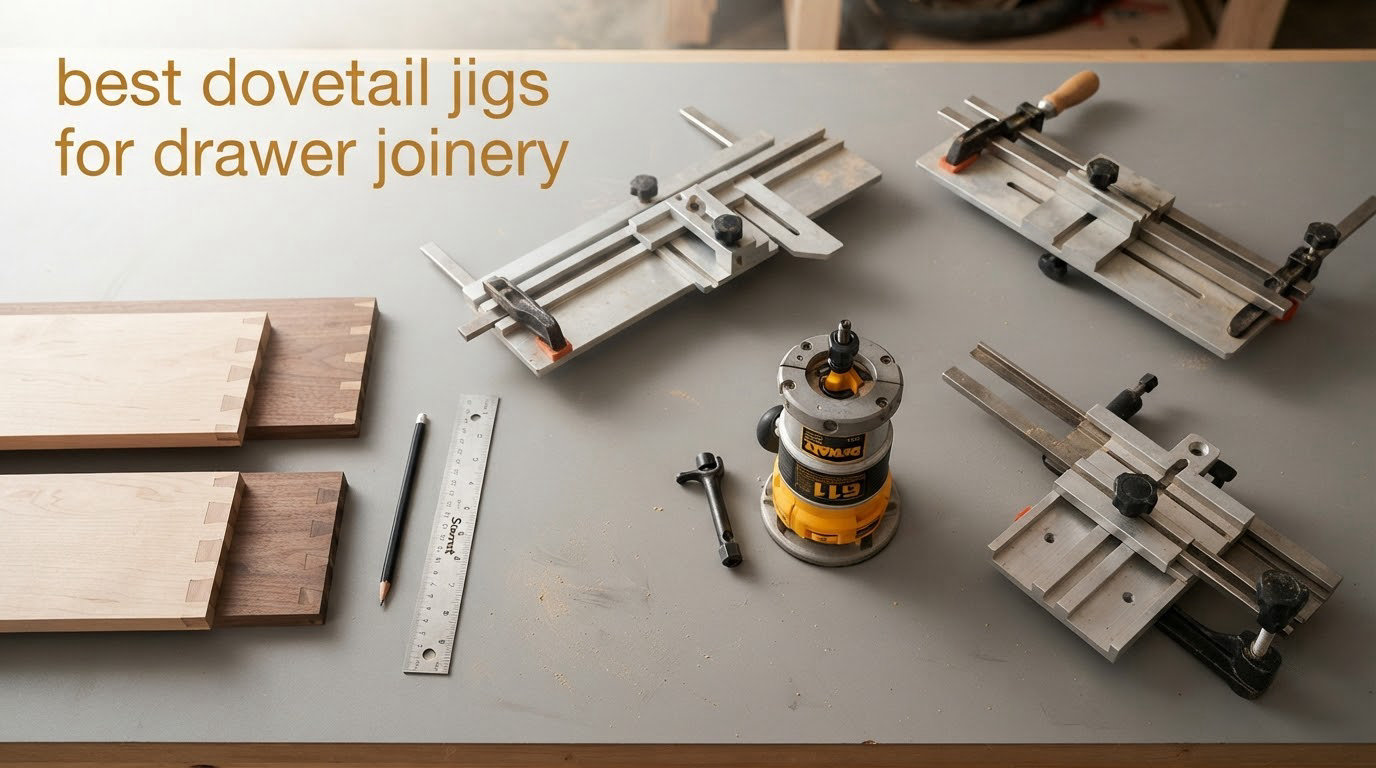
A drawer box is the one piece of furniture almost everyone touches every day, and it is also the piece that shows a weak joint first. Load a bottomless drawer with socks and books and the corners go oval within a couple of years. The dovetail is the answer: pins and tails that mechanically lock so the joint does not depend on glue alone. Finding the best dovetail jigs for drawer joinery is less about finding the most expensive jig and more about matching one jig to the widths, thicknesses and joint types your actual drawer boxes need.
I have spent a lot of time comparing dovetail jigs for drawer work, and the pattern that surprised me is how many jigs are sold as general-purpose tools that quietly fall short on a 24 inch drawer side. The fastest way to buy the wrong jig is to look at the photograph of a dovetail and ignore the width capacity, the material thickness range and whether the jig makes a half-blind joint at all. Those three numbers decide everything.
So before you read a single pick below, answer three questions. How wide is your widest drawer side? Do you need half-blind only, or through as well? And do you want fixed equal-spaced tails or spacing you can adjust continuously? Every recommendation in this guide maps to those answers, which is the same scoping ladder experienced builders use on woodworking forums.
Updated for 2026, these are the eight dovetail jigs we would actually put behind a drawer run, plus the honest cases where you should not buy a jig at all.
Table of Contents
Top 3 Picks: Dovetail Jigs for Drawer Joinery in 2026
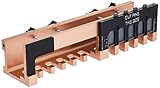
General Tools 861 Dovetail Jig
- Integrated clamping fits any board width
- Half-blind through and box joints
- Includes 14-degree dovetail bit
- All-aluminum one-piece layout

Keller Journeyman 135-1500
- 15 inch precision-milled template
- Stock from 1/8 to 3/4 inch thick
- Unlimited width and length
- No test cuts or wasted wood
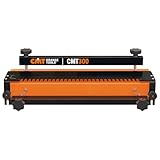
CMT300 Universal Dovetail Jig
- Steel body with factory-set stops
- Stock from 7/16 to 1 inch thick
- Includes half-blind template and guide
- Steel clamping bars
Best Dovetail Jigs for Drawer Joinery in October
| Product | Specifications | Action |
|---|---|---|
| General Tools 861 Dovetail Jig |
|
Check Latest Price |
| Keller Journeyman 135-1500 |
|
Check Latest Price |
| CMT300 Universal Dovetail Jig |
|
Check Latest Price |
 Woodstock D2796 Dovetail Jig Woodstock D2796 Dovetail Jig |
|
Check Latest Price |
 Peachtree Master Deluxe 3446 Peachtree Master Deluxe 3446 |
|
Check Latest Price |
 Leigh RTJ400 16 Inch Leigh RTJ400 16 Inch |
|
Check Latest Price |
 Leigh D4R Pro Leigh D4R Pro |
|
Check Latest Price |
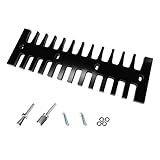 POWERTEC 71529 15 Inch POWERTEC 71529 15 Inch |
|
Check Latest Price |
Half-Blind vs Through Dovetails: What a Drawer Actually Needs
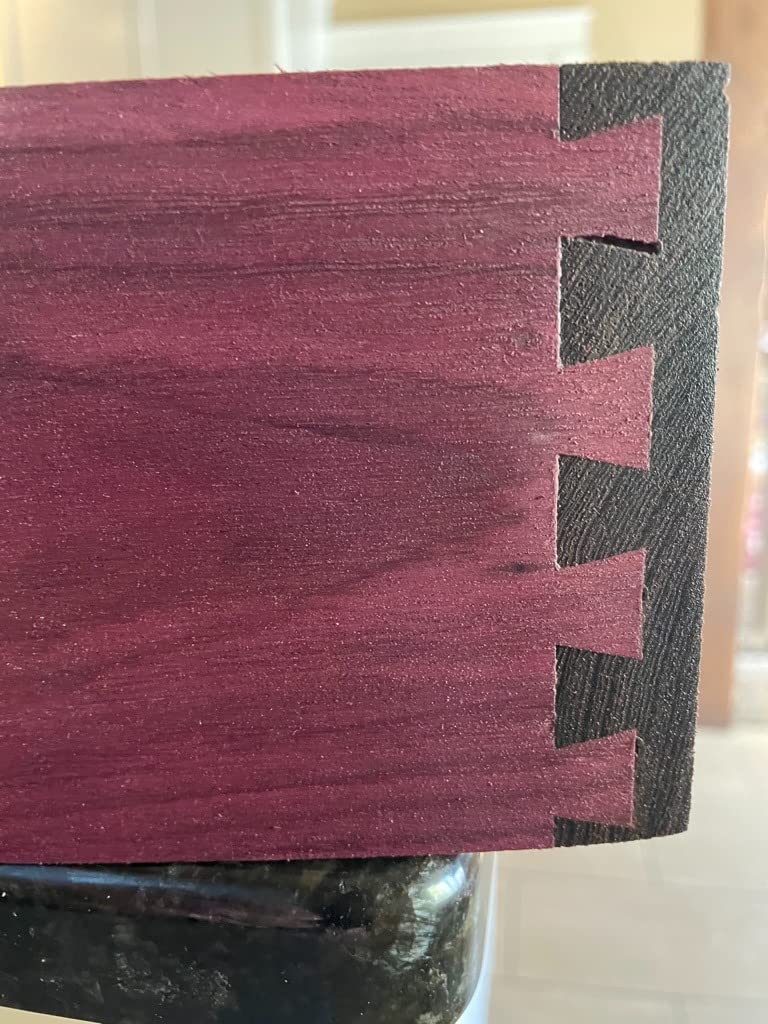
A through dovetail is cut the full thickness of the board, so the trapezoid shapes are visible on both faces. A half-blind dovetail stops partway through the pin board, leaving a clean flat surface where the pins are hidden. That single difference is the whole drawer-joint conversation.
Here is the standard a drawer box uses. The front joins the two sides with a half-blind dovetail, because the face of the front has to stay flat and uninterrupted. The back joins the sides with a through dovetail, because nothing is seen there and the full-thickness joint is stronger. So a drawer box normally needs a jig that can do both types. Buy a through-only jig and you have to make the front joint a through dovetail too, which is structurally fine and visually louder than most people want on a drawer face.
Now the honest exception. If your drawer has an applied or false front, a thin decorative panel glued over a plain box, the through dovetail on the front is covered up. The front reads as a clean slab no matter what is behind it, and you can skip the expensive half-blind jig entirely. A through-dovetail template is the cheaper and faster tool for that build, and it is a legitimate answer rather than a compromise.
Keep the grain running the right way too. In a half-blind joint the pin board is usually the drawer side, so orient the grain along the length of the side and parallel to the drawer front. Cutting half-blind pins across short grain leaves a weak edge that can crush out during glue-up. A Reddit thread on grain direction for half-blind dovetails walks through the same reasoning in practical terms.
1. General Tools 861 Dovetail Jig – Any-Width Clamping for the Money
General Tools Woodworking Dovetail Jig – 12″ Template Kit for Furniture & Wood Cabinet Making,Gold
All-aluminum body
Clamping fits any board width
12 x 3 x 3 inches, 2.94 pounds
Pros
- Integrated clamping accommodates any board width
- Cuts half-blind
- through and box joints
- One-piece aluminum layout keeps both joint ends matched
- No assembly needed
Cons
- Included bit dulls fast and can loosen in the collet
- Small work area forces re-registration on many pins
- Advertised box-joint capability needs an extra shim
This is the jig I hand to anyone who has never used a dovetail jig and owns a router table. The integrated clamping design is the reason it works: you slide the board in and tighten, and the fixture holds any width you care to feed it. On a drawer run with a mix of side widths, that removes the most common reason a fixed-width jig sends you back to the drawer for another jig.
The 861 is also the rare budget tool that names all three joint types on the box. It cuts half-blind, through and box joints from the same one-piece aluminum layout, and the layout is what keeps the two ends of each joint matched evenly rather than drifting.
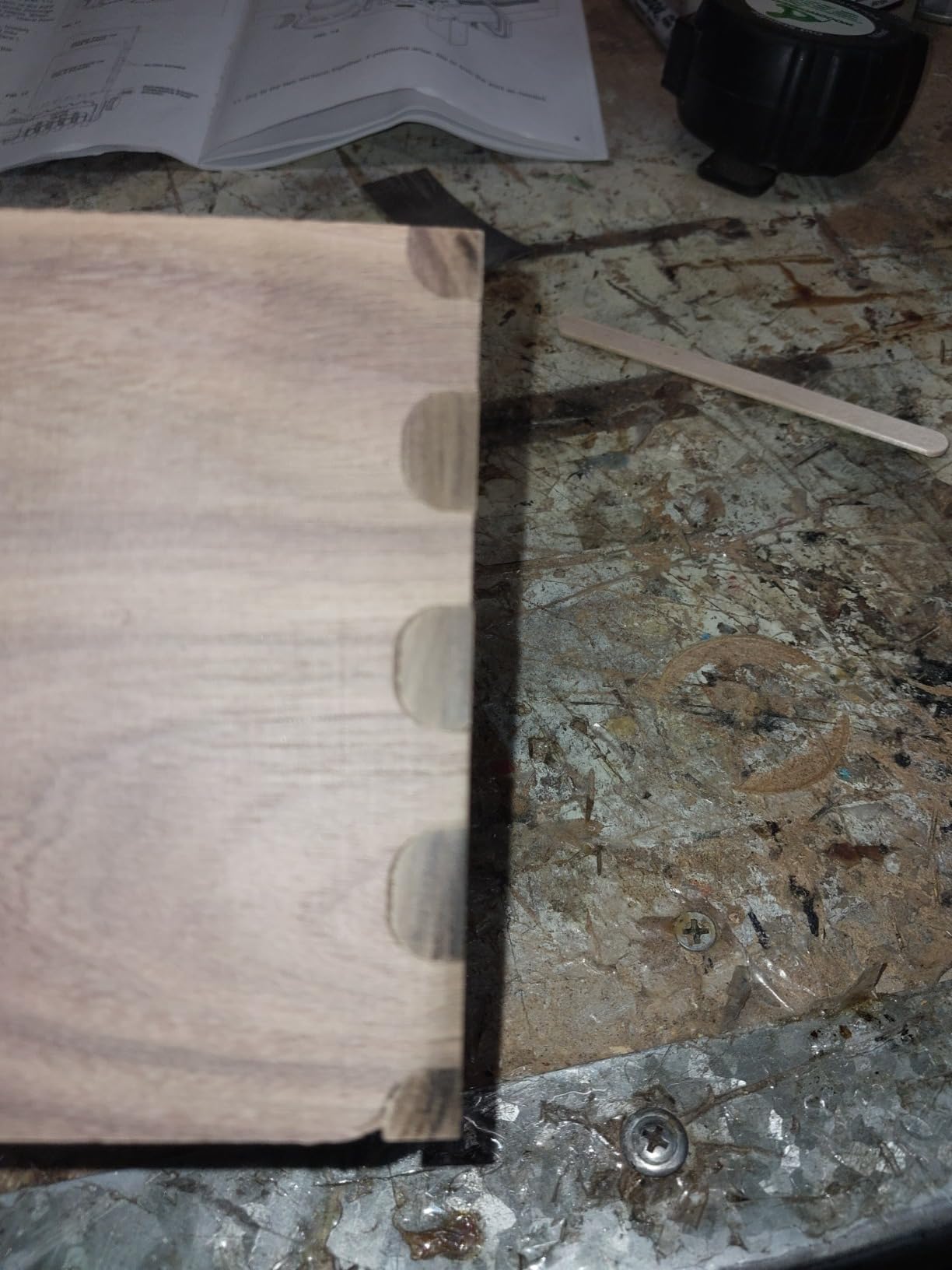
The honest weakness is the work area, not the body. With only 12 x 3 x 3 inches of body, wide boards and joints with many pins mean you re-register the workpiece more often, and that is where beginners lose confidence. Experienced users also almost universally replace the supplied bit. It is a 14-degree 1/2 inch dovetail bit, which is the industry default, and on hard hardwoods it dulls quickly and has loosened in the collet for some owners. An Amana or Freud bit of the same geometry is the single cheapest upgrade you can make.
What to check before you buy
Confirm you have a router table or a bench top setup that accepts a hand-table router. The 861 is designed to be used on a table, and the included bit is intended for that setup. If your router is a plunge model you plan to use handheld, a different class of jig will suit you better.
Also decide what you will do about box joints. The manual advertises them, but the setup needs a 1/4 inch shim that is not in the box. If box joints are a goal, budget for that extra piece or plan to cut them on a different jig.
Where it will frustrate you
Fit consistency depends on registration, and this is a small jig. If your drawer sides are long and your pins are numerous, expect a few trial cuts before the rhythm settles. That is normal for a first jig and normal for this one, so buy it with the expectation of a practice box first.
The through-dovetail results are usable but not as crisp as the half-blind and tail work. If through dovetails are going to be on the outside of a blanket chest, look at the Keller or the Leigh options further down. For drawer joinery where the through joints live on the inside rear of the box, the 861 is more than good enough.
2. Keller Journeyman 135-1500 – Milled Template With No Test Cuts
Keller Dovetail System 135-1500 Journeyman DoveTail Jig Template
15 inch precision-milled template
Stock 1/8 to 3/4 inch thick
Unlimited width and length
Pros
- Repeatable evenly spaced pins from a milled template
- Very wide material thickness range
- No test cuts means little wasted hardwood
- Back-to-back layout machines both mating pieces
- Curved point style suits traditional furniture
Cons
- Template-only format means handheld routing
- Long body needs a large clear bench area
- No clamps included in the standard configuration
The Keller is the one I recommend to someone who has decided they are making more than a handful of drawers. It is a precision-milled 15 inch template rather than a full clamping fixture, and 76 percent of its owners give it five stars. The template itself does the positioning work, so the joint quality does not depend on how carefully you nudged a board against a stop.
Two specifications make this a serious drawer jig. It accepts unlimited widths and lengths, so there is no width ceiling to design around, and it takes material from 1/8 inch to 3/4 inch thick. That range covers thin decorative parts up to solid drawer stock without a second tool. The no-test-cuts claim matters more than it sounds: on a run of hardwood drawer sides, scrapped test joints are pure waste.
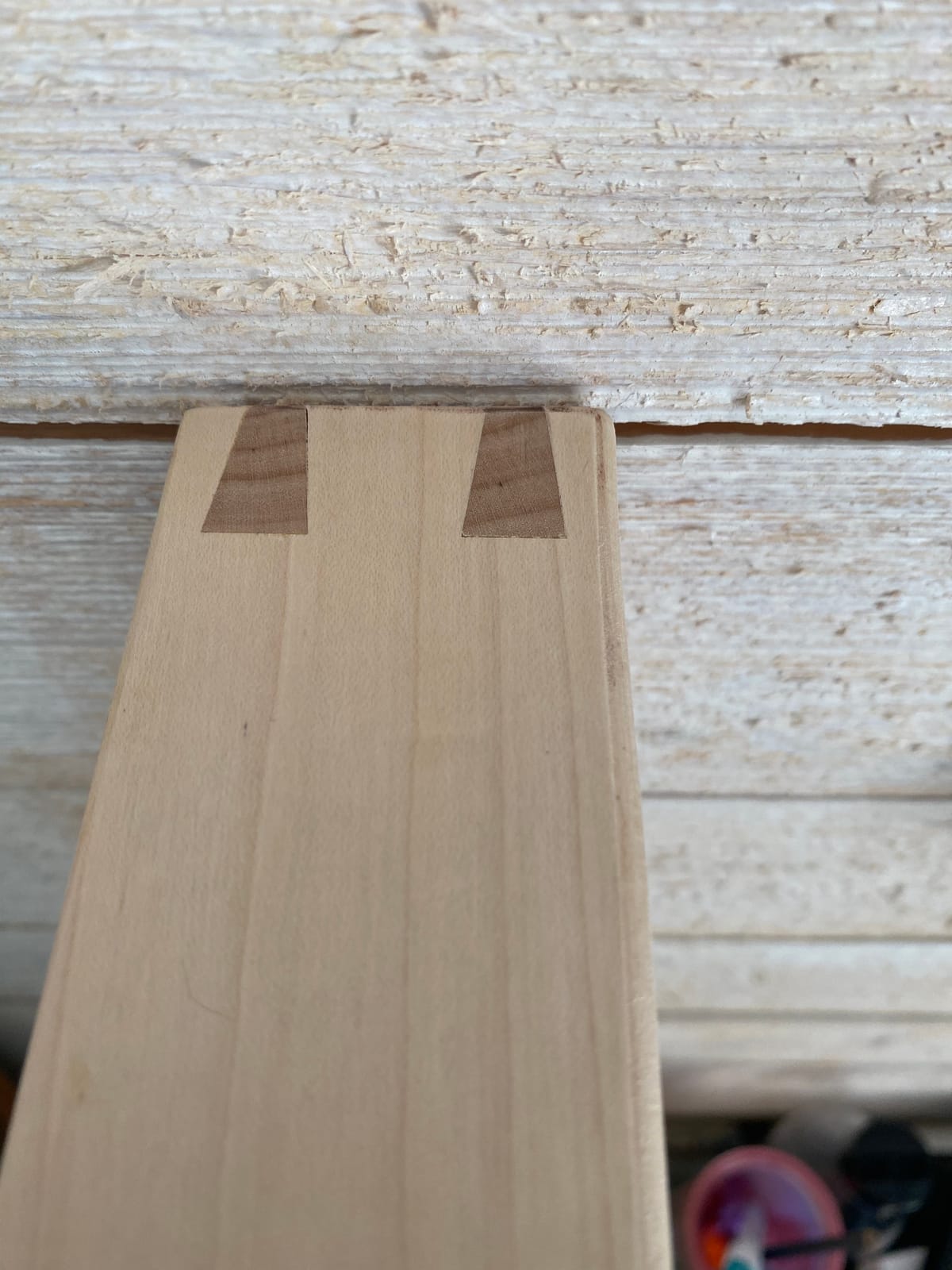
The back-to-back model is a production feature. You machine both mating pieces in one setup rather than flipping the workpiece and re-registering it, which is where a lot of the time savings on a drawer run actually comes from. Curved points suit traditional casework and drawer work better than needle points do.
What to check before you buy
Plan the bench. At 27.1 x 6.3 x 2.7 inches, this is a long object that needs a clear surface to run along, and the standard configuration does not include clamps. A dedicated bench area is worth more than any accessory here. This is a fixed shop fixture, not a portable tool.
Because it is a template and not a clamping jig, you route handheld. That means registration is your hand and your eye, guided by the milled slots. If your router base is large enough to feel unwieldy over a 15 inch span, practice on scrap first. The fit is consistent once the technique clicks.
Where it will frustrate you
The Keller template cuts through dovetails. If your drawer fronts need half-blind joints, this is not the jig. Many production shops solve this by using a through dovetail on a plain box with an applied front, where the joint is hidden. If your fronts are one solid piece of wood and you want the clean face, you need a half-blind jig alongside this one.
Mill-made templates do not adjust spacing. Every tail is cut to the same fixed offset. For a full drawer run that is a feature. For one keepsake box where you want the spacing to look hand-cut, you are giving up something.
3. CMT300 Universal Dovetail Jig – Steel Body With Set Stops
CMT300 Universal Dovetail Jig
Steel body with set stops
Stock from 7/16 to 1 inch thick
About 13 pounds base weight
Pros
- Steel body and hardware rather than plastic knobs
- Factory-set stops cut setup time per joint
- 7/16 to 1 inch stock range suits thin and thick parts
- Extra templates expand joint variety
- Backed by CMT router bit replacement warranty
Cons
- Base weight of roughly 13 lb anchors it to one bench
- Only one template ships in the base kit
- Additional joint sizes need extra purchases
The CMT300 is the most solidly built jig in this group and the one I would bolt to a bench and stop moving. The body, templates, stops and clamping bars are steel, not extruded aluminum with plastic fittings, and that difference shows up in the clamping force you get and in how the stops stay put over months of use.
77 percent of owners give it five stars, and the reason they keep citing is consistency across repeated cuts. The factory-set stops hold the workpiece against a machined reference, so the depth and position do not drift between drawer sides. On a run of ten drawers, that repeatability is worth more than a clever adjustment mechanism.
What to check before you buy
The material range is 7/16 inch to 1 inch thick. That is a genuinely wide range, but note the lower bound. If you plan to dovetail thinner parts, such as a 1/4 inch panel, this jig will not take them and you need something else. Read that spec before anything else on the page.
The base kit includes a template for 1/2 inch half-blind joints plus a template guide. That is the joint you want for drawer fronts, so the standard configuration covers the critical drawer joint out of the box. Other joint types need additional templates, so treat the extra templates as a planned purchase rather than a surprise.
Where it will frustrate you
At roughly 13 pounds, this is not a jig you carry from the bench to the sofa to finish a drawer corner. Plan a permanent home for it where the router can reach. Buyers who expected a portable tool were disappointed, and buyers who gave it a dedicated bench rarely complain about anything else.
Setup for a first-time user is simple: clamp the workpiece against the stops, set the bit depth, and route. The trade-off is that the simplicity comes from the stops being fixed. There is no fine tuning of joint fit beyond the stop position and the bit choice, so if you love dialing in an individual joint, this is not that tool.
4. Woodstock D2796 – Heavy 12-Inch Half-Blind Jig
Woodstock D2796 – Dovetail Jig w/Aluminum Template
1/2 inch half-blind dovetails
Aluminum template, steel body
Adjustable tail stop for depth
Pros
- Heavy body that stays put during cuts
- Cuts the 1/2 inch half-blind drawer joint
- Adjustable tail stop sets bit depth consistently
- Quick setup once you understand the logic
- Good value for hobby woodworkers
Cons
- Plastic cam knobs and bushings are a recurring weak point
- Side stops will not reliably hold square
- Factory setup guide reported as inaccurate
The Woodstock D2796 is a dedicated 1/2 inch half-blind machine, and that narrow brief is both its strength and its limit. It cuts the hallmark drawer-front joint, and buyers who spend the setup time get accurate results from a body heavy enough that it does not walk across the bench during a pass.
Its 3.8 average across 204 reviews reflects a real split. The rating distribution is the tell: 56 percent five stars and 14 percent one stars, with almost nothing in between. Owners either invest an afternoon learning it and are delighted, or they hit a hardware problem early and never recover. That is a tool with a setup cliff, not a bad tool.
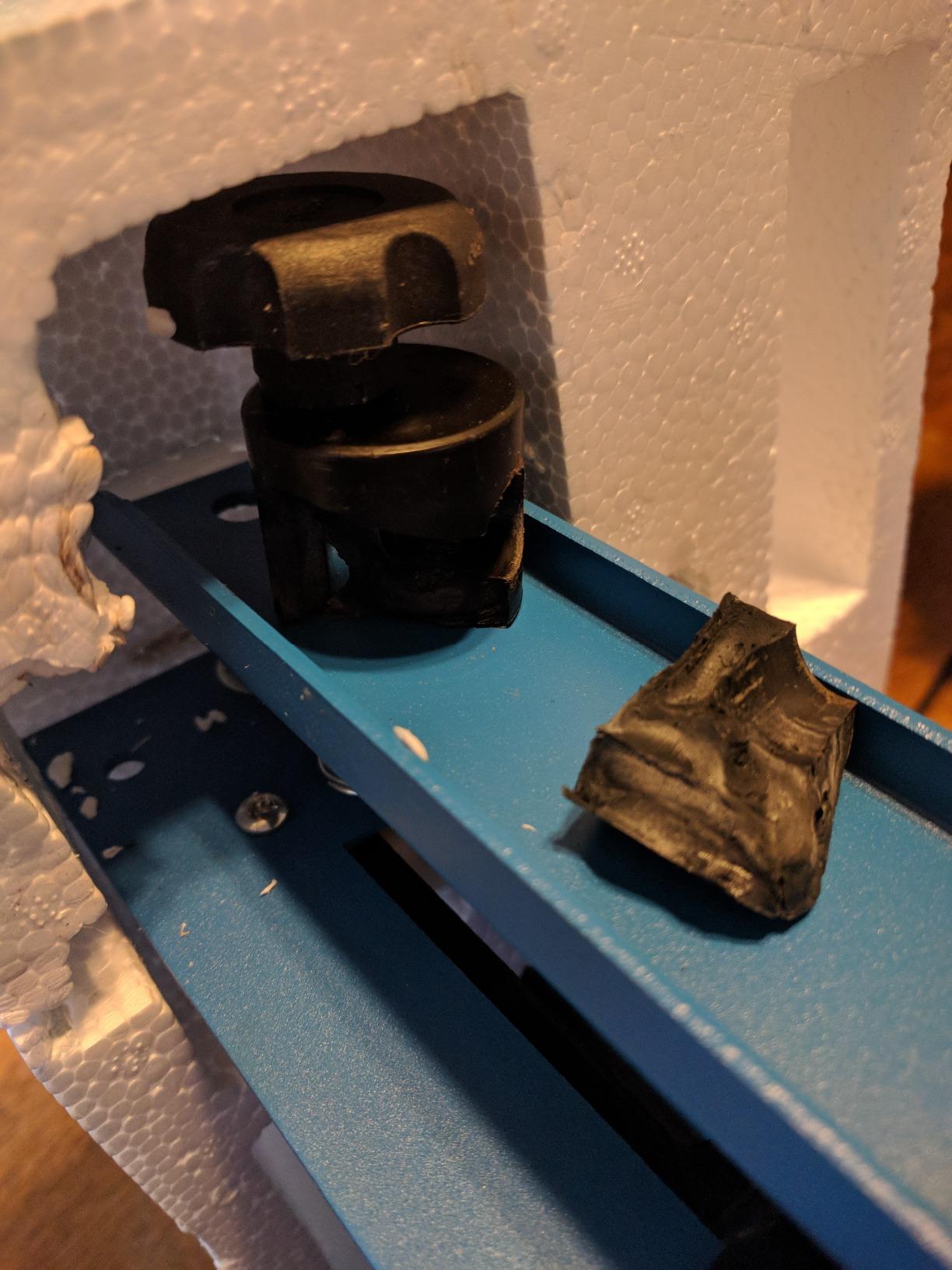
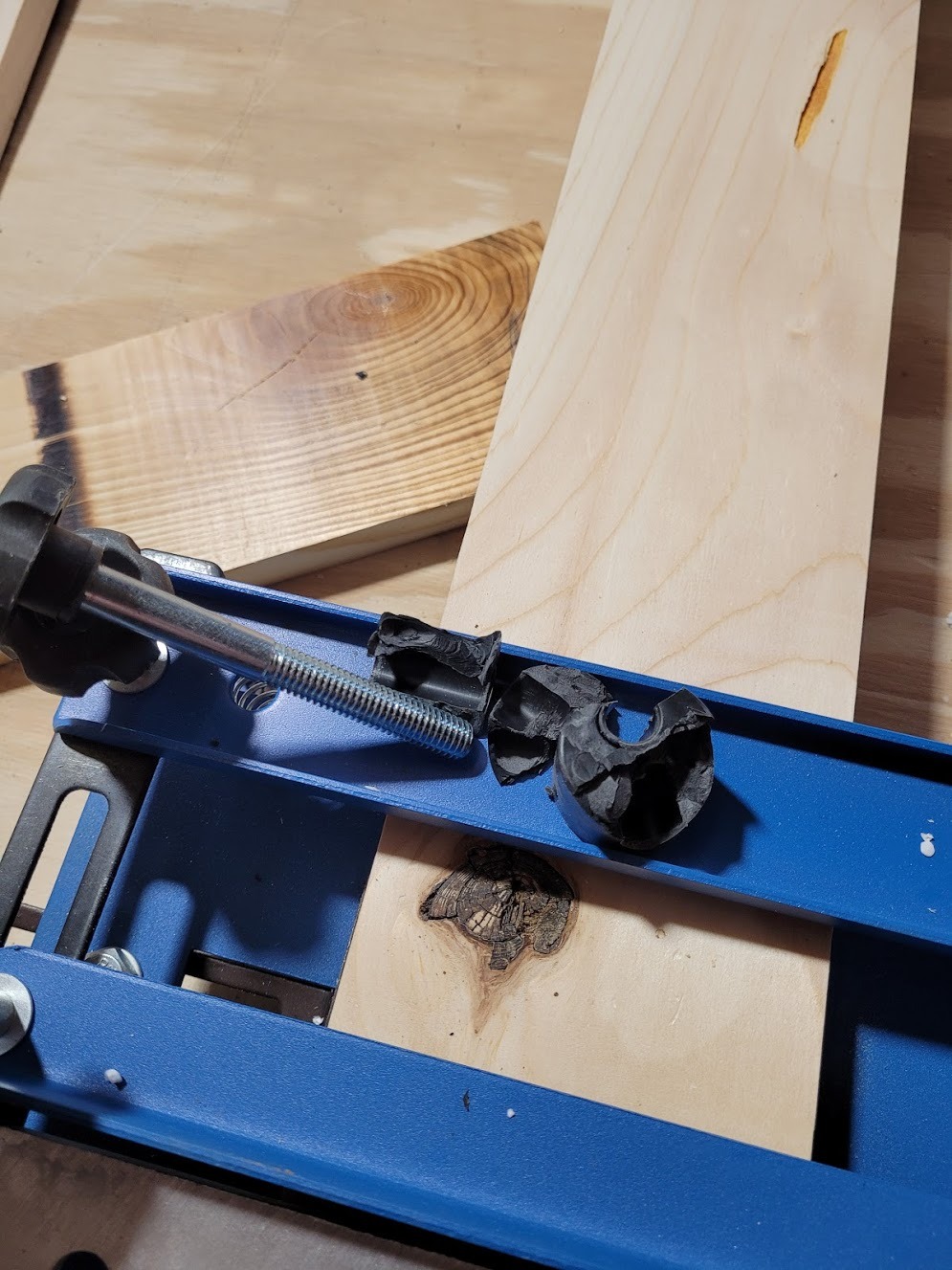
Two things to know before you order. The router kit is sold separately: it needs a 7/16 inch guide bushing and a 1/2 inch 14 degree dovetail bit with a 1/2 inch shank. And the plastic cam knobs and bushings are the component that fails most often. Several buyers found the knobs would not develop clamping force and fixed it by disassembling the jig and filing down the t-nut heads, which reportedly resolves the problem in about twenty minutes.
What to check before you buy
Measure your material against the template. This is a 12 inch jig, and 12 inches is narrower than a standard kitchen drawer side, which is the single most common way people regret a 12 inch purchase. If your drawer sides run 18 to 24 inches, you are sizing yourself into a second jig later.
Check the side stops for squareness, because this is the most common quality complaint. Several owners report joints that came out out of square because the stops would not hold position. A straightedge against the stop and a light re-clamp will tell you within a minute whether your unit is behaving.
Where it will frustrate you
Only one 1/2 inch template is included, so the joint variety is narrow by design. Through dovetails are not this jig’s purpose. If you build boxes as well as drawers, this is a half-joint answer to a two-joint problem.
Conflicting knob sets on the top rail are reported by some buyers as interfering with each other, and the factory setup guide is described as inaccurate even against calipered stock. Bring your own calipers and your own setup reference. This is the jig where a twenty minute workshop session with a machinist square changes the whole experience.
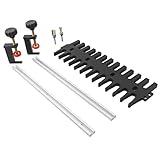
5. Peachtree Master Deluxe 3446 – Track-Mounted Router-Table System
Dovetail Jig Master Deluxe System
Anodized aluminum template
Two 17 inch tracks and clamps
Includes 7-degree and flush trim bits
Pros
- Track and clamp system makes registration repeatable
- Scribed reference lines on the anodized template
- Complete kit including two 17 inch tracks and clamps
- Handles common drawer-side thickness
- Quick setup for a router-table jig
Cons
- Stock range limited to roughly 5/8 to 3/4 inch
- Supplied template makes through dovetails only
- Two 17 inch tracks need clear bench space
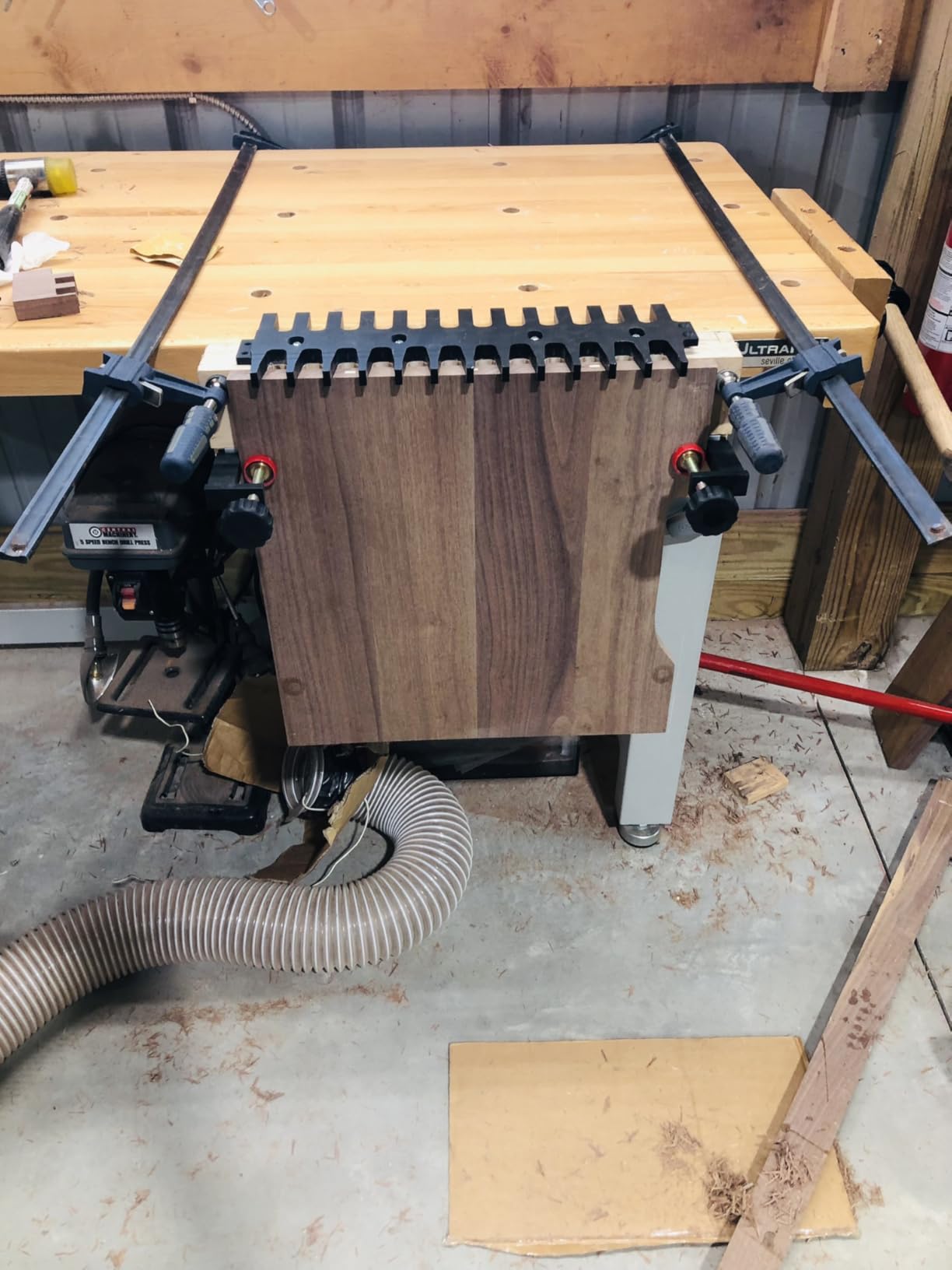
The Peachtree solves a problem most router-table jigs ignore: how the jig attaches to the workpiece. Instead of clamping the workpiece in the jig, you clamp the jig to the workpiece. Two 17 inch aluminum tracks and two track clamps hold the template in place, and that removes the slide you would otherwise fight on every pass.
It is also the most complete package here in terms of what lands in the box. A 7 degree dovetail bit and a flush trim bit both ship with it, and the flush trim bit is what you need to knock the tails down to the line after routing the pins. The anodized template has permanently scribed reference lines, so alignment is a matter of lining up with a mark rather than measuring twice per setup.
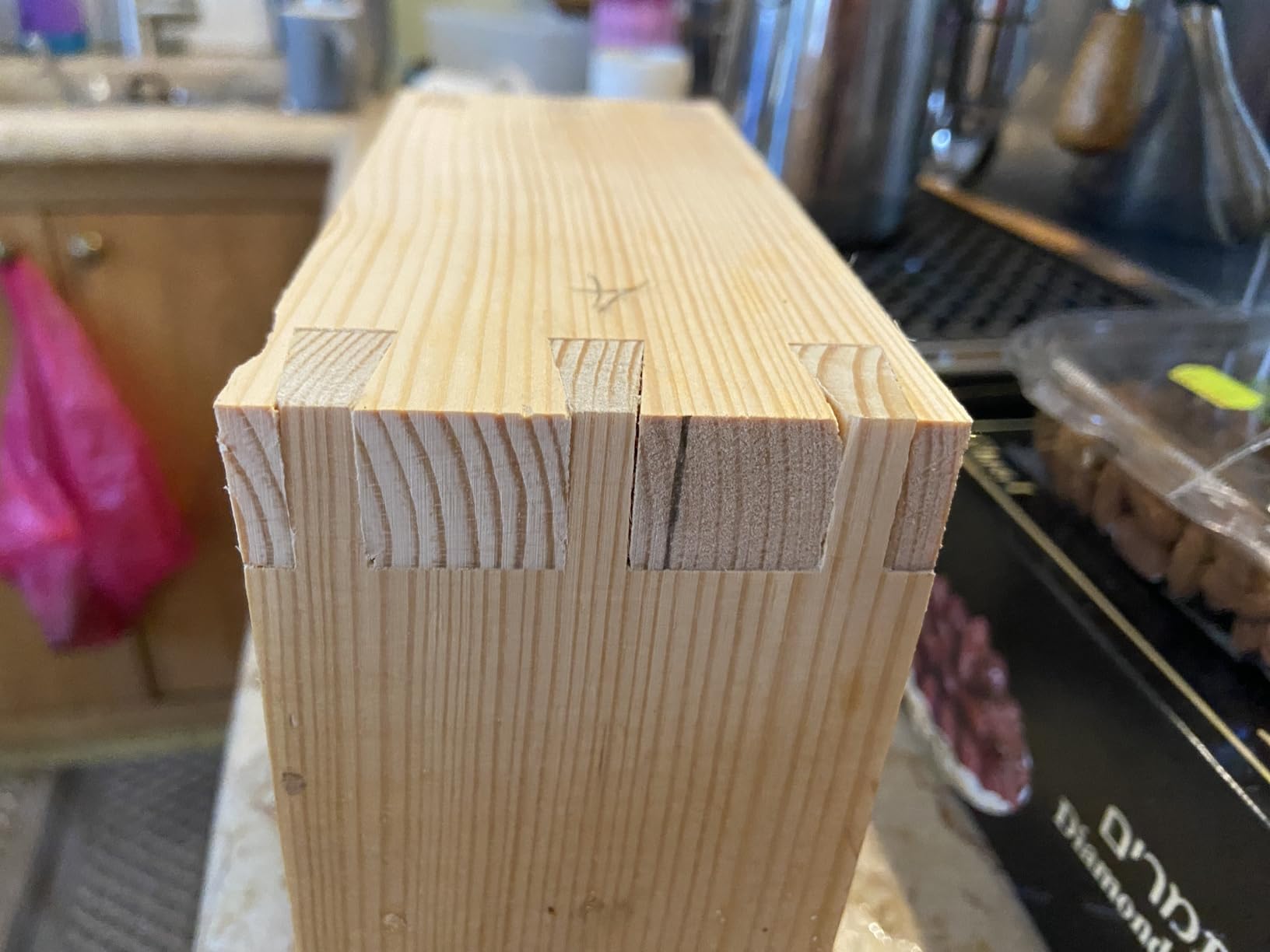
The joint finish is the reason serious builders like it. A 7 degree dovetail is a narrower angle than the 14 degree default, and narrower tails read as finer work on a drawer side. Combined with the flush trim bit, the finished joint looks closer to hand-cut work than a wide default-angle joint does.
What to check before you buy
The stock range is roughly 5/8 inch to 3/4 inch. That is narrower than most competing jigs, and it is the first thing to check. It happens to cover a common drawer-side thickness, but if your stock sits outside that window this jig is not for you regardless of how well you like the mounting system.
Confirm you have a router table with enough travel and a fence to reference. This is a router-table jig by design, and the whole registration argument depends on the table staying put while the piece runs across it.
Where it will frustrate you
The supplied template makes through dovetails. Half-blind work needs an additional jig, so for a drawer with a solid one-piece front this is a partial answer. If your fronts are applied, this works well as a full answer.
The two 17 inch tracks need a clear stretch of bench to lay out, which is the real cost of the system. And with 63 reviews the owner base is still small, so the long-term track record is thinner than the General Tools or CMT numbers. The engineering is sound; the volume of owner history is not there yet.
6. Leigh RTJ400 16-Inch – Six Joint Types From One Template
Rockler Leigh RTJ400 16″ Router Table Dovetail Jig – Precision Router Jig for Through Dovetails – Box Joints and Finger Joints – Advanced Woodworking Router Workstation Joinery System
16 inch router-table jig, 29.5 x 7 x 5 inches
Through, half-blind, half-pitch, angled, splices, box joints
Elliptical guide bushing
Aircraft-grade aluminum, 10.41 pounds
Pros
- Cuts six joint types from a single template
- Elliptical bushing removes trial-and-error bit adjustment
- Router-table format keeps hands away from the bit
- Aircraft-grade aluminum and cam-action clamps
Cons
- Needs a router table with a counterbore insert ring
- Adapter for some tables is not included
- Instructions confusing and setup is involved
The RTJ400 answers a question no other jig here answers: can one jig cover the whole shop. From a single CNC-machined aluminum template it cuts through dovetails, half-blind dovetails, half-pitch dovetails, angled dovetails, end-to-end splices and box joints. If your shop builds drawers and cabinets and boxes, that is the whole menu in one fixture.
Its fit advantage is the elliptical guide bushing. The elliptical shape holds the bit at a consistent offset from the template through the whole cut, so the joint does not drift tight in one place and loose in another. Owners credit the bushing with removing most of the variables that cause failed joints, which is why 77 percent give it five stars.
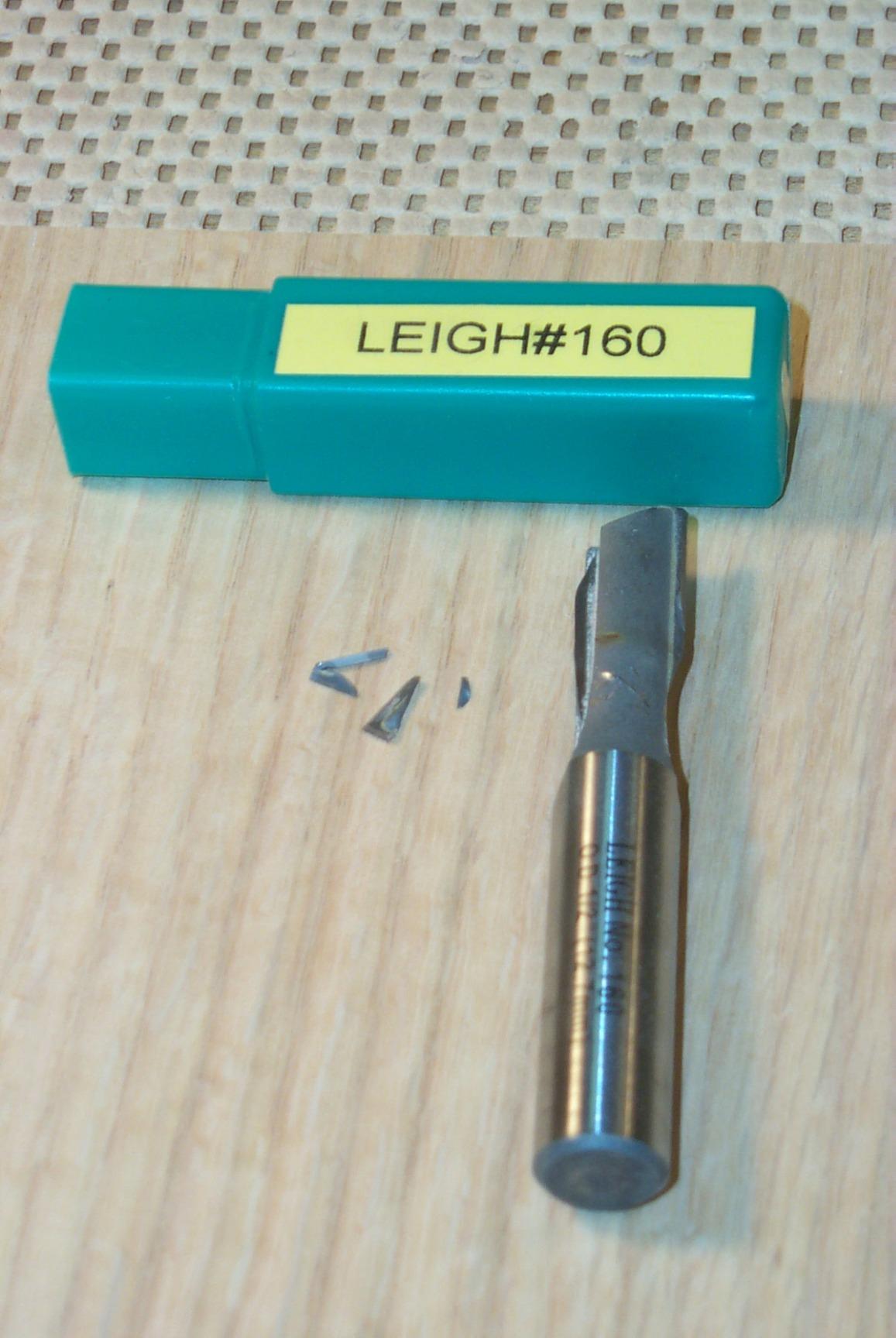
The router-table format is a real safety and quality argument, not just a layout preference. Your fingers stay on the workpiece and away from the spinning cutter, and you get a clear line of sight to the cut. On an angled or half-pitch dovetail that visibility is the difference between a confident pass and a slow one.
What to check before you buy
Check your router table first. The jig needs a counterbore insert ring for the Leigh e-Bush, and some tables need an adapter that is not included. At least one owner returned the jig because his table could not accept it. This is the single most repeated warning in the reviews, and it is worth a phone call to your router table manufacturer before you order.
Then budget for practice. The instructions are described as confusing and the setup is involved, with the practical fix being to work through the video guides. Make a few practice boxes before you start on a drawer run you care about.
Where it will frustrate you
Tearout is real on hardwood-faced plywood with voids. Owners who switched to solid-core Baltic birch report much better results, so material choice is part of getting good joints out of this jig. On quality solid stock the finish is the standout feature of the set.
There are size limits on joint and workpiece dimensions, though owners consider them small for drawer work. And the same complaint that applies to every premium jig applies here: if you only occasionally cut dovetails, this is a lot of capability to leave idle.
7. Leigh D4R Pro – 24-Inch Capacity Bench Jig
Leigh D4R-PRO Dovetail Jig
Boards up to 24 inch wide
Maximum pin thickness 1-1/4 inch
One-piece aluminum extrusion base, 22.1 pounds
Three carbide router bits included
Pros
- Largest width capacity in this roundup
- Handles 1-1/4 inch pin thickness for thick stock
- Rigid one-piece extrusion base stays square
- Three carbide bits in the kit
Cons
- 22.1 pound base needs a dedicated sturdy bench
- Highest cost in the group
- Real learning curve on setup and technique
The D4R Pro is the capacity answer. Boards up to 24 inches wide and pin thickness up to 1-1/4 inch means it handles a full-size kitchen drawer side in one pass and can joint thick cabinet stock that a lighter jig would never accept. If width capacity is your binding constraint, this is the jig that removes the constraint.
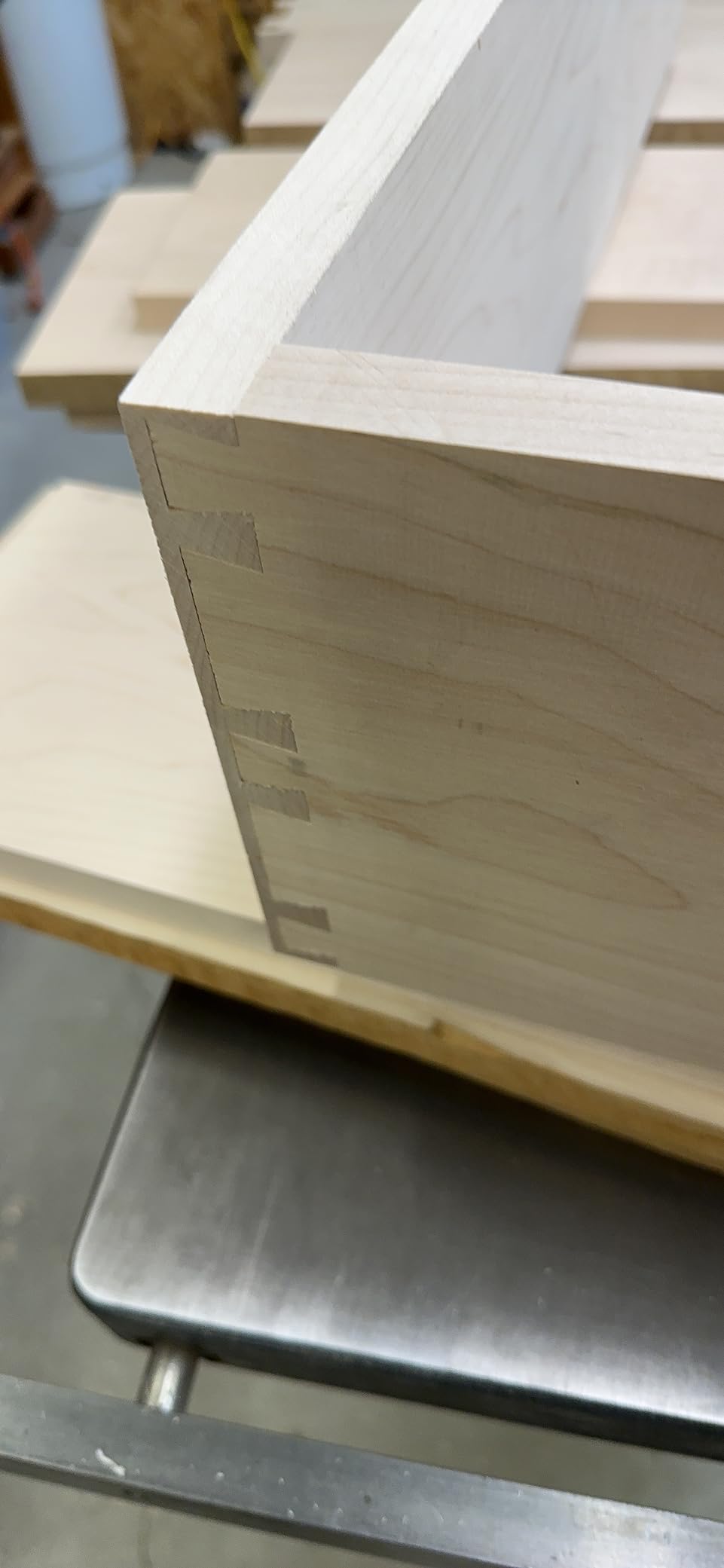
The one-piece aluminum extrusion base is 22.1 pounds and 36.6 inches long, and that mass is the feature. It stays rigid and square under load, so a long cut does not walk. It also produces handmade-looking pins and tails, which matters for furniture work where the joint is meant to be the decoration.
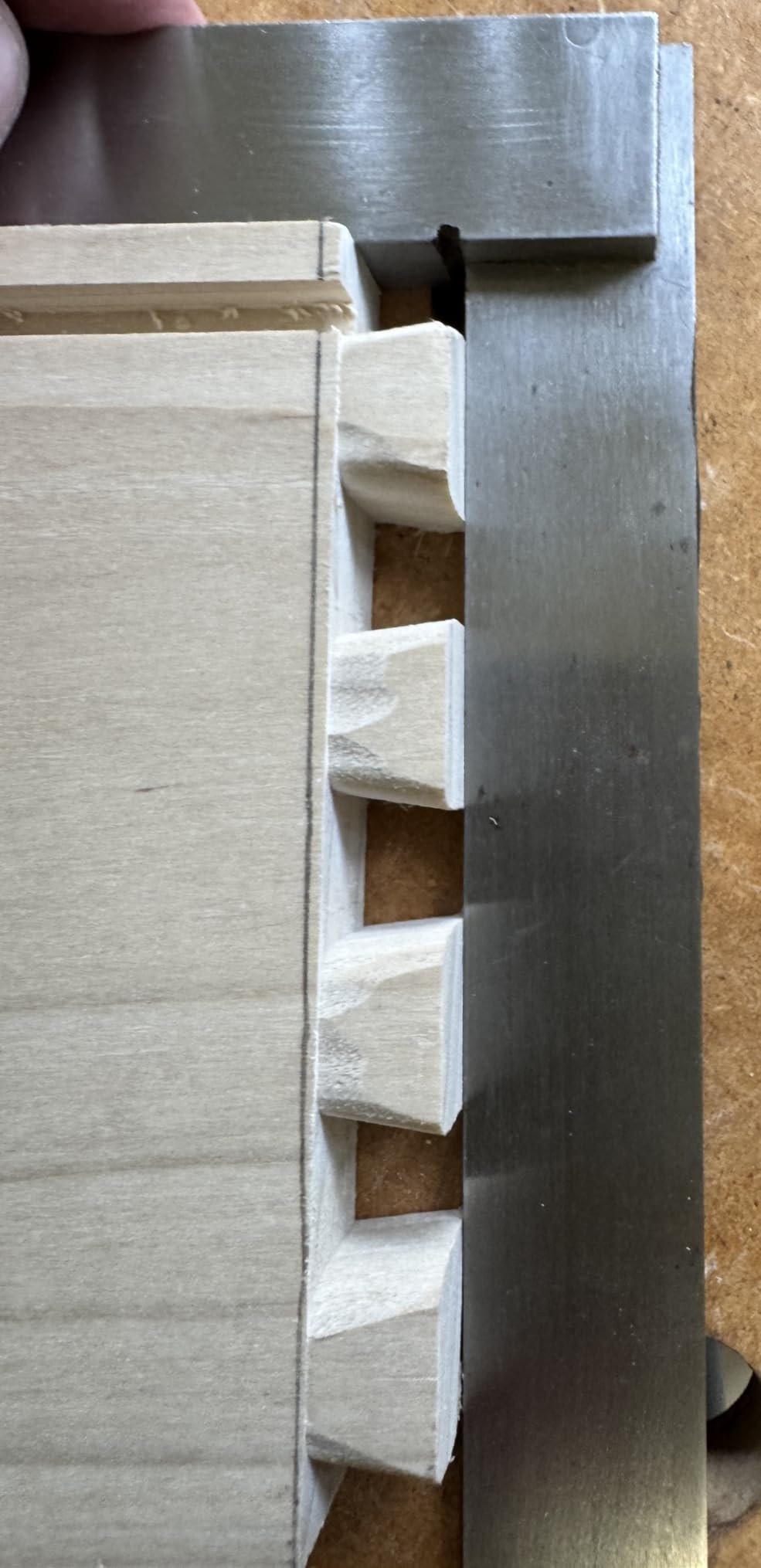
Three carbide router bits ship in the kit, so you are not buying your first bit before your first cut. The needle point style gives small pins between the tails, and combined with a 1-1/4 inch maximum pin thickness you get a genuinely different joint from a standard 1/2 inch half-blind.
What to check before you buy
Bench space and floor. A 36.6 inch long, 22.1 pound machine is a dedicated installation, not something you pull out when a drawer comes due. Measure the bench and the reach of your router before ordering, and make sure the bench can carry the load without flex.
Be honest about the learning curve. Owners who already know dovetail technique rate this highly and describe the capacity as the reason to buy. Buyers who came to it cold describe the setup as demanding relative to what they paid. That is the whole 4.1 average from 34 reviews in one sentence.
Where it will frustrate you
This is the most expensive jig in the roundup, and at 34 reviews the owner history is thinner than most here. That is not a knock on the tool, it is a fact about the evidence available. If your drawer sides never exceed 16 inches, you are buying capacity you will not use.
The other real drawback is opportunity cost. For a drawer-only shop, this level of investment is hard to justify. Save it for a shop that builds case goods as well as drawers, or for a hobbyist with unlimited bench space who wants the best-looking joint available.
8. POWERTEC 71529 15-Inch – Lightweight Multi-Joint Template
POWERTEC 71529 15-Inch Dovetail Jig System w/Template, Straight Edge Router Bit, Dovetail Bit and Mounting Hardware
15 inch phenolic template, 1.6 pounds
Through joints at any width
Mounting hardware included
Handheld router or router table
Pros
- Longest list of joint styles in the roundup
- Light 1.6 pound body for mobile or small shop work
- Mounting screws let you fix it to bench or sled
- Works handheld or on a router table
Cons
- Phenolic template less rigid than aluminum and can chatter
- Included 7 degree bit is a basic one
- Needs steady registration across the 15 inch span
The POWERTEC is the smallest and most flexible thing here, and for a small shop or a mobile setup that is exactly the right shape. At 1.6 pounds and 0.47 inches thick, it is a template rather than a fixture, and the included mounting screws let you screw it to a bench, a board or a sled so registration is a fixed fact rather than a judgment call.
The joint list is the surprise. One template covers acute, classic, compound-angled, curved, obtuse, box, drawer and knuckle joints, and the drawer joint is named directly. Through joints cut to any width without test cuts, marking or wasted stock, which is the honest version of the unlimited-width claim.
What to check before you buy
You will need a router, and the 7 degree dovetail bit it ships with is a basic one. Many owners upgrade the bit early. A straight edge bit is also included, which is handy for squaring the ends of your pin and tail boards before they go near the template.
Decide handheld or router table, and pick deliberately. Handheld gives you mobility and control of the pass. A router table gives you repeatability and keeps your hands clear. Both are supported, and neither is a compromise here.
Where it will frustrate you
Phenolic plastic is less rigid than aluminum. On aggressive cuts it can chatter, and the 19 percent three-star share in the ratings points at exactly that. It is adequate and repeatable, not premium, and you should not expect a furniture-grade surface without a bit change or a slower pass.
Registration over a 15 inch span requires a steady, consistent hand, and the small 24-review base means long-term owner reports are still thin. Treat this as a capable low-commitment template for through joints rather than a dedicated drawer-front machine.
How to Choose a Dovetail Jig for Drawer Joinery
The three questions that scope your purchase
Start with the widest drawer side you plan to build, measured as actual stock width, not finished drawer width. A jig narrower than your stock forces a second jig, and a 12 inch jig will not cover the 18 to 24 inch sides common in kitchen work. This is the most common sizing mistake and the one that costs real money to undo.
Second, decide whether you need half-blind only, or half-blind plus through. A drawer box wants both, as described earlier. If your fronts are applied, a through-only jig is a legitimate and cheaper answer to the whole project.
Third, decide between fixed equal-spaced tails and continuously variable spacing. Fixed templates are faster once set and give perfect repeatability. Variable spacing lets you fine-tune fit on an individual joint and lets you lay out asymmetrical dovetails. The jigs in this roundup with variable or fine adjustment, like the General Tools micro-adjustment, sit at the flexible end; the milled and stopped templates sit at the fast end.
Match jig width capacity to real drawer fronts
Standard kitchen drawer sides commonly run 18 to 24 inches wide at the front, and 15/16 inch box stock is thicker than the 1/2 inch most half-blind templates are sized for. Check both numbers against the jig’s material range before anything else. The General Tools 861 and the Keller Journeyman have the widest material ranges in this set at 1/8 to 3/4 inch, which covers the widest range of drawer stock. The Peachtree is the narrowest at roughly 5/8 to 3/4 inch.
On width, the Keller accepts unlimited widths and lengths, the Leigh RTJ400 is a 16 inch router-table jig, the POWERTEC runs 15 inches, the Woodstock is 12 inches, and the Leigh D4R Pro reaches 24 inches. Those numbers are the real difference between a jig that grows with your drawer work and one that constrains it.
Router, bushing and collet requirements by jig class
Every jig here needs a router, and they divide into two classes. Guide bushing jigs run a bushing on the jig and a matching straight-sided dovetail bit in the router. The Woodstock D2796 needs a 7/16 inch guide bushing and a 1/2 inch 14 degree dovetail bit with a 1/2 inch shank, sold separately. The General Tools 861 and the Leigh RTJ400 use guide bushing systems, with the RTJ400 using Leigh’s elliptical e-Bush, and the Leigh additionally requires a router table with a counterbore insert ring.
Bearing-guided jigs put the bearing on the bit instead. That means the bit is dedicated to one diameter and a template with a slot cut for it, which is how the Peachtree and POWERTEC systems work. A Reddit thread asking for router and collet recommendations for dovetail jigs turns up the same split, and the usual answer at that budget level is that a good trim router from any major brand is enough for most jig classes. A plunge router is not required for a table-top jig, but a plunge base is useful when a jig wants the router to reach a template that the base cannot clear.
Dovetail angle and router bit selection
The industry default is 14 degrees, and that is the bit most fixed-template jigs ship with. A 10 degree angle is the traditional furniture standard and produces a longer, narrower tail. On a drawer joint, strength is rarely the binding constraint, because glue surface area and fit quality dominate. The visible difference is the point.
So the cheapest upgrade available to you is often just a better bit. A 7 degree bit, which the Peachtree and POWERTEC both include, gives a distinctly finer look on a drawer side, and 10 degree bits sit between the two. Swapping the bit does not require a new jig, and it changes the finished joint more than most buyers expect.
When to skip the jig entirely
If you are building one drawer, hand-cutting may genuinely be faster. Experienced woodworkers consistently say a dovetail saw, a sharp bevel-edge chisel and about 100 practice joints will cut a handful of drawer corners faster than any jig can be set up, and a professional in one forum thread put it plainly: for most drawer runs, hand-cutting wins on time, and for a full kitchen run it loses badly.
The break-even is volume. Forum benchmarks put a production setup at roughly 25 to 30 drawers assembled in a day, which is the number that turns jig time into a per-drawer cost. If you will build a full kitchen or a batch of ten or more drawers, the jig pays for itself in saved setup hours. If you will build two drawers over the next five years, buy a chisel and a marking gauge instead.
Frequently Asked Questions
Can one jig cut both half-blind and through dovetails for the same drawer?
Yes, and that is the standard drawer box: the front joins the sides with a half-blind dovetail so the face stays flat, and the back joins the sides with a through dovetail. The General Tools 861, the CMT300, the Leigh RTJ400 and the Leigh D4R Pro all cut both types. Template-only jigs such as the Keller Journeyman and the POWERTEC 71529 cut through dovetails, so an applied or false drawer front is what makes them a complete answer.
How wide a drawer can a 12 inch dovetail jig handle?
A 12 inch jig cannot handle a standard kitchen drawer side. Kitchen drawer fronts and sides commonly run 18 to 24 inches wide at the front, so a 12 inch jig like the Woodstock D2796 caps your stock width and often forces a second jig later. If your sides exceed 12 inches, look at the Keller Journeyman for unlimited width and length, the 16 inch Leigh RTJ400, or the 24 inch Leigh D4R Pro.
How tight should a jig-cut half-blind dovetail be?
A jig-cut fit should slide home with light hand pressure and leave a thin, visible glue line. The tail should not spring back when you release it. On a jig with adjustable fit you fine-tune the position of the guide finger, while on a fixed-template jig the fit is automatic because both pieces are cut in the same setup. A joint that springs back needs a wider spacing, not more glue.
Do I need a dovetail jig for one drawer?
Usually no. Experienced woodworkers report hand-cutting a drawer faster than setting up a jig for a single box, and many push back on needing a jig for through dovetails at all. Jigs pay off at roughly a full kitchen run, where forum benchmarks put production at 25 to 30 drawers assembled per day. For one drawer, a dovetail saw and a sharp bevel-edge chisel are the better buy.
Which dovetail jig is better, Porter Cable or Rockler?
Both of those names describe template systems, and the useful comparison is structural rather than brand loyalty. A dedicated half-blind jig such as the Porter-Cable Omnijig cuts two workpieces in one setup for a guaranteed fit, while a complete kit such as the Rockler system ships as a template package with a one-piece stop and included carbide bits. Neither offers variable pin spacing. Direct the choice by joint type and by the width of your widest drawer side.
The Best Dovetail Jigs for Drawer Joinery in 2026
The General Tools 861 is our pick as the best dovetail jig for drawer joinery because its integrated clamping fits any board width and it cuts half-blind, through and box joints from the same layout. It has the largest owner base in this roundup by a wide margin, which means the failure modes are well documented, and the fix for the most common one, replacing the supplied bit, costs very little.
For a dedicated shop bench, the CMT300 gives you steel construction and factory-set stops that hold position all day. For a production run, the Keller Journeyman needs no test cuts and takes unlimited widths. For a router table and a furniture-grade look, the Peachtree Master Deluxe includes the 7 degree and flush trim bits you would otherwise buy separately.
Before you order anything, measure your widest drawer side and check the material thickness range. That single check eliminates most of the disappointment we found in owner reviews, and it is the difference between the best dovetail jigs for drawer joinery being a useful tool in your shop and an expensive bench ornament. Start with a practice box on scrap, then build the drawer.