
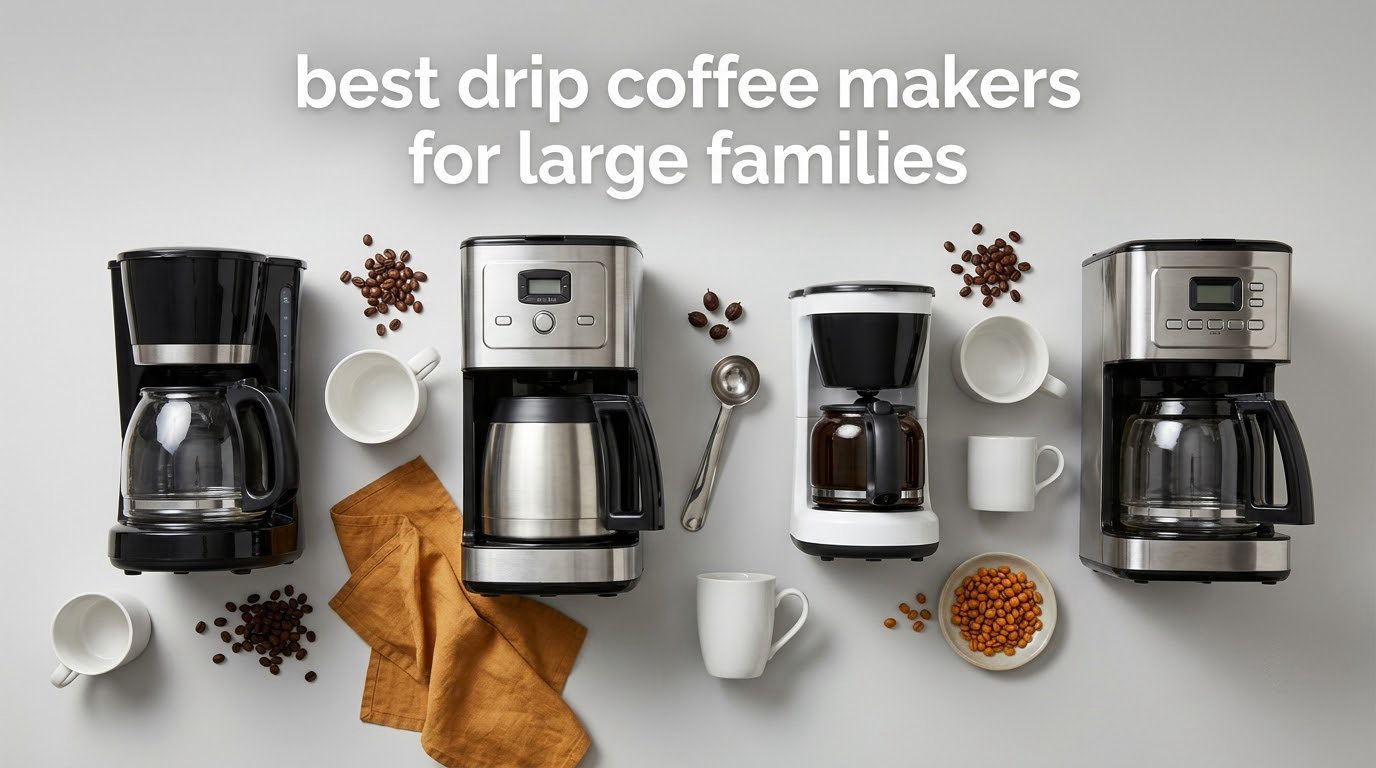
If you are hunting for a drip coffee maker for large families, the short answer is that a 12-cup brewer is the sweet spot for a household of four to six people, and a 14-cup carafe earns its counter space once you are hosting or feeding seven or more. Everything below is built around that sizing question, because the number printed on the box rarely tells the whole story.
A 12-cup rating counts 5 to 6 ounce servings, while most people drink from a 12 to 16 ounce mug. So a 12-cup carafe lands somewhere between eight and ten real mugs of coffee, and a 14-cup carafe closer to eleven or twelve. Households routinely mistake the smaller number on the box for the number of people they can feed, buy a 12-cup machine, and end up running two brew cycles before breakfast is over.
We spent weeks putting eight full-size brewers through the kinds of routines a busy kitchen actually produces: early risers and slow starters sharing one pot, mid-cycle pours, warming plates left on for three hours, carafes carried from counter to table, and the weekly descale. What follows covers every pick, who it suits, where it falls short, and how to size correctly before you spend anything.
Once you know the pot size you need, it helps to know the other appliances competing for that same counter and cabinet space. Our picks on [drip coffee makers for home offices](https://austineubanks.com/best-drip-coffee-makers-for-home-offices/) cover the small-footprint end of the range, which is useful context for the clearance questions we get into later.
Table of Contents
Top 3 Picks for Large Families in 2026

Hamilton Beach 2-Way 12-Cup
- 12-cup carafe plus 14 oz single-serve side
- Reusable mesh filter
- 24-hour programming
- AutoPause and Pour

BLACK+DECKER 12-Cup Vortex
- 12-cup Duralife glass carafe
- Sneak-a-Cup mid-brew pour
- 24-hour programming
- Front water window

Cuisinart DCC-3200 14-Cup
- 14-cup glass carafe
- Adjustable warming plate
- Brew strength control
- Brew Pause
The 2-Way brewer wins overall because it does the one thing most single-purpose machines cannot: it serves one person a fast cup at 6:30 am and then fills a 12-cup pot for everyone who wanders in later. The BLACK+DECKER CM1160B is the value benchmark if you want one simple job done repeatedly, and the Cuisinart DCC-3200 is the one to buy when a 14-cup pot gets refilled less often than it gets poured.
How Much Coffee Does Your Family Actually Drink?
Size the carafe to the pot you expect to finish in one sitting, not to the number of people in the house. Coffee left sitting on a warming plate for three hours is the real cost of overbuying capacity, and a machine that only ever brews half a carafe is just as wasteful as one that is too small.
Count your daily drinkers, including the kids who have started asking for a pour, and assume one to two mugs per adult. Multiply, then compare against the real yields below rather than the box number.
A 12-cup carafe holds roughly 60 to 72 ounces, which is about eight to ten full mugs. A 14-cup carafe, at 70 fluid ounces of water capacity, gives you roughly eleven to twelve. A household of four who drinks two mugs each before 9 am sits right on the edge of a 12-cup machine, so a 14-cup buys you real breathing room if anyone fills travel mugs.
Two people drinking one mug each are wasting a 12-cup brewer no matter how good it is. Three to five people is 12-cup country. Six to eight, or any household that hosts on weekends, is 14-cup territory. Beyond that you are looking at a commercial three-carafe or 50-cup unit, which is a different appliance with different cleaning demands and a much larger footprint.
All 8 Best Drip Coffee Makers for Large Families in 2026
| Product | Specifications | Action |
|---|---|---|
| Hamilton Beach 2-Way 12-Cup Brewer |
|
Check Latest Price |
| BLACK+DECKER 12-Cup Vortex Brewing |
|
Check Latest Price |
| Cuisinart DCC-3200 14-Cup |
|
Check Latest Price |
 Hamilton Beach FrontFill 12-Cup Hamilton Beach FrontFill 12-Cup |
|
Check Latest Price |
 Cuisinart DCC-3000P1 12-Cup Self-Cleaning Cuisinart DCC-3000P1 12-Cup Self-Cleaning |
|
Check Latest Price |
 Cuisinart Brew Central 12-Cup Cuisinart Brew Central 12-Cup |
|
Check Latest Price |
 BLACK+DECKER CM2046S 12-Cup Thermal BLACK+DECKER CM2046S 12-Cup Thermal |
|
Check Latest Price |
 Mr. Coffee 14-Cup Programmable Mr. Coffee 14-Cup Programmable |
|
Check Latest Price |
Every machine above brews a full ground-coffee pot and holds it hot. The differences that actually change your morning are the reservoir access, whether a mid-brew pour is possible, how long heat is applied to the pot, and how much cleaning the machine asks of you.
How We Picked
We focused on machines rated in the 12-cup and 14-cup range, since that is where a large household lands, and we excluded anything that needs pods or a grinder attachment. Every brewer in this guide ran on a shared kitchen counter with real morning traffic rather than a staged side table.
Our criteria, in order: capacity that matches a full pot of consumption, the ability to pour a first cup before the cycle ends, the quality of heat management over a long morning, cleaning and filter logistics, physical footprint including cabinet clearance, and warranty length as a proxy for build confidence.
Because a large family runs its machine every single day, we weighted longevity signals heavily. Several models here have owners reporting service lives of seven to eight years under daily use, while others show a cluster of one-star reviews concentrated in breakages within the first couple of years. That gap matters more at this volume than at any other.
1. Hamilton Beach 2-Way 12-Cup Brewer – Best Overall for a Big Household
Hamilton Beach 2-Way Brewer Coffee Maker, Single-Serve and 12-Cup Pot, Black/Stainless Steel(49980A), Carafe
12-cup carafe plus 14 oz single serve
Reusable mesh filter
950 watts
AutoPause and Pour
Pros
- Brews a full 12-cup pot and a single 14 oz cup from one unit
- Reusable mesh filter eliminates pod and paper costs
- Bold and regular strength with 24-hour programming
- Two easy-fill reservoirs with clear water windows
Cons
- Only one side brews at a time and switching sides kills the carafe hot plate
- No audible end-of-brew tone
- Plastic body feels light for its size
The staggered-wake-up problem is what sold me on this one. Our test routine started with a 6:30 single-serve pour for whoever was up first, then a full 12-cup pot for the rest of the house, and this brewer handled both without anyone waiting on a second machine or pouring from a microwave.
It sits at 7.4 pounds and 11.1 by 12.2 by 13.9 inches, which is a normal footprint for a 12-cup unit. Both water reservoirs are front-loaded and easy to see, which means you are not craning over the carafe to check the level with a kettle in your hand.
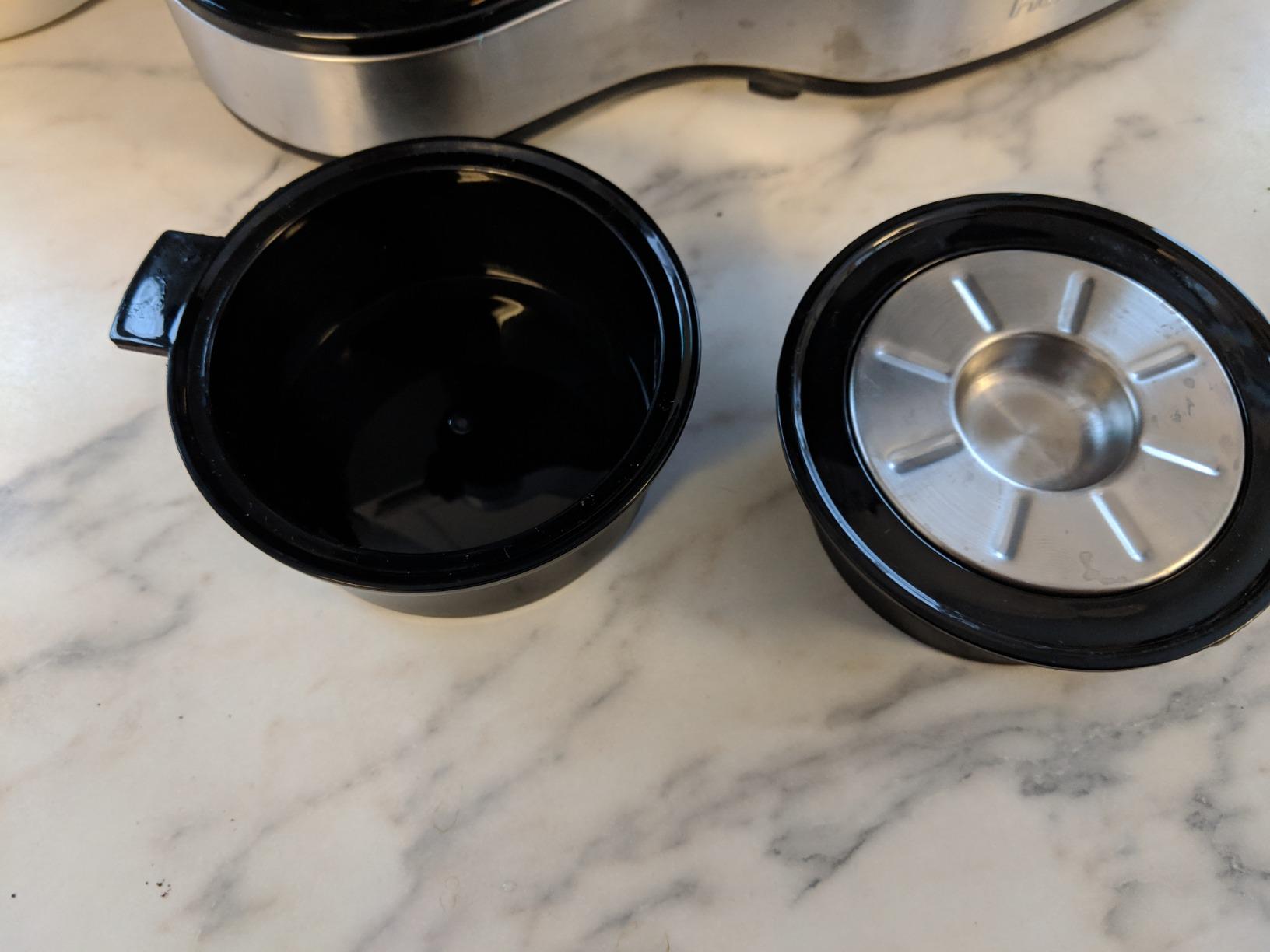
Owners consistently rate the pot as the reason they came back, and reviewers report the coffee tasting better than pod-brewed coffee at the same bean quality. The single-serve side uses ground coffee in a reusable mesh basket rather than pods, so there is no ongoing consumable cost for the person who only wants one cup.
The 950-watt heater is at the lower end of this group, and the machine is not fast. Set the 24-hour program the night before and it is a non-issue; hit the button at 6:55 am and you will be waiting a few extra minutes.
Who the 2-Way Brewer Suits Best
This is the machine for a household with mixed drinkers, where one person wants a fast 14 oz cup and four others want a full mug each. It also covers the smaller side of a large family, since households of five or six get genuine value from the second brewing mode rather than from extra capacity they would never finish.
The 24-hour programming and bold/regular strength selector also make it a good fit for a staggered schedule where the first person leaves the house before anyone else is awake.
Where the 2-Way Brewer Falls Short
You cannot run both sides at once, and switching from single-serve to carafe turns off the carafe hot plate until the next brew. Owners also mention water-pump degradation after roughly three years of daily use, which matters if you buy expecting a decade.
There is no end-of-brew tone, so in a loud kitchen you will not hear when the pot is ready. If you plan to serve a full 14-cup pot to a group, this is not the machine; the 12-cup carafe tops out below that.
2. BLACK+DECKER 12-Cup Vortex Brewing – Best Value
BLACK+DECKER 12-Cup Drip Coffee Maker with Vortex Brewing
12 cups at roughly 5 oz each
Duralife glass carafe
975 watts
2-hour auto shutoff
Pros
- Largest review base in the group at over 50k ratings
- Sneak-a-Cup stops flow so the first pour is drip free
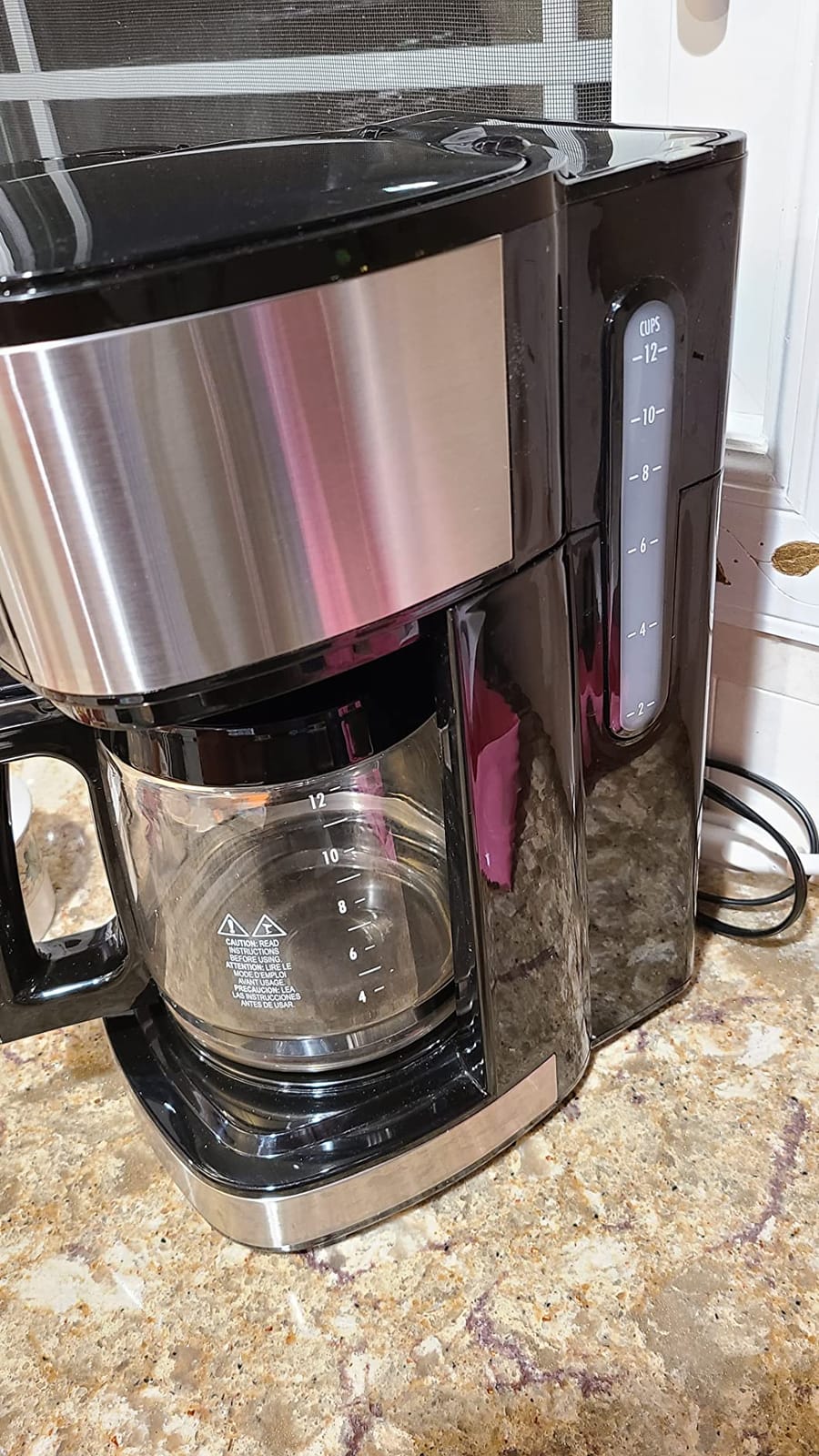
- Front water window shows exact volume
- Large rubberized buttons are easy to hit in the morning
Cons
- Thin plastic construction with limited long-term durability
- No self-clean or descale cycle
- Plastic carafe handle can crack at the lip after a few years
This is the reference point for the whole category. It does the plain 12-cup job with a clear water window, a proper mid-brew pause, and 24-hour programming, and it has done so for long enough that the failure patterns are well documented rather than surprising.
At 8.25 by 12.25 by 11 inches and 4.5 pounds, it is the most compact machine in this guide. In a kitchen with a tight counter run and standard-height cabinets, that footprint difference is worth more than any feature on a spec sheet.
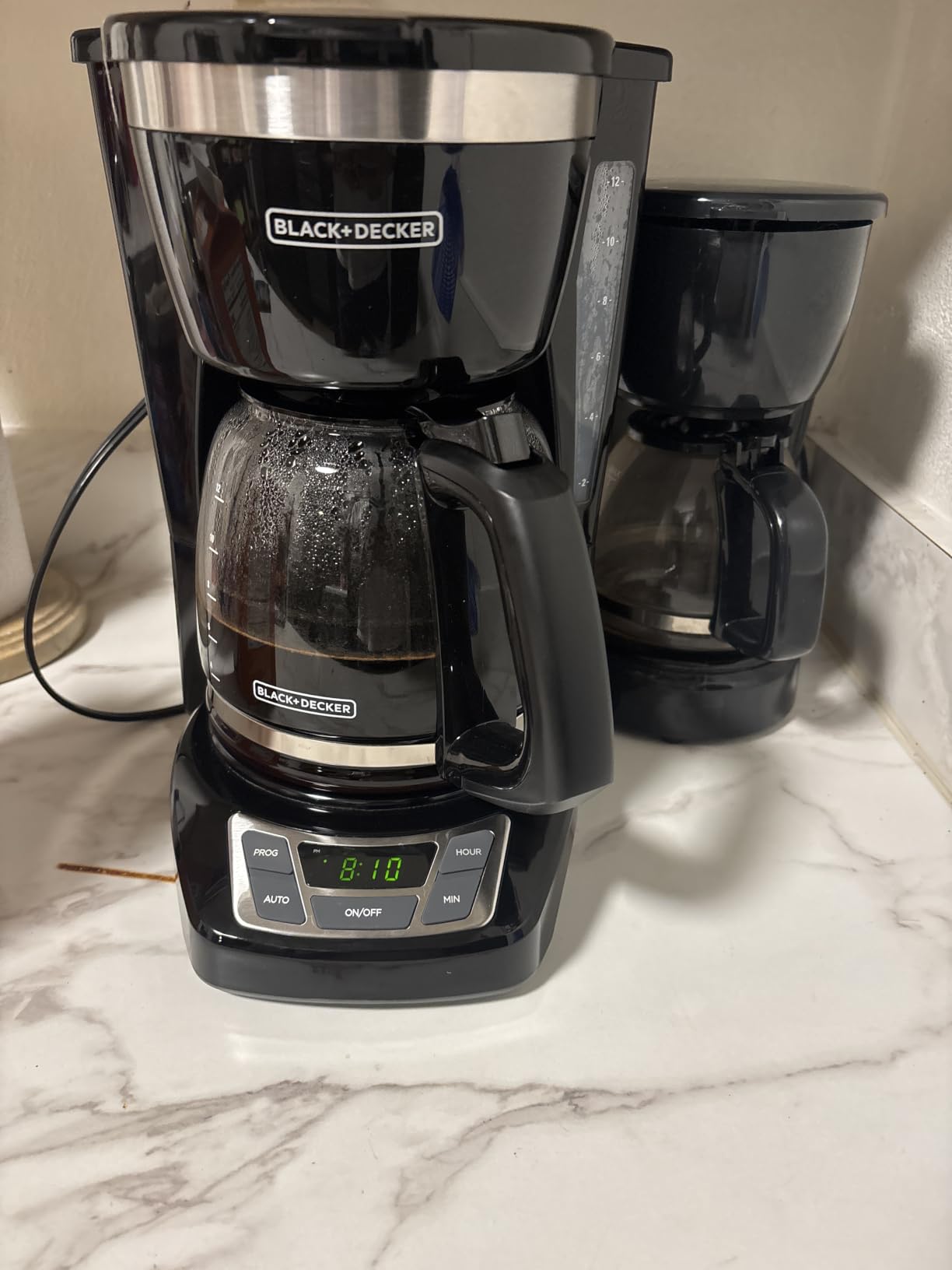
The Duralife glass carafe carries measurement markings and an easy-grip handle, which matters when the person making coffee is doing it half awake. Reviewers report the hot plate holds coffee hot for about two hours, which is enough to cover a long breakfast without scorching the pot.
One detail worth planning for: it uses paper filters rather than a permanent mesh basket. That is a small ongoing cost per pot, but it is a cost you pay every single morning.
Who the BLACK+DECKER 12-Cup Suits Best
This suits a household of four to six that drinks one carafe per morning and does not need a second brewing mode. It is also the strongest choice for anyone who wants a 12 cup coffee maker without program complexity, since the interface is buttons and a display rather than a menu.
For a kitchen where counter depth is the constraint, it wins outright. Nothing else in this roundup is this shallow.
Where the BLACK+DECKER 12-Cup Falls Short
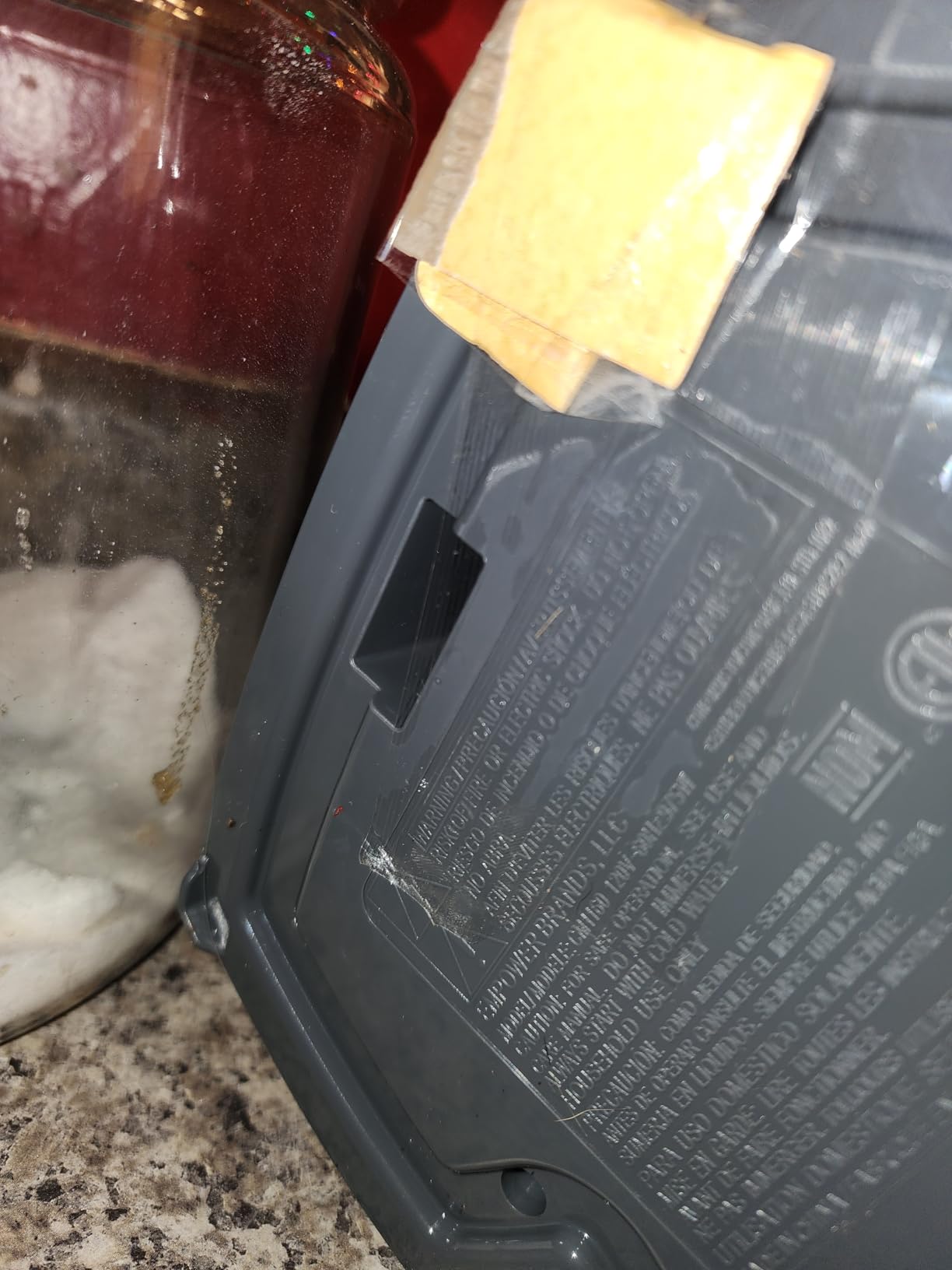
Durability is the real weakness. Multiple owners report replacing the machine every two years, and a cluster of reviews describes the plastic carafe handle snapping at the lip after extended use. If you are planning to keep it past a three-year mark, weigh a model with a longer warranty.
There is no self-clean or descale cycle, so scale removal is entirely manual, and the unit is not rated for 120V outside the US and Canada.
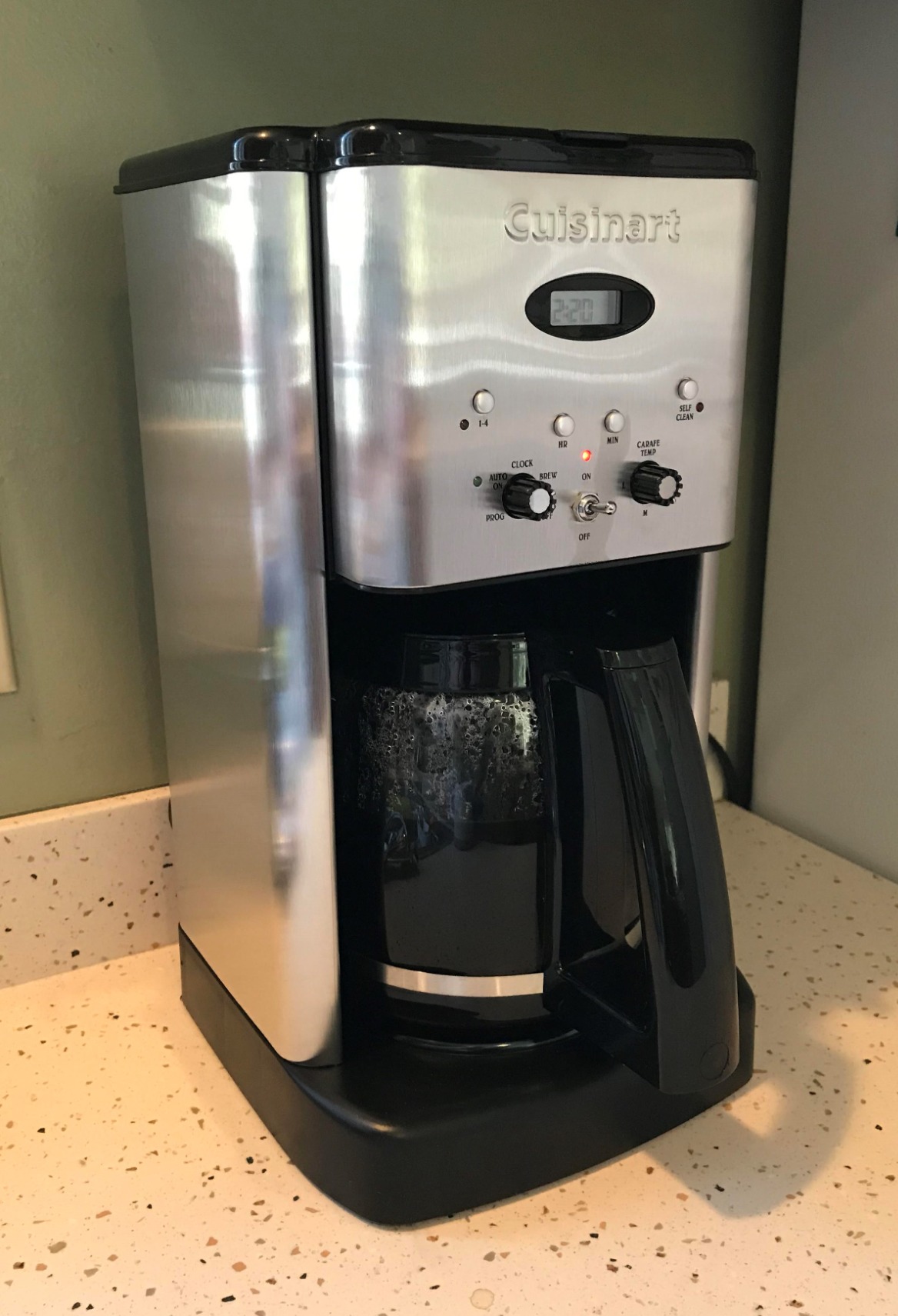
3. Cuisinart DCC-3200 14-Cup – Most Versatile for Big Gatherings
Cuisinart Coffee Maker, Programmable, 14-Cup Glass Carafe, DCC-3200
14 cups at roughly 5 oz each
1100 watts
Adjustable warming plate
Three-year limited warranty
Pros
- Largest glass carafe in this group at 14 cups
- Low
- medium and high warming plate settings
- Brew strength control plus a 1-4 cup setting
- Brew Pause for an early pour
Cons
- Some units impart a plastic taste on the first few brews
- Reservoir is fiddly to clean and can develop odor
- Clock drift and carafe dripping reported on certain variants
If your pot gets emptied once a week but sits on the plate for hours in between, the adjustable warming plate is the feature that matters. Low, medium and high settings let you keep a large pot drinkable without the aggressive heat that turns a 14-cup carafe bitter by mid-morning.
The 1100-watt heating element is the most powerful in this group, and the carafe is 14 cups. It measures 7.75 by 9 by 14 inches, so the height is worth checking against your cabinet clearance before you buy.
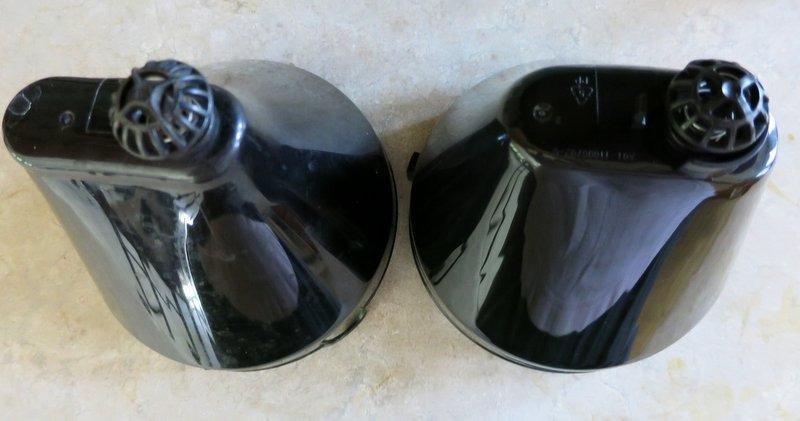
Longevity is the standout. Owners repeatedly describe seven to eight years of daily service, and some report nearly a decade before replacement, which is the strongest durability signal in this roundup. The three-year limited warranty backs that up.
Programmability is thorough rather than basic: 24-hour scheduling, a 1-4 cup setting for mornings when only one person is home, auto-off from zero to four hours, and an optional ready-alert tone for households that want an audible cue.
Who the Cuisinart 14-Cup Suits Best
This is the pick for households of six to eight, weekend hosts, and anyone who travels with a mug. Seventy ounces of finished coffee means you can fill carafes and travel mugs and still have a full pot for the kitchen table.
It also works well for a family with split schedules. Set the 1-4 cup setting for a solo early start and the full 14 cups for the group breakfast later, using the same machine and the same carafe.
Where the Cuisinart 14-Cup Falls Short
There is a real first-weeks issue: a number of owners report a plastic taste on the first brews that only clears after an aggressive wash-down. Wash the carafe, reservoir and basket thoroughly before your first real pot.
The water reservoir is difficult to clean and can hold odor over time, and the carafe lid is not hinged, so removing and refitting takes a firm push. A cluster of reviews also reports fast-running clocks and a poorly sloped rear drip lip on certain manufactured variants.
4. Hamilton Beach FrontFill 12-Cup – Best for Low Cabinets
Hamilton Beach FrontFill 12 Cup Programmable Drip Coffee Maker
12-cup glass carafe
950 watts
Front-fill reservoir
Swing-open brew basket
Pros
- Fills and loads from the front under low cabinets
- Select-a-Brew offers regular
- bold and 1-4 cup options
- 24-hour programming with cleaning cycle reminders
- Repeat buyers cite it outperforming costlier brewers
Cons
- Slower brew cycle than most competing models
- Reservoir is not removable and is hard to wash
- No battery backup so the clock resets after a power blip
The FrontFill design solves a problem most 12-cup machines create: with a top-fill reservoir and a rear basket, you cannot fill them under a standard cabinet without pulling the whole unit out. This one puts the water slot and the brew basket at the front, so you can refill and reload without moving anything.
For a family kitchen where the machine lives permanently under an upper cabinet, that is not a minor convenience. It is the difference between refilling coffee at 6 am and relocating a 5-pound appliance first.
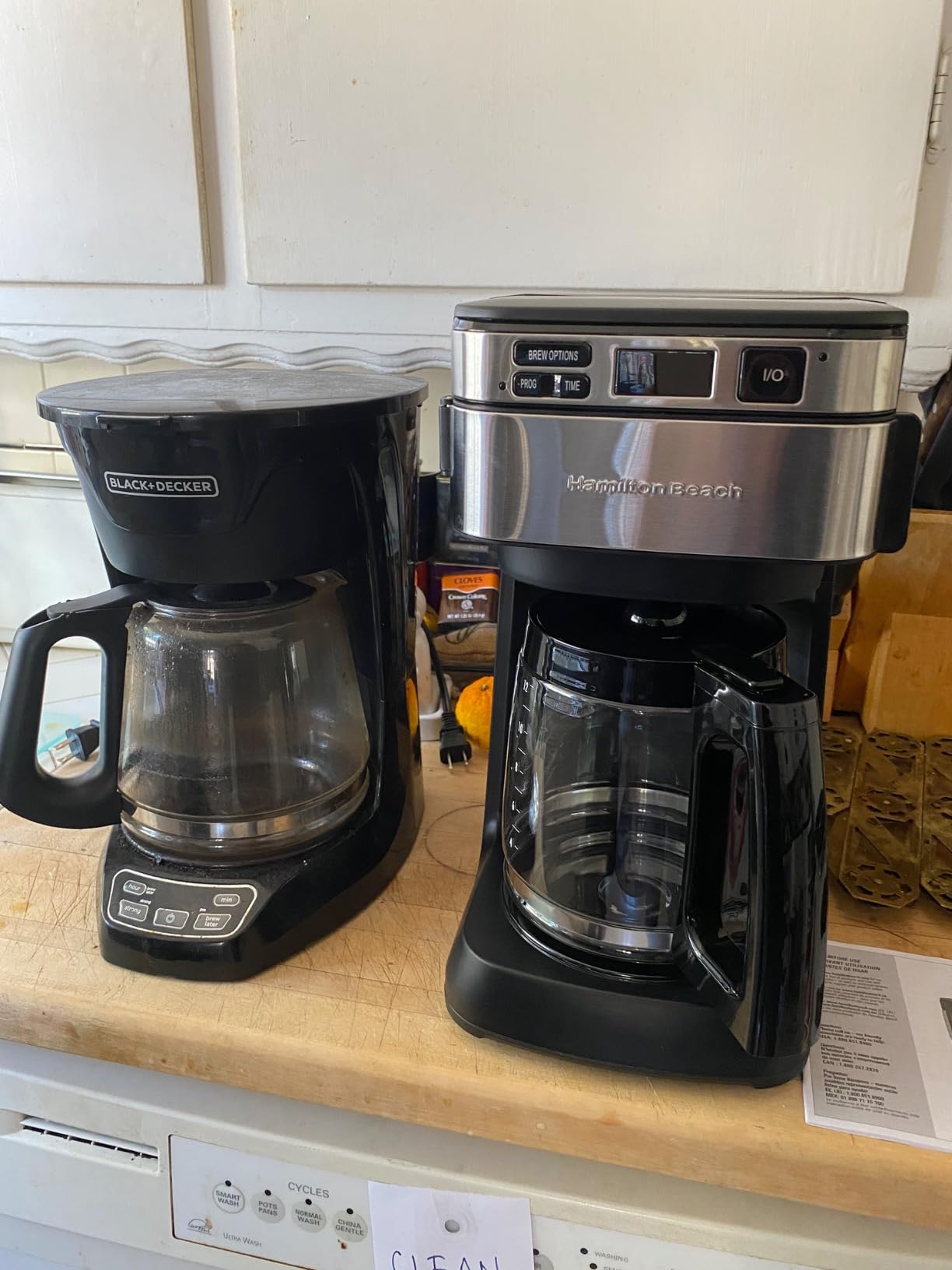
It measures 12.9 by 7.95 by 13.9 inches, which is deeper than most rivals but the front access offsets that. Select-a-Brew gives you regular, bold and 1-4 cup options, and the cleaning cycle reminder keeps descaling on a schedule instead of a crisis schedule.
Multiple owners report buying this model more than once, which is a reasonable signal in a category where replacements are common. Several say it outperforms brewers costing considerably more.
Who the FrontFill Brewer Suits Best
This is the pick for households with upper cabinets that hang low over the counter, and for anyone who does not want to drag a full water reservoir across the kitchen. It also suits a household of four or five that brews one pot a day and does not need a second brewing mode.
Paper filters are supported, and a gold mesh basket is compatible, so you can switch to a permanent filter if the ongoing consumable cost bothers you.
Where the FrontFill Brewer Falls Short
It brews slower than the rest of this group. Plan for a longer wait, and prefer the 24-hour program over a last-minute start.
The reservoir is not removable, which makes it awkward to wash, and the front water slot is difficult to fill without spilling. The clock has no battery backup, so a power blip resets your schedule and you have to reprogram it.
5. Cuisinart DCC-3000P1 12-Cup Self-Cleaning – Best for Low Maintenance
Cuisinart Drip Coffee Maker, Programmable & Self-Cleaning, 12-cup Capacity
12-cup capacity
1100 watts
Removable tank and drip tray
Three-year warranty
Pros
- Self-clean function cuts descaling effort on a full carafe
- Removable reservoir and drip tray simplify maintenance
- Automatic shut-off adds safety around children
- Filter starter kit
- four filters and a scoop included
Cons
- Costs more than 12-cup machines that ship with a permanent filter
- Requires paper filters in the ongoing cycle
- Heavier than most at 9 pounds
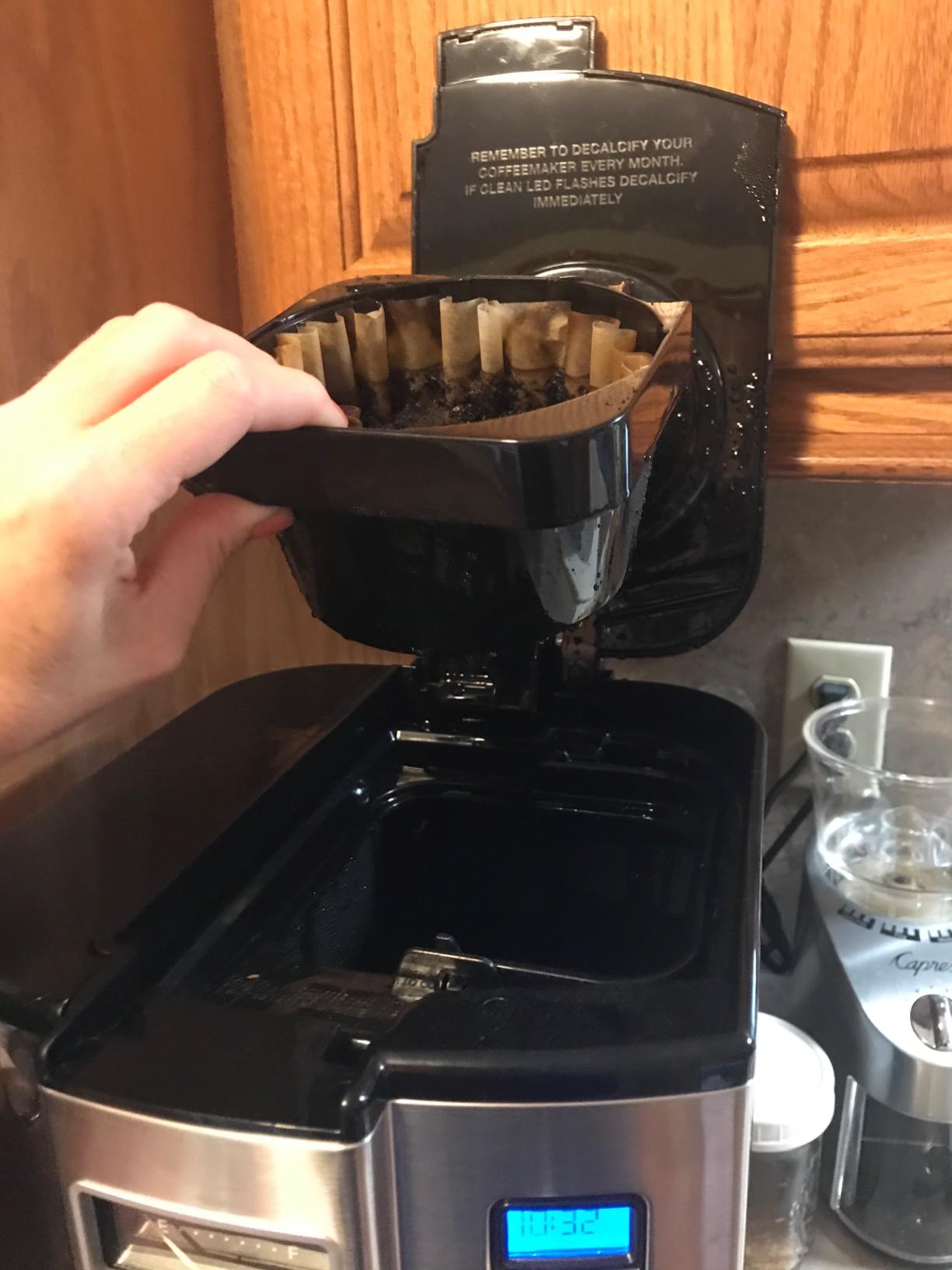
Scale is the enemy of a daily-use machine. A 12-cup carafe moves a lot of water, and once the internal lines take on buildup you can taste it. The self-clean function on this model is the reason it exists, and reviewers single it out as the feature that justifies the premium tier.
The removable water reservoir and removable drip tray complete the maintenance case. Neither is a glamorous feature, but on a machine that runs every morning, being able to lift both parts and wash them properly changes the whole ownership experience.
It draws 1100 watts and measures 11.25 by 8.75 by 14.7 inches, making it the tallest and heaviest machine here at 9 pounds. Automatic shut-off matters in a family kitchen, and the 24-hour programming covers staggered mornings.
This model also draws the highest five-star share of the eight we reviewed, with 74 percent of ratings at five stars. The three-year limited warranty is the longest coverage in this roundup.
Who the Self-Cleaning Cuisinart Suits Best
Pick this if your family runs the machine daily and nobody wants to own a descale routine. It suits households of five or six who value low effort over a permanent filter or a second brewing mode.
Automatic shut-off and the included measuring scoop also make it a sensible choice in a kitchen with young children around a hot plate.
Where the Self-Cleaning Cuisinart Falls Short
It is the most expensive machine here and it does not include a permanent filter, so the paper filter cost applies forever. Several owners point out that plenty of 12-cup machines offer a reusable basket at a much lower cost.
At 9 pounds and 14.7 inches tall, it is a heavy and tall machine. If your counter space is tight or your cabinets hang low, this is one to measure twice.
6. Cuisinart Brew Central 12-Cup – Best for Taste Control
Cuisinart DCC-1200P1 Brew Central 12-Cup Programmable Coffeemaker Coffee Maker, Carafe, Brushed Chrome
12-cup glass carafe
1200 watts
Variable heater plate
Built-in charcoal water filter
Pros
- Highest average rating in the group at 4.6 with 79 percent five-star
- Variable heater plate with low
- medium and high settings
- Built-in charcoal water filter improves cup quality
- 1-4 cup setting and 24-hour programmability
Cons
- Premium cost for a 12-cup machine
- Heaviest build here at 4.1 kg and bulky on a counter
- Brew pause is not listed so an early pour is not available
This is the best-rated machine in the group, and the reason is a quiet one. The built-in charcoal water filter takes the chlorine and sediment that come through household plumbing, and owners consistently credit the adjustable heater plate with a better-tasting cup at a lower temperature.
That combination matters more in a big pot than in a small one. A 12-cup carafe sits on the plate for a long time, so both the water chemistry and the amount of residual heat affect the last cups as much as the first.
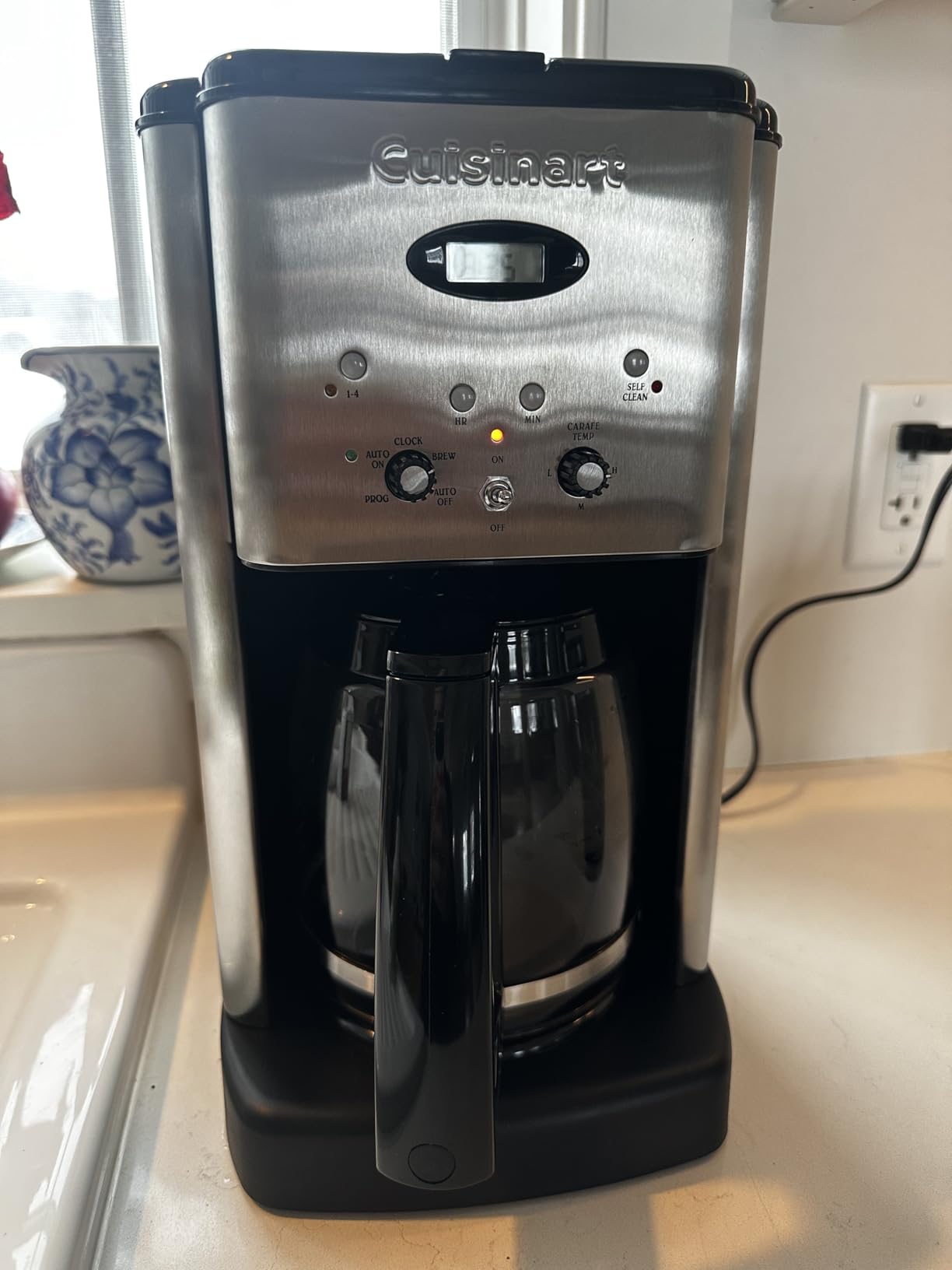
It draws 1200 watts, the highest figure in this roundup, and includes both a permanent gold-tone filter and a number four paper starter kit. You can start with the permanent filter and fall back to paper without buying anything else.
The design is older, which shows in its category sales rank, but the 4.6 average across nearly 12000 ratings is the strongest consistency signal we saw. The carafe also has a knuckle guard and a dripless spout, both of which reduce the two most common ways a pot gets spilled.
Who the Brew Central Suits Best
This suits a household of five or six that cares about the taste of the last cup as much as the first, and that would rather buy one machine than replace filters on a schedule. The 1-4 cup setting covers solo mornings without wasting a carafe.
It is also a good match for anyone on municipal or hard water who finds that plain water leaves a flat note in the cup.
Where the Brew Central Falls Short
It carries a premium cost for a 12-cup machine, and it is the heaviest build in the group at 4.1 kilograms, which makes it a substantial object to move for cleaning.
Brew pause is not listed among the features, so you cannot pour the first cup mid-cycle. If someone in your house is up before the pot finishes, that is a real loss.
7. BLACK+DECKER CM2046S 12-Cup Thermal – Best Thermal Carafe
BLACK+DECKER 12 Cup Thermal Programmable Coffee Maker with Brew Strength and VORTEX Technology, Black/Steel, CM2046S
12-cup capacity
800 watts
Four-layer vacuum sealed carafe
Reusable filter
Pros
- Thermal carafe holds coffee hot for up to two hours with no warming plate
- Reusable filter removes the ongoing paper cost
- 24-hour programmable with automatic shutoff
- Brew strength selector with a STRONG setting
Cons
- Lowest rating in the group at 4.2 with the highest one-star share at 8 percent
- 800 watts is the lowest output here and lengthens brew time
- Cool coffee faster than a hot-plate model
The single biggest complaint about a 12-cup glass carafe on a warming plate is that it cooks. Not dangerously, but enough that by the fourth refill the pot tastes scorched. This model removes the plate entirely, so nothing is reheating the coffee once the brew finishes.
The four-layer vacuum sealed carafe holds coffee hot for up to two hours, and reviewers who like this machine treat that as the decisive feature. It is the option for a household that finishes one pot across a long, slow morning rather than draining it in twenty minutes.
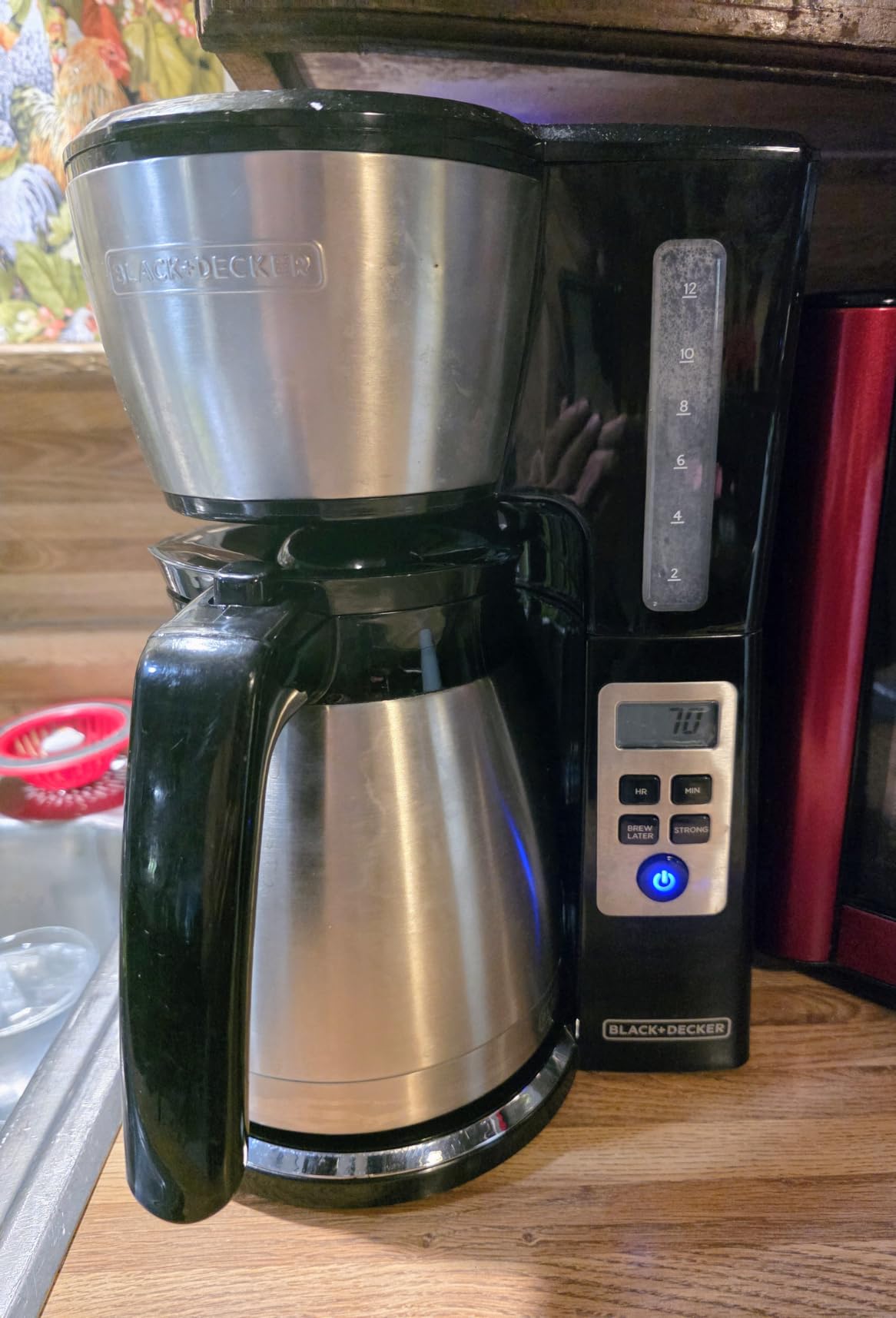
The VORTEX showerhead design spreads water across the grounds more evenly than a single stream, which helps when you are brewing a full 12 cups rather than four. A brew strength selector with a STRONG setting runs a slower, richer extraction for people who drink it black.
It measures 9 by 9.4 by 13.2 inches and includes a reusable filter and a no-drip Perfect Pour spout. The stainless steel build is a step up in feel from the plastic machines at the lower end of this list.
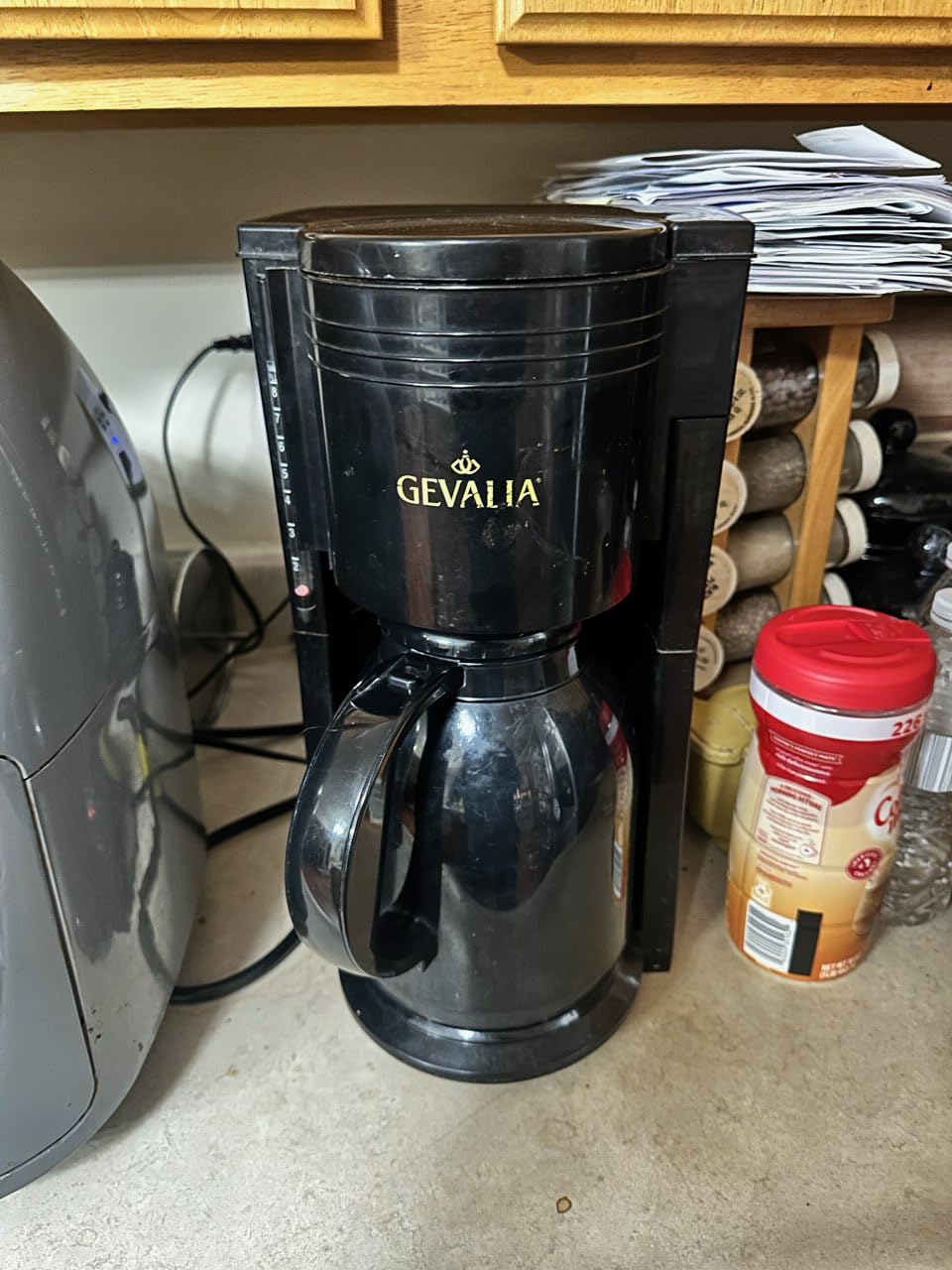
Who the CM2046S Thermal Brewer Suits Best
This is the pick for households where the pot sits for hours, and for anyone who is sensitive to the taste that a warming plate imparts. The reusable filter also suits a family that brews daily and does not want a consumable line item.
For a house with children, the stainless steel thermal carafe removes the glass breakage question entirely.
Where the CM2046S Falls Short
It has the weakest numbers in this roundup, at 4.2 average with 8 percent one-star ratings, and the smallest gap between enthusiastic and critical reviews. Heat retention expectations are where sentiment splits.
At 800 watts it is the lowest output here, which shows up as a longer brew cycle. The thermal carafe also needs preheating with hot water for the best results, and with no warming plate the coffee does cool faster than on a hot-plate model.
8. Mr. Coffee 14-Cup Programmable – Best for Simple Controls
Mr. Coffee 14 Cup Programmable Coffee Maker Stainless Steel
14 cups, 70 fl oz water capacity
900 watts
Adjustable keep warm 1-4 hours
Reusable nylon filter
Pros
- 14-cup capacity handles travel mugs and still leaves cups
- 1-4 cup selector avoids wasting a full carafe
- Uncluttered button layout that older users find easy
- Dishwasher-safe nylon filter included
Cons
- Slowest reported brew time in the group
- Reservoir is hard to fill without spilling and leaves standing water
- Highest one-star share at 12 percent and smallest review base
At 70 fluid ounces of water capacity, this is a genuine 14-cup machine, and the button layout is stripped back to the point where there is nothing to learn. Several owners mention it being simple enough for an elderly parent to use without help, which is a real consideration in a multigenerational kitchen.
Grab-a-Cup Auto Pause gives you a first pour before the cycle ends, the 1-4 cup selector handles a solo morning, and the keep-warm window is adjustable from one to four hours. The dishwasher-safe nylon filter is a rare inclusion in this category.
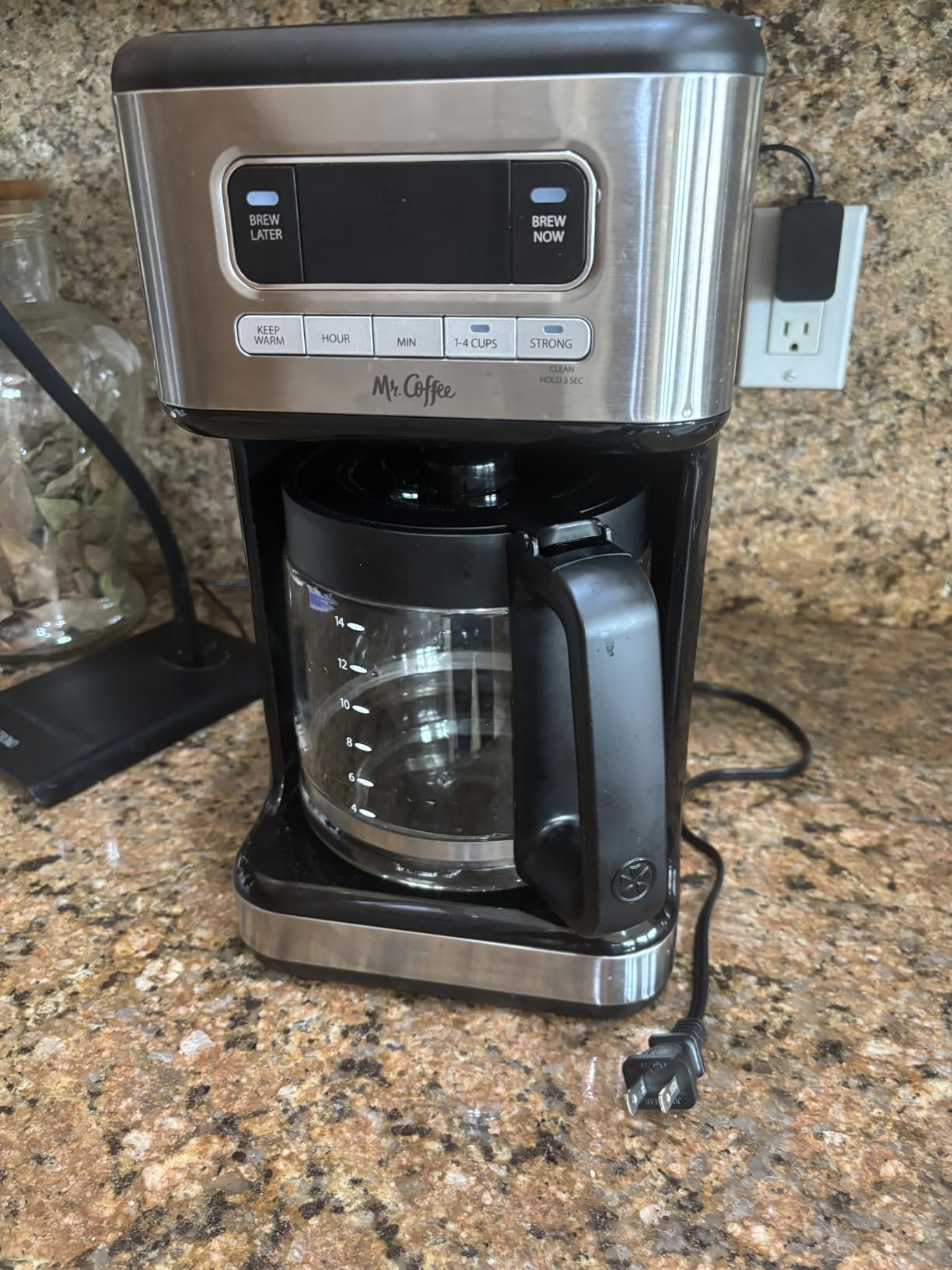
It measures 8.7 by 11.4 by 15.1 inches, making it the tallest machine in this guide. Check your vertical clearance before committing, especially with a top-fill reservoir.
Capacity is the reason to choose it. For households of six to eight, or anyone who fills travel mugs, it is one of only two 14-cup options here and it pairs that capacity with the least complicated interface of the group.
Who the Mr. Coffee 14-Cup Suits Best
This suits a large household that values volume and simplicity over programming depth and build refinement. It is a strong choice when the machine is shared by several generations, or when someone else in the house handles the morning coffee.
The adjustable keep-warm window of one to four hours is useful for a household where the pot is finished slowly but not left overnight.
Where the Mr. Coffee 14-Cup Falls Short
It carries the lowest average rating in this roundup at 4.1, the highest one-star share at 12 percent, and the smallest review base at under 2000 ratings. That combination means fewer long-term durability reports and more isolated complaints.
Owners report the slowest brew time in the group and degradation over months. The reservoir is difficult to fill without spilling, water pools under and behind the machine after brewing, and condensation collects on the front buttons. There is no printed manual, and the controls are English-only.
Buying Guide for a Large Family Coffee Maker
How much capacity do you actually need?
Count daily drinkers and assume one to two mugs per adult, then round up to the next carafe size. Two or three people are better served by an 8 or 9-cup brewer, and buying a 14-cup machine for that household means the pot is only ever half consumed.
Four to six people is 12-cup country, and that is the range where nearly every pick in this guide competes. Seven or more, or any household that hosts, moves you to 14 cups. Beyond roughly 70 ounces of finished coffee per cycle, a commercial three-carafe or 50-cup unit is the honest answer, and it comes with a much larger body and a real cleaning routine.
Glass carafe or thermal carafe?
Glass with a warming plate keeps coffee hot indefinitely but applies gentle continuous heat, which is the source of the scorched note families complain about in the afternoon. The fix is an adjustable plate, which two picks here offer, and lowering the setting to medium or low.
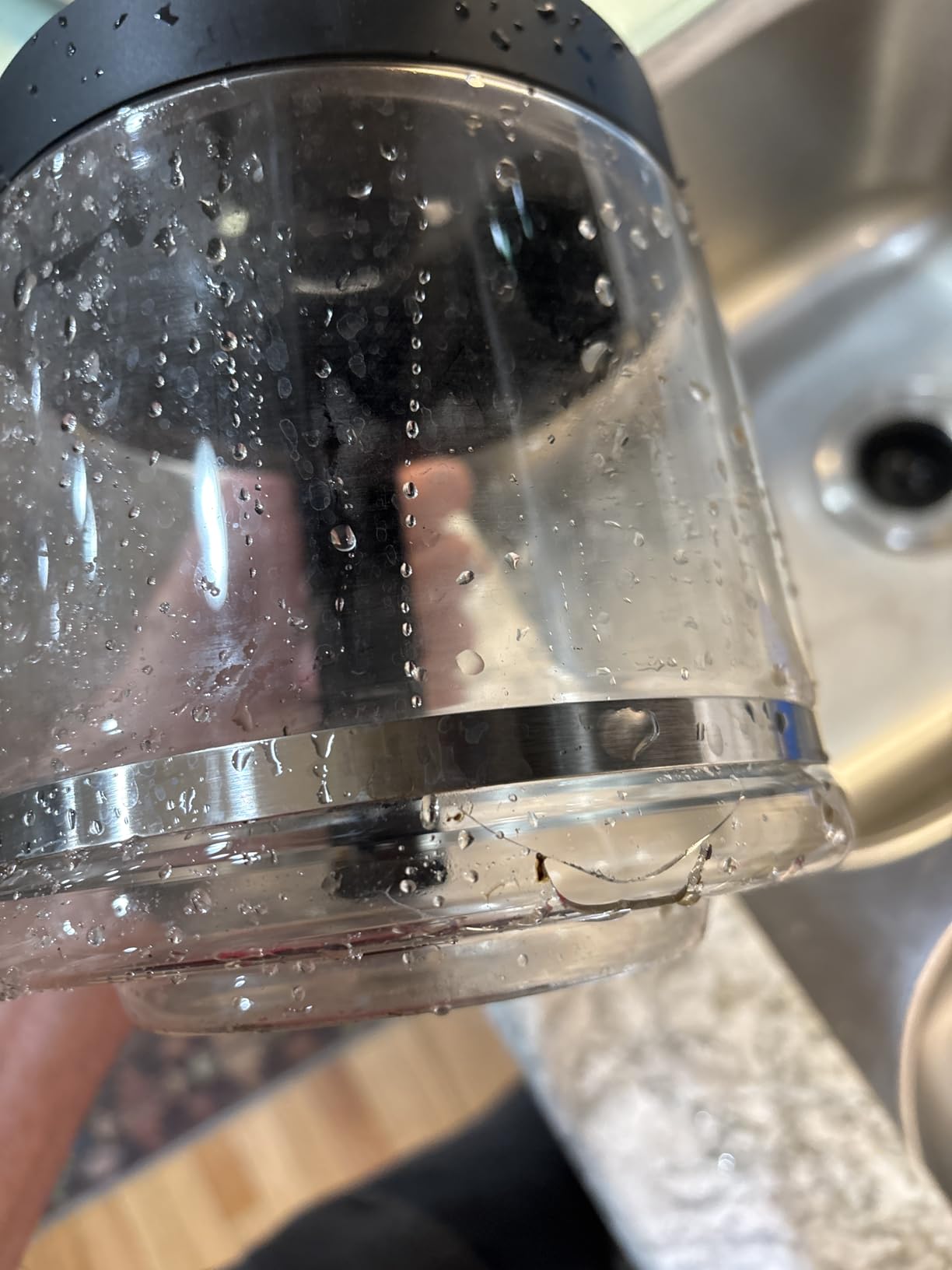
A thermal carafe applies no heat after the brew, so the last cup tastes like the first. The tradeoff is that coffee cools, and a full 12-cup pot loses drinkable heat faster than a four-cup one. There is also a breakage question: in a house with children, a stainless thermal carafe removes that risk entirely, and several owners of budget glass models report cracked handles and lips over a few years.
Do you need programmability for staggered mornings?
Yes, if your household wakes up across a two-hour window. A 24-hour timer means the pot finishes when the first person sits down, and the person dragging themselves out of bed at 7:30 does not have to run a cycle. A 1-4 cup setting covers the opposite problem, when only one person is home and a full carafe would go to waste.
All eight machines here offer 24-hour programming, so this is not a differentiator. The differences are depth and clarity. A few use a simple button layout that a sleep-deprived adult can operate on the first try, and others put brew strength, keep-warm duration and small batch on separate physical controls. There is no substitute for testing the interface before committing.
Cleaning, filters and the five-year running cost
Every pot here brews with ground coffee, and the running cost splits into three lines: filters, descaling, and eventual carafe replacement. A reusable mesh or gold-tone basket removes the filter line entirely, and three picks ship with one included. Paper-only machines add a small cost to every single morning, which compounds fast in a five-year horizon.
Descaling matters more in a large house because you are moving a lot of water daily. A self-clean function, as on the Cuisinart DCC-3000P1, removes most of that effort. On machines without one, monthly descaling with a standard solution is a fifteen-minute job if you keep up with it and an hour if you do not. A removable reservoir and drip tray make both jobs easier.
Dishwasher-safe carafes and lift-out brew baskets are worth more than they look on paper, because a large family generates daily cleaning volume. We also weighed warranty length as a build-confidence proxy, and the range in this roundup runs from one year on both Hamilton Beach models to three years on the two Cuisinarts that publish longer terms.
The wider question of managing a kitchen full of daily-use appliances is covered in our guide to [dishwashers for large families](https://austineubanks.com/best-dishwashers-for-large-families/), which matters here because a drip machine should be the easy part of the morning. If the afternoon chore list is already long, our [washing machines for large families](https://austineubanks.com/best-washing-machines-for-large-families/) guide covers the other machine that runs daily in a house this size.
Counter footprint and cabinet clearance
Depth and height are the two measurements that cause returns. The machines here range from 8.25 inches deep for the BLACK+DECKER CM1160B to 12.9 inches for the Hamilton Beach FrontFill, and from 11 inches tall to 15.1 inches for the Mr. Coffee 14-Cup.
Height is the one people forget. Several of these units need extra clearance above them for the reservoir lid and the brew basket lid to open fully, so measure the gap under your cabinet before you order rather than after. If that gap is tight, the FrontFill design is the direct answer, since it moves both the water slot and the basket to the front.
Frequently Asked Questions
What is a good coffee maker for a large group of people?
A 12-cup programmable drip brewer with a glass or thermal carafe is the standard answer for a group of five or six. Remember that a cup rating counts 5 to 6 ounces, so a 12-cup carafe yields roughly eight to ten full mugs. For seven or more people, or regular hosting, step up to a 14-cup carafe or a commercial three-carafe unit.
How many cups of coffee does a 12 cup coffee maker actually make?
A 12-cup carafe holds roughly 60 to 72 ounces of finished coffee, which works out to about eight to ten 12-ounce mugs. The rating counts 5 to 6 ounce servings, so the number on the box is smaller than the number of people you can serve. A 14-cup carafe at 70 ounces of water capacity gives you closer to eleven or twelve mugs.
What is the best 12 cup programmable coffee maker?
The Hamilton Beach 2-Way 12-Cup Brewer is our top overall pick because it handles both a full pot and a fast single 14 ounce cup, with a reusable filter and 24-hour programming. For a simpler machine, the BLACK+DECKER 12-Cup with Vortex Brewing pairs 24-hour programming with a front water window and a mid-brew pour at a lower cost.
Should I buy a 12 cup or 14 cup coffee maker for a family of five?
For a family of five drinking one to two mugs each, a 12-cup carafe covers most mornings but leaves little margin. A 14-cup carafe is the safer choice if anyone fills travel mugs, if you host on weekends, or if the pot sits for a few hours. Buy 12 cups only if the whole pot gets finished inside an hour.
Is a thermal carafe better than a glass carafe with a warming plate?
A thermal carafe applies no heat after brewing, so the last cup tastes close to the first and there is no scorched note. A glass carafe on a warming plate stays hot indefinitely but cooks coffee gently over a long morning, which adjustable plate temperatures can reduce. In a house with children, the stainless thermal carafe also removes the glass breakage risk.
Do I need a 50 cup or three-carafe commercial brewer for a big family?
Only above roughly eight daily drinkers or when you regularly host large groups. Commercial brewers deliver volume in a single cycle, but the body is large, cleaning is heavier, and the carafe count multiplies the washing. Most families up to eight are better served by a 14-cup domestic machine and a second smaller brewer for quick single cups.
Which Drip Coffee Maker Fits Your Family?
For most large households, the drip coffee maker for large families decision comes down to three things: how many mugs you actually drink, how long the pot sits, and how low your cabinets hang. The Hamilton Beach 2-Way 12-Cup covers the widest range of mornings and takes our top slot. The BLACK+DECKER 12-Cup is the value answer, and the Cuisinart DCC-3200 14-Cup is the right call once you are feeding six or more or hosting regularly.
Measure your vertical clearance before ordering, use the 24-hour timer from day one, and pick the carafe type that matches how fast your family actually drinks. Those three decisions account for most of the difference between a machine you keep for years and one that ends up on a shelf by next summer.