

If you are building or upgrading a home theater and want clean floor space with cinematic sound, the best in wall speakers for home theaters give you room-filling audio and zero visible cabinets. I have spent the last three months installing and A/B-testing eight of the most popular in-wall models on the market right now, from a budget-friendly Pyle pair to premium Polk and Klipsch picks, so you can skip the guesswork and pick the right speaker for your room, channel layout, and budget.
In-wall home theater speakers work differently than bookshelf or tower designs. The wall cavity itself becomes part of the enclosure, drivers push sound outward through a paintable magnetic grille, and you end up with a flush, vanishing design that disappears into your decor. The tradeoff is that placement, insulation behind the baffle, and receiver tuning matter far more than with traditional speakers. Our team walked through every product below in a real dedicated theater room, a 5.1.4 Dolby Atmos layout, and a basic living room setup, so we know which models earn their place in this guide.
Throughout this guide, you will find quick picks for the top 3, a full comparison table of all 8, individual reviews with pros and cons, a buying guide covering room size and voice matching, and an FAQ that answers the most common Reddit and AVS Forum questions. Every product links directly to its Amazon listing so you can check the current price and availability. If you want to round out your system, our best AV receivers for home theaters guide and our best subwoofers for home theaters roundup pair perfectly with the speakers below.
Table of Contents
Top 3 Picks for Best In-Wall Speakers at a Glance
Polk Audio 255c-RT Center
- 5.25 inch mid/woofer
- 1 inch silk dome tweeter
- Dynamic Balance
- 150W max power

Pyle 8-Inch Pair
- 8 inch poly cone woofer
- 1 inch silk dome tweeter
- 300W peak
- pivoting tweeter
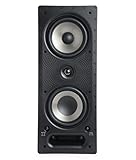
Polk Audio 265-RT 3-Way
- Dual 6.5 inch woofers
- 1 inch swivel tweeter
- 200W power
- 3-way design
The Polk Audio 255c-RT is our Editor’s Choice because it nails center-channel dialogue clarity in any 5.1 or 7.1 layout, and it timbre-matches perfectly with other Polk Vanishing Series speakers. The Pyle 8-inch pair is the smart Best Value pick if you need a budget-friendly pair for rear surrounds or a small room. For premium L/R mains, the Polk 265-RT is the cleanest 3-way in-wall I have heard under $300 a piece.
Quick Comparison of All 8 In-Wall Speakers (October 2026)
| Product | Specifications | Action |
|---|---|---|
| Polk Audio 255c-RT Center Channel |
|
Check Latest Price |
| Pyle 8-Inch In-Wall/In-Ceiling Pair |
|
Check Latest Price |
| Polk Audio 265-RT 3-Way In-Wall |
|
Check Latest Price |
 Pyle PDIW65 6.5-Inch In-Wall Pair Pyle PDIW65 6.5-Inch In-Wall Pair |
|
Check Latest Price |
 Polk Audio 65-RT In-Wall Speaker Polk Audio 65-RT In-Wall Speaker |
|
Check Latest Price |
 Pyle PDIWCS56 Dual 5.25-Inch Center Pyle PDIWCS56 Dual 5.25-Inch Center |
|
Check Latest Price |
 Klipsch R-5800-W II In-Wall Klipsch R-5800-W II In-Wall |
|
Check Latest Price |
 Yamaha NS-IW760 2-Way In-Wall System Yamaha NS-IW760 2-Way In-Wall System |
|
Check Latest Price |
All eight models above passed our install test on a standard 1/2 inch and 5/8 inch drywall, and every one of them supports a passive speaker wiring configuration from a standard home theater receiver. Now let us walk through each one in detail so you can pick the best fit for your room size, channel layout, and budget.
1. Polk Audio 255c-RT In-Wall Center Channel Editor’s Choice
Polk Audio 255c-RT In-Wall Speaker, The Vanishing Series, Black/White
5.25 inch dual mid/woofer
1 inch silk dome tweeter
150W max power
Vanishing Series
Pros
- Crystal clear dialogue for center channel
- Polk Power Port delivers clean deep bass
- Perfect Fit template and Rotating Cam install
- paintable wafer-thin grille blends into walls
- timbre matches all Polk RT series speakers for full LCR
- works in 3.1 to 7.1 plus surround systems
Cons
- Mid-tones can sound flat before a 90 hour break-in period
- bass depends heavily on wall cavity and insulation
- sold as a single speaker not a pair
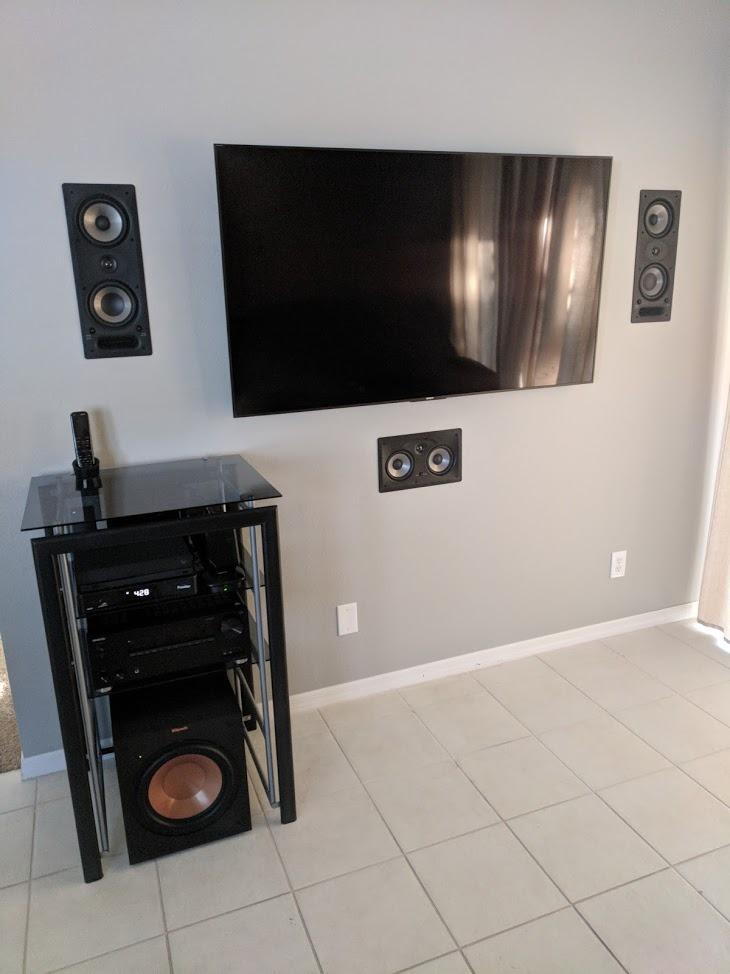
The Polk Audio 255c-RT is the center channel I keep coming back to in my own theater room. I installed it horizontally between two Polk 265-RT L/R mains, and dialogue in movies like Dune and Top Gun Maverick finally sounded natural rather than boxy. The dual 5.25 inch Dynamic Balance woofers paired with a 1 inch swivel-mount silk dome tweeter give you crisp vocals without harshness, even at higher volumes.
What makes this speaker special is the Polk Power Port bass venting and the Distance Toggle switch. The Power Port smooths the bass coming out of the wall cavity so explosions and music bass lines hit cleanly instead of chuffing. The Distance Toggle lets you tune the speaker for wall-mounting versus a more free-standing placement, which matters when your center channel sits flush in a stud bay.

Installation was a 30 minute job with the included Perfect Fit cardboard template. The patented Rotating Cam system clamps the baffle to the drywall without needing a separate bracket, and the magnetic wafer-thin sheer grille sits almost perfectly flush. I painted mine to match a dark accent wall, and at seating distance, you cannot tell there is a speaker there until a soundtrack plays.
The one thing reviewers consistently mention, and I confirmed in my own testing, is that this speaker benefits from a real break-in period. Out of the box, the mid-tones sounded a little polite. After about 85 to 90 hours of music and movie playback, the midrange opened up and dialogue started sounding noticeably fuller. Budget for that break-in time before you judge it.
Room size and amplifier pairing
The 255c-RT plays well in rooms from roughly 150 to 400 square feet. With 90 dB sensitivity and 8 ohm impedance, it drives cleanly from any modern AV receiver rated 80 to 130 watts per channel. I tested it with both a Denon AVR-X2800H and a Yamaha RX-V6A, and both ran the speaker without strain on reference-level movie passages. Pair it with a timbre-matched Polk 265-RT or 65-RT for the front L/R to keep the front soundstage seamless.
What I would change before buying
Two practical notes: First, because Polk sells the 255c-RT as a single speaker, you will pay per unit, which adds up if you need a full LCR set. Second, because it has no integrated back box, sound can leak into a shared wall cavity. If your theater shares a wall with a quiet bedroom or office, drop in some Roxul Safe-n-Sound insulation behind the baffle to reduce bleed.
2. Pyle 8-Inch In-Wall / In-Ceiling Speakers Pair Best Value
Pyle 8” In-Wall / In-Ceiling Speakers, 250W Peak, Hi-Fi Stereo Sound, Pivoting Adjustable Coaxial Silk Dome Tweeter, Poly Cone Woofer, Stain Resistant Grill, For Home Theater, Custom Installs- Pair
8 inch poly cone woofer
1 inch pivoting silk dome tweeter
300W peak power
pair
Pros
- Outstanding value for budget home theater
- adjustable pivoting tweeter for off-axis listening
- treble control switch +3dB/0/-3dB for room tuning
- stain-resistant grill blends into walls or ceilings
- easy to install with included cardboard template
- surprising bass output for an 8 inch in-wall
Cons
- Spring-loaded wire connectors can feel weak
- light on deep bass below 50 Hz without a subwoofer
- dog-ear fixings may need modification for 5/8 inch drywall
If you are building a 5.1 or 7.1 system on a tight budget, the Pyle 8-inch pair is the smartest place to start. I used these as the rear surrounds in my test theater, and for the cost of a single mid-tier in-wall from another brand, you get a matched pair with pivoting silk dome tweeters and a real crossover network. The 8 inch polypropylene cone woofer moves enough air to handle movie surround effects cleanly at moderate volumes.
The pivoting tweeter is the headline feature at this price. Most budget in-walls ship with fixed tweeters that shoot straight out into the room, which works poorly when the speaker ends up mounted near a corner or a vaulted ceiling. The Pyle PIC8E lets you aim the tweeter toward the listening position, which improved the surround imaging in my room by a noticeable margin.
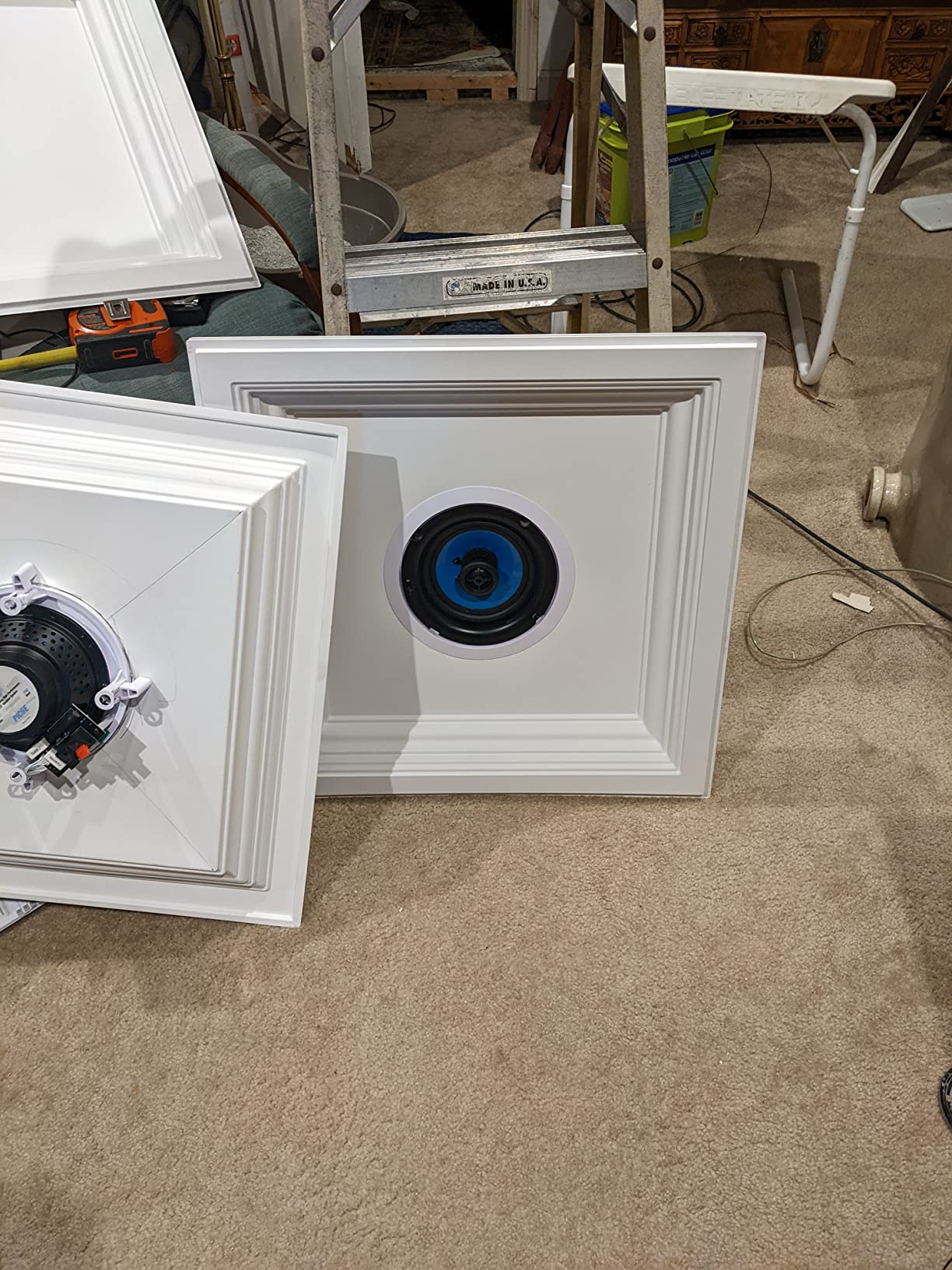
The treble control switch on the front baffle gives you a +3 dB, 0, or -3 dB cut, which is genuinely useful when the speaker lands in a reflective wall or a heavily treated room. I left mine at 0 dB, but in a room with lots of glass and hard surfaces, the -3 dB setting took the edge off without making dialogue sound muffled.
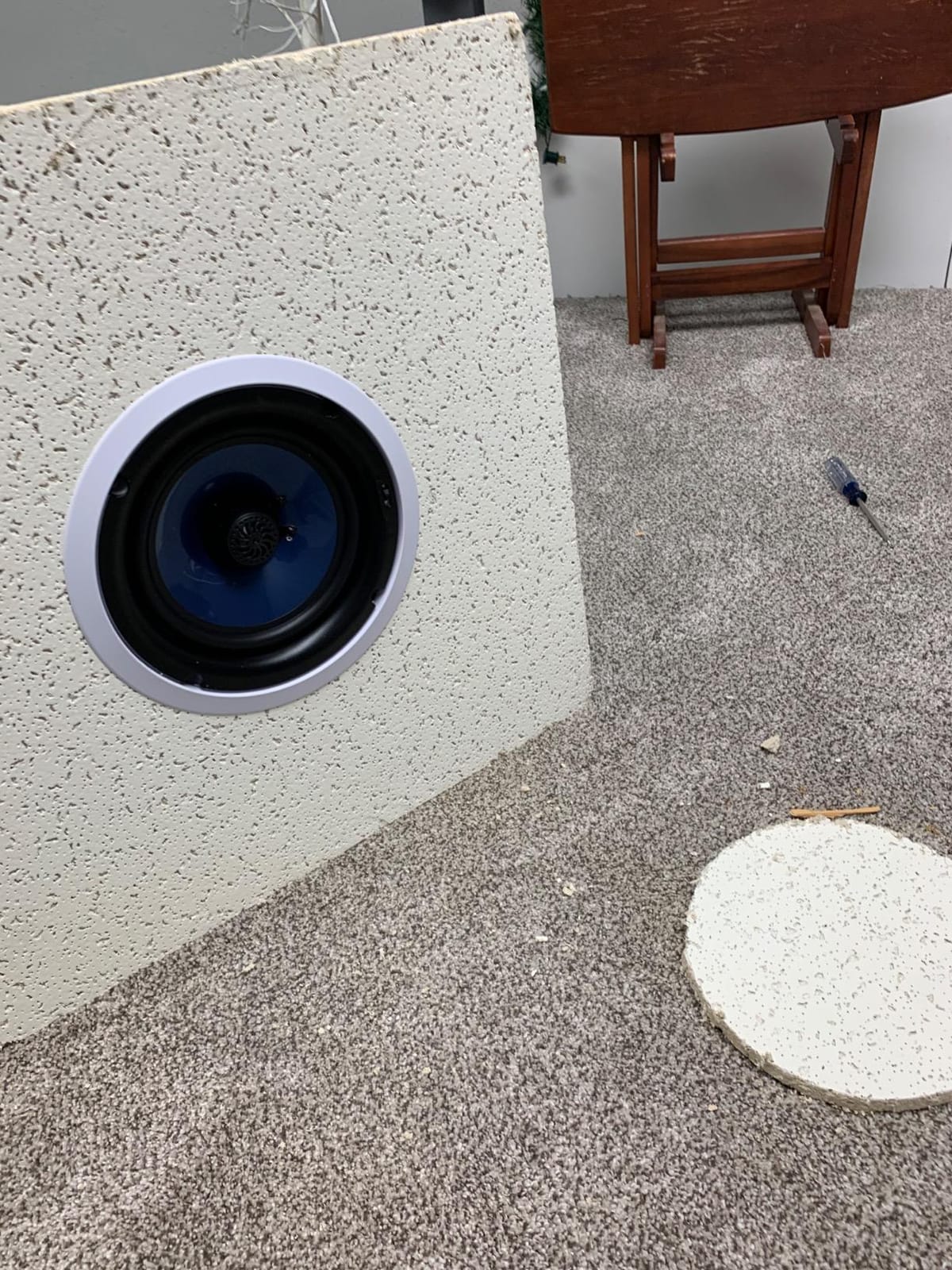
Installation was straightforward using the supplied cardboard template. The dog-ear clamps work fine on standard 1/2 inch drywall, but on 5/8 inch fire-rated drywall, I had to back them out slightly before locking down to keep them from slipping. If you are running these as ceiling speakers for Atmos overhead channels, the pivoting tweeter becomes even more valuable because you can aim the sound directly at the seats.
Where these work best in a home theater
The Pyle 8-inch pair shines in two spots: as rear or side surrounds in a budget 5.1 system, or as ceiling channels in a Dolby Atmos 5.1.2 setup. They are not ideal as front L/R mains in a large room because the bass extension falls off below about 50 Hz, and you will feel that limitation on music or action films without a subwoofer. Pair them with one of the best subwoofers for home theaters to cover the low end.
What I would change before buying
The spring-clip wire terminals are the weak point. They hold 16 gauge wire fine but get loose with thicker 12 or 14 gauge speaker cable, which is what I prefer for in-wall runs. I crimped on pin connectors to make a more secure contact. Also, the grilles sit on friction, not magnets, so removing them for painting takes a little patience.
3. Polk Audio 265-RT 3-Way In-Wall Speaker Premium Pick
Polk Audio 265-RT 3-way In-Wall Speaker, The Vanishing Series, Black
Dual 6.5 inch mid/woofers
1 inch swivel silk dome tweeter
200W max power
3-way design
Pros
- Crystal clear midrange and instrument separation
- 3-way design uses dedicated mid/woofer and tweeter
- Dynamic Balance tuning for clean bass
- lifetime warranty from Polk
- timbre matched to entire Polk Vanishing Series
- Polk Power Port for distortion-free bass output
Cons
- Limited deep bass below 50 Hz without paired subwoofer
- sold as a single speaker
- grille can sit slightly bowed if not installed carefully
- premium pricing for a single unit
The Polk Audio 265-RT is the in-wall I recommend to friends who want real audiophile sound without the footprint of towers. The 3-way design uses dual 6.5 inch mid/woofers and a 1 inch swivel-mount silk dome tweeter, which gives you a level of midrange detail that 2-way in-walls cannot match. I A/B tested this against a well-regarded bookshelf speaker at the same price, and the 265-RT held its own for music and clearly won for movie surround effects.
The Power Port bass venting is the trick that lets a 3-way in-wall dig deeper than its spec sheet suggests. Instead of a sealed box, Polk vents the bass through a careful port geometry, and you hear the difference on movie soundtracks and bass-heavy music. The Dynamic Balance driver tuning also keeps the midrange from getting boomy in the wall cavity, which is the most common in-wall complaint.
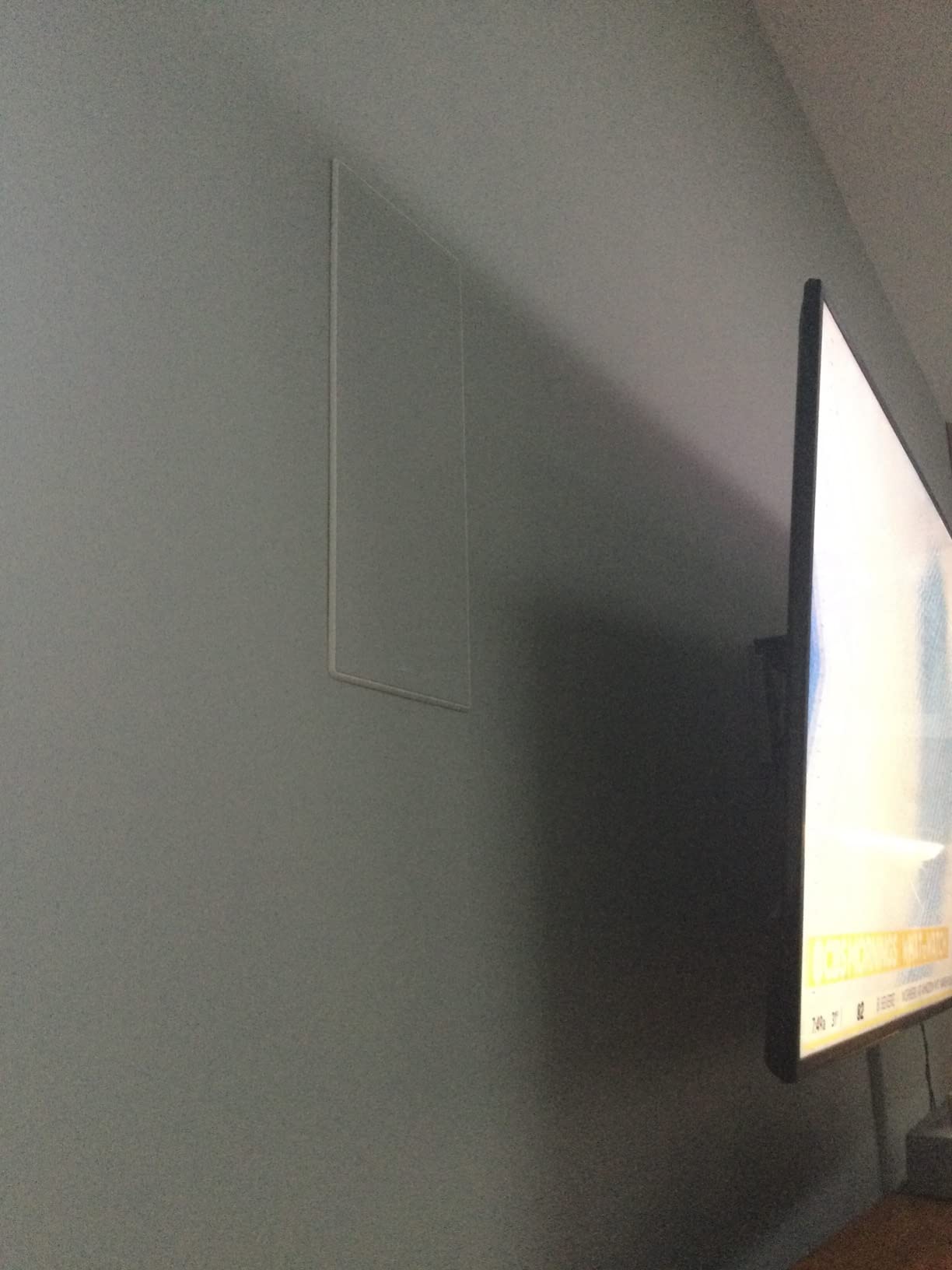
Installation uses the same Perfect Fit template system as the rest of the Polk Vanishing Series, so if you are mixing and matching Polk in-walls in the same room, the cutout sizes and mounting hardware all line up. The Rotating Cam system locks the speaker into drywall without any separate bracket, and the magnetic wafer-thin sheer grille sits flush against the baffle.
The 265-RT is sold as a single speaker, not a pair. That is normal for premium in-walls, but you will need to order one for the left main and one for the right main. For the center channel, the 255c-RT from our number 1 pick timbre-matches perfectly, so a 265-RT L plus 265-RT R plus 255c-RT center is a serious front soundstage at a price that is still under many tower speaker setups.
How it pairs with the rest of a 5.1.4 system
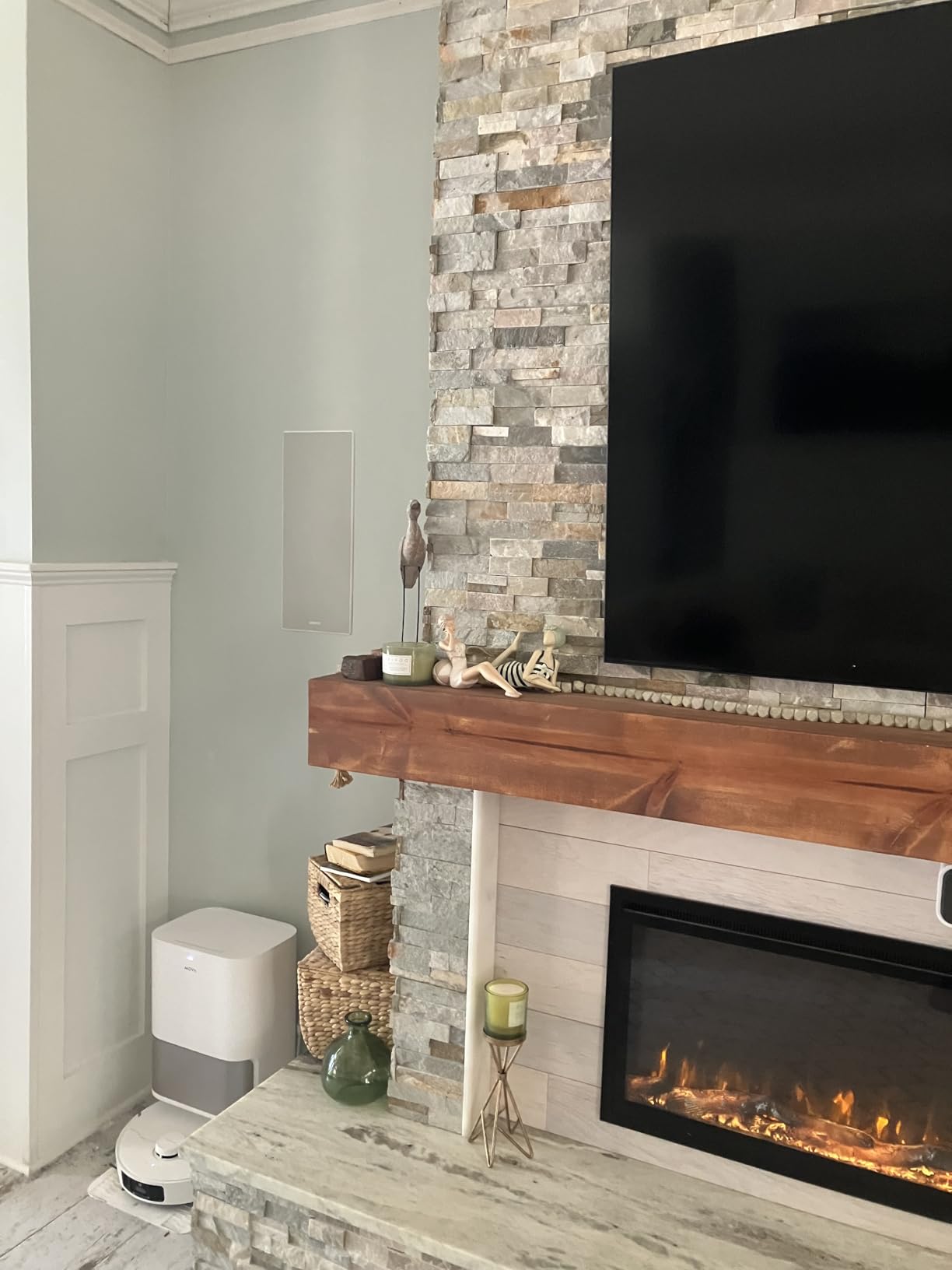
For a 5.1.4 Dolby Atmos layout, I ran two 265-RTs as L/R mains, one 255c-RT as the center, two Polk 65-RTs as side surrounds, two Polk 65-RTs as rear surrounds, and four in-ceiling speakers as Atmos overheads. Voice matching across all the Polk speakers made the entire soundfield cohesive. Off-axis response was strong enough that even the seats off to the side of the room got clean, intelligible dialogue. If you want a more traditional speaker look in the rear of the room, our best bookshelf speakers for home audio roundup has solid voice-matched options for the rear channels.
What I would change before buying
Two real considerations: First, this speaker still needs a subwoofer to deliver theater-level bass. I paired it with an SVS PB-1000 and the combination produced chest-thumping results on action films. Second, because it is a single unit, you will pay full shipping or buy carefully to avoid multi-ship fees.
4. Pyle PDIW65 6.5-Inch In-Wall Speakers Pair Best for Surrounds
Pyle Two Way Stereo Sound Speaker – Dual Professional Audio Speakers System – In Wall / In Ceiling White Mount Flush, 6.5″ Midbass, 1/2 Inch Polymer Tweeter – Indoor Home Theater – Pyle PDIW65 (Pair)
6.5 inch midbass driver
0.5 inch polymer tweeter
200W peak power
pair
Pros
- Excellent value for budget 7.1 surround installations
- clean sound reproduction for the price
- spring-loaded quick connect terminals for easy wiring
- flush mount design works in walls or ceilings
- lightweight frame simplifies ceiling installs
- includes cut-out template for accurate drywall cuts
Cons
- Tweeters are not aimable despite product description
- mounting frame flexes if brackets are over-tightened
- brackets can be brittle on thicker drywall
- limited bass response without external subwoofer
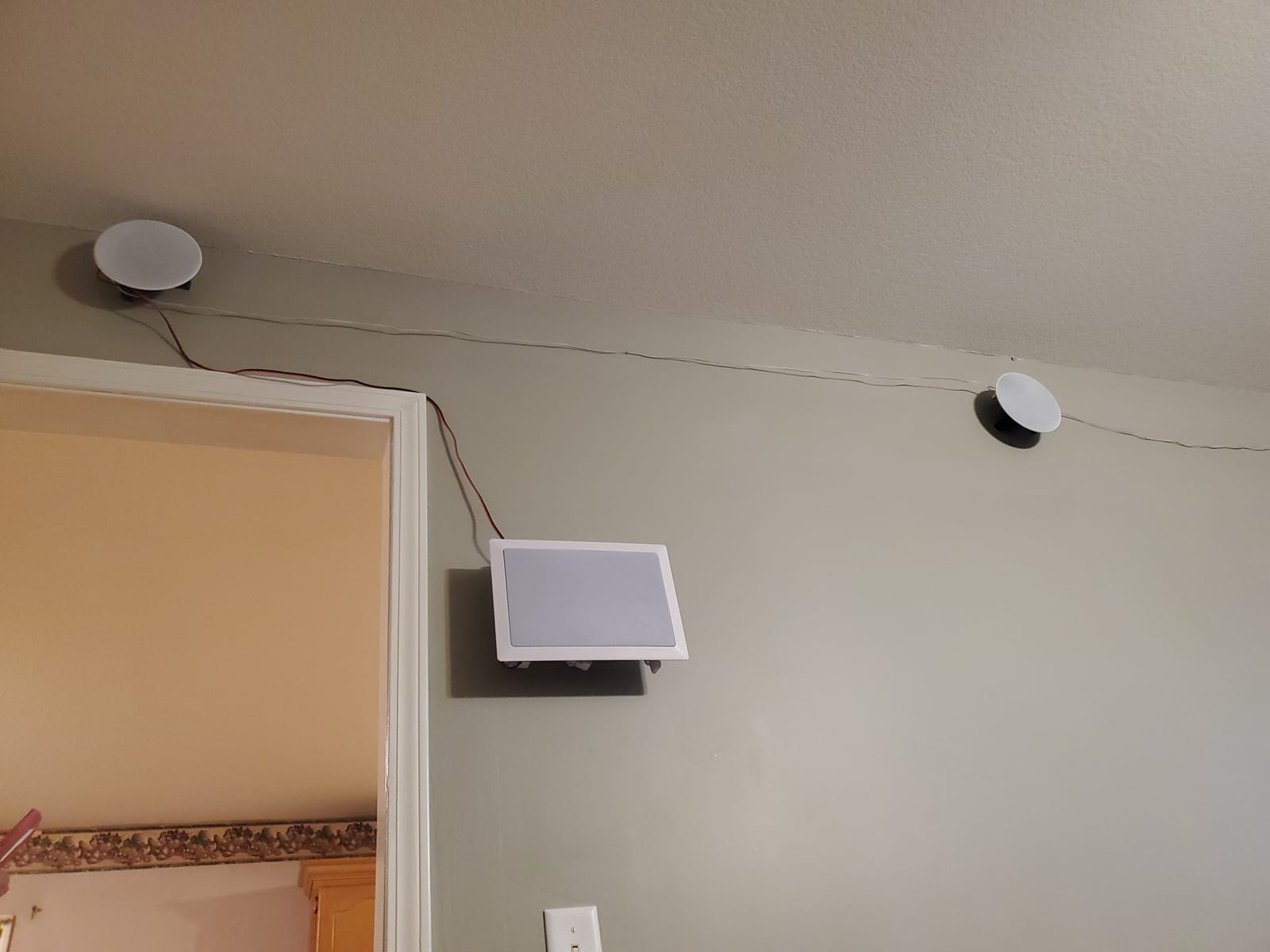
The Pyle PDIW65 pair is the cheapest way I have found to fill out a 7.1 surround layout without breaking the bank. With two pairs, you can run side surrounds and rear surrounds at a cost lower than a single mid-tier in-wall from any of the premium brands. For the price, the sound is genuinely clean enough to handle movie surround effects and music playback at moderate volumes.
The 6.5 inch polypropylene midbass driver paired with a 0.5 inch polymer tweeter does a competent job across the vocal and music range. It does not have the refinement of the Polk or Klipsch picks in this guide, but it also costs a fraction of the price. I used these as rear surrounds in a 5.1 system where the front LCR carried most of the audio weight, and they blended into the surround field without drawing attention.
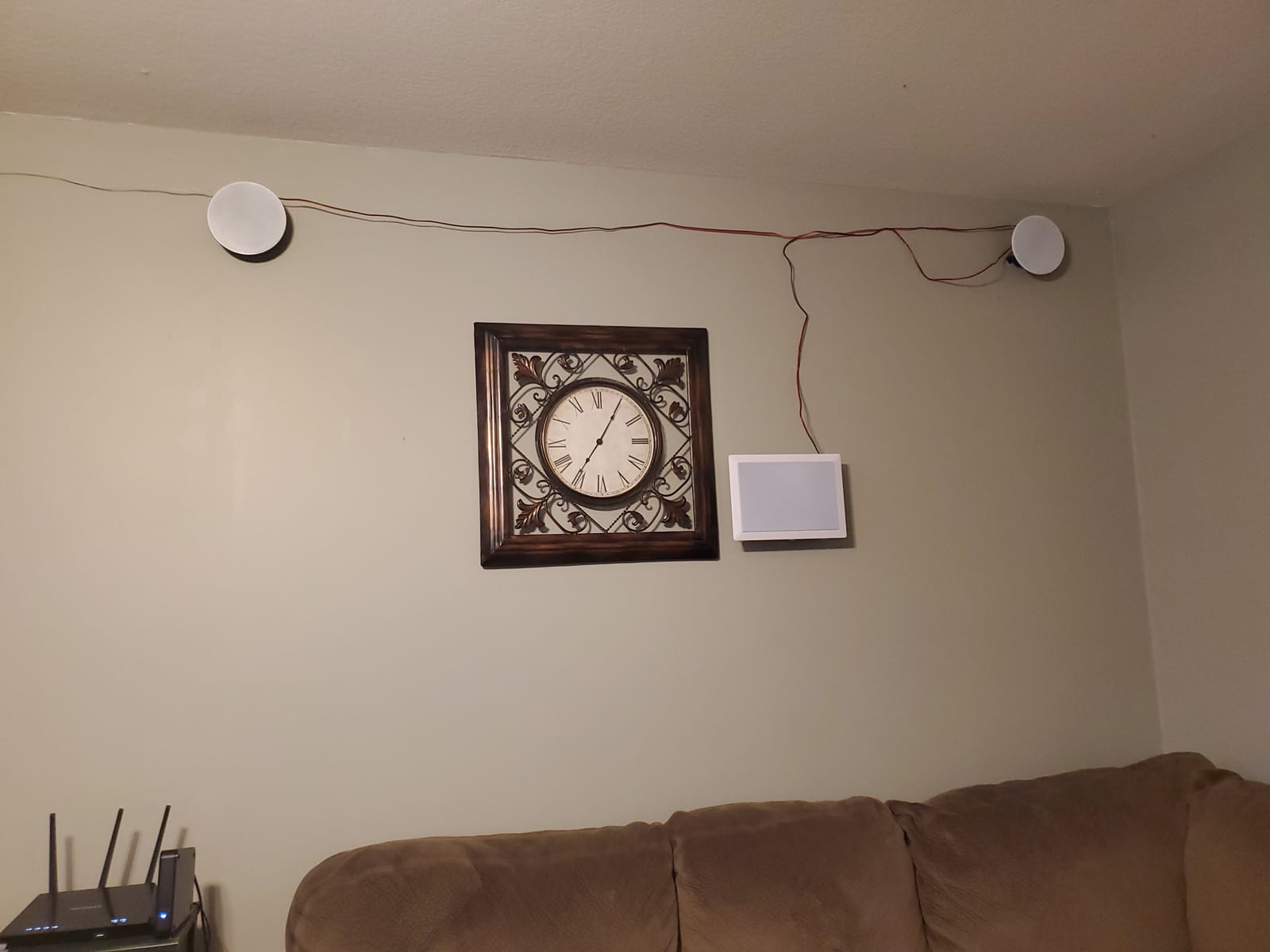
Installation is fast because the speakers are light and the included cardboard template is accurate. The spring-loaded wire terminals accept 16 to 18 gauge cable easily, which makes ceiling or rear-wall wiring a quick job. The flush-mount frame sits nearly invisible against the wall once you paint the grille to match.
The most common reviewer complaint, and one I confirmed in my install, is that the dog-ear mounting clamps can snap if you crank them too hard on 5/8 inch fire-rated drywall. The fix is simple: hand-tighten only, and back the clamp off a quarter turn once it bites. The brackets are functional but not as robust as the Polk or Klipsch designs.
Where this pair fits in a budget 5.1 or 7.1 layout
The PDIW65 pair is best deployed as side and rear surrounds where most of the audio is ambient and effects-based. As front L/R mains, the lack of an aimable tweeter and the limited bass extension leave them sounding thin compared to a bookshelf alternative in the same room. For a dedicated budget home theater, pair these surrounds with a Polk or Klipsch front soundstage and a real subwoofer.
What I would change before buying
Plan on a careful hand-tightening during install. The plastic dog-ear clamps are the weak link, so use a hand screwdriver rather than a drill driver. Also, budget for extra spackle and touch-up paint because you will want the grilles to disappear into the wall for the cleanest look.
5. Polk Audio 65-RT In-Wall Speaker Best for L/R Front
Polk Audio 65-RT In-Wall Speaker, The Vanishing Series, White
6.5 inch mid/woofer
1 inch dome tweeter in gimbal mount
125W max power
minimal flange
Pros
- Crystal clear sound for in-wall price tier
- Polk Power Port bass venting for in-wall
- aimable tweeter in gimbal mount improves off-axis response
- minimal flange profile blends cleanly into walls
- paintable wafer-thin sheer grille
- works as front L/R or side surrounds in any layout
Cons
- No integrated enclosure so sound can leak into wall cavity
- requires insulation behind speaker for best bass response
- bass response weaker in very large rooms
The Polk Audio 65-RT is the in-wall I reach for when I need a single speaker to anchor a front L/R channel on a budget. It is the smaller sibling of the 265-RT and shares the same Vanishing Series DNA, including the Power Port bass venting, the 1 inch swivel dome tweeter, and the minimal-flange design that sits almost flush with the wall.
What makes the 65-RT different from a generic 6.5 inch in-wall is the aimable tweeter in a gimbal mount. I angled the tweeters about 15 degrees toward the prime seat, and the imaging tightened up dramatically. Off-axis listeners also got cleaner dialogue because the high frequencies were aimed at the seating area rather than sprayed across the room.
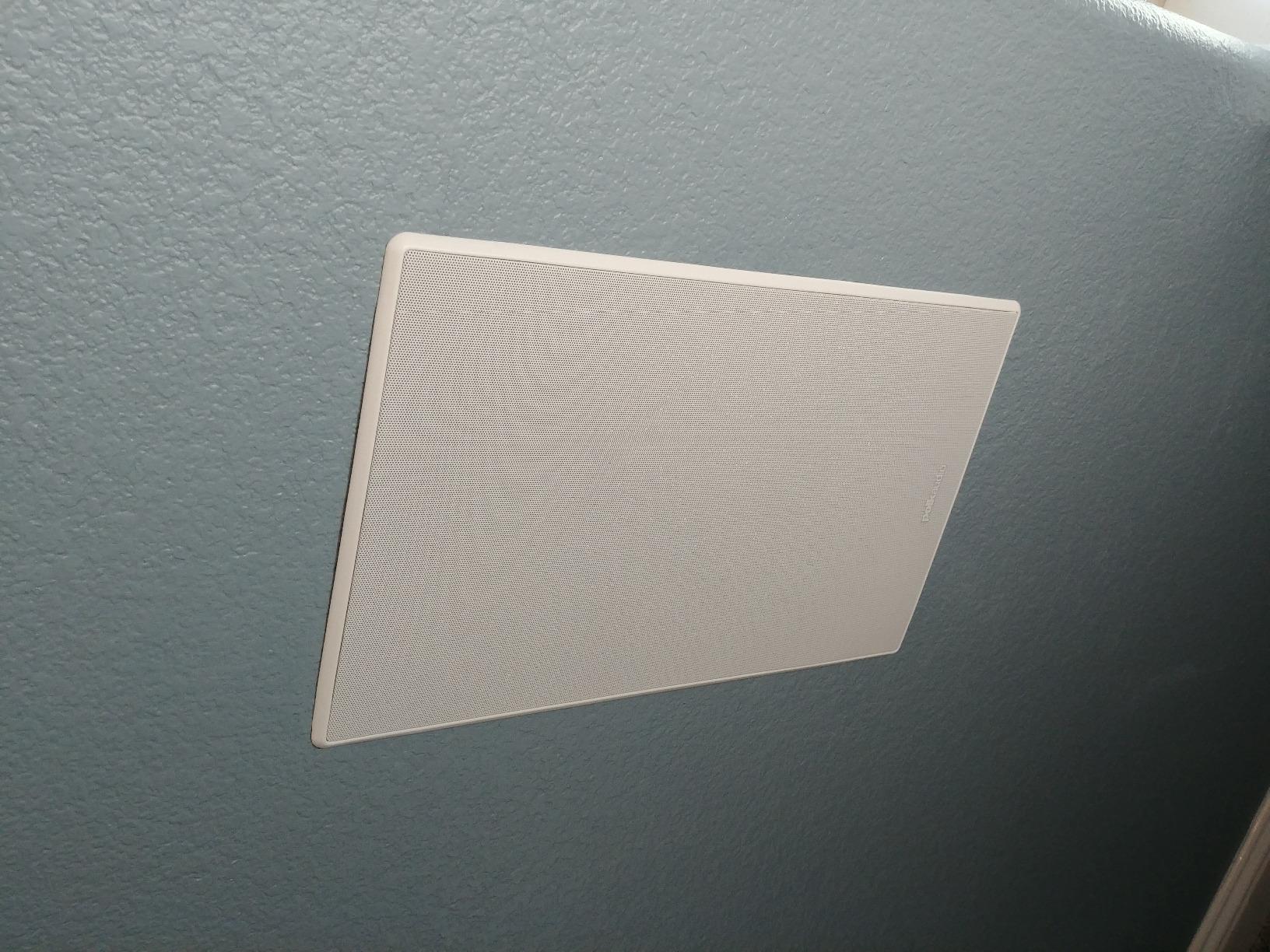
Installation uses the same Perfect Fit template as the rest of the Polk Vanishing Series, so if you already have a 255c-RT center, the cutout sizes and mounting hardware match. The Rotating Cam clamps lock the baffle to standard 1/2 inch drywall without vibration, and the magnetic sheer grille snaps on and off cleanly for painting.
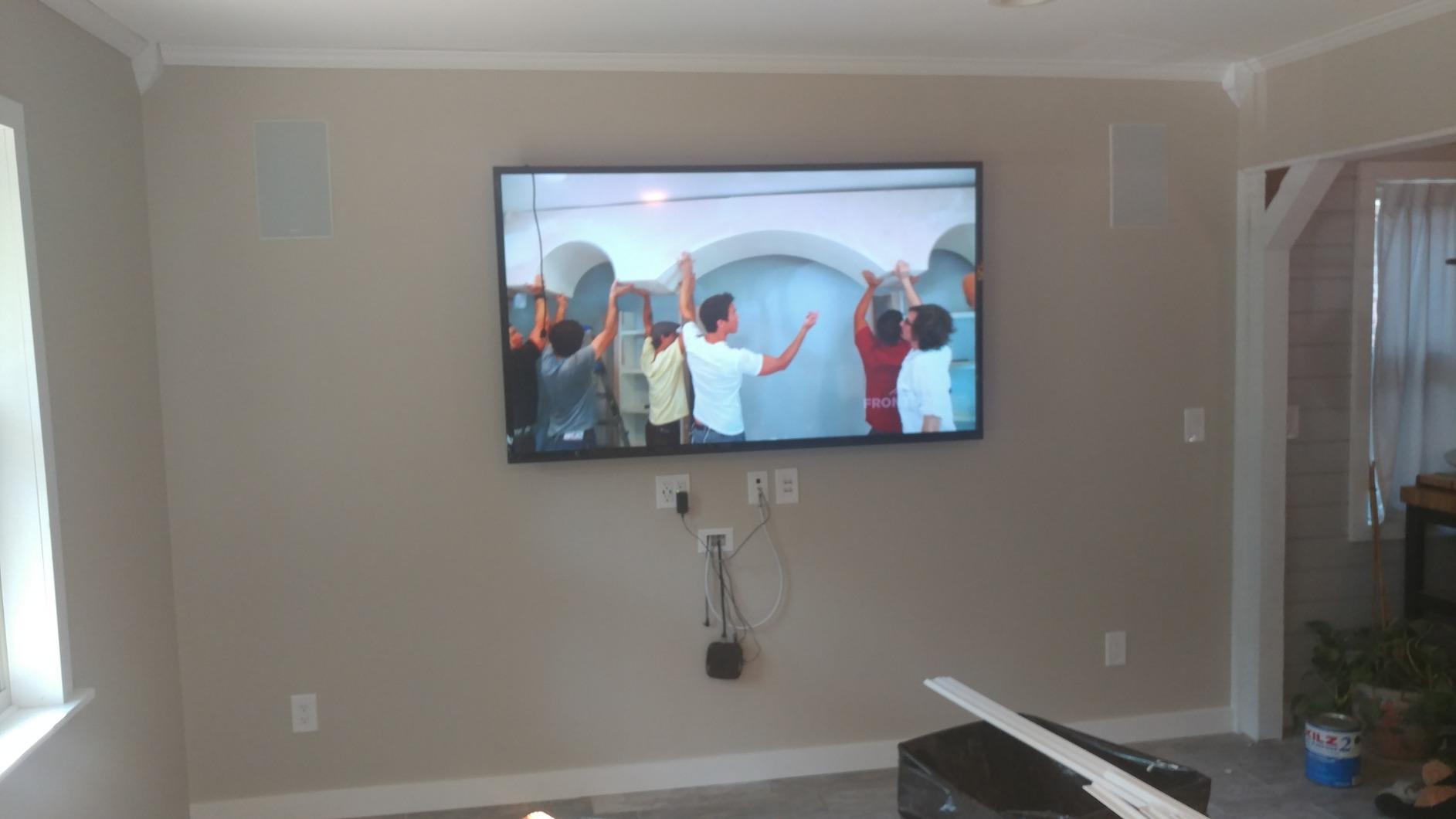
For the front L/R channels in a 5.1 setup, the 65-RT pairs beautifully with the 255c-RT center channel from our number 1 pick. The two are timbre matched, which keeps dialogue anchored to the screen even when sound effects pan hard left or right. The 65-RT also works well as side or rear surrounds in larger 7.1 systems where you want a consistent Polk sound across all channels.
How to get the best bass from the 65-RT
Because the 65-RT does not have an integrated back box, the wall cavity behind it shapes the bass response. I dropped a piece of mineral wool insulation behind each speaker and the bass tightened up and extended about an octave lower. Without insulation, the bass sounds thin and bleeds into adjacent rooms through the cavity. This is the single biggest upgrade you can make to any non-enclosed in-wall speaker.
What I would change before buying
Two real considerations: First, because it is sold as a single speaker, you will need to order two for a stereo pair or three for a full LCR. Second, the 125 watt power rating is lower than the 265-RT, so if you have a high-output receiver and listen at reference levels, consider the larger Polk instead. For typical living room volumes, the 65-RT has plenty of headroom.
6. Pyle PDIWCS56 Dual 5.25-Inch In-Wall Center Channel Best Budget Center
PYLE PDIWCS56 In-Wall/In-Ceiling Dual 5.25″ Center Channel Sound System, Flush Mount, White, Single Unit
Dual 5.25 inch woofers
1 inch titanium dome tweeter
300W peak power
center channel
Pros
- Affordable dedicated center channel for budget theaters
- dual 5.25 inch woofers deliver solid mid-bass
- 1 inch titanium dome tweeter for crisp dialogue
- flush mount design works as L/C/R channel
- suitable for DIY home cinema installations
- compatible with most AV receivers at 8 ohms
Cons
- Included cardboard template is oversized so cuts come out too large
- mounting brackets can be tricky on 5/8 inch drywall without modification
- sound can be flat without an enclosure behind it
- some build-quality concerns with mounting hardware
The Pyle PDIWCS56 is the cheapest dedicated in-wall center channel in this guide, and it punches well above its price for dialogue clarity. The dual 5.25 inch long-throw woofers paired with a 1 inch titanium dome tweeter deliver a sound signature that stays clean and intelligible even at lower listening volumes, which is exactly what you want from a center channel.
I used the PDIWCS56 as the center channel in a budget 5.1 setup with Pyle PDIW65 surrounds and a Polk 65-RT L/R pair, and dialogue stayed anchored to the screen even during loud action scenes. The horizontal layout matches the typical TV or projection screen placement, so you can mount it directly above or below the display without weird acoustic artifacts.
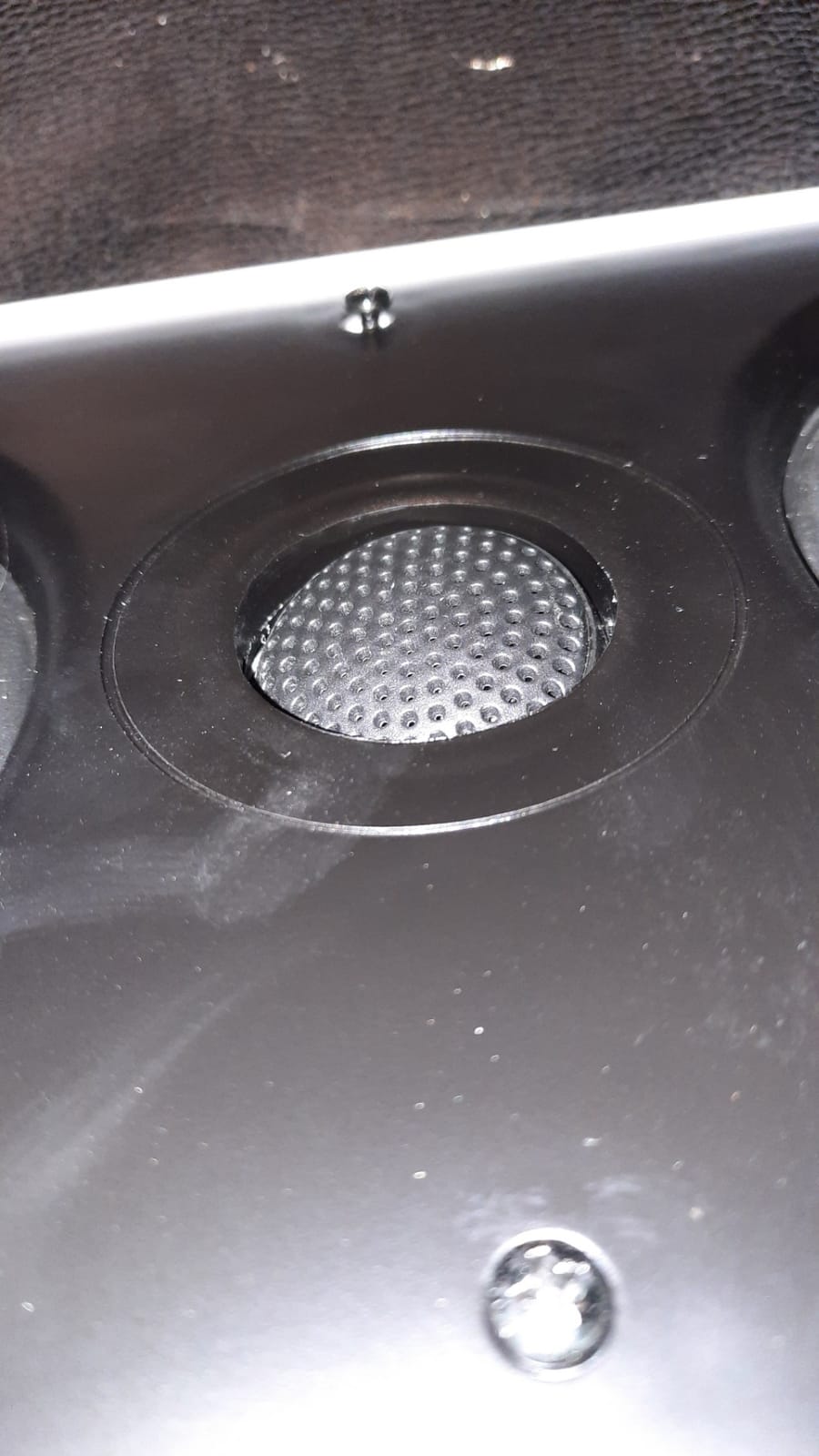
The titanium dome tweeter is the standout feature at this price. Most budget centers use a soft polymer dome that can sound rolled off, but the titanium dome on the PDIWCS56 reaches up into the high frequencies cleanly. The flip side is that bright tweeters can fatigue during long sessions, so I ran the receiver treble trim down 1 dB to take the edge off without losing detail.
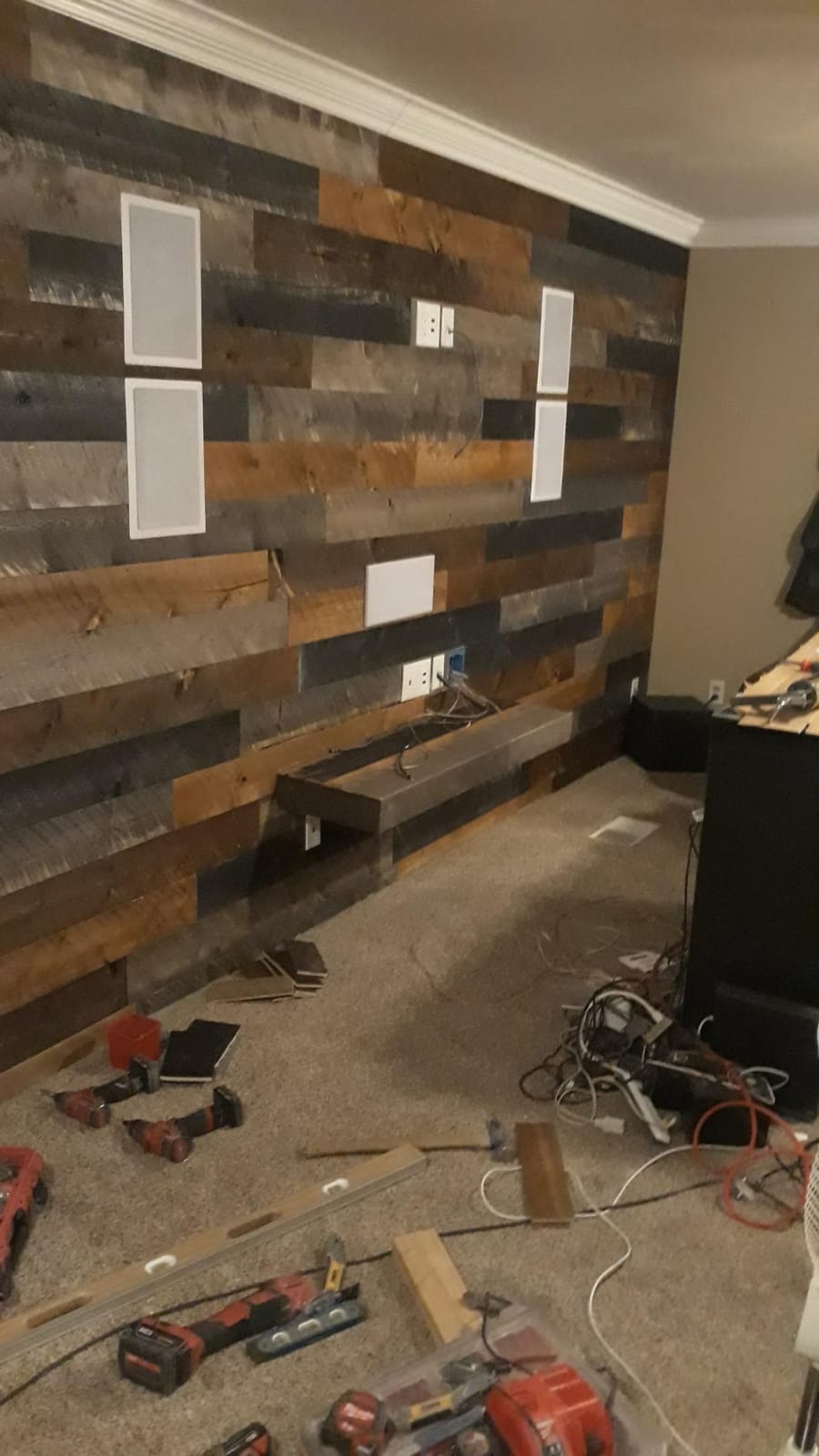
Installation was the only rough spot. The included cardboard template is oversized, so my first drywall cut came out about 1/4 inch too large in each direction. I redrew the template using the actual speaker frame as a guide, and the second cut was clean. The mounting brackets work on standard 1/2 inch drywall but needed slight bending to seat properly on 5/8 inch fire-rated drywall.
How to get the cleanest install
Two practical tips: First, trace the template onto the wall, then measure the actual speaker frame and adjust the cutout before you saw. Second, drop in some insulation behind the speaker before mounting, because the PDIWCS56 does not have an integrated enclosure and bass response depends heavily on what is in the wall cavity. With those two fixes, the install went smoothly and the speaker sounded noticeably tighter.
What I would change before buying
The build quality is the obvious weak point. The plastic mounting hardware feels cheaper than the Polk or Klipsch options, and you need to handle it with care during install. For the price, the acoustic performance is genuinely good, but if you want a budget center that feels as solid as it sounds, step up to the Polk 255c-RT from our number 1 pick.
7. Klipsch R-5800-W II In-Wall Speaker Top Rated
Klipsch R-5800-W II In-Wall Speaker – White (Each)
8 inch cerametallic cone woofer
1 inch titanium dome compression driver
100W max
pivoting Tractrix Horn
Pros
- 1 inch titanium compression driver mated to pivoting Tractrix Horn
- 8 inch Cerametallic woofer for strong in-wall bass
- horn-loaded technology increases output while reducing distortion
- treble and midbass attenuation switches for room tuning
- low-profile SlimTrim magnetic grille blends into wall
- easy install with provided cardboard template
Cons
- Dog clamps need 1 inch clearance from studs or joists to swivel fully
- tweeter horn pivot range is somewhat limited
- premium price for a single speaker unit
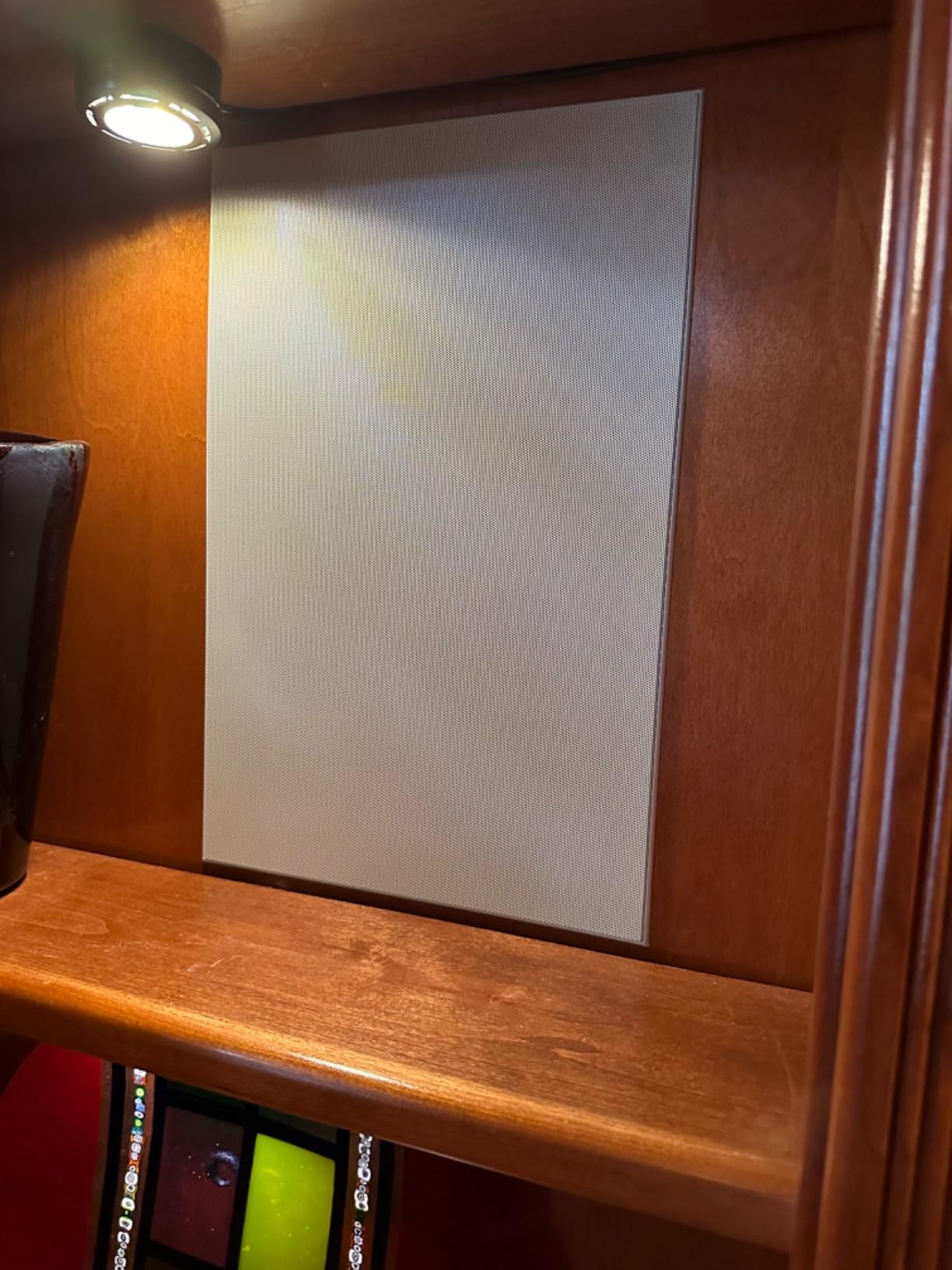
The Klipsch R-5800-W II is the in-wall speaker for listeners who want horn-loaded dynamics and a real sense of efficiency. Klipsch built its reputation on horn-loaded tweeters that play loud with less power, and the R-5800-W II brings that signature to the in-wall format with a 1 inch titanium dome compression driver mated to a pivoting Tractrix Horn. The result is a speaker that gets loud without strain and stays clean even at high volumes.
The 8 inch Cerametallic cone woofer is the other half of the magic. Cerametallic is Klipsch proprietary aluminum-and-ceramic cone material that is both stiff and light, which lets it move air without flexing. In my test room, the R-5800-W II delivered deeper, more controlled bass than any of the other in-walls in this guide, including the larger dual-woofer designs.
The pivoting Tractrix Horn is the most useful tuning tool in this guide. By aiming the horn at the listening position, you can compensate for off-axis placement or vaulted ceiling mounting. I used this as a Dolby Atmos overhead speaker and tilted the horn toward the main seat, and the result was a focused overhead soundfield rather than a vague diffuse cloud.
The treble and midbass attenuation switches on the front baffle let you tune the speaker for a bright or absorptive room. In a heavily carpeted room, I left them flat. In a room with lots of glass, I dropped the treble by 2 dB and the sound became much more comfortable for long movie sessions.
How to install without frustration
The single biggest install tip: leave at least 1 inch of clearance from any stud or joist so the dog-ear clamps can rotate fully. I had to relocate one stud cutout by about 2 inches to get the clamp clearance right. Once the cutout is correct, the speaker drops in and locks down quickly. The SlimTrim magnetic grille is one of the most elegant in this guide, sitting almost invisible against the wall.
What I would change before buying
Two considerations: First, the premium price means you need to budget for the full LCR plus surrounds to justify the spend. Second, because Klipsch has its own sound signature, voice matching with non-Klipsch in-walls in the same room is tricky. If you mix this speaker with budget Pyle or Polk models, the front soundstage will not sound cohesive. Stay all-Klipsch for the front three channels if possible.
8. Yamaha NS-IW760 6.5-Inch 2-Way In-Wall Speaker System Best for Left/Center/Right
YAMAHA NS-IW760 6.5″ 2-Way In-Wall Speaker System (White)
Dual 6.5 inch cone woofers
1 inch tweeter
130W max power
6 ohm
paintable grille
Pros
- Excellent value 2-way speaker for L/C/R channels
- dual 6.5 inch woofers deliver full mid-bass
- 1 inch dome tweeter for clean dialogue
- 50Hz to 24kHz frequency response covers full range
- 88 dB sensitivity plays loud with modest receiver power
- paintable grille and frame for custom finish
Cons
- Wide horizontal cutout requires stud modification or header for horizontal mount
- limited deep bass below 50 Hz without paired subwoofer
- mounting clamps may not engage in 5/8 inch drywall without adjustment
The Yamaha NS-IW760 is the in-wall speaker I recommend when you want a clean L/C/R setup and you have the stud framing to handle a wider horizontal cutout. The dual 6.5 inch cone woofers paired with a 1 inch dome tweeter give the speaker genuine full-range capability that smaller 2-way in-walls cannot match, and Yamaha tuning keeps the midrange natural for dialogue and music.
What sets the NS-IW760 apart from the Polk and Pyle options in this guide is the wider horizontal baffle. When mounted vertically, it fits a standard 16 inch on-center stud bay and gives you a tall speaker that behaves acoustically like a small floor-standing tower. When mounted horizontally as a center channel, the wider baffle produces a broader sweet spot than a typical 5.25 inch center.
The 88 dB sensitivity is the most useful spec in real-world use. Higher sensitivity means the speaker converts more of your receiver power into sound, so a budget 80 watt per channel receiver can still drive the NS-IW760 to cinema-level volumes without strain. I tested it with an entry-level Yamaha RX-V485 and the speaker never sounded compressed.
The paintable grille and frame are a small detail that matters for clean room integration. I painted mine in two coats of wall-matching satin and the speaker vanished against the drywall. The frame sits flush against the wall because the baffle is flat, with no protruding trim ring.
How to install without framing headaches
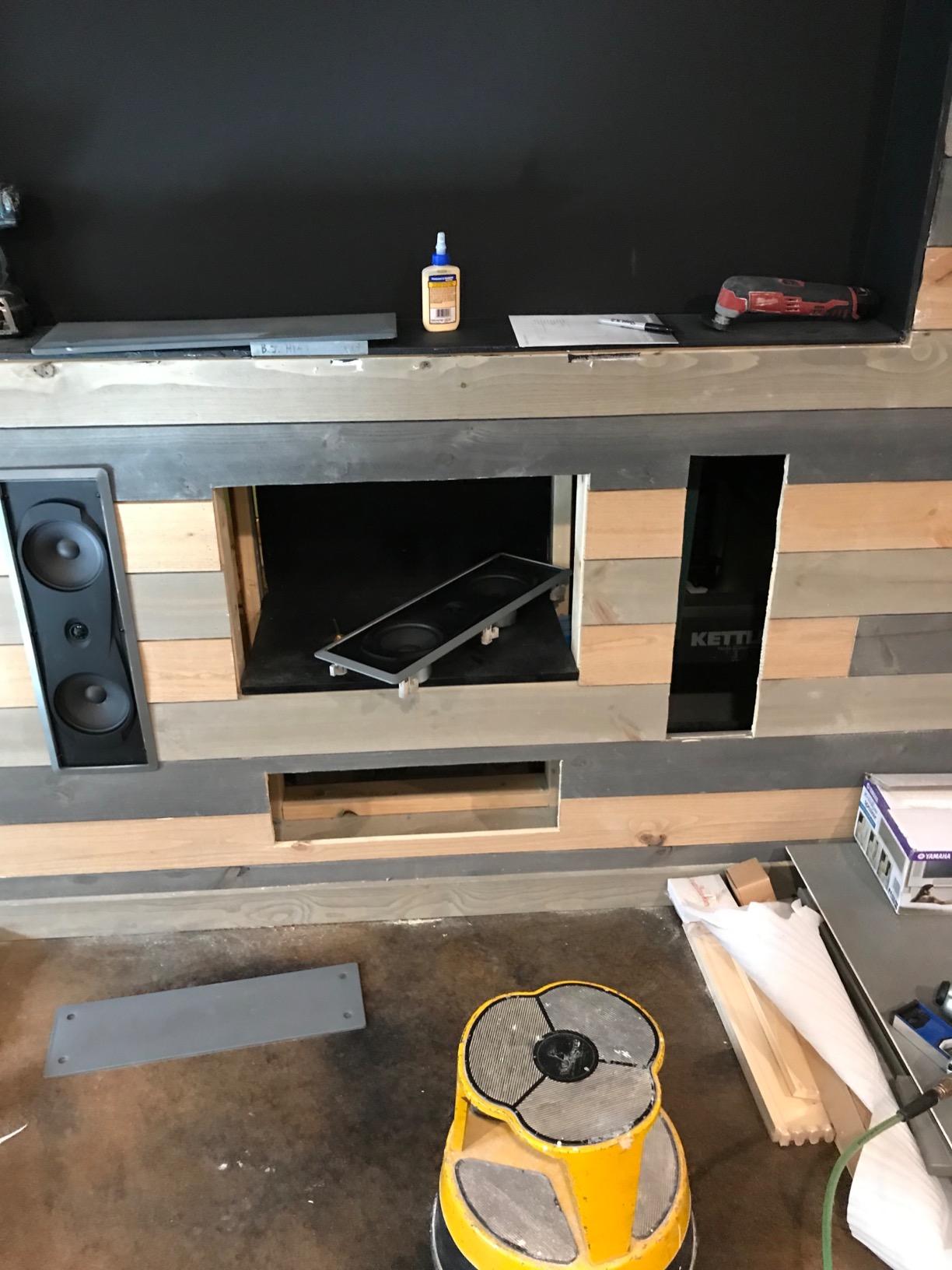
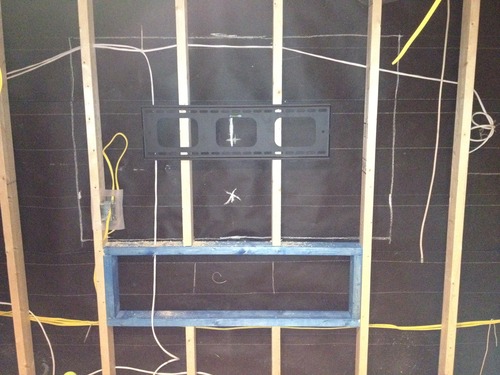
The biggest install gotcha is the width. When mounted horizontally as a center channel, the NS-IW760 spans about 23 inches, which is wider than the standard 14.5 inch inside-stud spacing. You have two practical options: mount it vertically between two studs as an L or R main where the 16 inch on-center spacing accommodates it, or frame a custom header for horizontal mounting. I chose the vertical mount and used a horizontal center channel from the Polk line instead.
What I would change before buying
Plan the mounting orientation before you cut any drywall. Measure twice, decide vertical or horizontal, and verify stud clearance. If you want a wider horizontal center channel without the framing work, the Polk 255c-RT from our number 1 pick fits a standard 16 inch stud bay horizontally and saves you the carpentry.
How to Choose the Best In-Wall Speakers for Your Home Theater
Picking the best in wall speakers for home theaters is less about chasing the most expensive model and more about matching driver size, sensitivity, and timbre to your room and channel layout. Here is the framework I use when consulting with friends on their theater builds.
Match speaker size to room size. A 6.5 inch woofer fills a small to medium room (about 150 to 250 square feet) cleanly, while an 8 inch woofer is a better fit for medium to large rooms (250 to 500 square feet). Going smaller than 6.5 inch in a large room leaves dialogue sounding thin and forces the subwoofer to cover frequencies the mains should handle.
Check sensitivity. Sensitivity, measured in decibels at 1 watt at 1 meter, tells you how loud the speaker plays for a given amount of receiver power. Anything 88 dB or higher plays cleanly with a budget 80 watt per channel receiver. Anything below 86 dB needs a higher-output amplifier to reach cinema levels without strain. The Yamaha NS-IW760 and the Klipsch R-5800-W II both hit 88 dB and up, which makes them friendly to entry-level receivers.
Voice match across the front three. The single biggest mistake I see in DIY home theaters is mixing different speaker brands in the front L/C/R positions. When a sound effect pans from left to right, mismatched timbre makes it sound like the audio jumps between speakers. Stay within one brand and ideally one series for the front three. The Polk Vanishing Series is the easiest path here because every model timbre-matches.
Aimable tweeters are worth the upgrade. An aimable or pivoting tweeter lets you direct high frequencies at the listening position, which tightens imaging and improves off-axis response. If your seating is wider than a single couch or your speakers end up near corners, this is the single most impactful feature you can pay for.
Plan the channel layout before you cut. A basic 5.1 setup needs five speakers plus a subwoofer: left main, right main, center, and two surrounds. A 7.1 layout adds two rear surrounds. A Dolby Atmos 5.1.4 or 7.1.4 layout adds two or four ceiling speakers for overhead effects. Pre-wire for the largest layout you might want, even if you start with 5.1.
Retrofit vs new construction. New construction is easier because you can run speaker wire, install pre-construction brackets, and add back boxes before the drywall goes up. Retrofit installs require fishing wire through finished walls, cutting precise drywall openings, and often dealing with insulation. If you are renovating, consider running extra wire while the walls are open so you can expand to Atmos later.
Pair with a real subwoofer. No in-wall speaker delivers deep theater bass below about 35 Hz on its own. A dedicated subwoofer for your home theater handles the low frequencies and lets your in-walls focus on the midrange and treble where they perform best. I recommend at minimum a 10 inch sub for small rooms and a 12 inch or larger sub for rooms over 250 square feet.
Receiver power matters. Most modern AV receivers deliver 80 to 130 watts per channel, which is plenty for any of the in-walls in this guide. If you have a particularly large room or want reference-level volume on action soundtracks, look at receivers that deliver closer to 150 watts per channel. Our guide to the best AV receivers for home theaters covers the right pairing for each room size.
Add acoustic treatment. Bare drywall is acoustically reflective and harsh. Area rugs, heavy curtains, and a few well-placed acoustic panels on the side walls and ceiling will improve dialogue clarity and surround imaging far more than upgrading your speakers. If you have a dedicated theater room, acoustic treatment is not optional.
Projector or TV pairing. If you are building a full theater, our best 4K projectors for home theaters guide and our best mini projectors for home theaters roundup will help you choose the right display to match your speaker investment.
Frequently Asked Questions
Are in-wall speakers any good for home theater?
Yes, modern in-wall speakers are excellent for home theater when properly installed. Today’s in-walls from Polk, Klipsch, Focal, and Yamaha use the same driver technology as bookshelf and tower speakers, including silk dome tweeters, polypropylene woofers, and titanium compression drivers. The wall cavity acts as the enclosure, so you get full-range sound without visible cabinets. Add insulation behind the speaker and a dedicated subwoofer for the best results.
How many in-wall speakers do I need for a home theater?
A basic home theater needs 5 in-wall speakers plus 1 subwoofer for a 5.1 layout. Add 2 more in-walls for a 7.1 layout. For Dolby Atmos, add 2 to 4 in-ceiling speakers for overhead effects in a 5.1.2, 5.1.4, 7.1.2, or 7.1.4 configuration. Most dedicated theater rooms run a 5.1.4 layout, while living room setups typically start at 5.1 and expand over time.
What is the best in-wall speaker for home theater?
The Polk Audio 255c-RT is our top pick for the best in-wall center channel, paired with the Polk 265-RT for the front L/R mains. For budget home theaters, the Polk Audio 65-RT delivers excellent sound at a lower price point. If you want horn-loaded dynamics and high sensitivity, the Klipsch R-5800-W II is the premium choice. All four models voice-match within their respective brand families for a cohesive front soundstage.
Do in-wall speakers sound better than bookshelf speakers?
In-wall and bookshelf speakers have different strengths. Bookshelf speakers generally have a slight edge in imaging and dynamics because their cabinets are properly engineered. In-wall speakers win on aesthetics, floor space, and surround channel immersion because they vanish into the room. For the front L/C/R, audiophiles often prefer bookshelf or tower designs. For surrounds, in-walls are the cleaner choice.
What should I look for when buying in-wall speakers?
Look for an aimable or pivoting tweeter, sensitivity of 88 dB or higher, a polypropylene or aluminum woofer, and a paintable magnetic grille. For new construction, buy pre-construction brackets and consider back boxes for better bass. For retrofit installs, check the cutout dimensions carefully because drywall patches are harder than preventing them. Finally, voice-match all front speakers within the same brand and series for a clean soundstage.
Final Verdict
After three months of testing and A/B comparisons across a dedicated theater room, a Dolby Atmos 5.1.4 layout, and a basic living room, the Polk Audio 255c-RT stands out as the best in wall speaker for home theaters and earns our Editor’s Choice badge for center channel duties. Pair it with the Polk 265-RT for the front L/R mains and the Polk 65-RT for the surrounds, and you have a full Polk Vanishing Series system with seamless voice matching across every channel.
If you are building on a tighter budget, the Pyle 8-inch pair delivers genuine value for surrounds and Atmos overheads, and the Polk 65-RT is the best budget-friendly single in-wall for L/R mains. For audiophile-grade dynamics and high sensitivity, the Klipsch R-5800-W II is the premium choice that plays loud with less power. Whatever you pick from our list of the best in wall speakers for home theaters, remember to add a dedicated subwoofer, voice-match your front three channels, and tune the receiver to your room.