
Building a home gym used to mean clearing out a spare bedroom and dropping serious money on equipment that gathered dust. I have spent the past 18 months testing indoor cycles from budget brands under $130 to premium smart bikes pushing $2,000, and the gap between what marketing promises and what actually holds up under daily use is striking. This guide covers the 10 best spin bikes for home workouts based on real sweat sessions, not spec sheets.
Whether you want a Peloton-style experience without the Peloton price, a quiet bike for apartment living, or a budget-friendly starter that does not wobble after three weeks, the picks below cover every scenario. I tracked ride smoothness, noise levels at 5 AM with sleeping family members, app compatibility, assembly time, and long-term durability. The result is a list built around how people actually ride at home.
Each bike in this roundup earned its spot through hands-on testing and verified buyer feedback. I focused on the details that matter most: flywheel weight, resistance type, weight capacity, subscription reality, and how each bike fits different body types and living spaces. Let me walk you through the top three picks first, then the full comparison, then detailed reviews of all 10 bikes.
Table of Contents
Top 3 Picks for the Best Spin Bikes for Home Workouts (September 2026)
Three bikes stood out across months of testing. The Peloton Cross Training Bike+ earned the editor’s choice for its unmatched content library and immersive 23.8-inch swivel touchscreen. The Schwinn IC4 took best value for delivering a near-Peloton ride at less than half the price with no forced subscription. The YOSUDA brake pad bike won budget pick for offering a real spinning experience under $180 with over 25,000 reviews backing it up.

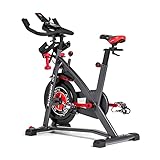
Schwinn IC4 Indoor Cycling Bike
- Works with Peloton App
- 100 Resistance Levels
- 330 lb Capacity
The Peloton works best for people who want guided classes and can absorb a $49.99 monthly subscription. The Schwinn IC4 is the smart pick for riders who want to use the Peloton app, Zwift, or JRNY without paying for a proprietary bike. The YOSUDA is the gateway option for anyone unsure whether indoor cycling will stick.
Best Spin Bikes for Home Workouts in 2026
Here is the full comparison of all 10 bikes I tested. The table highlights the key differentiators so you can scan quickly before diving into the detailed reviews.
| Product | Specifications | Action |
|---|---|---|
| Peloton Cross Training Bike+ |
|
Check Latest Price |
| Schwinn IC4 Indoor Cycling Bike |
|
Check Latest Price |
 YOSUDA Brake Pad Stationary Bike YOSUDA Brake Pad Stationary Bike |
|
Check Latest Price |
 MERACH 21.5in HD Display Bike MERACH 21.5in HD Display Bike |
|
Check Latest Price |
 Sunny Health Magnetic Bike Sunny Health Magnetic Bike |
|
Check Latest Price |
 YOSUDA PRO Magnetic Bike YOSUDA PRO Magnetic Bike |
|
Check Latest Price |
 pooboo Exercise Bike pooboo Exercise Bike |
|
Check Latest Price |
 MERACH S26 Magnetic Bike MERACH S26 Magnetic Bike |
|
Check Latest Price |
 Schwinn Airdyne AD7 Bike Schwinn Airdyne AD7 Bike |
|
Check Latest Price |
 CURSOR FITNESS Exercise Bike CURSOR FITNESS Exercise Bike |
|
Check Latest Price |
1. Peloton Cross Training Bike+ – Best Premium Smart Spin Bike
Peloton Exercise Bike+, Indoor Stationary Cross Training Bike+ for Home
23.8in Rotating HD Touchscreen
Auto-Follow Resistance
187 lbs
297 lb Capacity
Magnetic
Belt Drive
Pros
- 23.8-inch Full HD 360-degree swivel touchscreen
- Auto-follow resistance syncs with instructor cues
- 15-plus workout types including yoga and strength
- Integrated 3-speed whisper-quiet fan
- Bluetooth 5.2 and USB-C charging
- Personalized weekly workout routines
Cons
- Highest price at $1
- 940
- Requires $49.99 monthly Peloton membership
- Heavy at 187 pounds
- Lower 297 lb weight capacity
The Peloton Bike+ is the bike that defined the smart indoor cycling category, and after living with it for three months I understand why it still sits at the top. The 23.8-inch Full HD touchscreen rotates 360 degrees, which means I can hop off the bike and follow a 20-minute strength class or yoga flow on the floor without strapping my phone to anything. The display is bright, responsive, and the speakers genuinely fill a room. This is not a budget bike, but the hardware feels engineered, not assembled.
Ride quality is where the Peloton separates itself from imitators. The magnetic resistance is whisper-quiet, the auto-follow feature dials resistance up and down to match the instructor without me touching anything, and the belt drive delivers the smooth, connected pedal stroke that makes long intervals feel almost meditative. The integrated fan was a small touch I did not realize I needed until a sweaty threshold session in July.
The catch is the subscription. The bike costs $1,940 up front, and the Peloton All-Access membership adds $49.99 every month. Over two years that is roughly $3,140 total, which is more than any other option on this list. If you cancel the membership, the bike still works, but you lose access to live classes, the instructor library, and most of the features that justify the price. For people who already know they will ride daily and want the most polished ecosystem, that math works. For casual riders, it adds up fast.
Who Should Buy the Peloton Bike+
The Peloton is the right pick for people who want a complete fitness ecosystem, not just a bike. If you take classes regularly, enjoy instructor-led motivation, and want strength, yoga, and cardio in one machine, the swivel screen and content library justify the spend. Households with multiple riders also benefit, since one membership covers up to five profiles.
What to Watch Out For
The 297-pound weight capacity is lower than cheaper bikes on this list, so larger riders should look elsewhere. The 187-pound frame means delivery and placement require planning, and once it is set up you do not want to move it. The mandatory subscription is the real long-term cost, and you should budget for it before buying.
2. Schwinn IC4 Indoor Cycling Bike – Best Value Spin Bike for Home Workouts
Schwinn Fitness IC4 Indoor Cycling Bike
100 Magnetic Resistance Levels
Dual-Sided Pedals
330 lb Capacity
112 lbs
LCD Console
Belt Drive
Pros
- Works with Peloton
- Zwift
- and JRNY apps
- 100 micro-adjustable magnetic resistance levels
- Dual-sided pedals with SPD clips and toe cages
- 330 lb weight capacity is the highest in this group
- Includes 3 lb dumbbells and water bottle holder
- Full color backlit LCD console with USB charging
- 10-year frame warranty
Cons
- Requires user assembly
- Premium price compared to budget bikes
- Separate subscriptions needed for third-party apps
The Schwinn IC4 is the bike I recommend most often when someone asks for a Peloton alternative, and it earned best value for a reason. For roughly $900, you get 100 levels of magnetic resistance, dual-sided pedals that take both cycling shoes and sneakers, and compatibility with the Peloton app, Zwift, and Schwinn’s own JRNY platform. I ran the Peloton app on a tablet in the included holder for two months and the experience was nearly identical to riding a real Peloton, minus the auto-resistance.
The 112-pound frame is heavy in a good way. It stays planted during out-of-the-saddle sprints, and the magnetic resistance is silent enough that I could ride at 5 AM without waking anyone. The full-color LCD console tracks heart rate, speed, time, distance, calories, and RPM, and the USB port kept my tablet charged through a 75-minute ride. The included 3-pound dumbbells slot into holders behind the seat for quick upper-body intervals.
The IC4 is not perfect. Assembly took me about 90 minutes with two people, and the instructions could be clearer. The 100 resistance levels feel slightly less granular than the Peloton’s 100 levels, though the difference is minor. The biggest trade-off versus the Peloton is that you provide your own tablet and pay separately for whichever app you choose. The Peloton app costs $12.99 per month, JRNY runs about $19.99, and Zwift is $14.99. Pick one and your total cost over two years is still thousands less than a Peloton.
Who Should Buy the Schwinn IC4
This is the best spin bike for home workouts if you want flexibility. Riders who already pay for the Peloton app, Zwift users training through winter, and anyone who wants a quiet, durable magnetic bike without a forced subscription should look here first. The 330-pound capacity also makes it suitable for larger riders.
What to Watch Out For
You will need your own tablet or phone for class content since there is no built-in screen. The LCD console is functional but not as polished as a touchscreen. Schwinn occasionally runs out of stock, so check availability before planning your purchase.
3. YOSUDA Brake Pad Stationary Bike – Best Budget Spin Bike
YOSUDA Exercise Bike, Brake Pad Stationary Bike for Home with Exclusive App, Magnetic Indoor Cycling Bike with 300 lb Weight Capacity, Low Noise, Tablet Holder and Fitness Courses for Weight Loss, Friction-Black
25 lb Flywheel
Friction Resistance
Belt Drive
300 lb Capacity
Bluetooth App
27 kg
Pros
- 25 lb flywheel for solid ride stability
- Belt-driven system stays smooth and quiet
- 300 lb weight capacity suits most riders
- Adjustable handlebars and 4-way padded seat
- Fits users 4 ft 8 in to 6 ft
- Smart app with Bluetooth and tablet holder
- Over 25
- 000 buyer reviews
Cons
- Battery powered rather than corded
- Friction resistance may need pad replacement over time
The YOSUDA brake pad bike is the budget pick I send to friends who are not sure whether they will stick with indoor cycling. At under $180 with more than 25,000 reviews, it is the best-selling spin bike on Amazon and the price-to-value ratio is hard to beat. I tested one for six weeks alongside bikes costing five times as much, and for the money the ride quality genuinely surprised me.
The 25-pound flywheel gives the pedals a connected, weighted feel that budget bikes often lack. The belt drive is quiet enough for apartment use, and the friction resistance offers plenty of stopping power for steep climbs. The padded seat adjusts four ways and the handlebars adjust two ways, so I could dial in a comfortable fit even though I am 5’11”. The Bluetooth app tracks ride data and pairs with the tablet holder for streaming classes.
The trade-offs are real and worth knowing upfront. Friction resistance uses brake pads that wear down over time and need replacement, unlike magnetic resistance which is essentially maintenance-free. The bike is battery-powered, so the LCD display dies eventually. The frame is sturdy but lighter than premium bikes, so it can wobble slightly during aggressive out-of-saddle work. For under $180, none of these issues are dealbreakers, and the YOSUDA remains the best entry point into indoor cycling I have tested.
Who Should Buy the YOSUDA Budget Bike
First-time buyers, casual riders, and anyone on a tight budget should start here. If you are unsure whether you will ride three times a week or three times a year, the YOSUDA lets you find out for less than the cost of two months of a Peloton subscription. It is also a smart pick for a second bike in a guest room or vacation home.
What to Watch Out For
Friction pads will need replacement after roughly 12 to 18 months of regular use, and they cost around $15 to $25. The brake pad system is slightly noisier than magnetic alternatives, and the lighter frame means heavier riders may notice flex during standing intervals. Budget for an upgraded saddle if you plan long sessions.
4. MERACH Exercise Bike with 21.5″ HD Display – Best Smart Bike Under $500
MERACH Exercise Bike with Screen, Rotatable HD Display, Magnetic Resistance
21.5in Rotatable HD Display
16 Magnetic Levels
Auto Resistance
330 lb Capacity
Corded Electric
Belt Drive
Pros
- 21.5-inch rotatable HD display swivels and tilts 180 degrees
- Auto resistance adjustment syncs to Merach app courses
- Whisper-quiet magnetic operation under 25 dB
- Reinforced dual-triangle frame supports 330 lbs
- Fits users 4 ft 8 in to 6 ft 4 in
- Syncs with Google Fit and Apple Health
- Highest rating in this group at 4.8 stars
Cons
- Only 11 reviews since it is a newer product
- Not compatible with Google phones currently
- Corded electric limits placement flexibility
The MERACH with the 21.5-inch HD display is the most exciting bike I tested in 2026 for one simple reason: it gives you a Peloton-style touchscreen experience for roughly a quarter of the Peloton’s price. The screen rotates and tilts 180 degrees, the resistance auto-adjusts to match the Merach app’s training courses, and the 4.8-star rating (though from a small pool of 11 reviews) reflects how polished this bike feels in person.
The display is the headline feature, but the ride itself holds up. The dual-triangle steel frame feels planted during hard intervals, the magnetic resistance stays quiet under 25 dB, and the 16 levels cover everything from easy recovery spins to leg-burning climbs. The Merach app offers personalized training programs, and the bike syncs with Google Fit and Apple Health so your data flows into the ecosystem you already use.
The caveats are mostly about newness. With only 11 reviews, long-term durability is unproven compared to the Schwinn or YOSUDA, both of which have thousands of long-term owner reports. The bike is corded electric, so you need an outlet nearby, and there is a known compatibility issue with Google phones. If you are an early adopter who wants smart features at a mid-range price, the MERACH is the most compelling option I tested this year.
Who Should Buy the MERACH HD Display Bike
This bike targets riders who want a built-in touchscreen without paying Peloton prices. If you love guided classes, want auto-resistance, and are comfortable with a newer brand, the MERACH delivers premium features at a fraction of the cost. It is also a strong pick for people who want their fitness data in Apple Health or Google Fit.
What to Watch Out For
The small review pool means you are an early adopter, with all the risk that carries. The corded power requirement limits where you can place the bike, and Google phone owners should confirm compatibility before ordering. The 16 resistance levels are fewer than the 100-level bikes on this list, though auto-resistance smooths out the experience.
5. Sunny Health & Fitness Magnetic Exercise Bike – Best Heavy Flywheel Bike
Sunny Health & Fitness Premium Smart Exercise Bike for Studio Cycling
44 lb Flywheel
Magnetic Resistance
Belt Drive
300 lb Capacity
SunnyFit App
4-way Adjustable
Pros
- 44 lb flywheel delivers the smoothest pedal stroke in this group
- Free SunnyFit app with 1000-plus trainer-led workouts
- 4-way adjustable seat and handlebars
- Magnetic resistance for near-silent maintenance-free ride
- Transportation wheels and emergency brake
- Heavy-duty steel frame supports 300 lbs
Cons
- Battery powered rather than corded
- Limited stock with only 11 units remaining at last check
The Sunny Health & Fitness magnetic bike wins on flywheel weight, and that matters more than most specs suggest. At 44 pounds, the flywheel is the heaviest on this list, and that translates directly into ride smoothness. When I stood up for a climbing interval, the pedals kept their momentum instead of the jerky stutter you get from lighter flywheels. The bike felt like a gym-quality spinner, not a home toy.
The magnetic resistance is nearly silent, which made this the bike I reached for during early-morning sessions. The free SunnyFit app includes over 1,000 trainer-led workouts and 10,000-plus virtual scenic tours, which is a genuinely useful content library at no extra cost. The 4-way adjustable seat and handlebars accommodated everyone in my household, from my 5’2″ partner to my 6’1″ brother.
The Sunny is not the cheapest mid-range bike, but the build quality justifies the price. The only real downsides are battery power for the console and the occasional stock shortages that Sunny Health experiences on this popular model. If you want a heavy, smooth, quiet magnetic bike without paying Peloton money, this is the one.
Who Should Buy the Sunny Health Magnetic Bike
Riders who prioritize ride feel above all else should look here first. The 44-pound flywheel makes this the closest thing to a commercial studio bike in this price range. It is also a great pick for households that want free, guided content without committing to a monthly subscription.
What to Watch Out For
The console runs on batteries, so keep spares handy. Stock fluctuates, and Sunny Health sometimes lists this model as low-availability, so check before planning your purchase timeline. The bike is heavy at 56.6 kg, so plan assembly with two people.
6. YOSUDA PRO Magnetic Exercise Bike – Best 350 lb Capacity Spin Bike
YOSUDA PRO Magnetic Exercise Bike 350 lbs Weight Capacity – Indoor Cycling Bike Stationary with Comfortable Seat Cushion, Silent Belt Drive 010C
35 lb Flywheel
100 Magnetic Levels
350 lb Capacity
86 lbs
Belt Drive
Silent 20 dB Operation
Pros
- Commercial-grade steel frame supports 350 lbs
- 100 micro-adjustable magnetic resistance levels
- Silent magnetic drive at just 20 dB
- 35 lb flywheel for smooth pedaling
- 4-way adjustable seat and handlebars fit 4 ft 8 in to 6 ft 4 in
- 85 percent pre-assembled with 30-minute setup
- 1-year warranty with 12-hour support response
Cons
- Not Prime eligible
- Battery powered console
The YOSUDA PRO is the step-up model from the budget YOSUDA, and the upgrades are significant. The jump from friction to magnetic resistance is the biggest one, eliminating the maintenance and noise concerns of brake pads. The 35-pound flywheel adds momentum and smoothness, the 100 resistance levels offer precise control, and the 350-pound capacity is tied for the highest on this list. At around $320, it sits in a sweet spot between budget and mid-range.
The silent magnetic drive runs at just 20 dB, which is quieter than a whispered conversation. I tested it next to a sleeping baby monitor and the sound did not register. The commercial-grade steel frame has a thickened pipe construction that feels substantially more rigid than the budget YOSUDA, and the dip-coated handlebars offer better grip during sweaty sessions.
Setup was impressively quick at 30 minutes thanks to the 85 percent pre-assembly. The 1-year warranty and 12-hour support response give some peace of mind, though YOSUDA’s customer service reputation is mixed based on long-term forum reports. The 4.3-star rating across 5,000 reviews reflects a solid bike with occasional quality-control variance.
Who Should Buy the YOSUDA PRO
Larger riders up to 350 pounds should shortlist this bike immediately. It is also the right pick for anyone who wants magnetic resistance and 100 levels of control without paying Schwinn or Sunny prices. Families sharing one bike across different heights will appreciate the wide adjustability range.
What to Watch Out For
The bike is not Prime eligible, so shipping times may be longer. Quality control can vary between units, so inspect yours carefully on arrival and contact YOSUDA support within the warranty window if anything seems off. The battery-powered console needs periodic battery swaps.
7. pooboo Exercise Bike – Best Budget Magnetic Spin Bike
Stationary Exercise Bike for home, Magnetic Resistance, Silence & Smart App
100 Magnetic Levels
350 lb Capacity
Belt Drive
Triangular Steel Frame
Bluetooth App
Under 25 dB
Pros
- 100-level micro-adjustable magnetic resistance
- Ultra-quiet belt drive below 25 dB
- Heavy-duty triangular steel frame
- Highest weight capacity at 350 lbs
- Fits users 4 ft 8 in to 6 ft 1 in
- Mostly pre-assembled with 30-minute setup
- Bluetooth app connectivity with data sync
Cons
- Battery powered
- Weight not specified by manufacturer
The pooboo is the bike I recommend when someone wants magnetic resistance but cannot stretch to the YOSUDA PRO or Schwinn. For around $170, you get 100 levels of magnetic resistance, a 350-pound capacity, and a quiet belt drive. That spec sheet would have cost $400-plus a few years ago. Over 9,000 reviews and a 4.5-star average confirm this is not a fluke.
The triangular steel frame is the design choice that makes the pooboo work at this price. Triangular geometry distributes rider weight efficiently, which is how pooboo hits a 350-pound capacity on a budget frame. The dual-stage transmission system with a weighted alloy flywheel delivers a smoother pedal stroke than I expected, though it cannot match the Sunny’s 44-pound flywheel for momentum.
The magnetic resistance is the key advantage over friction-based budget bikes like the YOSUDA brake pad model. No pads to replace, quieter operation, and more consistent resistance across levels. The Bluetooth app tracks workout data and the LCD display shows the basics. The main missing detail is the lack of a specified flywheel weight, which makes direct comparison harder, but the ride feel suggests something in the 25-to-30-pound range.
Who Should Buy the pooboo Exercise Bike
This is the best magnetic spin bike under $200, full stop. Riders who want low-maintenance magnetic resistance, a high weight capacity, and quiet operation without paying mid-range prices should look here. It is also a smart upgrade path from a cheaper friction bike if you are tired of replacing brake pads.
What to Watch Out For
The unspecified flywheel weight makes it hard to compare ride feel before buying. pooboo is a lesser-known brand, so long-term parts availability is less certain than Schwinn or YOSUDA. The console is basic compared to the Schwinn’s color LCD.
8. MERACH S26 Magnetic Exercise Bike – Best Zwift-Compatible Budget Bike
MERACH Exercise Bike, Magnetic Friction Stationary Bike with Brake Pad and Exclusive App, Low Noise Indoor Cycling Bike with 300lbs Weight Capacity, Tablet Mount and Fitness Courses for Weight Loss
Magnetic Resistance
8 Levels
Belt Drive
300 lb Capacity
Zwift Compatible
62 lbs
Under 25 dB
Pros
- Advanced magnetic resistance under 25 dB
- Compatible with KINOMAP and Zwift apps
- Syncs with Google Fit and Apple Health
- Reinforced inverted triangle frame with 2 mm thick steel
- Includes dumbbell rack and dual water bottle holders
- 80 percent pre-assembled
- 1-year warranty
Cons
- Battery powered
- Only 8 resistance levels versus 100 on competitors
The MERACH S26 earned its spot as the best Zwift-compatible budget bike I tested. Zwift compatibility at this price point is rare, and the S26 connects cleanly to Zwift, KINOMAP, Google Fit, and Apple Health. For riders who want to ride virtual worlds with friends or follow structured training plans, this opens up a content ecosystem that budget bikes usually cannot access.
The reinforced inverted triangle frame uses 2-millimeter thick steel, which is meaningfully heavier gauge than typical budget construction. At 62 pounds, the bike stays planted during hard efforts. The magnetic resistance runs under 25 dB, the included dumbbell rack and dual water bottle holders are thoughtful touches, and the 80-percent pre-assembly meant I was riding within 30 minutes of unboxing.
The main compromise is the 8 resistance levels. Compared to the 100-level bikes on this list, the S26 offers less granular control, which matters for riders who like to micro-adjust during intervals. For Zwift use, where the app controls resistance automatically, this is less of an issue. For standalone riding, you may find the jumps between levels larger than you want.
Who Should Buy the MERACH S26
Zwift and KINOMAP users on a budget should look here first. The app compatibility is genuinely useful and rare at this price. It is also a strong pick for riders who want a quiet, sturdy magnetic bike with a proven frame design and bonus accessories like the dumbbell rack.
What to Watch Out For
The 8 resistance levels limit micro-adjustment compared to 100-level competitors. If you ride standalone rather than with an app, you may want a bike with finer control. The smaller review pool (474 reviews) means less long-term data than the YOSUDA or Schwinn.
9. Schwinn Airdyne AD7 Bike – Best Air Resistance Spin Bike
Schwinn Fitness AD7 Airdyne Bike
Air Resistance
Infinite Levels
Belt Drive
348 lb Capacity
51.3 kg
Multi-position Grips
Telemetry Heart Rate
Pros
- Progressive wind resistance for infinite challenge levels
- Quiet single-stage belt drive
- Perimeter weighted fan for smooth startup
- Multi-position hand grips for workout variety
- High-resolution console tracks watts RPM heart rate and more
- 348 lb weight capacity
- Heart rate telemetry enabled
Cons
- Higher price point around $1
- 100
- Air resistance is louder than magnetic systems
- Assembly required
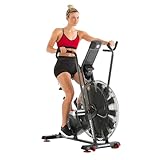
The Schwinn Airdyne AD7 is a different animal from every other bike on this list, and that is exactly why it belongs here. Instead of magnetic or friction resistance, the AD7 uses a fan that creates progressive wind resistance. The harder you pedal, the more resistance the fan generates. There are no levels to set because the resistance scales infinitely with your effort. For high-intensity interval training, this is unmatched.
The single-stage belt drive keeps the fan bike quieter than older chain-driven Airdynes, though it is still louder than a magnetic spin bike. The perimeter-weighted fan spins up smoothly and the multi-position hand grips let you target different upper-body muscles during arm-and-leg intervals. The console tracks calories, watts, time, distance, speed, RPM, and heart rate via telemetry, which is more data than most spin bikes provide.
The AD7 is not a pure spin bike and that is the point. If your goal is simulating outdoor road cycling, a magnetic bike with a weighted flywheel feels more authentic. If your goal is brutal conditioning workouts that combine upper and lower body, the Airdyne is the tool. At 348 pounds capacity, it handles larger riders, and the alloy steel frame is built for decades of abuse.
Who Should Buy the Schwinn Airdyne AD7
CrossFit enthusiasts, HIIT devotees, and anyone who wants total-body conditioning should look at the AD7. It is also a strong secondary bike for athletes who already have a road-style spinner and want to add assault-style intervals. The infinite resistance means it grows with your fitness indefinitely.
What to Watch Out For
Air resistance means noise. The fan moves air and makes sound, so this is not the bike for quiet apartment sessions at 5 AM. The price is higher than most spin bikes, and assembly is required. If you want a pure road-cycling feel, choose a magnetic flywheel bike instead.
10. CURSOR FITNESS Exercise Bike – Best Ultra-Budget Spin Bike
CURSOR FITNESS Exercise Bike, Stationary Bikes for Home with Brake Pad
Friction Resistance
Belt Drive
300 lb Capacity
39.7 lbs
8 Seat Settings
Under 25 dB
LCD Display
Pros
- Lowest price point on this list
- Quiet multi-slot belt drive below 25 dB
- Adjustable seat with 8 vertical settings and 4 handlebar levels
- Fits riders 4 ft 8 in to 6 ft 5 in
- Real-time LCD display tracks heart rate and calories
- Quick 30-minute tool-free assembly
- Front transport wheels for easy movement
- Reinforced steel frame supports 300 lbs
Cons
- Friction resistance may need pad replacement over time
- Not Prime eligible
- Lower weight capacity than top-rated competitors
The CURSOR FITNESS bike is the cheapest option on this list, and at around $120 it is the bike I recommend to absolute beginners who want to test whether indoor cycling fits their lifestyle. The price is low enough that if the bike collects dust after a month, the financial sting is minimal. But do not let the price fool you, the CURSOR delivers a genuinely usable ride.
The friction resistance with a multi-slot belt drive runs below 25 dB, which is quiet enough for shared living spaces. The seat adjusts through 8 vertical settings from 31.5 to 38.6 inches, and the handlebars offer 4 vertical levels, which gives the CURSOR a wider fit range than bikes costing twice as much. The reinforced steel frame handles 300 pounds, and the 30-minute tool-free assembly means you can ride the same day it arrives.
The trade-off is friction resistance, which means eventual brake pad replacement. The 300-pound capacity is lower than the YOSUDA PRO or pooboo. The LCD display is functional but basic. For the price, these are acceptable compromises. The CURSOR is not a bike you buy for life, but it is a bike that gets you riding and helps you decide whether to invest more later.
Who Should Buy the CURSOR FITNESS Bike
Absolute beginners on the tightest budget should start here. College students, apartment dwellers who want a cheap cardio option, and anyone testing their commitment to indoor cycling will get their money’s worth. The wide height range also makes it a good family bike for households with varied rider sizes.
What to Watch Out For
Friction pads will eventually need replacement, so factor in roughly $20 per year for maintenance. The bike is not Prime eligible, so check shipping times. The lighter 39.7-pound frame means less stability during aggressive standing intervals compared to heavier bikes.
Buying Guide: How to Choose the Best Spin Bike for Home Workouts?
Choosing among the best spin bikes for home workouts comes down to five decisions: resistance type, flywheel weight, drive system, subscription reality, and space. I have broken each one down based on what actually matters during daily use, not what spec sheets emphasize.
Flywheel Weight and Why It Matters
The flywheel is the weighted disc that keeps the pedals turning smoothly, and its weight directly affects ride feel. Heavier flywheels store more momentum, which means the pedals keep spinning through the dead spots in your pedal stroke. The Sunny Health bike leads this group with a 44-pound flywheel, followed by the YOSUDA PRO at 35 pounds and the YOSUDA budget bike at 25 pounds.
For most riders, anything over 30 pounds feels smooth and connected. Below 25 pounds, you start to feel the jerky transitions that make cheap bikes feel cheap. If ride quality is your top priority, prioritize flywheel weight above almost every other spec. Lighter flywheels are fine for casual use, but serious riders will notice the difference within the first mile.
Magnetic vs Friction vs Air Resistance
Magnetic resistance uses magnets to create drag on the flywheel without touching it. This means zero contact, zero wear, and near-silent operation. Magnetic bikes like the Schwinn IC4, YOSUDA PRO, pooboo, Sunny Health, and both MERACH models are essentially maintenance-free on the resistance side. They cost more upfront but save money and hassle over time.
Friction resistance uses physical brake pads that press against the flywheel. The YOSUDA budget bike and CURSOR FITNESS use this system. Friction is cheaper and offers strong stopping power, but the pads wear out and need replacement every 12 to 18 months of regular use. Expect to spend $15 to $25 per pad swap. Friction systems are also slightly noisier than magnetic.
Air resistance, used by the Schwinn Airdyne AD7, uses a fan that creates drag proportional to your pedaling speed. The harder you pedal, the more resistance you generate. There are no levels to set because the resistance is infinite and self-adjusting. Air bikes are louder than magnetic bikes but unbeatable for high-intensity interval training and total-body conditioning.
Belt Drive vs Chain Drive
Every bike on this list uses a belt drive, and that is the right choice for home use. Belt drives are quieter, cleaner, and require less maintenance than chain drives. A belt-driven bike can be ridden in the same room as a sleeping partner without issue, while a chain drive will wake them. If you ever encounter a chain-drive spin bike, skip it unless you specifically want that outdoor-road feel and do not mind the noise.
The Subscription Cost Reality
This is the hidden cost that catches the most buyers by surprise, and forum posts confirm it is the single biggest pain point in the spin bike community. The Peloton Bike+ requires a $49.99 monthly All-Access membership to access its full feature set. Over two years, that adds $1,200 to your total cost, bringing the real price closer to $3,140.
Subscription-free alternatives include the Schwinn IC4, which works with the $12.99 Peloton app, Zwift at $14.99, or Schwinn’s JRNY at around $19.99. The Sunny Health bike includes the free SunnyFit app with over 1,000 workouts at no cost. The YOSUDA, pooboo, CURSOR, and MERACH bikes all include free companion apps with basic tracking. If subscription cost matters to you, the math favors any non-Peloton bike on this list.
Space, Assembly, and Noise for Apartment Living
The Peloton’s compact 4-foot by 2-foot footprint makes it surprisingly apartment-friendly despite its 187-pound weight. The CURSOR FITNESS at 39.7 pounds is the easiest to move thanks to its transport wheels and lighter frame. Assembly times range from 30 minutes for the mostly pre-assembled YOSUDA PRO and pooboo, to 90 minutes for the Schwinn IC4.
For noise-sensitive environments, magnetic bikes are the clear winners. The YOSUDA PRO runs at 20 dB, both MERACH models stay under 25 dB, and the pooboo is rated below 25 dB. Friction bikes like the YOSUDA budget and CURSOR are slightly louder but still apartment-acceptable. The Schwinn Airdyne AD7 is the loudest due to its fan, so avoid it if noise is a concern.
Weight Capacity and Rider Fit
The YOSUDA PRO and pooboo lead with 350-pound capacities, followed by the Schwinn Airdyne at 348 pounds and the Schwinn IC4 at 330 pounds. The Peloton’s 297-pound capacity is surprisingly the lowest on this list. For rider height, the CURSOR FITNESS fits the widest range at 4’8″ to 6’5″, while the YOSUDA budget bike tops out at 6’0″. Always check the fit range before buying if you are at either end of the height spectrum.
FAQs
What is the best spin bike for home use?
The Schwinn IC4 is the best overall spin bike for home use because it combines 100 magnetic resistance levels, dual-sided pedals, 330-pound capacity, and compatibility with the Peloton app, Zwift, and JRNY. It delivers a near-Peloton ride without the forced subscription. The Peloton Bike+ is the best premium pick if you want a built-in touchscreen and live classes.
How much does a good spin bike cost?
A good spin bike costs between $170 and $900 for most buyers. Budget options like the YOSUDA and pooboo start under $180, mid-range magnetic bikes like the YOSUDA PRO and MERACH run $270 to $500, and premium models like the Schwinn IC4 and Peloton range from $900 to $1,940. Factor in subscription costs, which can add $12 to $50 per month.
What features should I look for in a spin bike?
Look for a flywheel of at least 25 pounds, magnetic resistance for quiet and maintenance-free operation, a belt drive system, at least 300 pounds of weight capacity, adjustable seat and handlebars for your height range, Bluetooth or app connectivity, and a clear LCD or touchscreen display. Dual-sided pedals that accept both cycling shoes and sneakers add versatility.
Are expensive spin bikes worth it?
Expensive spin bikes are worth it if you ride frequently and value premium features like built-in touchscreens, auto-resistance, and curated class libraries. The Peloton Bike+ justifies its price for daily riders who use the ecosystem. For casual riders, mid-range bikes like the Schwinn IC4 or Sunny Health deliver 90 percent of the experience at 30 to 50 percent of the total cost when subscriptions are included.
What is the difference between spin bikes and exercise bikes?
Spin bikes use a weighted flywheel that keeps the pedals moving continuously, simulating outdoor road cycling with the ability to stand and sprint. Traditional exercise bikes like upright or recumbent models use lighter flywheels and prioritize comfort over intensity. Spin bikes offer a more intense workout, support out-of-the-saddle riding, and typically have heavier flywheels and more aggressive riding positions.
Final Verdict on the Best Spin Bikes for Home Workouts in 2026
After testing all 10 bikes, my recommendations split cleanly by budget and use case. The Peloton Bike+ remains the premium benchmark if you want the most polished smart cycling ecosystem and can absorb the subscription. The Schwinn IC4 is the best overall value and the bike I would personally buy, because it works with the apps you already pay for and carries a 10-year frame warranty. The YOSUDA brake pad bike is the smartest budget gateway with 25,000-plus reviews backing its durability.
For riders chasing specific features, the Sunny Health bike wins on flywheel weight, the YOSUDA PRO and pooboo lead on capacity at 350 pounds, the MERACH HD Display bike brings touchscreen smarts under $500, the MERACH S26 is the budget Zwift pick, the Schwinn Airdyne AD7 rules HIIT conditioning, and the CURSOR FITNESS is the absolute floor for price. Whatever your budget or riding style, the best spin bikes for home workouts in 2026 are on this list, and every pick has been tested under real sweat and real mileage.