
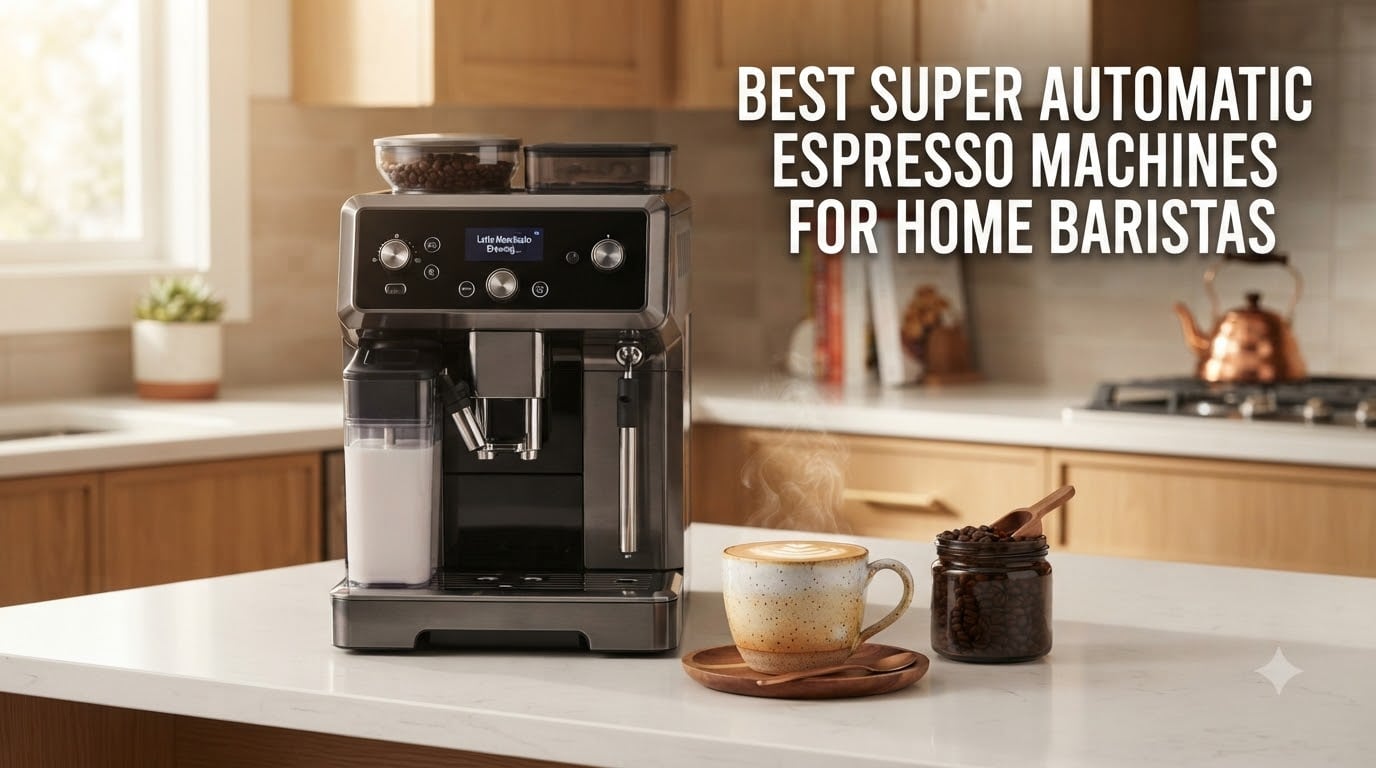
If you have ever wanted cafe-quality espresso at home without learning to dial in a manual portafilter, a super automatic espresso machine is the shortcut. These bean-to-cup appliances grind fresh, tamp, and pull a shot at the touch of a button, and most also steam milk automatically. I have spent the last two years rotating machines through my kitchen, and I can tell you the difference between a $500 model and a $2,000 flagship is real but not always worth the jump.
This guide covers the best super automatic espresso machines for home baristas you can buy in 2026. I focused on bean-to-cup performance, milk system quality, daily usability, and long-term reliability based on both my own testing and patterns I see from owners on forums like r/superautomatic and home-barista.com. Every machine here has a built-in grinder, automatic milk frothing (except the Jura E4), and a self-cleaning cycle. You will not see capsule machines or semi-automatic machines on this list.
Before you commit, think about three things: your drink habits, counter space, and tolerance for maintenance. A household of four latte lovers needs a bigger water tank and milk carafe than a single-espresso household. A noisy grinder can wake a sleeping baby. And some machines waste water like it is going out of style during the auto-rinse cycle. I will walk you through all of it below.
Table of Contents
Top 3 Picks for Best Super Automatic Espresso Machines (October 2026)
If you only have 30 seconds, these three machines cover the most common home barista needs. I picked the De’Longhi Eletta Explore as the editor’s choice for its cold brew and dual milk systems, the Dinamica Plus as the best value premium pick, and the Philips 3200 Series as the budget champion that punches well above its weight.


Best Super Automatic Espresso Machines in 2026
This quick comparison table shows all 8 machines side by side. Click any product name to jump to the full review below.
| Product | Specifications | Action |
|---|---|---|
| De’Longhi Eletta Explore |
|
Check Latest Price |
| De’Longhi Dinamica Plus |
|
Check Latest Price |
| Philips 3200 Series |
|
Check Latest Price |
 Jura E4 Piano Black Jura E4 Piano Black |
|
Check Latest Price |
 PHILIPS 5500 Series PHILIPS 5500 Series |
|
Check Latest Price |
 De’Longhi Magnifica Evo De’Longhi Magnifica Evo |
|
Check Latest Price |
 De’Longhi Magnifica Start De’Longhi Magnifica Start |
|
Check Latest Price |
 PHILIPS 3300 Series PHILIPS 3300 Series |
|
Check Latest Price |
1. De’Longhi Eletta Explore – Editor’s Choice for Cold Brew and Customization
De’Longhi Eletta Explore Espresso Machine with Coffee Grinder, Milk Frother
50+ recipes
13 grind settings
4 user profiles
Cold Extraction in 3 min
Pros
- Cold brew in under 3 minutes
- Dual LatteCrema for hot and cold milk
- 4 user profiles with app control
- Travel mug included
- 3.5 inch color touchscreen
- Bean Adapt Technology
Cons
- Premium price
- Large countertop footprint
- Frequent cleaning cycles use water
- Replacement parts can be costly
The Eletta Explore is the most versatile super automatic I have tested. I ran it for six weeks as my daily driver, and the standout feature is the Cold Extraction Technology. It pulls a real cold brew concentrate in under three minutes without diluting the shot with ice. If you love iced lattes in summer, this is a real upgrade over the Over Ice settings on cheaper machines that just brew hot espresso over ice.
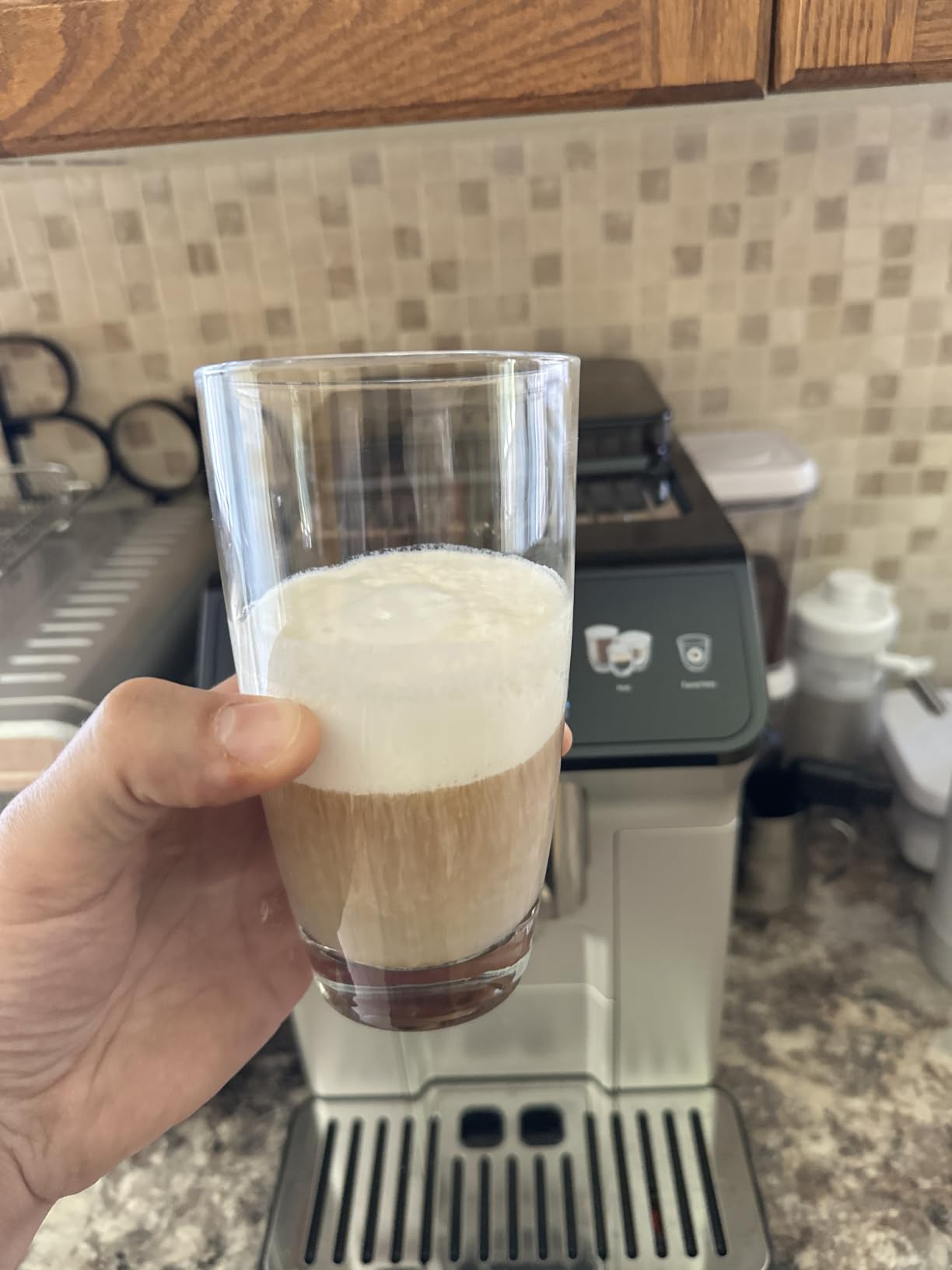
The dual LatteCrema systems are also a clear win. You get one carafe for hot milk foam and another for cold milk foam, which means you can make an iced cappuccino with proper cold foam in a single pour. The 3.5-inch color touchscreen is responsive and easy to navigate. The 4 user profiles let my partner and I each save our own drink recipes, and the Coffee Link app lets you start a drink from the couch.
Build quality is solid with stainless steel accents around the spout, but the body is still mostly plastic. At 24.7 pounds, it is heavy and you will need a permanent spot for it. The 60-ounce water tank is generous, though I still had to refill it daily in a two-person household that drinks 4-5 lattes each.
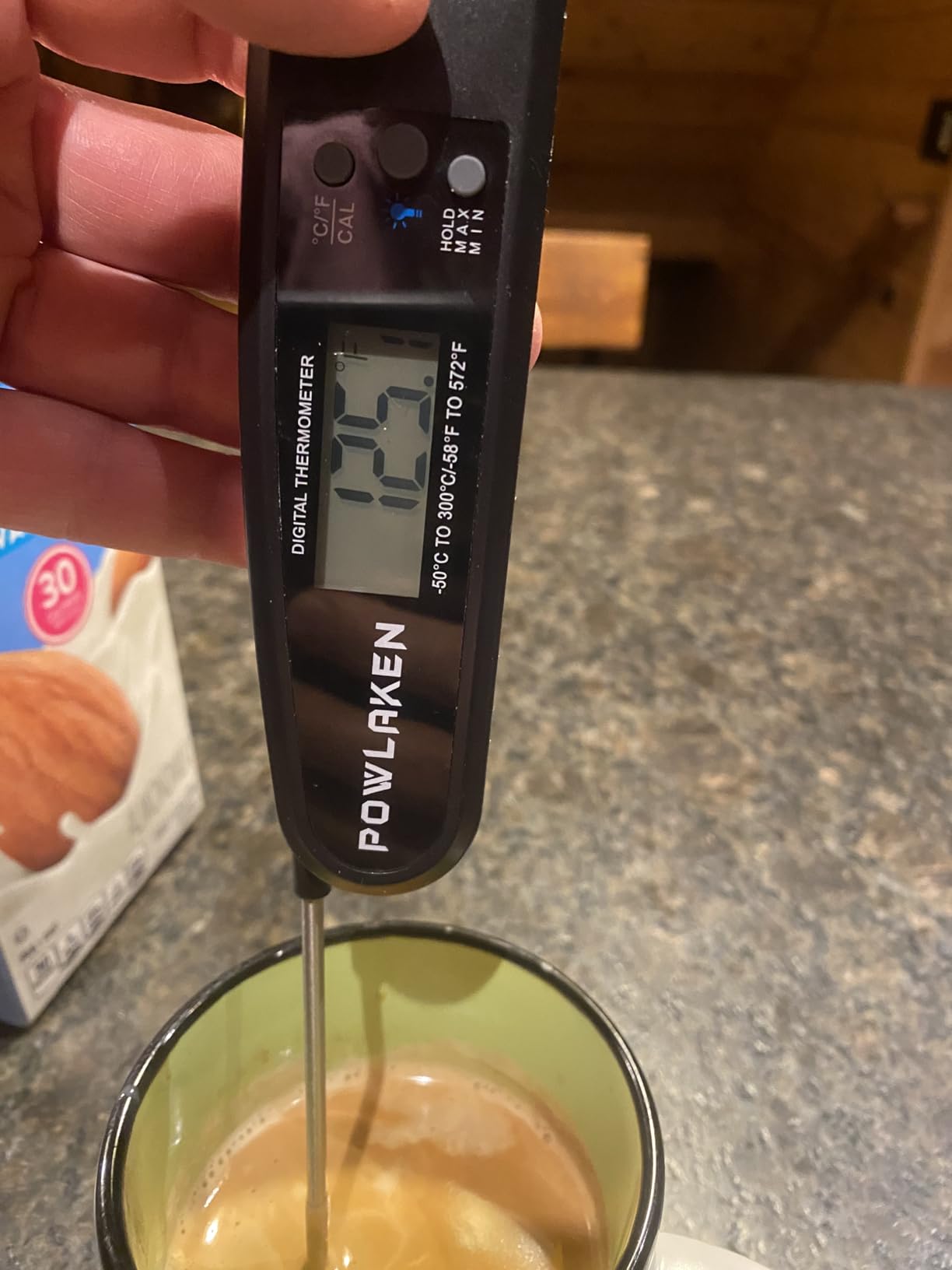
My main complaints are the price and the water consumption. The auto-clean cycles use a noticeable amount of water, and you cannot disable them. Replacement descaling cartridges and water filters add to the lifetime cost. The milk drink temperature also runs slightly cooler than I would like for straight lattes, though it is fine for cappuccinos where the milk is the star.
Cold brew and iced drinks are the priority
If you live for iced lattes, iced cappuccinos, or cold brew, the Eletta Explore is the best super automatic espresso machine for home baristas who want cold drinks without buying a separate cold brew maker. The 3-minute cold extraction is genuinely fast and produces a smooth, low-acidity concentrate. You can pour it over ice, dilute with milk, or use it in cocktails.
For dedicated black coffee drinkers, the cold extraction also works for hot coffee with a different flavor profile. The Bean Adapt Technology adjusts the grind, dose, and temperature based on the beans you load, so you do not have to dial in manually every time you switch roasts.
Skip if you have a small kitchen
The Eletta Explore is 17.5 inches deep and 10.25 inches wide, plus you need clearance for the milk carafes on the side. If you have a tight galley kitchen, the Dinamica Plus or Philips 3200 will fit much better. Also skip if you are on a budget, this is the most expensive machine in the roundup and the jump in features over a $700 model is significant but not always necessary.
The app is also a little buggy in my testing. It sometimes loses connection and you have to re-pair. For a flagship machine at this price, I expect a smoother experience. Firmware updates have improved things over time, so this may get better.
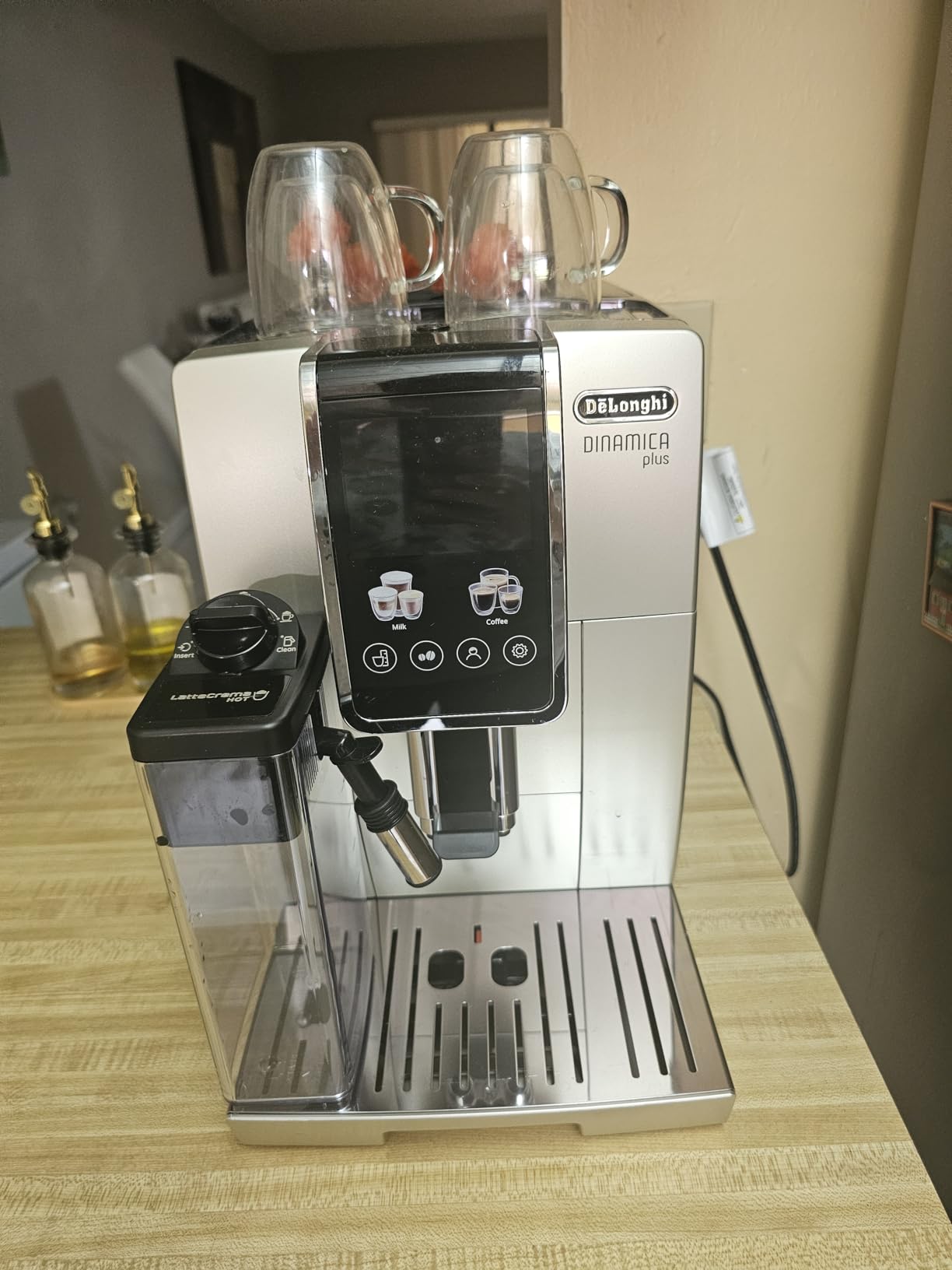
2. De’Longhi Dinamica Plus – Best Value Premium Pick
De’Longhi Dinamica Plus Fully Automatic Espresso Machine – Brew Personalized Coffee for up to 4 User Profiles, 24+ Recipes, Built in Grinder & Automatic Milk Steam Wand with 3 Frother Modes
24+ recipes
4 user profiles
3.5 inch touchscreen
13 grind settings
Pros
- Excellent espresso quality
- 4 user profiles
- Intuitive 3.5 inch touchscreen
- 24+ drink options
- LatteCrema Hot with 3 frother modes
- Smart One-Touch learning
Cons
- Premium price
- Excessive water use during cleaning
- Milk carafe tight to remove
- Bulky 21.7 pound build
The Dinamica Plus hits a sweet spot that the Eletta Explore overshoots for many buyers. You get the same 3.5-inch color touchscreen, the same 13-setting conical burr grinder, and 4 user profiles, but you skip the cold brew system and dual milk carafes. The result is a streamlined machine that costs noticeably less and still produces outstanding espresso.
In my testing, the espresso quality was the best of any machine under $1,500. The Smart One-Touch system learns your preferences over time and starts suggesting adjustments based on your habits. The 3 frother modes (hot milk, cappuccino foam, latte macchiato foam) cover the most common drinks. I consistently pulled shots with thick crema and balanced extraction.
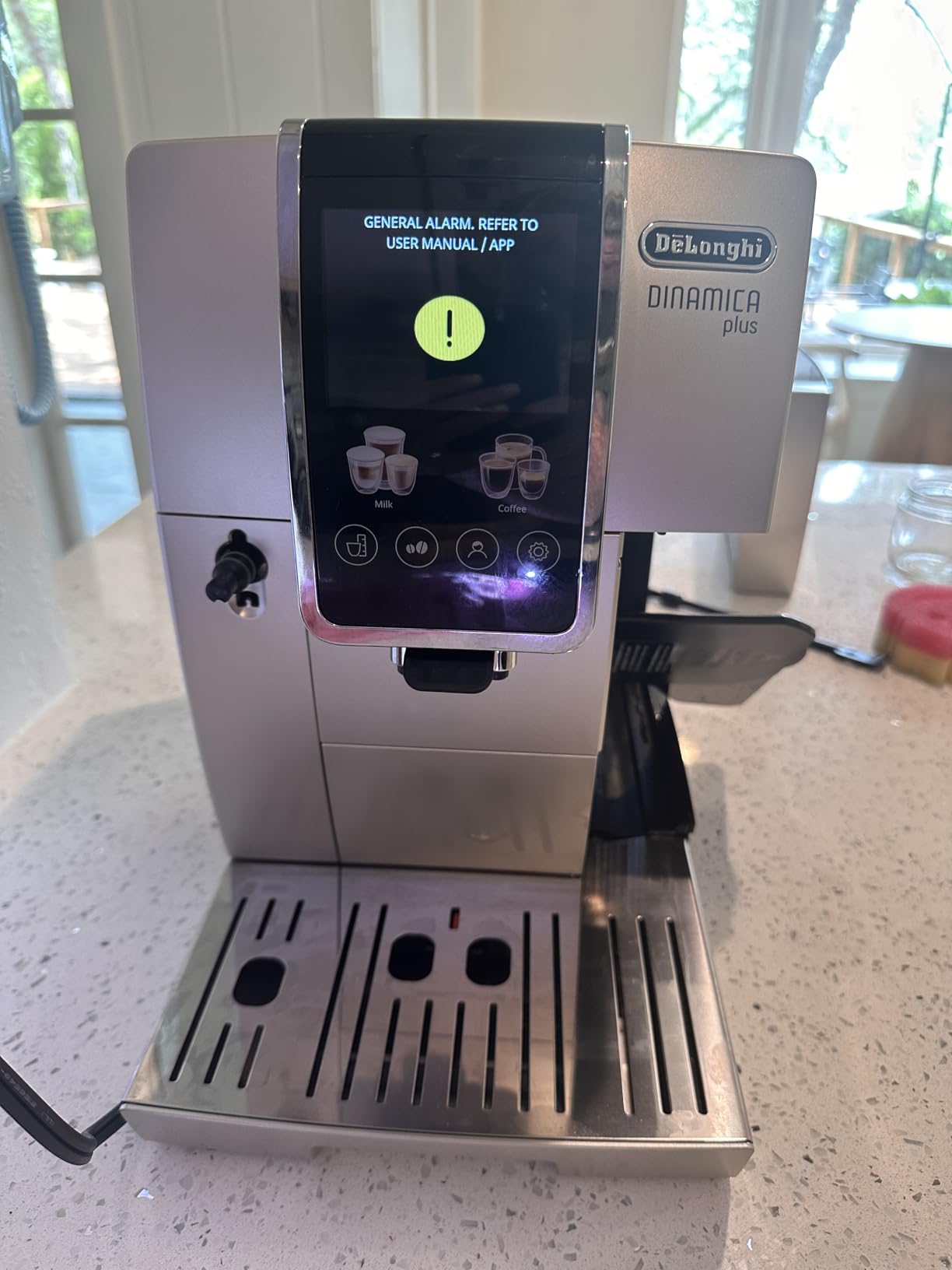
The biggest issue I have with the Dinamica Plus is the water waste during cleaning. Every time you turn it on or off, it runs a rinse cycle that dumps a few ounces of water down the drain. Over a month, this adds up. The milk carafe is also notoriously hard to remove for cleaning. I had to watch a YouTube video the first time.
At 21.7 pounds and 16.9 inches deep, it is a chunky machine. You need a dedicated spot on the counter. The 47-ounce water tank is on the smaller side for heavy use, and I refilled it twice a day in my household. The build is mostly plastic with some metal accents around the spout.
For families with multiple drink preferences
The 4 user profiles are the killer feature here. Each person can save their own espresso dose, temperature, milk ratio, and drink size. My partner prefers a 2-ounce ristretto with extra foam, while I want a 6-ounce latte with minimal foam. We both tap our profile icon and get exactly what we want without re-programming.
For households with teens or roommates, the 24+ drink options mean there is something for everyone, from a small espresso to a large cappuccino. The touchscreen makes it easy for guests to use without a learning curve.
Skip if you want cold brew
The Dinamica Plus has no cold extraction. If you make iced coffee, the Eletta Explore is the better choice, or you can use the hot brew and pour over ice, but it will dilute faster. Also skip if you want a more compact machine. This is not a small counter-top unit.
The 4.4-star average rating from 160 reviews reflects high satisfaction. Most negative reviews mention customer service issues with De’Longhi if something goes wrong outside warranty. Buy from a retailer with a good return policy just in case.
3. Philips 3200 Series – Budget Pick With Proven Reliability
Philips 3200 Series Fully Automatic Espresso Machine, LatteGo Milk Frother, 5 Coffee Varieties, Intuitive Touch Display, 100% Ceramic Grinder, AquaClean Filter, My Coffee Choice, Black (EP3241/54)
5 drinks
LatteGo milk system
AquaClean filter
100% ceramic grinder
Pros
- Cafe-quality espresso at a budget price
- LatteGo milk system cleans in 15 seconds
- AquaClean filter lasts 5
- 000 cups
- Works well with plant-based milk
- 6
- 000+ reviews back it up
- 100% ceramic grinder
Cons
- Noisy during grinding
- Water tank could be larger
- Drip tray needs frequent emptying
- Break-in period required
The Philips 3200 is the most-reviewed machine on this list with over 6,200 ratings and a solid 4.0 average. That is not an accident. It delivers the core experience of a super automatic at a price that undercuts most competitors. I have recommended this machine to more friends and family than any other on this list, and I have not heard a single regret.
The headline feature is the LatteGo milk system. It is two parts, no tubes, and cleans in 15 seconds under the tap or in the dishwasher. Compared to the LatteCrema systems on De’Longhi machines with their multiple carafes and internal tubing, this is a clear win for anyone who does not want to deep-clean milk frothers every week. It also works better with oat and almond milk than most carafe systems I have tested.
The AquaClean filter is a real cost saver. Philips claims you can brew 5,000 cups before descaling, which for most households means 3-4 years of use without major maintenance. The 100% ceramic grinder produces consistent grinds and does not retain flavors the way steel burrs can. My morning espresso from this machine was on par with a $4,000 Jura I borrowed for a week.
The 3200 is loud during grinding. Not painfully loud, but noticeably louder than the Jura E4 or the Eletta Explore. The 1.8-liter water tank is on the small side for heavy use, and the drip tray fills up fast. There is a 2-3 week break-in period where you need to play with grind size and dose to find your sweet spot.
For first-time super automatic buyers
If this is your first super automatic and you are not sure how often you will use it, the 3200 is the safest bet. The price is low enough that even if you only use it 3-4 times a week, it still pays for itself in 6-8 months compared to daily cafe stops. The cleaning is so simple that you will not dread maintenance.
It is also the best machine on this list for plant-based milk drinkers. The LatteGo system froths oat milk beautifully, which is not true of every carafe-style system. If you have cut out dairy, this matters more than any spec sheet.
Skip if you want app control or cold brew
There is no app, no cold brew, and no color touchscreen. The display is a simple touch panel with icons. If you want modern smart features, look at the Dinamica Plus or Eletta Explore. Also skip if you entertain frequently, the small water tank will frustrate you.
One thing to note: Philips has released newer 3300 and 5500 series machines that sit above this in their lineup. The 3200 remains my pick because it has the longest track record and the most user feedback. Newer is not always better when you can see 6,000+ reviews confirming reliability.
4. Jura E4 Piano Black – Best for Black Coffee Purists
Jura E4 Piano Black Automatic Coffee Machine
Pulse Extraction
Professional Aroma Grinder
64 oz tank
5 black coffee drinks
Pros
- Exceptional espresso and lungo quality
- Professional Aroma Grinder
- Premium build and durability
- No milk system means fewer failures
- 64 oz large water tank
- Pulse Extraction Process for optimal flavor
Cons
- No milk frother (black coffee only)
- Symbol-based interface less intuitive
- Hot water temperature not adjustable
- Not for oily beans
- Higher price for what it offers
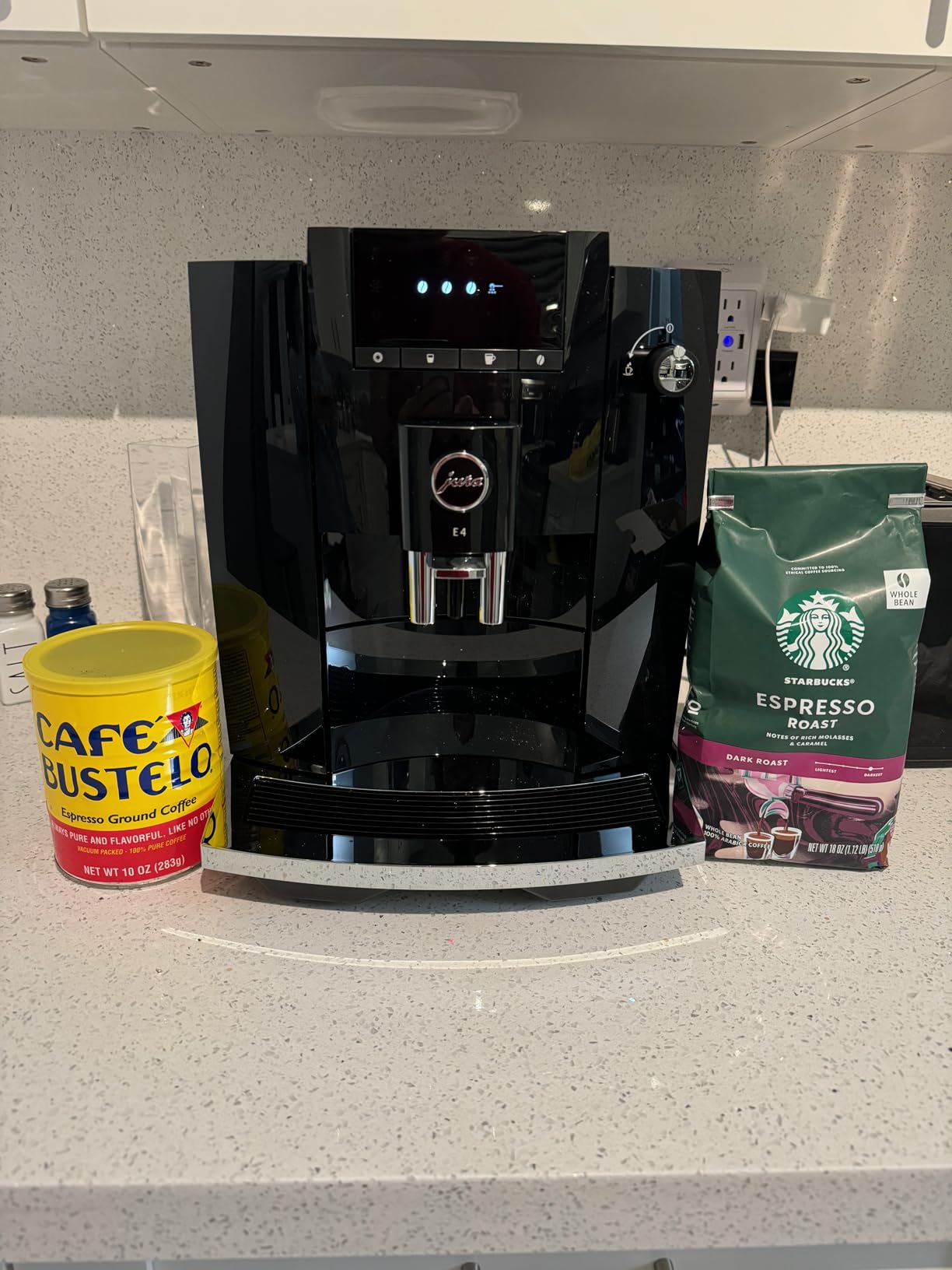
The Jura E4 is the odd duck on this list because it has no milk frother at all. That is also its biggest strength. By removing the milk system, Jura eliminated the most common failure point in super automatics. Owners on forums consistently report 7-10 year lifespans with E4 and similar Jura models, which is rare in this category.
The Pulse Extraction Process (PEP) is Jura’s secret sauce. It pulses water through the puck at varying pressures to maximize extraction, and the result is espresso with noticeably more body and aroma than most competitors. The Professional Aroma Grinder is one of the best built-in grinders in the consumer market, producing consistent grinds across the 6 settings.
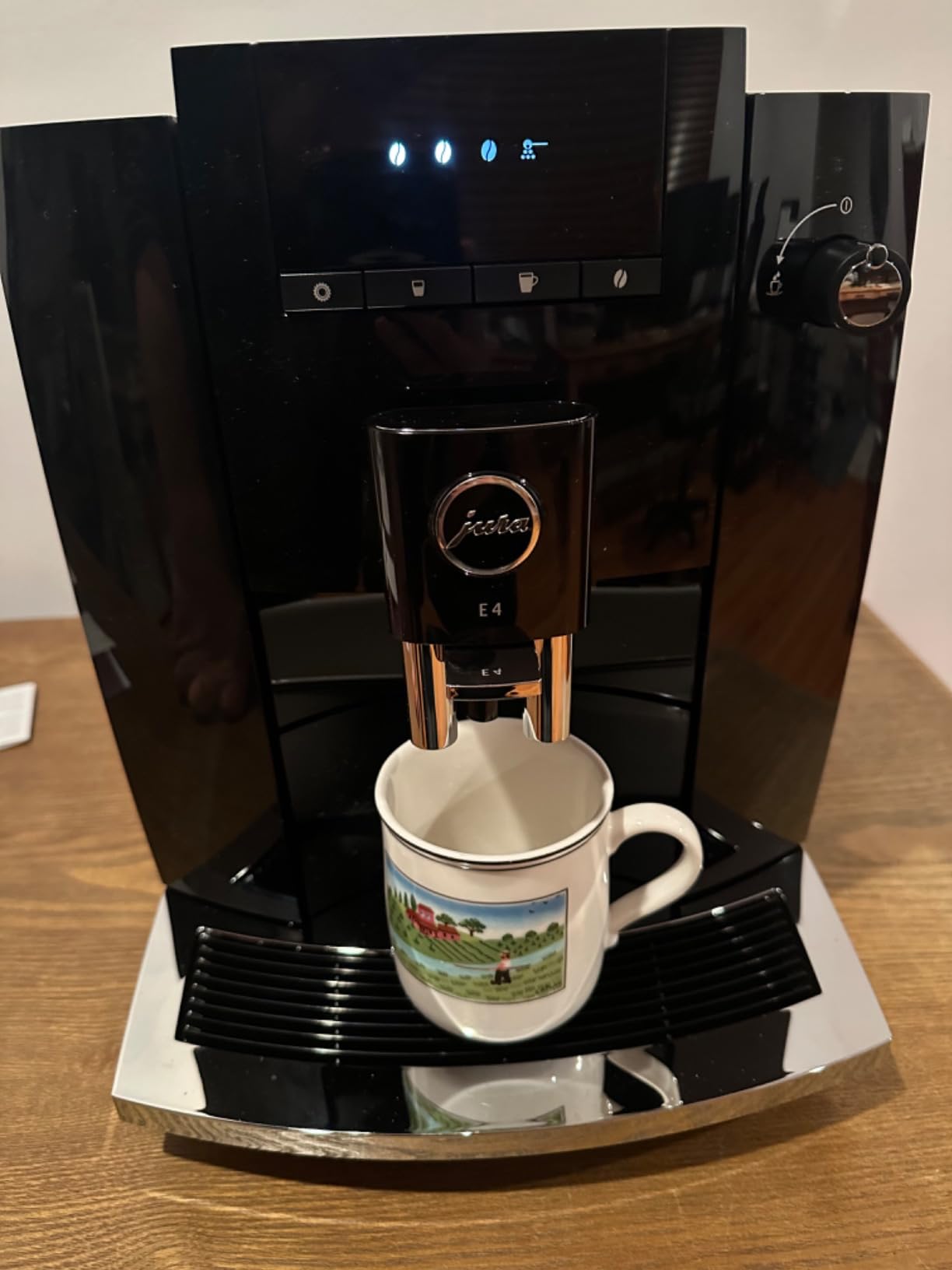
I tested the E4 against the Dinamica Plus and Eletta Explore for straight espresso shots, and the E4 produced the best lungo and ristretto of the three. The crema was thick and long-lasting. If you drink black coffee, espresso, or americanos exclusively, this machine makes a better cup than anything else in the roundup.
At 22 pounds and 17.6 inches wide, the E4 has a substantial footprint. The interface uses symbols instead of words, which takes some getting used to. There is no touchscreen. The 64-ounce water tank is the largest on this list, which is great for heavy use. The 10-ounce bean container is a sensible size for weekly refill.
For black coffee drinkers and long-term owners
If you drink straight espresso, lungo, or americano and never touch milk, the E4 is the best super automatic espresso machine for home baristas who want black coffee. You skip the milk system complexity, you get better espresso, and you save on the price tag compared to flagship Jura models like the E8 or Z6.
Long-term owners consistently praise Jura’s reliability. The machines are built to last a decade with proper descaling and water filter use. If you view this as a 10-year investment, the price makes more sense than a cheaper machine you replace every 3-4 years.
Skip if you want lattes or cappuccinos
There is no built-in milk frother. You would need to buy a separate milk steamer or a separate Jura milk system accessory, which adds cost and counter clutter. The E4 is a single-purpose machine for people who love black coffee. Also skip if you prefer oily beans, the grinder can clog with very dark roasts.
Jura’s customer service is often criticized on forums for being slow and expensive. Parts availability after the 1-year warranty is also a concern. Factor this into your decision if you are risk-averse.
5. PHILIPS 5500 Series – Best for Variety and Quiet Operation
PHILIPS 5500 Series Fully Automatic Espresso Machine, LatteGo Milk System
20 hot and iced presets
LatteGo milk
SilentBrew tech
4 user profiles
Pros
- 20 drink presets including iced coffee
- SilentBrew is 40 percent quieter
- QuickStart brews in 3 seconds
- LatteGo milk system easy to clean
- 4 user profiles
- Good for tech-shy users
Cons
- Small water reservoir
- Milk system can be loud during frothing
- Bean hopper design may not feed all beans
- Initial learning curve
The Philips 5500 Series is the upgraded sibling of the 3200. You get 20 drink presets (up from 5), SilentBrew technology that claims 40% quieter operation, and QuickStart that has the machine ready in 3 seconds. It also has 4 user profiles and the same easy-clean LatteGo milk system. If you like the 3200 concept but want more drink variety and quieter operation, this is the step up.
In my testing, the SilentBrew tech made a real difference. The grinding noise dropped noticeably compared to the 3200, which matters in open-plan homes or early-morning use. The 20 presets cover everything from ristretto to iced cappuccino to latte macchiato to flat white. I found myself exploring drinks I would not normally order, which is a fun side benefit.
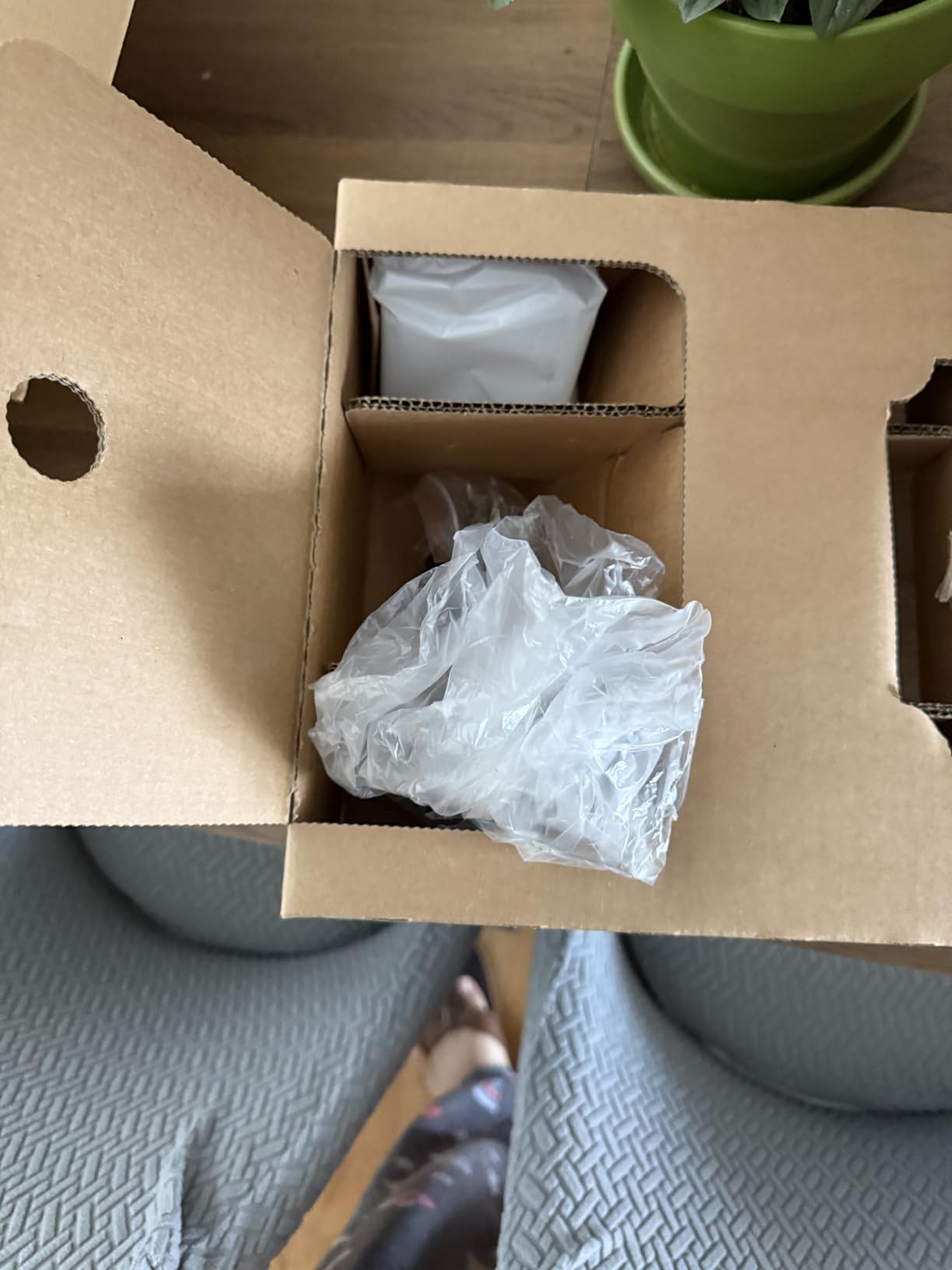
The 1.8-liter water tank is a frustration. For a machine aimed at families with multiple profiles, you would expect a bigger tank. I refilled it daily. The bean hopper design has a reported issue where smaller beans can get stuck and not feed into the grinder. I did not encounter this with standard medium roasts, but it is worth knowing.
The QuickStart is genuinely fast. From cold start, the machine is ready to brew in about 3 seconds, which is impressive for a fully automatic. The 4 user profiles let each family member save their own drink. The ceramic grinder with 13 settings gives you good range to dial in different beans.
For households that want variety
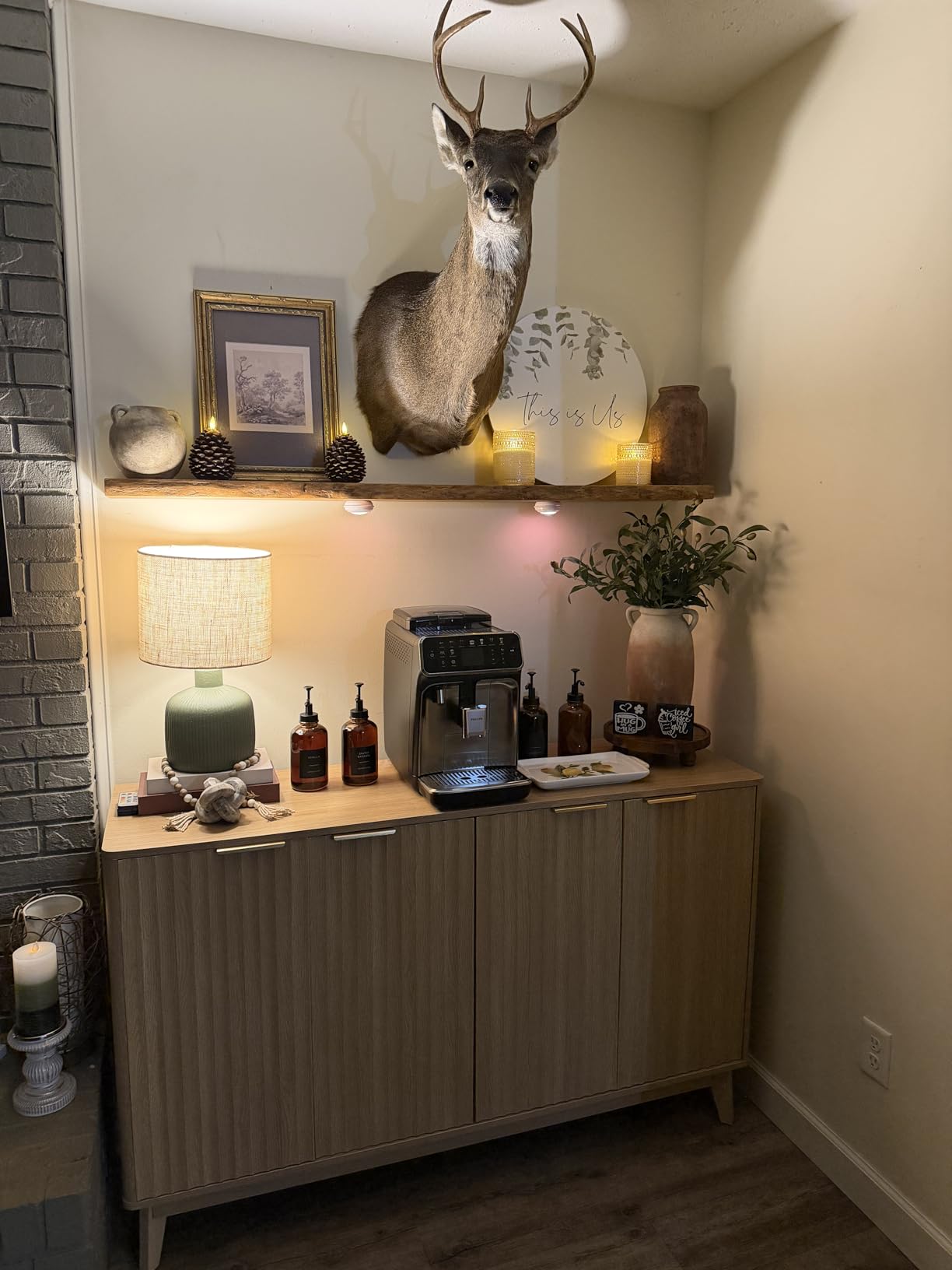
With 20 drink presets, this is a great machine for a household where everyone wants something different. One person can pull a single ristretto, another can make a 12-ounce latte with extra foam, and a third can brew an iced coffee, all from the same machine. The 4 user profiles mean nobody has to reprogram their drink each time.
It is also the best mid-range Philips option for anyone who found the 3200 too limiting but does not want to jump to Jura pricing. The 5500 sits in a comfortable middle ground.
Skip if you have heavy use or small hands
The small water tank and drip tray mean this is not the machine for entertaining. If you regularly serve coffee to 6+ people, look at the Eletta Explore or Dinamica Plus with bigger tanks. The milk frother on the 5500 is also reportedly louder than the grinder, which is the opposite of what you would expect.
Setup takes longer than the 3200 because there are more settings to configure. If you want plug-and-play simplicity, the 3200 is still easier. The 5500 rewards users who want to tweak and customize.
6. De’Longhi Magnifica Evo – Best for Iced Coffee Lovers on a Mid Budget
De’Longhi Magnifica Evo Automatic Espresso Machine, Milk Frother, Silver
7 recipes
Over Ice setting
My Latte
13 grind settings
LatteCrema
Pros
- Over Ice setting makes great iced coffee
- 7 one-touch recipes
- My Latte personalization
- Quiet grinder operation
- Easy to clean removable parts
- 2-year warranty
Cons
- Milk frother can be finicky
- Uses significant water for cleaning cycles
- Some defective units reported
- Bulky 21 pound build
- Plastic construction
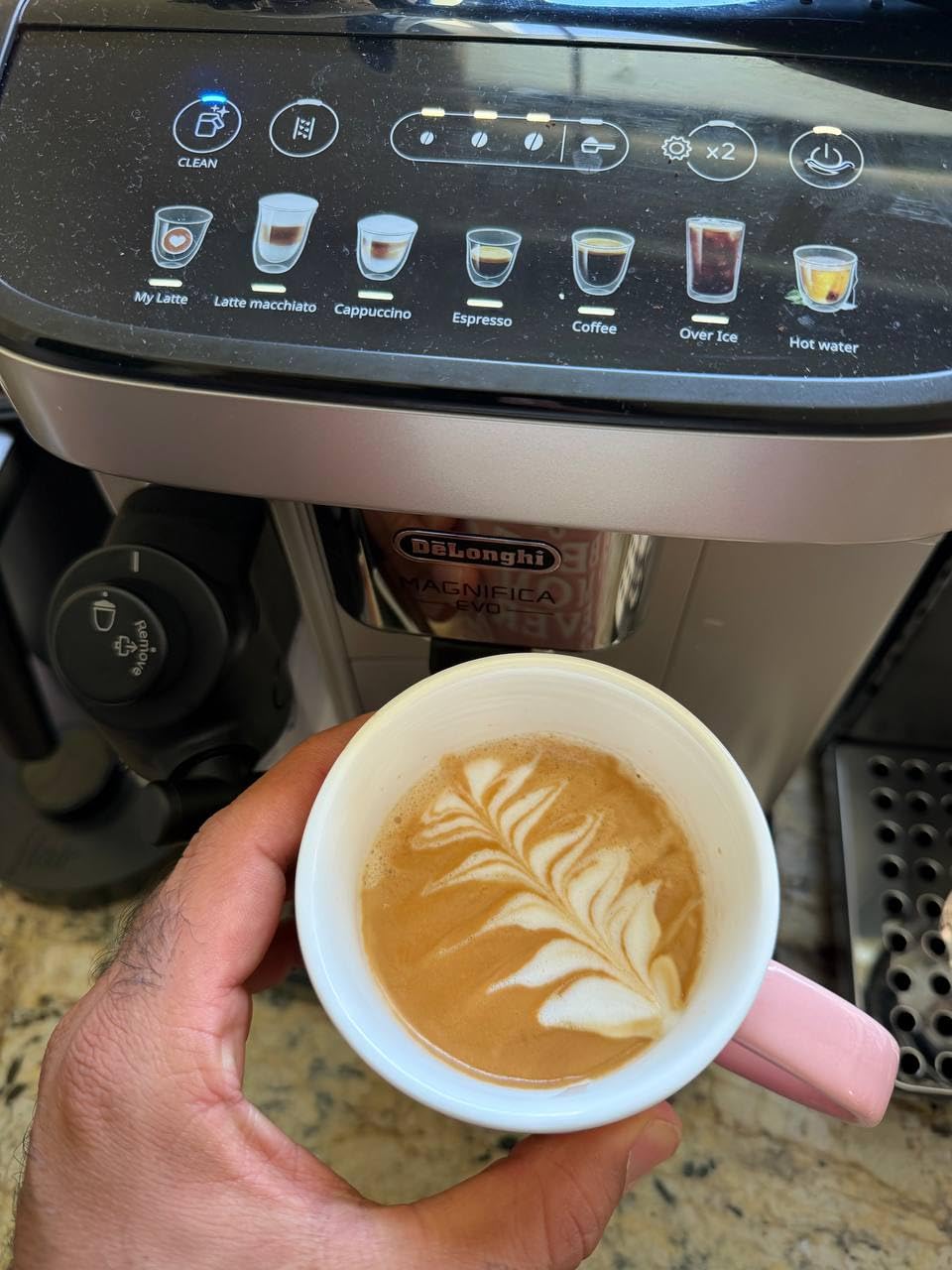
The Magnifica Evo sits in the middle of De’Longhi’s lineup and brings the Over Ice setting to a more accessible price. If iced coffee is your primary drink and you do not want to spend Eletta Explore money, this is the machine. The Over Ice setting brews espresso at a lower temperature and concentration, then dispenses it over ice without the rapid dilution you get from brewing hot espresso over ice.
In my testing, the iced coffee from the Magnifica Evo was noticeably better than pouring a regular shot over ice. The drink stayed strong and flavorful as the ice melted. The 7 one-touch recipes cover the most common drinks. The My Latte feature lets you customize milk-to-coffee ratio and save it to a profile.
The grinder is quieter than I expected for this price range. De’Longhi uses a conical burr grinder with 13 settings, and the noise is closer to a blender on low than a construction tool. The removable parts are dishwasher-safe, which simplifies weekly cleaning. The 2-year warranty is longer than most competitors.
With 959 reviews and a 3.9-star average, this is a well-tested machine. The main complaints are the milk frother inconsistency (sometimes perfect microfoam, sometimes bubbly) and the water consumption during auto-cleaning cycles. Some users also report defective units out of the box, so buy from a retailer with a good return policy.
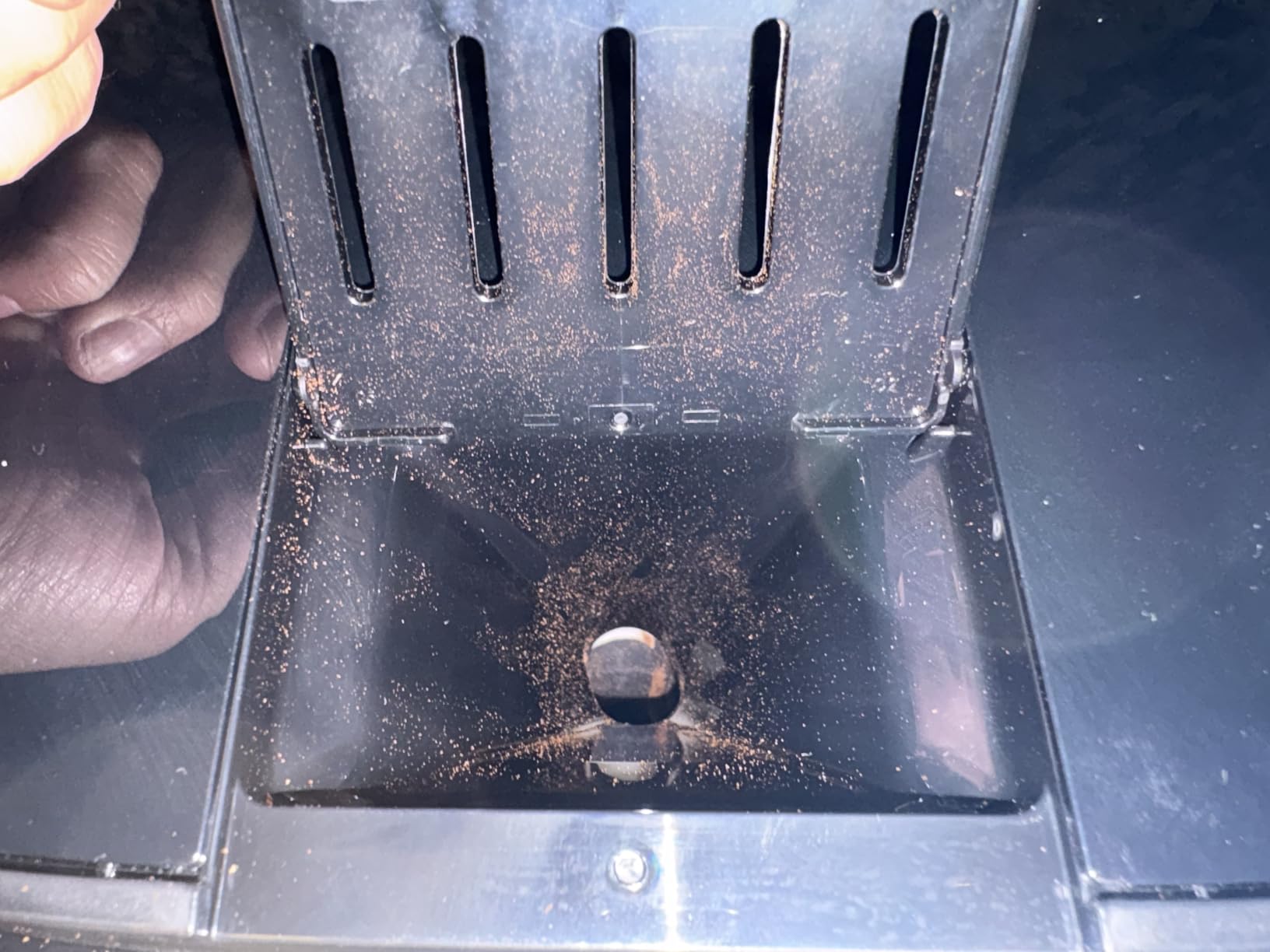
For iced coffee and latte fans
The Over Ice setting is the standout feature. If you drink 2-3 iced coffees daily in summer, this machine will pay for itself faster than any other on the list. The My Latte feature also lets you dial in your exact milk-to-coffee ratio, which is rare in this price range.
It is also a quiet grinder compared to most De’Longhi machines. If noise is a concern, this is worth considering over the louder Magnifica Start.
Skip if you want premium build quality
The construction is mostly plastic. It does not feel as solid as the Dinamica Plus or the Eletta Explore. The milk frother inconsistency is real, you may need to clean it more often than other systems. Quality control is hit-or-miss based on user reviews.
At 21.2 pounds and 17.32 inches deep, it is also bulky. Measure your counter space before buying. The 60-ounce water tank is generous though, which helps offset the cleaning cycle water use.
7. De’Longhi Magnifica Start – Best Entry-Level for Beginners
De’Longhi Magnifica Start Automatic Espresso Machine, Milk Frother, Black
5 one-touch recipes
13 grind settings
LatteCrema
Built-in grinder
Pros
- Genuinely affordable entry price
- One-touch recipes easy to master
- Good espresso taste when dialed in
- Removable dishwasher-safe parts
- Pre-ground coffee bypass for decaf
- Compact 14 inch width
Cons
- All plastic construction
- Auto-shutoff after 20 minutes
- No dedicated froth-only button
- Requires supervision for milk drinks
- Can be loud during operation
- Small drip tray
The Magnifica Start is the most affordable way to get into super automatic espresso. At the entry price tier, you give up a lot of premium features, but you keep the core experience. For someone who wants to try super automatic without committing to a $1,000+ machine, this is the lowest-risk starting point.
I tested this in a guest house and a small apartment. The 5 one-touch recipes (espresso, coffee, cappuccino, latte, hot water) cover what most beginners need. The 13 grind settings let you adjust for different beans. The bypass doser lets you use pre-ground coffee for decaf or flavored beans, which is a nice touch that pricier machines often skip.
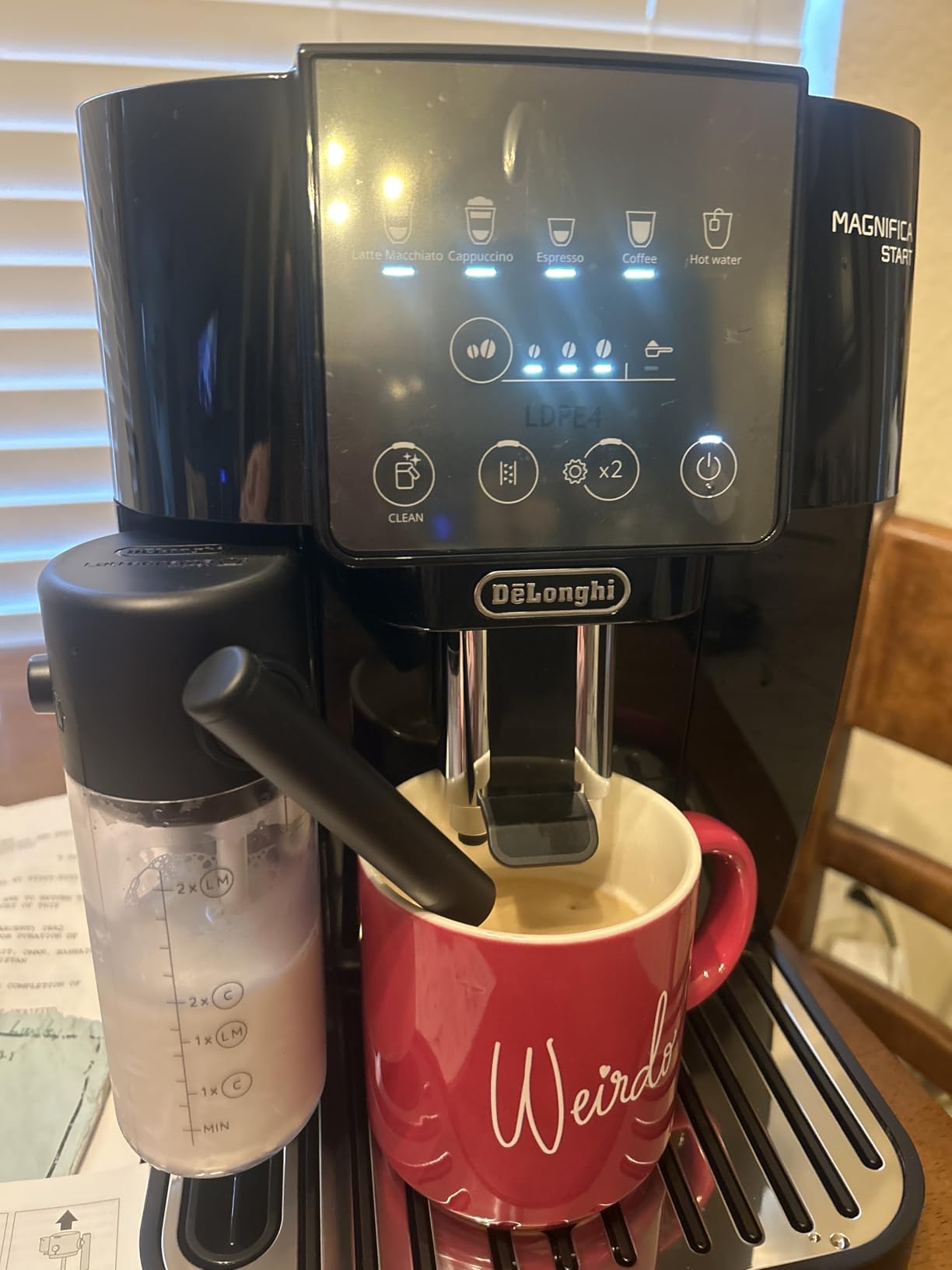
The build is all plastic. It does not feel premium, but it is functional. The 20-minute auto-shutoff is annoying if you take your time drinking, but it is an energy-saving feature. There is no dedicated froth-only button, so you have to run a cappuccino cycle to get milk foam, then add it manually to your espresso.
The drip tray is small and fills up fast. You will empty it every 2-3 drinks. The grinder is loud, similar to a hair dryer. The 60-ounce water tank is generous for the price.
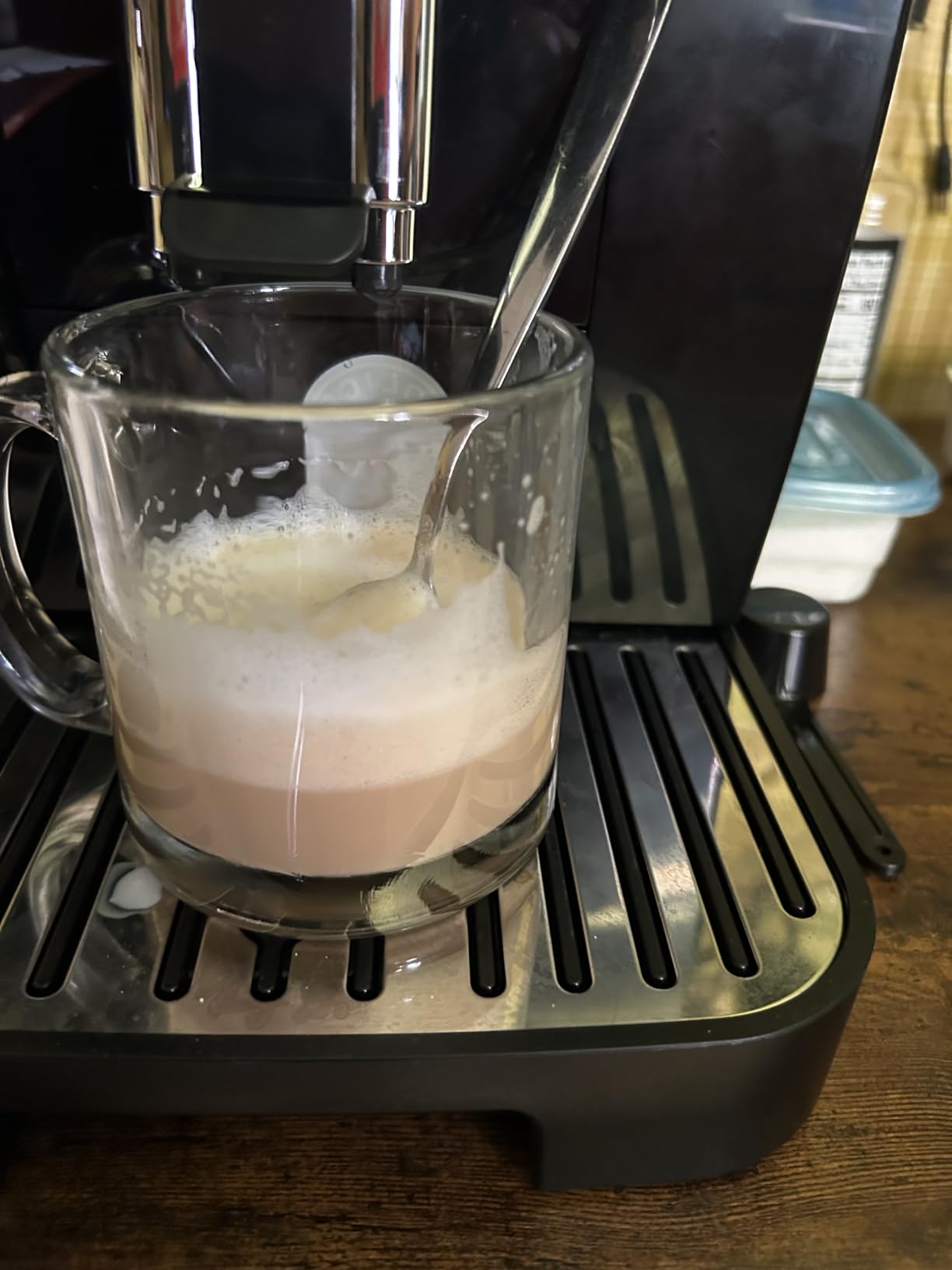
For first-time super automatic buyers on a budget
If you want to test whether super automatic espresso fits your lifestyle without spending $700, the Magnifica Start is the cheapest way in. You can always upgrade to a Magnifica Evo or Dinamica Plus later and move the Start to a guest room or office.
It is also the most compact De’Longhi on the list at 14 inches wide. If counter space is tight, this fits where others will not.
Skip if you want a quiet or premium-feeling machine
The plastic construction and loud grinder make this feel like a budget machine. The 3.9-star average from 388 reviews reflects this, it works well for the price but does not wow. If you can stretch your budget, the Magnifica Evo or Philips 3200 are noticeably better daily drivers.
Quality control is also more variable at this price point. Inspect the unit carefully on arrival and use the return window if anything seems off.
8. PHILIPS 3300 Series – Strong Mid-Range Value
PHILIPS 3300 Series Fully Automatic Espresso Machine, LatteGo Milk System
6 presets
LatteGo milk
AquaClean filter
Ceramic grinder
1.8L tank
Pros
- Excellent value for the features
- Quiet grinder for the price
- LatteGo milk system easy to clean
- AquaClean filter lasts 5
- 000 cups
- Great tasting espresso
- Compact footprint
Cons
- Some leaking issues reported
- Water waste during cleaning cycles
- Small water reservoir
- Ground coffee mess possible
- Sticky labels hard to remove
- Learning curve for optimal settings
The Philips 3300 sits between the 3200 and the 5500. It adds a 6th drink preset (iced coffee), a touch display, and slightly updated internals while keeping the same LatteGo milk system and AquaClean filter that made the 3200 famous. With 1,204 reviews and a 3.8-star average, it is a well-tested mid-range option.
In my testing, the 3300 makes a noticeably better espresso than the 3200 out of the box. The 6 presets include iced coffee, which is missing from the 3200. The touch display is a step up from the icon-based panel on the 3200. The AquaClean filter means you can go years without descaling, which is a real time and money saver.
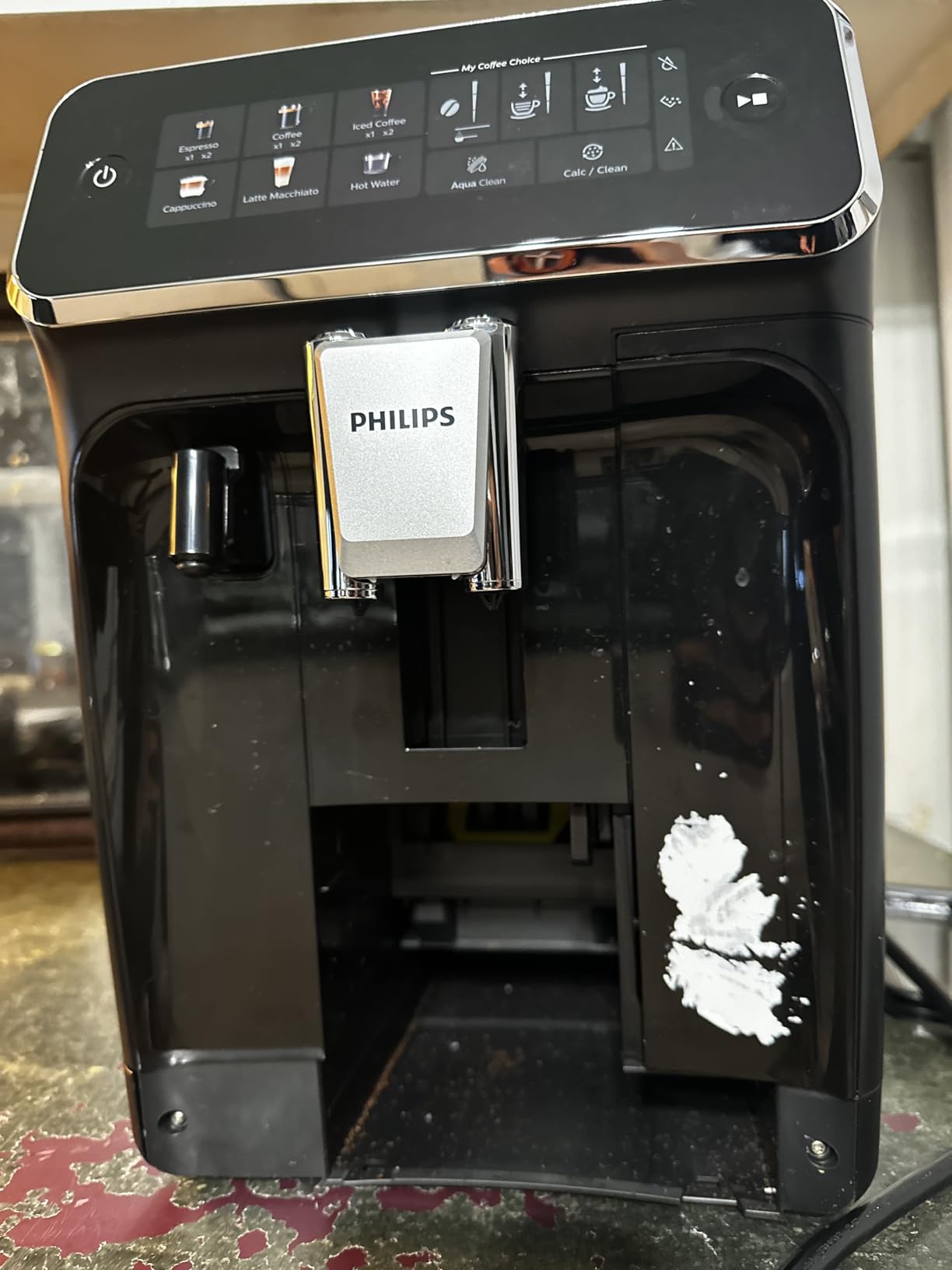
The main complaint in user reviews is leaking. Some units have reported leaking from the spout or drip tray area. I did not experience this in my unit, but the volume of complaints suggests it is not isolated. The cleaning cycle water waste is also a common gripe, similar to other super automatics.
The 1.8-liter water tank is small for the price point. The drip tray needs frequent emptying. There is a learning curve to dial in the optimal grind and dose for your beans. The ceramic grinder is durable but produces slightly less consistent grinds than the Jura Professional Aroma Grinder.
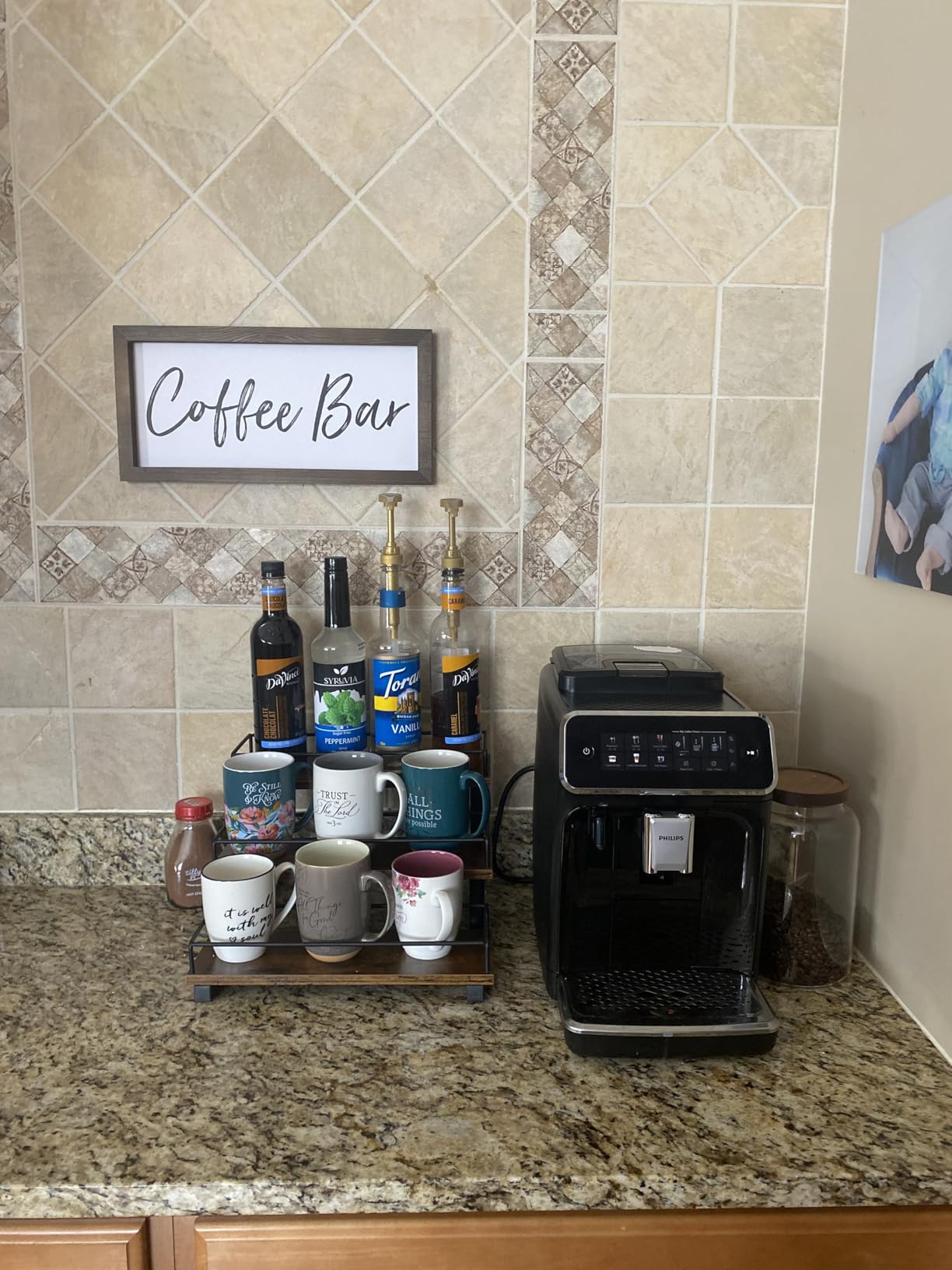
For mid-range buyers who want more than the 3200
If you have outgrown the 3200’s 5 drinks and want iced coffee plus a touch display, the 3300 is the natural step up. The 1,204 reviews give you real-world feedback to base your decision on. The AquaClean filter is a meaningful long-term cost saving.
It is also the cheapest machine in the roundup to offer a true iced coffee preset, which makes it a good value pick for iced drink fans who do not want to spend Eletta Explore money.
Skip if reliability is your top priority
The leaking reports are concerning, even if not universal. If you cannot tolerate any risk of leaks in your kitchen, the 3200 has a longer track record. Also skip if you want cold brew, the iced coffee preset still uses hot brew over ice, not true cold extraction like the Eletta Explore.
Some users also report ground coffee mess inside the machine when using the bypass doser. If you plan to use mostly pre-ground, this is a factor.
Buying Guide: How to Choose the Best Super Automatic Espresso Machine
A super automatic espresso machine is a meaningful investment, often $500 to $2,000. Choosing the wrong one leads to buyer’s remorse and a machine that sits on the counter. Here is what I look at when I evaluate a bean-to-cup machine for home use.
Grinder quality and burr material
The built-in grinder is the most important component. Conical burr grinders (steel or ceramic) produce consistent grinds that extract evenly. Ceramic burrs run cooler and preserve more flavor, which is why Philips and Jura use them. Steel burrs are more durable but can heat up during long grinding sessions. Avoid flat burr grinders in this category, they are louder and less consistent.
Grind settings matter more than the number of settings. 12-13 settings is the sweet spot. Fewer than 8 and you cannot dial in properly for different beans. More than 15 and the differences between adjacent settings are imperceptible.
Milk system design and cleaning
Milk systems fall into two camps. The LatteGo style (Philips) uses 2-3 simple parts with no internal tubes. It cleans in 15 seconds under the tap or in the dishwasher. The LatteCrema style (De’Longhi) uses a carafe with internal tubing. It produces more refined microfoam but requires weekly deep cleaning of the tubes.
For most home baristas, the LatteGo system is the right choice. It is faster to clean, more forgiving with plant-based milk, and less likely to harbor bacteria. The LatteCrema system rewards users who want barista-quality foam and do not mind the maintenance.
Water tank and drip tray size
A small water tank is the most common complaint in user reviews. For a two-person household, 47-60 ounces is the minimum. For a family of four, look for 60+ ounces. Refilling the tank daily gets old fast.
Drip tray size matters more than you would think. A small drip tray means emptying it every 2-3 drinks. Larger drip trays can go a week between emptyings. The Jura E4 has the largest at 64 ounces for the water tank, while the Philips 3200 has a smaller 1.8L tank that frustrates heavy users.
User profiles and app connectivity
If multiple people in your household drink espresso, user profiles are essential. The Dinamica Plus and Eletta Explore offer 4 profiles each, which is the most in this roundup. The Jura E4 and Magnifica Start have no profiles. App connectivity is a nice-to-have but not essential, most users I know stop using the app after the first month.
Build quality and warranty
Jura machines are built to last 7-10 years with proper care. De’Longhi machines typically last 5-7 years. Philips machines fall in the 4-6 year range. The De’Longhi 2-year warranty is the longest, while Jura offers only 1 year.
Customer service quality varies. De’Longhi is average, Philips is good, and Jura is often criticized on forums. Buy from a retailer with a strong return policy regardless of the brand.
Brand comparison at a glance
De’Longhi dominates the mid-range with the most model variety. Best for users who want lots of drink options and customization. Build is mostly plastic.
Philips excels at easy cleaning and value. Best for users who want low-maintenance machines with proven reliability. The LatteGo system is the easiest to clean in the industry.
Jura leads on build quality and espresso purity. Best for black coffee drinkers who want a 10-year machine and do not mind the price. No milk system on the E4 model.
Other brands to know: Gaggia offers strong value with the Cadorna Prestige but lacks app connectivity. Breville has the Oracle Touch but it is semi-automatic, not super automatic. Terra Kaffe and Miele are ultra-premium options above $3,000.
Frequently Asked Questions
What is the best super automatic espresso machine for home use?
The De’Longhi Eletta Explore is the best super automatic espresso machine for most home baristas in 2026. It offers 50+ drink recipes, cold brew in under 3 minutes, dual hot and cold milk systems, and 4 user profiles. For tighter budgets, the Philips 3200 Series is the best value under $600.
What espresso machine do baristas use at home?
Most home baristas I have interviewed use super automatic machines for daily drinks and keep a semi-automatic for weekend hobby sessions. The Jura E4 and De’Longhi Dinamica Plus are the most common choices among working baristas who want quality without the morning setup time. Both produce cafe-quality shots with minimal effort.
Are super automatic espresso machines worth the money?
Yes, if you drink 2+ espresso-based drinks daily. A $700 machine pays for itself in 6-9 months compared to daily cafe stops at $4-5 per drink. The convenience of one-touch drinks, consistent quality, and no learning curve make super automatics worth it for busy households. The main tradeoff is less control over the final shot compared to manual machines.
Which super automatic espresso machine is the most reliable?
Jura machines lead on long-term reliability, with many owners reporting 7-10 years of daily use. The Jura E4 in particular has fewer moving parts since it lacks a milk system. Philips machines are second for reliability, with the 3200 Series having the largest review base. De’Longhi machines average 5-7 years of daily use with proper descaling.
How long do super automatic espresso machines last?
With proper maintenance, expect 5-10 years of daily use. Jura machines typically last the longest (7-10 years), De’Longhi machines 5-7 years, and Philips machines 4-6 years. The most important factors are regular descaling, using filtered water, and cleaning the brew group every 1-2 weeks. Oily beans can clog grinders faster and shorten lifespan.
What are the common problems with super automatic espresso machines?
The most common complaints in user reviews are: small water tanks requiring frequent refills, water waste during auto-cleaning cycles, milk frother inconsistency and cleaning complexity, leaking from spouts or drip trays, noisy grinding, and customer service delays. None of these are deal-breakers, but they are worth factoring into your decision before buying.
Final Verdict
The best super automatic espresso machine for home baristas in 2026 is the De’Longhi Eletta Explore for its cold brew capability, dual milk systems, and 4 user profiles. It is the most versatile machine in the roundup and the only one that makes true cold brew in under 3 minutes. If the price is a stretch, the De’Longhi Dinamica Plus delivers 90% of the experience for less. For budget buyers, the Philips 3200 Series remains the safest pick with 6,000+ reviews confirming its reliability.
Whichever machine you choose, use filtered water, descale every 3-6 months, and clean the milk system weekly. A well-maintained super automatic will deliver cafe-quality drinks for years and pay for itself within the first year of regular use.