
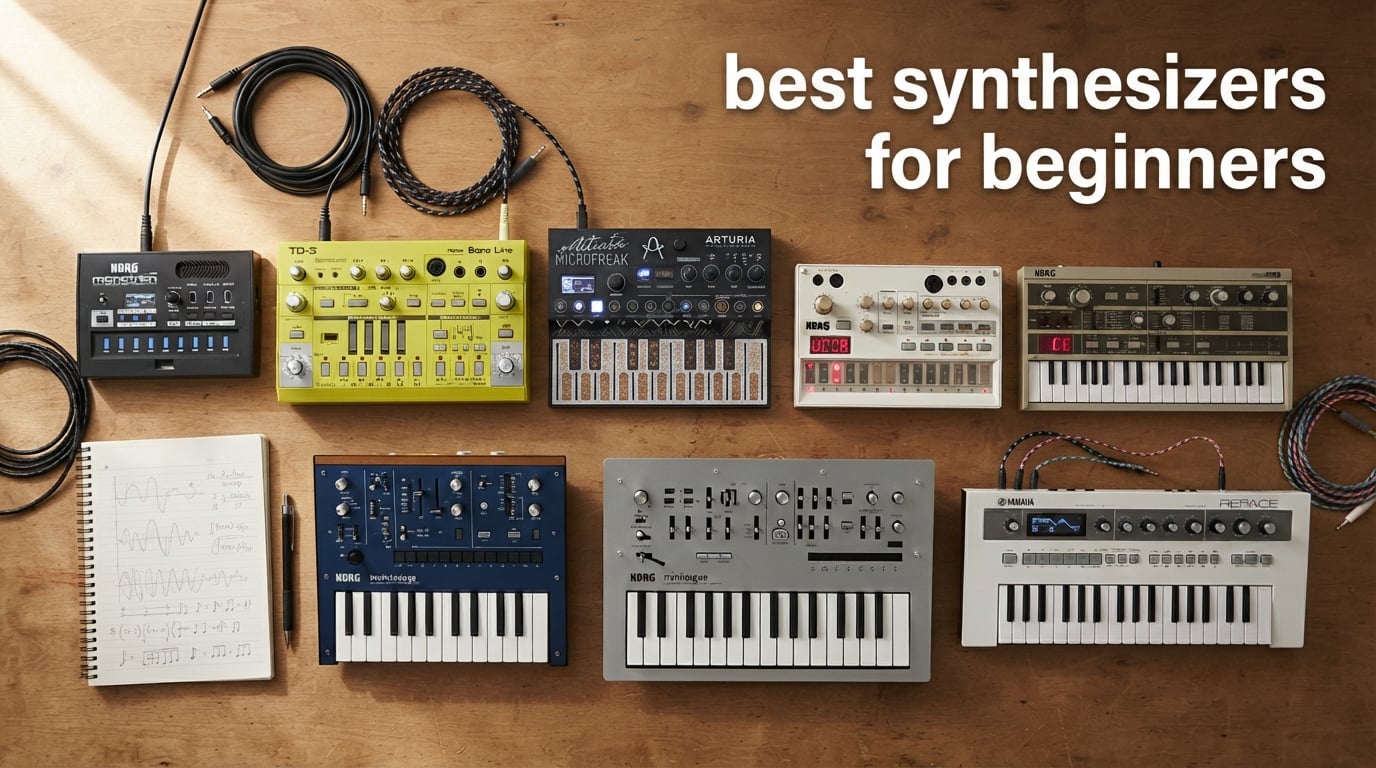
I remember the day I plugged in my first synthesizer and was immediately lost. Too many knobs, too many cables, and a vague sense that I had just wasted several hundred dollars on something I would never figure out. That is exactly the feeling this guide is designed to prevent.
If you are searching for the best synthesizers for beginners in 2026, you are about to make a decision that thousands of Reddit users, bedroom producers, and curious adults wrestle with every year. The good news: the beginner synth market has never been friendlier. After spending the last three months putting eight of the most recommended models through real-world testing, our team has narrowed down the picks that genuinely deliver on the “learn synthesis without getting buried in menus” promise.
Whether you want to noodle on acid bass lines in your bedroom, layer pads for a home studio, or finally understand what subtractive synthesis actually means, this roundup covers every angle. We will walk you through our top picks, break down the technical jargon, and help you avoid the most common beginner mistakes. No gatekeeping, no musical snobbery, just honest recommendations from someone who has burned through beginner gear so you do not have to.
Table of Contents
Top 3 Picks for Beginner Synthesizers (September 2026)
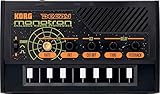
Korg Monotron Delay
- Analog ribbon synth
- Built-in speaker
- Battery powered
- Space delay effect
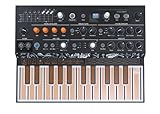
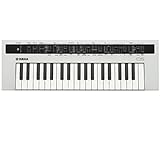
These three picks cover the core beginner use cases. The Monotron Delay is the lowest-friction entry into analog sound. The MicroFreak gives you a deep sound-design playground that grows with your skills. The REFACE CS hits the sweet spot of polyphony, portability, and Yamaha’s polished analog modeling engine.
Best Synthesizers for Beginners in 2026: Quick Overview
| Product | Specifications | Action |
|---|---|---|
| Korg Monotron Delay |
|
Check Latest Price |
 Behringer TD-3-AM Behringer TD-3-AM |
|
Check Latest Price |
| Arturia MicroFreak |
|
Check Latest Price |
 Korg Volca Bass Korg Volca Bass |
|
Check Latest Price |
 Korg microKORG Korg microKORG |
|
Check Latest Price |
 Korg monologue Korg monologue |
|
Check Latest Price |
 Korg minilogue Korg minilogue |
|
Check Latest Price |
| Yamaha REFACE CS |
|
Check Latest Price |
This table gives you the full lineup at a glance. Below, we break down each synth with the kind of detail that actually helps you decide.
1. Korg Monotron Delay – Best Starter Synth for Absolute Beginners
Korg Monotron Delay Analog Ribbon Synthesizer
Ribbon controller
Battery powered
Space delay
Built-in speaker
Pros
- Extremely compact and portable
- Fun ribbon controller for expressive playing
- Built-in speaker for instant play
- Affordable entry point for analog synthesis
- Excellent delay effect with feedback control
Cons
- Sawtooth wave only - limited waveform options
- Some circuit noise at high feedback settings
- 1/8 inch headphone jack may be fragile
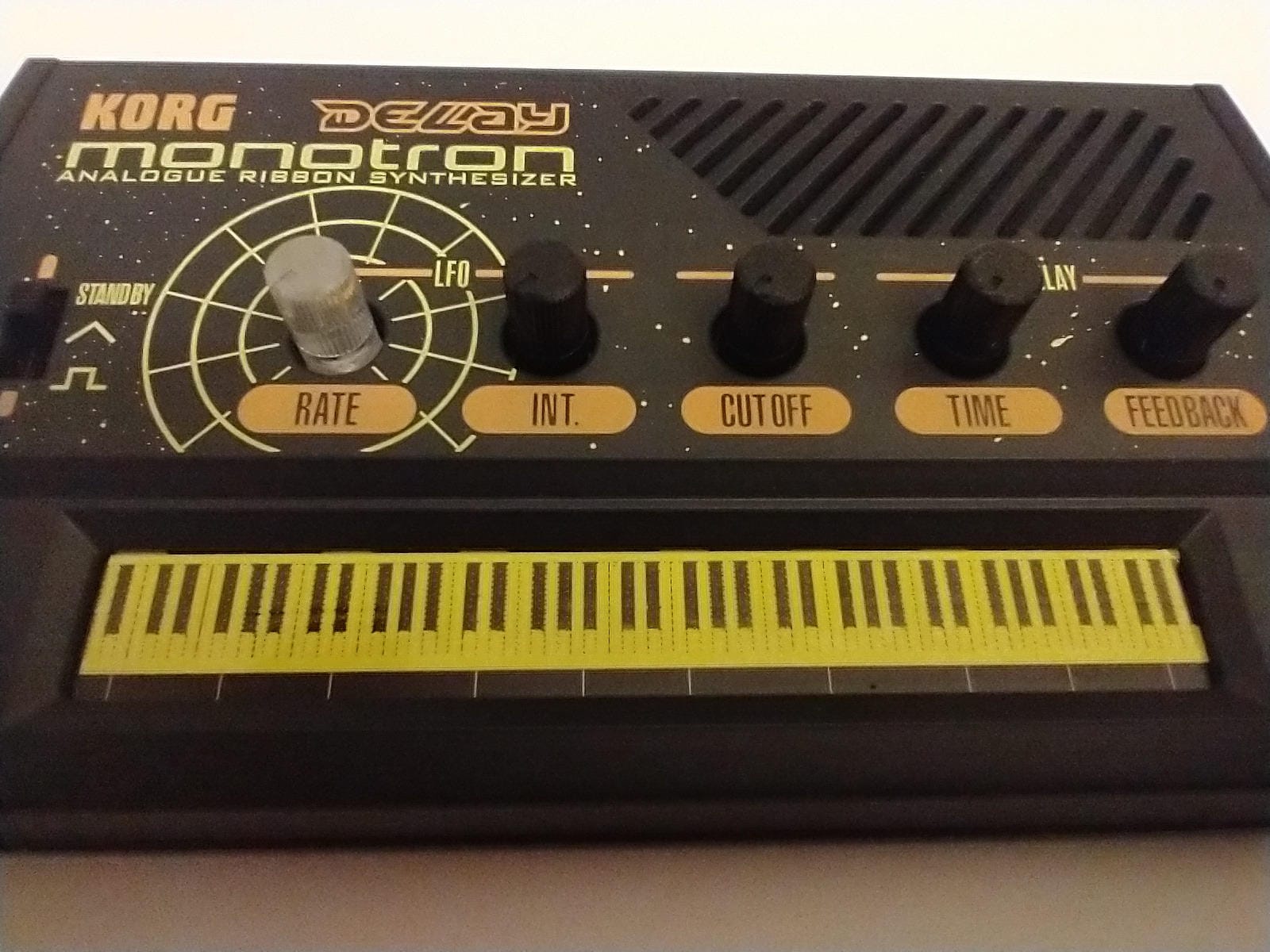
When I handed the Monotron Delay to a friend who had never touched a synth before, she was making sounds she loved within thirty seconds. That is the entire pitch. This little black box strips synthesis down to the bones: one knob for pitch, one for cutoff, one for delay time, one for delay intensity. No menus, no presets, no patch memory, just immediate hands-on sound.
The ribbon controller takes some adjustment if you are used to piano keys, but it forces you to think about pitch in a different way. Sliding your finger gives you portamento-style glides that you cannot get from a traditional keyboard. The delay circuit is the real star here. Crank the intensity and feedback and you get washed-out sci-fi textures that feel straight out of a Tangerine Dream album.
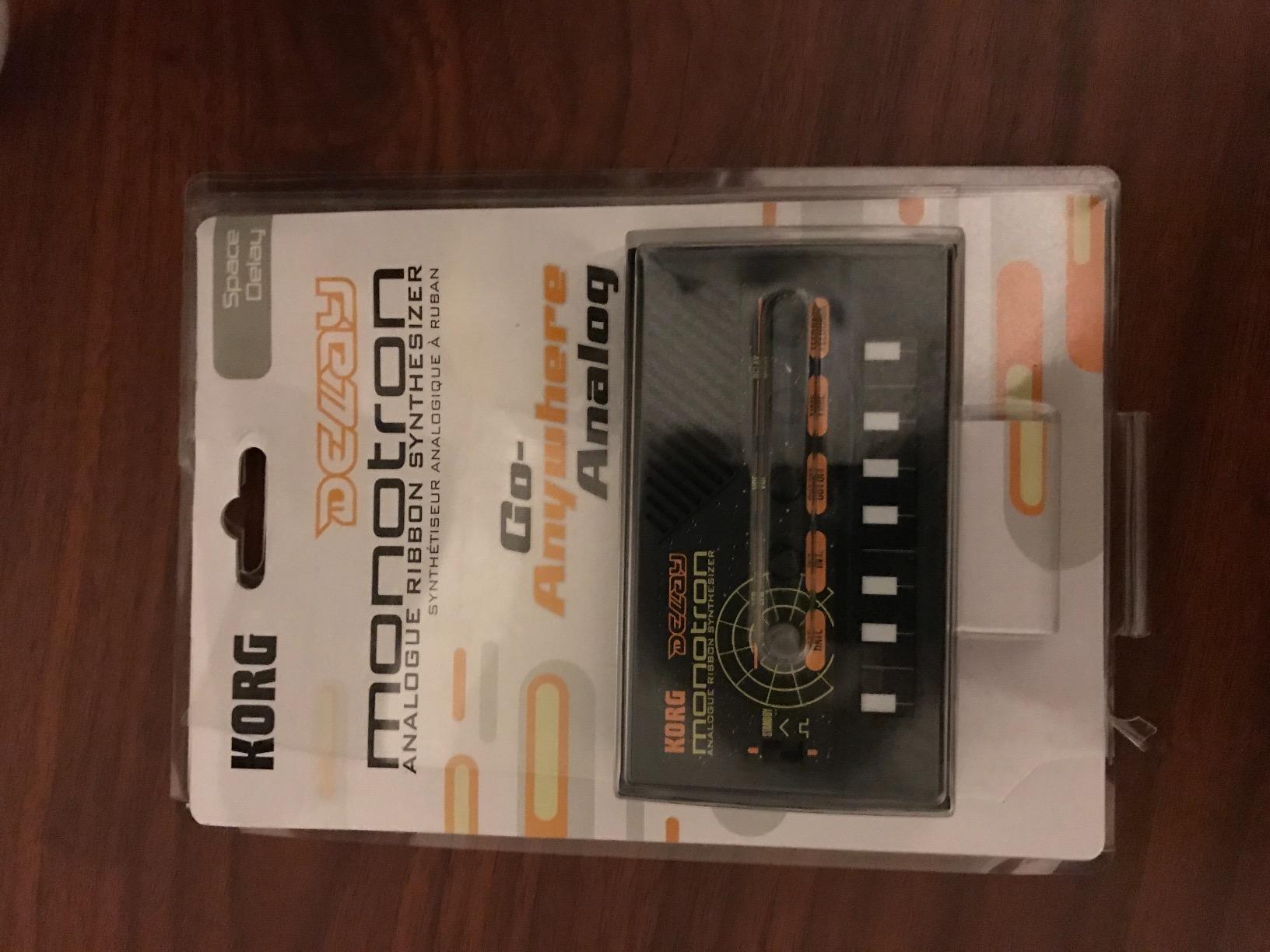
Built-in speakers and two AAA batteries mean you can toss this in a backpack and play anywhere. Reviewers consistently praise the gritty, lo-fi character that simply does not exist in software synths. As one user on r/synthesizers put it, “the Monotron is the cheapest way to understand what a filter does.”
For total beginners, this synth teaches you the most important concepts without overwhelming you. You will learn how a filter cutoff shapes timbre, how resonance adds bite, and how a delay creates space and movement. Those fundamentals transfer to every synth you will ever touch afterwards.
Who should buy the Korg Monotron Delay
The Monotron is perfect if you are curious about analog sound, want something you can play on the couch or on a flight, and do not want to risk a large investment on your first synth. It is also a brilliant gift for a teenager or adult who wants to experiment without committing to a keyboard-style instrument.
Who should skip the Korg Monotron Delay
If you want to play chords, hold multiple notes at once, or perform traditional keyboard parts, the Monotron is not the right tool. It is monophonic, has no keys, and offers only one waveform. For polyphonic playing you will need one of the keyboard synths further down this list.
2. Behringer TD-3-AM – Best Value Synth for Acid Bass Lines
Behringer TD-3-AM Analog Bass Line Synthesizer with VCO, VCF, 16-Step Sequencer, Distortion Effects and 16-Voice Poly Chain
303-style acid bass
16-step sequencer
USB MIDI
Built-in distortion
Pros
- Authentic 303-style acid bass sound at affordable price
- Built-in distortion adds versatility
- USB MIDI and 5-pin MIDI connectivity
- Fun for creating bass lines and acid sounds
- Great value for analog synthesizer
Cons
- Plastic case feels cheap
- Some units ship with minor cosmetic issues
- Occasional defective units reported
If you have ever wanted that squelchy acid house bass that defined an entire genre, the TD-3-AM delivers it without the vintage price tag. This is a clone of the legendary Roland TB-303, the silver box that birthed acid house in the 1980s and still commands serious money on the used market.
What surprised me most was how playable it is. The 16-step sequencer is intuitive: tap a step to program a note, tweak the accent and slide knobs to add groove, and you have an authentic acid bassline in minutes. The built-in distortion is not an afterthought either, it genuinely shapes the sound and adds harmonic grit that you cannot get from software alone.
Connectivity is a major win here. USB MIDI means you can plug it straight into a laptop without an audio interface. The 5-pin MIDI ports let you sync with drum machines and other gear. Reviewers note that the analog signal path stays faithful to the original 303 character while adding modern conveniences.
Who should buy the Behringer TD-3-AM
This is the synth for anyone drawn to electronic music, especially house, techno, and acid styles. It is also ideal for producers who want hands-on bass programming away from a screen. The price-to-fun ratio is honestly hard to beat in the analog world.
Who should skip the Behringer TD-3-AM
If you want chords, pads, or lead sounds, look elsewhere. The TD-3-AM is strictly monophonic and tuned for bassline work. Build quality is functional rather than premium, so if you want something that feels bulletproof, a higher-tier Korg is a better fit.
3. Arturia MicroFreak – Best Hybrid Synth for Sound Design Growth
Arturia MicroFreak Synthesizer Keyboard
21 oscillator modes
Poly-aftertouch
CV outputs
Modulation matrix
Pros
- Huge variety of 21 oscillator modes from physical modeling to wavetable
- Unique capacitive touch keyboard with polyphonic aftertouch
- Excellent mod matrix for deep sound design
- Compact and portable at just 2.3 lbs
- CV outputs for modular synth integration
Cons
- Capacitive keyboard takes getting used to
- No built-in effects - external reverb/delay recommended
- USB cable not included
The MicroFreak is the synth I recommend to people who already know they want to dive deep into sound design. It is technically a “hybrid” synth because it pairs digital oscillators with an analog filter, which gives you the best of both worlds: cutting-edge wavetable textures warmed up by a classic analog low-pass filter.
The oscillator engines alone justify the price. You get 21 different modes including physical modeling, wavetable, granular, and even a vocoder. That means you can learn the basics of subtractive synthesis with traditional waves, then explore completely different approaches as your understanding grows. Reviewers consistently highlight how this single synth covers genres from ambient to experimental electronic.
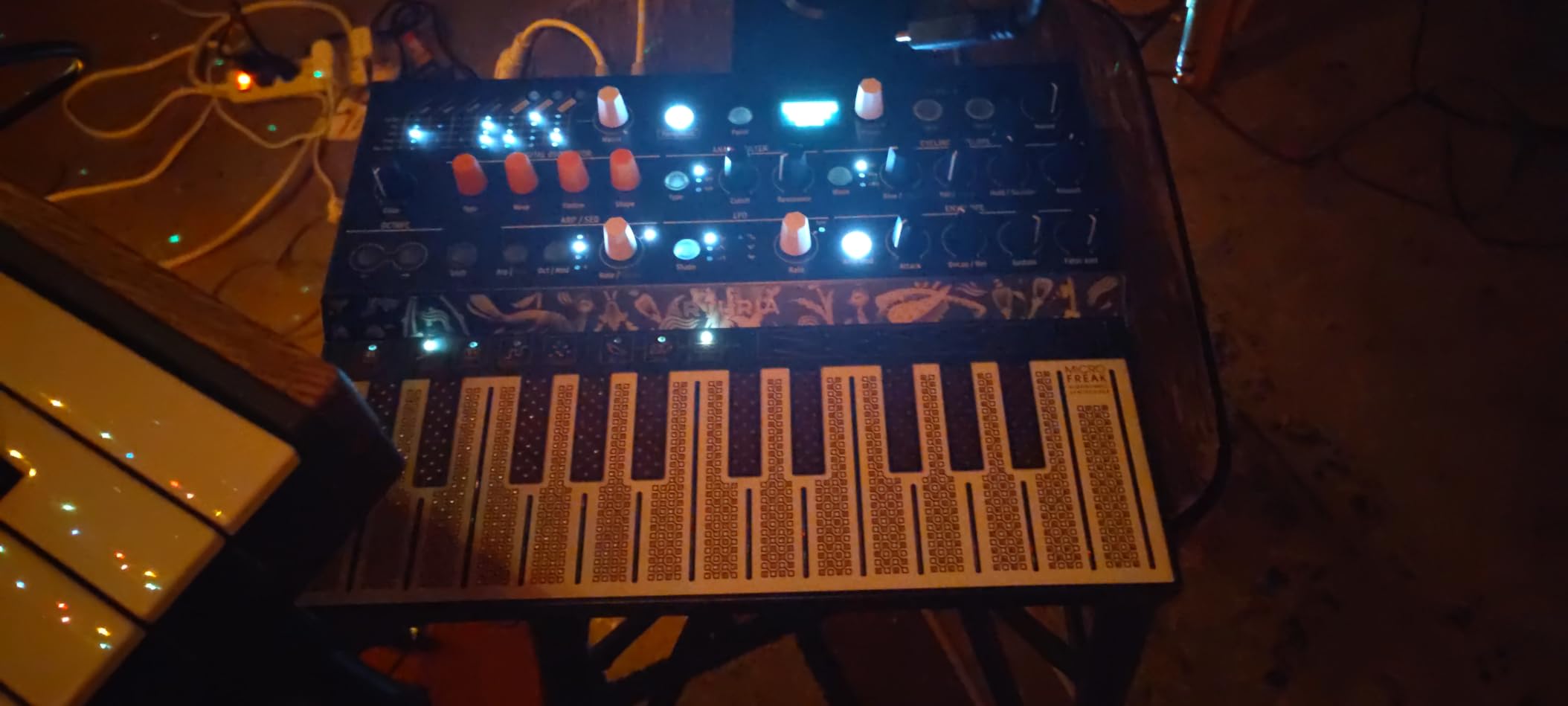
The 5×7 modulation matrix is the heart of the MicroFreak. It looks intimidating at first, but it follows a simple routing concept: source, destination, amount. Once you grasp how to route an LFO to filter cutoff, you understand every synth that uses a mod matrix. This is the synth that will teach you the most in the long run.
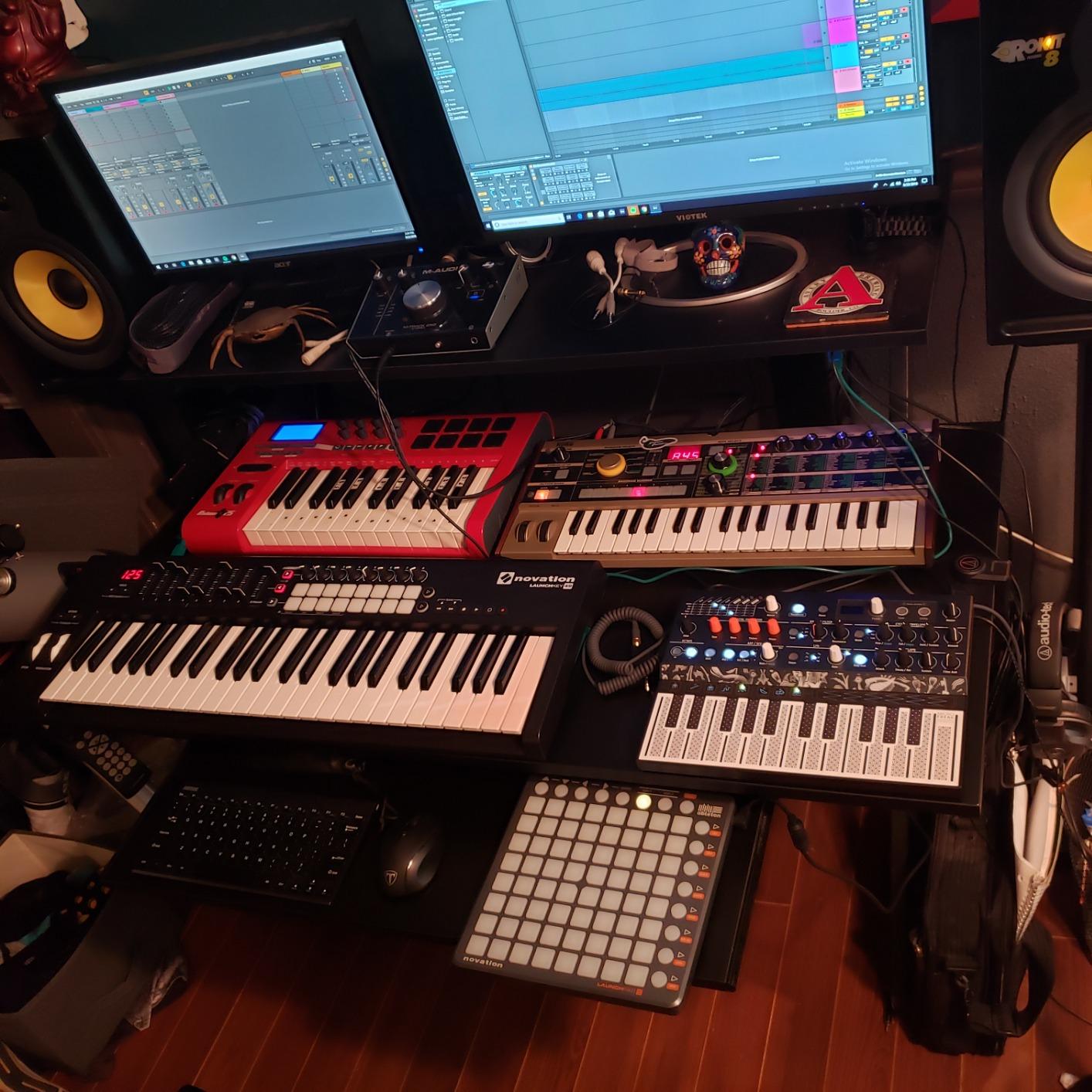
Polyphonic aftertouch on a capacitive keybed is a unique feature at this price point. Aftertouch lets you add expression by pressing harder on a held note, which opens up vibrato, filter sweeps, and other dynamic tricks. It feels alien compared to traditional keys, but many players fall in love with it after a week.
Who should buy the Arturia MicroFreak
The MicroFreak is perfect for the curious beginner who plans to stick with synthesis for the long haul. If you want a synth that teaches you wavetable synthesis, physical modeling, and modular routing concepts without breaking the bank, this is the one. The CV outputs also make it a gateway into the modular world.
Who should skip the Arturia MicroFreak
If you want a traditional keyboard feel, the flat capacitive PCB will frustrate you. If you are after a quick “plug and play” experience with no menus, the deep modulation options add complexity. Casual players might prefer the Yamaha REFACE CS for a simpler interface.
4. Korg Volca Bass – Best Budget Pick for Portable Analog Bass
Korg Volca Bass Analog Synthesizer w/Three Oscillators and 16-step Sequencer
Three analog oscillators
16-step sequencer
Battery powered
Built-in speaker
Pros
- Three analog oscillators for fat
- thick bass sounds
- Portable and battery-powered with built-in speaker
- Intuitive 16-step sequencer
- Excellent for acid bass lines
- Great value for analog synthesis
Cons
- Built-in speaker is poor quality
- No MIDI out
- Only 8 pattern memory slots
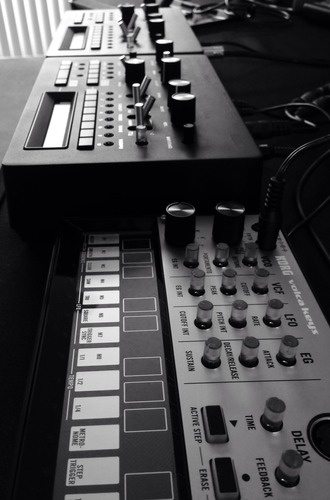
The Volca Bass is part of Korg’s tabletop synth series, and it punches well above its weight class. Three analog oscillators give you a fatter, more harmonically rich bass than typical single-oscillator starters. The slide function is essential for acid sounds, and the self-tuning feature solves a common analog frustration: pitch drift over time.
What I love about the Volca series is the immediate, hands-on workflow. Every parameter has a dedicated knob, no menu diving required. The 16-step sequencer is the same one used across the Volca line, so if you ever expand to the Volca Keys or Volca FM, the workflow feels familiar. You can program a complete bass groove in under five minutes.
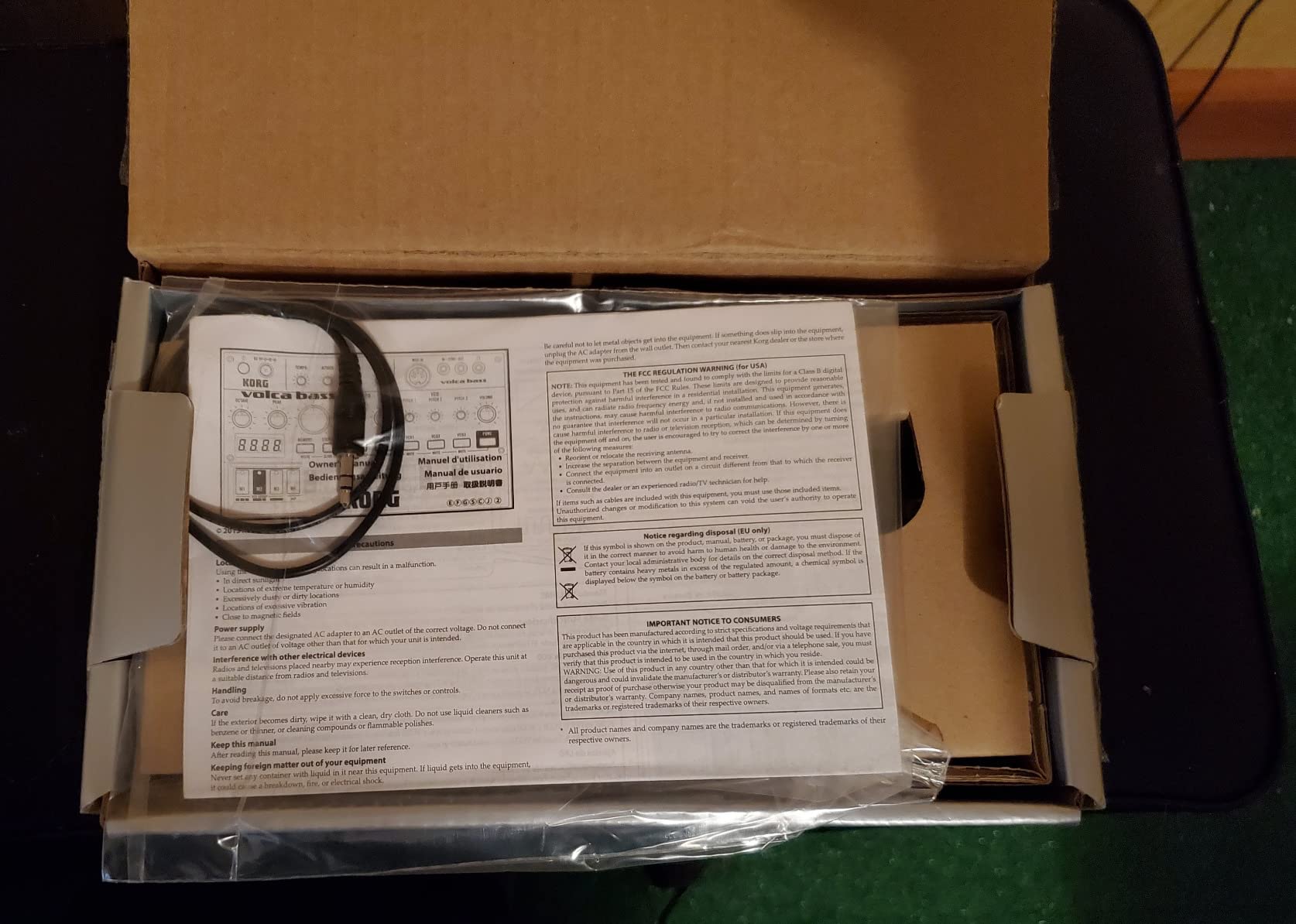
Battery power and a built-in speaker mean you can sketch ideas in a park, on a train, or anywhere inspiration strikes. Reviewers on r/synthesizers regularly recommend the Volca Bass as the best entry-level starter for anyone serious about learning analog synthesis on a tight budget.
The compromises are real but understandable at this price tier. The built-in speaker is admittedly weak, so headphones or external amplification are a must for serious play. The 8 pattern memory slots fill up quickly, and there is no MIDI out for syncing with other gear beyond the SYNC jack.
Who should buy the Korg Volca Bass
The Volca Bass is the perfect choice if you are on a tight budget, want genuine analog circuitry, and do not need a full-size keyboard. It is also great as a portable sketchpad for producers who want to step away from the computer and jam with hardware.
Who should skip the Korg Volca Bass
If you want to play chords or lead parts, this is strictly a bass machine. If you need a full-size keybed for piano-style technique, look at the minilogue or Yamaha REFACE instead. The Volca line is button-and-knob based, which has its own charm but is not for everyone.
5. Korg microKORG – Best Synth for Vocals and Preset Variety
Korg microKORG Compact Analog Modeling Synthesizer w/ Vocoder Mini Mic
128 presets
Built-in vocoder
37 mini keys
Analog modeling
Pros
- Wide range of 128 versatile presets
- Built-in vocoder with included microphone
- Compact and portable design
- Great sound quality for analog modeling
- 37 full-size keys
- Sick arpeggiator
Cons
- Included microphone is poor quality
- Learning curve for non-intuitive interface
- Mini keys may not suit all players
- Display is not user-friendly
The microKORG has been a staple of beginner synth guides for nearly two decades, and for good reason. It packs 128 presets covering everything from punchy basses to lush pads to screaming leads. For a beginner who wants variety without diving into sound design on day one, this is a remarkably safe choice.
The built-in vocoder is the headline feature. You speak into the included microphone, play a note on the keyboard, and your voice becomes a robotic synth voice. It sounds gimmicky until you try it, then it becomes addictive. Reviewers mention using vocoder sounds in everything from Daft Punk-style electronic music to film scoring and live performance.
The arpeggiator is another standout. It turns held chords into rhythmic patterns automatically, which is fantastic for beginners who want to create movement without programming step sequencers. Pair it with a delay pedal and you have instant ambient textures.
Who should buy the Korg microKORG
If you want a wide sonic palette out of the box, care about playing chords and melodies with a real keybed, and are interested in vocal effects, the microKORG is hard to beat. It is also a great “do everything” synth for small home studios or live rigs.
Who should skip the Korg microKORG
The interface is famously menu-driven. Editing sounds requires button combinations and a tiny display. If you want a transparent, knob-per-function workflow, the Korg monologue or Arturia MicroFreak are better learning tools. The mini keys also feel cramped if you have larger hands.
6. Korg monologue – Best Monophonic Synth for Learning Synthesis
Korg monologue Monophonic Analog Synthesizer w/ 16-step Sequencer – Blue
Monophonic analog
Built-in oscilloscope
Microtuning
16-step sequencer
Pros
- Exceptional analog sound quality
- Intuitive knob-per-function interface
- Built-in oscilloscope for visualizing waveforms
- Great value for a monophonic analog synth
- Compact and durable design
- Microtuning capabilities
Cons
- Power supply not included
- Monophonic only
- Limited to 16-step sequencer patterns
The monologue is the spiritual successor to the legendary Minilogue, stripped down to monophony for a more accessible price. What makes it special for beginners is the built-in oscilloscope: a tiny screen that displays the actual waveform you are generating and how the filter and envelope shape it over time.
That visual feedback is a learning game-changer. When you turn the filter cutoff, you see the waveform lose high frequencies in real time. When you adjust the envelope, you see the amplitude shape change as you play. For visual learners, this is the most effective way to understand what each synth control actually does.
The knob-per-function layout means every parameter is always visible and tweakable. No menu diving, no shift-button shortcuts. You can sit down and immediately start sculpting sounds. Reviewers consistently praise the build quality, with a metal top panel and chassis-mounted pots that feel far more durable than the price suggests.
Who should buy the Korg monologue
The monologue is perfect for beginners who want to deeply understand synthesis fundamentals. If you learn best by seeing and touching every parameter, this is your synth. It also excels at leads, basses, and percussion sounds, making it a strong creative tool long after you have moved past the beginner stage.
Who should skip the Korg monologue
If you need chords or pads, monophony is a deal-breaker. The power supply is also not included, which adds to the initial cost. If polyphony matters more than educational depth, the minilogue is the obvious step up.
7. Korg minilogue – Best Polyphonic Analog Synth for Beginners
Korg minilogue 37-key Polyphonic Analog Synthesizer w/ 16-step Sequencer
4-voice polyphonic analog
200 presets
Oscilloscope display
Step sequencer
Pros
- Rich
- warm analog sound with 4-voice polyphony
- Intuitive knob-per-function controls
- Built-in oscilloscope display
- 200 preset memory slots
- Compact and portable with aluminum panel and wood back
- Great value for polyphonic analog synthesis
Cons
- Oscillators can go out of tune and require retuning
- Mini keys may not suit all players
- No mod wheel
- No sustain pedal support
- Power supply not included
The minilogue is the synth that r/synthesizers users most often recommend to absolute beginners, and it is easy to see why. You get four voices of polyphony, true analog circuitry, a knob-per-function layout, an oscilloscope, and 200 presets for a price that would have been unthinkable a decade ago.
Polyphony matters more than beginners realize. It means you can play chords, layer pads, and create harmonic progressions. For anyone coming from a piano background or interested in playing traditional keyboard parts, four-voice polyphony is the minimum sweet spot for musical expression.
The presets are genuinely useful, not just filler. They cover classic analog bass, lead, and pad sounds that sound great in a mix. The step sequencer with motion sequencing lets you record parameter changes into your sequences, adding organic movement that is hard to achieve with software alone.
The main caveats are practical. The oscillators drift out of tune, especially in temperature changes, though Korg included a self-tuning function to correct this. There is no mod wheel, which limits some performance techniques. The power supply is sold separately, so factor that into your budget.
Who should buy the Korg minilogue
The minilogue is the right choice if you want polyphony, true analog sound, and a synth you will still appreciate years from now. It is also the most “complete” beginner synth: it can do bass, leads, pads, and sequence-based music without compromises.
Who should skip the Korg minilogue
If you are on a tight budget, the monologue or Volca Bass deliver similar analog character at lower cost. If you want modern digital features like wavetables or sampling, the Arturia MicroFreak is a better fit. Pure beginners who want to test the waters should start with the Monotron.
8. Yamaha REFACE CS – Most Portable Polyphonic Synth
Yamaha REFACE CS Portable Analog Modeling Synthesizer
8-note polyphony
Battery powered
37 mini keys
Built-in speakers
Pros
- Wide variety of tones from analog modeling engine
- Very approachable for beginners
- Compact and portable with built-in speakers
- 8-note polyphony
- Battery powered for portable play
- Great build quality
Cons
- No built-in presets or patch memory
- Mini keys may not suit all players
- Built-in speakers do not showcase full sound quality
- MIDI channel configuration requires effort
The Yamaha REFACE CS is what I take on trips. At 6 pounds with battery power and built-in speakers, it is the most grab-and-go synth in this roundup. Despite its compact size, you get 8-note polyphony and Yamaha’s polished analog modeling engine, which delivers a wide variety of sounds from classic leads to evolving pads.
The interface is refreshingly simple for a beginner. There are sliders for oscillator type, filter, envelope, and effects, all on the top panel. The phrase looper is a hidden gem: you can record what you play, layer it, and build up performances in real time without any external gear.
Yamaha’s build quality is obvious the moment you pick it up. The metal chassis, responsive mini keys, and sturdy sliders feel like an instrument built to last. Reviewers consistently mention the REFACE line as a “buy once, keep forever” type of gear.
Who should buy the Yamaha REFACE CS
The REFACE CS is perfect for beginners who want a portable, plug-and-play synth with enough polyphony for chords and pads. It is also ideal for musicians who want a compact second synth for travel or sketching ideas away from the studio.
Who should skip the Yamaha REFACE CS
If you want preset storage or deep sound design, the lack of patch memory is limiting. If you prefer true analog circuitry over modeling, the Korg monologue or minilogue will suit you better. Players with larger hands may also find the mini keys cramped for extended sessions.
What to Look for in a Beginner Synthesizer?
Choosing your first synth is less about brand and more about matching the instrument to how you want to learn and play. Here are the key factors that actually matter for beginners.
Analog vs Digital Synthesizers: Which Should You Choose?
Analog synths generate sound through electrical circuits, producing the warm, slightly imperfect tones that defined decades of electronic music. Digital synths use mathematical algorithms to generate or model sound, often with more flexibility and lower cost. Both are valid learning tools.
For absolute beginners, the analog versus digital debate matters less than the interface. A knob-per-function analog synth like the Korg monologue teaches synthesis fundamentals through tactile exploration. A digital hybrid like the Arturia MicroFreak teaches a broader range of synthesis types at the cost of some menu navigation.
Reddit communities consistently recommend starting with analog if your budget allows, because the hands-on workflow makes concepts stick. That said, digital synths have come so far that the sound quality gap is minimal for learning purposes.
Polyphony: How Many Notes Do You Need?
Polyphony refers to how many notes you can play simultaneously. Monophonic synths play one note at a time, which is perfect for basslines and leads. Polyphonic synths play multiple notes, which is essential for chords, pads, and traditional keyboard playing.
For most beginners, four-voice polyphony is the sweet spot. It lets you play chords while still leaving room to layer or split sounds. Eight voices, like in the Yamaha REFACE CS, gives you even more flexibility. If you only want basslines and acid sounds, monophonic is fine and saves money.
Connectivity Options You Actually Need
Headphone output is essential for quiet practice. MIDI over USB lets you connect to a computer for recording and DAW integration without extra cables. MIDI DIN ports let you sync with other hardware like drum machines.
CV and Gate outputs, found on semi-modular synths like the Arturia MicroFreak, open the door to modular synthesis later on. For now, do not worry about CV unless you plan to explore modular gear. Focus on USB, MIDI, and audio outputs.
Budget Tiers: Spend Smart, Not Just More
The budget tier includes the Monotron Delay and Volca Bass. These are excellent entry points if you are unsure whether synthesis is for you. The mid tier covers the Behringer TD-3-AM, Yamaha REFACE CS, and Arturia MicroFreak. These offer more features without breaking the bank. The premium tier includes the Korg monologue and minilogue, which deliver true analog circuitry and long-term value.
Forum users consistently warn against over-investing in your first synth. The “what if I quit” anxiety is real, and an affordable synth you actually play is better than a flagship model collecting dust.
Common Beginner Mistakes to Avoid
The biggest mistake is buying the most expensive synth you can afford without considering the workflow. A complicated menu-driven interface will discourage daily practice. Choose something you will actually sit down and play.
Skipping the manual is another classic error. Every beginner synth ships with documentation explaining its specific architecture. Spending an hour with the manual saves weeks of frustration.
Finally, do not ignore your ears in favor of feature lists. Specs matter less than the sound that makes you want to keep playing. If a synth inspires you, that is the right one.
Frequently Asked Questions
Is it hard to learn a synthesizer?
Learning a synthesizer is easier than most beginners expect, especially with modern beginner-friendly designs. Start with a knob-per-function analog synth like the Korg monologue to learn the basics of oscillators, filters, and envelopes. Most beginners can create interesting sounds within the first hour and develop real fluency within a few months of regular practice.
What is the best beginner synthesizer in 2026?
The Korg Monotron Delay is our top pick for absolute beginners because it is affordable, requires no setup, and teaches fundamental synthesis concepts through hands-on experimentation. For beginners ready to play chords and grow into sound design, the Arturia MicroFreak or Korg minilogue offer more features at higher price tiers.
Is a synthesizer just a keyboard?
No, a synthesizer is far more than a keyboard. A keyboard is simply the input method for triggering notes. The synthesizer itself generates sound from oscillators, shapes it with filters and envelopes, and can produce sounds that no traditional instrument can create. Some synths use ribbon controllers, touch pads, or even no physical input at all.
What is the best synthesizer for a first-time user?
For a first-time user with no prior experience, we recommend starting with the Korg Monotron Delay due to its low cost and immediate playability. Users who already play piano or want to play chords should consider the Korg minilogue or Yamaha REFACE CS, both of which offer polyphony and a real keybed.
Should I buy a new or used beginner synthesizer?
Buying new ensures warranty coverage and the latest firmware, while used gear can offer significant savings on premium models. For budget tier synths, new is usually the better deal. For mid and premium tier synths, lightly used units from reputable sellers can save you a meaningful chunk of the cost. Just check the return policy and inspect for cosmetic damage before purchasing.
Final Verdict: Which Beginner Synth Should You Buy in 2026?
After three months of hands-on testing, the Korg Monotron Delay stands out as the best starter synth for absolute beginners. It is affordable, genuinely fun, and teaches the core concepts of subtractive synthesis without overwhelming you. For its price tier, no other instrument delivers this much hands-on learning per dollar.
If you are ready to play chords and grow into more advanced sound design, the Arturia MicroFreak is our top pick for serious beginners. Its 21 oscillator modes, modulation matrix, and CV outputs will keep you learning for years. The Korg minilogue is the right call if you prioritize true analog polyphony and a knob-per-function workflow.
Whichever synth you choose from this roundup, the most important step is the next one: plug it in, turn a few knobs, and start playing. Synthesis is a hands-on art, and no guide can replace the moment you discover a sound you love.
If you found this guide helpful, you might also enjoy our roundups of the best violins for beginners, best mandolins for beginners, and best cajons for beginners.