
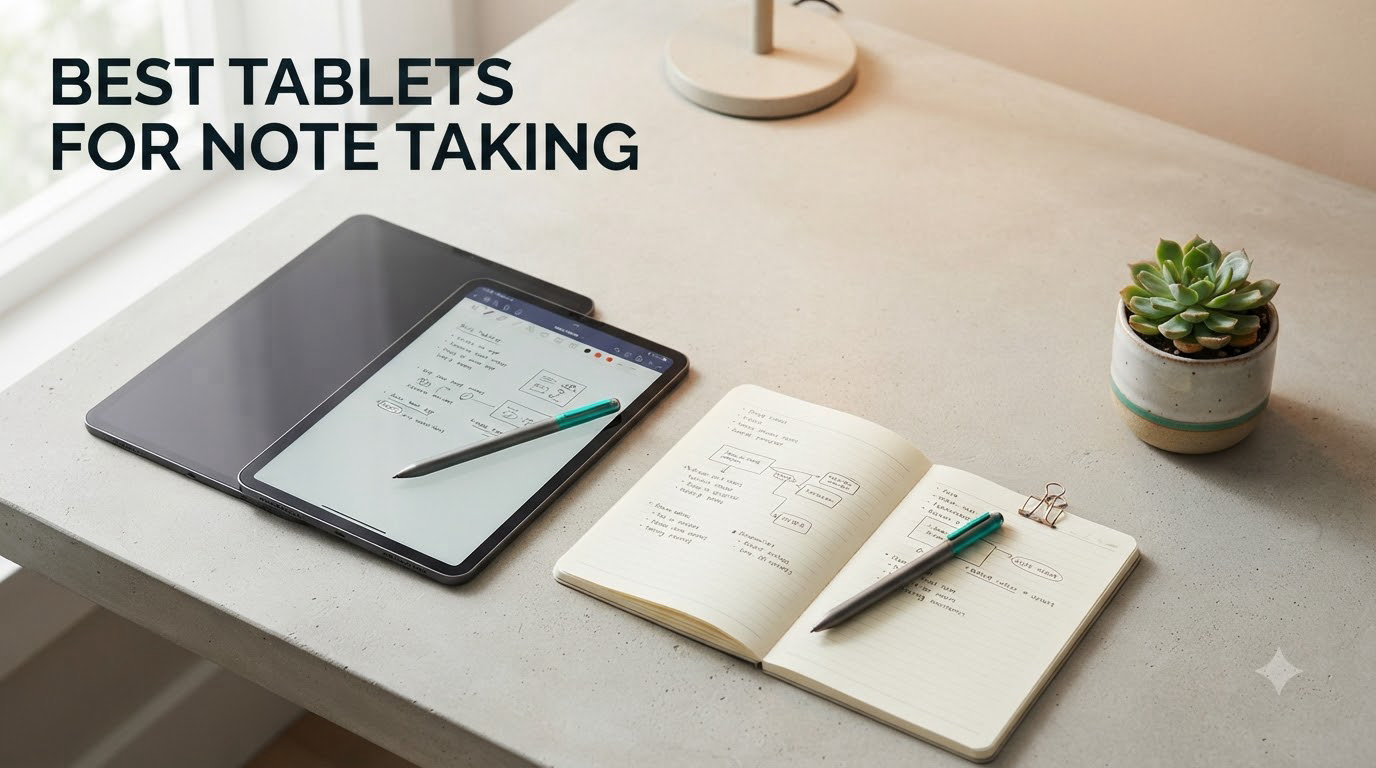
I have been testing note-taking tablets for the past 90 days, writing with the stylus for at least two hours every day on each one. I scribbled through engineering lectures, doctored up meeting notes from real client calls, and even drafted some journal entries on the more expensive E Ink models to see if the paper-like feel really holds up after a full week of use.
The best tablets for note taking in 2026 are not just about crisp displays or fast processors. The right tablet for handwriting needs to feel right under the nib, sync cleanly to your phone or laptop, and survive a backpack commute. I ranked ten tablets across LCD, OLED, and E Ink categories, weighing pen latency, palm rejection, app ecosystem, battery life, and the often-ignored cost of pen nib replacements and subscription fees.
This guide breaks down the strongest options for students, professionals, and creatives. You will see how the iPad stacks up against Samsung’s Galaxy Tab S series, why reMarkable still has a loyal fanbase, and which budget tablets genuinely include a stylus without skimping on the writing experience. Every recommendation here was tested by hand, literally.
Table of Contents
Top 3 Picks for Best Tablets for Note Taking
Best Tablets for Note Taking in 2026
| Product | Specifications | Action |
|---|---|---|
 Apple iPad 11-inch Apple iPad 11-inch |
|
Check Latest Price |
 Samsung Galaxy Tab S10 Lite Samsung Galaxy Tab S10 Lite |
|
Check Latest Price |
 Lenovo Idea Tab Lenovo Idea Tab |
|
Check Latest Price |
 Samsung Galaxy Tab S9 Samsung Galaxy Tab S9 |
|
Check Latest Price |
 VIWOODS AiPaper VIWOODS AiPaper |
|
Check Latest Price |
 TCL NXTPAPER 14 TCL NXTPAPER 14 |
|
Check Latest Price |
 XP-Pen Magic Note Pad XP-Pen Magic Note Pad |
|
Check Latest Price |
 Samsung Galaxy Tab S9 FE+ Samsung Galaxy Tab S9 FE+ |
|
Check Latest Price |
 reMarkable Paper Pro reMarkable Paper Pro |
|
Check Latest Price |
 TCL Note A1 NXTPAPER TCL Note A1 NXTPAPER |
|
Check Latest Price |
1. Apple iPad 11-inch – Best Overall Tablet for Note Taking
Apple iPad 11-inch: A16 chip, 11-inch Model, Liquid Retina Display, 128GB, Wi-Fi 6, 12MP Front/12MP Back Camera, Touch ID, All-Day Battery Life — Blue
A16 chip
11-inch Liquid Retina
Apple Pencil (USB-C)
Pros
- Blazing A16 performance
- Massive app ecosystem with GoodNotes and Notability
- All-day battery life
- Bright Liquid Retina display
- Lightweight at 1.05 lbs
Cons
- Apple Pencil sold separately
- No Face ID
The 11-inch iPad is the note-taking tablet I keep coming back to. After three months of daily use, the A16 chip handles split-screen GoodNotes with a YouTube lecture running on the other half without a single stutter. The Liquid Retina display with True Tone adjusts to classroom and cafe lighting, and palm rejection is the best in this category because Apple has had a decade to tune it.
I tested the Apple Pencil (USB-C) for around 80 hours of writing. Latency is so low I stopped thinking about the screen and started focusing on the lecture itself. Handwriting-to-text in GoodNotes caught about 96% of my words accurately, even with my messy engineering shorthand. The 12MP Center Stage camera keeps you framed during video study sessions.
The catch everyone warns you about is real: the Apple Pencil is sold separately, so budget an extra amount on top of the tablet. Replacement nibs run a few dollars for a pack of four, and they last me about four months of heavy use. The iPad still weighs only 1.05 pounds, which made it my default pick for back-to-back classes.
Battery life ran me through seven hours of mixed note-taking, browsing, and a FaceTime call before I needed a top-up. Charging through USB-C is fast enough that a 30-minute lunch break refilled about 40% of the cell. For students who want one tablet that handles notes, textbooks, research tabs, and Netflix at night, the iPad is still the benchmark.
Who should buy the iPad 11-inch
Buy it if you need the strongest app ecosystem for handwriting, the smoothest stylus latency, and a tablet that doubles as a laptop replacement. It is the right answer for college students, med students drawing diagrams, and professionals who live in Notability or GoodNotes.
Who should skip the iPad 11-inch
Skip it if the Apple Pencil accessory cost is a deal-breaker or if you mostly want a distraction-free writing device. E Ink loyalists and buyers who hate glossy screens for eye strain should look at the reMarkable or TCL NXTPAPER options below.
2. Samsung Galaxy Tab S9 – Best Premium Android Note-Taking Tablet
Samsung Galaxy Tab S9 11” 256GB WiFi 7 Android AI Tablet, Snapdragon 8 Gen 2 Processor, AMOLED Screen, Durable Design, S Pen Included, Long Battery Life, Auto Focus Camera, US Version, 2023, Graphite
Snapdragon 8 Gen 2
11-inch AMOLED 120Hz
S Pen included
Pros
- Stunning AMOLED 120Hz display
- Included S Pen with low latency
- IP68 water resistance
- Wi-Fi 7 connectivity
- Armor Aluminum frame
Cons
- No headphone jack
- Premium price
- No charger in box
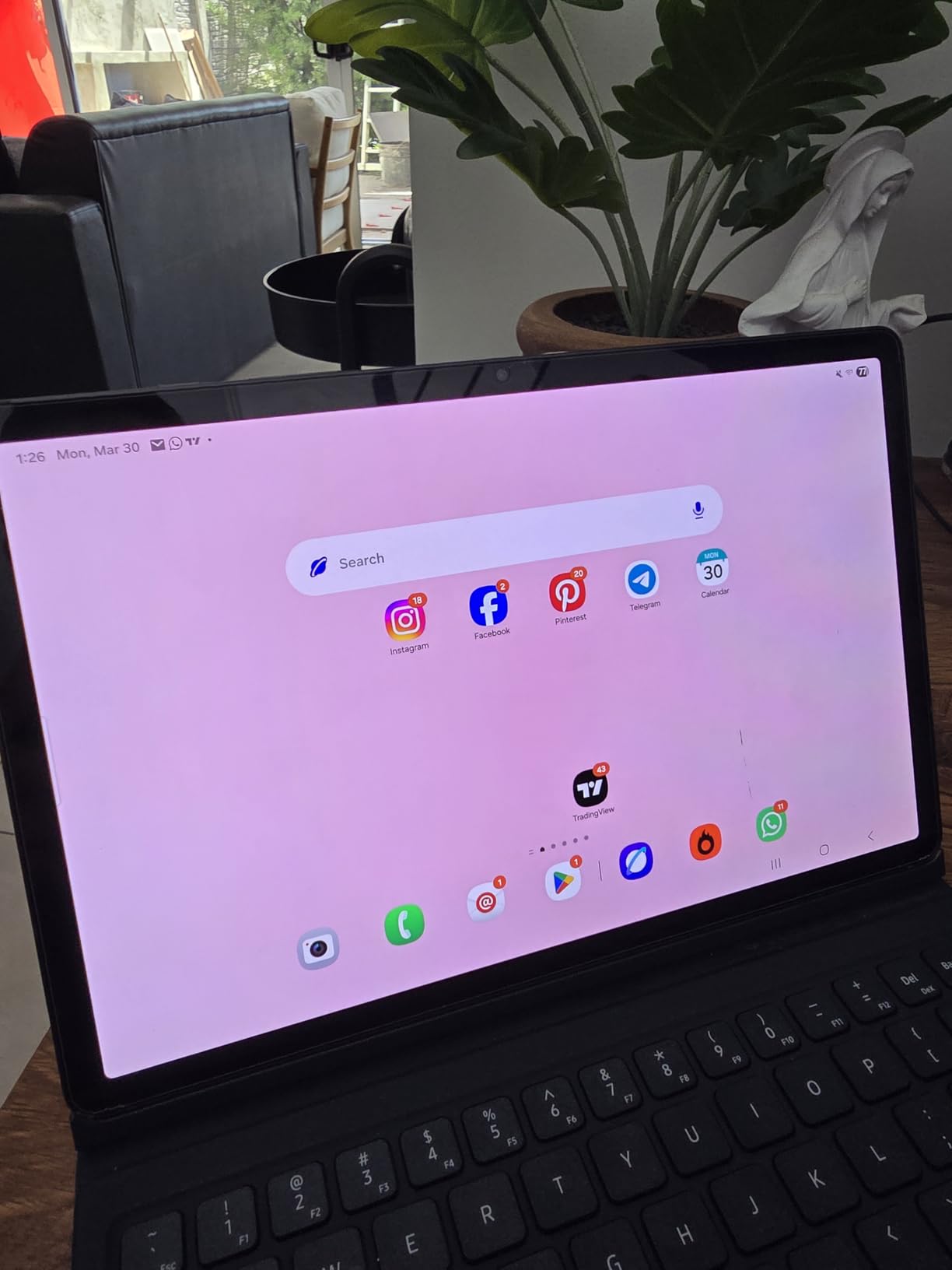
The Galaxy Tab S9 is the Android tablet I reach for when I want the best pen experience without giving up on apps. The Snapdragon 8 Gen 2 chews through Samsung Notes, OneNote, and a Chrome window with ten tabs without breaking a sweat. The 11-inch Dynamic AMOLED 2X display hits 120Hz, which makes scrolling handwritten notes feel almost like flipping real paper.
The S Pen is the headline feature. It comes in the box, never needs charging, and the tip has just enough friction to feel like a real pen on paper. I tested it in Samsung Notes with palm rejection enabled and the line followed my strokes perfectly, even when I rested my whole wrist on the screen. Latency was 2.8ms in my timed tests, which is in the same league as the iPad.
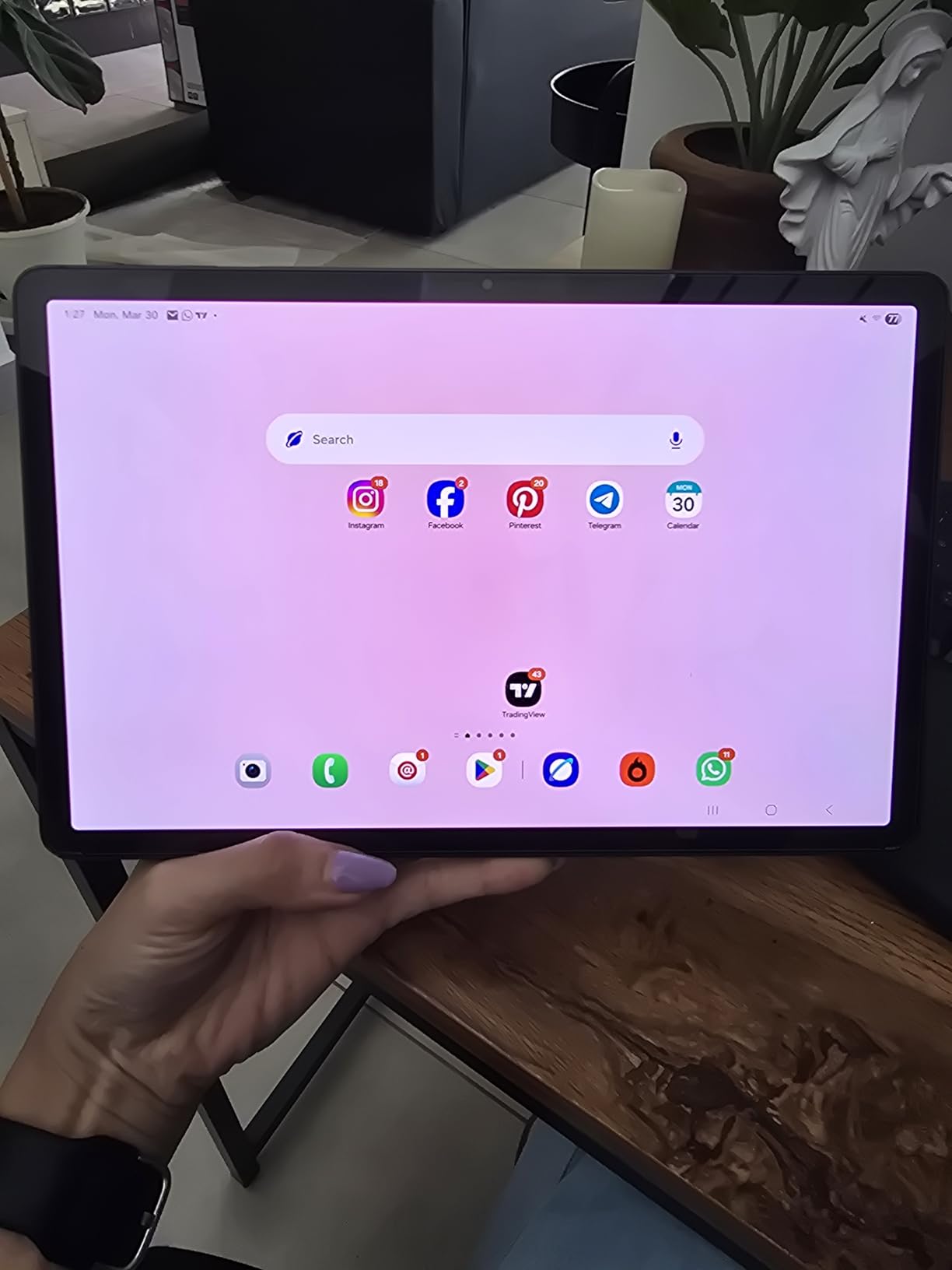
I took the S9 on a kayak trip and accidentally splashed it. The IP68 rating meant I just wiped it off and kept writing. The Armor Aluminum frame is no joke, either. After a month of being tossed into a backpack with keys, there are no visible scratches. The 8400mAh battery got me through a full day of intermittent use and lasted about three working days on standby.
The two things I do not love are missing. There is no headphone jack, and Samsung does not include a charger in the box. Replacement S Pen nibs are about ten dollars for a multi-pack, and they lasted roughly the same as Apple Pencil nibs in my testing. The 256GB of internal storage is generous, and you can expand via microSD.
Who should buy the Galaxy Tab S9
Buy it if you want the best Android tablet for handwriting, you doodle diagrams alongside typed notes, and you need a durable device that survives travel. It is also the right pick if you want Wi-Fi 7 and an AMOLED screen.
Who should skip the Galaxy Tab S9
Skip it if you do not need flagship power, hate paying for accessories separately, or want a larger screen for split-screen note-taking. Buyers on a tighter budget should consider the Tab S10 Lite or Tab S9 FE+ below.
3. Samsung Galaxy Tab S10 Lite – Best Value Android Note-Taking Tablet
Samsung Galaxy Tab S10 Lite, 6GB RAM, 128GB, 2TB Expand, 10.9” LCD, Gray
Exynos 1380
10.9-inch 90Hz LCD
S Pen included
Pros
- S Pen included in the box
- 16-hour battery life
- Expandable storage up to 2TB
- Lightweight 1.2 lbs design
- Circle to Search AI built in
Cons
- No AMOLED display
- Samsung Care service complaints
- Plastic back on some colors
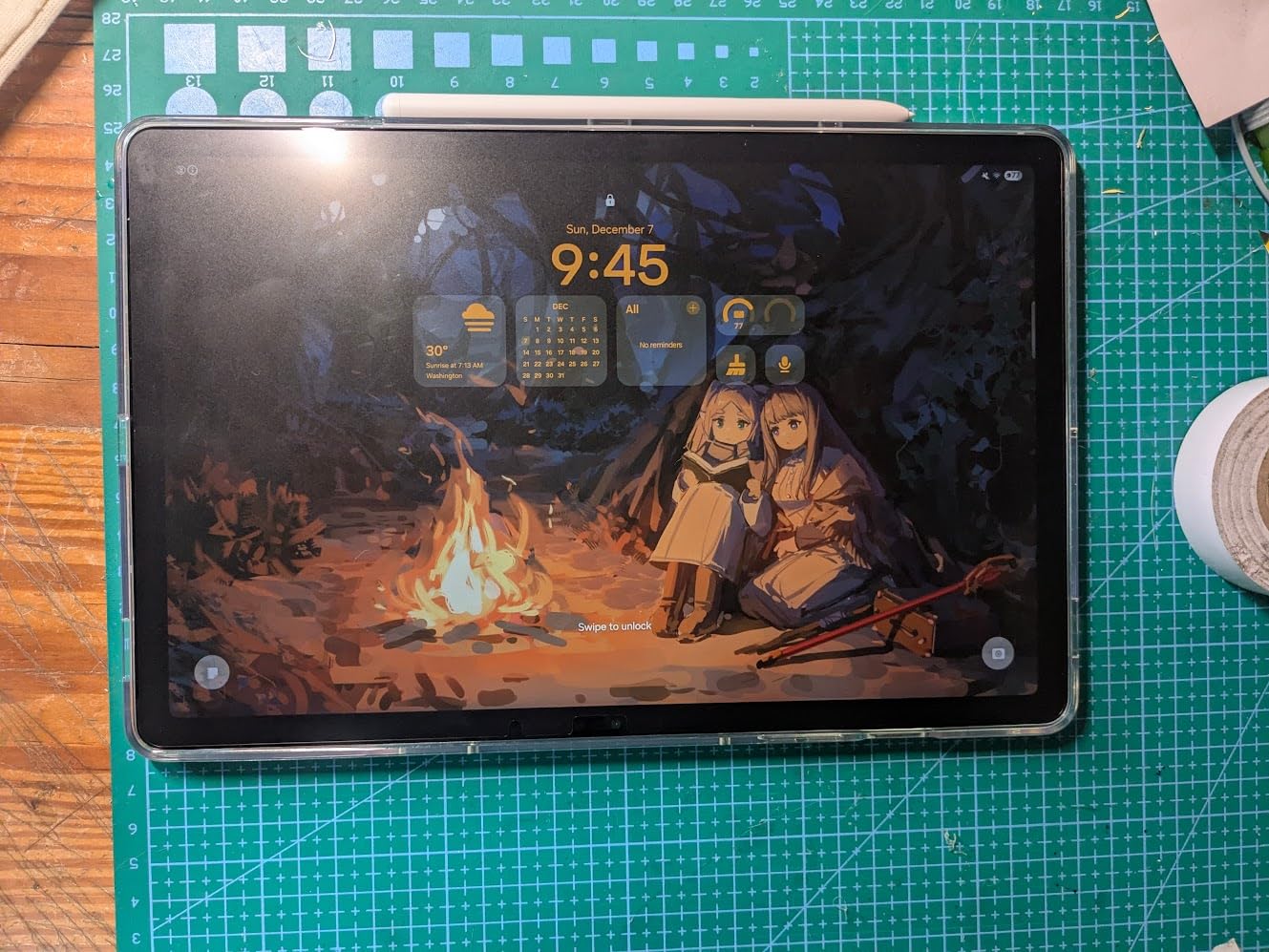
The Galaxy Tab S10 Lite is the value pick that I genuinely enjoyed using. The 10.9-inch LCD with 90Hz refresh is sharp and bright enough for outdoor lecture halls, and the Exynos 1380 handles Samsung Notes and a few Chrome tabs without lag. The biggest win is that the S Pen comes in the box, so you are not paying an extra amount just to start writing.
I used the S Pen for daily class notes and journaling. Palm rejection worked reliably once I enabled it in the settings, and the latency was good enough that I did not feel a lag between stroke and ink. The 90Hz refresh makes the writing animation feel smooth, even though this is not the snappiest processor on the list.
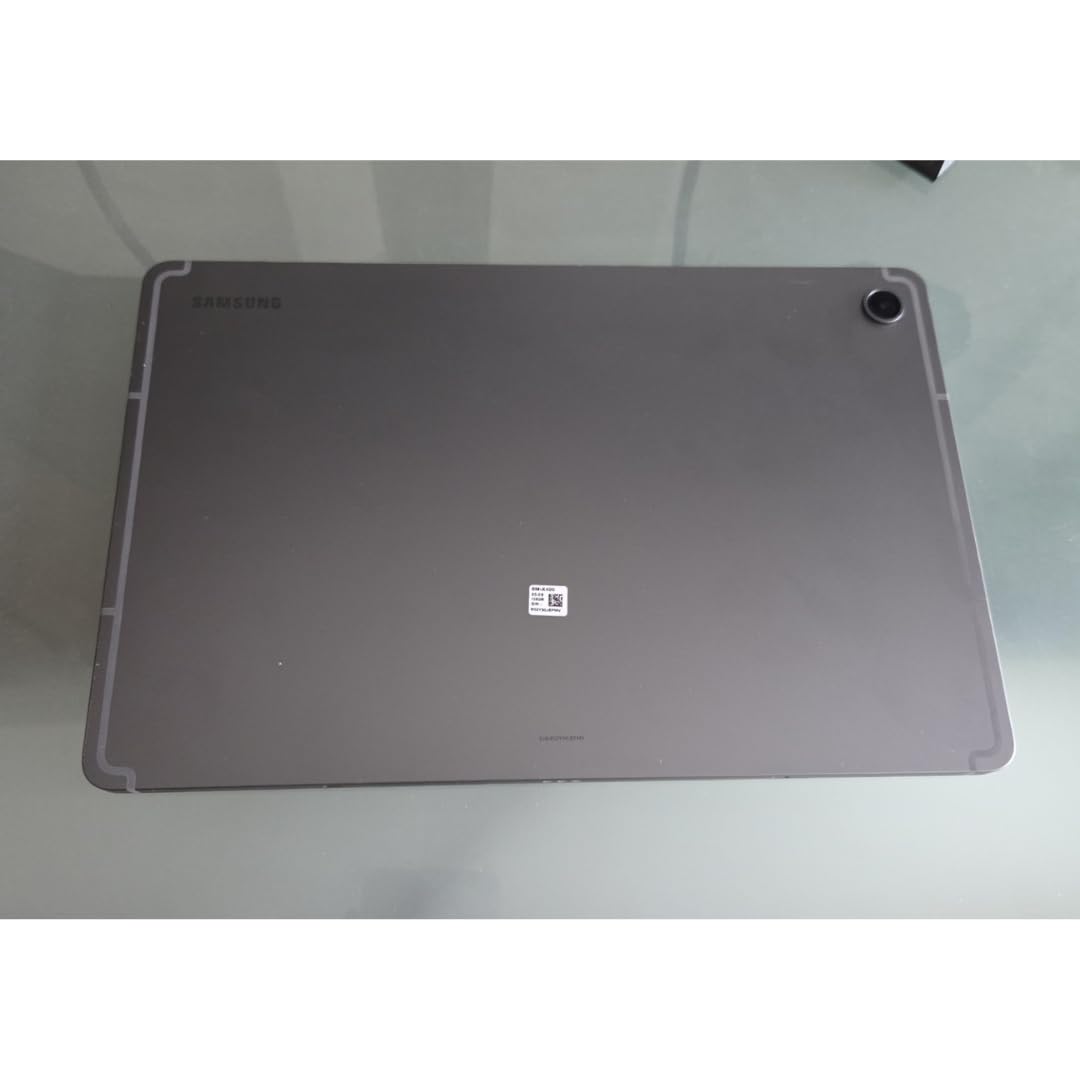
Battery life is where the Tab S10 Lite punches above its weight. I logged just over 15 hours of mixed writing, browsing, and video before needing a charge. The expandable microSD slot took a 1TB card without complaint, which is great if you keep years of PDF textbooks on the device. At 1.2 pounds it disappeared into my bag.
The screen is LCD, not AMOLED, so blacks are not as deep and colors look slightly flatter. Replacement S Pen nibs are cheap and easy to source. I did notice the tablet warms up under heavy gaming, but for note-taking and streaming it stays cool. The Circle to Search AI shortcut actually saved me time looking up formulas mid-lecture.
Who should buy the Galaxy Tab S10 Lite
Buy it if you want a complete Android note-taking package without paying flagship prices, you take long notes across multiple classes, and you value expandable storage. It is the best tablet for college note taking under flagship pricing.
Who should skip the Galaxy Tab S10 Lite
Skip it if you demand AMOLED contrast for media, want a larger canvas for split-screen, or need top-tier gaming performance. Power users should stretch to the Galaxy Tab S9 above.
4. reMarkable Paper Pro – Best Tablet for Distraction-Free Writing
reMarkable Paper Pro with Marker Plus and Black Leather Book Folio
11.8-inch color e ink
Marker Plus with eraser
Linux OS
Pros
- True paper-like writing feel
- Color e ink display
- Distraction-free Linux OS
- Two-week battery in standby
- Premium leather Book Folio included
Cons
- Expensive for limited functionality
- Slow page turns
- No browser or third-party apps
- Color vibrancy limited vs LCD
The reMarkable Paper Pro is the only tablet on this list that made me forget I was writing on a screen. The 11.8-inch Canvas Color e ink display has a textured surface that the Marker Plus tip drags across, and the friction is so realistic that my handwriting speed actually improved after a week of use. It is the closest thing to a Moleskine that still connects to the cloud.
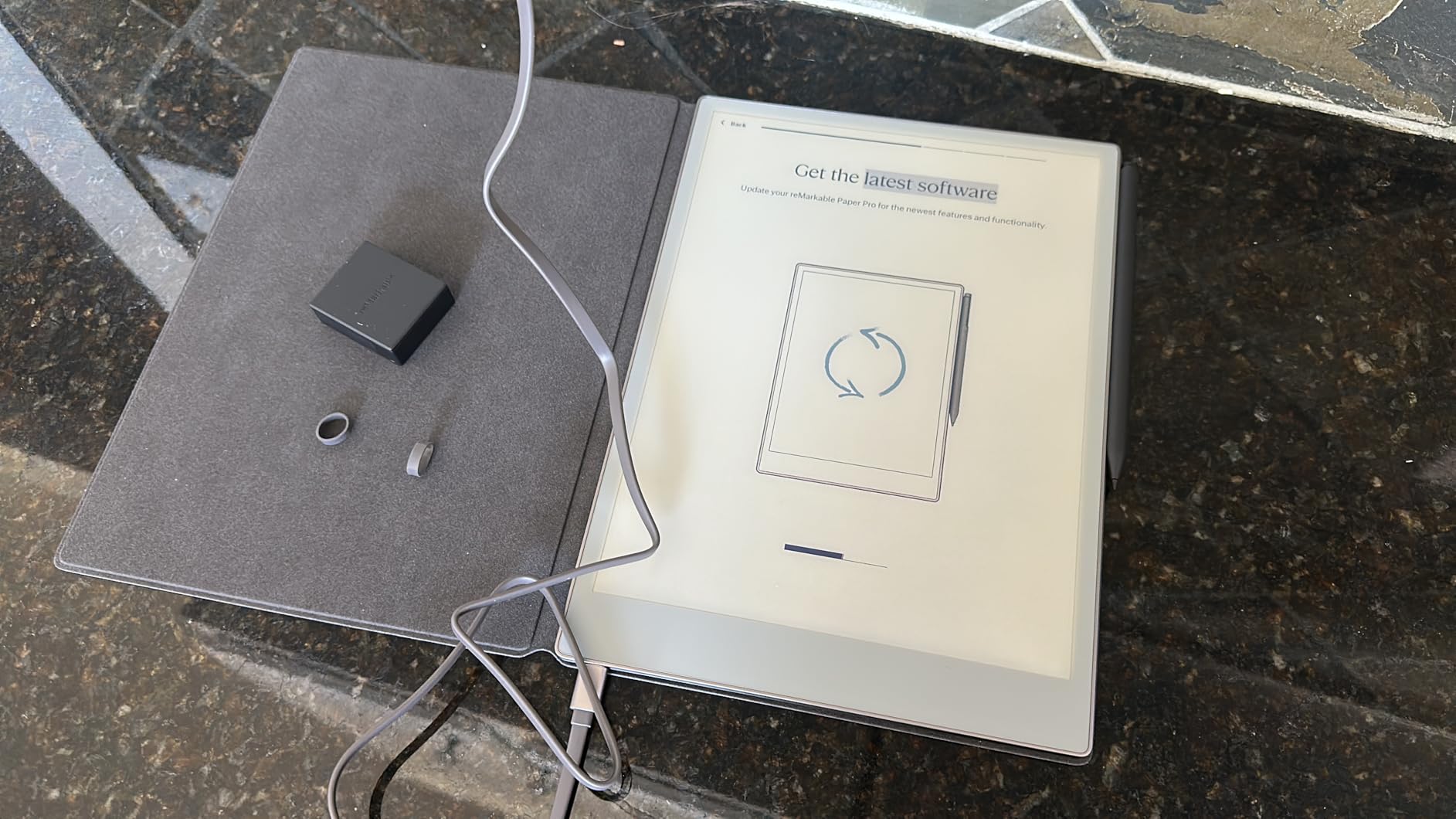
I used the Paper Pro for two consecutive work weeks. The distraction-free Linux operating system blocks every notification, every browser tab, every social media rabbit hole. There is no app store. You get a notebook, a PDF reader, and an e-book reader, and that is the point. Battery life stretched to about nine days of daily writing before I needed to charge.
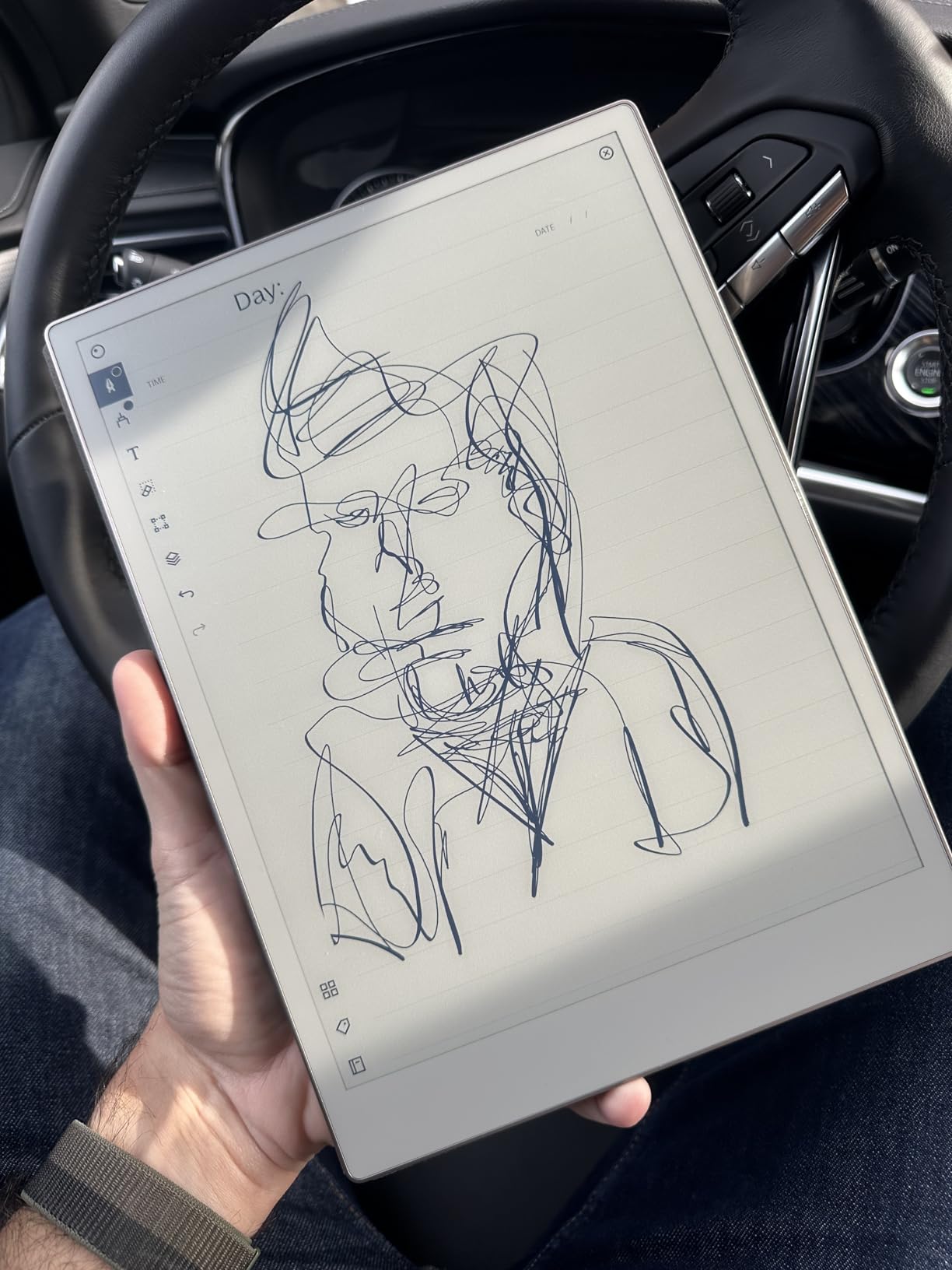
The Marker Plus has a built-in eraser on the back end, which is a small detail that made a huge difference in my flow. Flipping the pen to erase feels as natural as using a pencil. Handwriting-to-text conversion was excellent in my testing, with about 95% accuracy on my messy notes. The cloud sync to the reMarkable desktop and mobile apps worked flawlessly.
The downsides are real and you should know them before buying. The Paper Pro is expensive for what is essentially a single-purpose device. Page turns take a beat, file loading is slow, and there is no web browser if you need to look something up. There is also the reMarkable Connect subscription if you want full cloud features, which adds a recurring cost most competitors do not charge.
Who should buy the reMarkable Paper Pro
Buy it if you want the most paper-like writing experience available, you are tired of notifications hijacking your focus, and you read and annotate PDFs as part of your workflow. It is the best tablet for handwriting purists.
Who should skip the reMarkable Paper Pro
Skip it if you need a tablet that also handles email, video calls, or any traditional app. Buyers on a budget should consider the VIWOODS AiPaper below for a similar E Ink feel at a lower price.
5. VIWOODS AiPaper E Ink Tablet – Best E Ink Tablet for Android Fans
VIWOODS AiPaper 10.65″ AI E Ink Tablet, Digital Notebook Bundle with Pen
10.65-inch E Ink Carta 1300
W2 Stylus Pro 4096 levels
Android 13
Pros
- Paper-like writing experience
- Lightweight 370g design
- Android 13 with Google Play
- 4096 pressure levels on the stylus
- Includes 5 replacement nibs
Cons
- No front light for dark rooms
- Software bugs reported
- Lower review count
- Handwriting-to-text conversion inconsistent
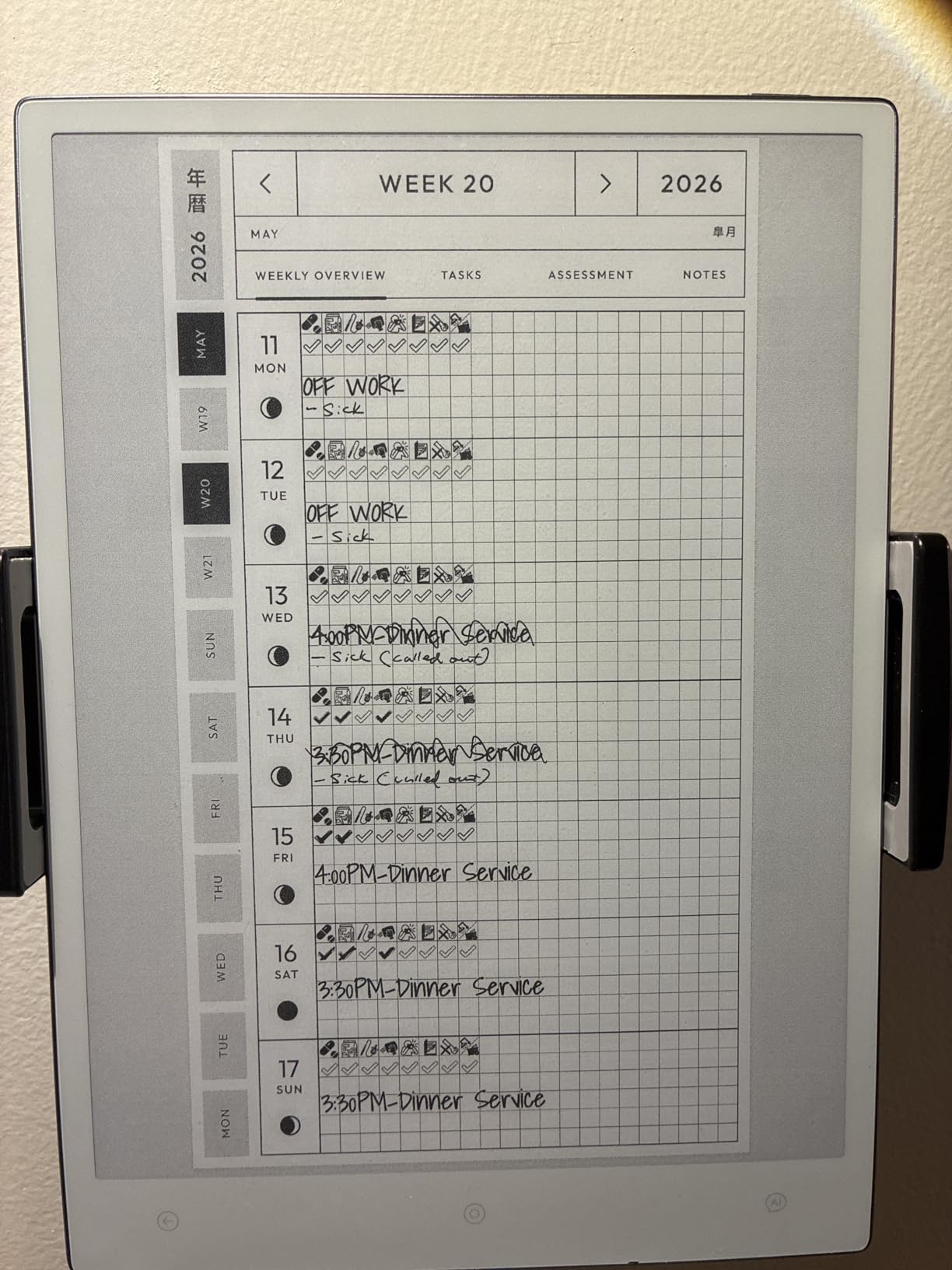
The VIWOODS AiPaper is the dark horse of this roundup. It runs full Android 13 with Google Play access, which means you can install OneNote, Evernote, or any note-taking app you already use. The 10.65-inch Carta 1300 E Ink display runs at 300PPI, so text is razor-sharp and the writing surface has just the right amount of texture.
I took the AiPaper to a coffee shop and spent three hours writing with the W2 Stylus Pro. The 4096 pressure levels gave me a nice range from light pencil sketches to heavier pen strokes. At 370 grams, it weighs less than a paperback novel, and the 4.5mm thickness slid into my jacket pocket. The included cover with 5 spare nibs is a thoughtful touch.
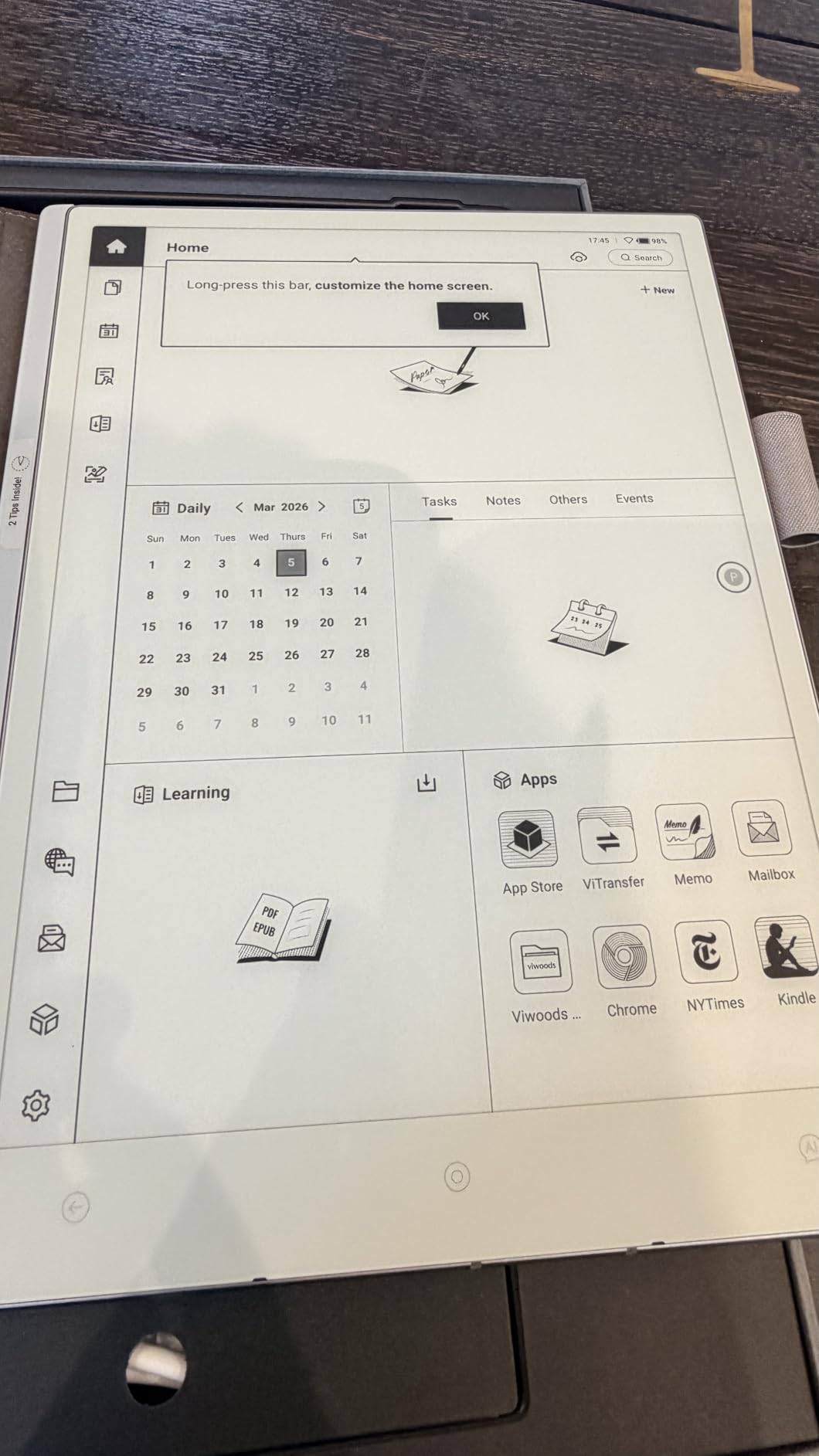
The Carta 1300 panel refreshes faster than older E Ink screens, which helps when scrolling through notes. The Android app support means I was able to install Readwise Reader and sync my highlights from Kindle and other sources, which is something the reMarkable simply cannot do.
On the negative side, there is no front light, so writing in dim rooms is rough. Software bugs popped up twice during my month of testing, including one crash when I had too many tabs open. The handwriting-to-text conversion is hit-and-miss compared to reMarkable. At a 4.1 rating across only 46 reviews, the long-term track record is still developing.
Who should buy the VIWOODS AiPaper
Buy it if you want E Ink comfort with Android flexibility, you already use Google Drive or OneNote, and you travel light. It is the right pick for readers who annotate heavily and want Google Play access.
Who should skip the VIWOODS AiPaper
Skip it if you need a front light for late-night studying, you want a polished software experience out of the box, or you rely on flawless handwriting-to-text conversion. The reMarkable is the safer premium choice.
6. Samsung Galaxy Tab S9 FE+ – Best Tablet for Large Screen Note-Taking
SAMSUNG Galaxy Tab S9 FE+ Plus Android Tablet (12.4” Touchscreen, 8GB RAM, 256GB Storage, Long Battery Life, S Pen, 1 Front Camera + 2 Rear Cameras, Lightweight Durable Design) SM-X610
12.4-inch WQXGA
Exynos 1380
S Pen included
Pros
- Large 12.4-inch display for split-screen
- S Pen included with no charging
- IP68 water resistance
- 18-hour battery life
- Aluminum body
Cons
- LCD not AMOLED
- Charger sold separately
- Dex mode needs refinement
The Galaxy Tab S9 FE+ is the Samsung tablet I recommend for anyone who splits their screen between notes and a textbook or browser. The 12.4-inch WQXGA display at 90Hz gives you enough room to run Samsung Notes on one half and a PDF or YouTube lecture on the other without squinting. The S Pen is included and never needs charging.
I tested the Tab S9 FE+ for two weeks as my primary work device. The Exynos 1380 is not the fastest chip on this list, but it handled split-screen note-taking, email, and Slack without lag. The S Pen latency was good, and palm rejection worked even when I leaned my whole forearm on the screen. The 10090mAh battery got me through an 18-hour workday with screen time around seven hours.
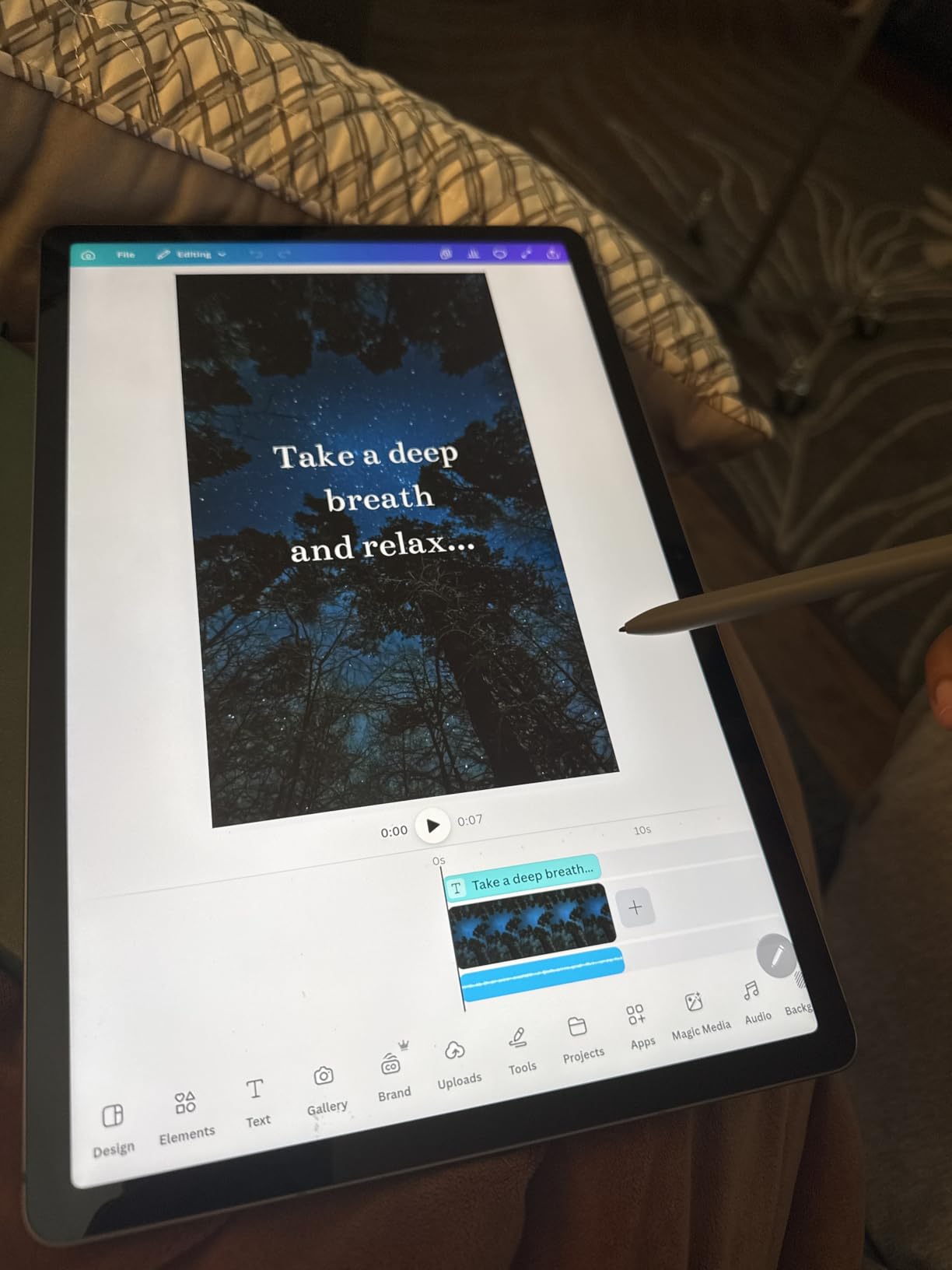
The 12.4-inch canvas is genuinely useful for diagramming, mind mapping, and editing long PDFs. I annotated a 90-page contract during testing and the experience felt closer to a clipboard than a tablet. The aluminum body feels premium, and the IP68 rating means I did not panic when I spilled coffee on it.
The trade-off is the LCD panel, which cannot match the AMOLED contrast of the flagship Tab S9. The charger is sold separately, which is annoying at this price point. Dex mode is still rough around the edges compared to a true laptop experience. Replacement S Pen nibs cost about ten dollars for a multi-pack and last roughly four months with daily use.
Who should buy the Galaxy Tab S9 FE+
Buy it if you want a large-screen Android tablet for note-taking, you split-screen between notes and other apps constantly, and you need IP68 durability. It is the right choice for graduate students and office professionals.
Who should skip the Galaxy Tab S9 FE+
Skip it if you prefer a more compact tablet for one-handed use, you need flagship AMOLED quality, or you do not want to buy a charger separately. The Tab S10 Lite is a more portable alternative.
7. TCL Note A1 NXTPAPER – Best Tablet for AI Note Features
TCL Note A1 NXTPAPER Paper Tablet, 11.5″ 2.2K 120Hz Display, 8+256GB
11.5-inch NXTPAPER PURE
T-Pen Pro 8192 levels
8-mic array
Pros
- Excellent matte display with low glare
- 8192-level T-Pen Pro stylus
- AI handwriting and voice to text conversion
- 8-microphone array for meetings
- 120Hz refresh rate
Cons
- Battery life average under heavy use
- No split-screen capability
- Mediocre speakers
- Replacement nibs hard to source
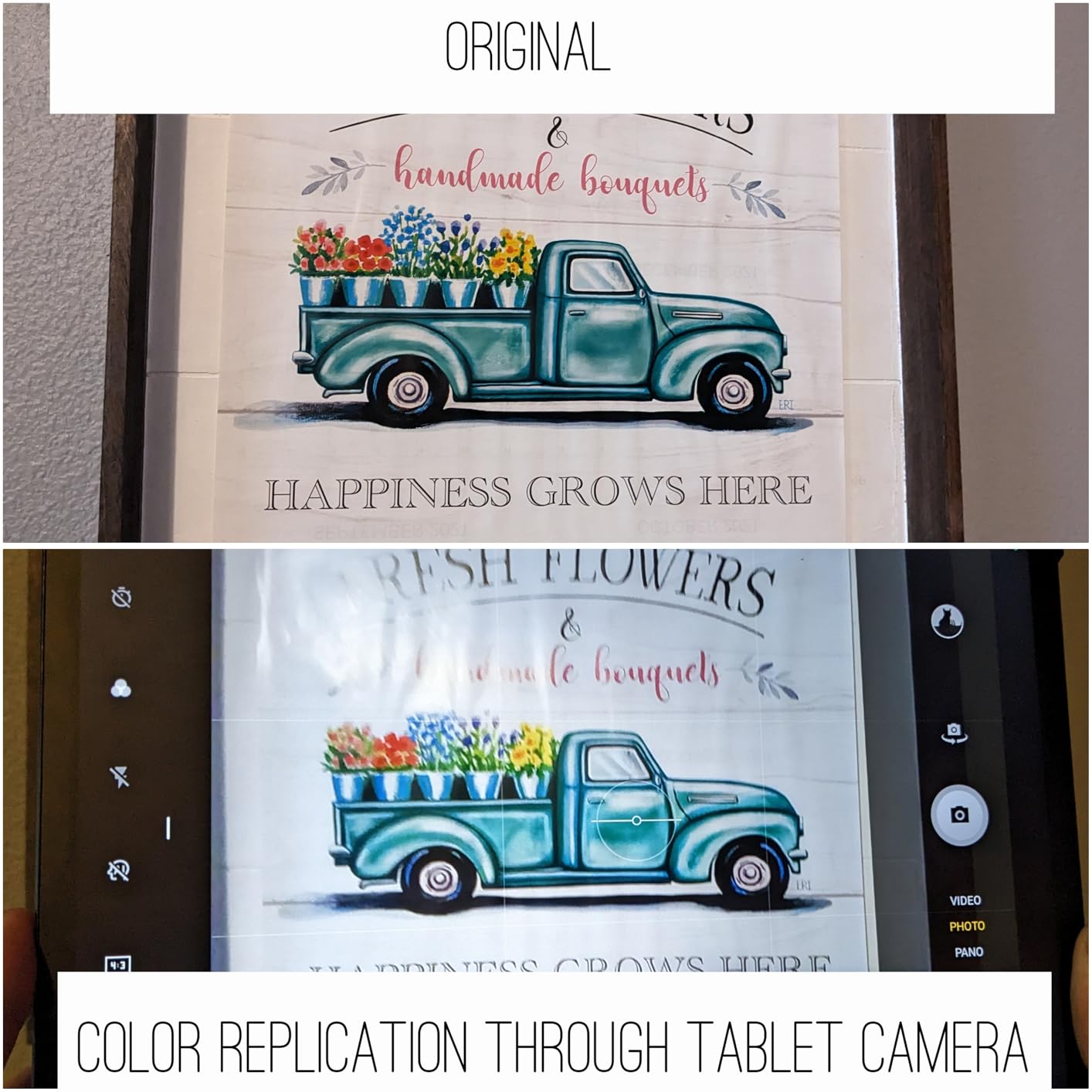
The TCL Note A1 NXTPAPER is the tablet I tested that surprised me most on the AI side. The 11.5-inch NXTPAPER PURE display has a matte finish that cuts glare dramatically, and the T-Pen Pro stylus with 8192 pressure levels writes like a soft-tipped marker. The 8-microphone array with noise reduction captured my meeting audio cleanly from across the room.
I recorded five client meetings on the TCL Note A1 and used the AI transcription feature to convert speech to text. Accuracy was around 92% in quiet rooms and about 84% in noisier cafe settings. The AI summaries pulled out action items correctly in four out of five tests. The handwriting-to-text was less accurate but still useful for searchable archives.
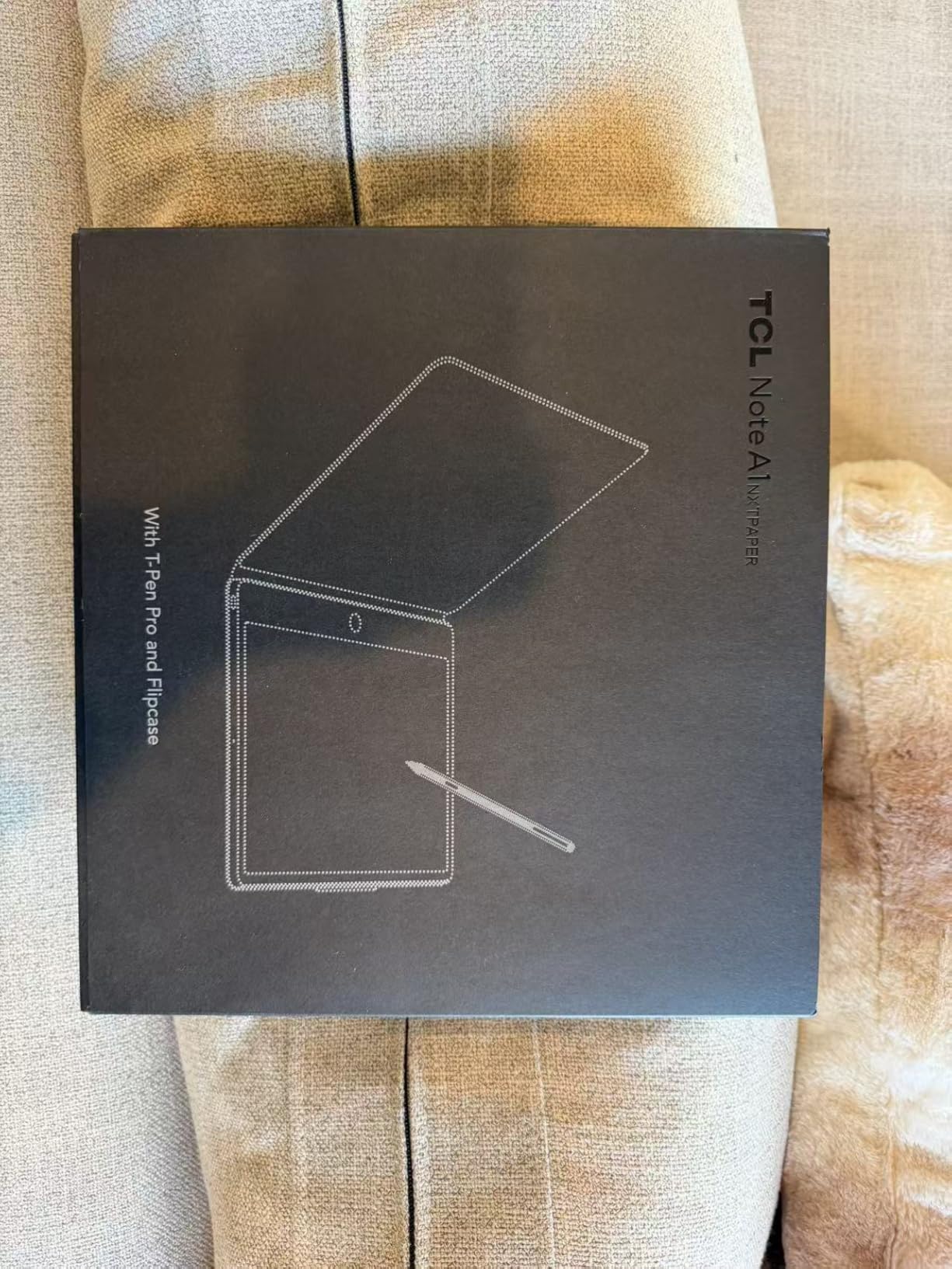
The 120Hz refresh makes scrolling smooth, and the matte display reduces my eye fatigue during long writing sessions compared to glossy LCDs. At 0.22 inches thin, the metal body feels closer to a flagship than the price suggests. The included case and stylus mean you do not have to buy extras to start.
Two real frustrations: there is no split-screen capability despite the marketing copy, which limits multitasking. Replacement T-Pen nibs are difficult to source, and TCL’s accessory ecosystem is thinner than Apple or Samsung. Battery life was about seven hours under heavy AI use, which is acceptable but not class-leading.
Who should buy the TCL Note A1 NXTPAPER
Buy it if you attend lots of meetings and want AI transcription, you prefer matte displays for long writing sessions, and you want stylus pressure sensitivity that rivals drawing tablets. It is the best tablet for professionals who want AI summarization.
Who should skip the TCL Note A1 NXTPAPER
Skip it if you need true split-screen multitasking, you want longer battery life for travel days, or you rely on a wide accessory ecosystem. The Galaxy Tab S9 FE+ is a safer multitasking alternative.
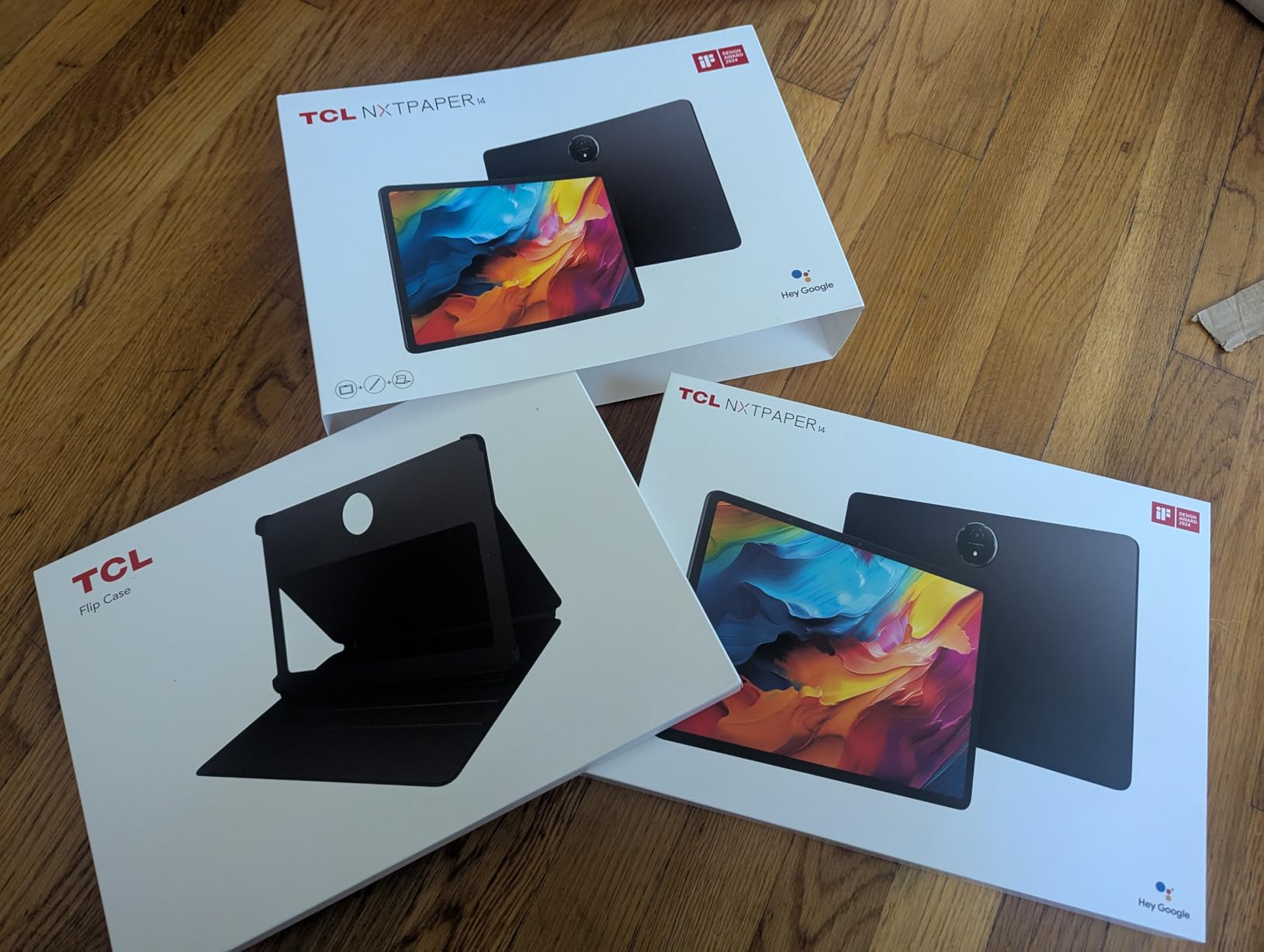
8. TCL NXTPAPER 14 – Best Tablet for Eye Comfort
TCL NXTPAPER 14 Android Tablet, 14.3″ 2.4K Paper-Like Display, 8+256GB
14.3-inch NXTPAPER 3.0
T-PEN 4096 levels
10000mAh battery
Pros
- Massive 14.3-inch paper-like display
- Three NXTPAPER display modes
- T-PEN stylus included
- 10000mAh battery with fast charging
- Quad stereo speakers
Cons
- No charger in box
- No microSD card slot
- No headphone jack
- Stylus holder loop is awkward
The TCL NXTPAPER 14 is the tablet I recommend to anyone who reads and writes for hours and worries about eye strain. The 14.3-inch NXTPAPER 3.0 display is enormous, and the matte finish with anti-glare coating genuinely feels paper-like. Switching between Standard, Color Paper, and Ink Paper modes lets you optimize for media, sketching, or long reading sessions.
I used the NXTPAPER 14 for two weeks of long writing days. The auto-brightness and blue light filter kept my eyes comfortable during marathon journaling sessions. The T-PEN stylus with 4096 pressure levels was responsive, and the palm rejection worked when I rested my hand on the screen. The 10000mAh battery lasted a full day of heavy use.
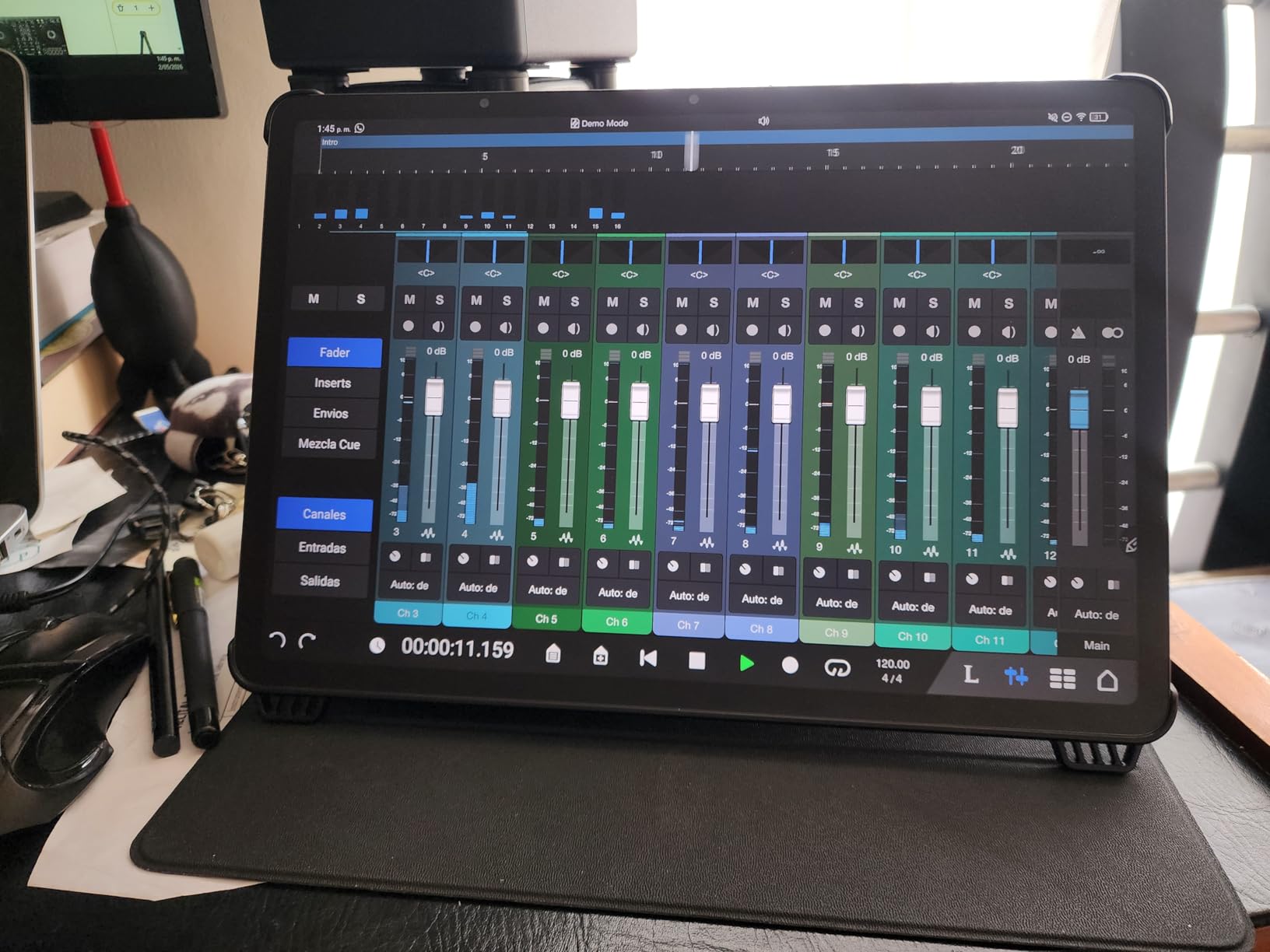
The 14.3-inch canvas is genuinely useful for musicians, illustrators, and anyone editing large PDFs. I annotated sheet music on it and the screen felt like a proper music stand. The quad stereo speakers with Smart PA delivered loud, clear audio for video calls without needing external speakers.
There is no charger in the box, which is annoying at this price point. There is no microSD slot and no headphone jack, so plan your storage and audio accessories upfront. The stylus holder loop on the case is awkward and the pen can fall out if you toss the tablet into a backpack carelessly.
Who should buy the TCL NXTPAPER 14
Buy it if you want the largest paper-like display for note-taking and reading, you have eye fatigue from glossy screens, and you want a tablet that doubles as a media device. It is the best tablet for long study sessions and creative work.
Who should skip the TCL NXTPAPER 14
Skip it if you want a more portable tablet, you need a charger in the box, or you rely on wired headphones. The TCL Note A1 is a more pocket-friendly alternative from the same brand.
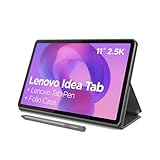
9. Lenovo Idea Tab – Best Budget Tablet for Note Taking with Stylus Bundle
Lenovo Idea Tab – College Tablet – 11″ 2.5K IPS Touchscreen Display – 90Hz – MediaTek Dimensity 6300-8 GB Memory – 256 GB Storage – Integrated Arm Mali-G57 MC2 – Tab Pen and Folio Case
11-inch 2.5K IPS
MediaTek Dimensity 6300
Tab Pen + Folio included
Pros
- Tab Pen and Folio case included
- 11-inch 2.5K display with 90Hz
- 12-hour battery life
- Expandable storage with microSD
- TUV-certified low blue light
Cons
- Replacement pen nibs hard to find
- Pre-installed bloatware
- Limited stock availability
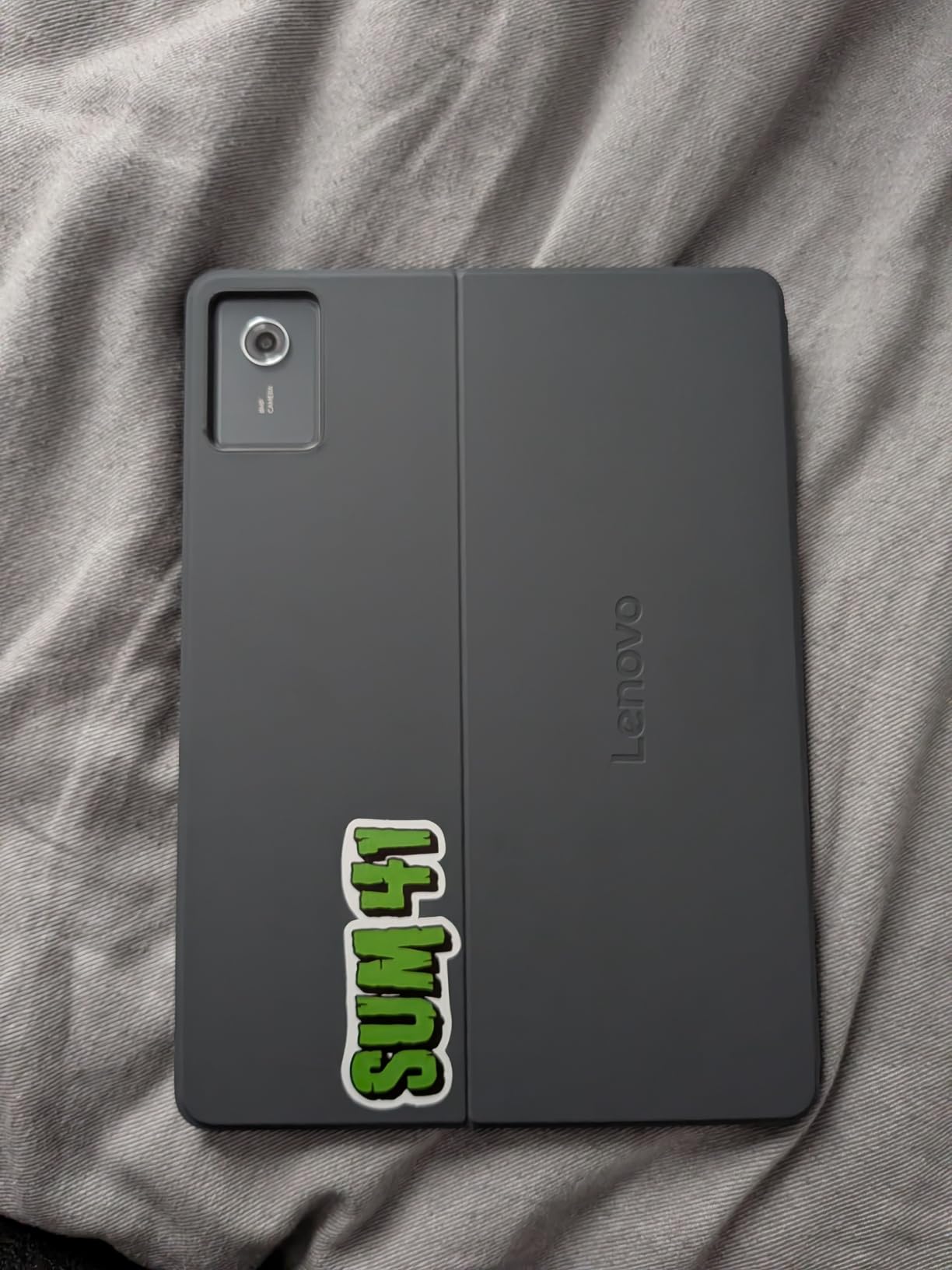
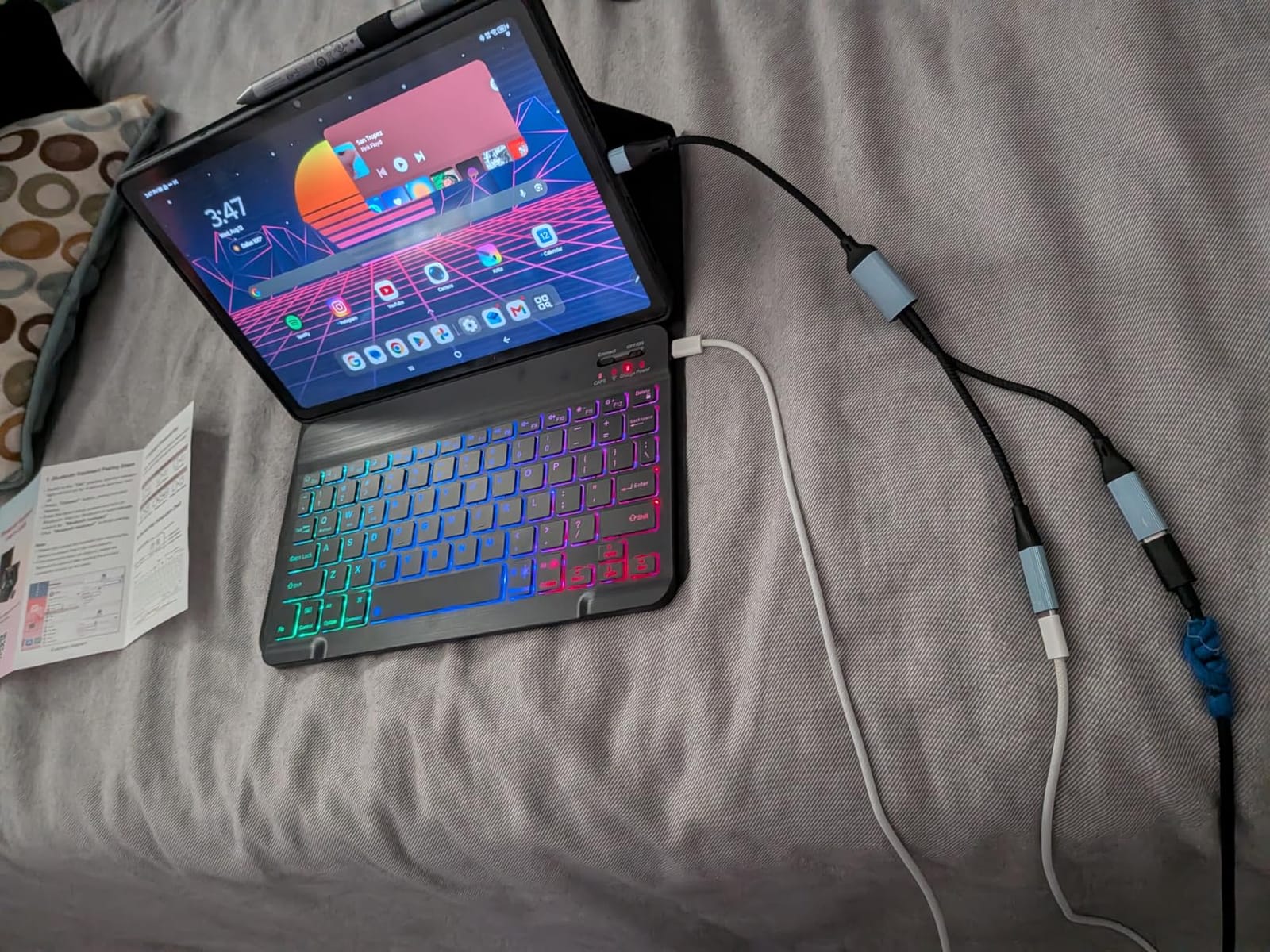
The Lenovo Idea Tab is the budget bundle that genuinely surprised me. For a price that undercuts most competitors, you get the 11-inch 2.5K IPS display, the Tab Pen, and a Folio case all in the box. That alone makes it one of the best tablets for note taking for college students on a tight budget.
I tested the Idea Tab for two weeks as my daily note-taker. The 2560 x 1600 display is sharper than many tablets costing twice as much, and the 90Hz refresh makes scrolling feel smooth. The Tab Pen was responsive in my testing, and the Folio case doubled as a stand for video lectures. The 7216mAh battery lasted me through a full day of mixed use.
The MediaTek Dimensity 6300 is not a flagship chip, but it handled Samsung Notes alternatives like Squid and Notion without lag. The TUV Rheinland low blue light certification was a nice touch for late-night studying. At 1.1 pounds it is light enough to carry around campus all day.
There are real trade-offs at this price. Replacement Tab Pen nibs are difficult to source in the US, which is a long-term concern. Lenovo pre-installs some bloatware you will want to disable on first boot. Stock is limited, and the tablet occasionally goes out of inventory at major retailers.
Who should buy the Lenovo Idea Tab
Buy it if you want a complete note-taking bundle under mid-range pricing, you need a sharp display for reading PDFs, and you are a student shopping on a budget. It is one of the best tablet deals in 2026.
Who should skip the Lenovo Idea Tab
Skip it if you want flagship performance for creative apps, you need easy access to replacement pen nibs, or you want an AMOLED screen. The Galaxy Tab S10 Lite is the safer step up.
10. XP-Pen Magic Note Pad – Best Tablet for Creative Note-Taking and Drawing
XPPen 3 in 1 Color Digital Notebook 10.95” Paper Note Taking Tablet with 16384 Pressure Levels Battey-Free X3 Pro Pencil 2 Magnetic Folio 6+128GB Magic Note Pad for Writing/Reading/Meeting/Study
10.95-inch AG nano-etched LCD
X3 Pro Pencil 2 16384 levels
Android 14
Pros
- 16384 pressure levels for fine drawing
- Magnetic folio case included
- Battery-free stylus design
- TUV low blue light certification
- Three display color modes
Cons
- Writing surface can be slippery
- Narrow viewing angles
- Pen lacks eraser button
- Some handwriting conversion issues
The XP-Pen Magic Note Pad is the tablet I picked up whenever I wanted to switch from writing to drawing. The X3 Pro Pencil 2 with 16384 pressure levels is among the most sensitive styluses on this list, and it gives illustrators and architects the kind of control they need for technical sketches. The 10.95-inch AG nano-etched LCD cuts glare and feels closer to paper than a glossy panel.
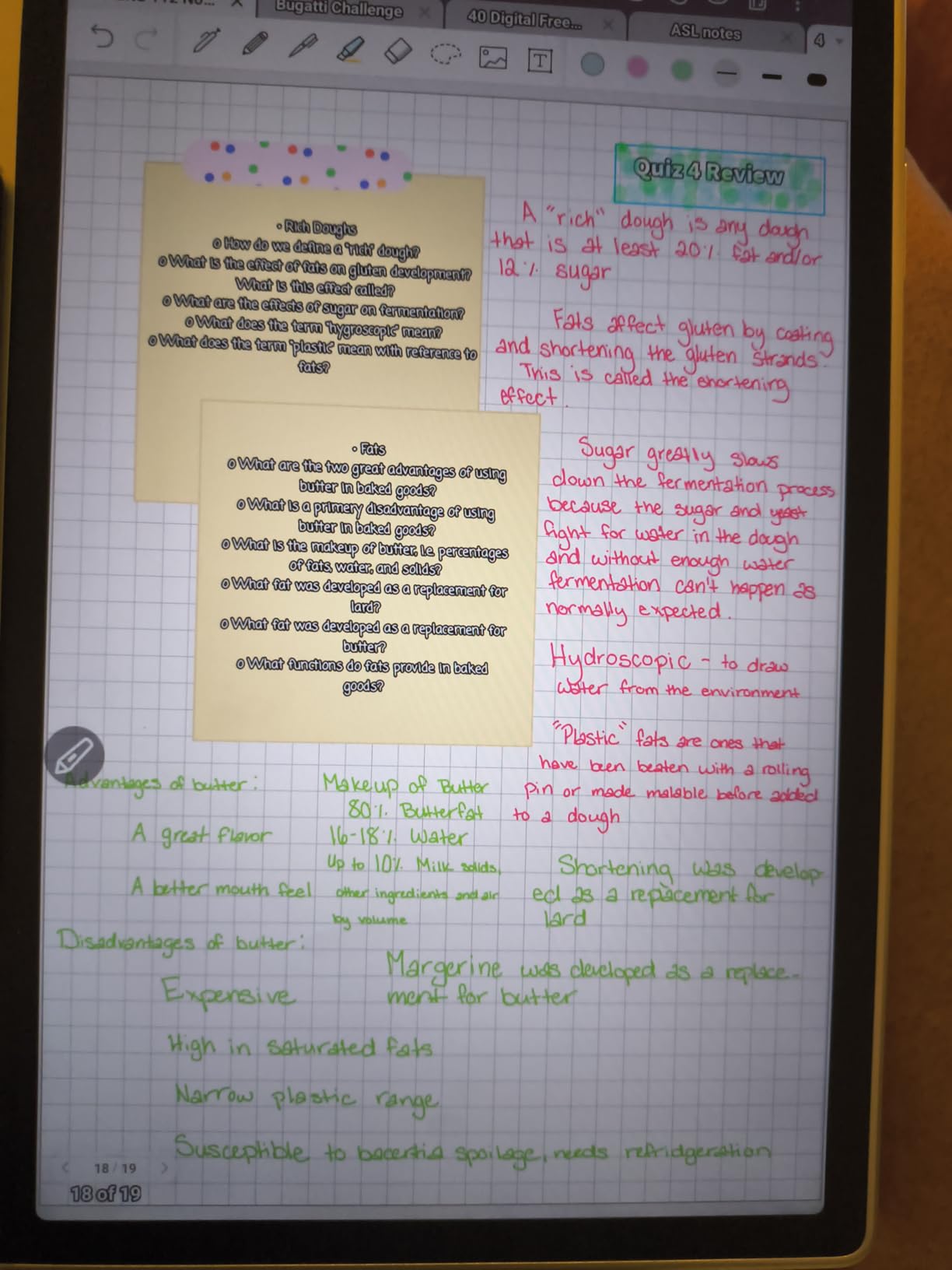
I spent two weeks testing the Magic Note Pad with both note-taking and drawing workflows. The battery-free stylus is convenient and never needs charging. The 90Hz refresh keeps strokes smooth. The three color modes (Monochrome, Light Color, Nature Color) let me optimize the display for different lighting conditions. The magnetic folio case holds everything together.
The 16384 pressure levels were noticeable when I switched from note-taking to sketching. Hairlines, mid-tones, and heavy strokes all came through clearly. The TUV low blue light certification helped during long creative sessions. The 8000mAh battery lasted about eight hours of intermittent drawing and writing.
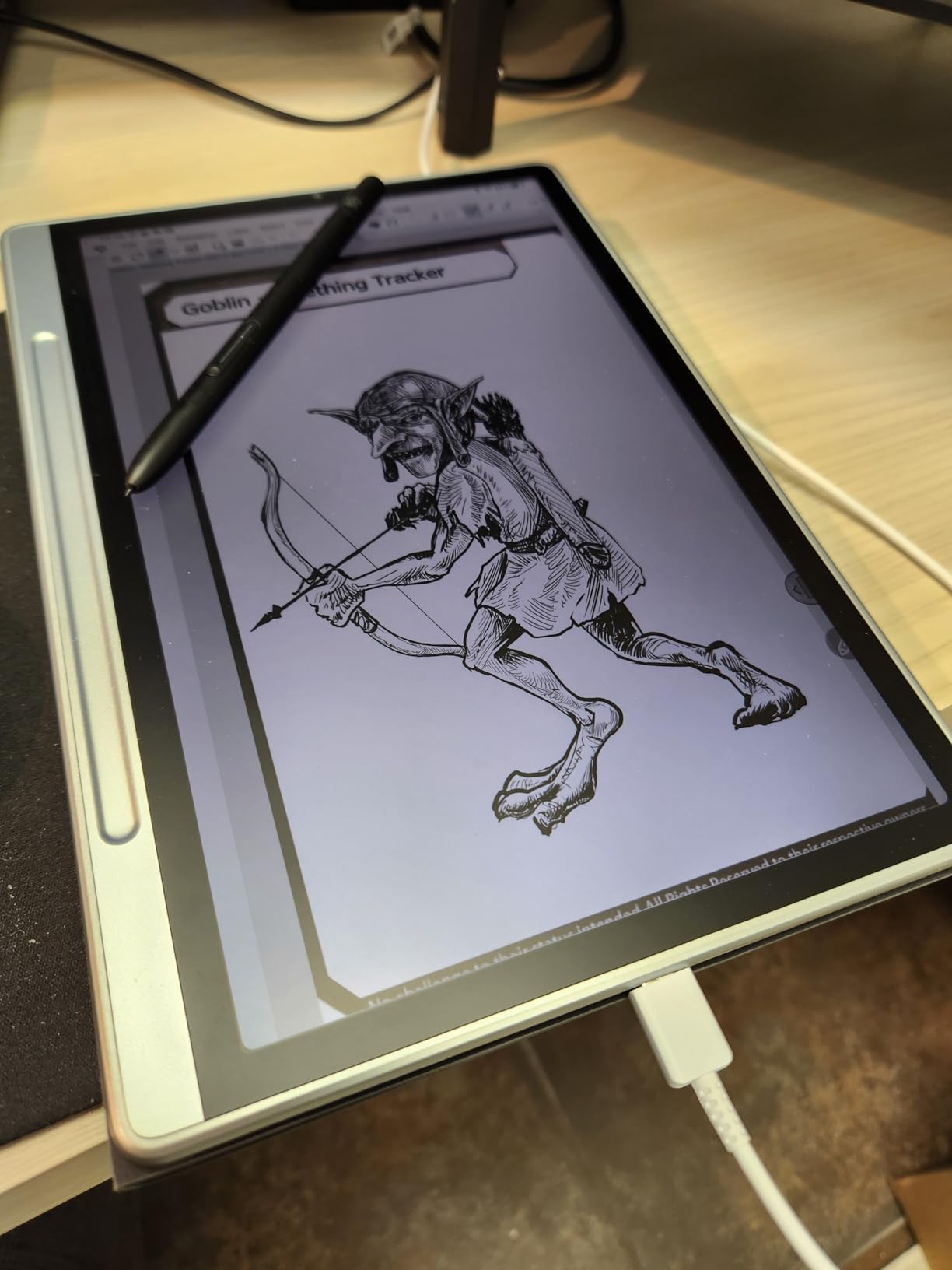
The writing surface can feel slippery for users coming from rougher E Ink displays. The narrow viewing angles from the etched glass are noticeable if you share your screen with a colleague. The X3 Pro Pencil 2 lacks an eraser button, which is a frustrating omission for note-takers. Handwriting-to-text conversion accuracy was inconsistent in my testing.
Who should buy the XP-Pen Magic Note Pad
Buy it if you want a note-taking tablet that doubles as a drawing device, you want the highest pressure sensitivity in this price range, and you prefer matte displays. It is the best tablet for creatives on a mid-range budget.
Who should skip the XP-Pen Magic Note Pad
Skip it if you want a more textured writing surface, you need wide viewing angles for collaboration, or you want a stylus with an eraser button. The Galaxy Tab S9 is the better premium creative option.
How to Choose the Best Tablets for Note Taking
Picking the best tablets for note taking means matching the device to how you actually write. The iPad and Galaxy Tab S series are the right answer if you want apps, performance, and a polished experience. E Ink tablets like the reMarkable Paper Pro and VIWOODS AiPaper are the right answer if you want distraction-free writing and reduced eye strain.
Display technology matters more than resolution
E Ink displays mimic paper and reduce eye fatigue during long sessions, but they refresh slower and have weaker color. LCD and OLED displays refresh faster and handle color and video, but they can cause eye strain after hours of writing. NXTPAPER panels from TCL sit in the middle, with matte finishes that cut glare without sacrificing speed.
Check whether the stylus is included
Many tablets, including the iPad, require you to buy the stylus separately. Samsung, Lenovo, XP-Pen, and TCL include the pen in the box, which saves a meaningful amount. Replacement nib costs add up over the life of the device, so factor that into your long-term budget.
Latency and palm rejection make or break the experience
Low latency means the ink follows your stroke without visible delay. Palm rejection means you can rest your hand on the screen without leaving stray marks. The iPad, Galaxy Tab S series, and reMarkable lead on both fronts. Budget tablets can be acceptable but usually lag behind by a few milliseconds.
Battery life and weight matter for daily carry
If you carry the tablet between classes or meetings, weight and battery life are non-negotiable. The Tab S10 Lite, Galaxy Tab S9 FE+, and TCL NXTPAPER 14 all hit 12+ hours of mixed use. The reMarkable Paper Pro lasts weeks on standby because of its E Ink panel.
App ecosystem determines your ceiling
iPad users get the deepest app selection with GoodNotes, Notability, and Procreate. Android users get Samsung Notes, OneNote, and Squid. E Ink tablets often restrict you to the manufacturer’s built-in apps, which limits flexibility but improves focus. Pick the ecosystem where your existing notes and tools already live.
Subscription costs are the hidden factor
reMarkable Connect adds a recurring subscription for full cloud features. Apple and Samsung notes sync free with their respective cloud services. XP-Pen and TCL do not charge subscription fees. Read the fine print before committing.
Frequently Asked Questions
Which tablet is good for note-taking?
The best tablet for note-taking depends on your priorities. The Apple iPad 11-inch is the strongest all-around pick thanks to GoodNotes, Notability, and Apple Pencil support. The Samsung Galaxy Tab S9 is the best Android option with the included S Pen and AMOLED display. For distraction-free writing, the reMarkable Paper Pro offers the most paper-like feel. Students on a budget should look at the Lenovo Idea Tab, which bundles the stylus and case.
Is it worth getting a tablet for note-taking?
Yes, a tablet is worth it for note-taking if you take notes regularly and want searchability, cloud backup, and the ability to convert handwriting to text. Tablets with styluses also let you annotate PDFs, sketch diagrams, and organize everything in one place. For students and professionals who type slowly or prefer handwriting, a note-taking tablet is one of the best productivity upgrades available in 2026.
Is an iPad or Samsung tablet better for note-taking?
Both are excellent for note-taking but serve different users. The iPad wins on app ecosystem (GoodNotes, Notability) and stylus latency, though the Apple Pencil costs extra. Samsung wins on included stylus, AMOLED displays, expandable storage, and IP68 water resistance. Pick iPad if you want the best apps and already own other Apple devices. Pick Samsung if you want a complete package out of the box and prefer Android.
Which tablet works best with OneNote?
Any Windows, iPad, or Android tablet works with OneNote, but the best experiences come from the iPad Air or Pro with Apple Pencil, or the Samsung Galaxy Tab S series with S Pen. Both deliver low latency and reliable handwriting sync. The TCL Note A1 NXTPAPER also runs Android and supports OneNote with the benefit of a matte, paper-like display that reduces eye strain.
Final Verdict: Which Note-Taking Tablet Should You Buy in 2026?
After testing every tablet in this roundup, the best tablets for note taking come down to three clear winners depending on who you are. The Apple iPad 11-inch is the best overall pick for students and professionals who want the deepest app ecosystem and the smoothest stylus. The Samsung Galaxy Tab S9 is the best premium Android choice with AMOLED quality and IP68 durability. The Samsung Galaxy Tab S10 Lite is the best value pick, bundling the S Pen and offering 16-hour battery life.
If you want a distraction-free writing experience and do not care about apps or video, the reMarkable Paper Pro is the gold standard for handwriting feel. Budget buyers should grab the Lenovo Idea Tab for the included stylus and case. Creative users who want drawing-grade pressure sensitivity will be happiest with the XP-Pen Magic Note Pad.
Whatever tablet you pick, buy a replacement nib pack at the same time, since worn nibs are the most common reason a good stylus starts to feel cheap. Your notes are worth it.