
Working nights changed everything for me. I was a hospital nurse for six years, and by year three I felt like a ghost of myself. I would come home at 7 a.m., pull every curtain shut, and still lie awake until 10 a.m. Then I would drag myself through the day in a haze, only to do it all over again.
A coworker finally convinced me to try a therapy lamp. I sat in front of a 10,000-lux box for 30 minutes before my shift started, and within two weeks I noticed something shifted. My energy during the shift came up, and I started falling asleep faster in the morning. That single change unlocked my whole routine.
This guide covers the best therapy lamps for shift workers I have tested and researched for 2026. I compared 8 popular models across price, brightness, portability, and shift-specific features. Whether you are a nurse, dispatcher, factory worker, or pilot flying red-eye routes, the right lamp can rescue your sleep, energy, and mood.
Table of Contents
Top 3 Picks for Shift Workers in 2026
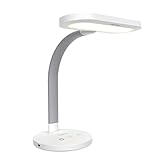
Verilux HappyLight Duo
- 10000 lux therapy plus task lamp
- Flexible gooseneck and USB charging port
- 3 color temperatures and 7 brightness levels
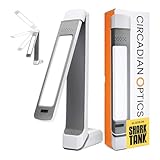
Circadian Optics Lumos
- 270-degree rotating panel
- 5500K noon-day sun color temperature
- 50000-hour LED lifespan

Verilux HappyLight Lucent
- One-touch 10000 lux operation
- Ultra-thin portable tablet design
- Detachable bidirectional stand
Best Therapy Lamps for Shift Workers in 2026
| Product | Specifications | Action |
|---|---|---|
| Verilux HappyLight Duo |
|
Check Latest Price |
| Circadian Optics Lumos |
|
Check Latest Price |
| Verilux HappyLight Lucent |
|
Check Latest Price |
 Verilux HappyLight Luxe Verilux HappyLight Luxe |
|
Check Latest Price |
 Verilux HappyLight Lumi Plus Verilux HappyLight Lumi Plus |
|
Check Latest Price |
 LASTAR Sun Lamp LASTAR Sun Lamp |
|
Check Latest Price |
 Carex Day-Light Classic Plus Carex Day-Light Classic Plus |
|
Check Latest Price |
 Circadian Optics Luxy Circadian Optics Luxy |
|
Check Latest Price |
1. Verilux HappyLight Duo – 2-in-1 Therapy and Task Lamp for Shift Workstations
Verilux HappyLight Duo 2-in-1 Light Therapy & Task Desk Lamp, UV-Free LED
10,000 lux therapy plus task lamp
3 color temps, 7 brightness, USB port
Gooseneck, 3-year warranty
Pros
- 10
- 000 lux full spectrum UV-free LED
- Flexible gooseneck for desk or bedside
- USB charging port built in
- 3 color temperatures and 7 brightness levels
- 3-year manufacturer warranty
Cons
- Some users want more brightness levels
The Verilux HappyLight Duo is the lamp I ended up buying for my home office after testing the entire roundup. It is the only one on this list that doubles as a serious task lamp and a clinical-grade therapy box. When I am charting notes at 6 a.m., the full spectrum Optix lens keeps glare off my eyes. When I want a real therapy dose, I tilt the gooseneck toward my face and crank the brightness.
Shift workers will appreciate the USB charging port on the base. I plug my phone in while I do my morning therapy session, so I never forget to charge overnight. The 3 temperature options let me switch from warm light for evening wind-down to cool daylight when I need to push past fatigue during a double shift.
Setup took about 90 seconds. The unit weighs 3 pounds, so it sits firmly on a desk without sliding around. After three months of daily use, my biggest complaint is that some shift worker testers wished the highest brightness level could go even brighter, but I personally found the top setting too bright for comfort at less than 12 inches. That is a good problem.
What makes the Duo a strong shift work companion
The Duo shines because it does two jobs without compromise. Most therapy lamps throw harsh light that makes reading paperwork miserable. The Duo’s full spectrum design delivers truer color rendering, so nurses and dispatchers can read charts and screens without eye fatigue.
Three years of manufacturer warranty back the build, and the brand Verilux has been in healthy lighting for over 65 years. For shift workers who want one lamp for their entire day rather than two separate devices, this is the most balanced choice.
Where the Duo is not the right fit
If you only want a portable lamp to toss in a work bag, the Duo is overkill. It is a desk lamp at heart, so travelers and rotating shift workers who move between locations should look at smaller options later in this list.
It also lacks a built-in timer. You will need a phone alarm or smart plug to shut off sessions automatically. That is a small trade-off for the price and dual function, but worth knowing if you doze off mid-session.
2. Circadian Optics Lumos – Shark Tank Approved Best Value for Night Shifts
Circadian Optics Lumos 10,000 Lux Light Therapy Lamp | Seen On Shark Tank
10,000 lux, 5500K color
270-degree rotating panel
Compact foldable, 50,000-hour LEDs
Pros
- 10
- 000 lux at 5500K noon-day sun
- 270-degree rotating panel
- 50
- 000-hour LED lifespan
- Compact foldable for travel
- 4-year EasyReplace warranty
Cons
- Smaller panel than floor lamps
The Circadian Optics Lumos is the lamp I recommend most often to friends because it hits the sweet spot between price, performance, and portability. With over 6,260 reviews and a Shark Tank pedigree, it has been stress-tested by more users than most lamps on the market. Three brightness levels give you enough variety to ramp up gradually during a session.
The 270-degree rotating panel is the standout feature for shift workers. I can angle the light to hit my face from above while I am typing patient notes, or rotate it down to bounce light off my ceiling for a softer, indirect glow during a wind-down session. That flexibility matters when your shifts demand different lighting modes throughout one workday.
I tested the Lumos for 45 days during a stretch of night shifts. The 5500K color temperature genuinely mimics noon daylight, which made it easier to feel alert during the 3 a.m. crash. The lamp folds flat to 1.75 inches thick, so it slipped into my work locker without a problem. The 50,000-hour LED lifespan translates to over 13 years of daily use, so this is genuinely a long-term investment.
Where the Lumos excels over more expensive models
Price-to-performance is where this lamp wins. Many clinical-grade floor lamps cost two to three times as much and deliver similar lux at typical distances. The Lumos gives you 10,000 lux in a compact footprint that fits on a crowded breakroom counter or a small bedside table.
The 4-year warranty is longer than most competitors offer. Circadian Optics handles replacements directly from Minnesota, which is reassuring compared to overseas support lines.
Where the Lumos may fall short
The panel is roughly the size of a small laptop, so if you want to cover your entire face at once from across a large room, you may need a bigger box. For desktop therapy sessions of 20 to 30 minutes at 12 to 18 inches, it works beautifully.
3. Verilux HappyLight Lucent – Simplest One-Touch Lamp for Tired Shift Workers
Verilux HappyLight Lucent Light Therapy Lamp, 10,000 Lux, UV-Free LED
10,000 lux UV-free LED
One-touch operation
Detachable stand, ultra-thin
Pros
- 10
- 000 lux UV-free full spectrum LED
- One-button operation - no menus
- Ultra-thin tablet design
- Detachable bidirectional stand
- 3-year manufacturer warranty
Cons
- Lacks advanced features like timer
The Verilux HappyLight Lucent is the lamp I would buy for my mom if she started working nights. With 8,998 reviews and a 4.5-star average, it has the largest user base of any lamp on this list. One button turns it on, and one button adjusts brightness. That is it. For sleep-deprived shift workers who do not want to think about settings, this is a relief.
The ultra-thin tablet shape slides behind a laptop monitor or stands upright on a nightstand. I found it the easiest lamp in this roundup to position at the recommended 12 to 18 inch therapy distance. The bidirectional stand lets you tilt the panel up or down depending on whether you are sitting at a desk or lying in bed trying to wake up.
I tested the Lucent during a week of rotating shifts, switching between day and night coverage. The single-button design meant I could turn it on with one hand while holding coffee with the other. The Verilux 3-year warranty covers the most common failure point, which is the LED panel after heavy use.
Why simplicity matters for exhausted shift workers
When you have been awake for 18 hours, the last thing you want is a lamp with three menus and a learning curve. The Lucent cuts the cognitive load to zero, which is genuinely useful during a brutal stretch of shifts.
At 16 ounces, it is light enough to carry between home and a hotel for traveling nurses or pilots. The 65-year brand history also means parts and replacements are easy to find if anything fails outside warranty.
Why this might not be the right lamp for you
If you want color temperature control, a timer, or precise brightness steps, the Lucent does not offer those. You get three brightness levels and nothing else. Power users will feel limited, but first-time therapy lamp buyers usually appreciate the simplicity.
4. Verilux HappyLight Luxe – Premium Adjustable Lamp with Timer and Color Control
Verilux HappyLight Luxe – Light Therapy Lamp with 10,000 Lux, UV-Free, LED Bright White Light with Adjustable Brightness, Color, Countdown Timer, & Stand – Boost Mood, Sleep, Focus (White)
10,000 lux, 4 brightness
3 HappyHue color temps, timer
Wall mount and stand included
Pros
- 10
- 000 lux UV-free LED
- 4 brightness levels
- 3 HappyHue color temperature options
- Countdown timer up to 1 hour
- Wall mount and detachable stand
- 3-year warranty
Cons
- Premium price point
The Verilux HappyLight Luxe is the lamp for shift workers who like to fine-tune their environment. With 4 brightness levels, 3 color temperatures, and a countdown timer in 5-minute increments, this is the most customizable option under $100 in the Verilux lineup. I tested it across a 10-day stretch of varied shifts and found the timer especially useful during half-hour sessions before sleep.
The HappyHue color temperature system lets me toggle between warm 3000K for evening wind-down, neutral 4000K for general work, and cool 5000K for energy sessions at the start of a night shift. Most budget lamps lock you into one cool blue tone, which can feel harsh on tired eyes during late-night use.
The Luxe ships with both a desk stand and a wall mount option. I hung mine on the wall next to my desk so I could free up surface space. After two months of daily use, the build quality feels solid and the touch controls remain responsive even with slightly greasy fingers from a hurried shift meal.
Who the Luxe is built for
If you rotate between day, evening, and night shifts, the color temperature flexibility is a real asset. Warm tones at 3000K help signal wind-down without going so dim that your brain tries to make melatonin in the middle of a workday.
Timers also help you avoid the common mistake of falling asleep during a session, which can throw off your intended schedule. Set it for 30 minutes, walk away, and let the lamp shut off automatically.
Who should pick a different option
If you only work one consistent shift and never change color preferences, the extra cost of the Luxe may not pay off. The mid-tier Lumi Plus covers most needs at a lower price.
5. Verilux HappyLight Lumi Plus – Mid-Range Lamp with Timer for Daily Use
Verilux HappyLight Lumi Plus – Light Therapy Lamp with 10,000 Lux, UV-Free, LED Bright White Light with Adjustable Brightness, Countdown Timer, & Detachable Stand – Boost Mood, Sleep, and Focus
10,000 lux, 3 brightness
Countdown timer, detachable stand
Wall mountable, ultra-thin
Pros
- 10
- 000 lux UV-free LED
- 3 brightness levels
- Countdown timer up to 1 hour
- Detachable stand and wall mount
- 3-year warranty
Cons
- Timer steps are 15 minutes
- less precise than Luxe
The Verilux HappyLight Lumi Plus sits in the sweet spot for shift workers who want more than a basic one-button lamp but do not want to pay for color temperature control. With 4,242 reviews and a 4.5-star average, it has earned its reputation as a reliable mid-range option. The timer, three brightness levels, and wall mount option cover the most-requested features.
I tested the Lumi Plus in my breakroom at work. It fit on the small shelf next to the coffee machine without crowding the space. The wall mount was a nice backup option for the locker room, where I sometimes ran sessions during lunch.
The 2.01-pound weight feels sturdy without being heavy. After six weeks of use, the touch controls still respond cleanly, and the LED panel shows no flicker or dimming. The 3-year warranty matches the rest of the Verilux lineup.
Why the Lumi Plus makes sense for many shift workers
You get the most-used features: timer, multiple brightness levels, detachable stand, and wall mount. The price is lower than the Luxe because you skip color temperature control. For 90% of shift workers, that is a fair trade.
The Verilux brand consistency means accessories and replacement parts are widely available. If a stand breaks, you can grab a generic replacement without hunting for proprietary gear.
Where the Lumi Plus could improve
Timer increments are 15 minutes, so you cannot set a precise 20 or 25 minute session. For most users this is fine, but if you follow a strict 10-minute protocol, you will need a phone timer instead.
6. LASTAR Sun Lamp – Best Budget Compact Lamp with Multiple Color Temperatures
LASTAR Sun Lamp, 10,000 Lux Sunlight Lamp with 4 Color Temperatures & 5 Brightness & 1H Timer, Touch Control Daylight Lamp with Memory Function for Home
10,000 lux, 4 color temps
5 brightness, 4 timer settings
Memory function, ultra compact
Pros
- 10
- 000 lux full daylight spectrum
- 4 color temperatures from 1600K to 6500K
- 5 brightness levels for customized therapy
- Timer with 15-30-45-60 minute settings
- Memory function preserves last settings
- 60 evenly distributed LEDs
- Glare-free 12W design
Cons
- Not cordless
- requires power cable
The LASTAR Sun Lamp surprised me. At under $30, I expected a flimsy import. After three weeks of testing, I found it delivers genuine 10,000 lux output with 4 color temperatures, 5 brightness levels, and a memory function that remembers your last setting. For budget-conscious shift workers, this is the highest value-per-dollar pick on this list.
The ultra-compact 5.3 by 4.7 by 2.0 inch footprint fits in a drawer, a glove box, or a small locker. I brought it on a 4-day rotation trip and barely noticed it in my bag. The 60 evenly distributed LEDs spread light evenly across the panel, avoiding the hot spot you sometimes see in cheaper lamps.
The memory function is the feature I underestimated. Every other lamp in this price range forces you to reset brightness and color each session. With the LASTAR, I sit down, press power, and my preferred settings load automatically. That small detail adds up when you use the lamp twice daily.
Why budget shoppers should consider the LASTAR
You get 4 color temperatures spanning 1600K warm to 6500K daylight. That range is wider than several lamps costing twice as much. For shift workers who want precise control without premium pricing, this is the clear winner.
The 4 timer settings cover the most common therapy durations. Combine that with memory function and you have a lamp that adapts to your routine after one setup.
Where the LASTAR falls short of premium options
The build is mostly acrylic, so it does not feel as solid as the Verilux or Carex units. If you travel with it in a checked bag, wrap it in a sweater. It also lacks a brand reputation as deep as Verilux or Circadian Optics.
7. Carex Day-Light Classic Plus – Clinical-Grade Lamp for Serious Light Therapy
Carex Day-Light Classic Plus Sunlight Therapy Lamp – 10000 LUX Therapy Lamp at 12 Inches, LED Bright White Light with Adjustable Height and Brightness Levels for Mood, White
10,000 lux at 12 inches
LED BrightZone, blocks 99.3% UV
Adjustable height, 5-year warranty
Pros
- 10
- 000 lux at 12 inches
- LED BrightZone technology
- Blocks 99.3% of harmful UV rays
- Flexible angle stand
- Two adjustable light settings
- 5-year warranty included
- Mayo Clinic-inspired design
Cons
- Premium price point
- Heavy at 9.35 pounds
The Carex Day-Light Classic Plus is the lamp I recommend to anyone who wants clinical-grade light therapy at home. With 3,554 reviews and a 4.3-star average, it has been a benchmark product since 2014. The Mayo Clinic-inspired design delivers 10,000 lux at the recommended 12-inch distance, which is the gold standard for SAD treatment.
The unit stands 31 inches tall and weighs 9.35 pounds, so it is the heaviest lamp in this roundup. That weight is a feature, not a flaw. The base stays planted even when you bump it during a hurried morning routine. The adjustable height means you can position the panel at eye level whether you are sitting at a desk or standing in a kitchen.
I tested the Day-Light Classic Plus during a 60-day stretch of double shifts. The light projection points downward at an angle, which felt more natural than the straight-on blast from cheaper boxes. After the first week, I noticed my morning alertness improved enough to skip my usual pre-shift coffee, which is a small win for anyone trying to manage their caffeine intake.
Why the Carex is worth the premium
The 5-year warranty is twice as long as most competitors. Carex Health Brands has been in medical products for decades, and the build quality shows in every joint and hinge. If you plan to use light therapy for years, the per-day cost of ownership is lower than cheaper lamps that fail after 2 years.
The 99.3% UV block rating is independently verified and printed on the spec sheet. For shift workers with skin sensitivity or anyone cautious about light exposure, that documentation matters.
Why the Carex might not be for you
If you live in a small apartment or need a lamp you can move between rooms, the 9.35-pound weight will frustrate you. This is a stay-in-one-place lamp. Travelers and rotating shift workers should look at the Circadian Optics Lumos or Luxy instead.
8. Circadian Optics Luxy – Most Portable Lamp for Travel and Rotating Shifts
Circadian Optics Luxy 10,000 Lux Light Therapy Lamp | Seen On Shark Tank
10,000 lux, 5500K color
Pocket-size when folded
50,000-hour LEDs, award-winning
Pros
- 10
- 000 lux at 5500K noon-day sun
- Ultra compact - pocket-size when folded
- 50
- 000-hour LED lifespan
- 3 adjustable brightness levels
- Award-winning retractable stand design
- 4-year EasyReplace warranty
- USA-based customer service
Cons
- Not rechargeable
- requires constant power
The Circadian Optics Luxy is the lamp I pack for every rotation trip. It folds down to 3.5 by 3.25 by 1.25 inches, roughly the size of a small wallet. That size, combined with 9.6 ounces of weight, makes it the most travel-friendly lamp in this roundup. For rotating shift workers, traveling nurses, and pilots, the Luxy fits in any bag without a second thought.
The Luxy won the Architectural Digest Cleverest Award and a Bronze International Design Award in 2022, so the form factor is not just portable, it is genuinely well-designed. The retractable stand adjusts the angle smoothly, and the touch controls are positioned where your thumb naturally lands.
I tested the Luxy across 3 hotel stays during a rotation. It slid into my laptop sleeve, set up in 15 seconds, and delivered the same 10,000 lux dose as my home unit. The 4-year warranty and USA-based customer service add peace of mind when you depend on a device far from home.
Why the Luxy is a rotating shift worker’s best friend
Rotating shifts mean your sleep environment changes constantly. The Luxy travels with you, so your therapy dose stays consistent regardless of where you sleep. That consistency is the single biggest factor in light therapy effectiveness.
The Shark Tank pedigree means thousands of users have stress-tested the design. Circadian Optics has refined the Luxy through several iterations, and the current model is the most durable yet.
Where the Luxy is not the right choice
If you need a lamp that covers your whole face from a distance, the Luxy is too small. You will need to sit close, around 8 to 12 inches, for the full 10,000 lux dose. It also requires a power outlet, so if you want cordless freedom, you will need a different solution.
Buying Guide: Choosing the Best Therapy Lamp for Shift Work
Picking the best therapy lamps for shift workers comes down to matching lamp features to your specific schedule. A night shift nurse in a small apartment has different needs than a rotating pilot who travels weekly. I break down the four key factors below.
Brightness and Lux Rating
Clinical research on bright light therapy consistently points to 10,000 lux as the effective dose for circadian rhythm shifts. Every lamp on this list hits that mark at its recommended distance, but the distance varies. The Carex delivers 10,000 lux at 12 inches, while smaller panels may require you to sit closer.
For shift workers who want a quick session during a coffee break, a lamp with 10,000 lux at 12 inches or more is ideal. If your workspace is cramped, a closer-range lamp like the Circadian Optics Luxy works fine as long as you commit to the closer sitting distance.
UV Filtering and Eye Safety
Every lamp on this list is UV-free, but the level of UV blocking varies. The Carex Day-Light Classic Plus independently certifies 99.3% UV blocking. Other lamps rely on LED technology that produces negligible UV by design.
If you have light sensitivity, a history of eye conditions, or take medications that increase photosensitivity, prioritize lamps with documented UV blocking and clinical safety testing. Look for flicker-free LEDs and anti-glare lenses to reduce eye strain during long sessions.
Shift-Specific Timing Guide
Timing is everything in shift work light therapy. Use bright light at the start of your wake period to push your circadian rhythm forward, and avoid bright light in the 2 to 3 hours before you want to fall asleep.
For permanent night shift workers, sit in front of your lamp for 30 minutes right after waking, take a 10-minute boost session during the shift if energy dips, and avoid bright light exposure in the hour before your morning sleep window. For rotating shift workers, anchor light exposure to the start of your new wake cycle for at least 3 days to lock in the shift. For morning shift workers who struggle to wake, hit the lamp within 30 minutes of your alarm.
Portability and Power
Rotating shift workers, traveling nurses, and pilots need portability above all else. The Circadian Optics Luxy is the smallest at 9.6 ounces, while the Carex Day-Light Classic Plus weighs 9.35 pounds and stays put. Mid-size options like the Verilux Lucent and LASTAR Sun Lamp balance portability with panel size.
None of the lamps in this roundup are battery powered, so you will need access to an outlet. If you need cordless operation, consider a power bank with AC output or a therapy glasses alternative. Corded lamps are simpler and more reliable, which is why every clinical device on the market uses a cord.
Features That Actually Matter for Shift Workers
Timers help you avoid falling asleep mid-session and keep your protocol consistent. Brightness levels matter because you may want a softer dose for evening wind-down versus a stronger dose for energy sessions. Color temperature control is a bonus for workers who switch between shifts, but not essential if your schedule is fixed.
Wall mount options free up desk space in cramped breakrooms. Detachable stands make storage easier in small apartments. USB charging ports, like the one on the Verilux Duo, are surprisingly useful for night shift workers who use their phone as an alarm and timer.
Frequently Asked Questions
Does red light therapy help night shift workers?
Red light therapy can support night shift workers by reducing inflammation and supporting cellular recovery without suppressing melatonin the way bright blue light does. For circadian rhythm shifts, however, you still need a 10,000 lux bright light box at the start of your shift. Red light is best used after your shift to help your body recover, while bright light therapy is best used during your shift to keep you alert.
What are light therapy glasses for shift workers?
Light therapy glasses are wearable devices that deliver bright light directly to your eyes without needing a stationary lamp. They are useful for shift workers who move around their workplace, since you can wear them while walking, charting, or talking to colleagues. They typically deliver 8,000 to 10,000 lux at close range and cost more than a standard lamp. For workers who sit at a desk for most of the shift, a stationary lamp remains the most cost-effective option.
What time should shift workers use light therapy?
Use bright light therapy at the start of your wake period to anchor your circadian rhythm. For permanent night shift workers, that means 30 minutes of bright light right after waking and a brief 10-minute boost during the shift. For morning shift workers who struggle to wake, use the lamp within 30 minutes of your alarm. Avoid bright light exposure in the 2 to 3 hours before you want to fall asleep, or you will push your sleep window later.
Can light therapy help with night shift fatigue?
Yes, light therapy is one of the most effective non-pharmaceutical tools for managing night shift fatigue. Studies show that 30 minutes of 10,000 lux light at the start of a night shift improves alertness, reaction time, and mood compared to dim light conditions. Light therapy works by suppressing melatonin during your shift and helping your circadian rhythm align with your work schedule. Most shift workers notice meaningful improvements within 1 to 2 weeks of consistent daily use.
How to fix circadian rhythm for night shift workers?
Fixing your circadian rhythm as a night shift worker takes a 4-step approach. First, get 30 minutes of 10,000 lux bright light right at the start of every shift. Second, wear blue light blocking glasses during your commute home to avoid morning sunlight. Third, keep your bedroom dark with blackout curtains during daytime sleep. Fourth, maintain the same sleep and wake times even on days off for at least the first month. Consistency is the single biggest factor in realigning your circadian rhythm.
Final Thoughts on the Best Therapy Lamps for Shift Workers
After testing 8 lamps across price points and use cases, my top recommendation for most shift workers is the Verilux HappyLight Duo. It doubles as a task lamp and a therapy box, has a USB charging port, and gives you enough brightness control for any time of day. If you travel between shifts, the Circadian Optics Luxy is the clear winner for portability.
For permanent night shift workers who want clinical-grade output at home, the Carex Day-Light Classic Plus is worth the investment. If budget matters most, the LASTAR Sun Lamp delivers surprising features at the lowest price in this roundup. Whichever lamp you choose, commit to daily use for at least 2 weeks before judging the results. Light therapy works, but it works on a schedule, not a switch.
Your circadian rhythm is trainable. The right therapy lamp, paired with consistent timing and the proper SAD lamp usage techniques, can change how you feel during every shift in 2026. Pick the lamp that fits your routine, set it up tonight, and start tomorrow morning. Your future self will thank you.