
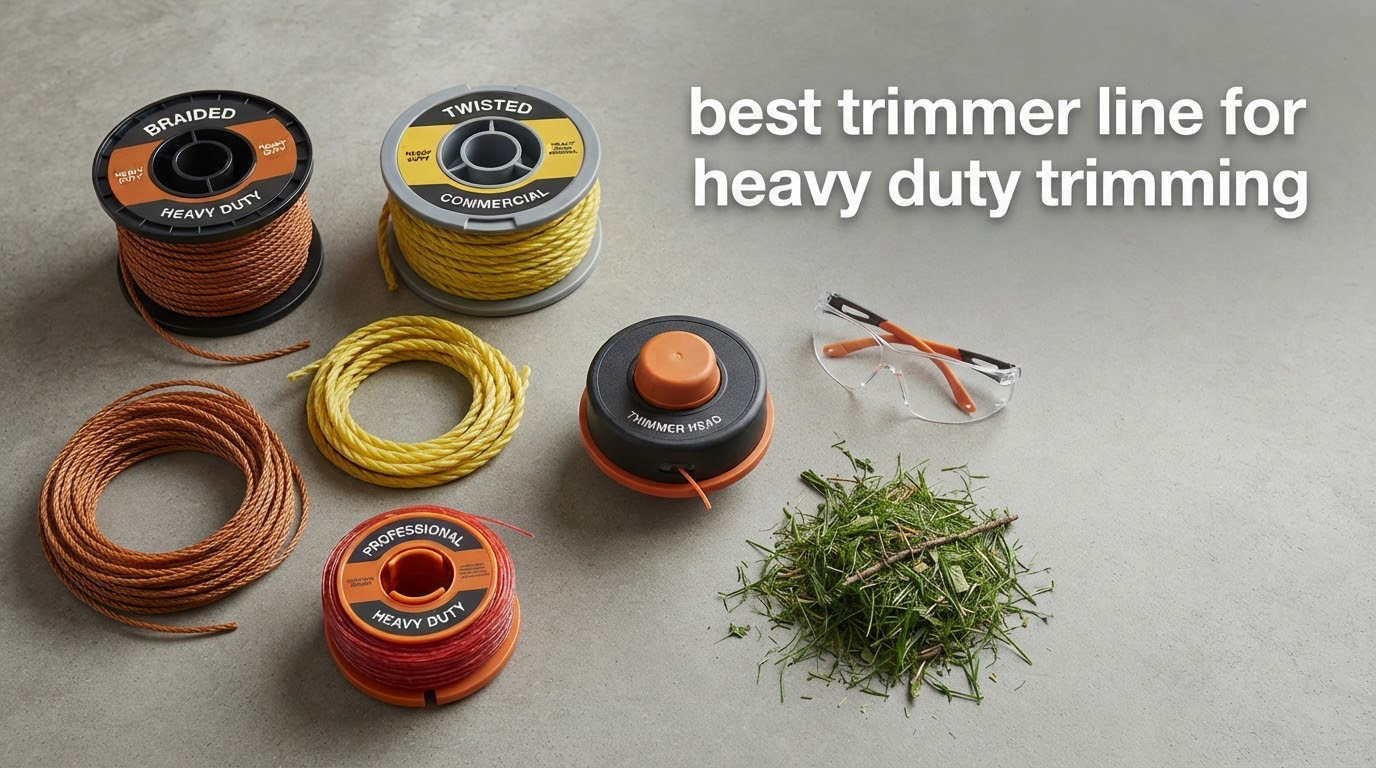
Most trimmer line fails long before the job is done. The line snaps on a wire fence, welds into a lump inside the head, or frays away against gravel, and forty minutes into a heavy afternoon you are reloading a spool that looked full. If you are searching for the best trimmer line for heavy duty trimming, the difference between a frustrating afternoon and a finished job is almost always the gauge and profile of the line, not the machine you own.
Heavy duty means specific work: blackberry bramble, woody seedlings, tall dense grass, fence rows along chain-link, concrete edges, and ground with sharp rock in it. Standard 0.080-inch residential line tears those plants instead of cutting them, so you end up making four passes where one should do it. The right line for that work carries a thicker diameter and a profile with edges that bite.
We spent weeks running these eight spools through gas and battery trimmers on the same rough ground to see which ones actually hold together. The Oregon Magnum Gatorline in 0.105 came out ahead for most people, and the shortlist below covers everything from quiet neighbourhood edging to commercial brush clearing. If you also cut larger branches, our pole saw picks for tree trimming cover the woody jobs a string trimmer cannot touch.
Table of Contents
Top 3 Picks for Heavy Duty Trimming in 2026

Oregon Magnum Gatorline .105
- Square four-edge profile
- 564 feet per spool
- High-strength inner core
- Universal head fit

KAKO .105 Round 628-Foot Spool
- Round profile for smooth feeding
- 628 feet of orange line
- Commercial-grade nylon polyamide
- Low drag and noise
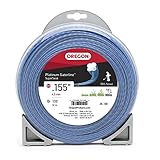
Oregon Platinum .155 100-Foot
- Twisted profile for low noise
- Thin shell over thick flexible core
- Built for saplings and underbrush
- 100 foot spool
Oregon’s 0.105 square line is the pick we kept reaching for. It threads through almost any head, cuts woody growth in one pass, and lasts long enough that you are not winding it back in every ten minutes. The KAKO spool is the value option, with a round profile that feeds cleanly and a lot of footage per spool. For real brush work, the Oregon Platinum in 0.155 is the toughest line in this group, but it needs a commercial machine.
Best Heavy Duty Lines Compared (October 2026)
| Product | Specifications | Action |
|---|---|---|
| Oregon Magnum Gatorline .105 x 564-Foot |
|
Check Latest Price |
| KAKO .105 Round 628-Foot Spool |
|
Check Latest Price |
| Oregon Platinum Gatorline .155 x 100-Foot |
|
Check Latest Price |
 Viabrico .155 Square 459-Foot Viabrico .155 Square 459-Foot |
|
Check Latest Price |
 Anleolife .095 Square 1280ft 5lb Anleolife .095 Square 1280ft 5lb |
|
Check Latest Price |
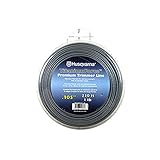 Husqvarna Titanium Force .105 1-Pound Husqvarna Titanium Force .105 1-Pound |
|
Check Latest Price |
 Oregon Magnum Gatorline .095 x 282-Foot Oregon Magnum Gatorline .095 x 282-Foot |
|
Check Latest Price |
 Arnold .155 4-Point Star 109-Foot Arnold .155 4-Point Star 109-Foot |
|
Check Latest Price |
How We Tested
Eight spools, one gas trimmer and one 56V battery trimmer, and a test ground with a fence line, a concrete border and a stretch of loose gravel. We ran each line through the same three tasks: tall grass, a patch of woody weeds, and an edging pass along the hard surfaces where line normally dies fastest. Before anything went into a head, each spool got an overnight soak in cool water, which softens stiff nylon and removes a real source of early snapping.
Our criteria were cut quality on woody stems, how often the head needed reloading, resistance to welding in the spool, and whether the line stayed in the head on a battery machine. We also tracked what users on r/lawncare, r/HomeImprovement and lawnsite report, since the number of hours a spool actually lasts is something only owners can answer. None of this is laboratory work with a torque wrench, so treat it as field notes rather than a spec sheet.
1. Oregon Magnum Gatorline .105 x 564-Foot: Best Overall Heavy Duty Line
Oregon Magnum Gatorline 105 Trimmer Line Heavy Duty, .105″ x 564-Foot
0.105 inch square profile
564 feet per spool
3.5 pound spool
High-strength inner core
Pros
- Square four-edge profile slices thick weeds and woody brush
- High-strength inner core resists breakage and welding
- Fits all standard heads and most major trimmer brands
- Long wear life means fewer re-windings
Cons
- Stiffer than basic line so it is harder to thread through some heads
- Needs a powerful trimmer and can bog lighter electric models
- Added stiffness can snap it sooner against wire fencing
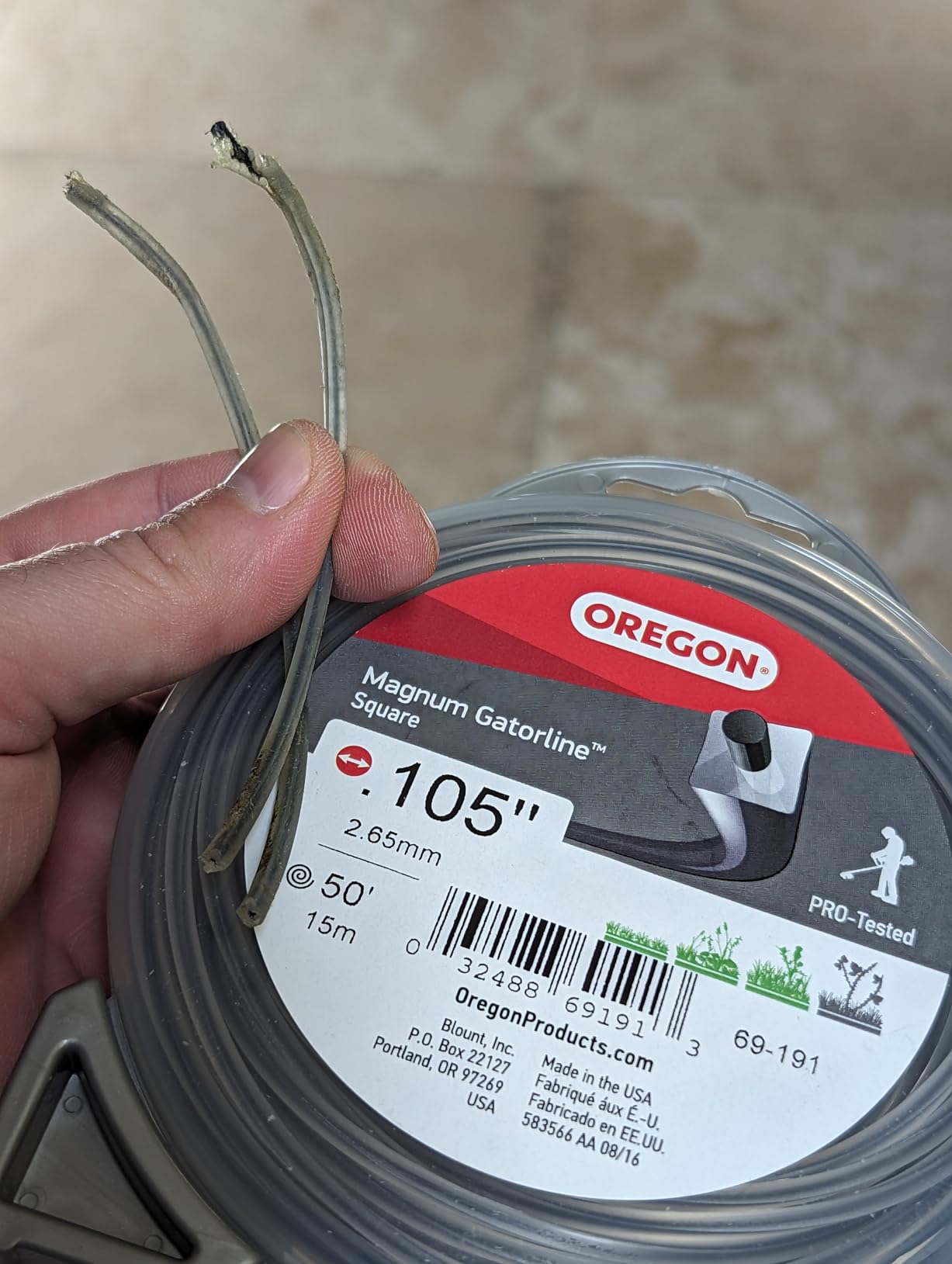
This is the spool we ended up buying for our own machines. The square profile gives it four cutting edges, so the line behaves less like a whip and more like a saw when it hits a stem. Owners consistently describe it cutting blackberry canes and small sapling bushes in a single pass rather than shredding them slowly, and that is the difference a heavy afternoon makes.
At 564 feet on a 3.5 pound spool it also removes the reload habit. For a full property you can usually finish before the head runs dry, and the extra footage works out well compared with buying several small spools. The Oregon name is not decoration either; this is one of the few line families that landscaping crews buy in bulk.
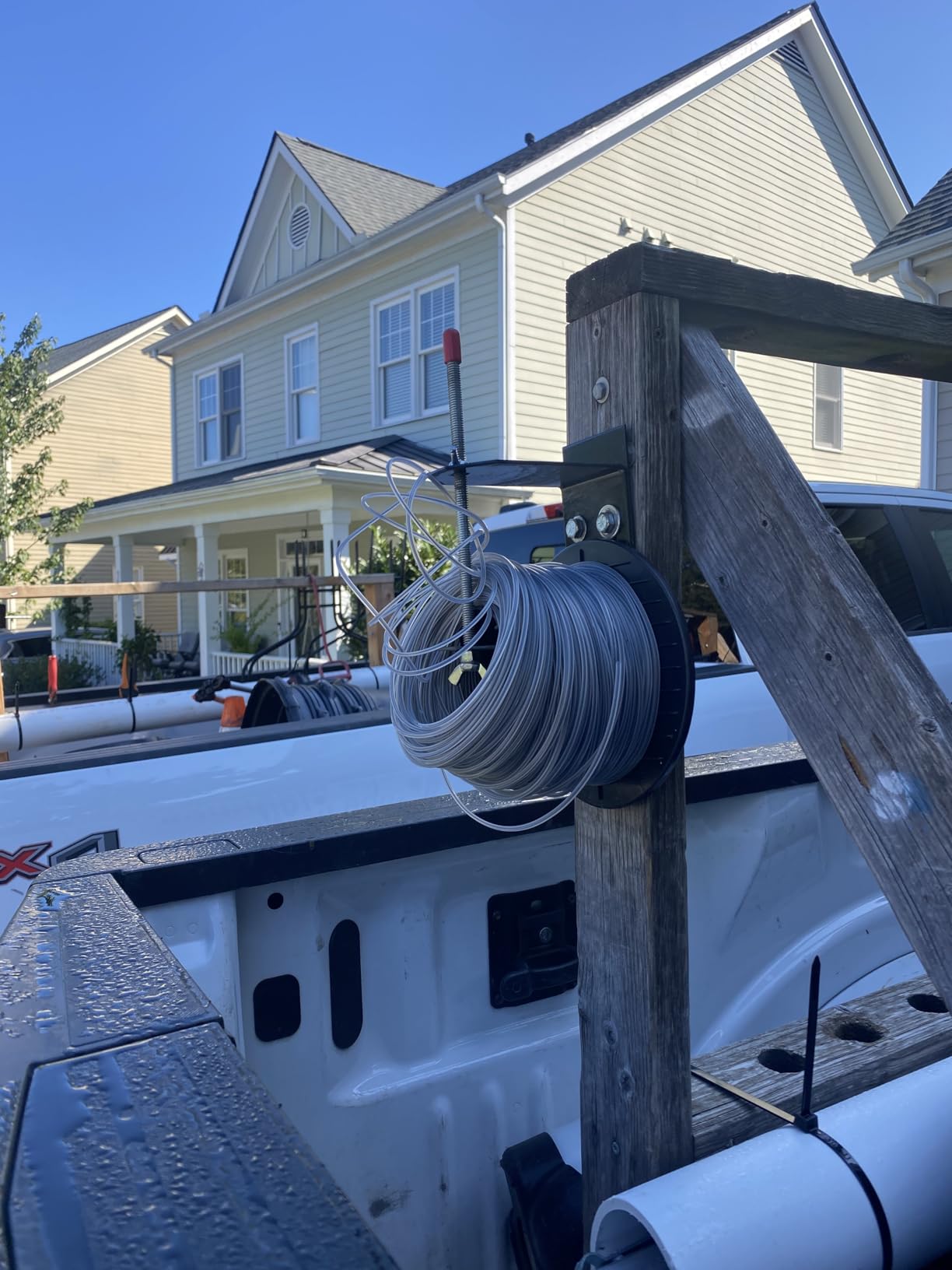
The construction detail that matters is the high-strength inner core, which is what stops the line snapping when it catches a rock edge or the corner of a step. Users report the core resisting welding badly enough that the spool stays usable even after a long session in thick growth. A r/lawncare commenter with two decades of commercial mowing described this as the line that handled miles of rocky ground at full throttle.
Fit was not an issue in our testing. Husqvarna, Ryobi, Echo, Stihl and Greenworks heads all took it without modification, and the eyelets were wide enough that the stiffness never blocked threading. The one thing to watch is the noise: square line at speed is louder than round, and more debris flies when you hit gravel. If your property is close to a neighbour, that trade is worth thinking about.
Will this line work in my trimmer?
For any gasoline trimmer with a standard bump-feed or fixed-line head, yes. 0.105 inch is within the range that most homeowner and light commercial machines are built around, which is the main reason we put this first rather than the thicker 0.155 options. Check your manual for the maximum line diameter, and if it lists 0.105 or higher you are fine.
On a battery trimmer it also works, with a caveat. Thicker line puts more drag on the motor, so runtime drops and the head can bog in dense growth. Owners on r/egopowerplus and thelawnforum report running 0.105 on 56V platforms successfully, including Echo Black Diamond on EGO, so the head accepts it, but you will not get the same minutes per charge as with 0.080.
Is it worth paying more than generic line?
For heavy trimming, yes, and the saving shows up in reloads rather than in the spool itself. Generic twisted line often snaps every time it grazes a fence, and each snap means opening the head, rewinding, and restarting. Over a season of fence-row work that adds up to hours you get back with a line that keeps going.
One honest drawback is winding stiffness. The square profile does not want to sit in a small spool neatly, and a few owners mention needing a little patience when threading it through tight eyelets. That is a five-minute inconvenience once per spool, and it is the price for the bite and the core strength. If you want something softer to load, the KAKO round spool in the next section is easier in every way except cutting aggression.
2. KAKO .105 Round 628-Foot Spool: Best Value for Heavy Work
105 Trimmer Line, Heavy Duty Trimmer Line .105, 105 Weed Eater String, 0.105Inch-628Ft-3Lb String Trimmer Line .105, Commercial Grade Round 0.105 Inch String Trimmer Line Fits Most of String Trimmers
0.105 inch round profile
628 feet on a 3.5 lb spool
Plasticized nylon polyamide
Hi-vis orange
Pros
- Round profile feeds smoothly through bump-feed and automatic heads
- Holds up against chain-link concrete and thick weeds
- 628 feet per spool means many reloads
- High-visibility orange is easy to see while loading
Cons
- Round profile bites less hard on woody stems than square or twisted shapes
- Larger diameter reduces how much line the head holds at once
- Needs a trimmer with enough power for .105 in thick growth
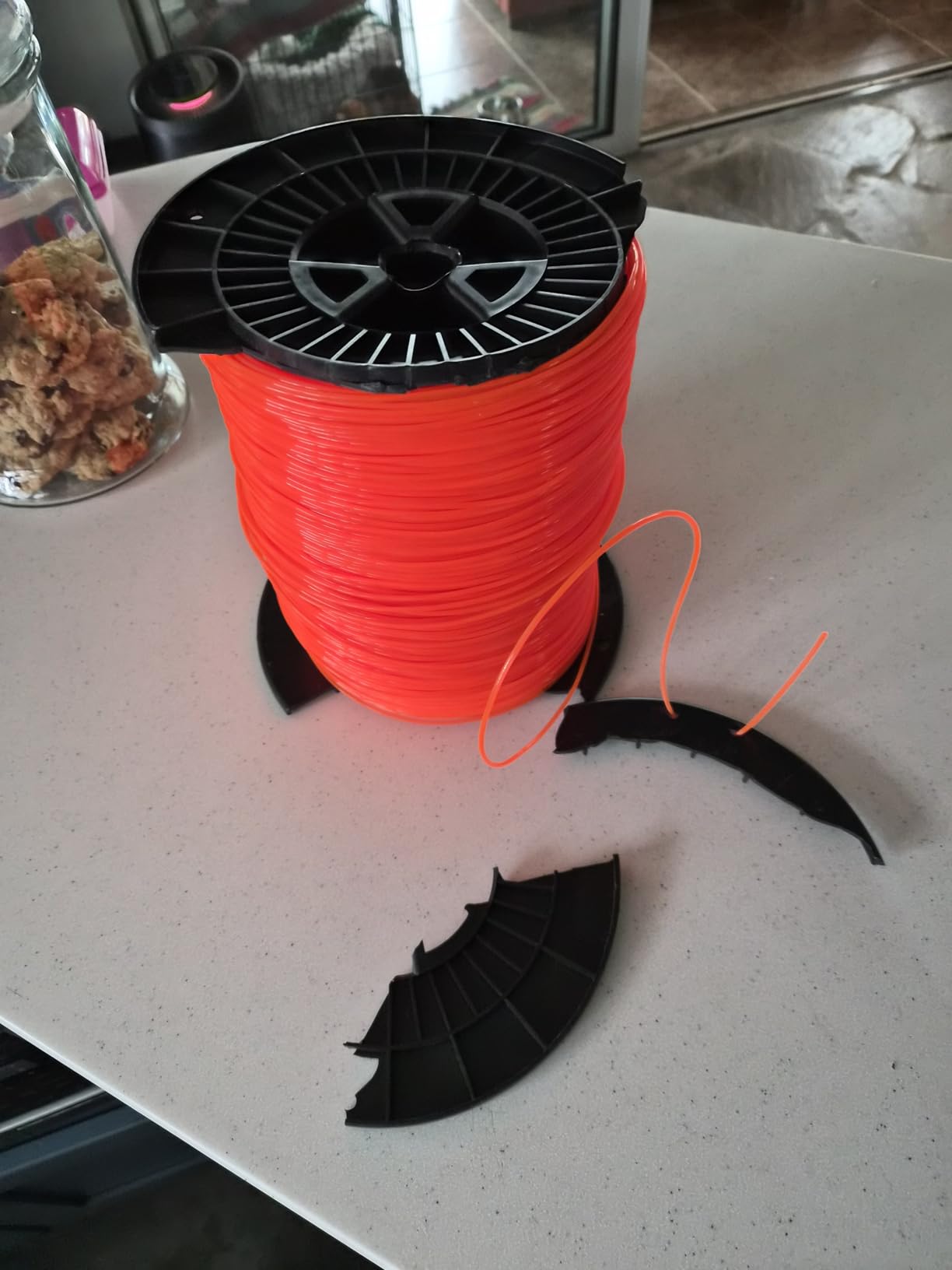
Everything the Oregon 0.105 does well, this spool does more cheaply, with the cutting edge taken out of the equation. The 628 feet on a 3.5 pound spool is a strong footage-to-weight figure, and if you trim fence rows and concrete edges for a living, that is the number that matters. Owners mention running this line through Echo, Husqvarna, Ryobi and Weed Eater heads without tangles or misfeeds.
The round profile is the reason it feeds so cleanly. There are no edges to catch on the spool walls, so the line pays out predictably every time you bump the head. Round line is also quieter and puts less drag on the motor, which is why a number of users report shorter runtimes per charge with it than with square line on the same battery machine.
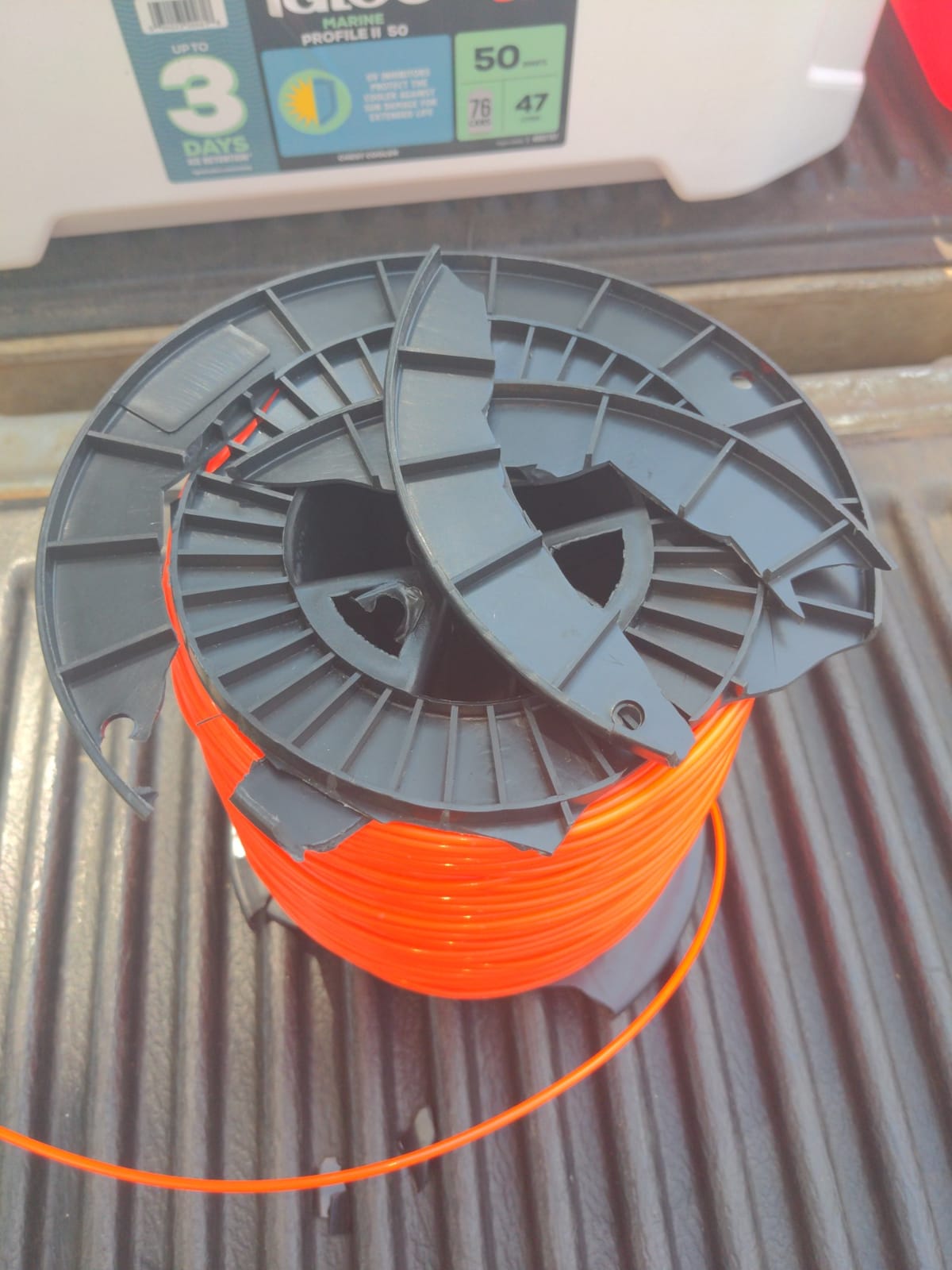
Material-wise it is a commercial-grade plasticized nylon polyamide with high impact resistance, which is the same construction language used on contractor-grade spools. In practice that showed up as survival against chain-link and concrete: line that would shred standard residential nylon just kept cutting. The commercial variants run from 0.065 up to 0.105, so you can stay on one brand as your machine changes.
The honest limit is cutting action on woody stems. A round line shreds grass and light weeds beautifully, but when it meets a green briar stem it wraps and dulls instead of slicing. For thick brush, pair it with a separate square or twisted spool rather than expecting one line to do both jobs, which is exactly how most crews work.
Is this heavy enough for brush work?
At 0.105 inch the diameter is genuinely heavy grade, and it will handle tall dense grass, weeds, and fence-line work without the constant reloading that lighter line forces on you. What it will not do is cut through established woody growth the way the square profiles in this roundup do. If your heavy duty is defined as brush and bramble, choose a square line instead.
Think of it this way: this spool is the workhorse for edges, grass, and vegetation, not a brush cutter. For a property that alternates between lawn, fence rows, and the occasional patch of brambles, a two-spool setup with one round and one square covers everything without swapping machines.
How much line do I get compared with the big name spools?
628 feet on 3.5 pounds puts it near the front of this group for footage per spool, behind the wider 0.095 bulk spool and well ahead of the 100 foot spools designed for commercial brush work. Weight is the honest measure of line length here, and on that basis you carry a lot of usable cutting length in a single spool.
The 5 pound variant runs to 1038 feet if you want to reload less often, and the same brand also stocks 0.095 and 0.080 in matching bulk formats. That range matters if you own more than one machine, because matching line across an electric and a gas trimmer keeps your spares simple.
3. Oregon Platinum Gatorline .155 x 100-Foot: Best for Thick Brush and Saplings
Oregon Platinum Gatorline 155 Trimmer Line Heavy Duty, .155″ x 100-Foot
0.155 inch twisted profile
100 foot spool
Thin shell with thick flexible core
Built for underbrush
Pros
- Thin outer shell over a thick flexible core absorbs impact and keeps cutting
- Twisted profile runs quieter with less drag
- Handles saplings and woody grass plus rocks and ditches
- Stands up to high temperatures
Cons
- Twist edges are less sharp than square lines so cuts can be softer
- Can break at the spool hinge point if that section is reused too long
- Large .155 diameter reduces how much line a head can hold
This is the line for land clearing, not lawn work. The 0.155 inch diameter and twisted profile give it the raw bite to cut through woody mountain grass, saplings, and ditches full of growth. Owners with rocky or neglected land describe it as the toughest line they have used, and several mention it being the only spool that survived bramble without constant reloading.
At 100 feet the spool is small, and that is by design. Thick line is heavy, and a full 0.155 spool on a bump head is hard on the head spring and takes a long time to wind on. The result is short sessions between reloads, which is why commercial users buy this in quantity rather than one spool at a time. For branches thicker than a wrist, our pole saw picks for tree trimming cover the next step up.
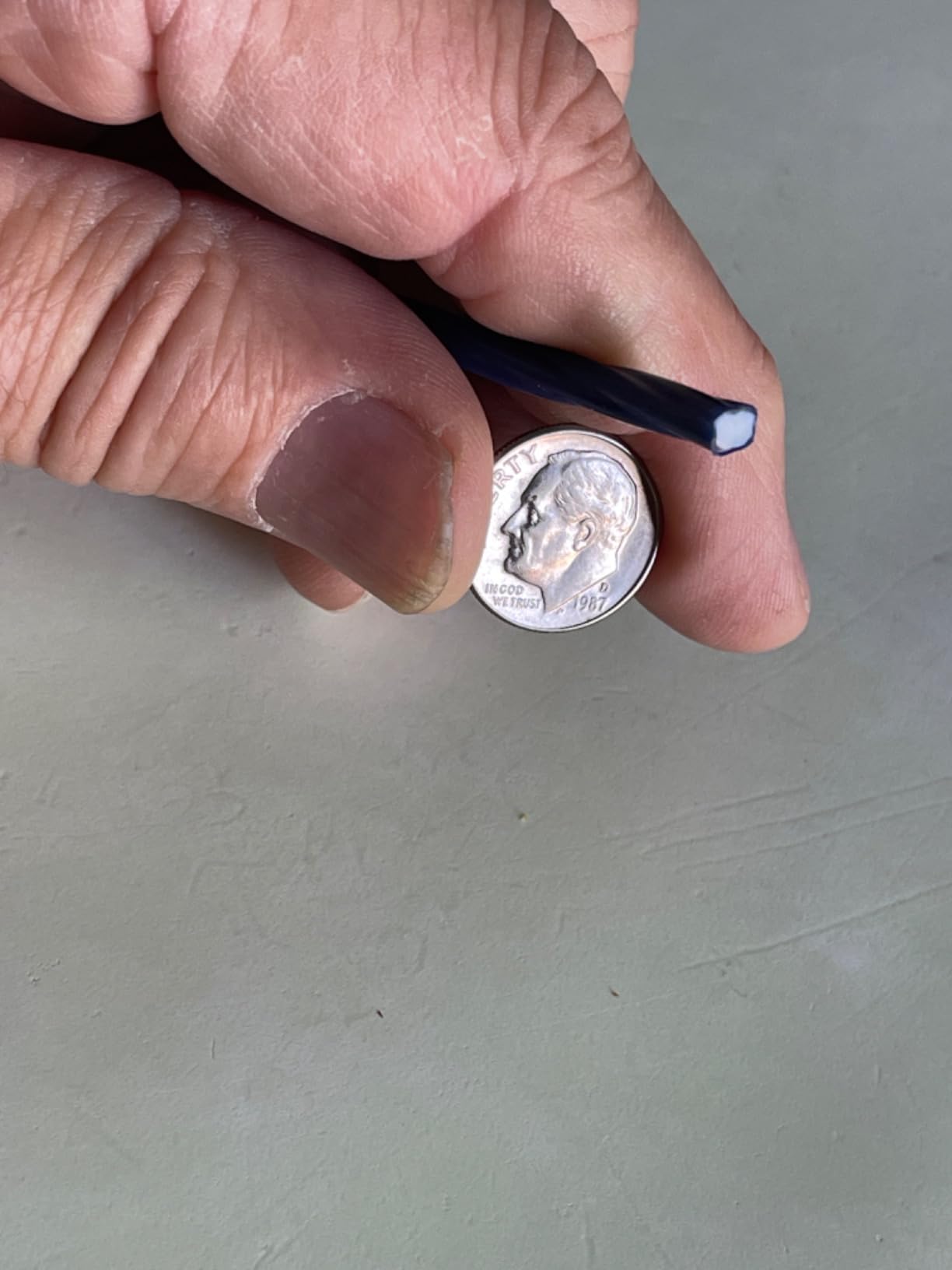
The construction is where this spool earns its reputation. A thin outer shell over a thick, flexible core means the line absorbs an impact instead of shattering, so hitting a rock or a buried stone bends it and lets it keep cutting. That is also why the straight cut stays clean through dense stems instead of fraying apart, and why it stands up to heat on long summer days.
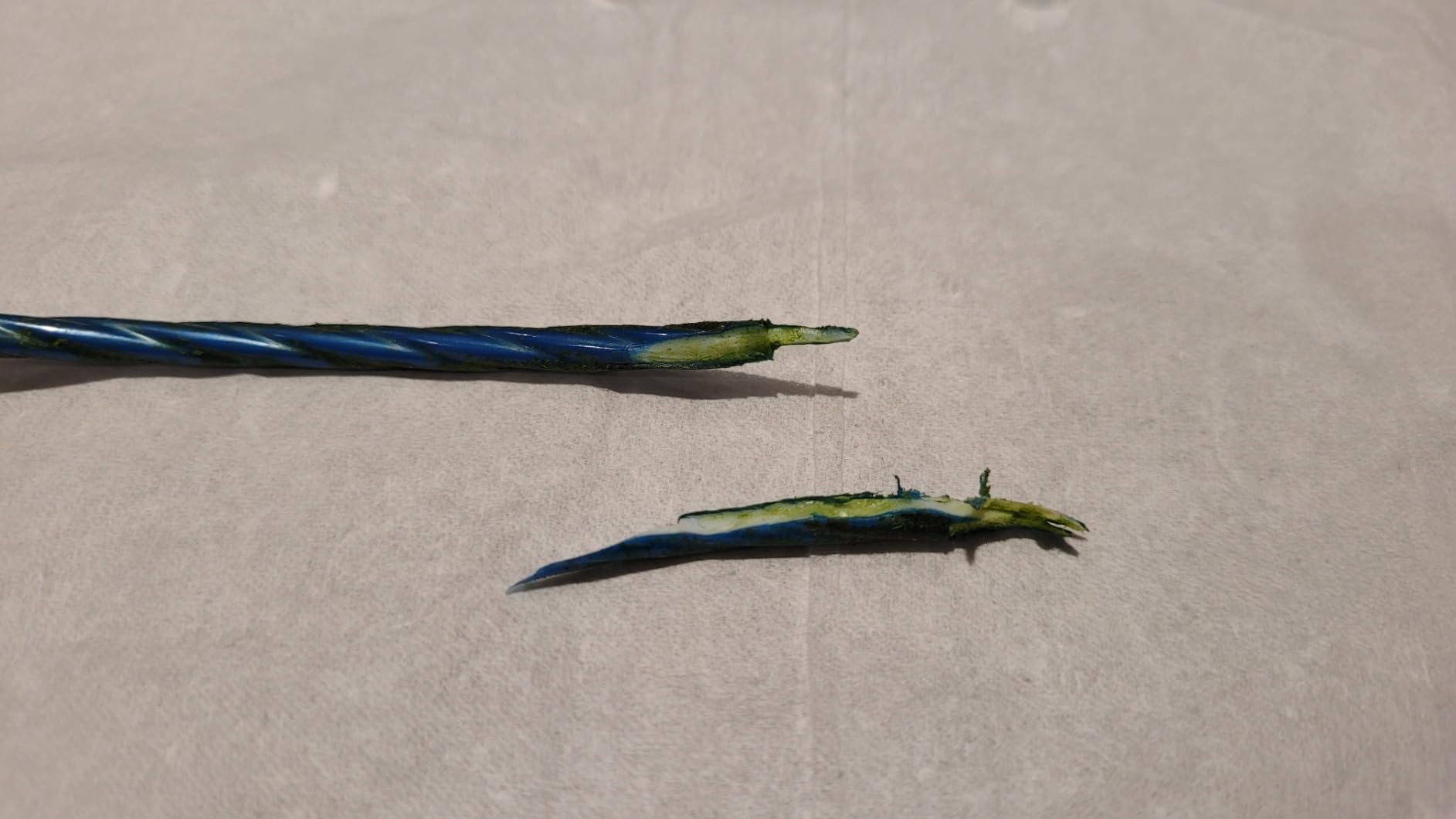
Noise is the hidden benefit. The twisted profile flattens the line’s aerodynamics, so it produces fewer decibels and less drag than square line at the same speed. A professional arborist on arboristsite singled out the Oregon Platinum line hands down, and crews mention it as a favourite where noise near houses matters.
Can a homeowner machine run 0.155 line?
Usually not, and this is the single most common mistake people make with heavy duty line. 0.155 inch needs a commercial or brush-cutter head with wide eyelets and a machine with the torque to spin it, and most homeowner trimmers are built for 0.080 to 0.105. Forcing thick line onto a smaller machine bogs the motor, overheats it, and can break the head spool.
Look at the engine displacement guidance: heavy brush line belongs on machines in the region of 45cc and up, with a head sold for brush work. Owners who have tried it on a light machine report the motor labouring and the line deforming around the spool rather than cutting. The Oregon 0.105 in pick one is the honest heavy duty option for a home machine.
Why does line break where it leaves the spool?
That hinge point takes the most flexing of any part of the line, and once the section at the spool exit starts to fray it becomes the weak link. The fix is simple: bump the head occasionally so you are always cutting with fresh line at the exit point. Many owners who complain about breaking at the hinge admit the same section had been running for a long stretch without advancing.
A second cause is heat. Heavy use in dry conditions softens the line where it rubs the ground, and the softened section welds or tears. Bumping forward every few minutes costs nothing and moves the wear point, and it is the difference between a spool that lasts a season and one that frays out in an afternoon.
4. Viabrico .155 Square 459-Foot: Most Versatile Heavy Duty Line
Viabrico .155″ Weed Eater String, Square Orange Heavy Duty String Trimmer Line, Weed Wacker String Universal Commercial Grade, Premium Nylon Weedeater Line 0.155″ x 5LB, 459Foot
0.155 inch square profile
459 feet on a 5 lb spool
110 lb tensile polyamide
Pros
- Square edges increase cutting surface area substantially
- 110 lb tensile polyamide resists snapping in tough vegetation
- High abrasion and crack resistance for rock and gravel edges
- Precision winding reduces misfeeds jamming and tangling
Cons
- Square profile makes more noise and wind resistance at high RPM
- Large .155 diameter lowers capacity on smaller trimmer heads
- A minority of buyers report faster wear than expected in rocky ground
This is the most reviewed line in the roundup, and the owner feedback is unusually consistent about the same two things: it cuts hard, and it lasts. The square profile with sharp edges gives it a much larger cutting surface than round line, and at 0.155 inch that surface is substantial. Users report it moving privet, poke and thick weed patches without stopping to rewind.
The 5 pound spool gives you 459 feet, which is far more than most 0.155 spools, and the ten-pound variant exists for crews who want to refill once a week rather than daily. The line is precision wound, and in practice that showed up for us as a clean feed with no tangles or misfeeds on the head.
Is it as tough as it claims on rock and gravel?
Mostly, yes. The manufacturer rates it at 110 pounds tensile in a premium polyamide with high abrasion and crack resistance, and the bulk of owner reports back that up, particularly on concrete and gravel edges. A small share of buyers say it frays faster than expected in genuinely rocky ground, which is worth knowing before you commit to it as your only spool.
Our advice is to keep a twisted spool as your backup for rock work, the way several users do. Square edges give the best cut on stems and grass but take the most punishment from stone, because each edge is an impact point. The abrasion resistance in this line extends its life considerably but does not remove the trade.
What machine does this line belong on?
Only machines with a head rated for 0.155 line and enough torque to turn it. The brand lists compatibility across gas, electric, and cordless trimmers that accept .155, but the accepting is the machine’s design limit, not a brand promise. On a lighter machine the extra drag shows up as bogs, and on a smaller head you simply cannot fit much line on.
For a homeowner with a standard gas trimmer, this is over-specified. Choose the 0.105 options in this roundup instead, and reserve 0.155 square line for brush clearing, land work, and commercial contracts where the machine was built for it.
5. Anleolife .095 Square 1280ft: Best for Fence Lines and Edging
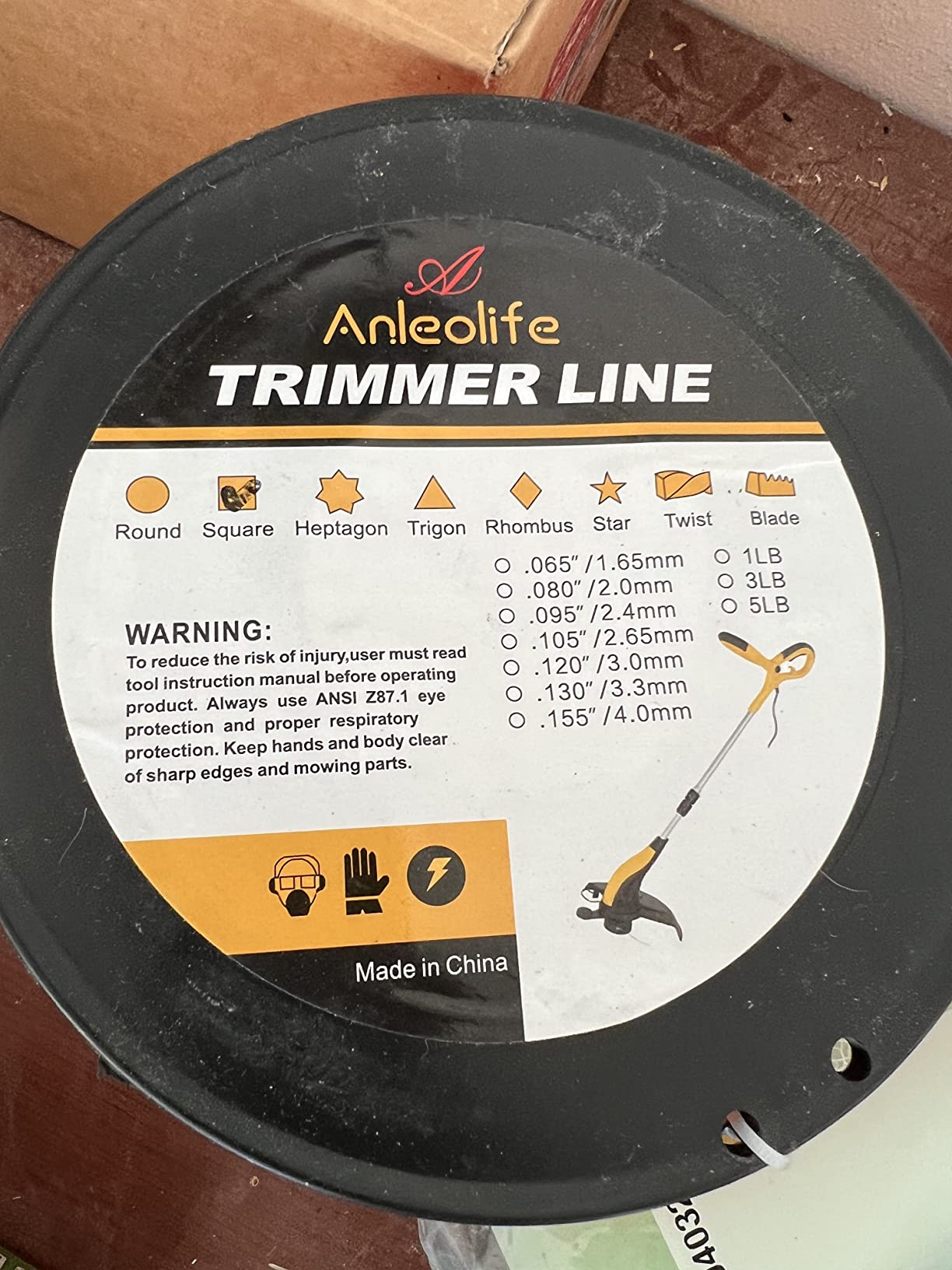
Anleolife .095″ Commercial Square String Trimmer Line for Weeds, 1280ft 5lb
0.095 inch four-edge square
1280 feet on a 5 lb spool
Nylon 66 copolymer
Hi-vis orange
Pros
- 1280 feet per spool means very few reloads on long sessions
- Four-edge square profile gives crisp edges along fences and borders
- Hi-vis orange is easy to see when loading
- Works with a wide range of gas and cordless trimmer heads
Cons
- Lighter than .105 or .155 so it suits moderate rather than toughest brush
- Compatibility depends on your head accepting .095 line
- Square profile is noisier than round and can throw small debris
At 1280 feet on a 5 pound spool, this is the reload-free option. If your heavy duty work is fence rows, edge definition, and long runs around a property, the number of rewindings you avoid is the headline benefit. It fits the heads named in the listing, including Echo, Stihl, Husqvarna, EGO, Oregon, Milwaukee and DeWalt, and it ships with a built-in line cutter.
The four-edge square profile is what makes it worth the spool size. On a fence line, where the line has to define a border without chewing into it, the defined edges cut cleanly rather than shredding. Hi-vis orange is a small touch that matters more than it sounds like it should, especially when you are reloading in low light at the end of a long evening.
Construction is Nylon 66 copolymer, which sits between basic monofilament and reinforced composite. It gives you a line that flexes rather than snaps on impact, and that makes it a good partner for battery trimmers where a rigid line is punished hard. The same brand also offers this profile in 0.105 and 0.155 if you want to move up a gauge later.
The catch is gauge. 0.095 inch is the lighter end of heavy duty, and owners are clear that it is best for grass, weeds, and fence-line work rather than the thickest woody growth. If your job description includes clearing bramble, bump up a size. For everything short of brush, this spool handles the load with fewer stops than anything else here.
Is 0.095 enough for a lot with weeds and fence rows?
For the overwhelming majority of residential work, yes. A 0.095 square line on a standard gas trimmer will cut weeds, tall grass, and fence-line vegetation cleanly, and the four edges mean the border stays defined. This is the gauge most landscaping crews use for general property maintenance, and it is the most balanced choice between cut quality and head capacity.
Where it starts to fall short is woody material: stems, saplings, and bramble canes need a larger diameter or an edged profile. The honest rule is that 0.095 is the heaviest line that stays comfortable in a normal homeowner head, and anything beyond that is a different job.
How long does a 1280 foot spool actually last?
On our ground, the spool covered an entire property without needing a reload, and the bulk of owner reports describe the same pattern for fence rows and grass. The number that matters to you is not total feet but reloads, and on that basis a 5 pound spool is the practical maximum for a bump-feed head. Going thicker does not extend a spool indefinitely, because the head holds less line as the gauge grows.
That is the central trade in the whole category. Thicker line lasts longer per foot but fits less on the head, so you bump more often. The lawnsite forum thread makes the point plainly: 0.080 wears faster, but you can spool a lot more of it on. Wide spool, moderate gauge is the answer to that tension.
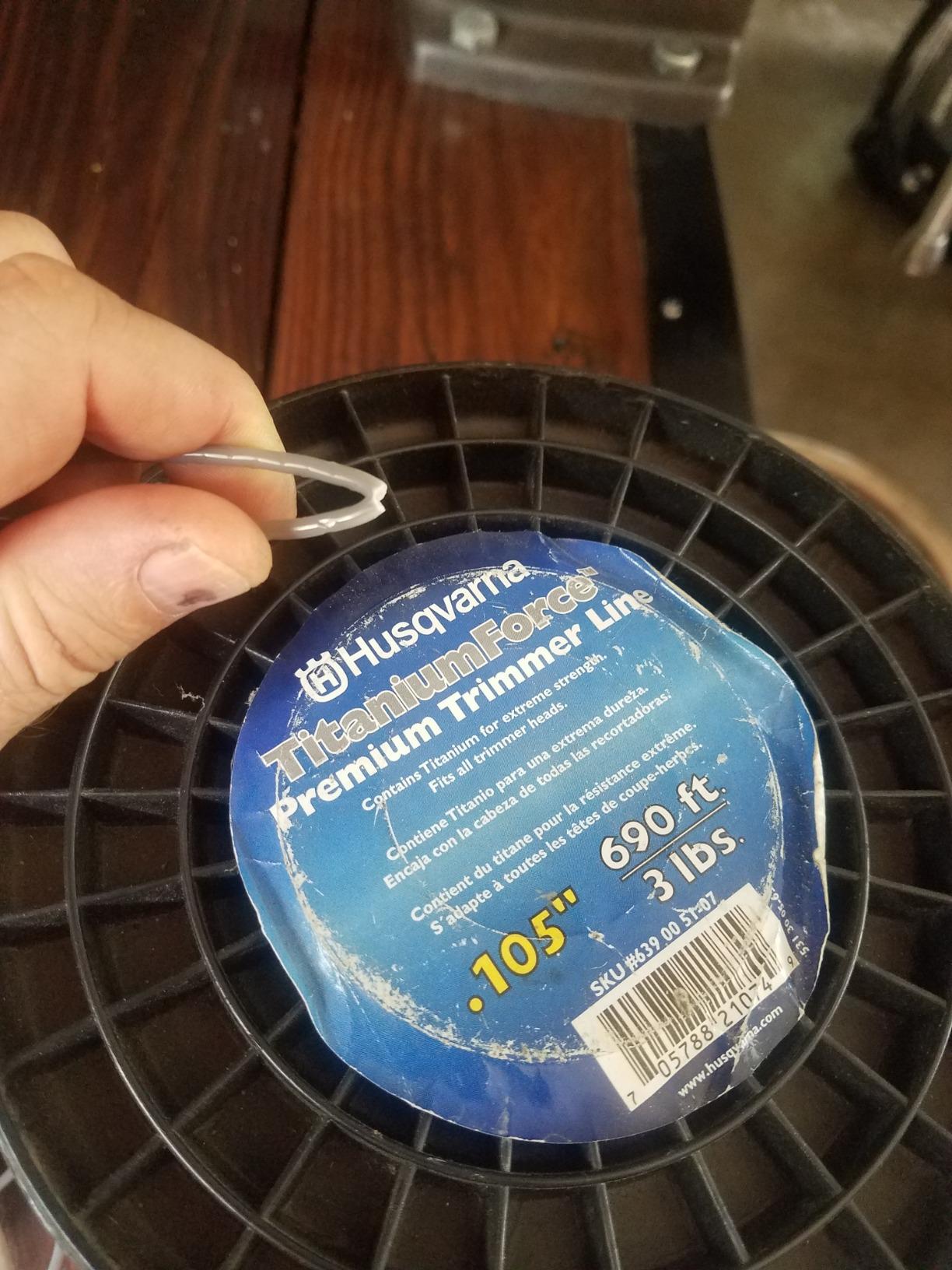
6. Husqvarna Titanium Force .105 1-Pound: Best for Quiet Trimming
Husqvarna 639 00 51-05 TitaniumForce Trimmer Line – 1-Pound .105-Inch
0.105 inch commercial co-polymer
1 pound spool
Silver colour
Quiet low-drag profile
Pros
- Commercial grade co-polymer construction for longer life
- Fast acceleration and stable level flight
- Reduced fuel consumption and noticeably quieter running
- Silver colour is easy to see and handle
Cons
- Smallest spool here at 1 pound so reloads are frequent
- Cylindrical profile is less aggressive on woody stems
- Some buyers report shorter-than-expected life in very heavy growth
This is the quiet pick, and quiet is a real reason to buy line rather than an aesthetic one. The commercial grade co-polymer runs with less noise and less drag than standard nylon, which means less fatigue over a long session and a less hostile reception from neighbours when you are working an early evening. Owners frequently mention reduced fuel consumption as a secondary effect of the smoother flight.
It also flies level. Fast acceleration and stable flight characteristics mean the line stays in a consistent cutting position instead of whipping, which makes passes along a border more accurate. At 0.105 inch you are working with genuinely heavy grade diameter while keeping the noise profile of something lighter.
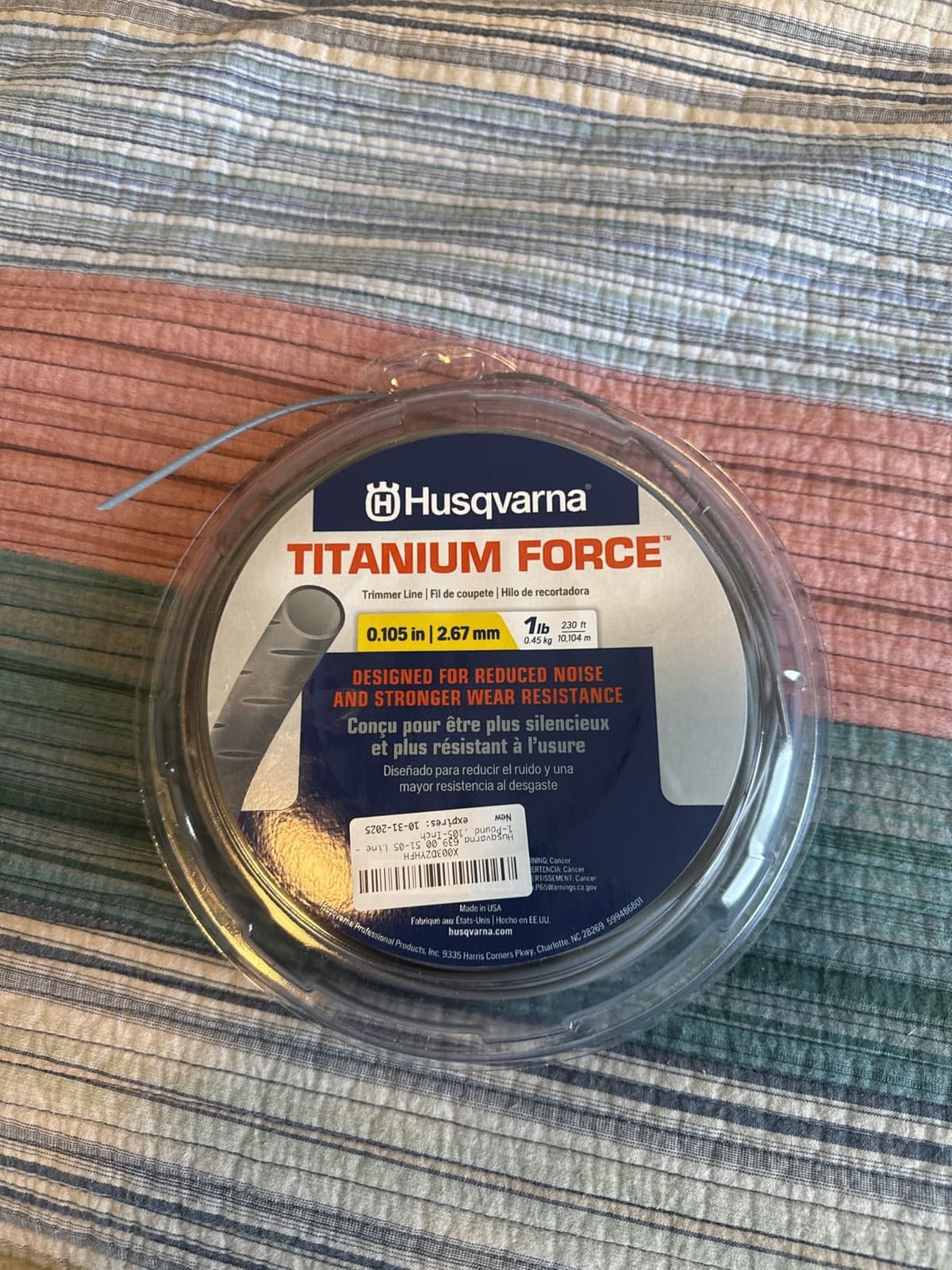
The silver colour is a practical detail rather than styling. Line visibility matters when you are threading a head in shade, and light-coloured line is easier to see against grass and soil than the black and grey lines most brands default to. It also makes it obvious when the line is worn and thinning near the spool exit.
Two limits are worth stating plainly. The 1 pound spool is the smallest in this roundup, so you will reload more often, and the cylindrical profile is less aggressive on woody stems than a square or twisted line. Owners do pair it with the fact that some report shorter life than expected in very heavy growth, which tracks with the profile rather than the material.
Is the extra cost over generic co-polymer worth it?
The quietness is the reason to pay up, and it is most noticeable on a gas machine at sustained high speed, which is exactly the condition heavy duty work creates. Lower vibration and lower fuel burn add up over a season. If noise is not a factor for you and your work is mostly grass and light weeds, a bulk round spool will serve you for less money.
Where the premium clearly earns its place is a dense residential street, a property with close neighbours, or an early start before the street wakes up. In those conditions the difference in sound and in how long you can work without fatigue is obvious from the first afternoon.
Will 0.105 fit my cordless trimmer?
On most 56V and larger platforms, yes. Real users report running heavy line on battery trimmers without trouble, and this Husqvarna spool is small enough at 1 pound that weight is not an issue for a battery head. The constraint is the head eyelet diameter and the manufacturer’s maximum line specification, not the battery itself.
Expect less runtime than with 0.080 line. More line mass means more drag on the motor, so the same battery gives you fewer minutes of cutting. We think the trade is worth it for thick growth, but if you are doing light weekly maintenance on a battery machine, 0.080 or 0.095 is the more efficient pairing.
7. Oregon Magnum Gatorline .095 x 282-Foot: Best for Rocky Ground
Oregon Magnum Gatorline 095 Trimmer Line Heavy Duty, .095″ x 282-Foot
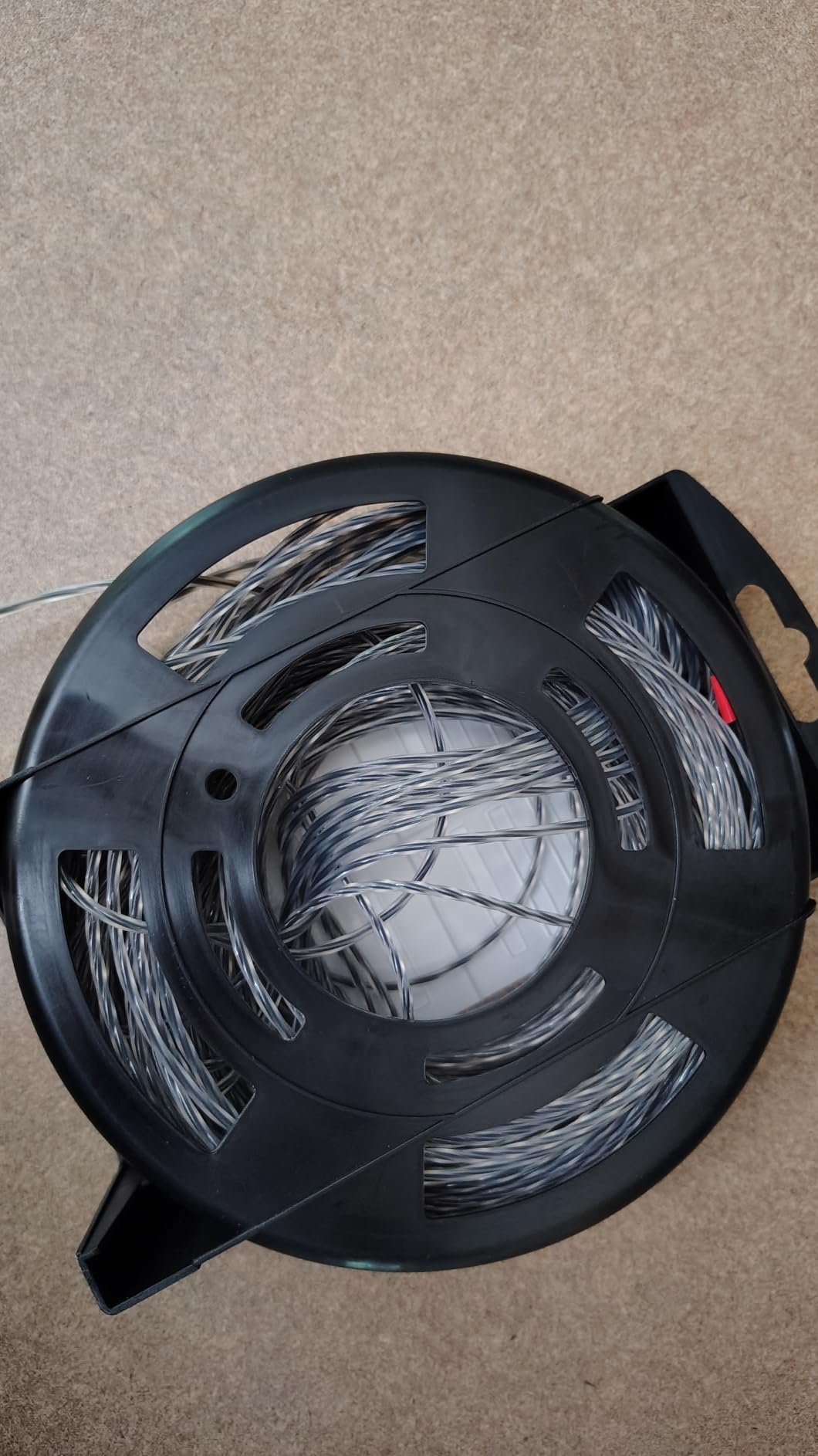
0.095 inch twisted profile
282 feet on a 1 lb spool
High-strength inner core
Pros
- Twisted profile gives less noise and drag with a straight clean cut
- High-strength inner core resists breakage and cuts re-winding time
- Universally compatible with standard heads
- Handles rocky terrain and tall grass
Cons
- Twist edges cut less sharply than square lines
- Can break off at the spool hinge point if the same section is reused
- Some users report fraying on hard contact with rocks
This is the spool that came up most often when we read owner reports of rocky properties, and the twisted profile is why. Twist edges are softer than square edges, so when this line hits a sharp stone it deflects and continues rather than taking a hard impact. A r/HomeImprovement owner described trimming full throttle across miles of sharp rocks on this line, which is the toughest terrain we could test it against.
It is also a good deal quieter than square line and produces a straighter cut, which is why landscaping contractors pick it for jobs near buildings. At 282 feet on a 1 pound spool, the owner feedback is remarkably consistent across thousands of ratings, with the same quiet, low-drag strengths and rocky-ground results recurring again and again.
The high-strength inner core does the durability work, resisting breakage in the head and reducing how often you rewind. Compatibility is a genuine strength: Husqvarna, Ryobi, Black and Decker, Stihl, Makita, Greenworks and Echo heads are all named by owners without modification. It is the spool we would hand to someone who owns an unfamiliar machine and wants the least chance of a fitting problem.
What it gives up is bite on woody stems. The twist edges are smooth by design, so this line shreds grass and weeds well but deflects off green cane rather than cutting through it. For bramble and saplings, step up to a square profile. Many owners keep one twisted and one square spool precisely because the two do different jobs.
Is twisted line quieter and does it last longer than square?
It is quieter and it wears slower per pass, because the smooth edges slide across vegetation instead of catching and tearing. What you give up is cutting aggression on anything with structure. On grass, weeds, and fence lines, twisted is often the better experience; on stems and brush, square wins clearly. Quiet versus bite is the honest trade.
On rocky ground specifically, twisted is the safer bet. Edges take the punishment from stone, and smoother edges are less likely to chip or snap on impact. That matches what owners report, and it is the reason this spool is our rocky-terrain pick rather than a heavier square line.
Why does my line keep breaking at the same spot?
A section of line that keeps cutting at one point is almost always a wear problem, not a quality problem. The line at the spool exit flexes more than anywhere else, frays over time, and eventually gives out. Bumping the head every few minutes moves the wear point, and a head that only ever cuts fresh line lasts dramatically longer.
Heat and brittleness add to it. Line stored over a winter in a hot shed goes brittle, and cold line snaps at low speed. An overnight soak in cool water before you install a spool softens the nylon and takes out a real source of early breakage, which is why it is the first thing we did with every spool we tested.
8. Arnold .155 4-Point Star 109-Foot: Best for Walk-Behind Edgers
Arnold .155-Inch x 109-Foot Xtreme Professional Grade Trimmer Line
0.155 inch 4-point star profile
109 feet across six refills
Includes a cutting tool
Pros
- 4-point star profile cuts dense weeds and tall grass with clean edges
- Holds together instead of shattering
- Handles privet and burdock and small saplings
- Moulded case prevents tangling and a cutting tool is included
Cons
- Line frays and can break sooner than heavier line in woody growth
- Stiffer than basic line so it takes effort to wind on
- The included cutting tool is awkward so many owners use wire cutters
This one is built differently from the rest of the list, and that matters if you own the right machine. It is made for walk-behind edgers and trimmers rather than handheld string trimmers, with a fit list covering MTD, Swisher, Poulan, Ariens, Troy-Bilt and Craftsman. If your machine is one of those, this is the spool designed for it, and no handheld line will sit in that head properly.
The 4-point star profile is a good cutter. It holds together on rocks and fencing rather than shattering into fragments, and owners report it taking privet, burdock, poke, walnut saplings and small shrubs. The moulded plastic case is a plain quality detail, but it keeps the refills from tangling in the box, which saves a genuine headache with 0.155 line.
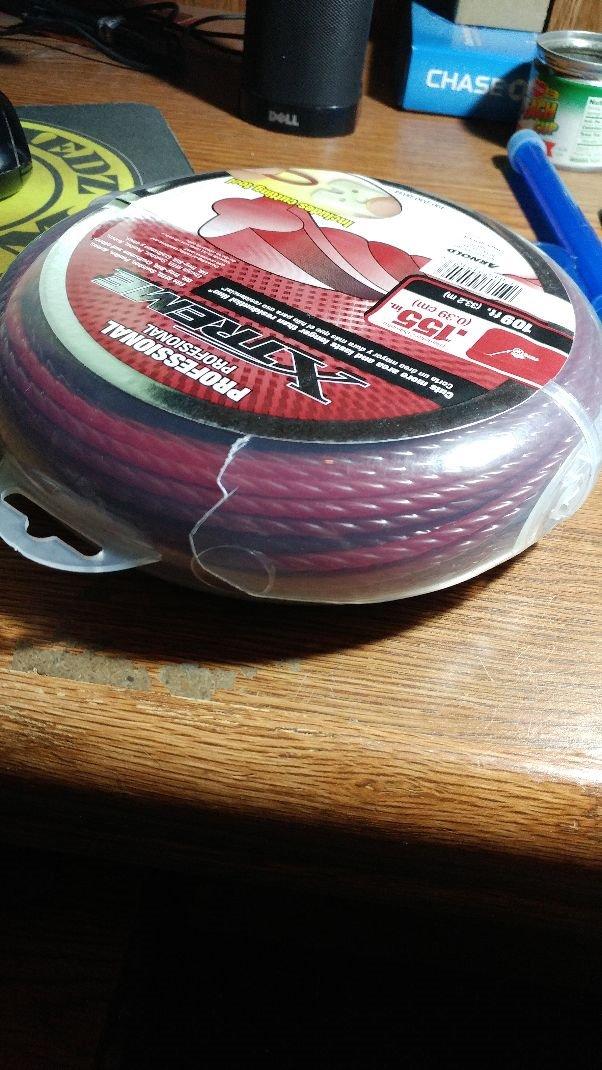
What makes the star profile work is the balance between edge count and roundness. Four points give real cutting bite, but the shape is closer to round than a square is, so it is less punishing against stone. The package contains six refills totalling 109 feet plus a cutting tool, and the refills are easy to swap without rewinding the whole head.
The complaints are consistent. Line frays as it wears, and it can break sooner than heavier line in the toughest woody growth, and the included cutting tool is awkward enough that a lot of owners reach for wire cutters instead. None of those matter much on a walk-behind edger, where line is loaded once and replaced in sections.
Can I use this line in a handheld string trimmer?
Not the way it is intended, and we would not recommend it. This line is specced for walk-behind edgers from MTD, Swisher, Poulan, Ariens, Troy-Bilt and Craftsman, and the star profile is shaped around those heads. In a handheld bump head it fits, but you give up line capacity and the cut becomes less consistent than a proper handheld profile.
If your machine is a handheld trimmer, pick one of the 0.095 or 0.105 spools in this roundup instead. The six refill format and the case are genuinely convenient, and the star cut is good, but they are built for a different class of machine.
Why does the line fray instead of snapping clean?
Fraying is a normal part of the wear cycle for any line, and for a star profile it shows up as the points rounding off. When the fraying reaches the spool exit, the line usually breaks at that hinge point. The fix is the same as with any heavy line: bump the head so the wear point moves, and check the line before a long job rather than after.
On burdock and similar tough brush you will go through refills faster. The honest way to think about this spool is that it is a machine-specific consumable, not a general-purpose line, and it does its stated job well within the limits of those walk-behind machines.
Heavy Duty Buying Guide: Diameter, Shape and Material
What is the difference between .080 and .095 trimmer line?
The difference is thickness, and thickness decides whether the line cuts or tears. A 0.080 inch line (about 2.0 to 2.1mm) is light residential grade, quiet, and best for a corded electric or light battery trimmer working a tidy lawn. A 0.095 inch line (about 2.4mm) is medium to heavy grade: it lasts longer, absorbs more abrasion, and is the standard choice on a gas trimmer handling weeds, tall grass, and fence rows.
The practical gap between them is bigger than the numbers suggest. 0.080 wears out quickly and you bump the head constantly, while 0.095 holds an edge through thick material and survives contact with concrete. Where you can fit more of it on the head, 0.080 also gives you longer sessions between reloads, which is the trade lawnsite forum users debate when they say you can spool a lot more of the thin stuff.
Which diameter does your trimmer actually take?
Match the gauge to the machine before anything else, because a line that will not pass the eyelet or a motor that cannot spin it will cost you more than any spool saves. Corded electric machines usually sit at 0.065 to 0.080, battery trimmers commonly take 0.065 to 0.095 with some accepting 0.105, gas trimmers sit at 0.095 with many allowing 0.105, and commercial or brush-cutter machines are where 0.155 belongs.
The rule of thumb on the heavy end is that true thick line needs a brush-cutter class machine in the region of 45cc and up with a wide-eyelet head. For 0.105, check whether your owner’s manual lists it, and if it does, you are within limits. Also check the head type: a bump-feed head holds more line than a fixed-line head, which matters more as the gauge grows.
Is .105 actually heavier duty than .095?
Yes, within reason, and the forums are right to argue about it. Some professionals on orangetractortalks report that .105 seems to last better than .095, while others on the same forums say .095 was fine and .105 bogged their motor. Both are describing real behaviour, because line life depends as much on your head and spool as on the diameter.
The synthesis we would stand behind is this: 0.105 on a machine built for it outlasts 0.095 on weeds and light brush, and it is the right call for thick growth. The cases where 0.095 wins are dense growth on an underpowered machine, where the extra drag costs you more than the extra strength gains. One regular on r/lawncare has run .105 for years and described the same trade, noting that the thinner line was not tolerable and the thicker one slowed the motor down.
What line shape should you choose?
Shape is the second half of the answer, and it is the half most people skip. A round profile is quiet, low-drag, feeds reliably, and wears slowly, which makes it the safe pick for grass, weeds, and rocky ground. A square or four-edge profile presents four sharp edges and cuts stems and defined borders crisply, at the cost of more noise and more wear against stone. A twisted profile sits between the two, quieter than square and tougher on hard surfaces, but softer on woody stems.
The remaining shapes follow the same logic. A 4-point star profile is an in-between design that bites like an edged line but behaves closer to round against rock, and a serrated or X profile trades maximum bite for the quietest and most abrasion-resistant cut. Whichever you pick, the profile only does what the diameter and core allow, so match all three rather than buying an aggressive shape in a light gauge.
Does the material matter?
It does, mostly in how the line behaves on impact. Nylon monofilament is the basic construction and the cheapest, and it is what makes a spool bend rather than shatter. Copolymer nylon is the next step and is what most heavy duty spools use, holding its shape better and lasting longer under heat. Reinforced composite nylon with an aluminium or steel core is the top tier, and the high-strength inner core in products like the Oregon Magnum line is what keeps it from snapping when it catches an edge.
There is also a practical middle ground most buyers ignore. Soaking a spool in cool water overnight before you install it softens stiff nylon and removes a real source of first-use breakage, and it costs nothing. Threads on r/Tools recommend the soak alongside mainstream line, and we did the same with every spool here before testing.
Why does heavy line weld together in the head?
Welding is friction heat. Nylon line spinning at speed softens, and where two strands rub against each other or against the spool walls, that softened material fuses into a solid mass that jams the head and requires a knife to remove. It happens more with thicker line because the contact surface and the pressure are higher, and it happens faster in dry conditions at high speed where there is no moisture to carry heat away.
The prevention is mostly behavioural. Choose a profile with fewer edges if you weld consistently, since edges rub hardest, and choose a line advertised for weld resistance, where a reinforced core and a thinner outer shell are the pattern to look for. Bump the head more often so the line is not running one long welded section, and never run heavy line in a head that is tight or a machine at full throttle in a stationary spot.
How do I load a spool and wind it the right way?
Almost every winding problem traces back to direction. Wind the line counterclockwise when viewed from the spool side on most machines, following the arrows cast into the spool and the arrows on the head. Winding the wrong way makes the line try to unwind itself at speed, and users routinely blame the line for a fault that is really head geometry.
Beyond direction, the sequence is simple: stop the engine, remove the head or open the clutch, thread the line through the eyelet on the side matching the winding direction, leave a short tail of about 5 inches, then wind the spool until the line reaches the top eyelet. Close the head, turn the trimmer over, and let it spin briefly on the ground to let the line pull to full length before you cut. Check the line is seated in every groove and not crossed anywhere, because a crossed line winds badly and then breaks.
How do I make heavy line last longer?
Bump the head often. The wear point at the spool exit is where nearly every break starts, and moving it every few minutes is the single most effective change. Keep a consistent cutting speed rather than bouncing between full throttle and idle, because full-throttle work in thick material is what generates the heat that welds and weakens line.
Then watch your surfaces. Trimming along concrete, stone, and chain-link is the fastest way through a spool, and the standard practice is to lift the line slightly and use the head’s own shape to guide the cut instead of driving the line into the edge. Store spools away from sunlight and heat, because UV degradation makes nylon brittle, and replace a spool that has sat through a winter in a hot shed. Finally, keep two spools rather than one: the line you use on grass is not the line you want in the rocks.
When should you not use heavy line?
Do not use heavy line on a light machine. Thicker than the head specification means the line will not feed, the motor will overheat, and you risk damaging the head. Do not use it in flower beds and around delicate landscaping, where a 0.105 square profile will cut stems rather than trim around them, and a 0.080 line gives you the control you need. Do not use heavy line for light weekly maintenance on a battery machine, where the drag eats runtime for no benefit.
The pattern that works for most people is two spools and one machine. Keep 0.080 or 0.095 for the lawn, the borders, and the tidy work, and load 0.105 for the rough edges, the fence rows, and the weeds. Swap spools in a couple of minutes, and the job gets done with far less frustration than trying to find one line that does everything.
Frequently Asked Questions
What is the toughest string trimmer line?
For most people the toughest usable line is 0.105 inch diameter in a square, twisted or star profile with a high-strength inner core. The Oregon Magnum Gatorline in 0.105 is the pick here because it cuts woody stems, resists breakage against hard surfaces, and fits standard homeowner trimmer heads. True 0.155 inch line is tougher still, but it needs a commercial or brush-cutter machine with wide eyelets and a motor with the torque to turn it.
What is the difference between .80 and .95 trimmer lines?
The difference is thickness, and thickness decides whether line cuts or tears. 0.080 inch (about 2.0 to 2.1mm) is light residential grade for corded electric and light battery trimmers. 0.095 inch (about 2.4mm) is medium to heavy grade: it lasts longer, absorbs more abrasion, and is the standard choice on a gas trimmer for weeds, tall grass, and fence rows. 0.080 wears faster but fits more on the head.
What string trimmer string do professionals use?
Landscaping crews most often run heavier gauges than homeowners, usually 0.105 and above. A vendor survey reported by GreenPal put Stihl at about 40 percent of professionals, Echo at about 31 percent, and Shakespeare at about 9 percent. The Oregon Gatorline family is the other name that comes up repeatedly on professional forums. Most crews carry more than one spool because no single line handles grass, edging, and brush equally well.
What is the best .105 string trimmer line?
Three of the picks in this roundup run 0.105 inch. The Oregon Magnum Gatorline is the best all-rounder, with a square profile and a high-strength core. The KAKO spool is the best value, with a round profile that feeds cleanly and a 628 foot spool. The Husqvarna Titanium Force is the quietest, with a co-polymer construction that reduces noise, drag, and fuel use. All three need a head rated for 0.105.
Can I use a .105 trimmer line?
On most gasoline trimmers and many battery trimmers, yes, as long as your owner’s manual lists 0.105 inch as an acceptable diameter. Real users run 0.105 on gas and 56V battery platforms without trouble. Expect less runtime on cordless, because the extra line mass puts more drag on the motor. If your manual lists 0.095 as the maximum, stay at 0.095 rather than forcing the thicker line through the eyelets.
Why does my trimmer line break so quickly?
The usual causes are a wear point at the spool exit, heat, brittleness from storage, and contact with hard surfaces. Bump the head every few minutes so the wear point moves instead of fraying in one spot. Soak a dry spool in cool water overnight before installing it to soften the nylon. Keep spools out of sunlight and heat, which makes nylon brittle, and avoid driving the line into concrete and stone, which is the fastest way through a spool.
The Best Trimmer Line for Heavy Duty Trimming
Heavy duty trimming comes down to matching gauge and profile to the machine and the job, not to buying the thickest line available. For most people cutting weeds, brush, and fence rows on a standard gas trimmer, the Oregon Magnum Gatorline in 0.105 is the best trimmer line for heavy duty trimming because it combines a square bite with a core that survives hard surfaces. Move up to 0.155 only if your machine is built for brush work.
The habit that matters most is not the brand, it is bumping the head every few minutes so the wear point keeps moving. Start with two spools, one square and one round, and your heavy trimming afternoons get noticeably shorter in 2026. If line handling is your thing, our fishing line picks for spinning reels cover the same tension between line strength and equipment limits.