
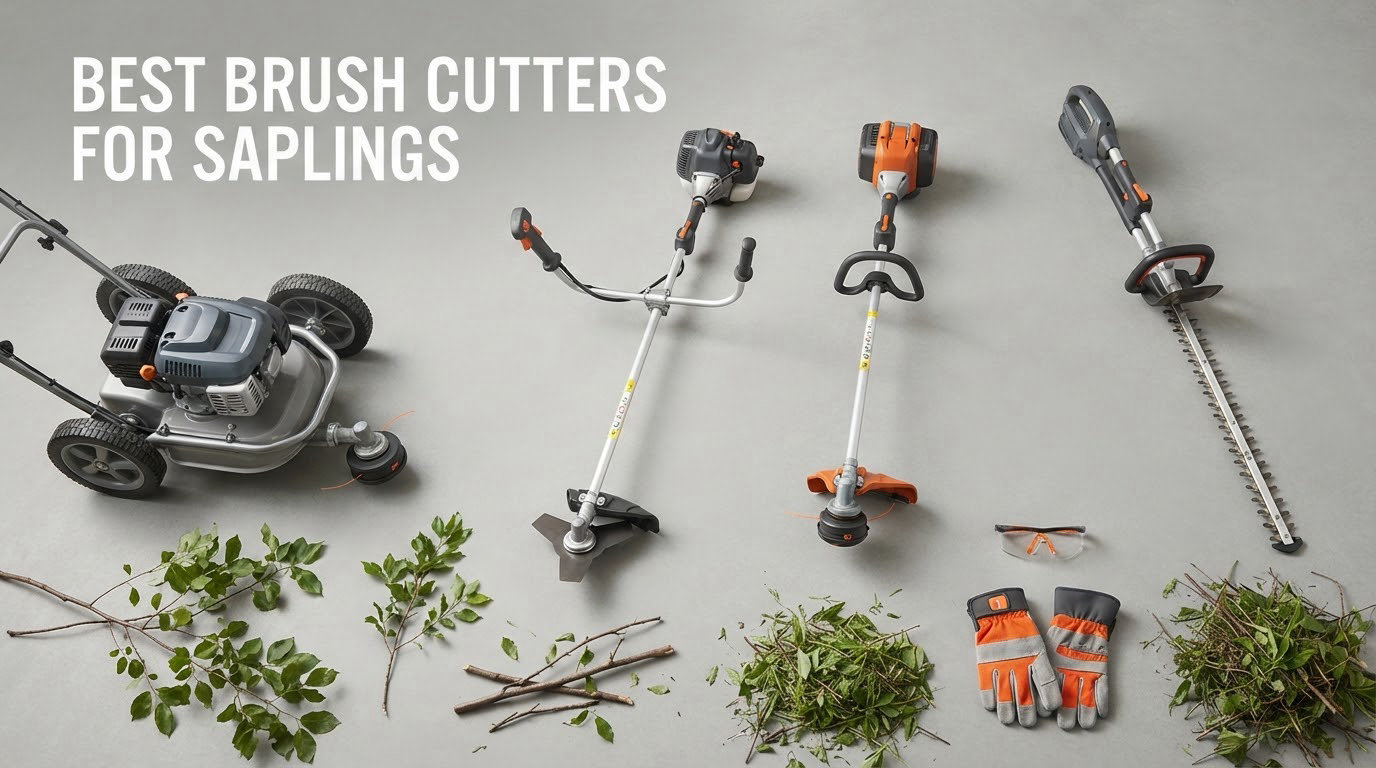
A brush cutter is the only common garden machine that can take a woody sapling in a single pass. A line trimmer stalls and throws line on anything over half an inch, a mower simply refuses, and a chainsaw is overkill for a thicket of one inch stems. If your job is brush, brambles and young trees, the best brush cutters for saplings are the machines built to spin a steel blade at speed rather than a nylon head.
Four variables decide whether a machine is up to the job, and almost nothing else does. First, the real diameter of the stems you face. Second, the blade geometry you fit, because a chisel blade bites wood while a mulching blade is for grass only. Third, the power source and whether its torque holds up once the blade loads. Fourth, and the mistake that strands more buyers than any other, the blade arbor fit.
We spent 2026 going through the current crop of brush cutters, attachment heads and walk-behind hogs, reading the customer image galleries and pulling the recurring complaints out of the review text. The list below covers everything from a dedicated brushless brush cutter to a lightweight kit for bramble edges, and we tell you plainly where each one stops being enough. Our method is spec-first: every capacity claim in this guide comes from the manufacturer listing or from what owners report in the reviews, never from a cc number on a marketing page.
One thing worth saying early, because it saves a lot of frustration. Owners on MyTractorForum describe a widely used setup of a STIHL FS110 with a bike handle and Renegade blades clearing berry brambles, autumn olive and general brush to about 3 inches. That is a gas machine with a harness. Almost every cordless unit below is a light to medium duty cutter. Only one of them comes close to woody work without a gas engine behind it.
Table of Contents
Top 3 Picks for Sapling Clearing in 2026

EGO BCA1220 12 inch Multi-Head Head
- 12 inch 3-tooth steel blade
- Clears brush and saplings to 1 inch
- Carbon fiber shaft
- Must pair with PH1420 power head
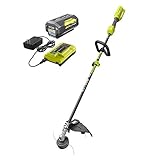
RYOBI 40V Power Head RY40250
- 40V battery and charger included
- Attachment capable
- 13 to 15 inch cutting width
- Variable speed trigger

TrimmerPlus BC720 J-Handle Head
- Reversible 4-tip steel blade
- J-bar and strap included
- Fits most attachment power heads
- Cutoff guard
The EGO takes the top slot on the strength of its rating and the size of its review base, and because the manufacturer publishes an honest stem figure rather than a vague claim. The RYOBI wins on battery-in-the-box value. The TrimmerPlus is the cheapest route into a proper J-handle brush cutter head if you already own a compatible power head.
Best Brush Cutters for Saplings in 2026 – Quick Comparison
| Product | Specifications | Action |
|---|---|---|
| EGO Power+ BCA1220 12 inch Multi-Head Attachment |
|
Check Latest Price |
| RYOBI 40V Attachment Capable Power Head |
|
Check Latest Price |
| TrimmerPlus BC720 J-Handle Brushcutter |
|
Check Latest Price |
 SMILOVII 21V 24-Piece Weed Wacker Kit SMILOVII 21V 24-Piece Weed Wacker Kit |
|
Check Latest Price |
 Compou 21V Cordless Weed Wacker Compou 21V Cordless Weed Wacker |
|
Check Latest Price |
 WeGofly 13 inch 4-in-1 Cordless Brush Cutter WeGofly 13 inch 4-in-1 Cordless Brush Cutter |
|
Check Latest Price |
 Makita DUR369AZ 18V LXT Brushless Brush Cutter Makita DUR369AZ 18V LXT Brushless Brush Cutter |
|
Check Latest Price |
 COPLAR 8 Inch Brushcutter Attachment COPLAR 8 Inch Brushcutter Attachment |
|
Check Latest Price |
 VOL2GO Cordless Stringless Blade Weed Wacker VOL2GO Cordless Stringless Blade Weed Wacker |
|
Check Latest Price |
 BILT HARD 170cc Walk-Behind Brush Hog Mower BILT HARD 170cc Walk-Behind Brush Hog Mower |
|
Check Latest Price |
What Blade Actually Cuts a Sapling
A chisel or knife blade is the sapling blade. It is a flat steel disc with a single filed cutting edge, and it bites into wood the way a saw does. A jims blade is toothed like a circular saw and chews through thicker stems. A carbide chain-saw style blade with welded carbide teeth is the most aggressive option, and owners on OrangeTractorTalks who cut mostly saplings run 9 inch versions for exactly that reason, while warning that it is the wrong choice for vines and light brush. A mulching blade is for grass. Fitting one to a woody job is the most common wasted purchase in this whole category.
Here is the part the spec sheets never tell you. Engine displacement predicts almost nothing about stem diameter. Owners on LawnSite answering the question of what to use for dedicated sapling cutting land on a chisel blade on a mid-size gas machine, with a Redmax BCZ400 as the alternative, and the discussion is about blade choice far more than cc. The real limit is torque at the blade hub once a woody stem loads the cutting edge.
Then there is the arbor trap, and it deserves its own paragraph because it is the error that strands the most buyers. Blades mount on either a 10mm or a 20mm arbor, and the two are not interchangeable. A 20mm blade will not go onto a 10mm spindle and a 10mm blade can rattle loose on a 20mm hub. Check the spindle diameter in the manual before you order any blade, then check the blade’s centre hole before you buy it. The universal-fit attachments in this roundup sidestep the issue by bolting to a power head coupler instead.
One last reality check. Of the ten machines here, only one manufacturer states a stem diameter, and it is the most useful line on its listing: the EGO BCA1220 is rated to clear brush and saplings up to 1 inch thick. Everything else in the cordless group is honestly described by its owners as light to medium duty. If your stems are in the 2 inch range, you are shopping for a gas machine, and no amount of marketing phrasing on a battery product will change that.
1. EGO Power+ BCA1220 12 inch Multi-Head Attachment – Best Overall for Saplings
EGO Power+ BCA1220 12” Brush Cutter Attachment 56-Volt Lithium-ion Multi Head System, Black
12 inch 3-tooth steel blade
6000 rpm
Clears saplings to 1 inch thick
2.2 pound attachment head
Pros
- Only unit here with a published 1 inch stem rating
- Carbon fiber shaft with lifetime warranty
- Switches between EGO attachments in about two minutes
- Quiet compared with gas equipment
Cons
- Requires the EGO PH1420 power head and battery sold separately
- Heavier to handle than a light string trimmer head
- Not as powerful as a dedicated gas brush cutter on heavy woody brush
This is the only product in the roundup where a real cutting figure is printed rather than implied. The listing states it clears overgrown brush and saplings up to 1 inch thick, and that matches what owners describe in the reviews. Out of more than four thousand reviews, the recurring theme is that it cuts clean through brush and small woody stems without bogging.
The shaft is carbon fiber with a lifetime warranty, and the head carries a 3-tooth steel blade at a 12 inch cutting width. At 2.2 pounds it is not the machine, it is the head, and at 6000 rpm it spins fast enough to shear a stem rather than bounce off it. Owners also mention that swapping between EGO attachments takes about two minutes, which matters if you want the same platform for edging in spring and brush in summer.
What you are actually buying is an ecosystem slot. The EGO PH1420 power head and a battery are sold separately, so if you do not already own the platform the true entry cost is the head plus a pack. That is the single biggest barrier for a first-time buyer here, and it is the reason this sits at number one on capability but not automatically at number one on value for a brand new owner.
Reviewers report the head is heavier to swing than a light string trimmer head, and that it is not in the same class as a gas machine once you hit genuinely heavy woody brush. If your stems stay at or below an inch, that ceiling never comes up. If they run past that, keep reading.
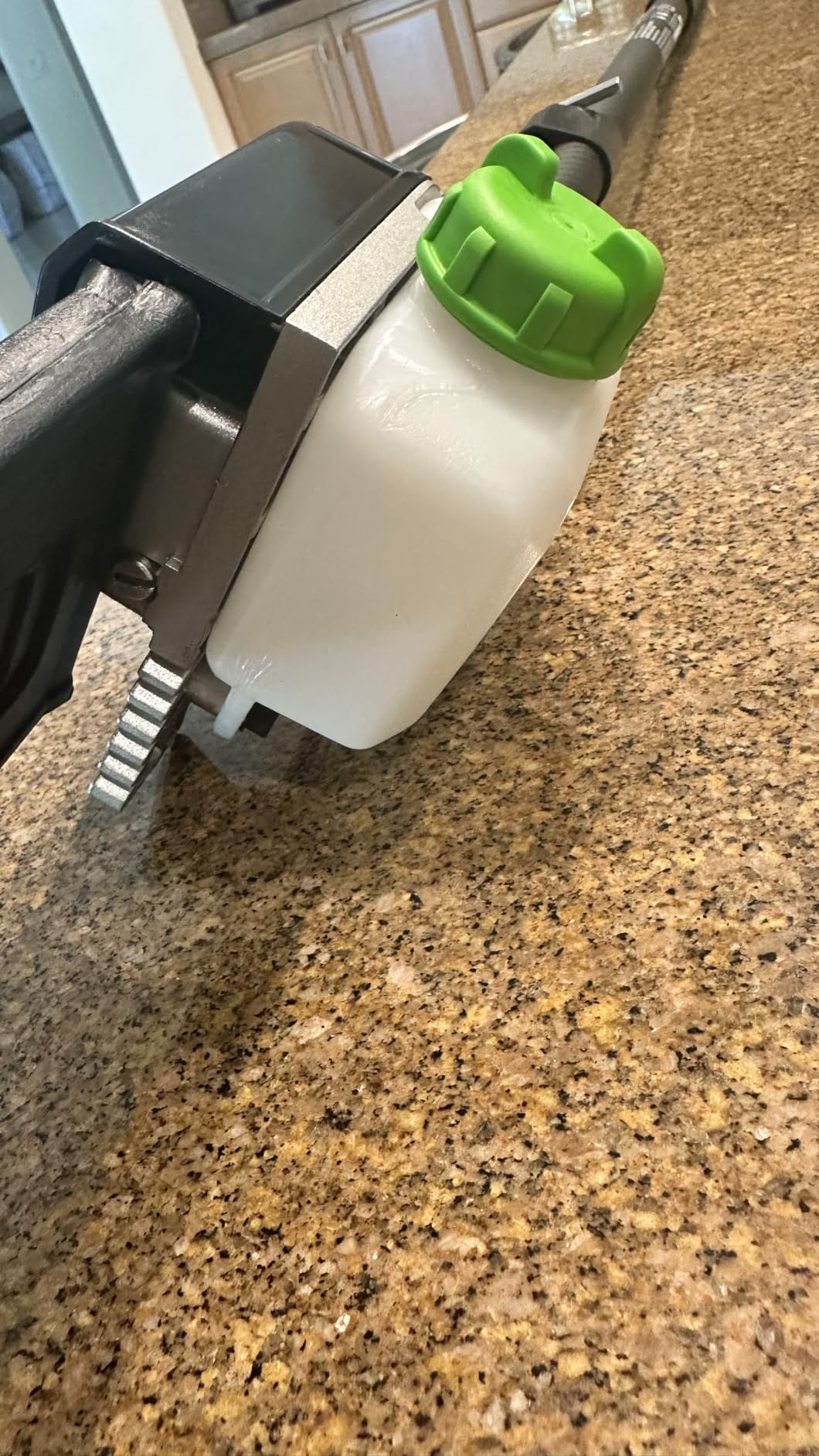
Who it suits
An owner who already runs the EGO Multi-Head System and needs brush capability without buying a second engine. It is also the pick for anyone who values near-silent running, since there is no exhaust note and no pull start in the middle of a morning.
Where it falls short
It cannot start without a power head, and it will not stretch past its published 1 inch rating no matter which blade you fit. Everything above that diameter is a different machine class.
2. RYOBI 40-Volt RY40250 Power Head – Best Battery Platform for Mixed Work
RYOBI 40-Volt Lithium-Ion Cordless Attachment Capable String Trimmer, 4.0 Ah Battery and Charger Inc
40V lithium-ion battery and charger included
13 to 15 inch cutting width
Attachment capable
13.9 pounds
Pros
- Runs brush cutter heads and expand-it attachments
- Battery and 90 minute charger in the box
- Much lighter and easier to run than a gas trimmer
- Battery platform swaps with existing RYOBI tools
Cons
- Runtime of roughly 30 to 40 minutes under load
- Attachment changes take practice to get a solid fit
- Long shaft can feel awkward for shorter users
This is a power head rather than a brush cutter, and that distinction matters. You buy the RY40250, fit a brush cutter head to it, and you have a machine. Owners like that it accepts RYOBI expand-it attachments and other universal gas attachments, so one battery platform covers edging, trimming and brush work without a second engine on the shelf.
The battery and the 90 minute charger come in the box, which removes the most common cordless complaint before it starts. Cutting width adjusts from 13 to 15 inches through the head, and a variable speed trigger lets you dial power back in light growth and hold it flat when the blade loads up.
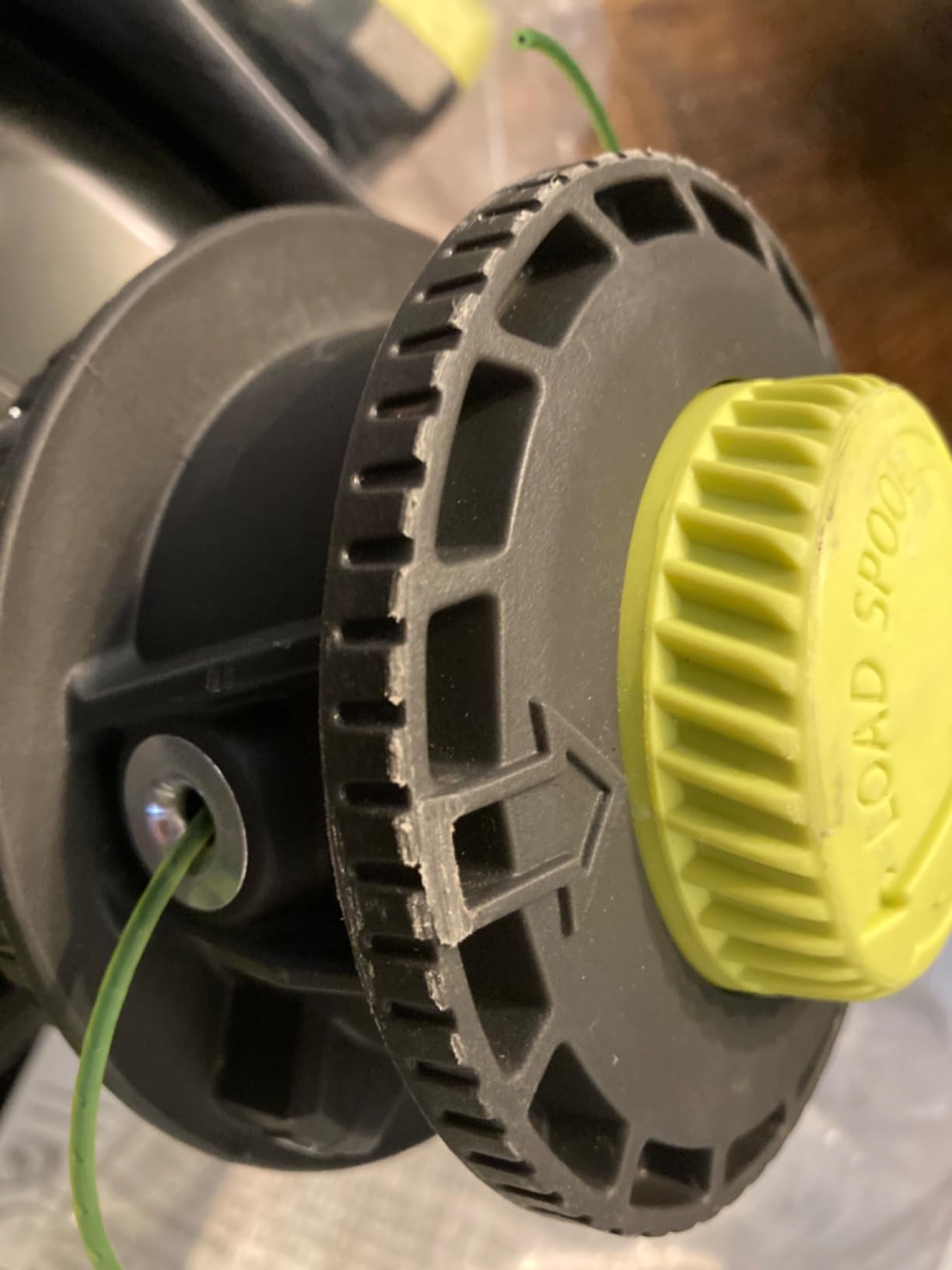
At 13.9 pounds it is light for what it does, and the reviews describe it as much easier to handle than a comparable gas trimmer. It handles heavy weedeating comfortably. For sapling work specifically, the 40 volt pack gives it more headroom than the small 21 volt kits further down this list.
Runtime is the honest limitation, with owners reporting roughly 30 to 40 minutes under load. For a hedgerow or a fence line that is a full work session. For clearing a half acre of scattered stems it means a battery swap partway through, and there is no shoulder strap in the standard kit, so longer sessions can feel front-heavy until you add one.
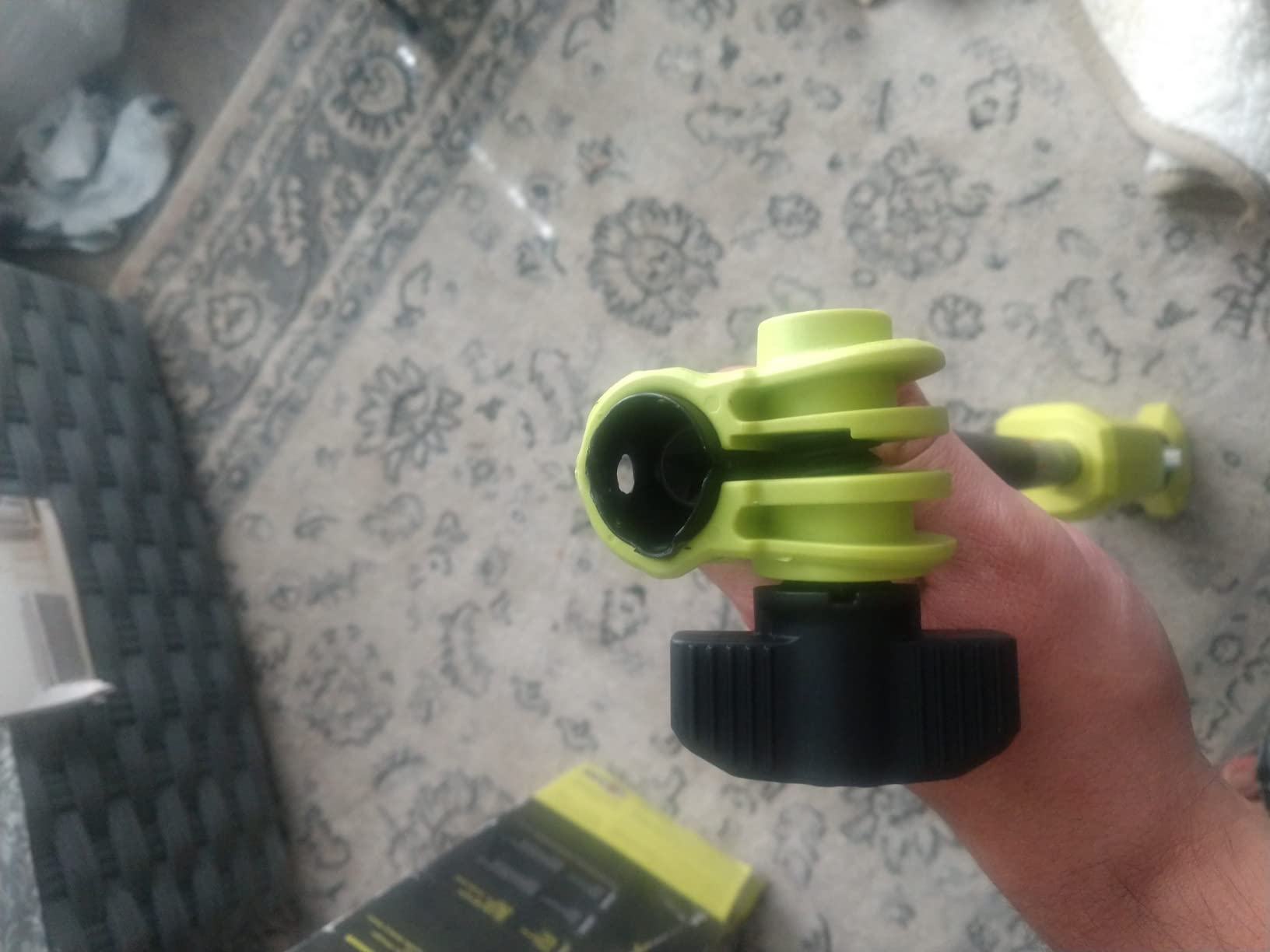
Who it suits
Someone already invested in RYOBI 40V tools who wants a brush head without buying another platform. The included battery and charger make it the most complete cordless starting point here.
Where it falls short
It is a head, not a blade, so you still need a brush cutter attachment. The shaft length is awkward for shorter users, and the runtime will not cover a full day of thicket clearing on one pack.
3. TrimmerPlus BC720 J-Handle Brushcutter – Best Value Brush Cutter Head
TrimmerPlus BC720 Brushcutter with J-Handle for Attachment Capable String Trimmers, Polesaws, and Powerheads, 8, Fatigue
Reversible 4-tip steel blade
Straight shaft pro design
J-bar and strap included
6.4 pounds
Pros
- Universal fit across most attachment capable power heads
- Reversible 4-tip blade slices through heavy brush
- J-bar and shoulder strap add real control
- Straight shaft reaches under shrubs and low branches
Cons
- Requires a separate attachment capable power head
- Not suited to very thick woody growth
- J-handle adds weight on short jobs
The BC720 is the one in this roundup that looks and handles like a proper bush cutter the moment you pick it up, because the J-bar and shoulder strap are in the box. That harness is what lets you put real body weight behind the cut, and it is the difference between a head that skips off a stem and one that takes it.
Fit is the selling point. The inner coupler tube is 1.65 inches and the drive shaft connector takes the 1/5 inch square female profile found on power heads from Troy-Bilt, Remington, Craftsman, Yard Machines, Yardman, Snapper, Bolens, Murray, Ryobi, Greenworks, Kobalt and most other major brands. The blade is a reversible 4-tip steel unit with a cutoff guard, so you can flip it when one edge dulls.
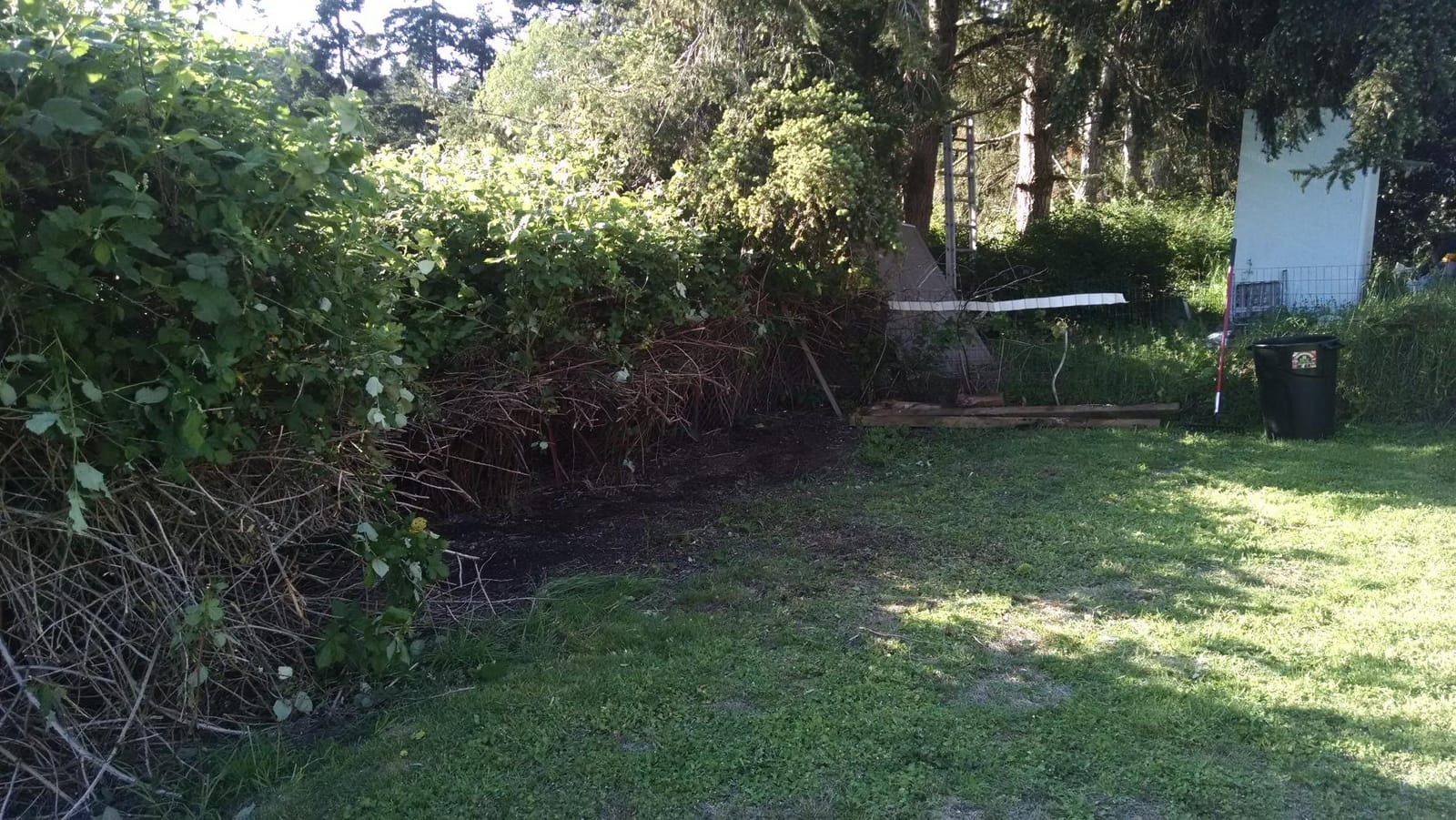
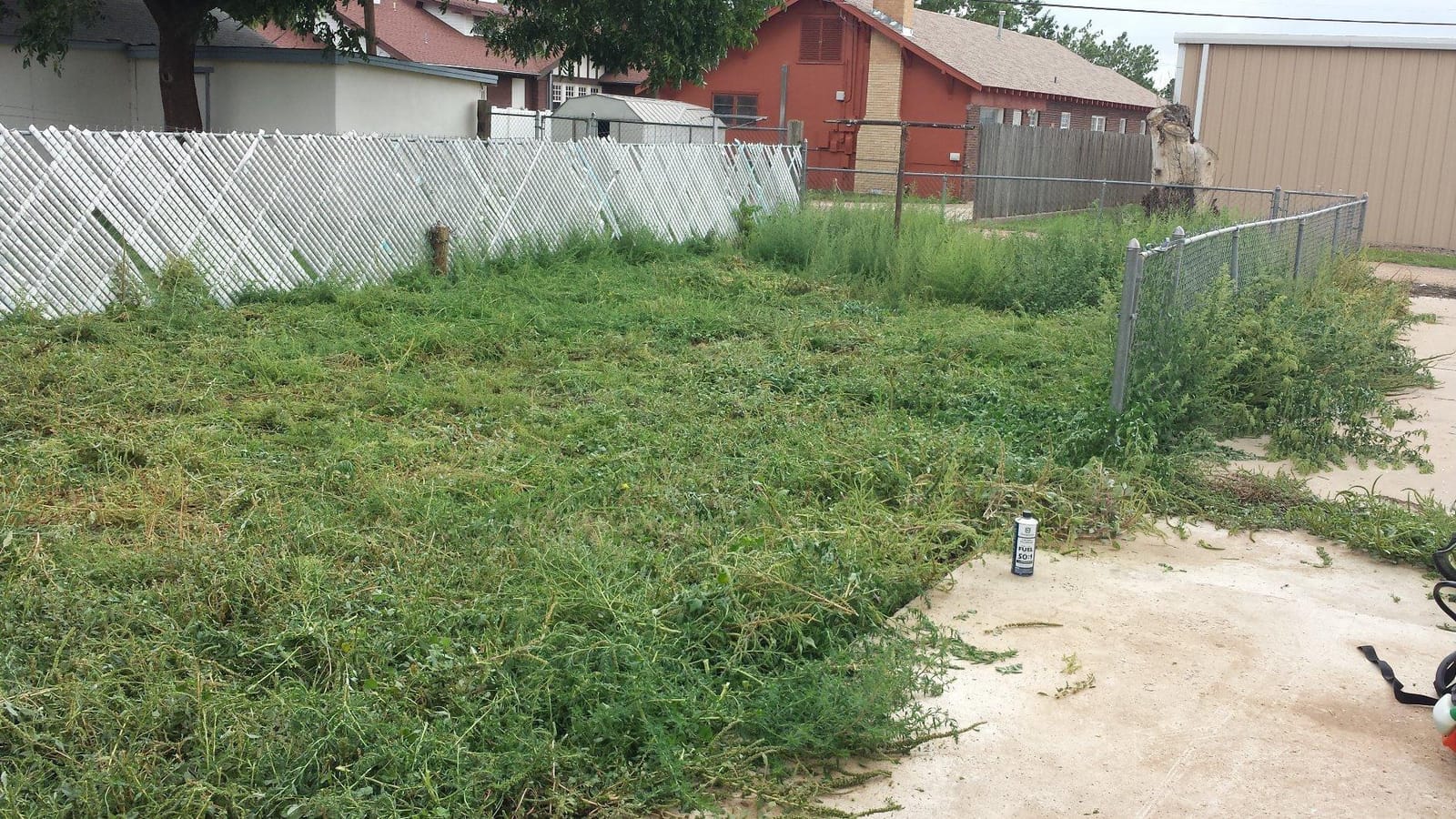
The straight shaft is a deliberate choice and it pays off under shrubs and low branches where a loop-handle machine cannot get the blade flat. Owners report it slicing through heavy brush well, with a 2-year limited warranty backing the head.
Two limits are worth stating plainly. It still needs a power head, so this is an add-on rather than a complete machine, and the reviews are consistent that it is not the tool for very thick woody growth. It is a brush and light sapling cutter, not a tree cutter.
Who it suits
Owners with any compatible attachment power head who want brush capability and better control without spending on a dedicated gas machine. The included J-bar is the part you will notice most in the first ten minutes.
Where it falls short
There is no published stem diameter figure, and reviewers put its cutting performance at brush and light woody material rather than heavy trunks. The J-bar also adds weight that is wasted on a five minute job.
4. SMILOVII 21V 24-Piece Kit – Most Versatile for Light Saplings
SMILOVII 21V Cordless Weed Wacker & Weed Eater, Lawn Edger & Brush Cutter
850W peak motor at 24000 rpm
6 inch cutting width
2x 21V 2.0Ah batteries
4.6 pounds
Pros
- Very light at 4.6 pounds for long sessions
- 24 piece kit with 6 heads and 10 blades
- LCD battery percentage display
- 180 degree foldable shaft saves storage space
Cons
- Batteries run about 20 to 30 minutes each
- Several reports of units arriving with dead packs
- Underpowered for heavy brush and stems
- Black plastic blades break quickly
The 24 piece kit is the appeal here. You get 6 nylon string heads, 4 flat metal blades, 3 circular saw blades and 2 wire brushes in the box, and owners note the circular saw blades cut nettles and light woody suckers. At 4.6 pounds this is the easiest machine here to swing for a full afternoon.
The 850W peak motor runs at 24000 rpm no load, with a 90 degree rotating head and an edging guide wheel. Two 21V 2.0Ah packs come with an LCD percentage display, which is more information than most kits in this bracket give you, and the aluminum shaft folds 180 degrees for a compact storage footprint.

Where the reviews split is power. Owners using it for light duty like the weight and the accessory range. Owners hitting real brush find it underpowered, and the black plastic blades are reported to break after a few minutes of tougher work while metal blade tips can warp on stones.
Battery life of 20 to 30 minutes per pack is the other repeated theme, and there are several reports of units arriving with dead or failing packs. That one is worth thinking about before purchase rather than after, because a dead pack on arrival is an immediate return.

Who it suits
Apartment and suburban gardeners clearing bramble edges, nettles and light woody suckers where weight matters more than capacity. The folding shaft and the accessory kit make it a one-tool shed filler.
Where it falls short
It will not take a genuine sapling. The plastic blades are the weakest consumable in the kit, and reviewers repeatedly describe the machine as underpowered for heavy brush. Check the batteries on arrival.
5. Compou 21V Cordless Weed Wacker – Best for Bramble Clearing
Cordless Weed Wacker Effortless Grass Trimmer | The Cordless Weed Wacker Features Four Different Blades.The Electric Weed Wacker Allows You to Freely Trim and Beautify Your Garden and Lawn.
500W motor at 8300 rpm
5 inch cutting width
Circular saw blade included
6 pounds
Pros
- Circular saw blade clears brambles and small woody stems
- Two 21V 2000mAh batteries and charger included
- Light and quiet compared with a gas strimmer
- Metal blade survives repeated contact with woody stems
Cons
- Front wire guard is undersized with the steel blade fitted
- Instructions are largely unusable
- Charger and construction feel flimsy
- Plastic blades snap on tougher growth
What separates this one inside its bracket is the blade set. Three blade types ship with it: plastic for soft grass, stainless steel for thick weed and small shrubs, and a circular saw blade intended for thicker shrub, branches and sapling. On a bramble patch that saw blade is the whole reason to buy this one.
Underneath, a 500W motor reaches up to 8300 rpm, the telescopic shaft adjusts from about 90cm to 120cm, and the cutting head tilts from 0 to 90 degrees so you can work flat along a fence line. Two 21V 2000mAh batteries give 40 to 60 minutes of runtime, and a dual-control switch requires both triggers to start.
Reviewers are positive on value, runtime and the included blade range, and they say the metal blade holds up through repeated contact with woody stems. For bramble work and light sucker growth this is a genuinely capable little machine.
The recurring complaint is the guard. With the steel blade fitted, the front wire guard is undersized for the job, and that is a safety point rather than a nitpick because a circular saw blade throwing bramble debris needs more shielding than a wire loop provides. Instructions are also largely unusable, so budget time for a bit of figuring out. A few reviewers note the stated battery voltage does not match the listing claim, and the charger feels flimsy.
On value for money this is hard to argue with. On build quality and guard coverage, it is a step behind the EGO and the RYOBI.
Who it suits
Anyone clearing bramble patches, light shrub and small woody suckers who wants a saw blade in the box at the lowest entry point in this roundup. The 40 to 60 minute runtime per battery suits a weekend of spot work.
Where it falls short
The undersized guard with the steel blade fitted is the thing to think hardest about. It is also light on thick stems, and the instructions will not get you set up quickly.
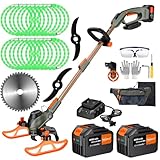
6. WeGofly 13 inch 4-in-1 Cordless Brush Cutter – Best Multi-Tool Design
WeGofly 13″ Electric Weed Wacker, 4 in 1 Cordless String Trimmer/Lawn Edger/Lawn Mower/Brush Cutter with Steel Gears, 2×21V 6.0Ah Batteries & Charger, 5.2 LBS Lightweight Grass Trimmer for Yard Garden
15000 rpm brushless motor
13 inch cutting width
2x 21V 6.0Ah batteries
5.2 pounds
Pros
- String trimmer edger mower and brush cutter in one body
- Two 6.0Ah batteries included for longer runtime
- Light at 5.2 pounds and quick to assemble
- Steel gear set and brushless motor at this weight
Cons
- Bump feed head does not hold line reliably
- One review reports the unit came apart during use
- Only a single refill of trimmer line included
- Plastic blades are the weakest consumable
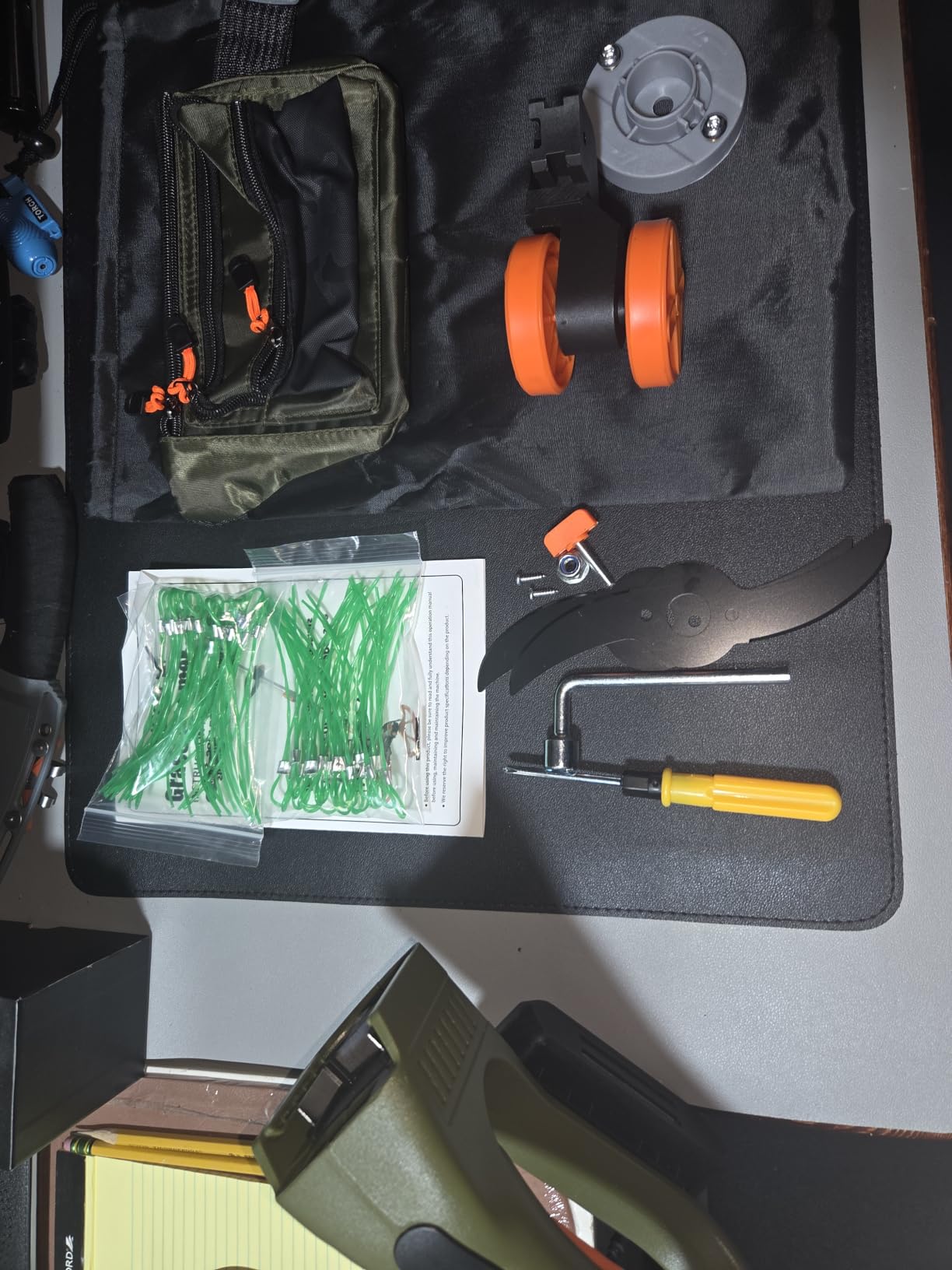
Four tools in one body is the pitch, and the 4-in-1 design does deliver: string trimmer, lawn edger, mini lawn mower and brush cutter from the same 13 inch head with an adjustable cutting head and telescopic pole. At 5.2 pounds it is one of the lighter machines here, and the assembly is quick.
The motor is a 15000 rpm brushless unit driving a steel gear set, which is a step up from the plastic gearboxes common in this price bracket. Two 21V 6.0Ah batteries and a charger are included, and they cross-compatible with many generic 21V tools, which is convenient if you already have packs on a shelf.
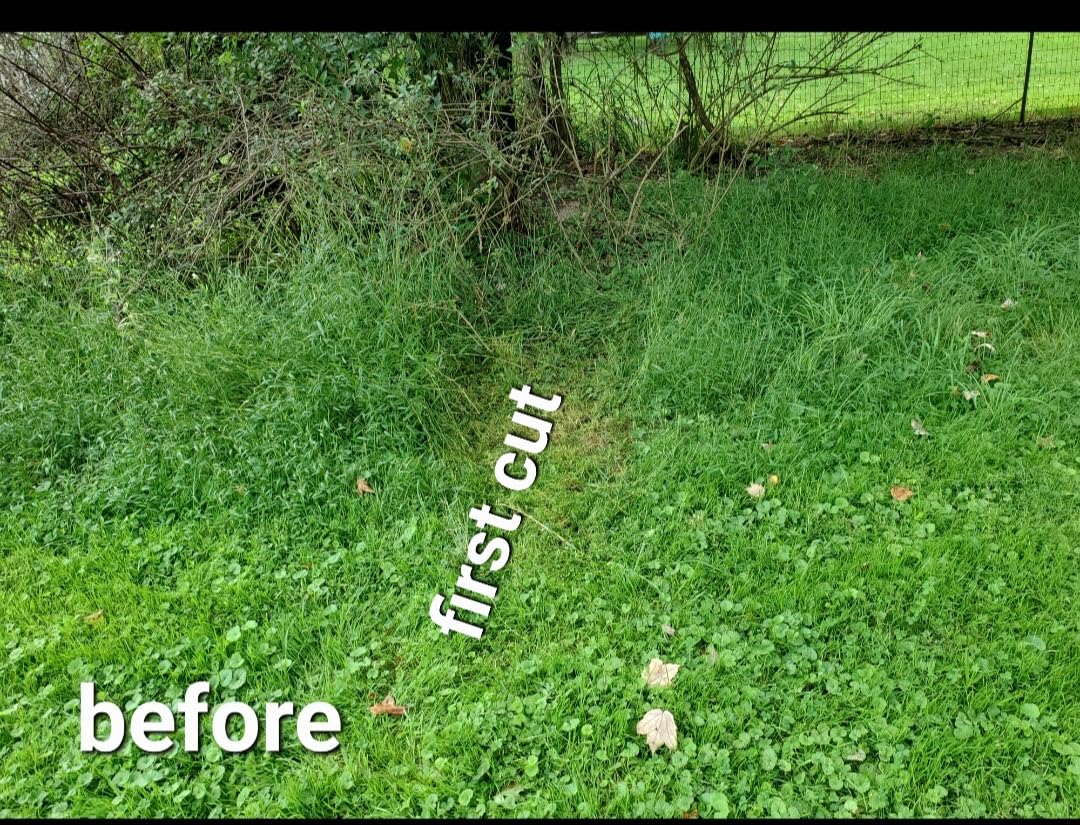
Owners like the versatility and the low weight, and the 3-year main machine warranty with a 2-year battery warranty is longer than most competitors offer. The 13 inch cutting width is the widest of the cordless units in this list.
Two complaints recur. The bump feed mechanism on the string head does not hold line reliably, which matters less if you are using it as a brush cutter but a lot if you are not. There is also one report of the unit coming apart during use, and the plastic blades included are the weakest consumable on the machine. For woody work you will want to fit a metal blade and leave the plastic ones behind.
Who it suits
Small yards where the same machine needs to edge, mow a strip and clear light brush, and where a 5.2 pound tool that assembles in minutes is the difference between doing the job and not doing it.
Where it falls short
The line head is its weak point, and the included plastic blades will not take woody stems. Treat the brush cutter function as secondary to trimming on this machine.
7. Makita DUR369AZ 18V LXT Brushless Brush Cutter – Best for Quiet Woody Cutting
Makita DUR369AZ Twin 18V (36V) Li-ion LXT Brushless Brush Cutter – Batteries and Charger Not Included
Brushless motor with 430mm cutting diameter
Metal 2-tooth blade included
6.5 kg
Three speed settings
Pros
- Cuts grass shrubs and woody stems effectively
- Much quieter than a comparable two-stroke machine
- Lightweight for its class with a good quality harness
- Automatic torque drive plus three speed settings
Cons
- Battery and charger not included
- Heavier than some smaller brush cutters
- Automatic mode responds slowly
- Batteries drain relatively quickly
This is a dedicated brush cutter rather than a head or a multi-tool, and it is the only bare machine in the roundup built around a brushless motor with automatic torque drive. Owners rate it highly for cutting woody stems and shrubs while being quieter and lighter than the gas equivalent. The 430mm cutting diameter and the included metal 2-tooth blade make it a real cutting tool, not a trimmer with a blade stuck on.
Active Feedback Sensing Technology watches for stalls, an electronic current limiter protects the motor under overload, and an electric brake stops the spindle. Three speed settings plus an automatic torque mode let you match the machine to the growth, and a reverse rotation switch helps clear a jammed head.
The kit is generous. You get the accessory bag, blade guard, box wrench, harness, hex wrench, the metal 2-tooth blade and a nylon cutting head, so apart from power you are ready to cut. The off-set handle design and the included harness make it workable for a full session.
Two real limitations. The battery and charger are not included, which means the true cost depends entirely on whether you already run Makita 18V LXT. Owners also report the automatic mode responds slowly, so on dense growth the manual speed setting is the better habit. It is not compatible with G-Series batteries, another reason to check your platform first.
Who it suits
Makita 18V LXT owners who want a proper brush cutter with a metal blade, minimal noise and no oil changes. The included harness and guard make it the most complete single purchase for woody cutting in the cordless group.
Where it falls short
It weighs 6.5 kg, which is more than the lighter kits here, and reviewers note battery drain is quick under load. Without a Makita platform already in place, you are buying into one.
8. COPLAR 8 Inch Brushcutter Attachment – Best 8-Inch Compatible Head
COPLAR 8 Inch Brushcutter Attachment
3-tooth TRI-ARC steel blade
8 inch cutting width
Accepts 1 inch aluminium tube
32.68 inches long
Pros
- Low cost route into brush cutter capability
- 3-tooth TRI-ARC steel blade handles grass and brush
- Fits a wide range of attachment capable power heads
Cons
- 8 inch cutting width is small next to 12 inch heads
- Compatibility depends on matching drive shaft dimensions
- Lightweight build feels less rigid under heavy load
The COPLAR does one job at the lowest cost in this roundup: turn a power head you already own into a brush cutter. The 3-tooth TRI-ARC steel blade handles grass and brush, and the attachment fits power heads from Ryobi, Greenworks, Remington, Craftsman, Yard Machines, Troy-Bilt, Yardman, Snapper, Bolens, Murray, Kobalt and most other major brands.
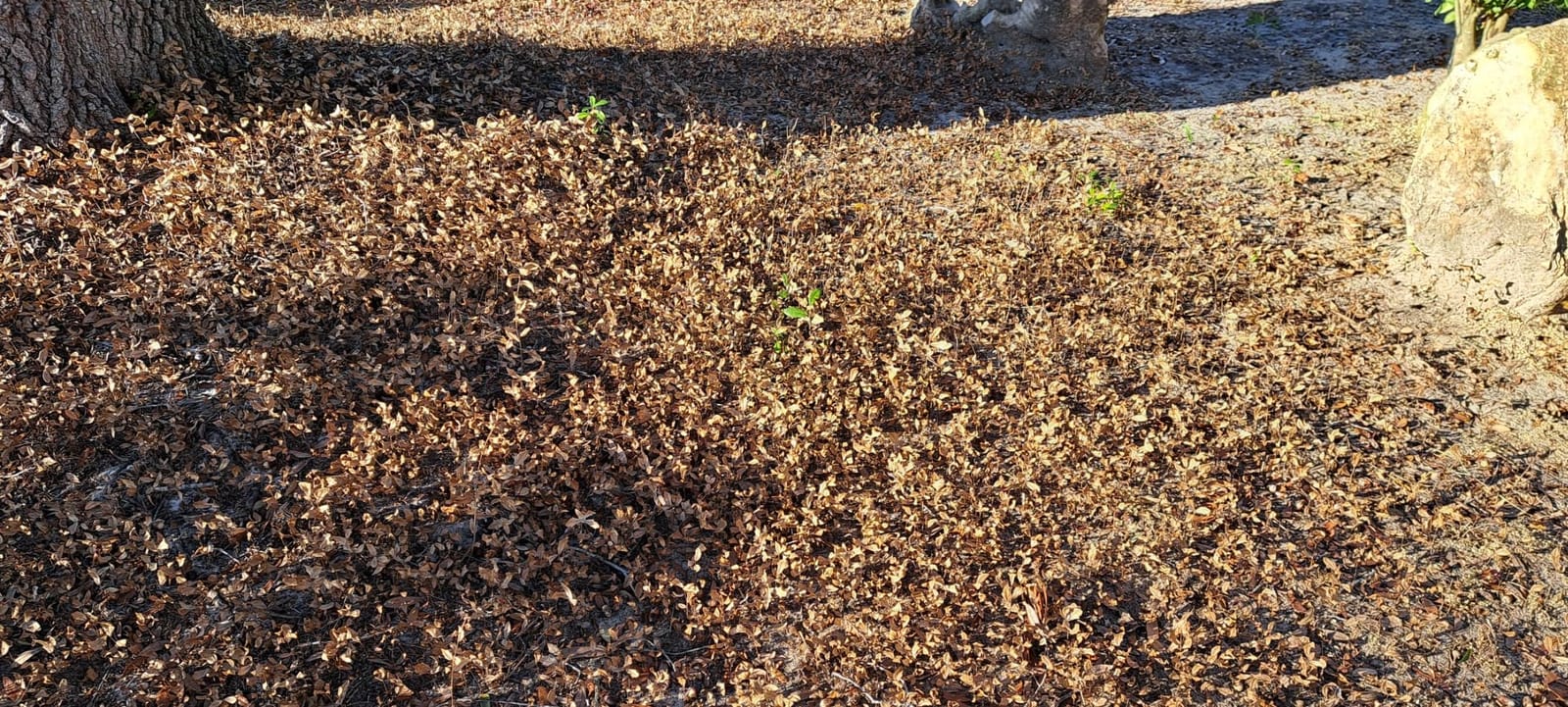
The mechanical details are specific and worth checking before you buy. It accepts a 1 inch aluminium tube, the drive shaft square is .200 inch across flats, and the connector takes a .205 inch female profile. Those are the numbers that decide whether it fits your machine.
Reviews centre on affordability and the broad universal fit, with the lower rating explained by the smaller cutting diameter and light duty construction compared with 12 inch heads.
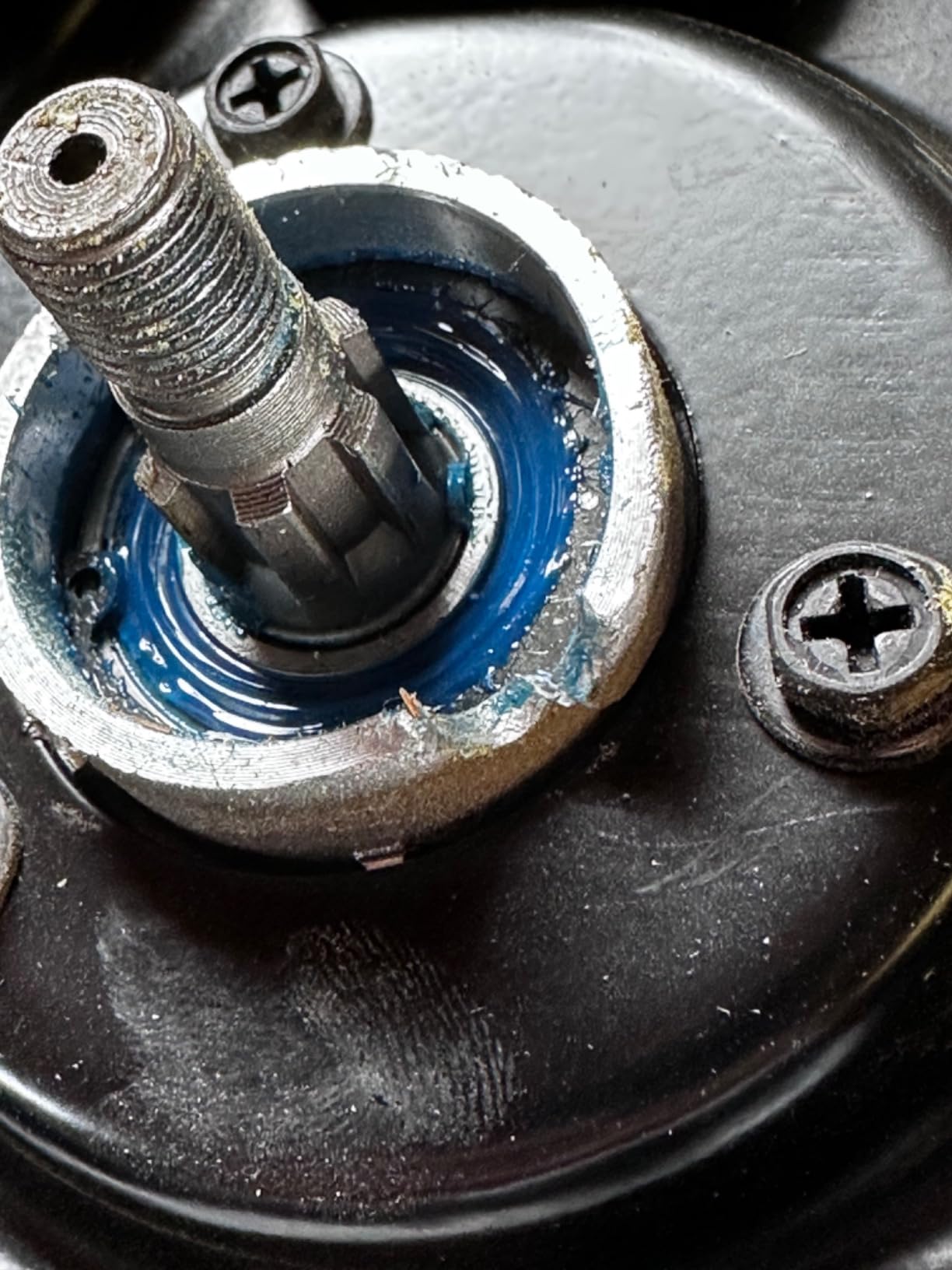
Both limits are visible in the specs. The 8 inch cutting width is small next to the 12 inch heads in this list, which means more passes on the same patch, and the build feels less rigid under heavy load. Compatibility also depends entirely on matching those drive shaft dimensions, so a near miss is a return trip.
Who it suits
Owners with a compatible power head and a small brush patch who want a steel blade for the least money. The TRI-ARC tooth pattern is simple and replacement blades of this pattern are widely available.
Where it falls short
An 8 inch swath and a light build mean it is a brush tool, not a sapling tool. Verify your drive shaft dimensions before ordering, because fit is the entire value proposition.
9. VOL2GO Cordless Stringless Blade Weed Wacker – Best for Lightweight Handling
Cordless Weed Wacker Eater Brush Cutter Weed Trimmer with Blade Stringless
Stringless metal blade cutting
3.5 pound tool
3 in 1 trimmer edger cutter
49.21 inches long
Pros
- Very light at 3.5 pounds and easy for beginners to control
- Stringless metal blades remove line breakage entirely
- Five minute assembly with quick blade changes
- Two batteries plus charger and low noise operation
Cons
- Debris guard is smaller than ideal
- Limited to light branches rather than thick woody growth
- Cutaway section of the guard needs reinforcement
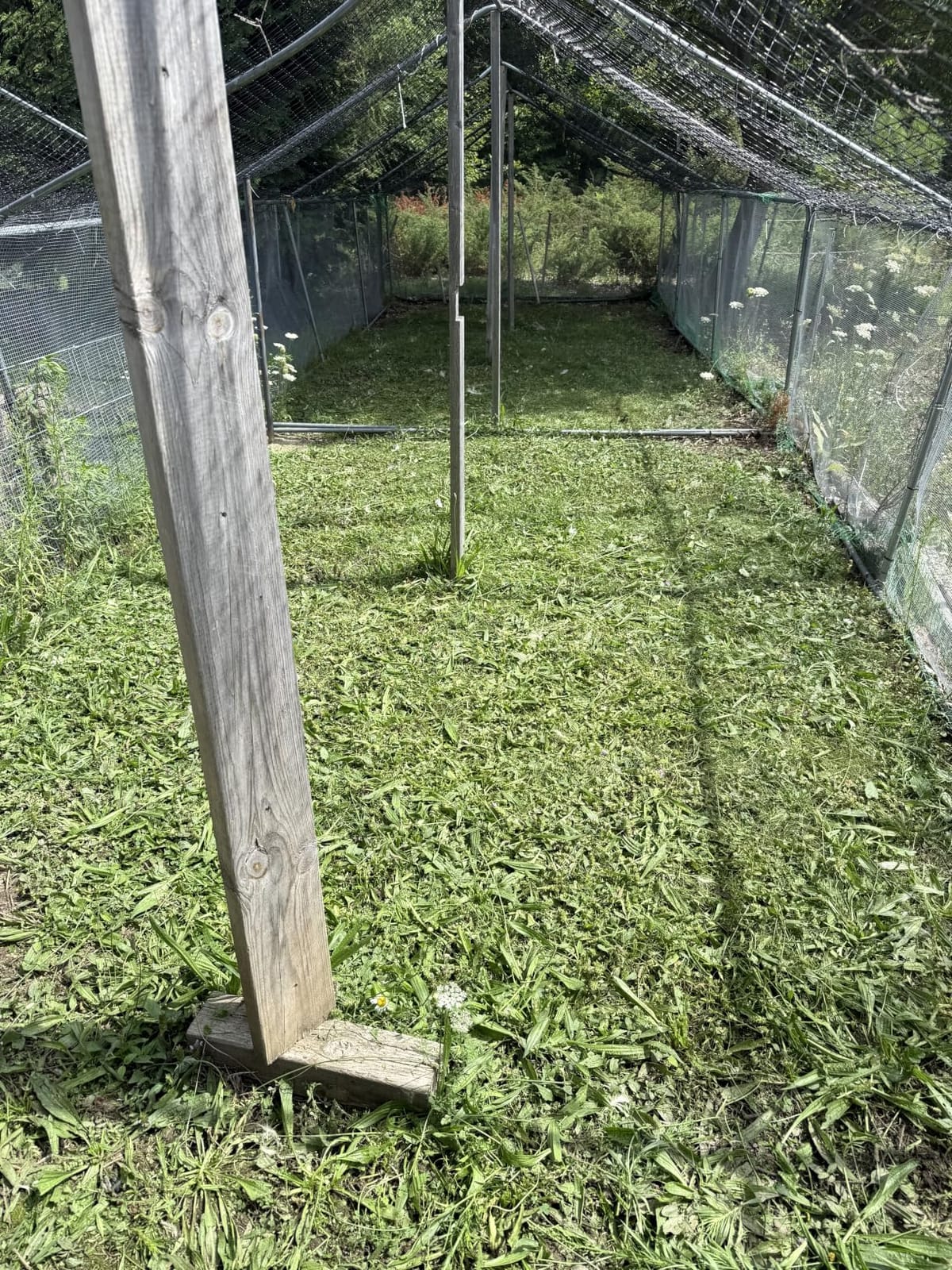
The stringless design is the idea worth understanding before anything else. Instead of a nylon head, this runs saw blades and straight metal blades, and includes safety goggles, gloves and a debris guard. Reviewers point out that this removes line breakage and rethreading entirely, which is the single most common frustration with cheap cordless trimmers.
At 3.5 pounds it is the lightest tool here by a wide margin, and owners describe it as usable by seniors and beginners. It configures as a 3-in-1 trimmer, edger and brush cutter, runs low noise, and the low-noise motor design means you can work next to a boundary without announcing it.
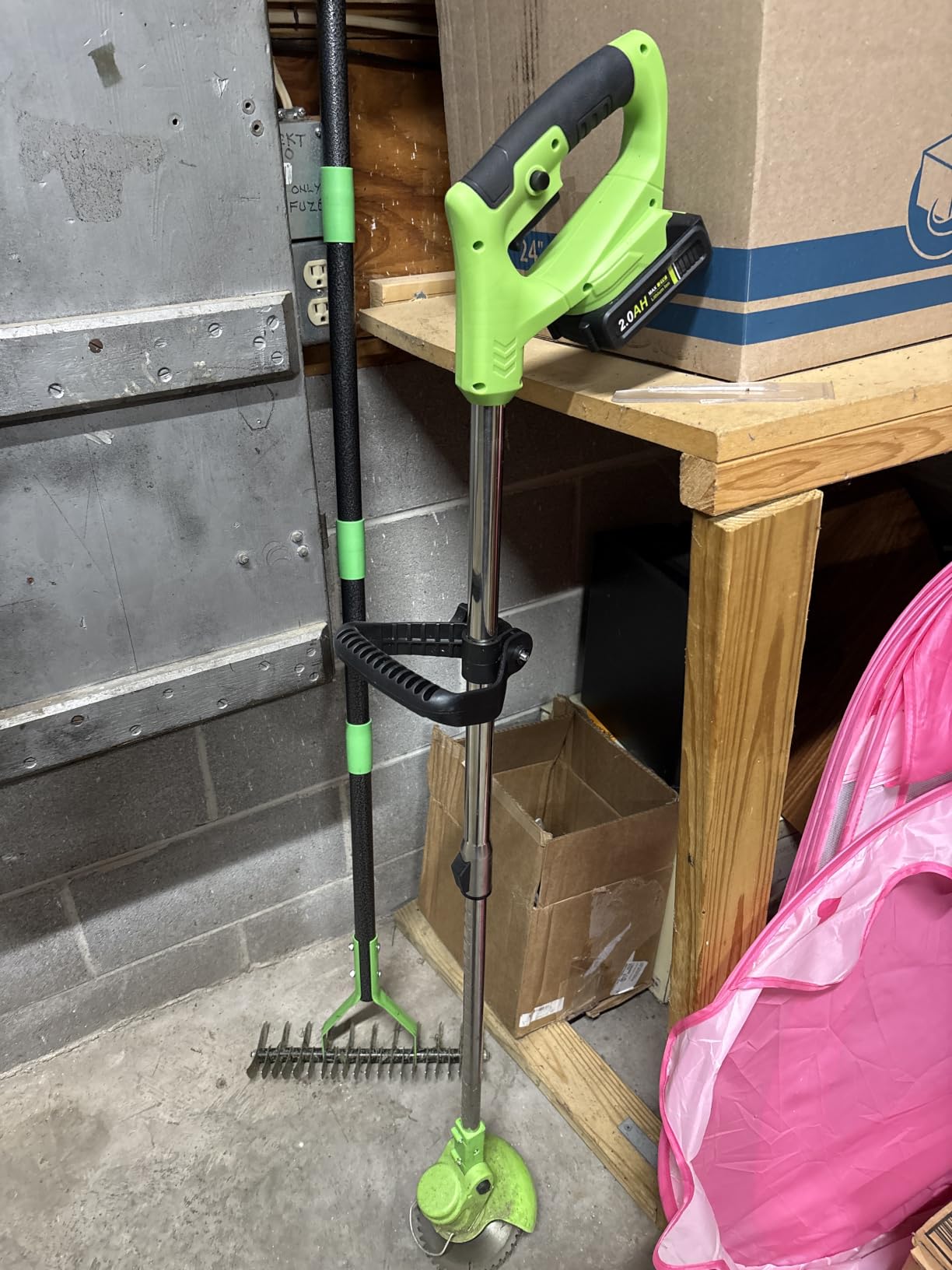
It also ships with two rechargeable 21V batteries and a charger for swap and go runtime, which removes the single-battery constraint that trips up several others in this list.
The honest limit is capacity. Reviewers are consistent that this handles light branches rather than thick woody growth. The debris guard is also smaller than ideal, and there is a note that the cutaway section of the guard needs reinforcement, so treat it as a light duty machine with an incomplete safety package.
Who it suits
Older users, beginners, and anyone clearing light bramble and overgrown grass on a boundary. The 3.5 pound weight and the absence of line handling make it the least tiring tool here for short jobs.
Where it falls short
It will not take a sapling. The guard is undersized and needs reinforcing, so factor that into where you point it.
10. BILT HARD 170cc Walk-Behind Brush Hog Mower – Best for Large Acreage
BILT HARD Walk Behind String Trimmer, 170cc 4-Cycle Gas Brush Hog Mower, 22 Inch Cutting Diameter, Push Weed Eater with 14 Inch Flat Free Wheels, Brush Cutter for Farm, Lawn, Yard
170cc 4-cycle OHV gas engine
22 inch cutting width
54.1 pounds
14 inch never-flat wheels
Pros
- Gas power handles overgrown tall grass and light brush
- 22 inch width covers ground far faster than a handheld
- One-piece steel deck adds strength and cuts vibration
- Never-flat wheels roll over rough ground
Cons
- Push behind format means no harness and no hands free cutting
- Heavy at over 50 pounds to maneuver
- Gas engine adds fuel and pull start maintenance
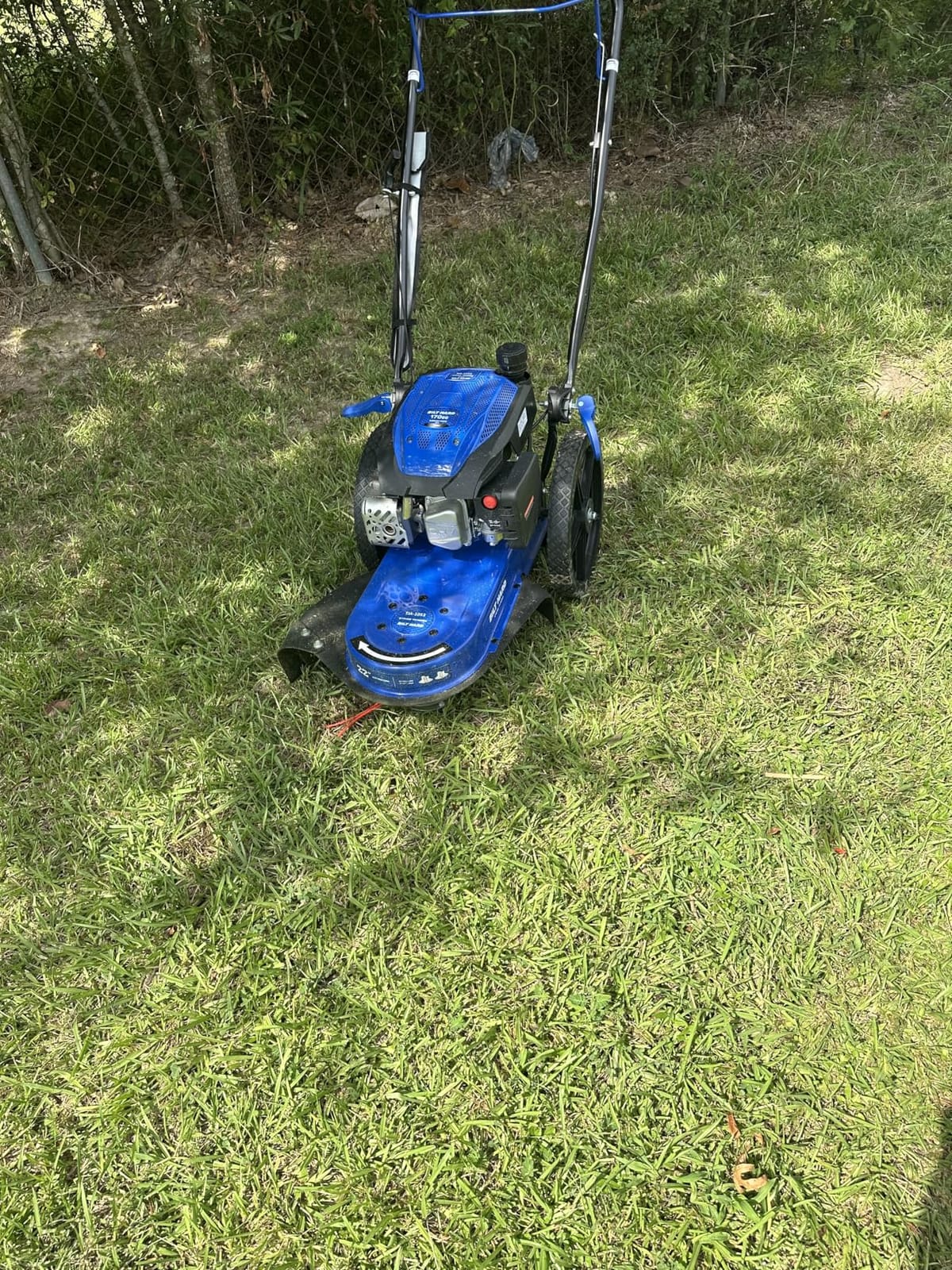
This one is not a brush cutter, and we include it because it answers a different question. If you have acreage with heavy overgrowth rather than a hedgerow with a few stems, a walk-behind hog covers ground at a rate no handheld machine can approach. Owners praise the 170cc 4-cycle OHV engine for handling overgrown tall grass and light brush, and the 22 inch cutting width for covering ground fast.
The one-piece steel deck adds real strength and reduces vibration compared with the folded steel decks common in this class. Fourteen inch never-flat wheels roll over uneven ground, and the foldable handle makes it store against a wall. Owners specifically note it reaches tight fence line areas that standard mowers cannot get into.
Three limitations define the category rather than this product. The push behind format gives you no shoulder harness, so all the force comes from your arms and legs and you cannot cut hands free. At 54.1 pounds it is a heavy thing to turn on a slope, and the gas engine means fuel, oil changes and a pull start.

It is worth adding the wider point here. Walk-behind field and brush mowers are the usual alternative people consider for large overgrown plots, and a flail mower is the step above that for genuinely woody stems on a tractor. The r/Skidsteer thread on flail mower versus brush cutter exists precisely because both are reasonable answers to different acreages. If your stems are sapling sized rather than small tree sized, this class works, provided you keep the growth at light brush height.
The category limit is important: nylon line, not a blade. A hog mower running line chews through tall grass and light brush and stops at woody stems. If your growth is genuinely sapling thick, the handheld brush cutters above are the correct tool and this one is not.
Who it suits
Property owners with a half acre or more of tall grass and light brush who want ground covered in an afternoon. The steel deck and never-flat wheels handle rougher ground than a lighter walk behind would.
Where it falls short
It runs nylon line, so it will not take saplings. The 54.1 pound weight and the lack of a harness make long sessions on slopes tiring.
Buying Guide: Nine Decisions Before You Buy
1. Measure your stems, not your engine. Walk your patch with a tape and find the thickest live stem you expect to meet. Under one inch and a good cordless head will do. Between one and two inches and you want torque, a bike handle and a jims or carbide toothed blade. Past two inches and you are in chainsaw or puller territory, which several owners on TractorByNet argue strongly for rather than cutting.
2. Ignore cc when judging cutting ability. Owners complain about this constantly in the forums, and they are right. Displacement tells you about the top end speed, not what happens when a green stem grabs the blade. Torque at the hub, blade diameter and tooth geometry decide the outcome.
3. Get the arbor right before you order any blade. Ten millimetre and twenty millimetre are not interchangeable. Check the spindle in your manual, then check the blade centre hole on the listing. The universal-fit heads in this roundup avoid the question entirely by coupling to the power head shaft instead.
4. Choose the blade geometry for the material. Chisel or knife blade for woody saplings. Jims or circular saw style for 2 inch stems. Carbide chain saw teeth for the hardest woody work, with the kickback awareness that comes with them. Mulching blade for grass, and nothing else.
5. Pick the handle for the work position. A bike handle with a harness lets you lean into the cut and keeps the blade away from your legs, which is what you want around trees and uneven ground. A loop handle gives a flat cutting path for grass and open ground but less control in thickets. This is a real safety difference, not a comfort preference.
6. Factor in weight before you factor in power. A machine you can hold for an hour clears more than a heavier one you set down after ten minutes. The tools here span 3.5 pounds to 54.1 pounds, and the right answer depends on how long the job takes as much as how thick the wood is.
7. Do the battery runtime maths honestly. Published figures are no-load numbers. Owners report 30 to 40 minutes on the RYOBI 40V head under load and 20 to 30 minutes per pack on the smaller 21V kits. Multiply by the number of batteries you actually own, then add a spare if the job is a full day.
8. Look for parts availability, not just reviews. A large review count is a hint that parts and blades will exist for the platform. The two-tool workflow owners actually use starts with a battery or gas machine for the first pass and a chainsaw or pruner for the stems, so plan for both rather than forcing one machine to do everything.
9. Budget the safety gear separately. Face or eye protection, hearing protection, gloves, cut resistant chaps and sturdy boots. Several of the tools above ship with goggles or gloves, some do not, and a couple carry notes about undersized debris guards. If you fit a chain saw style blade, read the kickback section of your manual before the first cut.
If you are also lining up equipment for the rest of the property, our guides to the best sod cutters for lawns and the best plasma cutters for metal fabrication cover the neighbouring jobs where a different kind of cutting is the problem.
How to Cut a Sapling Without Kicking the Blade
Most blade throws happen because of technique rather than equipment, and the fix is a fixed sequence. Owners on r/forestry describe the professional order as chainsaw first for the heavy wood, then a brush saw or clearing saw for smaller diameter growth, and that same discipline applies inside a single machine.
First, clear the approach. Cut the surrounding brush and grass back from the base so you can see the stem and swing without hitting anything else. A blade that strikes a hidden branch is the most common cause of kickback there is.
Second, cut with the blade moving away from you, at a slight downward angle, not horizontally into the stem. Approach from the side that gives you the cleanest path and the most distance to stand.
Third, set the cut height. A few inches above the ground is easier and safer than cutting flush, and it leaves the root system intact so the stump does not rock and catch the blade on the next pass.
Fourth, use short controlled passes on a thick stem rather than one heroic swing, and let the engine speed stay high. A chain saw style blade bites hardest when the engine is at full throttle.
Fifth, and this is where owners disagree usefully, decide cut versus pull. For 3 to 5 inch trees, TractorByNet owners favour a hydraulic tree puller over cutting, and a stump or tree cutter for anything smaller. Pulling a rooted sapling removes the whole problem, while cutting leaves a root wad that regrows.
Finally, never reach into the cutting path to clear a jam. Switch off, let the blade stop, put on gloves, and clear it with the machine on stable ground. That sequence is the difference between a productive afternoon and a trip to the emergency department.
Brush Cutter vs Chainsaw vs Walk-Behind Mower
Yes, you can cut brush with a chainsaw, and for stems over about 2 inches it is the correct answer. Chainsaws are faster per cut, more precise and easier to control on a single trunk, which is why r/forestry treats the two tools as a sequence rather than a choice. The brush cutter wins on reach, on working inside a thicket where a chain bar cannot swing, and on everything below 2 inches where a bar is overkill.
A walk-behind hog mower wins on acreage. The BILT HARD in this roundup covers ground at a rate no handheld machine approaches, at the cost of all the fine control a handheld gives you. For scattered stems across a large plot, you still want the brush cutter, and possibly several days of it.
Owners on r/landscaping and r/homestead describe a repeatable pattern worth copying: a pivoting blade weed wacker handles the first pass through the light stuff, then a chainsaw or pruner finishes the saplings. If you own a brush cutter, you are buying the second stage of that sequence and doing the first stage with whatever you already have.
The r/Skidsteer flail mower versus brush cutter thread makes the same point at a larger scale. A flail mower on a tractor handles woody stems on acreage in a way no handheld machine can, and if that is the job then the handheld brush cutter is the wrong purchase entirely. Judge the tool by the stem, not by the machine class.
One more note on ownership longevity from r/stihl, where brand loyalty and machine age are the dominant trust signals, with owners citing STIHL machines still running after decades. That is a parts and consumables argument as much as a quality one, and it is worth weighing against the sticker price of anything on this list.
Frequently Asked Questions
What kind of brush cutter is best for small trees?
For saplings up to about 1 inch thick, a brush cutter with a 12 inch 3-tooth steel blade on a 40V class battery power head is the practical answer. A chisel or knife blade is the right geometry for woody stems, and a jims or carbide toothed blade extends the range to thicker growth. Past 2 inches, most owners switch to a chainsaw or a tree puller.
What is the best type of blade for a brush cutter?
A chisel or knife blade is the standard sapling blade because it bites into wood like a saw. A jims blade is toothed like a circular saw and chews through 2 to 3 inch stems. A carbide chain saw style blade with welded teeth is the most aggressive and works best on woody stems but is the wrong tool for vines. A mulching blade is for grass only.
How big of trees will a brush cutter cut?
It depends almost entirely on blade geometry and torque rather than engine size. Cordless heads rated near 1 inch will stall past that, while owners running a STIHL FS110 with a bike handle and Renegade blades report clearing brush to about 3 inches. For stems over 3 inches, a chainsaw or puller is the tool owners recommend.
What are the common problems with brush cutters?
The most common problems are blade binding and kickback in woody growth, a blade arbor mismatch between 10mm and 20mm, dull or chipped blades, line heads that will not hold line on bump feed, and battery runtime that falls well short of no-load figures on cordless machines. Owners also report gas machines stalling when overloaded and 2-stroke vibration fatigue on long sessions.
What is the best saw for clearing brush?
For scattered saplings inside a thicket, a brush cutter with a chisel or jims blade is better than a chainsaw because the bar cannot swing freely in close growth. For a single stem over 2 inches, a chainsaw is faster and more precise. For acreage, a walk-behind field and brush mower or a flail mower on a tractor covers ground far faster than any handheld tool.
Bottom Line on the Best Brush Cutters for Saplings
The EGO Power+ BCA1220 is our pick for the best brush cutters for saplings in 2026. It is the only machine in the roundup with a published 1 inch stem rating, it carries a 4.6 rating across more than four thousand reviews, and the carbon fiber shaft is warrantied for life. If you already run EGO attachments, that decision is easy.
If you do not, the RYOBI 40V RY40250 is the better starting point because the battery and charger are in the box, and the TrimmerPlus BC720 is the cheapest route to a proper J-handle head once you own a compatible power head. For genuine 2 inch and up stems, none of these cordless machines is the answer, and a gas brush cutter with a chisel blade is where the owners on LawnSite and MyTractorForum actually land.
Measure your thickest stem first, match the blade geometry to it second, and buy the machine third. Get that order right and the rest is a formality. We have not covered every adjacent tool in the workshop, but our picks for the best faceting machines for gem cutters and the best TV antennas for cord cutters are the other two places we would start if you want the wider method behind a buying decision.