
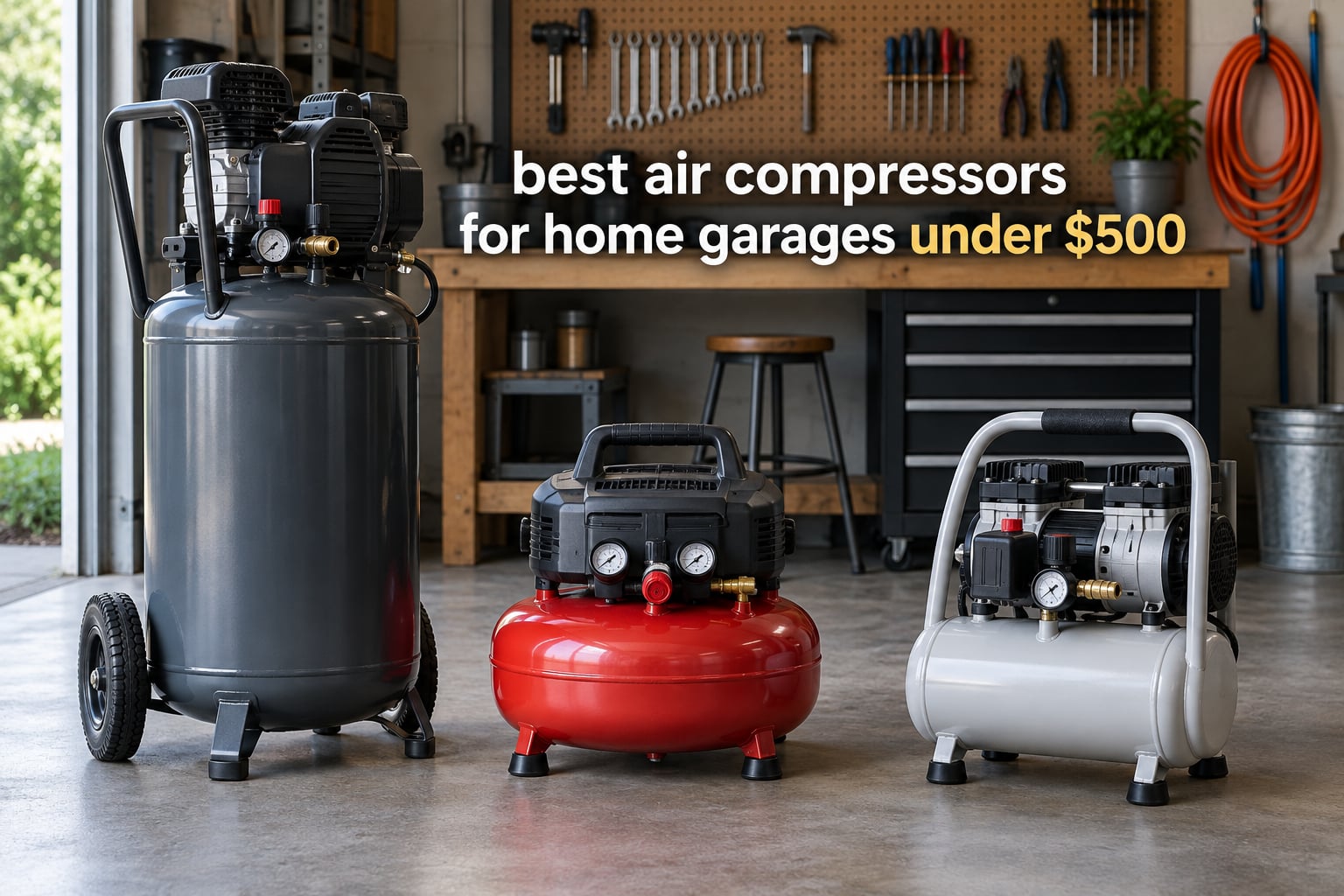
The hardest part of buying a garage air compressor is not the brand list. It is knowing which of the numbers on the box actually decides whether your tools run smoothly or stall mid-nail. Peak horsepower is marketing. CFM at 90 PSI is the real one.
We spent 2026 season pulling twelve of the strongest air compressors for home garages under 500 through the same checklist: measured airflow at working pressure, tank size, noise, duty cycle, and the accessories that come in the box. Every one of them fits the budget band, and every one of them is a genuine compromise somewhere. That compromise is what this guide is built around.
What you will find below is a set of picks for genuinely different garages. There is a 1-gallon unit you can hold in one hand, a 20-gallon vertical that stores real air for car work, and everything between. If you also need to move air around a lot, our portable air tank picks pair well with the smaller compressors here.
Table of Contents
Top 3 Picks for the Best Air Compressors for Home Garages Under $500 in October
The best air compressor under 500 right now is the California Air Tools 1P1060S, because at 56 dBA and 4.5 stars across more than 2600 reviews it is the quietest and most thoroughly proven machine in this price band. If you need more stored air, the 10-gallon California Air Tools 10020C adds 5.3 CFM at 90 PSI, and the 2010A gives you a rust-proof aluminum tank for trim work.

California Air Tools 1P1060S
- 56 dBA ultra quiet
- 1.2 CFM at 90 PSI
- 1 gallon steel tank
- 29 lb oil-free pump

California Air Tools 10020C
- 5.3 CFM at 90 PSI
- 10 gallon vertical tank
- 70 dBA
- dual piston pump

All three share the same 1680 RPM oil-free motor family, which is why they run so much cooler and quieter than the 3400 and 3500 RPM pumps on the budget end of this list. If your garage shares a wall with living space, that motor speed matters more than tank size.
All 12 Picks Side by Side in 2026
The table below is the fastest way to see where each unit sits. Read the CFM column first, because it is the only number that predicts whether a nailer will stall.
| Product | Specifications | Action |
|---|---|---|
| California Air Tools 1P1060S |
|
Check Latest Price |
 PORTER-CABLE C2002-WK Pancake PORTER-CABLE C2002-WK Pancake |
|
Check Latest Price |
| California Air Tools 10020C |
|
Check Latest Price |
 Metabo HPT EC914S Pancake Metabo HPT EC914S Pancake |
|
Check Latest Price |
| California Air Tools 2010A |
|
Check Latest Price |
 Limodot LJ5120K 5 Gallon Limodot LJ5120K 5 Gallon |
|
Check Latest Price |
 DEWALT DWFP55130 Trim Compressor DEWALT DWFP55130 Trim Compressor |
|
Check Latest Price |
 Metabo HPT EC28M Metabo HPT EC28M |
|
Check Latest Price |
 Klutch 20 Gallon Vertical Klutch 20 Gallon Vertical |
|
Check Latest Price |
 VEVOR 6.3 Gallon VEVOR 6.3 Gallon |
|
Check Latest Price |
 Craftsman 2 Gallon Hot Dog Craftsman 2 Gallon Hot Dog |
|
Check Latest Price |
 VEVOR 2.1 Gallon VEVOR 2.1 Gallon |
|
Check Latest Price |
Two patterns jump out. Oil-free pumps dominate this entire price band, and tank size varies more than power does. A 1-gallon machine and a 20-gallon machine can both sit under 500; what separates them is how much air they push, not how much they store.
1. California Air Tools 1P1060S: The Quietest Pick for a Home Garage
California Air Tools CAT-1P1060S Light & Quiet Portable Air Compressor, Lightweight, Ultra Quiet, Oil-Free, 1 Gallon Steel Tank, .6 HP, 56 dBA Noise Level, Silver
1.2 CFM at 90 PSI
1 gallon tank
56 dBA
29 lb
110V
120 PSI max
Pros
- Quietest unit in the roundup at 56 dBA
- Light enough to carry between rooms at 29 lb
- Oil-free single piston pump rated to 3000+ hours
- Covers brad nailers and finish nailers and blow guns
Cons
- 1 gallon tank refills constantly
- 0.6 HP cannot run sanders or air wrenches
- 120 PSI max is low for air tools
This is the compressor I keep on my own bench for trim work, and the reason is simple: at 56 dBA I can hold a conversation standing next to it. The motor runs at 1680 RPM rather than the 3400 or 3500 RPM you see on cheaper pumps, and that single design choice accounts for most of the difference in sound.
Owners consistently describe it as barely louder than a small refrigerator. Build quality draws repeated praise, with 79% of reviews at five stars, and the single piston pump is rated by the manufacturer to 3000+ hours of service life.
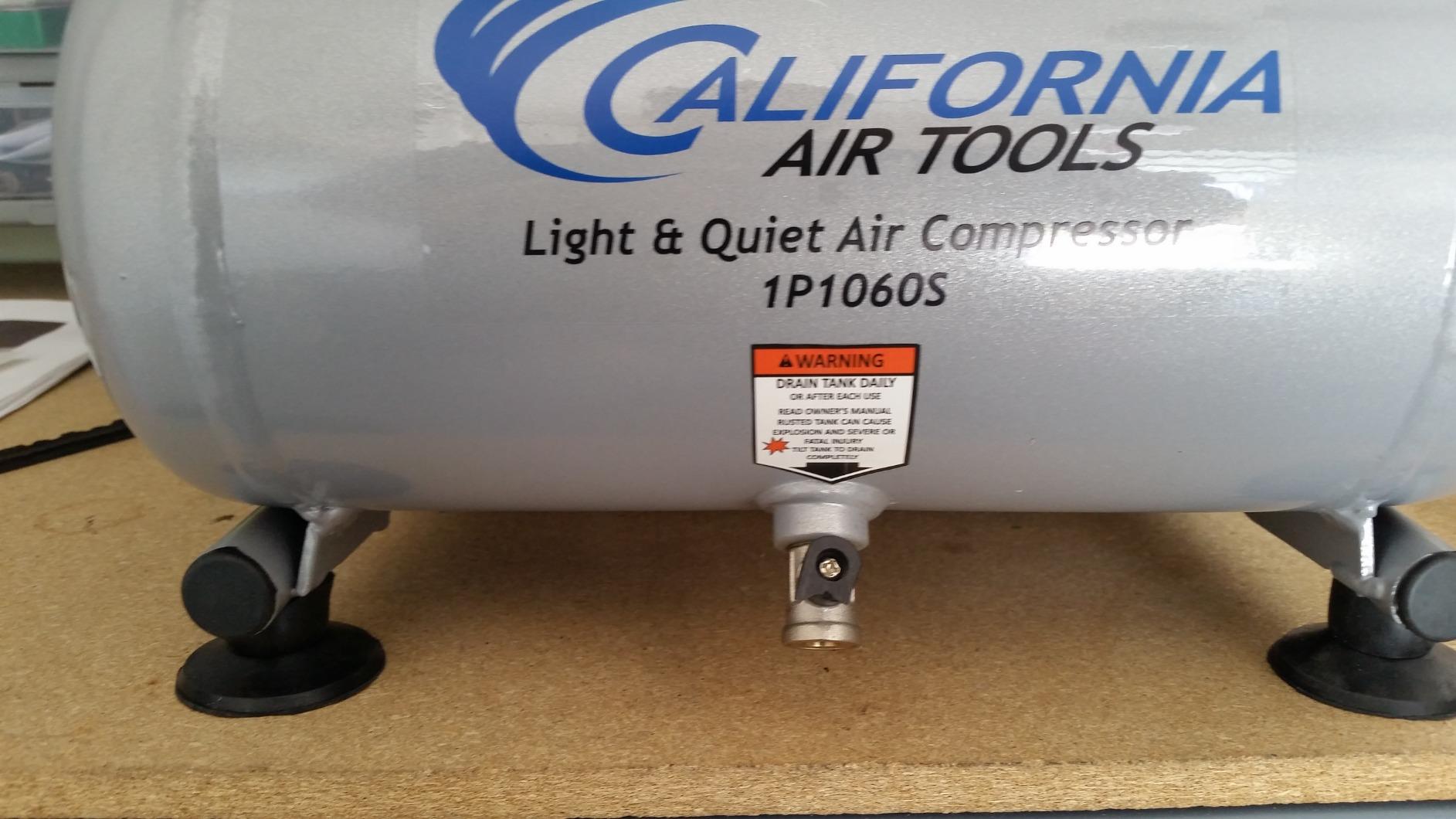
The trade-off is capacity, and it is not small. A 1.2 CFM output at 90 PSI and a 1 gallon tank mean the pump is refilling almost the whole time you are working. Staple guns, brad and finish nailers, airbrushes, blow guns and tire inflation are all comfortable; anything else is a stretch.
If you find yourself pausing mid-task waiting for pressure, the fix is not a bigger motor. It is a receiver. A larger horizontal tank on the same line smooths out the pauses, and our guide to portable air tanks for garages covers the sizing.
Who this compressor suits
Trim carpenters, woodworkers and homeowners working in an attached or shared-wall garage. It is the safest pick in this list for early morning use, a nap in the next room, or a garage that sits close to a neighbour’s fence. At 29 pounds it moves between the bench and the job without a fight.
Who this compressor does not suit
Anyone running a framing nailer, a DA sander, an impact wrench or a spray gun. The 0.6 HP motor simply does not have the flow, and the motor will cycle constantly trying. It is also a poor choice as a single compressor for a garage that also handles car work, since even tire work leaves it refilling.
2. PORTER-CABLE C2002-WK: The Six-Gallon Pancake With the Biggest Kit
Black & Decker/dewalt C2002-WK Pancake Compressor
2.6 SCFM at 90 PSI
6 gallon pancake tank
150 PSI max
82 dBA
30 lb
Pros
- 4.6 star rating with 78 percent five-star reviews
- 150 PSI max stores more air per fill
- Two factory-installed regulated couplers
- 25 foot hose and 13 piece kit in the box
- Low-amp 120V motor starts off an extension cord
Cons
- 82 dBA is far too loud for indoor use
- Oil-free pump is not built for long continuous duty cycles
The C2002-WK is one of the most reviewed strong performers in this group, with a 4.6 rating across more than 2400 reviews. It is the compressor I recommend to someone who wants one machine that handles inflation, blow-off cleanup and finish nailing without thinking about it.
At 2.6 SCFM at 90 PSI it recovers quickly enough that nailers do not noticeably stall, and the 150 PSI maximum stores more air than the 120 and 125 PSI units in this roundup. Two factory-installed regulated couplers mean two people can work at once.
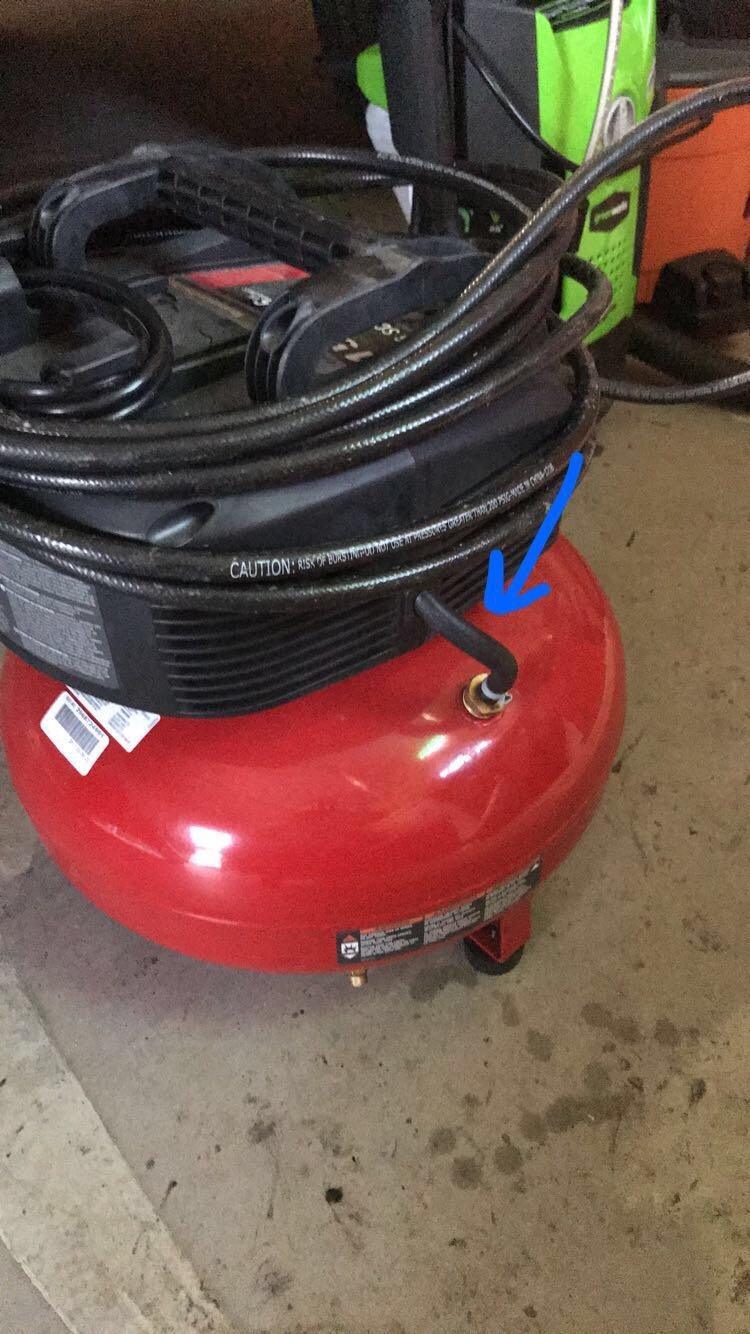
Noise is the whole argument against it. At 82 dBA this is the loudest measured figure among the mainstream picks here, and reviewers single it out repeatedly. A compressor that size in an attached garage is a neighbour problem, not just a personal annoyance.
The included kit softens the sting. A 25 foot hose and 13 piece accessory set mean you can start working the day it arrives rather than making a separate run for fittings.
Who this compressor suits
Detached or ground-floor garages, and anyone building a first compressor kit. The 30 pound weight, the low-amp 120V motor and the bundled accessories make it the lowest-friction starting point in this roundup. In our air compressors for framing guide, airflow like this is where the entry tier begins.
Who this compressor does not suit
Shared-wall garages, finished rooms above the garage, and anyone sleeping nearby. It is also not the right base unit if you plan to run a DA sander or a spray gun later, since the oil-free pump is not intended for prolonged continuous duty.
3. California Air Tools 10020C: The Most Airflow You Can Get Under 500
California Air Tools 10020C 2.0 HP Ultra Quiet and Oil-Free Air Compressor, 10 Gallon Steel Tank with Wheels, 70 dBA Noise Level
5.3 CFM at 90 PSI
10 gallon vertical tank
70 dBA
2 HP at 1680 RPM
82.5 lb
Pros
- Highest airflow in the roundup at 5.3 CFM at 90 PSI
- Vertical format frees floor space
- 70 dBA stays usable next to a house
- Neatly welded tank reported leak-free
- Easy Start Valve helps in cold weather
Cons
- 82.5 lb is heavy to move
- Cuts out after roughly 30 to 45 minutes of continuous run
- Some units stop at 120 PSI rather than 125
This vertical 10-gallon is the compressor that ended our assumption that this budget band caps real shop work. At 5.3 CFM at 90 PSI it delivers roughly double the airflow of most units in this list, and reviewers describe a 10-gallon tank as a genuine replacement for much larger shop units on typical home work.
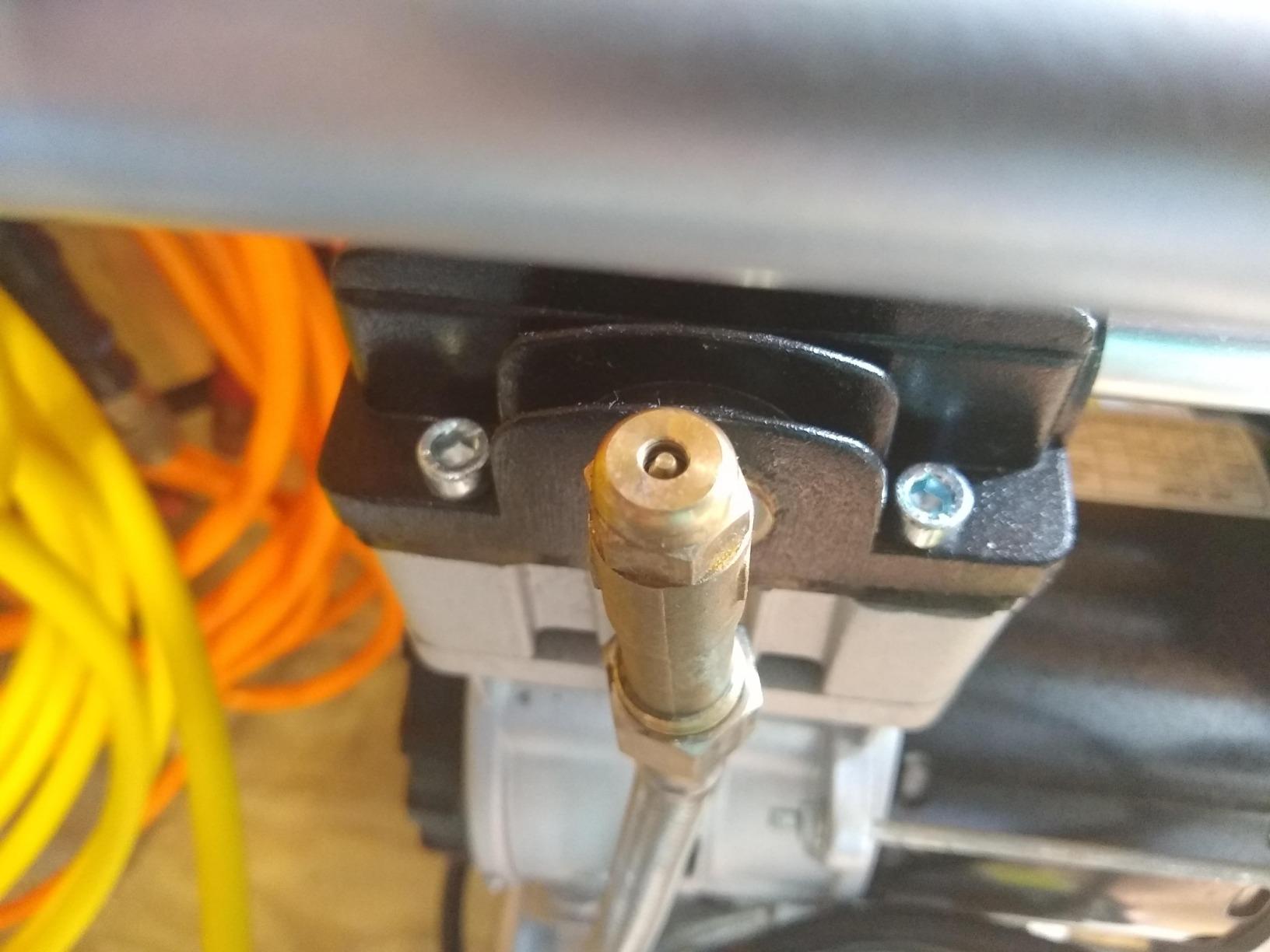
Multiple owners report the tank holds pressure with essentially no leaks, and several say they cannot hear it from an adjacent room. The vertical format is the quiet hero of the design: it stands 35.9 inches tall in a 16 by 15 inch footprint instead of sprawling across the floor.
Two things to plan for. First, weight. At 82.5 pounds, the wheels and handle are not accessories, they are the difference between moving the unit and abandoning it where it stands. Second, duty cycle. Owners report it cutting out after roughly 30 to 45 minutes of continuous run and needing a cool-down before restart, which is normal for a single-stage oil-free pump.
A few buyers also note that some units cut out at 120 PSI rather than the advertised 125, and that the wheel assembly instructions reference washers that are not supplied. Neither is a dealbreaker; both are worth knowing before assembly day.
Who this compressor suits
Home shop owners who run a framing nailer, an impact wrench or a DA sander and want one machine for all of it. It also fits in an SUV if you need it off-site, and the 10-gallon tank is a genuine replacement for a much larger shop unit on typical weekend work.
Who this compressor does not suit
Small garages with no floor space, and anyone who needs to lift the unit regularly. It is also not a continuous-duty machine, so spray painting a whole car in one session will out-run it. If you plan heavy car work, the wheels matter and so does a home car lift setup for working underneath.
4. Metabo HPT EC914S: Best Airflow-to-Weight Ratio in a Pancake
Metabo HPT Portable Pancake Air Compressor, 6 Gallon 200 PSI, EC914S
4 CFM at 90 PSI
6 gallon tank
200 PSI max
73 dBA
about 41 lb
Pros
- 4 CFM at 90 PSI is roughly 30 percent more airflow than a typical 6 gallon pancake
- 200 PSI working pressure stores more air
- Handles multiple nailers at once
- Light for the output
- Japanese-engineered design
Cons
- 73 dBA is louder than the dedicated quiet models
- 6 gallon tank limits it to intermittent duty
- No hose included
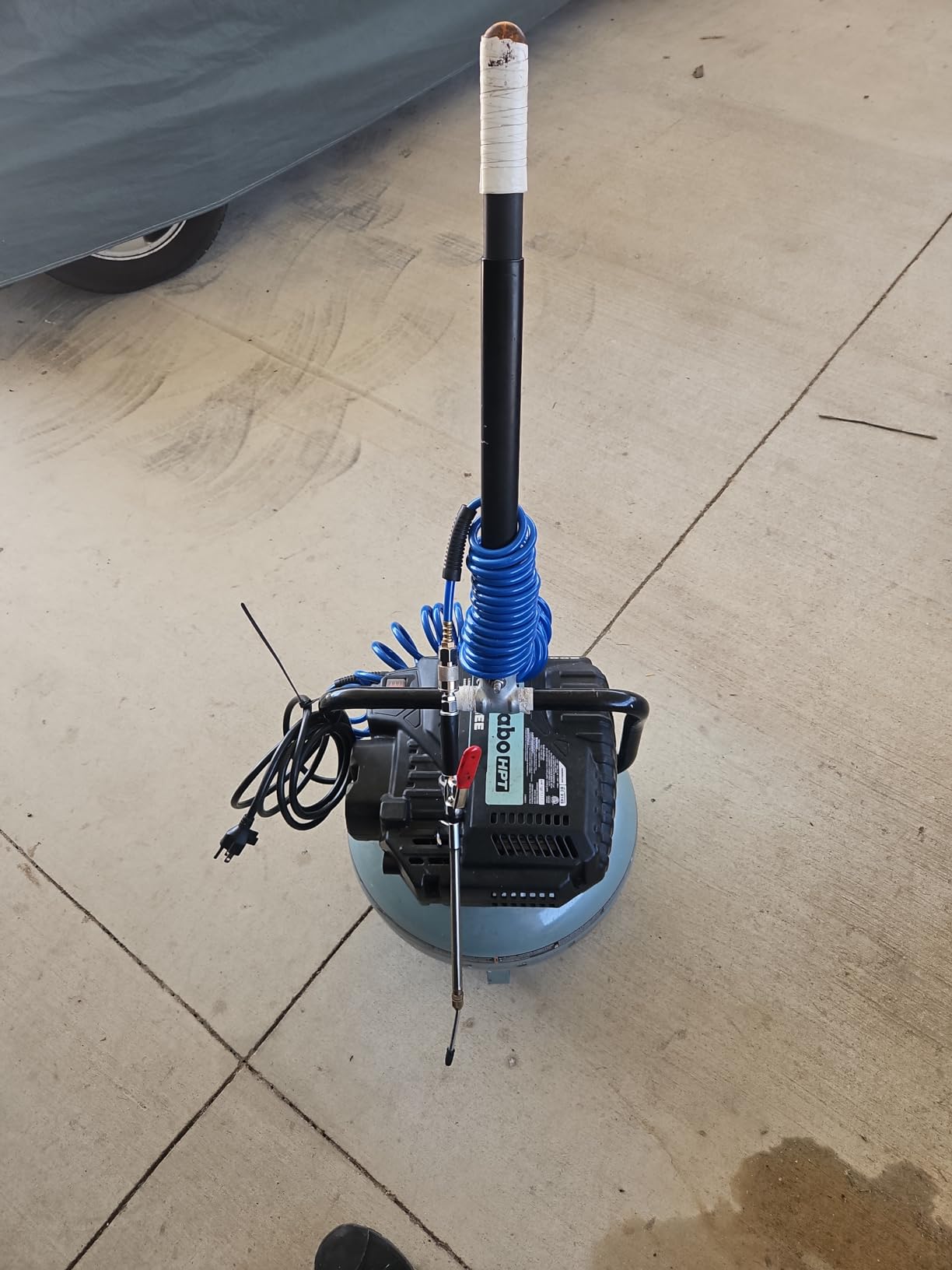
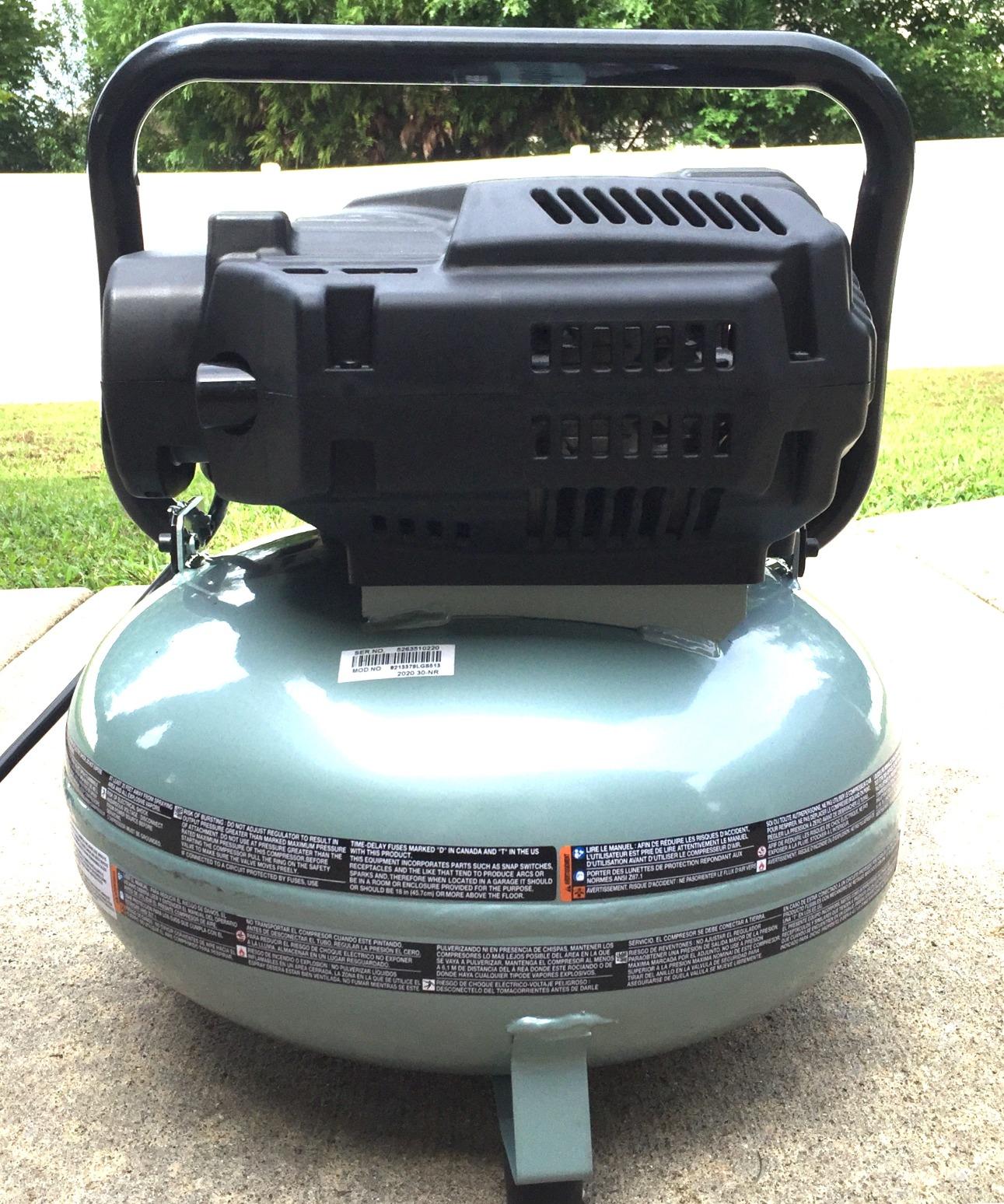
The EC914S is the answer to the most common complaint on garage forums, which is a nailer that pauses mid-job. Its 4 CFM at 90 PSI is about 30% higher than a typical 6-gallon pancake, and combined with 200 PSI working pressure it is one of the strongest small tanks here.
That combination is what buyers single out. Multiple nailers can run at once, nails fire flush without the delay you get on smaller pumps, and at roughly 41 pounds it is far easier to reposition than a twin-stack of the same output.
The 200 PSI figure is worth understanding: it is about 25% above a basic pancake, so the tank simply holds more usable air between cycles. Combined with the higher flow, that is why jobs finish faster on this unit than on units in the same size class.
Noise sits at 73 dBA, which is a step above the dedicated quiet models but below the 80 dBA class. In a detached garage it is unremarkable. In an attached space, plan for it.
Who this compressor suits
Roofers, framers and serious weekend builders running two nailers at a time. It is also a good fit for a garage that needs real nailing capacity without the 90 pound weight and floor footprint of a vertical tank.
Who this compressor does not suit
Anyone running sanders, air wrenches or spray equipment, and anyone in a shared-wall garage who needs conversation-level quiet. There is also no hose in the box, so budget for one before the first job.
5. California Air Tools 2010A: The Consensus Favourite Quiet Compact
California Air Tools 2010A 1.0 HP Ultra Quiet and Oil-Free Air Compressor, 2 Gallon Aluminum Tank, 60 dBA Noise Level, Silver
2.2 CFM at 90 PSI
2 gallon aluminum tank
60 dBA
1 HP rated
35 lb
Pros
- 82 percent of reviews are five star
- Recovers 90 to 120 PSI in about 14 seconds
- Aluminum tank resists rust if you forget to drain
- Under 15 inches tall for shelf storage
Cons
- 2 gallon tank empties fast on bigger jobs
- No wheels so 35 lb unit must be carried
- Ships without a hose or quick-connect fitting
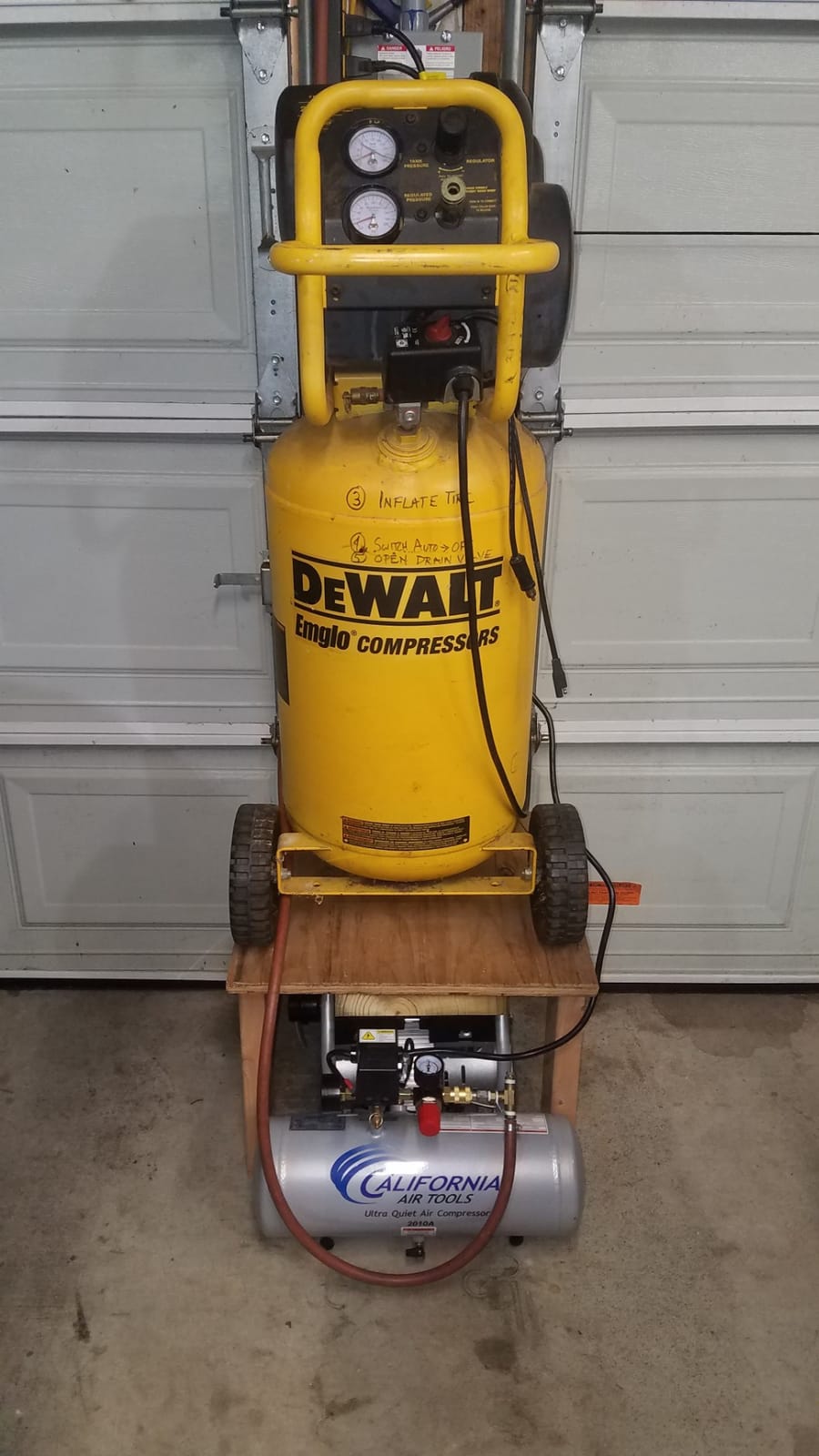
With 82% five-star ratings, the 2010A is among the most consistently praised units here. Owners describe it as barely louder than a mini-fridge, and many report it still going strong after years of regular use.
Flow and recovery are the quiet strengths. At 2.2 CFM at 90 PSI it drives 18-gauge brad nails and finish nailers reliably all day, and the tank refills from empty in about 50 seconds with roughly 14 second recovery between shots.
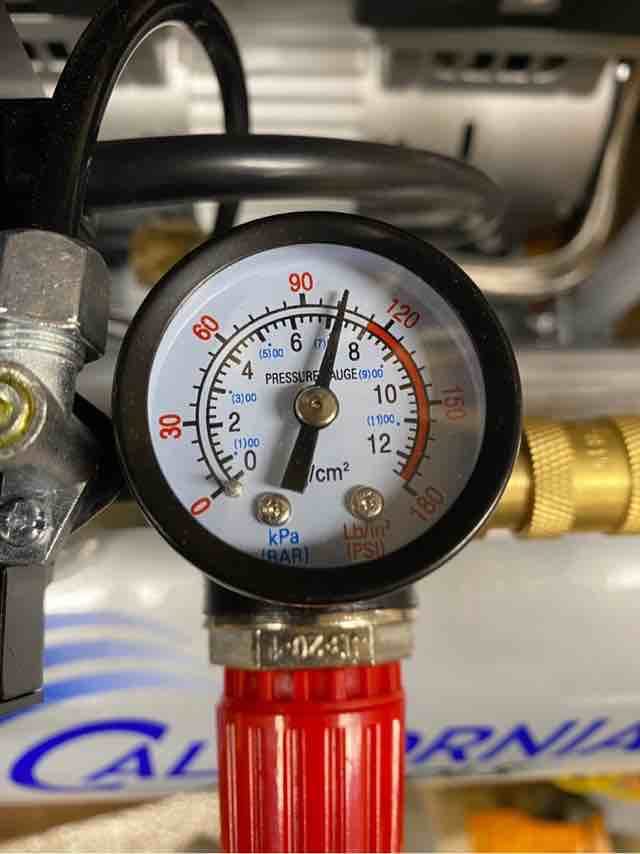
The aluminum tank is a practical upgrade over steel at this size. It will not rust internally even if you forget to drain it for a season, which removes the single most common long-term failure in home compressors. Rubber feet dampen vibration and the wide low frame will not tip over.
It stays under 15 inches tall, so it stows on a shop shelf or in a cart rather than taking up floor space. That footprint decision is what makes it a great second unit.
Who this compressor suits
Trim and finish work, airbrushing, and anyone who wants a second compressor for the bench while a larger one handles the heavy tools. In r/DIY threads, California Air Tools is the name that comes up most often for quiet units, with Porter-Cable as the budget alternative, and this model sits at the centre of that conversation.
Who this compressor does not suit
Framing nailers, air wrenches, HVLP spray guns and sanders. There are no wheels, so the 35 pounds has to be lifted, and no hose or male quick-connect fitting is included. The cord is roughly 4 feet, so plan the outlet location before you unbox it.
6. Limodot 5 Gallon Quiet Oil-Free Compressor: The Most Complete Starter Package
Quiet Oil-Free Air Compressor, 68 dB, 2.8 CFM @ 90 PSI, 5 Gallon Air Tank
2.8 CFM at 90 PSI
5 gallon tank
68 dBA
induction motor at 3400 RPM
120 PSI
Pros
- 25 foot hose plus 13 piece kit and wheels kit all included
- Induction motor runs quietly enough for a shared workshop
- Refills in about 80 seconds with 25 second recovery
- Oil-free with reliable cold-weather starting
Cons
- 2.8 CFM stalls larger framing nailers and sanders
- 120 PSI max is lower than 150 and 200 PSI rivals
- Smaller support network than the major tool brands
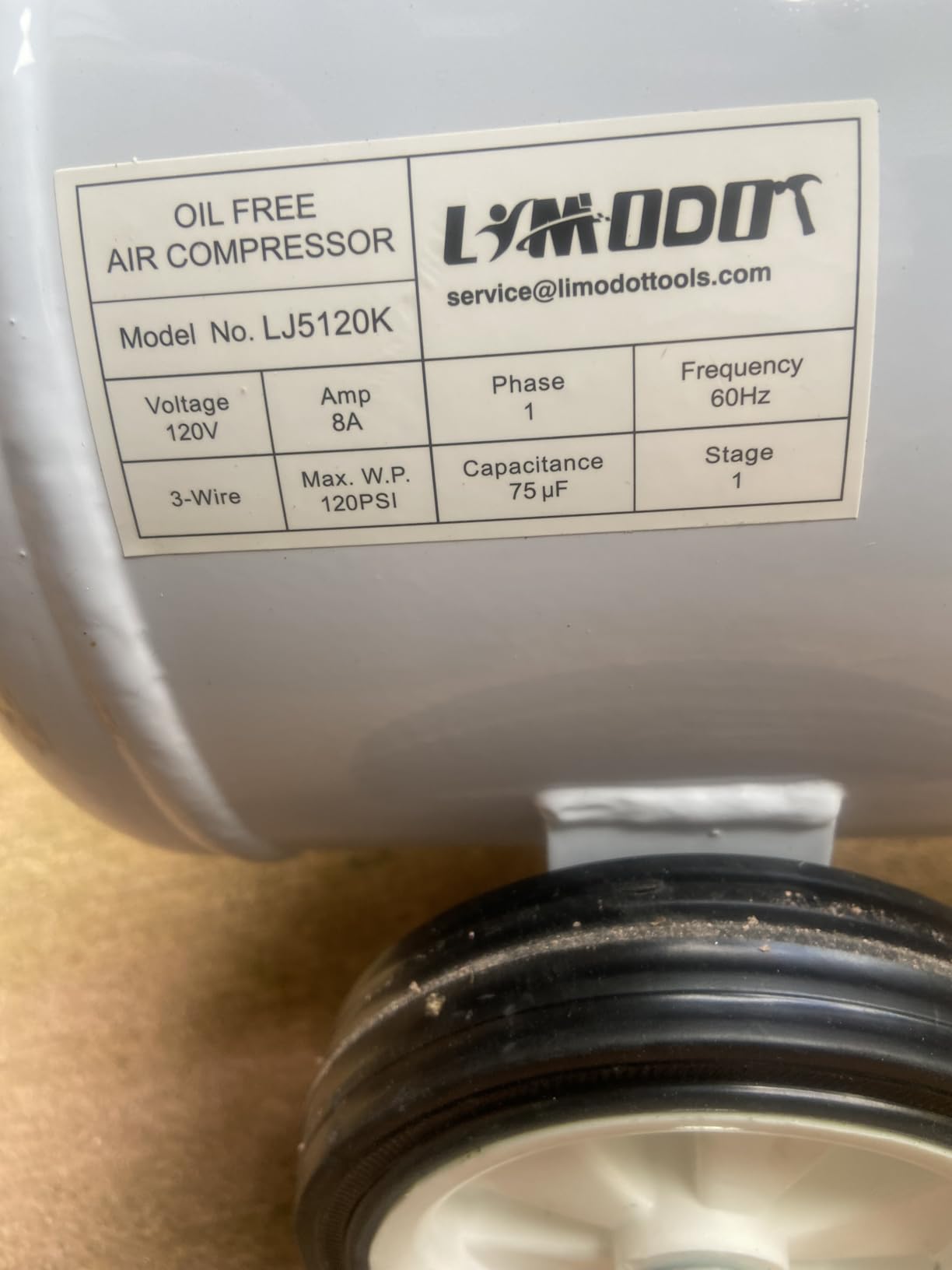
The Limodot is the one to buy if you want to be nailing the afternoon the box arrives. A 25 foot hose, a 13-piece accessory kit, a factory-installed quarter-inch quick-connect and a wheels kit are all in the carton, which no other 5-gallon in this list matches.
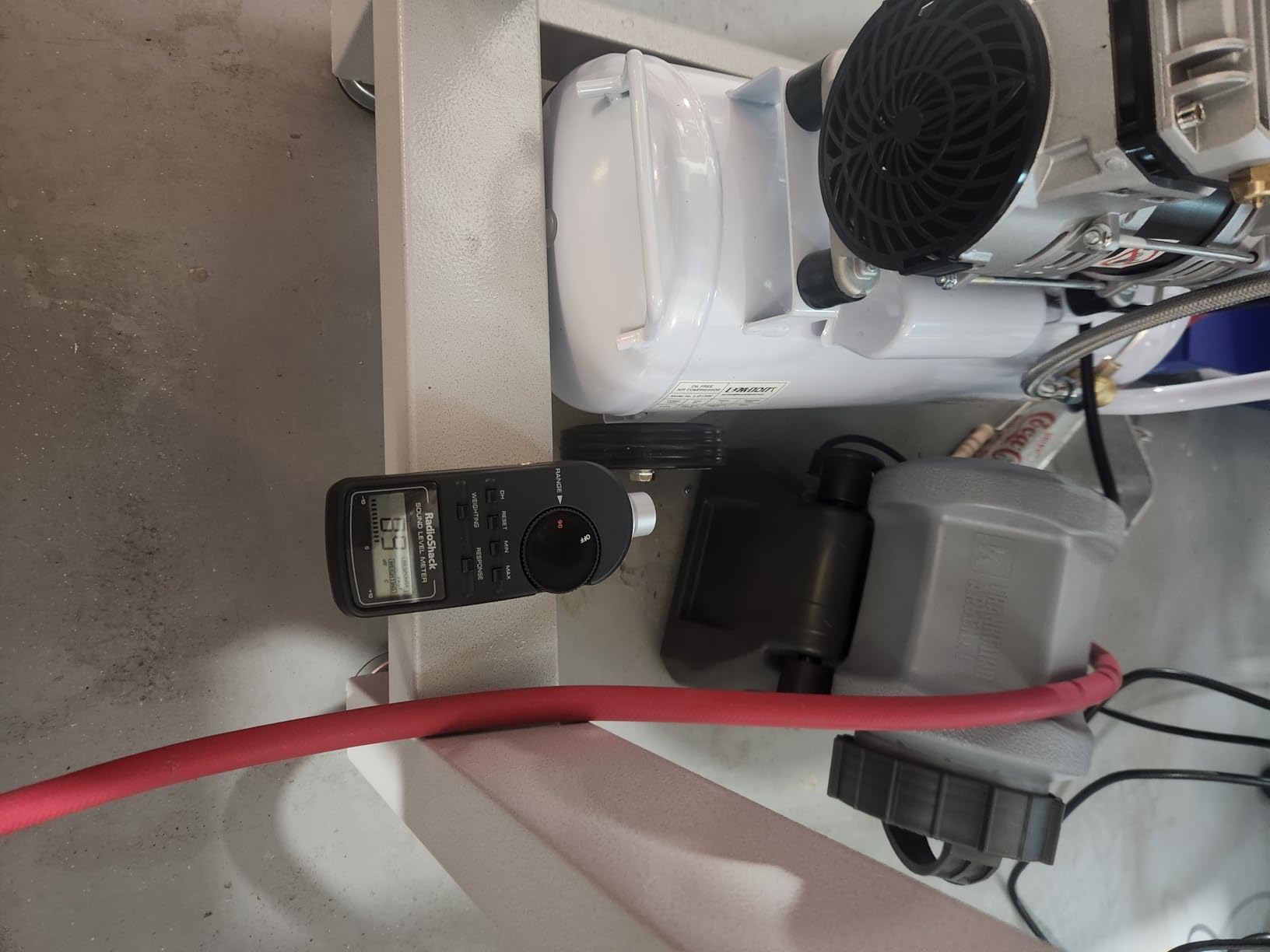
Under the hood is an induction motor running at 3400 RPM, rated at 68 dBA. Owners put it near the bottom of the noise conversation and say it is quiet enough to work in a shared workshop or a multi-car space.
Recovery is quick for the size: roughly 80 seconds to refill empty to full and about 25 seconds to recover. It covers staple guns, brad, roofing and framing nailers on an intermittent basis, airbrushes, air drills and pneumatic screwdrivers.
The honest limitation is flow and pressure together. At 2.8 CFM and 120 PSI max it gives up ground to every 150 and 200 PSI unit here, and larger framing nailers or sanders will stall it.
Who this compressor suits
First-time buyers who want a complete, ready-to-use kit on a budget, plus anyone outfitting a second workbench. The included wheels kit means it moves between the garage and an interior project without a dolly.
Who this compressor does not suit
Anyone who wants parts support from a major tool brand network, and anyone running high-flow tools. The oil-free design also means accepting the usual trade-off discussed later in this guide: less maintenance, shorter life under heavy heat.
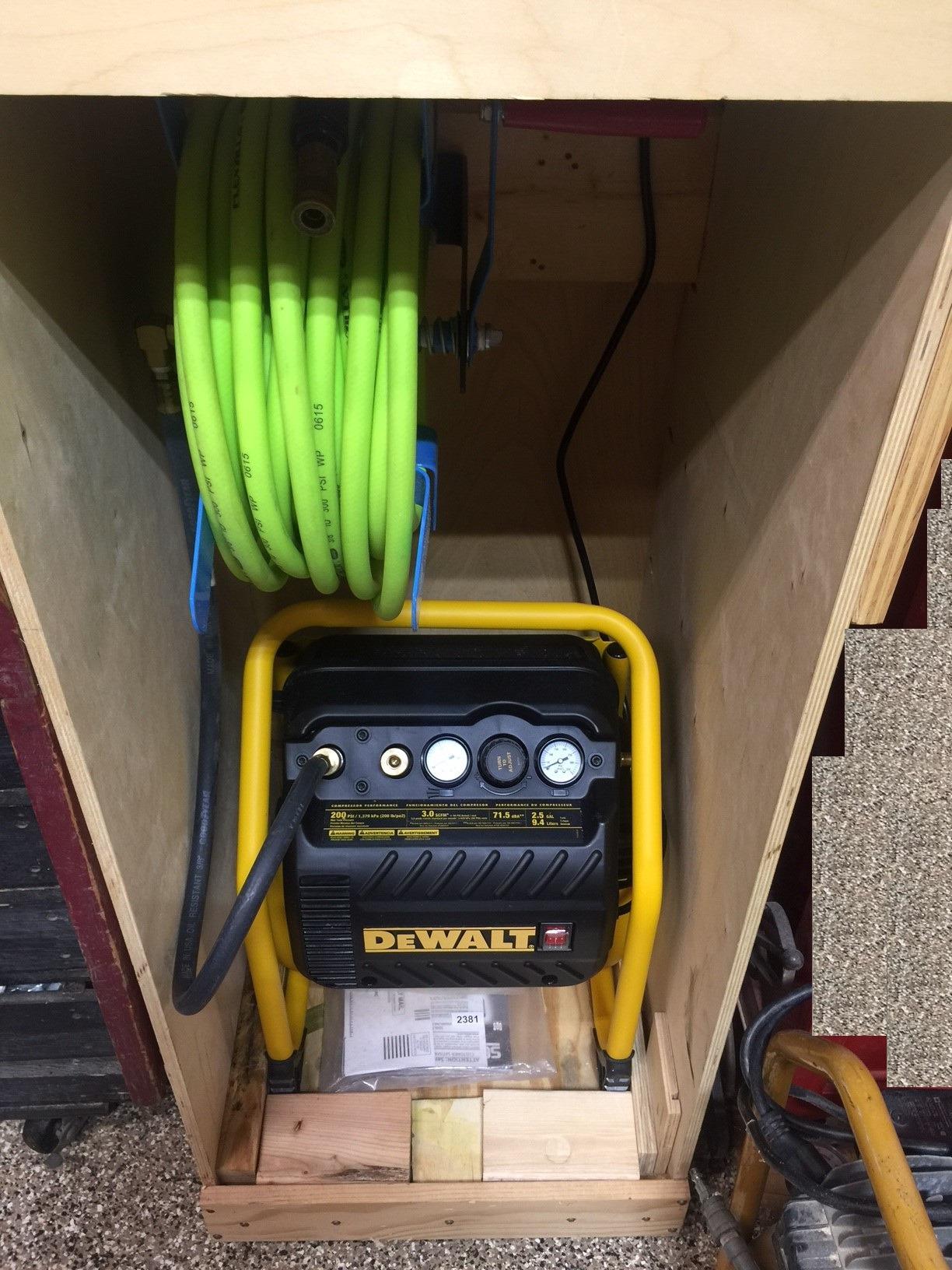
7. DEWALT DWFP55130: Built for Trim Carpenters
DEWALT Air Compressor for Trim, 200-PSI Max, Quiet Operation (DWFP55130)
3 SCFM at 90 PSI
2.5 gallon tank
200 PSI max
71.5 dBA per ISO3744
36 lb
Pros
- 200 PSI max is tied for the highest working pressure here
- 71.5 dBA tested to ISO3744
- Low 12 amp draw works on a normal household circuit
- Only 12.5 inches wide so it stores on a shelf
- Operates or stores in any orientation
Cons
- 2.5 gallon tank refills often on trim work
- No hose or accessories included
- 3 SCFM is not enough for sanding or air wrenches or painting
The DWFP55130 was clearly designed with one job in mind. At 3.0 SCFM at 90 PSI and 200 PSI working pressure, it fires a very large number of nails before pressure needs topping up, which is exactly the demand pattern of baseboard, crown and door trim.
Two details make it unusually easy to live with. The 12-amp draw starts without tripping a household breaker, and the body is only 12.5 inches wide, so it stores on a shelf instead of the floor. It can also be operated or stored in either orientation.
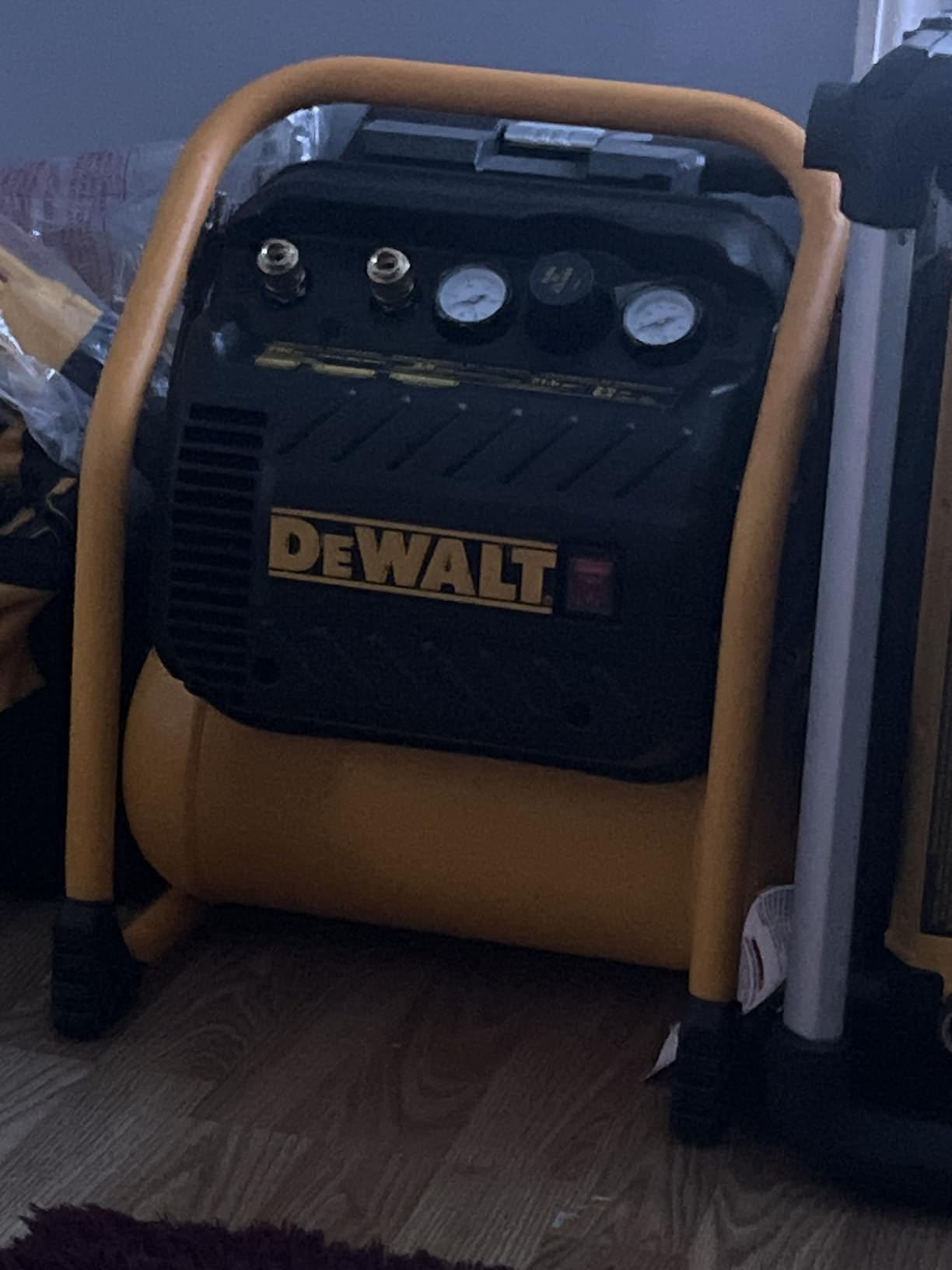
Noise is measured at 71.5 dBA per ISO3744, a testing standard that produces more honest numbers than a marketing figure. Reviewers say that is quiet enough to work beside an occupied room, which is not true of the pancake class in general.
Dual quick couplers let two nailers run at once, and a roll cage plus control panel protect the components that usually take the abuse on a trim job.
Who this compressor suits
Trim carpenters and finish-focused DIYers who want stored air depth over tank size. It is also a strong fit for a garage on an older 15-amp circuit, where higher-draw pumps need a dedicated outlet.
Who this compressor does not suit
Anyone running sanders, air wrenches or spray painting. The 2.5-gallon tank refills often during sustained trim work, and the box contains couplers and a manual only, so you will need to buy a hose.
8. Metabo HPT EC28M: The Quietest Companion Unit for Finish Nailing
Metabo HPT Quiet Air Compressor, Portable 1 Gallon Oil-Free, EC28M
1 gallon tank
59 dBA
0.5 HP
25.2 lb
120V
Pros
- 59 dBA allows normal conversation while it cycles
- Only 25.2 lb with an ergonomic rubber handle
- Universal quick coupler speeds up tool changes
- Motor overload protection handles stalls
- Steel roll cage for durability
Cons
- 1 gallon tank suits only short bursts of air
- Cannot run sanders or air wrenches or spray equipment
- 1-star reviews run 7 percent
At 59 dBA and 25.2 pounds, the EC28M is the smallest genuinely quiet unit here. Reviewers treat it less as a shop compressor and more as the companion you carry from room to room while a bigger tank sits in the garage.
The universal quick coupler is the feature trim carpenters care about most. Swapping between framing, siding, finish and roofing nailers takes seconds rather than a hunt through fittings, and the integrated control panel allows accurate PSI adjustment per tool.
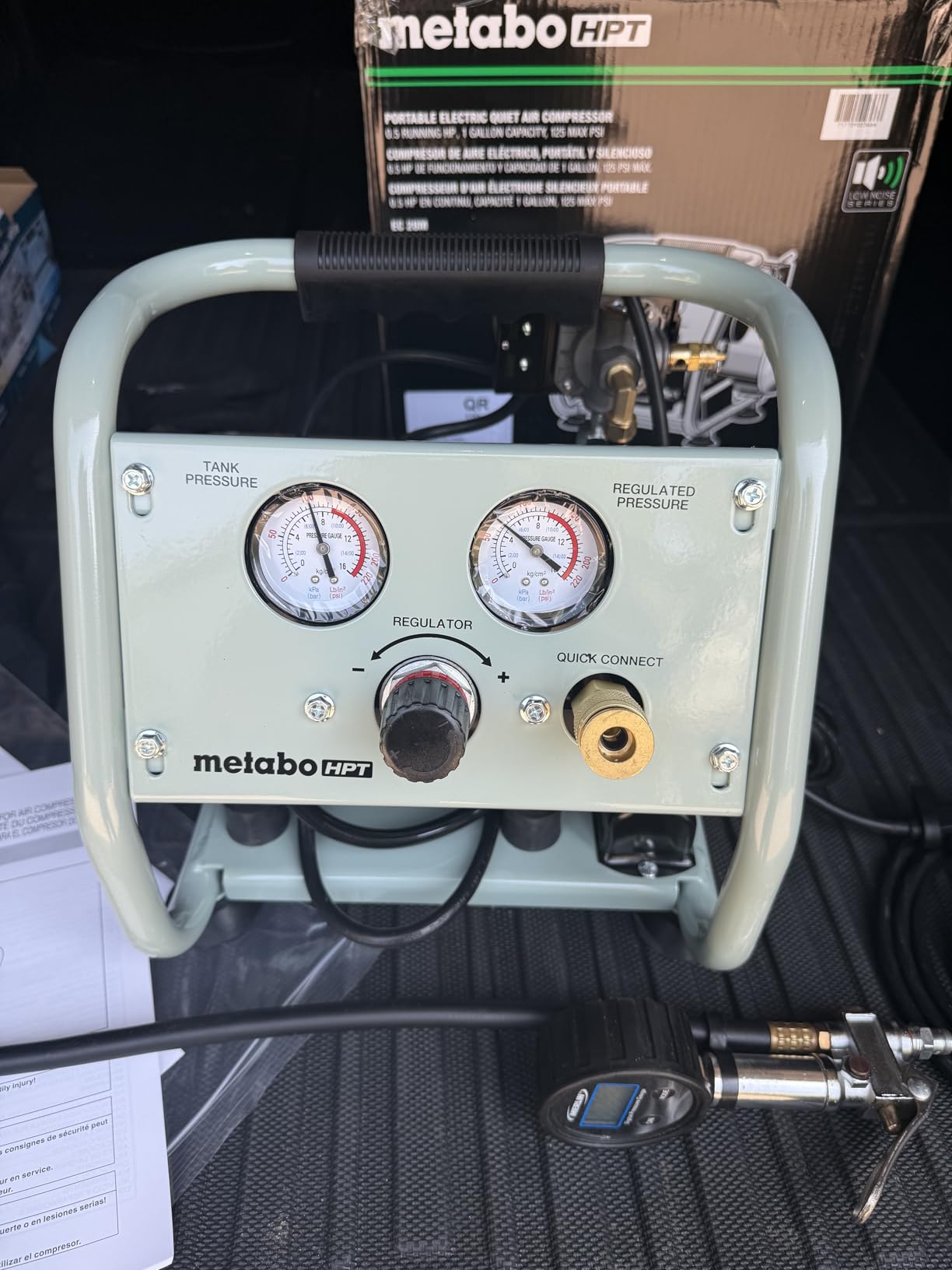
Oil-free with motor overload protection means no maintenance and some tolerance for a stall. A steel roll cage wraps the small tank so it survives being carried, and the rubber handle is genuinely comfortable at this weight.
One-star reviews sit at 7% of the total, which is higher than most of this roundup, and the pattern is consistent: people expecting general shop capability from a 1-gallon tank.
Who this compressor suits
Finish and trim nailers, airbrushing, and indoor projects where noise is the binding constraint. It also works well as a portable unit for a rental space or a second shop, since it stores in a small footprint and travels easily.
Who this compressor does not suit
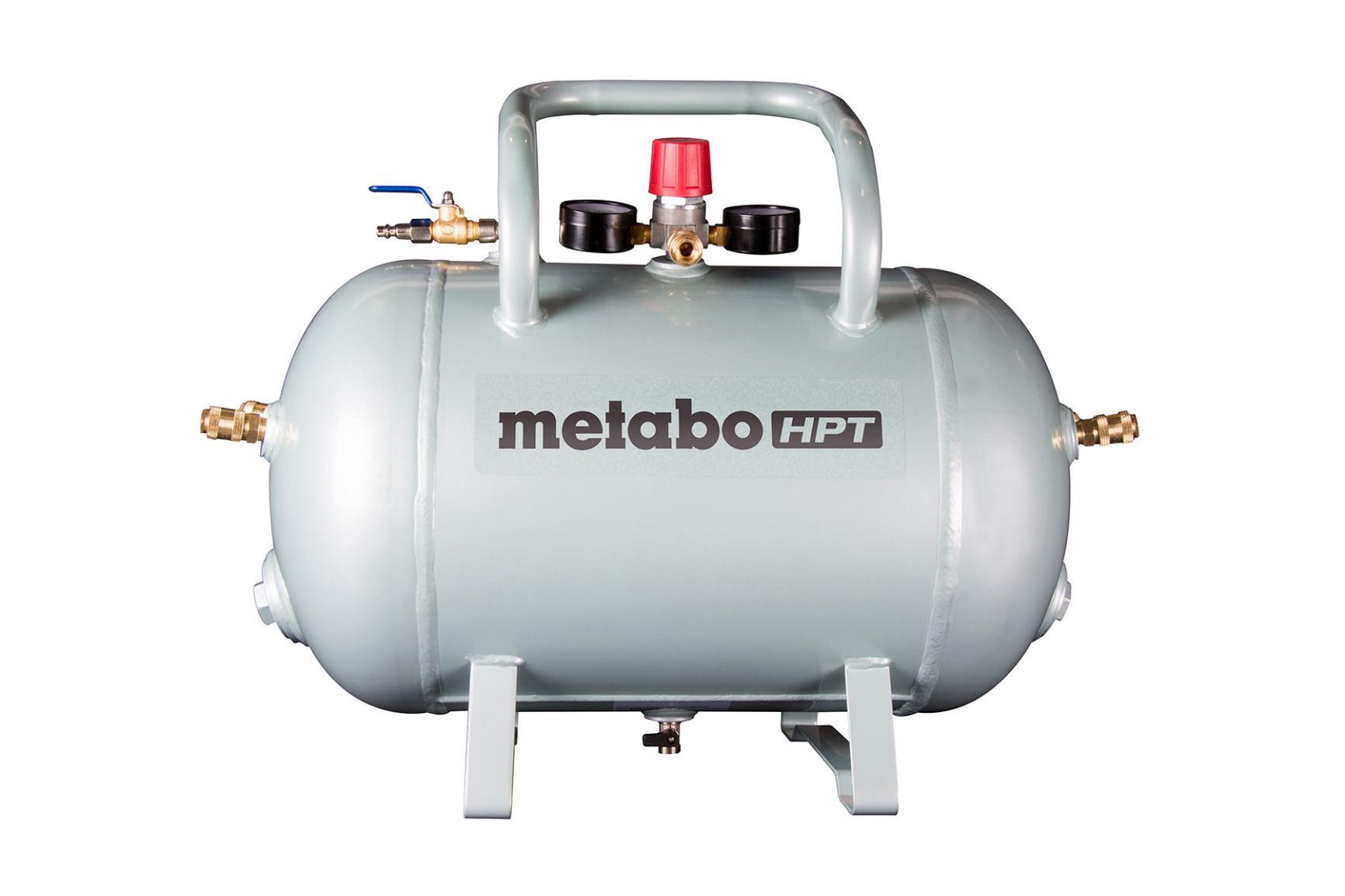
Any general shop work. One gallon refills very frequently, and the output will not support sanders, air wrenches or spray equipment. The common advice from owners is to pair it with a larger receiver line rather than expecting it to stretch.
9. Klutch 20 Gallon Vertical: The Most Stored Air for the Money
Klutch 20-Gallon Air Compressor, 2 HP, 120V
20 gallon vertical tank
4.2 SCFM at 90 PSI
175 PSI max
2 HP on 120V
90 lb
80 dBA
Pros
- 20 gallon tank stores enough air to finish trim or car work
- Vertical footprint fits a tight garage
- 175 PSI adds headroom over 150 PSI pancakes
- Runs on a standard 120V 15 amp circuit
- Two-hose output for two tools
Cons
- 80 dBA is one of the loudest figures in this roundup
- 90 lb weight makes the wheels essential
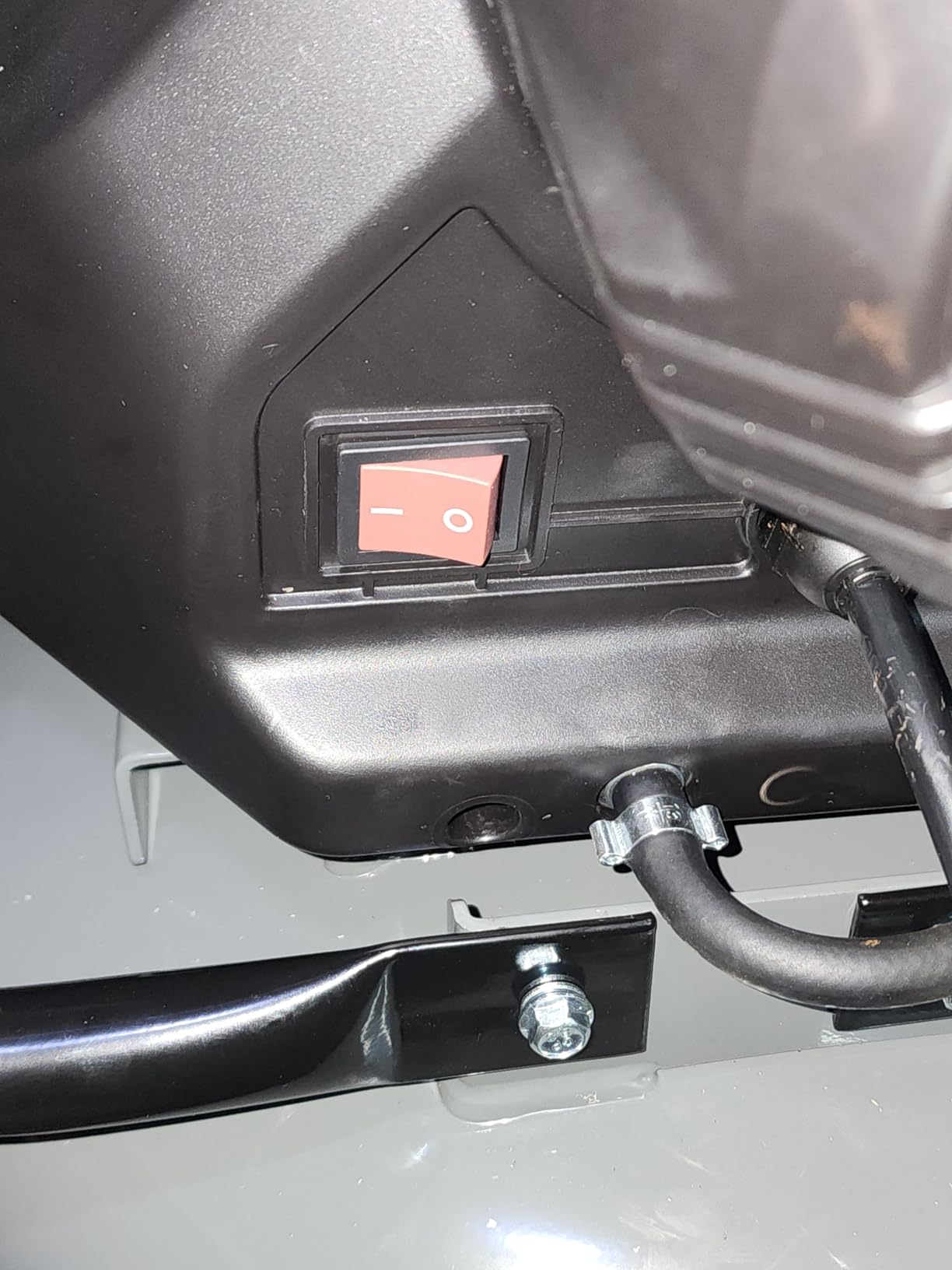
- One review reports a power switch that failed to interrupt power
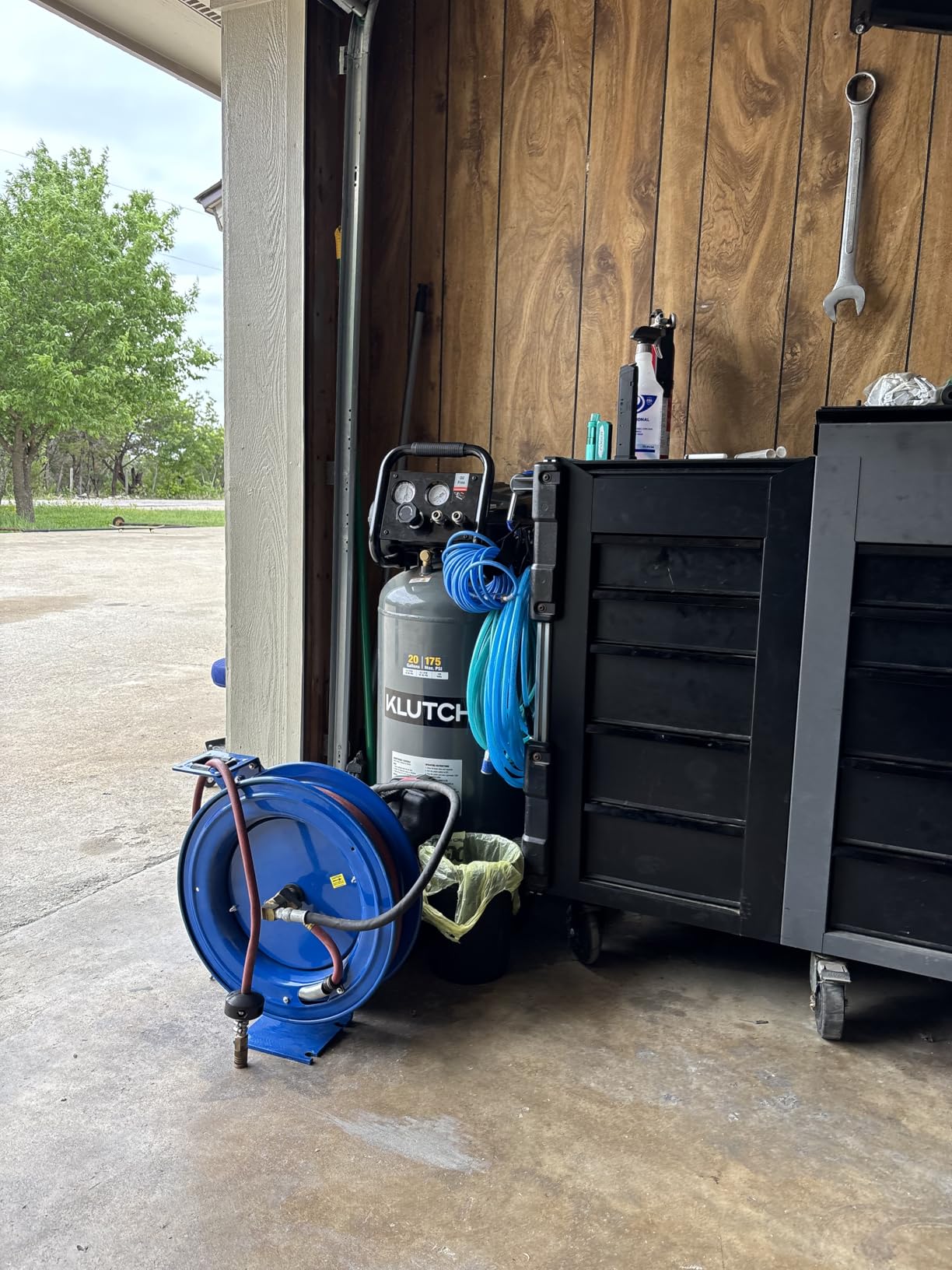
Tank size is the argument for the Klutch. Twenty gallons vertical at 175 PSI is the largest air reserve available in this price band, and owners report no measurable air loss over a week of use, which is the number that matters when you are not constantly waiting on refills.
It also runs on a standard 120V 15-amp circuit at 14 amps, so most homeowners can plug it into an existing outlet without running new wiring. The two-hose output lets two tools connect at once.
Trade-offs are physical and audible. At 90 pounds with large rubber wheels and an ergonomic handle, movement is fine, but lifting is not. And at 80 dBA, with a 75% duty cycle, this is a machine for a detached garage where you start the job and close the door.
One detailed review reports a power switch that failed to interrupt power and required disconnecting under load. That is a single account, not a pattern, but it is worth testing the switch after break-in.
Who this compressor suits
Home shops doing car work, weekend rebuilds and trim projects where waiting on a refill wastes more time than the machine costs. The vertical format also solves the floor-space problem a horizontal 20-gallon would create in a two-car garage.
Who this compressor does not suit
Attached garages, tight spaces, and anyone who needs to move the unit without wheels. Some buyers also feel the rated CFM figure is optimistic in practice, so test it against your heaviest tool before you rely on it for a deadline.
10. VEVOR 6.3 Gallon: The Quiet, Portable Tank for Car Work
VEVOR 6.3 Gallon 2 HP Air Compressor, Max 116PSI, Oil Free Compressor Tank
3.35 CFM at 90 PSI
6.3 gallon tank
2 HP
116 PSI max
70 dBA
43 lb
Pros
- Two silencers and filter cotton hold it to 70 dBA
- 43 lb despite the tank size
- Fills the full tank in about a minute
- Seamless-welded steel construction rated to 3.5 MPa
- Holds rated pressure for days with no loss
Cons
- Cord is only about 40 inches so it must sit near an outlet
- Sensitive to extension cords and shared circuits
- Small casters tip if lifted by the handles
The VEVOR 6.3-gallon punches above its class in two ways: it is quieter than much larger units, and at 43 pounds it is one of the few tank-plus-motor combinations in this list you can actually carry to the driveway yourself.
Owners call it small but mighty. It fills its 6.3-gallon tank to full pressure in about a minute, so tire top-offs barely interrupt work, and the 3.35 CFM at 90 PSI holds a steady flow to air tools without stopping often.
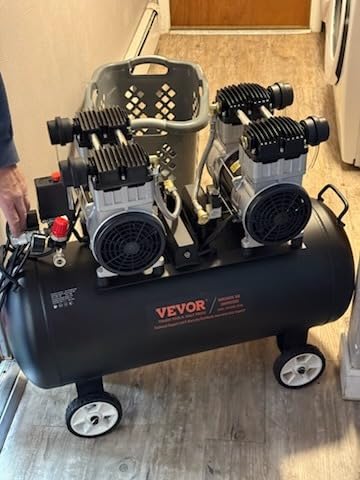
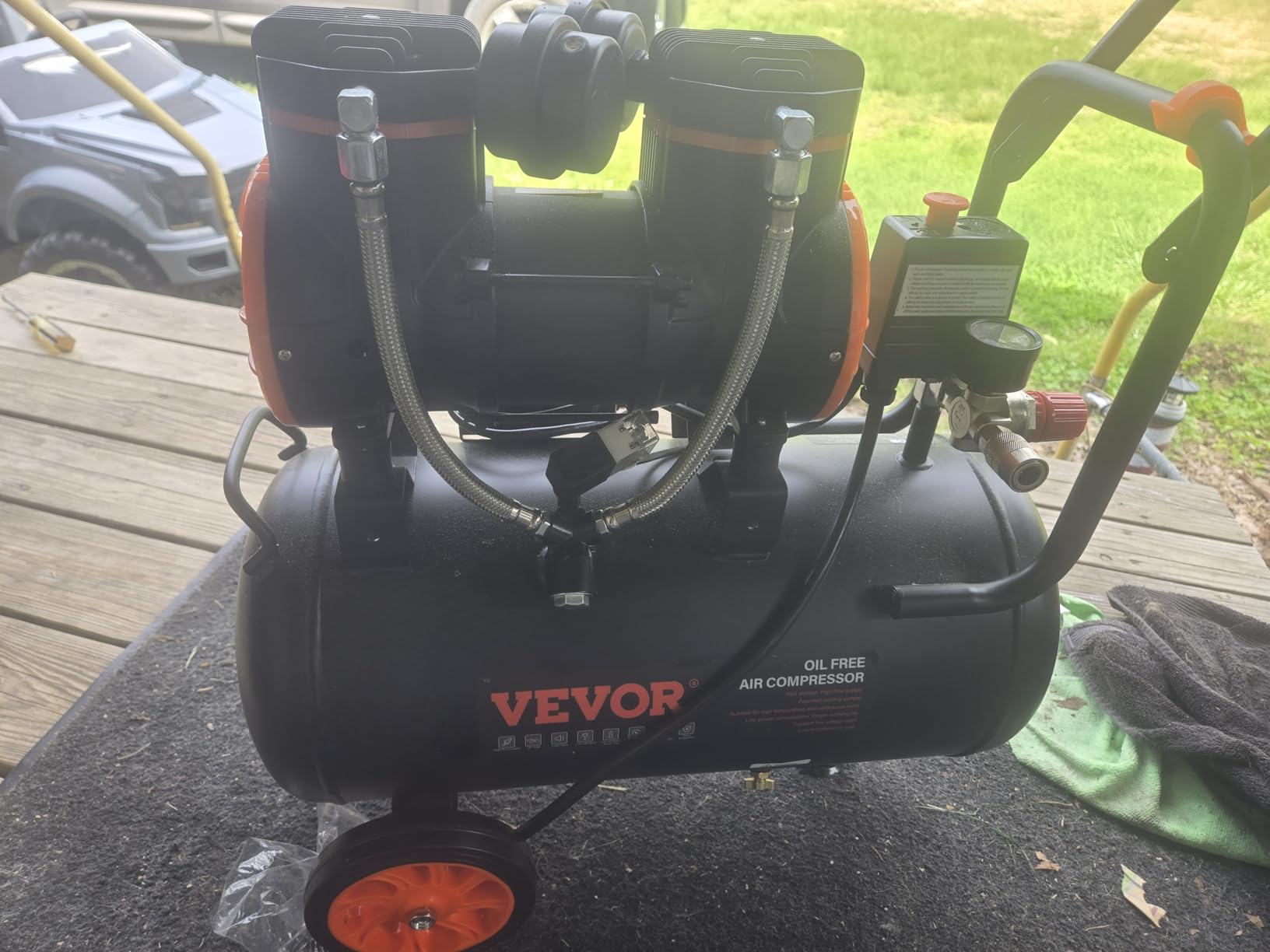
Build detail is unusually good for the tier. Three-layer Q235B steel with seamless welds rated to 3.5 MPa bearing pressure, a double-tube double-cylinder intake with high-temperature silicone, and two cooling fans with automatic overheat, overcurrent and pressure-relief protection.
Two silencers with filter cotton do the noise work, landing at 70 dBA. That is quiet enough to hold a conversation beside it, which is unusual for a 2 HP machine.
Who this compressor suits
Car work, tire service and general garage cleanup in a detached space. It is also a strong second unit, and the two-wheel kit plus handle make repositioning in the shop straightforward. For mobile inflation needs, our off-road tire compressor guide covers the alternatives.
Who this compressor does not suit
Anyone without a nearby outlet. The cord is only about 40 inches, and reviewers report it can refuse to start or trip off on an extension cord or a shared circuit. It wants its own outlet. One-star reviews are 10% of the total, the highest share in this roundup.
11. Craftsman 2 Gallon Hot Dog: The Lightest Unit in the Roundup
Craftsman 2 Gallon Portable Air Compressor, Oil-Free 125 PSI Hot Dog
0.5 CFM at 90 PSI
2 gallon tank
125 PSI max
78 dBA
18 lb
0.33 HP
Pros
- Lightest unit in the roundup at 18 lb
- Only 6.3 inches wide so it stores almost anywhere
- Handles tire inflation for two vehicles quickly
- Oil-free pump needs no servicing
Cons
- 0.5 CFM is too low for blow guns and most nailers
- 78 dBA is loud for the size
- Motor reported to overheat under sustained use
The Craftsman is the simplest machine here and does exactly one job well: putting air in tires. At 18 pounds and 6.3 inches wide, it is the only unit in this roundup you can lift with one hand and wedge onto a shelf or the floor of a car boot.
Owners treat it as an occasional inflation and light-duty tool rather than a shop compressor. The hot-dog tank format with a carry handle is stable, and the oil-free pump system requires no servicing at all.
Be clear-eyed about the 0.5 CFM figure at 90 PSI. That is the lowest output in this roundup by a wide margin, and it is why blow guns and most nailers are out of reach. Inflation is intermittent, which is exactly the demand pattern a 2-gallon tank and small motor can serve.
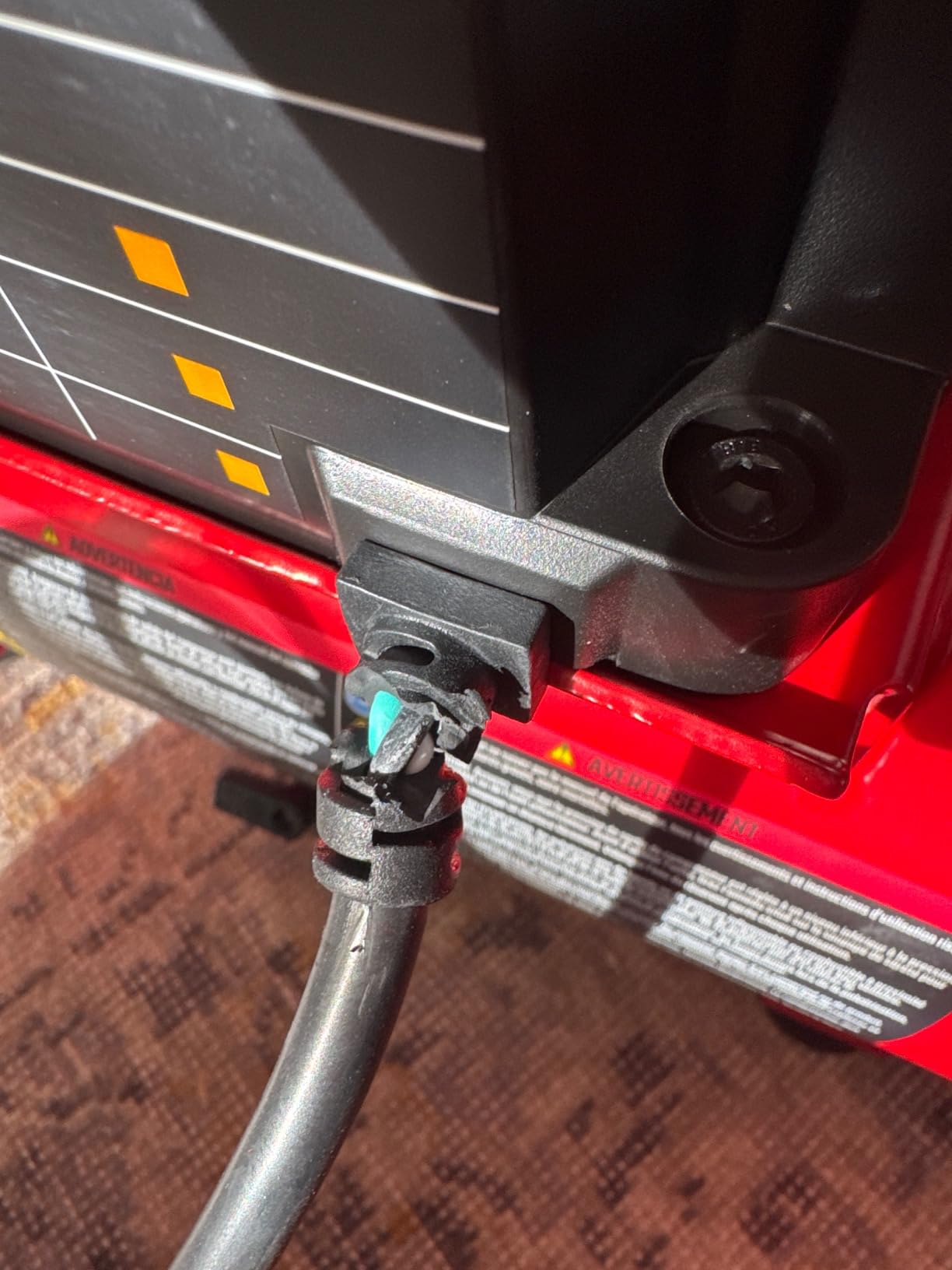
Reviewers also report motor overheating and shutdown under sustained use, plus difficult instructions where an easy-to-miss pressure-lock step causes loud air releases. The 4.2 rating reflects that honestly.
Who this compressor suits
Garages that only need inflation, dorm rooms, flats and small workshops with no floor space. It is a sensible backup unit to keep in a car boot, and for portable jobs our portable compressor picks cover the higher-flow options.
Who this compressor does not suit
Any nailing, sanding or finishing work, and any shared-wall space at 78 dBA. If your list of jobs is longer than filling tires, skip this one and step up to a 5 or 6-gallon unit.
12. VEVOR 2.1 Gallon: The Compact Backup With Real Flow
VEVOR 2.1 Gallon Air Compressor, 1.2HP 2.2 CFM@90PSI Air Compressors with Max. 116PSI Pressure, Oil Free Compressor Tank for Auto Repair, Tire Inflation, Spray Painting, Woodwork Nailing
2.2 CFM at 90 PSI
2.1 gallon tank
1.2 HP oil-free
116 PSI max
70 dBA
27 lb
Pros
- Lowest cost in the roundup with 2.2 CFM at 90 PSI
- 27 lb body is easy to carry between rooms
- Double-cylinder intake fills faster than single-cylinder designs
- Automatic overheat and overcurrent and pressure-relief protection
Cons
- 2.1 gallon tank refills very often
- 116 PSI max is modest beside 150 and 200 PSI models
- 2.2 CFM cannot sustain air wrenches or sanders or spray guns
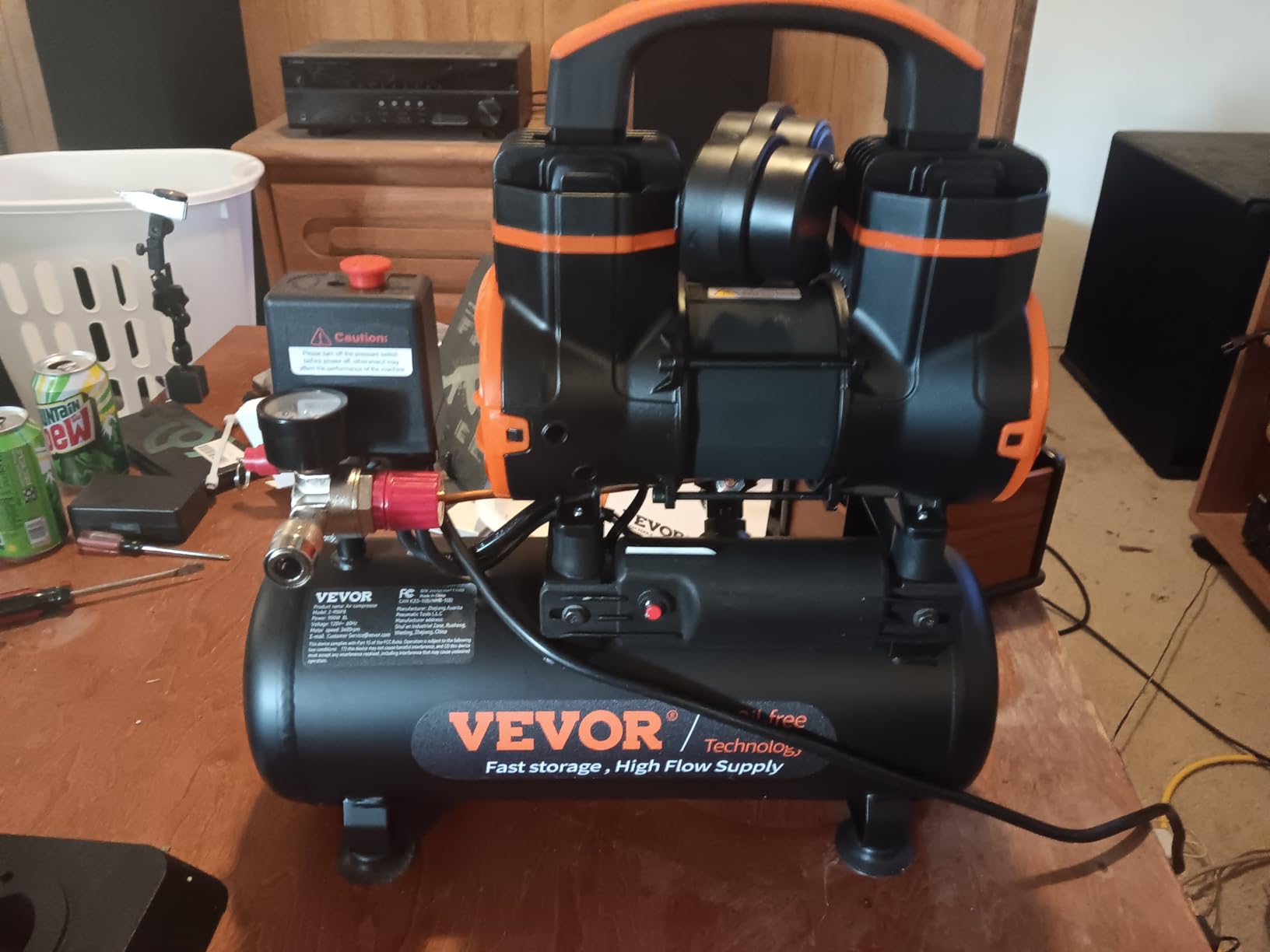
It is the entry point in this roundup, and the surprise is how much capability sits inside it. A 1.2 HP oil-free pump delivering 2.2 CFM at 90 PSI moves more air than several higher-priced units in this list manage.
Owners highlight the noise as the standout: 70 dBA from dual silencers with thickened muffler covers, rubber pipe and filter cotton, in a unit that weighs just 27 pounds with a portable handle.
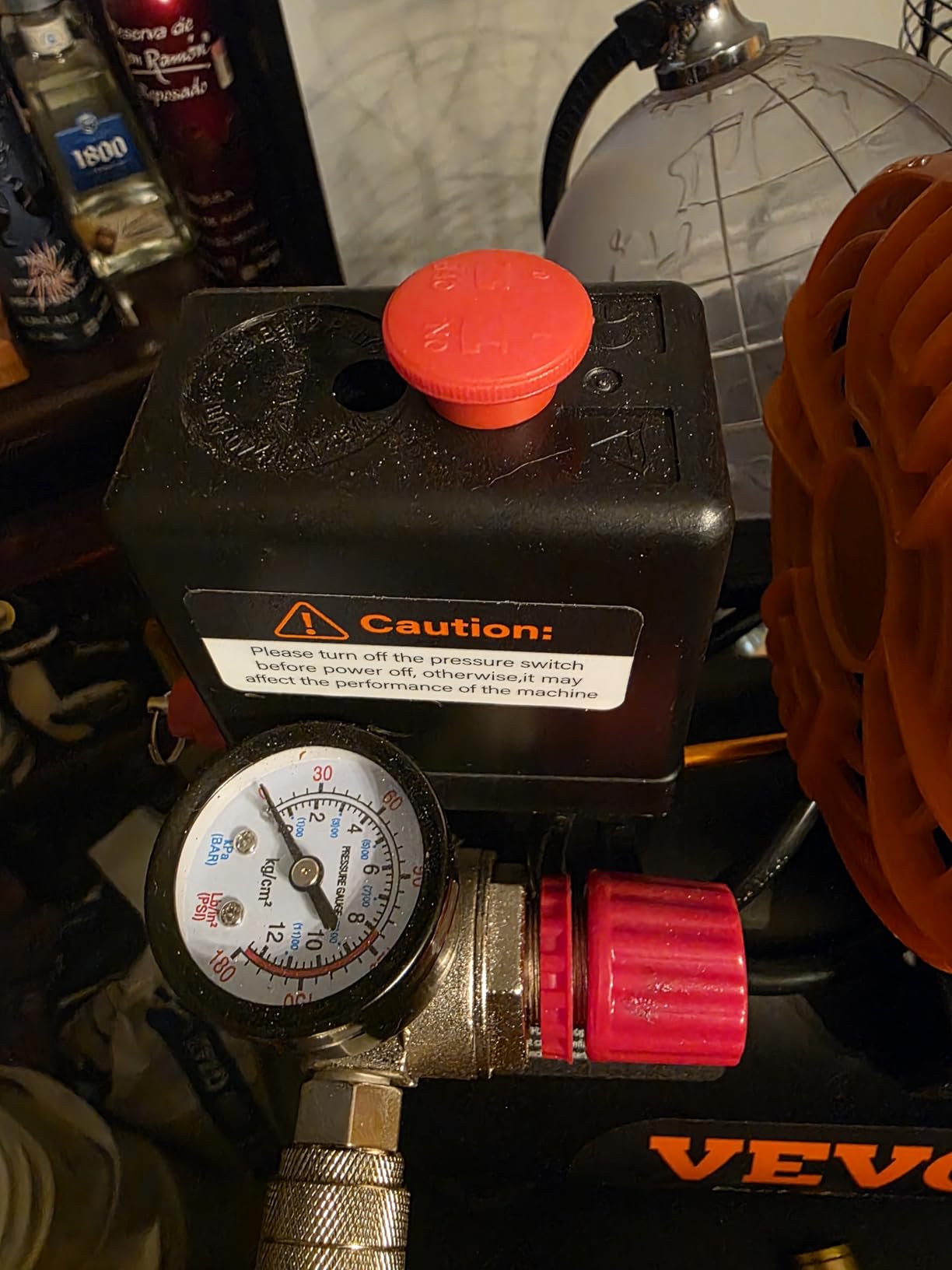
The pump design is sound for the class. A double-tube, double-cylinder intake fills the tank faster than single-cylinder designs of the same size, and automatic overheat, overcurrent and pressure-relief protection adds real safety margin in a compact unit.
The limits are capacity and pressure. Two tenths of a gallon less than most pancake tanks, and 116 PSI maximum, means frequent refills and less stored air per cycle than the 200 PSI units in this list.
Who this compressor suits
Backup duty, small shop tasks, tire inflation, light nailing and cleanup. It is a good second machine for a two-shop household, and the weight means one person can carry it to a second floor or a workbench in an outbuilding.
Who this compressor does not suit
Air wrenches, sanders and spray guns, and any job where a refill pause is unacceptable. The box contains the compressor, handle, silencers and foot pads only, so you will need a hose and fittings before the first tool runs.
How to Choose an Air Compressor for a Home Garage
Most wrong purchases in this category come down to two numbers: buying on horsepower instead of airflow, and buying a tank too small for the tools you already own. Here is how to avoid both.
What 500 dollars actually gets you: the three tiers
At the entry tier, roughly the price of the VEVOR 2.1-gallon and the Craftsman, you get 0.5 to 2.2 CFM at 90 PSI in tanks of 1 to 2.1 gallons. That covers inflation, blow guns, staples and light brad work. It runs out of air the moment you pick up a sander.
At the middle tier, around the price of the PORTER-CABLE, Metabo HPT and DEWALT units, you get 2.6 to 4 CFM at 90 PSI with 6 gallon tanks and 150 to 200 PSI. This is where finish nailing, multiple nailers and general shop work become comfortable.
At the top of the band, around the California Air Tools 10020C and the Klutch 20-gallon, you get 4.2 to 5.3 CFM with 10 to 20 gallon tanks. This is the ceiling: enough for framing, impact wrenches and DA sanders, but still a single-stage oil-free pump with a duty-cycle limit. Continuous spray painting and sandblasting sit above this band, not inside it.
CFM at 90 PSI: the number that decides everything
CFM is cubic feet per minute measured at 90 PSI, which is the pressure most pneumatic tools actually work at. It is a flow measurement, not a tank measurement, and it is the only figure that tells you whether a tool will run continuously.
Peak horsepower is worth ignoring. A compressor advertising 2 HP peak may have a 1 HP running motor, and peak figures are inflated to make a small motor sound larger. Ask for CFM at 90 PSI and running HP instead. A rough sizing rule that holds up in practice: multiply the tool’s requirement by 1.5 so you have headroom for warm motors, long hoses and cold starts.
CFM your tools actually need
Brad, staple and upholstery nailers need roughly 0.3 to 1.0 CFM. Finish and trim nailers sit around 1.0 to 2.0 CFM. Framing and roofing nailers need 2.0 to 4.0 CFM each, which is why multiple nailers demand the top of this list. A DA orbital sander wants 3.0 to 5.0 CFM. Impact wrenches and air ratchets need 4.0 to 6.0 CFM. HVLP spray guns want 2.0 to 5.0 CFM depending on the gun, and sandblasting needs well beyond anything under 500.
Tank style explained: pancake, hot dog, twin-stack and vertical
Hot dog tanks are narrow and horizontal, usually 1 to 2 gallons, and they prioritize portability over stored air. Pancake tanks are wide and flat, typically 6 gallons, which lowers the centre of gravity and cuts the footprint while giving you far more reserve air. Twin-stack units use two stacked cylinders for a taller but more stable profile.
Vertical tanks solve the floor-space problem in a two-car garage. A 10 or 20 gallon vertical stores the most air for the least floor area, at the cost of height and weight. In a single-car garage, a vertical 20-gallon is the only realistic way to get that much air in one corner.
Oil-free versus oil-lubricated pumps
Every unit in this roundup is oil-free, and that is not accidental. Oil-free pumps need no oil changes, start reliably in cold weather, and put clean air into the tank, which matters for finish work and spray equipment.
The cost is heat and lifespan. Oil-free pumps have tighter clearances and run hotter under load, and experienced users on r/Sandblastingporn are blunt about how quickly they wear in high-duty work. Our view: for intermittent home use they are the right default; for sustained daily running a lubricated pump lasts longer. Accept the duty cycle of the machine you buy rather than assuming it is unlimited.
Noise: what the decibel numbers mean in a real garage
Decibels are logarithmic, so 70 dBA is not twice as loud as 35, it is roughly ten times the sound energy. That is why a 10 dB difference between two compressors is the difference between a usable attached garage and an unusable one.
A 56 to 60 dBA compressor reads as a quiet refrigerator or a normal conversation, and is fine next to a living space. At 70 to 73 dBA you are at a hair dryer or a quiet office, workable in an attached garage but noticeable. At 78 to 82 dBA you are near a lawnmower or a food processor, which is fine in a detached shop with the door closed and a poor choice for shared walls.
110V versus 220V and garage electrical readiness
Everything in this roundup runs on 110 or 120 volts, which is why the sub-500 band is friendly to older garages. Two numbers matter: the running current, and the length of cord supplied. The DEWALT trim unit at 12 amps and the Craftsman with a 6 foot cord are the most forgiving. The VEVOR 6.3-gallon at 14.5 amps with a roughly 40 inch cord needs its own outlet close by.
If you later want 220V performance, that means a dedicated circuit installed by an electrician, and a compressor outside this price bracket. For most weekend garage work, 120V is genuinely enough.
Maintenance, draining and moisture control
Drain the tank after every job. That single habit prevents the rust that ends most compressors, and it is why aluminum tanks like the CAT 2010A are forgiving when you forget. Check the drain valve itself every few months, since a stuck petcock is the most common leak point.
Add a moisture separator and a coalescing filter if you are spraying, finishing or running electronics through air. Cheap oil-free pumps pull more water and oil aerosols out of the air, so a regulator-mounted separator pays for itself in finish quality. Never bleed a tank fully, and never weld or modify it.
What to avoid in this price band
Avoid listings from unknown or unauthorized sellers, and be careful with any compressor whose page leads with a peak horsepower number instead of CFM at 90 PSI. If a CFM figure is missing entirely, assume it is poor rather than good.
Also avoid any model claiming to be a shop compressor with a 1-gallon tank, and treat 2 HP peak on a 110V unit as a marketing figure rather than a spec. Read the one-star reviews rather than the five-star ones; in this roundup the one-star reviews are where the useful information lives, from the overheat complaints to the short-cord warnings and the safety switch report.
Frequently Asked Questions
What is the best air compressor under 500?
The California Air Tools 1P1060S is the best all-round pick under 500, rated 4.5 stars across more than 2600 reviews with 56 dBA noise, 1.2 CFM at 90 PSI and a 1 gallon tank. For more stored air choose the 10-gallon California Air Tools 10020C at 5.3 CFM and 70 dBA, or the DEWALT DWFP55130 for 200 PSI trim work.
What size air compressor is best for a home garage?
For most home garages a 6 gallon pancake or a 10 gallon vertical tank is the right size. A 6 gallon pancake at 3 to 4 CFM at 90 PSI covers finish nailing, cleanup and car work, while a 10 to 20 gallon vertical stores enough air to run impact wrenches and sanders without constant refilling. Tanks under 2 gallons suit only inflation and light stapling.
Are oil-free air compressors worth it?
Yes, for typical home garage use. Oil-free pumps need no oil changes, start reliably in cold weather and deliver clean air for finish work. The tradeoff is heat and lifespan: they wear faster under sustained daily running than oil-lubricated pumps, so stay within the stated duty cycle rather than running them continuously.
What is the quietest air compressor for a garage?
The California Air Tools 1P1060S at 56 dBA is the quietest unit in this roundup, followed by the Metabo HPT EC28M at 59 dBA and the California Air Tools 2010A at 60 dBA. Anything above 75 dBA is noticeable inside a house, so keep those units in a detached garage with the door closed.
Is 110V enough for a garage air compressor?
Yes for nearly all weekend garage work. Every compressor in this roundup runs on 110 or 120 volts, and models drawing 12 amps or less start on a normal household circuit. A 2 HP unit pulling 14 to 14.5 amps wants a dedicated outlet, and long extension cords can prevent it from starting at all.
The Verdict for 2026
After twelve compressors and one very clear pattern, the best air compressors for home garages under 500 come down to two questions: how much air do your tools need, and how much noise can your neighbours tolerate. The California Air Tools 1P1060S wins on the second question outright, at 56 dBA and 29 pounds, and remains the safest default purchase in this band.
When the answers point higher, the 10020C gives you 5.3 CFM at 90 PSI in a vertical footprint, and the Metabo HPT EC914S delivers 4 CFM at 200 PSI in a package you can still carry. For trim work on an older circuit, the DEWALT DWFP55130 pulls 12 amps and stores more air than its size suggests.
Check the CFM at 90 PSI before you check anything else, buy the quietest unit your budget allows, and drain the tank after every job. Those three habits decide whether a compressor in this price range looks like a bargain in ten years or a lesson.