
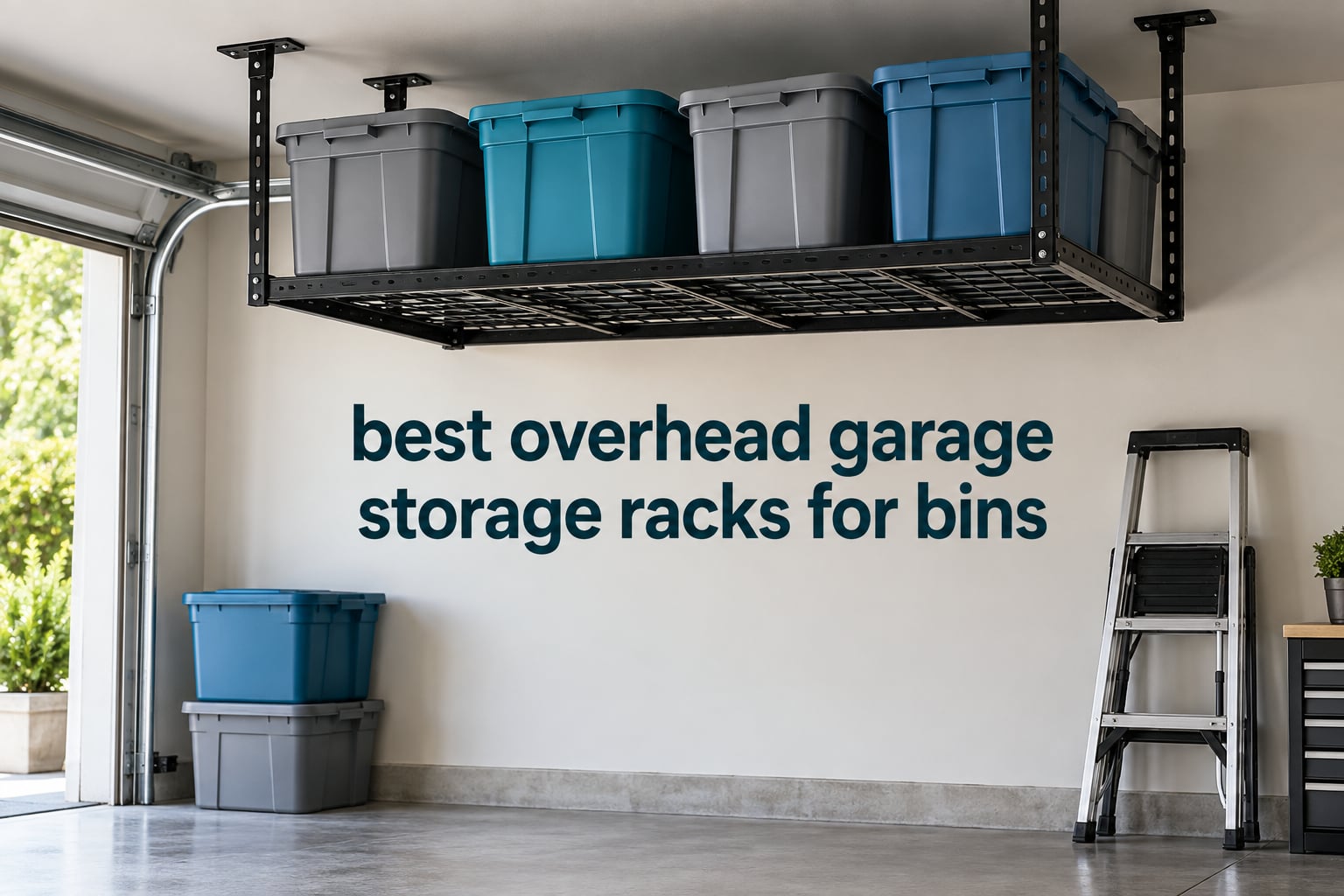
The best overhead garage storage rack for bins is a 4×8 steel platform rated for 600 lb or more, hung from at least three ceiling joists on threaded drop rods, with side rails that keep 18-gallon and 27-gallon totes from sliding off. If you want to pull single bins down without unloading anything, a sliding tote rail beats a solid platform. That is the short version; here is how the ten racks below compare.
I spent six weeks working through overhead racks in my own two-car garage, and the pattern was clear. Platforms win on raw capacity, slide rails win on access, and hook-style rails win on price but only hold light bins. Every product below mounts to wood ceiling joists, never to drywall.
If you are planning the whole garage rather than one corner, start with the floor and the walls. Our garage floor tile guide and workshop fan picks cover the parts of the room that are not overhead, and our bike rack and rod rack roundups handle wall-mounted storage. Updated for 2026.
Table of Contents
Top 3 Picks for Best Overhead Garage Storage Racks for Bins in 2026

FLEXIMOUNTS 4×8 Overhead Rack
- 750 lb rated capacity
- 22 to 40 inch drop
- 105 cu.ft platform
- M8 hardware

MonsterRax 4×8 2-Pack Rack
- Two racks in one order
- 500 lb per rack
- 24 to 45 inch drop
- Powder-coated carbon steel

SunsGrove 4×8 800 lb Rack
- 800 lb capacity
- Two inch slat grid
- 22 to 40 inch drop
- Rotatable brackets
Best Overhead Garage Storage Racks for Bins in October
| Product | Specifications | Action |
|---|---|---|
| FLEXIMOUNTS 4×8 Overhead Garage Ceiling Storage Rack |
|
Check Latest Price |
| MonsterRax 2-Pack 4×8 Overhead Garage Storage Rack |
|
Check Latest Price |
| SunsGrove 4×8 Overhead Garage Storage Rack 800 lb |
|
Check Latest Price |
 Jusgym 4X8FT Overhead Garage Storage Rack 750 lb Jusgym 4X8FT Overhead Garage Storage Rack 750 lb |
|
Check Latest Price |
 E-Z Garage Storage Tote Slide PRO Ceiling Tote Rack E-Z Garage Storage Tote Slide PRO Ceiling Tote Rack |
|
Check Latest Price |
 TORACK Garage Ceiling Bin Storage Rack Rails TORACK Garage Ceiling Bin Storage Rack Rails |
|
Check Latest Price |
 SafeRacks 4×4 Overhead Garage Storage Rack SafeRacks 4×4 Overhead Garage Storage Rack |
|
Check Latest Price |
 Ultrawall Overhead Garage Storage Racks for Bins Ultrawall Overhead Garage Storage Racks for Bins |
|
Check Latest Price |
 WALMANN Overhead Tote Storage Rails System WALMANN Overhead Tote Storage Rails System |
|
Check Latest Price |
 StoreYourBoard Ceiling Tote Storage Rails 8 Bins StoreYourBoard Ceiling Tote Storage Rails 8 Bins |
|
Check Latest Price |
1. FLEXIMOUNTS 4×8 Overhead Garage Ceiling Storage Rack
FLEXIMOUNTS 4×8 Overhead Garage Ceiling Storage Rack Organization, Black
750 lb rated load
22 to 40 inch drop
4x8 platform, 105 cu.ft
6 vertical posts
Pros
- 750 lb rating with 1200 lbs tested
- Very wide 22 to 40 inch drop range
- Six vertical posts and two-stud brackets resist flex
- M8-grade hardware and a limited lifetime warranty
Cons
- Requires 24 inch or 48 inch joist spacing to fit
- Mounting hooks sold separately
- Frame and wire deck are more steps than a welded frame
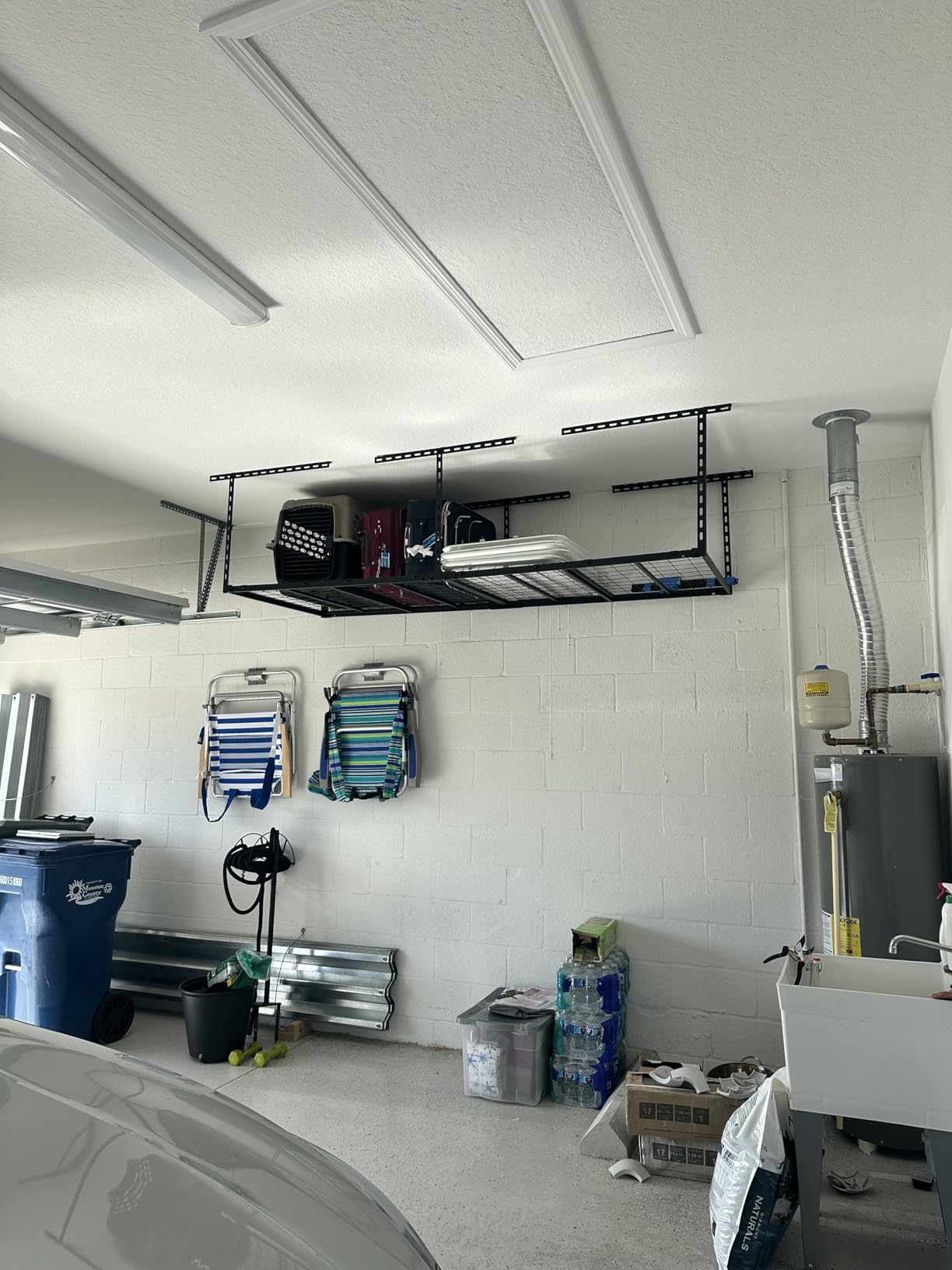
This is the rack I ended up keeping. It carries a 750 lb rating, which matters because a 4×8 platform covered in full totes adds up faster than most people expect. A single 27-gallon tote packed with camping gear or holiday decor runs far heavier than the empty bin suggests, and the difference decides whether you can fill the whole deck or only half of it.
The frame uses six vertical posts rather than the four common on cheaper platforms, and the long ceiling brackets attach across two studs. That is the structural reason it feels rigid with a full load of bins where a five-post rack starts to bounce.
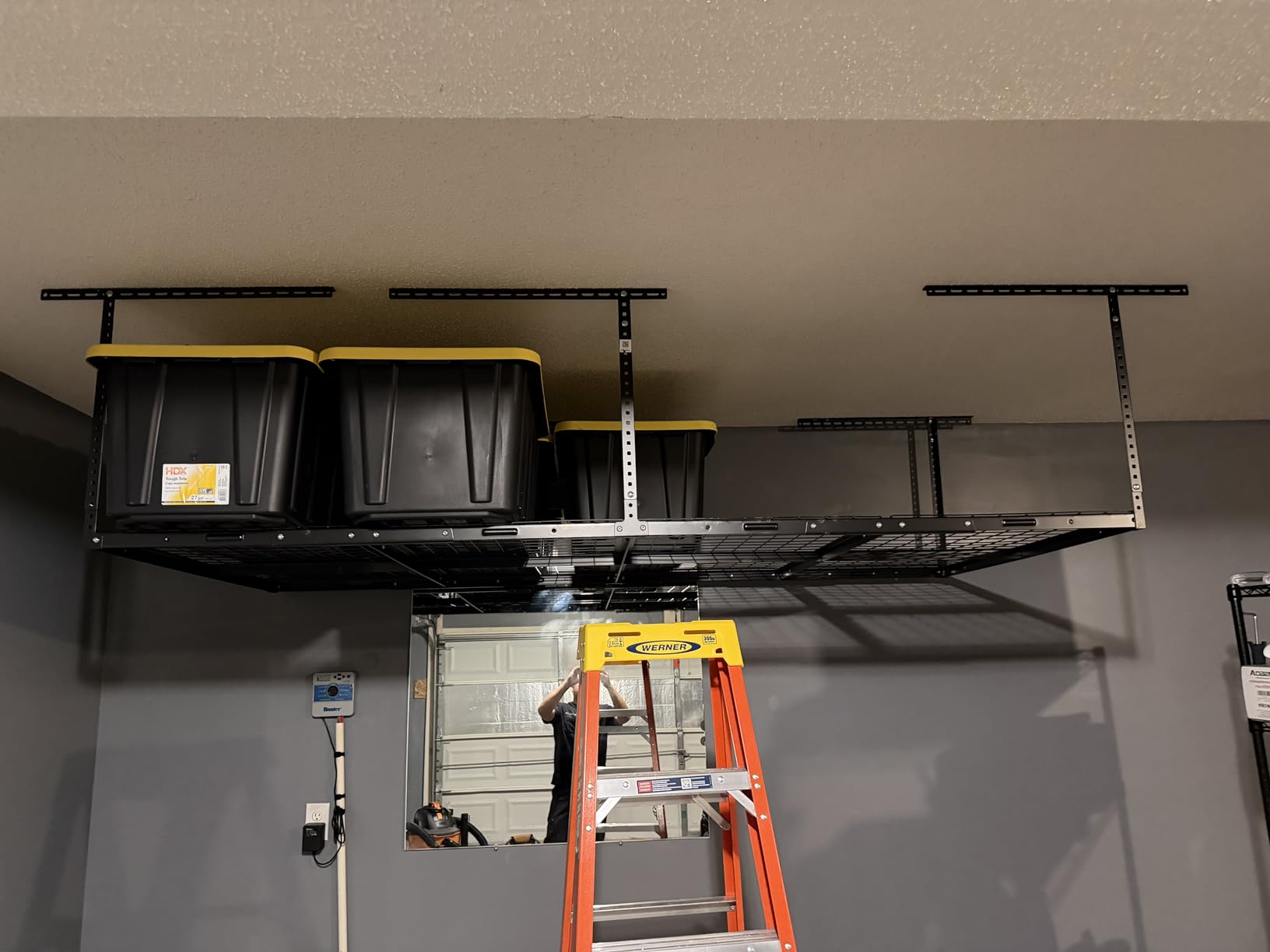
Two specifications to check first. Joist spacing must be 24 inch or 48 inch on center, so measure your bay. And it will not mount to metal walls at all, which rules out steel-framed garages.
The 22 to 40 inch drop covers nearly every standard ceiling, and at full extension you gain 105 cu.ft. The unit is 96 by 48 inches and weighs 59.7 lb, so plan a two-person lift.
The 4.7-star average comes from a very large pool of owners, which is the strongest single reason to trust the number. Hardware is M8-grade, and mounting hooks are a separate purchase if you want them, so budget for that before the install day.
How many bins fit on this rack
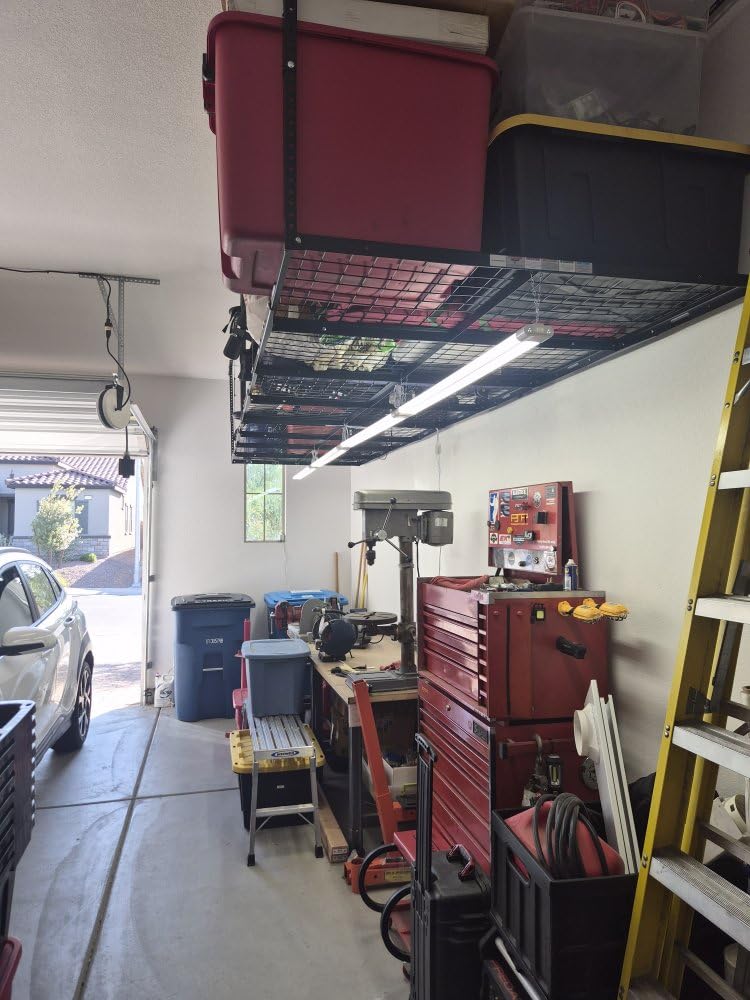
A 4×8 deck gives about 32 sq ft, so four 24-inch totes sit side by side and six to eight 18-gallon bins fit in a tighter grid. Wire grid decking also keeps bin labels visible from the driveway.
Loaded weight is the real ceiling. Keep total bins under 70 percent of 750 lb, about 525 lb, because that margin covers the dynamic load of someone pulling a bin down.
Where it falls short
Assembly is the weak point. A frame plus a separate wire deck is more steps than a rack that arrives welded, so budget an extra hour if you are not confident with a socket and a level.
Joist spacing is the harder limit. At 16 inch on center the brackets do not land on wood, and you are back to blocking or a different rack.
2. MonsterRax 2-Pack 4×8 Overhead Garage Storage Rack
MonsterRax 2-Pack 4×8 Overhead Garage Storage Rack, Gray, 24″-45″ Height
500 lb per rack
Two racks per order
24 to 45 inch drop
Powder-coated steel
Pros
- Two racks in a single order doubles your ceiling capacity
- 24 to 45 inch drop is the widest here
- Patented high-strength ceiling brackets
- Hammertone powder coat with no sharp edges
Cons
- Multi-hour two-person installation
- Manual illustrations are drawn incorrectly in places
- Very heavy to lift without an impact driver
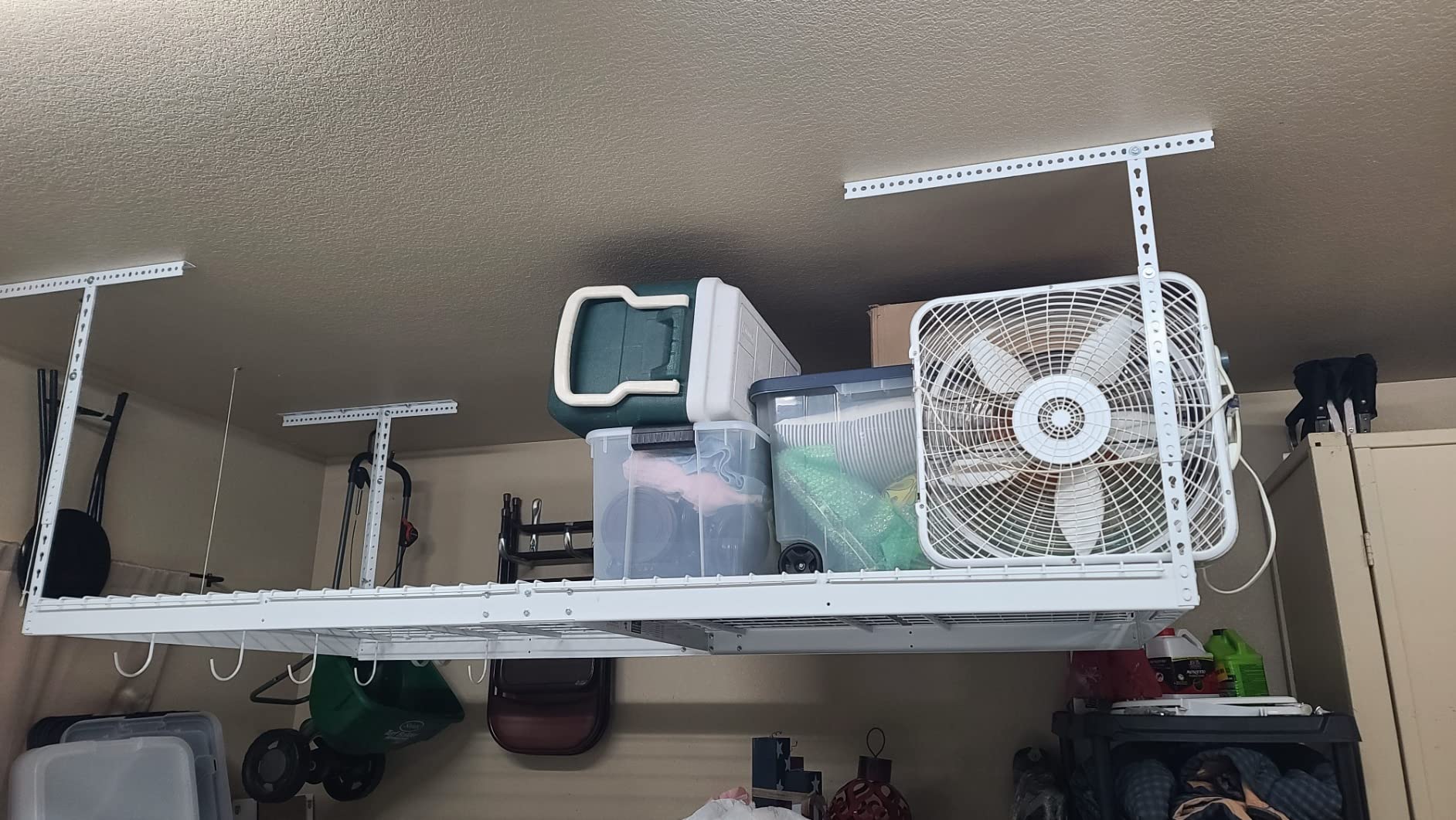
Most people buy one rack, fill it, then buy a second six months later. This pack ships two 4×8 racks together, the single biggest storage-volume gain here, putting roughly 240 cu.ft back into a two-car garage.
Each rack holds 500 lb of carbon steel and the drop adjusts 24 to 45 inches, the widest range in the roundup. That extra range matters where you want the deck high for a lifted truck or low under a door rail.
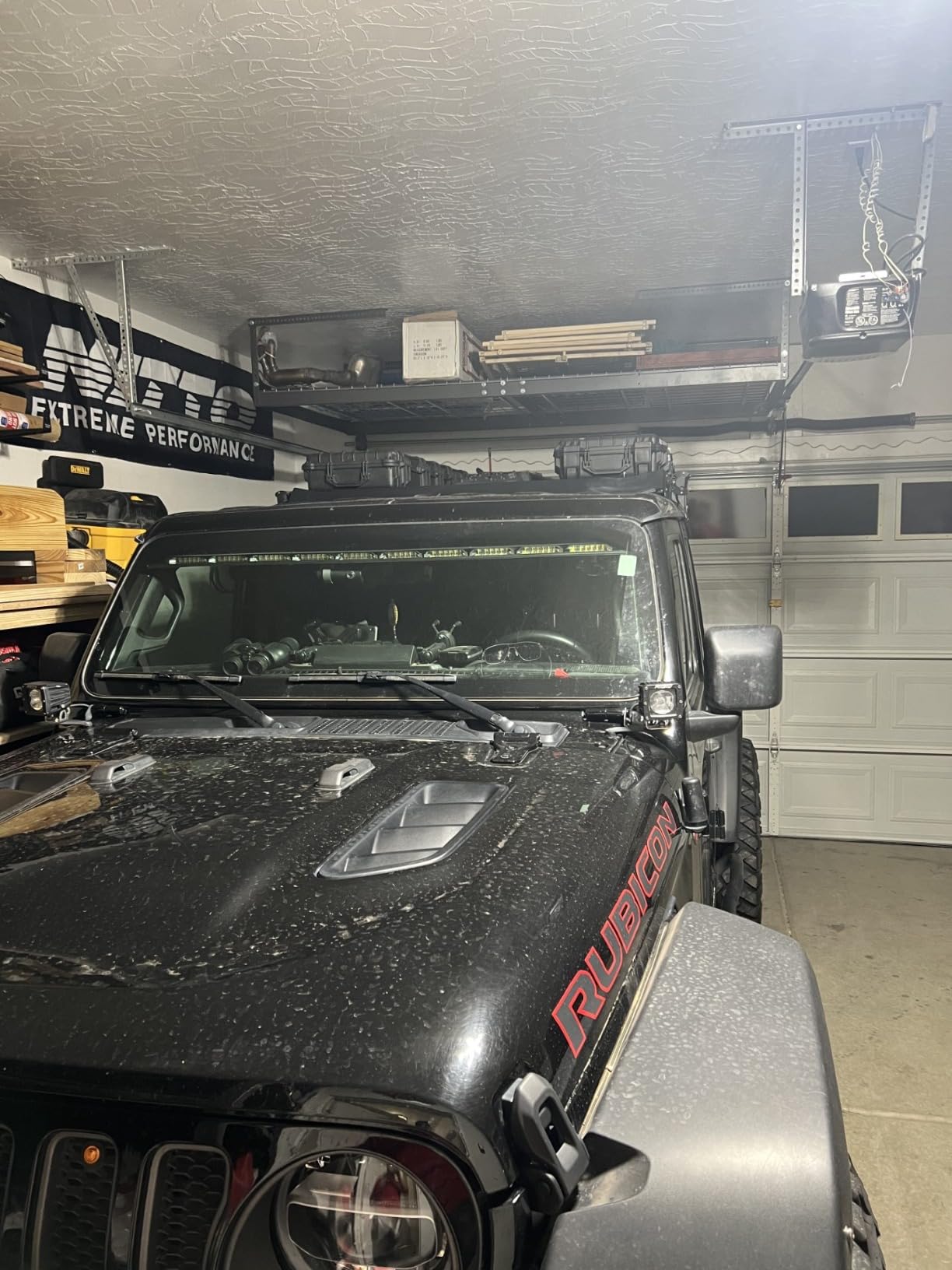
Long-term owners report the frames stay rigid for years with heavy tools and no visible flex. The powder coat has no sharp edges, which matters when you reach past a bin in the dark.
One detail to note: bottom rails hang about 2.5 inch below the load surface, so factor that into clearance in a low-ceiling garage.
Because the two decks arrive in separate heavy cartons, plan the install as a single weekend rather than a Saturday and a Sunday. The volume gain is real, but only if you have a second pair of hands and a clear run of floor space for both panels.
What to store on the two-rack setup
Split the pair by weight. Heavy bins on one rack, light seasonal bins on the other, and the platform behaves better over time. Camping gear and holiday decor belong here; anything weekly does not.
Two separate decks also let you dedicate one to labeled bins and the other to oversized items, which is what makes a garage look organized rather than stacked.
Where it falls short
This is the heaviest install here. Reviewers call it a multi-hour, two-person job, and an impact driver is close to required. The pieces are large and awkward to hold while bolting.
Documentation is the other complaint, with several buyers reporting incorrect manual diagrams. A U.S. veteran-owned company and limited lifetime warranty partly compensate.
3. SunsGrove 4×8 Overhead Rack with 800 lb Capacity
SunsGrove 4×8 Overhead Garage Storage Rack Organization, Adjustable Ceiling Mounted Storage Racks, 800LBS Weight Capacity, 22″-40″ Ceiling Dropdown, Hammertone Black
800 lb capacity
Two inch slat grid
22 to 40 inch drop
105 cu.ft
Pros
- Highest rating in the group at 800 lb
- Slat grid resists sagging better than wire deck
- Rotatable brackets handle uneven stud layouts
- Hammertone finish wipes clean
Cons
- Only rated for ceilings tilted 10 degrees or less
- Cannot mount to metal walls
- Heaviest platform at about 66 lb
If your garage holds more than seasonal decorations, look here. The 800 lb rating is the highest in this roundup, and the platform is a two-inch slat grid rather than loose wire, which resists bending when you stack full bins in rows.
Rotatable mounting pieces stood out in my install. Instead of forcing the bracket to match stud direction, you rotate the hardware to suit an uneven layout, which saved me from blocking on a 16 inch center garage.
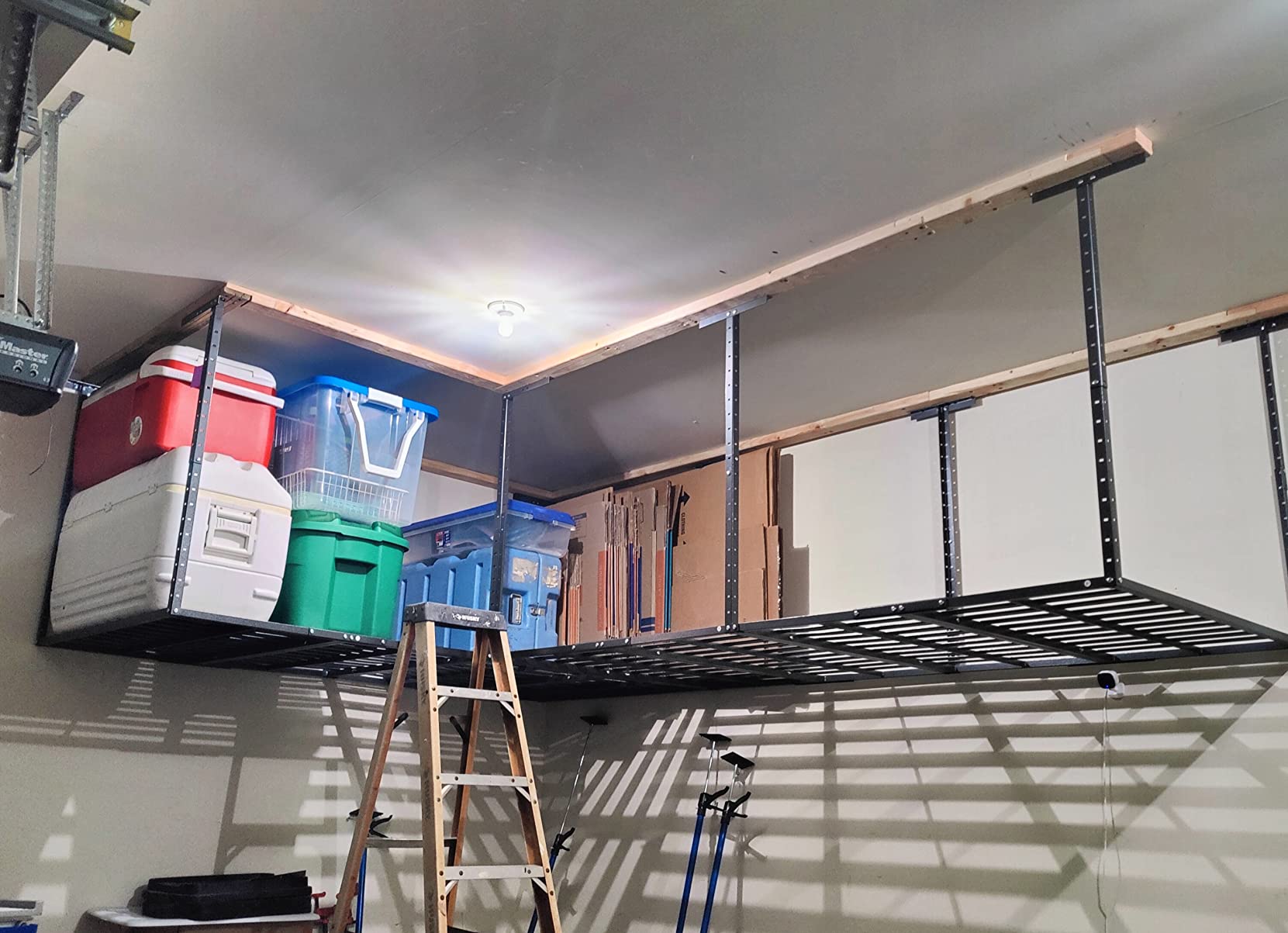
Build details are 8 mm screws, wider steel bars, reinforced crossbeams and extra mounting holes. The hammertone black finish resists corrosion and hides the scuffs that come from sliding totes.
Maximum size is 96 by 48 by 40 inches for 105 cu.ft, and parts ship in one numbered carton with an illustrated manual.
The review pool here is smaller than the FLEXIMOUNTS or MonsterRax numbers, so treat the 4.5-star average as encouraging rather than settled. The engineering claims, however, are specific and easy to verify against your own bins.
Is 800 lb more than you need
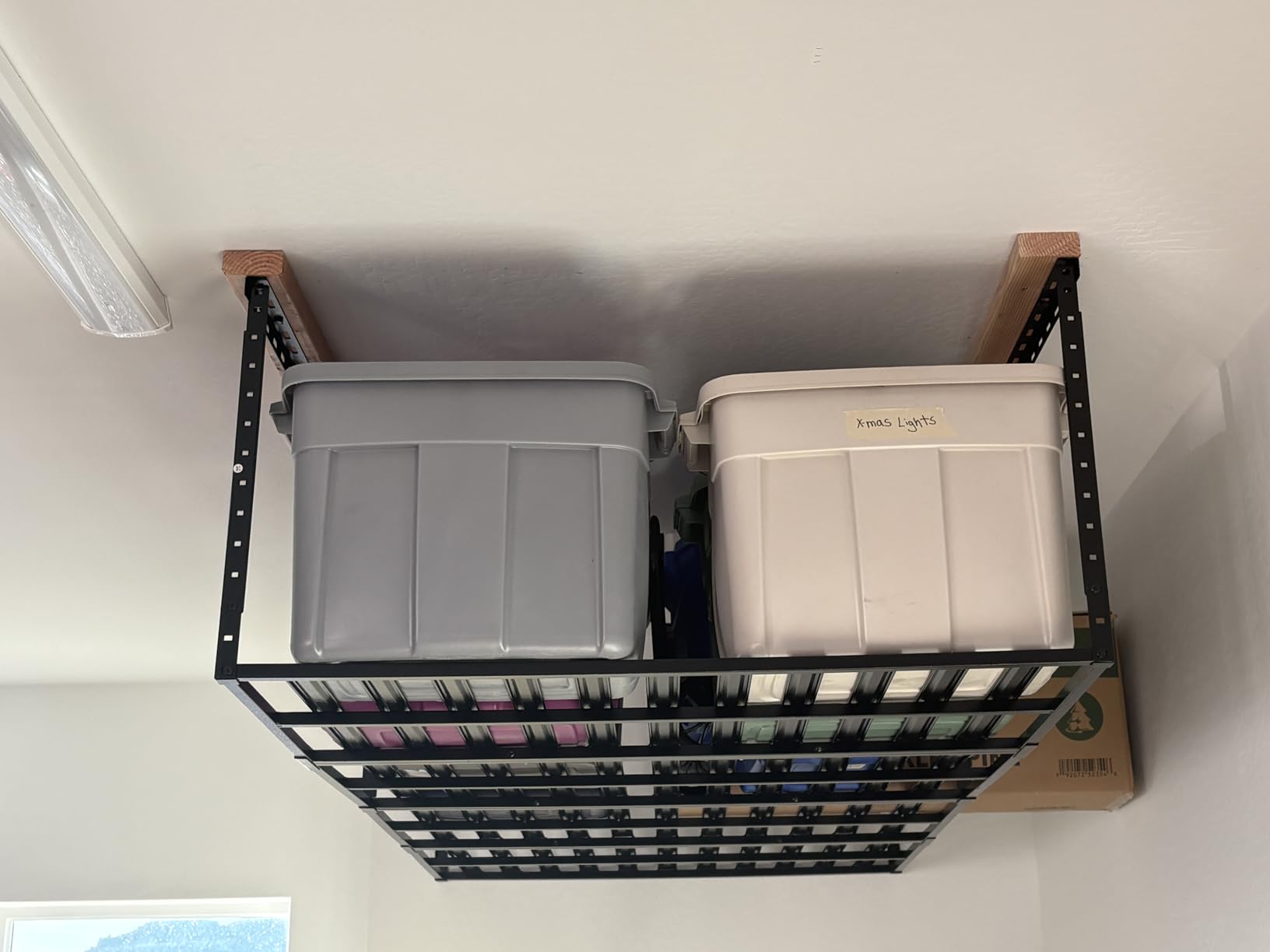
Almost certainly, and that is fine. The rating means you can fill a deck with heavy bins without worrying about the frame. Keep your actual load under 70 percent and you have margin for pulling a full tote down.
The 2 inch grid gaps also keep bins from sliding sideways when you grab one out, a real safety benefit over open wire. The trade is weight, at 65.7 lb.
Where it falls short
Two hard limits: no metal wall mounting, and support only on ceilings tilted 10 degrees or less. Sloped and vaulted ceilings are out.
It is also the heaviest platform here, so a helper is advisable, and the rotatable brackets add assembly steps versus a fixed-angle rack.
4. Jusgym 4X8FT Overhead Rack with 750 lb Capacity
4X8FT Overhead Garage Storage Rack 750LBS Capacity, 26″-40″ Height Adjust
750 lb capacity
Nine support beams
26 to 40 inch drop
4x8 ft, 105 cu.ft
Pros
- Pre-installed hooks cut install time roughly in half
- Nine support beams resist bending under heavy bins
- 26 to 40 inch drop clears parked vehicles
- Lifetime limited warranty
Cons
- Lowest rated platform here at 4.3 stars
- Only fits 48 inch joist spacing above 24 inch
- Coated grid still shows surface marks
The usual complaint about a big platform is holding a 96-inch panel overhead while driving screws. Jusgym solves that with eight pre-installed hooks that hold the panel during mounting, which reviewers say halves install time.
Capacity is 750 lb of alloy steel, and the frame uses nine support beams instead of the standard five, so the deck stays flat under a row of full bins instead of dipping mid-span.
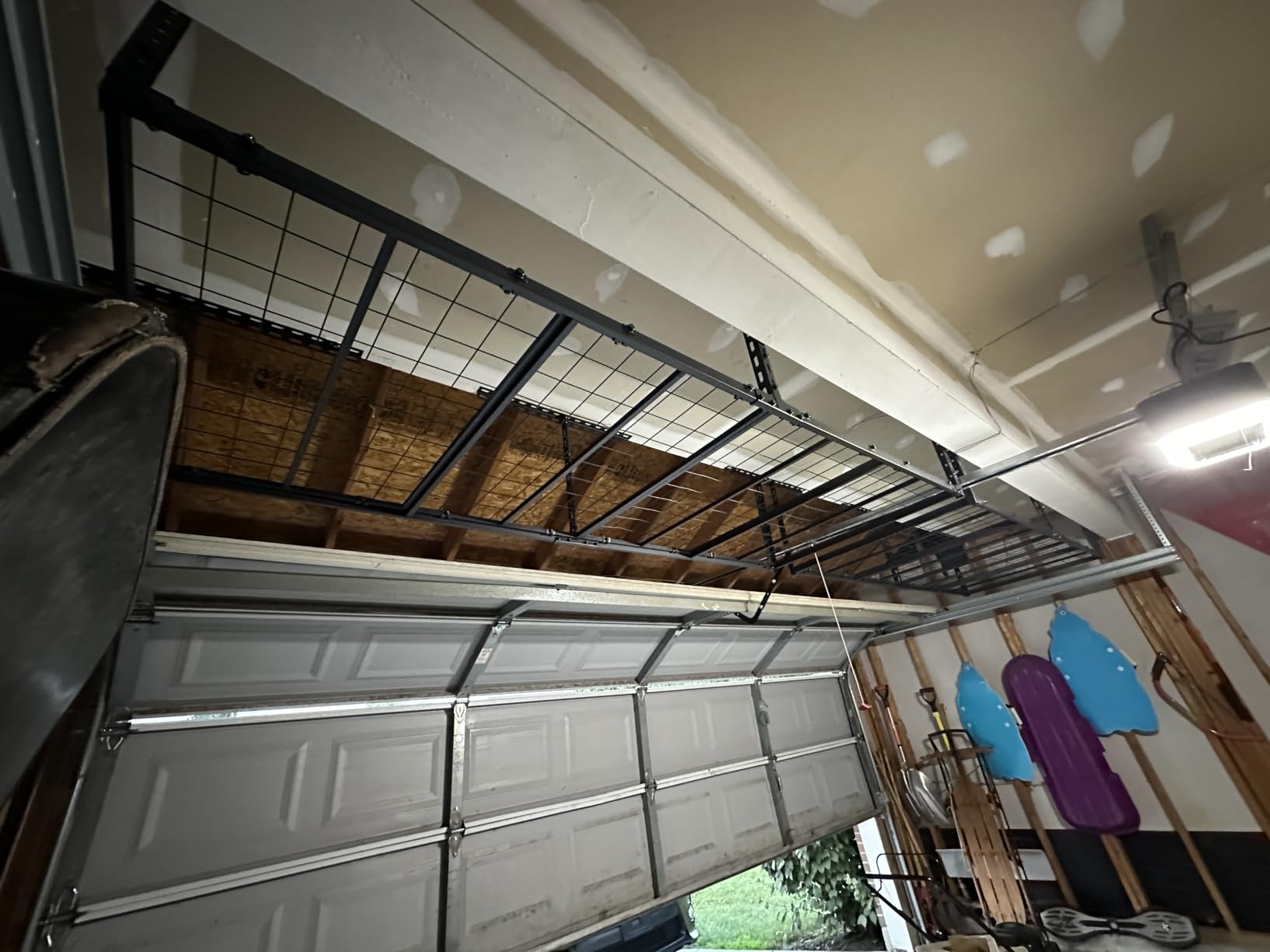
Drop adjusts 26 to 40 inches and still clears a parked vehicle. You get 105 cu.ft on the 4×8 footprint at 47.8 lb, lighter than most racks at this capacity, backed by a lifetime limited warranty with 24/7 support.
At 47.8 lb this is one of the lighter 750 lb platforms in the roundup, which makes it the most realistic single-person option at this rating. The trade is narrower, with a 26 to 40 inch drop instead of a wider range.
How it handles bins over time
Stiffness is the story. With nine beams, a row of eight 18-gallon totes does not bow, and the stack stays level as you pull bins out one at a time.
Surface marks are the cosmetic weakness, since the coated grid still scuffs. Place labels facing the driveway edge and it rarely shows.
Where it falls short
The 4.3 star average is the lowest among full platforms, with a visible one-star share. Most critical reviews concern finish and packaging rather than structure.
Joist spacing is the other limit. Above 24 inch on center it only suits 48 inch joists, so a 16-inch-center garage needs a different rack.
5. E-Z Garage Storage Tote Slide PRO Ceiling Tote Rack
E-Z Garage Storage Tote Slide PRO – Made in USA Ceiling Tote Rack, 15 Totes
Holds 15 totes
450 lb total, 35 lb per tote
4 x 88 inch channel rails
88 x 80 in footprint
Pros
- Largest bin count here at 15 standard 27-gallon totes
- Slide one bin forward without unloading the rack
- Adjustable rail spacing fits most tote sizes
- Powder-coated alloy steel made in Oregon
Cons
- Highest total system cost once bins are added
- Large 88 x 80 inch installed footprint
- Totes are not included
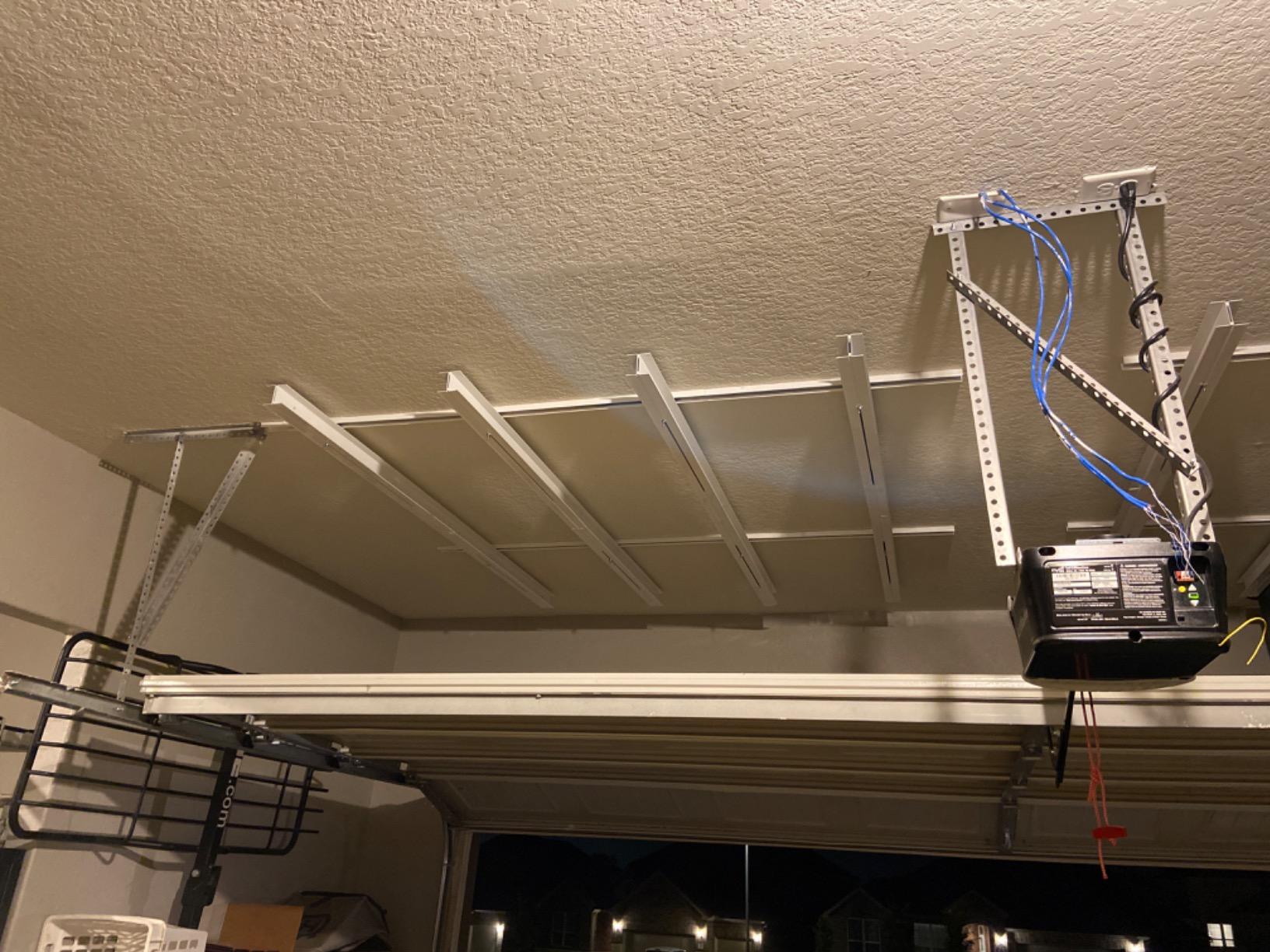
This is the only true slide-in system here, and it solves what stops most people using overhead storage: lifting a full 27-gallon tote six feet up. Four 88-inch channel rails sit over two 80-inch support rails, and each tote slides forward on its own.
It holds 15 standard 27-gallon totes, more than double a 4×8 platform, rated 450 lb total or 35 lb per tote. That per-tote figure is the one to plan around, because it tells you when a bin is too full to slide safely.
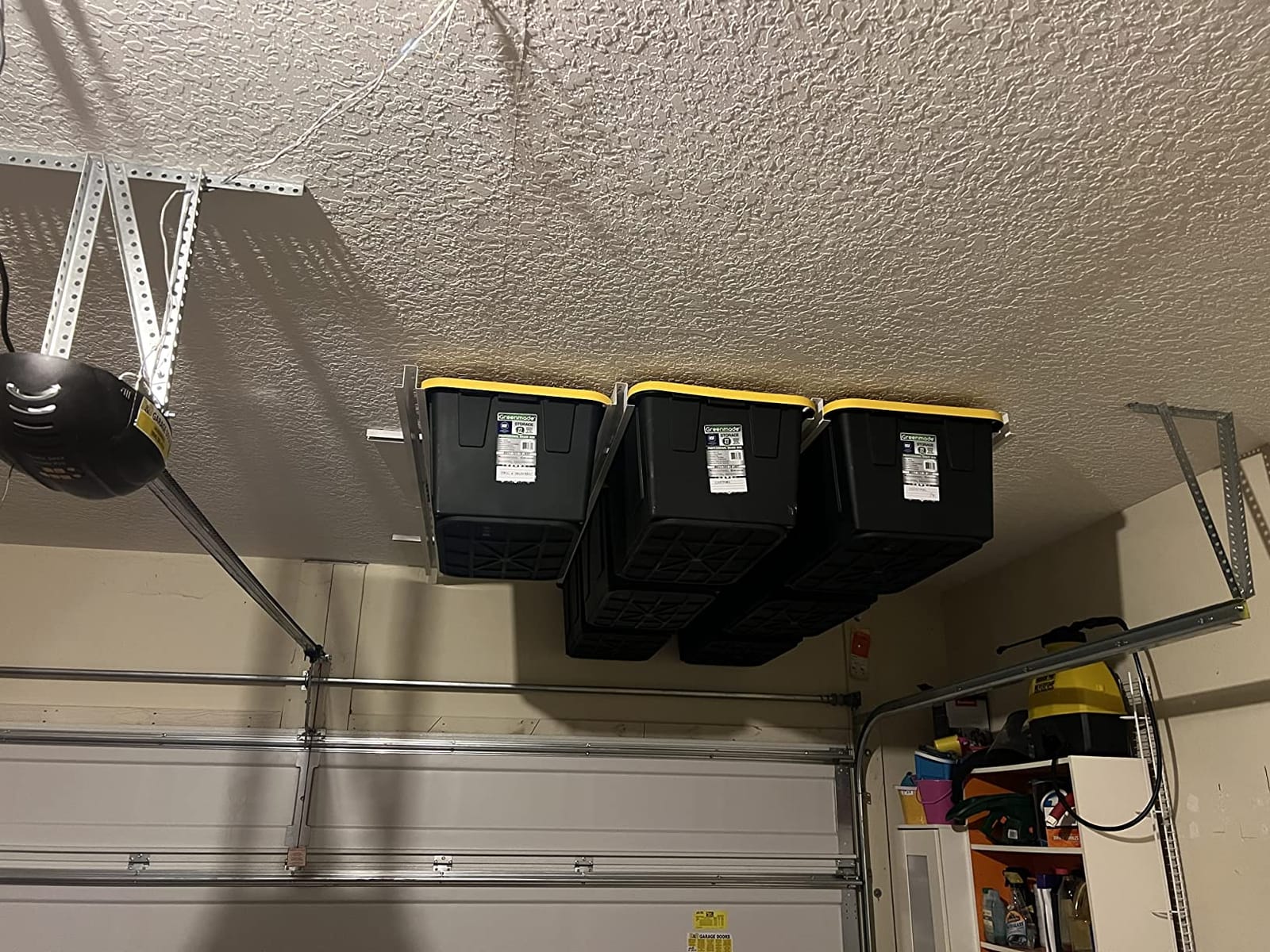
Rail spacing adjusts to fit most tote sizes and the system expands with extra rail sets. It is powder-coated alloy steel made in Oregon with Grade 5 hardware and a lifetime limited warranty.
The installed footprint is 88 by 80 inches and the rails are only 3.5 inches deep, so the vertical profile stays thin. That shallow depth is what makes sliding work under a low ceiling.
Because the whole system is rated per tote as well as in total, a single overloaded bin can unbalance a rail. Weigh a few of your own totes before the first load and you will know immediately whether the 35 lb ceiling is realistic for your storage habits.
When sliding access beats a solid platform
Choose a slide system when bins are everything you store and you want any single one without moving the rest. On a platform, pulling one tote means unstacking two above it.
Keep each tote under 35 lb, roughly the point where a full bin becomes hard to guide into position and can tip as it slides on. Store clothing, decorations and light tools rather than sand or books.
Where it falls short
Cost is the headline drawback, and bins are not included, so the real number is rails plus fifteen totes. It is a bigger commitment than one platform.
It also needs an 88 by 80 inch clear ceiling span and proper joists with correct fastener placement. Confirm your joist run is long enough before committing.
6. TORACK Garage Ceiling Bin Storage Rack Rails
TORACK Garage Ceiling Bin Storage Rack, Overhead Tote Storage Rails
150 lb system rating
30 lb per bin position
Fits 7 to 27 gallon bins
26 inch rails, 6 pack
Pros
- Lowest cost way to clear bins off the garage floor
- Mounts to 16 inch or 24 inch joists
- Multiple rail lengths for 4
- 6 and 7 bin layouts
- Clear instructions
Cons
- Bracket slot is too narrow for a socket
- Bins fit tight against big-box totes
- Bins not included
This is the cheapest way to get bins off the garage floor, and rails are a different idea from a platform rather than a cheaper version of it. Each rail hangs a few bins so you can slide one forward without touching the rest.
Six 26-inch rails make up the set, rated to 150 lb for the system or 30 lb per bin position. That per-position number is a fair guide for a tote of seasonal clothing, and not a guide for camping gear or tools.
Mounting fits 16 inch or 24 inch joists, covering most garages, and rails come in 17 inch for 4-bin and 7-bin layouts. Buyers single out placement above the garage door, where floor space is dead anyway.
Other lengths in the range cover 4, 6 and 7 bin layouts, so you can match the run to the bay rather than forcing a standard length into an awkward space.
Instructions are among the clearer ones here, which matters for a system where the bracket slot and the joist spacing both have to be right on the first attempt.
Do rail systems work for the bins you own
These rails are sized for 7 to 27 gallon bins, so most standard totes fit. The catch is tolerance, and the honest advice is to measure your bins with the lids on. Buyers report some big-box totes fit only just, and washers as spacers are a common fix.
Plan four to six bins across a rail row. Six bins at 30 lb is 180 lb, above the 150 lb system rating, so keep most positions lighter.
Where it falls short
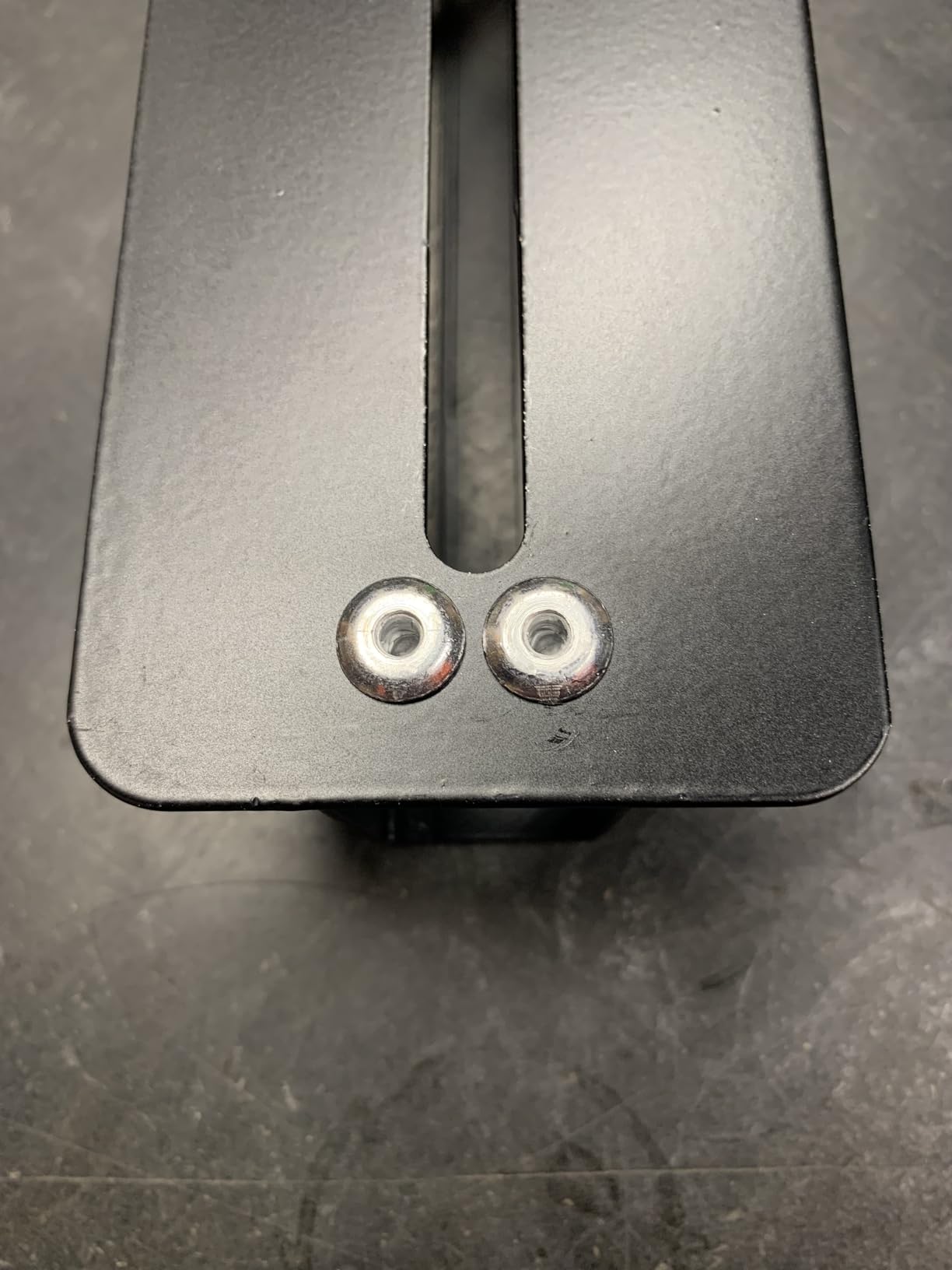
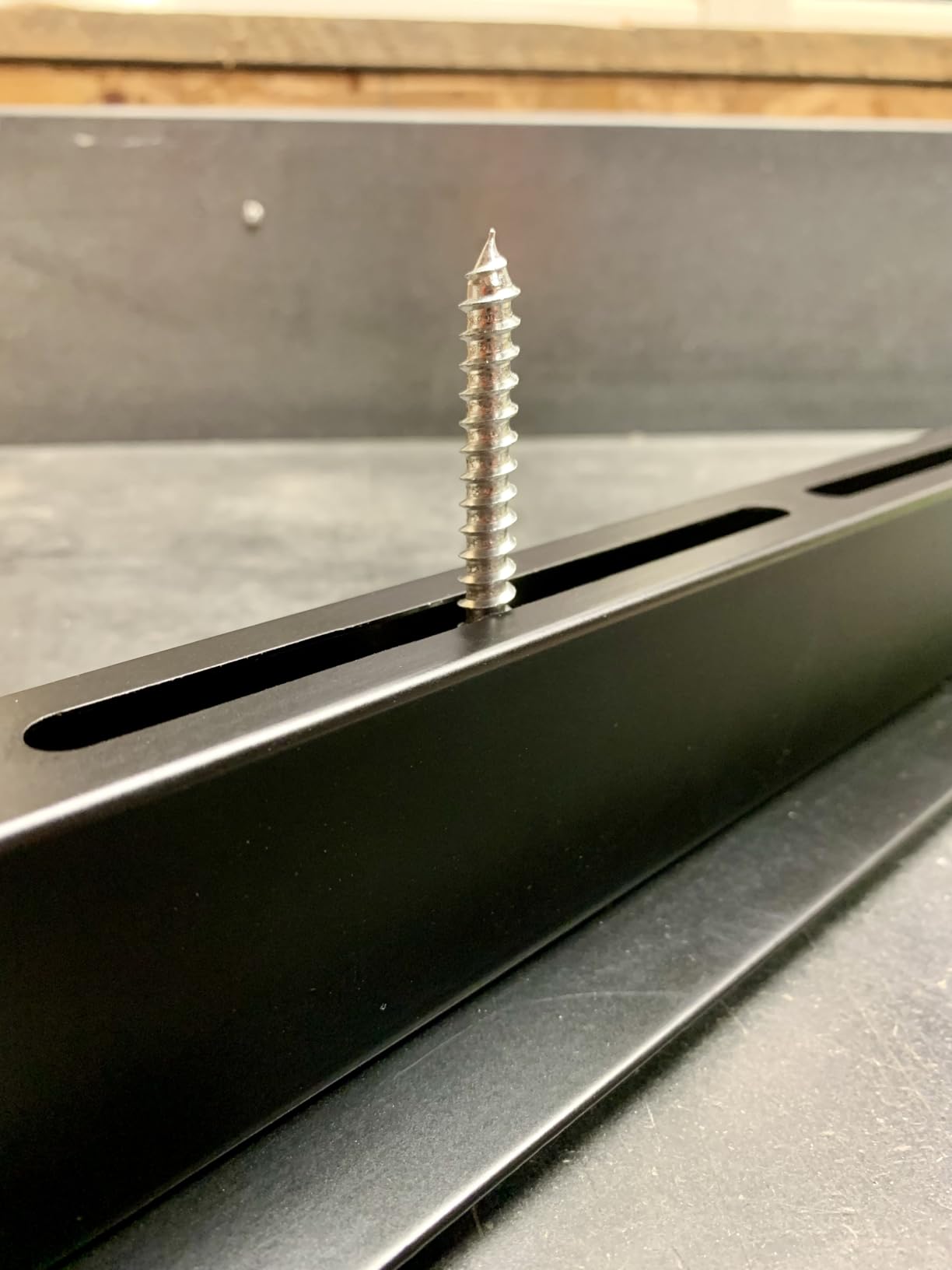
The bracket slot is too narrow for a socket, forcing an awkward Phillips driver at height. It turns a 20-minute job into a frustrating one, so bring the right bit from the start.
Capacity is the real limit. At 150 lb system-wide, this is for light seasonal bins, not gear, and the bins themselves are not included.
7. SafeRacks 4×4 Overhead Garage Storage Rack
SafeRacks 4×4 Overhead Garage Storage Rack, White, 24″-45″ Height
250 lb capacity
24 to 45 inch drop
48 x 48 inch platform
45 lb unit weight
Pros
- Compact 4x4 footprint fits single and double bays
- Two accessory hooks included in the box
- Full hardware kit with lag bolts and washers
- Limited lifetime warranty
Cons
- 250 lb is the lowest rating among platforms here
- Two-person install
- Stud placement on older homes may need added support
The 4×4 footprint is the reason to consider this. Most overhead racks are 4×8 and assume a wide bay, but a half-width platform drops into a single-car bay or above a workbench, where a full 4×8 will not go.
Capacity is 250 lb, the lowest among platforms here, and that is the honest trade. For crates, camp food and boxed decorations it is plenty. For a garage full of gear it is not.
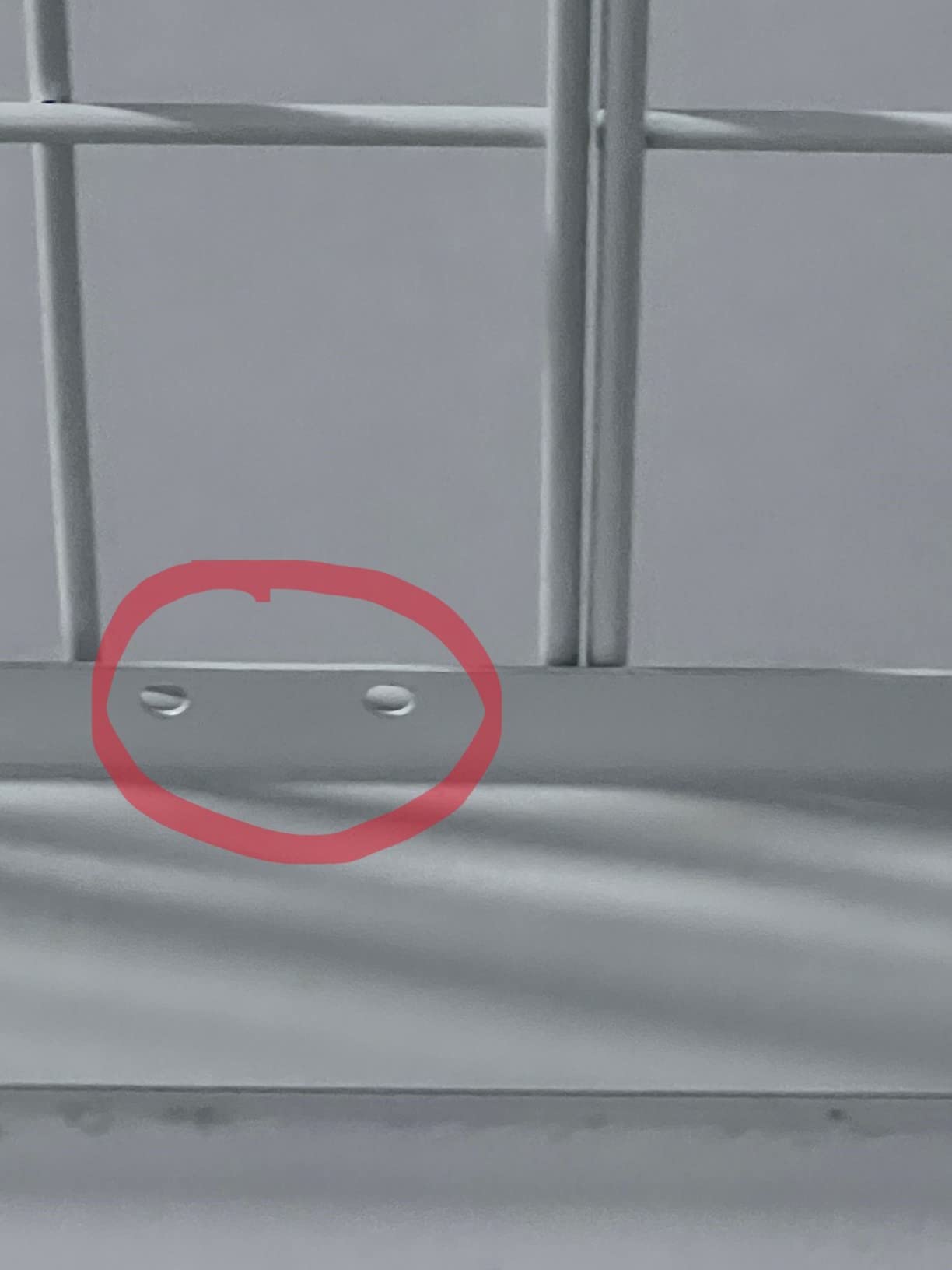
Drop runs 24 to 45 inches, so it works in low and tall ceilings alike. The unit is 45 lb and the hardware kit is complete, including lag bolts, hex bolts, washers and lock nuts.
Two accessory hooks come in the box, a small saving if you plan to hang bikes or ladders nearby. A nationwide network of certified installers is also available if you would rather not do ceiling work yourself.
At 45 lb this is light enough to maneuver into position on your own, which is unusual for a platform of this type. The included hardware kit also removes the most common reason a garage install stalls, a missing lag bolt halfway through.

Where a 4×4 platform makes sense
Two of these hold about as much as one 4×8, and spreading load across two smaller racks puts less weight on any single joist span. That is a real advantage in older garages with short spans.
A 4×4 also fits above a single parked car where a 4×8 would reach into the second bay, and the 24 to 45 inch drop clears a garage door track once you allow for the opener rail.
Where it falls short
The 250 lb rating is genuinely limiting. A handful of full totes reaches that number quickly, so this is a lighter-duty platform than anything else here.
On older homes the stud placement may require adding support studs, and a few owners report sway they trace to loose fasteners rather than the frame. It is a two-person job.
8. Ultrawall Overhead Garage Storage Rack for Six Bins
Ultrawall Overhead Garage Storage Racks for Bins, Ceiling Storage Rack
176 lb total capacity
Adjustable rail width
Two-screw bracket mount
Seven-piece set for six bins
Pros
- Lowest cost per bin position in the roundup
- Two screws per bracket is among the fastest installs
- Width adjusts to fit most storage box sizes
- T-shaped connectors let the system grow
Cons
- Lowest rating here at 4.2 stars
- 176 lb system capacity is small
- Hardware feels thin for full bins
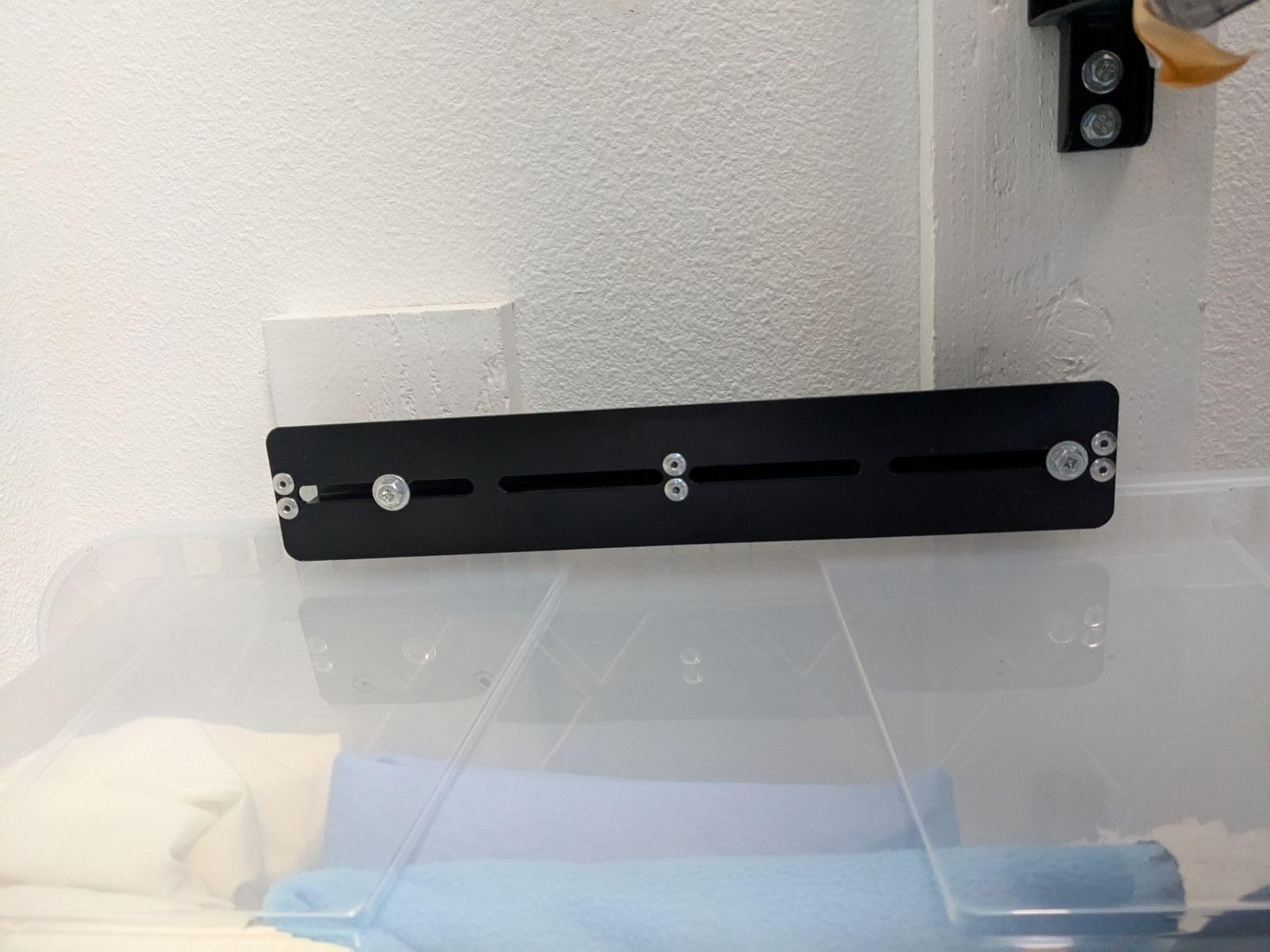
This seven-piece set is positioned for six bins and installs with only two screws per bracket into ceiling joists. That is among the fastest ceiling storage installs we covered, and it suits a weekend afternoon when you have other things to do.
The rails adjust in width to fit most common storage box sizes, which matters because bin widths vary widely between brands. T-shaped connectors let you extend the run later as storage grows.
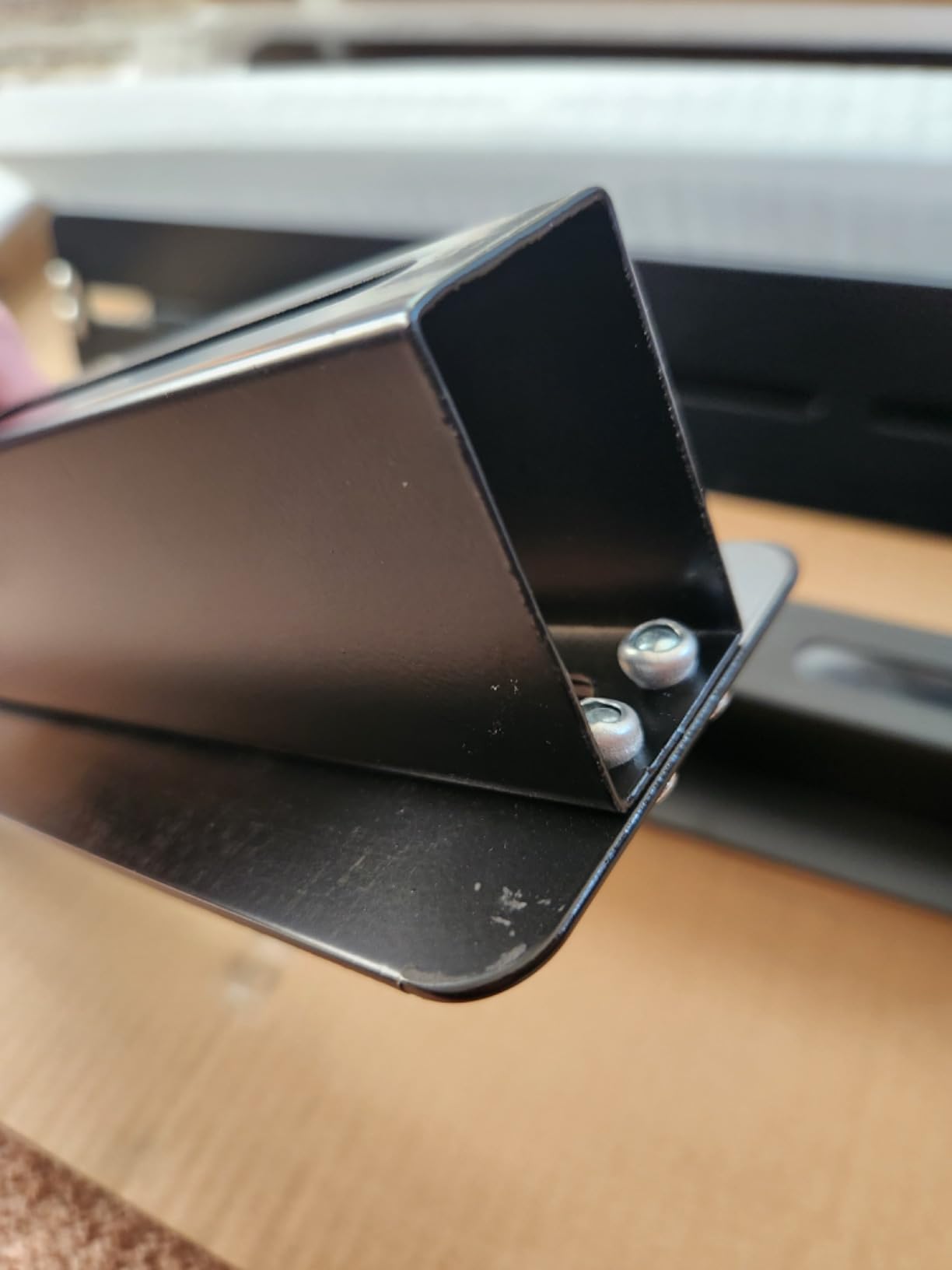
Construction is hardened steel rated to 176 lb for the system, and the rails measure 17 by 3 by 2 inches so the vertical profile stays small and bins sit close to the ceiling.
Reviewers most often mention the adjustable width and quick mount. Critical feedback concentrates on the modest rating and hardware thinner than buyers expected.
At 17 by 3 by 2 inches per rail, this is the least intrusive format here for low ceilings, and the two-screw mount keeps the total number of holes in the joists to a minimum.
Is it strong enough for your bins
Work out your total first. Six bins at 30 lb each is 180 lb, already over the 176 lb rating, so with a full set most bins should stay well under 30 lb. Lightweight seasonal items are the right fit.
Adjustable width suits a collection that is mostly one bin brand. Mixing narrow and wide boxes makes the fit awkward, so measure the widest and narrowest you own.
Where it falls short
The 4.2 star average is the lowest in this roundup, with a 12 percent one-star share. Lightweight hardware is the recurring theme in critical reviews, and this is not a rack for gear.
Fit also depends on exact box width, and bins are not included. If you want a rail that carries real weight, step up to a heavier system.
9. WALMANN Overhead Tote Storage Rails System
WALMANN Overhead Tote Storage Rails System, Garage Ceiling Bin Storage Rack
300 lb capacity
Four 27-gallon totes per set
16 inch or 24 inch joists
48.2 in rails
Pros
- Double-sided end rails add a slot when two sets pair up
- 300 lb rating is solid for a rail-only system
- Slide spacing adjusts for larger totes
- Powder-coated hardware feels robust
Cons
- Tight vertical clearance with tall or ridged lids
- Set holds fewer totes than the photos suggest
- Bins not included
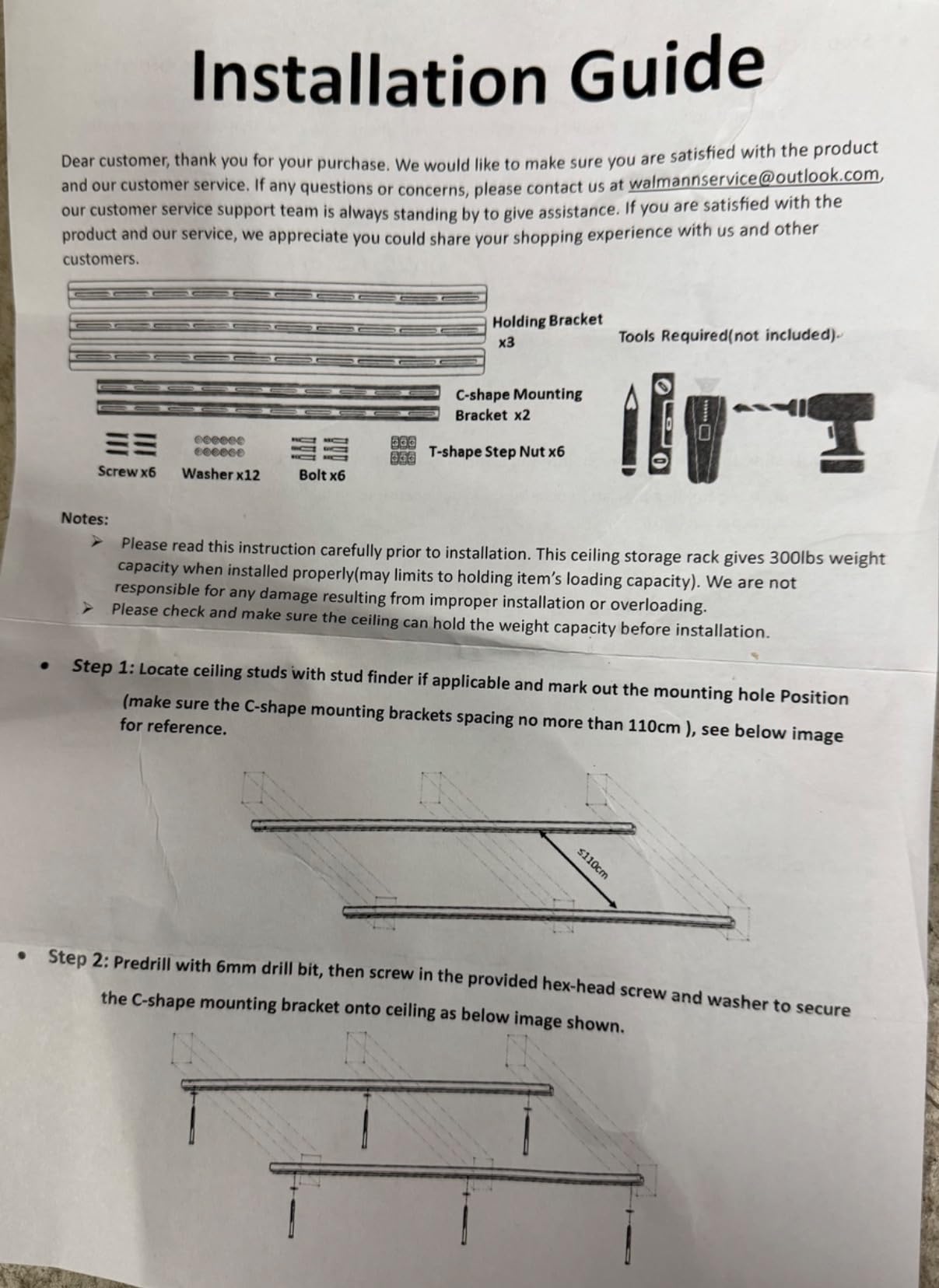
Each set holds four 27-gallon totes and rates to 300 lb, stronger than most hook-style rails here while keeping the format that slides bins forward. Rails are 48.2 inches long and the set weighs about 25 lb, easy to handle overhead from a ladder.
The feature I like most is the double-sided end rails. Mount two sets in parallel and the shared ends give you an extra slot, so eight totes fit where a conventional pair gives six. Buyers consistently mention this as the clever part.
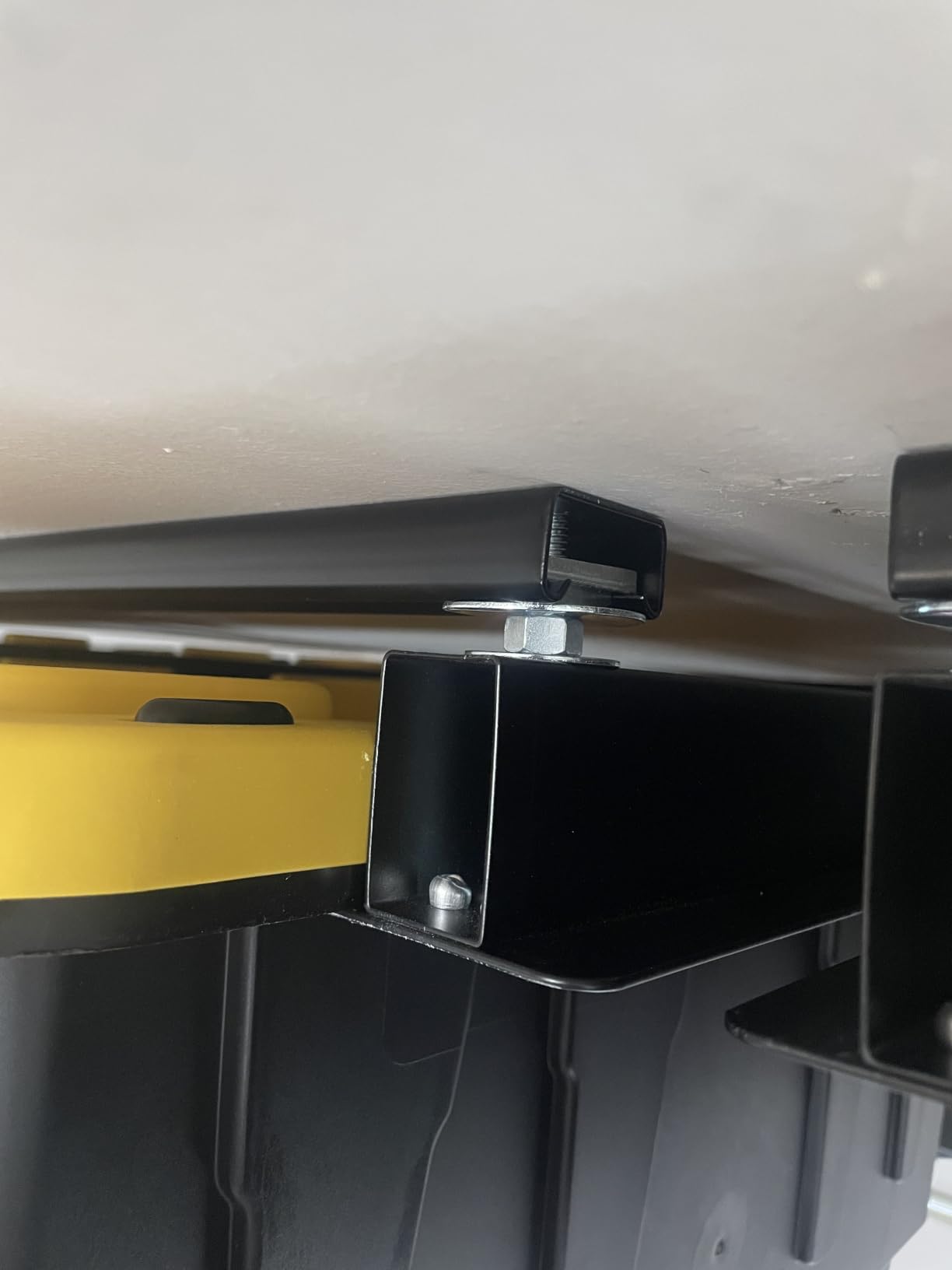
Slide spacing adjusts so you can widen the gap for larger holiday totes or narrow it for 17-gallon bins. Mounting works with 16 inch or 24 inch joists, and owners report smooth sliding with no wobble once fasteners are tightened.
At 300 lb the system rating is the second highest of the rail options here, and the powder-coated hardware feels more substantial than the lighter budget rails at the same size.
The 25 lb set weight is worth noting for a solo install, since it is light enough to hold overhead one-handed while driving the second bracket.
Clearance is the deciding factor
Plan for roughly 1.5 inches of headroom between the ceiling and the tote lid. That figure decides whether bins slide freely, and it is where most problems come from: ridged or tall-lid totes catch on the support member above.
If your lids are proud, several buyers add nylon spacers with longer hex bolts and oversized nuts to raise the rails. Test one bin before mounting all four positions.
Where it falls short
People consistently say the set holds fewer totes than the product images suggest. Plan for four per set and buy accordingly.
Clearance is the other limit, and bins are not included. Where a platform gives you a flat deck with no lid conflict, rails demand a lid that sits flat.
10. StoreYourBoard Ceiling Tote Storage Rails for Eight Bins
StoreYourBoard Ceiling Tote Storage Rails, Capacity for 8 Bins, Hold 400 lb
Eight 27-gallon totes
400 lb total, 50 lb per position
30 in rails, 15 x 15 mm tubing
16 inch or 24 inch joists
Pros
- Highest rating among rail systems at 4.6 stars
- 400 lb is the highest rail capacity here
- Rails hold loaded totes with no flex
- Spacing set at install so it matches your exact totes
- Lifetime manufacturer warranty
Cons
- Bracket spacing is fixed after install
- Tight tolerances mean off-measure layouts will not slide
- Bins
- anchors and safety bolts sold separately
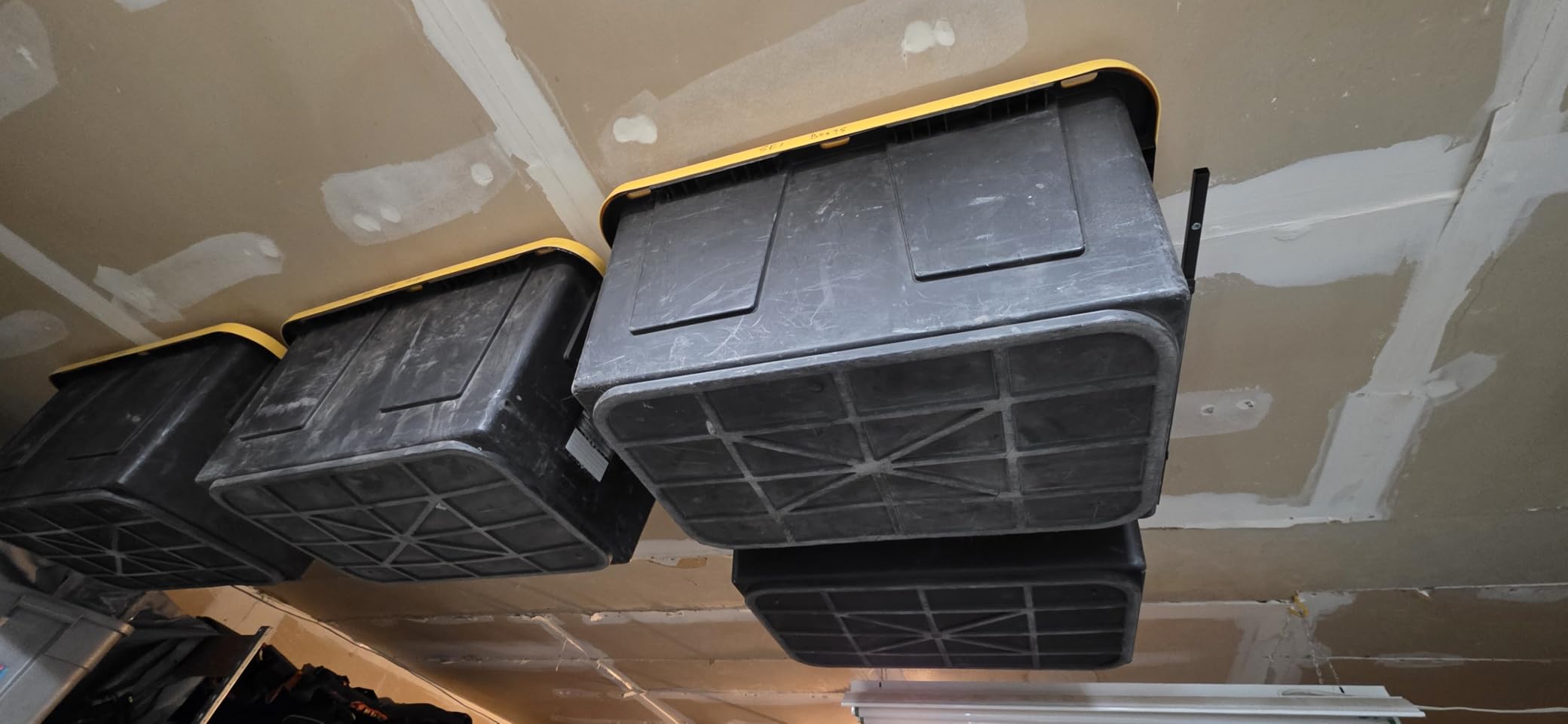
This rail set holds up to eight standard 27-gallon totes, or four in long-side orientation, rated 400 lb total at 50 lb per tote position. That per-position figure is the most generous on any rail here, so a genuinely full tote still slides.
Rails are 30 inches long and made from 15 x 15 mm powder-coated square steel tubing, which explains why they hold loaded totes without flex. The set weighs about 11.5 lb, light enough to mount from a ladder alone.
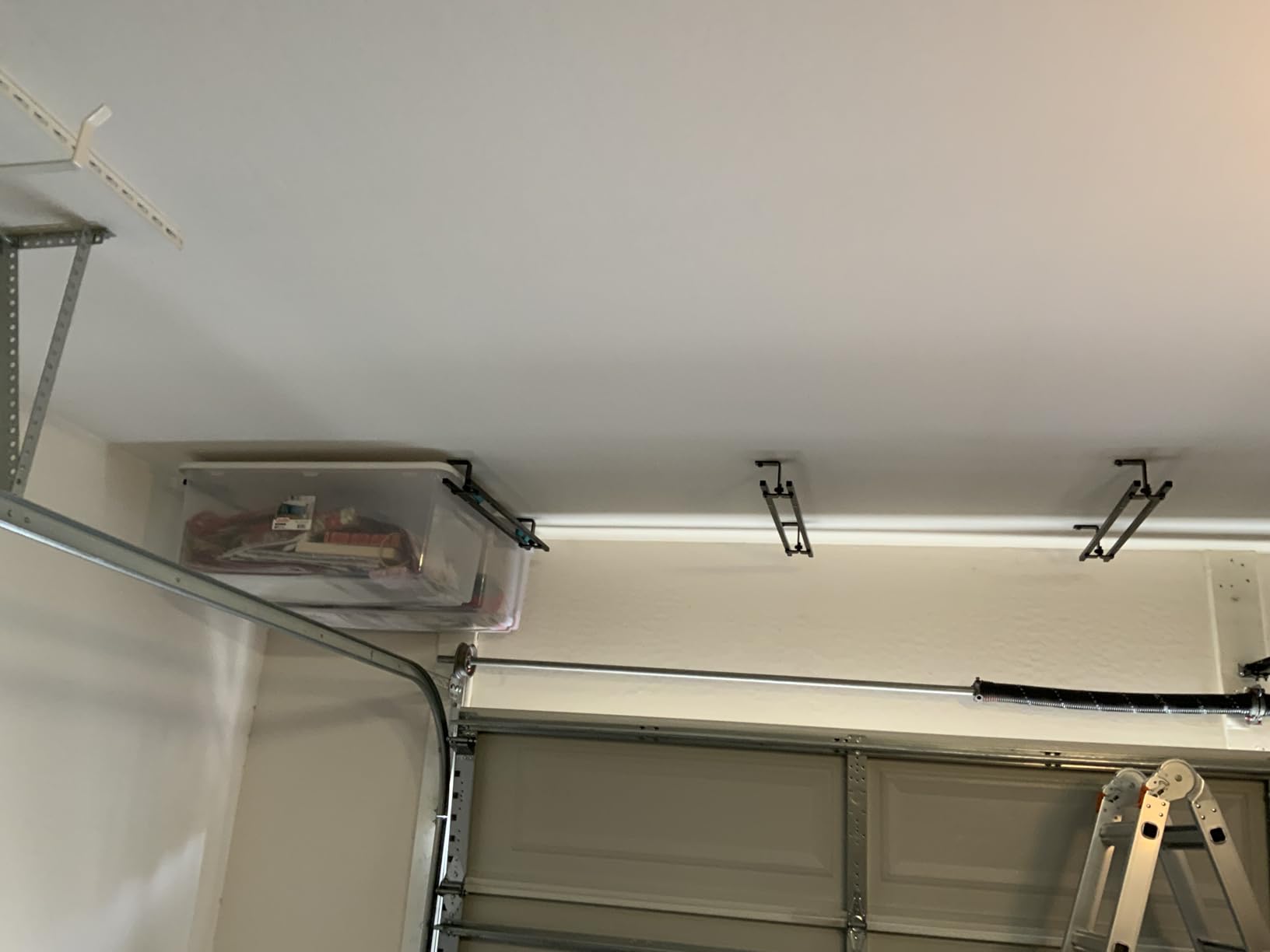
It fits 16 inch or 24 inch wood joist spacing, and concrete is possible with anchors you supply. One requirement matters: the tote support point must sit within 3 inches of the tote top, so rail height counts.
Row gaps are set at install rather than adjusted afterward. You get a layout tailored to your exact totes, but you cannot widen it later.
At 11.5 lb this is the lightest rail set in the roundup, which makes it the easiest to position overhead and the least tiring to install solo from a ladder.
Measure before you order
Because bracket positions are fixed, joist direction decides whether this installs at all. If your trusses run the wrong way you will need blocking between them first, and that is the most common snag buyers report.
Measure joist direction and spacing, then lay the rails on the floor with your actual totes and check the slide before reaching for the drill. Tighter tolerances mean an off layout has to be corrected rather than absorbed.
Where it falls short
The parts list is incomplete by design. Totes, concrete anchors and the safety stop with locking and anti-slide bolts are all sold separately, so the true cost lands after you order.
Heavy or frequently used bins are awkward to lift overhead regardless of system, and thin plastic tote bottoms can warp if stored loaded off the floor for months. Distribute weight and do not leave a full tote sitting.
How to Match an Overhead Rack to Your Storage Bins
Match the rack to the bins by how you plan to reach them, not by the capacity number on the box. A full platform is right when you want a general shelf for mixed items. A slide rail is right when bins are the main contents and you want to pull one down without moving anything else.
A standard 18-gallon tote is around 24 inches by 18 inches in plan view, and a 27-gallon tote is closer to 28 by 20. On a 4×8 platform you can fit four 27-gallon totes side by side with room to spare, or six to eight 18-gallon totes in a tighter grid. The E-Z slide system is the outlier here, holding 15 standard 27-gallon totes because each rail carries a row.
Weight is the other half of the match. Add up what your bins actually weigh when full, then keep the total under 70 percent of the rack rating. For a 750 lb platform that is about 525 lb; for a 500 lb rail set that is 350 lb. Builders in the garage forums make the same point, that people routinely mistake a rack rating for what the ceiling can carry.
One last practical factor: how you will get a full bin up there. Lifting a loaded 27-gallon tote to six feet is a genuine injury risk, and it is the reason slide rails and any lift-style system appeal to people with more bins than arm strength. A second person is the cheapest safety measure available.
How to Check Your Ceiling Joists Before You Buy
Check your ceiling structure before you buy anything, because a rack rating is meaningless if the joists cannot carry the load. Overhead racks anchor to wood ceiling joists only. Drywall anchors, plastic toggle studs and nail plates are not structural and are widely distrusted in garage communities for good reason.
First, identify what you have. Older detached garages often use 2×6 floor joists at 16 inch on center, while newer builds use engineered trusses, typically 2×8, at 24 inch on center. Carpentry forum threads show this confusion is constant, and the difference decides which racks will physically fit.
Second, measure your span. Joists that run a long distance between supports carry more load at mid-span, and short spans in compact garages leave less margin. A rough guide used in the trade is that conventional load-bearing joists give about a ten times margin over typical hanging loads, which is why installers work to a 70 percent static-load limit rather than the full number.
Third, locate the joists with a stud finder and confirm with a screw test. Cheap magnetic finders fail on single 2x lumber more often than people expect, and drilling into empty air or into a nail plate wastes an afternoon.
Also confirm clearance before you order. The garage door rail and opener hardware need room, and hitting them is the most common reason a rack has to be unbolted and re-hung. Measure from the finished floor to the underside of the opener rail, and subtract the drop you plan to use.
How to Install an Overhead Rack Safely
Install in four steps, and the order matters more than the tools. My sequence after a dozen installs is mark, plan, pre-drill, then mount to joists only.
Mark your joists. Run the stud finder across the whole bay, then verify each hit with a pilot screw. Mark the edges of every joist on the ceiling with a pencil line so you can see the full span, not just one point.
Plan the anchor points. Lay the rack template on the ceiling and confirm the brackets land on wood, not between joists. A long-span bracket that crosses three joists spreads the load and is worth choosing when your joists sit at 24 inch spacing.
Pre-drill the pilot holes. Drill a hole slightly smaller than the screw shank in each joist before driving the lag screw. This prevents the wood from splitting and keeps you from over-torquing, which is the most common way people strip a joist and end up with a loose rack.
Mount to joists only. Drive the lag screws into wood, tighten to the manufacturer specification, then re-check every fastener after a week of load. Never rely on drywall for any part of an overhead load.
Add one safety habit. Walk the perimeter of your rack and check the fastener heads once a month for the first three months, then twice a year after that. Overhead racks settle slightly as wood and steel find their load, and a re-torque schedule catches it early.
If your garage has trusses running the wrong direction, or you are renting and cannot confirm what is above the drywall, stop and have a professional look. Structural questions on a load-bearing ceiling are the one part of this project not worth guessing at.
What Not to Store Overhead
Do not store liquids overhead. Paint, solvents, fuel and cleaning chemicals belong on a floor-rated shelf in a sealed cabinet, because a leaking container six feet above your car is a hazard you cannot control.
Power tools should stay at waist height. You will use them weekly, and overhead retrieval means a ladder and two hands occupied. The same goes for anything you grab more than once a month.
Avoid lumber and long stock on overhead platforms, which concentrate point load in the middle of the deck between joists, and skip anything fragile or crushable. Totes of clothing, seasonal decorations and camping gear are the right load.
Check loaded weight before it goes up, and keep the total under 70 percent of the rating. If a bin is too heavy to lift safely to ceiling height, that is a signal to leave it on the floor, not to add a second person and hope.
Frequently Asked Questions
What is the best overhead garage storage rack?
The best overhead garage storage rack for bins is a 4×8 steel platform rated for 600 lb or more, suspended from at least three ceiling joists with side rails that stop totes sliding. It should offer an adjustable drop of roughly 22 to 40 inches so bins clear the garage door rail and parked vehicles. Match the rating to your total loaded bin weight and keep the load under 70 percent of the number on the label.
What is the best storage rack for totes?
For totes specifically, a sliding tote rail beats a solid platform because you can pull one bin forward without unstacking anything above it. A full 4×8 platform fits about four 27-gallon totes side by side, while a slide system can hold 15 on the same footprint. If you mostly want general shelf space, choose a 4×8 platform with a 500 lb or higher rating.
Are overhead garage storage racks safe?
Overhead garage storage racks are safe when they are bolted into wood ceiling joists and loaded within limits. Mount into at least three joists, use lag screws with pilot holes, and keep the total load under 70 percent of the rated capacity. Never hang a rack from drywall, a nail plate or a plastic anchor. Re-torque the fasteners twice a year and after any heavy loading.
How much weight can garage ceiling storage racks hold?
A 4×8 overhead platform typically holds 500 to 800 lb of rated capacity, with common ratings of 750 lb and 800 lb. A conservative working limit for a static overhead load is 70 percent of that rating, so a 750 lb rack is treated as about 525 lb of actual bins. Rail systems rate much lower, usually 150 to 400 lb for the whole system.
How much weight can garage ceiling joists hold?
It depends on joist size, span and spacing rather than a single number. Older garages with 2×6 joists at 16 inch on center and short spans have the least margin, while 2×8 joists or engineered trusses at 24 inch on center carry more. A useful rule is to treat your joists as having roughly a ten times margin over a typical hanging load, then stay well under it.
How much weight can I put in my garage rafters?
Very little, in practice. Roof rafters and truss bottom chords are designed to carry roof load along their length, not concentrated hanging loads at mid-span, and they deflect more than floor joists. Mount overhead storage to the lowest wood joists attached to the building frame, and ask a structural engineer before adding load to a truss bottom chord.
What are the best storage bins for a garage?
Standard 18-gallon and 27-gallon lidded totes are the most practical for overhead storage. A 27-gallon tote is close to 28 by 20 inches in plan view, so four fit side by side on a 4×8 platform, and it is light enough to slide on a rail. Choose bins with flat or low-profile lids, since ridged lids catch on the support member above a rail.
How much clearance do I need above my car for an overhead rack?
Measure from the finished floor to the underside of your garage door opener rail and the door track, then subtract the drop height you plan to use. A rack set at 24 to 40 inches is the common range, and a 40 inch drop under a 9 foot ceiling still leaves generous headroom. Hitting the door rail is the most common reason a rack has to be unbolted and re-hung.
What are common garage shelving mistakes?
The most common mistakes are anchoring into drywall instead of joists, over-torquing lag screws and stripping the pilot hole, mounting on only two joists, loading past 70 percent of the rating, and ignoring garage door rail clearance before ordering. Running a screw into a nail plate or drilling into empty air is also common, so verify every joist with a pilot screw first.
How long does it take to install an overhead garage rack?
A 4×8 platform with pre-installed mounting hooks takes roughly two to three hours with two people. A rack that arrives as separate frame pieces and a wire deck takes longer, closer to four hours, and heavy welded racks are best treated as a full afternoon with an impact driver. Add time for a pilot hole at every anchor point and a re-torque check after the first week of loading.
Best Overhead Garage Storage Racks for Bins: The Verdict
The best overhead garage storage racks for bins come down to one decision: do you want shelf space or access? The FLEXIMOUNTS 4×8 is our pick for most garages, with a 750 lb rating, a 22 to 40 inch drop and the largest body of customer feedback in the group. The E-Z Garage Storage Tote Slide PRO wins when bins are everything you store and pulling one down without moving the rest matters more than raw shelf area.
Whatever you choose, measure your joist spacing and your door rail clearance first, mount into wood only, and keep your loaded bins under 70 percent of the rating. Those three steps decide whether an overhead rack is an asset or an afternoon of regret, in any 2026 garage.