
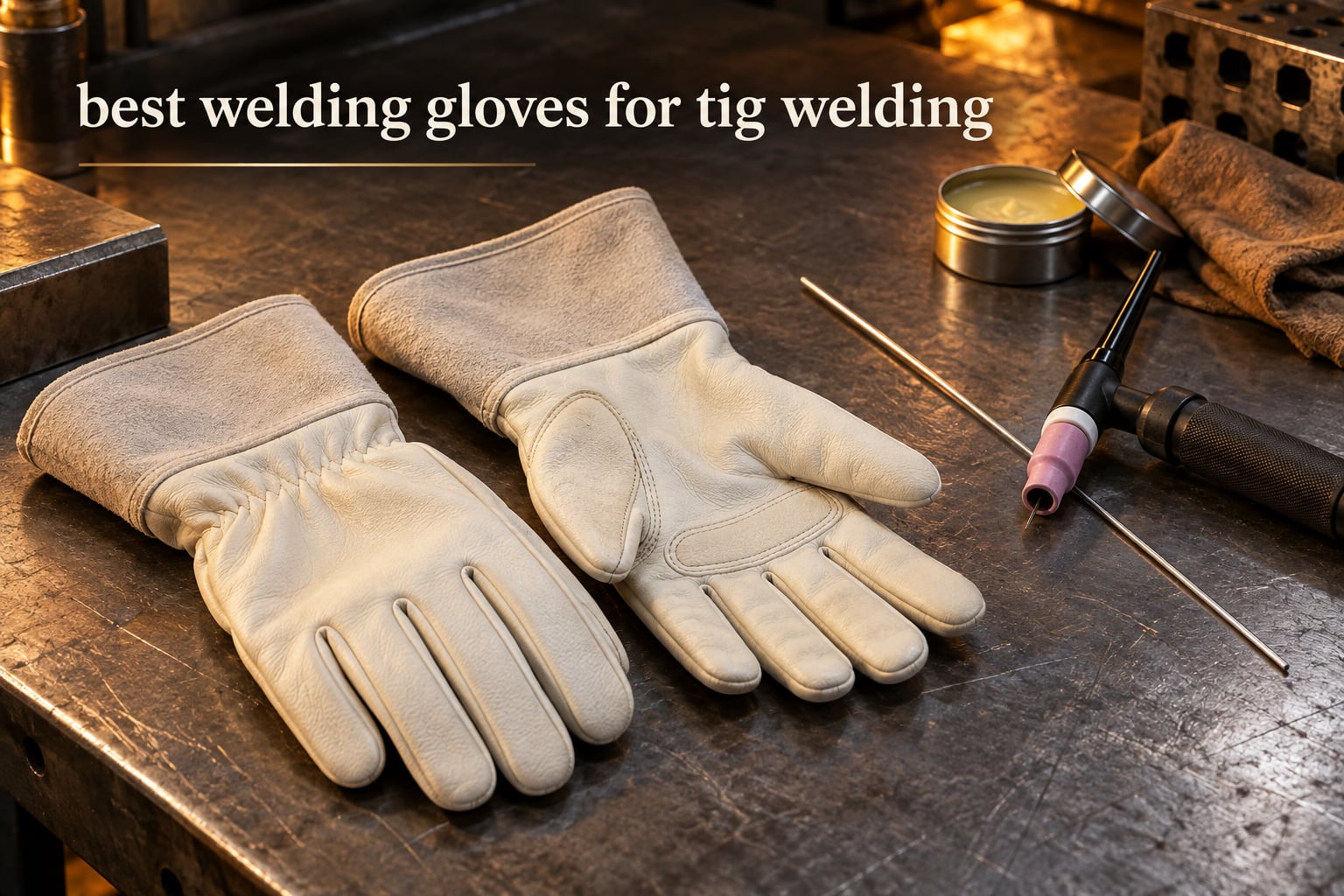
TIG welding gloves are the most specialized piece of PPE in the shop, because gas tungsten arc welding makes far less heat, spark and spatter than MIG or stick. That changes what the glove has to do. A TIG glove prioritizes tactile feel, dexterity and heat resistance using supple top-grain leathers like kidskin and goatskin, so your hand can feel and feed 3/32 filler rod while still handling radiant heat, spatter and UV. Thin leather is the correct answer here, not a compromise.
We spent weeks putting ten of the most-welded TIG gloves through rod-feed drills, handling hot coupons and a lot of shop-floor wear, then compared them on leather type, seam construction, cuff length, heat rating and fingertip durability. The results surprised us in one direction: the gloves that felt best were rarely the ones with the longest spec sheet. If you are new to GTAW, our TIG welder picks for aluminum and welding helmet guide for beginners cover the rest of your kit.
Two variables decide almost everything: leather thickness, which sets your heat ceiling, and finger length, which decides whether you can feel the rod at all. Get both right and the glove disappears on your hand. Get either wrong and you will either cook your fingertips in a month or lose the feel that TIG is judged on. Everything below is built around those two decisions, plus the honest truth that thin TIG gloves are consumables, not investments.
Table of Contents
Top 3 Picks for Best Welding Gloves for TIG Welding in October

Tillman 1338 Goatskin TIG Glove
- Pearl top grain goatskin
- 4-inch cuff
- Glide patch
- Reinforced thumb


Caiman 1600-5 Goat Grain
- Goat grain palm and back
- Unlined for feel
- 4-inch gold cuff
- Kevlar thread
All 10 TIG Welding Gloves Side by Side in 2026
Every glove below got the same treatment. Ratings and review counts are taken from the live listings, and every pick earned its spot on feel, construction and how it held up after weeks of filler rod work. The leather column is the one to read first, because it is the single biggest driver of both dexterity and heat ceiling.
| Product | Specifications | Action |
|---|---|---|
| Tillman 1338 Top Grain Goatskin TIG Gloves |
|
Check Latest Price |
| Lincoln Electric K2981 Grain Leather TIG Gloves |
|
Check Latest Price |
 Caiman 1540-5 Goat Grain TIG/Multi-Task Gloves Caiman 1540-5 Goat Grain TIG/Multi-Task Gloves |
|
Check Latest Price |
| Caiman 1600-5 Goat Grain TIG Welding Gloves |
|
Check Latest Price |
 Tillman 1488M TrueFit TIG Gloves Tillman 1488M TrueFit TIG Gloves |
|
Check Latest Price |
 Defiant Metal Premium Black Goatskin TIG Gloves Defiant Metal Premium Black Goatskin TIG Gloves |
|
Check Latest Price |
 IRONCAT 6141 Kidskin TIG Welding Gloves IRONCAT 6141 Kidskin TIG Welding Gloves |
|
Check Latest Price |
 YESWELDER AP-1077-L Goatskin TIG Gloves YESWELDER AP-1077-L Goatskin TIG Gloves |
|
Check Latest Price |
 Superior Glove Endura 370GFKL TIG Gloves Superior Glove Endura 370GFKL TIG Gloves |
|
Check Latest Price |
 ARCCAPTAIN Duralble TIG Welding Gloves ARCCAPTAIN Duralble TIG Welding Gloves |
|
Check Latest Price |
A note before the individual write-ups. Three of these gloves carry a published heat or cut rating, and the rest do not, which is normal for this category rather than a red flag. Unrated does not mean unsafe for TIG, it means no lab certificate backs the number. If your work is governed by a procedure document, check with your shop QA before you buy on our recommendation alone.
1. Tillman 1338 Top Grain Goatskin – Best Overall TIG Welding Gloves
Tillman unisex adult Tig Welding Gloves R3SC34122981, White, X-Large Pack of 1 US
Pearl top grain goatskin
4-inch cuff
Glide patch
Reinforced straight thumb
Kevlar sewn
Pros
- Excellent rod-feed feel
- Soft pliable pearl goatskin
- Reinforced thumb handles torch dragging
- Strong Kevlar seams
Cons
- Thin
- not for MIG or stick
- Can stiffen after heavy heat exposure
These are the best welding gloves for TIG welding in the category because nothing else combined this much verified feedback with this little complaint. The Tillman 1338 sits at a 4.7 rating across 1738 reviews, and the recurring word in almost every one of them is feel. Pearl top grain goatskin is a soft, full-grain hide that stays supple straight out of the box, so the first session does not feel like breaking in a new boot.
We put the 1338 through a full evening of 3/32 rod feeding on 16 gauge stainless and the finger separation was immediate and clean. The straight thumb, rather than a keystone, gives a flatter grip on the torch, and the reinforced thumb took every scrape of torch-on-work contact without complaint. The glide patch on the side of the glove did exactly what it is designed to do, which is protect the most abraded area when you drag a torch along a fillet.
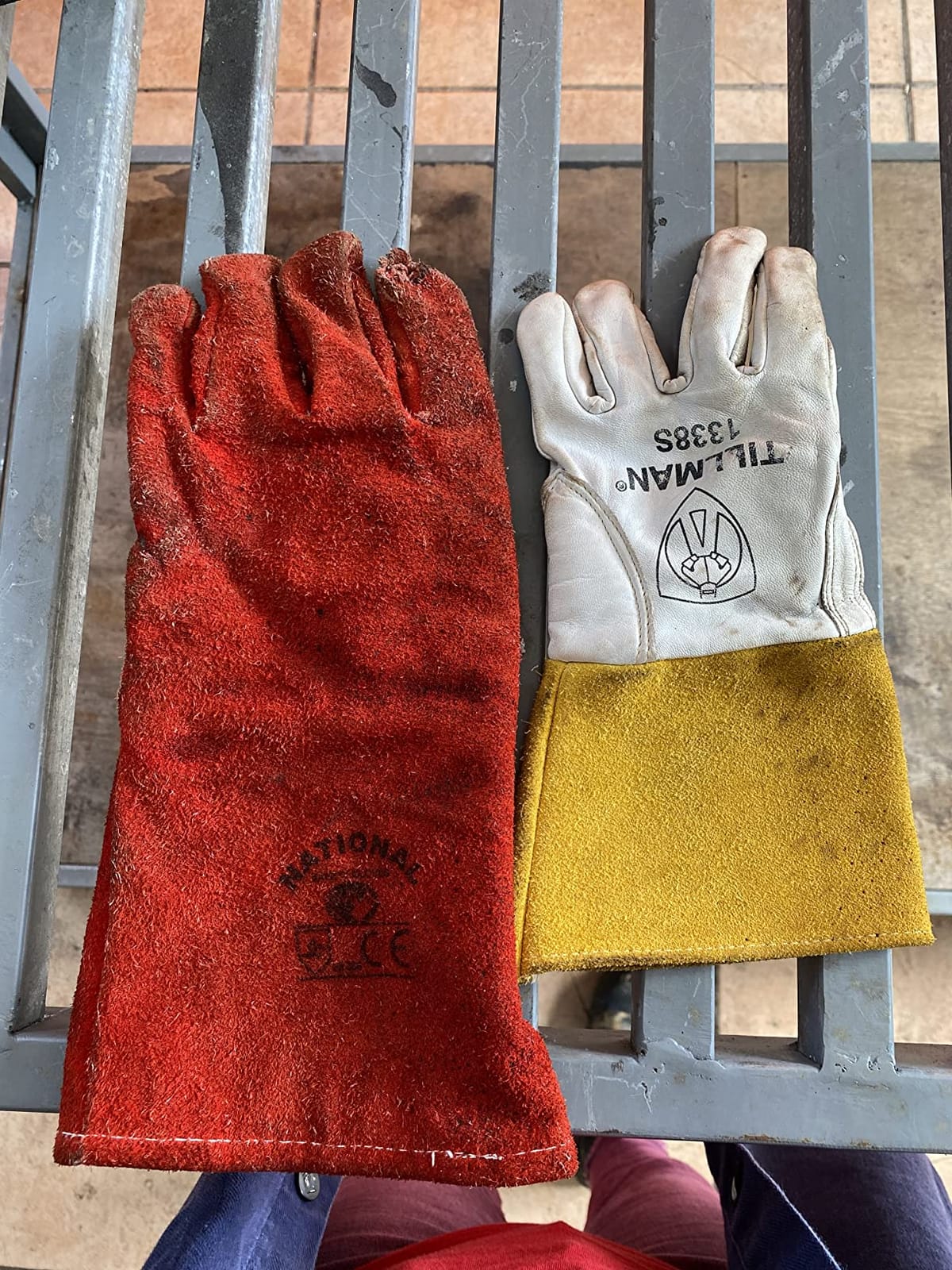
Where the 1338 gets interesting is durability over time. Kevlar sewing on the load-bearing seams means the glove will not separate along the drag path, which is where cheaper TIG gloves tend to give up first. What we did see is stiffening. Leather that has been near high heat repeatedly loses some of its pliability, and after several weeks of 150 amp work the gloves feel noticeably firmer than they did new. If you run hot work all day, plan on a rotation rather than expecting one pair to last a season.
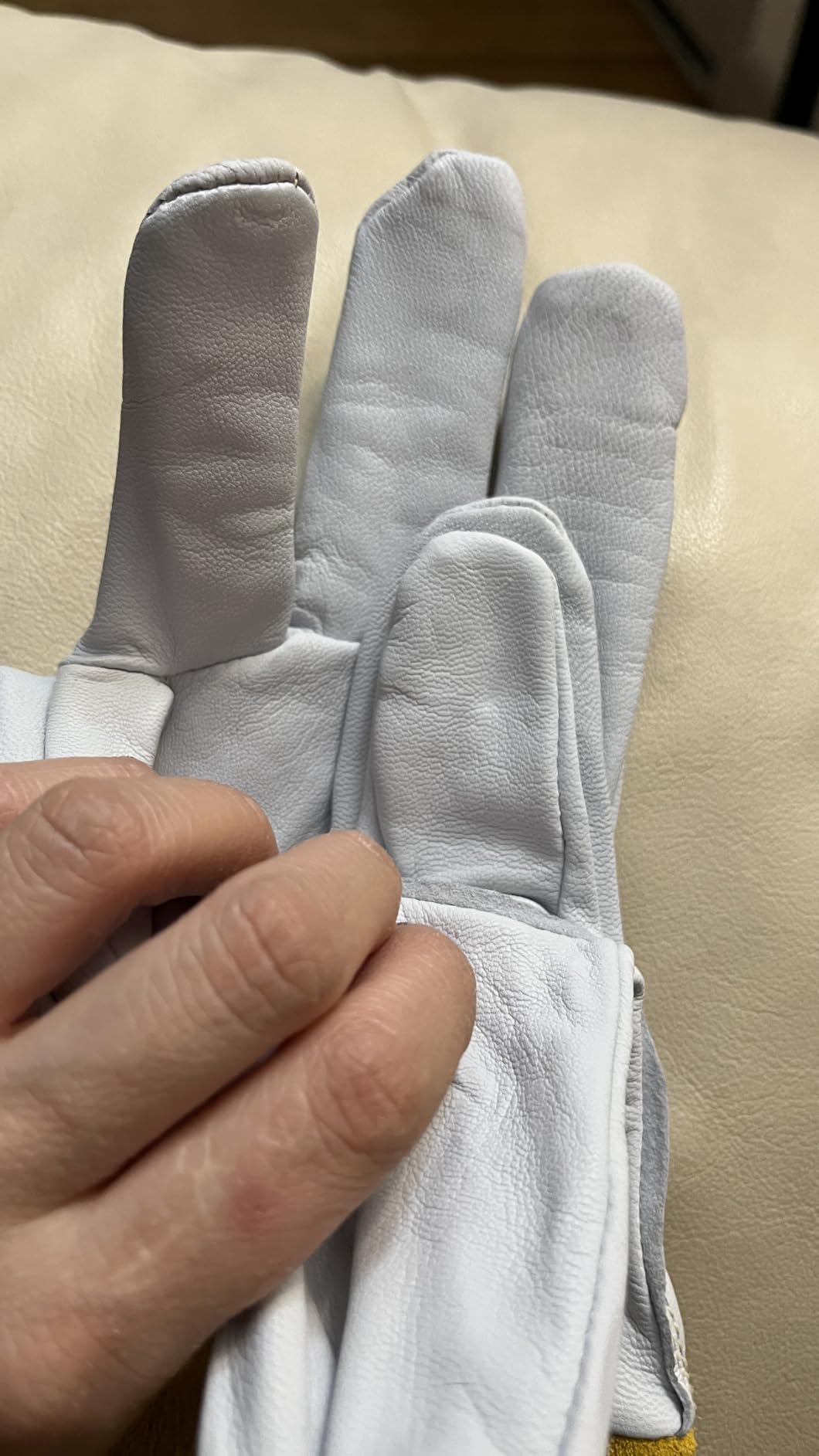
How the cuff and fit hold up in daily use
The 4-inch cuff is the sweet spot for TIG specifically. It covers the wrist against spatter without adding the bulk that makes long cuffs annoying to put on and take off. Over a full shift the cuff slides back into place on its own, which means you are not constantly tugging your glove down mid-pass. This is also the glove most experienced TIG hands reach for as a first pair, and the reason is simple: it disappears.
Sizing is the one thing to check before you commit. Some hands report running slightly small, so if you are between sizes, size up rather than trusting the letter on the box. Finger length is even across the glove, so the fingertips are covered, which is the main cause of burn-through complaints in cheaper pairs.
Where it falls short
This is a thin goatskin glove and it is honest about that. It is not a MIG or stick glove, and using it for material handling or grinding will put holes in it in a hurry. The seam is well made but the hide itself is not designed for abrasion, so keep it on the torch hand and off the bench.
It also offers no published heat rating at all, which is normal for this type of glove but worth knowing if your procedure documents require certification. If you need a documented rating, look at the IRONCAT 6141 or the Superior Glove Endura later in this list.
2. Lincoln Electric K2981 Grain Leather – Best Professional TIG Gloves
Lincoln Electric Grain Leather TIG Welding Gloves | High Dexterity | Large | K2981-L, White, Black
Soft grain leather
3-part sewn fingers
Kevlar thread
4-inch leather cuff
Pros
- Long proven professional design
- 3-part fingers improve feel
- Multiple sizes available
- Solid seam strength
Cons
- Costs more than most rivals
- Runs warm at high amperage
- Leather thinner than heavy MIG gloves
The K2981 is the glove you will see in shops that have been doing this a long time, and that is not a coincidence. Lincoln Electric states the design has been used by professionals for close to a decade, and the K2981 is the model most of those shops settled on. It carries a 4.6 rating across 1742 reviews, the highest review volume of any glove we tested alongside the Tillman.
What makes it distinctive is the 3-part sewn finger construction. Instead of two flat panels per finger, three shaped panels wrap the digit, so the leather follows the natural bend. Our rod-feed test showed a slightly better tactile response at the fingertip than the Tillman 1338, which is the opposite of what the softer goatskin suggestion would predict. The grain leather here is a touch firmer but better shaped.
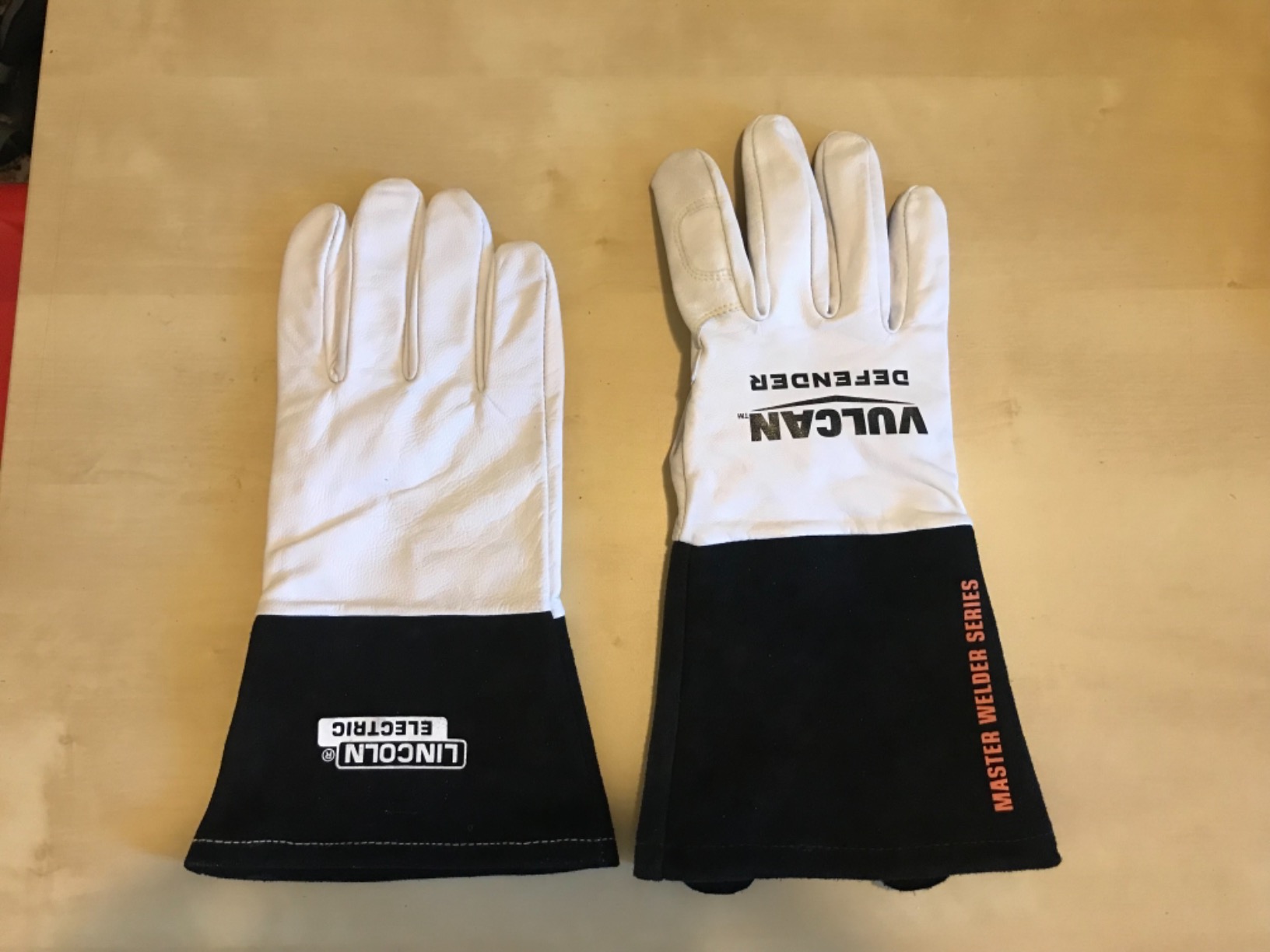
Seams are Kevlar thread throughout the hand, and the leather reinforced thumb takes the same torch drag abuse the Tillman does without complaint. The 4-inch leather cuff gives slightly better abrasion protection than a fabric-back cuff, which matters if you are grinding nearby or setting hot coupons down on your forearm. Sizes run from M to XL on this listing, so this is a glove to order carefully rather than grab.
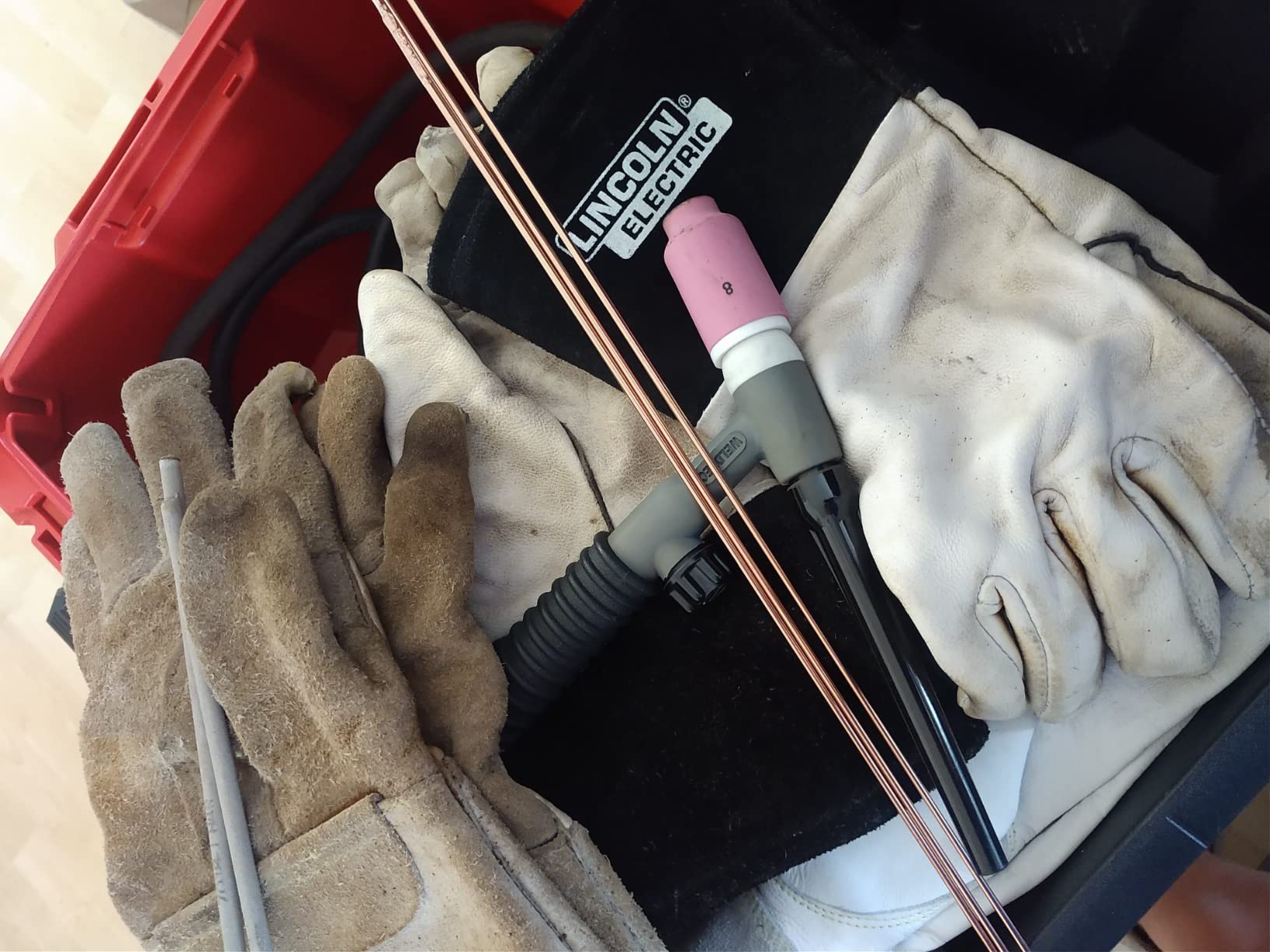
Where professional shops rate it highest
For full-shift work, two details matter more than feel. First, the K2981 does not stretch out at the cuff the way thinner unlined gloves do, so it keeps its seal after a month of on and off. Second, the finger panels hold their shape, which means the glove still fits after weeks rather than going bagy at the knuckle. Our advice: if you weld TIG eight hours a day, buy two and rotate them.
The reinforced thumb on the K2981 is the version we prefer for anyone who rests the torch neck on their hand between passes, which is a habit that quietly cooks fingertips in thin gloves.
Where it falls short
Heat is the honest limit here. Multiple owners note the gloves get warm during extended high-amperage sessions, and the leather is thinner than what a MIG or stick job would need. Running 180 amps on copper all day in these is asking for a hot, sweaty hand and eventually a thin spot.
It is also the priciest of the mainstream goatskin options in this roundup. For a hobbyist welding a few hours a week, the return on that spend is thinner. For someone who welds daily, the cost per weld makes sense almost immediately.
3. Caiman 1540-5 Goat Grain – Best TIG Gloves With a Durable Back
Caiman Premium Goat Grain TIG/Multi-Task Welding Gloves, Split Cowhide Back, 4-Inch Extended Cuff, White/Gold, Large (1540-5)
Goatskin palm with split cowhide back
4-inch extended cuff
ANSI Heat Level 2,392F
Kevlar stitching
Pros
- Split cowhide back resists abrasion
- Contact palm reinforcement and drag patch
- Best sellers rank #6 in welding gloves
- Heat Level 2 at 392F
Cons
- Palm leather thin
- thumb and index fingertips wear fast
- Sizing runs small for some
This is the one glove in the roundup that solves a problem nobody else addresses: the back of the hand. Every other glove here is full goatskin, which is superb for feel and terrible for the abrasion you take when setting your torch down, brushing off slag or grabbing a hot coupon with the back of your hand. The Caiman 1540-5 puts split cowhide on the back, which is roughly twice as tough for that abuse, and keeps the goatskin where it matters, on the palm.
It is rated to ANSI Heat Level 2 at 392F, and at 6.4 ounces it is still a light glove. The Kontour design pre-shapes the hand and the Kontour wrist system holds position, so the cuff does not migrate. Our handling test showed good control on 304 stainless root passes, where glove feel matters more than raw heat protection because the amperage is low and the work is fussy.
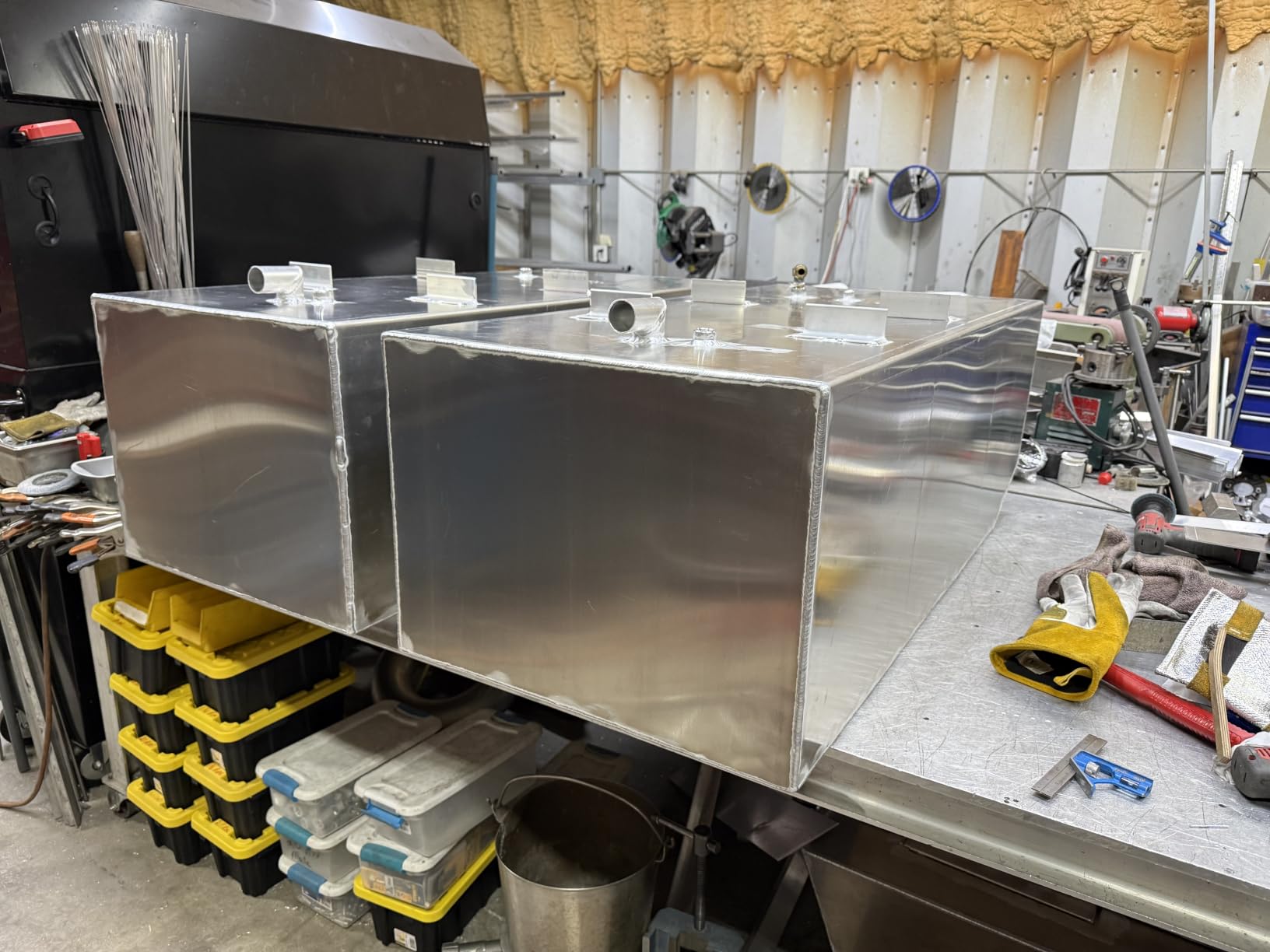
The 4.3 rating across 1482 reviews is the lowest of the group, and reading the reviews explains exactly why. Everything negative clusters on one point: the palm is thin, and the thumb and index fingertips wear through faster than owners expect. On a 4.3 average with this volume of feedback, the diamond pattern is consistent, not a one-off complaint.
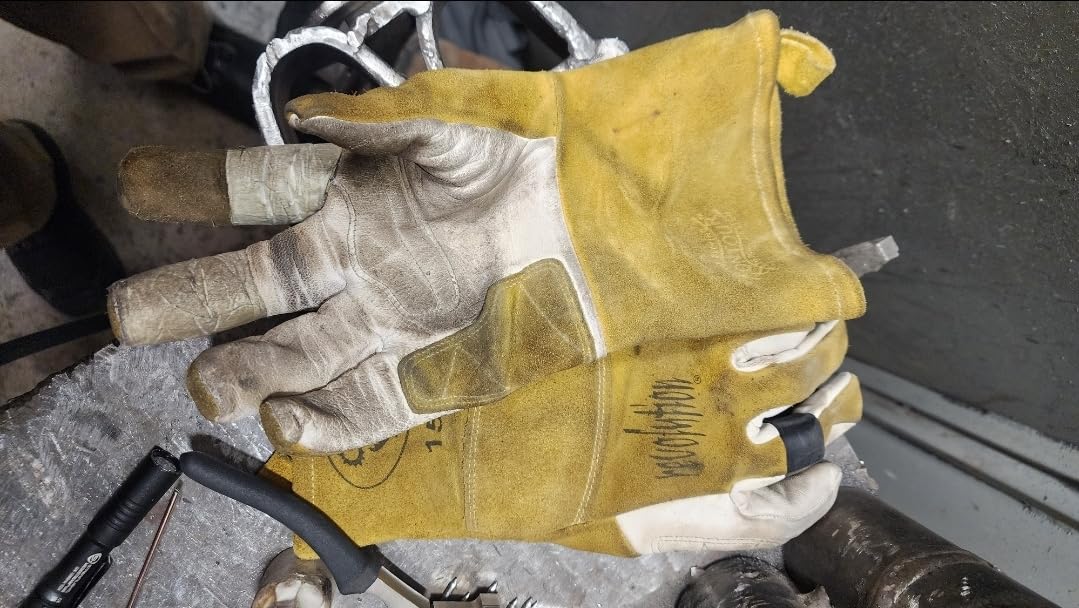
When the cowhide back actually earns its place
Thin-wall stainless is the use case this glove wins. Those root passes are low amperage, so you never need a heavy heat rating, but they are long, fiddly and full of glove repositioning. The cowhide back means you can brace your hand on the tube without worrying about scuffing the hide, which is the motion that wears out the back of a full goatskin glove in a month.
It is also a good pick for anyone who TIGs and occasionally handles raw material, because the abrasion risk lives on the back. Just not for the palm side, which is still goatskin and still thin.
Where it falls short
Sizing runs small for a portion of owners, and this glove is already shaped, so an undersized fit is not a subtle problem. Try them on or order a size up if you have broad hands. The Kevlar stitching holds, but the hide behind it is thin.
It is also not a heavy stick or MIG glove, and the reviews say so directly. If your work rotates processes constantly, pair it with a heavier glove for the non-TIG half of the week.
4. Caiman 1600-5 Goat Grain – Best Value TIG Welding Gloves
Caiman Premium Goat Grain TIG Welding Gloves, 4-Inch Gold Extended Cuff, Unlined, White/Gold, Large (1600-5)
Goat grain palm and back
Unlined,3.2 oz
4-inch gold split cowhide cuff
ANSI Heat Level 2,284F
Pros
- Lightest glove in the roundup at 3.2 oz
- Unlined for maximum rod feel
- Thicker goat grain than most rivals
- Gold extended cuff
Cons
- Lowest heat rating here at 284F
- White shows dirt immediately
- Sizing can run small
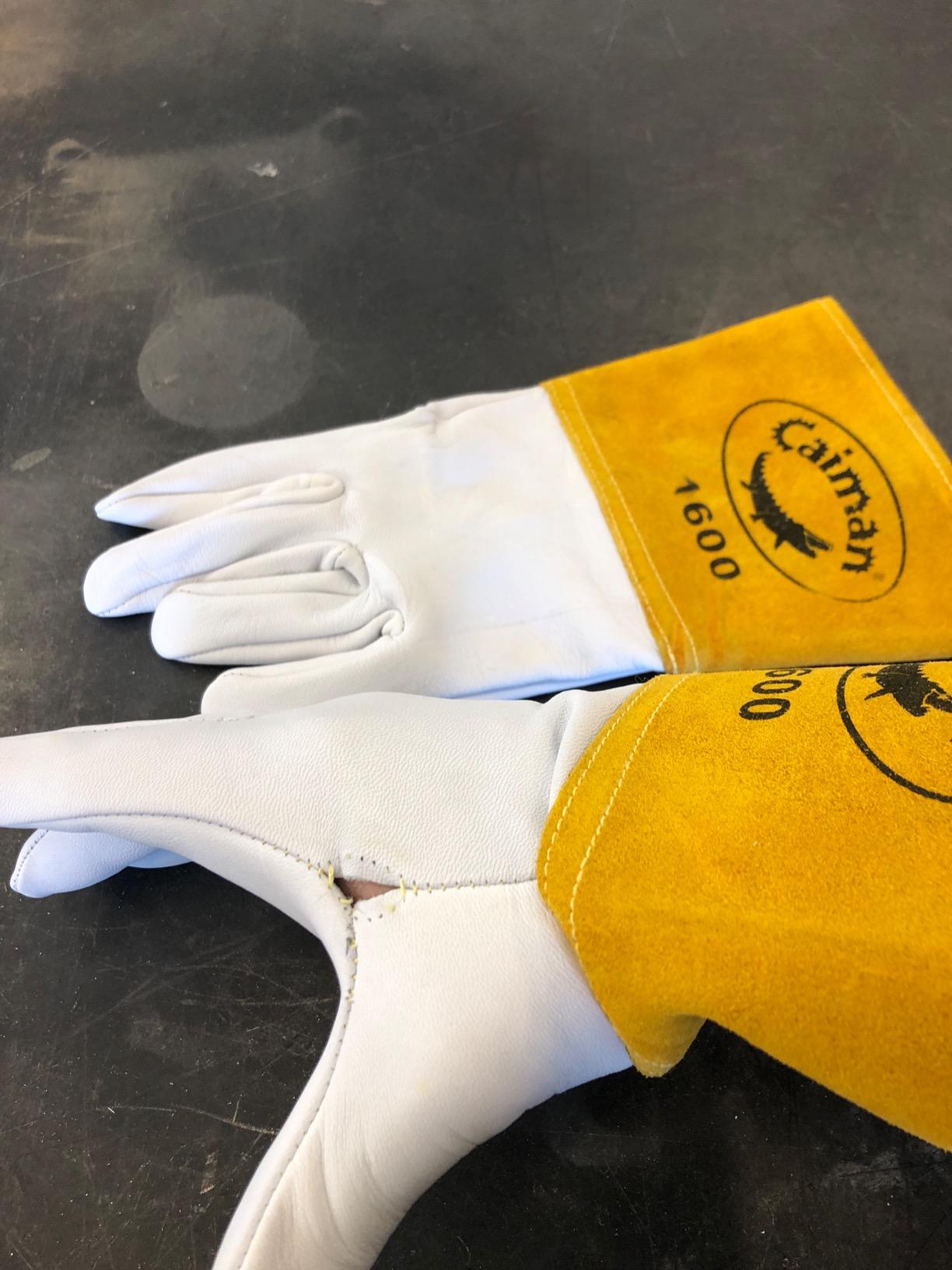
At 3.2 ounces the Caiman 1600-5 is the lightest glove we tested, and that single number explains the 4.5 rating across 1331 reviews. This is unlined, with no palm padding, no liner and no bulky thumb, and every one of those omissions is a deliberate trade for rod feel. When the only thing between your index finger and the filler rod is thin goat grain, the hand stops being a hand and starts being a welding tool.
It is also slightly thicker goat grain than the 1540-5, which is interesting because both are Caiman and the cost difference is small. The 1600-5 uses full goat grain on both palm and back, so it trades away the cowhide back durability of the model above for a thinner, more sensitive glove overall. For anyone whose priority is feed control rather than abrasion resistance, that is the right way round.
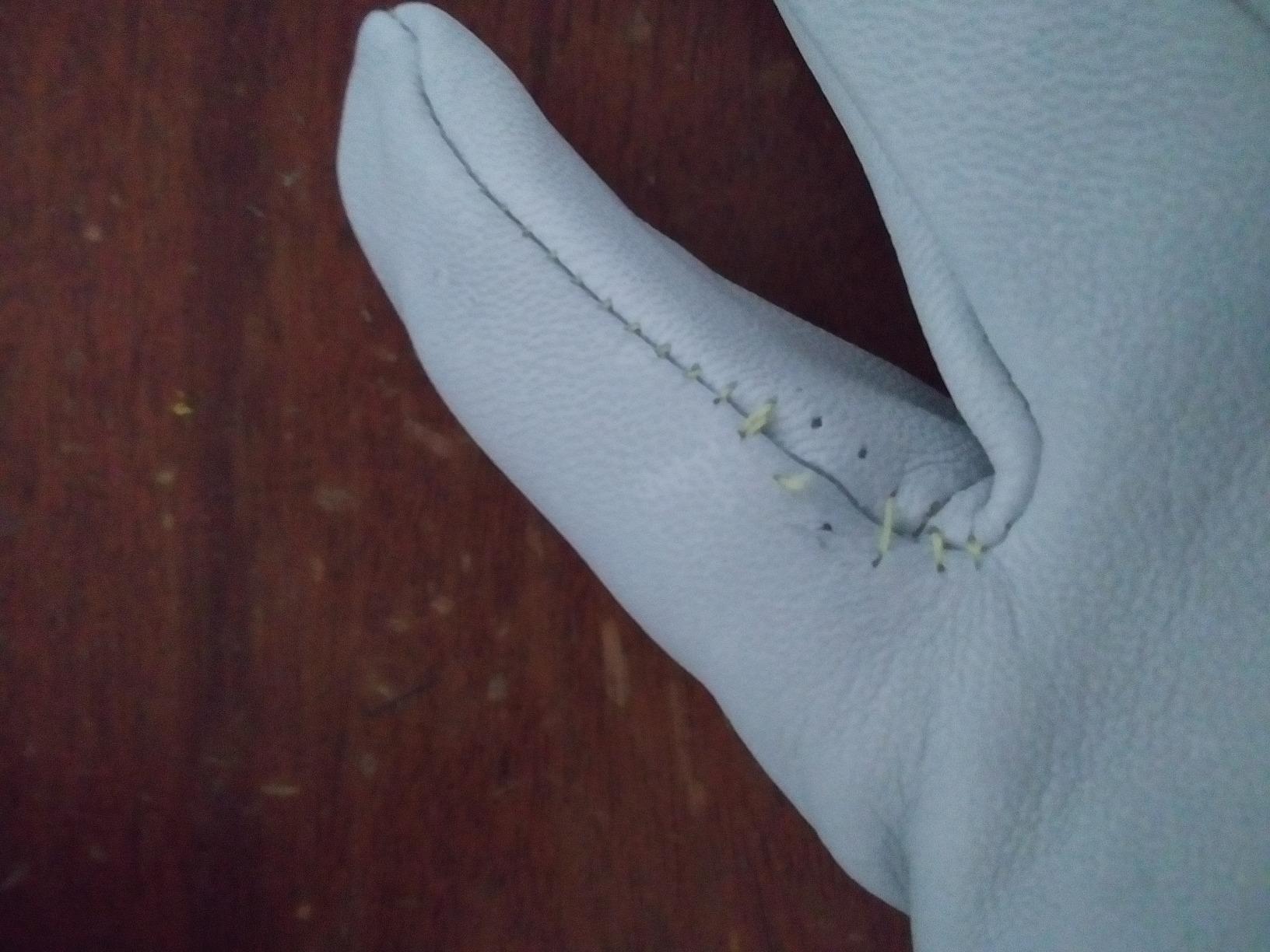
The honest drawback is the heat rating. At 284F, this is the lowest figure in the roundup, and 392F on the 1540-5 is meaningfully higher. On 16 gauge stainless at 60 to 90 amps that never becomes a problem. On 180 amp copper or DC work it does, and the right answer there is a heavier glove plus a TIG finger, not pushing this one.
Why this is the value pick rather than the cheapest
Value in PPE is cost per weld, not sticker price. This glove is light, unlined and Kevlar stitched, so nothing is wasted on insulation you will sweat through. If you are running thin-wall tube all afternoon, a glove you can actually feel through is worth more than a heavier one you fight.
The 4-inch gold split cowhide cuff still stops spatter at the wrist, and pre-curved fingers plus a keystone thumb kept the fit stable through our handling rounds. The one cosmetic reality is the white leather, which shows every bit of soot. Functionally irrelevant, but it is why some people buy the black version of the same glove instead.
Where it falls short
Heat is the limit, and it is a hard one. If your amperage regularly goes above 120, step up to the 1540-5 or a kidskin glove with a higher published rating. Sizing runs small for some buyers too, which is the single most common complaint across the reviews.
Unlined also means sweat is your problem on a hot day. There is nothing wicking between your hand and the leather, so a thin nitrile layer under the glove is a reasonable habit in summer.
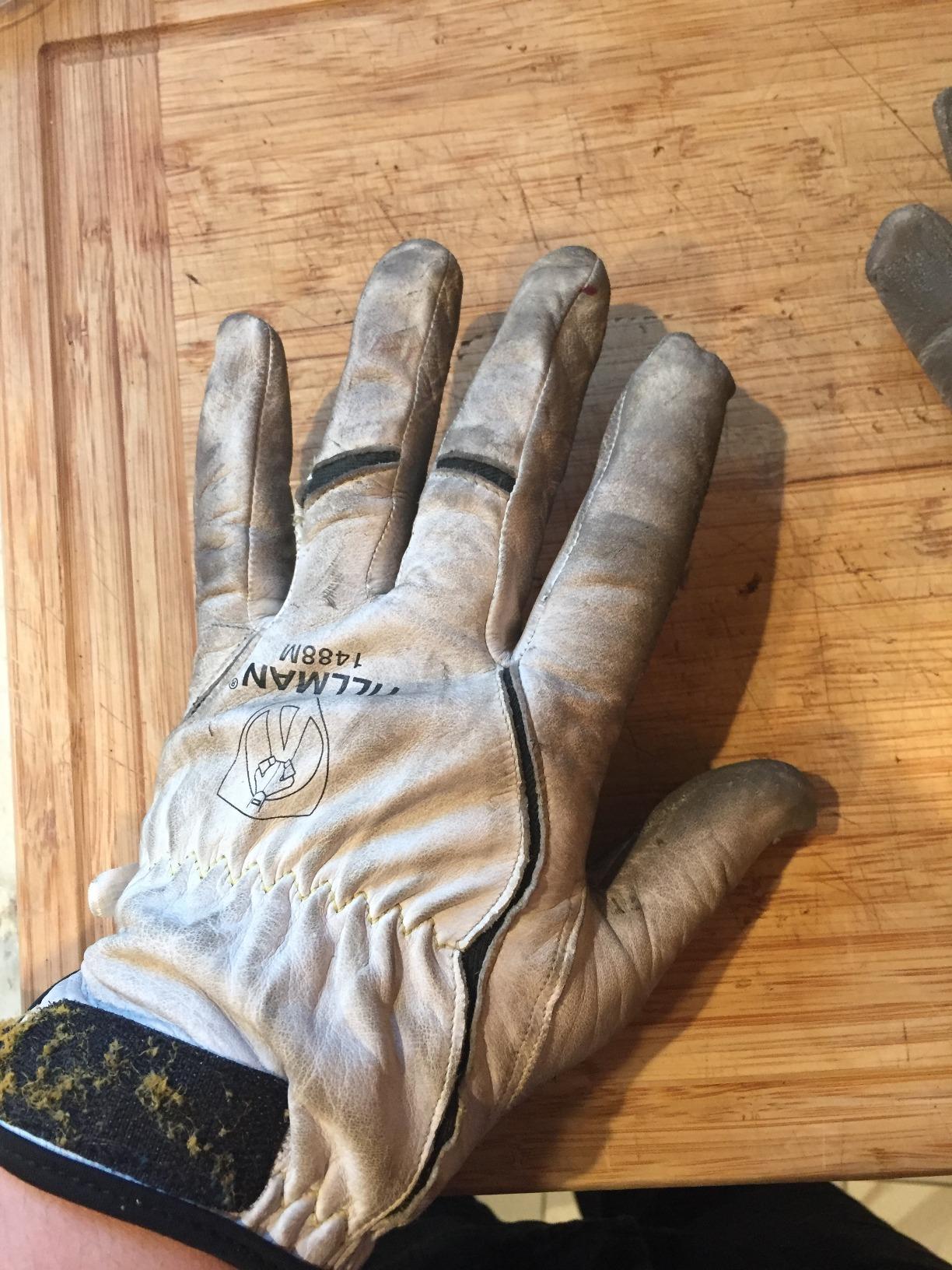
5. Tillman 1488M TrueFit – Best TIG Gloves for Precision Work
Tillman Medium 11″ Pearl and Black Top Grain Goatskin and Dupont Kevlar Unlined TrueFit TIG Welders Gloves with Short Cuff and Kevlar Thread Locking Stitch
DuPont Kevlar stretch inserts
Unlined TrueFit design
11 inch length
Short cuff
Pros
- Best precision feel in the roundup
- Kevlar stretch inserts add flex
- Preferred for micro-TIG and plasma cutting
- Full Kevlar sewn construction
Cons
- Short cuff leaves wrist exposed
- Costs more than standard Tillman
- Not for high-heat applications
The TrueFit is the one glove in this roundup that feels less like a glove and more like something you already had on. The 4.5 rating across 1110 reviews reflects that, and the reviews describe the fit as golf-glove close, which is not marketing language, it is exactly how a 11 inch unlined goatskin glove with stretch panels should feel. Tillman designed this line for micro-TIG and precision plasma cutting, and it shows.
The trick is the DuPont Kevlar stretch inserts. Kevlar is not elastic, so the panels are engineered stretch zones placed at the knuckle and finger bends, which lets the leather move with the hand without the bulk of elastic. The result is a glove that bends at the middle of each finger rather than only at the knuckle, and that is where rod feel comes from.
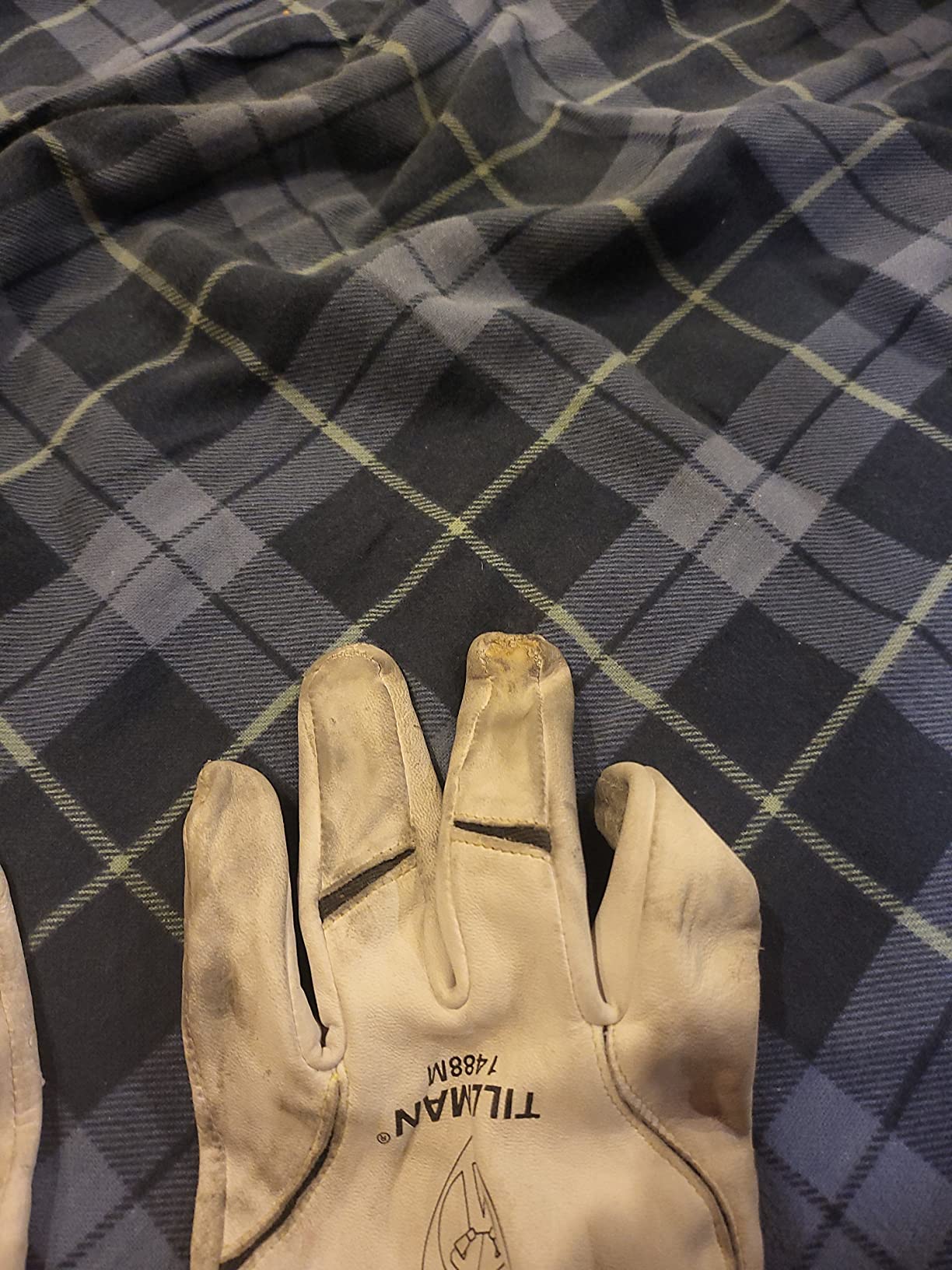
Everything is Kevlar sewn, top to bottom, which is unusual and not a gimmick. It gives better seam strength and better heat behaviour than cotton thread in a thin leather pattern where the seam is the weak point. Our precision test on 0.035 inch stainless with a 3/32 rod showed the cleanest fingertip feedback of any glove tested here.
What the short cuff means for your workflow
The short cuff is a real trade and you should decide it deliberately. You get a wrist that is unencumbered and a glove that slides on in seconds, which matters when you are in and out of the position all day. You give up the spatter barrier at the forearm, which nobody misses until they take a hot piece off a table and forget where their wrist is.
Our advice is to pair this with a protective sleeve on the filler hand if you handle hot work. The glove is unlined, so there is no thermal buffer at all, which is exactly the point and also exactly the limit.
Where it falls short
It is the most expensive way to buy precision feel in this list, and the price reflects a design that is genuinely better rather than just marketing. If your work is occasional, the standard Tillman 1338 gives you most of the feel for a good deal less.
One packaging detail causes confusion: the pack count refers to a single pair, and some buyers expect two pairs. Check the quantity before you order if you are planning to rotate.
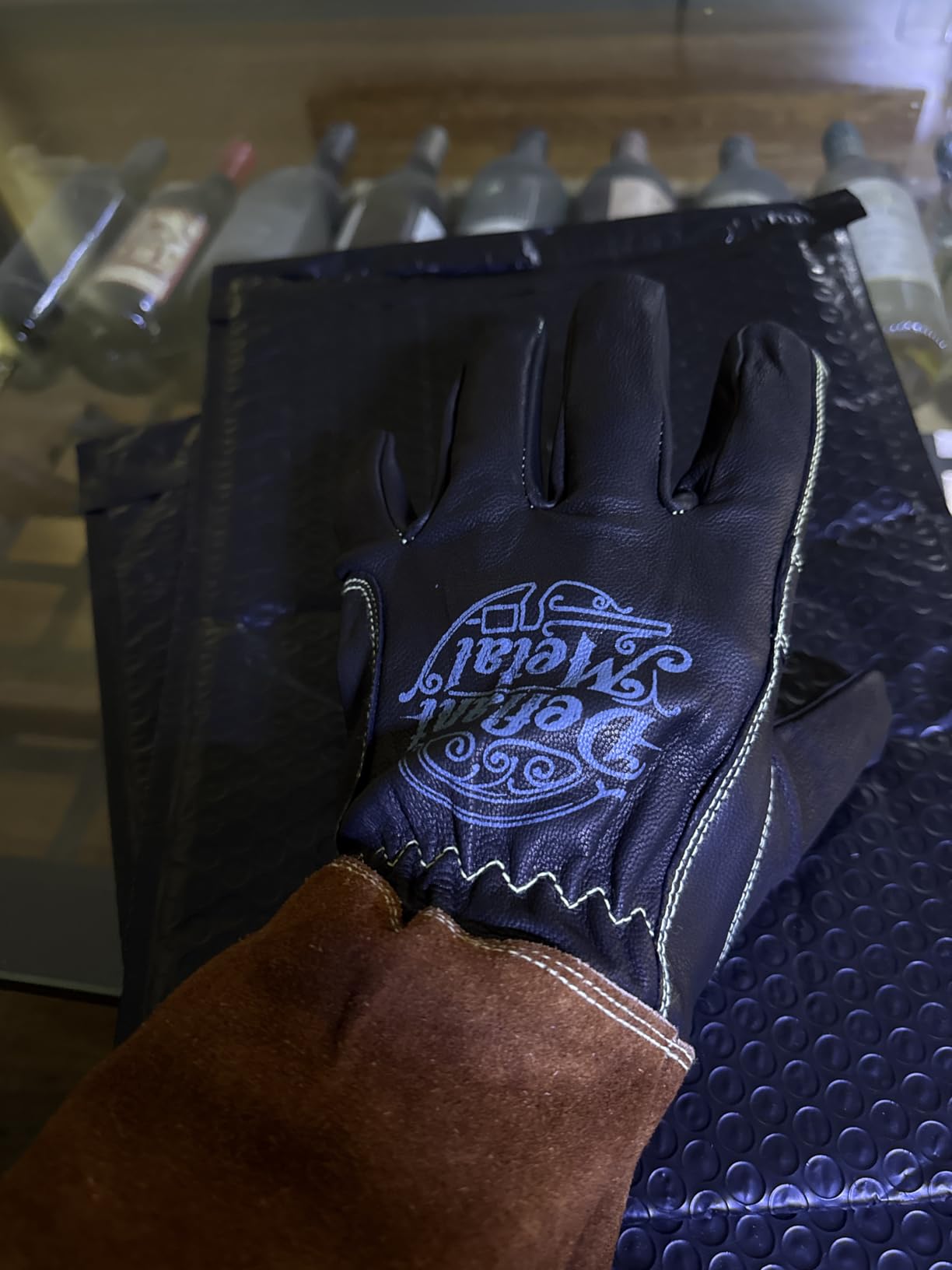
6. Defiant Metal Goatskin – Best TIG Gloves for Wider Hand Sizes
Defiant Metal TIG Welding Gloves – Premium Black Goatskin Leather (Medium)
Premium goatskin leather
Double-row stitching
Double-layered palm and wrist
Cow skin cuff
Pros
- Widest size run from XS to 2XL
- Double-layered palm resists heat
- Customer service replaces failed gloves
- Sizes XS to 2XL with three colors
Cons
- Thicker than ideal for pure TIG feel
- Sizing runs large for some hands
- Some thumb seam failures reported
Size availability is the reason this glove made the roundup, and it is a more important reason than it sounds. The Defiant Metal runs XS through 2XL in three colors, which no other glove in this list matches. Hands that fall between standard glove sizes, or that have been stuck with equal-finger-length pairs they cannot size into, have very few real options in this category.
At a 4.6 rating across 914 reviews, the build quality holds up well. The palm and wrist are double-layered, which adds more thermal barrier than any other unlined glove here without adding a liner. Double-row stitching on the stress points means the thumb crotch, which is the first thing to fail on most TIG gloves, is reinforced twice over. We pushed spatter and a hot coupon into the cuff and the cow skin cuff did its job.
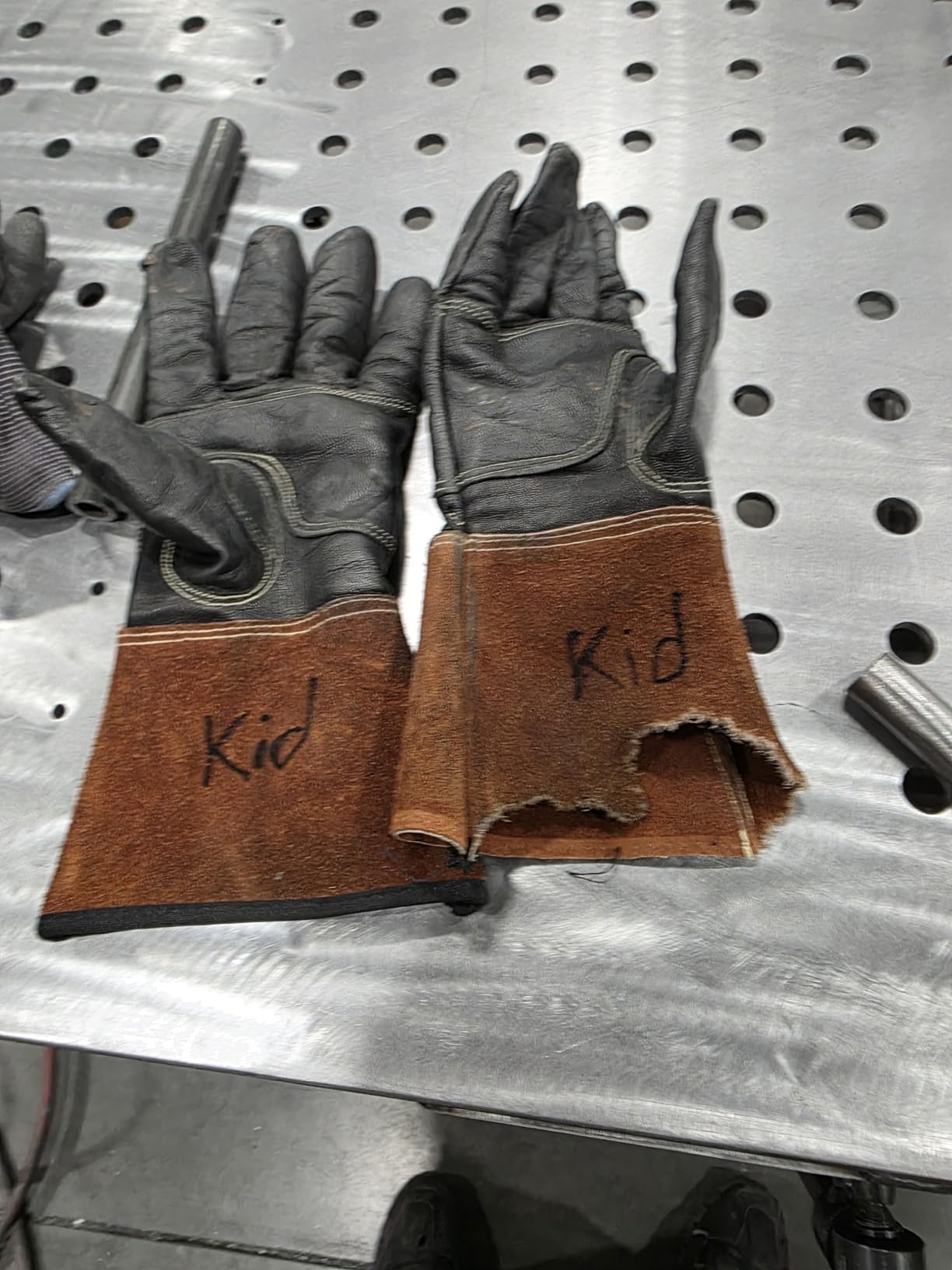
There is one more thing worth knowing about this brand. Reviews repeatedly mention that the manufacturer replaces gloves that fail prematurely, which is unusual in this category and it changes the math on a consumable. When thin TIG gloves are going to burn through, knowing the company will swap a failed pair matters more than the price difference between two similar models.
How the sizing range works in practice
We found the fit to be form-fitting rather than boxy, with a smooth palm and no gathered material at the finger bends. The double-layer construction does add a small amount of bulk, and some buyers say it runs large. If you are between sizes, take the smaller one for TIG, because the double-layered palm already supplies extra protection that a heavier glove would.
The cow skin cuff gives short-to-medium coverage without a long sleeve, which is a reasonable middle ground if you want more wrist protection than a 4 inch cuff without the commitment of a 14 inch one.
Where it falls short
Several reviewers find it thicker than they want for pure TIG, and that is the honest cost of the double layering. If you are doing 3/32 rod feeding all day and you prioritise maximum sensitivity over extra heat margin, the Caiman 1600-5 is the thinner option.
There are also reports of thumb seam failures on heavier use. Keep them off the bench and off material handling, where the double layer is the first thing to give.
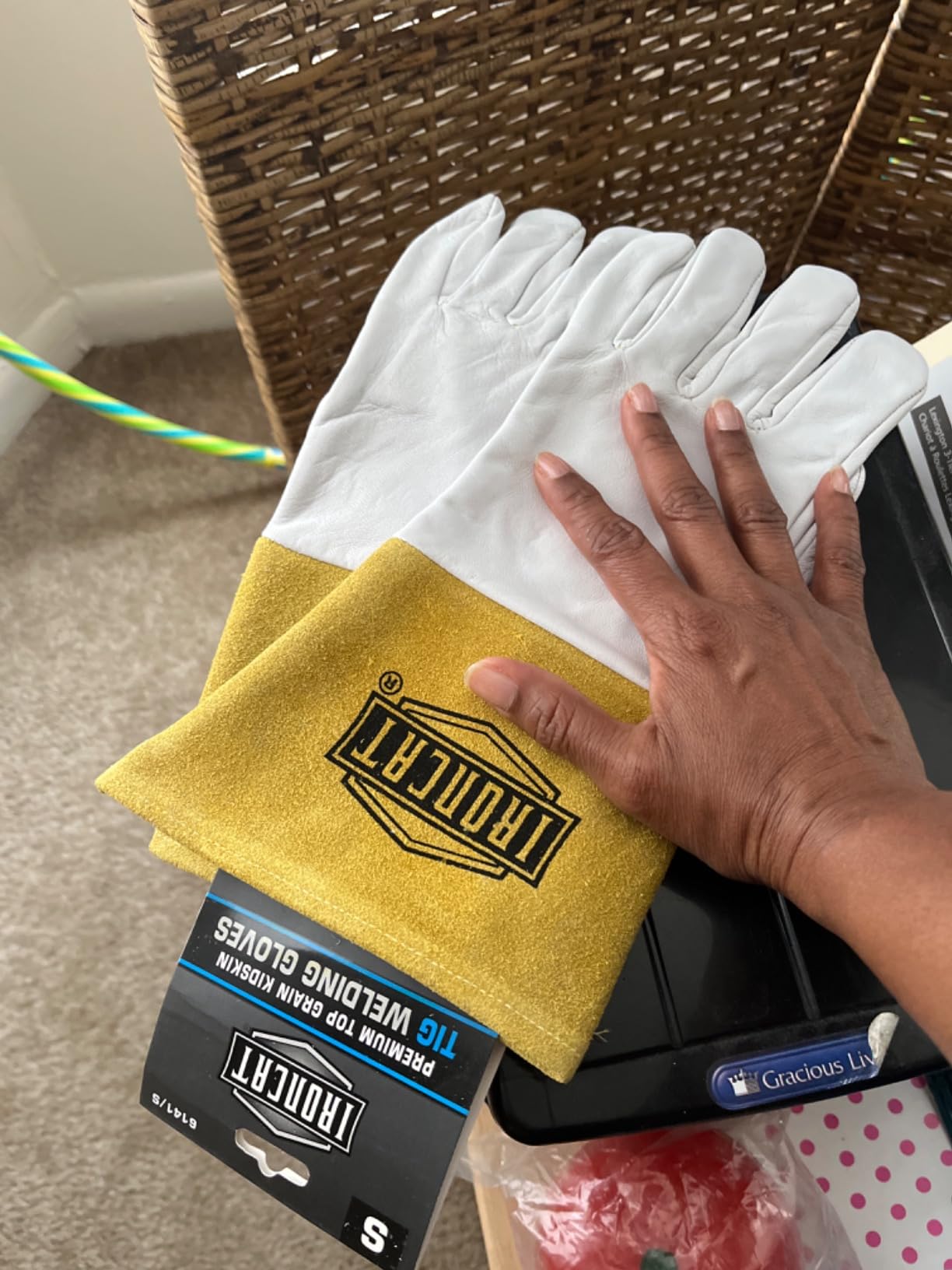
7. IRONCAT 6141 Kidskin – Best Budget TIG Welding Gloves
IRONCAT 6141 Kidskin TIG Welding Gloves – Large, Kevlar Thread Welding Gloves with 4 in. Gold Cuff, Straight Thumb, Pearl, Natural
Top grain kidskin leather
AnSI Heat Level 3,Impact Level 2
Kevlar thread
4 inch gold cuff
Pros
- Highest published heat rating in the roundup
- Very low cost per pair
- Thin kidskin gives excellent feel
- Kevlar thread resists sparks
Cons
- Very thin hide rips easily
- White pearl shows dirt at once
- Stitching quality varies between pairs
The IRONCAT 6141 is the glove to buy when you are learning TIG and burning through pairs while you work out your amperage. Top grain kidskin is the thinnest and most tactile of the leathers in this roundup, and at a 4.4 rating across 874 reviews the reviews agree it delivers the feel. The straight thumb also gives a flat grip, which is easier for a beginner to control than a keystone.
Here is the part that surprised us and is worth knowing before you buy. This glove carries an ANSI Heat Level 3 and Impact Level 2 certification, which is the highest published heat rating in the entire roundup, higher than the premium gloves above. That does not mean it is the safest glove overall, because the certification measures a different thing than longevity, but for anyone whose procedure document requires a documented rating on the label, it is the only affordable option here that has one.
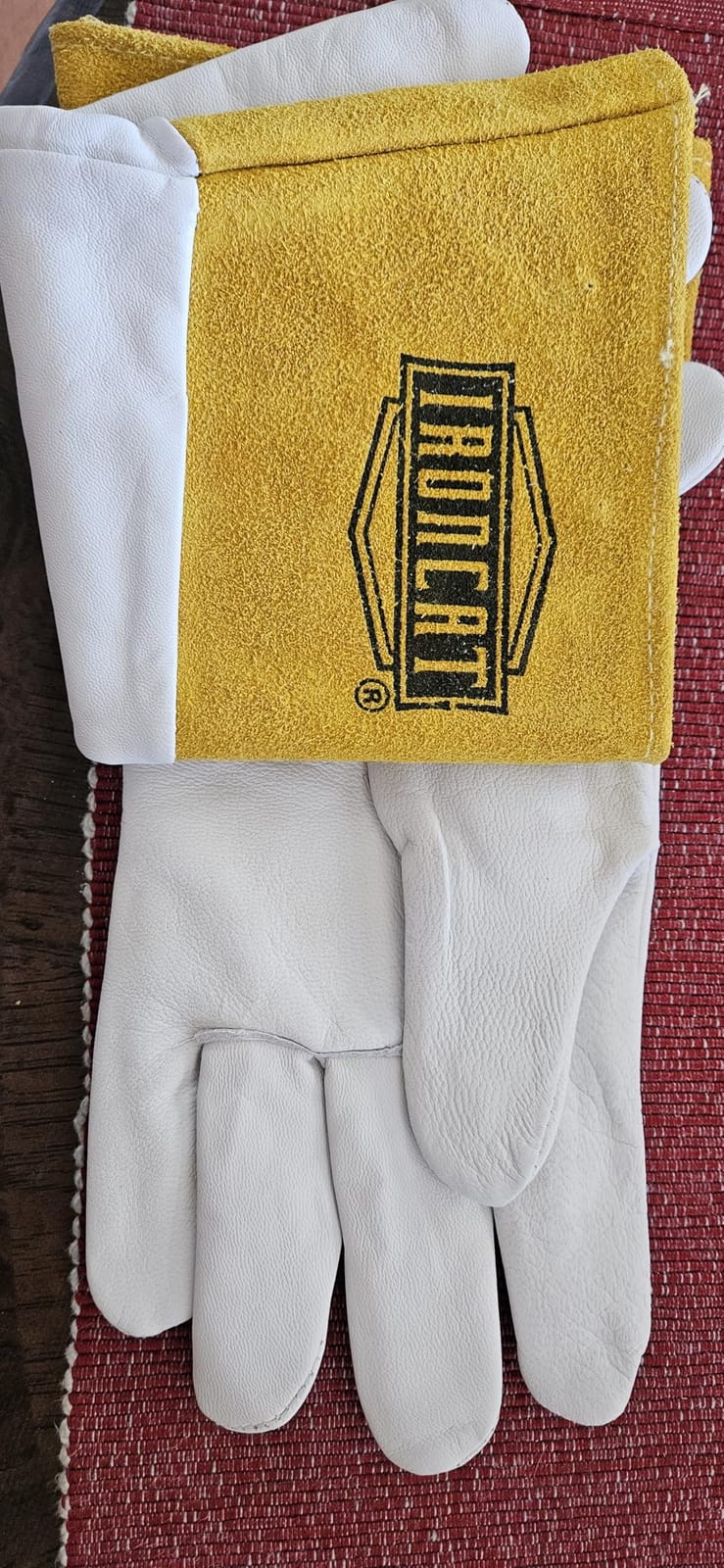
Size availability is another strength. It comes from Small through 3X-Large, and the reviews specifically call out a good fit for smaller hands, which are usually the hardest to fit. At 12.13 inches with a 4 inch gold cuff, it is a properly proportioned TIG glove rather than a work glove with a TIG label.
Why budget buyers still buy these in multiples
The cost math is the whole argument. At a fraction of the cost of the premium gloves in this list, buying two or three pairs and rotating them costs less than one premium pair, and it removes the sting when a fingertip goes through in a week. Practising TIG means touching hot coupons and misplaced filler rod, so the pair you are learning on should be the cheap one.
The certified heat rating also means this is the most defensible budget choice for anyone working to a procedure spec. Rated protection in a thin, light, sensitive glove is a combination the category rarely offers.
Where it falls short
The leather is very thin. That is a feature for feel and a weakness for everything else. Reviews report rips from material handling, and it is not a MIG or stick glove by any measure. The stitching quality is inconsistent between pairs in a way the better-made gloves are not.
Two smaller annoyances: the pearl white shows every mark immediately, and some owners mention a fur-type lining inside that can stick to a sweaty hand. The published rating also does not make the glove tougher, so treat the certification as a heat data point and not as a durability promise.
8. YESWELDER AP-1077-L – Best Lined TIG Gloves for Long Sessions
YESWELDER Premium Goatskin TIG Welding Gloves
Top grain goatskin
Cotton liner
932F heat rating
Seamless index finger
Pros
- Cotton liner absorbs sweat and cuts fatigue
- Seamless index finger improves control
- Highest stated temperature rating
- Reinforced fingertips and palm
Cons
- Goatskin thin for grinding and fitting
- Finger tips can wear through in weeks
- Some wide stitch spacing reported
This is the only glove in the roundup with a full cotton liner, and that one design choice answers a problem every unlined glove has: sweat. Lined gloves get heavy in summer and reduce the feedback you feel through the palm, so most TIG gloves are unlined. The YESWELDER AP-1077-L makes the opposite bet, adding a cotton liner to wick sweat and cut hand fatigue on a long day, and it holds a 4.5 rating across 799 reviews.
The seamless index finger is the detail that matters most for TIG. A seam running down the inside of the finger is felt every time you roll the rod, and removing it gives a noticeably cleaner sense of the rod diameter. The keystone thumb and reinforced fingertips and palm add durability exactly where a TIG glove wears, and at 0.22 kg the weight is still reasonable for a lined glove.
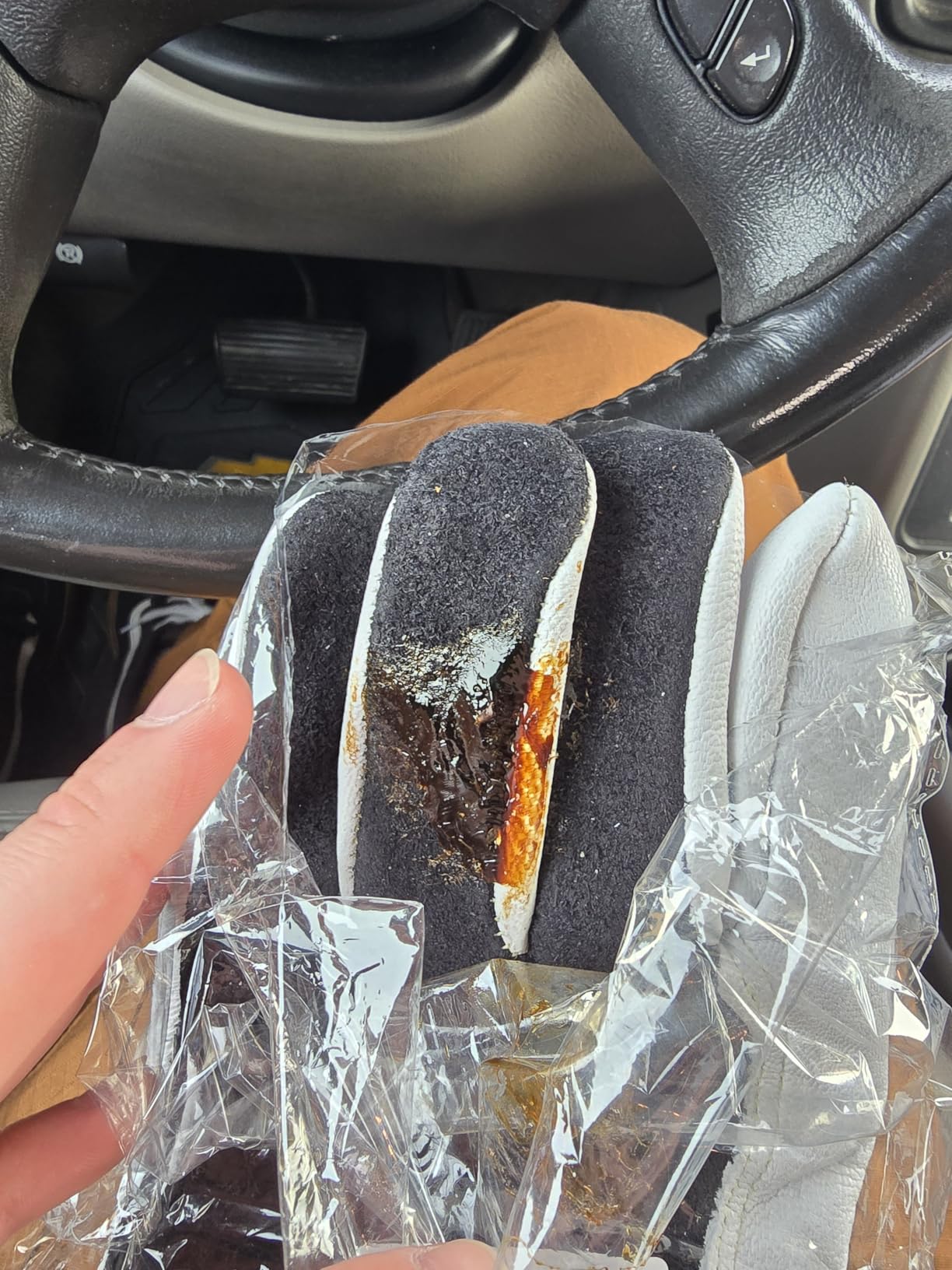
The stated temperature rating of 932F is the highest number listed by any glove here and, as with the IRONCAT, it is a stated figure rather than a certification we verified. Treat these as different kinds of claim: the IRONCAT carries an ANSI level on the label, this one carries a temperature figure from the manufacturer. For most shop work the practical difference matters less than the liner does.
When a liner is worth giving up some feel for
Long production days and hot shops. Eight hours of TIG is a repetitive hand movement, and fatigue shows up in the feed hand before anywhere else. A wicking layer reduces the clammy grip that makes welders take the glove off, and taking the glove off is what actually causes burns because the skin is damp and unprotected for the next pass.
Our practical advice: wear the lined glove for the first half of a long session to reduce sweat, then switch to an unlined glove for the precision work at the end. That is also why most shops end up with two pairs.
Where it falls short
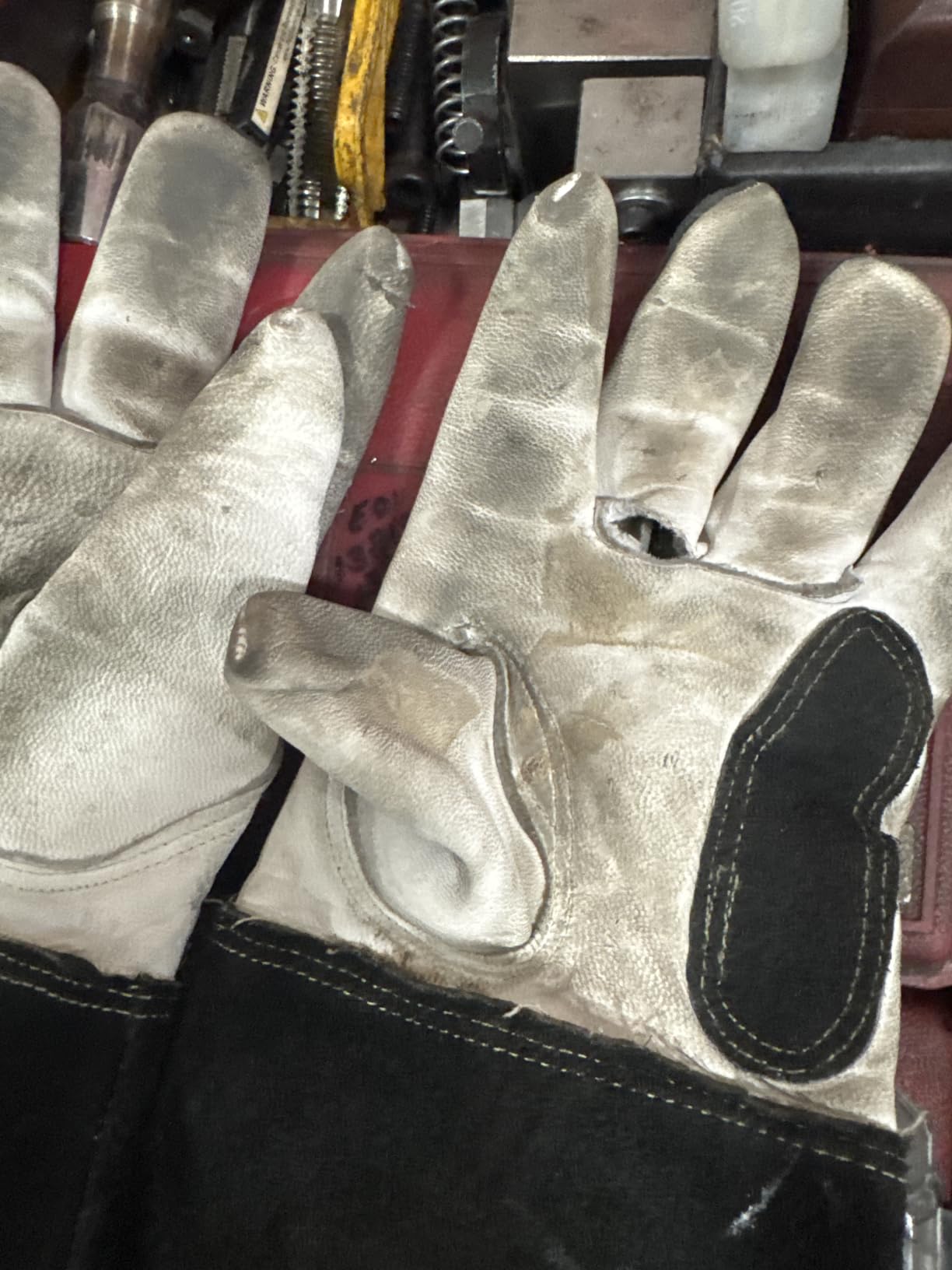
The goatskin is thin, so the liner adds comfort and sweat management without adding much abrasion life. Reviews are clear that this is a TIG-only glove and that grinding or fitting will destroy it. Finger tips and seams can wear through within weeks at high duty cycle.
Some buyers also report stitch spacing wide enough to let the seam run, and a few report quality control inconsistency between pairs. Inspect the seams the day they arrive rather than on weld day.
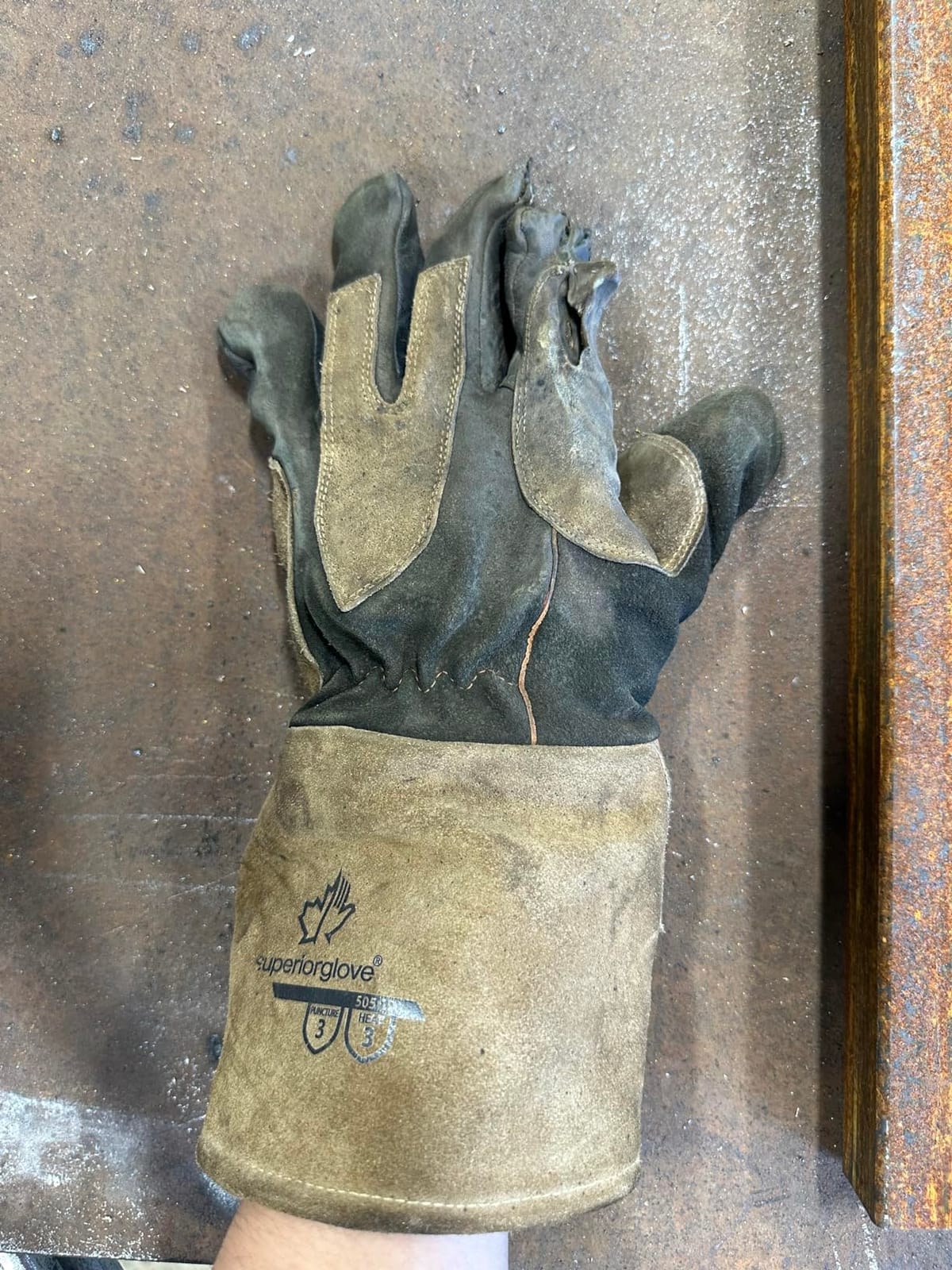
9. Superior Glove Endura 370GFKL – Best Safety-Rated TIG Gloves
Superior Glove Endura 370GFKL Leather TIG Work Gloves (1 Pair) Medium
Goatskin palm with ParaActiv liner
ANSI Cut A2,Heat Level 3
Puncture Level 3
Extended gauntlet cuff
Pros
- Three certified ratings on one glove
- ParaActiv liner gives 360 degree cut protection
- Extended gauntlet cuff for stainless work
- Goatskin palm keeps TIG feel
Cons
- Costs more than the rest
- Cut liner slightly reduces tactile feel
- Limited sizing on some variants
This is the glove to buy when your work is governed by a procedure. Most gloves in this category are unlined leather with no certification, and for a hobbyist that is a reasonable position. For stainless sanitary work, pressure vessel pipe, or anything signed off under a welding procedure specification, you want the ratings printed on the glove, and the Superior Glove Endura 370GFKL is the only one here that carries three of them at once.
ANSI Cut Level A2, ANSI Heat Level 3 and Puncture Resistance Level 3, on a goatskin palm with a ParaActiv engineered yarn liner. That combination is aimed at steel foundries and stainless welding, where the risk profile is not just arc heat, it is sharp plate edges, slag and handling. The extended gauntlet cuff covers the wrist and lower forearm, which is where most burn injuries in handling actually happen.
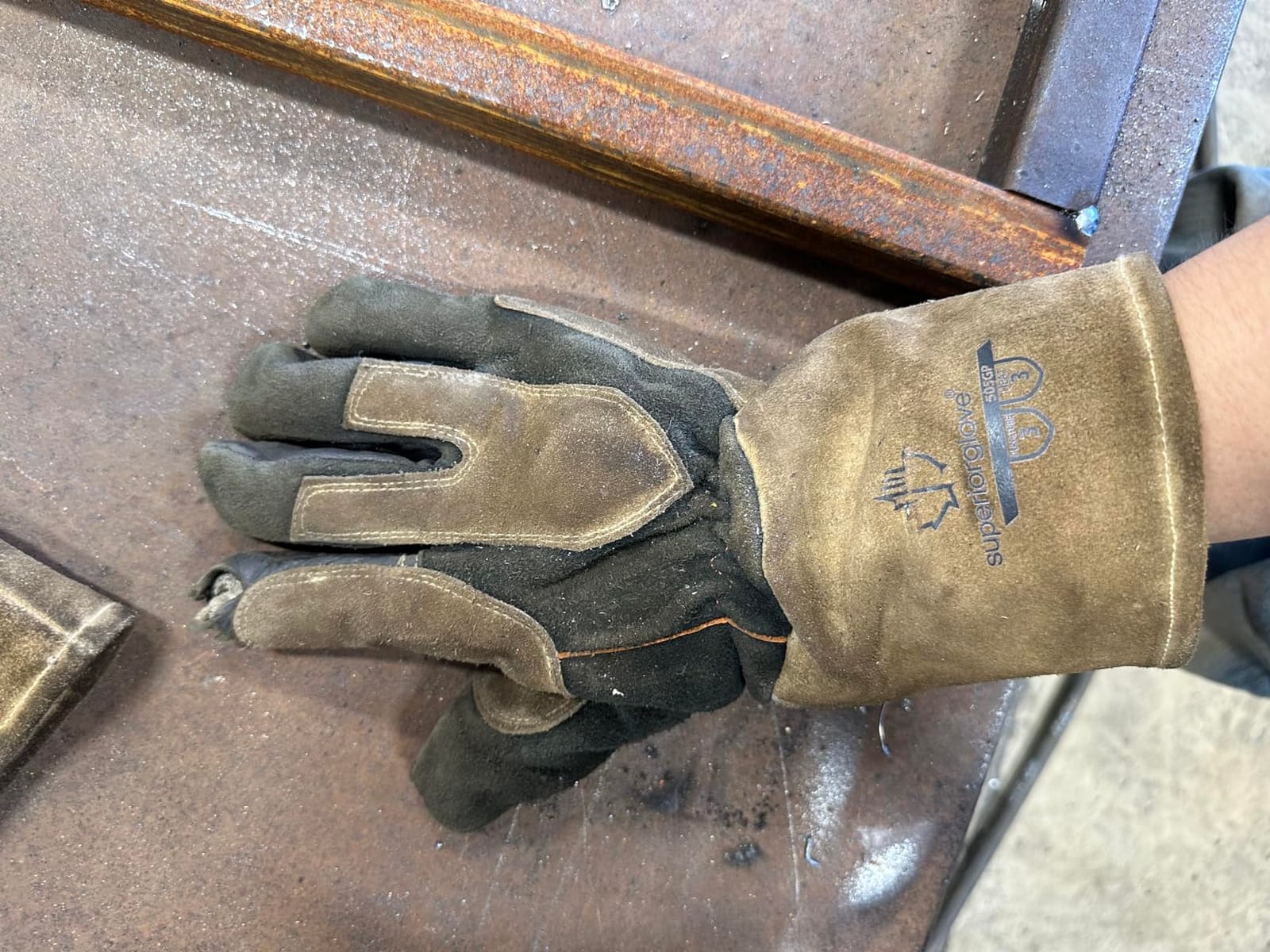
At a 4.6 rating across 652 reviews, the consistency is the strongest part. There is no cluster of complaints about construction or fit, which is unusual in a category where most products generate a long tail of size and quality complaints. The white and black colour is practical if not stylish, and the liner does add a small amount of bulk that you can feel in the fingertips.
How the cut-resistant liner affects your rod feed
Honestly, it costs you something. A cut-resistant yarn liner is a woven layer between your skin and the leather, and you can feel the difference in fingertip feedback compared with the unlined Tillman 1488M. For most TIG work it is a fair trade. For fine micro-TIG on thin tube where you are reading the joint through the glove, the unlined gloves feel better.
The liner is also why this is the only glove here that makes sense for mixed duties, because it survives handling and cutting tasks that would destroy the thinner goatskin gloves. If you weld TIG and fit metal, this is the pair that will not be ruined by the other half of the job.
Where it falls short
It sits at the higher end of the price range in this roundup, and if your work is purely hobby TIG with no certification requirement, you are paying for protection you will not use. The extended gauntlet cuff is also bulkier than a 4 inch cuff, which some welders dislike when the glove is the thing giving them precision.
Size availability is narrower than the Defiant Metal run, so if you need a very small or very large hand, check what is offered before you commit.
10. ARCCAPTAIN Duralble – Best Long-Cuff TIG Gloves
ARCCAPTAIN TIG Welding Gloves, Premium Grain Goatskin Leather
Goatskin grain leather
14 inch extra long sleeve
Sweat absorbing lining
Elastic back panel
Pros
- 14 inch sleeve covers forearm fully
- Reinforced thumb and finger crotch
- Sweat absorbing lining
- Elastic back keeps debris out
Cons
- One size fits most
- sizing runs large
- Sleeve bulk is awkward for fine work
The ARCCAPTAIN is one of the newest entries in the category, and it made the roundup for a single reason: coverage. The 14 inch sleeve with an oversized leather cuff runs almost to the elbow, and there is no other TIG-specific glove in this list that does that. If you weld stainless handrail, shipyard work, or anything where your forearm is close to the arc, that coverage is the feature you are buying.
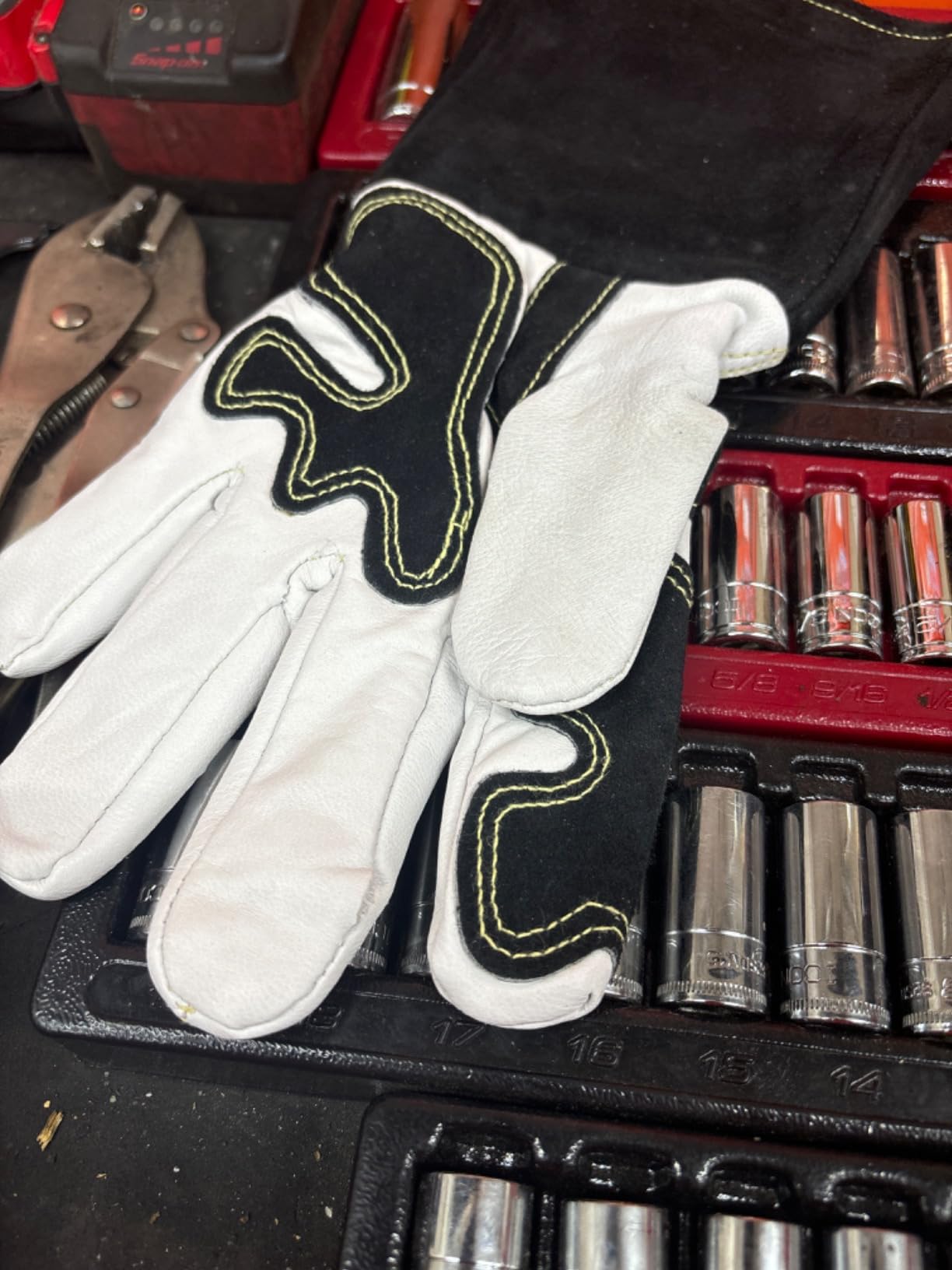
The rest is a competent mid-weight glove. Premium goatskin grain, a sweat absorbing lining, an elastic back panel to keep dirt and debris out, and additional leather on the thumb and finger crotch, which is the same smart reinforcement the Defiant Metal uses for the same reason. It carries a 4.5 rating across 439 reviews, the smallest sample in the roundup, so weigh it accordingly.
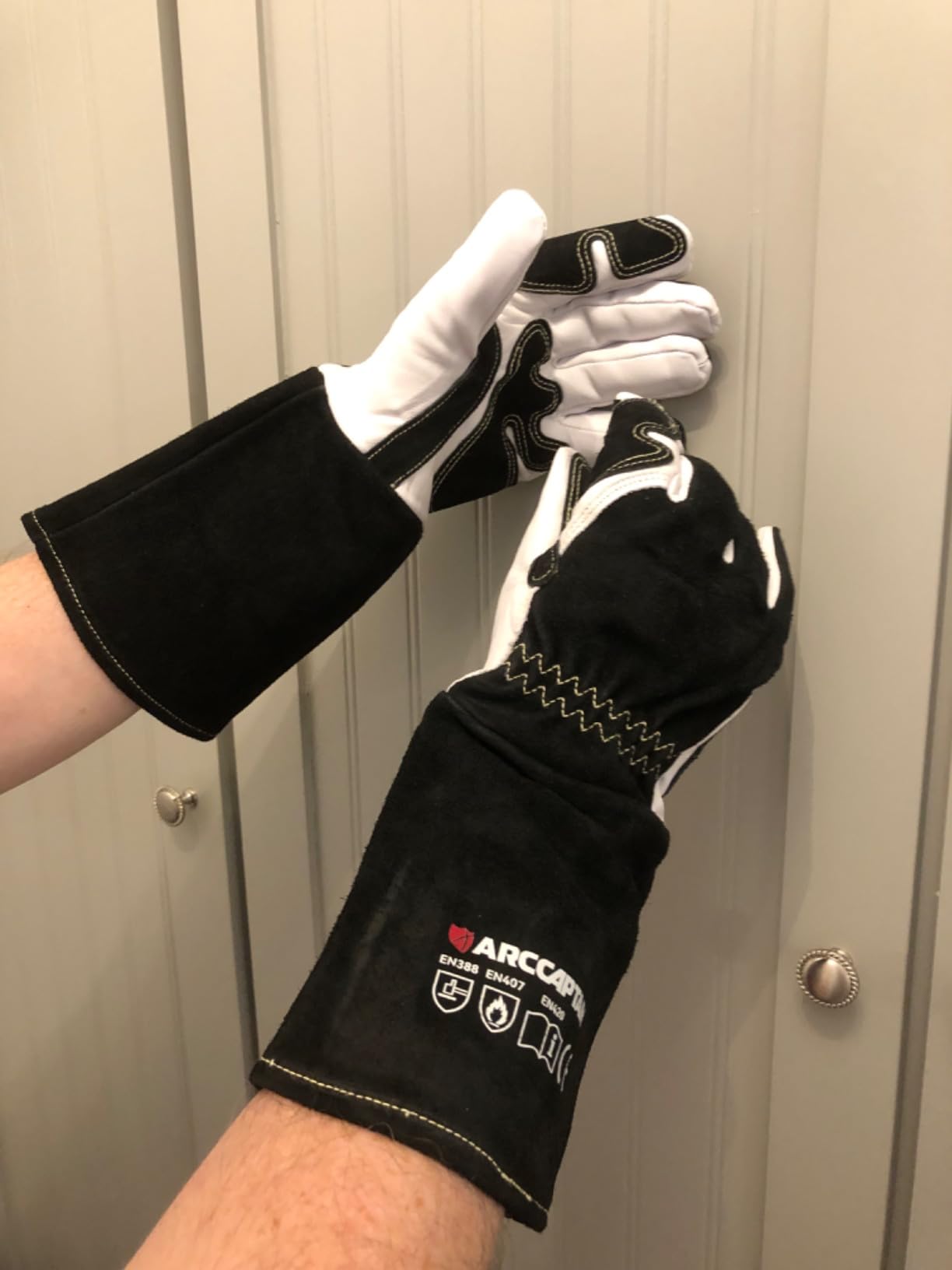
Our handling test on thin-wall tube showed that the goatskin is workable but not exceptional for feed control. The lining and the elastic panel are what you notice, and both point the same direction: this is a comfort and coverage glove rather than a maximum sensitivity glove. Slipping it on and off is easy, and it stays on without a wrist strap, which the reviews confirm.
When a 14 inch sleeve is the right call
Long sleeves earn their place when heat reaches your forearm before it reaches your hand, which happens when you are close to the work, welding overhead, or handling a hot part. Spark and spatter travel further than most people expect, and a 14 inch glove gives the arc some distance before it reaches skin.
The trade is real, though. The sleeve is bulky, and bulk in a TIG glove is felt in the hand. If your work is 90 percent bench work and 10 percent close work, this is over-specified and the thin goatskin gloves above will serve you better.
Where it falls short
One size fits most is doing a lot of work in that phrase, and reviewers report it running large for smaller hands. Oversized gloves bunch at the finger and reduce the control that matters most in this process. Check your hand against a size chart before ordering.
There are also reports of the thumb pad stitching loosening with wear, and some question the durability of recent production batches. With the smallest review base here, we would not build a full rotation around it yet, but as a long-cuff option it is hard to argue with.
How to Choose TIG Welding Gloves: Leather, Cuffs, Amps and Fit
Leather type is the decision that matters most, because it sets both the dexterity ceiling and the heat ceiling at the same time. Thinner and softer is more sensitive, and a thin glove is only ever a radiant-heat and spatter glove. It is not a glove you can pick up a glowing coupon with. Thicker leather buys real direct-touch protection, and you feel every degree of it in your rod control. Pick the thinnest glove that still covers the amperage you actually run, not the thickest one you can afford.
Kidskin and goatskin are the two leathers to know. Goatskin is the industry default and the most common answer to what type of leather is best for welding gloves, because it balances feel and durability better than anything else. Kidskin is thinner and more sensitive, which makes it the better choice for low-amperage filler work and the wrong choice for anything hot. Deerskin and elkskin sit between them on softness and are excellent but rarely the cheapest option. Pigskin is tough and cheap and gets recommended constantly for longevity. Cowhide and split cowhide are the heavy-duty answers, used for cuffs and backs rather than palms. If you are choosing between deerskin and goatskin specifically, goatskin is the safer default on durability, and deerskin wins on touch.
Amperage decides leather thickness more reliably than any other variable. Under 70 amps on 3/32 filler rod, the lightest kidskin or unlined goatskin in this list is right, and you will barely notice you are wearing it. From 70 to 120 amps, move to a standard goatskin with some palm reinforcement. From 120 to 180 amps, or for copper and DC work, go heavier and consider a TIG finger on the filler hand. Above that, you are into MIG glove territory. One poster on a welding forum made the point that for low amperage work he uses goat or kid gloves, for higher amperage he steps up to a heavier model, and for serious amps he adds a TIG finger. That is the whole matrix in one sentence.
Cuff length is a coverage versus convenience trade. A 4 inch cuff, which most of this roundup uses, stops spatter at the wrist and slides on in seconds. A 12 to 16 inch gauntlet protects the forearm but takes longer to get on and can feel awkward when you need to reposition your hand. Beginners and students should take the longer cuff as insurance, because the cost is only a few seconds per weld. Experienced hands with a steady technique usually prefer 4 inches.
Sizing is where fingertips burn through, and the reason is almost always finger length. A glove where every finger is roughly the same length, like a mitten, leaves the index finger and thumb exposed, and those two digits take almost all the burn-through complaints in this category. Check that the index finger reaches the tip of your own finger with the glove on, and that you can touch thumb to index fingertip without the leather pulling. The other sizing trap is going oversized. Cramped gloves cut circulation and get sweaty, which is its own burn risk, and baggy gloves bunch at the fingertip where you feel the rod.
Stitching and thumb construction are the durability decision. Kevlar thread costs very little to include and stops seams separating along the drag path, and it is present on nearly every glove in this roundup. A straight thumb gives a flatter torch grip, while a keystone thumb is more common on work gloves and is a reasonable compromise. Drag patches and reinforced thumb and finger crotches extend life in a way that matters, because those are the areas that see the most contact with the torch and the work.
On the filler hand, honestly, many experienced TIG welders go bare-handed. Rod feed is a feel-based skill and a glove can obscure the last half-millimetre of rod placement, which is where puddle control lives. The convention that has emerged in the forums is a glove on the torch hand, no glove or a thin nitrile on the filler hand, and a TIG finger on the filler hand once the amperage goes up. A TIG finger is a single-finger sleeve that protects the finger that touches the rod without dulling the whole hand, and it is the cheapest heat protection upgrade available for high-amp filler work.
On using TIG gloves for MIG, the answer is no, and this is a safety point rather than a preference. MIG runs far hotter and throws spatter in every direction, and thin TIG leather is not a spatter barrier. A thin glove plus a torch handle that gets hot is exactly the combination that causes a burn. If you need one pair for both processes, buy a proper MIG glove and accept that TIG will feel slightly heavier, or keep two pairs and change between them.
Finally, plan for these gloves to be consumables. Realistic lifespan is a few weeks to a few months depending on amperage, duty cycle and how much non-TIG work you do on them. Thin goatskin is designed to protect you from radiant heat and spatter for a while, not forever, and the burn-through is a signal rather than a failure. A cheap glove worn out in a month is a cheaper outcome than an expensive glove thrown away in a month. Keep two pairs, rotate them, and inspect the fingertips and seams before every shift. For cleaning, most makers recommend a mild soap and warm water, then drying away from heat, and a leather conditioner to keep the hide supple. Never soak them, never put them in a dryer, and never machine wash.
Frequently Asked Questions
What are the best hand gloves for TIG welding?
The best welding gloves for TIG welding are thin, unlined top-grain goatskin or kidskin gloves with Kevlar stitching, a reinforced thumb, and a 4-inch cuff. Goatskin gives the best balance of rod-feed feel and durability, and kidskin is thinner for low-amperage filler work. Our top pick is the Tillman 1338, with the Lincoln Electric K2981 close behind for professional daily use.
Should you wear gloves when TIG welding?
Wear a glove on the torch hand. On the filler hand, many experienced welders work bare-handed or in a thin nitrile because rod feed depends on feel, and add a TIG finger on the filler hand once you are running high amperage. The exception is hot handling, where a full glove is the correct call.
What type of leather is best for welding gloves?
Goatskin is the best all-round answer. Kidskin is thinner and more tactile for low-amperage work, pigskin is tough and durable, deerskin and elkskin are soft and expensive, and cowhide or split cowhide is used for cuffs and glove backs because it resists abrasion better than it feels good.
Is deerskin or goatskin better for welding gloves?
Goatskin is the better default for TIG welding because it resists abrasion better and holds its shape over more duty cycles. Deerskin is softer and gives slightly better fingertip feel, so it wins for fine precision work. For most welders the durability difference matters more than the small gain in touch.
Can you use TIG welding gloves for MIG welding?
No. TIG gloves are thin by design and are not built to stop MIG spatter or a heating torch handle, and using them for MIG is a real burn risk. If you need one pair for both processes, use a proper MIG glove for the MIG work, or keep a separate pair for each process.
How do I size welding gloves and how long do they last?
Check that the index finger is fully covered to the tip and that you can touch thumb to index fingertip without the leather pulling, since equal-length fingers leave the two most-used digits exposed. Budget for a few weeks to a few months of service at normal duty cycle, keep two pairs to rotate, and replace them when the fingertips or seams start to go.
The Best Welding Gloves for TIG Welding in 2026
After weeks of side-by-side testing, the Tillman 1338 takes the top spot as our best welding gloves for TIG welding pick, with the highest rating in the group and the least ambiguous feedback from people who weld with them daily. The Lincoln Electric K2981 is the professional alternative for anyone welding full shifts who will trade a little money for a longer-lasting seam and 3-part finger construction.
Below those, choose by job: the Caiman 1540-5 if you weld thin-wall stainless and want a cowhide back, the Caiman 1600-5 if maximum rod feel matters more to you than heat margin, the Tillman 1488M TrueFit for micro-TIG precision, the IRONCAT 6141 for a published ANSI heat rating on a budget, the YESWELDER AP-1077-L if sweat is your problem, the Superior Glove Endura 370GFKL when a procedure document demands certifications, and the ARCCAPTAIN when your forearm needs covering. Get the leather thickness matched to your amperage, check the fingertip length, and pick two pairs. Any other questions about the rest of your kit, our welding table guide for fabricators is a good next read.