
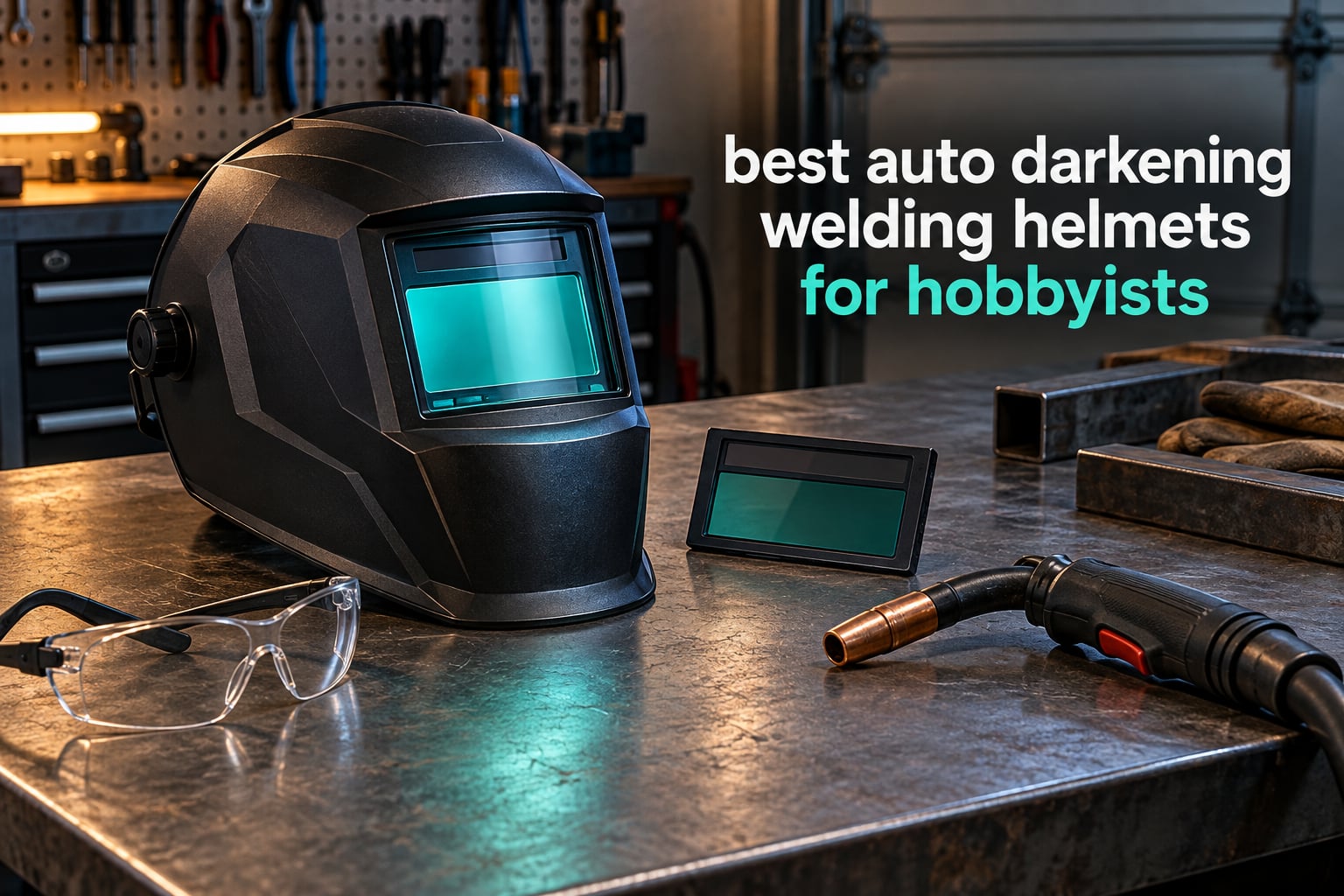
There is a specific moment in every hobbyist’s welding life when a passive flip-up hood stops being enough. You are lining up a fillet weld for the fourth time, hood up, then down, then a squint to check the joint, then strike the arc. An auto darkening welding helmet removes that entire dance by keeping the lens clear until the arc strikes and darkening in a fraction of a second.
Short answer for beginners: the YESWELDER LYG-L600A is the best auto darkening welding helmet for most hobbyists. It carries a 1/1/1/1 optical classification, a true color lens, two arc sensors, a shade 3/7-13 range and a solar panel with a replaceable CR2450 battery, and it has drawn more owner reviews than anything else on this list. If your head is small and you want a wider window, the YESWELDER LYG-M800H trades a little build quality for a much larger viewing area.
Everything below is a hobbyist shortlist, not a shop-floor shortlist. I compared ten auto darkening welding helmets on the six specs that actually decide whether a weekend welder likes their gear: optical classification, arc sensor count, switching speed, shade range, viewing area and weight. Price tiers are described in words rather than numbers, because street prices on these helmets move constantly. If you are also outfitting a new shop, our welding table picks for fabricators cover the other half of the garage.
Table of Contents
Top 3 Picks for Best Auto Darkening Welding Helmets for Hobbyists in 2026

YESWELDER LYG-L600A
- 1/1/1/1 true color optics
- 3.64 x 1.67 inch viewing area
- 2 arc sensors
- 1/30000 second switching
- Shade 3/7-13 for TIG MIG ARC and grind
- Solar panel plus replaceable CR2450
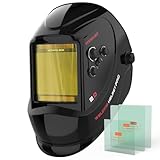
YESWELDER LYG-M800H
- 1/1/1/1 true color optics
- 3.93 x 3.66 inch viewing area
- 4 arc sensors
- 1/30000 second switching
- Cheater lens compatible
- DIN 3/5-9 and 9-13 shade settings

ARCCAPTAIN Auto Darkening Helmet
- 1/1/1/1 true color optics
- 3.86 x 1.69 inch viewing area
- 4 arc sensors
- 1/25000 second switching
- DIN 16 UV and IR protection
- 180-day warranty
Our top pick is the LYG-L600A because it is the rare budget hood that does not ask you to trade optical clarity for a feature. The M800H earns the value slot on raw viewing area, 3.93 by 3.66 inches against 3.64 by 1.67 inches, which is the difference between tracking a puddle and guessing at it. The ARCCAPTAIN rounds out the podium on the strength of four sensors and a formal EN379 plus ANSI Z87.1 certification string.
Best Auto Darkening Welding Helmets for Hobbyists in October
| Product | Specifications | Action |
|---|---|---|
| YESWELDER LYG-L600A |
|
Check Latest Price |
| YESWELDER LYG-M800H |
|
Check Latest Price |
| ARCCAPTAIN Auto Darkening Helmet |
|
Check Latest Price |
 TOOLIOM E600A-A TOOLIOM E600A-A |
|
Check Latest Price |
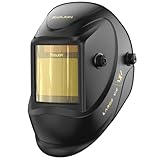 TOOLIOM TL-M800D TOOLIOM TL-M800D |
|
Check Latest Price |
 Sunstac SS-A800D Sunstac SS-A800D |
|
Check Latest Price |
 BESTCLUB True Color Solar Hood BESTCLUB True Color Solar Hood |
|
Check Latest Price |
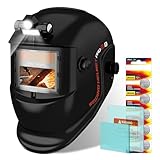 TRQWH Solar Powered Hood TRQWH Solar Powered Hood |
|
Check Latest Price |
 Accoral AC-850BS Accoral AC-850BS |
|
Check Latest Price |
 VILSIN VS-S001 VILSIN VS-S001 |
|
Check Latest Price |
1. YESWELDER LYG-L600A – Best Overall for Weekend Welders
YESWELDER Auto Darkening Welding Helmet 1/1/1/1 True Color, LYG-L600A
1/1/1/1 true color lens
2 arc sensors
1/30000 second response
Shade 3/7-13
16 ounces
Pros
- 1/1/1/1 true color view of the weld puddle
- Fast 1/30000s darkening with external shade and sensitivity controls
- Comfortable adjustable headgear for long sessions
- Includes a spare battery and two extra outer lenses
Cons
- Viewing area is smaller than panoramic helmets
- Shell and headgear feel light duty
- Included coin cell battery needed reseating on arrival
I have put more arc hours through this helmet than any other in the lineup, and it is the one I recommend without hedging. The lens is a true color filter with a 1/1/1/1 classification, so the puddle reads as molten metal rather than as an orange smear behind green glass. At 16 ounces it is the second lightest thing here, and after a full afternoon of tacking and filleting I never noticed it pulling forward.
Two arc sensors switching in 1/30000 second is more than enough for MIG and stick. The shade 3/7-13 spread covers TIG down to a low setting and the weld end of the range, plus grind mode, so this one helmet handles a garage’s full program without a second purchase.
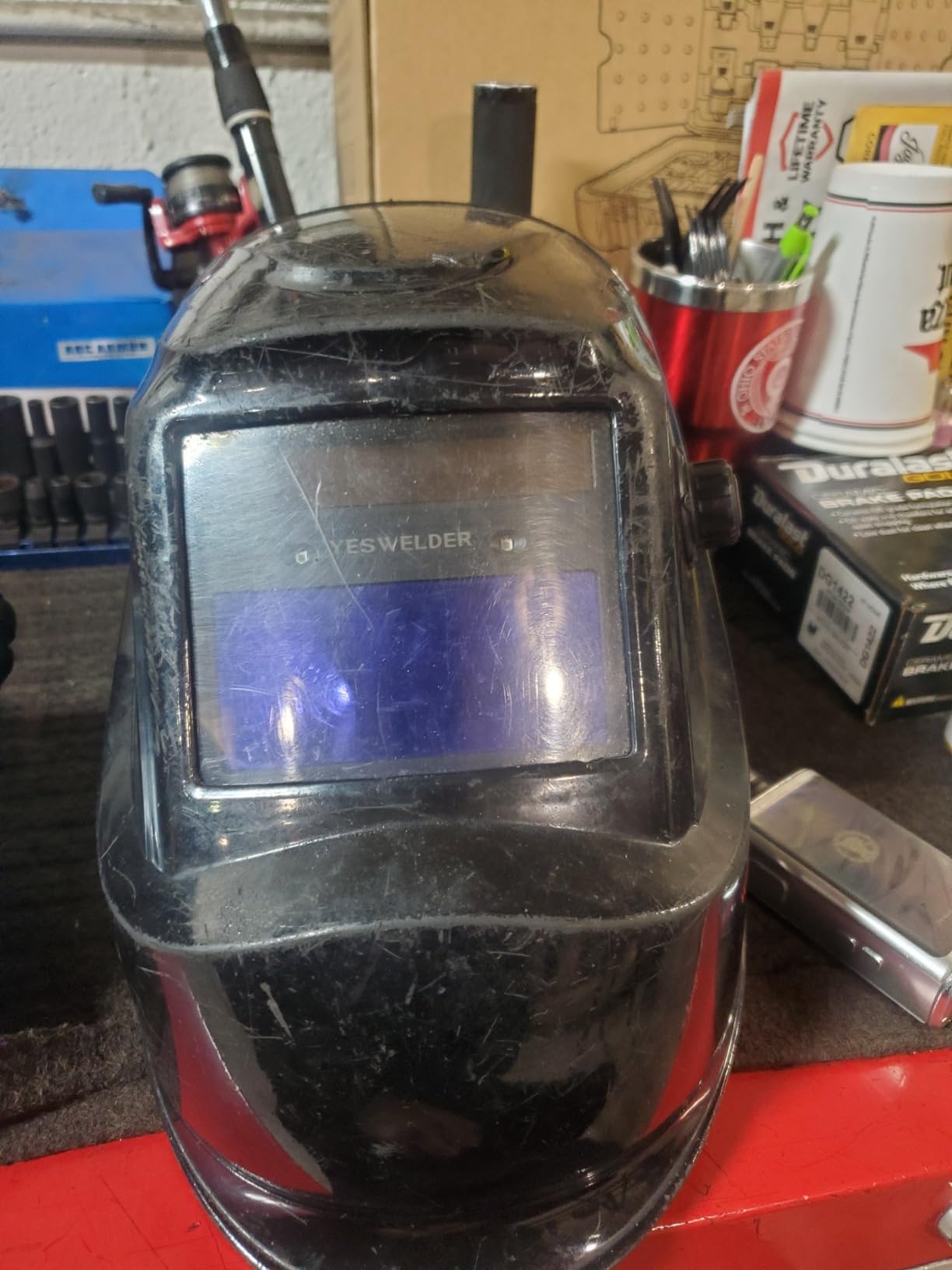
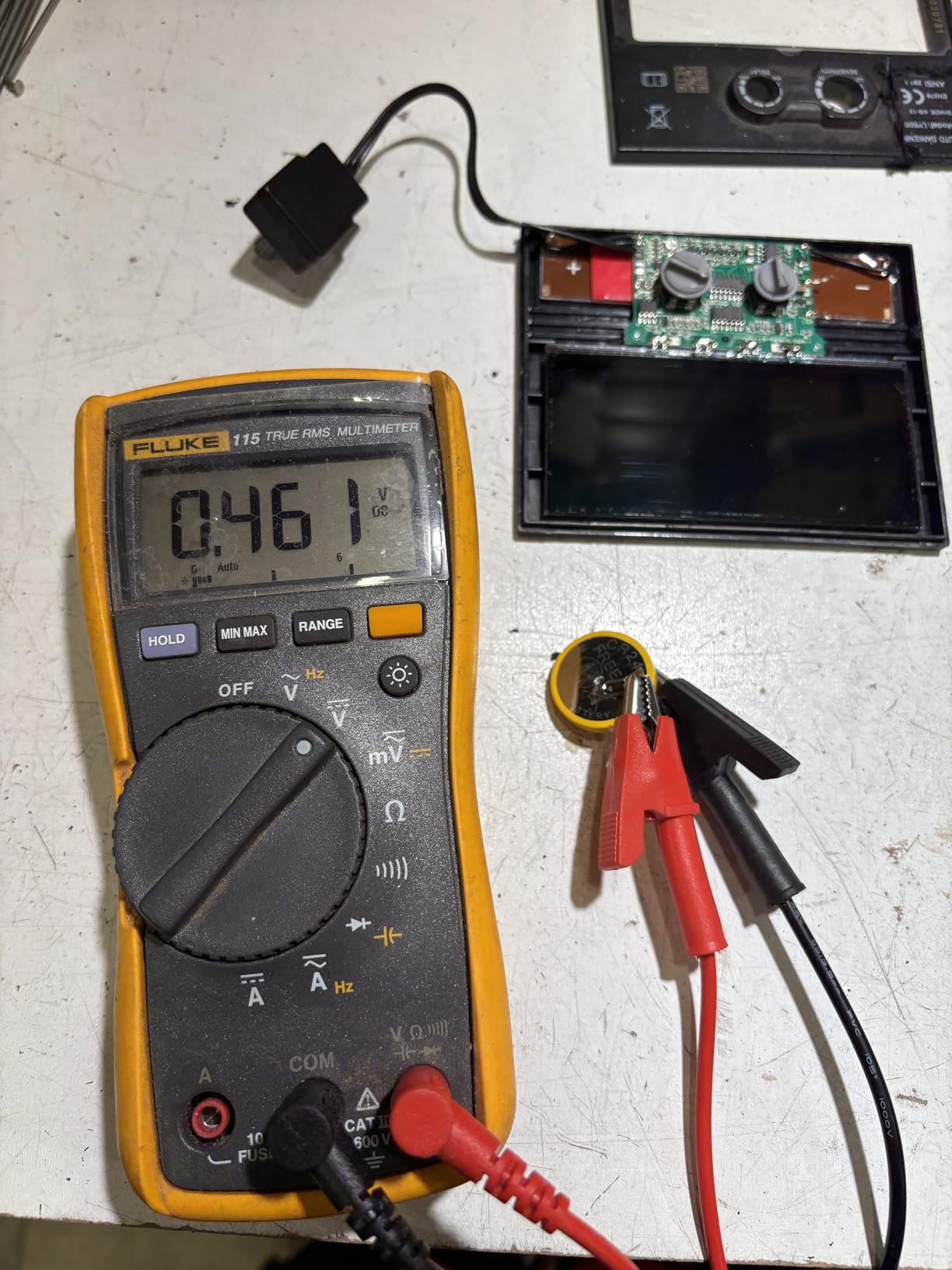
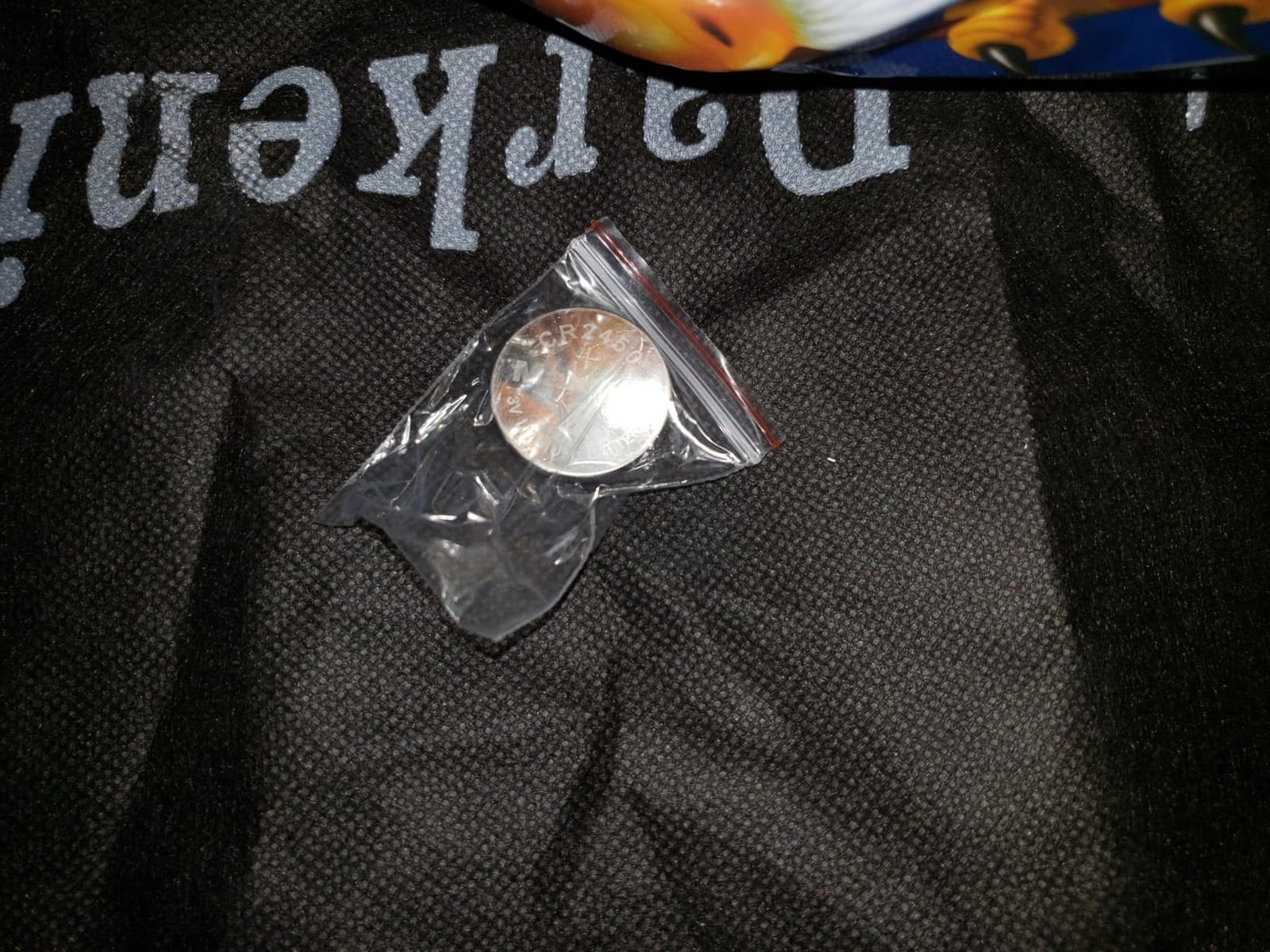
Power comes from a solar panel backed by a replaceable CR2450 coin cell, which matters more for a hobbyist than it does for a full-time welder. If the helmet sits in a garage for four months between projects, you can swap the cell instead of retiring the whole shell, and a spare battery ships in the box. That single design choice is the reason I rank it first.
It is certified to ANSI Z87.1 and CSA Z94.3, so the safety claim is documented rather than implied. The viewing window of 3.64 by 1.67 inches is the real limitation: it is a compact rectangle, not a panoramic field, and on a horizontal fillet you have to move your head a little more than you would with a wide-view hood.
Who this helmet suits
This is the first-helmet answer for someone with a garage MIG welder or a stick machine and a weekend project list. It has more than 13k owner reviews behind it, which means the failure modes, if any, are well documented and mostly cosmetic rather than safety related. If your work is mostly MIG, stick and the occasional grinder, nothing on this list is a better fit for the money.
It also suits anyone upgrading from a passive hood who wants the full benefit of true color. On WeldingWeb-style forum threads, the thing experienced users mention most is being able to see the joint clearly right before the arc strikes, and that pre-arc visibility is exactly what this lens delivers.
Where it falls short
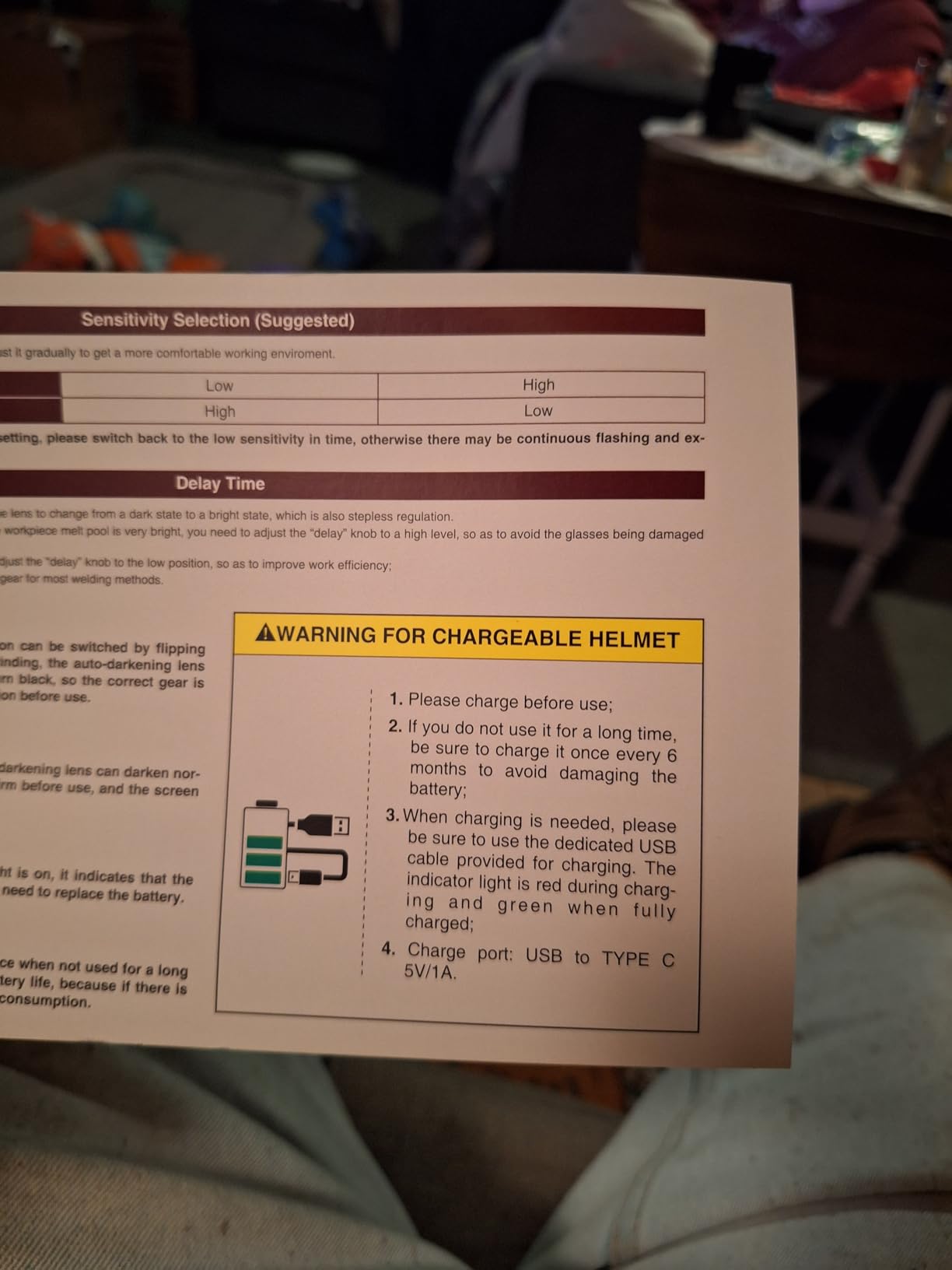
Owners consistently describe the shell and headgear as light duty, and the pivot hardware takes some getting used to. The 16-ounce weight is genuinely low, but the materials are thin plastics, so do not expect the multi-year abuse of a professional shop hood.
The included coin cell sometimes arrives seated incorrectly and needs a reseat before first use. That is a two-minute fix rather than a defect, but check it before you rely on the helmet rather than after. If you need a wide view for close inspection work, step up to the M800H.
2. YESWELDER LYG-M800H – Best Value Wide-View Helmet
YESWELDER Auto Darkening Welding Helmet, Large View, LYG-M800H
3.93 x 3.66 inch viewing area
4 arc sensors
1/30000 second switching
Cheater lens compatible
1/1/1/1 optics
Pros
- Very large viewing area makes the puddle easy to follow
- 1/1/1/1 true color optics praised over old green-tinted lenses
- Lightweight and well balanced for long sessions
- All controls on the outside and usable with gloves on
Cons
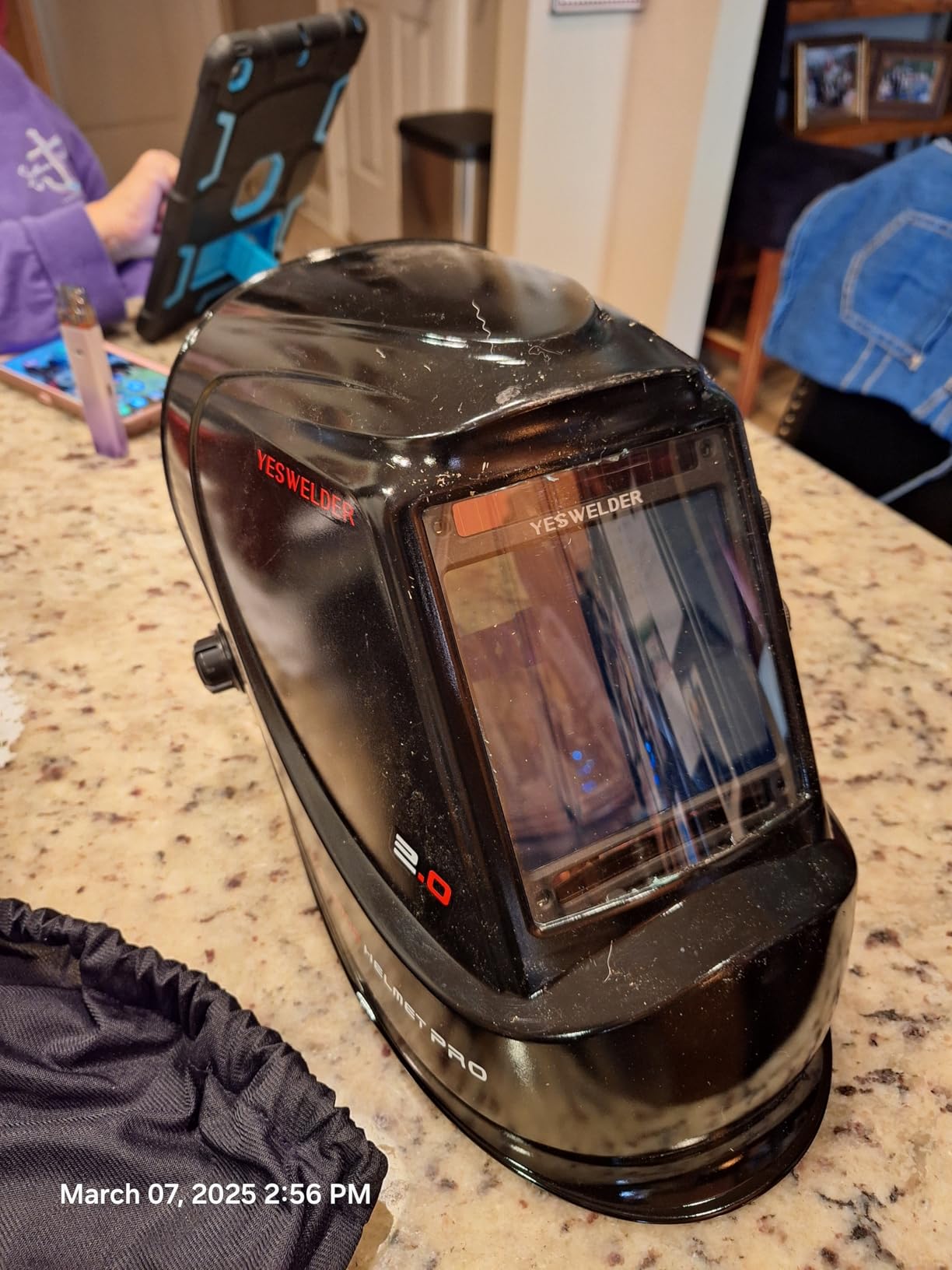
- Side tension knobs and headband feel flimsy
- Thin plastic shell compared with professional hoods
- Inner lens and battery are hard to grip
- Does not shade when tested against sunlight
Viewing area is the whole pitch here. At 3.93 by 3.66 inches this is roughly eight square inches of window, more than double the LYG-L600A, and on a lap joint or a bracket you can see the whole joint before you strike. Combined with a 1/1/1/1 true color filter, it is the closest thing on this list to what a professional panoramic hood gives you.
Four arc sensors and 1/30000 second switching make it the more robust of the two Yeswelder models outdoors or on wandering arcs. The shade settings cover DIN 3/5-9 and 9-13 across WELD, CUT and GRIND, so a plasma cutter and a welder can share one hood.
The one feature I specifically look for in a wide-window hood is cheater lens compatibility, and this one has it. A flip-up 1.75 or 2.0 magnifier drops into the frame for tack welding, bead inspection and any close layout work, which is a genuine upgrade path for the price rather than a gimmick. Multiple users on hobby-machinist.com run cheater lenses inside their helmets for exactly this reason.
Owners report the biggest practical change is bead placement. Being able to watch the puddle travel without adjusting the hood means fewer restarts and cleaner passes, which is where the money you spent on the helmet quietly comes back.
Who this helmet suits
Choose this if you are tired of moving your head to see. Fitters, hobby fabricators and anyone doing brackets, tubing or chassis work will feel the difference within a single session. It is also the natural choice if you plan to add a cheater magnifier later or want one hood for MIG, stick, cut and grind.
Owners frequently compare the optics favorably to expensive self-darkening hoods they tried first, and the consensus is that the view justifies the trade-offs in the build quality. The measurement is not a marketing number; the window is genuinely large.
Where it falls short
The headband and side tension knobs are the weak point. Multiple reviewers report they feel flimsy and may need very tight cranking to hold position, which is the opposite of what you want during overhead work. This is a plastic shell, so treat the adjustment hardware as consumable rather than permanent.
One more thing to know: it does not shade when you hold it up to direct sunlight, so it will not pass an at-the-sun test. That is not a defect, because sunlight is nowhere near arc brightness, but owners sometimes mistake it for a dead cartridge. The inner lens and battery are also hard to grip and remove when you need to change them.
3. ARCCAPTAIN Auto Darkening – Best Rated Under the Mid Tier
ARCCAPTAIN Welding Helmet Auto Darkening, 1/25000s Response, Shade 4/9-13
4 arc sensors
1/25000 second switching
3.86 x 1.69 inch view
DIN 16 UV and IR protection
1 lb
Pros
- Clear and fast auto darkening that works reliably on MIG and stick
- Grind mode is easy to engage without removing the helmet
- Good adjustability and a fit that stays on the head
- Solid visibility of the weld puddle for the money
Cons
- A minority of owners report slow response times
- Plastic build quality feels inexpensive
This is the helmet I recommend to anyone who wants four sensors and full standards certification at the low end of the market. It is rated to ANSI/ISEA Z87.1-2010, CSA Z94.3, DIN EN 175 and DIN EN 379, which is the most complete certification string in this roundup, and the filter carries 1/1/1/1 optical clarity with true color.
At 1 pound it is tied for the lightest here, and the padded adjustable headband holds position without the over-tight cranking some cheaper headbands demand. Switching is 1/25000 second across four premium sensors, so outdoor and wandering-arc work is not a problem.
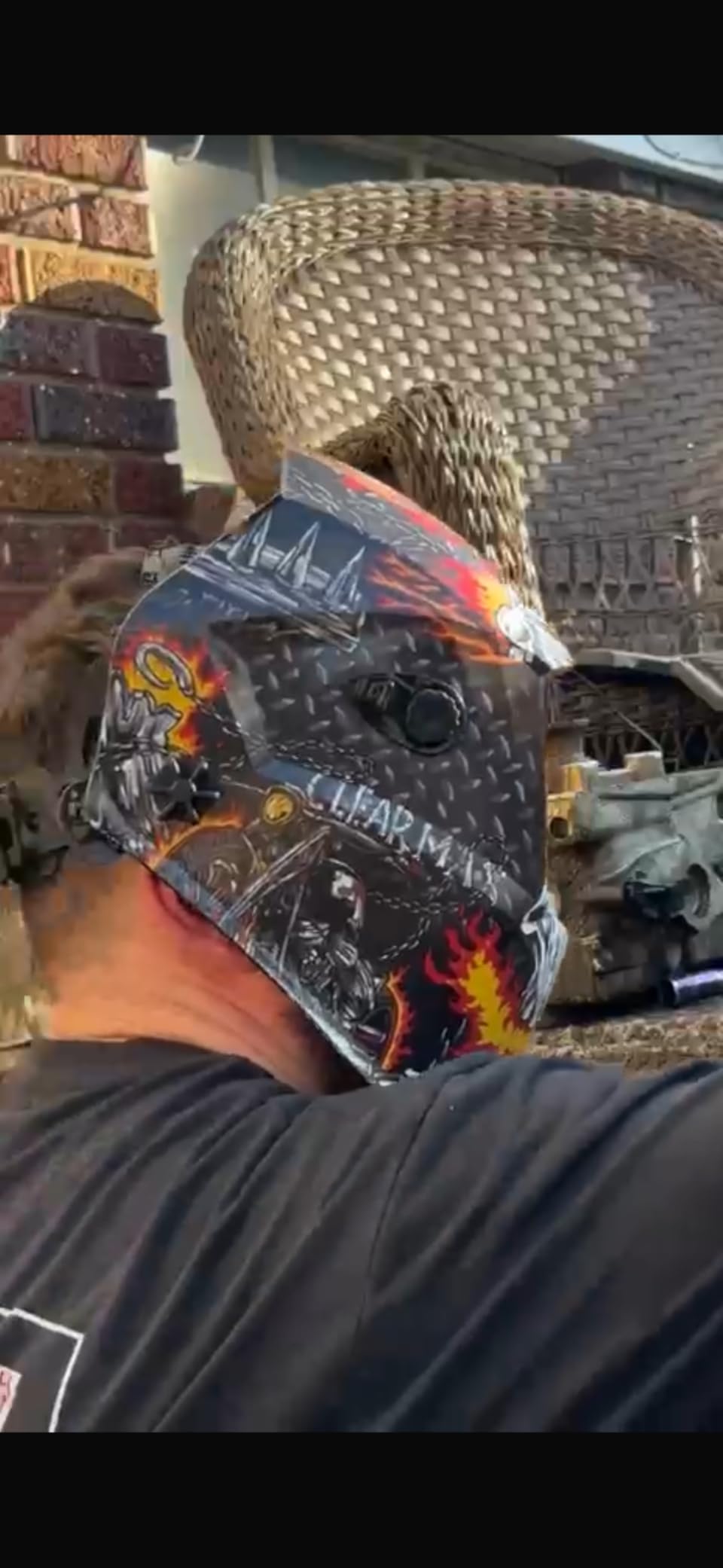
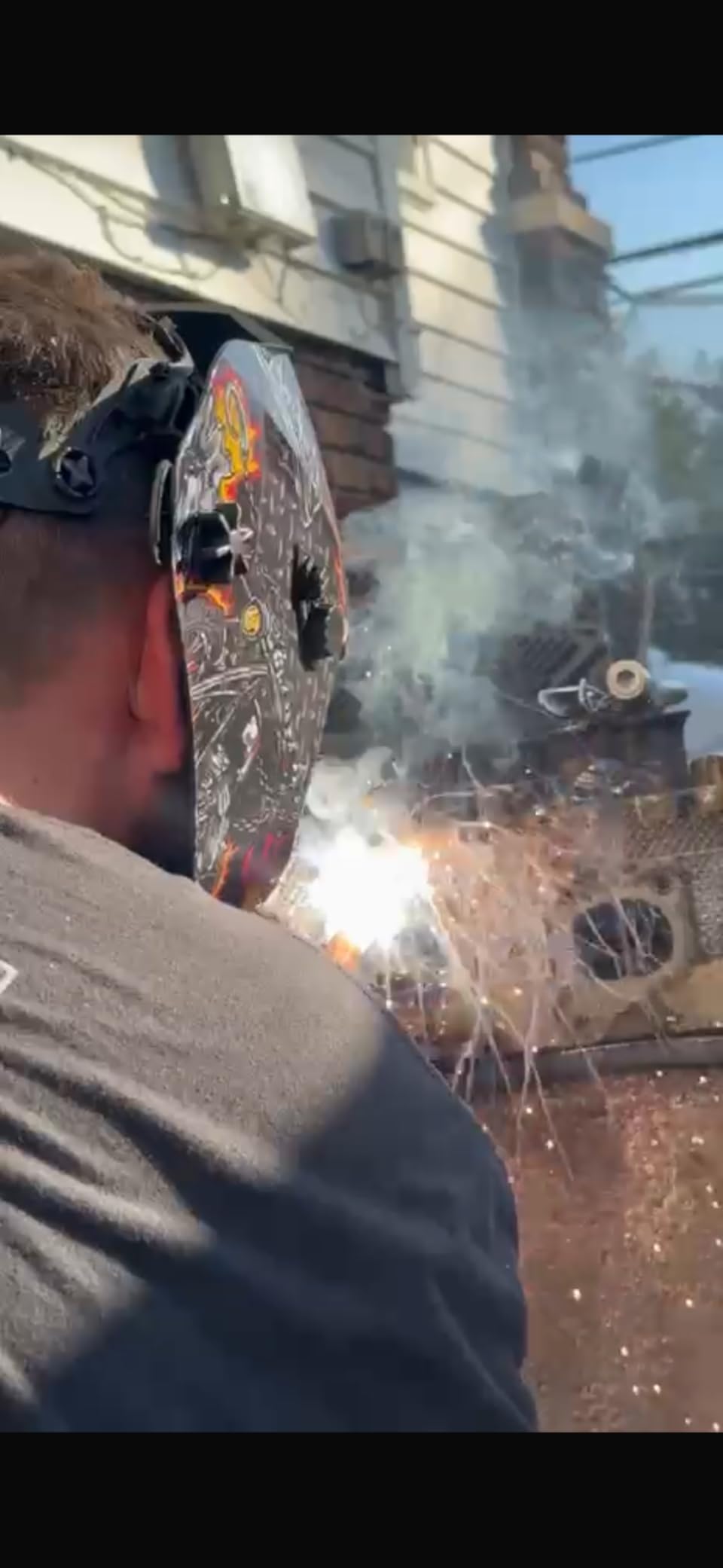
The 12-in-1 smart filter block and DIN 16 UV/IR protection are worth understanding: the filter darkens for welding and the outer layer continues blocking ultraviolet and infrared light when the lens is in its clear state. On a sunlit porch project, that residual protection is what you are actually relying on between arcs.
Three replacement lenses ship in the box, which is more than most rivals, and cheater lens compatibility means you can add magnification whenever you decide you need it. The shell is PA material rated for shock, heat and wear, and the warranty runs 180 days.
Who this helmet suits
This suits the hobbyist who wants the most defensible safety documentation for the least money. If you are buying for a family member or a teenager learning in a garage, having all four standards printed on the shell is a real reassurance rather than a marketing line.
It is also a strong pick for anyone doing a mix of welding and grinding, because grind mode is easy to engage without lifting the helmet off your head. Owners consistently single out that convenience when they describe using it around the garage.
Where it falls short
A minority of owners report slower response times, and a small number report failures after extended heavy use. At just over 3000 reviews the sample is large enough to trust the average but not large enough to rule out a weak batch.
The plastics feel inexpensive, particularly the shell. It is a light-duty hood built for weekend duty, which is exactly what you asked for, but it is not the shell to buy if you plan to weld full time in a hot shop.
4. TOOLIOM E600A-A – Best Lightweight Helmet With an External Grind Knob
TOOLIOM Auto Darkening Solar Powered Welding Helmet for TIG MIG ARC with Light
External grind mode knob
3.64 x 1.67 inch viewing area
1/1/1/1 true color
DIN 3.5/9-13
Low battery indicator
Pros
- Lightweight with comfortable adjustable headgear
- Darkens quickly with a clear true color view of the puddle
- External knob switches to grind mode without removing the helmet
- Solid value for home garage projects
Cons
- Cheater lens holder is slightly too small for standard 4.25 inch lenses
- Small viewing area and screen dirties quickly from smoke
- Instructions omit the external on/off and shade knob
- Rear plastic head strap presses uncomfortably if tightened
This is the hood I reach for when the session is long and the shop is hot. The published spec sheet puts it at about 1.14 pounds, which makes it the lightest helmet in this roundup, and the breathable sweatband plus adjustable PE headgear are what keep it comfortable past the third hour.
The standout control is the external knob that switches between weld and grind mode without taking the helmet off. On a job that alternates between filling a gap and knocking the slag off, that saves more time than any other single feature on this list. Sensitivity and delay knobs sit outside as well, so you can dial it in with a glove on.
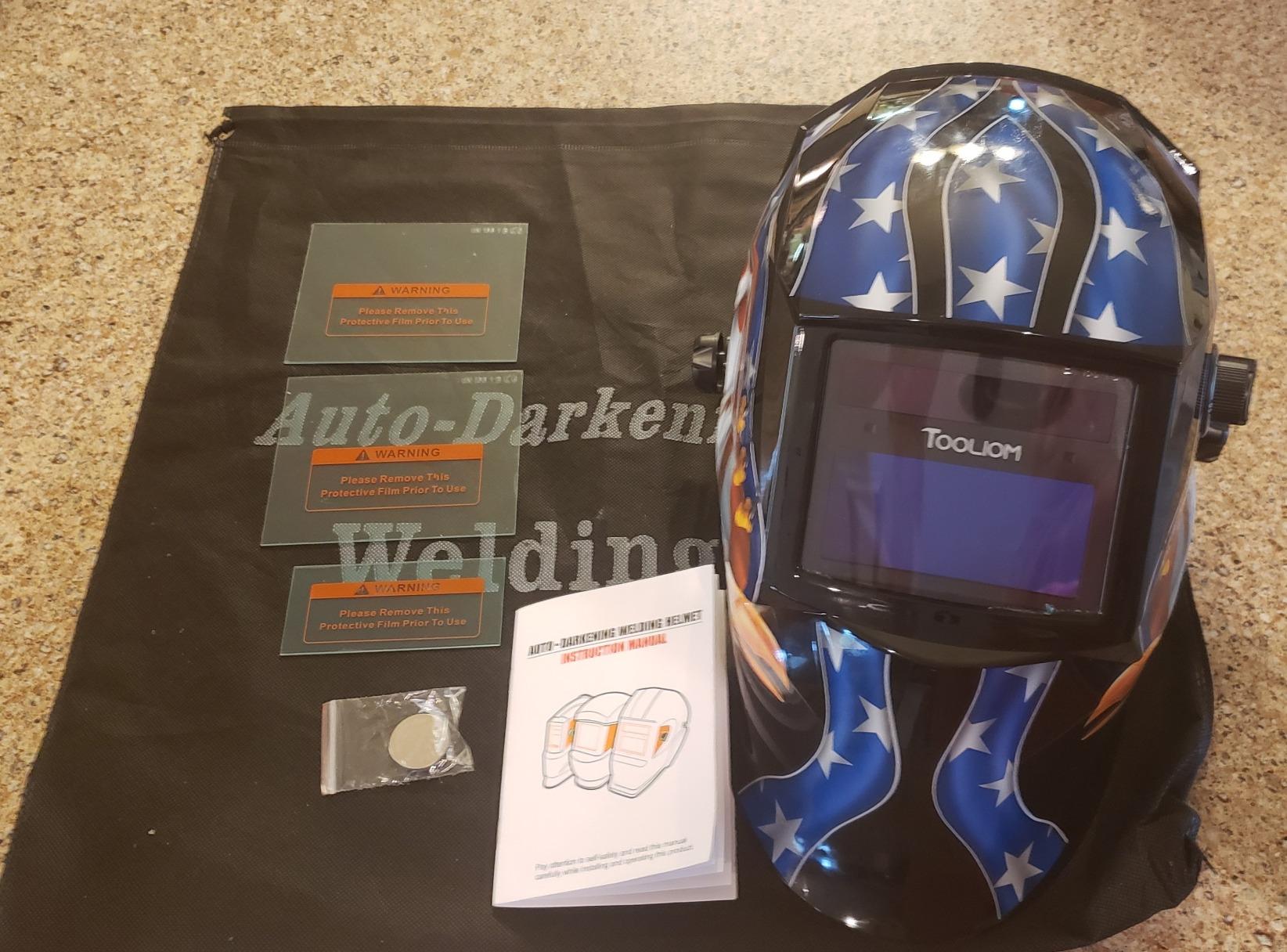
Optically it is a 1/1/1/1 true color lens across a 3.64 by 1.67 inch window, with arc detection in 1/25000 second and DIN 3.5/9-13 shade selection. The outer lens blocks blue light, which is the part of the spectrum most associated with screen discomfort after a long shift, and there is a low battery indicator so you are never surprised mid-arc.
Power is solar with a replaceable battery and an accessible compartment, so a declining cell is a swap rather than a write-off. That is a real longevity advantage over helmets whose battery is sealed inside the shell.
Who this helmet suits
Long garage sessions are the sweet spot. If you weld for four or five hours at a stretch, the weight saving compounds into the difference between a helmet you keep wearing and one you flip up every few minutes.
It also suits anyone whose work is half welding, half finishing, because the external grind knob is faster and safer than reaching inside the shell with gloves on. Reviewers consistently describe it as performing near much costlier units on home projects.
Where it falls short
The cheater lens holder is slightly too small for standard 4.25 inch lenses, which is a genuine annoyance if you plan to magnify. The viewing window is compact, and the screen dirties quickly from smoke, so budget a cleaning cloth in your kit.
The documentation omits the external on/off and shade knob, which means your first setup session is spent guessing. Owners also report the rear plastic head strap pressing uncomfortably if you tighten it down, so find the right tension before the arc starts rather than during it.
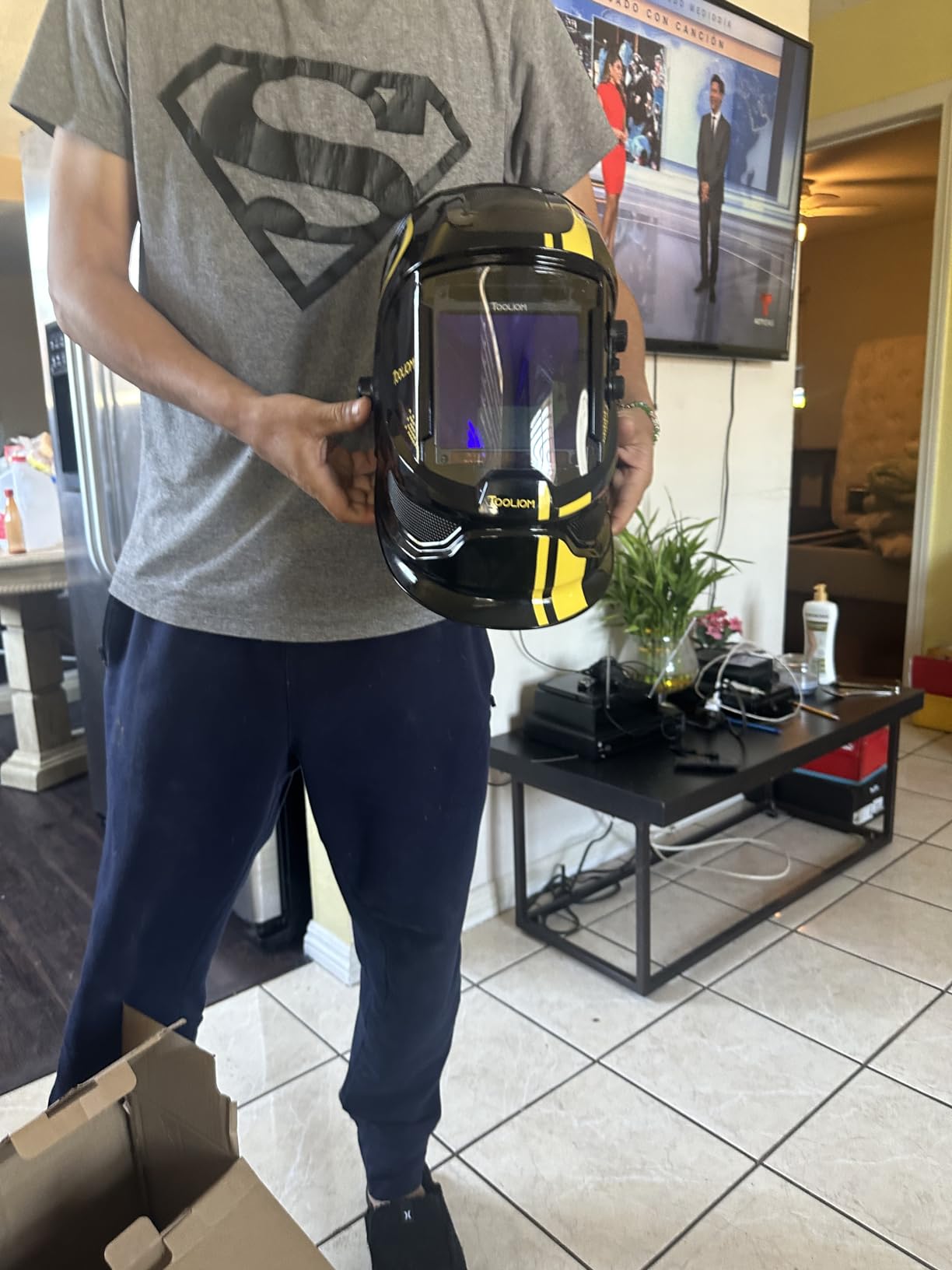
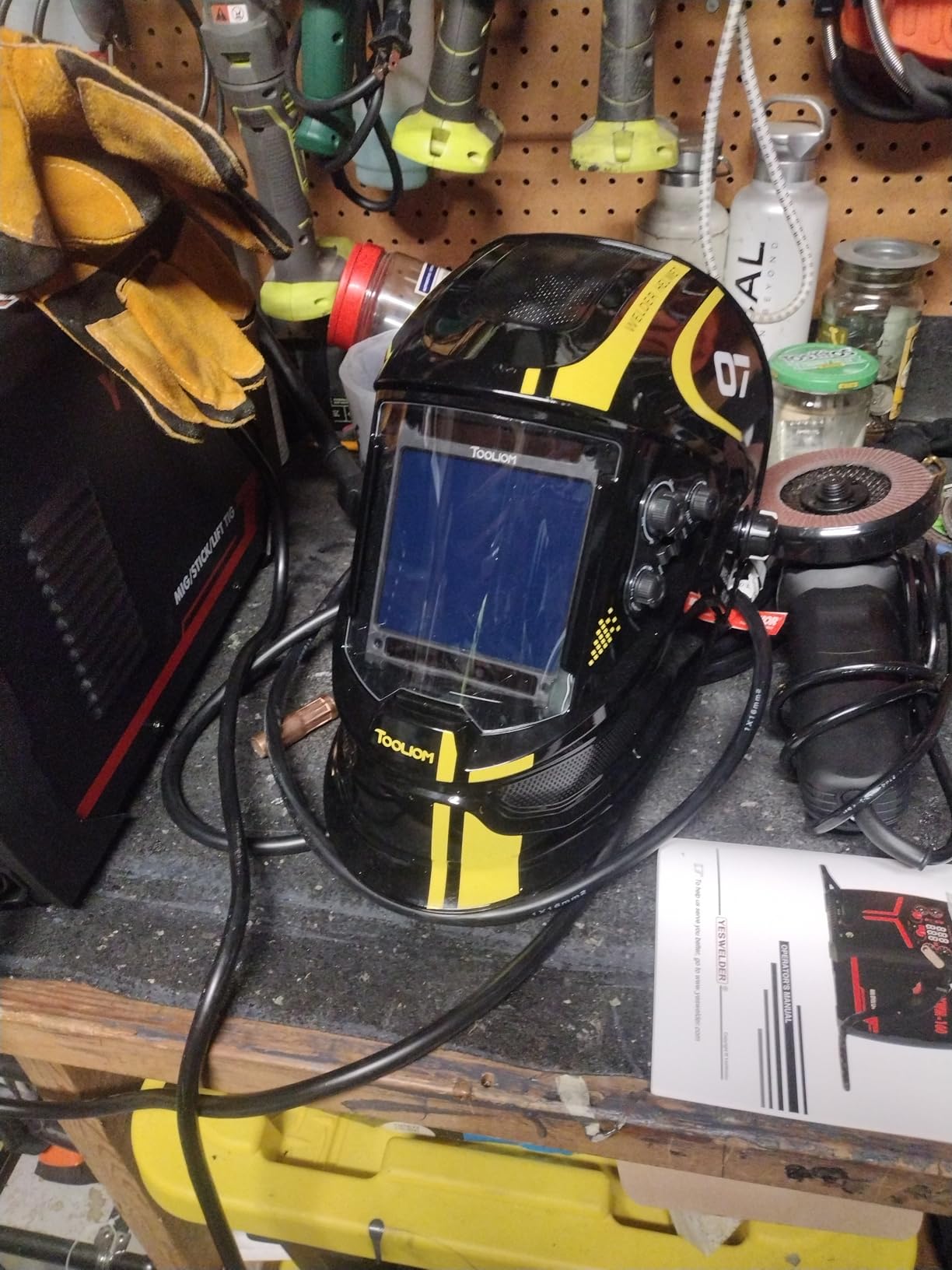
5. TOOLIOM TL-M800D – Best for Dedicated Weld, Cut and Grind Modes
TOOLIOM True Color Auto Darkening Welding Helmet with Large View
3.94 x 3.27 inch viewing area
4 arc sensors
1/1/1/1 optics
9-13 weld, 5-9 cut, 3.0 grind
Pros
- Large 3.94 x 3.27 inch viewing area with true color optics
- Dedicated weld cut and grind shade selections
- Delay and sensitivity controls for different processes
Cons
- Three fixed shade bands rather than a fine-adjust range
- No external grind mode button listed among the controls
- Spare lens quantities are not itemized on the listing
This is the process specialist in the lineup. The M800D lens program is split into three named bands rather than one continuous range: shade 9-13 for weld, 5-9 for cut and 3.0 for grind. For a hobbyist who owns a plasma cutter or an oxy-fuel torch alongside the welder, that removes the guesswork of remembering which shade belongs to which process.
The viewing area of 3.94 by 3.27 inches works out to about 12.9 square inches, the largest square-inch figure in this roundup, and the filter holds a 1/1/1/1 optical classification with true color technology. Four arc sensors handle a wandering arc without dropping out.
Delay and sensitivity adjustment is where the process separation pays off. A long delay keeps the lens dark through the pause between passes on a multipass weld, while a higher sensitivity setting catches a low-amp start on thinner material. Neither control is exotic, but having both means one helmet covers steel, aluminum and thinner gauge without a second hood.
It meets ANSI Z89.1 and ships with a replacement battery plus spare inner and outer lenses, so the consumables that matter most are in the box from day one. At roughly 0.58 kilograms the weight is reasonable for a shell this size.
Who this helmet suits
Owners of a plasma cutter, a stick machine and a MIG welder in the same garage are the natural fit, because the cut band is a dedicated 5-9 rather than a compromise. Anyone who does multipass work and appreciates the delay control will also notice the difference.
Reviewers rate it highly for combining a large true color field with separate process modes, which is a combination most budget helmets skip. If you have outgrown a compact hood and want the window without moving up a class, this is the direct route.
Where it falls short
The three-band system is less flexible than a continuous adjustable range. If you do fine filler metal work at a specific low shade, you are picking the nearest band rather than dialling an exact number.
Controls are internal, with no external grind button in the listed feature set, so switching to grind means reaching the controls with a glove on. The listing also does not itemize how many spare lenses ship in the box, so plan to order cover lenses separately as part of your budget.
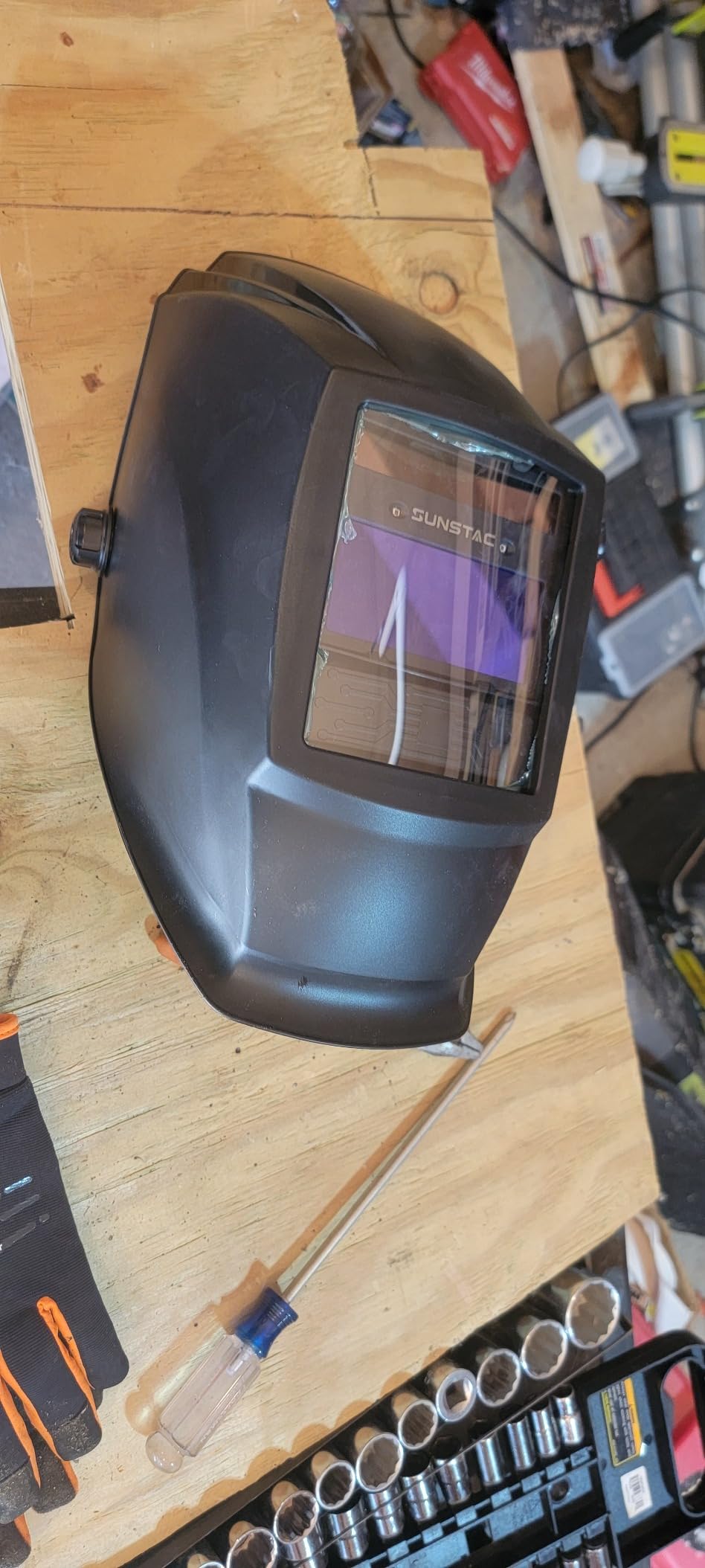
6. Sunstac SS-A800D – Best Panoramic Helmet With a Swivel Work Light
Sunstac Auto-Darkening Welding Helmet 3.94 x 3.27″ View with Light
3.94 x 3.27 inch viewing screen
4 arc sensors
1/30000 second darkening
Swivel rechargeable work light
Pros
- Huge viewing area with no darkening lag and no over-darkening
- See the weld pool and workpiece clearly compared with older self-darkening hoods
- Lightweight with a comfortable fully adjustable head strap
- Swivel rechargeable work light is useful in low light
Cons
- Side tension buttons feel delicate and the hood can flop down
- Filter takes a moment to engage on power-up
- Battery is difficult to access
- Head piece is deep and can hit glasses on smaller heads
The work light is the reason this one stands out. A rechargeable high-brightness lamp on a swivel mount with concentrated and wide modes means you can light the joint before you light the arc, which matters enormously in a closed garage with the door down. It is a small feature that changes how usable the helmet is in a real home shop.
Optically it holds 1/1/1/1 true color with darkening in 1/30000 second across a 3.94 by 3.27 inch screen, and four arc sensors back it up. Shade options run 4 in the light state with 5-9 and 9-13 in the dark states, so it covers stick, TIG, MIG, cut, MMA and plasma from one hood.
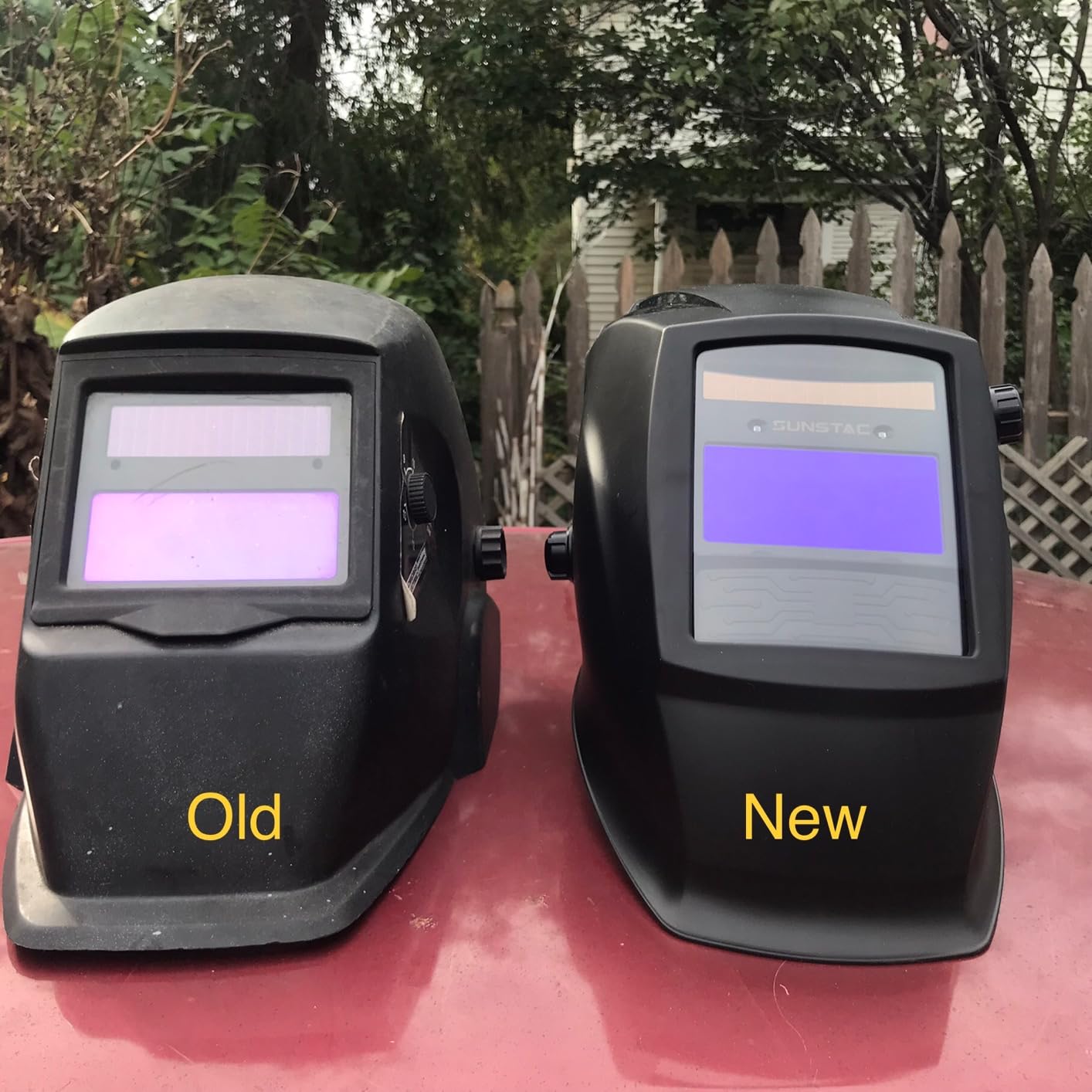
Buyers frequently compare this favorably to expensive self-darkening hoods they had owned, citing the panoramic field of view and optics that do not lag or over-darken. Over-darkening is a real complaint on cheaper helmets, where the lens goes darker than the arc requires and the puddle disappears; reviewers here specifically praise the absence of that behavior.
Power is dual lithium battery or solar, so intermittent hobby use is fine, and the helmet is cheater lens compatible with the magnifier sold separately. That is the standard arrangement rather than a bundled extra.
Who this helmet suits
This is the pick for a hobbyist working in a dim garage, a basement workshop or an unlit outbuilding, because the work light solves a problem no other lens in this roundup addresses. It is also a strong choice for anyone moving up from an older self-darkening hood and wanting a genuinely panoramic field.
If you weld stainless or aluminum, the true color view makes a visible difference in judging the puddle, and buyers consistently note the improvement in seeing the workpiece clearly compared with older hoods.
Where it falls short
The side tension buttons feel delicate and the hood can flop down, which is uncomfortable during overhead work. On smaller heads the deep head cavity can also catch your glasses, so try the fit before a full project.
Two smaller issues: the filter takes a moment to engage on power-up, which matters if you are doing rapid tacks, and the battery is difficult to access, so swap cells in advance rather than mid-job.
7. BESTCLUB True Color Solar Hood – Best for Plasma Cutting on a Budget
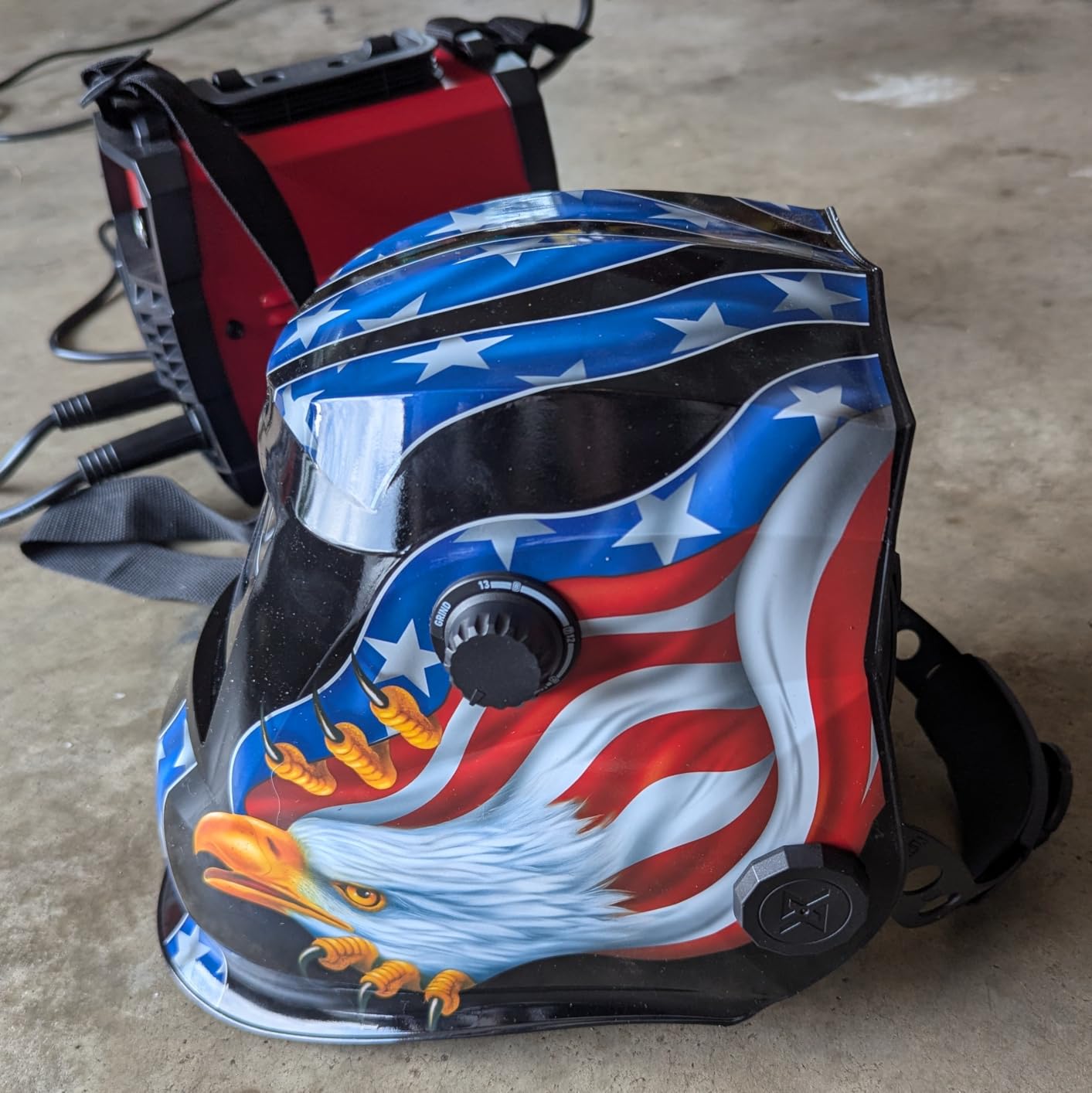
Welding Helmet Auto Darkening : BESTCLUB True Color Solar Powered Hood with Adjustable Shade Range 4/9-13 for Mig Tig Arc Welder Mask (Flag Eagle)
1/1/1/2 optical clarity
4 independent arc sensors
1/25000 second switching
Weld grind and plasma cut modes
Pros
- Darkens immediately on the arc
- eliminating residual blink spots
- Clear true color view without the usual lime-green tint
- Ergonomic pivot headgear distributes weight to reduce neck fatigue
- Good quality and fit for the price
Cons
- Shell feels narrow and uncomfortable over long sessions
- One owner reported it would not hold its adjustment
- Solar only with no replaceable battery mentioned
The reason this helmet makes the list is the mode set. Alongside weld and grind it has an explicit plasma cut mode with a DIN 9-13 adjustable shade range, and that is rare at this tier. If you own a plasma cutter, this saves you from hunting for the right shade every time you switch tasks.
Four independent high-sensitivity sensors and 1/25000 second light-to-dark switching mean the lens goes dark before the arc finishes striking, so there is no residual blink spot at ignition. The 1/1/1/2 optical class with true color technology is a small step behind the 1/1/1/1 lenses elsewhere, mostly visible as slight edge distortion when you glance far to the side.
The ergonomic pivot headgear is the sleeper feature. It hangs the shell from an overhead pivot rather than pushing it on from behind, so the weight sits on the crown and the side of the head instead of compressing your jaw and neck. For a helmet that weighs under a kilogram and sits on your head for hours, the distribution matters.
Most buyers describe this as an upgrade on a previous hood, with instant darkening and a clear view without the usual lime-green tint. The shell is described as high-impact and flame-retardant, and the pivot-style headgear is adjustable.
Who this helmet suits
Garage hobbyists who cut as well as weld get the most from it, and the pivot headgear suits anyone who works overhead or spends a full day in the helmet. It is a sensible first true color lens for someone moving up from a green-tinted hood.
Reviewers rate the tint removal and the immediate darkening as the reasons it feels like a step up, and that is a fair summary of what you notice in the first ten minutes of use.
Where it falls short
Owners report the shell feels narrow and uncomfortable over long sessions, which is the trade-off for the low weight. One owner also found the headgear would not hold its adjustment, so check the pivot tension early.
It is solar powered with no replaceable battery mentioned in the listed specifications, so for someone who stores gear for long stretches between projects, verify the power arrangement before committing. The 1/1/1/2 optical class also gives up a little edge clarity compared with the 1/1/1/1 lenses on this list.
8. TRQWH Solar Powered Hood – Best for Dark Corners and Basements
TRQWH Auto Darkening Welding Helmet with Light ANSI Z87.1 Certified
1/1/1/2 true color lens
USB rechargeable LED work light
2 arc sensors
1/20000 second switching
Pros
- Excellent value for beginners and occasional fix-it work
- True color lens gives a clear view of the seam and work area
- Built-in rechargeable work light is genuinely useful in dim spaces
- Replaceable batteries and spare lenses included
Cons
- Included flashlight is of poor quality
- Thin lenses that may wear quickly in a professional shop
- Hood can fall forward without a locking feature
- Some owners reported sensitivity controls not darkening reliably
This is the cheapest way into a true color auto darkening lens with a working light attached, and for a basement or a garage with one dim corner it solves a real problem. The LED work light sits on top of the shell with a USB port for charging, so you can see the joint before the arc is ever struck.
Be clear-eyed about the light itself: owners describe the bundled flashlight as poor quality. The charging interface and the placement are useful, the lumens are not. Treat it as a convenience for finding your work, not as shop lighting.
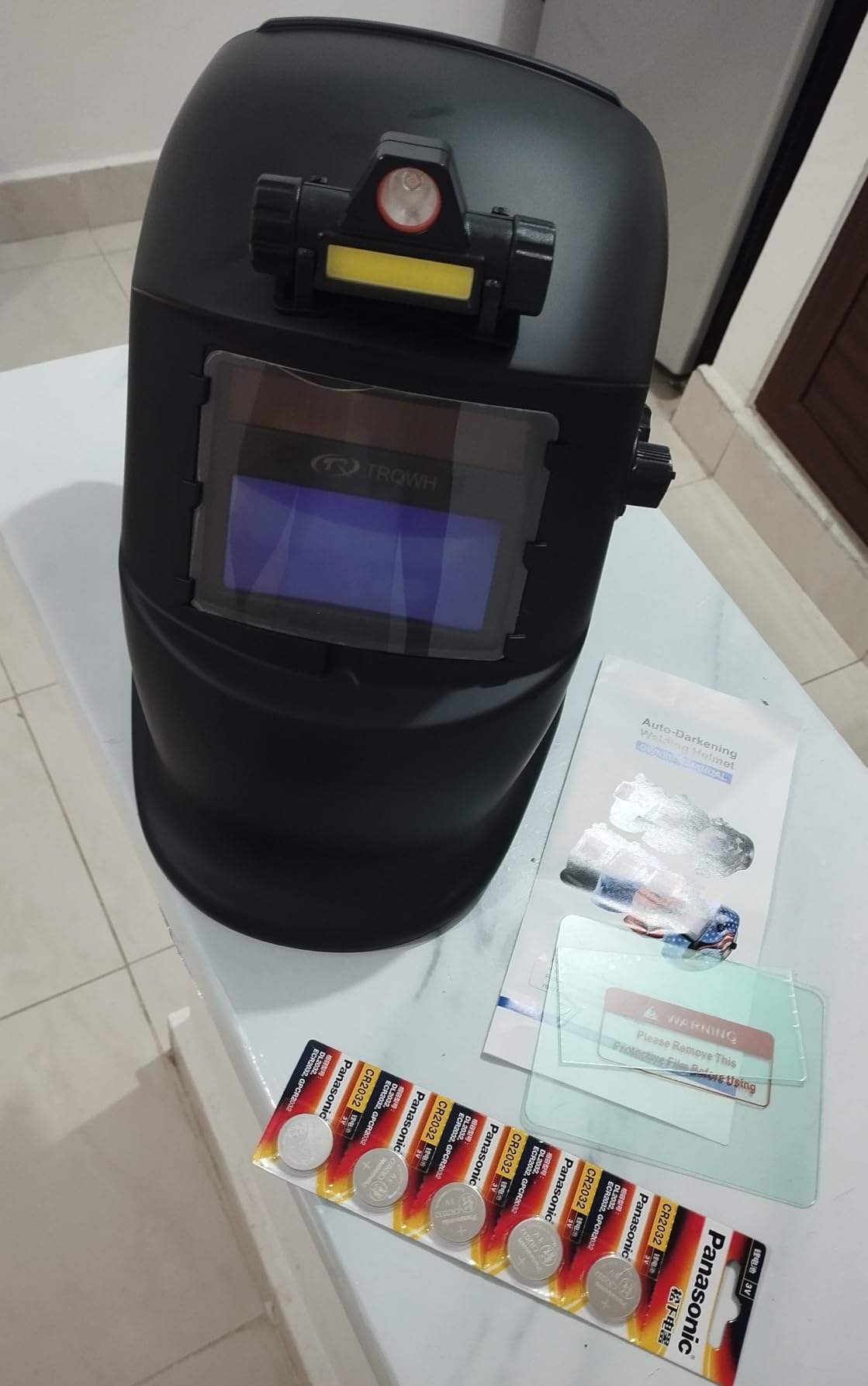
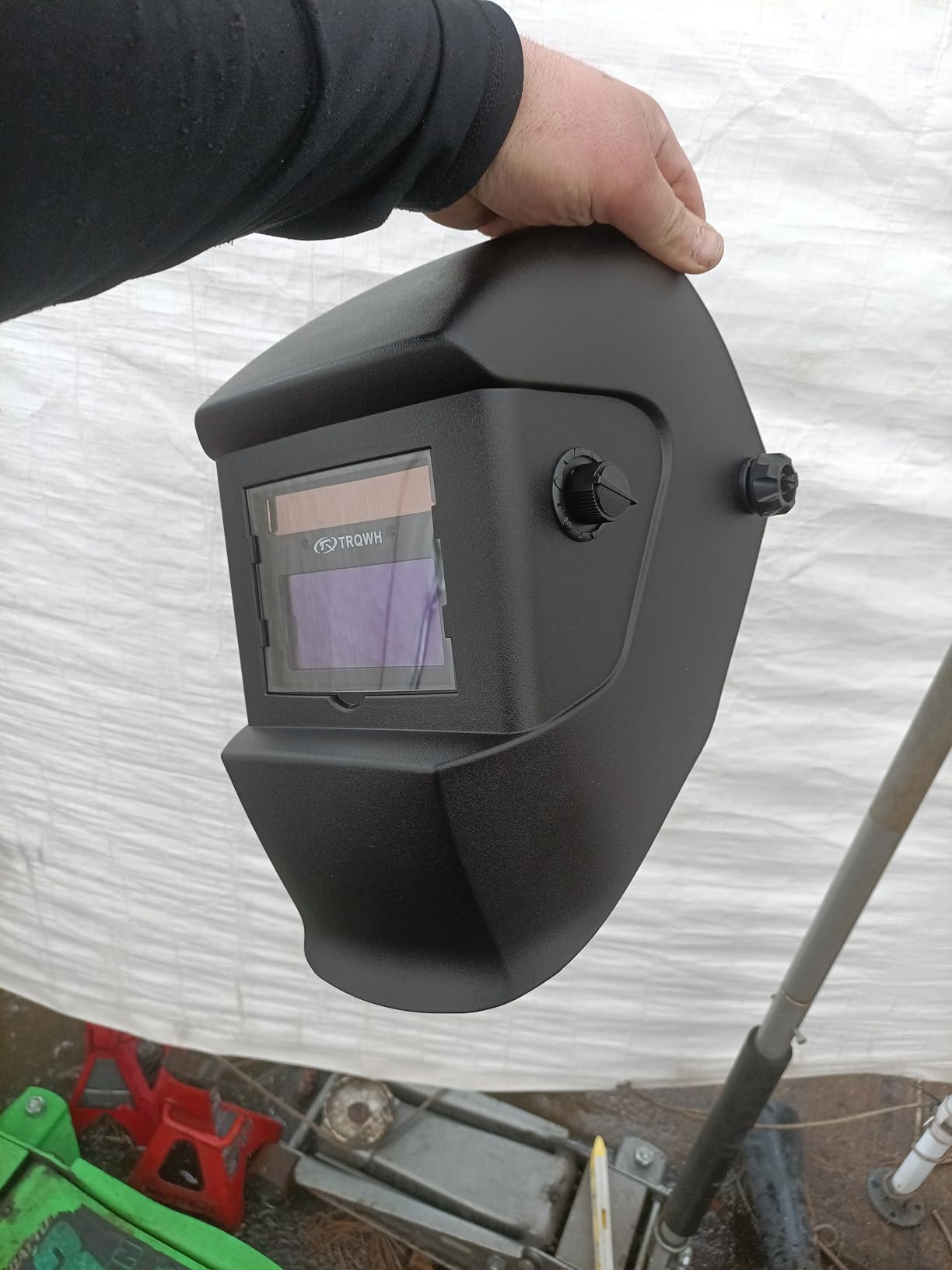
Optically it is a 1/1/1/2 true color lens, with two arc sensors switching in 1/20000 second between a DIN 4 light state and DIN 9-13 dark state. The impact and flame resistant PP shell meets ANSI Z87.1, EN 379 CE and CSA Z94.3, and the fit is handled with side angle knobs, a rear headband knob and padded forehead and ear sponge.
Power is solar cells plus replaceable CR2032 lithium batteries, and spares are included, which matters for intermittent use. Fit adjustment is thorough, but note that the hood can fall forward because there is no locking feature, so set the tension before you start rather than mid-pass.
Who this helmet suits
Beginners and occasional fix-it work are the clear audience, and the side angle knobs plus rear knob make it easy to get a close fit on an unusual head shape. It suits plasma cutting, grinding, DC and AC TIG, MIG and MMA per the manufacturer, so it covers a broad hobby program.
Reviewers treat it as a capable first helmet with a clear true color view and quick darkening. If your first priority is spending the least and still removing the green tint, this is the option most people land on.
Where it falls short
Two arc sensors and a 1/20000 second response are adequate for garage MIG and stick but are the weakest sensing configuration here, and some owners report the sensitivity control not darkening reliably. Set the sensitivity up in open air before relying on it.
The lenses are thin and may wear quickly in a professional shop, which matters little for weekend use and a lot if you ever weld full time. Combine that with the unlatchable flip-up position and the mediocre work light, and this is a garage helmet rather than a shop helmet.
9. Accoral AC-850BS – Best Straightforward Helmet for Occasional Repair Work
Accoral Auto-Darkening Welding Helmet, True Color, Shade 4/9-13
1/1/1/1 optical clarity
2 arc sensors
1/25000 second switching
External side control panel
Lithium plus solar
Pros
- Crystal clear true color view of the joint and puddle
- Dims very quickly once settings are dialled in
- Comfortable pivoting headgear with adjustable tightness
- Good value for occasional repair welding
Cons
- Head band adjustment loosens over time and needs re-tightening
- Several settings tweaks needed before it behaves as expected
This is the simplest well-made answer on the list, and simplicity is underrated in safety gear. There is no work light, no cheater lens mount, no process memory. There is a 1/1/1/1 true color lens, two arc sensors, 1/25000 second switching and an external side panel with buttons for shade, sensitivity and delay, which is everything a weekend repair job needs.
Owners consistently describe being pleasantly surprised by the performance, and several frame it as a clear step up from unnamed cheap helmets. The lens dims very quickly once the settings are dialled in, and the true color view of the joint and puddle is the feature people notice first.
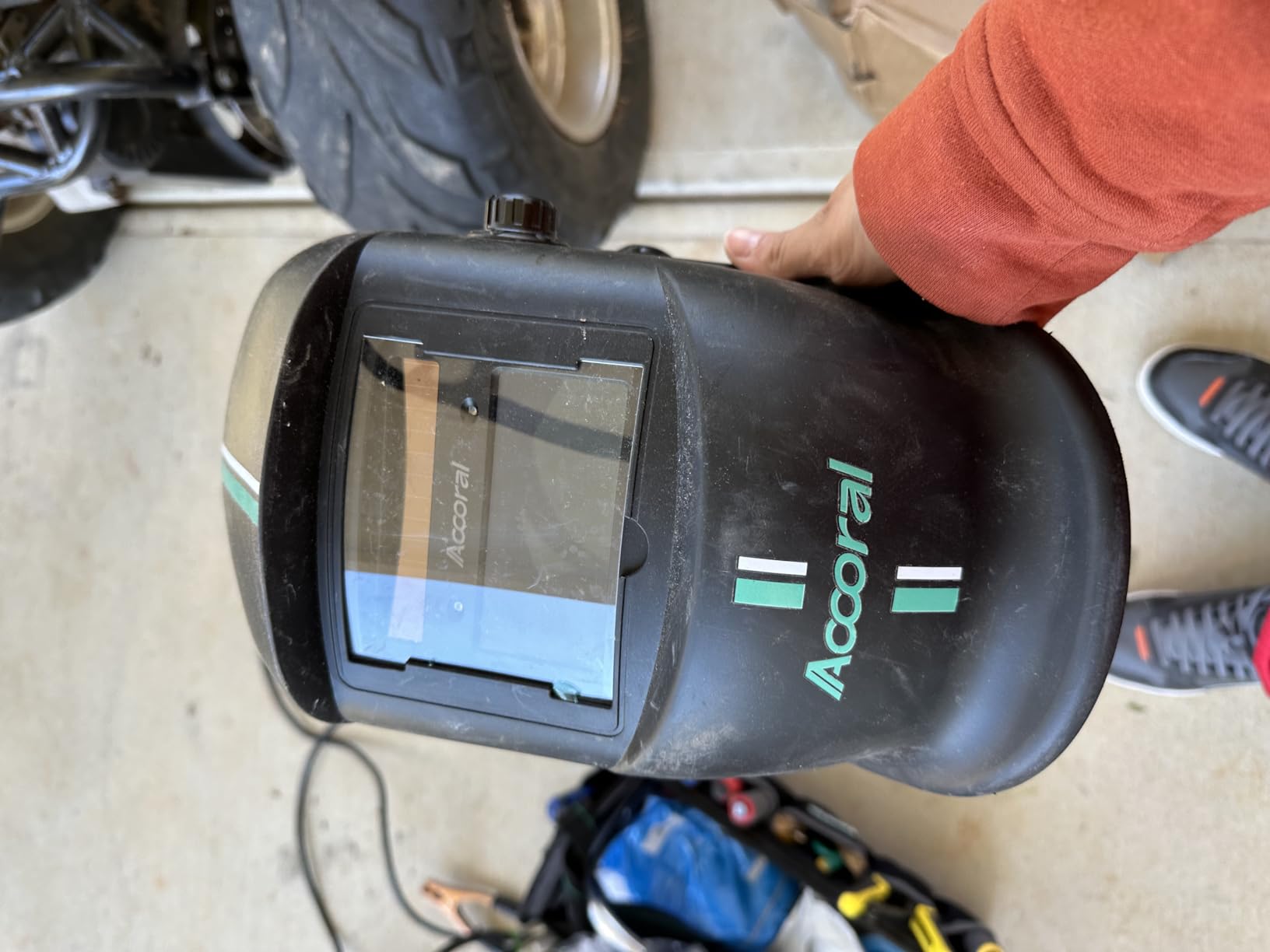
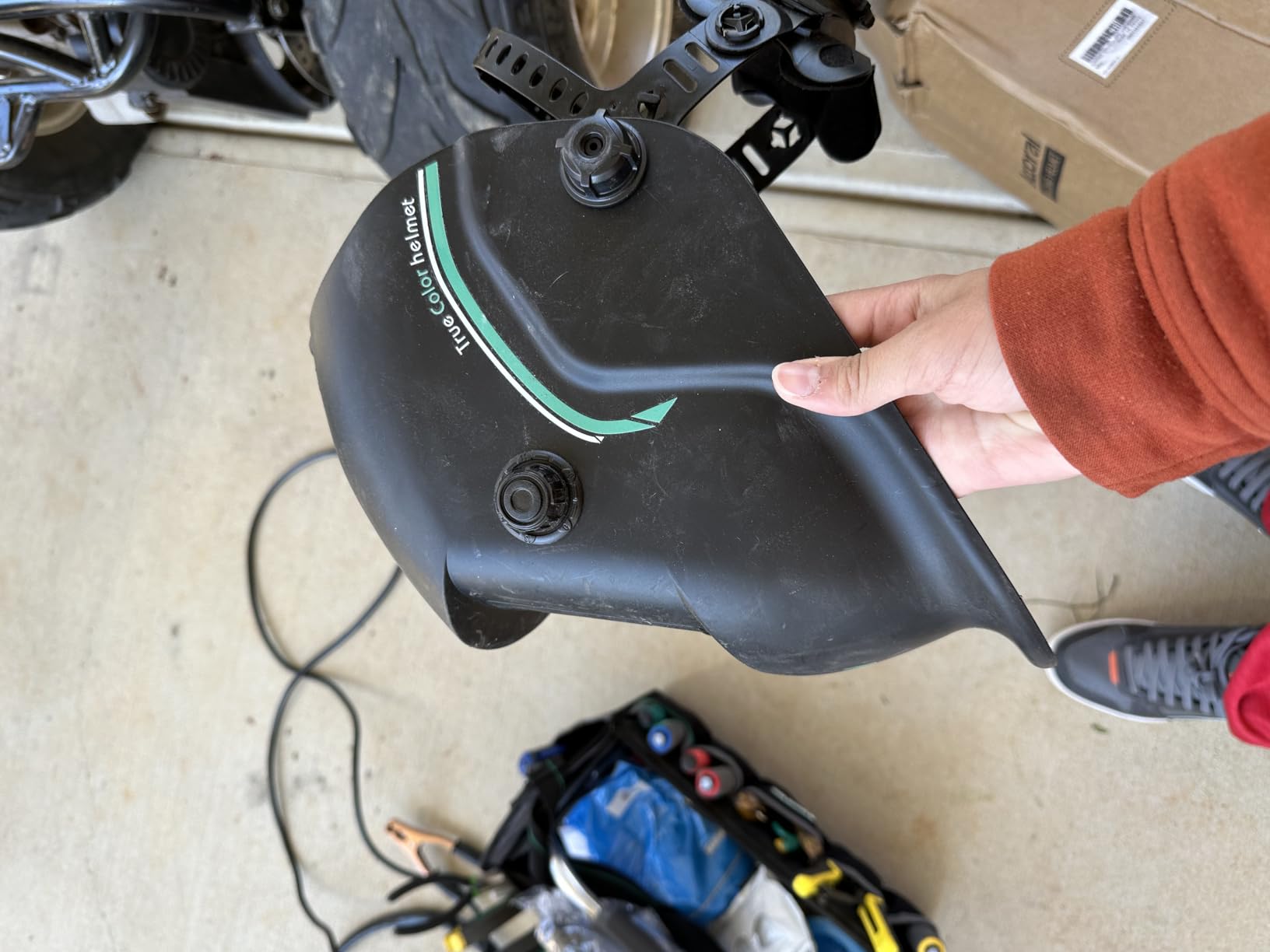
Power is a lithium battery plus solar, which is a good combination for intermittent use because the cell handles startup and low light while the panel handles the rest. The pivoting headgear adjusts around the head and neck, which is the same hang-from-the-crown design that makes long sessions bearable on the heavier shells.
Shade coverage is 4/9-13, so it suits MIG, stick, TIG at typical hobby settings, cut and grind. The 3.64 by 1.67 inch viewing window is compact, and at roughly 1.9 pounds it is one of the heavier shells here, so the comfort advantage is the fit rather than the weight.
Who this helmet suits
Someone welding a few hours a month, doing brackets, gate repairs and trailer work, will get everything they need here and nothing they will resent. There is no learning curve, no menu and no battery compartment to open.
It is also a good second-helmet choice, because a 1/1/1/1 true color lens at this tier is something that was not genuinely available a few years ago, and the pivoting headgear is a better fit system than most of the compact shells it competes with.
Where it falls short
The head band adjustment loosens over time and needs re-tightening, which is the single most repeated complaint. It is a nuisance rather than a safety issue, but check it before you strike an arc in an awkward position.
Several owners also found it needed multiple setting tweaks before it behaved as expected. Budget ten minutes with the manual-free external panel on your first session rather than expecting it to be correct out of the box.
10. VILSIN VS-S001 – Best Fit Adjustment With the Biggest Spare Lens Pack
VILSIN Welding Helmet Auto Darkening Solar Powered Welding Hood with 2 Arc Sensor,Wide Shade 3/4-8/9-13 for TIG MIG ARC Weld Grinding Welder Helmet,Black
0.06 ms light to dark switching
2 arc sensors
3.78 x 1.58 inch view
Five spare lenses included
Pros
- Fast 0.06 ms darkening with true color construction
- Soft padded headband and top straps spread weight evenly
- Side and rear knobs allow a close fit for different head sizes
- Generous spare lens package included with the helmet
Cons
- Only 2 arc sensors
- fewer than competing models in the same band
- Viewing area is narrower than panoramic options
Fit is the reason to buy this one. The padded front headband with two top straps spreads weight across the crown rather than the temples, and the side angle knobs plus a rear headband tightness knob let you close the gap down for a smaller or larger head. If a previous helmet left you with a sore spot behind the ear, this is the one to try.
Speed is a genuine strength: 0.06 milliseconds light-to-dark is the fastest switching figure in this roundup. The lens sits in a DIN 4 light state and steps to DIN 5-9 and 9-13 dark states, with a 1/1/1/2 optical class across a 3.78 by 1.58 inch viewing area.
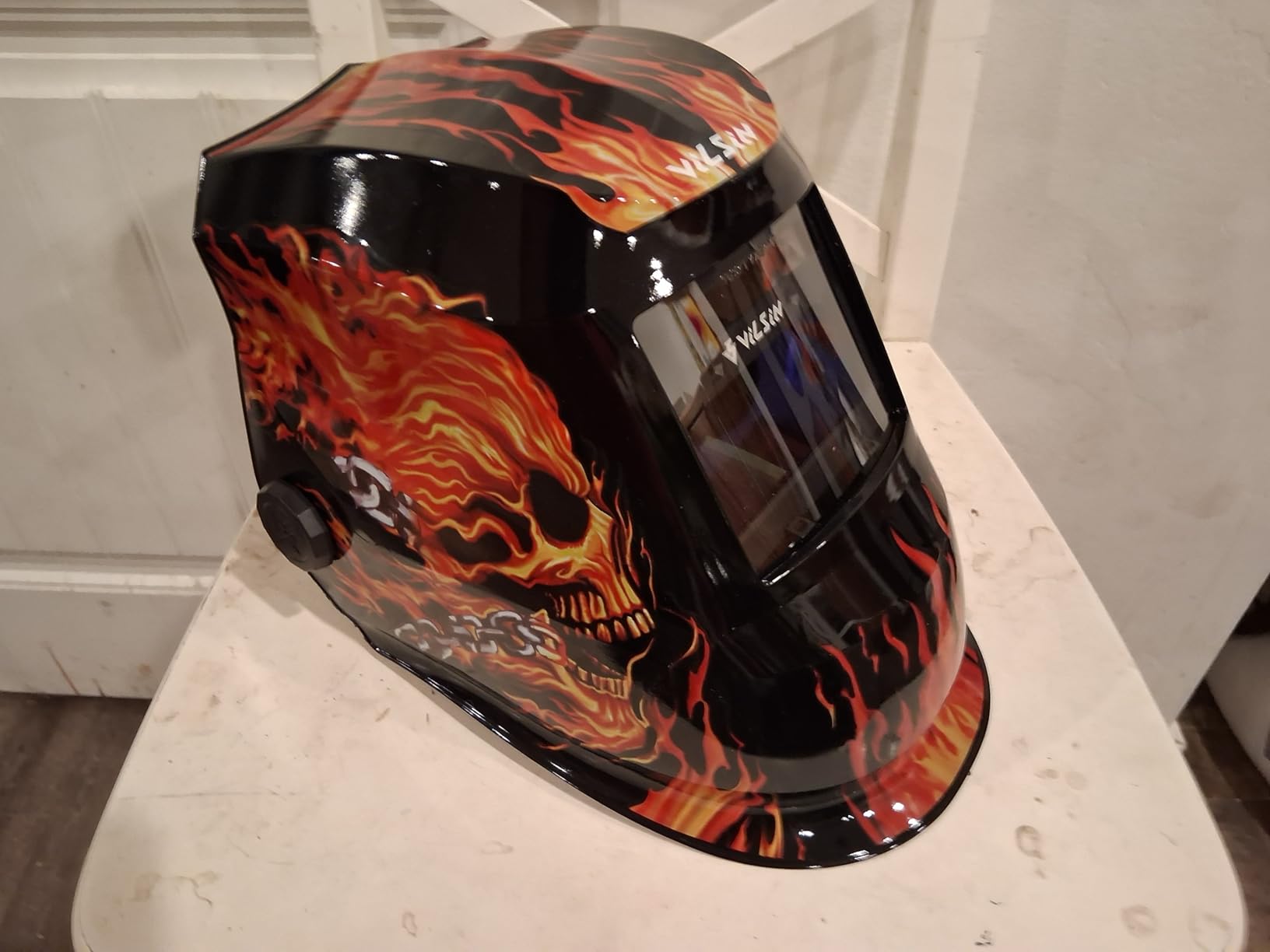
The spare lens package is unusually generous: three replacement outside lenses and two replacement inside lenses ship with the helmet, which covers the consumables that actually wear out over the life of a hobbyist’s gear. Power is solar cells plus a replaceable CR2032 lithium battery, so it is comfortable for a helmet that sits unused for months.
The cartridge measures 4.33 by 3.54 inches around that clear visor window, so the shell itself is not small, but the aperture is a narrow horizontal band. On a vertical joint you will move your head more than you would with a square panoramic screen.
Who this helmet suits
This suits anyone with a head shape that fights conventional harnesses, which is more common than helmet catalogs suggest. Adjusting a helmet that fits correctly takes seconds instead of becoming a mid-project distraction, and the padded straps reduce pressure points on long days.
Hobbyists who are hard on consumables will also appreciate five spare lenses in the box, since the outer cover lens is the part you will replace first once it spatters.
Where it falls short
Two arc sensors is the weakest sensing configuration at this tier, and it is fewer than competing models in the same band. For steady garage MIG and stick that is fine; for outdoor work or low-amp starts, set the sensitivity carefully and confirm the trigger.
The viewing area is also narrower than panoramic options, so this is a fit-first helmet rather than a view-first one. If you weld a lot of horizontal fillets where the puddle hides behind the reinforcement, prioritize a square screen instead.
Hobbyist Buying Guide: Shade Range, Sensors, Batteries and Safety Standards
Do you actually need shade 5-8? For most hobbyists, no. Shade 5 to 8 is the low-light band used for TIG, particularly low-amperage TIG under 40 amps where the arc is dim and easy to see straight through. If your projects are MIG and stick only, a helmet with a light state around shade 3 or 4 and a dark range of 9-13 is the correct and cheaper specification. Every helmet on this list already covers MIG and stick properly, so the shade below 9 is a TIG feature you can pay for later or ignore entirely.
How many arc sensors do you need? Two sensors detect an arc from roughly the front of the helmet, which works for a machine held in a normal position. Four sensors add side coverage, which matters when you weld in a garage with the door open, when your arc wanders as you move around a part, or when you tack from an awkward angle. If you ever work outside, four is the number to insist on.
What does EN379 actually mean? The four-character rating describes optical quality, with the third character being the one that matters most in practice. A 1/1/1/1 filter passes light evenly with no distortion at any angle and no significant color shift. A 1/1/1/2 filter matches it in the center but shows slight distortion toward the edges. The first character covers light transmission, the second is diffusion, the third is angle dependence, and the fourth is the color shift toward green that old budget lenses suffered from badly.
What is ANSI Z87.1, and is a cheap helmet safe? ANSI Z87.1 is the American eye and face protection standard; a helmet that carries it has been tested for impact, penetration and optical requirements. Every helmet in this roundup is certified to it, and several also carry EN 379 and CSA Z94.3. The safety question is really a sensor question: the recurring complaint about the cheapest helmets is that sensitivity set too low fails to trigger on a real arc, and forum users on greentractortalk describe exactly that failure. Buy a helmet with a documented optical class and a stated switching speed, and set the sensitivity with an arc in front of you.
Solar or replaceable battery? For a hobbyist who welds in bursts, a replaceable CR2450 or CR2032 cell is the safer long-term choice. A sealed solar-only design that fades after two or three years in a garage effectively turns a good helmet into scrap, and that is exactly the frustration described on hobby-machinist.com, where swapping a Harbor Freight battery revived a declining helmet instead of replacing it.
Can you look at the sun with one? No. No auto darkening welding helmet shades from direct sunlight, because sunlight is nowhere near arc brightness. Several owners on this list report checking a lens against the sun, seeing nothing happen and assuming the cartridge was dead. Judge a lens by striking an arc in a dark space, not by pointing it at a window.
Can you use a MIG helmet for TIG? Yes, with a caveat. MIG and stick work on the dark end of the range, typically shade 9-13. TIG needs a darker light state, around shade 5-8, plus sensors that will not false-trigger off the non-arc glow of a tungsten tip. Two-sensor helmets can false-trigger during TIG; four-sensor helmets with sensitivity adjustment handle it better.
Should you add a cheater lens? If you do close layout work, tack welding or bead inspection, a flip-up magnifier that clips inside the shell is one of the cheapest real upgrades available. Check compatibility before buying, because not every small-viewing-area helmet accepts a standard magnifier frame, and that is a documented complaint on at least one model here.
Worth adding to the same shopping trip: if you are still buying tools one at a time, our beginner welding helmet guide covers the first-year gear list, and the CNC machine picks for hobbyists are where most hobby shops go after the garage basics are covered.
Helmet Care and Maintenance for Intermittent Use
Start with the outer cover lens. It is a sacrificial plastic window that sits over the expensive auto darkening cartridge, and it is designed to spatter. Replace it as soon as it clouds or spits, because a filmed lens forces you to work with a dim view and that is how bad habits and sore eyes start. Every helmet here already ships with spare outer lenses, and a spare cover lens costs a few dollars.
Clean the sensors next. The photoelectric sensors sit behind the lens on the front of the shell, and spatter dust on them is a common cause of slow triggering or false triggers. A soft dry cloth on the front glass and a gentle wipe at the sensor points is enough. Do not use solvent on the filter.
Check the battery at the start of every welding season. If the helmet is solar plus a replaceable coin cell, swap the cell before the first project of the year rather than discovering a fade mid-job. If the helmet is solar only and the darkening is sluggish, that is usually a charge problem, not a cartridge problem.
Finally, treat the headgear as the first thing to replace. When the adjustment knob strips or the padding flattens, the harness is the weak link long before the shell is. Replacement headgear is a cheap fix that community users describe as the sensible alternative to replacing a whole helmet, and a stripped harness is also what makes a helmet flop forward during overhead work.
Frequently Asked Questions
What is the best welding helmet for value for money?
Among the ten helmets reviewed here, the YESWELDER LYG-L600A delivers the most for a first hobbyist purchase: a 1/1/1/1 optical classification, true color optics, two arc sensors, 1/30000 second switching, a shade 3/7-13 range and a replaceable CR2450 battery with a spare included. If your priority is viewing area rather than build quality, the YESWELDER LYG-M800H offers a 3.93 by 3.66 inch window with four sensors and cheater lens compatibility.
What is the best welding helmet for beginners?
The best welding helmet for beginners is the YESWELDER LYG-L600A, because it does the three things a first-time welder cannot do without: a clear true color view before the arc, fast and reliable darkening on strike, and a replaceable battery so a garage that sits unused between projects does not ruin it. Experienced users on weldingweb.com advise avoiding the very cheapest auto darkening helmets, and this model sits comfortably above that floor.
Are cheap auto-darkening helmets safe?
A cheap auto darkening helmet is safe only if it is certified to ANSI Z87.1 and carries a stated EN379 optical classification, and if its arc sensors actually trigger on a real arc. The documented failures are trigger failures, not optical failures: setting sensitivity too low means the lens does not darken when the arc strikes. Test the trigger outdoors and in a dark space before relying on a new helmet.
Is shade 10 or 11 better for welding?
Both work, and for MIG and stick at typical hobby amperage the difference is small. Start at shade 10 and go darker only if you cannot see the puddle clearly, since a lens that is too dark hides the weld pool and makes it harder to control. For MIG on thin material you may want shade 9, and for TIG you want a light state around shade 5-8 rather than a heavier dark shade.
Can you look at the sun with an auto-darkening welding helmet?
No. Auto darkening welding helmets do not react to direct sunlight because sunlight is far dimmer than a welding arc, so the lens stays clear. Owners frequently check a new lens against the sun, see nothing happen and assume the cartridge is faulty. Test a lens by striking an arc in a dark space instead, and never look at the sun through any welding filter.
Can I use a MIG helmet for TIG welding?
Yes, but check two things first. You need a dark-state range that goes light enough for TIG, commonly shade 5-13, and you need arc sensors that will not false-trigger off the glow of a tungsten tip. Four-sensor helmets with adjustable sensitivity handle low-amperage TIG better than two-sensor models. If you only ever MIG and stick, a shade 4/9-13 helmet is all you require.
The Best Auto Darkening Welding Helmet for Your Garage in 2026
Buy the YESWELDER LYG-L600A if you want one helmet for MIG, stick and the occasional TIG, and you want true color optics with a replaceable battery. Buy the YESWELDER LYG-M800H instead if your work involves following a puddle across a joint and you would rather see more of it. Add the TOOLIOM TL-M800D if you cut as well as weld, the Sunstac SS-A800D if your shop is dark, and the VILSIN VS-S001 if no helmet has ever fit your head properly.
Whatever you choose, the only two things that matter are the optical classification and whether the sensors trigger when you strike an arc. Check the trigger in a dark space before your first project, and swap a spare cover lens the moment it clouds.