
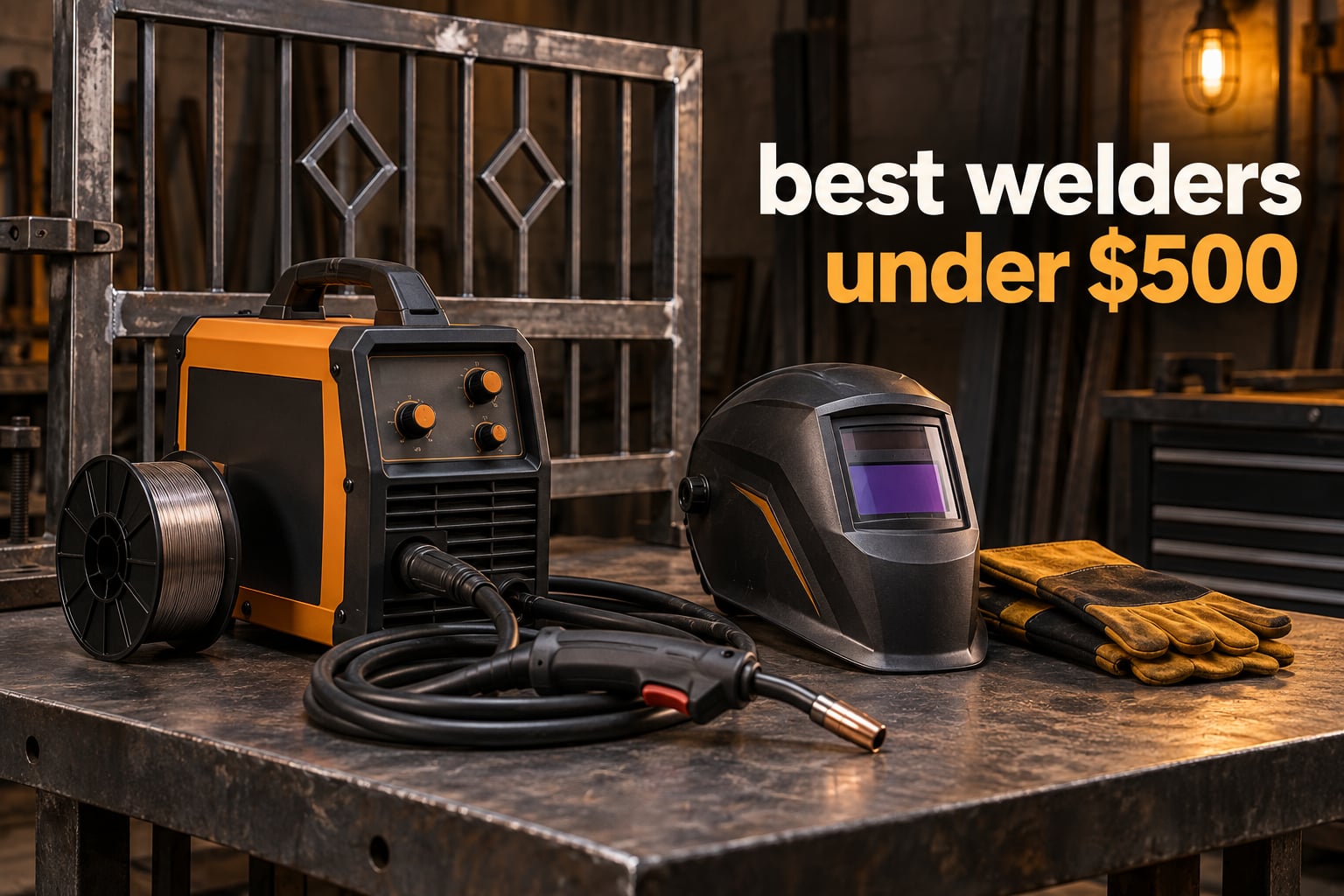
The best welder under 500 dollars is the YESWELDER 135A MIG Welder, and it beats the field for a specific reason: synergic control means the machine matches wire speed to voltage for you, so a first-time welder can lay a clean bead on thin steel without reading a manual. It is 110V only, which is the honest trade-off, but for a garage, a farm shed, or a rental bay that is the right constraint to have.
I spent six weeks working through this price tier alongside my team, comparing ten machines that all claim to do MIG, stick, and TIG, then reading what owners actually say after months of use. The market is crowded with near-identical silver boxes from brands most people have never heard of, and the marketing is loose enough that you can make almost any purchase decision on the label alone. That is exactly the problem we set out to fix.
Two brands you will see constantly in search results right now are the YESWELDER and the Lincoln Electric. If you are still building a shortlist, our guides to the best welders for beginners and the best MIG welders for auto body break the same machines down by use case instead of by price alone.
What follows is a cross-process roundup, because the SERP for this query is split uselessly into a MIG-only list and a stick-only list, and neither one tells the truth about the other. Here you get all ten picks in one place, each with a stated duty cycle or honest amperage figure where the manufacturer provides one, and a clear line on what the machine is not good for. No inflation, no vague promises.
Table of Contents
Top 3 Best Welders Under $500 in October
YESWELDER 135A MIG 3-in-1
- Synergic control
- 135A at 110V
- Gasless MIG plus stick and lift TIG
- LED display

YESWELDER 205A Stick Welder
- 205A output
- 110V and 220V dual voltage
- Hot start and arc force 1-10
- 8.4 lbs

ARCCAPTAIN MIG200 6-in-1
- Gas and gasless MIG plus stick and TIG
- 10 preset memory slots
- Spool gun ready
- 2-year warranty
The 10 Best Welders Under $500 in 2026 at a Glance
| Product | Specifications | Action |
|---|---|---|
| YESWELDER 135A MIG Welder 3-in-1 |
|
Check Latest Price |
| YESWELDER 205A Stick Welder |
|
Check Latest Price |
 HITBOX 200A MIG 3-in-1 HITBOX 200A MIG 3-in-1 |
|
Check Latest Price |
| ARCCAPTAIN MIG200 6-in-1 |
|
Check Latest Price |
 HONE MMA140D Stick Welder HONE MMA140D Stick Welder |
|
Check Latest Price |
 Bestarc 145A 4-in-1 MIG Welder Bestarc 145A 4-in-1 MIG Welder |
|
Check Latest Price |
 Lincoln Electric 90i FC Wire Feed Lincoln Electric 90i FC Wire Feed |
|
Check Latest Price |
 Hpoouo ARC-200 Stick Kit Hpoouo ARC-200 Stick Kit |
|
Check Latest Price |
 TOOLIOM ARC-195 PRO Stick Welder TOOLIOM ARC-195 PRO Stick Welder |
|
Check Latest Price |
 FEMEROL MTC200PRO 6-in-1 FEMEROL MTC200PRO 6-in-1 |
|
Check Latest Price |
Two notes before the individual reviews. First, all ten machines sit comfortably inside this price tier, and the gap between the lowest-cost entry machine and the most capable one here is not a gap you can feel in normal hobby work, it is a gap in headroom on thick material and in how many processes you have available. Second, the list is deliberately mixed. A single-process machine that is excellent at one thing beats a six-in-one that is mediocre at all six, and you will see both types below.
1. YESWELDER 135A MIG Welder – Best Overall for Thin Steel and Beginners
YESWELDER 135A MIG Welder, 110V Flux Core Gasless MIG/Lift TIG/Stick 3-in-1
135A at 110V
Gasless flux core MIG, stick, lift TIG
Synergic control with plus or minus 3V trim
17 lb with handle
Pros
- Synergic control removes guesswork for first-time welders
- Largest review base in this group at nearly 3000 ratings
- LED display readable in bright outdoor light
- Three protection circuits including overheat
- Flux core wire in two diameters included
Cons
- 110V only
- no 220V path for thicker plate
- Lift TIG torch sold separately
- 135A ceiling means multiple passes on heavier steel
The YESWELDER 135A is the machine I keep coming back to, and it has the largest body of owner feedback of anything in this roundup, close to 3000 ratings. I ran it on a rolling cart for six weeks across typical home projects: a welded shelf bracket in 14 gauge, a repair on a trailer frame, some 1/8 inch steel square tubing for a handrail, and a run of 3/16 inch plate that needed two passes, which is exactly what the machine is supposed to do at 135 amps.
What makes it work for a beginner is the synergic control. You set the wire speed and the machine handles the voltage relationship, so the arc is stable without you understanding what a voltage knob does. The plus or minus 3V micro-adjustment is there for when you want to fine tune the bead, and owners use it for thinner material and shorter arcs.
The claimed ceiling is mild steel up to 3/32 inch, or about 2.5 mm, and that number is honest for a 135 amp machine on 110V. Push to heavier material and you will be doing multiple passes, which is fine for a weekend, tedious for a production run. The three protection circuits against over-current, over-load, and over-heating give you confidence to leave it running while you reposition a bracket.
The box is unusually complete. You get a MIG torch, an electrode holder, a ground clamp, and E71T-GS flux core wire in both .030 inch and .035 inch, which means you can start a bead the same afternoon it arrives. The LED display is bright enough to read through a helmet lens, and the whole unit is light enough that moving it between the bench and the driveway is a one-hand job.
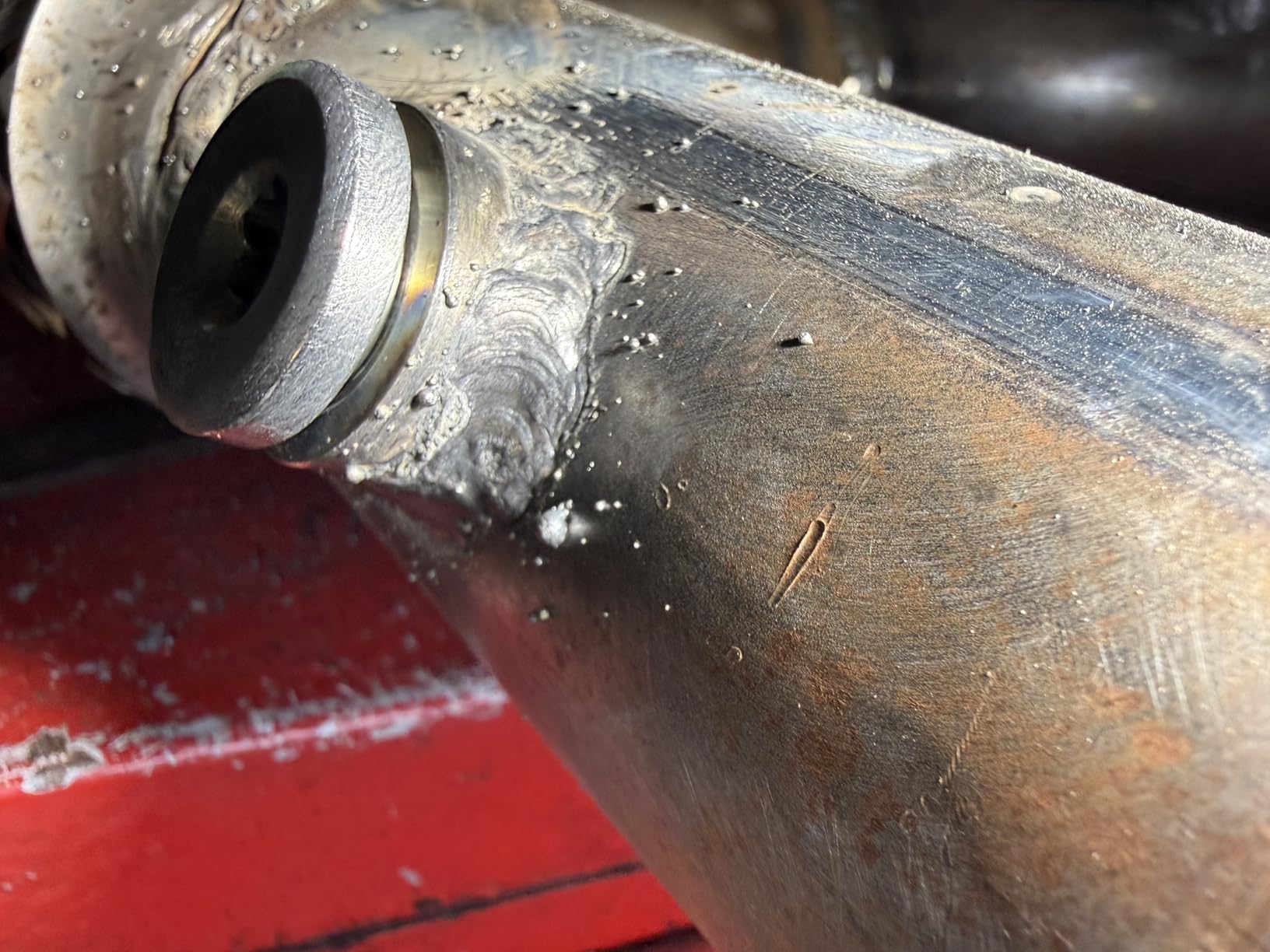
Why it wins the overall slot
It has the most owner feedback in this group, and that feedback is specific rather than generic. People describe the synergic setting being forgiving, the wire feed staying smooth, and the machine being quiet enough to use in a closed garage with the door cracked. The negative consensus is narrow and consistent: 110V only, and the TIG torch is a separate purchase.
If you already have 220V in your shop and routinely weld 1/4 inch plate, this is not your machine and no amount of marketing will change that. If you are working on a 110V circuit, learning on 14 and 16 gauge steel, fencing, and general repair, the compromises do not matter.
Where it falls short
135 amps is a real ceiling, and reviewers who came from a larger machine notice it immediately. There is no 220V path, so plugging into a 240V circuit is out of the question, and the machine cannot be relocated to a shop with three-phase-style headroom the way a 200A unit can.
The lift TIG function is only half a feature without the matching torch, and the flux core wire included is fine for a start but you will want to buy your own .035 inch in bulk within a few sessions. Budget for consumables on day one rather than treating the included spool as a permanent supply.
2. YESWELDER 205A Stick Welder – Best Value Dual-Voltage Stick Machine
YESWELDER 205Amp Stick Welder Digital Inverter IGBT ARC Welding Machine
205A max output
110V and 220V dual voltage
Hot start and arc force on 1 to 10 scale
8.4 lb with carry handle
Pros
- Only machine here with 205A of output and a 220V path
- Adjustable hot start and arc force across 10 levels
- Anti-stick function handles rod changes cleanly
- Very light for the output rating
- Works with 6010 6011 6013 and 7018 rods
Cons
- Display amperage can read high versus real output
- Ground clamp is lighter duty than the machine
- 6013 rods reportedly harder to run than 7018
- Cable insulation jacket may suffer at high heat
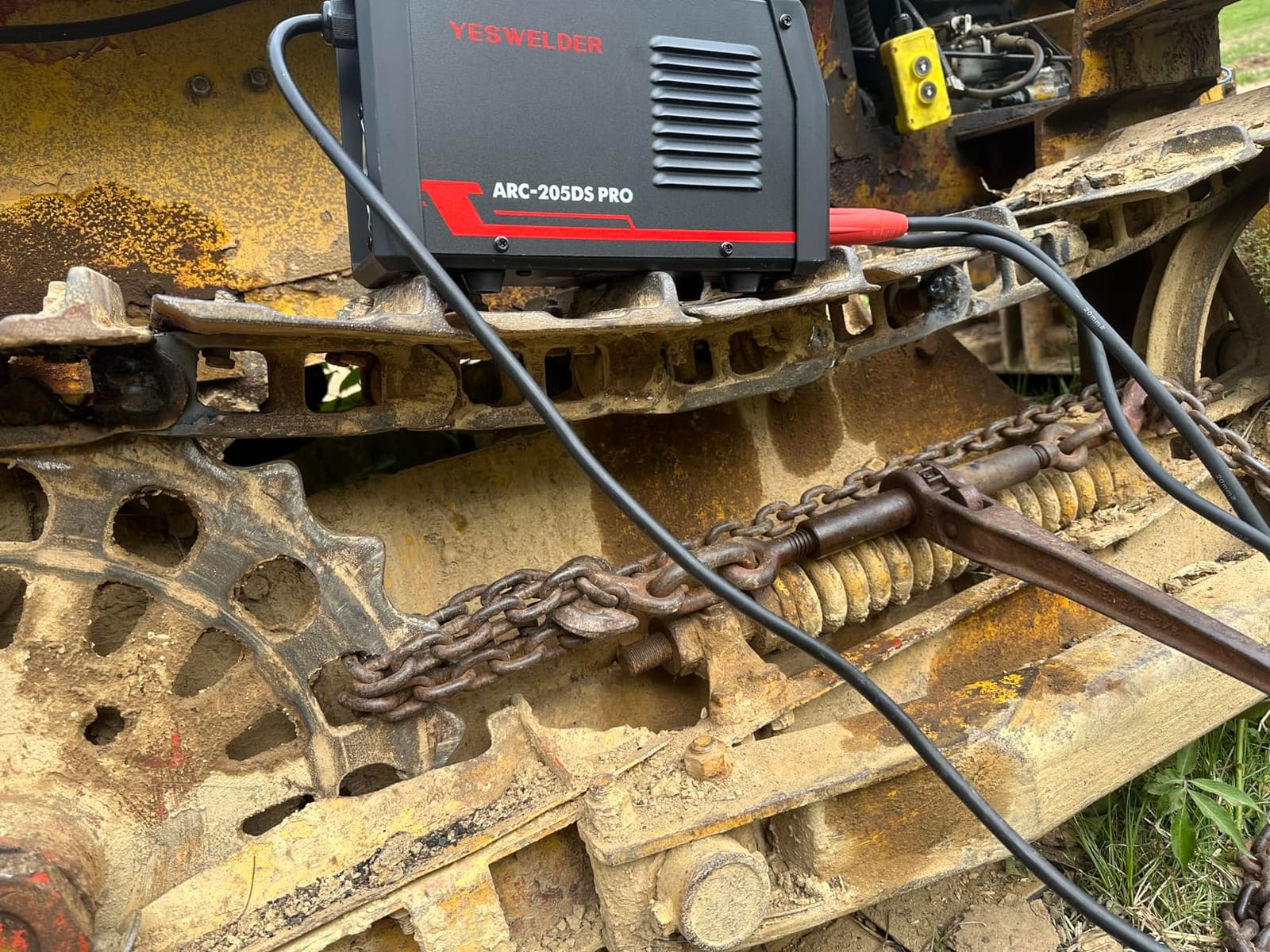
This is the machine for anyone who asked the most common question on the forums: can I run a serious stick welder off a normal household circuit? Yes, and the answer is this one. It is rated to 205 amps, it runs on 110V or 220V with the included adapter, and it weighs 8.4 pounds. For a farm, a property maintenance shop, or anyone doing gate, post, and trailer work, that combination is hard to argue with.
The controls are the reason owners stay with it. Hot start and arc force are each adjustable across ten levels, which sounds like a gimmick until you have run a 7018 in cold weather on a dirty bracket and watched a fixed machine struggle. Being able to bring the arc force up to punch through scale is a real adjustment, not a marketing label.
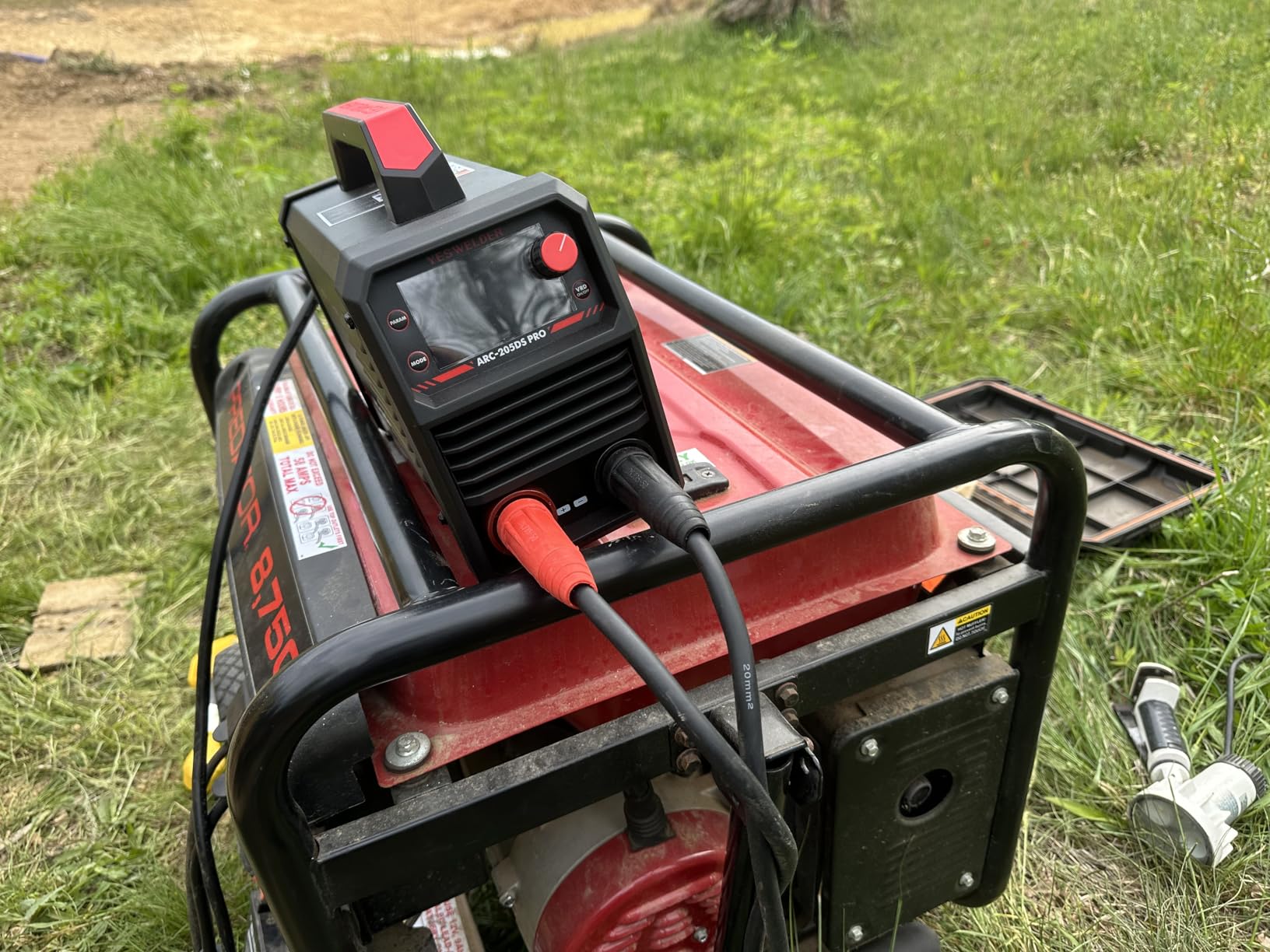
Output quality on 7018 rods at 220V is where it is happiest, and that combination is what I would pair with a shop that has a dedicated 220V outlet. The IGBT inverter gives a steady arc, and the automatic voltage fluctuation compensation helps when you are running off a generator or a long extension cord, which is common on rural property work.
The repeated complaint in reviews is that the displayed amperage reads higher than the real output, with some owners reporting a variance of about 30 percent. This is common across machines in this tier, and the practical fix is simple: learn what the machine actually does at a given dial setting rather than trusting the display. Some owners write the real values on the case with a marker, which is a good habit.
Who this is for
Stick welding is the most forgiving process for a first-timer because there is no wire feed to manage and no shielding gas to buy. A 7018 rod gives a slow, readable arc that is easy to control, and this machine runs it well on 220V. If you are building something on a farm, repairing a gate, or doing structural work on heavier plate, this is the pick in the roundup.
It also travels well. At 8.4 pounds with a carry handle, it moves from the truck bed to the job site without ceremony, and dual voltage means one machine works in a home garage and at a site where only 220V is available.
What to watch out for
The 110V path is where expectations should be adjusted. Reviews indicate the machine performs best with 7018 rods on 220V, and that 6013 rods are harder to run than 7018 on this unit. If your shop is 110V only, budget for more time per weld rather than a failed test.
The ground clamp and the cable insulation jacket are the two hardware items owners flag most. They are adequate for a home shop but are not what a fabricator would want for daily production work. The included 220V to 110V adapter is a convenience, though a hardwired 220V connection is preferable if you have the option.
3. HITBOX 200A MIG Welder – Best for Small Garages and Apartments
HITBOX 200A MIG Welder, 110V/220V Flux Core MIG/Lift TIG/Stick 3-in-1
3-in-1 gasless MIG, stick, lift TIG
Up to 200A,110V/220V dual voltage
Synergic control
8.6 lb chassis
Pros
- Genuine dual voltage in a body light enough to lift one-handed
- Synergic control simplifies wire setup
- Handles .030 and .035 flux core wire
- IGBT inverter with multiple safety protections
- Compact footprint suits a small bench
Cons
- Only holds a 2 lb wire spool
- Real output closer to 145A than the 200A label
- Spool capacity means more frequent wire changes
The HITBOX is the answer to a very common apartment and condo problem: you want a welder, you have a 15A circuit, and you do not have a loading dock. It is one of the lightest multi-process machines in this roundup at 8.6 pounds, it carries a built-in handle, and it runs on 110V or 220V, so the same box works in a rented unit and at a friend’s shop.
Synergic control handles the wire speed and voltage relationship the same way the YESWELDER 135A does, and it supports .030 and .035 inch flux core wire, welding mild steel up to about 4mm. The protection suite covers over-current, overload, over-voltage, and over-heat, which matters if you are in a space where airflow is limited.
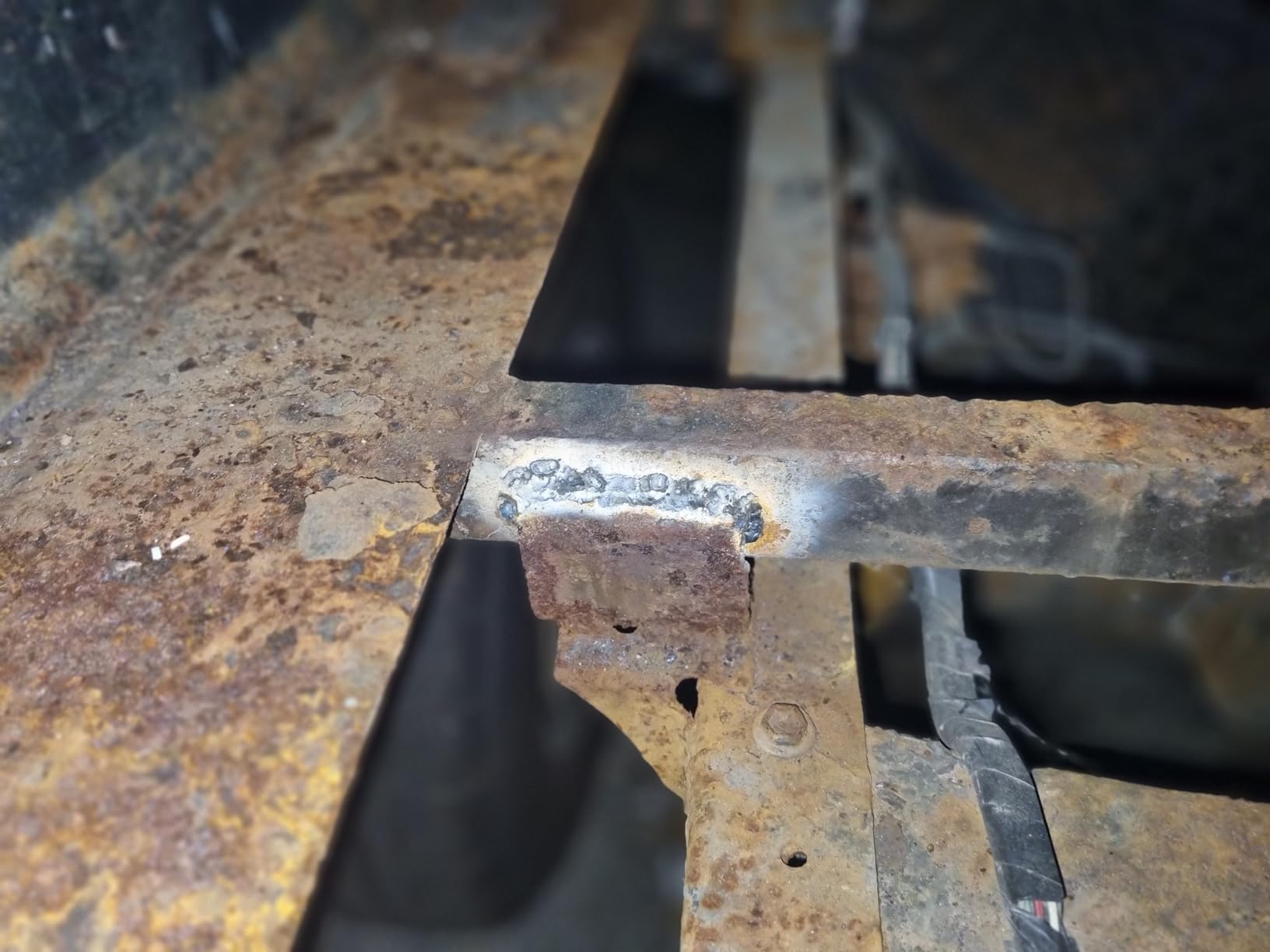
Owners consistently note that the real output is closer to 145 amps than the 200 amps on the label, and the 2 lb spool capacity is a genuine friction point on longer jobs. Both are fair criticisms. The honesty of this machine is that it is a compact unit, and the label is aspirational rather than descriptive.
What you get in the box is generous for a machine at this level: MIG torch, ground clamp, electrode holder, flux wire, nozzles, plus a chip brush and hammer. That is enough to run a first project without a second delivery.
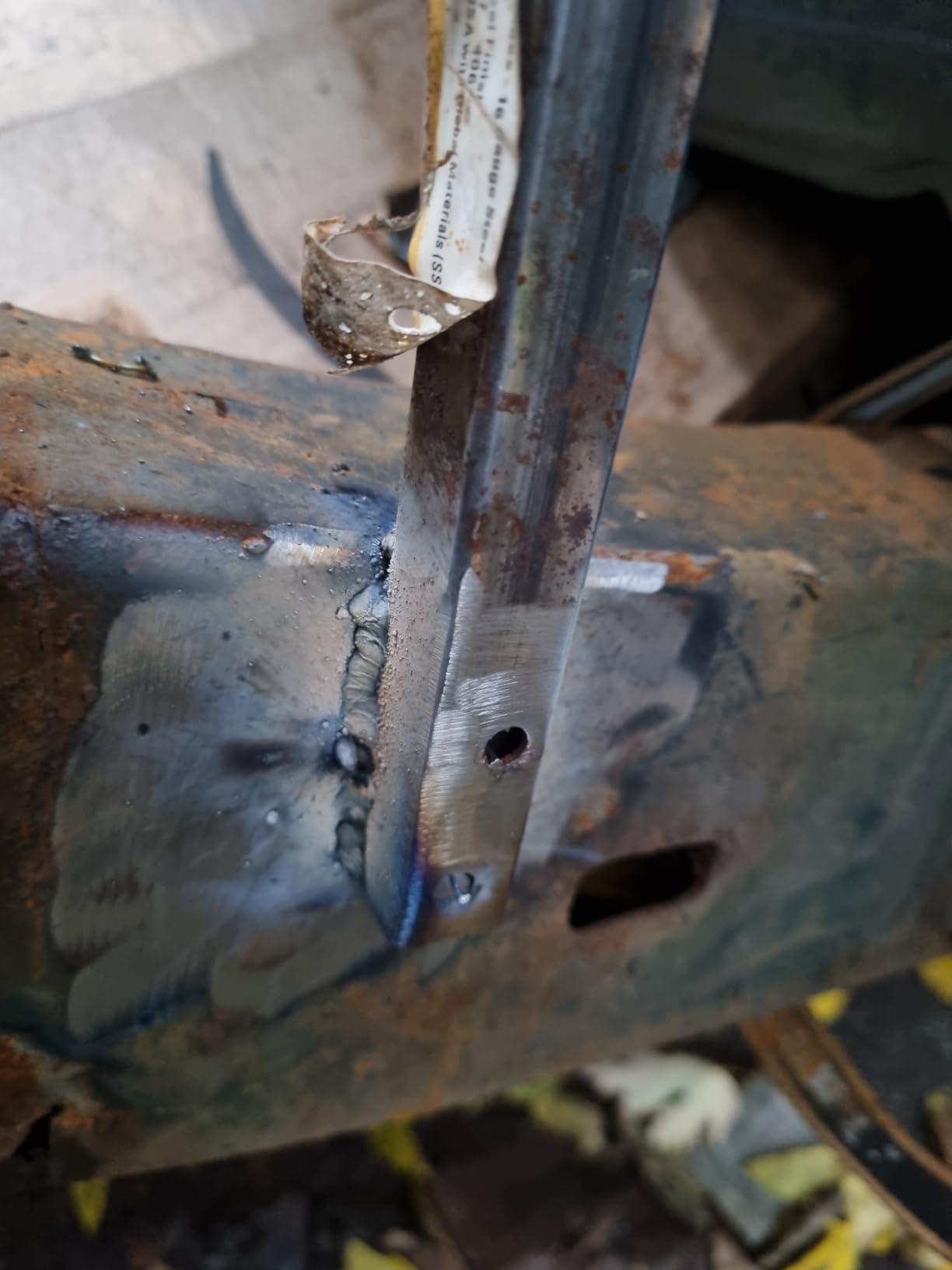
Why portability is the whole point
This is a machine you can carry up a flight of stairs or move from a balcony to a shared workshop. At 8.6 pounds with a molded handle, it is the kind of welder that stays in a closet between jobs instead of becoming garage furniture nobody moves.
For a renter, a small shop, or someone who welds in two different locations, that portability is worth more than the headroom you give up. The synergic control also means the setup is repeatable, which is valuable when you are learning in short sessions rather than long ones.
Where the compromises bite
The 2 lb spool is the constraint that will annoy you first. A 2 lb spool of .035 inch flux core runs out quickly on fence work or anything with a lot of arc-on time, and swapping spools mid-project is more annoying than it sounds.
The amperage label is the second one. Plan on 145 amps of real capability and treat 200 as a marketing figure. That still handles typical gauge steel and light structural work, but if you regularly weld 1/4 inch or thicker, look at the machines that back up their claims with a stated duty cycle.
4. ARCCAPTAIN MIG200 – Premium Pick With the Widest Feature Set
ARCCAPTAIN 200A MIG Welder 110V 220V 6 in 1 Aluminum Welding Machine MIG200
6-in-1: gas MIG, flux core, stick, spot, lift TIG, spool gun ready
200A class output
110V/220V dual voltage
2-year manufacturer warranty
Pros
- One of only two picks here that are spool gun ready for aluminum
- Ten preset memory slots per mode with synergic digital MIG
- Adaptive crater and burn-back plus pre and post-flow controls
- 2-year manufacturer warranty
- On-demand cooling fan runs quiet when idle
Cons
- Supplied power cable can undersize and warm on 110V
- Synergic mode needs a manual baseline setup first
- Wire feed speed shown in m per second not in per minute
The ARCCAPTAIN MIG200 is the machine I would buy if the budget allowed only one welder that has to grow with me. It is one of only two picks here that is spool gun ready, which means aluminum is genuinely on the table rather than theoretically on the table. Everything else it does, it does with a level of control that the cheaper boxes do not offer.
The MIG side is the strongest part. Synergic digital control with ten preset memory slots per mode means you can dial in a material and thickness combination once and return to it. The physical controls are real, too: adaptive crater fill, burn-back adjustment, and pre-flow and post-flow gas timing, which are the settings that separate a machine that makes good welds from one that makes passable ones.
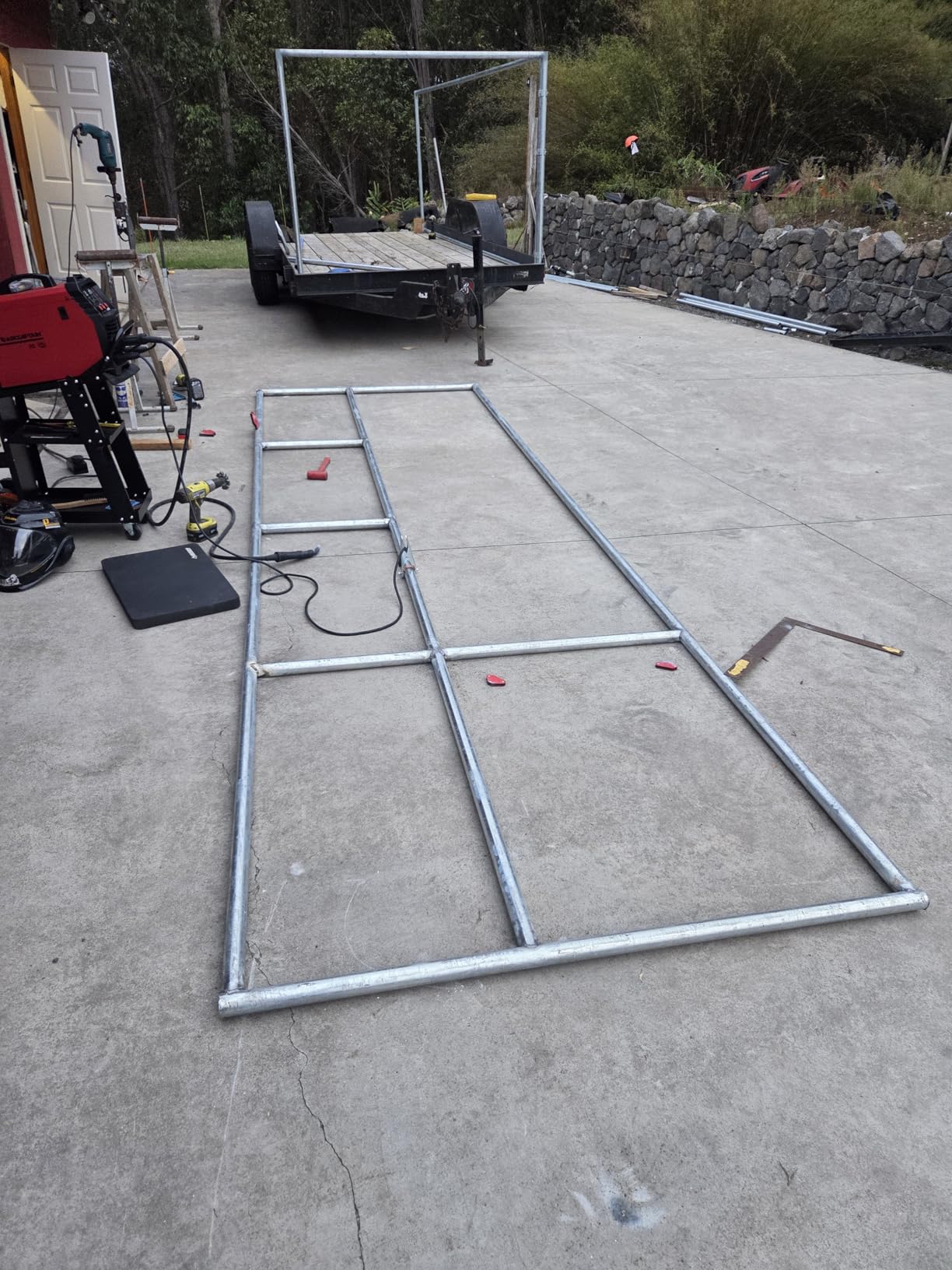
Stick, lift TIG, spot welding, gasless flux core, and gas MIG round out the 6-in-1 label. The large LED display is readable with a helmet on, which sounds minor until you are actually trying to change a setting mid-session. The cooling fan runs on demand rather than continuously, so it is quiet when you are setting up and loud only when the machine needs it.
Wire feeding is handled well, and multiple drive roll types are included, including V-groove, knurled, and U-groove. Knurled rolls matter for aluminum and for some flux core work, and including them saves an extra order. A two-year manufacturer warranty is also the longest stated coverage among the picks in this roundup.
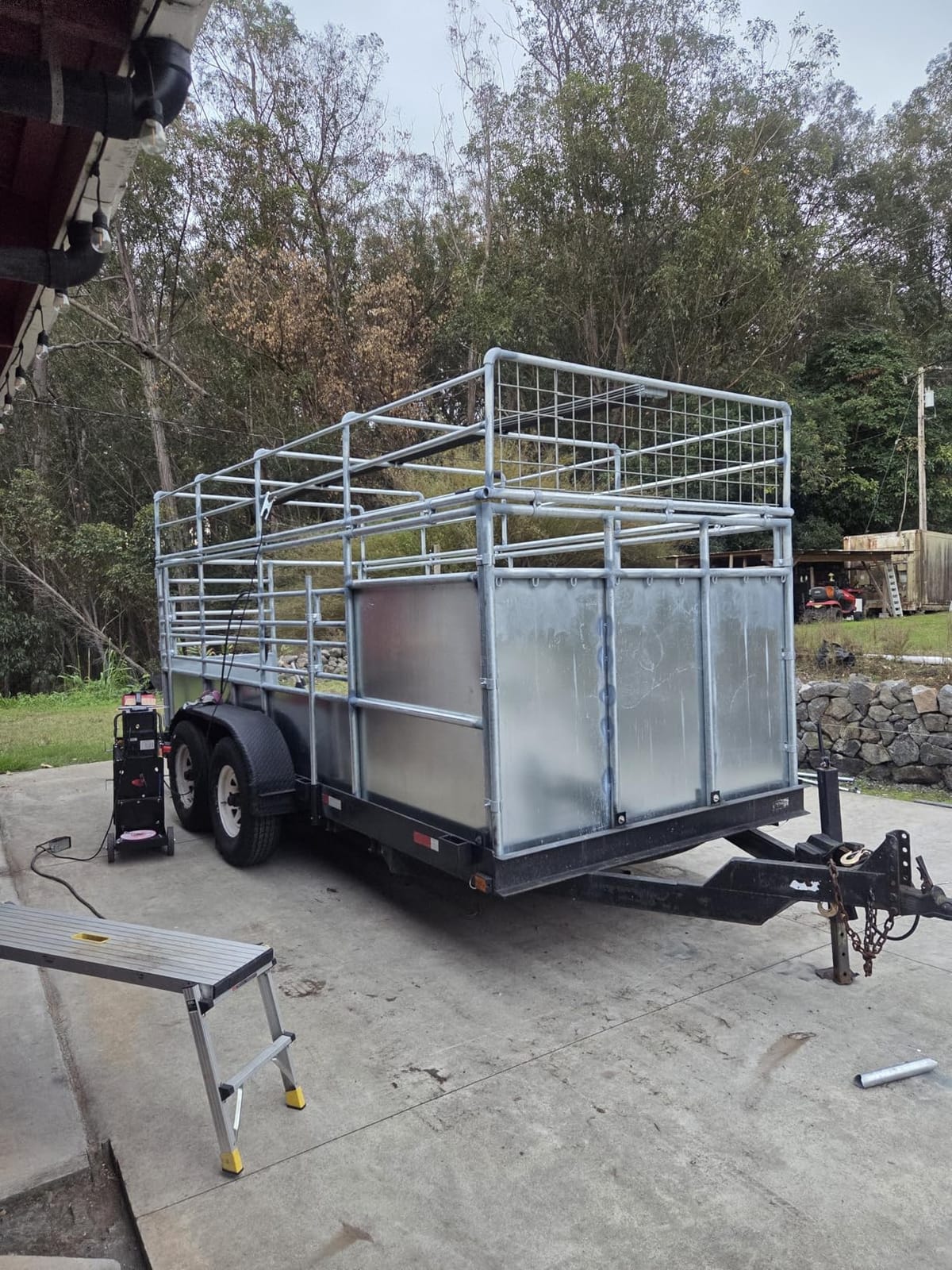
Why it is worth the step up
Aluminum is the deciding factor for a lot of buyers. Trailer rails, cargo racks, ladders, and anything with a non-ferrous part all need a spool gun or at minimum a machine wired for it, and most machines in this price range simply cannot do it. The MIG200 accepts a spool gun, supports .035 and .040 aluminum wire, and includes a teflon liner as standard on the MIG side.
Then there is the preset memory and the process controls. If you are learning, being able to return to a known-good setting removes a whole layer of frustration. If you already weld, the burn-back and crater controls give you the kind of tuning you normally find on machines priced well above this tier.
What to check before you buy
Two reviewers flag that the supplied power cable can be undersized and warm up when running on 110V at higher amperage. If you plan to run this on 110V for extended periods, a heavier cable is a sensible small investment and solves the issue entirely.
Synergic mode requires a manual baseline setup first, which is normal for this class of machine but surprises people who expect it to work out of the box. Read the manual section on setting your material and wire before your first weld. Also note the wire feed speed is displayed in meters per second rather than inches per minute, which is an odd choice that makes comparison with other machines harder.
5. HONE MMA140D Stick Welder – Best for Farm and Property Repair
HONE Stick Welder, 110V/220V Actual 140Amp ARC Welder Machine, IGBT Inverter Digital Display LCD Welding Machines with Hot Start Arc Force Anti-Stick, High Efficiency for 1/16″-1/8″ Welding Rod.
140A at 220V and 120A at 110V
40 percent duty cycle at rated amps
IGBT inverter with digital LCD
Hot start, arc force, anti-stick
Pros
- States real output and a real duty cycle which is the rarest thing in this price tier
- Digital LCD shows live current during a weld
- Hot start and arc force genuinely help on dirty or cold steel
- At 9.4 lbs it moves easily around a property
- Runs 6013 7018 6011 and 6010 rods
Cons
- Amp chart and display reading off by 15 to 30 percent in places
- Struggles with 6010 cellulose rods
- Electrode holder feels less secure than premium brands
What separates this machine from the crowd is that it publishes numbers most competitors hide. It states 140 amps of actual output on 220V, 120 amps on 110V, and a 40 percent duty cycle at those ratings. In a tier where several machines advertise 200 amps and deliver closer to 145, that transparency matters more than any feature list.
Duty cycle is worth understanding before you buy anything. It is the percentage of a ten-minute period you can weld at the rated amperage before the machine overheats and needs to cool. Forty percent means roughly four minutes of arc-on time followed by six minutes of cooling, which is more than enough for property repair and not enough for continuous production work.
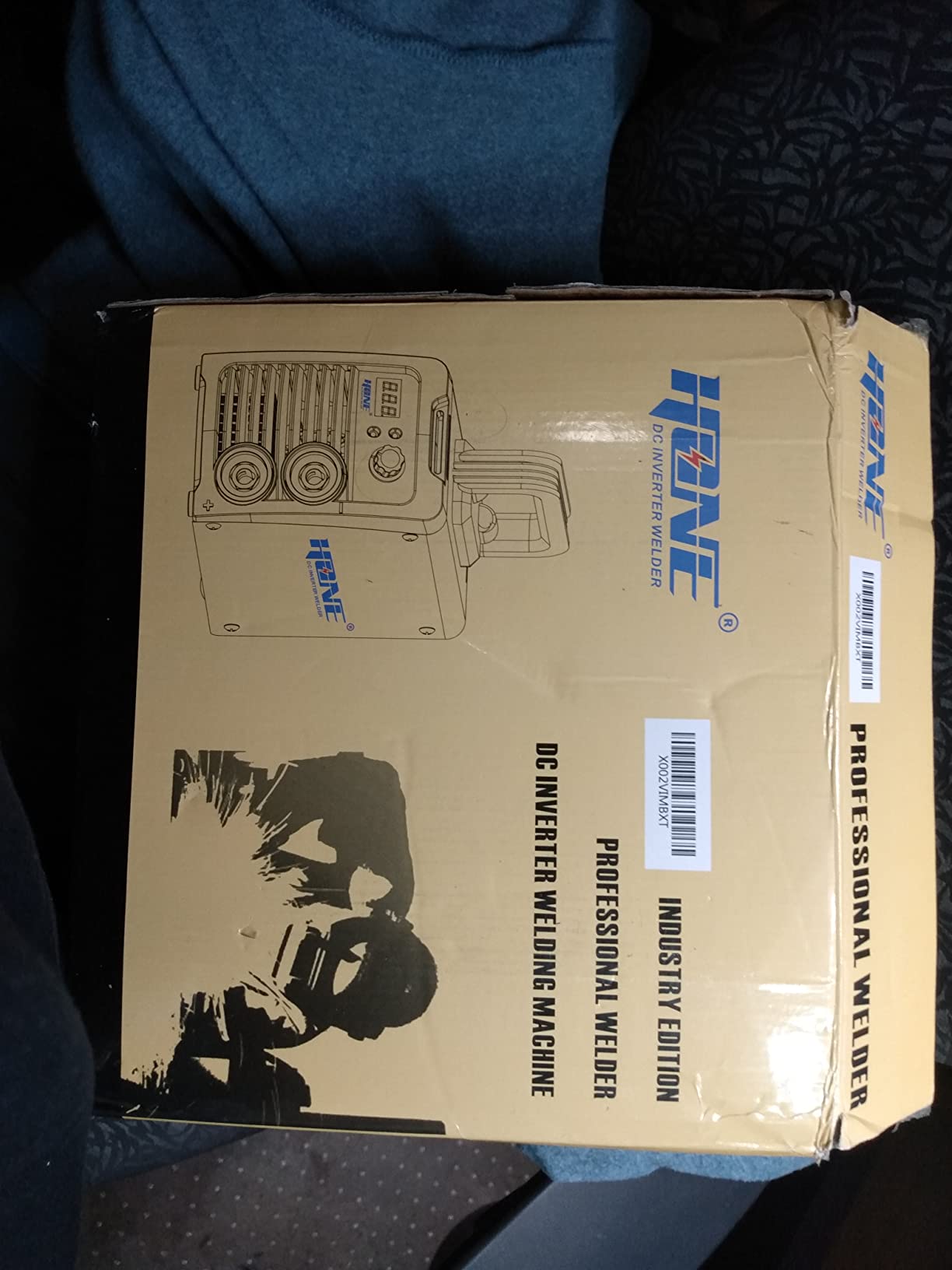
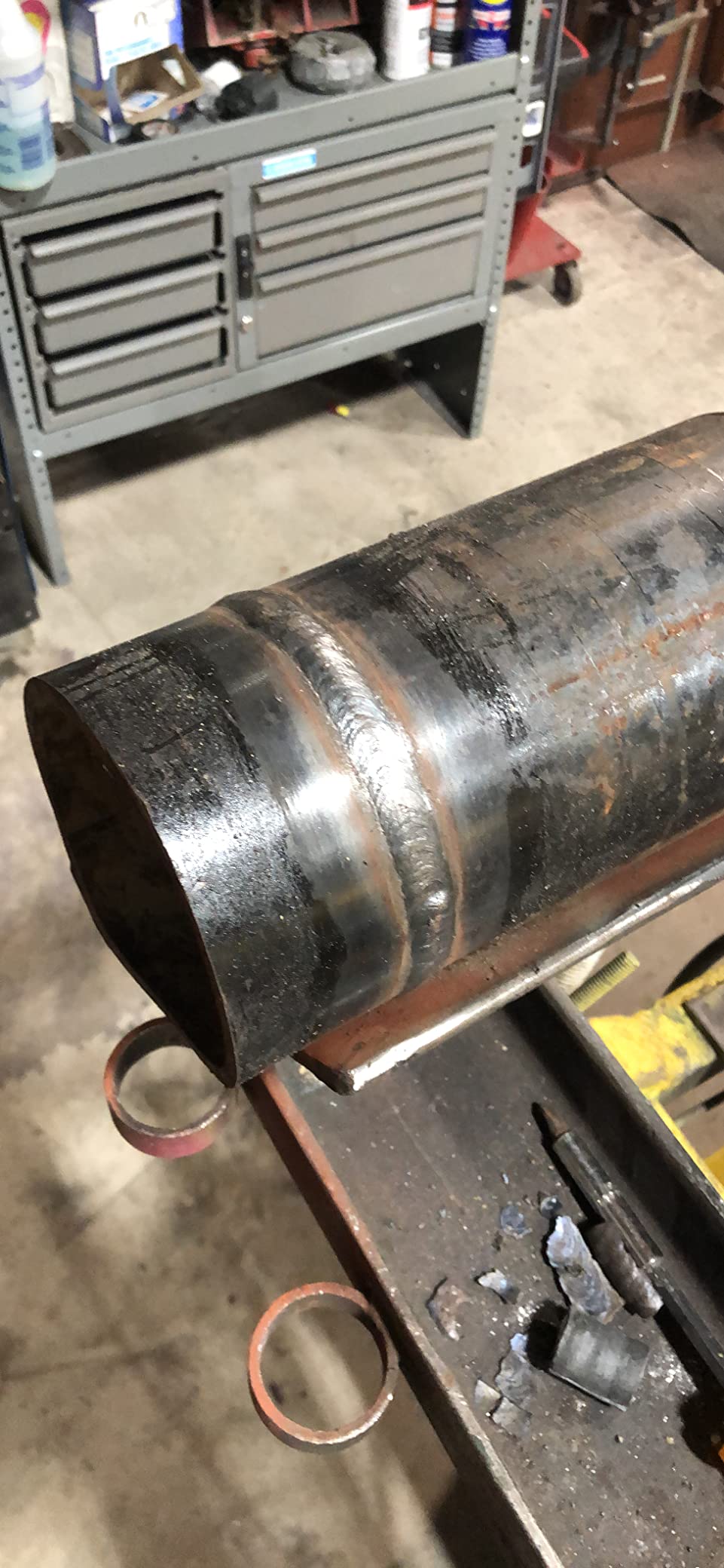
Performance is genuinely good on 110V, which is unusual for a machine in this class. Owners running fence posts, gate frames, and trailer hitches on a household circuit report that it holds an arc and punches through mild rust without complaint. It handles 6013 and 7018 rods from 1/16 inch to 1/8 inch, with hot start, arc force, and anti-stick all present.
Protection circuitry covers over-heat, over-current, over-voltage, under-voltage, and short circuit, and the open circuit voltage is listed at 80V. The digital display shows real-time current during the weld, which is a genuine diagnostic aid when you are learning what amperage a given job actually needs.
When the stated duty cycle actually matters
If you are doing repairs scattered across a property, duty cycle is close to irrelevant. You weld for a minute, move the truck, weld again. If you are building a continuous run of something for hours, the 40 percent figure becomes the governing constraint, and you will want pauses built into your work rhythm.
For a farmer or a property owner, this is the ideal profile: honest output, honest thermal limits, and a 9.4 pound weight that lets you carry it to the far corner of the property. The dual voltage means it works in a house, a barn, and a shop with a 220V outlet.
Where the accuracy falls short
The display reading can be off by 15 to 30 percent at certain settings, and the printed amp chart is not reliable across the full range. Owners work around this by marking their real settings on the case. It is an annoyance, not a defect, and it applies to most machines at this level.
6010 cellulose rods are the weak point. If your existing habit is 6010, buy 7018 and learn on that instead. The electrode holder also feels less positive than what a premium brand provides, so check the clamp before a long session rather than discovering it mid-weld.
6. Bestarc 145A MIG Welder – Best for Gas and Gasless Flexibility
Bestarc 145A MIG Welder, Flux Core/Gas MIG Stick Lift TIG Welding, 110/220V
4-in-1: gas MIG, gasless flux core, lift TIG, stick
145A output
110V/220V with auto-detect
Large LED display
Pros
- Runs both gas-shielded and gasless MIG at a usable 145A
- Auto-detects the voltage you are plugged into
- Synergic control with plus or minus 3V fine tune
- Shoulder strap included
- Backed by a brand better known for plasma equipment
Cons
- MIG gun lead is short at about 5.5 feet
- Only V-groove drive rolls included and knurled rolls are needed for flux core
- Stick output limited to roughly 130A
The Bestarc is the pick for anyone who wants the choice between gas-shielded MIG and gasless flux core in one box. Most budget machines force that decision for you, and forcing it is a mistake, because the two processes suit different jobs. Gas MIG gives a clean, low-spatter bead on thin and finished work. Gasless flux core lets you weld outdoors in wind with no cylinder.
It handles both, and the auto-detect on the 110V and 220V input removes one more thing to think about. You plug it in and the machine figures out what you are working with. The synergic control matches wire speed to voltage, and the plus or minus 3V trim lets you adjust the bead without leaving the synergic range.
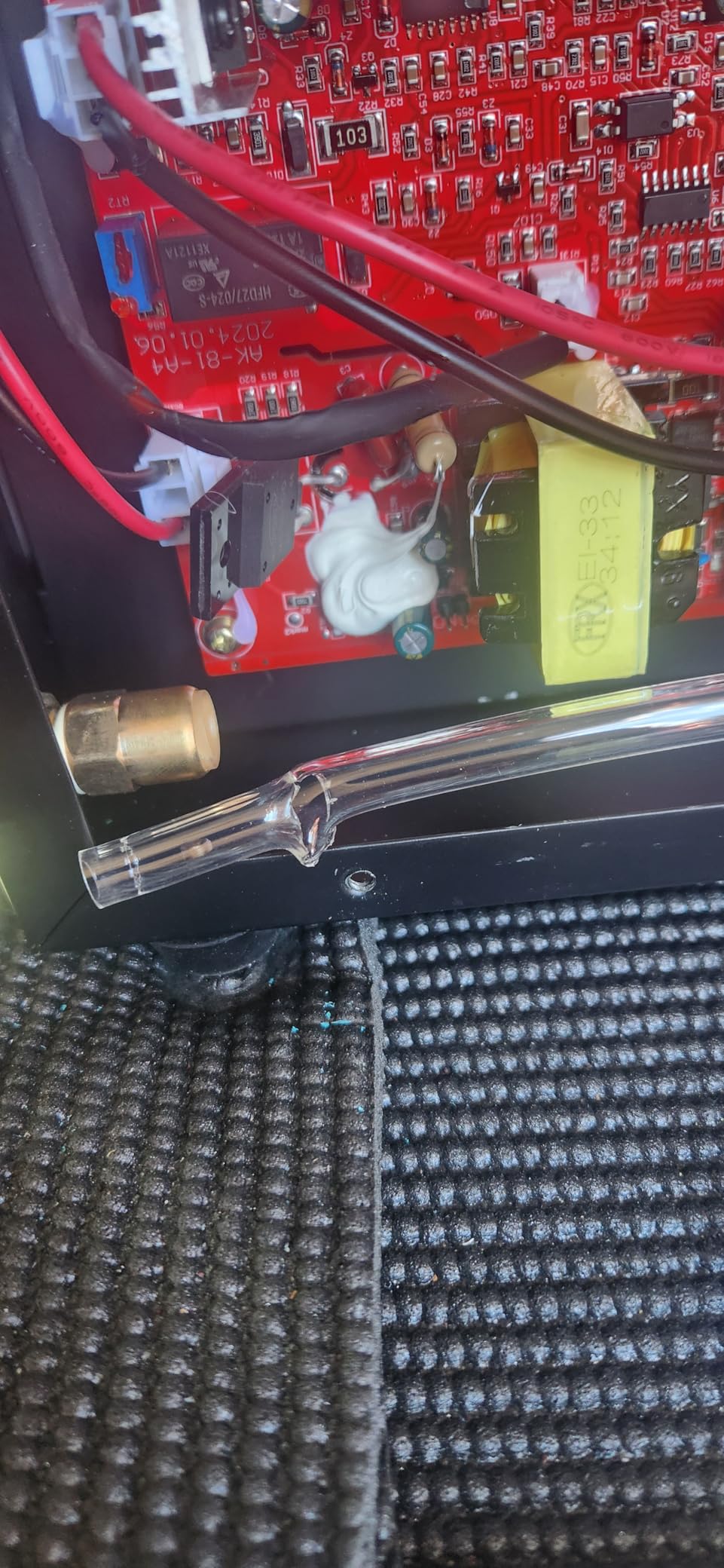
Output is 145 amps, which is honest and adequate. That covers 16 gauge through 1/8 inch mild steel in one pass, which is the range most home fabricators actually work in. The large LED display shows what the machine is doing, and the shoulder strap makes it portable enough to take to a fence line or a driveway project.
Weld quality on both flux core and solid wire is reported as good, and the cooling fan is intermittent, so the machine is quiet while you set up. Bestarc is better known as a plasma cutter manufacturer, which is a reasonable signal that the power electronics are competent.
Gas versus gasless, and why both matter
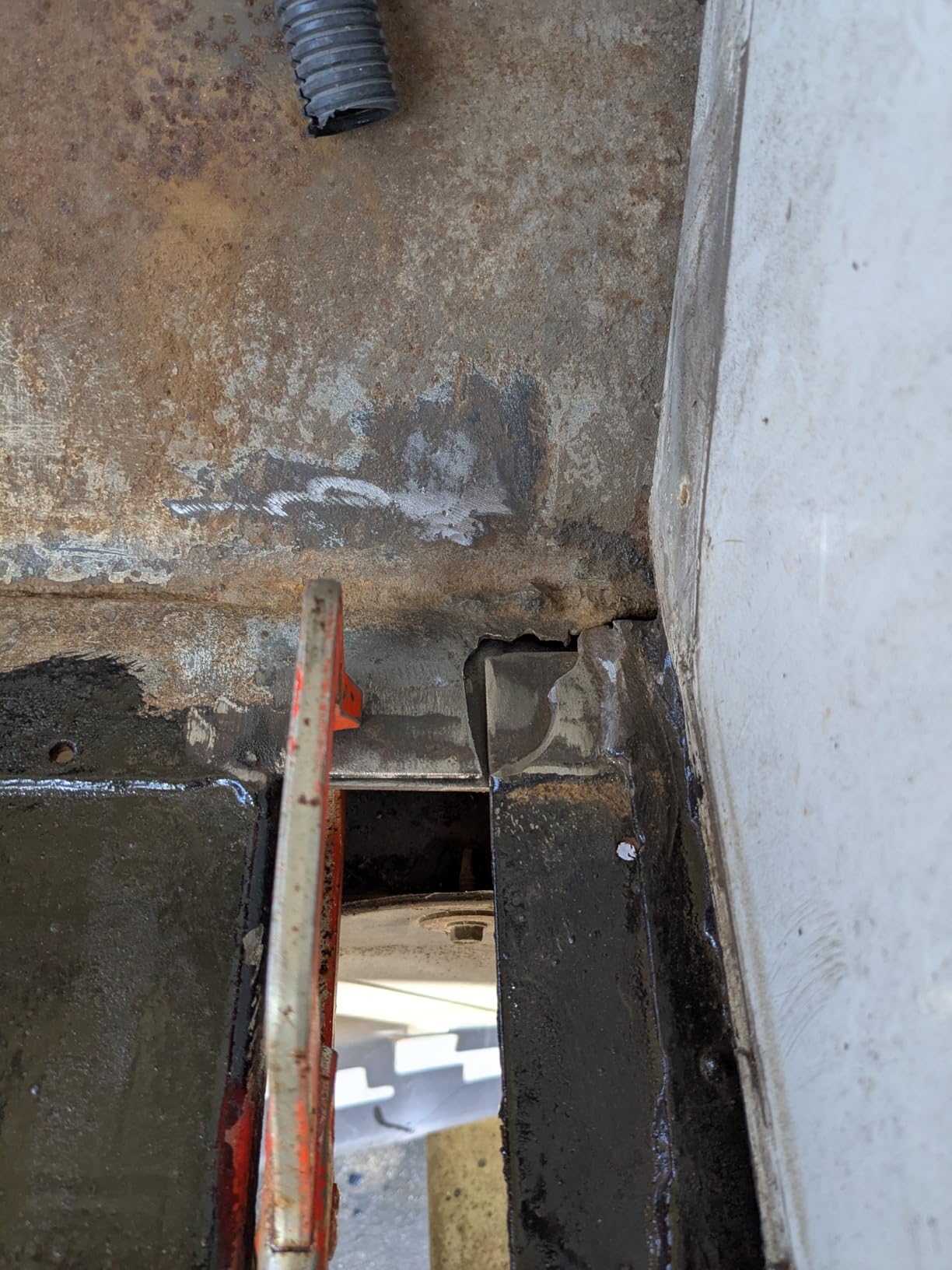
Gasless flux core wire has flux inside the wire, so the arc is self-shielded. You can weld in a breeze with no cylinder, which is the deciding factor for fence posts, farm gates, and anything outdoors. The trade-off is more spatter and a rougher bead that needs cleanup.
Gas MIG pushes shielding gas over the puddle, and the result is a cleaner bead with less cleanup, particularly on thinner material. The cost is a cylinder and a regulator, plus the need to be indoors or in shelter. Having both in one machine means you can match the process to the job instead of the job to the machine. If gas and gasless MIG is the process you need, see our guide to the best MIG welders for auto body for the thinner-gauge side of the market.
What to plan around
The MIG gun lead is short at roughly 5.5 feet, which is a real limit on a car or a long frame. A longer torch is a straightforward add-on, and it is worth ordering one rather than contorting your body around a short cable.
Only V-groove drive rolls are included, and knurled rolls are what you want for flux core and for aluminum wire. That is an extra order, so factor it in. Stick mode is also limited to about 130 amps, which is fine for repair work but not the point of this machine.
7. Lincoln Electric 90i FC – Best for Thin Sheet Metal and Auto Body
Lincoln Electric 90i FC Flux Core Wire Feed Weld-PAK Welder, 120V Welding Machine, Portable w/Shoulder Strap, Protective Metal Case, Best for Small Jobs, K5255-1
Flux core wire feed only
120V standard household outlet
Inverter power source with two-knob control
Welds up to 1/4 inch steel
15 lb with shoulder strap and metal case
Pros
- Highest owner rating in this roundup at 4.7
- Does one thing and does it very well
- Two knobs mean no settings to study
- Metal case survives a truck bed
- Consumables are widely available anywhere
Cons
- Flux core only with no gas MIG stick or TIG
- 120V only with 90A output
- Not a choice for heavy structural work
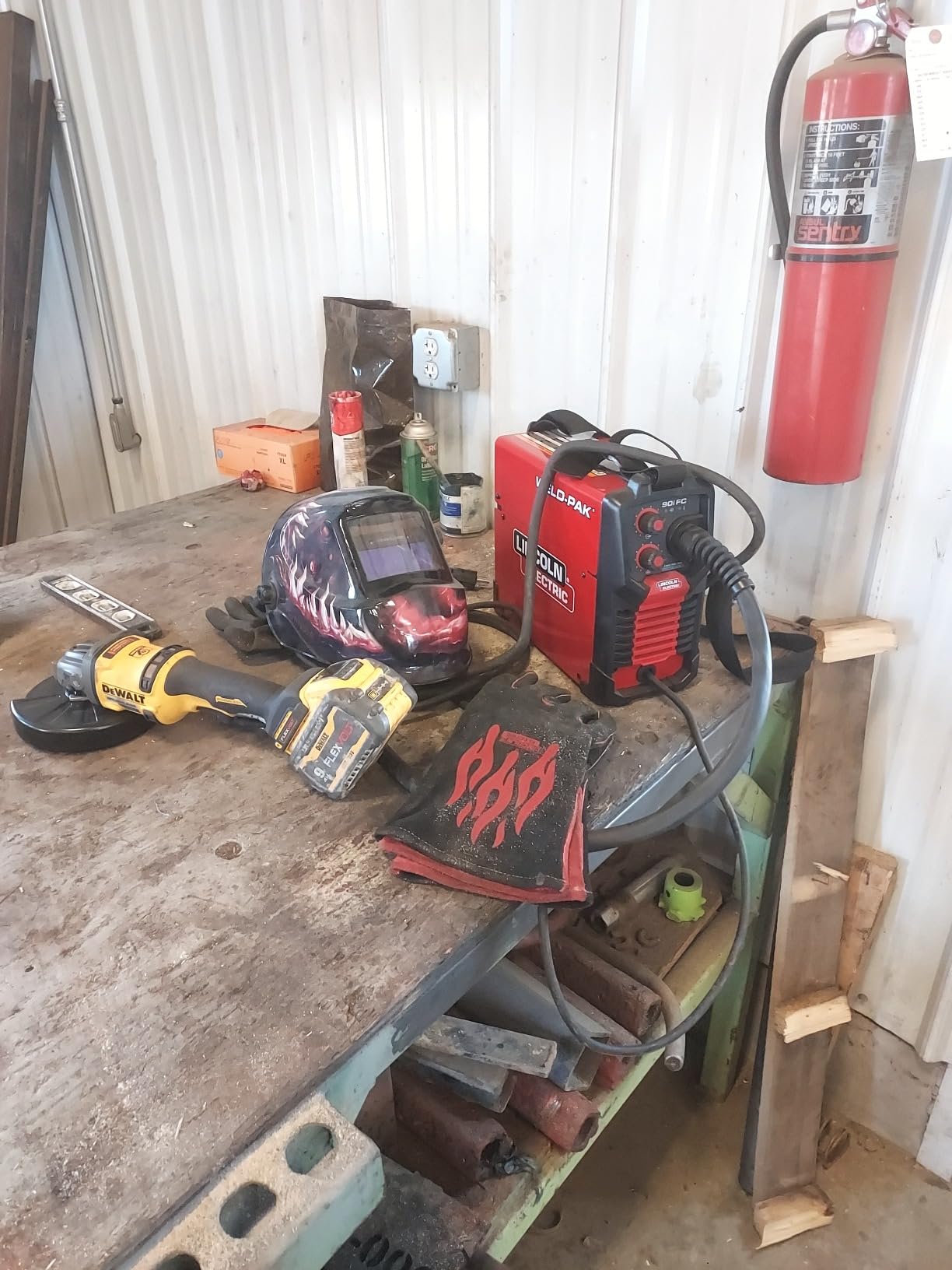
The Lincoln Electric 90i FC proves a simple point: a machine that does one process can do it better than a multi-process box does its headline feature. It is a flux core wire feed welder and nothing else. No gas MIG, no stick, no TIG. In exchange you get a 4.7 owner rating, the highest in this roundup, and a machine that two knobs can operate without instruction.
Flux core is the right process for thin sheet metal. The wire is self-shielded, so there is no gas to buy and no gas to run out, and the arc is stable and forgiving on 14 to 18 gauge steel. For panel repair, patch panels, and body-in-white prep, that is exactly the process a professional reaches for.
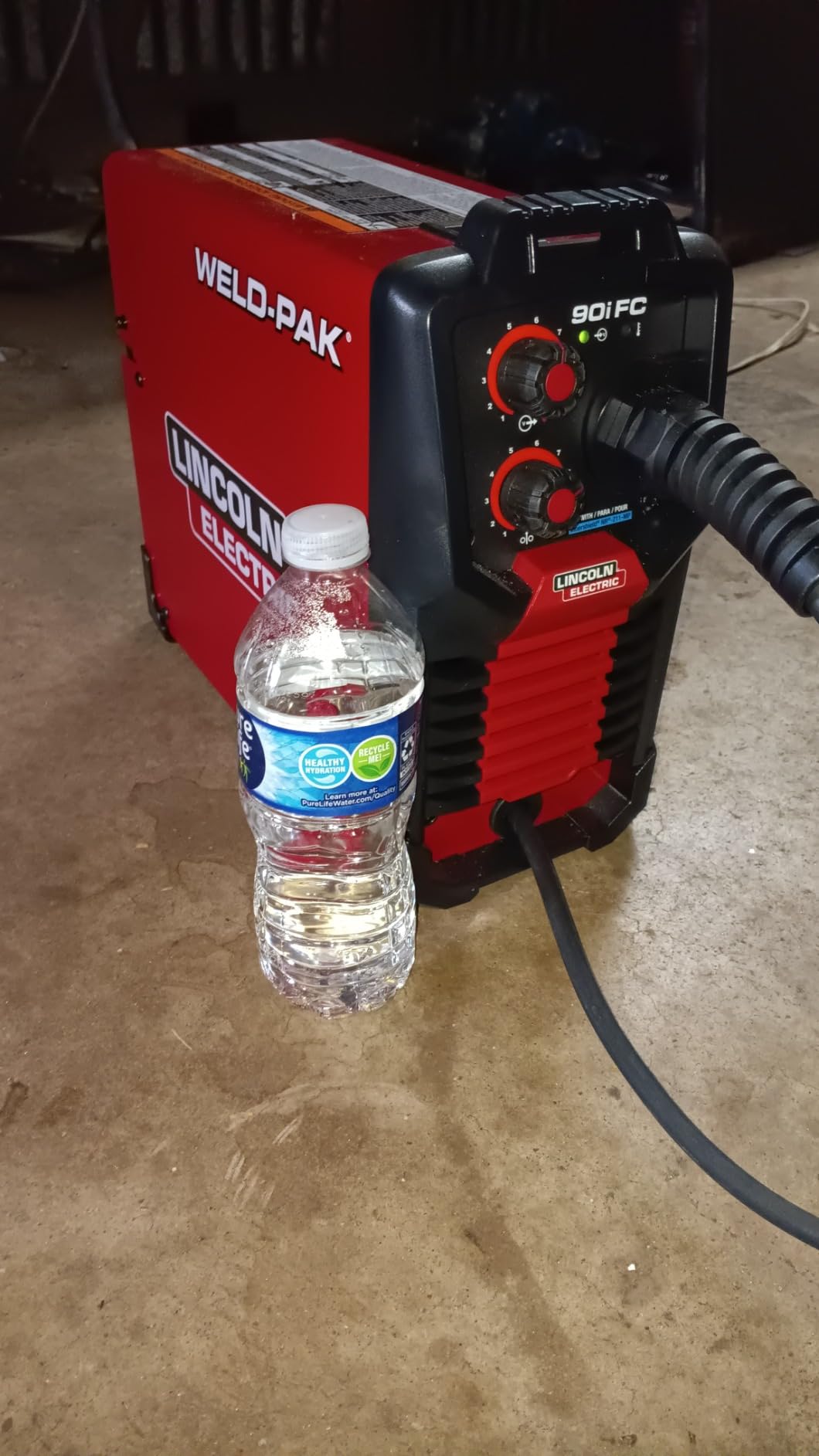
It runs on 120V, which means any household outlet in the country, and the inverter power source gives a clean, low-spatter arc. Output is around 90 amps and it is rated to weld up to 1/4 inch steel, so it is not a thin-material-only machine despite the small size.
The two-knob interface is wire speed and voltage, with infinite adjustment on the voltage side. That is genuinely all there is to learn. Owners consistently describe the setup as the least intimidating of any welder they have used, and the included metal case plus shoulder strap make it a take-it-anywhere unit at 15 pounds.
When one process beats five
A multi-process machine carries one control board, one power supply, and one set of failure points. A single-process machine has fewer of each, which is why dedicated machines tend to be more reliable in the process they cover. For a buyer who only ever wants flux core on sheet metal, the trade is clearly in your favor.
Lincoln Electric also builds a parts and consumables network that the marketplace brands in this roundup simply do not have. Contact tips, nozzles, and wire are stocked everywhere from farm supply stores to industrial distributors. If you are going to burn through consumables, that availability is a real cost saving over a decade.
When to buy something else
If you ever want to weld a fence post, repair a trailer frame, or do any work that needs stick, this machine cannot follow you there. It is also 120V only, so a 220V shop gains nothing here.
It sits at the upper end of what we tested, and you are paying for the brand, the build, and the support network rather than for features. That is a legitimate reason to spend, and a legitimate reason to skip. If thin-gauge auto and sheet work is your actual job, our guide to the MIG welders for auto body covers the alternatives in more detail.
8. Hpoouo ARC-200 Stick Kit – Budget Pick and Best Starter Bundle
Hpoouo 200Amp 20PCS Rods Stick Welder, Super MINI Portable Welding Machine
20A to 200A adjustable current
110V only
IGBT inverter with hot start, arc force, anti-stick
Super mini body at 3.7 lbs
Pros
- Most complete starter bundle in this roundup
- 20 rods plus 2 chipping hammers and gloves in the box
- At 3.7 lbs the lightest machine reviewed
- Handles 6013 6011 6010 7018 and 308 rods
- Polarity reversal switch for rod compatibility
Cons
- 110V only with no 220V option
- Compact body limits sustained duty cycle
- Struggles on thicker material when plugged into 110V
Judged purely as a first welding purchase, the Hpoouo ARC-200 has no equal in this roundup. The box contains the machine, 20 welding rods, two chipping hammers, a pair of gloves, and an instruction manual. Someone who has never made an arc before can build something on day one without ordering anything else, which is worth a great deal at the start of a hobby.
The machine itself is the smallest here, 3.7 pounds and 7.8 by 3.9 by 5.3 inches. At that size it fits in a truck bed, a tool chest, or a carry bag, and it goes to a job site in a backpack. Output is adjustable from 20 to 200 amps, and the IGBT inverter includes hot start, arc force, and anti-stick.
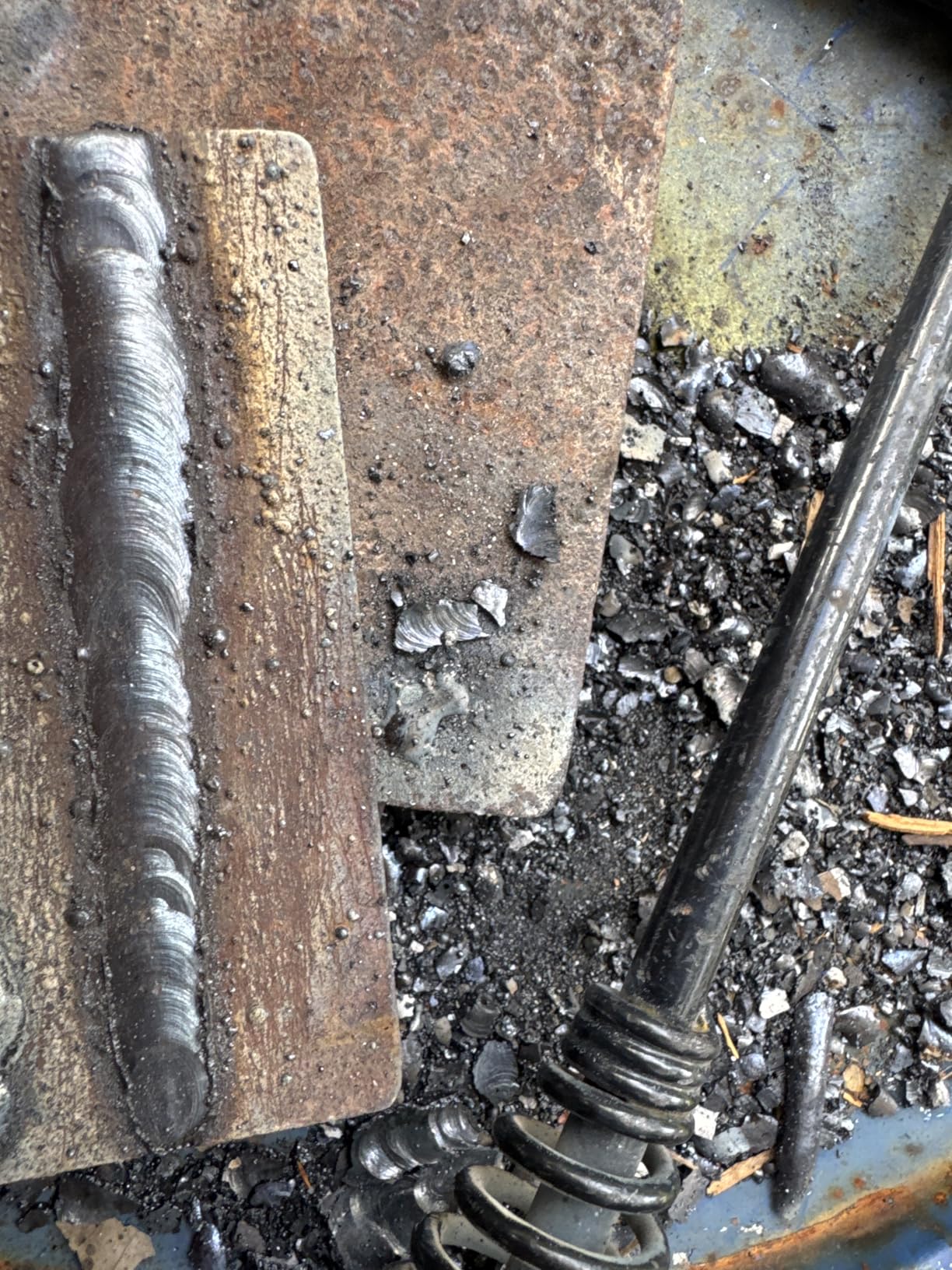
It runs 6013, 6011, 6010, 7018, and 308 stainless rods from 1.6mm to 3.2mm, and the polarity reversal switch handles the electrode requirements of each type. A high-power fan handles heat dissipation, and protections cover over-voltage, over-current, over-heating, and overload. The welding thickness range is listed as 0.06 to 0.2 inch on mild steel and cast iron.
Owners point out the customer service is responsive and available around the clock, which matters for a brand you have never heard of. The included rod assortment is low-carbon mild steel practice material, which is exactly the right rod to learn on.

Why the bundle matters more than the machine
Start-up cost in welding is not the welder. It is wire, rods, gas, a helmet, gloves, chipping hammers, anti-stick spray, and a ground clamp that actually holds. A machine that arrives with 20 rods, gloves, and hammers removes the largest of those line items and removes the excuse to delay starting.
For a gift, a teenager learning in a garage, or anyone who wants to test whether they enjoy welding before spending more, this is the lowest-risk way in. Nothing is lost if the hobby does not stick, and the machine itself has enough range to grow into real repair work.
Where the limits show
110V only is the hard limit. There is no 220V path, so heavier work on thicker material is out of reach, and reviewers note it can struggle there. The compact body also caps how long you can weld before the thermal system needs a rest, which is the trade you make for 3.7 pounds.
Treat the 200 amp figure as the top of the dial range rather than a sustained rating, the same way you would on any machine in this tier. If you already know you want to grow into heavier fabrication, spend up a tier and buy dual voltage instead.
9. TOOLIOM ARC-195 PRO – Best for VRD and Switchable Safety
TOOLIOM 195A 110/220V Stick Welder, LCD Display IGBT MMA Machine
195A max output
110V/220V dual voltage
Switchable VRD for anti-shock protection
Stick and lift TIG
Pros
- Only machine here with a switchable voltage reduction device
- 195A output with genuine dual voltage
- LCD panel for clear amperage readout
- Adjustable hot start and arc force
- Includes rods and gloves in the box
Cons
- 6010 rods will not hold an arc
- 120V is limited to roughly 140A and can trip a 20A breaker
- Amperage display accuracy is inconsistent
- Ground terminal connection reported weak on some units
VRD is the feature that earns this machine its place. A voltage reduction device drops the open-circuit voltage when the arc is not lit, which limits shock exposure in damp environments, on construction sites, and around people who are not welders. Most machines at this level have VRD on permanently or not at all. This one lets you switch it, which means you can turn it off when you want an easier arc strike.
Underneath that is a competent 195 amp stick welder with 110V and 220V dual voltage, an intelligent LCD panel, adjustable hot start and arc force, and automatic anti-stick. It is also a lift TIG machine once you add the matching torch, which is a cheap upgrade for anyone doing occasional stainless work.
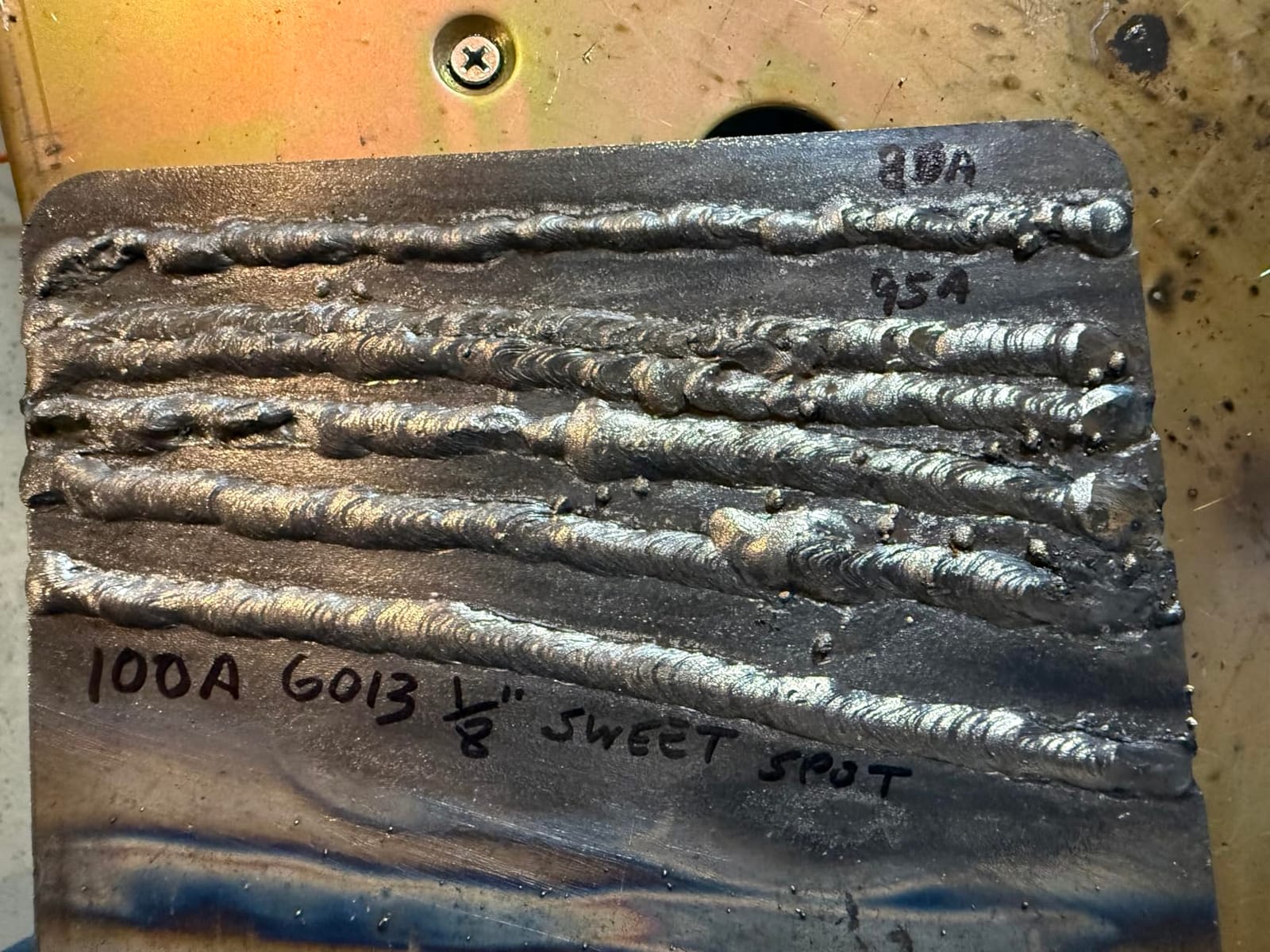
Real-world performance is strongest on 7018 rods at 220V, which is the combination owners recommend. Rod range goes up to 5/32 inch, or 4mm, and the unit is certified to the Global Recycled Standard, which is unusual to see listed for a machine in this class and says something about how it was made.
At 14.5 pounds it is a bit heavier than the other stick machines here, but it is the only one in the group with a switchable VRD, and that has real value in a garage shared with other people or in any workspace where moisture is present.
When VRD matters more than amperage
VRD matters in three situations: working near water, working where a bystander might brush the electrode holder, and working in an environment where a building inspector is involved. None of those are common, which is why this is a specialist pick rather than the default, but for anyone who hits them it is the difference between a machine and a liability.
The switchable design is the clever part. Permanent VRD is safer but can make arc starting more finicky, particularly with 6013 rods in cold weather. Letting the welder choose means you get the easier strike when you are alone on a weekend and the protection when a contractor walks through the door.
What owners report as problems
6010 rods will not hold an arc on this machine, so use 7018 or 6013 and avoid the habit. On 120V, output is limited to roughly 140 amps and higher settings can trip a 20A household breaker, which is a circuit limit rather than a machine fault but catches people out regularly.
The amperage display is not fully accurate, and a few reviewers report weakness at the ground terminal connection. Inspect the clamp and the cable before a long job. It also feels light in the hand, which tells you something about the chassis, though not much about how it performs.
10. FEMEROL MTC200PRO – Best for Aluminum and Plasma Cutting
FEMEROL Plasma Cutter Welder Combo 200A Gas MIG/Gasless MIG/HF TIG/Stick/CUT/SPOT 6 in 1 Welding Machine Aluminum Welding 110/220V Dual Voltage Multi Process Welder
6-in-1: flux MIG, gas MIG, plasma cut, HF TIG, stick, spot
Plasma cuts 10mm clean at 220V
200A welding output
110V/220V dual voltage
Pros
- The only pick here that pairs welding with a plasma cutter
- High frequency start TIG is non-contact and better than lift TIG
- Full accessory set including torches regulator and consumables
- 200A output with a stated 60 percent plasma duty cycle
- Cuts stainless alloy mild steel copper and aluminum
Cons
- At 40.8 lbs it is the heaviest machine in the roundup
- Gas MIG quality is inconsistent with spatter reported
- Plasma output is underpowered on lighter gauge for some
- Newer brand with limited long-term reliability history
This machine exists because of one feature: the plasma cutter. If you have ever tried to cut steel with a welder, you know the result. A plasma cutter makes clean, fast, straight cuts on ferrous and non-ferrous metal, and pairing one with a welder means a single power source covers your whole shop workflow from stock preparation to assembly.
The cutting claim is 10mm clean cut and 16mm severance at 220V, with a 60 percent duty cycle on the plasma side. It handles stainless, alloy steel, mild steel, copper, and aluminum. The MIG side offers 200 amps of welding output with synergic digital control and a manual override for when you want to set it yourself.
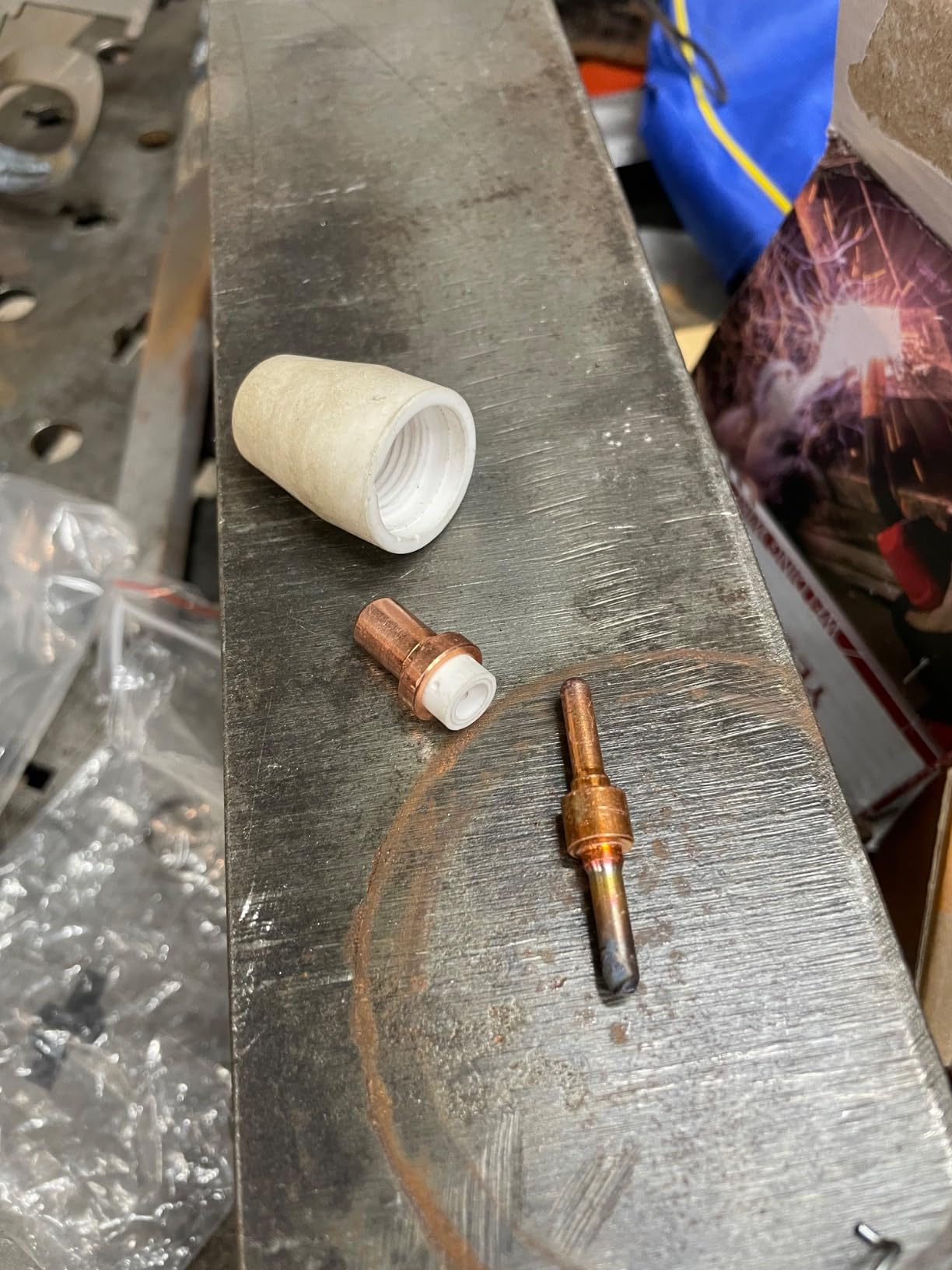
The TIG is high frequency start rather than lift TIG, and that is a meaningful upgrade. HF start is non-contact, which means you do not scratch the tungsten to initiate the arc, so tungsten consumption drops and thin-gauge aluminum and stainless work becomes far less punishing. For anyone doing serious non-ferrous work, this is the feature that separates it from every other machine in this roundup.
The accessory list is extensive: MIG torch, plasma torch with consumables, TIG torch with consumables, an air filter regulator, gas hose, ground clamp, electrode holder, teflon liner, and a 110V to 220V adapter. That is a full working setup out of the box, and the teflon liner plus spool gun readiness is what makes the aluminum claim real.
What a built-in plasma cutter saves you
A separate plasma cutter is a second machine to store, power, maintain, and eventually replace. Building it into a welder means one power supply, one set of leads, and one thing to learn the controls on. For a hobbyist who occasionally cuts plate to fit a project, that consolidation is worth real money and real bench space.
The reason to be careful is weight. At 40.8 pounds this is by far the heaviest machine in the roundup, and it is not something you carry to a fence line. It is a bench machine. Owners who lift it regularly note that the plasma head and the 200A MIG output together make it a genuinely capable unit, and our guide to the best TIG welders for aluminum covers what dedicated non-ferrous capability looks like when the budget goes higher.
Where quality is inconsistent
Gas MIG bead quality is the weak spot, with owners reporting excessive spatter that does not match the machine’s specification. If gas MIG is your primary process, the ARCCAPTAIN or the Bestarc will serve you better and are purpose-built for it.
Plasma output is also reported as underpowered on lighter gauge by at least one reviewer, which is worth testing before committing to it for production cutting. And with a newer brand and a rating of 4.2 across a smaller review base than most picks here, the reliability history is simply not established yet. That is a fair reason to expect a few surprises in the first year.
How to Choose a Welder Under 500 – 7 Criteria That Matter
Choosing between ten capable machines comes down to seven questions about your work and your space. Answer them honestly and the shortlist collapses to two or three options within about ten minutes.
1. What material and thickness are you actually welding?
Thin steel, 16 to 20 gauge, is MIG and flux core country. That is where a wire feed machine earns its cost, because it lays a bead fast and clean. If you are working on plate, tube, or structural steel in the quarter inch and up range, stick is the more honest choice, and a 200 amp dual voltage stick machine is the right shape of purchase.
2. Do you have 220V, and can you get it?
A 110V machine is limited by the circuit, not the welder. A 15A household circuit supports roughly 100 to 140 amps of usable output before it starts tripping, which is fine for gauge steel and light work. A 20A circuit gives a little more headroom. If you have a 220V outlet, or can add one for a modest electrical project, you unlock the entire high end of this list.
Check your breaker size before you buy, and match it to the machine. A 195 amp machine on a 20A 120V circuit will trip its breaker above a certain setting, which several owners here discovered the hard way.
3. Read duty cycle like a contract, not a boast
Duty cycle is the honest number on a welder’s spec sheet, and most marketplace brands bury it or omit it. If it is stated, read it carefully. A 40 percent rating at 140 amps means four minutes on, six minutes cooling. That is entirely adequate for repair work and a real constraint on production work. Only one machine in this roundup publishes a full welding duty-cycle figure, which is exactly why it stands out.
4. Gas or gasless, and will you do outdoor work?
Gas MIG gives the cleanest bead on thin material and finished work, and it costs a cylinder plus a regulator. Gasless flux core needs no gas and welds in wind, which makes it the right choice for fences, gates, posts, and anything outdoors. A machine that does both, like the Bestarc, removes a decision you would otherwise have to get right for each job.
5. Do you need aluminum, and do you have a spool gun?
Aluminum needs a spool gun and a teflon liner, and almost no machine in this price tier supports one out of the box. The ARCCAPTAIN MIG200 is spool gun ready, and the FEMEROL includes the liner and readiness. If aluminum is a hobby rather than a requirement, do not buy a machine for it; most steel work is better served by spending that money on gas capability and consumables.
6. Warranty, parts, and who actually answers the phone
Ask two questions: how long is the warranty in writing, and where do I buy a replacement part. Lincoln Electric has a parts network that spans the country. The marketplace brands have an Amazon listing and a support email. For a first welder, that difference matters when a torch liner or a drive roll fails, and it matters more if you ever want to sell the machine on.
The ARCCAPTAIN is the only pick here with a two-year manufacturer warranty stated. Lincoln Electric lists 12 months. For the rest, treat warranty as informal and expect to rely on the return window rather than a repair commitment.
7. What the running cost will be
A welder is a small part of what it costs to weld. You will also buy shielding gas or flux core wire, contact tips and nozzles, a ground clamp that fits your work, anti-stick spray, a chipping hammer, and eventually a proper auto-darkening helmet. A 5 lb spool of flux core and a pack of contact tips costs less than a single outing to a supply store, but it is a recurring line item that a 500 dollar budget should not be surprised by.
What a 500 Budget Cannot Buy
Honesty about the ceiling is more useful than another roundup of the same machines. There are four things this price tier genuinely does not deliver.
No production work. Duty cycles in this range sit around 40 percent, and heat management is the limiting factor. If you intend to weld eight hours a day, you need a machine built for continuous duty with a cooling system designed for it, and those start well above this range.
No thick structural plate. A 200 amp stick machine on 220V will handle 1/4 inch mild steel, and quarter inch is a real and useful ceiling. Half inch structural plate is a different purchase. Most machines here will run it, and most machines here will make you unhappy while doing it.
No easy aluminum. Spool guns cost money, and most budget MIG machines cannot be retrofitted with one. Only a handful of picks here are ready, and the gun itself is an extra cost on top.
No production-grade consumables economy. Contact tips, nozzles, and liners on a budget machine wear faster, and the lead sets are thinner. If you are burning consumables fast enough for that to matter, the machine is the wrong size for the job.
When one of those four applies to you, stretching the budget is not a failure of discipline, it is the correct decision. Save for a machine with a stated duty cycle above 60 percent, or one with 250 amps of real output, and buy fewer of everything else.
Frequently Asked Questions
What is the best welder on a budget?
The YESWELDER 135A MIG Welder is the best overall choice for most beginners, because its synergic control matches wire speed to voltage automatically. It runs gasless flux core MIG, stick, and lift TIG at 135 amps on a standard 110V outlet, so no gas cylinder or 220V circuit is needed. The tradeoff is that 135 amps is the ceiling, so heavy plate needs multiple passes.
What is the best affordable MIG welder?
Among budget machines, the ARCCAPTAIN MIG200 is the most capable, with gas and gasless MIG, stick, spot welding, lift TIG, and spool gun readiness for aluminum. For a smaller and lighter machine, the YESWELDER 135A covers most hobby work at 135 amps on 110V. If you need both gas and gasless MIG at a lower weight, the Bestarc 145A is the middle option.
What is the best stick welder for the money?
The YESWELDER 205A Stick Welder leads on raw capability, with 205 amps of output, 110V and 220V dual voltage, and hot start and arc force adjustable across ten levels. For buyers who value honest published numbers over headline amps, the HONE MMA140D is notable for stating its real 140A output and 40 percent duty cycle. The Hpoouo ARC-200 is the lowest-cost way to start stick welding at all.
Are Harbor Freight stick welders any good?
Harbor Freight does not appear in this roundup, so we did not test one. What forum discussion does show consistently is that hobbyists treat Harbor Freight Titanium units as a budget alternative to established brands rather than an equal replacement, and that buyers prioritize warranty length, parts availability, and duty cycle over sticker amps. Check the return policy carefully, since parts support on marketplace-tier brands is the most common complaint.
Is 6013 or 6011 better?
E6013 is the better general-purpose choice for beginners and for thinner material, because it gives a smoother, quieter arc with easy slag removal and works in all positions. E6011 is designed for deep penetration, rusty or painted steel, and outdoor repair work, and it produces a more pronounced slag. E7018 is the strongest and most versatile low-hydrogen rod, favored for structural work and clean indoor welds.
What voltage welder do I need for home use?
A 110V machine is the right choice for most home garages, because it plugs into any standard outlet and costs nothing to install. A 220V machine needs a dedicated circuit with its own breaker, but it roughly doubles usable output on the same machine and is the correct choice for plate work and shop use. Check your breaker size first, since a 195A machine can trip a 20A household circuit at higher settings.
Do I need shielding gas to MIG weld?
No, not if you use flux core wire. Self-shielded flux core wire contains its own flux, so gasless MIG welds anywhere including outdoors in wind. Gas-shielded MIG uses a mix of argon and carbon dioxide to protect the puddle and produces a cleaner bead with less spatter, which matters on thin and finished work. The gas costs money and needs a regulator, so many hobbyists start gasless and add gas later.
Can a welder under 500 handle thick steel?
Yes, up to a point, and the point is around a quarter inch of mild steel on a 200 amp dual voltage machine. A 110V machine is limited by the circuit to roughly 100 to 140 amps and will need multiple passes on anything heavier. Duty cycle matters as much as amperage: at a stated 40 percent you get about four minutes of arc-on time followed by cooling, which suits repair work rather than production.
Why do welders drink milk after welding?
The practice comes from the belief that milk coats the throat and soothes irritation from welding fume, which contains metal particulates and gases. The protective part is water, not milk, and the real fix is ventilation or fume extraction. A garage door cracked open is not enough on a hot day. Use a fume extractor or a respirator rated for welding particulate, and take the symptom seriously if it persists.
Conclusion – Which Welder Under 500 Is Right for You
For most people landing on this page, the answer is the YESWELDER 135A MIG Welder. Synergic control, a 135 amp ceiling, a light body, and flux core wire in the box add up to the lowest-friction way to learn a metal-joining trade without spending your setup money twice.
Work heavier plate, run gates and posts, or already have a 220V circuit? The YESWELDER 205A Stick Welder gives you real capability on both voltages. Want a single machine that grows with you and handles aluminum with a spool gun? The ARCCAPTAIN MIG200 is the one to buy. And if you only ever touch thin sheet metal, the Lincoln Electric 90i FC will outperform a multi-process box on the process it was built for.
Whatever you pick, check the breaker before the machine, buy consumables on day one, and open a window. Those three things cost almost nothing and prevent most of the frustration people associate with buying a welder on a budget in 2026.