
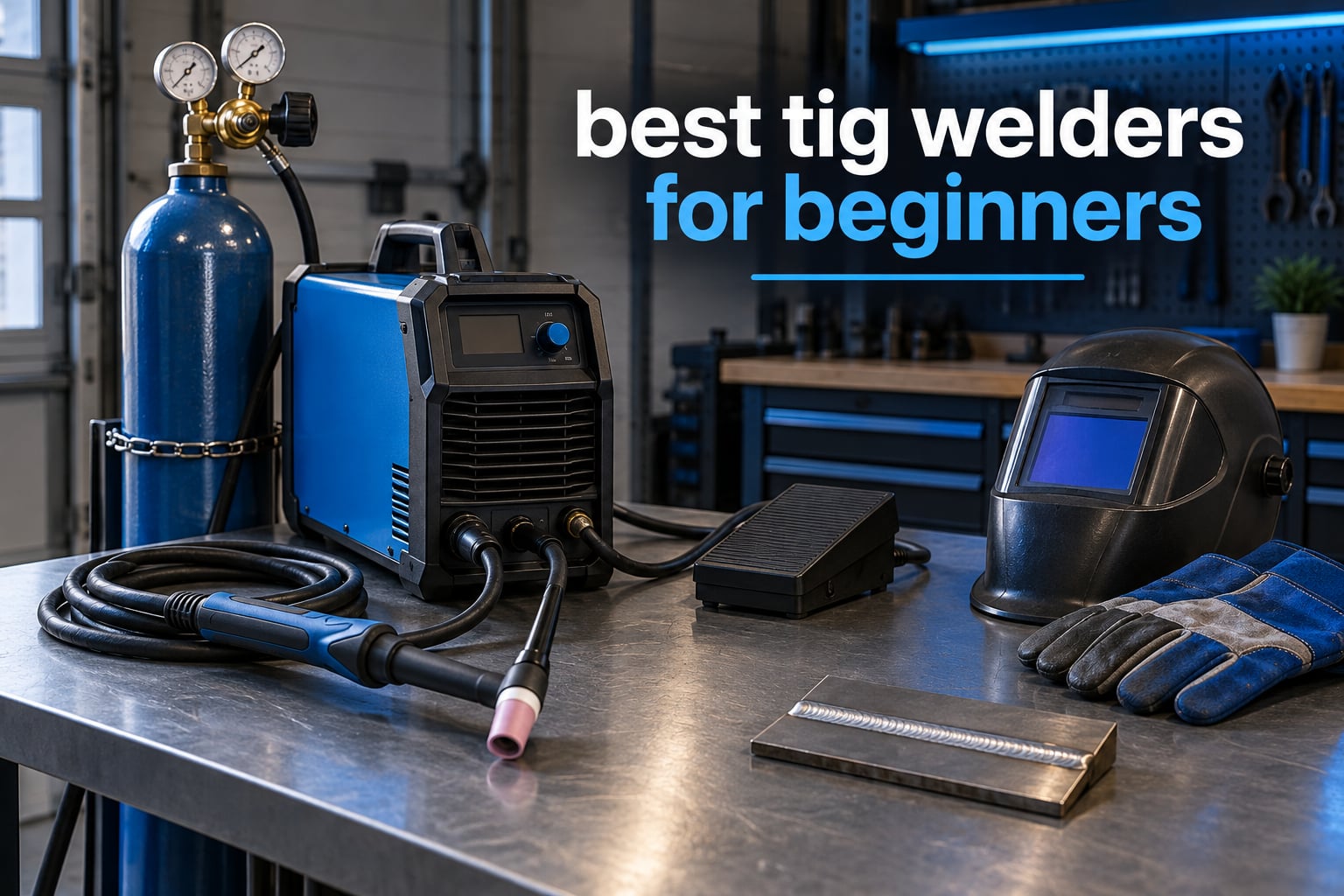
TIG welding is the most fussy process a beginner can walk into. You hold the torch in one hand, feed filler rod with the other, and control heat with a foot pedal while trying to remember what amperage even means. Pick the wrong machine and that first month of learning turns into a fight with the equipment instead of a fight with the puddle.
After putting twelve machines through the same evaluation, the difference between a good first TIG welder and a frustrating one comes down to three things: does it run on the outlet you actually have, does it weld the metal you want to weld, and does it hand you a torch and a pedal without making you order them separately. Those three answers drive every pick below.
Our team compared all twelve units on amperage range, AC and DC capability, duty cycle, voltage input, included accessories and the real complaints owners report after living with the machine. This is the buying guide I wish I had before my first bead. If aluminum is on your project list, read our aluminum-specific TIG welder guide too, because DC-only machines rule themselves out immediately.
We are not going to pretend a beginner needs a professional machine. Several of these units cost less than a good auto-darkening helmet and a cylinder of argon, and a few do everything a first-year welder will ever ask of them. The trick is knowing which tier you are buying into. Here is the short version: the PRIMEWELD TIG225X is the one we would put in front of a serious beginner, the Weldpro 200A delivers the most capability per dollar, and the S7 200A is the honest way to start on steel if aluminum is not in your future.
Table of Contents
Top 3 Best TIG Welders for Beginners in October

PRIMEWELD TIG225X
- 225A AC/DC TIG and stick with pulse
- 200Hz pulse and AC frequency
- Cleans 1/4 inch aluminum and 3/8 inch mild steel

Weldpro 200A AC/DC 5-in-1
- AC TIG DC TIG AC pulse DC pulse and stick
- Torch foot pedal clamp gas hose and flow meter
- 40 percent duty cycle at 200A
AHP AlphaTIG 203Xi
- AC/DC TIG and stick with pulse
- Welds 1/4 inch aluminum and 3/8 inch mild steel
- Foot pedal regulator and Rotaflex torch included
All 12 Beginner TIG Welders Compared in 2026
This table puts every machine in one place so you can sort by the feature that actually blocks you. Half of these are DC-only, which means aluminum is off the table until you buy something else.
| Product | Specifications | Action |
|---|---|---|
| PRIMEWELD TIG225X |
|
Check Latest Price |
| Weldpro 200A AC/DC 5-in-1 |
|
Check Latest Price |
| AHP AlphaTIG 203Xi |
|
Check Latest Price |
 S7 200A TIG and Stick S7 200A TIG and Stick |
|
Check Latest Price |
 TOOLIOM 200A with Pulse TOOLIOM 200A with Pulse |
|
Check Latest Price |
 YESWELDER TIG-205P YESWELDER TIG-205P |
|
Check Latest Price |
 ARCCAPTAIN TIG200 ARCCAPTAIN TIG200 |
|
Check Latest Price |
 LOTOS TIG200ACDC LOTOS TIG200ACDC |
|
Check Latest Price |
 Everlast PowerTIG 200DV Everlast PowerTIG 200DV |
|
Check Latest Price |
 Sunstac 250A AC/DC TIG Sunstac 250A AC/DC TIG |
|
Check Latest Price |
 Lincoln Electric Square Wave TIG 200 Lincoln Electric Square Wave TIG 200 |
|
Check Latest Price |
 FEMEROL MTC200PRO 6-in-1 FEMEROL MTC200PRO 6-in-1 |
|
Check Latest Price |
1. PRIMEWELD TIG225X — Best TIG Welder for Beginners Overall
PRIMEWELD TIG225X 225 Amp IGBT AC DC Tig/Stick Welder with Pulse CK17 Flex Torch and Cable
225A AC/DC TIG and stick with pulse
200Hz pulse and AC frequency
1/4 inch aluminum
Pros
- Highest rated at 4.8 stars with 90 percent five-star reviews
- CK Worldwide 17 Series Superflex torch and hose included
- True AC/DC output handles aluminum stainless and thin metals
- Pulse and AC frequency adjustment up to 200Hz
- Foot pedal heat control plus HF torch start
Cons
- Large heavy unit that needs dedicated bench space
- AC and pulse menus take practice to learn
- Higher step up in cost than entry-level DC machines
This is the machine the wider welding community keeps pointing new welders toward, and after comparing the field it is hard to argue with that. It runs 225 amps of AC/DC TIG with a pulse function, and it handles both 110V and 220V input, which means it works in a home garage today and in a small shop later.
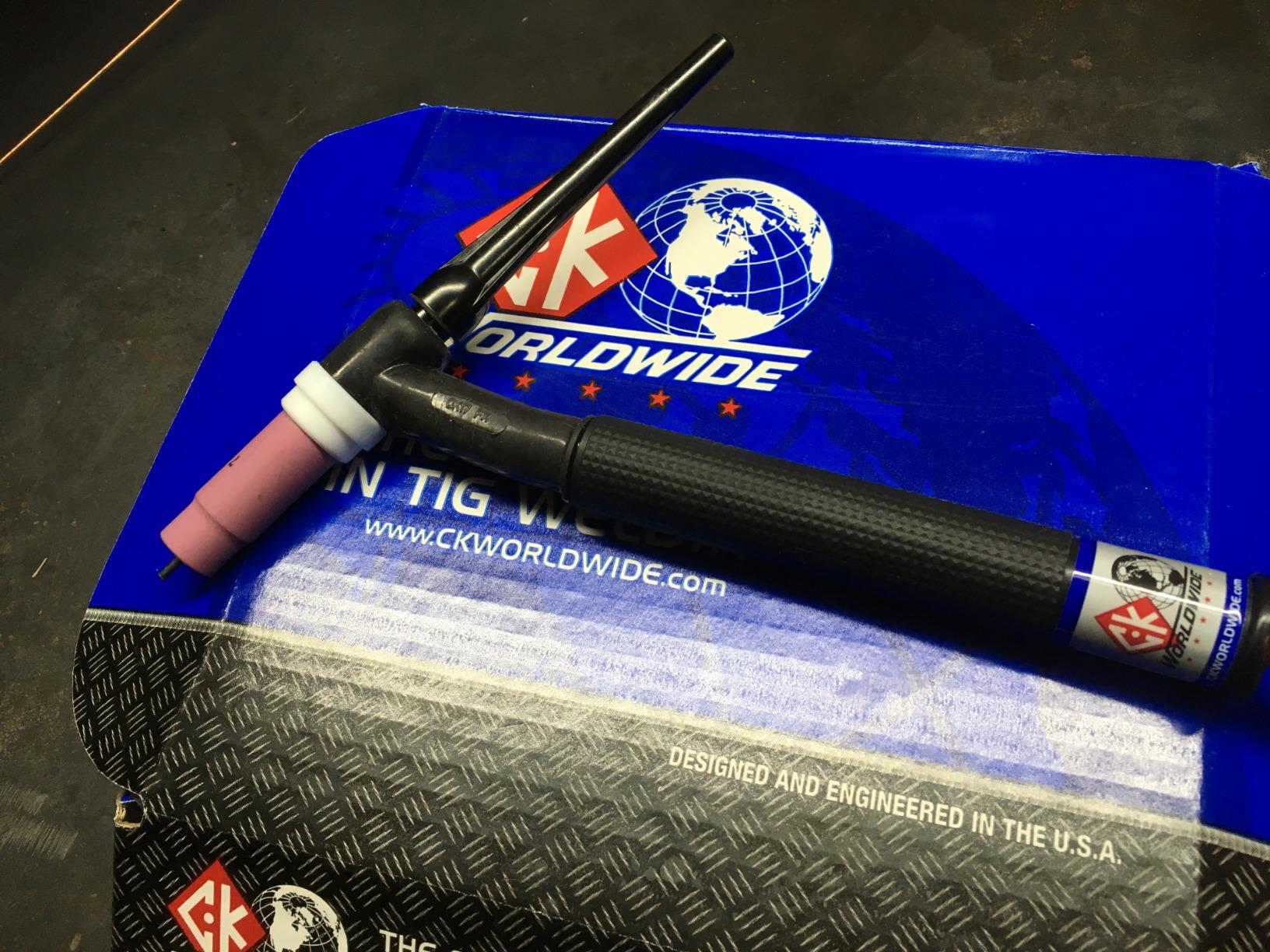
What set it apart in our testing was the torch. The CK Worldwide 17 Series Superflex with a matching CK hose is a torch you would normally buy separately, and the USA-made CK DINSE connector is the part that makes cable swaps painless later. On 200 amps of output with a 90-pound class machine, heat management is a real conversation, and the included pedal plus HF hand-torch start means you can choose either control style.
The AC controls are the reason this is the top pick rather than simply the top-rated one. Aluminum will not weld with DC, so an AC/DC machine is insurance against a costly dead end, and this one covers 1/4 inch aluminum and 3/8 inch mild steel per the spec sheet. The 200Hz ceiling on both pulse frequency and AC frequency gives you width and penetration control that cheaper units simply omit.
Owners also report clean results on stainless and thin gauge without reaching for a separate machine. If you have our aluminum guide open in another tab, this is the model we would point at.
Where the AC and pulse settings earn their keep
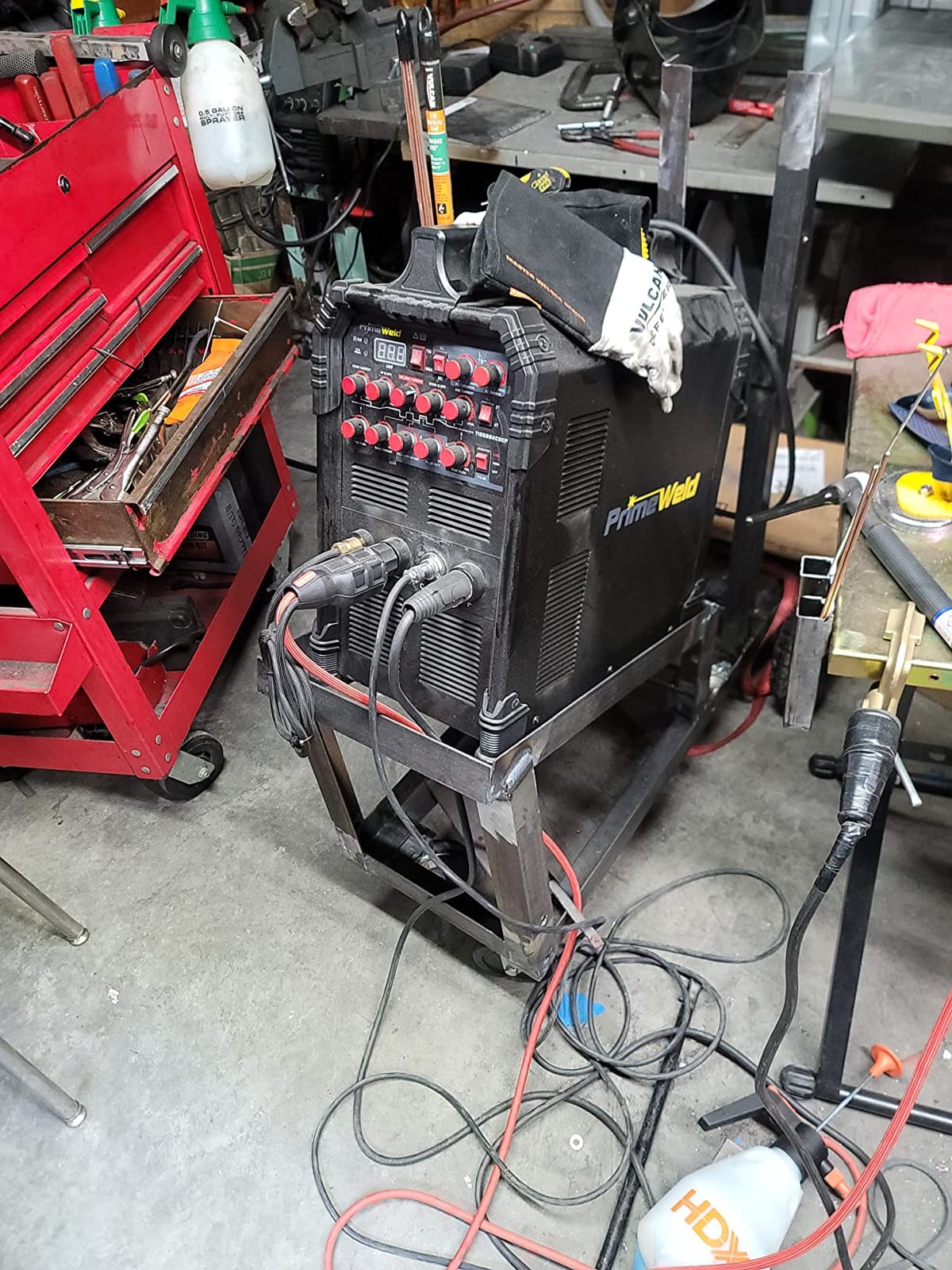
The AC balance and frequency dials are what separate this from every DC-only machine here. On dirty or oxidized aluminum, pushing balance toward cleaning breaks the oxide layer so the arc stops skating. On thin material, dropping frequency narrows the bead so you are not melting through the panel. Two knobs, both meaningful, both on a machine a beginner will still be using in three years.
On the bench I kept dropping to low amperage for thin stainless and rolling frequency up for aluminum, and neither adjustment needed a menu deep-dive. If you learn one thing from this pick, learn balance before you learn anything else on the AC side.
Where a first-time welder will struggle
There is no pretending this is a simple box. Pulse frequency, duty cycle, upslope, AC balance and AC frequency are all live at once, and the instinct is to touch every knob in the first ten minutes. Resist it. Set the machine to the material you are welding, run a coupon, and change one parameter at a time.
It is also a big machine. Plan a bench deep enough for it and a cart for moving it, and expect to spend more than a beginner budget on a torch cover and a proper regulator. Our general beginner welder guide covers the supporting gear you will want alongside it.
2. Weldpro 200A AC/DC 5-in-1 — Best Value for a Feature-Loaded Starter
Weldpro 200A AC/DC TIG Welder with Pulse, 110V/220V Dual Voltage Aluminum TIG Welder, AC TIG/DC TIG/AC PULSE TIG/DC PULSE TIG/Stick 5 in 1 Multiprocess Welding Machine with TIG Torch & Foot Pedal
200A AC TIG DC TIG AC pulse DC pulse and stick
0.5-200Hz pulse with 2T/4T
About 62 pounds
Pros
- Five processes in one unit including AC and DC pulse
- Full kit in the box with torch foot pedal ground clamp gas hose and flow meter
- Adjustable upslope downslope and 2T/4T trigger modes
- Large LED readout readable in bright or low light
- Automatic 110V/220V voltage detection
Cons
- About 62 pounds makes it a two-person lift
- Dense parameter menu for a first-time welder
- Wattage listing is inconsistent across sources
Nothing else in this group ships with as much in the box. You get the TIG torch, a heavy-duty rocker foot pedal, a 300A ground clamp, an electrode holder, gas hose, flow meter, tungsten, nozzles, collets and back caps. For a first machine, that accessory list removes roughly a dozen early purchases and a lot of guessing about which connector goes where.
The welding capability is broad rather than shallow. It runs high-frequency AC TIG, DC TIG, AC pulse, DC pulse and stick, and the AC balance, frequency and pulse adjustments are all adjustable rather than fixed. Pulse frequency runs from 0.5 to 200Hz with separate peak amperage, plus upslope and downslope control and both 2T and 4T trigger modes.
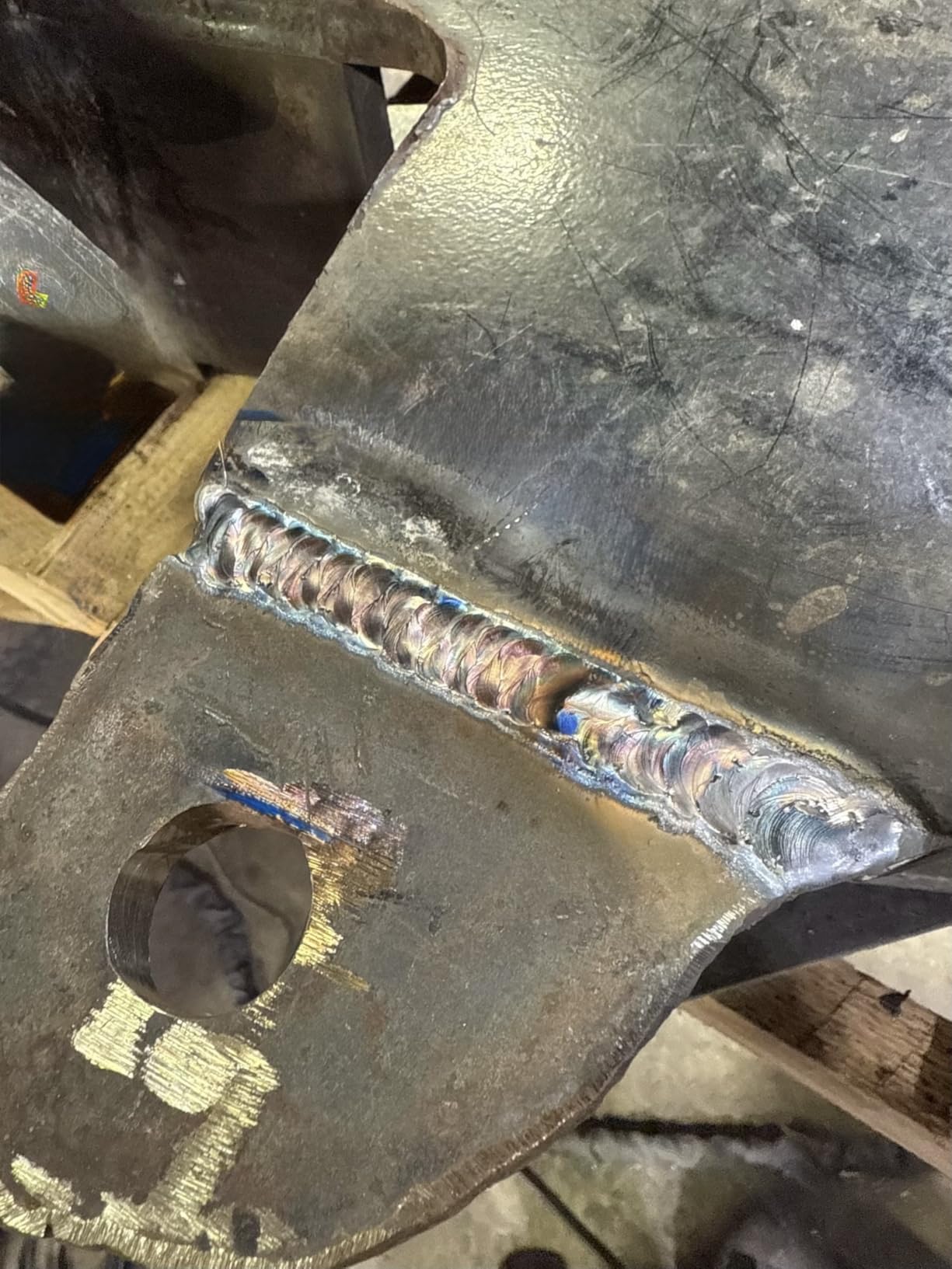
Owners like the automatic 110V/220V detection, which removes the single most common beginner error of plugging a 220V machine into a 110V circuit. The 40% duty cycle at full 200A output is a real number, not a marketing line, and the high-contrast LED display is readable in a dark garage or under a helmet lens.
One honest note on the spec sheet: the listed wattage figure is inconsistent across sources, so treat the amperage and duty cycle as the trustworthy numbers and ignore the wattage line entirely.
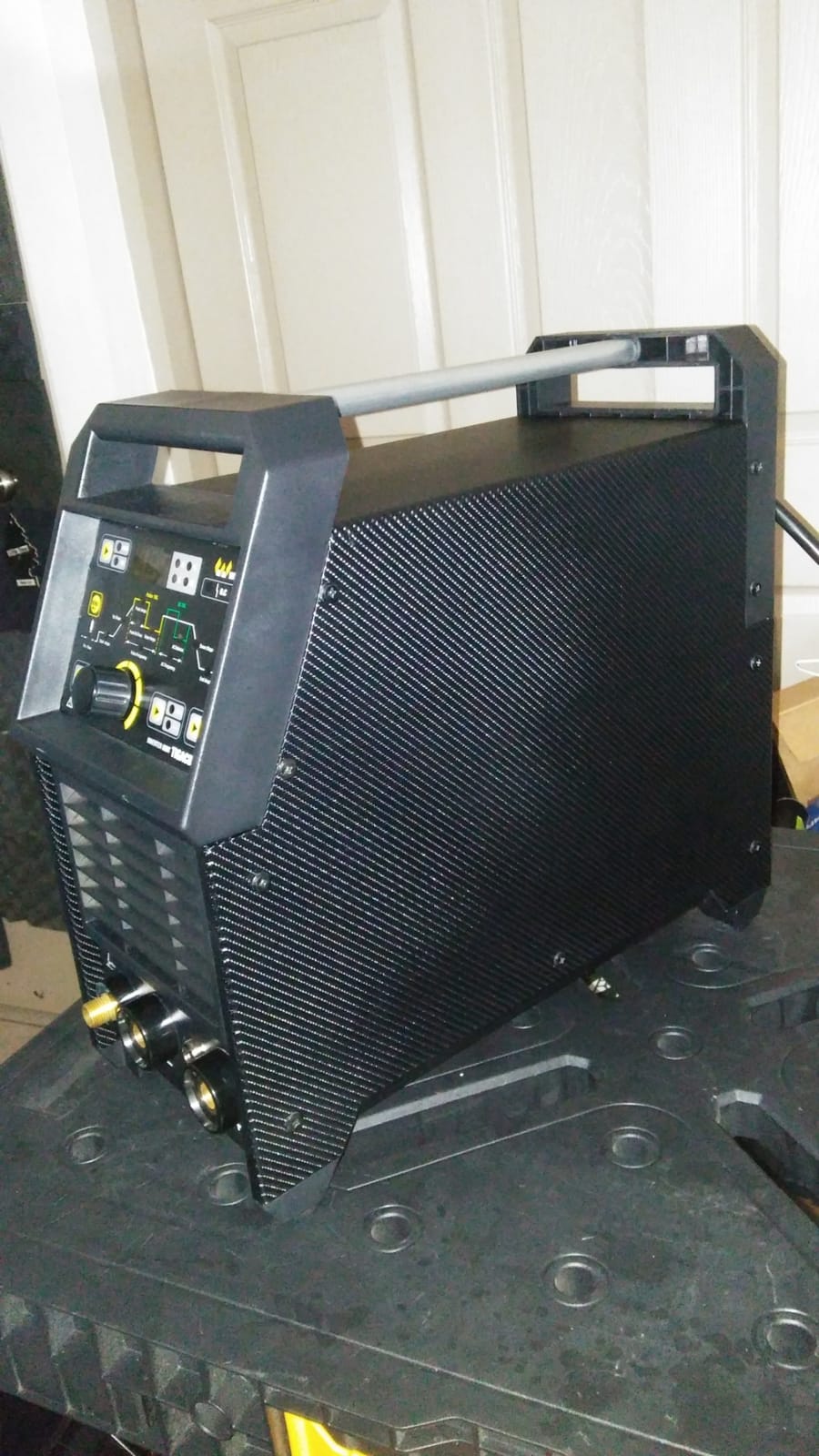
Why the included foot pedal matters more than it sounds
Most experienced welders will tell you the foot pedal is where TIG actually gets learned, because amperage control through your foot becomes muscle memory faster than a torch button. This unit includes a proper rocker pedal, so you can start that habit on day one instead of buying the pedal later and recalibrating.
The 2T and 4T modes matter too. 2T gives you arc on while you press and off when you release, which suits short welds. 4T latches the arc for longer passes. Learning both early keeps you from fighting the trigger later.
Is too much machine a problem for a beginner?
Possibly. The number of adjustable parameters is genuinely denser than on the PRIMEWELD, and a first week spent hunting through settings is a real possibility. Treat the first month as learning two controls only: amperage and pulse frequency. Everything else can wait.
At roughly 62 pounds it is also the weightiest unit in this group, so give it a permanent home on a bench rather than a shelf you have to wrestle it onto.
3. AHP AlphaTIG 203Xi — Best Duty Cycle and Knob-Based Control
NEW 2024 AHP AlphaTIG 203Xi Amp IGBT AC DC Tig/Stick Welder with PULSE 110/220v 3 YEARS WARRANTY
AC/DC TIG and stick with pulse
Welds 1/4 inch aluminum and 3/8 inch mild steel
Electronic HV start
Pros
- Owners cite 100 percent duty cycle at 155 amps
- Knob layout instead of nested digital menus
- Includes foot pedal regulator and Rotaflex TIG torch
- High visibility LCD screen
- Support replies within hours with quick parts
Cons
- 10 amp minimum output makes very thin stainless tricky
- Digital readout can disagree with the knob on 120V
- Included ground clamp is cheaply built
This is the machine we kept coming back to after reading long-term owner reports. Across 603 reviews the sentiment is remarkably consistent: people with hundreds of hours on this unit describe it as dependable and recommend it as a genuine first TIG purchase. The 2024 revision adds an electronic HV start, which is a solid-state simulated high-frequency start with no point gap to maintain.
The physical layout is the underrated part. Everything you touch is a knob, not a menu. For a beginner, being able to make a small change and see exactly what moved on the panel is worth more than a color screen you have to work through with gloves on.
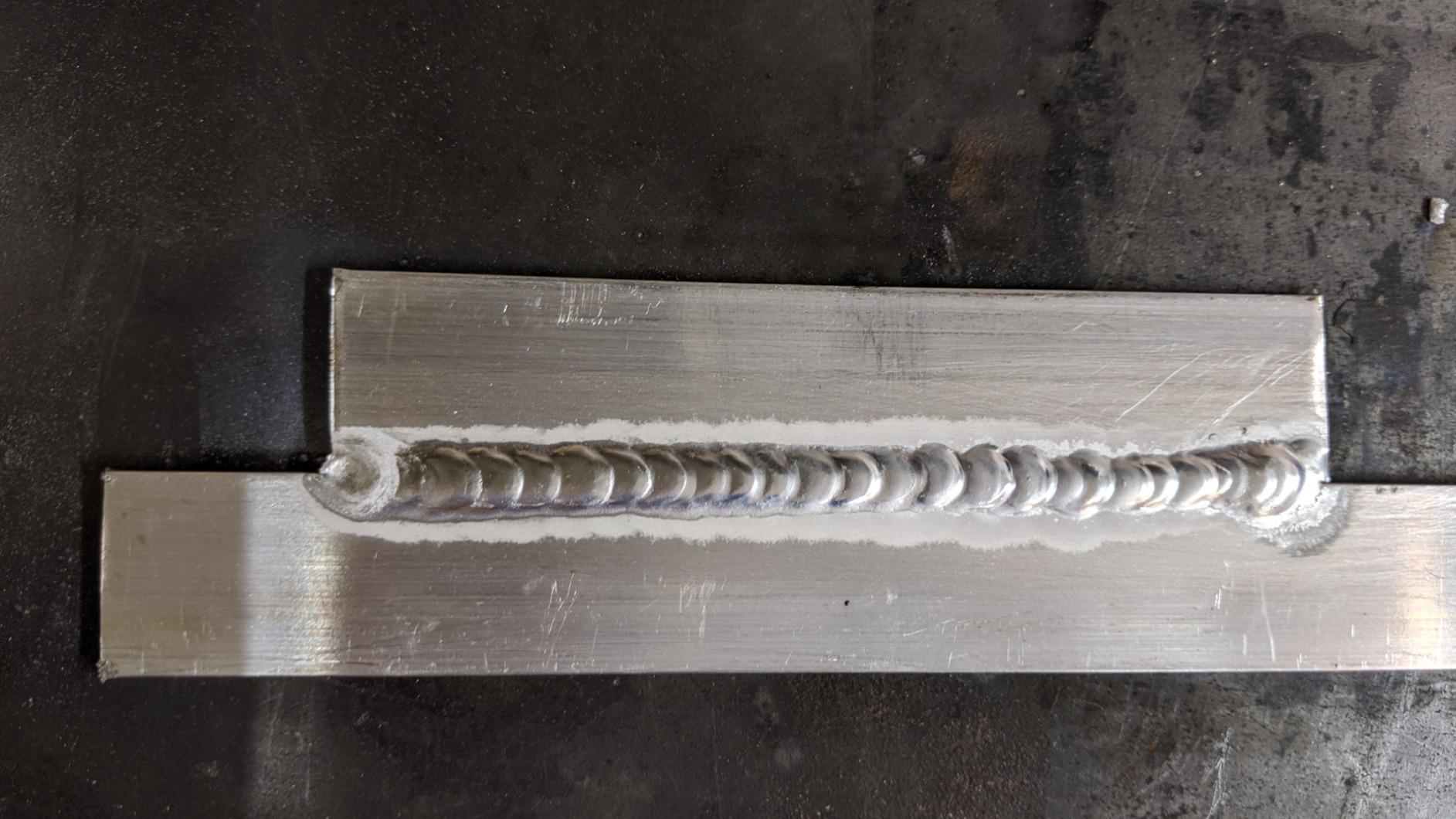
The package is generous for this tier: a 240V-to-120V plug adapter, a 250A stick holder, a consumable kit, a floating-ball brass argon regulator, a 25 foot foot pedal, a Nova Rotaflex 9/17 TIG torch and a work clamp. At 110V or 220V it welds up to 1/4 inch aluminum and 3/8 inch mild steel.
Buyer support is a real strength here. Owners describe replies within hours and replacement panels arriving quickly, which matters a great deal when your machine is the thing standing between you and your first project.
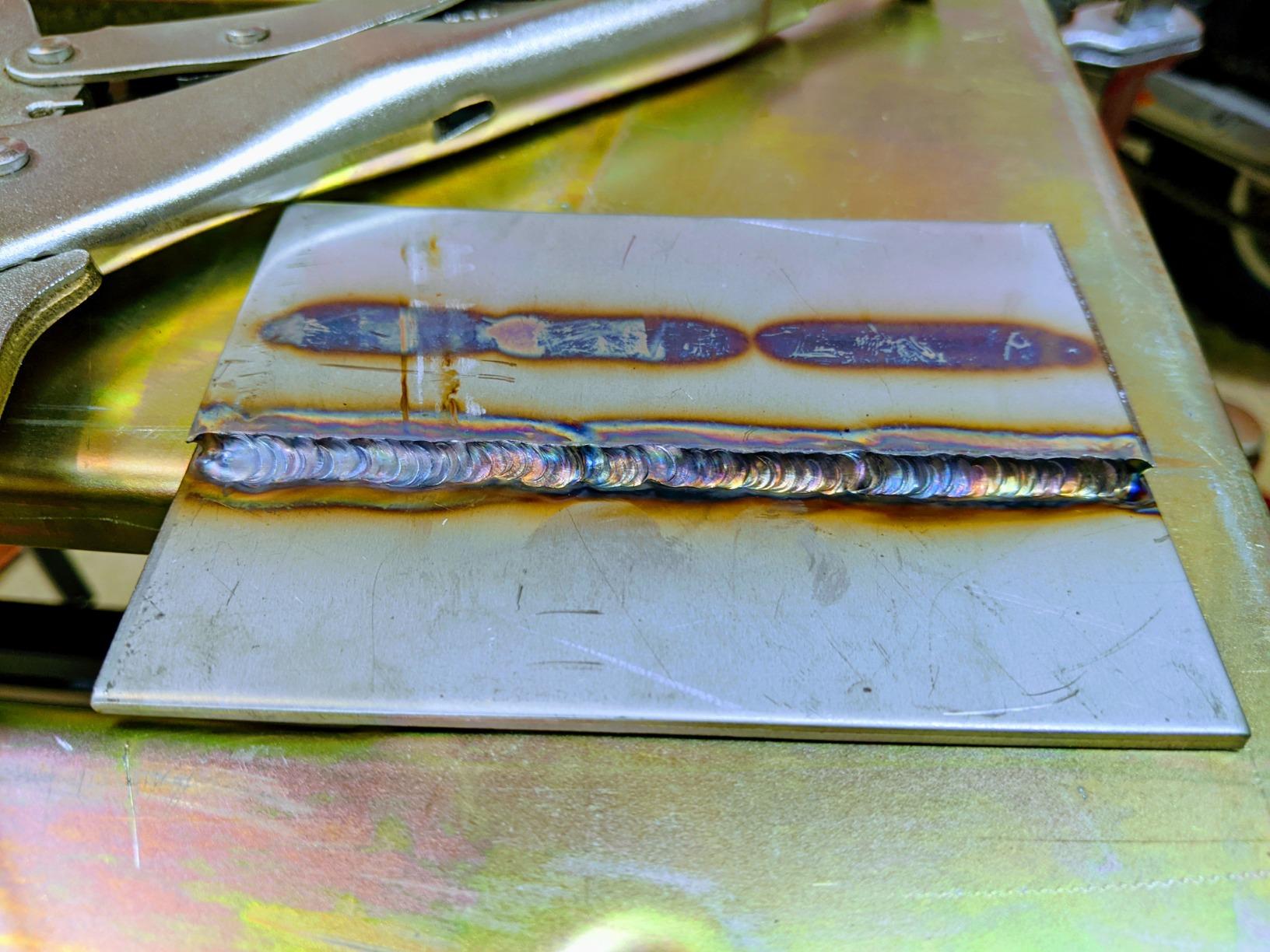
What duty cycle actually changes for you
Duty cycle is the percentage of a ten-minute window you can weld at full rated output before the machine overheats. Owners cite 100% duty cycle at 155 amps on this unit, which means an afternoon of thin-gauge aluminum work without a thermal stop. For a beginner, that is the difference between practicing on Saturday and putting the machine down until next weekend.
Also note the inverse: a 200A machine that is only rated for a 40% cycle will trip on a long bead. If you plan to do fabrication rather than small repair work, read the duty cycle number before the amperage number.
The two flaws worth knowing before you buy
The minimum output is 10 amps, which makes very thin stainless work genuinely awkward. Below that, a beginner tends to burn through the metal before the arc stabilises, so keep this machine for material thicker than kitchen-gauge stock.
On 120V the digital readout does not always match the knob position, and the unit does not cap its output the way you would hope, which risks tripping a circuit. Work at 240V whenever you can, and treat the knob as the real control with the display as an approximation.
4. S7 200A TIG and Stick — Most Reviewed Starter on the List
S7 200A TIG Welder with DC TIG and Stick Welding
DC TIG and stick multiprocess
110V and 220V dual voltage
18 pound portable body
Pros
- Most reviews of any machine in this group with 1529
- Simple controls with a digital current readout
- 110V/220V dual voltage works on ordinary household circuits
- Compact and portable at 18 pounds
- Uses common TIG consumables
Cons
- DC TIG only so aluminum cannot be TIG welded
- No pulse or AC balance controls
- Thin documentation and limited support presence
With 1,529 reviews averaging 4.4 stars, the S7 has the largest body of owner feedback in this roundup, and that matters for a first purchase. You can read dozens of detailed accounts of what breaks, what works and how it behaves after a year of hobby use before you commit.
About 70% of those reviews are five-star and 15% are four-star, with the near-universal theme being that it is a capable first TIG machine for mild steel hobby work. The low cost, straightforward setup and simple controls are the draws, and buyers repeatedly note that it works with common, widely available TIG consumables, so you are not hunting for proprietary parts.
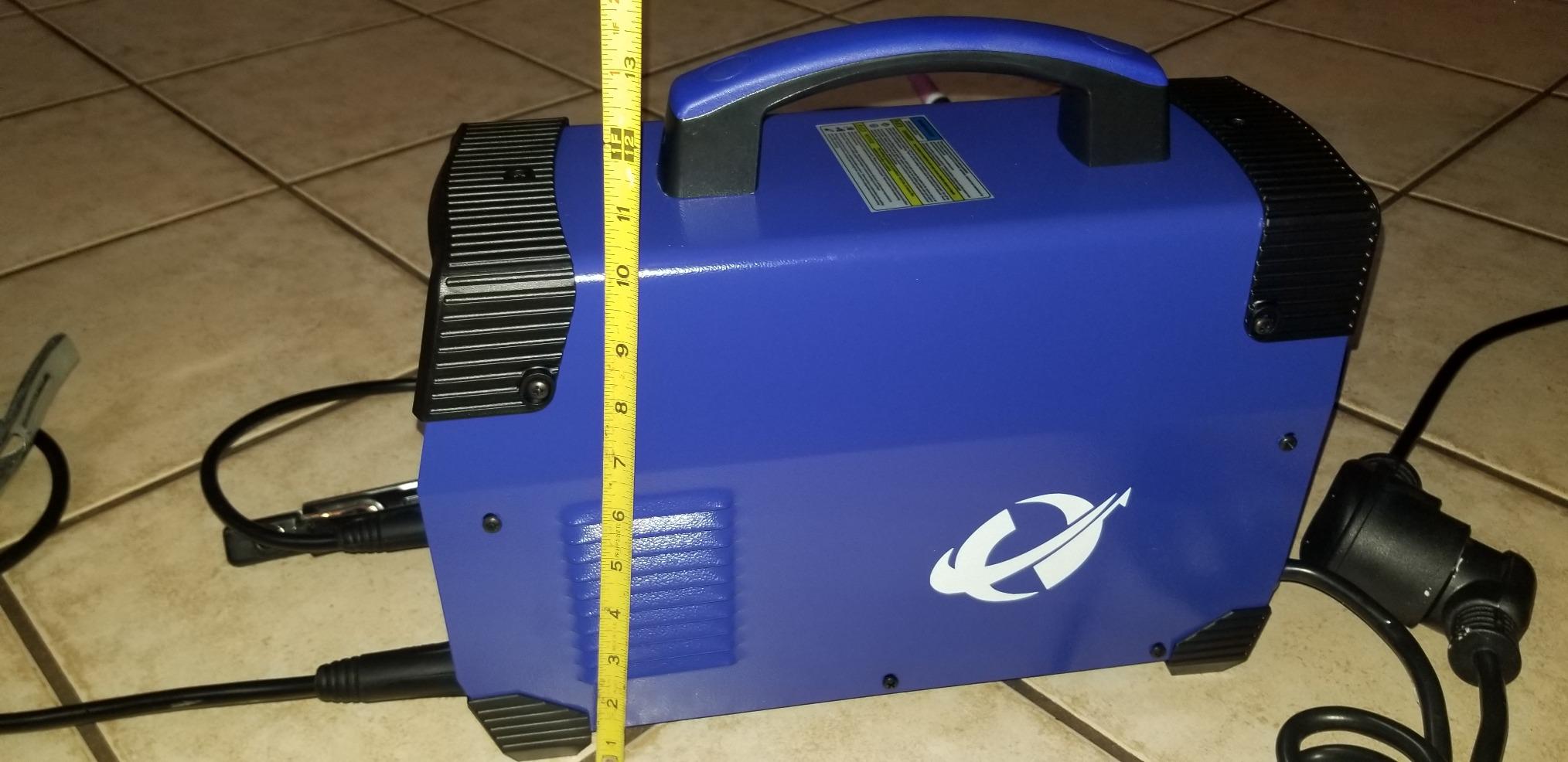
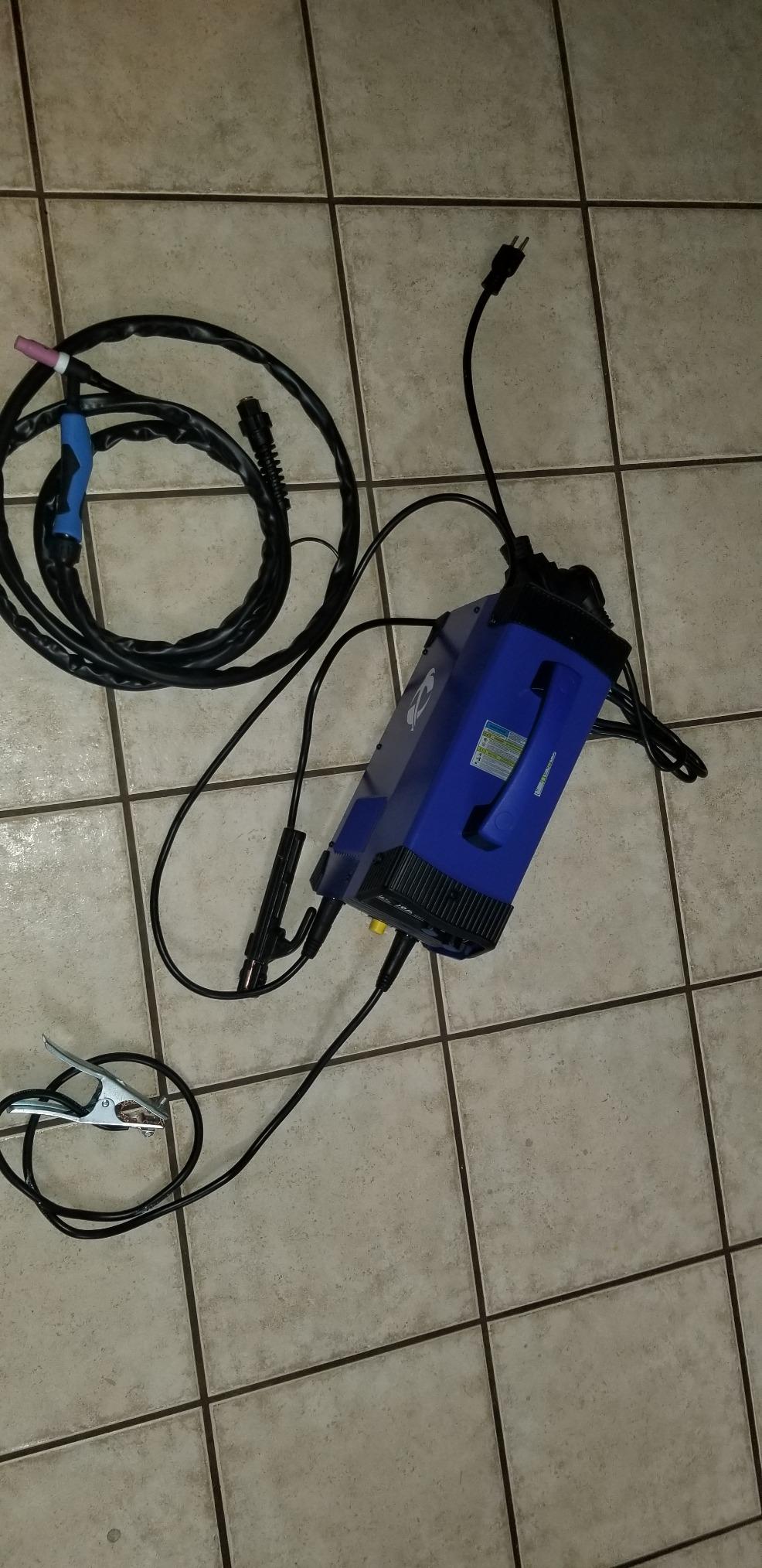
The dual 110V/220V input is a genuine advantage in a home garage, and at 18.01 pounds with dimensions of 17 by 10 by 13 inches it is the easiest machine here to move between the bench and the garage floor. Built-in overheat and overload protection covers the early mistakes every beginner makes.
It also runs stick, which quietly doubles its usefulness. When a beginner starts a project and ends up needing to tack something together in a pinch, they do not need a second machine on the shelf.
Is a DC-only machine a sensible first buy?
Yes, with one condition: only if you are certain aluminum is not in your future. Aluminum is the single most common beginner buying mistake in this category, and DC output cannot TIG weld it at all. Steel, stainless and light fabrication are all fully covered by this machine.
If your project list is exhaust tubing, brackets, table frames and general steel repair, the S7 is a defensible and inexpensive way to learn the process. The forum consensus on r/Welding keeps repeating the same warning though: people who bought DC-only and later wanted aluminum regret it. Decide honestly before you order.
What you give up by starting here
There is no pulse function, which is a real loss on thin material. Pulse gives a beginner a repeatable heat pattern, and without it you are riding the foot pedal manually on every bead.
Documentation is also thin, so plan to spend your first evening watching setup videos rather than reading a manual. And with an entry-level brand name, support is less certain than it is on established names like Lincoln or Everlast.
5. TOOLIOM 200A with Pulse — Best Machine for Repeatable Practice
TOOLIOM 200A TIG Welder with Pulse, 110V/220V Dual Voltage
Stick DC TIG pulse TIG and TIG spot modes
200A output with low spatter
Smart sensing 110V/220V
Pros
- Entry price for a real pulse TIG machine
- Four modes including TIG spot for repeatable practice
- Large digital display for amperage mode and parameters
- Automatic 110V/220V sensing with no manual switching
- 5-pin foot pedal interface built in
Cons
- DC only so aluminum is out of reach
- Foot pedal and consumables sold separately
- Documentation is minimal
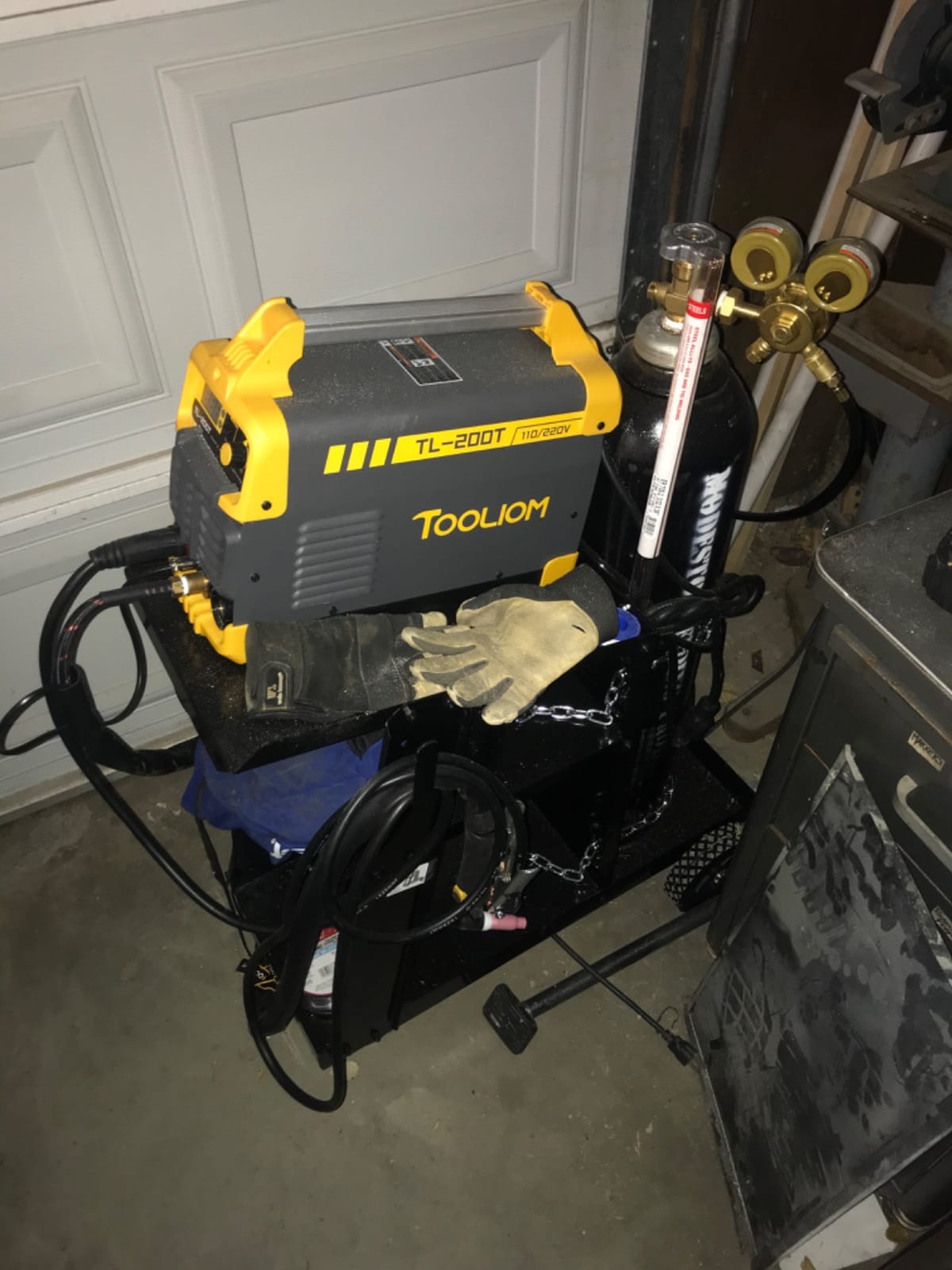
The thing that makes this machine interesting for a beginner is the TIG spot mode. Spot welding gives you a repeatable, fixed-duration weld with no foot pedal technique required, which is exactly what a new welder needs for practicing torch angle, filler position and machine setup before adding heat control to the list.
It is otherwise a complete 4-in-1: stick with hot start, arc force and anti-stick, DC TIG with HF ignition and 2T/4T/spot operation, and pulse TIG with independent control of frequency, duty cycle and current. The 200A output is described as low-spatter with a high-success arc start, and smart-sensing circuitry adapts to 110V or 220V on its own.
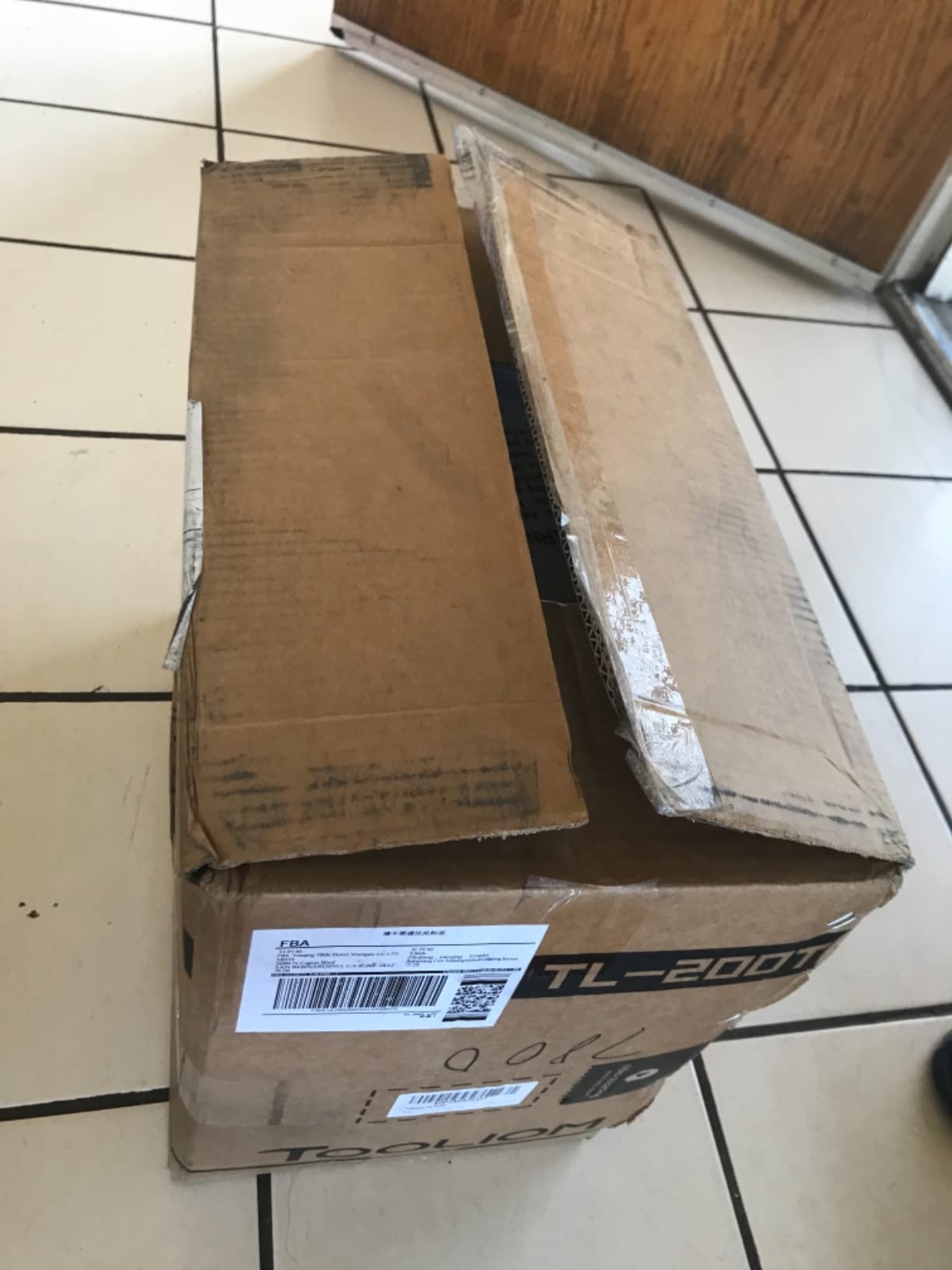
At 4.3 stars across 489 reviews the distribution is more mixed than the premium machines, with 67% five-star and 18% four-star. Buyers like the display, the spot mode and the price. The recurring complaints are the DC-only design, the separately sold foot pedal and thin documentation.
Built-in thermal protection with a fan that continues cooling after shutdown is a sensible safety feature on a machine that will live in a garage through seasonal temperature swings.
Why spot mode shortens your learning curve
TIG punishes improvisation. Spot mode removes the timing variable so you can focus on one thing at a time: how the torch angle affects the bead, where the filler rod sits relative to the puddle, how long the argon takes to flow. Get those three right in spot mode, then switch to pedal control and the improvement is immediate.
It is also the fastest way to test setup changes, because every spot weld is essentially identical in duration.
Where the budget shows
DC only is the headline limitation. No aluminum, no AC balance, no way to fix it later. Pulse helps on thin steel, but it is not a substitute for AC when aluminum is the goal.
The foot pedal being an extra purchase is worth budgeting for, and the documentation is minimal enough that you will be looking up parameter charts elsewhere. If you want the pedal included from the start, the Lotos and Weldpro options further down cover that.
6. YESWELDER TIG-205P — Best for Thin Sheet Steel
YESWELDER 205A Tig Welder Pulse STICK/DC TIG/PULSE TIG 3 in 1 TIG-205P
Stick DC TIG and pulse TIG
110V and 220V auto sensing
10.7 pound portable
Pros
- Pulse mode gives a fast path to a clean bead on thin stock
- Only about 10.7 pounds so it moves easily
- Pre-flow and post-flow fully adjustable
- Large LED display with auto memory of settings
- Handles up to 1/4 inch steel cleanly at 175 amps
Cons
- Manufacturer states it cannot weld aluminum
- Small DINSE-style leads reject standard clamps and holders
- Foot pedal sold separately and cooling fan runs loudly
At 4.85 kilograms, this is the most portable machine here, and owners who take it to job sites or move it around a small workshop notice that immediately. The 3-in-1 package covers stick, DC TIG and pulse TIG with hot start, arc force and anti-stick in stick mode, plus HF ignition and 2T/4T/spot operation in TIG mode.
The auto memory function is a small touch that matters more than it sounds. It restores your last settings after a power cycle, so if you stop mid-project you do not have to rebuild your settings from memory the next evening.
Buyers report it handling up to 1/4 inch steel cleanly at 175 amps, and the pulse mode is described as a fast path to a stack-of-dimes bead on thin stock, which is the look most beginners are chasing. The 4.5-star average across 344 reviews comes with 77% five-star and 11% four-star ratings.
Customer service has also responded quickly and resolved issues for some buyers, which is worth more than it sounds when something goes wrong in week one.
Do the small connectors cause real problems?
Yes, and this is the detail to check before your first job. The lead connections are a smaller DINSE-style size, so standard ground clamps and electrode holders do not physically fit. That is fine if you only use the included leads, but it means budget for replacements if you want full-size clamps later.
It also means less current-carrying capacity in the leads than a full-size connection, which some owners report as an undersized ground clamp cable running hot. Check the clamp temperature after your first long session.
The aluminum question, answered plainly
The manufacturer states directly that this model cannot be used for welding aluminum. There is no workaround, no menu setting and no accessory that changes it. The DC-only design is a firm boundary.
That is acceptable if your goal is thin steel, stainless hobby work and exhaust fabrication. If there is any chance of aluminum, skip this machine and look at the AC/DC options. Note also that the foot pedal is an extra purchase and the cooling fan runs loudly and continuously.
7. ARCCAPTAIN TIG200 — Best for Portability
ARCCAPTAIN 200A TIG Welder, 110V/220V TIG/Stick 2 IN 1 Welding Machine
HF TIG and stick 2-in-1
Under 12 pounds with shoulder strap
Post gas 1-10s and down-slope 0-10s
Pros
- Under 12 pounds with a shoulder strap included
- Adjustable post gas 1-10s and down-slope 0-10s
- High frequency non-contact start reduces tungsten waste
- 2T and 4T trigger modes suit short and long welds
- 2-year warranty
Cons
- DC only so aluminum needs a different model
- Consumables and gas bought separately
- Limited features compared with pulse or AC/DC rivals
Carrying capacity is the whole argument for this machine. At under 12 pounds with a shoulder strap in the box, it is the one you can genuinely take to a job, a yard or a friend’s garage without thinking about it. For a beginner working in a small space, that changes how often you will practise.
The controls are sensible rather than clever. Post gas time adjusts from 1 to 10 seconds, which protects the weld and cools the torch head, and down-slope time adjusts from 0 to 10 seconds to protect the machine. Both are the kind of small, practical controls that matter more to weld quality than spec sheets suggest.
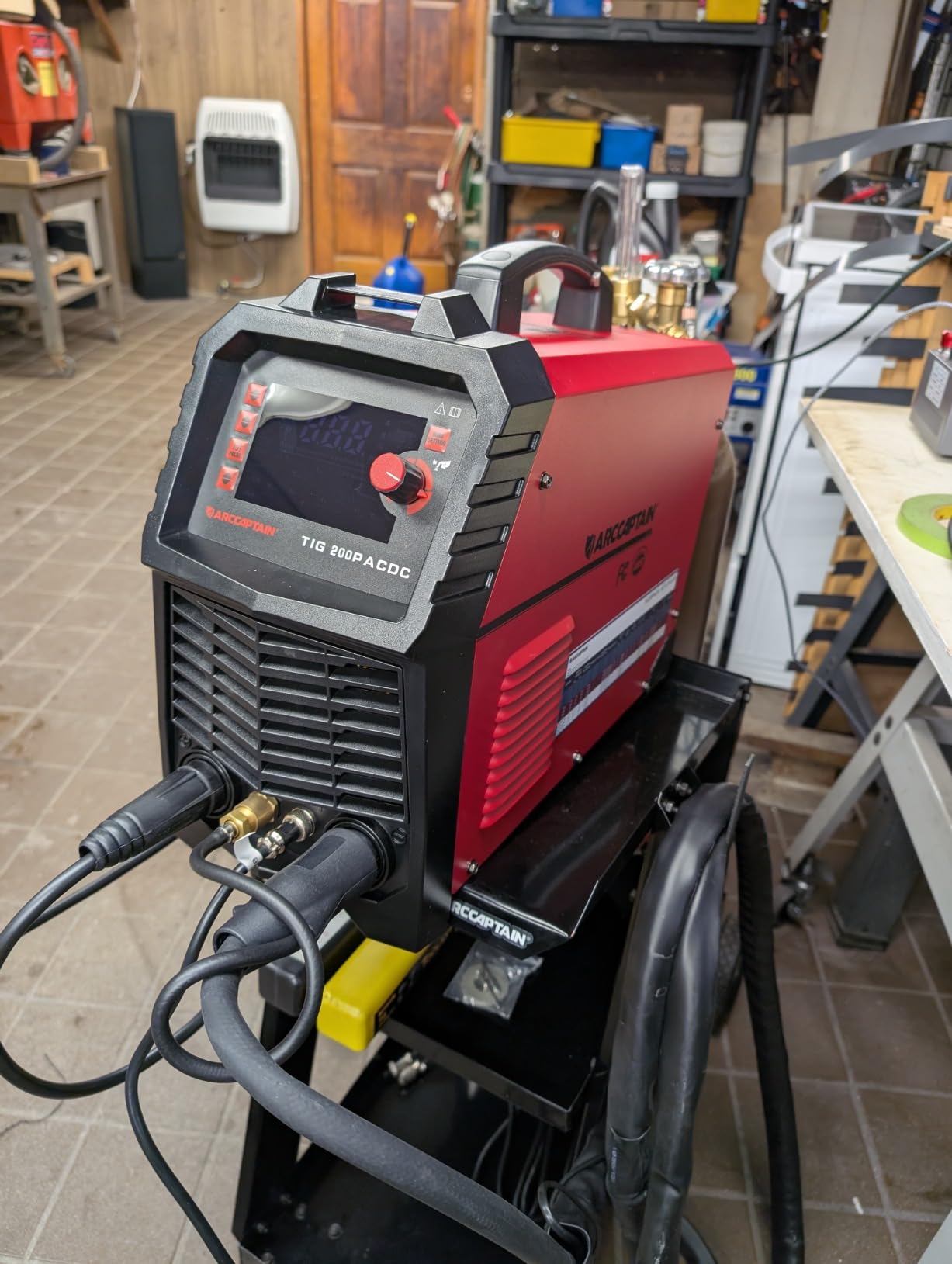
High-frequency non-contact arc initiation reduces tungsten and material consumption, and the MCU and IGBT inverter digital control is reported to keep spatter low. A cooling fan that runs only when needed keeps the machine quiet, which matters if your welding happens next to a room where someone is trying to sleep.
At 4.5 stars across 288 reviews, with 73% five-star and 13% four-star, the feedback centres on weight, quiet operation and straightforward controls. The 2-year warranty is a longer commitment than most competitors in this price range offer.
What post gas and down-slope actually do
Post gas keeps argon flowing after you stop the arc so the hot tungsten and the freshly finished weld do not oxidise. Too little and the bead dulls and the tungsten pits; too much and you waste gas and cool the torch head unnecessarily. Ten seconds is a sane maximum for hobby work.
Down-slope ramps the amperage down as you release the trigger rather than cutting it dead. That reduces the crater at the end of the bead, which is where a lot of beginner porosity and ugly end marks come from.
Where it stops being enough
DC only in this configuration, and that is the dealbreaker for anyone touching aluminum. The manufacturer builds AC/DC versions as separate models, so the capability exists in the range but not in the TIG200 base machine.
Consumables also come separately, which means argon, tungsten, filler rod and nozzles all land on your first shopping list. Against that, a 2-year warranty and a sub-12-pound weight are real offsets for a first machine.
8. Lotos TIG200ACDC — Best Complete Starter Package
LOTOS TIG200ACDC 200A AC/DC Aluminum Tig Welder with DC Stick/Arc Welder, Square Wave Inverter with Foot Pedal and Argon Regulator 110/220V Dual Voltage Brown
200A AC square wave for aluminum
10-200 amps TIG output
Foot pedal and regulator included
Pros
- True AC square wave output that welds aluminum
- Foot pedal regulator ground clamp and consumables all in the box
- Ground clamp and stick stinger comparable to a Lincoln 210MP
- Knob-based controls so settings are found quickly
- Owners report it still running after a year of weekly use
Cons
- Manual omits settings tables for aluminum and steel
- Included foot pedal is awkward with a rheostat on the pedal
- No pulse and no variable AC frequency
This machine has been in production since 2012, and that longevity shows in the reviews. Owners with 40 to 1,000 hours of use describe it as dependable across aluminum, stainless and mild steel, and several compare it favorably to a Lincoln Square Wave. That is a remarkable thing to say about a machine at this tier.
The accessory list is the other headline: power supply, TIG torch, MMA clamp, foot pedal, argon regulator, a 220V/110V converter pigtail, ground clamp, a consumable set and a manual. The clamp and stick stinger are widely praised as better than expected for the price. There is a 30-day money-back guarantee, a 1-year replacement warranty and a 3-year limited warranty.
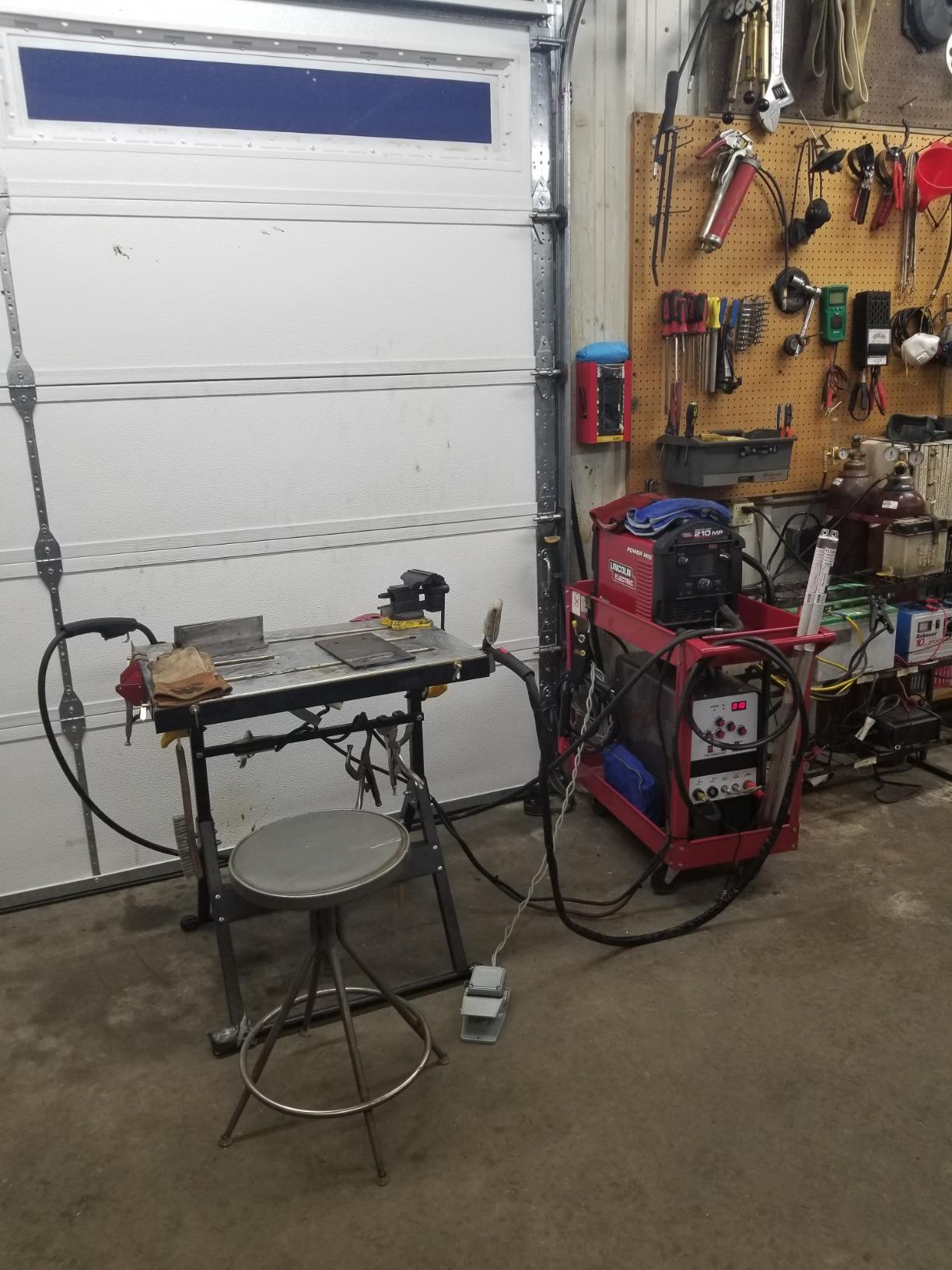
The output range is 10 to 200 amps on TIG in both AC and DC, with 15 to 200 amps DC on stick. Automatic dual voltage and dual frequency covers 110/120V and 220/240V at 50/60Hz, and power efficiency is listed at 80% with an advanced cooling system.
Adjustable hot striking arc current makes ignition easier on the start, which is one of the first things a beginner struggles with and one of the easiest things a manufacturer can fix.
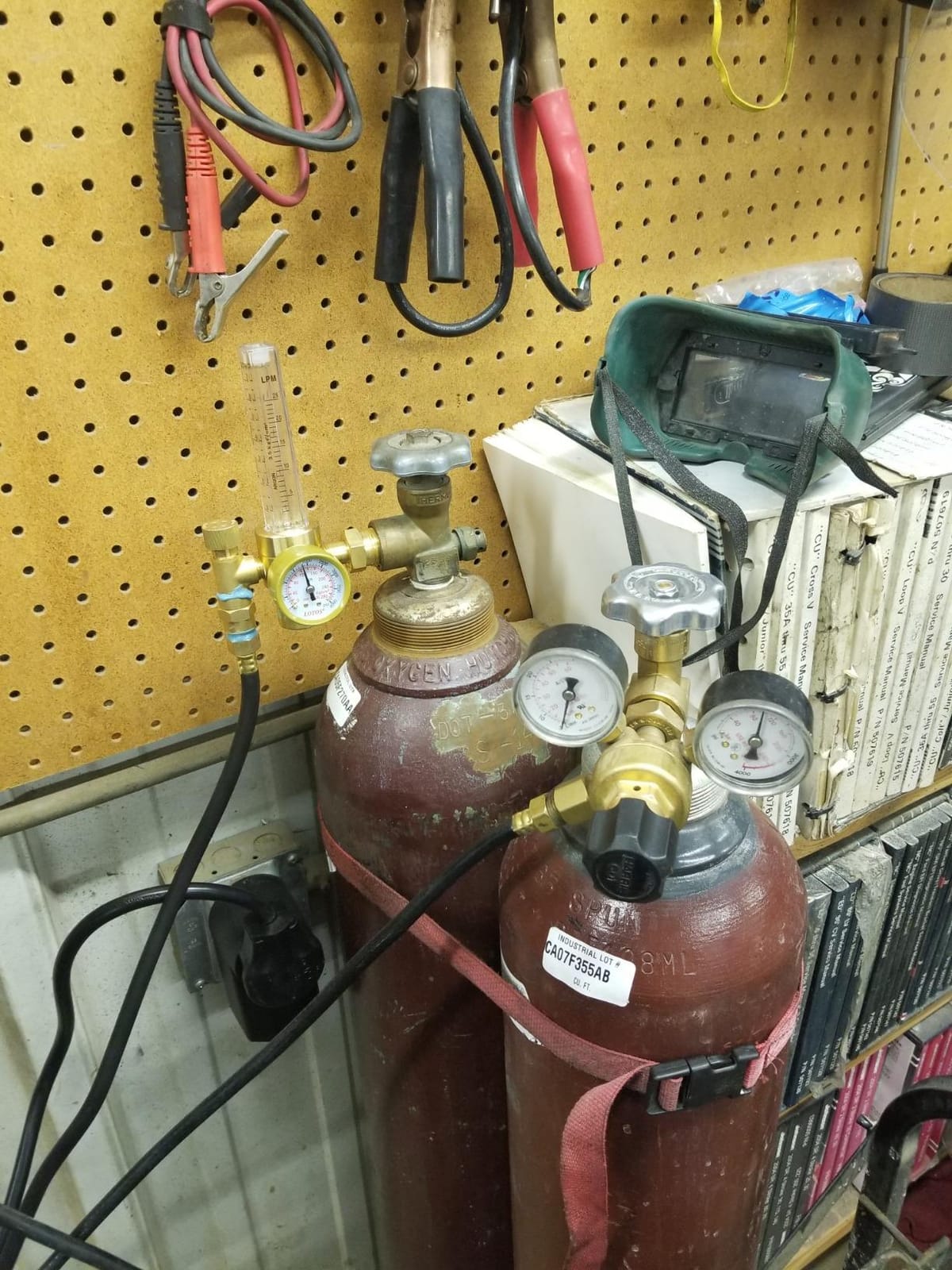
Is the included foot pedal actually usable?
It works, but owners describe it as awkward. The amperage range is set by a rheostat on the pedal rather than from the machine panel, and the ammeter dial markings do not match the digital readout, particularly when the pedal is in use. Some machines also need a power cycle when switching between TIG and stick or toggling pedal mode.
My advice is to run the first few sessions in torch control to learn the machine, then switch to the pedal once you know roughly what amperage range you need. Budget an afternoon to adapt to the pedal’s feel rather than expecting day-one finesse.
The two gaps to know about
Documentation is the biggest one. The manual does not include settings tables for aluminum or steel, which means you are looking up parameters online. Pair it with a beginner TIG guide and you will fill that gap in an evening.
The second is features: no pulse function and no variable AC frequency. You get solid square-wave AC/DC TIG and nothing more. For auto body sheet metal and general aluminum work that is genuinely enough, but thin-gauge work benefits from pulse control that this machine simply does not offer.
9. Everlast PowerTIG 200DV — Best for Very Thin Gauge Work
New Everlast PowerTIG 200DV 110/220 Dual Voltage 200amp Pulse ACDC Welder
Starts as low as 5A in DC TIG and 20A in AC
AC/DC with pulse on 120V/240V
Lift start plus HF start
Pros
- Very low start amperage of 5A in DC for thin material
- Genuine AC/DC with pulse on 120V and 240V input
- Recognised long-running welder brand rather than a marketplace listing
- Lift start available when high-frequency start is not wanted
- IGBT inverter delivers consistent low-spatter operation
Cons
- At 60 pounds it needs dedicated space
- Well above the cost of entry-level TIG machines
- Combo set configuration may need separate consumables
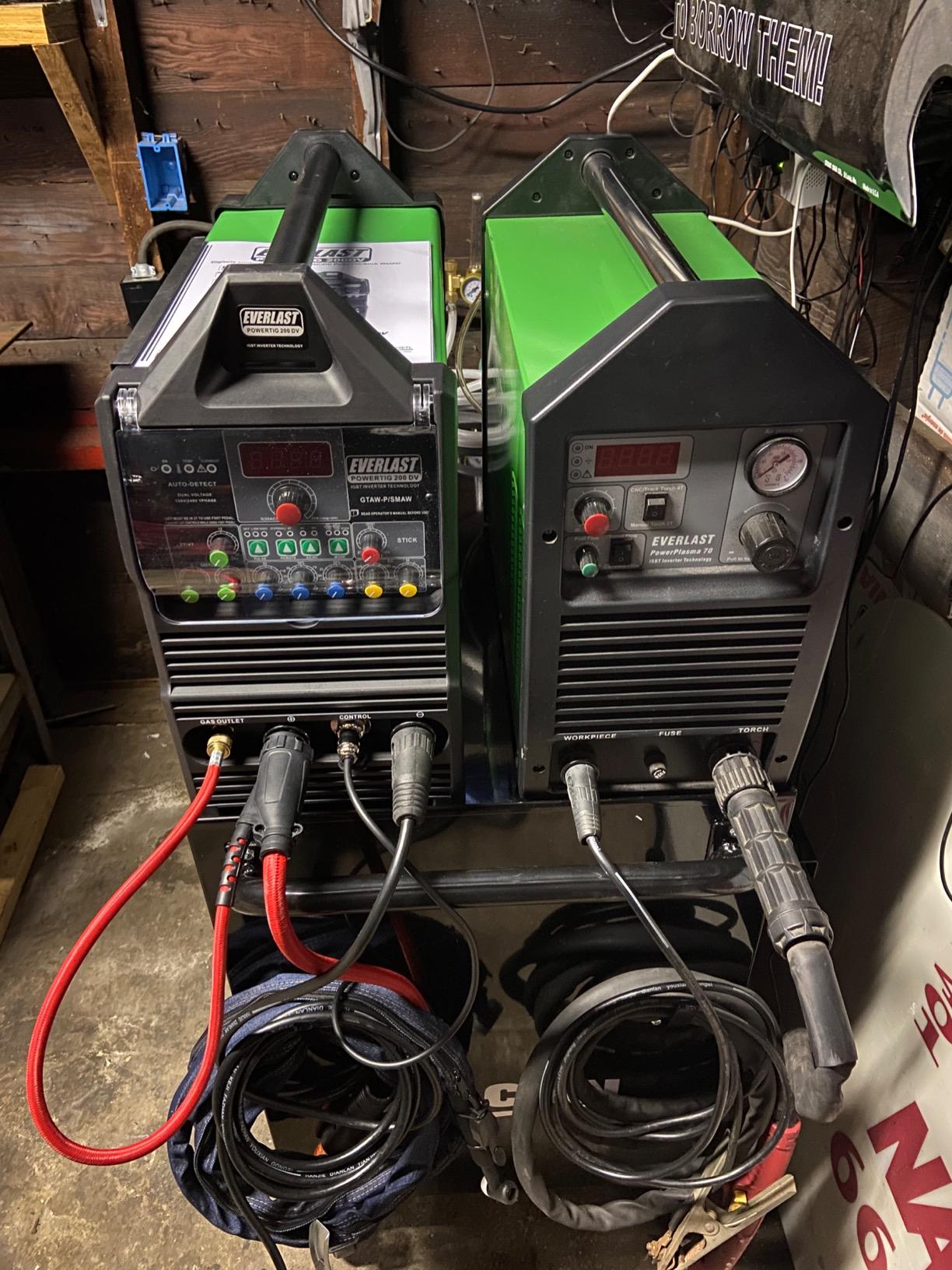
Everlast is the name in this list that experienced welders mention most often, and the PowerTIG 200DV is the model that comes up. The 5-amp start current in DC TIG is the number that matters: it is low enough to weld very thin material without arcing a hole straight through it, which is the exact failure new welders hit when they start with a 10-amp minimum.
It is a genuine AC/DC machine with pulse on 120V/240V dual voltage, using IGBT transistors for stable inverter performance. Owners frequently contrast it with premium Lincoln machines and rate the build quality higher than machines far more advanced on paper. Everlast is a recognised, long-running welder brand rather than a no-name marketplace listing, and it has been building welders long enough that replacement parts are easy to source.
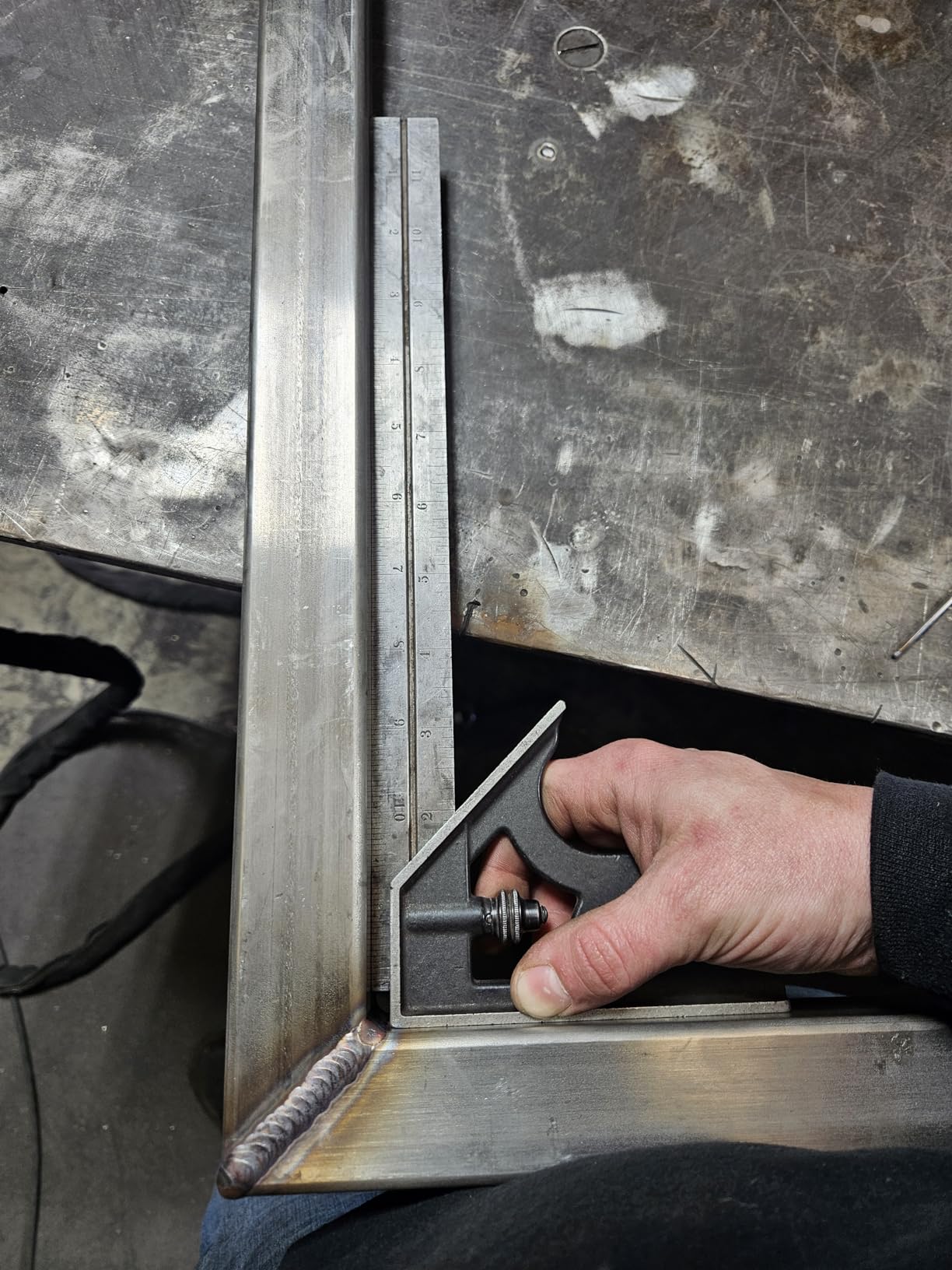
The feature set is quietly thorough. Lift start is available for situations where high-frequency start is not desirable, and there is pre-flow and post-flow gas control plus Arc Force (DIG) control to improve performance and reduce spatter. The digital display shows an adjustable pulse rate.
At 4.6 stars across 116 reviews, with 83% five-star and 11% four-star and no two- or three-star reviews at all, this is the most consistent rating distribution in the group. Owners cite build quality as much as capability.
Why a 5-amp start changes thin-gauge work
Arc initiation sets your minimum working amperage. On a machine that starts at 5 amps you can creep the heat in slowly on 20-gauge stainless or thin aluminum, which is where beginners typically burn through the first attempt. A 10-amp floor removes that margin entirely.
For anyone doing restoration work, thin-gauge stainless fabrication or delicate aluminum, this low floor is a genuine capability advantage rather than a spec-sheet nicety.
Is 60 pounds too much to own?
For a home workshop, no, as long as it has a permanent home. It is also a heavy floor-standing machine rather than a bench-top one, so give it a permanent home and a clear path to a 240V outlet.
The cost also sits well above entry level, and the combo set configuration means some accessories may need buying separately. If your budget is genuinely tight, an AC/DC machine like the Lotos gives you aluminum capability at a lower tier. This one is the pick for a welder who already knows they will be doing thin work.
10. Sunstac 250A AC/DC TIG — Best Budget Route Into Aluminum
Sunstac 250A Aluminum TIG Welder with Pulse ACDC Foot Pedal Control
AC and DC pulse plus spot modes
Welds 1/4 inch aluminum on 220V
About 30 pounds
Pros
- Full AC/DC with AC pulse DC pulse and spot modes
- Experienced welders report welding 1/4 inch aluminum on 220V
- About 30 pounds so it moves between jobs
- 35-50 DINSE connectors make setup quick
- Intelligent parameter saving restores your last settings
Cons
- Lowest average rating in this group at 4.0
- Measured output reported near 162A not the advertised 250A
- Pulse frequency reportedly tops out around 100Hz
If your budget says DC-only is not an option and the higher tiers are out of reach, this is the machine to look at. It covers high-frequency AC, high-frequency DC, pulsed AC, pulsed DC, AC spot, DC spot and stick, up to 250 amps on 110V or 220V.
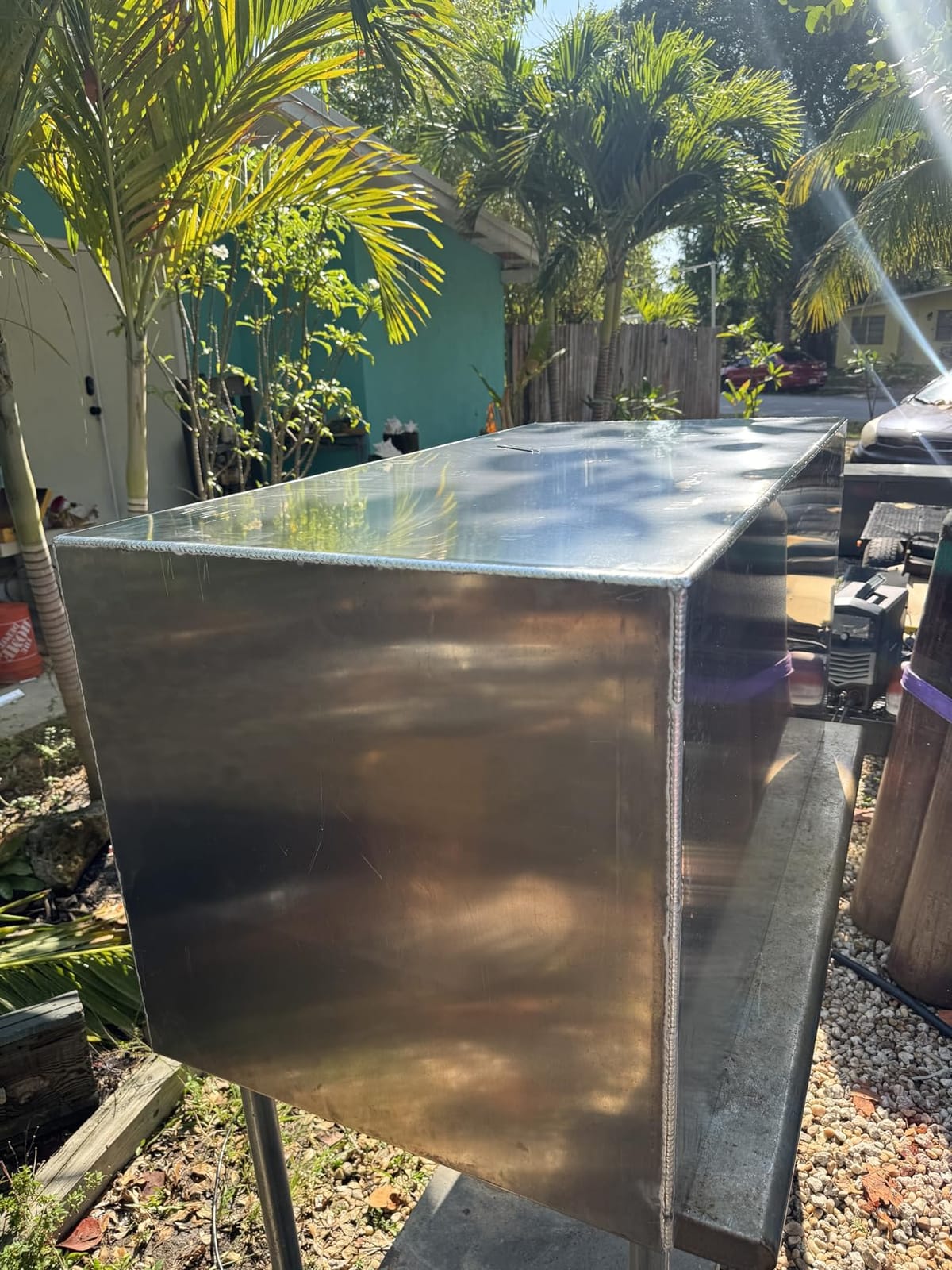
Experienced welders report it handling 1/4 inch aluminum on 220V without trouble, and the listed thickness capability is 5/32 inch at 110V and 6/25 inch at 220V. The LCD screen is designed to be readable through a welding helmet, which is a detail most machines at this level skip.
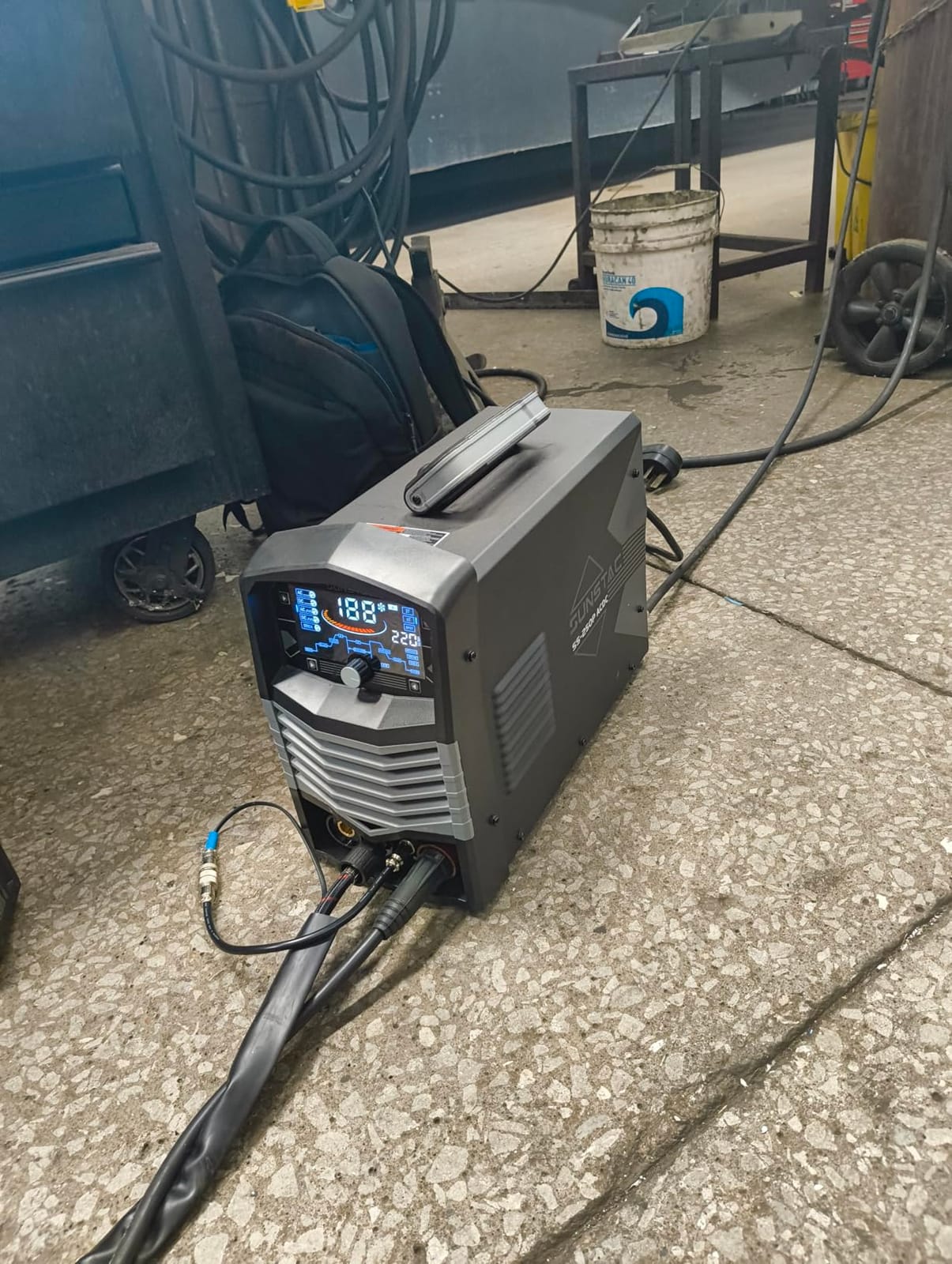
Build quality surprises people. One reviewer disassembled the unit and found all internal connections tight and secure, and 35-50 DINSE connectors make setup and breakdown quick. The work clamp and electrode holder cables are 118 inches long and rated 300 amps, and owners report it running a 6010 electrode, which many small machines cannot.
It can also be powered by a 50A 10kW generator, which is unusual and useful for work away from a fixed outlet.
Why the rating spread is the story here
At 4.0 stars across 142 reviews, with 65% five-star and 16% one-star, this is the most polarized machine in the group. Buyers with hours on it describe it as excellent value that genuinely welds 1/4 inch aluminum, while critical reviews concentrate on output falling well short of the advertised 250A, a pulse ceiling around 100Hz, a hot air-cooled torch and an unusable manual.
The manufacturer itself notes that current measurement in AC mode is inaccurate and inconsistent AC balance can cause variation. Check the machine against the seller if performance falls short, and keep that caveat in mind when you set your first amperage expectations.
What to plan for around it
The foot pedal is not included, and some 5-pin pedals will not work with it without an adapter. The instruction manual is largely useless, so set aside an evening for research before your first weld. The supplied power cord is thin for the machine’s rating, and the ground cable is shorter than ideal with a gas line fitting that can loosen.
On heavy work the air-cooled torch runs hot quickly, so plan a water cooler retrofit. Budget-conscious buyers often start here and add the cooler later, which is a reasonable path if your projects are mostly light gauge.
11. Lincoln Electric Square Wave TIG 200 — Best Brand Support
Lincoln Electric Square Wave TIG 200 TIG Welder K5126-1
Square wave AC/DC TIG and stick with pulse
Adjustable AC frequency and balance
120V or 230V input
Pros
- Established brand with a deep institutional service network
- Purpose-built for aluminum with AC frequency and balance control
- Pulse gives new welders a drumbeat rhythm for filler deposition
- Dual 120V/230V input so you are not locked to one circuit
- TIG and stick from one power source
Cons
- By far the most expensive machine in this roundup
- Priced well beyond what a typical beginner needs
- Heavier and bulkier than most entry-level units
Lincoln Electric is the reason people feel safe buying a welder. The service network, consumable availability and general expectation that the machine will still run in ten years are worth something that never shows up on a spec sheet. For a first TIG, that institutional support is a legitimate reason to choose this machine.
On capability it is genuinely well equipped. The pulse function delivers what Lincoln calls a drumbeat-like rhythm for filler metal deposition, which gives a new welder a cadence to follow instead of freehand guesswork. AC frequency control adjusts bead width, and AC balance trades cleaning action on dirty aluminum against penetration on thick material.
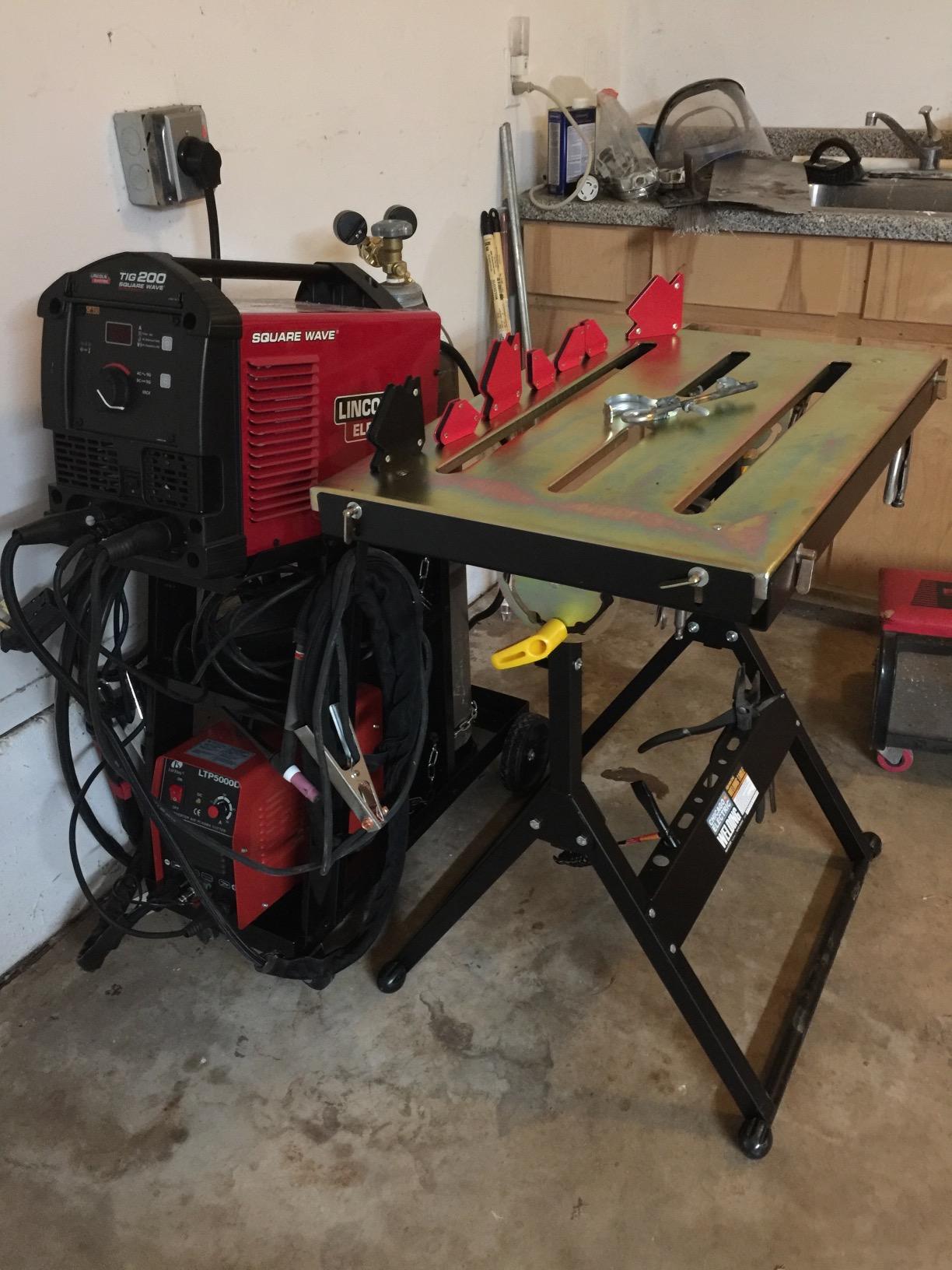
It runs on a standard 120V circuit or 230V for maximum output, and the user interface is designed for straightforward setup. At 46 pounds it is portable by shop standards, and the multiprocess design covers TIG for precision work and stick for outdoor or thicker material.
At 4.2 stars across 155 reviews, with 72% five-star and a 12% one-star band, the recurring theme from buyers who already weld is satisfaction with the aluminum-focused AC controls and pulse function, offset by the price relative to the feature set.
When a professional machine makes sense for a beginner
It makes sense in one specific situation: when the machine will be in a shared shop where a service technician is a phone call away, or when you are buying once and expect to weld for decades. The cost is recovered by never wondering whether a part will exist in five years.
It also makes sense if your very first project is aluminum-heavy, because the AC frequency and balance controls are the reference implementation that the budget machines are measured against.
Where it is honest to say no
For most beginners this is over-purchase. You will use a fraction of the feature set in your first year, and the money spent above a mid-tier machine is money not spent on a helmet, a regulator, tungsten and practice material, which move your skills forward far faster.
It is also the heaviest and bulkiest option relative to what a new welder needs, and a smaller setup is easier to move and cheaper to replace. Buy the machine you will practise on, not the machine you admire at the trade show.
12. FEMEROL MTC200PRO 6-in-1 — Best for a Multi-Process Shop
FEMEROL Plasma Cutter Welder Combo 200A Gas MIG/Gasless MIG/HF TIG/Stick/CUT/SPOT 6 in 1 Welding Machine Aluminum Welding 110/220V Dual Voltage Multi Process Welder
MIG plasma cut TIG stick and spot modes
Synergic MIG auto-sets wire feed
Automatic 110V/220V
Pros
- Six processes in one box including MIG plasma cutting and TIG
- Synergic MIG mode auto-matches current and wire feed speed
- Comprehensive accessory package with MIG torch plasma torch TIG torch regulator and clamp
- Automatic 110V/220V with adapter included
- Customer service responds quickly to reported manual errors
Cons
- TIG is a secondary function rather than the strength
- Plasma cutter needs an arc strike and has limited cut capacity on thin gauge
- No foot pedal included since TIG uses a thumb throttle
Strip the marketing out of this machine and you get flux-core MIG, gas MIG, plasma cutting, HF TIG, stick and spot welding in one 40-pound box. For a beginner who has not decided whether TIG is the right process, that is a genuine argument. You can try MIG on a weekend and TIG the next without buying two machines.
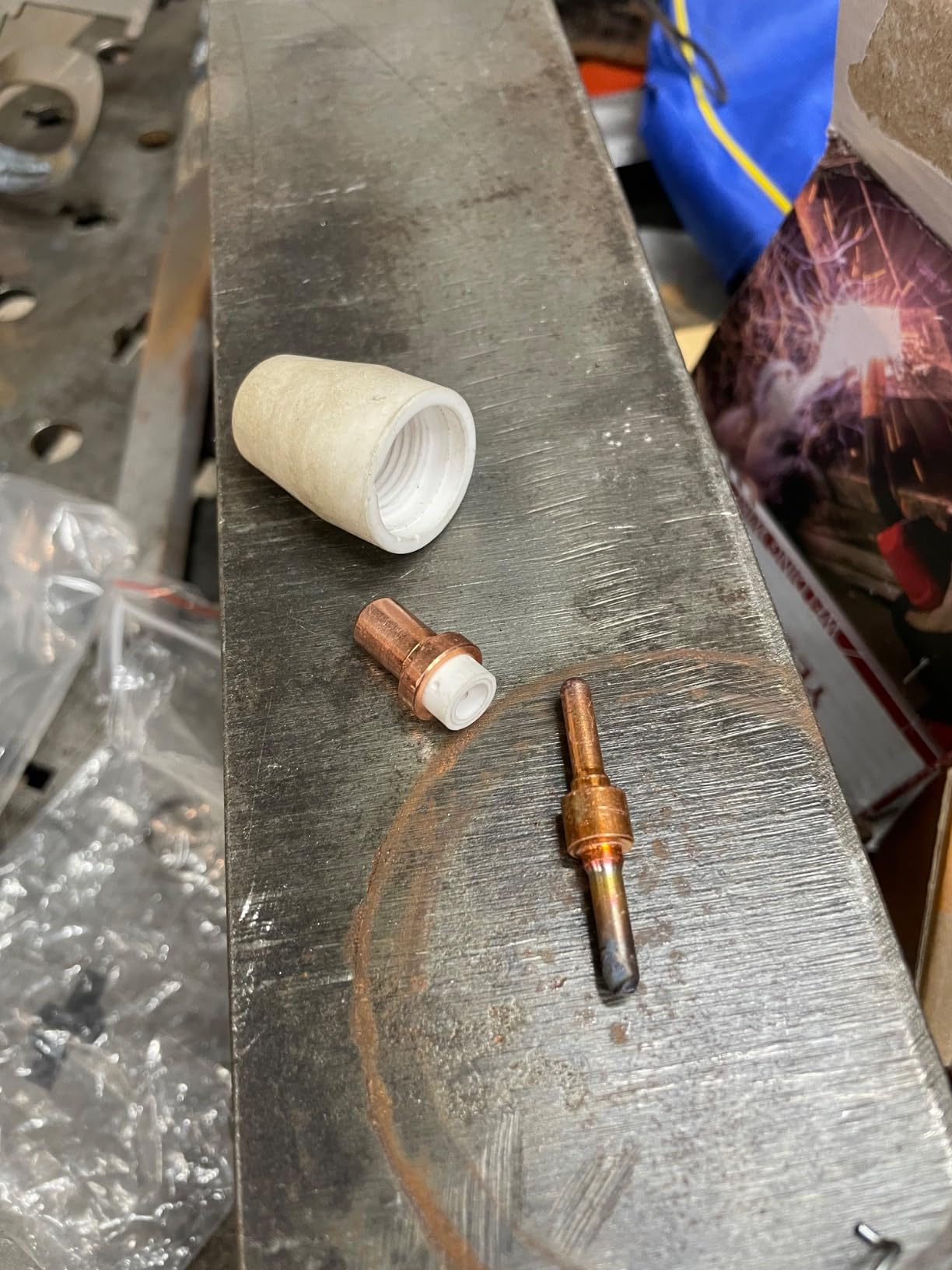
The synergic MIG mode is the genuinely beginner-friendly part: it auto-matches current to wire feed speed, with a manual override when you get good enough to want control. Plasma cutting reaches a 10mm ideal clean cut and 16mm maximum severance cut at 220V with a 60% duty cycle, using compressed air rather than a gas mix.
At 4.2 stars across 137 reviews, this group shows 73% five-star but a notable 12% one-star band, the widest spread in the roundup. Enthusiastic reviews praise the versatility and the synergic setup, and some experienced trades welders report it performs well on stick and aluminum MIG.
The accessory package is comprehensive: MIG torch, plasma cutting torch with consumables, air filter regulator, TIG torch with consumables, chipping hammer, gas hose, ground clamp, electrode holder, Teflon liner and a 110V to 220V adapter.
Is TIG strong enough here to learn on?
Be realistic. Several buyers who rave about this machine admit in the same review that they have never used the TIG function. HF non-contact arc start is present and better than lift TIG, but TIG is controlled by a thumb throttle rather than an included foot pedal, and the machine is not designed around TIG performance.
If you are reading this article because you want to learn TIG, buy a dedicated TIG machine. If you want a workshop that can do everything including TIG, this is a very efficient single-box answer.
What to watch before the first cut
The plasma cutter needs the arc struck on the material to start, and its capacity on thin gauge is limited, so do not plan on it for sheet metal. Several owners criticize gas MIG spatter control. The manual contains errors, including a reversed liner-installation diagram, and the ground clamp does not make a solid connection on some units, with undersized gas line fittings for certain regulators.
Replace the ground clamp early. It is a small upgrade that improves weld quality on every process the machine offers.
How to Choose a Beginner TIG Welder
Every machine above will teach you TIG. The differences that actually matter come down to a handful of specifications, and once you know which ones you are shopping on, the shortlist narrows fast.
AC or DC: the decision that cannot be undone
DC-only machines use a straight polarity output that will not weld aluminum. Period. If aluminum appears anywhere in your plans, that is a DC-only machine is eliminated, and no setting or accessory changes it. Half the machines in this roundup are DC-only, and that is not a criticism of them; it is a scope decision.
AC output alternates polarity, which cleans the oxide layer as it welds. That cleaning action is exactly what aluminum needs, and it is why AC/DC machines exist as a separate class. If you only ever plan to weld steel and stainless, DC is a perfectly good choice and it costs less.
The middle ground is worth knowing: pulse TIG. Pulse modulates amperage up and down so the puddle cools between cycles, which limits distortion and burns-through on thin material. It is a differentiator on thin-gauge work, but it is not a substitute for AC when the material is aluminum.
Duty cycle: the number that decides whether you can practise
Duty cycle is the percentage of a ten-minute cycle you can weld at full rated output before the machine needs to cool. It is the most underrated number on a spec sheet. A 200A machine rated at 40% will trip on a long bead; a machine rated at 100% at 155 amps will not.
For a beginner, this decides how often you can realistically practise. Nothing kills momentum faster than a thermal overload cutout in the middle of a bead, so read the duty cycle at the amperage you will actually use, not at the headline number.
110V and 240V: check your circuit first
Most home workshops have 120V circuits and some people have a 240V socket for a welder outlet. A dual-voltage machine removes the guesswork, and several here detect the input automatically. If you are shopping for a single-voltage 240V machine, confirm the circuit exists before you order, because installing one is a separate job.
The honest tradeoff: 120V output is roughly a third to a half of what the same machine delivers at 240V on the same amperage setting. For thin sheet and hobby work that is usually fine. For structural fabrication, plug into 240V.
Arc start method: high-frequency versus lift
High-frequency start fires a contactless arc without the tungsten touching the work, which means almost no tungsten contamination and a much easier start. Every machine here uses some form of it. AHP’s 2024 revision uses an electronic HV start, a solid-state simulated high-frequency method with no point gap to maintain.
Lift start, where you touch the tungsten to the work and lift to break the circuit, is slower but useful on very thin material or where you want to avoid the start. The Everlast offers both, which is genuinely handy once you are working on delicate material.
Foot pedal versus torch control
Most experienced welders consider the foot pedal close to essential for learning, because amperage control through your foot becomes reflex quickly. Check whether the pedal is included before you buy, because several machines here reserve the port and sell the pedal separately. The Weldpro, Lotos and AHP include one.
Machine-controlled hand torch operation is genuinely useful for spot work and for anyone working off a bench where there is no room for a pedal. Several machines support both, and a 2T/4T trigger mode gives you latched or momentary arc control depending on the weld length.
What is actually in the box
This is where budget machines quietly get expensive. The Weldpro and Lotos arrive with torches, pedals, clamps, regulators, gas hose, flow meters and consumables. The S7, TOOLIOM and ARCCAPTAIN expect you to buy most of that separately, and the Sunstac and Lincoln combo configurations may need consumables bought separately too.
Add the gear no machine supplies: argon, a regulator if one is not included, tungsten of the right type, filler rod in the diameters you will use, a welding helmet, gloves, and practice coupons. Beginners consistently report that these extras add meaningfully to the starting outlay, and budgeting for it removes a bad surprise in week one.
What to check before you commit
Confirm the metal you will weld matches the output type. Confirm the amperage range covers the thickness you plan to work on at both ends, since a high minimum thins your options on delicate work. Confirm the voltage matches your circuit. Confirm the foot pedal, torch and gas regulator are included or priced into your plan.
Then read the reviews that mention the manual, because documentation is the most common complaint across this entire category and the machine that explains itself will save you a month of trial and error.
Frequently Asked Questions
Which TIG welder is the easiest for beginners?
The PRIMEWELD TIG225X is the easiest overall because it combines true AC/DC output with a CK Worldwide Superflex torch, a foot pedal and both hand-torch and pedal control, so you are not learning to weld on a machine that fights you. If your work is steel only, the S7 200A is simpler still: a digital current readout, standard consumables and an 18-pound body. The most beginner-friendly pattern is the same across all three: a torch you can hold comfortably, a heat control you can modulate, and enough control panel to change one setting at a time.
Are Harbor Freight TIG welders any good?
Owner feedback on value-brand TIG machines, including Harbor Freight units, is consistently mixed. The recurring positives are low cost, basic DC TIG and stick capability, and dual voltage input, all of which are genuinely useful for learning on steel. The recurring negatives are thin or missing documentation, no AC capability so aluminum is impossible, accessories sold separately, and build consistency that varies more than on established brands. Buying from a recognised welder brand usually costs more up front and removes most of the support risk later.
Is TIG welding hard for beginners?
Yes, the first few sessions are genuinely difficult, because TIG asks you to coordinate three things at once: torch angle, filler rod placement and heat control through a foot pedal. Most beginners spend the first hour producing lumpy, wandering beads. That is normal and it changes quickly. The machines that shorten the curve are the ones with a foot pedal included, a spot mode for repeatable practice, and pulse control for thin material, because those features let you isolate one variable at a time.
What is a good TIG welding kit for beginners?
A good beginner kit is the machine plus the things no machine supplies. Budget for argon and a regulator, tungsten in 3.2mm and 2.4mm for steel and 3.2mm with a suitable alloy type for aluminum, filler rod matching your material, a welding helmet with an auto-darkening lens, leather gloves, a ground clamp if the included one is weak, and a foot pedal if the machine does not include one. Machines like the Weldpro and Lotos bundle most of this, which is why they are strong value picks. Add practice coupons in scrap steel so your first practice does not ruin a project.
What is the best first TIG welder for beginners?
The best first TIG welder is the one that matches your material and your circuit. For general work, the PRIMEWELD TIG225X is the strongest choice because genuine AC/DC output means aluminum is never off the table. For steel-only learning, the S7 200A is a capable and light entry point. For a budget route into aluminum, the Sunstac 250A AC/DC covers AC and DC pulse at the bottom of the range, though it is the most polarised of the group. The single most common beginner regret in the welding community is buying DC-only and later wanting aluminum.
What is the rule of 33 in TIG welding?
The rule of 33 is a quick reference for the amperage, filler rod diameter and tungsten diameter a beginner should use together. It suggests roughly 1 amp of TIG current per thousandth of an inch of material thickness, with a 3.2mm tungsten and 3.2mm filler rod as the default pairing. On thin material, most welders use a 2.4mm torch setup instead, and on thicker material they step up to 4.0mm. It is a starting point rather than a rule, so use it to set your first bead and then adjust by feel.
Do I need an AC/DC TIG welder as a beginner?
Only if you plan to weld aluminum. AC is what makes aluminum weldable, because alternating polarity cleans the oxide layer as the arc works. Steel and stainless do not need it, and a DC-only machine will handle both with clean, controllable results. The decision is about your project list, not your experience level. Many beginners on r/Welding and r/Welders regret DC-only purchases once aluminum work appears, so if there is any chance of it, buy AC/DC now rather than replacing the machine later.
Should I buy a TIG welder or a MIG welder to start?
Buy MIG if you want to make things quickly with minimal technique, because MIG feeds its own wire and holds its own puddle. Buy TIG if you want precise control, clean cosmetic welds on thin material, and the ability to weld stainless and aluminum properly. Many beginners start with MIG because the learning curve is gentler, then add TIG once they are comfortable. Our MIG welder guide for auto body work covers the MIG side if that is your application.
Final Verdict
After twelve machines and hundreds of owner reviews, the best tig welders for beginners come down to one honest question: will you ever weld aluminum? If yes, buy the PRIMEWELD TIG225X, because its genuine AC/DC output and included CK Superflex torch remove both the biggest technical limitation and the biggest cost surprise. If you want the most machine and the most included gear for the money, the Weldpro 200A is hard to argue with at 4.6 stars and a full accessory kit in the box. If steel and stainless is genuinely your whole plan, the S7 200A gets you practising this week for less than most mistakes cost.
Before your first arc, set aside a couple of hours: grind the tungsten, set the gas flow, fit a fresh ground clamp, put on a proper helmet, and run a few practice coupons in scrap before you touch a project. The machine is the least important part of your first month, and the setup routine you build now is what actually makes you faster. Our best tig welders for beginners picks are updated as owners report back, and the guides on welders for beginners and TIG welders for aluminum cover the gear and material questions in more depth.