
A drum sander runs a workpiece across a rotating, abrasive-wrapped drum on a powered conveyor, flattening one face to an exact and repeatable thickness in a single pass. Unlike a thickness planer, it barely touches the surface, so figured maple, walnut burl, and reversing-grain panels come through clean instead of tearing out. That makes it the fastest way in a shop to get a glue-up dead flat or to bring a batch of parts to one identical dimension.
When we lined up the best drum sanders for woodworking shops, the spread was wider than most roundups show. Ten machines here run from a 73-pound benchtop unit that sits on a cart to a 730-pound dual-drum production sander that needs a 230V circuit and its own corner of the floor. Five brands are represented: Jet, Powermatic, SuperMax by Laguna, VEVOR, and Grizzly Industrial.
One honest note first. A drum sander is a finishing machine, not a material removal machine. Owners on woodworking forums describe the same failure repeatedly: pushing too deep in one pass leads to blown fuses, burnt abrasive, and damaged work. Buy one if you flatten panels or thin material often. If you flatten a large slab twice a year, a wide belt sander will serve you better and take up less room.
If you are still building out the rest of the shop, our guides to the best drill presses for woodworking and the best wood routers for woodworking cover the other two machines every shop ends up needing.
Table of Contents
Top 3 Picks: Drum Sanders for Woodworking Shops (October 2026)

JET JWDS-1020 Benchtop Drum Sander
- 1 HP 115V benchtop
- 73 pound unit
- Open-ended up to 20 inch in two passes
- Toolless abrasive changes

JET JWDS-1632 Drum Sander
- 16 inch one pass and 32 inch two pass
- SandSmart auto feed control
- 4 inch dust port
- Toolless parallelism dial

JET JWDS-2244 Drum Sander
- 22 inch open stand capacity
- 1-3/4 HP 115V
- SandSmart feed control
- Pull-through conveyor
Best Drum Sanders at a Glance in October
| Product | Specifications | Action |
|---|---|---|
| JET JWDS-1020 Benchtop Drum Sander |
|
Check Latest Price |
| JET JWDS-1632 Drum Sander |
|
Check Latest Price |
| JET JWDS-2244 Drum Sander |
|
Check Latest Price |
 Powermatic PM2244 Drum Sander Powermatic PM2244 Drum Sander |
|
Check Latest Price |
 VEVOR 16-Inch Dual Motor Drum Sander VEVOR 16-Inch Dual Motor Drum Sander |
|
Check Latest Price |
 SuperMax 19-38 Drum Sander SuperMax 19-38 Drum Sander |
|
Check Latest Price |
 SuperMax 16-32 Drum Sander SuperMax 16-32 Drum Sander |
|
Check Latest Price |
 VEVOR 22-Inch Drum Sander VEVOR 22-Inch Drum Sander |
|
Check Latest Price |
 Powermatic DDS-225 Dual Drum Sander Powermatic DDS-225 Dual Drum Sander |
|
Check Latest Price |
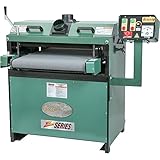 Grizzly Industrial G1066Z Drum Sander Grizzly Industrial G1066Z Drum Sander |
|
Check Latest Price |
1. JET JWDS-1020 Benchtop Drum Sander – the most proven first machine
JET 10-Inch Benchtop Drum Sander, 1 HP, 115V 1Ph (Model JWDS-1020)
1 HP 115V
5 inch drum at 1720 rpm
73 pounds
Open-ended, 20 inch in two passes
Pros
- Die-cast aluminum and steel body holds adjustment
- Open-ended design sands up to 20 inch wide in two passes
- Sands short material and veneer thickness
- Toolless abrasive take-up fasteners
- Quiet with no snipe or tear-out
Cons
- Conveyor belt tracking is finicky to adjust
- 73 pounds is awkward to move alone
- Some units arrive with the conveyor bed out of alignment
I put the JWDS-1020 first because it has the deepest owner record of anything in this roundup, with 267 ratings behind it, and the shortest learning curve of any feed-through machine here. It is a benchtop sander: 73 pounds, 26.85 by 17.9 inches, and small enough to live on a flip-top cart beside the planer.
The build is heavier than the price of the machine suggests. A die-cast aluminum and steel body means the adjustments you make stay made, which matters more on a drum sander than on almost any other tool because you are chasing parallelism between a moving conveyor and a fixed drum.
What owners consistently notice is how much material it will take. The open-ended design sands up to 20 inches in two passes, and reviewers report handling pieces under 3 inches long and down toward veneer thickness. That is a real advantage over a thickness planer, where short thin pieces are awkward and where the cutter head marks the surface.
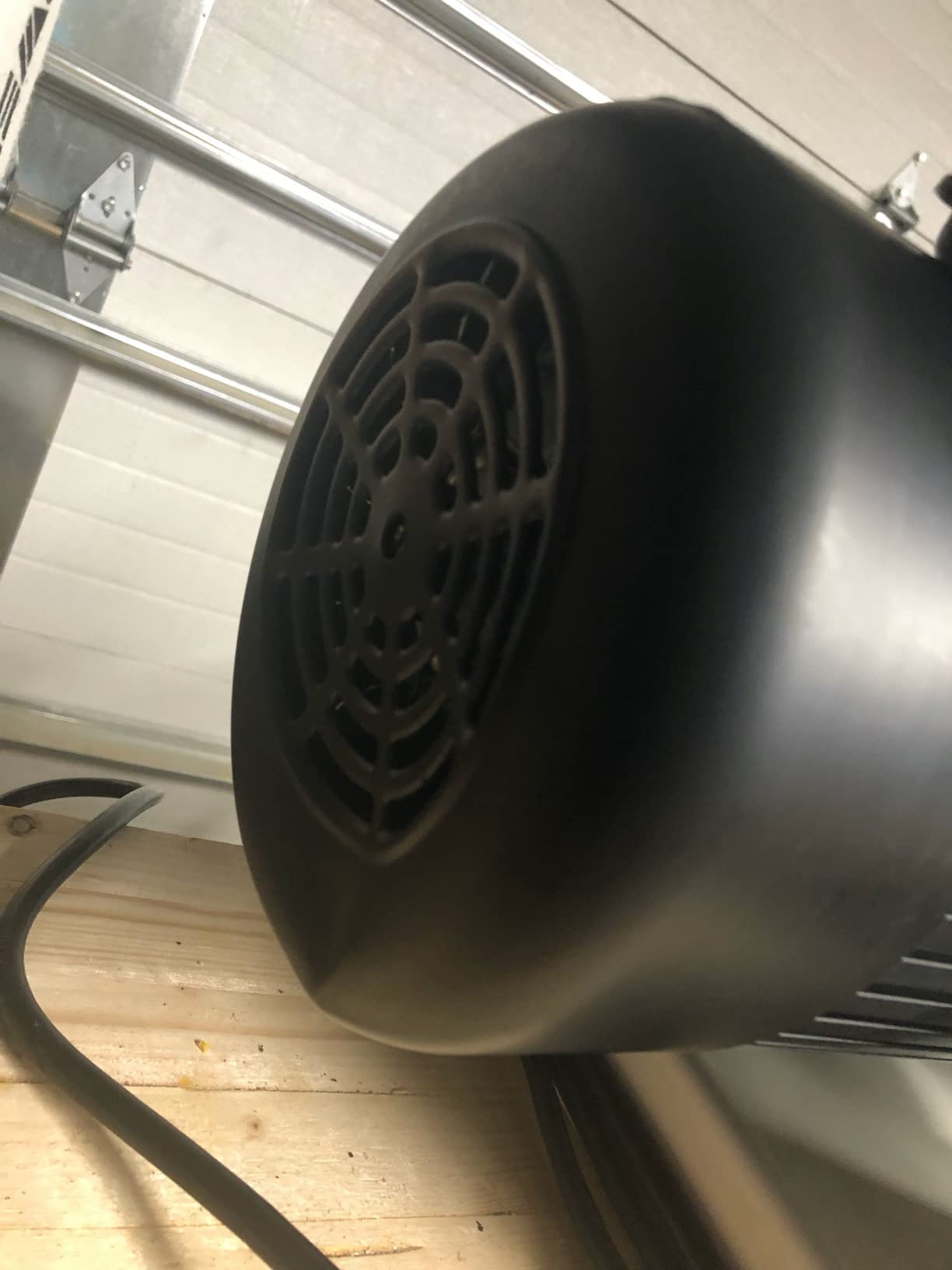
The technical package is short and well chosen. Infinitely-variable speed control lets you match feed rate to the cut, toolless abrasive take-up fasteners make strip changes quick, and an extruded aluminum drum is designed to dissipate heat so the material does not pick up burn marks. A precision-flattened reinforced steel conveyor bed supports the board as it passes under the drum, and an integrated circuit breaker protects the motor.
The friction is almost all in the first hour. Conveyor belt tracking takes patience, and some owners report an internal exhaust fin that needs trimming back so the drum does not sand it. A minority also report abrasive clips that will not hold pressure tightly enough, which causes bunching and burning, and a few machines arrive with the conveyor bed out of alignment. None of that is a dealbreaker, but budget a Saturday for setup.
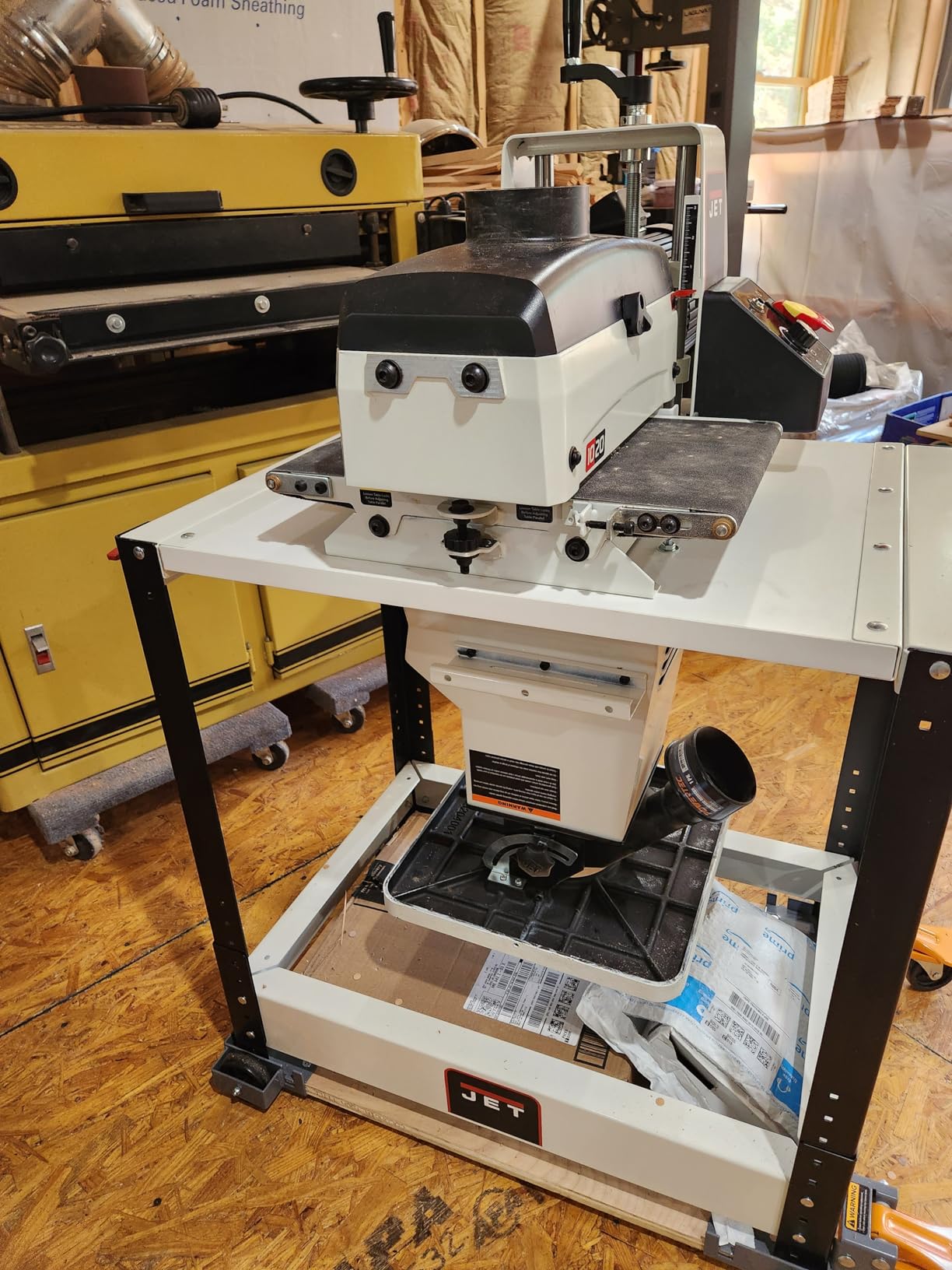
Why you would choose the JWDS-1020
Pick it when the widest panel you flatten is 20 inches or narrower, your shop is tight on floor space, and you want to learn feed-through sanding on a machine you can move. Owners report near-zero visible dust with a standard 4-inch vacuum setup, and the single included 80-grit wrap means you are sanding from day one.
The die-cast frame and the extruded aluminum drum also make it a forgiving first machine. Nothing about it is exotic, which is exactly what you want before you start dialing in depth of cut against conveyor speed.
Where it falls short
The 20-inch ceiling is the real limit. If you regularly handle full-size cabinet doors or wide glue-ups, you will be doing two passes on the widest material constantly. And at 73 pounds it is not something you drag across a shop floor every morning.
One more thing to plan for: only one 80-grit abrasive wrap is included. Extra strips are sold cut to fit and you will buy a roll of each grit you use regularly, so treat that as an ongoing cost rather than a one-time accessory.
2. JET JWDS-1632 16-Inch Drum Sander – the small shop standard
JET 16″ Drum Sander w/Stand, SandSmart Auto Feed Control (JWDS-1632)
16 inch one pass,32 inch two pass
20 A at 115V
156 pounds
SandSmart feed to 10 FPM
Pros
- Flat consistent panels with little snipe once calibrated
- Well calibrated out of the box for most owners
- Excellent dust collection with a cyclone collector
- Stand assembles in under an hour
- Quiet for a feed-through machine
Cons
- Abrasive changes are awkward with the spring clamps
- SandSmart rollers loosen on coarse grit
- Some machines show snipe at the open end
The JWDS-1632 is the machine most small shops end up owning, and it carries 220 ratings of owner feedback behind it here. It sits on an open stand with a 20 by 37 inch footprint, which means you can walk it into a single-car garage if the door clears.
The headline feature is SandSmart auto-feed control. It continuously monitors drum motor load and regulates conveyor speed, infinitely variable up to 10 FPM. In practice that means the machine slows itself when the cut gets heavy instead of stalling the drum or burning the abrasive, and owners credit it with making repeated passes predictable once the machine is dialed in.
Dust handling is the standout for this class. An integrated dust channel directs chips to a 4-inch port, and JET rates the machine at up to 97 percent sanding dust collection when paired with a JET cyclone collector. Several owners report essentially no visible dust in the shop.
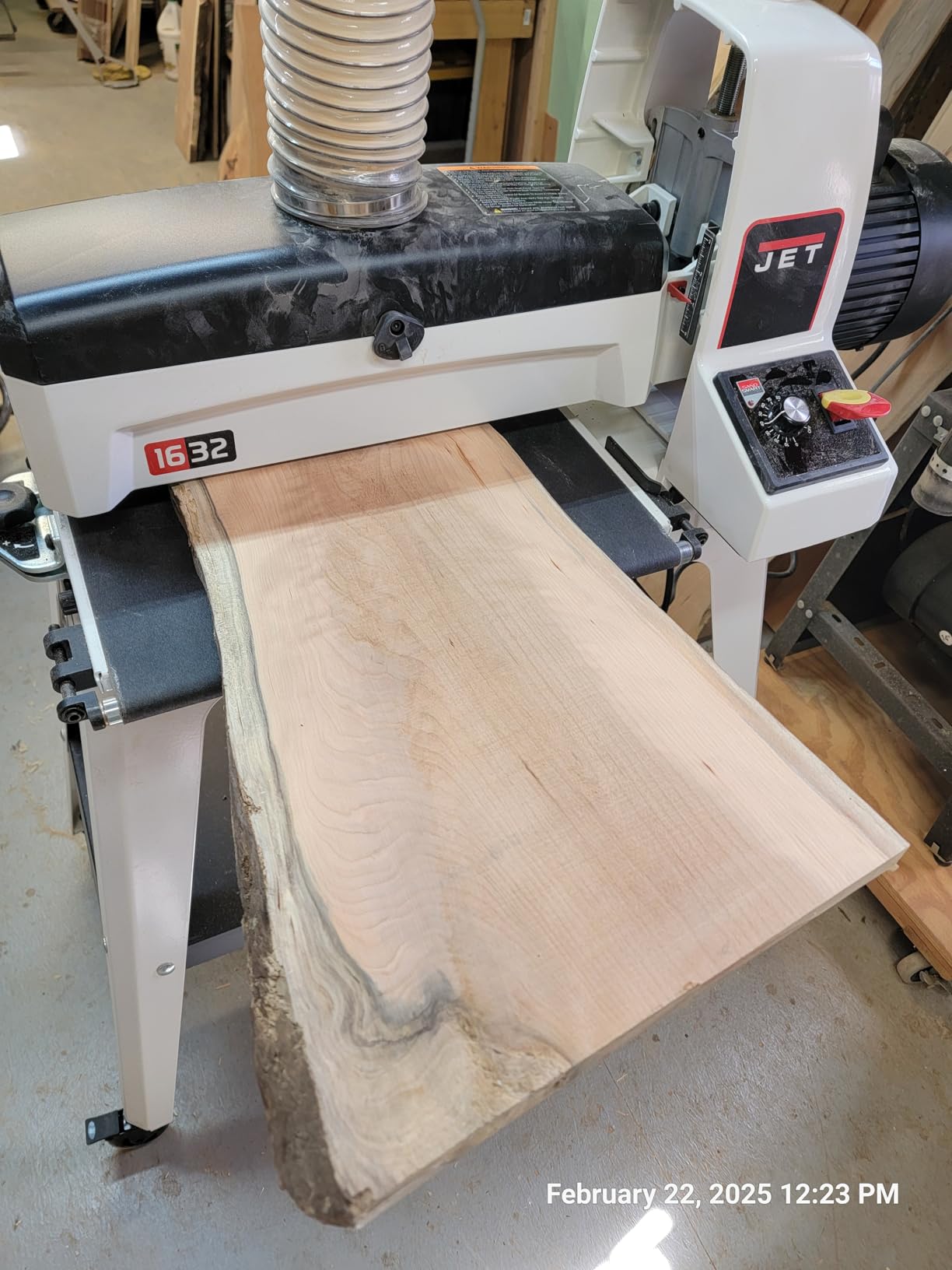
Adjustment is toolless in the places that matter. A parallelism dial and dual self-aligning belt trackers keep the conveyor level without wrenches, which is the difference between a five-minute correction and an afternoon. The stand assembles in under an hour with basic hand tools, and optional locking casters plus infeed and outfeed tables let you grow the station later.
Owners do report a real learning curve on depth of cut versus conveyor speed. Pushing too hard burns work and destroys the abrasive, and the SandSmart rollers can loosen during a pass with coarse 80 grit and need retightening. Abrasive changes with the spring clamps are awkward, and a few owners use a wood block to hold the drum. Some machines show snipe at the open end of the drum that cannot be adjusted out.
Why you would choose the JWDS-1632
It handles solid wood, veneer, and panels up to 16 inches in one pass or 32 inches in two by reversing material through the open end. That covers most furniture panels, cabinet parts, and book-matched glue-ups, and it does it without the tear-out a planer would cause on figured stock.
For a shop that wants consistent thickness on a batch of parts rather than surface smoothing on one panel, this is the machine. The calibration is usually right out of the box, so you are tuning rather than rebuilding.
Where it falls short
At 156 pounds it is a fixed station, not portable, and the open end caps your maximum width at 32 inches. If you regularly sand 36-inch or wider material you will want a 19-38 or 22-inch machine instead.
One long-term ownership note: owners report difficulty obtaining replacement parts for older JET drum sanders once the warranty runs out. The machine itself is backed by a 5-year JET warranty that defaults to 2 years for commercial or industrial use, but check that wear parts can be obtained before buying used.
3. JET JWDS-2244 22-Inch Drum Sander – the widest open-stand capacity here
JET 22-Inch Drum Sander with Open Stand, 1-3/4 HP, 1Ph 115V (Model JWDS-2244)
22 inch open stand capacity
1-3/4 HP 115V single phase
177 pounds
1725 rpm
42 by 24 by 52 inch
Pros
- Highest average rating here at 4.4 out of 5
- SandSmart holds depth of cut as load changes
- Toolless external parallelism dial with return stop
- Pull-through conveyor keeps material square
- Precision balanced drum manages heat
Cons
- 177 pounds is awkward to reposition
- Abrasive changes happen in a confined space with limited hand clearance
The JWDS-2244 carries the highest average rating in this roundup at 4.4 out of 5, with 74 percent five-star ratings across 49 reviews. It is also the widest open-stand machine on the list, so if your panels are too big for a 16-inch drum this is where you start looking.
It is 1-3/4 HP on 115V, 177 pounds, and measures 42 by 24 by 52 inches. SandSmart auto-feed control monitors drum motor load and regulates the conveyor automatically, so the depth of cut stays consistent as the load changes across a wide panel.
The adjustment hardware is the part owners mention most. The conveyor bed parallelism is set from an external dial with no tools required, and the dial has a stop that returns the bed quickly to a flat position. That matters on a machine this wide, where the bed is long enough to twist under a heavy panel.
A redesigned conveyor pulls the workpiece through the sander rather than pushing it, which helps keep a long panel tracking straight. The dust hood has a patented integrated channel directing chips and dust to a 4-inch collection port, and the precision-machined, dynamically-balanced drum is built to dissipate heat and protect the work surface.
Owners on the WoodworkingTalk thread for this model describe easy belt changes and strong dust collection in practice, which puts this machine on the other side of the usual owner complaint that dust collection on drum sanders is poor. The honest caveat is that the same port will only perform as well as the collector feeding it, and a small shop vac will not match a cyclone unit.
Why you would choose the JWDS-2244
Choose it when you routinely sand cabinet doors, wide panels, and full-size furniture pieces that will not fit comfortably through a 16-inch drum in two passes. The 22-inch open end also means a wide glue-up can be sanded with fewer reference edges to keep aligned.
An owner on WoodNet with a Jet 22-44 calls it a central tool in the shop and says they use it for virtually every project in some capacity, typically with 120 grit paper. That is a good summary of what a machine this size is for: not specialist work, but the default sanding operation.
Where it falls short
At 177 pounds it is hard to reposition, so treat it as a permanent station near your dust collector. The abrasive change also happens inside the drum area where hand clearance is limited, so budget a little patience and a good light.
Because SandSmart is calibrated for a light finishing cut, this is not the machine for taking thick material off quickly. Owners who try to remove a lot in one pass report the same burn and abrasive damage you would expect from any feed-through sander.
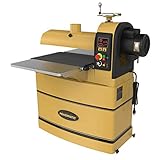
4. Powermatic PM2244 Drum Sander – closed stand with long table support
Powermatic 22-Inch Drum Sander, 1-3/4 HP, 115V 1Ph (Model PM2244)
1-3/4 HP 115V
22 inch capacity
Closed stand with storage
328 pounds
Pros
- Feed logic slows the conveyor before motor overload
- Simple dial-based table parallelism
- 37-1/2 inch of infeed and outfeed support
- Closed stand stores abrasives
- Integrated casters aid repositioning
Cons
- Conveyor can stall on wide heavy panels leaving indentations
- 328 pounds is very heavy to move
- Transit damage reported to bases and castings
The PM2244 is the only closed-stand machine in this roundup that still runs on 115V, and that is its main argument in a home shop. A closed stand supports the material on both sides of the drum, which gives tighter flatness and lets you work on a heavy panel without the workpiece rocking.
It is 1-3/4 HP, 14 amps, and 328 pounds, measuring 42.25 by 37.75 by 49.5 inches. The included infeed and outfeed extension tables give 37-1/2 inches of support for the workpiece, which is the longest table support of any single-drum machine here and genuinely useful on full-length panels.
Feed logic monitors the drum motor and regulates conveyor speed, and table parallelism is set with a single dial that eliminates adjustments to the entire drum carriage. There is an emergency stop for quick shutoff, and the closed stand includes storage so your abrasive strips stay organized rather than stacked on a shelf.
Now the honest part. At 3.6 out of 5 across 36 reviews, the rating spread on this machine is wide. Positive reports praise the feed logic, the dial adjustment, the table support, and quiet operation once aligned. Owners also report that tech support is responsive when you call with setup questions.
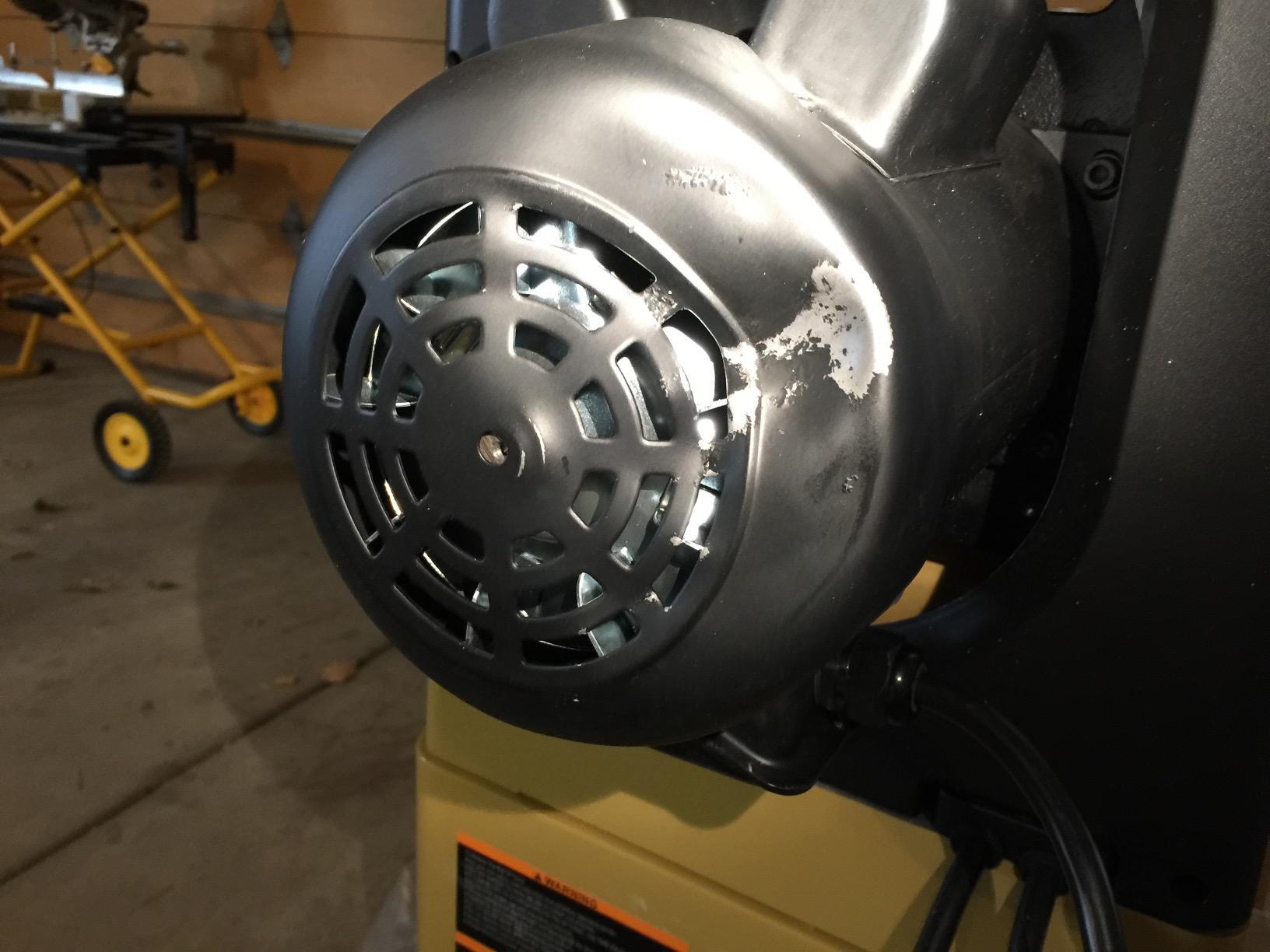
Negative reports cluster on two things. The conveyor can stall on wide, heavy workpieces and leave drum indentations and burn marks unless you maintain feed pressure by hand. And several owners received machines with shipping damage, including bent bases, cracked castings, dented motor shrouds, and bent fans. Inspect the machine fully before you accept it.
Why you would choose the PM2244
The closed stand and 37-1/2 inches of table support make it the pick for heavy, full-length panels where a long unsupported span would flex. Integrated casters are also a real help with a 328-pound machine, and the abrasive storage built into the stand is a small quality-of-life win.
It also suits a shop that wants a second sander for large flat work while keeping a smaller machine for narrow parts, without adding a second dedicated power circuit.
Where it falls short
Consistency is the issue. Performance on large flat panels has been inconsistent for some owners, and the conveyor stall problem shows up exactly where you would want the extra table support to help. If wide panels are routine, test a long heavy board early in the return window.
At 328 pounds many owners build a plywood dolly to move it, and you need floor space for the extension tables as well as the machine. A closed stand cannot accept material wider than the opening, which is the trade for the better support underneath it.
5. VEVOR 16-Inch Dual Motor Drum Sander – Budget Pick for a new shop
VEVOR 16″ Drum Sander with Stand & Extension Tables, 1.5HP 1720RPM Dual Motor Drum Sander for Woodworking – Variable Speed Conveyor Belt, 4″ Dust Collection Port for Cabinet & Furniture Finishing
1.5 HP at 1720 rpm
16 inch wide,1/32 to 3 inch thick
193.4 pounds
4 inch dust port
Pros
- Stout cast iron frame that does not flex
- Precise height handwheel confirmed with calipers
- Variable speed conveyor feeds smoothly
- Comes almost fully assembled
- Runs quiet with little vibration
Cons
- Abrasive change is very difficult from the infeed side
- Sharp internal edges near the drum area
- Feeding too fast trips the internal breaker
The VEVOR MS3140 is the value entry in this roundup, and the reason it makes the list is the frame. Owners describe a stout cast iron structure that does not flex, which is the first thing you want in a machine whose whole job is holding a consistent cut depth.
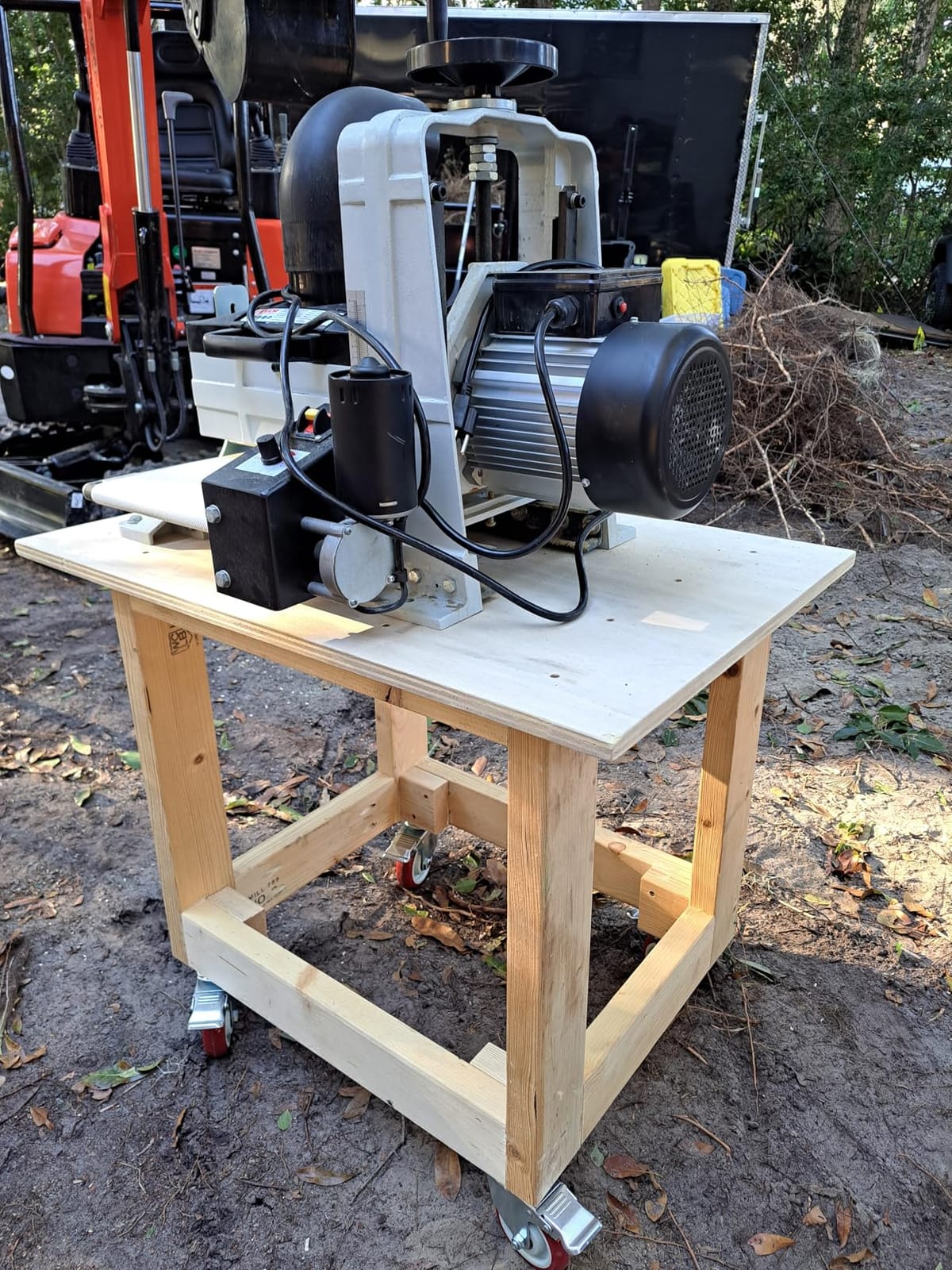
The 1.5 HP drum motor runs at 1720 rpm and handles material up to 16 inches wide and from 1/32 inch to 3 inches thick. An independent dual motor system drives the drum directly while a separate gear-reduction motor turns the conveyor, so the two speeds are set independently.
Adjustment is the other strength. Users report a precise, stable height handwheel that can be dialed to 1/64 inch or less, with calipers confirming square output. Two removable extension table assemblies support large or long workpieces and can be taken off when you want the footprint back. A conveyor belt tracker and variable speed control handle feed rate matching.
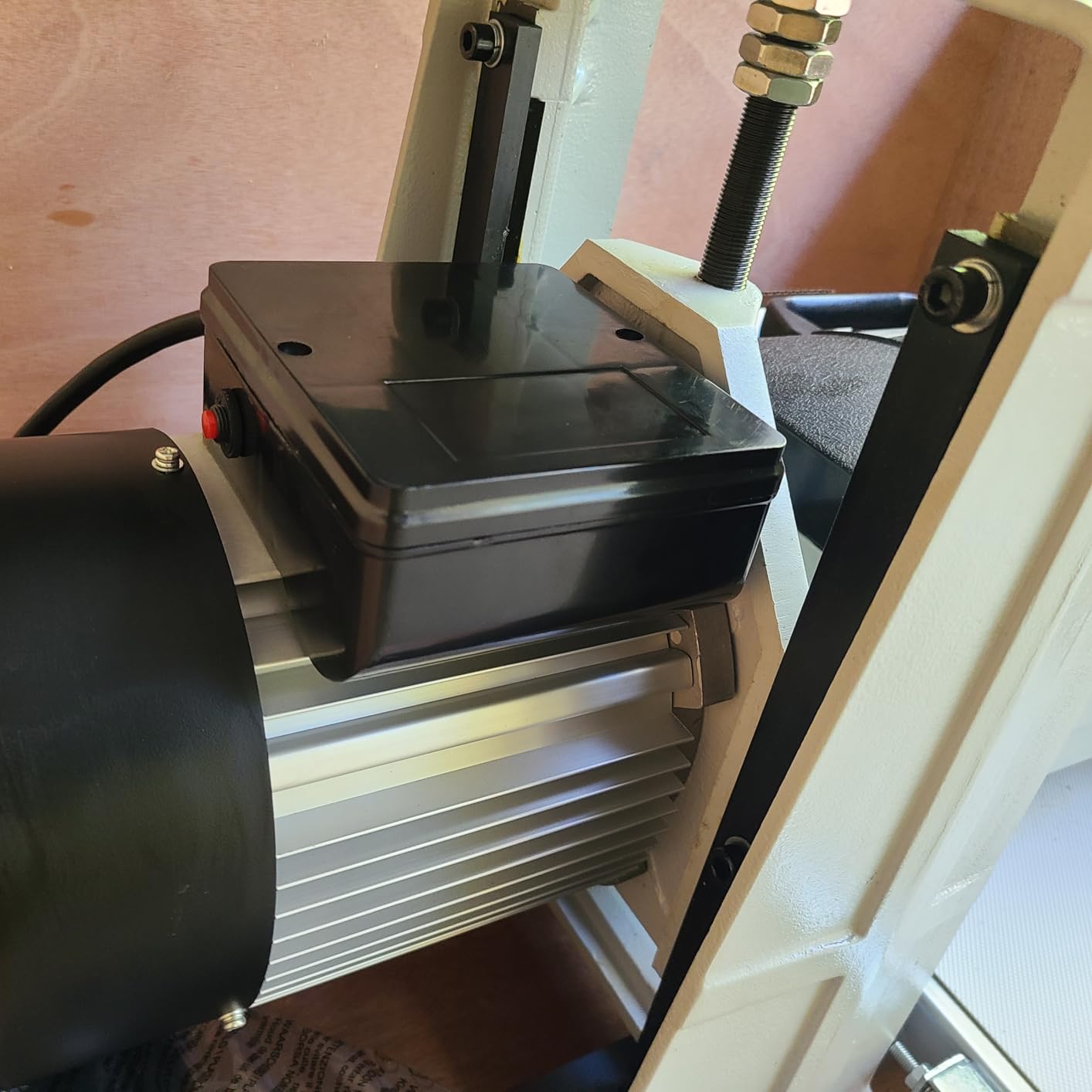
It also comes almost fully assembled, with only the adjustment dial to attach, and the 4-inch dust port attaches easily to common shop vacuum hose. Reviewers cite strong value for a machine of this class and note it runs quiet with little vibration thanks to the geared-down drum speed.
The abrasive change is the clear weak point. Reviewers describe the method as very difficult from the infeed side, nearly impossible in the confined space, and they warn about sharp internal edges around the drum area during the change. Feed too fast and the internal breaker trips, and the drum can stall if entry height or depth of cut is set too aggressively. Only one pre-installed sheet of abrasive is included.
Why you would choose the VEVOR 16-Inch
It is the lowest-cost route to a real 16-inch drum sander with a cast iron frame, dual motors, and a conveyor tracker. If your shop is just starting and the panels are 16 inches or narrower, this machine covers the core feed-through sanding job.
The extension tables and mobile wheels also make it easier to try out than a fixed stand. Owners who get it running report it performs well once the operator has learned entry height, depth of cut, and feed rate.
Where it falls short
Two things to weigh. First, the abrasive change procedure is cramped and puts sharp surfaces within reach, so read the manual and go slowly the first few times. Second, the review record is only 10 ratings, and several of those describe the smaller 10-inch sibling rather than this model, so the long-term picture for the 16-inch version is still forming.
At 193.4 pounds it is heavy enough that a dedicated rolling stand is close to necessary unless you install it permanently. Sandpaper rolls can bunch or tear early on until you learn the feed tension, so expect a short learning period on consumables.
6. SuperMax 19-38 Drum Sander – flatness guarantee and best for small parts
SUPERMAX TOOLS Drum Sander with Flatness Guarantee, Intellisand Technology and Patented Abrasive Attachment System. Model 19-38 (SUPMX-71938-D)
Maximum 38 inch width in two passes
110V at 15 amps
239 pounds
1740 rpm
Flatness under .010 inch
Pros
- Excellent on drawer fronts
- rail and stile material and small cutting boards
- Flatness guarantee on the reinforced conveyor bed
- Cast iron construction reduces vibration
- Self-cooling drum extends abrasive life
Cons
- Drive belt underbuilt for wide or heavy panels
- Fastener clip on the motor side is hard to secure
- Replacement part ordering is reported as slow
The SuperMax 19-38 is the one machine here with a published flatness guarantee: a precision-flattened steel conveyor bed reinforced with four steel cross sections, flat to less than .010 inch across the width. If your work is small and precise rather than large and heavy, that guarantee is the reason to look here.
Owners consistently describe it as excellent on light work. Rail and stile material, drawer fronts, and small cutting boards sand very effectively with light passes. A SawmillCreek thread on drum sander recommendations names the SuperMax 19/38 as the best choice, and it comes up repeatedly across the buying threads as the most frequently recommended single purchase.
The construction supports that reputation. Heavy-duty cast iron for rigidity and reduced vibration, a self-cooling drum that prevents overheating and extends abrasive life, and a metal dust cover formed to the shape of the drum rather than plastic, which is designed to maximize airflow and extraction.
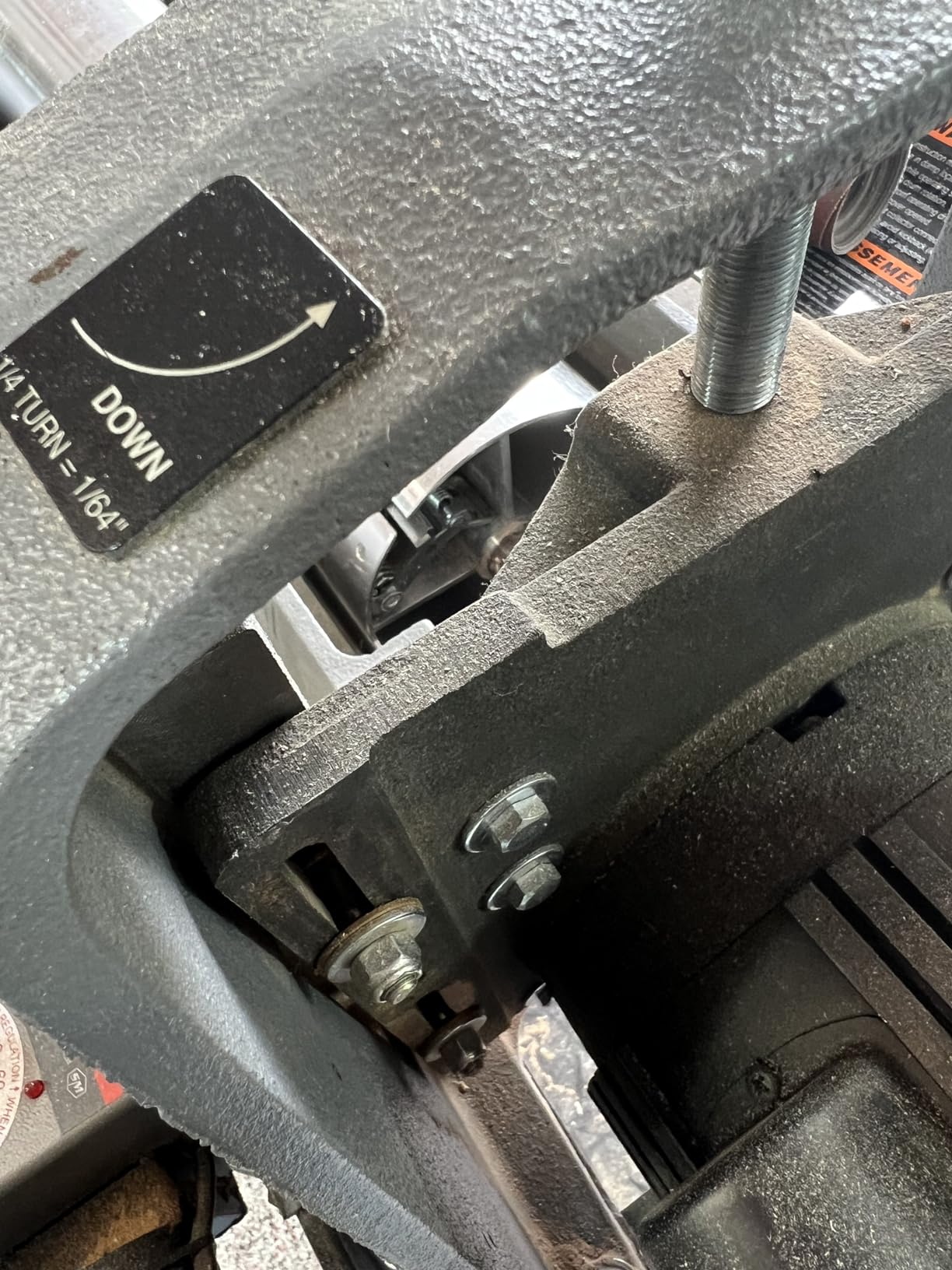
IntelliSand technology automatically adjusts conveyor speed based on load to prevent gouging, damage, or burning. The abrasive conveyor belt gives grip on raw wood and accommodates material much shorter or thinner than a rubber belt would. Tension rollers are adjustable in height and in hold-down pressure, and they are what you use to eliminate snipe. The patented abrasive attachment system tensions the wraps to prevent looseness and overlap.
The problem is heavy work. Owners report the drive belt is underbuilt for wide or heavy panels, causing lag, gouging, and burnt trails. The abrasive clip on the motor side of the drum is described by several owners as nearly impossible to secure, and long-term owners report poor replacement part availability and order fulfillment along with slow customer service when wear parts are needed. With only 8 ratings, treat the record as thin in both directions.
Why you would choose the SuperMax 19-38
Choose it for a shop doing cabinetry and furniture parts at a consistent thickness: doors, drawer fronts, stiles and rails, and small cutting boards. The 38-inch two-pass width handles material up to 19 inches in a single pass, and the abrasive belt grips short and thin pieces better than most.
The flatness guarantee is also genuinely useful documentation. Owners on NC Woodworker note that Woodmaster is the build-quality benchmark in this category, and the SuperMax 19-38 sits closer to that end of the market than the budget machines do, largely because of the cast iron frame and the flattened bed.
Where it falls short
Do not buy it to sand full-length solid panels. The drive belt complaint is consistent across reviews, and burnt trails on a wide panel will cost more than the machine saved. That is the single clearest limitation in this roundup.
The abrasive clip access and the parts situation both need planning. If you are far from the seller, confirm wear parts can be ordered before you commit, because the machine itself may be long-lived while the parts experience is not.
7. SuperMax 16-32 Drum Sander – compact footprint with a digital readout
SuperMax 16-32 Drum Sander Open Stand INTELLISAND Technology Built-in DRO Quick Adjustment Lever
16 inch one pass,32 inch two pass
20 by 27 inch footprint
158 pounds
Built-in digital readout
Pros
- Built-in digital readout helps hold consistent thickness
- Patented quick adjustment lever cuts setup time
- Compact footprint suits smaller shops
- Turbo vented dust port adds 15 percent airflow
- Rear gear motor placement improves belt tracking
Cons
- Conveyor belt alignment is a major unresolved issue
- Gears can break and appear to be built from plastic
- Support response described as poor
The SuperMax 16-32 is the most feature-forward machine per square foot in this roundup. The open stand footprint is 20 by 27 inches, which is the smallest here, and the shipping weight is 158 pounds. If floor space is the constraint, that combination is worth a close look.
The two features that stand out are a built-in digital readout that maintains material thickness for accuracy, and a patented quick adjustment lever designed to cut set-up time. A turbo vented dust port increases airflow to the collector by 15 percent, and the gear motor is mounted at the rear to improve conveyor belt tracking. The machine is CSA certified.
IntelliSand technology is also here, preventing gouging, damaging, or burning material by adjusting conveyor speed against the load. On a properly aligned machine owners report it performs well.
Why you would choose the SuperMax 16-32
It handles the same 16-inch and 32-inch capacity as the JET JWDS-1632 in a footprint that is roughly a third smaller, and the digital readout makes repeatable thickness easier to hit than an unmarked dial. For a garage or basement shop where every foot of floor counts, that is the argument.
Once the belt behaves, the quick lever and the readout are the parts owners like most. They are the reason the machine would be a good first drum sander in a shop that has never had one.
Where it falls short
The alignment problem is serious and it is the whole review story. The conveyor belt will not stay centered and pulls to one side. Support supplied an alignment procedure that did not correct the drift, and one owner replaced the drive belt at high cost with no improvement, which points to a design issue rather than a setup error. Support also instructed owners to remove the ceramic alignment blocks that came with the machine.
A second owner reported the conveyor gear set failing, with gears that appear to be built from plastic. With only 6 ratings the record is thin, but both of those issues are structural rather than cosmetic, and the customer service experience is described as poor by owners who needed help or a repair. If you buy one, check belt tracking early in the return window and keep the packaging.
8. VEVOR 22-Inch Drum Sander – wide capacity at the lower end
VEVOR 22″ Drum Sander with Stand & Extension Tables, 1.75HP 1440RPM Dual Motor Drum Sander for Woodworking – Variable Speed Conveyor Belt, 4″ Dust Collection Port for Cabinet & Furniture Finishing
1.75 HP at 1440 rpm
22 inch wide,up to 4 inch thick
230.2 pounds
4 inch dust port
Pros
- Widest VEVOR capacity at 22 inches and 4 inch thick material
- Gear-reduced dual motor gives strong torque
- Two extension tables stabilize large panels
- Variable speed conveyor matches species and size
- Mobile wheels and height handwheel aid setup
Cons
- Very heavy at 230.2 pounds
- Shares the cramped abrasive change procedure of the smaller VEVOR machines
The VEVOR MS3156 is the 22-inch companion to the 16-inch model, sharing the dual motor design, variable speed conveyor, extension tables, and 4-inch dust port. The motor is 1.75 HP at 1440 rpm and it handles material up to 22 inches wide and 4 inches thick, the thickest material capacity of any single-drum machine here.
The gear-reduced dual motor arrangement is the reason it can carry that capacity. A direct-drive sanding motor runs alongside a separate gear-reduction conveyor motor, which owners credit with strong torque and precise conveying rather than the lag that shows up on lighter machines.
Two removable extension table assemblies stabilize large panels during the feed, variable speed control lets the feed rate match different wood species and sizes, and mobile wheels plus a height adjustment handwheel make setup and repositioning easier than the weight would suggest.
Why you would choose the VEVOR 22-Inch
If you need 22-inch width and thicker material than the 16-inch machines handle, this is the least expensive route to that capacity, and the spec sheet supports it. The extension tables and conveyor torque are genuine advantages for long panels.
Treat it as a first machine for a shop doing cabinetry and furniture panels, rather than a production station. The design is capable; the track record is what is thin.
Where it falls short
It is the lowest-rated product in this roundup at 3.4 out of 5, with 35 percent of ratings at one star. That share is too small a sample to condemn the machine, but it is too small to rely on either. Six ratings tells you very little about long-term reliability.
At 230.2 pounds it is heavy enough to need a dedicated rolling stand unless it is permanently installed, and it shares the cramped, sharp-edged abrasive change procedure with the smaller VEVOR machines. Check the return policy carefully before committing.
9. Powermatic DDS-225 Dual Drum Sander – the production machine
Powermatic 25-Inch Drum Sander, 5 HP, 1Ph 230V (DDS-225)
5 HP on 230V single phase
Two independently adjustable drums
730 pounds
Two-speed gearbox
Pros
- Two drums grade material in one pass with a coarse front and finer rear
- Two-speed gearbox covers a wide range of jobs
- Independently adjustable rear drum for fine final thickness
- Full size cast iron table supports heavy material
- Dual dust ports with directional baffles
Cons
- 730 pounds is a stationary machine needing dedicated floor space
- Requires a 230V single phase circuit
- Very small review base of 5 ratings
The DDS-225 is the only true production machine in this roundup, and the only one with two independently adjustable drums. It arrives with 80 grit on the front drum and 100 grit on the rear, so a panel is graded from coarse to fine in a single pass instead of needing a second feed and a grit change.
Everything about it is scaled for a standing operation. The motor is 5 HP on 230V single phase. The machine weighs 730 pounds and measures 44 by 43 by 43 inches, sitting on a full size cast iron table for solid support. A forward and reverse conveyor belt grips material evenly from both directions.
The two-speed gearbox broadens the range of setups, and the independently adjustable rear drum lets you fine tune the final thickness. The drums are steel with a hard durometer rubber coating, which is what gives the flat, smooth finish owners report. Dual dust ports with directional baffles improve chip removal, and two ports give you a real option on how you plumb collection.
Why you would choose the DDS-225
The dual-drum design roughly halves the sanding time per panel, because one pass replaces two grits. For a shop producing cabinetry or laminations in volume, that is the difference between a drum sander paying for itself and one sitting idle.
It has the highest average rating in this roundup at 4.7 out of 5, with 70 percent five-star and 30 percent four-star ratings and no negatives among them. The two-speed gearbox and cast iron table also mean it handles heavy material better than anything else here.
Where it falls short
This is not a shop machine you add casually. At 730 pounds it is a stationary station that needs its own floor space, and a 230V single phase circuit is not a standard 120V shop outlet. Plan the electrical work before the machine arrives.
The added complexity is real: two drums, a two-speed gearbox, and a cast iron table all need calibration. And with only 5 ratings, the record does not yet tell you what a decade of production use looks like.
10. Grizzly Industrial G1066Z – dual drum extraction and setup speed
Grizzly Industrial G1066Z – 24″ 5 HP Variable-Speed Drum Sander
5 HP 220V, two aluminum drums
23-1/2 inch wide by 4-1/4 inch thick
Two 4 inch dust ports
Pros
- Factory calibration arrives accurate with no adjustment needed
- Setup in under 30 minutes for most owners
- Two 4 inch dust ports capture roughly 95 percent with a 2 HP collector
- Variable speed conveyor and dual aluminum drums
Cons
- One long-term owner reported repeated motor failures
- Service experience was slow with wrong parts and about six weeks down
- Requires a 220V supply and a capable dust collector
The G1066Z is a 24-inch dual drum sander with a 5 HP motor on 220V driving two aluminum sanding drums. It handles material up to 23-1/2 inches wide and 4-1/4 inches thick, and the abrasive is hook and loop, which makes strip changes about as simple as they get on a machine this size.
Setup is the headline. Owners report factory calibration that arrived accurate, with no adjustment needed for most, and a setup time under 30 minutes for a plug install and minor assembly. One owner reset the drum height and belts with a 100 grit front and 150 grit rear, then processed 275 board feet of hardwood with no burn marks and no sand marks.
The dust story is the strongest claim in this roundup. Two 4-inch diameter ports are easy to hook up to a collection system, and with a 2 HP collector one owner reports capturing roughly 95 percent of the dust. That is the opposite experience from the general owner complaint that dust collection on drum sanders is poor, and the difference is having two ports and enough collector capacity behind them.
Why you would choose the G1066Z
Choose it if dust extraction is your top priority and you have 220V available, because two dedicated 4-inch ports on a 5 HP machine is the best-matched collection setup here. The hook and loop abrasive system and the variable speed conveyor also make day-to-day changes fast.
The dual aluminum drums let you run a progression front to back in one pass, which is the same production advantage as the Powermatic DDS-225 in a smaller footprint.
Where it falls short
The one detailed service report is a warning worth reading. A long-term owner reported repeated motor failures requiring repeated service calls, with wrong parts shipped and roughly six weeks of downtime for each. If you buy one, know the service path before you need it.
Default drum settings can cause burn marks on poplar and maple until you adjust drum height and feed rate, and the machine arrives in a plain cardboard box, so inspect for transit damage on arrival. With 4 ratings the long-term picture is early.
Drum Sander Buying Guide: Width, Power, Dust Collection and Grit
What size drum sander do you actually need?
Size by your widest repeatable panel, not your widest occasional panel. A 10-inch benchtop machine sands 20 inches in two passes, a 16-inch drum sands 32 inches in two, and a 19-inch or 22-inch drum reaches 38 to 44 inches. Most furniture and cabinet work lands under 32 inches, which is why the 16-inch class is the volume seller and why the SuperMax 19-38 is the most frequently recommended single purchase in the forum threads.
Second, size by thickness. The benchtop and 16-inch machines generally cap out around 3 inches of material, the VEVOR 22-inch handles 4 inches, and the dual-drum production machines reach 4-1/4 inches. Thicker material means more motor, more support, and a heavier machine that needs floor space.
Open drum versus closed drum: which should you buy?
Open-ended drum sanders leave one side of the table open so you can load material wider than the drum, run it twice, and flip it 180 degrees. That gives a smaller footprint and lets you sand a wide panel in two passes. Closed drum sanders stand on four posts and support the material on both sides of the drum, which produces the tightest flatness and handles heavy panels better, but the material must be narrower than the opening and cannot be reversed through the machine.
The failure mode to know about on open machines: if the drum does not cover both passes all the way to the center, you get a ridge down the middle of the panel. Careful realignment on the second pass prevents it, and it is a setup discipline issue rather than a defect.
Almost every machine in this roundup is open-ended. The Powermatic PM2244 is the one closed-stand entry, and it is there for shops doing heavy full-length panels that need the support underneath.
Single drum versus double drum, and when double pays off
A single-drum machine loads one grit, so a full sequence means a feed, a flip, a grit change, and another feed. A double-drum machine loads two grits at once, a coarser one in front and a finer one behind, and grades the panel in a single pass. That roughly halves sanding time per panel.
For a hobby shop doing a few panels a month, single drum is the right call and you will never notice the difference. For a shop producing cabinetry, laminations, or flooring in batches, a dual-drum machine pays for itself in time saved. The Powermatic DDS-225 and the Grizzly G1066Z are the two dual-drum options here, and both need 220V or 230V.
Grizzly versus Jet: which brand should you buy?
These two are asked about more than any other pair on woodworking forums, and the honest answer is that they are not competing products. Grizzly’s entry in this roundup is a 5 HP, 220V, dual-drum 24-inch production machine with two dust ports, while Jet’s range here spans a 73-pound benchtop unit through 16-inch and 22-inch open-stand sanders on 115V.
So the real comparison is which class you are shopping for. If you want a production dual-drum machine with strong extraction, look at the Grizzly G1066Z. If you want a small or mid-size shop machine on a standard circuit, the JET JWDS-1632 or JWDS-2244 is the pick, and owners across the forums name the Jet 22-44 as a tool they reach for on nearly every project. What Jet does carry is a 5-year warranty that drops to 2 years for commercial use, which is worth asking about if you plan to run it as a production tool.
Dust collection: getting the CFM right
Here is the contradiction worth resolving. Owner threads on woodworking forums say flatly that dust collection on these machines is terrible, while retailer and manufacturer copy cites 4-inch ports rated in the 1000-plus CFM range. Both are describing reality, because port size only sets the ceiling; the collector behind the port decides the result.
Three practical rules. Match the collector to the machine, not the other way round: a small shop vac on a 1 HP drum will never keep up. Keep the machine close to the collector with short, straight ducting, since every elbow costs airflow. And seal the machine properly, because fine sanding dust escapes through gaps that look irrelevant until the filter clogs and a gate has to be propped open.
The machines with the best documented extraction are the ones with two ports and enough collector behind them. The JET JWDS-1632 is rated at up to 97 percent collection with a JET cyclone unit, and the G1066Z owner reported roughly 95 percent with a 2 HP collector on two 4-inch ports. The SuperMax units add airflow at the machine end: the 16-32 has a turbo vented port that adds 15 percent, and the 19-38 has a metal dust cover formed to the drum shape rather than plastic.
110V versus 220V, and shop footprint
Most of this roundup runs on standard single phase power: the benchtop JET at 115V and 8 amps, the JWDS-1632 at 115V and 20 amps, the JWDS-2244 at 115V and 15 amps, the Powermatic PM2244 at 115V and 14 amps, and the SuperMax 19-38 at 110V and 15 amps. Give the 20-amp machines a dedicated circuit rather than sharing one with a planer and a table saw.
The exceptions are the heavy machines: the Powermatic DDS-225 needs 230V single phase and the Grizzly G1066Z needs 220V. Both are 5 HP. If your shop is wired for 120V only, that decision is made for you.
Footprint matters just as much. The SuperMax 16-32 has a 20 by 27 inch open stand, the JET JWDS-1632 sits at 20 by 37 inches, and the machines with extension tables need far more floor than their listed dimensions suggest. Two of the picks here are 328 and 730 pounds, which is a moving job, not a setup job.
Abrasive and grit selection
Every drum sander uses a continuous abrasive strip roll, sold cut to fit the drum width, and the grit sequence is where most owners lose material. Work up in steps: 80, then 120, then 150, then 180. Jumping from 80 straight to 180 is what produces the swirl marks and chatter that show up under finish.
For the grain itself, open coat aluminum oxide is the affordable, robust choice on softwoods and it fragments rather than smearing when it wears. Zirconia is tougher, stays sharper longer, resists clogging, and handles heat better, which makes it the right pick for hardwoods and for production volume.
On grit defaults, owners are consistent: 120 grit is the common working grit for general shop use. Keep a roll of each grit you use, because the changeover is part of the process, and remember the strips are consumables rather than accessories.
How to avoid drum lines and chatter marks
Drum lines are the faint parallel marks a drum sander leaves behind, and they are a characteristic of the category rather than a defect. Five things reduce them.
First, slow the feed rate. A faster feed is the single biggest cause of lines. Second, lighten the cut per pass and take a second light pass rather than one heavy one. Third, step through grits properly instead of skipping steps. Fourth, check belt tracking and drum condition, because a drifting belt changes the effective cut. Fifth, knock the marks down afterward with a random orbital sander, which is what the finish pass is really for.
On open machines, add a sixth: realign the material carefully on the second pass. A few thousandths of an inch of offset over a wide panel is enough to leave a visible ridge down the center.
Finally, remember the machine is a finishing tool. Owners on the forums describe the same result every time someone tries to take a quarter inch off in one pass: blown fuses, burnt abrasive, and a damaged workpiece.
Where a drum sander falls short
A drum sander cannot sand edges, corners, small parts, or profiles. It is a feed-through machine, and everything that is not a flat panel passing straight through the drum is a job for a different tool. If your work is mostly awkward shapes, an edge sander, spindle sander, or drum and belt combination will serve you better, and you can compare those in our scroll saw and specialty tool guide for the cutting side of the shop.
For occasional panel flattening, a wide belt sander is usually the better answer. SawmillCreek threads on drum sander recommendations contain a strong recurring view that a stroke sander is superior for many shop tasks, and owners there still name the SuperMax 19/38 as the best drum sander choice for those who buy one. Take the honest view: a drum sander sits idle more than it runs unless you flatten panels or thin material regularly.
Frequently Asked Questions
What is the best sander for a woodworking shop?
A drum sander is the best choice if your shop regularly flattens glue-ups and wide panels or needs many parts at an identical thickness, because it flattens a face in one pass and will not tear out figured or reversing grain. For edge work, corners, and small parts, a spindle sander or edge sander is the right tool, and for one-off panel flattening a wide belt sander does the job with less floor space.
Which drum sander is better, Grizzly or Jet?
They are not competing classes. Grizzly’s G1066Z is a 5 HP 220V dual-drum 24-inch production machine with two 4-inch dust ports, while Jet covers everything from a 73-pound benchtop unit to 22-inch open-stand sanders on standard 115V power. Choose Grizzly for a production dual-drum machine with strong extraction and choose Jet for a small or mid-size shop machine on a standard circuit.
Are open-ended drum sanders good?
Yes. An open-ended drum sander leaves one side of the table open so you can load material wider than the drum, run it twice, and flip it, which gives a smaller footprint than a closed stand. The one failure mode to know about is a ridge down the middle of a panel if the drum does not cover both passes all the way to the center, which careful realignment on the second pass prevents.
Why is my drum sander leaving lines in my wood?
Slow the feed rate, lighten the cut and take a second light pass, step through grits in order such as 80 then 120 then 150 then 180, check belt tracking and drum condition, and knock the remaining marks down with a random orbital sander. Drum lines are a known characteristic of feed-through sanding rather than a defect, and a fast feed is the most common cause.
Which sander has the best dust collection?
The best documented results come from machines with two dust ports and a collector sized to match. The JET JWDS-1632 is rated at up to 97 percent collection with a JET cyclone unit, and a Grizzly G1066Z owner reported roughly 95 percent with a 2 HP collector on two 4-inch ports. Port size only sets the ceiling, so keep ducting short and straight and seal the machine.
Is a drum sander worth it for a home shop?
It is worth it if you flatten panels or thin material regularly, because a drum sander is a finishing machine that will not tear out figured stock and sands short and thin material that a planer handles awkwardly. It is probably not worth it if you flatten a large slab once or twice a year, since the machine sits idle between uses and a wide belt sander covers that work with less floor space.
The Best Drum Sanders for Woodworking Shops in 2026
The JET JWDS-1020 takes our Editor’s Choice because it has the deepest owner record in the category and fits on a cart. If your widest panel is 32 inches, the JET JWDS-1632 is the small shop standard, and the JWDS-2244 covers wider work on the same open-stand platform. The VEVOR 16-Inch is the value entry, and the SuperMax 19-38 is the pick for small precision parts where the flatness guarantee matters more than heavy-panel capacity.
For shops doing real volume, the dual-drum Powermatic DDS-225 and Grizzly G1066Z are the machines that grade material in a single pass, and both want a 220V or 230V circuit. Whichever you pick, give it a dedicated circuit, match your collector to the port, and run a proper grit sequence. Those three things decide whether a drum sander feels like the best tool in the shop or an expensive machine collecting dust.