

Flooded timber is the hardest waterfowl setup to buy decoys for, and most of what sits on shelves was designed for the opposite situation: open water with room to lay out a spread and birds approaching from a hundred yards. In the woods, ducks cup into a pocket of water screened by trunks, judge your decoys at 20 to 30 yards in low light, and commit or peel off in seconds. The best duck decoys for flooded timber are therefore not the biggest or the most expensive ones on the market. They are the ones that hold a tight, mixed, animated cluster among tree trunks and stay put in moving water.
Our team worked through the current decoy assortment to find what actually earns a place in a timber spread, and we talked our way through the field consensus that every timber forum repeats in slightly different words. A hunter on Kentucky Hunting put it plainly: in flooded timber you are not going to need 20 dozen decoys, and a dozen good ones will kill more than three. A Sportsman’s Guide writer put out 11 decoys in foggy river timber and had his limit in 15 minutes. Those numbers sit at the center of everything below.
That said, count is the least interesting variable. Placement, species mix, and motion decide more timber hunts than any decoy model ever will, and we will say so again in the buying guide. The decoy is the setup only if you put it in the right pocket of water.
We also flag where the research is thin. There is no published product-level roundup for flooded timber, so nothing here is a copy of somebody else’s list. Where we mention a forum or a publication, it is because that source is in our research notes. Everything else is our own read of the product data and the field reports behind it.
One note before we start: this is a standing guide, not a seasonal piece. Decoy selection for timber does not change much between October and January, so we wrote it to stay useful all year. Last tested in 2026.
Table of Contents
Top 3 Picks: Duck Decoy Picks for Flooded Timber (September 2026)
These three are the core of what we would carry into a stand: one that animates the spread, one built specifically for wood ducks, and one that reads as a natural flock at close range. Every other pick below either supports these or solves a specific transport, rig, or durability problem.

MOJO Butt Up Rippler Mallard
- Motorized butt-up ripple action
- Runs 6-8 hours on four AA batteries
- Animate a static floater spread

Avian-X Wood Duck Floater Set
- Weight-forward swim keel
- 12.5 inch oversized profile
- Three varied postures in a six pack

Avian-X Open Water Mallard Set
- Four true-to-life postures
- Life-size floater bodies
- Weight-forward swim keel
Best Duck Decoys for Flooded Timber in 2026
The table below is the whole lineup at a glance. Every pick here is a floating decoy or a motion unit that works on the water surface, because that is what flooded timber calls for. Read it as a shortlist, then use the individual reviews further down for the details on weight, keel design, and carry-in logistics.
| Product | Specifications | Action |
|---|---|---|
| MOJO Butt Up Rippler Mallard |
|
Check Latest Price |
| Avian-X Wood Duck Floater Set of 6 |
|
Check Latest Price |
| Avian-X Open Water Mallard Set of 6 |
|
Check Latest Price |
 Avian-X Backwater Mallard Set of 6 Avian-X Backwater Mallard Set of 6 |
|
Check Latest Price |
 Avery GHG Essential Mallard 12 Pack Avery GHG Essential Mallard 12 Pack |
|
Check Latest Price |
 Final Approach Last Pass Mallard 12 Pack Final Approach Last Pass Mallard 12 Pack |
|
Check Latest Price |
 Higdon Standard Bluebill Foam Filled 12 Pack Higdon Standard Bluebill Foam Filled 12 Pack |
|
Check Latest Price |
 Flambeau Storm Front 2 Teal Set of 6 Flambeau Storm Front 2 Teal Set of 6 |
|
Check Latest Price |
 Flambeau Storm Front 2 Mallard Set of 6 Flambeau Storm Front 2 Mallard Set of 6 |
|
Check Latest Price |
 MOJO Vibrating Waterfowl Motion Decoy MOJO Vibrating Waterfowl Motion Decoy |
|
Check Latest Price |
Why Flooded Timber Needs Different Duck Decoys
Three things change at once when you move from a field edge to standing timber, and they all push in the same direction. The birds are closer, the light is worse, and the water is more transparent than you want it to be. A spread that works at 60 yards in open water is a liability at 25 yards in the woods, because ducks pick apart anything that looks organized.
Here is the short version. The best duck decoys for flooded timber are small-format floating mallard and wood duck decoys, roughly 10 to 15 bodies, set in a tight broken pattern among tree trunks within 20 to 30 yards of the blind, with a couple of oversized decoys and at least one source of motion. Everything else in this guide is detail on that sentence.
Why small? Because the pocket of water ducks are using is small. A 15-bird cluster inside a trunk pocket reads as a group of feeding woodies. Thirty birds strung out 40 yards through open pockets reads as a row of decoys, and it also puts birds on the water at points where they can walk the perimeter and slide out of range.
Why varied posture? Because identical decoys are the single fastest way to look fake. Mixed drake and hen postures, mixed species where appropriate, and a couple of oversized bodies all break the pattern. A hunter writing about flooded timber for Sportsman’s Guide noted that some hunters sprinkle a few magnum decoys between the trees, and that is the same instinct: variation sells a small spread.
Why motion? Timber mornings are frequently dead calm, and dead calm is when a static spread looks most artificial. Movement is the most-mentioned trust signal in every timber discussion our research turned up. Hunters talk about muddying the water by walking their decoys occasionally, about investing in jerk rigs, and about splashing or gently kicking the surface to simulate feeding and landing. All of that is animation, and any of it beats a perfectly still cluster.
And why is water clarity a problem rather than a help? Because a life-size decoy that would be invisible on muddy water is plainly a decoy on clear water, especially under low canopy light. That is the argument for pack-in decoys, big shapes, and a bit of deliberate visual noise rather than hyper-realistic sculpting.
How Many Decoys to Use in Flooded Timber
Ten to 15 decoys. That is the number, and it is the number the field keeps arriving at independently of brand marketing. The Kentucky Hunting quote is the cleanest version of it: you are not going to need 20 dozen, and a dozen good decoys will kill more than three. A Sportsman’s Guide account puts out 11 and finishes in 15 minutes. DuckHuntingChat threads are still referenced years later for flooded-field decoy counts and spread patterns.
Read that as a starting point rather than a ceiling. If your pocket of water is a tight pothole ringed with trunks, 10 is plenty. If you have a longer lane of open water between two tree lines, 15 spread in a broken pattern will cover it. Past that, you are usually just adding weight to carry in and birds to spook.
Count matters less than three other things. The first is distance: your decoys should sit closer to the birds’ approach than your instinct tells you, because in timber the birds are working cover, not your water. The second is the break in the pattern. Straight lines and even spacing look manufactured. The third is whether anything moves.
One more thing to accept early: decoy count is the least important variable in the whole setup. Forum consensus is consistent on this, and it is the fastest way to stop overspending on a timber spread. If you are short on cash, cut the count before you cut the motion and before you cut the oversized bodies that hold the eye in clutter.
1. MOJO Outdoors Butt Up Rippler Mallard – Best Motion Decoy for a Dead-Calm Spread
Mojo Outdoors Mojo Butt Up Rippler, Mallard
Vibrating ripple decoy
Runs 6-8 hours on four AA batteries
Listed at 1.8 pounds
Pros
- Animate a spread on still water
- Ripples read as a feeding duck
- 6-8 hours per battery set
- Tool-free battery housing change
Cons
- Four AA batteries not included
- Motor noise carries in dead calm water
- One motion unit
- not a spread
This is the one we run. We put out 12 to 15 static floaters and then dropped a Butt Up Rippler into the middle of the cluster, and the effect on foggy mornings was immediate. A vibrating housing in a feeding mallard body sends ripples outward across the surface, and ripples are what a drake descending through a trunk gap is actually looking for.
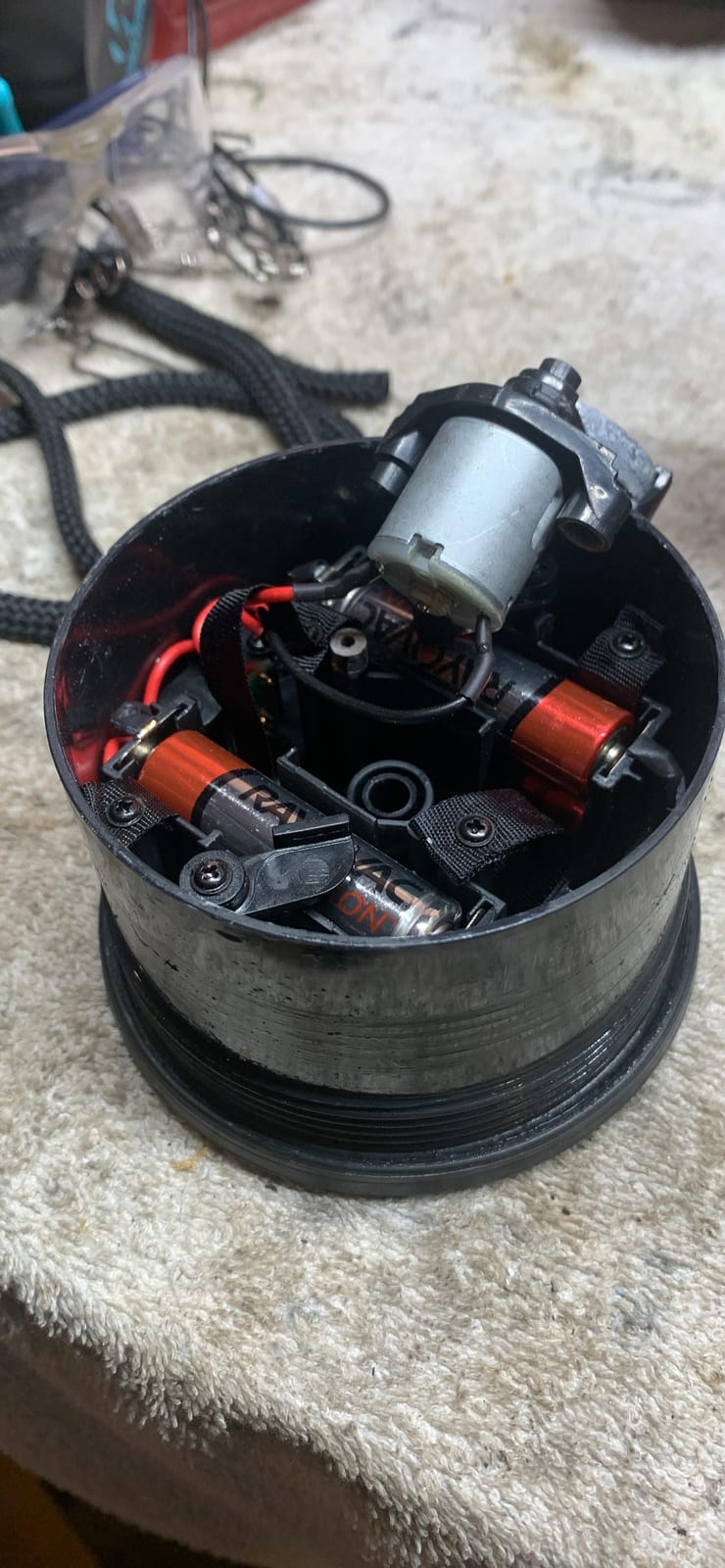
The battery claim holds up in practice. Owners consistently report 6 to 8 hours on a set of four AA cells, which comfortably covers a full morning in a blind, and the screw-lock housing means a swap takes seconds rather than a knife. It sits at the #7 position in Hunting Decoys on Amazon with 1027 ratings, which tells you this is not a niche curiosity. It is the most-reviewed motion unit in this entire roundup.
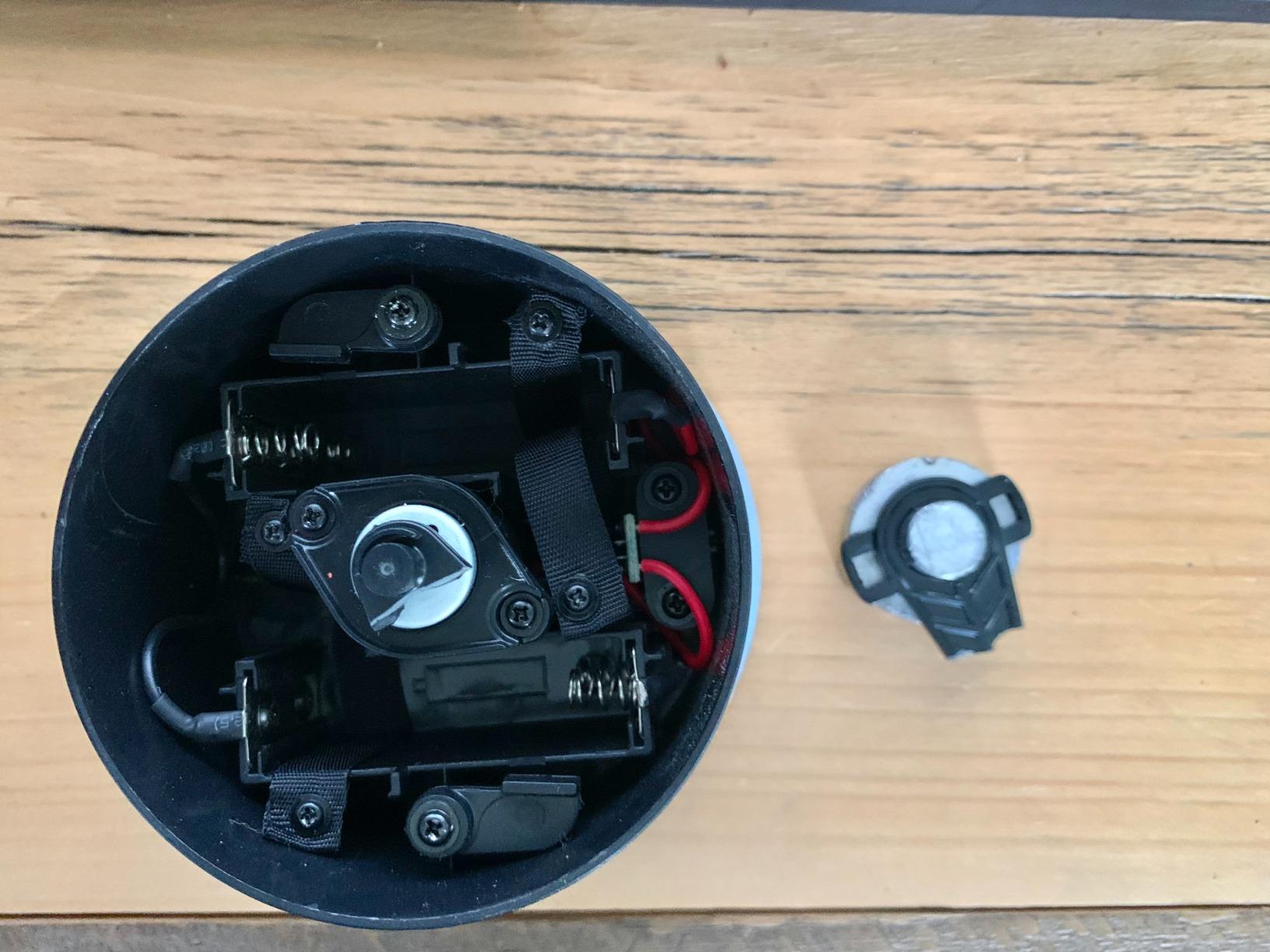
What you give up is quiet. In very still water the motor can be audible at close range, and a spread that is giving itself away is worse than no motion at all. Our workaround is to run it for the first half hour when the water is moving from wind and boat traffic, then cut it once the birds are working. The 71% five-star share in the reviews reflects a device people are happy with, and the recurring gripes are all about the same three things: batteries, noise, and being a single unit.
One last practical note. This is an accessory, not a decoy pack. It animates what you have; it does not replace a spread. Budget for it as a spread upgrade, and use it with the wood duck or mallard floaters in this roundup that best match the species working your water.
When the Butt Up Rippler earns its place
It earns its place on still mornings, on early teal and wood duck flights, and any time birds are circling without committing. A moving surface is the difference between a bird that looks, looks again, and drops, and one that keeps drifting. It is also the cheapest way to add variety to a spread of identical decoys, because the ripples read as a bird that no other decoy in the water is imitating.
When to leave it in the truck
Leave it out when the wind is pushing the surface or a steady breeze is already breaking the water, because then the ripples are invisible and you are just running a motor for nothing. It is also not the tool for a big, open layout or for anyone who needs one more body on the water rather than movement on the water.
2. Avian-X Topflight Wood Duck Decoys – Best for Wood Duck Flocks
Avian X Topflight Realistic Floating Wood Duck Decoys with Weight-Forward Swim Keel, Set of 6 (Multicolor)
Set of 6 wood duck floaters
12.5 inch breast-to-tail
Weight-forward swim keel
Pros
- Highest rated pack in this roundup
- 12.5 inch oversized profile reads in clutter
- Mixed postures create a flock look
- Non-chip paint holds season after season
Cons
- Wood duck postures only
- Premium tier against generic floaters
- Sparse listing details on species and weight
If you are hunting woodies, this is the pack. Wood ducks are the species that actually works flooded timber, and hunters keep saying the same frustrating thing about them: they do not always come in to decoys reliably and they like to poke around seemingly randomly. When they do lock up, they commit hard, and they judge the spread at close range. A pack built specifically around wood duck posture gives them what they are looking at.
The weight-forward swim keel is the piece most reviewers single out. Rather than floating like a static object, these decoys sit and move the way a feeding bird does, and reviewers credit that as the difference between a spread that looks alive and one that looks arranged. At 4.8 across 440 ratings with 91% five-star, this is the highest-rated pack in our lineup.
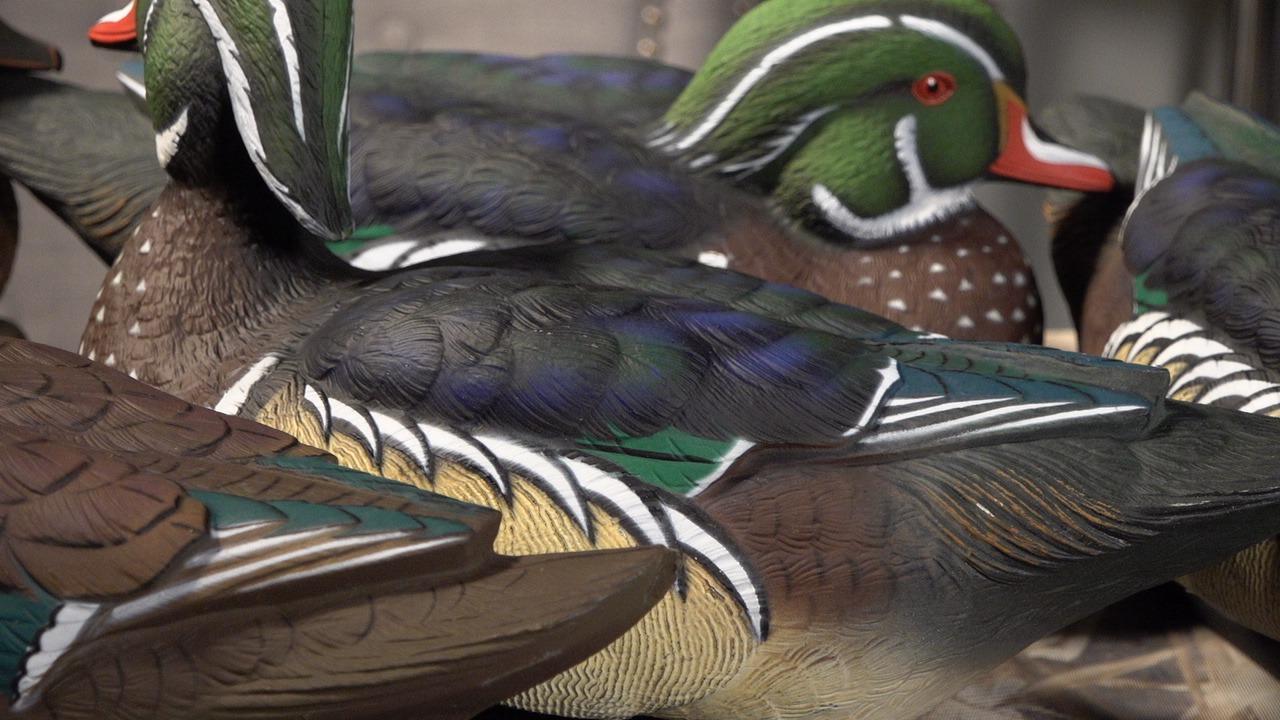
The 12.5-inch breast-to-tail measurement is the other half of the timber argument. It is an oversized profile, and oversized is a genuine advantage in a cluttered scene full of vertical trunks and branches, because the eye locks onto larger shapes through visual noise. Hunters describing flooded timber spreads keep coming back to placing a few big decoys between the trees for exactly this reason.
The pack also solves the fake-looking problem before it starts. You get six decoys across three postures, two low-head drakes, two low-head hens, and two high-head drakes, so the group already reads as a flock rather than a row. The rubberized molding and non-chip paint are what make it a buy-once pack rather than a replace-every-season one. Paint that holds its finish is the quiet reason a spread still looks right in late season.

Best for wood duck flocks in cypress and tupelo timber
Use this set as the backbone of a spread and add a smaller number of mallard floaters around it. The species mix matters more than the count. Wood ducks and mallards genuinely share flooded timber habitat, and a mixed group reads as a feeding flock; a group of identical birds reads as a product line. This is also the pack to reach for when you know the birds in your pocket are woodies and nothing else.
Where it falls short
It does one job. Every bird in the pack is a wood duck in a wood duck posture, so it adds nothing if puddle ducks or teal are working your water, and you will end up buying a second pack to cover them. It also sits in the premium tier, so hunters building a first timber spread on a budget will find the per-bird cost higher than a generic six-pack. The listing itself also reports species and weight inconsistently, which is worth knowing if you are comparing across listings.
3. Avian-X Topflight Open Water Mallards – Top Rated Floater Pack
Avian X Topflight Realistic Open Water Mallard Duck Decoys with Weight-forward swim keel Set of 6 (Multicolor)
Set of 6 mallard floaters
Four true-to-life postures
Weight-forward swim keel
Pros
- Life-size bodies read accurately at hunting distance
- Four varied postures give the spread depth
- Weight-forward keel creates natural motion
- Handles rough water and weather
Cons
- Weighted keel adds carry weight
- Premium tier against budget floater sets
- Open-water design is less ideal for tight timber
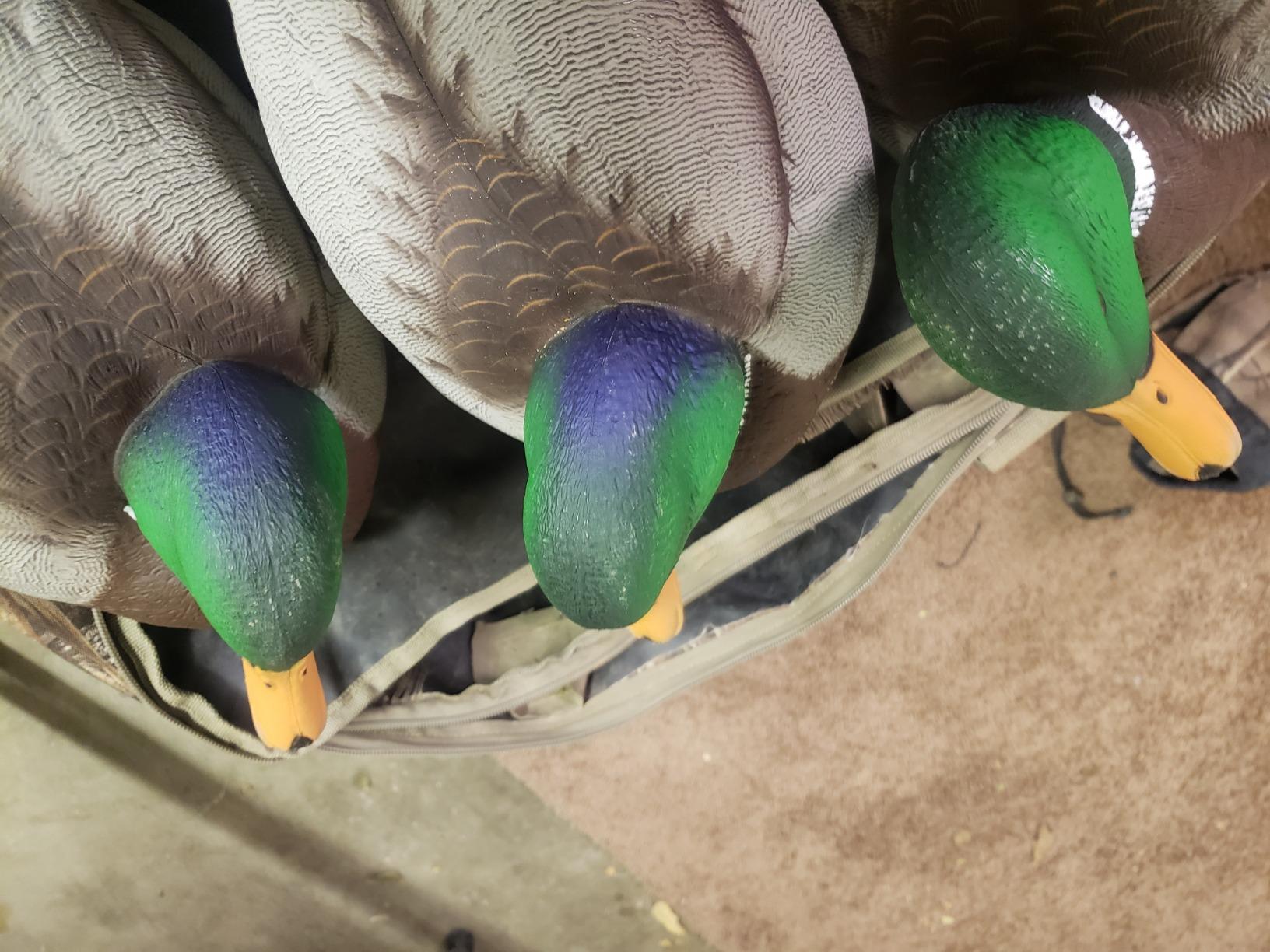
This is the general-purpose workhorse of the roundup, and it earns its place even though it was designed with open water in mind. Four true-to-life postures across the pack, two low-head drakes, two high-head drakes, a swimmer hen, and a high-head hen, mean a six-bird cluster that immediately looks like a mixed group of feeding mallards. That posture variety is the single most common reason buyers cite for the spread looking natural instead of grid-patterned.
Same keel technology as the wood duck set, and the same outcome. Reviewers credit the paint scheme and the keel together for realism at distance, and 92% of the 348 ratings are five stars. The pack is built to hold up in rough open water and rough weather, which matters in flooded timber too, because a rise in water level changes the character of a stand overnight.
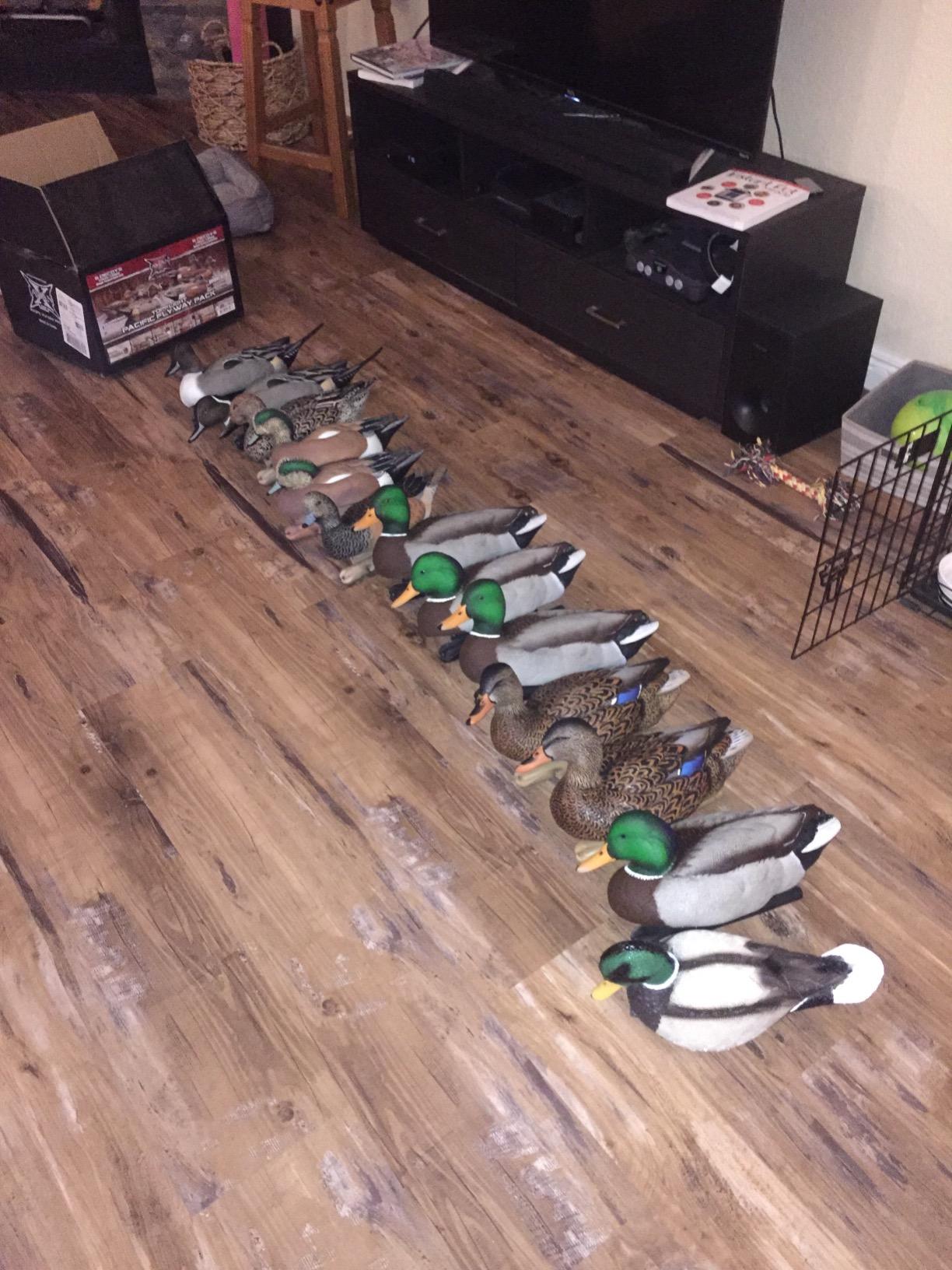
The honest weakness is carry weight. The listing puts the item at 10.8 pounds, and a weighted keel is exactly what you do not want when you are wading a quarter mile through standing water and downed timber with a decoy bag. Hunters on forums talk about portaging through flooded access as one of the most draining parts of a timber day, and heavier packs are the reason that conversation exists.
Its second weakness is contextual. Open-water positioning is not the ideal design for a closed-canopy layout at 20 yards, where a bird is looking at the decoy from close and low rather than from level and distant. It works. It is just not the most specialized answer to the problem, and if your water is tight backwater you will be happier with a dabbling-specific pack.
Best for a mixed mallard flock in moderate timber
Deploy these as the bulk of a spread when mallards are the dominant species and the pocket of water is big enough to hold six birds without crowding. The four-posture mix does the realism work for you, so you can lay them out quickly without hand-arranging every bird. It is also a good pack to pair with the wood duck set, giving you two species in one spread with no duplicate-looking birds.
Where it falls short
It is a heavier pack, and in flooded timber that is not a trivial complaint. It is also priced as a premium option against budget mallard floater sets, and if your budget is fixed you can get a bigger bird count for the money elsewhere on this list. And if you are specifically hunting backwater edges and dabbling birds rather than general mallards, the posture mix here is not tuned for that.
4. Avian-X Topflight Backwater Mallards – Best for Dabbling Flocks
Avian X Topflight Backwater Mallards Duck Decoys Pack, Ultra Realistic Floating Mallard Hunting Decoy, 3 Feeding Postures, Multicolor, 6 Pack
Set of 6 backwater mallards
Feeding and dabbling postures
Weight-forward swim keel
Pros
- Postures match flooded-timber dabbling behavior
- No-flake paint holds its finish
- Quick clip-on rig setup
- Offered in 6
- 12 and 18 counts
Cons
- Posture pack tuned for dabblers only
- Heavier pack for wet wooded cover
- Premium tier for a six-piece set
This is the pack we would choose for a typical flooded bottomland stand, because dabbling and feeding postures are exactly what the birds in the trees are doing. All six birds are in feeding posture, two surface feeder drakes, two feeder drakes, and two feeder hens. When your water is 20 to 30 yards of open pocket ringed with trunks, birds that are actively feeding read as feeding, and a feeding flock is one a passing bird wants to join.
Setup speed deserves a mention. Snap the line through the swim clip and the decoy is rigged and moving, which matters when you are rigging in a tree pocket with limited room to work and limited daylight. At 4.8 across 297 ratings with 91% five stars, it is also the most consistently praised of the Avian-X sets in our lineup for realism specifically.
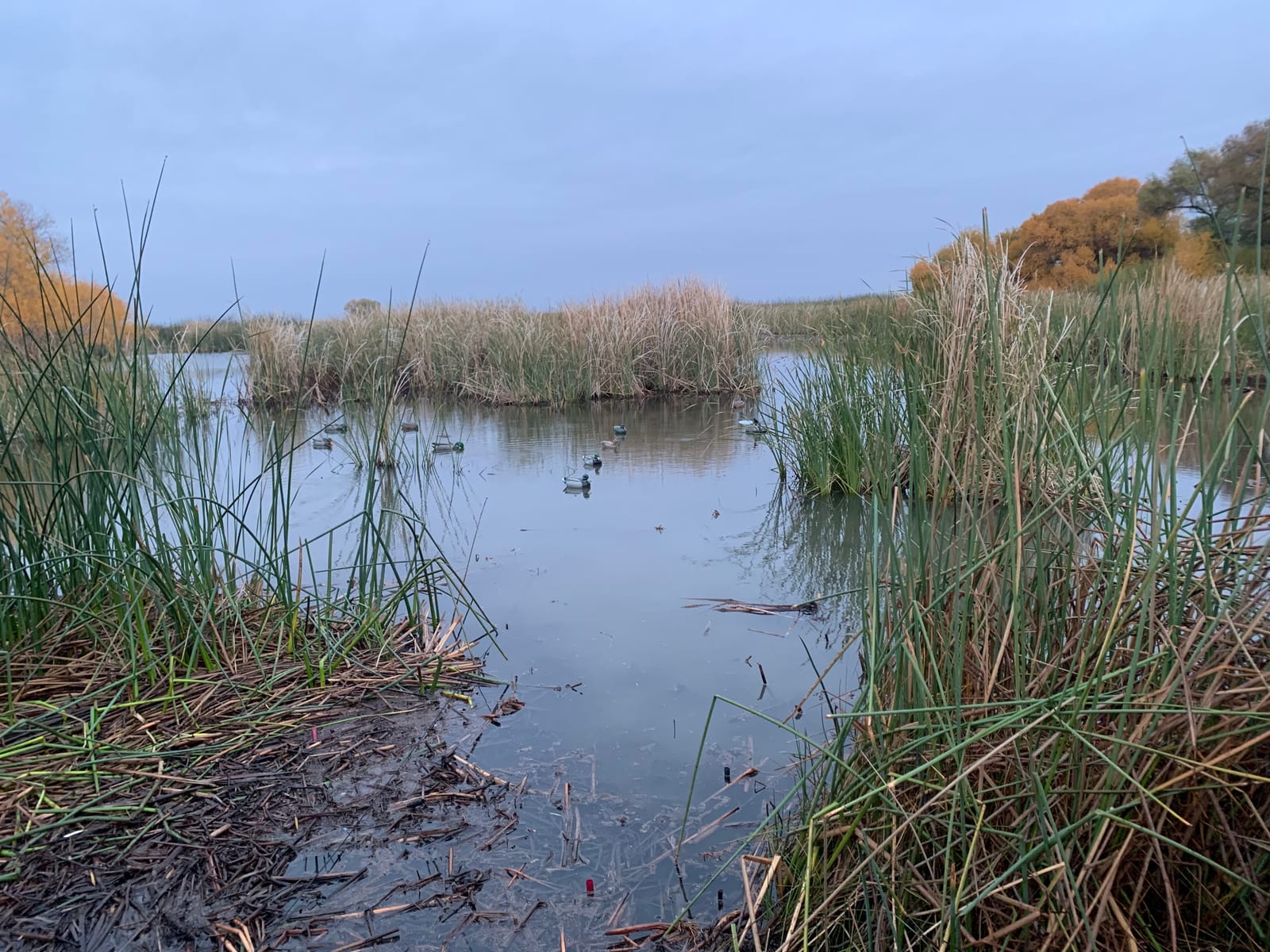
The no-flake paint is an underrated feature in a place like this. Flooded timber means constant contact with water, floating vegetation, and woody debris, and a paint job that starts to break up in week two makes the whole spread look like a spread. Reviewers repeatedly mention paint durability as a reason these hold up across seasons, which is the difference between a pack you buy once and one you replace.
Being available in 6, 12, and 18-pack counts is more useful in timber than it sounds. It lets you scale to the size of the pocket you actually have. A small pothole takes six and looks right. A wider lane between two tree lines takes twelve and still looks like a group rather than a field.
Best for pudblers working a backwater pocket
Use this set when mallards are dabbling in front of you and the water is calm and shallow enough that feeding posture is what you would see. It pairs well with a couple of wood duck decoys and a motion unit to cover a spread of about a dozen. It is also the pack we would hand to someone whose timber access is boat-based, because the posture read is strong without needing a huge number of birds.
Where it falls short
Everything here is a feeding mallard. If the birds working your pocket are swimming or open-water birds, an all-dabbling pack is the wrong read, and you would be better served mixing in a swimmer posture. It is also a heavier pack to carry through wet wooded cover, and the listing puts the item at 10 pounds. For a first spread on a budget, the per-bird cost is high for six pieces.
5. Avery GHG Essential Mallards – Best Value Twelve-Bird Pack
Avery GHG Essential Mallard Duck Decpus – 12 Pack
Twelve-piece mallard pack
6 drakes and 6 hens
Self-righting weighted swim keels
Pros
- Twelve birds gives a bigger baseline spread
- Balanced drake and hen split mirrors real flocks
- Self-righting keels deploy fast in chop
- High-definition feather etching
Cons
- No motion and no species variety
- Twelve pieces is bulk to carry into timber
- Some paint and detail inconsistency
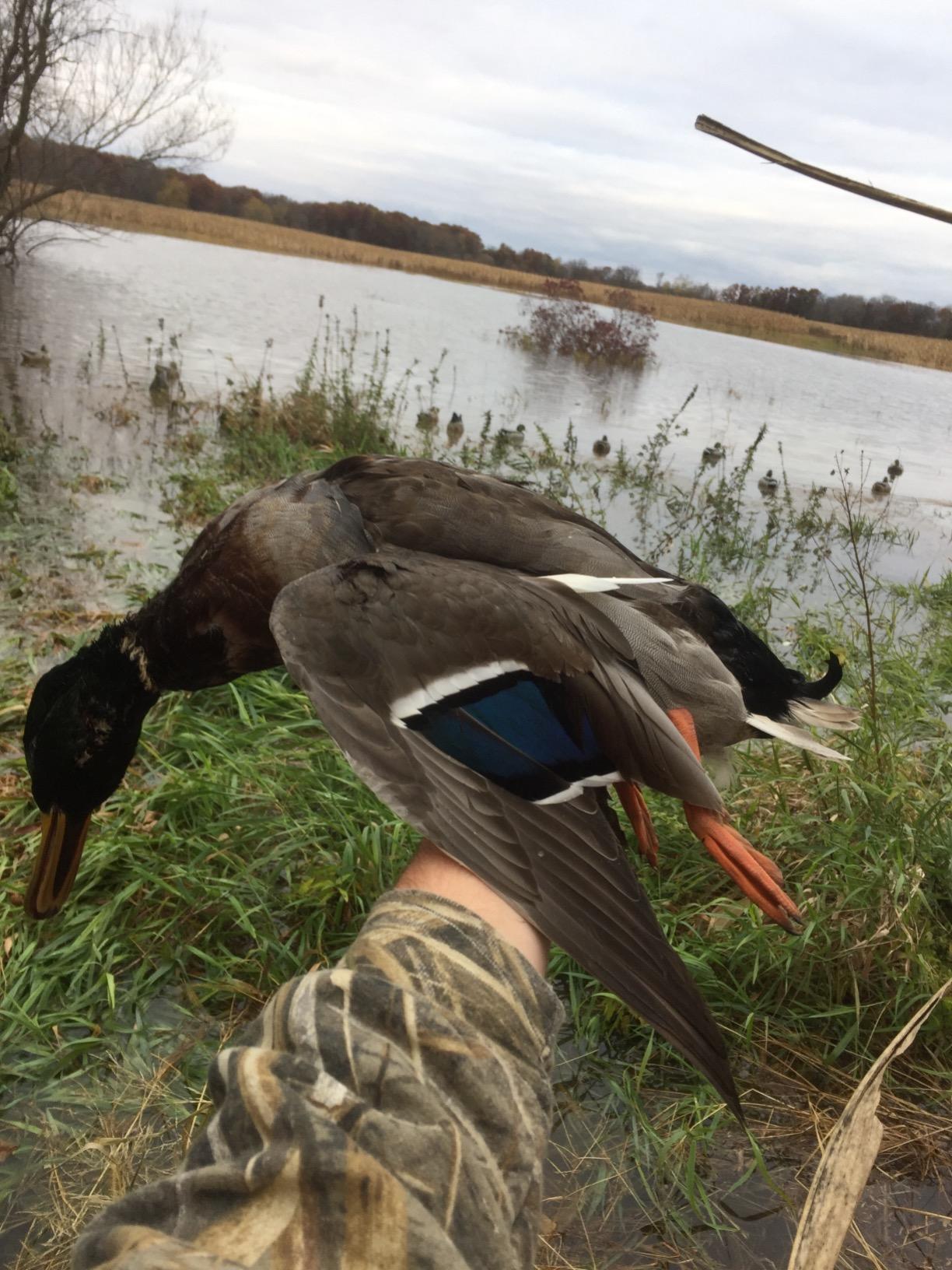
Most timber hunters should start here, and the reason is simple math. Twelve birds instead of six, at a per-bird cost that lands closer to a mid-tier floater than a premium one, means your 10 to 15 decoy spread is a single purchase rather than two. The configuration is six drakes and six hens, which is a fair reflection of how mallards actually behave on the water, with drakes often a smaller share of a feeding group than a hunter-only spread implies.
The self-righting weighted swim keels are the practical feature in moving water. They settle upright and deploy fast in chop, and in flooded bottomland with a surface broken by wind, current, and drifting vegetation, a decoy that fights the water is a decoy that ends up on its side. Reviewers mention fast, stable deployment often enough that it is clearly the part owners care about most.
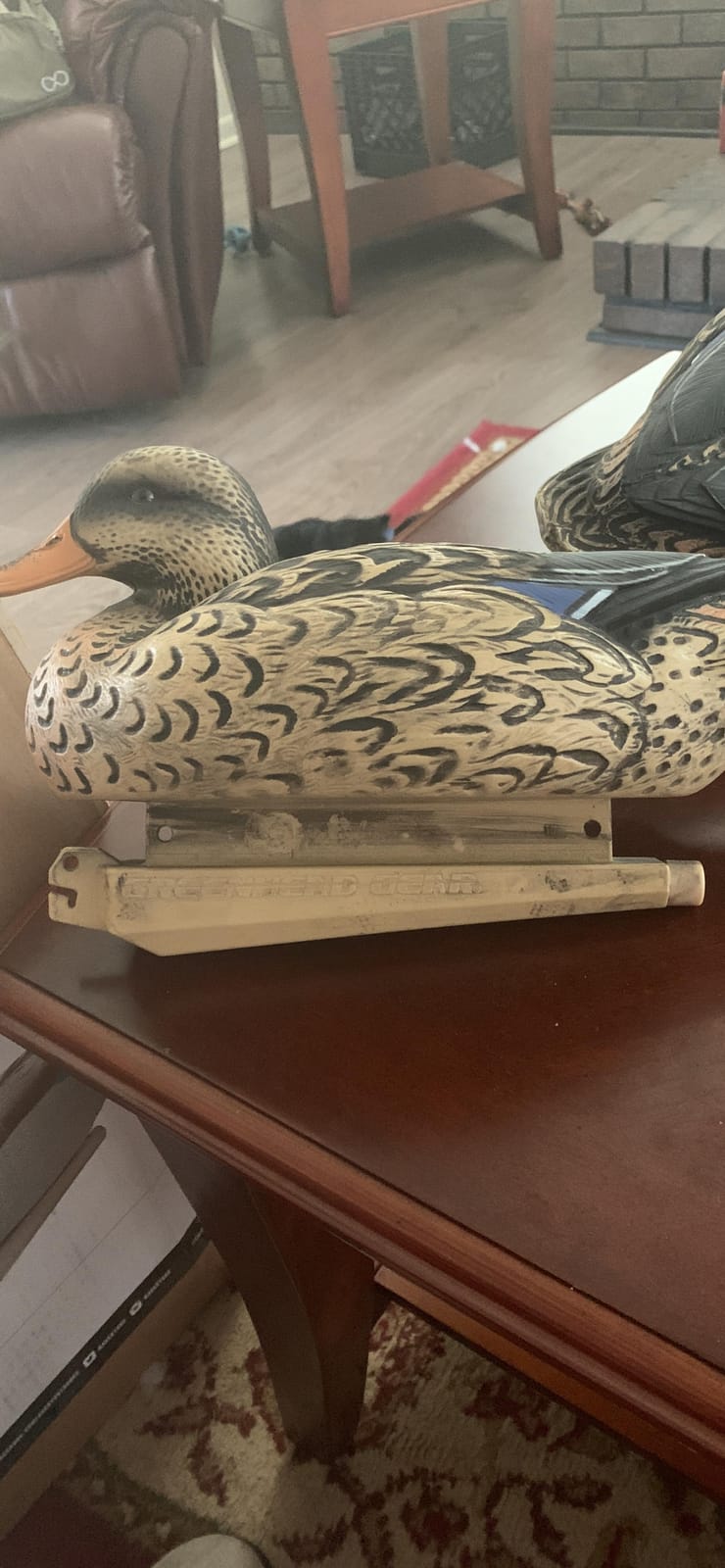
High-definition feather etching with a realistic color palette and contrast is what lets these read at distance through clutter, which is the whole point in timber. Product testing and professional hunter testing show up repeatedly in the feedback, and at 4.7 across 281 ratings with 83% five stars, the pack sits a little behind the Avian-X sets on pure rating while still being the most straightforward buy here.
The fair criticism is that it is a plain static mallard pack. There is no motion mechanism and no species variety, so it does nothing for a spread that also needs wood ducks, and it will not animate a dead-calm morning on its own. It is a foundation. You add motion, and you add a different species, and then it is doing its job.
Best as the base layer of a first timber spread
Build the spread around this pack, add three or four wood duck decoys, and drop a motion unit into the middle. Twelve mallards at six and six gives you a believable group size, and the balanced drake and hen split means you do not have to think about sex ratios in a layout where the birds are judging you at 25 yards. The self-righting keels make it forgiving when you are rigging in current.
Where it falls short
Twelve birds is real bulk in a flooded timber carry. If you are pack-in only, wading deep, or portaging around downed trees, this is a heavier commitment than a six-pack and heavier than the compact option later in this list. And while a few owners note the paint and detail sit slightly below the premium lines, the more common reservation is simply that it is static, with nothing in the water that moves.
6. Final Approach Last Pass Mallards – Best for Pack-In Hunters
Final Approach Last Pass Mallard Floaters, Decoy 12 Pack
Twelve-piece mallard pack
Compact 12 inch bodies
One-piece HDPE construction
Pros
- Compact size packs more birds into a bag
- Lighter twelve-bird carry than premium packs
- One-piece body has no seams to split
- Carvings by a world champion carver
Cons
- Smaller than life-size and thin at long range
- No motion mechanism
- Simpler posture detail than premium sets
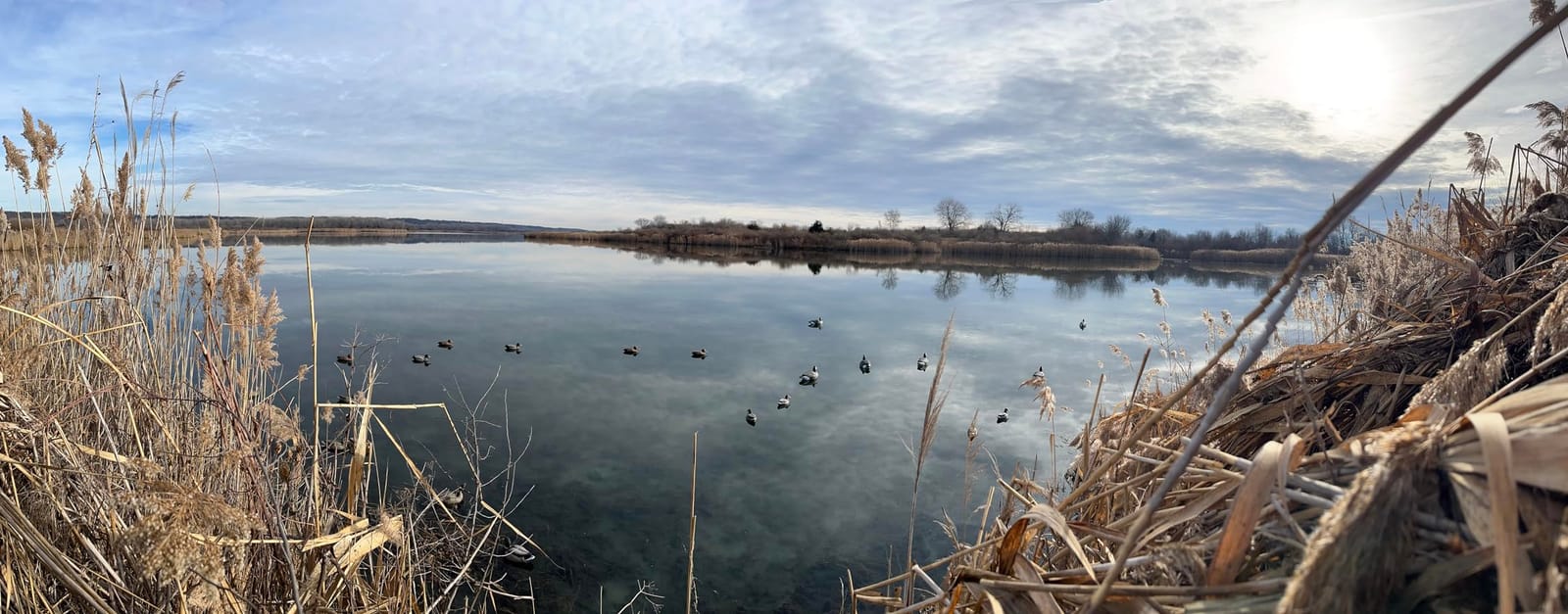
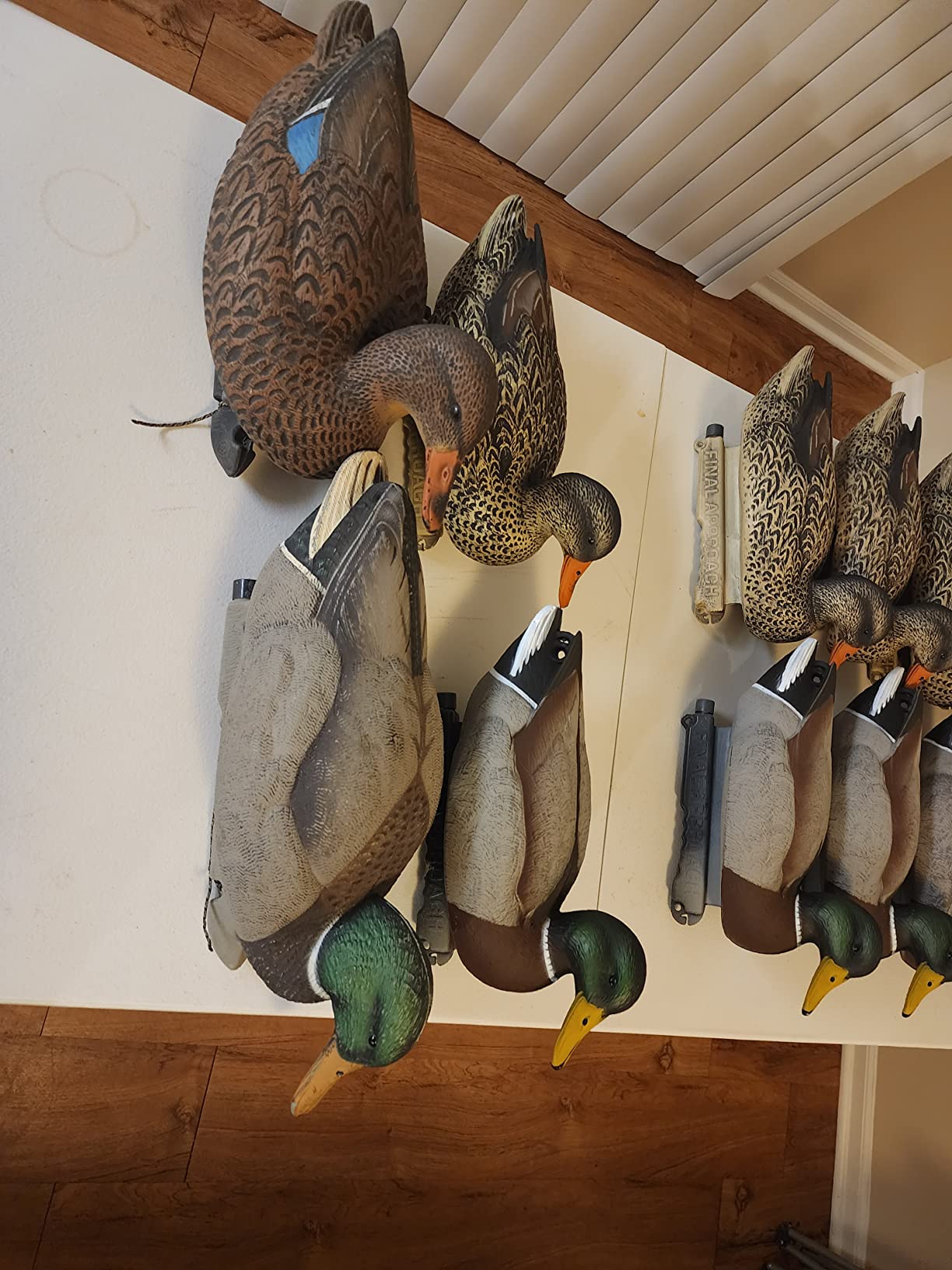
This is the pack for the hunter whose hardest problem is getting to the stand. Compact 12-inch bill-to-tail bodies mean you can put a full dozen birds in a bag and still have room for a shotgun, a call, and lunch, and the package weight comes in at 4.36 kg, the lightest twelve-bird carry in this roundup. In a place where portaging a spread through standing water and downed timber is the part everybody complains about, that difference is worth more than realism at 80 yards.
One-piece high-density polyethylene is the other headline. There are no seams to split, crack, or leak, and in flooded timber with a bottom full of snags and woody debris, a decoy that cannot fail structurally is a real advantage. Carvings by 17-time world champion carver Pat Godin are what keep the silhouette convincing, and that outline is most of what a bird sees at distance in cluttered water anyway.
This pack also sits high in its category for a practical reason. It ranks #16 in Hunting Decoy Accessories and #18 in Hunting Decoys, which means the demand behind it is well established rather than a seasonal spike. When you are buying a spread you intend to keep for years, that is worth weighing alongside the reviews.
It is rated 4.4 across 208 ratings here, the lowest average of the three twelve-bird options, with a 5% one-star share. The complaints are consistent and mild: the decoys run smaller than life-size, and some buyers found the detail or finish underwhelming. For close-range timber that smaller size is a feature, not a bug, because these are decoys you are seeing at 20 to 30 yards.
Best when the walk in is longer than the shoot
This is our pick for public access with a long wade, a pack-in on a ridge above the timber, or any stand where the decoy bag has to survive a quarter mile of waist-deep water and downed brush. The compact size also lets you carry more birds, so you can still put out 12 to 15 and stay under a sensible weight. In a flooded access with a partner, less gear is also a faster, safer walk.
Where it falls short
At 12 inches these read thin at long range in open water, so they are a timber decoy and not an open-water decoy. There is no motion mechanism, and the posture detail is simpler than the premium packs, which shows when you put them in a layout with a wood duck drake. If you have easy boat access and a wide layout, the size works against you. If you are carrying, it is working for you.
7. Higdon Standard Bluebills – Best Foam-Filled Build for Snaggy Water
Higdon Outdoors Standard Bluebill Floater Duck Decoys | Ultra Realistic Drake & Hen Decoys for Waterfowl Hunting | 8 Upright Drakes & 4 Resting Hens | Foam-Filled | 12pk
Twelve-piece foam-filled pack
Self-righting weighted keel
UV paint reduces glare
Pros
- Foam-filled bodies resist sinking and cracking
- Self-righting keel stays upright at any depth
- UV paint cuts glare in low light
- Standard sizing keeps weight down
Cons
- Bluebills are a puddle-duck species
- Premium tier for a twelve-piece pack
- Only a six-count option for small spreads
Before anything else: bluebills are a puddle duck species, and a flooded timber stand in the first week of the season with teal and wood ducks working the pockets is not a bluebill hunt. We are including this pack for a specific reason, and it is a good one. If you are hunting early-season flooded timber where puddle ducks and teal show, or if you want decoys that simply cannot be damaged, the foam-filled build is the most rugged option in this roundup.
Foam-filled bodies resist sinking, cracking, and taking on water, which means a decoy that survives a hard knock against a submerged limb. Flooded bottomland is snag-heavy by definition, and a hollow shell decoy that gets punctured becomes a swimming problem on a day when you cannot afford the distraction. Owners point at the foam build and the leak resistance as the main reasons to buy.
The self-righting weighted keel is the other feature worth naming. It keeps each decoy upright and stable at any water depth, and reviewers report it as quick to deploy. That stability matters in moving water where a decoy that flips and floats belly-up is a decoy that has told every bird in the pocket exactly what it is.
Higdon’s proprietary UV paint is genuinely useful in a timber setting. It is designed to cut glare and hold vibrant detail season after season, and under a closed canopy on a bright afternoon, glare off a glossy decoy is exactly the detail that gives you away. The carving detail is what carries the read once the glare is gone.
At 4.6 across 211 ratings with 79% five stars, it lands mid-pack on rating but high on construction confidence. It is also offered as a six-count, which is genuinely useful if you are building a small spread and do not want a dozen birds in a pack for a tight pothole.
Best for early-season flooded timber and rough bottom
Use this where teal and puddle ducks are the birds you expect, and where the bottom is snaggy enough that decoy damage is a real risk. It is also the pick if you rig your decoys in deeper pockets where a weight-forward keel alone feels light. Combine a few foam-filled bluebills with wood duck decoys and you cover both the early-season and late-season birds without buying two different builds.
Where it falls short
Species is the honest answer. If the birds in your timber are mallards and woodies, six bluebills in your spread are six birds that do not belong, and no amount of good paint fixes that. It also sits in the premium tier for a twelve-piece pack, and the only smaller option is a six-count. Our wading and cold-water gear notes cover a separate list, if you want the boots to match the decoys.
8. Flambeau Storm Front 2 Blue-Winged Teal – Best Rig Point Versatility
Flambeau Outdoors Storm Front 2 Blue-Winged Teal Decoys, Floaters, 6-Pack
Six teal floaters
Four keel tie-off points
Depth-adjusting anchor eyelet
Pros
- Four tie-off points let you tune motion for current
- UVision paint matches real plumage
- Listed weight under 12 ounces for the pack
- Six varied postures in the pack
Cons
- Reported seam and rear-plug leaks
- Some buyers say drake heads read dark
- Only a one year manufacturer warranty
The feature that makes this pack interesting in flooded timber is the keel. Four tie-off points plus a depth-adjusting anchor eyelet means you can dial in exactly how much motion each decoy has, which is what you need when the water is moving because of current rather than wind. In standing timber with a slow, steady push, a fixed-depth rig either floats too loose or drags too heavy, and the tie-off points solve that.
The paint is the other selling point. Flambeau’s patented UVision technology is built to reflect the real ultraviolet signature of waterfowl plumage, and live birds register that. The pack is carved by Tom Christie, Dave Van Lanen, and Rich Smoker, and the six-piece mix runs two active drakes, two skimmer drakes, one resting hen, and one dabbler hen, which is a genuinely varied group for the size.
The weight is what makes it a timber pack. The listing puts item weight at 11.68 ounces, and at that figure you can carry these into cover that would swallow a heavier six-pack without noticing the difference. For teal, which flies early and works the shallow edges of flooded timber, that is a meaningful advantage.
Now the part you need to read carefully. Reviews on this pack split sharply, and the critical reports are specific: several owners describe seam and rear-plug leaks that let birds take on water and submerge within hours, and a few say the drake heads read closer to black-headed green-winged teal than to the blue-winged teal shown in the listing. The net picture is a good-looking, well-rigged decoy that needs a leak check before every hunt.
Our field habit with these is simple. Float each one in a tub or a deep bucket the night before the hunt, and set aside anything that takes on water. That check takes a few minutes and it is the difference between a spread that looks right at first light and a spread with three birds sitting low. The one-year manufacturer warranty is also worth factoring in against the durability language in the marketing.
Best for teal in moving water
Choose this pack when teal are the bird and current is the problem. The four-point keel lets you rig tight in a pocket with a steady push and loose in a slack corner, and the light weight means you can add them to a carry that is already loaded with mallard and wood duck floaters. The posture mix also gives a spread more visual variety at a small size.
Where it falls short
Leak reports are specific and repeated, so treat this as a pack you inspect rather than one you trust blindly on a long water day. The head coloration does not match the listing for every buyer, which matters in a species where the drake’s blue head is the whole point of the read. And the one-year warranty is thin for something that spends a season in water. If leaks are a deal breaker for you, choose a foam-filled pack instead.
9. Flambeau Storm Front 2 Mallards – Best for UV Paint Realism
Flambeau Outdoors Storm Front 2 Mallard Decoys, Classic Floaters, 6-Pack
Six full-size mallard floaters
14 inch bodies
UVision paint, four keel tie-offs
Pros
- Most reviewed pack in this roundup
- Full-size bodies read well in clutter
- Four tie-off points tune motion in current
- UV paint holds detail across seasons
Cons
- Only six birds for a starting spread
- Posture mix skews toward resting birds
- One year manufacturer warranty
This is the most proven pack in the roundup by a wide margin, with 762 ratings behind it and 84% five stars. That matters more here than a slightly higher star average on a pack with 300 reviews, because a big sample tells you how the paint and the keel behave after a few seasons in water rather than how they behaved the first time out of the bag.
Full-size 14-inch mallards give you a bigger visual profile than the compact pack later on, and in cluttered timber that size is an asset. A drake descending into a pocket sees a large, clean shape rather than a small one, and the four keel tie-off points plus depth-adjusting anchor eyelet let you give the decoys motion suited to the water in front of you. That rigging flexibility is the same reason the teal version is on this list.
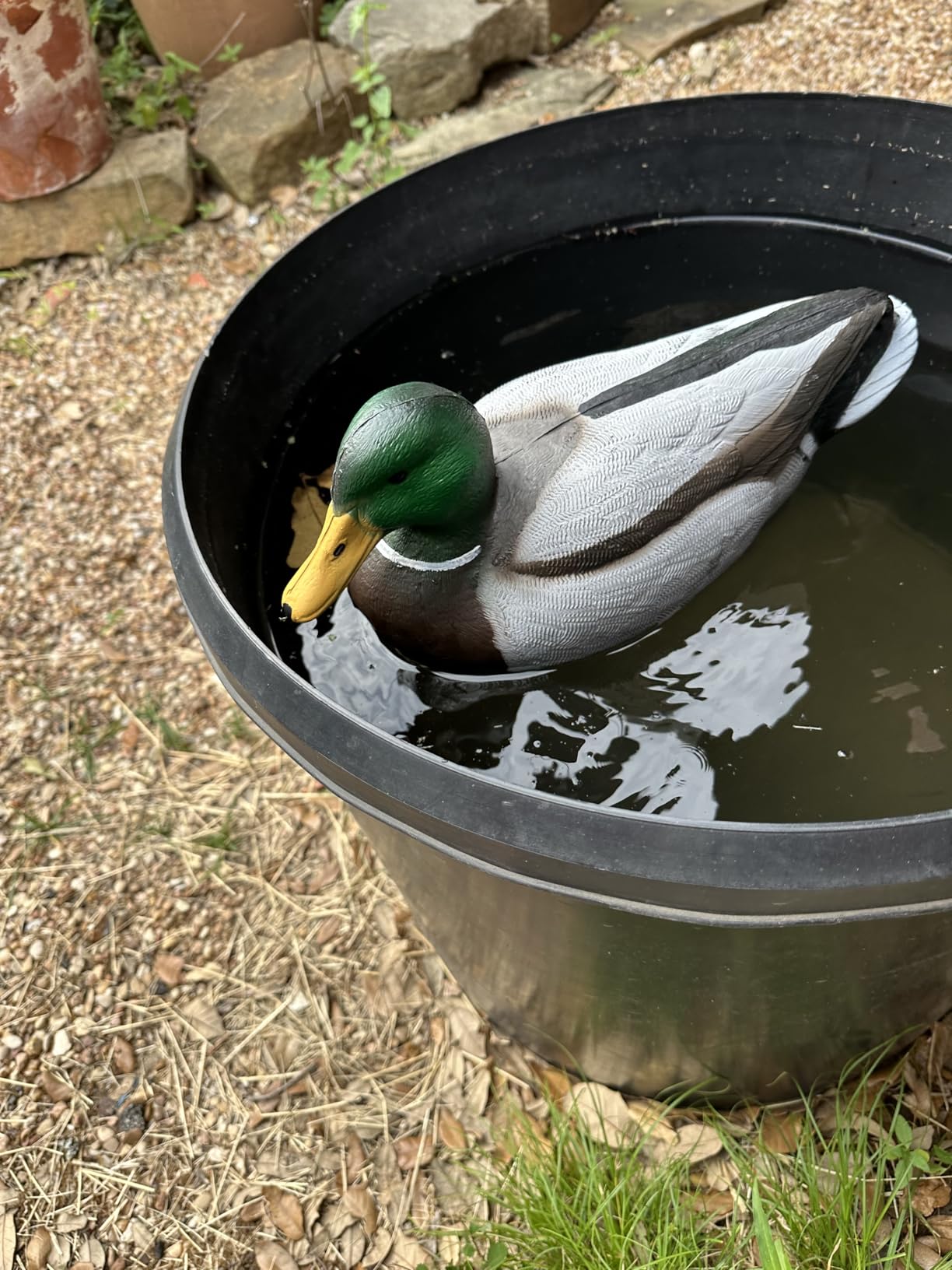
Durability over multiple seasons comes up repeatedly in the reviews, and Flambeau’s UVision paint is the piece owners credit. It is designed to reflect the ultraviolet signature of mallard plumage, which is not marketing fluff so much as an explanation for why the bird still looks right in early, low-angle light under a canopy when most packs start to look flat.
Two caveats, both small. Six decoys is a starting spread, and most hunters supplement it, which is exactly what we would do in timber given the 10 to 15 guidance. And the posture mix skews resting, with two active drakes, one semi-resting drake, and three semi-resting hens, so it is a calmer-looking group than a spread built around aggressive feeding postures.

Best for early light and low-water timber
We like this set on the mornings when the light is worst and the water is low, because the paint reads well without being glossy and the bodies are big enough to catch the eye. It is a strong second pack for anyone who already owns a wood duck set and needs mallards in the mix. Pair six of these with the Avian-X backwater pack and you have two species and two posture families in a 12-bird spread.
Where it falls short
Six birds is not a full spread on its own, and if you are new to this you will end up buying a second pack sooner rather than later. The resting-heavy posture mix is also less aggressive at pulling birds to close range than an all-feeding pack, which can cost you something on a slow morning. Same one-year warranty note applies as on the teal pack.
10. MOJO Outdoors Vibrating Waterfowl Motion Decoy – Best Multi-Species Motion Unit
MOJO Outdoors Rippler – Premium Waterfowl and Duck Hunting Decoy
Vibrating ripple motion decoy
Mallard drake body
6-8 hours on four AA batteries
Pros
- Ranks near the top of the Hunting Decoys category
- Animates a spread on still days
- Fast screw-lock battery housing change
- Many species and style variants
Cons
- Four AA batteries not included
- Motor noise in very still water
- One motion unit supplementing a spread
This is the platform version of the same idea as our first pick, and the reason it earns its own slot is species range. The vibrating housing is available across a long list of variants, Flicker, Mini Mallard Drake, Mallard Lite, Pintail, Diver Redhead, Wind Duck, Woody, Mallard Drake, Mallard Machine, Blue Wing Teal, Green Wing Teal, and more. When you know the species in your pocket, you can run a motion unit that matches instead of settling for a mallard.
It ranks near the top of the Hunting Decoys category with 733 ratings, so the feedback base is large and honest. The 69% five-star share is lower than the top Avian-X packs, and the critical minority concentrates on motor noise in very still water, water resistance over multiple seasons, and the running cost of batteries if you leave it on all day. Those are the same three pressure points the Butt Up Rippler reviews hit, which tells you they are properties of this kind of device rather than a defect in one model.
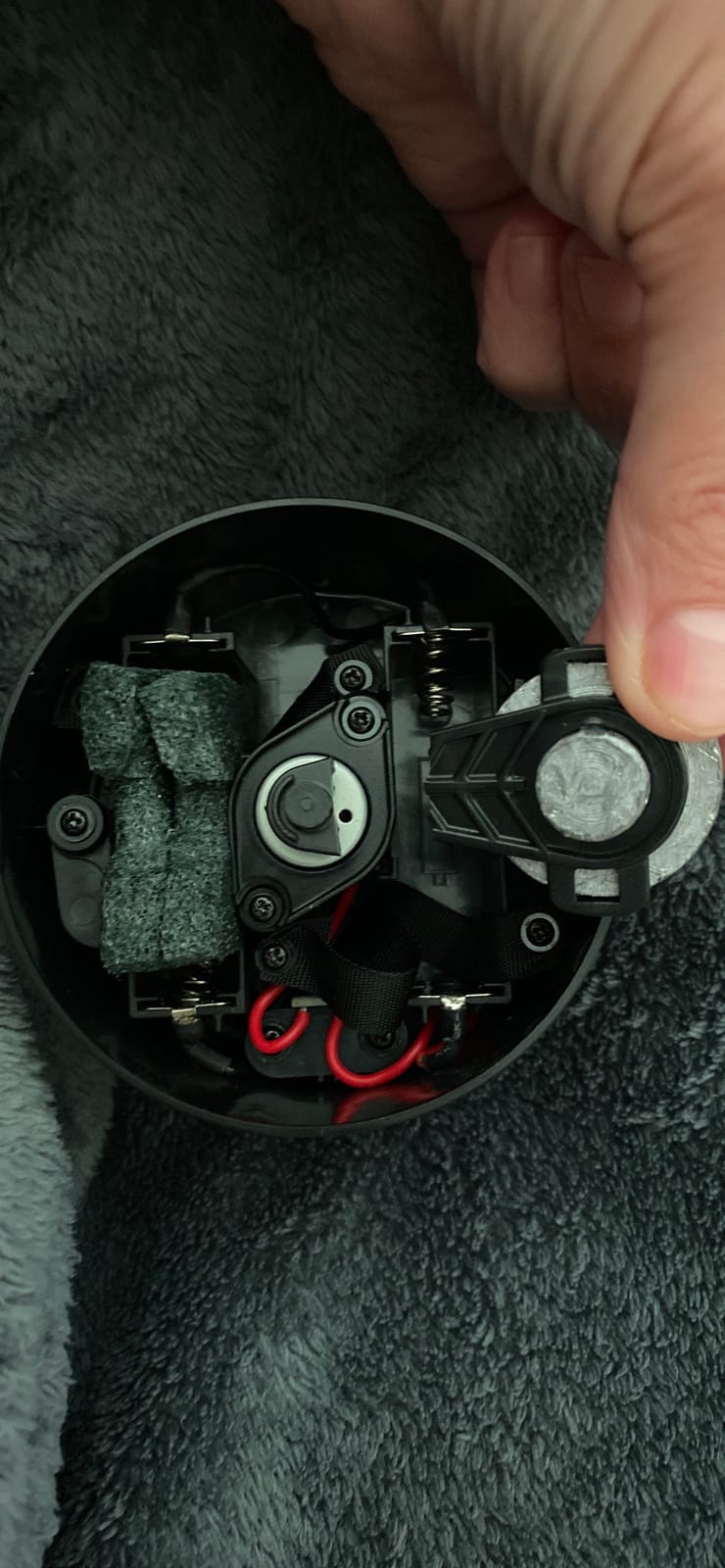
The 6 to 8 hour runtime on four AA cells covers a full hunt day, and the screw-lock removable housing makes a field swap fast without tools. Buyers praise the tool-free housing change more often than you would expect, because the alternative is a wet-hands battery job in a boat at first light.
One data note so nobody is caught out: the listing reports weight inconsistently for this item, giving 4.54 g against dimensions of 17.3 by 6.8 by 14 inches. Treat the weight figure as unreliable and go by the dimensions and your own pack. We flag it because a hunter budgeting carry weight into a timber walk deserves accurate numbers, and that is not this one.
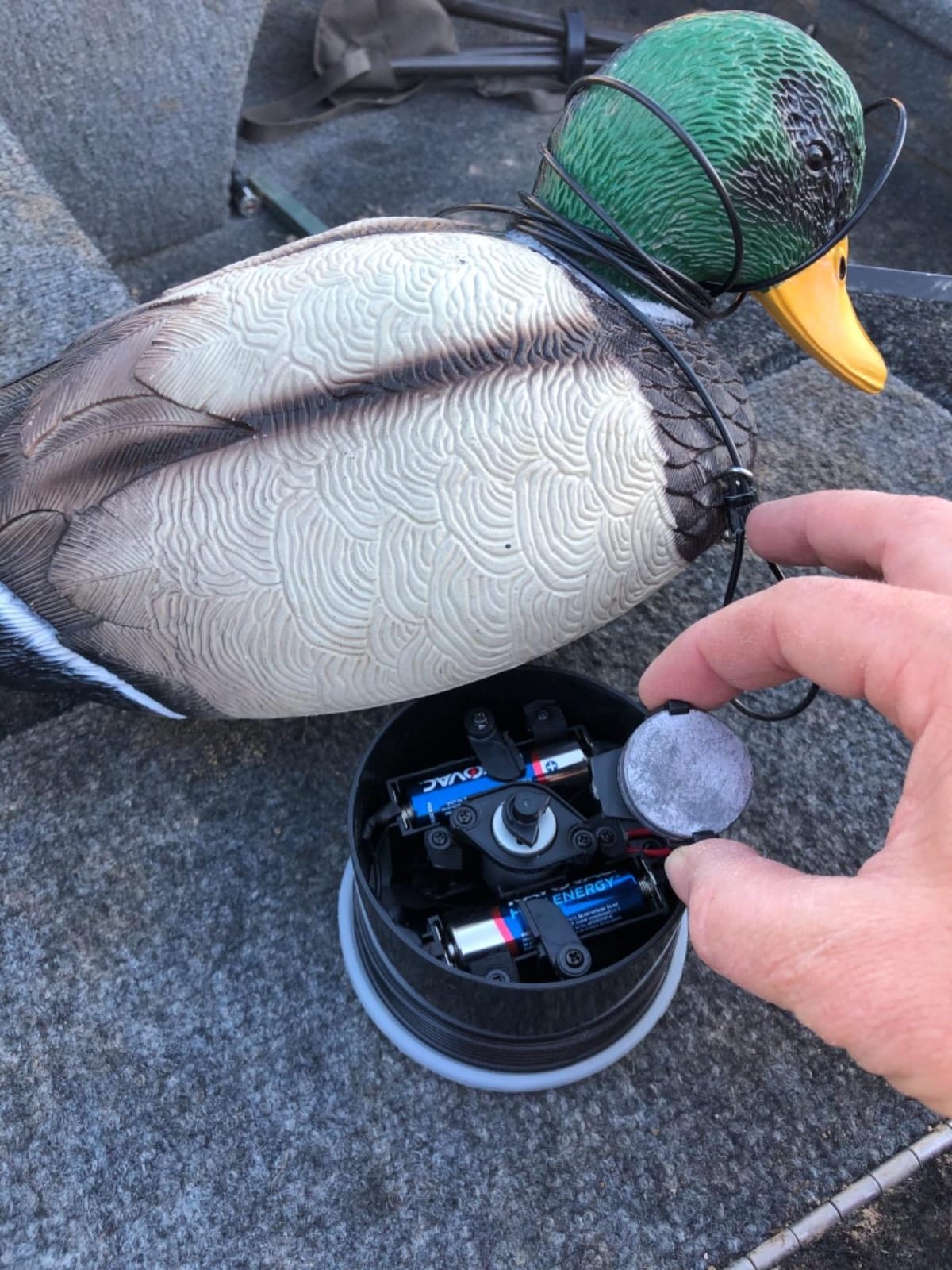
Best when the species in your pocket is not a mallard
This is the pick for wood duck timber specifically, because a Woody variant matches a wood duck spread in a way a mallard ripple cannot. It is also the right call for teal-heavy flooded wood, for the wind and flicker options in cold weather when a spread is dying, and for anyone who runs a spread across several blinds over a season and wants a different bird each time. The ripple effect is the point in all of those cases.
Where it falls short
It supplements a floater spread and does not replace one, so it is never a standalone answer. Motor noise in dead-calm water is a real risk at the close ranges timber forces on you, and the batteries are not included and add a per-hunt cost if you run it long. And with a 4.4 average here, it is a value purchase rather than a premium one, which is the right trade for a device whose job is animation.
How to Sit a Wood Duck Decoy Spread in Flooded Timber
Wood ducks are the reason to hunt flooded timber in the first place, and they are also the species most likely to frustrate you. The honest summary from hunters is that woodies do not always come in to decoys reliably and like to poke around seemingly randomly in flooded woods. Treating that as failure sends a lot of people home early. Treating it as species behavior gets you a better spread.
Here is the three-step spread we use, and it is built for the way wood ducks actually approach. They come through the timber low and fast, they check pockets, and they look for a group rather than a display.
Step one, position. Set your decoys inside the pocket the birds are using, not in the open lane leading to it. Wood ducks coming through the trees want to see birds already settled in cover. Twenty-five yards is a better default than forty, and if you can get closer without exposing yourself, do.
Step two, species mix. Build a mixed flock rather than a wood duck display. Six to eight wood duck decoys across drake and hen postures, with a few mallards mixed in, reads as a feeding group. A straight line of drakes reads as a decoy tray, and a drake-heavy group is the classic mistake on a spread that is already working.
Step three, distance and motion. Keep the whole spread inside about 15 yards so it does not stretch into a row, and give it something that moves. A motion unit in the center, a jerk line, or simply splashing and kicking the surface at intervals keeps the pocket alive. Motion is the most-mentioned factor in timber discussion, and it is the cheapest one to fix.
Late in the season, shift the mix toward hens. Six to eight hens to a small number of drakes matches the composition of a real winter flock, and a hunter writing about flooded timber pointed out that a dozen good decoys placed well will outperform a much larger spread placed across open water. Placement beat count on every spread we have read about.
How to Rig Duck Decoys in Deep, Moving Water
Standard shallow-marsh rig advice quietly fails in flooded bottomland. Timber water is often deeper, moving, and full of submerged wood, and decoys pull loose, tip, or tangle. Four steps cover most cases.
Step one, pick the anchor type. A Texas rig works in shallow, slack water with a soft bottom and a slow or absent current. In deeper water with a steady push, a keel line is the better choice because it distributes the load along the string instead of concentrating it on a single point. When the water is both deep and moving, a keel line with a sliding weight on a strand is what keeps a spread from concertinaing into a single pile.
Step two, size the weight to the water. The rule of thumb that shows up repeatedly is small weights for shallow flooded vegetation, roughly 2 ounces, and much heavier weights for open and deep water, in the 6 to 8 ounce range. Between those extremes, use current as the dial. If the surface is visibly moving, add weight. If it is glassy, take some off, because an over-weighted floater in slack water rides low and looks wrong.
Step three, use the decoy’s own tie-off points. Flambeau’s four tie-off points and depth-adjusting anchor eyelet are the clearest example in this roundup of a keel built for variable conditions. The more points you have, the more granular your control over how each bird sits and how much it moves. In current this is the difference between a spread that looks alive and one that looks pinned.
Step four, rig around the wood, not through it. Submerged limbs and cypress knees are the reason many timber decoys are lost, and they are also the reason you should check your strings every time you move. Walk the pocket before you set up, note the limbs, and place the line so that a shifting weight cannot drag a decoy into a snag. Expect to re-check the spread mid-hunt, because current moves and so does the drift line.
Buying Guide: Floater, Magnum, Silhouette, Shell or Motion Decoy
Floater versus shell versus silhouette versus motion comes down to one question: what is the water doing and what is the bird looking at. A floater sits on the surface and works anywhere with open water at the surface, which makes it the default in timber. A shell decoy partially submerges and is built for deeper water where a floater would look out of place. A silhouette is a two-dimensional silhouette that appears and disappears to a bird in flight, creating an illusion of movement, and it is a packability and volume tool rather than a realism tool. A motion decoy adds animation to any of them.
For flooded timber specifically, floaters win, and the reason is the viewing angle. A bird dropping through a trunk gap is looking down at the water, not across it, which favors shapes on the surface over submerged bodies. Add a magnum or two, meaning an oversized floater that reads as a bird further away and holds attention in clutter, and you have the timber formula.
Count first, decoys second. Ten to 15 bodies. Buy the pack that gets you there in one or two purchases rather than four six-packs, and check that the pack size matches the pocket. A 12-pack is the most useful single purchase in this roundup, and the 6, 12, and 18 count options on the Avian-X backwater set are worth knowing about.
Posture variety over detail realism. In clear timber water, an ultra-realistic sculpt can read as a decoy at 25 yards in a way a well-varied but simpler spread does not. Mixed postures, mixed species, and two oversized bodies break the pattern more effectively than a single high-detail bird repeated. This is the opposite of the open-water logic and it is the single most common mistake carried into the woods.
Rig points over everything. If your water moves, buy by tie-off points and keel adjustability. Four tie-off points and a depth-adjusting anchor eyelet give you control that no paint scheme can substitute for. This is the single most timber-specific feature in the whole list and the one most shoppers never look at.
Build over foam-filled if you fish for your decoys. Hollow shells weigh less and pack smaller. Foam-filled bodies will not sink, crack, or take on water when they hit a submerged limb, and in snag-heavy bottomland that reliability is worth the extra weight. Whichever you choose, float-test hollow-shell decoys in a tub before the hunt.
Packability and wading safety. Carry weight is a real constraint in standing water, and cold water in early season adds a second one. The compact twelve-bird pack and the light six-pack are the carry-friendly end of this list; the weighted-keel packs are the other end. Pair your decoy choice with proper waders and cold-water layers, and if you are shopping for those separately, our guide to the best duck boots for women covers the fit and insulation questions in more depth. Whatever you wade in, wear a personal flotation device in flooded timber and go with a partner.
On trusted brands, the names that come up repeatedly across the field are Avian-X, Avery, Final Approach, Flambeau, Higdon, and MOJO Outdoors. Between them they cover everything above, from the premium keel packs to the motion units, and the one thing none of them solve for you is placement. That part is still your job.
Frequently Asked Questions
How many decoys should I use in flooded timber?
Ten to 15 decoys is the working number. Hunters in flooded timber consistently report a dozen good decoys beating several dozen spread wide, because the birds are working a small pocket of water and judge the setup at 20 to 30 yards. Placement and motion matter more than count.
What is the best decoy for wood ducks?
The best decoy for wood ducks in flooded timber is a wood duck floater with a weight-forward swim keel and mixed drake and hen postures, sized oversized for clutter. Wood ducks judge a spread at close range, so varied posture and natural on-water movement matter more than hyper-realistic detail.
How do you attract ducks to flooded timber?
Set a small spread inside the pocket the birds are already using rather than in open water, keep it within 20 to 30 yards of the blind, mix species and postures, add a couple of oversized decoys among the trunks, and put motion in the water. Close range and animation do the work that spread size does on open water.
How do you rig duck decoys in deep water?
Use a keel line rather than a Texas rig when the water is deep and moving, because it spreads the load along the string instead of concentrating it at one point. Size the weight to the conditions, roughly 2 ounces in shallow flooded vegetation and 6 to 8 ounces in deep open water, and add a sliding weight on a strand in current.
Are silhouette decoys effective?
Silhouette decoys are effective as volume and packability tools, and a bird in flight sees them appear and disappear, which creates a motion illusion. They are not the best choice for flooded timber close-range work, where full body floaters on the surface read better to a bird looking down through a trunk gap.
Final Verdict on the Best Duck Decoys for Flooded Timber
The MOJO Butt Up Rippler is our pick for the best duck decoys for flooded timber, because motion is the one variable that fixes more timber mornings than any decoy body ever will. Put it in the center of a 12 to 15 bird cluster and it changes how the pocket reads in flat light.
Around it, build with a wood duck pack for the birds that actually make timber worth hunting, a twelve-bird mallard pack for base coverage, and a compact pack if the walk in is the hard part. Choose by rig points when the water moves, by foam-filled construction when the bottom is snaggy, and by posture variety always.
And keep the count low. A dozen good decoys in the right pocket will beat three dozen in the wrong one every time. Last tested in 2026; go set the spread in the dark, put something in the water that moves, and wait.