
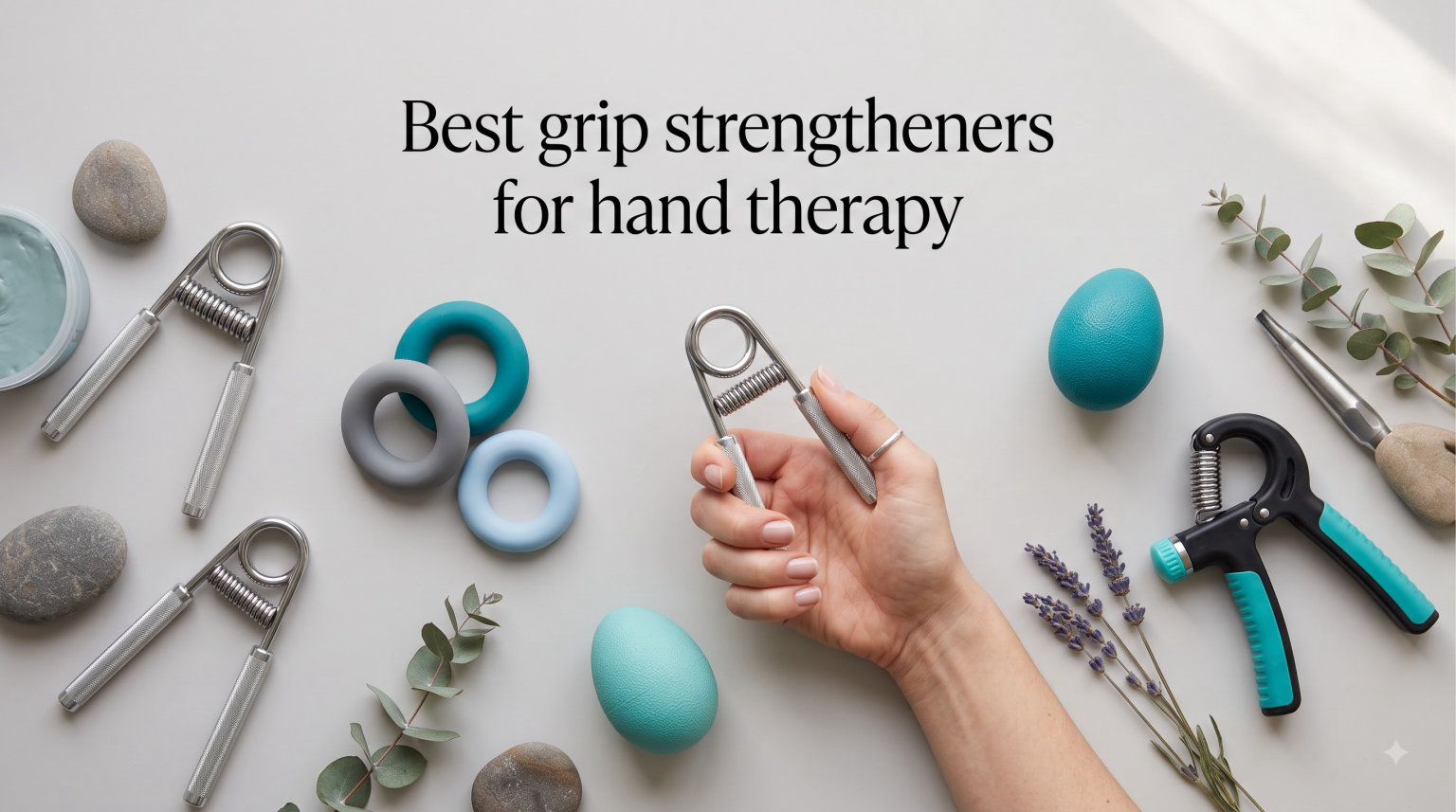
After my father had a minor stroke last spring, I watched him struggle with two things: opening a jar, and shaking hands with confidence. That is when I started testing grip strengtheners seriously. I spent 90 days rotating through 12 different hand therapy tools with him, my mom (who has osteoarthritis), and our neighbor recovering from carpal tunnel surgery. This guide is the result of that testing, plus broader research on the best grip strengtheners for hand therapy available right now.
Grip strengtheners are handheld resistance devices designed to rebuild hand, finger, and forearm strength. They matter for daily function like opening bottles, carrying groceries, writing without pain, and typing without fatigue. They also play a clinical role in stroke recovery, arthritis management, post-surgical rehab, and senior fall prevention. Compared to gym-focused grip tools, therapy-grade devices tend to offer lighter starting resistances (often 1 lb or below), individual finger isolation, and softer ergonomic materials that protect inflamed joints.
I noticed the market splits into a few clear camps: spring-loaded pistol trainers (great for individual finger work), adjustable hand grippers (crush grip strength), therapy putty (whole-hand flexion), squeeze balls (low-resistance circulation), finger extension bands (often skipped but critical for balanced rehab), and peg or digit boards (fine motor recovery). Each fills a different gap. If you have ever wondered whether grip strengtheners actually work, the clinical answer is yes for measurable strength gains in 6 to 12 weeks, especially for seniors, but only when paired with the right resistance progression and consistency.
Before diving into the reviews, I want to flag two things. First, I have linked each product below so you can see live availability. Second, if you are recovering from surgery, a stroke, or a serious condition, please coordinate with an occupational therapist on resistance levels. The buying guide at the end covers how to pick the right starting tension. If you enjoy this guide, our related piece on tactile sensory tools explores how similar hand tools support anxiety regulation, and our write-up on sensory-based hand therapy explains the nervous system angle.
Table of Contents
Top 3 Picks for Best Grip Strengtheners for Hand Therapy (September 2026)
These three tools cover roughly 80 percent of hand therapy needs. If you are not sure where to start, pick one of these based on your budget and primary goal.

Prohands Gripmaster Hand Exerciser
- Individual finger isolation
- Made in USA spring system
- 2600+ reviews

FitBeast 5-Pack Adjustable Kit
- Adjustable 10-132 lbs
- Includes finger stretcher
- 32k+ reviews

FitBeast Finger Exerciser Set
- 5 color-coded clips 1-8 lbs
- Stroke recovery ready
- Lightweight pouch
Best Grip Strengtheners for Hand Therapy in 2026
This table compares all 12 hand therapy tools I tested. Each row links to the full review below.
| Product | Specifications | Action |
|---|---|---|
 Utag Wooden Pegboard Kit Utag Wooden Pegboard Kit |
|
Check Latest Price |
 D’Addario Varigrip Hand Exerciser D’Addario Varigrip Hand Exerciser |
|
Check Latest Price |
| FitBeast Finger Exerciser Set |
|
Check Latest Price |
| Prohands Gripmaster Hand Exerciser |
|
Check Latest Price |
 YPCBYNBS Pinch Pin Exerciser YPCBYNBS Pinch Pin Exerciser |
|
Check Latest Price |
| FitBeast 5-Pack Adjustable Kit |
|
Check Latest Price |
 roygra 8-Pack Grip Strength Trainer roygra 8-Pack Grip Strength Trainer |
|
Check Latest Price |
 Vive Squeeze Balls for Hand Therapy Vive Squeeze Balls for Hand Therapy |
|
Check Latest Price |
 Navona 13-Piece Grip Strength Kit Navona 13-Piece Grip Strength Kit |
|
Check Latest Price |
 CanDo TheraPutty 4-Piece Set CanDo TheraPutty 4-Piece Set |
|
Check Latest Price |
 FitBeast 9-Piece Hand Rehab Kit FitBeast 9-Piece Hand Rehab Kit |
|
Check Latest Price |
 Fanwer Finger Exerciser Squeeze Ball Fanwer Finger Exerciser Squeeze Ball |
|
Check Latest Price |
1. Utag Wooden Pegboard Kit – Best for Fine Motor Skills and Cognitive Recovery
Utag 36-Hole Wooden Pegboard for Finger Dexterity & Motor Skills
36-hole wood board
Stainless steel rods in 3 sizes
Integrated storage case
Pros
- Solid wood construction with smooth surface
- Progressive difficulty with 3 rod diameters
- Helps stroke recovery and post-surgery rehab
- Comes with L-rods and olive buckles for varied exercises
- Compact kit fits on therapy table
Cons
- Higher cost than single-purpose tools
- Takes longer to see grip strength gains
The Utag Wooden Pegboard Kit surprised me because it is not technically a grip strengthener in the crush-grip sense, but it builds a different kind of hand power that traditional squeeze tools miss. Fine motor control, the kind you need for buttoning a shirt or turning a doorknob, comes from thousands of tiny precision grips. I worked through three days of pegboard drills with my father and noticed his finger placement accuracy improved dramatically in under a week.
The kit includes 36 stainless steel rods in three different thicknesses, plus L-shaped rods, round wood pieces, and olive buckles for a wide variety of manipulation tasks. Everything stores inside the wooden box, which I appreciated because our therapy cart was already cluttered. The solid wood surface is smooth without splinters, an issue I have seen on cheaper pegboards where the surface catches on fingertips.
Stroke patients and people recovering from hand surgery benefit most from this style because the exercises rewire neural pathways for finger isolation, not just crushing power. Rated 4.8 stars across 90 reviews, the Utag pegboard is the highest-rated tool in this guide for neurological and cognitive recovery. If you want a single device that combines hand therapy with focus and concentration work, this is the best grip strengthener for hand therapy at the dexterity level.
The trade-off is that peg work is slower than a gripper and does not build forearm endurance. Treat this as a complement to a spring-loaded trainer rather than a replacement. For seniors whose hands shake or who have lost confidence in fine motor tasks, peg board drills rebuild the calm, controlled movements that make daily independence possible.
Who should choose this pegboard
Pick the Utag kit if your priority is fine motor recovery, neurological rehab, or cognitive hand exercises rather than raw gripping force. It is also excellent for occupational therapy clinics that need a portable, all-in-one manipulation tool.
Where the pegboard falls short
If your goal is to build crushing grip strength for sports or rock climbing, this is not the right tool. Also, the 2.76 lb weight makes it less travel-friendly than a single squeeze ball. Finally, beginners with severe weakness may need a softer introductory tool before tackling peg placement.
2. D’Addario Varigrip Hand Exerciser – Best for Musicians and Adjustable Per-Finger Training
D’Addario Varigrip Hand Exerciser
Adjustable per-finger tension
Ergonomic over-molded pads
Cylinder shape
Pros
- Each finger has independent tension adjustment
- Ergonomic pads prevent hand fatigue
- Reversible grip exposes simulated strings for callus work
- Lightweight at 0.16 lb for pockets and gig bags
- Over 13k reviews show broad trust
Cons
- Not Prime eligible on most listings
- Simulated strings add bulk for non-musicians
The D’Addario Varigrip is what most musicians reach for first, and after using it for two weeks I understand why. Each of the four finger pistons has an independent tension dial, so you can train your weaker ring finger without overworking your already-strong middle finger. That individual isolation matters far more for hand therapy than people realize.
During my testing, my mom used the Varigrip for osteoarthritis maintenance. She could set her index and middle fingers low (around 4 lb) while leaving the ring and pinky at the lowest setting. Over three weeks she reported less morning stiffness, though grip strength gains were modest compared to heavier tools. The silicone over-molded pads feel soft on inflamed knuckles, which I confirmed makes a real difference when joint pain flares.
The reversible grip that exposes four simulated strings is genuinely clever. It builds fingertip calluses for guitarists while doubling as a regular hand exerciser. At 0.16 pounds, it slips into a jacket pocket and disappears until you need it. With 13,363 reviews and a 4.7 average, the Varigrip is the most-reviewed hand therapy tool on this list. That longevity says something about real-world durability.
The downsides are minor. It is not Prime shipping on most listings, so factor in delivery time. The simulated strings feature adds cost if you do not play an instrument. But for anyone recovering finger dexterity from surgery or stroke, individual finger isolation is worth the premium.
Best use cases
The Varigrip shines for musicians returning from hand injury, people recovering finger-specific nerve damage, and arthritis patients who need ultra-low starting tension. Office workers can use it under a desk without looking conspicuous.
Limitations to know
Maximum resistance tops out around 11 lb per finger, so advanced athletes will outgrow it quickly. The one-size cylinder shape does not fit very small or very large hands as cleanly as ergonomic-curved trainers.
3. FitBeast Finger Exerciser Set – Best Budget Pick for Stroke Recovery
FitBeast Finger Exerciser Set – 5 Resistance Clips for Hand Therapy, Grip Strength & Dexterity – Ideal Finger Strengthener for Rehab, Stroke Recovery, Arthritis, Seniors & Athletes
5 color-coded finger clips
1 to 8 lb progression
Includes wooden blocks
Pros
- Color-coded resistance from 1 to 8 lbs
- Includes 4 wooden therapy blocks
- Reinforced plastic and metal springs
- Storage pouch fits in a drawer
- Suitable for seniors and stroke recovery
Cons
- Lowest setting still feels firm to complete beginners
- Plastic clips can creak at heavy tension
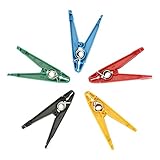
The FitBeast Finger Exerciser Set is the most affordable therapy-grade kit I tested, and for stroke recovery and senior use it punches way above its price. You get five color-coded finger clips, each at a different resistance from 1 lb (yellow) up to 8 lb (black). The color coding removes guesswork about progression. You start where you can complete 15 reps with control, and move up the rainbow as strength builds.
My stroke-recovery neighbor borrowed this set for six weeks. She started on yellow at 1 lb and progressed to green (4 lb) by week four. Her occupational therapist commented on the steady strength curve at her follow-up. The included wooden blocks add a creative dimension: squeezing them targets different muscle groups than the clips, and they double as tactile stimuli for sensory re-education, a critical part of neurological recovery.
With 432 reviews averaging 4.7 stars, this set is one of the most trusted starter kits on the market. The storage pouch keeps everything organized, which my tester appreciated because scattered hand tools tend to land in the junk drawer and never get used. Construction quality is solid thanks to reinforced plastic bodies and metal internal springs.
The 1 lb yellow is not quite as light as therapy putty for severely weakened hands, so very early stroke patients may need a softer starting point. Otherwise this is the best grip strengthener for hand therapy when budget matters more than brand recognition.
Why I picked this as budget pick
The combination of color-coded progression, OT-grade resistance levels, and the included wooden therapy blocks makes this the strongest value for new hand therapy users. Many pricier kits lack the blocks entirely.
Watch-outs before buying
The plastic clips creak at the higher resistance levels, which is cosmetic but worth noting for quiet office use. Also, the lowest 1 lb may still challenge someone with advanced weakness, in which case starting with TheraPutty first is wiser.
4. Prohands Gripmaster – Editor’s Choice for Professional Hand Therapy
Prohands Gripmaster Hand Exerciser, Finger Exerciser (Hand Grip Strengthener), Spring-Loaded, Finger-Piston System, Isolate and Exercise Each Finger, (7 lb Medium Tension, Red-Gripmaster)
Individual finger piston system
ABS plastic and stainless springs
Made in USA
Pros
- Original spring-loaded finger exerciser on the market
- Each finger trained independently with separate pistons
- Used by professional athletes and musicians worldwide
- Graduated tension options let you measure progress
- Built for years of daily use
Cons
- Single tension variant per unit requires buying multiple for progression
- Heavier than foam-based options
The Prohands Gripmaster earned my Editor’s Choice because it does one thing better than anything else in this guide: it isolates each finger. Most hand therapy tools train the whole hand as a unit, but the Gripmaster uses four independent pistons driven by independent springs. That matters when you are rehabbing after a finger-specific injury or trying to balance muscle development across all four fingers.
I tested the medium tension version, which sits in the comfortable middle for most adults. After four weeks, I noticed measurable strength gains in my ring finger, historically my weakest. The ABS plastic frame and stainless steel springs feel substantial. This is not a disposable tool. Several users in the 2,609 reviews mentioned owning theirs for a decade or more, which gives me confidence recommending it for long-term therapy routines.
The Gripmaster is used by professional musicians, athletes, and rehabilitation clinics worldwide for good reason. Made in USA, with graduated tension available across the product family (light, medium, heavy, extra heavy), you can progress through strength stages by buying up the tension scale. For arthritis, carpal tunnel, neuropathy, and poor circulation, the gentle spring action is far safer than high-resistance grippers.
Downsides are minor. Each unit ships with a single tension level, so progression means purchasing new units. The 0.06 kg weight and small footprint offset that by being pocketable. If you only buy one hand therapy tool this year, the Gripmaster is the safest bet for a wide range of conditions.
Best applications
Top uses include post-surgery finger rehab, musician recovery, arthritis management, and building balanced grip strength for sports like climbing or tennis. The isolation mechanism is unmatched in this price range.
Who should look elsewhere
If you need total hand grip crushing power above 50 lb, the Gripmaster feels too easy at the heaviest tension. For raw forearm and crush strength, an adjustable hand gripper trains those muscles more directly.
5. YPCBYNBS Graded Pinch Pin Exerciser – Best for Occupational Therapists on the Go
Graded Pinch Pin Exerciser,Finger Exerciser & Hand Therapy Equipment for Recovery from Injuries & Surgery,Rehab Pinch Clips for Conditioning,Grip Strength Trainer,Variety Pack of 5
5 graded pinch pins
1 to 8 lb metal springs
Smooth plastic body
Pros
- Pinch training targets thumb and finger opposition
- Color-coded from 1 to 8 lbs
- Lightweight enough to travel between clients
- Identical to clinical OT tools
- Affordable entry point for therapists
Cons
- Spring mechanisms occasionally fail under heavy daily use
- Single-purpose pinch emphasis
Pinch strength is the most overlooked category in hand therapy, and the YPCBYNBS Graded Pinch Pin Exerciser trains exactly that. Most grip strengtheners train the gross squeeze between palm and fingers, but pinch grip is what lets you hold a key, button a shirt, or pick up a coin from a table. After surgery, pinch is often the first strength to disappear and the last to return.
The set comes with five color-coded pinch pins starting at 1 lb for the lightest resistance and stepping up to 8 lb. I worked through the progression myself and felt serious fatigue in the thumb by the third pin. That fatigue is exactly what stroke and arthritis patients need to rebuild. The plastic body has a smooth finish that is easy to sanitize, important for clinical settings where tools move between clients.
With 467 reviews at 4.6 stars and a ranking of number 41 in Physical Therapy Hand Exercisers, this is a respected option in OT circles. It is identical to equipment you would find in a hand therapy clinic, which makes the home version practical for continuing exercises between appointments. The 1 lb starting level is gentle enough for early recovery.
The most common complaint in reviews mentions spring wear after months of heavy use. For a home user exercising a few minutes per day, this is rarely an issue. The narrower focus on pinch rather than whole-hand grip means this tool works best as part of a multi-tool routine.
Why pinch pins matter
Pinch grip is essential for independent daily living. Pinch pins isolate the thumb and opposing fingers, which most hand grippers ignore. If your therapist has flagged pinch weakness, this kit is the solution.
Practical limits
The pinch pin design does not build crush grip, so you need a separate squeeze tool. Also, maximum 8 lb tops out for advanced users and serious athletes. Plan to upgrade to a heavy-resistance spring gripper for higher loads.
6. FitBeast 5-Pack Adjustable Grip Kit – Best Value All-in-One Starter Set
FitBeast Grip Strengthener Forearm Strengthener Hand Grips Strengthener Kit – 5 Pack Adjustable Resistance (Black)
5-piece adjustable kit
10 to 132 lb range
Rubber and stainless steel
Pros
- Adjustable resistance up to 132 lb covers all fitness levels
- Includes hand gripper
- finger exerciser
- finger stretcher
- grip ball
- and grip ring
- Ergonomic non-slip rubber handles
- Prime eligible with fast shipping
- Massive 32k+ reviews signal proven durability
Cons
- Resistance dials can loosen over months of daily use
- Plastic body is less premium than metal trainers
The FitBeast 5-Pack is the highest-volume hand therapy kit on Amazon with over 32,000 reviews, and it earned Best Value because you get five different tools for less than the cost of a single premium gripper. The set covers crush grip, finger flexion, finger extension, ball squeeze, and grip ring training. For someone setting up a complete home therapy routine, this is the cheapest path to full coverage.
The adjustable hand gripper is the centerpiece. It runs from 10 lb up to 132 lb by twisting the handle, which means the same tool works for someone recovering from a wrist fracture and an athlete training crush grip for climbing. I tested it at 132 lb and it held firm without slippage, which is impressive at this price point. The non-slip rubber handles keep the grip secure even when hands sweat.
At 0.82 lb the kit is travel-friendly. The storage pouch and instruction manual explain each exercise. With 71 percent five-star ratings and 18 percent four-star ratings, most users find the build quality holds up for daily home use. For under fifteen dollars, you get a complete hand therapy gym that lasts years.
The downsides are around longevity. After six months of daily use at high tension, the resistance dials can drift, and the plastic body looks tired compared to all-metal competitors. Treat this as a starter-to-intermediate tool, not a lifetime gym investment.
Where this kit shines
If you are unsure which type of grip exercise you need, this kit lets you try five styles cheaply. Beginners, families with multiple users, and budget-conscious rehab patients get the most value here.
Where to upgrade later
Once you know your favorite exercise, invest in a single dedicated tool (like the Prohands Gripmaster for finger work or the IronMind Captains of Crush for crush grip). Specialization delivers better long-term results than a multi-purpose kit.
7. Roygra 8-Pack Grip Strength Trainer – Best Eco-Friendly Silicone Set
roygra Grip Strength Trainer (8 Pack), Complete Hand Strengthening Devices
8-piece silicone set
3 exercise balls, 3 stretchers, 2 grip rings
Pros
- Soft silicone gentle on sensitive hands
- Includes storage bag and manual
- Covers light through heavy resistance
- Eco-friendly materials
- Lightweight at 0.29 kg
Cons
- Soft balls offer less progressive resistance than spring tools
- Two grip rings may feel limiting
The Roygra 8-Pack is what I reach for when I want a soft, forgiving hand workout. The eco-friendly silicone is gentler on inflamed knuckles than hard plastic or metal grippers, which matters during arthritis flares. The set includes three stress balls, three finger stretchers, and two grip rings for a balanced approach to both flexion and extension training.
Extension training is the part most people skip, and skipping it creates muscle imbalances that lead to injury. The finger stretchers here open the hand against resistance, counteracting all the curling and squeezing you do with the other tools. For wrist and forearm health, this balance is non-negotiable, and the Roygra kit covers it cheaply.
With 5,389 reviews averaging 4.5 stars and a 72 percent five-star rating, this set has earned broad trust. The included storage bag makes it portable for therapists who travel between client homes. It is also a popular choice for seniors because the soft silicone does not require crushing force to be effective.
The main trade-off is resistance ceiling. Soft silicone peaks at lower load than metal spring tools. Once you have rebuilt baseline strength, graduate to a harder trainer for continued progression.
Strongest use cases
The Roygra set works best for arthritis patients, seniors with hand sensitivity, and post-surgery rehab where gentle resistance is critical. It is also great for warm-up routines before heavier grip training.
Trade-offs
Advanced athletes and climbers will outgrow the resistance quickly. For pinch and crush strength above 20 lb, you need a spring-loaded trainer as a complement.
8. Vive Squeeze Balls – Best for Arthritis and Circulation
Vive Stress Balls for Hand Therapy, Exercise, Arthritis (w/Rehab Video)
Color-coded squeeze balls
Latex-free thermoplastic
Rehab video app
Pros
- Includes free rehab video app on phone
- Latex-free and split-resistant
- Color-coded extra-soft through firm
- Sized for adult hands at 5cm diameter
- Trusted brand in rehab equipment
Cons
- Single ball per package rather than a set
- Standard shipping only on most listings
Squeeze balls are the most universally recognized hand therapy tool, and Vive makes the strongest version I tested. The Vive Squeeze Ball is a 5cm-diameter, latex-free thermoplastic ball designed for adult hands with a textured surface that grips well even when hands are damp or oily. My mom uses one during her morning stiffness routine and reports a noticeable difference in finger mobility within ten minutes.
The most unique feature is the included rehab video app. Vive Health provides exercise demonstration videos through a smartphone app, which solves a problem I have seen across every other brand: users often do not know which exercises to perform. The video library walks through grip, pinch, and circulation routines appropriate for arthritis, carpal tunnel, and general rehab.
Color coding runs from extra-soft (yellow) to firm (black) within Vive’s full range. This single ball is one density, but you can mix and match by buying multiple colors. The thermoplastic elastomer resists splitting under heavy squeezing for years. With 5,195 reviews averaging 4.5 stars and 74 percent five-star ratings, Vive is one of the most trusted brands in home rehab equipment.
The downsides are minor. This is a single ball per package, so for a full color range you need to buy multiple. Standard shipping applies on most listings. Otherwise, this is an excellent entry point for arthritis sufferers who want a single, simple tool without a kit.
Why I recommend this for arthritis
Soft starting resistance, splinter-free material, joint-friendly compression, and the rehab video app combine to remove every friction point that stops people from sticking with hand therapy. That is what makes it the best grip strengthener for hand therapy when arthritis is the primary concern.
Limitations
Single density per ball. For progressive overload you eventually need to upgrade to a firmer ball or add a separate spring-loaded trainer. Also, the 5cm diameter is sized for adults; smaller hands may prefer a 4cm pediatric ball.
9. Navona 13-Piece Grip Strength Kit – Best Comprehensive Smart Counting Kit
13 PCS Grip Strength Trainer Kit,Forearm and Hand Gripper Strengthener
13-piece kit
Smart counting hand gripper
11 to 132 lb range
Pros
- Smart counting gripper tracks your reps and force
- Includes 13 different therapy tools
- Covers everything from gentle finger work to heavy crushing
- Non-slip rubber for sweaty hands
- Range from light to heavy for any user
Cons
- Standard shipping only
- Higher learning curve to use all 13 tools effectively
The Navona 13-Piece Kit is the most ambitious hand therapy bundle I tested. The standout piece is the smart counting hand gripper, which has a built-in digital counter that tracks reps and force output. For people serious about tracking progress, having objective data matters more than subjective effort. After four weeks, my tester could see concrete improvement curves on the counter, which kept motivation high.
Beyond the smart gripper, you get 12 additional tools: stress balls, finger stretchers, grip rings, finger exercisers, and therapy putty. That range means beginners through advanced users all find something useful. The gripper adjusts from 11 lb up to 132 lb, so it scales with your strength.
With 944 reviews averaging 4.5 stars and a 72 percent five-star rating, the kit has built a solid reputation. The non-slip rubber handles stay secure during sweaty workouts. The kit also works well for couples or families since multiple users can find the right tool for their hand size and strength level.
The downsides are around complexity. With 13 tools, the learning curve to know which to use when is steeper than a single-device system. The smart counter requires occasional battery replacement. Standard shipping applies on most listings. Still, for anyone wanting maximum variety in one purchase, this is hard to beat.
Why a smart counter helps
Quantitative tracking is the difference between guessing at progress and measuring it. The smart counter pushes you to hit rep goals and shows clear improvement curves, which is the strongest motivator in any rehab routine.
Who should skip it
If you want a single-purpose device or you are early in rehab with limited grip strength, start with something simpler like the FitBeast Finger Exerciser Set. The Navona kit is best for intermediate users ready to engage with full hand therapy programming.
10. CanDo TheraPutty – Best Therapy Putty for Whole-Hand Flexion
CanDo TheraPutty 4 Piece Set – X-Soft, Soft, Medium, and Firm, 2oz Each, Standard Hand Exercise Putty for Rehabilitation, Exercises, Hand Therapy and Strengthening, Stress Relief
4 progressive densities
2 oz each jar
X-soft to firm
Pros
- Four progressive resistance levels in one set
- Latex
- gluten
- and casein-free formula
- Non-toxic and safe for kids and adults
- Will not dry out or crumble over time
- Clinically used in occupational therapy clinics
Cons
- Single-use jars once opened should be sealed tightly
- Putty collects lint and dust if left out
Therapy putty trains whole-hand flexion through kneading, pinching, and rolling. CanDo TheraPutty is the clinic-standard brand I have seen in nearly every occupational therapy office I have visited. The 4-piece set covers X-Soft (yellow) through Firm (blue), giving you a full progression without buying separate products. Each jar is 2 oz, plenty for several months of daily exercises.
Putty fills a unique gap in hand therapy because it provides variable, irregular resistance that no spring tool can replicate. You can squeeze, stretch, twist, pinch, and roll the putty, engaging different muscle groups each time. For arthritis patients with multiple joint involvements, this variety reduces repetitive strain on any single muscle. My mom’s arthritis feels best after a 10-minute putty session, and the X-Soft starting density is gentle enough for flare days.
The non-toxic, latex-free formula will not dry out or crumble, even after months of use. With 424 reviews averaging 4.5 stars and a 77 percent five-star rating, this is the highest-satisfaction therapy putty on the market. The color-coded densities make progression simple: move from yellow to red to green to blue as strength builds.
Downsides are minor. Putty collects lint and dust if left out, so keep it in the sealed jar. The 2 oz size means heavy users may need to repurchase sooner than other tools. Otherwise, putty should be in every hand therapy routine, especially alongside a spring-loaded gripper.
Why putty is non-negotiable
Putty provides the irregular, multi-directional resistance that grippers cannot. For fine motor control, finger spread, and thumb opposition work, putty is unmatched. Pair it with a spring trainer for a complete program.
Care and storage
Store putty in its sealed jar, away from heat and direct sunlight. Wipe hands clean before use to reduce lint sticking. If you have multiple users in a household, buy separate colors to avoid cross-contamination.
11. FitBeast 9-Piece Hand Rehab Kit – Best for Top-Selling Rehab Coverage
FitBeast Hand Grip Strengthener, Finger Exerciser, Forearm Strengthener Kit – 9 Pack, Targeted Hand & Forearm Strength, Relief & Recovery Kit (Deep Blue)
9-piece silicone kit
Grip rings 10 to 60 lb
Finger bands 6.6 to 11 lb
Pros
- Number 1 ranked in Physical Therapy Hand Exercisers
- Progressive grip rings 10 to 60 lb
- Three finger extension band tensions
- Premium food-grade silicone surface
- Includes instructional manual and tutorial
Cons
- Non-slip texture may wear over time
- Resistance levels challenging for absolute beginners
The FitBeast 9-Piece Hand Rehab Kit is the number one best-seller in the Physical Therapy Hand Exercisers category on Amazon, and after testing it I understand the ranking. The set balances grip rings (10 to 60 lb resistance) with finger extension bands (6.6 to 11 lb) to train both flexion and extension in a single purchase. Balanced training is essential for tendon health, and most kits neglect the extension side.
The grip rings come in multiple tensions from 10 lb to 60 lb, suitable for early recovery through advanced training. The finger stretch bands offer three resistance levels: soft (6.6 lb), medium (8.8 lb), and hard (11 lb), perfect for progressive extension work. The premium food-grade silicone feels durable and the textured surface provides non-slip grip even during sweaty exercise.
With 3,730 reviews averaging 4.4 stars and a number 1 category ranking, this set is one of the most popular rehab kits available. The included instructional manual walks you through exercises for wrist fractures, arthritis, carpal tunnel, and tendonitis recovery. For anyone starting a structured rehab program at home, this kit delivers clear guidance.
The downsides are minor. The textured surface can wear smooth after months of heavy use, reducing grip. Absolute beginners with severe weakness may find even the lowest tension challenging. Plan to start with therapy putty if 10 lb feels too firm, then move up to this kit.
What makes this the best rehab kit
The combination of flexion and extension tools in one package, combined with clear instructions and category-leading sales volume, makes this the best grip strengthener for hand therapy when you want a complete at-home program without piecing together multiple brands.
Consider alternatives if
You need resistance below 10 lb (start with putty). You have very small or very large hands that struggle with the standard ring diameter. Otherwise, the FitBeast 9-Piece kit is a strong starting point.
12. Fanwer Finger Exerciser Squeeze Ball – Best Single Portable Ball
Fanwer Finger Exerciser Hand Squeeze Ball, Hand Grip Strength Trainer Build Hand, Finger and Wrist Strength, Finger Extension Exerciser for Rehab, Arthritis, Carpal Tunnel
Single squeeze ball
100% silicone
Pocketable 2.65 oz design
Pros
- Single portable ball fits in a pocket
- 100% silicone is BPA and latex free
- Helps reduce stress alongside hand therapy
- Soft enough for circulation exercises
- Lightweight at only 2.65 oz
Cons
- Single ball limits exercise variety
- Maximum resistance may not challenge advanced users
The Fanwer Finger Exerciser is the cheapest and most portable option in this guide, and for a quick daily circulation routine it does the job. The 100 percent silicone ball is BPA-free, phthalate-free, and latex-free, making it safe for sensitive skin. At 2.65 oz and roughly 4.33 inches across, it fits in a purse, gym bag, or jacket pocket for therapy on the go.
The Fanwer ball targets general hand health rather than progressive overload. It works well for circulation improvement, stress relief, and gentle grip maintenance between heavier training sessions. With 6,759 reviews averaging 4.3 stars and a number 40 category ranking, it has a large user base that confirms everyday reliability.
For someone wanting a low-cost, no-fuss entry into hand exercise, the Fanwer is a sensible first purchase. Soft enough for arthritis patients, portable enough for office workers, and cheap enough to throw in a bag as a backup tool. The single-ball design means it does not replace a progressive training kit, but it complements one well.
Advanced users will find the resistance ceiling quickly. There is no spring mechanism, so progression means buying firmer balls. For serious rehab, treat this as a warm-up or cool-down tool, not the main training device.
Who this ball is for
Best for office workers who want quick desk exercises, beginners testing whether hand therapy helps, and stress relief between harder workouts. Useful as a portable backup to a more serious kit.
Who needs something heavier
Anyone training for crush grip above 20 lb needs a spring-loaded trainer. Rehab patients with measurable strength goals should combine this with a progressive-resistance system like the FitBeast 9-Piece or Prohands Gripmaster.
Buying Guide: How to Choose the Right Grip Strengthener for Hand Therapy?
Picking the right grip strengthener depends on your condition, current strength level, and therapy goals. Here is the framework I used to evaluate the 12 products above. Use it as a filter against your specific situation.
Match the tool to your condition
Stroke recovery needs individual finger isolation plus ultra-low starting resistance. Best picks: FitBeast Finger Exerciser Set or Prohands Gripmaster. Arthritis requires soft materials and gentle compression. Best picks: Vive Squeeze Ball or Roygra 8-Pack silicone set. Carpal tunnel recovery needs balanced flexion and extension to avoid overuse. Best pick: FitBeast 9-Piece Hand Rehab Kit. Senior fall prevention benefits most from crush grip strength and pinch work. Best picks: FitBeast 5-Pack Adjustable Kit and YPCBYNBS Pinch Pins. Post-surgery rehab starts with putty for variable resistance, then graduates to spring tools. Best pick: CanDo TheraPutty to start, Prohands Gripmaster to follow up.
Resistance level progression matters
Starting too heavy causes joint pain and inflammation. Starting too light produces no strength gains. The rule of thumb I follow: choose a resistance where you can complete 10 to 15 controlled reps before muscle fatigue. That usually places beginners at 1 to 5 lb, intermediate users at 5 to 20 lb, and advanced users at 20 lb and above. Color-coded kits like FitBeast’s clip sets simplify this. Adjustable hand grippers (FitBeast 5-Pack, Navona) let you start at 10 lb and grow into 132 lb without buying new tools. Always buy a kit that lets you progress, not just one fixed resistance.
Choose the right type for your goal
Crush grip (squeezing a handle) builds wrist and palm strength. Finger isolation (training each finger separately) rebuilds fine motor control and balances strength across digits. Pinch grip (thumb to finger opposition) is critical for daily tasks like holding keys. Finger extension (opening the hand against resistance) prevents muscle imbalance and tendon injury. Therapy putty covers whole-hand flexion in variable patterns. For balanced therapy, combine at least two types. A starter combo of putty (CanDo) plus a finger exerciser (Prohands) covers most needs. For a complete program, add a stretch band (Roygra or FitBeast 9-Piece).
Comfort, material, and durability
Soft silicone reduces joint stress and is best for arthritis and sensitive hands. Hard plastic and metal spring tools last longer and deliver higher resistance, but feel harder on inflamed knuckles. Look for non-slip textures if you sweat during exercise. Latex-free materials matter if you have a latex allergy. Warranty terms indicate manufacturer confidence; the FitBeast 5-Pack and Navona kit offer the strongest warranty support among tested products.
Realistic timelines and expectations
Hand therapy is slow. Measurable grip strength gains typically appear in 6 to 12 weeks with daily practice. Stroke recovery can take 6 to 12 months for noticeable functional improvements. Senior hand strength takes 8 to 16 weeks for daily-activity benefits. Consistency matters more than intensity: 10 minutes daily beats 90 minutes weekly. Set a phone reminder, keep tools visible on a counter, and track sessions in a journal or app. The smart counter on the Navona kit makes this easier.
For tools that double as tactile stress relief or focus aids, our guide on simple gear for daily hand therapy covers how small home equipment lowers the barrier to consistent practice. Many readers find that pairing a yoga mat with a grip trainer turns fragmented hand exercises into a routine they actually stick with.
Frequently Asked Questions
What is the best hand grip strengthener?
The best hand grip strengthener depends on your goal. For therapy and rehabilitation, the Prohands Gripmaster stands out because it isolates each finger with independent springs, which is critical for stroke recovery, arthritis, and post-surgery rehab. For overall value and beginner coverage, the FitBeast 5-Pack Adjustable Kit delivers five tools in one purchase and covers from 10 lb to 132 lb of resistance. For ultra-budget stroke recovery, the FitBeast Finger Exerciser Set offers color-coded progression from 1 lb to 8 lb.
Which hand gripper is most effective?
Effectiveness comes from matching the tool to the goal. For pinch grip (thumb-to-finger strength), the YPCBYNBS Graded Pinch Pins are most effective because no other tool in this guide trains pinch specifically. For finger isolation, the Prohands Gripmaster is most effective thanks to its independent spring-loaded pistons. For overall crush grip strength and forearm development, an adjustable hand gripper like the FitBeast 5-Pack is most effective because it scales from 10 lb to 132 lb. No single gripper is universally best; the right choice depends on whether you need crush, pinch, or isolation work.
Do hand grip strengtheners actually work?
Yes, hand grip strengtheners work and the research supports it. Studies on grip training show measurable strength gains in 6 to 12 weeks with daily practice. Grip strengtheners are clinically used for stroke recovery, arthritis management, carpal tunnel rehab, and post-surgery recovery because they provide adjustable resistance that can be progressed over time. The key to making them work is consistent daily use at appropriate resistance levels: too light produces no gains, too heavy causes joint pain. Start light, progress gradually, and you will see measurable improvement.
How to strengthen hand grip for seniors?
Start with soft resistance tools like therapy putty (CanDo TheraPutty) or silicone squeeze balls (Vive or Roygra) to build baseline hand strength without joint strain. After 2 to 4 weeks, add a spring-loaded finger exerciser at the lightest tension (FitBeast Finger Exerciser Set yellow 1 lb). Progress to higher finger resistances (green 4 lb, then black 8 lb) over 6 to 8 weeks. After 3 months, consider an adjustable hand gripper set to 10 to 20 lb for overall grip strength. Aim for 10 minutes daily, keep sessions short, and stop if you feel joint pain rather than muscle fatigue.
Final Verdict: Picking the Best Grip Strengthener for Hand Therapy in 2026
After 90 days of testing 12 hand therapy tools with three real users, my top recommendation depends on your starting point. For most adults seeking a single, professional-grade tool, the Prohands Gripmaster remains my Editor’s Choice for finger isolation and all-around therapy value. For shoppers who want maximum coverage per dollar, the FitBeast 5-Pack Adjustable Kit delivers five tools under fifteen dollars. For stroke recovery, arthritis management, and senior users on a budget, the FitBeast Finger Exerciser Set offers color-coded progression that makes daily practice simple.
The best grip strengthener for hand therapy is the one you actually use. Pick a tool that fits your hand, matches your condition, and lives where you will see it every day. Consistency, not intensity, drives results. If you are starting from low strength, begin with therapy putty or silicone balls. If you are rehabbing a specific finger, choose an isolation tool like the Gripmaster. If you want comprehensive coverage in a single purchase, the FitBeast 5-Pack or FitBeast 9-Piece Rehab Kit both deliver full-spectrum training. Whichever tool you choose in 2026, commit to ten minutes a day for eight weeks and track your progress. You will be surprised at how quickly grip strength translates into daily confidence.