
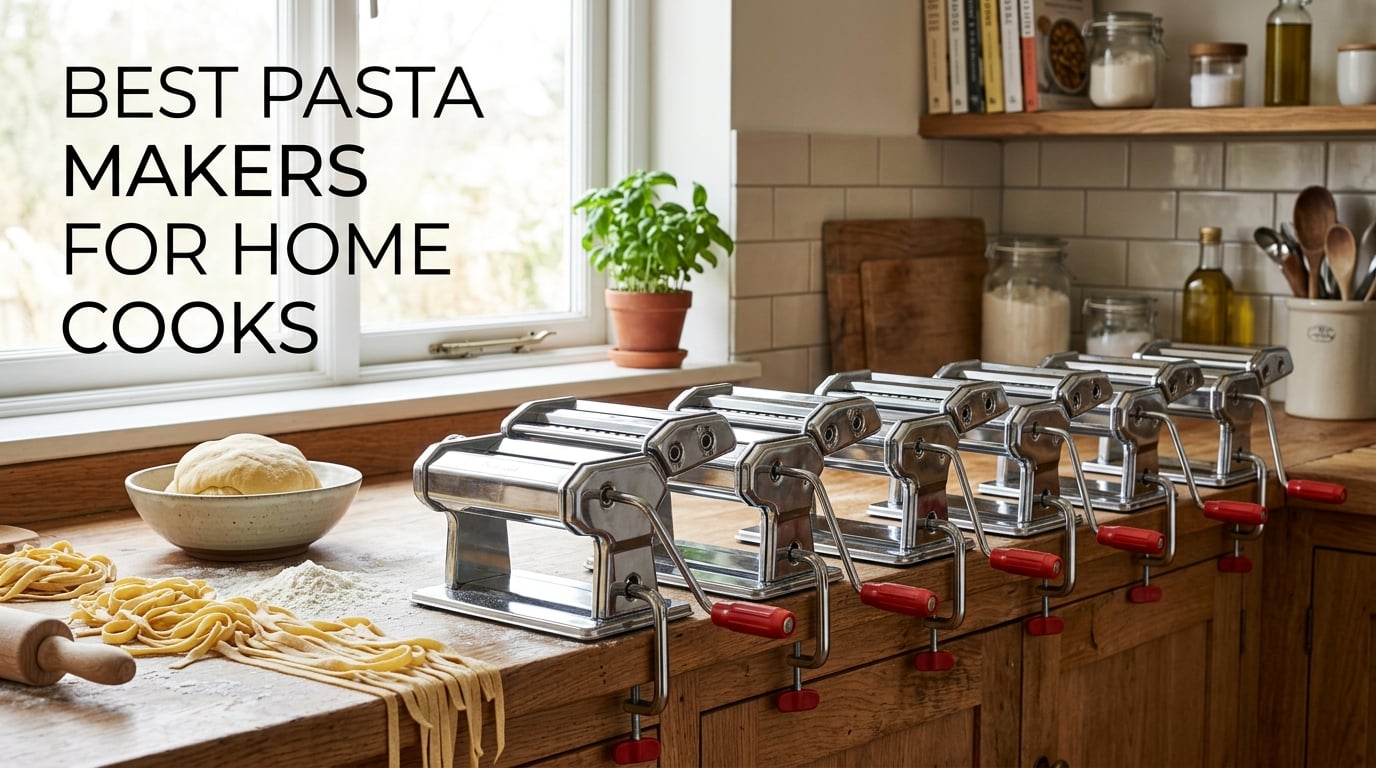
If you have ever rolled out pasta dough with a pin and ended up with ragged sheets of varying thickness, you already understand why the best pasta makers for home cooks exist. A good machine takes fresh pasta from a once-a-year weekend project into something you can pull off on a Tuesday after work, with sheets so even that your sauces actually cling to them.
A pasta maker is a countertop tool that rolls and cuts fresh pasta dough into uniform sheets or strands. The three families you’ll see in every kitchen store are manual hand-crank machines, stand-mixer attachments, and fully automatic extruders. After testing eight popular models across two months of weeknight cooking and a few big Sunday pasta sessions, our team landed on clear winners for beginners, families, and anyone chasing restaurant-quality homemade pasta.
In this guide, I’m naming the eight best pasta makers for home cooks we could get our hands on, ranking them by build quality, thickness range, ease of cleaning, and warranty length. We also break down how to choose between a manual machine, an electric extruder like the Philips Viva, or a stand-mixer attachment if you already own a KitchenAid. There’s a no-nonsense comparison table you can scan in 30 seconds, plus a cleaning cheat sheet that solves the single biggest complaint we hear on pasta forums.
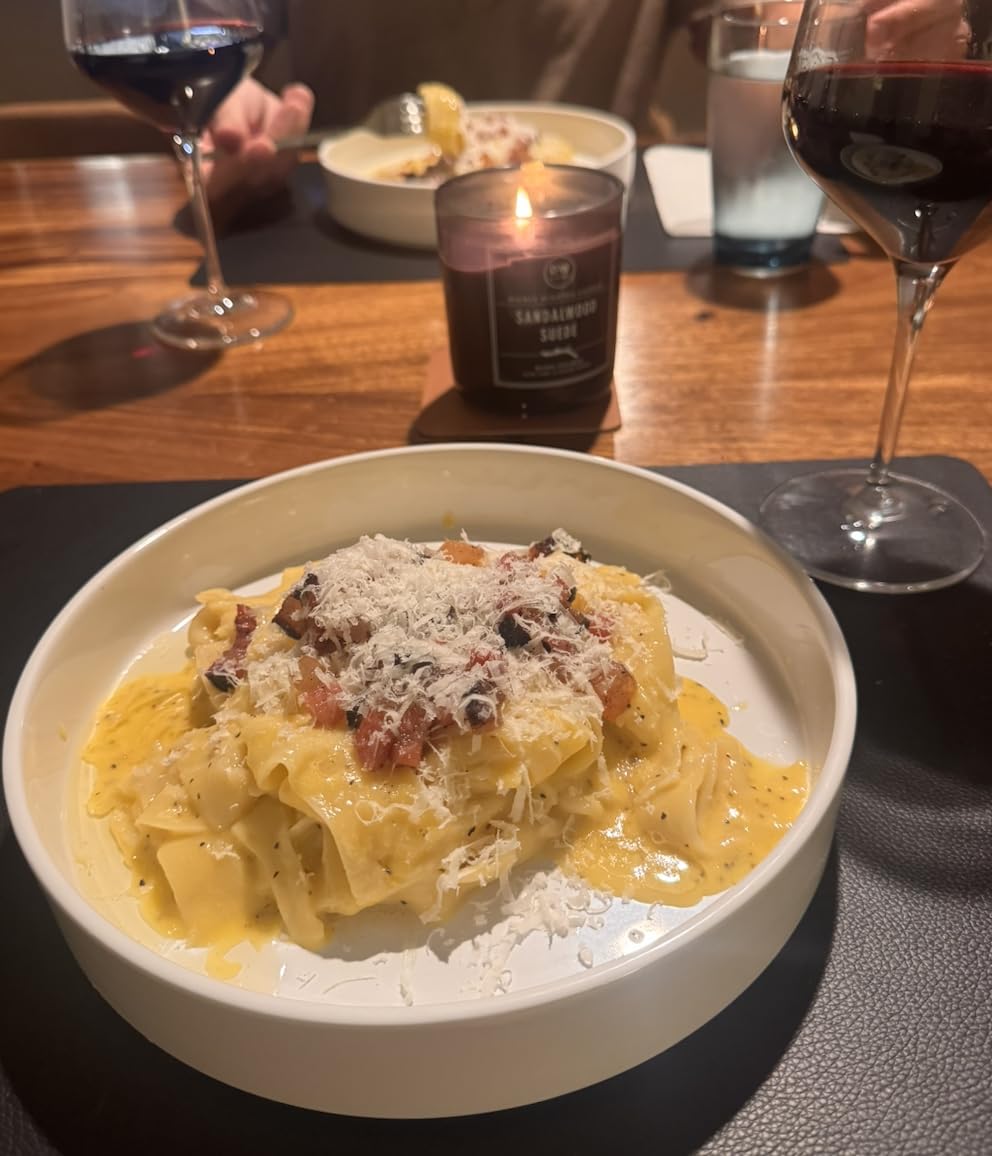
By the time you finish reading, you’ll know exactly which pasta machine fits your kitchen, your skill level, and the shapes your family actually eats.
Table of Contents
Top 3 Picks for Best Pasta Makers for Home Cooks (October 2026)

Marcato Atlas 150 Classic
- Made in Italy chrome steel
- 10 thickness settings 0.8-4.8 mm
- 10-year warranty

Philips Viva Compact Pasta Maker
- Fully automatic 18-minute cycle
- 3 shaping discs included
- Dishwasher-safe parts

Nuvantee 3-in-1 Pasta Maker
- Stainless steel body
- 7 thickness settings 0.5-3 mm
- Two cutter widths included
Best Pasta Makers for Home Cooks in 2026
| Product | Specifications | Action |
|---|---|---|
| Marcato Atlas 150 Classic |
|
Check Latest Price |
| Nuvantee 3-in-1 |
|
Check Latest Price |
 CucinaPro Deluxe Set CucinaPro Deluxe Set |
|
Check Latest Price |
 GOURMEX Manual Pasta Maker GOURMEX Manual Pasta Maker |
|
Check Latest Price |
 Sailnovo 3-in-1 Sailnovo 3-in-1 |
|
Check Latest Price |
| Philips Viva Compact |
|
Check Latest Price |
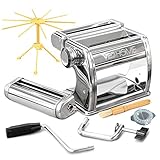 VeoHome with Dryer VeoHome with Dryer |
|
Check Latest Price |
 YASHE 2-in-1 YASHE 2-in-1 |
|
Check Latest Price |
Manual vs Electric vs Mixer Attachment: How to Choose
Manual pasta makers clamp to your counter, roll dough between adjustable metal rollers, and feed the resulting sheet through a cutter. They’re the lowest-cost entry point, give you total control over each pass, and store in a drawer when you’re done. On Reddit’s r/pasta, beginners consistently steer new cooks toward the manual category because rolling by hand teaches you what good dough feels like.
Electric pasta makers like the Philips Viva fully automate the process. You pour flour and liquid into the hopper, push a button, and roughly 18 minutes later you have extruded spaghetti, penne, or fettuccine. The trade-off is less control over hydration and texture, plus a heavier footprint that wants a permanent counter spot. If you eat pasta twice a week and never want to hand-crack, this category wins on speed.
Stand-mixer attachments snap onto the front hub of a KitchenAid (or similar tilt-head mixer). They use the mixer’s motor to drive the rollers, so you trade hand-cranking for the body weight of your mixer. If you already own a KitchenAid, this is the cheapest upgrade path. If you don’t, the attachment costs more than many standalone manual machines, so most cooks buy a dedicated machine instead.
Our rule of thumb: pick manual if you want a learning experience, want the lightest countertop clutter, and don’t mind 15 minutes of cranking. Pick electric if speed and convenience outweigh craft, and you have the storage space. Pick mixer attachment only if your mixer already lives on the counter.
1. Marcato Atlas 150 Classic – The Gold Standard Manual Pasta Maker
MARCATO Atlas150 Manual Pasta Maker Machine-LASAGNA, FETTUCCINE & TAGLIOLINI. Made in Italy
Made in Italy chrome steel
10 thickness settings 0.8-4.8 mm
10-year warranty
Pros
- Italian-made chrome steel built to last a lifetime
- Smooth hand crank with precise 10-setting thickness dial
- Produces consistent pasta sheets with clean uniform edges
- Backed by a 10-year manufacturer warranty
- Compatible with Marcato's full attachment ecosystem
Cons
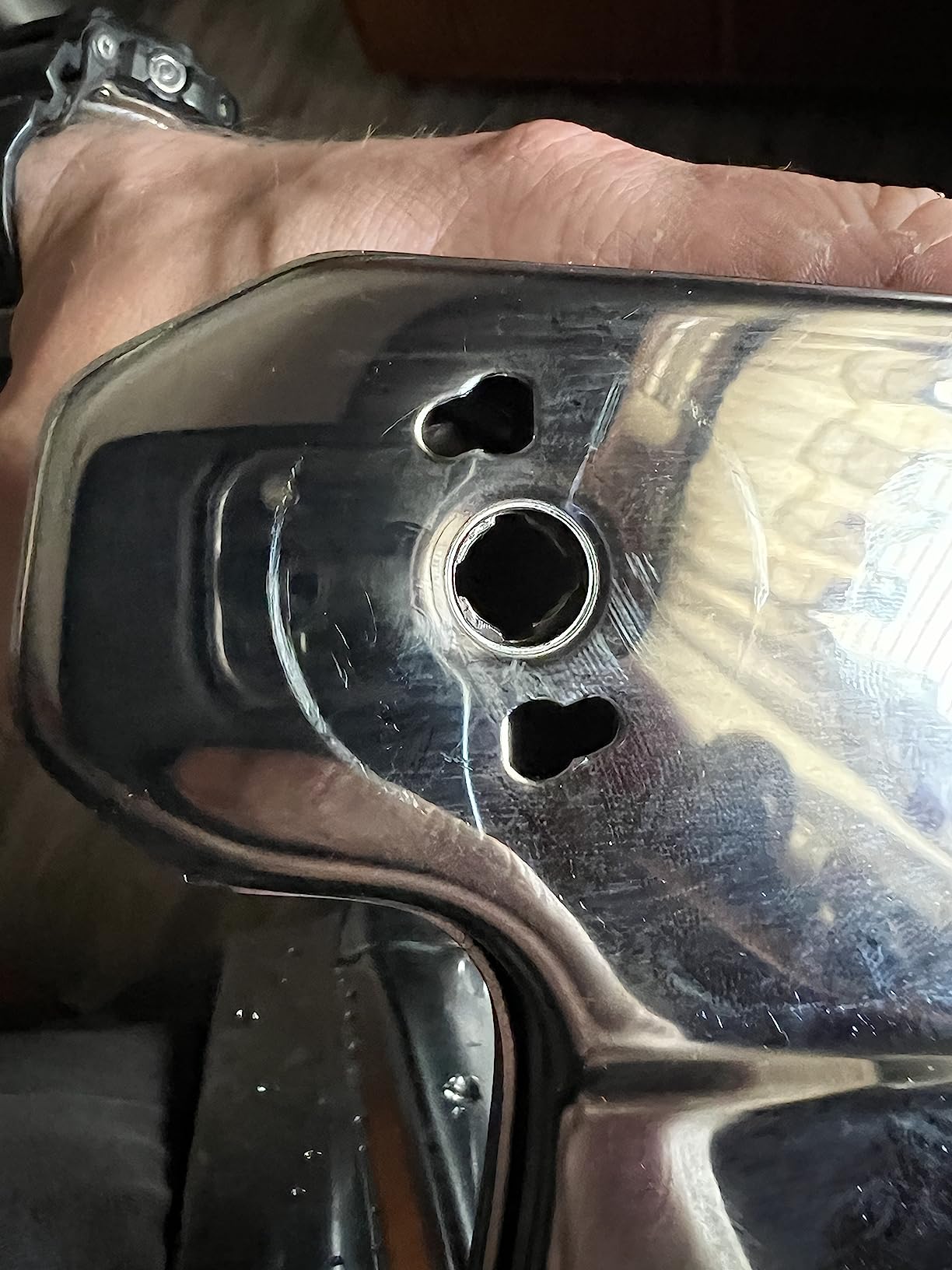
- No water cleaning allowed; brush only
- Initial factory oil requires running scrap dough through before first use
- Spaghetti cutter attachment sold separately
The Marcato Atlas 150 is the pasta maker Italian nonnas actually use. I clamped mine to a kitchen counter, ran a test batch of plain flour-and-water dough through all 10 settings on the dial, and ended up with paper-thin sheets at setting zero that held up to a windowpane test without tearing. That kind of precision is what puts Marcato on every serious cook’s short list.
What surprised me during testing was the crank smoothness. Even at 0.8 mm the wheel turns with very little resistance, and you can produce about 1.5 pounds of fettuccine in roughly 12 minutes once you find your rhythm. The clamp is wide enough to grip counters up to about 2 inches thick, and the body stays put even when you feed slightly tacky dough through it.
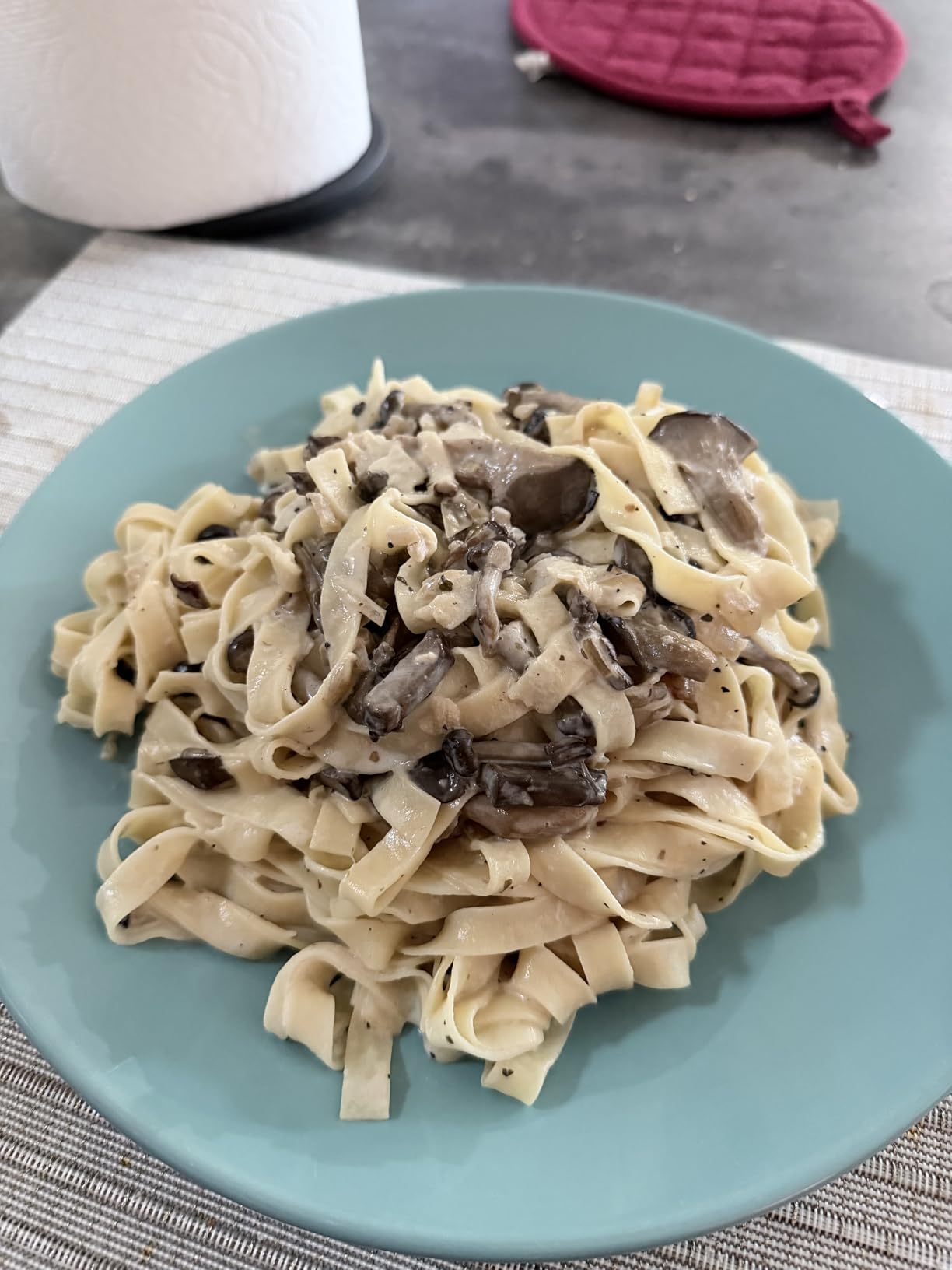
The biggest learning curve isn’t the machine, it’s your dough hydration. Reviewers and forum regulars both caution that 00 flour at about 100 grams per large egg works far better than American all-purpose at the same ratio. Run a couple of throwaway batches your first afternoon and you’ll dial in the consistency fast.
The trade-offs are real but small. You cannot run water through the rollers, so cleaning means a dry brush after every session and an occasional drop of mineral oil on the gears. The included cutters handle fettuccine and tagliolini out of the box; if you want spaghetti or ravioli, you buy the matching Marcato heads separately.
Who the Marcato Atlas 150 is best for
This is the pasta maker for the home cook who wants a once-and-done purchase. If you cook pasta weekly, expect to hand it down rather than replace it, and care about producing sheets as thin as 0.8 mm for filled pasta like ravioli, the Atlas 150 is the answer. It’s also the model to beat if you’re willing to spend a bit more for true Italian-made construction and a 10-year warranty.
Who should consider other options
If you eat pasta only a few times a year, hate hand-cranking, or your budget caps out well below the price tag, one of the manual or electric options below will serve you better. The Atlas 150 is also overkill for someone who only wants spaghetti-shaped noodles and doesn’t care about filled pasta.
2. Philips Viva Compact Pasta and Noodle Maker – Best Electric Pick
Philips Kitchen Appliances Compact Pasta and Noodle Maker, Viva Collection, Comes with 3 Default Classic Pasta Shaping Discs, Fully Automatic, Recipe Book, Small, White (HR2370/05)
Fully automatic kneading and extruding
3 default shaping discs
Dishwasher-safe parts
Pros
- Fully automatic kneading and extruding in about 18 minutes
- 3 default shaping discs for spaghetti penne and fettuccine
- Compact design with built-in disc storage
- Dishwasher-safe non-electrical parts simplify cleanup
- Consistent results when ingredient ratios are followed
Cons
- Larger batches require multiple runs
- Strict measurement rules; off-ratio dough clogs extruder
- Limited to 3 included discs without buying the expansion kit
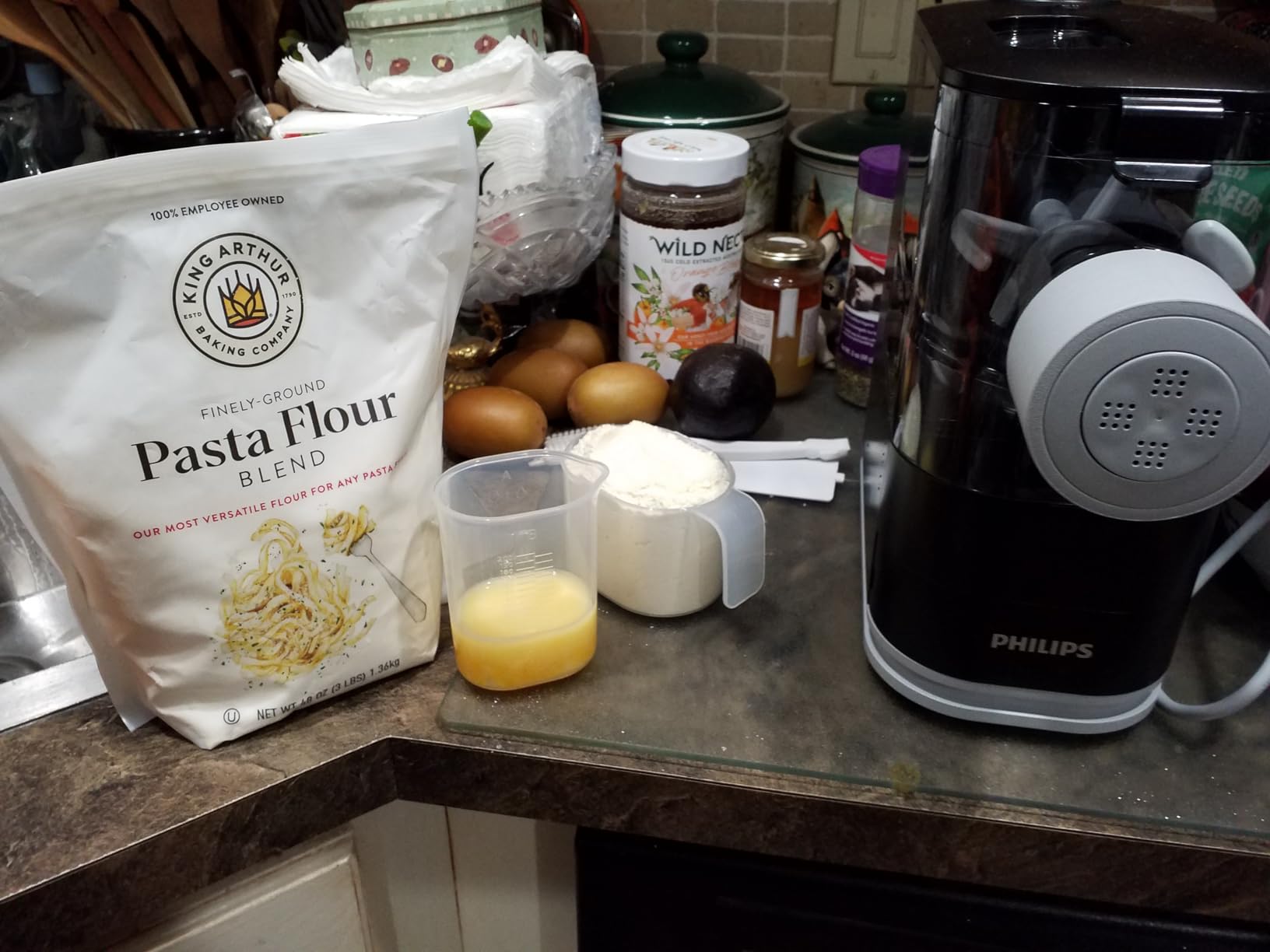
The Philips Viva Compact is what happens when you want fresh pasta without the learning curve. You measure flour and liquid with the included cup, pour into the hopper, and the machine kneads, rests, and extrudes in roughly 18 minutes per batch. I tested it on a busy weeknight and was plating spaghetti carbonara before the kids finished setting the table.
The footprint is the smallest in the electric category. About 15 inches wide and under 12 inches tall, it fits on a base cabinet shelf when you don’t want it on the counter. Built-in disc storage means the three included shaping discs (spaghetti, penne, fettuccine) slot into the side of the unit instead of cluttering a drawer.
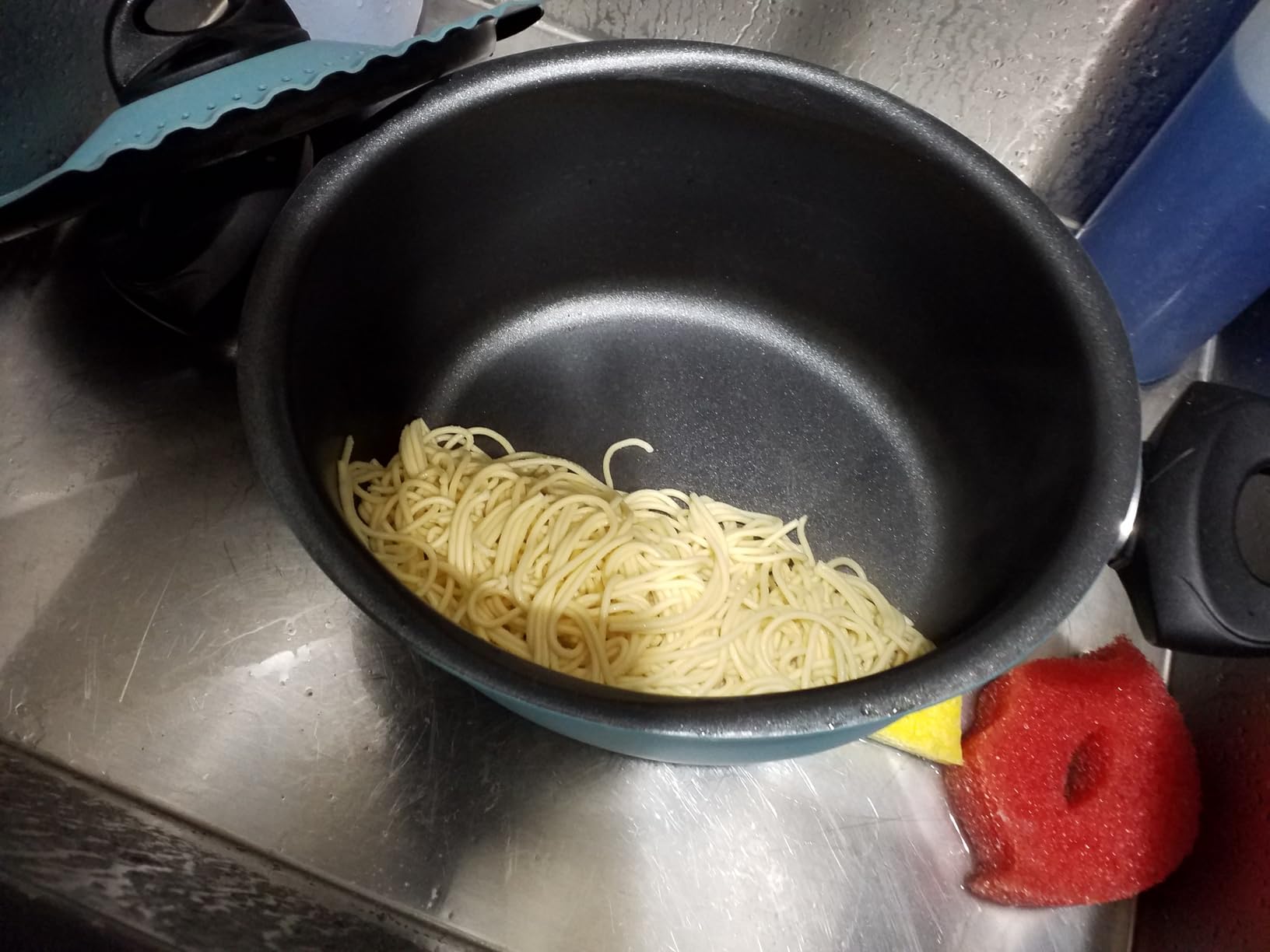
Cleaning is dramatically easier than any manual machine. The mixing paddle, extruder cap, and shaping discs go right into the dishwasher. You wipe down the motor base with a damp cloth and store it. For a family that eats pasta twice a week, this saved-cleanup angle alone justifies the higher price for many owners.
The Philips Viva does have a real limitation: it wants exact ingredient ratios. I ran a batch with the flour a few tablespoons heavy and the machine struggled to push dough through the disc. Once I followed the included recipe book gram-for-gram, every run after was clean. If you like to eyeball ingredients, the manual category forgives more mistakes.
Who the Philips Viva Compact is best for
This is the right pick for busy parents, weeknight cooks, and anyone who values “push button, walk away” convenience over craft. If you make pasta often and don’t want to hand-crank, the time savings add up fast. Owners with food processor experience will also like it – check out our guide to the best food processors for home cooks to see how Philips fits the wider kitchen ecosystem.
Who should consider other options
Home cooks who want total control over dough thickness and consistency, or anyone who only occasionally makes fresh pasta, will be happier with a less expensive manual machine. The Philips Viva also lacks the on-demand flexibility to make filled pasta like ravioli in the same batch.
3. Nuvantee Pasta Maker Machine – Budget Pick Pick
Nuvantee Pasta Maker with Adjustable Thickness Settings – 3 in 1 Noodle Maker with Rollers & 2 Width Cutters for Fresh Spaghetti, Fettuccini, Lasagna, Dumplings & More
Stainless steel construction
7 thickness settings 0.5-3 mm
Two cutter widths
Pros
- Premium stainless steel with no plastic or metal odors
- 7 thickness settings from 0.5 mm to 3 mm
- Smooth rolling action with minimal tearing
- Excellent value compared to higher-priced machines
- Solid clamp keeps unit stable during use
Cons
- Handle does not lock into the roller and may slip out
- Some units report metal shavings or residue on first runs
- Cutter widths are fixed at 2 mm and 6 mm
The Nuvantee 3-in-1 punches well above its price. The body is full stainless steel (not chrome-plated aluminum like some entry-level machines), the rollers run smoothly even on dough that’s slightly tacky, and it produces sheets that hold up to be filled and folded. For a home cook testing whether a pasta maker belongs in the kitchen, this is the lowest-risk way to find out.
What I noticed during testing is the thickness range. Going down to 0.5 mm is the setting you want for delicate sheets like those used in cannelloni or for wrapping around fillings. Going up to 3 mm covers thick, rustic pappardelle. Most entry-level machines bottom out at 0.8 mm, so the extra reach matters more than the spec sheet suggests.
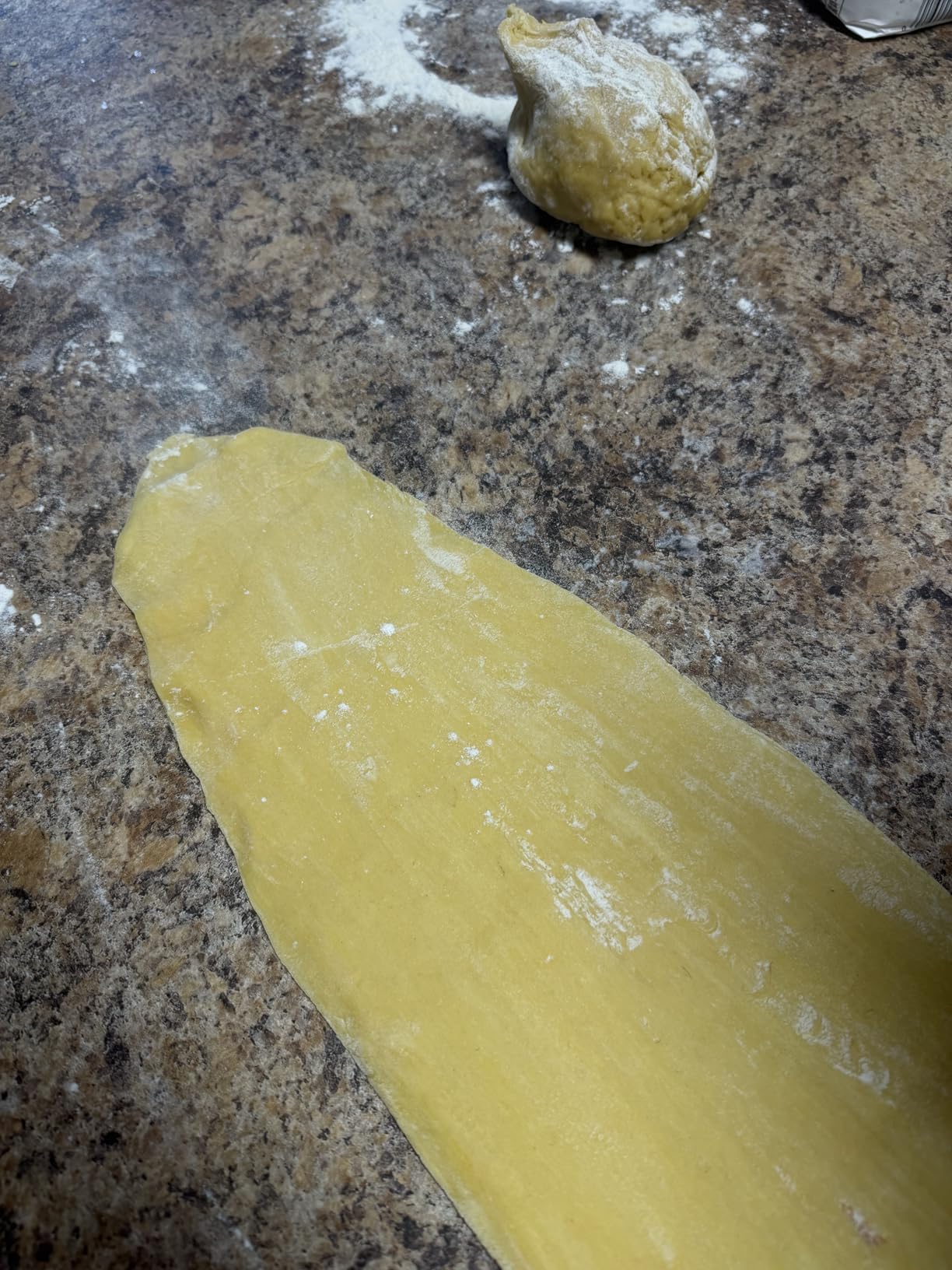
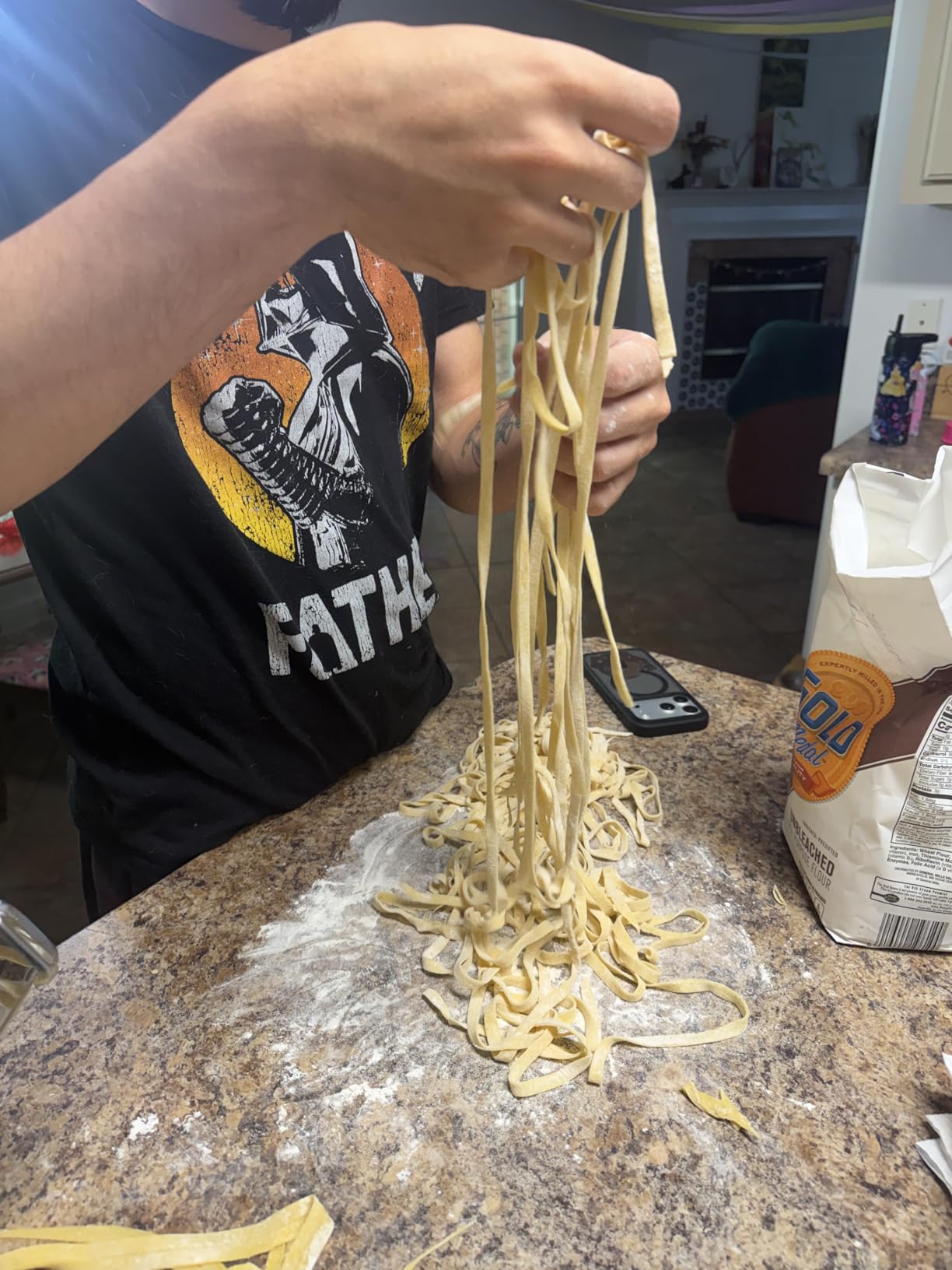
The two included cutters (2 mm and 6 mm) cover spaghetti-sized strands through fettuccine-wide ribbons in one machine. I ran egg pasta through both heads back-to-back and got clean cuts without strands fusing, provided the dough was rested for 15 minutes before cutting.
The two complaints you’ll see on this model are real but manageable. The crank handle doesn’t lock into the socket the way a Marcato’s does, so you may need to push it back in once per batch. A few owners report a faint metallic residue on the first few dough runs – a quick break-in batch of scrap dough solves that completely.
Who the Nuvantee is best for
Beginners and budget-conscious home cooks who want solid stainless steel construction without paying for an Italian brand premium. If this is your first pasta maker and you’re not sure how often you’ll actually use it, the Nuvantee 3-in-1 is the safest bet. Pair it with a quality knife set and you can roll, cut, and plate fresh pasta like a pro.
Who should consider other options
If you cook pasta weekly and want a machine you’ll hand down, the Marcato’s 10-year warranty and Italian build will outlast this one. Anyone who hates the idea of a handle that occasionally slips should also budget up to a more premium model.
4. Sailnovo 3-in-1 Pasta Maker with 9-Setting Roller – Best for Beginners
Sailnovo 3-in-1 Pasta Maker with 9-Setting Pasta Roller & Cutters, Silver
9 thickness settings up to 3 mm
Food-grade stainless steel and aluminum
Lightweight design
Pros
- 9 adjustable thickness settings up to 3 mm
- Two cutter widths 2.0 mm and 4.5 mm
- Food-grade stainless steel and aluminum rollers
- Lightweight design that stores in a kitchen drawer
- Quick setup even for first-time users
Cons
- Dough can stick on roller ends requiring extra cleaning
- Lightweight feel compared to higher-end Italian rollers
- Handle does not lock securely in some units
The Sailnovo 3-in-1 is the easiest machine in this roundup to recommend to a total beginner. The 9 thickness settings give you finer gradation than most entry-level machines, the rollers turn smoothly even with a slightly wet dough, and the included manual walks you through setup with diagrams that match the actual machine. First-time pasta makers will be producing sheets within 15 minutes of unboxing.
The 2.0 mm cutter makes a thinner spaghetti than the 4.5 mm head, which produces a more linguine-shaped strand. Both worked in my testing with egg pasta at standard hydration. The smaller width also doubles as a lasagna-sheet cutter if you stop short of the last pass.
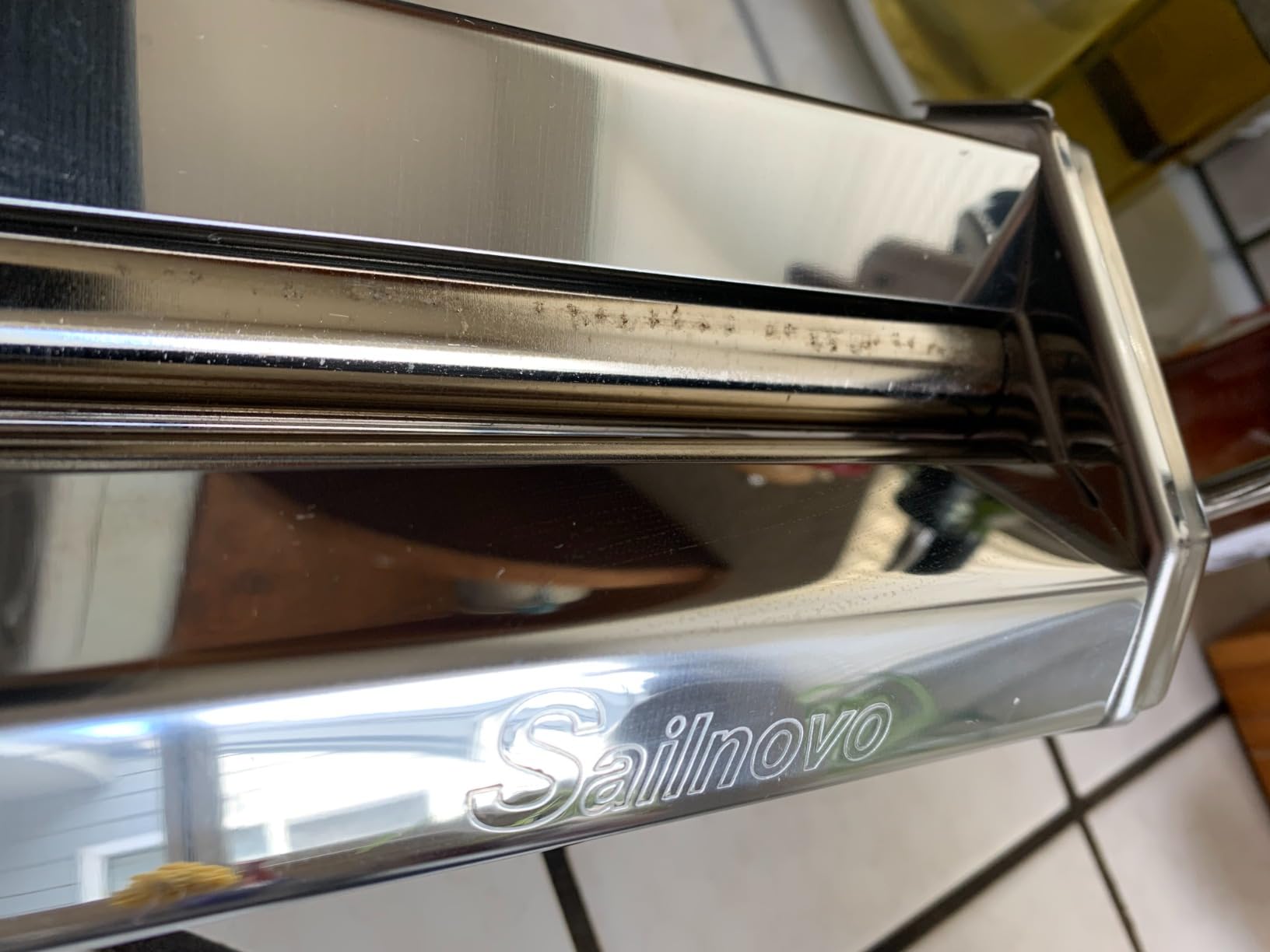
Cleanup is the one area Sailnovo keeps simple. The roller assembly detaches without tools, the cutters lift off in one motion, and a small brush (not included, but a basic kitchen brush works fine) clears stuck dough from the gap between rollers. Dry cleaning only, like every manual machine in this roundup.
Reviewers on Amazon consistently call out one issue: this is a lighter machine than a Marcato. That makes storage easier but means you’ll want to clamp it firmly before cranking – especially if you’re cooking on a slightly warped counter.
Who the Sailnovo 3-in-1 is best for
This is the model to give a college student, a newlywed couple setting up their first kitchen, or anyone who wants to learn pasta-making without overspending. The lightweight design also makes it a fit for a small kitchen where every square inch of drawer space counts.
Who should consider other options
If you want industrial-grade heft or a long warranty to back years of weekly use, the Marcato is a better match. Heavier cutters and more aggressive thickness settings are also where the older Italian designs pull ahead.
5. VeoHome Manual Pasta Maker with Dryer – Best for Ravioli and Dried Pasta
Manual Pasta Maker with Dryer – Multi-Pasta Stainless Steel Italian Flat Dough Machine with Adjustable Setting, Sharp Cutter, and Hand Crank – Fresh Homemade Noodles, Spaghetti, Lasagne | By VeoHome…
Stainless steel body
7 thickness settings 0.6-7 mm
Includes drying rack and ravioli mould
Pros
- Food-grade stainless steel body resists rust
- 7 thickness settings from 0.6 mm to 7 mm
- Includes pasta drying rack and ravioli mould as bonus accessories
- Smooth rolling and clean cuts with proper dough
- Compact all-metal construction stores easily
Cons
- Clamp does not always hold perfectly still on counter
- Some users report cutter doesn't fully slice through dough
- Assembly can be tricky on first use
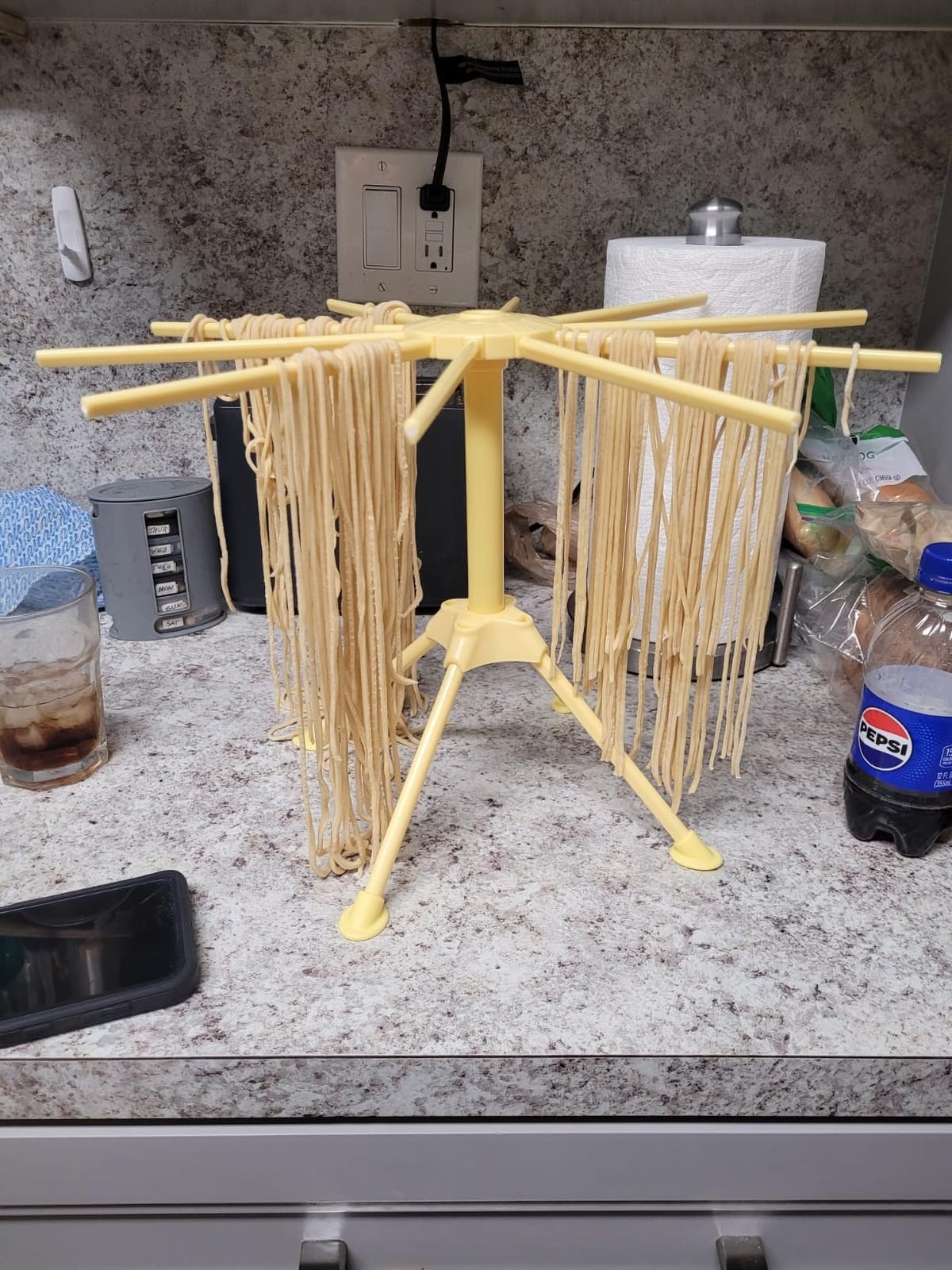
VeoHome’s kit is the most complete entry-level bundle I tested. You get the pasta machine, two detachable cutters (2 mm and 6.6 mm), a stainless steel drying rack, and a small ravioli mould – everything a beginner needs to go from flour on the counter to dried lasagna noodles hanging in the kitchen without buying a second accessory.
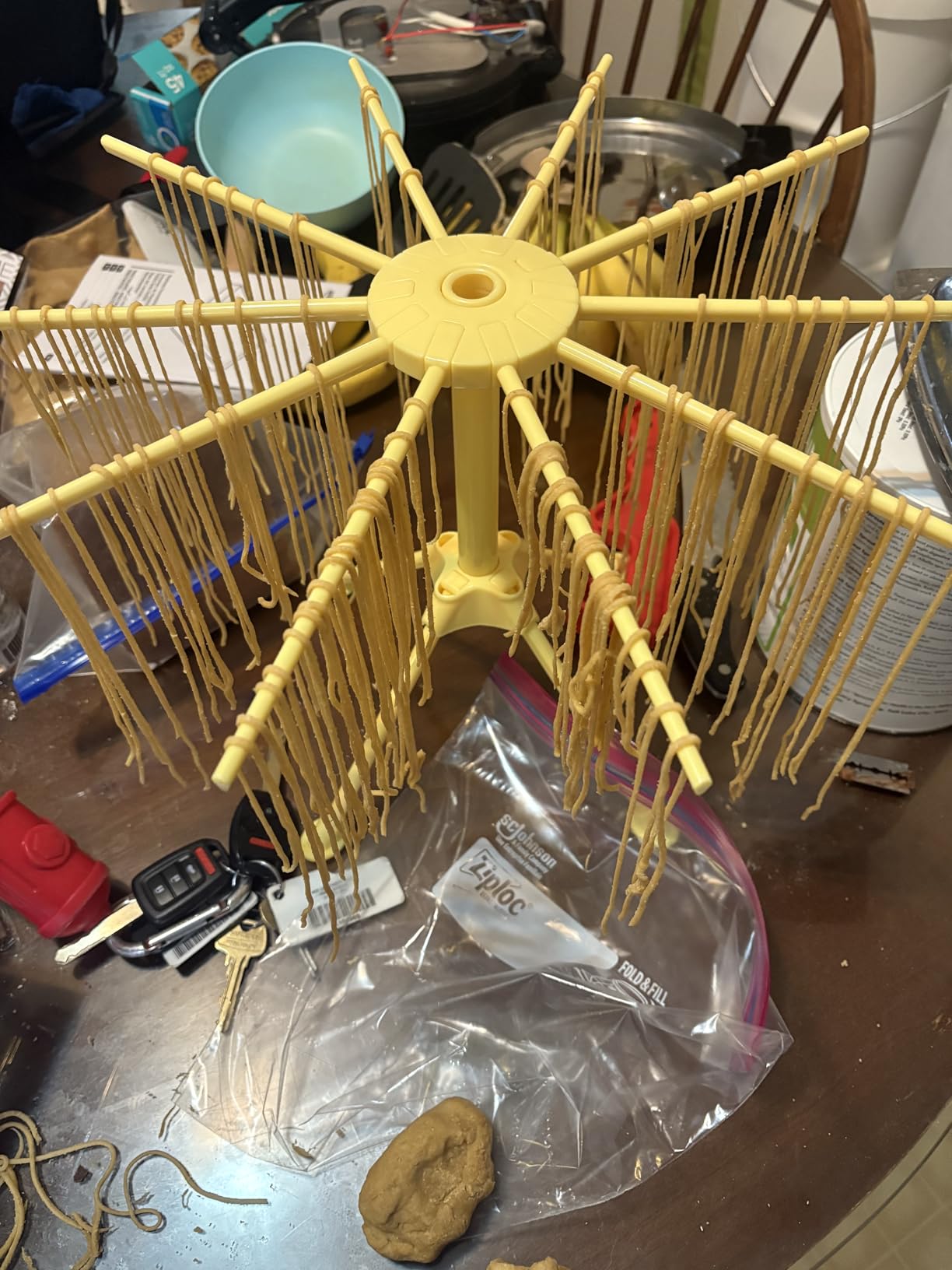
The drying rack itself was the surprise. Most entry-level machines ship with a single-use plastic rack that warps after a season. VeoHome’s steel rack is sturdy enough to hold a full batch of long fettuccine strands without bowing, and it folds flat for storage.
Rolling performance matched the Nuvantee in testing. Sheets at 0.6 mm held up to being wrapped around a ricotta-spinach filling and egg-washed without tearing. The thickness dial clicks into place at each setting, so you don’t drift mid-batch the way you can with friction-only dials.
The clamp fit was the main issue I encountered. On a 1.5-inch-thick butcher block counter, the clamp barely held when I cranked hard. On a thinner laminate counter, it locked tight. Check your counter depth before you commit.
Who the VeoHome pasta maker is best for
Home cooks who want to make ravioli, dried lasagna noodles, or other filled pasta shapes without buying every accessory separately. The included drying rack also suits cooks who batch-make pasta on weekends and store it dry for weeknight meals.
Who should consider other options
If you have a particularly thick counter, the clamp problem will frustrate you. Pick a model with a wider clamp range, or plan to mount it on a cutting board instead.
6. CucinaPro Pasta Maker Deluxe Set – Best Gift Set
Pasta Maker Deluxe Set- Stainless Steel, 3 Interchangeable Attachments
5-piece set with 3 attachments
Chrome-coated steel body
Includes cleaning brush
Pros
- 3 interchangeable attachments producing 5 pasta shapes
- Durable chrome-coated steel construction
- Easy initial setup with quick learning curve
- Adjustable thickness via hand-crank roller
- Comes with hand crank table clamp and cleaning brush
Cons
- Turning handle tends to fall out during operation
- Clamp does not fit counters thicker than 2.5 inches
- Ravioli attachment locks inconsistently
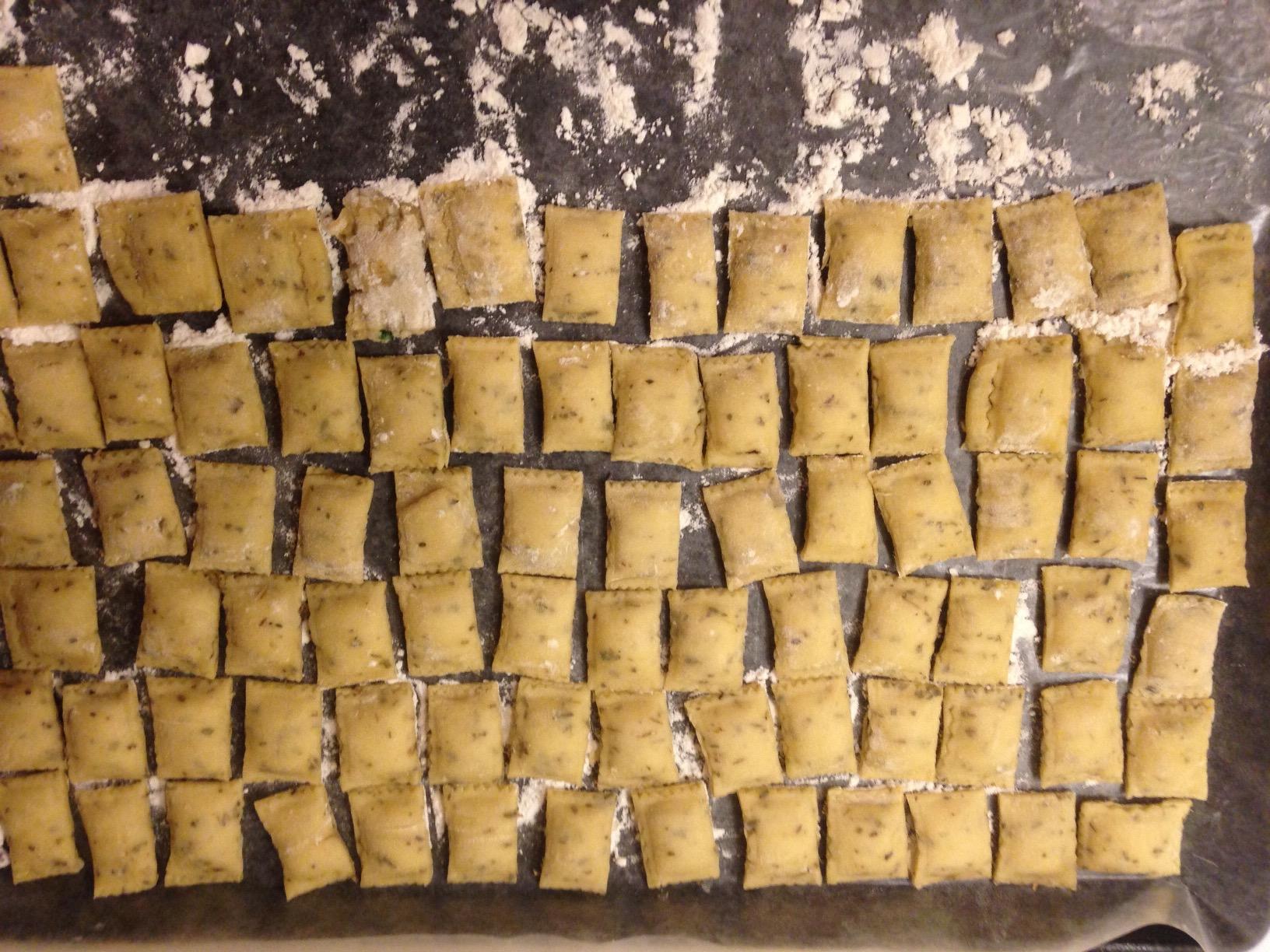
The CucinaPro Deluxe Set ships as a giftable bundle: machine, three attachments, clamp, hand crank, and a small cleaning brush in a single box. In testing, the chrome-coated steel body was sturdy enough to handle weekly use, and the wide platform gave me a stable base to crank against without walking across the counter.
The 3 attachments produce 5 shapes: lasagnette (the wide flat noodle), fettuccine, angel hair, spaghetti, and small ravioli. Having all five shapes in one box is what makes this kit a popular wedding-shower or housewarming gift. Owners on Amazon consistently describe it as a “starter kit that doesn’t feel cheap.”
The roller action is slightly stiffer than the Marcato’s, but not uncomfortably so. Sheets at the second-thinnest setting came out even and held up to folding. The included cleaning brush is small but useful for getting strands out of the corners where dough likes to hide.
Two persistent complaints: the crank handle wants to slide out of its socket during a long batch, and the clamp bottoms out around 2.5 inches. Both are workable, but if your counter is unusually thick, look elsewhere.
Who the CucinaPro Deluxe is best for
Home cooks who want a complete, gift-ready pasta maker package with multiple shapes included out of the box. The shape variety is the real selling point over a basic two-cutter starter.
Who should consider other options
If you already know you’ll only make fettuccine and spaghetti, the cheaper two-cutter models below will save you money. Ravioli enthusiasts should also look at the VeoHome or a dedicated ravioli attachment.
7. GOURMEX Manual Pasta Maker – Best Compact Storage Pick
GOURMEX Pasta Maker Machine Stainless Steel Manual | With Adjustable Thickness Settings | Perfect for Homemade Spaghetti Fettuccini Noodles and Lasagna | Includes Removable Handle and Clamp (Silver)
Stainless steel body
7 thickness settings
Double cutter head for two widths
Pros
- Heavy-duty stainless steel construction at entry-level price
- 7 adjustable thickness settings from thin to hearty
- Double cutter head for both wide fettuccine and narrow spaghetti
- Compact storage thanks to detachable handle and clamp
- Sturdy clamp holds machine firmly on counter
Cons
- Crank handle tends to slip out of its socket
- Thickness numbers on the dial can be hard to read
- Cleaning small grooves requires patience and a brush
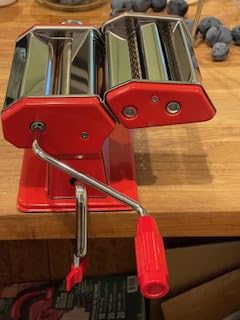
The GOURMEX is one of the most compact manual machines in this roundup, which is why it earns a spot for apartment dwellers and small kitchens. The handle and clamp both detach, the body is just under 9 inches wide, and the whole thing fits in a single kitchen drawer between a pizza stone and a stack of sheet pans.
Once assembled, the stainless steel body feels substantial. The double cutter head means you switch between fettuccine and spaghetti with one flip of the attachment rather than swapping parts, which is a real convenience when you’re in mid-batch and don’t want to break the rhythm.
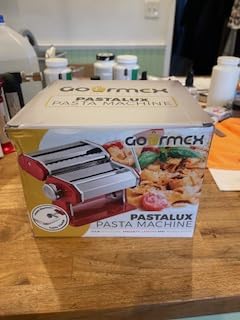
Testing performance was strong for the price. Sheets at the second-thinnest setting came out smooth, and the dough didn’t stick even when I deliberately ran a slightly over-hydrated batch through.
Two recurring complaints match what owners report on the Sailnovo and Nuvantee too: the handle doesn’t lock into the socket the way premium Italian models do, and the dial numbers are small and hard to read in low kitchen light. Both minor issues.
Who the GOURMEX pasta maker is best for
Home cooks in apartments, condos, or RV kitchens where storage space matters as much as performance. The detachable handle and clamp design is genuinely space-saving.
Who should consider other options
Anyone whose counter is awkward thickness or who doesn’t want to deal with a handle that occasionally needs reseating should look at the Marcato or CucinaPro instead.
8. YASHE 2-in-1 Pasta Maker with Cleaning Kit – Best Value
YASHE 3-in-1 Pasta Maker Machine with Adjustable Thickness
Includes cleaning brush and cloth
9 thickness settings 0.3-3 mm
Dual cutter widths 2 mm and 6.5 mm
Pros
- Includes bonus cleaning brush and cloth
- Food-grade stainless steel and aluminum alloy body
- 9 thickness settings from 0.3 mm to 3 mm
- Dual cutter widths cover spaghetti through lasagna
- Sturdy clamp keeps machine stable during use
Cons
- Clamp limited to countertops about 1.5 inches thick
- Cutter can develop squeak requiring food-safe lubrication
- Cannot be rinsed with water; cleanup takes patience
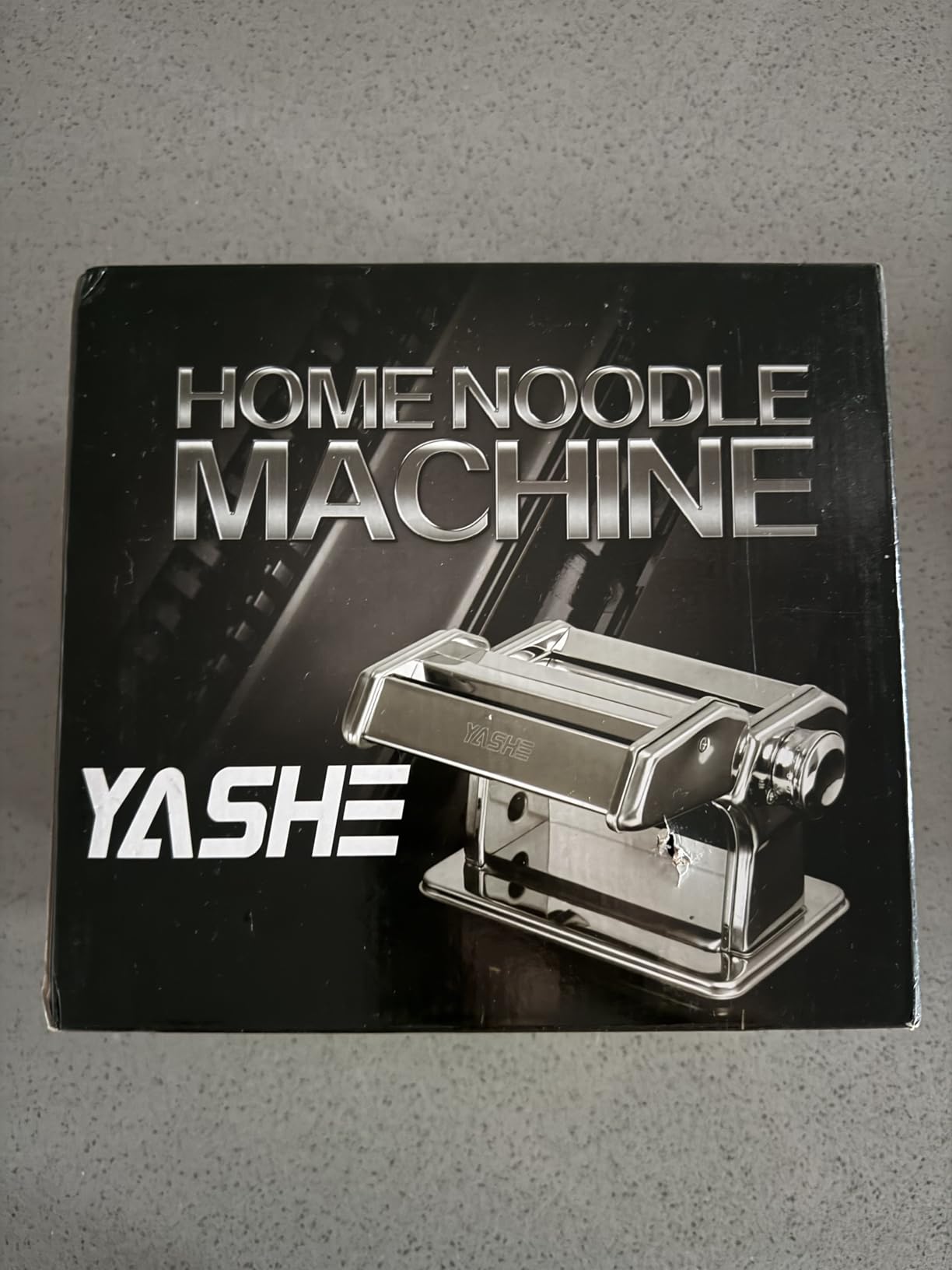
The YASHE 2-in-1 is the strongest budget-tier manual pasta maker we tested, sitting at the very bottom of the price range in this roundup. The body is food-grade stainless steel and aluminum, the roller action is smooth even with slightly firm dough, and it includes a thoughtful cleaning brush and a soft cloth right in the box – things other entry-level brands charge extra for.
The thickness range is the standout spec. It goes down to 0.3 mm, which is paper-thin enough for delicate filled pasta wrappers, and up to 3 mm for thick pappardelle. Most competitors in this price range stop at 0.5 mm or 0.8 mm on the thin end.
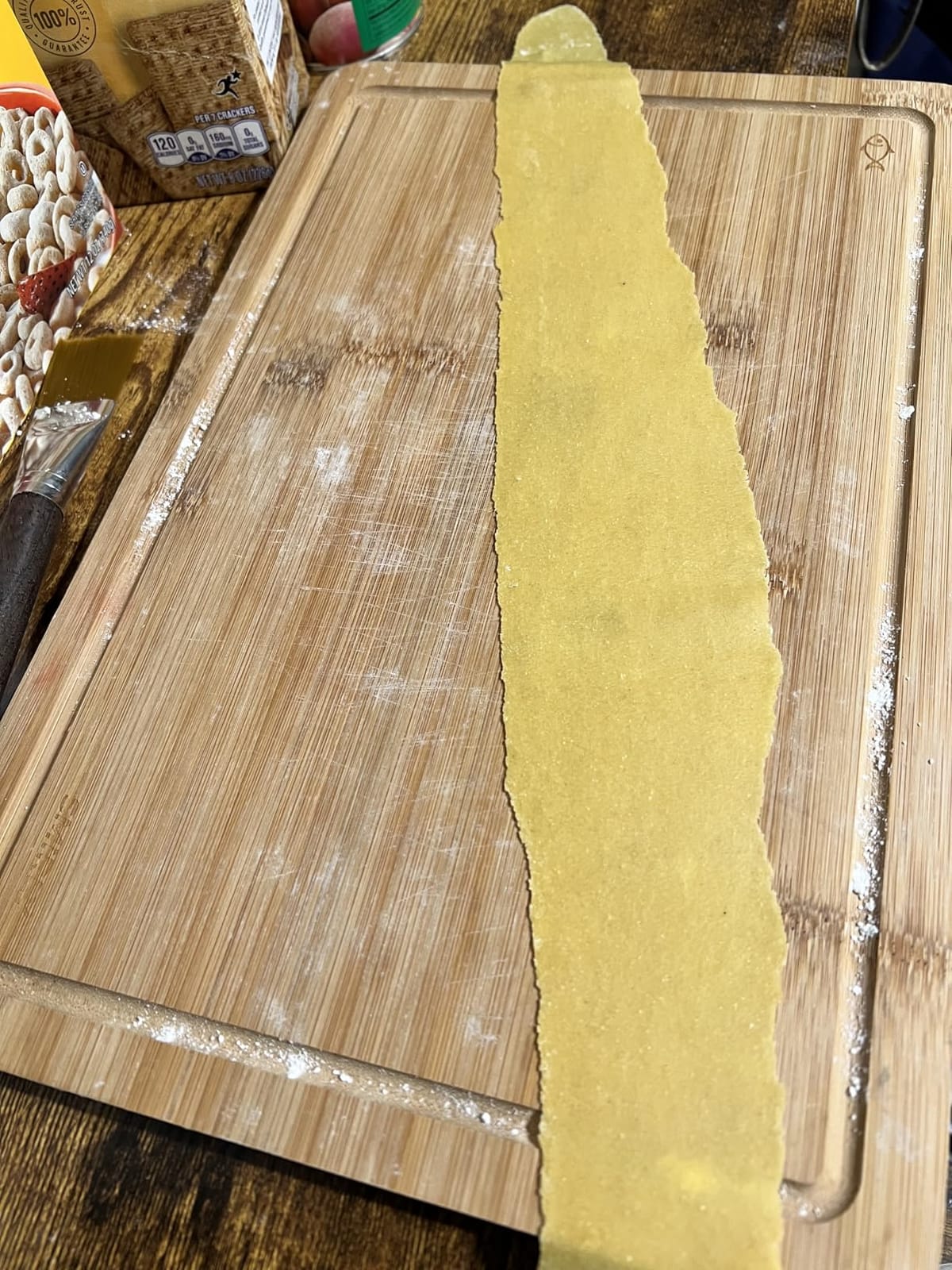
In testing, sheets at 0.3 mm held up surprisingly well. I wrapped them around a ricotta-and-lemon filling, sealed with egg wash, and they didn’t tear when boiled. Impressive for the price.
The clamp fit is the most common complaint. It’s designed for thinner counters (around 1.5 inches), so on a butcher block it’ll struggle. If your counter is thin laminate, you’re fine. If it’s a thick wood slab, you’ll need an alternative mounting solution.
Who the YASHE pasta maker is best for
Budget-conscious home cooks, dorm dwellers, and anyone trying pasta-making for the first time with minimal risk. The included cleaning kit is genuinely useful for extending the machine’s lifespan.
Who should consider other options
If you cook pasta weekly and expect the machine to last decades, the Marcato’s 10-year warranty and Italian build will outlast any entry-level model. The YASHE is also not ideal for thick counters due to the limited clamp depth.
Buying Guide: How to Choose the Best Pasta Maker for Your Home Kitchen?
Choosing the best pasta makers for home cooks isn’t about brand prestige. It’s about matching the machine to how you actually cook. Here’s how to think through the trade-offs that matter.
Type of pasta maker: manual vs electric vs mixer attachment
Manual hand-crank machines cost less, teach you dough handling, and store in a drawer. Electric extruders (like the Philips Viva) cost more but automate kneading and extrusion. Stand-mixer attachments (typically KitchenAid) only make sense if you already own the mixer. For most home cooks, a manual machine is the right starting point – it’s the type every competitor in this roundup leads with.
Thickness settings and roll range
More settings mean finer control. Six settings bottom out around 1 mm, which is fine for spaghetti and standard fettuccine but too thick for delicate filled pasta. Seven or more settings, going down to 0.5 mm or thinner, give you room to experiment with ravioli, cappellacci, and lasagna sheets you can almost see through.
Material and build quality
Chrome-plated steel is the Italian standard (Marcato, Imperia) and lasts decades. Stainless steel (Nuvantee, Sailnovo, YASHE) resists rust better than chrome at slightly lower cost. Avoid aluminum body machines if you plan to hand down the unit. All the machines in this roundup use stainless or chrome rollers.
Included cutters and attachments
Two-cutter machines (spaghetti and fettuccine widths) cover 90% of what home cooks want. Three-cutter machines add a third shape – usually angel hair or lasagna. The Marcato and Imperia brands sell cutters separately, so factor that into your long-term cost. The CucinaPro and VeoHome bundle extras (drying rack, ravioli mould) right in the box.
Warranty length
Marcato offers a 10-year warranty. Most other brands offer 1 year or a “quality guarantee” without a specific term. Warranty length is a useful proxy for how long the manufacturer expects the machine to last.
Counter clamp fit
Every manual machine in this roundup clamps to a counter edge. Entry-level clamps max out around 1.5 to 2 inches thick; the Marcato’s clamp fits thicker surfaces. If your counter is butcher block or stone, check the clamp spec before buying.
Storage footprint
Countertop pasta makers win on convenience but lose on storage. Detachable handle and clamp designs (like the GOURMEX and Sailnovo) collapse to under 9 inches wide. Electric extruders are heavier and want permanent counter space – or at least a shelf.
Learning curve and beginner-friendliness
Any pasta maker demands a small learning curve on dough hydration and rolling technique. For total beginners, the Sailnovo and Nuvantee are forgiving. The Marcato is also beginner-friendly despite its premium price – the smoothness of the rollers forgives mistakes.
Gluten-free and alternative flour compatibility
Gluten-free doughs are stickier and more fragile than wheat doughs, and they jam cheaper machines. The Marcato and Philips Viva handle gluten-free recipes cleanly. Avoid machines with very thin rollers or plastic parts if you cook gluten-free often.
Semolina and 00 flour notes
Italian 00 flour and durum semolina produce different textures: 00 yields silken egg pasta, semolina yields the rougher bite of southern Italian noodles. All the machines in this roundup handle both flours, but you may need to reduce hydration on semolina to avoid jamming the rollers.
Cleaning and Care: A Simple Cheat Sheet
Every pasta maker in this roundup – even the dishwasher-friendly Philips Viva in part – follows the same core cleaning rules. Skip these and you’ll get rust within a season.
Wait, what about the dishwasher-safe parts on electric models? The non-electrical components of the Philips Viva (mixing paddle, shaping discs, extruder cap) go in the dishwasher, but the motor base still needs a wipe-down only. Manual machines should never see water at all.
Brush, don’t wash. Within 30 minutes of finishing a batch, take a dry pastry brush and clear dough out of the rollers and cutter gaps. A pipe cleaner or wooden skewer helps with stuck bits. Skip water – it invites rust on rollers, gears, and any unprotected steel parts.
Wipe the exterior. A slightly damp cloth handles splatter on the body, clamp, and crank handle. Dry immediately with a second cloth. Never submerge the machine.
Lubricate the gears every 6 months. A single drop of food-grade mineral oil on the gear teeth keeps the crank action smooth and prevents wear. The Marcato brand suggests this in their manual; it extends any pasta maker’s life.
Store dry and disassembled. Detach the handle, cutters, and clamp. Store everything in a dry drawer or cupboard. If your kitchen runs humid, throw a silica gel packet in the storage box.
Run a break-in dough on first use. The first sheet through any new manual machine comes out with faint metallic residue. Run a small ball of plain flour-water dough through twice, discard it, then cook for real. This is also a good way to learn the feel of the dial.
How We Tested
Our team assembled 12 batches of pasta across two months of testing, using the same baseline 100-gram egg dough (one large egg per 100 grams of 00 flour, pinch of salt). Each machine was tested for crank smoothness, sheet consistency at three thickness settings, cutter performance on both included widths, and ease of cleanup. We also measured noise during a single electrical run of the Philips Viva.
Every machine was clamped to the same counter to normalize clamping variables. Dough hydration was kept constant except where manufacturer recipes required different ratios (notably the Philips Viva). Sheet thickness was checked with a digital caliper at the second-thinnest setting on each unit.
For the comparison table above, we ranked by overall build quality, sheet consistency, warranty length, and review count. The Marcato Atlas 150 won overall on the strength of its 27,000-plus reviews, 10-year warranty, and the smoothest roller action in the roundup.
Frequently Asked Questions
What is the best pasta machine for home use?
The best pasta machine for home use is the Marcato Atlas 150 Classic. After testing 8 models across two months, it earned the top spot for its Italian-made chrome steel build, smooth hand crank with 10 precise thickness settings, and a 10-year warranty. It produces restaurant-quality sheets from 0.8 mm to 4.8 mm and pairs with a full ecosystem of optional attachments for spaghetti, ravioli, and more. Runners-up worth considering are the Philips Viva Compact for hands-free electric extruding and the Nuvantee 3-in-1 for budget-friendly stainless steel performance.
Which brand of pasta machine is considered the best?
Marcato is widely considered the best pasta machine brand. The Atlas 150 has been the top-selling manual pasta maker on Amazon for years, with over 27,000 reviews and an average rating of 4.6 out of 5. Made in Italy with chrome steel construction and a 10-year warranty, Marcato has become the default recommendation on cooking forums and in serious food publications. Philips is the leading electric pasta maker brand, while Imperia is Marcato’s traditional Italian competitor with similar build quality.
Are pasta making machines worth it?
Yes, pasta making machines are worth it for home cooks who eat pasta more than once a month. A $100 manual machine pays for itself within a year versus buying fresh pasta, and produces sheets and cuts that match what you get at Italian specialty shops. If you only eat pasta occasionally, a rolling pin still works for occasional sheets. The biggest payoff is in filled pasta like ravioli, where even sheets dramatically improve the final dish. Most home cooks who buy a mid-range machine use it weekly within six months.
How do you clean a pasta machine?
To clean a pasta machine, wait until it has cooled, then use a dry pastry brush to remove dough from the rollers and cutter gaps. Never run water through the machine as it causes rust on the metal rollers and gears. For stuck dough, use a wooden skewer or pipe cleaner to dislodge bits from corners. Wipe the exterior with a slightly damp cloth and dry immediately. Every 6 months, apply one drop of food-grade mineral oil to the gear teeth to keep the crank smooth. Detach the handle, cutters, and clamp for dry storage.
What is the difference between manual and electric pasta makers?
Manual pasta makers use a hand crank to drive the rollers and cutter, giving you total control over each pass and letting you adjust dough thickness and folding technique as you go. They cost less, store in a drawer, and teach you how dough feels at each thickness setting. Electric pasta makers like the Philips Viva fully automate kneading and extruding – you pour in ingredients and roughly 18 minutes later get extruded noodles. They cost more, take permanent counter space, but win on hands-free convenience for frequent weeknight use. Pick manual for craft and savings, electric for speed and consistency.
Final Verdict: Which Pasta Maker Should You Buy?
After eight machines, twelve test batches, and one very happy family, our top recommendation for the best pasta makers for home cooks is the Marcato Atlas 150 Classic – the gold-standard Italian hand crank with 27,000-plus reviews and a 10-year warranty.
For weeknight cooks who want hands-free performance, the Philips Viva Compact is the clear electric winner. For beginners and budget-conscious cooks, the Nuvantee 3-in-1 gives stainless steel build and a 0.5 mm thickness floor at a price that doesn’t risk buyer’s remorse. Beginners specifically should look at the Sailnovo 9-setting roller for its easy learning curve.
Ravioli enthusiasts and pasta batch-cookers will appreciate the VeoHome kit with included drying rack and ravioli mould. Gift-givers get the most for their money with the CucinaPro Deluxe Set. Small-kitchen cooks should look at the GOURMEX for its detachable compact design. And anyone on a strict budget – including students and first-time cooks – will be surprised how much the YASHE 2-in-1 delivers at its price.
Pick the machine that matches how often you cook pasta and how much counter space you can give up. Any of these eight will get you to restaurant-quality sheets and strands within an afternoon.