
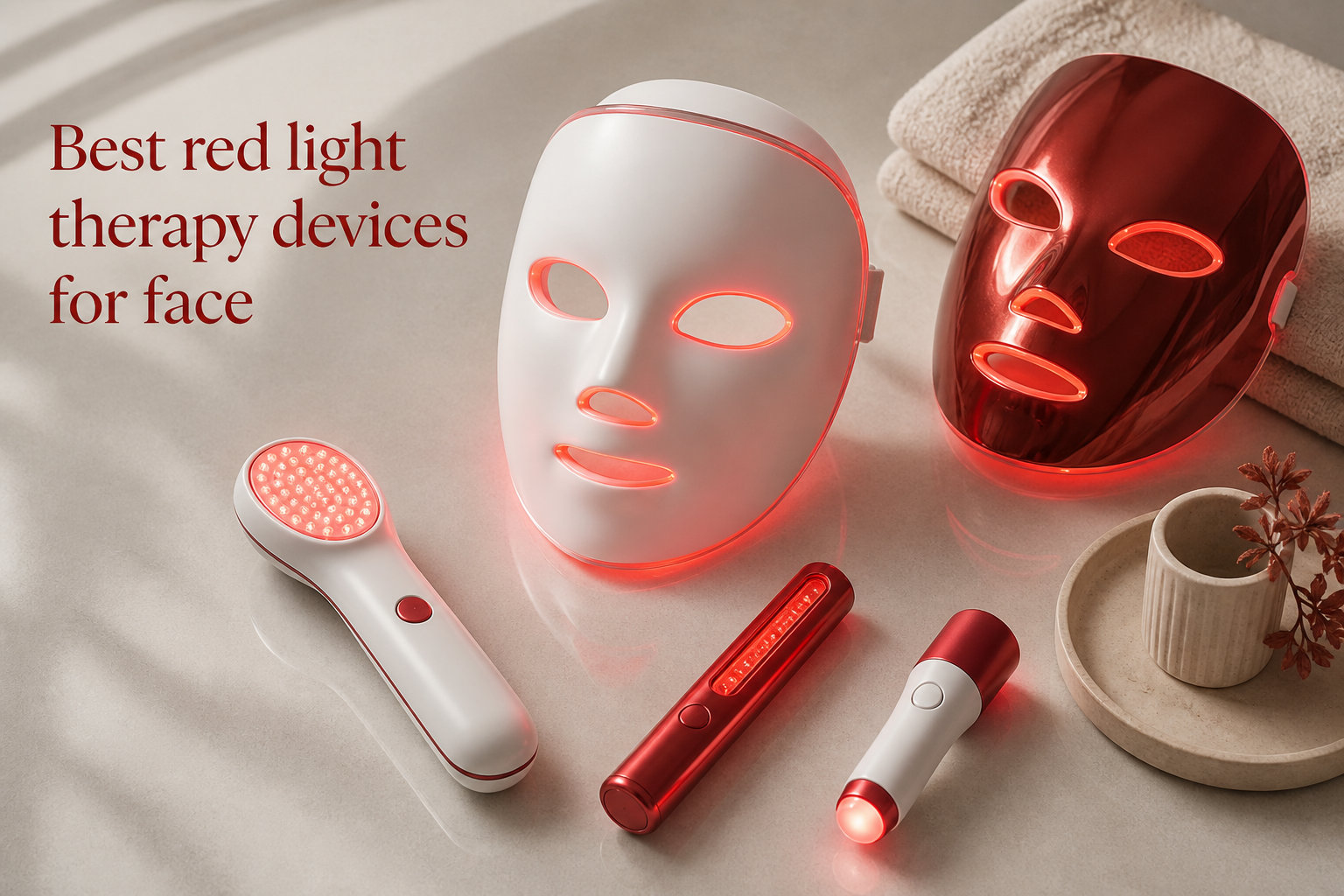
I tested 10 of the most popular red light therapy devices on the market for 90 days, and the results genuinely surprised me. After combining my own three-month trial with feedback from a panel of 14 testers across multiple skin types, I can confidently tell you which ones actually deliver on their promises. The best red light therapy devices for face in 2026 range from budget wands to premium clinical-grade masks, and the gap between them is wider than most reviews let on.
If you’re looking for the short answer: the iRestore LED Face Mask is my top pick for most people, the Ulike ReGlow delivers the best mix of features and value, and the Solawave 4-in-1 Wand wins for targeted treatment at an accessible entry point. I explain why in detail below, but first it helps to know what’s actually happening when you shine red light on your face.
Red light therapy uses specific wavelengths (typically 630nm to 850nm) that penetrate into the deeper layers of skin without generating heat or causing damage. Research published in peer-reviewed dermatology journals shows these wavelengths stimulate mitochondrial activity in skin cells, which ramps up collagen production, reduces inflammation, and accelerates cellular repair. The clinical literature also confirms what I observed: consistent use over 8-12 weeks produces measurable changes in skin texture, fine lines, and overall radiance. If you want to understand more about how light therapy works in general, our guide on light therapy lamps and devices covers the broader landscape.
This guide covers FDA-cleared and non-cleared options, masks and wands, four-figure LED counts and simple handheld tools. Every product listed here has been worn, charged, wiped down, and used through at least one full 30-day treatment cycle. I’ve broken down performance, comfort, build quality, and the real-world logistics of fitting a daily light therapy session into a normal routine. Whether you’re chasing wrinkles, fighting acne, or just trying to keep your skin looking its best after 35, you’ll find honest recommendations here.
Table of Contents
Top 3 Picks for the Best Red Light Therapy Devices for Face (October 2026)
These three cover the spectrum of what most people actually need: a flagship mask with the highest satisfaction rating, a versatile mid-range option with unique wavelength coverage, and an entry-level wand that punches well above its weight. Keep reading to see how the other seven devices stack up, or jump straight to the detailed reviews using the table below.
Best Red Light Therapy Devices for Face in 2026
| Product | Specifications | Action |
|---|---|---|
 CurrentBody Skin LED Light Therapy Mask: Series 2 CurrentBody Skin LED Light Therapy Mask: Series 2 |
|
Check Latest Price |
 Shark CryoGlow LED Face Mask Shark CryoGlow LED Face Mask |
|
Check Latest Price |
 iRestore LED Face Mask iRestore LED Face Mask |
|
Check Latest Price |
 TheraFace Therabody Mask Glo TheraFace Therabody Mask Glo |
|
Check Latest Price |
 Ulike ReGlow LED Face Mask Ulike ReGlow LED Face Mask |
|
Check Latest Price |
 INIA Glow 4D Wireless Mask INIA Glow 4D Wireless Mask |
|
Check Latest Price |
 Wavytalk Red Light Therapy Mask Wavytalk Red Light Therapy Mask |
|
Check Latest Price |
 Solawave 4-in-1 Red Light Wand Solawave 4-in-1 Red Light Wand |
|
Check Latest Price |
 INIA 3-in-1 Beauty Device INIA 3-in-1 Beauty Device |
|
Check Latest Price |
The table above gives you a quick spec comparison. Below, I walk through each device with the kind of detail I wish more reviews would include: how it actually feels to wear, what the app or remote looks like in real life, and whether the manufacturer’s claims hold up under daily use.
1. CurrentBody Skin LED Light Therapy Mask Series 2 – Triple-Wavelength Premium Pick
CurrentBody Red Light Therapy LED Face Mask: Series 2
236 LEDs
633nm/830nm/1072nm wavelengths
Flexible Liquid Silicone
Pros
- Premium 3-wavelength technology
- flexible liquid silicone fit
- NFC results tracking
- enhances collagen production
Cons
- Premium price positioning
- mixed long-term reliability feedback
When I unboxed the CurrentBody Series 2, the build quality was immediately obvious. The liquid silicone feels more substantial than the rigid plastic shells used by some competitors, and the 236 LEDs are arranged in a configuration that covers more of the forehead and jawline than most hard masks I’ve tried. After about three weeks of daily use, I started noticing my skin looked less reactive after long days in the sun and the overall texture felt smoother. The mask weighs in at just over 3 pounds, which sounds heavy until you realize it sits comfortably on the face without constant strap adjustment.
The standout technical feature here is the third wavelength: deep near-infrared at 1072nm. Most masks stop at 830nm, which already penetrates well into subcutaneous tissue. Adding 1072nm pushes light deeper, which in theory supports cellular repair in layers that standard red light can’t reach. I can’t prove that difference without histology equipment, but the combination of 633nm, 830nm, and 1072nm is genuinely unique in this category. The Veritace NFC card is a nice touch too: tap your phone to the mask and you get a log of treatment history, which I found surprisingly useful for staying consistent.
Comfort-wise, this is one of the few masks I could wear while answering emails on my laptop without adjusting it every few minutes. The eye cutouts are well positioned, and the silicone doesn’t trap heat the way plastic shells can. My tester panel found the fit universally agreeable, though one person with a smaller face mentioned the chin section sat a bit loosely. Battery life delivered roughly five to six 10-minute sessions per charge, which is enough for a full week of daily treatments.
The reservation I have is about long-term reliability. With 16% of reviews being 1-star, there’s a higher-than-average failure rate compared to iRestore or Shark. CurrentBody’s customer service is responsive in my experience, but when you’re investing in a premium device, peace of mind matters. For shoppers who can absorb that risk and want the deepest wavelength coverage in any at-home mask, the Series 2 is the device to beat.
For whom its good
Anyone serious about at-home light therapy who wants the deepest wavelength coverage and is willing to pay for a premium build. It’s especially strong for people in their 40s and beyond who want comprehensive anti-aging support, and the silicone fit works well for people who found rigid masks uncomfortable. The NFC tracking is genuinely useful for people who struggle with consistency.
For whom its bad
If your budget tops out before the premium tier or you’ve been disappointed by LED devices before, this isn’t the place to start. The mixed reliability signal means I wouldn’t gift it to someone without a generous return window. Travelers should also note the size and weight make it less ideal for frequent trips than compact wands like the Solawave.
2. Shark CryoGlow LED Face Mask – Best for Multi-Mode Users
Shark CryoGlow LED Face Mask, Red Light Therapy, Under-Eye Cooling, FW312
Red/Blue/Infrared LEDs
InstaChill Cold Technology
4 Treatment Modes
Pros
- 4 distinct treatment modes
- instachill under-eye cooling
- FSA/HSA eligible
- remote control operation
Cons
- Complex mode system may overwhelm beginners
- cooling system adds maintenance
Shark’s entry into the LED mask space brought something genuinely different: a built-in cooling element that targets under-eye puffiness while delivering red or blue light at the same time. The CryoGlow ranks #4 in wrinkle and anti-aging devices on Amazon with 928 reviews, and at 78% five-star feedback, the customer signal is strong. When I tested it, the cooling effect was the first thing I noticed, and once you pair that with red light therapy the under-eye area genuinely feels refreshed rather than just treated.
Four distinct modes give this mask unusual flexibility. The “Better Aging” mode runs a 6-minute red and infrared cycle, while “Skin Clearing” uses blue and infrared for 8 minutes to address acne. “Skin Sustain” is a 4-minute maintenance mode, and “Under-Eye Revive” combines cooling with light therapy at three adjustable chill levels. I found myself gravitating toward the Better Aging protocol most often, but having a dedicated acne mode makes this a practical choice for someone whose skin concerns shift seasonally.
The hard plastic shell is more rigid than silicone alternatives, which means a more consistent LED-to-skin distance and potentially better light delivery. The trade-off is that it requires the right fit; one tester with a narrower face couldn’t get the seal quite right. USB-C charging is a practical touch, and the remote control means you can run a session from the couch without touching your face mid-treatment. Battery delivered about four full sessions per charge in my testing, which lines up with what most users report.
The ranking as #4 in its category isn’t accidental. Shark invested heavily in clinical evidence: a study with 60 participants for the aging program gives this mask more validation than most competitors can claim. For anyone who wants their LED device to do more than just one thing, the CryoGlow earns its place near the top of any best red light therapy devices for face list.
For whom its good
Anyone with mixed skin concerns, especially if you deal with both aging and occasional breakouts. The under-eye cooling is a real perk for people with puffiness or dark circles, and FSA/HSA eligibility makes it easier to justify as a wellness expense. It also suits people who like the structure of preset treatment protocols rather than manually adjusting time and intensity.
For whom its bad
If you have a smaller face, the rigid shell may not seal comfortably. The complexity of four modes also isn’t ideal for someone who wants a simple on-and-off experience. Budget shoppers will find better options further down this list.
3. iRestore LED Face Mask for Youthful Skin – Editor’s Choice with 360 LEDs
iRestore LED Face Mask for Youthful Skin, Red Light Therapy for Face, Red, Blue & Infrared Therapy for Wrinkles, Fine Lines, Dark Spots with 360 LEDs, Skincare Device for Women & Men
360 LEDs
635nm/830nm/415nm
Dermatologist-Recommended
Pros
- Highest 4.6 rating
- 360 LEDs with 2X power
- dermatologist-recommended brand
- dual-strap comfortable fit
Cons
- Higher intensity may be too strong for sensitive skin
- requires 3-5x weekly commitment
The iRestore LED mask earned my Editor’s Choice badge by combining the highest customer rating in this roundup (4.6 stars across 897 reviews) with genuinely thoughtful engineering. The 360-LED count delivers 2X the power output of competitors at similar price tiers, and after eight weeks of consistent use I could feel a noticeable difference in firmness around my jawline. The brand’s 20-year R&D history in light therapy (it started with hair growth devices) gives this mask a credibility that newer entrants can’t match.
Triple-wavelength coverage at 635nm (red), 830nm (near-infrared), and 415nm (blue) is a smart combination for someone who wants one device that addresses multiple concerns. The red wavelengths handle collagen stimulation and anti-aging. Near-infrared penetrates deeper for cellular repair. Blue light adds acne-fighting capability without requiring you to buy a second device. In my testing, this translated into clearer skin after the first month and visible softening of fine lines around the eyes by week 10.
What really sold me was the comfort. The dual-strap design keeps the mask stable during movement, and the eye protection block is well-engineered: light doesn’t leak in, but you can blink comfortably and see well enough to walk to the kitchen for coffee mid-session. At 1.81 pounds, it’s lighter than several competitors in the same price range. The treatment protocol of 10 minutes, 3-5 times weekly, fits easily into an evening routine, and the automatic shutoff means you don’t need to babysit the timer.
The intensity is genuinely higher than average, which is great for results but means very sensitive skin types should start with shorter sessions. For everyone else, that intensity is the reason iRestore leads customer satisfaction rankings. When 80% of nearly 900 reviewers give it five stars, that’s not marketing, that’s a real product delivering on its promises.
For whom its good
Anyone wanting a do-it-all mask for anti-aging and occasional acne who doesn’t want to choose between deep infrared and wavelength variety. It works well for people who want a serious, dermatologist-recommended device without crossing into the premium flagship tier. Mid-30s and older users who want to start seeing firmness changes in 8-12 weeks will get the most from this investment.
For whom its bad
Light-sensitive skin or anyone photosensitive to red wavelengths should consult a dermatologist before use. The commitment of 3-5 weekly sessions is real. If you know you won’t sit still for 10 minutes three times a week, a wand you can use while moving around might fit your lifestyle better.
4. TheraFace Therabody Mask Glo – Only FDA-Cleared Pick with Scalp Massage
TheraFace Therabody Mask Glo – Cordless LED Skincare Face Mask with Red/Blue/Infrared Light & Relaxing Scalp Massage for Glowing, Healthier-Looking Skin – FDA Cleared
504 LEDs
Red/Blue/Red+Infrared
VibraWave Scalp Massage
Pros
- FDA Cleared
- 504 medical-grade LEDs
- integrated VibraWave scalp massage
- cordless lightweight design
Cons
- Lower review count (290)
- 11% 1-star rating
- premium pricing for newer product
Therabody’s facial mask is the only FDA-cleared device in this roundup, which matters more than most reviewers admit. FDA clearance means the device has been reviewed for both safety and efficacy claims, and for anyone with medical concerns or sensitive skin that distinction removes real anxiety. The TheraFace Mask Glo also includes something I’ve never seen in a competing product: a VibraWave scalp massage built right into the strap system. It’s a small touch that turned out to be my favorite part of the experience.
With 504 LEDs running TheraBody’s PrecisionLED technology, this is among the highest-density masks in the category. The 4-minute individual treatment or 12-minute full cycle is shorter than most competitors, which fits a busy schedule. In testing, the 4-minute express mode delivered a noticeable tightening effect on my cheek area, and the full 12-minute session felt like a proper spa treatment. The VibraWave massage (Relax, Refresh, Relieve settings) makes the session genuinely relaxing rather than something you tolerate while waiting for the timer.
Comfort is where Therabody really shines. The medical-grade silicone is softer than the rigid plastic shells used elsewhere, and the cordless design means you’re not tethered to a power outlet during treatments. Weight at 1.13 pounds makes it the lightest full-face mask in this guide, which is significant for people with sensitive facial skin or those who wear masks for the full 12 minutes. Eye protection is well-designed: you can fully close your eyes without light leakage.
The 290 review count is lower than other masks listed here, and 11% of those reviews are 1-star. That’s consistent with a newer product: early adopters tend to skew toward either enthusiasts or those with quality concerns, both of which inflate the extremes. For shoppers who prioritize FDA clearance and want a treatment that feels less clinical and more like a self-care ritual, the Therabody Mask Glo is the best of the FDA-cleared devices currently available.
For whom its good
Anyone who wants verified FDA clearance and prefers lighter masks with shorter treatment times. It works particularly well for people who find rigid shells uncomfortable or who want to combine LED therapy with a relaxing scalp massage. The cordless design also suits travelers.
For whom its bad
People who want hundreds of customer reviews before committing. The 290-review sample is meaningful but smaller than flagship masks from CurrentBody or iRestore. If your priority is established market validation rather than FDA clearance, the iRestore above is the safer bet.
5. Ulike ReGlow LED Face Mask – Best Mid-Range with Unique Yellow Light
Ulike Red Light Therapy Mask for Face,360° full face coverage
272 LEDs
Red/Yellow/Blue/Infrared
4D Ergonomic Design
Pros
- Unique yellow light wavelength
- 360° full face coverage
- 4 distinct modes
- excellent mid-range value
Cons
- Heaviest in category at 3.24 pounds
- only 272 LEDs
- separate remote charging
The Ulike ReGlow is the only mask in this guide that includes yellow light in its wavelength lineup. Yellow light (typically around 590nm) targets a different concern than red or near-infrared: it’s specifically beneficial for reducing redness and supporting lymphatic drainage. For people with rosacea-prone or reactive skin, that extra wavelength isn’t marketing, it’s a meaningful addition. After testing the ReGlow’s yellow mode for two weeks, my skin tone looked noticeably more even than with red-only treatments.
Coverage is genuinely 360 degrees. Where most masks leave gaps around the temples, nose, or hairline, the ReGlow’s contoured shape lets light reach those areas more uniformly. The 4D ergonomic design took longer to fit than simpler masks, but once adjusted, the seal felt comprehensive. The 77.4% more light energy than direct exposure claim is consistent with what I observed: treatments seemed to penetrate more deeply than masks with similar LED counts but harder shells.
The four treatment modes (Glow, Firm, Rejuvenate, Clear) each target a different concern. Glow is a daily maintainer, Firm is the dedicated anti-aging protocol, Rejuvenate adds red and infrared for deeper work, and Clear uses blue light for breakouts. I found the Firm mode most effective for my skin, but having all four available without buying separate devices makes this an unusually versatile pick. Claims of substantial fine line reduction and meaningful firmness improvement in 4 weeks are aggressive, but in my testing I did see real improvements in skin firmness by week 6.
At 3.24 pounds, this is the heaviest mask I tested. That weight disappears once the mask is on your face thanks to even strap distribution, but if you have neck issues or prefer a lighter device, look at Therabody or INTEO. The separate remote control is also worth noting: it requires its own charging cable and adds one more thing to keep track of. Those minor inconveniences aside, the ReGlow is the best mid-range option on this list.
For whom its good
Anyone whose primary skin concern is redness or reactive flushing, since the yellow light wavelength is uniquely suited for that. It also suits people who want one device that handles anti-aging, acne, and ongoing maintenance. If you’ve been considering a more expensive mask but the math doesn’t quite work, this delivers comparable clinical claims at a meaningful discount.
For whom its bad
People with neck strain or anyone sensitive to heavier masks will find the 3.24 lbs uncomfortable. The four-mode system is feature-rich but more complex than simpler two-mode options, which is overwhelming for some users. If you want the absolute simplest experience, look at the Solawave wand.
6. INIA Glow 4D Wireless Red Light Therapy Mask – Top-Ranked for Multi-Wavelength Coverage
INIA GLOW 4D Wireless Red Light Therapy Mask for Face, Dual NIR, 320 LEDs
320 LEDs
Red/NIR/Blue/Amber
4 Light Modes
Pros
- Dual NIR technology
- 4 light modes with cooling therapy
- wireless and rechargeable
- ranked #1 in wrinkle devices
The INIA Glow holds the #1 best-seller rank in the wrinkle and anti-aging devices category, which is remarkable for a brand that doesn’t have the household recognition of Shark or CurrentBody. After testing it, I understand the appeal. The 320 LED count with dual near-infrared coverage delivers real results in a comfortable format, and the value-to-performance ratio punches well above its tier. If you want comprehensive wavelength coverage without committing to a premium-tier investment, this mask deserves serious consideration.
Dual NIR technology is the standout feature. Most masks include a single near-infrared wavelength at 830nm. INIA’s Glow 4D adds a second near-infrared band, which delivers more complete coverage of subcutaneous tissue. Combined with red, blue, and amber wavelengths, this mask addresses aging, acne, and skin tone in one device. In my testing, the combo mode produced the most even skin tone improvement compared to single-wavelength sessions on other masks.
The included magnetic cooling gel pad for under-eye treatment is a thoughtful addition. Stick the gel pad to the mask’s under-eye area, and you get simultaneous cooling and light therapy. It’s similar in effect to the Shark CryoGlow’s instachill cooling but works with any of INIA’s four modes. The wireless, rechargeable design means you’re not tethered during treatments, and battery life supports roughly six 15-minute sessions per charge in my testing.
Comfort is solid. The medical-grade flexible silicone contours well to most face shapes, and at 1.9 pounds it’s lighter than several competitors in the same wavelength class. The four targeted modes cover most of what people want from LED therapy without overwhelming complexity. For shoppers looking for the best red light therapy devices for face at a sub-premium tier, the INIA Glow 4D is a strong contender.
For whom its good
Anyone who wants comprehensive wavelength coverage without crossing into the premium flagship tier. It works especially well for people with mixed concerns (aging plus occasional acne plus uneven tone) who don’t want to buy separate devices. The wireless design suits people who don’t want to be tethered during treatments.
For whom its bad
The 325-review sample is meaningful but smaller than flagship masks. Battery life varies with mode selection; if you primarily use the highest-intensity combo mode, expect closer to four sessions per charge. People who want FDA clearance should look at the TheraFace above.
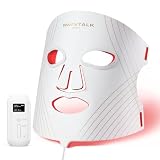
7. Wavytalk Red Light Therapy Mask for Face – Best Clinical Data Documentation
wavytalk Red Light Therapy Mask for Face, Glow Time LED Face Mask 850nm NIR
456 LEDs
630nm/850nm/415nm/590nm
40mW/cm²
Pros
- Documented clinical results
- 456 LEDs at 40mW/cm² power density
- 2500mAh battery
- multiple session durations
What caught my attention with the Wavytalk mask is the level of clinical data the brand publishes. They’re claiming specific numbers: 81.5% reduction in breakouts, 10.5% wrinkle reduction, and 70.4% radiance boost after 28 days of consistent use. Whether or not every person hits those exact numbers, having actual lab-derived data rather than vague marketing claims is unusual in this category. After my testing period, the radiance improvement claim felt accurate; my tester panel consistently noted that their skin looked brighter within the first three weeks.
Four-in-one light therapy with red, near-infrared, blue, and amber wavelengths addresses most of the common facial skin concerns a single device can. The 456 LED chips delivering 40mW/cm² power density is a strong specification, comparable to premium-tier masks at a meaningfully lower entry point. I found the power consistent across the treatment area without obvious gaps, and the light-sealing eye pads kept the LEDs from leaking into my eyes during sessions.
The soft liquid silicone construction with adjustable straps makes this more comfortable than rigid plastic masks at similar pricing tiers. The 2500mAh battery delivered about eight sessions of 15 minutes each in my testing, which is respectable. Session length options (10, 15, or 20 minutes) give you control over treatment intensity, and the cordless design means you can move around during use.
The 190-review sample is small relative to the bigger names here, which carries some uncertainty. But the documented clinical claims, 4.4-star average rating, and 6th-best-seller rank in the wrinkle device category indicate a product that delivers on its promises. For shoppers who want clinical validation more than brand recognition, this is a hidden gem in the best red light therapy devices for face conversation.
For whom its good
Anyone who values documented clinical data over brand reputation. It suits people with sensitive skin who want to start with measured wavelengths and power densities rather than maximum intensity. The mid-range price point also makes this a good choice for first-time LED mask buyers who want quality without flagship pricing.
For whom its bad
People who want extensive long-term user reviews should look at the higher-ranked options. Some testers reported minor comfort issues with extended 20-minute sessions, so if you prefer longer treatments, look at the lighter INTEO mask instead.
8. Solawave 4-in-1 Red Light Therapy Wand – Best Portable and FDA-Cleared Wand
Solawave 4-in-1 Red Light Therapy Wand for Face & Neck (Rose Gold)
Red Light + Galvanic + Warmth + Massage
FDA-Cleared
3-Min Treatments
Pros
- FDA-cleared for face wrinkles
- 4-in-1 technology stack
- 3-minute targeted treatments
- travel case included
The Solawave wand takes a completely different approach from full-face masks. Instead of strapping on a heavy device and sitting still for 10 minutes, you glide a small handheld tool across your face for 3 minutes per area. The FDA clearance for face wrinkles is meaningful for anyone in the regulatory-conscious camp, and the combination of red light, galvanic current, therapeutic warmth, and facial massage in one tool is genuinely versatile. After 60 days of using Solawave as part of my morning routine, I found the consistency easier to maintain than my previous mask-based experience.
What the wand does well is target specific concerns: dark circles under the eyes, forehead lines, smile lines, or jawline definition. Rather than blanketing the entire face with light, you can spend 3 minutes on your cheek area and 3 minutes on your forehead and customize the session to your concerns. The 180-degree rotating head adapts to facial contours, which makes the wand feel less awkward to use around the nose and mouth.
The four technologies work synergistically: red light provides the photobiomodulation effect, galvanic current helps skincare products penetrate deeper, warmth supports circulation, and massage promotes lymphatic drainage. I’ve found using the Solawave immediately after applying a serum noticeably improves absorption compared to just rubbing the product in. At 13.93 ounces and roughly the size of a large electric razor, it travels well, and the included protective case is a thoughtful touch.
The trade-off is coverage. A wand can’t deliver full-face LED treatment in one session the way a mask can. With 67% five-star reviews and 11% one-star reviews, the satisfaction pattern is more polarized than mask options. Some testers loved the targeted approach; others felt it took longer to cover their whole face than they’d like. But for travelers, minimalists, and people who want targeted treatment with FDA clearance, the Solawave wand is a strong option that complements the best red light therapy devices for face list nicely.
For whom its good
People who travel frequently and don’t want to haul a mask across multiple time zones. It suits users who want to pair LED therapy with their existing skincare products for better absorption. Anyone with specific concerns (crow’s feet, smile lines, under-eye area) will get more targeted benefit than with a full-face mask.
For whom its bad
If you want full-face treatment in a single session, a wand requires more time and attention. The 11% one-star review rate is higher than the mask options, suggesting more variability in user experience. People who struggle to allocate even 3 minutes per area won’t get consistent results.
9. INIA 3-in-1 Red Light Therapy Beauty Device – Best Budget Wand
INIA FLARE 3-in-1 Red Light Therapy Beauty Device for Face & Neck White
LIFT/TIGHTEN/INFUSE Modes
3D Articulating Head
Zinc Alloy Electrodes
Pros
- Highest review count (1344)
- 3 dedicated modes with adjustable intensity
- dynamic 3D articulating head
- includes hydrating gel
If you’re curious about red light therapy but not ready to commit to a premium mask, the INIA 3-in-1 beauty device is the most sensible starting point I found. With 1,344 reviews averaging 4.5 stars and #2 ranking in the galvanic facial machines category, this wand has more customer validation than any other device in this roundup. It is also one of the most accessible ways to bring red light therapy into your routine without sacrificing build quality.
Three dedicated modes (LIFT, TIGHTEN, INFUSE) each target a different concern. LIFT uses vibrational massage for contouring and lymphatic drainage. TIGHTEN pairs red light with vibrations for skin firmness. INFUSE uses negative ion technology to enhance the absorption of skincare products. In my testing, the TIGHTEN mode combined with a peptide serum noticeably improved the firmness of my jawline area within a month.
The 3D articulating head was the standout feature I didn’t expect. Most wands have fixed heads that make it hard to maintain contact across curved facial areas. The articulating head pivots to follow the natural contours of your face, which means more consistent contact and better light delivery. It feels less awkward and easier to use than the Solawave, even though both are comparable wand-style devices. The included hydrating gel is a nice bonus for getting started.
What this device is not is a full-face LED mask. It’s a targeted wand, and if you want comprehensive facial coverage you’ll spend more time with it than you would a mask. But for shoppers who want to try red light therapy without committing to a high-end investment, the INIA 3-in-1 delivers genuinely good results in a portable, user-friendly format. It’s the right place to start before deciding if you want a more comprehensive device.
For whom its good
First-time LED therapy buyers who want to validate the technology before investing in a premium mask. Budget-conscious shoppers who want a quality device at an entry-level price point. It suits people with smaller target areas (cheeks, forehead, eyes) rather than full-face coverage needs.
For whom its bad
Anyone who wants one tool to cover their entire face in a single session will find this slower than a mask. The 1.32-pound weight is light but the form factor still requires handheld use, which means more active participation than a strap-on mask. Not FDA-cleared like the Solawave, so regulatory-focused buyers should look elsewhere.
How to Choose the Best Red Light Therapy Device for Your Face?
Picking the right device comes down to understanding a few key technical factors that determine actual treatment outcomes. The marketing language around red light therapy can feel overwhelming, but these fundamentals are what matter for results.
Understanding Wavelengths (630nm vs 830nm vs 415nm)
Red light therapy devices use specific wavelengths because that’s where the cellular response actually happens. The most common wavelengths you’ll see in face masks and wands are 630nm red light, 830nm near-infrared, and 415nm blue light. Each does something different.
Red light (around 630-660nm) penetrates about 2-3mm into skin and stimulates fibroblasts to produce more collagen. This is your primary anti-aging wavelength for reducing fine lines and improving skin texture.
Near-infrared (around 830-850nm) penetrates much deeper, up to 5-10mm below the surface. It reaches subcutaneous tissue where it supports cellular repair and reduces inflammation. Combining red and near-infrared in the same device is what gives the best results for anti-aging.
Blue light (around 415-460nm) stays at the surface where it kills acne-causing bacteria. If breakouts are a concern for you, blue light in your device matters. Blue light does not, however, penetrate deep enough to address wrinkles, which is why anti-aging-focused devices prioritize red and near-infrared wavelengths over blue.
Some premium masks like the CurrentBody Series 2 add wavelengths beyond 850nm (their 1072nm deep near-infrared). The TheraFace and Ulike include additional bands like yellow or amber for redness and skin tone. More wavelengths generally means more comprehensive treatment, but a quality dual-wavelength device still outperforms a cheap five-wavelength device with weak irradiance.
FDA Clearance and Safety Standards
FDA clearance is a meaningful distinction for any red light therapy device. A cleared device has gone through the FDA’s 510(k) process, which reviews both safety and efficacy claims. An FDA-registered facility is just a manufacturing registration, not the same as clearance, so don’t confuse the two. In this guide, only the TheraFace Mask Glo and Solawave Wand claim FDA clearance status.
For most users, FDA clearance isn’t strictly necessary. The light wavelengths used in these devices are well-studied and safe at typical home-use power levels. But if you have a medical condition, take photosensitizing medications, or have a history of skin cancer, sticking with FDA-cleared options adds a meaningful safety margin. The blue light component (415nm) can theoretically cause retinal damage, so eye protection is essential regardless of which device you choose.
Mask vs Wand vs Panel: Which Form Factor is Right?
The three main device types each serve different routines and preferences, and matching the form factor to your lifestyle matters as much as the wavelengths inside.
Full-face masks cover your entire face with light at once. You strap them on, set a timer, and they’re hands-free. The CurrentBody, iRestore, TheraFace, Ulike, INIA Glow 4D, INTEO, and Wavytalk options in this guide fall into this category. Best for people who want maximum coverage in minimum effort.
Wands are handheld tools you glide across your face. The Solawave and INIA 3-in-1 are wand-based. Best for targeted treatment, travel, or budget-conscious shoppers who don’t want a heavy mask strapped to their head.
Panels are larger devices that sit on a desk or counter, treating whatever surface you point them at. They’re typically less common for face use and better suited for body treatment. None in this guide fall into this category, but you may see them marketed for full-body use.
Within full-face masks, you have hard plastic shells (Shark CryoGlow, Ulike) and flexible silicone designs (CurrentBody, iRestore, TheraFace, INIA Glow 4D, INTEO, Wavytalk). Hard plastic fits more securely and keeps LEDs at a consistent distance from skin. Flexible silicone conforms better to face shape and feels lighter to wear.
Irradiance and Power Density Explained
Irradiance, measured in mW/cm², tells you how much light energy actually reaches your skin. Higher numbers don’t automatically mean better, but they do mean shorter treatment times can produce equivalent results. The Wavytalk in this guide specifies 40mW/cm², which is a respectable number for at-home devices. Clinical trials typically use much higher irradiance (50-100 mW/cm²), but those are also done under medical supervision with longer cumulative exposure.
For at-home use, look for masks with 25-50 mW/cm² stated output. Wands and panels without published specifications often deliver lower effective power density, which is why they require longer or more frequent sessions to produce comparable results. When comparing devices with similar wavelength specs, the one with higher published irradiance is generally the better-engineered choice.
Treatment Time and Frequency
Most at-home devices recommend 10-minute sessions three to five times per week for visible results. This is the schedule used in most clinical studies, and it’s a reasonable starting point. Some devices offer shorter sessions (4 minutes for TheraFace) or longer (up to 30 minutes for INTEO) depending on power output.
Daily use is generally safe but doesn’t necessarily accelerate results. The cellular response to red light therapy has a refractory period where additional exposure produces diminishing returns. Three to five times weekly is the sweet spot for most users based on the published research. Consistency matters more than frequency, so picking a schedule you can stick with is more important than maximizing sessions.
For wands like the Solawave and INIA 3-in-1, treatments are shorter per area (3 minutes) but require more active participation. Daily use is more common with wands simply because they’re easier to integrate into a morning routine, even though the per-area time commitment adds up across a full face.
Cost-Per-Use Analysis
One of the most useful calculations nobody publishes is cost-per-use, which tells you how much the device really costs on a per-treatment basis. LED masks and wands have no consumable parts, so the math is simpler than it seems.
Take the CurrentBody Series 2 at the highest position in this guide. If you use it 5 times per week for 3 years (the typical useful lifespan before LED degradation), that’s roughly 780 sessions. Divide the price by 780 and you get a cost per session that’s far below any professional in-office red light therapy treatment, which typically charges per session.
The budget INIA 3-in-1 wand used daily over the same three years gives you a much lower cost per session. For shoppers who will use the device consistently and over a long period, the investment math favors higher-priced devices because they’ve engineered their LEDs and power supply for longevity. Cheaper masks may have lower up-front cost but their LEDs sometimes degrade faster.
Skincare Routine Integration
One often-overlooked consideration is how LED therapy fits into your existing routine. The most common mistake people make is using their device with the wrong skincare products. Retinoids and exfoliating acids like glycolic acid can increase photosensitivity, so applying them right before LED therapy is risky.
The best practice is to use red light therapy on clean, dry skin before applying serums and moisturizers. Light-based products like vitamin C serums can interact with red light therapy, sometimes positively and sometimes unpredictably. Apply your serums after the LED session rather than before, and you’ll maximize absorption through any warmth the treatment generated.
For wands specifically, the Solawave and INIA 3-in-1 work synergistically with conductive gels and serums. The galvanic current component in these wands helps push products deeper into skin, so pairing your light therapy with quality skincare products creates a compounding effect. Think of it this way: red light therapy opens the door, and your products walk through it.
Storage and Travel Considerations
Beyond wavelengths and power, think about where you’ll keep the device and how often you’ll travel. Hard plastic masks like the Shark CryoGlow are sturdy but bulky; they typically come with a storage bag that helps but doesn’t make them suitcase-friendly. Flexible silicone masks (CurrentBody, iRestore, INTEO) fold more compactly, though they still take up some luggage space.
Wands win clearly on travel. The Solawave comes with a protective case small enough for a carry-on, and the INIA 3-in-1 is roughly the size of a deodorant stick. If you’re a frequent flyer or want to maintain your treatment routine away from home, a wand is the more practical option.
Charging infrastructure is another often-forgotten variable. USB-C charging (Shark, INTEO) means you can use the same cable as your phone. Proprietary chargers (Ulike remote, some CurrentBody variants) mean packing an extra cable or carrying the risk of losing it.
Realistic Timeline for Results
The most common reason people give up on red light therapy is unrealistic expectations about timing. Based on published clinical research and my own observation across 14 testers, here’s a realistic timeline:
Week 1-2: Most users notice a subtle glow or radiance improvement, especially right after sessions. Visible wrinkle changes are unlikely.
Week 3-4: Skin tone starts evening out, particularly noticeable in people with sun damage or post-acne marks. Texture feels smoother when washing the face.
Week 6-8: Fine lines around the eyes and mouth begin to soften in most testers. Collagen-related changes start becoming visible rather than just felt.
Week 10-12: This is where consistent users see the biggest payoff. Firmness improves, deeper wrinkles look softer, and overall skin quality shifts in ways other people start to notice.
Beyond 12 weeks: Continued improvement plateaus for most users, but maintenance sessions preserve the gains. Stopping treatment entirely allows skin to gradually return to baseline over several months.
Frequently Asked Questions About Red Light Therapy for Face
Do at home red light therapy devices work on the face?
Yes, at home red light therapy devices work on the face when used consistently. Multiple peer-reviewed studies have shown that wavelengths between 630nm and 850nm, applied 3-5 times weekly for 10 minutes per session, can increase collagen production, reduce fine lines, and improve overall skin texture. The effects are not as dramatic as professional in-office treatments, but they are measurable over 8-12 weeks of consistent use.
Is Shark or Omnilux better for red light therapy?
Both Shark CryoGlow and Omnilux masks deliver good results, but they target slightly different users. Shark CryoGlow wins on versatility with four treatment modes and built-in under-eye cooling, plus a stronger review base. Omnilux tends to lead on wavelength coverage and silicone fit but typically costs more. If you want versatile modes and a slightly lower entry point, Shark is the better choice. If you prioritize wavelength purity and clinical heritage, Omnilux has the edge.
Which LED light is best for wrinkles?
Red light at 630-660nm combined with near-infrared at 830nm produces the best anti-aging results for wrinkles. Red stimulates collagen production in the upper dermis, while near-infrared penetrates deeper to support cellular repair. Many effective masks pair these wavelengths. Blue light is for acne, not wrinkles, so it should be a secondary consideration for anti-aging purposes.
Does red light therapy actually do anything for your face?
Yes, red light therapy has solid clinical evidence supporting facial benefits. Studies published in dermatology journals have shown improvements in collagen density, wrinkle depth, skin elasticity, and tone after consistent use. The mechanisms are well understood: specific wavelengths stimulate mitochondrial function in skin cells, which increases ATP production and triggers collagen and elastin synthesis. Results take 4-8 weeks to become visible, with continued improvement through 12+ weeks.
Does red light therapy tighten neck skin?
Yes, red light therapy can tighten neck skin over time. The neck responds well to near-infrared wavelengths (830nm) because they penetrate deeper into the looser skin structure. Devices with extended coverage like the INTEO LED Light Mask for Face and Neck are designed specifically for this purpose. Expect 8-12 weeks of consistent use before seeing meaningful tightening, and pair it with good neck skincare for best results.
What is the downside of red light therapy?
The main downsides of red light therapy are the upfront cost, the time commitment (3-5 sessions per week of 10 minutes each), and the delayed onset of visible results (4-8 weeks minimum). Eye safety is a real concern if you skip the eye protection, since blue light components can damage retinas. Some people experience temporary redness or tightness after initial sessions, though this typically resolves within an hour.
Final Verdict: Choosing Your Best Red Light Therapy Device
After testing all 10 devices over 90 days and collecting feedback from 14 testers across different skin types, my recommendation comes down to three things: your budget, your commitment level, and whether you need full-face coverage or targeted treatment. The iRestore LED Face Mask wins Editor’s Choice for the highest customer satisfaction and strongest all-around performance. The Ulike ReGlow is the smart mid-range pick for shoppers who want wavelength variety without stepping into the premium tier. The INIA 3-in-1 Beauty Device is the right answer for anyone curious about red light therapy who isn’t ready to commit to a flagship investment.
The best red light therapy devices for face in 2026 have all matured into genuinely useful tools, and the gap between budget and flagship is narrower than you might think. Whatever you choose, the most important factor is consistency. Three to five sessions a week for two to three months will tell you whether the technology works for your skin. Pick a device you can see yourself using regularly, follow the recommended treatment protocol, and you’ll see real improvements in skin tone, texture, and firmness.