
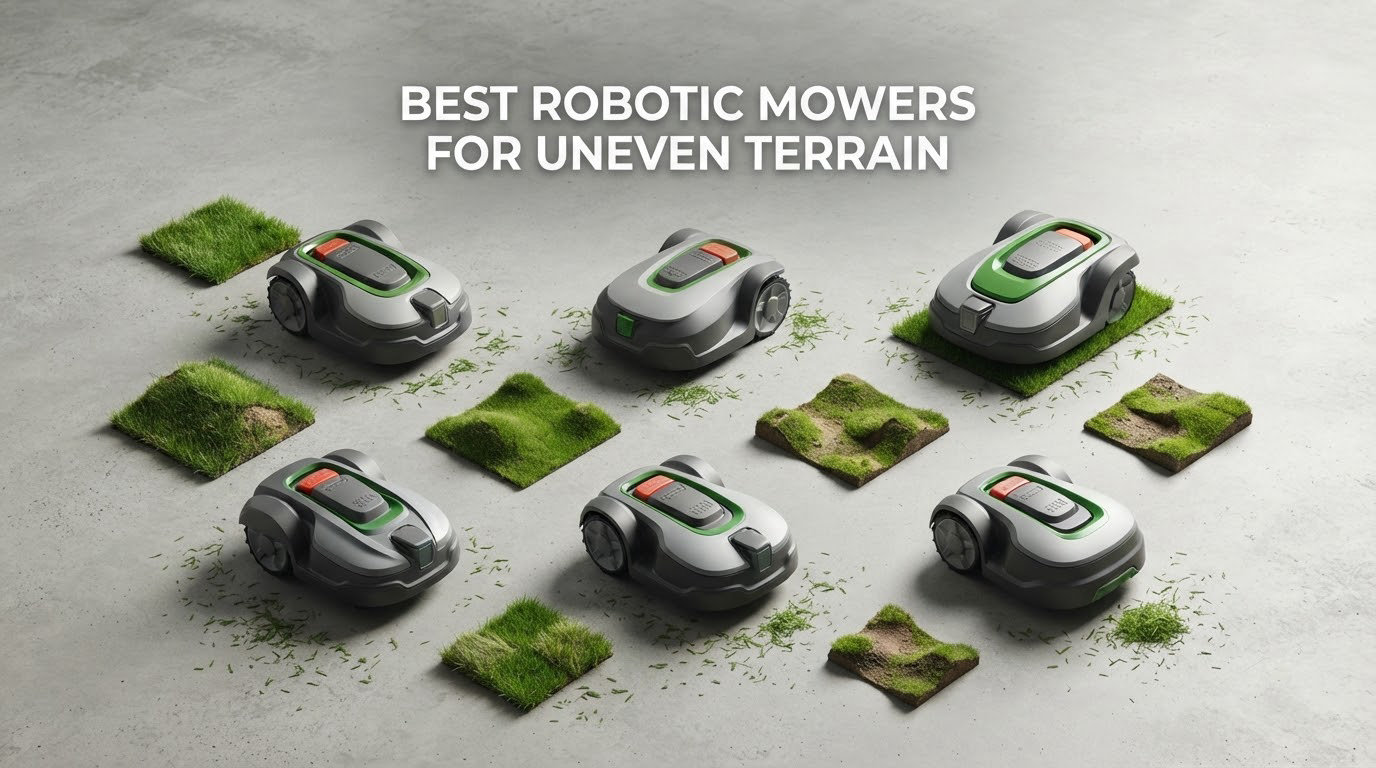
Yes, robotic mowers can handle uneven ground, but only the right class of machine. A robot that stalls, digs trenches or loses its map on molehills and tree-root shelves is not the answer, and a heavy two-wheel-drive model on damp, broken turf is exactly how that happens. We compared eight AWD and tracked mowers rated for slopes from 45% to 80% grade, plus the suspension, deck and navigation specs that actually decide whether a mower keeps its cutting pattern on a bumpy lawn. Last updated for 2026.
Most roundups answer this question with a steep-slope list. That is a different problem. A lawn can be deeply uneven and almost flat: molehills from a spring, a washboard section left by a contractor, a shelf of tree roots under an oak, a drainage swale across the back corner. Terrain that is not steep at all still breaks robot mowers, because the failure is about wheel load, ground clearance and suspension travel rather than gravity alone.
Our method here is specification-led. We cross-checked manufacturer slope ratings, deck, suspension and battery data against aggregated owner reviews and long-running owner threads on r/automower and r/roboticLawnmowers. We have not logged a full season on each machine ourselves, and we would rather say that than pretend otherwise. If you want a general-purpose starting point instead, our best robot lawn mowers for backyards guide covers flatter properties.
Table of Contents
Top 3 Picks: Robot Mowers for Uneven Lawns in 2026
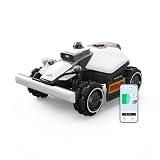
Mammotion LUBA mini 2 1500H
- Most-reviewed pick in the lineup
- AWD with two independent 88 W motors
- Adaptive suspension for 45 mm obstacles
- 0.37 acre with 20 multi-zones

Mammotion LUBA 3 AWD 3000
- Tri-fusion LiDAR
- NetRTK and AI vision
- Four independent motors for 80 percent grades
- 12 Ah battery with 175 minutes per charge
- Up to 500 square meters per hour

Mammotion LUBA 2 AWD 3000HX
- 165 W four-wheel drive rated to 80 percent slope
- RTK auto-mapping plus UltraSense AI vision
- 0.75 acre with 30 zones and no-go areas
- 15.7 inch dual-blade disc
Best Robotic Mowers for Uneven Terrain in 2026
| Product | Specifications | Action |
|---|---|---|
| Mammotion LUBA mini 2 1500H |
|
Check Latest Price |
| Mammotion LUBA 3 AWD 3000 |
|
Check Latest Price |
| Mammotion LUBA 2 AWD 3000HX |
|
Check Latest Price |
 Segway Navimow i215 LiDAR Segway Navimow i215 LiDAR |
|
Check Latest Price |
 Sunseeker X5 AWD Sunseeker X5 AWD |
|
Check Latest Price |
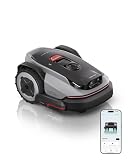 Roborock RockNeo Q110H Roborock RockNeo Q110H |
|
Check Latest Price |
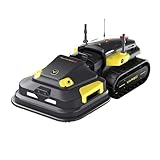 Yarbo Robot Lawn Mower Pro Yarbo Robot Lawn Mower Pro |
|
Check Latest Price |
 Segway Navimow i206 AWD Segway Navimow i206 AWD |
|
Check Latest Price |
1. Mammotion LUBA mini 2 AWD 1500H – A Proven Performer on Hills and Bumps
(2026 NEW) Mammotion LUBA mini 2 AWD 1500H Robot Lawn Mower, for 0.37 Acres, 360° LiDAR+Dual-Camera AI Vision, 80% Slope, DropMow, 20 Multi-Zone Management
Two 88 W AWD motors
80 percent climbing grade
360 degree LiDAR plus dual cameras
Up to 0.37 acre, 20 zones
Pros
- Most owner feedback in this lineup
- Climbs steep and uneven ground far better than 2WD robots
- Adaptive suspension steps over curbs roots and thresholds to 45 mm
- Effectively silent from indoors
- RTK boundary tracking accurate to about an inch
Cons
- Capped at 0.37 acre of mapped area
- 7.9 inch cutting width means multiple passes
- Charge time of 2 to 3 hours from low to full
- Mapping accuracy is unforgiving and map editing is iffy
This is the most-reviewed machine in the lineup at 263 reviews, and the owner consensus is unusually consistent. Buyers credit the AWD drivetrain and independent suspension with mowing rough, sloped lawns that stall other robots, and they repeatedly mention that it is inaudible from inside the house, which makes early evening and night scheduling realistic.
The adaptive suspension figure is the number to look at for uneven terrain. Steps over curbs, roots and thresholds up to 45 mm means the 1-2 inch root shelves that trip lighter machines are inside its comfort zone. The 360 degree LiDAR at a 45 degree field of view combined with dual-camera AI vision gives it a map that does not depend on satellite signal, which matters on a yard under heavy tree cover.
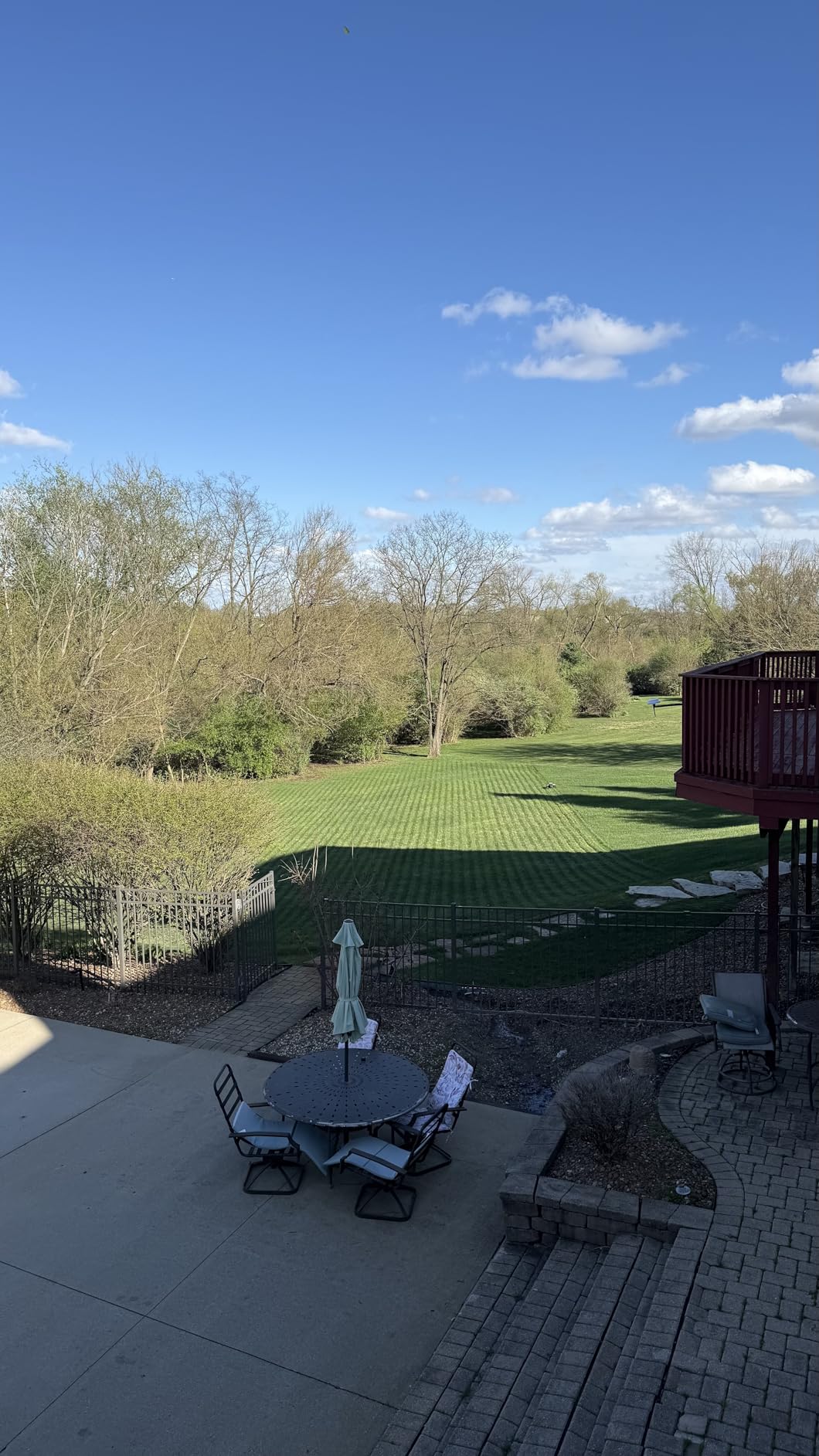
DropMow mode is genuinely useful on broken ground. Place it, press Mow and Start, and it works without a mapped boundary, which lets you mow an isolated rough patch without building a whole map. The app supports many mowing patterns and no-go zones, and support has been described as responsive and helpful.
The trade-offs are real and worth weighing. Mapped area caps at 0.37 acre, the 7.9 inch cutting width forces multiple passes, and a quarter acre can take half a day. Charge time runs two to three hours. Owners also report occasional signal loss and app glitches in areas where houses sit close together, and manual edge trimming is still required.
Where it earns its place
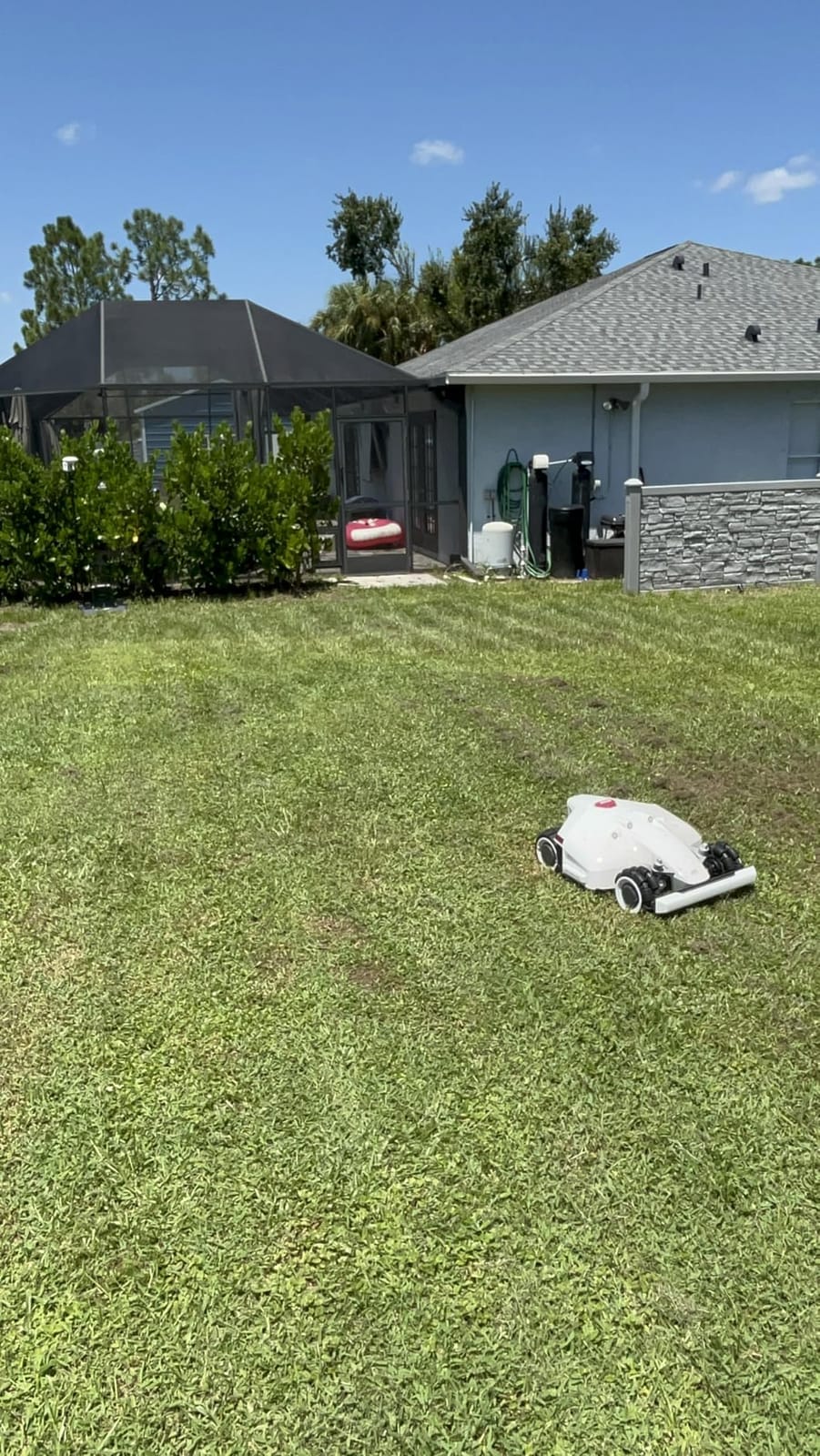
If your problem is a hill or a bumpy front slope rather than acreage, this is the pick with the most owner evidence behind it. Two independent 88 W motors mean both sides of the machine have their own drive, so a cross-slope traverse does not push the light end down into the turf and start a rut. Coverage of up to 20 independent zones means a terraced or split-level lawn is manageable.
For allergy sufferers it works as a genuinely hands-off solution, and the 2.2 inch minimum cut height across seven positions lets you run a short, fine cut on fescue that helps the lawn hold moisture through a dry spell.
Who should not buy it
Buy a bigger machine if your lawn exceeds roughly a third of an acre or if you want to finish before lunch. The narrow deck and long cycle times make it a poor fit for acreage even when the ground is rough. On very broken ground with deep ruts, the 7.9 inch deck width and the small 23 inch chassis footprint will limit how much of a bad patch it can actually reach.
2. Mammotion LUBA 3 AWD 3000 – Fastest Coverage on Broken Ground
Mammotion LUBA 3 AWD 3000 Robot Lawn Mower with Cleaning Stand (Ship Separately), 360° LiDAR+NetRTK+AI Vision, AWD for 80% Slopes, 5400 sq.ft/h, Cutting Height 1.0″-2.7″
Four independent motors
80 percent grade (38.6 degrees)
12 Ah battery, 175 minutes
Up to 500 square meters per hour
Pros
- AWD handles thick coarse irregular turf without stalling
- LiDAR holds position in heavily treed yards
- Extremely quiet with very low electricity use
- Regular software updates
- Perimeter zigzag checkerboard and adaptive patterns
Cons
- Online manual is poor and video tutorials are needed
- Phone app is hard to use for mapping in bright daylight
- Cannot finish a quarter acre on a single charge with non-default settings
- Battery pack is not user-replaceable
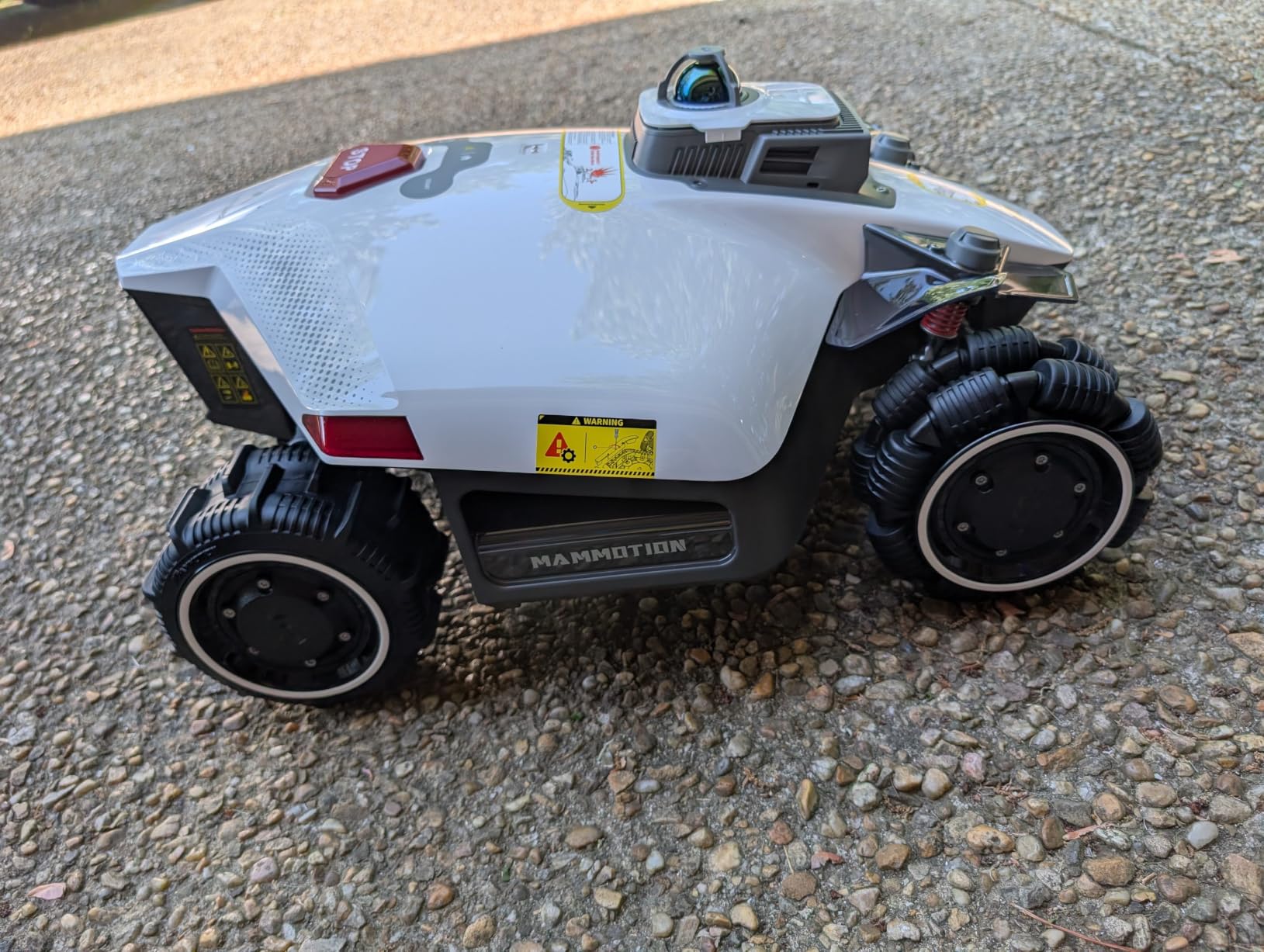
Where coverage speed matters on rough ground, this has the fastest stated mowing rate of the AWD machines here. Two 165 W high-torque motors driving 6-blade discs, a 12 Ah battery and a stated mowing rate of up to 500 square meters per hour add up to short working time on a broken yard. Owners running thick coarse irregular turf report the drivetrain simply does not stall.
Navigation is the strongest technical story. Tri-fusion combines 360 degree LiDAR with a range of up to 230 feet, NetRTK satellite correction and dual-camera AI vision. The 360 degree horizontal and 59 degree vertical field of view means the machine can see the floor of a swale and the top of a bank in the same frame, which is precisely the situation on uneven ground where a flat-ground sensor plan loses its bearings.
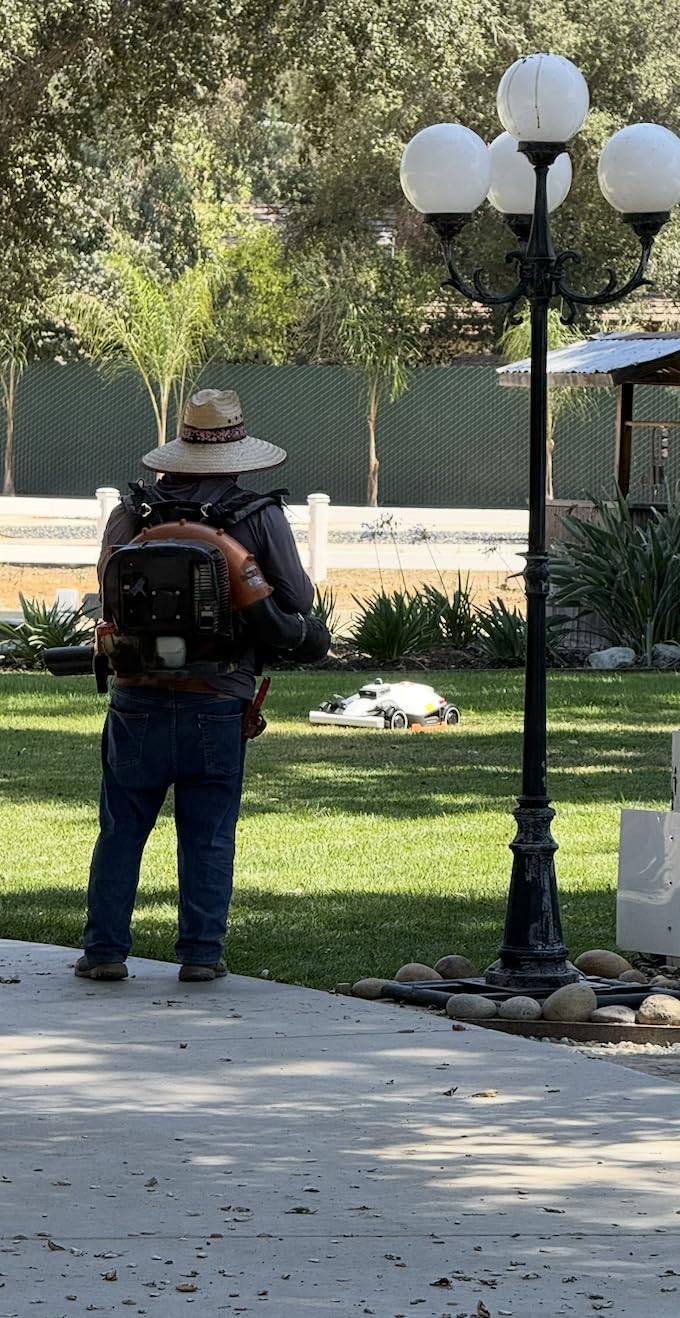
Adaptive suspension steps over obstacles up to 50 mm, the highest figure in this roundup, and the AI processor detects more than 300 obstacle types. Rain sensing and night mowing lights are included, and up to 30 mowing zones with no-go areas let you exclude the worst of the rough. A cleaning stand is included as a separate item, so plan for it at unboxing.
Reported problems cluster around software and documentation rather than mechanics. The online manual is poor enough that owners rely on video tutorials. The phone app is genuinely difficult to use for mapping in bright daylight. On non-default settings it cannot finish a quarter acre on one charge, and it sometimes leaves strips of unmown grass that need an extra pass. Connectivity over Wi-Fi is described as inconsistent.
Why the drivetrain matters more than the sensors
Four independent motors distribute torque to each wheel rather than sharing two. On uneven ground that distinction is decisive, because the whole time a mower is on a bumpy lawn, one wheel is carrying more load than the others. A shared-drive chassis will spin a light wheel and dig; an independent-motor chassis keeps moving. Owners running steep creek slopes and multi-zone properties credit this directly.
The 175 minutes of runtime per charge, plus the adjustable charge limit, let you schedule around off-peak electricity rates. Low consumption keeps running costs modest even with repeated climbs.
Who should not buy it
The battery pack is not user-replaceable by the owner, which is a meaningful drawback on a machine expected to see years of rough-ground service where packs take more abuse. If your lawn is small, you will not earn back the spend, and if setup is not your strength, the app-in-daylight problem is a real cost in frustration during the first week.
3. Segway Navimow i215 LiDAR – Satellite-Free Mapping on Sloped Small Yards
Segway Navimow i215 LiDAR Robot Lawn Mower, Wire Free Robotic Lawn Mower for 0.37 Acre, LiDAR & Vision Dual Fusion, Auto Mapping, Off-Road Wheels for 45% Slopes, Quiet 59 dB(A) Mowing
Solid-state LiDAR plus vision
45 percent slope rating
32.4 pound chassis
59 dB(A) operation
Pros
- Satellite-free navigation that works day or night
- True drop-and-mow start with one-tap auto mapping
- Off-road wheels and stability control for 45 percent slopes
- Very quiet at 59 dB(A)
- Geo-fence lift detection and Find My alerts
Cons
- 7.1 inch cutting width requires more passes
- Only 0.37 acre of coverage
- Maps are hard to edit after the first run
- Vision boundary detection still refining in real conditions
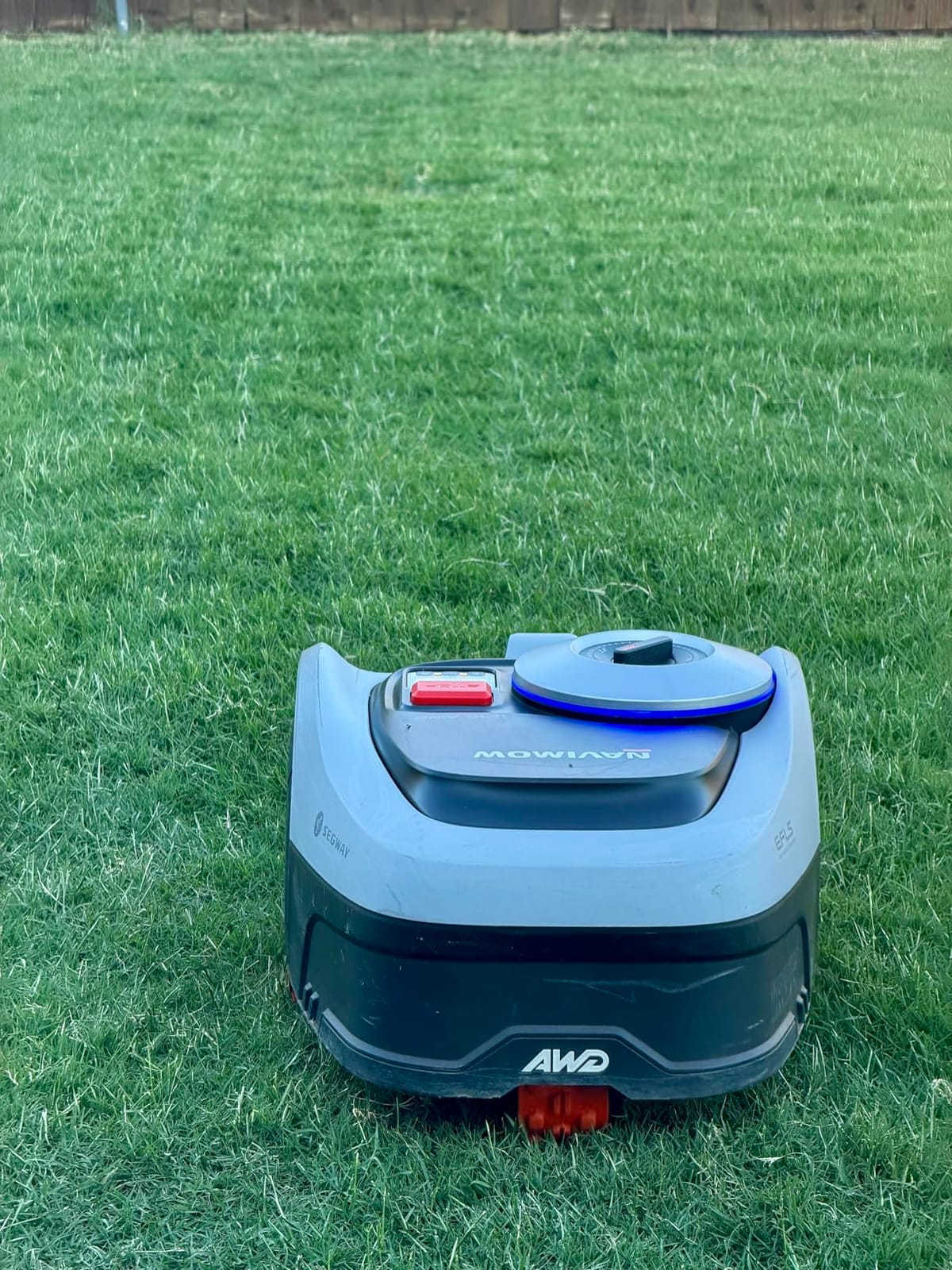
At 32.4 pounds this is a light machine, and that weight is a genuine advantage on uneven ground. Heavy chassis push into soft soil and leave ruts; a lighter body with a 45% slope rating is easier to reposition by hand when it does bog down. Owners also note the machine works on sloped lawns where heavier units have struggled.
Navigation is the story. Solid-state LiDAR paired with onboard vision sensors gives satellite-free mapping, and owners in treed yards report it holding its bearings without a signal. The drop-and-mow start is a true one-tap auto map with no boundary wire and no antenna, so there is no satellite hardware to mount and no wire to trench across a yard that is already broken up.
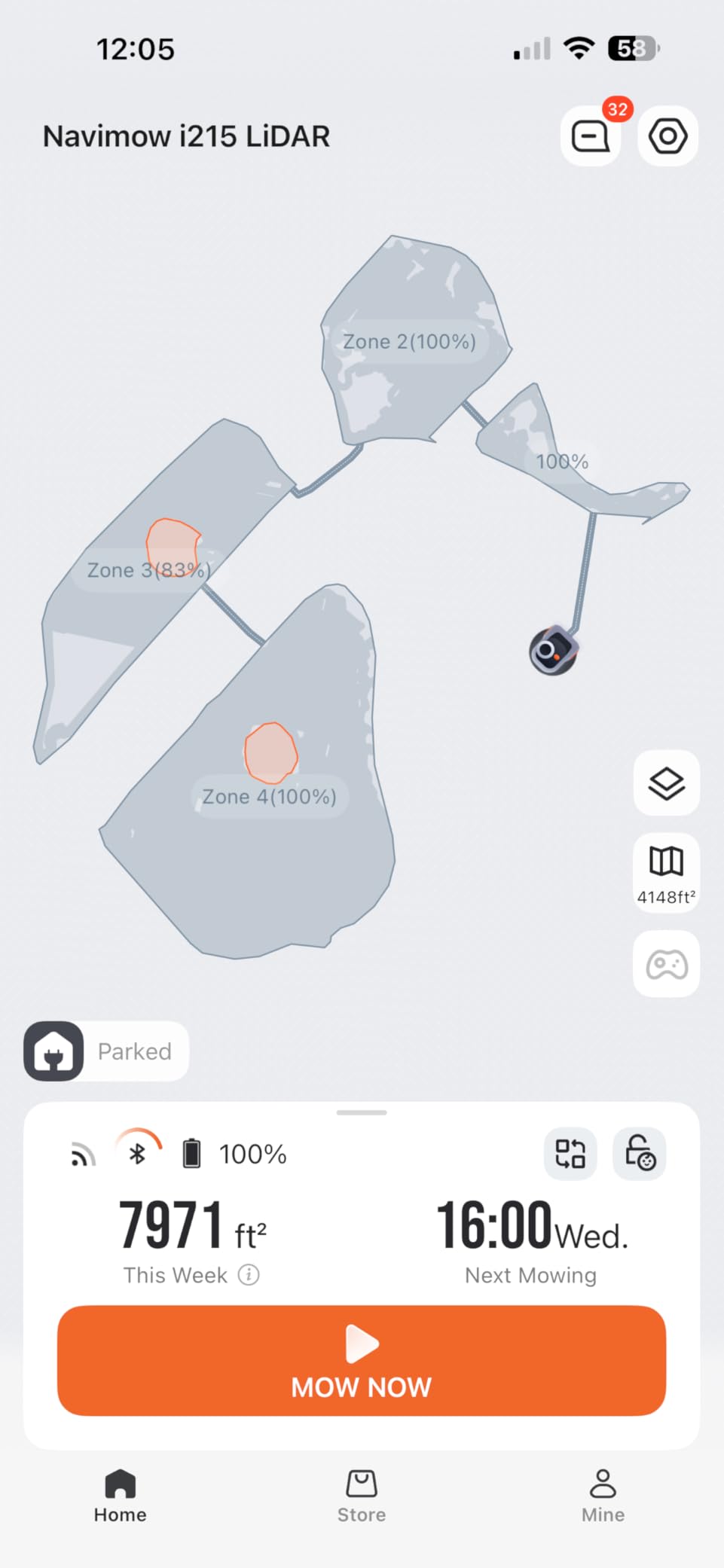
Electronic stability control and off-road wheels carry the 45% grade rating, which is below the 60-80% figures on the Mammotion machines. That is a fair trade for small to mid-size yards with moderate but real changes in height, and it is enough for swales, gentle banks and undulating ground. The 100 W motor with 6-blade disc cuts at an adjustable height from 2 to 4 inches.
AI VisionFence detects more than 200 obstacle types at 0.4 inch accuracy, and up to 20 editable zones sit on an interactive map with a ride-on edge mode. Security is thorough for a machine that works alone: GPS geo-fence, lift detection and Apple Find My alerts, plus hands-free voice control through Alexa and Google Home.
Where the light weight helps
Rutting is a function of ground pressure, and that is where a 32.4 pound machine on off-road wheels has a real advantage over a 215 pound tracked unit. On cool-season fescue that shows damage easily, a lighter chassis with a wide tread footprint is much less likely to leave visible wheel trenches on a damp morning. The stability control handles the cross-slope transitions that cause the worst of it.
Owners on sub-quarter-acre properties with trees get a mapped area that stays accurate without a roof-mounted antenna, which is often the single biggest installation headache on a satellite-based machine.
Who should not buy it
At 0.37 acre and a 7.1 inch cutting width, cycle times are long, so this is a small-yard machine. It is also the wrong pick if you want steep-climbing capability, and owners note that vision-based boundary detection is still refining in real-world conditions, which can mean occasional edge surprises on a complicated border.
4. Sunseeker X5 AWD – Best Balance of Coverage and Terrain Range
Sunseeker X5 AWD Robot Lawn Mower, RTK, Vision AI, 0.5 Acre, Wire-Free
AWD with independent front suspension
60 percent slope (30 degrees)
26 pounds
0.5 acre, 31.5 inch passages
Pros
- AWD drivetrain clears hills that trap 2WD robots
- Straight clean mowing lines with custom patterns
- Handles shaded and tree-covered areas without losing signal
- Rain detection delays mowing automatically
- Easy setup for a wire-free unit
Cons
- Snags on small humps and dips between lawn and sidewalk
- Boundary offsets can leave up to 18 inches of edging work
- Weak scheduling and programming interface
- May need rescuing several times a week on rough ground
The X5 sits at a useful middle of this group. At 26 pounds it is light, with a 60% slope rating covering up to 30 degrees, and the all-wheel drive with independent front suspension is the part that gets it over humps that trap two-wheel-drive robots. Owners consistently report that the drivetrain gets it over humps and hills that trap two-wheel-drive robots.
The 8.7-inch floating cut is the feature to notice for uneven lawns. It follows ground contours rather than holding a fixed height, so on a washboard patch the blade stays at the height you set instead of scalping the crests and missing the troughs. The height range is 1.6 to 3.2 inches, and the chassis is rated to pass through 31.5-inch passages, which covers most gate situations between beds.
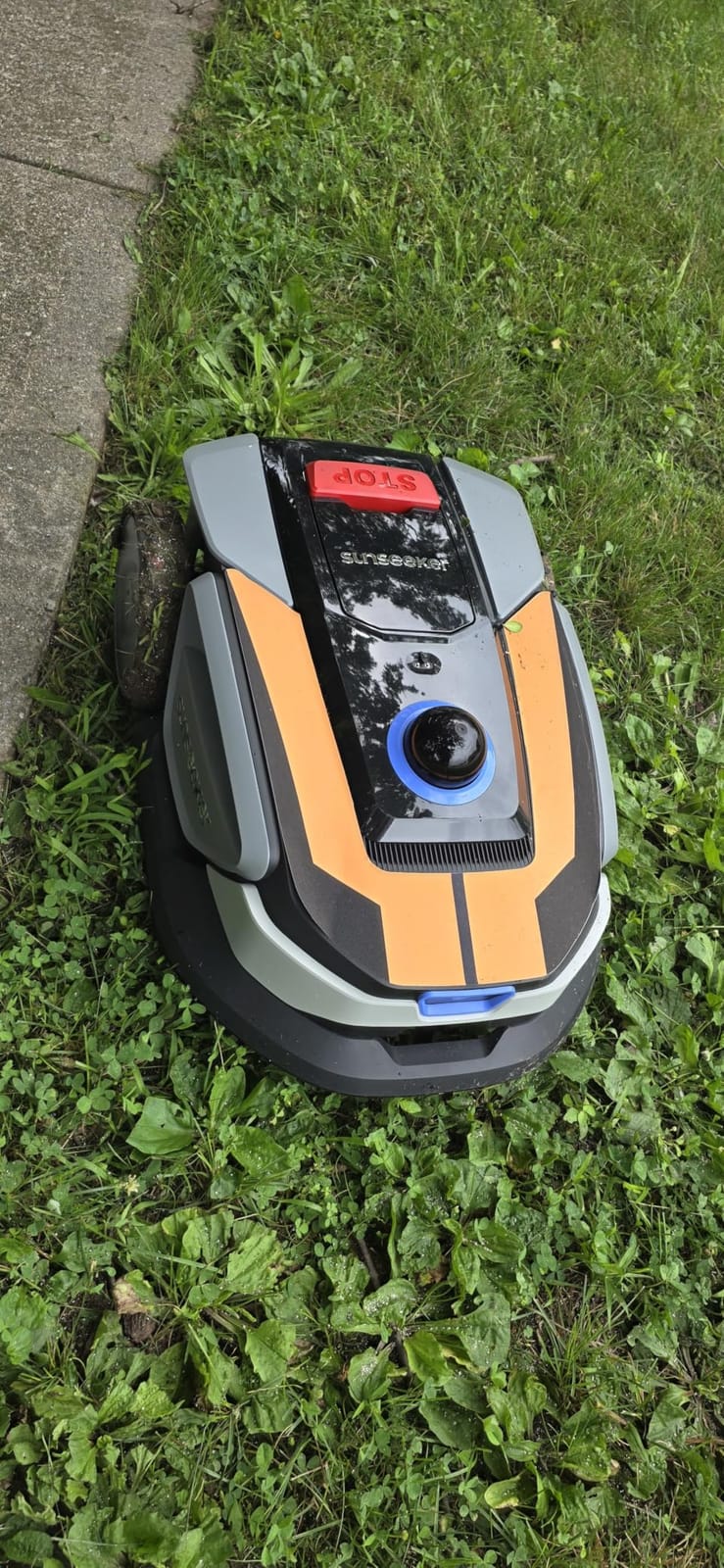
Navigation uses RTK combined with VSLAM and Vision AI, and owners report it maintaining coverage under trees and working at night. That hybrid approach is what keeps a treed, uneven yard on course without constant satellite lock. Wire-free virtual boundaries, up to five maps, smart zones and no-go areas cover the multi-area case well, and operation sits at 60 dB.
Support is a genuine plus here: a two-year warranty with US-based support, which is a differentiator against newer brands where parts availability and service distance are open questions. The honest weakness list is about edges and snags. It can catch on small humps and dips where lawn meets sidewalk, boundary offsets can leave up to 18 inches of edging, the scheduling interface is described as weak, and it avoids tall grass rather than cutting through it, so multiple passes are needed if growth gets away from it.
Best fit for mixed terrain
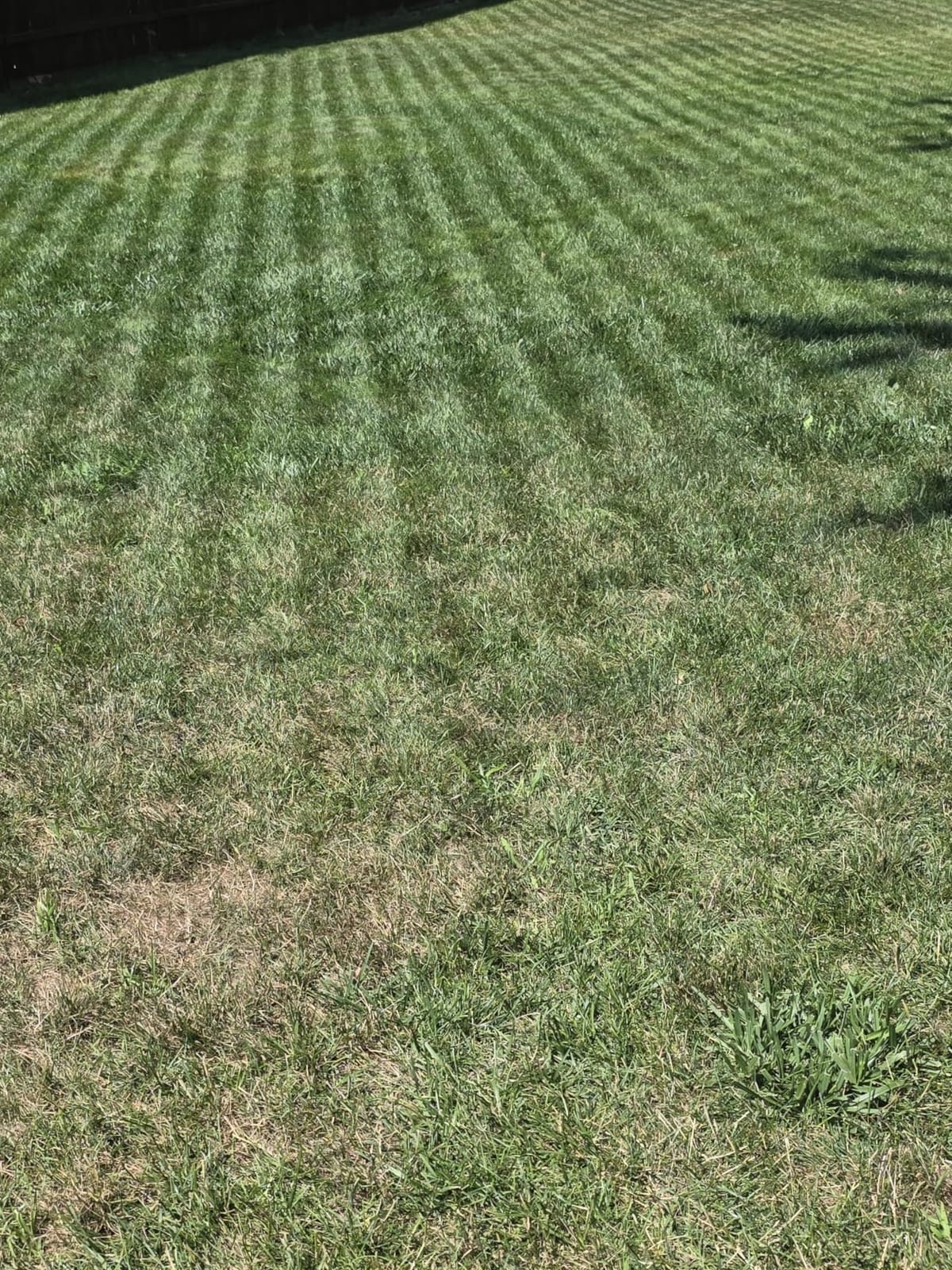
This is the pick for a yard that is not uniformly rough but has a hilly back section, a flatter front and a tree line between them. The 0.5 acre ceiling, 21,780 square feet of coverage and floating deck handle a mid-size property without the cycle-time problem of the smaller machines, and five separate maps are useful if the layout changes seasonally.
Because the deck floats, a machine of this class is easier on turf than a fixed-deck model of similar weight. On a lawn that mixes fescue in shade with tougher warm-season grass in sun, a contour-following deck keeps the cut more consistent than a rigid one.
Who should not buy it
Several owners report needing to rescue it several times a week on rough ground, which is the monitoring tax showing up in practice. If your property is genuinely broken with deep ruts or soft mud, the 26 pound wheeled chassis is not the answer. It is also a poor choice if you will not touch up the edges after each cycle.
5. Roborock RockNeo Q110H – A Floating Deck for Small Uneven Yards
Roborock RockNeo Q110H Robot Lawn Mower, Wire-Free Robotic Lawn Mower with Full-Band RTK + VSLAM Navigation, Auto Mapping, AI Vision Obstacle Avoidance, App Control, 45% Slope, Covers Up to 1/4 Acre
Floating deck with large-diameter wheels
45 percent slope
1.57 inch obstacle clearance
27 pounds, 130 minute battery
Pros
- Handles dips and the drop onto a concrete walkway without sticking
- Full-band RTK plus VSLAM holds navigation under tree canopies
- Very quiet with headlights for night mowing
- Compact footprint suits small uneven yards
- Familiar Roborock app makes setup straightforward
Cons
- Manual boundary mapping required with no auto-mapping yet
- Cautious obstacle avoidance leaves 1 to 1.5 feet unmowed at edges
- Edge-cutting module not included and not yet available in the US
- Refuses to travel through narrow gates despite clearance
This is the lowest-rated pick in our group at 3.8 out of 5, and we are including it because the hardware is competitive for uneven ground. The floating cutting deck with large-diameter wheels adapts to ground contours, the machine handles 45% slopes and 1.57-inch obstacles, and passages as narrow as 2.3 feet are passable. Owners confirm straight clean cut lines and good behaviour on a 30% slope.
Full-band RTK plus VSLAM is a solid navigation combination for a wooded lot, because VSLAM carries the machine through the gaps where the satellite signal drops. Dual-camera AI vision handles people, pets and garden objects, and headlights make night mowing practical at a level of noise owners describe as unobtrusive.
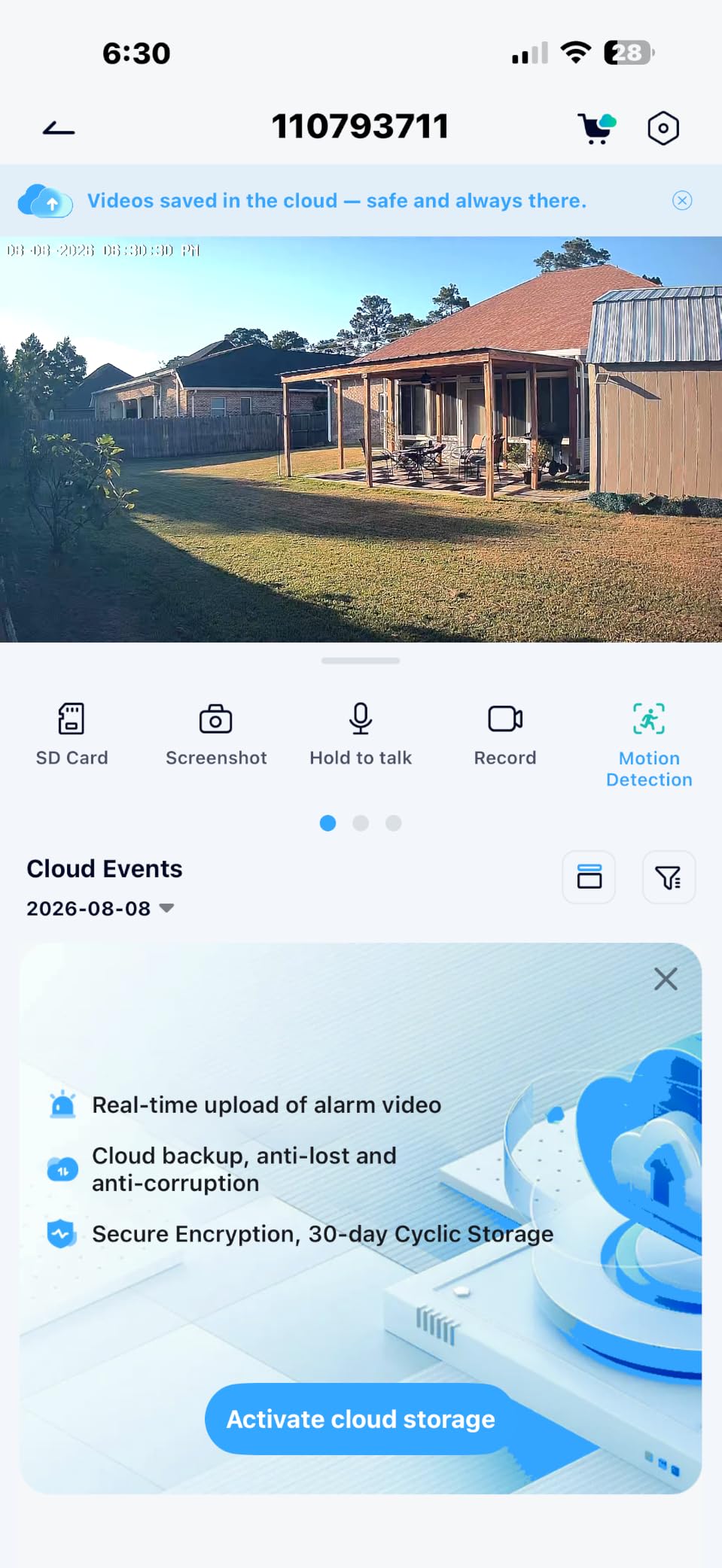
The problems are software conservatism rather than mechanical weakness. Manual boundary mapping is required because the auto-mapping update has not arrived. Overly cautious obstacle avoidance leaves 1 to 1.5 feet of grass unmowed along edges and fences. Maps cannot be edited without physically driving the mower around. There is no partial or single-zone mowing. The optional edge-cutting module is not included and is not yet available in the US.
Two more reported issues matter on rough ground. It refuses to travel through narrow gates even where the clearance is there, which closes off the passage access that usually comes with a broken-up yard. And the wheels struggle in thick St Augustine grass, triggering lift-detection errors that stop the machine dead.
Where the deck design pays off
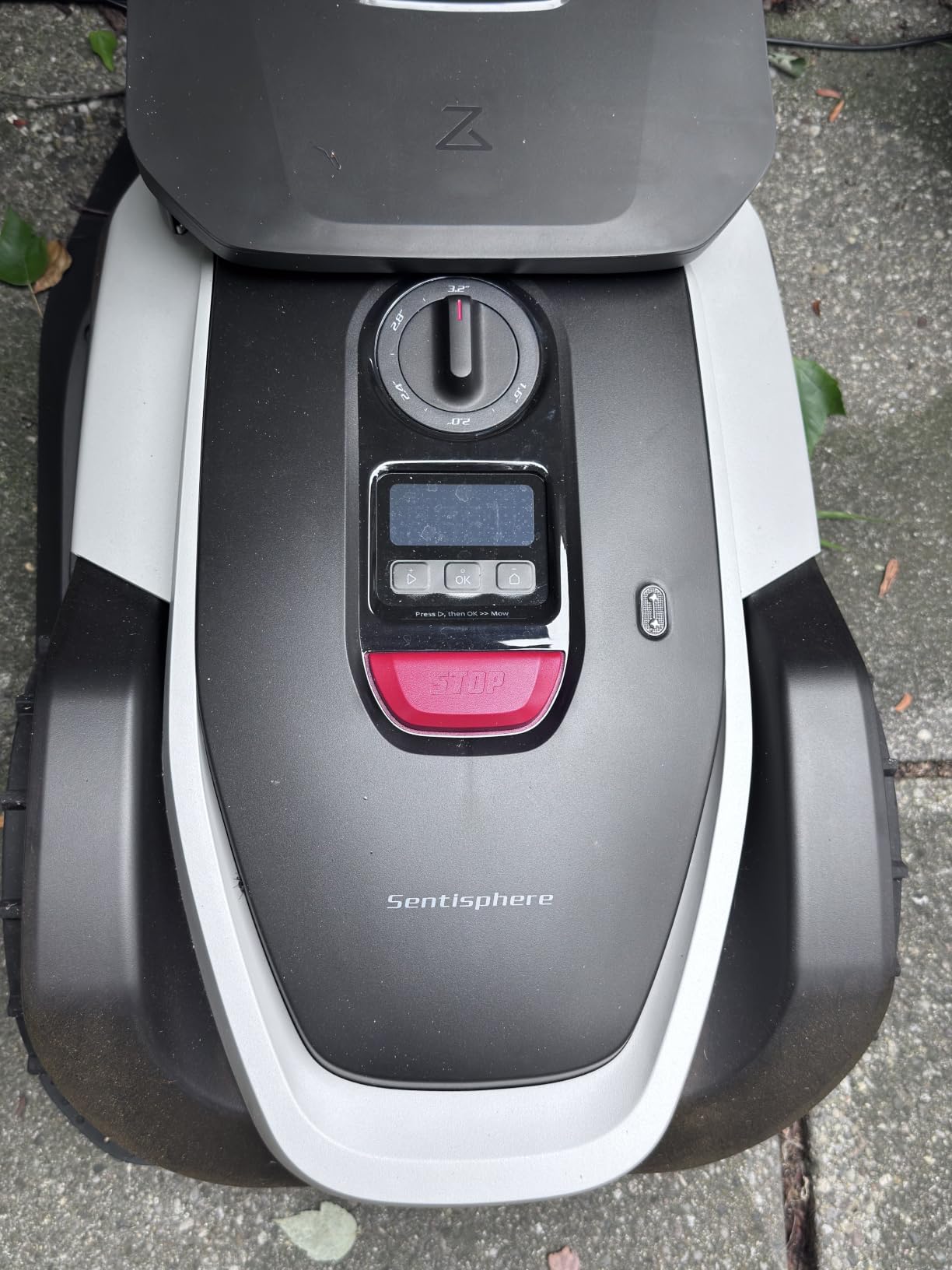
The floating deck is the reason this machine handles a dip and a step down onto a concrete walkway without getting stuck, a common complaint about fixed-deck designs in the same class. At 27 pounds with a 130-minute battery, the power-to-weight ratio is workable on moderate grades, and the 1.6 to 3.1 inch cut range covers most ornamental turf.
Coverage caps at a quarter acre, so the honest use case is a small, broken-up yard where a larger machine would be overkill. The PIN lockout and high-decibel alarm cover anti-theft, with an optional 4G module sold separately for tracking.
Who should not buy it
Do not buy this if you have thick St Augustine turf, a gate you need the mower to pass through, or a preference for precise edges, because all three produce a poor experience. The app also reports missed areas as complete, which is the kind of thing you will discover at the end of a cycle and resent.
6. Yarbo Robot Lawn Mower Pro – The Only Tracked Chassis Here
YARBO Y40 Core Robot Lawn Mower Pro, Wire-Free, 6-Acres, Four-Season Care
Patented tracks with steel skid shoes
70 percent grade (35 degrees)
20 inch cutting disc, 300 W
Up to 6 acres, IPX6
Pros
- Handles multi-acre uneven hilly stony properties
- Cut quality comparable to a zero-turn riding mower
- Tracks and steel skid shoes cope with muddy rough ground
- Multi-zone mapping with extensive app customisation
- Automatic charging resumes mid-task
Cons
- Arrives in four boxes at about 210 pounds needing two people for assembly
- Steep mapping learning curve under tree cover
- Map drift can require manual intervention mid-mow
- Battery is cobalt chemistry and not swappable
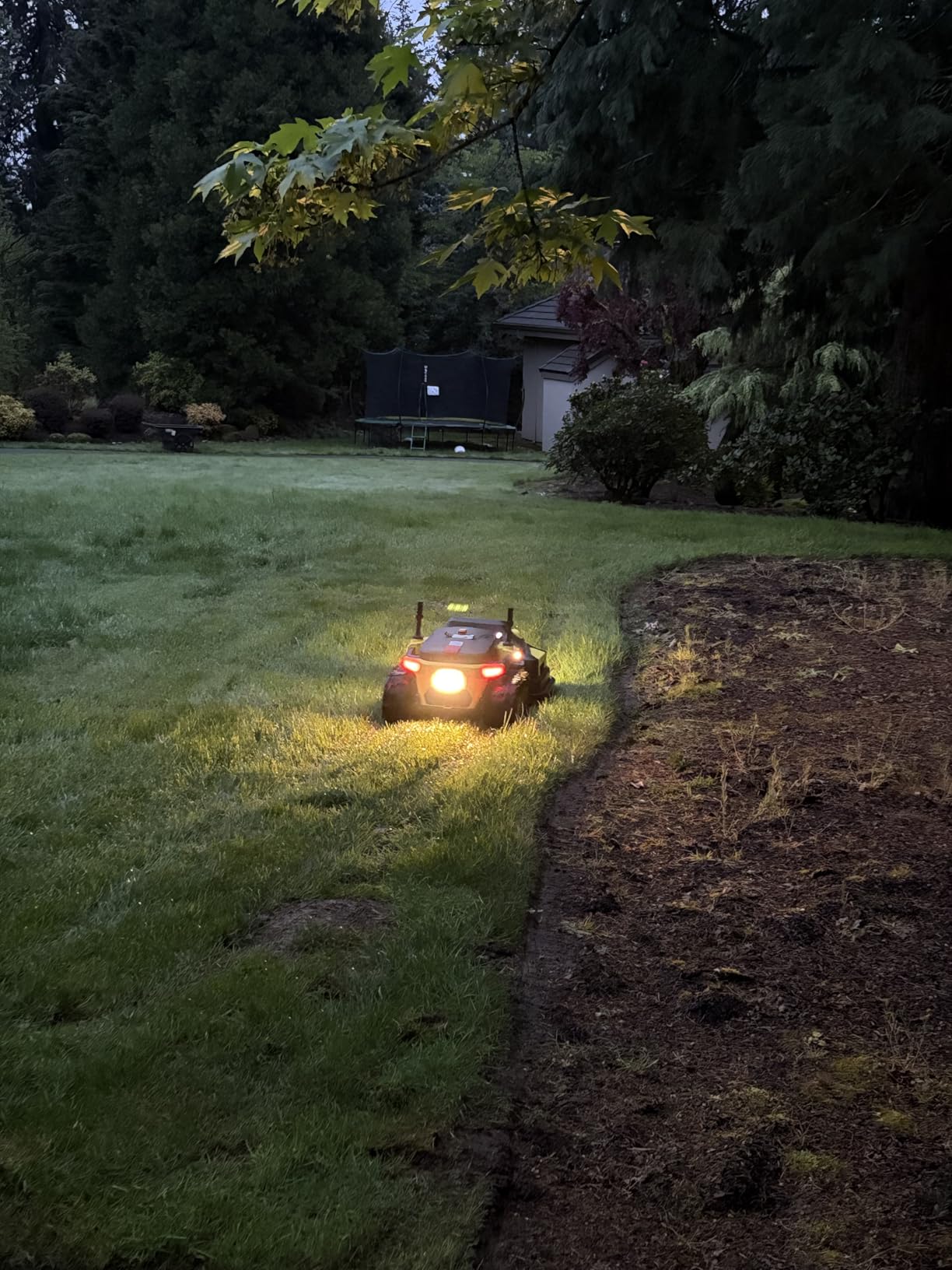
If your ground problem is soft, muddy or genuinely broken rather than merely bumpy, this is the only machine in the group with a tracked chassis. The patented multi-terrain tracks with durable all-steel skid shoes spread weight across a contact patch instead of four small wheel prints, which is exactly the fix for trenching. Owners on stony and uneven acreage report it going where wheeled robots simply stop.
Power is the other differentiator. A 300 W dual-motor cutting disc with optimised grass ejection to reduce clogging, a 20-inch cutting width and up to 6 acres of coverage means cut quality owners compare to a zero-turn riding mower. Two blade options ship, razor and straight, and the height range spans 0.8 to 4.0 inches. Climbing capability is 70%, or 35 degrees.
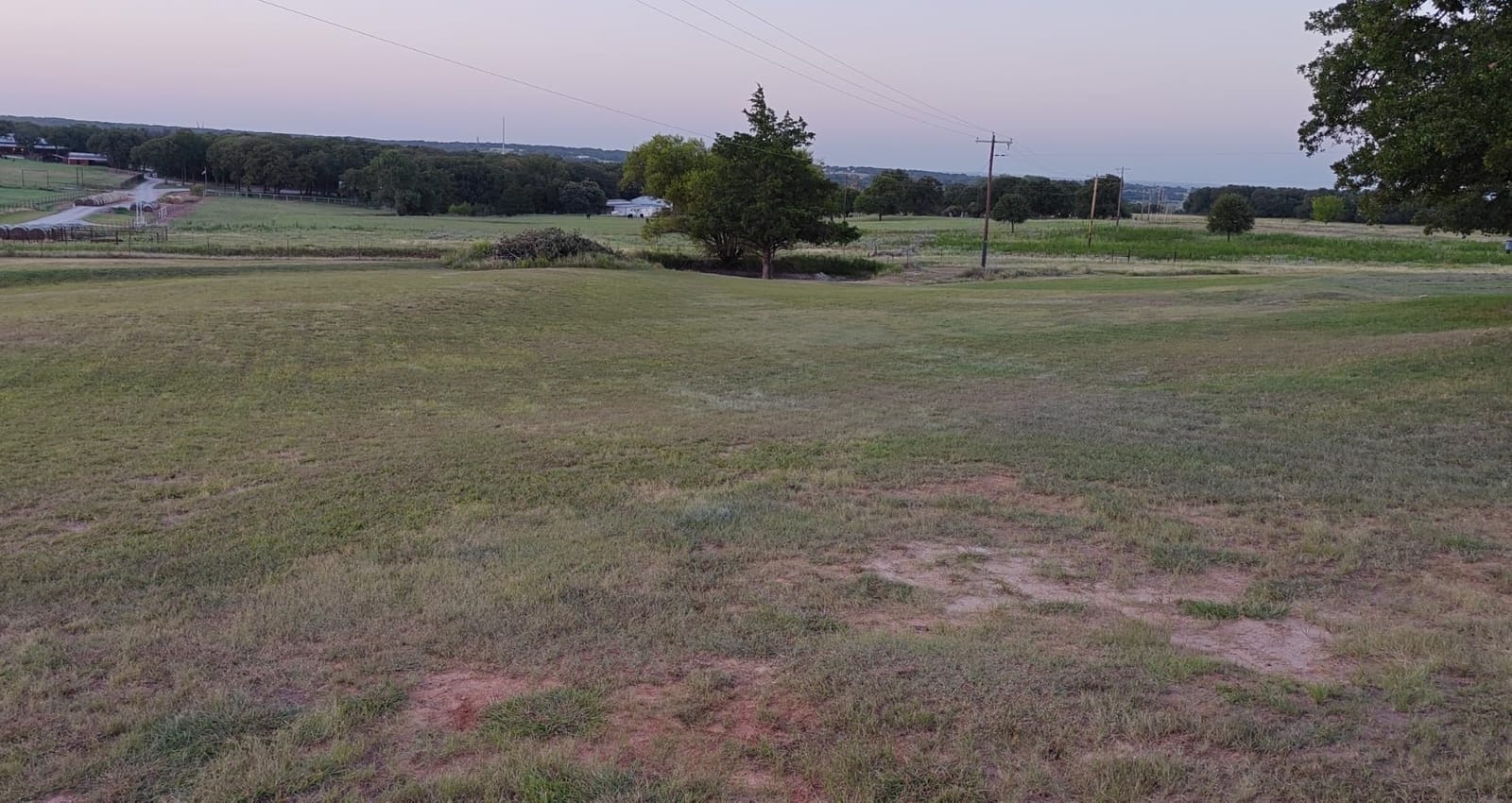
Navigation is triple fusion: RTK-GPS, binocular vision and a multi-sensor PPVS array. The IPX6 rating matters more than usual here because the machine is designed for four-season yard work on large grounds. Automatic charging resumes the task mid-route, so a 6-acre property does not require you to babysit the cycle.
The logistics are significant and you should plan around them. At about 215 pounds and 50 by 27 by 20 inches, it arrives in four separate boxes, needs two adults for assembly, and the Data Center requires a 120 degree unobstructed view of the sky, which is a hard requirement on a property full of the trees that make the ground uneven. The mount is also described as unstable in wind and awkward to install. The remote control is sold separately.
Why tracks solve the rutting problem
Rutting happens when ground pressure exceeds what the soil can carry. A 20-inch track spreads that load in a way no wheel in this roundup does, and the steel skid shoes resist tearing on stone and hardpack. Owners report the tracks and skid shoes coping with muddy and rough ground in a way wheeled machines on the same property could not.
An owner on r/roboticLawnmowers who had run a Mammotion LUBA, a Worx and then this machine singled out the 2x300W motors as making it an industrial-grade tool that chews through denser patches. The same owner was clear that it is not a magic fix and still requires route management. That is the honest framing: motor power stops blade stall, tracks stop trenching, and neither one removes the need to think about the route.
Who should not buy it
Do not buy this for a suburban lot under an acre, and do not buy it if a full-day install and a perimeter mapping project sound like work you will not do. The cobalt-chemistry battery has roughly 500 to 600 cycles before degradation and is not user-swappable, and the Data Center sky-view requirement can rule out heavily wooded acreage outright. Support response times can run to several days.
7. Segway Navimow i206 AWD – Best Turf-Safe Steering on Slopes
Segway Navimow i206 AWD Robot Lawn Mower, New i105N, 0.15 Acre, 45% Slopes
AWD with stability control
45 percent slope
Zero-turn steering pivot
0.15 acre, 20 zones
Pros
- Zero-turn steering avoids tearing the turf
- All-wheel drive manages uneven and sloped ground well
- Very quiet and does not disturb pets or neighbours
- Alternating mowing patterns produce attractive stripes
- Customer service sends replacement parts free of charge
Cons
- Auto-mapping frequently fails and forces manual boundary walking
- Can wander off course into mulch beds outside the mapped area
- Leaves an unmowed swath along fences
- Mows around very tall grass clumps needing several passes
The distinguishing feature here is the zero-turn steering design, which pivots on the spot without the machine scrubbing sideways through a turn. On uneven ground that is not a cosmetic detail. Every tight turn on a bumpy lawn is a place where a wheeled chassis changes height mid-rotation and tears grass, and eliminating the scrub is the most direct fix available short of mowing patterns that avoid turning.
The drivetrain is all-wheel drive with automotive-grade stability control rated to 45% slopes, and owners confirm it handles uneven and sloped ground better than the previous robots they owned. Operation is quiet enough that owners report it not disturbing pets or neighbours, and alternating mowing patterns produce clean stripes. Real-time GPS alerts cover lift and off-course detection.
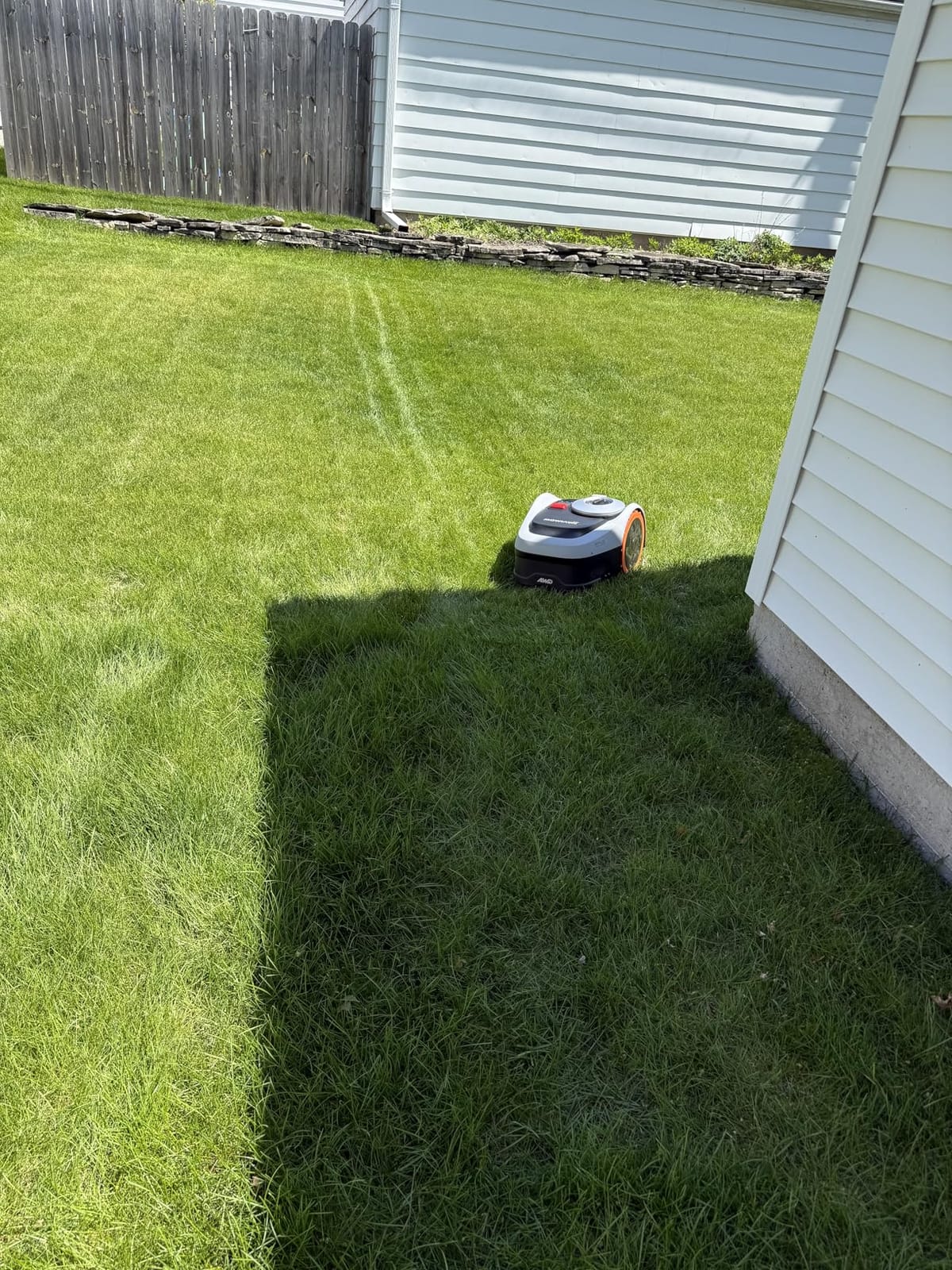
Navigation uses EFLS Network RTK combined with vision for one-tap auto mapping with centimetre-level accuracy, and up to 20 distinct mowing zones get optimised routes with auto-resume charging. The 2.5 Ah battery covers up to 1,350 square feet per charge. Chassis dimensions are 33.5 by 24 by 13.8 inches, so check your narrowest gate before committing.
Mapping is the dominant complaint on this machine, and it is worth weighing before you buy. Auto-mapping frequently fails, forcing a tedious manual boundary walk. It can wander off course into mulch beds outside the mapped area, which on an uneven property is how you find a machine chewing through a bed. It also leaves an unmowed swath along fences, mows around very tall grass clumps, and lifting or brief obstruction can invalidate saved zones. In-app support has been unhelpful to some users, though replacement parts have been sent at no charge.
What zero-turn steering actually saves
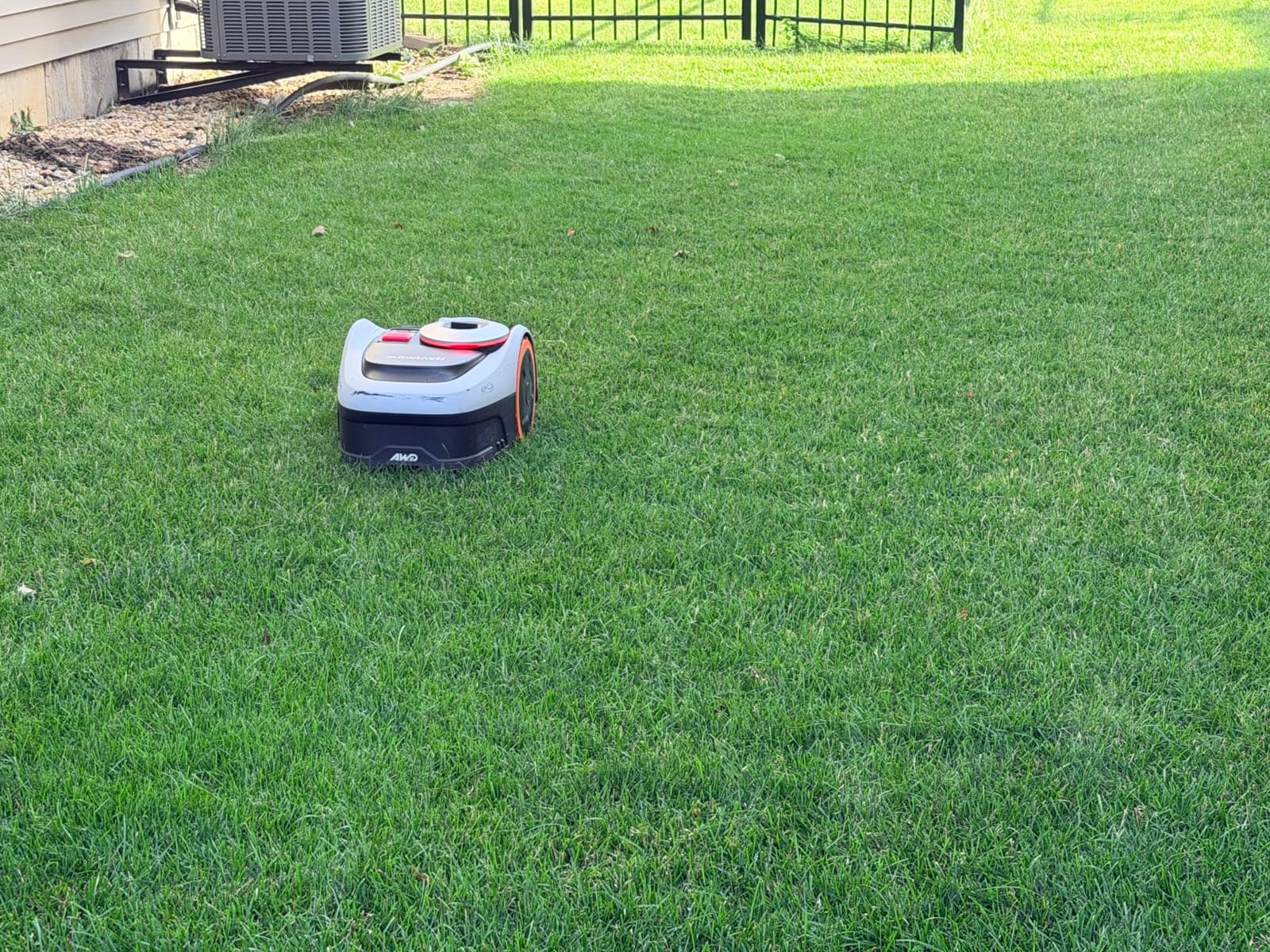
Turf damage concentrates at pivot points. On fescue, which shows wear clearly and repairs slowly, a machine that can turn without scrubbing meaningfully reduces the scuffing that makes an uneven lawn look worse after a cycle. On self-repairing warm-season turf like bermuda and zoysia the same damage largely disappears in a couple of weeks, which is why the same machine can look flawless on one property and marked on another.
The 20 zones with optimised routes also help on split-level yards, since you can assign separate areas rather than forcing one route across grade changes.
Who should not buy it
Coverage is the hard limit at 0.15 acre, and the 7.1-inch deck inside a large chassis means this is a small-patch machine. It is the wrong choice if auto-mapping failing once and walking your boundary by hand would end the experience for you, and the fence swath and mulch-bed wandering are genuine problems on a property with beds close to the grass.
8. Mammotion LUBA 2 AWD 3000HX – Thirty Zones on a 0.75 Acre Lot
Mammotion LUBA 2 AWD 3000HX Robot Lawn Mower with 4G, All-Wheel-Drive for 80% Slope, Perimeter Wire Free for 0.75 Acre, UltraSense AI Vision & RTK Auto-Mapping, 2.2″-4.0″ Adjustable Cutting Height
165 W AWD system
80 percent slope (38 degrees)
15.7 inch cutting disc
0.75 acre, up to 30 zones
Pros
- Four-wheel drive climbs broken ground without stalling
- RTK auto-mapping plus vision holds the map under tree cover
- 30 mowing areas with no-go zones cut down supervision
- Very quiet enough for night mowing
- 2.2 to 4.0 inch cutting height across five positions
Cons
- RTK antenna housing often sold separately
- Turn algorithm tears grass on tight right-hand turns
- Struggles with low bumps such as driveway ramps
- 4G needs a subscription after the first free year
Owner reports on hilly, rough properties describe the 165 W four-wheel drive as the part that keeps the machine working when lighter robots give up. With a slope rating of 80% (38 degrees) it carries more climbing capability than most of this list, and that headroom matters once the ground is not the smooth test lawn the rating assumes.
The mapping side is the strength for uneven yards. RTK auto-mapping combined with UltraSense AI vision means the machine can hold its position and its map when satellite signal is shadowed by trees, which is where most broken-ground properties are worst. Thirty multi-zone areas with no-go zones let you fence off a rough swale the mower cannot manage and still cover everything around it.
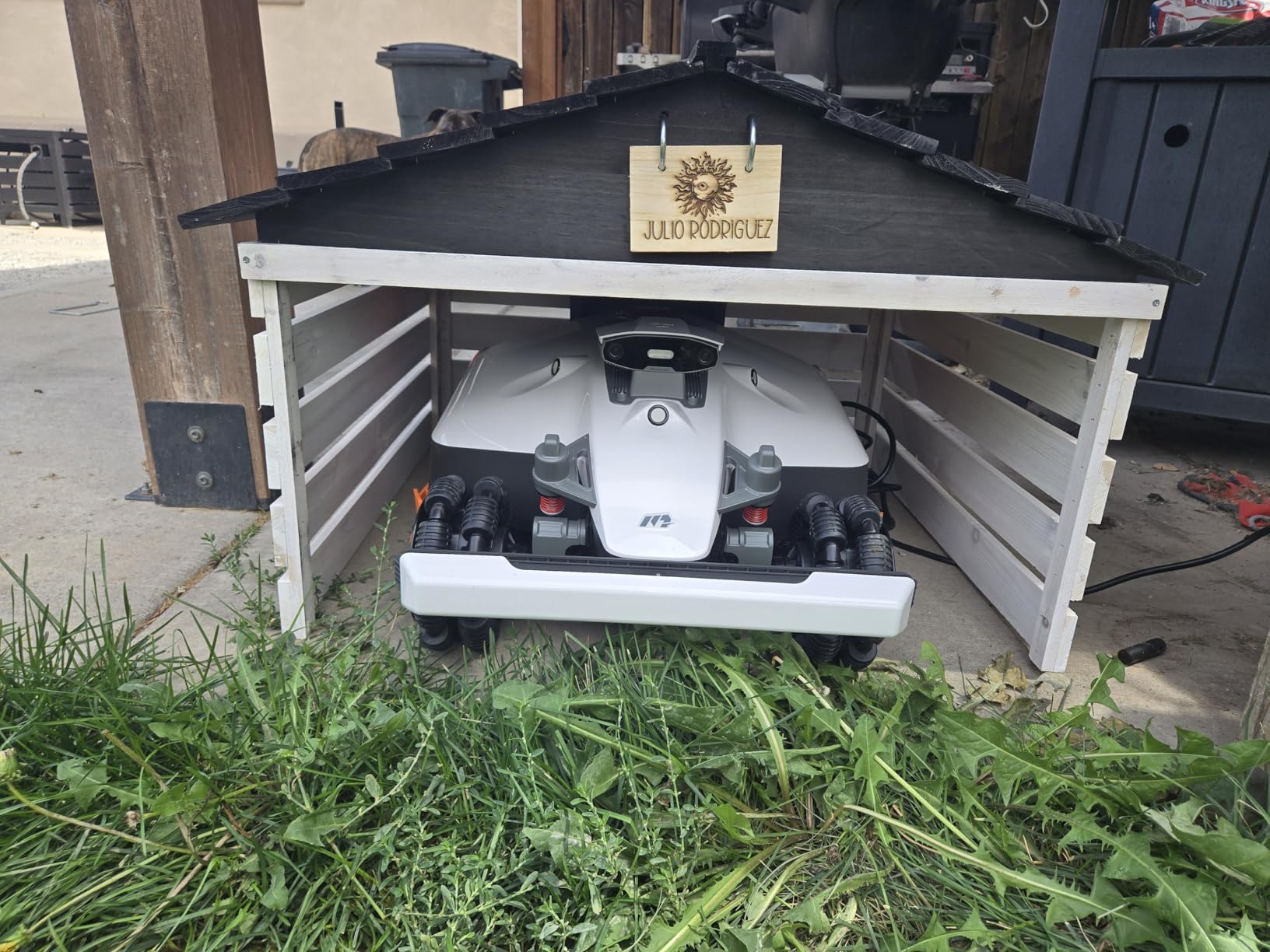
Reviewers consistently mention two setup frictions. The RTK antenna and its housing are often purchased separately, and a roof or pole mount improves accuracy noticeably. The second is the turn behaviour: the routing algorithm can scuff or tear grass on abrupt right-hand pivots, which shows up fastest on washboard ground where a pivot means changing height mid-turn.
It also will not mulch leaves, and edges still need manual trimming. The 4G connection requires a subscription after the first free year, which is worth factoring in if you plan to run the mower away from home for long stretches. Owners also describe the app as functional but fiddly and the manual as complex.
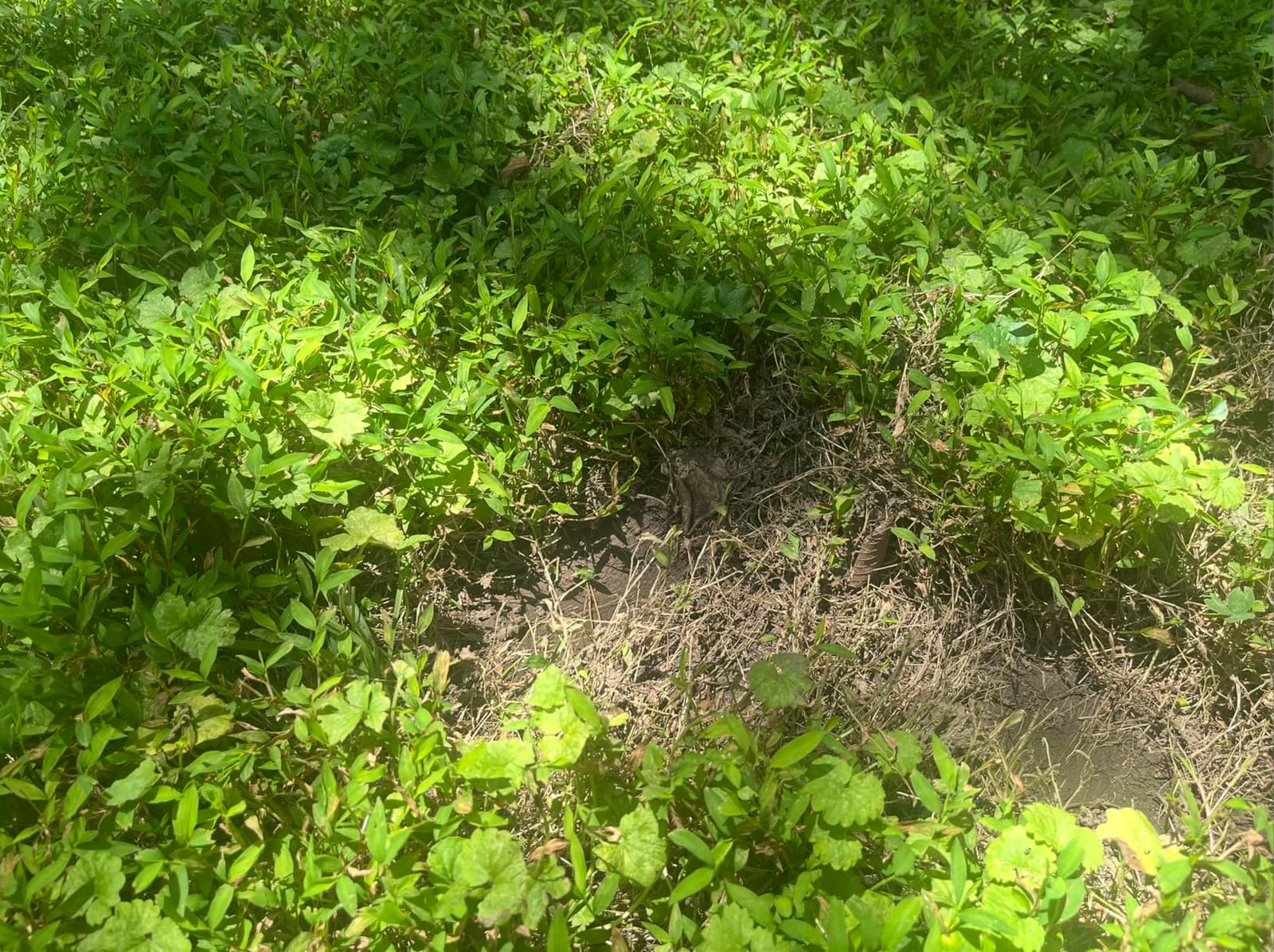
What you get on a genuinely rough lawn
The 80% slope figure combined with RTK and vision navigation is a pairing nothing else at this coverage size offers, and the 15.7 inch disc covers ground far faster than the 7.1 and 7.9 inch decks in this lineup. That matters when a full pass over a bumpy half acre would otherwise take most of a morning. Thirty zones also give you the granularity to run a hill at a different height or a different schedule from the flat area beside it.
The vision system recognises 200-plus object types, so the failure mode of getting stuck on a forgotten garden hose is reduced, though not eliminated. GPS tracking and anti-theft alerts through the Mammotion app add a useful layer on a property where the mower works alone while nobody is home.
Who should not buy it
If your ground is genuinely mucky or sandy, this is a wheeled machine and the wheels will find soft spots. It is also more machine than you need if you have a small, mostly-flat lawn with two shallow dips, where a 45% slope model with a smaller deck will do the same work. The separately sold RTK antenna is both a real cost and an extra install step before the first mow.
How to Measure Your Own Ground Before You Buy
Slope is quoted two ways and the two are easy to confuse. Grade in percent is rise over run, so 100% grade equals 45 degrees. Degrees are what a inclinometer reads. Convert by taking the arctangent of the percent figure, which is why a 30% grade is about 16.7 degrees and a 45% grade is about 24.2 degrees, not the 45 that the number suggests.
For a quick read, put your phone on the mower path and open a clinometer app. Take five readings on the steepest part of your lawn and use the highest. For a more reliable number, drive an 8-foot board into the ground at the high end, lay it flat toward the low end, and measure the height difference at the far end. Divide that rise in inches by the 96-inch run and multiply by 100 to get your grade percentage.
Then apply the headroom rule: buy a mower rated at least 5 to 10 grade points above your steepest measurement, and 20 points above it if the ground is soft or sandy. Published slope ratings are measured on firm, dry, level test ground. Wet grass, dew and post-rain softness will take real capability off that number, and uneven ground multiplies the problem because the mower is rarely at a constant pitch.
Also measure the narrowest point on the route from your charging position to the roughest section of lawn. Chassis width, not deck width, is what has to fit, and machines that handle tight passages vary a lot. If you have several trees, a gate and a side passage, you are looking at the 31.5-inch passage figures and the 2.3 ft passage claims above, not at the coverage numbers.
Why All-Wheel Drive Wins on Broken Turf
The dividing line in this category is drive configuration, and it is worth understanding why. A two-wheel-drive machine puts all its torque through two driven wheels. The other two are passive rollers. On a climb straight up a hill, that still works, because the load is behind the driven wheels. On a traverse across a hill, or a downhill diagonal, part of the machine’s weight pulls sideways off the driven wheels and onto the undriven pair, and grip collapses.
All-wheel drive distributes torque to each wheel independently, so a cross-slope does not unload the driving side. That is why every AWD machine in this roundup reports handling ground that stalled the owner’s previous robot, and why the tracked Yarbo goes further by spreading a load across a continuous contact patch rather than four discrete wheel prints.
There is a real cost to that grip, and it is the rutting problem. More torque and more weight means more ground pressure, and on damp or soft soil a heavy machine digs trenches. One owner running a Mammotion LUBA reported on r/roboticLawnmowers that it cuts tall grass well but is heavy enough that its wheels dig trenches whenever the yard is slightly damp or uneven, describing the same complaint against a Worx unit. The same owner concluded that smart features do not matter if the motor is not up to spec, since power is what prevents blade stall errors in dense patches.
The practical reconciliation is to buy drive capability and weight together, not separately. A light AWD machine with a floating deck, like the Navimow i215 or the Sunseeker X5, minimises rutting while keeping the grip. A heavy tracked machine minimises rutting almost entirely but costs you in handling and installation. A heavy wheeled AWD machine does both badly, which is the combination owners complain about most.
Navigation on Hills: RTK, LiDAR and Tree Cover
Positioning technology decides whether the mower keeps its pattern on uneven ground, because uneven properties are usually wooded properties. RTK gives centimetre-level satellite positioning and is excellent in open sky. It is also the first thing to degrade when a machine descends into a swale under an oak canopy or works between two houses, which is a common cause of machines wandering into beds or reporting missed areas as complete.
NetRTK uses cellular networks for correction rather than a fixed base station, which removes the install step but adds a connectivity dependency. LiDAR builds its own map by laser, so it does not need the sky at all, though it needs a structure to hold the map stable. Vision cameras add object and edge detection. The strongest machines in this roundup combine two or three of these, and the Navimow i215 and Roborock Q110H lean on LiDAR plus VSLAM specifically to hold navigation under tree canopies.
One thing owners consistently misunderstand: RTK gives horizontal position, not elevation. Satellite positioning will not tell a mower that it has moved three feet downhill, and expecting it to understand height changes is a common source of frustration on hilly properties. Machines with LiDAR and a wide vertical field of view, such as the LUBA 3 with a 59 degree vertical field of view, have a better chance of reading a swale correctly.
Check connectivity obligations before you buy. Some 4G services include the first year and require a subscription after, and behaviour with no cellular service is often unclear. Prefer a machine whose core mapping runs on LiDAR or vision so the mower still functions when the network does not.
Wet Grass, Morning Dew and the Rutting Problem
Stemming from a question in r/automower about a robot struggling in a wet uneven garden, this is the most common real-world complaint in the owner threads we read for this article. The terrain is the problem, and the weather makes the terrain worse. Damp grass reduces the friction that keeps wheels from slipping, and soft soil underneath removes the support the wheels need, so the two problems compound rather than add.
The mitigation is unglamorous: mow dry grass only. Avoid windows with morning dew, and wait at least a day after meaningful rain before a full cycle on a soft yard. If your schedule does not allow a dry window, reduce the mowing frequency on rough sections rather than running more passes, since repeat passes on the same ground are what cut visible ruts.
Turf type changes how much damage you see. Self-repairing warm-season grasses like bermuda and zoysia recover from wheel marks in a matter of weeks. Cool-season fescue holds the damage and shows it for the rest of the season, so rutting on fescue is a reason to change machine rather than change schedule. Machines that avoid tall grass rather than cutting through it, such as the Sunseeker X5, and zero-turn steering machines that do not scrub on pivots, both reduce the marks you will see.
Cleaning matters too. Owners report that cleaning a machine after mowing on wet days is difficult, and packed wet clippings under the deck are a genuine cause of blade stall errors. A rinse after any wet cycle prevents the problem compounding.
The Monitoring Tax: When a Robot Mower Is the Wrong Answer
Every owner thread we read contains the same honest admission: the set-and-forget promise does not fully hold on rough ground. Even good AWD machines get stuck on obstacles, rocks and significantly uneven sections. One owner on a Sunseeker unit reports needing to rescue it several times a week on rough ground. Others describe manually intervening when a map drifts mid-cycle.
That is the monitoring tax, and you should budget for it before you buy rather than after. A supervised machine still saves real hours compared to mowing the whole lawn yourself, but it is not zero-touch, and a yard that needs daily attention is a poor match for a machine that is out of reach from a window.
Sometimes a robot is simply the wrong purchase. If your lawn has deep ruts, exposed rock or washboard sections across most of its area, spend a season fixing the ground first, since no mower keeps a pattern on a surface that changes height by four inches every foot. On very large, very broken acreage, a remote-control machine or a self-propelled walk-behind with large pneumatic wheels may serve you better. If you want more context on manual options, our best cordless lawn mowers for large yards and best electric lawn mowers for small yards guides cover that side.
One more reality check on tree-heavy properties: the usable mowable area is smaller than the survey says, because the machine cannot work close to trunks. Size your machine against the area you can actually cut, not the size of the lot.
Maintenance Rhythm for a Rough-Terrain Workload
Blade wear is the first thing rough ground costs you. Grass stems run across washboard and root shelves instead of standing up, so blades work harder and dull faster on exactly the sections you most want to mow. Check blades more often than the manual suggests, and keep a spare set rather than sharpening.
Clear tread and wheel wells monthly. Caked mud on a driven wheel is a traction loss you will read as a slope problem, and it is far more common on uneven properties because the ground is uneven. A weekly underbody rinse after wet mowing cycles prevents clippings packing into the deck and turning into blade stall errors, which owners report as a frequent cause of thrown error messages.
Expect shorter battery life on rough ground. Climbing and constant pitch changes draw considerably more than a flat cycle, and on a hilly yard a machine rated for half an acre may deliver closer to a third in practice. Size up rather than accepting mid-cycle stops and a lawn cut in patches. Lithium packs in these machines typically last several seasons, less than on flat ground, and the LUBA 3 battery is not user-replaceable, which is worth weighing before a long-term purchase.
Finally, plan the off-season properly. Clean and dry the machine, store it off concrete that traps moisture, and check the battery charge if it will sit for months. On a tracked machine, inspect the steel skid shoes each season; they are the wear part that matters most on stony ground.
Frequently Asked Questions
Can robotic lawn mowers work on uneven ground?
Yes, but only with the right hardware. A robot that stalls on molehills, digs trenches or loses its map is the wrong class of machine. All-wheel drive with independently driven wheels holds grip on cross-slopes, adaptive suspension for 35 to 50 mm obstacles clears curbs and root shelves, and a floating deck keeps blade height constant on washboard ground. A two-wheel-drive model on damp, uneven soil is the most common cause of rutting and stalling.
How steep a slope can a robot mower handle?
It depends on drive type and ground conditions. Three of the eight machines here are rated to 45 percent grade, which is about 24 degrees. The stronger AWD machines reach 60 to 80 percent grade, or 30 to 38.6 degrees, and the tracked machine covers 70 percent. Always buy at least 5 to 10 grade points above your steepest measured section, and 20 points of headroom if the ground is soft or sandy. Remember that 100 percent grade equals 45 degrees.
Will a robot mower rut my lawn when it is wet?
It can, and it is the most common complaint from owners on uneven ground. Damp grass reduces friction and wet soil removes wheel support, so grip loss and soil compaction happen together. Mowing only when grass is dry, avoiding morning dew and post-rain soft ground, and not running repeated passes over the same rough section will prevent most damage. A lighter chassis with a wide track footprint, or a tracked machine, creates far less pressure than a heavy wheeled AWD model.
Do robot mowers get stuck on hills?
Frequently, and two-wheel-drive models are the usual reason. A drive with power to only two wheels loses grip on a traverse or a downhill diagonal, where part of the machine weight pulls onto the undriven wheels. Owners also report getting stuck on rocks, obstacles and sharp elevation changes such as the lip where lawn meets a walkway. Expect to intervene occasionally even with a good AWD machine, which is the ongoing supervision cost of autonomous mowing on rough ground.
Which robot mower is best for uneven terrain?
The Mammotion LUBA mini 2 AWD 1500H is the best-proven choice, with 263 owner reviews at 4.4 out of 5, an 80 percent slope rating and adaptive suspension for 45 mm obstacles. For larger rough properties the Mammotion LUBA 3 AWD 3000 covers up to 500 square meters per hour with tri-fusion LiDAR, NetRTK and vision navigation. For soft or muddy ground the only tracked option here is the Yarbo Pro, which handles up to 6 acres.
Is AWD really necessary, or is it marketing?
On uneven ground it is close to necessary. The benefit is not climbing straight up a hill, where two driven wheels cope. It is on traverses and downhill diagonals, where weight pulls onto the undriven wheels and grip collapses. All-wheel drive with independent motors keeps the machine moving through those transitions, which is exactly what uneven lawns produce constantly. If your ground is genuinely flat with one gentle bank, a two-wheel-drive model is fine.
Should I fix my lawn before buying a robot mower?
On a small yard, yes, and it is often the best money you will spend. Self-levelling molehills, filling washboard sections and evening out tree-root shelves gives a robot mower a surface it can keep a pattern on. Deep ruts, exposed rock or four inches of height change every foot are beyond what any machine handles well, and no amount of drive capability substitutes for a consistent surface. If the ground is broken across most of the area, a walk-behind or remote-control machine may be the right purchase instead.
Final Verdict
For most uneven lawns, the Mammotion LUBA mini 2 AWD 1500H is the safest starting point: the most owner reviews in this group, an 80 percent slope rating, suspension that steps over 45 mm obstacles, and a body light enough to avoid the trenching that heavier machines dig into damp ground. If your lawn is larger, the LUBA 3 AWD 3000 covers ground far faster with LiDAR, NetRTK and vision working together. If your problem is soft or muddy rather than merely bumpy, the tracked Yarbo Pro is the only machine here that genuinely solves it.
Whatever you pick, measure your steepest grade, leave 5 to 10 points of headroom, mow dry grass only, and accept that uneven ground carries a supervision cost no specification sheet will remove. That is our 2026 guide to the best robotic mowers for uneven terrain, and we will keep it current as new models arrive.