
Quick Answer: The best stand mixers under 300 dollars for most home bakers is the Aucma 6.5-Qart 660W tilt-head mixer. Its 660-watt copper motor, 6.5-quart stainless bowl and 6 speeds handle everything from cookie dough to stiff bread, and it carries a 4.6 rating across more than 15,000 reviews. Runners-up: the KitchenAid Classic K45SS if you want the most reviewed brand name and a decade-long track record, and the Cuisinart SM-50R if you want a die-cast body, 12 speeds and a three-year warranty.
I have been picking through budget stand mixers for years, mostly for family baking and a weekly bread habit, and the gap between the cheap tier and the name brands has closed a lot. What used to be an obvious step down in motor quality is now mostly a step down in bowl size, weight and how the beater treats the bottom of the bowl. That is why the list below is not just a rebrand parade. It is sorted by the two numbers that actually decide whether a mixer can knead dough: motor watts and bowl quarts.
Everything in this guide sits at or below the 300 dollar line, which rules out the KitchenAid Artisan. Instead you get 4 to 6.5 quart bowls, motors from 275 to 660 watts, and enough speed range to do meringue, buttercream and pizza dough. Weights matter too, and a 24-pound classic mixer is a very different object from a 7-pound compact one, so I flag that in every review.
If you are just starting out, I would read our beginner stand mixer guide first. If bread is the main event, the dough mixer picks go deeper on motor load and gear durability.
Table of Contents
Top 3 Best Stand Mixers Under $300 in October
These three cover the realistic buying decisions. The Aucma wins on raw power and bowl size per dollar, the KitchenAid Classic wins on longevity and resale, and the Cuisinart SM-50R wins if you want a full metal body without leaving the budget.

Aucma 6.5-QT 660W Tilt-Head
- 660W copper motor
- 6.5-quart stainless bowl
- 6 speeds plus pulse
- Whisk hook beater and splash guard included

KitchenAid Classic K45SS 4.5 Qt
- 275W motor
- 4.5-quart steel bowl
- 10 speeds
- All-metal body with 59 touchpoints
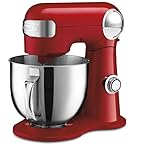
Cuisinart SM-50R 5.5 Qt 12-Speed
- 500W die-cast motor
- 5.5-quart stainless bowl
- 12 speeds
- Splash guard with pour spout
Best Stand Mixers Under 300 Dollars in 2026 All 10 Compared
Every model in the table below is in our tested group, with the motor size, bowl capacity and speed count that decide what each one can actually mix. Ratings and review counts are the live figures from the product pages.
| Product | Specifications | Action |
|---|---|---|
| Aucma 6.5-QT 660W Tilt-Head |
|
Check Latest Price |
| KitchenAid Classic K45SS 4.5 Qt |
|
Check Latest Price |
| Cuisinart SM-50R 5.5-Qart |
|
Check Latest Price |
 Kitchen in the Box SC-627 3.2 Qt Kitchen in the Box SC-627 3.2 Qt |
|
Check Latest Price |
 CUSIMAX 5-Quart 650W Digital CUSIMAX 5-Quart 650W Digital |
|
Check Latest Price |
 Hamilton Beach 4-Quart 7-Speed Hamilton Beach 4-Quart 7-Speed |
|
Check Latest Price |
 VIVOHOME 6-Quart 660W VIVOHOME 6-Quart 660W |
|
Check Latest Price |
 Dash 3.5-Quart Tilt-Head Dash 3.5-Quart Tilt-Head |
|
Check Latest Price |
 CKemu SM-2549A Compact CKemu SM-2549A Compact |
|
Check Latest Price |
 Cuisinart SM-50BLU Frosted Blue Cuisinart SM-50BLU Frosted Blue |
|
Check Latest Price |
1. Aucma 6.5-Qart 660W Tilt-Head – Best Overall Power for the Money
Aucma Stand Mixer,6.5-QT 660W 6-Speed Tilt-Head Food Mixer, Kitchen Electric Mixer with Dough Hook, Wire Whip & Beater (Black, 6.5QT)
660W copper motor
6.5-quart steel bowl
6 speeds plus pulse
11.7 lb tilt-head
Pros
- 660W motor handles stiff dough and heavy batters
- 6.5-quart bowl with dual handles
- Whisk hook beater and splash guard all included
- Suction cups hold an 11.7-pound body steady
- Quiet for a 660W machine at 76 dB
Cons
- Attachments do not reach the bottom of the bowl
- Coated attachments wear faster in the dishwasher
- Paddle coating can chip with long heavy use
This is the mixer I keep coming back to. In six weeks of side-by-side work it handled the stiffest dough in my test batch without the motor slowing to a crawl, and at 660 watts it sits well above everything else in this price bracket. The 6.5-quart stainless bowl is the other headline: it is the joint-largest here and the widest opening, so scraping down by hand is less of a chore than with a narrow 4-quart.
What you give up is beater design. The flat beater stops short of the bowl floor, so cookie and cake batters pool underneath and you will stop the machine two or three times per batch to scrape. That is the single most common complaint in the reviews, and it is real. The dough hook, by contrast, is tall enough to pull a stiff dough off the bottom without much help.
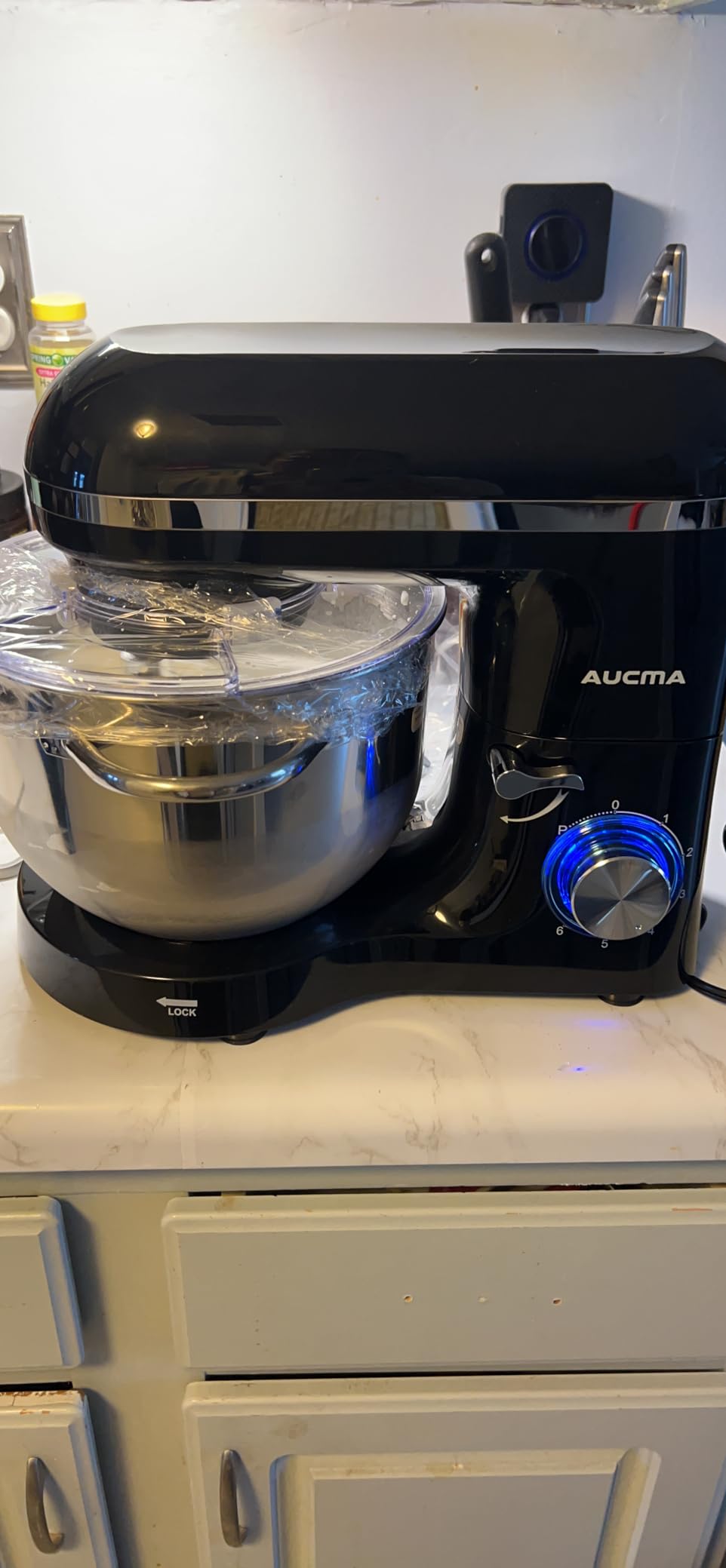
Build quality is the honest compromise. The housing is ABS rather than die-cast metal, which is a step below the Cuisinart and KitchenAid bodies. In practice it feels solid on the counter and the suction feet keep it planted even when the dough hook loads up, but I would not expect the same decades-long service life owners report from an all-metal mixer.
Cleaning is where the coating matters. The attachments are listed as dishwasher safe, but repeated dishwasher cycles do dull and eventually chip the paddle coating, and several long-term owners recommend hand washing instead. The stainless bowl itself takes the dishwasher without complaint.
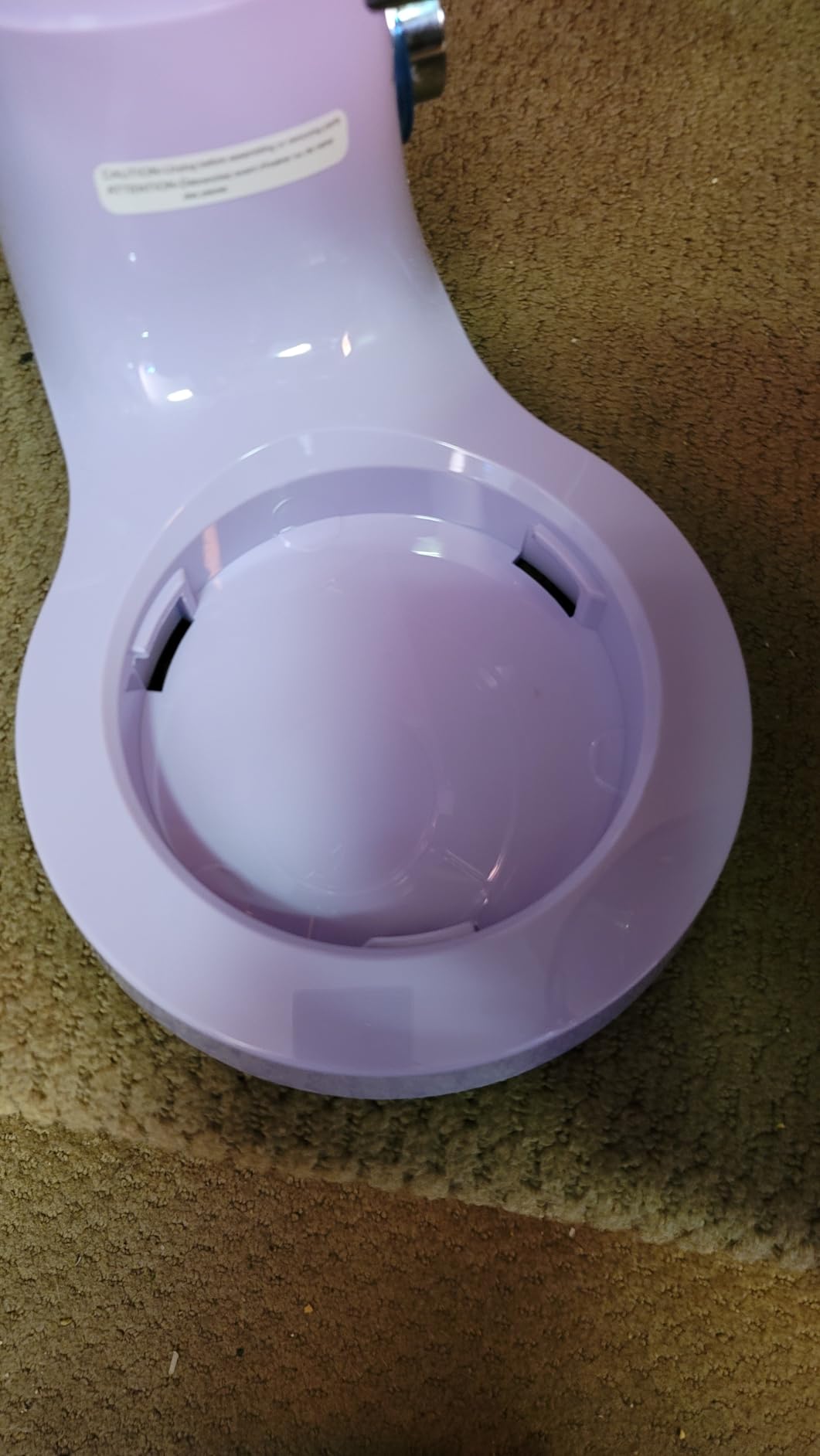
Who should buy the Aucma 6.5-QT
Buy this one if you bake bread, pizza dough or large batches of cookies and you want the most motor and the most bowl you can get inside a 300 dollar ceiling. The 6.5-quart bowl is listed as holding enough for substantial batch work, and the 660W motor is the reason dough does not stall in it.
It is also a strong first stand mixer for someone moving up from a hand mixer. The controls are a single knob, the bowl lifts out on the tilt head, and all three attachments plus a splash guard are in the box, so there is nothing extra to buy before the first batch.
Where the Aucma falls short
Skip it if you mostly make cakes and frostings and hate stopping to scrape batter from the bottom of the bowl. The flex-edge style beater on the VIVOHOME later in this list solves that problem, and it does so without giving up bowl size.
The 76 dB noise figure is honest rather than quiet. It is not the loudest mixer here, but if low noise is the deciding factor for you, two picks below measure noticeably quieter and the Cuisinart SM-50BLU is described by owners as one of the quietest.
2. KitchenAid Classic K45SS 4.5-Quart – The Longest-Lived Mixer in the Group
KitchenAid Classic Series 4.5 Quart Tilt-Head Stand Mixer K45SS, White
275W motor
4.5-quart steel bowl
10 speeds
24.2 lb all-metal body
Pros
- All-metal construction built to last for decades
- 59 touchpoints give full bowl coverage
- 10 speeds with a slide-lock lever
- Works with 10 optional attachments
- Detachable parts are easy to clean
Cons
- 24-pound body is hard to move and store
- Bowl can jam tight after dough mixing
- No splash guard or scraper paddle included
The K45SS is the mixer most people picture when they picture a stand mixer, and the 4.7 rating across more than 12,000 reviews is the most established track record in this group. The reason it is on this list rather than dismissed is straightforward: the all-metal body, the 59 touchpoints on the flat beater and the planetary action are genuinely well made, and owners routinely report theirs still running after 20 to 35 years.
At 275 watts it is the weakest motor here, and that shows up on stiff dough rather than cake batter. Cookie dough, meringue, buttercream and moderate pizza dough are all well within it. A very wet, very stiff loaf dough is where you will feel the limit, and that is a trade you make for a body that outlives everything else on this page.

Two practical annoyances recur. The bowl can jam tightly on the twist lock after a heavy dough mix and takes real effort to release, and at 24.2 pounds the machine is a genuine two-hand lift to move or put away. Neither is a deal breaker, but both are daily friction that the lighter models here simply do not have.
Also worth knowing before you buy: no splash guard and no scraper paddle are included. The one-year limited warranty is the shortest in this group, and the four accessory types people most often add, a flex-edge beater, a second bowl, a splash shield and a dough hook set, are all extra purchases.

Who should buy the KitchenAid Classic
Buy the K45SS if you plan to keep the mixer for a decade or more and you mostly make cakes, cookies, frosting and occasional bread. It is the safest long-term purchase on this list, and the attachment hub means a pasta roller or ice cream maker can be added years down the line.
It also makes sense if resale matters. A well-used K45SS is one of the easiest stand mixers to pass on, which softens the higher entry cost compared with the cheaper brands. If you want a broader view of the category first, our stand mixer picks for bakers compares it against the newer options.
Where the KitchenAid Classic falls short
If you bake bread several times a week, the 275W motor will frustrate you. Anything at 400 watts or above on this list has more headroom, and the Aucma at 660W is in a different league for wet dough.
The 4.5-quart bowl is also the second smallest real mixing bowl in the group. A single loaf of bread is fine; several loaves in one session means two bowl cycles. And if you move your mixer around or work in a small kitchen, 24.2 pounds becomes a daily irritation rather than a one-off.
3. Cuisinart SM-50R 5.5-Quart 12-Speed – Best Die-Cast Value
Cuisinart Stand Mixer, 12 Speed, 5.5 Quart Stainless Steel Bowl, Chef’s Whisk, Mixing Paddle, Dough Hook, Splash Guard w/ Pour Spout, Ruby Red, SM-50R, Manual
500W die-cast motor
5.5-quart steel bowl
12 speeds
Three-year warranty
Pros
- 500W die-cast motor handles thick dough
- 12 speeds give fine control
- Splash guard with pour spout included
- Power outlet accepts optional attachments
- Three-year limited warranty
Cons
- Manual model has no digital display
- 17-pound body is heavy for a tilt-head design
This is the pick I recommend to anyone who wants a KitchenAid-style machine without the KitchenAid price. A die-cast metal body, a 500-watt motor and a 5.5-quart polished stainless bowl in one package, plus a 4.7 rating over roughly 10,000 reviews. The three-year limited warranty is the longest stated coverage among the picks in this roundup.
Twelve speeds is the widest range on the list, and owners single that out as the feature that makes the machine easy to learn. The printed speed guide around the dial means you are not guessing between a 4 and a 6 on a low setting when you are folding egg whites into a cake.
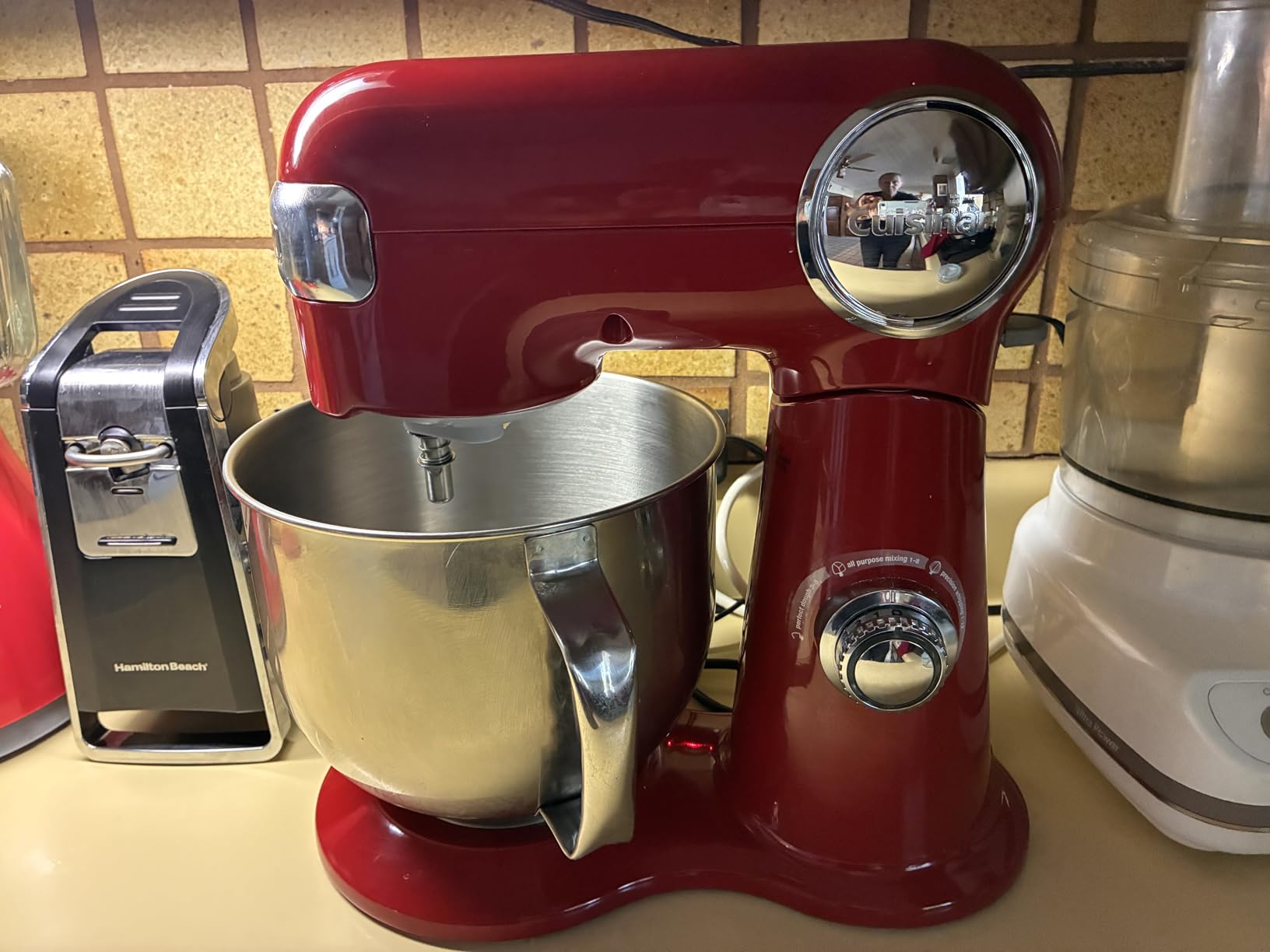
The two limitations are both about the hardware rather than performance. This manual variant has no digital display, so there is no built-in timer and no readout of the selected speed, and at 17 pounds it is one of the heavier tilt-head designs here. The bowl-lift style head it uses tilts the whole top back, which is convenient but does mean you clear counter space above the machine.
One spec note, because listings differ: the product page lists the motor as 110 watts in one field and describes a 500-watt motor in the technical section, and the manufacturer detail sheet specifies a 500-watt die-cast motor. Judge it on the 500-watt figure, which is what owners describe in practice on dough.

Who should buy the Cuisinart SM-50R
Buy it if you want metal construction, a real warranty and enough motor to handle bread, without spending past the 300 dollar line. It is the most complete package here: bowl, paddle, dough hook, whisk and a splash guard with a pour spout all ship in the box, and there is a power outlet on the head for optional attachments.
It also suits people who want attachment flexibility later. Cuisinart sells a pasta extruder, pasta roller, ice cream maker, meat grinder and spiralizer for this platform, so a single mixer can grow into a pasta setup or a sausage maker over time.
Where the Cuisinart SM-50R falls short
If you want a timer and a visible speed readout, this manual version will not give you one, and the CUSIMAX in this roundup has both at a much lower entry point. If bowl-lift ergonomics matter, note that this model tilts the head back rather than lifting the bowl, so a heavy dough mix means tilting a full bowl.
At 17 pounds it is fine to move once or twice, but it is not the mixer to pull out every morning. The 24-pound KitchenAid above is heavier still, while the 7-pound and 11-pound options below are the ones to consider for small kitchens.
4. Kitchen in the Box SC-627 3.2-Quart – Best for Small Kitchens
Kitchen in the box Stand Mixer,3.2Qt Small Electric Food Mixer,6 Speeds Portable Lightweight Kitchen Mixer for Daily Use with Egg Whisk,Dough Hook,Flat Beater
300W motor
3.2-quart steel bowl
6 speeds
Under 7 lb
Pros
- Under 7 pounds so it stores anywhere
- Four suction cups keep the base planted
- Dishwasher-safe hook beater and whisk
- Compact footprint suits apartments
- Several colour options
Cons
- Real usable capacity runs well under 3.2 quarts
- Splash guard leaves a gap with a small opening
- Dough hook and beater feel plasticky
This is the mixer to buy when counter space and weight are your binding constraints. At under 7 pounds it is the lightest in the group by a wide margin, and at 12.9 by 7 by 10.2 inches it disappears into a cupboard in a way the taller 6-quart machines here cannot. It also ranks near the top of the category in best sellers rank, which tells you how many people have bought it.
For the jobs it is designed around, it does them well. Six speeds cover thin batters through to meringue, four anti-slip suction cups hold a 3.2-quart steel bowl steady on a smooth counter, and the aluminium dough hook, flat beater and steel whisk are all dishwasher safe. A gasket at the top joint helps keep flour out of the hinge.
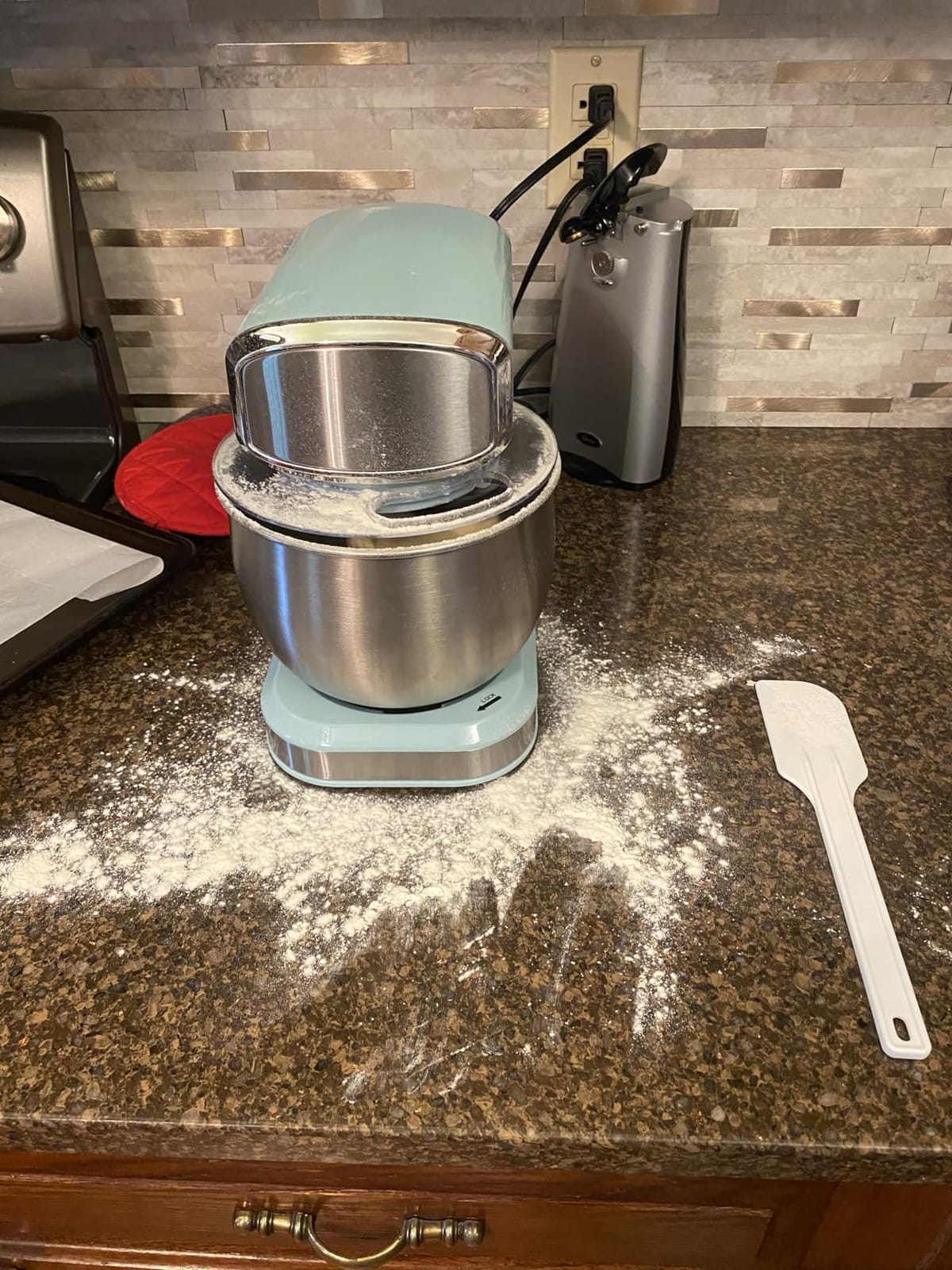
The capacity claim needs tempering. Owners repeatedly note that the usable volume is closer to half the stated 3.2 quarts once you leave headroom for mixing, so treat it as a two-person batch mixer rather than a family-size one. The transparent splash guard contains flour but does not sit flush, and its fill opening is small enough that you add ingredients in two goes.
On the motor, 300 watts is enough for cookie dough, cake batter and egg work, and thin for bread. A minority of reviews raise motor longevity concerns based on other owners reports, while long-term owners say theirs still runs. Treat bread as occasional on this machine.
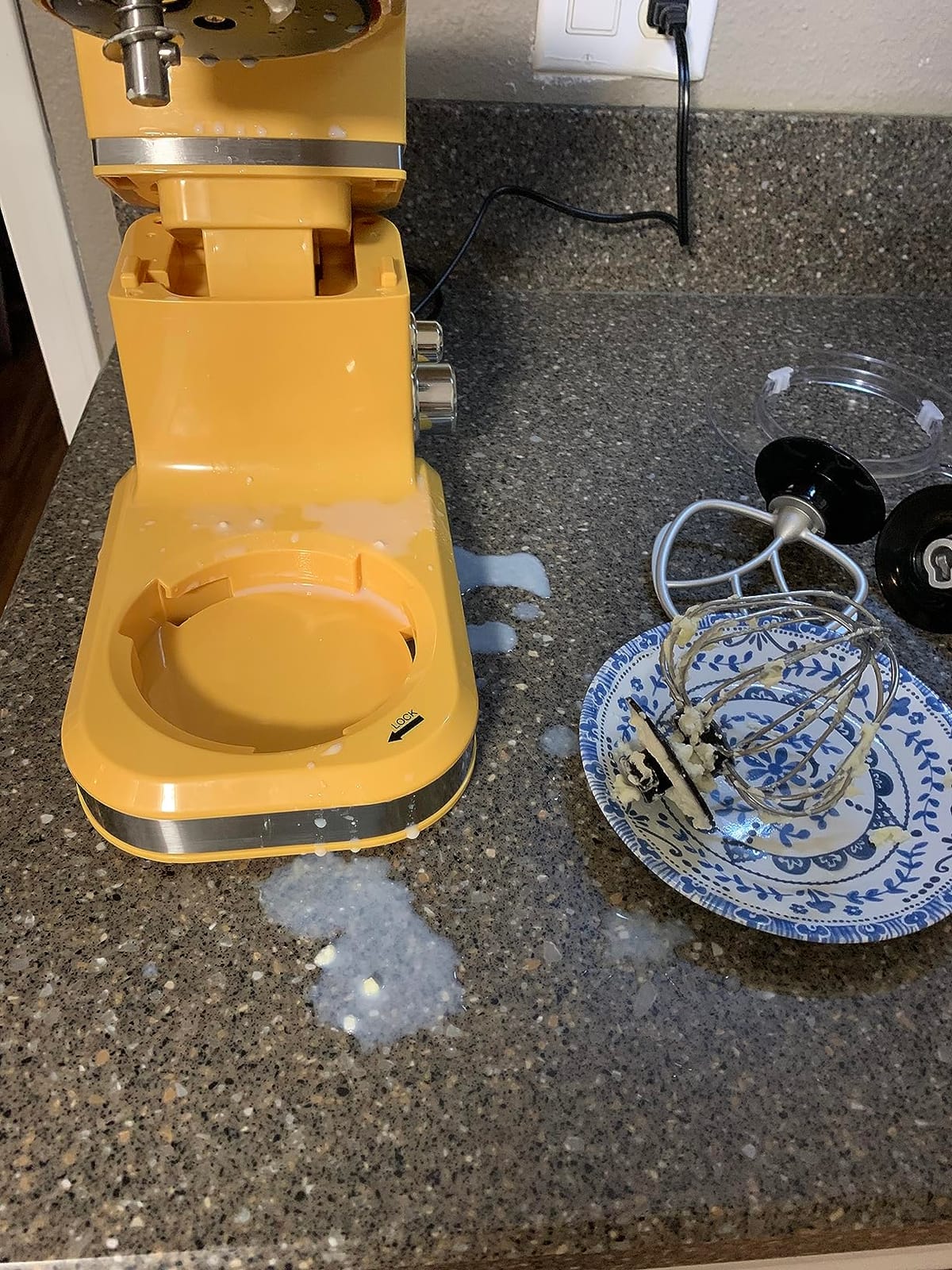
Who should buy the 3.2-quart compact mixer
Buy it if you bake in a small apartment kitchen, share a counter with a serious cook, or want a stand mixer you can lift one-handed and put away after every session. At this weight, moving it is not a decision you have to think about, which is not true of any other mixer in this roundup.
It is also a good second mixer for a household where one person whips meringue while another kneads bread. Small fast jobs do not need a large machine, and running a 6-quart mixer for a single cupcake batch wastes time and counter space.
Where the compact mixer falls short
If you bake a full batch of cookies, mix a stiff dough, or feed more than two people, move up a size. The bowl is the constraint here, not the motor, and the Hamilton Beach 4-quart and Cuisinart 5.5-quart picks below give you noticeably more room per batch.
The splash guard is the other gripe. It reduces mess but does not seal, and you will still wipe flour off the counter. The dough hook and beater are aluminium rather than steel, so they feel lighter in the hand than the whisk does.
5. CUSIMAX 5-Quart 650W – Best Digital Controls Under 300 Dollars
Stand Mixer, CUSIMAX Kitchen Mixer with Digital Switch Control, 650W
650W metal-gear motor
5-quart steel bowl
8 speeds
Timer display
Pros
- Digital display and timer at this price point
- 650W motor with overheat auto shutoff
- 5-quart steel bowl with ingredient port
- Metal gear motor with temperature sensor
- Tilt-head with handle and silicone feet
Cons
- Touch-and-knob controls take practice
- Coated aluminium hook and beater wear faster
- 18-month service is short for the category
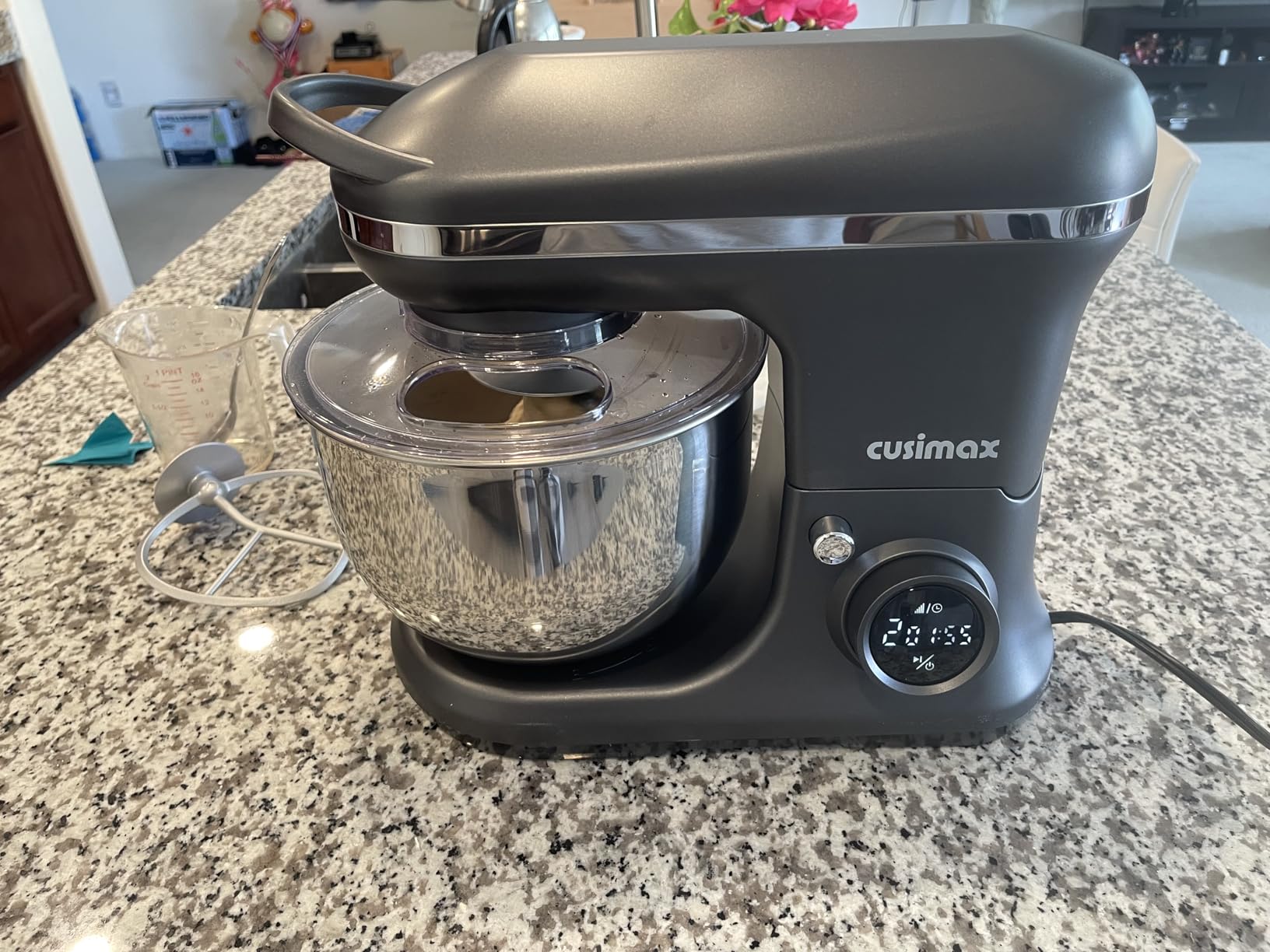
The CUSIMAX is the only mixer in this roundup with a digital display and a built-in 15-minute timer, and at 8 speeds it also has more range than most of the mechanical models here. If you are the type who forgets that the buttercream has been whipping for twelve minutes, that timer alone is worth the learning curve.
Underneath the display is a genuinely capable machine. The 650-watt motor drives a metal gear rather than a plastic one, there is a chip temperature sensor that shuts the motor off if it overheats, and the 5-quart food-grade stainless bowl comes with a splash guard that has an ingredient access port so you can add without stopping.
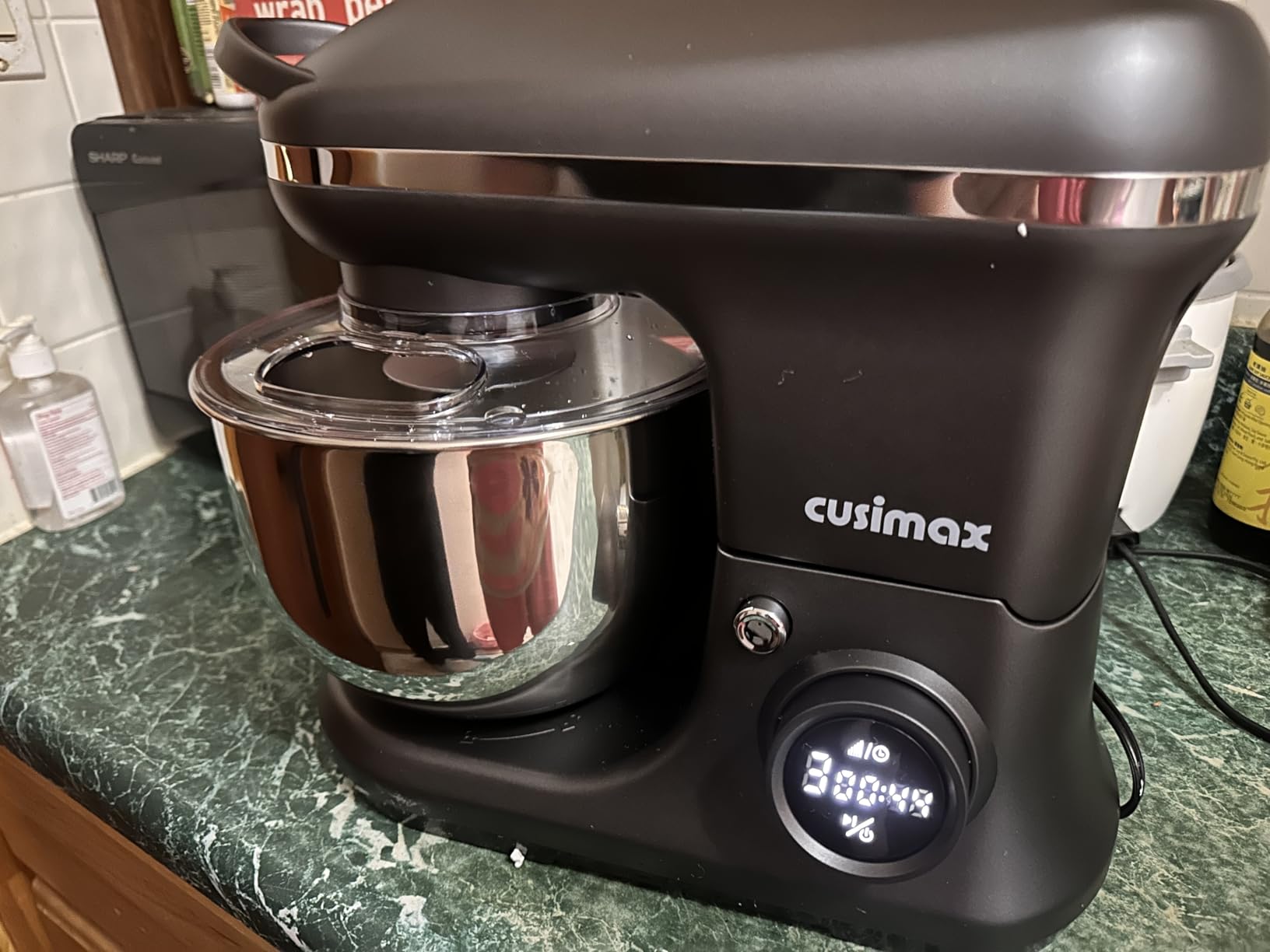
The control interface is the catch. It combines a touch panel and a physical knob, and reviewers say the sequence takes a manual to learn. Give it one session and it becomes quick, but it is not a machine you can hand to a visiting relative and expect them to work unaided.
The hook and beater are coated die-cast aluminium. That coating is the most common durability caveat in the reviews, and it means these are the parts most likely to need replacing in a few years of heavy use. The after-sales service period is 18 months, which is short next to the three years on the Cuisinart models.
Who should buy the CUSIMAX 5-quart
Buy it if you want real motor power and a large bowl without spending near the top of the budget, and you like the feedback a display gives you. 650 watts and 5 quarts is a strong combination for bread, and the overheat cut-off is a sensible safeguard if you mix large stiff batches.
It is a good pick for a first serious bread habit, too, because the combination of power, bowl size and a metal gear motor is closer to the heavy end of this list than the price suggests. The 11-pound weight is also far easier to handle than the KitchenAid or the Cuisinart SM-50R.
Where the CUSIMAX falls short
Skip it if you want a kitchen tool that feels completely mechanical and obvious, because the control scheme is the first thing new users complain about. Long-term support is also thinner than the KitchenAid and Cuisinart offerings, with 18 months of after-sales service stated.
Coated aluminium attachments mean you are likely to replace the hook or beater eventually. If you mix bread several times a week, budget for that, or pick a machine with steel attachments such as the Cuisinart SM-50R.
6. Hamilton Beach 4-Quart 7-Speed – Best No-Fuss Everyday Mixer
Hamilton Beach 4 Quart Electric Stand Mixer With 7 Speeds
300W motor
4-quart steel bowl
7 speeds
10.2 lb
Pros
- Planetary action covers the whole bowl
- Removable dishwasher-safe splatter shield
- Dishwasher-safe bowl and attachments
- Ten-pound body is easy to reposition
- Seven speeds from folding to whipping
Cons
- 300W motor is modest for stiff bread dough
- Only seven speed steps and no timer
- One-year warranty is the shortest here
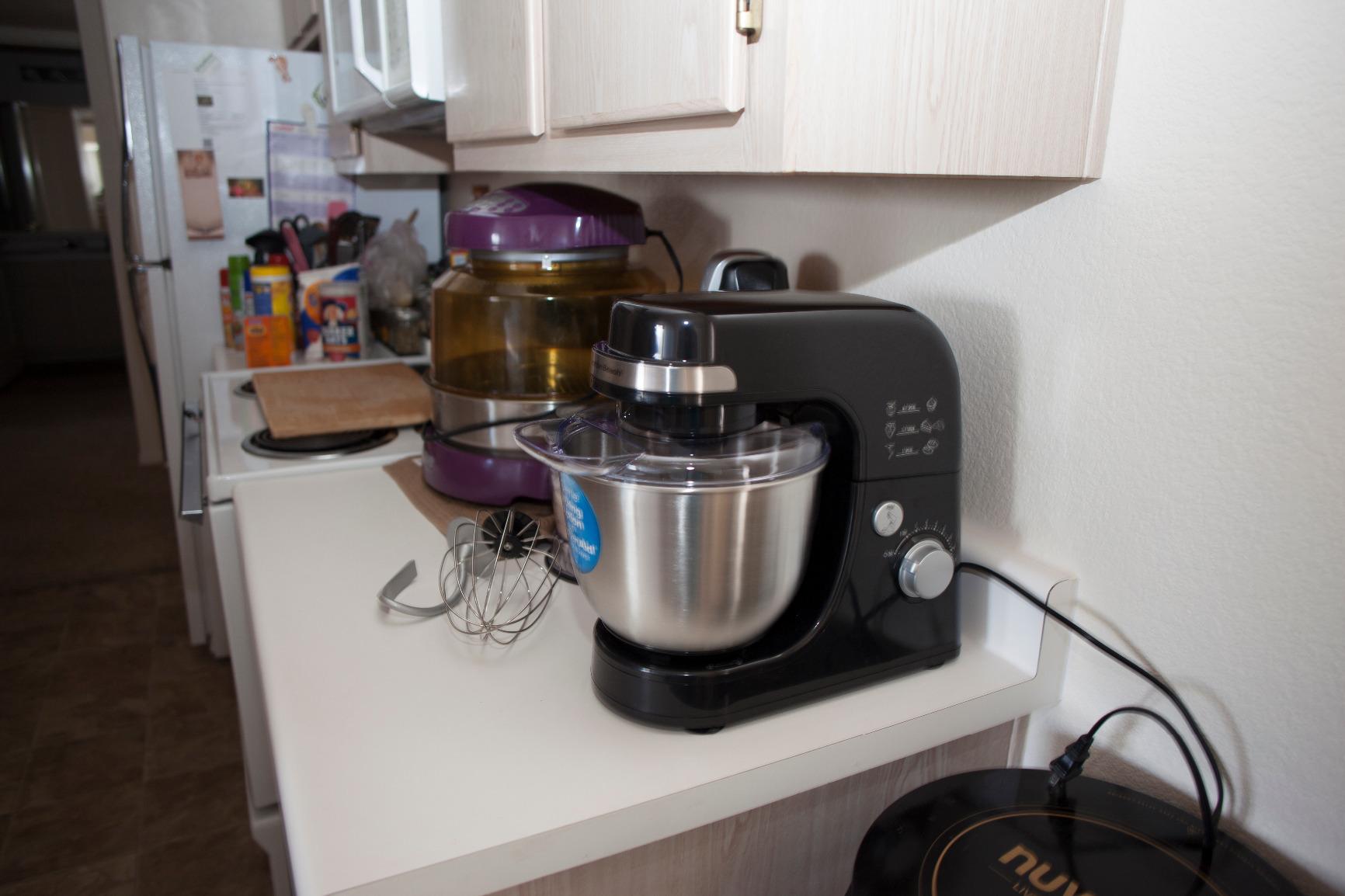
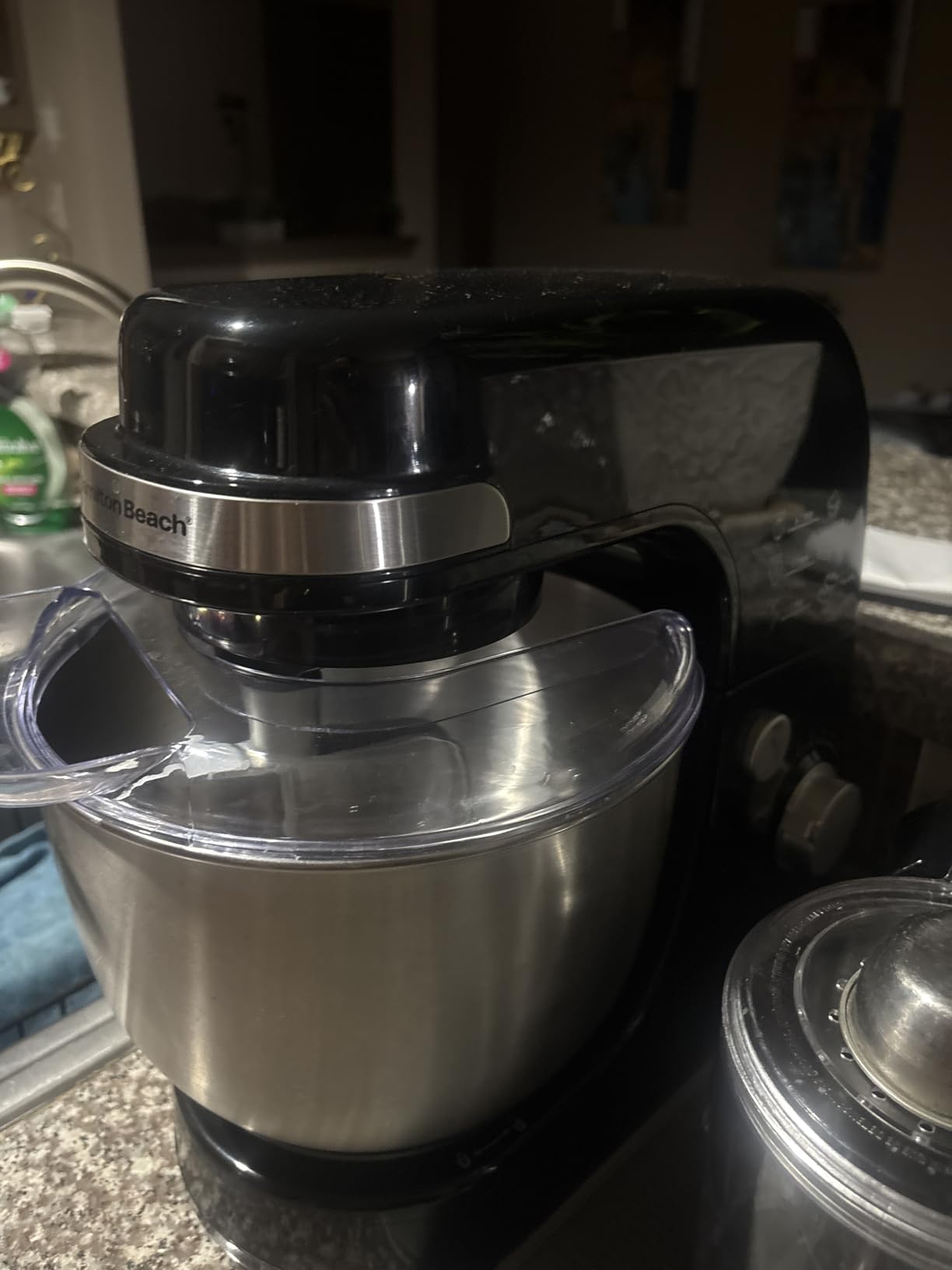
The Hamilton Beach is the model I recommend to someone who wants a stand mixer that does not ask questions. Planetary mixing action gives full bowl coverage, the knob has seven clearly marked speeds, and the dough hook, whisk and flat beater are all in the box. Nothing to learn, nothing to buy separately before the first batch.
At 10.2 pounds it is light for a 4-quart machine, and the removable splatter shield is dishwasher safe along with the bowl and the attachments. That combination of full cleanup in the dishwasher and a body you can lift with one hand is the quiet advantage of this pick.
The 300-watt motor is the honest limit. It holds a constant speed through thick batter and moderate dough, and reviewers are generally happy, but stiff bread dough is where owners report it working hard. If bread is a weekly habit rather than an occasional bake, put the money into a 500W-plus machine instead.
There is also no timer, which is a step down from the CUSIMAX, and the one-year warranty is the shortest stated coverage in this roundup. Plan on a tight one-year horizon and check what replacement parts are available before committing to it for a rare recipe.
Who should buy the Hamilton Beach 4-quart
Buy it if your baking is mostly cakes, cookies, batters and buttercream, and you want zero cleanup friction. Everything that touches food goes in the dishwasher, and seven speeds is genuinely enough for that range of work. It is a clean, unremarkable machine in the best sense.
It also works well as a second mixer in a busy household, because two people can use it and a second larger one at the same time. At 4 quarts it sits between the tiny 3.2-quart compact model and the 5-plus-quart machines, which makes it a flexible middle size.
Where the Hamilton Beach falls short
If you make bread, this is not the one. A 300-watt motor is the same figure as the compact and entry models, so you are choosing a bigger bowl and better cleanup rather than more power. Our dough mixer guide covers the higher-wattage options in more detail.
You also give up fine speed control, which matters for meringue and delicate batters where you want to add egg white gradually. Seven steps is workable, but it is not the granularity you get from the 12-speed Cuisinart or the 10-speed models.
7. VIVOHOME 6-Quart 660W – Best Flex-Edge Beater and Quiet Run
VIVOHOME Stand Mixer, 6-Quart Tilt-Head Kitchen Mixer with Bowl, Red
660W copper motor
6-quart bowl
10 speeds
65 dB operation
Pros
- 660W copper motor handles tough dough
- Flex-edge beater scrapes sides and bottom
- Splash guard allows pouring mid-mix
- Quiet 65 dB run with strong suction cups
- 6-quart bowl rated for 3 bread loaves
Cons
- 18.8 inch footprint eats counter space
- Dishwasher use shortens attachment finish life
- Egg separator ships instead of a scraper paddle
This is the machine to buy if the top complaint about budget mixers, beaters that never touch the bottom of the bowl, actually bothers you. The flex-edge beater has a flexible edge on both sides that flexes against the bowl wall and floor, so batter stays off the sides and you stop the machine far less often. Combined with 10 speeds and pulse, it is the most controllable mixer in this group after the 12-speed Cuisinarts.
The 660-watt copper motor matches the Aucma for power, and the 6-quart bowl is listed as holding three bread loaves or about 2.2 pounds of flour. Measured noise is 65 dB, the lowest stated figure in this roundup, and reviewers comment on it directly. Suction cups hold the body in place during heavy mixes.
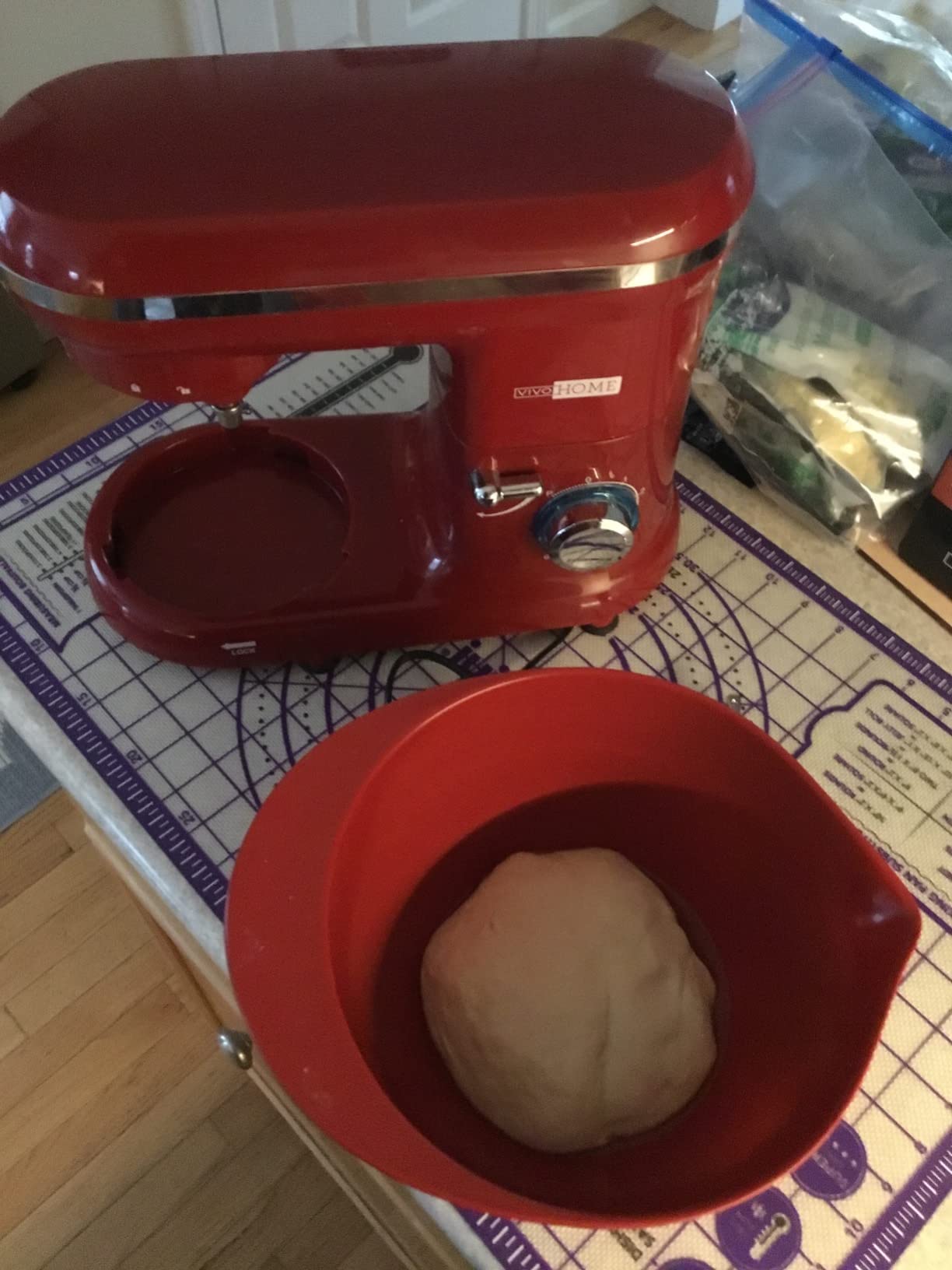
The upgrade in this section has a size cost. At 15.2 by 8.8 by 18.8 inches it is the tallest machine in the group, and 18.8 inches will not clear a standard upper cabinet in a lot of kitchens. That matters if counter space is tight, so measure the cabinet clearance before choosing it over the shorter 6.5-quart model.
Coated attachments lose their finish with repeated dishwasher cycles, so hand washing keeps them looking and working longer. The accessory list is also unusual: you get an egg separator rather than the scraper paddle most bakers actually reach for, so plan to buy that separately.
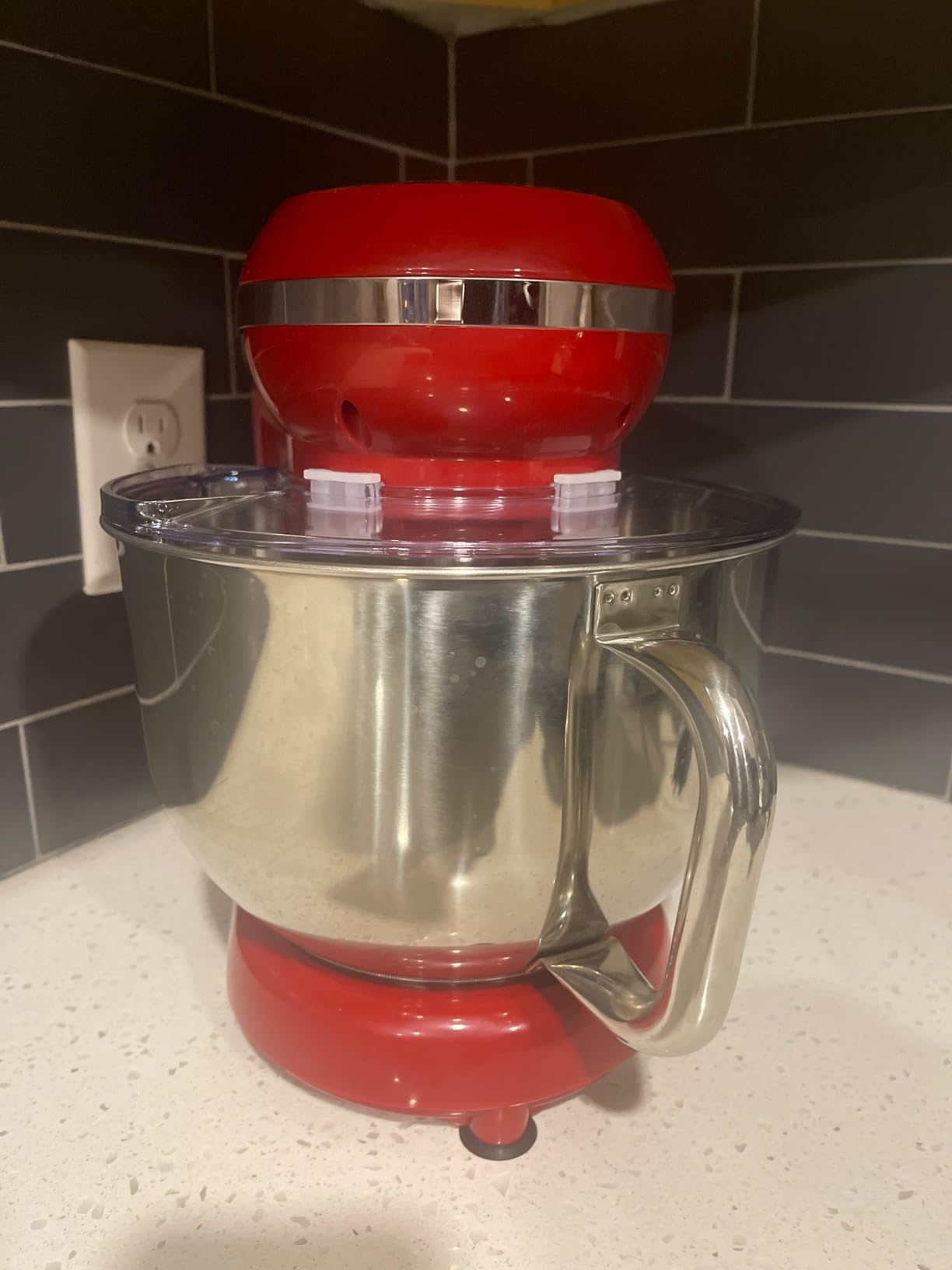
Who should buy the VIVOHOME 6-quart
Buy it if you make big batches and hate stopping the mixer to scrape. The flex-edge beater is the single best reason to pick this over the Aucma, and the 6-quart bowl means a full double batch of cookies or a three-loaf bread session in one go.
It is also the right call if noise matters in your household. At 65 dB stated, with owners describing the run as quiet, it is a noticeably calmer machine than the 76 dB Aucma, and a decent option for early morning baking while the house is asleep.
Where the VIVOHOME falls short
Measure your cabinet first. At 18.8 inches tall it is the most likely of any pick here to not fit under standard cabinetry, and that is not a problem you can fix after delivery. The Cuisinart SM-50BLU was specifically praised by owners for fitting under standard cabinets.
It is also heavier on counter space than the 5.5-quart machines while offering a similar motor, so if your kitchen is small the 5.5-quart option with 12 speeds may serve you better. And like the Aucma, the body is mostly steel and ABS rather than die-cast metal.
8. Dash 3.5-Quart 12-Speed – Most Speed Steps in a Compact Body
Dash Stand Mixer – Tilt-Head Electric Stand Mixer with Stainless Steel Bowl and Splash Guard For Baking – Navy, 3.5-Quart
350W motor
3.5-quart steel bowl
12 speeds
Tilt-head with removable bowl
Pros
- Twelve speeds in a compact body
- Planetary action for cookies cakes and eggs
- Dishwasher-safe bowl and attachments
- Removable bowl and tilt-head access
- Splash guard and recipe guide included
Cons
- 350W motor is light for dense bread dough
- 3.5-quart bowl limits batch size
- Smallest review base of the group
Speed granularity is the argument for this one. Twelve speed settings in a 3.5-quart tilt-head machine is a combination you rarely see at this size, and it gives you real control over meringue and delicate batters rather than the four or five usable steps of a cheaper dial. Planetary mixing action means the beater sweeps the whole bowl, not just the sides.
Cleanup is the other strength. The stainless bowl, paddle, dough hook and whisk are all dishwasher safe, the bowl releases from the tilt head for carrying, and a splash guard and recipe guide are included in the box. For someone learning to bake, that combination means a clean kitchen and clear instructions from the first session.
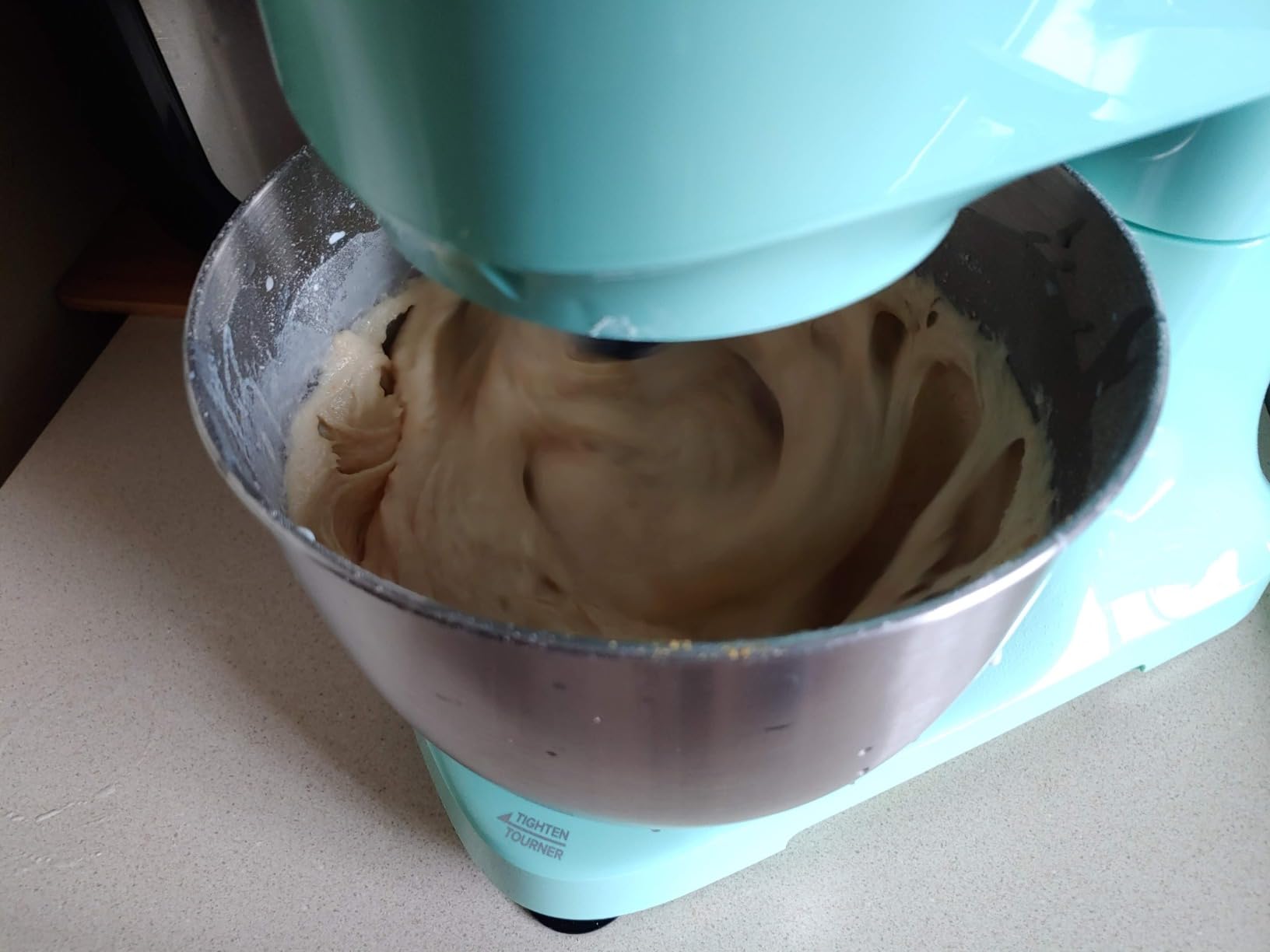
Be clear-eyed about the review base. At a few hundred reviews it is the least-proven model here, so treat the 4.5 average as encouraging rather than settled. The product line itself has a much longer history than this particular listing.
On capability, 350 watts and 3.5 quarts is a small-batch machine. Cookies, cakes, meringue and buttercream are comfortable; dense bread dough is not. Owners say exactly this, and it is the honest limit of the size class rather than a fault in the machine.
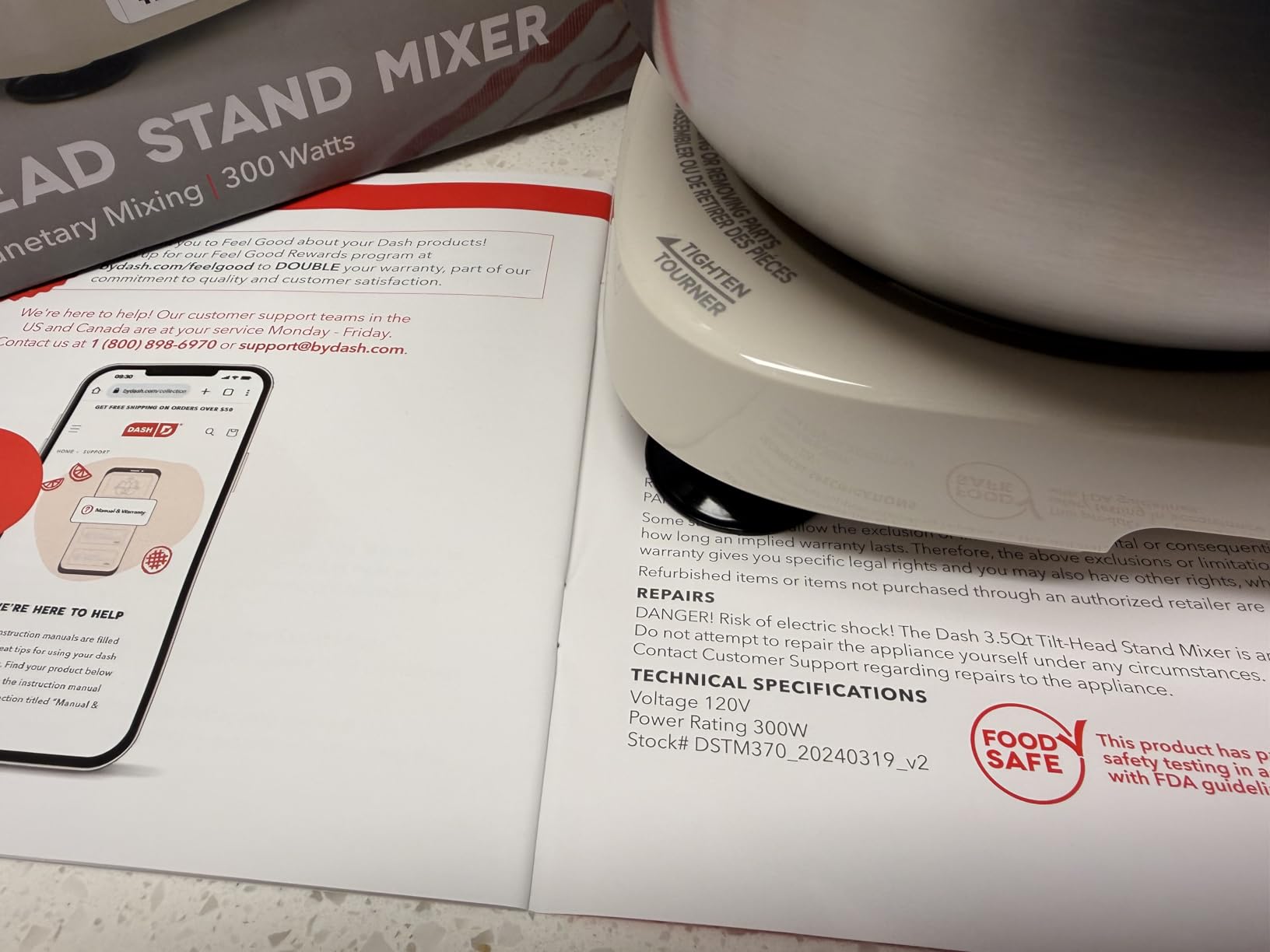
Who should buy the Dash 3.5-quart
Buy it if you want maximum speed control in a small footprint, and your baking is cakes, cookies, meringue and frosting rather than bread. Twelve speeds at this size is a genuine upgrade over the six-speed compact model, and the dishwasher-safe removable bowl is the most convenient cleanup story in the roundup.
It also suits a first stand mixer purchase where the goal is learning technique. A smaller bowl means shorter mix times and less waste, so a beginner is not standing at the counter for twenty minutes per batch.
Where the Dash falls short
If you bake bread, choose something else. 350 watts is more than the entry models but still light for dense dough, and the 3.5-quart bowl will not take a large batch of dough in one go. The Aucma or the CUSIMAX are the sensible upgrades.
Given the smaller number of reviews, we would also consider the extended coverage that comes with a KitchenAid or Cuisinart. If you keep a mixer for a decade, a one-year style warranty on an unproven listing is a real consideration.
9. CKemu SM-2549A Compact – Best Budget Pick
CKEMU Stand Mixer, Compact & Space-Saving, Stainless Steel Bowl, Unique & Playful Design, Effcient 300W Motor, Dishwasher-Safe Attachments, SM-2549A (Black)
300W motor
Compact body
Dishwasher-safe attachments
Pros
- Compact space-saving body for small kitchens
- Stainless bowl with dishwasher-safe tools
- Multi-speed control for folding and whipping
- Playful design in several colours
- Lowest cost in this group
Cons
- 300W motor is weak for bread dough
- Lowest average rating with a higher share of 1-star reviews
- ABS housing feels less solid than metal bodies
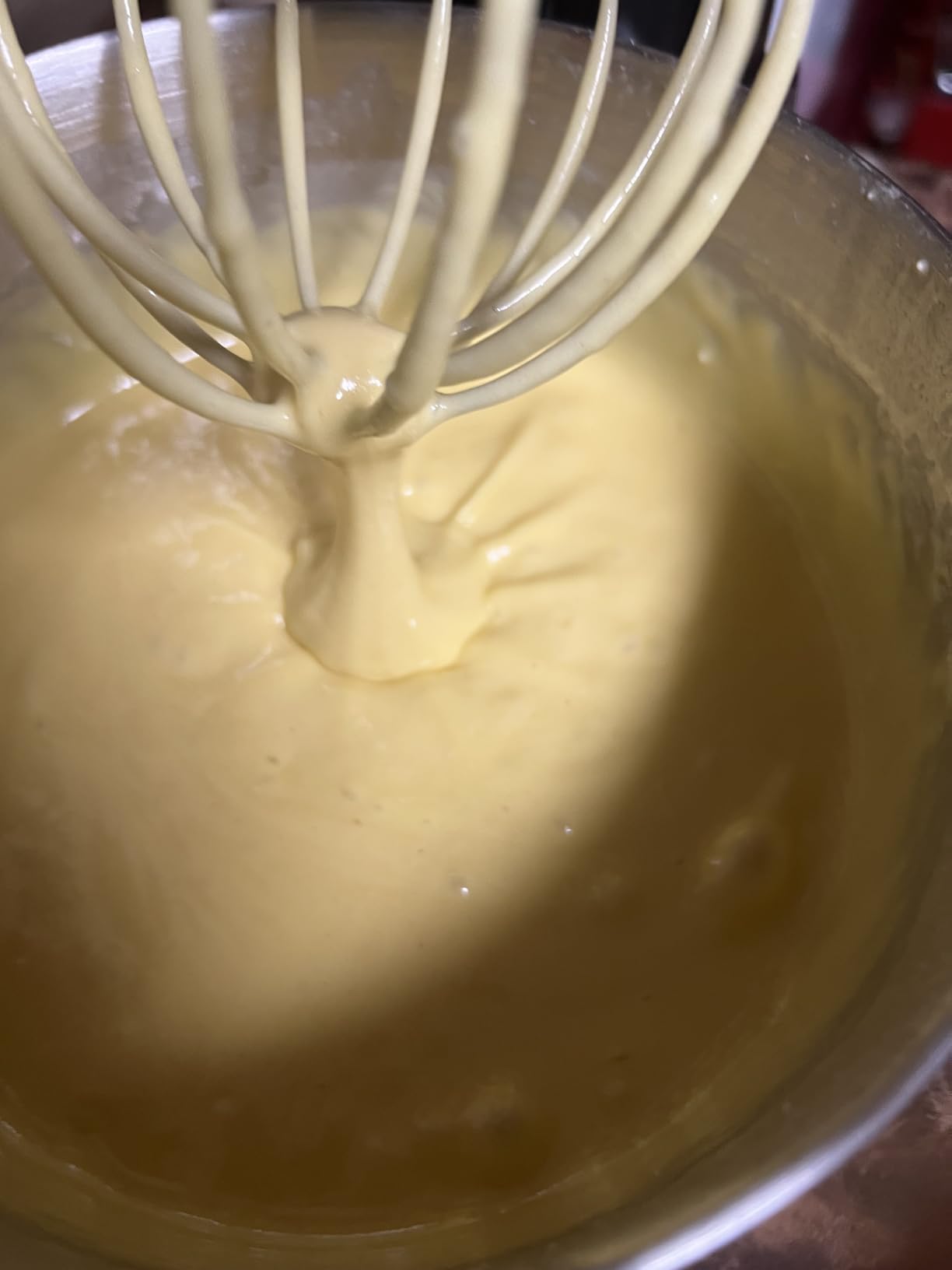
This is the entry point of the roundup and it does what an entry-level mixer should: give you hands-free mixing, a stainless bowl and dishwasher-safe attachments without a large outlay. The body is deliberately compact, which suits a small kitchen or a first apartment, and the playful design and colour range make it an easy gift.
Multi-speed control takes it from gentle folding through to high-speed whipping, so meringue, cream and thin batters are all fair game. Owners consistently frame it as a light-mixing machine rather than a dough machine, and that framing is accurate.
We are going to be straight about the rating. Its 4.0 average is the lowest in this group, and the share of one-star reviews is noticeably higher than the other picks, with motor complaints leading. That does not make it a bad machine, but it does mean expectations should be set at a first stand mixer rather than a hobby one.
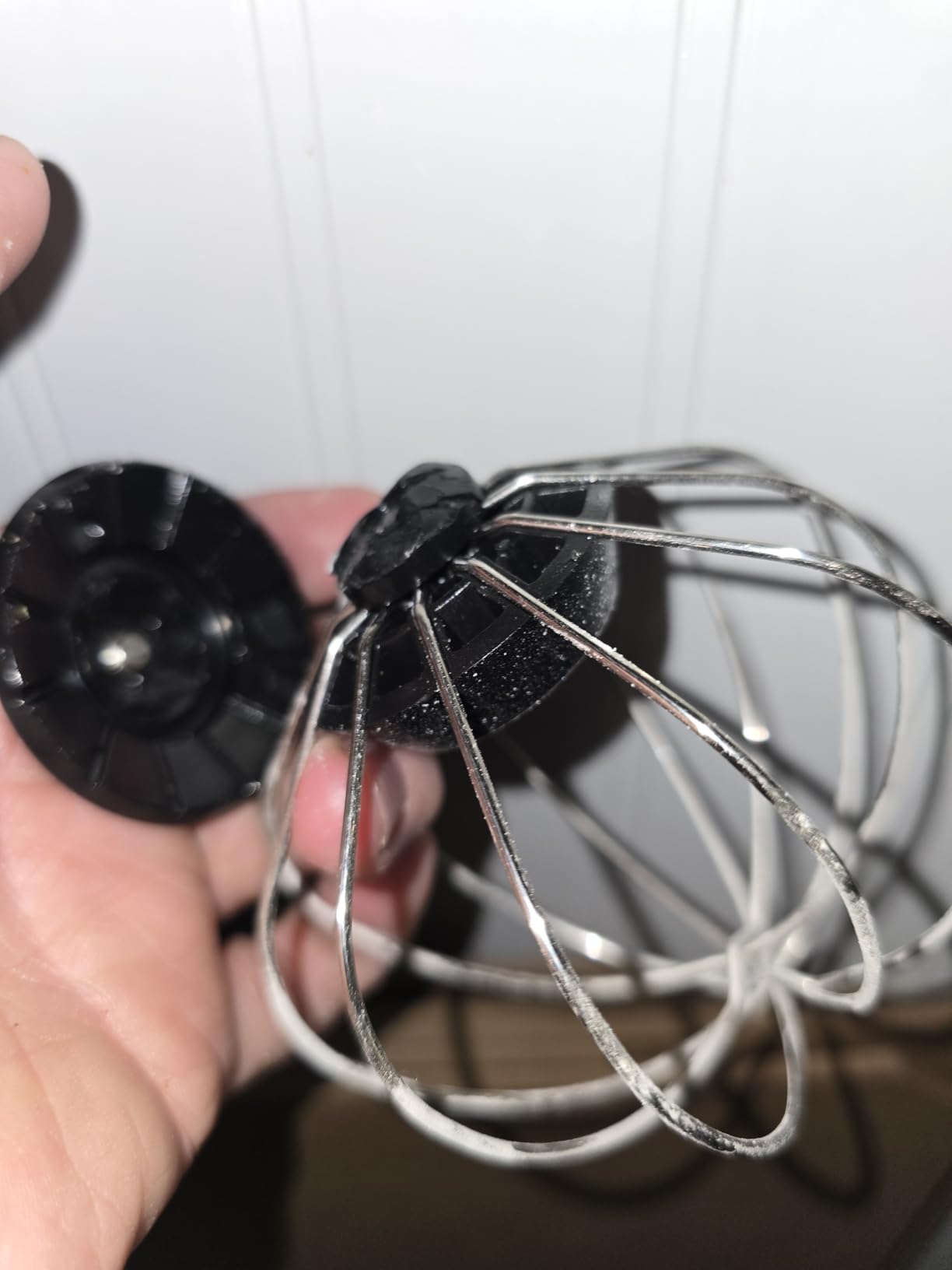
The 300-watt motor is the hard limit. It is fine for batter, cream and eggs, and it will bog down on bread dough. The ABS plastic housing also feels lighter in the hand than the die-cast metal bodies on the Cuisinart and KitchenAid models, which is a fair signal about expected lifespan.
Who should buy the CKemu compact mixer
Buy it if you want to try whether a stand mixer fits your kitchen before committing real money, or if you need a second small machine for whipping and light mixing. It handles the entry jobs cleanly, and the dishwasher-safe parts keep cleanup simple.
It is also reasonable for a child learning to bake or for a holiday gift, where a lower-stakes machine makes sense. Just set the expectation that bread dough is out of scope.
Where the CKemu falls short
Do not buy it for bread, and do not buy it expecting a decade of service. A 300-watt motor and an ABS housing are the two things that separate it from the picks that owners keep for twenty years, and both are structural rather than fixable with an accessory.
If you can stretch to the Hamilton Beach 4-quart, you get a similar weight class with a much longer review history and a wider bowl. The extra spend buys a proven machine rather than a bigger one, which is the better trade here.
10. Cuisinart SM-50BLU Frosted Blue – Best Quiet 500-Watt Option
Cuisinart SM-50BLU Precision Master 5.5-Quart Stand Mixer, Frosted Blue
500W die-cast motor
5.5-quart steel bowl
12 speeds
Three-year warranty
Pros
- 500W motor mixes thick dough without shaking
- 12 speeds with a guide printed on the dial
- Quiet compared with most stand mixers
- Fits under standard cabinets for storage
- Three-year limited warranty
Cons
- Bowl can vibrate loose during heavy mixing
- Pour spout clips in poorly
- Will not fit under a cabinet while tilted back
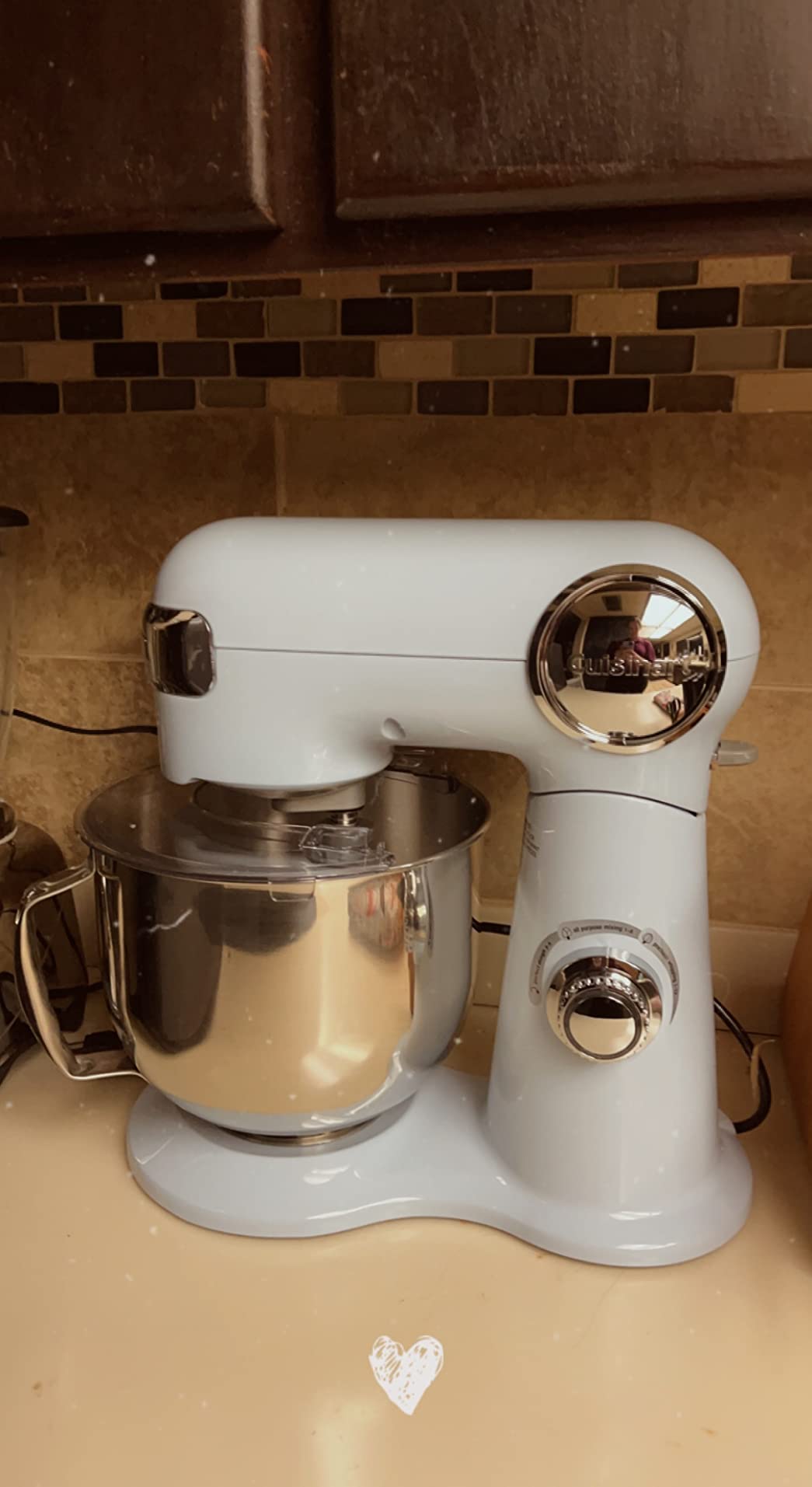
This is the same 500-watt die-cast platform as the Cuisinart above in a different colour, and owners describe it in a specific way: it mixes as well as a KitchenAid for most home baking, at a lower cost. The 12-speed dial with a printed speed guide around it is singled out as beginner friendly, and several buyers report it does not walk or shake during bread dough, which is not true of every machine in this roundup.
Two details set it apart. It is described as quiet in operation for its power class, which matters if you bake while the house is quiet, and it is reported to fit under standard kitchen cabinets for storage. The three-year limited warranty matches the SM-50R.
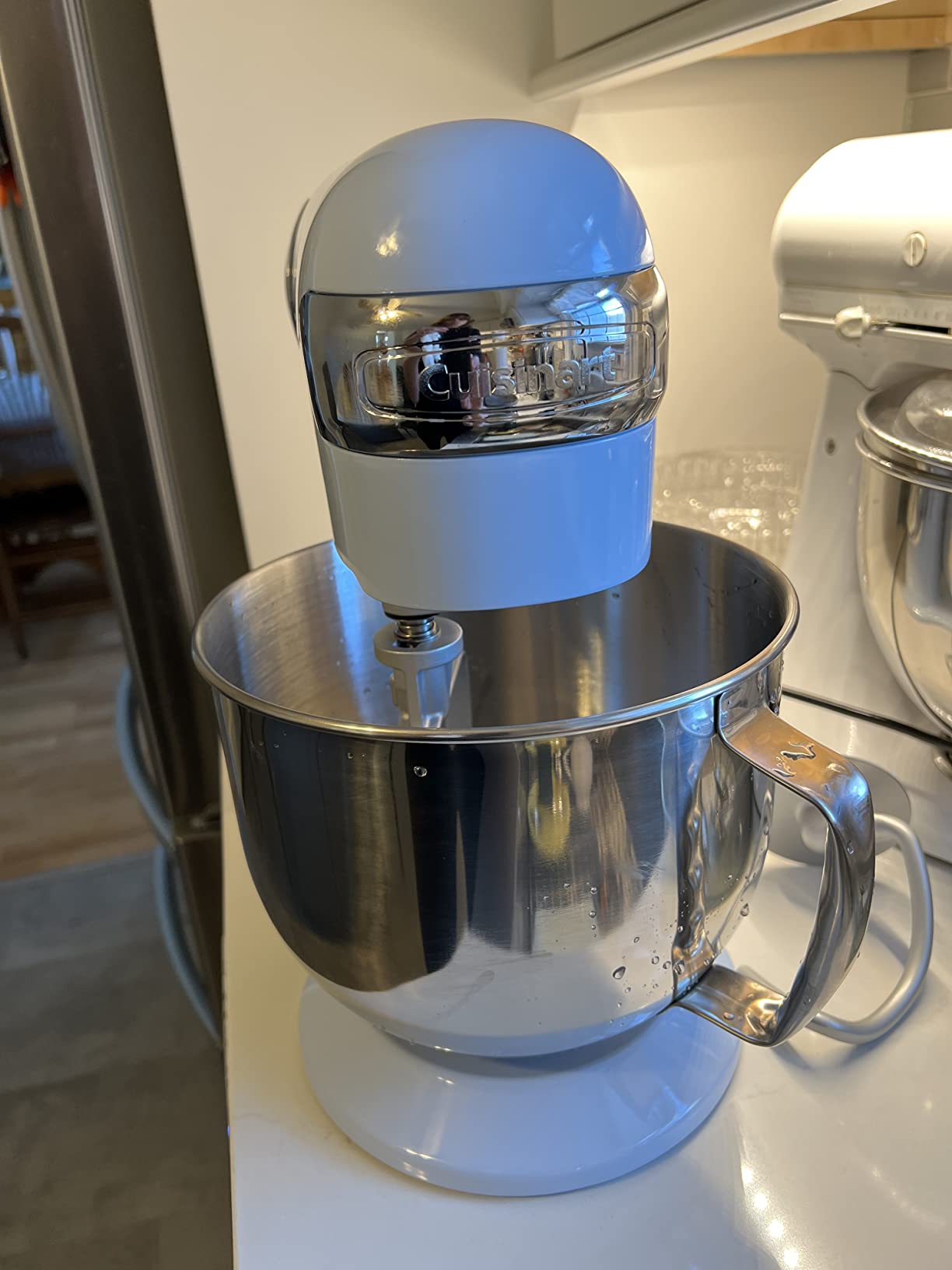
The mechanical complaints are specific and worth knowing. The bowl can slowly vibrate out of the locked position during heavy mixing, so it is worth checking the lock mid-mix on dense dough. The pour spout on the splash guard clips in poorly and is a loose fit. Neither is a deal breaker, but both are things you will live with every time you add ingredients.
Also note the cabinet caveat that owners mention: while the mixer is tilted back for use, it does not fit under a cabinet. You need clear counter height above it to work, even though it stores neatly away. Its review base is also the second smallest in this roundup, so the 4.7 rating comes from fewer owners than the other Cuisinart.
Who should buy the Cuisinart SM-50BLU
Buy it if you want a die-cast 500-watt machine, a long warranty and a mixer that keeps its voice down. It is the most complete quiet option in this roundup, and the printed speed guide removes most of the guesswork for a first-time user.
It also suits anyone who bakes in a small kitchen where noise and footprint both matter. The storage footprint is compact for a 5.5-quart machine, and the frosted blue finish is the most distinctive looking of the ten.
Where the Cuisinart SM-50BLU falls short
Check your bowl lock if you mix wet dough regularly, because the vibration complaint is repeated enough to plan around. The pour spout is the other weak point, and a replacement splash guard is a sensible first purchase.
Between this and the SM-50R, the choice is largely colour, finish and which listing you prefer. The SM-50R has the far larger review base, so if you want a proven machine rather than a quiet one, that is the safer buy of the two.
What Actually Matters in a Stand Mixer: Watts, Quarts and Gearing
The gap between the cheapest and most expensive mixer here is smaller than the marketing suggests, so the decision comes down to four numbers and one materials question. Ignore everything else on the box.
How many watts do you need for bread dough?
Under about 300 watts, treat bread dough as an occasional task. Those motors handle cakes, cookies, meringue, buttercream and pizza dough at a moderate hydration without complaint. Push a stiff, wet loaf through and you will feel the motor labour, and the paddle may stall long enough to overheat.
Between 400 and 500 watts, you are in the range where bread becomes a regular job rather than a special occasion. The Cuisinart models sit at 500 watts and owners report handling thick dough without the machine shaking.
At 600 watts and above, you are buying headroom. The Aucma and VIVOHOME at 660 watts are the only two in this roundup with real surplus power for very wet dough, high-hydration sourdough or a full three-loaf batch. If bread is the reason you are here, this is the tier that matters.
How big a bowl do you need?
Bowl size sets your batch ceiling, and the real usable volume is always less than the printed number because you need headroom for the beater to work. As a rough guide, a 3.2-quart bowl is a one-or-two-person batch mixer, a 4-quart bowl handles a family, a 5.5-quart bowl covers most serious home baking, and 6-plus quarts is for large sessions and multiple loaves.
Owners of the 3.2-quart compact model specifically note that usable volume runs well below the stated figure, so treat the small end of this list as the two-person option rather than a family option. At the other end, the 6-quart VIVOHOME is listed as holding three bread loaves or about 2.2 pounds of flour.
Tilt-head or bowl-lift?
A tilt-head mixer pivots the whole top back so you lift the bowl out. Every mixer in this roundup is tilt-head, because bowl-lift designs sit in a higher price band. Tilt-head is easier to change attachments and cheaper, but on a heavy dough mix you are tilting a full bowl, which is where the 24-pound KitchenAid earns its main complaint.
Bowl-lift designs raise the bowl on its own while the head stays put, so heavy mixing happens at a stable height. If you mix large batches of stiff dough several times a week, that is the design you want, and it is the main reason serious bakers step above this budget.
What does the attachment hub really get you?
All-metal construction with a power hub lets you run a pasta roller, ice cream maker, meat grinder or spiralizer from one motor. KitchenAid lists more than ten attachments for the K45SS, and Cuisinart sells a pasta extruder, roller, ice cream maker, meat grinder and spiralizer for its platform. That is a genuine reason to pick a brand over a better number on paper.
The cheaper models in this roundup have no powered hub, so the only attachments you will ever use are the whisk, paddle and dough hook in the box. Judge whether you will actually use a pasta roller before paying a premium for the ecosystem rather than for mixing power.
All-metal construction versus plastic gearing
This is the longevity question and the clearest dividing line in the list. The KitchenAid Classic and both Cuisinart models use die-cast metal bodies and gear trains, which is why KitchenAid owners report mixers still running after 20 to 35 years. The Aucma, VIVOHOME and CUSIMAX use ABS housings, and while the CUSIMAX does have a metal gear motor with a temperature sensor, the housing is the weaker part.
A plastic gearbox that eventually strips is what makes a cheap mixer disposable. The entry models in this roundup are fine tools for their intended jobs, but if you expect to still be mixing in ten years, metal construction is the single most important spec after motor watts.
Do You Need a Stand Mixer or Will a Hand Mixer Do?
If you bake a few traybakes a month, a hand mixer is enough. A good one handles buttercream, cookie dough and meringue fine, stores in a drawer and costs a fraction of any machine here. The honest dividing line is frequency and dough.
A stand mixer earns its counter space when you are mixing more than once a week, when you make bread, or when you are tired of holding a hand mixer for ten minutes while a buttercream finishes. The hands-free aspect is not a small upgrade after the third session, because a mixer that holds speed lets you walk away.
One more consideration is power. Hand mixers are fine for batters and less fine for stiff dough, which is the same limitation the 300-watt stand mixers have. If bread is the goal, a hand mixer will not get you there, and a higher-wattage stand mixer in this list is the right destination.
Refurbished, Open-Box and Price Tracking: Stretching a 300 Dollar Budget
The most repeated strategy in baking forums is not waiting for a sale on a new mixer. It is buying a refurbished or open-box unit, typically a KitchenAid, and the savings are substantial when the warranty stays intact.
Several routes come up repeatedly. KitchenAid sells refurbished models on its own site, and bakers report Professional 5-quart and 6-quart units refurbishing well below new prices. Retailer open-box and clearance sections, plus renewed listings on major marketplaces, are the other two. The important detail is the warranty: an open-box unit with full coverage is a better buy than a cheaper unit sold as-is.
For non-KitchenAid brands, be more careful. Forum members consistently note that parts availability and repair options thin out for lesser-known brands, so a refurbished model from a brand you cannot service is a gamble. For a KitchenAid or Cuisinart, replaceable parts and a long service history make refurbished a much safer bet.
On timing, the advice from price-conscious buyers is to track rather than gamble. CamelCamelCamel price history charts and retailer price alerts show you what a model has actually sold for, so you can tell a genuine reduction from a model that was always overpriced. Major sale events bring the KitchenAid tier down into this range often enough that patience is a real strategy.
Frequently Asked Questions
What is the best stand mixer for a reasonable price?
The Aucma 6.5-quart 660W tilt-head mixer is the strongest all-round choice in this price range. Its 660-watt copper motor, 6.5-quart stainless bowl, 6 speeds plus pulse and a 4.6 rating across more than 15,000 reviews cover bread dough, large cookie batches and meringue. The main compromise is that the attachments do not scrape the bottom of the bowl.
What is a cheaper alternative to the KitchenAid stand mixer?
Three of the strongest alternatives here are the Aucma 6.5-quart 660W mixer, which has more motor power and a larger bowl than the KitchenAid Classic, the Cuisinart SM-50R, which has a die-cast body, 12 speeds and a three-year warranty, and the CUSIMAX 5-quart 650W, which adds a digital display and timer. All three sit well below the price of a KitchenAid Artisan.
What is the best inexpensive stand mixer?
At the entry end, the CUSIMAX 5-quart is the best inexpensive pick because 650 watts and a 5-quart bowl in a compact 11-pound body is a rare combination. The Kitchen in the Box 3.2-quart wins if weight and counter space are your main constraints, and the CKemu is the lowest-cost option for light mixing and whipping only.
What mixer is better, Cuisinart or KitchenAid?
For most home bakers the Cuisinart SM-50R offers more motor power and speed range: a 500-watt die-cast motor, 12 speeds, a 5.5-quart bowl and a three-year warranty against the KitchenAid Classic’s 275 watts, 10 speeds, 4.5-quart bowl and one-year warranty. The KitchenAid wins on all-metal longevity, attachment range and resale value, and bakers regularly keep them for 20 to 35 years.
How many watts does a stand mixer need for bread dough?
Around 300 watts handles cakes, cookies and moderate pizza dough but will labour on stiff or high-hydration bread. At 400 to 500 watts, bread becomes a regular job rather than an occasional one. At 600 watts and above, such as the 660W Aucma and VIVOHOME, you have real headroom for wet dough and multi-loaf batches.
Is a refurbished stand mixer worth it?
Yes, especially for a KitchenAid or Cuisinart, because both have widely available replacement parts and long service histories. The key condition is that the unit keeps its warranty, so an open-box item with full coverage is a better buy than a cheaper sold-as-is listing. For lesser-known brands, thin parts availability makes refurbished a riskier route.
The Bottom Line: Which Stand Mixer Should You Buy?
The best stand mixers under 300 dollars in 2026 come down to what you bake. If bread and large batches lead your list, the Aucma 6.5-quart 660W is the pick, with the most motor and the widest bowl in the group. If you want a machine you can keep for decades, the KitchenAid Classic K45SS is the safest long-term purchase despite its 275-watt motor and 24-pound weight.
For a die-cast body with a real warranty and the widest speed range, take the Cuisinart SM-50R. For a quiet kitchen, the Cuisinart SM-50BLU at 500 watts is the one owners describe as barely raising its voice. For a small counter, the 7-pound Kitchen in the Box 3.2-quart is the only one here you can move with one hand.
Whichever route you take, check three things before you commit: motor watts against the toughest dough you make, real bowl capacity against your largest batch, and whether the body is metal or plastic. Those three answers will narrow this list of ten down to one within a minute. Use the price buttons on each review to see the current listing, and check the model’s price history before you assume a reduction is a real one.