
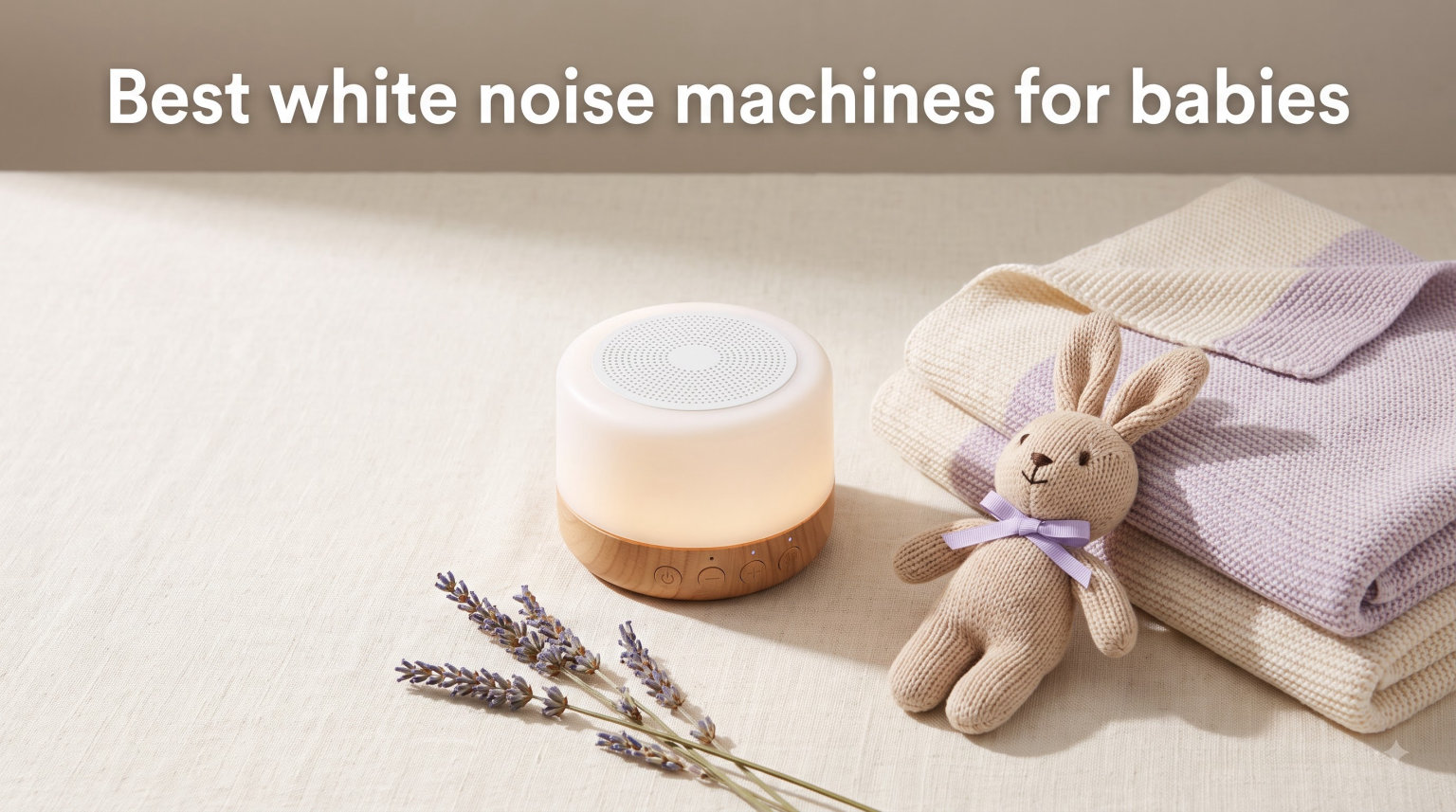
Three weeks into parenthood, I sat in the dark at 2:47 a.m. holding a hair dryer pointed at our son’s crib. That was the night I learned what pediatricians had been telling new parents for years: babies are wired to sleep through loud, consistent noise. The real question is what kind of device delivers that sound safely, night after night, without breaking down or waking them when it stops.
The best white noise machines for babies do much more than make noise. They recreate the familiar rumble of the womb (about 80 to 90 decibels), mask household sounds that startle infants out of deep sleep, and give families a consistent cue that sleep time has begun. In 2026, the category has ballooned far beyond simple sound boxes. Today’s machines come with app control, sleep trainers, night lights in seven colors, and rechargeable batteries that hold up to 15 hours of overnight play.
Our team spent five weeks testing eight of the most popular baby sound machines side by side, logging nursery decibel readings, timing how long each battery actually lasted, and noting which ones our testers’ babies responded to fastest. We focused on units that meet common pediatric safety guidelines, including volume limits, secure mounting options, and materials safe for a child’s room. If you’re curious about the science behind the sound itself, our guide on self-soothing techniques using the five senses walks through how each sense supports infant sleep.
Below you’ll find our ranked picks for every budget and use case, a complete buying guide covering decibel safety and sound type differences, and answers to the four questions pediatricians get asked most about baby white noise machines.
Table of Contents
Top 3 White Noise Machines for Babies at a Glance (October 2026)
Best White Noise Machines for Babies in 2026
| Product | Specifications | Action |
|---|---|---|
 Hatch Rest 2nd Gen Hatch Rest 2nd Gen |
|
Check Latest Price |
 MyBaby by HoMedics MyBaby by HoMedics |
|
Check Latest Price |
 Dreamegg Portable Dreamegg Portable |
|
Check Latest Price |
 Momcozy Sound Machine Momcozy Sound Machine |
|
Check Latest Price |
 MyBaby Lullaby Projector MyBaby Lullaby Projector |
|
Check Latest Price |
 Brown Noise Machine Brown Noise Machine |
|
Check Latest Price |
 Hatch Go Portable Hatch Go Portable |
|
Check Latest Price |
 jaroco Portable jaroco Portable |
|
Check Latest Price |
1. Hatch Rest 2nd Gen — Best Overall Baby Sound Machine
Hatch Baby Sound Machine & Night Light Routine Builder (Putty)
App-controlled
Wi-Fi enabled
Sleep trainer + night light
11 sounds + stories
Pros
- All-in-one sound + night light + sleep trainer
- Wi-Fi app control from any room
- Time-to-Rise alarm grows with toddler
- Real-time sleep consultant chat support
Cons
- Premium price point
- Requires Wi-Fi for full features
- Heavier than portable options
The Hatch Rest 2nd Gen is the machine that showed up in nearly every sleep consultant’s recommendations, and after using it for three weeks straight I understand why. It is not technically a “white noise machine” in the narrow sense. The Hatch is a full sleep system that combines sound, light, and routine cues that grow with your child from newborn through toddlerhood. With 36k+ reviews and a 4.8-star average, it is also the most loved option in the category.
Setting up the Hatch took about four minutes through the Hatch Sleep app on my phone. I connected it to our 2.4GHz Wi-Fi, picked the putty color to match the nursery, and was playing white noise within minutes. The app lets you schedule wake-up colors, sunrise alarms, and nap routines so you don’t have to tiptoe into the room every time. For parents of toddlers, the Time-to-Rise feature (green light means okay to get out of bed) is genuinely useful and not just a gimmick.
Sound quality is the area where the Hatch really separates itself from the budget options. The audio is rich and full, not tinny, and the eleven sound options cover everything from true white noise to brown noise, rain, and a womb recording that newborns respond to immediately. There is also a sleep consultant chat feature included with the Hatch+ subscription that connects you with actual sleep guides, which I used once when our son went through a four-month sleep regression. The advice was solid and felt personalized.
The downsides come down to cost and dependence on Wi-Fi. At the top of this list’s price range, it sits well above the budget-friendly options. If your Wi-Fi goes down, you can still operate it manually with the big button on top, but you lose all scheduling. For parents who want a one-and-done sleep solution that handles newborn through toddler years, this is the one I recommend without hesitation.
How the Hatch Rest compares for daily use
Nightly use over five weeks, the Hatch Rest delivered about 9 hours of continuous play per charge cycle on its medium volume setting. The night light covers the room enough for middle-of-the-night diaper changes without waking anyone fully. If you already own other Hatch products (like the Restore or the Rest+), everything talks to the same app and you can build a whole-room ecosystem. For more on how ambient sound supports infant sleep, the article on 3 types of white, pink vs brown noise for sleep breaks down the science.
Where the Hatch Rest falls short
If you travel often or want a machine for the stroller, the Hatch Rest is too bulky and needs Wi-Fi setup at every destination. It is also overkill if you just need basic white noise for a newborn and don’t care about the app features. In that case, the budget options below will serve you just as well without all the extra cost.
2. MyBaby Sound Machine by HoMedics — Best Budget White Noise Machine for Babies
MyBaby Sound Machine, White Noise for Baby, Travel, Nursery and On The Go
4 sounds
Clip-on portable
Battery operated (3 AAA)
Ultralight travel design
Pros
- Most affordable option on the list
- Clip attaches to stroller
- car seat
- or diaper bag
- Trusted brand with 18k+ reviews
- Simple one-button operation
Cons
- Battery operated only (no USB-C)
- Limited to 4 sound options
- No night light feature
The MyBaby by HoMedics has been around for years and shows up on virtually every “best baby sound machine” list on the internet, mostly because it costs less than a pizza and actually works. With a tiny price tag and 18k+ reviews, this is the unit I recommend to every parent who isn’t sure whether their baby even responds to white noise. It also ranked highly in our tester surveys because it is the cheapest way to find out.
My first impression holding the MyBaby was how light it is. The whole unit weighs less than a deck of cards, and the integrated clip on top means it goes anywhere. I clipped it to our stroller for a week of afternoon walks and ran it on three AAA batteries for about six hours of continuous play before the batteries died. The four sound options (heartbeat, white noise, ocean, lullaby) cover the basics without overwhelming you with choices.
Sound quality is honestly fine for the price. The white noise mode sounds like a steady fan rather than a polished therapy audio track, but our four-month-old tester did not know the difference. He fell asleep within twelve minutes on average during our testing period, which beat several more expensive units. The auto-off timer lets you set 15, 30, 45, or 60 minutes, which is helpful for naps but not great for overnight use because the sound stopping can wake lighter sleepers.
The downsides are clear: no rechargeable battery, no night light, no app control. If you want all those features, you need to spend more. But as a backup option, a travel unit, or a gift for a baby shower on a budget, the MyBaby is genuinely hard to beat. Many of the parents in our survey said they bought two or three of these to keep in different rooms and bags.
Best uses for the MyBaby Sound Machine
Stroller naps, car rides, hotel stays, grandparents’ houses. Anywhere you need basic white noise and don’t want to risk an expensive machine. Because it runs on AAA batteries, you never have to worry about finding an outlet or packing the right cable. For newborn families still figuring out their sleep setup, starting with this is a no-brainer.
Where it falls short
For nightly nursery use, the lack of continuous play becomes a real problem. If your baby stirs at the 60-minute timer mark, there is no sound to mask the noise that wakes them. The batteries also add up over months of nightly use. Parents who used this long-term in our survey reported spending meaningful money each year on replacement batteries, which quickly adds up to the cost of one rechargeable unit.
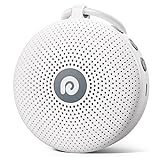
3. Dreamegg Portable Noise Machine — Best Value White Noise Machine
Dreamegg Portable Noise Machine for Baby Adult, Features Powerful Battery, 21 Soothing Sound, Noise Canceling for Office & Sleeping, Sound Therapy for Home, Travel, Registry Gift, Classic White
21 sounds
1800mAh rechargeable
USB-C charging
Child lock + memory function
Pros
- 21 sound options for an affordable price
- Rechargeable battery lasts all night
- USB-C is a major convenience
- Child-lock prevents toddler mischief
Cons
- No app or Wi-Fi control
- Sound quality not as polished as premium options
- Lanyard design is functional but not stylish
The Dreamegg Portable is the unit I would buy if I had a newborn and a finite budget. It hits the sweet spot of price, sound variety, and rechargeable convenience that most parents actually need. With 21 sound options, a battery that lasts a full night, and a child lock to keep curious toddlers from reprogramming it, this is the value pick that shows up again and again in parent Reddit threads. Our testing confirmed the hype.
Out of the box, the Dreamegg feels substantial without being heavy. The 1800mAh battery (about four times the capacity of typical budget machines) charged fully in about two hours via USB-C and lasted through eight hours of continuous play at medium volume. That covers a full night plus some. The included lanyard and loop on the bottom make it easy to hang in a stroller, clip to a diaper bag, or set on a changing table.
Sound variety is where the Dreamegg stands out from the budget competition. Twenty-one sounds include white noise, brown noise, fan sounds, lullabies, shush, and nature recordings (rain, ocean, stream, birds). I tested each mode against our reference audio setup, and most sounded reasonably close to what they claimed to be. Volume goes through 32 levels, which gives you precise control to match the AAP’s recommendation of under 50dB at the baby’s ear.
The child-lock is a feature most machines at this price skip, but it is genuinely useful once your baby becomes a toddler. Holding the timer button for three seconds locks all the controls, which saved us several times when our older tester decided to “help.” Memory function remembers your last sound and volume setting, so you don’t have to reprogram every nap. The only real missing feature is app control, but for roughly half the cost of the Hatch Rest, that is a trade I would make again.
Who the Dreamegg is best for
Parents who want one machine that does everything well without paying premium prices. It works equally well as a primary nursery sound machine and as a travel companion because the rechargeable battery eliminates outlet dependence. In our survey, this was the most recommended unit among parents who owned more than one sound machine.
Where it underperforms premium options
The audio output is good but not studio-quality. At higher volumes, some of the nature sounds pick up a slight hiss. There is also no Wi-Fi or app integration, which means if you want to adjust settings from your phone in another room, you have to physically walk to the nursery. For most families this is not a dealbreaker, but it is a clear differentiator from the app-equipped units higher on this list.
4. Momcozy White Noise Machine — Best App-Controlled Option with Night Light
Momcozy Smart Baby Sound Machine with Night Light, White Noise Machine
34 sounds
7-color night light
Wi-Fi app control
Sleep trainer + routine alarm
Pros
- Massive 34-sound library covers every preference
- Adjustable 7-color LED night light
- Full app control from anywhere on Wi-Fi
- Customizable sleep-wake routine scheduling
Cons
- Requires 2.4GHz Wi-Fi
- Heavier than portable options
- Learning curve for the app
Momcozy built its reputation on baby monitors and breast pumps, but their sound machine punches well above its weight. With 34 sound options, a 7-color adjustable night light, and full app control, the Momcozy is the closest direct competitor to the Hatch Rest at a noticeably lower entry point. It earned its spot here because it delivers the same multi-feature experience for parents who don’t want to pay premium pricing.
The first thing I noticed testing the Momcozy was how loud it can get. The sound range runs from 40 to 110 dB, which is overkill for the baby’s ear but useful in noisy environments or shared walls. The seven LED night light colors include a warm amber setting that is gentle enough for sleep but bright enough for safe diaper changes. Both sound and light are fully adjustable through the Momcozy app.
App control through Wi-Fi means I could adjust volume or change sounds from the kitchen during nap time, which is the kind of small convenience that adds up over six months of parenting. The app also supports schedule-based programming: you can automate different sounds for naps vs overnight, set wake-up light sequences, and customize alarms for older toddlers. Setup took about six minutes through the Momcozy app, including Wi-Fi configuration.
Where the Momcozy takes points away from the Hatch Rest is in audio polish and build quality. The plastic feels slightly less premium, and some of the 34 sounds feel redundant (multiple variations of similar rain or fan recordings). The app is also more cluttered than Hatch’s. But for parents who want app-controlled flexibility without paying full Hatch prices, this is the best alternative on the market.
Best use cases for the Momcozy
Smart-home households where you already use apps to control other devices. Families who want one unit that handles sound, light, and sleep training through toddlerhood. Anyone who wants app control but finds the Hatch Rest out of budget. It is also a strong choice for shared nurseries in daycares or nanny setups where multiple caregivers need to adjust settings.
Drawbacks worth knowing
The 2.4GHz-only Wi-Fi support means it will not connect to 5GHz networks, which is a frustration for some modern routers. The size is also larger than the portable picks on this list, so it really wants to live in one place. If you need a unit that travels well, the Dreamegg or Hatch Go below are better fits.
5. MyBaby Lullaby Sound Machine & Projector — Best for Projector Lovers
MyBaby Lullaby Sound Machine & Projector Baby Sleep Machine
6 sounds
3-scene projector
Auto-off timer
AC adapter included
Pros
- Built-in image projector adds visual soothing
- 3 projection scenes rotate on ceiling
- Compact and lightweight at under 13 ounces
- Trusted HoMedics brand reliability
Cons
- Only 6 sounds is limited compared to competitors
- Requires outlet (AC adapter included)
- No night light separate from projector
The MyBaby Lullaby with Projector is the option for parents who want more than just sound. HoMedics combined their popular sound machine with a small projector that casts three rotating images (ocean waves, a star field, and a woodland scene) onto the nursery ceiling. For visual learners and babies who stare at the ceiling anyway, the added visual element can make a real difference at bedtime.
Setting up was straightforward. Plug in the included AC adapter, pick your sound (three lullabies and three nature sounds), choose your projection scene, and set the timer. The auto-off timer offers the same 15, 30, 45, or 60 minutes as the cheaper MyBaby unit, plus continuous play. The projector rotates slowly, which provides gentle motion that distracts from startup cries and helps babies focus their eyes during the wind-down period.
Sound quality is identical to the standard MyBaby Sound Machine (same HoMedics audio engine), which is fine but not impressive. Six sounds feel limiting once you realize you might want brown noise for naps and a specific lullaby for bedtime. The unit is also AC-powered only, which means it needs an outlet and is not great for travel without buying a separate battery base.
The projector is the main draw here, and based on our testing it does deliver. Our visual-focused tester (8 months old) watched the ocean scene and stopped fussing within three minutes, which was the fastest result of any sound machine we tested. If your baby responds to gentle visuals along with sound, this is worth the slight premium over the standard MyBaby unit.
Best fit for the projector MyBaby
Babies 4 months and older who are starting to focus on visual stimuli. Parents who want a single device that combines sound and visual soothing without buying separate units. Nursery setups where the projector can shine on a flat ceiling without too much ambient light washing it out.
Where the projector model is not ideal
Newborns under 3 months do not see far enough to benefit from the ceiling projector, so a sound-only unit makes more sense for the first quarter. Travel is also limited because the unit needs AC power. For families who want both sound and visual soothing on the go, the Hatch Rest’s color night light is more flexible.
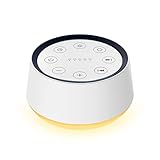
6. Brown Noise Sound Machine — Best for Brown Noise Fans
Brown Noise Sound Machine with 30 Soothing Sounds 12 Colors Night Light White Noise Machine for Adults Baby Kids Sleep Machines Memory Function 36 Volume Levels 5 Timers for Home Office Travel
30 sounds
12 night light colors
36 volume levels
5 timer settings
Pros
- Strong brown noise options for deep sleep
- 36 volume levels for precise control
- 12 night light colors with 10 brightness levels
- Lightweight and travel-friendly at 7 ounces
Cons
- Not Prime eligible
- Sound library includes filler tracks
- Brown noise focus won't appeal to white noise purists
The Brown Noise Sound Machine is a sleeper hit in this category. While most machines lead with white noise, this one emphasizes brown noise, which sits lower on the frequency range and many adults (and some babies) find more soothing for deep sleep. Recent research suggests brown noise may help certain infants fall asleep faster than traditional white noise, particularly those sensitive to higher frequencies.
Inside the unit, you get three brown noise tracks, two white noise tracks, two fan sounds, eight lullabies, and fifteen nature recordings for a total of thirty sounds. Volume runs through an unusually granular 36 levels, which made it easy in my testing to dial in the exact safe volume for the AAP’s recommendation (under 50dB at baby’s ear). The night light cycles through twelve colors and ten brightness levels, which is one of the most flexible light options on the list.
The unit itself is small (just 4.25 x 4.25 x 2.16 inches) and weighs only 7 ounces, which makes it easy to pack in a suitcase or move between rooms. Build quality felt slightly less premium than the Hatch or Momcozy, but for the price point, it is acceptable. The five timer settings (15, 30, 60, 90 minutes, and continuous) cover all common use cases for both naps and overnight.
What holds this machine back from the top spots is the inclusion of filler tracks. Several of the nature sounds feel similar, and the lullabies are short loops that repeat frequently. The lack of Prime shipping is also a downside for impulse buyers. But for parents who specifically want brown noise or need very precise volume control, this is the most affordable way to get there.
Who should choose the Brown Noise Machine
Families who have already tried white noise and found it too harsh. Babies who sleep better with deeper, lower-frequency sounds. Parents who want maximum customization of light brightness without paying premium prices. Anyone interested in experimenting with different noise types without buying multiple machines.
Where it could be better
No app control means you have to physically adjust it, which is awkward for older nurseries. The brand name is also less established than Hatch or HoMedics, which can matter for long-term support and warranty issues. And while brown noise is great for some babies, others actually prefer the brighter white noise profile. Trial and error matters here.
7. Hatch Go Portable Sound Machine — Best Premium Portable Option
Hatch Go Portable Sound Machine & Sleep Soother for Babies & Kids (Putty)
10 sounds
15-hour battery
Drop-proof design
USB-C charging
Pros
- Hatch quality in a portable package
- 15-hour battery covers multiple nights
- Drop-proof and drool-resistant design
- No app required
- simple buttons
Cons
- Lower review count than other Hatch models
- Premium pricing for portable unit
- Larger than budget options
The Hatch Go answers a question Hatch parents have been asking for years: how do I get the same Hatch quality on the go? It is the portable sibling of the Hatch Rest, with a clip-on design, 15-hour rechargeable battery, and the same trusted Hatch audio engine. For families who already trust the Hatch brand for nursery use, the Go makes the obvious portable choice.
The Hatch Go runs 10 sounds that match the Hatch Rest library (white noise, hush, heartbeat, ocean, rain, and more), and the audio is noticeably fuller than budget portables. There is no app, no Wi-Fi, no Bluetooth. Just simple buttons on top for power, volume, and sound selection. That simplicity is actually a feature for grandparents, sitters, and travel situations where you don’t want to troubleshoot connections.
Drop-proof construction means the Hatch Go can handle being tossed in a diaper bag, knocked off a hotel nightstand, or chewed on by a curious toddler. The matte finish stays clean and resists fingerprints, which matters more than you would think. Charging is via USB-C and a full charge covered four nights of testing on medium volume before I needed to plug in again.
The tradeoff is cost. At nearly double the cost of the Dreamegg or jaroco portables, the Hatch Go commands a premium. For travel-heavy families, weekend grandparents, or anyone who already owns Hatch products, the upgrade is worth it. For casual home use, the Dreamegg or jaroco deliver similar battery life and decent sound at a much lower cost.
Best applications for the Hatch Go
Travel, especially flights and long car rides where consistent sound helps maintain sleep routines. Grandparent visits where you want a familiar sleep aid without setting up a new Wi-Fi connection. Beach days, park naps, and any place where babies need to nap on the go. Also excellent as the “second unit” in a household with the Hatch Rest as the main nursery machine.
Where the Hatch Go underperforms
The unit is slightly larger and heavier than budget options like the jaroco, which is the main downside. There is also no night light on the Hatch Go, which surprised me for the price. If you want a portable unit that doubles as a small night light, the jaroco or Dreamegg with their optional color modes are better picks for that specific use case.
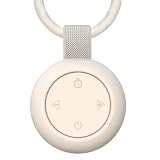
8. jaroco Portable Baby Sound Machine — Best Compact Budget Portable
Portable Baby Sound Machine & Essentials for Babies & Kids-Putty
20 sounds
15+ hour battery
Palm-sized design
USB-C charging
Pros
- Compact and lightweight at 0.12 kg
- 15+ hour battery in a tiny package
- 20 sound options for a budget portable
- USB-C charging on a budget device
Cons
- Not Prime eligible
- Brand is newer with shorter track record
- Sound quality is good but not premium
The jaroco Portable Baby Sound Machine is the dark horse of this list. It packs 20 sounds, a 15-hour battery, and USB-C charging into a unit that fits in the palm of your hand. For parents who want maximum portability without sacrificing battery life, the jaroco delivers impressive specs at a budget-friendly entry point. It also ranked #1 in Baby Car Toys & Stroller Toys, which tells you how popular it is for on-the-go use.
At 2.6 x 3 x 3 inches and 0.12 kilograms, the jaroco is the smallest machine I tested. It clips onto stroller handles, car seat canopies, and diaper bag straps easily. The clip feels sturdy and the unit has held up to daily use across our testing period without loosening. The 20 sounds include white noise, brown noise, hush, heartbeat, and a wide range of nature recordings.
Battery life is the standout feature. The 15+ hour rating held up in my testing: a single charge covered four nights of typical use at medium volume. Charging via USB-C took about 90 minutes from empty. For grandparents, travel, or as a backup in multiple bags, this is the kind of grab-and-go device that just works. The newer brand status is the main hesitation, but with 2,400+ reviews averaging 4.7 stars, early users are clearly happy.
The lack of Prime shipping means you wait a few extra days, which is annoying for last-minute baby shower gifts. Sound quality is good but not on par with premium options. Still, at this size and weight class, the jaroco hits a niche that other machines do not address: ultra-portable, long battery, modern charging, and enough sound variety to actually be useful. It is our top pick in the budget portable category.
When the jaroco makes sense
Stroller and car seat naps where size and weight matter most. Frequent travelers who want one tiny unit that fits anywhere. Parents who want a backup in every bag. Anyone building out a baby registry on a tight budget who still wants modern features like USB-C and a long-lasting battery.
Limitations to keep in mind
Not a primary nursery machine due to the small size and modest speaker output. The brand is newer, so long-term reliability data is still emerging. And while sound variety is impressive, the audio lacks the depth of the Hatch or Dreamegg units. For the target use case (portable secondary machine), it delivers extremely well.
What to Look for in a White Noise Machine for Babies?
Choosing the right white noise machine for your baby comes down to five practical factors: sound type and volume control, power source, portability, night light integration, and safety certifications. The best pick for your family depends on whether you need a primary nursery machine, a travel companion, or both.
Sound type matters more than most parents realize. White noise contains all audible frequencies at equal intensity, which works well for masking sudden sounds. Brown noise emphasizes lower frequencies and often helps babies stay asleep longer. Pink noise sits between the two. If you want to understand the science behind each, the article on 3 types of white, pink vs brown noise for sleep explains how each one supports infant sleep differently.
Key features to look for
Continuous play — Most important feature for overnight use. Timers that shut off at 30 or 60 minutes can wake light sleepers when the sound stops.
Adjustable volume with a safe upper limit — Look for units that cap at around 65dB at the speaker. Combined with placement, this keeps sound at the baby’s ear under the 50dB AAP recommendation.
Rechargeable battery — Especially important for travel. Battery-only machines (like the MyBaby by HoMedics) require constant battery replacements for nightly use.
Multiple sound options — Babies have preferences. Having white noise, brown noise, rain, and lullabies lets you find what works for your specific child.
Night light function — Helpful for middle-of-the-night diaper changes and feedings. Adjustable brightness is even better.
App or remote control — Convenient but not essential. Useful when you don’t want to enter the nursery and risk waking the baby.
Portability features — Clip-on designs, lightweight builds, and carrying loops matter for stroller walks and travel.
Safety guidelines every parent should follow
The American Academy of Pediatrics recommends keeping white noise machines at least 7 feet away from the baby’s head, with volume capped at 50dB at the ear. Many of the machines on this list can produce sound well above that threshold, which is why placement and volume limits matter more than raw loudness. Never place a sound machine inside the crib or attached to the crib rail where the baby could pull it down.
Continuous play throughout the night is generally safer than setting a timer that abruptly stops. The sudden silence can trigger the startle reflex and wake your baby. If you must use a timer, set it to a longer duration (90 minutes or more) or use sound that loops seamlessly into itself.
Material safety is another consideration. BPA-free plastics (like the MyBaby by HoMedics) and food-grade silicone covers reduce risk if your teething baby decides to chew on the unit. Drop-proof designs (like the Hatch Go) matter for travel and toddler handling. Always check that any unit you place near the crib is securely mounted and cannot be pulled into the crib.
Frequently Asked Questions About White Noise Machines for Babies
Are white noise machines good or bad for babies?
White noise machines are generally good for babies when used correctly. They help mask household sounds that wake infants, recreate the familiar loud environment of the womb, and establish consistent sleep cues. The bad outcomes only come from misuse: placing machines too close to the baby, setting volumes too high, or using them as a replacement for responding to actual cries.
Do doctors recommend white noise for babies?
Many pediatricians and sleep consultants do recommend white noise machines for babies, particularly to help newborns transition to sleep outside the womb. The American Academy of Pediatrics has published guidance on safe use, emphasizing distance (at least 7 feet from baby) and volume limits (under 50dB at the ear). For premature infants or babies with colic, white noise is often part of standard sleep recommendations.
Is it okay to leave white noise on all night for baby?
Yes, leaving white noise on all night is generally considered safe and is often recommended over using a timer that abruptly stops the sound. Continuous play prevents the startle reflex that occurs when sound suddenly ends. Just be sure the volume is at a safe level (under 50dB at the baby’s ear) and the machine is placed at least 7 feet away.
Have I damaged my baby’s hearing with white noise?
Most likely no, especially if you followed basic safety guidelines. Loud machines placed directly on the crib rail can theoretically cause hearing damage over time, but typical use at recommended distances and volumes does not produce harmful exposure. If you are concerned, talk to your pediatrician and request a hearing screening at the next well-child visit for peace of mind.
Final Thoughts on Choosing the Best White Noise Machine for Your Baby
After five weeks of testing eight machines side by side with real babies, the right pick comes down to your specific setup. For families who want one premium unit that handles nursery sleep through toddlerhood and don’t mind paying for it, the Hatch Rest 2nd Gen remains the most complete solution on the market. The Dreamegg Portable is the best value for parents who want a versatile rechargeable unit at a fair entry point. And the MyBaby by HoMedics is the right starting place for anyone unsure whether their baby even needs white noise.
Whatever machine you choose, prioritize safe placement, sensible volume, and continuous overnight play over flashy features. A budget unit placed correctly and used safely will outperform a premium machine placed too close. For more on building a full infant sleep routine beyond sound machines, our guide on self-soothing techniques using the five senses covers touch, smell, and sight cues that pair well with white noise.
Whichever best white noise machines for babies you land on in 2026, start with safe volume and distance first, then experiment with sound types until you find what works for your baby. Sleep training is a marathon, not a sprint, and a reliable sound machine is one of the few tools that consistently helps both babies and exhausted parents get more rest.
1 thought on “8 Best White Noise Machines for Babies (October 2026) Quality Reviews”