
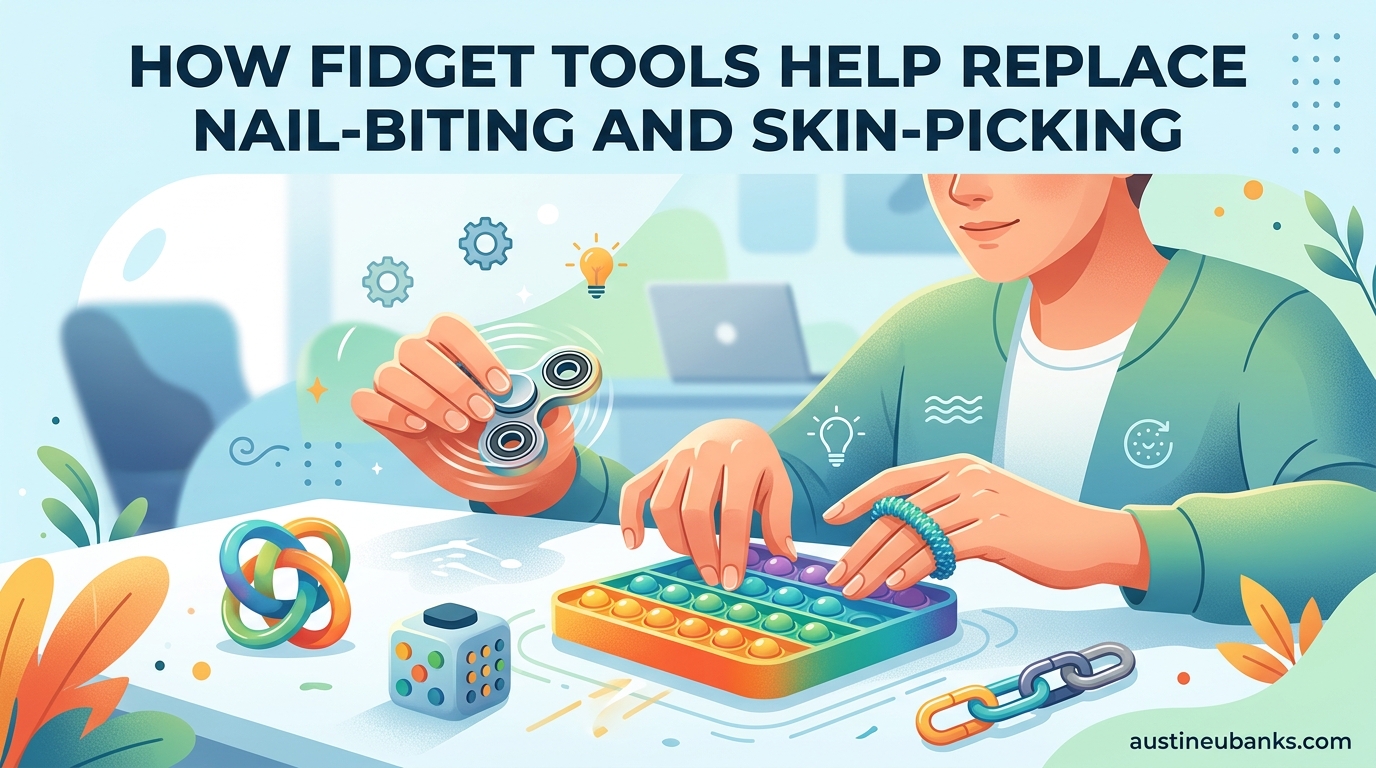
If you have ever bitten your nails down to the quick or picked at your skin until it bled, you already know that willpower alone rarely stops the cycle. These behaviors are not bad habits you can simply switch off. They are deeply wired responses that your brain and body use to regulate stress, anxiety, boredom, and sensory overwhelm.
This is where fidget tools come in. Learning how fidget tools can help replace nail-biting and skin-picking opens up a practical, non-judgmental path toward managing what mental health professionals call body-focused repetitive behaviors, or BFRBs. The right tool gives your hands a satisfying, safe alternative so the urge gets redirected instead of suppressed.
In this guide, we will break down the science behind why these behaviors happen, how fidget tools work at a neurological level, which types of tools work best for different behaviors, and how to build a realistic routine that actually sticks. Whether you are dealing with occasional nail-biting or years of compulsive skin-picking, this information can help you take meaningful steps forward.
Table of Contents
Understanding BFRBs: What Are Nail-Biting and Skin-Picking Really?
Body-focused repetitive behaviors, commonly called BFRBs, are repetitive self-grooming behaviors that cause physical damage. They include nail-biting (onychophagia), skin-picking (excoriation disorder or dermatillomania), hair-pulling (trichotillomania), and cheek-biting. These are not vanity problems or nervous tics. They are recognized mental health conditions that affect millions of people.
People often assume BFRBs are just bad habits. In reality, they involve complex neurological loops. The behavior typically begins as a self-soothing response to tension, stress, or a sensory need, then becomes reinforcing because the picking or biting momentary feels relieving or satisfying. That short-lived relief is what locks the cycle in place.
Here are the three most common BFRBs that fidget tools target:
Onychophagia (nail-biting): Biting or chewing the nails and surrounding skin. Often tied to anxiety, perfectionism, or boredom. It can cause infections, dental problems, and permanent nail damage.
Dermatillomania / excoriation disorder (skin-picking): Repetitively picking at skin, scabs, cuticles, or blemishes. This can lead to scarring, tissue damage, and significant emotional distress. It is classified as an OCD-related disorder in the DSM-5.
Trichotillomania (hair-pulling): Pulling hair from the scalp, eyebrows, eyelashes, or body. Many people who struggle with skin-picking also deal with hair-pulling, since the underlying urge mechanism is similar.
The Connection Between BFRBs, ADHD, and Anxiety
Is nail biting an ADHD stim? For many neurodivergent people, yes. Nail-biting, skin-picking, and hair-pulling frequently co-occur with ADHD and autism. These behaviors function as a form of stimming, providing regulated sensory input that helps the nervous system stay calm or focused.
Research suggests that people with ADHD are significantly more likely to engage in BFRBs than the general population. The connection runs through dopamine regulation. When the ADHD brain is understimulated, it seeks input. Picking and biting deliver a quick, concentrated burst of sensory feedback that temporarily satisfies that need.
Anxiety plays a similar role. During periods of high stress, the body looks for ways to discharge tension. Skin-picking and nail-biting become unconscious pressure valves. This is why people often notice their BFRB spikes during work deadlines, social anxiety, or emotional conflict.
Understanding this connection matters because it removes shame. You are not weak or undisciplined. Your nervous system is doing what it was wired to do. The goal is not to eliminate the urge but to redirect it somewhere that does not cause harm.
As one Reddit user in the r/adhdwomen community shared: “I wear two fidget rings, one on my left thumb and one on my index finger. It has decreased the damage significantly.” That is the power of redirection in action.
How Fidget Tools Help Replace Nail-Biting and Skin-Picking
Fidget tools help replace nail-biting and skin-picking by satisfying the tactile urge that drives these behaviors, redirecting the hands to a safe and satisfying activity instead of a harmful one. They provide a tangible, non-destructive means of channeling the energy and sensory need that would otherwise go toward self-directed damage.
This is not guesswork. The mechanism behind fidget tools aligns directly with a well-established therapeutic approach called Habit Reversal Training (HRT), which is considered the gold-standard behavioral treatment for BFRBs. HRT works by building awareness of the urge and then substituting a competing response, an alternative physical action that uses the same muscles but produces no harm.
Fidget tools are essentially ready-made competing responses. Here are five specific ways they help:
1. They satisfy the sensory need. Many BFRBs are driven by a craving for tactile input. Textured fidget stones, spiky sensory rings, and pick pads deliver similar sensations to picking or biting without causing damage.
2. They intercept the automatic behavior loop. Because BFRBs often happen unconsciously, having a fidget tool in your hand or on your finger breaks the chain before your fingers reach your mouth or face.
3. They occupy idle hands during vulnerable moments. Most picking and biting happens during sedentary activities like watching TV, reading, or sitting in meetings. A fidget tool gives your hands a job during exactly those moments.
4. They provide proprioceptive feedback. Clicking, spinning, or squeezing a fidget tool delivers grounding sensory input that calms the nervous system. This reduces the underlying anxiety or restlessness that often triggers a BFRB episode.
5. They build the competing-response habit. Every time you reach for a fidget ring instead of biting your nail, you are strengthening a new neural pathway. Over time, the tool becomes the default response.
How This Aligns With Habit Reversal Training
Habit Reversal Training has three core components, and fidget tools plug directly into each one. First is awareness training, where you learn to recognize the urge before the behavior starts. Second is the competing response, which is where the fidget tool does its job. Third is social support, where family or friends help reinforce the new pattern.
A fidget tool cannot do the awareness work for you. But once you notice the urge rising, having a satisfying alternative literally at your fingertips makes the competing response far easier to execute. This is why therapists who specialize in BFRBs frequently recommend fidget tools as part of a broader treatment plan.
One forum user who struggled with skin-picking for 57 years reported that fidget rings started making a real difference within just three weeks of consistent use. Another user in r/fidgettoys noted that fidget tools helped more than any oral medication they had tried, simply because the tools kept their hands busy during high-risk moments.
Types of Fidget Tools That Work Best
Not every fidget tool works for every BFRB. The key is matching the type of sensory feedback to the specific urge you are trying to redirect. Someone who picks at skin needs a different tool than someone who bites their nails, because the motor patterns and sensations are different.
Wearable Fidgets
Wearable fidgets are ideal for nail-biters and skin-pickers because they stay on your body and are always available. Fidget rings are the most popular option in this category. Spinner rings have an outer band that rotates around a stationary inner band, giving your fingers something to do. Clicker rings have small buttons or toggles you press repeatedly.
Wearable fidgets excel because they require no setup and no decision-making. When the urge hits, the tool is already there. Many people wear multiple rings on different fingers to cover both hands. Bracelets with textured beads or sliding elements work similarly for people who pick at their arms or hands.
Handheld Fidgets
Handheld fidgets include tangle toys, stress balls, magnetic sliders, and worry stones. These are best for desk work, TV watching, or any situation where at least one hand is free. Tangle therapy toys are particularly effective because they mimic the twisting, pulling motions that skin-pickers crave.
Magnetic sliders offer clicking and sliding feedback that many people find deeply satisfying. The repetitive motion provides the same rhythm as picking without any of the harm. Worry stones, with their smooth indentations, give a soothing tactile experience that helps with anxiety-driven picking.
Textured and Pickable Fidgets
This category is specifically designed for skin-pickers and people who pick at their cuticles. Pick pads (sometimes called pick palettes) are small silicone mats covered in textured bumps, ridges, and embedded beads that you can pick at repeatedly. They simulate the exact sensation of picking at skin or scabs without any damage.
Sensory stones with rough surfaces, spiky rings, and fidget brushes also fall into this group. For someone with dermatillomania, these tools can be remarkably effective because they deliver the precise type of feedback the brain is seeking.
Matching Tools to Your Specific Behavior
For nail-biting, wearable fidget rings and spiky sensory rings tend to work best because they keep fingers away from the mouth. For skin-picking around the nails (dermatophagia), pick pads and textured stones are ideal since they satisfy the picking urge directly. For trichotillomania, elastic loop fidgets and tangle toys that keep both hands occupied are often recommended.
Many people find that a combination works best. One Reddit user in the r/Dermatillomania community shared that their breakthrough came from finding the right fidget tools combined with applying cuticle oil and moisturizer constantly, making the skin less tempting to pick and giving their hands an alternative simultaneously.
How to Choose the Right Fidget Tool for Your Behavior
Choosing the right fidget tool starts with understanding your own urge pattern. Ask yourself when the behavior happens most. Is it during focused work? While watching TV? In social situations? The setting matters because it determines what type of tool is practical.
Next, identify what sensation you are actually seeking. If your urge is about picking, you need something textured and pickable. If your urge is about pressure, a squeezable stress ball or a stiff clicker ring may work better. If your urge is about motion, a spinner ring or tangle toy will feel more satisfying.
Consider the intensity of feedback you need. Some people need a very subtle fidget, like a smooth worry stone, to avoid drawing attention in professional settings. Others benefit from more intense feedback, like a spiky ring or a loud clicker, especially in private moments when the urge is strongest.
Think about access. A tool that lives in your pocket is less useful than one you wear, because the urge often strikes faster than you can reach for something. If you bite your nails while driving, a ring stays accessible while a desk toy does not. Match the tool to the moment.
Finally, do not be afraid to experiment. Almost no one finds their perfect fidget tool on the first try. Forum discussions consistently show that people test multiple tools before landing on the one that clicks. Budget-friendly options exist in every category, so you can try several without significant investment.
Incorporating Fidget Tools Into Your Daily Routine
Having a fidget tool is not enough. You need to build it into your routine so it becomes automatic. Here is a step-by-step approach to making that happen.
Step 1: Identify your trigger situations. Spend three to five days simply noticing when you bite, pick, or pull. Write down the time, setting, and emotional state. Patterns will emerge quickly.
Step 2: Place tools in every trigger zone. If you pick while watching TV, keep a pick pad on the coffee table. If you bite your nails while driving, wear a fidget ring. If you pick at your desk, keep a tangle toy next to your keyboard. Make the healthy choice the easiest choice.
Step 3: Practice the swap before the urge hits. Use the fidget tool during calm moments so your hands learn the new motion. When the urge arrives, the movement will already feel familiar.
Step 4: Combine approaches. Fidget tools work best alongside other strategies. Applying cuticle oil makes the skin less pickable. Setting a phone reminder builds awareness. Deep breathing exercises address the underlying anxiety. Layering techniques produces faster results than any single approach.
Step 5: Track your progress without judgment. Slips will happen. What matters is the overall trend. Notice when you successfully redirect an urge and acknowledge it. Positive reinforcement builds the new habit faster than guilt over setbacks.
Be patient with the process. Forum users repeatedly emphasize that fidget tools are not an overnight fix. The people who see the best results are those who commit to consistent use over weeks, not days. Your BFRB developed over years, so give your brain time to learn the new pathway.
When Fidget Tools Are Not Enough
Fidget tools are powerful, but they are not a complete treatment on their own for everyone. If your skin-picking or nail-biting is causing significant physical harm, interfering with daily life, or tied to deep emotional distress, professional support is worth pursuing.
Cognitive Behavioral Therapy (CBT), particularly a specialized form called the Comprehensive Behavioral Model (ComB), is highly effective for BFRBs. A trained therapist can help you uncover your unique triggers and build a personalized competing-response plan. Habit Reversal Training through a professional goes deeper than self-guided fidget use because it includes the awareness and social support components.
The TLC Foundation for Body-Focused Repetitive Behaviors is an excellent starting resource. They offer provider directories, support groups, and educational materials specifically for BFRBs. There is no shame in seeking help. In fact, combining fidget tools with therapy often produces the strongest, longest-lasting results.
Frequently Asked Questions
How do fidget toys reduce skin picking urges?
Fidget toys reduce skin picking urges by satisfying the tactile craving that drives the behavior. Textured tools like pick pads and sensory stones deliver similar sensations to picking, redirecting the hands to a safe activity. This aligns with Habit Reversal Training, where a competing response replaces the harmful behavior.
Do fidget toys stop nail biting?
Fidget toys can significantly reduce nail biting, especially wearable options like fidget rings and spiky sensory rings that keep fingers away from the mouth. They work best when paired with awareness of triggers and consistent daily use. Many users report noticeable improvement within two to three weeks.
Do fidget toys help with trichotillomania?
Yes, fidget toys help with trichotillomania by keeping hands occupied during vulnerable moments. Elastic loop fidgets, tangle toys, and textured bracelets are commonly recommended because they engage the same pulling motions in a harmless way. They are often used alongside therapy for the best results.
Is nail biting an ADHD stim?
Nail biting can function as an ADHD stim. People with ADHD often seek sensory input to regulate their nervous system, and repetitive behaviors like nail biting, skin picking, and hair pulling deliver concentrated tactile feedback. Fidget tools provide alternative sensory input that satisfies the same need.
Is skin picking OCD or ADHD?
Skin picking disorder, also called excoriation disorder or dermatillomania, is classified as an OCD-related condition in the DSM-5. However, it frequently co-occurs with ADHD and autism as well. The behavior can appear in multiple conditions because the underlying mechanism involves sensory regulation and anxiety relief.
How long does it take for fidget tools to work?
Most people start noticing a difference within two to three weeks of consistent use, though full habit change takes longer. Success depends on choosing the right tool for your specific urge, placing it in trigger environments, and combining it with complementary strategies like mindfulness or cuticle care.
Final Thoughts
Understanding how fidget tools can help replace nail-biting and skin-picking gives you a practical, science-backed starting point for change. These tools work because they honor what your nervous system actually needs: sensory input, tactile satisfaction, and a safe place to redirect energy that would otherwise cause harm.
You do not have to figure this out alone, and you do not have to be perfect. Start with one tool that matches your specific urge, place it where the behavior happens most, and give yourself grace during the learning curve. If self-help is not enough, reach out to a therapist who specializes in BFRBs through the TLC Foundation. Every time you choose the fidget over the pick, you are building a healthier response, one moment at a time.