
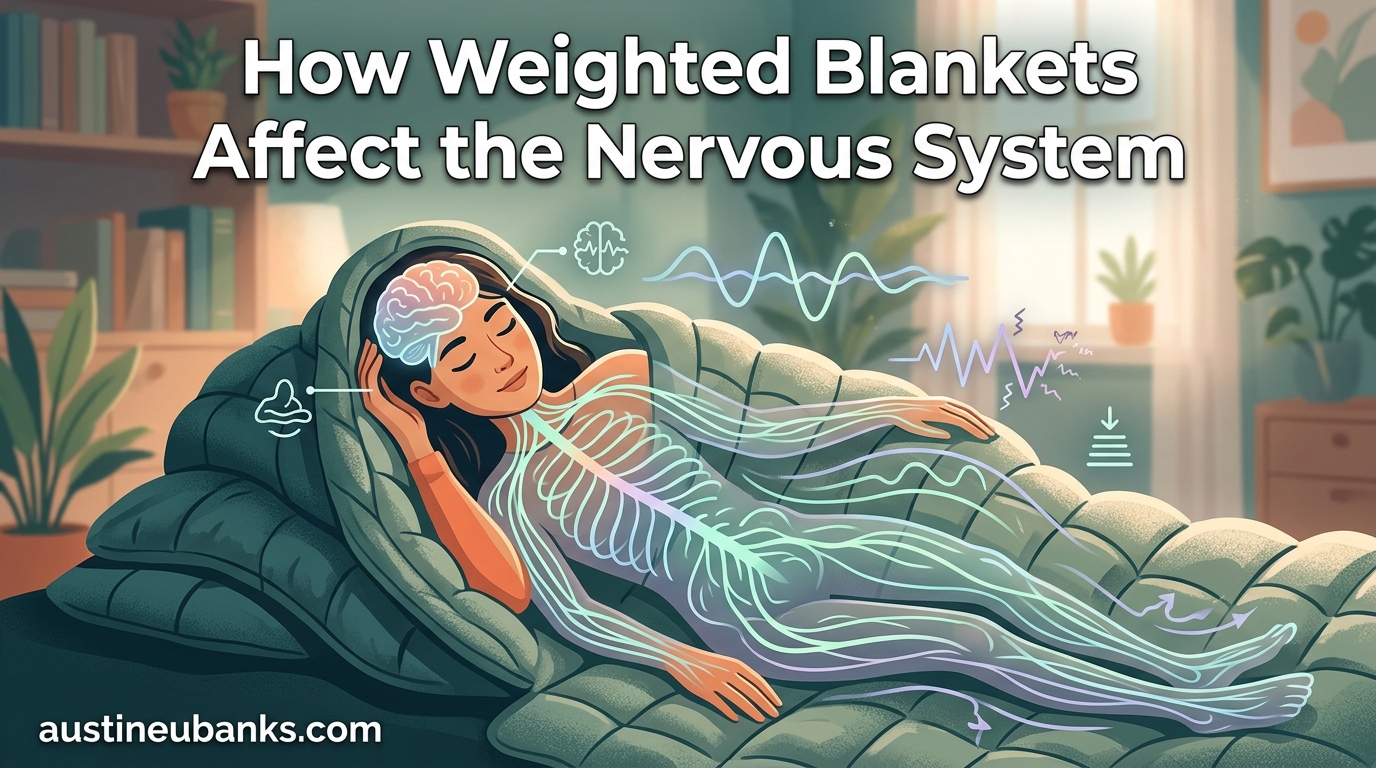
Picture the feeling of a firm, full-body hug that lasts long enough for your shoulders to drop, your breathing to slow, and your racing thoughts to quiet down. That sensation is not just comforting. It is a measurable neurological event. When you understand how weighted blankets affect the nervous system through deep pressure stimulation, the calming effect goes from pleasant anecdote to documented science.
In this guide, we break down what happens in your brain and body when evenly distributed weight presses against your skin. You will learn about the autonomic nervous system, the specific neurochemicals involved, which conditions benefit most, and why this therapy does not work for everyone.
We spent weeks reviewing peer-reviewed studies from the NIH, Sleep Foundation research, occupational therapy literature, and hundreds of real user experiences from forums like Reddit’s CPTSD and ADHD communities. Our goal is to give you a clear, honest, and scientifically grounded explanation without the marketing fluff.
Whether you are dealing with chronic anxiety, restless sleep, ADHD, sensory processing differences, or you are simply curious about the science behind that heavy blanket your friend swears by, this article covers the full picture of deep pressure stimulation and its effects on human physiology.
Table of Contents
What Is Deep Pressure Stimulation?
Deep pressure stimulation (DPS) is a therapeutic technique where firm, gentle, and evenly distributed pressure is applied across the body to calm the nervous system. The pressure can come from a weighted blanket, a compression garment, a firm massage, or even a tight hug. When the body receives this input, it triggers a cascade of neurological and chemical responses that promote relaxation.
You will sometimes see the term deep touch pressure (DTP) used interchangeably with DPS. Occupational therapists tend to favor DTP when referring to the specific sensory input, while DPS is more commonly used in sleep and anxiety research. Both describe the same mechanism: firm tactile pressure that activates proprioceptive receptors in the skin, muscles, and joints.
The Temple Grandin Connection
The modern understanding of deep pressure therapy traces back to Dr. Temple Grandin, an autistic animal scientist who designed the “Hug Machine” in the 1960s. Grandin experienced severe sensory overload and anxiety but found that deep, even pressure helped her feel calm without the overwhelm of human touch. Her device allowed users to control the amount of pressure applied to their bodies, and her research demonstrated that deep touch pressure reduced anxiety and arousal in both autistic and neurotypical individuals.
Grandin’s work laid the foundation for occupational therapists to incorporate weighted blankets, weighted vests, and compression garments into sensory integration therapy. Today, what started as a clinical tool has become a mainstream wellness product used by millions of people worldwide.
Proprioception: The Hidden Sense
To understand why pressure calms us, you need to know about proprioception. Often called the “eighth sense,” proprioception is your body’s ability to sense its position in space. Receptors in your muscles, tendons, and joints constantly send signals to your brain about where your limbs are and how much force your muscles are producing.
When you add weight to the body, you flood the proprioceptive system with organized, predictable input. This is grounding in the truest sense. The brain receives clear information about the body’s boundaries, which helps reduce sensory chaos. For people whose nervous systems are overstimulated or under-stimulated, this additional proprioceptive data acts like a volume knob turned down on internal noise.
Occupational therapists use proprioceptive input as part of a “sensory diet” for individuals with sensory processing disorder, autism, and ADHD. Weighted blankets are simply one of the most accessible ways to deliver this input consistently and comfortably.
How Deep Pressure Stimulation Works on the Nervous System
Deep pressure stimulation shifts the autonomic nervous system from a state of alert to a state of rest. This is the core mechanism behind every benefit attributed to weighted blankets, from reduced anxiety to better sleep. Let us walk through exactly how this happens.
The Autonomic Nervous System: Two Modes
Your autonomic nervous system (ANS) controls involuntary functions like heart rate, digestion, breathing, and blood pressure. It has two main branches that operate in a constant push-and-pull: the sympathetic nervous system and the parasympathetic nervous system.
The sympathetic nervous system is your fight-or-flight system. When activated, it releases adrenaline and cortisol, speeds up your heart rate, dilates your pupils, and prepares your muscles for action. This response evolved to keep you alive in dangerous situations, but in modern life it fires constantly due to work stress, traffic, notifications, and worry.
The parasympathetic nervous system is your rest-and-digest system. When it takes over, your heart rate slows, your breathing deepens, your muscles relax, and your body shifts energy toward digestion, healing, and recovery. This is the state where true rest happens.
Sympathetic vs. Parasympathetic: What DPS Does
Deep pressure stimulation tips the balance toward parasympathetic dominance. The firm, even pressure sends signals through sensory nerves to the brainstem, which interprets the input as safe and grounding. The brain then reduces sympathetic output and ramps up parasympathetic activity.
This shift is measurable. Studies have shown that deep pressure therapy can reduce heart rate, lower blood pressure, and decrease skin conductance (a marker of physiological arousal). EEG data from weighted blanket studies show changes in brainwave patterns associated with relaxation. In simple terms, your body gets a biological signal that says: “You are safe. Stand down.”
The Vagus Nerve: The Missing Link in Most Explanations
Most articles on weighted blankets never mention the vagus nerve, which is a significant gap. The vagus nerve is the longest cranial nerve in your body, running from your brainstem down to your heart, lungs, and digestive tract. It is the primary highway for parasympathetic signals.
Deep pressure stimulation appears to activate the vagus nerve through mechanoceptors in the skin and deep tissues. When these receptors fire, they send afferent signals up the vagus nerve to the brainstem, which then triggers the relaxation response. This is the same pathway targeted by vagus nerve stimulation devices used in treating epilepsy and treatment-resistant depression.
Research on the polyvagal theory, developed by Dr. Stephen Porges, suggests that the ventral vagal complex is responsible for our ability to feel safe and socially engaged. Deep pressure may help activate this pathway, which would explain why weighted blankets produce not just physical relaxation but also a subjective feeling of emotional safety and comfort.
The Limbic System and Amygdala
The amygdala is the brain’s threat-detection center. It is constantly scanning for danger, and when it perceives a threat (real or imagined), it sounds the alarm that triggers the sympathetic fight-or-flight response. In people with anxiety disorders, PTSD, or chronic stress, the amygdala can become hyperactive, firing danger signals even when no real threat exists.
Deep pressure stimulation appears to dampen amygdala reactivity. By providing consistent, predictable sensory input, DPS sends signals through the thalamus to the amygdala that the environment is safe. This calms the threat-detection system, which in turn reduces the downstream cascade of stress hormones and sympathetic arousal. Over time, regular deep pressure input may even help the amygdala become less reactive, though more research is needed on this long-term effect.
Neurochemical Changes: What Happens in Your Brain
The shift from sympathetic to parasympathetic dominance triggers a series of neurochemical changes. These are the molecules that produce the subjective feelings of calm, sleepiness, and well-being that weighted blanket users describe. Here are the key players.
Cortisol Reduction
Cortisol is your body’s primary stress hormone. Produced by the adrenal glands, cortisol rises in response to physical and psychological stress. Chronically elevated cortisol is linked to anxiety, insomnia, weight gain, immune suppression, and cognitive decline.
Deep pressure stimulation has been shown to reduce cortisol levels. When the parasympathetic nervous system activates, the body dials down the signals that tell the adrenal glands to pump out cortisol. This reduction is one of the reasons weighted blanket users often report feeling less anxious and falling asleep more easily. Lower cortisol at bedtime also supports healthier sleep architecture, including more time spent in deep, restorative sleep stages.
Serotonin Increase
Serotonin is a neurotransmitter that regulates mood, anxiety, sleep, and appetite. Often called the “feel-good” chemical, serotonin is a precursor to melatonin, which means your body needs adequate serotonin to produce adequate melatonin.
Research suggests that deep pressure therapy increases serotonin production. The mechanism involves proprioceptive input stimulating the raphe nuclei in the brainstem, which are the primary serotonin-producing centers. Higher serotonin levels contribute to the mood-stabilizing and anxiety-reducing effects of weighted blankets. This is also why DPS is sometimes compared to the effects of certain antidepressant medications that target the serotonin system, though DPS is far gentler and works through a different pathway.
Melatonin Production
Melatonin is the hormone that tells your body it is time to sleep. Produced by the pineal gland, melatonin rises in the evening as light decreases and helps regulate your circadian rhythm. Because serotonin is the direct precursor to melatonin, anything that boosts serotonin can indirectly support melatonin production.
Studies on weighted blankets have found that users often show increased melatonin levels at bedtime. The combination of reduced cortisol (which can interfere with melatonin) and increased serotonin creates an ideal biochemical environment for sleep onset. This is one of the most well-documented effects of deep pressure stimulation and explains why weighted blankets have become so popular among people with insomnia.
Oxytocin Release
Oxytocin is often called the “cuddle hormone” or “bonding hormone.” It is released during hugging, skin-to-skin contact, breastfeeding, and other forms of physical closeness. Oxytocin promotes feelings of trust, relaxation, and emotional connection.
Deep pressure stimulation may trigger oxytocin release by mimicking the sensory experience of being held. This is why weighted blanket users often describe the sensation as feeling like a “warm hug.” Oxytocin also has anti-stress properties, reducing blood pressure and dampening the stress response in ways that complement the parasympathetic shift. The oxytocin connection helps explain why DPS feels emotionally soothing, not just physically relaxing.
Dopamine and Endorphins
Some research also points to increases in dopamine and endorphins during deep pressure therapy. Dopamine is involved in reward, motivation, and pleasure, while endorphins are natural pain relievers. These chemicals may contribute to the sense of well-being and mild euphoria that some users report after using a weighted blanket, particularly those dealing with chronic pain conditions.
Benefits for Anxiety, Stress, and Sleep
The neurochemical changes described above translate into real, measurable benefits for anxiety, stress, and sleep. These three areas are where weighted blankets have the strongest evidence base and where deep pressure stimulation has the most direct impact.
Anxiety Relief
For people with generalized anxiety, social anxiety, or panic disorder, the sympathetic nervous system is often stuck in overdrive. The fight-or-flight response fires inappropriately, flooding the body with cortisol and adrenaline even when there is no real danger. Deep pressure stimulation provides a way to manually override this response.
By activating the parasympathetic system, DPS reduces the physiological markers of anxiety. Heart rate drops. Breathing slows. Muscle tension eases. As the body physically calms, the brain receives feedback that the situation is safe, which can reduce the subjective experience of worry and fear. Many users on Reddit’s CPTSD and anxiety forums describe feeling their “whole nervous system calm instantly” under the weight of a blanket.
It is worth noting that DPS is not a replacement for therapy or medication. But as a complementary tool, it can be remarkably effective for managing acute anxiety episodes and creating a calmer baseline.
Stress Reduction
Chronic stress keeps cortisol elevated throughout the day, which erodes sleep quality, mood, immune function, and cognitive performance. Deep pressure stimulation helps break the cycle by giving the body structured opportunities to shift into parasympathetic mode. Using a weighted blanket for even 20 to 30 minutes during the day can provide a stress-reset that lowers cortisol and calms the nervous system.
Sleep Improvement
Sleep is where weighted blankets have generated the most research interest. A 2024 peer-reviewed meta-analysis published in the NIH database examined multiple studies on weighted blankets and sleep outcomes. The findings showed that weighted blankets improved sleep onset latency (how fast you fall asleep), reduced nighttime awakenings, and improved overall sleep quality in many users.
The mechanism is straightforward: reduced cortisol, increased melatonin, parasympathetic dominance, and lower physiological arousal all create the ideal conditions for falling asleep and staying asleep. One study found that participants using weighted blankets showed calmer sleep patterns on EEG monitoring, with reduced movement during the night.
Real users echo these findings. One Reddit user reported that after six months of using a weighted blanket, the impact on their sleep was massive. Parents of children with ADHD and autism have reported improvements in sleep duration, easier bedtime transitions, and more relaxed mornings.
Heart Rate and Blood Pressure
Beyond the subjective feelings of calm, deep pressure stimulation produces objective cardiovascular changes. Studies have documented reductions in heart rate and blood pressure during and after DPS sessions. These effects are consistent with parasympathetic activation and vagus nerve stimulation. For people whose stress manifests physically as a racing heart or elevated blood pressure, DPS offers a non-pharmacological way to bring those numbers down.
Benefits for ADHD, Autism, PTSD, and Other Conditions
Deep pressure stimulation has been studied extensively in the context of neurodevelopmental and mental health conditions. While it is not a cure, DPS can be a valuable tool in a broader treatment strategy for several conditions.
ADHD
People with attention-deficit/hyperactivity disorder (ADHD) often have nervous systems that are chronically under-stimulated, leading the brain to seek stimulation through movement, distraction, or impulsivity. Deep pressure provides the proprioceptive input the nervous system is craving, which can improve focus, reduce restlessness, and support better sleep. Many adults with ADHD report that weighted blankets help quiet the internal noise that makes falling asleep difficult.
Autism Spectrum Disorder
For many autistic individuals, sensory processing differences mean that the nervous system receives and interprets sensory information differently than neurotypical individuals. Deep pressure stimulation is one of the most widely used sensory tools in autism therapy. A retrospective study found that weighted blankets improved sleep duration, ability to fall asleep, daytime relaxation, and ease of waking in autistic children.
However, autism is a spectrum, and responses vary widely. Some autistic individuals find deep pressure profoundly calming and regulating. Others experience the pressure as overwhelming or even painful. This is why occupational therapists recommend individualized assessment before introducing weighted blankets, especially for children.
PTSD and Trauma
Post-traumatic stress disorder involves a hyperactive threat-detection system. The amygdala is on high alert, and the sympathetic nervous system fires in response to triggers that may not be consciously recognized. Deep pressure stimulation can help dampen this hyperarousal by signaling safety through the proprioceptive and vagus nerve pathways.
Users on Reddit’s CPTSD forums frequently describe weighted blankets as among the most effective self-regulation tools they have found. One user wrote: “I find deep pressure to be among the most reassuring sensations I have experienced. I can feel my whole nervous system calm instantly.” Another noted: “Deep pressure is very regulating to my nervous system.”
It is important to acknowledge that for some trauma survivors, especially those with a history of physical restriction or abuse, the feeling of being pinned under weight can be triggering rather than calming. Individual response is highly variable.
Sensory Processing Disorder
Sensory processing disorder (SPD) involves difficulty organizing and responding to sensory information. Occupational therapists use deep pressure as a core intervention for SPD, often as part of a structured sensory diet. The organized, predictable input from DPS helps the nervous system regulate its responses to sensory stimuli, reducing overload and improving functional capacity.
Chronic Pain and Fibromyalgia
Emerging research suggests that deep pressure stimulation may help with chronic pain conditions like fibromyalgia. The combination of endorphin release, reduced cortisol, and parasympathetic activation can lower pain perception and improve sleep quality in pain patients. The NIH meta-analysis noted potential benefits for chronic pain, though more targeted research is needed.
Why Weighted Blankets Do Not Work for Everyone
This is the section that most articles skip, and it is one of the most important topics to address honestly. Deep pressure stimulation is not universally calming. For a significant minority of people, weighted blankets produce the opposite effect: increased anxiety, agitation, or even panic.
Sensory Defensiveness
Some individuals have nervous systems that interpret deep pressure as a threat rather than a comfort signal. This is particularly common in certain profiles of autism, ADHD, and sensory processing disorder. For these individuals, the weight feels restrictive, overwhelming, or painful. Their sympathetic nervous system ramps up instead of down, triggering a fight-or-flight response rather than relaxation.
If you try a weighted blanket and feel worse rather than better, this does not mean something is wrong with you. It means your nervous system processes proprioceptive input differently. A lighter weight, a different type of pressure (such as a compression garment), or an entirely different regulation strategy may work better.
Claustrophobia and Restriction Sensitivity
People with claustrophobia or a history of being restrained often find weighted blankets intolerable. The sensation of not being able to move freely can trigger intense anxiety that completely overrides any potential parasympathetic benefit. If this is your experience, start with very light weight or use the blanket only on your legs rather than your full body.
Overheating
A practical but significant issue: weighted blankets trap heat. Many users report sweating, restlessness, and disrupted sleep due to temperature regulation problems. This is particularly common with cheaper blankets that use dense fill materials and non-breathable covers. Cooling weighted blankets with breathable cotton or bamboo covers and glass bead fill can mitigate this issue.
Individual Variation in DPS Thresholds
Every nervous system has a different threshold for what amount of pressure produces a calming response. Too little weight feels like nothing. Too much weight triggers alarm. The sweet spot varies not just by body weight but by individual sensory processing profiles. Finding the right weight often requires experimentation, and some people never find a weight that works for them.
Long-Term Neurological Effects and Neuroplasticity
No competitor in the current search results addresses what happens to the brain when deep pressure stimulation is used regularly over months or years. This is an emerging area of interest, and while the research is limited, the theoretical framework is compelling.
Neuroplasticity refers to the brain’s ability to rewire itself in response to repeated experience. Every time deep pressure stimulation shifts your nervous system from sympathetic to parasympathetic mode, you are practicing the neural pathway of relaxation. Over time, repeated DPS sessions may strengthen this pathway, making it easier for your nervous system to access parasympathetic states on its own.
This is similar to how meditation changes brain structure over time. Regular meditators show measurable changes in amygdala reactivity, prefrontal cortex thickness, and default mode network activity. It is plausible that regular deep pressure input produces analogous changes, though direct studies on long-term DPS use and neuroplasticity are still needed.
The Gut-Brain Connection
The enteric nervous system (ENS) is a network of over 100 million neurons embedded in the lining of your gastrointestinal tract. Often called the “second brain,” the ENS communicates constantly with your central nervous system through the vagus nerve. This gut-brain axis influences mood, anxiety, and stress responses.
Because deep pressure stimulation appears to activate the vagus nerve, it may indirectly influence gut-brain communication. Some researchers speculate that DPS could help regulate the bidirectional signaling between the gut and brain that contributes to anxiety and stress-related digestive issues. This is a frontier topic that no current weighted blanket article covers, and it represents an exciting direction for future research.
Safety Considerations and Who Should Avoid Weighted Blankets
Weighted blankets are generally safe for healthy adults and older children, but they are not appropriate for everyone. Understanding the contraindications is essential for safe use.
Who Should NOT Use Weighted Blankets
Infants and toddlers under age 3 or under 50 pounds should never use weighted blankets. The weight can restrict breathing and pose a suffocation risk. Children with certain physical disabilities or limited mobility should only use weighted blankets under the guidance of an occupational therapist.
People with sleep apnea should exercise caution. The additional weight on the chest can exacerbate breathing difficulties during sleep. Consult a sleep specialist before trying a weighted blanket if you have been diagnosed with sleep apnea or other respiratory conditions.
People with asthma, claustrophobia, circulatory issues, or low blood pressure should also check with a doctor. The cardiovascular effects of DPS, while beneficial for many, can be problematic for individuals with certain conditions.
Special Considerations for Type 1 Diabetes
People with Type 1 diabetes should consult their doctor before using a weighted blanket. Diabetes can affect circulation, and the extra pressure may influence blood flow, particularly in the extremities. A lighter weighted blanket or a weighted lap pad may be a safer alternative. Medical guidance is essential.
Weight Guidelines
The general rule is to choose a weighted blanket that is approximately 10 percent of your body weight. For a 180-pound adult, that means an 18-pound blanket. For a 120-pound adult, a 12-pound blanket. Some guidelines suggest 7 to 12 percent of body weight, which allows for personal preference and sensitivity.
For children, always consult an occupational therapist. The 10 percent rule is a starting point, but individual sensory profiles may call for different weights. Never use an adult-weight blanket on a child.
Practical Tips for Using Deep Pressure Stimulation
Getting the most out of deep pressure stimulation involves more than just buying a blanket. Here are practical guidelines for effective use.
Start with the right weight. Use the 10 percent body weight rule as your baseline, and adjust based on comfort. If the blanket feels suffocating, go lighter. If it feels like nothing, go heavier.
Use it strategically. The best times for DPS are during periods of high stress, in the hour before bed, or during anxiety episodes. You do not need to sleep under the blanket every night to benefit. Even 20 to 30 minutes of deep pressure can reset your nervous system.
Consider alternatives beyond blankets. Deep pressure therapy includes weighted lap pads, compression garments, weighted vests, body pillows, firm massage, and even therapy dogs. If a blanket does not work for you, another form of DPS might.
Combine DPS with other regulation techniques. Deep pressure pairs well with slow breathing exercises, progressive muscle relaxation, meditation, and gentle stretching. The combination can produce a deeper parasympathetic shift than any single technique alone.
Frequently Asked Questions
Can a weighted blanket help your nervous system?
Yes. Weighted blankets help regulate the nervous system through deep pressure stimulation. The even pressure activates the parasympathetic nervous system (the rest-and-digest response), which counteracts the sympathetic fight-or-flight state. This lowers cortisol levels, reduces heart rate, and increases calming neurotransmitters like serotonin and melatonin.
Can type 1 diabetics use weighted blankets?
People with Type 1 diabetes should consult their doctor before using a weighted blanket. The extra pressure may affect circulation, which is a concern for individuals with diabetes-related circulatory issues. A lighter weighted blanket or a weighted lap pad may be a safer alternative, but medical guidance is essential.
Are there downsides to using a weighted blanket?
Yes. Weighted blankets can cause overheating, especially with dense materials. They may feel restrictive or anxiety-inducing for people with claustrophobia. They are not safe for children under age 3 or under 50 pounds. The weight can worsen symptoms for people with sleep apnea or asthma. They also tend to cost more than regular blankets.
Will a weighted blanket help my autistic child sleep?
Studies suggest weighted blankets may help some autistic children sleep better, with improvements in sleep duration, ability to fall asleep, and daytime relaxation. However, results vary by individual. Some autistic children find the pressure overwhelming rather than calming. Always consult an occupational therapist or pediatrician before introducing a weighted blanket to a child.
Conclusion
Understanding how weighted blankets affect the nervous system through deep pressure stimulation comes down to a single core mechanism: firm, even pressure shifts the body from sympathetic fight-or-flight into parasympathetic rest-and-digest mode. This shift reduces cortisol, increases serotonin and melatonin, releases oxytocin, and dampens amygdala reactivity.
The benefits for anxiety, stress, sleep, ADHD, autism, and PTSD are real and supported by research. But DPS is not universal. Some people find weighted blankets overwhelming or triggering, and individual sensory profiles matter enormously.
If you are considering trying a weighted blanket, start with the 10 percent body weight rule, listen to your body’s response, and do not hesitate to explore other forms of deep pressure if a blanket does not work for you. Your nervous system is unique, and the best regulation strategy is the one that actually calms your body.