
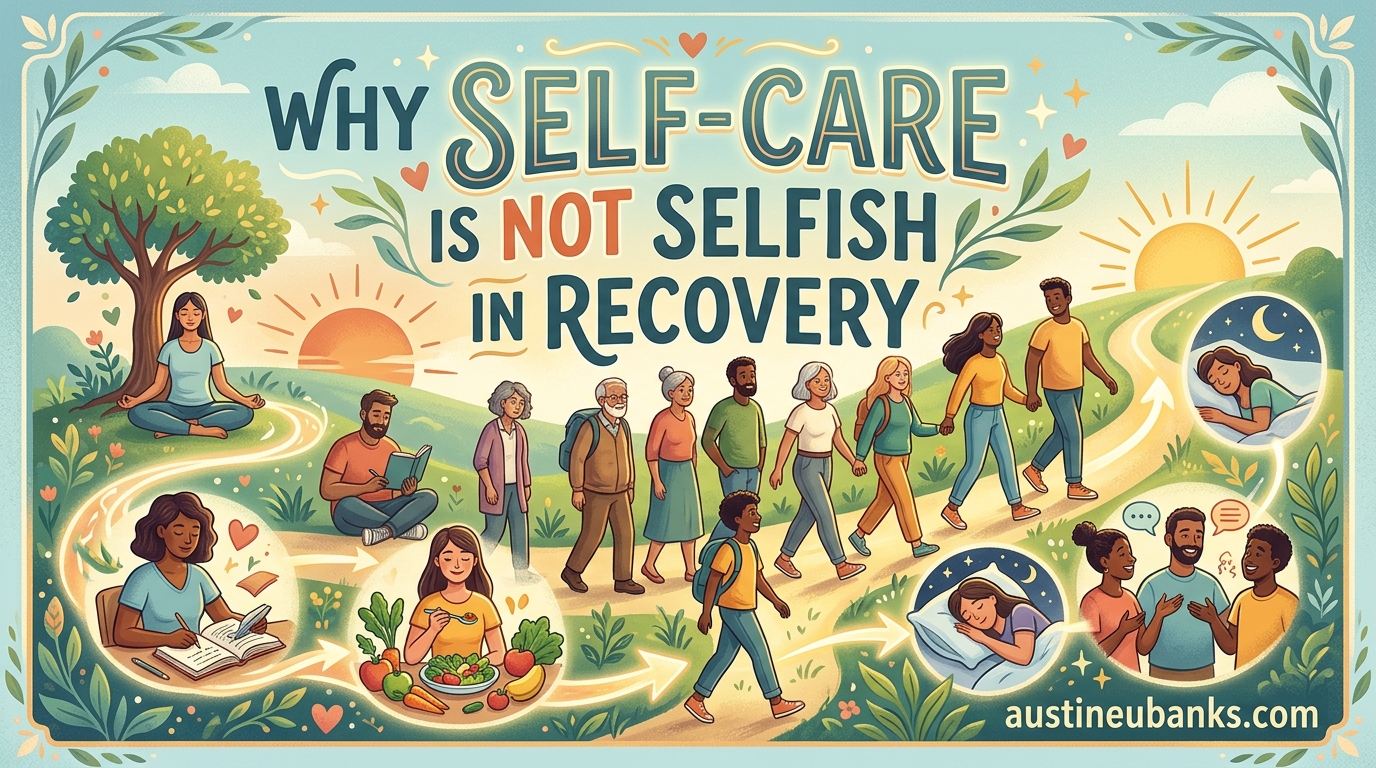
If you are in recovery, you have probably heard someone say that taking time for yourself feels selfish. Maybe you have even thought it yourself. After years of guilt, shame, or low self-worth tied to addiction or mental health struggles, putting your own needs first can feel wrong, even indulgent. But here is the truth: understanding why self-care is not selfish in recovery could be the single most important shift you make on your healing journey.
Self-care is not about bubble baths, expensive spa days, or ignoring the people who depend on you. It is about survival. It is about building the physical, emotional, and mental stability you need to stay sober, stay grounded, and stay present for the people you love. When you neglect your own well-being, you erode the very foundation your recovery stands on.
I have talked with countless people in recovery, from those in their first 30 days of sobriety to those with decades of clean time. The pattern is always the same. The people who prioritize self-care stay in recovery. The ones who burn themselves out trying to please everyone else often do not. In this article, we will break down exactly why self-care matters, how it differs from selfishness, what the science says, and how you can build a practical self-care routine without the guilt.
Table of Contents
Why Self-Care Is Not Selfish in Recovery: The Core Truth
Self-care is not selfish because it keeps you balanced, capable, and emotionally available for others. When you take care of your physical health, process your emotions, and set healthy boundaries, you become someone who can contribute to relationships and community rather than someone running on empty. Self-care is an act of self-respect that directly protects your sobriety and your ability to show up for the people who matter to you.
Think about the airplane oxygen mask rule. Flight attendants always tell you to secure your own mask before helping others. Not because your life matters more, but because you cannot help anyone if you are unconscious. Recovery works the same way. You cannot be a good parent, partner, friend, or community member if you are running on fumes, suppressing your emotions, and ignoring your basic needs.
One person in a recovery forum put it perfectly: “I think it is a triage situation. Prioritizing recovery allows us to be less selfish in all other aspects of life.” That reframing captures the entire point. Self-care in recovery is not about putting yourself above others permanently. It is about triage. You stabilize yourself first so you can be fully present afterward.
What Self-Care Actually Means in Recovery
Part of the confusion around self-care comes from how the term gets used online. Social media has turned self-care into a marketing buzzword associated with face masks, shopping sprees, and weekend retreats. That is not what we are talking about in recovery. Real recovery self-care is often unglamorous, repetitive, and deeply personal.
In the context of addiction recovery and mental health recovery, self-care means intentionally meeting your physical, emotional, mental, and spiritual needs to maintain your well-being. It means eating regular meals even when you do not feel hungry. It means going to bed at a reasonable hour even when your brain wants to stay up spiraling. It means attending your support meetings, calling your sponsor, and processing difficult emotions instead of numbing them.
Self-care in recovery also means setting boundaries with people, places, and situations that threaten your sobriety. It means saying no to social events where substances will be present. It means limiting time with people who drain your energy or trigger old patterns. These are not selfish acts. They are acts of self-preservation that keep you alive and well.
Forum discussions confirm this disconnect. Many people in recovery say they do not know what self-care actually looks like beyond the cliches. They want concrete, practical guidance, not wellness influencer aesthetics. That is exactly what we will provide throughout this article.
Why Self-Care Is Essential for Recovery
If you want to understand why self-care matters in recovery, you have to understand what happens when it is absent. Neglecting your well-being creates a cascade of problems that directly threaten sobriety. Sleep deprivation, poor nutrition, unmanaged stress, and emotional suppression all increase vulnerability to triggers, cravings, and ultimately relapse.
Research in addiction medicine consistently shows that stress is one of the strongest predictors of relapse. When your nervous system is chronically activated, when you are running on adrenaline and cortisol without adequate rest or recovery, your brain starts seeking relief. For someone in recovery, that relief-seeking behavior can quickly lead back to substances.
Self-care breaks that cycle. Here is how:
- Stress reduction: Regular self-care practices like exercise, meditation, and adequate sleep lower cortisol levels and calm your nervous system, making triggers feel less overwhelming.
- Emotional regulation: When you process emotions through journaling, therapy, or honest conversations, you reduce the emotional pressure that often precedes relapse.
- Physical stability: Proper nutrition and sleep give your brain the raw materials it needs to heal from the damage of substance use, supporting clearer thinking and better impulse control.
- Connection maintenance: Attending support meetings and nurturing sober relationships keeps you anchored to a community that understands your struggles.
- Identity rebuilding: Self-care activities help you rediscover who you are without substances, which is a critical part of long-term recovery.
The people who treat self-care as optional in recovery are often the ones who relapse. Not because they lack willpower, but because they depleted the internal resources they needed to stay sober. Recovery is not just about stopping the substance. It is about building a life where you no longer need it.
Self-Care vs. Selfishness: The Key Difference
One of the most common questions people ask is: what is the difference between self-care and being selfish? The distinction matters enormously, especially in recovery communities where the line can feel blurry. Let me break it down clearly.
Self-care is motivated by self-preservation and long-term well-being. It considers how your health affects the people around you. Selfishness is motivated by a disregard for others and a desire to take without giving back. Self-care fills your cup so you have something to offer. Selfishness takes from others to fill a bottomless void.
Here is a practical comparison to make this distinction concrete:
- Motivation: Self-care is driven by the need to stay healthy and functional. Selfishness is driven by indifference to others’ needs.
- Awareness of others: Self-care acknowledges your responsibilities and tries to balance them with your needs. Selfishness ignores responsibilities entirely.
- Communication: Self-care involves telling people what you need and why. Selfishness just disappears or makes demands without explanation.
- Duration: Self-care is temporary and purposeful, like taking an hour for a meeting or a walk. Selfishness is a persistent pattern of putting yourself first at others’ expense.
- Outcome: Self-care leaves you more capable of contributing to relationships. Selfishness leaves you isolated and others resentful.
- Recovery impact: Self-care protects your sobriety. Selfishness, disguised as self-care, can actually trigger relapse by alienating your support system.
If you are asking whether your actions are self-care or selfishness, that question itself is a good sign. Genuinely selfish people rarely worry about whether they are being selfish. The guilt you feel about prioritizing yourself usually means you care deeply about others, which is the opposite of selfishness.
The Science of Self-Care: How It Protects Your Brain and Nervous System
No competitor in the recovery space talks about the neuroscience of self-care. But understanding what happens in your brain when you practice self-care can transform how you think about it. This is not just feel-good advice. It is biology.
Substance use disorder fundamentally alters brain chemistry. It dysregulates your dopamine system, floods your body with cortisol, and keeps your nervous system stuck in fight-or-flight mode. Even after you stop using, your brain needs time and support to recalibrate. Self-care practices directly support that recalibration.
Adequate sleep allows your brain to clear toxins through the glymphatic system and consolidate new neural pathways. Regular exercise increases brain-derived neurotrophic factor, which supports neuroplasticity, your brain’s ability to form new habits and break old ones. Mindfulness and meditation have been shown to reduce amygdala reactivity, meaning you respond to triggers with more awareness instead of reflex.
When you skip meals, your blood sugar drops, and your prefrontal cortex, the part of your brain responsible for decision-making and impulse control, functions less effectively. When you isolate yourself, you lose the oxytocin boost that comes from social connection, which is one of your strongest natural protections against relapse. Every basic self-care practice has a measurable biological effect on your recovery.
This is why self-care is not optional. It is treatment. Every time you eat a nourishing meal, get a full night of sleep, attend a meeting, or take a walk outside, you are actively rewiring your brain for recovery. That is not selfishness. That is medicine.
Practical Self-Care Practices for Recovery: A Daily Framework
People in recovery forums consistently say they want practical guidance, not vague advice. So here is a concrete daily self-care framework organized around the Eight Dimensions of Wellness that leading recovery programs use.
Physical wellness: Aim for 7 to 9 hours of sleep each night. Eat three balanced meals a day with protein, complex carbohydrates, and vegetables. Move your body for at least 20 minutes daily, even if it is just a walk around your neighborhood. These three basics do more for your sobriety than any supplement or wellness product.
Emotional wellness: Journal for 10 minutes each morning or evening. Name what you are feeling without judgment. Call someone you trust when emotions feel overwhelming. Practice self-compassion by speaking to yourself the way you would speak to a friend in the same situation.
Mental wellness: Read something that engages your mind. Limit time on social media, which can trigger comparison, anxiety, and cravings. Practice saying no to commitments that overwhelm your schedule. Mental self-care includes protecting your cognitive bandwidth.
Spiritual wellness: Spend time in nature, meditate, pray, or attend a faith community if that resonates with you. Spiritual self-care is about connecting to something larger than yourself. It can also mean volunteering, which recovery communities often emphasize as a path to meaning and purpose.
Social wellness: Maintain regular contact with your support network. Attend meetings consistently. Nurture at least one relationship with someone who supports your recovery. Set boundaries with people who undermine it.
Environmental wellness: Keep your living space clean and organized. A cluttered environment contributes to a cluttered mind. Create a physical space that feels safe and calm, even if it is just one corner of one room.
Occupational and financial wellness: Pursue meaningful work or volunteer opportunities. Build a simple budget to reduce financial stress, which is a major relapse trigger. Do not let career ambitions override your recovery priorities in early sobriety.
You do not need to do all of these every day. Start with three or four basics, like sleep, meals, movement, and one emotional practice. Build from there as these habits become automatic.
Overcoming the Guilt of Prioritizing Yourself
Guilt is the number one barrier to self-care in recovery. Forum discussions across recovery communities reveal the same pattern. People feel selfish for taking time for themselves, especially parents, caregivers, and people socialized to put others first.
One Reddit user in a recovery forum wrote: “After years of drinking and isolation, I feel that I need to prioritize self-care and self-forgiveness. However, AA seems to downplay these aspects.” This tension between service-oriented recovery culture and personal self-care is real and worth addressing directly.
Here is how to start overcoming that guilt. First, reframe self-care as self-preservation rather than indulgence. As one forum user put it, “Sometimes showing self-care is an act of self-preservation more than genuine love for myself.” That is okay. Self-preservation is not selfish. It is necessary.
Second, communicate openly with the people around you. Tell your family what you are doing and why. Explain that taking an hour for a meeting or a walk makes you a better parent, partner, or friend. Most people will understand once they see the positive results.
Third, recognize that your recovery comes first. Without it, you cannot be present for anyone. As AlAnon members often remind each other, you did not create, cannot control, and cannot cure another person’s issues. Your self-care does not negatively affect their ability to recover. It protects your own.
Finally, challenge the internal narrative that says you do not deserve care. That voice is often the same voice that fueled your addiction. Recovery means learning to treat yourself with the same compassion you would offer anyone else walking this difficult path.
When Self-Care Tips Into Self-Indulgence: Finding the Balance
Being honest about this topic means acknowledging a valid concern that forum users raise. Can self-care become self-indulgence or avoidance? Yes, it can, and knowing the difference matters.
Self-care becomes problematic when it is used as a permanent excuse to avoid responsibilities, skip difficult conversations, or isolate from your support network. If you are canceling plans with friends every weekend and calling it self-care, or skipping meetings regularly because you need alone time, that pattern may be worth examining.
Five signs your self-care may be tipping into avoidance: you are consistently withdrawing from people who support your recovery. You are using self-care as a reason to skip therapy or meetings for weeks at a time. Your self-care involves spending money you do not have. You feel worse, not better, after your self-care activities. Or you are using the language of self-care to avoid accountability.
Healthy self-care energizes you and increases your capacity to engage with life. If your self-care routine is doing the opposite, it may be time to reassess with a sponsor, therapist, or trusted friend.
FAQs
Why is self-care not selfish?
Self-care is not selfish because it keeps you balanced, healthy, and capable of being present for others. When you meet your own physical, emotional, and mental needs, you protect your sobriety and strengthen your relationships. Self-care fills your cup so you have something to offer, while selfishness takes from others without giving back.
How is self-care important in recovery?
Self-care is important in recovery because it reduces stress, regulates emotions, and supports physical healing, all of which directly lower relapse risk. Meeting basic needs like sleep, nutrition, movement, and emotional processing builds the stability and resilience you need to sustain long-term sobriety.
What is the difference between self-care and being selfish?
Self-care is motivated by self-preservation and considers how your well-being affects others. Selfishness is motivated by disregard for others. Self-care is temporary and purposeful, while selfishness is a persistent pattern. Self-care leaves you more capable of contributing to relationships, while selfishness leaves others feeling used and resentful.
What does AA say about self-care?
AA does not have an official position on self-care, but its principles align closely with the concept. Steps that focus on self-reflection, making amends, and daily inventory are forms of emotional self-care. Many members balance service work with personal well-being, recognizing that maintaining your own sobriety is the foundation for helping others.
Why should you not date in early recovery?
Dating in early recovery is discouraged because new relationships can create emotional highs and lows that destabilize your sobriety. Early recovery is a time to focus on building your foundation, learning to manage triggers, and developing a healthy relationship with yourself first. Most recovery experts recommend waiting at least one year before pursuing romantic relationships.
How do I stop feeling guilty about self-care in recovery?
Reframe self-care as self-preservation rather than indulgence. Communicate openly with loved ones about what you need and why. Recognize that your recovery must come first, because without it you cannot be present for anyone. Challenge the internal voice that says you do not deserve care, because that voice is often the same one that fueled your addiction.
Conclusion: You Cannot Pour From an Empty Cup
If there is one thing I want you to take away from this article, it is this: understanding why self-care is not selfish in recovery can change the trajectory of your healing. Self-care is not a luxury. It is not an indulgence. It is the daily maintenance that keeps your recovery engine running.
Every time you choose sleep over a late-night spiral, every time you eat a meal instead of skipping it, every time you attend a meeting instead of isolating, you are investing in your sobriety. You are proving to yourself that you are worth the effort. And that proof, repeated daily, is what builds lasting recovery.
The guilt will not disappear overnight. But each time you practice self-care and notice that the world does not fall apart, that guilt loosens its grip. Each time you show up for yourself and discover you have more to offer others because of it, the narrative shifts. Self-care becomes not something you have to justify, but something you cannot afford to skip.
Your recovery is worth protecting. Your well-being is worth prioritizing. And you are worth the time it takes to build a life where self-care feels natural rather than selfish. Start small. Pick three basics today. Your future self will thank you for it.