
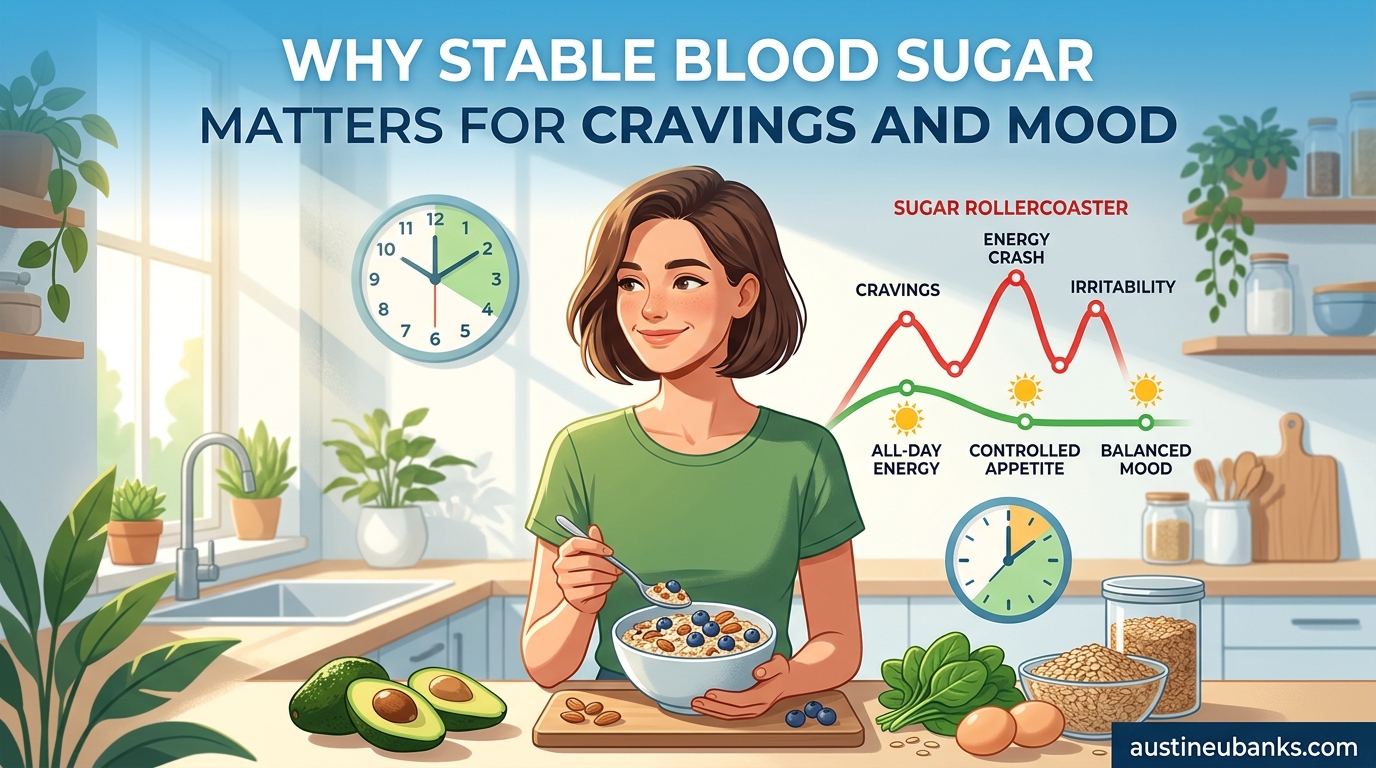
It is 3:00 PM. You ate lunch three hours ago, and suddenly you feel it coming on. Your energy drops, your patience thins, and the thought of something sweet feels less like a want and more like a need. You snap at a coworker over a minor question. Your brain feels foggy. You reach for a muffin, a candy bar, or another coffee loaded with syrup, knowing full well you will crash again in an hour.
If this sounds familiar, you are not weak-willed. You are not lazy. You are likely experiencing the very real effects of blood sugar instability on your mood and cravings. This is exactly why stable blood sugar matters for cravings and mood, and understanding the mechanism behind it can change how you eat, feel, and function every single day.
Our team has spent months researching the connection between blood glucose regulation and mental well-being. What we found is that most people, including those without diabetes, are riding a daily rollercoaster of spikes and crashes without realizing it. That rollercoaster drives their irritability, their anxiety, their binge eating, and their afternoon energy slumps.
In this guide, we break down exactly how blood sugar works, why it affects your brain chemistry so dramatically, and what you can do starting today to feel more stable, focused, and in control of your food choices. No clinical jargon. No judgment. Just clear, actionable science you can use.
Table of Contents
Quick Answer: Why Stable Blood Sugar Matters for Cravings and Mood
Stable blood sugar matters for cravings and mood because glucose fluctuations trigger insulin surges that disrupt serotonin and dopamine balance in the brain. When blood sugar spikes and crashes, it creates an almost irresistible drive to consume more sugar while simultaneously causing irritability, anxiety, and emotional instability. Keeping glucose levels steady prevents this cycle, supporting consistent energy, fewer cravings, and stable moods throughout the day.
How Blood Sugar Actually Works
To understand why stable blood sugar matters for cravings and mood, you first need to understand what happens inside your body every time you eat.
When you consume carbohydrates, whether from an apple or a donut, your digestive system breaks them down into glucose. That glucose enters your bloodstream, and your blood sugar level rises. In response, your pancreas releases insulin, a hormone whose job is to escort glucose out of your bloodstream and into your cells where it can be used for energy.
This is a normal, healthy process. The problem arises when the system gets overwhelmed. If you eat a large amount of refined carbohydrates or sugary foods all at once, your blood sugar spikes rapidly and dramatically. Your pancreas responds by pumping out a massive surge of insulin to handle the flood of glucose.
Here is where things go wrong. That insulin surge often overshoots, clearing too much glucose from your bloodstream too quickly. Your blood sugar drops below baseline, sometimes into the range that triggers what is called reactive hypoglycemia. This is the crash. And the crash is where cravings and mood problems begin.
What Is Glycemic Regulation?
Glycemic regulation is your body’s ability to maintain blood glucose within a healthy, relatively narrow range. When glycemic regulation is working well, your blood sugar rises modestly after meals and returns to baseline gradually over one to two hours. You feel satisfied, energized, and clear-headed.
When glycemic regulation is poor, your blood sugar swings wildly. You spike high after eating, then crash low an hour or two later. These swings are called glucose variability, and research shows that high glucose variability is independently associated with inflammation, oxidative stress, and mood disturbance, even in people without diabetes.
The Glycemic Index Explained Simply
The glycemic index (GI) is a scale from 0 to 100 that measures how quickly a food raises blood sugar. Foods with a high GI, like white bread, soda, and candy, cause rapid spikes. Foods with a low GI, like beans, lentils, most vegetables, and whole grains, cause slower, gentler rises that your body can handle without overproducing insulin.
Here is a simple way to think about it. High-GI foods are like pouring gasoline on a fire. They create a fast, intense burst that burns out quickly. Low-GI foods are like adding logs to a fireplace. They burn slowly and steadily, keeping you warm for hours.
Protein and fat also play a role. Eating protein, fiber, or healthy fats alongside carbohydrates slows down glucose absorption, effectively lowering the glycemic impact of the entire meal. This is why eating an apple with peanut butter affects your blood sugar very differently than eating the apple alone or drinking apple juice.
The Blood Sugar-Mood Connection
The connection between blood sugar and mood is not subtle. It is direct, measurable, and rooted in brain chemistry. Understanding this connection is central to understanding why stable blood sugar matters for cravings and mood.
Your brain consumes about 20% of your body’s glucose despite being only about 2% of your body weight. It is the most energy-hungry organ you have. When glucose supply is steady, your brain functions smoothly. When it fluctuates, everything from your emotional regulation to your decision-making takes a hit.
How Blood Sugar Affects Serotonin and Dopamine
Serotonin and dopamine are two neurotransmitters that play starring roles in mood regulation. Serotonin influences feelings of calm, contentment, and emotional stability. Dopamine drives motivation, reward, and pleasure.
When blood sugar drops rapidly after an insulin-driven spike, serotonin production can dip. This is one reason people feel irritable, anxious, or emotionally fragile when they are hungry or crashing. You may have heard the term “hangry.” It is not just a clever word. It is a real neurochemical response to falling glucose levels.
Dopamine works differently. Sugar and refined carbohydrates trigger dopamine release in the brain’s reward pathway, the same system involved in addiction. When you eat something sweet, you get a dopamine spike that feels good. But when blood sugar subsequently crashes, dopamine levels drop, and your brain craves another hit. This is the neurological basis for why sugar cravings feel so compelling.
Low Blood Sugar and Anxiety
When blood glucose falls below normal levels, the body initiates a stress response. It releases adrenaline and cortisol to help mobilize stored glucose and bring blood sugar back up. These are the same hormones involved in the fight-or-flight response.
This means that a blood sugar crash can literally mimic the physical symptoms of anxiety. Racing heart, shakiness, sweating, irritability, nervousness, and difficulty concentrating are all symptoms of both low blood sugar and anxiety. Many people who experience afternoon anxiety or panic-like symptoms may actually be dealing with reactive hypoglycemia without realizing it.
This is why people on forums like Reddit frequently ask whether blood sugar affects anxiety in non-diabetics. The answer is a resounding yes. You do not need to have diabetes for blood sugar swings to cause significant mood disturbance.
High Blood Sugar and Depression
On the other end of the spectrum, chronically high blood sugar and insulin resistance are also linked to mood problems. Persistently elevated glucose creates inflammation throughout the body, including the brain. This neuroinflammation is thought to contribute to depressive symptoms, brain fog, and lethargy.
Research from the University of Michigan School of Public Health has highlighted how symptoms of poor glycemic regulation closely mirror mental health symptoms such as irritability, anxiety, and worry. The line between metabolic dysfunction and mood disorder is blurrier than most people realize.
The Blood Sugar-Craving Cycle: The Spike-Crash-Crave Loop
If you have ever felt trapped in a cycle of eating sugar, feeling briefly great, then crashing and craving more sugar, you have experienced the spike-crash-crave loop. It is the core mechanism behind why stable blood sugar matters for cravings and mood. Let us break it down step by step.
Step 1: The Spike. You eat something high in refined carbohydrates or sugar, maybe on an empty stomach. Your blood sugar rises rapidly. You feel a burst of energy and pleasure as dopamine floods your brain’s reward pathway. For about 20 to 30 minutes, you feel fantastic.
Step 2: The Insulin Surge. Your pancreas detects the rapid rise in glucose and releases a large wave of insulin. This is the body trying to protect you from dangerously high blood sugar. But the amount of insulin released is often excessive relative to the amount of glucose.
Step 3: The Crash. The excess insulin clears too much glucose from your bloodstream, dropping your blood sugar below where it started. Now your brain perceives an energy emergency. Serotonin dips, dopamine drops, and stress hormones kick in to try to raise glucose back up.
Step 4: The Crave. Your brain, now low on fuel and stressed about it, sends powerful signals telling you to eat something. And not just anything. It specifically wants quick energy. It wants sugar and refined carbohydrates because those are the fastest way to raise blood glucose. The craving feels urgent, almost irresistible, because from your brain’s perspective, it is a survival signal.
Step 5: The Repeat. You give in and eat the sugar. Blood sugar spikes again. The cycle restarts.
This is why willpower alone so often fails. You are not fighting a simple preference for sweets. You are fighting a neurobiological alarm system designed to keep your brain fueled. When blood sugar is unstable, cravings are not a character flaw. They are a predictable physiological response.
Why Sugar Cravings Feel Addictive
The dopamine-driven reward cycle described above operates through the same neural pathways involved in substance addiction. Each spike-crash cycle reinforces the pattern, making the next craving stronger. Over time, you may need more sugar to get the same dopamine response, a phenomenon called tolerance.
Reddit users across communities like r/prediabetes, r/InsulinResistance, and r/PCOS frequently describe sugar cravings using language that sounds exactly like addiction. They talk about feeling powerless, trapped, and unable to stop despite wanting to. This is not weakness. It is neurochemistry. And the first step to breaking the cycle is stabilizing blood sugar so the alarm bells stop ringing.
Signs Your Blood Sugar Is Unstable
Many people live with unstable blood sugar for years without recognizing the pattern. The symptoms are often dismissed as personality traits, stress, or just part of getting older. Here is a self-assessment checklist to help you identify whether blood sugar instability may be driving your cravings and mood issues.
If you experience three or more of these regularly, blood sugar instability is likely a significant factor in your daily experience:
- You get irritable, anxious, or shaky when you go too long without eating
- You experience a noticeable energy crash between 2:00 PM and 4:00 PM
- You have strong, almost irresistible cravings for sweets or carbohydrates, especially in the afternoon or evening
- You feel brain fog or difficulty concentrating after meals
- You wake up tired even after a full night of sleep
- You experience mood swings that seem disproportionate to the situation
- You need caffeine or sugar to get going in the morning or to push through the afternoon
- You feel hungry again shortly after eating a meal high in carbohydrates
- You experience anxiety symptoms that seem to correlate with when you eat or skip meals
None of these symptoms mean something is permanently wrong with you. They are signals. And they are signals that respond quickly when you start stabilizing blood sugar. Many people report feeling better within just a few days of making dietary changes.
A Day in the Life: Stable vs. Unstable Blood Sugar
To make this concrete, let us walk through what a typical day looks like with stable blood sugar versus unstable blood sugar.
A Day With Unstable Blood Sugar
You wake up tired despite sleeping eight hours. You skip breakfast or grab a pastry and a sweetened coffee. Blood sugar spikes. You feel good for an hour, then start to fade. By 11:00 AM, you are irritable and reaching for another coffee or a snack.
Lunch is a quick sandwich and chips, maybe a soda. Another spike, another crash. By 2:30 PM, you hit the wall. Your energy plummets, your patience disappears, and the thought of doing focused work feels impossible. You grab something sweet to push through. Brief relief, then another dip.
Dinner is whatever is fast. You are starving by now, so you overeat. Blood sugar spikes again late in the evening. You have trouble falling asleep because your cortisol is elevated from the day’s glucose chaos. You wake up at 3:00 AM, mind racing, then finally fall back asleep just before the alarm goes off. The cycle starts again.
A Day With Stable Blood Sugar
You wake up feeling rested. Breakfast is eggs with avocado and a small serving of berries. Protein and fat slow glucose absorption. Blood sugar rises gently and stays steady. You feel focused and calm through the morning.
Lunch is a large salad with grilled chicken, olive oil, and a handful of nuts. Maybe a few whole grain crackers. Again, steady glucose. No afternoon crash. You take a 10-minute walk after lunch, which helps your muscles absorb glucose and keeps levels even more stable.
The 3:00 PM slump never arrives. You are still productive and patient. Dinner is salmon, roasted vegetables, and quinoa. You feel satisfied but not stuffed. You sleep deeply because your blood sugar is stable overnight, which means no cortisol spikes at 3:00 AM.
The difference between these two days is not about discipline or willpower. It is about what you ate and how it affected your blood sugar. The stable day is not harder. It is actually easier once you break the crash-crave cycle.
Morning vs. Evening: When Blood Sugar Hits Hardest
Understanding these patterns is key to managing cravings and mood throughout the day.
In the morning, cortisol naturally rises as part of your body’s wake-up response. This is called the dawn phenomenon, and it means your blood sugar may be slightly higher when you wake up. What you eat for breakfast sets the tone for the entire day. A high-sugar breakfast guarantees a crash by mid-morning and primes the craving cycle for the rest of the day.
In the evening, fatigue and accumulated stress from the day weaken your resolve. Cortisol may be elevated from work stress, which raises blood sugar. Combined with exhaustion, this is why evening sugar cravings are so common. It is not just emotional eating. It is metabolic stress meeting psychological fatigue.
Stress, Cortisol, and Blood Sugar Spikes
Stress is not just in your head. It is a physiological event with direct, measurable effects on blood sugar. This connection is critical to understanding why stable blood sugar matters for cravings and mood.
When you experience stress, whether from a deadline, an argument, or poor sleep, your body releases cortisol and adrenaline. These hormones are part of the fight-or-flight response, and one of their jobs is to make sure you have enough quick energy to deal with a threat. So they signal your liver to release stored glucose into your bloodstream.
This means you can get a blood sugar spike without eating a single thing. Chronic stress keeps cortisol elevated, which keeps blood sugar elevated, which keeps insulin elevated. Over time, this constant insulin output can contribute to insulin resistance, a condition where your cells become less responsive to insulin’s signals.
Insulin resistance is not just a diabetes concern. It affects an estimated 88 million American adults, many of whom have no idea. And insulin resistance itself worsens blood sugar instability, creating a feedback loop of cravings, mood swings, and fatigue.
Blood Sugar and Sleep: The Vicious Cycle
Poor sleep and unstable blood sugar feed each other in a vicious cycle. When blood sugar is unstable during the day, cortisol stays elevated, making it harder to fall asleep and stay asleep. When you sleep poorly, your body becomes less sensitive to insulin the next day, meaning blood sugar swings more dramatically after meals.
Research shows that even a single night of poor sleep can reduce insulin sensitivity by as much as 25% the following day. This means that after a bad night of sleep, the same meal you ate yesterday will cause a larger blood sugar spike today. And that larger spike means a bigger crash, worse cravings, and worse mood.
Breaking the cycle requires addressing both sleep and blood sugar simultaneously. Stabilizing glucose during the day helps you sleep better at night, and better sleep makes your body more resilient to blood sugar swings the next day.
Practical Ways to Stabilize Blood Sugar
Now for the part you came here for. Knowing why stable blood sugar matters for cravings and mood is only useful if you know how to actually stabilize it. Here are the most effective, science-backed strategies, organized from highest impact to supplementary.
These are the same strategies that people across nutrition and wellness communities report as the most effective for reducing cravings and improving mood.
1. Eat Protein First, Carbs Last
This is the single most commonly cited strategy for blood sugar control, and research backs it up. Eating protein and fat before carbohydrates can reduce the post-meal blood sugar spike by up to 30 to 40%.
Protein stimulates the release of GLP-1, a hormone that slows gastric emptying and improves insulin sensitivity. (This is the same hormone that GLP-1 medications like semaglutide and tirzepatide target, which is why people on these medications report dramatic reductions in cravings.)
Practically, this means starting your meal with the protein and vegetables, then eating the starchy or sugary components. Even within a single meal, the order matters. Try it for one week and notice the difference in your post-meal energy and your between-meal cravings.
2. Walk After Meals
A 10 to 15 minute walk after eating is one of the most effective habits for blood sugar control. When you walk, your muscles contract and actively pull glucose from your bloodstream without needing insulin. This means walking directly lowers post-meal blood sugar spikes.
Research shows that even a light 10-minute walk after a meal can significantly reduce blood glucose levels compared to sitting. You do not need to power walk or break a sweat. A gentle stroll is enough to make a meaningful difference.
If you cannot walk after every meal, target the meal that typically causes your biggest crash. For most people, that is lunch. A post-lunch walk is one of the highest-impact habits you can build.
3. Pair Carbohydrates with Protein, Fat, or Fiber
Naked carbohydrates, meaning carbs eaten without protein, fat, or fiber to slow them down, are the primary driver of blood sugar spikes. An apple eaten alone will spike your blood sugar more than an apple eaten with a handful of almonds.
Always aim to pair carbohydrates with a protein source, a healthy fat, or fiber-rich foods. This slows the rate of glucose absorption and reduces the insulin response. Some practical examples:
- Toast with avocado and eggs instead of toast with jam
- Oatmeal with nuts and seeds instead of oatmeal with brown sugar
- Fruit with a spoonful of peanut butter instead of fruit alone
- Pasta with grilled chicken and olive oil instead of pasta with plain tomato sauce
4. Choose Low-Glycemic Foods Most of the Time
You do not need to eliminate any food entirely. But the bulk of your diet should come from low-glycemic foods that produce gradual, manageable blood sugar responses.
Low-GI foods include beans, lentils, chickpeas, most non-starchy vegetables, whole intact grains like quinoa and barley, nuts, seeds, and most whole fruits. High-GI foods to moderate include white bread, white rice, sugary cereals, soda, fruit juice, pastries, and most processed snack foods.
A useful rule of thumb: the closer a food is to its natural state, the lower its glycemic impact. Whole apples are better than apple sauce, which is better than apple juice. The more processed a carbohydrate is, the faster it hits your bloodstream.
5. Do Not Skip Meals, Especially Breakfast
Skipping meals can cause blood sugar to drop too low, which triggers the same stress hormone response as a post-spike crash. Your body releases cortisol and adrenaline to mobilize stored glucose, which can actually raise blood sugar and then cause another crash when those hormones recede.
Breakfast sets the metabolic tone for the day. A high-protein, low-sugar breakfast stabilizes blood sugar through the morning and reduces afternoon cravings. A sugary breakfast or no breakfast at all practically guarantees you will spend the day on the blood sugar rollercoaster.
If you practice intermittent fasting, pay close attention to how you feel. Some people thrive on it. Others, especially women and those with existing blood sugar issues, find that extended fasting increases anxiety, cravings, and mood instability. Listen to your body.
6. Manage Stress to Lower Cortisol
Since stress hormones directly raise blood sugar, stress management is not optional for blood sugar stability. It is a core pillar. You cannot eat perfectly and still have unstable blood sugar if chronic stress is keeping your cortisol elevated around the clock.
Effective stress management does not require hours of meditation. Simple practices like 5 minutes of deep breathing, a short walk outside, or journaling for 10 minutes can measurably reduce cortisol levels. The key is consistency, not intensity.
7. Prioritize Sleep
Given that one night of poor sleep can reduce insulin sensitivity by up to 25%, protecting your sleep is one of the most powerful things you can do for blood sugar stability. Aim for 7 to 9 hours of quality sleep per night.
Practical sleep tips that specifically help blood sugar include avoiding large meals within 3 hours of bedtime, keeping your bedroom cool and dark, and maintaining a consistent sleep and wake time, even on weekends. Stabilizing blood sugar during the day will also improve your sleep at night, creating a positive feedback loop.
The 10 10 10 Rule for Blood Sugar
As a bonus tip, the 10 10 10 rule for blood sugar involves checking your glucose at three key times: before meals, 2 hours after meals, and at bedtime. This helps you understand how different foods affect your levels and identify patterns that trigger cravings or mood changes. While this is most practical for people using a continuous glucose monitor (CGM), you can also tune into your body’s signals to approximate the same insights.
Ask yourself before meals: Am I actually hungry, or am I stressed, tired, or crashing? Two hours after meals: Do I feel energized and clear-headed, or am I already fading? At bedtime: Am I too wired from late-night eating to fall asleep?
Why Willpower Alone Cannot Fix Sugar Cravings
This deserves its own section because the misconception that cravings are a willpower problem causes enormous unnecessary suffering. If you take away one thing from this article, let it be this.
When your blood sugar is unstable, your brain is in a state of perceived emergency. It is not sending craving signals because you lack discipline. It is sending craving signals because glucose is low and the brain needs fuel to survive. No amount of willpower can override a signal that your brain interprets as a survival threat.
This is why people can successfully resist cravings for hours or days, only to eventually break down and binge. Willpower is a finite resource that depletes throughout the day. Stress, poor sleep, and decision fatigue all drain it further. By the time evening arrives, the combination of low willpower and a blood sugar crash makes resistance nearly impossible.
The solution is not more willpower. The solution is removing the need for willpower by stabilizing blood sugar in the first place. When blood sugar is steady, cravings diminish naturally. Many people report that after two to three weeks of stable blood sugar, sugar tastes too sweet and cravings become a rare occurrence rather than a daily battle.
This matches what researchers in nutritional psychiatry have observed. The gut-brain axis, the communication network between your digestive system and your brain, means that what happens in your gut directly influences your emotional state. When you feed your body in a way that keeps blood sugar stable, you are literally feeding your brain the steady fuel it needs to regulate mood on a neurological level.
FAQs
Does regulating blood sugar help with cravings?
Yes. Regulating blood sugar directly reduces cravings by preventing the insulin spike-and-crash cycle that triggers hunger signals. When blood sugar remains stable, the body does not experience the glucose drops that signal the brain to seek quick energy from sugar and refined carbohydrates.
Why is keeping your blood sugar levels steady important for our mood?
Keeping blood sugar levels steady is important for mood because the brain runs primarily on glucose. When blood sugar fluctuates wildly, it disrupts neurotransmitters like serotonin and dopamine, leading to irritability, anxiety, and mood swings. Stable glucose supports consistent emotional regulation.
Why is it important to keep blood sugar levels stable?
Keeping blood sugar levels stable is important because it prevents the cycle of energy spikes followed by crashes, which trigger cravings, disrupt mood, impair focus, and over time contribute to insulin resistance and chronic health conditions.
What is the 10 10 10 rule for blood sugar?
The 10 10 10 rule for blood sugar involves checking your glucose at 3 key times: before meals, 2 hours after meals, and at bedtime. This helps you understand how different foods affect your levels and identify patterns that trigger cravings or mood changes.
Conclusion
Understanding why stable blood sugar matters for cravings and mood changes everything about how you approach your daily energy, eating habits, and emotional well-being. The spikes and crashes that drive your afternoon slump, your evening sugar cravings, and your unexplained irritability are not character flaws. They are predictable physiological responses that you can change.
Start with one strategy. Eat protein first at your next meal. Take a 10-minute walk after lunch. Swap your sugary breakfast for eggs and avocado. These small changes compound quickly, and most people feel a noticeable difference in mood, energy, and craving intensity within the first week.
Your brain deserves steady fuel. Give it what it needs, and it will reward you with stable moods, clear focus, and freedom from the craving cycle that has been running your day.