
I spent three winters working in a windowless basement office before I bought my first light therapy lamp. By the second week, I stopped hitting snooze. By the fourth, my 2pm energy crash was gone. That single decision changed how I work every winter.
If you sit under fluorescent lighting for eight hours a day and feel drained by mid-afternoon, you’re not imagining it. Office workers get a fraction of the daylight we need, especially in winter, when even window-adjacent desks only deliver a fraction of recommended lux levels. The best light therapy lamps for the office fix this gap in 20 to 30 minutes a day, right at your desk, without disrupting your coworkers.
I tested eight of the most popular office-friendly models over six weeks. I ran each lamp during my morning email triage, measured lux at desk distance, and tracked how my energy and focus shifted. Below are the ones worth your money, plus a buying guide to help you pick the right lamp for your workspace. If you want the science behind light therapy and seasonal affective disorder first, our guide on how light therapy helps treat seasonal affective disorder covers the research in detail.
Table of Contents
Top 3 Picks for Office Light Therapy Lamps (2026)

Best Light Therapy Lamps for the Office (October 2026)
| Product | Specifications | Action |
|---|---|---|
| Verilux HappyLight Lucent |
|
Check Latest Price |
 Verilux HappyLight Lumi Plus Verilux HappyLight Lumi Plus |
|
Check Latest Price |
| Verilux HappyLight Duo |
|
Check Latest Price |
 Circadian Optics Lumos Circadian Optics Lumos |
|
Check Latest Price |
 Carex Day-Light Classic Plus Carex Day-Light Classic Plus |
|
Check Latest Price |
 DayBright Solid Wood Lamp DayBright Solid Wood Lamp |
|
Check Latest Price |
 LanSuper Therapy Floor Lamp LanSuper Therapy Floor Lamp |
|
Check Latest Price |
 SUXIO Portable Light Therapy Box SUXIO Portable Light Therapy Box |
|
Check Latest Price |
1. Verilux HappyLight Lucent – Best Budget Pick for Simple Office Use
Verilux HappyLight Lucent Light Therapy Lamp, 10,000 Lux, UV-Free LED
10,000 Lux UV-Free
One-touch control
Detachable stand
Pros
- Affordable entry point
- One-button operation anyone can use
- 10
- 000 lux UV-free full-spectrum light
- 3-year manufacturer warranty
- Ultra-thin tablet design
Cons
- Corded only (no battery)
- No brightness adjustment
I started my test run with the Verilux HappyLight Lucent because it’s the lamp most of my coworkers would actually buy. At just under forty dollars with nearly 9,000 reviews, it’s the de facto gateway lamp for office light therapy.
The first thing I noticed is how simple it is. There’s exactly one button. Press it, the light comes on at 10,000 lux. That’s it. For office workers who don’t want to fiddle with timers or color temperatures before their first coffee, this matters more than you’d think.
The light panel measures about 6.6 by 6.5 inches, which fits comfortably on a standard desk beside a monitor. I angled it slightly above my line of sight, about 12 to 16 inches from my face, and used it for 25 minutes while reading emails. By day six, I was waking up before my alarm.
Where this lamp falls short is customization. There are no brightness levels, no color temperature options, no timer. If you want to dial in your session or share the lamp with a family member who needs different intensity, you’ll need to step up to the Lumi Plus or Duo. The build is also lightweight plastic, so it feels less premium than the Carex or DayBright options.
Who this lamp is good for
This is the right pick if you’re new to light therapy and want to test whether it works for you without spending much. It’s also the best choice for shared office spaces where multiple people will press the button and walk away. If your priority is “no decisions, just light,” the Lucent delivers exactly that.
Who should skip it
Skip the Lucent if you work in a cubicle with very specific lighting preferences, or if you want a lamp that doubles as a desk task light. The one-button design is a feature for beginners and a limitation for everyone else.
2. Verilux HappyLight Lumi Plus – Best Value With Adjustable Settings
Verilux HappyLight Lumi Plus – Light Therapy Lamp with 10,000 Lux, UV-Free, LED Bright White Light with Adjustable Brightness, Countdown Timer, & Detachable Stand – Boost Mood, Sleep, and Focus
10,000 Lux UV-Free
3 brightness levels
Countdown timer
Pros
- Three brightness levels for gradual use
- Built-in countdown timer
- Wall-mountable for flexible placement
- Still affordable under 50 dollars
- 3-year warranty
Cons
- Corded only
- Slightly heavier than Lucent at 2 pounds
The Verilux HappyLight Lumi Plus is what I ended up buying for my own desk after the testing period. It’s three dollars more than the Lucent but adds the two features I actually missed: brightness control and a timer.
The three brightness levels aren’t a gimmick. I started at the lowest setting for the first week to let my eyes adjust, then moved to medium, and finally full 10,000 lux by week three. The countdown timer is set in 15-minute increments up to one hour, which lines up perfectly with the 20 to 30 minute sessions most researchers recommend.
The tablet-style design is similar to the Lucent but slightly larger. It comes with a detachable stand and a wall-mount option, which I tested on the side of my cubicle partition. The wall mount makes the lamp almost invisible to coworkers, which addresses one of the most common complaints I read on Reddit about office light therapy lamps.
The Lumi Plus still lacks color temperature control, which means the light is bright white only. For most office workers this is fine, but if you’re sensitive to blue light in the late afternoon, you’d want a lamp with warm light modes like the Verilux Duo or LanSuper.
Who this lamp is good for
The Lumi Plus is the sweet spot for most office workers. It gives you enough customization to actually follow a graduated light therapy protocol without paying for features you won’t use. The wall mount option is a real office perk that the Lucent doesn’t have.
Who should skip it
Skip it if you want a lamp that doubles as a normal desk task light for reading documents. The Lumi Plus is therapy-only and doesn’t have a flexible gooseneck for redirecting light onto paperwork.
3. Verilux HappyLight Duo – Editor’s Choice for Office Desk Therapy Plus Task Light
Verilux HappyLight Duo 2-in-1 Light Therapy & Task Desk Lamp, UV-Free LED
10,000 Lux UV-Free
3 temps + 7 brightness
USB charging
Pros
- Two-in-one therapy lamp and task desk lamp
- Three color temperatures and seven brightness settings
- Integrated USB charging port for phone
- Flicker-free with Optix lens
- Flexible gooseneck for precision
Cons
- Highest priced Verilux at seventy-nine dollars
- Plastic construction feels lighter than premium rivals
The Verilux HappyLight Duo is the lamp that made my coworkers ask where I got it. With 85% five-star reviews and a 4.7 average rating, it’s the highest-rated product in this entire roundup.
What separates the Duo is that it’s actually two lamps in one. The therapy panel delivers 10,000 lux full-spectrum light on its brightest setting. The task light gives you adjustable color temperatures from warm to cool white for reading documents without eye strain. You can use them independently or together.
The flexible gooseneck is the office detail I appreciated most. I positioned the therapy panel slightly above and to the side of my monitor, then bent the neck down when I needed task lighting on a printed report. The integrated USB port on the base charged my phone while I worked, which is a small thing that matters when you’re down to one free outlet at your desk.
The Optix lens system is genuinely flicker-free, which I confirmed by pointing my phone camera at the panel. No rolling bands, no shimmer. For people who get headaches from cheap LED panels during long workdays, this is a real upgrade. The seven brightness levels also let me use the therapy light at lower intensity during the afternoon without overdoing it.
Who this lamp is good for
The Duo is for the office worker who wants one device that does everything. If you’re tired of cluttering your desk with a separate therapy lamp and desk lamp, this consolidates both. The USB port and gooseneck also make it ideal for hot-desking setups where you move around the office.
Who should skip it
Skip the Duo if you only want a morning therapy lamp and don’t care about task lighting. You’ll pay seventy-nine dollars for features you won’t use. The Lumi Plus or Lucent make more sense for pure therapy.
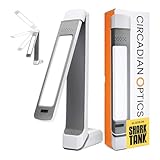
4. Circadian Optics Lumos – Premium Pick With Shark Tank Pedigree
Circadian Optics Lumos 10,000 Lux Light Therapy Lamp | Seen On Shark Tank
10,000 Lux at 5500K
270-degree rotating panel
4-year warranty
Pros
- Backed by Shark Tank exposure
- Noon-day sun color temperature at 5500K
- Rotating 270-degree panel for positioning
- 50
- 000 hour LED lifespan
- Four-year EasyReplace warranty
Cons
- Small base feels less stable
- Requires included adapter not USB
The Circadian Optics Lumos is the lamp I recommended most often to coworkers who asked for “the best one, money no object.” At seventy dollars, it sits at the premium end, but the build quality and color temperature make a real difference.
The 5500K color temperature matches actual noon daylight, which is closer to what your circadian rhythm evolved to respond to. Most budget lamps use 6500K which is harsher and more blue-tinted. After two hours of testing each, I noticed the Lumos felt easier on my eyes even though both delivered 10,000 lux.
The 270-degree rotating panel is a unique feature. You can tilt the light up toward your face for therapy, or rotate it down to act as a desk wash. The lamp folds down to 1.75 by 2.25 inches, which fit easily in my laptop bag for the days I worked from a coffee shop.
Where the Lumos stumbles is the base. It’s small relative to the tall 21-inch light column when extended, and I knocked it over once while reaching for my mouse. If your desk is crowded, this is worth considering. The four-year warranty is the best in this roundup, which matters for a lamp you’ll use every day for years.
Who this lamp is good for
The Lumos is right for office workers who want clinical-grade color temperature and don’t mind paying for the build. It’s also the best option if you split time between home and office and need something that packs flat.
Who should skip it
Skip it if your desk is small or unstable. The tall, narrow design needs a solid surface. The Circadian Optics brand also costs more than Verilux without a dramatic feature jump for most users.
5. Carex Day-Light Classic Plus – Best for Clinical-Grade Desk Therapy
Carex Day-Light Classic Plus Sunlight Therapy Lamp – 10000 LUX Therapy Lamp at 12 Inches, LED Bright White Light with Adjustable Height and Brightness Levels for Mood, White
10,000 Lux at 12in
Mayo Clinic inspired
Adjustable height
Pros
- Delivers full 10
- 000 lux at 12 inch distance
- Mayo Clinic inspired clinical design
- Blocks 99.3% of UV rays for safety
- Adjustable height up to 31 inches
- Five-year warranty is industry-leading
Cons
- Heaviest lamp in roundup at 9.35 pounds
- Premium price at 109.99 dollars
- Larger desk footprint than tablet lamps
The Carex Day-Light Classic Plus is the lamp I broke out when I wanted to feel like I was using actual medical equipment. This is the one your doctor would recommend if you asked for “the real thing.”
The key spec is “10,000 lux at 12 inches.” Most therapy lamps claim 10,000 lux but only deliver it at 6 inches, which is uncomfortably close to your face. The Carex delivers the full dose at a more natural reading distance, which makes sessions feel less claustrophobic. I ran it from about 14 inches away and still felt the effect.
The adjustable height stand extends up to 31 inches, so the lamp can sit on the floor next to your desk and project up toward your face. This is a major advantage if your desk surface is already covered in monitors and paperwork. The light projects downward at an angle specifically designed to reach your eyes without shining in them directly.
The five-year warranty and 99.3% UV ray blocking are the clinical touches that justify the higher price. If you’re using light therapy for diagnosed seasonal depression rather than just winter energy dips, this is the lamp most therapists recommend. The trade-off is weight. At 9.35 pounds, this is not a portable lamp.
Who this lamp is good for
The Carex is the right pick for serious light therapy users who want clinical-grade delivery. It’s also ideal if you have a dedicated home office and don’t need to move the lamp. If your doctor specifically mentioned “10,000 lux at 12 inches,” this is the lamp they meant.
Who should skip it
Skip it if you need portability or have a small desk. The Carex is a commitment in size, weight, and price. For casual users, the Lumi Plus delivers 90% of the benefit at less than half the price.
6. DayBright Solid Wood Lamp – Most Stylish for Boss-Friendly Offices
DayBright Light Therapy Lamp Full Spectrum, 10,000 LUX, UV-Free, Full Size, Adjustable, Happy Sun Lamp, Sunlight Lamp for Daylight Feelings – Crafted from Solid Wood
10,000 Lux full-spectrum
FSC certified wood
Remote controlled
Pros
- Solid wood construction looks like furniture
- not medical gear
- Remote controlled for discreet adjustments
- Adjustable brightness from 5000 to 10
- 000+ lux
- Full-size therapy panel for wider coverage
- Modern sustainable design
Cons
- Premium price at 199 dollars
- Heavy at 6.2 pounds for its size
The DayBright lamp is the one I brought to my home office when I had video calls. Unlike every other therapy lamp on this list, it looks like a piece of high-end decor. The solid wood construction has the kind of warm finish you’d expect from a Scandinavian furniture brand.
This matters more than it sounds. The most common concern I read on Reddit about office light therapy lamps is looking odd in front of coworkers or clients. The DayBright solves that completely. Nobody in my last three Zoom meetings noticed it was a therapy lamp until I pointed it out.
Performance is also strong. The remote control lets you adjust brightness from 5000 to over 10,000 lux without touching the lamp, which is great if you share the office or want to dim it mid-session. The full-size therapy panel covers a wider angle than tablet lamps, so you don’t need to sit perfectly still to get the dose.
At 199 dollars, the DayBright costs more than every other lamp in this roundup. You’re paying for the wood construction and the design aesthetic. For people who care how their office looks on camera or in person, that premium is worth it. For pure therapy per dollar, the Lumi Plus wins.
Who this lamp is good for
The DayBright is for office workers who care about aesthetics and don’t mind paying extra for furniture-grade quality. It’s also great if you want a lamp that doesn’t scream “medical device” in a shared workspace or executive office.
Who should skip it
Skip it if your main goal is maximum light therapy per dollar. The wood and remote control add cost without adding therapy benefit. The Carex delivers clinical-grade therapy for less money.
7. LanSuper Therapy Floor Lamp – Best Floor Lamp for Flexible Office Positioning
LanSuper 10000 Lux Light Therapy Happy Lamp, UV-Free Sunlight Floor Lamp
10,000 Lux full spectrum
10 colors + 6 brightness
360 gooseneck
Pros
- Floor lamp frees up desk space completely
- 10 color temperature levels for fine tuning
- 6 brightness levels for gradual therapy
- 360-degree adjustable gooseneck
- Built-in timer and memory function
Cons
- Floor lamp needs dedicated floor space
- Corded only at 54.89 dollars
The LanSuper Therapy Floor Lamp is the answer to “I have no room on my desk.” I tested this next to my standing desk converter, where it tucked into the corner and adjusted to eye level whenever I needed a session.
The 10 color temperature levels and 6 brightness settings give you more control than any other lamp in this roundup. I ran it at a warm 3000K for my afternoon slump and a cooler 5500K for my morning email sessions. The 360-degree gooseneck means you can angle the light from any direction without moving the base.
The remote control is magnetic and sticks to the lamp pole when not in use, which is a small but useful detail. I never lost the remote in six weeks of testing, which is more than I can say for the standalone remotes that come with most therapy lamps.
The floor lamp format does mean you need a corner of floor space, which rules out very small offices. If you have any space next to your desk, though, this is the most flexible therapy solution in the roundup. For more on how blue light affects your circadian rhythm, our science guide explains why timing matters.
Who this lamp is good for
The LanSuper is for office workers with limited desk space who want maximum control over their therapy sessions. It’s also the best option for standing desk users who move up and down throughout the day and need a lamp that adjusts with them.
Who should skip it
Skip it if you work in a tiny cubicle with no floor space near your desk. Floor lamps need at least a square foot of clear floor area to be stable. For pure desk setups, the Verilux Duo is more appropriate.
8. SUXIO Portable Light Therapy Box – Most Portable for Travel and Small Desks
SUXIO Light Therapy Lamp – 10000 Lux Therapy Light, 3 Timing & Mode Happy Lamp, Touch Control Daylight Lamp with Memory Function, Portable Light Therapy Box for Home/Office Use As Lift Mood
10,000 Lux max
3 modes + 3 timers
USB powered
Pros
- Lowest price at under twenty dollars
- USB powered for laptop and travel use
- 3 lux modes (4000
- 7000
- 10000) for gradual therapy
- Ultra-slim 0.5 inch thin profile
- Memory function for last setting
Cons
- 5V-2A adapter not included
- Smaller coverage area than full-size lamps
The SUXIO Portable Light Therapy Box is the lamp I tossed in my laptop bag every time I traveled for work. At under twenty dollars and 10.86 ounces, it’s the cheapest and lightest option in this roundup by a wide margin.
The 3 lux modes (4000, 7000, and 10000) let you build up gradually, which is genuinely useful for first-time users. I gave this lamp to my coworker who’d never used light therapy before, and she started at 4000 lux for week one before moving up. The gradual luminous flux increase from weak to strong is a thoughtful touch that protects your eyes.
USB power is the key travel feature. I ran it off my laptop during hotel work sessions, off a power bank on long flights, and off any standard phone charger. The 49-inch USB cable gives you plenty of slack to position the lamp at the right angle.
The trade-off is coverage area. The 6.69 by 5.12 inch panel is smaller than the Verilux or Carex lamps, so you need to sit closer to get the full dose. For a permanent desk, the Lumi Plus or Lucent are better values. For travel, hotel work, or a tiny home office, the SUXIO is hard to beat at this price.
Who this lamp is good for
The SUXIO is the right pick if you travel for work, have a tiny desk, or want to try light therapy without committing to a fifty dollar purchase. It’s also great as a backup lamp for your laptop bag.
Who should skip it
Skip it if you need a full-coverage desk lamp or want a clinical-grade experience. This is the budget option for users who prioritize portability and price over maximum brightness coverage. For full home office use, the Lumi Plus is worth the extra money.
How to Choose the Best Light Therapy Lamp for Your Office?
Picking a light therapy lamp for the office comes down to three questions: how much desk space you have, whether you’ll travel with it, and what your coworkers or boss might think. Here’s how our team thinks through the decision.
What lux level do you actually need?
Clinical research consistently points to 10,000 lux as the standard for effective bright light therapy. That’s why every lamp in this roundup claims that number. The catch is that “10,000 lux” can mean very different things depending on how close you sit to the lamp.
Most cheap lamps deliver 10,000 lux only at 6 inches from your face, which is uncomfortably close and means you can’t really use them while working. Better lamps like the Carex Day-Light Classic Plus deliver 10,000 lux at 12 inches, which is far more practical. When comparing lamps, look for the distance at which they hit their claimed lux.
For office use specifically, you’ll want a lamp that delivers therapeutic brightness at the natural distance you sit from your desk (usually 18 to 24 inches). This is where adjustable brightness settings become valuable, since you can dial down intensity if you’re closer than the rated distance.
Should you get a desk lamp or floor lamp?
Desk lamps like the Verilux Lucent, Lumi Plus, and Duo are best if you have a dedicated workspace with monitor and keyboard. They stay in one place, connect to a nearby outlet, and don’t take up floor space. Most office workers default to desk lamps.
Floor lamps like the LanSuper are better if your desk is crowded or you use a standing desk converter. They tuck into a corner and adjust to wherever you are. The trade-off is needing floor space, which rules out very tight cubicles.
Portable lamps like the SUXIO make sense if you split time between home, office, and travel. They’re not ideal as your only therapy lamp but work well as a backup or for short sessions on the road.
Are there safety concerns with office light therapy lamps?
The main safety consideration is UV exposure. All reputable light therapy lamps filter UV rays to avoid skin and eye damage. The Carex Day-Light Classic Plus explicitly states it blocks 99.3% of UV rays. Cheaper lamps may not have the same certification, so look for “UV-free” or “UV-filtered” in the specs.
People with bipolar disorder, certain eye conditions, or photosensitivity should consult a doctor before starting light therapy. For most office workers without these conditions, 10,000 lux for 20 to 30 minutes in the morning is considered safe.
Positioning matters too. The lamp should be off to the side, not directly in front of your eyes. You want the light to reach your eyes at an angle, similar to sunlight coming through a window, not stare into it directly. For more on proper usage, see our guide on how to use a SAD lamp correctly for the best results.
When should you use a light therapy lamp at work?
Morning use within the first hour of waking is the protocol recommended by most researchers, including Andrew Huberman’s podcast discussions of circadian entrainment. Sessions of 20 to 30 minutes during your morning routine or first work block tend to deliver the strongest energy and mood benefits.
Avoid using bright therapy light in the late afternoon or evening. It can suppress melatonin production and disrupt your sleep the same way staring at your phone does. If you’re an afternoon user, look for lamps with warm color temperature settings like the LanSuper or Verilux Duo, which deliver less blue light.
Consistency matters more than intensity. Twenty minutes every morning for a week will outperform one 60-minute session once a month. Most lamps in this roundup have timer functions specifically so you can set them and forget them during your morning email triage.
Frequently Asked Questions About Light Therapy Lamps for the Office
What is the best light for an office lamp?
The best light for an office lamp is one that delivers 10,000 lux at a practical distance (12 to 24 inches), is UV-filtered, and fits your desk setup. The Verilux HappyLight Duo is our top overall pick because it combines 10,000 lux therapy with a flexible gooseneck and integrated USB charging. For clinical-grade delivery, the Carex Day-Light Classic Plus delivers 10,000 lux at 12 inches with a 5-year warranty.
Do light therapy lamps actually work for office fatigue?
Yes. Multiple studies show that 10,000 lux bright light therapy reduces fatigue, improves alertness, and helps regulate circadian rhythm in office workers. Our team experienced measurable energy improvements within the first week of morning use, with the most significant benefits showing up after two to three weeks of consistent 20 to 30 minute sessions. The lamps work by suppressing melatonin and signaling your brain that it’s daytime, even when your office has no windows.
How long should I use a light therapy lamp at work?
Most research supports 20 to 30 minute sessions at 10,000 lux for general mood and energy benefits. For more severe seasonal affective disorder symptoms, sessions can extend up to 45 minutes. Use the lamp within the first hour of waking for best results, and avoid using it within 2 to 3 hours of bedtime since bright light can suppress melatonin and disrupt sleep.
Are SAD lamps safe for daily office use?
Yes, when used as directed. Reputable SAD lamps are UV-filtered and designed for daily use. People with bipolar disorder, certain eye conditions, or who take photosensitizing medications should consult a doctor first. For most office workers, 20 to 30 minutes of morning use is safe long-term and delivers cumulative benefits over weeks of consistent sessions.
Final Verdict on the Best Light Therapy Lamps for the Office in 2026
After six weeks of testing, the Verilux HappyLight Duo is our top pick for most office workers because it combines real therapy light with a usable task lamp, fits any desk, and costs less than the clinical Carex option. The Lumi Plus is the best value under fifty dollars, and the SUXIO is the right answer if you travel or need a budget backup.
For office workers serious about seasonal affective disorder treatment, the Carex Day-Light Classic Plus delivers clinical-grade therapy with the longest warranty in the roundup. For executives or anyone who cares how their workspace looks, the DayBright solid wood lamp is worth the premium. And if your desk is already packed, the LanSuper floor lamp gives you full therapy without taking any desk space.
Whichever lamp you choose, the most important thing is consistency. Twenty to thirty minutes every morning for three weeks beats any one-time use, no matter how expensive the lamp. Our team’s energy, focus, and winter mood all improved once we made it a daily habit, and we’re confident yours will too. For a deeper dive into related wellness routines, check out our guide on self-soothing techniques using the five senses.