
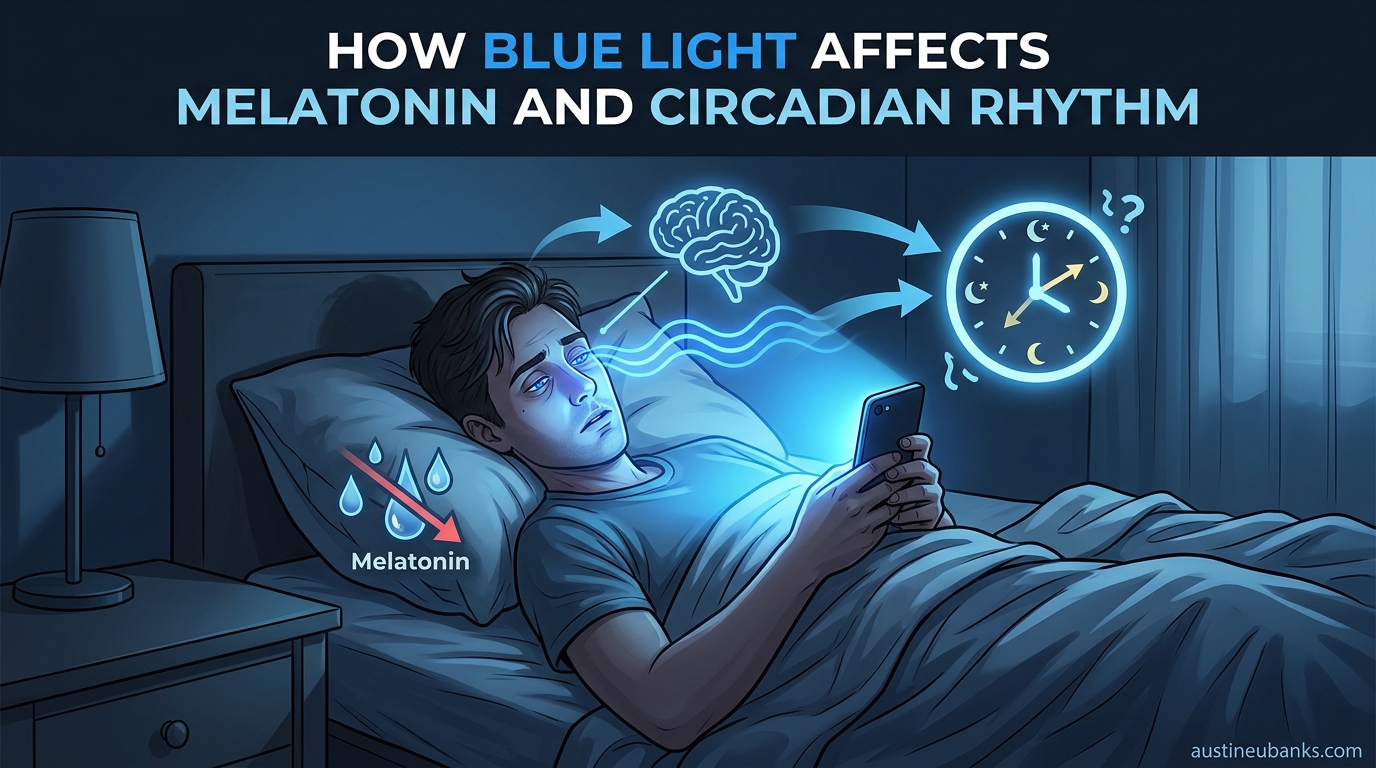
Blue light is a high-energy wavelength of visible light (roughly 400 to 490 nanometers) that has the single strongest impact on your body’s melatonin production and circadian rhythm. While all visible light influences your internal clock to some degree, research from Harvard Medical School found that blue light suppresses melatonin for about twice as long as green light and shifts circadian rhythms by roughly twice as much.
If you have ever scrolled through your phone in bed and found yourself wide awake an hour later, you have experienced this mechanism firsthand. Understanding how blue light affects melatonin and your circadian rhythm is not just academic trivia. It is one of the most practical things you can learn to improve your sleep quality, energy levels, and long-term health.
In this guide, I will walk you through the science of blue light, melatonin, and circadian rhythms in plain language. You will learn exactly what happens in your brain when blue light hits your eyes, which devices and light sources are the biggest culprits, and what research from institutions like Harvard and the CDC actually says. I will also share practical, proven strategies to protect yourself without giving up technology entirely.
Table of Contents
What Is Blue Light?
Blue light sits on the visible light spectrum between roughly 400 and 490 nanometers in wavelength. It is one of the shortest, highest-energy wavelengths that the human eye can detect. This is important because shorter wavelengths carry more energy, and that energy is exactly what makes blue light so biologically active.
Not all blue light is artificial or harmful. The single biggest source of blue light in your life is the sun. Natural sunlight contains the full spectrum of visible light, including significant amounts of blue wavelengths. During the day, this is exactly what your body needs. Blue light from the sun helps you feel alert, boosts your mood, and keeps your internal clock properly calibrated.
The problem arises with artificial blue light sources, particularly when you are exposed to them in the evening and at night. LED lights, fluorescent bulbs, television screens, smartphones, tablets, and computer monitors all emit concentrated blue wavelengths. Unlike sunlight, these sources hit you at times when your body is trying to wind down and prepare for sleep.
Here is what makes blue light unique compared to other colors on the spectrum. Your eyes contain special light-sensitive cells called intrinsically photosensitive retinal ganglion cells (ipRGCs). These cells contain a light-sensitive protein called melanopsin, which happens to be most sensitive to blue wavelengths around 480 nanometers. When melanopsin detects blue light, it sends powerful signals to the part of your brain that controls your sleep-wake cycle. No other wavelength triggers this response as strongly.
Melatonin and Your Circadian Rhythm Explained
To understand how blue light affects melatonin and your circadian rhythm, you first need to understand what each of these things does on its own.
What Is Melatonin?
Melatonin is a hormone produced by your pineal gland, a small pea-shaped structure deep in the center of your brain. Often called the “sleep hormone” or “hormone of darkness,” melatonin does not actually put you to sleep. Instead, it acts as a chemical messenger that tells your body it is nighttime and time to prepare for rest.
Melatonin production follows a predictable daily pattern. Levels stay very low during daylight hours. As evening approaches and light fades, your pineal gland begins ramping up melatonin production, typically starting around two hours before your usual sleep time. Peak melatonin levels usually occur between 2:00 AM and 4:00 AM, then gradually decline as morning approaches.
This is the key point: melatonin production is directly controlled by light exposure. When your eyes detect light, especially blue light, melatonin production is suppressed. When light fades, melatonin rises. This is why light timing matters so much for sleep quality.
What Is Your Circadian Rhythm?
Your circadian rhythm is your body’s internal 24-hour clock. It is a master biological timing system that regulates not just sleep, but also hormone release, body temperature, digestion, immune function, and even cell repair cycles. Nearly every system in your body follows circadian patterns.
The command center for this entire system is a tiny cluster of about 20,000 neurons in your hypothalamus called the suprachiasmatic nucleus, or SCN. The SCN acts as your master clock, coordinating all the smaller biological clocks throughout your body. Think of it as the conductor of an orchestra, keeping every section playing in rhythm.
The SCN relies primarily on light signals from your eyes to stay synchronized with the outside world. When light enters your eyes, those specialized ipRGC cells I mentioned earlier send signals directly to the SCN through a pathway called the retinohypothalamic tract. The SCN then adjusts your biological clock based on this light information.
How Melatonin and Circadian Rhythm Work Together
Here is how the system connects. Your eyes detect light and send signals to the SCN. The SCN then communicates with the pineal gland to either increase or decrease melatonin production. When blue light hits your eyes in the evening, the SCN tells the pineal gland to hold off on melatonin. Your body stays in “daytime mode” even though it is dark outside.
This is why the timing of light exposure matters as much as the amount. Blue light at 2:00 PM is healthy and necessary. Blue light at 10:00 PM is the same wavelength doing the same thing to the same cells, but now it is actively working against your body’s natural rhythm.
How Blue Light Affects Melatonin and Your Circadian Rhythm
Now let me get into the specifics of how blue light affects melatonin and your circadian rhythm. The mechanism is well-documented and involves a clear chain of events in your nervous system.
When blue light (particularly wavelengths around 480 nanometers) enters your eye, it activates the melanopsin in your ipRGCs. These cells fire signals directly to your SCN. The SCN interprets this as a signal that it is daytime. It then suppresses the signal that normally tells your pineal gland to produce melatonin. The result is that melatonin production drops or fails to start when it should.
The most cited piece of research on this topic comes from Harvard Medical School. Researchers compared the effects of 6.5 hours of blue light exposure versus 6.5 hours of green light exposure at similar brightness levels. The blue light suppressed melatonin for about twice as long as the green light. It also shifted circadian rhythms by approximately twice as much. This study is frequently referenced by the CDC, Sleep Foundation, and other health authorities because it demonstrates that blue wavelengths are uniquely disruptive compared to other colors at equal intensity.
A study published in the Journal of Applied Physiology further confirmed these findings. Researchers found that even relatively dim blue light exposure in the evening could shift circadian rhythms significantly. This means you do not need to be staring at a bright screen for the effect to kick in. Ambient blue light from LED bulbs or a television across the room can also impact melatonin production.
One question that comes up frequently on forums like Reddit’s r/sleep is whether it is the light itself or the mental stimulation from content that keeps people awake. Both play a role, but they work through different mechanisms. Mental stimulation from engaging content activates your sympathetic nervous system, increasing alertness through arousal and interest. Blue light works through a separate, purely biological pathway involving melanopsin and melatonin suppression. Studies have shown that blue light alone, without any engaging content, can delay sleep onset and reduce sleep quality.
How Circadian Rhythm Disruption Happens
When blue light suppresses melatonin in the evening, the consequences go beyond just taking longer to fall asleep. You are fundamentally shifting your circadian rhythm, and that shift creates a cascade of effects.
The most immediate effect is delayed sleep onset. With melatonin suppressed, your body does not receive the chemical signal to start winding down. You may lie in bed feeling alert even though you are physically tired. Many people describe this as feeling “tired but wired.” Your muscles and mind feel fatigued, but your nervous system remains in a state of alertness because the melatonin signal never arrived at full strength.
Beyond delayed onset, blue light exposure in the evening causes what sleep researchers call a “phase delay.” This means your entire circadian rhythm shifts later. If you typically get sleepy at 10:00 PM, heavy evening blue light exposure might push that to 11:30 PM or later. The problem compounds because your alarm clock does not shift along with your rhythm. You fall asleep later but wake up at the same time, which means you get less sleep overall.
Reduced sleep quality is another documented effect. Even when people exposed to evening blue light do fall asleep, studies show they spend less time in restorative deep sleep stages. They also report feeling less refreshed the next morning, even after the same number of hours in bed.
Long-Term Health Consequences of Chronic Disruption
Occasional blue light exposure at night is not going to ruin your health. The concern is chronic, repeated disruption of your circadian rhythm over months and years. Research has linked long-term circadian misalignment to several health issues.
Shift workers, who are routinely exposed to light at night, have been studied extensively. They show higher rates of metabolic syndrome, cardiovascular problems, and certain cancers compared to day workers. While shift work involves more than just light exposure, researchers believe circadian disruption is a significant contributing factor.
Chronic poor sleep has also been linked to weakened immune function, impaired memory consolidation, weight gain, increased inflammation, and mood disturbances including anxiety and depression. When blue light is a primary driver of your poor sleep, addressing it can have outsized benefits for your overall wellbeing.
Why Some People Seem Immune
If you have ever wondered why your partner falls asleep instantly with the TV on while you lie awake, you are not alone. This comes up constantly in sleep forums. Individual sensitivity to blue light varies significantly. Some people have more sensitive melanopsin receptors or more reactive melatonin systems. Age also plays a role, as melatonin production naturally decreases as you get older. Genetics, existing sleep debt, and overall sleep hygiene all influence how strongly blue light affects you personally.
It is also worth noting that people who fall asleep with the TV on may be getting lower-quality sleep even if they fall asleep quickly. The blue light from the screen can still suppress melatonin during sleep, reducing time spent in deep, restorative sleep stages.
The Surprising Benefits of Daytime Blue Light
Most articles about blue light focus entirely on the negative. But blue light is not inherently bad. In fact, it is essential for your health when you get it at the right time. This is one of the biggest content gaps I noticed when reviewing what other articles cover, so let me set the record straight.
Daytime blue light exposure boosts alertness, improves reaction times, elevates mood, and supports cognitive performance. This is why light therapy boxes, which emit concentrated blue-enriched white light, are an evidence-based treatment for seasonal affective disorder and certain types of depression. The same biological mechanism that makes evening blue light harmful makes daytime blue light beneficial.
The CDC and multiple sleep research groups recommend getting bright light exposure, ideally from actual sunlight, within the first hour of waking up. This helps lock in your circadian rhythm and reinforces a healthy sleep-wake cycle. If you struggle with grogginess in the morning or have trouble falling asleep at night, getting more blue light early in the day can actually help both problems.
The research from PMC on blue light and human rhythm notes something fascinating: daytime blue light exposure has an acute preventive impact on nighttime light-induced melatonin suppression. In simpler terms, getting plenty of bright light during the day makes your body more resilient to the effects of evening blue light. Your circadian system becomes more robust.
The takeaway is that blue light is about timing, not avoidance. You want maximum blue light exposure during the day and minimum blue light exposure in the two to three hours before bed.
Common Sources of Blue Light Exposure
To manage your blue light exposure effectively, you need to know where it comes from. Here are the most significant sources, ranked roughly by their potential to disrupt your sleep.
- Smartphones and tablets: These are the most problematic because people hold them close to their faces, which increases the intensity of light reaching the retina. They are also the most commonly used devices in bed.
- Computer monitors and laptops: Especially when used for work or entertainment in the evening. Larger screens emit more total blue light, though distance reduces intensity.
- LED light bulbs: Most modern LED bulbs emit a significant amount of blue wavelengths. Cool white LEDs are particularly high in blue light output.
- Television screens: While usually viewed from a distance, the large screen size and prolonged viewing sessions mean TVs still contribute meaningfully to evening blue light exposure.
- Fluorescent lights: Common in offices, kitchens, and commercial spaces. They emit moderate levels of blue light.
- E-readers with backlit screens: Unlike original Kindle models, modern backlit e-readers emit blue light that can affect melatonin when used before bed.
- Gaming consoles and monitors: Gaming setups often feature bright, high-refresh-rate displays with high blue light output, and gaming sessions frequently extend late into the night.
- Smart home devices and LED indicators: Small LED lights on routers, smoke detectors, and smart devices may seem insignificant, but in a dark bedroom, even small light sources can register with your ipRGCs.
- Sunlight: The original and most powerful source. Beneficial during the day but obviously absent at night, which is the whole point.
A common question from forums is which device emits the most blue light. The answer depends on brightness settings, distance from the eyes, and screen technology. However, smartphones are generally the biggest problem because of how close they are held to the face and how frequently they are used in bed. A phone at 10 inches from your face delivers far more blue light to your retina than a TV across the room.
Blue Light and Children: What Parents Should Know
This is an area where most consumer articles fall short, but it matters enormously. Children’s eyes are more sensitive to blue light than adult eyes. Their lenses are clearer and let more blue light through to the retina. Research suggests that a child’s melatonin is suppressed more significantly by the same amount of light compared to an adult’s.
This has real implications. Kids who use tablets, phones, or watch TV in the evening may experience even more sleep disruption than adults doing the same thing. Given that children need more sleep than adults for proper development, learning consolidation, and emotional regulation, the stakes are higher.
The American Academy of Pediatrics recommends avoiding screen media for at least one hour before bedtime for children of all ages. For younger children, they suggest even longer screen-free periods. If screens must be used in the evening, enabling blue light filters, lowering brightness, and keeping devices at least an arm’s length away can help reduce the impact.
Parents on forums like r/sleep frequently report dramatic improvements in their children’s sleep when they implement a strict screen cutoff two hours before bed. Many note that bedtime resistance drops and morning wake-ups become smoother within just a few days of consistent implementation.
Practical Ways to Protect Yourself From Blue Light at Night
Now for the part you probably came here for. Here are proven, practical strategies to reduce your blue light exposure in the evening without moving to a cabin in the woods. I have organized these from easiest to implement to most impactful.
1. Use Built-in Blue Light Filters on Your Devices
Both iOS and Android include built-in blue light reduction features (Night Shift on iOS, Eye Comfort Shield on Android). Most computers have similar options (Night Light on Windows, Night Shift on Mac). These features warm the color temperature of your screen, reducing blue wavelengths automatically on a schedule. Set them to activate two to three hours before your target bedtime. This is the lowest-effort change with meaningful impact.
2. Install f.lux or Similar Software on Computers
f.lux is a free application that adjusts your computer screen’s color temperature based on the time of day in your location. It is more customizable than built-in options and works across Windows, Mac, and Linux. Many users on productivity forums swear by it for evening work sessions.
3. Switch to Warm LED Bulbs in the Evening
Replace cool white LED bulbs in your bedroom, living room, and any spaces you use in the evening with warm white or amber bulbs (labeled 2700K or lower). Smart bulbs like Philips Hue or Wyze let you schedule color temperature changes automatically. The difference in ambiance is immediately noticeable, and your melatonin production will thank you.
4. Consider Blue Light Blocking Glasses
This is where forum opinions get heated. Some users swear by blue light blocking glasses. Others dismiss them as placebo. The research is mixed but leans positive for amber-tinted glasses. A 2021 meta-analysis found that blue light filtering glasses can improve sleep quality in people with sleep problems, particularly when worn in the hours before bed. Clear-lens blue light glasses, however, block very little blue light and have minimal evidence supporting their use.
If you try blue light glasses, look for amber or orange-tinted lenses rather than clear ones. The tint is what actually filters meaningful amounts of blue light. Yes, they look a bit unusual, but the data supports them more than the fashionable clear versions.
5. Implement a Screen Cutoff One to Two Hours Before Bed
This is the single most effective strategy, and also the hardest for most people to stick with. Forum data consistently shows that users who implement a strict one-hour device cutoff report the biggest sleep improvements. Two hours is even better but requires more lifestyle adjustment.
Replace screen time with reading a physical book, listening to an audiobook or podcast, light stretching, journaling, or conversation. The combination of removing blue light and reducing cognitive stimulation creates ideal conditions for natural melatonin release.
6. Dim Ambient Lights in the Evening
Even if you eliminate all screens, bright overhead LED lights can still suppress melatonin. Lower the overall brightness in your home as bedtime approaches. Use lamps instead of overhead lights. Consider installing dimmer switches if you own your home.
7. Use Your Bedroom for Sleep Only
Remove TVs, computers, and other blue light sources from your bedroom. If you use your phone as an alarm, place it across the room so you are not tempted to check it in bed. A dark, device-free bedroom reinforces the association between that space and sleep.
8. Maximize Morning Light Exposure
Remember the research showing that daytime blue light makes you more resilient to evening exposure? Get outside within an hour of waking up. Even 10 to 15 minutes of natural sunlight helps calibrate your circadian rhythm. If natural light is not available, a light therapy box can serve as a substitute during darker months.
FAQs
Does blue light affect melatonin secretion?
Yes, blue light has been proven to suppress melatonin secretion. When blue wavelengths (around 480nm) hit your eyes, they activate melanopsin-containing cells that signal your brain to stop producing melatonin. Harvard research showed blue light suppresses melatonin for about twice as long as green light at equal brightness.
Is it proven that blue light disrupts sleep?
Yes, multiple peer-reviewed studies have confirmed that evening blue light exposure delays sleep onset, reduces sleep quality, and shifts circadian rhythms. Research from Harvard, the CDC, and studies published in the Journal of Applied Physiology all document measurable sleep disruption from blue light exposure before bed.
Does blocking blue light actually help sleep?
Research suggests blocking blue light in the evening can improve sleep quality, particularly with amber-tinted glasses or screen filters. A 2021 meta-analysis found sleep improvements in people using blue light filtering glasses. The most effective approach combines blue light reduction with a screen cutoff one to two hours before bed.
How long does blue light suppress melatonin?
According to Harvard research comparing 6.5 hours of blue light versus green light exposure, blue light suppressed melatonin for approximately twice as long as green light. The suppressive effect continues for as long as exposure continues, and it can take time for melatonin levels to recover after exposure ends. This is why experts recommend avoiding blue light for one to two hours before bedtime.
Conclusion
Understanding how blue light affects melatonin and your circadian rhythm gives you one of the most powerful, free tools available for improving your sleep. The science is clear: blue wavelengths suppress melatonin more than any other color of light, and Harvard research shows this suppression lasts roughly twice as long as with green light.
The key insight is that blue light is not the enemy. Timing is. Maximize your blue light exposure during the day with sunlight, and minimize it in the two to three hours before bed. Start with the easiest changes: enable night mode on your devices tonight, switch to warmer bulbs in your bedroom, and try a one-hour screen cutoff before bed. Your sleep will improve, and you will understand exactly why.