
Stress hits hard and fast. Your heart races, your chest tightens, and your mind spirals into worst-case scenarios. I have been there more times than I can count, and finding a technique that actually works in the moment feels like searching for a needle in a haystack. That is exactly why the physiological sigh has caught so much attention in 2026.
The physiological sigh is a simple breathing technique that takes under ten seconds and can shift your nervous system out of fight-or-flight mode almost instantly. In this article, I will walk you through exactly what the physiological sigh is, how it works in your body, how to perform it step by step, and what the research says about its benefits.
Whether you deal with daily workplace stress, occasional anxiety spikes, or full-blown panic episodes, this technique is worth understanding. It is free, requires no equipment, and you can do it anywhere without anyone noticing. Let me break down what the physiological sigh is and how it resets stress fast so you can start using it today.
Table of Contents
What Is the Physiological Sigh?
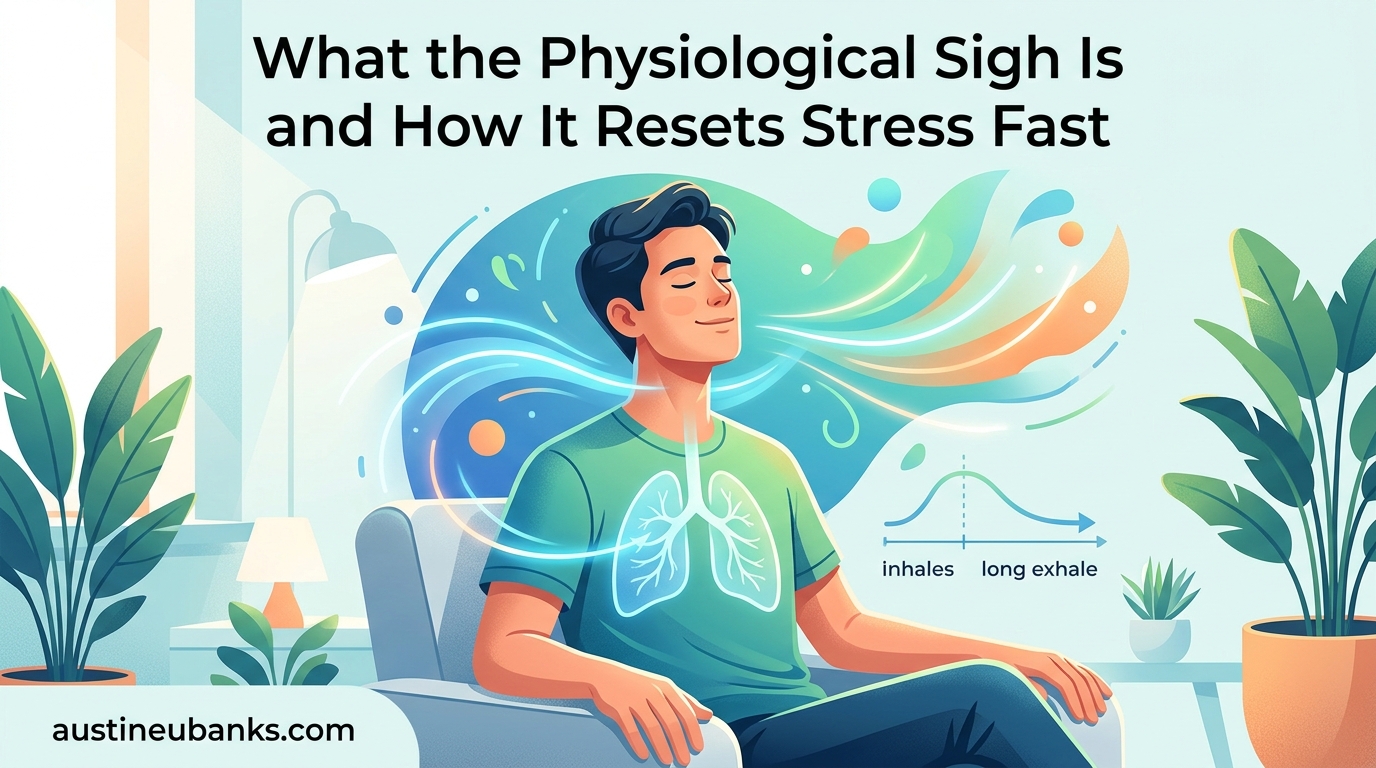
The physiological sigh is a breathing pattern consisting of a double inhale through the nose followed by a long, slow exhale through the mouth. The first inhale is deep, the second is a short top-off breath that fully expands the lungs, and the exhale is extended and controlled. That is the entire technique in a nutshell.
What makes the physiological sigh different from regular deep breathing is that double inhale. Your body actually does this naturally. Think about the last time you felt relieved or finished something stressful. You probably let out a big sigh without thinking about it. That spontaneous sigh is your nervous system hitting a reset button, and the physiological sigh technique simply replicates that process on purpose.
The technique was largely brought into the public eye by Dr. Andrew Huberman, a neurobiology professor at Stanford University. Through his podcast, he shared research showing that this specific breathing pattern is one of the fastest ways to reduce stress in real time. His work built on decades of research into how breathing affects the autonomic nervous system.
Your body already produces involuntary physiological sighs throughout the day. This happens hundreds of times per day without you ever noticing. These natural sighs serve a critical function. They reopen tiny air sacs in your lungs called alveoli that gradually collapse during normal breathing. By consciously practicing the physiological sigh, you tap into this built-in mechanism and amplify its calming effects.
Researchers have studied sighing extensively. A comprehensive review published in the National Institutes of Health literature highlighted that sighs play a vital role in controlling lung compliance by preventing alveolar collapse. When you harness this mechanism intentionally, you get both the physical benefit of better lung function and the neurological benefit of reduced stress.
How the Physiological Sigh Works in Your Body
To understand why the physiological sigh is so effective, you need to understand what happens in your body when stress takes over. When you feel threatened or overwhelmed, your sympathetic nervous system kicks into gear. This is the fight-or-flight response. Your heart rate increases, your breathing becomes shallow and rapid, and your body floods with stress hormones like cortisol and adrenaline.
The problem is that shallow, rapid breathing keeps you locked in that stressed state. You are taking in oxygen but not fully releasing carbon dioxide. CO2 levels in your blood actually rise, which can make you feel more anxious. It is a feedback loop that feeds on itself.
The physiological sigh breaks that loop through three specific mechanisms.
First, the double inhale reopens collapsed alveoli. During stress, your breathing is shallow, so many of the millions of tiny air sacs in your lungs stay closed. The first deep inhale opens most of them, and the second shorter inhale pops open the rest. This dramatically improves gas exchange in your lungs.
Second, the long exhale removes excess carbon dioxide. When you extend your exhale longer than your inhale, you push out more CO2 than you took in. This rebalances your blood chemistry and signals to your brain that the threat has passed. Your CO2 levels normalize, and that jittery, anxious feeling starts to fade.
Third, the extended exhale activates your parasympathetic nervous system. This is the rest-and-digest branch of your autonomic nervous system. Long exhales stimulate the vagus nerve, which runs from your brainstem down through your chest and abdomen. When the vagus nerve fires, it releases acetylcholine, a neurotransmitter that slows your heart rate and calms your body.
This is where the concept of vagal tone comes in. Higher vagal tone means your body is better at shifting from stress to calm. Research shows that breathing techniques with extended exhalations improve heart rate variability, or HRV, which is a key marker of cardiovascular health and stress resilience. The physiological sigh is essentially a shortcut to activating this calming pathway.
What makes this technique unique is its speed. Unlike meditation, which can take weeks of practice to show results, the physiological sigh can lower your stress within seconds. That is because it directly manipulates the mechanical and chemical signals your brain uses to gauge whether you are safe or in danger.
Your diaphragm also plays a key role. During the double inhale, your diaphragm descends fully, massaging your internal organs and stimulating the vagus nerve from below. This mechanical stimulation adds another layer of parasympathetic activation on top of the chemical and neural effects.
How to Do the Physiological Sigh: Step-by-Step
Learning how to do the physiological sigh takes about two minutes. Once you understand the pattern, it becomes second nature. Here is the exact step-by-step process I use.
Step 1: Prepare your posture. Sit or stand up straight. Relax your shoulders. You can keep your eyes open or closed, whichever feels more comfortable in the moment.
Step 2: Take your first inhale through your nose. Breathe in deeply, filling your lungs as much as possible. This should feel like a full, satisfying breath that expands your belly and chest.
Step 3: Take a second short inhale through your nose. At the top of your first inhale, take one more quick, sharp sip of air. This second inhale does not need to be huge. Think of it as topping off the tank. It should be about a quarter to a third the size of your first inhale.
Step 4: Exhale slowly through your mouth. Release all the air in one long, controlled exhale. Let it out slowly through loosely pursed lips or a slightly open mouth. The exhale should take longer than both inhales combined. Empty your lungs completely.
Step 5: Repeat one to three times. One physiological sigh can make a difference, but repeating it two or three times amplifies the calming effect. Most people feel a noticeable shift after three rounds.
That is the entire technique. The whole sequence takes about five to ten seconds per round. You can do it at your desk, in your car before a meeting, in a bathroom stall, or even while walking. Nobody needs to know you are doing it.
A quick tip: focus on making the exhale as long and relaxed as possible. The magic of this technique lives in that extended exhalation. If you get the inhales right but rush the exhale, you will not get the full benefit.
Physiological Sigh Benefits Backed by Science
The physiological sigh is not just another wellness trend. It has real scientific evidence behind it. The most significant research comes from a 2023 Stanford University study published in Cell Reports Medicine, led by Dr. Andrew Huberman and Dr. David Spiegel.
In that study, researchers recruited over 100 participants and randomly assigned them to one of four groups. One group practiced cyclic sighing, which is repeated physiological sighs, for five minutes a day. Another group did box breathing. A third practiced cyclic hyperventilation. The fourth group practiced mindfulness meditation.
After one month, the cyclic sighing group showed the greatest reduction in anxiety and the largest improvement in mood compared to all other groups. They also reported benefits that lasted longer throughout the day than any other technique tested. Five minutes a day was enough to produce measurable changes.
Here are the specific benefits research and clinical experience support.
Rapid anxiety reduction. The Stanford study showed that cyclic sighing lowered anxiety more effectively than mindfulness meditation. This matters because meditation takes practice and time, while the physiological sigh works almost immediately.
Improved mood and positive affect. Participants who practiced physiological sighing reported feeling more positive emotions throughout the day. The technique does not just reduce negative feelings. It actively boosts positive ones.
Lower stress hormone levels. By activating the parasympathetic nervous system, the physiological sigh helps reduce circulating cortisol and adrenaline. Over time, regular practice can help keep your baseline stress levels lower.
Better sleep onset. Many people use the physiological sigh as part of their wind-down routine. The calming effect on the nervous system makes it easier to transition into sleep, especially for those whose minds race at bedtime.
Improved heart rate variability. The extended exhale stimulates the vagus nerve, which over time can improve your HRV. Higher HRV is associated with better cardiovascular health, greater emotional resilience, and improved recovery from stress.
No equipment or cost. Unlike apps, supplements, or therapy, the physiological sigh is completely free and always available. You carry the tool with you everywhere you go.
It is worth noting that individual results vary. Forum discussions and user reports show that most people feel immediate effects, but some need several sessions before noticing a shift. Consistency matters. If you try it once and feel nothing, try it again in a different moment of stress.
When to Use the Physiological Sigh for Real-Time Stress Relief
One of the biggest advantages of the physiological sigh is that you can use it in real time, right in the middle of a stressful situation. You do not need to stop what you are doing, find a quiet room, or close your eyes for ten minutes. Here are the scenarios where it shines.
Before a high-pressure meeting or presentation. Take three rounds of the physiological sigh before you walk into the room. You will feel your heart rate slow and your mind clear.
During an anxiety spike or panic episode. When you feel panic building, the physiological sigh can interrupt the escalation. Focus on the long exhale to bring your nervous system back to baseline.
At work when overwhelmed. Between tasks or during a brief pause at your desk, do a few rounds. It takes seconds and resets your mental state without anyone noticing.
Before sleep. Do five rounds while lying in bed to help your body transition into rest mode. The extended exhales signal safety and calm to your nervous system.
In traffic or while commuting. Road stress is real. A few physiological sighs at a red light can keep road rage and tension at bay.
After receiving difficult news. When emotions surge, the technique gives you a physical anchor to steady yourself before responding.
If you find that the technique is not working, check your form. The most common mistake is skipping the second inhale or rushing the exhale. Make sure you are taking that second short sip of air at the top, and make your exhale longer than you think it needs to be.
Also consider timing. The physiological sigh works best when used proactively before stress peaks, not just reactively. Building a habit of doing a few rounds at set times during the day can keep your baseline anxiety lower overall.
Physiological Sigh vs Other Breathing Techniques
You might wonder how the physiological sigh compares to other popular breathing methods. Box breathing involves inhaling, holding, exhaling, and holding again for equal counts. It is great for focus and is used by military personnel, but it requires more concentration and time. Deep belly breathing is effective for relaxation but does not include the double inhale that reopens alveoli. The physiological sigh is faster, simpler, and works specifically for acute stress relief when you need it most.
Another common question is whether cyclic sighing, which is the repeated practice version, is better than single sighs. Cyclic sighing for five minutes a day builds cumulative benefits, while individual sighs provide on-demand relief. Both have their place in a well-rounded stress management routine.
Frequently Asked Questions
What is a physiological sigh for stress?
A physiological sigh is a breathing technique that uses a double inhale through the nose followed by a long, slow exhale through your mouth. It activates the parasympathetic nervous system, reducing stress and anxiety within seconds.
How to reduce stress immediately?
The fastest way to reduce stress immediately is to perform one to three rounds of the physiological sigh. Take a deep inhale through your nose, a second short inhale at the top, then exhale slowly and fully through your mouth. The extended exhale triggers your vagus nerve and calms your nervous system within seconds.
Does the physiological sigh actually work?
Yes. A 2023 Stanford University study published in Cell Reports Medicine found that five minutes of cyclic sighing per day reduced anxiety and improved mood more effectively than mindfulness meditation over a one-month period. Individual results vary, but the technique has strong scientific backing.
How many times per day should I do the physiological sigh?
You can use single physiological sighs whenever you feel stressed throughout the day. For cumulative benefits, Stanford researchers recommend practicing cyclic sighing for about five minutes daily, which equals roughly 25 to 30 rounds.
What exercises release stress?
Several evidence-based exercises release stress, including the physiological sigh, box breathing, cyclic sighing, mindfulness meditation, and progressive muscle relaxation. Among these, the physiological sigh is the fastest for real-time relief because it directly activates the parasympathetic nervous system.
Conclusion
The physiological sigh is one of the simplest yet most effective stress management tools available. A double inhale and long exhale can shift your nervous system from panic to calm in seconds, and the science from Stanford backs it up. Now that you understand what the physiological sigh is and how it resets stress fast, the next step is simple. Try three rounds right now and see how your body responds. The more you practice, the more natural it becomes, and the better equipped you are to handle whatever stress comes your way in 2026.