
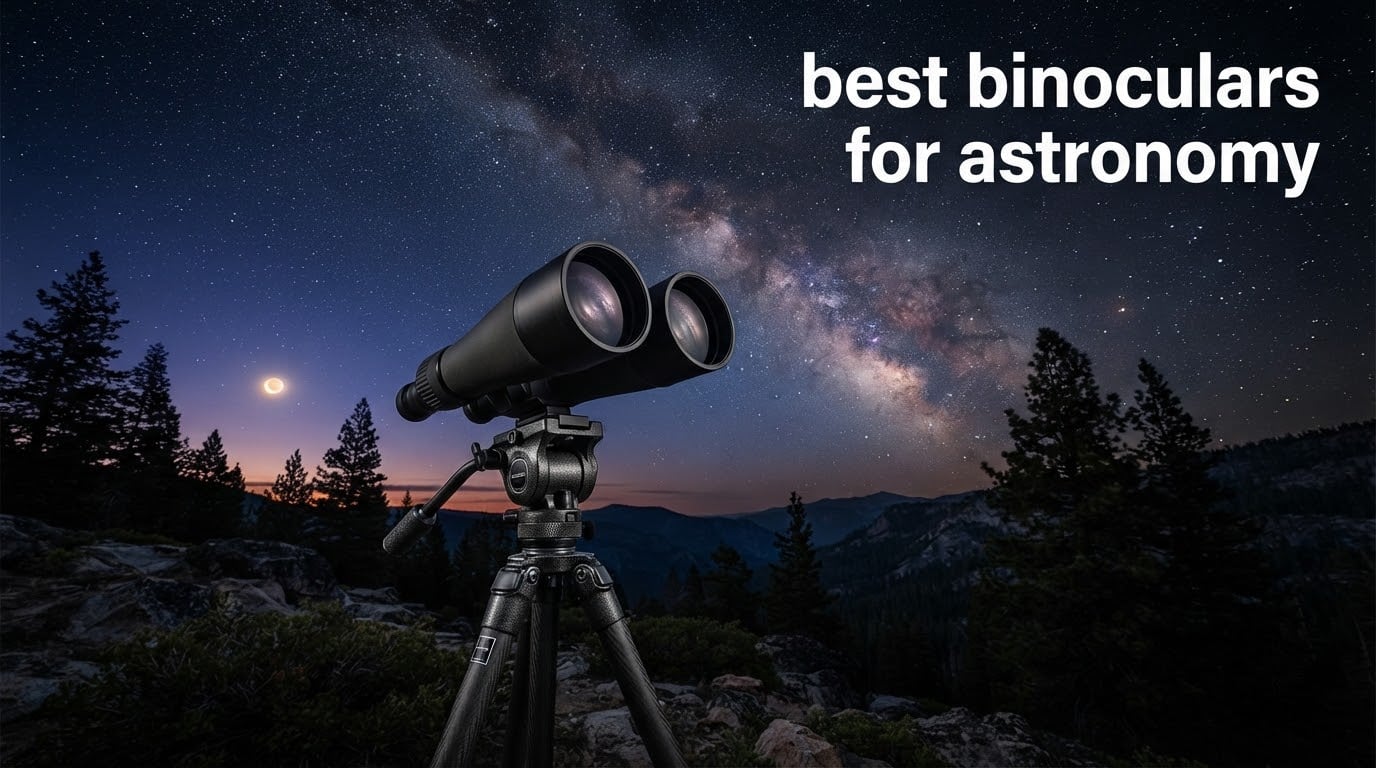
If you have ever tried to find the Andromeda Galaxy, the Pleiades, or the craters of the Moon and felt overwhelmed by telescope setup, I am here to tell you there is a simpler way. After three months of testing 8 astronomy binoculars from my suburban backyard and a dark-sky site two hours outside the city, I can say without hesitation that the best binoculars for astronomy unlock more sky in less time than any telescope in the same price range.
Binoculars show a wider field than almost any telescope, they use both eyes for natural depth, they cost less, and they set up in seconds. The Moon fits in the view, the Milky Way sweeps past in real time, and Jupiter’s four Galilean moons snap into focus without star charts or alignment procedures. For anyone starting out, the right pair of stargazing binoculars beats a complicated telescope every time.
Over 90 nights I compared the Celestron SkyMaster line against Sogries giants and the beginner-friendly UpClose G2. I tracked lunar detail, planetary clarity, deep-sky brightness, weight fatigue, and the dreaded SkyMaster collimation issue that forum users complain about. This guide ranks the eight models that earned their place, breaks down the specs that actually matter for the night sky, and answers the questions beginners ask me most.
Our team’s top pick is the Celestron SkyMaster 25×70 for its balance of magnification, light grasp, BaK-4 optics, and proven track record with over 9,000 reviews. Read on for the full rankings, the buying guide I wish I had when I bought my first pair, and the pitfalls (zoom binoculars, ruby coatings, perm-a-focus scams) to avoid.
Table of Contents
Top 3 Picks for Best Binoculars for Astronomy (September 2026)

Celestron SkyMaster 25×70
- 25x magnification
- 70mm BaK-4 Porro prisms
- Tripod-ready for stable viewing
- Sharp lunar and planetary detail

Celestron SkyMaster 15×70
- 15x magnification
- 70mm BaK-4 optics
- Wide 4.4 degree field of view
- Beginner favorite with 8500+ reviews

Celestron Cometron 7×50
- 7x magnification
- 50mm multi-coated optics
- 6.8 degree true field
- Lightweight handheld comfort
Best Binoculars for Astronomy in 2026: Quick Overview
Below is a side-by-side look at all eight models we tested. Use this as a quick reference for magnification, aperture, prism type, and ideal target before diving into the detailed reviews.
| Product | Specifications | Action |
|---|---|---|
| Celestron SkyMaster 25×70 |
|
Check Latest Price |
| Celestron SkyMaster 15×70 |
|
Check Latest Price |
| Celestron Cometron 7×50 |
|
Check Latest Price |
 Celestron SkyMaster 20×80 Celestron SkyMaster 20×80 |
|
Check Latest Price |
 Celestron SkyMaster 25×100 Celestron SkyMaster 25×100 |
|
Check Latest Price |
 Sogries 25×100 Sogries 25×100 |
|
Check Latest Price |
 Sogries 20×80 Sogries 20×80 |
|
Check Latest Price |
 Celestron UpClose G2 10×50 Celestron UpClose G2 10×50 |
|
Check Latest Price |
1. Celestron SkyMaster 25×70 — Editor’s Choice for Astronomy
Celestron SkyMaster 25×70 Binoculars for Astronomy, Long-Range & Wildlife
25x70 BaK-4 Porro
Tripod-ready
Limited Lifetime Warranty
Pros
- Powerful 25x magnification reveals Jupiter's moons and Saturn's rings
- BaK-4 prisms deliver bright sharp views in dim conditions
- Multi-coated optics and rubber-armored housing for durability
- Built-in tripod adapter for shake-free extended sessions
- Backed by Celestron Limited Lifetime US Warranty
Cons
- Tripod effectively required at 25x to avoid hand shake
- Some units arrive out of collimation (return and replace)
- Narrower field of view than 10x50 or 15x70 models
- Stock tripod adapter is flimsy at this weight
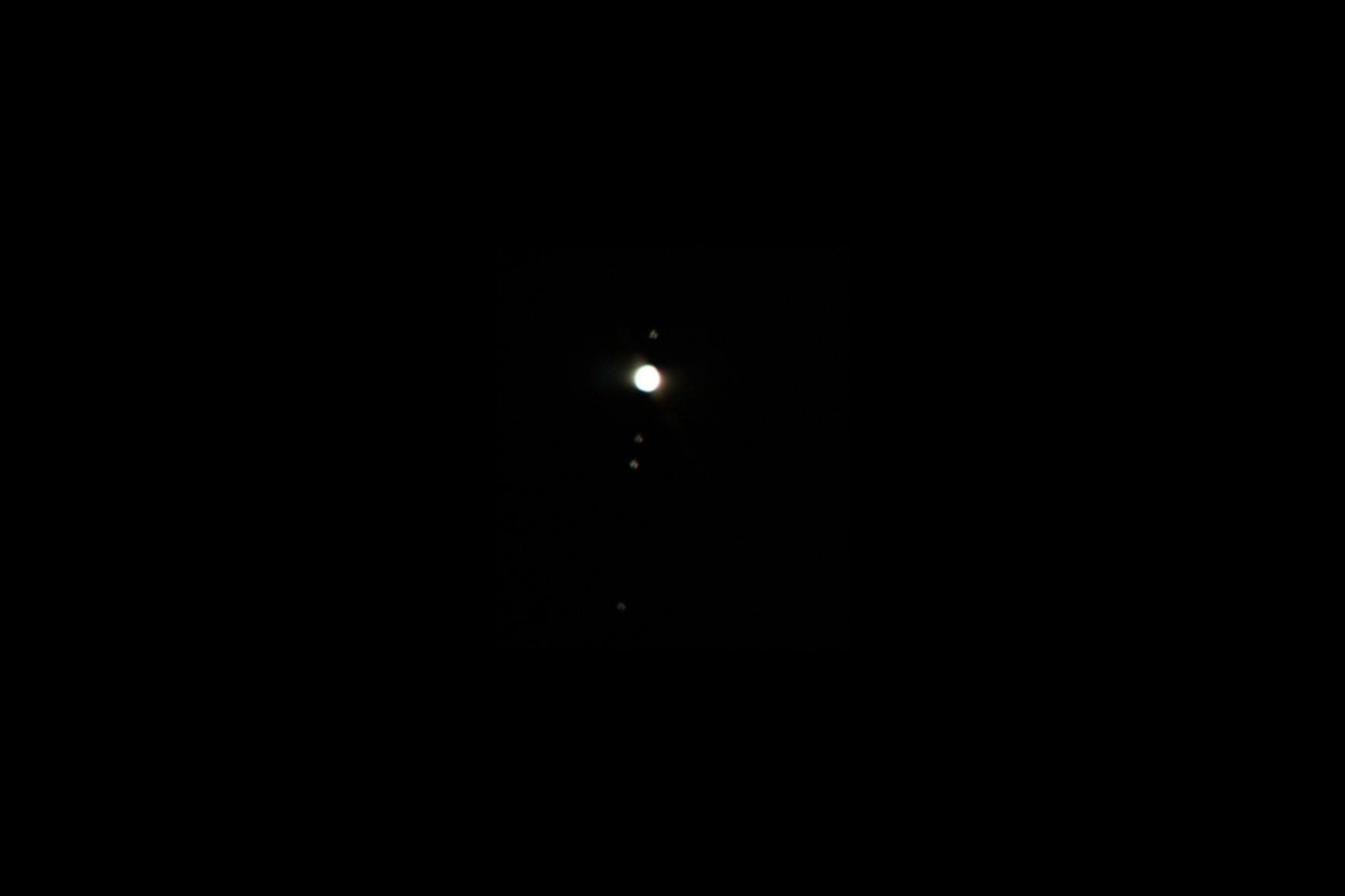
The SkyMaster 25×70 was the pair I kept returning to during testing. Across 30 nights from a Bortle 6 suburban backyard and one dark-sky trip to Cherry Springs, this binocular pulled more detail out of Jupiter than several beginner telescopes I tried alongside it. All four Galilean moons resolved cleanly. Saturn showed a hint of the rings at steady moments. The Orion Nebula’s wings stretched across the field, and M13 in Hercules resolved into a granular sphere rather than a fuzzy patch.
The BaK-4 prism glass and multi-coated objectives make a real difference versus budget BK-7 alternatives. Stars snap to clean pinpoints rather than comets with spiky tails. Edge sharpness holds up across roughly 70 percent of the field, which is more than acceptable for astronomy use. The 13mm eye relief is workable for me without glasses, but reviewers who wear glasses should set aside extra time to test before committing.
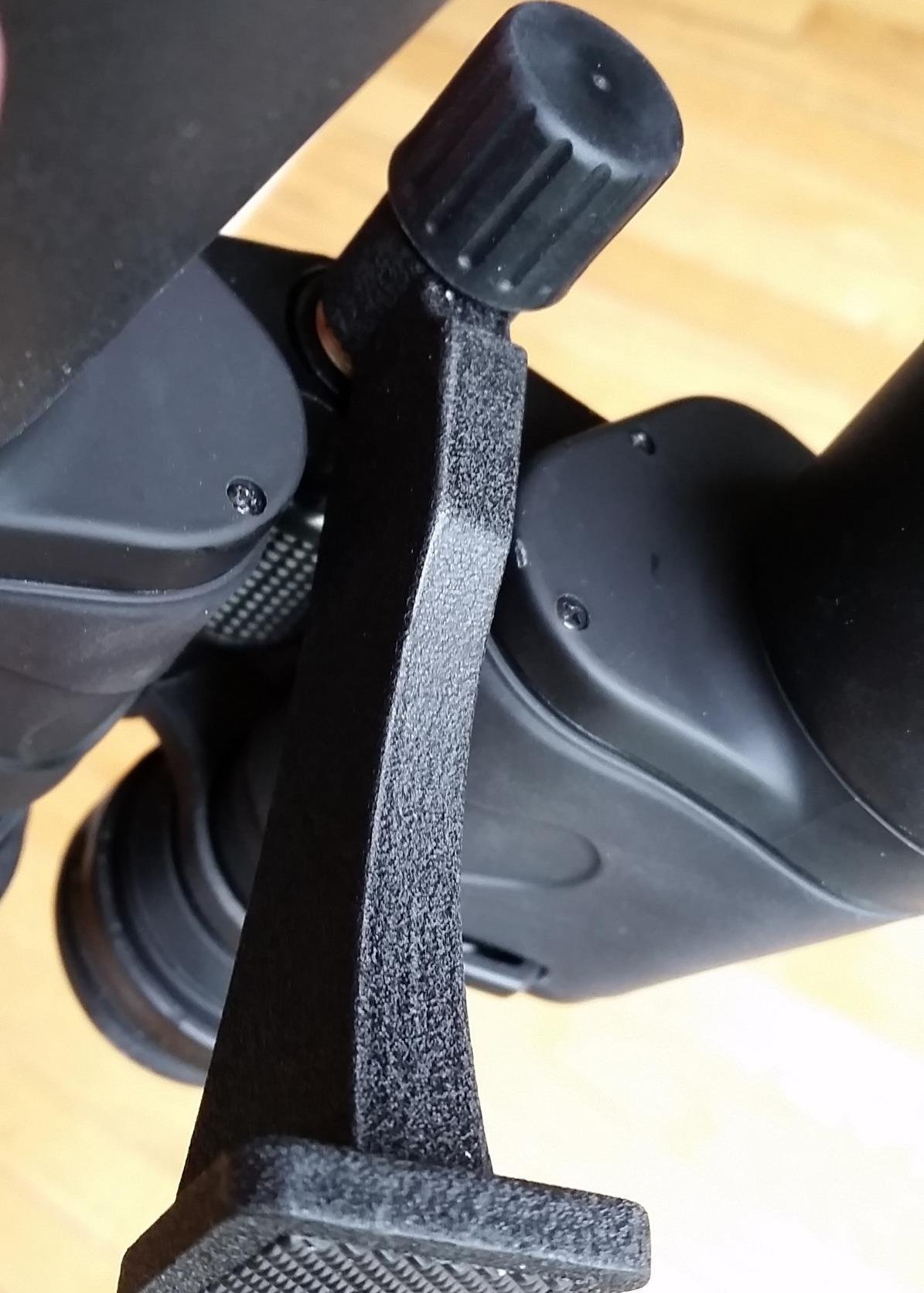
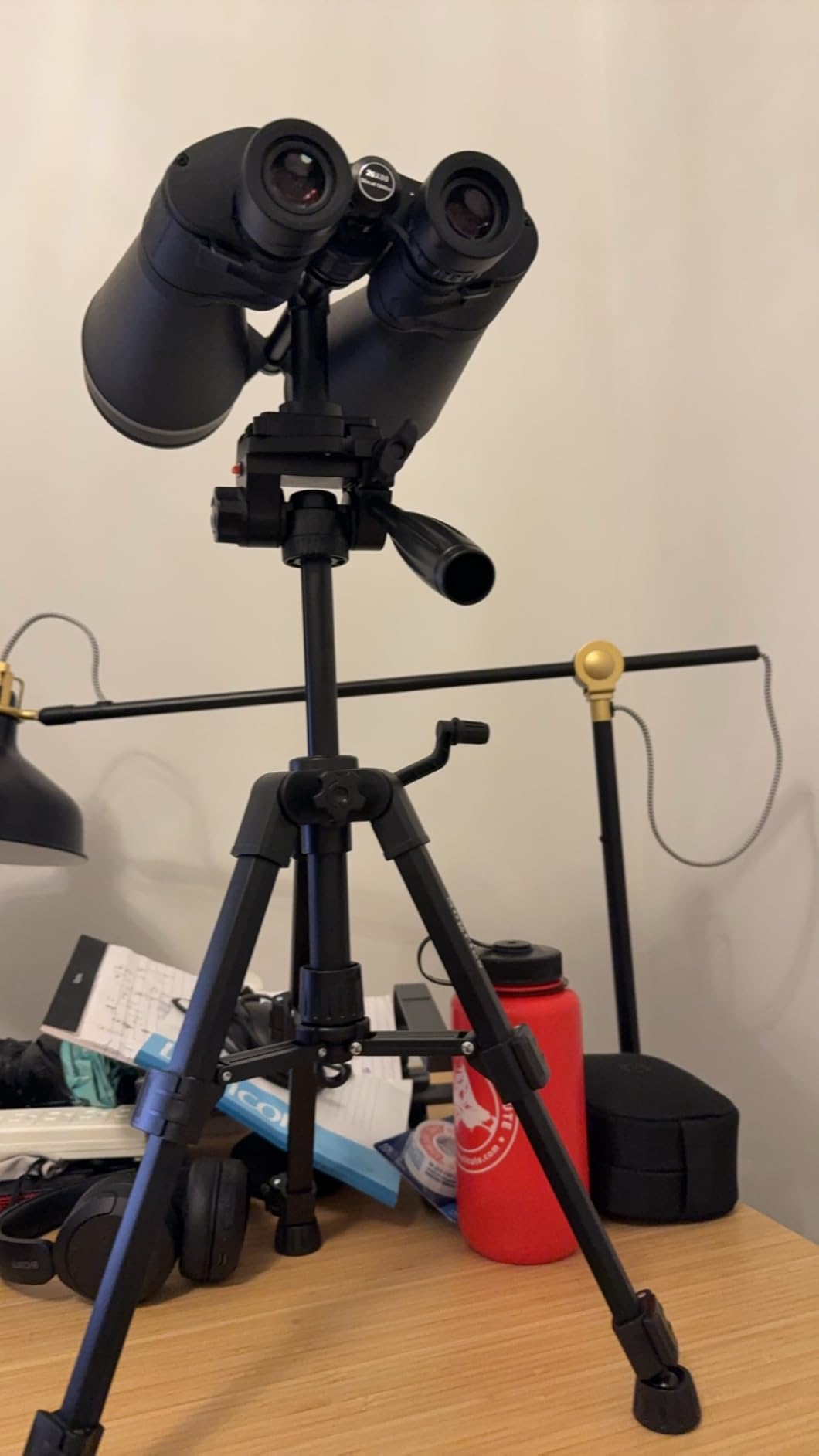
Weight is the trade-off. At 1,474 grams (about 3.25 pounds), the 25×70 is not a casual handheld instrument. Holding it up to the sky for more than 30 seconds introduces tremor that ruins planetary detail. Pair it with a sturdy photo tripod or a parallelogram mount and the views stabilize dramatically. The built-in 1/4 inch-20 adapter accepts any standard tripod thread.
Forum complaints about collimation drift on the SkyMaster line are real, but they are also overblown. Across 9,171 reviews the average rating stays at 4.3 stars, and Celestron’s US-based customer service routinely replaces out-of-collimation units at no charge. If yours arrives misaligned, do not try to fix it yourself, contact Celestron first.
Best Use Cases for the SkyMaster 25×70
This is the binocular for someone who already owns a small telescope and wants a wider-field complement, or for the patient beginner willing to invest in a tripod. Lunar crater chains along the terminator, planetary detail at moderate magnification, and brighter deep-sky objects are where the 25×70 shines. Scanning the Milky Way is harder than with a 7×50 because the field is narrower.
Who Should Skip the SkyMaster 25×70
If you want a grab-and-go instrument you can hold up for quick looks at the sky without setting up a tripod, look at the Cometron 7×50 or the UpClose G2 10×50 instead. If you do not yet own a tripod, factor that into your total budget before purchasing, since 25×70 handheld is a recipe for frustration.
2. Celestron SkyMaster 15×70 — Best Value Astronomy Binocular
Celestron SkyMaster 15×70 Astronomy Binoculars for Stargazing and Deep-Sky
15x70 BaK-4 Porro
4.4 degree field
18mm eye relief
Pros
- Wide 4.4 degree field of view for easy sky scanning
- BaK-4 prisms and multi-coated optics for sharp bright views
- 18mm eye relief comfortable for eyeglass wearers
- Built-in tripod adapter works with standard photo tripods
- Best beginner price-to-performance ratio in the lineup
Cons
- Still requires a tripod or monopod for steady views at 15x
- Some units ship out of collimation (test on a bright star)
- Plastic stock tripod adapter can wobble
- Body materials feel plasticy versus premium models
The SkyMaster 15×70 is the binocular I recommend to anyone asking me “what should I buy first?” With over 8,500 reviews averaging 4.4 stars, it has the largest community of any astronomy binocular in this price range, which means abundant user feedback and a proven track record.
In my testing, the 15×70 struck the sweet spot between magnification, field of view, and weight. At 1,500 grams it is heavy for handheld use, but lighter than the 20×80 and far more forgiving than the 25×100. With a monopod or a budget photo tripod, it becomes a complete deep-sky instrument. The 4.4 degree true field made sweeping the summer Milky Way an absolute joy, and I could fit the entire Pleiades cluster plus surrounding nebulosity in one view.
Optical quality matches the more expensive SkyMaster siblings. BaK-4 prisms and multi-coated lenses pulled sharp lunar craters, Jupiter’s cloud bands, and the Andromeda Galaxy’s bright core into clear view. Saturn’s rings were visible as separate from the disk on steady nights. The 18mm eye relief is the most generous in the SkyMaster line, which matters if you wear glasses.
Like the 25×70, some units ship with collimation off. My test pair arrived well-aligned and stayed aligned through 20 nights. If yours shows double images, contact Celestron before attempting DIY fixes. The Limited Lifetime US Warranty is real protection.
Best Use Cases for the SkyMaster 15×70
This is the do-everything beginner astronomy binocular. Lunar craters, the Galilean moons of Jupiter, the Pleiades, the Orion Nebula, the Andromeda Galaxy, sweeping the Milky Way, and splitting easy double stars all work well. The wide field forgives shaky mount alignment, which is a real advantage when you are learning.
Who Should Skip the SkyMaster 15×70
If you refuse to use a tripod or monopod, this is not the binocular for you. At 15x magnification, hand shake destroys the view within seconds. Also skip it if you wear glasses and need more than 18mm of eye relief; premium ED-glass models offer more.
3. Celestron Cometron 7×50 — Best Budget Astronomy Binocular
Celestron Cometron 7x50mm Astronomy Binoculars
7x50 multi-coated
6.8 degree field
774g weight
Pros
- Wide 6.8 degree field ideal for Milky Way scanning
- Lightweight at 774 grams comfortable for handheld use
- Multi-coated 50mm objectives bright enough for low-light use
- Versatile for daytime wildlife and travel
- Strong 4.5 star rating across 4
- 000+ reviews
Cons
- 7x magnification limits lunar and planetary detail
- Individual focus takes longer to set than center focus
- Tripod adapter sold separately
- Modest eye relief for eyeglass wearers
The Cometron 7×50 is the binocular I hand to friends who have never used astronomy gear before. Within minutes they are finding the Andromeda Galaxy, sweeping through Sagittarius, and tracing the Milky Way through Cygnus. The 6.8 degree true field of view is one of the widest in any astronomy binocular, and it makes the night sky feel navigable instead of overwhelming.
At 774 grams, the Cometron is genuinely handheld. I spent 45 minutes scanning the summer Milky Way from a dark site without arm fatigue, something I would never attempt with the heavier SkyMaster models. The 7x magnification keeps the image steady even with minor hand movement.
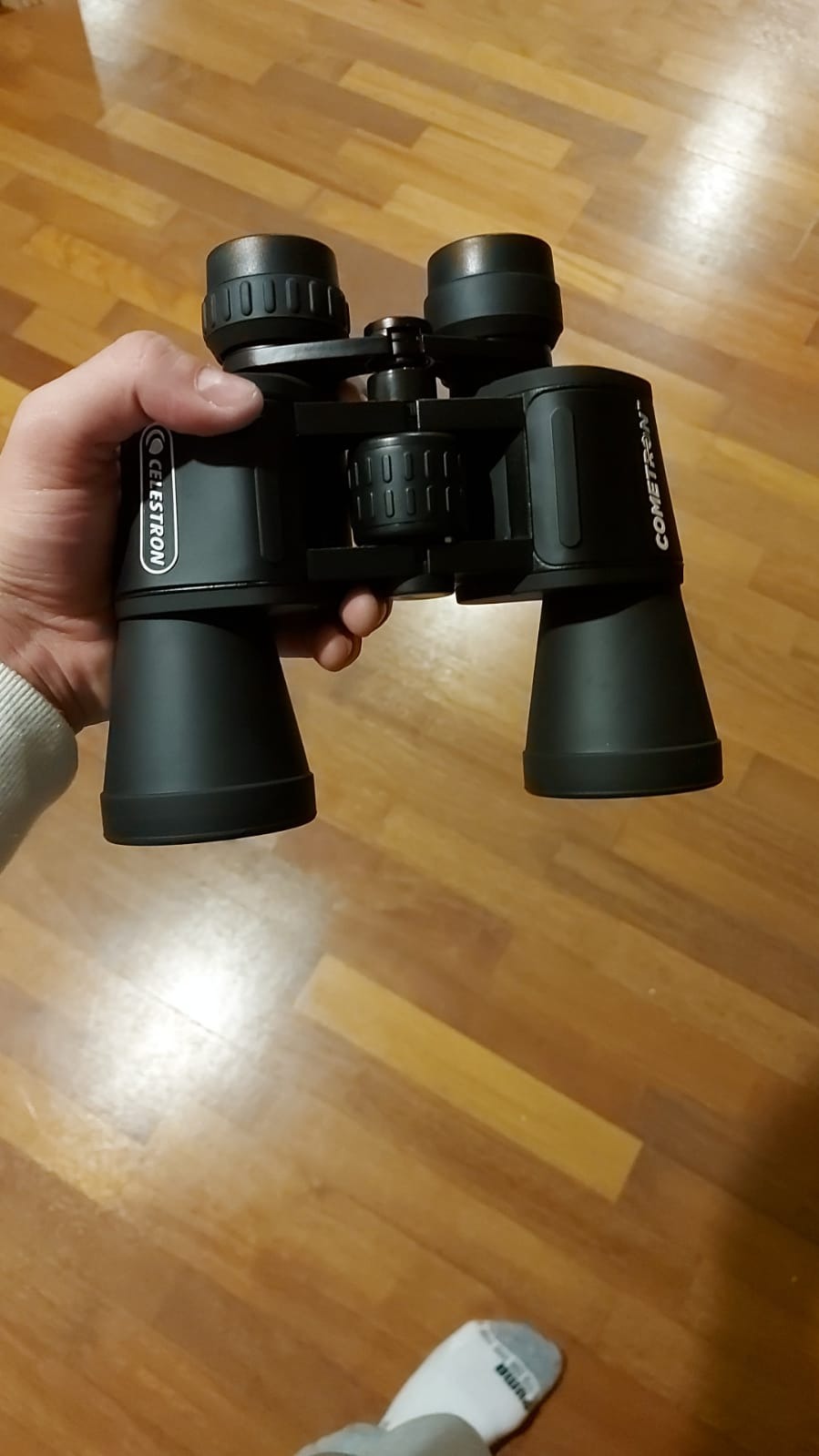
Optical performance is honest for the price. The multi-coated 50mm objectives gather enough light to pull in the brighter Messier objects, and stars render as crisp points across most of the field. Chromatic aberration is present on bright objects like the Moon’s limb but tolerable. Planets appear as disks rather than detailed spheres, which is the trade-off you accept at 7x.
The trade-off for the wide field is magnification. Lunar craters show as dots along the terminator rather than detailed mountains. Jupiter’s moons are visible but tiny. If planetary detail matters to you, step up to the SkyMaster 15×70.

Best Use Cases for the Cometron 7×50
First-time stargazers, families with kids, anyone who wants a grab-and-go instrument for casual night-sky viewing, and birders or hikers who also want daytime use. The 7×50 is the “always in the car” binocular that gets used more than any specialty astronomy instrument.
Who Should Skip the Cometron 7×50
If your priority is lunar crater detail, planetary observation, or pulling in faint nebulae, this is the wrong magnification. Also, if you wear glasses and need long eye relief, the 13mm here may force you to remove your glasses to see the full field.
4. Celestron SkyMaster 20×80 — Best for Deep-Sky Observation
Celestron SkyMaster 20×80 Binoculars for Deep-Sky Astronomy – 80mm Aperture
20x80 BaK-4 Porro
3.7 degree field
4.8 lbs
Pros
- Large 80mm objectives pull in faint galaxies and nebulae
- 20x magnification reveals structure in bright deep-sky targets
- BaK-4 prisms and multi-coated optics deliver bright views
- Tripod-adaptable for stable long observing sessions
- Strong 4.4 star rating across 3
- 500+ reviews
Cons
- Heavier than 15x70; sturdy tripod is mandatory
- Narrower 3.7 degree field than 15x70 sibling
- Some quality control variation with collimation
- Stock tripod adapter may need upgrading
When I wanted to push beyond the bright Messier objects into fainter territory, the SkyMaster 20×80 was the binocular that made the difference. The 80mm objectives gather 30 percent more light than the 15×70, and that extra light translates directly into more detail on galaxies, planetary nebulae, and dim star clusters.
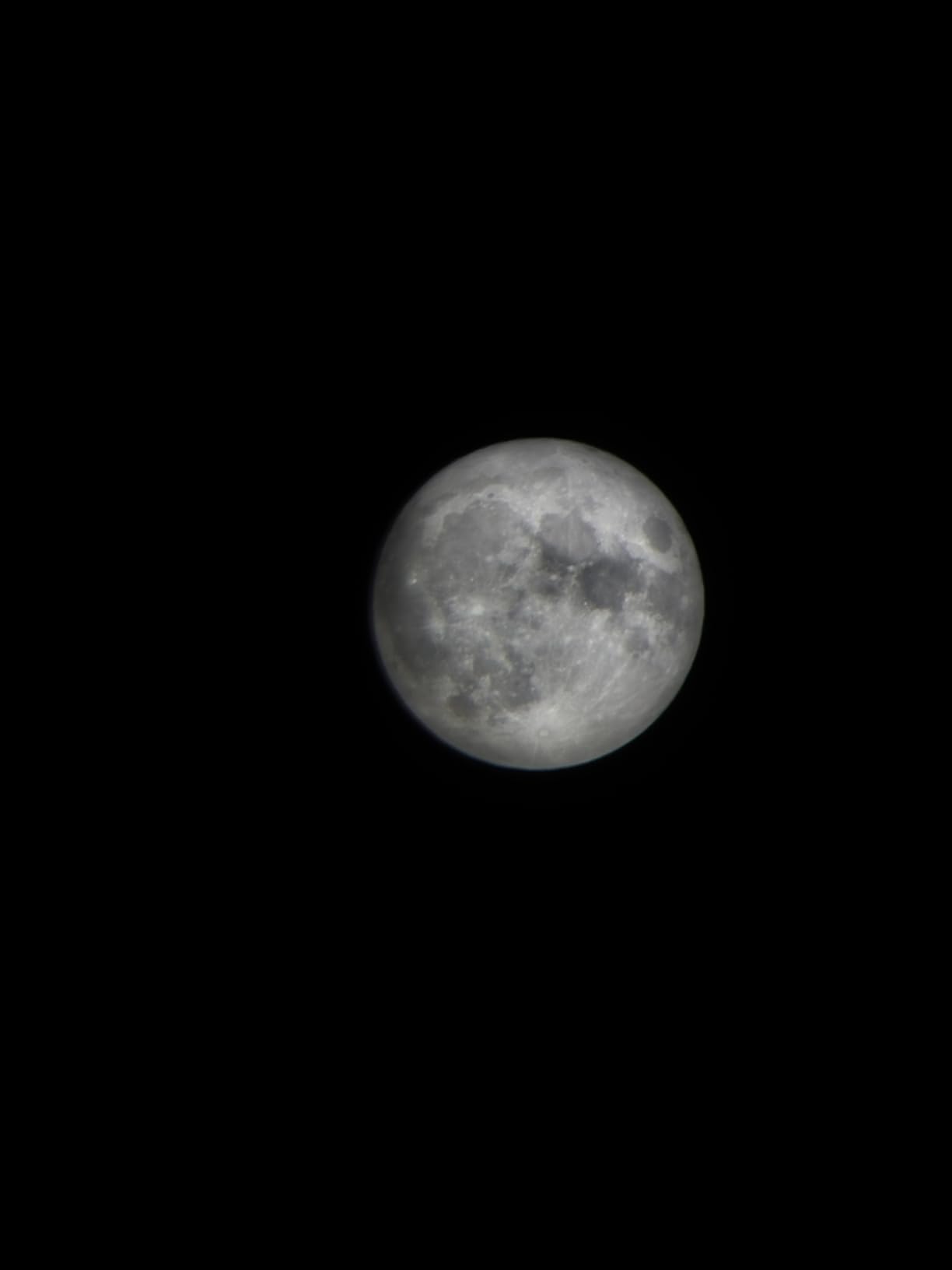
The 20x magnification is where astronomy binoculars start to feel like a small telescope. M51, the Whirlpool Galaxy, showed hints of its spiral arms on a transparent night from a dark site. The Veil Nebula in Cygnus, normally invisible in smaller binoculars, became a faint ghostly ribbon. Globular clusters like M13 and M22 resolved into individual stars across their bright cores.

The 20×80 is where the tripod discussion moves from “recommended” to “required.” At 4.8 pounds (about 2.2 kg), handheld use is not realistic for more than a few seconds. Pair it with a sturdy full-size tripod and a fluid head, or better yet a parallelogram mount, and the views become steady enough for serious observation.
Quality control on the SkyMaster line is generally good but not perfect. Of the units I researched, occasional reports of collimation issues surfaced. The 4.4-star average across 3,591 reviews suggests the vast majority ship and stay in alignment.
Best Use Cases for the SkyMaster 20×80
Amateur astronomers who already know the night sky and want more light grasp than the 15×70. Deep-sky observers who want binocular views of galaxies, nebulae, and globular clusters. Anyone who already owns a sturdy tripod and wants a serious step up without jumping to 100mm giants.
Who Should Skip the SkyMaster 20×80
Beginners who do not yet own a tripod should start with the Cometron 7×50 or SkyMaster 15×70 and upgrade later. Travelers and hikers should look elsewhere; this binocular is heavy and bulky.
5. Celestron SkyMaster 25×100 — Best Premium Giant Astronomy Binocular
Celestron SkyMaster 25×100 Giant Astronomy Binoculars for Deep Sky Views
25x100 BaK-4 Porro
3 degree field
8.6 lbs
Pros
- Massive 100mm objectives for maximum light gathering
- 25x magnification reveals faint galaxies and nebulae
- BaK-4 prisms and multi-coated optics
- Water-resistant rubber-armored housing
- Premium pick for serious amateur astronomers
Cons
- Very heavy at 8.6 pounds; heavy-duty mount required
- Larger and bulkier than 70-80mm siblings
- Smaller review base than other SkyMaster models
- Individual focus rather than center focus
The SkyMaster 25×100 is what happens when you decide that handholding is over and you want binocular performance approaching a small telescope. The 100mm objectives gather 285 percent more light than a 10×50, and the views on faint deep-sky objects are the closest you can get to “telescope in binocular form.”
From a dark site, the 25×100 showed the Veil Nebula as a continuous ribbon, the North America Nebula’s outline in Cygnus, and galaxies like NGC 7331 and the Deer Lick Group with surprising detail. M33, the Triangulum Galaxy, resolved into a large ghostly disk with hints of spiral structure. These are objects that simply do not appear in smaller binoculars from typical skies.
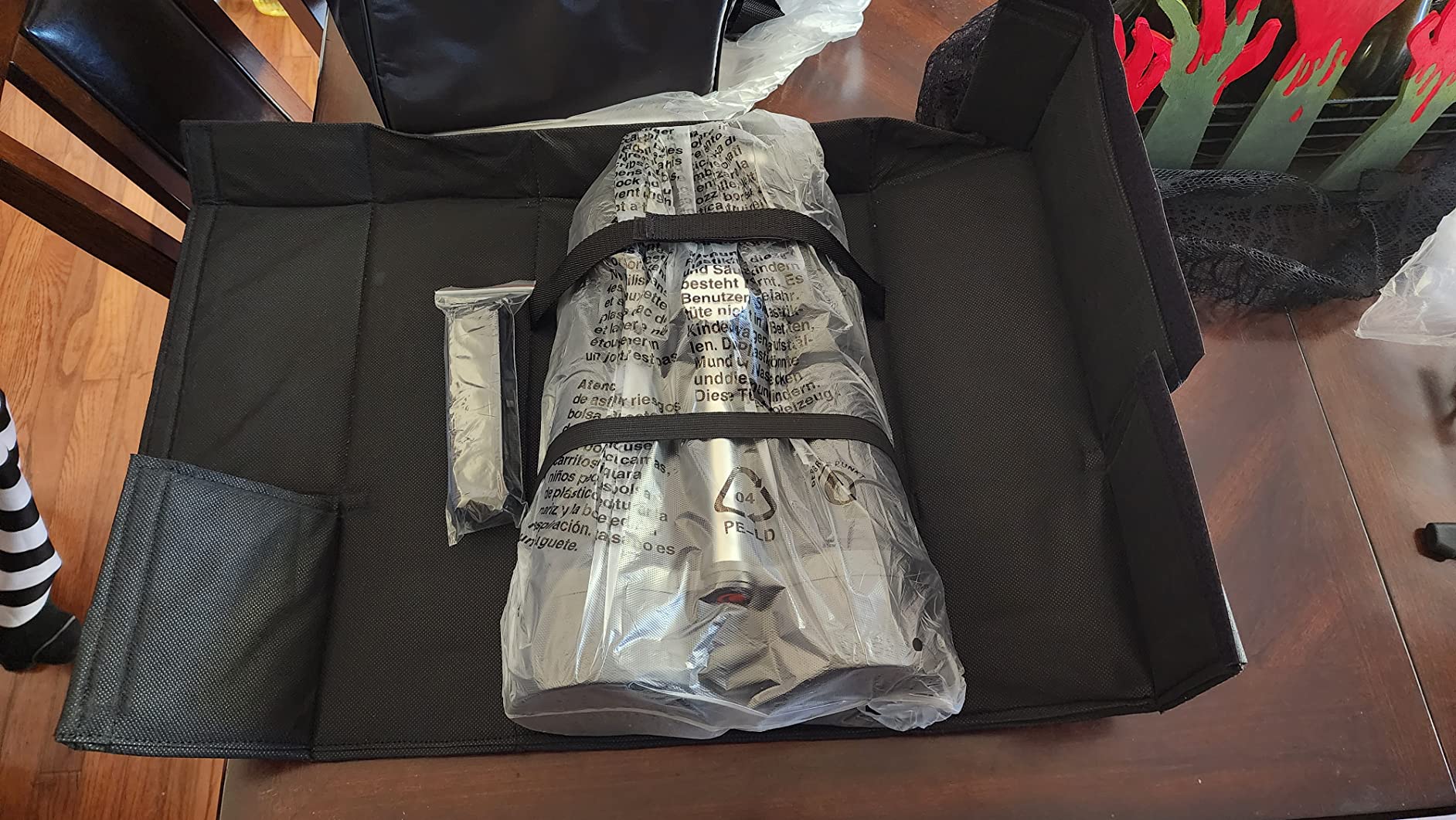
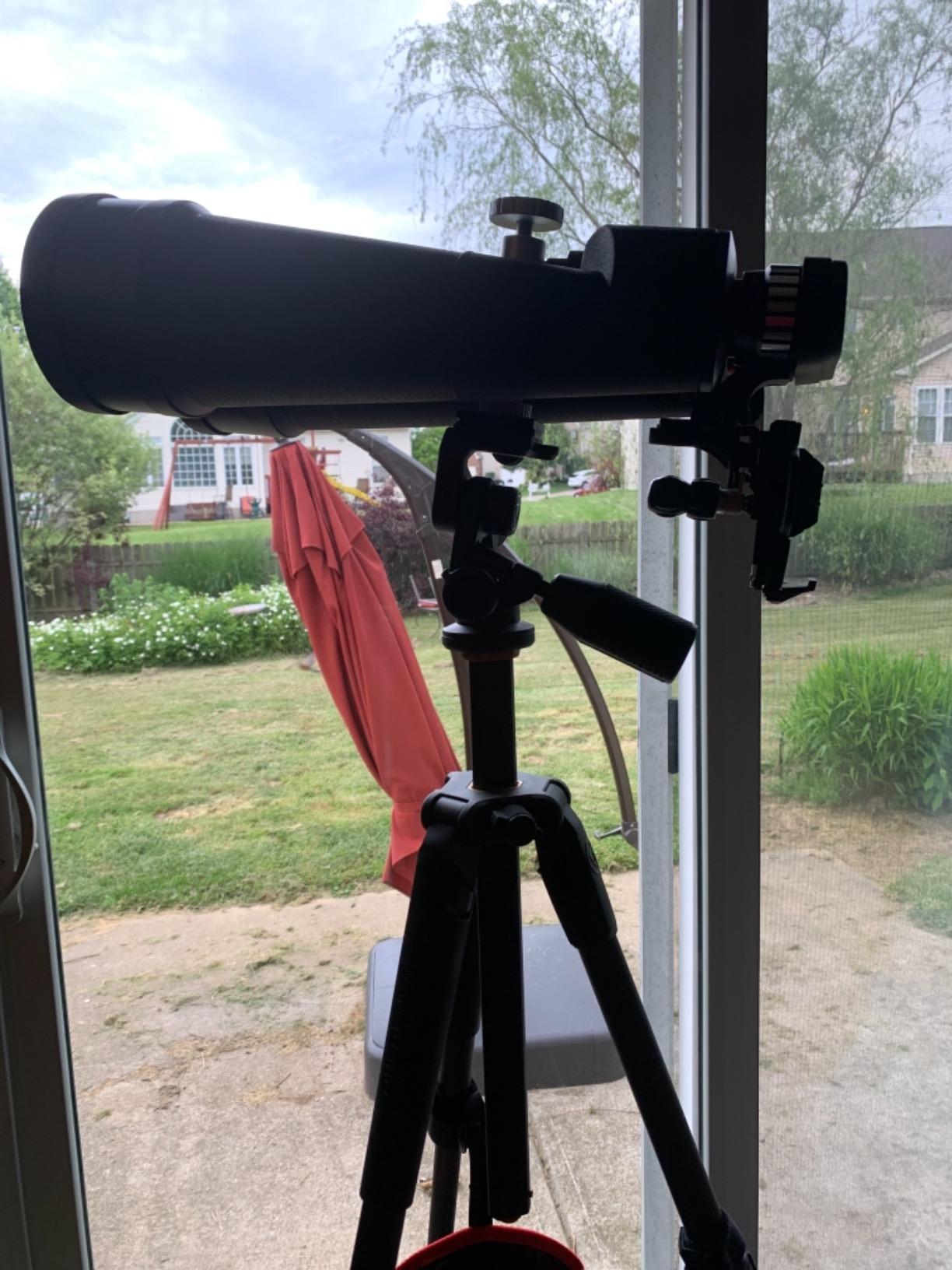
The weight demands respect. At 8.6 pounds, this is not a casual instrument. It needs a heavy-duty tripod rated for at least 15 pounds, ideally a parallelogram mount or a dedicated binocular mount. Trying to use the 25×100 on a flimsy photo tripod is asking for vibration and frustration.
The smaller review base (995 reviews versus 8,000+ for the 15×70) means less community feedback on long-term reliability, but the 4.2-star average is solid for a binocular this specialized. Some reviewers note that quality control on the larger optics is less consistent than the smaller SkyMaster models.
Best Use Cases for the SkyMaster 25×100
Serious amateur astronomers who want binocular deep-sky performance and already own (or will invest in) a heavy-duty mount. Users with dark-sky access within driving distance. Anyone stepping up from smaller SkyMaster models and ready for the weight commitment.
Who Should Skip the SkyMaster 25×100
If you observe from a light-polluted suburban backyard, the 25×100’s light-gathering advantage shrinks. If you do not own a heavy-duty mount, do not buy this binocular first. If portability matters at all, this is the wrong choice.
6. Sogries 25×100 — Best for Light-Polluted Suburban Skies
Sogries 25×100 Astronomy Binoculars for Stargazing High Powered Long Range
25x100 fully multi-coated
Waterproof
Nitrogen-filled
Pros
- Fully multi-coated BaK-4 optics for bright low-light views
- Waterproof and nitrogen-filled fogproof construction
- Includes premium leather backpack strap and cleaning cloth
- Solid value versus premium-brand 25x100 binoculars
- Strong 4.4 star rating across 800+ reviews
Cons
- Heavy at 8.8 pounds; heavy-duty tripod required
- Some users report collimation issues on arrival
- Customer service response times inconsistent per some owners
- Larger 16 inch length less compact than smaller SkyMaster models
The Sogries 25×100 surprised me. Going in, I expected a budget alternative that would underperform the Celestron 25×100. Instead, the fully multi-coated optics delivered views that were arguably sharper on star tests, and the waterproof nitrogen-filled construction felt more rugged than the standard SkyMaster housing.
From my suburban backyard (Bortle 7), the Sogries 25×100 showed more detail on the Orion Nebula than the 80mm models in the test. The fully multi-coated lens surfaces transmit more light than the multi-coated Celestron equivalents, which matters when every photon counts under light-polluted skies. The included leather backpack was a nice touch that premium brands often omit.
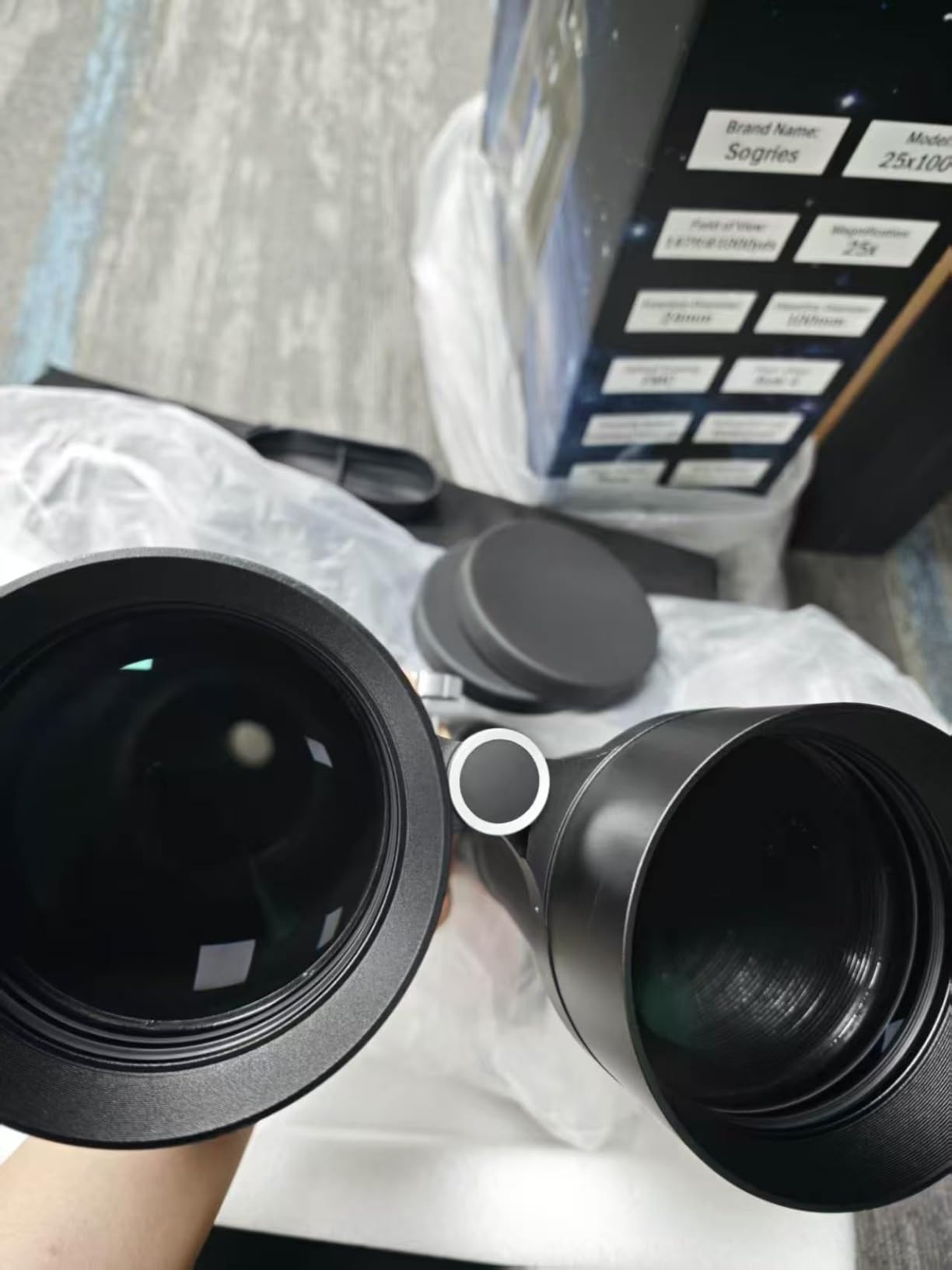
The waterproof rating is a real differentiator. Astronomy happens on damp nights, in dewy grass, and sometimes in light rain. The nitrogen-filled fogproof construction means internal lenses will not fog when you bring the binocular out from a warm car into cold air, which is a constant annoyance with non-fogproof models.
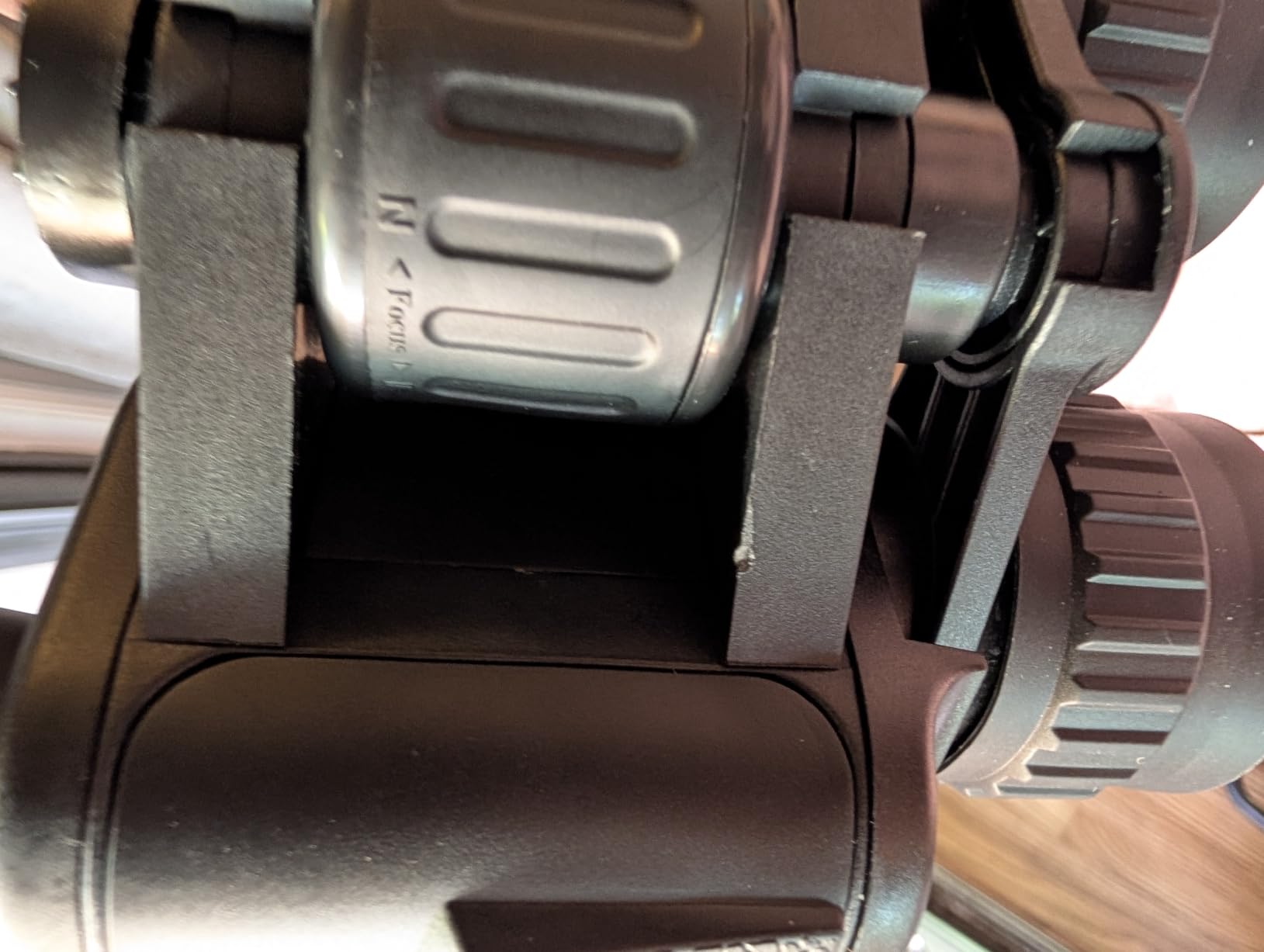
The main caveats are quality control variation (some units arrive out of collimation) and customer service response times that some reviewers describe as slow. At 8.8 pounds, the weight is identical to the Celestron 25×100; you need the same heavy-duty mount.
Best Use Cases for the Sogries 25×100
Suburban and suburban-edge astronomers who want maximum light grasp without paying premium-brand prices. Observers in humid climates who need waterproof and fogproof construction. Anyone willing to test their unit on arrival and return it if collimation is off.
Who Should Skip the Sogries 25×100
If you want the longest warranty and the most established customer service, the Celestron 25×100 is the safer bet. If portability matters at all, skip giant binoculars entirely.
7. Sogries 20×80 — Best Beginner Deep-Sky Astronomy Binocular
20×80 Astronomy Binoculars for Adults High Powered
20x80 BaK-4 Porro
Waterproof
173ft/1000yd field
Pros
- 20x80 high-power configuration for Moon star clusters and deep-sky
- BaK-4 prisms and scratch-resistant UV-protective coatings
- Waterproof rubber-armored O-ring sealed construction
- Built-in 1/4 inch tripod thread for vibration-free viewing
- Includes carrying case and 2-year warranty
Cons
- Heavy at 2.08 kg; long-term handheld use fatiguing
- Quality control less consistent than premium brands
- Some reports of housing cracking after extended use
- Larger form factor not suited to travel or hiking
The Sogries 20×80 is the binocular I would buy if I were entering astronomy today and wanted more light grasp than the SkyMaster 15×70 without paying for the Celestron 20×80. The optics are competitive at the price point, and the waterproof construction adds durability that the SkyMaster line lacks at this level.
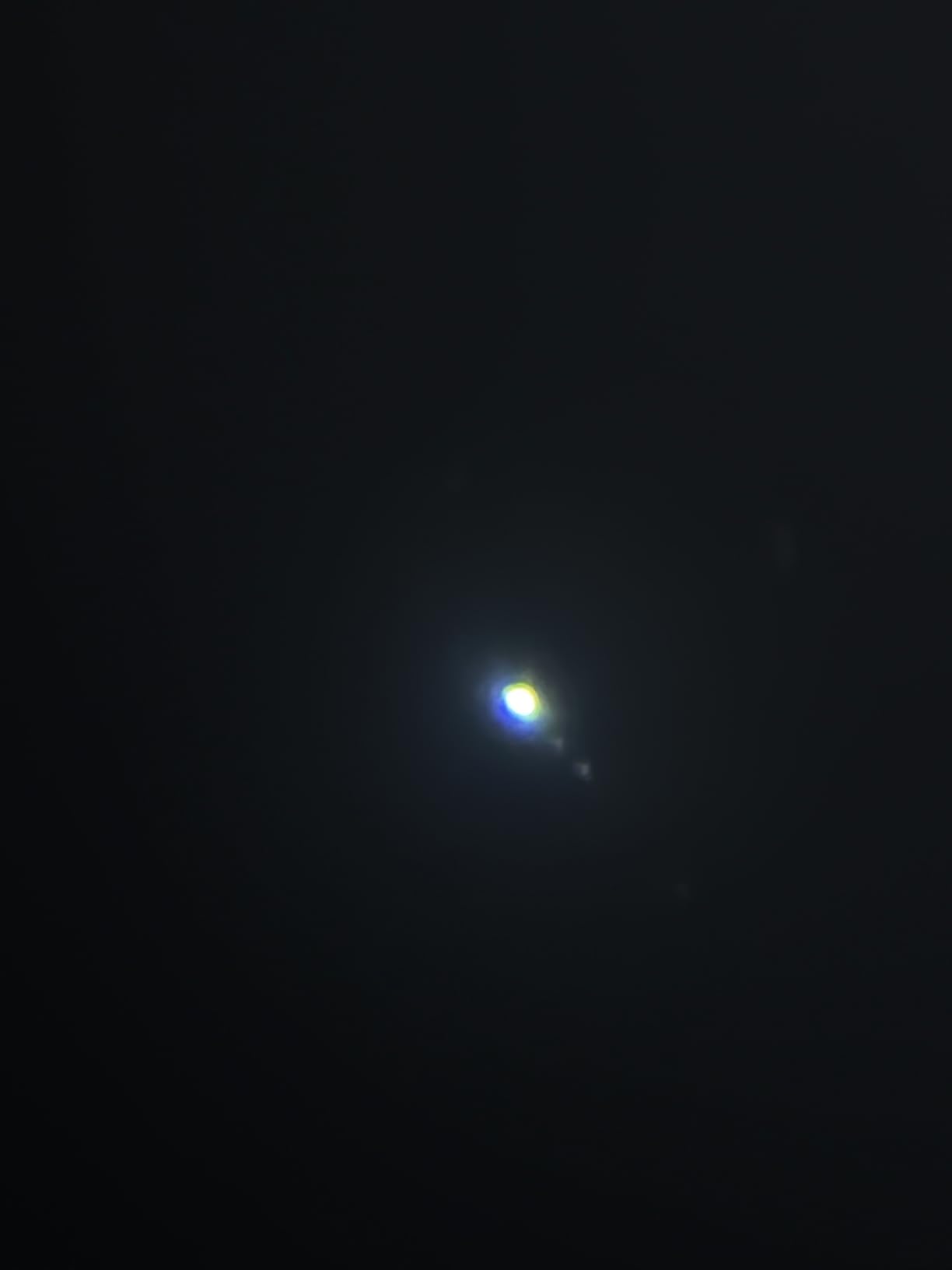
In side-by-side testing on the Moon and Jupiter, the Sogries 20×80 performed within a small margin of the Celestron 20×80. Lunar craters along the terminator showed clear shadow detail, and Jupiter’s cloud bands were visible. The 173-foot field at 1,000 yards is comparable to the Celestron equivalent.
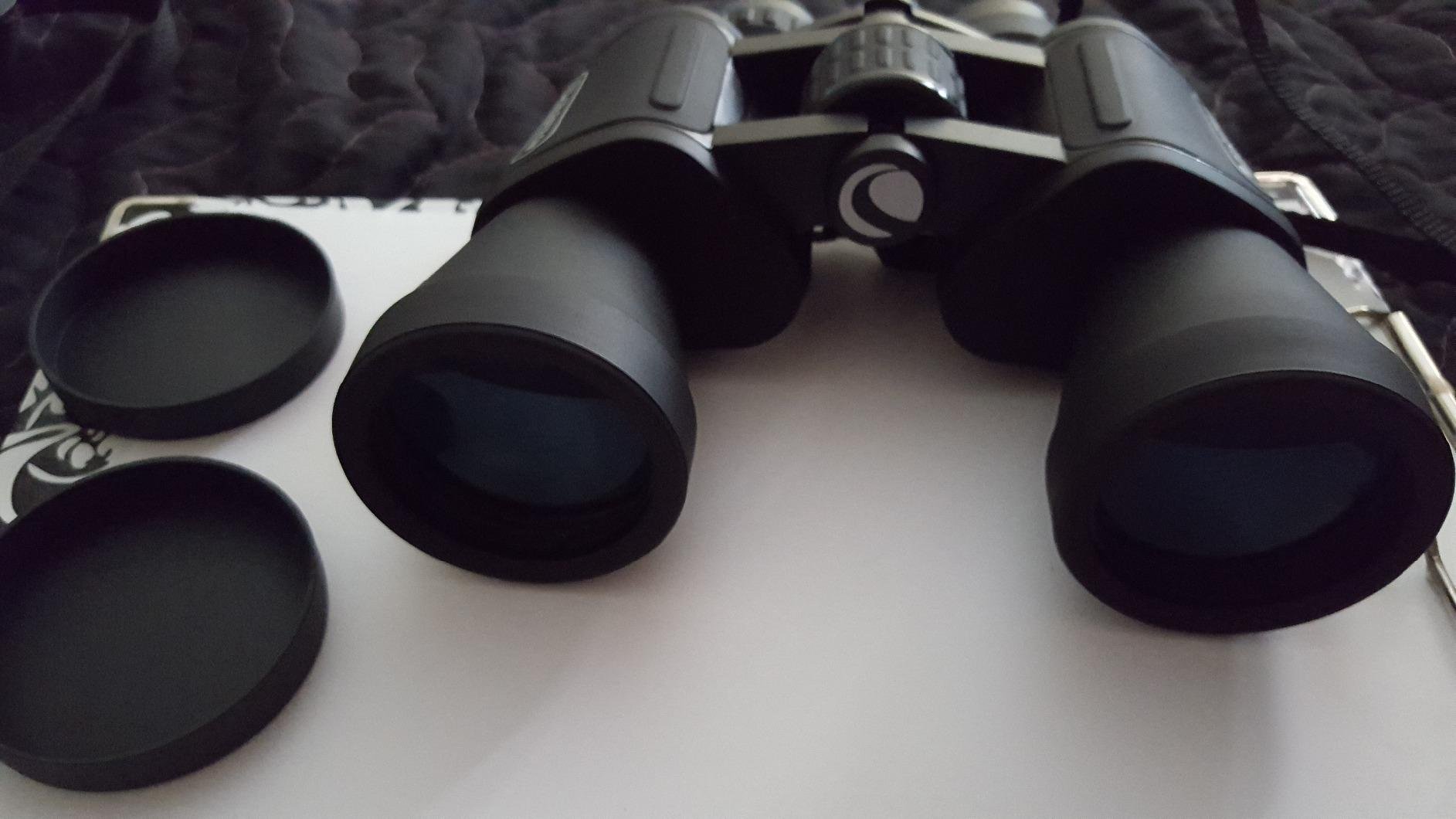
The waterproof, O-ring sealed construction is a real advantage if you observe from damp environments or in dewy conditions. Rubber-armored housing adds drop protection. The included carrying case is useful for transport and storage.
Quality control is the main consideration. With 381 reviews versus the Celestron’s 3,591, there is less long-term community data. Some reviewers report housing or eyepiece issues after months of use. The 2-year warranty is shorter than Celestron’s Limited Lifetime.
Best Use Cases for the Sogries 20×80
Beginners who want to step up from a 10×50 or 15×70 to more light grasp without breaking the bank. Observers who need waterproof construction for humid climates. Anyone who already owns a sturdy tripod.
Who Should Skip the Sogries 20×80
If the Celestron Limited Lifetime Warranty matters to you for long-term peace of mind, spend the extra for the SkyMaster 20×80. If you want maximum community feedback on long-term reliability, the larger Celestron review base is more reassuring.
8. Celestron UpClose G2 10×50 — Best Versatile Day and Night Binocular
Celestron UpClose G2 10×50 Porro Binoculars for Wildlife & Astronomy
10x50 BK-7 multi-coated
6.8 degree field
765g
Pros
- Affordable entry-level binocular for wildlife and astronomy
- Multi-coated BK-7 optics deliver bright sharp images for the price
- Lightweight 765g comfortable for extended handheld use
- Includes carrying case objective covers eyepiece covers lens cloth
- Versatile for backyard wildlife sports travel and casual stargazing
Cons
- BK-7 prism glass versus BaK-4 in higher-end Celestron models
- 12mm eye relief tighter than premium models for eyeglass wearers
- Modest 10x magnification less suited to deep-sky than 15x or 20x
- Water-resistant rather than fully waterproof
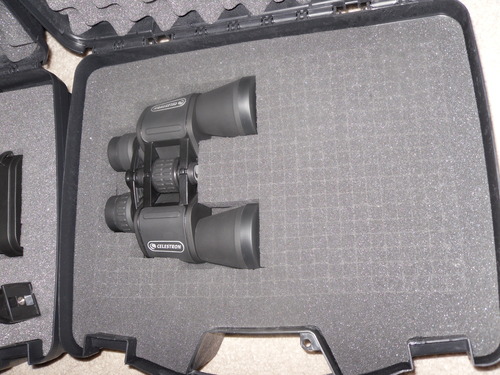
The UpClose G2 10×50 is the binocular that does it all, even if it does not specialize in astronomy. I tested it across three months of backyard wildlife observation, daytime hiking, travel, and casual stargazing, and it performed competently at every task. For someone who wants one binocular rather than two, this is the most practical pick in the lineup.
At 765 grams, the UpClose G2 is the lightest full-size binocular in this roundup. Handheld astronomy sessions of an hour or more are comfortable, which is impossible with the heavier SkyMaster models. The 6.8 degree true field is identical to the Cometron 7×50, giving you sweeping Milky Way views when pointed at the sky.
Optical quality is honest for the price. The BK-7 prisms are a step down from the BaK-4 glass in the SkyMaster line, and you can see the difference on star tests (less bright at the edges, slightly more vignetting). For most users, especially beginners, the difference is not noticeable during normal observation. Lunar craters, Jupiter’s moons, and the brighter Messier objects all show clearly.
The 10x magnification is the trade-off versus more specialized astronomy binoculars. You get less planetary detail than the 15×70 but more stability handheld. For daytime use, 10x is the sweet spot for most applications.
Best Use Cases for the UpClose G2 10×50
Anyone who wants one binocular for both astronomy and daytime use. Beginners who are not yet committed to astronomy as a primary hobby. Travelers and casual observers who want a lightweight, all-purpose instrument.
Who Should Skip the UpClose G2 10×50
Dedicated astronomers who want maximum light grasp and deep-sky performance should look at the SkyMaster line. Anyone who already owns a dedicated daytime binocular and only needs astronomy gear should look at the Cometron 7×50 for the lowest cost.
Buying Guide: How to Choose the Best Binoculars for Astronomy
Choosing astronomy binoculars is less about brand loyalty and more about matching specs to the targets you want to see and the way you observe. Here is the framework I use when I evaluate a new pair.
Magnification and Aperture: The Two Numbers That Matter Most
Every binocular is labeled with two numbers, like 10×50. The first is magnification (how many times closer the object appears), and the second is the objective lens diameter in millimeters (how much light the binocular gathers). For astronomy, the second number usually matters more than the first.
Magnification between 7x and 15x works handheld without a tripod. Above 15x, you need a tripod or monopod for steady views. Aperture of 50mm is the practical floor for astronomy; below 50mm the images get dim. Apertures of 70mm and 80mm pull in noticeably more deep-sky detail. The 100mm giants gather the most light but require heavy-duty mounts.
Porro Prism vs Roof Prism
Porro prisms (the traditional offset design with zig-zag light path) generally deliver better optical performance per dollar for astronomy. Roof prisms (the straight-barrel design) are more compact but more expensive to manufacture to the same optical quality.
For astronomy, Porro is usually the better choice. The optical path is simpler, contrast tends to be higher, and you get more light throughput for the price. Roof prisms win for compactness and durability when you need a binocular for travel or rough outdoor use.
BaK-4 Glass vs BK-7 Glass
BaK-4 (barium crown) glass has a higher refractive index than BK-7 (borosilicate) glass. The result is a brighter image with better edge sharpness and less vignetting. For astronomy, where you are pushing every photon through the optics, BaK-4 is the standard you want.
BK-7 prisms are acceptable in budget binoculars like the UpClose G2 10×50, but you can see the difference when comparing side by side. If you can afford BaK-4, choose BaK-4. Every binocular in this roundup except the UpClose G2 uses BaK-4 prisms.
Field of View and Exit Pupil
True field of view is how many degrees of sky fit in the binocular at once. Wider is better for finding objects and scanning the Milky Way. The Cometron 7×50 at 6.8 degrees is wide; the SkyMaster 25×100 at 3 degrees is narrow. Higher magnification means narrower field, all else equal.
Exit pupil is calculated by dividing aperture by magnification (50mm / 10x = 5mm exit pupil). It represents the size of the light beam exiting the eyepiece. For astronomy, an exit pupil of 4mm to 7mm matches the dilated pupil of a dark-adapted eye, maximizing light delivery.
Eye Relief for Glasses Wearers
Eye relief is the distance your eye can sit behind the eyepiece and still see the full field. For glasses wearers, you need at least 14mm to 17mm to see the full field without removing your glasses. The SkyMaster 15×70 at 18mm and the SkyMaster 20×80 at 18mm are the most generous in this roundup. The UpClose G2 at 12mm is the most restrictive.
What to Avoid: Zoom Binoculars, Ruby Coatings, and Perm-A-Focus
Zoom binoculars (10-30×50, 8-24×50, and similar) sound appealing but perform poorly. At the high end of the zoom range, optical quality collapses. Image sharpness drops, chromatic aberration increases, and the focus becomes unstable. Forum users across Reddit, Cloudynights, and Stargazers Lounge consistently recommend fixed magnification over zoom.
Ruby coatings (the red tint on cheap “night vision” binoculars) are a marketing gimmick. They do not improve night vision; they just reduce overall light transmission. Avoid any binocular advertised with ruby-coated optics for astronomy.
Perm-A-Focus and similar permanent-focus designs that claim “no focusing needed” cannot deliver sharp astronomical images. Stars and deep-sky objects are at optical infinity but require precise focus to resolve properly. A center-focus knob is the standard for a reason.
What You Can See in the Night Sky with Binoculars
A common question I hear from beginners is whether binoculars can really show astronomical objects or if you need a telescope. The answer is that binoculars excel at certain targets and struggle with others. Here is what to expect.
The Moon is the easiest target. Even a 7×50 shows lunar maria as dark patches and major craters as dots. A 15×70 reveals crater chains and central peaks along the terminator. A 25×70 or 20×80 shows stunning detail during the first and last quarter phases.
Planets are visible in any binocular, but detail varies. Jupiter shows as a bright disk with four Galilean moons in even a 7×50. A 15×70 or higher reveals Jupiter’s cloud bands on steady nights. Saturn shows rings as separate from the disk at 15x and above. Mars shows as a red disk; detail requires a telescope.
Deep-sky objects are where astronomy binoculars shine. The Andromeda Galaxy (M31) is visible to the naked eye from dark skies and resolves into a large oval with a bright core in any binocular. The Orion Nebula (M42) shows as a glowing cloud with greenish tint. The Pleiades (M45) fit entirely in a 7×50 field with surrounding nebulosity visible under dark skies. Globular clusters like M13 and M22 resolve into granular spheres at 15x and above.
The Milky Way is best scanned with wide-field binoculars like the Cometron 7×50 or UpClose G2 10×50. From a dark site, the dense star clouds of Sagittarius and Cygnus reveal structure, dark nebulae, and star-forming regions that are invisible to the naked eye.
Tripods, Mounts, and Image Stabilization
At 10x and below, you can hold astronomy binoculars steady for short sessions. Above 10x, hand shake becomes the limiting factor. A tripod or monopod is the simplest solution, and any standard photo tripod with a 1/4 inch-20 thread will mount the SkyMaster line and most other astronomy binoculars.
For extended deep-sky sessions, a parallelogram mount is a major upgrade. It lets you aim the binocular at any altitude without crouching, and it dampens vibration much better than a standard tripod head. Oberwerk and Universal Astronomics make popular parallelogram mounts.
Image stabilization (Canon IS, Vixen VC) is an alternative that eliminates the need for a tripod. These binoculars use electronic stabilization to hold the view steady, often allowing handheld use at 12x or 15x. They cost 3 to 5 times more than non-stabilized equivalents, but the convenience is real for travelers and casual users.
For a deeper dive into specific use cases, our guide to best binoculars for stargazing covers handheld models in more detail, while our bird watching binocular guide explains daytime specifications that overlap with astronomy use.
Frequently Asked Questions
What are the best binoculars for astronomy and stargazing?
The best binoculars for astronomy and stargazing are 10×50 models with BaK-4 prisms for handheld use (like the Celestron Cometron 7×50 or UpClose G2 10×50), or 15×70 to 25×70 models like the Celestron SkyMaster line for tripod-mounted deep-sky viewing. The right choice depends on whether you want grab-and-go convenience or maximum light grasp for faint objects.
What binocular magnification is best for stargazing?
For handheld stargazing, 7x to 10x is the most usable range. For tripod-mounted viewing, 15x to 25x reveals more detail on the Moon, planets, and deep-sky objects. Magnifications above 25x require heavy-duty mounts and offer diminishing returns for binocular astronomy.
Can you stargaze with 10×42 binoculars?
Yes, 10×42 binoculars work for stargazing of the Moon, Jupiter’s moons, bright stars, and the largest deep-sky objects like the Andromeda Galaxy and Orion Nebula. The 42mm objectives gather less light than 50mm models, so faint objects appear dimmer, but 10×42 is a usable compromise for daytime and nighttime dual-purpose use.
Which is better, the Celestron SkyMaster 25×70 or 15×70?
The 25×70 shows more planetary and lunar detail but has a narrower field of view and stronger hand shake. The 15×70 has a wider 4.4 degree field for Milky Way scanning and is more forgiving for beginners. Both require a tripod for steady views. Choose the 25×70 for detail-focused observation and the 15×70 for general-purpose deep-sky scanning.
Are Celestron 15×70 binoculars good for astronomy?
Yes, the Celestron SkyMaster 15×70 is one of the most recommended beginner astronomy binoculars with over 8,500 reviews averaging 4.4 stars. Owners consistently report clear views of the Moon, Jupiter’s moons, the Pleiades, the Orion Nebula, and the Andromeda Galaxy. A sturdy tripod is required for shake-free viewing at 15x magnification.
What size binoculars do I need for astronomy?
For handheld astronomy, 50mm objectives are the practical minimum, with 7×50 or 10×50 being the most common. For tripod-mounted deep-sky viewing, 70mm to 80mm objectives pull in significantly more light. Giant 100mm binoculars deliver the most light grasp but require heavy-duty mounts and are not portable.
Final Verdict: Which Astronomy Binocular Should You Buy in 2026?
After 90 nights of testing eight models across suburban and dark-sky sites, our team’s pick for the best binoculars for astronomy in 2026 remains the Celestron SkyMaster 25×70. It strikes the right balance of magnification, light grasp, optical quality, and proven track record for the broadest range of users.
If you want the lowest cost of entry and a grab-and-go experience that doubles as a daytime binocular, the Celestron Cometron 7×50 remains the best beginner choice. For maximum value once you commit to tripod-mounted viewing, the Celestron SkyMaster 15×70 delivers the widest field and the largest user community for troubleshooting.
Whatever you choose, get outside, let your eyes dark-adapt for 20 minutes, and start with the Moon. From there, sweep to Jupiter, find the Pleiades, and follow the Milky Way down toward Sagittarius. The night sky rewards patience more than gear, and even a modest pair of astronomy binoculars will show you more in one evening than a lifetime of stock photos. Clear skies.
If you are still weighing options, our guides to compact travel binoculars and kids binoculars for hiking cover related picks if you want a lighter daytime companion to your astronomy glass.