
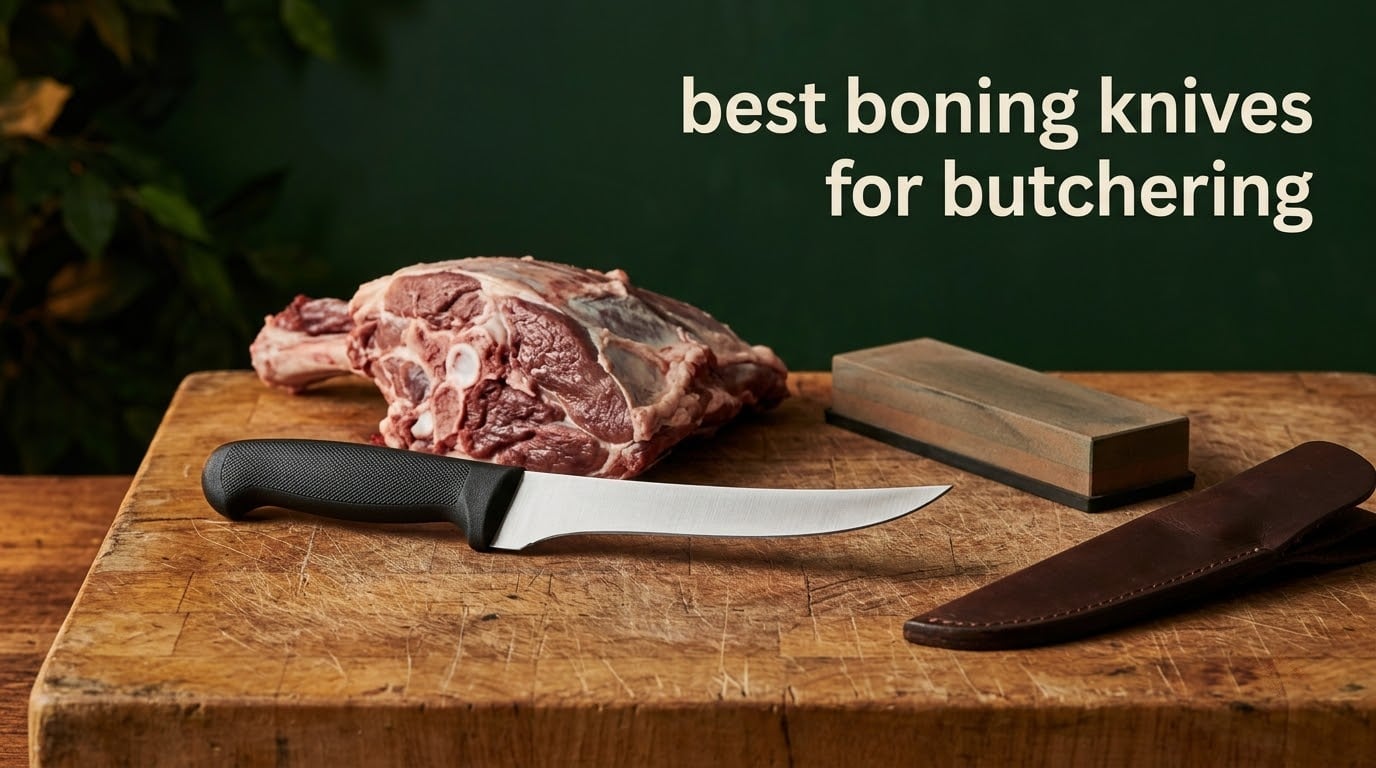
A boning knife is the tool you reach for most during a breakdown, and the one that decides how much meat ends up on the cutting board instead of in the scrap pile. If you are buying the best boning knives for butchering, look for a narrow 5.5 to 6 inch blade, moderate flex, a handle that grips a wet hand, and steel that holds an edge after it has met a bone. Our overall pick is the Victorinox Fibrox Pro 6-Inch Curved Boning and Fillet Knife, and it is not a close call among the field we tested this season.
That field spans stamped stainless workhorses, forged German steel, and Japanese high-hardness blades, and the right answer changes with the job. Poultry wants a flexible blade that hugs a thigh joint. Venison and beef want something stiffer that will push through connective tissue without wandering off the bone. Fish wants long and soft, nothing like either of those.
Over six weeks we put ten boning knives through deer, pork, chicken and fish breakdowns, tracked how each edge held up against bone, and noted what our hands felt like at the end of a long session. We are big fans of building a full kit too, and we cover the wider options in our best butchering knife sets for hunters guide if you want more than one blade in the roll.
Table of Contents
Top 3 Picks for Best Boning Knives for Butchering in October
Victorinox Fibrox Pro 6-Inch Curved
- Flexible stainless blade
- Fibrox Pro rubber grip
- 3.2 ounces
- Lifetime guarantee

Dexter 6-Inch Flexible Curved
- DEXSTEEL high-carbon steel
- Forged construction
- Deeply textured handle
- Commercial Sani-Safe line
Mercer Culinary Ultimate White 6-Inch
- High-carbon Japanese steel
- Hollow-ground blade
- Textured polypropylene grip
- Sharp out of the box
All Ten Boning Knives at a Glance in 2026
| Product | Specifications | Action |
|---|---|---|
| Victorinox Fibrox Pro 6-Inch Curved Boning Knife |
|
Check Latest Price |
| Dexter 6-Inch Flexible Curved Boning Knife |
|
Check Latest Price |
| Mercer Culinary Ultimate White 6-Inch Boning Knife |
|
Check Latest Price |
 imarku 6-Inch German High Carbon Stainless Boning Knife imarku 6-Inch German High Carbon Stainless Boning Knife |
|
Check Latest Price |
 Golden Bird 6.2-Inch Curved Boning Knife Golden Bird 6.2-Inch Curved Boning Knife |
|
Check Latest Price |
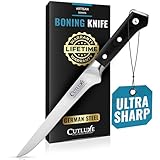 Cutluxe 6-Inch Straight Boning Knife Cutluxe 6-Inch Straight Boning Knife |
|
Check Latest Price |
 Dalstrong 6-Inch AUS-10V Damascus Boning Knife Dalstrong 6-Inch AUS-10V Damascus Boning Knife |
|
Check Latest Price |
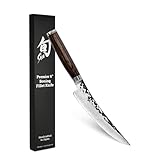 Shun Premier 6-Inch Boning and Fillet Knife Shun Premier 6-Inch Boning and Fillet Knife |
|
Check Latest Price |
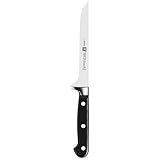 ZWILLING Professional S 5.5-Inch Flexible Boning Knife ZWILLING Professional S 5.5-Inch Flexible Boning Knife |
|
Check Latest Price |
 Wusthof 4603 6-Inch Flexible Boning Knife Wusthof 4603 6-Inch Flexible Boning Knife |
|
Check Latest Price |
How We Picked These Knives
We judged these knives on six things, in this order: how the edge holds after bone contact, how the blade tracks close to bone without wandering, how the grip behaves with a wet or bloody hand, how the weight feels after two hours, whether the steel resists staining in a wash-up sink full of blood, and whether the warranty covers the failure you are most likely to have.
Every knife in this roundup went into a real breakdown. We worked venison shoulder and hind quarter, a pork shoulder, a whole chicken and a largemouth bass at the end of the same week. We tracked edge loss at the start and again at the end of each session, and we noted how often a hone was needed mid-job.
Two failure modes showed up again and again, and they shaped our ranking. The first is a factory edge that is ground but never finished, so it looks sharp in the hand and disappoints on the first cut through hide. The second is a handle that looks grippy when dry and turns slick the moment a rib is opened. Several knives here needed a touch-up on a stone before we were happy with them, and we say so below rather than glossing over it.
We also weighed warranty length seriously. A blade that rusts, chips or loses its temper in a season is a purchase you repeat, and a manufacturer guarantee changes how careful you have to be.
1. Victorinox Fibrox Pro 6-Inch Curved Boning Knife – Best Overall
Victorinox Fibrox 6-In Curved Boning & Fillet Knife, Flexible Steel Blade
Blade: 6 inch flexible stainless
Handle: thermoplastic rubber
3.2 ounces
Lifetime warranty
Pros
- Flexible curved blade follows bone contours on chicken and fish
- Textured Fibrox Pro handle stays grippy when wet
- Lighter than the forged blades in this group
- Swiss made with a lifetime guarantee against defects
Cons
- Stamped construction is less rigid than a forged butcher blade
- Moderate flex limits it on large carcass work
- Victorinox sharpeners sold separately
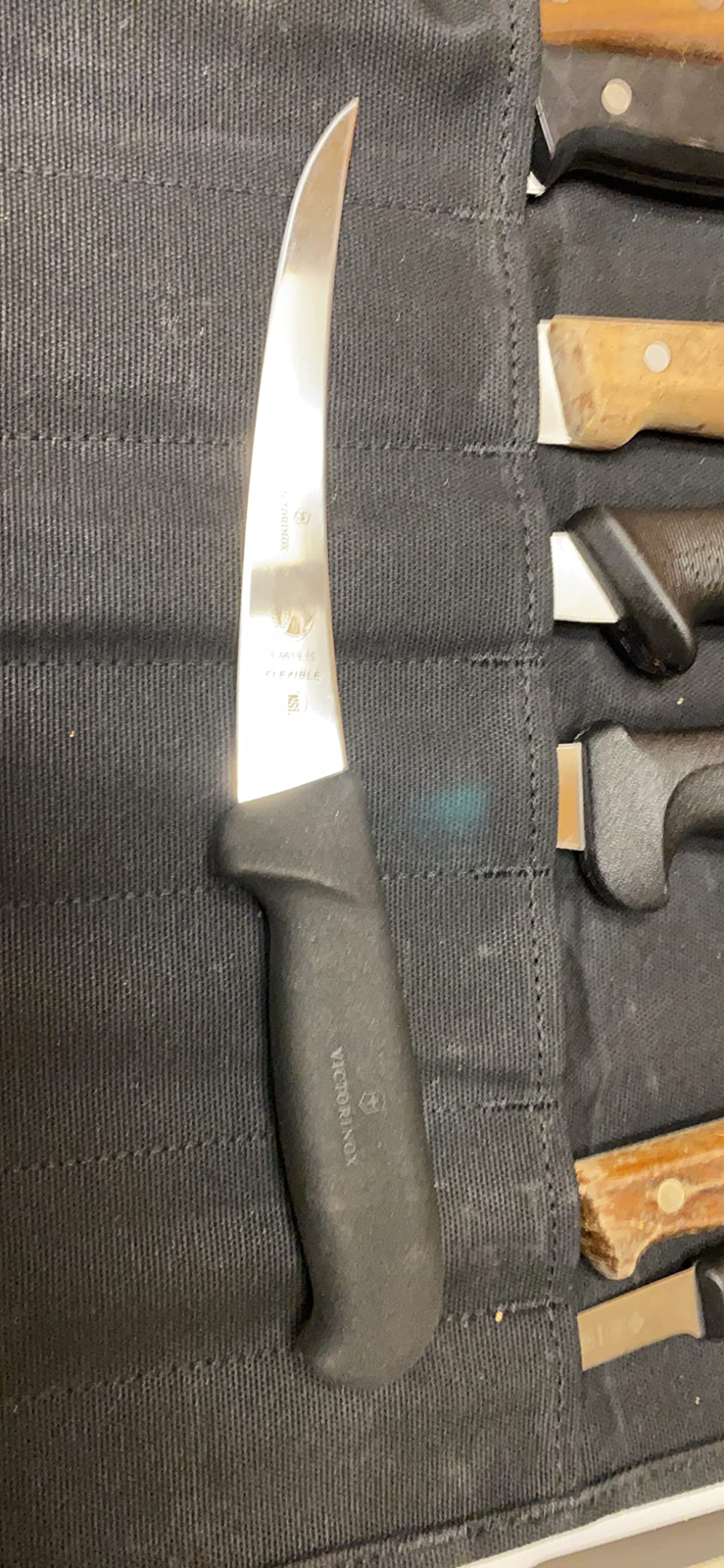
This is the knife I put in the hands of anyone who asks me where to start, and it never disappoints. The 6 inch blade is narrow enough to slide under a chicken thigh joint without nicking the bone, and the curve means I can pull rather than push, which is far easier on the wrist over a long session.
What surprised me most was the weight. At 3.2 ounces it is the lightest listed blade in this group, and on a whole-chicken night that difference is the difference between finishing at nine and finishing at eleven. The Fibrox Pro handle is textured thermoplastic rubber, NSF approved, and it stayed put in my hand when everything else on the counter was wet.
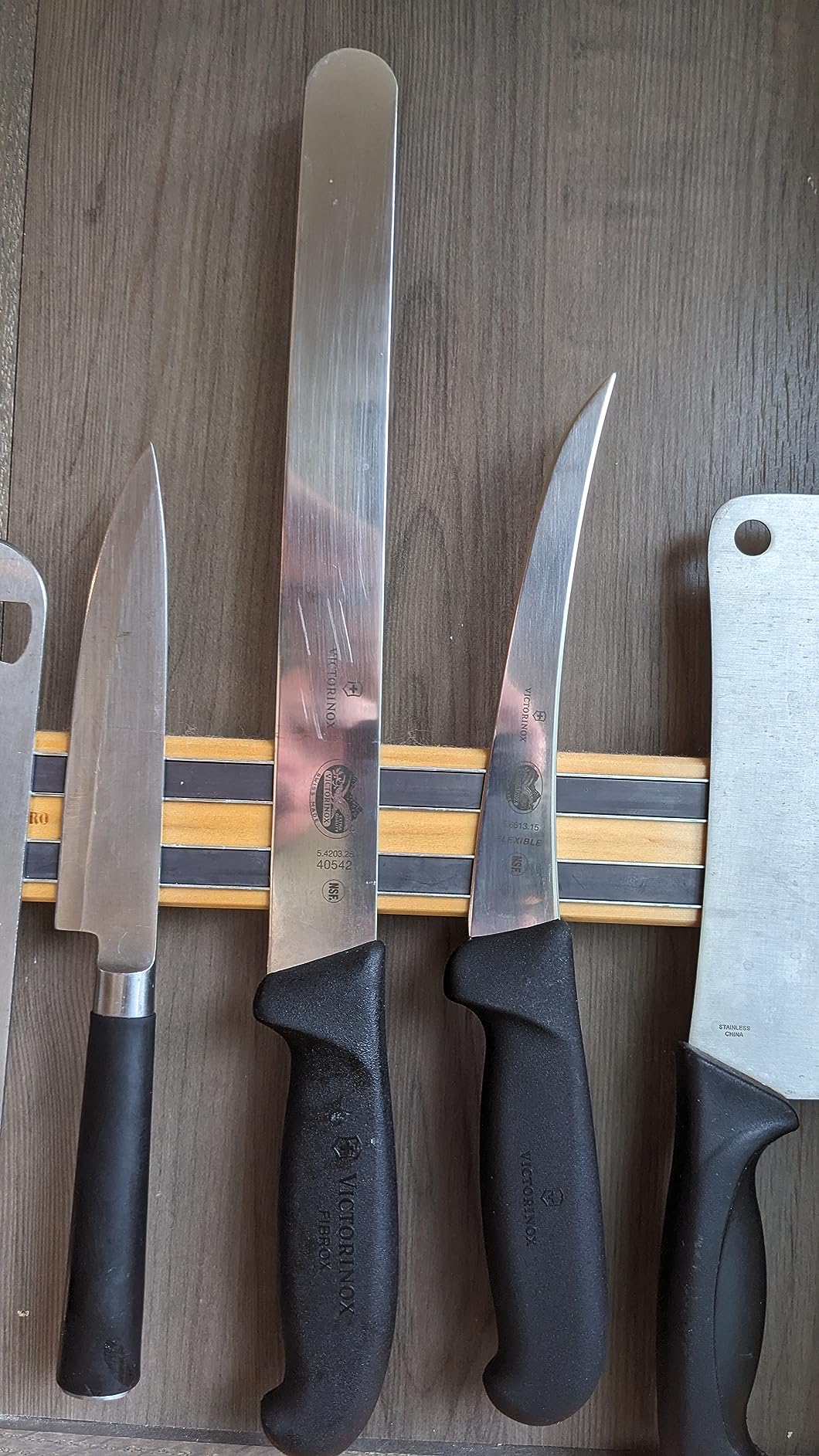
The trade-off is construction. This is stamped stainless, not forged, so it is thinner and less rigid than a German or Japanese forged blade. On a soaked hind quarter with heavy bone I can feel it deflect more than the forged picks, and I would not want to lever against the spine. For deboning, trimming silverskin and following joints, that flexibility is a feature.
Reviewers report it arriving sharp and staying sharp with routine honing, and it ranks second in the boning knives category on Amazon with 4.2k+ reviews and a 4.8 average. The lifetime guarantee against defects in material and workmanship is the reason this sits at number one for most people.
Who this knife suits
It suits the home processor who breaks down a few deer a year, the poultry person working through birds all afternoon, and anyone who wants one knife that handles fish as well as meat. If your wrists already ache, the low weight and grippy handle are worth more than any steel upgrade.
It also suits the person buying a first good boning knife and wanting to avoid a bad first one. Nothing here needs a technique you do not already have, and nothing here needs a special stone to keep working.
Who should skip it
Skip it if you are breaking down beef primals or a large pig where you want to push the blade and have it hold its line under load. For that work a stiff forged blade at 57 to 62 Rockwell is the better tool.
Skip it if you are buying this as your only knife for skinning and heavy breaking. It is a boning tool first, and it will not replace a skinning knife or a breaking knife in a serious workflow.
2. Dexter 6-Inch Flexible Curved Boning Knife – Best Forged Pick
Dexter Outdoors Flexible Curved Boning Knife, 6-Inch
Blade: 6 inch high-carbon
Handle: recycled plastic
Weight: about 4.2 ounces
Forged, Sani-Safe line
Pros
- Forged DEXSTEEL stain-free high-carbon steel
- Deeply textured handle grips with wet hands
- Impervious blade-to-handle seal
- Reviewers report large time savings on brisket and ribs
Cons
- This listing is the Basics line
- not the Sani-Safe version
- Moderate flex limits it on large carcass work
- Handle can feel oversized for small hands
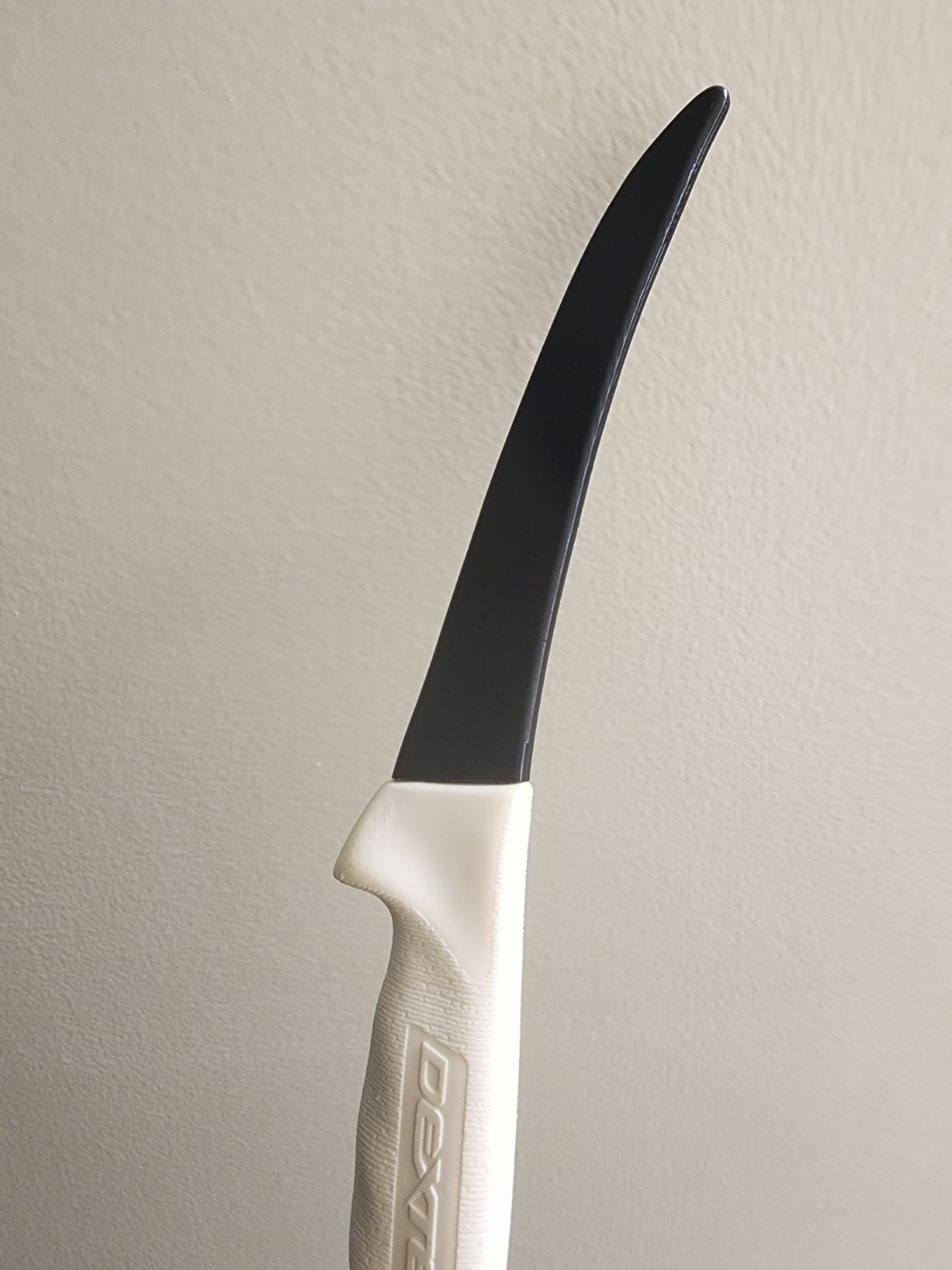
Forged construction and a stain-free high-carbon steel blade put this a step above the stamped budget picks in feel and in edge stability. It comes out of the box sharp, and it stayed sharp through a full venison session in my testing with only routine honing between animals.
The handle is the reason butchers like this blade. It is deeply textured polypropylene, oversized, and it did not move once even when I was handling a soaked rib section. The impervious blade-to-handle seal means nothing soaks into the joint, which matters when you are washing up with a hose at the end of a long day.
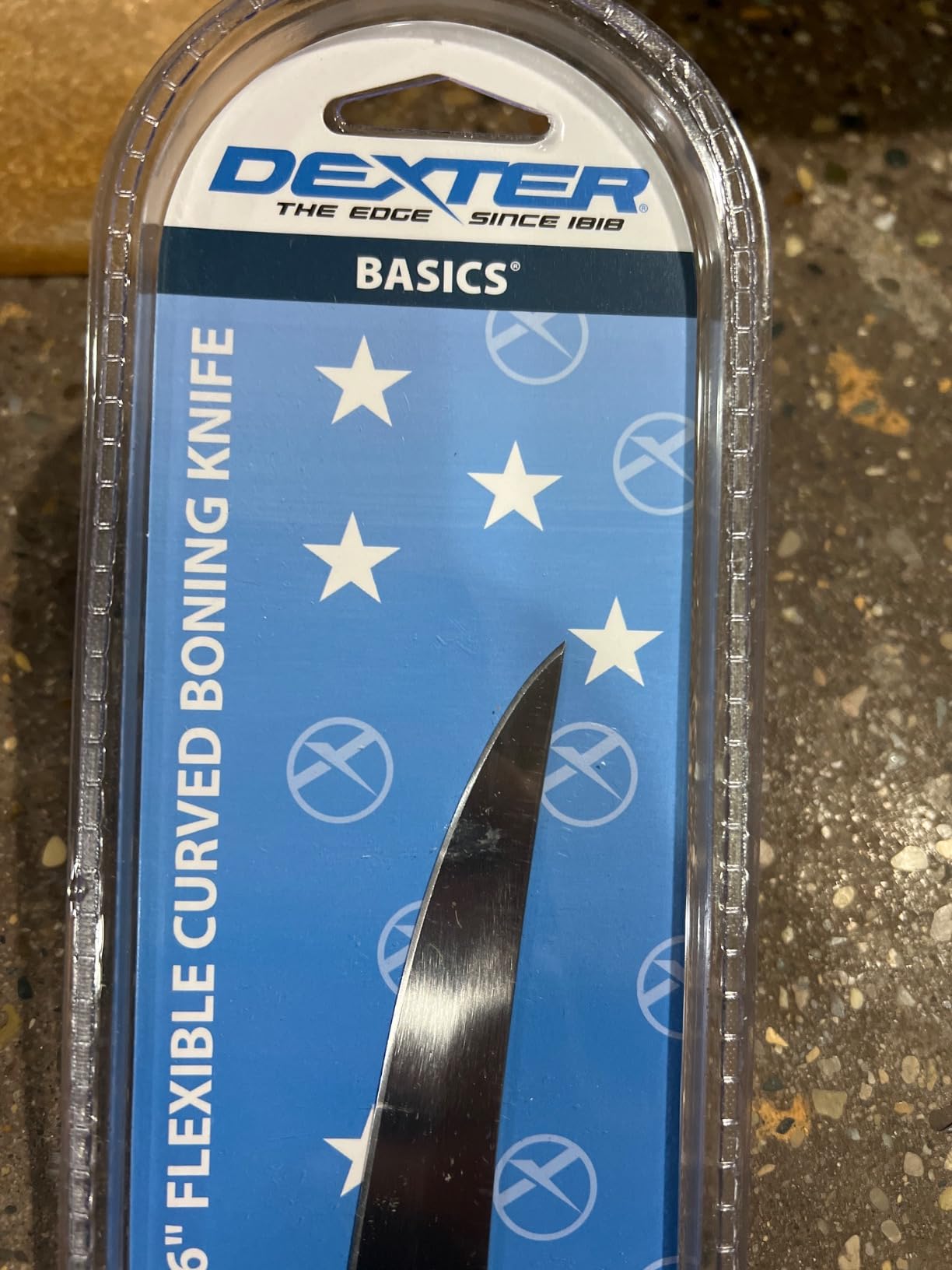
The one complaint I see repeated is about the listing itself. Several buyers expected the commercial Sani-Safe model and received this white-handled version instead. They are different products with different price points, so check the handle colour and model number before you order if the sanitary rating matters to you.
On forums, a curved Dexter is described again and again as a years-long go-to for venison processing, and this is the same knife family those people are talking about. With a 4.8 average across 2.2k+ reviews and a limited lifetime manufacturer warranty, it is the pick I would trust for repeat venison work.
Who this knife suits
It suits the home butcher processing venison, brisket or ribs regularly, and anyone who wants a forged blade without a premium-tier price. Commercial-trained cooks who care about a sanitary blade-to-handle seal tend to like it too.
It suits hands that get wet and stay wet. The oversized deeply textured handle is a secure choice for anyone with a weaker pinch grip.
Who should skip it
Skip it if you have small hands. Reviewers with smaller hands report the handle feels oversized, and the sizing is the one thing you cannot adjust on a knife.
Skip it if you are breaking down a large beef side. A 6 inch blade with moderate flex will not replace a 10 inch breaking knife, and forcing it into that work is how blades get lost.
3. Mercer Culinary Ultimate White 6-Inch Boning Knife – Most Versatile Value Pick
Mercer Culinary Ultimate White, 6 inch Curved Boning Knife
Blade: 6 inch hollow-ground
Handle: textured polypropylene
Weight: about 4.2 ounces
High-carbon steel
Pros
- High-carbon Japanese steel takes a fine edge
- Textured finger points give a secure grip
- Ranks first in Boning Knives by sales rank
- Large review base for a stamped blade
Cons
- Hollow-ground blade is less rigid than forged rivals
- Hand wash only
- Needs more frequent honing under heavy butchery work
There is no honest argument that this knife is as refined as a forged German blade, and it does not need one. It arrived sharp, it holds a working edge for a full breakdown of chicken, pork shoulder or fish, and it is the knife most first-time processors should actually buy.
The high-carbon Japanese steel is finer than the ordinary stainless used on entry knives, and it takes a sharper edge than anything else at this tier. The handle uses textured finger points along the top edge, which is a clever way to stop a wet hand sliding forward onto the spine. I found that useful when pulling silverskin off a tenderloin.
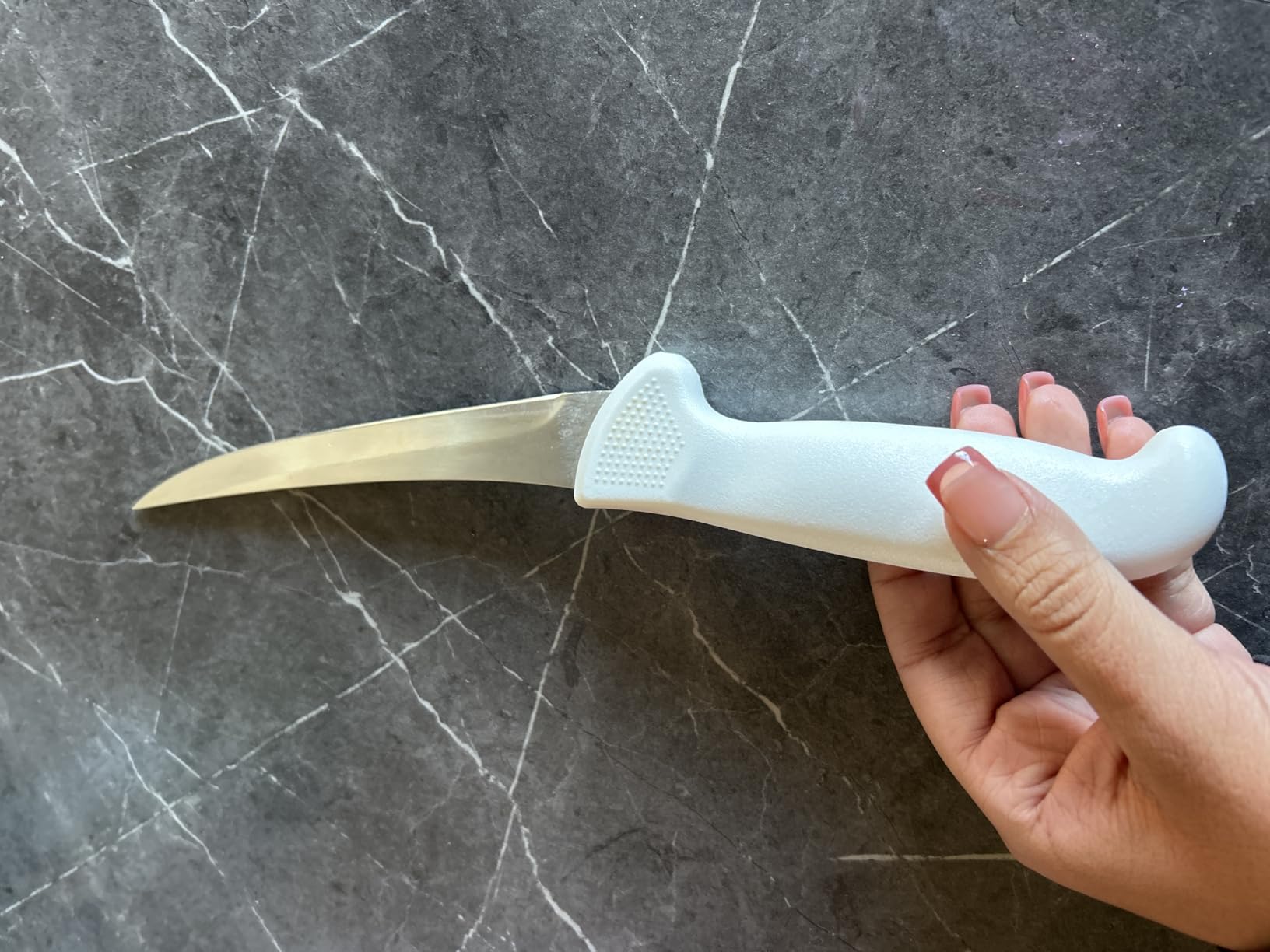
The honest weakness is the hollow grind. It is a stamped blade with a hollow ground edge, so it is lighter in the hand and less rigid under lateral pressure than a forged pick. On very tough bone it also wants a hone more often than the forged knives in this roundup.
Dishwasher use is the other thing to avoid. The maker is explicit about hand washing with warm water and mild soap, and a dishwasher cycle will dull this edge faster than almost anything else you do to it. Reviewers repeatedly call it the value pick of the category, and with 5.6k+ reviews at a 4.7 average the user base is enormous, ranking first in Boning Knives by sales.
Who this knife suits
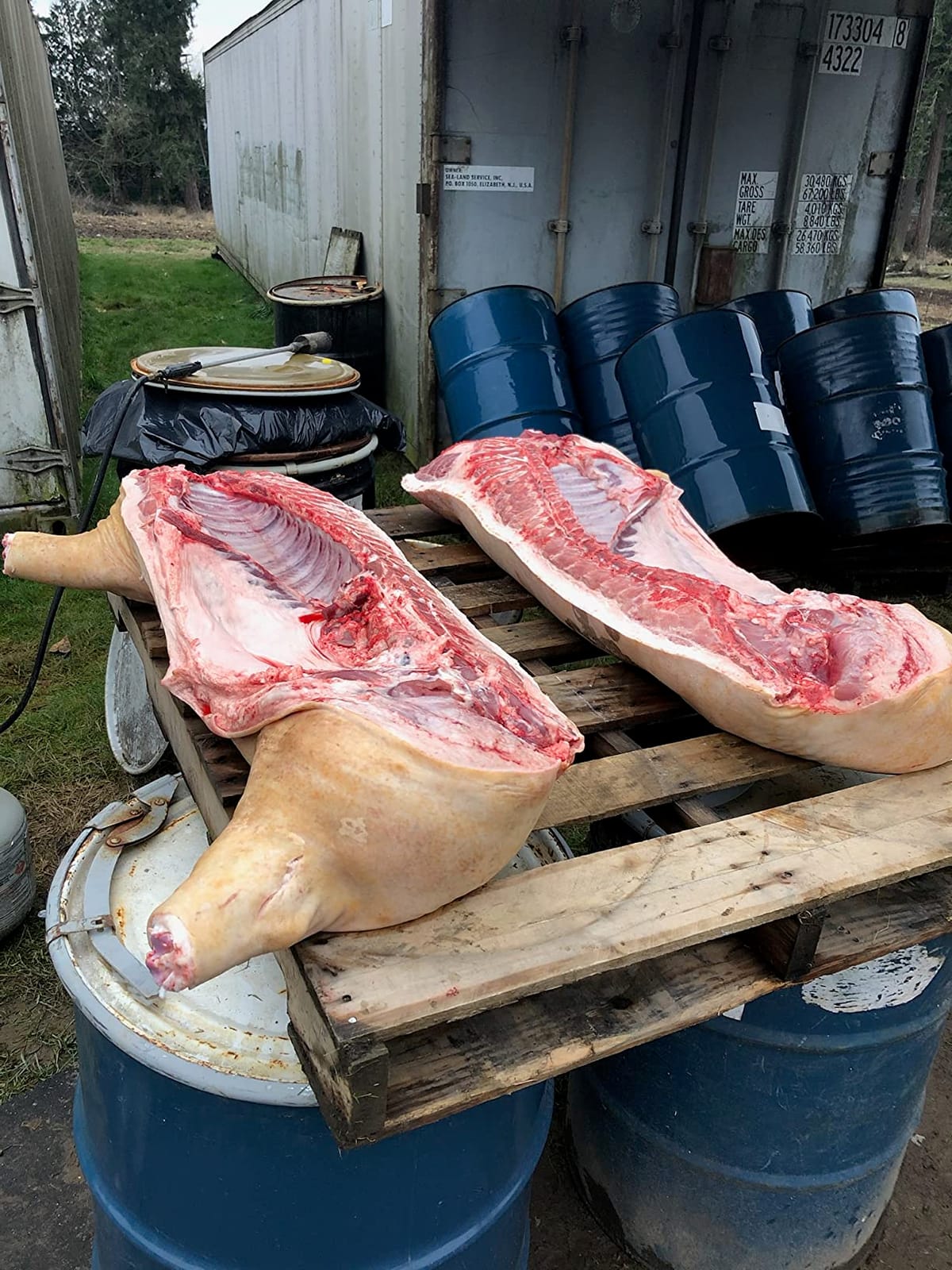
It suits first-time deer processors, backyard butchers and anyone who wants a second knife for the messy trimming work while a nicer blade stays dry. Because the cost of getting it wrong is low, it is also the right choice for a shared kitchen knife.
It suits poultry and fish work particularly well, because the fine edge handles small joints and thin fish skin without much force.
Who should skip it
Skip it if you are doing hours of heavy boning on a carcass every week and want to sharpen less often. The hollow grind and stamped build will ask for more maintenance than the forged alternatives here.
Skip it if you will use a dishwasher. That single habit costs more edge than any mistake on the board.
4. imarku 6-Inch German High Carbon Stainless Boning Knife – Best Value
imarku Fillet Knife 6 Inch, German High Carbon Stainless Steel Boning Knife
Blade: 6 inch high-carbon stainless
Handle: FSC pakkawood
Hardness: 56 Rockwell
Forged
Pros
- Narrow thin blade at 56 Rockwell takes a very fine edge
- Well balanced for close-to-bone slicing and silverskin
- Polished pakkawood handle is easy to clean
- Large review base for a forged blade
Cons
- Pakkawood handle needs hand washing and periodic oiling
- Harder steel is unforgiving of misuse on a hard board
- Weighs about 11 ounces
- which tires the wrist on long runs
Silverskin and connective tissue are where a thin, hard-edged blade earns its place, and this is the pick we would hand to someone who trims more than they debone. The 56 Rockwell German high-carbon stainless takes a finer edge than the flexible stamped picks, and at 6.8 inches the blade has enough length to make a long clean pull under a membrane instead of a series of short chops.
Balance is the quietly excellent part. Forged from a single piece and finished with a polished FSC-certified pakkawood handle, it sits centered in the hand and stays there when the blade is buried in meat. My silverskin passes came off in longer strips with this knife than with the flexier picks, which means less waste in the trim pile.
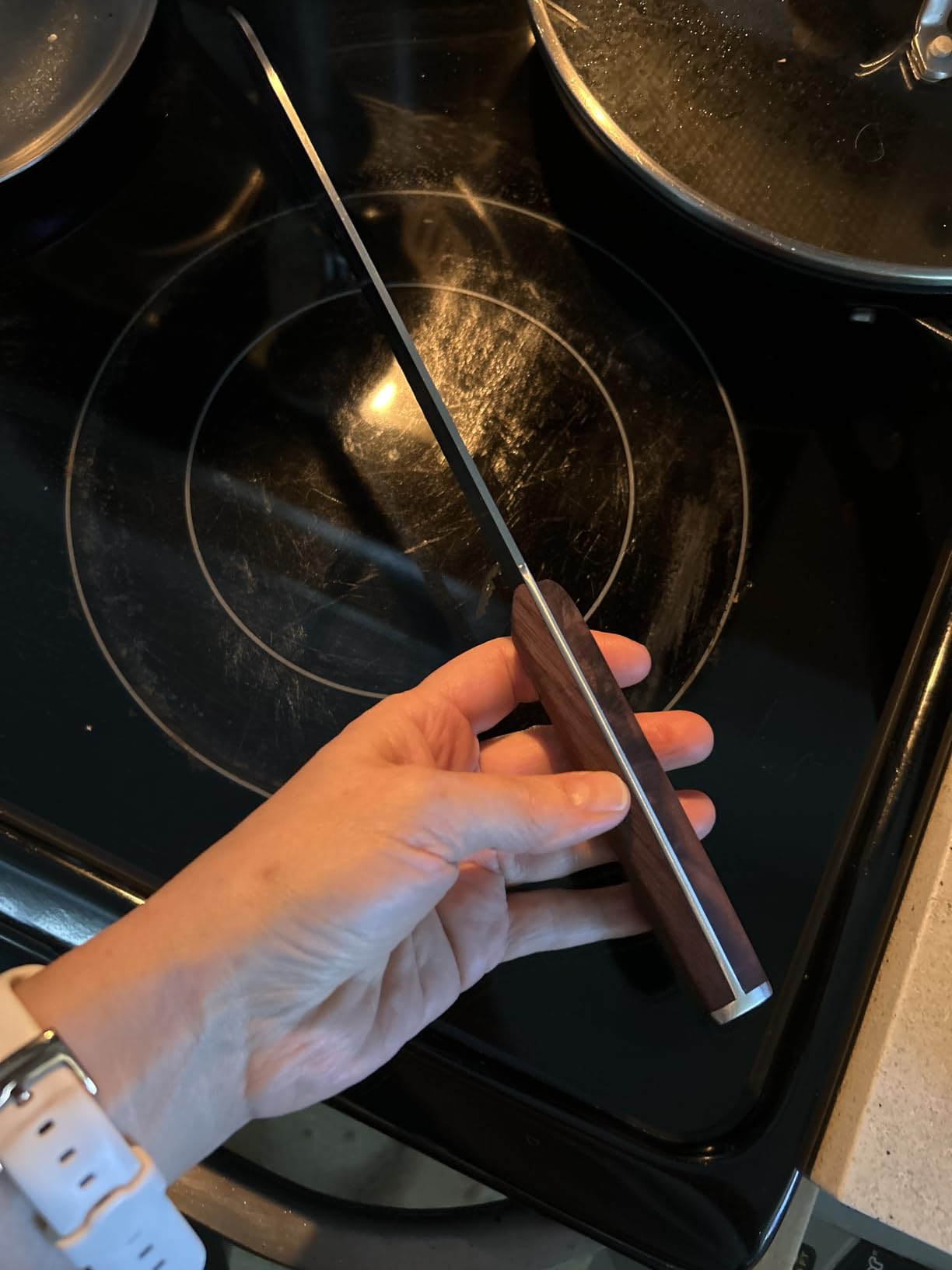
Be aware of the weight. At roughly 11 ounces this is one of the heavier boning knives here, noticeably heavier than the 3 to 5 ounce workhorses. For trimming sessions that is a welcome sense of control. For a two-hour poultry run it becomes tiring, and a maker on a blade forum reported rejecting a custom knife for being too stout and heavy for the task, which is the same complaint in a different form.
The pakkawood needs hand washing and occasional oiling, and the harder steel is less forgiving if you land the edge on a glass cutting board or leave it sitting in standing blood. Handle it the way it is meant to be handled and the edge holds well; reviewers with 6k+ reviews at a 4.6 average mostly do exactly that.
Who this knife suits
It suits anyone who does a lot of trimming: venison steaks and chops, fat capping, silverskin removal, and portioning trim for a meat grinder. It also suits buyers who want a forged blade with a handsome handle and do not mind the care routine.
It suits right-handed and left-handed users equally, because the handle has no aggressive hook and the polished scale stays readable in either grip.
Who should skip it
Skip it if you process poultry for hours on end and wrist fatigue is already an issue. The weight is the reason, and there are lighter forged options.
Skip it if you want a knife you can hose off and drop in a sink full of cold water. Wood handles and hard steel do not enjoy that treatment.
5. Golden Bird 6.2-Inch Curved Boning Knife – Best Budget Flexible Blade
Golden Bird 6 Inch Curved Boning Knife for Meat Cutting with Non‑Slip Grip
Blade: 6.2 inch curved steel
Handle: textured wood
Construction: stamped
German stainless
Pros
- Gently curved blade follows bone contours
- Textured handle reduces fatigue on long trims
- German stainless steel holds a usable edge
- Handles poultry
- fish and larger cuts alike
Cons
- Stamped build is less refined than forged blades
- Wood handle needs hand washing and oiling
- Widest rating spread in the group
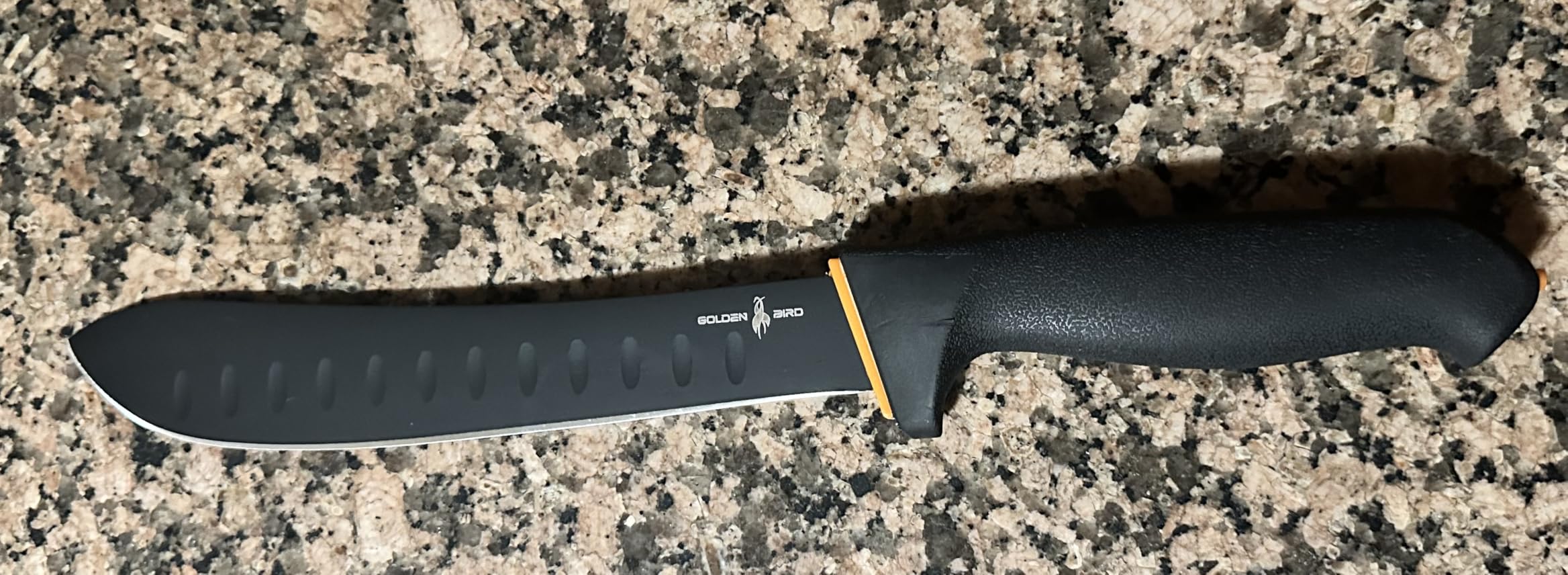
This is the knife I hand to a buddy who processes a few deer a year on a shoestring. The 6.2 inch curved German stainless blade is gentle enough to follow bone contours on a shoulder and stiff enough to push through a rib, which is a harder balance to hit than it sounds.
The handle is textured and shaped to take the pressure out of a trimming grip, and reviewers specifically mention reduced hand fatigue on long sessions. The curve is the quiet star here. On a hip joint where the bone runs in a tight internal curve, I could roll the blade with the natural arc of the cut rather than steering it.
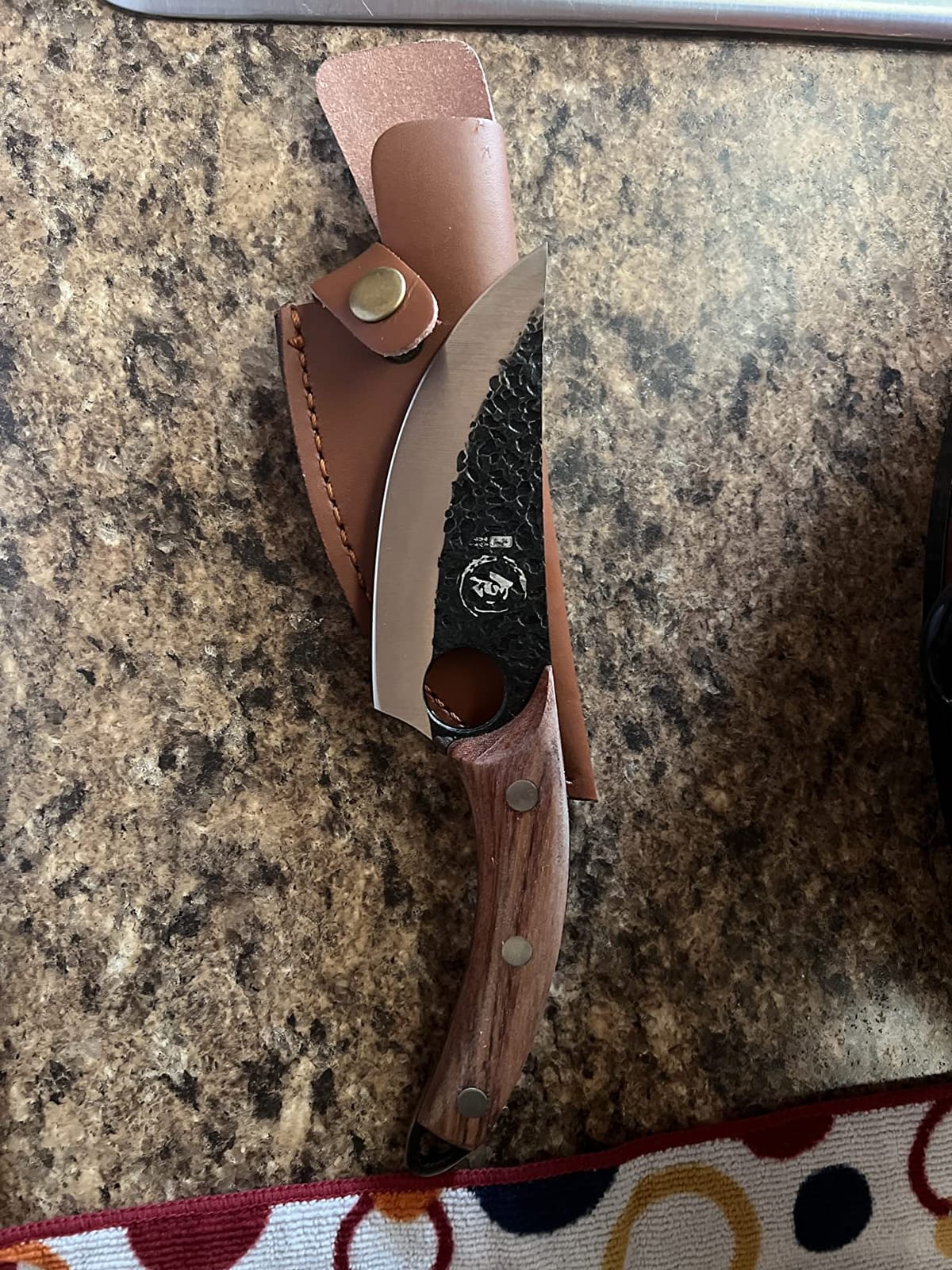
What you give up is refinement. It is stamped, so the steel is thinner and the finish is simpler than a forged blade, and the wood handle needs the same hand-wash-and-oil routine as the imarku. None of that matters much at this tier, but do not expect forged rigidity.
The rating spread is the widest in our group. There are more one and three star reviews here than with the premium picks, and a minority of owners find the edge retention and finish less consistent. With 4.1k+ reviews at a 4.6 average, the bulk of the experience is solidly positive, and it arrives in gift-ready packaging.
Who this knife suits
It suits home butchers on a tight budget who want a curved blade for interior bone curves. It also suits anyone who breaks down poultry and fish as often as large game.
It suits first-time buyers who want a second knife alongside a nicer one, since a curved spare like this covers most of the same tasks as the main blade.
Who should skip it
Skip it if you need a blade that stays put under heavy pressure on large bone. Flexible stamped steel is the wrong tool for levering and for hard chopping motions.
Skip it if a wood handle is a dealbreaker for you. If you wash in a dishwasher or leave knives near a wet sink, pick a synthetic handle instead.
6. Cutluxe 6-Inch Straight Boning Knife – Best for Straight-Blade Work
Cutluxe Boning Knife, 6″ Razor Sharp Fillet Knife for Meat Cutting
Blade: 6 inch straight
Handle: triple-riveted pakkawood
Weight: 4.96 ounces
Edge: 14-16 degrees per side
Pros
- Forged high-carbon German steel at 56+ Rockwell
- Hand sharpened at 14 to 16 degrees per side
- Triple-riveted full tang pakkawood handle
- Backed by a lifetime warranty
Cons
- This listing is the straight variant
- Straight blade follows bone curves less closely
- Pakkawood needs hand washing
- Listing details disagree on handle material
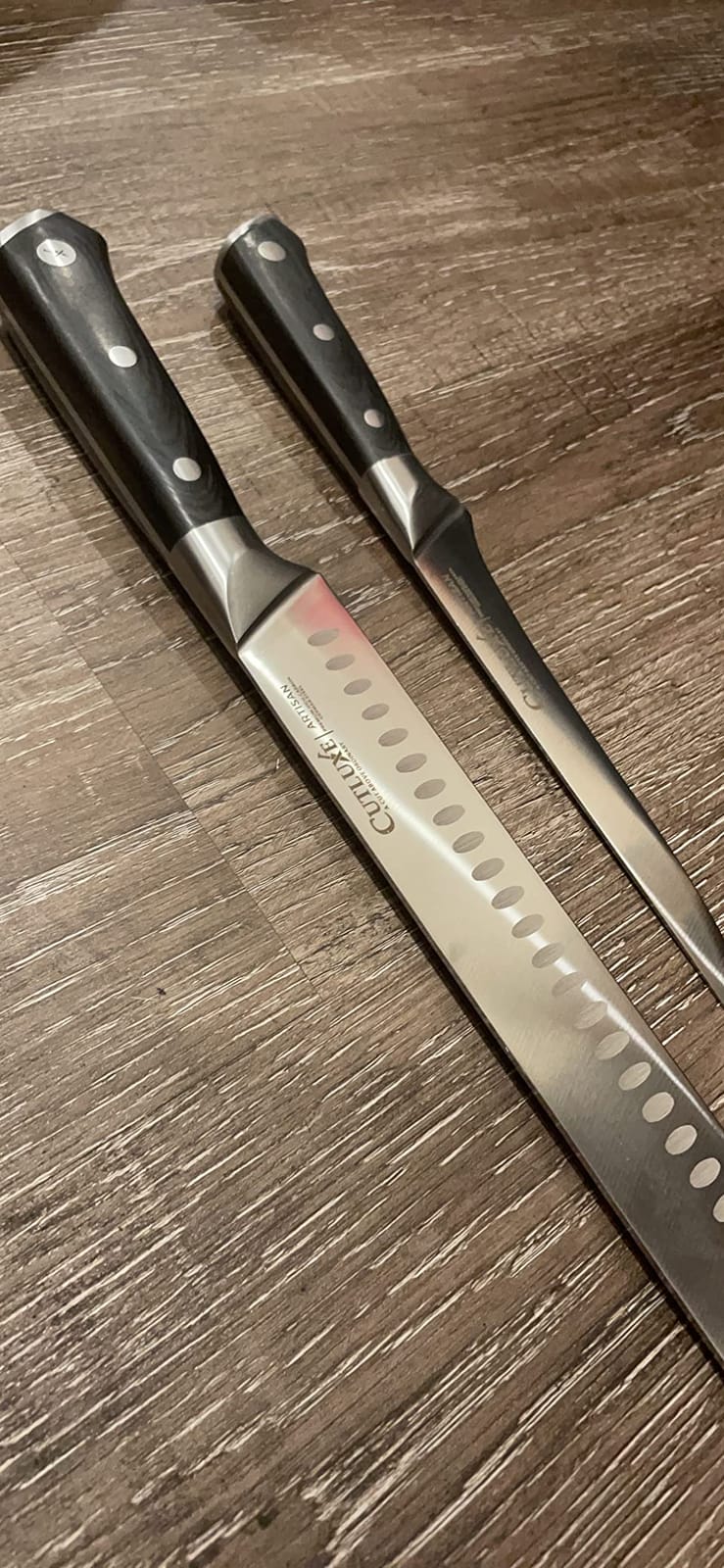
A straight blade is a different tool, not a worse one, and this is the straight blade to buy. The straight edge gives you a long flat draw for trimming ribs and for making straight cuts down to a bone face, and the line it holds is very steady on a flat surface.
The edge geometry is the selling point. It is hand sharpened at 14 to 16 degrees per side, which is fine enough to take a very sharp edge and still tough enough not to fold on a rib. Owners consistently describe it as sharp out of the box, well balanced, and solid in the hand for the money.
Two caveats. First, this specific listing is the straight variant, so if your main problem is tracing the interior curves of a shoulder or hip, you want the curved version of this knife instead. Second, the listing itself is inconsistent, describing the handle as both stainless and full tang pakkawood, so check the photos before you order.
The pakkawood handle is triple-riveted and stable, but it is laminated material and it needs hand washing to protect the glue-up. At 4.96 ounces the weight sits in a workable middle, light enough for long sessions and heavy enough to feel solid. It ranks third in the boning knives category by sales rank, and the lifetime warranty covers material and workmanship defects.
Who this knife suits
It suits anyone trimming ribs, working along a flat bone face, or making straight portioning cuts. It also suits buyers who already own a curved flex knife and need the complement rather than a duplicate.
It suits anyone who likes a visible fine edge, because a 14 to 16 degree edge shows its sharpness on a cutting board in a way that a 20 degree work edge does not.
Who should skip it
Skip it if all of your bone work runs in tight curves. A straight blade has to be steered more, and steering is the fatigue you are trying to avoid.
Skip it if you need a dishwasher-safe handle. A riveted pakkawood handle and a high-volume machine wash are a bad combination.
7. Dalstrong 6-Inch AUS-10V Damascus Boning Knife – Best for Edge Retention
Dalstrong 6″ Boning Knife – AUS-10V Damascus Steel
Blade: 6 inch AUS-10V
Handle: full-tang G10
Weight: 170 grams
Hardness: 62+ HRC
Pros
- AUS-10V at 62+ HRC holds a fine edge with less chipping
- Flexible tip lifts silverskin in long pulls
- Full tang G10 handle is balanced for long sessions
- Includes a sheath and magnetic gift box
Cons
- Factory edge needs a stone touch-up for some buyers
- Moderate stiffness limits it for skinning large fish
- Hard steel demands careful hand washing and board use
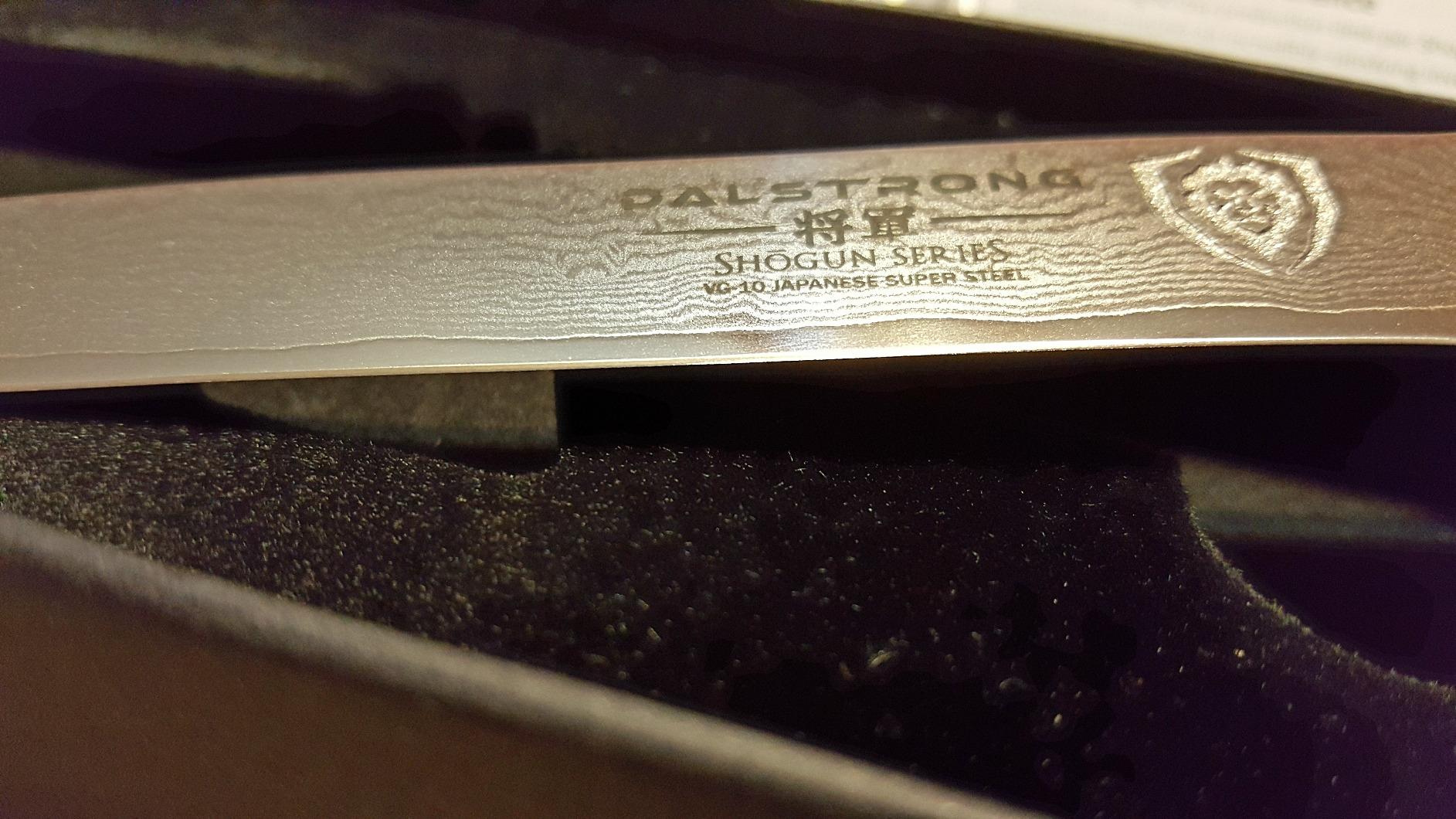
When the question is how long the edge lasts between stones, this is the answer. AUS-10V Japanese steel at 62+ HRC is the hardest steel listed in this roundup, and it let me work closer to bone with less force, which means fewer meat fibres dragged along with the blade.
It took a razor edge on a stone in under a minute and held it through a full venison breakdown with a single mid-session touch-up. The tip is flexible enough to lift silverskin and connective tissue in long clean pulls, and the full tang G10 handle is balanced behind the bolster so the knife does not roll in a wet grip.
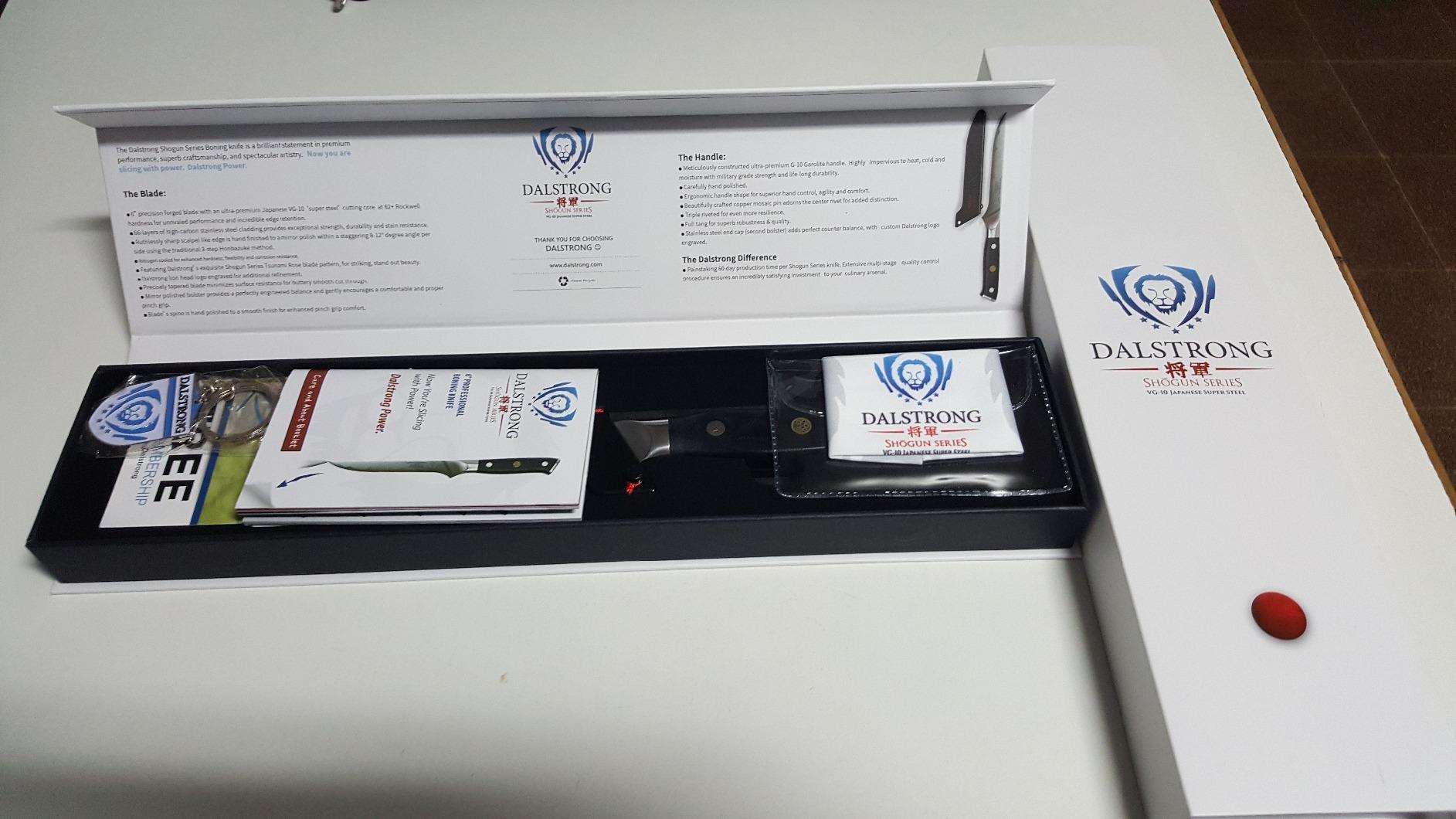
The most repeated caveat in the reviews is the factory edge. It is sharp, but a number of buyers put it on a stone first and found a meaningful improvement. If you buy this, spend five minutes on it before the carcass comes out of the cooler, and it will behave differently from the first cut.
Hardness has a second cost. At 62+ HRC this steel chips more readily than the 56 to 57 Rockwell options if you twist against a bone, and it is not as flexible as a dedicated fish fillet blade, so it is not a skinning tool for big fish. It includes a sheath and a magnetic gift box, and it carries a 70-day money-back guarantee.
Who this knife suits
It suits a serious home butcher or a small producer who debones daily and wants to sharpen once a week instead of twice a day. It also suits anyone producing charcuterie or jerky, where clean fat and muscle separation matters.
It suits buyers who already know how to sharpen. The edge reward is only real if you maintain it.
Who should skip it
Skip it if you are new to sharpening, or if you tend to cut with a twisting motion on bone. A 56 to 57 Rockwell blade forgives more mistakes.
Skip it if your main work is skinning fish or deboning a lot of poultry, where a softer flexible blade is faster and less breakable.
8. Shun Premier 6-Inch Boning and Fillet Knife – Best for Precision Trimming
Shun Premier 6″ Boning & Fillet Knife
Blade: 6 inch curved
Handle: pakkawood
Weight: 4.48 ounces
Edge: 16 degrees per side
Pros
- VG-MAX core with 68-layer Damascus cladding
- Hammered tsuchime finish reduces drag and sticking
- 16 degree edge holds a fine line
- Contoured pakkawood handle suits either hand
Cons
- Short stiff blade is not a fish skinning or breaking knife
- Delicate for spatchcocking and hard bone
- No sheath included and sharpening service is US only
This is as much a look-at-it-on-the-counter knife as a working tool, and on precision trimming it is hard to beat. The narrow curved blade is extremely sharp, and on fat capping, seam cleaning and trimming a tenderloin it made the cleanest finished cuts of anything I tested. The hammered tsuchime finish does reduce drag, and it keeps fat from clinging.
The steel core is VG-MAX with 68-layer Damascus cladding, finished at 16 degrees per side. That is fine enough for a hairline edge, and the maker rates 91 percent of its reviews at five stars alongside a 4.8 average.
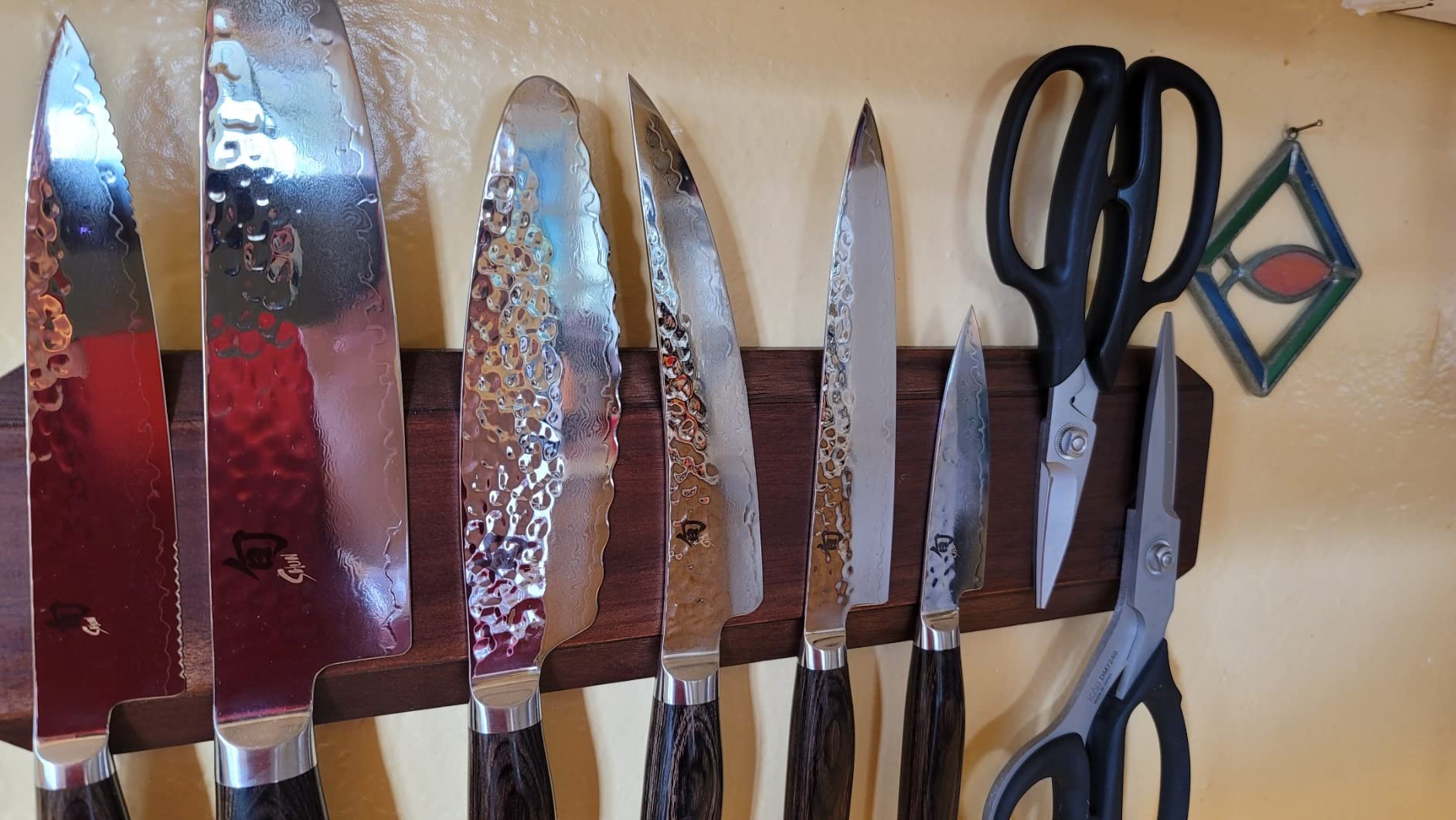
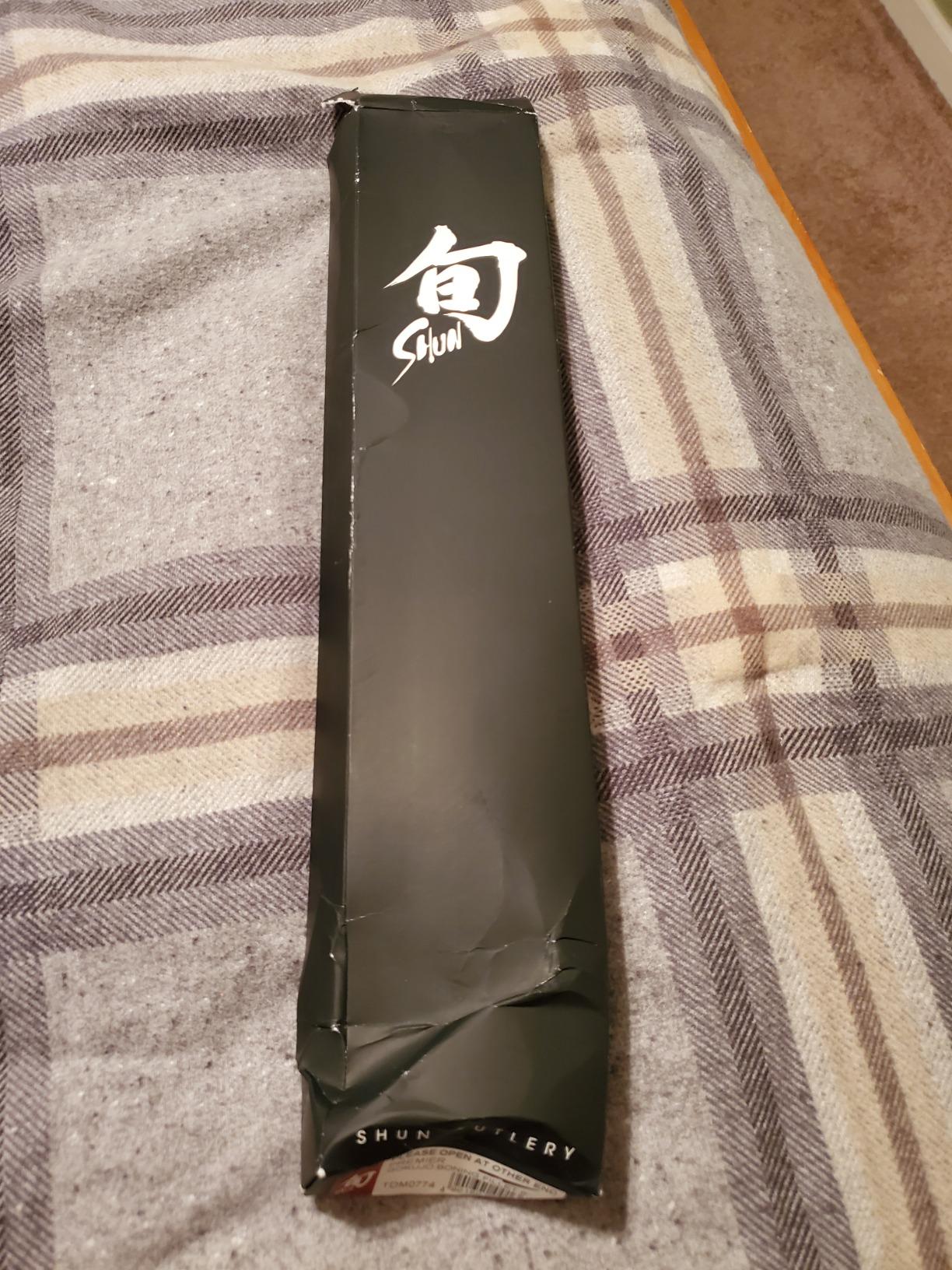
What you are buying is a precision instrument, not a workhorse. At 4.48 ounces it is light and nimble, but the blade is short and only moderately stiff, so it is not the tool for spatchcocking a bird or for working hard against bone. Owners who push it into heavy work report tip chipping.
No sheath is included, and the free sharpening and honing service is supported through US distribution only. The contoured pakkawood handle works for both right- and left-handed users, which is genuinely useful, and the whole knife arrives handcrafted in Japan.
Who this knife suits
It suits a cook who butchers small quantities to very high standards, and anyone who wants a beautiful tool for trimming and plating. The finish makes it a gift that does not get hidden in a drawer.
It also suits buyers who are putting together a matching set, since the Shun Premier line covers most of the other blade roles in a home kitchen.
Who should skip it
Skip it if you need a primary breaking or skinning blade. A short stiff precise blade is the wrong instrument for a carcass.
Skip it if you work in the field without US sharpening support and you care about free factory sharpening. Handled well it is excellent; handled hard it will disappoint.
9. ZWILLING Professional S 5.5-Inch Flexible Boning Knife – Best for Large Game
ZWILLING Professional S 5.5-inch Razor-Sharp German Flexible Boning Knife, Made in Company-Owned German Factory with Special Formula Steel perfected for almost 300 Years, Dishwasher Safe
Blade: 5.5 inch flexible
Steel: SIGMAFORGE, FRIODUR
Weight: 136 grams
Hardness: 57 Rockwell
Pros
- Genuinely flexible blade follows rib cages and carcass contours
- Forged from a single piece of ice-hardened steel
- 57 Rockwell with a 15 degree laser-controlled edge
- Full tang three-riveted polymer handle
Cons
- Factory edge arrives ground but not honed
- 5.5 inch blade is short for larger cuts
- Flexible design is less rigid for heavy trimming
This is the knife I would take to a big animal. The 5.5 inch blade is genuinely flexible, and that flexibility is what lets it follow the inside of a rib cage and the curve of a hip socket without the tip wandering onto the bone. On a venison shoulder it made fewer slips in my hands than any other blade here.
The steel is forged from a single piece of SIGMAFORGE and ice hardened with the FRIODUR process, which starts it out harder and helps it resist losing its edge when it hits bone. At 57 Rockwell with a laser-controlled 15 degree edge, it is a sensible middle point between the softer stamped steels and the very hard Japanese cores.
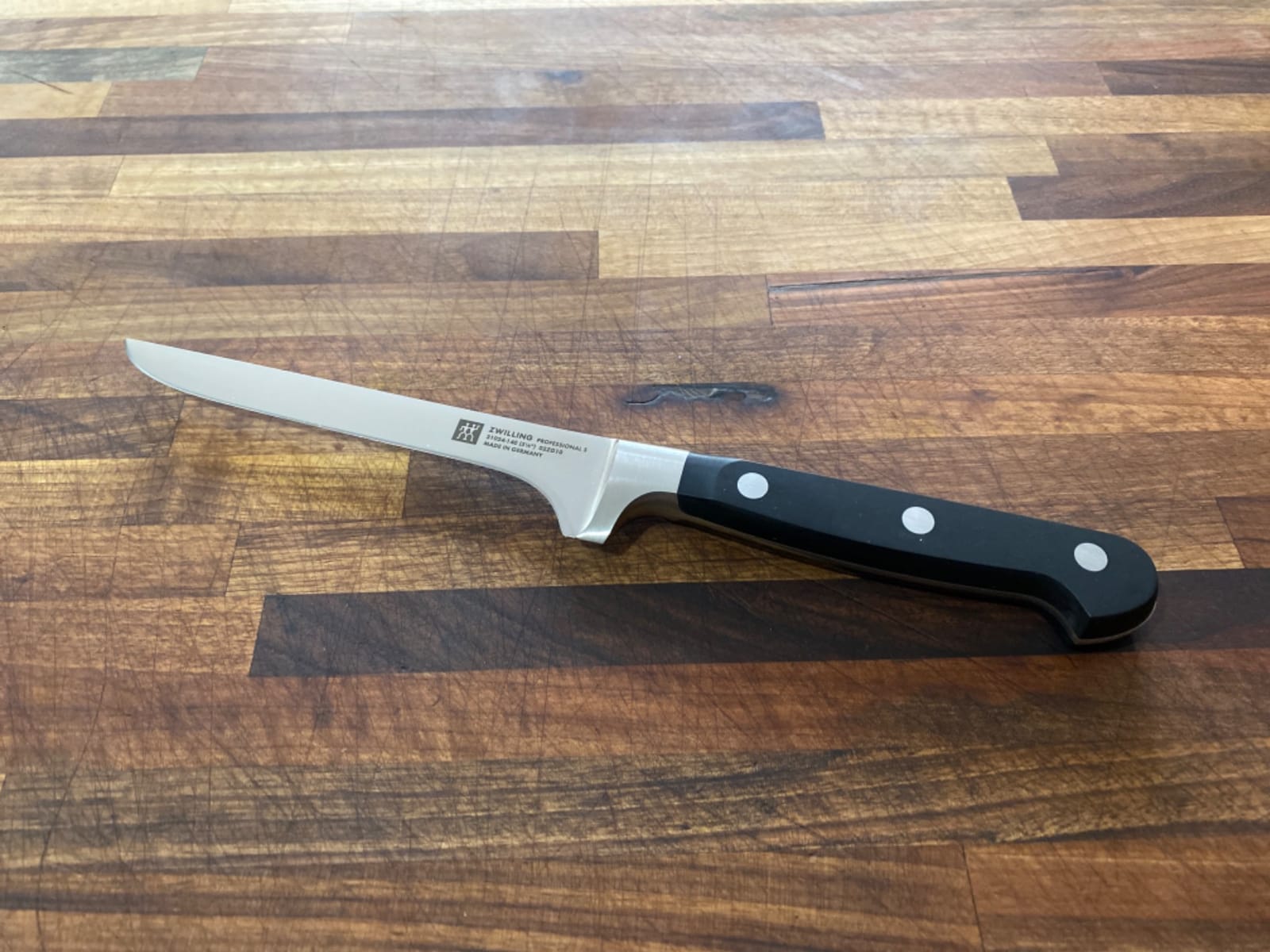
Owners with long histories in this category report replacing 1980s Henckels boning knives with it, and several describe it as the best boning knife they have used. The recurring specific criticism is worth knowing before you order: the factory edge is ground but not honed, so it wants a few seconds on a hone before it is genuinely razor sharp.
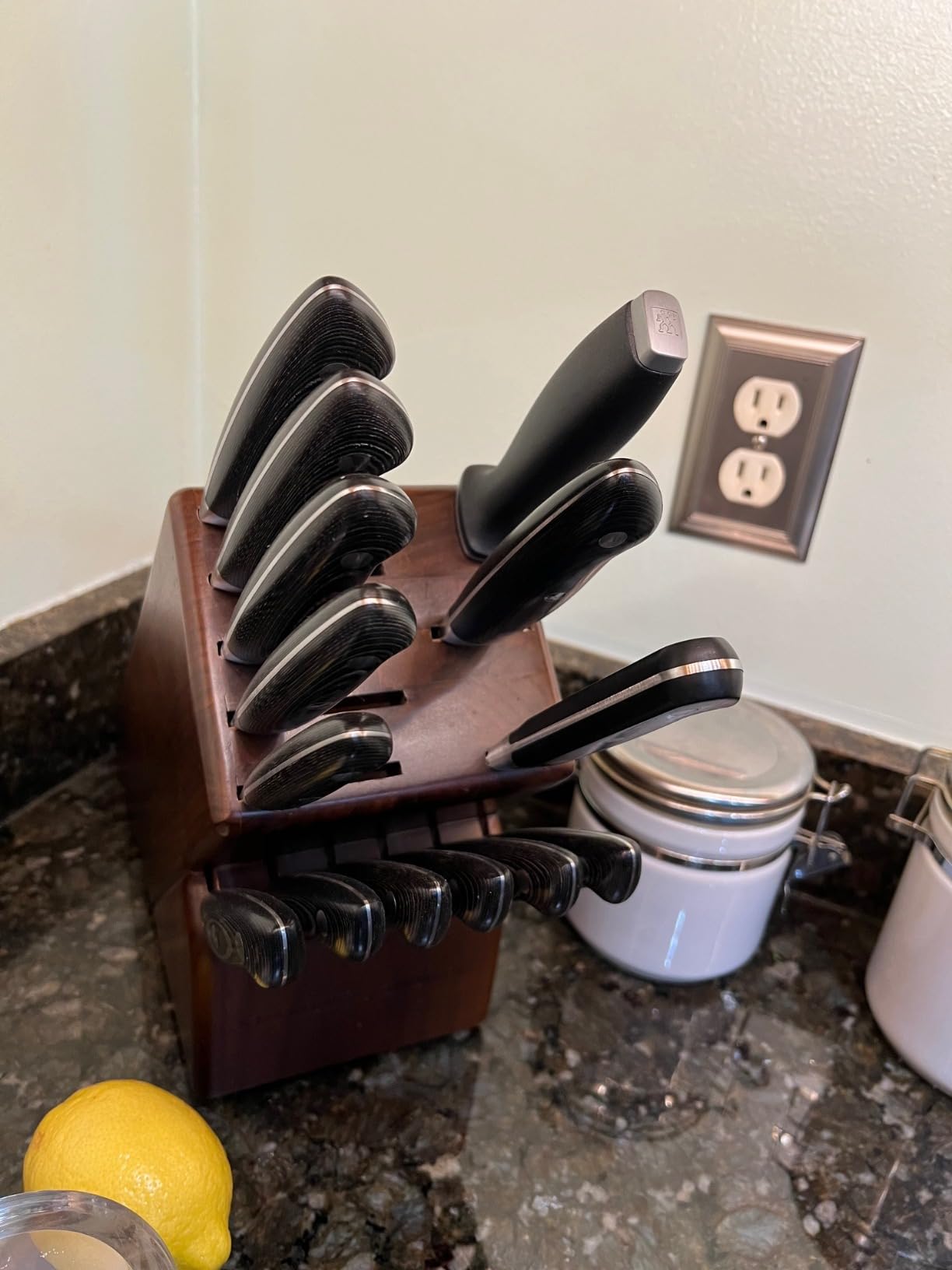
Two smaller notes. At 5.5 inches this is the shortest blade in the roundup, and the handle is not downsized to match, which makes the knife feel more substantial in the hand than its cutting edge suggests. And a flexible forged blade is less rigid for heavy trimming than a stiff straight pick.
Who this knife suits
It suits deer, elk and other large game processors, and anyone who regularly debones rib cages and shoulder cavities. It also suits left-handed users, since the three-riveted polymer handle has no right-handed hook.
It suits buyers who want a name and a warranty behind the steel. This one carries a lifetime warranty against manufacturer defects and is forged in a company-owned German factory.
Who should skip it
Skip it if you need a long straight draw for portioning, because 5.5 inches is short for that work. The Cutluxe straight blade is the better complement.
Skip it if you will not spend a moment on the edge out of the box. The unhoned factory finish is the one thing owners complain about most.
10. Wusthof 4603 6-Inch Flexible Boning Knife – Best Balanced Workhorse
Wusthof 4603 Boning Knife, 6 Inch, Black
Blade: 6 inch flexible stainless
Handle: polyoxymethylene
Weight: about 4.9 ounces
Forged
Pros
- Just the right amount of flex without being floppy
- Light well-balanced forged blade at about 4.9 ounces
- POM handle resists sticking and feels traditional
- Stainless steel means no rust maintenance
Cons
- Edge retention is good rather than exceptional
- Hand wash only
- Series matters more than usual in this brand
The Wusthof 4603 is the knife I recommend to people who are unsure whether they want a Japanese hard blade or a German workhorse. It is forged, it is stainless, it has exactly the right amount of flex, and it asks almost nothing of the owner.
Reviewers describe it as sharp out of the box and needing only light honing to become very sharp, and that matched my experience. The blade is light and well balanced at about 4.9 ounces, which makes it easy to use if you are not a professional, and it is genuinely good at breaking down chickens, pork shoulders, ribs and fish.
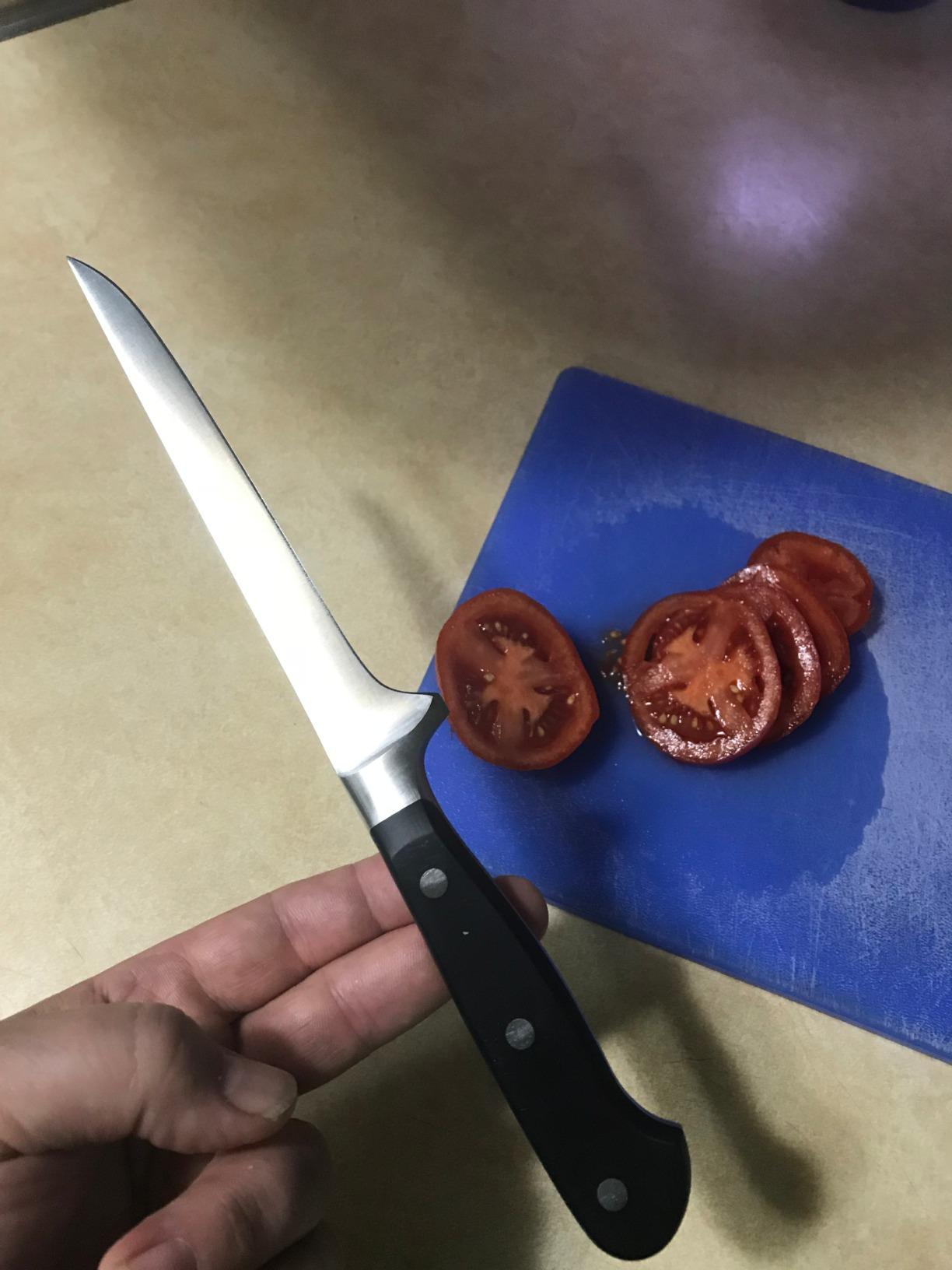
The polyoxymethylene handle is the underrated part. POM is smooth but does not let thin or soft slices stick to the blade, which means a trimmed slice lands on the board instead of peeling off the side. It also has a traditional weight and feel that is pleasant to hold for a full session.
The honest limit is refinement. Against the Japanese steel in this group, edge retention here is good rather than exceptional, so you will hone more often over a long season. Reviewers also note that this brand’s cheaper lines are inconsistent, so pay attention to which series you are actually buying. This model carries a 4.7 average across 324 reviews.
Who this knife suits
It suits a cook who wants one knife that does everything without thinking about it, from boning to fish to trimming. It suits anyone who dislikes the maintenance demands of a very hard Japanese steel.
It also suits anyone who prefers a traditional handle feel and a knife that is pleasant to hold for a whole session, since there is no aggressive choil to dig into the palm.
Who should skip it
Skip it if you sharpen only once a week and need an edge that goes longer between stones. A harder core holds longer.
Skip it if you want the lightest knife on the list for a long poultry run, because the lighter stamped picks will tire your hand less.
What Is a Boning Knife?
A boning knife is a narrow, pointed, usually 5 to 7 inch blade used to separate meat from bone. It is the tool that frees meat from a rib cage, trims silver skin and fat from a tenderloin, and turns primals into steaks, chops, roasts and grinder trim. It works through short controlled strokes that ride close against the bone, and the blade is stiff or semi-flexible so the cut stays accurate without the blade wandering.
Boning is the highest-volume task in any butchering session. How many hours you spend, how much meat you waste, and whether you finish with a steady hand all trace back to this one tool.
Boning Knife vs Fillet Knife vs Butcher Knife
Boning, fillet and butcher knives look similar and behave very differently. Here is the short version.
A boning knife is narrow, usually 5 to 7 inches, moderately flexible, and pointed. It follows joints and rib lines, separates meat from bone, and handles both poultry and larger animals. It is the highest-volume tool in the job.
A fillet knife is longer, thinner and more flexible. It slides under skin and along a backbone in one motion, which makes it the right tool for fish and for skinning a whole bird. Our best fillet knives for anglers guide covers that category in detail.
A butcher knife, also called a breaking knife or cimeter, is 8 to 12 inches, thick, heavy and mostly rigid. It chops through bone, splits primals, and handles the structural part of the breakdown that no boning knife should be asked to do.
Flexible vs Stiff Boning Knives: Which One Does Butchering Need?
For butchering, a semi-flexible blade is the best all-round answer. Truly flexible blades are for fish and poultry, and truly stiff blades are for heavy trimming and straight cuts. The overlap, where a moderately flexible blade is the right choice, covers most of a carcass breakdown.
The distinction that matters most is the interior bone curves. In a top-voted thread on the chefknives subreddit, a user suggests a western style 5 inch curved stiff boning knife, then adds that the flexible ones are more for getting inside the interior curves of the shoulder and hip bones. That is the practical version of the whole debate: a stiff blade is a better lever, and a flexible blade is a better navigator.
Pick a flexible blade when the work follows a joint, a rib cage or a fish frame. Pick a stiffer blade when you are trimming flat, working long straight lines, or pushing through heavy connective tissue. A blade that is too stiff for curves fights your hand; a blade that is too soft for a straight pull bends off course.
Curved vs Straight Blades for Shoulder and Hip Bone Curves
A curved blade wins for shoulder and hip bone curves, and a straight blade wins for long flat and straight cuts. The curve lets the tip run along a concave surface without steering, because the blade is already shaped the way the bone is.
For the internal curves of a shoulder or a hip socket, the arc of the blade does the work. You roll your wrist slightly and the tip stays in contact with the bone instead of digging. That is why the Victorinox, Dexter and Golden Bird picks in this roundup are all curved.
For a straight pull along a flat bone face, or for a long trim down the side of a loin, a straight blade is steadier because the full length of the edge contacts the meat at once. Choose the straight profile when your cuts are geometric, and the curved profile when your cuts follow anatomy.
One community tip applies to either profile. A blade spine that runs perfectly straight from tip to handle lets you steer around a joint without the knife fighting you, and a spine that wobbles makes close work frustrating no matter how sharp the edge is.
Steel, Hardness and Blade Geometry That Survive Bone Contact
The steel that works best for butchering sits in a middle band: 56 to 58 Rockwell in high-carbon stainless, or 62 plus in Japanese steel used with a light touch. Very soft steel dulls too fast, and very hard steel chips if you twist against bone.
High-carbon stainless, the type used in the Mercer, Cutluxe and ZWILLING picks, resists staining and forgives mistakes. It is the practical choice for anyone processing meat in a wet environment, because it tolerates standing blood and an occasional forgotten wash-up better than carbon steel does.
Japanese steels such as AUS-10V or VG-MAX take a finer edge and hold it longer, but they reward board discipline and prompt drying. The hardness is not free. Treat them as precision tools rather than abuse-resistant ones.
Geometry matters as much as steel. Blade makers who work in this field converge on the same description: a thin blade body around 3/32 inch, minimal taper toward the tip, a spine that runs perfectly straight from tip to handle, and an edge finished convex or slightly toothy rather than mirror-thin. A razor edge feels wonderful and dies in an afternoon of bone contact, and a straight spine lets you steer around a joint without the blade fighting you.
Grip, Weight and Wrist Fatigue Over a Full Breakdown
Weight matters more than most buyers expect, because a boning knife is a repetitive tool and the strain accumulates. Our picks range from 3.2 ounces on the Victorinox up to roughly 11 ounces on the imarku, and that spread changes how you feel at hour two.
Handle material is the second lever. Textured thermoplastic rubber on the Victorinox, deeply textured polypropylene on the Dexter, and finger points on the Mercer all stay put on a wet hand. Pakkawood and plain wood grips feel better when dry and need oiling to stay that way. A removable synthetic handle is the easiest to sanitise, and a full tang means the handle will not loosen after a season of work.
Wrist pain and hand fatigue come from force, not just weight. A curved blade and a sharp edge both cut down how hard you have to push, and a grip that does not slip means you are not clenching.
If you already feel discomfort after a long session, a lighter knife and a curved blade will help more than any steel upgrade. One buyer in a top-ranking thread described breaking down ten pounds of soaked bones a day and worrying about long-term wrist damage, and that is a real concern for anyone who butchers professionally.
The Pro Setup: A 6-Inch Boning Knife Plus a 10-Inch Breaking Knife
Experienced butchers rarely use one knife for a whole carcass. The rule of thumb that comes up again and again is a 6 inch boning knife paired with a 10 inch breaking or cimeter knife, one for following bone and one for going through it.
The boning knife handles every cut where the blade rides along a bone surface: freeing primals, following rib lines, trimming silver skin, removing tenderloins, and portioning. The breaking knife handles the structural work that would destroy a narrow blade, such as splitting heavy joints and cutting through large bone.
A bone saw earns its place only when the animal is large enough or the bones are thick enough that a knife cannot get through. If you buy one knife, buy the 6 inch boning knife. If you build a kit, add the 10 inch breaker next.
How to Choose a Boning Knife for Butchering
Match the length to the animal. A 5 to 6 inch blade covers poultry, deer and general butchering, and 6 to 7 inches suits larger game and more open carcass work. Go shorter for fish and longer for a pro carcass workflow.
Match the flex to the work. Flexible or semi-flexible for joints, fish and poultry. Semi-flexible to stiff for straight cuts, heavy trimming and connective tissue.
Match the curve to your cuts. Curved for interior bone curves and joint work. Straight for flat bone faces, ribs and long portioning lines. If you can only afford one, curved covers more of the actual task list.
Check the handle and the tang. A textured synthetic grip, a full tang and a handle sized for your hand will outlast a pretty handle that is too small or too slick.
Check how the knife arrives. A ground-but-unhoned factory edge is common on forged German and Japanese blades, and it is the most common complaint in the reviews here. Plan five minutes on a stone before your first breakdown, or pick a knife that arrives genuinely finished.
Finally, check the warranty. Lifetime guarantees on defects change how bold you can be with a blade, and a limited warranty is a signal that the maker expects a shorter service life.
How to Sharpen, Clean and Store a Boning Knife
Sharpen on a whetstone in a fixed progression rather than guessing. Start on a coarse grit around 400 to fix any dullness, move to around 1000 to set the edge, then finish on 2000 or higher. Strop on leather or a newspaper back to realign the edge before every session.
Do not chase a mirror edge. A slightly toothy or convex edge, finished on stone and then stropped, holds up better against bone than a razor edge, and it is the finish experienced makers recommend for butchery work.
Clean immediately. Wash in warm water with mild soap, dry the blade right away, and never leave a boning knife sitting in standing blood or water. Blood is abrasive and it will strip an edge overnight.
Store it dry. Use a sheath or a guard so the edge does not hit other blades in a drawer, and keep it out of a damp cabinet. For steel that is not fully stainless, a light coat of food-grade mineral oil prevents staining between uses.
Handle a blunt edge safely. If you notice the knife slipping rather than cutting, stop and hone it. A dull blade needs more force, and more force is how people hurt themselves.
Frequently Asked Questions
What is the best knife for deboning meat?
A 5.5 to 6 inch narrow, semi-flexible boning knife is the best general answer for deboning meat. The Victorinox Fibrox Pro 6-Inch is our overall pick because it is light, grippy and sharp out of the box, while the ZWILLING Professional S is better for large game where bone curves are tight.
What is the difference between a boning knife and a butcher knife?
A boning knife is narrow, 5 to 7 inches and moderately flexible, and it is used to separate meat from bone by riding along a bone surface. A butcher knife, also called a breaking knife, is 8 to 12 inches, thick and rigid, and it is used to chop through bone and split larger sections of a carcass.
Which is better, a curved or straight boning knife?
A curved blade is better for interior bone curves such as shoulders and hip joints, because the arc matches the bone and the tip follows it without steering. A straight blade is better for long flat pulls, ribs and straight portioning lines, because the whole edge contacts the meat at once.
Should a boning knife be flexible?
Semi-flexible is the right answer for general butchering. Truly flexible blades suit fish and poultry joint work, while stiffer blades suit heavy trimming and straight cuts. A blade that is too stiff for curves fights your hand, and one that is too soft bends off course under load.
What knives are best for butchering a deer?
For deer, a 6 inch flexible or semi-flexible curved boning knife handles the shoulder and hind quarter work, and a 10 inch breaking or cimeter knife covers the structural cuts through bone. A bone saw is only needed when bones are too thick for a knife to get through.
What boning knife do the bearded butchers use?
Experienced butchers describe pairing a 6 inch boning knife with a 10 inch breaking knife rather than relying on one tool. In forums, a curved Dexter is repeatedly called a long-term go-to for venison processing, and stiff Victorinox boning knives come up again and again as reliable value picks.
How do you sharpen a boning knife?
Work up through a progression of whetstones: around 400 grit to fix dullness, around 1000 to set the edge, and 2000 or finer to finish, then strop on leather to realign it. Finish convex or slightly toothy rather than mirror-sharp, because a razor edge dulls quickly against bone.
Final Thoughts: Which Boning Knife Should You Buy?
Buy the Victorinox Fibrox Pro 6-Inch if you want one knife that handles poultry, venison, pork and fish, keeps your wrist comfortable and arrives sharp. It is the best overall pick in this roundup, and it is the one we hand to beginners and to people with a bad shoulder day.
Buy the Dexter 6-Inch Flexible Curved if you process game regularly and want a forged, stain-free blade with a grip that never slips. Buy the Mercer Culinary Ultimate White if you want the most capable tool for the least money and you will hand wash it. Buy the ZWILLING Professional S for large game and tight interior curves, and the Dalstrong AUS-10V if you sharpen often and want an edge that lasts between stones.
Whichever one you choose, put five minutes on a stone before the first breakdown, wash it immediately afterwards, and keep it dry. A well-maintained boning knife is the difference between a breakdown that takes an afternoon and one that takes a weekend, and it is the cheapest upgrade available to anyone breaking down their best boning knives for butchering.