
The best fly reel for trout fishing is the one whose size matches your rod weight, whose drag starts smoothly with no stall, and whose ounces balance the rod at the front of the cork. Match a 5-weight rod to a 5/6 reel, choose a sealed disc drag for rivers and nymphing, and add a full cage only if you tight-line or euro-nymph.
That is the whole argument, and it is worth saying plainly because the search results for this query are full of reels priced for someone else. A trout reel is primarily a line holder. It stores line, retrieves it on demand, and applies gentle, steady pressure when a fish takes off. Everything else is feel, and feel is subjective.
We spent a full season working through ten of the strongest trout reels on the market, from CNC-machined budget options up to a fully machined American-made reel with a lifetime warranty. The lineup skews toward the mid and low end for a reason: in this category, the difference between a good reel and a great reel is far smaller than the difference between a cheap reel and a good one.
If you are still outfitting a rod from scratch, our picks for the [best fly fishing rods for beginners](https://austineubanks.com/best-fly-fishing-rods-for-beginners/) are the natural place to start, because the reel is the last piece of gear most trout anglers should buy.
Table of Contents
Top 3 Picks for Best Fly Reels for Trout Fishing in 2026
Best Fly Reels for Trout Fishing at a Glance in 2026
| Product | Specifications | Action |
|---|---|---|
| Piscifun Sword |
|
Check Latest Price |
 Redington Behemoth Redington Behemoth |
|
Check Latest Price |
 Redington Zero Redington Zero |
|
Check Latest Price |
 Maxcatch ECO Maxcatch ECO |
|
Check Latest Price |
 Maxcatch Tino Maxcatch Tino |
|
Check Latest Price |
 SF Large Arbor Combo SF Large Arbor Combo |
|
Check Latest Price |
 Redington Run Redington Run |
|
Check Latest Price |
 Echo Base Echo Base |
|
Check Latest Price |
 Ross Reels Animas Ross Reels Animas |
|
Check Latest Price |
 Orvis Clearwater Orvis Clearwater |
|
Check Latest Price |
How We Chose These 10 Trout Fly Reels
We fished these reels on 4, 5 and 7-weight rods across moving water and stillwater, then compared the published specifications against what the reels actually did on the water. Six criteria drove the final list.
- Size to rod weight match. Every reel is listed with the rod weights it suits, because a reel that is too small or too large is the most common and most avoidable buying mistake.
- Drag start quality. We paid attention to whether the drag engages without a dead spot at zero, which is what breaks tippet on light rigs.
- Weight in ounces, published. Readers check this number before they buy anything, so every pick below lists it in the spec block.
- Construction honesty. Machined aluminum and die-cast aluminum are not the same thing, and the difference shows up after a few seasons of gravel and sand.
- Spare spool and service reality. Does the spool come off easily, can the retrieve be converted without tools, and are parts actually obtainable.
- Value per ounce. We weighed the finished reel, not the marketing, against what a trout reel actually has to do.
What we did not do is drag fish on every model or run any of these reels through a saltwater season. Drag numbers quoted here come from the manufacturers, and we call out where construction is die-cast rather than machined so you can weigh that yourself.
1. Piscifun Sword Fly Reel: Best CNC-Machined Value for Trout Anglers
Piscifun Sword Fly Fishing Reel, CNC-Machined Aluminum Alloy Fly Reel
3/4wt
CNC 6061-T6 aluminum
3.84 oz
Mid-arbor
Multi-disc carbon drag
Pros
- CNC-machined rather than die-cast
- Carbon and stainless multi-disc drag
- Convertible retrieve without tools
- Lightest meaningful weight here
Cons
- Only one size in some colorways
- Clicker noise is not adjustable
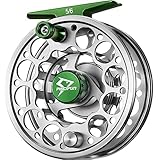
This is the reel we ended up recommending to the most people. The Piscifun Sword is machined from 6061-T6 aluminum rather than cast, and that distinction is the entire reason it sits at the top of a list full of cheaper options. Where die-cast frames on this list show wear marks after a season, the machined body held its finish.
At 3.84 ounces it is heavier than the 3.5 ounce SF combo but well under every other reel in the group, which makes it a comfortable balance on a 4-weight. The mid-arbor design is a deliberate middle choice: it retrieves line faster than a small arbor without the wide spool that encourages line memory on long casts.
The one-way clutch bearing is the detail that impressed us most on a reel at this level. The handle engages the drag instantly and cleanly, with no half-second of spool spin-up before the drag bites, which is exactly the behaviour you want when a trout takes a nymph on a light tippet.
Owners convert the retrieve for either hand without tools, and reviewers consistently describe the finish as holding up well against saltwater spray and damp gear bags. If you want the sound of a reel, there is a clicker; it is not adjustable, and that is the one thing traditionalists tend to notice.
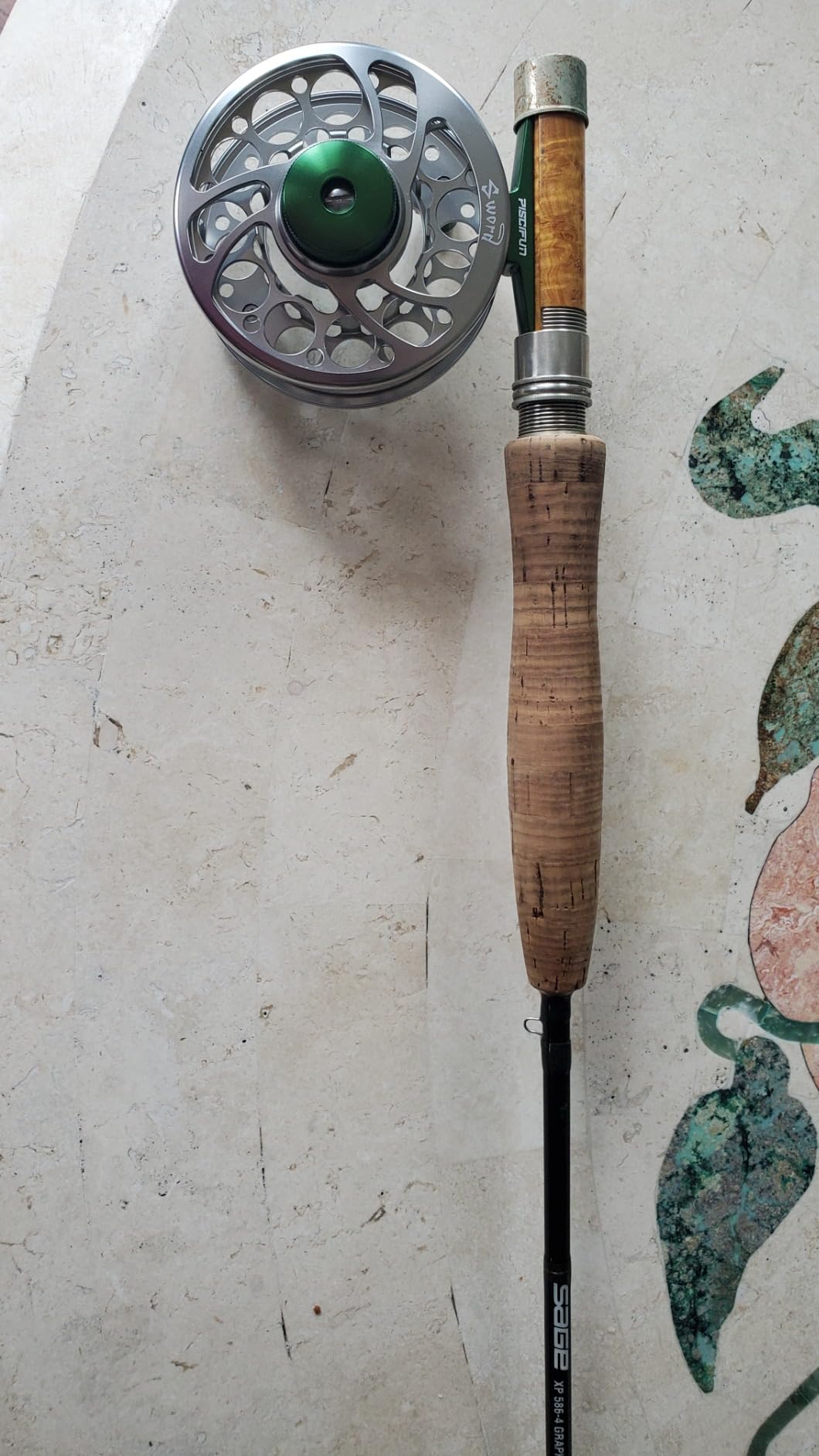
Who the Piscifun Sword suits best
It suits anyone moving up from a first reel who wants a machined body and a real drag without stepping up to a premium price. Nymphing, streamers and dry flies on a 4-weight or 5-weight are all well within its range, and the convertible retrieve means one reel covers both hands.
The conversion is simple: pull the spool, flip the bearing, re-seat. It is a two-minute job with the drag off, which matters more than it sounds when you own one rod and change setups at the truck. If you are still building flies to put on the end of that tippet, our [beginner fly tying kits](https://austineubanks.com/best-fly-tying-kits-for-beginners/) are the natural companion purchase.
Where the Piscifun Sword falls short
The catalog skews toward lighter sizes, so if you fish a 7-weight and want matching hardware you may need to hunt for the larger frame. Colour availability is narrower than the big brands, and there is no sealed drag, so rinse it after every salt session.
It is also not a full-cage reel, so thin running line can still jump the gap between spool and frame. If you euro-nymph with long mono leaders, keep reading.
2. Redington Behemoth: Best for Steelhead, Salmon and Anything Heavy
Redington Behemoth Fly Fishing Reel, Multipurpose Fly Reel for Freshwater and Saltwater, Large Arbor and Adjustable Drag, O.D. Green, 5/6
5/6
8.8 oz
Large arbor
Deep V-spool
20 lb max drag
Pros
- Carbon fiber drag holds up under load
- Deep V-spool carries serious backing
- 20 lb maximum drag
- Ambidextrous out of the box
Cons
- Die-cast frame with looser tolerances
- Plastic spool knob feels fragile
- Heaviest reel on this list
The Behemoth is not a trout reel in the strict sense, and that is exactly why we included it. Anglers who fish a river where steelhead and salmon show up in the same water as trout will get far more out of this than from any dedicated trout frame, because the carbon fiber drag and the deep V-spool are built for fish that run.
Backing capacity is the headline number: 125 yards of 20 pound on the 5/6, climbing to 200 yards on the 7/8 and 9/10. That is a lot of line for anyone targeting big fish in current, and the large arbor keeps retrieval fast enough that you are not cranking while a fish heads downstream.
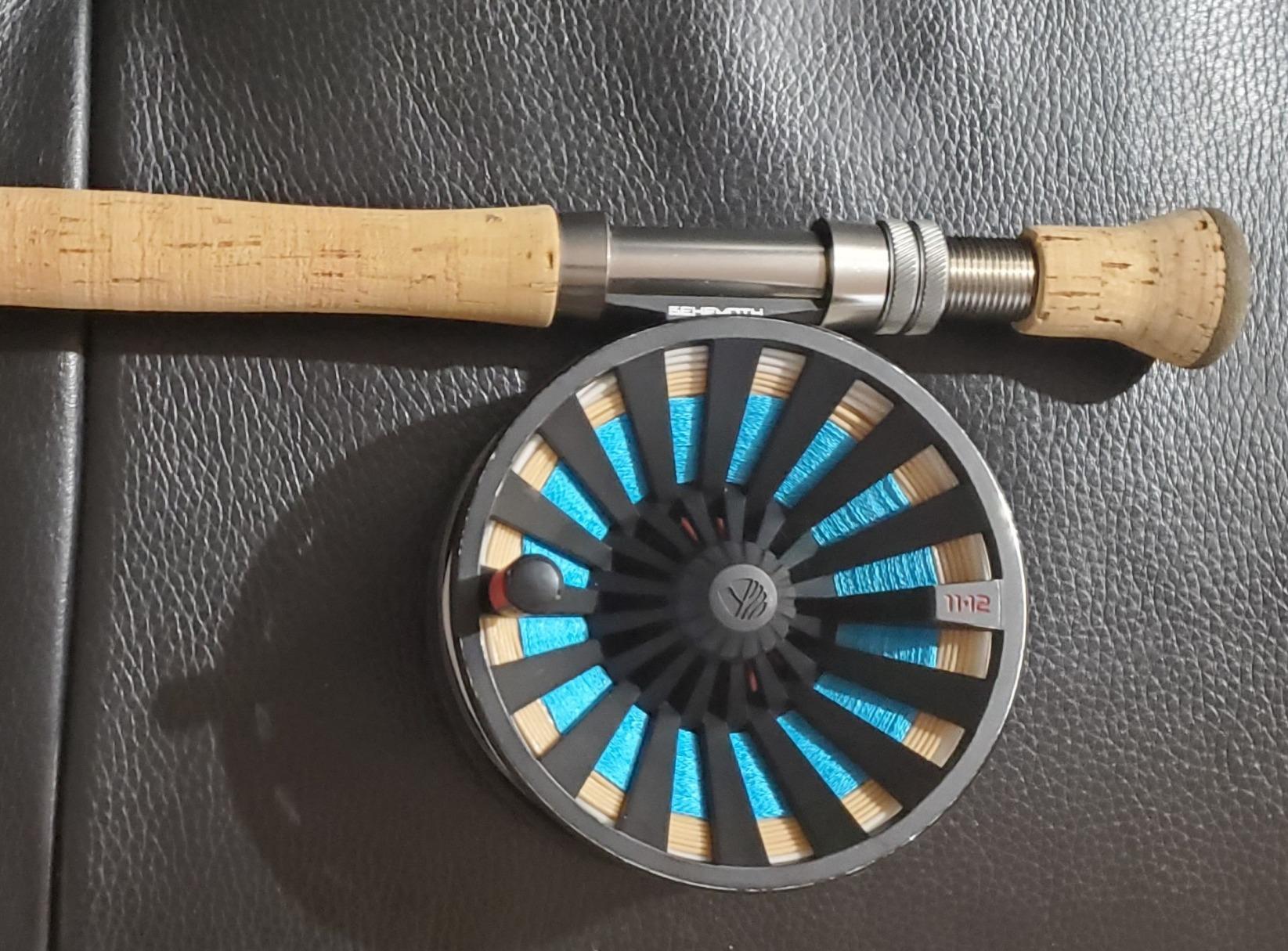
At 8.8 ounces it is the heaviest reel here, and pairing it with a 5-weight trout rod is a mistake. On a 7-weight or 8-weight, though, the weight is a feature. Plenty of trout anglers report that the Behemoth is the reel that finally stopped their rod feeling tippy.
Owners note the carbon drag holds a setting far better than cork or conical systems and does not drift as water temperature changes, which is the usual complaint with unsealed drags in August. The twin molded handle is soft in the hand and gets noticeably better after a few wet mornings.
Who the Redington Behemoth suits best
Steelhead, salmon, and anyone fishing big water where losing a fish to a blown drag is a real possibility. It also makes sense for a 7-weight trout rod that has been feeling under-balanced, and for warmwater anglers who want one reel that spans several species. If that bigger water is offshore rather than inland, our [offshore fishing reel picks](https://austineubanks.com/best-offshore-fishing-reels-for-deep-sea/) cover the heavier saltwater end of the market.
If you wade a lot, the ambidextrous setup and the carbon handle are both welcome. Nothing about the retrieve needs tools, which keeps roadside changes simple.
Where the Redington Behemoth falls short
Die-cast construction means tolerances are looser than on a machined frame, and owners do report a slight spool wobble at times. The plastic spool removal knob is the component flagged most often, and it is a small part to keep an eye on.
The drag knob can feel gritty on some units, and at this weight the reel is asking a lot of a light trout rod. It is also simply more reel than a creek trout angler needs.
3. Redington Zero: Best Lightweight Reel for Small Creeks and Backpacking
Redington Zero Fly Fishing Reel, Lightweight Design for Trout, Clicker Drag System, Matte Black, 4/5
4/5
5.6 oz
Large arbor
Clicker drag
Quick-change spool
Pros
- 5.6 oz suits a 5-weight rod nicely
- Clicker drag is simple and reliable
- Quick-change spool
- Case included
Cons
- Clicker only
- no adjustable drag
- Backing capacity is modest
- Die-cast finish scratches
The Zero exists because a lot of trout anglers fish water where a heavy reel is dead weight in the pack. At 5.6 ounces with a 4/5 frame, it sits in the balance sweet spot for a 5-foot 5-weight, rather than the noticeably light spot where a lot of ultralight click-and-pawl reels land.
That balance point matters. The test is simple: with the line threaded through the guides, the reel should not want to tip downward. Anglers who fish a lot of 9 and 10-foot rods say they look up published ounce weight before anything else, and 5.6 ounces with backing on board is a number that works.
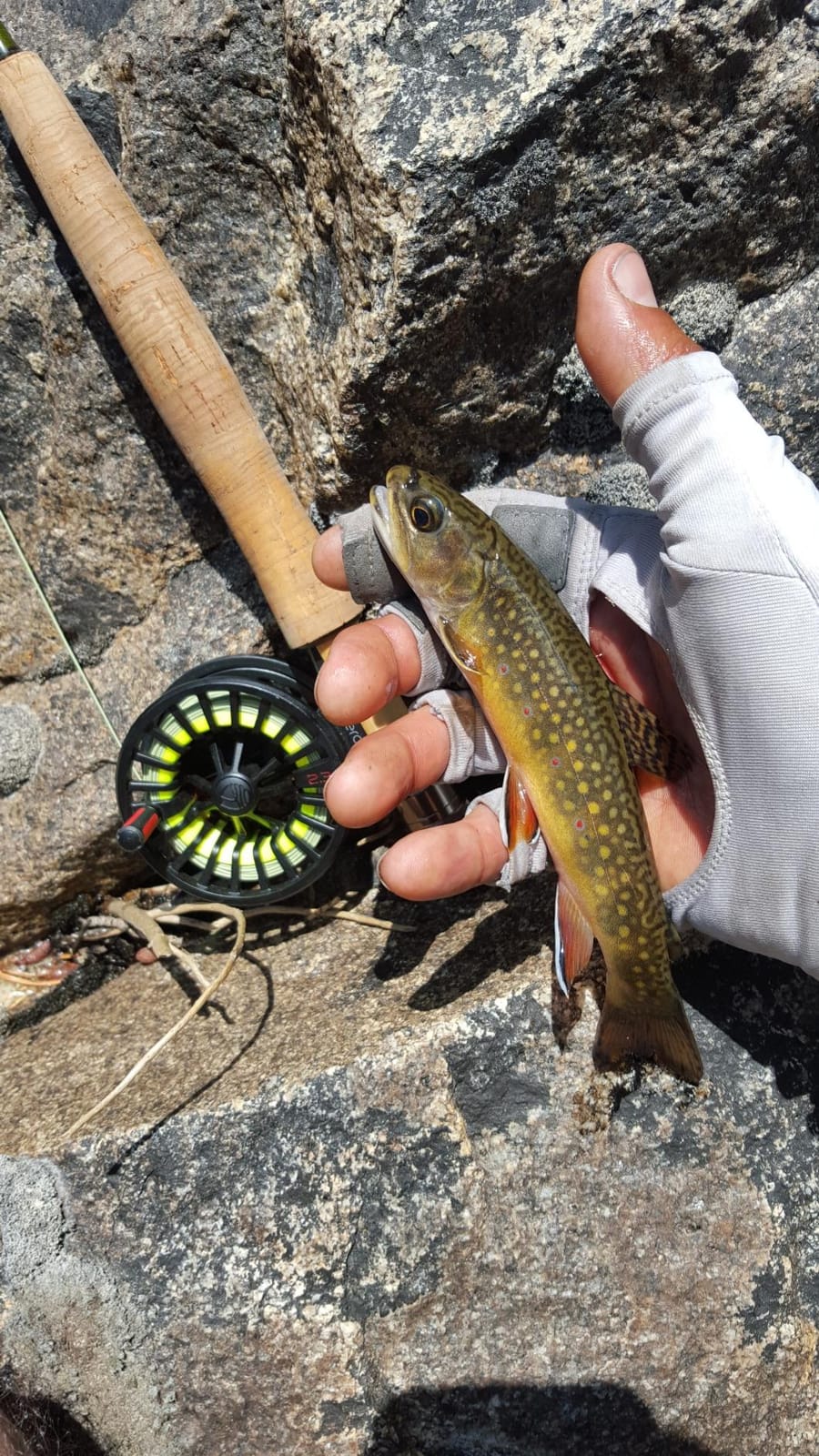
The spring-loaded clicker is the entire drag system. There is no adjustable drag to mis-set and no seal to fail, which is a genuine simplification if you are not tight-lining. The large arbor still gives you quick retrieval, and the quick-change spool means a second spool for a different line weight is a simple swap.
Owners like that it ships with a protective case, which is more than most competitors at this level include. The skeletonized die-cast body keeps the walls thin, which is how the reel gets its weight down without shrinking the spool.
Who the Redington Zero suits best
Creek and headwater anglers, and anyone hiking to water who counts every ounce. It is also a comfortable stillwater reel for dry flies, where a clicker is a feature rather than a compromise and the sound of the spool is part of the pleasure.
Because the drag is not adjustable, it suits anglers who strip line in by hand and set the drag lighter than the rated strength of the tippet anyway, which is the majority of trout fishing.
Where the Redington Zero falls short
There is no adjustable drag, so if you need to hold a heavy fish on a light tippet the clicker is not going to help you. Owners also report a loud clicker, which is enjoyable to some and irritating to others, and the die-cast finish marks easily.
Backing capacity is modest for anyone heading into big water, and some owners report a main shaft that loosens over time, fixable with a thread locker but worth knowing.
4. Maxcatch ECO Large Arbor: Best Value Combo for a Complete Starter Setup
M MAXIMUMCATCH Maxcatch ECO Fly Reel Large Arbor with Diecast Aluminum Body Fly Fishing Reel(3/4wt 5/6wt 7/8wt) (Reel with Line Rainbow Trout, 3/4 Weight)
3/4wt
4 oz
Large arbor
Teflon disc drag
Pre-loaded with line
Pros
- Ships with fly line
- backing and leader
- 4 oz weight
- Large arbor retrieval
- No tools needed to change hands
Cons
- Pre-loaded line is entry-level
- Not the smoothest spool
- Finish can rub
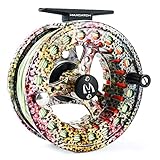
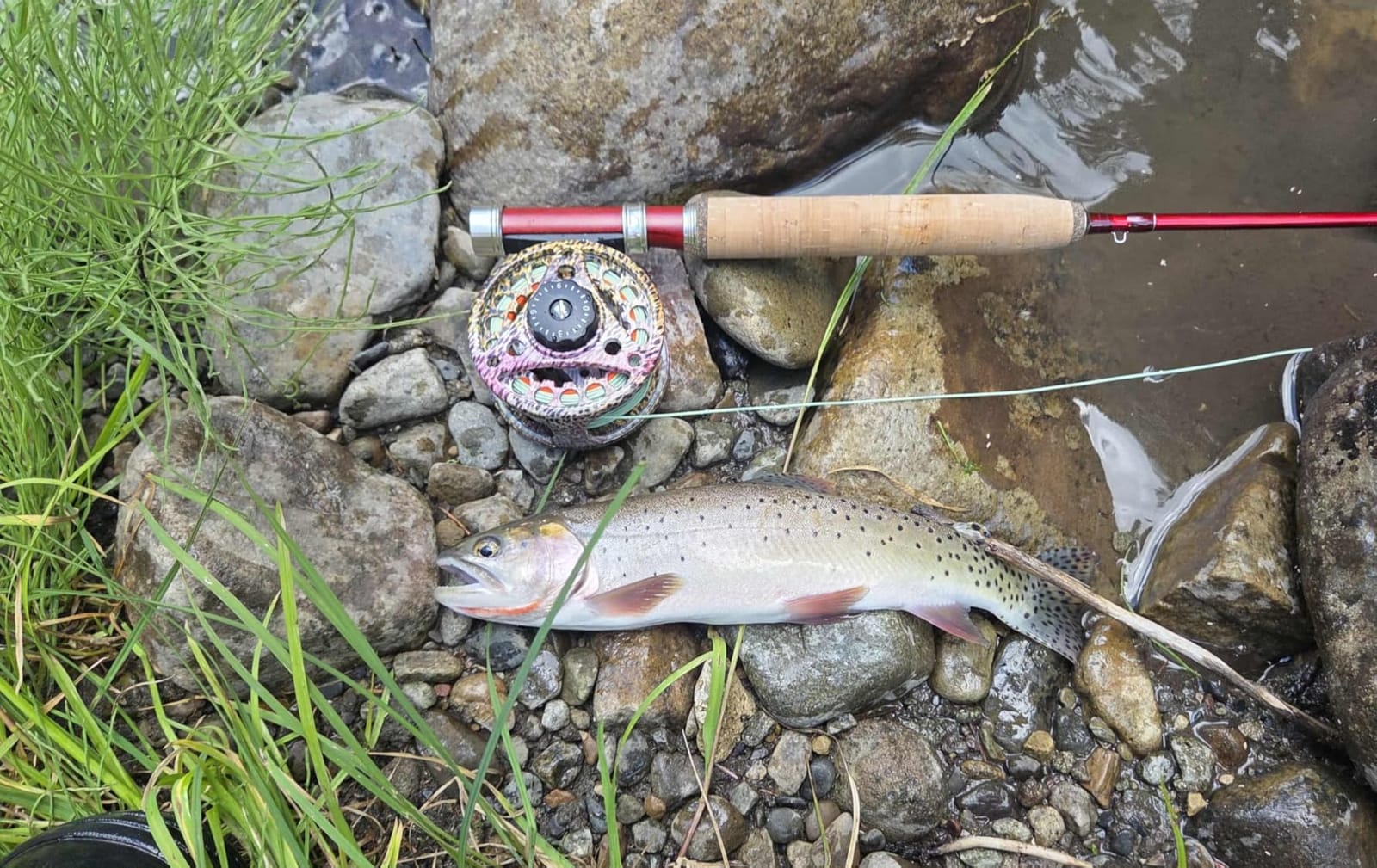
The ECO solves a problem the rest of this list ignores. A first-time fly angler needs a reel, a line, backing and a leader, and most reel options assume you already have three of those. This one arrives pre-loaded with a weight forward floating line, backing and a leader, ready to fish.
At 4 ounces for the 3/4 weight frame, it is one of the lightest reels here, and the large arbor retrieves quickly enough to keep up with a nymph drifting at natural speed. The one-way bearing lets you switch retrieve between hands without tools.
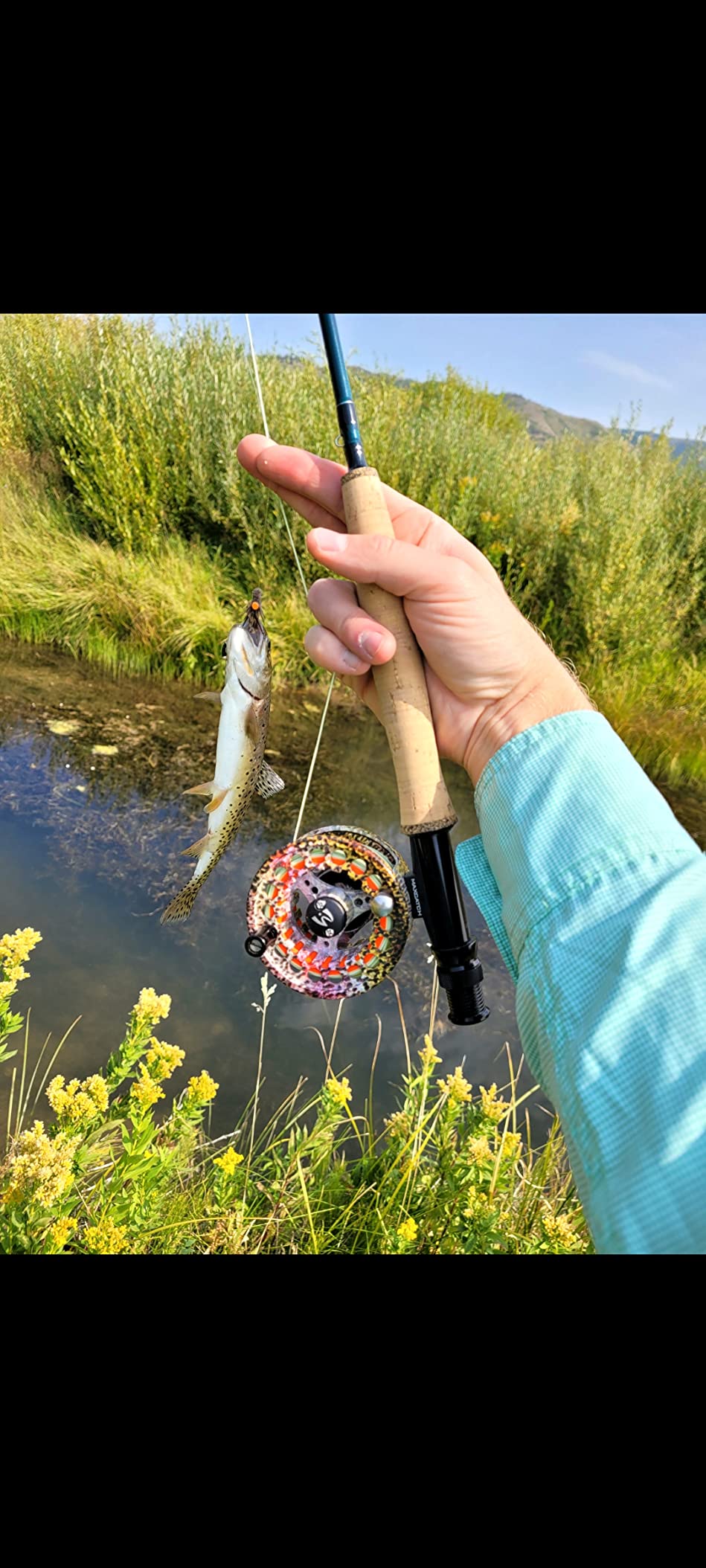
Underneath, it is a die-cast aluminum body with a Teflon disc and stainless steel drag, rated to 20 pounds of maximum drag. That rating is theoretical; in practice it is a smooth, modest drag that does what a beginner needs and will not survive a serious fish fight, which is a fair trade for the complete package.
Owners describe the value as the reason they bought it, and the Rainbow Trout colourway is the one most often mentioned. The one-year warranty is the shortest of any reel here, so keep the receipt.
Who the Maxcatch ECO suits best
Anyone starting from nothing, or a parent buying a first setup for a child. The pre-loaded combo removes the single most common early frustration, which is putting a reel, line and leader together for the first time with nobody to ask.
It is also a reasonable second reel for someone who wants a dedicated creek and pocket-water setup separate from their heavier gear.
Where the Maxcatch ECO falls short
The pre-loaded line is entry-level, and you will probably replace it within a season. Owners report that the spool is not the smoothest thing they have turned, and a few reels arrive with paint or decal marks that can rub against the line.
The one-year warranty is thin, and QC on gears is inconsistent enough that a few owners report reels that did not run smoothly on arrival. The 3/4 weight is a small frame, so it does not grow with you.
5. Maxcatch Tino: Best Reel for Balancing a 9-Foot 5-Weight
Maxcatch Tino Fly Fishing Reel, Large Arbor All Aluminum with CNC Cutting Trout Fly Reels, 3/4 5/6 7/8wt (Reel with Line Pre-Loaded (Black), 5/6wt)
5/6wt
6.4 oz
All aluminum with CNC cutting
Large arbor
Teflon disc drag
Pros
- CNC cutting reinforces an aluminum body
- Tool-less retrieve conversion
- Comes pre-loaded with a full line combo
- Good mass for balancing a 5-weight
Cons
- Heavier than most competitors in its class
- Pre-loaded line is basic
- One-year warranty
The Tino is the answer for anyone who fishes a 5-weight and finds ultralight reels leave their rod tippy. At 6.4 ounces in the 5/6 frame, it is one of the few reels in this price bracket that carries enough mass to sit at the front of the cork on a 9-foot rod rather than hanging off the back of the handle.
Angler comments make this point constantly, and it is the most repeated technical complaint in trout reel forums: reels have gotten too light, and the fix is usually lead tape, which makes a reel feel clunky in the hand. The Tino is one of the few budget answers to that complaint that we would put on a long rod.
Construction is all aluminum with CNC cutting for reinforcement, which is a middle ground between a fully machined body and a plain die casting. The one-way clutch bearing gives immediate drag engagement, and the retrieve converts between hands in about thirty seconds with no tools.
Like the ECO, it arrives pre-loaded with a weight forward fly line, backing line and a tapered leader. That is a real convenience, though the line itself is basic and most owners replace it early.
The Teflon disc and stainless steel drag is smooth for the price and does not have the grittiness of cheaper conical systems, though it is not sealed and should be rinsed after every trip.
Who the Maxcatch Tino suits best
Long-rod anglers fishing 5-weight streams who want balance without a machined-price reel. It also works well for someone upgrading from a plastic spool kit and keeping their existing rod, since the weight change alone transforms how the rod feels.
Tool-less retrieve conversion makes it a good second-hand or shared-rod reel, and the stainless steel handle is a step up from plastic at this level.
Where the Maxcatch Tino falls short
At 6.4 ounces it is heavier than most of its direct competitors, and on a 4-weight rod it will feel unbalanced. The one-year warranty is short, and the pre-loaded line is the kind you buy again in a year.
The die-cast base body with CNC cutting is not the same as a fully machined frame, so tolerances are looser than the Ross at the end of this list.
6. SF Large Arbor Combo Reel: Best Warranty Coverage on a Budget Reel
SF Large Arbor Fly Fishing Reel 5/6wt Aluminum Alloy Body Die-Cast Matt Black Pre-Loaded Reel with Line Combo Fluorescent Yellow Line
5/6wt
100 g or 3.5 oz
Aluminum alloy
Large arbor
Disc drag
Pros
- 3-year warranty
- the longest here
- Complete pre-loaded combo
- Audible line alarm
- Stainless steel main shaft
Cons
- Left-hand only as specified
- Die-cast rather than machined
- Pre-loaded line is entry-level
Most budget fly reels carry a one-year warranty. This one carries three, with parts support listed for the same period, which changes the risk calculation for an angler who fishes hard and cannot afford to replace a frame every other season.
It comes pre-loaded with a 90-foot 5-weight fluorescent yellow line, orange 20 pound backing and a 9-foot 4X tapered leader, so it is fishable on the first trip. The clear ticking alarm tracks line movement, which is a genuine help on a euro-style nymph rig drifting under an indicator.
At 100 grams, roughly 3.5 ounces, it is among the lightest frames here. That is a real advantage for a 4-weight or 5-weight rod and a genuine drawback on a long 5-weight, where the balance will feel light.
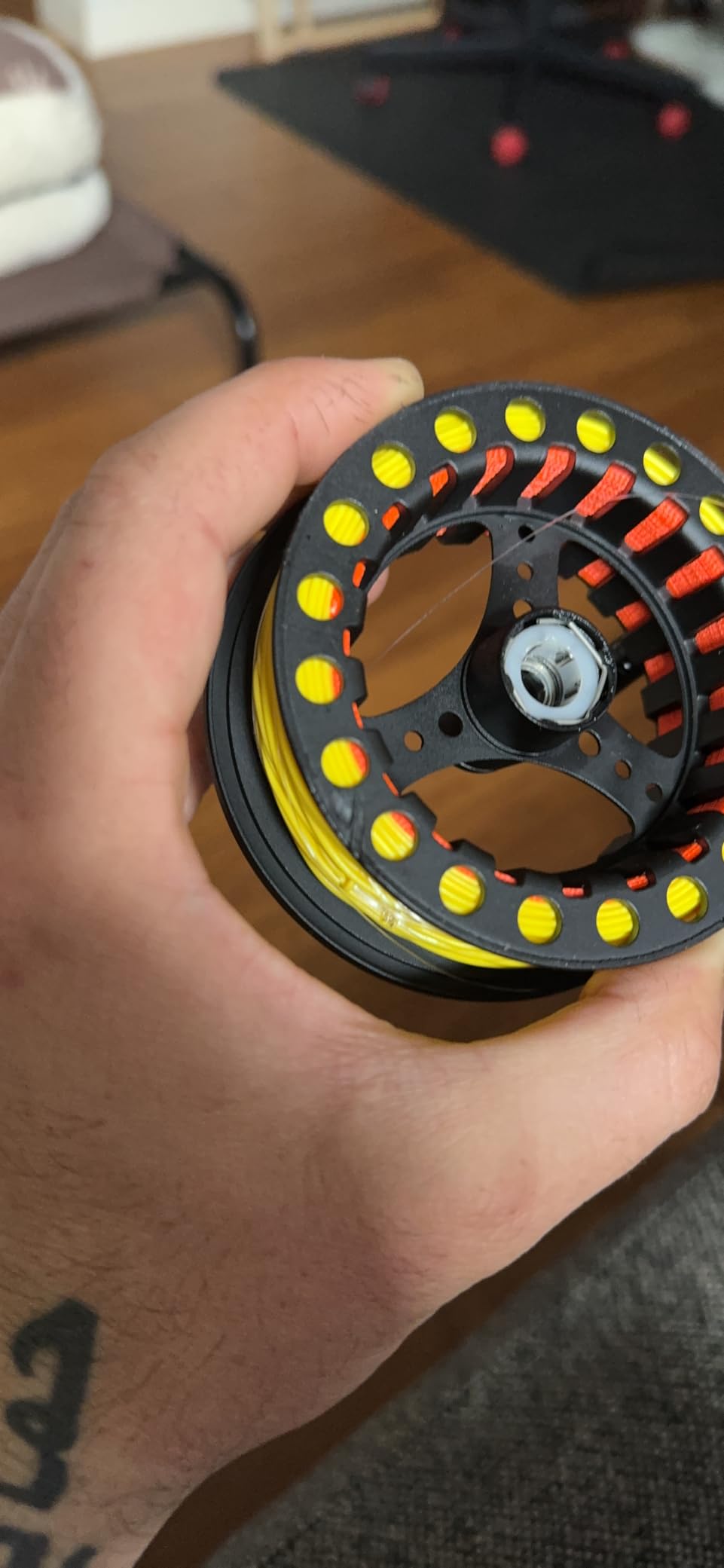
The aluminum alloy body carries an anti-corrosion treatment, and the main shaft plus drag adjustment structure are stainless steel, which are the two parts that actually fail on cheap reels. The large arbor retrieves quickly for the weight class.
It is listed as left-hand retrieval with conversion capability, so check the exact size and hand configuration you are ordering rather than assuming. The disc drag is basic but starts without the dead spot that makes small drags feel abrupt.
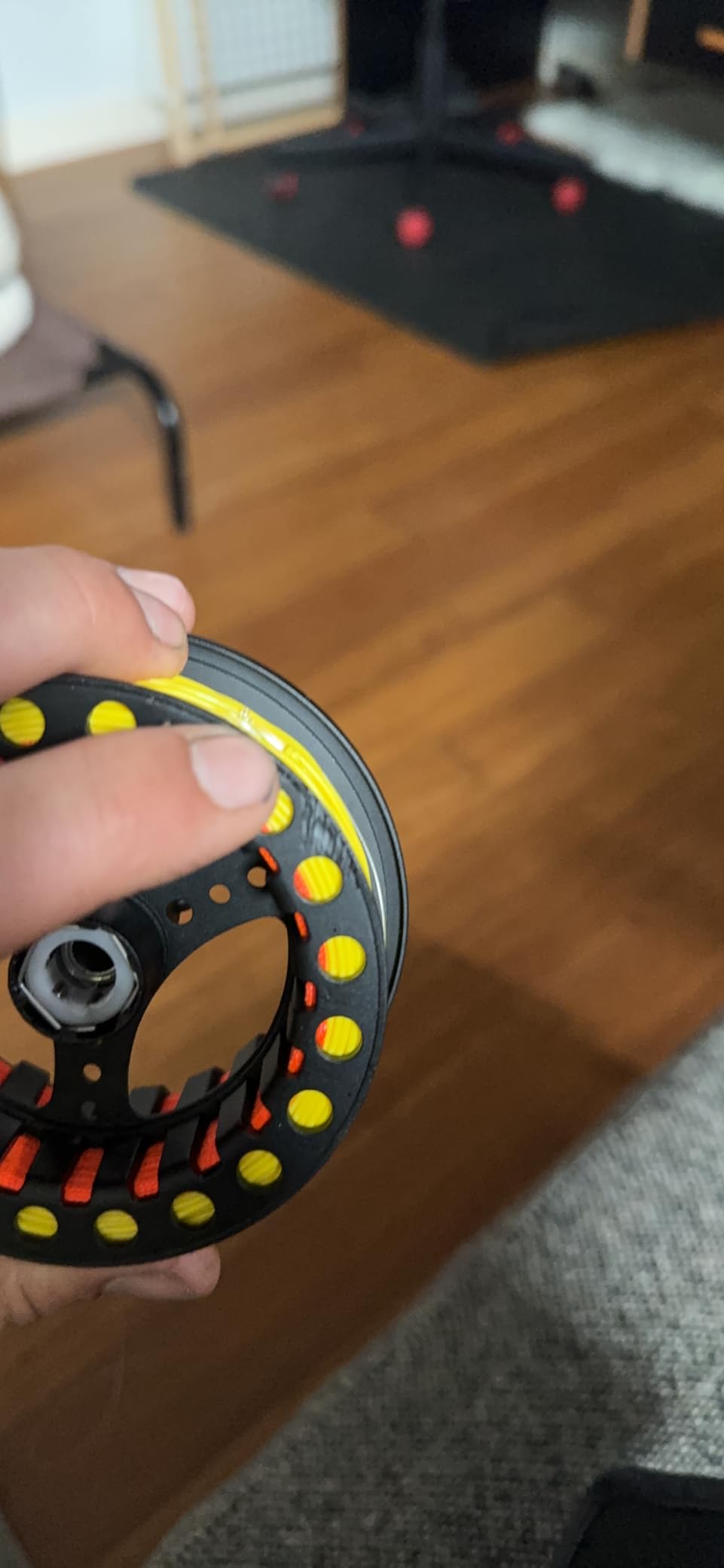
Who the SF Large Arbor Combo suits best
Budget-constrained anglers who want a long warranty and a complete setup in one box. The audible alarm makes it a good match for indicator fishing, and the low weight suits anyone carrying a rod on a long walk.
It is also a sensible first reel for a young angler, because three years of coverage covers the period where gear is most likely to be dropped in a river.
Where the SF Large Arbor Combo falls short
The body is die-cast, not machined, so cosmetic marks appear sooner and tolerances are looser. The pre-loaded line is entry-level, and the drag is a simple disc system that will not handle a genuinely heavy fish.
At 3.5 ounces it is on the light side for 9 and 10-foot rods, which is the weight-versus-balance problem that forum anglers complain about most often.
7. Redington Run: Best All-Around Reel for Multi-Species Trout Water
Redington Run Fly Reel, Lightweight Design for Trout, Freshwater Fishing, Carbon Fiber Drag System, Sand, 7/8 Weight
7/8
5.8 oz
Carbon fiber drag
Large arbor
Ported arbor die-cast
Pros
- 5.8 oz balances mid-weight rods well
- Carbon fiber drag is refined
- Ported arbor trims weight
- Case included
- Ambidextrous
Cons
- Die-cast rather than machined
- Limited color options
- Drag not as refined as sealed premium systems
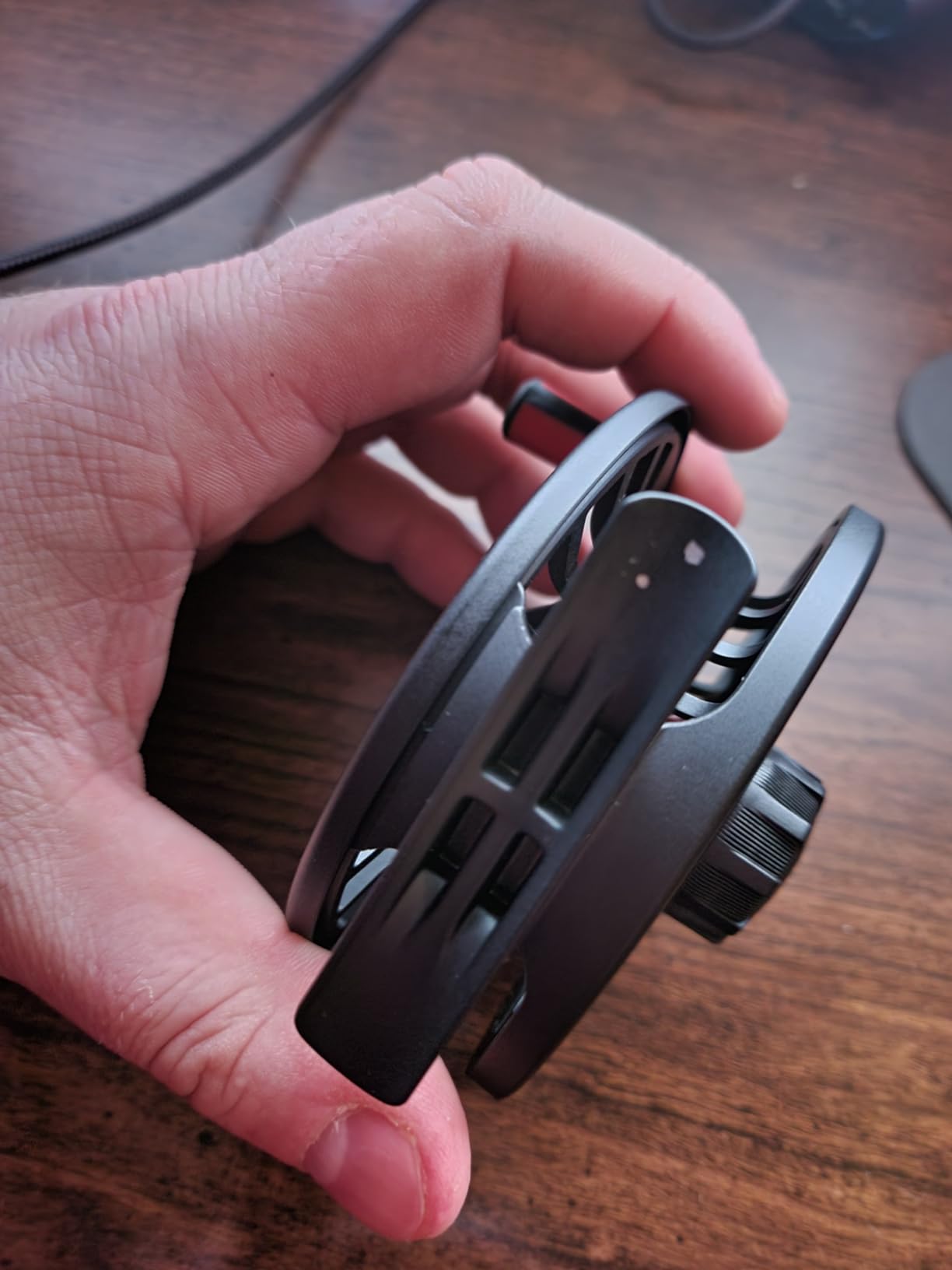
The Run is the reel we would hand to an angler who does not know yet what kind of trout fishing they will end up doing. It comes in 3/4, 5/6 and 7/8 frames, is ambidextrous out of the box, and the carbon fiber drag is a step above the cork and conical systems most competitors at this level use.
The ported arbor on the inner barrel of the spool is a small design choice with a real effect. It removes material exactly where weight is least useful, which is how the reel gets to 5.8 ounces in a 7/8 frame without shrinking the spool diameter.
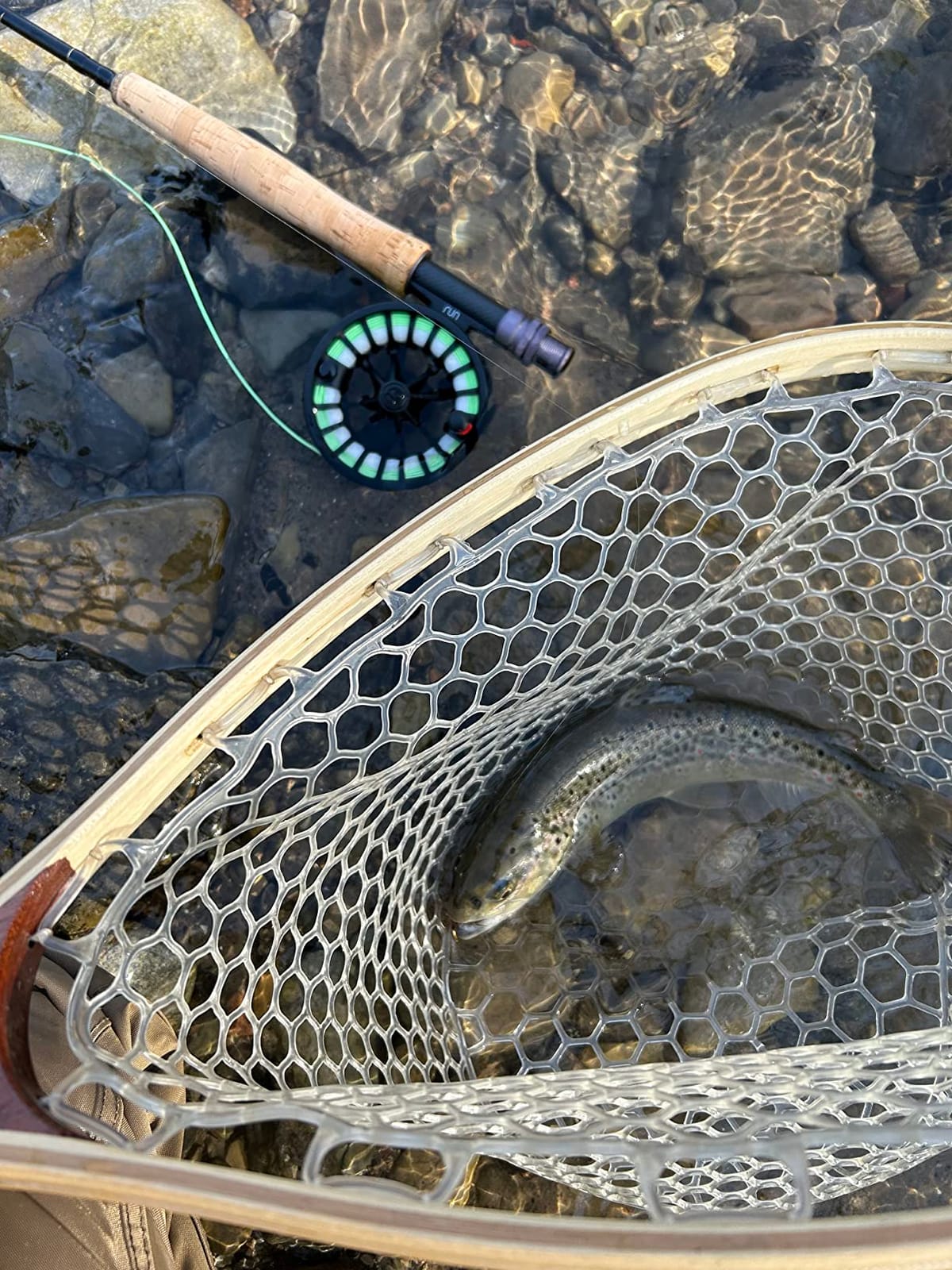
The frame is explicitly non-machinable die-cast aluminum, and owners are candid that this shows compared to a machined body. It is not a durability problem in normal freshwater use, but it does mean a harder knock leaves a visible mark.
A nylon reel case is included, which is unusual at this level and useful if you travel. The twin-molded soft-touch handle stays comfortable through long sessions, and the retrieve converts between hands without tools.
Who the Redington Run suits best
Anglers moving from trout into redfish, bass or striped bass, since the all-water positioning is genuine. If bass turns out to be where you end up fishing, our [baitcasting reels for bass fishing](https://austineubanks.com/best-baitcasting-reels-for-bass-fishing/) cover that side of the gear bag instead. The Run is also a good first Redington for someone who wants carbon drag at a weight that still balances a rod properly.
In the 7/8 frame shown here it is a natural match for a 6 or 7-weight, and a 5-weight with the 5/6 size will sit close behind. Check the ounces before you buy for anything heavier.
Where the Redington Run falls short
Die-cast construction means it will not be mistaken for a machined reel, and the finish is less refined. Colour options are limited compared with Redington’s premium lines.
Owners note the drag is good but not as refined as a fully sealed carbon system, and there is no sealed drag, so clean it after every trip rather than every few.
8. Echo Base: Best Reel for Backpacking and Ultralight Setups
ECHO Base Reel 4/5
4/5
5.1 oz
3.5 inch diameter
Bomb-proof drag
Cork handle
Pros
- 5.1 oz fits a 4 or 5-weight
- Four stainless steel bearings
- Bomb-proof drag with no adjustment to get wrong
- Cork handle stays warm and grippy
Cons
- Basic finish
- Limited color options
- Drag is not sealed
- Warranty runs through the manufacturer
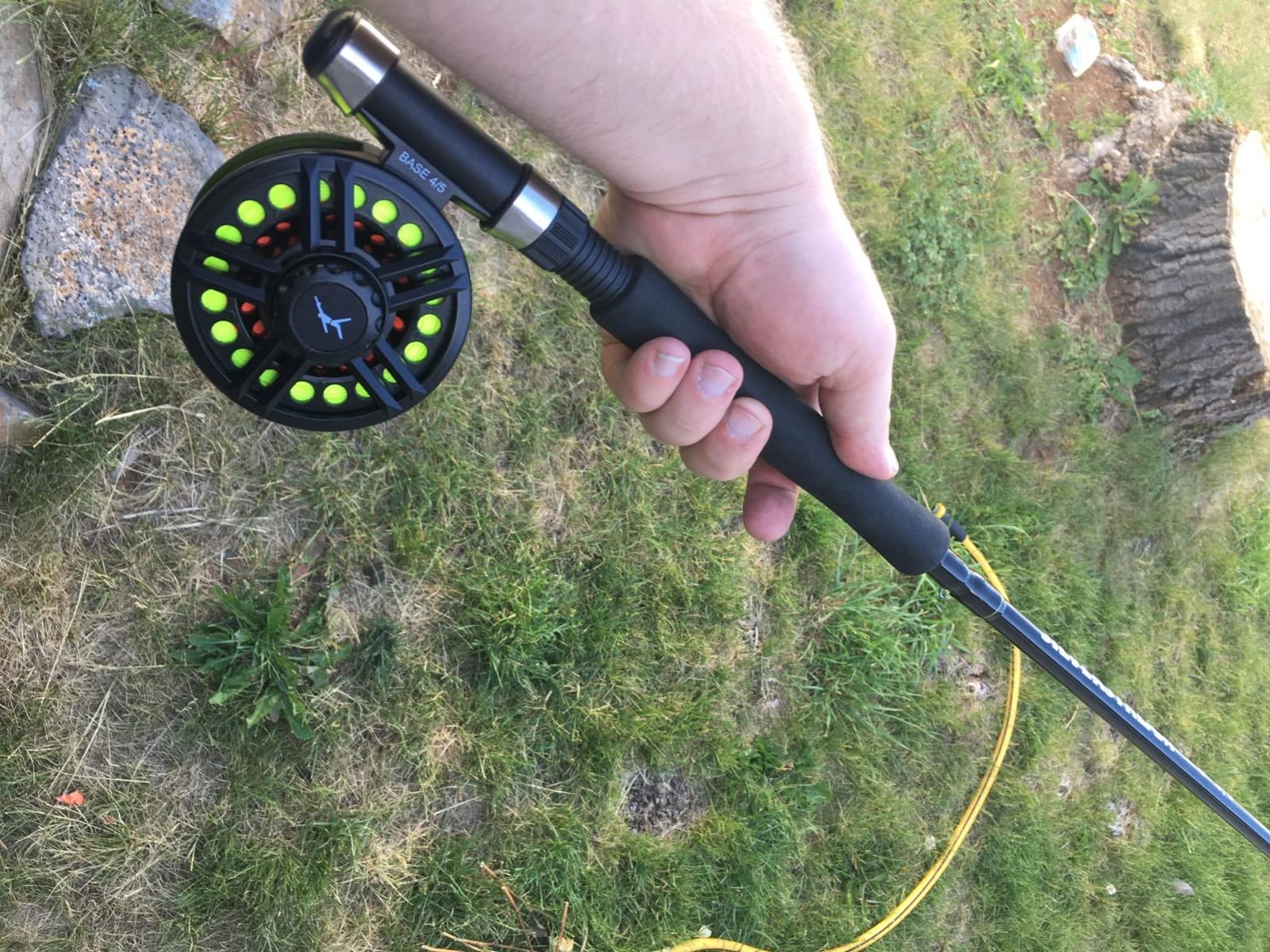
The Base is a 4/5 frame at 5.1 ounces, which makes it one of the few reels here that both weighs almost nothing and still carries enough mass to balance a 5-foot rod. The cork handle is the detail we notice most: it stays grippy when wet and does not get slim in freezing hands.
Four stainless steel bearings is more than most competitors of similar weight manage, and combined with the 3.5 inch spool it produces a smooth, quick retrieve. Line capacity is listed at a weight forward 5 plus 100 yards of 20 pound backing, which is a sensible trout spec.
There is nothing to adjust on the drag. Reviewers describe it as bomb-proof in the sense that you cannot set it wrong, which for an angler who has never thought about drag pressure is a feature rather than a limitation.
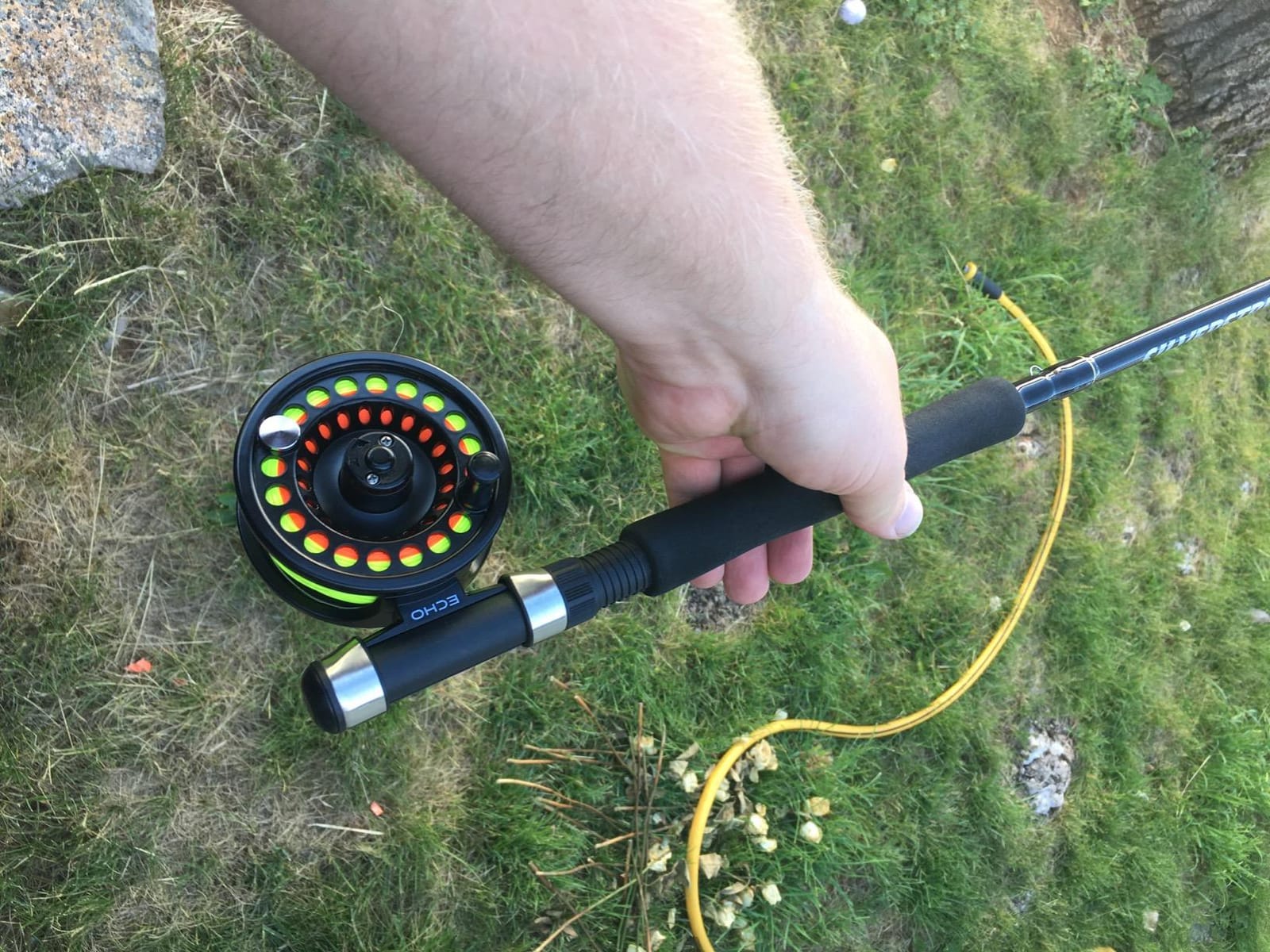
The reel is ambidextrous, which matters more than it sounds when you are switching between a 4-weight in the pack and a heavier rod in the truck. The spool comes off without tools, and at 5.1 ounces it disappears into a vest pocket.
Owners report a straightforward, durable design with no moving parts to go wrong, and a drag system that simply works. The finish is plain and the colour range is one option, so this is not the reel for anyone who cares how their gear looks.
Who the Echo Base suits best
Backpackers, travel anglers, and anyone who fished 4 and 5-weight rods and wanted to cut a meaningful number of ounces without dropping to a plastic-spool kit. The cork handle is genuinely better in cold hands than any aluminum alternative.
It is also a good first reel for a child or a beginner, because there is no drag setting to get wrong and no way to break it by over-tightening a knob.
Where the Echo Base falls short
The drag is not sealed, which means periodic cleaning matters if you fish anything salty. The finish is deliberately basic and there is a single colour option.
Warranty runs through the manufacturer rather than a fixed published term, so if you want a printed warranty length on your receipt this is not it. At 4/5 it also tops out for a 5-weight rod.
9. Ross Reels Animas: Best Fully Machined Build
Ross Reels Animas Fly Fishing Reel – 5/6, Matte Black
5/6
4.43 oz with line
Bell-shaped ultra-large arbor
Machined in Montrose Colorado
Lifetime warranty
Pros
- Fully machined in the USA
- Highest rating on this list
- Bell-shaped arbor retrieves fast
- Maintenance-free spool release
- Lifetime limited warranty
Cons
- Most expensive reel here
- Backing capacity is modest on the smaller size
- Overkill for most trout anglers
The Animas is the only reel on this list machined entirely in the United States, in Montrose, Colorado, and it carries the highest average rating in the group at 4.8. It is also the most expensive, and it is worth being direct about whether that matters for trout.
For most anglers, honestly, it does not. A trout reel is a line holder, and a machined body mostly buys you tighter tolerances and a finish that survives decades. That is a legitimate reason to own one and a poor reason to buy your first reel.
What the machining genuinely delivers is the spool release. It is maintenance-free, meaning there is no spring tension to drift, which directly solves a complaint we heard repeatedly: friction-held spools that take fifteen minutes to pry apart with cold fingers on a winter morning.
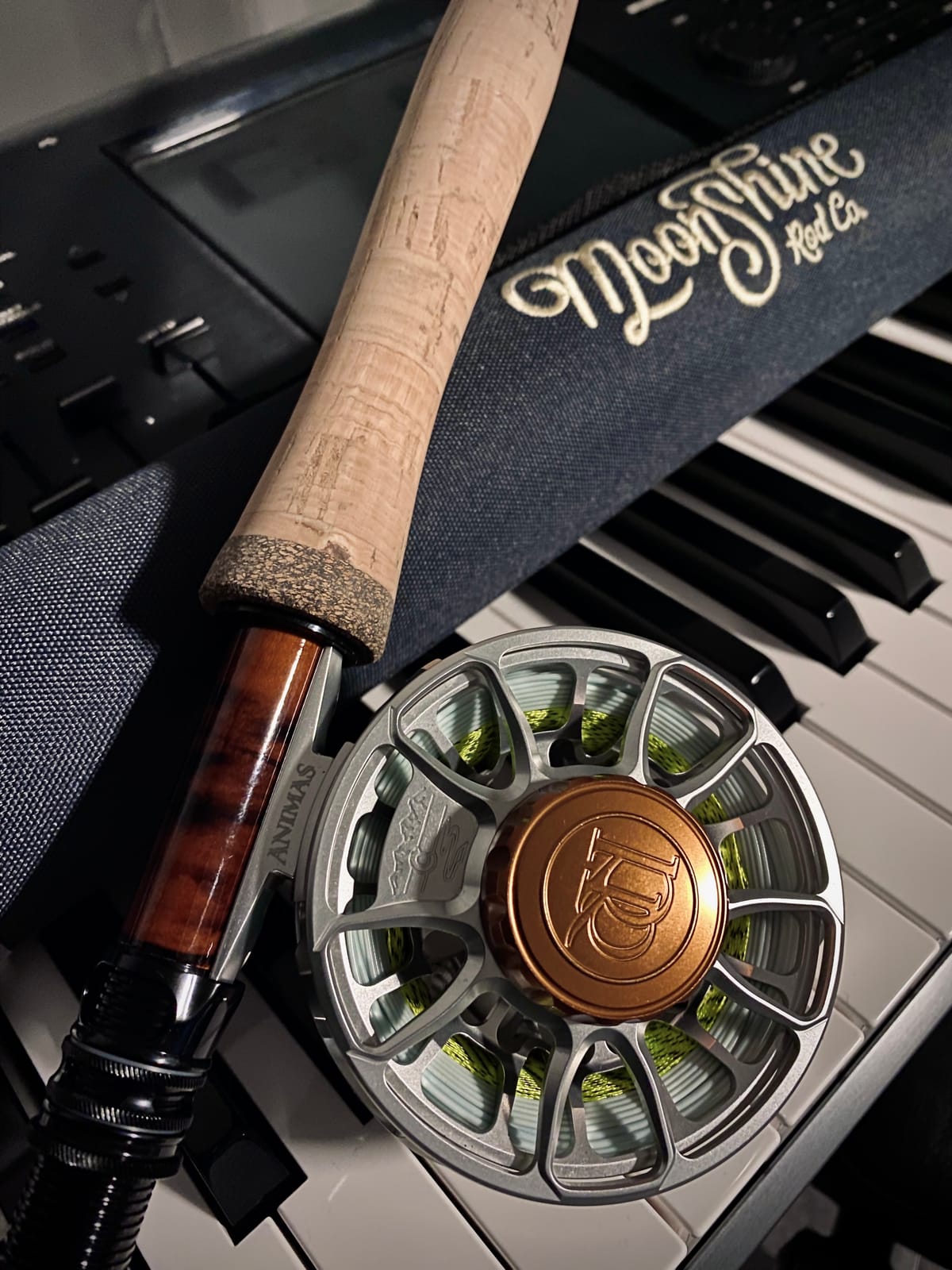
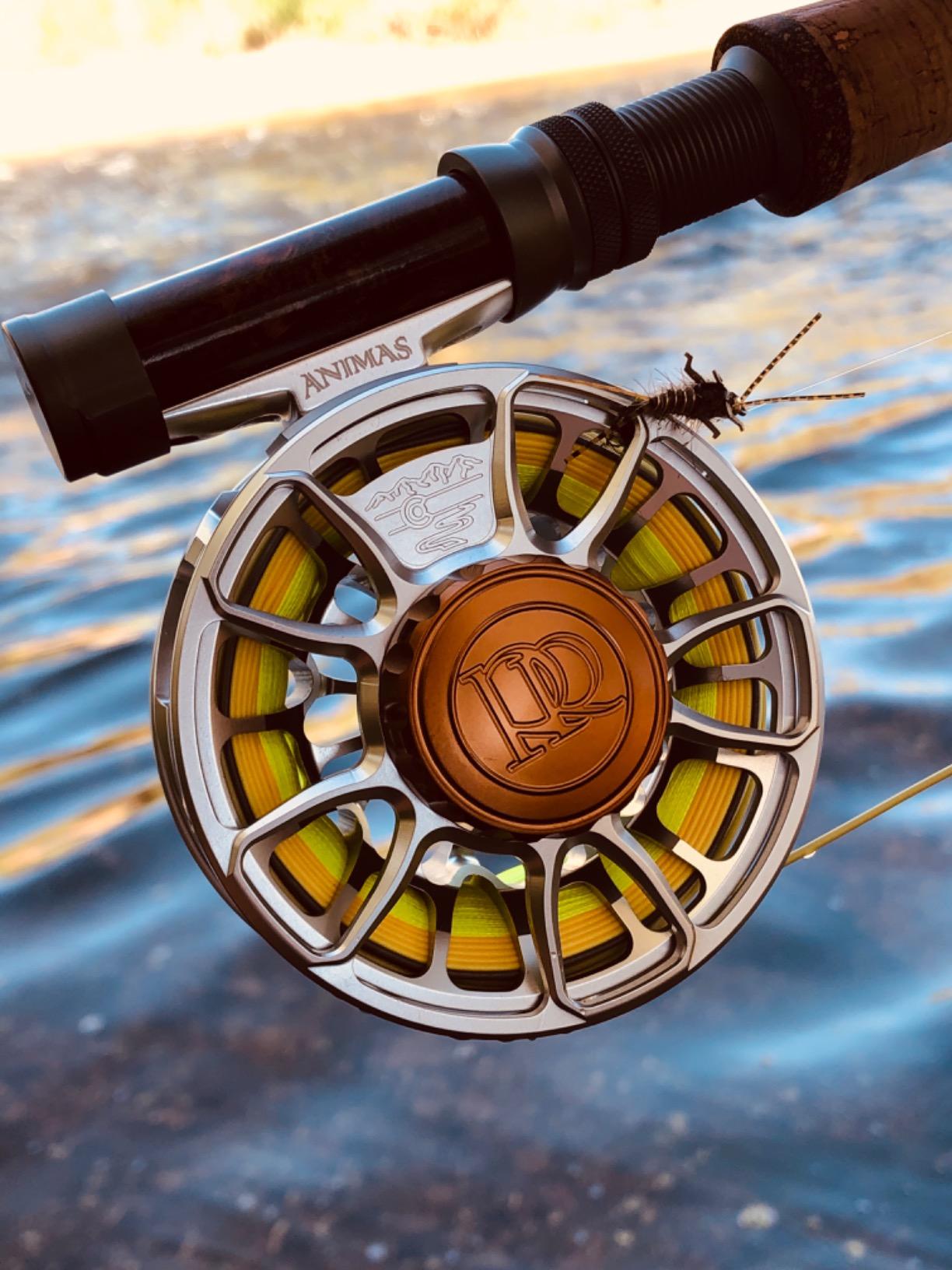
The bell-shaped ultra-large arbor is unusually wide, so line comes off faster and lays down flatter than on a conventional spool. The composite drag with a stainless steel interface starts clean, and the anodized body handles wet gear bags without complaint.
The handle is canvas phenolic, a texture that stays grippy and does not feel slick when wet. The spool is 3.50 inches in diameter and 1.02 inches wide, and the published weight is 4.43 ounces with line, which balances a 5-weight rod properly.
Who the Ross Animas suits best
Anglers who have already bought the rod, or who intend to own one reel for thirty years and want it serviced rather than replaced. The lifetime limited warranty and USA machining are the two strongest ownership stories in this category.
It also suits anyone who fishes a mix of trout sizes on a 5-weight and wants a reel that will not be the weak link in ten years.
Where the Ross Animas falls short
Cost is the obvious objection, and the most common response in trout forums is that this is an unreasonable amount of money for something that mostly holds line. Backing capacity on the smaller size is also modest for anyone heading into big water.
At 4.43 ounces it is on the light side for a 9 or 10-foot rod, so if you tight-line on a long rod you may still want more mass than this provides.
10. Orvis Clearwater: Best Entry Point Into Orvis Reels
Orvis Clearwater Fishing Reel – Large-Arbor, Corrosion-Resistant Drag, Smooth Performance, and Precision-Fit Reel Foot, Charcoal – 5-7wt
5-7wt
8 oz
Sealed carbon-to-stainless drag
Large arbor
Precision-fit foot
Pros
- Sealed carbon-to-stainless drag resists corrosion
- Precision-fit reel foot reduces line twist
- Handles 3 to 9 weight lines
- Ambidextrous conversion
Cons
- Die-cast rather than machined
- Plastic drag knob feels cheap
- Newer model with a shorter review history
- 8 oz is heavy for a 5-weight
The Clearwater is the reel many anglers end up with, because the most common advice in trout forums is simply to stop overthinking it and buy an Orvis. For anyone who wants the brand, this is where the entry point sits, and the updated reel foot is a real improvement over the older version.
The drag is sealed carbon against stainless steel, which is the specification that matters most for longevity. Sealed drags do not take in grit the way unsealed conical and cork systems do, and that is a meaningful difference for anyone wading a river bottom or fishing live baitfish country.
Line capacity is optimized for 3 through 9 weight lines, and the large arbor keeps retrieval smooth for a die-cast frame of this size. The precision-fit foot is the quiet upgrade: a tighter foot means less line twist on the retrieve.
At 8 ounces it is the second-heaviest reel here, and we want to be straightforward: that is too much weight for a 5-weight rod. On a 7 or 8-weight it sits properly, and the powder-coat finish is rugged enough for gravel wading.
The review history is short because the model is newer, so we have less long-term owner data than for the picks above. The drag knob is plastic and reviewers consistently note it feels less refined than the drag it controls.
Who the Orvis Clearwater suits best
Anglers fishing 7 and 8-weight rods, or anyone who wades gravel and sand and wants a sealed drag that will not need stripping. The 3 to 9 weight line range also makes it a reasonable one-reel answer for a multi-rod freshwater setup.
If you want the classic Orvis trout footprint and would rather not move up to a machined frame immediately, this is the honest entry point.
Where the Orvis Clearwater falls short
Eight ounces is heavy, and pairing this with a light trout rod is the most common mistake we can foresee. Die-cast construction means the finish marks, and the plastic drag knob is the part most likely to feel cheap first.
The shorter review history means less evidence about long-term durability than the picks above have, and the die-cast body will never match a machined frame for tolerances.
What Is a Trout Fly Reel?
A trout fly reel is a single-function line holder with four working parts: the foot that attaches it to the rod, the frame and spool that store the line, and the drag that applies controlled friction when a fish pulls. That is the whole mechanism, and understanding it makes every other decision easier.
Most trout anglers will hand-strip the majority of their fish rather than crank them in, so the reel is managing line far more often than it is fighting a fish. That is why line pickup quality and smooth drag startup matter more here than maximum drag strength.
Reel anatomy and what each part does
The foot is the part bolted to the rod seat, and the gap between the foot and the frame is the reason some reels twist line and others do not. The spool winds the line, the arbor determines how fast it comes off, and the drag is the adjustable or fixed friction system inside the spool.
Counterbalance is the part nobody mentions and everybody feels. A reel that is balanced rotates without the handle and spool fighting each other, which is what stops a reel from shaking in your hand on a long rod. Heavy reels feel the benefit most.
How much backing you actually need
For trout, plan on 70 to 100 yards of backing behind your fly line. That is enough to cover a long cast, a strong fish running, and one break-off with margin. More than that on a trout reel is usually just weight and spool width you will never use.
For steelhead or salmon you want considerably more, which is the argument for a deep V-spool reel like the Behemoth on this list rather than a standard trout frame. The Animas and most trout-sized reels are built for the 70 to 100 yard range and no more.
How to Match a Fly Reel to Your Rod Weight
Match the reel size number to the middle of your rod weight range, not the top. A rod rated 4 to 6 weight wants a 5/6 reel, not a 7/8. A frame that is too large makes the rod feel sluggish, and one that is too small makes it feel like it will fall off.
The size notation is a range: the 5/6 reel suits 5 and 6 weight rods. Common pairings run 2/3/4 for 2 to 4 weight rods, 3/4/5 for 3 to 5 weight, 4/5/6 for 4 to 6 weight, 5/6 for 5 to 6 weight, 6/7/8 for 6 to 8 weight, and 7/8 for 7 to 8 weight.
Then check the ounces. The balance test is to hold the rod with the line threaded through the guides and see whether the reel wants to tip the balance point forward past the front of the cork. If it does, the reel is too light. Anglers fishing 9 and 10-foot 4 and 5 weight rods commonly report wanting 4.5 to 5.5 ounces with backing and line on board.
That figure is the single most useful number in this whole article, and it is the one most often missing from the listings. Check it before you buy rather than after.
Disc Drag vs Click and Pawl: Which One for Trout?
For trout fishing, a disc drag is the better default choice because it starts smoothly, holds its setting, and protects light tippet. A click-and-pawl reel makes a sound and offers no adjustable friction, which matters only if you need a specific drag pressure or enjoy the sound.
The traditionalist case for click and pawl is real but narrow. The most repeated recommendation in r/flyfishing is simply to get a classic click-and-pawl Orvis Battenkill and stop thinking about it, which is a reasonable position for someone who fishes dry flies on stillwater and strips in by hand.
Sealed and carbon drag vs unsealed conical and cork drag
A sealed carbon drag keeps grit and salt out of the drag stack, which is why we rate the Orvis Clearwater and Redington Run higher for wading than unsealed systems of similar price. Carbon fiber drag also has less breakaway than cork or conical drag and holds a setting as water temperature changes.
The cost is that sealed systems are heavier and cannot be re-torqued by most owners. Unsealed conical and cork drags are lighter and cheaper, and a well-maintained one is perfectly fine in freshwater, but they need rinsing after every trip and they do drift.
Large arbor vs small arbor
A large arbor gives you faster line retrieval and a smoother, flatter lay-down of line, which matters when you are stripping a long wet fly back at speed or chasing a fish. A small arbor is lighter and holds the line more tightly, which is why some ultralight designs still use one.
For trout, large arbor is the better default because retrieval speed reduces hand fatigue. Our picks include mid-arbor and conventional designs, which sit between the two and reduce the line memory that a very wide spool can create on long casts.
Machined aluminum vs die-cast aluminum
Machined aluminum is cut from a solid block, so the tolerances are tight and the surfaces stay true over decades. Die-cast aluminum is poured into a mould, which is faster and cheaper but leaves slightly looser fits and a finish that shows wear sooner.
Neither is a quality label on its own. The Piscifun Sword and Ross Animas are fully machined, the Maxcatch Tino has CNC-cut reinforcement on a cast body, and the rest of this list is die-cast. The difference in real trout fishing is far smaller than the difference in price, and it only shows up after a frame has been dropped on gravel.
Full cage reels and the mono pull-through problem
If you euro-nymph or tight-line with a long mono leader, you need a full cage or full frame reel. The problem it solves is specific: thin running line and short mono leaders can jump the gap between the spool and the frame, which is called mono pull-through and is the most common complaint in trout fishing forums. Anglers report it happening several times a season.
Full cage reels close that gap with a frame that surrounds the spool. The tradeoff is weight, and a full-cage reel with a 4/5 size is going to feel very different from a standard cage reel on a light rod. If you do not tight-line, the extra weight buys you nothing.
One practical note for anyone who fishes through the winter: friction-held spools that come apart easily in warm weather can seize below freezing, and anglers report spending up to fifteen minutes prying a spool off with cold fingers. A mechanical or maintenance-free spool release is worth paying attention to if you fish in the cold months, and it is the reason the Ross Animas spool release is a real feature rather than a small convenience.
Frequently Asked Questions
What type of reel is best for trout fishing?
A sealed disc drag reel matched to your rod weight is the best default for trout fishing, because it starts smoothly with no stall and protects light tippet. Match a 5-weight rod to a 5/6 size reel and check the published weight in ounces to make sure it balances. A click-and-pawl reel is only worth the trade if you fish dry flies on stillwater and want the sound.
Are expensive fly reels worth it?
For most trout anglers, no. A trout reel is mainly a line holder, and a CNC-machined reel at the low end of this list performs nearly as well as a fully machined one made in the USA. Spend more only if you want a sealed drag, a lifetime warranty, a large arbor, or a full cage for euro-nymphing, and otherwise put the money toward the rod.
What size reel is recommended for trout fishing?
Match the reel size to the middle of your rod weight range. A 4 to 6 weight rod wants a 4/5/6, a 5 to 6 weight rod wants a 5/6, and a 6 to 8 weight rod wants a 6/7/8. Going one size too large makes the rod feel sluggish, and one size too small makes it feel unstable.
Do I need a full frame or full cage trout reel?
Only if you tight-line or euro-nymph with long mono leaders. A full cage closes the gap between the spool and frame where thin running line and mono can jump out, which anglers report happening several times a season. The extra weight is a real tradeoff on a light rod, so if you strip line in by hand you do not need it.
How much backing do I need on a trout fly reel?
Plan on 70 to 100 yards of backing behind your fly line for trout. That covers a long cast, a strong fish running, and one break-off with margin. If you are targeting steelhead or salmon you will want considerably more, which is the case for a deep V-spool reel rather than a standard trout frame.
What weight fly reel balances a 4 or 5 weight rod?
For a 5-foot 4 or 5 weight rod, aim for roughly 4.5 to 6 ounces with backing and line on the reel. Hold the rod with the line threaded through the guides and check whether the reel tips the balance point forward past the front of the cork. If it does, the reel is too light for that rod.
Final Verdict: The Best Fly Reels for Trout Fishing in 2026
For most people reading this, the answer is the Piscifun Sword. It is machined rather than cast, it weighs 3.84 ounces, its drag starts without a stall, and it converts between hands without tools. Nothing else on this list gives you all four for that outlay.
If you fish a 9-foot 5-weight and the reel feels light, go heavier and look at the Maxcatch Tino at 6.4 ounces. If you fish big water where steelhead show up, the Redington Behemoth covers it. And if you want one reel to keep for thirty years, the Ross Animas is the only pick here with a lifetime warranty and a fully machined USA body.
Buy the reel last, after the rod is sorted. If you are still choosing a rod, start with our [beginner fly rod guide](https://austineubanks.com/best-fly-fishing-rods-for-beginners/) and come back here when the balance matters.