
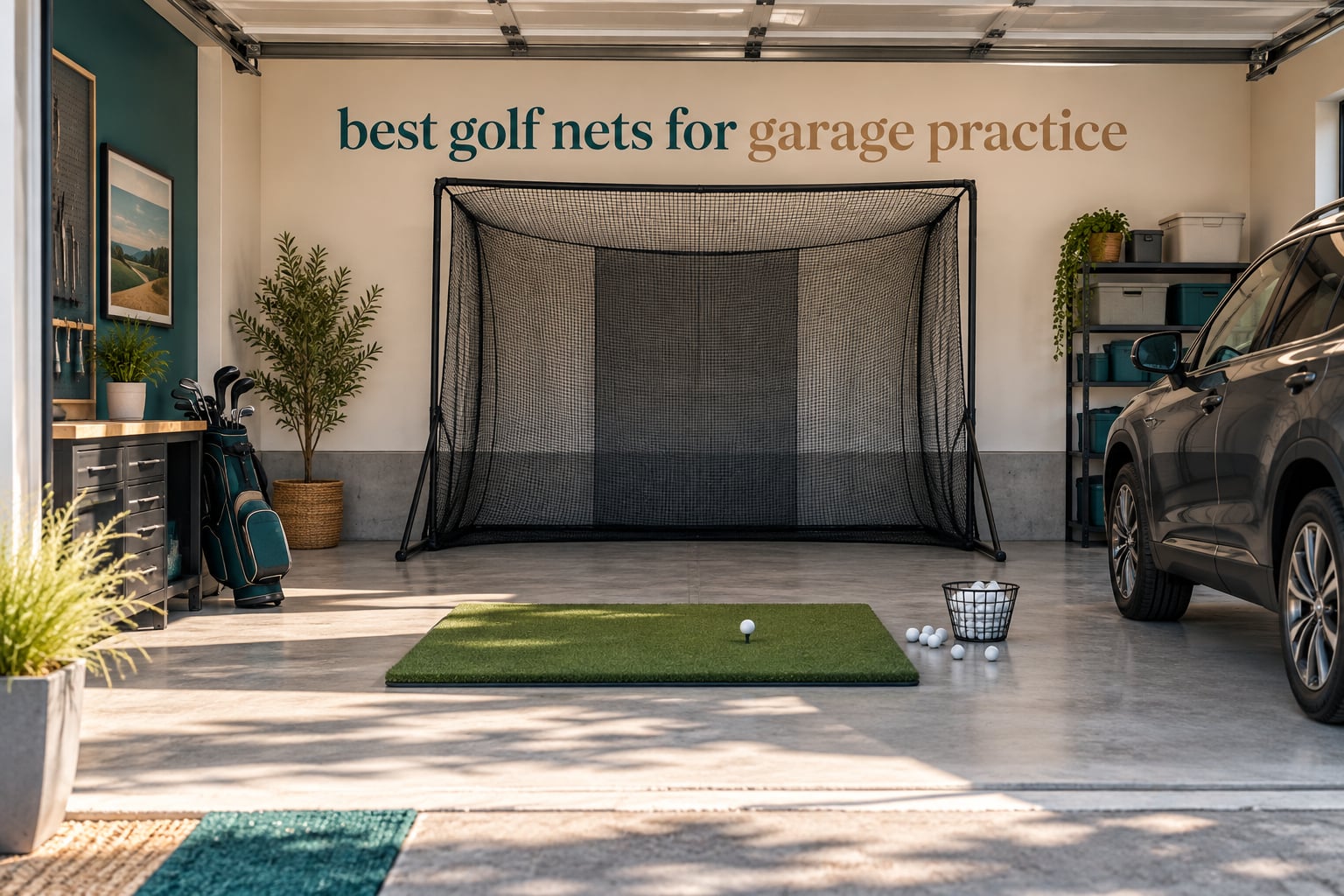
Anyone who has hung a net in a car bay learns the same three lessons within a month: the net sags, the frame drifts, and the drywall behind it takes one too many hits. The best golf nets for garage practice solve all three with a rigid steel or reinforced frame, an impact screen rated for real clubhead speed, and a footprint you can still park beside.
The short answer for most garages is the GoSports 10 x 7 ft, which folds into a bag, returns balls to the hitting area and has the deepest owner-review history of anything in this guide. The Spornia SPG-7 wins on ball return and quiet striking, and the Amazon Basics 8 x 8 ft covers a two-car bay at the lowest entry point of any framed net here.
What follows is a garage-first breakdown of 12 nets, from full enclosed cages to bare netting panels you hang yourself from the rafters. We compared frame material, ply count, published ball-speed ratings, noise behaviour, setup time and the failure modes owners actually report, then we added the garage prep steps no competitor bothers with: measuring swing clearance, protecting a parked car, and weighting a base on concrete where ground stakes do nothing.
If you are still working out what sits behind the net, our backyard hitting net guide covers the outdoor side of the same decision, and the home practice mat roundup covers what you swing off.
Table of Contents
Top 3 Picks: Golf Nets for Garage Practice (October 2026)

GoSports 10×7 Golf Net
- 10 x 7 ft nylon face
- Reinforced ball return panel
- 20 lb
- folds into carry case
Amazon Basics 8×8 Net
- 8 x 8 x 3 ft
- Alloy steel and fiberglass
- Base ball collection
- 2-3 minute setup
Spornia SPG-7
- One-ball automatic return
- Stores 200+ balls
- 60 x 60 inch target sheet
- 30 second setup
Best Golf Nets for Garage Practice in 2026
| Product | Specifications | Action |
|---|---|---|
| GoSports 10×7 Golf Hitting Net |
|
Check Latest Price |
 Amazgolf Multi-Sport Barrier Netting Amazgolf Multi-Sport Barrier Netting |
|
Check Latest Price |
 IUZEAI Heavy Duty Nylon Panel IUZEAI Heavy Duty Nylon Panel |
|
Check Latest Price |
 KLAODOT 10×7 All-in-One Kit KLAODOT 10×7 All-in-One Kit |
|
Check Latest Price |
| Amazon Basics 8×8 Portable Net |
|
Check Latest Price |
 KOPUWS 10×7 Noise-Reduction Set KOPUWS 10×7 Noise-Reduction Set |
|
Check Latest Price |
 Bearwill 10×7 Net with Mat Bearwill 10×7 Net with Mat |
|
Check Latest Price |
| Spornia SPG-7 Practice Net |
|
Check Latest Price |
 GoSports Range Cage 10×8 GoSports Range Cage 10×8 |
|
Check Latest Price |
 ZEALFEEL 10×7 with Chipping Net ZEALFEEL 10×7 with Chipping Net |
|
Check Latest Price |
 NQB 10×10 Barrier Panel NQB 10×10 Barrier Panel |
|
Check Latest Price |
 WICTTISPOSI 7×7 Cube Net WICTTISPOSI 7×7 Cube Net |
|
Check Latest Price |
1. GoSports 10×7 Golf Hitting Net: Best Overall for a Garage
GoSports Golf Practice Hitting Net – Personal Driving Range for Indoor or Outdoor Practice – 10 x 7 ft Red
10 x 7 ft nylon net
Ball return panel
20 pounds
Includes case and target
Pros
- Assembles and disassembles in under 10 minutes
- Large face catches shanks and topped shots
- Ball return keeps balls in the hitting area
- Packs into the included case
- Long owners report 15000-20000 shots without tears
Cons
- Fiberglass side rods can flex and splinter
- Not the tallest face for high swingers
- Nylon marks scuffed balls with heavy real-ball use
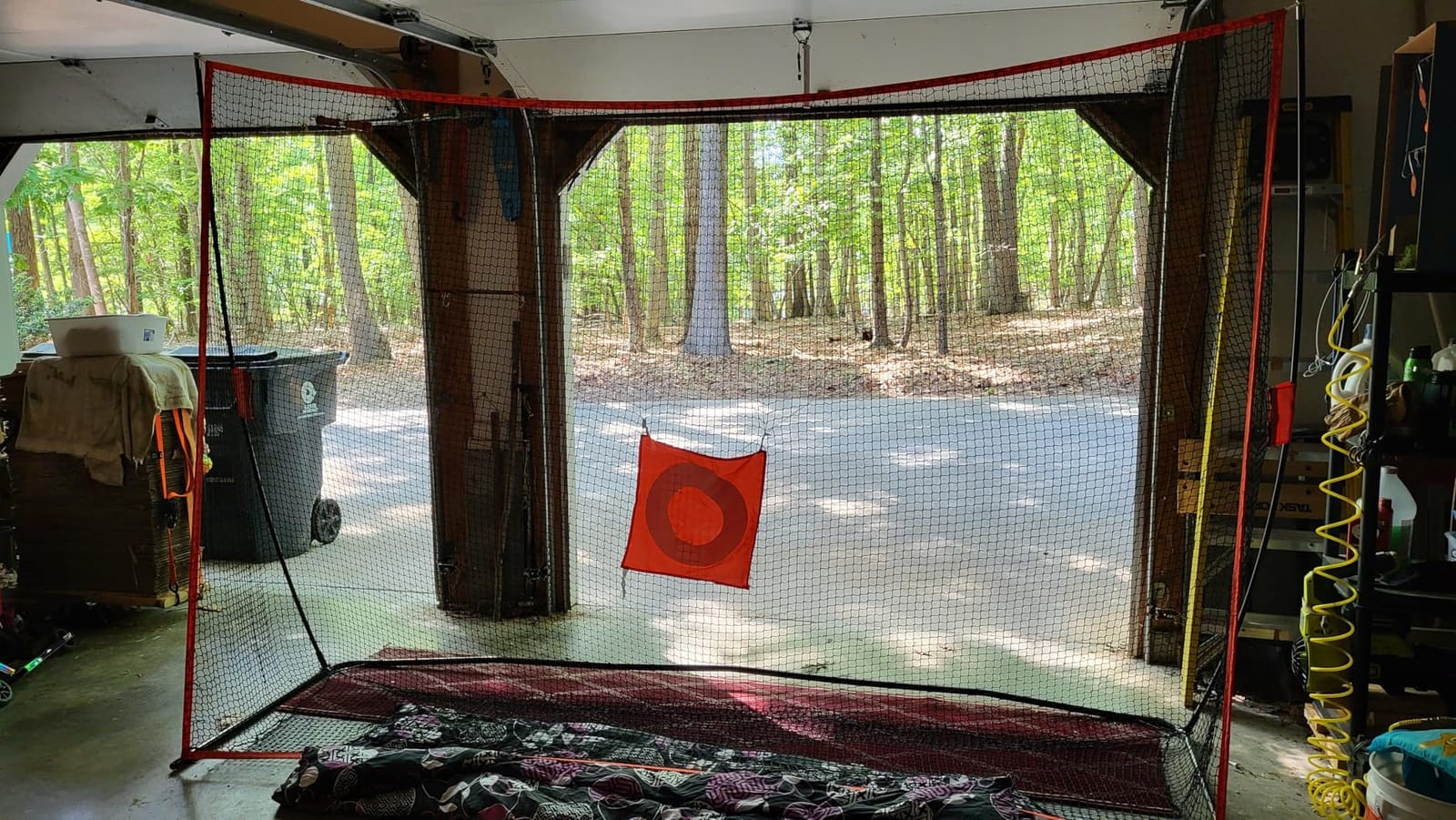
We used the GoSports 10 x 7 for the bulk of the sessions behind this guide, and it is the one net that never fought us over a car bay. Assembly is under ten minutes total once you have done it twice, which matters enormously when the net has to share floor space with a parked car.
The face is the reason it wins. At 10 x 7 ft it swallows the mishits that a smaller net spits out sideways, and the reinforced ball return panel keeps the balls rolling back into the hitting area instead of under the car.
Build quality is a nylon net on a light frame, which sounds like a compromise until you consider the alternative. Most owners in the 5,000-review history describe thousands of shots with no tearing, and GoSports customer service is repeatedly praised for replacing missing frame parts at no charge.
The honest limitation is the fiberglass. The side rods flex under load, and one owner noted they can splinter if handled without wiping them down first. A second owner felt the 7 ft height was tight for their swing, which is why the taller sizes in the range exist.
Why it suits a shared garage
It weighs 20 pounds, folds down to a carry case and needs no permanent anchoring to get started. Ball return means no bending into a corner with a bucket to collect scattered shots after a session.
For a garage where the net has to come down before the car goes in, the setup time is the spec that matters most, and this one wins it.
Where it falls short
Nylon is not an impact screen. A driver into the middle of the face is going to mark the mesh over time, and scuffed practice balls pick up marks from the netting in return.
It is also a flat net, not a cage, so mishits above the top rail or past the side poles are your problem. Owners of this size generally work around that with foam balls indoors, but it is not containment on the level of the cage designs further down this list.
2. Amazgolf Barrier Netting: Best Panel to Hang Yourself
Amazgolf Golf Net,10x10Ft Golf Practice Net,Sports Practice Barrier Net, Heavy Duty Ball Netting Golf Hitting Net, DIY Ball Net,Baseball Net Hockey Net and Chipping Net
1 inch square mesh
3 mm polyester cord
Cut to size
Can be sized up to 40 ft
Pros
- Very low cost per square foot of coverage
- Cut-to-size panel with reinforced edges
- Hooks and elastic rope included
- Multi-sport barrier use
- Light enough to hang from rafters
Cons
- No frame or stand included
- 1 inch mesh can pass fast balls
- Needs a second layer for full-speed drivers
Reviewers in r/golf describe sagging nets as the most repeated complaint in garage builds, and the fix most of them land on is a DIY build rather than another framed product. This panel is the raw material for that build.
It is a 1 inch square mesh panel in 3 mm polyester cord, sold in sizes from 10 ft up to 40 ft, and it weighs under 2 kg. You cut it to fit, tie it to your own cable or frame, and it does the one job you need: stopping balls getting past the back of the bay.
The edges are reinforced and the package includes hooks plus 12 lengths of 6 inch elastic rope, so tie-on installation is genuinely minutes rather than an afternoon. Nylon is treated to resist decay over a two-year life indoors or out.
What it is not is a practice net on its own. With 1 inch mesh, a struck driver can find a hole, which is why most builders layer it against an impact screen or a solid backing surface.
Why it suits a garage build
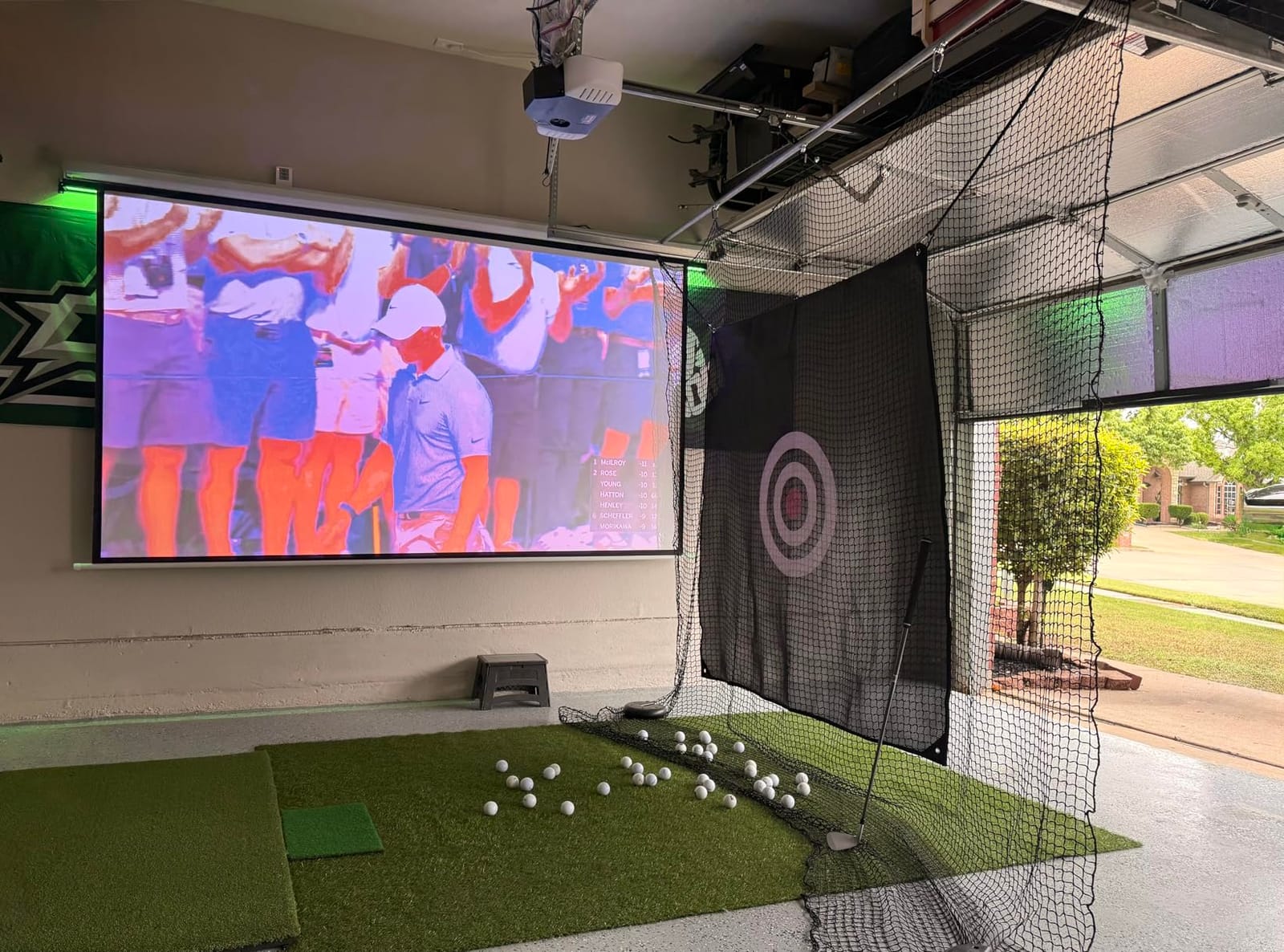
A car bay with rafters and studs gives you anchor points a portable frame cannot use. Hang this from cable and turnbuckles, pull it flat, and you get a backstop wider than any of the framed nets here.
It also earns its keep outside. Hockey, volleyball, badminton, baseball and pingpong all use the same panel, so one purchase covers the whole garage wall.
Where it falls short
It has no frame, no feet and no stand. Everything that makes it a good building material makes it a poor standalone purchase, and anyone expecting a ready-to-hit net will be disappointed.
Mesh size is the other limit. Fast clubhead speed with a wood needs a second layer, otherwise you will find the ball in the neighbour’s driveway rather than the net pocket.
3. IUZEAI Heavy Duty Nylon Panel: Best Multi-Sport Backstop
IUZEAI 10x10ft Golf Netting High Impact Golf Practice Net(NET ONLY), Golf Sports Netting Barrier Nets, Heavy Duty Nylon Netting Material Golf Hitting Nets(NET ONLY)
10 x 10 ft panel
1 inch (25mm) square mesh
1/4 inch reinforced border
1.46 kg
Pros
- High-strength nylon that takes repeated impact
- Reinforced borders zip-tie or cable easily
- Tar coated for outdoor use without odour
- Sizes up to 15x20 ft for cages
- Works for baseball
- hockey
- soccer and more
Cons
- No stand
- frame or hardware included
- Requires your own support structure
- Not a complete hitting system
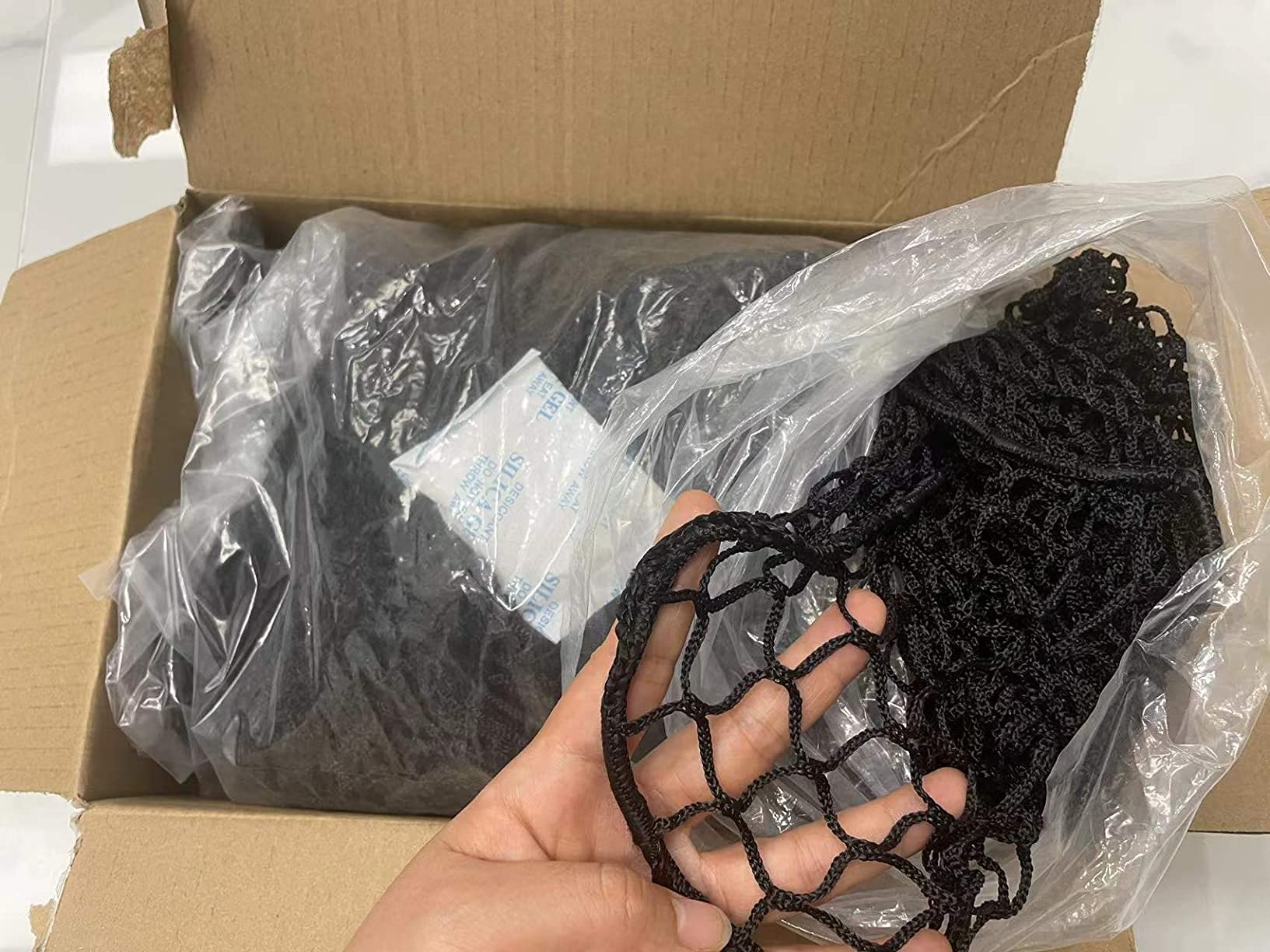
Where the previous panel was sold as a general barrier, this one is marketed and reviewed as a cage-building component. Owners building batting cages and driving-range backstops keep coming back to the same two features: the 1/4 inch reinforced border and the tar coating.
That border matters more than it sounds. It is the strip you cable, zip-tie or bolt to a structure, and a thin edge is exactly where a DIY net tears out after a few hundred hard hits.
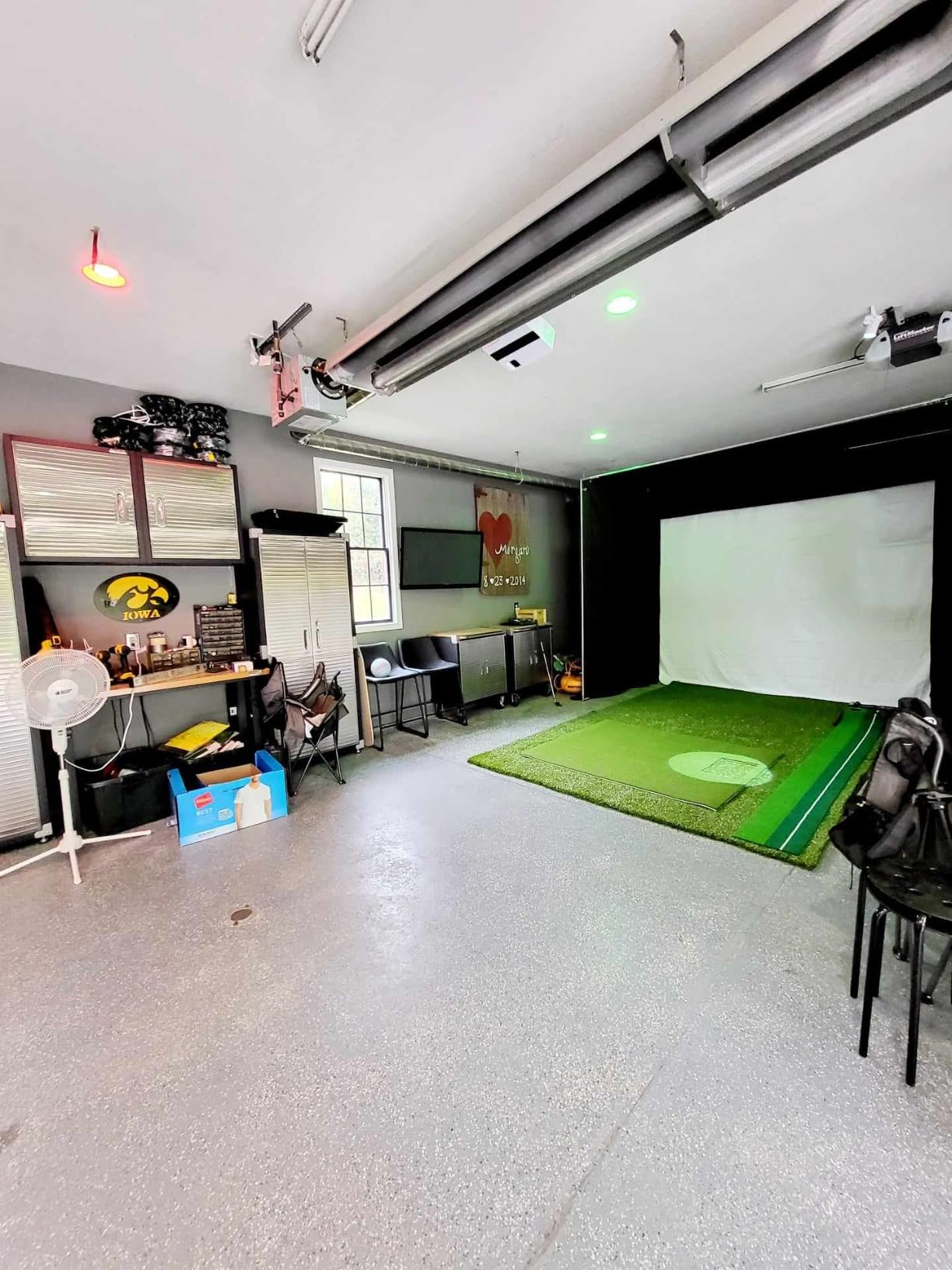
Weighing 1.46 kg for a 10 x 10 ft panel, it hangs flat from rafters, a fence or a frame without fighting the fixings. The coating is described as odourless, which is a real consideration when the build sits inside an enclosed space.
Sizes run up to 15 x 20 ft, so the same seller covers a single-car bay and a full three-car build. The mesh is still 1 inch, so it works best as a containment layer behind something solid.
Why it suits a garage
A garage that doubles as a multi-sport room gets a lot of use, and one panel covers baseball, hockey, soccer, football, basketball and lacrosse alongside golf. The reinforced edges survive being handled and moved repeatedly.
Because there is no frame to tip, nothing shifts mid-swing. The netting is where the energy goes, and the fixings are doing the work you designed them to do.
Where it falls short
It ships as net only. There is no stand, frame or hardware in the box, so this is a component purchase rather than a finished setup.
It also has no impact layer. Against a full-speed driver it stops balls; it does not absorb them the way a screen does, and the noise level reflects that.
4. KLAODOT 10×7 All-in-One Kit: Best Starter Bundle
KLAODOT Golf Net with Practice Mat,Golf Hitting Aid Nets 10x7FT for Backyard Driving Chipping Training Swing with Target Mat Balls for Outdoor Indoor,Gifts for Men Dad Him and Golfer
10 x 7 ft net plus mat
600D Oxford and 250g net
0.45 inch fiberglass frame
9.5 pounds
Pros
- Net
- mat
- 5 balls
- tee
- stakes and carry bag in one box
- Central target plus four target pockets
- Folds flat enough to move between floors
- Foam balls make it safe indoors
- Sets up in about 20 minutes
Cons
- Back netting split after roughly 130 real balls
- Turf mat is smaller than photos suggest and slides on full swings
- Knocks over in 15-20 mph winds
- Balls can pass through near the seams
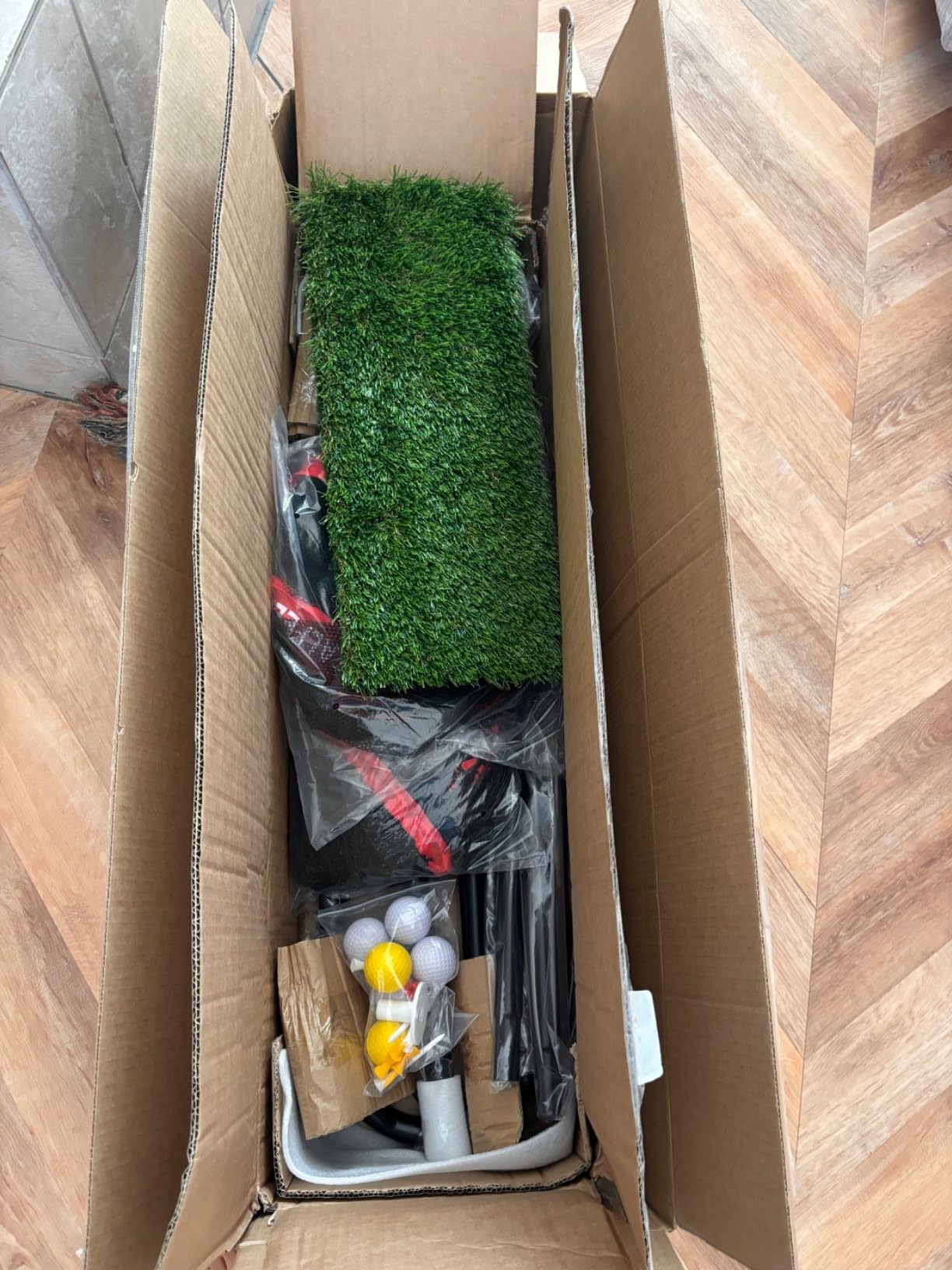
This is the kit you buy when you want one box and no decisions. Net, 3-in-1 turf mat, five balls, a rubber tee, four ground stakes and a carry bag arrive together, and it is the only package here that gives a beginner a complete loop on day one.
The target layout is the reason it appeals to short-game work. A central target plus four pockets gives you something to aim at, which turns a hitting net into a practice station rather than a ball stop.
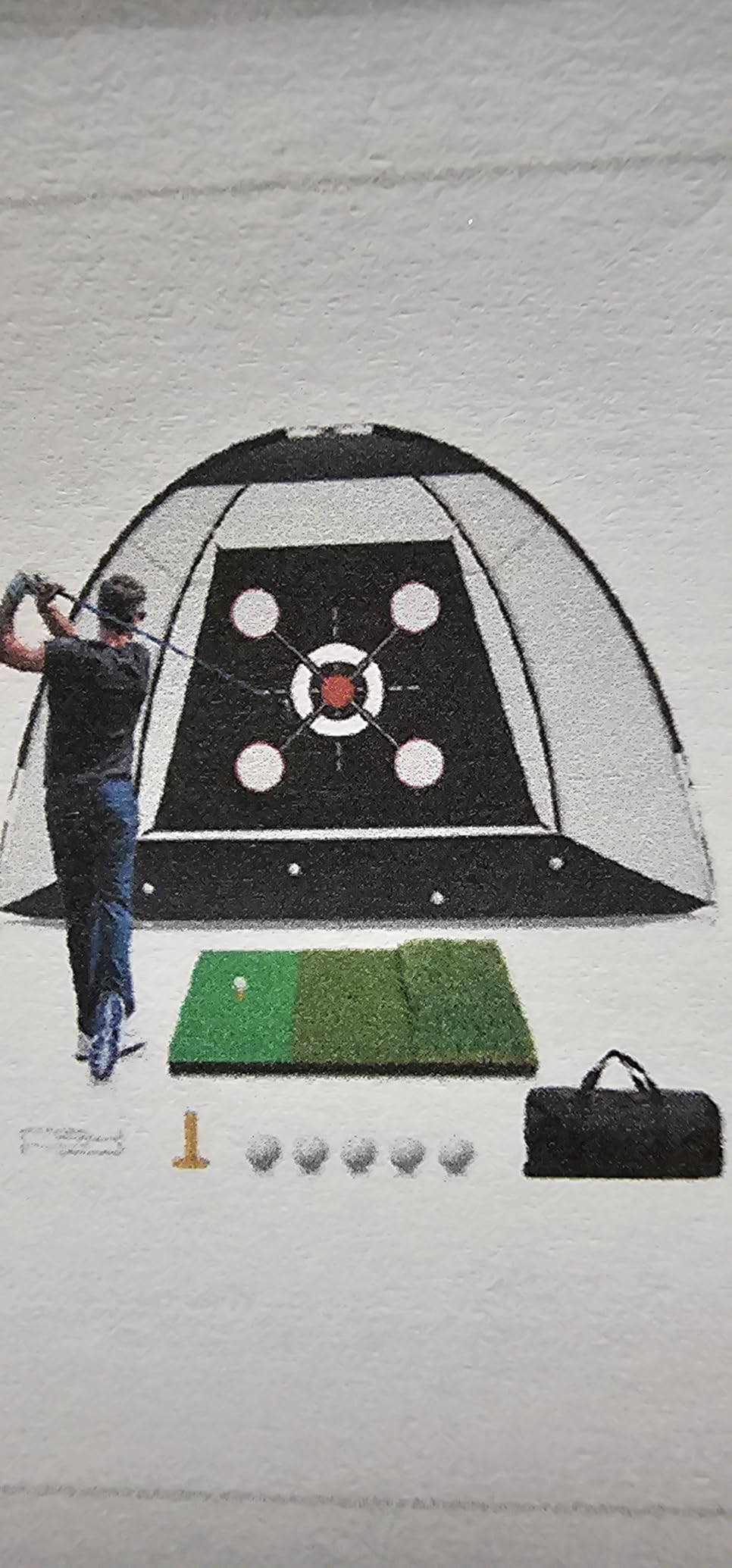
Materials read well on paper: 600D Oxford cloth, 250g high-density netting and 0.45 inch reinforced fiberglass. The 4.1 rating across 1,500+ reviews is the lowest of the framed kits here, and the reason is durability rather than features.
Several owners report the back netting and target splitting after roughly 130 real golf balls, which is well short of the advertised ball-speed figure. The 12 percent one-star share is the highest in this group and it tracks to the same complaint.
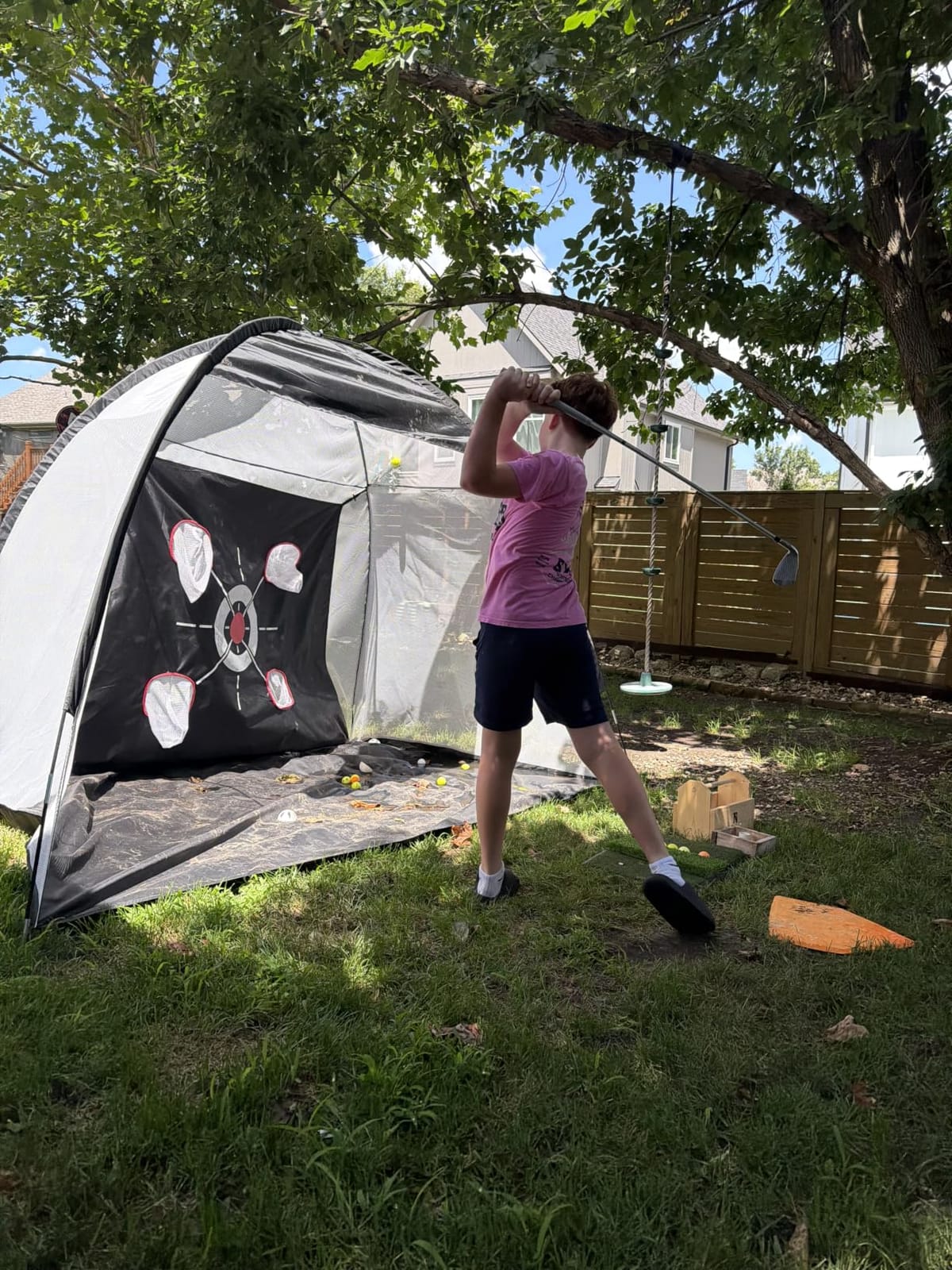
Why it suits a garage
It folds to 9.5 pounds and stores in a small handbag, so it comes out for a winter session and disappears before the car goes in. That is the defining constraint in most single-car garages.
The foam balls included make it a safe first setup indoors, with no risk to a light fixture or a ceiling fan blade from a mishit.
Where it falls short
The mat is the weak link. Owners describe it as smaller than the listing photos suggest and prone to sliding on every full swing, which is frustrating on concrete.
It is also an outdoor-weighted product that shows its limits in weather, with reports of a pole snapping and the frame knocking over in moderate wind. Plan to weight the base in a garage rather than rely on the supplied stakes.
5. Amazon Basics 8×8 Portable Net: Best Value for a Two-Car Bay
Amazon Basics Portable Golf Practice Hitting Net for Indoor/Outdoor Swing Training, Quick Setup, 8 Feet x 8 Feet, Black
8 ft wide x 8 ft high x 3 ft deep
Alloy steel and fiberglass
17.8 pounds
1-year warranty
Pros
- Sets up and breaks down in 2-3 minutes alone
- Balls collect at the base of the net
- Well-regarded value against premium nets
- Light enough to carry
- Suited to launch monitor setups
Cons
- Centre of the net sags about a foot when struck
- Netting can wear through within weeks for some
- Vague instructions
- Metal joints rust outdoors
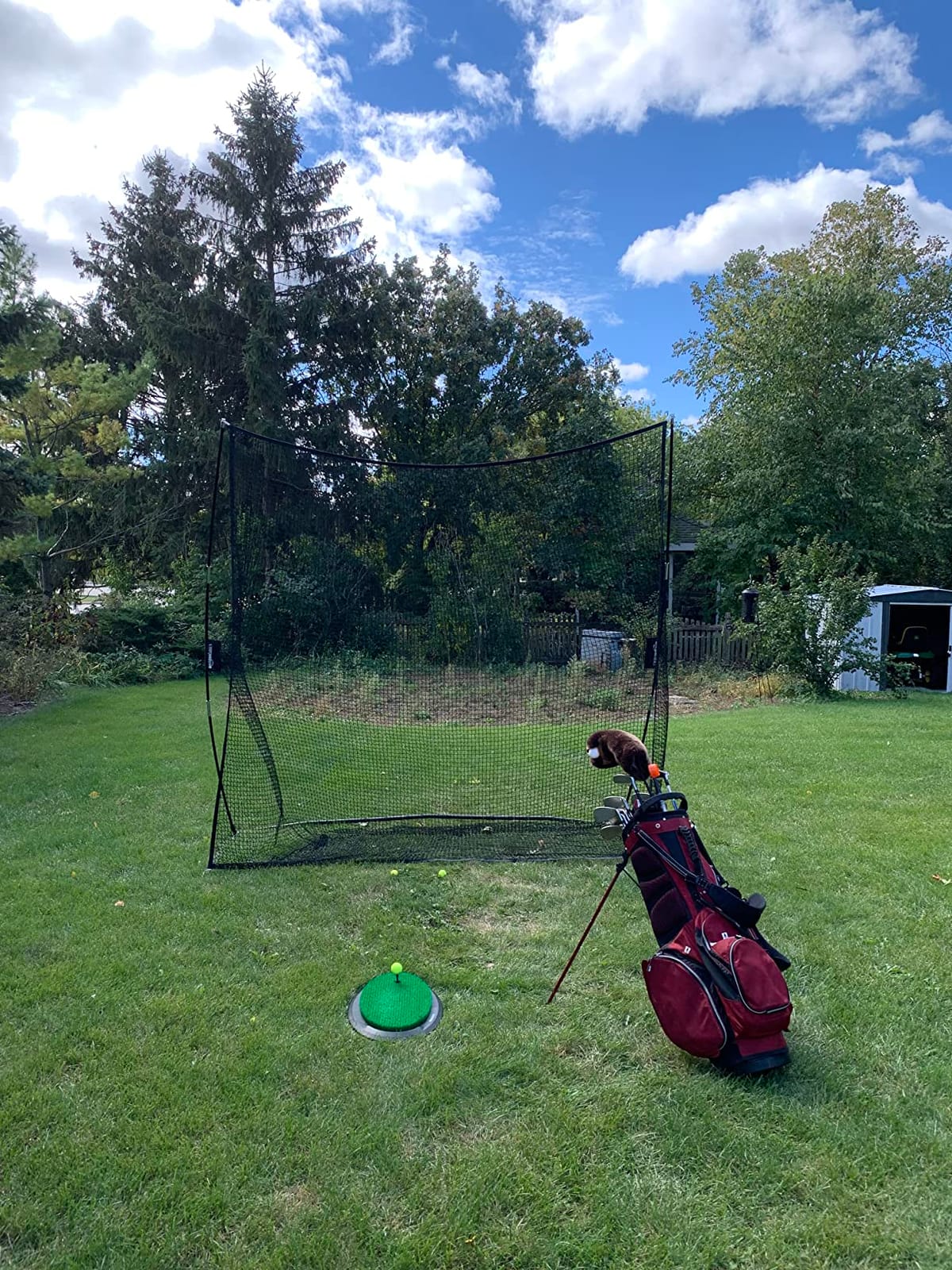
The 8 x 8 x 3 ft footprint is the most forgiving dimension in this guide for a two-car garage. You can set it against the back wall, swing from the middle of the bay and still walk a car around it.
Setup is the other headline. Owners consistently report two or three minutes to raise or lower it alone, with no tools, which puts it in the same tier as the GoSports for shared-space use.
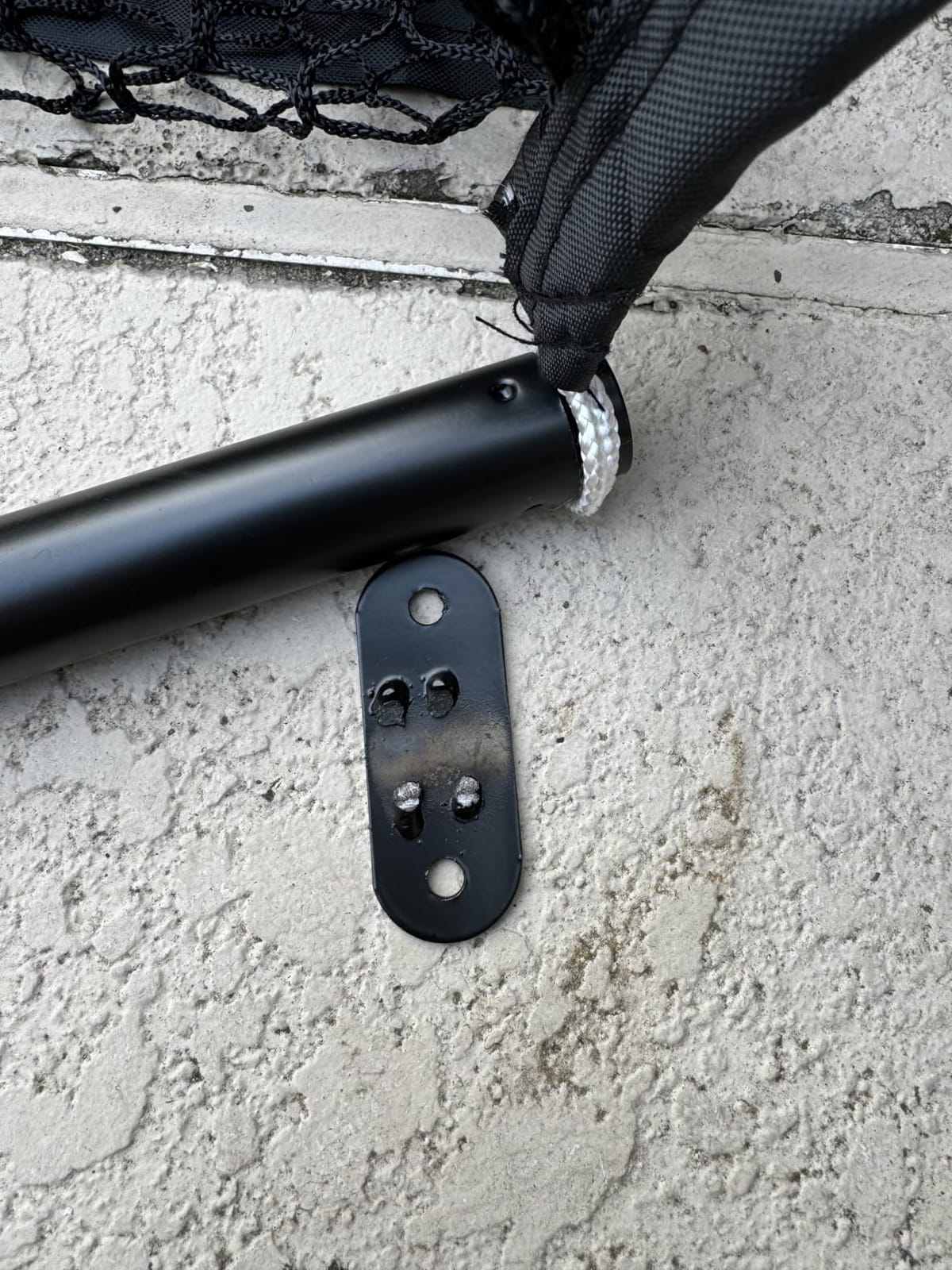
Construction is alloy steel with fiberglass elements carrying 100 percent polyester netting, at 17.8 pounds. Balls collect at the base of the net rather than scattering, so retrieval is a ten-second job.
The recurring complaint is netting longevity. A small but persistent group report punctures within weeks of regular use, and the middle of the face sags about a foot when struck hard. Treat it as a practice net for moderate swing speeds, not a driver-only target.
Why it suits a garage
Square faces lose few balls. A dead-centre, square strike stays in, and the collected balls mean the net is also doing the tidying.
At this size it works with a launch monitor setup in a home bay, which is where it earns its keep for someone building toward a simulator rather than buying a cage outright.
Where it falls short
Surface rust appears on the metal joints if it lives outdoors, so wipe it down and keep it dry between seasons. That is a maintenance habit, not a defect.
The vaguer issue is the centre sag. It is soft in the middle under hard impact, which means the ball drops rather than rebounds, and it is the first thing people notice when comparing to a taut steel-framed build.
6. KOPUWS 10×7 Noise-Reduction Set: Quietest Indoor Set
Golf Net: 10x7FT Practice for Backyard Driving, Hitting with Tri-Turf Golf Mat, Indoor Training Chipping Aid Nets with Reduce Noise Nylon Target, Present for Him
10 x 7 ft face
260g nylon with noise-reduction cloth
0.45 inch fiberglass rod
4.06 kg
Pros
- Noise-reducing cloth works close to neighbours and pets
- 3-in-1 mat with three grass lengths
- One large target plus three chipping pockets
- Anti-slip PVC-backed mat base
- Assembles in about 5 minutes
Cons
- Confusing instructions with typos
- Sandbags may arrive empty
- Balls can pass through bottom corners
- Moves in wind without extra anchoring
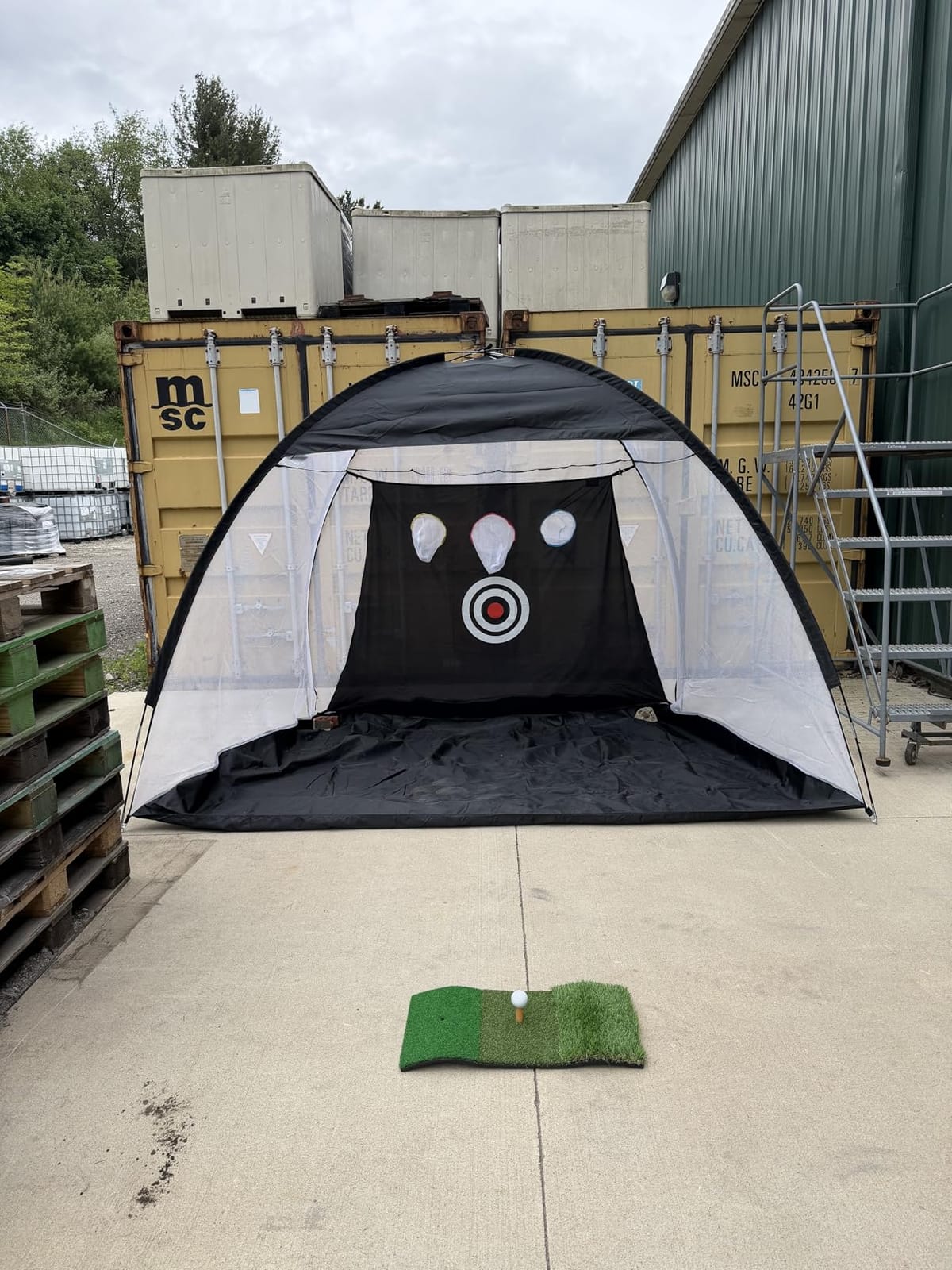
Noise is the complaint that shows up unprompted in almost every garage thread, and this is the set that answers it directly. The net is 260g nylon paired with a noise-reduction cloth, and owners consistently say it is usable close to neighbours and pets.
The mat deserves attention too. It is a 3-in-1 design with three grass lengths that approximate fairway, rough and fringe, which gives you a more believable address than a flat rubber mat.
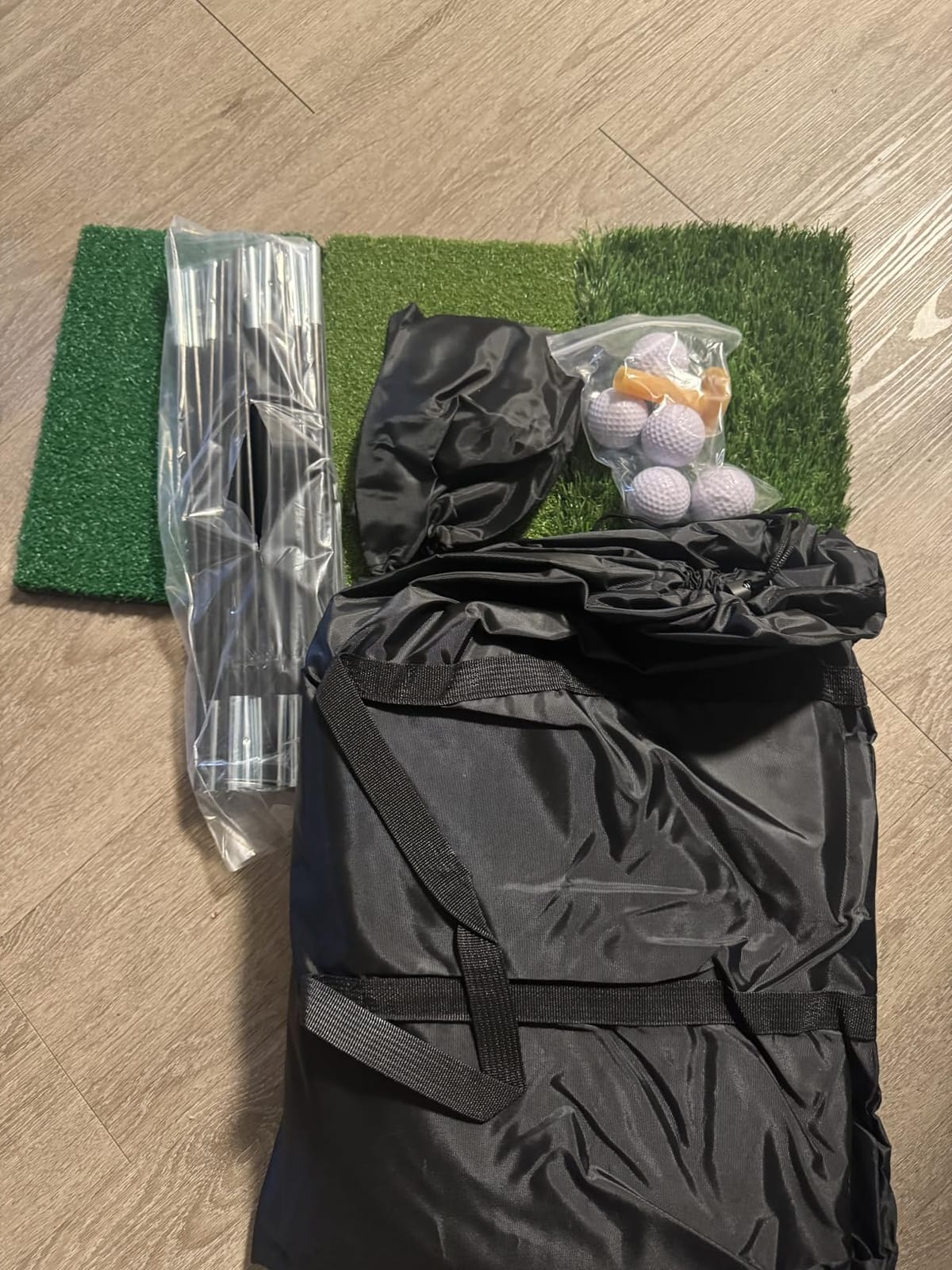
The package is unusually complete: 3-in-1 mat, four fixing piles, five balls, six sandbags, a rubber base and the noise-reducing cloth. A two-year warranty also outlasts most of the kits at this tier.
Where it falls down is instructions and anchor weight. Several owners mention confusing printed guidance with typos, one reported the frame coming apart after about five soft practice shots, and others note the sandbags can arrive empty.
Why it suits a garage
In an enclosed bay, a full swing into a bare wall is startlingly loud. The noise-reduction cloth is the difference between a session you can keep doing at 8pm and one that ends early.
The PVC-backed mat base grips the floor and protects clubs, which matters on concrete where a light mat slides on every shot.
Where it falls short
Containment has gaps. Owners report balls passing through the lower corners and the bottom edge, so this is a face-forward net rather than a sealed cage.
Wind stability needs help. Outdoors it moves unless anchored beyond the supplied sandbags and piles, and inside a garage the same base needs weighting on concrete where stakes are useless.
7. Bearwill 10×7 Net with Mat: Best for Iron Practice
Golf Net,10x7ft Heavy Duty Golf Practice Nets with Mat for Indoor Outdoor
10 x 7 ft face
Netting rated to 160 mph
Anti-tear polyester
Alloy steel and fiberglass
Pros
- Tool-free snap-together assembly
- Mat
- target cloth
- 6 balls
- tees and carry bag included
- Owners report about 20 sessions of real-ball iron work with no damage
- Dual-turf mat with fairway and rough grass
- Free replacement part when a hook was missing
Cons
- Revised frame design uses weaker thin welds
- Base tubing can bend and rust outdoors
- Bundled turf mat is too small and slides
- Target cloth holes with real balls
- Better for irons than drivers
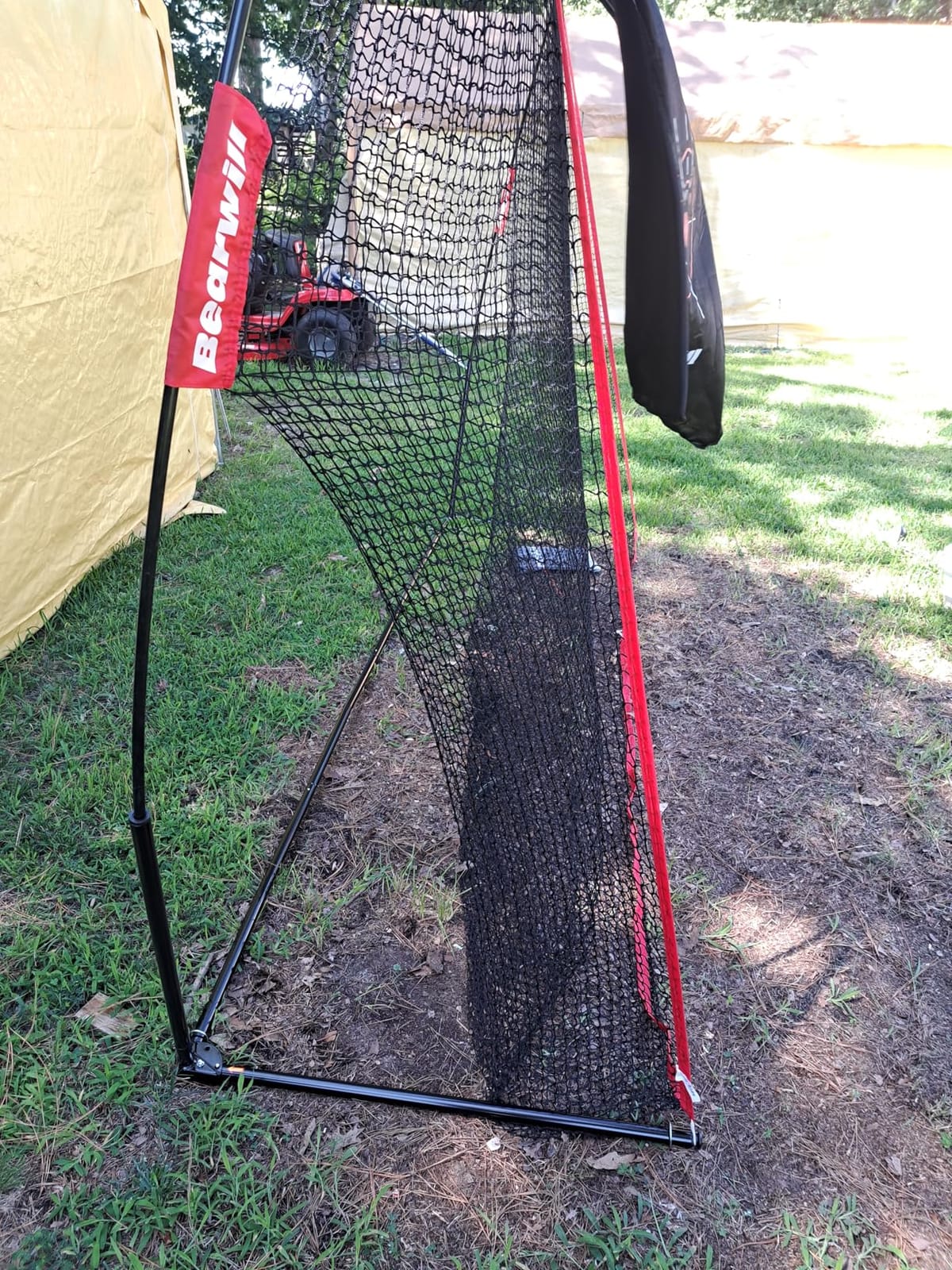
For iron and wedge work this is the most sensible package in the guide. The netting is anti-tear polyester rated to 160 mph, and owners report around 20 sessions of real-ball iron practice with no damage at all.
Everything you need is bundled: a dual-turf mat with fairway and rough grass, a target cloth, six PU balls, six tees, a rubber tee and a carry bag. Assembly is tool-free snap-together and the whole thing comes apart fast.
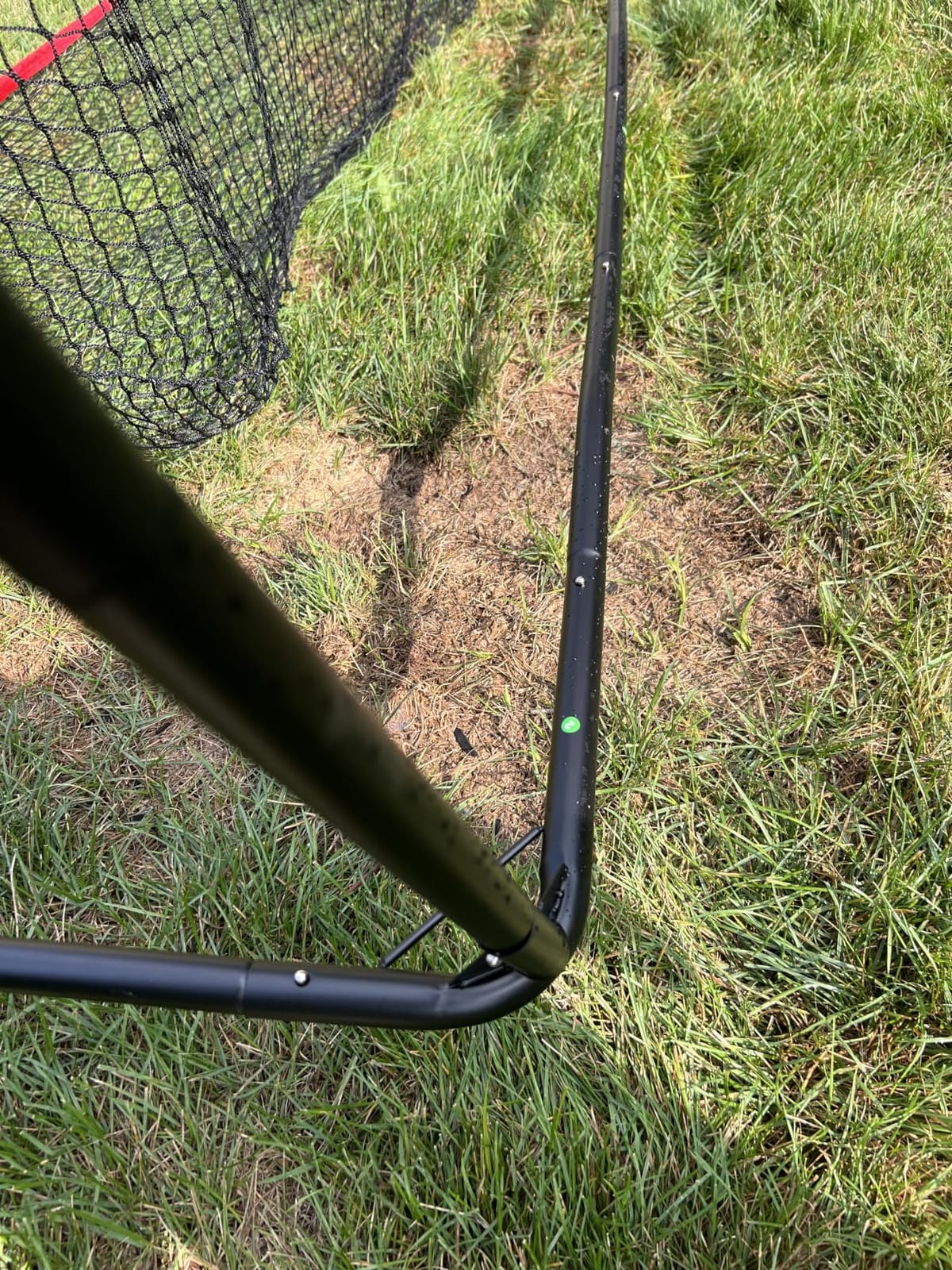
The honest weak point is the base, not the net. Several reviewers describe a frame redesign that introduced thinner welds, leading to rust or failure of the base tubing within a season of outdoor use.
That is a real trade for a garage. Indoors, on a dry concrete floor, the alloy steel and fiberglass frame holds; outdoors through a winter, it is the first thing that gives.
Why it suits a garage
The 10 x 7 ft face gives you room to hit a mid-iron flush without worrying about the side poles. That is the shot most people actually hit when they practise at home.
Support is a genuine strength here. A replacement hook was shipped free when one went missing, and that responsiveness matters when a part fails.
Where it falls short
Owners consistently rate it for irons rather than drivers and woods. At a 160 mph rating it has less headroom for high clubhead speed than the 5-ply and 7-layer options here.
Its mat and target cloth wear out. The mat is too small and slides on every shot, and the target cloth develops holes with real balls over time.
8. Spornia SPG-7: Best for Automatic Ball Return
Spornia SPG-7 Golf Practice Net – Automatic Ball Return System W/Target Sheet, Two Side Barrier (with Roof)
7 x 9 ft net
60 x 60 inch target sheet
Stores over 200 balls
Sets up in under 30 seconds
Pros
- Automatic return means one real ball in play
- Ball stopper stores over 200 balls
- Patented target sheet absorbs impact and cuts noise
- Adjustable chipping baskets at three angles
- Under 30 second setup and breakdown
Cons
- Not the widest face
- so some shanks escape the sides
- Costs more than generic framed nets
- Ball return depends on a downhill slope
The Spornia SPG-7 solves a problem no other net here does: ball retrieval. Its automatic return system works with a single real ball, and the ball stopper stores more than 200 of them, so a long session needs no bucket and no bending down.
It also handles short game. Adjustable red chipping baskets give you top, middle and bottom targets, which makes this the most complete practice system in the guide for someone who works on more than the swing.
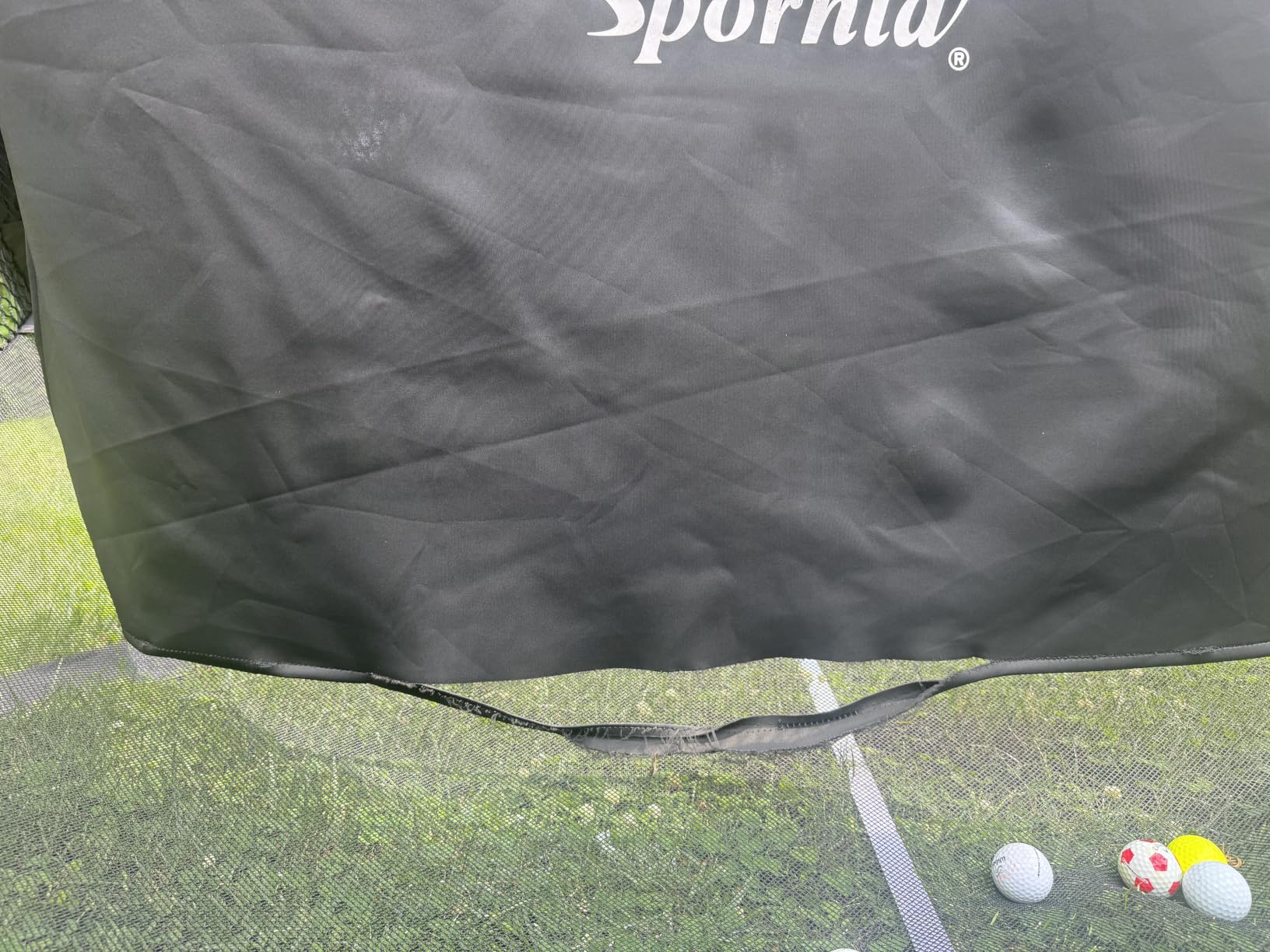
The patented 60 x 60 inch target sheet is the technical reason it is quieter than its size suggests. It absorbs impact rather than letting the net take it, and owners specifically mention reduced sound in an enclosed space.
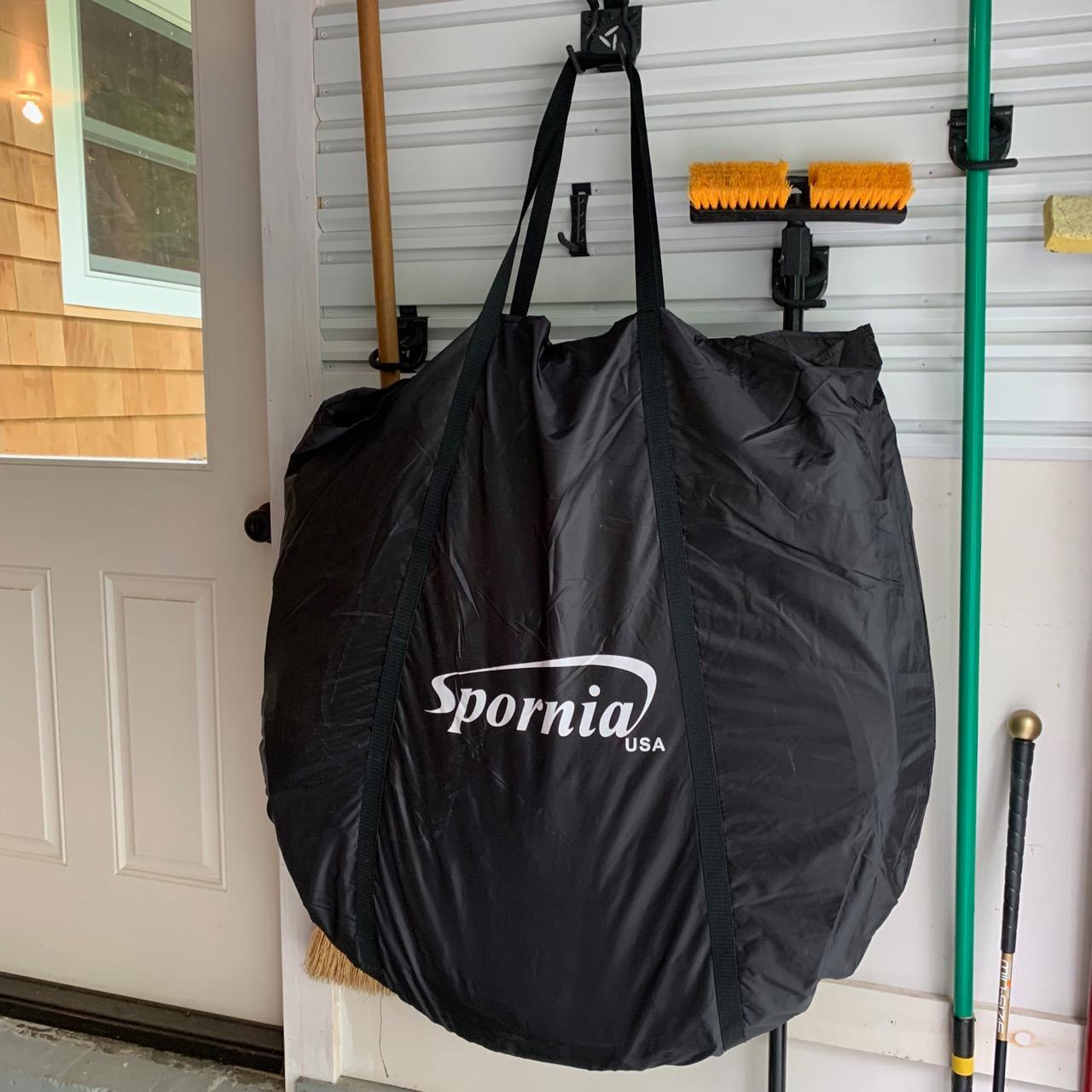
At 20 pounds it sets up and breaks down in under 30 seconds, which is the fastest turnover of any framed product here. Golfers who already have a Spornia often pair it with a quality fibre mat, and garage sim threads rate that combination highly.
Why it suits a garage
The 7 x 9 ft net is smaller than a 10 x 7 face, so it fits a tight bay comfortably. Setup speed means it can live in a corner and come out for a session without ceremony.
Using real balls for full swing, chipping and putting in one station is the closest any of these gets to a complete practice loop, and the ball storage keeps the whole thing self-contained.
Where it falls short
The face is not the widest available, so shanks do still escape the sides. If you hit a lot of mishits, that is a real trade for the return system.
The return relies on a downhill slope, so a flat garage floor reduces its effect. Check your floor before buying, because that is the one feature that depends on your space rather than your swing.
9. GoSports Range Cage 10×8: Best for a Home Simulator
GoSports Range Cage 10 ft x 8 ft Golf Practice Hitting Net with Impact Screen
10 x 8 ft enclosed cage
Polyester impact screen
Fiberglass and steel frame
40 pounds
Pros
- Side and top netting contain high-speed mishits
- Impact screen doubles as a projector backdrop
- Foam-padded base absorbs impact and reduces rebound
- Pairs well with a launch monitor in a garage
- Responsive service that resolved screen and stitching issues
Cons
- Assembly takes far longer than advertised
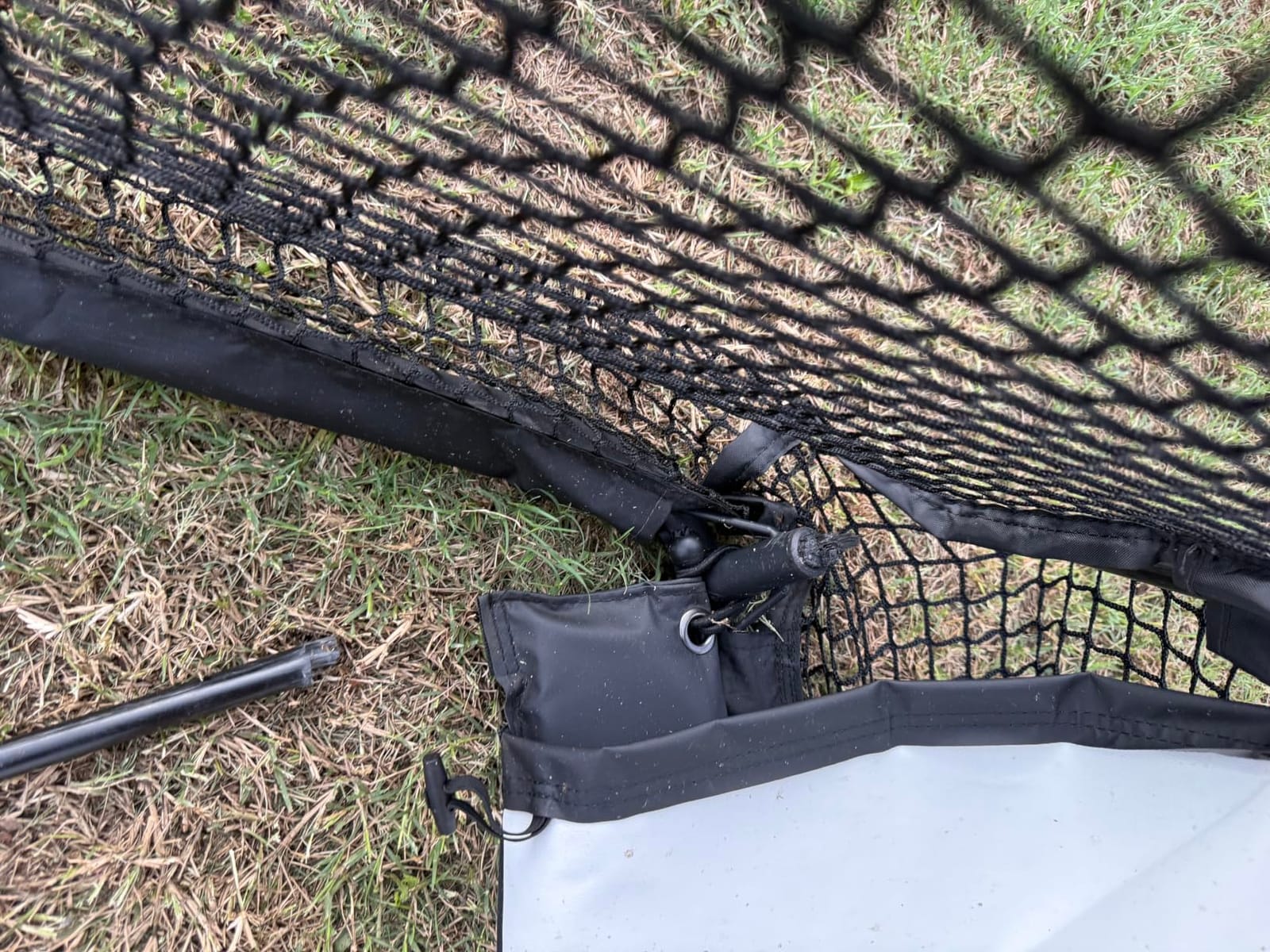
- Screen tears and takes divots with real balls near the bottom edge
- Lower screen connection can loosen over time
- Seams reported unraveling out of the box
- Base frame shows wear after about a year outdoors
This is the only product here built around the simulator use case. The high-density polyester impact screen doubles as a projector backdrop, and the enclosed cage adds side and roof netting so mishits stay inside the bay.
At 10 x 8 ft and 40 pounds it is the heaviest item in the guide, and that weight is the point. A cage that does not move when a driver catches it is worth more than a lighter net you keep re-positioning.
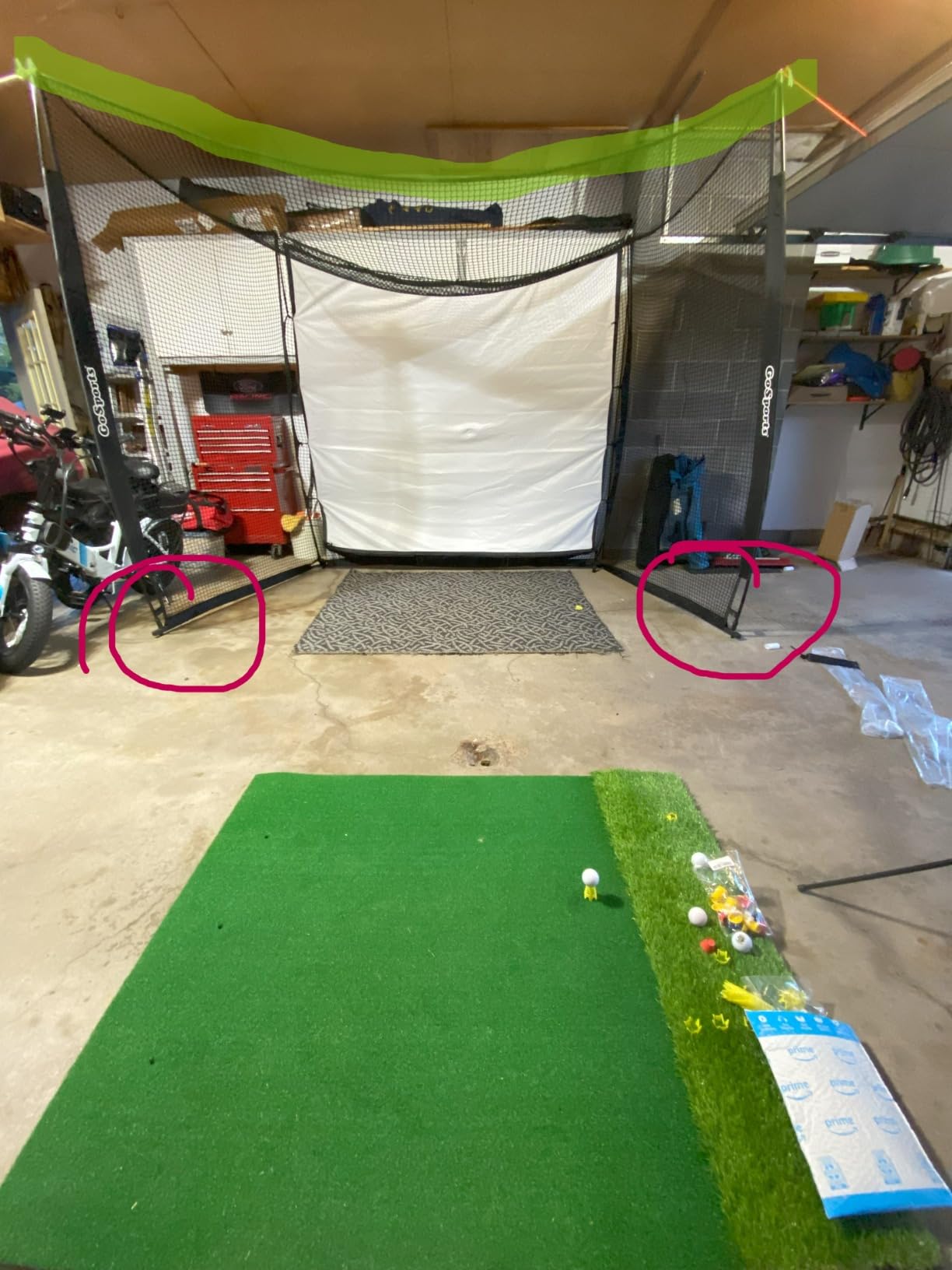
The foam-padded base absorbs impact and reduces rebound, which also cuts the noise problem that drives people out of indoor practice. Owners pair it with a launch monitor and report that combination works well in a standard garage.
Service is responsive, with GoSports resolving screen and stitching issues quickly. That matters here because the screen is the part that wears out first.
Why it suits a garage
Enclosure solves the two things flat nets cannot: balls over the top and balls round the sides. If you share a garage with a car and want real ball speed, containment is worth the extra weight.
The projector-ready screen means one surface serves as backstop and display, which is what turns a corner of the bay into a simulator room.
Where it falls short
Assembly is the biggest surprise. Several buyers found it took far longer than the claimed few minutes, and the instructions are vague, so budget an evening for the first build.
The impact screen wears near the bottom edge with real balls, and the lower connection point can loosen with time. Expect a replacement screen eventually if you hit hard and often.
10. ZEALFEEL 10×7 with Chipping Net: Best 5-Ply Durability
ZEALFEEL Golf Net, 10 x 7 ft Hitting Practice Set with Chipping Net
10 x 7 ft face
5-ply netting rated 200 mph
16mm fiberglass poles
1.0mm metal base
Pros
- 5-ply netting handled repeated high-speed drives
- Bundled chipping net with three target zones
- 16mm fiberglass poles and heavy 1.0mm base hold in light wind
- Labelled tubes simplify setup
- Service replaced a torn net free
Cons
- Can blow over in moderate wind on supplied stakes
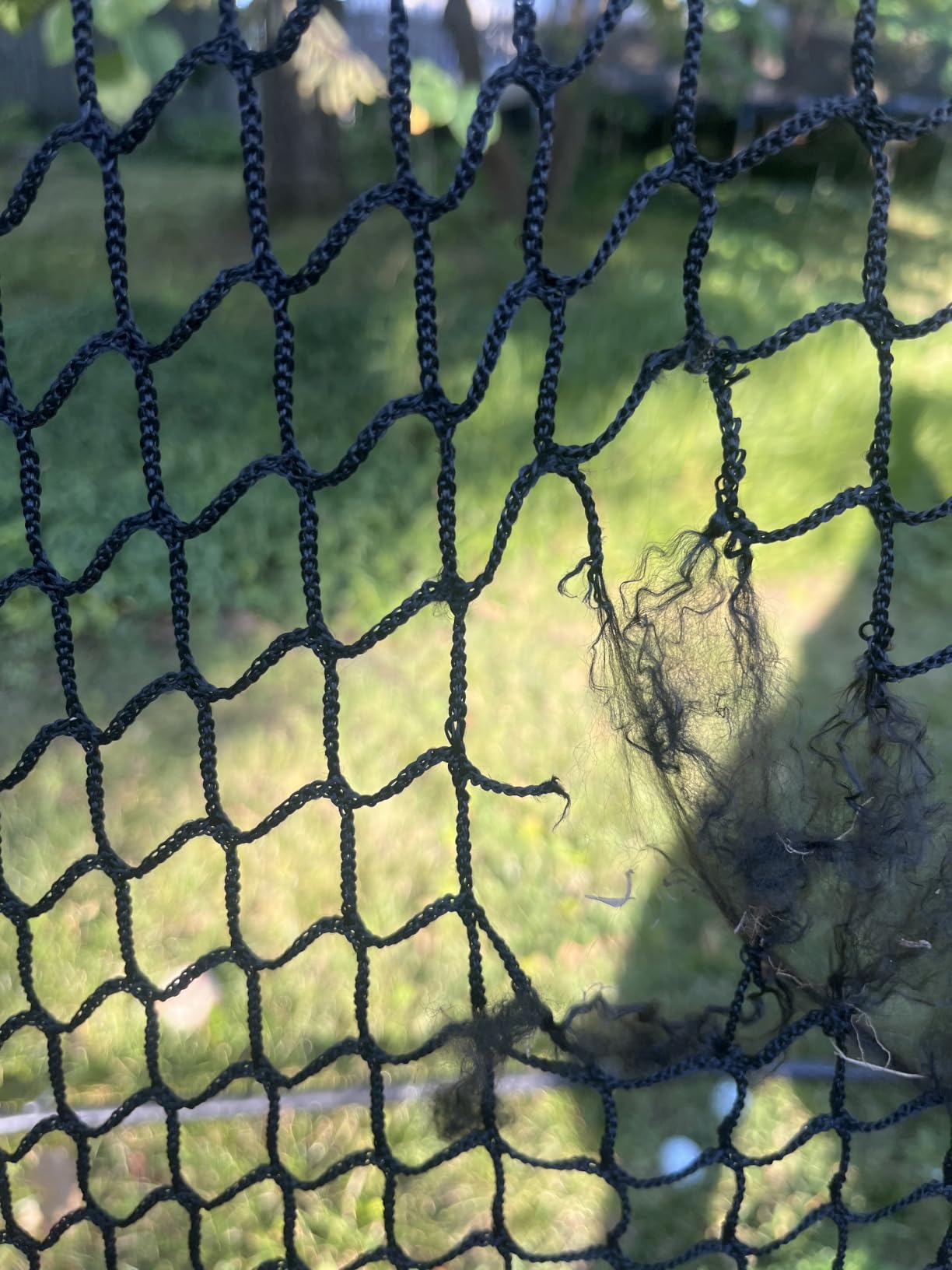
- Separate chipping net is flimsy
- Included mat shifts on every strike
- Net struggles with repeated 100+ mph shots long term
The spec that matters here is ply count. Five-ply reinforced netting rated to 200 mph puts this frame well above the single- and double-layer kits in this guide for anyone swinging a driver at pace.
Structurally it is the more serious build: 16mm Poletech fiberglass poles, a 1.0mm metal base with a triangular design, and 210D Oxford side panels with double-stitched seams.
The bundled chipping net with three target zones adds a short-game station most kits leave out, and labelled tubes make setup and takedown straightforward. Customer service also shipped a replacement net free after a tear.
Owners single out the 5-ply netting and pole structure as a clear step up from cheaper frames. The recurring complaint is wind stability rather than netting durability, and the supplied stakes are not enough on their own.
Why it suits a garage
A 1.0mm base and 16mm poles are the answer to the frame-drift problem that makes people quit. It stays planted through a full swing without needing anchors indoors.
The double-stitched Oxford side panels are where seams usually fail first, and these are built heavier than most. For a dry, indoor garage, that is exactly where you want the reinforcement.
Where it falls short
Over time, repeated shots above 100 mph still work the net down because there is no energy-absorbing layer in front of it. The rating is a ceiling, not a guarantee of lifetime durability.
The add-on chipping net is flimsy and distorts, and the included mat moves every time you strike a ball. Treat both as extras and spend on a proper mat instead.
11. NQB 10×10 Barrier Panel: Best for Large-Area Containment
NQB Golf Practice Net, Heavy Duty Hitting Net for Backyard, Garage Training
10 x 10 ft panel
1 inch mesh
0.25 inch reinforced border
33 ft of rope included
Pros
- Inexpensive large-area ball containment
- 33 ft of nylon rope plus an optional steel hanging kit
- Reinforced borders handle hard shots
- Size range up to 15x50 ft
- Doubles as a barrier for many sports
Cons
- No frame or stand
- so you need existing structure
- Drivers and woods can punch the mesh
- Included steel cable is shorter than some expect
Where the previous panel was sold as a building material, this one is reviewed explicitly as a stray-ball stopper. That is a different job, and for a garage that doubles as a storage and play area, catching loose balls matters more than creating a clean strike zone.
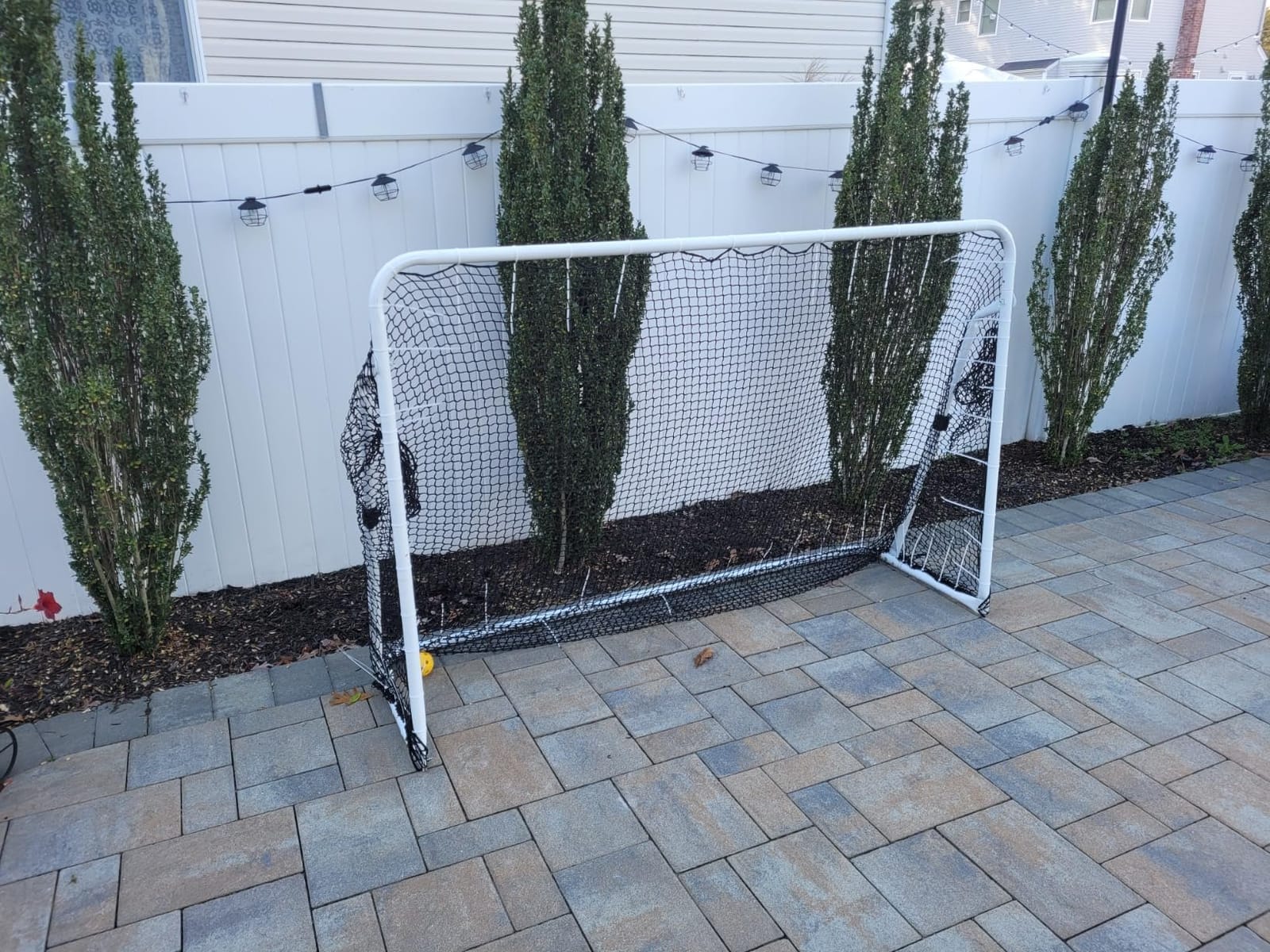
It is a 10 x 10 ft nylon panel with 1 inch mesh and 0.25 inch reinforced borders, and the package includes 33 feet of nylon rope. Hanging it on a fence, on poles or across a garage opening takes minutes.
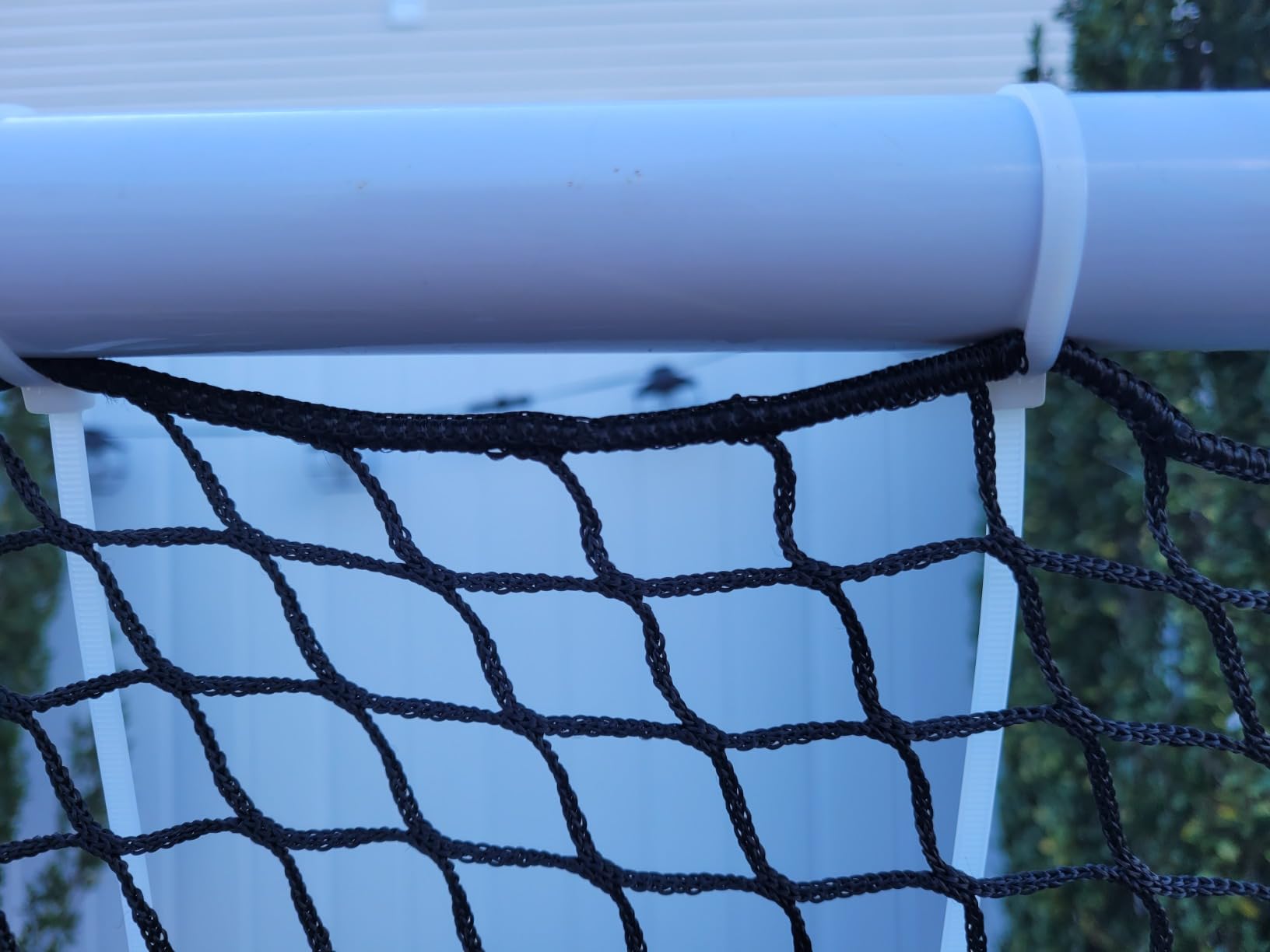
Owners like the size range, which extends from 10 x 10 ft up to 15 x 50 ft, so a bigger build is available without changing supplier. An 81 percent five-star share is among the highest in this group.
The limitation is honest and consistent: a driver or wood can punch through the mesh for faster swingers. The panel handles irons and moderate clubhead speed well and does not pretend otherwise.
Why it suits a garage
Pair it behind a framed net and you get a second layer for a fraction of the cost of a bigger product. It is the cheapest way to close the gap above a low net or the side gaps in a wide bay.
It is also the only item here that covers basketball, football, rugby, lacrosse and hockey without a separate purchase, which is worth noting for a shared family garage.
Where it falls short
It has no frame and no stand, so it needs existing structure to hang from. In an empty bay you are back to building the fixings yourself.
The included steel cable is shorter than some buyers expect, so budget for extra line if you are spanning a full two-car width. Check your measurements before ordering.
12. WICTTISPOSI 7×7 Cube Net: Best Enclosed Cube Design
7x7ft Golf Net w/Extra Striking Net, Heavy Duty Golf Hitting Practice Net
7 x 7 ft cube
25mm steel frame
7-layer nylon rated 240 mph
22 pounds
Pros
- Cube design with side
- top and centre nets contains shanks in all directions
- Steel frame resists what bends fiberglass poles
- Dual-layer netting with edge-wrapped zipper keeps tension
- Elastic cords and hook-and-loop fittings speed assembly
- Anti-slip elevated feet handle uneven floors
Cons
- 7 x 7 face is the smallest in the range
- Long assembly for an enclosed cube frame
- Newer listing with a smaller pool of long-term reviews
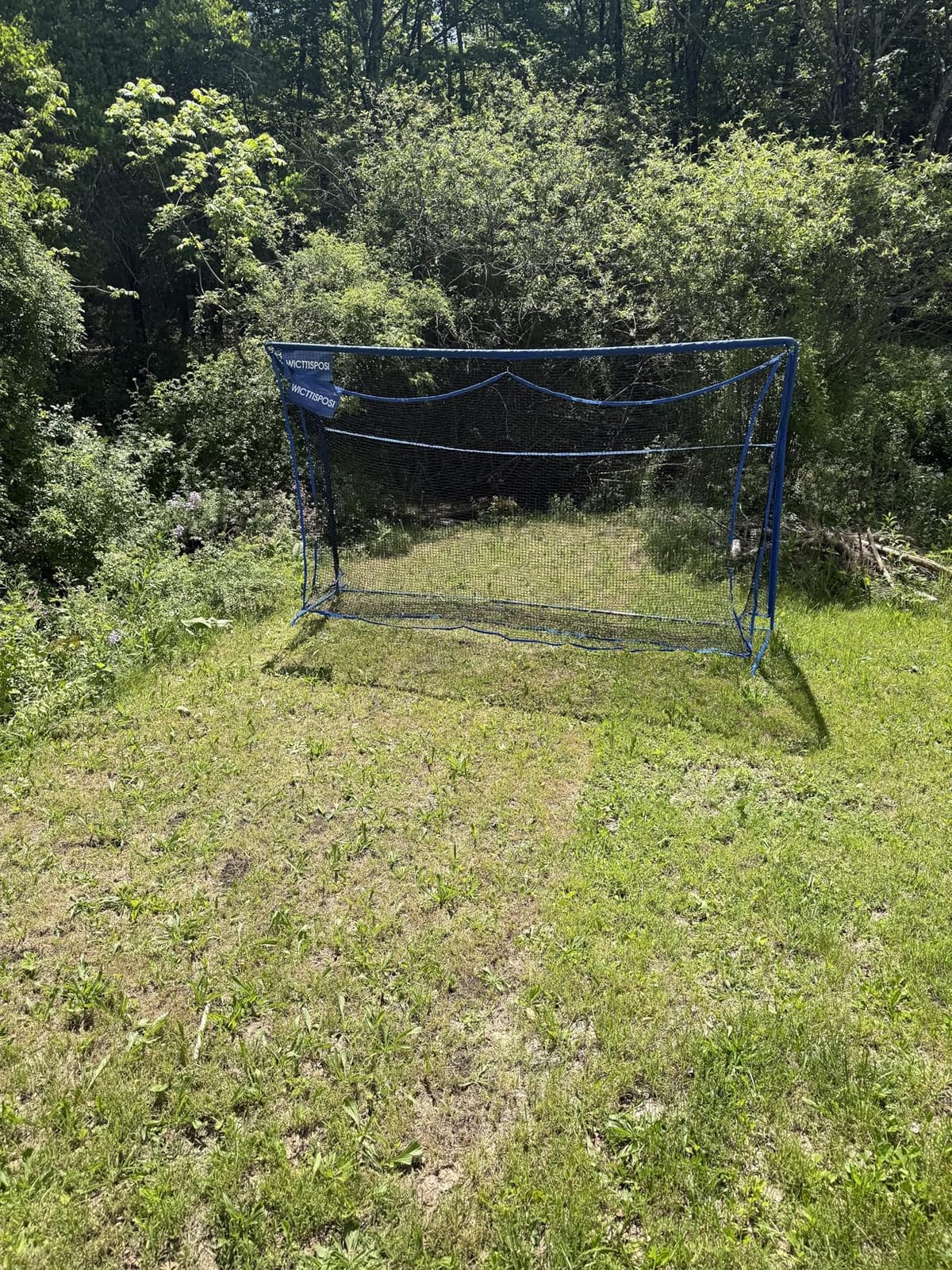
The defining feature is the shape. Instead of a flat face, this is a cube with a left side, top and side net around a central striking net, so a shank is caught in whichever direction it goes.
That containment is paired with the most substantial frame specification here: 25mm thickened steel. Steel is the material that does not flex and snap when a mishit lands, and the 22 pound weight reflects it.
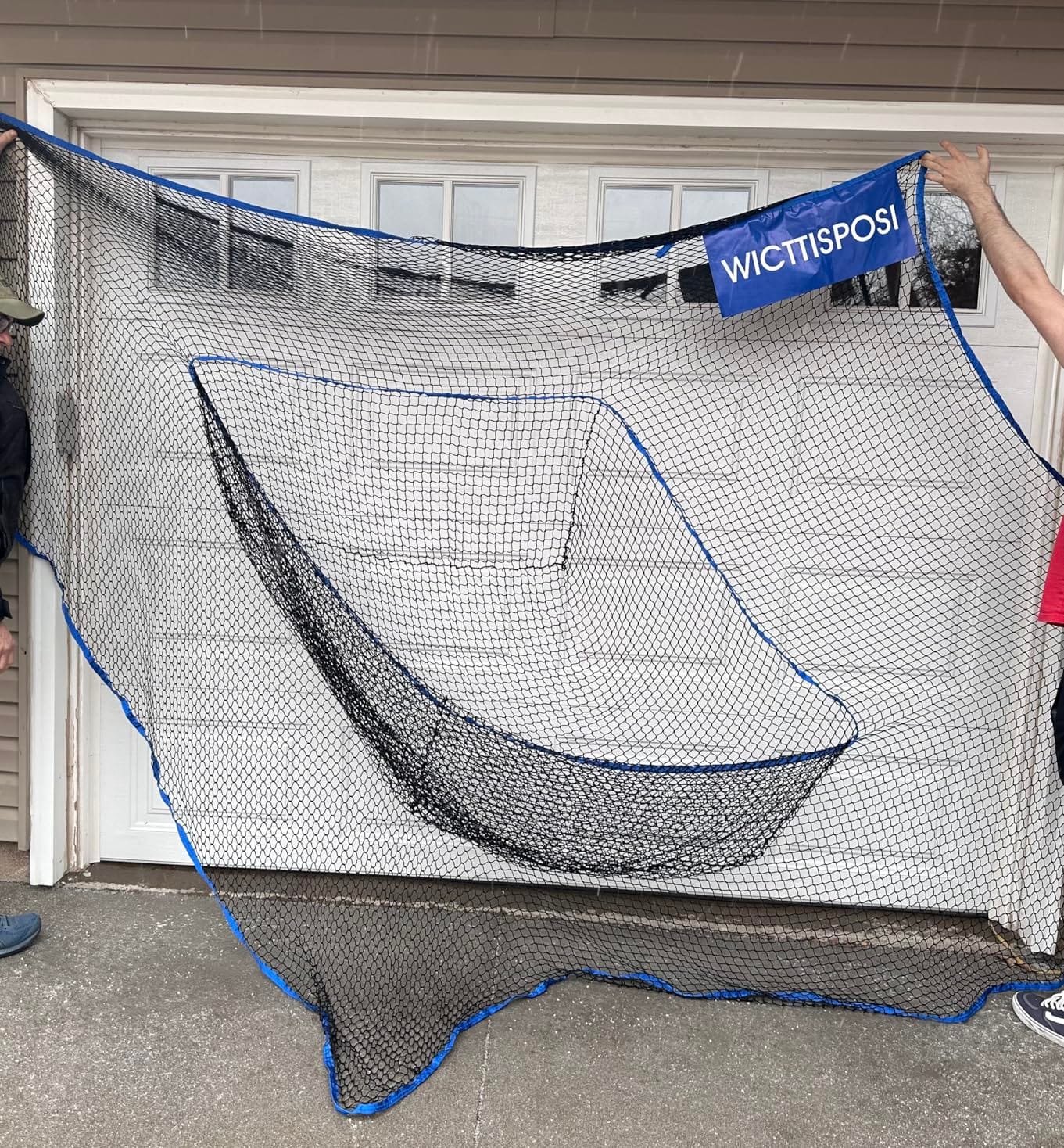
Netting is 7-layer nylon rated to 240 mph and 20,000+ hits, held by an edge-wrapped zipper design that keeps it tight on the frame. Assembly uses semi-automatic elastic cords and hook-and-loop fittings, and it packs into a storage bag.
Be aware of the evidence base. With 208 reviews this is the thinnest long-term data in the guide, so treat the durability claims as promising rather than proven, and check back on owner reports as the listing ages.
Why it suits a garage
Enclosure is the answer to the most common complaint about flat nets, and a 7 x 7 cube needs less width than a 10 x 7 face while catching more. That footprint suits a narrower bay.
Elevated anti-slip feet handle uneven ground, and the steel frame stays put on a concrete floor without needing to be buried or staked.
Where it falls short
Building a fully enclosed cube takes longer than a flat net, so allow real time for the first assembly. It is not a grab-and-go product.
At 7 x 7 ft it catches fewer balls than the larger options, and with a smaller review pool you have less long-term evidence to lean on when something starts to loosen.
How to Measure a Garage Before You Buy a Net
Most returns we hear about are sizing returns, not quality returns. Ten minutes with a tape measure saves that.
Measure the swing arc, not the net. Stand where you will address the ball and mark where the clubhead finishes at the top of the backswing and through the follow-through. You need that width plus 3 ft of depth behind the net for the ball to stop and drop.
Check the garage door track and openers. The horizontal track and the vertical rail take up 8 to 12 inches on each side. A net that looks like it fits will foul the door hardware every time you pull in.
Confirm ceiling and light clearance. Overhead door openers, light fixtures and fan blades are all in the swing path for a mishit. Note anything hanging below head height before you commit to a tall face.
Decide whether the door stays open. If you practise with the door down, you lose the natural light and the depth behind the net. If it stays up, check the ceiling height is enough for the top of your swing.
Plan the car position. Back the car in, nose out, and leave a clear path to the driver’s door. The net goes behind the parked space, not across the bay.
On a concrete floor, ground stakes do nothing, so plan weighting instead. Sandbags on each base leg are the simplest approach, and a pair of weight plates on the front bar is better. If you rent, weight rather than anchor.
Noise protection is cheap. A strip of gutter foam taped to the wall or the door panel dampens the echo that makes an enclosed garage loud, and a car cover on anything parked behind the strike zone stops marks.
What to Look for in a Garage Golf Net
Frame material decides everything else. Steel frames are heavier, cost more to ship and do not flex under a hard hit. Fiberglass poles are lighter and cheaper but can bow and splinter. Bow-style nets work well outdoors, though golfers on r/golf commonly advise reinforcing them before using one in a garage.
Ply count and ball-speed rating tell you the ceiling. Single-layer nets are for foam balls and half swings. Five-ply or better, with a published rating of 160 mph or above, is the point where real driver contact becomes realistic. Ratings are ceilings rather than guarantees, so pair them with a mat that suits your speed.
Decide flat or enclosed. A flat net is cheaper, lighter and quicker to assemble. An enclosed cage with side and roof netting contains mishits but is heavier, takes longer to build and costs more. Enclosure is what makes a shared garage tolerable.
Size follows the bay. 10 x 7 ft and 10 x 8 ft faces are the standard for full swings. 7 x 7 and 8 x 8 formats fit narrow or single-car bays, and 10 x 10 panels cover a wide wall. Our backyard net comparison covers the outdoor sizing logic in more depth.
Impact screen versus bare net. A screen sits between the ball and the netting, absorbs the blow and cuts noise. Without one, you are relying on the netting alone, which is louder and wears faster.
Assembly and storage. If the net has to come down before the car goes in, setup time is a headline spec, not a footnote. Anything with elastic cords or snap-together joints beats bolts and labelled tubes.
Pairing. The net is half the loop. A decent mat makes a believable practice swing, and a launch monitor turns it into data. Our guide to the best practice mats for home use covers that half, and for short game only, the chipping net roundup is the tighter read.
How to Hang a Golf Net From Garage Rafters and Studs
This is the most repeated request in garage golf forums, and it solves two problems at once: the sag that frustrates people with portable nets, and the footprint you get back by taking the frame away entirely.
Find the studs and joists. Mark the stud locations on the back wall and the ceiling joists overhead. You want to fix into framing, not drywall.
Screw eye bolts into the studs. Place them at the height and width you want the top of the net to sit, spacing them no more than 3 ft apart across the back wall.
Run steel cable between the eyelets. Two or three horizontal runs across the back wall and one across the ceiling give the net something rigid to hang from.
Add turnbuckles. Fit one at the end of each run. This is the part most builds skip and the part that fixes sag, because you can tension the cable after the net is loaded.
Attach the net with carabiners or spring snaps. Hang it loose, then wind the turnbuckles until the net is drum-tight. A net that is tight when you hang it will sag after the first hundred shots.
Add a second layer if you swing a driver. Cloth netting alone lets fast balls through, so hang a heavier panel or an impact screen in front of the mesh.
Check it with a few soft shots first. Walk the full arc afterwards to confirm nothing in the swing path is closer than a foot.
On r/golf this build is described as the route people take once portable nets frustrate them, and the turnbuckles are the difference between a build that works and one that does not.
Frequently Asked Questions
What is the best net for home golf practice?
For most home setups the best net is a framed 10 x 7 ft model with a rigid steel or reinforced frame, a ball return and a carry case. The GoSports 10 x 7 is the strongest all-round choice here because it sets up in under ten minutes and returns balls to the hitting area. If you need enclosure, add side and roof netting rather than buying a bigger flat face.
What is the best golf hitting net for a garage?
In a garage, containment and setup speed matter more than face size. A 10 x 7 ft net with a ball return suits a two-car bay, while an enclosed cage is worth the extra weight if you hit real drivers and share the space. Always measure the garage door track and the light fixtures before choosing a height.
Are golf practice nets worth it?
They are worth it if you will swing several times a week and want full shots without travel. The value comes from repetition, not from realism: a net plus a decent mat gives you hundreds of swings a year. If you only chip occasionally, a smaller net and short-game targets will serve you better for less.
Is it possible to hang a golf net in my garage?
Yes, and for many golfers it is the better build. Screw eye bolts into wall studs and ceiling joists, run steel cable between them, and tension the cable with turnbuckles before hanging the net. This removes the frame entirely, recovers floor space and, with the cable properly tensioned, solves the sag that frustrates portable setups.
What net ply count should I prioritize?
Prioritize five-ply netting or better if you will hit real golf balls at pace. Single and double-layer nets suit foam balls and half swings. Check the published ball-speed rating too: 160 mph and above covers irons and moderate driver speed, while higher ratings give headroom for faster swingers. Treat any rating as a ceiling rather than a guarantee.
Are golf practice nets noisy?
They can be, particularly a thin net struck inside an enclosed garage. Noise comes from the netting itself, so heavier fabric, a noise-reduction cloth or an impact screen all reduce it. A strip of gutter foam taped to the wall or the garage door panel dampens the echo, which is often the bigger part of the problem.
How much space do I actually need for a garage golf net?
For a full swing you want the face width, plus roughly 3 ft of depth behind the net so balls stop and drop, plus 4 ft in front for the stance and club take-off area. Add clearance for the garage door track on each side and check overhead for light fixtures and door openers. A single-car bay usually suits a 7 x 7 or 8 x 8 format.
Can I use these nets for sports other than golf?
Yes. The nylon barrier panels in this guide are marketed for hockey, volleyball, badminton, baseball, basketball, football, soccer, lacrosse and rugby as well as golf. Framed nets tend to be more golf-specific, so if multi-sport use is the plan, a panel plus your own frame is the more flexible route.
Bottom Line for Garage Practice in 2026
The GoSports 10 x 7 wins this roundup as the best golf nets for garage practice pick because it balances the three things a car bay demands: a face wide enough to catch mishits, a ball return that saves you bending down, and a ten-minute setup you can repeat every time the car comes in.
If you want enclosure and simulator capability, the GoSports Range Cage 10 x 8 is the step up, and the Spornia SPG-7 is the one to buy for quiet striking and automatic ball return. The Amazon Basics 8 x 8 covers a two-car garage at the lowest entry point, and the ZEALFEEL 10 x 7 is the pick when you swing a driver hard and want five-ply netting.
For anyone sharing a bay and short on patience, the DIY cable and turnbuckle build solves sag better than any portable frame. Measure the door track first, weight the base on concrete, and the setup will outlast the newness.