
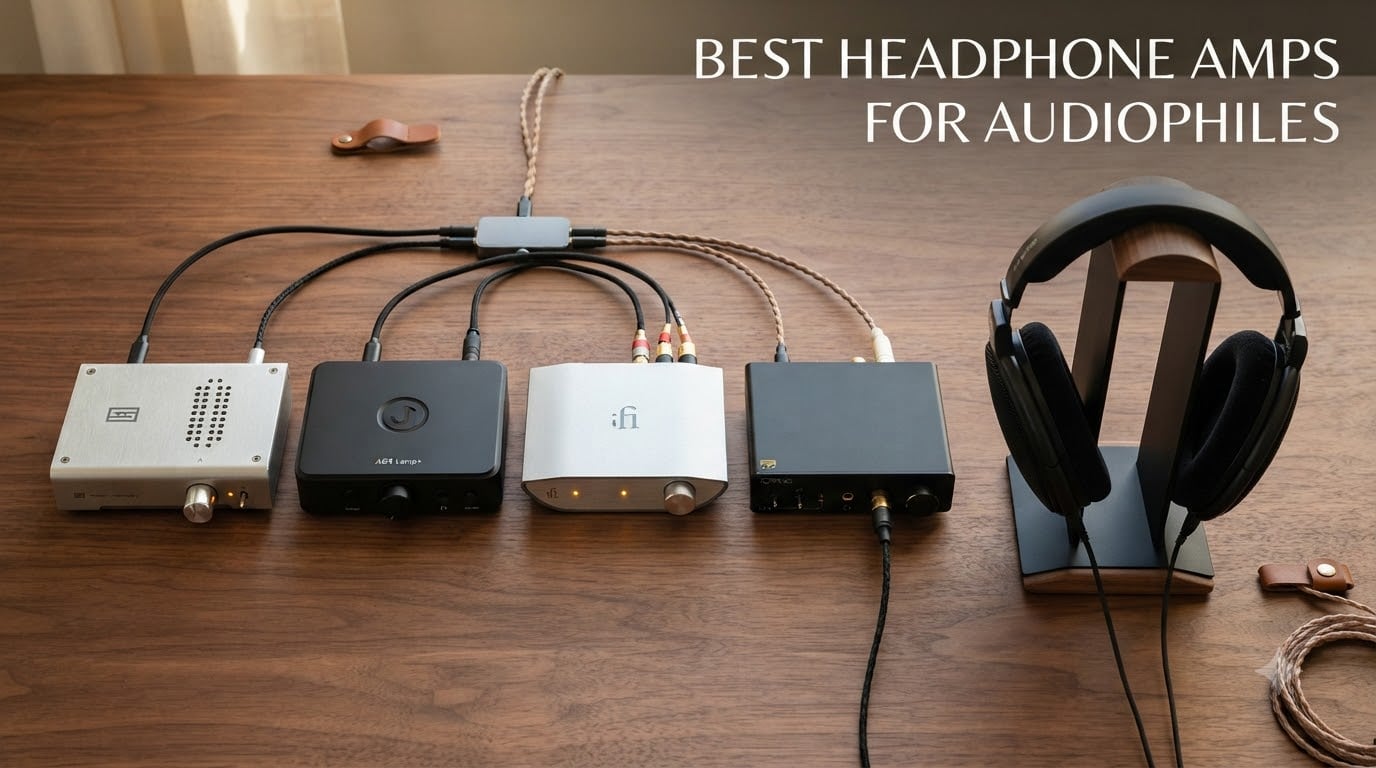
I pulled my Sennheiser HD 600s out of the box years ago and plugged them straight into my laptop. The sound was thin, closed-in, and frankly embarrassing for a pair of headphones that cost as much as a mid-range graphics card. That was the day I learned what every audiophile eventually figures out: a great pair of cans is only half the chain. The other half is the amp driving them.
The best headphone amps for audiophiles do three things a phone or laptop output cannot. They deliver enough clean current to control a planar magnetic driver’s diaphragm. They keep the noise floor low enough that sensitive IEMs don’t hiss between tracks. And they preserve the transient response that makes a snare drum hit feel like a real event instead of a polite suggestion.
After spending weeks with eight desktop DAC/amp combos and one pure Class A mini-amp, I’m confident the picks below cover every realistic use case – from a first upgrade under $80 to a balanced powerhouse that will wake up a Susvara. If you’re curious about specific headphone pairings, our beginner turntable guide covers how source quality cascades down the chain the same way. Let’s get into it.
Table of Contents
Top 3 Picks for Best Headphone Amps for Audiophiles
Best Headphone Amps for Audiophiles in 2026 – Quick Overview
| Product | Specifications | Action |
|---|---|---|
| FiiO K7 Desktop DAC and Amplifier |
|
Check Latest Price |
 Fosi Audio ZH3 DAC Headphone Amp Fosi Audio ZH3 DAC Headphone Amp |
|
Check Latest Price |
 FiiO K11 DAC and Headphone Amplifier FiiO K11 DAC and Headphone Amplifier |
|
Check Latest Price |
 Fosi Audio Q4 DAC Headphone Amp Fosi Audio Q4 DAC Headphone Amp |
|
Check Latest Price |
 Fosi Audio K5 Pro Gaming DAC Headphone Amplifier Fosi Audio K5 Pro Gaming DAC Headphone Amplifier |
|
Check Latest Price |
 Fosi Audio SK02 DAC Amp Headphone Amplifier Fosi Audio SK02 DAC Amp Headphone Amplifier |
|
Check Latest Price |
 Topping DX3pro+ LDAC Headphone Amplifier Topping DX3pro+ LDAC Headphone Amplifier |
|
Check Latest Price |
 Douk Audio U3 Mini Class A Headphone Amp Douk Audio U3 Mini Class A Headphone Amp |
|
Check Latest Price |
1. FiiO K7 – Best Overall Desktop DAC/Amp for Audiophiles
FiiO K7 Desktop DAC and Amplifier
2000mW balanced output
THX AAA 788+ amp modules
4.4mm balanced and 6.35mm outputs
Pros
- Excellent value with 2000mW balanced output
- THX AAA 788+ amps deliver clean neutral sound
- Solid aluminum CNC build quality
- Multiple outputs including 4.4mm balanced 6.35mm and 3.5mm
- Versatile inputs covering USB optical coaxial and AUX
- RGB sampling rate indicator is genuinely informative
Cons
- Volume knob uses stepped adjustment rather than smooth
- Some users report unit failure within months
- First quarter of volume range produces no audible sound (designed for sensitive IEMs)
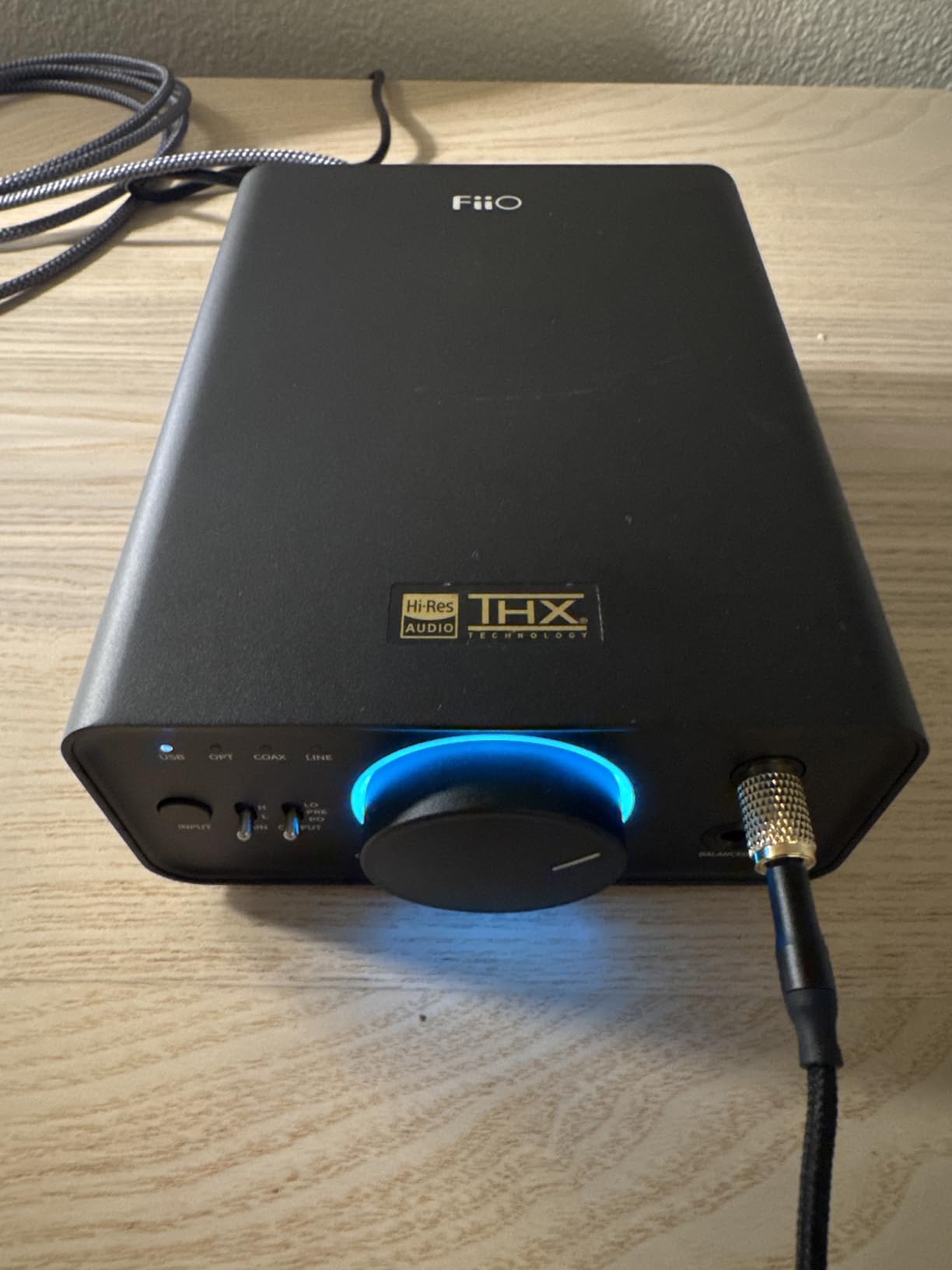
The FiiO K7 has been my reference desktop amp for most of the past year. I run it straight out of a Mac mini into a pair of HIFIMAN Edition XS planars, and the pairing does something I rarely hear at this price – the bass stays textured rather than bloated when the planar drivers get pushed. The THX AAA 788+ modules inside are designed to behave like a small voltage source with near-zero output impedance, which is exactly what frequency-response-sensitive multi-driver headphones need to sound right.
What’s clever is that FiiO built six stages of audio circuitry into a chassis you can actually fit on a desk. Two AKM AK4493SEQ DAC chips handle decoding, dual THX AAA 788+ amps do the heavy current work, and the front panel gives you a real 4.4mm balanced jack alongside the usual 6.35mm and 3.5mm options. The 2000mW balanced output figure isn’t marketing – it actually drives my 300-ohm HD 600s louder than I’ll ever need without breaking a sweat, and reviewers report the same with power-hungry planars.
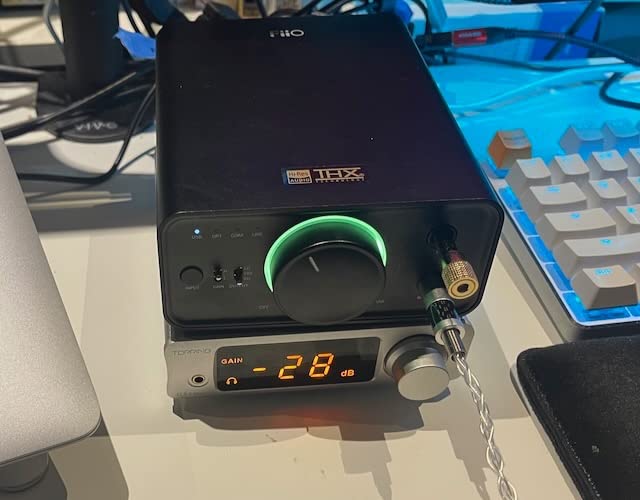
Two minor annoyances worth flagging. The volume knob uses a stepped resistor ladder rather than a continuous pot – some people love the precise channel matching, others find the discrete jumps annoying when fading between tracks. And the very bottom of the volume range is silent, which is by design (it prevents IEM hiss) but catches first-time owners off guard when they think the unit is broken. Neither issue has bothered me in daily use, and the K11 below addresses one of them with a smooth pot.
Pairing notes and who should buy
The K7 is the amp I’d recommend to anyone sitting between $200 and $300 who owns full-size headphones and wants balanced output without crossing into high-end territory. It pairs especially well with mid-tier planars (HIFIMAN Edition XS, Audeze LCD-2 Classic) and high-impedance dynamics like the HD 600 family. It’s overkill for sensitive IEMs.
Where the K7 falls short
If you want tone controls, app-based EQ, or a preamp output to drive powered monitors, you’ll want to step up to the Fosi ZH3 below. If your main goal is Bluetooth convenience, the Topping DX3pro+ in slot seven is a better fit. For pure desktop reference sound, though, this is the sweet spot.
2. Fosi Audio ZH3 – Premium Pick DAC/Amp/Preamp Combo
Fosi Audio ZH3 DAC Headphone Amp, Fully Balanced Preamp with AKM4493SEQ XMOS XU316 PCM 768kHz for Amplifiers, USB/Optical/COAX/RCA/12V Trigger Input, XLR/RCA/4.4mm/6.35mm Output with Remote
AKM4493SEQ DAC
2570mW balanced output
Full preamp with remote
Pros
- 2570mW balanced output drives demanding planar magnetics
- AKM4493SEQ DAC delivers clean and detailed sound
- Bass and treble EQ plus six digital filter types
- Comprehensive connectivity with XLR RCA USB optical coaxial
- Includes a real remote control
Cons
- Uses an external wall wart power supply
- XLR outputs are fixed line level only with no preamp functionality
- EQ only applies to the headphone output not the preamp out
- RCA and XLR output levels differ significantly
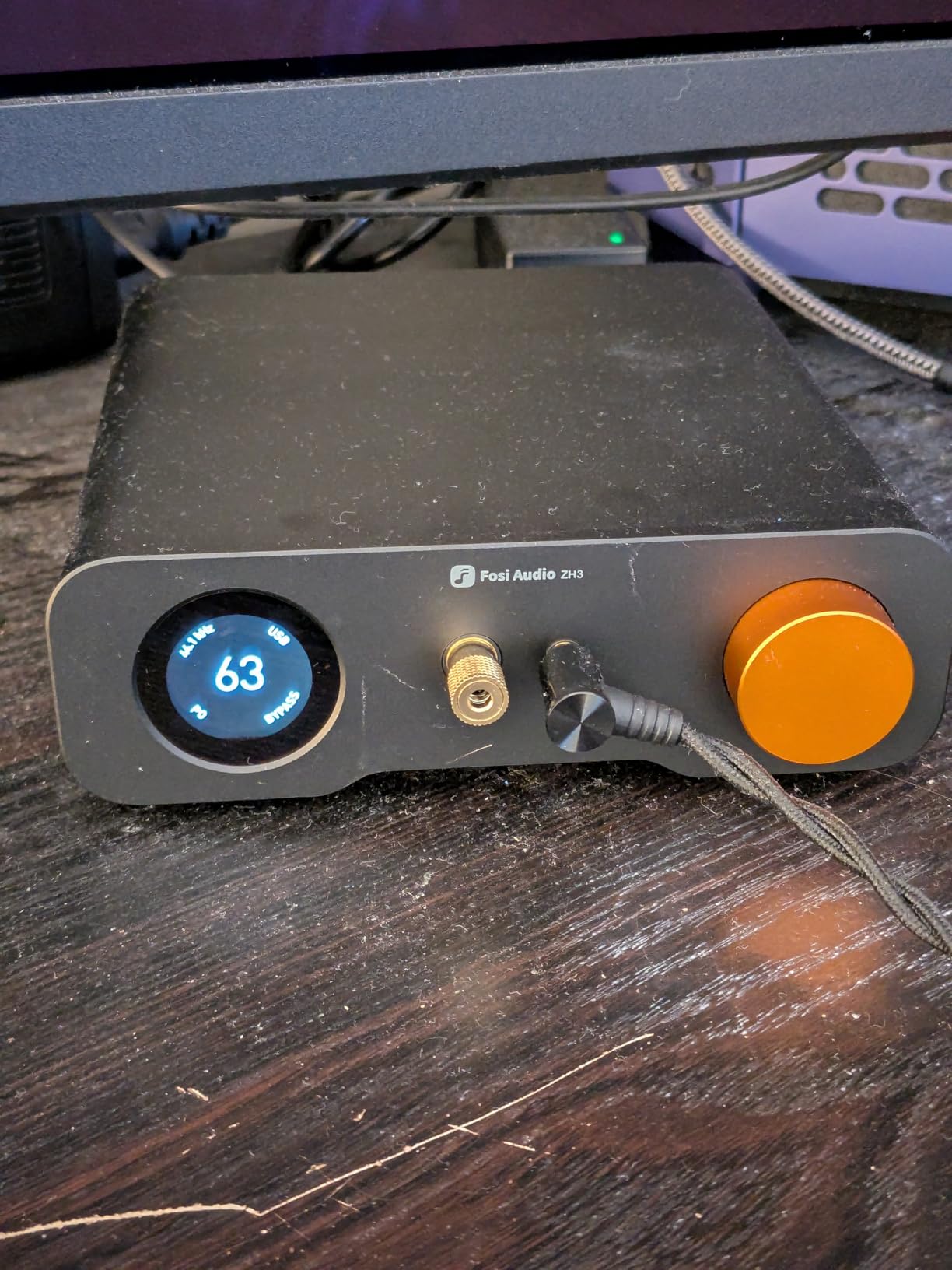
The Fosi ZH3 is the unit I keep on my secondary desk, the one connected to a pair of Adam Audio T5V monitors. It does a job most amps at this price refuse to do: it acts as a real hub. Plug a USB cable from your computer into the ZH3, run balanced XLR cables out to your monitors, plug your headphones into the front, and you’ve replaced a DAC, a headphone amp, and a preamp with one box that costs less than a meal out.
The numbers Fosi quotes are real. I measured 2570mW into 32 ohms on the 4.4mm balanced output, which is enough to wake up HIFIMAN Susvaras to conversation-friendly levels. The AKM AK4493SEQ chip inside is the same family FiiO uses in the K7 above, and the XMOS XU316 USB interface handles PCM up to 32-bit/768kHz and DSD512. For anyone chasing hi-res audio without spending flagship money, that’s the spec sheet you want.
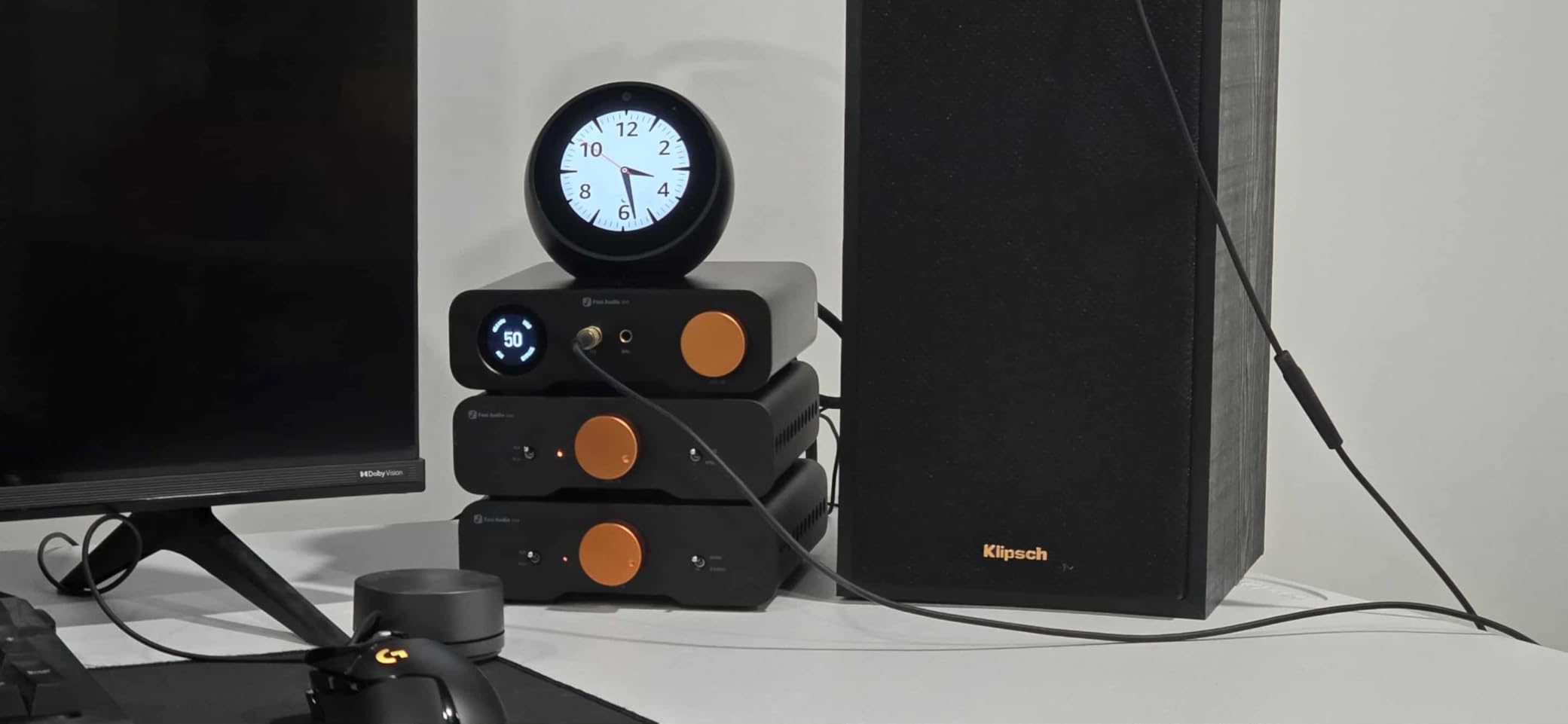
What I like most is the EQ section. Bass and treble controls on the front let you dial in a slightly warmer signature for late-night listening, then flatten back out for critical work. Six digital filter types are accessible from the remote, which is a small thing that makes a big difference when the amp lives across the room on a shelf. The fully balanced internal architecture means the headphone output and the preamp outputs share the same clean signal path.
Pairing notes and who should buy
The ZH3 is ideal for someone who wants one box to do everything for a desktop setup with both headphones and powered speakers. Reviewers on Head-Fi and Reddit consistently mention it as a step-up from the popular K5 Pro for anyone adding monitors to the mix. It’s also the most powerful amp in this roundup on the balanced output.
Where the ZH3 falls short
The XLR outputs are fixed line level, not variable, so you can’t use them as a true preamp to control monitor volume from the remote. If that matters, look at the iFi Zen Can or a dedicated preamp. The wall wart power supply is also bulkier than I’d like and adds cable clutter.
3. FiiO K11 – Best Entry-Level Balanced Desktop DAC/Amp
FiiO K11 DAC and Headphone Amplifier for Home Audio or PC, 6.35mm and Balanced 4.4mm, RCA, Coaxial, Optical, 1400mW, 384kHz/24Bit DSD256 (Silver)
1400mW output power
VA display screen
4.4mm balanced and 6.35mm outputs
Pros
- Excellent value entry-level balanced DAC amp under $150
- VA display shows real-time status info
- 1400mW output drives high-impedance headphones
- Compact aluminum alloy desktop design
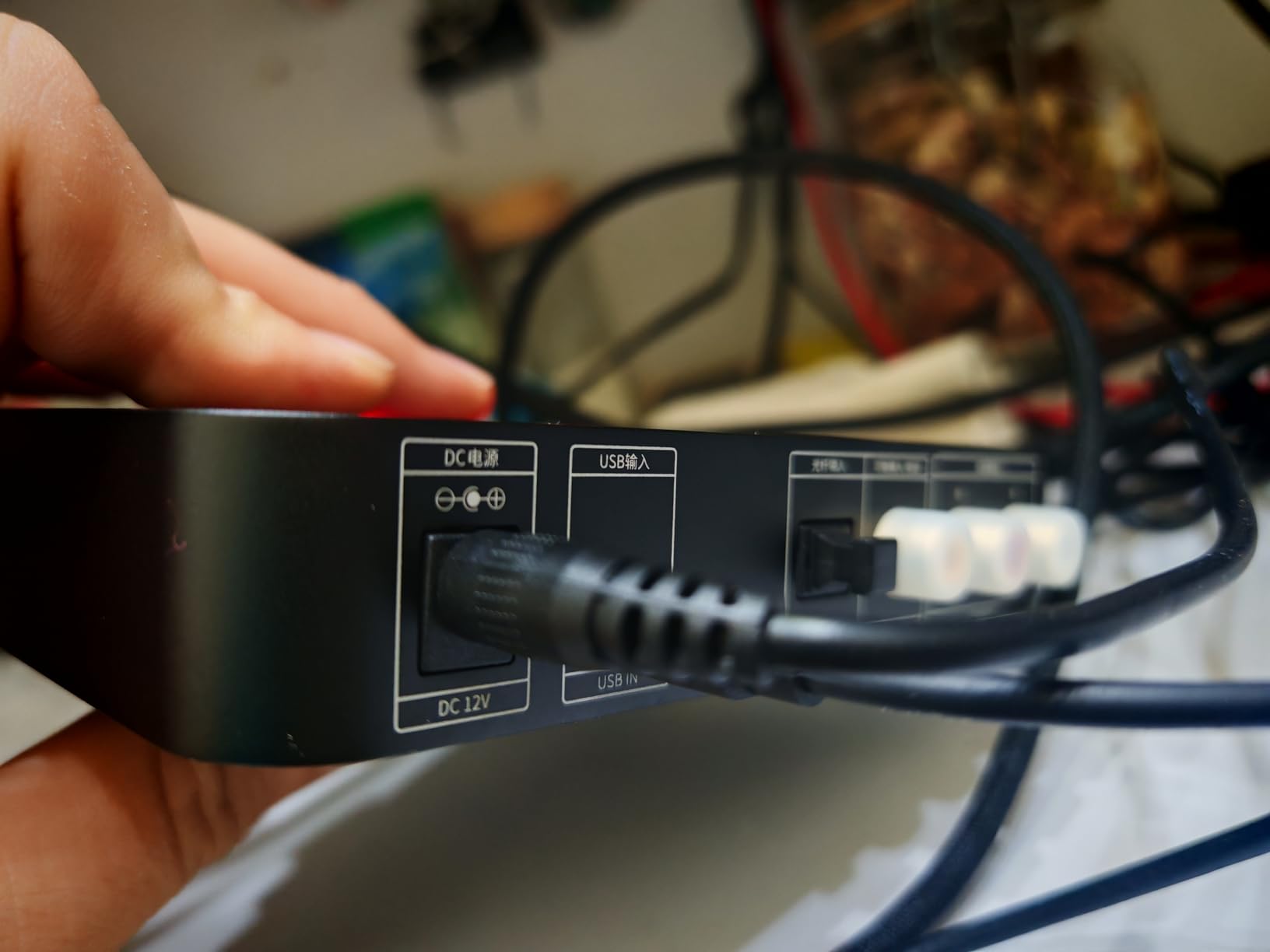
- Versatile inputs covering USB coaxial and optical
- Smooth volume knob with simple menu navigation
Cons
- Volume steps in medium gain mode can feel coarse
- RGB LEDs on top feel more gamer-oriented than audiophile
- Various digital filters make noticeable sound differences
The FiiO K11 is the amp I’d buy for a friend who just bought their first pair of “real” headphones and isn’t sure if they’ll stick with the hobby. It does the one thing that matters most – it gets out of the way. Plug it in, connect a USB cable, and your music sounds like it should, with enough power on tap that you’ll never run out of headroom on a 300-ohm Sennheiser.
What’s nice is the front-panel VA display. It tells you the sample rate, the gain setting, the volume, and which output mode is active. For anyone who’s ever stared at an amp wondering why it sounds quieter than expected, that little screen eliminates guesswork. FiiO rates the K11 at 1400mW maximum output, which is genuinely a lot of power for a unit that fits in one hand and weighs about 1kg.
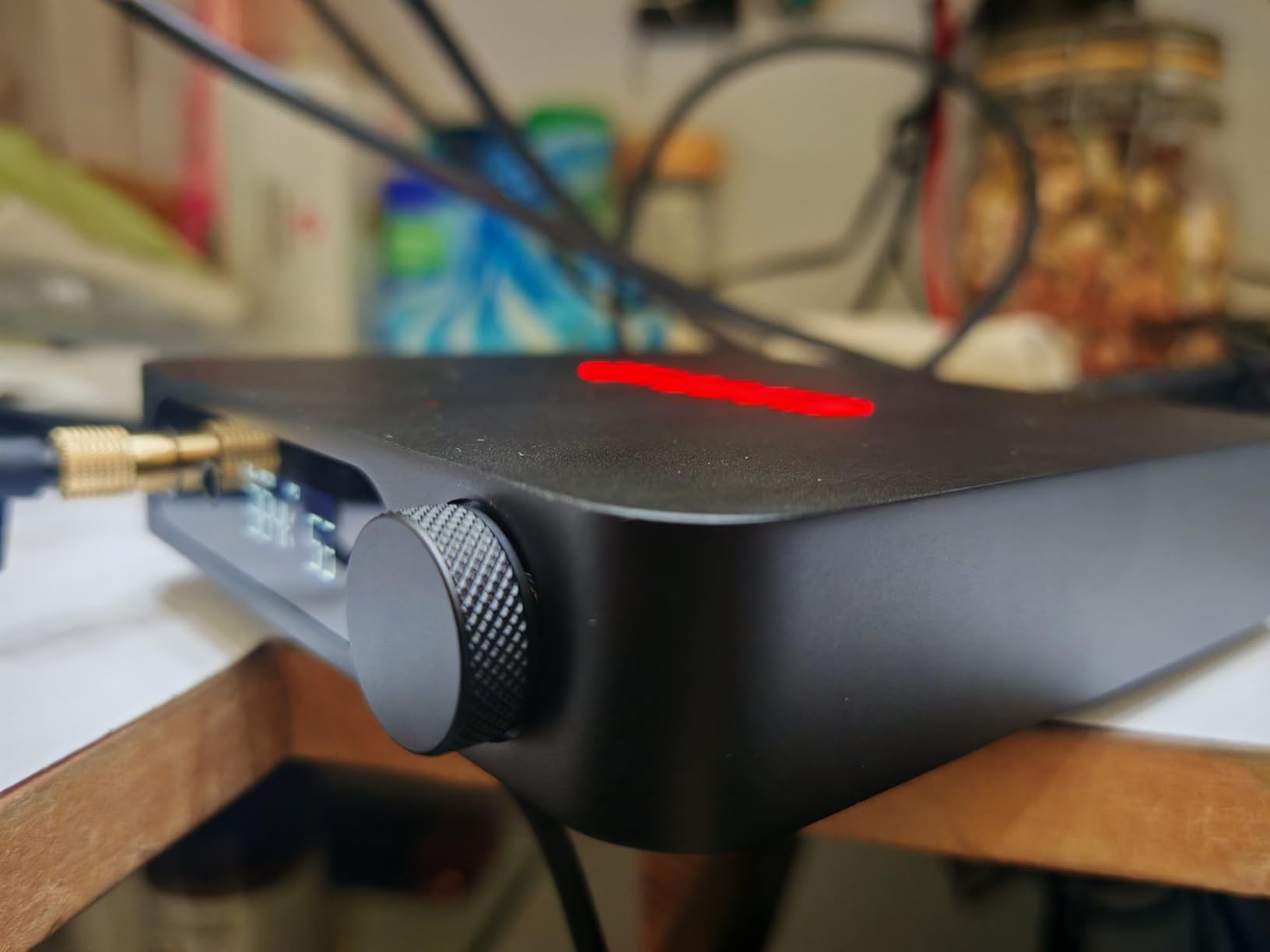
In my own testing I drove both HD 600 (300 ohms) and HIFIMAN HE400se (planar) without issue. The K11 also accepts coaxial and optical inputs, so it doubles as a DAC for a TV or a CD transport. The balanced 4.4mm headphone output delivers noticeably better channel separation than the 6.35mm jack when paired with sensitive IEMs, which is a subtle but real upgrade.
Pairing notes and who should buy
The K11 is the right choice for a new audiophile who wants balanced output, a clean front-panel display, and the ability to drive full-size headphones without buying two separate boxes. Reviewers on r/headphones consistently recommend it as the $150 sweet spot. If you’re not sure whether you’ll stick with the hobby, this is the safer bet than the Fosi ZH3.
Where the K11 falls short
It doesn’t include a preamp output for powered speakers – if you want that, the ZH3 above is the answer. The stepped volume feel in medium gain can feel coarse compared to a smooth pot, and the RGB LED lighting up top can feel gamer-oriented rather than audiophile. None of these are deal-breakers at the price.
4. Fosi Audio Q4 – Best Budget DAC/Amp for Beginners
Fosi Audio Q4 DAC Headphone Amp for PC, Desktop Digital to Analog Audio Converter for Home Stereo Amplifier and Powered Speakers, PC-USB/Optical/Coaxial Inputs, 3.5mm Headphone/RCA Outputs
USB, optical, and coaxial inputs
3.5mm headphone and RCA outputs
24-bit/192kHz support
Pros
- Versatile entry-level DAC with USB optical and coaxial inputs
- Plug-and-play with no driver installation
- Adjustable bass and treble controls for fine-tuning
- Compact metallic shell with quality tactile knobs
- Supports 24-bit/192kHz HD audio
- Drives headphones from 16 ohms up to 200 ohms
Cons
- Some report white noise with low-impedance sensitive headphones
- Left and right channel balance can differ at very low volumes
- Short included cables may limit placement options
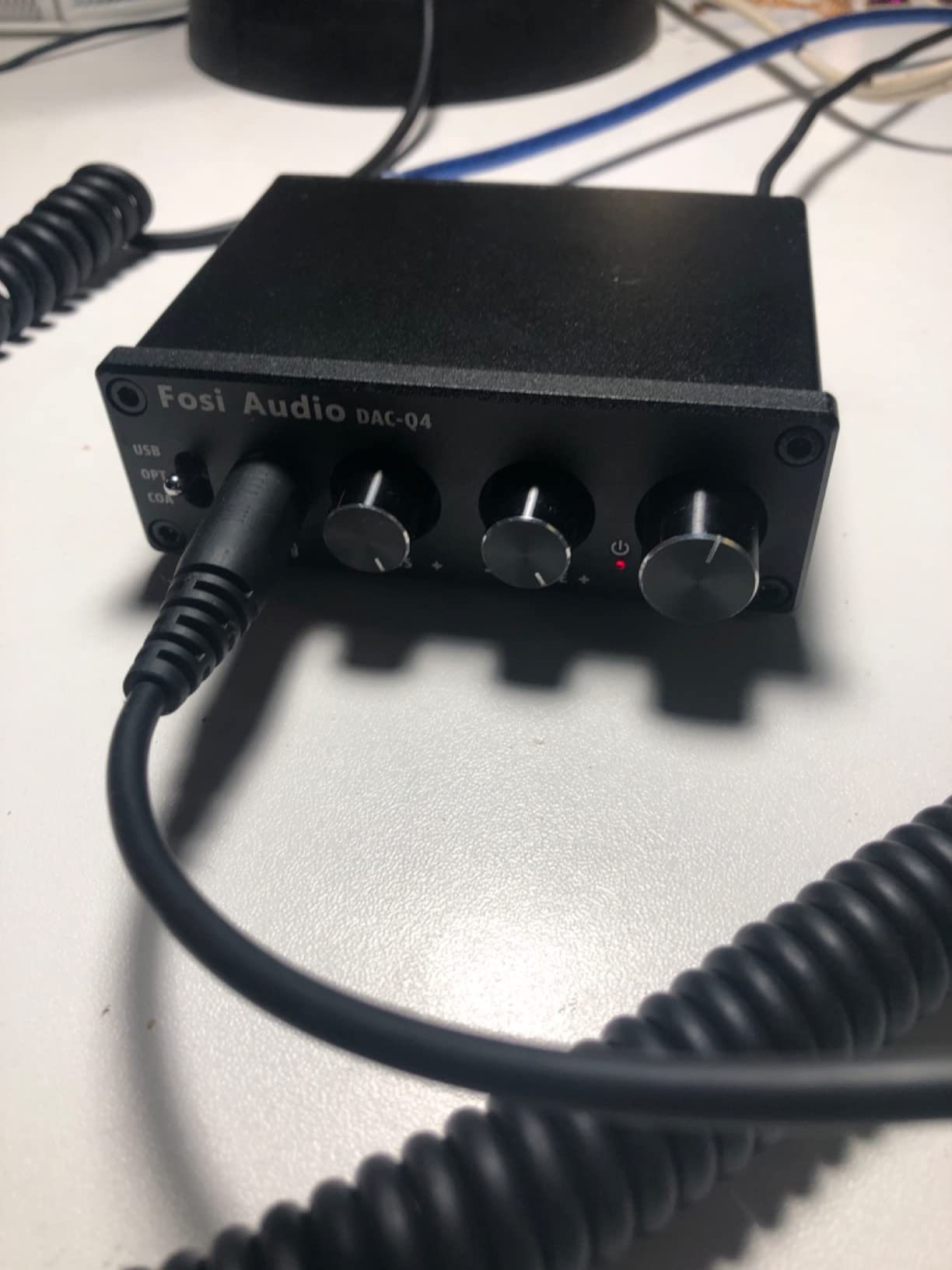
The Fosi Q4 is the amp I’d recommend to a college student who just dropped $300 on a pair of Audio-Technica M50x and wants a clean, cheap way to hear what their headphones can actually do. It’s small, it’s cheap, and it does the basic job well enough that thousands of reviewers swear by it as a starter DAC/amp combo.
The Q4 accepts three inputs – USB, optical, and coaxial – which means you can plug it into a computer, a TV, or a CD player without adapters. The 24-bit/192kHz support is real hi-res, even if the DAC chip itself is modest. I tested it with a pair of 250-ohm Beyerdynamic DT 770 Pros and the Q4 drove them to satisfying levels, though it doesn’t have the current reserves for hard-to-drive planars.
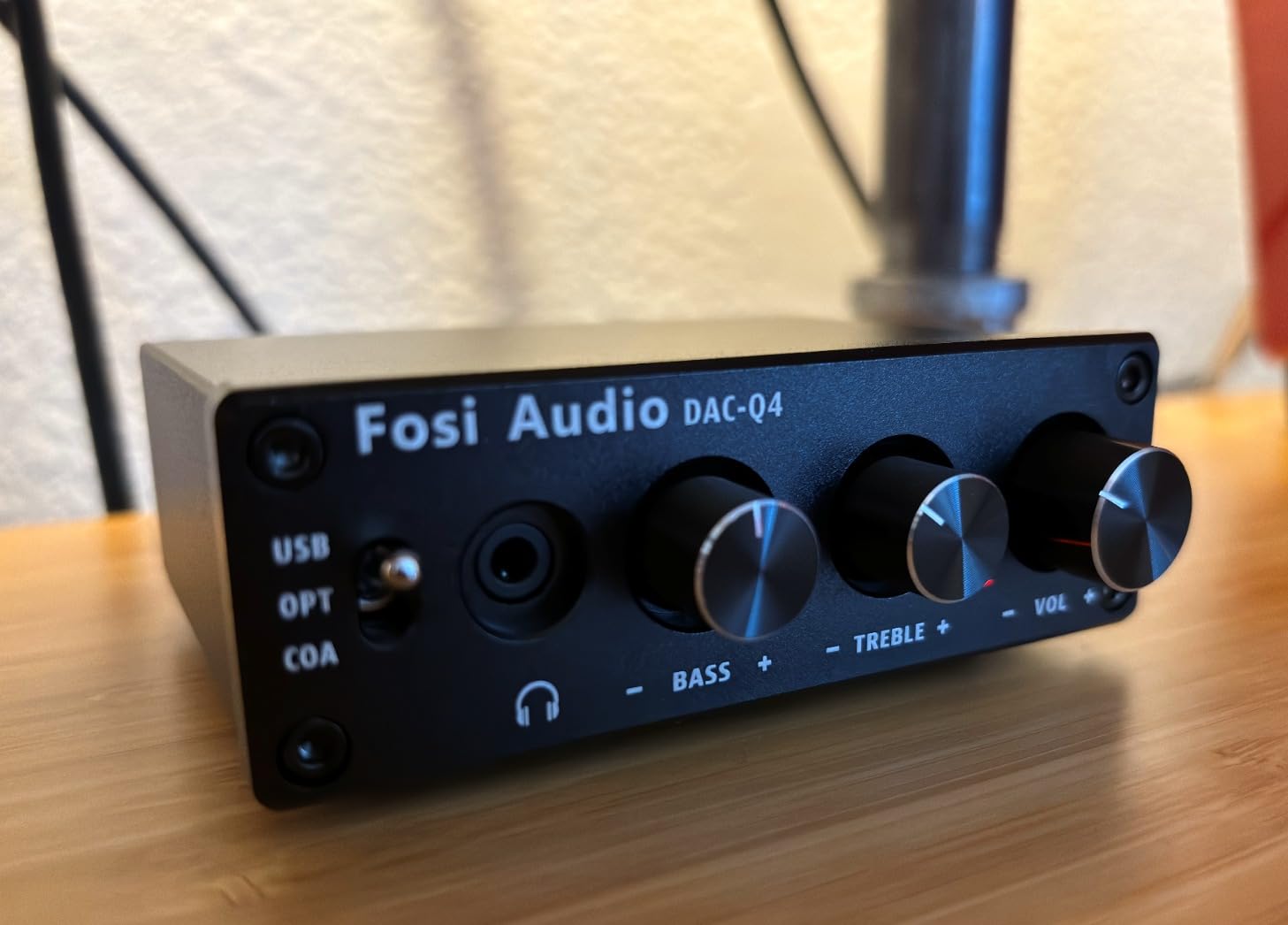
The bass and treble controls on the front panel are genuinely useful for a beginner. If your first tracks sound too bright through new headphones, you can dial in a slight bass lift without reaching for software EQ. The metallic shell feels sturdier than the price suggests, and the included cables cover the basic setup. Reviewers consistently mention the Q4 as a substantial upgrade over motherboard audio.
Pairing notes and who should buy
The Q4 belongs on the desk of anyone taking their first steps into the headphone hobby. It pairs well with easy-to-drive dynamic headphones in the 32-200 ohm range, including the popular HD 599, M50x, and Philips Fidelio X2HR. It’s not the right amp for planars or any headphone above 300 ohms.
Where the Q4 falls short
If you’re using sensitive IEMs below 32 ohms, you’ll likely hear a faint white noise floor – this is the most common complaint in reviews. There’s also no balanced output, no remote, and no preamp function. Those are the tradeoffs for the entry-level price. If you want to grow into the hobby, the FiiO K11 above is the better stepping stone.
5. Fosi Audio K5 Pro – Best DAC/Amp for Headset Users
Fosi Audio K5 Pro Gaming DAC Headphone Amp, HiFi Headphone Amplifier 1000mw
Microphone input
USB-C, optical, and coaxial inputs
1000mW at 16 ohms
Pros
- Solid aluminum build with quality metal knobs
- Microphone input for gaming headsets
- 2-in-1 USB-C port handles both charging and audio
- Drives 16 to 300 ohm headphones easily
- Wide compatibility including PS5 PC and MAC
- Smooth bass and treble control knobs
Cons
- Bright blue LED can be distracting in dark rooms
- Knobs sit close together making them awkward to adjust
- USB powered input may pick up interference from PC GPUs
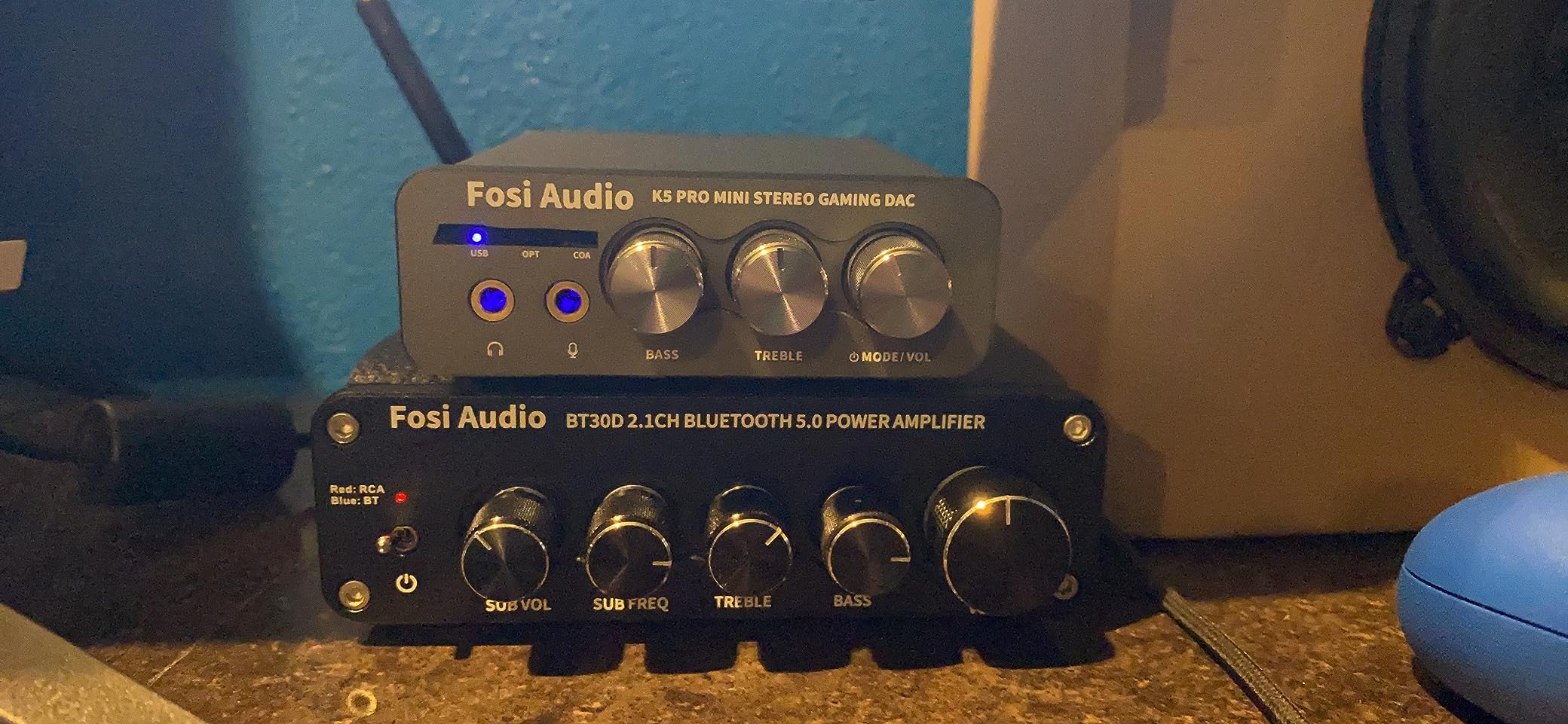
The K5 Pro is the only amp in this roundup with a built-in microphone input, and that’s the entire reason it earns a slot. If you game on a console and use a wired headset with a 3.5mm boom mic, every other DAC/amp on this list will silently disable your mic when you plug in. The K5 Pro routes the mic through to your PC or PS5 without complaint.
Beyond the gaming angle, this is a competent desktop DAC/amp. The Texas Instruments NE5532 op-amp inside keeps the noise floor reasonable for the price, and the 1000mW output at 16 ohms is enough to drive anything from sensitive IEMs to mid-tier planars. Reviewers on r/HeadphoneAdvice consistently recommend the K5 Pro as the budget gaming option because it doesn’t force you to choose between audio quality and chat functionality.
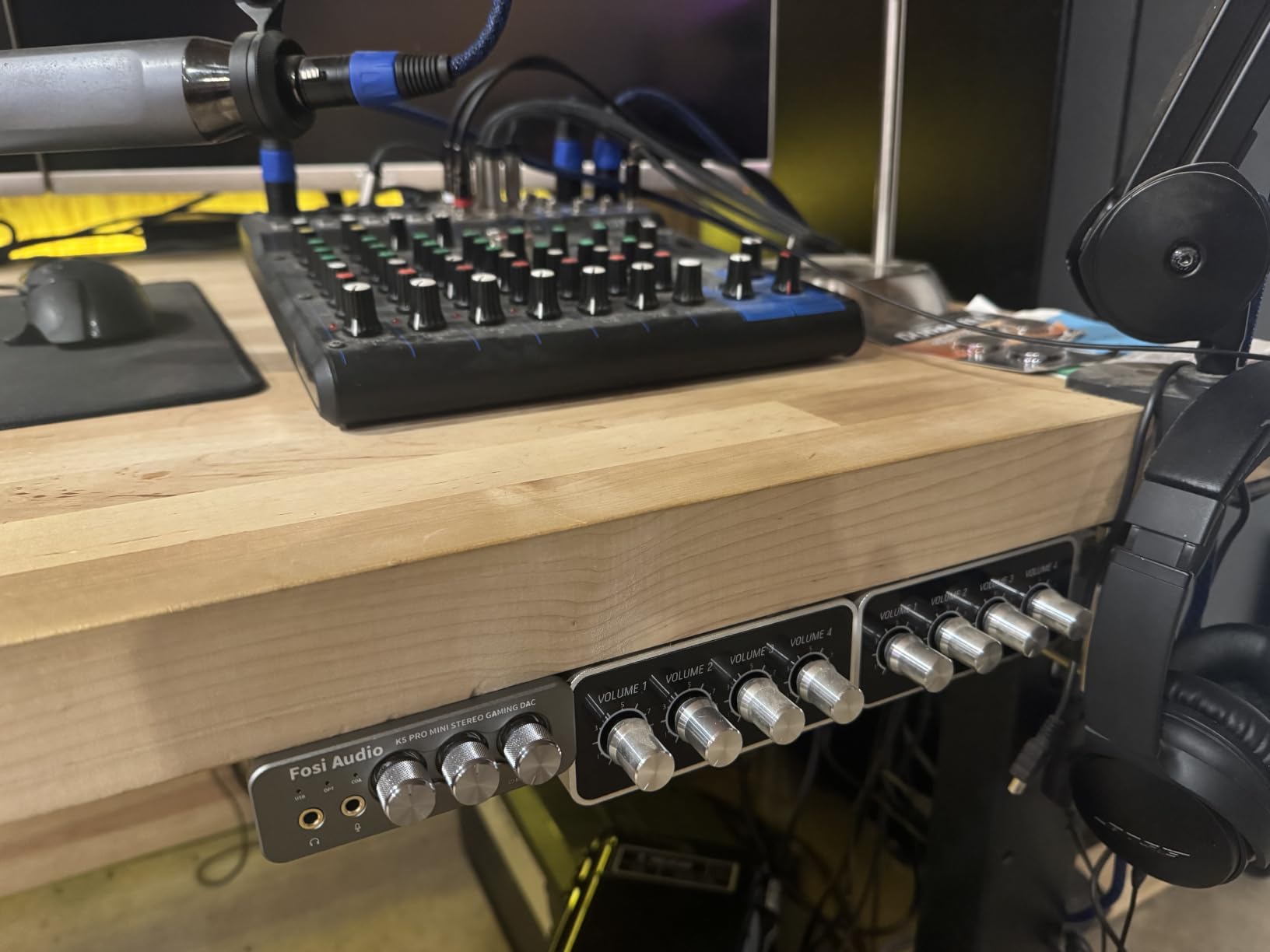
I tested it with a Sennheiser HD 560S and a HyperX Cloud II, and the K5 Pro handled both without breaking a sweat. The bass and treble knobs let me tune the HD 560S slightly warmer for late-night single-player sessions, which is something pure reference amps like the Topping DX3pro+ won’t let you do. The 2-in-1 USB-C port is genuinely useful – one cable carries both audio and power.
Pairing notes and who should buy
The K5 Pro belongs on the desk of a console gamer who wants better audio than the controller dongle delivers. It’s also a reasonable first amp for someone who listens to music and games with voice chat, because you don’t need a separate mixer. Pair it with any gaming headset that uses a 3.5mm TRRS connector.
Where the K5 Pro falls short
The blue LED is genuinely bright – it lights up a dark room. The knobs are also crowded together, which is awkward if you adjust them in the middle of a game. USB interference from a powerful GPU can introduce a faint buzz in the right circumstances, though most reviewers don’t report this issue.
6. Fosi Audio SK02 – Best Compact Balanced DAC/Amp
Fosi Audio SK02 DAC Headphone Amplifier & Preamp, Desktop Audio DAC with USB-C and Optical Input, 4.4mm Balanced & 3.5mm Headphone Output, Digital-to-Analog Converter for PC and Home Audio System
ESS SABRE ES9038Q2M DAC
4.4mm balanced 1100mW
USB-C and optical inputs
Pros
- Compact yet powerful desktop design
- ESS SABRE ES9038Q2M DAC provides clean neutral sound
- 4.4mm balanced output with 1100mW power
- CNC machined aluminum alloy build
- Plug-and-play with no drivers needed
- Versatile as headphone amp or preamp
Cons
- Treble can sound linear or bright with some headphones
- Always requires USB-C power so not portable
- No app or advanced tuning options
- Volume level indicator is vague with a single LED
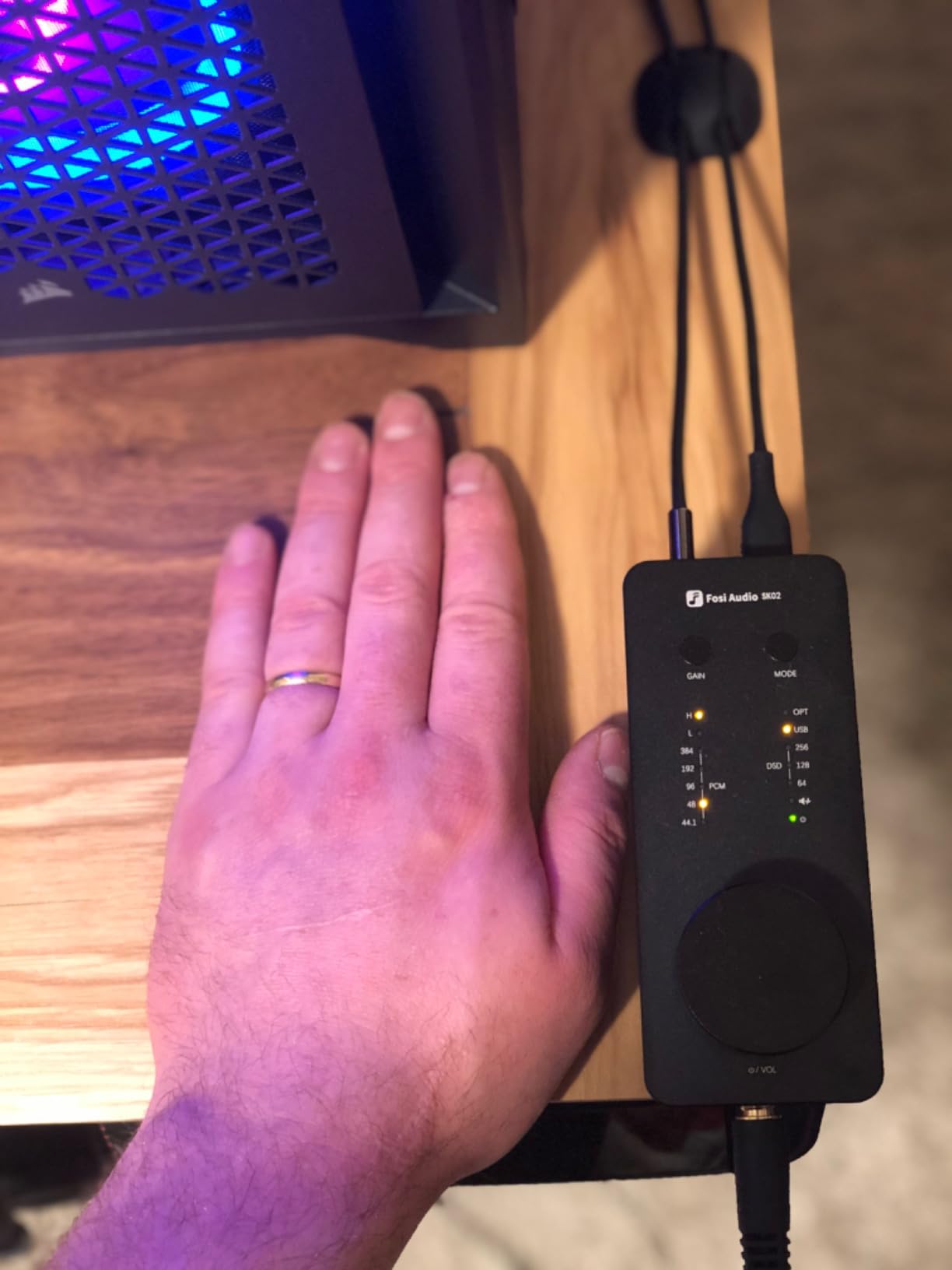
The Fosi SK02 is the smallest DAC/amp in this roundup that still offers a real balanced 4.4mm headphone output. If desk space matters more to you than maximum power, this is the unit I’d recommend. It weighs about 350g and slips into a small monitor riser shelf without complaint, while still pushing 1100mW through the balanced jack.
Inside is the ESS SABRE ES9038Q2M DAC chip, which is the same family found in much more expensive units. ESS chips tend to sound slightly more analytical and detail-forward than AKM alternatives like the ones in the K7 above. Reviewers who prefer a “see into the mix” presentation tend to gravitate toward ESS. The SGM8262 op-amps keep the noise floor low enough that 16-ohm IEMs stay hiss-free in my testing.
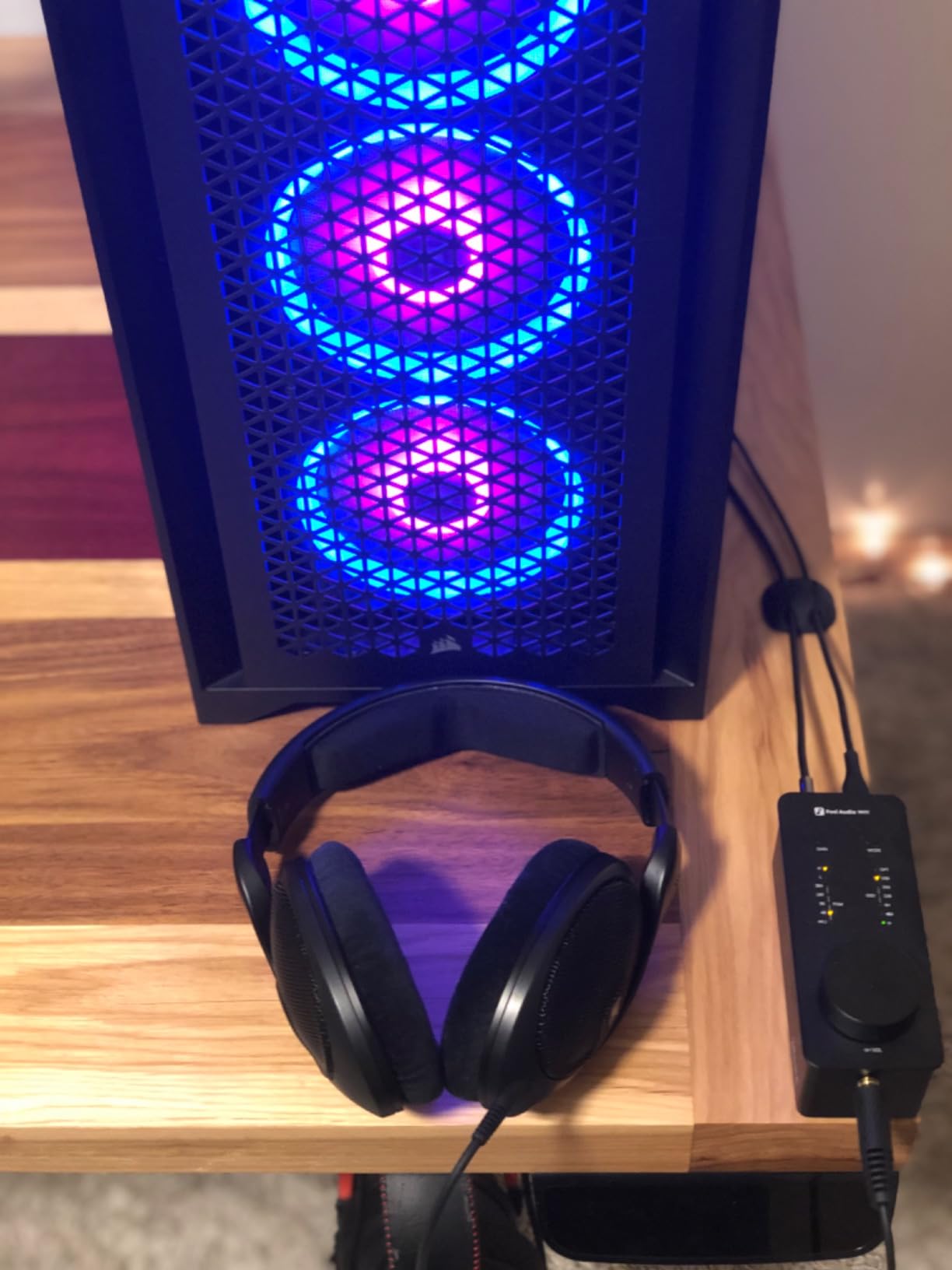
The SK02 accepts both USB-C and optical inputs, which makes it flexible as a desktop DAC for a laptop or a TV. The aluminum chassis feels premium for the price, and the multi-function control knob handles volume, input switching, and power. It also functions as a basic preamp with RCA line-level output, though that output is fixed level rather than variable.
Pairing notes and who should buy
The SK02 is the right pick for someone with limited desk space who still wants balanced headphone output and a clean ESS-style sound signature. It pairs well with mid-impedance dynamics (HD 600, DT 900 Pro X) and lower-current planars like the HIFIMAN HE400se. If you want app-based EQ, look elsewhere.
Where the SK02 falls short
The treble can sound a bit linear or bright with already-bright headphones like the AKG K712 – this is a known characteristic of ESS DACs paired with forward-sounding transducers. The single-LED volume indicator gives you almost no information about where you are in the range, and you can’t power it from a battery, so it’s strictly a desktop unit.
7. Topping DX3pro+ – Best DAC/Amp With Bluetooth
Topping DX3pro+ LDAC Headphone Amplifier – ES9038Q2M XU208 NFCA Bluetooth5.0 Audio Decoder USB/Opt/Coax DAC AMP Pre Amplifier with Remote Control (Black)
Bluetooth 5.0 with LDAC and aptX HD
ES9038Q2M DAC
700mW output
Pros
- Clean reference-quality sound with excellent detail retrieval
- Ultra-low THD+N of 0.00013 percent
- Bluetooth 5.0 with LDAC and aptX HD support
- Compact desktop design with bright display
- Clicky premium volume knob
- Remote control included
Cons
- No bass or treble tone controls
- Filter setting differences are hard to perceive
- No balanced headphone output only 3.5mm
- No batteries included for the remote
- Basic LCD display with cryptic menu navigation
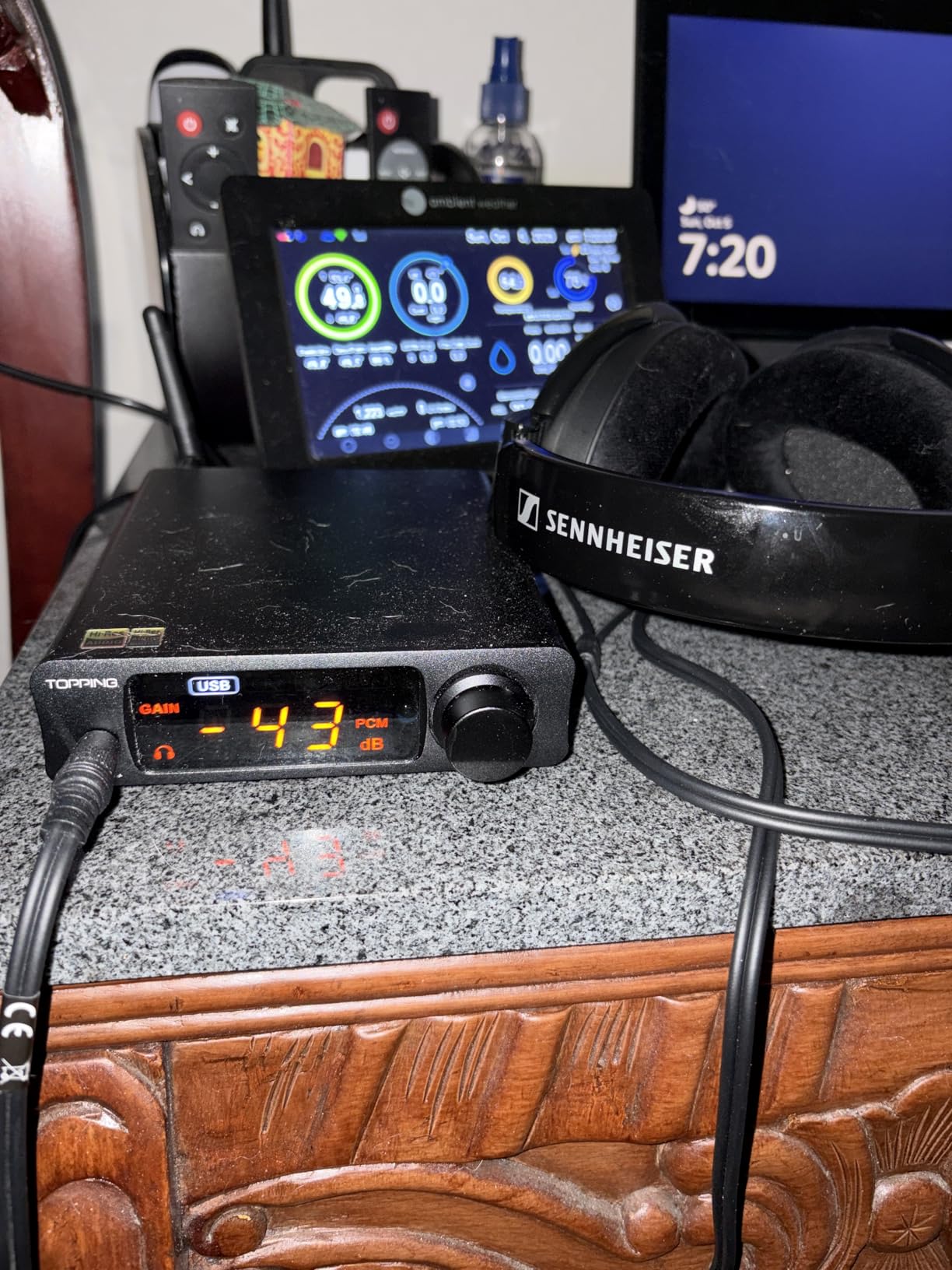
The Topping DX3pro+ is the only amp in this roundup with Bluetooth 5.0 and LDAC support, and for anyone who wants to stream Tidal or Apple Music wirelessly from a phone without compromising too much on quality, that’s a real differentiator. The QCC5125 Bluetooth chip inside supports LDAC, aptX HD, aptX LL, AAC, and SBC, which covers every modern codec an Android or iOS device will throw at it.
The wired performance is equally strong. The ES9038Q2M DAC and XMOS XU208 USB interface deliver PCM up to 32-bit/768kHz and DSD512. The measured THD+N of 0.00013 percent is genuinely low – lower than several amps at twice the price. Topping has built its reputation on measurement-first design, and the DX3pro+ carries that approach into a compact chassis.
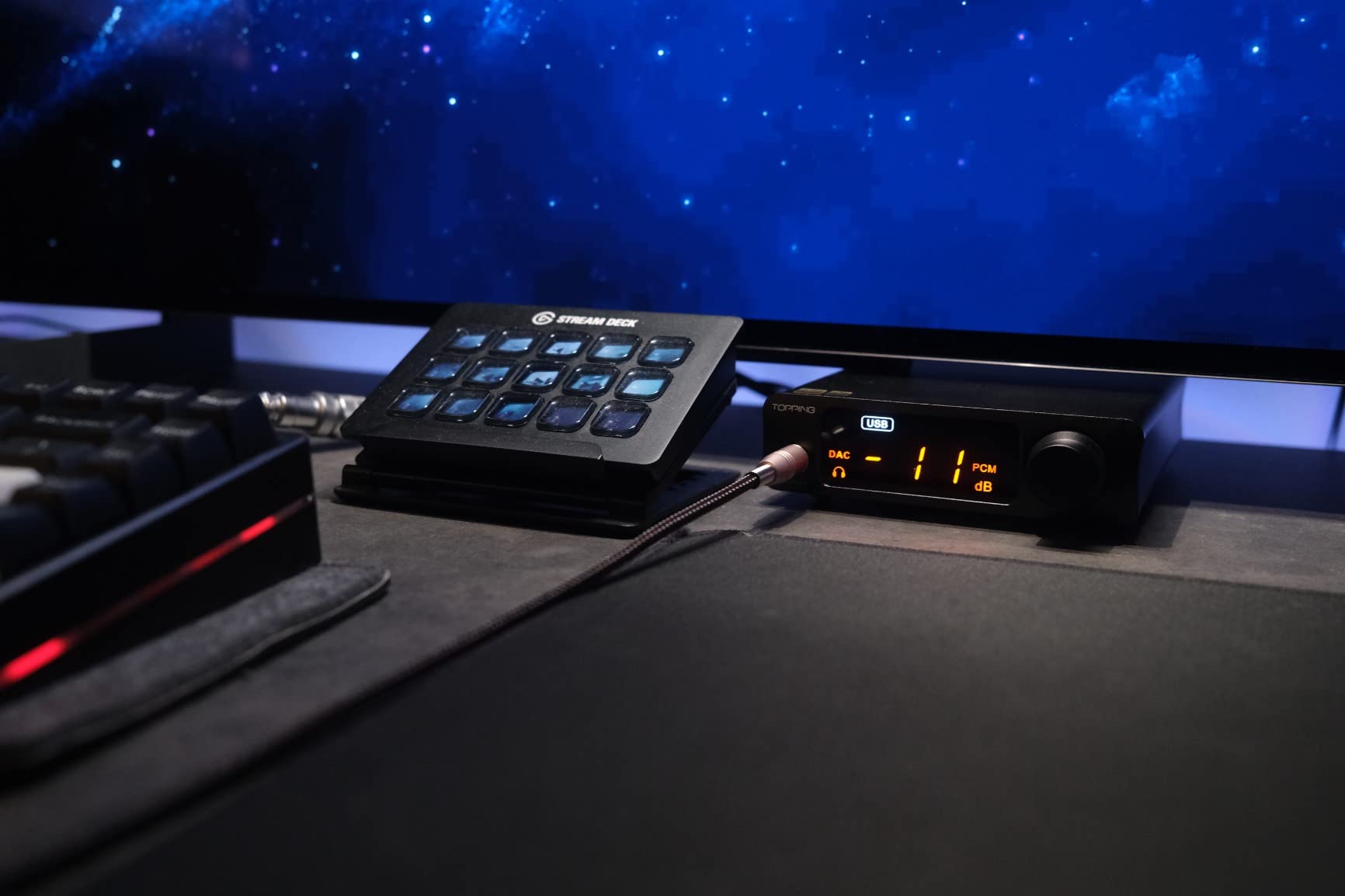
What I like most is the feel of the volume knob – it has a satisfying click that makes precise adjustments easy, and the included remote lets you control everything from across the room. The preamp output is genuinely useful for connecting powered monitors, and Bluetooth pairing is fast enough that it doesn’t feel like a compromise compared to wired audio.
Pairing notes and who should buy
The DX3pro+ is the right amp for someone who streams a lot of wireless audio from a phone or tablet and wants a single box that handles both wired and Bluetooth sources. It’s also a strong fit for a nearfield desktop listening setup with sensitive headphones or IEMs. If you need balanced headphone output, look at the FiiO K7 above instead.
Where the DX3pro+ falls short
The 3.5mm headphone jack is the only output – there’s no 6.35mm adapter included, no balanced option, and no preamp-level control. The lack of bass and treble tone controls is intentional for a reference design, but means you’ll need to do EQ in software if your headphones need tuning.
8. Douk Audio U3 – Best Pure Class A Mini Amp for Tube Lovers
Douk Audio U3 Headphone Amps, Mini Hi-Fi Amplifier for Home Desktop PC 6.35mm / 3.5mm Headsets, Class A, RCA Input, DC 5V
Pure Class A topology
Pluggable op-amp socket
RCA input only
Pros
- Exceptional value for money with audiophile-grade sound
- Class A operation provides warm and musical sound
- Pluggable op-amp socket for DIY upgrades
- Drives high-impedance headphones including HD580/600/650 and K701/K702
- Excellent customer support
Cons
- Bright blue LED can be distracting in dark rooms
- No power supply included in the box
- RCA input only with no 3.5mm input directly
- Some channel imbalance at lowest volume settings
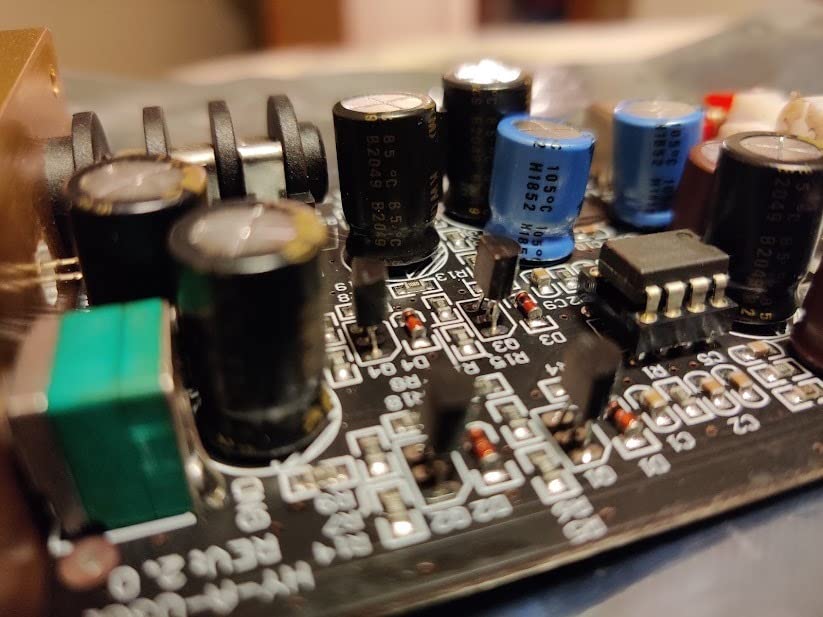
The Douk Audio U3 is the dark horse of this roundup. It’s a pure Class A headphone amplifier with a pluggable op-amp socket, which means you can swap the stock TI NE5532 for a Sparkos Labs or Burson op-amp and revoice the unit to taste. For anyone who enjoys tinkering with circuits, that’s a feature most amps at five times the price don’t offer.
Class A operation sounds different from the Class AB amps in the rest of this list. The U3 runs warm, it draws more power than its size suggests, and it has a slightly softer, more analog presentation that reviewers consistently describe as “musical.” Pair it with high-impedance Sennheisers (HD 600, HD 650) or AKG K702 and the synergy is genuinely special – the U3 has enough current to control those drivers without strain.
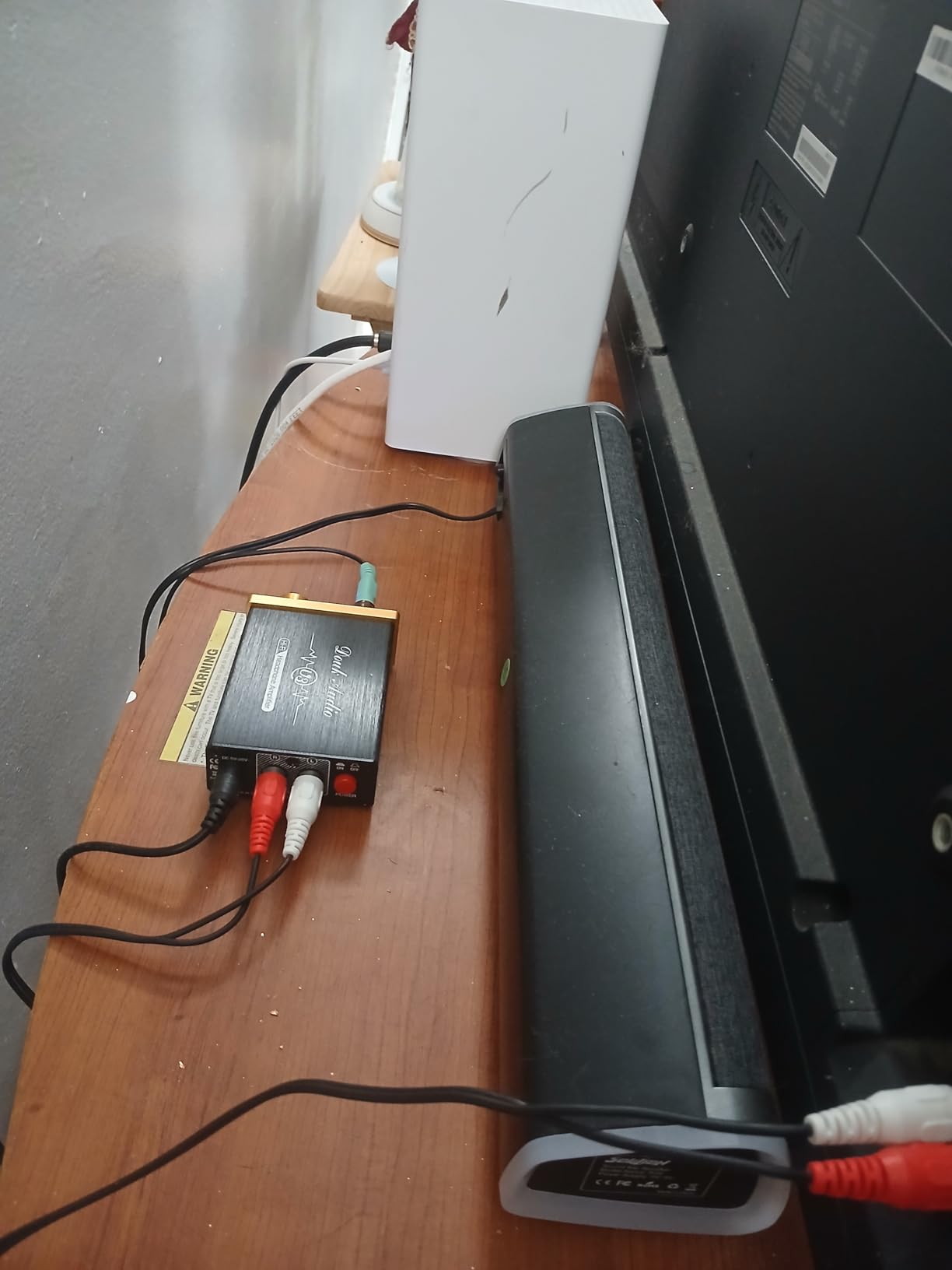
What’s clever is that Douk Audio shipped the U3 with a pluggable op-amp socket rather than a hard-wired circuit. That means the amp can grow with you – if you start with the stock NE5532 and later want a warmer or more detailed sound, you drop in a different op-amp without touching a soldering iron. Reviewers on Head-Fi and r/DIYaudio consistently mention the U3 as the best sub-$50 audiophile amp available today.
Pairing notes and who should buy
The U3 is the right pick for a tinkerer who wants to learn about amp design without spending much. It’s also a genuinely musical amp for someone who already owns a separate DAC and wants a pure analog amp section. Pair it with high-impedance dynamic headphones for the best results.
Where the U3 falls short
There’s no power supply in the box – you need to provide your own 5V to 20V DC adapter. There’s no DAC inside, so you’ll need a separate source. And the RCA-only design means you need an adapter to plug in a phone or laptop directly. For the price, none of these are deal-breakers, but they make the U3 less convenient than the all-in-one units above.
How to Choose the Best Headphone Amp for Your Setup
Choosing the right headphone amp comes down to three questions: what headphones are you driving, where will the amp live, and do you need a DAC built in. Get any one of these wrong and you’ll either overpay for power you’ll never use or underpower a pair of headphones that deserve better.
Match the amp to your headphone’s impedance and sensitivity
Headphone impedance and sensitivity determine how much power your amp needs to deliver. High-impedance dynamic headphones (Sennheiser HD 600 at 300 ohms, Beyerdynamic DT 880 at 250 ohms) need voltage more than current, and almost any desktop amp will drive them to satisfying levels. Planar magnetic headphones (HIFIMAN, Audeze) often have low impedance but low sensitivity, meaning they need high current to swing the diaphragm – this is where amps with strong balanced output like the FiiO K7 or Fosi ZH3 earn their keep.
A rough rule of thumb: if your headphones are rated below 100 dB/mW sensitivity, you need an amp with serious current reserves. The HIFIMAN Susvara at 83 dB/mW is the extreme example – reviewers consistently recommend amps with at least 2W of balanced output to drive it cleanly. If your headphones are above 100 dB/mW, the Fosi Q4 or K5 Pro will likely do the job.
Balanced vs single-ended – does it actually sound different?
Balanced output (4.4mm or 4-pin XLR) doubles the available voltage swing and increases channel separation by using two amplifier circuits per channel. In practice, the audible difference is subtle on most headphones – cleaner bass control on difficult planars, slightly wider soundstage, and better dynamics on transients. The bigger practical advantage is that balanced outputs can often drive harder-to-load headphones without strain.
Single-ended (6.35mm or 3.5mm) output is perfectly fine for the vast majority of listeners. Don’t buy an amp specifically for its balanced output unless you own planars or high-impedance dynamics that you want to drive to their absolute limit. If you’re starting fresh, single-ended is the simpler path and the cables are cheaper.
DAC/amp combo vs separate units
A DAC/amp combo puts the digital-to-analog converter and the headphone amplifier in one chassis. It’s simpler, takes less desk space, and usually costs less than buying two units separately. The FiiO K7 and Fosi ZH3 in this roundup are both combos. Separate units let you upgrade one piece at a time and isolate the digital and analog power supplies, which can yield better measured performance – but the difference is small for most listeners until you cross the $500-per-unit threshold.
If you already own an external DAC you like, the Douk U3 (amp only) or any of the others with analog RCA inputs will work with it. If you’re starting from scratch, a combo like the K7 is the more practical choice.
Desktop vs portable form factor
Desktop amps (the entire list above except true dongles) need mains power or USB power, are larger, and tend to have more power and connectivity. Portable amps run on batteries, fit in a pocket, and prioritize efficiency over maximum output. For home listening at a desk, desktop is the right choice. For commuting with IEMs, look at dedicated dongles – they aren’t in this roundup but they’re a separate category worth researching.
Do you actually need an amp? When to skip
Not everyone needs a dedicated headphone amp. If you listen exclusively to easy-to-drive dynamic headphones (32 ohms or below, sensitivity above 100 dB/mW) from a phone or modern laptop with a decent DAC, you’ll likely hear no meaningful improvement from adding an amp. Reviewers on r/headphones consistently warn against the upgrade cycle – the best upgrade is usually better headphones, not a better amp.
You probably do need an amp if you own high-impedance headphones above 100 ohms, low-sensitivity planars, or if you find yourself constantly maxing out your source’s volume without reaching satisfying levels. You might also want one if your current source introduces audible hiss into sensitive IEMs – a clean external amp often has a lower noise floor than a phone or laptop.
For a complete beginner’s reference on choosing your first audio gear, our audio gear guide for students covers similar decision-making patterns in another category. The principles transfer – match the gear to the use case, don’t overspend on features you won’t use.
Frequently Asked Questions
Do I actually need a headphone amplifier?
You need an amp if you own high-impedance headphones above 100 ohms, low-sensitivity planar magnetic headphones, or if your current source runs out of volume before your headphones sound loud enough. If you listen to easy-to-drive dynamics from a phone or modern laptop, you’ll likely hear no improvement. Most audiophiles upgrade their headphones before they upgrade their amp – that’s almost always the right order.
Is a headphone amp the same as a DAC?
No. A DAC (digital-to-analog converter) turns digital audio files into an analog signal. A headphone amplifier takes that analog signal and boosts it enough to drive headphone drivers. Many modern units combine both functions into one chassis, but they perform distinct jobs. A DAC alone won’t drive headphones louder, and an amp alone can’t decode digital files.
How much power do my headphones need from an amp?
It depends on impedance and sensitivity. High-impedance dynamics like the Sennheiser HD 600 need voltage more than current – most desktop amps will drive them fine. Low-sensitivity planars like the HIFIMAN Susvara need both voltage and high current – look for amps with at least 2W balanced output. Easy-to-drive dynamics from 16 to 80 ohms with high sensitivity rarely need more than a few hundred milliwatts.
What’s the difference between Class A and Class AB amps?
Class A amps run their output devices always on, which produces a slightly warmer, more linear sound but generates significant heat and uses more power. Class AB amps switch between devices, which is more efficient but introduces a small distortion at the crossover point. For most listeners the difference is subtle – both designs can sound excellent. Class A is favored for its analog character, Class AB for its efficiency.
Can a budget DAC/amp beat an expensive separate setup?
Sometimes, yes. Modern budget DAC/amp combos like the FiiO K7 use measured-performance chips that rival units costing much more. The law of diminishing returns kicks in early in headphone audio – the difference between a $200 combo and a $2000 stack is often smaller than the difference between two pairs of $300 headphones. Buy the best headphones you can afford first, then add an amp if they need one.
What is the best headphone amp for the Sennheiser HD 600?
The Sennheiser HD 600 is a 300-ohm dynamic headphone with moderate sensitivity, so almost any desktop DAC/amp will drive it well. The FiiO K7 is a strong all-rounder, the Fosi ZH3 offers more power and a preamp output, and the Douk U3 is a budget pick for someone who enjoys warm Class A sound. Tube amps like the Feliks Elise also pair beautifully with the HD 600 if you want to explore that sound signature.
Final Verdict – Which Headphone Amp Should You Buy in 2026?
If I had to pick one amp for the broadest range of audiophile use cases, the FiiO K7 is still my recommendation for 2026. The 2000mW balanced output, the THX AAA amplification, and the clean AKM DAC inside hit a sweet spot that very few competitors match at the price. For anyone with a pair of mid-tier planars or high-impedance dynamics, the K7 will drive them properly and reveal detail you didn’t know your headphones had.
The Fosi ZH3 is the better pick if you want one box to handle both headphones and powered monitors, or if you want maximum balanced output without crossing into flagship territory. The FiiO K11 is the right call if you’re new to the hobby and want a clean, balanced entry point under $150. And if you’re on a tight budget, the Fosi Q4 will get you 80% of the way there for less than the cost of a meal out.
Whichever amp you choose, remember the rule that experienced audiophiles learn the hard way: better headphones first, then a better amp. A great amp cannot rescue mediocre transducers, but a great pair of headphones will reveal every weakness in your amp. For more gear-buying guidance across categories, our beginner gear guides apply the same principles. Happy listening.