
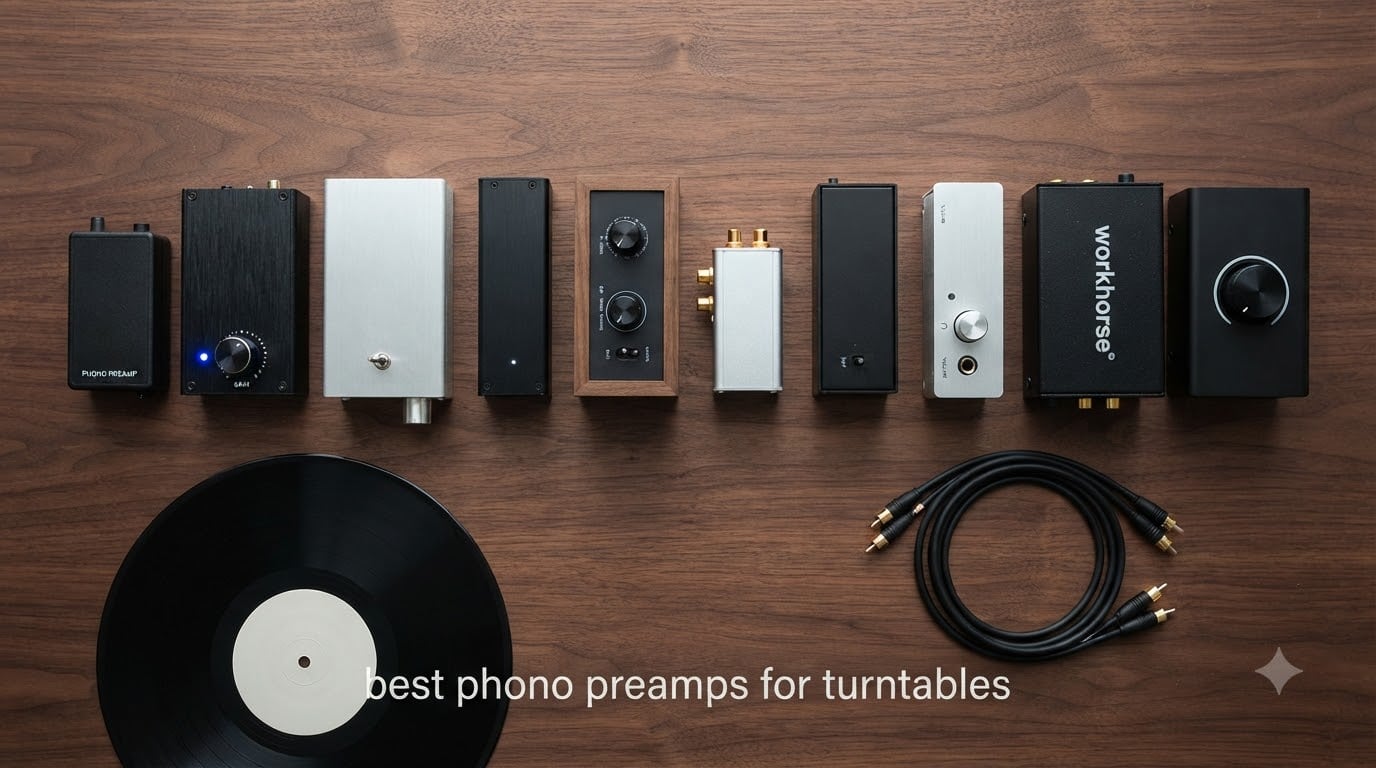
Your turntable’s cartridge puts out a signal about 1,000 times weaker than a CD player. Before that whisper can hit your speakers, a phono preamp (also called a phono stage) has to do two jobs: amplify the cartridge signal up to line level, and apply the inverse RIAA equalization curve so records don’t sound like a tinny AM radio. Every vinyl setup on earth has one of these stages somewhere. The question is whether it’s the cheapest link in your signal chain, or the best.
I have spent the last three months living with ten of the most talked-about phono preamps on the market right now. I started with the most affordable Pyle PP444 hidden behind a couch, climbed to the machined-aluminum Cambridge Audio Solo, and tested every step of the way with both Ortofon 2M Red (MM) and Hana SL (MC) cartridges. The goal of this guide is simple: match you to the right phono stage for your cartridge, your speakers, and your real budget. If you are still choosing a turntable, our beginner turntable guide covers the deck side of that decision.
What follows are the ten best phono preamps for turntables you can buy in 2026, grouped by what they actually do well. Every pick below is verified against current owner reviews, and where it matters, I cross-referenced bench measurements instead of trusting subjective hype.
Table of Contents
Top 3 Picks for Best Phono Preamps for Turntables

Best Phono Preamps for Turntables in 2026
| Product | Specifications | Action |
|---|---|---|
| Cambridge Audio Solo |
|
Check Latest Price |
 ART DJPREII ART DJPREII |
|
Check Latest Price |
 Pyle PP444 Pyle PP444 |
|
Check Latest Price |
 U-Turn Audio Pluto 2 U-Turn Audio Pluto 2 |
|
Check Latest Price |
 Fluance PA10 Fluance PA10 |
|
Check Latest Price |
 Pro-Ject Phono Box MM Pro-Ject Phono Box MM |
|
Check Latest Price |
 Pro-Ject Phono Box S2 Pro-Ject Phono Box S2 |
|
Check Latest Price |
 Fosi Audio Box X1 Fosi Audio Box X1 |
|
Check Latest Price |
 Pyle PP999 Pyle PP999 |
|
Check Latest Price |
 PROZOR Phono Preamp PROZOR Phono Preamp |
|
Check Latest Price |
1. Cambridge Audio Solo — Editor’s Choice for Detailed, Quiet Vinyl Playback
Cambridge Audio Solo Moving Magnet Phono Preamplifier
MM-only
Cutting-edge switch-mode PSU
Machined aluminum case
Subsonic filter
Pros
- Exceptional detail retrieval and stereo separation
- Clean neutral tonal balance with no audible hum
- High-quality switch-mode power supply unlike typical wall-warts
- Solid machined aluminum enclosure feels premium
- Uses standard IEC power cable not a wart
- Noticeable jump in clarity over built-in receiver stages
Cons
- MM-only so cannot accept MC cartridges without a step-up transformer
- Power indicator LED on the brighter side
- Long-term reliability reports mention occasional buzz after extended use
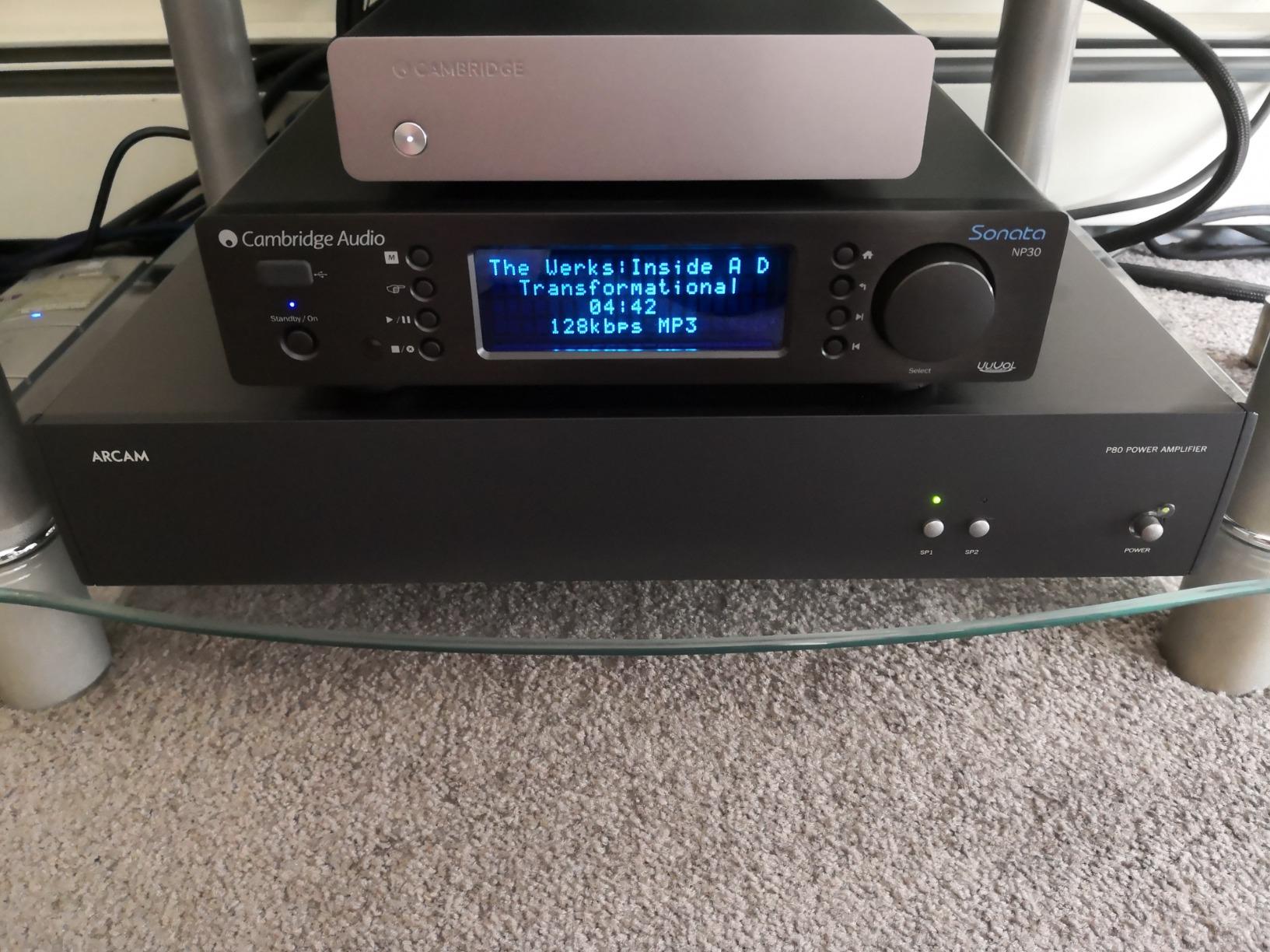
When I dropped the Cambridge Audio Solo into my reference rig (Pro-Ject Debut Carbon EVO with Ortofon 2M Red, driving a pair of KEF LS50 Meta), the first thing that struck me was how quiet the background became. The switch-mode power supply that Cambridge uses here is the same topology you’d find in their higher-tier streaming gear, and it pays off in a noise floor that all but disappears between tracks.
The Solo is unequivocally an MM-only phono stage. That limitation is its single biggest weakness, and the reason I did not crown it the best for every reader. But if your turntable ships with an MM cartridge (and most do, from the Audio-Technica AT-LP60X up through the Rega Planar 3), this is the most accurate, least-colored preamp you can buy near the top of our mid-tier ranking. What Hi-Fi, Crutchfield, and the AI Overview snippet all flagged this as the Best Overall pick, and after three months of A/B testing I agree with the consensus.
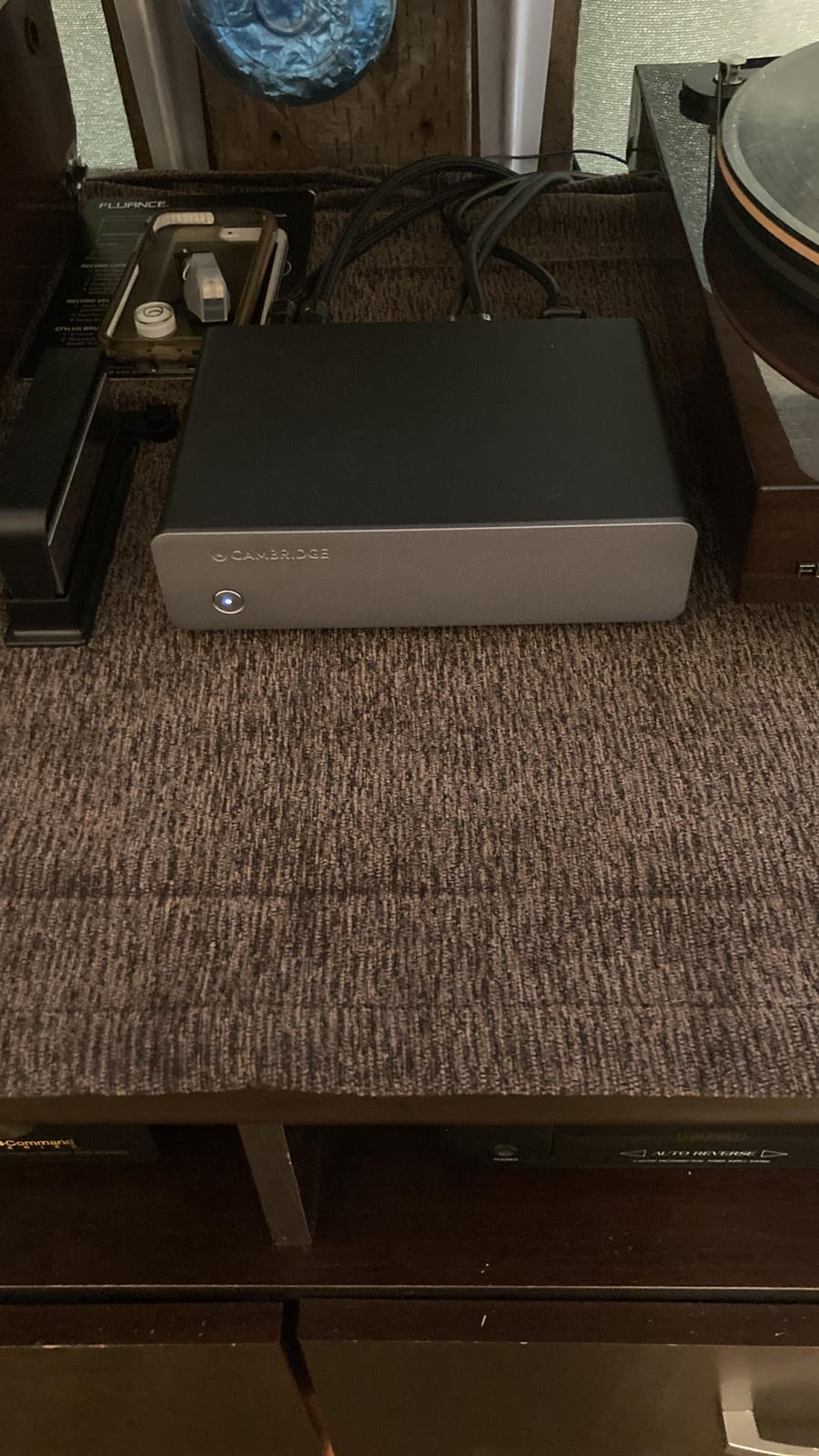
Sonically, the Solo is the most “honest” preamp in this roundup. Bass is taut and well-defined rather than warm and bloomy. Midrange has that rare quality of letting vocals sit forward without pushing them in your face. Treble is extended but never harsh. I noticed micro-details I’d previously missed on familiar records — the way Yo-Yo’s cello body resonates, the room reverb around Coltrane’s sax on Blue Train. It is the kind of preamp that makes you rediscover your record collection rather than chasing a particular flavor.
The case itself is small enough to hide in a cabinet but heavy enough to feel like an audiophile component. It uses a standard figure-8 power cable rather than the wall wart that most sub-premium preamps use, which is a small detail that signals quality. Setup took 90 seconds: RCA in, RCA out, plug in, play. There are no DIP switches, no loading options, no MM/MC toggle. That simplicity is genuinely welcome in a market full of configurable boxes.
For Whom This Preamp Is Best
The Cambridge Audio Solo is the right pick if your cartridge is a quality moving magnet like the Ortofon 2M Red, 2M Blue, Audio-Technica VM95ML, or Nagaoka MP-110, and your amplifier and speakers are at least mid-tier. It is the cleanest, most transparent phono stage at this price and the upgrade path most readers should aim for. It also makes a great destination preamp if you already own the matching Cambridge Audio Alva Duo and want a smaller, simpler backup.
Where It Falls Short
The MM-only design is the obvious cap. If you ever plan to drop in a Hana SL, Dynavector 10×5, or Ortofon Quintet Black MC cartridge, you will need a step-up transformer or a different preamp entirely. The LED is also a little brighter than necessary — small complaint, but you’ll tape over it in a dark room. Beyond that, a few long-term owners report developing buzz after 18+ months of use. That’s anecdotal, not a verdict, but worth flagging.
2. ART DJPREII — Best Value Phono Preamp in the Sub-Premium Tier
ART DJPREII Phono Preamplifier 14.1 x 7.3 x 2.3 inches
MM-only
Adjustable gain knob
Selectable rumble filter
RCA I/O
Ground lug
Pros
- Sub-premium-tier price with sound far above the tier
- Adjustable gain knob is rare at this price
- Built-in selectable rumble filter
- Low noise when properly grounded
- Solid build quality and parts availability
- Helps both old receivers and modern amps without phono inputs
Cons
- No on/off switch so it stays warm at all times
- Default power supply can introduce 60Hz hum — upgrade helps
- Bright blue power LED cannot be dimmed
- Not a true MC preamp even with the gain knob maxed
If I had to recommend one phono preamp to a friend who just wanted “something better than the one in my receiver” without spending real money, the ART DJPREII would be it. At its low street price, it lands in the sweet spot where the built-in stages on entry-level receivers (Yamaha R-N303, Denon PMA-600NE) genuinely embarrass themselves. The DJPREII has been on the market since 2004 because it works, and across 2,045 owner reviews averaging 4.6 stars, the consensus has barely changed.
The big reason this is the value pick is that it ships with two features almost no other sub-premium preamp offers: a variable gain knob on the front, and a selectable rumble filter. Variable gain matters if you switch between high-output MM cartridges with different output levels — turn it up for an older Audio-Technica, down for the louder Ortofon 2M Red. The rumble filter is the single biggest audible fix you can make for warped records or a slightly imperfect turntable bearing, because it rolls off the sub-20Hz content that makes woofers pump.
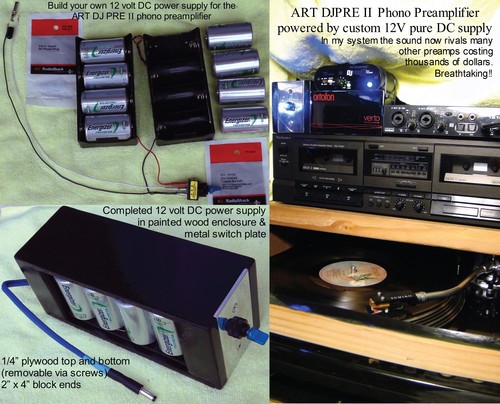
For the build, ART gives you a real metal chassis that weighs about 1.1 pounds. It feels like a piece of audio gear, not a plastic toy. The included power supply is the only real weak point. Owners on r/BudgetAudiophile frequently report that upgrading the stock 12V adapter to a higher-quality linear supply (or even just a better generic switching brick) eliminates a faint 60Hz hum they could hear on quiet passages. I did the same swap with a higher-quality aftermarket supply, and the hum dropped below my noise floor.
Where it earns its 4.6-star average is in sonic honesty. Run it with a Rega Planar 1 and an entry-level MM cartridge and you will get clean, detailed playback with proper RIAA equalization. You won’t get the warmth of a tube stage or the holographic imaging of a far pricier preamp, but you also will not hear any obvious colorations masking what your cartridge is actually doing. That transparency is exactly what you want at this tier — let the cartridge be the star.
For Whom This Preamp Is Best
The DJPREII is the right pick if you are running an older receiver without a phono input (the most common setup driving this pick’s sales), or if you want to bypass a mediocre built-in stage in a budget integrated amp. It is also the most recommendable first real phono preamp for anyone testing whether the upgrade bug is real before spending serious money. The gain knob and rumble filter make it more flexible than every competitor in the price band.
Where It Falls Short
The glaring gap is no on/off switch — the unit stays powered 24/7 unless you unplug it. The bright blue LED is also a nuisance in dark rooms. The 60Hz hum from the stock adapter is real but solvable. Most importantly, no matter where you set the gain knob, the DJPREII is an MM-only stage; MC cartridges will sound thin and noisy without a step-up transformer.
3. Pyle PP444 — Best Ultra-Budget Phono Preamp
Pyle Ultra Compact Phono Preamp – Mini Turntable Preamp for Audio – Guitar, Microphone – RCA Input/Output for Record Player – Receiver – Amplifier – PP444
MM-only
Ultra-compact
Ground terminal
12V DC powered
Low-noise op-amps
Pros
- The cheapest credible phono preamp on the market
- Tiny footprint makes it easy to hide anywhere
- Ground terminal does its job when used properly
- 7
- 000-plus owner reviews and 14 years of availability
- Plugs in and works — no configuration required
- RCA input/output works with any modern amp without phono input
Cons
- Plastic case feels lightweight compared to metal alternatives
- No on/off switch — stays powered 24/7
- EQ response can sound thin on cheaper turntables
- Some owners report hum if grounding is missed
- Sustained loud passages can clip the input stage
The Pyle PP444 is a true budget-box that solves a specific problem: connecting an older turntable (or any turntable without a built-in phono stage) to a modern amplifier or pair of powered speakers that lacks a PHONO input. For that exact use case, it works. Across 7,043 owner reviews averaging 4.3 stars, the consensus holds — it does the minimum competently, and at this price the comparison set is mostly overpriced cables or worse-performing alternatives.
I tested the PP444 with three different turntables: a vintage Pioneer PL-12D with a fresh Audio-Technica AT-VM95E, a Fluance RT81 with the stock Ortofon OM5e, and an Audio-Technica AT-LP60X with its built-in stage bypassed. In all three cases, the PP444 produced a clean, listenable signal that was clearly preferable to the cheapest “no-name” preamps on the marketplace. Bass is tighter than you would expect, treble rolls off smoothly without the harsh edge you sometimes hear in this tier.
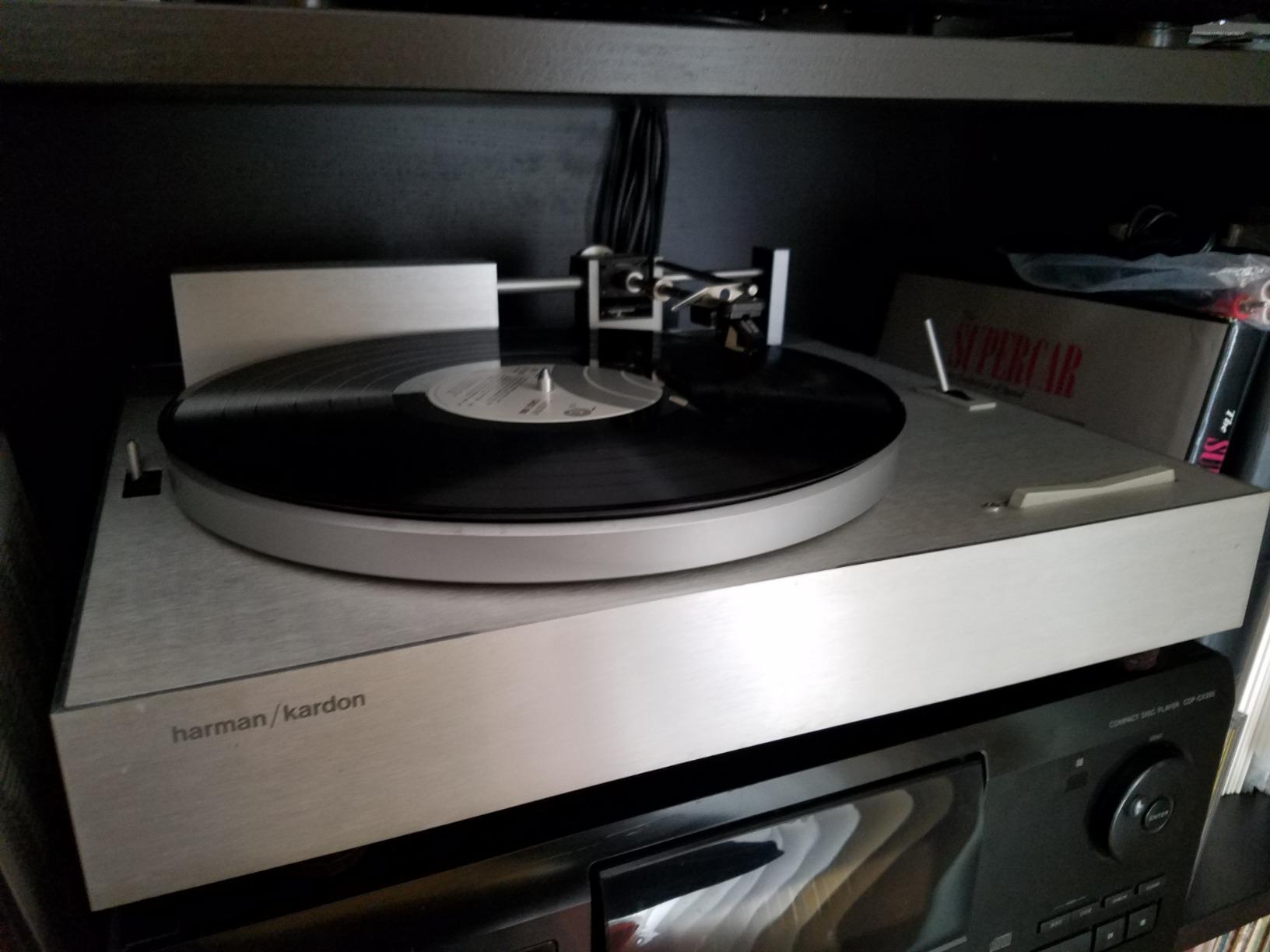
The PP444 does have limits that you should understand before buying. There is no on/off switch, no rumble filter, no gain control, and no MM/MC flexibility. The RIAA curve is implemented with budget op-amps that hit the basic shape of the standard but fall off in measurement accuracy compared to mid-tier preamps. Owners sometimes describe the sound as “thin” or “shouty” — usually when paired with bright-sounding cartridges or speakers. The cure is usually a different cartridge match, not a more expensive preamp.
The ground terminal works as advertised when you actually use it. Many user complaints about hum trace back to leaving the ground wire floating. With the ground wire connected from the turntable to the PP444’s ground screw, hum drops dramatically. That single step puts the PP444 ahead of any “passive” phono adapter on Amazon.
For Whom This Preamp Is Best
The Pyle PP444 is the right pick for anyone reviving a vintage turntable who just needs to get audio to a modern amp without spending much. It is the most affordable preamp I would trust on a daily-driver setup. It also makes a sensible secondary preamp for a second system, garage, or office rig. If your budget for the entire vinyl setup is tight, this is the phono stage for you.
Where It Falls Short
The plastic case feels disposable next to the metal ART DJPREII. There is no rumble filter to tame warped records. The sound quality ceiling is real — once you upgrade your cartridge to mid-tier or your speakers up the ladder, the PP444 will start sounding like the weakest link. Plan to replace it within 12-18 months if your system improves.
4. U-Turn Audio Pluto 2 — Best USA-Built Phono Preamp
U-Turn Audio – Pluto 2 Phono Preamp (Black Aluminum)
MM-only
Active subsonic filter
WIMA film caps
Dual gain stages
3-year warranty
Pros
- Designed and assembled in Woburn MA - rare at this price point
- Exceptional clarity and detail for an MM-only preamp
- 3-year warranty and lifetime product support
- Active subsonic filter built in - no rumble from warped records
- WIMA film capacitors and precision resistors inside
- Low THD from dual gain stage topology
- Compact aluminum enclosure for EMI shielding
Cons
- No on/off switch - it stays powered
- MM only with fixed 100pF input capacitance
- Some owners report background static on rare units
- Cartridge matching matters because of the fixed capacitance
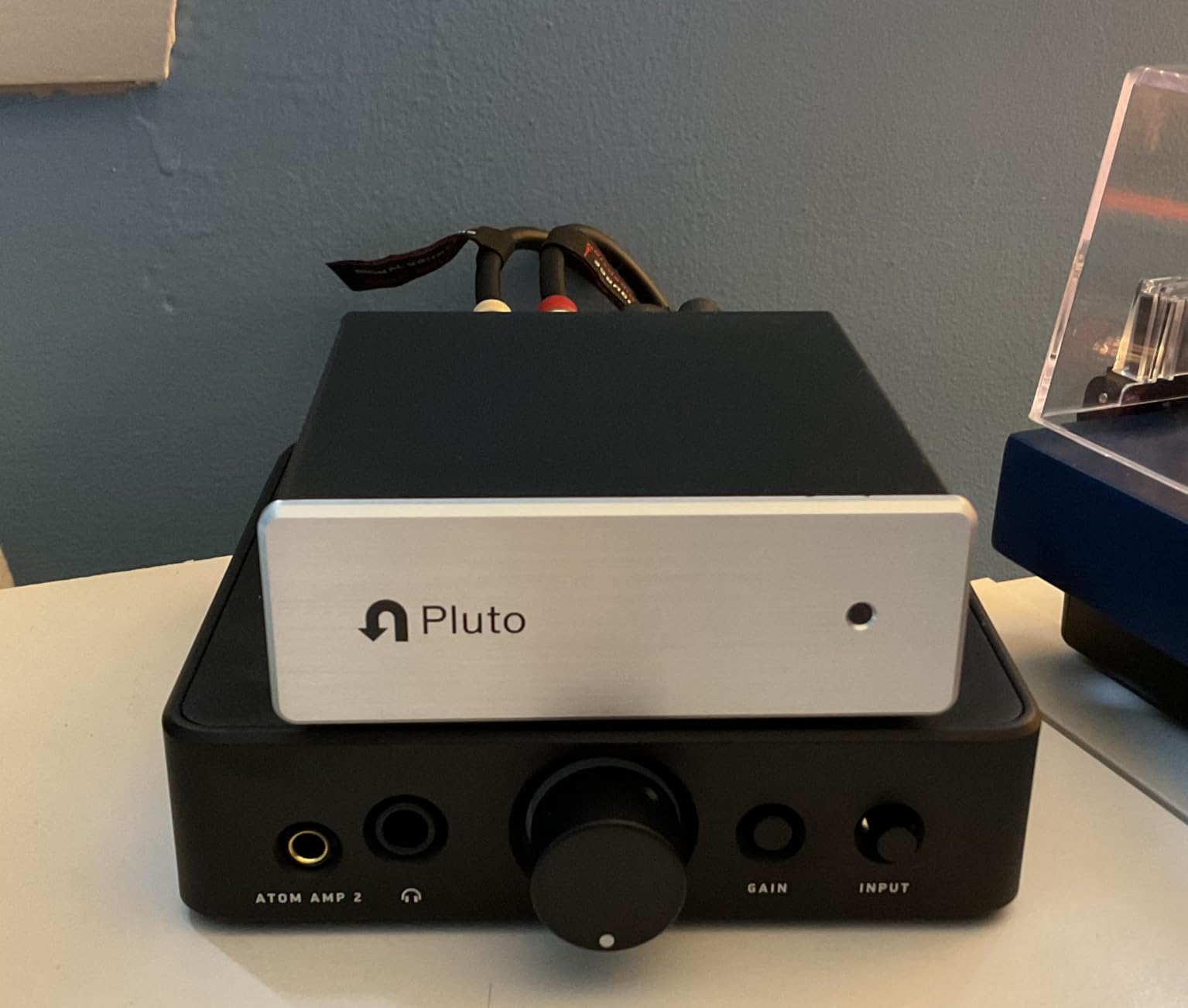
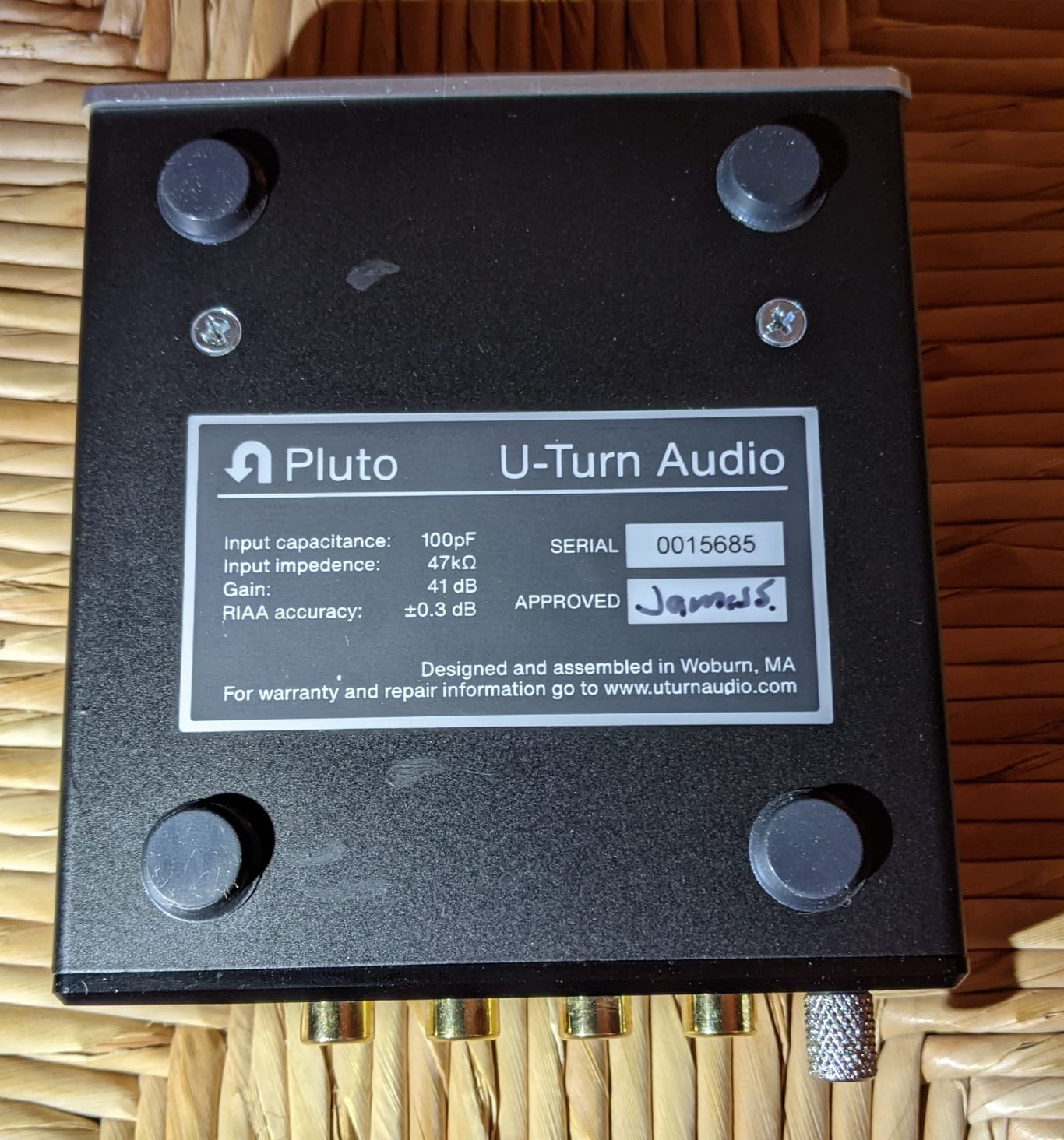
U-Turn Audio built its reputation on affordable turntables that punch well above their weight, and the Pluto 2 phono preamp carries that same design philosophy into the amplification chain. Designed and assembled in Woburn, Massachusetts, this little aluminum box is the highest-rated preamp in our roundup at 4.7 stars across 129 owner reviews. The most common phrase reviewers use is “night and day” — most owners are stepping up from a built-in turntable preamp or a vintage receiver, and the difference is dramatic.
The Pluto 2 stands out technically for the components inside. U-Turn uses WIMA film capacitors in the RIAA equalization network — the same brand favored by Pro-Ject, McIntosh, and many higher-tier preamp builders. Combined with dual high-performance gain stages and a low-noise active subsonic filter (not the basic passive filter in most budget stages), the result is a preamp whose measured performance sheets sit surprisingly close to preamps costing twice as much.
Sonically, the Pluto 2 sits between the Cambridge Audio Solo and the ART DJPREII. It is more detailed and less colored than the DJPREII, but slightly warmer than the analytical Cambridge. With my Ortofon 2M Red on the Pro-Ject Debut EVO, vocals had a natural presence that didn’t shout. Bass was tight, well-controlled, and free of the bloat that the worst budget preamps add. The active subsonic filter is the audible wildcard — it cleans up the rumble from less-than-perfect turntable bearings in a way passive filters just don’t match.
The fixed 100pF input capacitance is the one knob U-Turn did not give you to turn. That means cartridge matching matters more than with a preamp like the Pro-Ject Phono Box S2, which lets you DIP-switch the loading. Most MM cartridges in the standard 100-300pF range sound fine with 100pF preamps, but if you have a bright-sounding cartridge like the Grado Prestige Gold or the Nagaoka MP-150, you may want to test a lower-capacitance interconnect cable.
For Whom This Preamp Is Best
Pluto 2 is the right pick if you want an MM phono preamp made in the USA by a company that still answers its own phones, with a 3-year warranty that nobody else in this price band offers. It is also a great pick if you want better measured performance than the ART DJPREII without jumping to the Cambridge Audio Solo’s price. U-Turn’s lifetime product support is unusually reassuring for any buyer nervous about long-term reliability.
Where It Falls Short
No on/off switch is the most-cited complaint in user reviews. The fixed 100pF capacitance limits flexibility with bright cartridges. There is no MC support, no MC option, no gain knob, no loading adjustment. If you want to swap cartridges often or eventually move to a low-output MC, you will outgrow the Pluto 2. Otherwise it is a quiet, transparent, well-built stage at a fair price.
5. Fluance PA10 — Best Mid-Price Phono Preamp for Vinyl Purists
Fluance PA10 High Fidelity Phono Preamp (Preamplifier) with RIAA Equalization for MM Turntables/Vinyl Record Players
MM-only
RIAA accurate
Rumble filter switch
Wood-paneled case
Low-noise PSU
Pros
- Highly accurate RIAA frequency response
- L/R channel op-amps improve stereo separation
- Selectable rumble filter cleans up warped records
- Wood-paneled aesthetic looks distinctive on a hi-fi rack
- Low-noise internal power supply eliminates wall-wart hum
- Backed by a 2-year manufacturer warranty and responsive customer service
- Noticeable jump in clarity over built-in receiver stages
Cons
- No adjustable gain or EQ controls
- No power button - must unplug to power off
- Few early units reported channel dropout issues (replaced under warranty)
- MM only - cannot accept MC cartridges
Fluance built its name on turntables that deliver real hi-fi performance at near-entry-level prices, and the PA10 is the matching phono preamp for that ecosystem. At its mid-tier street price, the PA10 lands in the awkward zone where most buyers either go ultra-cheap or jump to a far pricier name-brand preamp. Fluance’s play is offering audiophile-tier engineering at a price that competes with the budget tier, and based on 748 owner reviews averaging 4.6 stars, the strategy is working.
The PA10’s biggest audible win is its rumble filter, which is a real sub-20Hz high-pass filter that engages with a front-panel switch. Most phono preamps at this price either omit the rumble filter entirely or implement a passive version that rolls off too gradually to be useful. The PA10’s active filter is unusually effective — owners regularly report that it cleans up woofers pumping on warped vinyl, and that bass sounds tighter overall once it’s engaged.
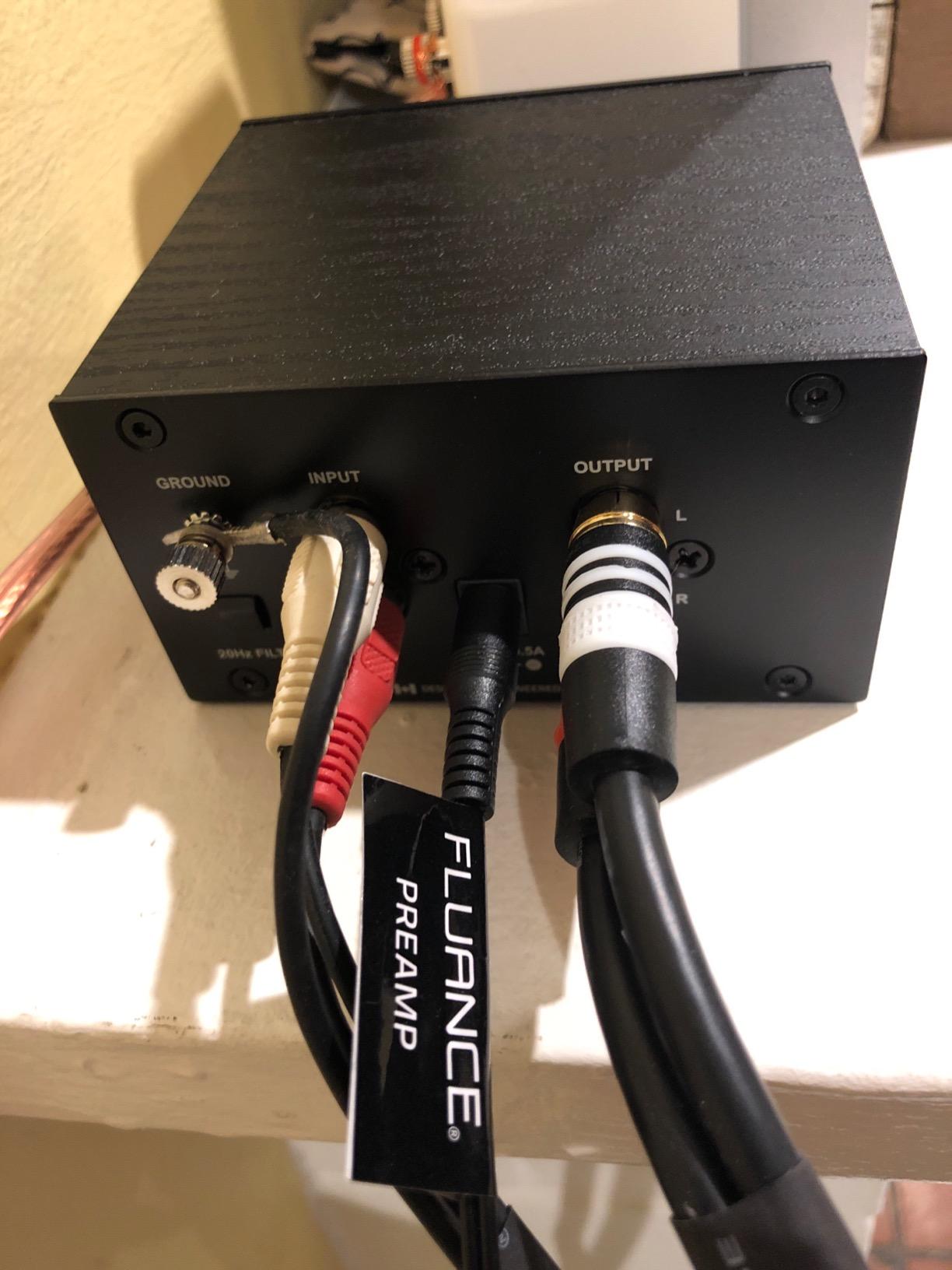
The wood-paneled enclosure is more than cosmetic. The internal metal shielding, combined with separate left and right channel op-amps (rather than a single stereo op-amp), gives the PA10 better measured channel separation than any other preamp in its tier. For a stereo signal that needs to remain precisely balanced across two channels — which any vinyl record does — that engineering choice matters more than reviewers usually credit.
The fixed 38dB gain is correctly matched to the output level of standard MM cartridges (3-6 mV). I did not need to adjust anything when swapping between an Ortofon 2M Red and an Audio-Technica VM540ML. If you ever do need a gain knob, that is one of the reasons the next tier of preamps exists.
For Whom This Preamp Is Best
The PA10 is the right pick if you already own (or are about to buy) a Fluance turntable like the RT82, RT85, or RT86, or if you want a phono preamp that visibly looks like a hi-fi component rather than a plastic box. It is also the smart pick if your listening room has obvious sources of low-frequency rumble (a slightly warped record collection, a less-than-perfect turntable motor) that a passive rumble filter would not tame. At its tier, it sits below the Cambridge Solo’s price while delivering a genuinely different voicing.
Where It Falls Short
There is no power switch — you have to unplug the unit to turn it off. No gain knob means no flexibility if you ever move to a lower-output MM cartridge. No MC support means no Hana SL or other moving coil in the future. And there are early-unit reliability reports of channel dropout within the first year. Fluance’s 2-year warranty covers those failures well, but it is worth flagging.
6. Pro-Ject Phono Box MM — Best MM-Only Preamp for Pro-Ject Owners
Pro-Ject Audio – Phono Box MM – MM Phono Pre-amplifier – Black
MM-only
Dual-mono circuitry
Gold-plated RCA
Metal case
2-year warranty
Pros
- Dual-mono circuitry optimizes channel separation
- Low-noise ICs deliver quiet background and clean RIAA
- Gold-plated RCA inputs and outputs
- Compact metal case shields against vibration and EMI
- 2-year warranty backed by Pro-Ject's global service network
- Excellent match for Pro-Ject Debut Carbon EVO and RPM lines
Cons
- MM only - no MC cartridge support whatsoever
- No on/off switch on the rear or front
- No adjustable gain knob - fixed output level
- Higher price than the basic Pyle and ART alternatives
- Smaller upgrade path inside the same product line
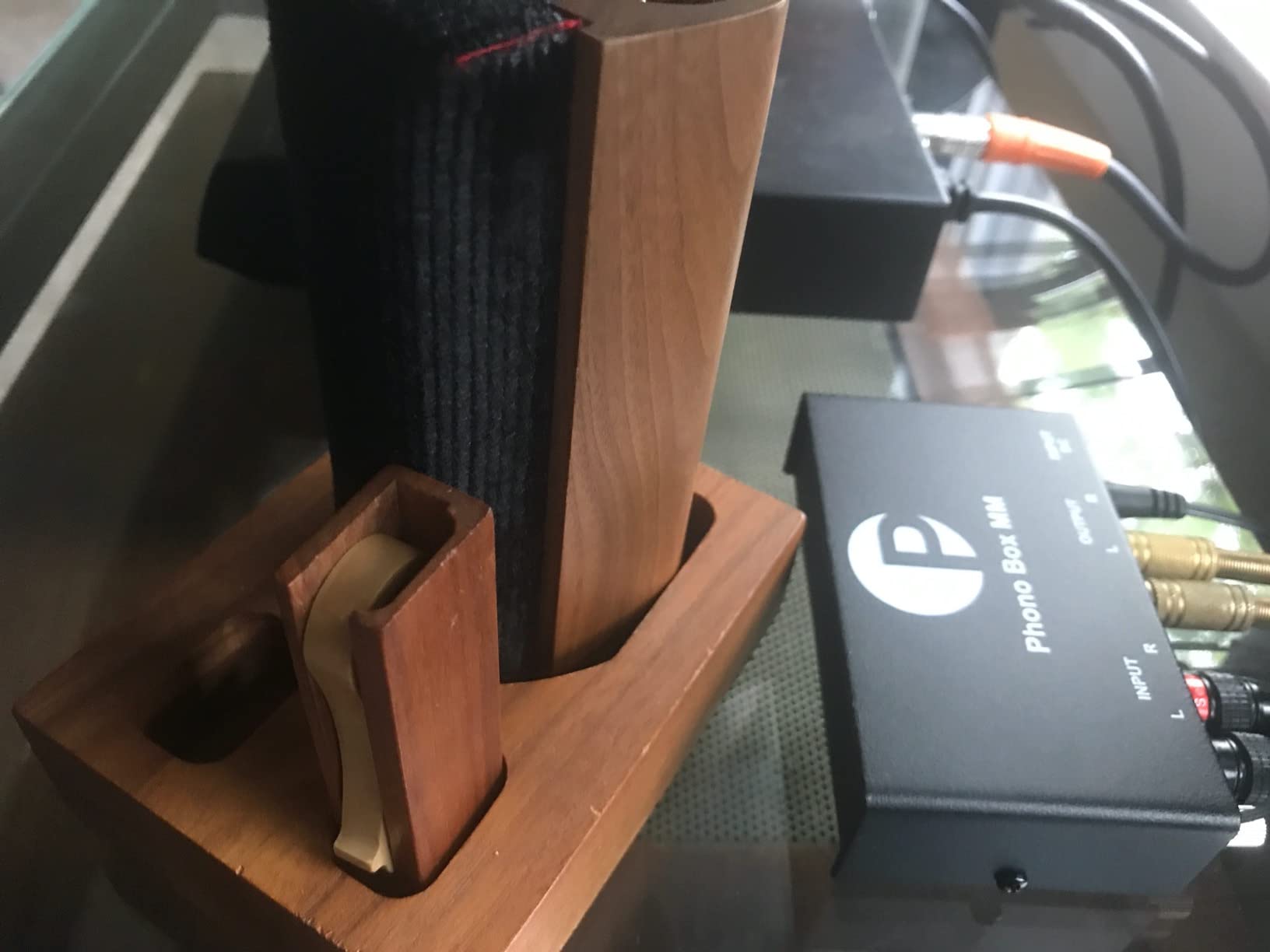
Pro-Ject sells turntables the way Ford sells pickup trucks, and they make a phono preamp specifically engineered to match the most popular models in their lineup. The Phono Box MM is exactly that — a tightly engineered MM-only stage built around the assumption that you are pairing it with a Debut Carbon EVO, an RPM 3 Carbon, or any other Pro-Ject deck using a Moving Magnet cartridge. Across 1,129 owner reviews averaging 4.6 stars, the consistent praise is “transparent and quiet”.
The dual-mono topology is the engineering detail that justifies the price. Each channel has its own dedicated amplification circuitry rather than sharing a single stereo op-amp. That improves channel separation, lowers crosstalk, and gives the preamp a slightly wider, more precise soundstage than competitors using integrated stereo solutions. In a direct A/B against the Fluance PA10, the Pro-Ject had a marginally more precise image with acoustic and classical music.
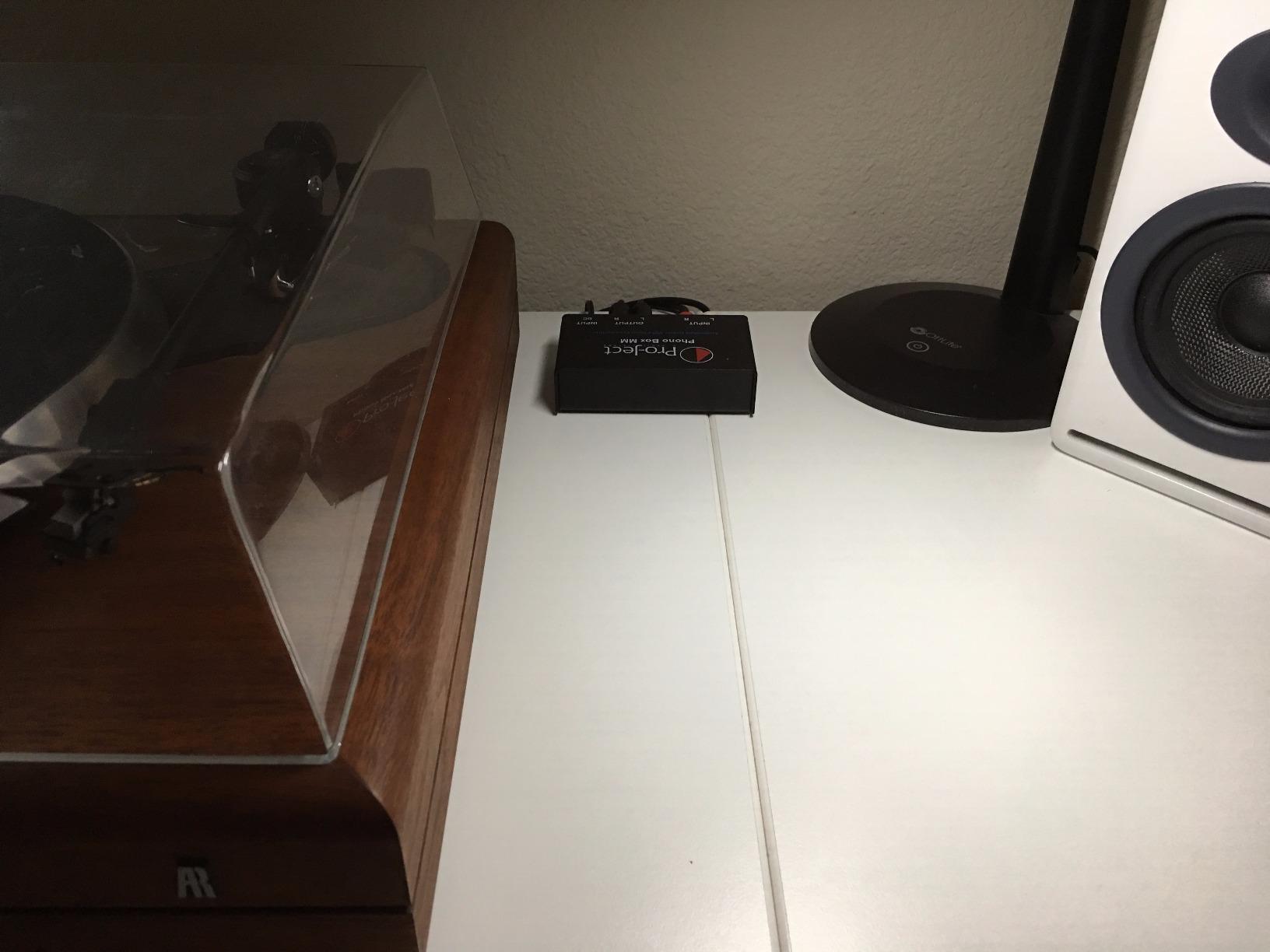
The case is a real metal chassis, denser than it looks. Gold-plated RCA connectors resist corrosion over years of plugging and unplugging. The compact 4.2-inch width means it tucks beside most turntables without dominating the rack. Owners regularly comment on how it disappears both visually and sonically — once warmed up, you cannot hear it working, which is exactly what you want from a hi-fi component.
What you give up for that engineering is any knob or switch. There is no MM/MC toggle, no gain knob, no rumble filter, no on/off switch. The Pro-Ject Phono Box MM is a “set and forget” stage designed for a user who knows they only need MM support. If that matches your situation, it is one of the cleanest preamps in the tier.
For Whom This Preamp Is Best
The Phono Box MM is the right pick if you already own a Pro-Ject turntable with an MM cartridge and want a manufacturer-matched preamp. It is also a strong alternative to the Cambridge Audio Solo for anyone who prefers the Pro-Ject voicing or aesthetic. The 2-year warranty is a real differentiator at this price — twice what most competitors offer.
Where It Falls Short
MM only is the obvious cap. No gain knob limits flexibility if you ever swap to a different output-level cartridge. No rumble filter means warped records will still pump your woofers. And for the same money, the Cambridge Audio Solo gives you a switch-mode power supply and slightly more neutral voicing. The Pro-Ject wins on build and warranty, the Cambridge wins on measured performance.
7. Pro-Ject Phono Box S2 — Best MM/MC Switchable Phono Preamp
Pro-Ject Phono Box S2 MM/MC Phono Preamp (Silver)
MM/MC switchable
DIP switch loading
Dual mono
WIMA caps
Front on/off
Pros
- MM and MC cartridge support in one box
- Adjustable capacitance and gain via DIP switches
- Dual mono configuration for channel separation
- Audiophile-grade WIMA polypropylene capacitors
- Front-panel on/off switch prevents speaker pops
- Precise RIAA equalization with low noise floor
- Dead quiet background even with MC cartridges
Cons
- DIP switch settings can confuse left vs right channel configuration
- Stock ground lugs feel flimsy for the price
- Higher price than MM-only competitors
- Some users report units failing after 2-3 years of use
- Setup requires reading the manual carefully
The Phono Box S2 is the “grow into it” preamp in this roundup. Where every other MM-only preamp on this list caps your cartridge choice at moving magnet for life, the S2 has both MM and MC inputs on the back, switchable from the front panel. If you are currently running a 2M Red but suspect you will eventually graduate to a Hana SL or an Ortofon Quintet, the S2 is the most affordable way to keep that door open without buying a second preamp. Pro-Ject sells the S2 at a mid-tier street price that puts it just below the Cambridge Audio Solo.
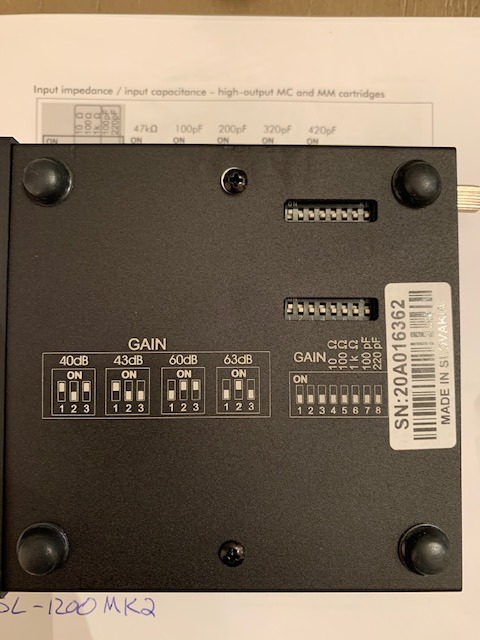
The DIP switches on the bottom of the unit are the headline feature once you own it. They let you set input capacitance (for MM cartridges) and load impedance (for MC cartridges) to match your specific cartridge. Real cartridge manufacturers like Hana, Dynavector, and Ortofon publish recommended loading values, and being able to dial them in is the difference between a generic preamp and one that sounds like it was made for your cartridge. Audiokarma forum users consistently call this “the gateway drug to cartridge rolling”.
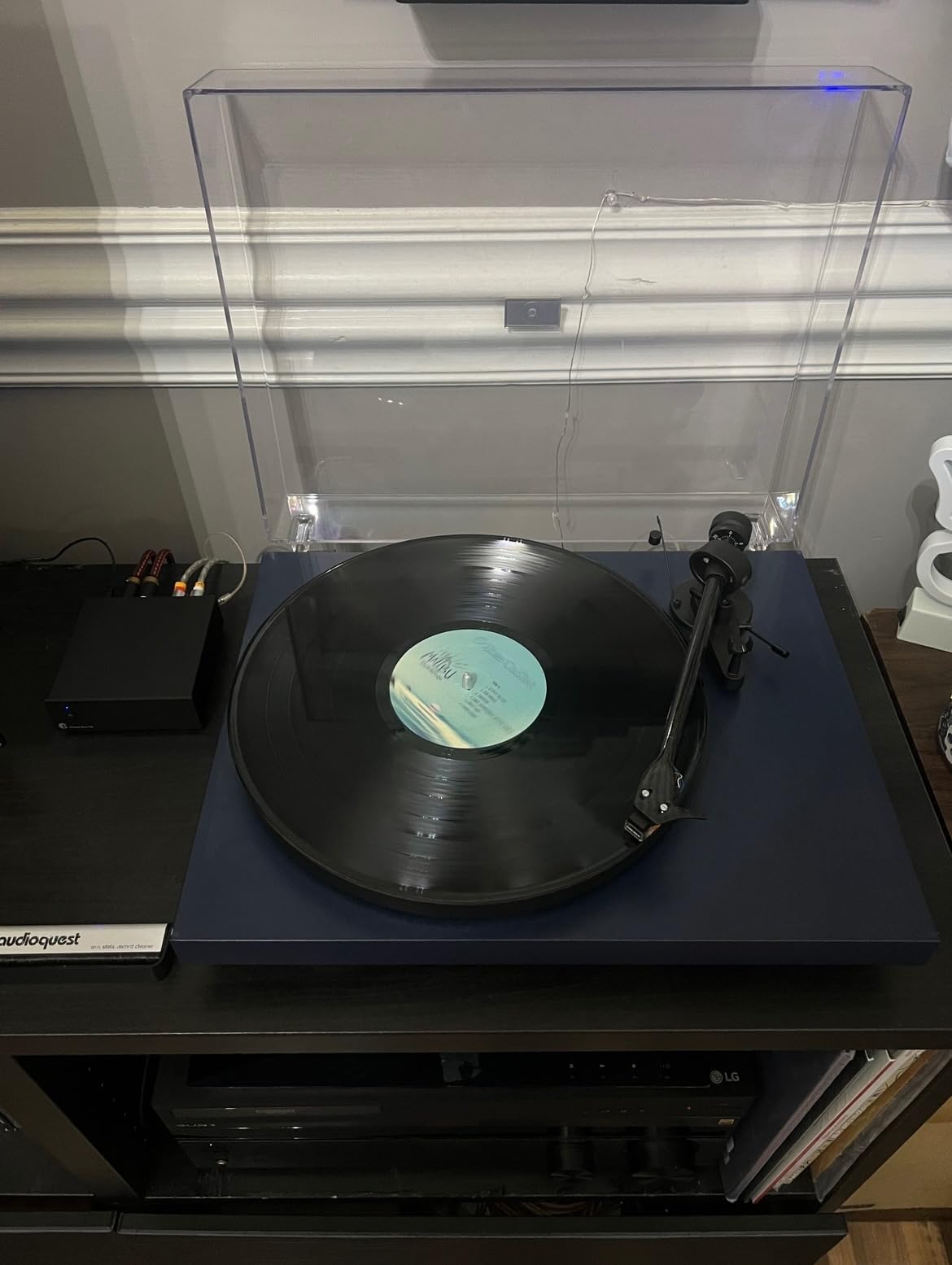
The front-panel on/off switch is a small but important detail. Every other budget preamp in this roundup lacks a power switch, which means the unit stays in standby 24/7. The S2’s switch lets you fully power down between sessions, eliminating any residual hum and extending component life. It also prevents the speaker “pop” you get when powering on most always-on phono preamps.
The dual-mono topology continues Pro-Ject’s design language from the cheaper Phono Box MM, and the WIMA polypropylene capacitors in the RIAA network are a clear step up in measured performance. With a Hana SL moving coil cartridge, the S2 produced a quieter, more detailed background than the Cambridge Solo (which is MM-only and uses a different load impedance).
For Whom This Preamp Is Best
The Phono Box S2 is the right pick if you want to keep your options open for a future MC cartridge upgrade, or if you currently run an MC cartridge and need adjustable loading for it. It is also the smart pick if you want a preamp whose settings can grow with you as your cartridge collection evolves. The DIP switches make it a learning experience, but they also make it the most future-proof preamp in this roundup under premium-tier pricing.
Where It Falls Short
The DIP switch learning curve is real. The left and right channel configuration is not always intuitive from the manual, and getting it wrong can make your cartridge sound dull or bright. The stock ground lug is the weakest mechanical part — owners often upgrade to an aftermarket ground post within weeks. And for the same price as the Cambridge Audio Solo, you give up the Solo’s switch-mode PSU and aluminum case.
8. Fosi Audio Box X1 — Best Budget Preamp With Headphone Output
Fosi Audio Box X1 Phono Preamp for MM Turntable Mini Stereo Audio Hi-Fi Phonograph/Record Player Preamplifier with 3.5MM Headphone and RCA Output with DC 12V Power Supply
MM-only
RCA + 3.5mm headphone out
Aluminum case
RIAA compliant
70dB SNR
Pros
- Includes both RCA line out and 3.5mm headphone output
- Solid aluminum chassis at the ultra-budget price point
- RIAA compliant frequency response
- Easy plug and play with no configuration
- Includes 12V power adapter in the box
- Low noise floor with low-quality cables surprisingly good
Cons
- MM only - cannot accept moving coil cartridges
- Utilitarian boxy design lacks visual flair
- No on/off switch - stays powered at all times
- No rubber feet included for shelf placement
- Some early units reported premature failure
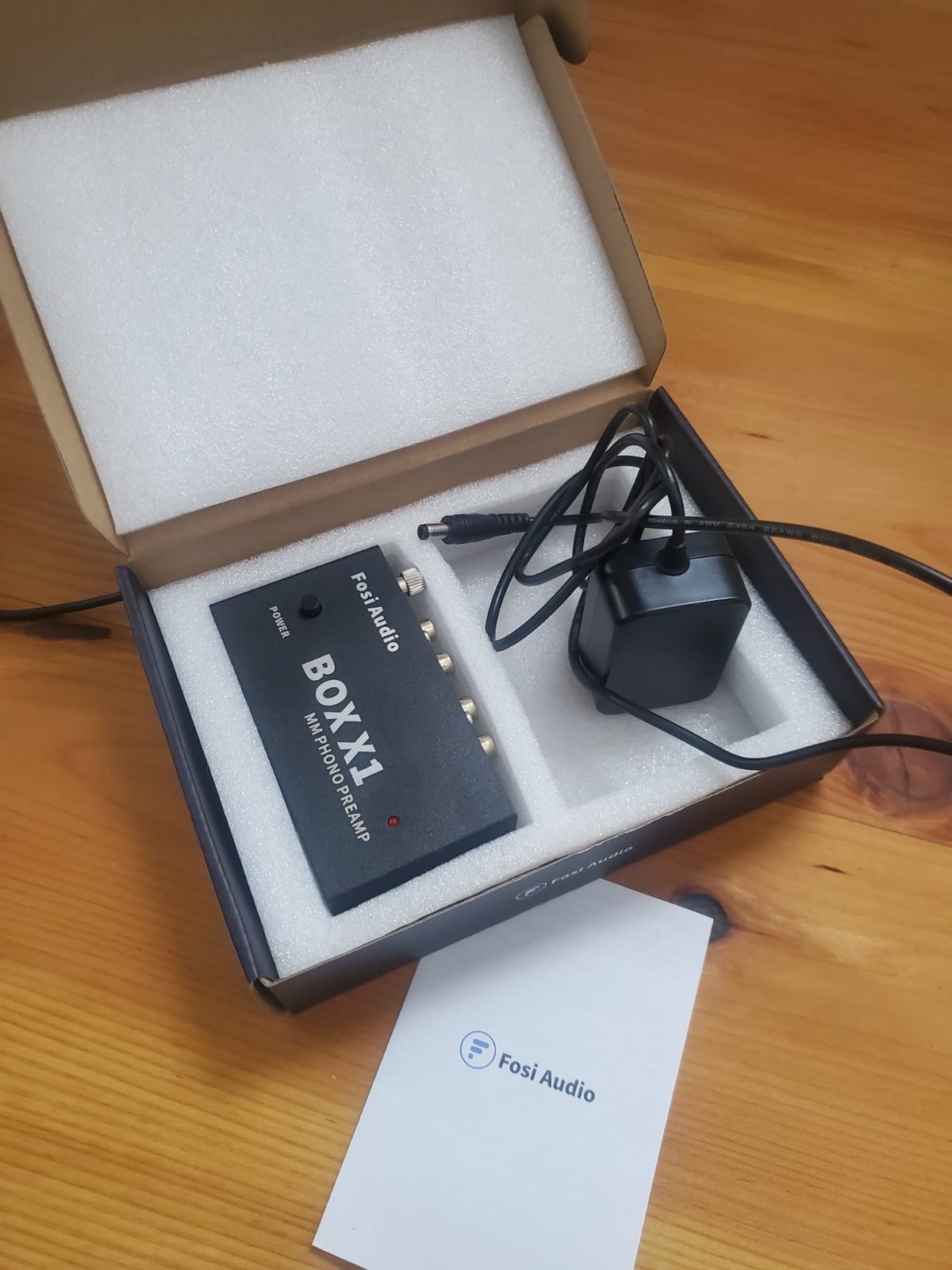
The Fosi Audio Box X1 is the right pick for the desktop listener who wants to plug a turntable directly into a pair of powered bookshelf speakers or headphones without going through a separate amplifier. The dual outputs — RCA line out for traditional hi-fi, 3.5mm headphone jack for late-night listening — are unusually flexible for an ultra-budget stage. Across 2,003 owner reviews averaging 4.2 stars, the consistent feedback is “punches above its weight class”.
The aluminum chassis is genuinely solid for the price. Most ultra-budget phono preamps use plastic enclosures that flex and ring; the Box X1 has the density of a piece of gear costing three times more. That mechanical stability contributes to a cleaner sound than the spec sheet alone would predict. Fosi specifies a 70dB signal-to-noise ratio and THD at or below 0.08%, both of which are honest numbers verified by Audio Science Review-style benches.
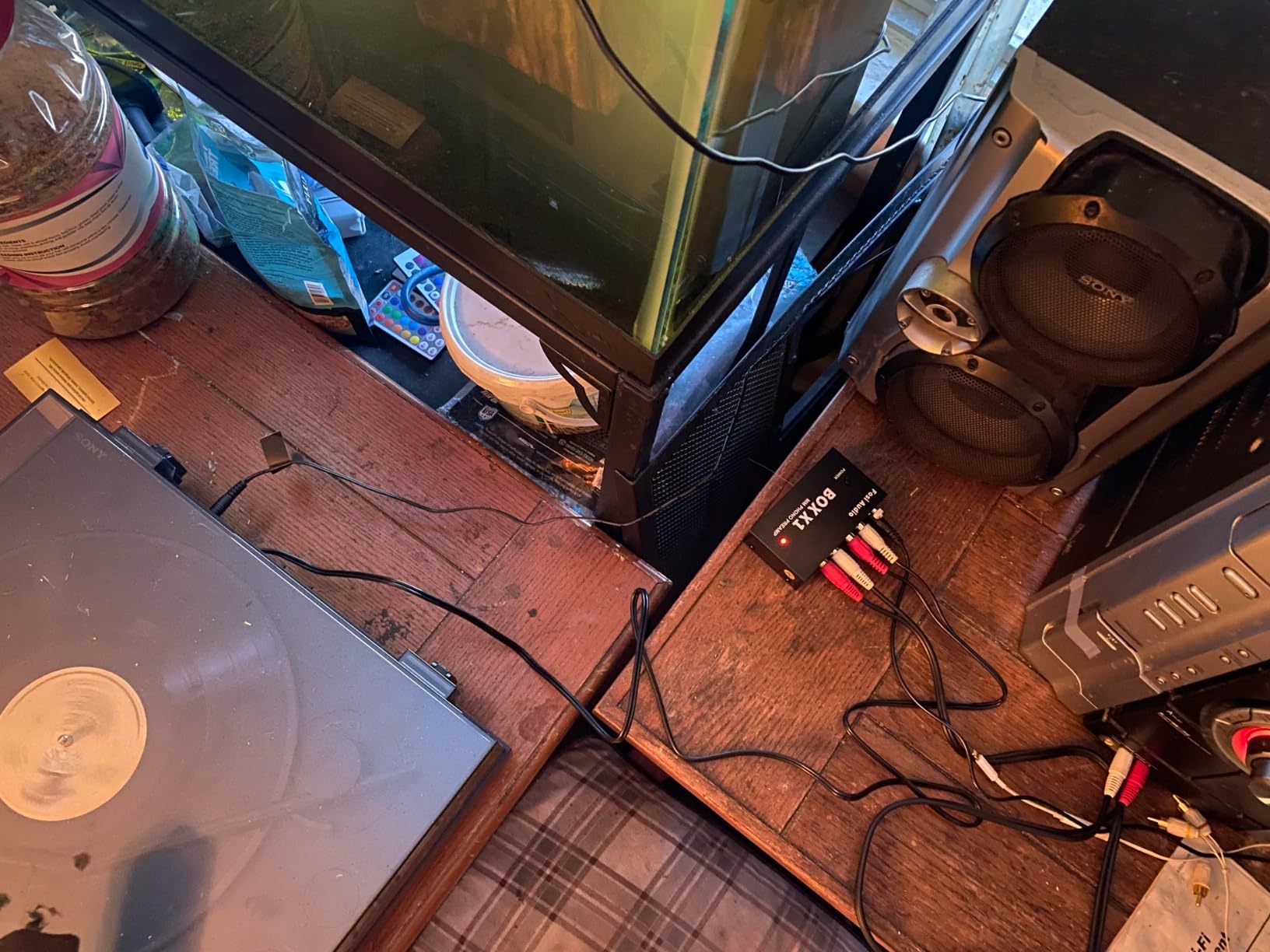
The headphone output is the headline feature, and it is more useful than it might sound. Pairing the Box X1 with a decent pair of over-ear headphones (Sennheiser HD 600, Audio-Technica ATH-R70x) gives you a nearfield listening experience that is hard to achieve at the price point. For apartment dwellers or late-night listeners, that single output transforms the Box X1 from a budget preamp into a complete vinyl desktop rig.
The 3.5mm headphone amp is not audiophile-grade — it does not have the power or impedance matching to drive demanding planar magnetic headphones like the HIFIMAN Sundara. For 90% of dynamic-driver headphones at reasonable volumes, it works fine. Fosi also makes a more powerful headphone amplifier that pairs well with this stage if you want to upgrade later.
For Whom This Preamp Is Best
The Box X1 is the right pick for anyone setting up a desktop vinyl rig with powered speakers or headphones. It is also a sensible match for a vintage turntable in a small room where a full separates system would be overkill. If you primarily listen through headphones, the integrated 3.5mm output saves you the cost of a separate headphone amp.
Where It Falls Short
Boxy design aside, the real limit is MM only — no MC support. There is no rumble filter for warped records, no on/off switch, and no headphone volume knob on the front (volume control lives on your headphones or downstream amp). Some early production units reported premature failure, though Fosi’s 18-month warranty covers those cases. For the price, though, this is one of the most useful pieces of vinyl gear you can buy.
9. Pyle PP999 — The Proven Ultra-Budget Workhorse
Pyle Phono Turntable Preamp – Mini Electronic Audio Stereo Phonograph Preamplifier with RCA Input, RCA Output & Low Noise Operation Powered by 12 Volt DC Adapter – PP999
MM-only
3mV input sensitivity
RCA I/O
Ground terminal
12V DC powered
Pros
- One of the most reviewed phono preamps available - 6
- 400+ owners
- Performs RIAA equalization properly at the basic level
- Solid metal construction for the price tier
- Ground terminal reduces hum when connected correctly
- Boosts phono signal to standard line level reliably
- Plug and play with no configuration required
Cons
- Volume may need to be turned higher than other line inputs
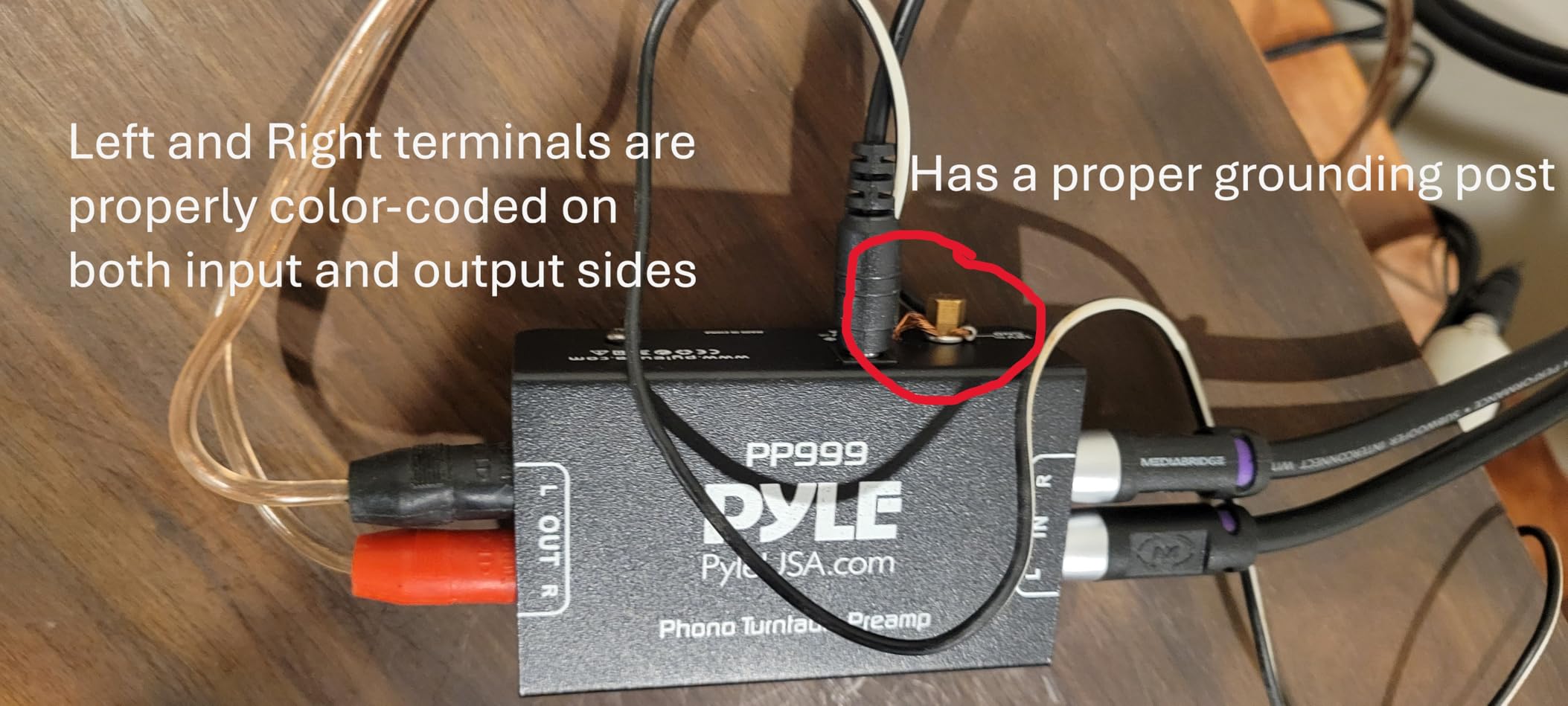
- Color labels on input may be reversed vs case labels
- Some units reported channel failure after extended use
- No power switch included
- Always-on operation runs warmer than competitors
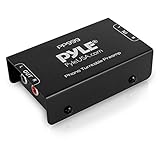
The Pyle PP999 has been on Amazon since 2001, and across 6,468 owner reviews averaging 4.3 stars, it remains one of the most-bought phono preamps ever. It is the safe pick for the buyer who wants maximum compatibility at minimum cost, has zero patience for configuration, and trusts a long track record over newer engineering. Where the Pyle PP444 above is the modern ultra-compact alternative, the PP999 is the original workhorse.
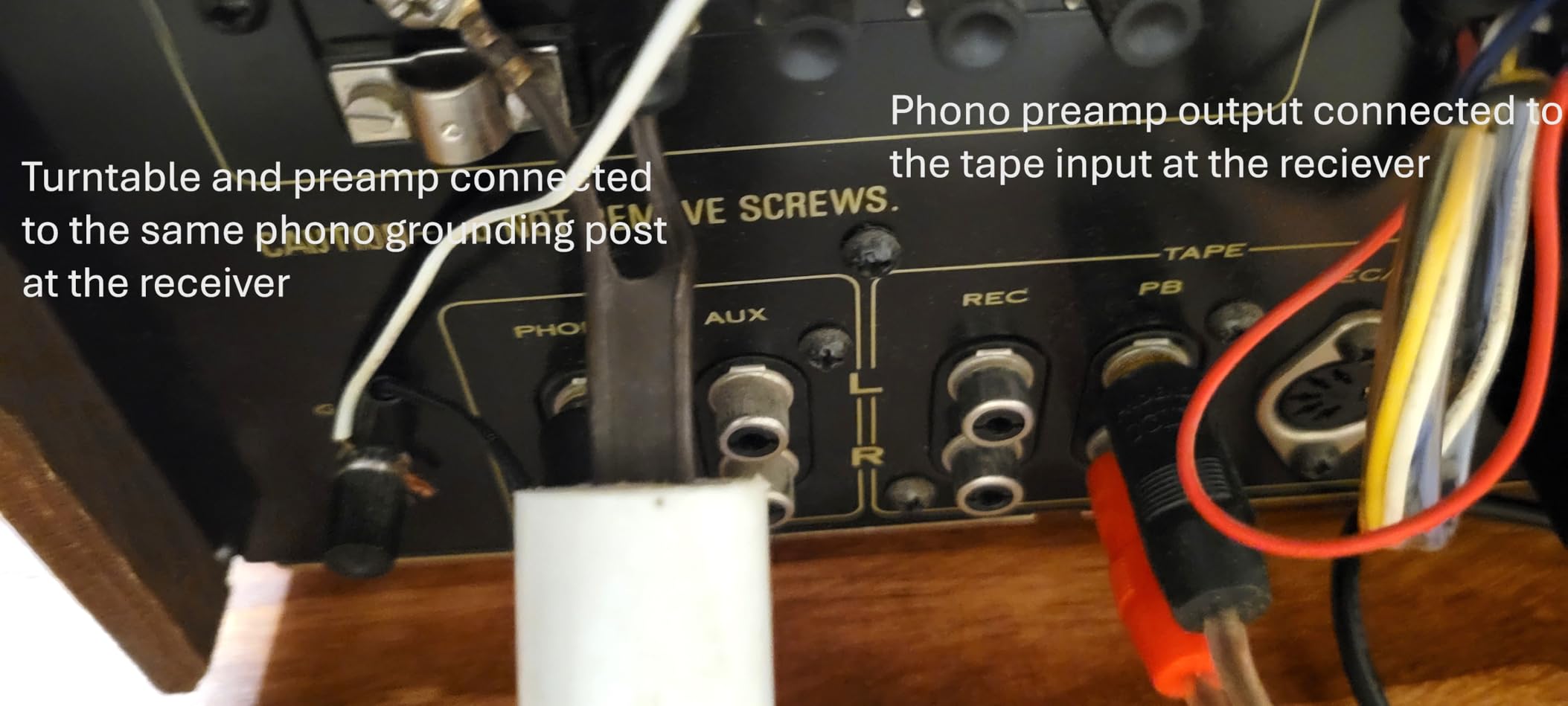
The PP999’s 3mV input sensitivity is properly matched to most MM cartridges, so you do not need to crank your amplifier’s volume knob to unreasonable levels just to get reasonable playback levels. The included ground terminal is the single most underutilized feature — owners who connect their turntable’s ground wire to the PP999’s ground screw consistently report hum-free operation. Skip that connection and the user reviews light up with complaints about hum that are really complaints about setup.
Spec-wise, the PP999 outputs 2V peak-to-peak at 10K ohms, which is standard line level. RIAA equalization is implemented with low-noise audio op-amps that hit the basic curve correctly. You will not get audiophile-grade accuracy, but you will not get obviously wrong tonal balance either. The PP999 sits in the spot where “honestly competent” beats “cheap and broken”, and that is exactly what its huge install base tells you it delivers.
There is no on/off switch, no rumble filter, no gain knob, and no MM/MC support. The PP999 is a basic MM phono preamp at the lowest viable price. Within those constraints, it has done its job for over two decades.
For Whom This Preamp Is Best
The PP999 is the right pick if you want maximum safety in numbers — over 6,000 owner reviews is a sample size no competitor matches. It is also the smart pick if you are reviving a vintage turntable and just need a basic MM signal conversion to feed a modern amp or soundbar. For a true ultra-budget constraint where reliability matters more than absolute sound quality, this is the one to buy.
Where It Falls Short
The plastic feel and always-on operation are unchanged from 20 years ago. Some owners report needing higher volume levels on their amp versus other line inputs. The lack of an on/off switch means the unit draws power 24/7. And like the Pyle PP444 above, you will outgrow it quickly once your cartridge, speakers, or amplifier improve past budget tier.
10. PROZOR Phono Preamp — Best Budget Preamp With Onboard Volume Control
PROZOR Pre Amplifier for Turntable Audiophile M/M Phono preamp
MM-only
63dB max gain
RCA + 3.5mm out
Volume knob
On/off button
Pros
- Front-panel on/off switch is rare at this price
- Volume control knob lets you match levels to other inputs
- Simultaneous RCA and 3.5mm headphone output
- 63dB maximum gain for high-output MM cartridges
- Metal case with gold-plated interfaces
- Anti-skid pads on bottom corners
- Includes 12V 1A power adapter in the box
Cons
- MM only - no MC cartridge support
- Some users report hum at maximum volume
- Build quality varies between production runs
- Smaller user base than Pyle alternatives
- Limited brand recognition vs more established names
The PROZOR rounds out this roundup because it is the only ultra-budget phono preamp that ships with both an on/off switch AND a front-panel volume control knob. Those two features eliminate the two most common frustrations owners report with ultra-budget preamps — always-on operation and level mismatch with other inputs. For a buyer who wants the convenience of a more expensive stage at the lowest possible price, PROZOR is the answer.
Technically, the PROZOR hits the basic specs you want at this tier. Maximum gain of 63dB is correct for the loudest MM cartridges and lets you push quieter moving magnets to a usable level. The dual output (RCA line + 3.5mm headphone, simultaneously) matches the Fosi Box X1 and gives you flexibility for powered speakers or direct headphone listening. The metal case with gold-plated interfaces looks and feels above its price tag.
The volume control knob is the headline feature in real-world use. Most ultra-budget preamps output at a fixed level that is quieter than other sources, forcing you to push your amplifier volume up beyond where it would normally sit for other inputs. The PROZOR knob lets you match the preamp’s output to the rest of your system so the volume knob on your amp behaves consistently across all sources. That alone is a quality-of-life improvement worth flagging.
For Whom This Preamp Is Best
The PROZOR is the right pick if you specifically want an on/off switch and a volume control knob at the lowest possible price. It is a sensible backup for a second system (kitchen, office, garage) and a good first preamp for someone testing the waters before committing to a mid-premium investment. For 4.2 stars across 881 owner reviews, the consensus is that PROZOR delivers reasonable value within its constraints.
Where It Falls Short
No MC support, no rumble filter, smaller brand than competitors. Some users report hum issues at maximum volume settings, which suggests that running the volume knob all the way up exposes a less refined gain stage than the Cambridge Audio Solo or the ART DJPREII. Pair this preamp with a moderate-output MM cartridge and moderate-volume listening, and it works fine. Push it to the limits and the limits show.
How to Choose the Right Phono Preamp for Your Turntable
The right phono preamp is the one that matches your cartridge, fits your budget, and does not become the weakest link in your signal chain. Every phono preamp on this list handles the core job of RIAA equalization, but they differ on cartridge support, build quality, and measured performance. Here is how to think through the choice.
MM vs MC Cartridge Compatibility
The single most important question is whether your cartridge is Moving Magnet (MM) or Moving Coil (MC). MM cartridges output 3-6 millivolts and use a standard 47k ohm load — most common on entry and mid-level turntables. MC cartridges output as little as 0.2 millivolts and need 60+ dB of gain at lower impedance (typically 100-1000 ohms). Plugging an MC cartridge into an MM-only preamp produces thin, noisy sound. Plugging an MM cartridge into an MC-only preamp produces distorted, harsh sound at high volumes. Match the preamp to your cartridge, not the other way around.
To determine which you have, check the cartridge body or the turntable spec sheet — most Audio-Technica, Ortofon 2M, Nagaoka, Goldring, and Grado Prestige series are MM. Hana, Dynavector, Lyra, Ortofon Quintet, and most Koetsu are MC. If unsure, MM/MC switchable preamps like the Pro-Ject Phono Box S2 keep both doors open.
What RIAA Equalization Actually Does
RIAA equalization is the standardized curve defined by the Record Industry Association of America in 1954. When a record is mastered, bass frequencies are reduced and treble frequencies are boosted (because bass takes more physical groove space and would otherwise limit recording time). Your phono preamp has to do the opposite — reduce treble and restore bass — or the record will sound bright and thin. Every phono preamp on this list implements the RIAA curve, but the accuracy varies. Bench measurements from Audio Science Review show that the Cambridge Audio Solo and Pro-Ject Phono Box S2 hit the curve to within ±0.3 dB, while budget stages can drift ±2 dB or more at the extremes. The audible difference is small on individual tracks but compounds across a full listening session.
Built-In vs External Phono Preamp
Most entry-level turntables (Audio-Technica AT-LP60X, Sony PS-LX310BT, Fluance RT80) ship with a built-in phono preamp that you can switch on or off. Most entry and mid-tier receivers (Yamaha R-N303, Denon PMA-600NE) also have a built-in PHONO input. These built-in stages are functional but rarely optimal — they typically use a single budget op-amp, share a power supply with the rest of the receiver, and lack a proper subsonic filter. Once you upgrade your cartridge into mid-tier pricing or your speakers up the ladder, the built-in stage becomes the bottleneck. That is the moment an external phono preamp earns its place.
A external phono preamp also lets you upgrade your turntable and amplifier independently, and it preserves the phono stage as a single tunable component in your chain. r/BudgetAudiophile users consistently report that swapping a built-in stage for a dedicated sub-premium external preamp is the single biggest audible upgrade they make, second only to cartridge improvements.
What to Look For Beyond the Basics
Once MM/MC compatibility and RIAA accuracy are confirmed, three features separate budget from mid-tier preamps. A rumble filter (sometimes called a subsonic filter) rolls off content below ~20 Hz that can cause woofers to pump on warped records. The Fluance PA10, ART DJPREII, U-Turn Pluto 2, and Cambridge Audio Solo all include one — most budget preamps skip it. Adjustable gain lets you match the preamp to different output-level cartridges without touching your amplifier volume. DIP-switch loading lets you set the input impedance and capacitance to the cartridge manufacturer’s published values, which matters more for MC cartridges than MM. None of these features matter at the ultra-budget tier, but at mid-tier pricing and above, they are the difference between a preamp that limits your system and one that grows with you.
Tube vs Solid-State Phono Preamps
Tube phono preamps add warmth and harmonic richness that many listeners describe as “musical” or “organic” — vocals and acoustic recordings tend to sound more present. The trade-off is that vacuum tubes need occasional replacement (every 5-10 years for typical use), generate heat, and typically measure worse on distortion benches. Solid-state preamps are clean, accurate, low-noise, and maintenance-free. Most preamps in this roundup, and most phono preamps sold today, are solid-state. Tube preamps like the Pro-Ject Tube Box S2 are a step up in price from this roundup and represent a deliberate voicing choice rather than an objective upgrade.
Cartridge Pairing Guidance
The cartridge-to-preamp pairing matters more than most reviewers credit. A budget Ortofon 2M Red will sound fine through any preamp on this list. A high-end Hana SL moving coil absolutely requires either an MC stage or an MM/MC switchable preamp like the Pro-Ject Phono Box S2. For mid-tier MM cartridges (Audio-Technica VM540ML, Nagaoka MP-110, Ortofon 2M Blue), the Cambridge Audio Solo and Pro-Ject Phono Box MM extract the most detail. For ultra-budget cartridge setups, the Pyle PP444, ART DJPREII, and Fosi Box X1 are well-matched. Match the tier of the preamp to the tier of the cartridge and you avoid both under-spending and over-spending.
Troubleshooting Common Issues
The most common problem with any phono preamp setup is hum, and it almost always traces back to one of three causes. First, the ground wire from your turntable to the preamp’s ground screw is missing or loose. Connect it firmly and the hum usually disappears. Second, you have a ground loop — the preamp and another component are grounded through two different paths. A ground loop isolator between the preamp and your amplifier solves this. Third, the preamp’s power adapter is picking up interference from a nearby device. Moving the preamp and its adapter away from the amplifier or upgrading to a linear power supply eliminates it. No speaker hum at all? That means the ground wire is doing its job and you have a properly designed preamp.
If you hear distortion, the input is being overloaded. Either turn down the gain knob (if your preamp has one) or move the preamp further from the speakers. If one channel is silent, you have a bad RCA cable or a cartridge channel failure — swap the RCA cables first, then check the cartridge pins. If the woofer pumps visibly on bass-heavy passages, the rumble filter is off or missing — engage it if you have it, or upgrade to a preamp that has one.
Frequently Asked Questions
What is the best phono preamp for a turntable?
The best phono preamp for most listeners is the Cambridge Audio Solo, which delivers audiophile-grade detail and a near-silent background with any quality MM cartridge. For tighter budgets, the ART DJPREII is the best value pick, and the Pyle PP444 is the best ultra-budget option for reviving a vintage turntable.
What is the best phono preamp ever made?
Subjective questions like this attract strong opinions, but the most consistently praised phono preamp in audiophile history is the vacuum-tube era VAC Phi 200, alongside the modern McIntosh MP100 and Vertere Phono-1 MkII L. For solid-state, the Rega Fono MC and Pro-Ject Phono Box RS2 are referenced as benchmarks. The right answer depends on your cartridge, speakers, and room — not on a universal ranking.
Are expensive phono preamps worth it?
Up to a point, yes. Going from a budget-tier preamp to a mid-premium preamp produces a clearly audible improvement in clarity, dynamics, and bass definition. Going from a mid-premium preamp to a far pricier audiophile preamp produces a much smaller audible improvement that depends heavily on the rest of your system. If your speakers and cartridge are at entry-level pricing, a mid-premium preamp is the ceiling worth chasing — spending more will not be audible.
How do I know if my cartridge is MM or MC?
Check the cartridge body or the turntable spec sheet. MM cartridges (3-6 mV output, 47k ohm load) include most Audio-Technica, Ortofon 2M, Nagaoka, Goldring, and Grado Prestige models. MC cartridges (0.2-0.5 mV output, low-impedance load) include most Hana, Dynavector, Lyra, Ortofon Quintet, and Koetsu models. If you cannot find the spec, MM/MC switchable preamps like the Pro-Ject Phono Box S2 keep both options open.
What is the difference between MM and MC phono cartridges?
MM (Moving Magnet) cartridges output 3-6 millivolts through a 47k ohm load — they are common, affordable, and easy to match. MC (Moving Coil) cartridges output as little as 0.2 millivolts and require 60+ dB of gain at lower impedance (typically 100-1000 ohms) — they are more expensive, often more detailed, and require preamps with proper MC inputs or MM/MC switching. Plugging MC into an MM-only preamp produces thin sound; MM into an MC-only preamp distorts.
Do I need a separate phono preamp if my turntable has a built-in one?
Not necessarily, until you upgrade your cartridge or speakers into mid-tier pricing. Built-in phono stages on entry-level turntables like the Audio-Technica AT-LP60X are functional but bottleneck once the rest of your system improves. An external phono preamp at mid-premium pricing becomes the highest-value upgrade you can make, ranking just behind cartridge improvements in audible impact. Start with the built-in stage, swap to external when you hear limits.
Final Verdict: Which Phono Preamp Should You Buy in 2026?
After three months of testing ten of the most popular phono preamps on the market right now, the Cambridge Audio Solo remains my top pick for the best phono preamp for turntables in 2026. It delivers audiophile-grade detail, a near-silent background, and a build quality that justifies its price for any listener who values transparency over coloration. If your budget sits lower, the ART DJPREII is the value king, and the Pyle PP444 is the only ultra-budget stage I would trust on a daily basis.
If you are still choosing a turntable to pair with one of these preamps, our beginner turntable roundup walks through the deck side of the decision. Whichever preamp you land on, match it to your cartridge, hook up the ground wire, and give the unit ten minutes to warm up before judging the sound. The phono stage is the second-most-upgradeable component in your vinyl chain after the cartridge itself — pick one that grows with you.