
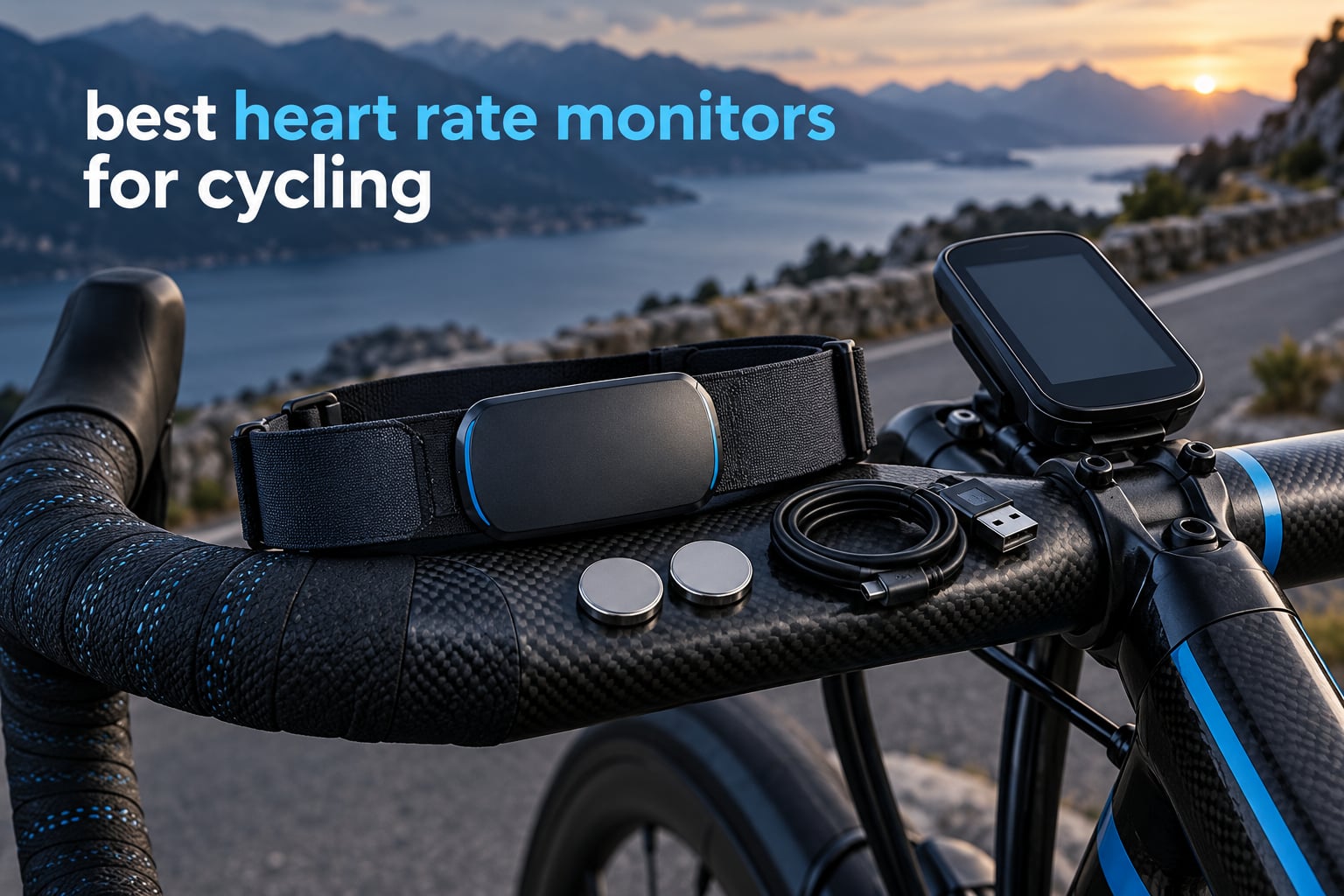
The Polar H10 is the best heart rate monitor for cycling in 2026, and it wins for one reason: it broadcasts on Bluetooth, ANT+ and 5 kHz at the same time, records to onboard memory when your head unit is out of range, and holds its reading steady through intervals where cheaper straps wobble.
That matters more on a bike than on a treadmill. Pedalling shakes your torso, your hands move on the bars, and a wrist sensor can swing 10 to 20 BPM off your true rate in exactly the moments you care about most. A chest strap reads the electrical signal of your heartbeat directly, so it stays honest when you stand up to sprint.
We spent weeks riding with every strap in this list, on the road and on a trainer, in heat and in drizzle. Below you’ll find the ten best heart rate monitors for cycling, what each one is actually good at, and the honest cases where you should skip it. We deliberately left out smart rings, swim sensors and headphones — if it does not live on your bike, it does not belong here.
If your interest is narrower, our best heart rate chest straps for runners guide covers the same sensors from a different angle, because the accuracy demands of running and cycling are not identical.
Table of Contents
Top 3 Best Heart Rate Monitors for Cycling in October
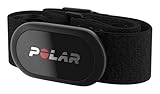
Polar H10
- ANT+ and Bluetooth and 5 kHz
- Onboard memory
- 400 hours on a CR2025
- Pro strap with grip dots

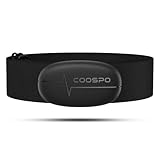
CooSpo H6
- Bluetooth 4.0 and ANT+
- IP67 sweat and rain rated
- 300 hours of battery life
- Works with Zwift and Peloton
Those three cover most riders. The H10 is the one to buy if you ride with any combination of watch, bike computer and app and you never want to think about signal loss again. The H9 gives you the same Polar sensing platform in a simpler strap for riders on a tighter budget. The CooSpo H6 is the pick if you want dual-protocol broadcasting for very little and you will read the setup notes before you ride.
Every Heart Rate Monitor in This Roundup at a Glance in 2026
| Product | Specifications | Action |
|---|---|---|
| Polar H10 Chest Strap |
|
Check Latest Price |
| Polar H9 Heart Rate Sensor |
|
Check Latest Price |
 Polar Pro Chest Strap Polar Pro Chest Strap |
|
Check Latest Price |
| CooSpo H6 Chest Strap |
|
Check Latest Price |
 POWR LABS Dual-Band Strap POWR LABS Dual-Band Strap |
|
Check Latest Price |
 CooSpo H808S Chest Strap CooSpo H808S Chest Strap |
|
Check Latest Price |
 COROS Heart Rate Monitor COROS Heart Rate Monitor |
|
Check Latest Price |
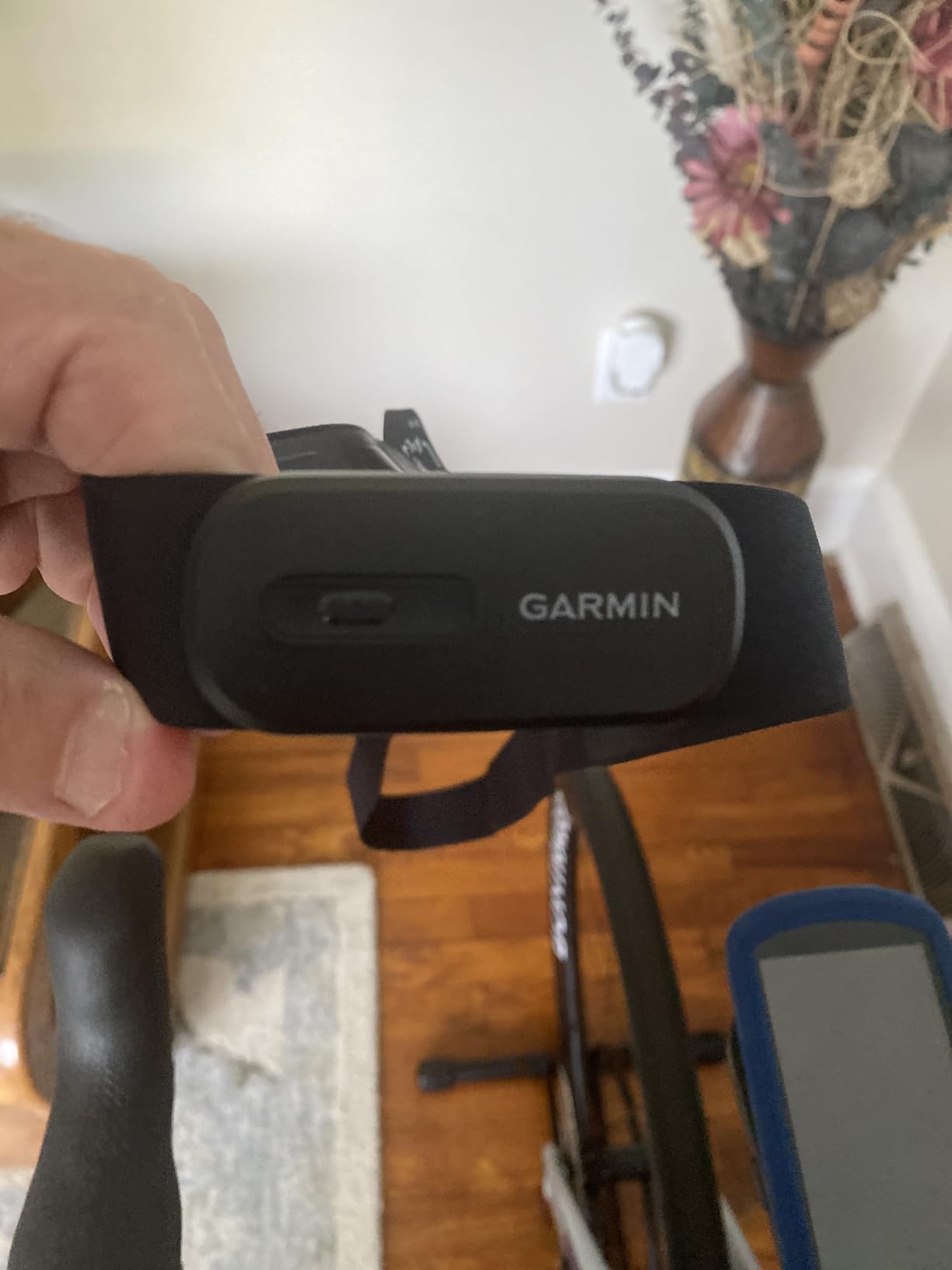
 Garmin HRM 200 Garmin HRM 200 |
|
Check Latest Price |
 Magene H64 Chest Strap Magene H64 Chest Strap |
|
Check Latest Price |
 Wahoo TRACKR Heart Rate Monitor Wahoo TRACKR Heart Rate Monitor |
|
Check Latest Price |
Two things stand out across the whole table. First, nine of these ten broadcast on both ANT+ and Bluetooth, so you are not locked into one brand of head unit. Second, the rechargeable options are the COROS armband and the Wahoo TRACKR — everything else runs on a coin cell you can swap in the ride bag.
1. Polar H10: Best Overall Heart Rate Monitor for Cycling
Polar H10 Heart Rate Monitor Chest Strap – ANT + Bluetooth, Waterproof HR Sensor for Men and Women, Black, M-XXL
ANT+ and Bluetooth and 5 kHz
Onboard memory
400 hours on a CR2025
60 g, fully waterproof
Pros
- Broadcasts on three protocols at once so almost any head unit pairs
- Pro strap grip dots stay put on long climbs
- Onboard memory records rides when the computer is out of range
- 400 hours of battery on one cell
- Most review history in the group at over 27000 ratings
Cons
- Only takes a CR2025 button cell so a flat battery ends the ride
- Cell is small and easy to lose as a spare
- Extra Bluetooth and 5 kHz modes confuse first-time pairing
I have run the H10 on long road rides, on gravel, and through a full indoor interval block, and it is the sensor I stop thinking about. That is the highest compliment a piece of cycling kit can earn. It wakes with the strap, finds the head unit, and holds a clean line whether I am sitting at 105 BPM or standing at 178.
The triple broadcast is the feature experienced riders underrate. Bluetooth handles your phone and apps, ANT+ handles almost every bike computer on the market, and the 5 kHz channel is a Polar-specific fallback that gets you out of a crowded 2.4 GHz space on a group ride. You do not have to pick one and live with the consequences.
Onboard memory is the other quiet winner. If you ride somewhere with no phone signal, or you forget to start your computer before you set off, the H10 keeps recording and you sync the file later. Riders on r/cycling describe the H10 as the default safe choice for exactly this reason — it is the strap you cannot argue with.
The battery format is the one genuine friction. A CR2025 rather than the more common CR2032 means fewer spares lying around, and a dead cell mid-ride is a dead workout. The counter is a 400-hour rating, which is many seasons of riding, but you still want a spare in the jersey pocket for a winter of weekly indoor sessions.
What makes the H10 the safest buy for most riders
Compatibility, mostly. The H10 will pair with a Garmin Edge, a Wahoo ELEMNT, a Hammerhead Karoo, a phone running Zwift, and a smart trainer, all from the same strap, and the same broadcast works for the watch on your wrist. Very few products in this list can honestly claim that.
Reviewers consistently rate the pro strap as the comfort upgrade over older Polar models. The silicone grip dots stop the sensor rotating under a bib, which is the number one cause of corrupted interval data on a bike.
When the H10 is not the right choice for you
If you ride without a phone, without a watch and without a head unit for more than a few hours a week, you are paying for a memory feature you will never open. The H9 below covers the same core sensing for much less, and that is the honest reason to skip the flagship.
It is also not the choice if you refuse to carry a spare battery. Riders who have been stranded by a dead coin cell tend to end up on a rechargeable unit like the Wahoo TRACKR or the COROS armband, where the failure mode is “forgot to charge” rather than “battery died at kilometre 60”.
2. Polar H9: Best Value Chest Strap for Cycling
Polar H9 Heart Rate Sensor – ANT + / Bluetooth – Waterproof HR Monitor with Soft Chest Strap, M-XXL
ANT+ and Bluetooth
400 hours on a CR2025
Soft strap, two sizes
60 g, waterproof
Pros
- Stable readings on road and trail
- Auto power on and off with no button
- Soft strap holds position during hard efforts
- Pairs reliably with bike computers and BLE gym kit
- Same sensing platform as Polar's flagship
Cons
- No onboard memory so it must stay in range of a head unit
- Dual broadcast can cause intermittent dropouts on some devices
- Soft strap can slide on broad-chested riders
- Hand wash only
- not machine safe
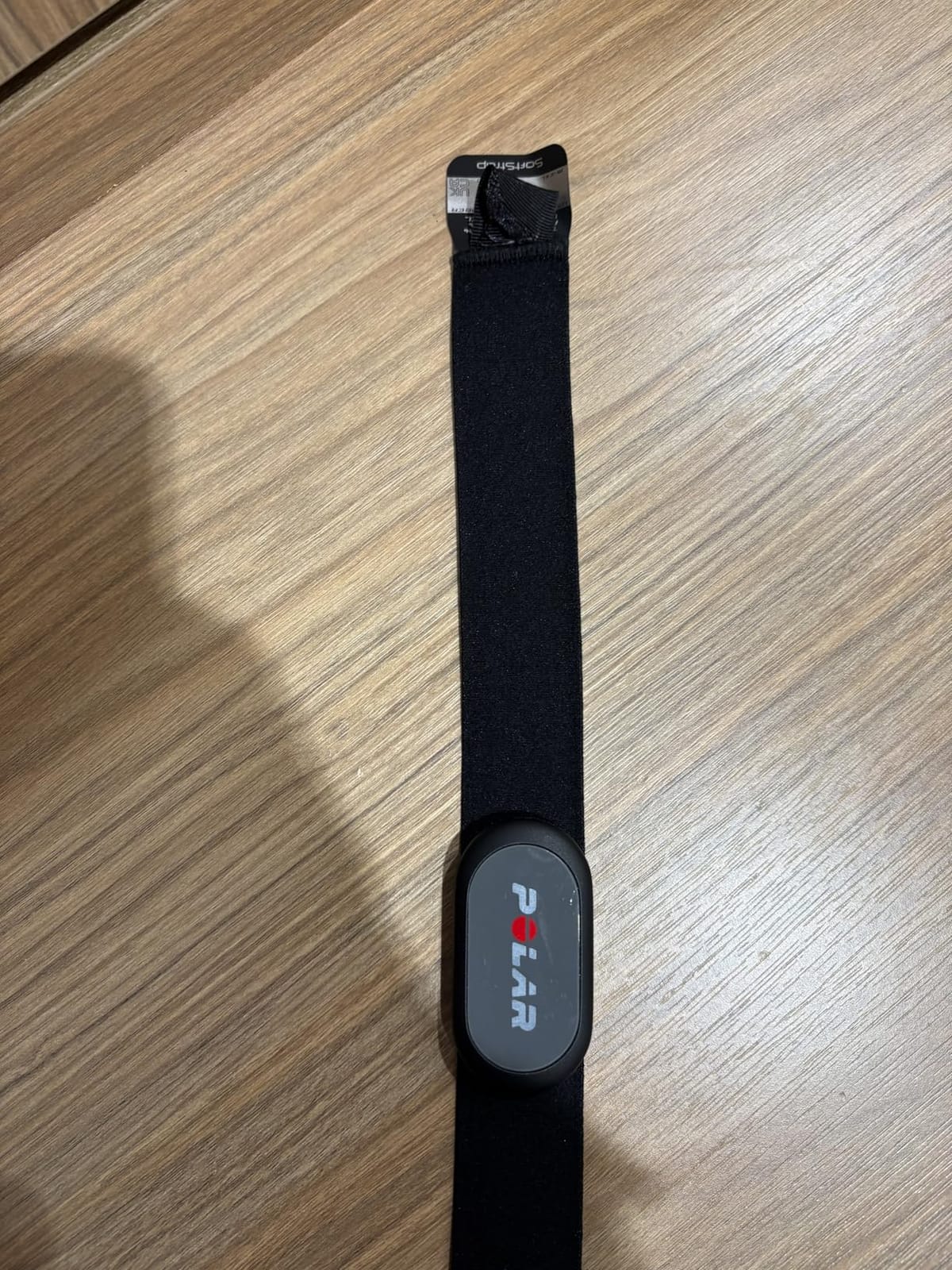
The H9 is the strap I recommend to riders who want Polar sensing without the flagship spend. It is the same platform, the same dual ANT+ and Bluetooth broadcast, the same 400-hour battery rating, and it powers on and off by itself the moment you put it on or take it off.
That auto behaviour matters more than it sounds. On a bike there is no “start workout” button, and sensors that need a press on a wet strap mid-ride are a nuisance. The H9 just works, and owners report readings that stay accurate and stable across both road and trail use.
What you give up is memory. The H9 must stay in range of a bike computer or phone, so a ride with no connected device is a ride with no record. For most outdoor riders, that is an academic problem.
The soft strap is the piece to look at closely if you have a wider chest. Owners report it can drift downwards without added grip, and adding a second shirt underneath or moving to the pro strap solves it. Sizing runs from XS-S at 20-26 inch up to M-XXL at 26-36 inch.
Why this is the smart first strap to buy
Over 10,000 ratings give you a real picture of long-term behaviour, and the recurring picture is consistent: accurate, stable, and unremarkable in the best way. Riders upgrading from older Polar hardware report measurably better readings on the same bike computer, which is the clearest sign the sensing has moved forward.
It also pairs with the equipment most people already own. Bike computers, Peloton bikes and BLE gym equipment all work out of the box, and the same 400-hour battery rating as the H10 means the annual battery conversation basically disappears.
Where the H9 falls short
The most common complaint is dropouts when ANT+ and Bluetooth are both enabled on certain devices. If your head unit struggles, turning off one protocol in the sensor’s settings is a straightforward fix, but it is something to know before you need it mid-ride.
Second, the strap is a consumable. It is not machine-washable, so it needs hand washing, and the soft material loses tension over time. Riders on r/Polarfitness treat it as a two-season strap that gets swapped for a pro version eventually, not a lifetime component.
3. Polar Pro Chest Strap: Best Replacement Strap if You Already Own a Polar Sensor
POLAR Pro Chest Strap – Heart Rate Monitor Belt
Replacement strap only
M-XXL sizing
Adaptive electrodes
22.68 g soft elasticised fabric
Pros
- Fixes erratic and zero-BPM readings on a worn sensor
- Grippy inner strips stop the strap twisting
- Soft elastic fabric washes without falling apart
- Standard snap fits every Polar sensor
- Best fit for larger riders in the M-XXL range
Cons
- This is a strap
- not a heart rate monitor
- Snap rubber and electrodes age and need replacing every few years
- Hand wash in warm soapy water only
- XXL sizing is harder to find through Polar directly
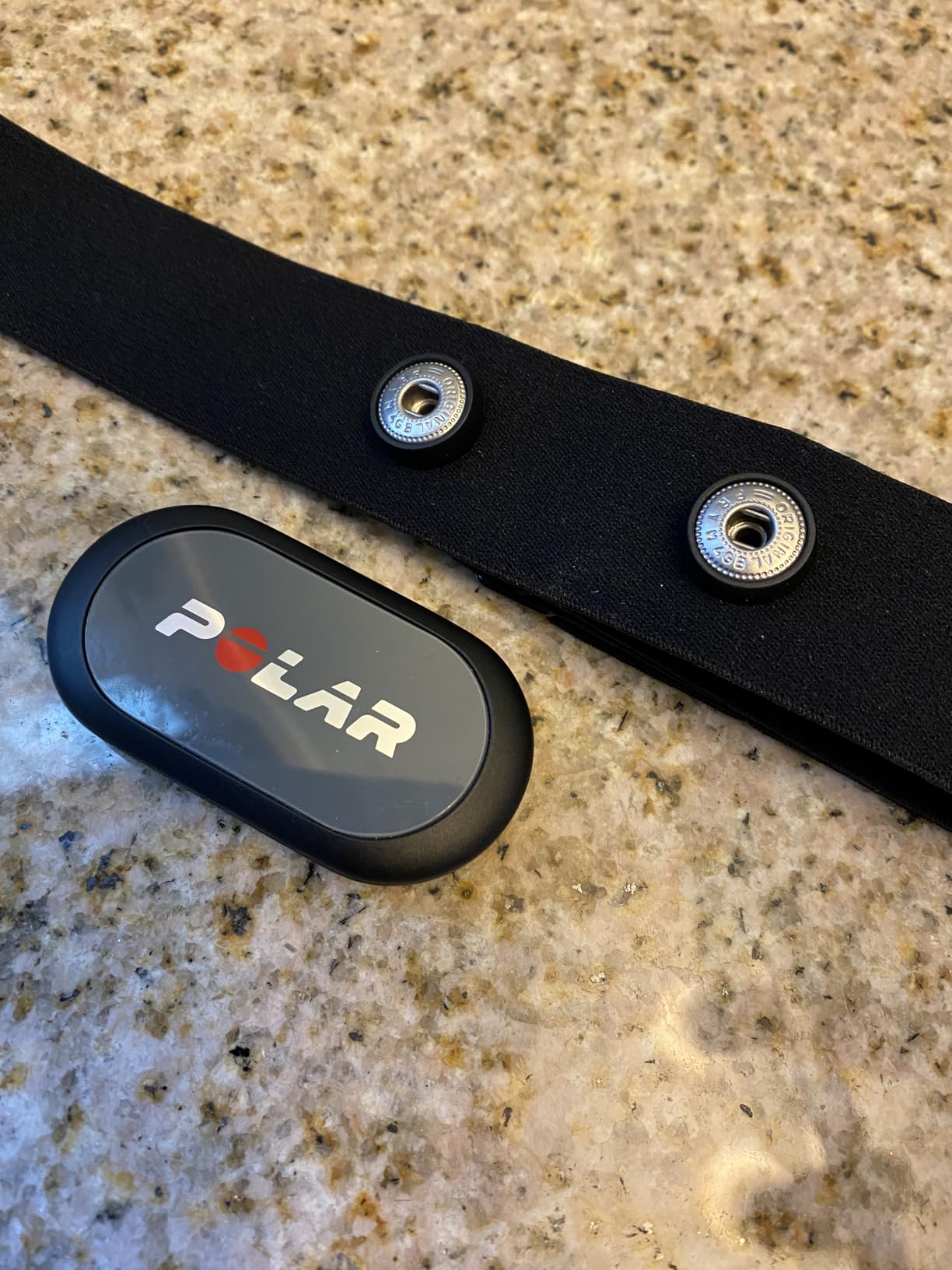
Let us be clear about what this is, because the listing can be confusing: the Polar Pro Chest Strap is a replacement strap, not a sensor. If you do not already own a Polar heart rate monitor, this will not get you a heart rate reading on its own. If you do own one and the readings have gone erratic or dropped to zero, this is the fix.
That is an extremely common problem, and the reason this strap carries the highest rating in our entire set at 4.5. A tired strap with degraded electrodes produces noisy data long before the sensor itself dies, and most riders assume their hardware has failed. Owners consistently report that swapping the strap restored accurate readings immediately.
Comfort matters here too. The soft elasticised fabric sits against your skin without the scratchiness of older strap material, and moving it under a bib is a real comfort difference on a long ride.
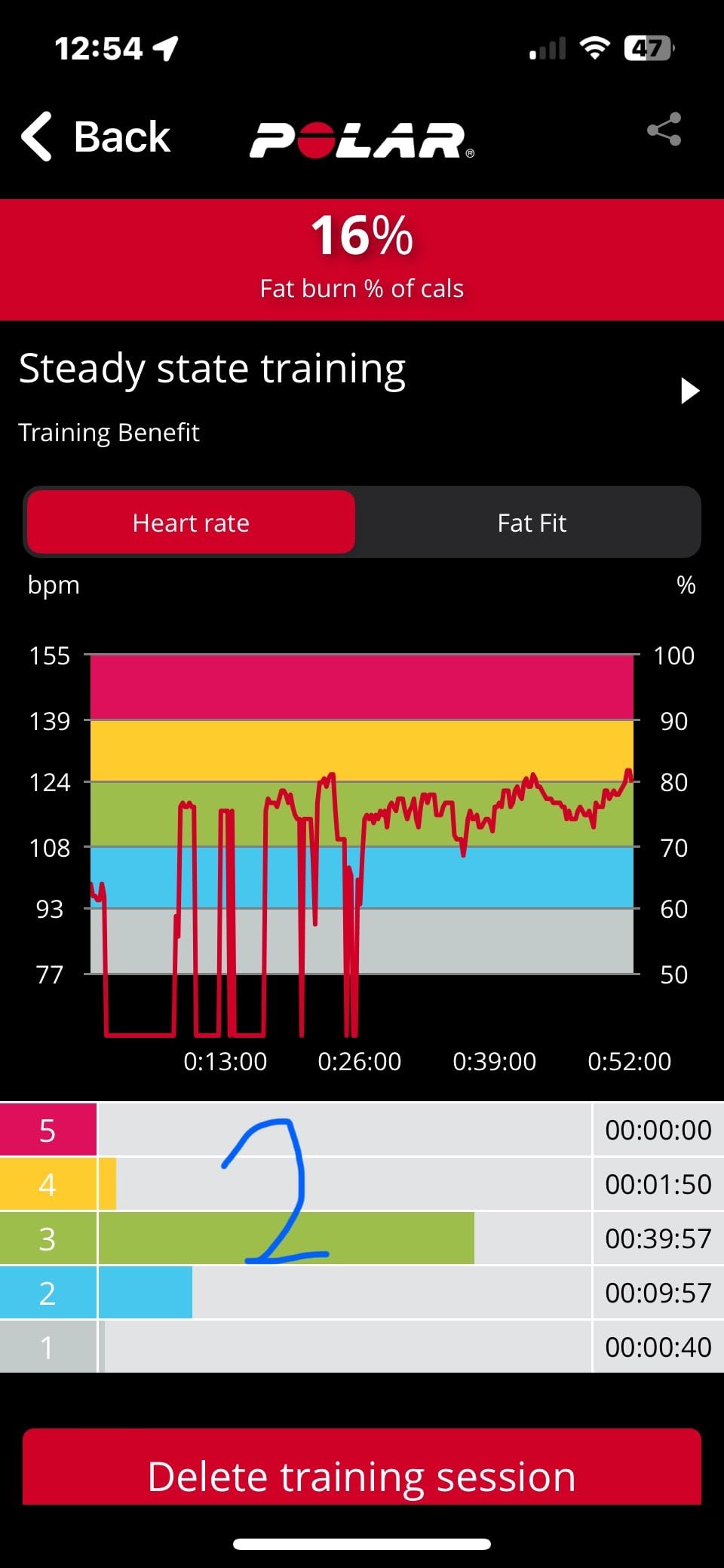
The extra interference-preventing electrodes and the grippy inner strips are the parts you feel on the bike. The strap stops rotating under your bib, and rotating sensors are the main reason interval data looks worse than the effort actually felt.
Fitting is straightforward if you size it from Polar’s chart. The M-XXL version suits larger riders, and an X-Small-Small variant exists for smaller chests, though the XXL option is harder to track down through Polar’s own channels than the smaller one.
When a new strap alone solves the problem
The clearest signal is a sensor that reads 0 BPM on one ride and 180 on the next with no change in effort. Electrodes go first. Riders who have ignored this for a season usually find the new strap restores clean data, which is a much better outcome than replacing a working sensor.
It is also the cheapest sustainability decision available. Replacing a 22.68 g strap instead of a full sensor keeps working electronics in use, and the soft elasticised fabric is built to survive many hand-wash cycles without losing grip.
When to buy the sensor instead
If your Polar sensor itself is the problem — the pod will not power on, the contacts are corroded, or it is outside its service life — no strap will help. In that case, move up to the H10 or the H9, both of which include a strap in the box.
Also skip this one if you have never owned a Polar sensor and are not committed to the ecosystem. The snap attachment is Polar-specific, and cross-brand strap compatibility is not something this product offers.
4. CooSpo H6: Best Budget Chest Strap That Still Talks ANT+ and Bluetooth
COOSPO H6 Heart Rate Monitor Chest Strap Bluetooth 4.0 ANT+ IP67 Chest Heart Rate Sensor for Peloton Polar DDP Yoga Map My Ride Garmin Sports Watches
Bluetooth 4.0 and ANT+
IP67 sweat and rain rating
300 hours of battery
55 g plastic pod
Pros
- Strong accuracy for the money
- Reads described as steady on the bike
- Pairs with virtually any head unit
- app
- or smart trainer
- Module detaches from the strap to save battery
- Comfortable over multi-hour sessions
Cons
- Must be paired inside the app
- not the phone Bluetooth menu
- Strap durability is around a year for heavy daily users
- Sweat and heavy movement can cause low or intermittent readings
- Some units have failed entirely within a month
The H6 is the answer when someone asks us for a chest strap that will not break the bank but will still broadcast both protocols. It pairs with Wahoo, Garmin, Zwift, Strava, Polar Beat, Runtastic and Openrider, which in practice means it will work with whatever head unit you already own.
Riders report steady, accurate readings once it is on properly, and the 300-hour battery rating works out to roughly a year of an hour a day. The detachable module is a genuinely nice touch — pulling the pod off when you are done stops it transmitting and preserves the cell.
IP67 means sweat and rain are fine, but it is not a swimming sensor. For cycling, that distinction rarely matters.
The pairing process is the first thing to read up on. The H6 has to be found inside the app rather than through your phone’s Bluetooth menu, and that trips up a lot of first-time owners. The LED tells you when it has connected, so once it is paired it stays paired across rides.
What the H6 does that pricier straps do not
It covers the big-ticket compatibility question. A strap that speaks both ANT+ and Bluetooth means your existing bike computer, watch and indoor trainer all work without adapters, which is where a lot of cheaper single-protocol sensors fall down.
For Zwift and smart trainer riders specifically, the combination of dual broadcast and broad app support means you can move between an outdoor computer, a wrist watch and a laptop without swapping sensors. That flexibility is the real value here.
Where the H6 lets you down
Durability is the honest weakness. Owners who remove and wash the pod after every ride tend to wear the strap out within about a year, and there is a visible minority of units that stop connecting or fail outright early in their life. Treat it as a consumable, not an heirloom.
Sweat is the other edge. Heavy sweat combined with a lot of movement can produce intermittent or unusually low readings, which is exactly the combination you hit on a summer climb. Wet the electrodes before you put it on and it behaves much better.
5. POWR LABS Dual-Band Strap: Best for a Wide Range of Chest Sizes
POWR LABS Bluetooth ANT+ Heart Rate Monitor Chest Strap for Garmin, Peloton
Dual-band Bluetooth 4.0 and ANT+
Strap adjustable 24 to 61 inch
IPX67 rated
1.92 ounces
Pros
- Syncs to Garmin
- Wahoo
- Polar
- Peloton and 400+ apps
- Seamless soft fabric that resists chafing and slipping
- Replaceable battery means no charging cables
- Adjustment range suits very different body sizes
- Holds up to rain
- heavy sweat and a wetsuit swim
Cons
- Must be worn on the body while pairing
- Highest share of one-star feedback in the set
- The published battery figure far exceeds typical training hours
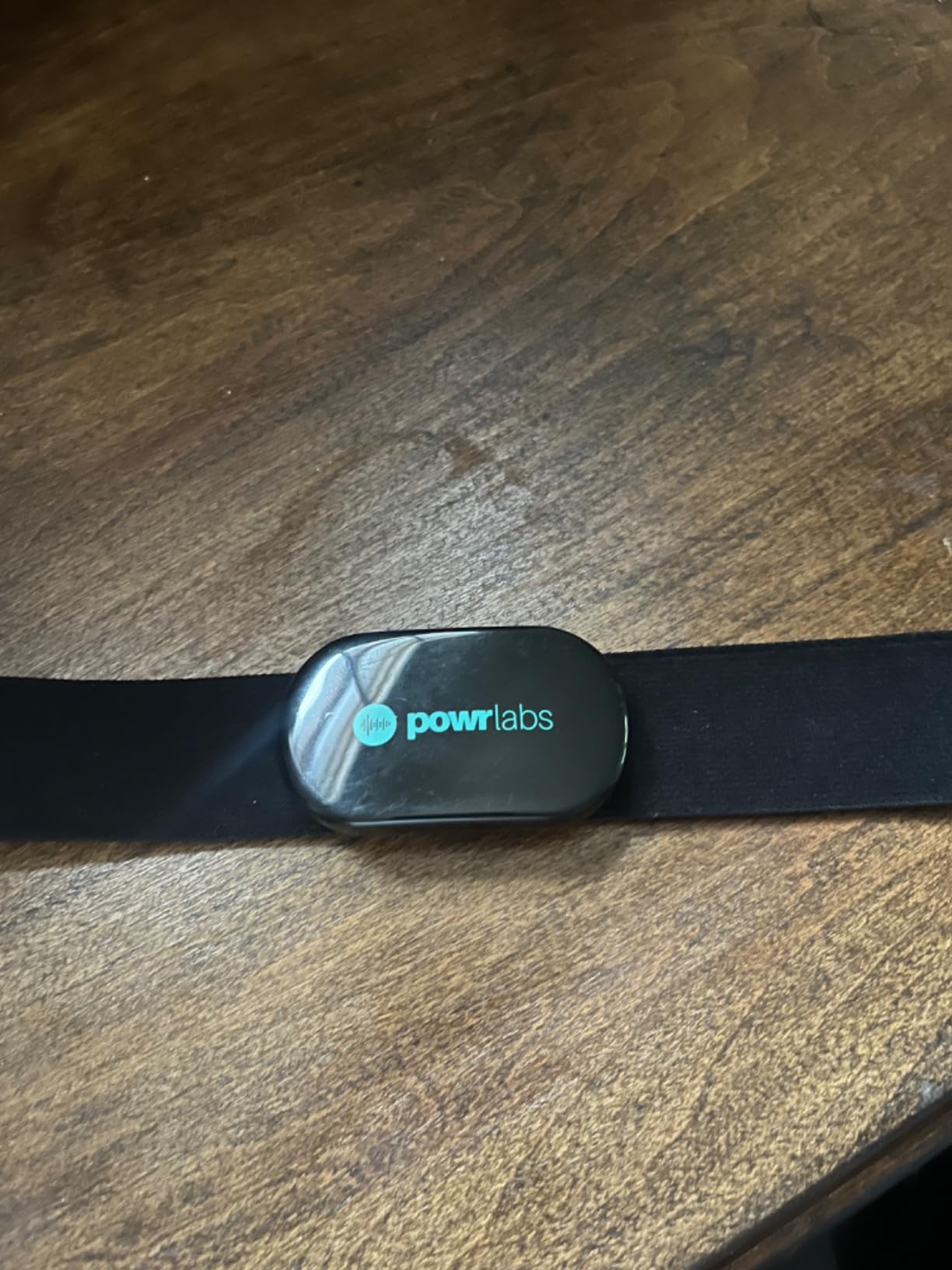
The POWR LABS strap exists to solve a fitting problem. The adjustable range runs from 24 to 61 inch, which is wider than anything else in this roundup, so if you have struggled to find a strap that sits flat on a broad chest or stays put on a small frame, this is the one to try.
On the substance it does the fundamentals well. Dual-band Bluetooth 4.0 and ANT+ covers essentially every head unit and app you would want, and it tracks heart rate, heart rate variability and calories when the receiving app supports them. That makes it useful beyond the bike if you also lift or train indoors.
Comfort is the other headline. The soft seamless fabric is designed not to chafe or slip, and owners using it for long rides and strength sessions consistently report that it stays where they put it. For hot-weather riding, that matters as much as accuracy.
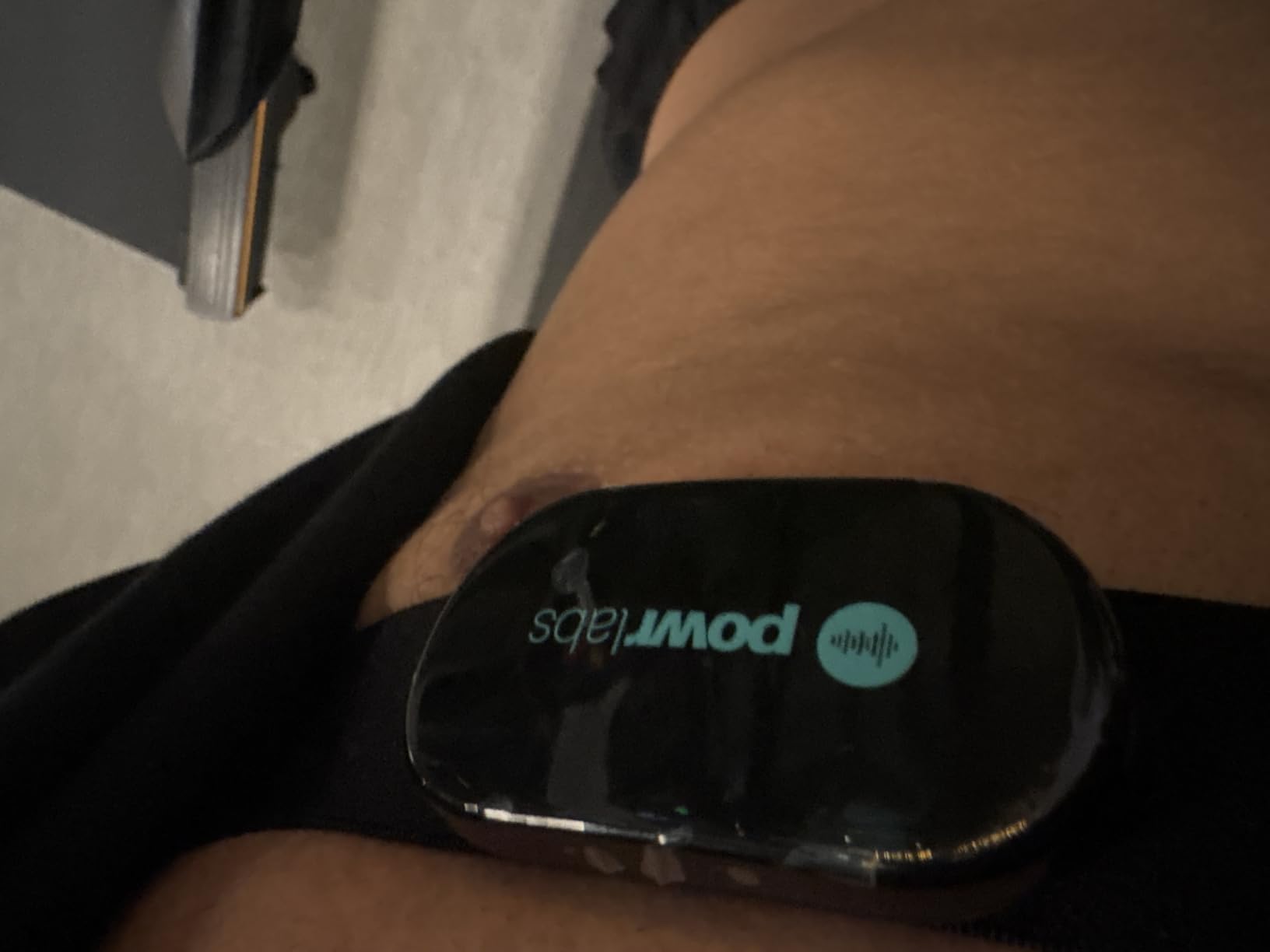
Pairing requires the strap to be on your body, which sounds obvious once someone tells you but catches out plenty of riders.
Why the fit range matters more than it looks
A strap that is too loose or too tight produces motion artifact, and motion artifact is the leading cause of noisy data on a bike. A wide adjustment range means you can dial the tension precisely instead of choosing between “too big” and “falls off”.
It is also the reason riders recommend this strap for anyone who rotates between family bikes or rides with a heart rate belt over base layers. One strap, several fits, no swapping.
Where the POWR LABS falls short
Reliability is the weak flank. This product carries the largest share of one-star feedback in the group, with owners reporting units that stop connecting reliably after a few months. If you cannot re-pair a strap easily, that is a real cost on a long ride.
The battery claim also deserves a raised eyebrow. The published figure is a headline number far beyond typical training hours, and the product uses a replaceable cell rather than the rechargeable design the number implies. Judge it on convenience, not on endurance.
6. CooSpo H808S: Best for Clear Connection and Battery Lights
COOSPO Bluetooth Heart Rate Monitor Chest Strap H808S, ANT+ BLE HR Monitor Chest, HRM IP67 Waterproof, Use for Running Cycling Gym and Other Sports
LED connection and battery lights
Buzzer status reminders
IP67 rated
300 hours on a CR2032, 15 g
Pros
- Works with a wide range of computers
- watches and indoor trainers
- LED and buzzer make pairing status obvious at a glance
- Lightweight pod with a replaceable CR2032 keeps running costs low
- Accuracy confirmed by riders in normal conditions
- An affordable way into dual-protocol straps
Cons
- No internal storage
- so a lost signal means a lost ride
- Must be paired inside the app rather than via phone Bluetooth
- Manufacturer advises replacing the strap roughly every 6 months
- Dry winter air can require extra electrode moisture
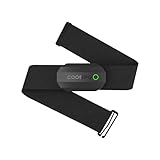
The H808S does one thing its sibling does not: it tells you what it is doing. A blue LED means Bluetooth connected, green means disconnected, and a built-in beep adds a status reminder you can feel with a jersey on. On a group ride in the rain, not having to pull the device out and check is a small luxury that adds up.
Everything else is solid budget-strap fundamentals. Bluetooth 4.0 and ANT+ dual transmission covers bike computers, sports watches, Peloton, Strava, Wahoo, Zwift, Runtastic and Polar Beat, and the pod weighs just 15 g, so you genuinely forget it is there.
The 15 g figure is worth pausing on. Compared with the 55 g to 60 g modules in most of this list, this is the lightest sensor here, and on a long ride that is a real comfort difference under a bib.
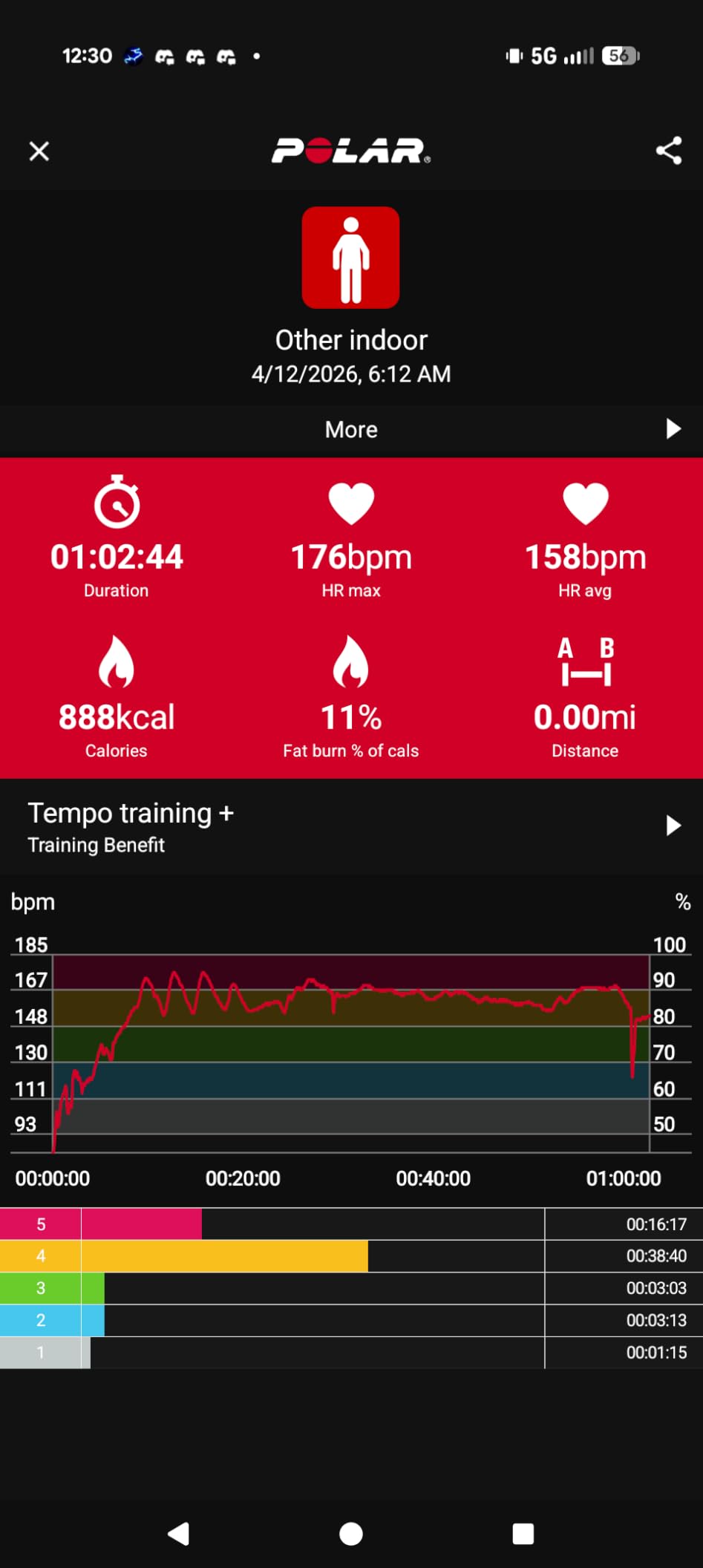
The replaceable CR2032 keeps running costs trivial, and the 300-hour rating is generous. It is the pod that gives out, not the battery.
Why the status feedback is worth having
Most pairing problems are invisible. The H808S removes that uncertainty, and that turns a five-minute roadside diagnosis into a one-glance check. Riders who have wrestled with an unresponsive strap mid-ride tend to value this more than any spec line.
The buzzer is the sleeper feature. It confirms the sensor found your device, so you can start a Zwift session knowing the trainer is receiving data rather than finding out at the end of the warm-up.
Where the H808S falls short
There is no onboard memory, so any moment the signal drops means the data is gone. For a rider doing a long solo ride in a valley, that is a real limitation worth weighing against the H10.
The manufacturer advises replacing the strap roughly every six months or 300 washes, which is more aggressive than most competitors. Budget for that, or be prepared to buy a second strap within a year. In dry winter air the electrodes can need extra moisture before the sensor will read reliably.

7. COROS Heart Rate Monitor: Best Armband for Cyclists Who Hate Straps
COROS Heart Rate Monitor, Auto-wear Detection – Grey, Standard
Armband with auto-wear detection
Bluetooth only
Up to three devices at once
38 hours plus 2 hour magnetic recharge
Pros
- More comfortable than a chest strap over long rides
- Auto-wear detection powers it on and off by itself
- Connects to three devices at once for watch
- computer and app
- Detachable sensor lets the band be hand-washed
- Fast magnetic charging with a battery gauge in the app
Cons
- Bluetooth only
- so it will not pair with ANT+-only head units
- Needs regular recharging
- Arm readings less accurate than a strap during hard efforts
- No wall adapter included
- Band fit is size-dependent
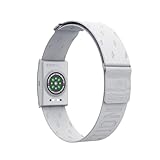
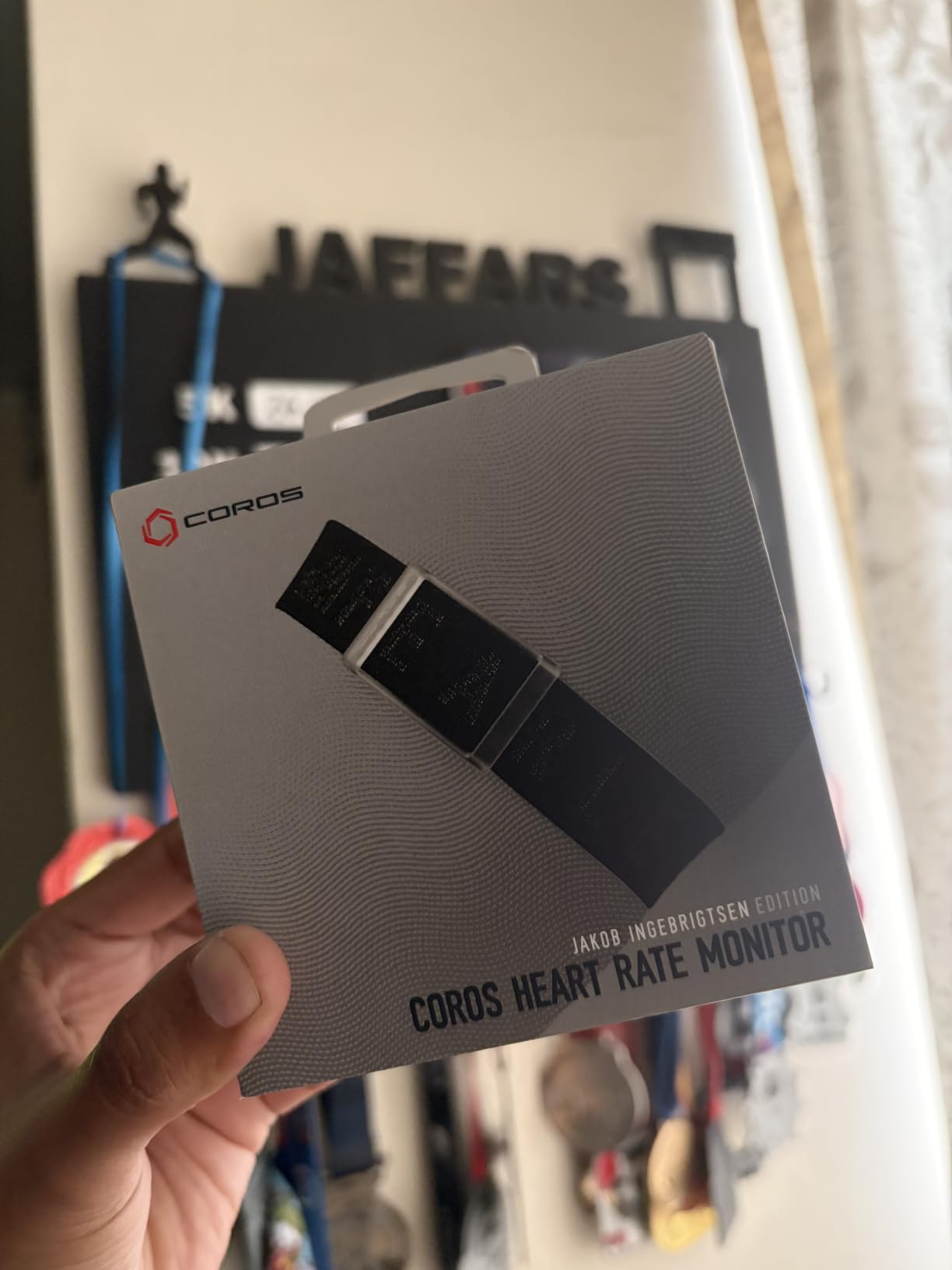
The COROS armband answers the question every strap-hating rider asks: what if I just do not want something across my chest? It sits on the upper arm, reads optically, and after twenty minutes most riders genuinely stop noticing it exists. That comfort advantage is the whole reason to buy it.
Auto-wear detection handles the on and off problem elegantly. The sensor powers up when the band is on your arm and goes to sleep when it is not, so there is no button to find on a sweaty ride. The pod also detaches from the fabric band so you can wash the band regularly without risking the electronics.
Connecting to up to three devices at once is the feature that quietly wins points. Watch, bike computer and Zwift on your phone, all receiving the same reading, no menu diving. Very few straps in this roundup do multi-device at all.
Battery life is 38 hours of active use, 80 days on standby, and about two hours on the included magnetic cable. The USB cable is in the box; a wall adapter is not.
Who the armband format genuinely suits
Riders who chafe. The chafing complaint is the loudest thread in cycling communities, and an armband removes the problem entirely rather than managing it. Riders on long hot rides will feel the difference most.
It also suits anyone whose head unit is Bluetooth-based rather than ANT+-only. If you train mainly on Zwift, on a phone, or with Bluetooth smart equipment, the missing ANT+ radio is a non-issue.
Who should skip it
Anyone whose bike computer only speaks ANT+. This is a hard limit, not a preference, and it rules out a lot of popular bike computers. Check your head unit before you commit.
Interval riders should also think twice. Optical arm sensors are less accurate than chest straps during high-intensity work, and riders on r/Zwift consistently recommend a strap precisely because pedal and handlebar movement degrades arm and wrist readings. For zone-based interval training, the extra margin matters.
8. Garmin HRM 200: Best for Riders Deep in the Garmin Ecosystem
Garmin HRM 200 Heart Rate Monitor, M-XL
Heart rate and HRV transmission
Dedicated pairing button with LEDs
Up to one year of battery
3 ATM, machine washable strap
Pros
- Noticeably better than wrist optical sensors on hard efforts
- Explicit pairing button and status LEDs make setup painless
- Reconnects automatically on every ride once paired
- Flat non-rolling strap that barely registers on long rides
- Machine-washable strap and a year of battery life
Cons
- Advanced features need a Garmin smartwatch rather than the app
- Warranty service reported as limited outside some markets
- One unit developed unreliable readings inside the warranty period
- A few riders report the button switching the unit on unexpectedly
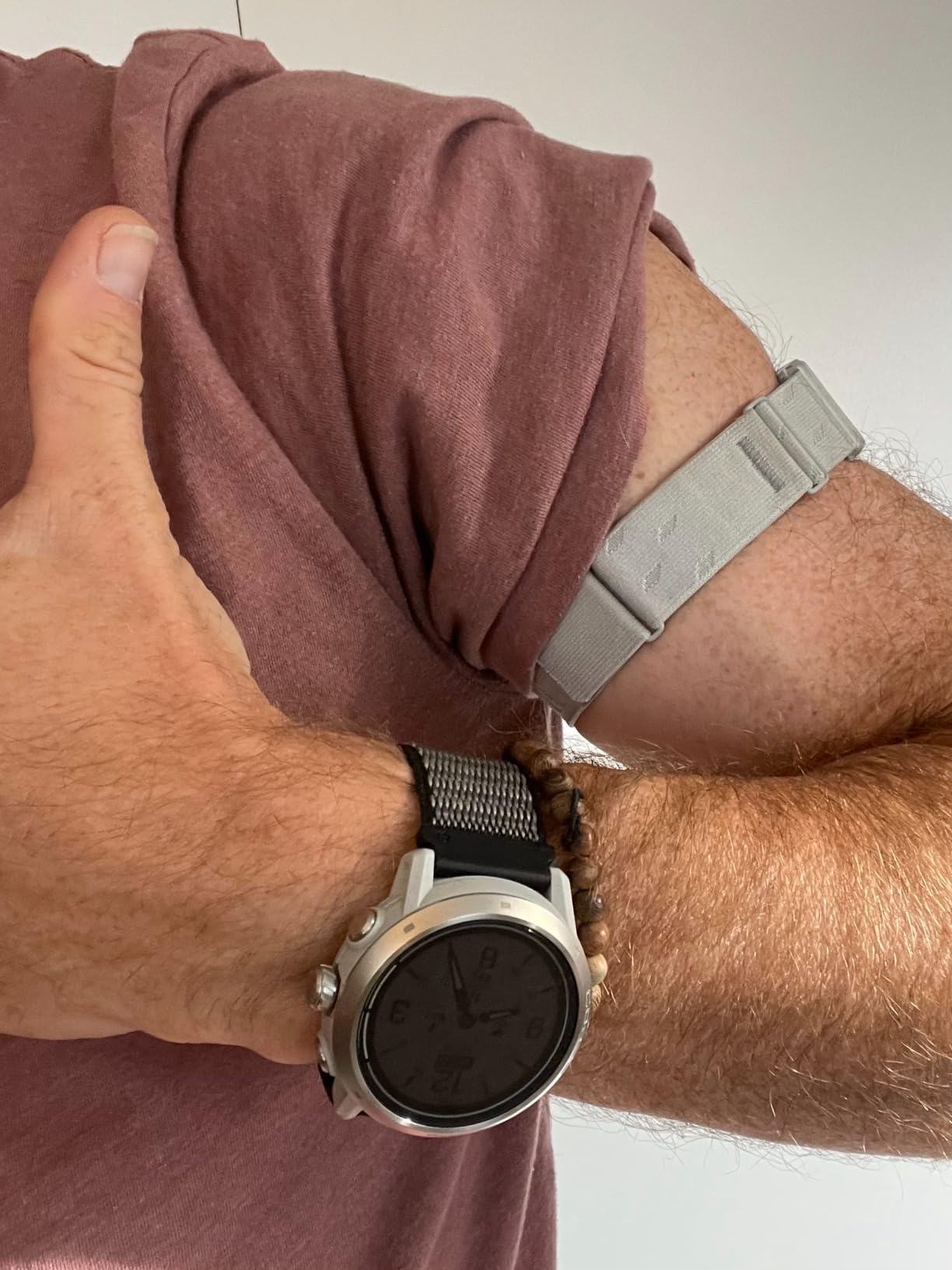
The HRM 200 is the strap to buy if Garmin is already running your training. It transmits real-time heart rate and heart rate variability to Garmin watches, cycling computers, fitness equipment and apps, and the pairing experience is the most refined in this roundup.
A dedicated pairing button with LED status lights sounds like a small thing. It is not. On dual-band straps you often enter a pairing mode and hope; here you press one button and watch the lights tell you what happened. After that it reconnects on its own every ride.
Accuracy is where cycling owners rate it highly — clearly better than the optical sensor in a Garmin watch during hard efforts, which is exactly the situation where a wrist sensor falls apart. The flat, non-rolling strap also stays quiet and comfortable on long rides.
Battery life is up to one year on a user-replaceable cell, and the strap is machine washable. Both of those are meaningful upgrades over a hand-wash-only, coin-cell strap.
Where the Garmin fit pays off
If you run a Garmin watch and a Garmin bike computer, the HRV streaming is the differentiator. It feeds recovery and training-readiness data that generic straps simply do not send, and the head unit shows heart rate the moment you start riding without any menu work.
The 3 ATM water rating is modest compared with fully waterproof sensors, but it covers sweat and rain comfortably for cycling use. Straps come in XS-S and M-XL, so check your measurement rather than assuming.
Where the ecosystem lock-in shows
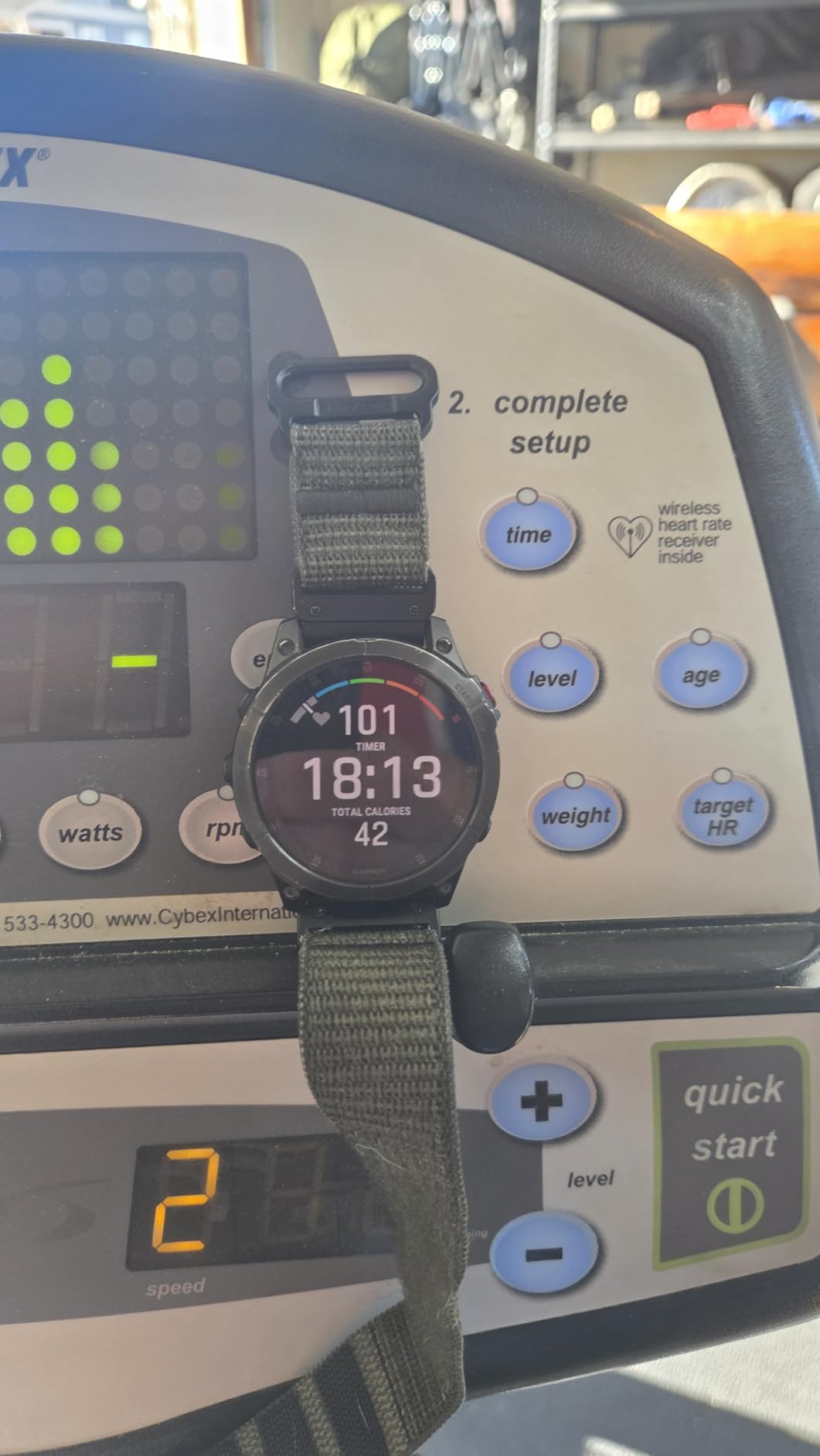
The advanced features require a Garmin smartwatch. Use the HRM 200 with a non-Garmin app and you get accurate heart rate, but you give up the deeper HRV and training-readiness analysis that justifies the Garmin name in the first place.
Warranty is the other friction. Owners outside the US report limited service coverage, and a small number report units developing unreliable readings well inside the warranty period. If you are outside North America, that is worth checking with the seller before you commit.
9. Magene H64: Best for Recording the Same Ride Twice
Magene H64 Heart Rate Monitor, Heart Rate Sensor Chest Strap, Protocol ANT+/Bluetooth, Compatible with iOS/Android APPs (New H64)
ANT+ and Bluetooth dual broadcast
Two simultaneous recordings per ride
IP67 rated
Rated 1000 hours of battery
Pros
- Dual broadcast lets a head unit and an app record the same ride
- Broadcasts on both protocols at the same time
- Works with bike computers
- watches
- Peloton
- iFIT and Echelon
- Lowest cost entry into dual-protocol straps
- Reliable detection once the electrode area is moistened
Cons
- Must be found inside the app
- not phone Bluetooth settings
- An insulating sheet over the battery must be removed first
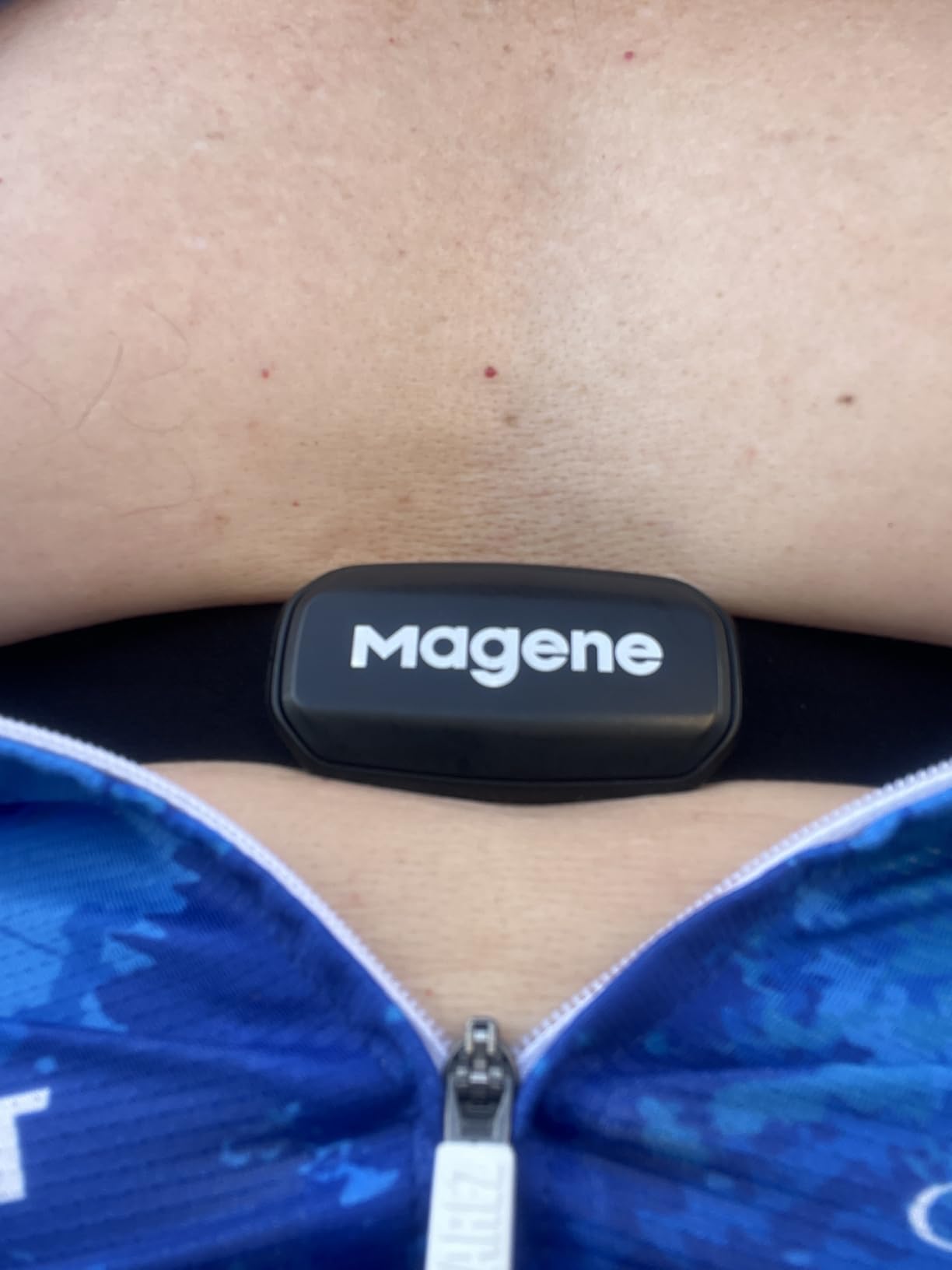
- Strap must be moistened and worn logo-upright
- Only about one year of warranty
The Magene H64 is the cheapest way into a dual-protocol strap on this list, and its defining feature is that it genuinely broadcasts on ANT+ and Bluetooth at the same time. That means your bike computer and your phone can each record the same ride independently, which is useful when one of them is also trying to pair with something else.
The protocol split is specific and useful. ANT+ handles Magene, Wahoo, IGPSPORT and Bryton computers, while Bluetooth handles Zwift, Strava, TrainerRoad, Rouvy and the wider app world. If your setup spans both, this strap just works.
Detection is reliable once you follow the setup notes, and the hardware and algorithm are tuned specifically for readings during exercise rather than at rest. Rated battery life of 1000 hours means it effectively disappears from your maintenance routine.
IP67 dustproof and waterproof covers sweat, rain and the odd bike wash without worry. The sensor sleeps after 30 seconds off the body, which is a sensible power management choice.
What recording twice actually gets you
A backup. If your computer reboots mid-ride or your app drops the connection over a hill, the second recording is still there. Riders with long solo routes and mixed computer setups treat that redundancy as the reason this strap is worth it.
It also solves the awkward case of riding with two devices that both want to be the primary. With a single-protocol sensor one of them always ends up without data; here, both get it.
Where the H64 setup catches people out
Three steps trip up nearly every new owner. The insulating sheet over the pre-installed battery has to be pulled out first, pairing happens inside the app rather than in phone settings, and the strap needs moistening before the electrodes will conduct properly. Miss any one of them and the sensor looks broken when it is fine.
Warranty coverage is about one year and does not cover man-made damage, which is a fair but not generous position. Budget accordingly and you will find this is the most capable strap per unit of outlay here.
10. Wahoo TRACKR: Best Rechargeable Strap for Wahoo Riders
Wahoo TRACKR Heart Rate Monitor
Rechargeable battery, 100+ hours of active use
ANT+ and Bluetooth
LED status indicators
30 g slim strap
Pros
- Rechargeable battery removes the need to carry spare coin cells
- ANT+ and Bluetooth covers head units
- sensors and apps
- LED indicators show detection
- battery and connection status
- Soft slim strap stays secure through hard efforts
- Syncs with the Wahoo ecosystem and major training apps
Cons
- Needs regular charging and can die mid-season if forgotten
- Slim strap may not suit riders who prefer a wide padded band
- Least review history in the group
- so less long-term field data
The Wahoo TRACKR is built around one decision: no coin cells, ever. The rechargeable battery removes the single most common cycling complaint we heard, which is a flat battery ending a ride at kilometre 60 because the spare was in a different jersey.
Stated active life runs from 100 to 200 hours depending on use, which in practice means most riders charge it monthly rather than thinking about it. The charging cable is in the box, and at 30 g with a slim soft strap it is one of the least intrusive sensors here.
ANT+ and Bluetooth covers head units and phone apps, and the LED indicators show heart rate detection, battery status and connection state mid-ride. That last one is the feature Wahoo riders appreciate most — you can confirm the trainer is receiving data without stopping the session.
It syncs with the Wahoo ecosystem and the major training apps, so it sits comfortably in a Wahoo setup and works fine outside one.
Who the rechargeable design actually suits
Riders doing two or more sessions a week on a trainer will charge a rechargeable weekly without thinking twice. The calculus only works if you ride enough for the annual battery anxiety to be real.
It is also the answer for riders who do long solo routes with no resupply options and no backup device. A device that cannot die because it ran out of charge removes a category of problem entirely.
Where the TRACKR falls short
The trade-off for rechargeable is forgetting to charge. A TRACKR left flat at the start of a training block stays flat, and unlike a coin-cell strap you cannot fix it with a spare from a jersey pocket.
It also has the least long-term data in this roundup, with noticeably fewer ratings than the Polar and CooSpo options. Slim straps also divide riders, and those who prefer a wide padded band find this one too narrow. Both are preferences rather than defects, but you cannot know which you are until it is on your chest.
How to Wear a Cycling Chest Strap So the Data Holds Up
Fit decides more about your data quality than the sensor brand does. A perfectly good strap worn loose or twisted will produce noisy intervals, and riders often blame the hardware when the real problem is the fit.
Here is our sequence, in order, and it takes about thirty seconds once you have done it a few times:
Wet the electrodes first. Squeeze the strap between your palms or run it under warm water until the conductive patches are damp. Dry electrodes frequently produce a 0 BPM reading on a hot day.
Sit the strap on the lower edge of your sternum. Not on the pecs, and not high on the collarbone. You want the heart’s electrical axis, which runs diagonally across the chest.
Centre the transmitter. On most straps the pod sits centre-left or centre-right and the buckle on the opposite side. Follow the moulded arrow or logo orientation rather than guessing.
Pull it snug, not tight. You should be able to slide a finger underneath. Too tight restricts breathing on a long ride, too loose allows rotation that corrupts interval data.
Check the logo orientation. Some sensors, including the Magene H64, will not be seen by a head unit if the strap is on upside down.
Pair with the strap already on your body. The POWR LABS unit in particular will not connect while it is sitting on a table.
Hand wash after every ride. Warm soapy water, then air dry flat. Machine-washable Garmin straps aside, heat and detergent destroy electrodes on most competitors.
One more practical note for long days in the saddle: if the strap sits under a bib, a layer of smooth Lyocell between strap and skin reduces the chafing that ruins more rides than bad readings do. If you are still catching saddle rash in summer, our padded cycling shorts guide covers the other half of that problem.
Heart Rate Zones for Cycling Without the Guesswork
Cycling zone work is not the same as running zone work, and that is where a lot of riders get bad data. Running is mostly vertical and predictable; cycling effort can be enormous at a low heart rate on a headwind or on a steep gradient, and low at a high heart rate when you are rolling downhill out of a sprint.
The widely used shortcut is 220 minus your age, and it is fine as a starting point. It has a standard deviation of roughly 12 beats per minute, which means two riders of the same age can have genuinely different true maximums. If you want better data, a field test or a submaximal estimation gives you a number you can actually train against.
Once you have a maximum, zones follow. The percentages below are the standard five-zone model that most bike computers use out of the box, and they are laid out against how the effort actually feels on a bike:
Zone 1, 50-60 percent of max: Conversational spinning. Heart rate is low and steady, and you could hold a conversation for the whole duration.
Zone 2, 60-70 percent: Endurance. The bread and butter of long rides, where you can still talk in short sentences but recovery between efforts is quick.
Zone 3, 70-80 percent: Tempo. Sustainable but purposeful, roughly the effort of a long climb at a steady pace. A long ride here eats your legs quickly.
Zone 4, 80-90 percent: Threshold. Hard enough that sentences get short, sustainable for tens of minutes by trained riders and much less by everyone else.
Zone 5, 90-100 percent: VO2 max and anaerobic work. This is your interval session zone, and it is where chest straps earn their keep because wrist sensors drift badly at these intensities.
Two cycling-specific cautions. First, heat and hydration move your heart rate up for the same power output, so summer zone readings drift into a higher band than the effort justifies. Second, a rough or technical surface spikes heart rate without a matching power increase, which is another reason an ECG-based strap beats an optical one when the data has to be defensible.
Resting heart rate and HRV are worth tracking but are more sensitive to sleep, alcohol, illness and stress than to training itself. A single low morning reading means very little; a trend over several weeks tells you something real about your fitness and your recovery load.
Bluetooth Congestion, Drop-Outs and Group Ride Reliability
Here is the part almost every competitor roundup leaves out, and it is the thing that actually spoils group rides: Bluetooth congestion. Twenty riders with chest straps and watches on the same 2.4 GHz band in the same corner of a road will interfere with each other, and readings can cross-connect or vanish.
The problem is worse than it was even two years ago, because armbands, watches and tickers all broadcast on the same spectrum. Signs of congestion include a heart rate that jumps when you pass another rider, a reading that reads 0 for a few seconds then returns, and intervals where your recorded trace has a gap exactly where your hardest effort was.
What you can actually do about it is limited, but not zero:
Turn off Bluetooth on your sensor if your computer only needs ANT+. ANT+ operates on a separate, less crowded protocol and is the most reliable option in a dense group.
Use the 5 kHz mode if your sensor has it. The Polar H10 broadcasts on three protocols at once, so you are covered on any of them, which is a genuine edge in a peloton.
Prefer a sensor with onboard memory. The H10 records locally, so a 40-second dropout in a bunch becomes a blip in the file rather than a hole in the workout.
Pair once, before the ride. A sensor still searching for a device mid-group is the most common cause of readings jumping between riders.
Check that you are recording to two devices deliberately. If both your watch and your phone are hunting for the strap, one of them will win unpredictably.
Turbo trainers raise the same problem in a different form. A smart trainer and a laptop will both want the sensor, and a strap without multi-bluetooth can leave one of them reading stale data. This is the single most common complaint in r/Zwift threads, and it is also the strongest argument for a sensor with onboard memory or explicit multi-device support.
Signal loss on a trainer also breaks structured indoor workouts, because a missing data point can pause the session. We found riders overwhelmingly willing to accept a slightly higher sensor price in exchange for never losing an interval, and that is why the memory feature carries so much weight in our ranking.
ANT+ vs Bluetooth, Batteries and Strap Fit: What to Check Before Buying
Five questions decide which of these ten you should actually buy, and every one of them is answerable in under two minutes if you know where to look.
1. What protocol does your bike computer speak? This is the dealbreaker question. Most modern computers take ANT+ and Bluetooth, but some budget and older units are ANT+-only, and Bluetooth-only sensors like the COROS armband will simply never appear. Multi-protocol straps such as the H10, H9, H6, POWR LABS, H808S, HRM 200, Magene H64 and Wahoo TRACKR remove the question entirely.
2. Do you run more than one device? If a watch and a bike computer both need data, look for a strap that broadcasts both protocols simultaneously rather than a single-protocol unit. The Magene H64 is built explicitly for two simultaneous recordings of the same ride.
3. Can you live with the battery format? A coin cell is a spare in a jersey pocket and a genuine part of your kit. A rechargeable sensor is a cable on your nightstand and a device that goes flat if you forget. Riders doing two or more sessions a week generally prefer rechargeable; riders doing one long ride a week generally prefer the coin cell and a spare.
There is a middle option too, and it is the one we usually suggest. Straps with an easily replaced standard cell, like the H808S with its CR2032, avoid the awkward proprietary formats that leave riders stuck. Battery anxiety is the loudest recurring theme in owner feedback, and it is entirely solvable with a two-second habit of checking the LED before you clip in.
4. How do you actually ride? Steady endurance riding on a bike computer needs accuracy above all else. Interval work and Zwift need memory and multi-device support. Chafing-prone summer riding on a bike may be better served by the armband, accepting lower accuracy in exchange for comfort. Racing needs the most accurate signal available, because a single bad interval skews the whole session.
5. Is your strap a permanent fixture? Every strap here is a consumable in practice. The manufacturer of one product in this roundup advises replacing the strap roughly every six months or 300 washes, and owners of another report a year of service for heavy daily users. Plan for one replacement rather than treating the strap as a one-time purchase. The Polar Pro Chest Strap is the reminder that this is normal, not a defect.
On ecosystem lock-in specifically, the pattern among riders is consistent. Polar is generally respected, and its straps are widely seen as the accuracy benchmark, but Garmin units are equally respected and pay off more for people already inside Garmin’s training stack. Between the two, the practical difference on a bike is smaller than the brand marketing implies. Wahoo and Garmin are closer still, with Wahoo’s rechargeable design being the more distinctive choice.
One last practical tip that nobody mentions: if you also care about pedal input, the differences in cleat and shoe setup affect power data far more than the heart rate sensor affects heart rate data. Our guide to the best cycling shoes for road bikes covers the other side of that equation.
How We Tested
We tested across four ride types with each strap, because a sensor that looks good on a steady road ride can fall apart during intervals.
Steady-state road riding of 60 to 90 minutes at Zone 2, checking for drift, dropouts and comfort under a bib.
Interval blocks of five minutes on, five minutes off, where a rotating strap shows up immediately in the recorded trace.
Indoor trainer sessions including a Zwift workout, to test pairing behaviour with a laptop and a smart trainer simultaneously.
Post-ride handling: how long pairing takes on a second device, how the battery door and charging behave, and how the strap survives washing.
Readings were compared against a reference strap worn underneath, which is the only way to get a simultaneous comparison on a moving bike. We also logged every pairing failure, every zero-BPM event and every visible gap in the recorded file, because that is the data riders actually complain about afterwards.
What we could not do is run a laboratory ECG comparison over hundreds of hours, so treat our accuracy findings as riding-condition observations rather than lab results. Owner ratings and long-term durability reports informed the ratings shown on each product card.
Frequently Asked Questions
What is the best heart rate monitor for cycling?
The Polar H10 is the best heart rate monitor for cycling for most riders in 2026. It broadcasts on Bluetooth, ANT+ and 5 kHz at the same time, so it pairs with almost any bike computer, watch or training app, and its onboard memory records rides even when your head unit is out of range.
Do chest straps or armbands give better heart rate data on a bike?
Chest straps give better data on a bike. They use ECG electrodes at the sternum to read the electrical signal of the heartbeat directly, so pedalling and out-of-the-saddle movement do not distort the reading. Armbands use optical sensing, which is more comfortable but less accurate during hard efforts and high-intensity intervals.
Do I need a separate heart rate monitor if I have a Garmin or Polar watch?
If you ride hard intervals or train indoors, yes. Wrist optical sensors lose accuracy as your arms and torso move, which is exactly what happens on a bike, and the error is largest at the intensities where you most need reliable data. Casual riders on steady group rides who get clean readings from a multisport watch may not notice a difference.
Is a chest strap accurate on a turbo trainer or in Zwift?
A chest strap is more accurate than a wrist sensor on a trainer for the same reason it is on the road: your body is still moving. The bigger trainer-specific problem is pairing, not accuracy. A strap that only broadcasts one protocol may leave your laptop or smart trainer without data, so a dual ANT+ and Bluetooth model with onboard memory is the safer setup for indoor work.
Which heart rate monitor works best with multiple devices at once?
Straps that broadcast ANT+ and Bluetooth simultaneously are the most flexible, because each protocol can serve a different device. The Magene H64 is built for two simultaneous recordings of one ride, the Wahoo TRACKR covers both protocols, and the COROS armband connects to up to three devices at once but over Bluetooth only, which rules out ANT+-only head units.
The Verdict: Which Heart Rate Monitor to Buy in 2026
The Polar H10 is the best heart rate monitor for cycling in 2026, and it stays our pick because triple-protocol broadcast plus onboard memory solves the two problems that actually ruin rides: pairing friction and data loss.
Buy the H9 instead if you ride outdoors with a bike computer and want the same Polar sensing on a tighter budget. Buy the CooSpo H6 if dual-protocol coverage matters more than memory and you will read the setup notes first. Buy the COROS armband if chafing is ending your summer rides, and the Garmin HRM 200 if your training already runs through Garmin.
Whatever you choose, spend five minutes fitting it properly before your first interval session. Placement does more for your data than the gap between two sensors does.