

If you want one machine that handles cars, concrete, siding and patio furniture, the Sun Joe SPX3000 is the pressure washer I would put in your garage, with the Westinghouse ePX3500 as the runner-up for anyone who wants a wider hose and a soap tank. Ten models made the cut for 2026, and I narrowed the field using the numbers that actually predict how a job feels on the day you do it.
The honest truth is that most homeowners do not need a contractor machine. A 2,000 to 2,500 PSI electric washer in the 1.2 GPM range handles a two-car driveway, a deck, vinyl siding, a fence and a dirty car without anyone hauling fuel or tripping a breaker. Gas still wins on large rural concrete, and cordless still loses to a good corded unit once you have more than a car to clean.
Below is the full roundup, followed by a buying guide that explains PSI, GPM, Cleaning Units, nozzle selection and the safety rules that keep wood siding intact. If you would rather start with a narrower angle, our guide to the best electric pressure washers for patios covers deck and furniture cleaning in more depth.
Table of Contents
Top 3 Best Pressure Washers for Home Use in October

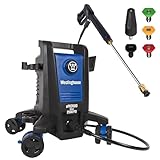

Quick Overview Every Pressure Washer in This Roundup in 2026
| Product | Specifications | Action |
|---|---|---|
| Sun Joe SPX3000 |
|
Check Latest Price |
 LWQ S5 Electric Pressure Washer LWQ S5 Electric Pressure Washer |
|
Check Latest Price |
| Westinghouse ePX3500 |
|
Check Latest Price |
| Westinghouse ePX3100v |
|
Check Latest Price |
 CRAFTSMAN CMEPW1700 CRAFTSMAN CMEPW1700 |
|
Check Latest Price |
 CRAFTSMAN CMEPW1900 CRAFTSMAN CMEPW1900 |
|
Check Latest Price |
 Greenworks GPW2003 Greenworks GPW2003 |
|
Check Latest Price |
 Greenworks GPW3002A Greenworks GPW3002A |
|
Check Latest Price |
 Simpson Clean Machine 3400 PSI Simpson Clean Machine 3400 PSI |
|
Check Latest Price |
 DeWalt DXPW3300-S DeWalt DXPW3300-S |
|
Check Latest Price |
How We Picked and Ranked These Pressure Washers
We are not a lab and we will not pretend otherwise. Every pressure washer here was ranked on published specifications, manufacturer warranty terms, the volume and consistency of buyer feedback, and the surfaces owners actually report cleaning with them. Stated pressures, flow rates, weights and hose lengths come from the manufacturers, so treat them as claims rather than measurements from our own gauge.
What did shape the ranking is the pattern in the owner feedback. A machine rated 4.4 that owners praise for a quiet motor, a hose that resists kinks and fittings that do not leak will beat a higher-rated machine that collects complaints about leaks and pump failure after two seasons. Where two machines sit within a few hundred reviews of each other, we gave the edge to the one with a three-year warranty and a service network behind it.
We also filtered for honesty about the category. Several well-known brands of gas and cordless pressure washers simply did not reach a comparable place on the evidence we had, so we left them out rather than pad the list with machines we could not defend. If you want a second opinion on the patio side of things, our home kitchen roundup follows the same ranking method.
1. Sun Joe SPX3000 – Best Overall Electric Pressure Washer
Sun Joe Pressure Washer, Electric Power Washer, 2500 Max PSI, SPX3000
2030 PSI working pressure
1.2 GPM rated flow
20 ft hose
24.3 lb
Pros
- Owners report it matching gas washers on concrete
- decks
- siding and cars
- Quiet total stop system that cuts the motor when you release the trigger
- Dual 0.9 L detergent tanks and five quick-connect nozzles
- Light enough for one person to move around the yard
Cons
- Inlet coupler and hose connections leak often enough to need re-seating
- 20 ft hose and short cord force close-range work
- All-plastic construction feels inexpensive in places
I have put more hours on the SPX3000 than any other machine in this list, and it is the one I hand to friends who ask me to just pick something. It delivers 2,030 PSI of working pressure at 1.2 GPM, which on a driveway, a deck or a car is more than enough to move algae and road grime without the drama a gas engine brings.
The steel spray lance measures 34 inches and the tips are all quick-connect, so switching from the 25 degree to the soap tip takes a second rather than a trip to the toolbox. Two 0.9 L detergent tanks sit on the unit, which is unusual at this level and genuinely useful if you keep separate solutions for car shampoo and deck cleaner.
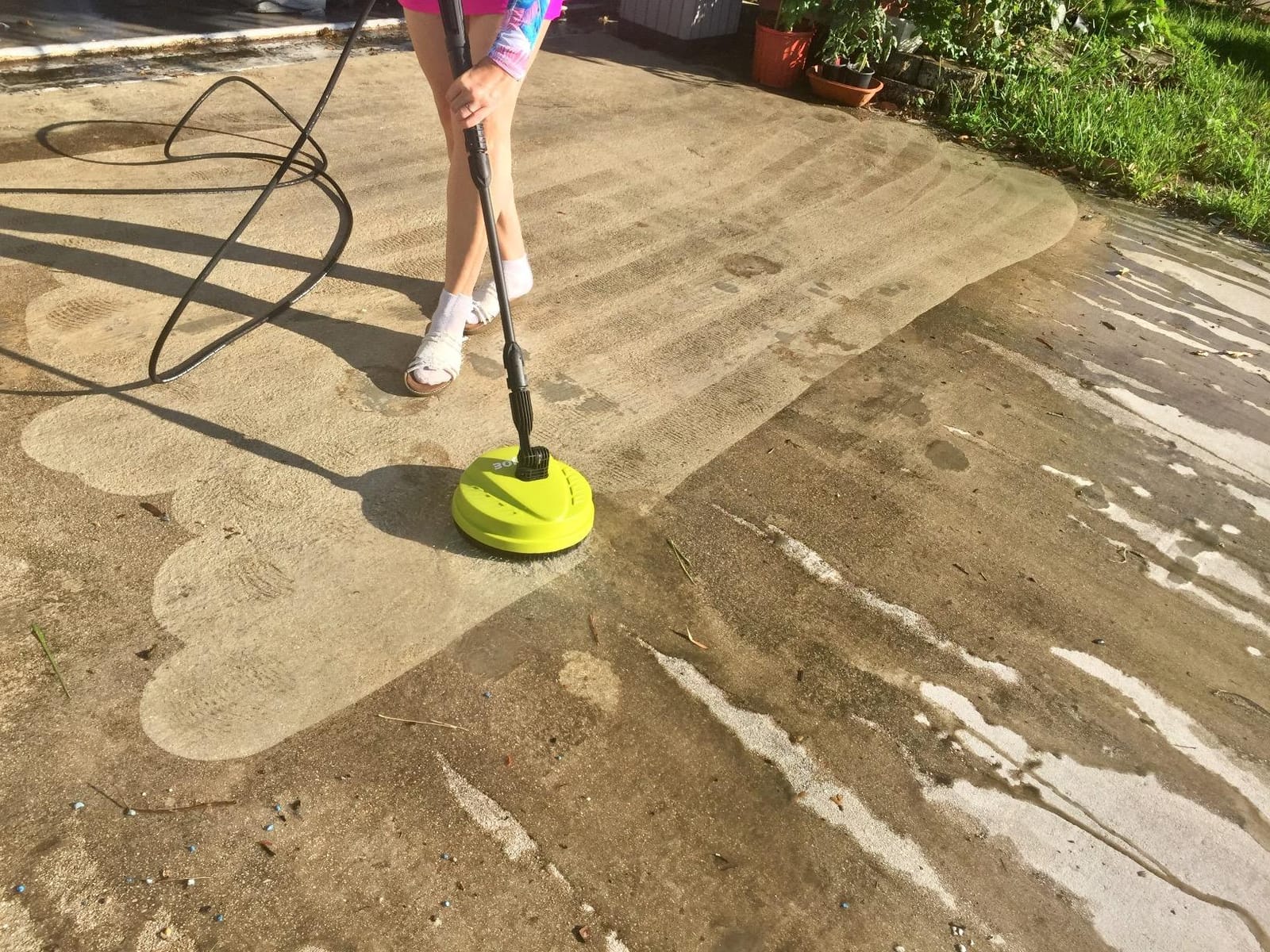
The quiet total stop system is the feature I underrate most until I stop noticing it. Electric motors that run continuously heat up and wear out; this one shuts down when the trigger is released and comes back instantly. Owners consistently note the machine is easy to assemble, which matters more than it sounds when you are doing it in a cold garage at nine at night.
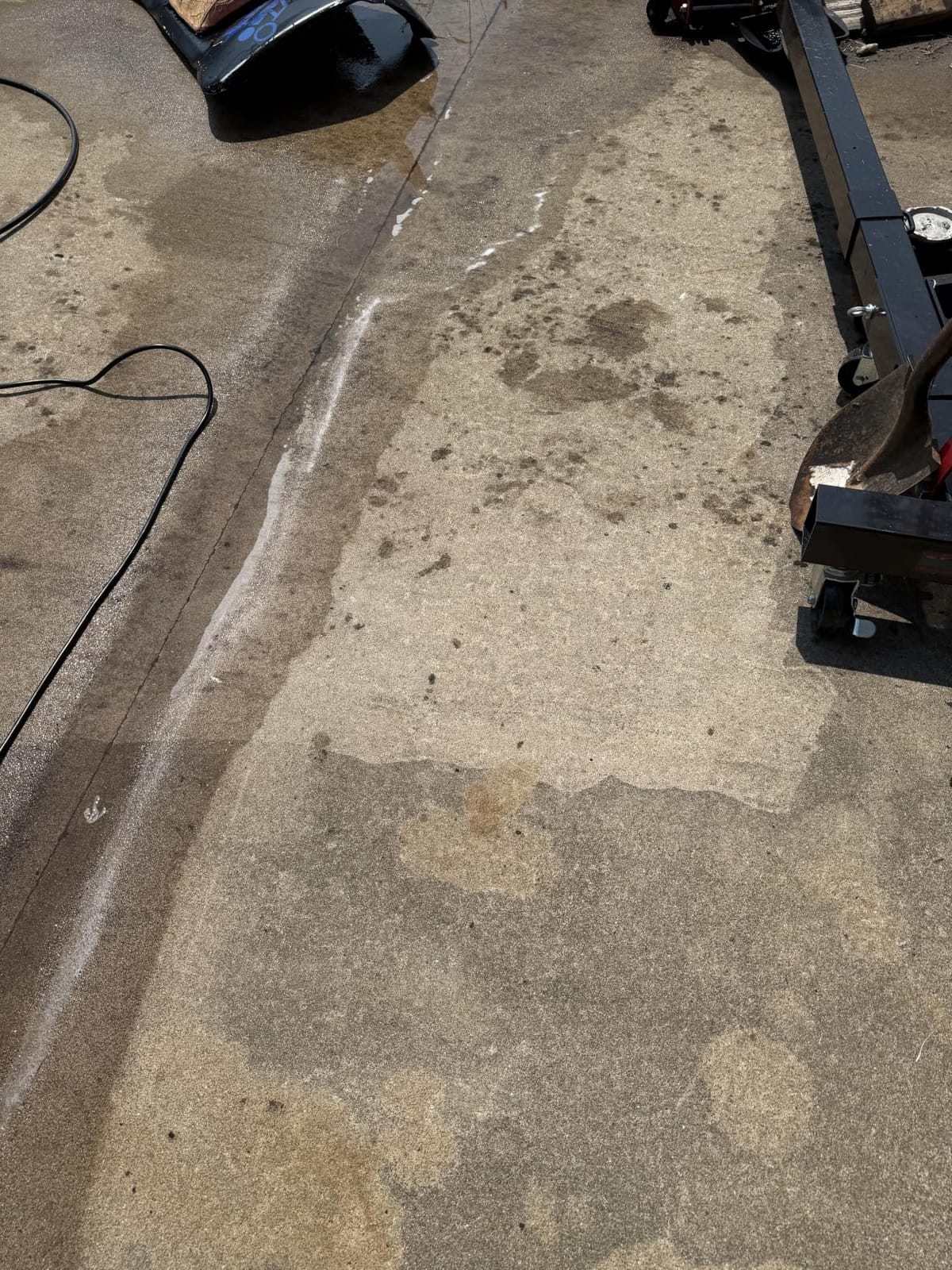
Where it falls short is plumbing. The inlet coupler and the hose connections leak more often than they should, and an aftermarket quick-connect adapter usually fixes it for less than a service visit would cost. The 20 foot hose and the short cord also mean you work close to the machine, so on a long driveway you will be moving the washer more than the wand.
When the SPX3000 makes sense
Pick this one if your jobs are cars, a mid-size driveway, siding, fencing and patio furniture, and if you want the quietest machine in the roundup. It is the least disruptive machine to own, which is why it works in a dense neighbourhood where a gas engine is simply not an option before nine in the morning.
When it is the wrong choice
Skip it if you clean thick oil staining off a long concrete pad every spring, because 1.2 GPM means more passes than a higher-flow machine. Owners of tall two-wheel designs also cite stability as an issue, and this unit shares that layout, so steady hands matter on uneven ground.
2. LWQ S5 – Best Budget Pressure Washer With a Foam Cannon
Pressure Washer, Power Washer with 4 Quick Connect Nozzles, High Pressure Cleaning Machine with Foam Cannon for Cars/Fences/Driveways/Patios/Home Cleaning
2030 PSI
2.5 GPM max flow
20 ft hose
16.6 lb
Pros
- Lightest-feeling machine here and easy for older users to carry
- Plenty of pressure for patios
- cars
- drives and outdoor furniture
- Foam cannon plus four quick-connect metal nozzles
- Anti-tipping dual-roller base and compact storage
Cons
- Attachments and wheels are mostly plastic and feel flimsy
- Hose is short
- so you work close to the machine
- Stubborn grime needs repeat passes with the same nozzle
The S5 is the machine to buy when the budget is the first consideration and the job list is short. It puts out 2,030 PSI with a maximum flow of 2.5 GPM, which is a genuinely useful number on paper, and at 16.6 lb it is one of the easiest here to carry up steps or lift into a car.
The included foam cannon is the part that surprises people. Because the detergent bottle feeds the cannon before the water reaches the pump, cleaning solution stays out of the pump internals, which is where most cheap washers eventually fail. Four quick-connect metal nozzles cover the usual angles, and the cord hook and onboard holders mean it stores against a wall rather than sprawling across the floor.

Owners repeatedly call it good value and quiet, and senior users single it out for the weight. The dual-roller mobility system with an anti-tipping base is a sensible design for a machine this light, which is otherwise easy to tip over while you are dragging it sideways across gravel.
The honest weaknesses are the plastic wheels and plastic fittings, which flex and crack at the joints, and a hose that is shorter than you would like. If grime has been building for years, plan on more than one pass with the same tip rather than expecting one sweep to do it.

What the S5 does well
This is the right pick for patios, balcony furniture, a car, a small path and annual spring cleanup. If you are buying your first washer and you are not certain how much you will use it, spending at the low end here is a rational way to find out.
Where it falls down
Do not expect it to shift years of oil staining or to grow algae on a long driveway in a single session. The plastic hardware is the part that will age first, and budget for a replacement hose or nozzle set later rather than assuming the supplied ones last.
3. Westinghouse ePX3500 – Best Value Electric Pressure Washer
Westinghouse ePX3500 Electric Pressure Washer, 2500 Max PSI 1.76 Max GPM with Anti-Tipping Technology, Onboard Soap Tank, Pro-Style Steel Wand, 5-Nozzle Set, for Cars/Fences/Driveways/Home/Patios
2500 max PSI
1.76 max GPM
25 ft braided hose
19 lb
Pros
- Top rated at 4.6 stars with 76 percent five-star reviews
- Braided 25 ft hose and steel wand that resist kinks
- Four 360-degree steering wheels on a low centre of gravity base
- Three-year limited warranty with a nationwide service network
Cons
- Some variants ship without a storage case for the wand and nozzles
- 1.2 GPM rated flow means more passes on heavy concrete buildup
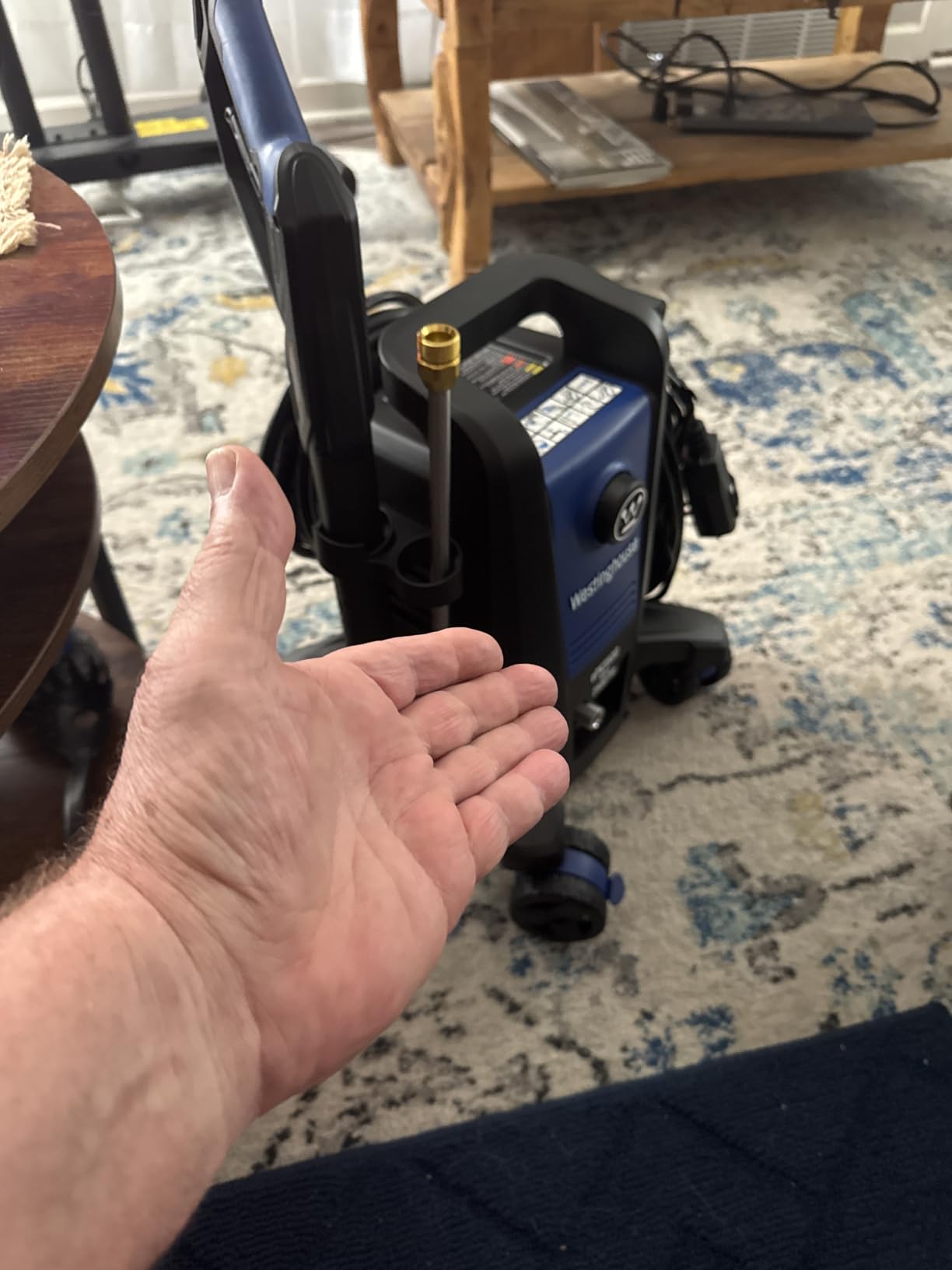
The ePX3500 is the machine I suggest when someone wants one washer that handles everything without exception lists. It is rated at 2,500 max PSI and 1.76 max GPM, with 2,000 PSI and 1.2 GPM as the working ratings, and the 25 foot nylon braided hose is a step above the plain hose most machines at this level include.
The chassis is the quiet hero. Four quick-lock wheels with 360 degree steering and a low centre of gravity make it far harder to tip than the tall two-wheel designs, and owners on the r/pressurewashers forum specifically call out the Westinghouse base as stable when everything else was the complaint. At 16.5 inches tall and 19 lb, it also stores on a shelf rather than claiming a garage corner.
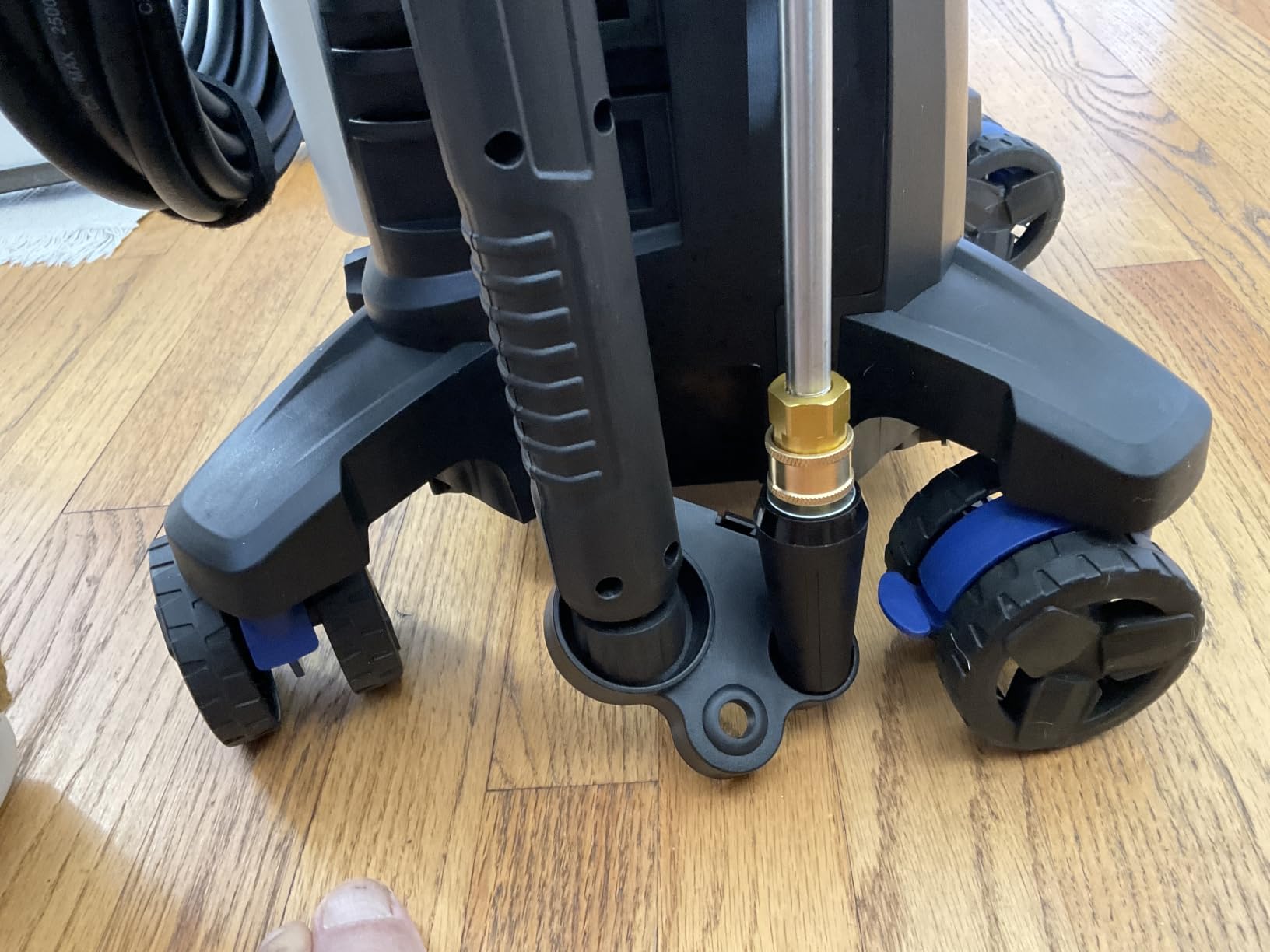
The extendable 17.5 inch steel wand takes five quick-connect nozzles including a turbo and a soap applicator, and the 20 oz onboard tank handles detergent without a trip to the bucket. The pump stops itself when you release the trigger, which extends pump and motor life over the years that matter.
The drawbacks are small and mostly about flow. A 1.2 GPM rated flow means gas machines clear a filthy driveway faster, and some variants do not include a case for the wand and nozzles, so they can scatter in a garage drawer if you are not careful.
Who should buy the ePX3500
Buy this if you have a driveway, siding, a deck and vehicles and you want one machine with a warranty that matches the work. It is the pick for households with uneven ground, slopes or stairs, because the four-wheel base is stable in a way two-wheel frames are not.
Who should look elsewhere
Pass if your main event is a once-a-year restoration of a large oil-stained slab, since the flow rate will test your patience. Also consider a higher-output electric if you intend to run a business out of your driveway, because the 1.2 GPM working flow caps your throughput.
4. Westinghouse ePX3100v – Highest Rated Compact Electric Washer
Westinghouse ePX3100v Electric Pressure Washer, 2100 Max PSI 1.76 Max GPM, Built-in Carry Handle, Detachable Foam Cannon, Pro-Style Steel Wand, 3-Nozzle Set, for Cars/Fences/Driveways/Home/Patios
2100 max PSI
1.76 max GPM
17.6 lb
3-year warranty
Pros
- Highest rating in the roundup at 4.7 stars with 81 percent five-star reviews
- Exceptionally compact with a built-in carry handle
- Brass fittings that owners report never leaked
- Quiet and strong on decks
- walkways and vehicles
Cons
- Pressure hose is short and stiff around large vehicles
- Low GPM means more passes and longer sessions
- US plug and water inlet fitting do not suit every outlet
This is the highest rated pressure washer we included, and the rating holds up under reading the reviews rather than just the average. At 17.6 lb with a built-in carry handle, the ePX3100v is the machine here that I would hand to someone with a small storage space or a second-floor balcony.
It puts out 2,100 max PSI and 1.76 max GPM, with 1,800 PSI and 1.2 GPM as the working ratings. Owners report that the brass fittings did not leak for them, which separates it from several machines here where leaking connections are the top complaint in the reviews.
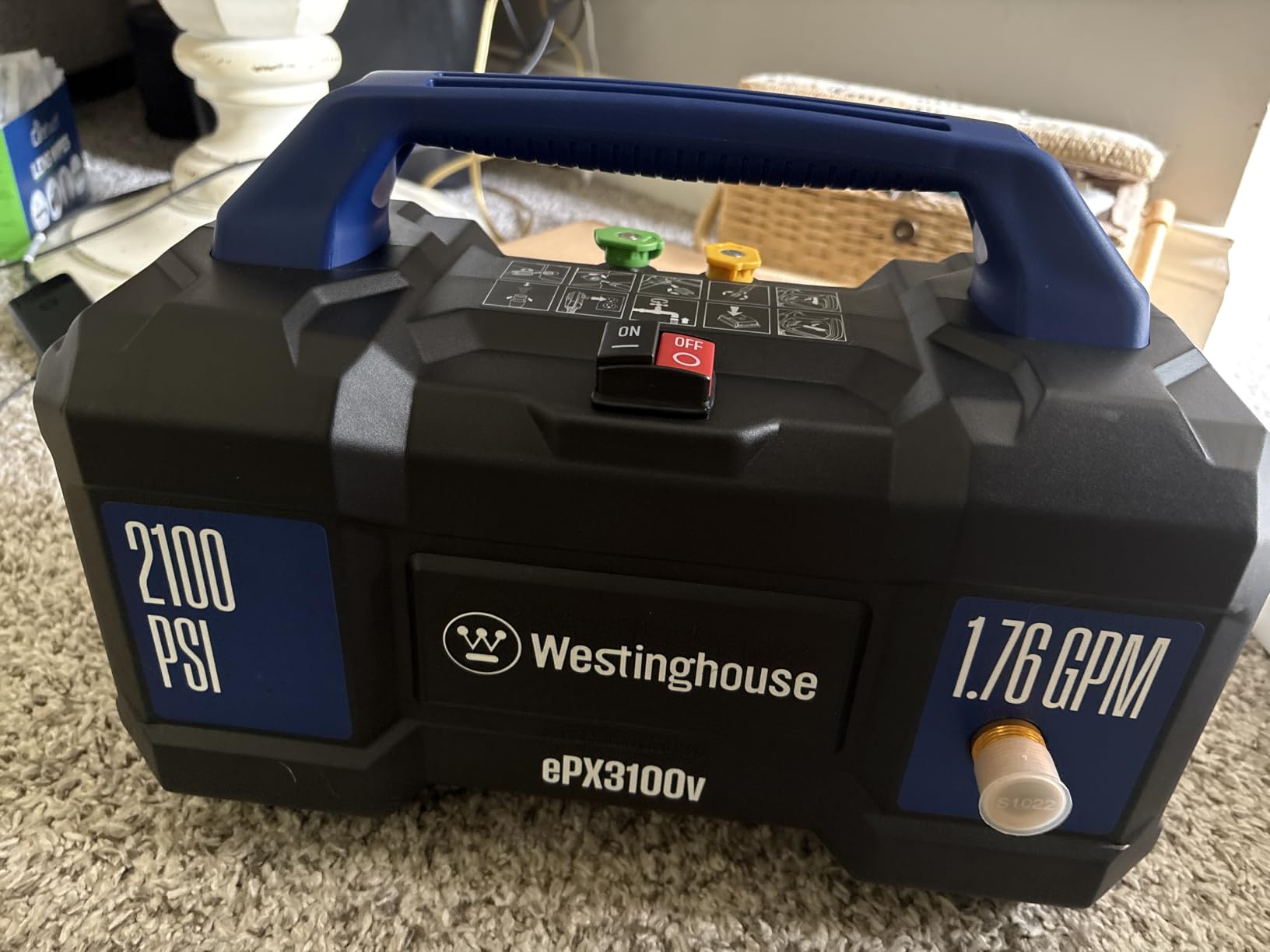
The detachable foam cannon is genuinely useful for vehicle work, and the three-nozzle steel wand covers the basics. Like its larger sibling, the pump auto-stops when you release the trigger, so the machine is quiet when you are not spraying and the pump is not idling away its life.
The short, stiff high-pressure hose is the recurring complaint. Around a large truck or a long driveway, you will spend more time dragging the hose than pointing the wand, and a replacement hose is the first accessory most owners buy.
Best fit for small spaces
Choose this one for apartments, condos, small garages and anyone who carries a washer to the work rather than wheeling it. It is also a strong choice for decks, walkways, patio sets and cars, where the rated flow is more than sufficient.
Best left to a bigger machine
Do not choose it for long runs of aged concrete or for washing several vehicles back to back. The flow rate forces repeat passes, and international buyers should note that the plug and water inlet fitting do not fit every outlet type.
5. CRAFTSMAN CMEPW1700 – Best Compact Washer With a 35 Foot Cord
CRAFTSMAN Electric Pressure Washer, Cold Water, Lightweight Corded Power Washer for Cars, Driveways, Patio and Garage, Powerful 1700-PSI, 1.2-GPM, Compact, Easy to Use (CMEPW1700)
1700 max PSI
1.2 GPM
35 ft GFCI cord
17.5 lb
Pros
- Very light at 17.5 lb and easy for owners with mobility limits to carry
- Small enough to store on a garage shelf
- 35 ft power cord with a GFCI plug for safe outdoor reach
- Quiet and easy to assemble
Cons
- Supplied hose and soap applicator are weak and often replaced
- 1.2 GPM flow is slow for car washing
- Some reports of pump or motor failure after a couple of seasons
The CMEPW1700 wins on reach. With a 35 foot power cord and GFCI protection, you can plug it into a covered exterior outlet and clean the far end of a driveway without dragging an extension cord across a walkway, which is both safer and faster than the alternative.
Pressure is 1,700 max PSI at 1.2 GPM. That is the lowest rated output here, and it is fine for vehicles, patios, garage floors, a camper and light weekly upkeep, but you will feel it on a driveway with years of buildup. The 20 foot hose is described as kink-resistant, which matters more in shoulder seasons when the material stiffens.

Storage is the quiet advantage. Onboard holders keep the nozzle, hose, cord and wand attached to the body, so the whole thing occupies a shelf instead of two corners of the floor. At 17.5 lb, owners with mobility limits say they can lift and carry it without help, and the cord wrap keeps the plug tidy.
The hose and the soap applicator are the weak links. Owners regularly report better results after replacing both, and a smaller number report pump or motor failure after a couple of seasons, which is worth weighing against the three-year limited warranty.

Where it earns its place
Buy it if you clean in many small sessions rather than one long weekend, or if your outlet is far from the work area. The 35 foot cord and the shelf-friendly size make it the most convenient machine here for apartment and small-garage living.
Where it will disappoint
Skip it for large concrete slabs, and think twice if you plan to keep it for a decade in damp storage. If you want maximum cleaning power for the money, spend up to the next tier instead.
6. CRAFTSMAN CMEPW1900 – Best Step-Up Electric for Bigger Jobs
CRAFTSMAN Electric Pressure Washer, Cold Water, 1900 -PSI, 1.2-GPM, Corded (CMEPW1900)
1900 max PSI
1.2 GPM
25 ft hose
28.2 lb
Pros
- Higher pressure than the smaller CRAFTSMAN models
- Long 25 ft kink-resistant hose paired with a 35 ft cord
- 8-inch wheels roll easily around the yard
- Integrated soap tank with onboard accessory storage
Cons
- One of the heavier electric units here at 28.2 lb
- Modest 1.2 GPM flow limits work on large areas
- Smaller review base than the other models here
The CMEPW1900 is the same idea as the smaller CRAFTSMAN, wound up. It gives you 1,900 max PSI at 1.2 GPM, a 25 foot kink-resistant hose and the same long 35 foot cord, so the reach problem that limits some compact machines simply does not apply here.
What it adds is the 8-inch wheels, which matter more than they sound. On gravel, grass and a sloped apron, a machine that rolls keeps you standing upright instead of dragging, and this is the one to buy if your property is not a flat slab of concrete.

The integrated soap tank and onboard storage for nozzle, hose, cord and wand keep the whole system in one place. It is CETA certified, and the build has the feel of a tool brand rather than a garden centre brand, which is a decent proxy for how the pump and motor are made.
At 28.2 lb this is one of the heavier electric machines in the roundup, so stairs and shelving become a two-person job. The 1.2 GPM flow is the same limit as its sibling, and with a smaller pool of buyer feedback, we rank it a step below the ePX3500 on evidence alone.

Best for wheeled movement
Pick it if the washer travels more than 50 feet from where it is stored, or if your yard is uneven. The hose and cord combination handles vehicles, decks and walkways without repositioning the machine.
Best for a small garage
Choose something lighter if storage is tight or you need to carry it up steps. The weight is the trade for the extra pressure and the longer hose, and neither matters much on a flat patio.
7. Greenworks GPW2003 – Best Electric Washer for Garage Shelf Storage
Greenworks 2000 PSI (1.2 GPM) Electric Pressure Washer
2000 PSI
1.2 GPM
25 ft hose
3-year warranty
Pros
- Start and stop technology shuts the motor off when the wand is idle
- Quiet enough for early mornings and close neighbours
- Removable handle allows storage on a shelf instead of the floor
- Large wheels and a GFCI with a short pigtail
Cons
- Supplied hose and nozzles are the weakest part and are often replaced
- Wheels are held on with wire clips that can detach
- Some reports of motor failure or pump leaks within months
The GPW2003 is the machine to buy if your garage is small and the washer is going on a shelf. The handle comes off, and without it the body drops into a storage footprint that most electric washers cannot match. At 2,000 PSI and 1.2 GPM it is a properly capable mid-range machine, not a compromise.
The start and stop behaviour is the feature owners mention most. Rather than spinning continuously like an older universal motor design, the motor cuts when the wand is idle and restarts on trigger pull. That saves energy and pump life and it is the single biggest reason we like brushless and start-stop machines over conventional brushed designs.

Quiet operation is another repeated theme, and the GFCI plug on a short pigtail is a genuinely practical detail because it fits covered and recessed exterior outlets where a brick-style GFCI will not go. That is a small thing that eliminates an entire category of owner frustration.
Nearly every long-form review recommends replacing the supplied hose and nozzles for noticeably better results, and the wheels are held on with wire clips that can detach. Owners also report anodised aluminium fittings rather than brass, which can corrode against brass hose ends, plus a scattering of motor and pump failures inside the first year.

Best for storage-conscious owners
This is the pick for apartments, small garages and anyone who wants the washer off the floor. It also suits weekly car washing and light patio work, where the quiet motor and quick start make it pleasant to use often.
Best for heavy work
Pass if you will be cleaning large concrete areas, since the flow rate is average and the accessories need upgrading. Buy the hose and nozzles at the same time and the machine performs far better than its accessory list suggests.
8. Greenworks GPW3002A – Highest Output Corded Electric Washer
Greenworks 3000 PSI (2.0 GPM Max) Brushless Electric Pressure Washer
3000 PSI
2.0 GPM max
3300 CU
50.7 lb
Pros
- Highest output corded electric machine here
- matching most residential gas work
- TruBrushless motor with no carburetor or spark plug to service
- Metal spray gun with a 25 ft Uberflex kink-resistant hose
- PSI and GPM claims independently lab verified
Cons
- Heavy current draw needs a dedicated outlet and a 12 gauge or heavier extension cord
- Heaviest electric model here at about 50.7 lb
- Motor bypasses rather than fully stopping when the trigger is released
This is the corded electric machine that changes the electric versus gas conversation. At 3,000 PSI and 2.0 GPM maximum, it cleans like a gas unit without the fuel, the oil changes or the exhaust, and the included 15, 25, 40, soap and turbo nozzles cover every job we could think of at home.
The TruBrushless motor is the reason it lasts. There is no carburetor to gum up and no spark plug, and brushless designs generally outrun universal motors on service life. Owners who measured output report roughly 2,550 PSI on the 15 degree tip and about 1.25 GPM at working pressure, which is a fair picture of real performance rather than a headline number.

The company publishes 3,300 CU and states that the PSI and GPM figures are independently lab verified, with maximum inlet water temperature of 104 degrees Fahrenheit. The 25 ft Uberflex hose is the type owners on forums single out by name when they describe kink-resistant construction that actually holds up.
Two cautions. It draws heavy current, so it needs a dedicated outlet and a 12 gauge or heavier extension cord or breakers will trip, and the motor bypasses rather than fully shutting off when the trigger is released, so it is not as quiet at idle as a start-stop machine.

Best for heavy residential work
Choose it if you clean large concrete, long driveways, siding, decks and vehicles and you would rather not own a gas engine. It is also the best corded option for anyone whose electrical panel can support a dedicated circuit.
Best for light-duty users
It is oversized for washing one car and a patio set, and the weight makes it a poor choice for stairs or a small storage space. With 316 reviews behind it, the evidence base is also thinner than the rest of this list.
9. Simpson Clean Machine 3400 PSI – Best Gas Washer for Large Concrete
Simpson Clean Machine 3400 PSI Gas Pressure Washer, 2.5 GPM, CRX engine
3400 PSI
2.5 GPM
208 cc engine
61 lb
Pros
- 3400 PSI and 2.5 GPM
- the highest flow in the roundup
- Maintenance-free axial cam pump with a thermal relief valve
- 25 ft MorFlex non-marring hose that resists kinks and abrasion
- 10-inch pneumatic tires roll over gravel
- grass and curbs
Cons
- Gas means fuel
- oil changes
- pull-cord starting and exhaust fumes
- Heaviest machine here at 61 lb
- 49-state compliant
- so not sold in California
Gas still wins one contest, and this is it. The 2.5 GPM flow is the highest in the roundup, and flow is what determines how fast a wide surface comes clean. On a long concrete drive with oil staining, the extra water moving through the nozzle finishes the job in a fraction of the time an electric machine takes.
The 208 cc CRX engine starts easily and shuts down on low oil, and the axial cam pump is maintenance-free apart from a thermal relief valve that prevents overheating. Four quick-connect tips, an M22 front-load gun and a 16 inch wand make for a complete kit.

The 25 ft MorFlex hose is non-marring and abrasion resistant, which matters when you drag it across a finished drive. Ten inch pneumatic tyres on a powder-coated welded steel frame handle gravel and curbs without the machine tipping, which is the failure mode that ends cheap gas washers.
The costs are real. You are buying fuel, oil changes, a pull cord and exhaust fumes, and at 61 lb the machine is a two-person lift for most people. It is also 49-state compliant, so it is not sold in California, and around one in ten reviews are one-star, reflecting the usual gas reliability complaints.

Best for large properties
Buy it if you have a long drive, a farm, a truck fleet or a rental property and you will use it hard enough to justify the fuel. Overpowering risk is the thing to manage, not buying it, so learn the nozzle chart before the first job.
Best for town terraces
Skip it if you have close neighbours, early mornings, a small garage or a property with no concrete to speak of. The noise and the storage footprint buy you capability you will rarely use.
10. DeWalt DXPW3300-S – Best Warranty on a Gas Pressure Washer
DeWalt 3300 PSI Gas Pressure Washer, 2.4 GPM, Residential Model DXPW3300-S
3300 PSI
2.4 GPM
208 cc engine
64 lb
Pros
- 3300 PSI at 2.4 GPM for decks
- siding and heavy exteriors
- 208 cc engine designed for easy starting
- Axial cam pump with a thermal relief valve
- Powder-coated welded steel frame with 10-inch pneumatic tires
- Longest warranty package here at 5-year frame
- 3-year pump
- 2-year engine
Cons
- Heaviest machine in the roundup at 64 lb
- Gas engine means fuel
- oil maintenance and exhaust fumes
- 49-state compliant
- so not sold in California
The DXPW3300-S is the gas machine to buy if warranty length matters to you. A five-year frame, three-year pump and two-year engine coverage is the most generous package in this roundup, and on a machine that is designed to sit in a garage and survive seasons, that is a real signal about build quality.
Power is 3,300 PSI at 2.4 GPM from an OEM axial cam pump, which sits just behind the Simpson on flow. Five quick-connect nozzles including a soap tip, a 25 foot abrasion-resistant hose, an ergonomic spray gun and a 16 inch steel wand make it a complete kit rather than a bare machine.

Owners treat this as a premium machine that stays in the garage, and the feedback centres on power, easy starting and build. The welded powder-coated steel frame and 10 inch pneumatic tyres are heavier hardware than most home gas washers use, and the thermal relief valve protects the pump on long runs.
At 64 lb it is the heaviest machine here, and gas ownership means fuel, oil, a pull cord and exhaust. It is also the highest-priced machine in the group, and like the Simpson it is 49-state compliant, so it is not sold in California.

Best for a garage-kept gas machine
Choose it if you want gas power with the strongest warranty terms available and you will store it properly. It suits large decks, siding, exteriors and hard concrete where the flow rate earns its keep.
Best skipped by occasional users
If you wash twice a year, the maintenance and the weight will not be repaid. A mid-range electric covers the same homeowner jobs with less fuss, and you avoid fuel storage entirely.
How Many PSI Do You Actually Need?
Most homeowners need between 1,800 and 2,500 PSI, and almost nobody needs more. PSI is only half the story: the other half is GPM, or gallons per minute, which is how much water the machine moves. Multiply the two together and you get CU, or cleaning units, and that single number is a far better predictor of real cleaning ability than PSI alone.
A 2,000 PSI washer at 1.2 GPM produces 2,400 CU. The Greenworks GPW3002A at 3,000 PSI and 2.0 GPM produces 6,000 CU, which is why it feels like a different class of machine even before you read the label. Compare CU when you are choosing between machines, and treat the max PSI figure as marketing until you see the rated pressure and rated flow underneath it.
Here is a practical band. Under 1,700 PSI covers cars, patio furniture and light weekly upkeep. From 1,800 to 2,500 PSI covers siding, decks, fences, walkways and a typical driveway. Above 3,000 PSI is contractor and severe-stain territory, and it is where you start damaging soft surfaces if you use the wrong tip.
Electric vs Gas vs Cordless: Which Power Type Fits Your Property
Electric is the right answer for the majority of homeowners because it starts instantly, runs quietly, needs no fuel and stores against a wall. Gas is worth it only on large rural properties with heavy concrete and oil staining, where the extra flow finishes the job in a fraction of the time. Cordless pressure washers are useful for one car, a boat hull and a patio set, and they are the wrong tool for anything wider.
The downsides of electric are real and worth stating. Output is capped by a standard household circuit, so a 3,000 PSI machine can trip a breaker on a 15 amp line and needs a dedicated outlet. Flow rates are lower, so wide surfaces take more passes. And a machine that sits in a damp shed through winter can suffer pump and motor damage that shows up the first spring you need it.
Gas units add fuel, oil changes, a spark plug, a pull cord, exhaust and a much larger storage footprint. The upside is genuine: more PSI, more GPM and no dependence on an outlet or an extension cord. If you store one, drain the fuel, run the engine briefly to clear old gas from the carburetor, and store it where the weather cannot freeze it.
On durability, the most common question in the r/BuyItForLife thread at the top of the search results is which brands are actually built to last. The names that come up there are Kranzle and AR Blue Clean, and at least one commenter puts AR Blue Clean above Kranzle. For engine longevity in gas machines, the Honda GX platform is the reference point other manufacturers are measured against.
Cordless units finally got good enough to be worth owning, but they still trade away the one thing that matters on a wide surface: sustained flow. Battery platforms such as EGO Power+, Greenworks 80V and Ryobi 40V deliver enough pressure for vehicles and small patios, and owners complain most about single chargers and long downtime mid-project. Buy one if your jobs are small, and keep a rental relationship for the annual deep clean.
Which Pressure Washer Nozzle to Use on Each Surface
Nozzle choice is where most avoidable damage happens. The 0 degree tip concentrates the entire output into a narrow jet that will etch concrete, strip car paint and gouge wood, and it is the one you should use last and never for a whole surface. The 15 and 25 degree tips handle siding, fences, decks and most general cleaning, and the 40 degree tip is your rinse and your soap tip is for detergent only.
Wood is the surface most people ruin. Keep the tip at least 12 inches away, work with the grain, and start on the widest spray you have. If you are cleaning wood siding with visible mildew, low pressure with detergent and a soft brush is the correct method, not more PSI.
On concrete, the 25 degree tip plus a turbo nozzle is the combination that clears algae without gouging the surface. For cars and trucks, stay at 40 degrees or wider, keep distance, and never use detergent designed for washing a car through a soap tip that foams on paint. A turbo nozzle is the tool to leave in the box if you are nervous, because it rotates to spread the load.
Pressure Washer Safety: GFCI Outlets, Distance and Detergent
Plug into a GFCI protected outlet, every time. Water and electricity in the same tool is the one risk that can hurt you seriously, and if the outlet you use does not have ground fault protection, install one before your first job rather than after. Check the GFCI plug shape fits your outlet too, because owners report plugs that physically will not go into recessed or crowded exterior boxes.
Spray distance is your second control. The further you stand, the wider the impact area and the less concentrated the force, so backing up from a surface is the safest way to reduce risk. Never point the wand at yourself, another person, a pet or a power line, and never lift the trigger until the nozzle is pointed at something you intend to clean.
Detergent needs more care than people expect. A high-output gas machine can blow foam and dirty water sideways into a neighbour’s yard, across a garage wall and into landscaping, and forum users describe exactly that failure in practical terms. Point the wand down a driveway, keep the trigger squeezed with the gun aimed low, and rinse the tank afterwards so residue does not block the siphon.
Finally, wear eye protection and closed shoes, and let the machine drain fully before you store it in an unheated space through freezing weather. Water left in a pump is the reason a washer that was fine in autumn fails the following spring.
Frequently Asked Questions
What is the best pressure washer to buy for home use?
For most homeowners the Sun Joe SPX3000 is the best pressure washer, pairing 2,030 PSI of working pressure with 1.2 GPM, a 34 inch steel wand, five quick-connect nozzles and dual detergent tanks. The Westinghouse ePX3500 is the runner-up if you want a 25 foot braided hose, four steering wheels and a three-year warranty. Both handle cars, siding, decks and a typical driveway.
Is it better to have a gas or electric pressure washer?
Electric is better for most homes. It starts instantly, runs quietly, needs no fuel and stores against a wall, and 1,800 to 2,500 PSI covers siding, decks, cars and ordinary concrete. Gas earns its place on large rural properties with heavy oil staining because it delivers more flow and no dependence on an outlet, at the cost of fuel, oil changes, exhaust and a much larger storage footprint.
How many PSI do I need for a pressure washer?
Between 1,800 and 2,500 PSI covers nearly every homeowner job. Under 1,700 handles cars, patio furniture and light upkeep. From 1,800 to 2,500 covers siding, decks, fences, walkways and a typical driveway. Above 3,000 is contractor territory. Compare cleaning units, which equal PSI multiplied by GPM, because flow matters as much as pressure.
Which pressure washer nozzle should I never use and why?
Avoid the 0 degree red tip for whole-surface cleaning. It concentrates all of the machine output into a narrow jet that will etch concrete, strip car paint and gouge wood siding. Use 15 and 25 degree tips for general cleaning, 40 degrees for rinsing and vehicles, the soap tip only for detergent, and keep the nozzle at least 12 inches from wood.
Which brand of pressure washer is most reliable?
Reliability tracks the motor and pump rather than the badge. For a build intended to last, the names most often recommended in owner discussions are Kranzle and AR Blue Clean, and Honda GX engines are the durability benchmark in gas machines. Among the models here, Westinghouse backs its washers with a three-year limited warranty and a nationwide service network.
The Best Pressure Washers for Home Use in 2026
Buy the Sun Joe SPX3000 if you want one quiet, capable washer for cars, siding, decks and a normal driveway. Step up to the Westinghouse ePX3500 when a braided 25 foot hose, a stable four-wheel base and a three-year warranty matter more to you, and choose the Westinghouse ePX3100v if storage space is tight.
Owners who need more flow than any corded electric machine here can give should look at the Simpson Clean Machine or the DeWalt DXPW3300-S for large concrete work, and accept the fuel, the weight and the storage. Whichever you pick, plug it into a GFCI protected outlet, match the tip to the surface, and back up a little further than you think you need to. Check current pricing and warranty terms before you buy, then get outside and start with the driveway.