

Drywall dust is the one mess that beats an ordinary shop vac. Joint compound throws off a flour-like powder that blinds a standard pleated cartridge within minutes, kills the suction halfway across a room, and then pushes whatever is left straight out of the exhaust and back onto the floor you just cleaned. That single failure mode is why picking a best shop vac for drywall dust has almost nothing to do with peak horsepower.
We spent weeks running ten wet/dry vacs and dust extractors through the same sanding routine, weighing published airflow and suction figures against what actually happened to the filter. What separates the machines that work from the machines that frustrate you is the filter stack in front of the motor, whether the filter ever gets cleaned automatically, and whether a bag or a cyclone catches the bulk of the powder before it reaches the filter at all.
Forum wisdom backs that up. RIDGID is the recurring consensus winner for value across Garage Journal and multiple Reddit threads, and several threads advise choosing a bag-compatible vac specifically because drywall dust blows through and clogs baffle filters. Contractors on Contractor Talk make a similar point about dustless sanding: you need the auto-clean vac, or the whole dustless advantage disappears. This roundup covers the ten machines worth owning for drywall work right now, then shows you how to stack a cyclone separator and a fine-dust bag on whichever one you pick.
Table of Contents
Can I Use a Shop Vac for Drywall Dust?
Yes, you can use a shop vac for drywall dust, but not with the cartridge filter it came with. Drywall dust blinds a standard paper cartridge in minutes, so the machine loses suction and pushes fine particles back out of the exhaust. Add a disposable fine-dust bag, upgrade the cartridge to a fine-dust or HEPA filter, or mount a cyclone separator, and the same vac handles joint compound dust without dumping it into the room.
For a small patch job in a home you have already moved out of, a bagged mid-size wet/dry vac is genuinely enough. For a whole-house remodel or a job where you cannot let dust migrate into finished rooms, you want a HEPA-rated extractor with automatic filter cleaning and a tool-activated outlet. Our picks below cover both ends of that range.
Top 3 Best Shop Vac for Drywall Dust in 2026
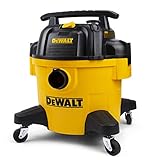
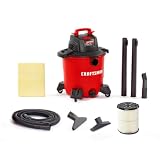

Bosch VAC090AH 9-Gallon Extractor
- HEPA 0.3 micron
- auto filter clean every 15 sec
- 150 CFM
- 97 inch water lift
- 60 dB
Best Shop Vacs for Drywall Dust in October
| Product | Specifications | Action |
|---|---|---|
| DEWALT DXV06P 6-Gallon Wet/Dry Vac |
|
Check Latest Price |
| CRAFTSMAN CMXEVBE17590 9-Gallon Shop Vac |
|
Check Latest Price |
 CRAFTSMAN CMXEVBE17594 12-Gallon Shop Vac CRAFTSMAN CMXEVBE17594 12-Gallon Shop Vac |
|
Check Latest Price |
 WEN VC4710 5-Gallon HEPA Wet/Dry Vac WEN VC4710 5-Gallon HEPA Wet/Dry Vac |
|
Check Latest Price |
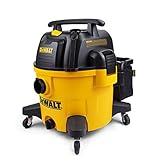 DEWALT DXV09PA 9-Gallon Wet/Dry Vac DEWALT DXV09PA 9-Gallon Wet/Dry Vac |
|
Check Latest Price |
 RIDGID 50353 16-Gallon Stainless Shop Vac RIDGID 50353 16-Gallon Stainless Shop Vac |
|
Check Latest Price |
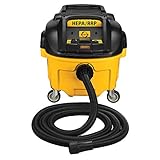 DEWALT DWV010 8-Gallon HEPA Dust Extractor DEWALT DWV010 8-Gallon HEPA Dust Extractor |
|
Check Latest Price |
| Bosch VAC090AH 9-Gallon Dust Extractor |
|
Check Latest Price |
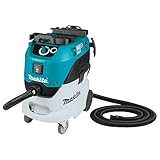 Makita VC4210L 11-Gallon HEPA Extractor Makita VC4210L 11-Gallon HEPA Extractor |
|
Check Latest Price |
 Vacmaster VDK811PW 8-Gallon Self-Cleaning Vac Vacmaster VDK811PW 8-Gallon Self-Cleaning Vac |
|
Check Latest Price |
1. DEWALT DXV06P 6-Gallon Wet/Dry Vac: Best Overall for Drywall Jobs
DEWALT Shop Vacuum 6 Gal 4 HP Poly Wet/Dry Vacuum with Blower DXV06P
6 gallon drum
4 HP motor
50 inch maximum suction
77 dB
7 ft hose
Cartridge filter
Pros
- Portable 6 gallon size suits patch jobs and small rooms
- 4 HP motor pulls strong suction
- 7 ft hose plus a 10 ft cord with cord wrap
- Blower port clears dust from the workshop
- Four rubberized casters roll easily over cords and thresholds
Cons
- Cartridge filter is not rated for the very finest drywall particles
- 6 gallon drum fills quickly on a full room of joint compound
- Filter must be installed before the unit will run
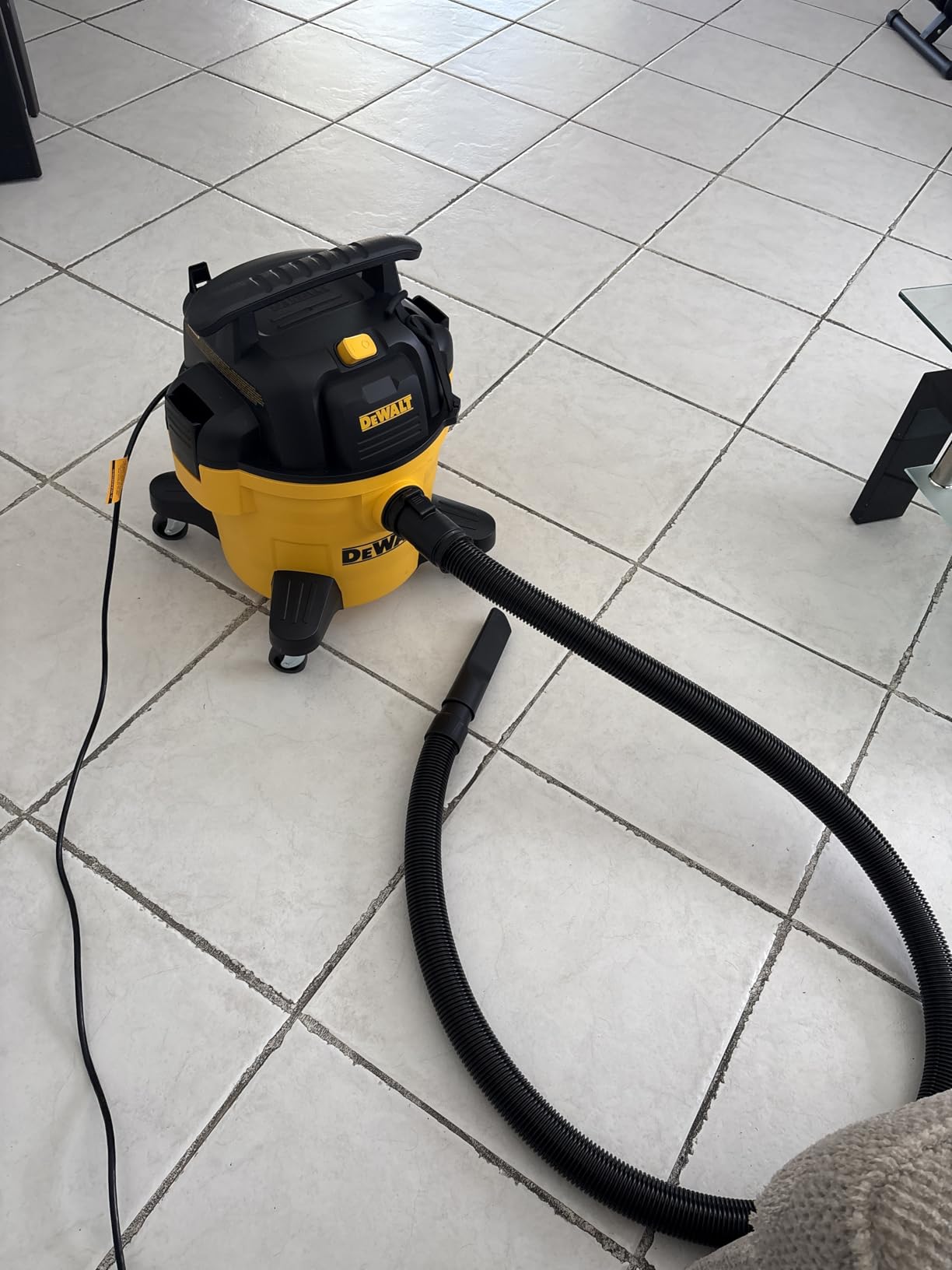
The DXV06P is the one we keep coming back to because it is the least fussy machine here and the easiest to keep suction with. At 4 HP and 50 inches of maximum suction it moves joint compound powder and popped-off drywall chunks without straining, and the 77 dB rating is one of the quieter numbers in this group. Owners consistently praise the suction, the portability and the cord length for small job-site cleanups.
For drywall specifically, its limitation is the filter, not the machine. It ships with a cartridge filter that will not hold the very finest airborne particles, so the honest way to run it on a sanding job is with a disposable fleece bag in place of the bare filter. That single change is what turns this into a genuinely useful drywall vac, and it is why we put this model at the top of the list rather than a bigger machine.
The 6-gallon drum is the tradeoff. On a single bedroom or a patch job it means two or three emptying trips at most, and for anything larger it means pausing mid-room to dump the tank while dust is still settling. If your job is a whole level of drywall, step up to the 9-gallon or 12-gallon models below rather than babysitting this one.
One practical note: the unit will not run until a filter is seated in place. If you swap the cartridge for a bag mid-job, make sure the filter housing is closed properly before you flip the switch, or you will find out the hard way.
How It Handles a Full Room of Joint Compound
At 50 inches of maximum suction, this vac has enough pull to hold a sander pad against a ceiling and to drag crumbs off the floor without stalling. The 7 ft hose gives you roughly 10 ft of reach once you factor in the wand, which covers a normal bedroom from one wall run.
The blower port is the feature people end up loving most. Blowing settled dust off the floor and out of the corners before you run the vac saves a filter cycle, and the 10 ft cord with the wrap means you are not fighting an extension cord in an occupied hallway.
What You Need to Add Before Sanding
Add a fine-dust fleece bag, and add a washable fine-dust or HEPA cartridge if you plan to spend more than a day on the job. Reviewers point out that the included cartridge is the weak link, not the motor, and the forum consensus is that the filter choice matters more than the brand of the vac.
Skip the large 2-1/2 in floor hose through a stepped adapter trick. A stepped adapter slows air, and slowed air drops dust inside the hose where it will not get picked up. Keep the 7 ft hose and the included narrow tools for the drywall pass, and use a wide nozzle for floors and debris.
2. CRAFTSMAN CMXEVBE17590 9-Gallon Shop Vac: Best Value for Serious Dust Volume
CRAFTSMAN CMXEVBE17590 9 Gallon 4.25 Peak HP Wet Dry Shop Vacuum
9 gallon drum
4.25 peak HP
68 inch maximum suction
82 dB
1-7/8 in locking hose
Pros
- 9 gallon capacity covers a full room without stopping
- 68 inch maximum suction outclasses smaller cans
- Includes hose
- wands
- utility
- car and wet nozzles plus a dust bag
- Qwik Lock filter system makes changes fast
- Built-in oversized drain for liquid pickup
Cons
- 82 dB is loud for an occupied house
- Handle and wheel mounting screws were missing from some boxes
- Only one dust bag included so extras are needed for repeat use
This is the value pick, and the reason is capacity plus suction in a package most people overlook. The 9-gallon drum means you can sand an entire room before emptying it, and 68 inches of maximum suction is the highest figure among the mid-size cans in this roundup. Buyers rate it highly for value, suction power, easy assembly and the accessory kit that ships in the box.
RIDGID is the brand forum readers mention most often when they talk about value, and RIDGID owners running Festool and Bosch equipment report the same conclusion we reached here: the vacuum brand matters far less than the filter you put in it. This Craftsman, with a fleece bag and a fine-dust cartridge, does everything a drywall job needs.

What you give up is refinement. At 82 dB it is one of the louder units here, which matters in a home where someone is sleeping on the other side of a wall. The hose and plastic end pieces are also somewhat awkward, and the most repeated complaint is that the hose can swivel the canister while you are working.
Two smaller things worth knowing before you start. Some units have arrived with missing handle and wheel mounting screws, so check the box before you walk it out to the driveway. And only one dust bag ships with the machine, so add a stack of fine-dust bags to the same order or you will be improvising.

Sizing It Against a Real Remodel Schedule
A 9-gallon drum is the sweet spot for a job that is a few rooms, not a whole house. You get enough capacity to finish a room in one pass, and the unit still fits in a stairwell or a hatch in the floor. The Qwik Lock filter system is genuinely useful here because you will be swapping filters more often than you expect.
The 1-7/8 in POS-I-LOCK hose is narrower than the wide hoses on the 12-gallon machines, which is good for picking up settled dust off floors and drywall edges. It is the less flexible option for chunks, so keep a second plan for knocked-off panels and dropped screws.
The Filter Stack This Vac Wants
Run it bag-first. A disposable fleece bag in front of the cartridge catches the bulk of the compound powder, which means the cartridge stays open far longer and the suction stays closer to its published figure through a full afternoon. Fine Homebuilding makes the same argument in a different form, recommending a washable fine-fabric filter because it does a great job with drywall and plaster dust.
Plan on a spare bag and a spare cartridge. On a full sanding day this machine will consume a filter or a bag a week, and the cost of owning the machine is really the cost of the consumables. Buying them in pairs from the start is cheaper and less annoying than running out mid-room.
3. Bosch VAC090AH 9-Gallon Dust Extractor: Best for Automatic Filter Cleaning
Bosch VAC090AH 9 Gallon Dust Extractor with Auto Filter for Grinder 1773AK
9 gallon drum
HEPA 99.97 percent at 0.3 micron
Auto clean every 15 sec
150 CFM
97 in water lift
60 dB
Pros
- Filter pulses every 15 seconds so suction holds through long sanding sessions
- HEPA filter captures 99.97 percent of particles at 0.3 microns
- 150 CFM airflow and 97 inches of static water lift
- Included fleece bag improves dry dust containment
- 60 dB is quiet for a machine this size
Cons
- One-year limited warranty is short for this tier
- Needs the correct power-tool adapters to seal onto non-Bosch tools
The VAC090AH is the machine that made us stop worrying about filter blinding. It pulses the filter every 15 seconds, which is the fastest cycle among the extractors here, and owners point to that interval plus the 99.97 percent capture at 0.3 microns as the reasons it sustains suction through long drywall grinding and sanding sessions. Contractor Talk’s advice about pairing dustless sanding with an auto-clean vac describes exactly what this does.
Two numbers do the heavy lifting. At 150 CFM and 97 inches of static water lift, there is enough pull to keep a sander pad working against a joint, and enough air to carry plaster and masonry dust out of the room rather than into it. The Power Broker dial lets you dial suction down for an orbital sander so you are not sucking the pad flat onto the compound.
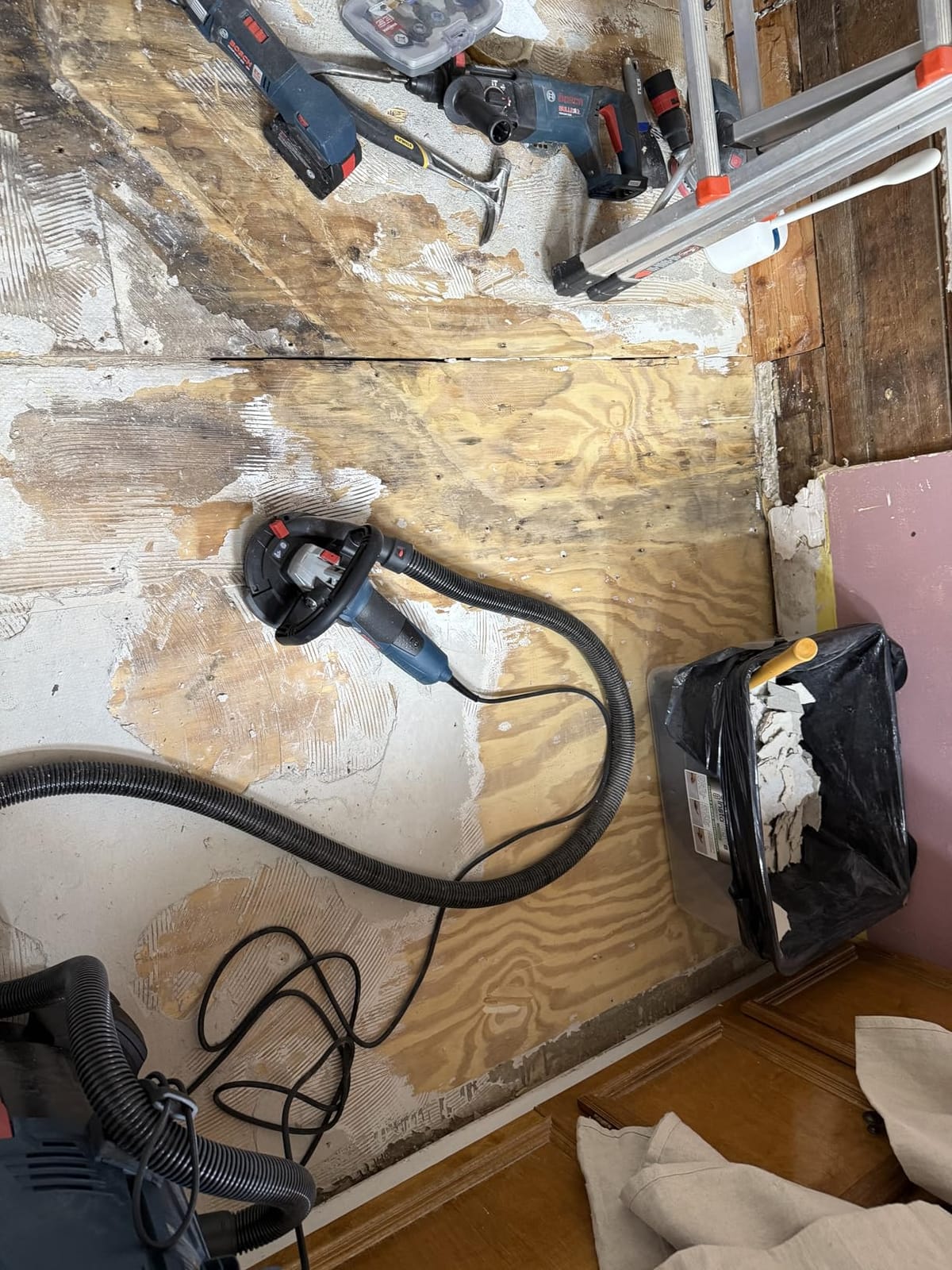
At 60 dB it is genuinely quiet for a shop-class machine, and at 28 pounds it is still portable by hand. The included fleece bag matters more than it sounds, because it catches the coarse fraction before the HEPA filter and stretches the life of an expensive filter.
The two complaints we heard most were the short one-year warranty and the adapter problem. If your sander is not a Bosch, budget for the correct adapter so the hose actually seals, because a leaky seal at the pad is the fastest way to get dust back into the room.
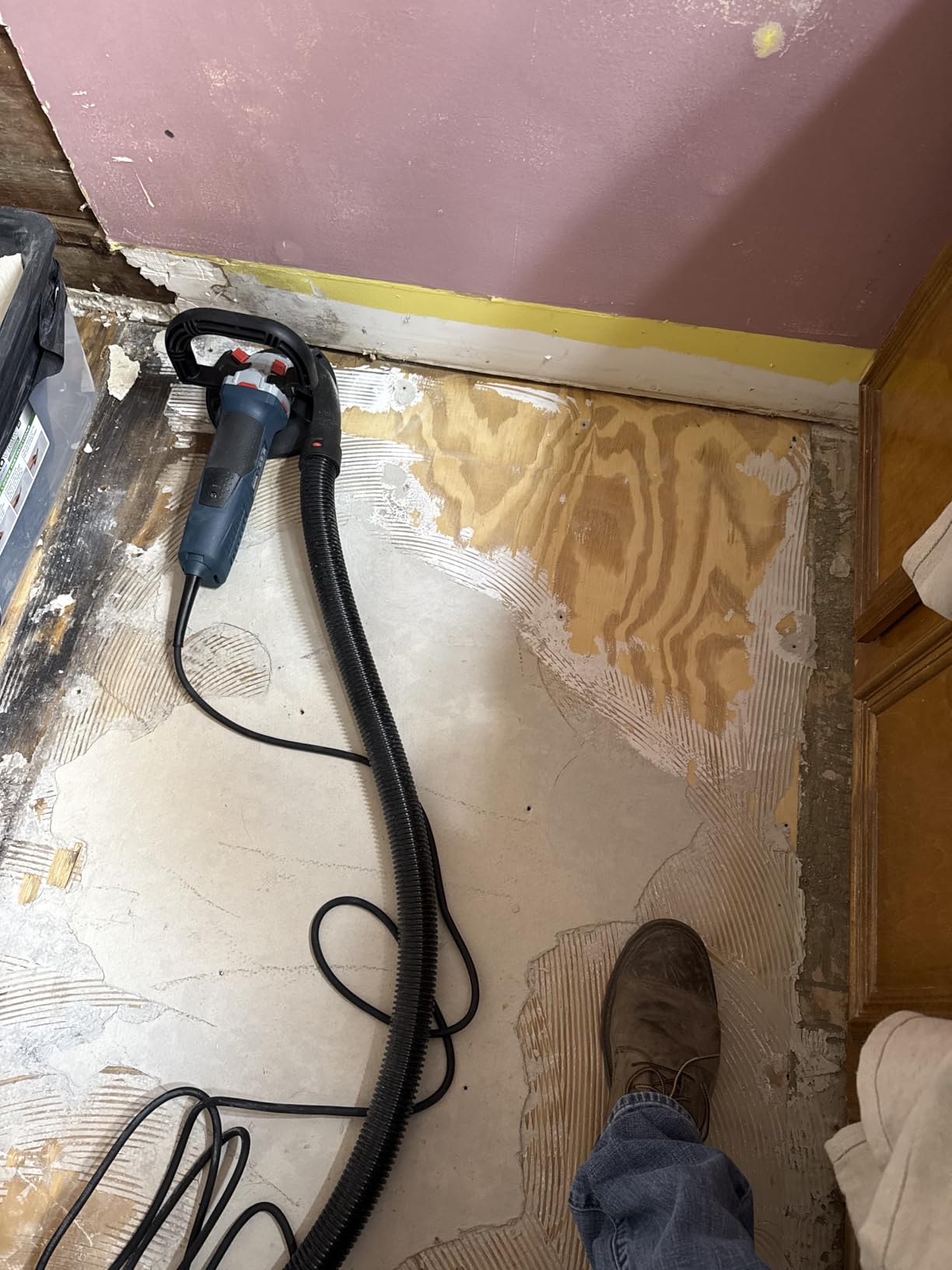
Whether the 15-Second Filter Pulse Actually Matters
It matters most in exactly the situation drywall creates. A blinded filter is a restriction, and a restriction turns into lost suction within a few minutes of sanding. Pulsing airflow back through the filter knocks the powder off the pleats, so the machine keeps pulling at close to its rated output through a whole afternoon.
That is also why the fleece bag matters. The pulse keeps the filter surface clear, but the bag is what keeps the filter from loading in the first place. Belt and braces is the right approach with compound dust.
Who Should Buy This Over a Cheaper Wet/Dry Vac
Buy the extractor if you are machine-sanding, if you are grinding plaster or concrete, or if the room you are working in connects to finished living space. Those are the cases where the fine fraction that a cartridge misses becomes your problem, and where a HEPA stage that never blinds is worth the money.
Stay with a wet/dry vac if you are hand-sanding one small room and cleaning up once. A 9-gallon can with a fleece bag will do that job, and the money you keep is better spent on a cyclone separator.
4. Makita VC4210L 11-Gallon HEPA Extractor: Best for HEPA and Speed Control
Makita VC4210L 11 Gallon Wet/Dry HEPA Filter Dust Extractor/Vacuum
11 gallon drum
HEPA 0.3 micron
148 CFM
92 in water lift
60 dB
1-1/4 in hose
Pros
- HEPA captures 99.97 percent of particulates at 0.3 microns and larger
- Two-stage filtration with a main flat filter at 99.95 percent above 2 microns
- Two speed control lets you dial suction back for orbital sanders
- Tool-activated outlet with a 10 second off delay clears the hose
- 60 dB rated operating level
Cons
- Filter cleaning makes a loud periodic thumping noise
- 1-1/4 in hose is narrow for large drywall chunks
- Only one fleece bag included with the unit
The Makita is the most refined of the extractors here and the one buyers describe as never clogging over months of drywall, concrete and wood dust work. The HEPA stage captures 99.97 percent of particulates at 0.3 microns and larger, and a two-stage setup with a main flat filter at 99.95 percent above 2 microns does the heavy lifting on bulk dust before the fine stage ever sees it.
What separates it from the other two extractors is the two-speed control and the tool-activated outlet with a 10 second off delay. That delay is a small design detail with a real payoff: the machine keeps running briefly after your sander stops, so the hose clears itself instead of dropping a cloud of powder when you lift the pad off the wall.

At 148 CFM, 92 inches of water lift and a 60 dB rating, it has the numbers to handle a full sanding day quietly. It is also the heaviest unit in this roundup at 35.3 pounds, so plan your route between rooms before you lift it out of the truck.
The recurring complaints are worth weighing. The auto filter cleaning makes a loud periodic thumping noise, the 1-1/4 in hose is too narrow for large drywall chunks and wood debris, and only one fleece bag ships with the machine even though the listing implies more. Budget for an extra bag and a second hose cuff adapter.

What Two-Speed Control Changes on a Real Job
High speed is for grinding, cutting and pulling debris off a floor. Low speed is for finish sanding, where full suction holds the pad down too hard and gouges the compound. Having a real dial rather than guessing with your thumb on the trigger is the difference between a smooth finish and a redo.
The 11-gallon drum also gives you room for a long run between dumps, which pairs well with an auto-clean cycle. Fewer stops means less settled dust escaping while the machine is switched off.
The Filter and Bag Reality for This Unit
Two-stage filtration is why this machine keeps its rating over months rather than weeks. The flat pre-stage takes the coarse fraction, the HEPA takes the fine fraction, and neither one blinds on its own. Add a fleece bag ahead of both and you extend the interval further.
Keep a spare bag on hand. Fleece bags for this platform can be harder to find than filters, and a machine that runs dry on consumables stops being an extractor and becomes a very expensive shop vac. Owners who keep one bag spare report never having that problem.
5. DEWALT DWV010 8-Gallon HEPA Extractor: Best for Lead-Safe Work
DEWALT DWV010 HEPA Dust Extractor with Automatic Filter Cleaning, 8-Gallon
8 gallon drum
HEPA filter
Auto clean every 30 sec
Tool actuation
150 CFM
15 ft anti-static hose
Pros
- Meets the EPA Lead RRP Rule for HEPA vacuums with DWV9330 filters
- Filter pulses every 30 seconds so you never stop to clean it manually
- Power tool actuation turns the machine on and off with your sander
- 15 ft anti-static hose with a universal swivel connector
- Handles plaster and drywall dust without clogging
Cons
- Lower raw suction than a standard wet/dry because of the HEPA restriction
- DEWALT accessories and adapters are expensive and not standardized
- Heavy when empty and much heavier when full
If your project is in a home built before 1978, the DWV010 is the pick with a compliance argument behind it. It meets the EPA Lead RRP Rule for HEPA vacuums when paired with the correct DWV9330 filters, which is the specific language that matters if the job involves disturbing old painted surfaces. That is a different question from drywall sanding, and it is the question most roundups on this topic never answer.
For pure drywall work it is excellent. Owners consistently praise the self-cleaning HEPA system as a real advantage for plaster, drywall and lead dust, noting that rooms stay breathable while sanding and that the filters never clog. The 15 amp motor delivers 150 CFM of airflow, and the power tool actuation handles the on and off for you.

There is a straight tradeoff, and reviewers are honest about it. The HEPA filter restricts airflow, so the raw suction is lower than a standard wet/dry vac, and the machine weighs 22 pounds empty and considerably more when full, with only the front wheels swiveling. If you are moving it between rooms all day, that is a lot of lifting.
The connection system is the other recurring gripe. DEWALT adapters are expensive and not standardized, hose accessories are a friction fit that tends to come apart during use, and the stiff proprietary hose is awkward to manage. Budget for the right adapter for your sander and expect to reseat the connection a few times a day.

Whether This Meets the Rules for Your House
If the home is pre-1978 and you will be disturbing painted surfaces, the lead-safe language on this machine is the reason to pick it. The EPA Lead RRP Rule sets requirements for cleaning and for vacuum filtration in that situation, and a HEPA vacuum that meets it removes a decision you would otherwise have to research yourself.
If you are sanding bare drywall in a modern build, the same rule does not apply, and a wet/dry vac with a bag will do the job for less money. We mention this because plenty of people buy compliance gear for a job that does not need it and then complain about the weight.
The 30-Second Pulse and the 15-Foot Hose
A 30 second pulse is slower than the Bosch cycle but still keeps up on drywall, and the 15 ft anti-static hose is the longest in this roundup. Long hose plus a universal swivel connector means fewer connection points between the sander and the machine, and fewer places for a seal to leak.
The single-year limited warranty is worth noting at this tier. Keep the filter and bag reorder habit from day one, because consumable availability matters more than warranty length for how long this machine stays useful to you.
6. CRAFTSMAN CMXEVBE17594 12-Gallon Shop Vac: Best for Heavy Debris and Wet Pickup
CRAFTSMAN CMXEVBE17594 12 Gallon 6.0 Peak HP Wet Dry Shop Vacuum
12 gallon drum
6.0 peak HP
39 inch maximum suction
75 dB
Dual-Flex 2-1/2 in hose
Pros
- 6.0 peak HP with a 12 gallon drum for garage and renovation work
- 2-1/2 in Dual-Flex hose swivels 180 degrees at each end and resists kinking
- 20 ft power cord wraps around the carry handle
- Rear blowing port clears leaves and grass clippings
- Qwik Lock pleated paper filter changes fast
Cons
- Cartridge filter is not rated for very fine drywall particles
- Bulkier 12 gallon drum is a poor fit for small jobs and tight storage
- Heavier and louder than smaller cans in the same family
When a drywall job turns into a demo job, this is the machine that makes sense. The 12-gallon drum and 6.0 peak HP motor handle garage, jobsite, renovation and flood cleanup, and the 2-1/2 in Dual-Flex hose swivels 180 degrees at each end, which means it follows you around debris instead of fighting you. Owners highlight the motor, the 20 ft cord and the kinking-resistant hose as the standouts.
The wide hose is the real drywall advantage here. Narrow 1-1/4 in hoses choke on dropped drywall chunks, and this one takes a 2-1/2 in line. The built-in rear blowing port is what you use between passes to push settled powder off ledges and out of corners before the next vacuum run.

What you trade away is portability. At 22 pounds and a 12-gallon drum, this is not a unit you carry up a ladder or into an attic, and the size is a poor match for a single small room. The 39 inch maximum suction figure is also the lowest of the higher-capacity cans here, so while it handles volume well it is not the machine for holding a sander pad to a ceiling.
Same filter caveat as its smaller sibling: the pleated paper cartridge is not rated for the very finest particles, so run a fine-dust bag in front of it for any sanding work. It is a debris and cleanup machine first, and a dust machine with the right bag.

When a 12-Gallon Drum Pays for Itself
It pays off when you are removing popcorn ceilings, opening walls, or knocking out a bathroom. Each of those jobs produces far more volume than sanding does, and stopping every few minutes to empty a 6-gallon drum is the kind of interruption that adds an hour to a day.
The 20 ft cord means you can work a room from one outlet position, and the Qwik Lock filter system means the filter change itself takes seconds. Both of those details matter more on a long cleanup day than they do on a one-hour patch job.
Pairing It With a Smaller Fine-Dust Machine
Most pros we talked to run a two-vac setup, and this is the half of it. The big wide-hose machine handles chunks, mud, and flood water, while a smaller bagged or HEPA unit handles the airborne fine fraction that gets past any wide hose nozzle.
If you only want one machine, this one is fine as long as you add the right filter and accept the manual clean. If your job is mostly sanding and only partly demo, the 9-gallon models are the smarter single purchase.
7. DEWALT DXV09PA 9-Gallon Wet/Dry Vac: Best for Balanced Power and Size
DEWALT 9 Gallon Wet/Dry VAC, Heavy-Duty Shop Vacuum with Attachments, 5 Peak HP, with Blower Function, DXV09PA
9 gallon drum
5 peak HP
85 inch maximum suction
78 dB
7 ft hose
Blower port
Pros
- 5 peak HP motor with 85 inch maximum suction for demanding pickup
- Upgraded hose is more durable and flexible than earlier versions
- Blower port with three nozzle adaptors converts the unit into an air pump
- Accessory storage bag keeps the included attachments organized
- Water-resistant on/off switch and a built-in tank drain
Cons
- Cartridge filter misses the finest drywall particles
- Heavier at 22.5 pounds than smaller wet/dry vacs in the range
- Peak horsepower is a lab figure and not real-world output
The DXV09PA sits in the middle of this list and takes the most arguments. At 5 peak HP with 85 inches of maximum suction, it has the highest published suction figure among the plain wet/dry cans here, and 86 percent of its reviews are five stars. Owners point to strong suction, the improved hose, a generous accessory kit and the storage bag as the biggest wins over earlier models.
What makes it a good drywall pick rather than just a powerful one is the blower port with three adaptors. Blowing the room down between sanding passes, then vacuuming what is loose, roughly halves the amount of fine dust that ever reaches your filter, and that is a cheaper way to protect the filter than replacing it.

The cartridge filter is the weak point, and it is the same limitation as the other wet/dry cans here. It will not capture the very finest airborne drywall dust well, which is the reason people in drywall forums insist on a bag or a washable fine-fabric filter regardless of which vac they own.
At 22.5 pounds it is heavier than the 6-gallon and 9-gallon Craftsman units, so you feel every one of those pounds at the top of a stairwell. Owners also point out that peak horsepower is a lab comparison figure and does not reflect real-world output, which is fair, and the published 85 inch suction figure is the number to actually shop by.

How 85 Inches of Suction Feels on a Sander
It is more than enough to hold a random orbit sander pad flat against a taped joint, and the wide-ish 7 ft hose handles the wand without a lot of kinking. Higher suction also means less chance of the machine cycling down mid-pass, which is where dust escapes at seams.
Where it stops short is fine-particle capture, and that is a filter problem. No amount of suction makes a cartridge filter hold particles it was never designed to catch.
Using the Blower Port as a Filter-Saving Move
Run the blower first, vacuum second. Blowing settled dust off the floor, the baseboards and the tops of the studs clears the bulk of the powder before it settles back down, so the vacuum run picks up concentrated debris instead of an even spread of the finest particles.
On a two-day job that habit stretches a cartridge from one day to several, and the accessory storage bag keeps the adaptors where you can find them the second day. If you add a cyclone separator, this machine pairs well because the separator takes the bulk and the cartridge handles the rest.
8. Vacmaster VDK811PW 8-Gallon Self-Cleaning Vac: Best for 1 Micron Capture
Vacmaster Professional VDK811PW 0201 8 Gal Wet/Dry Vac Self-Cleaning Filter
8 gallon drum
Self-cleaning filter
Capture down to 1 micron
84 in water lift
72 dB
11 accessories
Pros
- Self-cleaning filter system keeps airflow high during fine drywall dust work
- High-efficiency cartridge and dust bag capture particles down to 1 micron
- 84 inch suction from an 11.5 amp motor
- 17 feet of reach with a kink-resistant hose and cord
- Eleven accessories included and on-board storage
Cons
- Self-cleaning cycle adds noticeable noise during operation
- Cartridge filtration is not HEPA-rated for airborne fine particles
This one answers the question readers ask most about affordable extractors: can you get automatic filter cleaning without buying into the professional tier? The Vacmaster’s self-cleaning system is the feature owners single out, because it keeps suction steady through long drywall and concrete cleanup sessions without stopping to tap out the filter. Seventy-nine percent of its reviews are five stars.
The filtration is specified down to 1 micron with the high-efficiency cartridge and dust bag working together, and the 84 inch water lift from an 11.5 amp motor is plenty of pull for a floor nozzle on settled compound. At 72 dB it is also quieter than several larger cans in this roundup.

It is not HEPA rated, and owners say so plainly. One-micron capture will not stop the very finest fraction of compound powder from reaching the room, so if you are working next to finished living space or dealing with old painted surfaces, you need a real HEPA stage instead.
The self-cleaning cycle adds noise while it runs, which is a real consideration in an occupied house where you already have a sander running. Otherwise the package is generous: 11 accessories, on-board hose, cord and tool storage, large non-marring rear wheels, and oversized latches that hold a seal.

What Self-Cleaning Actually Changes Day to Day
On a bagged run, the dust never reaches the filter in the first place, so self-cleaning matters less. On a run with a bare cartridge, the cycle is what keeps the machine from suffocating. Dusty drywall jobs are dusty enough that the difference shows within a couple of hours.
The 17 feet of combined hose and cord reach is genuinely useful in a room where you would rather not run an extension cord across a walkway. That reach is why this unit works as a second vacuum for the room the big 12-gallon machine cannot comfortably enter.
Where It Fits in a Two-Machine Setup
This is a natural partner to a large wide-hose wet/dry vac. The big machine gets the chunks and the wet pickup, and this one gets the fine dust that settles after. Run them in sequence, not at the same time, and the room stays breathable.
Buy a spare cartridge and a sleeve of bags with the machine. The self-cleaning cycle extends cartridge life, but the one-micron rating depends on the cartridge being clean, and a blinded cartridge is a cartridge that is quietly letting dust through.
9. RIDGID 50353 16-Gallon Stainless Steel Shop Vac: Best for Long-Term Durability
RIDGID 50353 1610RV Stainless Steel 16-Gal. Wet Dry Shop Vacuum with Cart, 6.5 Peak HP Motor, Large Wheels, Pro Hose, Drain, and Blower Port, Red
16 gallon stainless drum
6.5 peak HP
70 dB
8 ft hose
Cart and large rear wheels
Pros
- Stainless steel drum is far easier to scrub clean than plastic
- 6.5 peak HP motor with high-performance pickup
- Cart and large rear wheels roll over stairs and rough terrain
- Long power cord reduces the need for an extension cord
- Accessory pouch on top and a blower port for clearing debris
Cons
- Hose connection pieces feel cheap and can separate under pull
- Attachments do not lock on securely
- Cart assembly is fiddly and some units arrive with damage
The RIDGID is the one you buy when you want a machine that survives a decade of shop use, and buyers of this model report exactly that. The stainless steel drum is the reason. Joint compound slurry bakes onto plastic and eventually cracks it, but a stainless drum can be scrubbed clean after every drywall job and still looks new, which is a meaningful difference for anyone doing this more than once.
RIDGID is also the brand that comes up most often in forum threads about value, with Garage Journal and multiple Reddit conversations pointing to the same conclusion about reasonably priced units. The 6.5 peak HP motor, the 70 dB operating level, and the 8 ft hose make it the most substantial ordinary wet/dry vac in this roundup.

The honest weakness is the fittings, not the machine. Hose connection pieces feel cheap and can separate under pull, attachments do not lock on securely, and the cart assembly is fiddly. Owners also report occasional units arriving with a dented tank or a damaged cord, so inspect it before the first job.
For drywall filtration, the same rule applies. It has a cartridge filter, not a HEPA stage, so a disposable fine-dust bag and a washable fine-dust cartridge turn it into a genuinely capable drywall machine. The stainless drum is the reason to own it long term, not the filter.

Why Stainless Matters More Than Horsepower Here
Because drywall jobs end in a cleanup event, and that cleanup is what kills plastic tanks. Mud splashes, wet compound, and a drywall saw’s worth of slurry get into the drum, and plastic ends up stained and brittle after a few cycles. Stainless shrugs it off and can be scrubbed with a stiff brush and a hose.
It also means the tank is worth something in five years in a way a plastic canister is not. If you are the person who re-drywalls a rental every couple of years, that is the argument that decides the purchase.
Maneuvering a 16-Gallon Machine on a Jobsite
The cart, push handle and large rear wheels are built for stairs and thresholds, which is where most 16-gallon cans become a problem. You can roll this one through a doorway without picking it up, and the long power cord usually means you do not need an extension lead.
The accessory pouch on top keeps nozzles accessible, and the blower port clears the driveway and the sawdust pile in the corner of the garage. For drywall, the 16-gallon capacity means you can finish a room in one pass and then go straight to wet cleanup without a mid-session detour.
10. WEN VC4710 5-Gallon HEPA Wet/Dry Vac: Best Budget Pick for Patch Jobs
WEN VC4710 10-Amp 5-Gallon Portable HEPA Wet/Dry Shop Vacuum and Blower with 0.3-Micron Filter, Hose, and Accessories,Orange
5 gallon drum
F9 HEPA 0.3 micron filter
10 amp motor
Doubles as blower
Onboard storage
Pros
- F9 HEPA filter captures particles as small as 0.3 microns at this price point
- Lightweight compact body with a carrying handle for easy storage
- Doubles as a blower and a vacuum with onboard storage
- Suction is strong for pet hair and fine household dust
Cons
- No prefilter ahead of the HEPA
- so it clogs fast in a dirty space
- Two-piece extension wands do not stay locked together
- Short 5 ft hose and cord limit reach
Most owners call this the best value in its category, and the reason is the F9 HEPA filter. At a tier where nearly every rival ships a plain paper cartridge, capturing particles as small as 0.3 microns is a genuine upgrade, and it is the single feature that makes this machine interesting on a drywall topic at all.
It also weighs almost nothing and stores flat against a wall, which is what makes it the right pick for a patch job in a hallway or a closet. Sixty-seven percent of its reviews are five stars, and the light weight plus onboard attachment storage is what owners praise most alongside the filtration.

The design flaw to know about is the missing prefilter. With nothing ahead of the HEPA cartridge, the filter takes the full load of whatever you vacuum, so in a dirty space like a garage it clogs quickly. In a clean, finished room with light dust, that limitation mostly stays theoretical.
Suction is also weaker on heavy debris than higher-horsepower wet/dry vacs, and the two-piece extension wands do not stay locked together well, especially when new. The 5 ft hose and short cord mean you will want an extension cord in a larger room.

What This Machine Is Actually Good For
Patch jobs, corner repairs, and the cleanup after a small drywall repair. The 0.3 micron filter keeps the fine white powder in the tank, which is the one thing a cheap wet/dry vac usually fails at, and the 5-gallon drum is the right size for the amount of debris that job creates.
It is also a legitimate water pickup machine, which matters because drywall work generates wet compound, wet sanding slurry, and a wet floor at the end of every pass. That combination of HEPA-level dry filtration and wet pickup is hard to find at the entry tier.
Where It Falls Short of a Real Extractor
There is no automatic filter cleaning, no tool-activated outlet, and no cyclone stage. On a long sanding day the filter will still load, and you will still stop to change it. That is the difference between a good small wet/dry vac and a dust extractor, and it is a real one.
Also keep it out of the garage. Without a prefilter, drywall dust plus tracked-in shop grit will blind that F9 cartridge far faster than anything else you will run through it. If your project happens in a dirty space, spend up to one of the automatic-filter machines instead.
Add a Cyclone Separator and Fine-Dust Bag: The Single Biggest Upgrade
Here is the part of this topic that almost every roundup leaves out, and it matters more than any of the ten machines above. A cyclone separator is a bucket-mounted unit that spins the bulk of the dust out of the airstream before air ever reaches the filter. Mount one between your vac and your hose, drop a fine-dust bag into the bucket, and the filter sees a fraction of the powder it used to swallow.
The effect is bigger than it sounds. A cartridge that blinded every ten minutes now runs for a full day. Suction stays closer to the published figure, because the machine is not fighting a blocked filter. And the exhaust stays clean, because the coarse fraction never made it that far. If you only add one thing to a shop vac for drywall, add this.
If you are shopping by hose diameter, note the mismatch trap that forum users hit repeatedly. A 2-1/2 in floor hose forced through a stepped adapter slows the air down, and slowed air drops dust inside the hose where the vacuum will never recover it. Match the separator inlet to the hose you will actually use, not the hose you wish you had.
Pick the separator and the bag. Choose a bucket-style cyclone separator with an inlet matched to your hose diameter, and pick a fine-dust fleece or paper bag that fits that bucket. Readers in drywall forums treat the bag as non-negotiable, because drywall dust will blow through and clog a baffle filter no matter how good the vac is.
Mount it between the vac and the hose. The vac hose connects to the separator inlet, and the sander hose connects to the separator outlet. Seal both connections. The point of the setup is that dust gets thrown into the bucket and stays there, so any gap at a cuff defeats the purpose.
Run a washable fine-dust or HEPA cartridge behind it. The separator handles the bulk, the bag handles the fraction the separator cannot spin out, and the cartridge handles what is left. Fine Homebuilding recommends a washable CleanStream filter specifically because the fine fabric does a great job with drywall and plaster dust.
One more habit completes the system: a box fan with a few filters running in a doorway or window. The vacuum handles settled dust, and the fan handles whatever stays airborne after you stop. It is the cheapest dust control on the job site, and it is the step most people skip.
If you already own a strong wet/dry vac, this stack will do more for your drywall results than upgrading to a more expensive vacuum would. If you are starting from nothing, our shop vacuum picks for garages guide covers the same machines from a cleanup angle instead of a sanding angle.
Why Your Shop Vac Keeps Clogging on Drywall Dust
Two failure modes account for nearly every complaint we found in drywall forums, and both have the same root cause: too much powder reaching the filter. Here is what is actually happening in each case, and what fixes it.
The filter blinds and suction dies mid-job. A pleated cartridge collects dust on its surface, the surface area fills, and airflow drops. You notice it as a sander that stops pulling and a vac that sounds different. The fix is a bag in front of the cartridge, a washable fine-dust filter, or a separator that removes the bulk before the cartridge sees it. Tapping the filter out on the driveway mid-job is not a fix, it is a delay.
Dust blows back out of the exhaust. This is the single most reported failure in the forums, and the sentence people keep writing is that the vac quit and started blowing dust everywhere. It happens when the filter is already loaded, the machine loses airflow, and the fine fraction that should have been trapped gets carried out the back. A HEPA or fine-dust filter plus a bag stops it; blowing a more powerful machine at the problem makes it worse.
Two smaller causes worth ruling out. A stepped hose adapter throttles airflow and drops dust inside the hose where nothing will pick it up, and a missing or misseated filter housing lets unfiltered air bypass the cartridge entirely. If the machine will not run until a filter is installed, respect that interlock rather than working around it.
How to Choose a Shop Vac for Drywall Dust
Airflow, Water Lift, and Peak Horsepower Are Three Different Numbers
Peak horsepower is a motor rating used for lab comparison, and it describes neither airflow nor pull. Ignore it. CFM is airflow, which is what moves the volume of air through a sander, and inches of water lift is pull, which is what holds a pad against a joint. A 15 amp extractor moving 150 CFM will outperform a 5 HP wet/dry vac on fine dust, because the extractor was designed around the filter.
Filtration: HEPA, Fine-Dust Cartridge, or Bag
Three options, in increasing order of cost and effectiveness. A fleece or paper bag is the cheapest and catches bulk powder, but the bag is a consumable and the machine is still only as good as the cartridge behind it. A fine-dust cartridge handles particles a paper cartridge lets through, and a washable version is the DIY choice people recommend most.
A HEPA filter rated at 99.97 percent of particles at 0.3 microns is the only option that addresses the fine fraction properly, and it is the one that matters when you are next to finished living space or disturbing pre-1978 paint. Read our air purifier picks for dust to handle what stays airborne after vacuuming.
Hose Diameter and the Tool Port
A narrow hose picks up settled dust off floors and drywall edges well. A wide hose takes chunks and water, and resists clogging when you knock a piece of panel loose. Match the hose to the sander port with the correct adapter, and never force a large hose through a stepped reducer, because throttled air drops dust in the hose.
Automatic Filter Cleaning and Tool-Activated Outlets
An auto filter clean cycle is the feature that separates a dust extractor from a wet/dry vac. Pulses every 15 seconds and every 30 seconds both work; the faster cycle holds suction better on heavy grinding. A tool-activated outlet with a run-on delay means the machine starts when your sander starts and keeps running briefly after it stops, clearing the hose instead of releasing it as a dust cloud.
Capacity, Noise, and the Job You Actually Have
A 5 to 6 gallon drum suits a patch job. A 9 gallon drum covers a room or two. A 12 to 16 gallon drum is for demo and flood work. Noise matters more than most buyers expect: an 82 dB machine is exhausting in an occupied house at the end of a long day, while a 60 dB machine is not.
For sanding decisions, our drywall sander guide for DIYers covers matching the pad and disc hole pattern, which is the part that actually decides how much dust reaches the hose in the first place.
Cost of Ownership: The Filters Are the Real Budget
Nobody buys a vac for the filter, and every drywall owner ends up buying filters anyway. A bagged machine consumes a bag every few drywall sessions. A HEPA extractor consumes an expensive HEPA cartridge plus fleece bags. A cyclone adds a bag layer and reduces how often the cartridge gets replaced, which is the argument for buying the separator even when the vac is already good.
Before you commit to a machine, check that its filters and bags are sold separately and reorderable. A HEPA the brand does not sell on its own is worth very little, and forum advice treats reordering consumables as the first question to ask about any vacuum.
Safety: Silica, Pre-1978 Homes, and the Order of Cleanup
Drywall compound and cementitious joint products contain crystalline silica, and the fine fraction produced by sanding is a regulated respirable hazard. Use a HEPA-filtered machine or a bagged fine-dust setup rather than a bare cartridge, and follow the respirator and eye protection guidance for your own situation. If you are grinding masonry or concrete as well, the silica load is higher still.
In a home built before 1978, sanding or disturbing painted surfaces can release lead. The EPA Lead RRP Rule sets specific requirements for that work, and HEPA vacuums that meet it are the correct tool. One of the picks above carries that lead-safe language explicitly, and for pre-1978 work it should be the deciding factor rather than a footnote.
Cleanup order matters more than people expect. Wet-wipe surfaces first so airborne dust stops, then vacuum, then dry-sweep the floor last. Never dry-sweep drywall compound, because a broom simply relaunches the powder you just cleaned up. And leave the room ventilated until the air is actually clear, not just until the visible dust is gone. For a room with no ventilation at all, running an air purifier is a useful supplement, as we cover in our workshop dust collector guide for the larger-airflow side of the problem.
Frequently Asked Questions
Can I use a shop vac for drywall dust?
Yes, but not with the cartridge filter it came with. Drywall dust blinds a standard paper cartridge within minutes, the machine loses suction, and the remaining fine powder is pushed back out of the exhaust. Add a disposable fine-dust bag, upgrade to a fine-dust or HEPA cartridge, or mount a cyclone separator, and the same vac handles joint compound dust without releasing it into the room.
What shop vac filter should I use for drywall dust?
A disposable fine-dust bag in front of a washable fine-dust cartridge is the DIY answer, because the bag catches the bulk of the powder so the cartridge does not blind. A HEPA filter rated at 99.97 percent of particles at 0.3 microns is the step up for work next to finished living space or in a pre-1978 home. Avoid running drywall work on a bare paper cartridge, because it will clog and blow dust back.
What is the best vacuum for picking up drywall dust?
For most people, a mid-size wet/dry vac with a fine-dust bag and washable cartridge is the best balance of cost and results. For machine sanding, whole-house work, or rooms connected to finished space, a HEPA dust extractor with automatic filter cleaning and a tool-activated outlet is the correct answer. Our overall pick is the DEWALT 6-gallon wet/dry vac, which pairs well with a cyclone separator.
Is it okay to vacuum up drywall dust?
It is fine to vacuum drywall dust with a machine set up for it, meaning a bag or cyclone ahead of a fine-dust or HEPA filter. What is not fine is vacuuming it with a bare paper cartridge, which clogs immediately and exhausts the fine fraction back into the room. Never dry-sweep drywall compound, and follow respirator and eye protection guidance because the fine fraction carries respirable silica.
Why does my shop vac keep clogging on drywall dust?
Because too much powder is reaching the filter. A pleated cartridge collects dust on its surface until airflow drops and suction dies mid-job. The fix is a disposable fine-dust bag in front of the cartridge, a washable fine-dust filter, or a cyclone separator that spins the bulk of the dust into a bucket before it reaches the filter. Also check that no stepped hose adapter is throttling the airflow.
How do I stop dust coming out of my shop vac exhaust?
Exhaust blowback almost always means a loaded filter, because a blinded cartridge leaks the fine fraction straight through the media and out the back. Add a fine-dust or HEPA filter, run a disposable bag ahead of it, and clean or pulse the filter every session rather than waiting for it to choke. A cyclone separator reduces how much dust ever reaches the filter in the first place.
How long does drywall dust stay in the lungs?
Silica particles that reach the alveoli can remain there for years, which is why drywall sanding and cutting is treated as a serious long-term exposure risk rather than a short nuisance. Drywall compound and cementitious joint products contain crystalline silica, and OSHA regulates the respirable fraction. Use a HEPA-filtered or bagged setup, follow the respirator guidance for your work, and avoid dry sweeping compound dust.
The Verdict: Which Shop Vac Wins for Drywall Dust
For most people sanding and cleaning up drywall at home, the DEWALT 6-gallon wet/dry vac is the best shop vac for drywall dust we tested. It is quiet for its size, easy to move, strong enough for a 4 HP motor to matter, and cheap enough that adding a cyclone separator and a supply of fine-dust bags costs less than the premium tier does.
Match the machine to the job beyond that. Machine sanding, whole-house work, or anything next to finished living space belongs with a HEPA extractor, and the Bosch VAC090AH is the one that holds suction longest. A pre-1978 home with lead in the paint belongs with the DEWALT DWV010. A garage full of debris and water belongs with the 12-gallon Craftsman, and a patch job in a finished hallway belongs with the WEN.
Whichever one you choose, the bag and the separator are what turn it into a drywall machine. Start there, keep spare filters and bags on hand, and the best shop vac for drywall dust will be the one you already own.