
Winter air in a cold-climate home can drop below 20 percent relative humidity, and that is the number behind gapping hardwood floors, static shocks at every door handle and sinuses that ache from November through March. If you are searching for the best whole house humidifiers for dry winters, the short version is this: a duct-mounted bypass or fan-powered evaporative unit on a forced-air furnace is the only approach that treats every floor at once, and the AprilAire 500 is the one we keep coming back to. This roundup covers 12 units we analyzed side by side, from furnace-mounted bypass models to freestanding console evaporatives and smart units you can drive from a phone, with 2026 pricing and availability changing constantly, so we focused on hardware, capacity, coverage and maintenance burden.
Something worth saying up front: most homes that shop for a whole house humidifier do not need one, and a good number that buy the wrong one end up with mold. Dry winter air is a real problem in Minnesota, Wisconsin, the Dakotas and the Northeast, and it is usually a problem in a home with a wood stove, poor duct sealing or a leaky envelope. Our guide therefore starts with a diagnostic checklist before it starts with a product, because the cheapest humidifier in the catalog is the one you did not buy.
We analyzed every unit’s rated output, coverage figure, power draw, warranty, consumable parts and the real complaint patterns that show up repeatedly in owner reviews and home improvement forums. We also pulled in installation detail that most roundups skip, including where the humidistat actually belongs and what to do with the system when the heating season ends. For room-only options, our humidifier picks for dry skin cover smaller spaces, and small office setups are covered in our desk humidifier guide.
Table of Contents
Top 3 Picks for Best Whole House Humidifiers in October
AprilAire 500
- 12 GPD output
- 3000 sq ft coverage
- Automatic control with outdoor temperature sensor
- 24V duct mount
AIRCARE MA1201
- 3.6 gallon tank
- 3600 sq ft open area
- Wick evaporative
- no white dust
- 36 hour runtime
Vornado Evap40
- 4 gallon dual tank
- 1000 sq ft coverage
- Wick evaporative
- Adjustable humidistat
- 43W
All 12 Whole House Humidifiers Compared in 2026
Every model below appears once in this table and gets its own review further down. Coverage figures are manufacturer ratings that assume a tightly built home, so treat them as a ceiling rather than a promise.
| Product | Specifications | Action |
|---|---|---|
| AprilAire 500 |
|
Check Latest Price |
| AIRCARE MA1201 |
|
Check Latest Price |
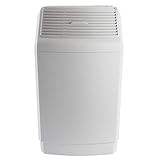 AIRCARE Space Saver 831000 AIRCARE Space Saver 831000 |
|
Check Latest Price |
 AIRCARE Pedestal EP9 800 AIRCARE Pedestal EP9 800 |
|
Check Latest Price |
 Honeywell HE280A Honeywell HE280A |
|
Check Latest Price |
 GeneralAire 1042LH GeneralAire 1042LH |
|
Check Latest Price |
 Honeywell HM750A1000 Honeywell HM750A1000 |
|
Check Latest Price |
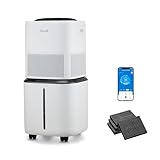 Levoit Superior 6000S Levoit Superior 6000S |
|
Check Latest Price |
 Lacidoll 16L Lacidoll 16L |
|
Check Latest Price |
 GloryAir 9L GloryAir 9L |
|
Check Latest Price |
| Vornado Evap40 |
|
Check Latest Price |
 Vornado EVDC500 Vornado EVDC500 |
|
Check Latest Price |
Is Your Home Actually Too Dry? A Winter Checklist
If four or more of these are true in your home between December and February, a whole house humidifier is worth the money. If only one or two are true, a room unit in the bedroom will solve the problem for a fraction of the install effort.
Gapping or cupping hardwood. Boards that lift at the edges in January and settle in April are the clearest physical sign of low indoor relative humidity. The wood is giving up moisture it took years to absorb.
Static that discharges through you. If you get shocks reaching for the car door, the light switch or a bedrail, the air is almost certainly sitting under 25 percent relative humidity.
Cracked jointing on solid wood furniture. Oak, walnut and maple glue joints fail when the room swings between very dry and humid states year after year.
Peeling or crazing paint around window frames. Dry air makes the wood under a window frame shrink faster than the paint on top of it can flex.
Sinus irritation, dry eyes or eczema flares. Humidifiers are genuinely helpful for these symptoms, and many owners report a noticeable difference within a day or two of running a unit. Our dry skin humidifier guide covers the room-level options if that is your only complaint.
Three portable humidifiers running at once, all empty. If you are refilling bedroom units twice a day and the hallway is still bone dry, portable capacity is the problem, not the concept. This is the exact scenario that appears over and over on home improvement forums, and it is the moment a duct-mounted unit starts to make sense.
One caveat that matters more than any spec sheet: the U.S. EPA recommends keeping indoor relative humidity between 30 and 50 percent, and readings of 60 percent or higher in winter invite condensation on cold windows, inside ductwork and on finished surfaces. If your hygrometer reads above 50 percent, the answer is ventilation, not a bigger tank.
1. AprilAire 500 Whole-House Humidifier – Best Overall for Forced-Air Homes
AprilAire 500 Whole-House Humidifier, Automatic Compact Furnace Humidifier, Large Capacity Whole-House Humidifier for Homes up to 3,600 Sq. Ft., White
12 GPD evaporative
3000 sq ft listed coverage
Dual indoor and outdoor sensors
24V duct mount
Pros
- Holds set humidity automatically across a wide range
- 12 GPD output suits large tightly built homes
- Digital control shows percent humidity and service alerts
- No moving parts so it runs quietly
Cons
- Install needs sheet metal
- plumbing and low-voltage wiring experience
- Included wire and bypass duct length are often too short
- Manual covers a wiring schematic rather than step-by-step wiring
- Runs only in heating season to avoid condensation
This is the unit we recommend to anyone with a forced-air furnace and a real winter dryness problem. It mounts on the supply plenum, pulls warm furnace air across a water-soaked water panel and pushes the humidified air into the duct system, so the moisture reaches every register rather than one open room. The rated output is 12 gallons per day with a listed coverage of 3000 square feet, and the housing measures roughly 10.25 by 15.63 by 13 inches with a weight of 7.8 pounds, which is compact enough to fit on most plenums with service clearance.
What separates it from cheaper bypass units is the control. It runs on 24 volts AC, draws only 15 watts and includes a 24VAC transformer, humidifier control, valves and installation instructions, and the digital control reads indoor relative humidity against an outdoor temperature sensor. That sensor combination is why owners on forums repeatedly credit it with no window condensation, which is the failure mode that condemns cheaper installations.
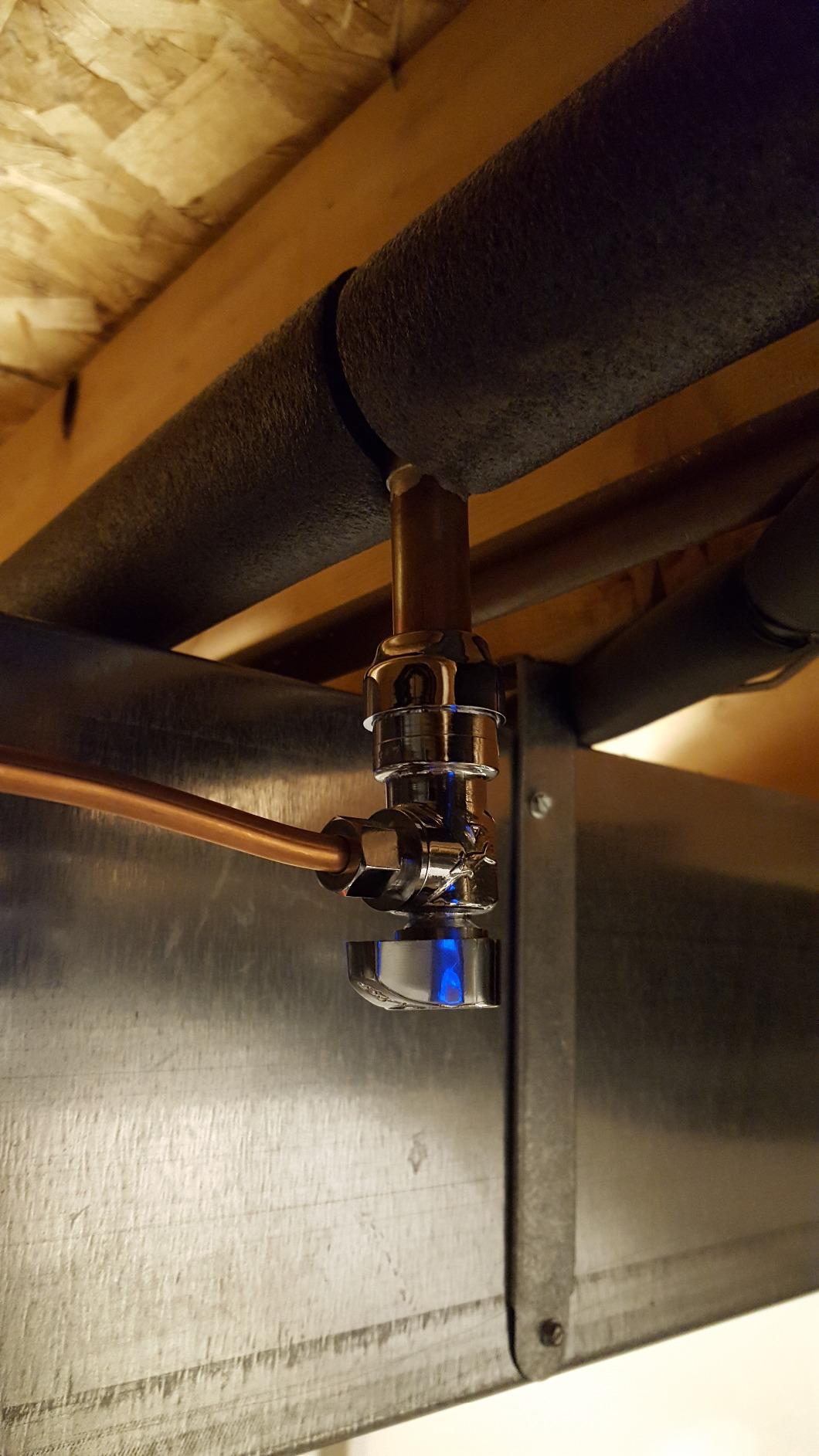
Reviewers with HVAC or electrical backgrounds report installing it confidently in three to five hours. Across 1812 reviews averaging 4.6 stars, the common report is that it delivers and holds 40 to 50 percent relative humidity in homes between 1500 and 3000 square feet, and that sinus, allergy and static symptoms improve measurably. The warranty is five years from the manufacturer, which is longer than most in-duct units in this group.
The catch is honest and worth repeating: beginners are strongly advised to hire a technician because of the sheet metal duct work and the furnace-side wiring. The supplied wiring and bypass duct lengths are frequently too short for a typical installation, and copper tubing, plastic drain tubing, elbows and low-voltage wire are sold separately. If the install is done properly, though, this is the most dependable whole house humidifier we analyzed.
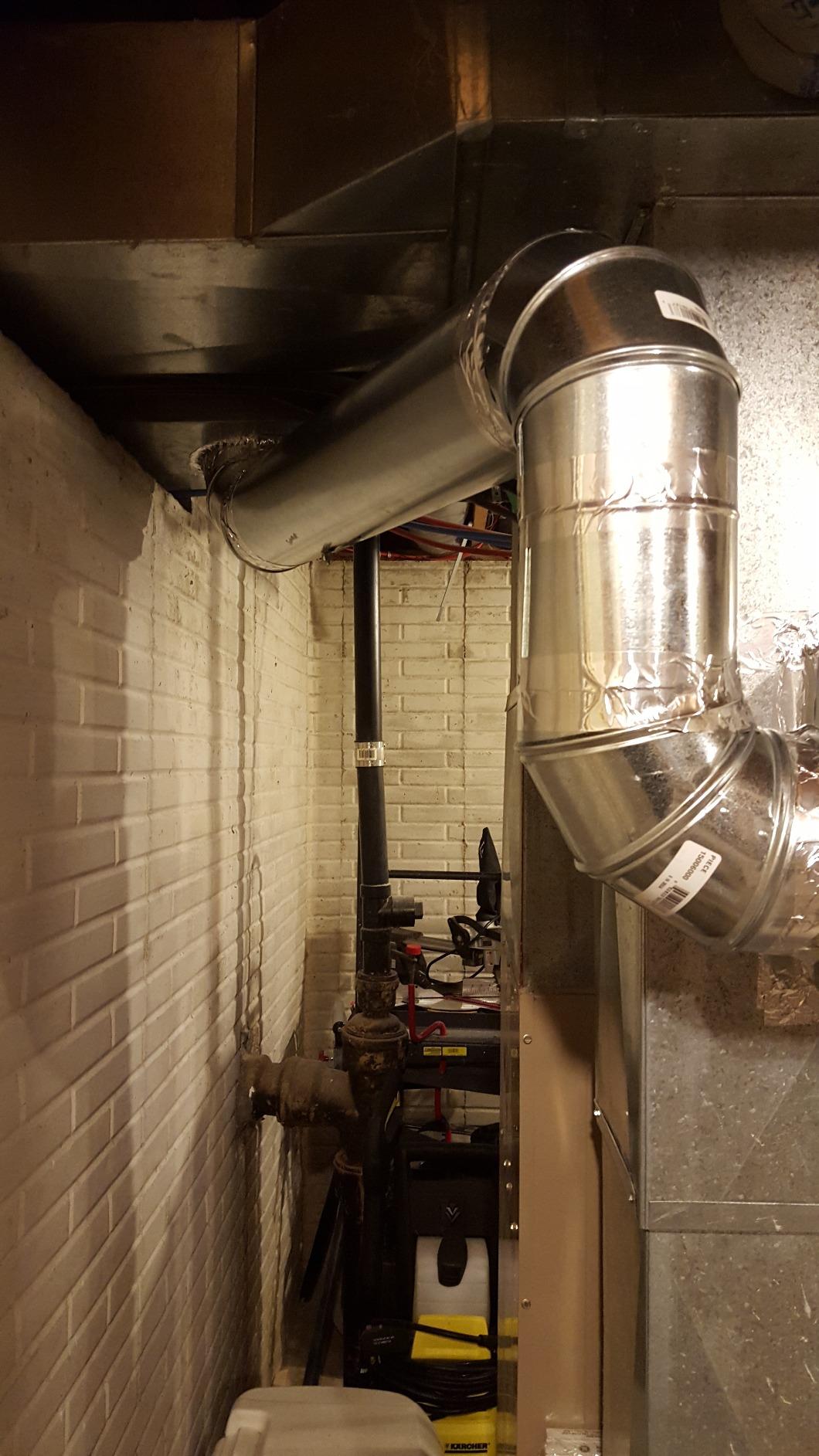
How it performs through a cold snap
Because the unit taps furnace air, its output scales with plenum temperature. In a deep cold snap when the furnace runs continuously, the water panel sees the hottest, driest air of the season, so the 12 GPD rating is a good guide to peak demand. Pair the digital control with an outdoor sensor and it modulates on the coldest nights instead of blasting moisture all winter.
What to check before you buy
Confirm your furnace has a forced-air supply plenum with a flat vertical section large enough for a 9.5 by 13.6 inch opening, and confirm you have a water supply line and a drain route nearby. Also price the install hardware separately from the unit, because that is where first-time buyers get surprised.
2. AIRCARE MA1201 Console Evaporative Humidifier – Best for Open Main Floors Without an Install
AIRCARE MA Whole-House Console-Style Evaporative Humidifier (Console)
Wick evaporative
3.6 gallon tank
3600 sq ft open area
36 hour runtime
Pros
- Evaporative wick produces no mist and no white dust
- Digital humidistat maintains set level and shuts off when empty
- Side tank is easy to carry and fill at a sink
- Multiple fan speeds including a quieter auto mode
Cons
- Loud on the highest fan speed
- Cord-attached hygrometer reads higher than readings 10 to 30 feet away
- Tank must be filled and flipped back on a schedule
- Wick dries out at the top and tears easily when cleaned
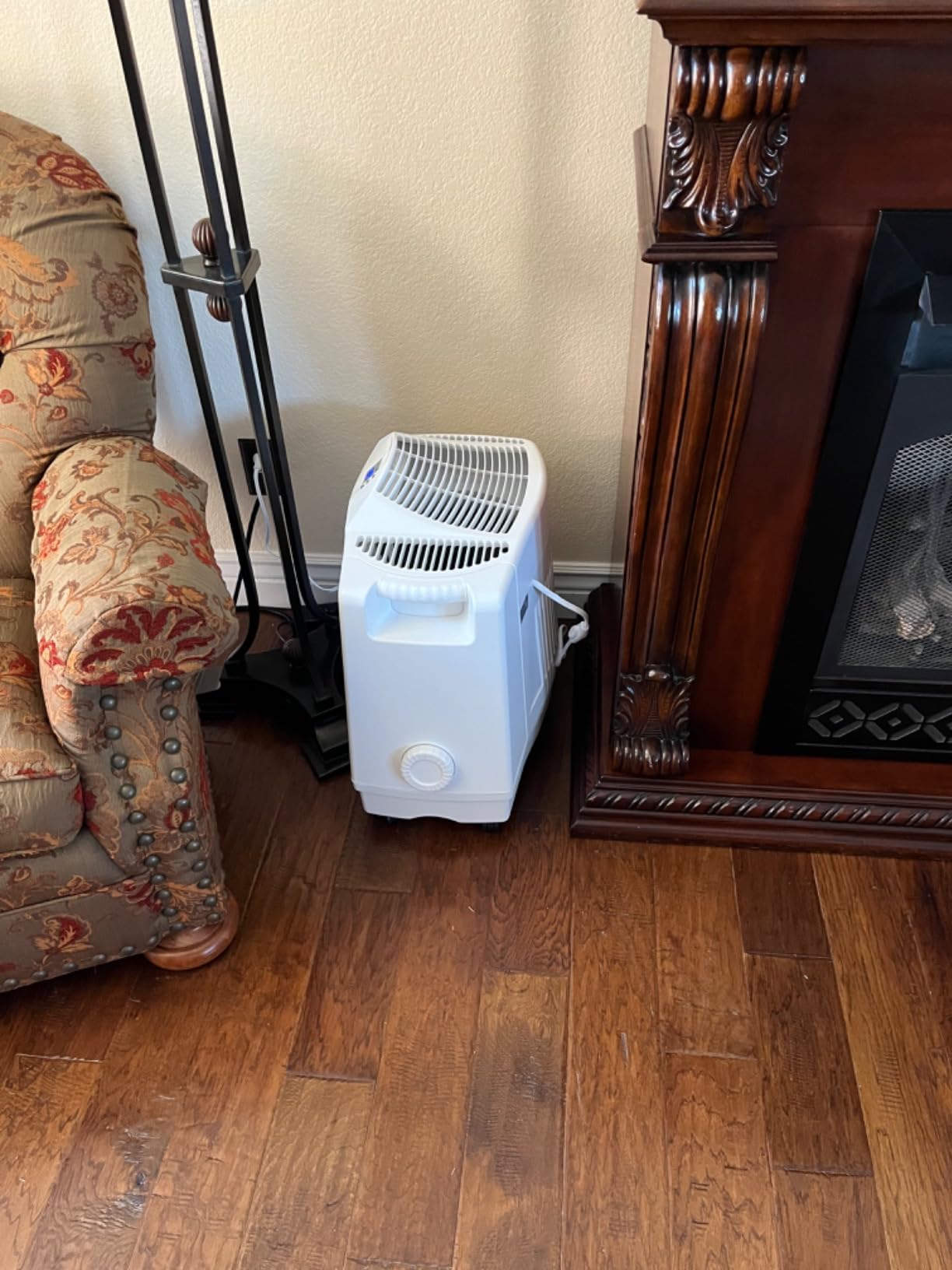
With 6733 reviews averaging 4.3 stars, this is the most heavily reviewed console unit we looked at, and the reason is simple: it needs no furnace, no duct modification and no electrician. You roll it into the living room, fill the 3.6 gallon tank and it humidifies open space. The listing rates coverage at up to 3600 square feet, though realistically that figure applies to a vaulted open main floor with no interior doors, and we would not expect it to serve a closed second story.
It draws 1650 watts on 120 volts and comes with a MAF1 Super Wick, an owner’s manual and four casters, under a two-year limited warranty. Evaporative operation means the moisture leaves the wick as vapor rather than as a cool mist, so there is no white dust on furniture and no mineral film on nearby surfaces. That single design choice is why it does well in hard-water areas compared with ultrasonic towers.
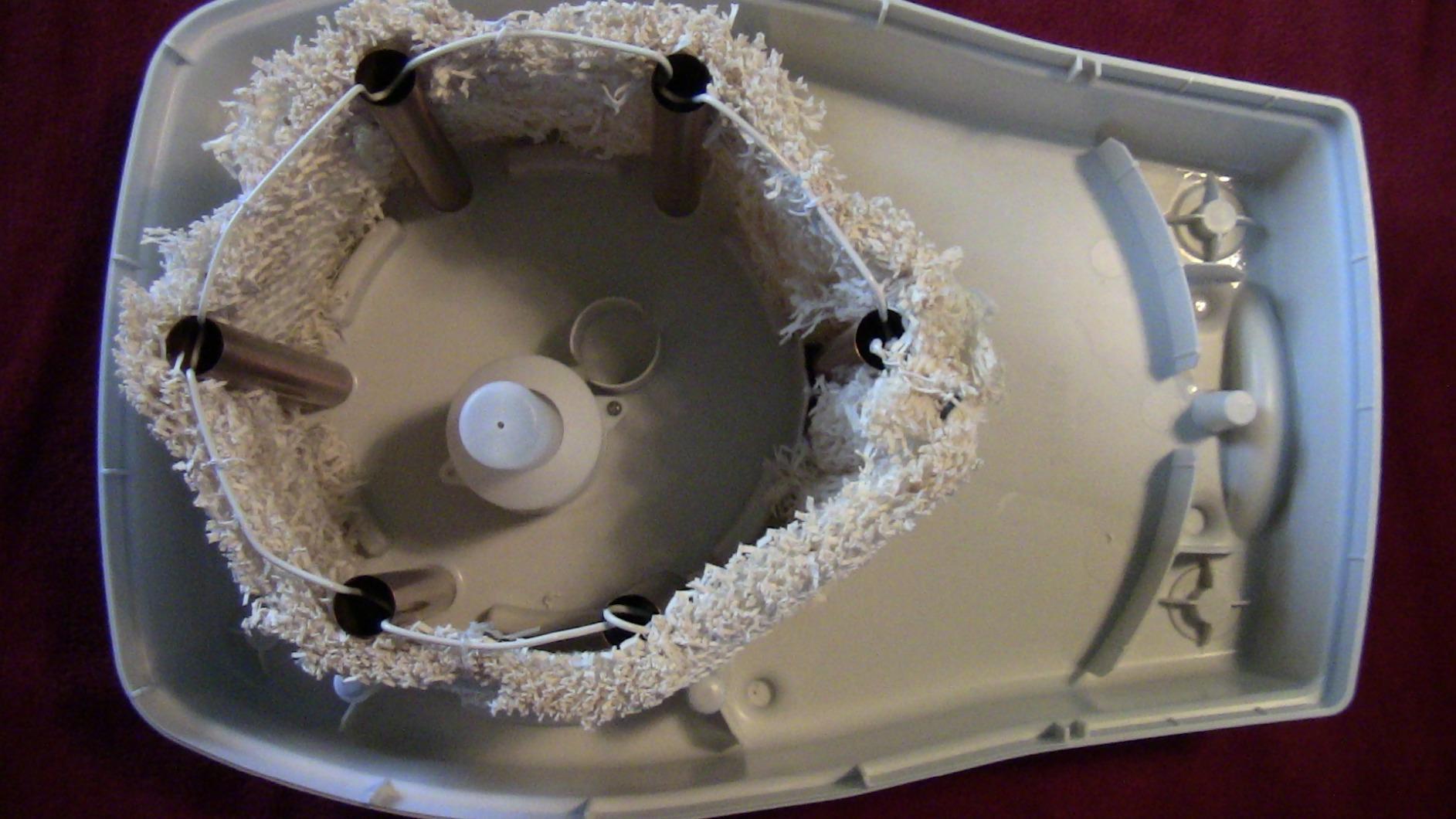
Owners report the unit lifting a 1000 to 2500 square foot open room by 10 to 20 points of relative humidity within hours, and resolving dry skin and sinus complaints. The auto mode allows quieter daytime operation, and the removable side tank is genuinely convenient at a sink. Rated runtime is 36 hours per fill, though most people refill well before that.
The negatives are consistent across reviews. It is noticeably loud on the top fan speed, which rules it out for a television room. The cord-attached hygrometer reads high compared with a meter taken 10 to 30 feet away, so the set point drifts a few points above what the far end of the room actually sees. And the wick dries out at the top and tears easily when cleaned, which is the main reason the manual does not quite match the buttons on the unit.
Where it works and where it stops
Place it in the open portion of the main floor with at least a foot of clearance on the intake and outlet sides and no door between it and the far end of the room. Once you close a door, airflow collapses and the moisture stays in one room, which is exactly the limitation that pushes owners toward a duct-mounted unit later.
The refill and wick reality
Plan on filling the tank twice a day in a cold month, and expect a wick replacement every few weeks in hard water. The wick is the entire moisture path, so a mineral-crusted wick is the first thing to check when output drops. For anyone unwilling to refill on a schedule, skip ahead to the Vornado EVDC500 with its much longer wick intervals and lower wattage, or go duct-mounted and stop refilling entirely.
3. AIRCARE Space Saver 831000 – Best for Large Open Rooms with Fewer Refills
AIRCARE Space Saver Large Evaporative Whole House Commercial 6 Gallon Humidifier for Large Rooms 2,700 sq ft. With Digital Controls, Auto Humidistat and Automatic Shut Off
Wick evaporative
6 gallon tank
2700 sq ft
1043 Super Wick included
Pros
- Large 6 gallon tank means far fewer refills than smaller console models
- Digital auto humidistat shuts off at target and when empty
- Tall narrow footprint suits rooms where floor space is tight
- Evaporative operation means no mist and no mineral dust
Cons
- Wick replacement is a recurring cost and lifespan shortens with hard water
- Tank must be removed
- filled and flipped back into place
- Effectiveness drops in a genuinely multi-room home
The Space Saver is the same evaporative idea as the MA1201 with roughly double the reservoir, and that single change is why it is the better pick for a house where nobody wants to carry water twice a day. The 6 gallon tank rated at 2700 square feet of coverage sits in a footprint of 12.5 by 17.5 by 22.5 inches, so it fits a corner or beside a console table without dominating the room. Weight is 14 pounds, which is manageable when the tank comes out.
Controls are digital with an auto humidistat that shuts the unit off at your target humidity and again when the tank runs empty. It draws 1000 watts on 120 volts and includes one 1043 Super Wick, a float rod, a float, four casters and a manual, all under a two-year limited warranty. The wick design uses Trapmax filter technology, which traps mineral deposits inside the filter rather than releasing them as dust.
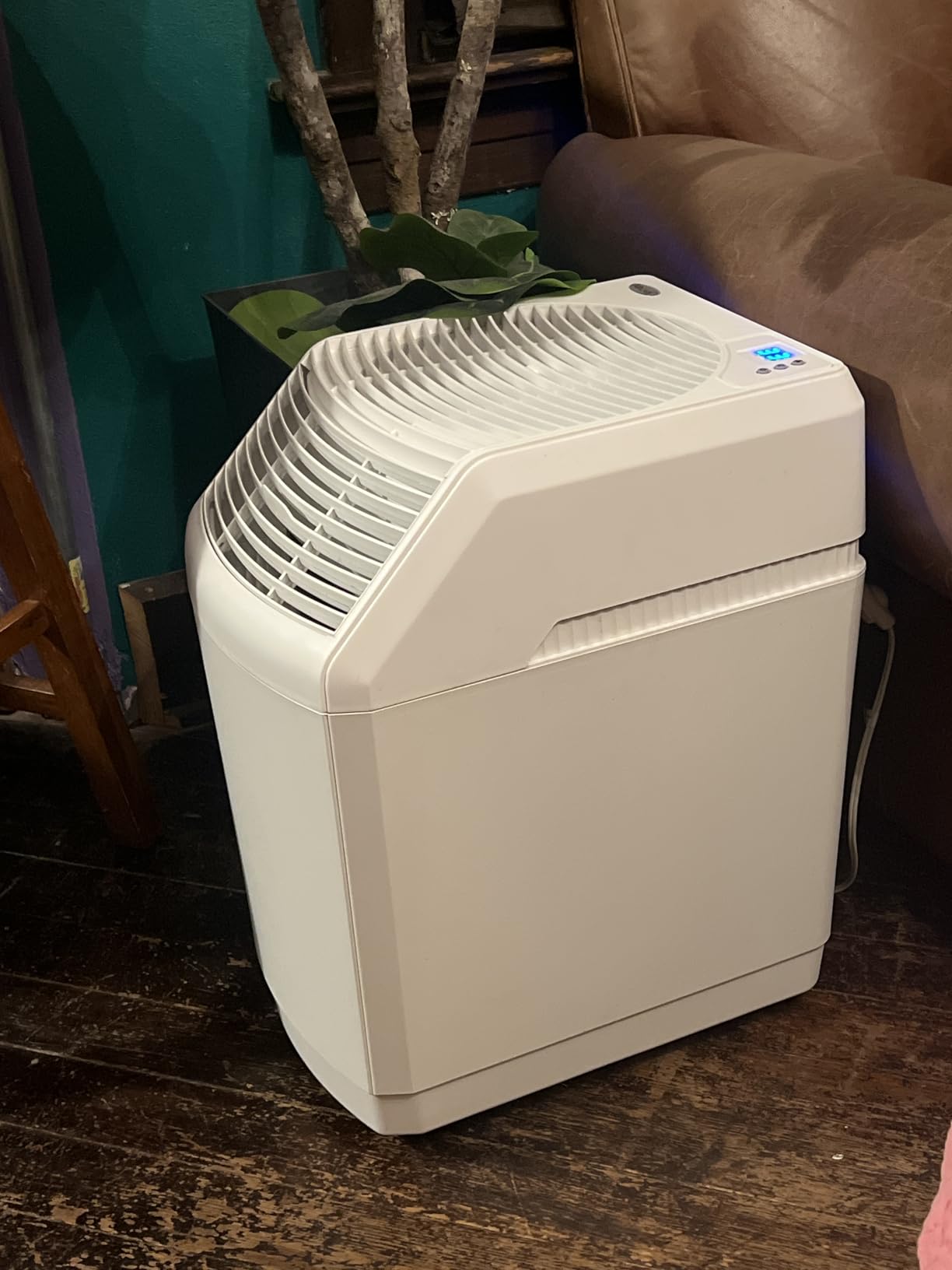
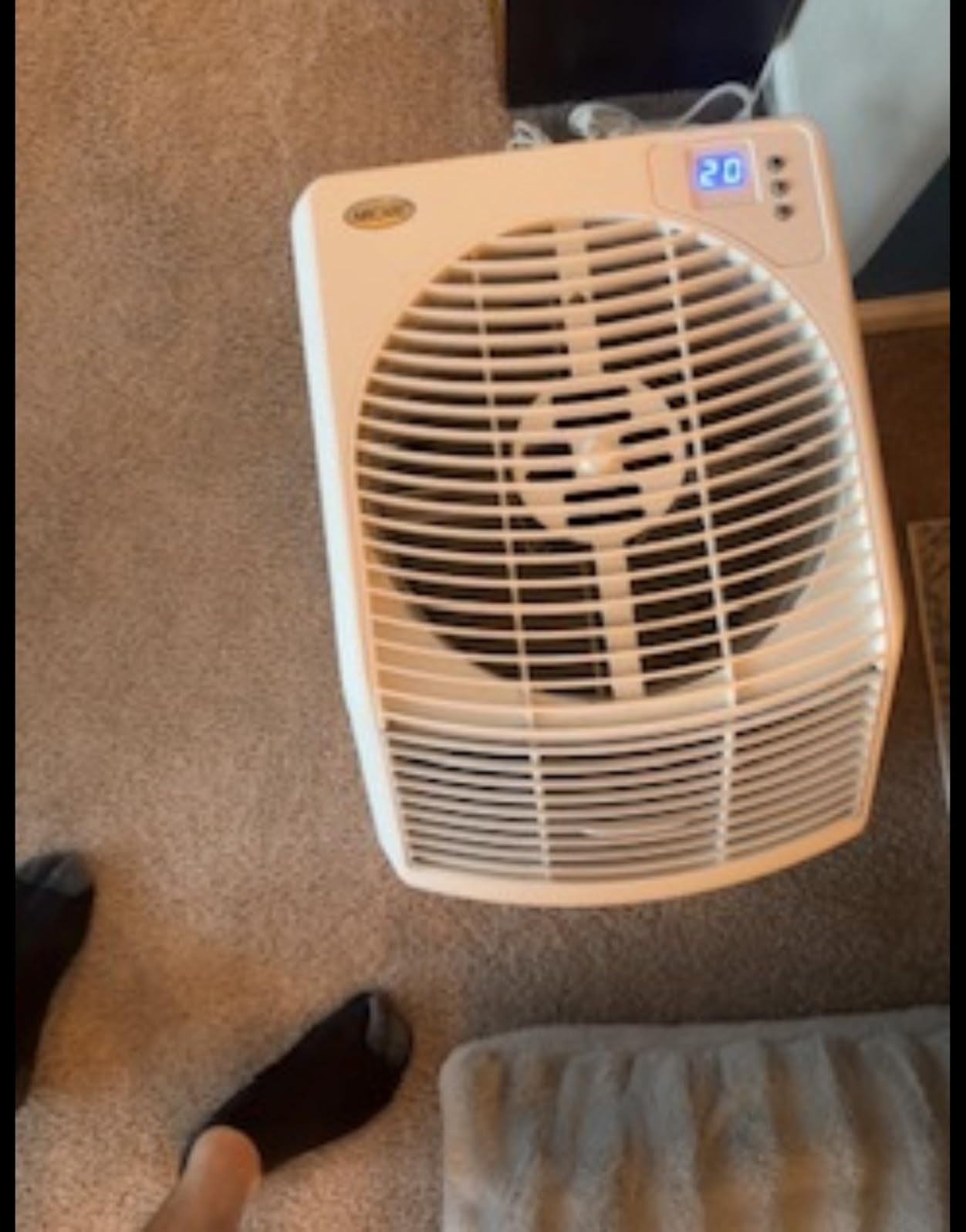
Across 6528 reviews averaging 4.2 stars, buyers credit steady, quiet operation in a single large room, and they consistently note that floors stay dry compared with ultrasonic models. The tall narrow profile is repeatedly singled out as the reason it fits into awkward spaces, and the large reservoir cuts refill frequency to roughly once a day in a hard winter.
The honest limitation is that coverage claims are best realized in one open area rather than an entire multi-storey house. The tank still has to be removed, filled and flipped back into place, and the wick is a recurring consumable whose lifespan shortens noticeably in hard water. If your dryness problem is upstairs, this unit is a partial fix, not a solution.
Who should skip this one
If your plan was to treat a two-story house, keep reading. A freestanding console on the main floor will not push moisture past a closed stairwell door. That is the most common reason owners end up duct-mounted, and it is a retrofit decision that is much cheaper to make before installing hardwood than after.
Choosing between the two AIRCARE consoles
Pick the Space Saver if refill frequency drives you crazy, and pick the MA1201 if the room is small and you want the extra fan speed options. Both use the same evaporating principle and both leave surfaces dust-free, so the decision is purely about tank size versus footprint.
4. AIRCARE Pedestal EP9 800 – Best Furniture-Style Cabinet for Finished Rooms
AIRCARE Digital Whole-House Pedestal-Style Evaporative Humidifier (Nutmeg)
Wick evaporative
3.5 gallon tank
2400 sq ft
70 hour runtime, 25 pounds
Pros
- Pedestal cabinet fits a corner and reads as furniture
- Digital controls with auto shut off and low water indicator
- Evaporative wick avoids mist and mineral dust
- Long advertised runtime reduces refill frequency
Cons
- Heaviest unit here at 25 pounds
- making it hard to reposition
- Wick consumables must be replaced periodically
- Display brightness and auto-off behaviour interrupt continuous running
The Pedestal solves a problem no other console on this list addresses: appearance. Where most evaporative units look like appliances, this one is a 27.25 inch tall cabinet in a nutmeg finish with a rectangular prism body, and owners put it in a living room corner without treating it as an eyesore. Coverage is rated at 2400 square feet, which is generous for a single open floor but realistic for a main living area with a high ceiling.
It holds a 3.5 gallon tank with a rated runtime of 70 hours, uses a wick filter and runs on 120 volts with digital touch controls, auto shut off and a low water indicator. The box includes a 1043 Super Wick, the power cord and a manual. Evaporative operation means the same no-white-dust behavior as the other AIRCARE consoles in this roundup.
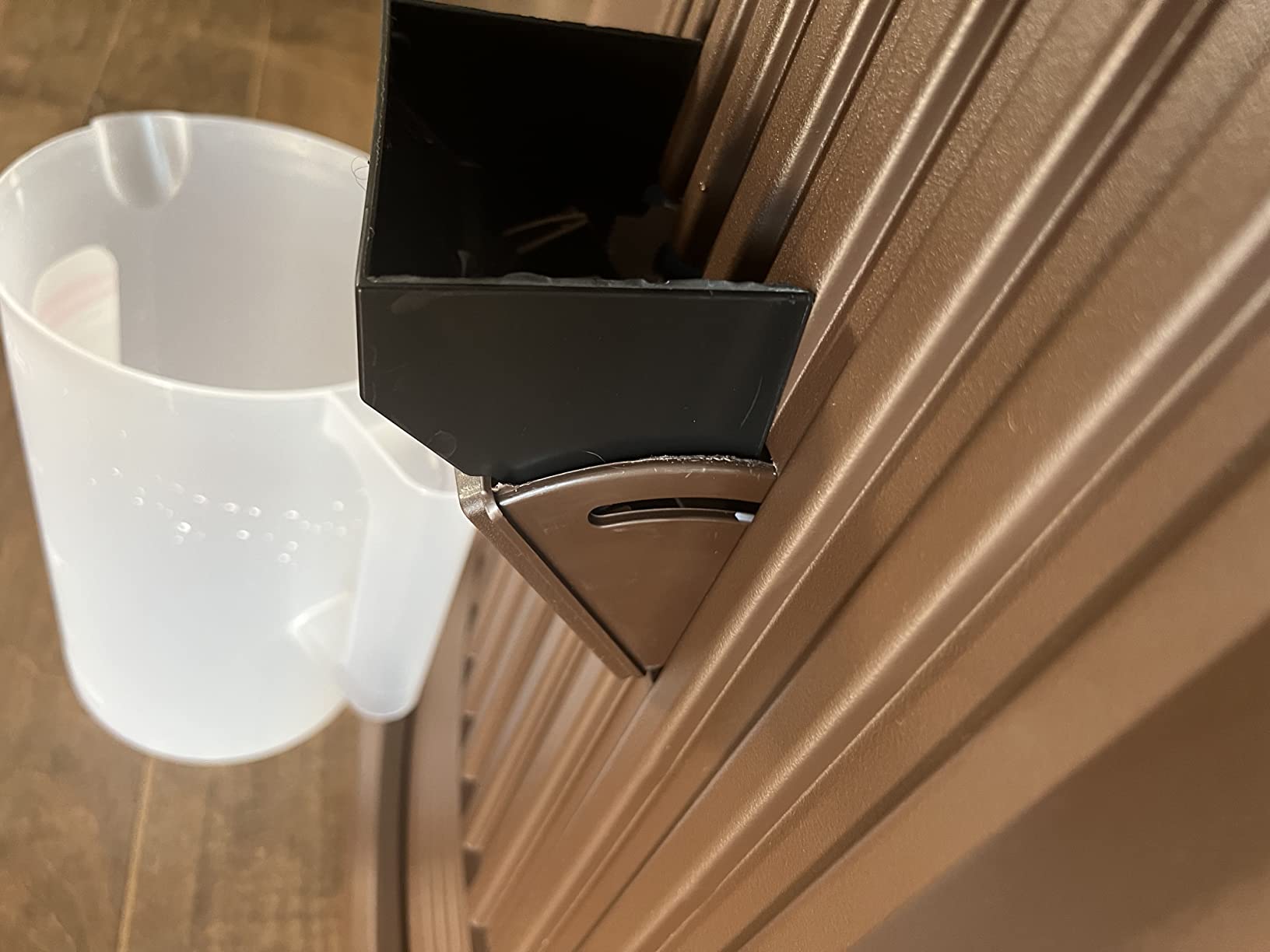
With 5445 reviews averaging 4.3 stars, the pattern is consistent: owners report the cabinet quietly bringing a dry main floor to a comfortable level, and they highlight how unobtrusive the unit is. The evaporating principle is also specifically valued in hard-water areas, where ultrasonic towers leave a film and this one does not.
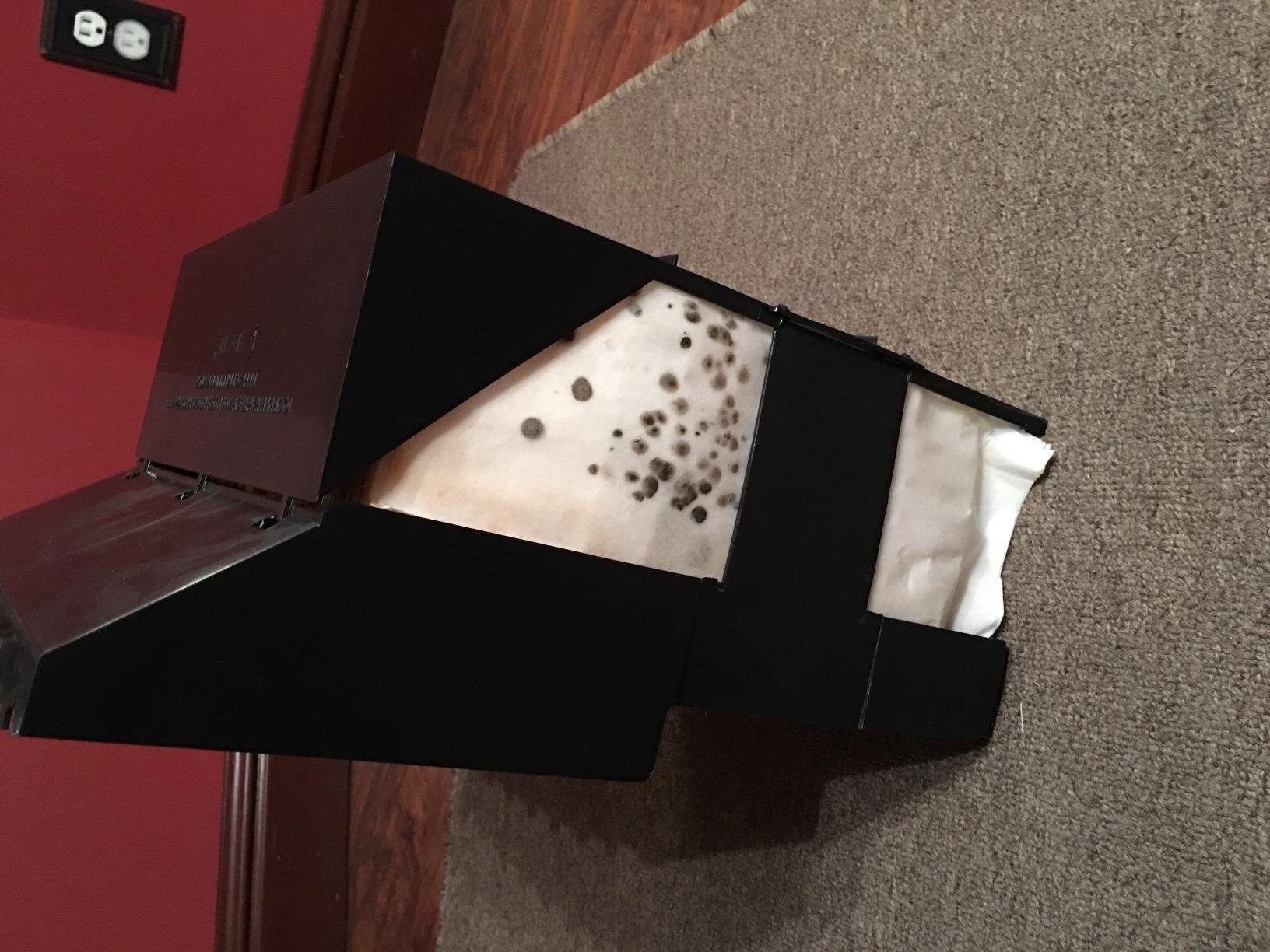
The weight is the standout drawback. At 25 pounds this is the heaviest freestanding unit in the group, and repositioning it to chase a draft or reach an outlet is genuinely awkward. Display brightness and the auto-off behaviour also come up as interruptions to continuous running, and the wick remains a periodic consumable cost.
Design versus raw output
You are paying in capacity for the cabinet styling. If the priority is drying air rather than living with it, the 6 gallon Space Saver covers more area for a similar footprint and considerably less lifting. Choose the Pedestal when the room is finished, the furniture is good and the unit is going to sit in plain sight all winter.
Noise and placement notes
Owners describe it as quiet in normal use, but position it away from a seating area and out of a direct line to a television or a home office desk. Leave several inches behind and beside the unit for intake and wick service, and put a small mat under it in case of an overflow during a refill.
5. Honeywell HE280A – Best for Low Water Use in Larger Homes
Honeywell Home HE280A Whole House Humidifier, White
Flow-through evaporative
4000 sq ft coverage
30 percent less water use
Duct mount, 24V
Pros
- Flow-through design keeps the unit cleaner and extends service intervals
- Uses roughly 30 percent less water than standard models
- Mounts on either the supply or return duct of a forced-air furnace
- Installation kit includes the transformer
- wire and wire nuts
Cons
- Pressure switch sensitivity cannot be adjusted
- so it may not trigger reliably
- Included plastic drain hose clamp does not seal well
- Annual water panel changes and drain inspection required
- Wiring instructions are unclear without HVAC experience
The Honeywell HE280A is the most water-frugal duct-mounted model we analyzed, which matters more than most buyers expect. A whole house humidifier on a bypass plenum can consume a surprising volume of water across a winter, and the flow-through design with PerfectFLO water distribution is engineered to cut that figure by roughly 30 percent against standard models. Rated coverage is 4000 square feet, the largest listed figure among the in-duct evaporative units here.
It mounts on either the warm air supply or the return duct of a forced-air furnace, runs on 24 volts, and draws 200 watts. The listed filter type is HEPA, which is unusual for a furnace humidifier, and the flow-through design is specifically intended to keep the unit clean of microorganisms and stretch the interval between service visits. The box includes the installation components, which installers consistently praise.
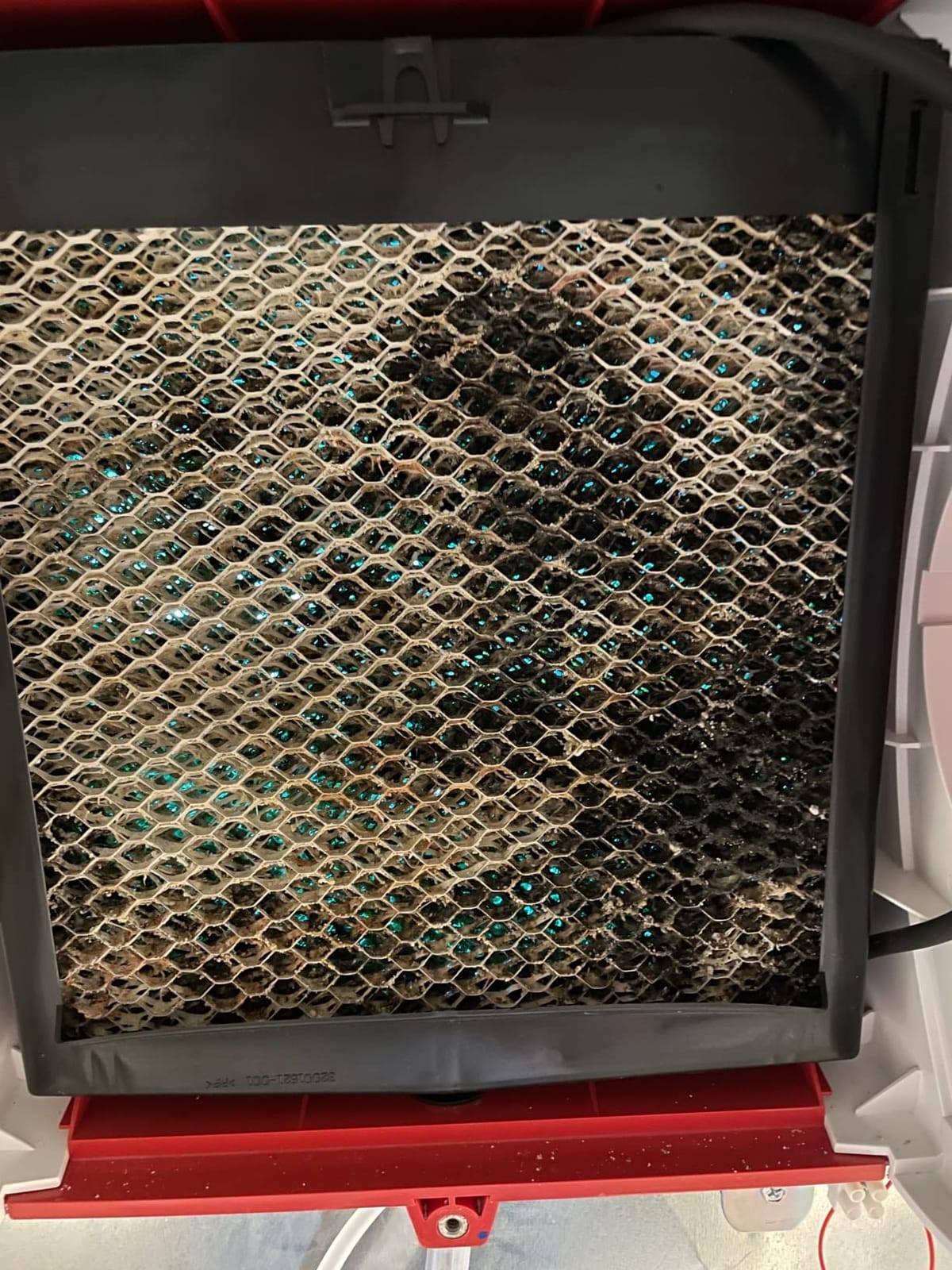
Reviews are genuinely split on reliability. Several owners report a solenoid or pressure switch failure and a persistently weeping drain connection, while many others describe multi-season service with no issues at all. The pressure switch design and unclear documentation are the most frequently cited drawbacks, and with 274 reviews at 4.1 stars this is a smaller sample than the AIRCARE units.
Two practical notes from installers. First, the pressure switch sensitivity cannot be adjusted, so on some systems the unit may not trigger when it should, which shows up as a home that stays dry no matter what the humidistat is set to. Second, the included plastic drain hose clamp does not seal well and is commonly replaced during install, alongside the annual water panel change and drain line inspection the unit requires.
When a flow-through design pays off
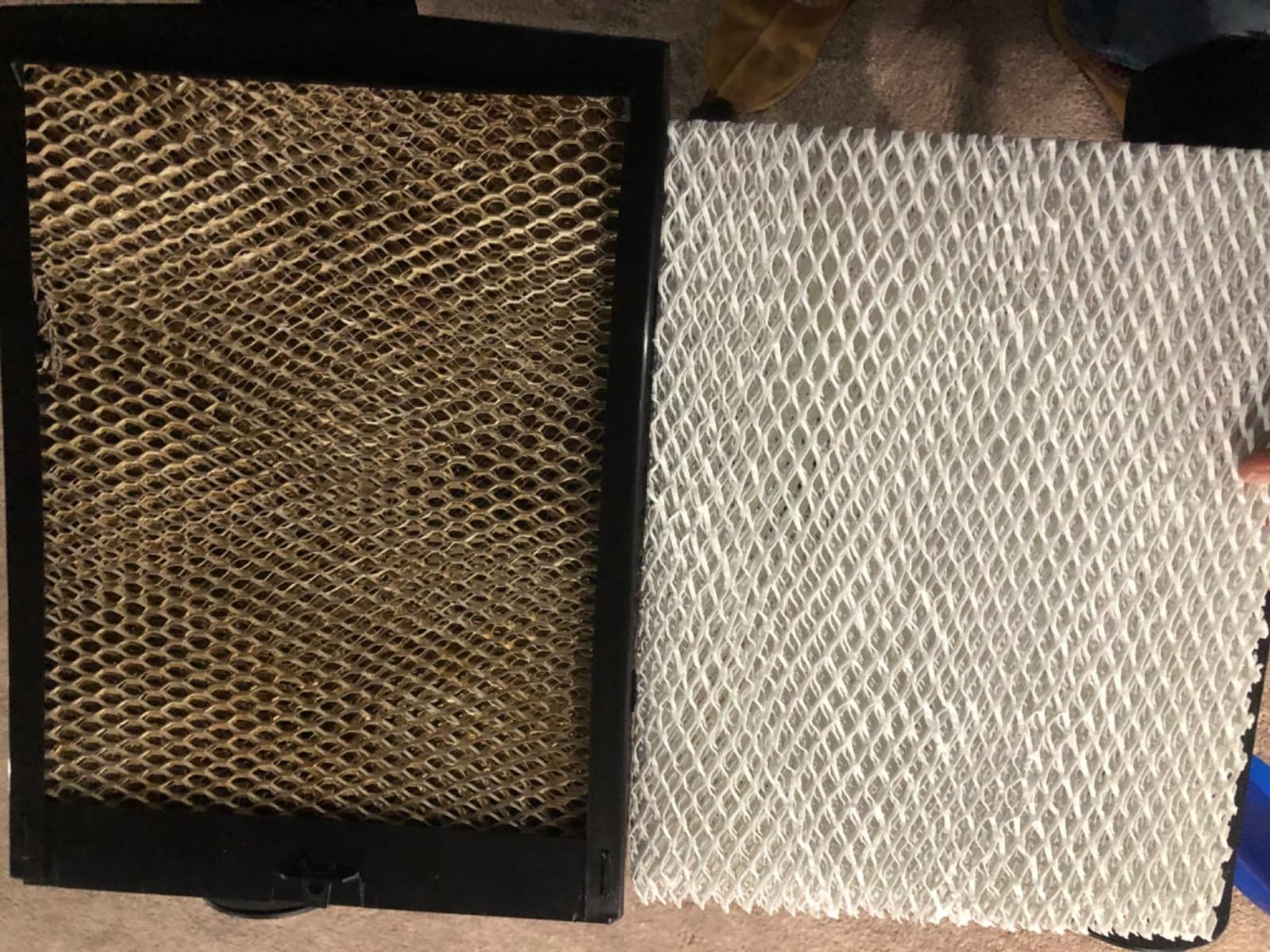
Owners who keep this running report far longer service intervals because water passes through rather than sitting in a tray, which cuts the standing water that breeds biofilm. If you are installing a unit in a finished utility room and you intend to set and largely forget it, that reduced maintenance frequency is the argument for it.
What to check after the first week
Listen for the solenoid opening and closing when the humidistat calls for humidity, and watch the drain for weeping. No click means the pressure switch or control is not triggering, and a wet floor under the cabinet means the drain connection needs work. Both are cheap to fix now and expensive to ignore into February.
6. GeneralAire 1042LH Legacy – Best Compact Bypass for Tight Plenum Openings
GeneralAire 1042LH Legacy Humidifier, 24V, Furnace Mount Bypass Type
17 GPD at 120F plenum
2800 sq ft
Reversible duct connection
24V with transformer
Pros
- Very high owner satisfaction for a furnace-mounted bypass unit
- Compact size fits standard furnace plenum openings
- Reversible duct connection allows either-side bypass hookup
- Includes 24V transformer and a duct-mount humidistat
Cons
- Replacement water pads are a recurring seasonal consumable
- Manual humidistat is less precise than digital controls
- Installation requires sheet metal duct work on the furnace plenum
Where the AprilAire 500 uses a digital control, the GeneralAire 1042LH uses a manual duct-mount humidistat, and that is the defining trade-off in this comparison. In exchange, you get a genuinely compact body measuring 14 by 15.1 by 9 inches that fits a plenum opening of 9.5 by 13.6 inches, plus a reversible duct connection that lets the bypass connect from either side of the unit. Rated coverage is 2800 square feet.
Output is listed at 17 gallons per day based on a 120 degree Fahrenheit plenum temperature, which is a strong figure for the category, and the manufacturer calls for genuine 990-13 replacement pads changed once or twice per season. It is a 24 volt unit and comes with a 120 volt transformer, and the manual-control duct-mount humidistat is included in the box.
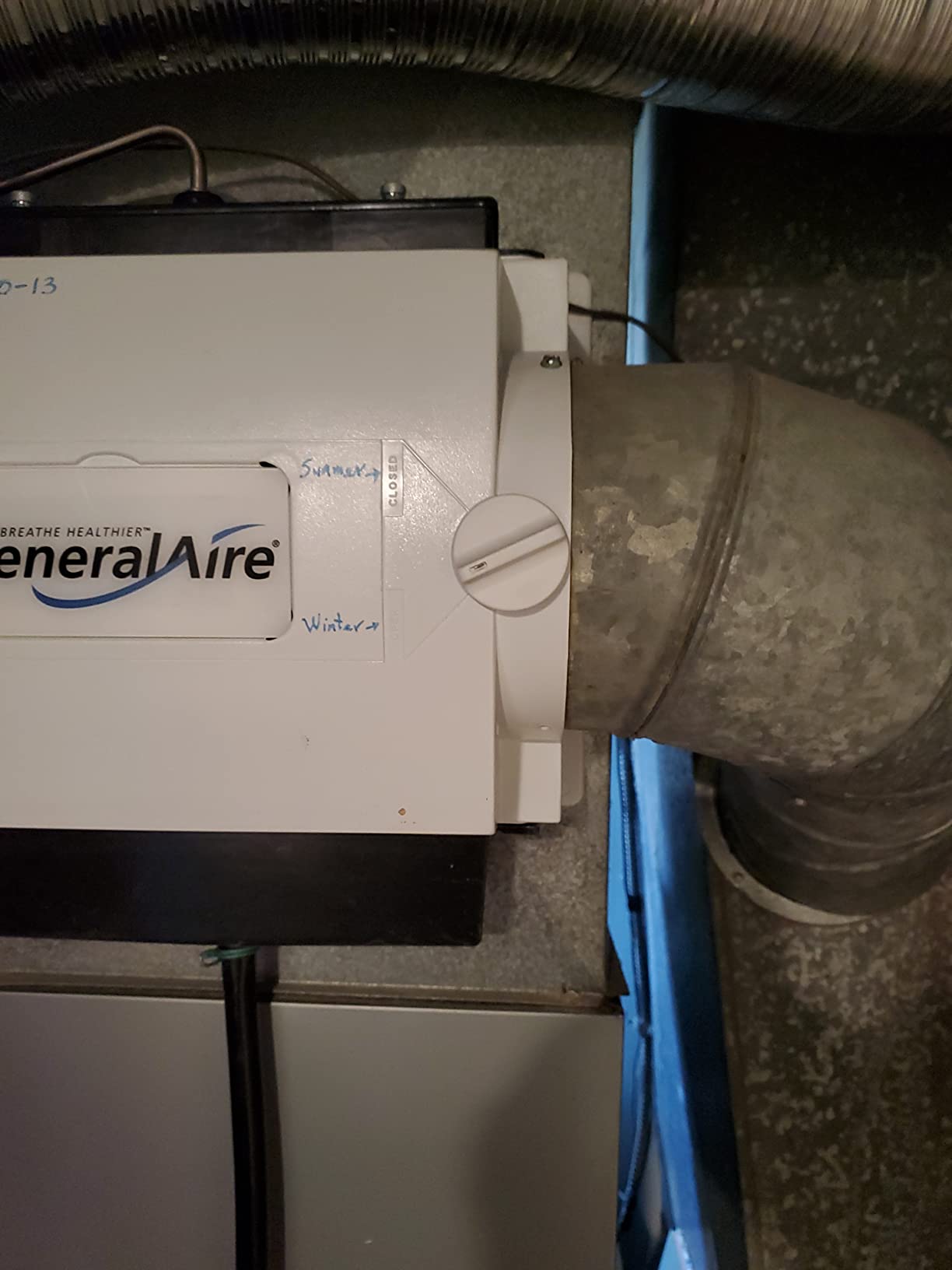
The 4.6 star average comes from a much smaller pool of 130 reviews, so treat it as a strong signal rather than a settled verdict. Owners cite ease of mounting, durable construction and effective whole-home humidification for homes up to roughly 2800 square feet, and the compact footprint is repeatedly mentioned as the reason it fits where larger units do not.
The manual humidistat gives you less precise control than a digital model, which in practice means more drift between seasons and a more hands-on approach to winter comfort. The genuine 990-13 pads are a recurring seasonal consumable, and the install still requires sheet metal duct work on the furnace plenum.
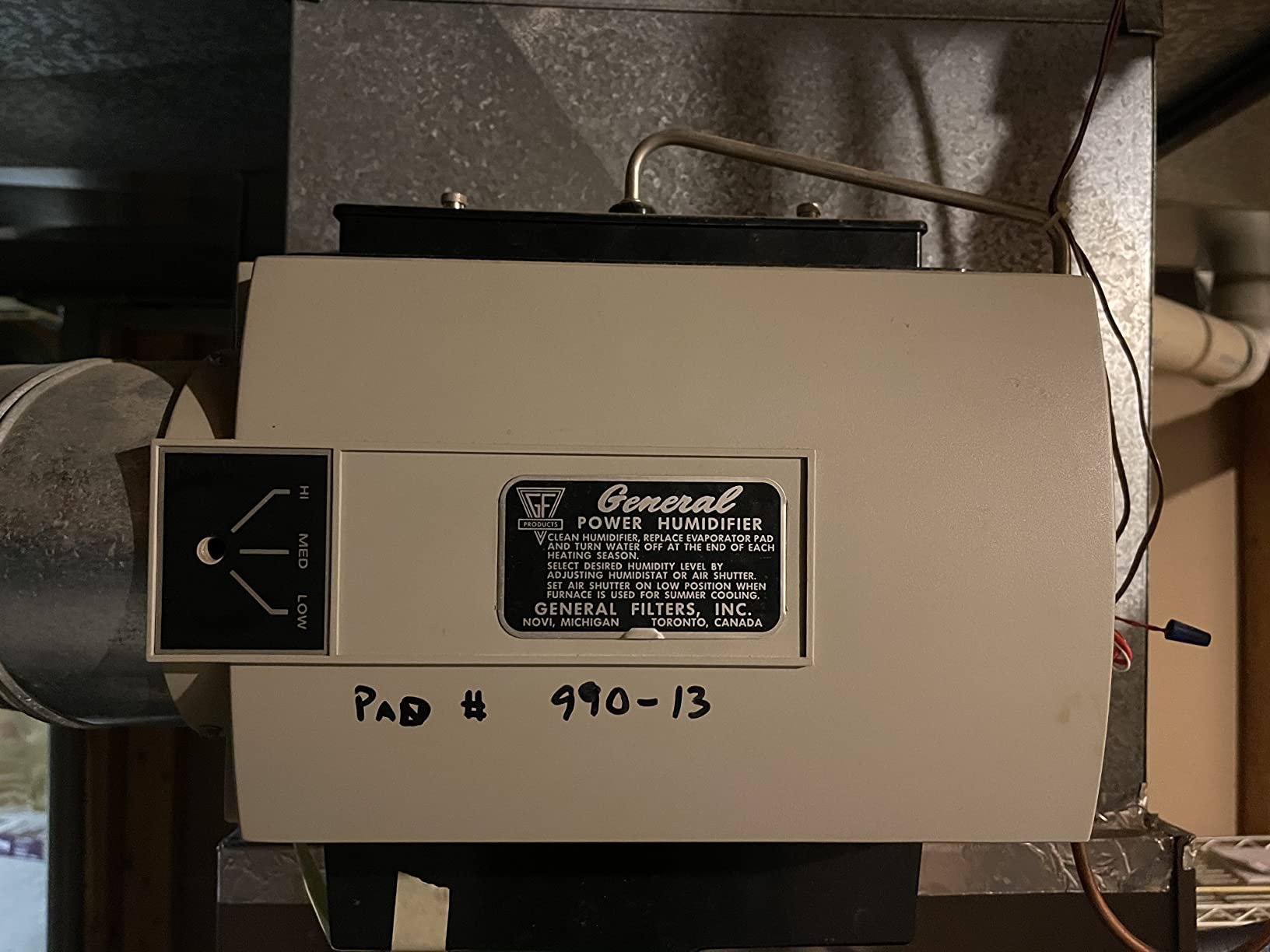
When a manual humidistat is the right call
If you are comfortable reading a hygrometer once a month and adjusting a dial, the manual control costs you very little. If you want the system to hold a set point through a cold snap without attention, the digital control on the AprilAire 500 or the Honeywell steam unit is worth the extra spend.
Pad sourcing and long-term cost
Use genuine replacement pads rather than aftermarket equivalents, which is the consistent advice from equipment forums, and budget for one or two pad changes a season. That recurring cost is small next to the install, but it is the number that surprises owners who budgeted nothing for consumables after year one.
7. Honeywell HM750A1000 Electrode Steam Humidifier – Best for Fast Humidification in Large Homes
Honeywell HM750A1000 Electrode Steam Humidifier
Electrode steam technology
Duct or wall mountable
8 hour runtime
Digital humidistat with outdoor sensor
Pros
- Steam output far exceeds evaporative units for large homes
- Sealed canister traps minerals so no residue enters the ductwork
- Small footprint with duct or wall mountable installation
- Digital humidistat with outdoor sensor limits window condensation
Cons
- Water canister must be replaced annually at significant cost
- Needs hardwiring and a jumper change for 120V use
- No backflow preventer included on the water inlet
- Requires drilling the return vent for the humidistat sensor
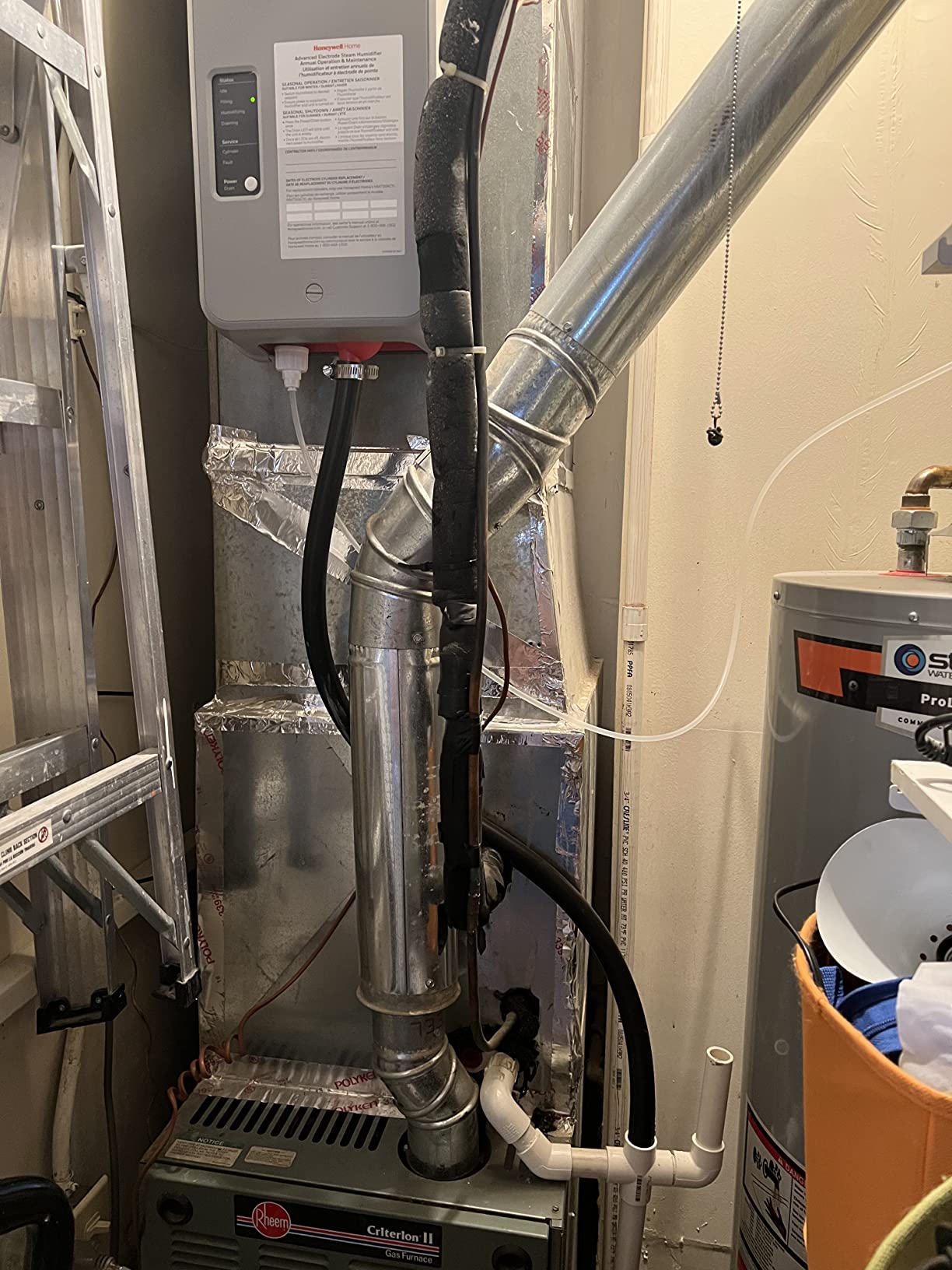
This is the only steam humidifier in the group, and it solves the problem evaporative units struggle with: very large, very dry homes on deep cold snaps. Rather than pushing air across a wet water panel, it boils water in an electrode canister and injects vapor directly into the airstream, so output is far higher and there is no pad to clog. There is also no mineral residue in the ductwork, because the minerals stay in the sealed canister.
It is built to duct or wall mount, with a footprint of 21 by 8 by 10 inches, and the marketing claims the smallest footprint and a one-person installation in the category. The pre-mineralized cylinder is designed for faster startup and checkout. A digital humidistat with an outdoor temperature sensor limits window condensation, and the unit can interface with compatible smart thermostats through a relay.
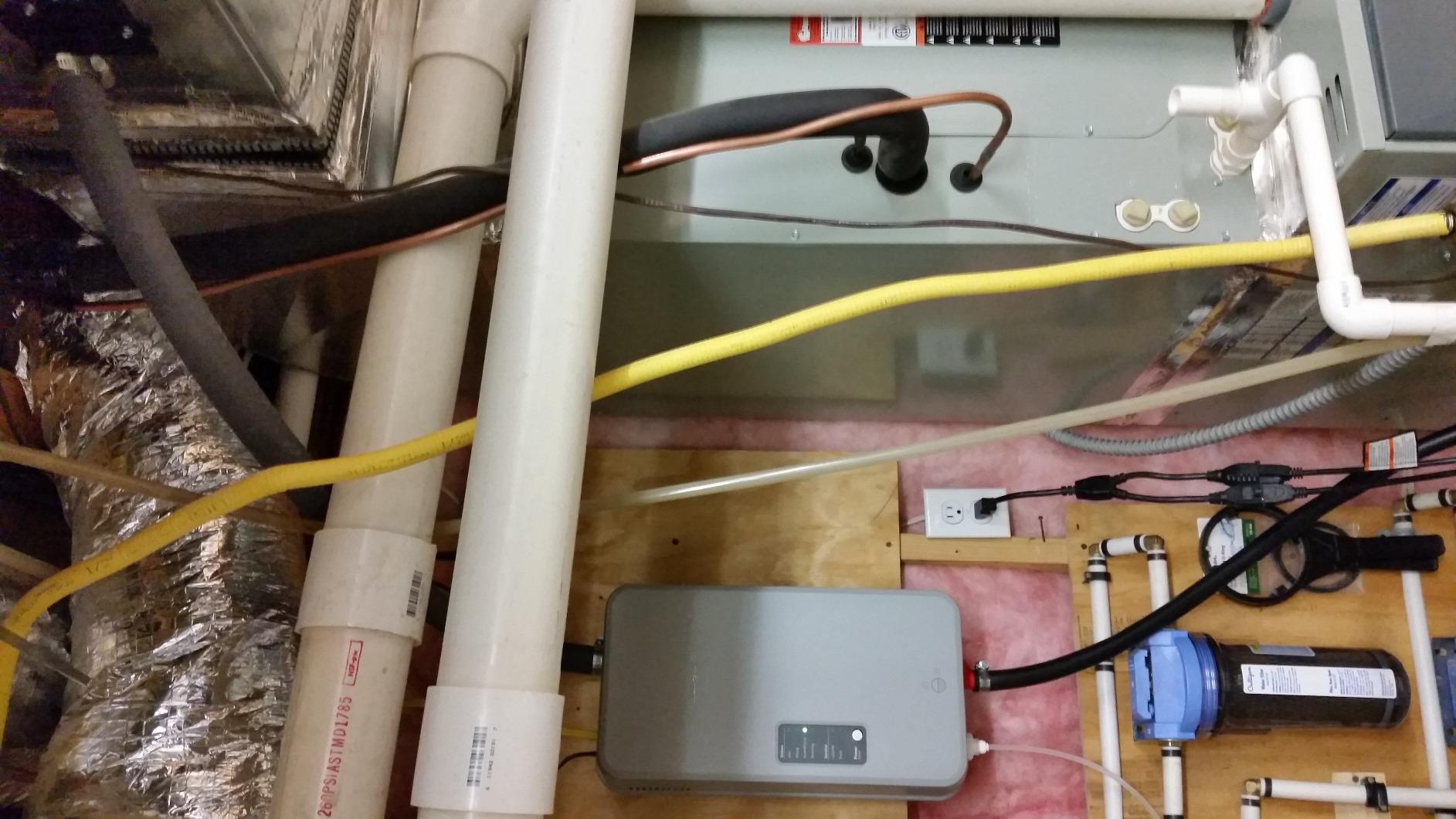
Owners who have installed it report noticeably faster and more even humidification than evaporative furnace units, clean ductwork, and good set-point control from the supplied humidistat. At 4 stars across 108 reviews, the sample is small, but the direction of feedback is consistent among people who actually completed the installation.
The recurring drawbacks are real. The water canister must be replaced annually at significant cost, which is the single largest running expense of any unit in this roundup. The unit arrives configured for 240V and needs a jumper change if you intend to run it on 120V, and no backflow preventer is included on the water inlet, so buy one. Drilling the return vent for the humidistat sensor, and possibly an airflow detector, is part of the install rather than an optional extra.
Electricity and canister economics
Steam generation is the highest power draw category in this list, and a canister is a single-use consumable rather than a washable pad. Model the math on years of ownership rather than the first winter, and note that one owner reported a warranty dispute when the inlet valve failed, so document the install and keep the paperwork.
Fit and compatibility checks
Confirm the return vent can be drilled for the sensor, confirm a 240V circuit is available, and confirm your furnace plenum has room for the housing. Despite the marketing, at least one owner found it was not a drop-in replacement for older TrueSteam units, so verify mounting dimensions against your existing opening before committing.
8. Levoit Superior 6000S – Best App-Controlled Humidifier for Tech-Savvy Homes
Levoit Evaporative Humidifiers for Home Whole House, 23L Superior 6000S
23L 6 gallon tank
72 hour runtime on low
3000 sq ft
VeSync app and voice control
Pros
- 23L tank runs up to 72 hours on low
- far fewer refills than smaller units
- Evaporative technology is tap-water compatible with no white dust
- App and voice assistant control with a plus or minus 5 percent sensor
- Detachable pump makes deep cleaning simpler
Cons
- Wick filter is a recurring replacement consumable
- Tank discoloration is expected as impurities are removed
- Consumes more power than the smallest evaporative units
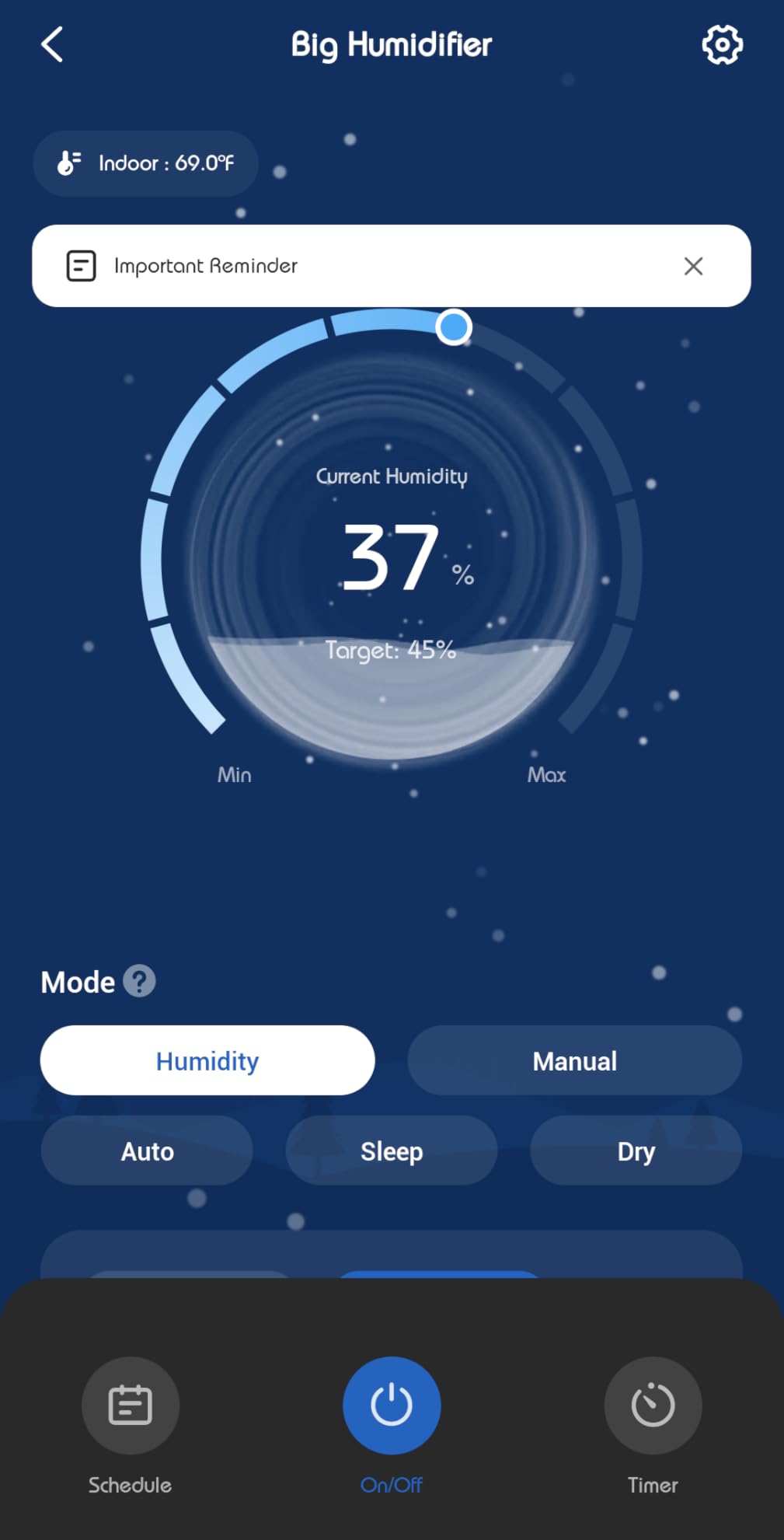
The Superior 6000S is the only unit in this roundup with real app and voice assistant control, and in a cold-climate home that matters more than it sounds. You can set a target from your phone, check the current reading remotely while you are at work and confirm the unit is still running before you drive home. The 23 liter, 6 gallon tank rated for up to 72 hours on the low fan speed is the other reason it earns its place.
Output is listed at 1500 mL per hour with coverage up to 3000 square feet, which again means an open plan rather than a closed two-story house. It runs on 100 volts, draws 30 watts, and the box includes a cleaning brush, power adapter, water filling hose and wick filter. The enhanced sensor is accurate to plus or minus 5 percent, and the optimized airflow keeps noise low.
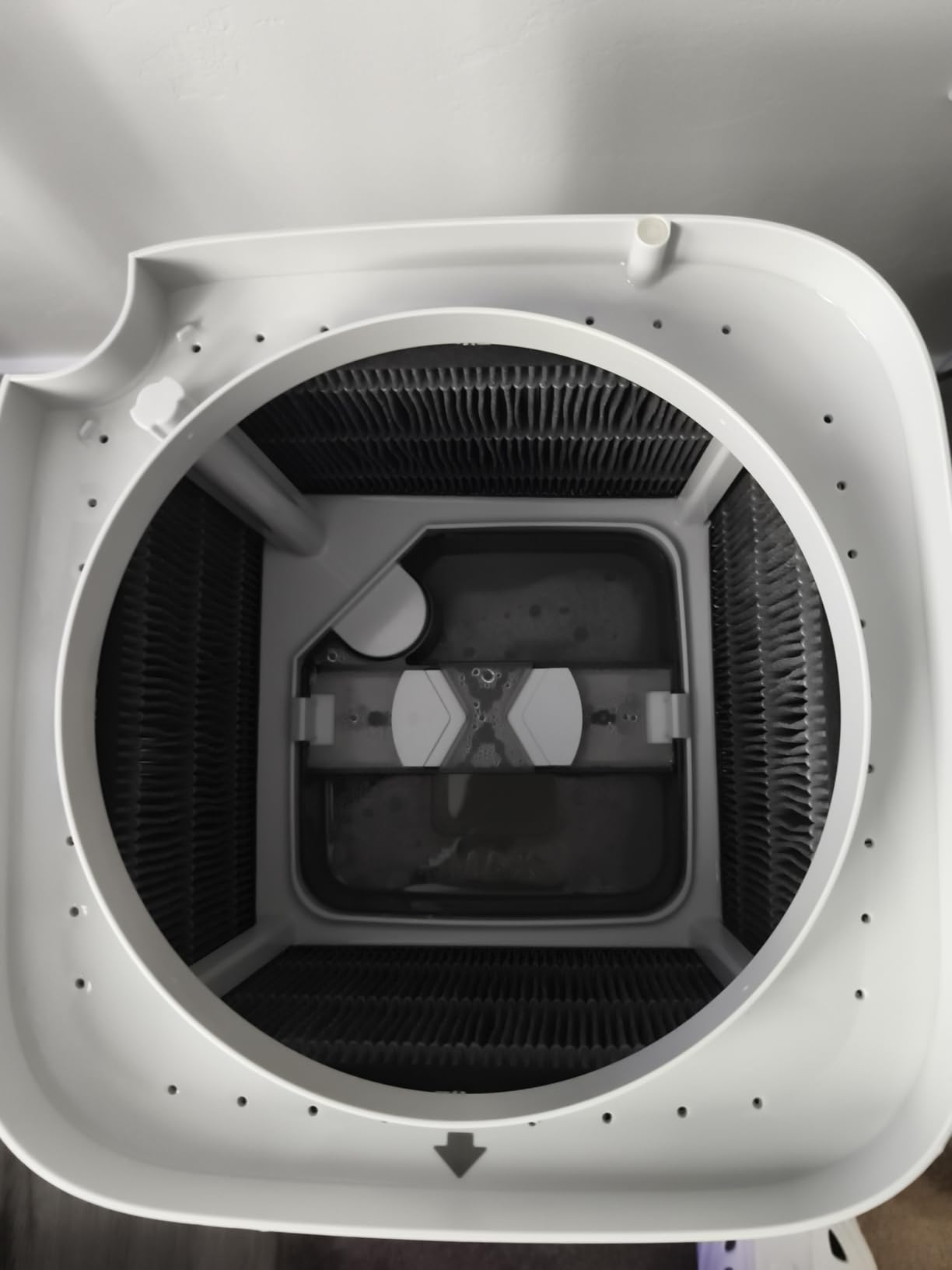
Reviewers treat this as a step up from small tower humidifiers rather than a different category. The praise centres on the refill interval, genuinely quiet operation, clean tap-water humidification and the app. Tap water compatibility with no white dust is a genuine advantage in hard-water areas, and the detachable pump makes periodic deep cleaning far more hygienic than a fixed pump housing.
Two recurring notes are worth planning for. The wick is a genuine consumable rated at three to six months, and tank residue or discoloration is expected because the unit is pulling impurities out of the water. It also draws meaningfully more power than the smallest evaporative units, which is a real consideration if you are considering two of them to cover two floors.
When app control actually pays off
If you travel for work in the middle of winter, remote monitoring is the difference between coming home to a comfortable house and coming home to a frozen plant. Set a target of 40 percent, leave it alone, and check the trend line when the first real cold snap arrives.
Where the coverage claim ends
A freestanding unit humidifies the air it can reach. Treat the 3000 square feet figure as an open-plan ceiling, and if your bedrooms are on a separate floor behind a closed door, plan on a second smaller unit rather than expecting one to do the job.
9. Lacidoll 16L Ultrasonic Tower – Best for One Large Room with No Hard-Water Problems
16L Cool Mist Humidifier Large Room Whole House & Commercial 1500 sq.ft
16L 4.2 gallon tank
48 hour runtime
Ultrasonic cool mist
1500 sq ft coverage
Pros
- Large 16L tank delivers up to 48 hours of mist per fill
- Extension tube and rotating nozzle direct mist where needed
- Smart humidity control from 40 to 90 percent with auto suspend
- Quiet sleep mode with 12 hour timer and night light
- Top-fill design with a wide opening is easy to clean
Cons
- Ultrasonic operation can leave white mineral dust with tap water
- Requires regular atomizer cleaning to prevent microbial growth
- Cool mist is less effective across multiple rooms than evaporative units
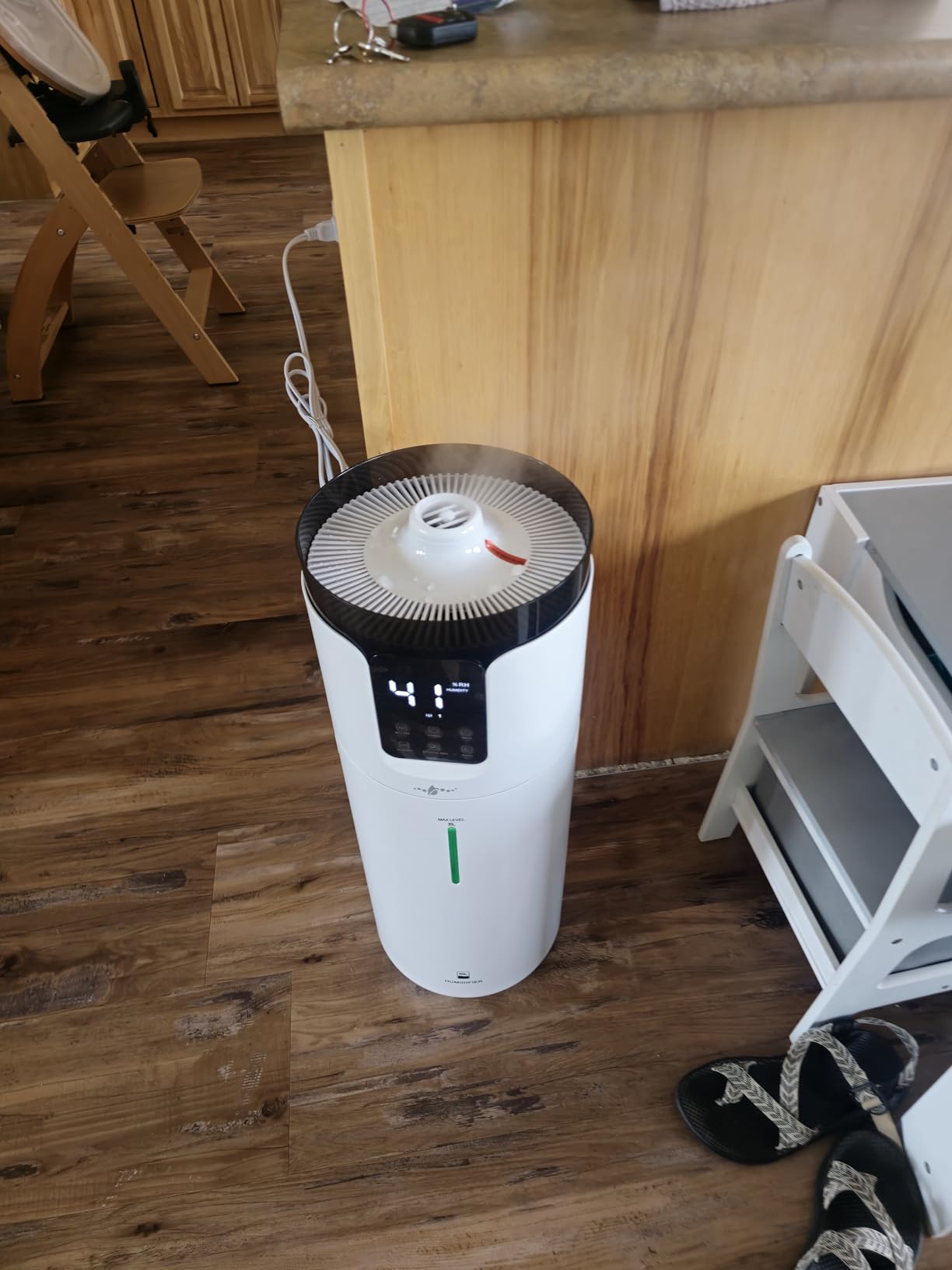
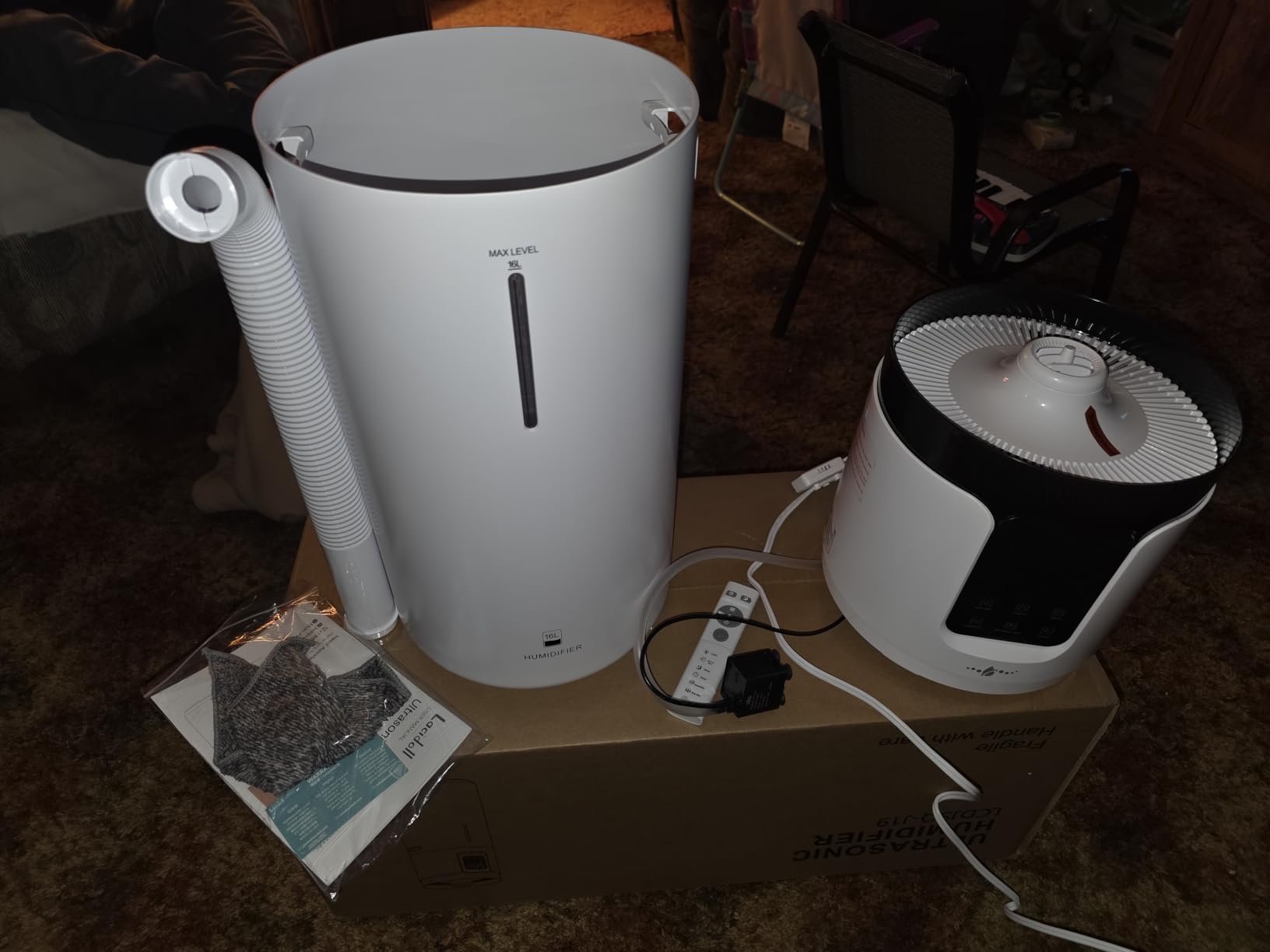
The Lacidoll is a 16 liter, 4.2 gallon ultrasonic tower rated for 1500 square feet, and it is the right pick when you want strong visible mist, long intervals between fills and a unit that works in a basement, nursery or plant room. The stainless steel atomizers produce up to 48 hours of mist per fill, the top-fill tank has a wide opening, and the detachable pump plus automatic shut-off make it straightforward to service.
It draws only 50 watts on 120 volts and includes a remote, mist tubes, mist nozzles and a manual, under a one-year warranty. Controls cover four mist levels including turbo, a humidity range from 40 to 90 percent with auto suspend, a 12 hour timer, sleep mode and a night light. The extension tube and 360 degree rotating nozzle let you aim mist away from walls and furniture, which reduces the damp-surface problem that plagues ultrasonic units.
Across 953 reviews averaging 4.4 stars, owners like the runtime between fills, the flexible mist direction and the range of levels including turbo. The common piece of advice from experienced buyers is to use purified or distilled water to avoid mineral dust, and to clean the atomizers regularly, because ultrasonic mist is inherently prone to both dust and biofilm.
That is the reason this unit does not top any of our picks despite a strong rating. Cool mist is less effective at raising humidity across multiple rooms than evaporative units, and the mineral dust issue is real in hard-water areas. It also carries the shortest warranty in the group at one year.
Ultrasonic or evaporative for your water
If your water is hard, choose evaporative. An evaporative wick traps minerals in the filter and humidifies with no white dust and no biofilm risk, while an ultrasonic tower atomizes the minerals along with the water. If your water is soft or you already use purified water, the Lacidoll is an efficient 50 watt option with a long fill interval.
Cleaning is not optional
Set a recurring reminder to descale and disinfect the atomizer at least monthly during the heating season, and empty and dry the tank between uses. Ultrasonic units that are filled once and forgotten are the ones that produce odor complaints, and the long fill interval makes forgetting easy.
10. GloryAir 9L Top-Fill Ultrasonic Humidifier – Best for Plant Rooms and Nurseries
GloryAir Home Humidifier for Large Room, 2.38Gal Cool Mist Top Fill,2000ft²
2.38 gallon top fill
2000 sq ft
35 dB on low setting
Ultrasonic, 60 watts
Pros
- Top-fill design lets you pour water in place without lifting the tank
- Dual stainless atomizers produce strong mist
- Extension tube and 90 to 180 degree auto rotation reduce surface dampness
- Remote and touch control with child lock
- sleep mode and timer
- Runs quietly at about 35 dB and holds 40 hours on the lowest level
Cons
- Some units are hard to clean because the body does not fully come apart
- Ultrasonic mist can leave white dust and a protective film
- Top flap is awkward to refill without lifting the top section
- Tank water line is hard to see unless the unit is disassembled
The GloryAir is built around one idea: put mist where you want it, not on the furniture. Dual 316 stainless atomizers deliver up to 600 mL per hour with an 8 foot mist height, and the combination of an 18 inch extension tube, 360 degree nozzle and 90 to 180 degree auto rotation keeps surfaces dry while the humidity climbs. It is rated for 2000 square feet and draws 60 watts.
The 2.38 gallon top-fill tank is the everyday convenience story here. You pour water in place instead of lifting and flipping a reservoir, and a wide-opening top plus a cleaning brush make routine service easier than most towers. Controls include a child lock, a one to 24 hour timer, sleep mode and seven-color lights, and the unit is rated at about 35 dB with up to 40 hours of run time on the lowest mist level. Aroma tray, dry burn protection and a one-year warranty round it out.
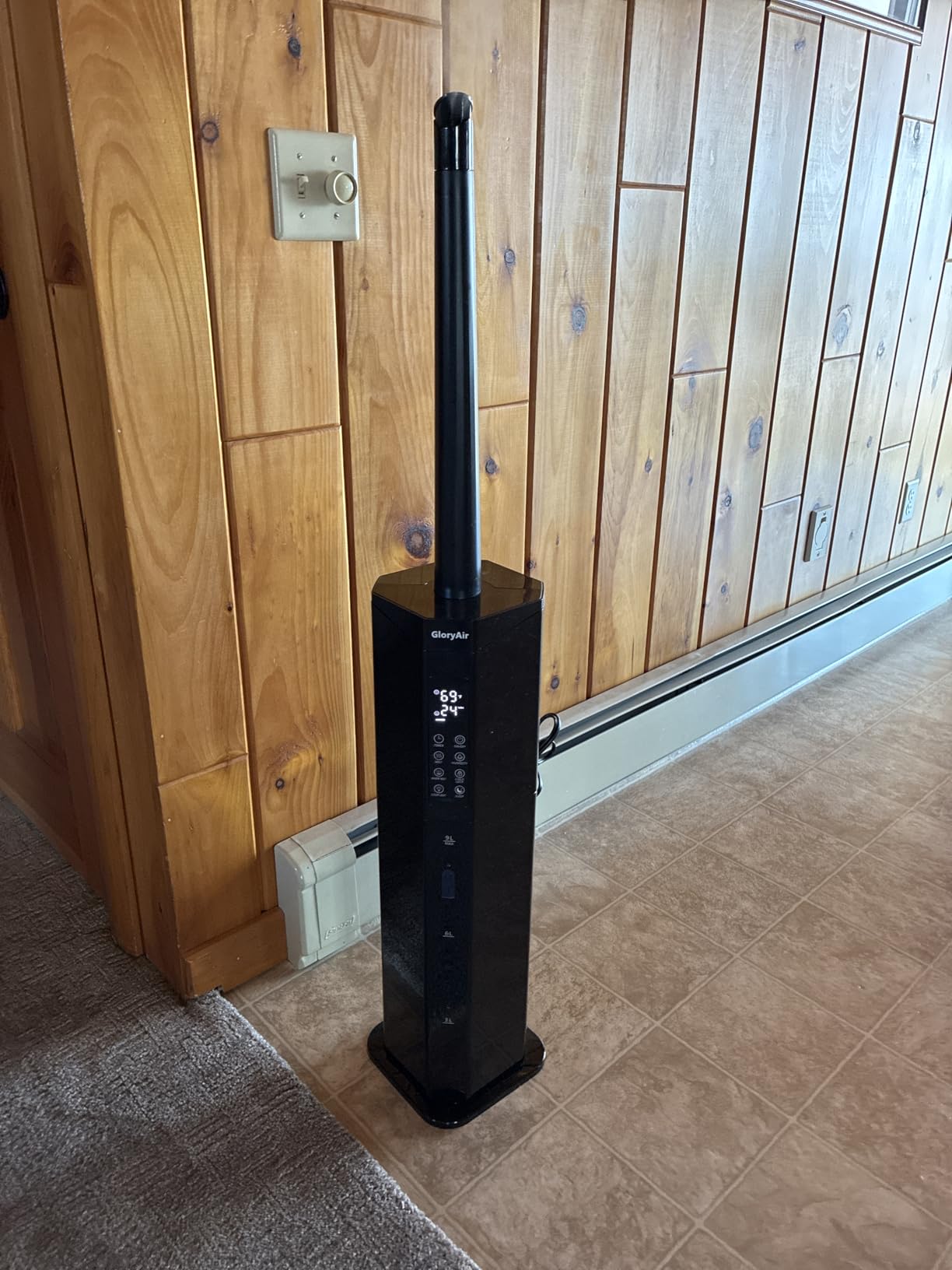
Reviewers rate it as a powerful, affordable large-room humidifier, and the most-praised aspects are the genuine mist output, the quiet low-speed running, and the auto-rotating nozzle and extension tube that keep floors dry. Top-fill convenience draws its own share of positive mentions, and it holds a strong 4.2 stars across 787 reviews.
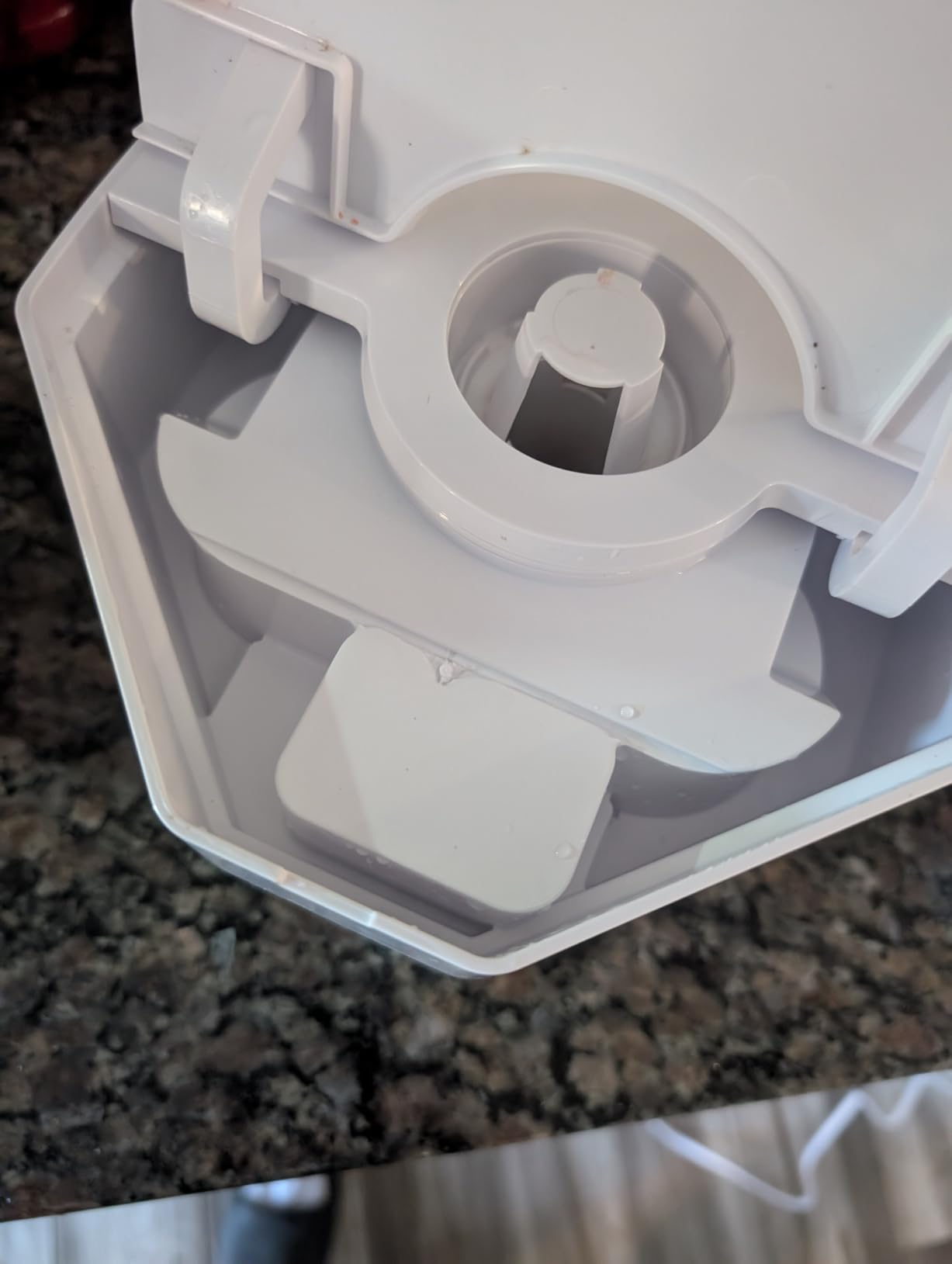
Cleaning is where owners complain. Several buyers found the interior hard to reach because the body does not fully come apart, ultrasonic users are reminded to remove the protective film and expect mineral dust over time, the top flap is awkward to open without lifting the top section, and the water line is hard to see unless the unit is taken apart.
Best use: a nursery, greenhouse or plant room
This is the unit to buy for seedlings, cuttings and a greenhouse corner, where directed mist and a 12 to 24 hour timer matter more than whole-home coverage. The auto-rotation and extension tube are genuinely useful when shelves are close together, because you can lift mist above a bench instead of soaking it.
Before you commit to ultrasonic
Test your tap water first. Put a finger on a dark surface after a minute of mist, and if you see a white film, ultrasonic units will deposit that same film on your electronics, windowsills and floors. In that case, step up to an evaporative model.
11. Vornado Evap40 – Best Value Evaporative Unit for Bedrooms and Basements
Vornado Evap40 Evaporative Humidifier, 4-Gal Capacity, 1,000 Sq Ft Coverage
Wick evaporative
4 gallon dual tank
1000 sq ft
43 watts, 3 speeds
Pros
- Effectively raises and holds humidity in rooms up to 1000 sq ft
- Evaporative wick means no white dust and no mist bacteria
- Large transparent 4 gallon tanks are easy to fill and monitor
- Comes apart completely for fast cleaning
- Whisper quiet on the low fan speed
Cons
- Wick filters are a recurring cost and last only a few weeks in hard water
- Dial humidistat has no marked settings and is not very accurate
- High fan speed is loud for bedroom use
- Thin plastic housing and small jug spouts make filling awkward
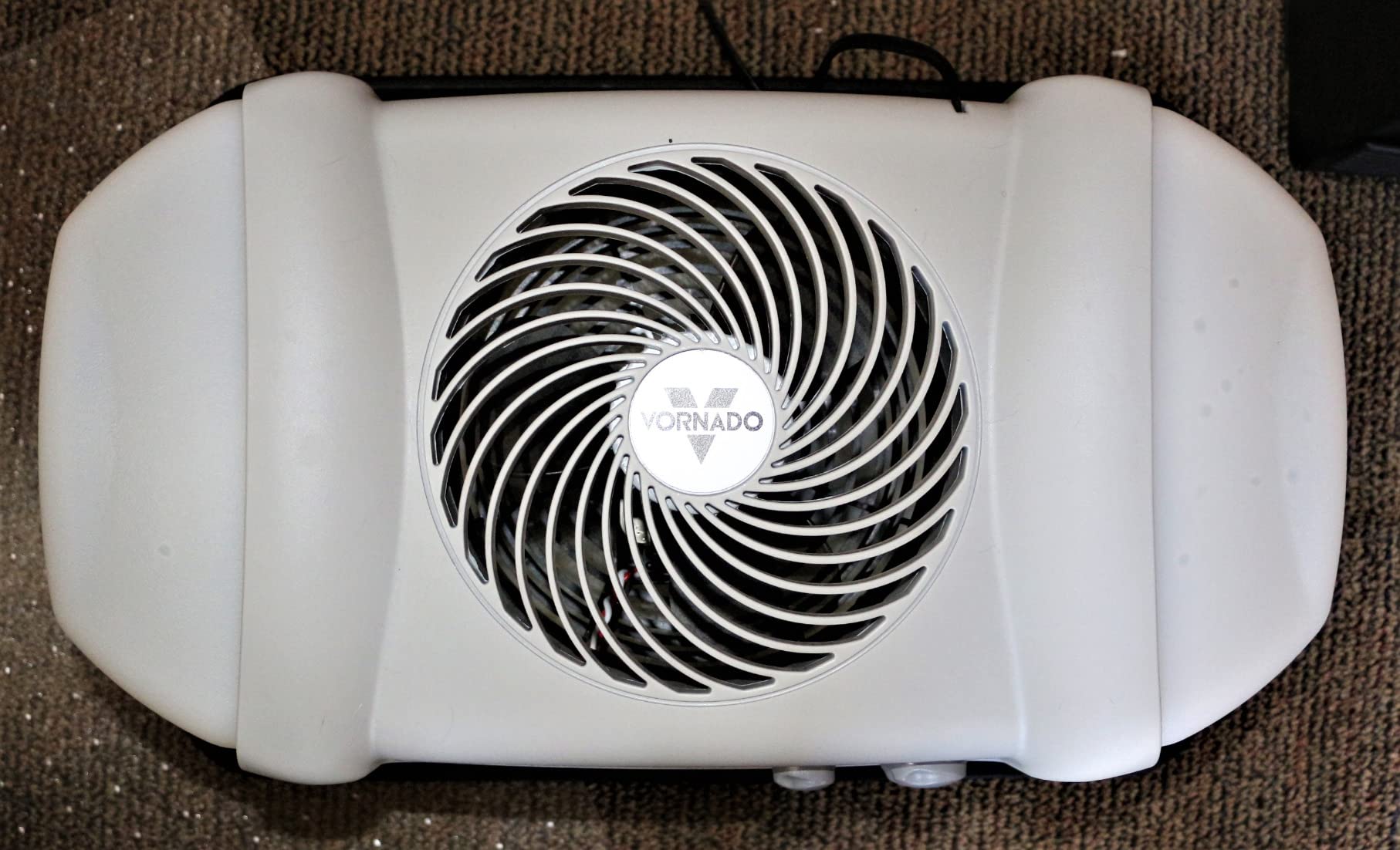
The Evap40 is the default answer for a single room, and with 4876 reviews averaging 4.2 stars it is the most thoroughly proven small evaporative unit in this roundup. It uses a 4 gallon dual tank system delivering up to 4 gallons of moisture daily, rated for 1000 square feet, and it draws only 43 watts. That power figure is roughly a fortieth of the 1650 watt console earlier in this list, which matters if you plan to run it continuously.
Vortex Action technology circulates air with deep-pitched blades and dual wicking filters so there is no mist in the room, and the unit has a built-in adjustable humidistat with three speed settings. It comes apart completely for cleaning, which is a real advantage in a basement or a kid’s room. Weight is 9 pounds and it measures 10.5 by 19.5 by 13.5 inches.
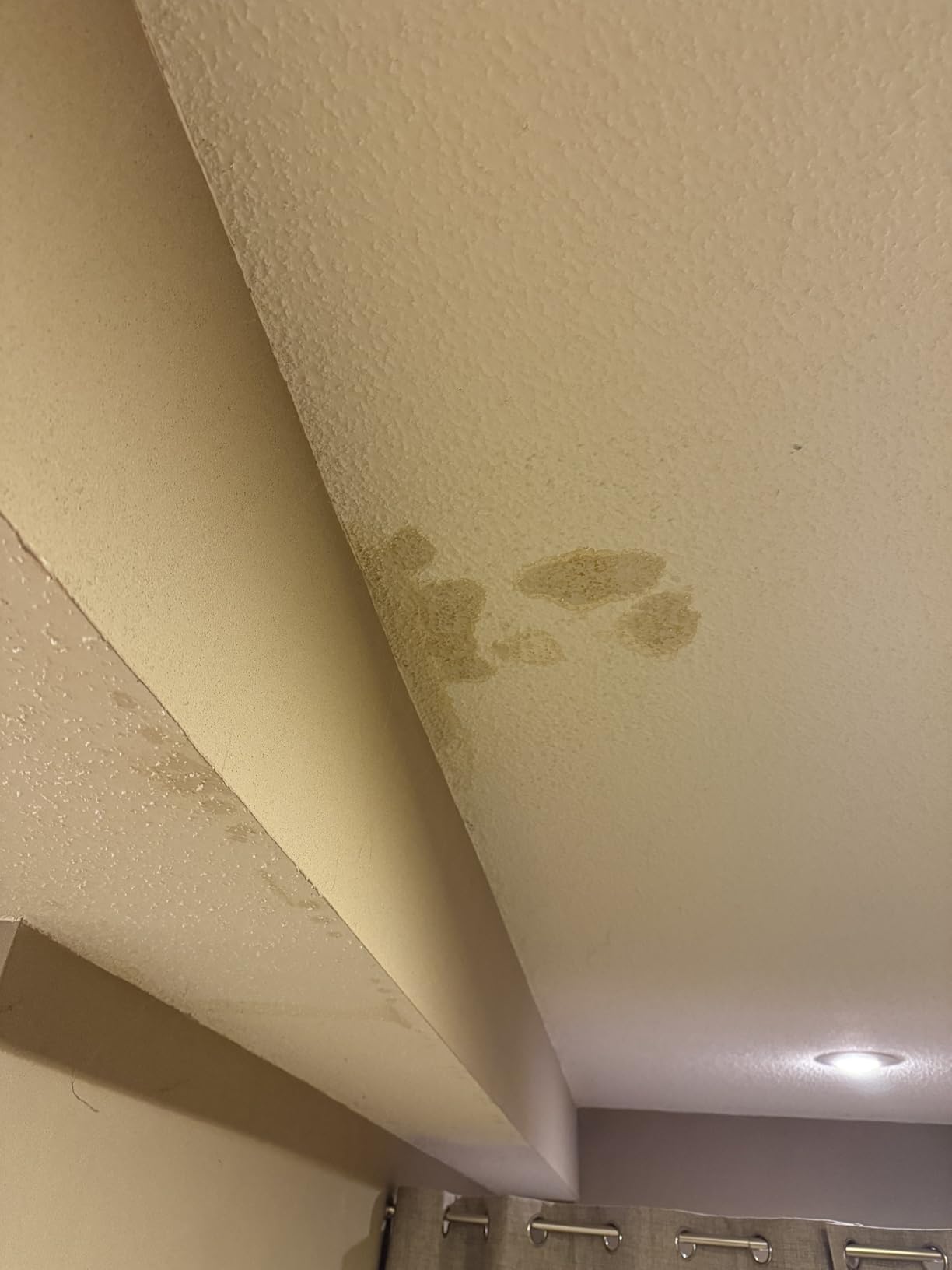
Reviewers largely treat it as the reliable default: mechanically simple, easy to disassemble and capable of adding 8 to 25 points of relative humidity in a single large room. Multiple owners report multi-year use and strong customer service support, and Vornado parts availability well beyond the one-year manufacturer warranty shows up repeatedly in reviews.
The criticisms are about consumables and controls. Wick filters are a recurring cost and last only a few weeks in hard water, which is the single biggest reason to check your water before choosing. The dial humidistat has no marked settings and is not very accurate, so treat it as a rough dial rather than a set point, and buy a separate hygrometer. High fan speed is loud for a bedroom, and the cheap thin plastic housing with small jug spouts makes filling awkward.
Why it still earns a spot on this list
It is the only unit here with a genuinely low power draw and a completely disassemblable body, and both of those properties matter over a five-year ownership. Nothing in this group is easier to deep clean, and nothing else costs less to run for eight hours a night.
Which room to put it in
Bedrooms and basements are the sweet spot. Keep it on the low speed overnight to cut noise, position it so the outlet faces away from the bed, and put a cheap hygrometer on the far wall so you are reading the number that matters rather than the dial on the unit.
12. Vornado EVDC500 – Most Versatile with the Lowest Power Draw
Vornado EVDC500 Energy Smart Evaporative Humidifier with 2 Gallon Dual Tank Capacity, LED Display, Automatic Shut-off, Electronic Humidistat, 4 Fan Speeds for Large Rooms up to 1000 sq ft
Wick evaporative
2 gallon dual tank
1000 sq ft
9 watt DC motor, 4 speeds
Pros
- Very low 9 watt power draw for the moisture delivered
- Completely modular design makes every part easy to scrub and disinfect
- Electronic humidistat with sensor holds 40 to 60 percent with low water indicator
- Evaporative operation produces no mist
- dust or bacterial aerosol
- Vornado replaces parts indefinitely
- including tanks
Cons
- Uses two wicks at once
- so consumable cost is roughly double
- Tanks must be removed and inverted to fill
- which is awkward
- Tank plastic is fragile and has leaked on some units
- No onboard humidity readout
- so a separate hygrometer is needed
- Turbo and high settings are loud for bedrooms
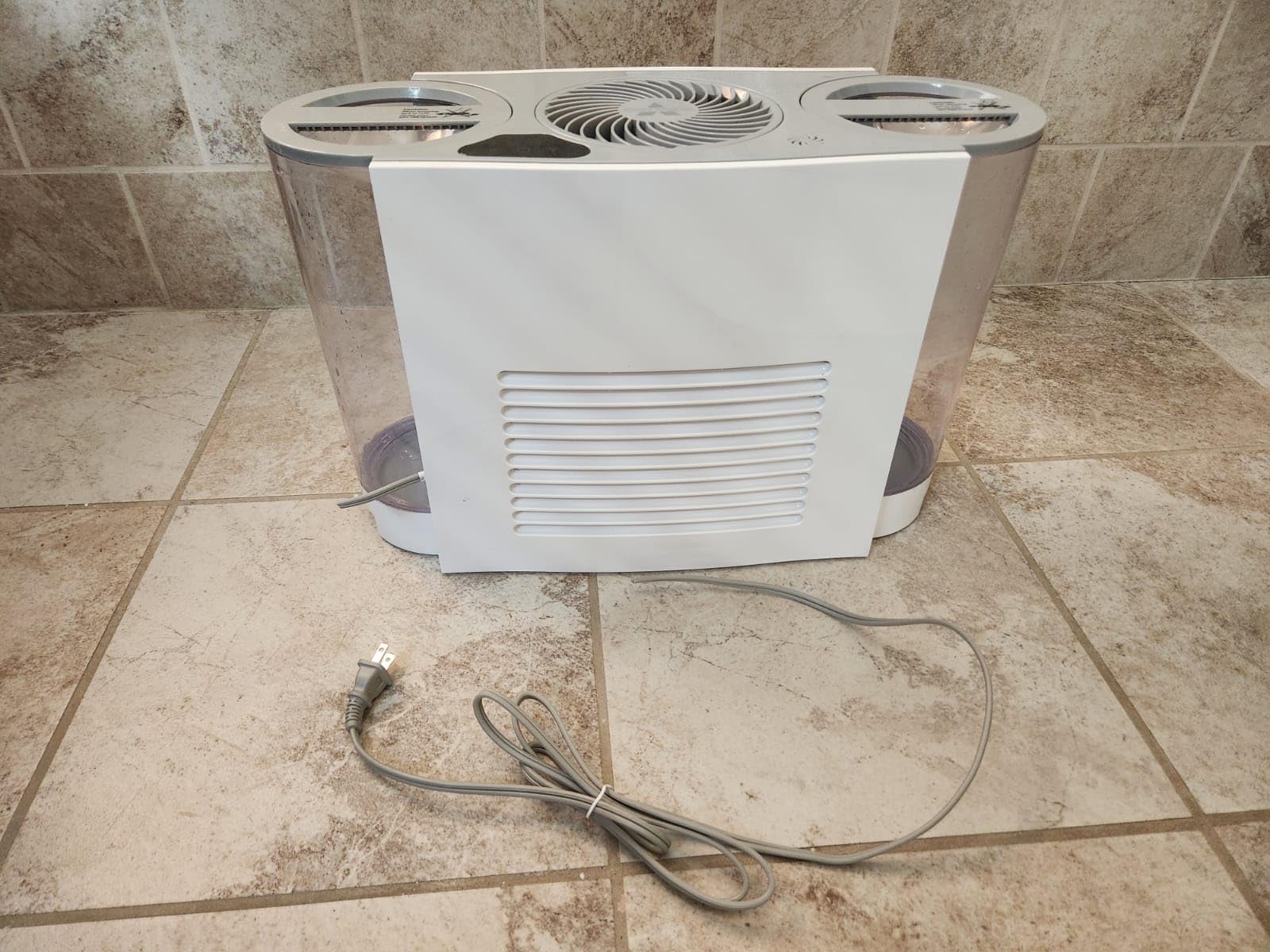
The EVDC500 is the most interesting unit in this roundup from an energy standpoint. Energy Smart DC motor technology is rated at 90 percent less energy use than traditional humidifiers, and the listed draw is 9 watts, with a dual one-gallon tank system delivering up to 4 gallons of moisture daily across a 1000 square foot space. Four fan speeds, an electronic humidistat with a humidity sensor, a low-water indicator and automatic shut-off are all standard.
It is also completely modular, which owners consistently praise because every part comes apart and scrubs easily, and evaporative operation means no mist, no white dust and no bacterial aerosol. The box includes two antimicrobial wicks and an owner’s guide, and the listing also references a five-year satisfaction guarantee alongside parts support.
Owners credit strong moisture output on very low power, an easy-to-clean modular design and accurate humidistat control, and several report multi-year ownership with the DC motor still running. At 4 stars across 1008 reviews, the rating reflects a solid but unspectacular unit rather than a problem product.
The twin-wick design doubles the consumable cost compared with a single-wick model, which is awkward for a budget pick. The tanks must be removed and inverted to fill, and those caps are heavy and hard to grip. Some owners report tank cracking or leaking, and there is no onboard humidity readout, so a separate hygrometer is genuinely required rather than optional.
When the 9 watt figure matters
If you plan to run a humidifier every night from October through April, the running cost difference between a 9 watt unit and a 1650 watt console is large enough to change which one you buy. The EVDC500 is the pick for a bedroom on a cheap circuit or a long-term occupancy where you are running the heat anyway.
How it compares to the Evap40
The Evap40 has a bigger single reservoir, a 43 watt draw and a rougher dial humidistat. The EVDC500 is quieter on low, has a proper electronic humidistat and a modular body, but costs twice as much in wicks over its life. Either is a reasonable budget choice; pick the Evap40 for fewer refills and the EVDC500 for accuracy and efficiency.
How to Choose a Whole House Humidifier for Dry Winters
Bypass, fan powered, steam or console: which type do you need?
An evaporative bypass unit is the default answer for a forced-air home, and it is what the AprilAire 500, the Honeywell HE280A and the GeneralAire 1042LH all are. Warm supply air is pulled across a water-soaked water panel and the moisture is carried into the duct system. A fan-powered unit is the same principle with a dedicated fan doing the airflow instead of relying on the furnace blower, which gives more control but costs more electricity and more panel changes. A steam unit such as the Honeywell HM750A1000 boils water in an electrode canister and injects vapor directly, delivering much higher output for large homes at the cost of power and an annual canister. A console evaporative unit such as the AIRCARE MA1201 or the Vornado Evap40 needs no furnace at all and humidifies only the open space around it. The last category, ultrasonic, is really a room humidifier technology, and we include two here because buyers search for them under the same heading.
Coverage area and the tightly built home rule
Every coverage number in this roundup assumes a tightly built home with good duct sealing, decent insulation and typical eight foot ceilings. In an older home with leaky ductwork, a wood stove pulling outside air, or a poorly insulated attic, a meaningful share of the air you humidify simply leaves the building. The rule of thumb among HVAC technicians is to size up by 40 to 50 percent in a drafty house. Before choosing a unit, run a simple tape test at a return register in the coldest week, or rent a blower door test if you want a number. If the house leaks heavily, no humidifier will hold a set point and the real fix is air sealing first.
Humidistat placement and seasonal settings
Mount the humidistat on the return duct, not the supply duct, so it samples air just before it re-enters the blower. This is the single most-upvoted complaint on home improvement forums, and the failure mode is quiet: the sensor reads air that has already been humidified, the unit shuts off early, and the house stays dry while the owner assumes the unit is broken. Set the target to 40 percent for most homes in a cold climate, lower it slightly if you see window condensation, and check a separate hygrometer in the coldest room rather than trusting the control panel. In spring, set the humidistat to OFF and move the bypass damper to its summer position so humid air cannot reach cold ductwork. In fall, reverse it before the first cold week.
Hard water and mineral buildup
Hard water is the single biggest driver of maintenance cost, and it changes which type you should buy. Evaporative units trap minerals in the wick or water panel, where they show up as a shortened part life rather than as dust in your house. Ultrasonic units atomize the minerals along with the water, which is what produces the white dust on surfaces. Steam units contain the minerals in a sealed canister that you replace. If you have hard water and no softener, avoid ultrasonic units entirely, budget for a panel or wick change on a fixed schedule rather than waiting for a failure, and use genuine manufacturer parts, which is consistent advice across the equipment forums we reviewed. If you want to treat the water properly at the source, our whole house water filter guide covers the filtration side of that problem.
Installation reality check
Every duct-mounted unit in this list requires a technician unless you have real sheet metal and low-voltage experience. Expect to buy copper supply tubing, plastic drain tubing, a bypass damper, elbows, 18 to 22 gauge wire and a backflow preventer, none of which are reliably included. Several models here ship with a plastic drain clamp that does not seal well, so replace it during the install. If your water lines run through an unconditioned basement or attic in a cold climate, insulate them or they can freeze and burst in January. Finally, ask whether the manufacturer’s warranty depends on professional installation before you do the work yourself, because it changes the answer for several of these units.
One more placement note: keep the humidifier itself in a utility room or basement near the furnace, and keep the bedrooms comfortable through the duct system. If you also need summer air movement, our whole house fan guide covers the seasonal switchover on the other side of the year.
Frequently Asked Questions
What is the best type of humidifier for a whole house?
An evaporative bypass unit is the best type for most forced-air homes. It mounts on the furnace supply plenum, pulls warm air across a water-soaked water panel and pushes humidified air through the ducts, so every floor benefits. Choose a steam unit only for very large, very dry homes, and a console evaporative only if you have no furnace or no interest in a duct install.
Is 70 humidity too high in a house in winter?
Yes. The U.S. EPA recommends keeping indoor relative humidity between 30 and 50 percent. Readings at 70 percent put moisture on the coldest surfaces in the house, which produces condensation on windows, inside supply ducts and on finished wood. Sustained readings above 60 percent also raise the risk of mold and dust mite growth. If a hygrometer reads 70 percent, open windows and shut the humidifier down rather than buying a larger unit.
What setting should a humidistat be set at?
Set the humidistat to about 40 percent relative humidity for most cold-climate homes in winter, and lower it by a few points if you see condensation on window frames. Place the humidistat on the return duct so it samples air before it re-enters the blower. Verify the reading with a separate hygrometer in the coldest bedroom, because sensors drift and duct placement changes what they see.
What should an Aprilaire humidifier be set at in summer?
Set the humidifier control to OFF through the shoulder season and summer, and move the bypass damper to its summer position so humid air cannot reach ductwork that may be cool. Also set your thermostat fan to AUTO rather than ON, because continuous fan operation pushes air through the humidifier cabinet after the damper has shifted. Restore the winter position before the first sustained cold week of fall.
Is it a good idea to install a whole house humidifier?
It is worth it when a hygrometer reads below 30 percent for weeks at a time and you have gapping hardwood, static discharge, cracking furniture or sinus symptoms. It is not worth it if your readings sit between 35 and 50 percent already, and it can cause real damage if left running in warm weather. Whole house only pays off over the full square footage, unlike a portable unit treating one room.
What are common problems with humidistats?
The most common problem is mounting the humidistat on the supply duct instead of the return duct, which causes early shutoff and an under-humidified house. Other frequent issues are a drifting sensor that no longer matches a handheld hygrometer, a clogged or failed capillary that stops the unit responding, wiring errors from a DIY install, and a clogged water panel that starves the unit of moisture while the control still works.
How do I remove calcium buildup from my humidifier?
Turn the humidistat off and cut power to the unit first. Shut off the water supply valve, then disconnect the drain line and the supply tube. Remove the water panel or wick and soak it in a solution of one part white vinegar to three parts warm water for 20 to 30 minutes, then scrub gently with a soft brush. Rinse with clean water, refill, and run the unit for a full cycle on high output before returning it to normal service.
Do whole house humidifiers cause mold in ducts?
They can, but the cause is almost always operation at the wrong time rather than the unit itself. A humidifier left running during the cooling season adds moisture to ductwork that is colder than the surrounding air, and that combination produces condensation and mold growth inside the plenum. Setting the control to OFF in summer, moving the bypass damper to its summer position, and setting the thermostat fan to AUTO prevent it. Never leave a wet tank standing untouched for months.
The Bottom Line: Our Best Whole House Humidifier for Dry Winters
For most people reading this in Minnesota, Wisconsin or the Northeast, the answer is the AprilAire 500. Its automatic control, dual indoor and outdoor sensors and five-year warranty make it the unit we would put in our own basement, provided a professional handles the sheet metal and low-voltage work. If you have no furnace, or you refuse an install, the AIRCARE MA1201 and the Vornado Evap40 handle a main floor and a bedroom respectively with no duct work at all.
Two decisions do most of the work here. Run the winter diagnostic checklist before you buy, and get the humidistat on the return duct when you install. Both are free, and both matter more than any specification on the box. If you are still weighing units, check the current details on each listing and pick based on the room you actually need to fix in 2026.